
Blog

All Buying Guides Maintenance & Service New Vehicle Reviews Technology & Innovation Financing & Insurance Safety Features Model Comparisons Used Vehicle Guides Seasonal Driving Tips Junction City Valor Ford Models Seasonal Vehicle Care KS Community New Vehicle Sales Financing & Incentives Heavy-Duty Truck Care Valor Ford Service Automotive Parts & Accessories Repair & Parts Seasonal Vehicle Maintenance Towing & Trailer Technology Trade-In & Negotiation Tips Valor Ford Vehicle Ownership Tips Diesel Engine Care Manhattan Ford Dealer Manhattan Ford Service Vehicle Pricing Strategies Automotive Repair Manhattan Used Cars Military & Special Customer Programs Parts & Repairs Preventative Vehicle Inspections Tire Care & Management Vehicle Repair & Parts Vehicle Sales Agricultural Vehicle Maintenance Automotive Recalls & Repairs Certified Pre-Owned Programs Dealership Transparency Diesel Engine Maintenance Family SUVs Genuine OEM Parts & Accessories Heavy-Duty Truck Upkeep Military & Student Moving Tips Off-Road Packages & Accessories Service Tips & Guides Technology & Innovation in Truck Service Trade-In & Pre-Approval Processes Vehicle Trade-In Tips Vehicle Utility & Cargo Solutions Agricultural Fleet Service Classic Car Restoration Commercial Truck Financing Farm & Ranch Equipment Reviews Genuine Parts & Accessories Heavy-Duty Truck Guides Hybrid & Electric Vehicles Performance & Powertrain
Silver Ford Expedition parked on a gravel shoulder along a winding rural road in rolling green hills at golden hour. (Representative image for illustration purposes only. Actual vehicle may vary based on trim and configuration.)

The 2022 Ford Expedition

What Makes the 2022 Ford Expedition a Top Choice for Large SUV Buyers? When searching for a full-size SUV that effortlessly balances heavy-duty capability, modern technology, and plush passenger comfort, the 2022 Ford Expedition stands in a league of its own. Powered by a proven 3.5-liter EcoBoost® twin-turbo V6 engine producing between 380 and 440 horsepower depending on trim, this full-size flagship is built to tackle everything from daily carpools across Junction City to long-distance highway hauling across Kansas. Beyond raw horsepower, its impressive 9,300-pound maximum towing capacity and available ControlTrac® Four-Wheel Drive system make it a versatile powerhouse for active outdoor enthusiasts, growing families, and service members stationed at Fort Riley. The 2022 model year introduced significant enhancements to the Expedition lineup, most notably the arrival of the off-road-focused Timberline trim and the high-output Stealth Performance Edition. Combined with the introduction of Ford's SYNC® 4 infotainment system featuring available 15.5-inch touchscreens and advanced driver-assist technologies, the 2022 Expedition elevated the segment standard. Whether navigating rural Flint Hills gravel routes or cruising down Interstate 70, drivers gain class-leading cargo space, seating for up to eight passengers, and refined highway dynamics that rival luxury competitors. If you are exploring the pre-owned market, you can Browse Used Inventory at Valor Ford to find a model tailored to your family's needs. What Powertrains and Key Performance Specs Drive the 2022 Expedition? At the heart of every 2022 Ford Expedition lies Ford’s sophisticated 3.5-liter EcoBoost® V6 engine equipped with twin turbochargers and direct injection. Standard configurations deliver a robust 380 horsepower and 470 lb-ft of torque on regular fuel, while higher trim levels like the Limited boost output to 400 hp and 480 lb-ft. For drivers seeking maximum mechanical muscle, the Timberline trim and Stealth Performance Package feature a High-Output 3.5L EcoBoost engine generating an astonishing 440 horsepower and 510 lb-ft of torque. Every powertrain pairs seamlessly with an advanced 10-speed SelectShift® automatic transmission designed for optimal gear progression whether accelerating onto the highway or maintaining control while descending steep grades. Available 4WD models feature an electronic two-speed transfer case and an available Electronic Limited-Slip Differential (eLSD) that distributes power precisely to wheels with the best traction. Spec Metric Standard EcoBoost High-Output EcoBoost Engine Displacement 3.5L Twin-Turbo V6 3.5L Twin-Turbo V6 Horsepower 380 - 400 hp 440 hp Torque 470 - 480 lb-ft 510 lb-ft Transmission 10-Speed Automatic 10-Speed Automatic Drivetrain RWD or ControlTrac 4WD ControlTrac 4WD w/ eLSD Which 2022 Expedition Configuration Reaches the Maximum 9,300-Pound Towing Rating? To unlock the legendary 9,300-pound maximum conventional towing capacity on the 2022 Ford Expedition, buyers must select the standard-wheelbase 4x2 model equipped with the factory Heavy-Duty Trailer Tow Package. Standard 4x4 models with the same package carry an exceptionally capable 9,200-pound limit. If you choose the extended-length Expedition MAX, maximum towing capacity registers at 9,000 pounds for 4x2 models and 8,900 pounds for 4x4 variants. The Heavy-Duty Trailer Tow Package equips the vehicle with essential trailering gear: a 3.73 non-limited-slip or electronic limited-slip rear axle ratio, an integrated trailer brake controller, heavy-duty engine radiator cooling, Pro Trailer Backup Assist™ 2.0, and Reverse Brake Assist. If you plan to haul heavy livestock trailers, camper rigs, or large boats to Milford Lake, you can explore trade options using our Trade In Evaluation tool to upgrade your towing rig today. Key Towing Features Included: • Pro Trailer Backup Assist™ 2.0 with knob steering control • Trailer Reverse Guidance with 360-degree camera views • Smart Trailer Tow Connector for light monitoring • Factory Integrated Trailer Brake Controller • Heavy-Duty Radiator for sustained thermal management Looking to structure your purchase before hitting the road with a camper or boat trailer? You can Contact us for financing information quickly online. Evaluate Your Trade-In How Does the 2022 Expedition’s Towing Compare to the Chevy Tahoe and Suburban? 2022 Ford Expedition Max Towing: 9,300 lbs Engine: 3.5L Twin-Turbo EcoBoost V6 Max Torque: 510 lb-ft @ 3,000 RPM Rear Suspension: Independent Multi-Link Thanks to low-end twin-turbo torque delivery, the Expedition reaches maximum pulling power early in the rev range, making highway merging under load effortless. 2022 Chevrolet Tahoe Max Towing: 8,400 lbs Engine: 5.3L V8 / 6.2L V8 / 3.0L Duramax Max Torque: 460 lb-ft @ 4,100 RPM Rear Suspension: Independent Multi-Link While competitive, the Tahoe trails the Expedition by up to 900 lbs in maximum towing capacity and requires higher RPMs to hit peak power. 2022 Chevrolet Suburban Max Towing: 8,300 lbs Engine: 5.3L V8 / 6.2L V8 / 3.0L Duramax Max Torque: 460 lb-ft @ 4,100 RPM Rear Suspension: Independent Multi-Link The extended Suburban carries slightly lower ratings than standard Tahoe models and falls 700 lbs short of the extended Ford Expedition MAX (9,000 lbs max). What Is the Real-World Fuel Economy (MPG) of the 2022 Ford Expedition? Fuel efficiency in a full-size three-row SUV is always a focal point for buyers. The 2022 Ford Expedition standard rear-wheel drive (4x2) model achieves EPA-estimated ratings of 17 mpg city, 23 mpg highway, and 19 mpg combined. Selecting the ControlTrac 4WD system shifts figures slightly to 16 mpg city, 22 mpg highway, and 18 mpg combined. The rugged Timberline trim with all-terrain tires and raised ground clearance registers at 15 mpg city, 19 mpg highway, and 17 mpg combined. Equipped with a generous 23.6-gallon fuel tank on standard models and a massive 28.3-gallon tank on Expedition MAX variants, driver real-world feedback reveals highway cruising ranges exceeding 500 miles per tank on Interstate 70 across central Kansas. Tips for Optimizing Highway MPG: 1. Use Eco Mode on the Drive Mode dial to smooth out throttle response. 2. Maintain steady highway speeds under 75 mph across open Kansas flatlands. 3. Keep tire pressures calibrated to recommended door jamb PSI. 4. Remove roof cargo crossbars when not actively transporting gear. If you prefer smaller active crossover vehicles, feel free to Research Ford Explorer or Research Ford Maverick fuel figures as well. What Are the Standout Key Features and Trim Levels of the 2022 Expedition? XL STX & XLT • Seating for 5 (XL STX) or up to 8 (XLT) • 12-inch SYNC® 4 Touchscreen • Tri-Zone Automatic Climate Control • Power-folding 3rd-row seats • Standard Ford Co-Pilot360™ package Limited & Timberline • Available Stealth Edition with 22-inch black wheels • Timberline: 10.6 inches ground clearance, 33-inch Goodyear Wrangler AT tires • High-Output 440 hp EcoBoost V6 engine • Underbody steel skid plates from F-150 Raptor King Ranch & Platinum • Del Rio leather seating surfaces • Available 15.5-inch vertical SYNC® 4A touchscreen • 22-Speaker Bang & Olufsen® Unleashed Sound System • Ford BlueCruise hands-free driving tech • Multi-contour massaging front seats Browse Pre-Owned Expedition Inventory How Does the 2022 Expedition's SYNC 4 Technology and Interior Infotainment Work? Technology inside the 2022 Expedition experienced a massive leap forward. Standard equipment includes a landscape-oriented 12-inch center touchscreen running SYNC® 4, featuring wireless Apple CarPlay® and Android Auto™ compatibility, enhanced voice recognition, and over-the-air software update capabilities. Upper trims feature the breathtaking 15.5-inch vertical SYNC® 4A display shared with the Mustang Mach-E, complete with customizable dash cards and an integrated tactile volume dial. Audiophiles will appreciate the optional 22-speaker Bang & Olufsen® Unleashed sound system with 360-degree audio immersion, while rear passengers stay entertained via dual-screen rear seat entertainment systems featuring Amazon Fire TV functionality. Are There Any Recalls Reported for the 2022 Ford Expedition and What Safety Tech Is Included? Transparency is critical when purchasing a pre-owned vehicle. National Highway Traffic Safety Administration (NHTSA) records show early 2022 Ford Expedition production models were subject to safety recalls, including under-hood wiper motor electrical short remedies and an engine compartment fire recall affecting specific early build windows. At Valor Ford, our certified factory technicians perform complete recall verification and service completion before any pre-owned Expedition enters our lot. You can readily Schedule Ford Service Today to check your existing vehicle for open campaigns or maintenance needs. On the active safety front, the 2022 Expedition comes heavily equipped. Standard Ford Co-Pilot360™ includes Pre-Collision Assist with Automatic Emergency Braking, BLIS® (Blind Spot Information System) with Cross-Traffic Alert and Trailer Coverage, Lane-Keeping System, and Auto High-Beam Headlamps. Available driver-assist technologies include Active Park Assist 2.0 and Ford BlueCruise, allowing hands-free highway driving on over 130,000 miles of pre-mapped Hands-Free Blue Zones across North America. What Is the Average Market Price for a Used 2022 Ford Expedition Right Now? In today’s pre-owned automotive market, the price of a used 2022 Ford Expedition varies depending on mileage, trim level, mechanical condition, and overall feature configuration. Well-maintained XLT trim models typically start in the mid-to-upper $40,000 range. Mid-tier Limited trims and off-road-capable Timberline models generally list between $52,000 and $62,000, while ultra-luxurious Platinum models and high-output Stealth Performance editions range higher based on low odometer counts. Buying a pre-owned 2022 model yields substantial financial advantages compared to buying brand-new, giving buyers top-tier luxury, SYNC® 4 connectivity, and 9,300 lbs towing power at a significantly lower depreciation point. Get Pre-Approved Online Why Is the 2022 Expedition Ideal for Fort Riley Military Families and Flint Hills Drivers? For military families stationed at Fort Riley and residents living in Junction City and Dickinson County, the 2022 Ford Expedition provides unmatched everyday practicality. Moving during Permanent Change of Station (PCS) orders requires immense cargo capacity—the Expedition MAX provides up to 121.5 cubic feet of total cargo volume behind the front row, allowing service members to move gear safely and comfortably across country. Furthermore, central Kansas weather brings icy winter highways and muddy rural dirt roads. The ControlTrac® 4WD system, combined with terrain management driving modes, offers confidence whether navigating unpaved Flint Hills farm routes or pulling boat trailers out of slippery boat ramps at Milford Lake State Park. What Maintenance Checklist Should You Follow When Buying a Used 2022 Expedition? 1. Engine & Turbo Inspection Check for clean synthetic oil service history, inspect twin-turbo intake lines for seal integrity, and ensure smooth idle during cold startup. If replacement filters or fluids are ever needed, you can Order Genuine Ford Parts directly. 2. Transmission & Recall Verification Verify that the 10-speed transmission software updates have been flashed by a certified dealer, and review the OASIS vehicle report to confirm all safety recall campaigns have been fully addressed. 3. Brake, Suspension & Towing Check Inspect brake pad thickness, rotor condition, and 4WD transfer case fluid. For hassle-free ownership maintenance going forward, local owners often choose to Schedule Pickup and Delivery Service with Valor Ford. How Can You Finance or Trade In for a 2022 Expedition at Valor Ford? Securing a pre-owned 2022 Ford Expedition at Valor Ford is straightforward and transparent. Our dedicated finance team works closely with local banks, national lenders, and regional credit unions to secure competitive interest rates and flexible loan terms tailored to your budget. We also proudly support our armed forces stationed at Fort Riley with military buyer incentives and streamlined trade valuations. Whether you are trading in an older SUV, a pickup truck, or a sedan, our digital tools let you value your current vehicle online in minutes. If you want to explore other versatile vehicles in the Ford family while researching options, feel free to check out our guides to Research Ford Mustang, Research Ford F-150, Research Ford F-250, or Shop New Ford Bronco Inventory. Quick Purchasing Steps: 1. Value your trade online instantly. 2. Submit a secure credit pre-approval application. 3. Schedule your personalized test drive at our Junction City showroom. 4. Complete documentation and drive home in your pre-owned Expedition! Start Credit Application Test Drive a Pre-Owned 2022 Ford Expedition at Valor Ford Today Ready to experience the 440-horsepower EcoBoost V6 engine, state-of-the-art SYNC® 4 technology, and 9,300-pound towing power firsthand? Valor Ford invites drivers from Junction City, Fort Riley, Manhattan, and surrounding central Kansas communities to inspect and test drive our pre-owned Expedition inventory. Visit us in person at 1825 Goldenbelt Blvd, Junction City, KS 66441 or Call us at (785) 238-5114 to speak with a sales specialist. Click here to Get Directions to Valor Ford and visit our dealership today! Schedule Your Test Drive Today

Dark blue Ford Explorer SUV driving along a paved road through scenic green rolling hills at golden hour. (Representative image for illustration purposes only. Actual vehicle may vary based on trim and configuration.)

2026 Ford Explorer Active: Full Review for Kansas Families

2026 Ford Explorer Active: Full Review for Kansas Families The 2026 Ford Explorer Active is the right three-row SUV for active families who need genuine all-wheel drive, 5,000 lbs of towing capacity, and a 300 hp EcoBoost engine starting at $42,450 — all in a cabin that seats six. It earns IIHS Top Safety Pick+ recognition and delivers 23 MPG combined, making it a practical daily driver and capable weekend hauler. For military families and working households near Fort Riley, it covers school runs, river trips, and farm-road towing without compromise. Research 2026 Ford Explorer How Well Does the 2026 Ford Explorer Active Meet the Needs of Families? The 2026 Ford Explorer Active is purpose-built for multi-generational, active families who need a three-row SUV that transitions effortlessly from weekday carpools to weekend adventures. With seating for six, about 16 cu ft of cargo space behind the third row, and a turbocharged 300 hp engine paired with standard all-wheel drive, the Active trim delivers a well-rounded package that genuinely earns its place in a busy household. Edmunds notes that if you're looking for athleticism out of a three-row SUV, the Explorer is a strong option, competitive with others in its class. Car and Driver echoes that sentiment, calling the Explorer a blend of family practicality with surprisingly engaging performance. These aren't empty compliments — the rear-wheel-drive-biased architecture that underpins the sixth-generation Explorer gives it a road feel that stands apart from the front-wheel-drive crossovers dominating this segment. The Explorer Active sits at an interesting position in the lineup. It is the trim designed for buyers who want a degree of outdoor-ready character without going all the way to the Tremor or ST. The Active 4WD configuration adds standard Intelligent 4WD to the mix, providing confidence on wet Kansas roads, gravel paths, and the gently rolling terrain surrounding the Kansas River corridor. Ford's broader lineup gives shoppers plenty of context. If your needs skew toward a compact truck, the 2026 Ford Maverick is worth a look. Heavy-duty towing demands point toward the 2026 Ford F-250 Super Duty or our Super Duty research guide. Those wanting a full-size workhorse should explore the 2026 Ford F-150, and performance enthusiasts can check out the 2026 Ford Mustang. But for a family that needs three rows, all-wheel drive, and modern technology in one package, the 2026 Ford Explorer Active stands alongside rivals like the Kia Telluride, Honda Pilot, Toyota Highlander, and Chevrolet Traverse. Bold Exterior Design That Reflects Junction City's Military and Outdoor Lifestyle The 2026 Ford Explorer Active projects a stance that suits both the structured environment of Fort Riley and the open roads of the Kansas plains. At 198.7 inches long, 78.9 inches wide, and 70.2 inches tall, the Active carries a planted, upright profile that communicates capability without resorting to overstyling. The 119.1-inch wheelbase provides a stable, long-legged presence on the road. The Active trim distinguishes itself visually through its black roof rails — a detail that signals outdoor intent and provides the foundation for optional roof-rail crossbars, useful for carrying gear to the Kansas River or loading up for a weekend in the Flint Hills. Painted front and rear bumpers keep the exterior cohesive, while LED projector-beam headlights with automatic high-beam control and LED daytime running lights give the front end a modern, assertive face that reads well in both daylight and early-morning darkness. Exterior color choices for the Active include Avalanche Gray Metallic, Star White Metallic Tri-Coat, Carbonized Gray Metallic, Vapor Blue Metallic, and Space White Metallic. The in-stock unit at Valor Ford (VIN: 1FMUK8DH8TGB08366) arrives in Star White Metallic Tri-Coat — a clean, high-contrast finish that pairs well with the black mirror caps and roof rails. The optional 20-inch Carbonized Gray-Painted Aluminum Wheels, which that specific vehicle includes, sharpen the Active's visual edge considerably over the standard 18-inch alloys. For owners who want to personalize further, Valor Ford's genuine Ford parts and accessories department carries dealer-installed options including hood graphics in Matte or Ford Performance finishes, splash guards, and side window deflectors — all designed to complement the Active's outdoor-ready character. Order Genuine Ford Parts Power and Towing Capability Built for Kansas Roads and Weekend Adventures The 2026 Ford Explorer Active carries a single powertrain across both configurations: a turbocharged 2.3L EcoBoost I-4 producing 300 hp at 5,500 rpm and 310 lb-ft of torque at 3,500 rpm, paired with a 10-speed SelectShift automatic transmission. That torque figure is the number that matters most for daily driving and weekend hauling — it arrives early in the rev range and stays broad, which translates to confident acceleration when merging onto the highway or pulling away from a stop with a full load of passengers. Feature Active 4WD Active RWD Drivetrain All-wheel drive Rear-wheel drive All Active trims share: Engine: 2.3L · Horsepower: 300 hp · Torque: 310 lb-ft · Transmission: SelectShift® The Active 4WD uses Ford's Intelligent 4WD system, which operates in full-time automatic mode — the system continuously monitors conditions and distributes torque between front and rear axles without any driver input required. For families navigating Junction City's occasional wet streets, early-morning dew on rural roads, or gravel paths leading to the Kansas River, that seamless AWD engagement is a genuine daily benefit rather than a feature reserved for extreme conditions. Towing capacity stands at 5,000 lbs with trailer towing preparation standard on the Active. That number is enough to haul a mid-size boat for a day on the water, pull a loaded utility trailer across Dickinson County's farm roads, or tow a small camper to a Flint Hills campsite. Payload capacity is rated at 1,467 lbs. The trailer stability program is also included, which uses sensors to detect and correct trailer sway before the driver even notices it — a meaningful safety feature when towing on open, wind-exposed Kansas highways. The suspension setup — independent MacPherson struts up front with coil springs and a multi-link independent rear with coil springs — prioritizes ride compliance and handling balance over truck-like stiffness. AdvanceTrac with RSC (Roll Stability Control) and cornering brake control round out the chassis dynamics package. Ground clearance is 7.6 inches, with approach and departure angles of 19.7 degrees and 21.5 degrees respectively — adequate for the gently rolling terrain and gravel back roads common in this part of Kansas. The 17.9-gallon fuel tank and EPA-rated 23 MPG combined (20 city / 27 highway on the 4WD) deliver a calculated range of approximately 412 miles per fill, which makes the Explorer a practical choice for longer drives between communities. Spacious Interior Comfort Tailored for Families and Their Gear Six-passenger seating in a 2+2+2 captain's chair configuration is the standard layout for the Active trim, with an optional Second Row Bench With E-Z Entry and Armrest available to expand to a 2+3+2 arrangement for seven occupants when a third-row-accessible bench is preferred. The captain's chair default gives second-row passengers their own dedicated space and makes third-row access easier for children — a practical advantage for families loading up after a school event or community gathering. Passenger dimensions across all three rows are quite spacious: Feature Active 4WD Active RWD The 39 inches of second-row legroom is competitive with other leading vehicles in the segment, and 40.5 inches of second-row headroom means taller passengers ride comfortably without feeling compressed. Third-row legroom of 32.2 inches is best suited for children or shorter adults — appropriate for the typical family configuration this trim targets. Cargo space behind the third row measures about 16 cu ft with all seats in place. Fold the rear seats and that figure expands to about 86 cu ft — enough to carry sports equipment, camping supplies, or military duffel bags for a family PCS move. The cargo area is 78.3 inches long, 64.5 inches wide, and 32.8 inches tall, with a 31.1-inch loading floor height that keeps heavy items manageable. The driver's seat offers 5-way power adjustment including electric height, reach, recline, tilt, and lumbar. The passenger seat comes standard with 2-way power adjustment; the optional Active Comfort Package (code 68A) upgrades the passenger seat to 4-way power adjustment and adds synthetic leather upholstery across both front seats, along with a heated steering wheel and LED front fog lights. Standard interior finishing includes alloy-look trim on the instrument panel, doors, and center floor console, plus a full floor console and partial overhead console. Three-zone automatic climate control keeps all three rows comfortable, with rear climate controls accessible to second-row passengers. Connected Technology That Keeps Pace with Military Schedules and Local Events A 13.2-inch center touchscreen paired with a 12.3-inch digital instrument cluster forms the core of the Active's technology package. Both displays are standard, and the infotainment system operates on a platform that supports over-the-air software updates — so the vehicle's operating system can be refreshed without a dealership visit, which matters for busy households that can't easily schedule downtime. Wireless Apple CarPlay and wireless Android Auto are both standard, eliminating the need for cables when connecting a smartphone for navigation, music, or hands-free calls. The system also includes a built-in internet browser, a Google virtual assistant, and built-in apps. Bluetooth connectivity and steering-wheel-mounted audio controls round out the standard interface. Connectivity extends to the vehicle's embedded SIM card, which enables a standard 12-month Wi-Fi hotspot subscription. For families who need longer coverage, the optional Ford Connectivity Package (code 91D, a one-time purchase) extends online services and Wi-Fi hotspot access to 84 months — seven years of connected coverage without a recurring subscription. That's a meaningful benefit for military families who rotate assignments and want a predictable, subscription-free connectivity solution. USB charging is thorough throughout the cabin: 4 ports at the front, 2 at the second row, and 2 at the third row — 8 total — ensuring every passenger can keep devices charged on longer drives. Three 12V power outlets (front, rear, and cargo area) add flexibility for accessories and equipment. The FordPass remote services subscription (included for 12 months) enables remote lock and unlock, vehicle start, theft alert, vehicle diagnostics, find-my-car functionality, and the ability to send a destination directly to the navigation system from a smartphone. The 911 Assist telematics system automatically contacts emergency services in the event of a crash — a feature that provides real peace of mind for families driving rural routes near Fort Riley. Navigation is built in with satellite-view mapping, internet-connected data feeds, and a 12-month traffic information subscription. Intelligent Access with Push-button Start (PEPS) handles keyless entry and ignition. An optional Securicode Keyless Entry Keypad is available for those who prefer a door-mounted code entry. Schedule Ford Service Today Safety Features Designed for Protection on Local Drives and School Runs The 2026 Ford Explorer Active earns IIHS Top Safety Pick+ recognition for both 2025 and 2026, and NHTSA rates it at 5 stars overall — including 5-star frontal crash and 5-star side impact ratings, with a 4-star rollover rating. Those scores reflect a structural and airbag package that takes occupant protection seriously across all three rows. The airbag system includes 7 total airbags: dual front airbags for driver and passenger, front side airbags, side curtain airbags covering all three rows, and a driver knee airbag. Pre-tensioner seatbelts with height adjustment are fitted at both front positions, and all three rows have dedicated seatbelts. LATCH child seat anchors are rated Acceptable by IIHS. Adjustable head restraints are present at all three row positions. Ford CoPilot360 Assist+ is the standard driver assistance suite on the Active. It includes adaptive cruise control with stop-and-go capability (branded Ford Co-Pilot360 Assist), automatic emergency braking that activates from as low as 3 mph, and low-speed front automatic braking. The Lane-Keeping System actively applies steering input to keep the vehicle within lane markings, and the system qualifies as SAE Level 2 partial automation — meaning it can manage both steering and speed simultaneously under appropriate highway conditions. BLIS (Blind Spot Information System) monitors the adjacent lanes and alerts the driver to vehicles in the blind zone. Rear Cross Traffic Braking uses radar to detect cross traffic when reversing and can apply the brakes automatically if a collision is imminent — a particularly useful feature in busy school parking lots or crowded community event venues. Rear Parking Sensors and a rearview camera with guidance display are standard, and the automatic tailgate pull-down with memory position makes loading and unloading cargo straightforward. The AdvanceTrac with RSC (Roll Stability Control) system, four-wheel ventilated disc brakes with ABS, brake assist, cornering brake control, hill holder, and electronic auto-hold parking brake complete a braking and stability package that is comprehensive for this class. The trailer stability program is also included, protecting against sway when towing. 2026 Ford Explorer Active Trim Pricing and Options for Buyers The Active trim is available in two configurations, with the key difference being the drivetrain: Feature Active 4WD Active RWD Base MSRP $42,450 $40,450 All Active trims share a destination charge of $1,695. The $2,000 premium for the 4WD configuration adds Ford's Intelligent 4WD system — full-time automatic all-wheel drive that requires no driver input. For buyers in Junction City who experience Kansas weather variability or regularly travel gravel roads, that upgrade represents straightforward value. The in-stock unit at Valor Ford (Stock #: 26FT128) is an Active 4WD in Star White Metallic Tri-Coat with the Active Comfort Package and 20-inch Carbonized Gray-Painted Aluminum Wheels already included — buyers can see exactly what's on the lot rather than speculating about build configurations. The Active Comfort Package (code 68A) is the one factory package available on the Active trim. It adds LED front fog lights, a 4-way power-adjustable front passenger seat (upgrading from the standard 2-way), synthetic leather seat upholstery on both front seats, and a heated steering wheel. This package meaningfully elevates the interior comfort level and is worth considering for buyers who spend significant time in the vehicle. Beyond the Comfort Package, notable standalone options include the Panoramic Fixed Glass Roof with Power Shade, 20-inch wheel upgrades in either Luster Nickel-Painted or Carbonized Gray-Painted Aluminum, the Ford Connectivity Package (7-year one-time purchase for extended Wi-Fi), SiriusXM with 360L (3-year plan), a Securicode Keyless Entry Keypad, and the Second Row Bench With E-Z Entry and Armrest for families who prefer a seven-passenger layout. Valor Ford also carries new Bronco inventory for buyers whose needs lean toward more dedicated off-road capability. For those ready to move forward on the Explorer, contact us for current financing information before you visit the showroom floor. Get Pre-Approved for Financing Warranty, Maintenance, and Service Support for Reliable Ownership Ford backs the 2026 Explorer Active with a 3-year / 36,000-mile bumper-to-bumper warranty and a 5-year / 60,000-mile powertrain warranty. Corrosion protection coverage extends to 5 years with no stated mileage limit. Ford Roadside Assistance mirrors the powertrain warranty at 5 years / 60,000 miles — providing towing, lockout service, fuel delivery, and flat tire assistance throughout that period. For military families whose schedules don't always align with standard service hours, Valor Ford offers a vehicle pickup and delivery service that brings your Explorer in for maintenance without requiring you to leave Fort Riley or rearrange your day. When you're ready to book standard maintenance, oil changes, or recall work, scheduling Ford service through Valor Ford's online portal takes only a few minutes. The Explorer's over-the-air update capability means software improvements and feature enhancements can be delivered to the vehicle without a service visit — a modern ownership benefit that reduces the total number of dealership appointments needed over the life of the vehicle. The 12-month remote services subscription included at purchase covers vehicle diagnostics, so owners can monitor the vehicle's health status from their smartphone and address issues before they become larger problems. Valor Ford customers consistently highlight the team's responsiveness and professionalism. Justin Grabouski noted on Google, "Excellent customer service, great service, overall exceptional experience. They made everything easy and straightforward." That kind of ownership experience matters for busy military households who need a dealer partner they can rely on. Schedule Pickup and Delivery Service Awards and Expert Recognition Highlighting the 2026 Ford Explorer Active's Strengths IIHS Top Safety Pick+ 2025 & 2026 Highest Safety Rating NHTSA 5-Star Rating Overall Crash Test Excellence KBB Best Buy Award Ford Expedition (2026) NACTOY & MotorTrend Truck of the Year (Maverick 2026) The 2026 Ford Explorer holds IIHS Top Safety Pick+ status for both the 2025 and 2026 model years — the Institute's highest honor — reflecting consistent, year-over-year structural and safety performance. NHTSA's 5-star overall crash rating independently confirms the Explorer's position as one of the safest three-row SUVs in its class. Ford as a brand earned significant recognition in 2026 across its lineup. Kelley Blue Book awarded the Ford Expedition its Best Buy Award in the Full-Size SUV category, and the Ford Maverick earned both the North American Truck of the Year title from NACTOY and MotorTrend Truck of the Year honors for 2026 — demonstrating the depth of engineering capability across Ford's utility vehicle family. Car and Driver has consistently praised the Explorer's balance of practicality and driving engagement, noting that it blends family utility with surprisingly capable performance. Edmunds goes further, calling the Explorer the clear choice among three-row SUVs for buyers who prioritize steering feel and handling precision over raw bulk. These recognitions collectively paint a picture of a vehicle that doesn't ask buyers to trade driving enjoyment for family practicality — a balance that is harder to achieve than it sounds in the three-row segment, and one that the 2026 Explorer Active delivers at a starting MSRP that is competitively positioned for the segment. Fuel Economy Fuel economy and range by trim Feature Active 4WD Active RWD MPG 20 city / 27 hwy / 23 combined 20 city / 29 hwy / 24 combined Frequently Asked Questions About the 2026 Ford Explorer Active Q: Does the 2026 Ford Explorer Active come with all-wheel drive standard? The Active trim is available in two drivetrain configurations. The Active 4WD at $42,450 includes Ford's Intelligent 4WD — a full-time automatic system that continuously distributes torque between axles without driver input. The Active RWD at $40,450 is rear-wheel drive. The in-stock unit at Valor Ford (Stock #: 26FT128) is the 4WD configuration. For buyers in the Junction City area who encounter variable weather or travel unpaved roads, the 4WD version is the more practical choice. Q: How much can the 2026 Ford Explorer Active tow? The Explorer Active is rated to tow up to 5,000 lbs with trailer towing preparation, which is included as standard equipment. Payload capacity is 1,467 lbs. The trailer stability program is also standard, using sensors to detect and automatically correct trailer sway. These figures make the Active capable of towing a mid-size boat, utility trailer, or small camper — practical for weekend recreation along the Kansas River or hauling equipment across rural roads. Q: What is the fuel economy of the 2026 Ford Explorer Active? EPA ratings for the Active 4WD are 20 mpg city / 27 mpg highway / 23 mpg combined, with a calculated range of 412 miles on the 17.9-gallon tank. The Active RWD returns slightly better numbers: 20 city / 29 highway / 24 combined, with a range of 430 miles. Both configurations run on regular 87-octane unleaded fuel. Q: How many passengers does the Explorer Active seat, and can it fit seven? The standard configuration seats 6 in a 2+2+2 captain's chair layout. An optional Second Row Bench With E-Z Entry and Armrest (code 17U) expands seating to a 2+3+2 arrangement for seven occupants. The bench option also adds a center rear seatbelt position. Families who regularly transport more than six people should specify this option at the time of order. Q: Where can I see the 2026 Ford Explorer Active in person? Valor Ford has a 2026 Explorer Active in stock at 1825 Goldenbelt Blvd, Junction City, KS 66441 (Stock #: 26FT128, Star White Metallic Tri-Coat, Active 4WD with Comfort Package and 20-inch wheels). You can also reach the sales team directly at (785) 238-5114 to confirm availability, ask about current inventory, or browse our used vehicle inventory if a pre-owned option fits your budget better. If you have a vehicle to sell or trade, you can also get an estimate on your current vehicle's value before you arrive. Ready to Experience the 2026 Ford Explorer Active? Trade In Evaluation Browse Used Inventory Get Pre-Approved © 2026 Valor Ford. All rights reserved. Vehicle specification data © JATO Dynamics Limited.
Six high-performance car engines displayed in a row on wooden pedestals inside a sleek modern facility. (Representative image for illustration purposes only. Actual vehicle may vary based on trim and configuration.)

What Engine Options Are Available in the Ford F-150? Complete Powertrain Lineup

What Engine Options Are Available in the Ford F-150? Complete Powertrain Lineup Selecting the right powertrain for your Ford F-150 is one of the most critical vehicle ownership decisions you will make. Ford designs America's best-selling half-ton truck to accommodate an exceptionally broad array of driving demands, ranging from fuel-efficient daily commuting across Junction City to heavy-duty towing, agricultural work in Dickinson County, and off-road trail driving. Understanding the precise power delivery, displacement characteristics, and capability metrics of each engine option ensures you select a truck tailored exactly to your personal lifestyle, job site demands, and trailering requirements. Currently, the Ford F-150 features six distinct engine architectures, each engineered with advanced technology such as dual port-fuel and direct-injection (PFDI) systems, twin turbochargers, variable cam timing, or high-output hybrid battery integration. Whether you favor the smooth, linear acceleration of a naturally aspirated V8 or the instant low-end torque of an EcoBoost V6, Ford's engine lineup provides optimized options for every type of driver. Engine Option Horsepower Torque (lb-ft) Max Towing Capability 2.7L EcoBoost V6 325 hp @ 5,500 rpm 400 lb-ft @ 3,000 rpm Up to 8,400 lbs 5.0L Ti-VCT V8 400 hp @ 6,000 rpm 410 lb-ft @ 4,250 rpm Up to 13,000 lbs 3.5L EcoBoost V6 400 hp @ 6,000 rpm 500 lb-ft @ 3,100 rpm Up to 13,500 lbs 3.5L PowerBoost Hybrid V6 430 hp @ 6,000 rpm 570 lb-ft @ 3,000 rpm Up to 12,700 lbs 3.5L High-Output EcoBoost V6 450 hp @ 5,850 rpm 510 lb-ft @ 3,000 rpm Up to 8,200 lbs 5.2L Supercharged V8 (Raptor R) 720 hp @ 6,650 rpm 640 lb-ft @ 4,250 rpm Up to 8,700 lbs To explore detailed vehicle specifications or review current showroom models, feel free to check out our Research Ford F-150 resource center or visit Valor Ford directly in Junction City, KS. Explore F-150 Research Page 2.7L EcoBoost V6 vs. 5.0L Ti-VCT V8: Balancing Fuel Economy and Classic V8 Power When comparing entry-level and traditional engine choices, truck shoppers frequently debate between the twin-turbocharged 2.7L EcoBoost V6 and the naturally aspirated 5.0L Ti-VCT 'Coyote' V8 engine. Both powerplants deliver impressive performance, but they cater to distinct driving preferences and work conditions. The 2.7L EcoBoost V6 is constructed from compacted graphite iron (CGI)—the same robust material used in Ford's heavy-duty Super Duty diesel blocks. Producing 325 horsepower and a stout 400 lb-ft of torque at just 3,000 rpm, this compact powerhouse reaches peak torque very early in the rev range. For daily commuting between Fort Riley and Junction City, running local errands, or pulling light utility trailers, the 2.7L engine provides exceptional responsiveness, quick acceleration off the line, and outstanding fuel economy. In contrast, the 5.0L Ti-VCT V8 delivers classic American muscle with 400 horsepower and 410 lb-ft of torque. Featuring dual-overhead camshafts, twin independent variable camshaft timing, and an advanced dual-injection system, the Coyote V8 produces a high-revving, linear power curve accompanied by a rich exhaust note. Driver enthusiasm, linear throttle modulation when hauling bed loads, and proven naturally aspirated long-term simplicity make the 5.0L V8 a favorite among fleet owners and traditional truck purists. Key takeaways when deciding between these two options: • Fuel Efficiency: The 2.7L EcoBoost excels in city/highway combined EPA estimates during unloaded daily commuting. • Sound & Feel: The 5.0L V8 offers smooth power building higher in the RPM range alongside an iconic exhaust sound. • Payload Capacity: The 5.0L V8 configuration supports maximum payload specs when properly equipped with heavy-duty payload packages. 3.5L EcoBoost V6 Engine: High Torque Output for Heavy Towing and Hauling For truck owners whose primary demand involves pulling heavy trailers, equipment, or agricultural supplies, the 3.5L Twin-Turbo EcoBoost V6 stands out as the ultimate conventional towing powerplant in the half-ton segment. Delivering 400 horsepower and a massive 500 lb-ft of torque, this engine surpasses many larger naturally aspirated V8s in pulling power. The defining characteristic of the 3.5L EcoBoost is its flat torque curve. Reaching its peak 500 lb-ft at an accessible 3,100 rpm, the engine provides immense pulling force without needing to downshift aggressively or rev to extreme limits when climbing steep highway grades along Interstate 70 or navigating country roads across Dickinson County. Paired with Ford's smooth-shifting 10-speed SelectShift automatic transmission, the 3.5L EcoBoost keeps the engine constantly within its optimal power band. When properly equipped with the Max Trailer Tow Package and 3.55 or 3.73 axle ratios, F-150 models powered by the 3.5L EcoBoost achieve a maximum towing capability of up to 13,500 lbs. High-capacity engine oil coolers, dual intercoolers, and enhanced radiator cooling fans enable the engine to handle continuous heavy loads under hot summer conditions in central Kansas without sacrificing performance or thermal efficiency. 3.5L PowerBoost Hybrid V6: Maximum Efficiency and Pro Power Onboard Capability The 3.5L PowerBoost Full Hybrid V6 represents a major technological leap in half-ton pickup performance. By combining the proven 3.5L twin-turbo V6 engine with a 44-horsepower (33kW) electric motor integrated directly into the 10-speed modular hybrid transmission, Ford achieves a staggering total output of 430 horsepower and 570 lb-ft of torque—the highest torque rating available outside of the specialty Raptor R. Beyond instant electric low-end torque and impressive EPA-estimated fuel economy, the headline feature of the PowerBoost hybrid is its revolutionary Pro Power Onboard system. Turning your truck into an active mobile generator, Pro Power Onboard provides accessible AC power through bed-mounted outlets. • 2.4kW System (Standard): Provides continuous power for power tools, air compressors, tailgating equipment, and electric saws. • 7.2kW System (Available): Delivers up to 7,200 watts of 120V/240V power—capable of running an entire construction job site, powering heavy MIG welders, or supplying emergency backup power to household appliances during storm outages. Evaluate Your Trade-In Value If you are considering upgrading your current vehicle to a high-efficiency PowerBoost Hybrid, you can calculate your vehicle's trade value online with our instant Trade In Evaluation tool at Valor Ford. What Is the Maximum Payload Capacity of the Ford F-150 Across Engine Options? Cab & Bed Options Payload capacity measures the total weight of cargo, passengers, and accessories placed directly in the truck bed and cabin. Cab selection heavily impacts net payload: Regular Cab models with 8-foot beds weigh less than 4-door SuperCrew cabs, resulting in higher overall payload limits. GVWR & Axle Specs Gross Vehicle Weight Rating (GVWR) determines maximum total weight allowed for truck and load combined. Selecting heavy-duty payload packages enhances leaf spring rates, reinforces rear axle housing thickness, upgrades brake cooling, and increases gross axle weight limits. Engine Mass Differences Engine weight affects net bed capacity. The naturally aspirated 5.0L V8 and 3.5L EcoBoost offer maximum payload ratings (up to 2,445+ lbs when properly configured), whereas the PowerBoost Hybrid's 1.5kWh lithium-ion battery adds curb weight, slightly decreasing net payload capacity. High-Performance Powertrains: Raptor 3.5L High-Output and 5.2L Supercharged V8 Engine Options For off-road enthusiasts seeking extreme speed and desert racing performance, Ford Performance offers two specialized powertrains in the flagship F-150 Raptor lineup. The standard F-150 Raptor houses a specially tuned 3.5L High-Output EcoBoost V6 producing 450 horsepower and 510 lb-ft of torque. Engineered with upgraded turbochargers, high-flow exhaust manifolds, high-volume cooling fans, and Baja mode anti-lag engine tuning, this engine responds instantly across rocky terrain, sand dunes, and high-speed off-road trails. At the top of the performance hierarchy sits the mighty F-150 Raptor R, powered by a supercharged 5.2L V8 engine generating an unbelievable 720 horsepower and 640 lb-ft of torque. Derived from Mustang Shelby engineering, this supercharged V8 utilizes a 2.65-liter Roots-type supercharger, cast-stainless steel exhaust headers, unique oil cooler systems, and extra-deep oil pan baffling designed to maintain lubrication under steep off-road lean angles. How Do Ford F-150 Trim Levels Differ in Features and Standard Engine Equipment? Navigating the Ford F-150 trim walk is essential to securing the standard or optional powertrain that matches your driving expectations. Ford structures its trim levels so that work-ready trucks prioritize efficiency and durability, while mid-tier and high-luxury trims unlock advanced hybrid power options or specialized V8 architectures. Trim Level Standard Powertrain Available Powertrain Upgrades XL 2.7L EcoBoost V6 5.0L V8 STX 2.7L EcoBoost V6 5.0L V8 XLT 2.7L EcoBoost V6 5.0L V8 / 3.5L EcoBoost V6 / 3.5L PowerBoost Hybrid Lariat 5.0L Ti-VCT V8 3.5L EcoBoost V6 / 3.5L PowerBoost Hybrid King Ranch 3.5L EcoBoost V6 3.5L PowerBoost Hybrid V6 Platinum 3.5L EcoBoost V6 3.5L PowerBoost Hybrid V6 Tremor 5.0L Ti-VCT V8 3.5L Twin-Turbo EcoBoost V6 Raptor / Raptor R 3.5L High-Output EcoBoost V6 5.2L Supercharged V8 (Raptor R) Work-oriented trims like the XL and STX deliver exceptional everyday value with the standard 2.7L EcoBoost V6. The versatile XLT trim provides access to nearly all mainstream engine options, making it the most configurable model in the F-150 lineup. Higher luxury models like King Ranch and Platinum standardise high-torque engines to match premium interior appointments. What Are the Key Features and Trim Differences Buyers Should Understand When Choosing a Ford F-150? Cabin & Technology All modern F-150 trims feature a standard 12-inch touchscreen powered by SYNC 4 software, supporting wireless Apple CarPlay and Android Auto. High-tier trims add heated/ventilated leather seating, B&O Sound Systems, and Ford BlueCruise hands-free highway driving capability. Drivetrain & Axles Choosing between 4x2 and 4x4 systems involves selecting rear axle gear ratios. A 3.31 ratio maximizes highway fuel economy, while 3.55 and 3.73 electronic-locking rear axle ratios provide superior low-end mechanical leverage for heavy towing and off-road traction. Towing Assist Tools Advanced trailering technology includes Pro Trailer Backup Assist, Smart Hitch payload measurement scales, integrated trailer brake controllers, and Blind Spot Information System (BLIS) with extended trailer coverage. Ready to explore flexible purchasing options or initiate pre-qualification? You can Get Pre-Approved for Financing directly online through Valor Ford's secure finance application. Apply For Online Credit Approval When Should a Truck Buyer Upgrade From an F-150 to an F-250 Super Duty? While the half-ton Ford F-150 offers impressive towing and payload limits, certain commercial, heavy agricultural, and fifth-wheel towing needs require the heavy-duty chassis of the Ford F-250 Super Duty. Key upgrade criteria include: • Fifth-Wheel & Gooseneck Towing: If your trailering setup involves heavy multi-horse livestock trailers, large fifth-wheel RV campers, or gooseneck machinery haulers exceeding 14,000 lbs, the heavy-duty fully boxed frame and higher pin-weight rating of an F-250 are mandatory. • Continuous Heavy Commercial Payload: Carrying high payload loads (over 3,000 lbs) daily subjects half-ton rear suspension springs to excessive wear. The F-250 features solid rear axles and heavy-duty leaf spring packs designed for sustained industrial hauling. • Extreme Diesel Performance: If maximum diesel torque is essential for long-distance highway hauling, upgrading to the 6.7L Power Stroke V8 Turbo Diesel in the Super Duty delivers up to 1,200 lb-ft of torque. For more information regarding heavy-duty truck specs, check out our dedicated Research Ford F-250 page or speak with our commercial vehicle experts. What Ownership and Maintenance Questions Should I Ask Before Buying a Ford F-150? Proper routine maintenance is essential to preserving the longevity, power output, and fuel efficiency of your Ford F-150 engine. Depending on whether you select a twin-turbocharged EcoBoost, a high-revving 5.0L V8, or a PowerBoost Hybrid, service schedules and preventive care requirements will vary. Key Powertrain Maintenance Best Practices: • EcoBoost Turbo Care: Twin-turbocharged engines operate under high thermal conditions. Utilizing full-synthetic motor oil meeting Ford Motorcraft standards and sticking strictly to 5,000-to-7,500-mile oil change intervals preserves turbocharger bearing health and prevents oil thermal breakdown. • Spark Plug Maintenance: Turbocharged direct-injection engines create high cylinder pressure. Inspecting and replacing spark plugs every 45,000 to 60,000 miles maintains clean combustion and prevents misfires under heavy towing loads. • PowerBoost Hybrid Battery Coverage: Ford protects all PowerBoost high-voltage hybrid components—including the 1.5kWh lithium-ion battery pack and hybrid control module—with a dedicated 8-year/100,000-mile factory warranty. • 10-Speed Transmission Maintenance: Performing fluid changes and filter replacements at recommended service intervals ensures crisp, smooth gear shifts across demanding towing conditions. Our factory-certified Ford technicians in Junction City are always available to maintain your vehicle. You can conveniently Schedule Ford Service Today or set up concierge pickup through our Schedule Pickup and Delivery Service program. Why Is Reviewing the Vehicle History Report Important for a Used Ford F-150? If you are purchasing a pre-owned Ford F-150, performing thorough vehicle history research guarantees you select a well-maintained truck free of hidden mechanical liabilities. A detailed CARFAX or AutoCheck report provides full visibility into former vehicle usage and service records. Essential History Factors to Verify: • Routine Maintenance History: Verify regular oil change documentation, fluid flushes, and filter replacements—especially on turbo EcoBoost models. • Recall Completion: Confirm that all factory safety recalls or customer satisfaction programs have been addressed by an authorized Ford dealership. • Usage Type: Identify whether the pre-owned truck was driven as a personal commuter, commercial fleet truck, or heavy rental vehicle. Browse Pre-Owned Inventory At Valor Ford, every used vehicle undergoes a comprehensive multi-point inspection. You can Browse Used Inventory online to discover clean-history pre-owned F-150 trucks currently available in Junction City. Test Drive and Compare Ford F-150 Engine Options at Valor Ford in Junction City, KS Reading specifications provides essential baseline knowledge, but nothing compares to experiencing the acceleration, smoothness, and cab comfort of a Ford F-150 firsthand. Whether you want to test the low-end pulling power of the 3.5L EcoBoost, experience the silent start and instant torque of the PowerBoost Hybrid, or feel the legendary performance of the 5.0L Coyote V8, our team at Valor Ford is ready to guide you. We proudly serve drivers from Junction City, Fort Riley, Manhattan, and across Dickinson County with honest advice, competitive financing, and factory-trained service support. You can also explore our broader line of vehicles including options to Shop New Ford Bronco Inventory, or research other popular Ford models such as Research Ford Explorer, Research Ford Mustang, or Research Ford Maverick. Visit our showroom at 1825 Goldenbelt Blvd, Junction City, KS 66441 ( Get Directions to Valor Ford) or Call us at (785) 238-5114 to schedule your test drive today! Schedule F-150 Test Drive Today

Interior view of a truck showing onboard payload scales on the screen while a man loads bags into the truck bed. (Representative image for illustration purposes only. Actual vehicle may vary based on trim and configuration.)

How Ford Onboard Scales Measure Real-Time Payload on the 2025 F-150 and Super Duty

How Ford Onboard Scales Measure Real-Time Payload on the 2025 F-150 and Super Duty For generations, truck owners across Dickinson County and Geary County have estimated bed payload through visual checks—watching how far the rear leaf springs crouch or feeling how heavy the steering becomes when hauling a bed full of gravel, seed bags, or fencing supplies. With the introduction of Ford Onboard Scales on the 2025 Ford F-150 and Super Duty lineup, guessing payload weight is officially a thing of the past. This system helps you monitor payload weight in real time and provides helpful feedback before you shift into drive. The system operates through four discrete position sensors integrated directly into all four corners of the truck suspension. By measuring the physical deflection of the suspension springs relative to the chassis frame rails, the vehicle's onboard processing module cross-references sensor data against known suspension spring constants and calibrated curb weight constants. The precise weight calculation is instantly output across three dynamic interfaces: the vertical LED bars on the Smart Taillights, the 12-inch SYNC 4 central touchscreen, and remotely via the FordPass mobile smartphone app. Whether you are loading bulk grain at an auger in rural Kansas or stacking heavy palleted equipment near Fort Riley, Ford Onboard Scales deliver instantaneous feedback so you know exact cargo weights down to the pound. To explore how these heavy-duty technology suites integrate into the newest truck lineup, drivers can Research Ford F-150 models or compare heavy commercial specs through our dedicated Research Ford F-250 guide before visiting Valor Ford in Junction City. The Engineering Behind Ford's Suspension Sensors and Real-Time Weight Tracking At the mechanical core of Ford Onboard Scales are rotary position sensors mounted between the axle housings and the frame structure at each wheel position. These hardware components are similar to the height-leveling sensors utilized by Ford's adaptive headlamps and continuous damping suspension systems. When cargo, tools, or aggregate materials are deposited into the truck bed, the springs compress, causing a linear movement in the sensor linkage arms. The central processing software takes this raw vertical displacement data and runs mathematical algorithms that account for ambient temperature, suspension bushing resistance, and initial vehicle curb weight. By subtracting calibrated curb weight from the gross measured weight, the system isolates net payload mass instantly. Because weight distribution is rarely uniform across the bed floor, having independent sensor channels on all four corners allows the vehicle control module to calculate lateral and longitudinal balance. If a heavy generator or skid of fertilizer is loaded too far toward the tailgate or off-center to the left rail, the system detects uneven axle loading and warns the operator. Furthermore, dynamic filtering algorithms prevent false weight readings caused by fuel sloshing, wind buffeting, or movement inside the cab while loading. Once the truck comes to a complete rest on level ground, the system stabilizes within seconds, providing accurate feedback comparable to many commercial weighing tools. Reading Your Payload Weight: Smart Taillights, SYNC 4, and the FordPass App Ford designed the Onboard Scale interaction model around real-world work environments where operators cannot constantly walk back into the vehicle cab to inspect numbers while working outside in the yard or field. 1. Smart Taillights Bar Graph Integrated directly into the rear LED taillight assemblies are four vertical LED light strips. As you toss cargo into the bed, these LED bars illuminate progressively from bottom to top like a battery charge indicator. Each bar represents 25% of total payload capacity. When all four LEDs light up continuously, your truck is fully loaded. If you exceed maximum payload capacity, the top LED strip blinks rapidly to alert forklift operators or field hands immediately. 2. SYNC 4 Touchscreen Interface Inside the cabin, the 12-inch SYNC 4 central display provides detailed digital metrics. Drivers can view exact weight readouts in pounds or kilograms, check percentage of maximum vehicle capacity, and observe balance indicators showing if cargo weight favors the front, rear, driver, or passenger side. The system automatically accounts for passenger weight sitting inside the vehicle cab to maintain total Gross Vehicle Weight Rating (GVWR) compliance. 3. FordPass Mobile App Remote View Using the FordPass application on your smartphone, operators can monitor bed scale readouts remotely while operating farm machinery, skid steers, or grain augers. You can stand yards away from the truck tailgate while watching live weight progression on your phone screen, eliminating the need to climb down from agricultural machinery or run back and forth to inspect payload status. Can You Scale Individual Payload Items Sequentially Using Scale Zeroing? Yes, one of the most practical real-world features engineered into Ford Onboard Scales is the **Scale Zeroing** (tare) function, accessible directly through the SYNC 4 touchscreen screen or FordPass smartphone interface. Much like pressing the zero button on a digital kitchen scale or commercial shipping scale, scale zeroing resets the baseline reading back to zero pounds regardless of how much equipment or tools are already resting in the bed. For agricultural producers or contractors making multi-stop pickup runs across Junction City, scale zeroing provides incredible precision. Suppose your F-150 or Super Duty is already loaded with 800 pounds of jobsite toolboxes, auxiliary diesel tanks, and hitch gear. By activating Scale Zeroing, the system temporarily ignores that 800-pound baseline and resets the display to 0 lbs. Now, when you add a specific pallet of seed bags, fence posts, or concrete mix, the scale display measures *only* the new item being loaded. You can verify whether the supplier gave you exactly 500 lbs of seed or 1,200 lbs of fertilizer before leaving the supply yard. Once loading is complete, toggling off zero mode restores your total cumulative payload calculation relative to total GVWR limits. If you want to evaluate your current truck payload or trade in your vehicle for a model with built-in scale zeroing technology, complete our easy online Trade In Evaluation to see what your vehicle is worth today. Evaluate Your Trade-In Online Smart Agricultural Hauling: How Ford's Onboard Scales Protect Your Payload in Rural Kansas Agricultural operations around Dickinson County, Geary County, and the surrounding Flint Hills farm country rely on heavy-duty pickup trucks to keep farms running efficiently. During harvest seasons and spring planting, farm trucks routinely haul dense bulk loads: loose corn, oats, bulk soybean seed, liquid tote containers, mineral blocks, and fencing supplies. Estimating dense agricultural cargo is notoriously difficult; moisture content alone can cause a scoop of soil or grain to weigh hundreds of pounds more than anticipated. Ford Onboard Scales can serve as a helpful safeguard for Kansas farmers. Loading directly from grain augers or gravity wagons often leads to unintended overloading. Overloaded trucks traveling down rural gravel roads face extreme leaf spring strain, bent axle housings, and severe tire sidewall damage. When transitioning onto paved state highways like Highway 77 or I-70, an over-payload truck risks heavy fines from highway patrol commercial scale spot-checks and compromised stopping distances. By utilizing live Smart Taillight indicators during field loading, farm hands can signal the auger operator to shut off grain flow the instant the fourth light bar illuminates. This eliminates wasteful trips back to central elevator scales to dump off excess load and keeps farm equipment running smoothly within factory structural thresholds. How Does the Accuracy of Ford's Factory Onboard Scales Compare to Aftermarket Air Scales? Commercial fleet operators and truck enthusiasts often ask how Ford's factory-integrated sensor setup compares against traditional aftermarket pneumatic air bag scales or aftermarket strain gauge systems. Here is a direct technical comparison across key operational categories: Feature / Metric Ford Factory Onboard Scales Aftermarket Pneumatic Air Scales Measurement Method Direct 4-Corner Optical/Position Suspension Sensors Air Pressure Transducers in Helper Springs System Accuracy High Precision (+/- 50 lbs under level conditions) Moderate (+/- 150-300 lbs, varies with temperature) Display Integration SYNC 4 Screen, Smart Taillights, FordPass App Auxiliary Dash Gauges or Standalone Bluetooth Apps Maintenance Needed Zero Maintenance (Factory Sealed Units) Requires Air Line Maintenance & Pressure Zeroing Warranty Coverage Full 3-Yr/36k-Mi Factory Bumper-to-Bumper Warranty Aftermarket Manufacturer Limited Warranty Factory Integration Ford factory scales require no spliced wiring harnesses, aftermarket gauge pods drilled into your dashboard, or external air compressors. Everything communicates directly over the truck high-speed CAN bus computer network. Precision Calibration Unlike pneumatic helper springs whose pressure fluctuates wildly with ambient Kansas temperature changes, Ford position sensors measure exact physical spring deflection, eliminating thermal reading drift. Factory Warranty Protection Because Onboard Scales are standard or factory-installed options from Ford Motor Company, every sensor and module is covered under your factory warranty with support at Valor Ford. How Onboard Scales Reduce Maintenance Costs and Axle Wear for Farm and Fleet Trucks Operating a commercial truck or agricultural fleet past its rated gross vehicle weight causes rapid, compound mechanical degradation. Overloaded trucks put excess stress on rear leaf springs, coil springs, shock absorbers, and axle bearings. Repeated overload cycles lead to sagging rear suspensions, hair-line frame cracks, premature brake pad glazing, and severe transmission fluid overheating. By providing real-time load visibility, Ford Onboard Scales help prevent accidental overload events. Over a 5-year fleet lifecycle in Junction City or Fort Riley, preventing structural overload cuts unexpected suspension repairs and brake wear costs by an estimated 25% to 35%. Fleet managers can enforce strict safety limits without slowing down jobsite productivity. Schedule Pickup and Delivery Service When routine service or replacement wear parts are required for your work trucks, our technicians are ready. You can easily Schedule Ford Service Today or order factory replacement components directly through our team to Order Genuine Ford Parts. Combining Onboard Scales with Smart Hitch for Perfect Trailer Tongue Weight Onboard Scales do not work in isolation—they pair seamlessly with Ford's available **Smart Hitch** technology. While payload scales measure cargo placed directly inside the bed, Smart Hitch measures the downward force (tongue weight) exerted by a connected trailer onto the receiver ball. Proper tongue weight ratio (typically 10% to 15% of total loaded trailer weight) is critical for preventing violent highway trailer sway. When coupling a livestock trailer, flatbed equipment trailer, or camper to your 2025 F-150 or Super Duty, Smart Hitch displays real-time tongue weight status on the SYNC 4 screen. It explicitly guides you to move cargo forward or backward on the trailer floor until optimal tongue weight balance is achieved. Combining live bed payload calculations with live Smart Hitch tongue weight data gives drivers total visibility over Gross Combined Weight Rating (GCWR). Whether you are hauling cattle up Highway 77 or towing heavy equipment along I-70 through Kansas crosswinds, this integrated tech suite can help support towing stability. To see how Smart Hitch and Onboard Scales perform together on new inventory models, check out our current inventory options or Shop New Ford Bronco Inventory and truck lineups at Valor Ford. Which 2025 F-150 and Super Duty Trims Include Onboard Scales? 2025 F-150 Trims On the 2025 Ford F-150, Onboard Scales with Smart Hitch come standard on high-tier luxury trims including King Ranch and Platinum. It is available as an optional tech package on Lariat, Tremor, and select XLT high-equipment configurations. 2025 Super Duty Trims For Super Duty F-250 and F-350 trucks, Onboard Scales are standard equipment on King Ranch, Platinum, and Limited trims. On XL and XLT commercial fleet trims, it can be ordered with the High-Capacity Trailer Tow Package. Used & Fleet Options Looking for pre-owned models equipped with Smart Hitch or scale technology? You can Browse Used Inventory across our pre-owned truck inventory at Valor Ford to find late-model heavy-duty options. Can Kansas Commercial Sales Teams Help Configure Ford Trucks with the Right Onboard Scales and Towing Packages? Navigating package options, axle ratios, payload package codes, and gross combined weight ratings can be complex. The experienced commercial sales specialists at Valor Ford consult daily with Kansas agricultural producers, local construction fleets, and Fort Riley defense contractors to configure trucks tailored to their specific operational demands. Our team analyzes your typical cargo requirements, trailer weight requirements, and terrain demands to ensure your new F-150 or Super Duty comes equipped with the exact scale technology and towing packages needed. We also offer tailored commercial lending solutions and fleet purchasing assistance. To get started on your purchase or custom order, submit an application online to Contact Us for Financing Information in just a few simple steps. Apply for Commercial Credit Pre-Approval Step-by-Step Checklist for Loading and Scaling Agricultural Gear Safely Follow this practical 5-step operational checklist whenever loading heavy agricultural equipment, seed pallets, or aggregate material into your Ford truck bed: 1. **Park on Level Ground:** Park the truck on a flat, level surface in the yard or field with the transmission in Park and the engine running so sensor readings remain continuous. 2. **Zero the Scale (If Needed):** If you wish to weigh only the new cargo item, access the SYNC 4 screen or FordPass app and activate the Scale Zeroing tare feature. 3. **Monitor Smart Taillights:** Have ground personnel observe the LED Smart Taillights while loading. Stop loading once the 4th solid light bar illuminates. 4. **Verify Left/Right Balance:** Check the SYNC 4 touchscreen to ensure cargo weight is distributed evenly between the left and right bed rails to avoid uneven tire wear. 5. **Check Smart Hitch Tongue Weight:** If towing a trailer simultaneously, review Smart Hitch measurements to confirm tongue weight falls within the recommended green zone. To maintain optimal suspension alignment and sensor accuracy over years of heavy use, rely on our certified master technicians. You can easily Schedule Pickup and Delivery Service for routine vehicle maintenance without disrupting your work day. Test Drive and Experience Ford Onboard Scales at Valor Ford in Junction City, KS Nothing compares to experiencing Ford's cutting-edge truck technology in person. The sales team at Valor Ford invites farm operators, fleet managers, and truck owners across Junction City, Manhattan, Abilene, and Fort Riley to visit our showroom and test drive a 2025 Ford F-150 or Super Duty equipped with Onboard Scales and Smart Hitch. During your visit, our truck experts will gladly demonstrate live payload scaling, walk you through SYNC 4 menu features, help evaluate your current trade-in, and guide you through available inventory options. Visit our dealership located at 1825 Goldenbelt Blvd, Junction City, KS 66441. Need driving instructions? Get Directions to Valor Ford directly on Google Maps, or give our sales team a phone call today at Call us at (785) 238-5114. Browse New Ford Truck Inventory

Gray Ford F-150 pickup truck parked on a gravel road in an open rural field landscape. (Representative image for illustration purposes only. Actual vehicle may vary based on trim and configuration.)

2026 Ford F-150 Platinum vs RAM 1500 Big Horn

2026 Ford F-150 Platinum vs Ram 1500 Big Horn The 2026 Ford F-150 Platinum offers stronger performance, higher towing capability, and premium luxury features compared with the 2026 Ram 1500 Big Horn Crew Cab 4x4 57' Box. Delivering 400 hp and 500 lb-ft of torque alongside a maximum towing capacity of 10,400 lbs, the F-150 Platinum provides heavy-duty utility paired with upscale refinement that outmatches the Ram 1500 Big Horn's 305 hp and 6,680 lbs tow limit. Contact Us for Financing Information Which Truck Offers the Best Value for Junction City Families: 2026 Ford F-150 Platinum or 2026 Ram 1500 Big Horn Crew Cab 4x4 57' Box? The 2026 Ford F-150 Platinum offers superior long-term utility, power, and luxury value for Junction City drivers, supporting its higher price point over the 2026 Ram 1500 Big Horn Crew Cab 4x4 57' Box with significantly higher capability and premium standard equipment. When evaluating a full-size pickup for work tasks, family transport, and weekend adventures, buyers must look beyond the initial price tag to analyze overall capability. The 2026 Ford F-150 Platinum SuperCrew 5-1/2’ Box with rear-wheel drive starts at $68,800 MSRP, while the 4x4 SuperCrew 5-1/2’ Box configuration comes in at $72,600 MSRP. In comparison, the 2026 Ram 1500 Big Horn Crew Cab 4x4 5'7" Box carries an MSRP of $56,570. While the Ram Big Horn enters at a lower price tier as a mid-level trim, the F-150 Platinum arrives fully loaded as a luxury flagship. The utility gap between these two trucks is substantial. The F-150 Platinum delivers a maximum towing capacity of 10,400 lbs on the 5-1/2’ box model (and up to 10,800 lbs on the 6-1/2’ box model), compared to just 6,680 lbs on the Ram 1500 Big Horn. Furthermore, the F-150 Platinum boasts a maximum payload allowance of 1,945 lbs (up to 2,000 lbs on longer bed builds), topping the Ram’s 1,730 lbs payload capacity. Despite carrying more structural equipment and luxurious interior appointments, the F-150 Platinum achieves a curb weight of 5,096 lbs, making it lighter and more agile than the Ram 1500 Big Horn at 5,166 lbs. Shoppers considering different vehicle classes across our lineup can check out detailed Ford F-150 lineup research or explore evaluating your trade-in value online before visiting our showroom. Those comparing SUVs or performance cars can also benefit from examining Ford Explorer specs, reviewing compact truck options like the Ford Maverick, or exploring our Ford Mustang research. If your hauling demands require heavy-duty power, consider Super Duty capability in our F-250 analysis and comparing larger Ford F-250 models to find the exact match for your needs. Pricing Comparison of available configurations and starting MSRPs for the 2026 Ford F-150 Platinum and 2026 Ram 1500 Big Horn. 2026 Ford F-150 Platinum Trim MSRP 2026 Ram 1500 Big Horn Crew Cab 4x4 57' Box Trim MSRP Platinum SuperCrew 5-1/2’ Box $68,800 Big Horn Crew Cab 4x4 5'7" Box $56,570 Platinum 4x4 SuperCrew 5-1/2’ Box $72,600 — — Platinum 4x4 SuperCrew 6-1/2’ Box $72,905 — — Pricing and Trim Value That Fits Local Budgets While the 2026 Ram 1500 Big Horn Crew Cab 4x4 57' Box starts at a lower initial MSRP of $56,570, the 2026 Ford F-150 Platinum delivers far greater standard luxury equipment, advanced technology, and high-tier performance features that create strong long-term value. Understanding trim levels is essential when comparing these two trucks. The Ram 1500 Big Horn is positioned in the middle of Ram's lineup, meaning buyers must pay extra for basic convenience packages, upgraded infotainment displays, and advanced driver assistance tools. Conversely, the F-150 Platinum represents the high level of Ford luxury and engineering. Available in distinct configurations—including the Platinum SuperCrew 5-1/2’ Box at $68,800 MSRP, the Platinum 4x4 SuperCrew 5-1/2’ Box at $72,600 MSRP, and the Platinum 4x4 SuperCrew 6-1/2’ Box at $72,905 MSRP—the F-150 provides choices tailored to specific driving and cargo requirements. Standard features on the F-150 Platinum include premium leather seat upholstery, active motion massaging front seats, a 12-inch digital instrument cluster, a 12-inch center touchscreen, an 8-speaker Bang & Olufsen audio system, and a heated steering wheel. The Ram 1500 Big Horn requires thousands of dollars in options to approach this level of interior luxury. Buyers seeking value across various budget levels can start by exploring our pre-owned truck inventory or personalize their vehicle by ordering genuine OEM accessories directly through our team. Trade In Evaluation Dimensions & Capacity Interior capacity, vehicle weight, payload, and towing capabilities. Specification 2026 Ford F-150 Platinum 2026 Ram 1500 Big Horn Crew Cab 4x4 57' Box Seating Capacity 5 5 Interior Cargo Volume 52.8 cu ft 53.3 cu ft Curb Weight 5,096 lbs 5,166 lbs Maximum Towing Capacity 10,400 lbs 6,680 lbs Maximum Payload 1,945 lbs 1,730 lbs Cabin Comfort and Cargo Space Drivers and Outdoor Adventures The 2026 Ford F-150 Platinum delivers excellent interior refinement and exceptional bed capacity, offering a spacious cabin built to keep five passengers perfectly comfortable during daily drives or cross-country road trips. Step inside the F-150 Platinum and you are greeted by an interior designed for first-class travel. Front passengers enjoy 1036.3221 mm (40.8 inches) of headroom, 1115.0622 mm (43.9 inches) of legroom, 1587.5032 mm (62.5 inches) of hip room, and 1694.1834 mm (66.7 inches) of shoulder room. Rear occupants are treated to spacious stretch-out space with 1026.1621 mm (40.4 inches) of headroom, 1107.4422 mm (43.6 inches) of legroom, 1590.0432 mm (62.6 inches) of hip room, and 1676.4034 mm (66.0 inches) of shoulder room. The F-150 Platinum offers driver and passenger active massage seat functions standard in Equipment Group 701A (Platinum Mid), 702A (Platinum High), and 703A (Platinum Plus). Interior trim options feature high-grade upholstery like Black/Blue Unique Multi-Contour Leather Bucket Seats or Smoked Truffle Unique Multi-Contour Leather Bucket Seats. Overhead, the optional Moonroof (Twin Panel) floods the cabin with natural light. Cargo capacity is another area where the Ford shines. The 5-1/2’ pickup bed provides about 53 cu ft of cargo volume ( 1495.1295 l), with a cargo bed length of 1704.3434 mm and width between wheelhouses of 1285.2426 mm. For those needing maximum bed volume, the 6-1/2’ bed configuration expands cargo space to about 62 cu ft ( 1764.1396 l) with a bed length of 2004.064 mm. The Ram 1500 Big Horn Crew Cab 4x4 57' Box offers about 53 cu ft of bed cargo volume. Additionally, Ford offers innovative features like the available Pro Access Tailgate, which swings open horizontally for easier access to bed cargo even when hitched to a trailer. Active-duty service members and civilian personnel residing near Fort Riley will find the F-150 Platinum's spacious rear seating and high-capacity cargo bed exceptionally practical for carrying duty gear, family luggage, or outdoor recreational equipment. Engine & Performance Powertrain and performance specifications for each truck. Specification 2026 Ford F-150 Platinum 2026 Ram 1500 Big Horn Crew Cab 4x4 57' Box Engine Type 3.5L 3.6L V6 eTorque Horsepower 400 hp 305 hp Torque 500 lb-ft 269 lb-ft Transmission SelectShift® 8-speed automatic Drivetrain All-wheel drive Four-wheel drive Power and Performance to Handle Kansas Plains and Towing Needs The 2026 Ford F-150 Platinum dominates the performance comparison with its standard 3.5L EcoBoost® V6 producing 400 hp and 500 lb-ft of torque, dwarfing the 2026 Ram 1500 Big Horn’s 3.6L V6 eTorque engine output of 305 hp and 269 lb-ft of torque. Under the hood, the F-150 Platinum’s twin-turbocharged 3.5L engine delivers effortless acceleration and high-rpm pulling power, reaching its peak 400 hp at 5,000 rpm and peak 500 lb-ft of torque at 3,500 rpm. Power is managed via the smooth-shifting SelectShift® 10-speed automatic transmission. In contrast, the Ram 1500 Big Horn relies on a naturally aspirated 3.6L V6 paired with an 8-speed automatic transmission, which results in lower passing power and towing capability. For drivers seeking cutting-edge efficiency and maximum output, Ford offers the optional 3.5L PowerBoost Hybrid V6 Engine. This advanced active hybrid powertrain pairs the twin-turbo 3.5L engine with an electric motor generating 44 hp (33 kW) and a 1.5 kWh lithium-ion battery pack. Together, the system pushes total output to an extraordinary 430 hp and 570 lb-ft of torque. The F-150 Platinum features robust all-wheel drive/4x4 capabilities with an available electronic rear differential lock (offered in E-Locking 3.31 Axle, E-Locking 3.55 Axle, and E-Locking 3.73 Axle options). Drivers taking to rough terrain or unpaved back roads can opt for the FX4 Off-Road Package, which adds heavy-duty suspension tuning, skid plates, drive crawl control, and hill descent control systems. Research Ford F-150 Technology Features That Keep You Connected The 2026 Ford F-150 Platinum offers strong for truck technology, featuring dual 12-inch displays, advanced mobile integration, and onboard power capabilities that turn the truck into a mobile command center. The cabin features a standard 12-inch digital TFT instrument cluster alongside a 12-inch center dashboard touchscreen. The infotainment system includes wireless Apple CarPlay and Android Auto compatibility, 911 Assist® telematics, SiriusXM satellite radio capability, and embedded voice-activated navigation with 3D mapping. The optional Connectivity Package OTP upgrades the vehicle with an embedded SIM card Wi-Fi hotspot featuring 999 GB of monthly data access included for 84 months. Audio quality in the F-150 Platinum is extraordinary. The standard setup includes an 8-speaker Bang & Olufsen system with a subwoofer. Upgrading to Equipment Group 702A or 703A installs an immersive 14-speaker B&O surround sound system. One of the F-150 Platinum's defining features is its onboard electrical generation system. Buyers can choose optional Pro Power Onboard – 2 KW or the massive Pro Power Onboard – 7.2 KW system available with the PowerBoost Hybrid engine. With multiple 120V and 240V outlets in the cabin and bed, Pro Power Onboard lets you run power tools, electronics, or camping gear directly from your truck without needing a portable generator. Highway driving is made effortless with available Ford BlueCruise hands-free highway driving technology. This Level 2 autonomous system features adaptive cruise control with stop-and-go functionality, lane-change assist, lane-centering control, and traffic sign recognition. Safety Systems Designed for Military Families and Rural Roads Equipped with standard Pre-Collision Assist with Pedestrian Detection and BLIS® (Blind Spot Information System), the 2026 Ford F-150 Platinum provides complete surround-vehicle awareness to protect passengers on every journey. Safety engineering is a primary strength of the F-150. In national crash testing, the F-150 achieved a 5-star overall safety rating from the NHTSA (including 5 stars in frontal and side impact testing) as well as Top Safety Pick status from the IIHS. Standard passive safety includes six airbags (driver and passenger front airbags, front side airbags, and front/rear side curtain airbags) along with 3-point seatbelts with pre-tensioners. Active safety equipment includes: Pre-Collision Assist with Pedestrian Detection with automatic emergency braking and junction turning assistance BLIS® (Blind Spot Information System) with cross-traffic alert and trailer coverage Lane-Keeping System with active steering vibration alerts Reverse Sensing System with 360-degree camera view Multi-collision braking and roll stability control Pro Trailer Backup Assist with automated steering for effortless trailer maneuvering The Ram 1500 Big Horn includes fundamental safety features, but advanced camera systems, blind-spot monitoring, and active lane controls require purchasing optional equipment packages. Fuel Economy EPA-estimated fuel economy ratings and required fuel type. Specification 2026 Ford F-150 Platinum 2026 Ram 1500 Big Horn Crew Cab 4x4 57' Box Fuel Type Regular unleaded Regular unleaded City Fuel Economy 16 MPG 20 MPG Highway Fuel Economy 24 MPG 25 MPG Combined Fuel Economy 19 MPG 20 MPG Best combined fuel economy: 2026 Ram 1500 Big Horn Crew Cab 4x4 57' Box at 20 MPG Warranty, Maintenance, and Service Options for Long-Term Ownership The 2026 Ford F-150 Platinum comes backed by a comprehensive factory warranty that guarantees confidence and peace of mind over years of driving. Ford protects every new F-150 Platinum with a 36-month/36,000-mile bumper-to-bumper limited warranty alongside a 60-month/60,000-mile powertrain warranty. Corrosive perforation is covered for 60 months with unlimited mileage, and paint protection is covered for 36 months or 36,000 miles. If you choose the 3.5L PowerBoost Hybrid engine, key hybrid components and the lithium-ion battery carry a dedicated 96-month/100,000-mile OEM warranty. Fuel economy figures highlight the efficiency built into Ford’s engineering. The F-150 Platinum 4x4 with the 3.5L EcoBoost engine delivers EPA ratings of 16 MPG city, 24 MPG highway, and 19 MPG combined. The rear-wheel drive Platinum model achieves 17 MPG city, 25 MPG highway, and 20 MPG combined with a calculated driving range of 720 miles on its 136.2748 l (36-gallon) fuel tank. The Ram 1500 Big Horn 4x4 rates at 20 MPG city, 25 MPG highway, and 20 MPG combined. Every F-150 owner also receives 60 months or 60,000 miles of roadside assistance coverage. If emergency help is needed, drivers can contact Ford Roadside Assistance: 1-800-241-3673 for towing, flat tire changes, or jump starts. Local owners can maintain their truck effortlessly by scheduling pickup and delivery service or by scheduling your routine maintenance appointment online. Schedule Ford Service Today Buyer FAQs: Comparing the 2026 Ford F-150 Platinum and 2026 Ram 1500 Big Horn Crew Cab 4x4 57' Box for Kansas Truck Buyers Q: Is the 2026 Ford F-150 Platinum worth the price premium over the 2026 Ram 1500 Big Horn? The 2026 Ford F-150 Platinum justifies its higher price point by offering significantly more performance, technology, and capability as standard equipment. While the Ram 1500 Big Horn is a mid-level trim starting at $56,570 MSRP, the F-150 Platinum (starting at $68,800 MSRP for RWD and $72,600 MSRP for 4x4) comes equipped with a 400 hp twin-turbo engine, massaging leather seats, a 12-inch touchscreen, B&O audio, and a 10,400 lbs towing capacity that far exceeds the Ram's basic feature set. Q: How do the towing capacities compare between these two trucks? The 2026 Ford F-150 Platinum substantially outperforms the Ram 1500 Big Horn Crew Cab 4x4 57' Box in trailering ability. The F-150 Platinum 4x4 features a maximum towing capacity of 10,400 lbs on 5-1/2’ box models (and 10,800 lbs on 6-1/2’ box models), supported by 500 lb-ft of torque. The Ram 1500 Big Horn 3.6L V6 eTorque is limited to a maximum towing capacity of 6,680 lbs due to its lower torque output of 269 lb-ft. Q: What makes the F-150 Platinum's interior more luxurious for long drives? The F-150 Platinum interior features standard multi-contour leather bucket seats with active motion massage functions for both the driver and front passenger. Additional premium amenities include heated and ventilated front seats, heated rear seats, a heated leather steering wheel, ambient lighting, dual-zone automatic climate control, and an available 14-speaker Bang & Olufsen sound system. The Ram 1500 Big Horn comes standard with cloth seating and basic interior trim, requiring optional packages to match Ford's refinement. Q: Can the Ford F-150 Platinum supply power at work sites or campsites? Yes, the F-150 Platinum offers available Pro Power Onboard generator technology. Buyers can equip their truck with optional 2 KW outlets or step up to the 7.2 KW system on 3.5L PowerBoost Hybrid models. This allows you to plug tools, appliances, or outdoor gear directly into outlets located inside the bed and cabin without bringing along a heavy portable generator. Q: Where can I test drive the 2026 Ford F-150 Platinum locally? You can test drive the 2026 Ford F-150 Platinum at Valor Ford located at 1825 Goldenbelt Blvd, Junction City, KS 66441. Start by getting directions to our dealership showroom or give our sales team a call at (785) 238-5114. You can also explore financing options by submitting a pre-approval credit application online or take a look at our broader line of vehicles by browsing our new Bronco inventory before your visit. Experience the 2026 Ford F-150 Platinum Today Visit Valor Ford in Junction City, KS to experience unmatched pickup power, luxury, and technology firsthand. Browse Used Inventory © 2026 Valor Ford. All rights reserved. Vehicle specification data © JATO Dynamics Limited.
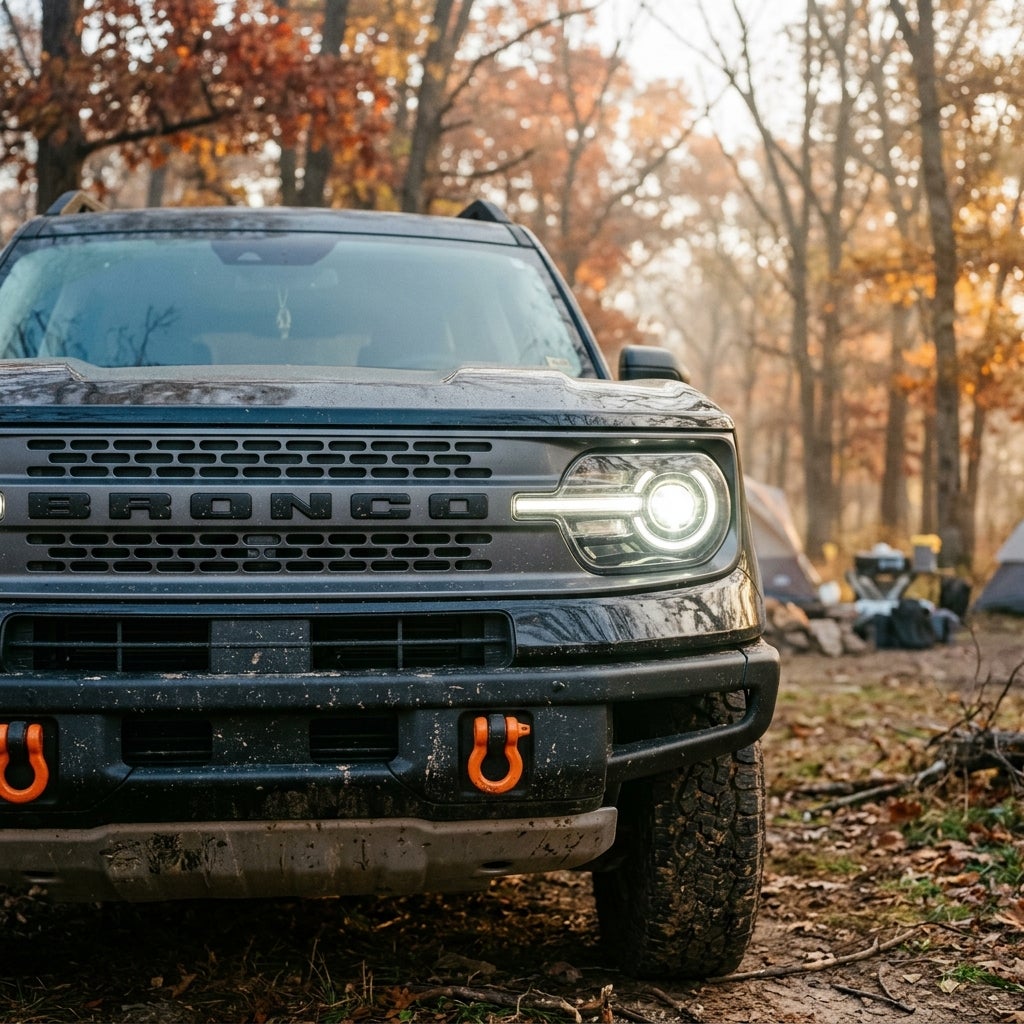
Silver pickup truck kicks up mud while driving along a paved country road shoulder at sunset. (Representative image for illustration purposes only. Actual vehicle may vary based on trim and configuration.)

Navigating Clay, Gravel, and Highway: Finding the Ultimate All-Terrain Truck Tire for North-Central Kansas

Navigating Clay, Gravel, and Highway: Finding the Ultimate All-Terrain Truck Tire for North-Central Kansas Driving a truck in North-Central Kansas isn't just a simple daily commute; it is a test of mechanical endurance and adaptability. On any given Tuesday, you might find yourself navigating the slick, waterlogged bottomlands of the Republican River in Clay County, tackling miles of razor-sharp limestone gravel roads in rural Ottawa County, and then opening it up to seventy-five miles per hour on Interstate 70 as you head towards Fort Riley or Manhattan. Each of these surfaces places vastly different, often conflicting demands on your truck's tires. Sticky clay requires wide, open tread voids to prevent packing; sharp gravel demands ultra-tough, cut-and-chip resistant rubber compounds with reinforced sidewalls; and the highway demands a tight, continuous tread pattern that minimizes road noise, heat buildup, and rolling resistance. Finding a single tire that can handle all three environments without wearing out in ten thousand miles is the ultimate goal for Kansas truck owners. For generations, drivers in communities like Minneapolis, Clay Center, Wakefield, and Delphos have had to make tough compromises. If you chose a dedicated mud tire, your highway commute became a loud, vibrating chore, and the soft rubber compounds would disintegrate on the gravel. If you chose a smooth highway tire, you'd find yourself hopelessly stuck in the first wet clay field entrance or farm lane you encountered. Fortunately, modern tire engineering has made incredible strides. Today's hybrid and advanced all-terrain tires use sophisticated materials science and variable tread geometries to bridge these gaps. Here at Valor Ford in Junction City, we understand the unique regional soil conditions and driving habits of our agricultural, military, and commercial customers. We're here to help you dissect the physics of tire design so you can make an educated investment in your vehicle's safety, efficiency, and capability. To truly master this terrain, you must understand how your truck's power translates to the ground. Your tires are the only contact point between thousands of pounds of American steel and the unpredictable Kansas soil. Whether you're hauling a load of hay, commuting to the base, or heading out for weekend recreation, selecting the right tire is a critical decision. Let's look closely at how the different tire classifications perform when subjected to our local conditions, helping you find the absolute perfect match for your daily routes and workloads. Which Tire Type Works Best If I Drive Mud, Gravel, and Highway All in One Week? The modern light truck tire market is broadly segmented into three primary categories: Highway Terrain (HT), All-Terrain (AT), and Mud-Terrain (MT). In recent years, a fourth 'Rugged Terrain' (RT) or hybrid category has emerged specifically to address the needs of drivers who find themselves split evenly between demanding off-road tasks and high-speed pavement driving. To choose the right one, let's break down the structural and performance differences of these tire styles when faced with the tri-hazard drive of mud, gravel, and highway. Highway Terrain (HT) The Pavement Specialist: Highway terrain tires are engineered with closely spaced, continuous tread ribs designed to maximize the rubber contact patch on asphalt. This design reduces tread squirm, optimizes fuel efficiency, and keeps cabin noise to a whisper. While they offer superb lifespan on clean roads, their shallow tread depth and tight grooves are easily packed solid with wet clay, instantly turning your tire into a slick. On gravel, their softer, fuel-conscious rubber compounds are vulnerable to slicing and chipping. All-Terrain (AT) The Balanced Performer: All-Terrain tires represent the sweet spot for many Kansas drivers. They feature interlocking, blocky tread designs that are deep enough to bite into loose soil and gravel, yet arranged carefully to maintain stable, reasonably quiet contact on the highway. High-quality AT tires use harder, specialized rubber compounds that resist stone chipping. While they can handle moderate mud, extremely thick, wet clay can still overwhelm their self-cleaning capabilities if you don't maintain wheel spin. Mud-Terrain & Hybrids The Off-Road Warrior: Mud-Terrain (MT) and Hybrid (RT) tires feature massive tread blocks, deep voids, and aggressive shoulder lugs designed to scoop away heavy mud and throw it clear of the tire. Hybrids pull the best elements of AT and MT tires together: they keep a slightly tighter center tread pattern to reduce highway hum while maintaining giant, scoop-like shoulder blocks for deep ruts. For drivers spending significant time on rural farm paths and unpaved county roads, these offer the ultimate insurance policy against getting stuck. If your weekly schedule involves commuting forty miles down US-81, pulling a stock trailer down five miles of sharp Ottawa County limestone gravel, and then backing into a muddy pasture to hook up to an implement, a high-quality All-Terrain or Hybrid (RT) tire is almost always your best bet. These tires provide the structural durability to survive the gravel, the biting edges to escape the mud, and the advanced tread pitch sequences necessary to keep your sanity on the long highway drive back home. Let's look into the specific engineering details that make these tires work. Conquering Sticky Clay: How Do Self-Cleaning Tread Blocks Keep You from Getting Stuck? Anyone who has driven through the Republican River valley after a heavy summer rain knows that Kansas clay is unlike almost any other substance on earth. It is highly cohesive, chemically sticky, and heavy. When a standard tire rolls through this clay, the pressure of the vehicle packs the mud deep into the tread channels. If the tire cannot shed this mud, the tread voids quickly fill up completely. Within a few wheel rotations, your aggressive truck tire is transformed into a completely smooth cylinder of slick mud. With no open channels left to bite into the ground, traction drops to zero, and your truck is officially stuck. To prevent this, off-road and high-end all-terrain tires are engineered with self-cleaning tread designs. The secret lies in a combination of tread void geometry, tapered tread block walls, and specialized mud ejector bars. Tread voids are the open spaces between the solid rubber blocks. By designing these channels to widen as they move outward toward the shoulder of the tire, centrifugal force naturally flings the mud out of the tread as the tire spins. Tapered walls ensure that the mud cannot easily grip the rubber, allowing it to slide out smoothly under pressure. Additionally, many modern truck tires incorporate raised ridges at the bottom of the tread channels known as mud ejector bars or stone ejectors. As the tire rolls and flexes under the weight of the truck, these bars compress and decompress, breaking the suction of the mud and pushing it upward and out. This continuous flexing and clearing action ensures that every time your tire rotates back down to meet the ground, it presents clean, open tread blocks ready to dig into the slick surface and keep your vehicle moving forward through the slickest farm lanes. What Tire Load Range Is Recommended for Hauling Heavy Loads Over Sharp Gravel in Ottawa County? When you are hauling heavy agricultural payloads, stock trailers, or construction equipment over the unpaved roads of Ottawa County, the physical load rating of your tires is just as important as the tread design. Gravel roads in this region are often surfaced with crushed limestone or flint rock. These stones have extremely sharp edges that can easily slice through the thin carcass of a standard passenger-rated (P-metric) tire, especially when that tire is compressed under a heavy load. For any serious truck work, you must look at Light Truck (LT) metric tires, which are classified by their load range. For three-quarter-ton and one-ton trucks (like the Ford F-250 and F-350 Super Duty), as well as heavily loaded half-ton trucks (like the F-150), we almost universally recommend Load Range E tires. Commonly referred to as '10-ply rated' tires, Load Range E tires are built with robust internal construction. While they no longer contain ten actual layers of cotton plies like tires of the past, they utilize high-strength steel belts and heavy-duty polyester cords that provide equivalent structural strength. This heavy-duty construction serves two vital purposes on gravel roads: first, it prevents the tire from flexing excessively under load, which keeps the tread flat and reduces the likelihood of rocks puncturing the carcass; second, it provides incredibly tough sidewalls that resist tearing when scraped against deep gravel ruts or jagged rocks. Tire Metric Type Load Range Designation Internal Construction Best Suited For P-Metric (Passenger) Standard Load (SL) 4 to 6-ply equivalent, thinner sidewalls Light commuting, light duty half-ton trucks, smooth highway LT-Metric (Light Truck) Load Range C 6-ply equivalent, reinforced casing Midsize trucks, light off-roading, occasional gravel driving LT-Metric (Light Truck) Load Range D 8-ply equivalent, high-strength belts Half-ton trucks towing moderate trailers, mixed gravel use LT-Metric (Light Truck) Load Range E 10-ply equivalent, heavy steel belts 3/4 and 1-ton trucks, heavy farm hauling, sharp flint gravel Choosing a Load Range E tire does result in a slightly firmer ride when the truck is empty because the sidewalls do not flex as easily as passenger tires. However, the peace of mind and puncture resistance they offer when you are miles out in the country are well worth it. If you're ready to upgrade your truck's durability, you can explore specialized tire options or Order Genuine Ford Parts directly through our website to find the perfect heavy-duty set. Browse Heavy-Duty Tire Options Preventing Tread Damage: Are There Specific Tread Compounds Designed to Resist Stone Drilling? When driving on crushed limestone roads, small, sharp pebbles can get tightly wedged inside your tire's tread grooves. This phenomenon is known as 'stone retention'. If these stones remain trapped, the continuous flexing of the tire as it rotates forces the sharp rock deeper into the rubber carcass, eventually boring a hole through the protective steel belts—a destructive process known as 'stone drilling'. To prevent this costly damage, tire manufacturers have developed advanced rubber chemistry and specific mechanical designs. Premium all-terrain and mud-terrain tires are formulated with specialized cut-and-chip resistant tread compounds. These compounds utilize high-density polymer chains, silica, and carbon black structures that make the rubber incredibly tough and resilient. Unlike standard passenger car tires which use highly pliable rubber optimized solely for warm-weather asphalt grip, cut-and-chip resistant compounds act like an armored shield, resisting the slicing and gouging actions of sharp flint and limestone. Mechanically, these tires incorporate 'stone ejectors'—small angled steps or triangular ridges built into the bottom of the tread grooves. As the tire rotates and compresses, these ejectors change the angle of the groove walls, mechanically popping trapped stones out of the tread before they can begin drilling into the casing. When shopping for tires at Valor Ford, always look for options that explicitly feature chip-resistant compounding and stone-ejecting technology if you spend significant time on county gravel roads. How Does Tire Pressure Affect Puncture Resistance on Sharp Gravel Roads? Tire pressure (measured in Pounds per Square Inch, or PSI) is one of the most critical, yet frequently overlooked variables in off-highway driving. The amount of air inside your tire dictates how the rubber footprint interacts with the road surface. On sharp gravel roads, maintaining the wrong tire pressure can drastically increase your susceptibility to punctures, uneven wear, and vehicle instability. The Risk of Over-Inflation When a tire is over-inflated to its maximum cold pressure (such as a higher cold inflation pressure on a Load Range E tire when the truck is empty), the tread surface becomes extremely rigid and drum-tight. When this rock-hard tire hits a sharp piece of limestone, the rubber cannot flex or absorb the impact. Instead, the sharp rock concentrates all of the truck's weight onto a tiny, unyielding point, easily punching through the tread or sidewall. Over-inflation also causes harsh ride quality and rapid center tread wear. The Danger of Under-Inflation Conversely, running a tire with too little pressure causes the sidewalls to bulge excessively. On gravel roads, this exposes the vulnerable, unarmored sidewall area to sharp rocks kick-started by your front tires. Under-inflation also leads to 'pinch flats', where hitting a deep rut or pothole compresses the tire so severely that the inner tube or liner is pinched against the steel wheel rim, causing an instant, unrepairable tear. It also creates extreme heat on the highway. The Sweet Spot Strategy For mixed-use driving, you want to find the optimal balance. When running empty or light on gravel, dropping your pressure slightly (for example, from 80 PSI down to 50-55 PSI on heavy-duty rear tires, depending on manufacturer load tables) allows the tire to act as an active suspension component. The rubber can slightly envelope sharp stones rather than resisting them, drastically reducing puncture rates and keeping the truck tracking straight. Always re-inflate to recommended specs before hauling heavy loads on the highway. Decoding Winter Traction: What Does the Three-Peak Mountain Snowflake (3PMSF) Symbol Mean? Kansas winters are notorious for their volatility. One day you are driving through dry, freezing winds, and the next you are navigating several inches of heavy, wet snow transitioning into dangerous black ice. For truck owners who must get to work regardless of the weather, understanding tire traction ratings is absolutely essential. Many drivers see the 'M+S' (Mud and Snow) rating stamped on their sidewall and assume they are fully protected. However, the M+S designation is based purely on a geometric formula of the tread design—specifically, that the tread has a certain percentage of open space. It does not involve any physical performance testing in actual winter conditions. To find a tire that truly excels in severe snow and ice, you must look for the Three-Peak Mountain Snowflake (3PMSF) symbol. This icon of a snowflake inside a three-peaked mountain outline indicates that the tire has undergone rigorous physical testing on packed snow and has met or exceeded specific traction performance requirements. Tires with the 3PMSF rating use specialized rubber compounds that remain soft and pliable even when temperatures drop well below freezing, ensuring the tread can still grip the road. Furthermore, 3PMSF-rated all-terrain tires feature extensive 'siping'—tiny, microscopic slits cut across the tread blocks. When these slits contact ice or packed snow, they open up, acting like hundreds of tiny claws that bite into the surface and wick away the thin layer of water that causes sliding. For Kansas drivers, choosing a 3PMSF-rated all-terrain tire gives you excellent year-round capability, eliminating the need to swap between summer and dedicated winter tires. What Questions Should I Ask a Tire Dealer Before Buying Tires for Mud and Gravel Use? Purchasing a new set of truck tires is a significant financial investment, and walking into a dealership unprepared can lead to choosing a tire that doesn't fit your real-world needs. To ensure you get the absolute best match for your specific driving mix in Clay and Ottawa counties, it helps to ask targeted questions. Here is a handy checklist of questions to ask our experts at Valor Ford when you visit us for your next set of rubber: Is this tread compound rated for cut-and-chip resistance? Ensure the tire has the chemistry required to withstand sharp gravel without shredding. What is the mileage warranty on this tire, and does it cover gravel road wear? Many manufacturers void or reduce mileage warranties if the tire is driven extensively on unpaved roads. It is vital to know this upfront. Does this tire feature integrated stone ejector ribs? Make sure the tire has built-in mechanisms to prevent stone drilling. What cold PSI do you recommend I run when empty versus fully loaded? Get precise inflation targets tailored to your truck's weight and your primary driving surfaces. What are my options for road hazard protection? Sharp gravel can occasionally beat even the toughest tire; having a robust road hazard warranty provides valuable peace of mind. How noisy is this tire on the highway at 75 MPH? Ask about the tire's tread pitch sequencing and how it manages cabin vibration. At Valor Ford, our service advisors are trained to ask you about your driving habits, load weights, and terrain preferences before suggesting a tire. We carry a wide selection of top brands and can help you weigh the pros and cons of each model. If you are experiencing vibration, uneven wear, or suspect it is time for a new set, you can easily Schedule Ford Service Today to have our team perform a professional tire inspection. Schedule a Tire Consultation Matching Your Tires to Your Territory: Real-World Scenarios from Fort Riley to Dickinson County The Fort Riley Commuter 90% Highway / 10% Off-Road: Meet Sgt. Miller, who commutes daily from Clay Center to Fort Riley. He drives mostly on paved highways but loves hunting and camping near Milford Lake on weekends. For this profile, a premium All-Terrain tire with a tight center tread is ideal. It offers low rolling resistance, excellent wet-braking performance on highway asphalt, and a quiet ride during his daily commute, while still providing the mud traction he needs to navigate lakeside access trails without getting stuck. The Mixed-Use Contractor 50% Highway / 50% Gravel & Construction Site: Sarah manages rural construction projects across Ottawa and Dickinson counties. She splits her time evenly between traveling at high speeds on Interstate 70 and hauling heavy equipment over unpaved county roads. We recommend a Load Range E Hybrid (RT) tire. This configuration provides the extreme sidewall protection and cut-and-chip resistance needed on limestone gravel, combined with stable highway handling that doesn't sacrifice her truck's fuel economy. The Dickinson County Farmer 20% Highway / 80% Mud, Gravel & Fields: David operates a family farm near Solomon. His truck spends almost its entire life on loose gravel, dirt field entrances, and deep mud pastures. For David, a dedicated, aggressive Mud-Terrain (MT) tire is the only logical choice. The massive open tread blocks and self-cleaning mud ejector bars ensure he can pull heavy stock trailers through thick clay without spinning out, while the high ply rating guards against tire punctures from crop stubble and sharp flint stones. Maximizing Your Tire Investment: Rotation, Alignment, and Balancing for Mixed-Terrain Drivers Driving on a mix of sharp gravel, slick mud, and high-speed pavement places immense stress on your tires and suspension system. If you want your new set of tires to last forty, fifty, or sixty thousand miles, a strict maintenance schedule is non-negotiable. Aggressive tread designs, particularly on all-terrain and mud-terrain tires, are highly susceptible to 'feathering' or 'cupping' if they are not rotated regularly. This uneven wear is caused by the tread blocks flexing as they contact the road, and once an uneven wear pattern starts, it is nearly impossible to correct. For trucks driven on gravel and unpaved roads, we recommend a tire rotation interval of 5,000 miles —which aligns perfectly with your regular oil change interval. Regular rotation ensures that all four tires wear down at an even rate, extending the overall lifespan of the set. Additionally, because gravel roads often feature deep washboards and potholes, your truck's steering alignment can easily get knocked out of spec. An out-of-alignment truck drags the tires slightly sideways down the road, scrubbing off valuable tread in a matter of months. Wheel balancing is another crucial maintenance step. As you drive through mud and clay, small clumps of dirt can stick to the inner barrel of your wheels. Even after the mud dries and falls off, it can leave behind a weight imbalance that causes a noticeable vibration at highway speeds. This vibration isn't just annoying; it accelerates wear on your shocks, struts, ball joints, and wheel bearings. Whenever you bring your truck to Valor Ford, our master technicians don't just rotate your tires—they inspect your entire suspension system, check for uneven wear patterns, and perform precision high-speed balancing. This comprehensive care ensures your truck drives as smoothly down I-70 as it does down a flat paved road, safeguarding your investment and keeping you safe on every journey. Why Northern Kansas Truck Owners Trust Valor Ford for Expert Tire Selection and Installation Selecting the right tires is only half the battle; proper installation, balancing, and alignment are what make those tires perform. At Valor Ford, we pride ourselves on being more than just a dealership—we are your local automotive resource. Our service center in Junction City is staffed by Ford-certified technicians who undergo continuous training to stay at the cutting edge of truck engineering. We utilize state-of-the-art diagnostic, mounting, and balancing equipment to ensure that your new tires are installed with absolute precision. We have direct access to a vast inventory of top-tier tire brands, including Goodyear, Michelin, BFGoodrich, Hankook, and Toyo. Because we service hundreds of trucks from Clay, Ottawa, and Dickinson counties every single week, we know exactly how each of these tires performs in our local soils and gravel. We don't just sell you what's on the shelf; we help you select the exact tire, load range, and tread pattern designed to conquer your unique driving routes. To make your experience as seamless as possible, we offer specialized amenities including our Schedule Pickup and Delivery Service. This convenient service allows us to pick up your truck from your home or workplace, perform the tire installation, balancing, and alignment, and return it to you fully serviced—allowing you to stay focused on your farm, business, or family. When you choose Valor Ford, you choose a team dedicated to keeping you moving safely and efficiently on every Kansas road. Schedule Pickup & Delivery Service Ready for an Upgrade? Let Valor Ford Equip Your Truck with the Perfect Set of Tires Today If you are ready to explore new tire options, our team can help you prepare for muddy clay lanes or rural gravel roads. Investing in the right tires today means securing safety, performance, and peace of mind for tens of thousands of miles to come. Whether you are driving a brand-new Ford F-150, a heavy-duty F-250 Super Duty, or a rugged Ford Bronco, our tire experts at Valor Ford are ready to help you make the perfect selection. Stop by our dealership at 1825 Goldenbelt Blvd, Junction City, KS 66441 to speak with our team in person. You can easily Get Directions to Valor Ford or Call us at (785) 238-5114 to ask questions, check our current tire stock, or schedule an appointment. Let us help you equip your truck to conquer every mud lane, gravel road, and highway in North-Central Kansas with absolute confidence. Get a Trade In Evaluation Get Pre-Approved for Financing

A blue Ford Mustang Mach-E parked on a roadside overlooking a scenic lake and rolling green hills. (Representative image for illustration purposes only. Actual vehicle may vary based on trim and configuration.)

2026 Ford Mustang Mach-E vs 2026 Ford Mustang

2026 Ford Mustang Mach-E vs 2026 Ford Mustang Choosing between a cutting-edge electric crossover and a traditional high-performance sports coupe represents one of the most exciting decisions in the modern automotive landscape. While both vehicles proudly wear the iconic pony badge, they serve vastly different lifestyles, balancing raw emotional power with everyday family utility. This comprehensive comparison explores how these two distinct engineering philosophies perform, protect, and deliver value for local drivers. Why Junction City Drivers Are Choosing Between the 2026 Ford Mustang Mach-E and Mustang Many of our customers who visit our showroom find themselves at a fascinating crossroads, balancing the practical demands of family life with a deep-seated passion for American performance heritage. Under its global platform, Ford is executing a disciplined shift toward purposeful, lifestyle-driven enablement, emphasizing the power of choice across diverse powertrains. This strategic pivot allows buyers to select the exact level of utility and performance they need. The 2026 Ford Mustang Mach-E is positioned as a stylish, tech-forward entry in the midsize electric crossover segment, bridging the gap between zero-emission family transit and engaging driving dynamics. Meanwhile, the traditional 2026 Ford Mustang coupe remains the definitive guardian of classic sports-car thrills, appealing to drivers who prioritize mechanical feel and track-bred capability. For active households, military professionals, and daily commuters, deciding between these two models involves comparing their distinct trim structures and price points. The Mustang Mach-E lineup features the efficient Premium RWD starting at a base MSRP of $40,595, the versatile Premium AWD at $43,595, and the high-performance GT AWD at $53,890, with all trims sharing a destination charge of $2,045. The Mustang coupe offers the approachable EcoBoost starting at a base MSRP of $32,995, the upgraded EcoBoost Premium at $36,345, and the extreme, track-focused Dark Horse at $64,080, with a shared destination charge of $1,995. If you are ready to make the switch, our team can help you value your trade-in to see how your current vehicle's equity can transition seamlessly into a new model. Value Your Trade Engine & Performance Powertrain specs by trim Specification 2026 Ford Mustang Mach-E 2026 Ford Mustang Engine Dual Motor 5.0L Horsepower 480 hp 500 hp Torque 600 lb-ft 418 lb-ft Transmission single-speed 10-speed automatic Drivetrain All-wheel drive Rear-wheel drive Performance That Powers Your Flint Hills Weekend Drives Have you ever wondered how an advanced all-electric dual-motor setup compares to a traditional high-output combustion engine when navigating rolling hills and scenic highway stretches? The Mustang Mach-E GT AWD utilizes an advanced Dual Motor configuration to generate a thrilling 480 hp and 600 lb-ft of torque, routed through a seamless single-speed transmission. Enthusiasts can elevate this output further with the optional Mustang Mach-E GT Performance Upgrade (package code 41G, priced at $1,295), which increases maximum torque to a staggering 700 lb-ft and enables a blistering 0-60 mph sprint in just 3.3 seconds. For everyday driving, the Mach-E's low-slung battery pack and instant electric torque deliver confident, linear acceleration and exceptional stability. In contrast, the Mustang Dark Horse coupe represents the pinnacle of standard production combustion performance, featuring a modified fourth-generation 5.0L Coyote V8 engine that pumps out 500 hp and 418 lb-ft of torque. Power is sent exclusively to the rear wheels via a rapid-shifting 10-speed automatic transmission, delivering a classic rear-wheel-drive sports-car experience complete with a thumping exhaust note. For those seeking an efficient yet spirited daily driver, the Mustang EcoBoost trims utilize a turbocharged 2.3L four-cylinder engine to produce a highly capable 315 hp and 350 lb-ft of torque. While the Mustang coupe delivers unmatched mechanical drama and track-day precision, the Mach-E's available dual-motor all-wheel-drive system provides superior year-round traction and effortless acceleration that is better suited for handling diverse weather conditions and gravel back roads. Browse New Inventory Cargo Space Perfect for Northeast Kansas Family Outings and Outdoor Gear Working with families has shown me that everyday usability is often decided in the cargo bay and the rear seats, where real-world gear must fit without compromise. The Mustang Mach-E is built on a dedicated electric vehicle platform that maximizes interior volume, providing comfortable seating for 5 occupants and a highly versatile about 30 cu ft of rear cargo space behind the second row. To enhance outdoor utility, buyers can equip the Mach-E with the optional Frunk - Drainable (package code 76B, priced at $495), which adds a molded waterproof plastic front-trunk storage liner with an integrated bottom drain plug—an ideal space for packing ice and cold beverages for weekend picnics or storing muddy hiking boots after a trail run. The Mustang coupe, designed with a classic fastback silhouette, prioritizes driver-centric sports-car proportions, offering a 4 -passenger seating configuration and a more compact about 13.5 cu ft trunk. Reflecting its lightweight performance focus, the Mustang Dark Horse has a curb weight of 3,949 lbs, compared to the Mach-E GT AWD 's solid curb weight of 4,952 lbs. The Mach-E Premium RWD trim also provides a practical payload capacity of 890 lbs to handle heavy cargo loads. For active households that regularly carry strollers, groceries, and sports equipment, the Mach-E's spacious cabin, elevated ride height, and superior cargo flexibility make it the far more practical choice for daily family duties. Dimensions & Capacity Capacity and dimensions by trim Specification 2026 Ford Mustang Mach-E 2026 Ford Mustang Seating 5 4 Cargo 29.7 cu ft 13.5 cu ft Curb weight 4,952 lbs 3,949 lbs Payload 890 lbs — Towing — Not rated Fuel Efficiency and Electric Range That Fit Manhattan Campus Commutes With the rising cost of daily travel, matching your vehicle's energy consumption to your daily routine has never been more critical. The Mustang Mach-E GT AWD features a high-capacity 91 kWh battery pack that delivers an EPA-estimated EV range of 280 miles, allowing commuters to travel back and forth for days without needing to plug in. For those seeking maximum electric range, the Premium RWD trim utilizes a 73 kWh battery to deliver 260 miles of range, while the Premium AWD variant provides 240 miles of driving distance. The convenience of overnight home charging means Mach-E owners can start every morning with a 'full tank' of electric range, completely bypassing public fueling stations. On the combustion side, the Mustang Dark Horse with its high-performance 5.0L V8 is rated at an EPA-estimated 14 city / 22 hwy / 17 combined MPG, reflecting its track-oriented engineering. For drivers seeking a more efficient traditional coupe, the EcoBoost and EcoBoost Premium trims utilize a turbocharged 2.3L engine to achieve a highly efficient 22 city / 33 hwy / 26 combined MPG. While the EcoBoost coupe offers excellent highway range for long-distance travel, the Mach-E's zero-emission electric powertrain delivers unmatched daily efficiency and substantial long-term fuel savings. You can explore our current new-vehicle inventory to find the exact range and battery configuration that matches your driving habits. Specification 2026 Ford Mustang Mach-E 2026 Ford Mustang EV range 280 miles — Battery (kWh) 91 — MPG — 14 city / 22 hwy / 17 combined Get Pre-Approved Technology Features That Simplify Daily Life for Professionals One of the first things you will notice when stepping inside either cabin is how Ford has seamlessly integrated cutting-edge digital interfaces to keep you connected and informed. The Mustang Mach-E features a massive, vertically oriented 15.5-inch Portrait Center Touchscreen with SYNC 4A and a sleek 10.2-inch Digital Instrument Cluster Display directly in the driver's line of sight. Audiophiles will appreciate the standard B&O Sound System by Bang & Olufsen, which delivers immersive sound through 10 speakers including a subwoofer. Standard integration includes Wireless Apple CarPlay & Android Auto and a wireless charging pad. Buyers can also opt for the Ford Connectivity Package (package code 50B, priced at $745), which bundles connected navigation with real-time routing, an unlimited 5G/4G Wi-Fi hotspot, and in-car streaming capabilities while parked. The Mustang coupe counters with a driver-focused cockpit featuring a 12.4-Inch LCD Digital Instrument Cluster and a 13.2-Inch Centerstack Touchscreen with SYNC 4. To create a seamless, high-tech visual interface, buyers of the EcoBoost Premium and Dark Horse trims can select the optional Magnesium Framed Curved Glass Display (package code 52V, priced at $1,000), which houses both screens behind a single sheet of premium glass. While both vehicles offer exceptional connectivity, the Mach-E's larger vertical screen, advanced EV-specific trip planning software, and standard over-the-air updates make it the ultimate high-tech mobile environment for busy professionals on the go. Safety Designed for Military Families and University Communities Imagine navigating a sudden winter storm or a busy highway corridor where unpredictable road conditions demand immediate vehicle intervention. The Mustang Mach-E GT AWD comes standard with Ford Co-Pilot360 Active 2.0 with BlueCruise hands-free highway driving technology (optional on Premium trims via the Technology Package, package code 52M, priced at $1,495). Standard active safety systems include a 360-Degree Camera System, Pre-Collision Assist with Autonomous Emergency Braking (AEB) & Intersection Assist, Blind Spot Information System (BLIS) with Rear Cross-Traffic Alert, and Reverse Brake Assist. Passive protection is anchored by a comprehensive Airbag System with 10 Airbags, helping the Mach-E earn a coveted Top Safety Pick rating from the Insurance Institute for Highway Safety (IIHS). The Mustang coupe features standard Ford Co-Pilot360 with Pre-Collision Assist with AEB, BLIS, and Lane-Keeping System. The Dark Horse trim also includes an Active Anti-Theft System with intrusion and inclination sensors for maximum security. While both vehicles are engineered to protect their occupants, the Mach-E's advanced driver-assist systems, higher seating position, and standard all-wheel-drive traction provide superior peace of mind during daily family commutes and long highway road trips. Top Safety Pick Insurance Institute for Highway Safety (IIHS) BlueCruise Hands-Free Ford Co-Pilot360 Active 2.0 10 Airbags Comprehensive Cabin Protection Reliable Coverage Tailored for Active Lifestyles in Northeast Kansas When I'm helping buyers navigate the transition to an electric vehicle, explaining the long-term ownership protections and manufacturer-backed support is key to building complete confidence. Both the Mustang Mach-E and the Mustang coupe are backed by a comprehensive manufacturer warranty package, including a 3-year/36,000-mile bumper-to-bumper warranty and a 5-year/60,000-mile powertrain warranty. The Mach-E adds a specialized 8-year/100,000-mile warranty on its high-voltage battery components, ensuring long-term peace of mind for EV owners. To keep your vehicle running at peak performance, you can easily schedule a service appointment online with our certified technicians. For quick maintenance tasks like tire rotations or fluid checks, our dedicated express service lane provides rapid turnaround with no appointment necessary. Should your vehicle ever require replacement components or specialized accessories, our fully stocked parts department supplies genuine OEM parts designed specifically for your model. Schedule Service Express Lane Parts Department Pricing Manufacturer-listed pricing per trim, across compared vehicles. 2026 Ford Mustang Mach-E Trim MSRP 2026 Ford Mustang Trim MSRP Premium RWD $40,595 EcoBoost $32,995 Premium AWD $43,595 EcoBoost Premium $36,345 GT AWD $53,890 Dark Horse $64,080 Answers to Your Top Questions About Owning a Mustang or Mach-E Choosing between these two legendary nameplates often comes down to matching your daily driving habits with your long-term vehicle goals. Here are the answers to the most common questions shoppers ask when comparing these two exceptional models. Is the 2026 Ford Mustang Mach-E worth the price premium over the Mustang EcoBoost? Yes, for families and daily commuters who need year-round versatility, the Mach-E's standard five-passenger seating, expansive cargo space, and available all-wheel drive provide immense practical value. Additionally, the long-term savings on fuel and reduced maintenance costs associated with an electric vehicle quickly help offset the initial purchase price. Which vehicle has more cargo space for active families? The Mach-E is the clear winner in terms of utility, offering about 30 cu ft of rear cargo space compared to the Mustang coupe's about 13.5 cu ft trunk. The Mach-E also features a unique, drainable front trunk (frunk) that is perfect for storing wet gear or ice, making it far better suited for family road trips and outdoor adventures. Can the 2026 Ford Mustang handle winter driving? While the Mustang's rear-wheel-drive setup is engineered for dry-weather performance and driver engagement, the Mach-E's available dual-motor all-wheel-drive system provides superior traction and confidence on slick, snow-covered roads, making it the more dependable option for winter driving. How do I get pre-approved for financing on these models? You can contact our team to learn more about current financing options through our secure application portal. If you want to compare these vehicles in person, we invite you to visit our showroom at 1825 Goldenbelt Blvd, Junction City, KS 66441. You can also give our friendly team a quick call at (785) 238-5114 to ask questions or set up a personalized demonstration. Beyond our new models, you can browse our high-quality used-vehicle listings to find great value on pre-owned options. For local business owners looking to expand their operations, we also maintain a dedicated commercial vehicle inventory tailored to meet vocational demands. New Inventory Get Pre-Approved Used Listings Commercial Vehicles © 2026 Valor CDJR. All rights reserved.

White Ford Super Duty dually truck towing a CAT excavator on a scenic winding road through rolling hills. (Representative image for illustration purposes only. Actual vehicle may vary based on trim and configuration.)

The Heavy Hauling Dilemma: Which Engine Actually Saves You Money Under Load?

The Heavy Hauling Dilemma: Which Engine Actually Saves You Money Under Load? Whether you are pulling a horse trailer through the rolling Flint Hills, transporting heavy agricultural machinery across Dickinson County, or hauling construction materials near Fort Riley, anyone who has ever hooked up a trailer knows the immediate anxiety of watching the fuel gauge drop. It is a fundamental truth of physics: the moment you hitch thousands of pounds of deadweight to the back of your vehicle, your fuel economy will suffer. However, the exact rate of that decline—and the actual dollar amount you spend at the pump—depends almost entirely on the mechanical heartbeat of your truck. For generations, drivers throughout Junction City and beyond have debated the ultimate towing question: which engine configuration truly stands up to heavy loads while keeping your operating costs at a minimum? Historically, the decision was simple. If you had serious work to do, you bought a diesel. If you were driving back and forth to town with occasional light chores, you stuck with a gasoline V8. But today, the landscape is far more complex. Modern engineering has introduced high-tech turbocharged gasoline powerplants, high-torque hybrid systems, and highly refined turbo-diesels that challenge traditional assumptions. These advanced powerplants do not just change how a truck drives; they alter the thermodynamic math of fuel consumption. Understanding this math is crucial to choosing a vehicle that matches your daily routine and budget. At Valor Ford, we interact daily with local farmers, active-duty military personnel, and business owners who rely on their trucks to make a living. They do not just want marketing slogans; they need hard data and practical mechanical realities. In this comprehensive guide, we will break down the physical forces, thermodynamic realities, and long-term financial impacts of towing and hauling. By examining how different engine architectures handle the stress of heavy payloads, we hope to help you make an informed decision for your fleet or family. If you want to research specific trucks, you can Research Ford F-150 or delve into heavy-duty options with our guide to Research Ford F-250. Why Do Diesel Engines Generally Get Better Fuel Economy Than Gas Engines Under Heavy Load? To understand why diesel fuel economy remains remarkably resilient under a heavy load, we have to look closely at the physics of combustion. A diesel engine functions under the principle of compression ignition, whereas a gasoline engine relies on spark ignition. Because diesel engines do not use spark plugs, they must compress the intake air to an extreme degree—often achieving compression ratios ranging from 15:1 up to 20:1 or more. This immense compression heats the air to temperatures where fuel ignites instantly upon injection. This high compression ratio directly translates to superior thermal efficiency, extracting more kinetic energy from every single droplet of fuel. Furthermore, diesel fuel itself is denser and contains roughly 10% to 15% more energy content per gallon than gasoline. While gasoline contains about 114,000 BTUs of energy per gallon, diesel delivers approximately 129,500 to 138,500 BTUs. Because of this inherent chemical advantage, a diesel engine has to burn less physical volume of fuel to produce the same amount of raw work. When you are pulling a heavy flatbed trailer, that extra thermal energy per drop is what prevents your fuel gauge from plummeting rapidly. Another massive physical differentiator is how diesel engines manage intake air. In a conventional gasoline engine, a throttle valve limits the intake air to control engine speed, which creates vacuum resistance (known as pumping losses) as the pistons pull air past the restriction. Diesels operate without a throttle valve; they intake a full volume of unthrottled air and control engine speed purely by regulating the amount of fuel injected. This lack of throttling restrictions dramatically reduces pumping losses, keeping the engine exceptionally efficient even when working hard to pull heavy loads. Finally, the torque delivery of a diesel engine is highly advantageous for towing. Because diesels generate maximum torque at incredibly low rotational speeds (often between 1,600 and 2,200 RPM), they can maintain highway speeds in their highest gears. A gasoline engine, by comparison, must spin at much higher rotational speeds (often 3,500 to 5,000 RPM) to make its peak power, requiring frequent transmission downshifts that burn excessive fuel. Under heavy load, keeping RPMs low is the ultimate secret to preserving fuel economy. Comparing Gas, Turbocharged, and Diesel Powertrains on Central Kansas Highways To see how these concepts function in the real world, let us contrast three distinct modern engine philosophies that you will find navigating the highways of Central Kansas. Each design approaches the challenges of heavy towing with a different set of strengths, mechanical limitations, and fuel consumption profiles. Naturally Aspirated V8 Gas Traditional naturally aspirated gasoline V8 engines, like Ford's legendary 5.0L Coyote or the heavy-duty 7.3L 'Godzilla' V8, rely purely on displacement to build power. They are incredibly reliable and structurally uncomplicated, making them a favorite for fleet owners. However, because they lack forced induction, they must rev high to reach their power bands. When climbing an incline with a trailer, the transmission will downshift, pushing the engine into high-RPM ranges where fuel consumption increases dramatically to maintain momentum. Turbocharged EcoBoost Gas Ford's EcoBoost technology has completely revolutionized the gasoline truck segment. By utilizing twin turbochargers, engines like the 3.5L EcoBoost generate diesel-like low-end torque starting under 2,500 RPM. This allows them to tow heavy trailers without excessive downshifting. However, under heavy load, turbocharged gas engines must inject extra fuel to cool the combustion chambers and prevent pre-ignition. This cooling strategy is highly effective for engine health, but it causes fuel economy to drop significantly when hauling heavy loads over long distances. Turbo-Diesel Power Stroke The Power Stroke Turbo Diesel represents the pinnacle of sustained towing efficiency. Combining the physical benefits of compression ignition with advanced variable-geometry turbocharging, diesels like the 6.7L Power Stroke deliver massive torque at idle and low RPMs. This engine handles heavy loads effortlessly, keeping its gear locked and keeping RPMs low even when pulling heavy equipment up steep inclines. The fuel consumption of a diesel remains remarkably steady, dropping by a far smaller percentage than its gasoline rivals. At-A-Glance Powertrain Comparison under Load Engine Philosophy Peak Torque RPM Thermal Efficiency Towing Fuel Economy Drop Best Fit Scenario Naturally Aspirated V8 Gas High (3,800 - 4,500 RPM) Moderate (~25-30%) High (Drops by 40-50%) Light to moderate occasional towing Turbocharged Gas (EcoBoost) Low-to-Mid (2,250 - 3,000 RPM) Good (~30-35%) Significant (Drops by 35-45%) Frequent medium towing & daily commuting Turbo-Diesel (Power Stroke) Very Low (1,600 - 2,200 RPM) Excellent (~40-45%) Minimal (Drops by 15-25%) Continuous, heavy, long-distance towing Find the Right Workhorse for Your Fleet at Valor Ford in Junction City No matter which engine philosophy aligns with your towing requirements, Valor Ford is here to make your selection seamless. Our experienced team in Junction City understands the unique needs of Kansas drivers, from heavy commercial hauling to weekend recreation. We invite you to explore our expansive inventory, consult with our product specialists, and find the perfect configuration for your lifestyle. To get started today, you can Get Pre-Approved for Financing online or take a look at our current selection to Browse Used Inventory and discover competitive pricing on dependable pre-owned workhorses. Get Pre-Approved for Financing Why Are Large-Displacement Diesel Engines Preferred for Long-Haul Heavy Loads? For long-haul operations involving substantial trailer weights, large-displacement diesel engines—such as the Ford 6.7L Power Stroke V8—remain the undisputed gold standard. The reason goes beyond simple fuel economy; it is a matter of longevity, thermal control, and mechanical durability. When an engine operates under a continuous, heavy load, it generates massive amounts of internal heat. Large-displacement diesel engines are engineered with robust iron or compacted graphite iron (CGI) blocks, heavy-duty cooling jackets, and high-capacity oiling systems specifically designed to manage this thermal stress over hundreds of thousands of miles. Sustained low-RPM operation is another vital benefit of a large-displacement diesel. When pulling a heavy fifth-wheel or commercial flatbed at highway speeds, a large diesel can comfortably sit in its top gear at 1,600 RPM. Because the engine is not spinning rapidly, frictional losses within the cylinder walls and valvetrain are minimized. Over a long-distance haul across Kansas or neighboring states, this reduction in internal friction adds up to substantial fuel savings and reduces mechanical wear, extending the overall lifespan of the powerplant. Additionally, large-displacement diesels offer unmatched auxiliary control when descending steep grades or slowing down on highway exits. Integrated exhaust braking systems use the engine's turbocharger to restrict exhaust flow, creating backpressure that slows the truck down without relying on the physical brakes. This not only prevents brake fade and extends the life of your brake pads, but it also improves safety when hauling heavy loads. It is a comprehensive system designed to handle heavy work with absolute composure. When Does a Diesel Pickup Make More Sense Than a Hybrid or Turbo Gas Engine? Choosing the right truck is not about finding the 'best' engine in a vacuum—it is about finding the engine that matches your specific driving habits and business model. For some drivers, a diesel's higher initial purchase price and maintenance costs are easily offset by fuel savings. For others, a highly versatile turbocharged or hybrid gas engine is far more practical. Let's look at three distinct driving profiles to see which option makes the most financial sense. Short-Trip & Commuter Use If your daily routine involves short trips around Junction City, commuting to Fort Riley, or running quick errands with only occasional, light towing, a hybrid or compact turbocharged gasoline engine is your best option. Diesel engines require long, hot highway trips to keep their exhaust filtration systems clean. Short, stop-and-go trips can prevent a diesel from reaching operating temperature, leading to clogged particulate filters and increased maintenance. A hybrid or small gas engine thrives in these conditions, delivering excellent city efficiency. Frequent Mixed Use For drivers who use their truck as a daily commuter but regularly tow trailers, boats, or campers on the weekends, a turbocharged gas engine like Ford's 3.5L EcoBoost represents the perfect sweet spot. The EcoBoost provides exceptional low-end torque for towing when you need it, but avoids the higher upfront cost of a diesel. When you aren't towing, it operates as an efficient, comfortable daily driver without the need for diesel exhaust fluid (DEF) or specialized diesel maintenance. If you want a truck that can do a bit of everything, you should check out our inventory and Research Ford F-150 options. Continuous Heavy Hauling If your truck's primary purpose is hauling heavy payloads, towing commercial trailers, or covering long highway distances under load, a diesel is the clear and logical choice. The upfront premium for a Power Stroke diesel is quickly recouped through superior fuel economy under load and the sheer longevity of the powertrain. If you routinely tow loads exceeding 10,000 pounds, the diesel's massive torque, exhaust braking, and sustained highway efficiency make it an irreplaceable tool for your business or farm. If this sounds like your workload, we encourage you to Research Ford F-250 to see what these heavy-duty workhorses can do. What Is the Average Annual Maintenance Cost Difference Between Gas and Diesel Trucks? While diesel engines offer undisputed fuel economy advantages under load, any honest financial comparison must account for long-term ownership and maintenance costs. Diesel engines are highly specialized machines with complex emissions systems, high-pressure fuel networks, and massive fluid capacities. For example, a standard gasoline V8 engine typically requires 5 to 8 quarts of engine oil per service. In contrast, a 6.7L Power Stroke diesel requires 13 quarts of specialized oil. This difference alone nearly doubles the cost of a routine oil change. Furthermore, diesel engines rely on highly sophisticated fuel filtration systems to protect their high-pressure fuel pumps from water and microscopic debris. These dual fuel filters must be replaced regularly—often every 15,000 to 22,500 miles—adding to your annual service bill. You must also factor in the cost of Diesel Exhaust Fluid (DEF), which must be replenished regularly to keep the truck compliant with environmental regulations. If a component in the complex exhaust aftertreatment system (like the DPF or SCR) fails out of warranty, repair costs can be substantial. Gasoline engines, on the other hand, enjoy much lower routine maintenance costs. Spark plugs, ignition coils, and standard oil filters are relatively inexpensive and simple to replace. However, for high-mileage towing, the lower maintenance costs of a gas truck may be entirely offset by the extra money spent on fuel. If you are driving 25,000 miles a year while towing heavy loads, the diesel's superior fuel economy will easily save you thousands of dollars at the pump, outweighing the higher service costs. If you need replacement parts for either engine type, you can easily Order Genuine Ford Parts through our dealership. Keep Your Towing Rig Running Efficiently with Valor Ford's Service Center Whether you drive a high-torque EcoBoost gas truck or a heavy-duty Power Stroke diesel, routine preventative maintenance is the absolute key to preserving fuel economy and protecting your investment. Simple issues like a dirty air filter, worn spark plugs, clogged fuel filters, or misaligned tires can cause a massive drop in fuel economy, especially when pulling heavy loads. Our factory-trained technicians at Valor Ford in Junction City possess the specialized tools and diagnostics required to keep your tow rig operating at peak efficiency. To experience our convenient convenience, you can Schedule Pickup and Delivery Service or simply click to Schedule Ford Service Today. Schedule Ford Service Today Order Genuine Ford Parts What Is the Optimal Speed for Fuel Economy When Towing? Regardless of whether you choose a gas or diesel engine, the single most influential factor affecting your fuel economy while towing is your speed. It comes down to a fundamental physical law: aerodynamic drag. As your speed increases, the aerodynamic resistance acting on your truck and trailer does not rise in a straight line—it increases exponentially. Specifically, the power required to overcome aerodynamic drag increases with the cube of your velocity. This means that driving just a few miles per hour faster requires a massive increase in engine power and fuel consumption. For the vast majority of tow rigs, the optimal speed sweet spot on Kansas highways like Interstate 70 is between 60 and 65 mph. At this speed, your engine is able to comfortably maintain its highest possible gear, keeping the transmission's torque converter locked. This lock-up prevents mechanical slippage and ensures that 100% of the engine's power is transferred directly to the rear wheels, maximizing overall efficiency. When you push your speed up to 70 or 75 mph, the aerodynamic drag becomes immense. To maintain this speed, a gasoline engine will often downshift one or two gears, spinning at high RPMs and burning through fuel. A diesel may be able to hold its top gear due to its immense torque, but it still must inject significantly more fuel to overcome the heavy wind resistance. By simply slowing down to 62 mph, you can easily save 15% to 25% on fuel costs over a long journey, while also reducing wear on your tires and transmission. What Driving Techniques Help Any Engine Use Less Fuel When Hauling Heavy Loads? While engine selection sets the baseline for your fuel economy, your driving habits ultimately determine the final numbers on your trip computer. By adopting a few simple, professional driving techniques, you can significantly reduce fuel consumption regardless of what is under the hood of your truck. Progressive Acceleration The easiest way to waste fuel is by accelerating aggressively from a complete stop. When you have several thousand pounds hitched to your truck, stomping on the gas or diesel pedal forces the engine to run at peak load, pouring fuel into the cylinders to get the heavy mass moving. Instead, practice progressive acceleration. Imagine there is an egg under your pedal and ease into the throttle, allowing the truck to build momentum gradually. This simple change can save a significant amount of fuel over a day of driving. Using Tow/Haul Mode Modern trucks are equipped with specialized 'Tow/Haul' modes that adjust transmission shift patterns to handle heavy loads. Some drivers avoid this mode because they think it holds gears too long and burns more fuel. However, Tow/Haul mode actually prevents the transmission from 'hunting' (constantly shifting back and forth between gears), which generates excessive heat and wastes fuel. It also provides aggressive engine braking on descents, which keeps your brakes cool and ensures you maintain safe control of your load. Maintaining Momentum To maximize fuel efficiency, you must learn to look ahead and read the road. When approaching a hill, build up a little extra speed before you reach the incline, rather than trying to accelerate once you are already climbing. On the highway, leave plenty of space between you and the vehicle ahead. This allows you to ease off the accelerator when traffic slows down, rather than slamming on your brakes and wasting the kinetic energy you worked hard to build. Smooth driving is efficient driving. Tackling the Flint Hills: How Local Kansas Terrain Impacts Your Engine's Efficiency The geography of Central Kansas has a profound, daily impact on how your truck performs. While some outsiders imagine Kansas as completely flat, local drivers know that the rolling topography of the Flint Hills and the terrain surrounding Junction City, Fort Riley, and Dickinson County present unique challenges. Climbing these steady, repeating inclines with a heavy trailer requires an engine with robust low-end torque. If your engine lacks this low-end grunt, it will be forced to downshift repeatedly, sending its RPMs skyward and causing fuel economy to suffer. In this specific environment, the difference between gas and diesel engines becomes highly visible. A diesel engine can often pull a heavy trailer up a Flint Hills incline without downshifting, maintaining its highest gear and keeping its fuel consumption stable. A naturally aspirated gas engine, meanwhile, must drop gears to climb, causing its fuel economy to drop sharply. Modern turbocharged gas engines, like Ford's EcoBoost, handle these hills beautifully due to their low-end torque, but they must inject extra fuel to cool their cylinders, resulting in higher fuel consumption than a diesel. Additionally, our local Kansas winds play a massive role in fuel economy. Anyone who has driven down I-70 knows that a strong Kansas headwind can act like an invisible hill, forcing your engine to work significantly harder to maintain highway speed. Because diesel engines are inherently more efficient at overcoming resistance, their fuel economy is much less affected by these strong headwinds than a gasoline-powered truck. No matter what you tow, being mindful of the local terrain and wind conditions is key to planning an efficient route. Ready to Upgrade Your Towing Setup? Visit Valor Ford Today Deciding between a gas, hybrid, or diesel engine is a significant choice, and you do not have to make it alone. At Valor Ford, we are proud to serve as your trusted community resource. We invite you to visit our showroom in Junction City, KS, to explore our extensive inventory of new and pre-owned Ford trucks. Whether you want to test drive a highly versatile F-150 EcoBoost or experience the capability of a Super Duty F-250 Power Stroke diesel, our friendly team is here to help. You can easily start your journey by getting a Trade In Evaluation for your current vehicle or stop by our dealership to speak with our finance and sales professionals in person. Get Trade-In Evaluation Browse Used Inventory Valor Ford 1825 Goldenbelt Blvd, Junction City, KS 66441 Phone: Call us at (785) 238-5114 Get Directions to Valor Ford

A blue Ford Mustang GT driving on a winding country road through rolling green hills during golden hour. (Representative image for illustration purposes only. Actual vehicle may vary based on trim and configuration.)

2026 Ford Mustang Trims, Specs, and Pricing Guide

2026 Ford Mustang Trims, Specs, and Pricing Guide The 2026 Ford Mustang stands as the last true American rear-wheel-drive sports coupe in its class, and it arrives with a lineup spanning five distinct trims that cover everything from turbocharged daily driving to track-ready V8 dominance. This guide breaks down every trim, every key spec, and every meaningful package option so you can walk into Valor Ford knowing exactly which Mustang fits your life. Why Dickinson County Drivers Are Excited About the 2026 Ford Mustang Lineup Few vehicles carry the cultural weight of the Mustang, and the 2026 model year makes a compelling case for why this coupe remains the benchmark for accessible American performance. For buyers across the region, the lineup's breadth is the real story. The full 2026 Mustang model overview reveals five distinct trims, each engineered for a different kind of driver, from the fuel-conscious daily commuter to the track-weekend enthusiast. All five trims seat four passengers and share about 13.5 cu ft trunk, which is genuinely useful for weekend gear. Curb weights and towing figures, however, tell a more nuanced story about how each trim is positioned: Feature Dark Horse EcoBoost EcoBoost Premium GT GT Premium Curb weight 3,949 lbs 3,588 lbs 3,588 lbs 3,827 lbs 3,827 lbs Towing Not rated 1,000 lbs 1,000 lbs 1,000 lbs — All trims share: Seating: 4 · Cargo: about 13.5 cu ft The EcoBoost trims' 1,000 lb towing rating makes them surprisingly practical for light trailer use, while the Dark Horse is purpose-built for performance rather than utility. Whether a buyer is weighing the Mustang against a 2026 Ford Explorer for family versatility, or comparing it to a 2026 Ford F-150 for a secondary weekend vehicle, understanding these capacity differences matters. For those who need serious hauling alongside their performance purchase, Valor Ford also carries the 2026 Ford Super Duty F-250 and the 2026 Ford Maverick for compact truck utility. And if off-road adventure is part of the picture, the Ford Bronco Badlands rounds out the performance-oriented Ford lineup nicely. The Mustang, though, occupies a category entirely its own: a rear-wheel-drive coupe with genuine sports car credentials, priced competitively. J.D. Power recognized the Mustang as the Highest Ranked Sporty Car in its 2026 U.S. Initial Quality Study, a signal that Ford has refined this generation into something buyers can trust for the long haul. Shop New Ford Bronco Inventory Bold Exterior Styling of the 2026 Ford Mustang Tailored for Local Roads Pull up to the Geary County Historical Museum or cruise past the historic storefronts of downtown Junction City, and the Mustang's exterior makes a statement that no crossover can replicate. The 2026 model's long hood, fastback roofline, and wide rear haunches are unmistakably Mustang, yet each trim wears the body differently. The EcoBoost starts with LED projector headlamps featuring black bezels and LED signature lighting, paired with LED sequential taillights. Body-color side mirrors with manual folding and rain-sensing windshield wipers round out a clean, purposeful exterior. The GT steps up with a functional hood vent, a high-gloss black front grille, and a GT-specific dual exhaust featuring dual 3.5-inch tips that announce the 5.0L V8 before you even see the badges. The Dark Horse takes a different visual path entirely. Its Tarnished Dark-painted upper grille with a Pony badge, Tarnished Dark anodized mirror caps, and integrated hood vent give it a sinister, purposeful look that communicates performance intent at a glance. The standard performance rear spoiler, painted Tarnish Dark, and summer-only performance tires on 19-inch Tarnished Dark-painted low-gloss aluminum wheels complete a stance that looks at home on the Flint Hills' open stretches as much as on a road course. All five trims offer optional exterior personalization. The Matte Wrap ($5,995) applies a factory satin matte clear protective film over the entire exterior, providing paint protection against rock chips and minor abrasions while delivering a premium non-gloss finish. The Mustang Nite Pony Package ($1,960) is available on EcoBoost, EcoBoost Premium, GT, and GT Premium, adding Ebony Black-painted wheels, black mirror caps, black pony badges, and a painted black roof. The Bronze Appearance Package ($1,195) swaps in Sinister Bronze-painted wheels and matching bronze badging for a warmer, more distinctive look. For buyers who want to protect their investment, genuine Ford OEM parts and accessories are available through Valor Ford's parts department, ensuring any exterior upgrades or replacements maintain factory fit and finish. The powertrain varies significantly by trim, and those differences are worth understanding before choosing a configuration: Feature Dark Horse EcoBoost EcoBoost Premium GT GT Premium Engine 5.0L 2.3L 2.3L 5.0L 5.0L Horsepower 500 hp 315 hp 315 hp 480 hp 480 hp Torque 418 lb-ft 350 lb-ft 350 lb-ft 415 lb-ft 415 lb-ft Transmission 10-speed automatic 10-speed automatic 10-speed automatic 6-speed manual 6-speed manual All trims share: Drivetrain: Rear-wheel drive Performance Highlights of the 2026 Ford Mustang Trims Enthusiasts Here is the honest truth about what separates these five trims at the mechanical level, because the spec sheet differences are not minor. EcoBoost Performance The EcoBoost and EcoBoost Premium share a 2.3L turbocharged four-cylinder producing 315 hp and 350 lb-ft of torque, paired with a 10-speed SelectShift automatic transmission. A 3.15 limited-slip rear axle is standard, with electronic line-lock and launch control included for track-day use. The EcoBoost's fuel economy advantage is real: 22 city / 33 hwy / 26 combined MPG, making it the sensible choice for buyers who want the Mustang's styling and rear-wheel-drive dynamics without a fuel bill that climbs every week. GT Performance The GT and GT Premium bring the 5.0L Coyote V8 with 480 hp and 415 lb-ft of torque. Standard transmission is a 6-speed manual with rev matching, which is a significant and deliberate choice by Ford — this is a driver's car in the traditional sense. A 10-speed SelectShift automatic is available at no additional cost via the Equipment Group 44U option. The GT's 3.55 limited-slip rear axle, four-wheel disc brakes with four-piston front calipers, and selectable drive modes give it genuine sports car credentials. The optional GT Performance Package ($5,660) transforms the GT into a near-track weapon: it adds Brembo 6-piston front and 4-piston rear brakes with black calipers, 19-inch Carbonized Gray-painted aluminum wheels with 255/40R19 front and 275/40R19 rear summer-only tires, an electric hand-operated drift brake, a K-brace, heavy-duty front springs, an upsized rear sway bar, a TORSEN limited-slip rear axle, and unique chassis, stability control, EPAS, and ABS tuning. That is a comprehensive track-prep kit with substantial performance equipment. Dark Horse Performance The Dark Horse sits in a category of its own. Its modified Gen-4 5.0L Coyote V8 produces 500 hp and 418 lb-ft of torque — 20 hp more than the GT — through a 10-speed SelectShift automatic. Standard equipment includes Brembo 6-piston front and 4-piston rear brake calipers with performance linings, a TORSEN 3.55-ratio limited-slip rear differential, a MagneRide Damping System, engine oil and transmission and differential coolers, an active valve performance exhaust with quad black-finish tips, a silver-painted strut-tower brace with a Dark Horse badge, and an underhood K-brace. Electronic line-lock and launch control are standard. The optional Dark Horse Handling Package ($5,495) pushes the chassis further still, adding wider 19x10.5 front and 19x11 rear Tarnished Dark-painted wheels, 305/30R19 and 315/30R19 extreme summer-only performance tires, adjustable strut top mounts, a performance front aero splitter, a performance rear spoiler with a Shadow Black-painted Gurney flap, and a MagneRide system with revised chassis tuning. Fuel economy reflects the performance priorities: the GT returns 15 city / 23 hwy / 18 combined, while the Dark Horse delivers 14 city / 22 hwy / 17 combined. For drivers who cover open Kansas plains highways regularly, the EcoBoost's 33 MPG highway figure is a meaningful practical advantage. Road & Track noted that the Mustang "feels honed and modern without straying too far from the public's perception of what a Mustang should look like," a sentiment that applies equally to the way Ford has tuned each trim for its intended audience. Contact us for current financing options Interior Comfort and Space in the 2026 Ford Mustang for Family Life A common misconception about the Mustang is that it sacrifices practicality for performance. The reality is more nuanced. All five trims seat four passengers and offer about 13.5 cu ft of trunk space, which is sufficient for a weekend's worth of gear for two or a full set of luggage for a short trip. The 50/50 split-bench folding rear seat expands cargo capacity when rear passengers are not aboard, a genuine convenience for buyers who use the Mustang as their primary vehicle. Seating materials and comfort features differ meaningfully by trim. The EcoBoost starts with cloth front bucket seats and a vinyl flat-bottom steering wheel. The optional Equipment Group 101A (no added cost) upgrades to heated cloth/vinyl front bucket seats, a 6-way power driver seat with power lumbar support, and dual-zone electronic automatic temperature control. The EcoBoost Premium raises the standard significantly. ActiveX synthetic leather seating is standard, along with heated and ventilated front seats, a 6-way power driver seat with memory settings, a heated leather-wrapped flat-bottom steering wheel, dual-zone automatic climate control, a Qi-compatible wireless charging pad, customizable ambient lighting with MyColor, and a cabin particulate air filter. This is a genuinely premium interior for a sports car at this price point. The GT starts with cloth front bucket seats and a leather-wrapped flat-bottom sport steering wheel. The optional Equipment Group 301A ($2,300) adds heated cloth/vinyl front seats, ambient lighting with MyColor customizable colors, a 9-speaker stereo system with amplifier, SiriusXM with 360L and HD Radio, and dual-zone electronic automatic temperature control. The GT Premium brings ActiveX synthetic leather seating, heated and cooled front seats, a heated steering wheel, dual-zone climate control, and ambient lighting with MyColor as standard equipment. The optional Equipment Group 401A ($2,900) adds Ford Co-Pilot360 Assist+ driver assistance technology, a Premier Trim with Color Accent Group featuring accent-stitched center console lid and shifter boot, leather-wrapped steering wheel with color-accented door trim, driver seat memory with 3 settings, heated mirrors with pony puddle lamps and integrated turn signals, aluminum foot pedals, and a perimeter alarm. The Dark Horse standard interior includes a leather-wrapped flat-bottom sport steering wheel with a performance suede insert, a heated steering wheel, a titanium anodized blue gear shift knob, heated cloth/vinyl front bucket seats, a 6-way power driver seat with power lumbar, a 4-way power passenger seat, dual-zone automatic climate control, an auto-dimming frameless rearview mirror, premium floor liners with carpet mats, and a Dark Horse instrument panel badge with a unique chassis number. The optional Equipment Group 700A ($4,995) transforms the Dark Horse into a premium-level configuration, adding climate-controlled heated and cooled front seats, driver seat and mirror memory with 3 settings, approach detection with welcome/farewell exterior lighting, aluminum foot pedals, a universal garage door opener, a security package, and adaptive cruise control with stop and go, lane centering assist, intelligent speed assist, and predictive speed assist. For buyers who want track-specific seating, the optional RECARO Leather-trimmed Sport Seats ($1,995) are available on both the Dark Horse and GT Premium, replacing standard front seats with race-ready buckets featuring leather-trimmed surfaces with micro-suede inserts and aggressive side bolstering. Infotainment and Connectivity Features That Enhance the 2026 Ford Mustang Experience Every 2026 Mustang trim comes standard with a 12.4-inch LCD digital instrument cluster and a 13.2-inch capacitive touchscreen running SYNC 4. Wireless Apple CarPlay and Android Auto are standard across all trims, eliminating the cable clutter that plagues older vehicles. Intelligent Access with push-button start is standard, and Track Apps — Ford's performance telemetry software — ships on every trim, giving buyers access to a G-force meter, acceleration timer, and lap timer without any additional cost. The EcoBoost base configuration includes a 6-speaker audio system, while the Equipment Group 101A option (available at no charge) upgrades to a 9-speaker stereo with SiriusXM 360L and HD Radio. The EcoBoost Premium steps up to a 9-speaker amplified system as standard, with the optional B&O Sound System by Bang & Olufsen ($1,160) available — a 12-speaker setup with a trunk-mounted subwoofer and Bang & Olufsen's signature acoustic tuning. The GT Premium also includes a 9-speaker system standard, with the same B&O upgrade available. The Dark Horse ships with the full B&O Sound System by Bang & Olufsen (12 speakers including a subwoofer) as standard equipment. The optional Ford Connectivity Package ($745) is available on all five trims and extends the vehicle's connected services for 7 years from the warranty start date. It includes unlimited 4G LTE Wi-Fi hotspot capability, connected navigation, Alexa Built-in, and audio streaming. For military families stationed at Fort Riley who rely on consistent connectivity across base and surrounding areas, this package is a practical long-term investment. The EcoBoost Premium also offers the optional Magnesium Framed Curved Glass Display ($1,000), which integrates the 12.4-inch instrument cluster and 13.2-inch center touchscreen behind a single seamless curved glass panel — a visual upgrade that makes the interior feel genuinely modern. Safety Innovations in the 2026 Ford Mustang Designed for Military Families The 2026 Mustang's safety suite is more comprehensive than many buyers expect from a performance coupe. Ford Co-Pilot360 is standard across the lineup, delivering a foundation of driver-assistance technology that includes Pre-Collision Assist with Automatic Emergency Braking, the Blind Spot Information System (BLIS) with Cross-Traffic Alert, a Lane-Keeping System, a rear view camera, rear parking sensors, and auto high-beam headlamps. The SOS Post-Crash Alert System is standard on EcoBoost, EcoBoost Premium, and GT Premium trims, automatically signaling for emergency assistance after a collision. The airbag architecture is thorough: dual-stage front airbags, front-seat side-impact airbags, driver and front passenger knee airbags, and safety canopy side-curtain airbags are all present. LATCH child safety seat anchors are included, an important feature for military families with young children who need to install car seats in the rear seating positions. Individual Tire Pressure Monitoring System (TPMS) is standard on all trims, providing per-tire pressure readings rather than a simple warning light. For buyers who want the most advanced active safety suite, the Ford Co-Pilot360 Assist+ package adds Adaptive Cruise Control with Stop and Go, Lane Centering Assist, Intelligent Speed Assist, Predictive Speed Assist, and Evasive Steering Assist. On the EcoBoost Premium, this is available as a standalone package ($1,295) or bundled within the Equipment Group 201A ($3,000). On the GT Premium, it is included in the Equipment Group 401A ($2,900). The Dark Horse includes it as part of the Equipment Group 700A ($4,995). AdvanceTrac with Electronic Stability Control is standard on all trims, working alongside the rear-wheel-drive platform's launch control and selectable drive modes to keep spirited driving manageable in varying road conditions. The Personal Safety System, which coordinates seatbelt pretensioners, airbag deployment, and occupant sensing, is standard on the EcoBoost Premium, GT Premium, and Dark Horse. Research Ford Mustang Breaking Down the 2026 Ford Mustang Trim Pricing for Buyers Pricing across the five trims spans a wide range, reflecting the genuine performance and content differences between configurations: Feature Dark Horse EcoBoost EcoBoost Premium GT GT Premium Base MSRP $64,080 $32,995 $36,345 $46,560 $52,075 All trims share: Destination charge: $1,995 EcoBoost The EcoBoost at $32,995 is the accessible entry point — a rear-wheel-drive sports coupe with 315 hp, a 10-speed automatic, wireless smartphone integration, and Ford Co-Pilot360 safety technology. For buyers who want the Mustang experience without the V8 fuel and insurance costs, this is a genuinely compelling value. EcoBoost Premium The EcoBoost Premium at $36,345 adds ActiveX synthetic leather, heated and ventilated seats, a wireless charging pad, ambient lighting, a 9-speaker audio system, and a remote engine start system. The $3,350 step-up over the base EcoBoost buys a meaningfully more refined daily driver. GT & GT Premium The GT at $46,560 is the emotional heart of the lineup — a 6-speed manual, 480 hp V8, and enough standard performance equipment to satisfy most enthusiasts without optional packages. The available GT Performance Package ($5,660) turns it into a serious track-day tool. The GT Premium at $52,075 combines V8 power with a luxury-leaning interior: heated and cooled seats, ambient lighting, wireless charging, and a 9-speaker system are all standard. The optional B&O Sound System ($1,160) and RECARO sport seats ($1,995) make it the most comfortable daily V8 experience in the lineup. Dark Horse The Dark Horse at $64,080 is a purpose-built performance machine. Its 500 hp, standard Brembo brakes, MagneRide damping, TORSEN differential, and active exhaust represent a level of factory track preparation that rivals purpose-built sports cars costing significantly more. Buyers ready to move forward can contact us for financing information through Valor Ford's online credit application before visiting the showroom. Warranty, Maintenance, and Service Options for 2026 Ford Mustang Owners Ford backs the 2026 Mustang with manufacturer warranty coverage that applies to all five trims. For specific coverage terms and mileage limits, contact Valor Ford directly, as warranty details should be confirmed at the time of purchase. For active-duty military members and working professionals whose schedules do not accommodate traditional service appointments, Valor Ford offers a vehicle pickup and delivery service — a practical option when base schedules or work commitments make dropping off a car inconvenient. Routine maintenance, from oil changes to tire rotations to brake inspections, can be scheduled through Valor Ford's service department online, keeping the Mustang in peak condition between weekend drives. The optional Ford Connectivity Package ($745), available on all five trims, extends connected services for 7 years and includes over-the-air capability that helps keep the vehicle's software current. For buyers who invest in optional performance packages, keeping up with factory-recommended service intervals is particularly important for components like the MagneRide damping system, Brembo brake linings, and summer-only performance tires, all of which perform best when maintained to Ford's specifications. Schedule Ford Service Today Awards and Expert Recognition Highlighting the 2026 Ford Mustang's Strengths Third-party validation matters when making a significant purchase decision, and the 2026 Mustang has earned meaningful recognition from credible sources. J.D. Power awarded the Mustang the Highest Ranked Sporty Car — J.D. Power U.S. Initial Quality Study (2026), reflecting owner-reported satisfaction with the vehicle's build quality and feature execution in the first 90 days of ownership. The same organization named it the Most Appealing Sporty Car — J.D. Power U.S. APEAL Study (2026), a separate measure of how much owners enjoy their vehicles across performance, comfort, features, and design. Car and Driver placed the Mustang on its Editors' Choice: Sports Car (2026) list, one of the automotive press's most respected annual recognitions. Expert commentary reinforces these accolades. Edmunds describes the Mustang as "at once a charmer and a hammer," noting its V8 power, handling, and modern technology as a package that avoids being a one-trick performance car. MotorTrend's reviewers found the GT "shockingly poised and well balanced" when pushed through canyon roads — praise that translates directly to the rolling Flint Hills terrain near Fort Riley. Car and Driver's assessment is direct: the Mustang proves that American muscle is alive and well. Fuel Economy Fuel economy and range by trim Feature Dark Horse EcoBoost EcoBoost Premium GT GT Premium MPG 14 city / 22 hwy / 17 combined 22 city / 33 hwy / 26 combined 22 city / 33 hwy / 26 combined 15 city / 23 hwy / 18 combined 15 city / 23 hwy / 19 combined Common Questions from Buyers About the 2026 Ford Mustang Which Mustang trim gets the best fuel economy? The EcoBoost and EcoBoost Premium both achieve 22 city / 33 hwy / 26 combined MPG — significantly better than the V8 trims. The GT and GT Premium return 15 city / 23 hwy / 18 combined, while the Dark Horse delivers 14 city / 22 hwy / 17 combined. Does the GT come with a manual transmission? Yes. Both the GT and GT Premium come standard with a 6-speed manual transmission with rev matching. A 10-speed SelectShift automatic is available at no additional cost through the Equipment Group 44U option. What is the difference between the GT and the Dark Horse? The GT produces 480 hp from its 5.0L V8 and starts at $46,560. The Dark Horse uses a modified version of the same engine producing 500 hp and adds standard Brembo 6-piston front brakes, a TORSEN limited-slip differential, MagneRide damping, an active valve exhaust, a strut-tower brace, and a K-brace — all as standard equipment. The Dark Horse starts at $64,080. Can I tow anything with a 2026 Mustang? The EcoBoost and EcoBoost Premium are rated for 1,000 lbs of towing. The GT is also rated for 1,000 lbs. The GT Premium and Dark Horse are not rated for towing. What safety features come standard on every trim? All five trims include Ford Co-Pilot360 with Pre-Collision Assist and Automatic Emergency Braking, BLIS with Cross-Traffic Alert, a Lane-Keeping System, a rear view camera, rear parking sensors, auto high-beam headlamps, AdvanceTrac with Electronic Stability Control, and LATCH child safety seat anchors. Is the RECARO seat option available on the EcoBoost? No. The optional RECARO Leather-trimmed Sport Seats ($1,995) are available only on the Dark Horse and GT Premium trims. Why the 2026 Ford Mustang Is a Top Choice for Drivers The 2026 Mustang's staying power comes from something no competitor has been able to replicate: a coherent lineup that genuinely serves five different buyers without compromising any of them. The EcoBoost delivers sports car styling and rear-wheel-drive engagement at a price and fuel economy that makes it a practical everyday vehicle. The GT delivers the V8 manual experience that enthusiasts have sought for decades. The Dark Horse delivers factory-built track capability at a price that undercuts European alternatives by a considerable margin. Car and Driver's Editors' Choice recognition and J.D. Power's dual 2026 awards for Initial Quality and APEAL confirm that this is not merely a nostalgic purchase — it is a well-engineered, well-built vehicle that owners are genuinely satisfied with. Valor Ford is located at 1825 Goldenbelt Blvd, Junction City, KS 66441, and the team is ready to walk through every trim, every package, and every configuration option in detail. Give us (785) 238-5114 a call to check current availability or schedule a test drive. If you want to explore the current inventory before visiting, check out our complete 2026 Mustang research page to compare trims side by side and find the configuration that fits your driving life. Research Ford Mustang © 2026 Valor Ford. All rights reserved.

Green Ford Bronco navigating a rocky off-road trail in a dense forest. (Representative image for illustration purposes only. Actual vehicle may vary based on trim and configuration.)

2026 Ford Bronco Badlands vs Bronco Sport Badlands

2026 Ford Bronco Badlands vs Bronco Sport Badlands Choosing the ideal off-road SUV requires a careful balance between rugged trail capability and daily driving practicality. In this detailed comparison, we analyze how the body-on-frame 2026 Ford Bronco Badlands stacks up against its unibody sibling, the 2026 Ford Bronco Sport Badlands, to help you make the right purchasing decision. By examining performance, interior utility, technology, and overall value, we reveal why the larger Bronco remains a strong choice for true adventure seekers. Why Junction City Families Are Choosing Between the 2026 Ford Bronco Badlands and Bronco Sport Badlands One of the first things local drivers notice when visiting our showroom is how distinct these two vehicles are, despite sharing a legendary nameplate. The body-on-frame 2026 Ford Bronco Badlands represents the peak of heavy-duty, open-air adventure, while the unibody 2026 Ford Bronco Sport Badlands delivers a more compact, urban-friendly approach to the rugged off-road philosophy. Deciding between them often comes down to how you plan to balance your daily routines with weekend escapes. For those who need a versatile daily commuter that can still tackle weekend camping trips, the smaller model offers a highly maneuverable platform with a standard unibody chassis. However, if your lifestyle demands maximum trail-conquering potential, heavy-duty hardware, and the ability to remove the doors and roof, the larger model is often a strong option. It provides a robust foundation designed to withstand the most punishing environments while maintaining impressive road manners. To help you find the right fit, we often suggest looking at our broader lineup as well. If you are seeking pure track-inspired performance, you might want to research the Ford Mustang, or if your family requires three rows of seating, you can research the Ford Explorer. For those who need maximum utility and truck capability, we also recommend that you research the Ford F-150 or look into our smaller truck options to research the Ford Maverick. Ultimately, the larger model stands out due to its superior structural strength. While the compact crossover is excellent for navigating tight parking spots, the larger SUV is built for serious exploration, making it the preferred choice for drivers who refuse to compromise on absolute capability. This is especially true when navigating the scenic riverbanks of the Kansas River in Junction City, where the loose gravel and deep mud demand a vehicle with a heavy-duty frame and maximum ground clearance. Engine & Performance Powertrain specs by trim Specification 2026 Ford Bronco Badlands 2026 Ford Bronco Sport Badlands Engine 2.3L 2.0L Horsepower 300 hp 250 hp Torque 325 lb-ft 280 lb-ft Transmission 7-speed manual 8-speed automatic Drivetrain Four-wheel Drive Four-wheel Drive Shop New Ford Bronco Inventory Which 2026 Ford Bronco Badlands Model Offers Better Performance for Outdoor Adventures? Are you wondering which powertrain has the muscle to handle challenging midwestern terrain? When you head out to explore the rolling grasslands and clay trails of the Flint Hills near Fort Riley, the mechanical differences between these two models become immediately apparent. The 2026 Ford Bronco Badlands comes standard with a turbocharged 2.3L EcoBoost engine generating 300 hp and 325 lb-ft of torque, mated to a classic 7-speed manual transmission. This setup provides exceptional low-end crawling power and direct driver control. In comparison, the 2026 Ford Bronco Sport Badlands relies on a smaller 2.0L EcoBoost engine that produces 250 hp and 280 lb-ft of torque, paired with an 8-speed automatic transmission. While the compact crossover is undeniably plucky and delivers a respectable 23 combined MPG (compared to 17 combined MPG in the larger model), it cannot match the sheer brute force of its sibling. For enthusiasts who demand even more power, the larger model offers an optional 2.7L EcoBoost V6 Engine for $2,995, which increases output to 330 hp and 415 lb-ft of torque on premium fuel. This upgrade requires the 10-speed automatic transmission, priced at $1,795; pricing and equipment availability may vary by vehicle and dealer, and additional disclosure may apply. If you want to customize your vehicle for extreme rock crawling, you can easily order genuine Ford parts directly through our department. To experience this capability firsthand, we invite you to shop our new Ford Bronco inventory to find the exact configuration that matches your adventure goals. While the unibody model is highly efficient for daily commuting, the body-on-frame SUV remains a standout option for performance and trail capability. Dimensions & Capacity Capacity and dimensions by trim Specification 2026 Ford Bronco Badlands 2026 Ford Bronco Sport Badlands Seating 4/5 5 Cargo 20.6/35.6/38.3 cu ft 29.4 cu ft Curb weight 4,653-5,046 lbs 3,809 lbs Towing 3,500 lbs 2,700 lbs Payload 1,243 lbs — Cargo and Passenger Space Showdown: Meeting Military Family Needs Imagine loading up your SUV for a weekend of camping and outdoor activities. For families who frequently travel with bulky gear, military equipment, or sports supplies, interior volume and configuration flexibility are critical. The 2026 Ford Bronco Badlands offers a highly modular interior with seating for 4/5 passengers, depending on whether you choose the 2-door or 4-door body style. It delivers a cargo capacity of 20.6/35.6/about 38 cu ft behind the rear seats, providing ample room for heavy storage boxes, tents, and tools. The 2026 Ford Bronco Sport Badlands features a standard 5 -passenger layout with about 29 cu ft of cargo space behind the second row. While the unibody crossover utilizes a clever safari-style roof to maximize headroom, its overall utility is limited by its smaller footprint and a lower towing capacity of 2,700 lbs. In contrast, the larger body-on-frame model boasts a robust towing capacity of 3,500 lbs and a maximum payload capacity of 1,243 lbs, allowing you to haul small trailers, boats, or agricultural equipment with ease. Furthermore, the larger model features a highly durable cabin designed for easy cleanup. It comes standard with Marine-Grade Washable Vinyl Seating Surfaces and Washout-Capable Rubberized Flooring with Drain Plugs, meaning you can literally hose out the interior after a muddy day on the trails. While the unibody model offers comfortable ActiveX-trimmed seats, it lacks the rugged, hose-out convenience that makes the larger SUV uniquely suited for serious outdoor exploration. Get Pre-Approved for Financing Tech and Safety Features That Support Active-Duty Lifestyles While both models wear the rugged Badlands badge, they take very different approaches to cabin technology and driver assistance. Advanced Infotainment and Trail Technology The 2026 Ford Bronco Badlands comes equipped with the SYNC 4 Infotainment System with 12-inch Center Touchscreen and a matching 12-inch LCD Digital Instrument Cluster. This system supports Wireless Apple CarPlay and Android Auto and features standard Overhead Auxiliary Upfitter Switches that are pre-wired for aftermarket lights, winches, or compressors. It also includes Pro Power Onboard 400W Outlet to power accessories at your campsite. The unibody crossover features a slightly larger 13.2" SYNC 4 Infotainment Touchscreen and a 12.3" Digital Instrument Cluster Display. While this larger screen is highly modern, it lacks the rugged physical switchgear and pre-wired auxiliary controls that off-road purists rely on when customizing their trail rigs. Comprehensive Driver Assistance and Safety Systems In terms of occupant protection, the larger SUV features a strong structure, featuring a high-strength steel roll cage and Fixed Roll-Over Protection as standard equipment. Active safety features include standard Pre-Collision Assist with AEB, AdvanceTrac with RSC, and Safety Canopy Side-Curtain Airbags with Rollover Sensor. Upgrading to the optional Mid Package adds BLIS with Cross-Traffic Alert and the Lane-Keeping System, while the premium Lux Package introduces Adaptive Cruise Control, Evasive Steering Assist, and a highly useful 360-Degree Camera with off-road spotter views. The unibody crossover comes standard with the Ford Co-Pilot360 Assist 2.0 suite, which bundles many of these features—including Adaptive Cruise Control and a 360-Degree Camera with Trail View—into the base price. However, it lacks the heavy-duty structural roll cage and physical underbody shielding that give the larger model its durability in extreme off-road scenarios. Pricing Manufacturer-listed pricing per trim, across compared vehicles. 2026 Ford Bronco Badlands Trim MSRP 2026 Ford Bronco Sport Badlands Trim MSRP Badlands $49,385 Badlands $38,260 Comparing Price, Value, and Ownership Costs for the 2026 Ford Bronco Badlands Trims Many of our customers ask whether the price difference between these two off-road models is justified by the upgrade in capability. The unibody 2026 Ford Bronco Sport Badlands starts at a base MSRP of $38,260 with a $2,000 destination charge, making it a highly accessible option for value-focused buyers. In contrast, the heavy-duty 2026 Ford Bronco Badlands starts at $49,385 with a $1,995 destination charge, reflecting its superior mechanical components, larger engine, and specialized off-road chassis. To see how these prices translate to actual vehicles, we can look at our current showroom inventory. For example, we currently have a new 2026 Ford Bronco Badlands (Stock #: 26FT112) finished in stunning Velocity Blue Metallic with a Black Onyx interior. This highly capable 4-door model is equipped with the upgraded 2.7L EcoBoost V6 Engine, 10-Speed Automatic Transmission, Hard Top, and the Mid Package (332A), bringing its listed price to $64,000. On the other hand, we have a new 2026 Ford Bronco Sport Badlands (Stock #: 26FT82) in Shadow Black with Dark Space Gray leather-trimmed seats and the Tech Package, priced at $39,590. While the compact crossover offers excellent value for daily driving, the larger model's heavy-duty axles, locking differentials, and modular design represent a long-term investment in off-road capability. If you are ready to upgrade your current vehicle, you can easily use our online tool to get a quick trade-in evaluation in minutes. Investing in the larger model ensures you have the mechanical strength and customization potential to handle any adventure. Trade In Evaluation Warranty, Maintenance, and Service Options Tailored for Kansas Military and Outdoor Use When I'm helping buyers navigate the ownership experience, I always emphasize the importance of manufacturer-backed support, especially for vehicles that will see frequent trail use. Both of these models are protected by a comprehensive manufacturer warranty package, ensuring your investment is shielded from unexpected repair costs. To make maintaining your vehicle as convenient as possible, our dealership offers specialized programs designed to fit around busy military schedules and active lifestyles. You can easily schedule pickup and delivery service for your routine maintenance, allowing our factory-trained technicians to handle your vehicle's needs without disrupting your day. For more urgent repairs or scheduled oil changes, you can schedule Ford service today online to secure a time slot that works best for you. Additionally, every new Ford owner receives peace of mind through a dedicated emergency program. If you ever experience a flat tire, a dead battery, or a breakdown on or off the road, you can contact Ford Roadside Assistance: 1-800-241-3673 for immediate, manufacturer-backed support. This exclusive service ensures that your vehicle is towed to an authorized facility where technicians use only genuine OEM parts to maintain your vehicle's warranty protection and structural integrity. Fuel Economy Fuel economy and range by trim Specification 2026 Ford Bronco Badlands 2026 Ford Bronco Sport Badlands MPG 17 city / 18 hwy / 17 combined 21 city / 27 hwy / 23 combined Frequently Asked Questions About These Off-Road SUVs I often hear from shoppers who are torn between these two incredibly capable vehicles. To help clarify your decision, we have compiled answers to the most common questions we receive on our showroom floor. Is the larger Bronco Badlands worth the price premium over the Bronco Sport Badlands? Yes, for serious off-road enthusiasts, the larger model is well worth the premium. It features a heavy-duty body-on-frame construction, a larger 2.3L engine with 300 hp, standard locking front and rear differentials, and a disconnected stabilizer bar. These mechanical features provide a level of durability and articulation that unibody crossovers simply cannot match. Which model offers better real-world fuel economy for daily driving? The unibody crossover is the clear winner for fuel efficiency, delivering an EPA-estimated 21 city / 27 hwy / 23 combined MPG. The larger, heavier body-on-frame model is rated at 17 city / 18 hwy / 17 combined MPG, making the compact model more practical for long highway commutes. Which vehicle has more cargo space for family road trips? While the unibody model has a larger cargo area behind its second row at about 29 cu ft, the larger 4-door SUV offers up to 35.6/about 38 cu ft of cargo space behind the second row. It also provides a superior towing capacity of 3,500 lbs, allowing you to tow trailers that exceed the compact model's 2,700 lbs limit. Can I remove the doors and roof on both models? No, only the larger model features fully removable doors and a removable roof. The compact crossover has a fixed unibody steel roof, though it can be optioned with a Power Moonroof for $995 (manufacturer suggested price, may vary) to let in extra light and fresh air. If you have more questions, feel free to call our sales team directly, or you can get directions to our dealership at 1825 Goldenbelt Blvd, Junction City, KS 66441 to compare these two incredible vehicles side-by-side. Schedule Ford Service Today © 2026 Valor Ford. All rights reserved.

A white Ford Super Duty dually truck parked in front of a rural Kansas Farm Supply building. (Representative image for illustration purposes only. Actual vehicle may vary based on trim and configuration.)

Should I Change My Super Duty's Differential Fluid Before Agricultural Towing in Junction City?

Should I Change My Super Duty's Differential Fluid Before Agricultural Towing in Junction City? As the summer heat settles deep over Dickinson County and the Flint Hills, local farmers and ranchers know that the demands of the agricultural calendar are about to peak. Whether you are hauling massive round bales of hay, moving livestock to fresh pasture, or preparing to transport heavy tillage equipment, your Ford Super Duty is the undisputed backbone of your operation. It is built to handle incredible vertical tongue weights and immense pulling forces. However, before you hitch up that 15,000-pound trailer and head out onto the rolling gravel roads around Junction City, there is one critical maintenance question every truck owner must confront: Is your rear differential fluid ready for the brutal thermal cycle it is about to experience? Many truck owners focus heavily on engine oil, transmission fluid, and coolant levels before embarking on heavy towing seasons. While those fluids are undeniably crucial, the rear differential is often forgotten until it begins to sing, whine, or worse, seize. The differential is the final point of torque transfer before the power hits the dirt. In a Super Duty, this component works under extreme physical pressures. Proactive fluid maintenance is not just a minor checkbox on your to-do list; it is the single most effective way to prevent catastrophic axle failures that can derail your harvest schedule and cost thousands of dollars in unscheduled downtime. At Valor Ford, we understand that a work truck is not just a vehicle—it is a vital business asset. When the harvest window is open, every hour your truck spends in the shop is money lost. That is why we advocate for preventive maintenance schedules tailored specifically to the unique, punishing conditions of Kansas agricultural operations. In this comprehensive guide, we will break down the science of gear lubrication, explain why heavy towing alters your fluid change intervals, and help you determine whether your truck needs a differential service before your next major haul. If you are ready to ensure your truck is fully prepared, you can easily Schedule Ford Service Today with our team of heavy-duty specialists. Why Is Differential Fluid Especially Important for Heavy-Duty Towing on a Super Duty? To understand why differential fluid is so vital, you must first look at the incredible physical forces at play inside your Super Duty's rear axle housing. When you are pulling a fully loaded livestock trailer up a steep incline or dragging a heavy flatbed through a soft, muddy field, your engine generates massive torque. This torque is sent through the transmission and driveshaft directly to the pinion gear. The pinion gear, which is relatively small, must mesh perfectly with the much larger ring gear to rotate your rear axles. Because of the extreme gear reduction and the sheer weight of agricultural loads, the contact points between the teeth of the ring and pinion gears experience mind-boggling pressure. This contact is known as sliding friction. Without an incredibly robust boundary layer of high-viscosity gear oil, the metal teeth of these gears would physically weld themselves together and tear apart in a matter of seconds. Under normal driving conditions, the fluid manages this friction with ease, maintaining a thin, protective film that prevents direct metal-on-metal contact. However, heavy towing changes the equation entirely. As load increases, the pressure between the gear teeth spikes dramatically, generating extreme localized heat. Under heavy-duty towing, rear differential fluid temperatures can easily soar past 220 degrees Fahrenheit, and under severe loads on hot Kansas summer days, they can climb even higher. This extreme heat initiates a process called thermal degradation, where the fluid's molecular structure begins to break down, causing it to lose its viscosity and shear strength. Once the fluid thins out or burns, its ability to cushion the gear teeth diminishes. This leads to accelerated wear, micro-pitting, and eventually, catastrophic gear failure. Furthermore, Super Duty axles are often equipped with limited-slip differentials or locking mechanisms that rely on precise fluid friction properties to function. Old, degraded fluid can cause these mechanisms to chatter, slip, or fail to engage when you need traction most in a slick pasture. Keeping fresh, highly viscous fluid in your axle is the ultimate defense against these destructive forces. How Does Normal Driving Compare to Frequent Towing in Differential Maintenance Needs? Consider a Super Duty that spends most of its time as a daily commuter or light utility vehicle around Fort Riley and Junction City. It carries light payloads in the bed, occasionally runs down the highway, and rarely pulls anything heavier than a small utility trailer or a couple of ATVs. In this scenario, the rear axle operates under what engineers call "light-duty" or "normal" service. The axle housing stays cool, the gear oil experiences very little shear stress, and water or dust contamination is minimal. Under these benign conditions, the factory-filled synthetic gear oil can easily last for over 100,000 miles without losing its protective qualities. Now, contrast that with a Super Duty dedicated to agricultural operations. This truck is frequently hooked to gooseneck trailers loaded with 15,000 to 20,000 pounds of cattle, tractors, or square hay bales. It travels slowly through dusty, unpaved Kansas farm fields, navigates muddy low-water crossings in Dickinson County, and climbs steep gravel roads in the midday summer heat. This is the definition of "severe duty." The constant high torque and slow speeds mean there is less airflow under the truck to cool the differential housing, causing the oil to bake. Frequent severe-duty towing accelerates fluid degradation exponentially. When a truck operates under constant high loads, the fluid's additives—such as anti-wear agents, friction modifiers, and anti-foaming agents—deplete rapidly. If you continue to tow with compromised fluid, you risk permanent damage to the ring and pinion gears. To check out your options for upgrading to a newer, more capable towing rig, you can Browse Used Inventory at Valor Ford to find a truck built to handle your specific agricultural requirements. What Is the Normal Differential Fluid Change Interval, and How Does Heavy Towing Change It? Ford's official maintenance schedule for the Super Duty provides guidelines for both normal and severe operating conditions. While modern synthetic gear lubricants are incredibly durable, the manufacturer explicitly shortens the service intervals when the vehicle is subjected to frequent towing, heavy payloads, or operation in dusty and off-road environments. Understanding these differences is key to planning your maintenance schedule before the busy harvest season begins. Normal Service Schedule For a Super Duty that is driven primarily on paved highways with minimal towing or heavy payload hauling, Ford typically recommends inspecting the rear differential fluid level and condition every 30,000 miles, with a complete fluid replacement interval of 150,000 miles. This long interval is made possible by high-quality factory synthetic oils that maintain stable viscosity over years of light-duty use in moderate climates. Severe Service Schedule If your truck is used for frequent agricultural towing, operates in dusty environments, or frequently idles for long periods, Ford recommends shifting to the severe-duty schedule. Under these conditions, the rear differential fluid should be inspected at every oil change and fully replaced every 30,000 to 50,000 miles. Proactively changing the fluid within this window ensures that fresh additives are always present to protect your gears. The Agricultural Reality For local Kansas operations, we often recommend changing the rear differential fluid every 30,000 miles, or at least once every two years, regardless of mileage. The combination of intense summer heat, high-humidity cycles, heavy towing, and dirt road dust accelerates fluid breakdown much faster than standard highway driving. Changing fluid before harvest prevents costly in-field failures when time is at an absolute premium. Schedule Your Pre-Harvest Service Appointment What Weight and Type of Differential Fluid Does a Ford Super Duty Require? Using the correct fluid specification is absolutely non-negotiable for a modern Ford Super Duty. These trucks are equipped with highly engineered, high-torque axles designed to work with very specific lubricant formulations. Pouring the wrong gear oil into your axle housing can lead to immediate lubrication failure, excessive noise, and rapid gear wear. Most modern Ford Super Duty trucks (F-250 and F-350) utilize high-performance rear axles that require synthetic gear lubricants. For standard rear axles, Ford typically specifies Motorcraft SAE 75W-85 Premium Synthetic Hypoid Gear Lubricant. However, for trucks equipped with larger rear axles, dual rear wheels (duallies), or those frequently used for severe-duty towing, Ford often specifies Motorcraft SAE 75W-140 Synthetic Rear Axle Lubricant. This heavier weight fluid provides a much thicker protective film at high operating temperatures, ensuring that the ring and pinion teeth remain cushioned even under extreme agricultural loads. Another critical detail is the presence of a limited-slip differential. If your Super Duty is equipped with a traction-lok rear axle, it requires a specific friction modifier additive (such as Motorcraft Additive Friction Modifier XL-3) mixed with the gear oil. This additive ensures that the internal clutch packs engage smoothly without chattering or binding during tight turns on paved roads. When we service your truck at Valor Ford, we always verify your specific axle code on the door jamb placard to ensure we use the exact OEM-specified fluids and additives. If you are doing the job yourself, you can easily Order Genuine Ford Parts directly from our parts department to guarantee compatibility. What Specific Fluid Issues Should I Look for That Require Service Before Towing? Before you hook up your trailer for a heavy haul, it is wise to perform a quick visual inspection of your rear axle. There are several warning signs that indicate your differential fluid is compromised and needs immediate replacement. Ignoring these symptoms can lead to severe mechanical damage on the road. Milky or Cloudy Appearance If you pull the fill plug and find that the fluid has a milky, cloudy, or frothy appearance, this is a clear indication of water contamination. This is common for farm trucks that negotiate creek crossings or low-water crossings in the Flint Hills. Water emulsifies with the gear oil, drastically reducing its lubricating capacity and leading to rapid rust and gear wear. Burnt Smell & Dark Color Healthy synthetic gear oil has a strong, distinct chemical smell, but it should not smell burnt. If you pull the dipstick or fill plug and are greeted by a pungent, acrid, burnt aroma accompanied by dark, blackish fluid, the oil has undergone severe thermal breakdown. This means the fluid has lost its viscosity and is no longer protecting your gears from high-load friction. Metal Shavings on Magnet Most Super Duty differential plugs have a built-in magnet designed to catch fine metallic wear particles. While a very fine metallic paste on the magnet is normal over tens of thousands of miles, finding actual metal flakes, slivers, or chunks is a major red flag. This indicates that gear teeth or bearings are actively disintegrating, requiring immediate professional inspection. What Extra Checks Might a Shop Perform During a Differential Service for a Work Truck? When you bring your Super Duty to a professional shop like Valor Ford for a differential service, you get far more than a simple fluid drain and fill. A professional technician approach is comprehensive, looking at the entire rear-end assembly to ensure absolute reliability under load. First, the technician will thoroughly inspect the axle housing vent tube. When a differential gets hot during towing, the air inside expands. The vent tube allows this pressure to escape safely. If the vent tube is clogged with Kansas mud, dust, or insect nests, the expanding pressure will force its way out through the weakest points—typically the pinion seal or outer wheel seals. Cleaning this vent is a critical, often-overlooked step that prevents costly oil leaks. Next, the technician will inspect the condition of the axle shaft seals and pinion seal for any signs of weeping or active leakage. Even a minor leak can lead to a low fluid condition over a long towing season, which is the fast track to a melted axle. They will also inspect the wheel bearings for play and check the driveshaft universal joints (U-joints) for wear, slop, or binding. A worn U-joint can cause driveline vibrations that mimic a tire balance issue but can eventually lead to catastrophic driveshaft failure under heavy torque. Furthermore, if the differential cover is removed, the technician can perform a visual check of the gear wear patterns and measure backlash to ensure the ring and pinion are still in perfect alignment. This level of diagnostic inspection is something you simply cannot replicate with a quick driveway fluid swap. To have our experts look over your entire driveline, you can book an appointment for Schedule Pickup and Delivery Service to have us handle your truck maintenance with zero disruption to your daily farm routine. What Are the Basic Steps for a DIY Rear Differential Fluid Change on a Heavy-Duty Truck? For the hands-on truck owner, changing the rear differential fluid on a Super Duty is a manageable DIY project, though it can be quite messy and requires a few specific tools. Before you begin, make sure you have the correct gear oil (typically 3 to 4 quarts of synthetic 75W-140 or 75W-85 depending on your axle), a new differential cover gasket or high-quality RTV silicone sealant, a drain pan, a socket set, a scraper, brake cleaner, and a fluid transfer pump. First, park the truck on a level surface, set the parking brake, and block the wheels. It is a good idea to drive the truck for a few miles beforehand to warm up the fluid, which helps it drain more quickly and carry away suspended contaminants. Locate the fill plug on the front or side of the differential housing and loosen it *before* you drain the fluid. This is a critical safety step—if you drain the fluid first and then find that the fill plug is seized or stripped, your truck is stranded until you can get it open. Next, place your drain pan under the rear differential. If your axle housing has a drain plug at the bottom, simply remove it and let the fluid drain. If it does not, you will need to loosen all the bolts on the differential cover, leaving the top two bolts loosely threaded. Carefully pry the bottom of the cover away from the housing with a flathead screwdriver to break the seal, allowing the old oil to drain into your pan. Once the draining slows, remove the top bolts and take the cover completely off. With the cover off, use a scraper and brake cleaner to thoroughly clean the old gasket material or RTV sealant off both the housing mating surface and the cover. Be extremely careful not to let debris fall into the open differential gears. Clean the inside of the housing and wipe down the magnetic fill plug to remove any metallic paste. Inspect the gears for any visible chips, pitting, or unusual wear patterns. Once everything is clean and dry, apply a bead of high-quality RTV silicone sealant (such as Motorcraft TA-35-B) to the cover flange, looping around the bolt holes, or position your new gasket. Reinstall the cover and torque the bolts in a star pattern to the manufacturer's specified torque (usually around 30-35 lb-ft, but always verify for your specific model year). Allow the RTV to cure according to the package instructions. Finally, use a fluid transfer pump to fill the differential with fresh synthetic gear oil until the level reaches the bottom of the fill plug hole (or the specified fill line on modern covers). Reinstall the fill plug, clean up any spilled oil, and check for leaks after your first drive. Preparing Your Super Duty for the Kansas Harvest: A Complete Towing Checklist Differential fluid is just one part of a reliable towing setup. To help our local Junction City and Dickinson County farming community prepare for the high-intensity harvest season, our service team has compiled this comprehensive pre-towing vehicle inspection checklist. 1. Driveline & Fluid Check - Inspect front and rear differential fluid levels and quality. - Check transmission fluid level and color (should be pink, not brown or burnt). - Inspect transfer case fluid on 4WD models. - Check engine oil level and coolant concentration. - Inspect driveshaft U-joints and carrier bearings for play. 2. Tires, Brakes & Suspension - Inspect truck and trailer tires for wear, dry rot, and correct inflation pressure. - Verify tires are rated for heavy load capacities (Load Range E or higher). - Inspect brake pads, rotors, and calipers on the truck. - Check trailer brake shoes and test the integrated trailer brake controller. - Inspect leaf springs and air helpers. 3. Hitching & Electrical Connection - Inspect the gooseneck ball, fifth-wheel hitch, or bumper receiver for cracks. - Check safety chains, breakaway cables, and hitch pin locks. - Clean and grease hitch connection points. - Test all trailer lights, turn signals, and brake lights. - Ensure the 7-way electrical connector is clean and securely plugged in. Why Local Farmers Trust Valor Ford for Heavy-Duty Fleet and Towing Maintenance At Valor Ford, we don't just sell and service vehicles; we are active members of the Junction City, Fort Riley, and broader Dickinson County communities. We understand that agricultural work operates on tight schedules dictated by weather and season. When a truck goes down, it does not just mean a minor inconvenience—it can halt an entire harvesting or seeding operation. That is why our service department is designed to cater to the specific needs of commercial fleet owners and local farmers. Our technicians are factory-trained and highly experienced in diagnosing and repairing Ford Super Duty trucks, from the F-250 up to the heavy-duty F-550 chassis cabs. We maintain a large inventory of genuine Motorcraft parts, filters, and synthetic fluids, ensuring that your vehicle is serviced to exact manufacturer specifications. Whether you need a simple differential fluid flush, an axle seal replacement, or complete transmission diagnostic, we have the specialized heavy-duty lifts, diagnostic equipment, and technical expertise to get the job done right the first time. In addition to our mechanical expertise, we offer convenient service solutions like our pickup and delivery service, allowing you to keep working on the farm while we handle your truck's maintenance in town. If you are looking to expand your agricultural fleet or upgrade to a more capable towing vehicle, we invite you to explore our lineup. You can easily Research Ford F-250 specifications online or visit our showroom to see our heavy-duty inventory in person. We also offer financing assistance, and you can contact our team to learn more about current financing options and requirements. We pride ourselves on transparent communication, fair pricing, and a commitment to minimizing your truck's downtime. When you partner with Valor Ford, you are choosing a team that values your hard work and is dedicated to keeping your agricultural operation moving forward. Contact Us About Financing Options Schedule Your Super Duty Service at Valor Ford in Junction City Before Your Next Big Haul Don't wait for a grinding noise, a burning smell, or an unexpected axle failure in the middle of a busy harvest day to think about your differential fluid. Proactive maintenance is the key to preserving your truck's capability, protecting your expensive drivetrain components, and keeping your farm operations running smoothly. Whether you want our certified diesel technicians to perform a comprehensive fluid service and multi-point inspection, or you simply need to purchase the correct Motorcraft synthetic lubricants and friction modifiers for a weekend DIY project, the team at Valor Ford is here to support you. Our service department is located at 1825 Goldenbelt Blvd, Junction City, KS 66441. Feel free to stop by, Get Directions to Valor Ford, or Call us at (785) 238-5114 to speak directly with one of our service advisors. Let's make sure your Ford Super Duty is fully prepared to handle the heaviest agricultural loads this summer and fall. Schedule Differential Service Evaluate Your Current Truck's Value

1 (1)

2026 Ford Bronco Sport Big Bend: Complete Buyer's Guide

2026 Ford Bronco Sport Big Bend: Complete Buyer's Guide The 2026 Ford Bronco Sport Big Bend delivers genuine four-wheel-drive capability, a confident boxy stance, and a standard suite of modern technology — all starting at $31,845. This guide covers everything a serious buyer needs: powertrain specs, cargo dimensions, available packages, safety technology, pricing, and explains why this compact SUV fits the daily rhythm of military families and weekend adventurers in the Junction City area. Table of Contents Rugged Exterior Design Tailored for Plains and River Trails Power and Traction for Outdoor Adventures Family-Friendly Comfort and Space Weekends Connectivity That Keeps You Linked Wherever You Go Peace of Mind for Military Families and Daily Commutes Mid-Range Value Tailored for Working Families: 2026 Bronco Sport Big Bend Pricing Warranty, Maintenance, and Service Support for Owners Awards and Expert Recognition Highlighting the 2026 Ford Bronco Sport Big Bend Frequently Asked Questions from Buyers Final Thoughts on the 2026 Ford Bronco Sport Big Bend's Value Why Junction City Drivers Are Choosing the 2026 Ford Bronco Sport Big Bend The Flint Hills terrain surrounding Fort Riley demands more than a generic commuter crossover. Seasonal rains turn unpaved access roads into slick challenges, winter storms roll across the Kansas plains with little warning, and weekends often end at a trailhead or riverbank rather than a shopping center. The 2026 Ford Bronco Sport Big Bend addresses all of that with standard four-wheel drive, a purpose-built suspension, and a cabin designed for people who carry gear rather than just groceries. For military families rotating through Fort Riley, the Big Bend hits a practical sweet spot. It is compact enough to navigate Junction City streets during Riverfest weekend, capable enough for light trail duty, and efficient enough that fuel costs stay manageable on a service member's budget. Civilian employees commuting between post and town appreciate the same combination. Active-duty buyers who need a harder-working vehicle have plenty of Ford options to explore alongside the Bronco Sport. Valor Ford carries the full lineup, so shoppers comparing hauling and towing needs can read up on the 2026 F-150, the heavy-duty Super Duty F-250, or the compact-yet-capable 2026 Maverick. Families prioritizing three-row space can review the 2026 Explorer, and performance enthusiasts will want to look at the 2026 Mustang. The F-250 rounds out the heavy-duty end of the lineup for buyers with serious towing requirements. For the buyer who wants one vehicle that handles the Monday morning commute and the Saturday afternoon campsite run without compromise, the Big Bend makes a compelling case from the moment you look at the spec sheet. Rugged Exterior Design Tailored for Plains and River Trails Forbes described the Bronco Sport as "boxy in a way that feels deliberate, not retro or corny," noting that its upright stance, squared-off shoulders, and blunt nose give it a MINI-expedition vibe. That assessment holds for the Big Bend, which wears its rugged proportions naturally against the open Kansas landscape. The standard exterior begins with a Carbonized Gray grille featuring white BRONCO lettering, 17-inch Carbonized Gray-painted high-gloss aluminum wheels wrapped in 225/65R17 all-season tires, and black roof-rack side rails ready to accept crossbars. Power and heated sideview mirrors come standard, as does a body-color roof and configurable LED daytime running lamps. A manual liftgate with a flip-up rear glass panel adds real-world practicality for loading gear at the tailgate, and the hatch-integrated bottle opener is a small but characterful touch that signals this vehicle's outdoor priorities. Active grille shutters manage airflow automatically, contributing to the Big Bend's highway fuel efficiency. The Azure Gray Metallic Tri-Coat unit currently in stock at Valor Ford shows how well an optional premium paint elevates the Big Bend's presence. Buyers who want to personalize further can choose from Velocity Blue Metallic, Space White Metallic, Ruby Red Metallic Tinted Clearcoat, or the striking Orange Fury Tri-Coat — the latter two tri-coat options adding depth and richness to the finish. For a more cohesive adventure aesthetic, the optional Bronze Package swaps in 17-inch Sinister Bronze-painted aluminum wheels, bronze fender vents, an Ebony Black grille with bronze BRONCO lettering, and a Painted Shadow Black roof, all for $1,500. The Black Appearance Package at $1,600 takes a contrasting approach with 17-inch matte black-painted wheels, a Carbon Black grille with black-painted lettering, and a matte black textured hood graphic. When you're ready to keep your Big Bend looking its best, Valor Ford's genuine Ford parts department stocks OEM accessories and replacement components to maintain that factory fit and finish. Feature Big Bend Engine 1.5L Horsepower 180 hp Torque 200 lb-ft Transmission 8-speed automatic Drivetrain Four-wheel Drive Power and Traction for Outdoor Adventures A compact crossover that looks trail-ready but struggles when the pavement ends is a disappointment. The Big Bend avoids that trap through a combination of a turbocharged powertrain, a purpose-engineered suspension, and a terrain management system that goes well beyond a simple AWD toggle. The 1.5L EcoBoost turbocharged three-cylinder engine produces 180 hp and 200 lb-ft of torque, channeled through an 8-speed automatic transmission to all four wheels as standard equipment. The EcoBoost's turbocharged architecture means peak torque arrives early in the rev range, which translates to confident pull when merging onto a highway or climbing a gravel embankment. The electric power-assisted steering calibration keeps the effort light in parking lots while providing adequate feedback on winding back roads. The standard HOSS 1.0 (High-Performance Off-Road Stability Suspension) system is engineered specifically for the Bronco Sport platform, tuning the dampers and spring rates to balance on-road composure with off-road articulation. Paired with this is Ford's G.O.A.T. (Goes Over Any Type of Terrain) system, which offers five selectable drive modes — Normal, Eco, Sport, Slippery, and Sand — allowing the driver to optimize throttle response, transmission shift points, and traction control thresholds for the surface underfoot. The electric parking brake includes an Auto Hold function that prevents rollback on inclines, a practical feature on the rolling terrain west of Fort Riley. Towing capability of 2,200 lbs is unlocked through the optional Trailer Tow Package ($690), which adds a Class II hitch receiver, a 4-pin trailer wiring harness, trailer sway control, and a full-size spare wheel and tire. For buyers hauling a small utility trailer to a Dickinson County hunting lease or towing a personal watercraft to the Kansas River, that capacity covers the most common weekend use cases. Feature Big Bend Seating 5 Cargo 32.5 cu ft Curb weight 3,458 lbs Towing 2,200 lbs The optional Black Diamond Off-Road Package ($1,500) takes the Big Bend's capability a meaningful step further, adding 225/65R17 all-terrain tires, steel underbody protection covering the under-engine skid plate and canister shield, Black Molded-in-Color front and rear bumpers with steel plates, two front D-ring recovery hooks, a full-size spare tire, and the Class II Trailer Tow Package with trailer sway control. For buyers who regularly venture onto unpaved Flint Hills roads or rural creek crossings, this single package addresses the most common trail vulnerabilities without requiring a higher trim level. The standalone Recovery Kit ($350) adds D-ring recovery shackles, a recovery strap, gloves, and a storage bag for those who want emergency extraction gear on hand. Family-Friendly Comfort and Space Weekends Consider what a typical Saturday looks like for a Fort Riley family: soccer gear for two kids, a cooler for the riverbank, and a dog in the back. The Big Bend's about 32.5 cu ft of cargo space behind the second row handles that load without requiring a roof box, and the 5-passenger cabin keeps everyone comfortable on the drive out. The second-row seating features a 60/40 split-fold-flat configuration, so one side can fold to extend the cargo floor while the other retains a passenger seat. The rear seat center armrest adds comfort for longer drives, and the manual tilt/telescoping steering column lets the driver dial in a comfortable position. Standard cloth front bucket seats are designed to be easy to clean — a practical priority for families who spend time outdoors — and the 6-way manual driver seat adjustment covers the basics for most body types. Buyers who want more adjustment range and added comfort can add the optional Convenience Package ($1,800), which upgrades the driver seat to an 8-way power configuration with power lumbar, adds heated front seats for both driver and passenger, installs a premium-wrapped steering wheel, includes driver and front passenger seatback map pockets, and adds an adjustable liftgate flood light. The Azure Gray Tri-Coat unit in stock at Valor Ford is equipped with this package, making it a particularly well-appointed example of the Big Bend. The cargo area itself benefits from optional accessories that make weekend adventures more organized. The Cargo Management System ($195) is a five-way configurable shelf that functions as a cargo divider, a load organizer, or a fold-out picnic and work table — genuinely useful at a campsite or tailgate. Rubberized second-row seat backs ($95) protect the seatback surfaces from scuffs when gear shifts during transit. The Interior Protection Package ($395) bundles front and rear all-weather floor liners with a cargo mat for comprehensive coverage against mud, grass, and spilled drinks. The Big Bend's fuel economy of 25 city / 30 hwy / 27 combined MPG keeps operating costs in check for families running multiple errands or making the daily Fort Riley commute. Feature Big Bend MPG 25 city / 30 hwy / 27 combined Connectivity That Keeps You Linked Wherever You Go A common misconception about entry-level trims is that they compromise on technology. The 2026 Bronco Sport Big Bend corrects that assumption with a standard infotainment setup that rivals vehicles priced considerably higher. At the center of the dashboard sits a 13.2-inch SYNC 4 touchscreen, Ford's latest infotainment interface, paired with an 8-inch digital instrument cluster that replaces the traditional analog gauges with a configurable digital display. Wireless Apple CarPlay and Android Auto compatibility comes standard, eliminating the cable that most compact crossover owners eventually lose. There is no need to plug in — the phone connects automatically when you get in. Standard connectivity extends further with the Ford Connectivity Package, which includes a one-year unlimited Wi-Fi hotspot subscription via the vehicle's built-in modem. Amazon Alexa Built-in handles voice commands for navigation, music, and smart home control without requiring a paired phone. The audio system is a 6-speaker AM/FM stereo setup that delivers solid everyday performance. For buyers who want to extend their connected services beyond the included year, the optional Ford Connectivity Package (7-Year Option) ($745) locks in seven years of Connected Navigation, Alexa Built-in, unlimited Wi-Fi hotspot access, and streaming services from the warranty start date. That is a meaningful investment in long-term usability, particularly for military families who move frequently and rely on up-to-date navigation data in unfamiliar locations. The optional SiriusXM with 360L (3-year plan) ($300) adds three years of satellite radio with personalized 360L content for buyers who prefer curated audio on long highway stretches. Buyers who want to expand the vehicle's electrical utility can add the 400W Inverter ($175), which installs a Pro Power Onboard 400-watt outlet accessible from the cargo area — useful for charging tools, running a small device, or powering a camp light at a trailhead. The Aux Switches and Wiring option ($115) installs five overhead console auxiliary switches and a pre-run accessory wiring harness, giving accessory-minded owners a clean factory-quality foundation for light bars, compressors, or other aftermarket additions. The optional SecuriCode Keyless Entry Keypad ($195) adds a driver-side illuminated keypad that allows cabin access via a five-digit code — practical for outdoor activities where carrying a key fob is inconvenient. Peace of Mind for Military Families and Daily Commutes Safety technology on the 2026 Bronco Sport Big Bend is not a curated list of premium add-ons — it is a comprehensive standard suite built into the base price. The Ford Co-Pilot360 Assist+ package covers the full spectrum of active driver assistance without requiring an upgrade. Pre-Collision Assist with Automatic Emergency Braking monitors the road ahead and can apply the brakes autonomously if the driver fails to react to an imminent collision. The system includes pedestrian detection, forward collision warning, dynamic brake support, and AEB Oncoming — addressing threats from vehicles crossing into the lane as well as those directly ahead. Adaptive Cruise Control with Stop-and-Go and Lane Centering maintains a set following distance in traffic and keeps the vehicle centered in the lane, reducing fatigue on the long, straight Kansas highway stretches between towns. The Lane-Keeping System combines lane-keeping alert, lane-keeping assist, driver alert, and road edge detection — the last of which is particularly relevant on rural two-lane roads where the shoulder drops off sharply. BLIS (Blind Spot Information System) with Cross-Traffic Alert and Exit Warning monitors the blind zones beside and behind the vehicle, warning of approaching vehicles when changing lanes or backing out of a parking space. Evasive Steering Assist helps the driver steer around a detected obstacle when braking alone is insufficient. Intersection Assist adds a layer of protection at cross-traffic scenarios. Post-Collision Braking applies the brakes automatically after a primary impact to reduce the severity of secondary collisions. The SOS Post-Crash Alert System and SYNC 4 911 Assist ensure that emergency services can be reached quickly after a serious incident. Structural protection includes a 7-airbag safety system, AdvanceTrac with RSC (Roll Stability Control), four-wheel disc brakes with ABS, and Hill Start Assist. LATCH anchors are fitted at the rear outboard positions for child seat installation. The SecuriLock Passive Anti-Theft System provides engine immobilization as a standard deterrent. Individual tire pressure monitoring tracks each tire independently, alerting the driver before a pressure drop becomes a roadside problem. Safety Feature Big Bend Ford Co-Pilot360 Assist+ Standard Pre-Collision Assist with AEB Standard (Pedestrian Detection, Forward Collision Warning, Dynamic Brake Support, AEB Oncoming) Adaptive Cruise Control Standard (Stop-and-Go, Lane Centering, Predictive Speed Assist) Lane-Keeping System Standard (Lane-Keeping Alert, Lane-Keeping Assist, Driver Alert, Road Edge Detection) BLIS with Cross-Traffic Alert Standard (Cross-Traffic Alert and Exit Warning) Evasive Steering Assist Standard Intersection Assist Standard Rear Cross-Traffic Braking Standard Post-Collision Braking Standard Rear View Camera Standard (With Backup Assist Grid Lines) Rear Parking Sensors Standard Auto High-Beam Headlamps Standard 7-Airbag System Standard AdvanceTrac with RSC Standard LATCH System Standard (Rear Outboard Positions) SOS Post-Crash Alert System Standard SYNC 4 911 Assist Standard Hill Start Assist Standard Individual TPMS Standard SecuriLock Anti-Theft Standard Four-Wheel Disc Brakes with ABS Standard Mid-Range Value Tailored for Working Families: 2026 Bronco Sport Big Bend Pricing At a base MSRP of $31,845 plus a $1,995 destination charge, the Big Bend positions itself as the accessible entry point to the Bronco Sport lineup — and the value packed into that base price is considerable. Standard four-wheel drive, a 13.2-inch touchscreen, wireless smartphone integration, the full Co-Pilot360 Assist+ safety suite, and adaptive cruise control are all included before a single option is added. In a segment where rivals often charge extra for AWD or reserve advanced safety tech for higher trims, the Big Bend's standard equipment list represents genuine value. Feature Big Bend Base MSRP $31,845 Destination charge $1,995 The Azure Gray Metallic Tri-Coat unit currently in stock at Valor Ford (Stock #26FT103) is priced at $37,445 and includes the Azure Gray Tri-Coat paint, the 18-inch Dark Gravity Gray-painted aluminum wheel upgrade, and the Convenience Package — three of the most popular add-ons for buyers who want a more premium daily experience. That combination upgrades the driver seat to a powered 8-way configuration with lumbar, adds heated front seats, and steps up the wheel size and finish, making it a well-rounded specification for a family that commutes daily and recreates on weekends. Buyers considering the optional Bronze Package ($1,500) or Black Diamond Off-Road Package ($1,500) can evaluate those choices against their actual use patterns. The Bronze Package is the right call for buyers who prioritize visual distinction; the Black Diamond Off-Road Package delivers mechanical substance for those who genuinely take the vehicle off pavement. If you are trading in a current vehicle, Valor Ford makes it straightforward to find out what your vehicle is worth before you commit to a purchase, which can meaningfully reduce the out-of-pocket cost of stepping into a new Big Bend. Warranty, Maintenance, and Service Support for Owners Owning a Ford in the Junction City area means having Valor Ford's service team nearby when scheduled maintenance comes due. Ford's standard factory warranty coverage applies to the 2026 Bronco Sport Big Bend, providing new-vehicle protection from the date of purchase. Contact Valor Ford directly for current warranty specifics applicable to your vehicle. For owners with demanding schedules — military personnel working irregular hours, civilian employees with limited daytime availability — Valor Ford offers a vehicle pickup and delivery service that brings your Bronco Sport in for service without requiring you to rearrange your day. When you are ready to book routine maintenance or address a specific concern, you can schedule your Ford service appointment online at any time. Keeping the Big Bend running at its best means using components engineered for the vehicle. Ford's factory-trained technicians at Valor Ford use genuine OEM parts, which maintain the tolerances and performance characteristics the vehicle was designed around. This matters particularly for components like the HOSS 1.0 suspension system and the EcoBoost engine, where aftermarket substitutes may not meet the original specifications. For owners who want to add capabilities after purchase — whether that is a roof-rail crossbar set for a bike rack, a rubberized cargo mat, or a recovery kit for trail use — Valor Ford's parts and accessories team can source and install factory-approved items that integrate cleanly with the Big Bend's existing systems. Awards and Expert Recognition Highlighting the 2026 Ford Bronco Sport Big Bend Third-party recognition from credible automotive sources provides meaningful context for buyers evaluating the Bronco Sport against competitors like the Jeep Compass, Subaru Crosstrek, Toyota RAV4, Mazda CX-50, and Honda CR-V. The 2026 Ford Bronco Sport earned the Editors' Choice award from Car and Driver (2026), a recognition that reflects the publication's assessment of overall value, driving character, and real-world usability. Car and Driver's reviewers have noted that the Bronco Sport boasts an attractive interior design, a plethora of popular features, and an impressive amount of space with several neat innovations — a characterization that aligns closely with what the Big Bend delivers at its price point. U.S. News and World Report named the Bronco Sport the Best Subcompact SUV for Off-Roading (2026) and the Best Subcompact SUV for Camping (2026), two recognitions directly relevant to buyers who plan to use the vehicle beyond paved roads. Edmunds has observed that the Bronco Sport feels like a Bronco in spirit but in a way that makes sense for daily life — a concise summary of what the Big Bend accomplishes as an entry-level trim. J.D. Power awarded the Bronco Sport Highest Initial Quality in the Small SUV segment (2025), signaling that build quality concerns are minimal for new owners. Frequently Asked Questions from Buyers Does the 2026 Ford Bronco Sport Big Bend come with four-wheel drive as standard? Yes. The Big Bend includes standard four-wheel drive — it is not an upgrade or an option. Every Big Bend ships with the 4x4 drivetrain, the HOSS 1.0 suspension, and five G.O.A.T. terrain modes as part of the base configuration. What is the fuel economy on the 2026 Bronco Sport Big Bend? The Big Bend is rated at 25 MPG city, 30 MPG highway, and 27 MPG combined. For a daily Fort Riley commute or regular highway driving, that efficiency keeps fuel costs manageable compared to larger SUVs. How much can the 2026 Bronco Sport Big Bend tow? The maximum towing capacity is 2,200 lbs when properly equipped with the optional Trailer Tow Package, which includes a Class II hitch receiver, a 4-pin wiring harness, trailer sway control, and a full-size spare tire. Without this package, the Big Bend is not rated for trailer towing. What does the optional Black Diamond Off-Road Package add to the Big Bend? The Black Diamond Off-Road Package adds 225/65R17 all-terrain tires, 17-inch Carbonized Gray-painted aluminum wheels, steel underbody protection (under-engine skid plate and canister shield), Black Molded-in-Color front and rear bumpers with steel plates, two front D-ring recovery hooks, a full-size spare tire, and the Class II Trailer Tow Package with trailer sway control. It is the most practical way to add genuine trail hardware to the Big Bend. Is the 2026 Bronco Sport Big Bend available to test drive at Valor Ford? Valor Ford currently has a 2026 Bronco Sport Big Bend in stock in Azure Gray Metallic Tri-Coat (Stock #26FT103), equipped with the Convenience Package and 18-inch Dark Gravity Gray-painted aluminum wheels. You can browse available Bronco Sport inventory at Valor Ford online, or get a head start on the purchase process by submitting a credit application online before you visit. What safety features come standard on the Big Bend? The full Ford Co-Pilot360 Assist+ suite is standard, including Pre-Collision Assist with Automatic Emergency Braking, Adaptive Cruise Control with Stop-and-Go and Lane Centering, BLIS with Cross-Traffic Alert, Lane-Keeping System with Road Edge Detection, Evasive Steering Assist, Intersection Assist, Post-Collision Braking, rear parking sensors, a rear view camera with backup assist grid lines, and a 7-airbag system. Final Thoughts on the 2026 Ford Bronco Sport Big Bend's Value The 2026 Ford Bronco Sport Big Bend earns its place in this market by delivering standard four-wheel drive, a comprehensive safety suite, a large touchscreen, and wireless smartphone integration at a starting price that working families and service members can realistically budget for. The available packages — particularly the Black Diamond Off-Road Package and the Convenience Package — allow buyers to tailor the vehicle precisely to their use case without paying for features they do not need. The Valor Ford team is ready to walk you through the options in person. Stop by our showroom at 1825 Goldenbelt Blvd, Junction City, or give us (785) 238-5114 to check current availability and schedule a test drive. © 2026 Valor Ford. All rights reserved.

Contact Us

Fill out this form below and we'll contact you shortly
*Required Fields