
What You Should Know About 2023 Ford Mustang Performance and Heritage
How Much Extra Does Auto Insurance Cost for a V8 Mustang GT Compared to an EcoBoost?
Auto insurance premiums for a 5.0L V8 Mustang GT typically cost 15% to 25% more than a 2.3L turbocharged Mustang EcoBoost, translating to roughly $20 to $50 extra per month for drivers with clean records. This rate gap is primarily driven by the GT's higher engine output, higher replacement valuation, and increased potential for costly collision repairs rather than a fundamental difference in chassis safety rating.
When insurance underwriters evaluate the two models, engine power and vehicle replacement value carry significant weight. The 2023 Mustang GT produces 450 hp compared to the 310 hp in the standard EcoBoost, which puts the V8 into a higher performance tier for risk assessment. Furthermore, collision repair costs tend to be higher on GT models equipped with larger brake systems, quad-tip exhaust assemblies, and model-specific aerodynamic bodywork.
Individual factors like driver age, location, credit tier, and selected coverage limits still play the largest role in your final monthly premium. A mature driver with a clean driving record insuring a Mustang GT in a low-density area may pay less than a younger driver insuring a Mustang EcoBoost in a dense suburban environment. If you want to check out these models in person or compare insurance quotes against real VINs, you can get directions to our showroom or give our sales team a quick call to get exact window sticker details.
Table of Contents
- What Standard Performance Hardware Distinguishes the Mustang GT from the EcoBoost?
- What Iconic Design Upgrades Come with the 2023 Mustang GT California Special?
- What Is the Top Speed and Performance Capability of the 2023 Mustang Mach 1?
- What Is the Real-World Fuel Economy Difference Between the Mustang EcoBoost and GT?
- Is the 2023 Mustang Chassis Identical to the 2024 Model and How Does Acceleration Compare to the Challenger Scat Pack?
- How Should Enthusiasts Evaluate Ownership Economics and Test Drives?
What Standard Performance Hardware Distinguishes the Mustang GT from the EcoBoost?
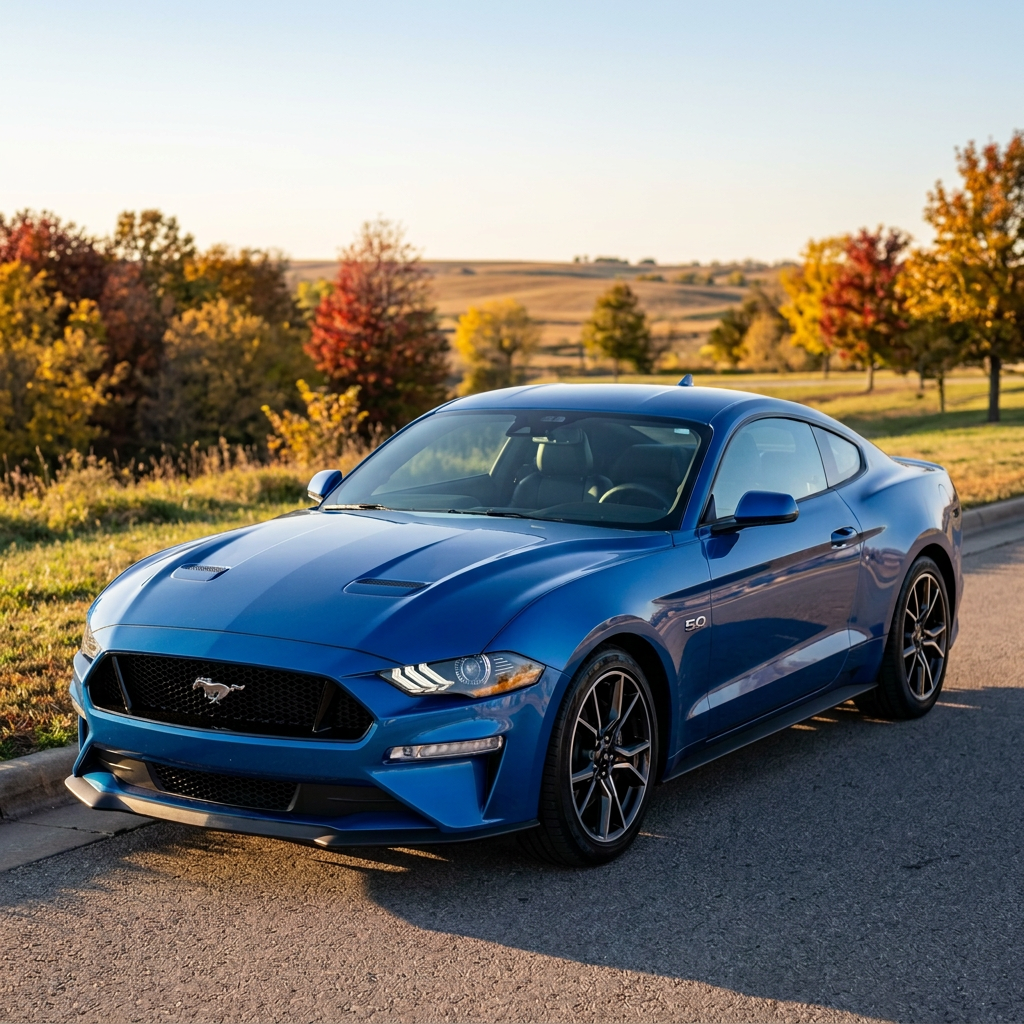
The standard Mustang GT includes a 5L Coyote V8 engine delivering 460 hp and 420 lb-ft of torque, a rev-matching manual 6-speed transmission, upgraded engine oil cooling, dual exhaust with quad tips, and 18-inch aluminum wheels. In comparison, the baseline Mustang EcoBoost features a 2.3L turbocharged engine generating 310 hp and 350 lb-ft of torque paired with a manual 6-speed transmission.
Beyond the raw power output, the hardware architecture sets these two trims apart on the road. The Mustang GT comes equipped from the factory with engine oil cooling capacity designed to manage elevated heat loads during spirited driving, along with larger brake rotors and stiffer spring rates. For drivers choosing the manual 6-speed gearbox, the GT's standard auto rev-matching feature automatically blips the throttle on downshifts for smoother gear transitions, a feature not offered on the standard EcoBoost manual.
Both trims offer distinct enthusiast upgrades to refine their handling dynamics. The EcoBoost can be configured with the High Performance Package, raising output to 330 horsepower and adding a larger radiator, stiffer rear sway bar, and active valve performance exhaust. The Mustang GT offers the GT Performance Package, which adds six-piston front Brembo brakes, Torsen limited-slip differential with a 3.73 axle ratio, additional chassis bracing, and optional MagneRide adaptive damping. Shoppers exploring our model research guides or browsing our pre-owned vehicle inventory often test drive both engines back-to-back to feel how the chassis tuning reacts to the different front-axle engine weights.
Engine & Performance
Powertrain specs by trim
| Feature | EcoBoost Convertible | EcoBoost Coupe | EcoBoost Coupe Premium | EcoBoost Premium Convertible | GT Convertible Premium | GT Coupe |
|---|---|---|---|---|---|---|
| Engine | 2.3L | 2.3L | 2.3L | 2.3L | 5L | 5L |
| Horsepower | 310 hp | 310 hp | 310 hp | 310 hp | 460 hp | 460 hp |
| Torque | 350 lb-ft | 350 lb-ft | 350 lb-ft | 350 lb-ft | 420 lb-ft | 420 lb-ft |
| Transmission | manual 6-speed | manual 6-speed | manual 6-speed | manual 6-speed | manual 6-speed | manual 6-speed |
| Drivetrain | Rear-wheel drive | Rear-wheel drive | Rear-wheel drive | Rear-wheel drive | Rear-wheel drive | Rear-wheel drive |
Engine & Performance (continued)
| Feature | GT Coupe Premium | Mach 1 |
|---|---|---|
| Engine | 5L | 5L |
| Horsepower | 460 hp | 480 hp |
| Torque | 420 lb-ft | 420 lb-ft |
| Transmission | manual 6-speed | TREMEC® |
| Drivetrain | Rear-wheel drive | Rear-wheel drive |
What Iconic Design Upgrades Come with the 2023 Mustang GT California Special?
The 2023 Mustang GT California Special package adds iconic throwback styling cues, including a blacked-out grille with GT/CS badging, prominent side scoops, rear wing spoiler, side body stripes, unique 19-inch machined aluminum wheels, and custom interior trim with suede seat inserts. Designed as a modern tribute to the original 1968 regional dealer edition, this package blends classic Mustang heritage with current GT performance.
Exterior modifications start at the front clip, where the mesh grille is finished in dark gloss with a red GT/CS badge offset on the driver side. Iconic mid-body side scoops are integrated into the rear quarters, paired with a subtle accent stripe running from the front fender down the door. Unique 19-inch painted aluminum wheels feature high-gloss pockets and machined faces, framing the heavy-duty brake calipers underneath.
Inside the cabin, the GT California Special receives door trim panel inserts and seats upholstered in black leather with Miko suede inserts and contrast red stitching. GT/CS floor mats, a red-stitched instrument panel topper, and a unique California Special badge on the passenger-side dashboard complete the package. Drivers considering upgrading their current performance car can start by evaluating their trade-in value online, while existing owners can ensure their performance vehicle stays in peak condition by booking routine vehicle maintenance with our factory-trained technicians.
What Is the Top Speed and Performance Capability of the 2023 Mustang Mach 1?
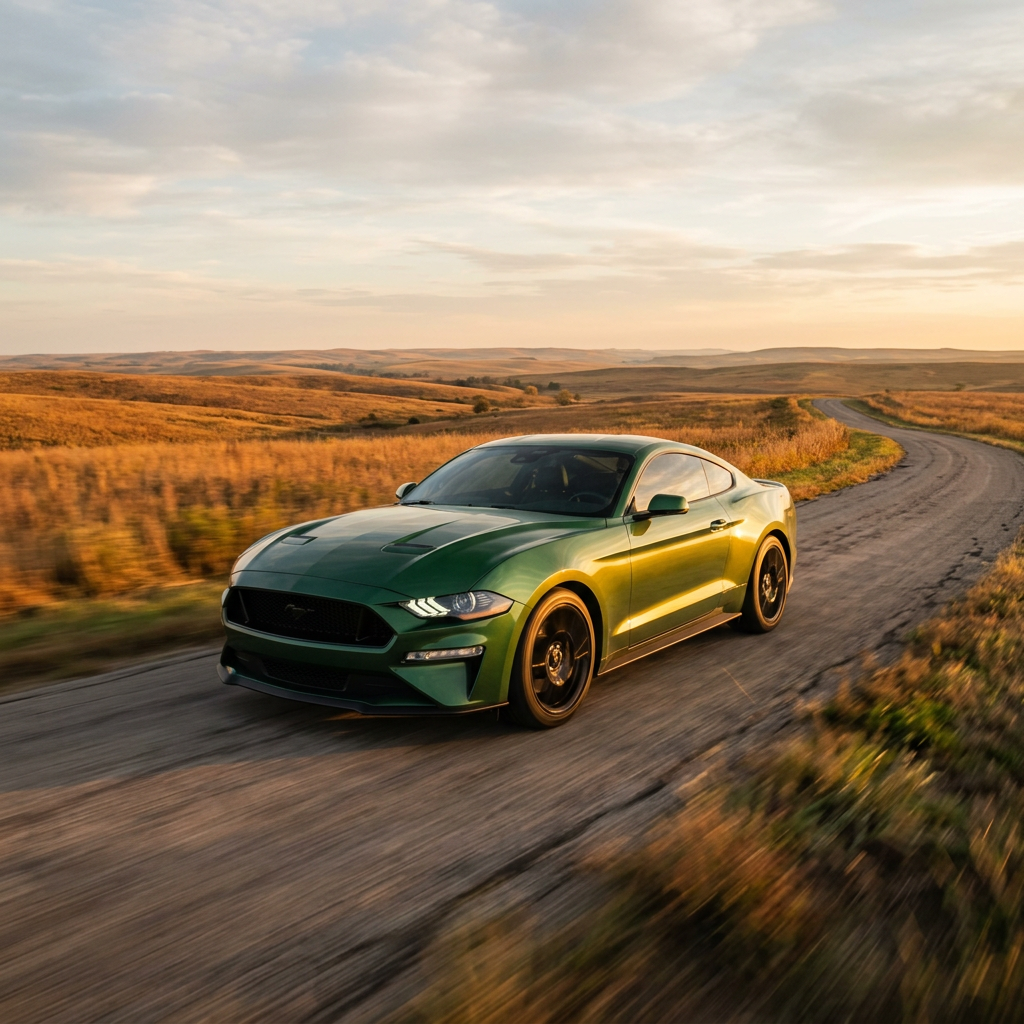
With a naturally aspirated 5L V8 engine delivering 480 hp, the 2023 Mustang Mach 1 reaches an electronically limited top speed near 168 mph, showcasing its track-ready performance. It comes standard with a track-tested TREMEC® manual 6-speed transmission with rev-matching, heavy-duty engine oil and transmission coolers, and a MagneRide adaptive suspension system.
Positioned between the Mustang GT and Shelby variants, the Mach 1 is engineered specifically for track endurance and high-speed cornering stability. The 5L V8 incorporates hardware borrowed from Shelby engineering programs, including an intake manifold with 87-millimeter throttle bodies and an auxiliary engine oil cooler that increases cooling capacity by 50 percent. Aerodynamic additions—such as a deep front splitter, underbody belly pan with air-guide fins, and rear diffuser—generate 150 percent more downforce than a standard GT equipped with the Performance Package.
The chassis configuration utilizes stiffened front and rear sway bars, stiffer front springs, a recalibrated electric power steering rack, and rear subframe bushings derived from the Shelby GT500. Stopping power is managed by six-piston Brembo front calipers clamping down on 15-inch vented rotors. Buyers who are interested in securing a high-performance pony car can begin the purchase path by contacting the dealership for current financing information before stepping into our dealership.
What Is the Real-World Fuel Economy Difference Between the Mustang EcoBoost and GT?
The EPA rates the 2023 Mustang EcoBoost coupe at 21 mpg city / 32 mpg highway with the 10-speed automatic transmission, whereas the Mustang GT coupe with the 5L V8 is EPA-rated at 15 mpg city / 24 mpg highway. In real-world mixed driving, this translates to an average consumption gap of roughly 6 to 8 miles per gallon between the four-cylinder and V8 powertrains.
The efficiency of the 2.3L EcoBoost stems from its twin-scroll turbocharging and direct fuel injection, which allow the engine to operate efficiently under light throttle conditions during daily highway cruising while still delivering quick boost response when accelerating. For commuters covering high annual mileage, the EcoBoost's 21 mpg city / 32 mpg highway rating provides a noticeable reduction in monthly fuel expenses compared to the V8.
Conversely, the 5L Coyote V8 in the Mustang GT requires a higher volume of air and fuel to maintain its performance output. While the 10-speed automatic transmission helps keep engine revs low at highway cruising speeds—allowing disciplined drivers to approach 24 highway mpg—city driving and aggressive throttle inputs quickly pull average fuel economy into the 15 to 17 mpg range. Owners looking to optimize their vehicle's fuel delivery and ignition system over time can easily order genuine Ford parts direct through our dealership service counter.
Fuel Economy
Fuel economy and range by trim
| Trim | MPG |
|---|---|
| EcoBoost Convertible | 20 city / 27 hwy / 23 combined |
| EcoBoost Coupe | 21 city / 29 hwy / 24 combined |
| EcoBoost Coupe Premium | 21 city / 29 hwy / 24 combined |
| EcoBoost Premium Convertible | 20 city / 27 hwy / 23 combined |
| GT Convertible Premium | 15 city / 23 hwy / 18 combined |
| GT Coupe | 15 city / 24 hwy / 18 combined |
| GT Coupe Premium | 15 city / 24 hwy / 18 combined |
| Mach 1 | 14 city / 22 hwy / 17 combined |
Is the 2023 Mustang Chassis Identical to the 2024 Model and How Does Acceleration Compare to the Challenger Scat Pack?
The 2023 Mustang GT built on the S550 chassis shares its core unibody platform architecture with the 2024 S650 model, though the 2024 version received updated steering rack gear ratios, revised suspension mounting points, and increased structural rigidity. In straight-line acceleration, a Mustang GT equipped with the 10-speed automatic achieves a 0-60 mph time of roughly 4.0 seconds, running virtually neck-and-neck with the Dodge Challenger R/T Scat Pack.
While the underlying S550 platform introduced the independent rear suspension architecture that defined modern Mustang handling, the S650 generation modified key chassis pickup points and stiffened the front shock towers. The 2024 steering system also reduced steering rack gear play, shortening the steering ratio from 16.0:1 down to 15.5:1 for quicker turn-in response. However, the 2023 S550 chassis remains exceptionally rigid and predictable during hard cornering, particularly when equipped with MagneRide adaptive dampers.
When benchmarked against muscle car rivals like the Dodge Challenger R/T Scat Pack, acceleration figures are remarkably close. The Challenger's larger 6.4-liter Hemi V8 provides immediate low-end torque, but its heavier overall curb weight offsets that displacement advantage against the high-revving 5L Coyote V8. Where the Mustang GT clearly distinguishes itself is in dynamic chassis balance; the Mustang's lighter curb weight and independent rear suspension make it significantly more agile on tight, winding back roads. Enthusiasts who prefer versatility and go-anywhere capability alongside performance can also explore our new Ford Bronco inventory for all-terrain utility.
How Should Enthusiasts Evaluate Ownership Economics and Test Drives?
Evaluating 2023 Mustang ownership requires looking past the base purchase price to consider total cost of ownership, where an EcoBoost Coupe starts at $27,770 base MSRP (verify current pricing before publishing) and a Mach 1 reaches $55,570 base MSRP (verify current pricing before publishing), with a standard $1,395 destination charge across all trim levels. Factoring in fuel costs, insurance rates, and routine maintenance helps buyers select the ideal trim for their long-term driving habits and budget.
An EcoBoost Coupe Premium at $32,795 base MSRP (verify current pricing before publishing) or an EcoBoost Convertible at $33,270 base MSRP (verify current pricing before publishing) delivers the styling, technology, and rear-wheel-drive dynamics of a true sports coupe with lower daily fuel costs and lower insurance premiums. Upgrading to a GT Coupe at $38,345 base MSRP (verify current pricing before publishing) or a GT Coupe Premium at $43,365 base MSRP (verify current pricing before publishing) increases initial investment but rewards the owner with the signature sound and power of the 5L Coyote V8, along with strong long-term resale value retention. Convertible enthusiasts looking for top-tier features often target the GT Convertible Premium at $48,865 base MSRP (verify current pricing before publishing).
For active-duty service members stationed at Fort Riley who commute daily along highway corridors near Junction City, balancing daily fuel efficiency with weekend performance is a primary consideration. Taking both the EcoBoost and the GT out on a thorough test drive allows you to evaluate road noise, ride stiffness over varying pavement, and cabin ergonomics firsthand. When you are ready to evaluate your options or take a test drive, visit our dealership address or give our sales team a quick call to get started.
Pricing
Pricing by trim
| Trim | base MSRP (verify current pricing before publishing) | Destination charge |
|---|---|---|
| EcoBoost Convertible | $33,270 | $1,395 |
| EcoBoost Coupe | $27,770 | $1,395 |
| EcoBoost Coupe Premium | $32,795 | $1,395 |
| EcoBoost Premium Convertible | $38,295 | $1,395 |
| GT Convertible Premium | $48,865 | $1,395 |
| GT Coupe | $38,345 | $1,395 |
| GT Coupe Premium | $43,365 | $1,395 |
| Mach 1 | $55,570 | $1,395 |