
Blog / Buying Guides

Blog

All Buying Guides Maintenance & Service New Vehicle Reviews Technology & Innovation Financing & Insurance Model Comparisons Safety Features Used Vehicle Guides Seasonal Driving Tips Valor Ford Models Seasonal Vehicle Care Vehicle Ownership Tips New Vehicle Sales Heavy-Duty Truck Care Junction City Towing & Trailer Technology Automotive Parts & Accessories Performance & Powertrain Seasonal Vehicle Maintenance Financing & Incentives Repair & Parts Trade-In & Negotiation Tips KS Community Trade-In & Pre-Approval Processes Valor Ford Service Off-Road Packages & Accessories Vehicle Sales Automotive Repair Parts & Repairs Valor Ford Vehicle Pricing Strategies Vehicle Repair & Parts Vehicle Trade-In Tips Diesel Engine Care Family SUVs Manhattan Ford Dealer Manhattan Ford Service Military & Special Customer Programs Tire Care & Management Agricultural Vehicle Maintenance Automotive Recalls & Repairs Commercial Truck Financing Dealership Transparency Heavy-Duty Truck Guides Heavy-Duty Truck Upkeep Manhattan Used Cars Preventative Vehicle Inspections Technology & Innovation in Truck Service Agricultural Fleet Service Automotive News Certified Pre-Owned Programs Diesel Engine Maintenance Genuine OEM Parts & Accessories Military & Student Moving Tips Service Tips & Guides Vehicle Utility & Cargo Solutions All-Weather Driving & 4x4 Readiness Classic Car Restoration Dealership Promotions & Events Engine & Performance Farm & Ranch Equipment Reviews Genuine Parts & Accessories Hybrid & Electric Vehicles Off-Road & 4x4 Features Winter Driving Tips
How the 2027 Ford Super Duty Pro Trailer Hitch Assist Simplifies Livestock Trailer Hookups

How the 2027 Ford Super Duty Pro Trailer Hitch Assist Simplifies Livestock Trailer Hookups

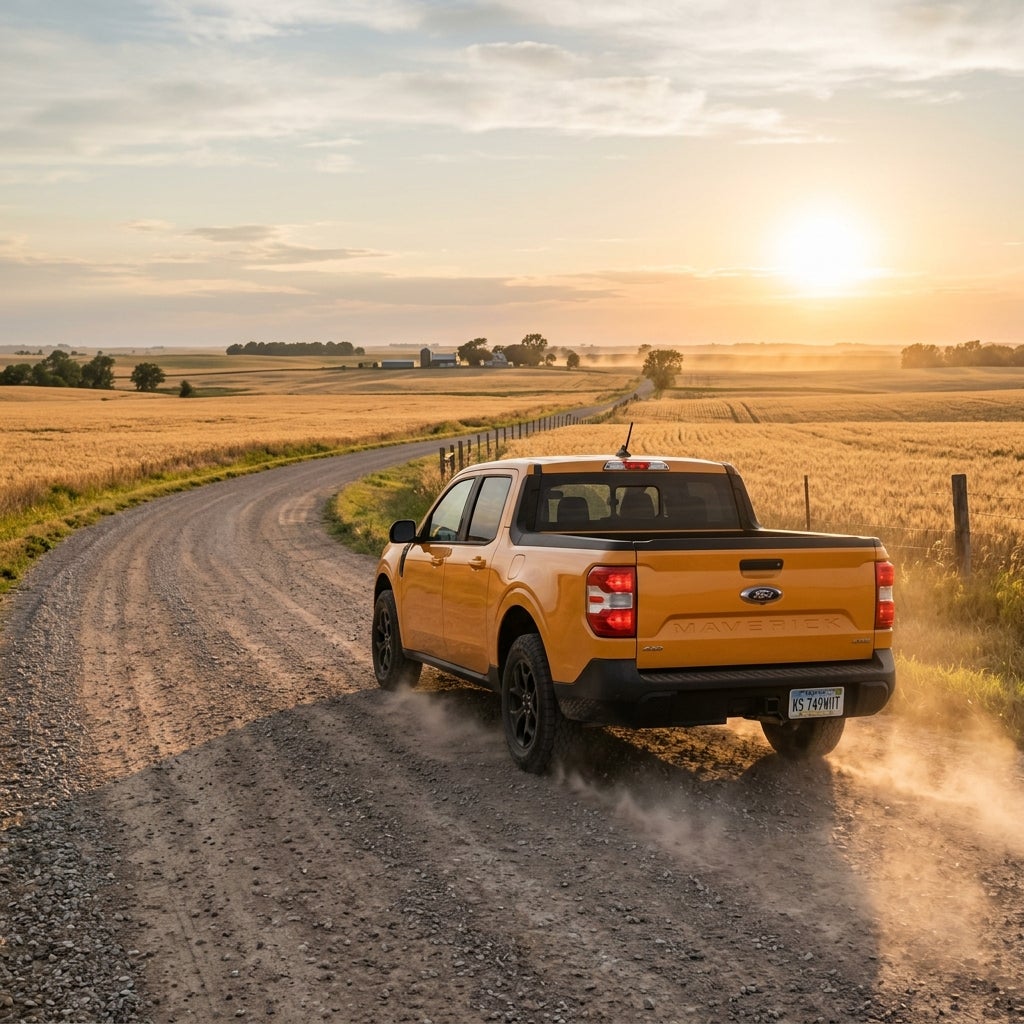
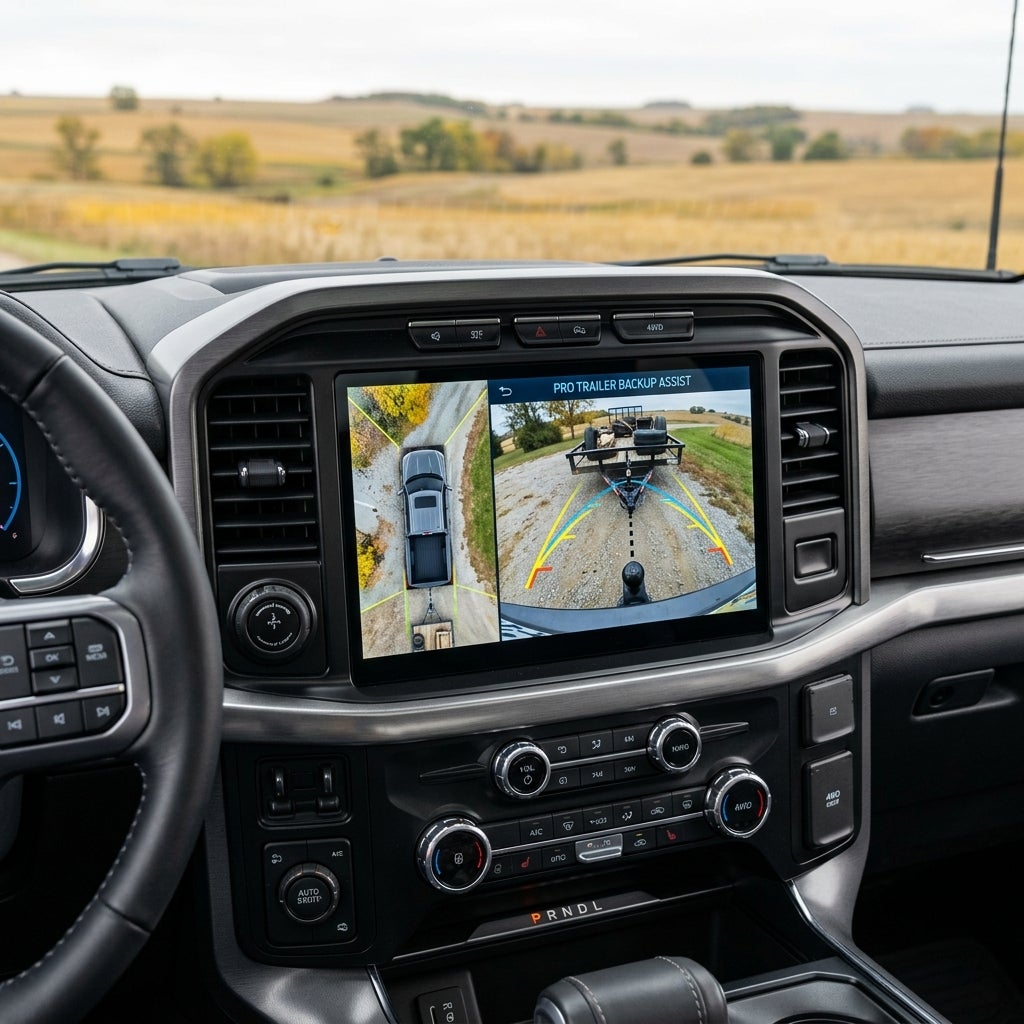
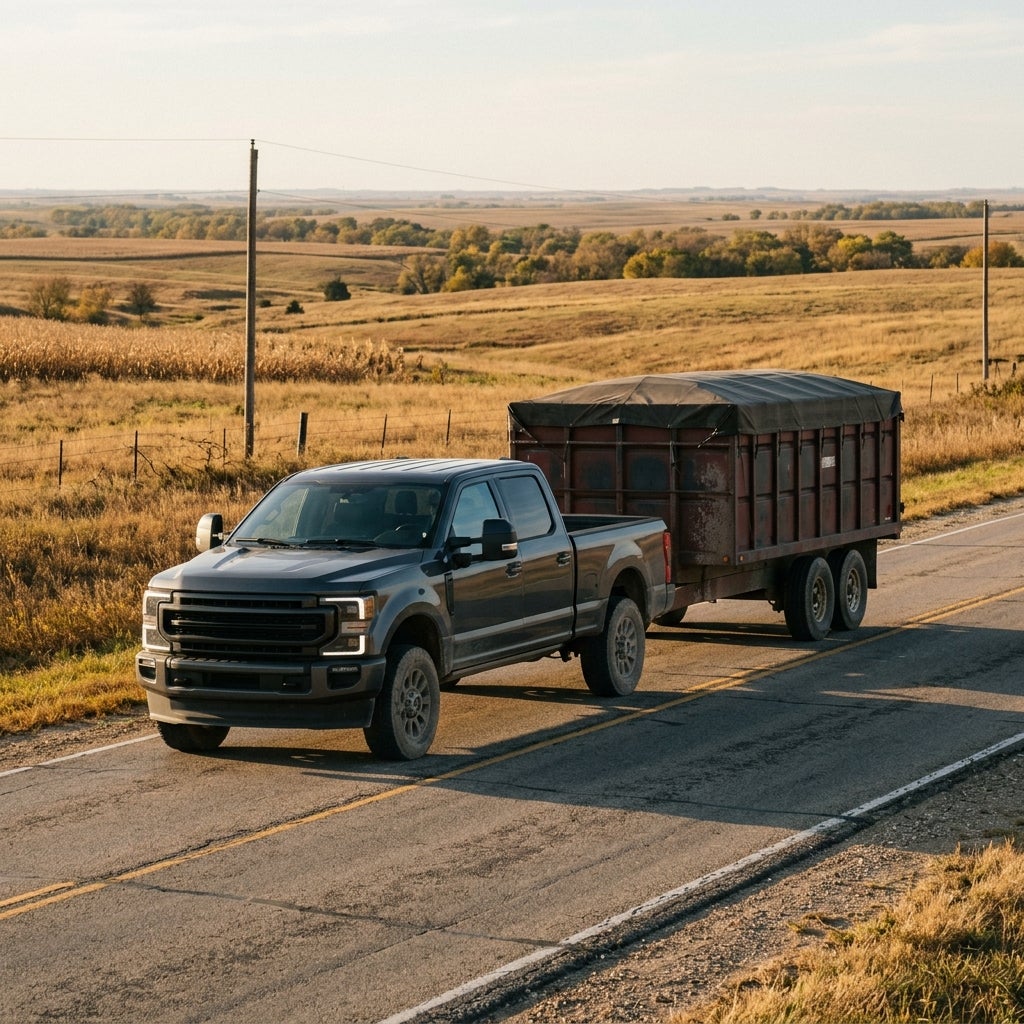
How the 2027 Ford Super Duty Pro Trailer Hitch Assist Simplifies Livestock Trailer Hookups For livestock producers and grain growers across Dickinson County and Geary County, hitching up a heavy stock rig or gooseneck trailer has historically been a tedious, two-person chore or a multi-try solo headache. The 2027 Ford Super Duty Pro Trailer Hitch Assist helps reduce the guesswork and frustration of trailer coupling by utilizing machine-learning computer vision, rear-facing optical cameras, and ultrasonic radar sensors to help guide the truck into alignment with the trailer coupler. Single-operator ranchers working near Junction City no longer need to jump out of the cab five times to check ball alignment, nor do they need a dedicated spotter when hauling cattle out to summer pasture in the Flint Hills. By simply holding down the hitch assist button located on the center console, the Super Duty calculates the trajectory, maneuvers the rear axle, and stops the hitch ball directly under the trailer coupler receiver with millimeter precision. Sensor Technology Behind Hands-Free Cattle Trailer Alignment in Central Kansas At the core of Ford's industry-exclusive Pro Trailer Hitch Assist is an advanced sensor fusion pipeline. The high-definition tailgate camera works in tandem with short-range rear corner radar modules to create a real-time 3D spatial map behind the rear bumper. Sophisticated image-processing algorithms continuously scan for the geometric shape of conventional ball hitches and gooseneck couplers, tracking distance, angle, and height elevation simultaneously. Agricultural environments present tough visual challenges, from dusty barnyards to low-light morning setups before livestock sales. Ford engineers calibrated the visual optics and infrared sensor spectrum so the system reliably locks onto coupler targets even when mud, light rain, or heavy farm dust obscures partial camera views. Whether you are hitching up inside a dimly lit hay barn or out in an unpaved prairie pen, the system maintains crisp detection capabilities. Step-by-Step Guide: Operating Pro Trailer Hitch Assist with Gooseneck and Conventional Stock Rigs Operating the system is intuitive for farmers and fleet operators alike: 1. Position the Vehicle: Reverse your Super Duty to within approximately 20 feet of your livestock trailer coupler. 2. Activate the System: Press and hold the Pro Trailer Hitch Assist button on the center console dashboard. 3. Select Trailer Type: On the SYNC 4 12-inch touchscreen, tap your target coupler type (bumper-pull ball hitch or gooseneck configuration). 4. Hold the Command Button: Keep your finger on the dashboard button while releasing the steering wheel, foot brake, and accelerator. The vehicle will independently steer, shift gears, and control speed. Once the truck comes to a full stop directly underneath the receiver, double-check your height clearance on the bed camera before cranking down the coupler lock ring and attaching your safety chains. Does the 2027 Super Duty Include Built-In Smart Hitch and Onboard Scales for Livestock Safety? Real-Time Smart Hitch Ford's hitch-assist and available towing technologies help provide helpful guidance on the SYNC 4 screen. Ranchers can verify if their gooseneck weight distribution is optimal before hitting highway speeds. Onboard Payload Scales Integrated Smart Scales calculate real-time cargo and livestock weight loaded into the truck bed or stock trailer. Taillight visual LED bars display payload percentage as animals board, preventing overloaded axles. Enhanced Safety & Compliance Uneven animal movement inside a trailer can shift weight dynamics rapidly. Monitoring live payload ensures compliance with Kansas Highway Patrol axle weight limits while reducing trailer sway risks on I-70. Research Ford F-250 Super Duty What Is the Maximum 2027 Ford Super Duty Gooseneck Towing Capacity for Hauling Grain or Livestock? Super Duty Model Max Gooseneck Towing Max Conventional Towing Max Payload Capacity Ford F-250 SRW Up to 23,000 lbs Up to 22,000 lbs Up to 4,268 lbs Ford F-350 SRW Up to 27,000 lbs Up to 25,000 lbs Up to 4,950 lbs Ford F-350 DRW (Dually) Up to 38,000 lbs Up to 28,000 lbs Up to 8,000 lbs Ford F-450 DRW Up to 40,000 lbs Up to 30,000 lbs Up to 8,000 lbs When transporting heavy grain hoppers or double-deck cattle trailers, towing capacity is paramount. The 2027 Ford Super Duty lineup offers extraordinary pulling muscle, capped by the F-450 DRW capable of towing up to 40,000 lbs with a gooseneck setup. Built on a high-strength, fully boxed steel frame engineered with up to 10 crossmembers, the Super Duty withstands extreme torsional twisting encountered when maneuvering fully loaded trailers across rough pastures in Dickinson County. How Do Ford Power Stroke Diesel Torque Ratings Compare to Chevy Duramax Engine Outputs? Ford 6.7L HO Power Stroke Outputting a massive 500 horsepower and 1,200 lb-ft of torque, Ford's High-Output Power Stroke V8 Turbo Diesel is positioned among the leading engines in the heavy-duty truck segment. Chevy 6.6L Duramax Diesel Chevy's 6.6L Duramax V8 produces 470 horsepower and 975 lb-ft of torque, leaving a 225 lb-ft torque gap compared to Ford's flagship High-Output engine output. Flint Hills Mud Performance That low-end 1,200 lb-ft torque advantage makes an enormous difference when pulling 25,000-lb cattle trailers out of sticky red clay pens or pulling heavy loads up steep pasture grades. What Maintenance Is Required for the 6.7L Power Stroke DEF System Prior to Farm Work? Before intense agricultural harvest seasons begin in Central Kansas, proactive maintenance on your Super Duty's Diesel Exhaust Fluid (DEF) system prevents unexpected engine power derating during peak farm operations. Dust, dirt, and moisture accumulation around DEF fill ports can contaminate the fluid, causing premature pump failures or injector clogging. We recommend inspecting DEF fluid quality, replacing DEF tank dosing filters at scheduled intervals, and verifying tank heater assembly operation prior to cold fall mornings. You can easily Schedule Ford Service Today with our factory-trained diesel technicians to help keep your emission systems running properly. Schedule Ford Service Today Fall Grain Harvest & Livestock Transport: Super Duty Towing Inspection Guide for Central Kansas As autumn grain harvest kicks into full swing around Junction City, preparing your heavy-duty truck for high-tonnage hauling is essential for road safety and equipment longevity. A complete pre-harvest inspection ensures your truck and trailer operate as a unified, safe unit under demanding conditions. Essential Pre-Harvest Towing Checklist: • Integrated Trailer Brake Controller: Test gain settings with loaded grain trailers. Re-calibrate gain response on SYNC 4 to match weight shifts. • Tire Load Range Inspection: Verify heavy-duty Load Range E or F tires are inflated to maximum cold PSI ratings to carry heavy tongue loads without sidewall flexing. • Emergency Breakaway Switch: Test pin engagement and battery charge levels on trailer safety breakaway kits before road transit. • 7-Pin & 12-Pin Electrical Harnesses: Clean corrosion from trailer plug contacts and test auxiliary live-feed video connections. • Cooling System Check: Flush engine coolant and check transmission fluid heat exchangers to handle extended heavy-load pulls in warm autumn temperatures. Need genuine replacement brake pads, heavy-duty hitch receivers, or trailer wiring adapters? You can conveniently Order Genuine Ford Parts directly through Valor Ford. What DOT Regulations Apply to Farm Trucks Towing Grain Trailers in Kansas? Navigating Kansas Department of Transportation (KDOT) and Kansas Highway Patrol commercial vehicle enforcement rules can be complex for agricultural producers. In Kansas, covered farm vehicles (CFVs) operated by farmers, family members, or farm employees enjoy specific CDL exemptions when transporting agricultural products, livestock, or machinery within a 150 air-mile radius of the farm. However, if your Gross Combination Weight Rating (GCWR) exceeds 26,001 lbs for non-exempt commercial operations, CDL requirements apply. Additionally, mandatory safety chain cross-latching, operable breakaway brakes, and properly displayed Kansas Farm Vehicle license plates are strictly enforced across Dickinson County highways. Navigating Flint Hills Pastures and Unpaved County Roads with Heavy Agricultural Loads Electronic-Locking Rear Axle Engage the electronic-locking rear differential at the press of a button to send 100% engine torque to both rear wheels when traversing slick prairie mud or steep creek crossings. Engine Exhaust Braking Ford's smart engine exhaust brake uses variable-geometry turbo backpressure to slow heavy livestock trailers on steep downhill grades, dramatically reducing foot brake heat and wear. Prairie Wind Stabilization Advanced Trailer Sway Control uses selective wheel braking and throttle adjustment to counteract sudden crosswinds common across open Central Kansas plains. Browse Used Heavy-Duty Trucks Essential OEM Towing Accessories and Upfits Available at Valor Ford To maximize the capabilities of your 2027 Ford Super Duty, Valor Ford offers a complete range of genuine Ford OEM towing accessories. One favorite among cattle ranchers is the Auxiliary Trailer Camera Kit, which mounts inside your livestock trailer and feeds live HD video directly into your SYNC 4 dashboard display so you can check on animals while driving. Additional popular farm upfits include factory-installed Gooseneck Hitch Prep Packages, heavy-duty spray-in bedliners, wheel well liners, and oversized rubber mud flaps designed to deflect gravel on unpaved county roads. Experience the 2027 Ford Super Duty at Valor Ford in Junction City At Valor Ford, we understand the demanding needs of Central Kansas agriculture. Whether you run a commercial cattle operation or manage a family grain farm, our dedicated commercial truck specialists are here to help you select, configure, and maintain the perfect Super Duty rig. Visit our showroom at 1825 Goldenbelt Blvd, Junction City, KS 66441 to test drive the 2027 Super Duty and experience Pro Trailer Hitch Assist in person. You can get started right now: request a Trade In Evaluation on your current truck, explore flexible financing to Contact us for financing information, or Get Directions to Valor Ford today. Prefer to speak directly with an agricultural truck expert? Call us at (785) 238-5114. Contact us for financing information
Standard 2026 Ford Explorer Active Interior & Tech: Complete Cabin Breakdown

Standard 2026 Ford Explorer Active Interior & Tech: Complete Cabin Breakdown

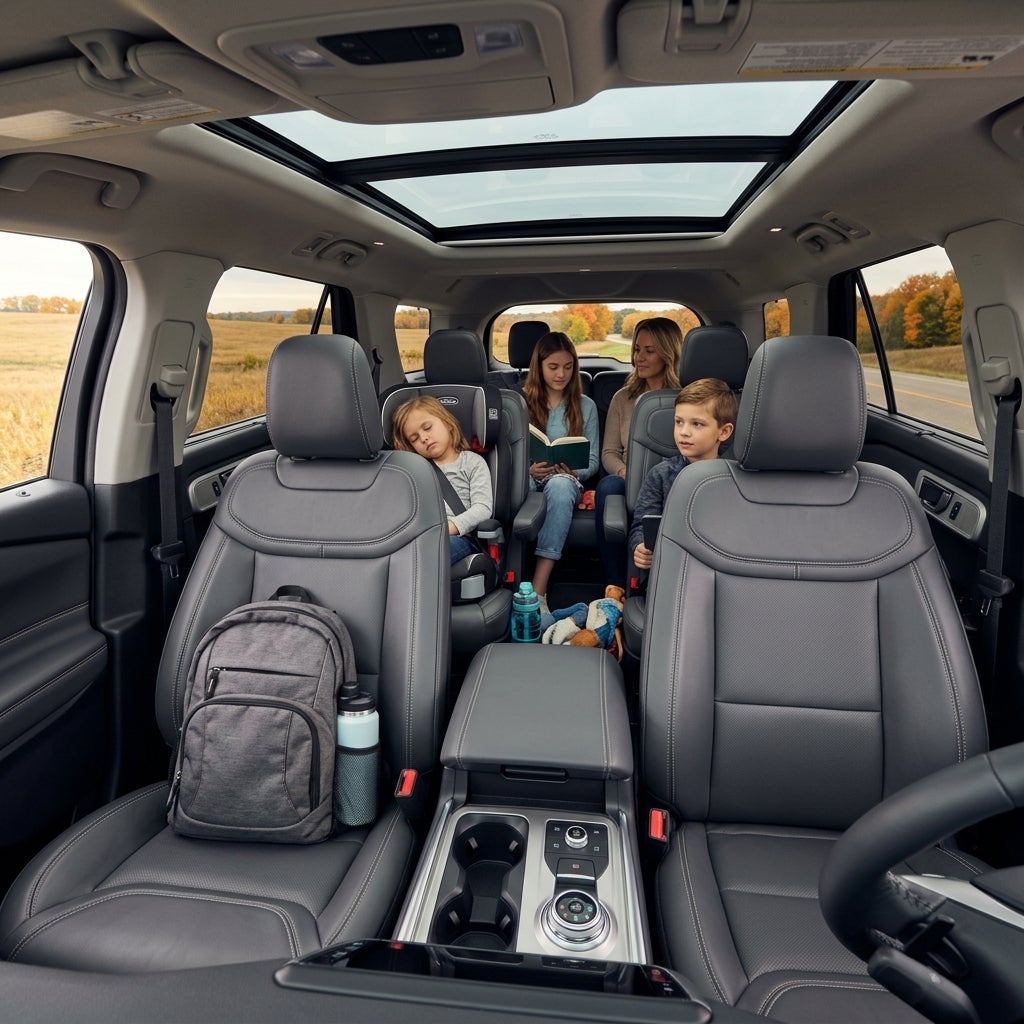
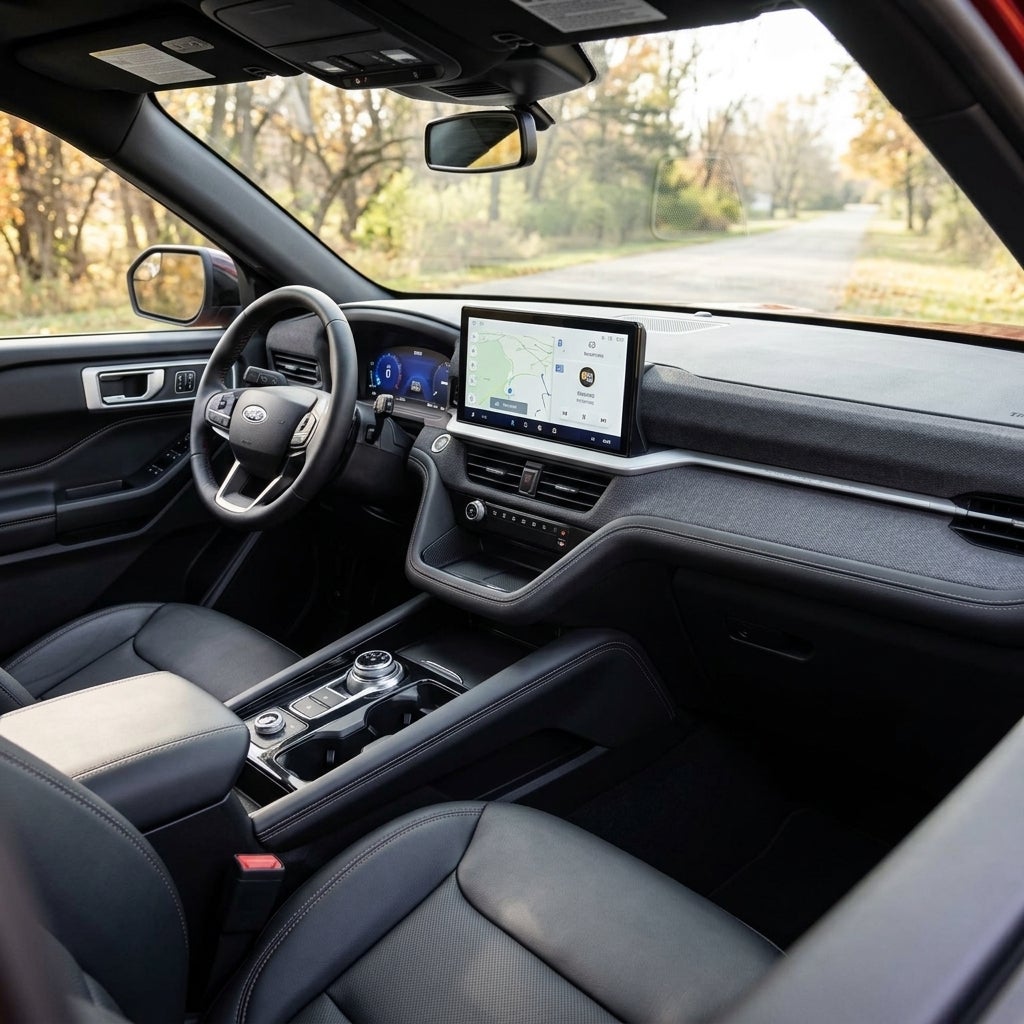
Standard 2026 Ford Explorer Active Interior & Tech: Cabin Overview When evaluating midsize three-row SUVs in central Kansas, savvy Buyers often ask whether entry-level or core trim levels force compromises on connectivity, comfort, or safety. For the 2026 model year, Ford updates expectations with the Explorer Active. Rather than stripping out premium features to keep entry pricing accessible, Ford has engineered the Active trim as a well-equipped foundation that delivers high-end digital architecture and family-focused comfort as standard equipment. At the center of the cabin is the all-new Ford Digital Experience, anchored by a massive 13.2-inch central touchscreen paired with a 12.3-inch fully digital instrument cluster. Wireless Apple CarPlay® and Android Auto™ are standard across the board, eliminating messy cable clutter on your daily commute along I-70 or trips across Dickinson County. Furthermore, every 2026 Explorer Active comes equipped with heated front seats, tri-zone automatic climate control, durable ActiveX® synthetic leather seating surfaces, and the robust Ford Co-Pilot360® suite of advanced safety features. From a total cost of ownership perspective, standardizing these high-tier features means drivers no longer need to jump up two or three trim levels—moving to higher-priced trims—just to get modern technology and winter-ready seating. To explore detailed specifications or check current dealership availability, you can Research Ford Explorer models directly on our site. Meet Nino Williams: 11 Years of Automotive Finance & SUV Valuation Experience Hello! I am Nino Williams, Finance Manager at Valor Ford in Junction City, KS. Over the past 11 years in automotive finance and vehicle valuation, I have analyzed thousands of lease contracts, auto loans, and trade-in appraisals. My daily focus is helping families, military personnel from nearby Fort Riley, and local commuters find the right balance between vehicle capabilities and long-term budgeting. What excites me most about the 2026 Ford Explorer Active is its value. Historically, base or entry-level trims suffered higher relative depreciation because tech-savvy used Buyers passed them over for mid-tier trims. However, because Ford equipped the 2026 Active trim with standard 13.2-inch displays, Google Built-in apps, and full driver-assist suites, it may retain value well. Whether financing through the dealership, Buyers can match the Explorer Active to their needs and budget. What Touchscreens and Digital Displays Come Standard on the 2026 Ford Explorer Active? The cornerstone of the 2026 Ford Explorer Active cabin is the standard Ford Digital Experience system. Centered on the dashboard is a landscape-oriented 13.2-inch touchscreen infotainment display. Unlike legacy screens that required option packages, this expansive interface comes standard on every single Active model leaving the factory. Integrated directly into the system is Google Built-In technology, featuring native Google Maps for real-time traffic updates around Fort Riley and Google Assistant for effortless voice controls. Drivers can manage temperature, change audio channels, or set navigation destinations without taking their hands off the leather-wrapped steering wheel. Directly behind the wheel sits a 12.3-inch digital instrument cluster. This screen replaces physical dials with customizable high-resolution gauges, safety alerts, fuel economy data, and turn-by-turn navigation prompts. Coupled with standard 5G LTE Wi-Fi hotspot capability (supporting up to 10 devices), the Explorer Active transforms into a connected mobile space for road trips. Ergonomically, Ford raised the screen position higher on the dash, bringing critical information closer to the driver's natural line of sight. Wireless smartphone charging and multiple USB-C ports in both the front and second rows ensure everyone stays powered up on extended drives across Kansas. Standard Interior Seating Materials, Cargo Space, and Comfort Specs in the Explorer Active Premium ActiveX® Seating The 2026 Explorer Active comes standard with high-durability ActiveX® synthetic leather seating surfaces. Resistant to stains and easy to clean after weekend trips to Milford Lake, ActiveX® combines luxury texture with everyday practical resilience. 7-Passenger Versatility Configured standard with a 10-way power driver seat, 4-way power front passenger seat, heated front seating elements, and EZ Entry second-row 35/30/35 bench seating, accessing the third row for kids or guests is effortless. Interior Dimension / Spec 2026 Ford Explorer Active Standard Rating Seating Capacity 7 Passengers (Standard) Front Headroom / Legroom 40.7 in / 43.0 in Second Row Legroom 39.0 in Third Row Legroom 32.2 in Cargo Volume Behind 3rd Row 18.2 cu. ft. Max Cargo Volume (Seats Folded) 85.8 cu. ft. Contact Us for Current Financing Information What Engine Comes Standard in the 2026 Ford Explorer Active? Under the hood, every 2026 Ford Explorer Active comes equipped with Ford's proven 2.3-liter EcoBoost® turbocharged inline 4-cylinder engine. Engineered for low-end torque responsiveness and high-altitude efficiency, this powertrain produces an impressive 300 horsepower and 310 lb-ft of torque. Mated to a smooth-shifting 10-speed automatic transmission, the 2.3L EcoBoost delivers quick acceleration off the line while maintaining relaxed cruising RPMs on Kansas highways. Selectable Drive Modes (Normal, Eco, Sport, Tow/Haul, Slippery) allow drivers to tailor shift logic and throttle response instantly. From my finance and valuation perspective, the 2.3L EcoBoost strikes a strong balance between overall ownership cost, fuel efficiency, and long-term mechanical reliability. It uses standard unleaded fuel while delivering class-leading horsepower among standard 4-cylinder competitive engines. If you are considering trading in your current vehicle to upgrade to this impressive powertrain, you can complete a quick Trade In Evaluation online with Valor Ford. How Much Extra Does All-Wheel Drive Cost on the 2026 Ford Explorer Active? The standard configuration for the 2026 Ford Explorer Active is rear-wheel drive (RWD), which offers excellent dynamic handling balance and optimized fuel efficiency. However, for drivers handling icy Kansas winters or unpaved rural roads, Ford offers its Intelligent 4WD system as an available option. Contact the dealership for current financing information. From an equity perspective, Intelligent 4WD vehicles retain a higher percentage of their initial option cost upon trade-in in Midwestern markets, making it a practical long-term choice. What Is the Maximum Towing Capacity of the 2026 Ford Explorer Active? 5,000 lbs Tow Rating Every 2026 Ford Explorer Active comes equipped with a standard Class III Trailer Tow Package, rating the SUV to haul up to 5,000 pounds when properly configured. Built-in Tow Tech The package includes a factory hitch receiver, 4-pin/7-pin wiring harness connectors, and integrated Trailer Sway Control to keep boat or camper trailers stable at highway speeds. Real-World Utility Whether towing ski boats to Milford Lake or pulling enclosed utility trailers for weekend projects around Junction City, the Explorer Active handles heavy loads with confidence. Browse Used Inventory Finance Manager Insights: Why the Active Trim Offers Strong Value for Buyers "In my 11 years managing automotive finance portfolios, I consistently evaluate vehicle total cost of ownership—which includes interest, insurance rates, and future trade equity. The 2026 Explorer Active is what I call a 'feature-rich trim.' In prior years, base models lacked core screens or power comfort features, forcing Buyers to move up to higher trims and pay more. With the 2026 Active, you get the giant 13.2-inch display, heated ActiveX seating, 300 horsepower, and 5,000 lbs towing as baseline equipment. You may review current financing options without sacrificing a single everyday comfort." — Nino Williams, Finance Manager at Valor Ford How Does the 2026 Ford Explorer Active Compare to the Honda Pilot? When comparing the 2026 Ford Explorer Active to the Honda Pilot LX/EX-L trim levels, key technical and digital differences can be reviewed. The standard Honda Pilot LX includes a modest 7-inch display screen, whereas the Explorer Active comes standard with a massive 13.2-inch central display. Under the hood, the Explorer Active's 2.3L EcoBoost engine produces 310 lb-ft of torque starting low in the RPM band, giving it comparable off-the-line capability than the Pilot's naturally aspirated 3.5L V6 (262 lb-ft torque). Feature 2026 Ford Explorer Active 2026 Honda Pilot LX / EX-L Standard Display Screen 13.2-inch Touchscreen 7-inch / 9-inch Display Standard Torque 310 lb-ft @ 3,000 RPM 262 lb-ft @ 5,000 RPM Standard Digital Cluster 12.3-inch Full Digital 7-inch Partial Digital Max Towing Capacity 5,000 lbs (Standard) 3,500 lbs (Standard 2WD) How Does the 2026 Ford Explorer Active Compare to the Toyota Highlander? Another comparison vehicle is the Toyota Highlander. While the Highlander remains a popular choice, entry Highlander models standardly equip an 8-inch screen compared to the 13.2-inch screen standard on the Explorer Active. Crucially for growing families, the Explorer Active offers significantly more third-row legroom (32.2 inches vs Highlander's 28.0 inches). Furthermore, the Explorer Active delivers 300 horsepower standard compared to Highlander's 265 horsepower turbocharged 4-cylinder engine. Research Ford Explorer Models Expert Guide: 2026 Ford Explorer Active Capabilities & Practical Buyer Advice Military Family Practicality For military personnel stationed at Fort Riley experiencing frequent relocations, the standard 86 cu. ft. max cargo capacity and robust ActiveX® durability make packing up household gear and pets straightforward. Highway Commuter Tech Standard Google Built-In navigation and wireless CarPlay allow effortless hands-free calling and real-time route rerouting, keeping long highway drives focused and safe. All-Season Safety Confidence Ford Co-Pilot360® includes Pre-Collision Assist with Automatic Emergency Braking, Blind Spot Information System (BLIS®), and Lane-Keeping assist standard. Navigating Financing, Online Credit Pre-Approval, and Trade-Ins at Valor Ford At Valor Ford, our finance team streamlines your purchasing journey. You can complete our secure online application to Contact Us for Current Financing Information in minutes before stepping foot on our lot. This helps you discuss current financing options and simplify budgeting. If you plan to apply equity from your current vehicle toward down payment requirements, use our convenient online tool for a Trade In Evaluation. We offer trade-in support to help with your purchase. We also work closely with military members and local credit unions across central Kansas to discuss current financing options. Feel free to Call us at (785) 238-5114 with any specific financing or trade-in questions. For routine vehicle maintenance down the road, our certified service technicians are here to help. You can easily Schedule Ford Service Today with our team. Test Drive the 2026 Ford Explorer Active at Valor Ford in Junction City, KS Ready to experience the standard 13.2-inch digital display, smooth EcoBoost performance, and spacious third-row seating of the 2026 Ford Explorer Active for yourself? Visit our showroom at 1825 Goldenbelt Blvd, Junction City, KS 66441. Get Directions to Valor Ford or give us a call at (785) 238-5114 to schedule your personalized test drive today. Contact Us for Current Financing Information

My Deep Dive into 2023 Ford Mustang Engines and Transmissions

My Deep Dive into 2023 Ford Mustang Engines and Transmissions

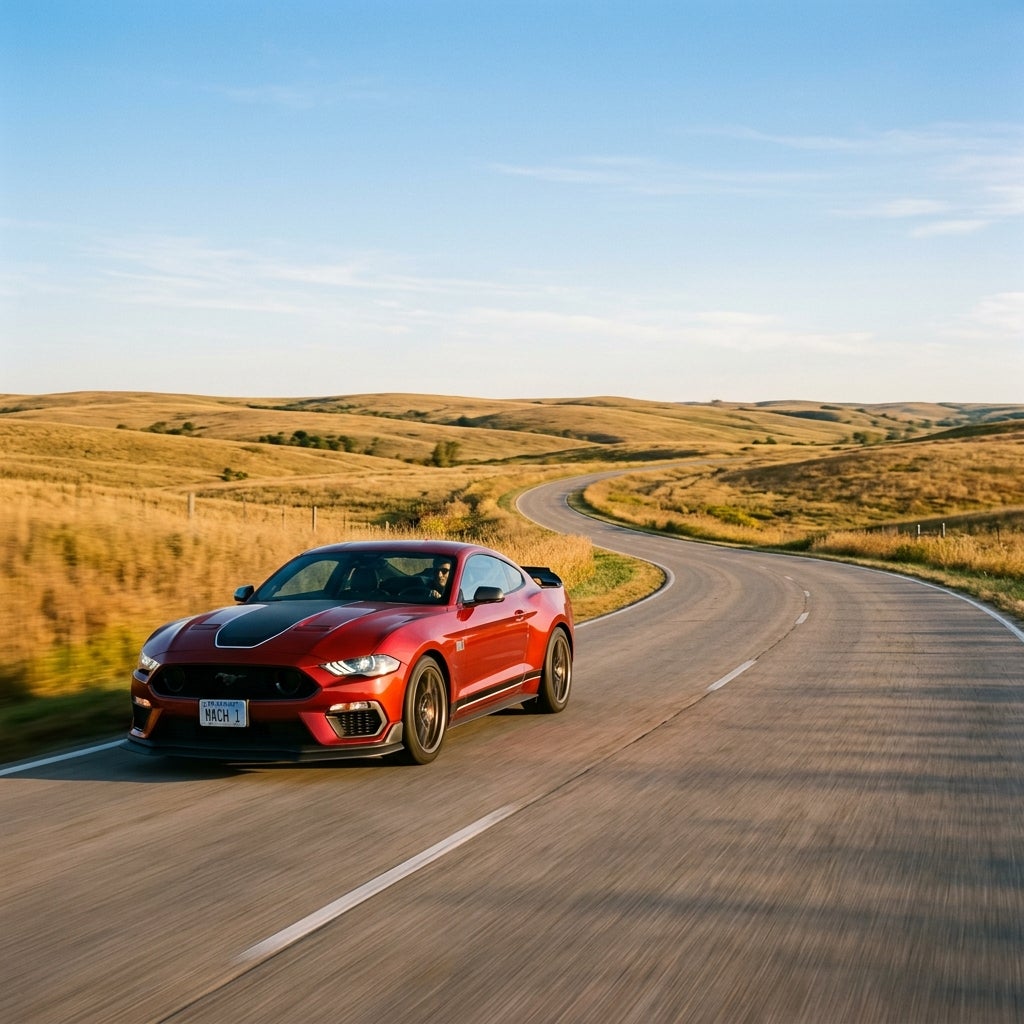
My Deep Dive into 2023 Ford Mustang Engines and Transmissions Does the 2023 Mustang GT Require Premium Fuel to Reach Peak Performance? The 2023 Ford Mustang GT does not require premium fuel to operate safely, as its naturally aspirated 5.0-liter Coyote V8 engine runs without issue on standard 87-octane regular unleaded gasoline. However, running regular fuel reduces output slightly below the factory-rated 450 horsepower and 410 lb-ft of torque, and Ford notes premium fuel may help achieve peak performance. Modern engine control modules continuously adjust spark timing based on knock sensor feedback. When you fill up with 87-octane regular unleaded, the PCM detects the lower octane threshold and advances ignition timing slightly less aggressively under heavy acceleration. On daily drives along the open stretch of I-70 near Junction City, most drivers will hardly notice the modest drop in peak top-end power. The dual-fuel injection system—combining high-pressure direct injection and low-pressure port fuel injection—keeps fuel delivery crisp and efficient regardless of the fuel grade you choose at the pump. When maximum acceleration or track performance is required, switching to 93-octane unleaded allows the 5.0-liter Coyote V8 to unleash its full potential all the way to its 7,500 rpm redline. Drivers seeking peak quarter-mile times or maximum throttle response during high-rpm passing maneuvers will benefit from filling up with premium fuel prior to spirited driving. If you ever have technical questions about fuel requirements or routine maintenance, you can visit our showroom on Goldenbelt Boulevard or give our sales team a quick call to chat with our staff. Table of Contents What Are the 2023 Mustang EcoBoost Engine Outputs and Transmission Choices? How Does the 10-Speed Automatic Transmission Perform Across 2023 Mustang Powertrains? What Transmission Options Are Offered on the Track-Focused 2023 Ford Mustang Mach 1? What Drive Modes and Launch Control Features Affect 2023 Mustang Transmission Performance? What Real-World Fuel Economy Can You Expect From Each 2023 Mustang Engine Option? How to Choose the Right 2023 Mustang Performance Configuration What Are the 2023 Mustang EcoBoost Engine Outputs and Transmission Choices? The base 2023 Ford Mustang EcoBoost features a turbocharged 2.3-liter turbocharged four-cylinder engine generating 310 horsepower and 350 lb-ft of torque, paired standard with a 6-speed manual transmission or an optional 10-speed SelectShift automatic. Upgrading to the High Performance Package increases power to 330 horsepower while keeping torque at 350 lb-ft. A twin-scroll turbocharger allows the four-cylinder powertrain to deliver its maximum 350 lb-ft of torque low in the rev range at 3,000 rpm. This low-end pull provides quick throttle response off the line without requiring high engine speeds. Furthermore, placing a lighter turbocharged four-cylinder over the front axle reduces curb weight by nearly 200 pounds compared to V8-equipped models. This weight reduction gives the EcoBoost sharp turn-in response when navigating the rolling Flint Hills roads surrounding Fort Riley. Transmission availability on the EcoBoost gives drivers two distinct control styles: 6-speed manual: Standard on fastback and convertible trims, featuring positive gear engagement, a balanced clutch pedal weight, and standard hill start assist. 10-speed SelectShift automatic: Optional across all EcoBoost trims, featuring steering-wheel-mounted paddle shifters and adaptive shift algorithms that adjust shift speed to driver inputs. Drivers looking for balanced performance and modern capability across our lineup can also check out our new Ford Bronco inventory to see how turbocharged EcoBoost power performs in off-road vehicles. Engine & Performance Powertrain specs by trim Feature EcoBoost Convertible EcoBoost Coupe EcoBoost Coupe Premium EcoBoost Premium Convertible Engine 2.3L 2.3L 2.3L 2.3L Horsepower 310 hp 310 hp 310 hp 310 hp Torque 350 lb-ft 350 lb-ft 350 lb-ft 350 lb-ft Transmission manual 6-speed manual 6-speed manual 6-speed manual 6-speed Drivetrain Rear-wheel drive Rear-wheel drive Rear-wheel drive Rear-wheel drive Engine & Performance (continued) Feature GT Convertible Premium GT Coupe GT Coupe Premium Mach 1 Engine 5L 5L 5L 5L Horsepower 460 hp 460 hp 460 hp 480 hp Torque 420 lb-ft 420 lb-ft 420 lb-ft 420 lb-ft Transmission manual 6-speed manual 6-speed manual 6-speed TREMEC® Drivetrain Rear-wheel drive Rear-wheel drive Rear-wheel drive Rear-wheel drive How Does the 10-Speed Automatic Transmission Perform Across 2023 Mustang Powertrains? Ford's optional 10-speed SelectShift automatic transmission utilizes closely spaced gear ratios and real-time adaptive shift scheduling to keep both the turbocharged four-cylinder and V8 engines in the heart of their power bands. By offering ten forward speeds, the transmission optimizes off-the-line acceleration through low first-gear ratios while providing wide overdrive gearing for efficient highway cruising. During aggressive driving, the 10-speed automatic skips intermediate gears during downshifts, jumping directly from tenth to fifth or seventh to third when you stomp the accelerator pedal. Mounted paddle shifters allow manual gear selection whenever you want full control over shift points. Real-world testing shows that models equipped with the 10-speed automatic achieve faster 0-60 mph sprint times than equivalent manual-transmission models due to continuous torque delivery between rapid gear shifts. To ensure your drivetrain maintains shift quality and peak power transfer over time, remember to schedule a service appointment online for routine transmission fluid checks and factory inspection services. What Transmission Options Are Offered on the Track-Focused 2023 Ford Mustang Mach 1? The track-oriented 2023 Ford Mustang Mach 1 comes standard with a heavy-duty TREMEC TR-3160 6-speed manual transmission featuring rev-matching and a dual-disc clutch, while a custom-calibrated 10-speed SelectShift automatic is available as an option. Powering the Mach 1 is a naturally aspirated 5.0-liter Coyote V8 producing 470 horsepower and 410 lb-ft of torque. The TREMEC TR-3160 6-speed manual is specifically engineered for high-rpm track durability. Unlike standard manual gearboxes, the TREMEC unit incorporates an external oil cooler, aggressive gear engagement teeth, and a short-throw shifter for precise gear changes under heavy lateral loads. Driver-selectable rev-matching blips the throttle automatically on downshifts, matching engine rpm to transmission speed for smooth rear-axle stability during hard braking into corners. Key mechanical performance upgrades on the Mach 1 include: Heavy-duty engine oil, transmission oil, and differential coolers borrowed from Shelby performance engineering. Standard MagneRide Damping System that adjusts shock stiffness thousands of times per second based on cornering loads. Optional track-calibrated 10-speed automatic with customized shift logic for high-speed circuit driving. If you are looking for high-performance pre-owned sports cars, explore our pre-owned vehicle inventory, browse our Ford Mustang research guides, or value your trade online to begin your upgrade. What Drive Modes and Launch Control Features Affect 2023 Mustang Transmission Performance? The 2023 Mustang features Selectable Drive Modes —including Normal, Sport+, Track, Drag Strip, and Snow/Wet—that electronically recalibrate throttle mapping, steering weighting, and automatic transmission shift points. Manual-transmission Mustang GT and Mach 1 models come equipped with standard electronic launch control integrated into the digital gauge cluster to manage wheel spin during hard launches. When you select Drag Strip mode on models with the 10-speed automatic, the transmission holds gears longer and executes full-throttle shifts without dropping engine boost or rpm between gear changes. This gear-hold strategy minimizes acceleration loss during quarter-mile runs. Track mode speeds up downshift response during hard braking and holds lower gears through turns to ensure power is immediately available upon apex exit. Standard Track Apps built into the instrument cluster provide tools for performance tracking: Electronic launch control: Allows drivers to set engine launch rpm between 3,000 and 4,500 rpm for consistent traction off the line. Electronic Line Lock: Locks the front brakes while leaving the rear wheels free to spin, making rear tire warming straightforward before drag strip passes. Acceleration timers: Measures 0-60 mph, 0-100 mph, and quarter-mile elapsed times in real time. When preparing to finance a performance coupe, you can get pre-approved for financing online to streamline your buying process before visiting our showroom. What Real-World Fuel Economy Can You Expect From Each 2023 Mustang Engine Option? The 2023 Ford Mustang EcoBoost fastback with the 10-speed automatic earns an EPA rating of 20 city / 27 hwy mpg (and up to 22 mpg combined), making it the most fuel-efficient model in the lineup. Mustang GT models equipped with the 5.0-liter Coyote V8 and 10-speed automatic yield an EPA-estimated 15 city / 24 hwy mpg. Choosing a 6-speed manual transmission on V8 models drops highway ratings slightly to 23 mpg highway, while opting for track-focused upgrades like the High Performance Package or Mach 1 handling packages lowers overall highway efficiency due to wider performance tires and aggressive rear axle gearing. On long-distance highway cruises, the wide overdrive ratios of the 10-speed automatic allow the V8 engine to settle under 1,800 rpm at 70 mph, helping drivers achieve their highway fuel economy estimates. To keep your powertrain operating at maximum efficiency, you can order genuine Ford performance parts and factory air filters directly through our dealership. Fuel Economy Fuel economy and range by trim Feature EcoBoost Convertible EcoBoost Coupe EcoBoost Coupe Premium EcoBoost Premium Convertible MPG 20 city / 27 hwy / 23 combined 21 city / 29 hwy / 24 combined 21 city / 29 hwy / 24 combined 20 city / 27 hwy / 23 combined Fuel Economy (continued) Feature GT Convertible Premium GT Coupe GT Coupe Premium Mach 1 MPG 15 city / 23 hwy / 18 combined 15 city / 24 hwy / 18 combined 15 city / 24 hwy / 18 combined 14 city / 22 hwy / 17 combined How to Choose the Right 2023 Mustang Performance Configuration Selecting the ideal 2023 Mustang performance configuration comes down to how you plan to drive your car day to day. If your priority is a nimble daily commuter with punchy low-end torque and impressive fuel economy, the EcoBoost starting at $27,770 base MSRP offers exceptional value. Enthusiasts seeking traditional muscle car sound and 450 horsepower will find the Mustang GT starting at $38,345 base MSRP to be the strong option in the lineup. For drivers who demand track-ready durability, high-rpm cooling, and 470 horsepower, the Mach 1 starting at $55,570 base MSRP represents the top performance trim of the S550 chassis generation. Every 2023 Mustang is backed by Ford's standard 3-year/36,000-mile bumper-to-bumper warranty and 5-year/60,000-mile powertrain warranty for long-term peace of mind. Whenever you are ready to compare Mustang engine notes, test drive different transmission options, or inspect our pre-owned performance inventory, visit our showroom on Goldenbelt Boulevard or call our team directly. We look forward to helping you find the perfect Mustang setup. Pricing Pricing by trim Feature EcoBoost Convertible EcoBoost Coupe EcoBoost Coupe Premium EcoBoost Premium Convertible Base MSRP $33,270 $27,770 $32,795 $38,295 Destination charge $1,395 $1,395 $1,395 $1,395 Pricing (continued) Feature GT Convertible Premium GT Coupe GT Coupe Premium Mach 1 Base MSRP $48,865 $38,345 $43,365 $55,570 Destination charge $1,395 $1,395 $1,395 $1,395 © 2026 Valor Ford. All rights reserved. Vehicle specification data © JATO Dynamics Limited.

Which 2023 Ford Mustang Trim Offers the Best Performance?

Which 2023 Ford Mustang Trim Offers the Best Performance?

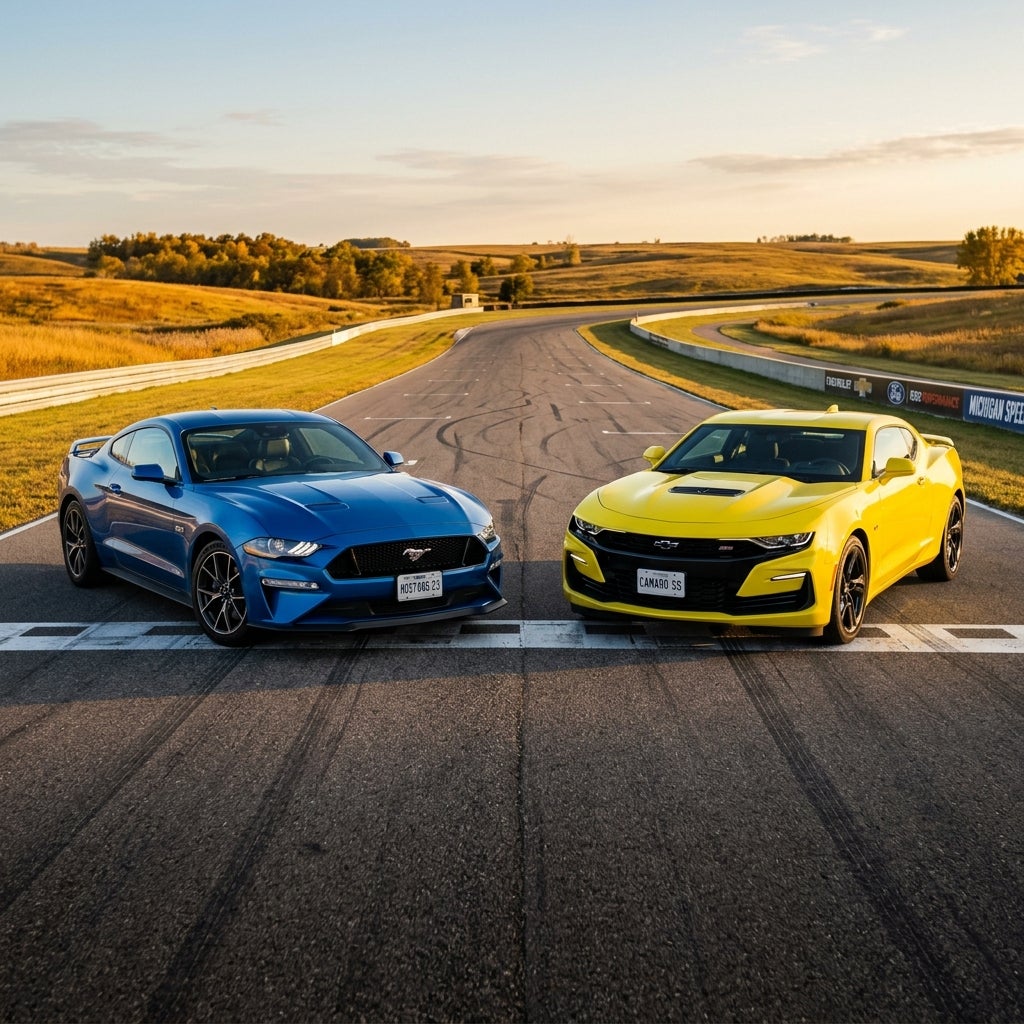
Which 2023 Ford Mustang Trim Offers the Best Performance? The 2023 Ford Mustang Mach 1 delivers the highest overall performance in the lineup, featuring a track-tuned 5.0-liter Coyote V8 engine producing 470 horsepower and 410 lb-ft of torque, heavy-duty cooling components borrowed from the Shelby GT500, and an available TREMEC 6-speed manual transmission that enhances driving precision and durability. For everyday road driving, the Mustang GT equipped with the GT Performance Package offers the ideal balance of street muscle, handling sharpness, and features. Ford engineered the 2023 Mustang—the final model year of the sixth-generation S550 platform—across three distinct performance tiers. Entry-level models rely on an efficient turbocharged four-cylinder, while the GT and Mach 1 trims bring back traditional American V8 muscle. Every 2023 Mustang comes standard with rear-wheel drive, standard seating for four passengers, and a choice between a traditional six-speed manual or a fast-shifting 10-speed automatic transmission. Starting at a base MSRP of $33,270 when new, the 2023 Mustang fastback line offers performance enthusiasts multiple entry points depending on driving goals and needs. Whether you prioritize daily fuel economy or weekend track capabilities, our sales team at Valor Ford can walk you through available pre-owned models on our lot. Drivers looking for pre-owned sports cars can find our showroom location in Junction City or give our staff a quick call to check current inventory. Table of Contents What Engine Options and High-Performance Packages Are Available for the 2023 Ford Mustang? What Engine Output and Transmission Options Does the 2023 Mustang GT Offer? How Does the 2023 Mustang Mach 1 Powertrain Differ From the Standard GT? Can You Shift Manually With the 10-Speed Automatic and How Does Mustang Trunk Space Compare to the Camaro? Quick Answers to Common 2023 Ford Mustang Performance Questions Experience Pre-Owned 2023 Ford Mustang Power at Valor Ford What Engine Options and High-Performance Packages Are Available for the 2023 Ford Mustang? The 2023 Ford Mustang features two core powertrains: a 2.3-liter EcoBoost turbocharged four-cylinder producing 310 horsepower and 350 lb-ft of torque (elevated to 330 horsepower with the 2.3L High Performance Package), and a naturally aspirated 5.0-liter Coyote V8 delivering 450 horsepower in the Mustang GT or 470 horsepower in the Mach 1. Primary factory upgrades include the GT Performance Package and the EcoBoost Handling Package. The entry-level engine uses a twin-scroll turbocharger paired with direct fuel injection. By spooling quickly down low, the four-cylinder develops its full 350 lb-ft of torque at just 3,000 RPM, delivering strong off-the-line throttle response. Because the four-cylinder motor places nearly 200 pounds less weight over the front axle compared to V8 models, EcoBoost coupes feel exceptionally nimble in tight cornering maneuvers. For drivers maneuvering along the Kansas River plain near Junction City, the EcoBoost's agile turn-in response makes daily driving engaging without sacrificing fuel economy. For drivers seeking maximum athletic posture, Ford offered dedicated package upgrades across the trim structure: 2.3L High Performance Package: Upgrades the EcoBoost engine to 330 horsepower using a larger twin-scroll turbocharger compressor, adding active exhaust, larger Brembo front brakes, and GT-derived suspension tuning. EcoBoost Handling Package: Adds MagneRide active damping, a Torsen limited-slip differential, wider aluminum wheels, and sticky Pirelli performance tires to four-cylinder coupe models. GT Performance Package: Equips the 5.0L V8 with heavy-duty Brembo six-piston front brake calipers, K-brace chassis stiffening, a Torsen differential with 3.73 rear axle gearing, unique EPAS tuning, and stiffer front springs. Shoppers interested in exploring broader lineup capabilities can research Ford Mustang model generations alongside our new Ford Bronco lineup to find the ideal performance fit for their garage. Engine & Performance Powertrain specs by trim Feature EcoBoost Convertible EcoBoost Coupe EcoBoost Coupe Premium EcoBoost Premium Convertible:--:--:--:--:-- Engine 2.3L 2.3L 2.3L 2.3L Horsepower 310 hp 310 hp 310 hp 310 hp Torque 350 lb-ft 350 lb-ft 350 lb-ft 350 lb-ft Transmission manual 6-speed manual 6-speed manual 6-speed manual 6-speed Drivetrain Rear-wheel drive Rear-wheel drive Rear-wheel drive Rear-wheel drive Engine & Performance (continued) Feature GT Convertible Premium GT Coupe GT Coupe Premium Mach 1:--:--:--:--:-- Engine 5L 5L 5L 5L Horsepower 460 hp 460 hp 460 hp 480 hp Torque 420 lb-ft 420 lb-ft 420 lb-ft 420 lb-ft Transmission manual 6-speed manual 6-speed manual 6-speed TREMEC® Drivetrain Rear-wheel drive Rear-wheel drive Rear-wheel drive Rear-wheel drive What Engine Output and Transmission Options Does the 2023 Mustang GT Offer? The Mustang GT's 5.0-liter Coyote V8 engine produces 450 horsepower and 410 lb-ft of torque, paired with either a six-speed manual transmission featuring rev-matching or a 10-speed SelectShift automatic. When optioned with the 10-speed automatic and performance axle gearing, the Mustang GT launches from zero to 60 mph in roughly 3.8 to 4.2 seconds. The third-generation Coyote V8 relies on dual-fuel high-pressure direct injection combined with low-pressure port fuel injection. This dual setup allows a high 12.0:1 compression ratio and an expansive 7,500 RPM redline, giving the V8 a linear, relentless power curve all the way to its peak power output at 7,000 RPM. Drivers who opt for the standard manual gearbox enjoy mechanical precision and auto rev-matching technology that blips the throttle automatically on downshifts for smooth corner entry. Buyers test-driving a pre-owned Mustang GT usually ask to compare the feel of the six-speed manual shift linkage against the 10-speed automatic's paddle response on open stretches of Interstate 70. On open county roads and agricultural stretches across Dickinson County, the Coyote V8 engine's high-revving power band delivers effortless passing authority when accelerating to highway speeds. Maintaining peak Coyote V8 health requires adherence to factory fluid maintenance and filter schedules. Owners can easily schedule certified Ford maintenance online with our factory-trained service technicians to keep their performance vehicle performing at its best. How Does the 2023 Mustang Mach 1 Powertrain Differ From the Standard GT? With 470 horsepower, the Mach 1's 5.0-liter Coyote V8 benefits from Shelby GT500 cooling tech and a TREMEC TR-3160 six-speed manual transmission for enhanced track performance. While sharing the same 5.0-liter displacement block as the GT, the Mach 1 incorporates upgraded engine hardware derived from Ford Performance programs. An open air induction system, revised intake manifold, and an 87mm throttle body allow the engine to breathe more freely, pushing peak output to 470 horsepower at 7,250 RPM while holding peak torque at 410 lb-ft. Mechanical differences between the two performance tiers extend across the drivetrain and chassis: TREMEC TR-3160 Gearbox: Features short-throw shift travel, oil pump cooling passages, and a durable dual-disc clutch that replaces the GT's MT-82 transmission for heavy track usage. Enhanced Thermal Management: Includes two heat exchangers to cool engine oil and rear axle fluid, preventing heat soak during extended high-speed driving. Aerodynamic Downforce: Incorporates a Shelby GT500 rear diffuser and custom front splitter that generate 22 percent more downforce than a Mustang GT equipped with Performance Pack Level 1. Standard MagneRide Damping: Adjusts shock absorber stiffness thousands of times per second based on real-time road inputs and selected drive modes. Drivers planning to upgrade their current vehicle to a pre-owned Mach 1 can easily features your trade-in online to calculate current vehicle equity before visiting our showroom. Can You Shift Manually With the 10-Speed Automatic and How Does Mustang Trunk Space Compare to the Camaro? Drivers can shift gears manually using steering-wheel-mounted paddle shifters on any 2023 Ford Mustang equipped with the 10-speed SelectShift automatic transmission. In terms of utility, the 2023 Mustang Fastback coupe provides about 13.5 cubic feet of trunk space (or about 11 cubic feet in convertible models), compared with the Chevrolet Camaro coupe's about 9 cubic feet cargo area. The 10-speed automatic uses wide ratio span gearing and optimized gear spacing to keep the engine constantly operating in its power sweet spot. Pulling either steering-wheel paddle instantly overrides automatic logic, granting full manual control over gear selection. Drivers can hold individual gears through winding corners or perform quick double-downshifts when preparing to pass slower traffic. Beyond outright powertrain figures, daily livability sets the Mustang coupe apart from muscle car competitors. The Mustang fastback's about 13.5 cubic feet cargo hold features a wider opening and lower lift-over height than the Camaro, accommodating multiple carry-on bags or oversized gear with ease. Furthermore, standard 50/50 split-folding rear seatbacks in the Mustang coupe allow long items to slide forward into the cabin. To streamline your purchase experience, shoppers can get pre-approved for vehicle financing online through our finance department prior to scheduling a test drive. Dimensions & Capacity Capacity and dimensions by trim Feature EcoBoost Convertible EcoBoost Coupe EcoBoost Coupe Premium EcoBoost Premium Convertible:--:--:--:--:-- Seating 4 4 4 4 Cargo 11.4 cu ft 13.5 cu ft 13.5 cu ft 11.4 cu ft Curb weight 3,706 lbs 3,542 lbs 3,542 lbs 3,706 lbs Dimensions & Capacity (continued) Feature GT Convertible Premium GT Coupe GT Coupe Premium Mach 1:--:--:--:--:-- Seating 4 4 4 4 Cargo 11.4 cu ft 13.5 cu ft 13.5 cu ft 13.5 cu ft Curb weight 3,891 lbs 3,705 lbs 3,705 lbs 3,705 lbs Quick Answers to Common 2023 Ford Mustang Performance Questions Q: What is the fuel economy rating for the 2023 Ford Mustang EcoBoost versus the GT? The 2023 Mustang EcoBoost Fastback with the 10-speed automatic transmission receives an EPA-estimated rating of 20 mpg city / 27 mpg highway. By comparison, the 5.0-liter V8 Mustang GT automatic earns an EPA-estimated 15 mpg city / 24 mpg highway. Selecting a manual transmission typically reduces highway mileage ratings by 1 to 2 mpg. Q: How fast accelerates the 2023 Ford Mustang GT from 0 to 60 mph? When equipped with the fast-shifting 10-speed SelectShift automatic transmission and launch control, a 2023 Mustang GT coupe accelerates from 0 to 60 mph in approximately 3.8 to 4.0 seconds, finishing quarter-mile runs in the low 12-second range under optimal track conditions. Q: Does the 2023 Ford Mustang EcoBoost offer an active exhaust system? Yes, Ford offered an optional active valve performance exhaust on EcoBoost models. This system features four driver-selectable modes—Quiet, Normal, Sport, and Track—allowing drivers to adjust exhaust decibel levels and tone depending on time of day or driving environment. Q: What warranty coverage came standard on the 2023 Ford Mustang? The 2023 Mustang was covered by Ford's standard 3-year/36,000-mile bumper-to-bumper limited warranty alongside a 5-year/60,000-mile powertrain limited warranty. Pre-owned buyers may also benefit from remaining factory coverage or extended service plan options. Q: Can performance upgrades be purchased directly through the service department? Yes, factory-engineered performance accessories, cold air intakes, handling kits, and genuine replacement maintenance components can be ordered through our dealership. Owners looking to maintain or customize their vehicle can order genuine Ford parts directly through our dedicated online portal. Experience Pre-Owned 2023 Ford Mustang Power at Valor Ford Experiencing the mechanical precision of a 2.3-liter EcoBoost or the thunderous exhaust note of a 5.0-liter Coyote V8 requires getting behind the wheel. Our experienced team at Valor Ford invites performance enthusiasts across Central Kansas to explore our quality pre-owned vehicle lineup firsthand. Whether you are seeking a fuel-efficient daily driver or a track-ready muscle coupe, we are ready to assist you through every step of the buying and ownership process. You can visit our dealership at 1825 Goldenbelt Blvd, call our team directly at (785) 238-5114, or browse our pre-owned vehicle inventory online today to find your next Ford Mustang. © 2026 Valor Ford. All rights reserved. Vehicle specification data © JATO Dynamics Limited.

How Ford BlueCruise Reduces Driver Fatigue on I-70 Highway Commutes

How Ford BlueCruise Reduces Driver Fatigue on I-70 Highway Commutes

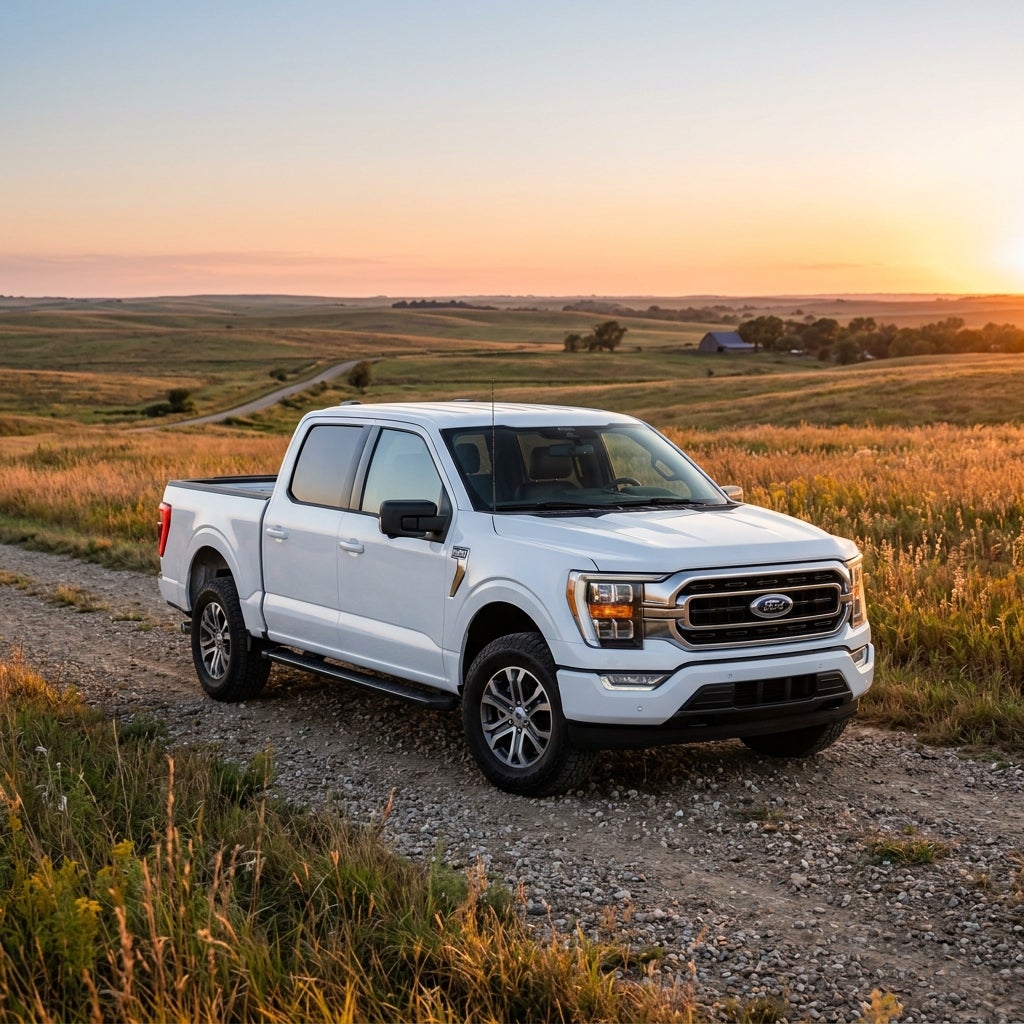
How Ford BlueCruise Reduces Driver Fatigue on I-70 Highway Commutes ## How Does Ford BlueCruise Reduce Physical Strain on I-70 Commutes? Ford BlueCruise reduces physical strain on long highway commutes by taking over continuous steering, throttle, and braking inputs on designated divided highways. By eliminating the hundreds of micro-steering corrections and pedal adjustments drivers make every minute, the system removes steady muscle tension in the hands, wrists, shoulders, and legs, leaving commuters feeling noticeably fresher after extended multi-hour highway drives. When you sit behind the wheel for a 40-minute drive on the open highway around Junction City, your body stays in a constant state of isometric tension. Keeping a vehicle centered in a lane against crosswinds or pavement grooves requires hundreds of minor steering wheel tweaks per mile. Ford BlueCruise utilizes forward-facing radar and optical cameras to handle those repetitive physical inputs automatically, allowing you to rest your hands off the wheel while maintaining complete visual awareness. The physical relief comes from reducing muscular workload without compromising driving safety. An infrared camera mounted on the steering column tracks your eye gaze and head orientation to ensure you remain focused on the road. If you need to map out your daily drive or experience hands-free technology in person, stop by our Goldenbelt Boulevard location or give our team a quick call to chat with our vehicle specialists and learn more about how BlueCruise can enhance your commute. Table of Contents How Does Ford BlueCruise Hands-Free Driving Function on Highways? Does BlueCruise Cover the I-70 Corridor Between Salina, Junction City, and Manhattan? How Does Ford BlueCruise Compare to GM Super Cruise on Rural Kansas Roads? Is BlueCruise Standard Equipment or an Option on New Ford Trim Levels? Can You Pause, Resume, or Cancel a Monthly BlueCruise Subscription? How Do You Keep Your BlueCruise Hardware and Camera Systems Maintained? How Does Ford BlueCruise Hands-Free Driving Function on Highways? Ford BlueCruise operates as a Level 2 driver-assistance system that integrates precise GPS mapping, radar sensors, optical cameras, and driver-monitoring technology. When your vehicle enters a designated pre-mapped section of highway—known as a Hands-Free Blue Zone—the instrument cluster displays a blue lighting cue indicating that hands-free control is available. Once activated via the steering wheel controls for Adaptive Cruise Control and Lane Centering, the system maintains your set speed, keeps a safe follow distance, and keeps the vehicle centered in its lane. Modern software versions incorporate advanced features that refine the highway driving experience: Lane Change Assist: Tap the turn signal indicator, and the system executes a hands-free lane change once sensors confirm the target lane is clear. In-Lane Repositioning: The vehicle subtly shifts away from large semi-trucks or wide loads in adjacent lanes to provide extra lateral buffer space. Predictive Speed Assist: Speed automatically adjusts when approaching sharp curves or highway interchange transitions for seamless travel. Whether you are looking at advanced tech on heavy-duty haulers like detailed Ford F-250 specs or shopping our certified pre-owned vehicle inventory, our team can show you which vehicles come equipped with factory driver-assist hardware. Does BlueCruise Cover the I-70 Corridor Between Salina, Junction City, and Manhattan? Interstate 70 through central Kansas is fully mapped as a hands-free Blue Zone, covering the entire main commuter corridor between regional hubs. The pre-mapped network spans more than 130,000 miles of divided, controlled-access highways across North America, making daily interstate highway trips seamless and hands-free. While hands-free driving is continuous on the main interstate, the system requires driver intervention at specific transition points. When taking exit ramps, entering construction diversions with faded paint lines, or transitioning onto unmapped connectors such as Highway 18 near Manhattan, Ford BlueCruise issues clear visual and audible prompts for you to take back manual steering control. If heavy rain or road dirt obscures the forward radar or windshield camera, the system safety protocols prompt you to place your hands back on the wheel until visibility clears. Staying up to date on vehicle maintenance ensures these sensors operate at peak performance, and you can easily schedule a service appointment online with our technician team whenever your vehicle needs a system check. How Does Ford BlueCruise Compare to GM Super Cruise on Rural Kansas Roads? Ford BlueCruise focuses its coverage on controlled-access, multi-lane divided highways like Interstate 70, where high-speed commuting creates the greatest physical demand on drivers. While GM Super Cruise includes mapping on select two-lane secondary roads, Ford optimizes its system for maximum precision, lane-centering stability, and hands-free towing performance on major highway networks. For truck owners who haul equipment across the open prairie stretches of Dickinson County, Ford offers BlueCruise with Towing on equipped models like the F-150. When properly configured with a Tow/Haul Package, the system delivers hands-free highway driving while pulling trailers up to 10,000 lb. The software continuously monitors trailer sway, enforces a 75 mph speed maximum, and adjusts braking profiles to handle the extra mass safely. When comparing driver-assist capabilities on trade-in vehicles, evaluating your daily highway routes helps determine which system fits your driving routine best. You can check the estimated value of your current truck or SUV using our online trade-in evaluation tool before taking a test drive. Is BlueCruise Standard Equipment or an Option on New Ford Trim Levels? Availability of Ford BlueCruise depends on the specific vehicle model and trim line. High-tier configurations like the Mustang Mach-E GT, F-150 Platinum, and top-spec Expedition trim levels frequently feature hands-free driving hardware as standard factory equipment, paired with an included trial period. On mid-tier trims across the Explorer, Expedition, and F-150 lineups, hands-free hardware is available through optional tech packages. Equipping the hardware at the factory gives you access to a 90-day trial starting on your warranty start date, allowing you to test hands-free driving on your actual daily commute before picking a long-term plan. If you are exploring new trim options across our lineup, you can browse our new Ford Bronco inventory to compare model features, or start your buying process early to get pre-approved online through our finance department. Can You Pause, Resume, or Cancel a Monthly BlueCruise Subscription? Ford provides flexible subscription options for hands-free driving so owners are never locked into long-term plans they do not use. After your initial 90-day complimentary trial ends, you can choose between a flexible monthly option, an annual plan, or a one-time long-term purchase: Monthly Plan: contact us for current pricing with the ability to pause or cancel anytime via the Ford App without penalty. Annual Plan: contact us for current pricing for continuous hands-free highway access. One-Time Purchase: contact us for current pricing for multi-year coverage included at vehicle purchase. The monthly plan is ideal for drivers who only want hands-free capability during summer road trips or seasonal highway commuting. You can activate or pause the service with a tap in your smartphone app, ensuring you only pay for the months you actually drive highway miles. Keeping your vehicle in top shape throughout seasonal activation changes includes maintaining windshield wipers and washer fluid systems. You can quickly order genuine Ford parts directly through our dealership parts counter to keep your wiper blades fresh for clear camera optics. How Do You Keep Your BlueCruise Hardware and Camera Systems Maintained? Proper maintenance of BlueCruise sensors and cameras is essential to ensure consistent and safe hands-free driving functionality. Ford BlueCruise relies on clean camera lenses and calibrated radar units to read road lines and track traffic. Bug splatter, road salt, and mud build-up on the upper windshield or front grille emblem can temporarily blind sensors, causing the system to request manual control. To keep your driver-assist technology operating seamlessly, follow these basic service practices: Keep the top center of the windshield clean and clear of ice, mud, or glass chips. Avoid placing bumper stickers or license plate frames near the front radar housing. Request a camera recalibration following any windshield replacement or front-end alignment work. Ensure your vehicle receives over-the-air software updates via Wi-Fi or Ford App connectivity. When you need routine maintenance or driver-assist system checks, visit our dealership address or give our service desk a quick call. Our factory-trained technicians have the specialized calibration tools and software diagnostic equipment to keep your hands-free driving tech performing flawlessly mile after mile. © 2026 Valor Ford. All rights reserved.

Is the Explorer ST Significantly Larger Than the Edge ST? Quick Answer and Size Comparison

Is the Explorer ST Significantly Larger Than the Edge ST? Quick Answer and Size Comparison

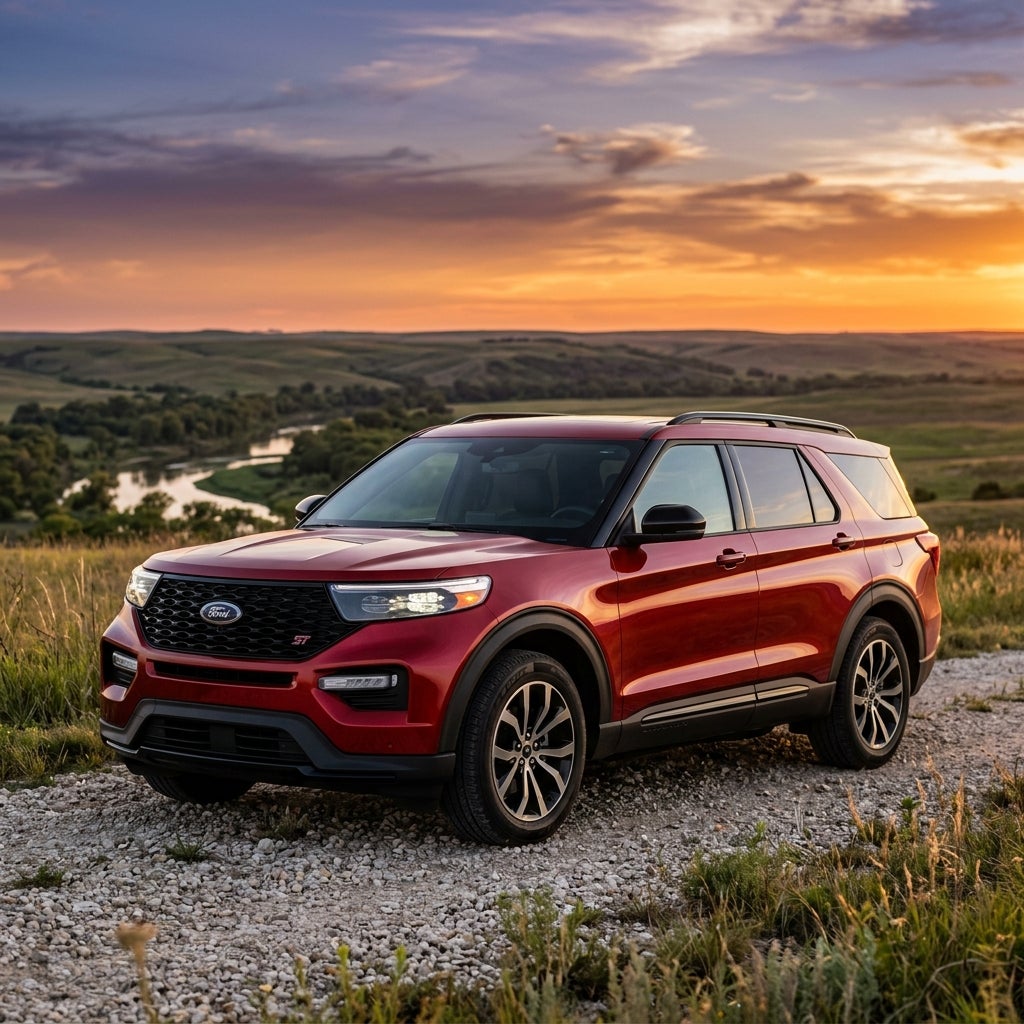
Is the Explorer ST Significantly Larger Than the Edge ST? Quick Answer and Size Comparison The direct bottom-line answer is yes: the Ford Explorer ST is noticeably and substantially larger than the Ford Edge ST in nearly every key dimension. Engineered on a rear-wheel-drive-biased midsize 3-row platform, the Explorer ST measures 198.8 inches in overall bumper-to-bumper length. By comparison, the two-row Ford Edge ST comes in at 189.7 inches. That 9.1-inch difference in exterior body length creates two distinctly different driving and ownership experiences. Height and cargo availability tell a similar story. Standing 70.2 inches tall, the Explorer ST towers 4.2 inches over the 66.0-inch height of the Edge ST. For families and drivers around Junction City, Kansas who require maximal cargo carrying capability, the Explorer ST offers up to 88 cubic feet of maximum volume with both rear seating rows folded flat. The Edge ST provides a still-generous 73 cubic feet behind its front row. Below is a quick overview of how these two performance-engineered Ford SUVs compare at a glance. Dimension / Feature Ford Edge ST (2-Row) Ford Explorer ST (3-Row) Difference Overall Length 189.7 in 198.8 in Explorer +9.1 in Overall Height 66.0 in 70.2 in Explorer +4.2 in Overall Width (no mirrors) 75.9 in 78.9 in Explorer +3.0 in Wheelbase 112.2 in 119.1 in Explorer +6.9 in Max Cargo Volume 73.4 cu ft 87.8 cu ft Explorer +14.4 cu ft Seating Capacity 5 Passengers 6 to 7 Passengers Explorer +1 to +2 seats Exterior Size Breakdown: Bumper-to-Bumper Dimensions and Wheelbase Compared When evaluating how an SUV fits into daily life—from standard residential garages in Junction City to tight street parking downtown—the exterior footprint plays a major role. The Ford Edge ST sits on a front-wheel-drive-based architecture with transverse engine positioning. This layout allows for a compact nose and an efficient overall length of 189.7 inches with a 112.2-inch wheelbase. In contrast, the Ford Explorer ST features a longitudinal engine placement on a rear-wheel-drive-biased platform. This architecture demands a longer hood line and stretches the wheelbase out to 119.1 inches—nearly 7 inches wider between axle centers than the Edge ST. This extra wheelbase provides exceptional high-speed tracking along I-70 between Fort Riley and Salina, while giving the Explorer ST a commanding, athletic presence on the road. Width is another consideration. At 78.9 inches wide (excluding mirrors), the Explorer ST is 3.0 inches broader than the 75.9-inch Edge ST. Standard garage doors measure 96 inches wide, meaning the Edge ST leaves slightly more breathing room when pulling inside during severe Kansas winter weather. Ground clearance is closely matched between both performance SUVs. The Explorer ST offers approximately 8.2 inches of clearance compared to 8.0 inches on the Edge ST. Both models comfortably navigate unpaved gravel country roads across Dickinson County or snow-covered parking spots during local winter storms. Passenger Comfort and Cargo Volume: 3-Row Versatility vs. 2-Row Agility Step inside the cabin, and the practical impact of the Explorer ST's larger overall footprint becomes instantly clear. As a standard three-row SUV, the Explorer ST accommodates up to 7 passengers with the 2nd-row bench seat or 6 passengers when equipped with optional 2nd-row captain's chairs. First-row legroom reaches 43.0 inches, second-row legroom measures 39.0 inches, and third-row legroom offers 32.2 inches for kids or adults on shorter trips. The Ford Edge ST focuses exclusively on 5-passenger seating across two spacious rows. Because it does not accommodate a third row, rear passengers enjoy an impressive 40.6 inches of second-row legroom—out-legrooming the Explorer ST's second row by more than an inch. For couples or smaller families who prioritize maximum rear passenger stretch-out room without managing a third row, the Edge ST presents an exceptionally comfortable cabin environment. Cargo management reflects another major point of comparison. With all three seating rows active, the Explorer ST holds 18 cubic feet of cargo behind the third row—ideal for groceries or sporting gear. Fold the third row flat, and capacity opens up to 48 cubic feet. Fold both the second and third rows down, and total volume climbs to 88 cubic feet. The Edge ST supplies 39 cubic feet of dedicated cargo space directly behind its second-row seats—more than double the space of the Explorer ST when all seating rows are upright. Folding the Edge ST's 60/40 split-fold rear seats yields a maximum of 73 cubic feet of flat load floor space. If you're looking to upgrade your current vehicle to match your space needs, check out our easy Trade In Evaluation tool at Valor Ford. Value Your Current Trade-In What Engine and Horsepower Specs Does the Ford Edge ST Feature Compared to the Explorer ST? Ford Edge ST Powertrain The Ford Edge ST is powered by a specifically tuned 2.7-liter twin-turbocharged EcoBoost V6 engine. It produces an impressive 335 horsepower and 380 lb-ft of torque when running on 93-octane premium fuel. Mated to a 7-speed quick-shifting automatic transmission with steering-wheel-mounted paddle shifters, it routes power to all four wheels through an intelligent All-Wheel Drive system with disconnect capability. Ford Explorer ST Powertrain The larger Explorer ST ups the ante with a high-output 3.0-liter twin-turbocharged EcoBoost V6 engine tuned by Ford Performance. Delivering a blistering 400 horsepower and 415 lb-ft of torque, this engine pairs with a responsive 10-speed SelectShift automatic transmission. Its longitudinal RWD-based architecture provides dynamic power delivery to all four wheels with a distinct rear-biased performance feel. Drivetrain Comparison While both models bear the Ford Performance ST badge, their underlying architectures create different driving personalities. The Edge ST's transverse engine layout feels punchy and nimble on curvy two-lane Kansas roads, whereas the Explorer ST's 400-hp longitudinal powertrain offers relentless top-end pull and impressive high-speed passing acceleration. Ford Edge ST 0-60 Performance Specs and Straight-Line Acceleration A central question enthusiast drivers ask is: What is the 0-60 mph time for the Ford Edge ST? In independent instrumented testing under ideal weather and track conditions, the Ford Edge ST accelerates from 0 to 60 mph in approximately 5.7 seconds, completing the quarter-mile in roughly 14.3 seconds at 98 mph. For a two-row crossover weighing roughly 4,500 pounds, a sub-6-second 0-60 time delivers thrilling launch force off the line. The 2.7L EcoBoost V6 generates maximum torque early in the RPM band (at 3,250 RPM), pushing drivers back into their bolster-supported sport seats with zero hesitation. Despite its larger overall physical size and heavier curb weight of around 4,700 pounds, the Ford Explorer ST is actually faster in a straight-line sprint. Thanks to its 400-hp 3.0L V6 twin-turbo powerplant and launch-optimized 10-speed transmission, the Explorer ST launches from 0 to 60 mph in just 5.2 seconds, finishing the quarter-mile in 13.8 seconds. The Explorer ST's superior power-to-weight ratio (11.75 lbs/hp vs Edge ST's 13.5 lbs/hp) accounts for this half-second performance edge. However, both vehicles stand out as true performance utility vehicles capable of out-accelerating many traditional sport sedans on the highway. What Mode Optimizes 0-60 Launch Performance in the Edge ST and Explorer ST? To extract the absolute fastest acceleration times from either vehicle, drivers should engage Sport Mode. In both the Edge ST and Explorer ST, activating Sport Mode via the rotary gear shift dial or drive mode selector immediately reconfigures multiple vehicle control modules simultaneously. Specifically, Sport Mode sharpens throttle pedal response for instant engine mapping, holds gears longer into higher RPM bands, speeds up transmission shift execution, sharpens electronic power steering feedback, and enhances the cabin sound generator to amplify the EcoBoost V6 exhaust note. To explore more about Ford's performance lineage, take a moment to Research Ford Explorer model features. Explore Ford Explorer Performance Models How Much Faster Is the Edge ST Compared to the Edge ST-Line in 0-60 mph Tests? Authentic Ford Edge ST The authentic Ford Edge ST packs a 2.7L Twin-Turbo EcoBoost V6 producing 335 hp and 380 lb-ft of torque. It shoots from 0 to 60 mph in 5.7 seconds. It includes Ford Performance suspension tuning, available performance brake packages with red calipers, and true track-focused cooling hardware. Edge ST-Line (Style Focus) The Edge ST-Line provides the aggressive blacked-out exterior styling of the ST but retains the standard 2.0-liter EcoBoost Inline-4 engine (250 hp / 280 lb-ft of torque). The Edge ST-Line accelerates from 0 to 60 mph in approximately 6.8 seconds. 1.1-Second Performance Gap The true Edge ST is a full 1.1 seconds faster to 60 mph than the ST-Line. Drivers seeking real twin-turbo muscle and track-capable handling will want the full ST model, while those focused primarily on sporty design and fuel savings often prefer the ST-Line trim. How Much More Expensive Is the ST Compared to the SEL or Titanium Trims? Upgrading to a Ford Performance ST model represents a meaningful step up in engineering, equipment, and price compared to mid-level SEL or luxury-leaning Titanium trims. For the Ford Edge lineup, baseline SEL models typically start around $38,000 to $40,000, while the high-line Titanium trim lands near $43,000 to $45,000. The performance-flagship Ford Edge ST carries a starting MSRP of roughly $47,000 to $49,000 depending on optional packages—making it approximately $7,000 to $9,000 more expensive than an SEL and $3,000 to $5,000 above a Titanium. However, that price differential buys the 335-hp Twin-Turbo V6, tuned AWD system, leather/Miko suede sport seats, and upgraded suspension architecture. Similarly, in the Explorer lineup, the 400-hp Explorer ST commands a price premium over Explorer XLT or Limited trims. To review options, local buyers can quickly Get Pre-Approved for Financing online with Valor Ford. Towing Capacity and Utility for Junction City and Fort Riley Drivers For active drivers in Junction City, Fort Riley personnel, and outdoor enthusiasts taking weekend trips to nearby Milford Lake, trailering performance is often a critical factor. Here, the physical size and powertrain orientation of the Explorer ST provide a dramatic capability advantage. When equipped with the standard Class IV Trailer Tow Package, the 3.0L EcoBoost Ford Explorer ST boasts a maximum towing rating of 5,600 pounds. This allows owners to easily haul heavy ski boats, camper trailers, or double-axle utility trailers loaded with off-road equipment. The two-row Ford Edge ST comes standard with a Class II Trailer Tow Package capable of pulling up to 3,500 pounds. While 3,500 lbs easily handles small pop-up campers, jet skis, or lightweight utility gear, drivers needing serious weekend trailering power will appreciate the extra 2,100 lbs of towing capacity engineered into the Explorer ST. Military families at Fort Riley moving gear across state lines or taking advantage of outdoor recreational areas throughout central Kansas will find both vehicles versatile, but the Explorer ST remains the clear heavy-duty leader. Apply for Pre-Approved Financing Maneuverability and Parking: Navigating Junction City and Dickinson County Roads Turning Radius & Parking Thanks to its shorter 112.2-inch wheelbase and overall length, the Edge ST boasts a curb-to-curb turning radius of 39.3 feet. This makes parallel parking on Washington Street in Junction City or making U-turns in tight school drop-off lanes significantly easier. Explorer ST Dynamics The Explorer ST requires a turning circle of 40.8 feet due to its extended 119.1-inch wheelbase. While standard 360-degree camera systems make parking manageable, the extra 9 inches of body length requires extra care in compact parking lots. Highway Stability On open stretches of Kansas highway and cross-country road trips, the Explorer ST's longer wheelbase translates into outstanding high-speed directional stability and less susceptibility to crosswind buffeting during breezy midwestern afternoons. Fuel Efficiency and Long-Term Ownership Costs Compared When comparing operating costs over years of ownership, fuel consumption and routine maintenance play important roles. EPA ratings for the 2.7L V6 Ford Edge ST earn an estimated 19 MPG City / 25 MPG Highway / 21 MPG Combined. The larger, 400-hp 3.0L V6 Ford Explorer ST carries an EPA estimate of 18 MPG City / 24 MPG Highway / 20 MPG Combined in All-Wheel Drive configuration. Considering the Explorer ST provides 65 additional horsepower and 3-row capacity, the 1 MPG difference highlights the efficiency of Ford's 10-speed transmission. Both high-performance EcoBoost engines run optimally on 93-octane premium unleaded fuel to achieve advertised horsepower and torque figures. Synthetic motor oil changes, tire rotations, and brake system care keep both ST models operating at peak performance. Our certified technicians at Valor Ford specialize in maintaining EcoBoost twin-turbo powertrains and ST performance components. You can easily Schedule Ford Service Today or request convenient Schedule Pickup and Delivery Service for your maintenance appointments. Test Drive Ford ST Performance SUVs at Valor Ford in Junction City Choosing between the Ford Edge ST and Ford Explorer ST ultimately comes down to your priorities for seating, cargo volume, overall vehicle footprint, and towing power. If you desire agile two-row seating with 335 twin-turbo horsepower and easy garage fitment, the Edge ST is a superb sport crossover. If you need 3-row versatility, 5,600 lbs of towing capacity, and 400 horses under the hood, the larger Explorer ST is the ultimate family performance SUV. Valor Ford warmly invites drivers from Junction City, Fort Riley, Manhattan, and across Dickinson County to explore our full selection of pre-owned and new Ford ST models. Ready to feel the acceleration for yourself? Get Directions to Valor Ford at 1825 Goldenbelt Blvd, Junction City, KS 66441, or Call us at (785) 238-5114 to speak with our Ford sales experts. Browse Pre-Owned Performance Inventory

2026 ford explorer

2026 Ford Explorer: Trims, Pricing, and Family Capability Guide

The 2026 Ford Explorer is the right three-row SUV for families who need real towing capacity, genuine all-wheel drive, and room for six passengers without crossing into full-size truck territory. Starting at $38,465 for the Active RWD 100A and stretching to $56,905 for the ST 4WD, the Explorer covers a wide range of budgets and use cases. Every trim rated here pulls up to 5,000 lbs and returns up to 29 mpg highway on rear-wheel-drive configurations, making it a practical daily driver and weekend workhorse. How Well Does the 2026 Ford Explorer Serve Families and Outdoor Enthusiasts in Geary County? The 2026 Ford Explorer is purpose-built for exactly the kind of life common to families in Geary County: six-passenger seating, 5,000 lbs of towing on most trims, and available Intelligent 4WD for dirt roads, river access points, and variable Kansas weather. For military households rotating through Fort Riley, the Explorer offers a consistent, practical platform that handles school runs, weekend fishing trips along the Kansas River, and gear-loaded hunting excursions with equal competence. The standard cargo area measures about 16 cu ft behind the third row, expanding to about 86 cu ft with the rear seats folded — enough room for a full cooler, rods, and waders on a Saturday morning departure. The EcoBoost four-cylinder found across most trims delivers 300 hp and 310 lb-ft of torque, while the ST and ST 4WD step up to a twin-turbocharged 3.0L EcoBoost V6 producing 400 hp and 415 lb-ft. That range covers everyone from the budget-conscious family looking for reliability to the performance-minded buyer who wants something more spirited on the highway. Shoppers who want to dig into the full specification breakdown before visiting can explore our 2026 Ford Explorer research pages for detailed trim comparisons. Those still weighing options might also browse our pre-owned Explorer inventory to see if a recent model fits the budget better. The Explorer competes directly with the Chevrolet Traverse, Jeep Grand Cherokee L, and Kia Telluride — but its combination of towing capacity, available AWD, and a wide trim ladder from value-oriented to performance-focused gives it a distinctive edge for buyers who want one vehicle to do many jobs. Research Ford Explorer Bold Exterior Styling of the 2026 Ford Explorer Tailored for Plains and River Valleys The 2026 Explorer presents a clean, upright silhouette — 198.7 inches long, 78.9 inches wide, and 70.2 inches tall on 4WD-equipped trims — that reads as confident without being aggressive. Painted bumpers front and rear, LED projector headlights with auto high-beam, LED daytime running lights, and LED rear and brake lights are standard across the lineup. The result is a cohesive, modern face that looks equally appropriate in a Fort Riley parking lot and on a gravel road heading toward the Kansas River. The Active trims wear black roof rails and a roof spoiler, giving them a slightly sportier stance. ST-LINE trims lean further into the athletic direction with black exterior accents and 18-inch alloy wheels. The ST and ST 4WD push hardest on presence, with a front fascia tuned for performance intent, painted brake calipers, and a more aggressive lower body treatment. At the top of the luxury tier, the Platinum and Platinum 4WD add chrome roof rails, chrome mirror caps with integrated turn signals, and auto-dimming side mirrors, creating a refined, polished exterior that suits a professional's commute as naturally as it suits a weekend drive through the rolling plains of Leavenworth County. Color choices across the lineup include metallic options such as Vapor Blue Metallic, Star White Metallic Tri-Coat, and Rapid Red Metallic Tinted Clearcoat, among others. The Tremor 4WD adds its own visual identity with off-road-specific styling cues. If your current vehicle is ready for a change, it's worth getting a trade-in estimate before you configure your next Explorer. Shoppers who also want to compare Ford's truck-based body-on-frame alternative should check out the 2026 Ford F-150 research pages to understand where each vehicle's strengths begin and end. Power and Towing Performance of the 2026 Ford Explorer for Military and Rural Driving Most 2026 Explorer trims — Active 4WD, Active 4WD 100A, Active RWD, Active RWD 100A, Platinum, Platinum 4WD, ST-LINE 4WD, ST-LINE RWD, and Tremor 4WD — run a 2.3L turbocharged four-cylinder EcoBoost engine producing 300 hp and 310 lb-ft of torque, paired with a 10-speed SelectShift automatic. The ST and ST 4WD swap in a 3.0L twin-turbocharged EcoBoost V6 rated at 400 hp and 415 lb-ft. Both engines use regular 87-octane fuel. The Utility Police Interceptor 4x4 carries its own powertrain calibration suited to its duty-cycle mission. Towing capacity is 5,000 lbs on every consumer trim except the Utility Police Interceptor 4x4, which is rated at 3,500 lbs. That 5,000-lb figure covers a fishing boat, a small travel trailer, or a loaded cargo trailer — practical for the kind of weekend use common among families near the Kansas and Missouri River corridors. Payload varies more meaningfully across trims: the heavier ST and ST 4WD carry 1,139 lbs, while the Active, Platinum, and ST-LINE configurations all rate at 1,467 lbs. The Tremor 4WD sits at 1,346 lbs, and the Utility Police Interceptor 4x4 tops the chart at 2,108 lbs. The table below captures the full picture across all covered trims: Feature Active 4WD Active 4WD 100A Active RWD Active RWD 100A Platinum Platinum 4WD ST ST 4WD ST-LINE 4WD ST-LINE RWD Tremor 4WD Utility Police Interceptor 4x4 Seating 6 6 6 6 6 6 6 6 7 7 6 7 Cargo (all seats up) 16.3 cu ft 16.3 cu ft 16.3 cu ft 16.3 cu ft 16.3 cu ft 16.3 cu ft 16.3 cu ft 16.3 cu ft 16.3 cu ft 16.3 cu ft 16.3 cu ft 52.0 cu ft Curb Weight 4,303 lbs 4,303 lbs 4,303 lbs 4,303 lbs 4,303 lbs 4,303 lbs 4,631 lbs 4,631 lbs 4,303 lbs 4,303 lbs 4,424 lbs 4,732 lbs Towing 5,000 lbs 5,000 lbs 5,000 lbs 5,000 lbs 5,000 lbs 5,000 lbs 5,000 lbs 5,000 lbs 5,000 lbs 5,000 lbs 5,000 lbs 3,500 lbs Payload 1,467 lbs 1,467 lbs 1,467 lbs 1,467 lbs 1,467 lbs 1,467 lbs 1,139 lbs 1,139 lbs 1,467 lbs 1,467 lbs 1,346 lbs 2,108 lbs Drivetrain choices matter here. The Active 4WD and Active 4WD 100A use Ford's Intelligent 4WD system, which operates in full-time and part-time modes for automatic traction management on wet or loose surfaces. The Active RWD and Active RWD 100A deliver rear-wheel drive with a lighter curb weight and slightly better fuel economy — 24 mpg combined versus 23 mpg for the 4WD variants. Buyers who want the most capable off-road-oriented Explorer should look at the Tremor 4WD, which adds specific off-road tuning and terrain management on top of the Intelligent 4WD base. Families considering the Explorer for serious towing who also want to compare a purpose-built towing platform can review the 2026 Ford F-250 research pages. When you're ready to move forward on financing, prequalifying online takes only a few minutes and can simplify the buying process considerably. Spacious Interior Comfort of the 2026 Ford Explorer for Family Outings Six passengers fit comfortably in most Explorer trims, with the ST-LINE 4WD, ST-LINE RWD, and Utility Police Interceptor 4x4 offering seven-seat configurations. The cabin dimensions are generous throughout: 43 inches of front leg room, 39 inches in the second row, and 32.2 inches in the third row. Front headroom measures 40.7 inches, second-row headroom 40.5 inches, and third-row headroom 38.9 inches. Shoulder room is 62.1 inches up front and 61.9 inches in the second row, with 54.6 inches in the third — wide enough to seat adults without the shoulder-to-shoulder squeeze common in smaller three-row crossovers. Seating materials climb noticeably as you move up the trim ladder. The Active 100A trims start with upgraded cloth in Dark Gray/Onyx. The standard Active 4WD and Active RWD add the optional Active Comfort Package, which upgrades the passenger seat to four-way power adjustment and swaps the cloth for ActiveX synthetic leather — a durable, easy-to-clean surface that holds up well to fishing gear, muddy boots, and the general chaos of family life. The Platinum and Platinum 4WD feature heated and ventilated front seats, heated second-row seats, memory seating for the driver, and a leather-trimmed steering wheel with electric adjustment. The ST uses an ActiveX material with Miko suede-like inserts and an ST logo for a sport-focused look. Climate control is tri-zone automatic across all trims, with rear passenger controls standard. USB charging ports are distributed throughout: 4 front, 2 rear, and 2 third-row on the Active 4WD and Active RWD configurations. The Platinum adds a wireless charging pad and a 110-volt household-style power outlet — useful for charging laptops or running small electronics on longer road trips. Keeping the interior in top condition over time is straightforward with access to genuine Ford replacement parts and accessories for floor liners, cargo management systems, and other wear items. Tech Features That Keep You Connected Between Fort Riley and Home in the 2026 Ford Explorer Every 2026 Explorer in this lineup ships with a 13.2-inch center touchscreen and a 12.3-inch digital instrument cluster as standard equipment. The infotainment system supports wireless Apple CarPlay and wireless Android Auto — both included for the life of the vehicle — so drivers can navigate, stream, and take calls without plugging in a phone. Voice control via Google Assistant is built in, and the system includes a built-in internet browser and OEM data plan connectivity via an embedded SIM card. The Ford Connectivity Package is available as a one-time purchase across the Active trims, extending the embedded Wi-Fi hotspot subscription to 84 months with up to 999 GB per month of data — practical for families who want a reliable in-vehicle network for kids' devices on longer drives. Standard remote services include remote start, lock/unlock, vehicle location, theft alert, vehicle diagnostics, and driving history analysis, all accessible through the Ford App. These services come with a 12-month included subscription. The telematics system also includes 911 Assist, which automatically contacts emergency services following a detected collision. The Platinum and Platinum 4WD add traffic sign recognition to the instrument cluster, a feature that reads posted speed limits and displays them in the driver's sightline — useful on rural Kansas roads where speed limits change frequently. The ST Sun and Sound Package, available on the ST trim, upgrades the audio system to a 14-speaker Bang & Olufsen setup with a subwoofer, surround sound, and 980 watts of output — a meaningful step up from the standard system. Over-the-air software updates keep the system current without requiring a service visit, and the platform supports programmable smart key settings tied to individual driver profiles. Safety Systems Designed for Military Families and Local Commuters in the 2026 Ford Explorer Every 2026 Explorer covered here comes standard with Ford CoPilot360 Assist+ or the upgraded Ford CoPilot360 Assist 2.0, depending on trim. At the base level, CoPilot360 Assist+ delivers adaptive cruise control with stop-and-go capability, automatic emergency braking (front low-speed), Rear Cross Traffic Braking using radar, BLIS (Blind Spot Information System), the Lane-Keeping System, and Rear Parking Sensors with camera guidance. The system activates as low as 3 mph, which matters in parking lots, school pickup lines, and slow-moving traffic around base gates. The Platinum, Platinum 4WD, and ST trims step up to Ford CoPilot360 Assist 2.0, which adds front and rear low-speed automatic emergency braking — covering both directions of a potential collision — alongside the full suite above. The Platinum trims also include a 360-Degree Camera with Split View, providing a bird's-eye perspective that is genuinely useful when parking in tight spaces or navigating unfamiliar terrain. BlueCruise hands-free highway driving technology is available as an optional add-on on the Platinum, Platinum 4WD, and ST trims, enabling hands-free lane centering on pre-mapped highway sections. The airbag count is 7 across all covered trims, including front, front-side, driver knee, and side curtain airbags covering all three rows. The structure includes four-wheel ventilated disc brakes, ABS, brake assist, cornering brake control, hill hold, electronic parking brake with auto-hold, and AdvanceTrac with RSC (Roll Stability Control) on every trim. NHTSA rates the Explorer at 5 stars overall, with 5-star frontal and side impact scores and a 4-star rollover rating. IIHS testing returns Good scores on moderate overlap front, small overlap front driver side, side impact, headlights, and seat belt reminder categories. 2026 Ford Explorer Trim Pricing Breakdown Perfect for Working Families The 2026 Explorer's twelve-trim lineup spans a wide price range, giving families flexibility to match their budget to their needs. The Active RWD 100A starts at $38,465 — the most affordable entry point in this group — while the ST 4WD tops the consumer lineup at $56,905. Every trim carries a $1,795 destination charge, except the Utility Police Interceptor 4x4, which carries a $1,695 destination charge. Feature Active 4WD Active 4WD 100A Active RWD Active RWD 100A Platinum Platinum 4WD ST ST 4WD ST-LINE 4WD ST-LINE RWD Tremor 4WD Utility Police Interceptor 4x4 Base MSRP $42,585 $40,465 $40,585 $38,465 $50,965 $52,965 $54,905 $56,905 $47,155 $45,155 $48,965 $48,550 Destination Charge $1,795 $1,795 $1,795 $1,795 $1,795 $1,795 $1,795 $1,795 $1,795 $1,795 $1,795 $1,695 A few pricing patterns worth noting: the 100A suffix on the Active trims represents a lower-content build that saves roughly $2,000 to $2,100 compared to the standard Active versions. Shoppers who want AWD capability at the lowest possible price should look at the Active 4WD 100A at $40,465. Those who prioritize fuel economy and are comfortable without AWD will find the Active RWD 100A at $38,465 the lowest MSRP entry point into the Explorer lineup. The ST-LINE trims — $45,155 for RWD and $47,155 for 4WD — offer sport exterior styling and seven-passenger seating at a price point well below the ST's performance-focused powertrain premium. The Tremor 4WD at $48,965 slots between the ST-LINE 4WD and Platinum, adding off-road capability for buyers who frequently travel on gravel or unpaved terrain. The Platinum and Platinum 4WD are the luxury tier, with the 4WD version commanding a $2,000 premium over the rear-wheel-drive Platinum. All prices shown are base MSRP before options, packages, and dealer-installed accessories. Contact Us for Financing Information Warranty, Maintenance, and Service Insights for 2026 Ford Explorer Owners The 2026 Ford Explorer carries a 3-year/36,000-mile bumper-to-bumper warranty and a 5-year/60,000-mile powertrain warranty across all covered trims. Roadside assistance coverage matches the powertrain term at 5 years/60,000 miles, which means owners have manufacturer-backed help available for the first five years of ownership — a meaningful benefit for families who put consistent miles on their vehicles through commuting, school runs, and weekend travel. The corrosion/perforation warranty extends to 5 years with unlimited mileage. Paint is covered for 3 years/36,000 miles. The Explorer also supports over-the-air OS-level software updates, which means the infotainment system and connected features can be improved without a dealership visit. Remote services — including remote start, vehicle diagnostics, and theft alert — come with a 12-month included subscription, after which owners can evaluate renewal options based on their usage. Ford's 911 Assist telematics system is included and operates independently of subscription status once activated. For owners in Geary County and the surrounding area, keeping up with scheduled maintenance at an authorized Ford dealer ensures warranty coverage remains intact and that any technical service bulletins are applied promptly. The team at Valor Ford at 1825 Goldenbelt Blvd, Junction City, KS 66441 handles Explorer service for the local community. Booking routine maintenance — oil changes, tire rotations, brake inspections — is straightforward through our Ford service scheduling page. Staying current on maintenance intervals also helps retain resale value, which matters when it comes time to trade in or sell. Schedule Ford Service Today Awards and Expert Recognition Highlighting the 2026 Ford Explorer's Strengths for Kansas Drivers No specific awards data was provided in the catalog for the 2026 Ford Explorer, so this section draws on the verified crash test ratings and safety scores confirmed in the specification data. The Explorer's independently verified safety performance is one of its strongest selling points for buyers who prioritize protection for their families. NHTSA awarded the Explorer an overall 5-star rating, with 5-star scores in both the frontal crash and side impact categories, and a 4-star rollover rating. IIHS testing returned Good ratings — the highest available — across the moderate overlap front test, small overlap front driver-side test, side impact, headlights, and seat belt reminder evaluations. These ratings carry real weight for military families and local commuters who regularly drive rural two-lane highways, navigate post-gate traffic, and share roads with farm equipment and commercial trucks. A 5-star NHTSA frontal rating means the vehicle's structure and restraint systems performed at the highest measured level in standardized frontal crash scenarios. The IIHS Good headlight rating confirms the Explorer's LED projector system illuminates the road adequately at highway speeds — a practical advantage on unlit rural roads after dark. For families comparing the Explorer against the Chevrolet Traverse, Jeep Grand Cherokee L, or Kia Telluride, this safety profile is a concrete differentiator worth factoring into the decision alongside price and feature content. Frequently Asked Questions from Buyers About the 2026 Ford Explorer The Active RWD 100A at $38,465 is the most affordable entry point and still includes the full Ford CoPilot360 Assist+ safety suite, a 13.2-inch touchscreen, wireless Apple CarPlay and Android Auto, tri-zone automatic climate control, and a 5-year/60,000-mile powertrain warranty. Families who want AWD capability without a large price jump should consider the Active 4WD 100A at $40,465, which adds Intelligent 4WD for about $2,000 more. Both 100A trims sacrifice some comfort features — the passenger seat is manual rather than powered — but deliver the core capability and safety technology the Explorer is known for. Yes. Every consumer trim except the Utility Police Interceptor 4x4 is rated at 5,000 lbs of towing capacity. A typical aluminum fishing boat with trailer weighs between 1,500 and 3,500 lbs, well within that limit. The Explorer comes standard with trailer towing preparation and a trailer stability program across all trims. For heavier trailers, payload capacity matters too: most trims carry 1,467 lbs of payload, though the ST and ST 4WD drop to 1,139 lbs due to their heavier curb weight. Yes. Both the ST-LINE 4WD and ST-LINE RWD are configured with seven-passenger seating — a 2+3+2 layout — making them the most affordable trims in this lineup with that capacity. The standard Active and Platinum trims seat six in a 2+2+2 captain's chair configuration. A second-row bench with E-Z entry is available as an option on several trims to convert to seven seats if preferred. The rear-wheel-drive Active trims (Active RWD and Active RWD 100A) return 20 city / 29 highway / 24 combined mpg. The all-wheel-drive Active trims (Active 4WD and Active 4WD 100A) return 20 city / 27 highway / 23 combined mpg. The difference is 2 mpg on the highway and 1 mpg combined — modest, but meaningful over tens of thousands of miles of commuting. The ST and ST 4WD, powered by the 3.0L EcoBoost V6, return 18 city / 25 highway / 21 combined mpg. Valor Ford is located at 1825 Goldenbelt Blvd, Junction City, KS 66441. You can also reach the team directly at (785) 238-5114 to ask about current inventory, trim availability, and scheduling a test drive. Shoppers who are also considering a more off-road-focused Ford platform may want to look at the new Ford Bronco Badlands inventory as an alternative for buyers who prioritize open-air capability over three-row family seating. Research Ford Explorer Vehicle specification data © JATO Dynamics Limited.

2023 ford maverick

2023 Ford Maverick: Best Compact Truck for Kansas Farm Families

The 2023 Ford Maverick is the right compact pickup for farming families in northeastern Kansas who need genuine truck capability in a compact footprint. Starting at $22,595 for the XL FWD and topping out at $30,575 for the Lariat AWD, the Maverick carries 5 passengers, hauls up to 1,500 lbs of payload in about 33 cu ft bed, and tows 2,000 lbs — all while returning up to 37 combined MPG on the hybrid FWD trims. Eight distinct configurations let buyers match drivetrain, powertrain, and feature level to their actual budget and land conditions. How Well Does the 2023 Ford Maverick Serve Farming Families? The Maverick was purpose-built for buyers who need a real truck bed, real passenger room, and manageable running costs — exactly the combination that works for families running crop operations or small ranches across northeastern Kansas. The SuperCrew cab seats five adults, the short pickup bed delivers about 33 cu ft of cargo volume with a 30.1 in loading floor height, and the available AWD trims handle the muddy field access roads that follow spring rains in the Big Blue River valley. Towing is rated at 2,000 lbs standard, with the available 4K Tow Package on select trims pushing that to 4,000 lbs when you need to pull a small livestock trailer to a county auction. For families comparing options, you can research the Maverick's full trim lineup and features before making a decision, or browse our pre-owned truck inventory if a certified prior-year unit fits your budget better. The Maverick competes directly against the Honda Ridgeline and Hyundai Santa Cruz in the compact unibody pickup segment, but its wider powertrain choice — including a full hybrid option — gives it a distinct edge for buyers who log serious miles between farms and town. Research Ford Maverick Rugged Exterior Design Tailored for Marshall County's Farmland and Rural Roads Flat-to-rolling terrain and gravel county roads demand a truck that looks purposeful and holds up to daily work — and the Maverick's exterior delivers on both counts without the bulk of a full-size. The body measures 199.7 in long, 72.6 in wide, and 68.7 in tall, with an 8.6 in ground clearance on AWD and Tremor trims (8.3 in on FWD variants). That clearance is meaningful when you're dropping into a muddy field lane or crossing a low-water creek crossing near a river valley. The SuperCrew cab configuration comes standard across all trims, with four conventional front-hinged doors that open wide for easy entry when you're wearing work boots. Front bumpers are painted body color on all trims; rear bumpers are finished in black. LED low- and high-beam headlights are standard, along with LED daytime running lights and LED side indicator lights on Lariat trims, giving you better visibility on dark rural roads before sunrise. The optional Black Appearance Package (available on Lariat AWD, Lariat FWD, XLT AWD, and XLT FWD) swaps in toned door mirrors and 18 in black alloy wheels for a sharper look. The FX4 Off-Road Package on XLT AWD and Lariat AWD adds front tow/recovery hooks, alternate suspension tuning, hill descent control, and terrain-management adjustments — practical additions for anyone navigating unimproved farm tracks. The Tremor trims go further with raised suspension, wider 9.3 in tires on 17 in alloys, and Trail Control for low-speed crawling. When it's time to keep your Maverick looking sharp, genuine Ford parts and accessories are available to maintain the factory fit and finish. Power and Capability of the 2023 Ford Maverick for Agricultural Demands Two distinct powertrain paths define the Maverick lineup, and choosing between them comes down to one practical question: do you need AWD for field access, or is fuel economy the top priority? The FWD trims — Lariat FWD, XL FWD, and XLT FWD — use a 2.5L four-cylinder hybrid system paired with a CVT. The gasoline engine produces 191 hp and 155 lb-ft of torque, with an electric motor adding additional low-end pull. The result is 40 mpg city / 33 mpg highway / 37 mpg combined, with a calculated range of 511 miles per tank from a 13.8 gal fuel tank. For a farm family making daily runs between a homestead and town, that fuel efficiency meaningfully reduces operating costs over a year. The AWD trims — Lariat AWD, XL AWD, XLT AWD, Lariat Tremor Advanced 4WD, and XLT Tremor Advanced 4WD — use a turbocharged 2.0L four-cylinder EcoBoost paired with an 8-speed automatic. Output is 250 hp and 277 lb-ft of torque, with maximum power arriving at 5,500 rpm and peak torque at 3,000 rpm. Fuel economy drops to 22 mpg city / 28 mpg highway / 24 mpg combined on standard AWD trims; the Tremor trims rate at 20/24/21 mpg due to their larger tires and raised suspension. The 16.5 gal tank gives AWD trims a calculated range of 396 miles. Feature Lariat AWD Lariat FWD Lariat Tremor Advanced 4WD XL AWD XL FWD XLT AWD XLT FWD XLT Tremor Advanced 4WD Engine 2L 2.5L 2L 2L 2.5L 2L 2.5L 2L Horsepower 250 hp 191 hp 250 hp 250 hp 191 hp 250 hp 191 hp 250 hp Torque 277 lb-ft 155 lb-ft 277 lb-ft 277 lb-ft 155 lb-ft 277 lb-ft 155 lb-ft 277 lb-ft Transmission automatic 8-speed CVT automatic 8-speed automatic 8-speed CVT automatic 8-speed CVT automatic 8-speed Drivetrain All-wheel drive Front-wheel drive All-wheel drive All-wheel drive Front-wheel drive All-wheel drive Front-wheel drive All-wheel drive The 4-wheel disc brake system with two ventilated front discs, ABS, brake assist, and hill hold comes standard across the lineup. Electronic stability control is branded AdvanceTrac with RSC (Roll Stability Control) on every trim — a meaningful safety net when a loaded bed shifts weight on a crowned gravel road. Payload is 1,500 lbs and towing is 2,000 lbs on all trims; the optional 4K Tow Package on XL AWD and XLT AWD adds a Trailer Brake Controller and raises the braked trailer limit to 4,000 lbs. Comfort and Space Inside the 2023 Ford Maverick for Long Drives Between Farms Five adults fit comfortably in the Maverick's SuperCrew cabin, with 40.3 in of front headroom, 39.6 in of rear headroom, 42.8 in of front legroom, and 36.9 in of rear legroom on standard trims (rear legroom measures the same 36.9 in on AWD trims; FWD trims show 35.9 in in the catalog). Shoulder room measures 57.3 in front and 55.6 in rear — enough that three adults across the rear bench aren't fighting for space on a long haul to the co-op or a county fair. The rear bench folds flat in one piece, opening up under-seat storage for tools, seed bags, or hunting gear. The XL trim seats are cloth; the XLT steps up to upgraded cloth/velour upholstery. Lariat trims use synthetic leather as the standard seat material, with interior color options including Desert Brown ActiveX and Black Onyx Unique ActiveX. The driver's seat on Lariat trims is electrically adjustable with 5 power settings covering height, reach, recline, tilt, and lumbar — a meaningful comfort upgrade for taller farmers who spend significant time behind the wheel. The passenger seat adjusts manually on all trims. Storage is thoughtfully arranged throughout the cabin. A full floor console with a dashboard console and overhead partial console provide multiple places to stow phones, receipts, and small tools. Front and rear cup holders are standard, along with below-seat rear storage. Two front USB charging ports and one front 12V outlet come on every trim; rear USB ports and a second 12V outlet are added on Lariat trims as standard, and are available on XLT trims through the XLT Luxury Package. Dual-zone automatic climate control is standard on Lariat trims; XL and XLT trims use manual climate control. User-Friendly Tech Features That Keep Drivers Connected and Productive Every 2023 Maverick trim ships with an 8 in touchscreen infotainment display as standard — a meaningful baseline that means no trim feels stripped of modern connectivity. The instrument cluster pairs a TFT digital display with an analog gauge surround; on XL and XLT trims the cluster screen measures 4.2 in, while Lariat trims step up to a 6.5 in TFT cluster that puts more vehicle information in the driver's line of sight. Android Auto and Apple CarPlay are standard across the entire lineup, both included for the life of the vehicle at no subscription cost. Bluetooth connectivity, voice activation, a 6-speaker audio system, AM/FM radio, and steering-wheel-mounted audio controls are also standard on every trim. Two front USB connections support both data and charging. Ford's 911 Assist telematics — which automatically connects occupants with emergency services after a detected collision — comes standard, as does remote lock/unlock, vehicle start, theft alert, and find-my-car functionality through Ford's connected services platform. The Lariat Luxury Package available on Lariat trims transforms the audio experience significantly: it replaces the standard 6-speaker system with an 8-speaker Bang & Olufsen setup rated at 560 watts, and adds built-in navigation with an 8 in nav screen, 3D and voice guidance, SD card data feed, and a 3-month traffic subscription. Wireless charging and a 911 Assist upgrade are also bundled in the package. For XLT trims, the XLT Luxury Package adds rear USB ports, a 400W AC power outlet location, a spray-in bedliner, and heated front seats and steering wheel alongside a synthetic leather steering wheel — a practical bundle for buyers who want comfort without stepping up to Lariat pricing. An embedded Wi-Fi hotspot with a 3 GB/month data plan for the first 3 months is standard on all trims, keeping passengers connected on long drives across open plains where cellular signals can be inconsistent. Safety Systems Designed to Protect Families on Rural Highways The Maverick's standard safety suite is the same across all eight trims — no buyer has to spend more to get the foundational protection. Automatic Emergency Braking (AEB) with Pedestrian Detection activates from as low as 3 mph and operates at both low and highway speeds, giving you a meaningful buffer when an animal steps onto a county road at dawn. Multi-collision braking, trailer stability control, and the AdvanceTrac with RSC stability system are all standard. The airbag count is 7, covering intelligent dual front airbags for both driver and passenger, front side airbags, front-and-rear side curtain airbags, and a driver's knee airbag. Front seatbelts include pre-tensioners and height adjustment on both sides; the rear center position uses a 3-point belt. LATCH child seat anchors are standard. Height-adjustable head restraints are fitted at all five seating positions — 2 front, 3 rear. NHTSA crash test results on file show a 5-star frontal crash rating, a 5-star side impact rating, and a 4-star rollover rating, contributing to an overall 4-star NHTSA rating. A rear-view camera with guidance display is standard on every trim, giving a clear view of what's behind the tailgate when backing up to a trailer hitch or loading dock. The optional Ford Co-Pilot360 package adds a meaningful layer of active driver assistance: BLIS with Cross-Traffic Alert radar monitors your blind spots and warns of crossing traffic when reversing, a Lane Keeping System applies steering correction when you drift, and a driver monitor watches for inattention. This package is available on XL AWD, XL FWD, XLT AWD, XLT FWD, Lariat AWD, Lariat FWD, Lariat Tremor Advanced 4WD, and XLT Tremor Advanced 4WD — making it accessible at every price point. Browse Used Inventory Pricing Breakdown of All 2023 Ford Maverick Trims for Kansas Farming Households The Maverick's eight-trim structure offers a range of configurations to fit different needs and budgets. The XL FWD at $22,595 is the most accessible entry point — it delivers the hybrid powertrain's 37 combined MPG, a full SuperCrew cab, 5-passenger seating, and the complete standard safety suite. The Lariat AWD at $30,575 is the most fully equipped option, with synthetic leather seating, a 5-way power driver's seat, dual-zone automatic climate control, and the full range of Lariat-exclusive packages. All prices below are base MSRP and exclude the $1,595 destination charge. Feature Lariat AWD Lariat FWD Lariat Tremor Advanced 4WD XL AWD XL FWD XLT AWD XLT FWD XLT Tremor Advanced 4WD Base MSRP $30,575 $28,355 $28,355 $24,815 $22,595 $27,075 $24,855 $24,855 The two Tremor trims — Lariat Tremor Advanced 4WD and XLT Tremor Advanced 4WD — both start at $28,355 and $24,855 respectively and include the Tremor Package as part of their configuration. That package brings raised suspension, front and rear locking differentials, Trail Control low-speed crawl, wider 9.3 in all-terrain tires on 17 in alloys, and a full-size spare — all meaningful additions for operators who regularly traverse unimproved access roads. For families who want AWD capability at the lowest possible entry cost, the XL AWD at $24,815 delivers the 250 hp EcoBoost paired with the 8-speed automatic and full-time AWD, with the optional 4K Tow Package available to push braked trailer capacity to 4,000 lbs. The XLT AWD at $27,075 adds the convenience of a digital keypad entry, upgraded upholstery, variable-speed intermittent wipers, rear privacy glass, and the full suite of XLT Luxury Package options. The $2,260 step from XL AWD to XLT AWD is one of the more substantial upgrades in the lineup. Get Pre-Approved for Financing Warranty, Maintenance, and Service Options Supporting Farming Lifestyles Ford's factory warranty on the 2023 Maverick is straightforward and applies identically across all eight trims. The bumper-to-bumper coverage runs 36 months or 36,000 miles. The powertrain warranty extends to 60 months or 100,000 miles, covering the engine, transmission, and drivetrain components — the systems that matter most when the truck is working hard in the field. Paint coverage is 36 months or 36,000 miles; corrosion perforation coverage runs 60 months. Ford Roadside Assistance is included for 60 months or 60,000 miles, providing manufacturer-backed emergency support if you break down on a rural highway or a remote farm road far from town. Because it's factory-backed, Ford's roadside team dispatches technicians familiar with Ford vehicles and genuine parts — not a generic third-party service. The hybrid FWD trims carry additional warranty protection specific to their electrified components: the high-voltage battery and electric drive system are covered for 96 months or 100,000 miles, giving hybrid buyers long-term confidence in the system that delivers their fuel savings. For buyers in Marshall County and the surrounding area, keeping a working truck properly maintained is not a luxury — it's a necessity. Valor Ford's service department understands that farm schedules don't always align with business hours, which is why scheduling Ford service online lets you pick the appointment time that works around harvest, planting, or livestock routines. Using a Ford-certified service center also ensures that warranty repairs are handled with genuine Ford parts and factory-trained technicians, protecting your coverage and your investment. Schedule Ford Service Today Awards and Expert Recognition Highlighting the 2023 Ford Maverick's Value for Kansas Rural Buyers The 2023 Ford Maverick earned a spot on Car and Driver's 10Best Trucks and SUVs list — one of the most competitive recognition programs in automotive journalism, where vehicles are judged on real-world performance, value, and ownership practicality rather than spec-sheet numbers alone. That recognition is particularly relevant for rural buyers: the 10Best evaluation rewards trucks that actually deliver on their promises under everyday conditions, which is exactly the standard a farming family applies when choosing a work vehicle. Edmunds reviewers have highlighted the Maverick's combination of car-like ride quality, genuine truck bed utility, and class-leading fuel economy on the hybrid trims as a package that's difficult to replicate at this price point. That assessment aligns with what a Republic County farm family actually needs: a vehicle that handles gravel roads smoothly, doesn't demand premium fuel, and still fits a standard parking space when you're running errands in town. If the Maverick's off-road capability has you curious about Ford's more trail-focused options, you can also explore new Ford Bronco Badlands inventory at Valor Ford. Ready to move forward on a Maverick? Start by getting a sense of your current vehicle's value through our trade-in evaluation tool, then get pre-approved for financing so you know your budget before you step onto the lot. Frequently Asked Questions from Kansas Farm Families About the 2023 Ford Maverick The AWD trims — XL AWD, XLT AWD, Lariat AWD, XLT Tremor Advanced 4WD, and Lariat Tremor Advanced 4WD — use a full-time all-wheel drive system with AdvanceTrac with RSC stability control, which continuously distributes torque between axles. Ground clearance on AWD trims is 8.6 in. The Tremor trims add raised suspension, locking differentials, and 9.3 in wide all-terrain tires, providing the most capable configuration for consistently soft or rutted ground. For occasional muddy access roads, the standard AWD trims handle the conditions well; for operators who regularly traverse unimproved terrain, the Tremor package is the better investment. All 2023 Maverick trims have a standard braked towing rating of 2,000 lbs. The optional 4K Tow Package — available on XL AWD and XLT AWD — adds a Trailer Brake Controller and raises the braked trailer limit to 4,000 lbs. That capacity covers a small livestock trailer, a utility trailer loaded with fencing supplies, or a boat trailer for fishing trips along the Republican River. The 4K Tow Package is not available on FWD trims. The three FWD hybrid trims — XL FWD, XLT FWD, and Lariat FWD — return 40 mpg city, 33 mpg highway, and 37 mpg combined. The 13.8 gal tank provides a calculated range of 511 miles per fill-up. For drivers making regular runs between farms and supply stores without needing AWD, the XL FWD at $22,595 delivers a strong balance of fuel economy and entry price. Valor Ford is located at 1825 Goldenbelt Blvd, Junction City, KS 66441. You can pull up directions to our showroom directly, or give our team (785) 238-5114 to check current Maverick availability before making the drive from Marshall, Republic, or Washington County. Trade In Evaluation Vehicle specification data © JATO Dynamics Limited.

Which Has More Horsepower: The Mustang GT or Camaro SS?

Which Has More Horsepower: The Mustang GT or Camaro SS?

Which Has More Horsepower: The Mustang GT or Camaro SS? When comparing American muscle supremacy, the horsepower battle between the Ford Mustang GT and Chevrolet Camaro SS is legendary. If you are looking at the newest models, the 2024 Ford Mustang GT holds the horsepower victory, pushing out up to 486 horsepower from its refined 5.0-liter Coyote V8 engine equipped with the active valve performance exhaust. By comparison, the standard Chevrolet Camaro SS generates 455 horsepower from its 6.2-liter LT1 V8 engine. However, for pre-owned buyers exploring the 2023 model year, the numbers shift slightly. In 2023, the Camaro SS produced 455 horsepower and 455 lb-ft of torque, giving it a slight 5-horsepower edge over the 2023 Mustang GT's 450 horsepower and 410 lb-ft of torque. Regardless of which specific year you evaluate, both vehicles represent the absolute pinnacle of naturally aspirated V8 engineering. For drivers near Junction City, Fort Riley, and surrounding Geary County, understanding how these peak horsepower numbers translate to real-world street acceleration and highway merging on I-70 is critical. At Valor Ford, we break down every nuance of performance, power delivery, and engine architecture to help performance enthusiasts make an informed decision. Explore New Ford Mustang Models 2023 Ford Mustang Performance and Enthusiast Overview The S550 generation Ford Mustang represents one of the most technologically advanced rear-wheel-drive performance chassis ever crafted by Ford engineers. At the heart of its enthusiast appeal is the 4th-generation 5.0L Coyote V8 engine. Built with double overhead cams (DOHC) and four valves per cylinder, the Coyote V8 loves to rev high into the powerband, reaching its peak 450 horsepower at an exhilarating 7,500 RPM. Unlike traditional pushrod engines, Ford's high-revving architecture utilizes high-pressure direct injection combined with low-pressure port fuel injection. This dual-fuel system delivers crisp throttle response, clean combustion across all rev ranges, and linear power buildup that rewards drivers who like to hold gears through winding Kansas country roads. Engineered with a light power-to-weight ratio and precise independent rear suspension, the Mustang GT stays planted whether you are launching from a standstill or carving through high-speed sweepers. Combined with available MagneRide active damping, the car constantly monitors road conditions thousands of times per second to maximize traction. What Engine Options and Horsepower Ratings Are Available on the 2023 Ford Mustang? Ford designed the Mustang lineup to offer targeted performance tiers for every driving style, ranging from fuel-efficient daily turbocharged commuters to track-focused supercharged monsters. 2.3L EcoBoost® Turbo • 310 HP @ 5,500 RPM (330 HP with High Performance Package) • 350 lb-ft Torque @ 3,000 RPM • Available 6-speed manual or 10-speed SelectShift® automatic • Excellent fuel efficiency for daily military and city commutes. 5.0L Coyote V8 GT • 450 HP @ 7,500 RPM • 410 lb-ft Torque @ 4,600 RPM • Quad active valve exhaust boosts sound and response • Iconic exhaust note paired with Getrag 6-speed or 10-speed auto. Mach 1 & Shelby Tier • Mach 1: 470 HP / 410 lb-ft Torque (Track Tuned Coyote) • Shelby GT500: 760 HP / 625 lb-ft Torque (Supercharged 5.2L Predator V8) • Ultimate track dynamics, Tremec transmissions, and aerodynamics. Engine Variant Horsepower Torque Standard Transmission Available Axle Ratios 2.3L EcoBoost I4 310 hp 350 lb-ft 6-Speed Manual 3.15 / 3.31 / 3.55 2.3L EcoBoost HPP 330 hp 350 lb-ft 6-Speed Manual 3.55 Torsen® 5.0L Coyote V8 (GT) 450 hp 410 lb-ft 6-Speed Manual w/ Rev Match 3.15 / 3.55 / 3.73 Torsen® 5.0L Coyote V8 (Mach 1) 470 hp 410 lb-ft Tremec TR-3160 6-Speed 3.73 Torsen® 5.2L Predator V8 (GT500) 760 hp 625 lb-ft 7-Speed Dual-Clutch Tremec 3.73 Torsen® How Much Does a 2023 Ford Mustang GT Cost? When originally launched, the 2023 Ford Mustang GT Fastback carried a starting MSRP around $38,345, while the GT Premium trim started at approximately $43,365. On the pre-owned market in Geary and Dickinson counties, pre-owned Mustang GT pricing varies based on mileage, condition, optional equipment like the GT Performance Package, and active valve exhaust add-ons. The GT Premium trim adds substantial value through heated and cooled leather front seats, SYNC® 3 touchscreen infotainment, B&O Sound System, customizable digital gauge cluster, and enhanced driver assistance technologies. At Valor Ford, we can help you explore current financing options for a high-performance V8 muscle car. Whether you are active military personnel serving at Fort Riley or a local driver trading in a vehicle, our finance team can help you review available options and current rates. You can calculate your trade valuation online using our Trade In Evaluation tool to see how much equity you can apply toward your Mustang upgrade. Get Pre-Approved for Financing What Features Make the 2023 Ford Mustang Mach 1 Unique? The Mustang Mach 1 bridge the gap between the standard GT and the ultra-exclusive Shelby lineup. Powered by a specially tuned 5.0L Coyote V8 generating 470 horsepower, the Mach 1 borrows key structural and cooling components directly from the Shelby GT350 and GT500 to deliver turn-key track capability right off the showroom floor. Purists celebrate the inclusion of the track-proven Tremec TR-3160 6-speed manual transmission featuring rev-matching and oil cooling system, though a recalibrated 10-speed automatic with paddle shifters is also available. Underneath, it features GT500 rear subframe bushings, rear toe links, and a rear diffuser that significantly reduces lift at high speeds. Standard MagneRide damping, Brembo 6-piston front brake calipers with 15-inch rotors, and dedicated engine oil, transmission, and differential coolers ensure the Mach 1 can handle sustained sessions on track days without encountering thermal fade. What Is the Top Speed of the Ford Mustang Shelby GT500? The flagship supercar of the Mustang lineup, the Ford Mustang Shelby GT500, features an electronically limited top speed of 180 mph. Powered by a hand-built supercharged 5.2-liter 'Predator' V8 engine, it unleashes a staggering 760 horsepower and 625 lb-ft of torque. While the engine is capable of driving the vehicle even faster, Ford deliberately calibrated the top speed limiter to 180 mph in order to optimize aggressive functional downforce. The massive front splitter, functional hood vent, and optional carbon fiber track rear wing generate up to 550 lbs of downforce at maximum velocity, keeping the chassis glued to the road during high-speed cornering. Paired with a TREMEC 7-speed dual-clutch automatic transmission capable of executing gear shifts in under 80 milliseconds, the Shelby GT500 rocket launches from 0 to 60 mph in just 3.3 seconds and crosses the quarter-mile in 10.7 seconds. Mustang GT vs. Camaro SS: Torque, Acceleration, and Quarter-Mile Specs While peak horsepower garners the headlines, acceleration performance depends heavily on torque curves, transmission gearing, and launch control management systems. Torque Architecture The Camaro SS's larger displacement 6.2L LT1 V8 delivers 455 lb-ft of torque down low at 4,400 RPM, giving it punchy off-the-line surge. In contrast, the Mustang GT's 5.0L Coyote V8 builds its 410 lb-ft of torque progressively, continuing to build pull all the way to its 7,500 RPM redline. Launch Control & Electronics Both muscle cars offer factory electronic launch control and line-lock tire warmup features. Ford's Track Apps allow Mustang drivers to adjust launch RPM settings between 3,000 and 4,500 RPM depending on road traction conditions. Quarter-Mile Times When equipped with the 10-speed SelectShift automatic, both the Mustang GT and Camaro SS post near-identical quarter-mile drag strip times of 12.1 to 12.3 seconds at approximately 115-118 mph under optimal track testing. Performance Metric 2023 Ford Mustang GT 2023 Chevrolet Camaro SS 2024 Ford Mustang GT Engine Type 5.0L Coyote DOHC V8 6.2L LT1 Pushrod V8 5.0L Gen-4 Coyote DOHC V8 Peak Horsepower 450 hp @ 7,500 RPM 455 hp @ 6,000 RPM 486 hp @ 7,250 RPM Peak Torque 410 lb-ft @ 4,600 RPM 455 lb-ft @ 4,400 RPM 418 lb-ft @ 4,900 RPM 0-60 MPH Acceleration 3.9 - 4.2 seconds 3.9 - 4.1 seconds 3.8 - 4.1 seconds Quarter-Mile Time 12.2 sec @ 116 mph 12.2 sec @ 116 mph 12.0 sec @ 118 mph Redline 7,500 RPM 6,500 RPM 7,500 RPM Real-World Driving Dynamics Across Junction City and Fort Riley Highways Paper specifications only tell half the story. On real roads around Junction City, Manhattan, and Fort Riley, driver ergonomics and outward visibility play massive roles in daily driving satisfaction. The Ford Mustang GT consistently earns praise for its spacious greenhouse, lower beltline, and superior rear-quarter visibility compared to the high-door, narrow-window cockpit layout of the Camaro SS. For military commuters traveling daily along I-70 or K-18, the Mustang offers better long-distance comfort, easy blind-spot checking, and a standard 13.5 cubic-foot trunk capable of fitting military gear, luggage, or golf bags with ease. Selectable drive modes (Normal, Sport+, Track, Drag Strip, and Snow/Wet) allow you to adapt steering weight, throttle mapping, and exhaust volume at the push of a toggle switch, giving you quiet highway cruising when desired and loud performance power on demand. Browse Pre-Owned Mustang Inventory How Often Should You Change the Oil on a 2023 Mustang GT? Maintaining peak performance from a high-revving 5.0L V8 requires strict adherence to proper lubrication guidelines. Under normal commuter driving conditions, Ford recommends changing the full synthetic oil and filter every 7,500 to 10,000 miles or once per year, whichever comes first. However, Kansas driving conditions often qualify as severe usage due to high summer heat, dusty rural roads, short commuter trips, or spirited track driving. For optimal engine protection, our certified service team at Valor Ford recommends changing your oil every 5,000 miles or 6 months using factory-approved Motorcraft® SAE 5W-20 Full Synthetic motor oil (or 5W-50 for track-packaged models). The standard Intelligent Oil-Life Monitor™ system built into your digital dashboard constantly evaluates engine temperature, operating hours, towing load, and rev history to notify you when service is required. Essential Maintenance Schedules and Service Care for Ford V8 Engines Spark Plugs & Fuel System Replace platinum/iridium spark plugs every 100,000 miles (or 50,000 miles under severe track usage). Regular fuel system cleaning ensures the dual-port and direct injectors maintain optimal spray patterns for power and efficiency. Brembo® Brakes & Fluids High-performance Brembo brake pads and rotors require regular thickness inspections. Flush brake fluid every 3 years or prior to track events to remove moisture and prevent soft pedal feel under heavy braking. Drivetrain & Tires Rotate high-performance tires every 5,000 to 7,500 miles (non-staggered setups). Change rear differential and manual or automatic transmission fluid every 30,000 to 60,000 miles to preserve Torsen® differential lockup. Keep your V8 muscle performing at its peak. You can easily Schedule Ford Service Today with certified factory technicians at Valor Ford, or ask about our home and office pickup options through our Schedule Pickup and Delivery Service. Upgrading and Customizing Your Mustang GT at Valor Ford One of the greatest benefits of owning a Ford Mustang GT is the massive ecosystem of factory-backed Ford Performance accessories. Whether you want to turn up the volume of your V8 exhaust or sharpen your suspension turn-in response, Valor Ford's parts department has direct access to genuine OEM components. Popular upgrades include Ford Performance cold air intake kits, recalibrated performance tunes, active valve exhaust retrofits, lower drop springs, and heavy-duty sway bars that transform street handling without sacrificing daily comfort. Additionally,, installing official Ford Performance upgrades through an authorized dealer like Valor Ford preserves your vehicle's factory powertrain warranty peace of mind. Ready to personalize your ride? You can Order Genuine Ford Parts directly through our dealership online or speak with our master technicians today. Experience Ford Mustang Power at Valor Ford in Junction City, KS Whether you are driven by the raw horsepower output of the 5.0L Coyote V8, the iconic design heritage, or the superior daily usability, there is nothing quite like sitting behind the wheel of a Ford Mustang GT. At Valor Ford, we are proud to serve driver enthusiasts, military personnel at Fort Riley, and families across Junction City and Central Kansas. Visit our showroom at 1825 Goldenbelt Blvd, Junction City, KS 66441 to experience pure American muscle firsthand. Get Directions to Valor Ford or Call us at (785) 238-5114 to schedule your personal test drive today! Research Ford Mustang Lineup

2026 Ford F-150 vs 2026 GMC Sierra 1500 Comparison

2026 Ford F-150 vs 2026 GMC Sierra 1500 Comparison

The 2026 Ford F-150 wins overall in this full-size pickup comparison by delivering higher standard horsepower, superior towing and payload capabilities, longer driving range, and exclusive mobile power solutions compared to the 2026 GMC Sierra 1500. Powered by a standard 3.5L EcoBoost® V6 producing 400 hp and 500 lb-ft of torque, the F-150 offers up to 10,800 lbs of towing capacity, about 53 cu ft of standard cargo volume, and up to 684 miles of driving range on 4x4 models, making it the more versatile and powerful truck. Which Truck Offers the Best Value: 2026 Ford F-150 or 2026 GMC Sierra 1500? The 2026 Ford F-150 delivers greater overall value than the 2026 GMC Sierra 1500 by providing significantly higher standard performance figures, superior trailering ratings, and standard All-wheel drive on its premium King Ranch 4x4 trims. While the GMC Sierra 1500 relies on a naturally aspirated 5.3L V8 or a smaller 2.7L 4-cylinder engine across its rear-wheel drive trims, the Ford F-150 equips a twin-turbocharged 3.5L EcoBoost® V6 engine as standard equipment on its King Ranch tier, ensuring that buyers receive executive-level luxury without sacrificing heavy-duty utility. For local drivers in Junction City balancing daily commutes with tough towing jobs, the F-150's standard powertrain architecture offers immediate advantages in capability and efficiency. As America's benchmark full-size truck, the F-150 is designed to serve as both an efficient daily commuter and a durable mobile workspace. Shoppers who wish to assess their current vehicle's worth before upgrading can request an online trade-in evaluation to plan their purchase. Furthermore, exploring our comprehensive 2026 Ford F-150 research portal reveals how Ford's engineering gives it a distinct edge over class rivals. For families who may also be evaluating passenger SUVs alongside full-size trucks, reviewing our 2026 Ford Explorer research page provides helpful insight into Ford's broader lineup of utility vehicles. Ultimately, the F-150's balance of standard power, superior bed capacity, and advanced equipment ensures every dollar spent yields more real-world capability. Pricing and Trim Options Tailored for Work and Family Needs The 2026 Ford F-150 delivers exceptional feature density and capability relative to its Manufacturer's Suggested Retail Price (MSRP), offering high-output twin-turbo powertrains and robust 4x4 capability across its premium configuration levels. Comparing prices across specific trim configurations reveals clear distinctions in standard mechanical specifications and factory content between these two light-duty truck lines. Vehicle Trim Configuration Base MSRP MSRP Incl. Destination Drive Type Standard Engine 2026 Ford F-150 King Ranch 4x4 SuperCrew 5-1/2’ Box $69,625 $72,420 All-wheel drive 3.5L EcoBoost® V6 (400 hp) 2026 Ford F-150 King Ranch 4x4 SuperCrew 6-1/2’ Box $69,930 $72,725 All-wheel drive 3.5L EcoBoost® V6 (400 hp) 2026 Ford F-150 King Ranch SuperCrew 5-1/2’ Box $65,825 $68,620 Rear-wheel drive 3.5L EcoBoost® V6 (400 hp) 2026 GMC Sierra 1500 2WD Crew Cab Short Box Denali $66,100 $68,895 Rear-wheel drive 5.3L EcoTec3 V8 (355 hp) 2026 GMC Sierra 1500 2WD Crew Cab Short Box Elevation $53,300 $56,095 Rear-wheel drive 2.7L Turbo I4 (310 hp) 2026 GMC Sierra 1500 2WD Crew Cab Short Box Pro $44,200 $46,995 Rear-wheel drive 2.7L Turbo I4 (310 hp) Both manufacturers apply a standardized $2,795 destination charge to their delivered MSRP figures. When evaluating the premium trim levels head-to-head, the King Ranch 4x4 SuperCrew 5-1/2’ Box carries a base MSRP of $69,625 ( $72,420 with destination), offering standard All-wheel drive and 400 horsepower. In comparison, the 2WD Crew Cab Short Box Denali starts at a base MSRP of $66,100 ( $68,895 delivered) but provides only Rear-wheel drive and 355 horsepower from its 5.3L V8. The F-150 lineup also offers specialized length options such as the King Ranch 4x4 SuperCrew 6-1/2’ Box at a base MSRP of $69,930 ( $72,725 delivered), expanding cargo volume to about 62 cu ft. For shoppers who prefer rear-wheel drive luxury, the King Ranch SuperCrew 5-1/2’ Box is priced at $65,825 base MSRP ( $68,620 delivered). GMC's mid-tier and entry trims include the 2WD Crew Cab Short Box Elevation at a base MSRP of $53,300 ( $56,095 delivered) and the entry-level 2WD Crew Cab Short Box Pro at $44,200 base MSRP ( $46,995 delivered). Buyers who are also interested in adventure-ready off-road SUVs can browse our new Ford Bronco inventory online to explore additional all-terrain options. Apply for Financing Online Which Truck Has More Cargo Space and Interior Room? The 2026 Ford F-150 provides superior cargo-carrying capacity with a standard box volume of about 53 cu ft on 5-1/2’ bed models and an expansive about 62 cu ft on 6-1/2’ bed models, whereas GMC does not publish certified cargo volume figures for the Sierra 1500 short box. In addition to raw volume, the F-150 SuperCrew cabin provides spacious passenger dimensions, offering 43.9 inches of front legroom, 43.6 inches of rear legroom, and generous shoulder room measuring 66.7 inches up front and 66.0 inches in the rear seat. The GMC Sierra 1500 Crew Cab offers competitive front legroom at 44.5 inches, but slightly less rear legroom at 43.4 inches, along with narrower shoulder dimensions measuring 64.5 inches in the front and 64.0 inches in the rear. Headroom is similarly matched, with the F-150 giving passengers 40.8 inches up front and 40.4 inches in the back, compared to the Sierra's 43.0 inches of front headroom and 40.1 inches of rear headroom. For active-duty service members and personnel stationed at Fort Riley who routinely load up heavy duffel bags, tactical gear, and family supplies, the F-150's deep bed dimensions make a measurable difference in usability. The 5.5-foot box features a floor length of 67.1 inches, expanding to 78.9 inches on the 6.5-foot box, with a consistent width between wheelhouses of 50.6 inches to allow flat-loading of standard 4x8 building sheets. Dimension / Capacity Metric 2026 Ford F-150 (King Ranch 5.5' Box) 2026 GMC Sierra 1500 (Denali 5.8' Box) Standard Cargo Volume 52.8 cu ft Contact dealer for details Front Headroom 40.8 in 43.0 in Rear Headroom 40.4 in 40.1 in Front Legroom 43.9 in 44.5 in Rear Legroom 43.6 in 43.4 in Front Shoulder Room 66.7 in 64.5 in Rear Shoulder Room 66.0 in 64.0 in If you are currently evaluating light-duty pickups against older trucks, take a moment to explore our wide selection of pre-owned vehicles in stock to see how cab configurations have evolved over recent model years. How Do Engine Power and Towing Capabilities Compare? The 2026 Ford F-150 outperforms the 2026 GMC Sierra 1500 in maximum horsepower, peak torque, and total towing capacity across comparable standard engines. Equipped with a standard 3.5L EcoBoost® V6 twin-turbocharged engine, the F-150 generates 400 hp at 5,000 rpm and 500 lb-ft of torque at 3,500 rpm, paired with a smooth SelectShift® 10-speed automatic transmission. By comparison, the GMC Sierra 1500 Denali comes standard with a naturally aspirated 5.3L EcoTec3 V8 producing 355 hp and 383 lb-ft of torque, while lower Sierra trims feature a 2.7L Turbo 4-cylinder engine rated at 310 hp and 430 lb-ft of torque. This power disparity directly impacts hard work and trailering capabilities. The F-150 King Ranch 4x4 SuperCrew with the 6-1/2’ Box achieves a maximum braked towing capacity of 10,800 lbs and a payload allowance of 2,000 lbs, with a gross vehicle weight rating (GVWR) of 7,200 lbs and a published curb weight of 5,143 lbs. The 5-1/2’ Box 4x4 model maintains a high 10,400 lbs towing capacity and 1,945 lbs payload rating on a 5,096 lbs curb weight. Performance Specification 2026 Ford F-150 (3.5L EcoBoost®) 2026 GMC Sierra 1500 (5.3L V8) Engine Type 3.5L Twin-Turbo V6 5.3L Naturally Aspirated V8 Horsepower 400 hp @ 5,000 rpm 355 hp @ 5,600 rpm Torque 500 lb-ft @ 3,500 rpm 383 lb-ft @ 4,100 rpm Transmission SelectShift® 10-Speed Automatic 10-Speed Automatic Standard Drivetrain All-wheel drive (King Ranch 4x4) Rear-wheel drive (Denali 2WD) Max Towing Capacity 10,800 lbs 9,400 lbs Max Payload Allowance 2,000 lbs 1,910 lbs Conversely, the GMC Sierra 1500 Denali 2WD tops out at a 9,400 lbs braked towing capacity and a 1,910 lbs payload allowance, supported by a 6,800 lbs GVWR and a curb weight of 4,890 lbs. The Sierra Elevation and Pro trims offer a 9,100 lbs towing limit and a 2,040 lbs payload maximum. For drivers navigating hilly Kansas terrain or pulling heavy equipment trailers, the F-150's additional 117 lb-ft of torque over the Sierra's V8 provides decisive climbing strength and lower-rpm pull. Shoppers looking to learn about current financing options on a new truck purchase can easily apply for financing online to streamline their showroom visit. Which Truck Offers Better Real-World Fuel Economy and Driving Range? The 2026 Ford F-150 delivers a substantially longer maximum driving range between fill-ups than the 2026 GMC Sierra 1500, thanks to its larger fuel tank capacity and efficient EcoBoost® powertrain calibration. All Ford F-150 King Ranch models come equipped with a standard 36-gallon main fuel tank, enabling an EPA-calculated highway range of up to 684 miles on All-wheel drive models and 720 miles on Rear-wheel drive variants. Fuel Economy & Range Specs 2026 Ford F-150 (3.5L 4x4) 2026 Ford F-150 (3.5L RWD) 2026 GMC Sierra 1500 (5.3L RWD) 2026 GMC Sierra 1500 (2.7L RWD Pro) City Fuel Economy 17 MPG 17 MPG 16 MPG 18 MPG Highway Fuel Economy 23 MPG 25 MPG 21 MPG 21 MPG Combined Fuel Economy 19 MPG 20 MPG 18 MPG 20 MPG Fuel Tank Capacity 36 gal 36 gal 24 gal 24 gal Calculated Driving Range 684 mi 720 mi 432 mi 480 mi EPA fuel economy testing rates the 2026 Ford F-150 4x4 at 17 MPG city / 23 MPG highway / 19 MPG combined, while the F-150 RWD model increases highway economy to 25 MPG highway and 20 MPG combined. The GMC Sierra 1500 Denali 2WD with the 5.3L V8 engine achieves 16 MPG city / 21 MPG highway / 18 MPG combined. Because the Sierra carries a significantly smaller 24-gallon fuel tank, its total calculated range spans just 432 miles on 5.3L V8 models, 456 miles on Elevation 2.7L models, and 480 miles on Pro 2.7L models. For drivers who frequently travel long highway stretches across rural Kansas, the F-150's extra 204 to 252 miles of total cruising range dramatically reduces the frequency of fuel stops. Furthermore, buyers who opt for the available 3.5L PowerBoost™ Hybrid V6 engine gain access to an active hybrid system with a 1.5 kWh lithium-ion battery, unlocking even greater operational efficiency. Drivers wanting to customize their pickup with genuine factory accessories can conveniently order OEM Ford parts through our dedicated department. How Do the Infotainment and Mobile Workstation Tech Compare? The 2026 Ford F-150 establishes a clear technological advantage over the GMC Sierra 1500 by integrating mobile electric power capability directly into the truck bed via available Pro Power Onboard, while offering a standard high-definition 12-inch digital cockpit interface. Every F-150 King Ranch model comes standard with a 12-inch center dashboard touchscreen running the intuitive SYNC® system alongside a matching 12-inch reconfigurable digital instrument cluster, full-color Windscreen Head-Up Display, and an 8-speaker or available 14-speaker Bang & Olufsen® premium sound system with a dedicated subwoofer. Technology & Cabin Feature 2026 Ford F-150 King Ranch 2026 GMC Sierra 1500 Denali Touchscreen Display Size 12.0 in SYNC® Center Screen 13.4 in Center Display Digital Gauge Cluster Size 12.0 in TFT Cluster Screen 12.3 in Reconfigurable Screen Premium Audio System 8 or 14 Speaker Bang & Olufsen® 7 Speaker Bose® System Head-Up Display Standard Windscreen HUD Available in Tech Package Mobile Onboard Power Available Pro Power Onboard (7.2 kW) Not Available Embedded Wi-Fi Hotspot Standard (Includes 12 Mth/999 GB Data) Standard (Requires Subscription) Wireless Smartphone Integration Standard Apple CarPlay® & Android Auto™ Standard Apple CarPlay® & Android Auto™ The GMC Sierra 1500 Denali features a 13.4-inch center touchscreen and a 12.3-inch digital cluster paired with a 7-speaker Bose® audio layout. However, the Sierra Pro entry trim scales down dramatically to a small 7-inch display and an analog gauge cluster. Where the F-150 completely distances itself from the Sierra is work-site functionality: the optional Pro Power Onboard - 7.2 KW generator system transforms the F-150 into a mobile power station capable of running heavy power tools, air compressors, or tailgating equipment without needing an external generator. Both trucks support wireless Apple CarPlay® and Android Auto™, embedded Wi-Fi hotspot capability, and Over-The-Air (OTA) software updates. Shoppers who require even higher commercial power capabilities or heavier chassis options can also review our 2026 Ford F-250 research overview for heavy-duty specifications. Which Truck Protects Passengers Better with Advanced Driver Assistance? Both the 2026 Ford F-150 and 2026 GMC Sierra 1500 achieve top-tier NHTSA 5-Star Overall Crash Test Ratings, but the F-150 earns superior scores in specific IIHS Moderate Overlap frontal testing and comes equipped with a highly comprehensive suite of standard active safety technology. The F-150 standard safety package includes Pre-Collision Assist with Pedestrian Detection, BLIS® (Blind Spot Information System) with trailer coverage, Lane-Keeping System, Reverse Sensing System, and a 360-Degree Camera layout. Safety & Safety Assessment 2026 Ford F-150 2026 GMC Sierra 1500 NHTSA Overall Safety Rating 5 Stars 5 Stars NHTSA Frontal Crash Rating 5 Stars 4 Stars NHTSA Side Crash Rating 5 Stars 5 Stars IIHS Moderate Overlap Front Test Good Rating Acceptable / Good Standard Active Braking Pre-Collision Assist w/ Pedestrian Detection Automatic Emergency Braking Blind Spot Monitoring Standard BLIS® with Trailer Coverage Available Trailer Side Blind Zone Alert Surround View Camera Standard 360-Degree Camera System Available HD Surround Vision Airbag Count 6 Standard Airbags 6 Standard Airbags In official crash evaluations, the Ford F-150 received 5 Stars across NHTSA Overall, Frontal Crash, and Side Impact assessments. The GMC Sierra 1500 achieved a 5-Star Overall rating but earned a lower 4-Star rating in the NHTSA Frontal Crash test. Additionally, the F-150 incorporates standard safety features like 911 Assist® telematics, Emergency Call capability, Multi-Collision Braking, and Hill Start Assist. Driver assistance systems like adaptive cruise control with stop-and-go functionality and lane-centering help ease fatigue on long highway trips. Warranty, Maintenance, and Local Service Resources When comparing standard factory coverage, both manufacturers back their light-duty trucks with competitive bumper-to-bumper and powertrain protection. Ford provides a 3-year / 36,000-mile whole vehicle factory warranty alongside a 5-year / 60,000-mile powertrain warranty and 60 months / 60,000 miles of roadside assistance coverage. On hybrid models equipped with the 3.5L PowerBoost™ system, Ford extends special electric component warranty coverage to 8 years / 100,000 miles. Warranty Coverage Item 2026 Ford F-150 Coverage 2026 GMC Sierra 1500 Coverage Bumper-to-Bumper Warranty 36 Months / 36,000 Miles 36 Months / 36,000 Miles Powertrain Warranty 60 Months / 60,000 Miles 60 Months / 60,000 Miles Roadside Assistance 60 Months / 60,000 Miles 60 Months / 60,000 Miles Corrosion Protection 60 Months / Unlimited Miles 72 Months / 100,000 Miles Hybrid Component Warranty 96 Months / 100,000 Miles Not Applicable Owners requiring roadside emergency support can access official manufacturer-backed assistance directly by contacting Ford Roadside Assistance: 1-800-241-3673, which provides brand-specific towing, lock-out service, and emergency support using genuine OEM parts. To keep your truck performing at peak efficiency, the factory-trained technicians at Valor Ford offer certified maintenance, oil changes, and tire rotations. Drivers can easily schedule a service appointment online or call our service department at (785) 238-5114. For routine maintenance or sales consultations, visit our showroom address at 1825 Goldenbelt Blvd, Junction City, KS 66441. Schedule Ford Service Today Frequently Asked Questions About the Ford F-150 and GMC Sierra 1500 Q: Does the 2026 Ford F-150 tow more than the 2026 GMC Sierra 1500? A: Yes, the 2026 Ford F-150 King Ranch 4x4 with the 6-1/2’ Box achieves a maximum braked towing capacity of 10,800 lbs, outpacing the GMC Sierra 1500 Denali 2WD's maximum towing capacity of 9,400 lbs. The F-150's twin-turbocharged 3.5L EcoBoost® V6 engine generates 500 lb-ft of torque, giving it a distinct performance advantage when pulling heavy trailers. Q: Which truck offers longer driving range between fill-ups? A: The 2026 Ford F-150 provides significantly longer driving range, offering up to 684 miles on 4x4 models and 720 miles on RWD models, supported by its standard 36-gallon fuel tank. In contrast, the GMC Sierra 1500 carries a smaller 24-gallon fuel tank, limiting its maximum driving range to between 432 miles and 480 miles depending on the engine selected. Q: Is All-Wheel Drive standard on the 2026 Ford F-150 King Ranch? A: All-Wheel Drive (4x4) is standard equipment on both the King Ranch 4x4 SuperCrew 5-1/2’ Box and 6-1/2’ Box models. Ford also offers a Rear-Wheel Drive configuration on the King Ranch SuperCrew 5-1/2’ Box for buyers who prefer a 2WD layout. Q: How do the standard engines compare in horsepower and torque? A: The 2026 Ford F-150's standard 3.5L EcoBoost® V6 produces 400 hp and 500 lb-ft of torque. The 2026 GMC Sierra 1500 Denali comes standard with a 5.3L V8 making 355 hp and 383 lb-ft of torque, while the Sierra Elevation and Pro trims feature a 2.7L 4-cylinder engine generating 310 hp and 430 lb-ft of torque. Q: Can the Ford F-150 power job-site tools directly from the bed? A: Yes, the 2026 Ford F-150 offers available Pro Power Onboard rated up to 7.2 kW, transforming the pickup bed into a built-in electric generator. This feature allows drivers to plug in heavy-duty power tools, appliances, or outdoor gear directly without hauling an external gas generator. Engine & Performance Powertrain specs by trim Specification 2026 Ford F-150 2026 GMC Sierra 1500 Engine 3.5L 5.3L Horsepower 400 hp 355 hp Torque 500 lb-ft 383 lb-ft Transmission SelectShift® automatic 10-speed Drivetrain All-wheel drive Rear-wheel drive Why the 2026 Ford F-150 Is the Right Choice for Your Next Truck The 2026 Ford F-150 reinforces its status as America's premier full-size pickup by delivering unmatched capability, advanced cabin technology, and superior practical utility. With its standard 400-horsepower twin-turbo V6, 10,800-lb towing capacity, 684-mile driving range, and innovative Pro Power Onboard mobile generator system, the F-150 provides a complete package that outmatches the GMC Sierra 1500 across every key performance metric. Whether you need a dependable workhorse for heavy trailering or a refined, spacious truck for family outings, the Ford F-150 is engineered to excel. Experience the power and innovation of the F-150 firsthand by visiting Valor Ford today. Contact our expert team to explore our current inventory, schedule a comprehensive test drive, and discover why the F-150 continues to set the benchmark for full-size pickups. Research Ford F-150 Vehicle specification data © JATO Dynamics Limited.

2026 Ford Explorer Vs 2026 Chevrolet Traverse Comparison

2026 Ford Explorer Vs 2026 Chevrolet Traverse Comparison

The 2026 Ford Explorer wins overall by delivering superior standard fuel economy with up to 20 city / 27 hwy / 23 combined MPG on all-wheel-drive models, a starting MSRP of $40,465 MSRP for the Active 4WD 100A trim, and a standard 5,000 lbs towing capacity—all built on an athletic rear-wheel-drive-biased platform that offers exceptional handling stability. Which SUV Is the Best Choice for Junction City Families: 2026 Ford Explorer or 2026 Chevrolet Traverse? The 2026 Ford Explorer is a strong option for local drivers because it offers a lower base entry price, superior highway fuel efficiency, standard 5,000 lbs towing capacity, and an agile longitudinal platform that handles everyday driving with confidence. When evaluating full-size three-row family haulers, buyers often compare raw cabin dimensions against total cost of ownership and real-world versatility. The 2026 Ford Explorer comes standard with a 2.3L EcoBoost® I-4 engine producing 300 hp and 310 lb-ft of torque, mated to a SelectShift® 10-speed automatic transmission. By comparison, the 2026 Chevrolet Traverse relies on a 2.5L turbo 4-cylinder paired with an 8-speed automatic transmission. While the Traverse outputs 328 hp and 326 lb-ft of torque, it carries a heavier footprint, lower highway fuel efficiency, and a significantly higher starting price tag across its trim lineup. In daily utility, the Explorer provides about 16 cu ft of cargo volume behind its third row and expands to about 86 cu ft with the rear seats folded flat. The Traverse offers about 23 cu ft behind the third row and about 98 cu ft total cargo volume, but it comes with a larger turning radius and a bulkier curb presence. For families who prioritize maneuverability around school zones, shopping centers, and tight parking spaces, the Explorer’s 119.1 in wheelbase and 4,303 lbs curb weight make it noticeably more nimble. Furthermore, the Explorer boasts a robust 1,467 lbs payload allowance and a standard 5,000 lbs braked trailer towing capacity, whereas the Traverse catalog data lists unrated payload and towing figures for these trims. Shoppers who want to dive deeper into trim specifications can read our in-depth 2026 Ford Explorer research guide or explore our new Ford Bronco inventory for off-road lifestyle options. Ultimately, the Explorer balances multi-passenger seating for 6 with athletic driving dynamics and exceptional value. Engine & Performance Powertrain specs by trim Specification 2026 Ford Explorer 2026 Chevrolet Traverse Engine 2.3L 2.5L Horsepower 300 hp 328 hp Torque 310 lb-ft 326 lb-ft Transmission SelectShift® automatic 8-speed Drivetrain All-wheel drive All-wheel drive Research Ford Explorer How 2026 Ford Explorer and Chevrolet Traverse Pricing and Trims Fit Military Family Budgets The 2026 Ford Explorer has a lower starting MSRP, starting at just $40,465 MSRP for the Active 4WD 100A trim compared to the Traverse AWD LT starting at $42,800 MSRP. Smart shoppers recognize that initial purchase price and destination charges heavily influence long-term vehicle value. Ford sets the destination charge for the 2026 Explorer at $1,795, whereas Chevrolet charges $1,995 for delivery on the Traverse. That means right off the transport carrier, the Explorer saves buyers an immediate $200 on logistics alone before accounting for base trim price variances. The Explorer lineup begins with the well-equipped Active 4WD 100A at $40,465 MSRP, followed by the Active RWD model at $40,585 MSRP, and the upgraded Active 4WD model at $42,585 MSRP. Every Explorer trim comes standard with premium equipment including a 13.2 in central touchscreen, 12.3 in digital instrument cluster, adaptive cruise control with stop-and-go functionality, and tri-zone automatic climate control. In contrast, the Chevrolet Traverse trim strategy starts higher. The entry-level Traverse AWD LT starts at $42,800 MSRP. If you want higher-end features or performance styling in the Traverse lineup, pricing escalates rapidly: the Traverse AWD High Country commands an MSRP of $57,100, while the sporty Traverse AWD RS reaches $57,400 MSRP. To secure comparable semi-autonomous driving features or premium leather upholstery on the Traverse, buyers are forced into price points nearly $15,000 higher than a fully equipped Explorer Active. For families serving near Fort Riley, staying within budget while securing modern safety and all-weather capability is essential. Those interested in pre-owned options can browse our pre-owned vehicle inventory or complete an online trade-in evaluation to apply existing vehicle equity toward a new vehicle purchase. Pricing Manufacturer-listed pricing per trim, across compared vehicles. 2026 Ford Explorer Trim MSRP 2026 Chevrolet Traverse Trim MSRP Active 4WD 100A $40,465 AWD LT $42,800 Active RWD $40,585 AWD High Country $57,100 Active 4WD $42,585 AWD RS $57,400 Get Pre-Approved for Financing Passenger Comfort and Cargo Space for Weekend Trips to Kansas River Parks in the 2026 Ford Explorer vs Chevrolet Traverse The 2026 Ford Explorer features a versatile 2+2+2 seating configuration for 6 passengers with standard second-row captain's chairs, ensuring easy access to the third row and exceptional individual passenger comfort. Interior cabin architecture plays a huge role in daily satisfaction during family road trips and weekend outings. The Explorer provides 40.7 in of front headroom, 43 in of front legroom, and 62.1 in of front shoulder room. Second-row passengers enjoy 40.5 in of headroom and 39 in of legroom, while third-row occupants get 38.9 in of headroom and 32.2 in of legroom. The standard second-row captain's chairs create a wide center aisle that makes stepping into the third row simple for kids and adults alike. The Chevrolet Traverse offers 7-passenger seating via a 2+2+3 configuration. Up front, the Traverse provides 42.6 in of headroom and 44.3 in of legroom. Second-row legroom is 41.5 in, while third-row legroom measures 32.1 in. While the Traverse holds a slight edge in rear cargo capacity with about 23 cu ft behind the third row compared to the Explorer's about 16 cu ft, the Explorer compensates with clever under-floor storage solutions and a wider cargo floor width of 64.5 in ( 48.1 in between wheelhouses). Folding down the rear seats opens up about 86 cu ft of flat, usable cargo space in the Explorer, easily accommodating large coolers, camping gear, fishing rods, and sports equipment. Both vehicles include multiple 12V power outlets and fast-charging USB ports across all three rows—including 4 USB ports in the front row, 2 in the second row, and 2 in the third row. Shoppers evaluating truck-based capability alongside SUV utility can explore our Ford F-150 capabilities page or prequalify for financing online to streamline their showroom visit. Dimensions & Capacity Capacity and dimensions by trim Specification 2026 Ford Explorer 2026 Chevrolet Traverse Seating 6 7 Cargo 16.3 cu ft 22.9 cu ft Performance and All-Season Driving Confidence on Roads: 2026 Ford Explorer vs Chevrolet Traverse The 2026 Ford Explorer features a longitudinal rear-wheel-drive platform and a 10-speed SelectShift® automatic transmission that provides superior weight distribution, towing stability, and cornering precision compared to front-drive-based competitors. Under the hood, the Explorer's 2.3L EcoBoost® I-4 turbocharged engine delivers 300 hp at 5,500 rpm and 310 lb-ft of torque at 3,500 rpm. This powertrain utilizes direct fuel injection and a single turbocharger to generate peak torque early in the rev range, giving driver's quick response off the line and swift passing power on the highway. Power is routed through Ford's 10-speed SelectShift® transmission, which features tighter gear ratios to keep the engine optimized across various driving speeds. Available Intelligent 4WD continuously monitors road traction, automatically redistributing power between front and rear axles to combat rain, mud, or winter snow. The Traverse utilizes a 2.5L turbocharged 4-cylinder engine generating 328 hp at 5,500 rpm and 326 lb-ft of torque at 3,500 rpm, paired with an 8-speed automatic transmission. While the Traverse generates slightly higher peak engine output figures on paper, its transverse front-wheel-drive architectural foundation places more vehicle weight over the front wheels. This setup yields a wider turning circle of 468.1 in compared to the Explorer’s more maneuverable 464.5 in turning circle. Additionally, the Explorer features an independent front strut suspension with a stabilizer bar and an independent multi-link rear suspension with coil springs, providing composed handling over unpaved county roads and uneven pavement. Drivers needing heavy-duty commercial capabilities can check out our Ford F-250 research overview or order genuine Ford parts to customize their vehicle accessories. Fuel Efficiency That Supports Daily Commutes and Weekend Adventures The 2026 Ford Explorer delivers superior fuel efficiency across all driving conditions, achieving up to 20 city / 29 hwy / 24 combined MPG on rear-wheel-drive models and 20 city / 27 hwy / 23 combined MPG on all-wheel-drive configurations. Efficiency is a critical consideration for daily commuters and active families watching their weekly fuel expenses. Thanks to its lightweight aluminum-intensive chassis and efficient 10-speed transmission, the Explorer Active RWD achieves an EPA-estimated 29 hwy MPG, providing an estimated total driving range of 430 mi on a single 17.9 gal tank of regular unleaded fuel. Equipping the Explorer with Intelligent 4WD maintains a strong 27 hwy MPG rating and a calculated range of 412 mi. Conversely, the heavier 2026 Chevrolet Traverse exhibits higher fuel consumption across every trim tier. The Traverse AWD LT, AWD High Country, and AWD RS all yield an EPA rating of 20 city / 24 hwy / 21 combined MPG. Despite carrying a larger 21.7 gal fuel tank, the Traverse's 24 hwy MPG rating means drivers burn more fuel per mile during long highway trips. Over a typical 15,000-mile annual driving schedule, the Explorer AWD’s 2-MPG combined advantage saves noticeable fuel costs year after year while reducing annual CO2 emissions to 6.5 wt tons compared to the Traverse’s 7.0 wt tons. Fuel Economy Fuel economy and range by trim Specification 2026 Ford Explorer 2026 Chevrolet Traverse MPG 20 city / 27 hwy / 23 combined 20 city / 24 hwy / 21 combined Tech Features That Keep Drivers Connected and Safe in the 2026 Ford Explorer and Chevrolet Traverse The 2026 Ford Explorer comes standard with a massive 13.2 in central touchscreen display integrated with the Ford Digital Experience, featuring native Google Assistant voice controls and wireless smartphone integration. Modern drivers demand intuitive infotainment technology that operates seamlessly without distracting from the road ahead. The Explorer’s standard 13.2 in landscape-oriented touchscreen sits high on the dashboard within the driver's natural line of sight. It features Google Maps navigation with 12 months of included satellite traffic feeds, a built-in internet browser, 5G Wi-Fi hotspot capability ( 999 GB monthly allowance for 12 months), and wireless Apple CarPlay and Android Auto. Complementing the central display is a 12.3 in reconfigurable TFT digital instrument cluster that displays speed, navigation turns, and driver-assist alerts directly behind the synthetic leather-wrapped steering wheel. The Chevrolet Traverse includes a 17.7 in central touchscreen and an 11 in digital gauge cluster. While the Traverse screen is physically larger, its lower positioning on the dash requires drivers to look further down away from the windshield. Moreover, several advanced connected services on the Traverse require ongoing paid subscriptions after initial trial periods end. For cabin audio, the Explorer Active comes equipped with a 6-speaker audio system with AM/FM, SiriusXM with 360L, and steering-wheel-mounted remote controls. The upper-tier Traverse trims feature a 10-speaker Bose® sound system, though achieving that audio package requires upgrading to the $57,100 Traverse AWD High Country or $57,400 Traverse AWD RS. Research Ford Explorer Safety Features Built for Multi-Row Protection The 2026 Ford Explorer earns impressive safety credentials, including an IIHS Top Safety Pick rating and a 5-Star Overall Safety Rating from the NHTSA. Safety remains paramount for multi-passenger family vehicles. The Explorer comes standard with 7 airbags, including driver knee airbags, dual front airbags, front side-impact airbags, and safety canopy side-curtain airbags covering all three seating rows. Active safety technology is driven by the Ford Co-Pilot360 Assist+ system, which includes Pre-Collision Assist with Automatic Emergency Braking, Lane-Keeping System, Blind Spot Information System (BLIS®) with Cross-Traffic Alert, Rear Cross Traffic Braking, and Rear Parking Sensors with a high-definition backup camera. In official crash testing, the NHTSA awarded the 2026 Ford Explorer a 5-Star frontal crash rating, a 5-Star side impact rating, a 4-Star rollover rating, and a 5-Star overall safety score. Similarly, the IIHS rated the Explorer's small overlap front driver test, moderate overlap front test, side impact test, and headlight performance as "Good" (the highest possible score). The 2026 Chevrolet Traverse also offers robust safety equipment, including Chevy Safety Assist, Forward Collision Alert, Side Blind Zone Alert, and Lane Keep Assist. In IIHS testing, the Traverse achieved "Good" marks in side impact and small overlap tests, but received an "Acceptable" rating in the updated moderate overlap front test and a "Marginal" rating for seat belt reminders. Warranty, Maintenance, and Service Options for 2026 Ford Explorer and Chevrolet Traverse Owners Both Ford and Chevrolet provide competitive factory warranty packages, but Ford backs its vehicles with comprehensive nationwide service coverage and specialized emergency assistance. The 2026 Ford Explorer is protected by a 3-year / 36,000-mile Bumper-to-Bumper Limited Warranty and a 5-year / 60,000-mile Powertrain Limited Warranty. Corrosion protection covers 5 years / unlimited miles, while factory roadside assistance is provided for 5 years or 60,000 miles. If you encounter an unexpected roadside issue, flat tire, or battery discharge, manufacturer-backed help is a single phone call away. You can reach out directly via Ford Roadside Assistance: (800) 241-3673 for brand-trained technicians, genuine OEM parts, and flatbed towing to authorized Ford service centers. Chevrolet offers a similar 3-year / 36,000-mile whole vehicle warranty, a 5-year / 60,000-mile powertrain warranty, and 5 years / 60,000 miles of roadside assistance. Chevrolet includes one covered maintenance visit within the first 12 months, whereas Ford owners earn Ford Rewards points on every vehicle purchase and service visit, which can be redeemed for future complimentary maintenance, parts, or accessories. Vehicle owners ready to maintain their SUV in peak operational condition can book an appointment by scheduling Ford service online. Schedule Ford Service Today Frequently Asked Questions About Choosing Between the 2026 Ford Explorer and Chevrolet Traverse Q: Is the 2026 Ford Explorer less expensive than the Chevrolet Traverse? Yes. The 2026 Ford Explorer Active 4WD 100A has a starting MSRP of $40,465 with a $1,795 destination charge, making it significantly more affordable than the base Chevrolet Traverse AWD LT, which starts at $42,800 MSRP with a $1,995 destination charge. Higher Traverse trims like the AWD High Country ( $57,100 MSRP) cost considerably more. Q: Which SUV has better real-world fuel economy? The 2026 Ford Explorer achieves superior fuel economy. The Explorer Active RWD achieves an EPA-estimated 20 city / 29 hwy / 24 combined MPG, while the Explorer Active 4WD delivers 20 city / 27 hwy / 23 combined MPG. All configurations of the 2026 Chevrolet Traverse AWD earn lower EPA ratings of 20 city / 24 hwy / 21 combined MPG. Q: How much can the 2026 Ford Explorer tow compared to the Traverse? The 2026 Ford Explorer comes standard with a 5,000 lbs braked towing capacity across all catalog trims, supported by standard Trailer Sway Control. The Chevrolet Traverse catalog data lists unrated towing figures for the LT, High Country, and RS trims evaluated in this comparison. Q: Which vehicle offers better standard technology features? The 2026 Ford Explorer includes a standard 13.2 in central touchscreen with the Ford Digital Experience, a 12.3 in digital cluster, native Google Assistant, wireless Apple CarPlay and Android Auto, and 12 months of connected navigation. The Traverse includes a larger screen but requires expensive package upgrades for comparable navigation and driver assistance features. Q: Where can I test drive the 2026 Ford Explorer? You can test drive the 2026 Ford Explorer at Valor Ford. Visit our local dealership address at 1825 Goldenbelt Blvd, Junction City, KS 66441, or give our sales team a quick call at (785) 238-5114 to schedule your appointment. Why the 2026 Ford Explorer Is the Smarter SUV Investment at Valor Ford When comparing the 2026 Ford Explorer against the 2026 Chevrolet Traverse, the Explorer emerges as the superior overall value for family buyers. It delivers higher highway fuel efficiency ( 27 hwy MPG vs 24 hwy MPG on AWD models), an athletic rear-wheel-drive platform layout, standard 5,000 lbs towing capacity, and a significantly lower entry price starting at $40,465 MSRP. At Valor Ford, our experienced sales team is committed to providing a transparent, stress-free vehicle buying experience. Whether you are looking for an efficient daily commuter or a versatile multi-row SUV for family road trips, the 2026 Explorer offers a strong combination of capability, technology, and long-term reliability. We invite you to visit our showroom, explore our complete lineup of new Ford models, and take the 2026 Ford Explorer for a test drive today. Experience firsthand why the Explorer remains America's premier choice for family adventure! Trade In Evaluation

Digital Rearview Mirrors vs. 360 Surround-View Cameras: Direct Comparison & Key Differences

Digital Rearview Mirrors vs. 360 Surround-View Cameras: Direct Comparison & Key Differences

Digital Rearview Mirrors vs. 360 Surround-View Cameras: Direct Comparison & Key Differences Modern automotive safety technology has evolved rapidly from simple back-up buzzers to sophisticated digital imaging ecosystems. As truck, SUV, and crossover buyers evaluate today's vehicle options, two primary advanced visibility systems frequently dominate the discussion: digital rearview mirrors and 360-degree surround-view camera systems. While both technology packages rely on high-definition video feeds to expand the driver's field of view beyond traditional glass mirrors, they solve distinctly different driving challenges and function under entirely unique operating conditions. The Direct Bottom Line: A digital rearview mirror primarily solves high-speed, long-distance rearward blind spot issues. By placing a weather-sealed camera high on the rear cab or liftgate and projecting an uninterrupted wide-angle video feed onto the interior rearview mirror display, it completely bypasses interior obstructions like rear passengers, tall cargo, camper shells, or enclosed truck beds. Conversely, a 360-degree surround-view camera system leverages four to six strategically placed cameras around the vehicle perimeter—stitching their live feeds into a seamless overhead bird's-eye view on the central infotainment screen—to eliminate low-speed perimeter blind spots during tight parking, hitch alignment, or off-road trail navigation. Whether you are navigating high-speed traffic along Interstate 70, backing a heavy equipment trailer into a farm lot in Dickinson County, or maneuvering a full-sized truck through crowded parking areas around Fort Riley, understanding how these two system architectures compare is essential for choosing the right vehicle package. In this comprehensive technical guide, our expert team at Valor Ford in Junction City, KS breaks down hardware architecture, towing advantages, off-road capabilities, retrofitting realities, and real-world Midwest driving applications. How Digital Rearview Mirrors and 360-Degree Surround-View Systems Function Differently 1. Digital Rearview Mirror Architecture A digital rearview mirror (often called a full-display mirror or LCD mirror) is a dual-mode optical system. In its standard physical mode, it functions like any traditional reflective glass mirror. However, flipping the toggle lever underneath the mirror housing activates a high-resolution, full-color LCD or OLED screen integrated behind the electrochromic glass surface. The video feed is captured by a dedicated high-definition CMOS camera mounted externally—typically inside the high-mount stop light (CHMSL) or upper rear liftgate glass. This camera features custom optical coating to resist glare and water droplet accumulation, operating at 50 to 60 frames per second to ensure ultra-low latency. Because the camera captures optics from outside the vehicle cabin, the display remains 100% unobstructed regardless of rear seat headrests, stacked luggage, tall bed toppers, or rear passenger obstruction. 2. 360 Surround-View System Engineering In contrast, a 360-degree surround-view system relies on a multi-sensor array distributed around the exterior perimeter. This array usually includes one wide-angle fisheye lens embedded in the front radiator grille, one wide-angle lens in each side exterior mirror housing, and one camera mounted above the rear license plate or tailgate handle. Rather than streaming raw video straight to a monitor, these four raw camera feeds are routed into a central Image Processing Module (IPM). Powerful real-time geometric stitching algorithms distort, flatten, and blend the wide-angle camera perspectives into a single composite plan-view image. The processing unit renders a synthetic dynamic 3D graphic of the vehicle in the center of the display, allowing drivers to see obstacles, curbs, painted line markers, and low hazards around all four wheels simultaneously on the center console display. While both systems utilize digital image processing, their operational priorities differ significantly. Digital mirrors focus on continuous rearward visibility at high speed with custom brightness adjustments and wide field-of-view modes (often up to 50 degrees of viewing angle, roughly three times wider than standard glass). Surround-view systems prioritize precise, dynamic spatial awareness at speeds under 10 mph, automatically disabling top-down camera views once the vehicle reaches normal cruising speeds to keep driver focus on the road ahead. How 360-Degree Cameras and Digital Mirrors Improve Trailer Reverse Guidance and Towing Safety Towing heavy agricultural equipment, enclosed livestock trailers, or large campers across Central Kansas highways presents significant blind spot management challenges. Standard side mirrors—even extending power-telescoping tow mirrors—leave critical blind zones directly behind the trailer box and along the trailer sides during tight turns. Modern factory trailer camera technology solves these traditional blind spots by merging 360-degree camera arrays with auxiliary trailer-mounted sensors. When backing up a boat or utility trailer, 360-degree camera suites superimpose high-definition dynamic steering overlays onto the center touchscreen. These dynamic guide lines calculate your current steering wheel angle and project the exact predicted trajectory of both the truck's rear bumper and the trailer tongue, drastically reducing hitch misalignments. Furthermore, advanced systems allow drivers to plug wired or wireless auxiliary trailer cameras directly into the vehicle's electrical CAN-bus network. In Ford Super Duty and F-150 models equipped with advanced trailer tech, an auxiliary camera placed on the rear bumper of a 30-foot travel trailer feeds video straight to the center console or converts the digital rearview mirror into a dedicated trailer-rear camera feed. This setup unlocks incredible visual tech like 'Transparent Trailer' mode. By blending side-mirror camera feeds with the auxiliary trailer rear camera, the computer processor virtually renders the trailer invisible on your screen, letting you see vehicles trailing directly behind your camper on K-18 or I-70 as if you weren't towing anything at all. To see these heavy-duty towing tools in action, check out our new truck inventory at Valor Ford. Research Ford F-250 Towing Tech How Ford Pro Trailer Backup Assist Compares to GM ProGrade Trailering Technology When comparing American truck manufacturers, Ford and General Motors take distinct engineering approaches to trailer maneuvering and multi-camera integration. Both manufacturer ecosystems represent peak trailering convenience, but their driver interfaces and control mechanics differ dramatically. Ford Pro Trailer Backup Assist Ford's flagship trailering innovation centers on semi-autonomous steering control paired with 360-degree camera tracking. Rather than battling reverse steering intuition (turning the wheel left to make the trailer go right), the driver simply turns an instrument-panel control knob in the direction they want the trailer to move. Using target stickers or Ford's smart sensor harness mounted on the trailer tongue, the 360 camera network monitors trailer angle in real time, automatically controlling electronic power steering to guide the trailer along the exact vector specified by the driver. GM ProGrade Trailering System General Motors focuses heavily on maximum multi-angle camera perspective versatility. The GM ProGrade system offers up to 15 available camera views on its infotainment center, including rear side-view zoom, hitch view, forward bowl view, and inside-bed cargo monitoring. While GM provides exceptional visual perspective coverage and transparent trailer rendering, it requires the driver to manually control all steering wheel inputs during reverse maneuvers without automated directional knob guidance. Ease of Use & Precision For novice trailer operators or solo drivers backing into tight barn slips around Dickinson County, Ford's Pro Trailer Backup Assist dramatically reduces stress and eliminates jackknife risk. Combined with Ford's Pro Trailer Hitch Assist—which automatically steers, accelerates, and brakes the vehicle to align the tow ball precisely under the trailer coupler—Ford delivers a seamless, automated hitching and maneuvering solution. Explore full specs with our Research Ford F-150 breakdown. How 360-Degree Camera Systems Assist Off-Road Driving Across Kansas Trails Off-roading enthusiasts navigating the rugged topography of the Flint Hills region or tackling unpaved agricultural trails in Dickinson County know that trail driving requires constant visual vigilance. Sharp limestone ledges, hidden washouts, deep mud ruts, and narrow cattle gate openings can quickly damage steering linkages, rocker panels, or skid plates if misjudged. This is where a 360-degree camera system becomes an indispensable digital spotter. Vehicles engineered for trail duty—such as the Ford Bronco Badlands or F-150 Tremor—feature specialized off-road camera modes integrated into their surround-view system. When shifted into 4-Low or designated Off-Road G.O.A.T. Modes, the front-facing grille camera automatically activates, rendering a high-definition view of the ground immediately in front of the front bumper. Key Off-Road Camera Features: Forward Ground-View: Displays terrain hidden beneath the steep hood sightline when cresting hills or crawling over rocky inclines. Wheel-Lip Views: Dedicated side-mirror camera zooms show exact tire placement relative to rock edges, tree stumps, and deep ruts. Dynamic Wheel Overlay Lines: Projected paths on the screen adjust with steering input to show exact tire tread trajectories before you commit to an obstacle. Drivers can explore off-road capabilities firsthand by reviewing our Shop New Ford Bronco Inventory selection. How Integrated Camera Washer Systems Keep Off-Road and Rearview Camera Lenses Clean High-definition digital cameras are only as good as the cleanliness of their optical lenses. Kansas weather brings a challenging combination of thick farm dust in the dry summer, heavy clay mud during spring rains, and corrosive magnesium chloride road salt throughout winter commutes along Goldenbelt Blvd and I-70. A major flaw with early camera systems was lens fouling—a single splash of wet gravel or mud could obscure the rear or front camera, rendering 360 views useless until the driver manually wiped the lens clean. Modern Ford trucks and SUVs solve this issue through engineered integrated camera washer nozzles. Tied directly into the vehicle's windshield washer reservoir and high-pressure fluid pump, these miniature telescoping fluid jets are positioned immediately adjacent to front grille and rear tailgate camera lenses. When you activate your windshield or rear window washer, high-pressure fluid automatically sprays across the camera lens face, blasting away caked mud, salt crust, and trail dust without requiring you to step out into bad weather or muddy trail conditions. If your camera washers need maintenance or reservoir service, Schedule Ford Service Today with our certified technician team. How Much Extra Does a Factory Trailer Camera Technology Package Cost? When configuring a new truck or purchasing a pre-owned vehicle, evaluating the cost-to-value ratio of factory camera packages is a crucial financial decision. Below is an overview of typical factory pricing and package structures across light-duty and heavy-duty truck segments. Technology Package Tier Estimated Factory Cost Range Included Hardware & Technology Features Standalone Digital Rearview Mirror $425 – $650 Auto-dimming dual-mode display mirror, dedicated CHMSL high-mount HD camera, wire harness. 360-Degree Camera Package $750 – $1,250 4 exterior cameras (front, sides, rear), IPM stitch module, dynamic guide lines, trailer hitch zoom. Comprehensive Tow Tech Bundle $1,650 – $2,800+ 360 cameras, Pro Trailer Backup Assist, smart hitch weight scale, aux trailer camera port, digital mirror. While adding $1,500 to $2,500 for a comprehensive technology package may seem like an added expense upfront, factory integration offers significant value compared to piecemeal aftermarket setups. Factory systems preserve vehicle resale value, integrate fully into central touchscreen control menus, and are covered by Ford's 3-year/36,000-mile bumper-to-bumper warranty. Buyers looking to streamline their purchase can explore options to Contact us for current financing information online. Contact Us for Financing Information Can You Add an Aftermarket 360-Degree Camera System to an Older Vehicle? Drivers who own pre-2020 trucks or base-trim SUVs often wonder if they can retrofit 360 surround-view cameras or digital rearview mirrors to their current vehicle. The technical short answer is yes, but with major qualifications regarding system calibration and physical integration. Aftermarket Digital Rearview Mirrors: Installing an aftermarket digital mirror is relatively straightforward. These kits replace the stock glass mirror with a screen monitor and run a hardwired video cable along the headliner to a tailgate or license plate camera. While functional, low-cost kits often suffer from display lag, poor nighttime night-vision gain, and lack auto-dimming sensor integration. Aftermarket 360-Degree Surround Systems: Retrofitting a 360 system is vastly more complex. Universal aftermarket kits require drilling holes into mirror caps and grilles to mount four standalone cameras. More critically, calibration requires laying large optical target grids around the vehicle on a flat floor and programming precise image stitching parameters. Without OEM CAN-bus integration, these systems cannot display dynamic steering lines or interface with factory parking sonar sensors. For reliable performance, ordering genuine OEM Ford camera accessories installed by factory-certified technicians at Valor Ford remains the recommended path. You can easily Order Genuine Ford Parts directly through our team. Driving in Junction City, Fort Riley, and Dickinson County: Which Camera Setup Fits Your Daily Routine? Selecting the right visibility package ultimately comes down to matching technology strengths to your specific daily lifestyle and regional driving habits around Central Kansas. Different vehicle usages place vastly different demands on camera optics. Fort Riley Military Personnel & Urban Commuters: Active service members and commuters navigating tight parking structures, narrow residential streets, and crowded school drop-off zones around Junction City will benefit most from a 360-degree surround-view system. The top-down perimeter view ensures you never clip a parking yellow post, scrape a alloy wheel against a high curb, or miss a small object in tight spots. Check out suitable vehicles in our Browse Used Inventory selection. Dickinson County Agricultural Operators & Towing Heavy Loads: Farm managers and commercial drivers frequently hauling stock trailers, round balers, or heavy machinery down rural gravel roads or I-70 gain maximum utility from a digital rearview mirror paired with auxiliary trailer cameras. The digital mirror maintains a clean, wide-angle rear view regardless of high cargo stacks in the truck bed or dusty rear glass. Flint Hills Trail Enthusiasts & Weekend Explorers: For drivers who combine weekday highway commutes with weekend off-road trips or camping across Kansas state parks, equipping a vehicle with both systems provides the ultimate safety net—combining high-speed rear vision on the highway with precision wheel-placement cameras on the trail. Explore options like the Research Ford Explorer guide to learn more. Navigating Tight Spaces and Highway Commutes: When to Use Each Visibility Tool High-Speed Highway Commuting Primary Tool: Digital Rearview Mirror When traveling at 70 mph on I-70, rapid lane-change awareness is vital. The digital mirror provides an ultra-wide panoramic rear angle, eliminating C-pillar blind spots and night-time headlamp glare via automatic high-dynamic-range sensor processing. Tight Parallel & Garage Parking Primary Tool: 360 Surround View When maneuvering a crew-cab truck into tight downtown spaces or low-clearance garages, the top-down stitched feed lets you judge exact front bumper distance and rear tailgate clearance down to the inch. Hitching & Solo Trailering Primary Tool: Integrated Combination Use the 360 system's high-definition hitch-zoom view on the center screen to back your ball right under the trailer coupler, then switch to the digital mirror's auxiliary camera feed once underway for total rearward visibility. Considering upgrading your current vehicle to one equipped with these advanced safety tools? Get a fast, accurate online estimate using our Trade In Evaluation tool. Start Your Trade-In Evaluation Upgrading Your Truck or SUV at Valor Ford: OEM Tech Packages and Parts Installation At Valor Ford, we understand that selecting the right technological configuration for your truck or SUV is essential for long-term satisfaction and safety. Our dedicated sales consultants and factory-trained service specialists work together to help you find or custom-build a vehicle that matches your exact operational needs. If you are purchasing a new Ford F-150, Super Duty, Expedition, or Bronco, our team can guide you through optional package bundles like the Tow Technology Package, 360-Degree Camera Package, or Co-Pilot360 Assist 2.0. We ensure you get factory-installed hardware complete with full manufacturer warranty coverage. Already own a Ford vehicle and want to add auxiliary trailer cameras, Ford perimeter sensors, or OEM digital mirror accessories? Our certified Valor Ford Parts & Service Department stocks genuine Ford accessories designed specifically for your vehicle's electronic architecture. We provide professional installation and factory computer calibration to guarantee flawless system operation. Experience ultimate convenience with our Schedule Pickup and Delivery Service program. Experience Advanced Camera Tech at Valor Ford in Junction City Today Reading about digital mirrors and 360-degree cameras is helpful, but experiencing these vision technologies from behind the wheel is the best way to determine what fits your driving style. Visit Valor Ford at 1825 Goldenbelt Blvd in Junction City, KS to test-drive our latest Ford models equipped with cutting-edge camera systems. Our knowledgeable team is ready to demonstrate Ford Pro Trailer Backup Assist, walk you through dynamic camera screen menus, and help you compare model trims side by side. Have questions or ready to schedule your appointment? Call us at (785) 238-5114 today or click below to schedule your visit! Schedule Ford Service & Consult Today

Contact Us

Fill out this form below and we'll contact you shortly
*Required Fields