
Blog / Technology & Innovation

Blog

All Technology & Innovation Buying Guides Maintenance & Service New Vehicle Reviews Financing & Insurance Safety Features Model Comparisons Used Vehicle Guides Seasonal Driving Tips Valor Ford Models Vehicle Ownership Tips Seasonal Vehicle Care Towing & Trailer Technology Automotive Parts & Accessories New Vehicle Sales Performance & Powertrain Heavy-Duty Truck Care Junction City Seasonal Vehicle Maintenance Valor Ford Service Financing & Incentives Repair & Parts Trade-In & Negotiation Tips Trade-In & Pre-Approval Processes KS Community Vehicle Sales Off-Road Packages & Accessories Valor Ford Vehicle Trade-In Tips Automotive Repair Engine & Performance Manhattan Ford Service Military & Special Customer Programs Parts & Repairs Vehicle Pricing Strategies Vehicle Repair & Parts Agricultural Vehicle Maintenance Automotive Recalls & Repairs Dealership Transparency Diesel Engine Care Family SUVs Manhattan Ford Dealer Service Tips & Guides Tire Care & Management Automotive News Commercial Truck Financing Heavy-Duty Truck Guides Heavy-Duty Truck Upkeep Manhattan Used Cars Preventative Vehicle Inspections Technology & Innovation in Truck Service Agricultural Fleet Service Certified Pre-Owned Programs Dealership Promotions & Events Diesel Engine Maintenance Genuine OEM Parts & Accessories Military & Student Moving Tips Vehicle Utility & Cargo Solutions All-Weather Driving & 4x4 Readiness Classic Car Restoration Extended Warranty & Protection Plans Farm & Ranch Equipment Reviews Genuine Parts & Accessories Hybrid & Electric Vehicles Inventory Updates Off-Road & 4x4 Features Winter Driving Tips
2025 Ford F-150: The Hardworking Truck for Kansas Farm Country

2025 Ford F-150: The Hardworking Truck for Kansas Farm Country

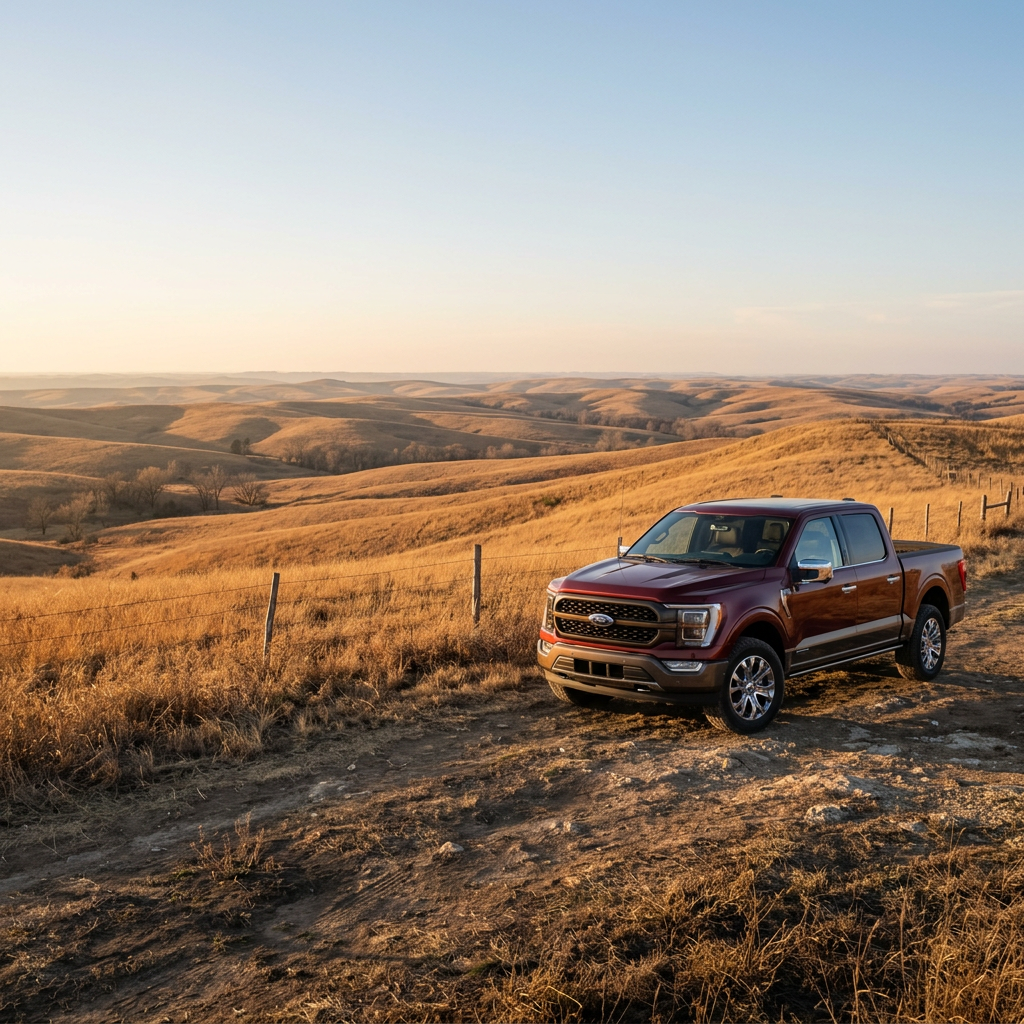
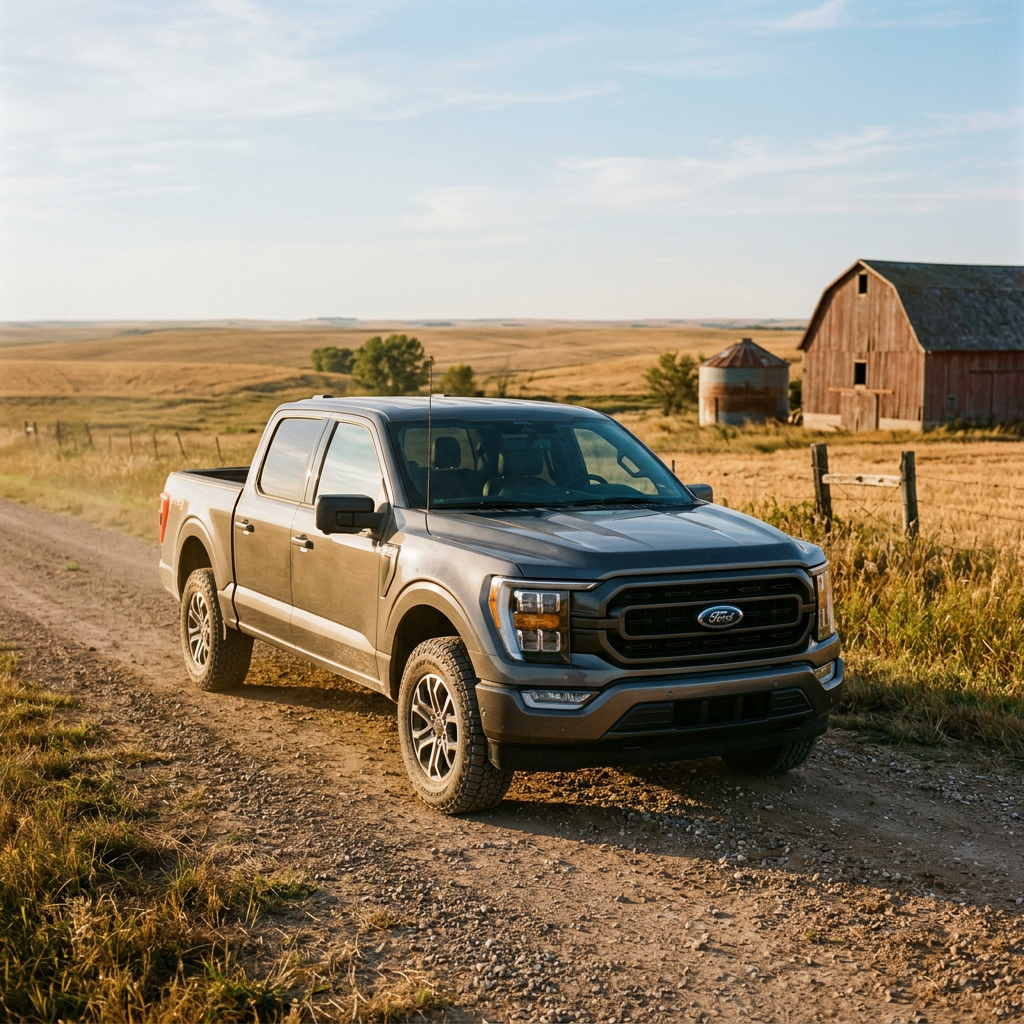
2025 Ford F-150: The Hardworking Truck for Kansas Farm Country The 2025 Ford F-150 is the right truck for farming families and ranchers across northeastern Kansas who need serious towing and hauling capability, a durable build that shrugs off gravel roads and muddy river-bottom lanes, and enough interior space to carry a full crew to the county fair. It competes directly with the Ram 1500, Chevrolet Silverado 1500, and GMC Sierra 1500, and its broad trim lineup means buyers can match capability to price range without sacrificing the features that matter most on working land. Table of Contents How Much Can the 2025 Ford F-150 Tow and Haul for Marshall County Farmers? 2025 Ford F-150 Exterior Design Tailored for Rural Kansas Work and Lifestyle Powertrain Performance of the 2025 Ford F-150 Built for Farming Demands Interior Comfort and Space in the 2025 Ford F-150 for Families and Crew Technology Features in the 2025 Ford F-150 That Enhance Daily Driving in Rural Kansas Safety and Driver Assistance Systems in the 2025 Ford F-150 Designed for Kansas Country Roads 2025 Ford F-150 Trim Levels and Pricing Breakdown for Buyers Warranty, Maintenance, and Service Options for 2025 Ford F-150 Owners in Rural Kansas 2025 Ford F-150 Buyer Questions Answered for Kansas Rural Communities How Much Can the 2025 Ford F-150 Tow and Haul for Marshall County Farmers? The 2025 Ford F-150 is purpose-built for the kind of heavy-duty daily work that defines life on the rolling plains of northeastern Kansas — towing livestock trailers, hauling grain equipment, and moving supplies across miles of farm roads between fields and town. Depending on the engine and configuration chosen, the F-150 is engineered to deliver class-competitive towing and payload figures that make it a genuine working partner rather than just a capable-looking truck. For farming families who regularly pull equipment trailers loaded with corn headers, cattle, or irrigation gear, the F-150's available engine options — including turbocharged EcoBoost V6 powerplants and a high-output variant — are designed to handle those loads without strain. The available Max Trailer Tow Package and properly configured hitch receivers allow the F-150 to reach its maximum towing potential, which Ford rates among the highest in the full-size half-ton segment depending on powertrain and axle ratio selection. Payload capacity, equally important for farmers loading the bed with feed sacks, fence posts, or harvested produce, is also competitive across the lineup. What separates the F-150 from lighter-duty options is the way its frame, suspension, and powertrain are tuned to work together under load. The high-strength, military-grade aluminum alloy body keeps overall weight down, which directly translates to more available payload capacity — a practical advantage when you're stacking 80-pound feed bags or loading irrigation pipe. For buyers who want to dig deeper into F-150 specifications and configurations before visiting the lot, Valor Ford's research tools can help narrow the right powertrain and package combination. Shoppers who prefer a proven F-150 at a different price point can also browse our pre-owned truck inventory for prior-model options that still deliver strong capability. 2025 Ford F-150 Exterior Design Tailored for Rural Kansas Work and Lifestyle The 2025 Ford F-150 looks exactly like what it is: a truck built to work hard and still turn heads at the feed store on a Saturday morning. Its bold, upright front fascia with available LED headlights and a wide, commanding grille projects confidence whether it's parked at a county auction or crawling through a muddy field approach near the Big Blue River. The high hood line and wide stance communicate capability without resorting to unnecessary ornamentation. Ford offers the F-150 across multiple cab configurations — XL Cab, SuperCab, and SuperCrew — each paired with bed length options that suit different hauling needs. Farmers who primarily use the truck bed for work will appreciate the available 8-foot bed, which accommodates standard lumber lengths and longer equipment without overhang. The BoxLink cargo management system on higher trims adds integrated bed cleats that keep loads from shifting during transport across uneven terrain. Exterior finish options span from practical work-ready colors to sharper two-tone combinations on upper trims, so buyers can choose a truck that reflects their personality without sacrificing durability. The available spray-in bedliner and tough side steps are practical additions for daily farm use, protecting the bed floor from metal equipment and making it easier to access the bed after a long day in the field. If you're considering trading in your current truck toward a new F-150, Valor Ford makes it straightforward to get an estimate on your trade-in value before you ever step onto the lot. Powertrain Performance of the 2025 Ford F-150 Built for Farming Demands Three core engine families power the 2025 F-150, and each one is calibrated to handle the sustained, heavy-load demands that northeastern Kansas farm life puts on a truck day after day. The standard 3.3-liter Ti-VCT V6 covers lighter-duty needs, while the twin-turbocharged 2.7-liter EcoBoost V6 and the larger 3.5-liter EcoBoost V6 — including a high-output version on performance-oriented trims — deliver the torque that matters most when pulling a loaded cattle trailer up a river-bottom grade or accelerating onto a state highway with a heavy load in tow. Ford also offers a 3.0-liter Power Stroke turbodiesel V6 for buyers who prioritize torque at low RPM and fuel efficiency on long hauls between county seats — a configuration worth considering for farmers who regularly cover significant distances between fields, supply depots, and livestock markets. The diesel's broad torque curve means less downshifting and less strain when conditions change mid-haul. All available engines pair with a 10-speed automatic transmission that manages gear selection seamlessly, keeping the engine in its optimal power band whether the truck is working at low speed through a muddy farm lane or cruising at highway speed on the way to a community event. Four-wheel-drive variants — including both part-time and electronic on-demand systems — give the F-150 the traction needed on the gravel and clay-heavy roads common throughout Washington and Republic Counties. Keeping a working truck running at peak performance means using the right parts. Valor Ford stocks and can order genuine Ford OEM parts to ensure your F-150's powertrain stays in the condition Ford engineered it to maintain. Interior Comfort and Space in the 2025 Ford F-150 for Families and Crew Step inside the SuperCrew cab configuration and it becomes immediately clear that Ford designed the F-150's interior with multi-generational families and working crews in mind. Rear seat legroom is genuinely generous, accommodating taller adults without the cramped compromise that plagues some competitors. The rear seat also folds flat on equipped trims to create a flat load floor — useful for securing gear, tools, or groceries on the way home from town. Front seat comfort on upper trims includes available heated and ventilated seats, a meaningful feature during Kansas's wide temperature swings between early spring planting and late summer harvest. The available Max Recline Seats on select trims fold nearly flat, giving drivers a genuine rest option during long days that start before sunrise and end after dark. Storage is thoughtfully engineered throughout the cabin. The available Interior Work Surface — a fold-down panel that spans the front seat area — creates a genuine mobile office surface for reviewing field notes, invoices, or delivery paperwork. Overhead storage, under-seat compartments, and a wide center console add practical organization for the tools, phones, and paperwork that accumulate during a working day. Noise isolation has improved noticeably in recent F-150 generations, making highway miles between farm sites and county seats noticeably more comfortable. The available B&O Sound System on premium trims delivers audio quality that rewards a long drive home after a full day of fieldwork, while the dual-zone climate control keeps everyone comfortable regardless of the season. Technology Features in the 2025 Ford F-150 That Enhance Daily Driving in Rural Kansas The 2025 Ford F-150 addresses one of the most practical frustrations of rural life: staying connected when cell coverage is inconsistent across the flat plains and river valleys of northeastern Kansas. Ford's available SYNC 4 infotainment system runs on a large available 12-inch touchscreen and integrates both Apple CarPlay and Android Auto wirelessly on equipped trims, so switching between navigation apps, phone calls, and music doesn't require fumbling with cables at the start of a long day. The available Ford App modem provides an in-vehicle Wi-Fi hotspot, which becomes a genuine productivity tool for farmers who need to pull up field management apps, check grain prices, or stay in contact with family members across a large property where individual cell signals can drop. Remote start, lock/unlock, and vehicle health monitoring through the Ford App let owners check on their truck from the barn or the field without walking back to the lot. For work-site functionality, the available Pro Power Onboard system turns the F-150 into a mobile generator, supplying 120-volt outlets in the bed and cab. This feature is particularly practical for farmers running power tools at remote locations, charging equipment batteries, or running lights during early-morning or late-evening field work when electrical hookups are not available. Navigation with available Ford App Points integration and over-the-air update capability means the system stays current without requiring a dealer visit, which matters for rural owners who prefer to minimize trips to town for non-essential service. Safety and Driver Assistance Systems in the 2025 Ford F-150 Designed for Kansas Country Roads The 2025 Ford F-150 comes equipped with a meaningful suite of driver assistance technology that translates directly to safer travel on the two-lane highways, gravel farm roads, and river-crossing routes that connect the communities of northeastern Kansas. Pre-Collision Assist with Automatic Emergency Braking is standard across the lineup, providing a critical safety net when a deer crosses a rural road at dusk or a slow-moving piece of farm equipment appears around a blind corner. Lane-Keeping System and available Lane-Centering assist drivers on long, straight highway stretches where fatigue can become a factor after a full day of physical farm work. Blind Spot Information System (BLIS) with Cross-Traffic Alert is available on mid-range and upper trims, which is especially useful when towing a wide livestock trailer that limits rear visibility and extends the truck's overall footprint significantly. The available Pro Trailer Backup Assist system deserves specific mention for farming buyers: it allows drivers to back a trailer precisely using only the rotary knob, removing one of the most stressful aspects of working with trailers on tight farm lanes or crowded auction lots. 360-degree camera availability on upper trims adds a bird's-eye view that helps when navigating narrow equipment gates or positioning the truck bed at a loading dock. Ford's structural engineering — including a high-strength steel frame paired with the aluminum alloy body — contributes to strong crash protection, while a full complement of airbags provides occupant coverage across all seating positions. 2025 Ford F-150 Trim Levels and Pricing Breakdown for Buyers No authoritative MSRP data was provided for the 2025 Ford F-150 trim lineup in the catalog supplied for this article. Rather than publish figures that cannot be verified, Valor Ford recommends contacting our team directly for current pricing — manufacturer pricing on the F-150 varies by cab configuration, bed length, engine choice, and option packages, and actual transaction prices depend on individual configuration. What the trim ladder does provide is a clear progression of capability and comfort. The entry-level XL trim covers straightforward work needs with an honest, no-frills specification. Moving up through XL and XLT adds comfort and connectivity features that make the truck more livable as a daily driver without a significant jump in complexity. The Lariat trim represents the sweet spot for many farming families: it adds leather seating, a more capable infotainment setup, and additional towing and driver assistance technology while remaining grounded in work-truck values. Above the Lariat, the King Ranch and Platinum trims bring premium interior materials, advanced technology packages, and a level of refinement that suits buyers who want their work truck to double as a family vehicle for longer trips or community events. The range-topping Limited trim delivers near-luxury appointments for buyers who want the full F-150 capability set wrapped in the highest available finish level. For buyers interested in Ford's off-road and performance variants, the Tremor and Raptor trims add specialized suspension, skid plates, and off-road-tuned powertrains — though for most northeastern Kansas farming applications, the mid-range trims with appropriate powertrain and tow packages deliver the best balance of capability and value. If you're exploring what else is available in Valor Ford's new vehicle lineup, our new Ford Bronco Badlands inventory is worth a look for buyers who want serious off-road capability in a different body style. When you're ready to move forward on an F-150, you can get pre-approved for financing online to streamline the purchase process before you arrive. Warranty, Maintenance, and Service Options for 2025 Ford F-150 Owners in Rural Kansas Ford backs the 2025 F-150 with its standard new-vehicle limited warranty coverage, which includes bumper-to-bumper and powertrain protection. For specific coverage terms and mileage limits applicable to your configuration, contact Valor Ford directly — warranty terms are best confirmed at point of sale to account for any updates Ford has made to its coverage programs. For farming families who depend on their truck every single day, minimizing downtime is not a preference — it is a business requirement. Valor Ford's service department is equipped to handle F-150 maintenance and repairs using genuine Ford parts and factory-trained technicians. Routine service intervals for the F-150 — oil changes, transmission fluid, brake inspections, and tire rotations — are straightforward to schedule and complete efficiently, keeping your truck out of the shop and back in the field where it belongs. The Ford Pickup & Delivery service option, where available, and Ford's roadside assistance program provide additional peace of mind for owners who work far from town. When something unexpected happens on a remote farm road, Ford's manufacturer-backed roadside assistance connects you directly with authorized service support. Scheduling your next F-150 service appointment is easy — Valor Ford's online tool lets you book a service visit at a time that fits around your farm schedule rather than interrupting your workday. 2025 Ford F-150 Buyer Questions Answered for Kansas Rural Communities Q: Is the 2025 Ford F-150 capable enough for daily farm use including towing livestock trailers? Yes. The F-150 is engineered specifically for the kind of sustained, heavy-load work that farming demands. With available EcoBoost and diesel engine options, a 10-speed automatic transmission, and available four-wheel drive, it handles livestock trailers, equipment hauling, and rough farm roads with confidence. The key is selecting the right powertrain and tow package for your specific load requirements — Valor Ford's team can walk you through the configurations that match your operation. Q: Which F-150 trim makes the most sense for a working farm family on a practical price range? The XLT and Lariat trims consistently represent the best balance of work capability and everyday livability for buyers in this market. XLT adds meaningful comfort and connectivity upgrades over the base trim, while Lariat layers in leather seating, advanced driver assistance, and a more capable infotainment system. Contact Valor Ford for current pricing on specific configurations. Q: Does the F-150 handle gravel roads and muddy conditions common in Washington County? The F-150's available four-wheel-drive system and high ground clearance make it well-suited for the gravel roads, clay-heavy farm lanes, and river-valley approaches common throughout this region. Buyers who regularly navigate particularly challenging terrain may want to consider the FX4 Off-Road Package, which adds skid plates, off-road-tuned shock absorbers, and hill descent control. Q: How do I get started purchasing a 2025 Ford F-150 at Valor Ford? The easiest path is to visit Valor Ford at 1825 Goldenbelt Blvd in Junction City, or give our sales team a call at (785) 238-5114 to discuss your specific needs, preferred configuration, and current availability. Our team — including staff members like Maria, Jace, and Tiffany, who customers consistently praise for their honest, no-pressure approach — will help you find the right F-150 for your farm, your family, and your price range. © 2026 Valor Ford. All rights reserved.
Key Takeaways: Calculating 2027 Ford Super Duty Payload and Towing Capacity for Bale Beds and Gooseneck Trailers

Key Takeaways: Calculating 2027 Ford Super Duty Payload and Towing Capacity for Bale Beds and Gooseneck Trailers

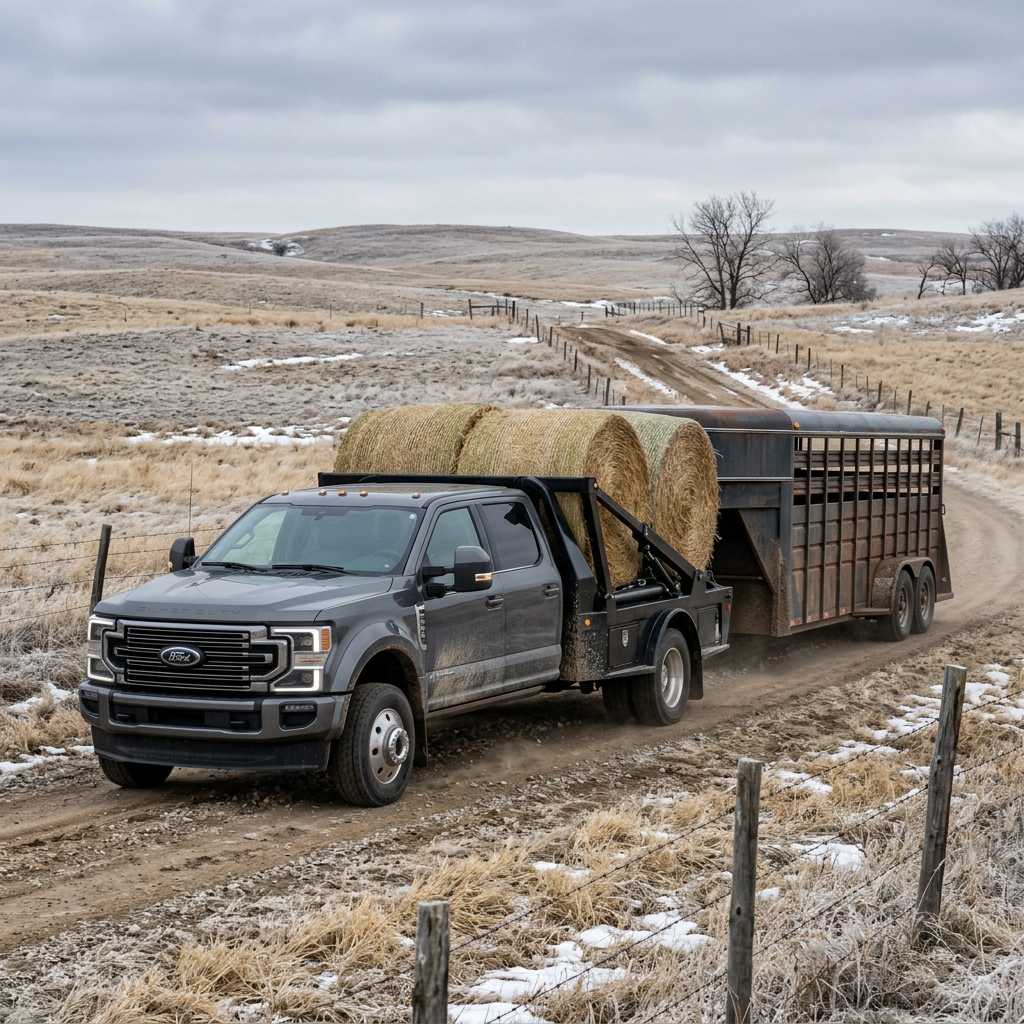
Key Takeaways: Calculating 2027 Ford Super Duty Payload and Towing Capacity for Bale Beds and Gooseneck Trailers Outfitting a heavy-duty truck for dual-purpose winter cattle feeding and commercial trailer hauling requires a precise mathematical understanding of gross axle weight ratings, frame loading, and dynamic weight transfer. When installing a hydraulic bale bed weighing between 1,500 lbs and 2,500 lbs on a 2027 Ford Super Duty, you immediately consume a significant portion of your factory payload capacity before adding a single round bale or hitching a loaded stock trailer. To safely carry two 1,500 lb hay bales on the bed while simultaneously pulling an 18,000 to 25,000 lb gooseneck trailer, an F-350 or F-450 Dual Rear Wheel (DRW) configuration with a minimum rear Gross Axle Weight Rating (GAWR) of 9,990 lbs is strictly required. Single Rear Wheel (SRW) trucks, while highly capable for standard ranch duties, rapidly exceed their rear axle ratings when subjected to combined bed loads and high gooseneck pin pressures (20% to 25% of trailer weight). Working with our team at Valor Ford in Junction City, KS ensures your truck configuration matches your daily winter workload without risking safety, structural integrity, or warranty compliance. 2027 Ford Super Duty Weight Ratings & Capacities Breakdown Super Duty Model & Configuration Max Payload Range Rear GAWR Bale Bed + 2 Bales Load Remaining Payload for Pin Weight Recommended Gooseneck Max F-250 SRW 6.7L Diesel 3,300 - 3,800 lbs 6,340 lbs 4,500 lbs OVERLOADED (-700 lbs) Not Recommended for Dual Bale + Heavy Gooseneck F-350 SRW 6.7L Diesel 4,000 - 4,600 lbs 7,280 lbs 4,500 lbs 100 - 400 lbs Light Stock Trailers (<10,000 lbs) F-350 DRW 6.7L High Output 6,200 - 7,100 lbs 9,990 lbs 4,500 lbs 1,700 - 2,600 lbs 18,000 - 22,000 lbs F-450 DRW 6.7L High Output 6,250 - 6,450 lbs 9,990 lbs 4,500 lbs 1,750 - 1,950 lbs 22,000 - 25,000+ lbs As shown in the technical comparison above, calculating total payload demands strict addition: subtract the dead weight of the flatbed/bale bed (approx. 2,000 lbs), two heavy alfalfa round bales (3,000 lbs combined), fuel, tools, driver, and passengers. On an F-250 or F-350 SRW, zero payload headroom remains for the 4,000+ lb tongue weight of a loaded 24-foot gooseneck trailer. Choosing an F-350 or F-450 Dual Rear Wheel chassis guarantees compliance with Kansas Highway Patrol safety checks and protects critical drivetrain components from severe premature wear. Rear Gross Axle Weight Rating (GAWR): Selecting Between F-250, F-350, and F-450 Dual Rear Wheel Models Understanding rear GAWR is the single most critical factor when engineering a bale bed haul rig. The rear Gross Axle Weight Rating represents the absolute maximum weight that the rear axle assembly, including housing, differential, axle shafts, bearings, wheel hubs, tires, and leaf springs, can safely support. In single rear wheel configurations (F-250 and F-350 SRW), rear GAWR limits max out between 6,340 lbs and 7,280 lbs. While this provides ample capacity for standard box payloads, installing a heavy steel hydraulic bale bed immediately concentrates 1,800+ lbs directly over the rear axle. Spear arms, hydraulic reservoirs, fluid pumps, and heavy-gauge steel crossmembers sit over or behind the rear axle centerline, creating a severe leverage effect. When you spike two 1,500 lb round bales, you add 3,000 lbs of static mass. In an SRW truck, your rear axle is already supporting over 6,200 lbs of static load before adding occupants, diesel fuel, or hitch weight. Attempting to drop a loaded gooseneck stock trailer onto the ball creates a catastrophic axle overload condition, straining axle seals, overheating differential fluid, and causing tire sidewall flex that drastically degrades vehicle control on highway routes around Junction City. By stepping up to an F-350 DRW or F-450 DRW chassis, rear GAWR increases dramatically to 9,990 lbs (or up to 10,000 lbs depending on specific axle package codes). The dual rear wheel configuration doubles the tire contact footprint, increasing rear lateral stability and spreading heavy vertical loads across four load-range E or F tires. Furthermore, the F-450 DRW features commercial-grade Dana M300 wide-track rear axles, massive 15.75-inch rear brake rotors, and heavy-duty 10-lug wheel hubs. This heavy commercial hardware absorbs high torque spikes during low-speed pasture maneuvers while carrying maximum load ratings. For producers balancing daily winter feeding with heavy livestock hauling, the dual rear wheel architecture provides an essential margin of mechanical safety. What Configuration Details Must Be Verified Before Choosing a 2027 Super Duty for Heavy Gooseneck Towing? 1. Axle Ratio & Drivetrain Selecting the proper rear axle ratio is essential for pulling heavy trailers out of soft mud and deep snow. The 2027 Super Duty offers 3.55, 3.73, 4.10, and 4.30 limited-slip axle options. For dual-bale setups pulling 20,000+ lb goosenecks, the 4.10 (F-350 DRW) or 4.30 (F-450 DRW) limited-slip rear axle is highly recommended. The numerical ratio optimizes engine RPM in the 6.7L Power Stroke V8 Turbo Diesel's peak torque curve (1,050 to 1,200 lb-ft), reducing transmission torque converter heat build-up during low-speed pasture operations. 2. Gooseneck Prep & Flatbed Build Verify factory Gooseneck Hitch Prep Package (Option 53W) inclusion or determine flatbed crossmember integration. Aftermarket bale beds feature their own subframe structure with integrated 30,000 lb rated gooseneck hitch wells. Ensure the flatbed manufacturer's mounting brackets match Ford's recommended frame attachment points for pickup box delete or chassis cab platforms. Installing an aftermarket bed onto high-strength steel frame rails requires specific shear-plate mounts to avoid frame stress risers. 3. Frame Type & GVWR Class Distinguish between Pickup Box Delete (factory pickup frame with C-channel rear extension) and Chassis Cab (flat high-strength steel frame rails with standard 60-inch Cab-to-Axle dimension). Pickup box delete models retain the higher engine horsepower output (up to 500 hp / 1,200 lb-ft in High Output configuration), whereas Chassis Cab models offer straight frame rails ideal for heavy utility beds. Review GVWR class targets (14,000 lbs vs 16,500+ lbs) with Valor Ford sales specialists. Research Ford Super Duty Models Does Installing a Bale Bed Interfere with Factory Ford Blind Spot and Backup Sensors? Modern 2027 Ford Super Duty trucks rely on advanced driver assistance safety networks, including Ford Co-Pilot360 Technology, Blind Spot Information System (BLIS) with trailer coverage, Rear Parking Sensors, and 360-Degree Camera packages. Removing the OEM factory pickup bed disables radar modules housed inside the factory taillight assemblies and disconnects ultrasonic sensors embedded in the rear bumper. Without proper recalibration and hardware relocation, sensor errors will illuminate diagnostic trouble codes on the 12-inch digital instrument cluster and deactivate crucial driver-assist functionality. Fortunately, top-tier bale bed manufacturers offer integrated sensor housing cutouts and wiring extension harnesses specifically designed for Ford's architecture. Key integration components include: - **Taillight BLIS Module Relocation Brackets**: Transfer factory radar sensors into protective steel pockets built directly into the bale bed rear skirt. - **Sonar Sensor Harness Adapters**: Plug-and-play extensions that mount four rear ultrasonic park sensors into custom-drilled bumper ports. - **Tailgate Camera Relocation**: Re-mounting the factory high-definition tailgate camera beneath the bale bed tailboard or onto the gooseneck arch for clear hitch view visibility. At Valor Ford Service Center, our master certified technicians perform Ford IDS/FDRS computer re-flashing and sensor recalibrations following flatbed installation. This ensures BLIS with Trailer Coverage accurately measures your gooseneck trailer length, providing real-time radar monitoring along adjacent highway lanes when traveling down I-70 or Highway 77. How Does the Engine Block Heater and Supplemental Cab Heater Work in Sub-Zero Temperatures? Engine Block Heater System The factory-installed 110V/750W engine block heater warms engine coolant surrounding the 6.7L Power Stroke cylinder block. In sub-zero Dickinson County mornings, plugging the unit in 2 to 3 hours prior to startup maintains coolant temperatures near 100°F. This drastically reduces cold-cranking resistance, ensures rapid engine oil pressure build-up to protect turbocharger bearings, and prevents wax gelling inside diesel fuel lines during extreme arctic cold snaps. Rapid-Heat Supplemental Cab Heater Diesel engines heat up slowly at idle. Ford's Rapid-Heat Supplemental Cab Heater utilizes an electric ceramic PTC (Positive Temperature Coefficient) heating element built directly into the HVAC plenum. Activated automatically in freezing conditions, it delivers immediate warm airflow to the cabin and windshield within seconds of starting, defrosting ice and keeping operators comfortable during early 5:00 AM cattle feeding runs. Dual AGM Battery & Glow Plugs The 2027 Super Duty diesel powertrain includes heavy-duty dual 780 CCA (Cold Cranking Amps) AGM batteries paired with high-output alternators (up to dual 410-amp capacity). Super-fast ceramic glow plugs energize within milliseconds, achieving temperatures above 1,800°F to guarantee instant ignition without long cranking cycles, providing reliable electrical power for high-draw hydraulic bale bed pump motors. How Does Dual Rear Wheel Stability Compare on Icy Unpaved Pasture Roads in Rural Kansas? Navigating frozen, rutted pastures and slick dirt roads across the Flint Hills presents demanding physical challenges. When unrolling a 1,500 lb round bale on a steep, icy hillside, the center of gravity of your vehicle shifts dynamically. A single rear wheel truck on side-slopes experiences immense lateral tire sidewall roll, creating severe instability that can cause the rear axle to slide downhill. A Dual Rear Wheel (DRW) Super Duty widens the rear track width by nearly 20 inches compared to SRW models. This broad stance creates a wide anti-roll footprint that firmly anchors the truck when unrolling heavy hay bales on uneven ground. The four rear tires distribute vehicle and bale weight over twice the surface area, preventing deep rut penetration in soft mud during winter thaws. Key traction features in the 2027 Super Duty include: - **Electronic-Locking Rear Differential**: Locks both rear dual wheel sets together to deliver equal torque to all four dual tires on ice. - **Selectable Drive Modes**: Deep Sand/Snow and Slippery modes optimize throttle response, transmission shift schedules, and ABS brake vectoring. - **Hill Descent Control**: Maintains controlled creep speeds when descending steep, slick timber draws with loaded trailers. Furthermore, when hauling a 24-foot gooseneck livestock trailer through blustery Kansas crosswinds along Highway 18 or rural routes outside Fort Riley, the dual rear axle completely eliminates the fishtailing roll motion common to single rear wheel trucks. The rigid dual tire sidewalls withstand crosswind forces, keeping your heavy rig planted straight on icy pavement. Kansas Winter Cattle Feeding: Super Duty Bale Bed and Heavy Towing Setup Guide Executing a seamless winter feeding operation requires configuring your truck setup with precision before severe weather arrives. Balancing daily round bale loading, unrolling tasks, and commercial stock trailer hauling requires strict attention to chassis setup, tire management, and suspension tuning. ### 1. Dynamic Load Shift & Hydraulic Arm Leverage When lifting a heavy 1,500 lb bale from ground level using hydraulic bed arms, the dynamic load exerted on the rear axle temporarily exceeds the static weight of the bale itself. The hydraulic cylinders act as leverage pivots, transferring weight off the front axle and concentrating up to 2,800 lbs of dynamic force onto the rear leaf springs. Operating an F-350 or F-450 DRW ensures your frame rails withstand these repeated torsional twisting forces without structural fatigue. ### 2. Tire Inflation Pressure (PSI) Management Proper tire inflation is vital when operating under max payload conditions. Front steer tires on heavy diesel Super Duty trucks should maintain cold pressure settings (typically 75–80 PSI). For dual rear tires, running exact matched pressures (typically 65 PSI cold depending on load table placard ratings) prevents outer tire scuffing and ensures equal load distribution across all four rear dual tires. Contact the parts team at Order Genuine Ford Parts for factory tire pressure monitoring sensors compatible with aftermarket dual wheel rims. ### 3. Suspension Upgrades: Rear Air Helper Springs For producers frequently transitioning between carrying two heavy round bales and towing a 22,000 lb gooseneck trailer, installing rear air helper spring kits (airbags) provides adjustable leveling. Air helper springs mount between the frame rail and rear axle housing, allowing you to adjust pressure from 10 PSI (empty) to 90 PSI (fully loaded). This keeps your Super Duty level, maintaining correct headlight aiming, steering geometry, and driveshaft driveline angles under heavy loads. ### 4. Dynamic Weight Distribution Checklist - **Front Axle Minimum**: Ensure front axle retains at least 30% of total vehicle weight during maximum gooseneck load for precise steering control. - **Gooseneck Pin Placement**: Mount ball hitch 1 to 2 inches forward of the rear axle centerline on flatbeds to distribute pin weight to the front axle. - **Trailer Brake Controller Settings**: Adjust integrated Super Duty trailer brake gain setting (typically 7.5 to 9.5 for heavy stock trailers) for smooth proportional braking on slick rural gravel roads. Get Pre-Approved for Financing What Is the Average Price Range for Aftermarket Super Duty Bale Bed Installations? Standard Electric-Hydraulic Units **Contact us for current installed pricing** Entry to mid-level hydraulic bale beds utilize an 12V electric-over-hydraulic pump motor housed inside a weatherproof toolbox cabinet. Features typically include heavy-tube lift arms, 30,000 lb rated gooseneck hitch wells, drop-side headache racks, LED lighting, and wireless remote controls. Ideal for light to medium daily feeding workloads. Heavy-Duty Engine Belt-Driven Beds **Contact us for current installed pricing** Commercial-grade bale beds feature continuous-duty engine belt-driven hydraulic pumps or high-flow clutch pumps. These systems provide faster arm cycle times, higher lifting capacity (up to 3,500 lbs per arm set), underbody toolboxes, integrated dual-side hay unroller spinners, auxiliary hydraulic remotes for post-hole diggers, and heavy steel skirts. Valor Ford Package Financing **Contact us for current financing options** At Valor Ford (785) 238-5114, we partner with leading commercial upfitters to streamline your purchasing experience. You can include your brand-new bale bed, bumper sensors, auxiliary lights, and installation costs directly into your new vehicle Ford Credit loan or lease agreement, simplifying tax depreciation and commercial accounting. Schedule Ford Service Today

ford

Preparing Your Ford for Kansas Winter Driving: A Service Director's Guide

Preparing Your Ford for Kansas Winter Driving: A Service Director's Guide What Is the Price of Official Ford Winter Tire and Wheel Packages for 2027 Models? Official Ford OEM winter tire and wheel packages for 2027 models vary by configuration. Contact our team for current MSRP and availability details. Complete packages bundle model-specific steel or alloy wheels, severe-duty winter tires, dedicated TPMS sensors, and factory-certified mounting and balancing. Purchasing an official factory-engineered package ensures exact offset, brake caliper clearance, and proper load ratings without universal fitment compromises. Swapping between seasonal tire sets on dedicated wheels also protects your factory aluminum rims from road salt and chemical de-icers used during cold Midwestern months. For smaller platforms like the compact SUV and crossover lineup, pricing may differ from full-size trucks and heavy-duty utility vehicles based on configuration and equipment. Contact our team for current pricing. Choosing complete factory setups also maintains accurate speed sensor calibration and seamless integration with onboard driver-assist systems. If you are planning to equip your vehicle before the first freeze, visiting our dealership service department or giving our team a quick call allows us to confirm exact rim offsets and tire sizing for your specific trim. Table of Contents What Winter Vehicle and Trip Checks Should Junction City Ford Owners Make Before Driving? How Does Ford Intelligent All-Wheel Drive Enhance Winter Traction? How Does Slippery Mode Adjust Ford Engine Torque and Braking? What Specific Components Are Checked During a Ford Winter Safety Inspection? What Engine Block Heater Options Are Available for Ford Trucks in Freezing Weather? Which Ford Models Come Standard with Intelligent AWD for Winter Driving? What Winter Vehicle and Trip Checks Should Junction City Ford Owners Make Before Driving? Before setting out in freezing conditions, drivers should inspect tire tread depth and cold inflation pressures, verify battery health, test engine coolant freeze protection points, and check all wiper blades and exterior lighting. Maintaining a half-tank of fuel and stowing an emergency kit with traction material, blankets, and jumper cables ensures safety during unexpected delays. Cold ambient temperatures drop tire pressure by approximately one pound per square inch for every ten-degree drop in outdoor temperature, making regular morning pressure checks essential for maintaining tire contact patches on slick roads. For local commuters navigating the Kansas River bridge and highway ramps around Junction City, proper inflation directly impacts emergency braking distances on packed snow. If you are evaluating vehicle capability for winter conditions, reviewing our new Ford Bronco inventory shows models engineered with cold-weather capability in mind. For example, the 2026 Bronco Sport Badlands 4X4 achieves an EPA-estimated 21 city / 27 hwy / 23 combined MPG, while the Big Bend 4X4, Heritage 4X4, and Outer Banks 4X4 trims deliver 25 city / 30 hwy / 27 combined MPG. For drivers preferring pre-owned options, exploring our pre-owned vehicle lineup provides access to all-wheel-drive crossovers and trucks that have passed comprehensive multi-point winter inspections. Fuel Economy Fuel economy and range by trim Feature Badlands 4X4 Big Bend 4X4 Heritage 4X4 Outer Banks 4X4 MPG 21 city / 27 hwy / 23 combined 25 city / 30 hwy / 27 combined 25 city / 30 hwy / 27 combined 25 city / 30 hwy / 27 combined How Does Ford Intelligent All-Wheel Drive Enhance Winter Traction? Ford Intelligent All-Wheel Drive enhances winter traction by continuously monitoring vehicle speed, throttle input, and steering wheel angle to predict wheel slip and automatically redistribute engine torque between axles in milliseconds before spin occurs. Unlike traditional four-wheel drive, Intelligent AWD remains engaged continuously on dry or icy pavement without mechanical binding. By measuring driver steering intent alongside wheel rotation speeds, the system proactively transfers power to the wheels with the firmest mechanical grip. When accelerating on split-friction surfaces—where one side of the vehicle rests on slush and the other on clear asphalt—the transfer case directs torque away from slipping tires, keeping the chassis balanced and tracking true. Because the system operates dynamically on demand without manual lever shifting, drivers maintain steady control through changing road transitions. If you are considering upgrading your current vehicle to a winter-ready powertrain, completing a trade-in evaluation online can clarify your current vehicle's value toward an AWD-equipped model. How Does Slippery Mode Adjust Ford Engine Torque and Braking? Selectable Slippery Mode softens accelerator pedal response, limits sudden engine torque output, delays transmission upshifts, and increases Anti-Lock Braking System sensitivity to prevent wheel spin on ice, slush, or wet roads. When activated via the drive mode dial, the engine control unit remaps throttle sensitivity so that aggressive pedal inputs translate into gradual power delivery. The transmission holds lower gear ratios longer to reduce sudden torque spikes while downshifting smoothly to maintain engine braking stability. Simultaneously, the traction control and ABS modules increase wheel-speed sensor sensitivity, applying subtle brake taps to individual wheels at the first micro-level indication of slip. For drivers planning a vehicle purchase before seasonal weather hits, contacting the dealership for current financing options can streamline the process of securing a vehicle equipped with selectable terrain management. Engine & Performance Powertrain specs by trim Feature Badlands 4X4 Big Bend 4X4 Heritage 4X4 Outer Banks 4X4 Engine 2L 1.5L 1.5L 1.5L Horsepower 238 hp 180 hp 180 hp 180 hp Torque 277 lb-ft 200 lb-ft 200 lb-ft 200 lb-ft Drivetrain Four-wheel drive Four-wheel drive Four-wheel drive Four-wheel drive What Specific Components Are Checked During a Ford Winter Safety Inspection? A complete Ford winter safety inspection evaluates battery cold cranking amps, engine coolant freeze-point protection, tire tread depth and inflation pressure, wiper blade integrity, brake pad thickness, and heating system operation. When drivers come into our service bay asking about winter inspections, my technicians systematically test battery cold cranking amps, engine coolant freeze protection thresholds, wiper blade edge wear, heater unit output, and brake pad thickness. Because freezing temperatures reduce battery chemical activity by up to 50 percent while engine starting resistance increases due to thickened oil, verifying starter draw and battery reserve capacity prevents surprise morning non-starts. Technicians also check the hydrometer reading of engine antifreeze to confirm protection down to sub-zero temperatures, inspect drive belts for cold-weather cracking, and check headlight clarity for optimal visibility during short winter daylight hours. You can easily schedule a service appointment with our technicians or order genuine Ford parts such as heavy-duty wiper blades and Motorcraft batteries directly through our service portal. What Engine Block Heater Options Are Available for Ford Trucks in Freezing Weather? Ford provides factory-installed 110-volt engine block heaters across truck models, including the F-150, Super Duty, and Maverick, featuring integrated electrical cord routing located behind the front lower grille or fog lamp bezel. These immersion-style heating elements directly warm engine coolant inside the block, allowing oil to circulate freely at turn-key startup and significantly reducing cold-start mechanical friction. Plugging the heater into a standard grounded outlet for approximately three hours prior to departure preheats the combustion chambers, speeds up cabin heater warm-up, and reduces initial startup fuel consumption. For service members at Fort Riley making early morning trips across open terrain, an engine block heater ensures dependable key turns during extreme cold snaps. Operating the heater on an exterior electrical outlet timer maximizes efficiency without wasting residential power overnight. Which Ford Models Come Standard with Intelligent AWD for Winter Driving? Ford Intelligent AWD or Advanced 4WD comes standard on top-tier trims of the Explorer, Edge, and Expedition, as well as specified configurations of the Escape, Bronco Sport, and Maverick. In the compact SUV lineup, every 2026 Bronco Sport model includes standard four-wheel drive. The Badlands 4X4 trim pairs an EcoBoost 2L engine generating 238 hp and 277 lb-ft of torque with an 8-speed SelectShift® automatic transmission. Meanwhile, the Big Bend 4X4, Heritage 4X4, and Outer Banks 4X4 trims come standard with a 1.5L engine producing 180 hp and 200 lb-ft of torque alongside standard four-wheel drive capability. In the midsize crossover category, the 2026 Explorer features standard Intelligent 4WD on 2.3-liter EcoBoost models, while heavy-duty trucks and body-on-frame SUVs offer electronic 4x4 setups designed for extreme snow clearance. To explore winter-ready powertrains in person, stop by our dealership showroom or give our service department a call directly to discuss recommended winter packages. © 2026 Valor Ford. All rights reserved. Vehicle specification data © JATO Dynamics Limited.
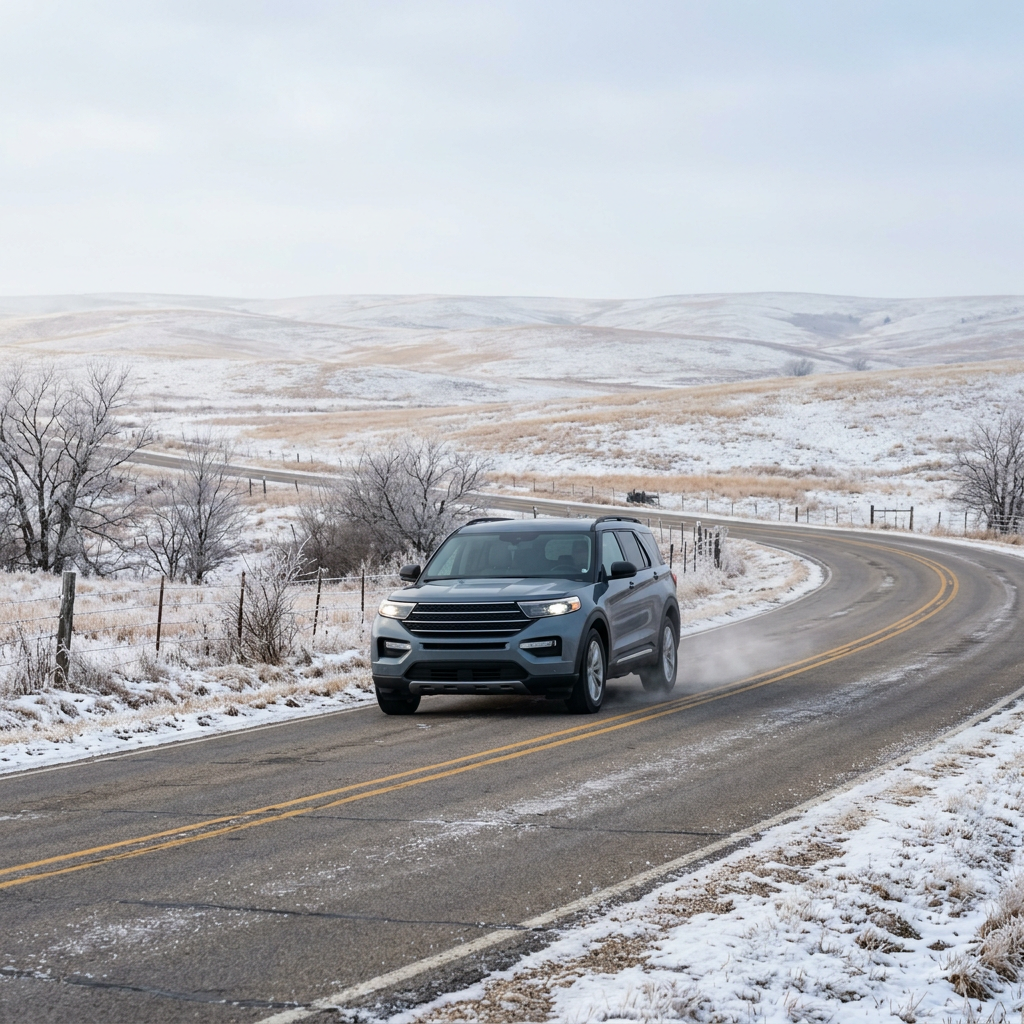
Which Ford Models Lead National Sales Data as America’s Top Best Sellers?

Which Ford Models Lead National Sales Data as America’s Top Best Sellers?

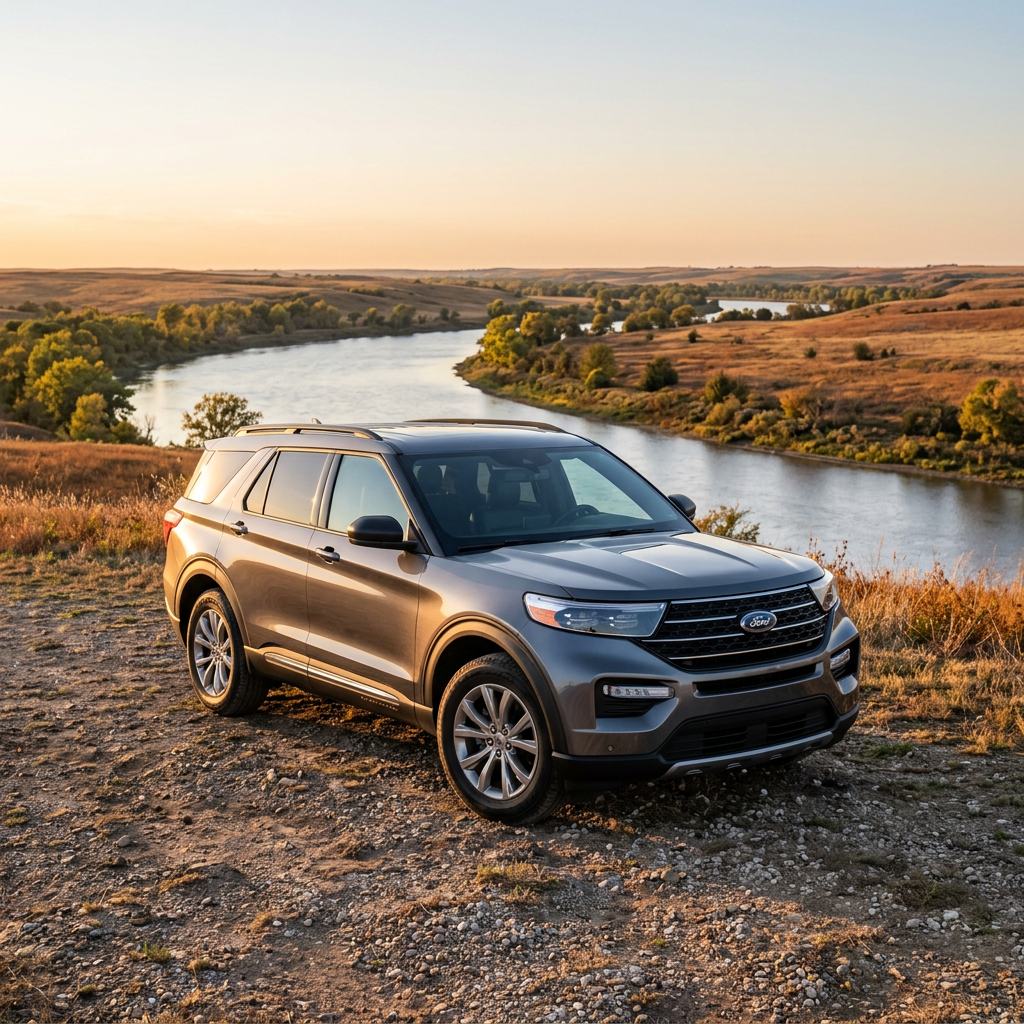
Which Ford Models Lead National Sales Data as America’s Top Best Sellers? When analyzing national automotive sales data, industry registration records, and annual marketplace reports, one constant standard stands above all others: Ford’s dominant position across multiple vehicle segments. Fresh industry figures confirm that the Ford F-150, Ford Explorer, Ford Maverick, and Ford Super Duty line consistently secure top positions on American sales charts. Driven by class-leading tow capacities, trailblazing hybrid powertrain engineering, and unmatched fleet reliability, these model lines reflect what driver demand requires across both residential driveways and commercial worksites. For drivers throughout Junction City, Fort Riley, and broader Dickinson County, these national market trends are reflected every day in local driving conditions. Whether navigating daily commutes along I-70, hauling livestock and farm machinery across agricultural parcels, or managing transport for active-duty military personnel, these best-selling Ford vehicles excel because they are engineered specifically for real-world durability. At Valor Ford in Junction City, understanding this national evidence helps regional car buyers select vehicles backed by proven long-term performance and high resale value retention. Why the Ford F-150 Remains America's Best-Selling Vehicle for Over Four Decades For over 47 consecutive years, the Ford F-150 has held the title of America's best-selling truck, while simultaneously maintaining its position as the best-selling vehicle overall in the United States for over four decades. This unprecedented historical run is not a product of luck; it is supported by rigorous automotive engineering and continuous user-focused innovation. High-strength, military-grade aluminum-alloy body paneling reduced overall vehicle weight while enhancing resistance to rust and denting, allowing engineers to allocate extra structural support precisely where frame strength matters most. Beyond structural engineering, modern sales figures are heavily energized by practical mobile technology like Pro Power Onboard. Transforming the truck into a mobile generator capable of delivering up to 7.2 kW of usable electricity, Pro Power Onboard allows contractors in Junction City to run heavy-duty power tools at jobsites, while campers and outdoor enthusiasts around Milford Lake power appliances without hauling external generators. Versatile trim configurations—ranging from the essential XL work truck up to the luxurious King Ranch and Platinum editions—ensure that every buyer finds a balance of utility and interior refinement. Engine Options and Towing Capacities for the 2027 Ford F-150 A cornerstone of national sales leader status is powertrain flexibility. The 2027 Ford F-150 offers a comprehensive lineup of engines designed to meet exact payload, efficiency, and towing specifications. For agricultural operations in Dickinson County and heavy hauling across Kansas highway corridors, these mechanical combinations ensure dependable performance under maximum load. Engine Option Horsepower & Torque Max Available Towing Key Operational Benefit 2.7L EcoBoost V6 325 hp / 400 lb-ft Up to 8,400 lbs Exceptional daily fuel efficiency and snappy torque delivery 5.0L Ti-VCT V8 400 hp / 410 lb-ft Up to 13,000 lbs Classic naturally aspirated power with traditional rumble and heavy payload capability 3.5L EcoBoost V6 400 hp / 500 lb-ft Up to 13,500 lbs Maximum trailering capacity for heavy agricultural and machinery trailers 3.5L PowerBoost Full Hybrid 430 hp / 570 lb-ft Up to 11,200 lbs Instant low-end electrical torque integrated with 7.2 kW Pro Power Onboard High-Output 3.5L EcoBoost (Raptor) 450 hp / 510 lb-ft Up to 8,200 lbs High-speed off-road performance for extreme terrain applications When paired with advanced trailering technologies—such as Pro Trailer Backup Assist, Smart Hitch payload monitoring, and integrated trailer brake controllers—the F-150 simplifies difficult maneuvering in tight farmyards, staging areas, or boat ramps around eastern Kansas. How Does the Ford F-150 Compare to the Chevrolet Silverado 1500? National vehicle sales battles are nowhere fiercer than in the full-size pickup segment. In head-to-head comparisons against the Chevrolet Silverado 1500, national sales data consistently highlights Ford’s technological and mechanical advantages. While the Silverado relies primarily on conventional gasoline and diesel engines, the F-150 leads the market with its 3.5L PowerBoost Full Hybrid powertrain, combining high torque with reduced idling fuel consumption—a crucial advantage during winter warm-ups and jobsite stationary work. Inside the cabin, Ford’s SYNC 4 infotainment architecture delivers fast processing speeds, cloud-connected navigation updates, and seamless wireless smartphone integration across standard 12-inch touchscreen displays. Safety features under the Ford Co-Pilot360 suite provide active lane-centering, adaptive cruise control, and blind-spot monitoring that covers the full length of attached trailers. Furthermore, automotive trade-in evaluation metrics show that the F-150 holds superior overall resale value retention over time, protecting your long-term vehicle equity. Research Ford F-150 Inventory Features That Make the 2027 Ford Maverick a Popular Compact Pickup Standard Hybrid Powertrain The Ford Maverick redefined the compact pickup market by offering an ultra-efficient standard hybrid engine capable of exceptional fuel economy. Perfect for Fort Riley service members commuting across base or driving into Manhattan and Topeka, the Maverick delivers full truck utility without high fuel costs. Innovative FLEXBED System Featuring a multi-position tailgate, built-in 110V power outlets, and pre-molded bed slots, the Maverick's FLEXBED allows drivers to easily create custom bike racks, cargo dividers, or timber supports using simple DIY materials purchased at local hardwares. Maneuverability & Value Well-suited for urban agility, the compact turning radius and comfortable unibody ride height make parking and daily driving effortless, while an affordable starting price point makes it a practical choice for budget-conscious buyers. Which Ford Models Are in High Demand Locally in Junction City? While national automotive industry metrics provide a macroeconomic view of vehicle popularity, local sales figures at Valor Ford in Junction City reflect the specific lifestyle and economic requirements of central Kansas drivers. Regional sales data shows an exceptionally strong demand for Ford Super Duty trucks (F-250 and F-350) across agricultural and commercial sectors in Dickinson, Geary, and Clay counties. Simultaneously, active military personnel and families stationed at nearby Fort Riley consistently select three-row family SUVs like the Ford Explorer and rugged compact crossover models such as the Ford Bronco Sport. These vehicles offer the ideal blend of intelligent 4WD capability for winter snowstorms, spacious passenger capacity for family road trips, and rugged construction capable of handling dirt roads across the Flint Hills. Year in Review: Best-Selling Models — Ford at Valor Ford Looking back over recent sales volume at Valor Ford, regional driver purchasing habits highlight strong consistency across key Ford segments. Below is a retrospective overview of top-selling vehicle categories at our Junction City dealership. F-Series Trucks Accounting for the highest total dealership sales volume, F-150 and Super Duty models continue to dominate local sales charts due to unmatched commercial durability and farm workload efficiency. Explorer & SUV Line The Ford Explorer leads family vehicle deliveries in Geary County, followed closely by the versatile Ford Escape crossover for drivers seeking balanced commute efficiency. Compact & EV Innovation Rapid growth in Maverick orders and expanding interest in all-electric models like the Mustang Mach-E demonstrate local adoption of modern electrified vehicle technologies. What Financing Options Are Available When Purchasing a New Ford? Securing national best-selling Ford models is straightforward with the tailored purchasing solutions offered through Ford Credit at Valor Ford. Whether you prefer financing options and lease offers, our finance specialists work directly with national lending networks to structure financing solutions to fit your budget. We proudly offer dedicated military purchase incentives and bonus cash programs for active-duty service members, veterans, and military families stationed at Fort Riley. You can complete our online Ford Credit application from home to secure pre-approval prior to visiting our Junction City showroom. Key Financing Highlights: • Competitive purchase rates on top models • Special military incentives for Fort Riley personnel • Fast, secure online credit approval tools • Customized lease protection options Get Pre-Approved for Financing Why the Ford Explorer and Bronco Sport Lead National SUV Sales Charts Ford Explorer SUV As America’s iconic 3-row family SUV, the Ford Explorer delivers spacious seating for up to seven passengers, generous cargo area dimensions behind the rear seats, and standard intelligent 4WD. Its rear-wheel-drive architecture enhances handling dynamics and boosts maximum towing capacity up to 5,000 lbs. Ford Bronco Sport Engineered for adventure, the Bronco Sport combines compact exterior footprint dimensions with serious off-road capability. Standard 4x4, G.O.A.T. Modes (Goes Over Any Type of Terrain), and easy-to-clean rubberized flooring make it a top selection for active local drivers. Standard Warranty Protection with a New Ford Vehicle Every top-selling new Ford vehicle delivered at Valor Ford is supported by comprehensive factory warranty coverage. Built to provide long-term owner confidence, standard warranty protections shield drivers against unexpected repair costs across thousands of driving miles. Routine maintenance and warranty service execution are handled directly by factory-trained Technicians in our certified service center at Valor Ford, using genuine OEM Ford parts engineered to precise original specifications. Warranty Component Coverage Term Bumper-to-Bumper Limited Warranty 3 Years / 36,000 Miles Powertrain Limited Warranty 5 Years / 60,000 Miles Safety Restraint System 5 Years / 60,000 Miles Corrosion Perforation (Sheet Metal) 5 Years / Unlimited Miles Hybrid / EV Component Coverage 8 Years / 100,000 Miles Roadside Assistance Coverage 5 Years / 60,000 Miles How to Maximise Trade-In Value When Upgrading to a Top-Selling Ford Current pre-owned automotive market conditions remain historically strong, offering current vehicle owners an ideal opportunity to trade in their present car, truck, or SUV for maximum credit toward a new national best-seller. Applying trade equity directly reduces your overall financed amount and monthly vehicle payments. Using live market valuation data, our appraisers at Valor Ford provide transparent, top-dollar offers for pre-owned vehicles of all makes and models. You can begin the process online using our quick trade-in evaluation tool before bringing your vehicle in for a final physical inspection. Simple Steps to Maximize Value: 1. Clean vehicle interior and exterior thoroughly. 2. Gather service history logs and title documents. 3. Complete online appraisal form for initial estimate. 4. Visit Valor Ford for instant appraisal verification. Value Your Trade-In Now Experience National Best Sellers Today at Valor Ford in Junction City, KS National sales evidence speaks clearly: Ford vehicles deliver the durability, efficiency, and tech capability that American drivers rely on every single day. Whether you are searching for a high-capability F-150, an ultra-efficient Maverick compact pickup, or a family-ready Explorer SUV, Valor Ford in Junction City is your trusted local automotive partner. Visit our dealership showroom at 1825 Goldenbelt Blvd, Junction City, KS 66441 to experience these national best sellers firsthand. Call (785) 238-5114 today to speak directly with our friendly sales team and schedule your personalized test drive. Get Directions to Valor Ford

How Do You Prepare a Car for Winter Road Trips Before Holiday Block Leave?

How Do You Prepare a Car for Winter Road Trips Before Holiday Block Leave?

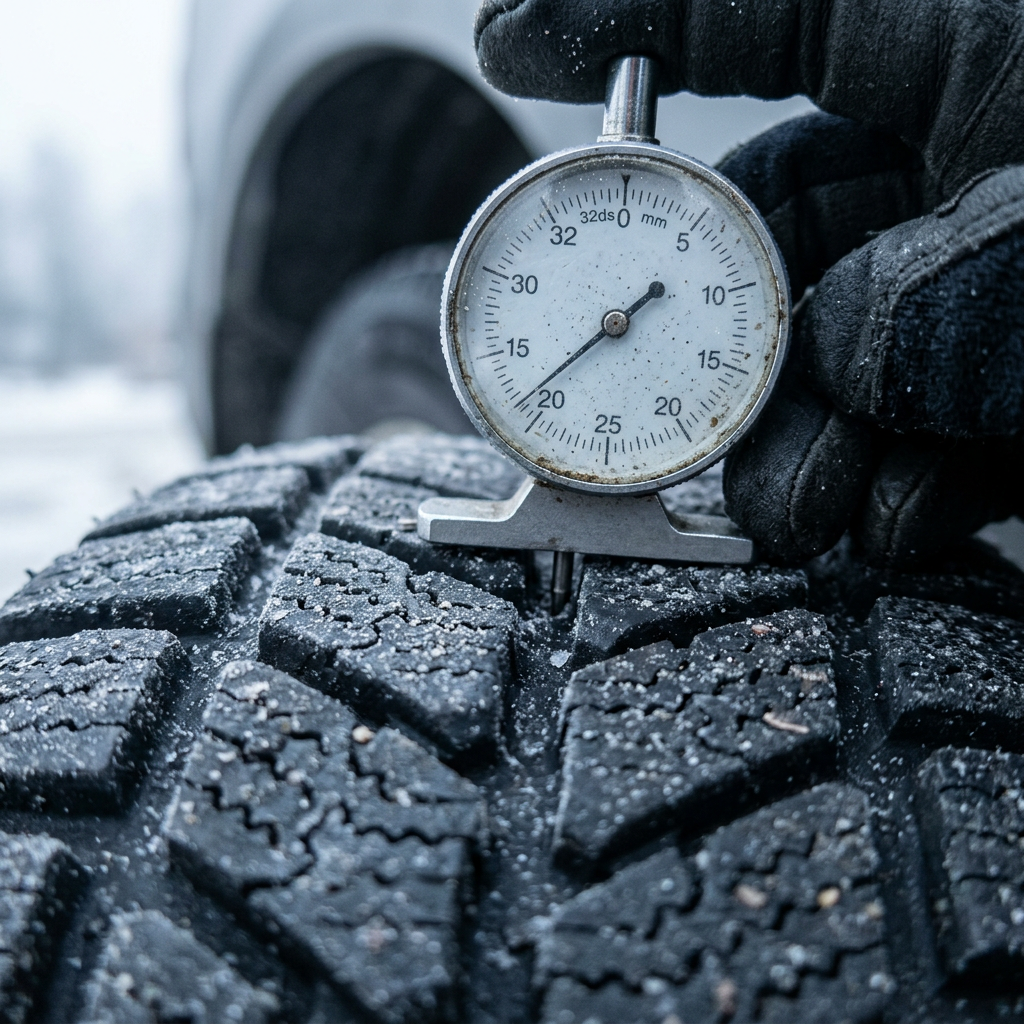
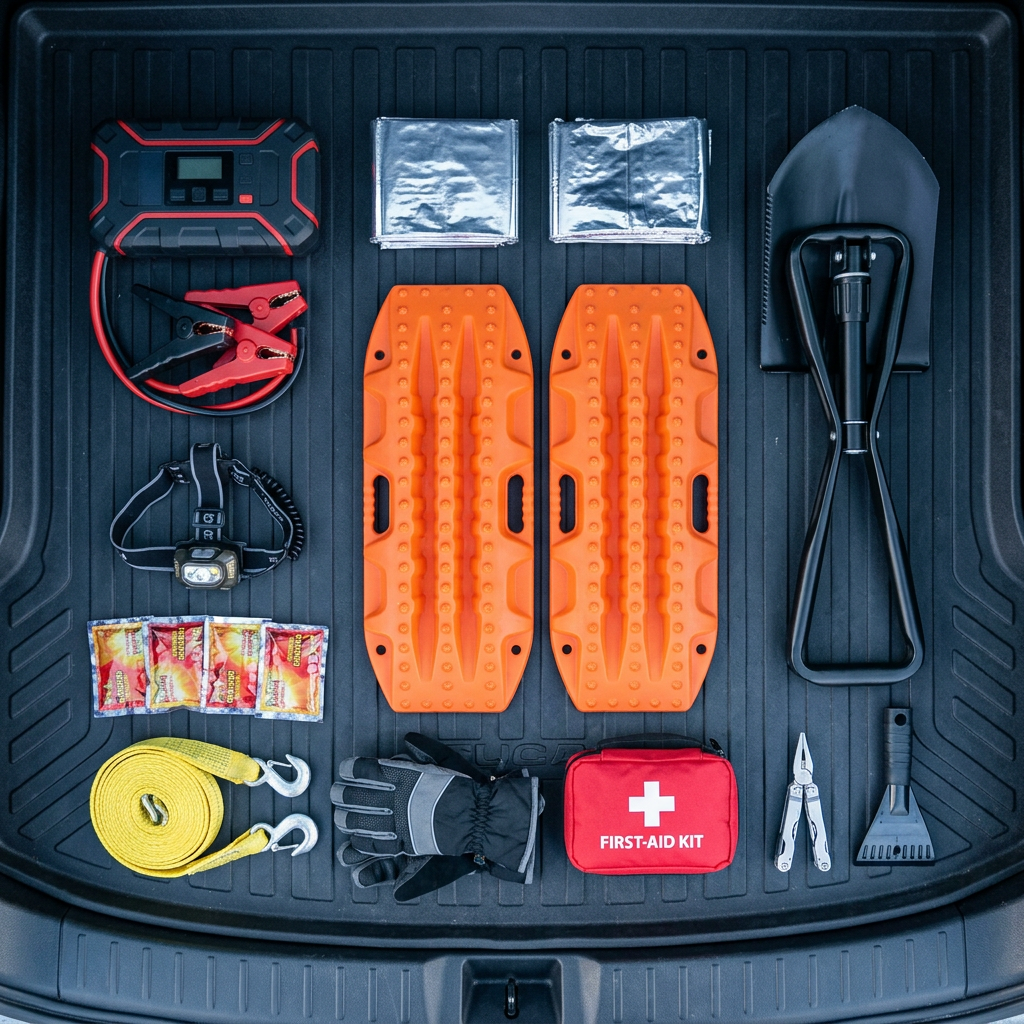
How Do You Prepare a Car for Winter Road Trips Before Holiday Block Leave? Preparing a vehicle for a long winter road trip requires testing the battery's starting capacity, setting cold tire pressure according to the door placard, verifying antifreeze protection levels, inspecting wiper blades, and packing an emergency travel kit. Conducting these essential checks before driving highway distances prevents unexpected breakdowns in freezing weather, preserves fuel economy, and ensures reliable performance during extended cold-weather travel. Long-distance highway driving during winter puts severe stress on basic mechanical components. Low ambient temperatures thicken engine oil, reduce chemical reaction speed inside starter batteries, and drop tire inflation pressure by roughly 1 pound per square inch for every 10-degree drop in outside air temperature. Completing a structured checklist at least 1 to 2 weeks prior to departure provides adequate lead time to address minor mechanical issues before hitting the highway. Our service department recommends beginning every pre-trip inspection under the hood. Verifying engine coolant concentration ensures the fluid will not freeze inside the radiator core or block when temperatures fall below 32°F. Engine oil should be checked against manufacturer viscosity specifications for cold-weather operation, as heavy summer-grade oils make starter motors work significantly harder during freezing morning startups. Upgrading to winter-rated windshield washer fluid containing de-icer prevents spray nozzles and lines from freezing shut while traveling behind highway salt spreaders. Proper lighting and clear visibility are equally essential for winter highway safety. Shorter winter daylight hours and sudden snow squalls demand fully functional exterior bulbs, including low beams, high beams, brake lights, and turn signals. Standard wiper blades that leave streaks or chatter across the glass should be replaced with winter-grade blades designed to resist ice buildup along the frame. For military personnel preparing to travel home during annual winter block-leave periods, completing vehicle prep early avoids last-minute repair shop delays. Drivers planning routes across county lines or out of state can easily coordinate expert maintenance by getting directions to our service center or giving our technicians a quick call to secure an inspection time prior to departure. Table of Contents What Cold-Weather Battery Specs (CCA) and Health Checks Are Needed for Kansas Winters? What Are the Recommended Tire Tread Depths and Pressure for Winter Highway Driving? How Much Does Long-Distance Emergency Towing Cost Without Roadside Coverage? Which Pre-Trip Maintenance Tasks Can Be Done at Home vs. Requiring a Mechanic? Common Questions About Pre-Trip Service and Winter Travel for Military Families Scheduling Pre-Trip Maintenance and Winter Travel Checks What Cold-Weather Battery Specs (CCA) and Health Checks Are Needed for Kansas Winters? Midwest winter driving requires a battery rated between 600 to 800 CCA (Cold Cranking Amps) to overcome increased engine drag and diminished chemical reaction speeds in freezing weather. At 32°F, a conventional 12-volt battery loses approximately 35% of its available starting power, and at 0°F, capacity drops by roughly 60% while the engine demands up to twice the normal electrical current to crank over. Cold Cranking Amps measure the total current a battery can discharge for 30 seconds at 0°F while maintaining a usable voltage level of at least 7.2 volts. Smaller engine bays typically require a baseline of 600 CCA, whereas larger V6 and V8 engines or high-compression powerplants demand closer to 800 CCA for dependable cold-weather starting. Installing a battery below these target specifications increases the risk of starting failure during prolonged exposure to outdoor freezing conditions. Our service advisors frequently see vehicles arriving for seasonal checks with batteries that test borderline during moderate autumn weather but fail entirely during the first sub-zero overnight freeze. Warning indicators of an impending battery failure include: A slow, labored engine crank when turning the key or pushing the start button Dimming interior cabin lights or headlights while idling at intersections Audible clicking sounds from the starter solenoid during ignition attempts Visible white or greenish corrosion buildup around the positive and negative terminals A swollen, bulging battery case caused by internal freezing or overcharging A sulfurous or rotten-egg odor stemming from leaking internal gases A professional battery inspection involves more than simply reading static open-circuit voltage with a standard multimeter. Technicians perform a digital conductance load test to measure internal resistance and cold-cranking output under simulated starter loads. Terminal posts and cable connectors must be cleaned, tightened, and coated with protective anti-corrosion grease to maintain maximum electrical conductivity. When replacement is required, vehicle owners can easily order genuine Motorcraft components built specifically for precise fitment and factory-backed performance. What Are the Recommended Tire Tread Depths and Pressure for Winter Highway Driving? Winter highway driving requires a minimum tire tread depth of 4/32 inch for adequate wet traction, with 6/32 inch or deeper recommended for traveling through heavy slush and snow cover. Tire inflation pressure must be checked while tires are completely cold and maintained at the recommended pressure stated on the driver-side door placard rather than the maximum pressure stamped on the tire sidewall. Although federal safety guidelines establish 2/32 inch as the absolute legal tread depth minimum, tires worn to this line lack the channel depth necessary to evacuate slush and water from beneath the tread footprint. Without adequate channel depth, tires hydroplane easily across wet highway lanes or freeze-over bridge decks. Performing a simple coin test helps monitor wear: placing a quarter upside down into the tread groove should cover the top of Washington's head, which indicates roughly 4/32 inch of remaining tread depth. Proper tire pressure monitoring is equally vital during dramatic temperature drops. Ambient temperature decreases cause tire pressure to fall by roughly 1 to 2 PSI for every 10-degree drop in outside air. Underinflated tires exhibit excessive flex in the sidewalls, which generates unwanted internal heat, reduces fuel efficiency, and accelerates irregular shoulder wear. Conversely, overinflating tires to the maximum pressure listed on the tire casing reduces the contact patch, degrading braking traction on icy asphalt. Tread Depth Measurement Traction Level & Road Condition Suitability Recommended Action 6/32 inch or higher Optimal snow, slush, and heavy rain grip Excellent for long-distance winter highway trips 4/32 inch Baseline safe wet-weather and light slush traction Acceptable, monitor closely during extended travel 2/32 inch or lower Severe hydroplaning risk and minimal snow grip Unsafe for winter travel; immediate replacement required Checking tire pressures should always occur after the vehicle has been parked in ambient outdoor temperatures for at least three hours. Inspecting tread blocks for uneven heel-and-toe wear or cupping ensures alignment angles are correct before embarking on long interstate drives. Drivers looking for complete peace of mind before traveling across Dickinson County can conveniently schedule a professional maintenance check to have tire balance, alignment, and tread wear verified by factory-trained specialists. How Much Does Long-Distance Emergency Towing Cost Without Roadside Coverage? Out-of-pocket long-distance emergency towing costs average between $75 and $125 for the initial hookup fee, plus an additional $3 to $7 per mile traveled. On long highway routes across rural stretches, a towing bill without active roadside protection can quickly exceed $400 to $800 depending on total mileage and service timing. Towing rates fluctuate significantly based on geographic location, terrain difficulty, weather conditions, and time of call out. Standard hookup fees cover the tow truck operator's dispatch and baseline vehicle attachment. Once rolling, per-mile rates apply from the pickup site to the destination repair facility. Should a vehicle break down during late-night hours, holiday weekends, or severe winter storms, winching fees or after-hours surcharges often add another $50 to $150 to the final bill. For drivers stranded along rural interstate corridors, emergency towing expenses add financial stress to an already difficult situation. Vehicle owners operating covered Ford models benefit from comprehensive manufacturer protection. Driving with active warranty coverage includes access to Ford Roadside Assistance: (800) 241-3673, which provides manufacturer-backed flatbed towing directly to authorized service centers, fuel delivery, flat tire changes, lock-out assistance, and jump-starts. Utilizing dedicated brand roadside programs eliminates unexpected out-of-pocket expenses and guarantees repair work is performed using genuine parts by certified technicians. Which Pre-Trip Maintenance Tasks Can Be Done at Home vs. Requiring a Mechanic? Simple pre-trip vehicle care—such as inspecting windshield wiper blades, topping off washer fluid, checking tire pressure, and examining light bulbs—is easy to complete at home using basic tools. However, technical tasks including battery conductance load testing, brake pad and rotor measurement, engine coolant freeze-point testing, and wheel alignment require professional diagnostic equipment. Home maintenance allows vehicle owners to monitor basic operational items without specialized shop equipment. Drivers can quickly evaluate rubber wiper blades for splitting or hardening, fill the washer reservoir with de-icing fluid, and measure tire inflation pressure using a digital pressure gauge. Visual checks of exterior light lenses, engine oil levels via the dipstick, and serpentine belt surface cracking are also straightforward weekend tasks. Tasks Safe for Home Maintenance Checking and adjusting cold tire inflation pressures across all four tires and the spare Topping off engine oil, windshield washer fluid, and power steering fluid levels Inspecting front and rear wiper blades for streaks or rubber degradation Testing turn signals, brake lights, reverse lights, and headlight output Visually checking the engine air filter and cabin air filter for dust or debris Maintenance Requiring Professional Shop Equipment Conducting high-amp battery load tests and charging system output analyses Measuring brake pad thickness, caliper slide pin movement, and rotor surface runout Hydrometer or refractometer testing of engine coolant freeze-point protection levels Four-wheel computerized laser alignment checks and precision wheel balancing Diagnostic scanning for pending engine controller diagnostic trouble codes (DTCs) Professional technicians utilize calibrated diagnostic instruments that detect subtle component failures before they cause roadside breakdowns. Multi-point vehicle inspections combine hoist checks of suspension ball joints and CV boots with automated battery diagnostic reports, ensuring every major safety system is evaluated before a long journey. Common Questions About Pre-Trip Service and Winter Travel for Military Families Q: What primary vehicle checks should Fort Riley families complete before traveling home for Holiday Block Leave? Prior to departing Fort Riley for holiday travel, drivers should complete a full pre-trip inspection focusing on battery cold-cranking capacity, tire tread depth, tire inflation pressure, engine coolant freeze protection, windshield wiper blade condition, and exterior lighting. Verifying these critical mechanical areas prevents roadside delays when driving long distances across state lines in severe cold weather. Q: What essential items should be packed in a winter roadside emergency kit? A complete winter travel emergency kit must include jumper cables or a portable lithium jump pack, an ice scraper with a snow brush, a collapsible shovel, traction material such as sand or cat litter, a heavy blanket, flashlight with extra batteries, first-aid kit, non-perishable food items, bottled water, a mobile phone charger, and reflective hazard triangles. Q: How does extreme cold weather impact car battery performance during winter travel? Freezing weather slows the chemical reactions inside a 12-volt automotive battery, resulting in a 35% capacity loss at 32°F and up to a 60% drop at 0°F. Concurrently, cold engine oil thickens, requiring up to twice as much electrical amperage from the battery to turn the engine over during a cold start. Q: What emergency assistance resources are available when driving through Kansas during severe winter storms? Kansas travelers can access real-time road conditions and highway cameras online via KanDrive. On state highways and interstates, drivers can dial *47 to reach the Kansas Highway Patrol for roadside assistance, or dial *KTA when traveling along the Kansas Turnpike network. Q: How can drivers verify that engine coolant provides adequate winter freeze protection? Engine coolant freeze protection is verified using a handheld refractometer or hydrometer to measure glycol concentration. Proper winter coolant mixtures typically consist of a 50/50 ratio of antifreeze to distilled water, which protects engine cooling passages against freezing down to -34°F. Scheduling Pre-Trip Maintenance and Winter Travel Checks Comprehensive pre-trip service protects your vehicle against harsh winter conditions, preserves component longevity, and ensures your family reaches holiday destinations without mechanical interruptions. Performing routine maintenance before hitting the highway prevents costly emergency towing bills, maintains optimal fuel efficiency, and provides overall confidence during long-distance travel. Our factory-trained service team is equipped with specialized Ford diagnostic equipment, genuine OEM replacement parts, and the technical expertise required to perform thorough multi-point winter inspections. From high-amp battery load testing to precision tire alignments and brake system checks, we ensure every safety system on your vehicle performs to factory standards. Whether you are preparing for long-distance military leave travel or managing everyday local commutes around Junction City, securing your appointment early ensures your vehicle is ready for winter road conditions. Get precise directions to our facility at 1825 Goldenbelt Blvd, Junction City, KS 66441 or give our service department a quick call to reserve your pre-trip maintenance check today. © 2026 Valor Ford. All rights reserved.
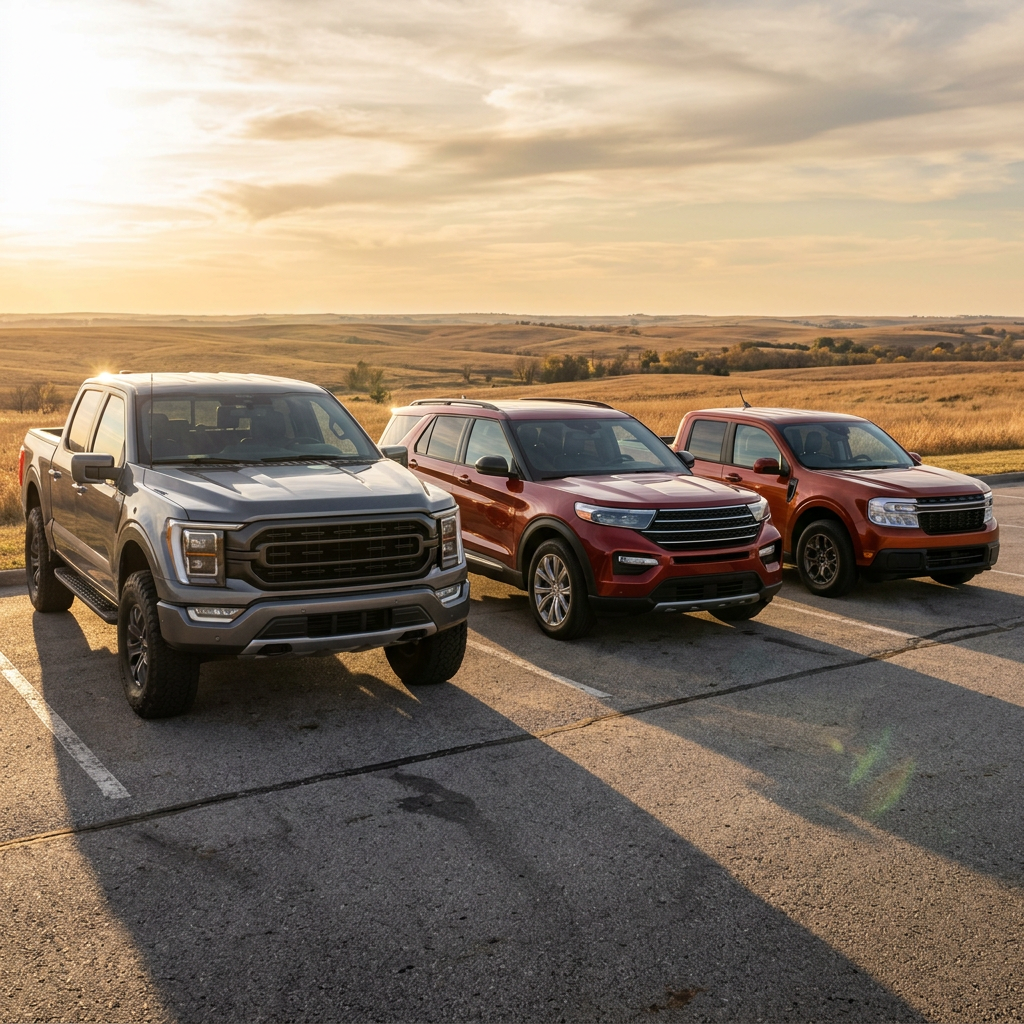
BTU Calculation for Enclosed Tailgating Canopies in Late-Season Kansas Weather

BTU Calculation for Enclosed Tailgating Canopies in Late-Season Kansas Weather

BTU Calculation for Enclosed Tailgating Canopies in Late-Season Kansas Weather Late November game days in Manhattan, Kansas, offer an unmatched atmosphere, but the weather in the Flint Hills can quickly test the stamina of even the most dedicated Wildcats fans. When temperatures drop into the 20°F to 35°F range and a persistent 20-mph prairie breeze whips across the parking lots of Bill Snyder Family Stadium, keeping an enclosed canopy warm requires a realistic understanding of thermal requirements. A simple personal heater meant for a small patio will not suffice when cold air penetrates porous fabric sidewalls. To achieve a comfortable ambient interior temperature of 60°F to 65°F inside a standard 10x10 enclosed tailgating canopy under late-season Kansas weather conditions, you need a heater output ranging between 18,000 and 30,000 British Thermal Units (BTUs) per hour. If you step up to a larger 10x20 enclosed setup, your output requirements increase dramatically to 35,000 to 60,000 BTUs per hour. The science behind heating a temporary shelter rests on three core variables: the total interior cubic volume, the desired temperature rise (delta T), and the thermal resistance (or lack thereof) of the enclosure material. Unlike residential rooms constructed with insulated drywall, commercial pop-up canopies utilize polyester or vinyl walls with zero insulating value (an R-value approaching 0). The fundamental formula for calculating required heat output is: Required BTUs = Volume (Cubic Feet) × Desired Temperature Rise (°F) × Insulation Loss Factor. For an uninsulated fabric canopy exposed to high Kansas winds, the insulation loss factor ranges from 0.25 to 0.35, depending on how tightly sealed the seams and floor skirts are. Consider a standard 10x10 foot pop-up canopy with a peaked roof. The bottom square section measures 10x10x7 feet (700 cubic feet), while the roof peak adds approximately 150 cubic feet, yielding a total volume of 850 cubic feet. If the outside air temperature in Manhattan is a brisk 25°F and your goal is a cozy 65°F inside, your target temperature rise is 40°F. Multiplying 850 cubic feet by 40°F delta T gives a base value of 34,000. Applying the high exposure factor of 0.35 due to prairie wind infiltration yields approximately 11,900 base BTUs. However, because canopy zippers leak, doors open frequently for guests, and cold air seeps under the sidewalls, heating experts recommend applying a 1.5x to 2x real-world margin of safety. This brings your targeted heating requirement to approximately 18,000 to 24,000 BTUs for calm conditions, and up to 30,000 BTUs on gusty days along Highway 18. Canopy Size Est. Volume (Cu. Ft.) Target Temp Rise (25°F Outside to 65°F Inside) Recommended BTU/hr (Mild Wind) Recommended BTU/hr (High Wind >20mph) 10' x 10' Enclosed 850 cu. ft. 40°F Delta T 18,000 BTUs 30,000 BTUs 10' x 15' Enclosed 1,275 cu. ft. 40°F Delta T 28,000 BTUs 42,000 BTUs 10' x 20' Enclosed 1,700 cu. ft. 40°F Delta T 35,000 BTUs 60,000 BTUs Sizing Your Tailgate Heater: Calculating BTU Output by Canopy Size and Wind Factor Volume vs. Square Footage Mechanics A common misstep among game day organizers is sizing a heater purely on floor square footage. While a 100-square-foot room inside a home with 8-foot ceilings has a fixed volume, a 10x10 canopy features a vaulted peak that traps hot air overhead. Heat naturally rises, creating a thermal stratification layer where the warmest air sits 9 feet off the ground near the canopy apex while your guests' feet remain cold on the asphalt. To counteract this, calculating heating loads based on total cubic volume rather than square footage ensures that you select a heater capable of circulating sufficient warm air downward. Utilizing a low-draw 12V hanging canopy fan or a battery-powered air circulator helps push trapped heat from the peak back down to seating level, effectively reducing your required BTU rating by up to 15%. The Flint Hills Wind Chill Impact The geography surrounding Manhattan and Junction City creates open terrain where cold northwesterly winds accelerate across the Flint Hills. Wind pressure acting on an enclosed tent forces cold air through stitched seams, door zippers, and gaps between the bottom skirt and the pavement. A 20-mph wind increases heat loss through fabric by more than 300% compared to dead-calm conditions. To suppress air exchange rates, tailgate setups should incorporate weighted draft skirts along the perimeter. Securing wall bases with sandbags or PVC pipe weights prevents the 'bellows effect,' where wind pumps cold air under the walls and forces heated air out the top ventilation flaps. How Long Will a Standard 20-lb Propane Tank Last on Continuous Medium Heat? Total Energy Capacity A standard 20-pound propane cylinder filled to its 80% safety limit holds approximately 4 gallons of liquid propane. Liquid propane contains roughly 91,500 BTUs per gallon, giving a fully filled 20-lb tank a total thermal energy capacity of approximately 430,000 BTUs. Understanding this baseline allows you to calculate exact runtime based on your heater's consumption rate. Estimated Burn Times To calculate total runtime hours, divide total BTUs (430,000) by your heater's hourly rating. Running a heater continuous on a 30,000 BTU/hr medium setting yields roughly 14.3 hours of heat. Running on a maximum high setting of 40,000 BTU/hr yields approximately 10.7 hours. Pushing a heavy-duty 60,000 BTU forced-air heater depletes the cylinder in just 7.1 hours. Cold Tank Vaporization In sub-freezing Kansas temperatures, propane tank pressure drops as liquid struggles to vaporize. As heat is drawn out, the cylinder cools further, causing frost build-up on the tank exterior. At 20°F, a half-empty 20-lb tank may struggle to supply more than 25,000 BTUs/hr without freezing up. Keeping tanks insulated off cold concrete or using dual-tank manifold setups prevents pressure drop-offs. Are Open-Flame Heaters Allowed in Bill Snyder Family Stadium Parking Lots? Navigating game day regulations at Kansas State University requires attention to safety protocols established by university public safety and local fire marshals. Open-flame devices such as wood-burning fire pits, bonfire barrels, and uncontained open fires are strictly prohibited in all Bill Snyder Family Stadium parking lots. However, enclosed propane radiant heaters, catalytic safety heaters, and enclosed forced-air propane units equipped with automatic shut-off valves ARE permitted, provided they maintain proper clearances from flammable materials. When positioning propane heaters inside or near an enclosed canopy, safety regulations require a minimum distance of 3 feet from fabric sidewalls and at least 5 feet of clearance from overhead canopy roofs. Carbon monoxide risks must also be addressed; fully sealed vinyl tents with zero ventilation can accumulate dangerous gas levels. Always ensure lower vent flaps remain cracked open to allow adequate fresh air exchange when operating propane heating equipment. For tailgaters seeking to avoid propane open flames and tank freezing issues entirely, modern Ford truck technology offers an innovative alternative. Ford vehicles equipped with Pro Power Onboard —such as the Ford F-150 with its available 2.0kW, 2.4kW, or 7.2kW generator output—allow tailgaters to power heavy-duty electric radiant infrared heaters, heated seats, and commercial electric blankets directly from their truck bed without carrying auxiliary fuel tanks. Research Ford F-150 Features Do Lithium Power Stations Lose Capacity in Sub-Freezing Temperatures? Battery Chemistry & Internal Resistance Yes, lithium power stations (both Lithium Iron Phosphate / LiFePO4 and Lithium Nickel Manganese Cobalt / NMC) suffer noticeable capacity losses when exposed to sub-freezing temperatures. Cold ambient air increases internal electrochemical resistance inside the battery cells, hindering lithium-ion mobility during discharge. At 20°F (-6°C), a portable power station can experience an effective capacity reduction of 20% to 40%. Furthermore, most smart BMS (Battery Management Systems) prohibit charging lithium cells when cell temperatures fall below 32°F to prevent permanent lithium plating damage. To mitigate performance drops when powering canopy blowers, TV screens, or crockpots in Manhattan, keep your power station elevated off freezing asphalt and store it inside an insulated cooler or neoprene thermal sleeve during operation. What Towing Capacity Is Required for a Cold-Weather Game Day Tailgating Trailer? 1. Tailgate Setup Weights A heavy-duty cold-weather setup adds up quickly. An enclosed single-axle 6x10 or 7x12 cargo trailer weighs between 1,200 and 2,200 lbs empty. Loading commercial steel frame canopies, extra sidewalls, multiple 20-lb and 40-lb propane tanks, generators, tables, chairs, and coolers adds another 800 to 1,500 lbs, pushing total trailer weight to 2,500 - 4,000 lbs. 2. Ford Vehicle Tow Ratings The Ford Maverick offers up to 4,000 lbs towing with the 2.0L EcoBoost and 4K Tow Package—ideal for light trailers. The Ford Ranger easily pulls up to 7,500 lbs. For massive dual-axle rig setups with full outdoor kitchens, the Ford F-150 delivers up to 13,500 lbs max towing, while Super Duty F-250 models handle commercial rig loads effortlessly. 3. Tongue Weight & Sway High crosswinds on I-70 between Junction City and Manhattan create trailer sway risks for tall enclosed trailers. Maintaining proper tongue weight (10% to 15% of total trailer weight) and utilizing Ford's standard Trailer Sway Control ensures stable highway handling when hauling heavy tailgating gear through Kansas prairie gusts. What Is the Price Difference Between Factory Tow Packages and Aftermarket Hitches? Factory Installed Tow Packages Factory Ford trailer tow packages (typically ranging from $600 to $1,200 when equipped from the assembly plant) include far more than a physical receiver hitch. They integrate upgraded engine cooling radiators, auxiliary transmission fluid coolers, upgraded axle ratios, 7-pin/4-pin wiring harnesses, integrated Trailer Brake Controllers (TBC), and recalibrated anti-lock braking and stability control software. In addition, factory packages feature Pro Trailer Backup Assist and BLIS (Blind Spot Information System) with trailer coverage, seamlessly protecting your vehicle and load under full factory powertrain warranty. Aftermarket Hitch Installation An aftermarket bolt-on Class III receiver hitch costs roughly $200 to $350 for parts, plus $150 to $300 for labor and basic 4-pin wiring. While lower in initial upfront cost ($350 - $650 total), aftermarket solutions lack integrated transmission cooling, brake controllers, and vehicle ECU stability programming. Overloading a vehicle with an aftermarket hitch without cooling upgrades risks transmission overheating during cold-weather heavy pulls. Why Vehicle Tire Pressure Drops During Cold Game Days in Manhattan, KS As winter approaches in Geary and Riley counties, drivers frequently notice their Tire Pressure Monitoring System (TPMS) warning light illuminating on cold game day mornings. The underlying cause is rooted in gas physics: Gay-Lussac's Law dictates that air pressure inside a sealed rubber tire decreases proportionally as ambient temperature drops. For every 10°F drop in outside ambient temperature, tire inflation pressure decreases by approximately 1 PSI (pound per square inch). If you checked your truck's tires in early October during 70°F weather and set them to 35 PSI, an early winter arctic front pushing Manhattan temperatures down to 20°F results in a 50°F temperature drop. This causes cold tire pressure to sink down to 30 PSI—a 14% pressure drop. Running underinflated tires while hauling heavy tailgating trailers along K-18 increases sidewall flexing, generates excessive tire heat under load, degrades cold-pavement braking traction, and unevenly wears expensive truck tread. Schedule Ford Tire Service What Should Junction City Drivers Check Before Towing to a K-State Game During Winter Weather? Battery & Electrical System Sub-freezing temperatures sap vehicle battery output by up to 50% while engine cranking resistance increases. Have your battery tested for Cold Cranking Amps (CCA) at Valor Ford in Junction City before heading out to early morning tailgates. Coolant Ratio & Fluids Ensure your engine antifreeze coolant mix is set to a proper 50/50 concentration, protecting your block down to -34°F. Top off windshield washer fluid with winter-grade de-icing fluid capable of melting highway slush along K-18. Hitch & Lighting Hardware Inspect your hitch receiver locking pin, safety chains, and 7-pin electrical socket for road salt corrosion. Verify all trailer brake lights, turn signals, and electric brake actuators engage cleanly before departing Fort Riley or Dickinson County. Cold-Weather K-State Game Day Setup: Towing and Tailgating Essentials in Manhattan Positioning & Anchoring Against Wind Park your truck or trailer to act as a primary windbreak against prevailing northwesterly winter winds in the stadium parking lot. Set up your canopy on the leeward side of the vehicle. Secure every canopy leg with heavy-duty anchors—minimum 40 lbs per leg using rubber weight plates, sandbags, or heavy ratcheting straps anchored to your truck's tie-down cleats. Floor Insulation & Air Circulation Cold concrete and asphalt suck heat rapidly from footwear. Laying down heavy foam interlocking floor mats, artificial turf rolls, or outdoor marine carpets inside your canopy creates a critical thermal barrier underfoot. Pair floor insulation with a small battery-powered air circulator aimed downward from the canopy peak to keep warm air evenly distributed across the entire tent. Gear Storage and Hauling Solutions: Packing Heaters, Canopies, and Fuel Safely 1. Propane Transport Safety Always transport propane cylinders in an upright, vertical position inside an open truck bed—never inside an enclosed passenger cabin or SUV trunk. Secure cylinders using heavy-duty ratchet straps or dedicated cylinder stabilizer bases to prevent tipping and valve damage during transit. 2. Bedliner & Cargo Tie-Downs Heavy steel canopy frames and cast-iron tailgating cookware can scratch painted truck beds. Equipping your Ford truck with a factory Tough Bed spray-in bedliner provides durable slip protection and rust resistance. Utilize Ford's BoxLink tie-down cleats to anchor heavy gear low against the bed floor. 3. Electronics Weatherproofing Protect expensive tailgate electronics, power stations, and TVs from freezing highway salt spray along I-70. Store sensitive equipment inside lockable, weather-sealed tonneau covers or heavy-duty gasketed cargo boxes mounted in the truck bed. Prepare Your Truck for Cold-Weather Tailgating at Valor Ford in Junction City Before you gear up for late-season game days in Manhattan, ensure your truck and towing equipment are fully prepared to handle winter weather in the Flint Hills. From multi-point pre-trip inspections, battery testing, and winter coolant flushes to installing factory Ford trailer hitches, brake controllers, and bed accessories, the expert certified technicians at Valor Ford are here to keep your game day trips safe and stress-free. Visit us conveniently at 1825 Goldenbelt Blvd, Junction City, KS 66441 or call our service department at (785) 238-5114 to schedule your pre-game vehicle checkup today. Order Genuine Ford Accessories

Fort Riley Winter Block Leave Pre-Trip Vehicle Checklist: Quick Essential Guide

Fort Riley Winter Block Leave Pre-Trip Vehicle Checklist: Quick Essential Guide

Fort Riley Winter Block Leave Pre-Trip Vehicle Checklist: Quick Essential Guide Key Takeaway for Fort Riley Military Families: Before embarking on long-distance highway travel across Kansas or across state lines for Winter Block Leave (WBL), service members and their families must ensure their vehicle is fully prepped for extreme cold. Key maintenance steps include verifying battery cold cranking amps (minimum 600–800 CCA rating), inspecting all-season tire tread depth (minimum 4/32-inch) and inflation pressure (rubber compounds harden significantly below 45°F), testing engine antifreeze/coolant protection levels down to sub-zero temperatures, and stocking a dependable emergency roadside kit. Booking a professional multi-point pre-trip inspection at Valor Ford in Junction City provides peace of mind before tackling icy Flint Hills highways. Why Winter Block Leave Travel Demands Extra Vehicle Preparation in Kansas December travel out of Fort Riley poses unique mechanical challenges that military families cannot afford to ignore. The geographic location of the Flint Hills region subjects local highways, including Interstate 70 and Highway 77, to rapid temperature drops, sudden crosswinds, and sudden freeze-thaw cycles that turn wet asphalt into black ice in minutes. Driving cross-country to visit extended family after a grueling training cycle means putting high highway mileage on vehicles that may have been parked in motor pools or housing parking lots for extended stretches. Sudden transitions from idling in low temperatures to continuous 70 mph cruising quickly expose latent mechanical vulnerabilities. Military vehicle usage patterns prior to winter block leave often involve short commuter runs across post or weeks of zero operation during field training exercises (FTXs). Short trips prevent engine oil from reaching optimal operating temperatures, allowing moisture and fuel dilutants to build up in the crankcase, while cold weather slowly saps battery charge. When soldiers suddenly pack up their family vehicles with heavy luggage, holiday gifts, and passengers for a 500-to-1,000-mile road trip, these stored stresses come to a head. Ensuring your personal vehicle receives a thorough mechanical checkup before leaving Geary and Dickinson counties is vital to preventing highway breakdowns in sub-freezing weather. At What Temperature Do All-Season Tires Lose Flexible Grip During Winter Driving? The 45°F Threshold: Standard all-season tire rubber compounds begin to stiffen and lose essential elastic elasticity at exactly 45°F (7°C). As ambient temperatures drop below this critical point, the rubber glass transition state causes tread blocks to harden, significantly reducing the tire's ability to conform to subtle road surface imperfections and maintain maximum contact patch friction. In addition to temperature-induced hardening, tread depth plays a crucial role in evacuating slush, snow, and water. While 2/32-inch tread depth is the legal minimum in many states for dry summer pavement, winter safety standards require a absolute minimum of 4/32-inch to maintain traction on icy Kansas roadways. Drivers navigating severe winter climates should consider dedicated winter tires or high-performance, 3-Peak Mountain Snowflake (3PMSF) rated all-weather tires. How Should Fort Riley Families Check Tires Before a Long Winter Trip? 1. Pressure & Temperature Drop Tire inflation pressure drops by roughly 1 to 2 PSI for every 10°F decrease in ambient temperature. Always measure tire pressure when the vehicle has been parked for at least three hours (cold pressure reading). Refer strictly to the driver-side door jamb placard for correct PSI levels, not the maximum rating printed on the tire sidewall. 2. Sidewall & Spare Tire Physical Check Inspect tire sidewalls for fine weather-cracking, bulges, or embedded road debris. Don't forget to inspect your spare tire under the trunk floor or cargo bed! Ensure the spare is inflated to its recommended pressure and that your factory tire jack, lug wrench, and lock keys are accounted for and fully operational. 3. Professional Rotation & Alignment Rotating your tires every 5,000 to 7,500 miles ensures uniform wear across all four positions. Misalignment causes uneven tire wear patterns that severely compromise braking stability on wet or icy interstates. Having tires balanced and aligned before leave prevents high-speed wheel vibration. Schedule Ford Service Today How Many Cold Cranking Amps (CCA) Are Needed for Reliable Winter Starting? Understanding CCA Demands in Sub-Zero Temps: Cold Cranking Amps (CCA) measure a battery's capability to start an engine at 0°F (-18°C) for 30 seconds while maintaining a minimum voltage threshold. For reliable starting during Midwestern winters, passenger vehicles, crossovers, and trucks generally require a rating of 600 to 800 CCA (or higher for large-displacement V8 and diesel engines). Freezing weather deals a double blow to automotive electrical systems. At 0°F, a standard lead-acid battery loses up to 50% of its total cranking power due to slowed chemical reactions inside the cells. Concurrently, engine oil thickens significantly in freezing temperatures, creating immense mechanical drag on the starter motor. A weak battery that starts your car fine in October will frequently fail completely when the temperature plummets during December block leave. What Vehicle Components Require Specialized Tools to Inspect Before a Trip? While simple visual checks (like oil level dipsticks and washer fluid) can be performed in your driveway, modern vehicle diagnostic systems require specialized equipment to accurately evaluate roadworthiness: • Digital Battery Conductance Testers: Simple voltmeters only measure surface charge. Professional conductance testers measure internal cell resistance and health reserve, predicting imminent failure long before a battery dies. • Cooling System Pressure Testers: Pressurizing the radiator and coolant lines identifies hairline fractures in hoses, weak water pump seals, and microscopic radiator core leaks that only manifest under intense operational thermal loads. • Brake Rotor Micrometers & Digital Calipers: Measuring exact brake pad friction material thickness and rotor lateral runout ensures your braking system can handle emergency stops on slippery highway ramps without premature fading or pedal pulsation. • OBD-II Diagnostic Scanners: Advanced diagnostic tools scan internal vehicle control modules for stored or pending fault codes (such as misfires, evaporative leaks, or transmission solenoid delays) that have not yet illuminated a dashboard Check Engine light but could trigger a fail-safe mode during a 500-mile trip. Are Free Vehicle Safety Inspections Available for Service Members at Fort Riley? Supporting soldiers and military families stationed at Fort Riley is a core priority for the local Junction City community. While command policies often require service members to complete unit pre-clearance vehicle safety forms (DA Form 31 or local command POV checklists) before leave approval, certified technicians at local service centers provide professional multi-point inspections to verify every item on those checklists. At Valor Ford, conveniently located just minutes from the Fort Riley Ogden and Trooper gates, our factory-trained technicians assist service members with comprehensive multi-point vehicle inspections. We check vital fluids, test battery reserve health, evaluate brake system condition, inspect tires, and verify heating and defrosting performance—helping ensure your holiday departure is stress-free. We also offer military-conscious service scheduling to accommodate tight unit release schedules before block leave kicks off. Schedule Pickup and Delivery Service What Items Are Essential to Include in a Winter Emergency Roadside Kit? Power & Electrical Tools • Heavy-duty booster cables (10-gauge minimum, 12+ feet long) • Lithium-ion portable jump starter bank (allows self-jumping without another vehicle) • High-lumen LED flashlight + headlamp with extra lithium batteries • Heavy-duty work gloves and waterproof LED safety flares Warmth & Survival Gear • Mylar thermal space blankets + heavy fleece emergency blankets • Hand/foot heat warmers (pack of 6-10) • High-calorie non-perishable rations (energy bars, trail mix, dried fruit) • Gallon of bottled drinking water (keep slightly underfilled to prevent ice expansion damage) Traction & Snow Removal Tools • Collapsible aluminum snow shovel • High-durability ice scraper with brass blade or stiff brush • 10-20 lb bag of non-clumping kitty litter, coarse sand, or traction mats • Compact tow strap rated for at least 10,000 lbs break strength How Much Does It Cost to Build a Complete Roadside Winter Emergency Kit? Building a reliable winter roadside survival pack is a smart investment if bad weather strikes along remote stretches of highway: • Basic Self-Assembled Kit: Covers entry-level booster cables, basic ice scraper, thermal blankets, flashlight, basic first aid, and sand. Suitable for regional drives between Junction City, Manhattan, and Topeka. • Comprehensive Heavy-Duty Kit: Upgrades to a portable lithium jump starter pack, heavy-duty tow straps, multi-tool, high-lumen lighting, folding shovel, premium thermal gear, and rated traction pads. Highly recommended for multi-state cross-country travel. • OEM Factory Winter Protection Packages: Available through dealership parts departments, these custom-fitted kits include branded heavy-duty storage bags, high-grade tools, and integrated roadside equipment designed specifically for your vehicle model. Vital Fluid and Heating System Checks for Cold-Weather Highway Cruising Antifreeze & Washer Fluid Integrity Engine coolant does far more than keep your engine cool in July—it prevents the engine block from cracking when temperatures plummet. Ensure your cooling system contains a proper 50/50 ethylene glycol and water mixture, which provides anti-freeze protection down to -30°F (-34°C). Technicians use a refractometer or hydrometer to test concentration levels. Equally vital is purging summer windshield washer fluid and replacing it with specialized winter de-icing fluid rated for -20°F or lower. Standard water-based summer mixes freeze instantly upon contacting a cold windshield, blinding your view during heavy highway traffic. Oil Viscosity & Cabin Defrost Performance Low ambient temperatures increase engine oil viscosity, making it harder for oil to circulate during initial startup. Verifying that your engine uses full synthetic, factory-recommended cold-viscosity oil (such as 0W-20 or 5W-20) reduces mechanical wear during sub-zero starts. Finally, test your cabin HVAC heating system and front/rear window defrosters. A malfunctioning cabin air filter or a failing air-mix door actuator can prevent effective window defogging, severely compromising driver visibility during sudden winter snow squalls. Order Genuine Ford Parts Schedule Your Pre-Block Leave Inspection at Valor Ford in Junction City Don't leave your holiday safety to chance. Before hitting the road for Fort Riley Winter Block Leave, bring your truck, SUV, or sedan to Valor Ford in Junction City, KS. Our Ford-certified service center is fully equipped with advanced diagnostic tools, factory replacement parts, and experienced technicians ready to handle battery testing, tire alignments, brake inspections, and fluid flushes. Whether you need a quick pre-trip inspection, winter tires, or are considering upgrading your family vehicle before the journey with a Trade In Evaluation, our team is committed to serving active-duty service members, veterans, and military families across Geary and Dickinson counties. Call (785) 238-5114 or book your service appointment online today to ensure a safe, smooth travel season! Trade In Evaluation

Official 2024 Jeep Grand Cherokee Laredo Maintenance Schedule at a Glance

Official 2024 Jeep Grand Cherokee Laredo Maintenance Schedule at a Glance

Official 2024 Jeep Grand Cherokee Laredo Maintenance Schedule at a Glance Maintaining your 2024 Jeep Grand Cherokee Laredo according to official Mopar guidelines is the single most effective way to preserve performance, fuel economy, safety, and long-term resale value. Engineered with precision, the Grand Cherokee Laredo features an intelligent Oil Change Indicator System that calculates oil breakdown based on engine revs, operating temperature, and driving habits. However, factory guidelines establish fixed upper bounds that every owner should follow: routine service must never exceed 10,000 miles or 12 months, whichever comes first. Below is an overview of key maintenance milestones recommended by Chrysler Dodge Jeep Ram for the 2024 Grand Cherokee Laredo under normal operating conditions. Regular adherence to this chart keeps your vehicle performing well across Junction City roads and Kansas highways. Service Interval Primary Operations Inspections & Component Checks 10,000 Miles / 12 Months Engine oil & filter change, tire rotation Brake pads, rotors, battery terminals, cooling system lines 20,000 Miles / 2 Years Cabin air filter replacement, tire rotation Front suspension, tie rod ends, CV joints, brake wear 30,000 Miles / 3 Years Engine air filter replacement, tire rotation Transfer case fluid, exhaust system, CV boots 60,000 Miles / 6 Years Engine air & cabin air filters, tire rotation Brake fluid check, spark plug condition, drive belts 100,000 Miles / 10 Years Spark plug replacement, engine coolant flush Full drivetrain, suspension torque, PCV valve What Engine and Transmission Power the 2024 Jeep Grand Cherokee Laredo? under the hood of every 2024 Jeep Grand Cherokee Laredo resides the proven 3.6L Pentastar V6 engine paired with a smooth-shifting TorqueFlite 8-speed automatic transmission. Producing 293 horsepower and 260 lb-ft of torque, this engine incorporates Engine Stop-Start (ESS) technology to maximize fuel efficiency during daily stop-and-go commuting around Junction City and Manhattan. The engineering design of the 3.6L Pentastar V6 places specific demands on motor oil. Utilizing full synthetic 0W-20 oil ensures rapid lubrication to overhead camshafts upon cold winter startups while maintaining essential viscosity during high-temperature highway cruises along I-70. Furthermore, the 8-speed TorqueFlite transmission relies on thermal management valves to maintain optimum fluid temperature, protecting internal planetary gearsets under heavy loads. Powertrain Maintenance Key Takeaways: • Oil Viscosity: Mopar-approved SAE 0W-20 Full Synthetic • Engine Capacity: 5.0 Quarts with filter change • Transmission Fluid: Lifetime rated under normal conditions, recommended inspection every 30,000 miles for heavy towing or severe use. • Intelligent Monitoring: Automatic oil life indicator alerts driver via instrument cluster. Every 10,000 to 30,000 Miles: Essential Early Milestone Maintenance 10,000-Mile Interval The Baseline Refresh At every 10,000-mile mark, your Laredo requires a full synthetic oil and Mopar filter change. Certified technicians rotate tires in an X-pattern to ensure uniform tread wear across all four wheels, preserving Quadra-Trac 4WD balance. A comprehensive multi-point inspection checks brake pad thickness, battery health, and fluid levels. 20,000-Mile Interval Cabin Air & System Health In addition to the standard oil change and tire rotation, the 20,000-mile milestone introduces replacement of the cabin air filter. This removes dust, ragweed pollen, and regional allergens from entering the passenger cabin. Technicians conduct detailed inspections of front suspension joints, tie rod ends, and brake rotors. 30,000-Mile Interval Engine Breathing & Drivetrain By 30,000 miles, the engine air cleaner filter should be replaced to maintain peak fuel efficiency and air flow into the Pentastar V6. Drivetrain specialists inspect transfer case fluid, CV joint boots, and exhaust system mountings to ensure smooth 4x4 engagement without vibration. Every 60,000 to 100,000 Miles: Spark Plugs, Coolant, and Major Component Care As your 2024 Jeep Grand Cherokee Laredo reaches higher mileage thresholds, preventive maintenance transitions toward long-term component preservation. At 60,000 miles, continuous thermal cycling demands meticulous inspection of accessory drive belts (serpentine belts) and cooling system hoses. Replacing worn drive belts prevents unexpected alternator or water pump failures on long trips. When reaching 100,000 miles or 10 years, Jeep specifies replacing all six spark plugs with OEM Mopar iridium spark plugs. Fresh spark plugs eliminate subtle misfires, restore optimal combustion efficiency, and protect catalytic converters from unburned fuel exposure. Concurrently, a full engine coolant flush cleans out aging organic additive technology (OAT) coolant, protecting internal radiator channels and heater core passages from corrosion. Schedule Service Severe-Duty Maintenance in Junction City and the Flint Hills Region While standard factory schedules assume ideal driving conditions, driving around Junction City, Manhattan, Fort Riley, and throughout Geary and Riley Counties frequently qualifies as Severe-Duty Driving. Kansas weather shifts dramatically between blistering summer heat above 95°F and freezing winter snowfalls, creating substantial thermal stress on lubricants. Furthermore, unpaved gravel roads across the Flint Hills generate fine limestone dust that rapidly clogs air filters. Frequent short trips under 10 miles in cold weather prevent motor oil from reaching complete operating temperature, causing moisture condensation inside the crankcase. Accelerated Maintenance Schedule for Severe Conditions: • Oil & Filter Changes: Reduce interval to 4,000–5,000 miles / 6 months to prevent oil sludge formation. • Engine & Cabin Filters: Inspect every 10,000 miles; replace early if driving rural gravel routes. • Transfer Case & Differential Fluid: Change front/rear axle fluid at 40,000 miles if frequently driving off-road or towing heavy loads. • Underbody Wash & Inspection: Wash chassis quarterly to remove road salt, mud, and debris that accelerate corrosion on brake lines. What is Included in the Trailer Tow Package for the 2024 Grand Cherokee Laredo? Factory Tow Hardware The optional Trailer Tow Prep / Class IV Hitch Group equips the Grand Cherokee Laredo with a heavy-duty Class IV receiver hitch, 7-pin and 4-pin wiring harnesses, and rear load-leveling suspension to ensure level ride height when pulling camper trailers or boat setups. Cooling & Capacity To safely handle up to 6,200 lbs maximum towing capacity, the package upgrades engine cooling with a heavy-duty engine cooling radiator, a high-output 220-amp alternator, and a full-size spare tire for unexpected roadside emergencies. Towing Maintenance Tip: Regular trailer towing stresses transmission fluid and rear axle gears. Inspect differential fluid every 20,000 miles when frequently towing. What is the Price Difference Between the Laredo and Laredo X Trims? When configuring the 2024 Jeep Grand Cherokee, buyers often evaluate the step up from the base Laredo to the Laredo X trim. MSRP and pricing may vary by configuration; contact the dealership for current pricing., making the Laredo X an exceptionally attractive upgrade for drivers seeking added luxury features without stepping up to higher trim tiers like Altitude or Limited. The Laredo X adds popular comfort amenities, most notably a single-pane power sunroof and upgraded 18-inch fine-silver aluminum wheels. Mechanically, both trims share the identical 3.6L Pentastar V6 engine, 8-speed automatic transmission, and standard safety technology. As a result, long-term routine maintenance costs remain virtually identical between Laredo and Laredo X trims. Value Your Trade Feature Comparison: Laredo vs Laredo X • Standard Laredo: 17-inch fully painted aluminum wheels, cloth seating, Uconnect 5 with 8.4-inch touchscreen, 6-speaker audio, manual liftgate. • Laredo X Trim Upgrade: 18-inch fine-silver aluminum wheels, single-pane power sunroof, optional heated front seats and steering wheel via packages. • Ownership Cost Impact: Negligible difference in regular maintenance. Sunroof seal inspection recommended during annual detail services to keep drain tubes clear. What is the Estimated 5-Year Maintenance Cost for a 2024 Jeep Grand Cherokee Laredo? Budgeting accurately for vehicle maintenance provides total peace of mind over your ownership cycle. On average, driving 12,000 to 15,000 miles per year in Junction City results in total estimated 5-year maintenance and wearable item costs between $3,200 and $4,500 for a 2024 Jeep Grand Cherokee Laredo. Below is a detailed realistic cost breakdown for key maintenance categories. Category Services Included Estimated 5-Year Cost Scheduled Oil & Filter Changes 5 to 6 Full Synthetic changes with Mopar filter $450 – $650 Tire Rotations & Replacement Rotations every 10k mi + 1 full set of replacement tires $900 – $1,300 Brake Service Front & rear brake pad replacement + rotor surfacing $600 – $900 Filters & Fluids Cabin filters, air filters, wiper blades, brake fluid flush $350 – $550 Miscellaneous Wearables Battery replacement, wheel alignments, key fob battery $400 – $600 Total Estimated 5-Year Budget All routine and wearable maintenance combined $2,700 – $4,000 Active Safety Maintenance Note: Ensure windshield cameras and front grille radar modules stay clean from mud and snow to keep Full-Speed Forward Collision Warning working accurately. Is an Extended Warranty Recommended for a Jeep Grand Cherokee? Every new 2024 Jeep Grand Cherokee Laredo comes standard with a 3-year/36,000-mile Basic Limited Warranty and a 5-year/60,000-mile Powertrain Limited Warranty. While this provides excellent initial coverage, many owners choose to drive their Grand Cherokee well past 60,000 miles. Modern SUVs like the Grand Cherokee feature sophisticated electronic architectures, including digital instrument clusters, driver assistance radar/cameras, dual-zone climate modules, and complex Quadra-Trac 4x4 transfer cases. Enrolling in an official Mopar Vehicle Protection (MVP) Extended Warranty shields owners against mechanical and electrical component repair costs beyond factory warranty limits. Key Benefits of Mopar Vehicle Protection Plans: • 100% Genuine Mopar Parts: Guarantee that replacement components meet exact OEM factory engineering standards. • Certified Technician Service: All repairs performed by factory-trained specialists at authorized CDJR dealerships nationwide. • Added Protections: Includes roadside assistance, towing reimbursement, and rental car coverage during eligible warranty repairs. What Crash Test Ratings Did the 2024 Jeep Grand Cherokee Receive? NHTSA 5-Star Rating The National Highway Traffic Safety Administration awarded the 2024 Jeep Grand Cherokee an overall 5-Star Safety Rating, performing well in frontal crash, side impact, and rollover protection evaluations. IIHS Top Safety Pick The Insurance Institute for Highway Safety recognized the Grand Cherokee platform with top accolades, earning highest 'Good' ratings across small overlap front, moderate overlap front, and side crashworthiness tests. DIY Owner Inspections vs. Certified Mopar Service at Valor CDJR Monthly Owner Checklist Taking a proactive role in your Jeep's health between scheduled service intervals keeps you safe on Kansas roads. Every month, owners should visually inspect tire inflation pressure (including cold tire readings via the Tire Pressure Monitoring System dashboard screen), check engine oil level via the dipstick, top off windshield washer fluid, and check wiper blades for streaking. Express Lane Service Certified Mopar Service Advantages Complex procedures—such as wiTECH diagnostic computer scans, electronic brake system calibration, transmission thermal inspections, and suspension torque checks—require specialized tools and factory training. At Valor CDJR, our certified Mopar technicians utilize Genuine Mopar parts engineered specifically for your 2024 Grand Cherokee Laredo, maintaining warranty validity and vehicle reliability. Schedule Your 2024 Jeep Grand Cherokee Laredo Maintenance at Valor CDJR Trust your 2024 Jeep Grand Cherokee Laredo to the local experts who know it best. Valor CDJR in Junction City, KS proudly serves drivers from Manhattan, Fort Riley, Abilene, and across the Flint Hills region with top-tier customer care, convenient Express Lane service, and factory-certified Mopar expertise. Whether you need a quick 10,000-mile oil change and tire rotation or major milestone servicing, our team is dedicated to keeping your Jeep operating flawlessly. Visit us today at 1825 Goldenbelt Blvd, Junction City, KS 66441 or call our service department directly at Call (785) 238-5114. Get Directions to Valor CDJR

2023 Ford Explorer: Trims, Pricing, and Family Capability Guide

2023 Ford Explorer: Trims, Pricing, and Family Capability Guide

2023 Ford Explorer: Trims, Pricing, and Family Capability Guide The 2023 Ford Explorer is the right choice for families who need genuine seven-passenger seating, proven four-wheel drive, and a wide trim ladder from $36,760 to over $56,000. With 300 hp from the turbocharged 2.3L EcoBoost, up to 28 mpg highway on rear-wheel-drive trims, and about 18 cu ft of cargo space behind the third row, it handles everything from daily base commutes to weekend fishing runs along the Kansas River with equal confidence. Table of Contents How Well Does the 2023 Ford Explorer Serve Military Families and Outdoor Enthusiasts in Geary County? Rugged Style for Kansas Plains and City Streets: 2023 Ford Explorer Exterior Design Power and Efficiency for Military Base Commutes and Rural Roads in the 2023 Ford Explorer Spacious Cabin Comfort for Military Families and Weekend Getaways in the 2023 Ford Explorer Tech That Simplifies Life: Infotainment Features of the 2023 Ford Explorer Trusted Protection for School Runs and Outdoor Adventures with the 2023 Ford Explorer Safety Systems 2023 Ford Explorer Trim Pricing Breakdown Warranty, Maintenance, and Service Insights for 2023 Ford Explorer Owners Awards and Expert Recognition Highlighting the 2023 Ford Explorer's Strengths for Kansas Drivers 2023 Ford Explorer Buyer Questions Answered: What Families Need to Know How Well Does the 2023 Ford Explorer Serve Military Families and Outdoor Enthusiasts in Geary County? The 2023 Ford Explorer is built for exactly the kind of life that defines Geary County: a mix of structured weekday routines and active weekend recreation. Seven-passenger seating handles the school run and the fishing trip with the same ease, and Intelligent 4WD trims give you confidence on the gravel roads that connect Junction City neighborhoods to the river valleys north of town. Families stationed at Fort Riley or working civilian jobs nearby typically need a vehicle that can do double duty. On weekdays that means reliable fuel economy — the Base RWD delivers 21 city / 28 highway / 24 combined mpg — and on weekends it means enough cargo room and towing capacity to haul a small boat or load up the gear for a Kansas River outing. The Explorer's 3,000 lb towing rating covers that scenario cleanly without requiring a full-size truck. The trim ladder is broad enough that a family working within a $38,000–$56,000 budget can find a well-equipped option. If you want to dig into how each trim stacks up before visiting the showroom, the Ford Explorer research page lays out detailed spec comparisons by configuration. And when you're ready to keep your Explorer running at its best, genuine Ford parts are available directly through Valor Ford, ensuring every repair uses components built to Ford's original specifications. The Explorer's combination of seating, drivetrain options, cargo versatility, and a wide price range makes it one of the most practical answers to the question military and working families in this region ask most often: what one vehicle can do it all? Rugged Style for Kansas Plains and City Streets: 2023 Ford Explorer Exterior Design A Presence That Works From the Parade Route to the Prairie Road The 2023 Explorer wears a clean, upright SUV silhouette that reads as confident without being aggressive. At 198.8 inches long and 78.9 inches wide, it has genuine road presence, but its proportions stay practical — the 119.1-inch wheelbase provides interior space without making parking in Junction City's historic downtown feel like a chore. LED projector-beam headlights are standard across the lineup, with both low-beam and high-beam LED elements plus automatic high-beam control. LED daytime running lights, LED rear lights, and LED brake lights round out the lighting package, meaning the Explorer is visible and well-lit in the low-light conditions common on rural Kansas roads before sunrise or after sunset. Painted front and rear bumpers are standard, and chrome bright trim on the body sides distinguishes the King Ranch, Limited, and Platinum tiers. The King Ranch 4WD and RWD trims add chrome silver roof rails, while the TIMBERLINE 4WD shifts to a more utilitarian stance suited to unpaved terrain. The ST and ST 4WD variants take a darker, sportier approach with a distinct exterior character that separates them visually from the luxury-leaning trims. A roof spoiler is standard on all configurations, and front tow/recovery hooks are included on four-wheel-drive variants — a practical touch for anyone who ventures onto the agricultural back roads and river-bottom trails of Geary County. The overall design language says capable family hauler without sacrificing the kind of clean styling that looks at home in front of a Leavenworth County neighborhood just as easily as it does at a Fort Riley gate. Power and Efficiency for Military Base Commutes and Rural Roads in the 2023 Ford Explorer Two Engine Families, One Capable Platform Most Explorer trims run the 2.3L EcoBoost four-cylinder, which produces 300 hp and 310 lb-ft of torque paired to a SelectShift 10-speed automatic transmission. The twin-turbocharged 3.0L EcoBoost V6 — rated at the same 300 hp and 310 lb-ft — powers the King Ranch 4WD and King Ranch RWD. The Hybrid (HEV) trims use a 3.3L V6 paired with an electric motor producing 47.6 hp / 35.5 kW and a 1.5 kWh lithium-ion battery, with combined system output of 318 hp and 322 lb-ft of torque. For the daily commute between Grandview Plaza and Fort Riley, fuel economy matters. The rear-wheel-drive Base returns 21 city / 28 highway / 24 combined mpg. Adding four-wheel drive on the Base 4WD drops that to 20/27/23 mpg. The Limited HEV (rear-wheel drive) leads the non-4WD group at 27 city / 28 highway / 27 combined mpg, while the Limited HEV 4WD settles at 23/26/25 mpg — still a meaningful improvement over the standard powertrain for families who log significant weekly mileage. The dimensions and capacity figures below show how these powertrains translate to real-world utility across every trim: Feature Base 4WD Base RWD King Ranch 4WD King Ranch RWD Limited 4WD Limited HEV Limited HEV 4WD Limited High Package 4WD Limited High Package RWD Limited RWD Platinum Platinum 4WD Platinum HEV ST ST 4WD ST-LINE 4WD ST-LINE RWD TIMBERLINE 4WD Utility Police Interceptor 4x4 XLT 4WD XLT RWD Seating 7 7 6 6 6 6 6 6 6 6 6 6 6 6 6 6 6 6 7 6 6 Cargo 18.2 cu ft 18.2 cu ft 18.2 cu ft 18.2 cu ft 18.2 cu ft 18.2 cu ft 18.2 cu ft 18.2 cu ft 18.2 cu ft 18.2 cu ft 18.2 cu ft 18.2 cu ft 18.2 cu ft 18.2 cu ft 18.2 cu ft 18.2 cu ft 18.2 cu ft 18.2 cu ft 52.0 cu ft 18.2 cu ft 18.2 cu ft Curb Weight 4,345 lbs 4,345 lbs 4,345 lbs 4,345 lbs 4,345 lbs 4,969 lbs 5,076 lbs 4,345 lbs 4,345 lbs 4,345 lbs 4,701 lbs 4,701 lbs 4,701 lbs 4,701 lbs 4,701 lbs 4,345 lbs 4,345 lbs 4,345 lbs 4,732 lbs 4,345 lbs 4,345 lbs Towing 3,000 lbs 3,000 lbs 3,000 lbs 3,000 lbs 3,000 lbs 3,000 lbs 3,000 lbs 3,000 lbs 3,000 lbs 3,000 lbs 3,000 lbs 3,000 lbs 3,000 lbs 3,000 lbs 3,000 lbs 3,000 lbs 3,000 lbs 3,000 lbs 3,500 lbs 3,000 lbs 3,000 lbs Payload 3,455 lbs 3,355 lbs 6,455 lbs 6,455 lbs 3,455 lbs 3,531 lbs 3,424 lbs 3,455 lbs 3,355 lbs 3,355 lbs 6,099 lbs 6,099 lbs 3,799 lbs 6,099 lbs 6,099 lbs 3,455 lbs 3,355 lbs 3,455 lbs 2,108 lbs 3,455 lbs 3,355 lbs The Utility Police Interceptor 4x4 stands apart with a 3,500 lb towing rating and about 52 cu ft of cargo space — a purpose-built configuration. For civilian buyers, the King Ranch 4WD and RWD trims carry a notably high 6,455 lb payload figure, as do the Platinum 4WD, Platinum, ST, and ST 4WD at 6,099 lbs, which reflects their heavier-duty gross vehicle weight ratings. The 10-speed SelectShift transmission is consistent across all combustion trims, keeping shift logic smooth whether you're merging onto I-70 or navigating a gravel county road. Spacious Cabin Comfort for Military Families and Weekend Getaways in the 2023 Ford Explorer Three Rows, Real Room, and a Seating Layout That Adapts Forty-three inches of front leg room and 40.7 inches of front headroom give the driver and front passenger a genuinely comfortable position — not just adequate clearance. The second row offers 39 inches of leg room and 40.5 inches of headroom, while the third row measures 32.2 inches of leg room and 38.9 inches of headroom. Third-row shoulder room is 54.6 inches, which is tighter than the first two rows but workable for children and occasional adult passengers. The Base 4WD and Base RWD are the only passenger trims that seat seven, using a 40/20/40 split-bench second row. The King Ranch, Limited, Limited HEV, Platinum, ST, ST-LINE, TIMBERLINE, and XLT trims default to a 2+2+2 captain's chair configuration for six passengers, with an optional 2nd Row Bench available on King Ranch and Limited trims to restore the seventh seat if a family needs it. Cargo behind the third row measures about 18 cu ft — enough for a cooler, fishing rods in a hard case, or the grocery run from Junction City. Fold all seats and that figure jumps to about 88 cu ft, which handles larger gear loads for camping or hauling supplies across Geary County farmland. Interior trim quality steps up noticeably as you move through the lineup. The Base trims use cloth upholstery. The Limited 4WD and Limited RWD come standard with leather seating, heated front and second-row seats, ventilated front seats, and a heated steering wheel. The King Ranch trims add leather with lasso-perforated inserts and available massage seating through the Premium Tech Package. Platinum trims include ventilated and heated front seats, heated rear seats, and ambient interior lighting as standard equipment. Three-zone automatic climate control is standard from the Limited tier upward, with rear passenger controls available in second-row seating positions. Tech That Simplifies Life: Infotainment Features of the 2023 Ford Explorer Screens, Connectivity, and the Features That Actually Get Used Daily The Base 4WD and Base RWD start with an 8-inch touchscreen, a 4.2-inch instrument cluster display, a 6-speaker audio system, and a 3-month SiriusXM subscription. Apple CarPlay and Android Auto are both standard across every trim and are included for the life of the vehicle — no subscription expiration to worry about. Bluetooth, voice activation, and a built-in Wi-Fi hotspot with a 3-month trial are also standard throughout the lineup. The XLT trims keep the 8-inch touchscreen but add an available Technology Package that upgrades to a 10.1-inch navigation display and a 14-speaker Bang & Olufsen audio system with 980 watts and a subwoofer. The Limited 4WD and Limited RWD step up to a 6.5-inch digital instrument cluster display while retaining the 8-inch center touchscreen at base, with the Limited Technology Package adding the 10.1-inch navigation screen and the same Bang & Olufsen system. King Ranch trims carry a 12.3-inch digital instrument cluster as standard, paired with an 8-inch center touchscreen at base and an available Technology Package or Premium Tech Package that upgrades the center display to 10.1 inches. The Platinum trims also use the 12.3-inch reconfigurable digital cluster. Ford's 911 Assist telematics system is standard across the lineup, automatically connecting to emergency services after an airbag deployment. Remote services including remote start, lock/unlock, theft alert, and vehicle location are included. USB connections front and rear are standard from the XLT tier upward, with the King Ranch and above adding two rear USB ports as standard equipment. Wireless charging is standard on King Ranch, Limited, Platinum, and ST trims. Trusted Protection for School Runs and Outdoor Adventures with the 2023 Ford Explorer Safety Systems A Consistent Safety Foundation Across Every Trim Every 2023 Explorer, from the Base RWD to the Platinum HEV, comes with the same core active safety suite as standard equipment. Pre-Collision Assist with Automatic Emergency Braking (AEB) activates at speeds as low as 3 mph, covering the low-speed parking lot and school drop-off scenarios where minor collisions most often happen. The Lane-Keeping System provides steering input to help keep the vehicle in its lane, and Cross Traffic Alert uses radar to warn of vehicles approaching from the sides when reversing. BLIS (Blind Spot Information System) is standard across all trims, monitoring the zones alongside and behind the vehicle that mirrors don't cover — a meaningful feature on the two-lane rural highways connecting Geary County communities. Trailer Sway Control is also standard, working automatically when a trailer begins to oscillate at speed. The King Ranch, Limited, Platinum, and ST trims add Intelligent Adaptive Cruise Control with stop-and-go capability, which maintains a set following distance and can bring the vehicle to a complete stop in traffic — useful on longer highway stretches between Fort Riley and Leavenworth County. These upper trims also include a 360 Degree Camera system, front parking sensors, and a blind junction view assist. Structurally, the Explorer carries 8 airbags including dual intelligent front airbags, front side airbags, side curtain airbags across all three rows, and driver and passenger knee airbags. Four-wheel ventilated disc brakes, ABS, electronic stability control, roll stability control, and a hill holder are standard. The NHTSA awarded the 2023 Explorer an overall 5-star safety rating, with 5-star frontal and side impact scores. IIHS testing returned Good ratings in moderate overlap front, small overlap front (driver side), side impact, roof strength, and rear crash protection evaluations. 2023 Ford Explorer Trim Pricing Breakdown Twenty-One Configurations, One Clear Value Ladder The 2023 Explorer's pricing spans a wide range, and understanding where each trim sits helps families match their budget to the features they actually use. All trims carry a destination charge of $1,595 on top of the base MSRP figures below. Feature Base 4WD Base RWD King Ranch 4WD King Ranch RWD Limited 4WD Limited HEV Limited HEV 4WD Limited High Package 4WD Limited High Package RWD Limited RWD Platinum Platinum 4WD Platinum HEV ST ST 4WD ST-LINE 4WD ST-LINE RWD TIMBERLINE 4WD Utility Police Interceptor 4x4 XLT 4WD XLT RWD Base MSRP $38,760 $36,760 $56,525 $54,525 $49,420 $53,355 $55,355 $50,260 $48,260 $47,420 $54,670 $56,670 Starting at $54,270 $50,005 $52,005 $48,355 $46,355 $49,330 $47,165 $40,570 $38,570 The Base RWD at $36,760 is the entry point for a family that wants a reliable, well-equipped three-row SUV without the added cost of four-wheel drive. The Base 4WD at $38,760 adds Intelligent 4WD for $2,000 more — a straightforward trade-off for families who regularly travel unpaved roads or face Kansas winter conditions. The XLT RWD at $38,570 and XLT 4WD at $40,570 add meaningful technology and comfort upgrades over the Base while staying accessible for working households. Families who want leather seating, adaptive cruise control, and the 360-degree camera system move into the Limited tier starting at $47,420 for the Limited RWD. The Limited HEV at $53,355 makes the most sense for high-mileage commuters who want to reduce fuel spending over time. The King Ranch and Platinum trims occupy the upper end of the range for buyers who want premium materials and the 3.0L EcoBoost V6 or top-tier features. If you're weighing a pre-owned Explorer against a new one, our pre-owned vehicle inventory is worth checking for available options. Before you visit, you can also estimate your current vehicle's trade-in value online, and contact us for current financing information to know your budget before stepping into the showroom. Warranty, Maintenance, and Service Insights for 2023 Ford Explorer Owners What Ford's Coverage Actually Includes and Why It Matters Long-Term The 2023 Explorer comes backed by a 3-year / 36,000-mile bumper-to-bumper warranty and a 5-year / 60,000-mile powertrain warranty. Roadside assistance coverage matches the powertrain term at 5 years / 60,000 miles, which means you're covered for towing, battery jump-starts, and lockout service throughout the first five years of ownership — a genuine benefit for families who travel rural roads where help can be a long drive away. Paint coverage runs 3 years / 36,000 miles, and corrosion protection extends to 5 years with unlimited mileage. For HEV trims — the Limited HEV, Limited HEV 4WD, and Platinum HEV — the hybrid battery and electric systems carry an extended 8-year / 100,000-mile warranty, which significantly reduces the long-term ownership risk associated with hybrid powertrains. Keeping up with scheduled maintenance is the most reliable way to protect that warranty coverage. Ford's recommended service intervals include oil changes, tire rotations, multi-point inspections, and brake checks — all of which Valor Ford can handle using Ford-trained technicians and genuine Ford parts. You can book a service appointment directly through Valor Ford's service department, located at 1825 Goldenbelt Blvd in Junction City, to keep your Explorer on schedule without disrupting a busy weekday routine. Awards and Expert Recognition Highlighting the 2023 Ford Explorer's Strengths for Kansas Drivers Third-Party Validation That Backs Up the Spec Sheet The 2023 Explorer earned a 5-star overall safety rating from NHTSA, with 5-star scores in both frontal crash and side impact testing. IIHS evaluations returned Good ratings — the organization's highest mark — in moderate overlap front, small overlap front (driver side), side impact, roof strength, and rear crash protection categories. Front crash prevention performance was rated Superior in vehicle-to-vehicle testing and Advanced in pedestrian detection scenarios. The IIHS also awarded the Explorer its Top Safety Pick designation, which reflects consistent performance across the full range of structural and active safety tests rather than excellence in just one category. These ratings carry direct relevance for families making daily drives on Kansas roads. A vehicle that performs at the top tier in both government and independent safety testing is one that has demonstrated its structure and safety systems work as designed under controlled crash conditions — giving parents and service members alike a measurable foundation of confidence rather than just marketing language. 2023 Ford Explorer Buyer Questions Answered: What Families Need to Know Q: Which Explorer trim seats seven passengers? Only the Base 4WD and Base RWD seat seven passengers as standard. These trims use a 40/20/40 split-bench second row to accommodate the third seat in that row. The Utility Police Interceptor 4x4 also seats seven. Most other trims — including the XLT, Limited, King Ranch, Platinum, ST, ST-LINE, and TIMBERLINE — seat six using captain's chairs in the second row. The King Ranch and Limited trims offer an optional 2nd Row Bench that restores the seven-passenger layout for families who need it. Q: What is the towing capacity of the 2023 Ford Explorer? Every passenger trim in the 2023 Explorer lineup is rated to tow 3,000 lbs when properly equipped with the Class IV Trailer Tow Package. That covers a small fishing boat, a utility trailer, or a loaded cargo trailer — the kinds of loads common for weekend recreation along the Kansas and Missouri Rivers. The Utility Police Interceptor 4x4 is the exception, rated at 3,500 lbs. To reach the rated capacity on any trim, the Class IV Trailer Tow Package must be added. Q: Does the Explorer come in a hybrid version, and is the fuel savings worth the premium? Three HEV trims are available: the Limited HEV (rear-wheel drive), the Limited HEV 4WD, and the Platinum HEV. All use a 3.3L V6 paired with an electric motor for 318 hp and 322 lb-ft of torque combined. The Limited HEV returns 27 city / 28 highway / 27 combined mpg — compared to 21/28/24 for the Base RWD. Over high annual mileage, the fuel savings are real. The hybrid battery and electric systems also carry an 8-year / 100,000-mile warranty, which reduces long-term risk. Q: How do I choose between the 4WD and RWD versions? If your driving is primarily highway commuting and city errands, the rear-wheel-drive variants offer slightly better fuel economy and a lower starting price. If you regularly travel gravel roads, deal with Kansas winter weather, or haul equipment across agricultural terrain, the Intelligent 4WD system on four-wheel-drive trims is worth the premium. The 4WD system operates automatically, distributing torque as needed without requiring driver input. Q: How can I see the Explorer in person or ask specific trim questions? Valor Ford is located at 1825 Goldenbelt Blvd, Junction City, KS 66441. You can reach the team directly at (785) 238-5114 to ask about current Explorer availability, specific trim configurations, or to schedule a test drive. If you're also considering a capable off-road alternative, the new Ford Bronco Badlands inventory at Valor Ford is worth a look alongside the Explorer. © 2026 Valor Ford. All rights reserved. Vehicle specification data © JATO Dynamics Limited.
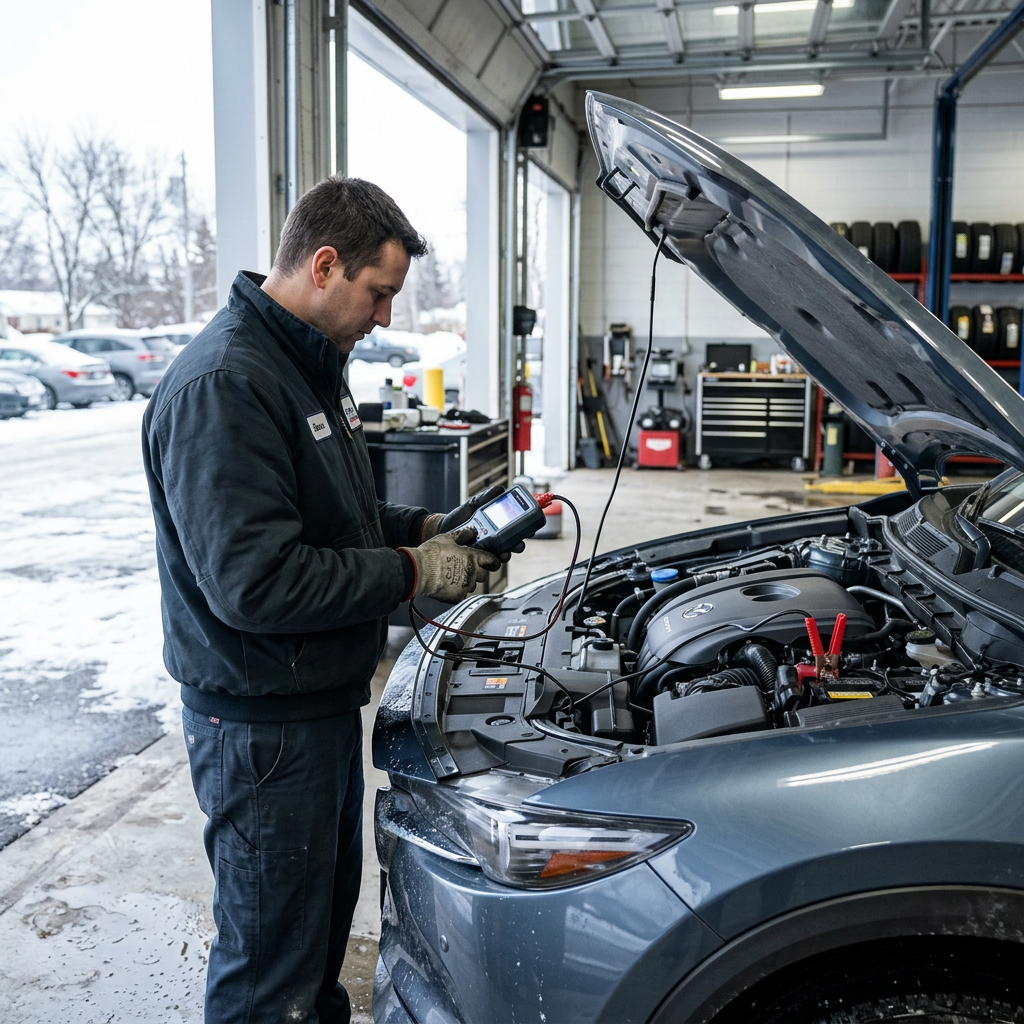
Is Ford Bringing Back the Ford Pinto for Buyers in Junction City?

Is Ford Bringing Back the Ford Pinto for Buyers in Junction City?

Is Ford Bringing Back the Ford Pinto for Buyers in Junction City? Ford is not bringing back the Ford Pinto. The historic subcompact car was produced from 1971 through 1980 and remains a discontinued classic model, with no current production, 2026 or 2027 Ford Pinto listed in Ford's U.S. vehicle lineup. Buyers seeking an efficient compact vehicle can explore modern Ford alternatives like the Maverick, Escape, and Bronco Sport at Valor Ford. Online rumors and speculative auto concept rendering channels frequently circulate claims regarding a resurrected Ford Pinto compact car. However, official manufacturer documentation confirms that Ford has no active plans to revive the Pinto nameplate. Today, Ford's small vehicle strategy centers entirely on versatile compact pickups and crossovers engineered for efficiency, modern safety, and daily utility. Drivers commuting along the I-70 corridor or traveling near the Kansas River benefit from these modern platforms, which deliver high fuel economy alongside available all-wheel drive. When local service members and civilian buyers visit our lot, our sales team often addresses questions about vintage nameplate rumors versus what is genuinely available in the modern Ford showroom. For shoppers looking to trade in an existing vehicle or finance a current compact crossover, you can get pre-approved online through our finance department before taking a test drive. If you prefer to discuss modern vehicle options in person, stop by our showroom on Goldenbelt Blvd or give our staff a quick call to learn about current inventory. Table of Contents What Powertrain and Performance Options Shape Compact Ford Segment Rumors? What Trim Levels, Standard Safety Tech, and Factory Warranty Cover Modern Ford Compacts? How Does Ford's Compact Lineup Compare to the Honda Civic and Toyota Corolla? Common Questions About the Ford Pinto and Modern Ford Alternatives Find Efficient Ford Innovation and Compact Capability at Valor Ford What Powertrain and Performance Options Shape Compact Ford Segment Rumors? Hypothetical discussions regarding a revived Ford Pinto usually center on Ford's modern powertrain lineup, which features responsive turbocharged gas engines and efficient hybrid configurations. While the original 1970s Pinto relied on modest four-cylinder engines, any modern Ford compact architecture utilizes advanced technology such as the 2.0-liter EcoBoost turbocharged inline-four engine producing 250 hp and paired with an eight-speed automatic transmission. In automotive enthusiast forums where theoretical Pinto specifications are debated, commentators often suggest that a modern compact car would leverage either a turbocharged four-cylinder setup or a dual-motor electric powertrain with standard all-wheel drive. In real-world production, Ford implements these exact engineering solutions across its current small vehicle lineup: Modern gasoline powertrains combine high-pressure direct fuel injection with twin-scroll turbocharging to maximize low-end torque and acceleration. Front-wheel drive serves as the baseline layout for maximum fuel efficiency, while intelligent all-wheel drive automatically distributes power to maintain traction on wet asphalt or loose gravel. Compact utility platforms achieve a standard towing capacity of up to 2,000 pounds when properly equipped with factory towing packages. Turbocharged configurations deliver dynamic responsiveness, achieving 0 to 60 mph acceleration times in approximately 6.2 seconds in compact vehicle applications. Across the agricultural back roads and highway stretches of Dickinson County, drivers require powertrains that balance strong passing power with daily reliability. For shoppers interested in historical models, vintage compacts, or affordable daily transportation, you can explore pre-owned Ford inventory to inspect available options currently in stock. What Trim Levels, Standard Safety Tech, and Factory Warranty Cover Modern Ford Compacts? Modern Ford compact vehicles are structured across intuitive trim levels ranging from essential entry-level models to fully equipped premium configurations, backed by robust factory warranty coverage. Standard equipment includes the Ford Co-Pilot360 driver-assist suite alongside the SYNC 4 infotainment system managed through a 13.2-inch touchscreen. Speculative guides regarding a modern Pinto often envision a traditional Ford trim structure consisting of S, SE, ST-Line, and Titanium trims. In actual Ford production vehicles, this tiered structure allows buyers to select the precise balance of technology, interior comfort, and exterior styling they desire: S / Active Base Trim: Includes fundamental safety equipment, power windows, digital gauge cluster, and seamless smartphone integration via Apple CarPlay and Android Auto. SE / Sport Trim: Upgrades interior upholstery, adds keyless entry with push-button start, and expands driver convenience features. ST-Line: Focuses on athletic styling accents, unique grille designs, sports-tuned suspension feel, and distinct interior stitching. Titanium / Premium Trim: Adds leather-trimmed seating, ambient cabin lighting, premium audio systems, and advanced parking assistance features. Every new Ford vehicle comes protected by comprehensive factory warranty coverage designed to ensure long-term peace of mind. The standard package includes a 3-year/36,000-mile bumper-to-bumper warranty covering full vehicle components against manufacturing defects, alongside a 5-year/60,000-mile powertrain warranty that protects the engine, transmission, and drive systems. Standard safety systems feature automatic emergency braking, lane-keeping assist, and blind-spot monitoring to protect occupants during daily driving. To maintain your vehicle's safety technology and mechanical health, you can easily schedule a service appointment with our factory-trained technicians. How Does Ford's Compact Lineup Compare to the Honda Civic and Toyota Corolla? Ford's modern small-vehicle lineup emphasizes higher standard horsepower, available all-wheel drive, and flexible cabin space, whereas competitors like the Honda Civic and Toyota Corolla focus primarily on traditional front-wheel-drive sedan layouts. Buyers cross-shopping compact vehicles gain distinct advantages when choosing Ford's utility-focused entry-level models over foreign sedans. Feature / Capability Modern Ford Compact Segment Honda Civic Toyota Corolla Standard Powertrain Output 250 hp (available EcoBoost) [1] 150 hp - 200 hp 138 hp - 169 hp Drivetrain Availability Front-Wheel Drive or All-Wheel Drive [1] Front-Wheel Drive Only Front-Wheel Drive or All-Wheel Drive Infotainment Screen Size 13.2-inch touchscreen [1] 7.0-inch to 9.0-inch 8.0-inch to 10.5-inch Max Towing Rating Up to 2,000 pounds [1] Not Recommended for Towing Not Recommended for Towing Body Style Versatility Compact Truck / Crossover Hatch [1] Sedan / Hatchback Sedan / Hatchback While the Honda Civic offers competitive fuel economy figures and the Toyota Corolla emphasizes traditional hybrid efficiency, Ford vehicles deliver superior versatility for active lifestyles. The higher seating position of Ford crossovers and compact trucks provides enhanced visibility, ground clearance for rutted roads, and flexible cargo management that low-slung sedans cannot match. For drivers evaluating vehicle values or considering trading in a sedan, our team can help you complete an online trade evaluation to establish your current vehicle's market value. If you prefer off-road capability and rugged styling over a compact sedan, you can also browse new Ford Bronco inventory to see our latest utility vehicles. Common Questions About the Ford Pinto and Modern Ford Alternatives Q: Is there a 2027 Ford Pinto available to order? No, there is no 2027 Ford Pinto available to order. The Ford Pinto was permanently discontinued following the 1980 model year, and Ford does not produce or market a vehicle under the Pinto nameplate. Shoppers looking for compact fuel efficiency in Ford's current lineup should examine models such as the Maverick, Escape, or Bronco Sport at Valor Ford. Q: Why do online articles mention engine options for a 2027 Ford Pinto? Certain online automotive blogs and video channels publish hypothetical concept reviews that imagine what a modern Pinto might look like if Ford built one today. These speculative articles describe potential specs like a 2.0-liter EcoBoost engine or electric powertrains, but these figures represent fictional scenarios rather than real production models. Official Ford production data confirms no such vehicle exists. Q: What is the smallest vehicle Ford currently manufactures? Ford's entry-level lineup in North America consists of compact trucks and crossovers, led by the Ford Maverick and Ford Escape. The Maverick offers a fuel-efficient compact truck design with an available hybrid system, while the Escape provides compact SUV utility with modern infotainment technology. Both vehicles deliver the practical efficiency historically associated with compact cars while offering superior cargo capability. Q: How can I order replacement parts for an original historic Ford Pinto? Owners of classic 1970s Ford Pinto models can source genuine Motorcraft components and authorized restoration hardware through specialized dealer network catalogs. To find compatible maintenance items, filters, or ignition components for classic or modern Ford vehicles, you can order genuine Ford parts directly through our parts center. Q: What Ford technology replaces the traditional compact car experience? Modern Ford vehicles replace basic compact interiors with connected technology like the SYNC 4 software system, wireless smartphone integration, and digital instrument clusters. Additionally, standard Ford Co-Pilot360 safety tech provides active driver assistance including pre-collision assist, automatic emergency braking, and lane-keeping support. Find Efficient Ford Innovation and Compact Capability at Valor Ford Valor Ford provides complete access to Ford's latest lineup of efficient crossovers, versatile compact trucks, and performance utility vehicles. Whether you are interested in exploring the practical utility of a new crossover or securing expert maintenance for your current Ford vehicle, our dealership team is dedicated to delivering straightforward guidance and superior service. Our dealership in Junction City serves drivers across the region with an extensive selection of new and pre-owned inventory, flexible financing options, and a state-of-the-art service facility. Stop by our showroom at 1825 Goldenbelt Blvd, Junction City, KS 66441 to experience the performance, safety, and comfort of modern Ford engineering firsthand. You can obtain map directions to our dealership address or speak directly with a sales representative by giving us a call at (785) 238-5114 today. © 2026 Valor Ford. All rights reserved.
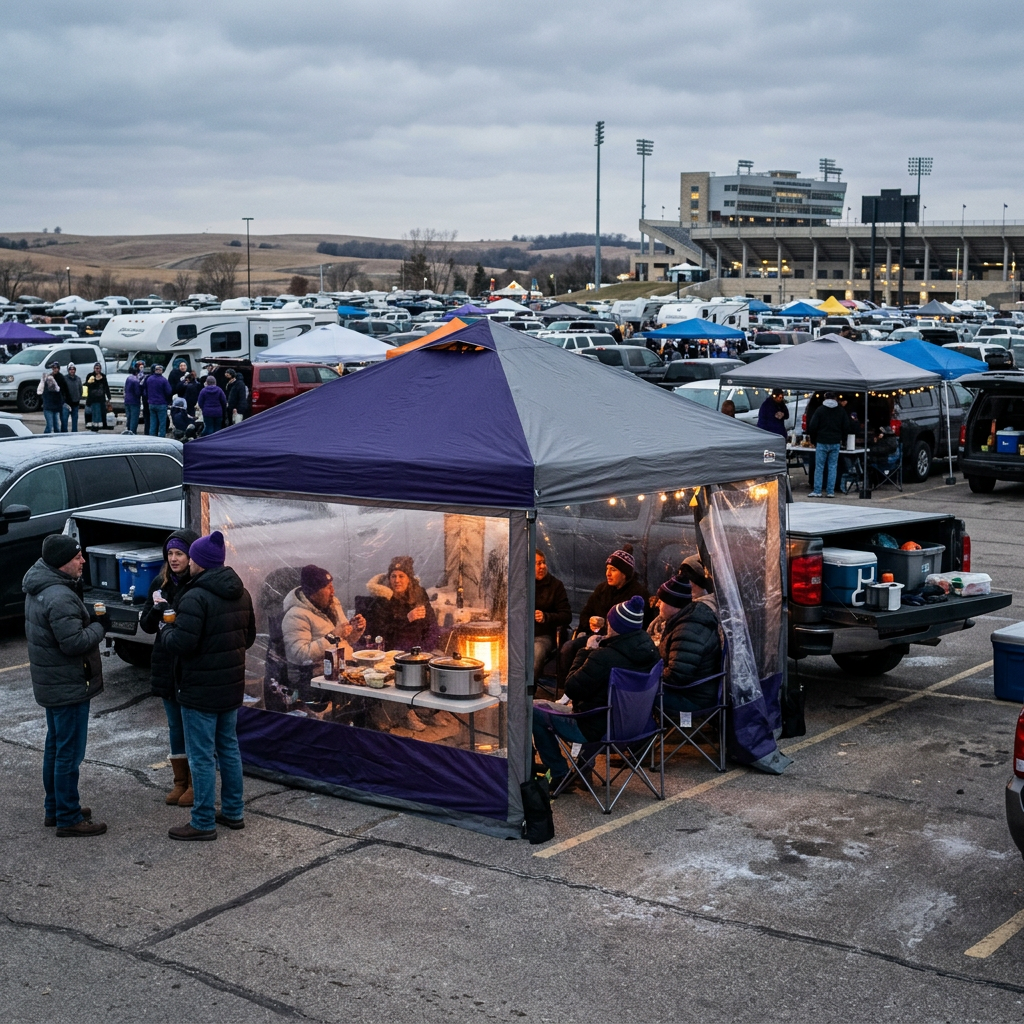
What Standard Features Come on the 2026 Ford F-150 King Ranch Trim?

What Standard Features Come on the 2026 Ford F-150 King Ranch Trim?

What Standard Features Come on the 2026 Ford F-150 King Ranch Trim? When evaluating the luxury truck segment for 2026, the Ford F-150 King Ranch stands out not as a vehicle of compromise, but as a masterclass in combining high-end Western luxury with heavy-duty capability. Drivers stepping onto our lot at Valor Ford in Junction City often ask what truly separates the King Ranch from lower trims like the Lariat or even its urban sibling, the Platinum. The answer lies in its long list of uncompromised standard equipment. Ford has packed the 2026 King Ranch with premium features that were once optional add-ons, turning this historic nameplate into one of the most complete turnkey luxury pickups on the market. Standard on every 2026 F-150 King Ranch is the formidable 3.5-liter EcoBoost® V6 engine delivering 400 horsepower and 500 lb-ft of torque, mated to a smooth 10-speed automatic transmission. Inside the cabin, every surface reflects craftsmanship: genuine Kingsville Del Rio leather upholstery covers the heated and ventilated front multicontour bucket seats, while real wood accents line the dashboard and door panels. Technology is equally robust with the standard 12-inch SYNC® 4 capacitive touchscreen, a customizable Head-Up Display (HUD), a 14-speaker B&O® Unleashed Sound System by Bang & Olufsen, and 2.0kW Pro Power Onboard generator power accessible directly from bed-mounted outlets. Towing performance is seamlessly integrated from the factory. Standard equipment includes the Tow Technology Package featuring Pro Trailer Backup Assist, Pro Trailer Hitch Assist, an integrated Trailer Brake Controller, and a 360-Degree Camera system. Exterior styling is anchored by two-tone accent paint with Dark Bronze lower cladding, 20-inch chrome-like PVD aluminum wheels with King Ranch center caps, power-deployable running boards, and the innovative Pro Access Tailgate with its swing-out center door design. For buyers looking to research Ford F-150 models across Dickinson and Geary counties, the King Ranch represents the total convergence of work-ready mechanical capability and authentic executive-level comfort. Standard Feature Category 2026 King Ranch Standard Specification Real-World Benefit for KS Drivers Base Powertrain 3.5L Twin-Turbo EcoBoost V6 (400 hp / 500 lb-ft) Effortless passing and heavy trailer towing across Flint Hills grade Interior Trim Kingsville Del Rio Full-Grain Leather & Real Wood Durable, breathable, luxury leather that ages gracefully Onboard Power 2.0kW Pro Power Onboard Generator Run power tools, tailgating equipment, or emergency camp gear Audio & Display 12" SYNC 4 + 14-Speaker B&O Unleashed + HUD Crystal-clear navigation and immersive acoustics on long highway drives Towing Suite Tow Tech Pkg + Pro Trailer Hitch & Backup Assist Solo trailer hitching and backing made quick and stress-free Tailgate Function Pro Access Tailgate with 50/70 Swing Door Easier bed access even when hooked to a trailer hitch ball Meet Jace Grabouski: 25 Years of Automotive Insights at Valor Ford Hello, I'm Jace Grabouski, General Manager at Valor Ford right here in Junction City, Kansas. Over my 25 years in the retail automotive industry, I've had the privilege of walking thousands of truck buyers through every generation of the Ford F-Series. From active-duty military families stationed at nearby Fort Riley to ranchers, contractors, and business owners throughout Dickinson and Geary counties, I've seen firsthand how truck expectations have evolved. A quarter-century ago, a luxury truck was simply a work pickup with plush cloth seats and power windows. Today, models like the 2026 F-150 King Ranch serve as mobile executive offices, family road-trippers, and heavy-duty tow vehicles all wrapped into one seamless machine. My philosophy has always been straightforward: clear, candid expertise without sales jargon. Living and working in central Kansas means understanding local conditions. We contend with baking summer sun, fine Flint Hills limestone dust, sudden winter blizzards, and heavy agricultural workloads. When a customer walks into Valor Ford evaluating a high-end trim like the King Ranch, my team and I don't just read off a window sticker; we explain how specific standard features—like the Kingsville Del Rio leather, Pro Power Onboard, or the 3.5L EcoBoost engine—perform after 50,000 miles of real Kansas driving. We invite you to experience our small-town integrity and deep product knowledge whenever you visit our dealership. Are King Ranch Leather Seats Hard to Maintain Over Time in Kansas Dust and Heat? One of the most frequent questions I get from local truck buyers considering the 2026 King Ranch revolves around its signature interior feature: Kingsville Del Rio leather upholstery. Buyers often remember the early 2000s King Ranch leather, which was raw saddle leather that required constant oiling and was prone to dark water staining and severe UV drying. Modern Kingsville Del Rio leather used in the 2026 model is vasty updated. Ford now utilizes a premium, top-grain aniline leather treated with modern protective topcoats that retain the rich, natural saddle-brown patina and distinct scent while providing resistance against liquid spills and UV fading. However, living in Kansas brings unique environmental challenges. The fine limestone dust generated on unpaved roads across Dickinson County and the intense summer heat can act as abrasives and drying agents if neglected. Flint Hills dust settles into the micro-perforations of the heated and ventilated seats, while intense sun exposure through wide truck glass can leach natural moisture from the hides over time. Maintaining these seats in pristine condition does not require endless labor, but it does require a disciplined, periodic care strategy tailored to our local weather. To preserve your King Ranch leather for decades, I recommend a simple three-step routine performed every 60 to 90 days. First, vacuum the seat perforations using a soft brush attachment to remove abrasive dust particles before they grind into the leather grain. Second, wipe down the seats with a damp microfiber cloth and a pH-balanced, non-detergent leather cleaner. Finally, apply a high-grade leather conditioner containing UV inhibitors. Avoid silicon-based treatments or harsh chemical cleaners, as they can plug the ventilation pores and break down the topcoat. With this basic care, Kingsville Del Rio leather won't degrade—it will develop a rich, enviable character that only improves with age. At Valor Ford, our service department stocks factory-approved leather care products specifically formulated for Ford luxury trims. If you ever have questions about interior care or want your truck detailed by specialists who understand these specific hides, feel free to drop by our facility on Goldenbelt Blvd in Junction City. What Engines and Output Are Available on the 2026 F-150 King Ranch? Standard 3.5L EcoBoost® V6 The base powertrain for the 2026 King Ranch is Ford's battle-tested 3.5-liter EcoBoost twin-turbo V6. Producing a massive 400 horsepower and 500 lb-ft of torque, this engine delivers low-end grunt that rivals traditional big-block V8s while maintaining excellent highway efficiency. Paired with a selector-driven 10-speed automatic transmission and standard four-wheel drive, it provides smooth, responsive acceleration whether cruising on I-70 toward Salina or pulling heavy machinery out of a farm field. Available 3.5L PowerBoost® Hybrid For buyers seeking maximum power combined with unmatched efficiency, the 2026 King Ranch offers the available 3.5-liter PowerBoost Full Hybrid V6. This advanced powertrain combines the twin-turbo engine with a 33kW electric motor integrated into the transmission, generating a staggering combined output of 430 horsepower and 570 lb-ft of torque. The electric motor delivers instant off-the-line torque, making heavy acceleration and stop-and-go driving effortless while vastly expanding range. Towing & Payload Capabilities Both engine offerings transform the King Ranch into an agricultural and recreational powerhouse. Configured with the standard 3.5L EcoBoost, the King Ranch boasts a maximum conventional towing capacity of up to 13,500 lbs when properly equipped with the Max Trailer Tow package. The PowerBoost Hybrid holds its own with up to 12,700 lbs of towing capacity while boosting onboard generator output to an available 7.2kW—capable of running full jobsite tools or camper rigs. Research Ford F-150 Trims Which Has Better Fuel Economy: F-150 King Ranch PowerBoost or Silverado Duramax Diesel? A common dilemma for half-ton truck buyers in central Kansas is choosing between Ford's full-hybrid tech and Chevrolet's 3.0-liter Duramax diesel option. Both powertrains target drivers who put heavy highway miles on their trucks while demanding fuel efficiency and strong low-end pulling power. Comparing the 2026 F-150 King Ranch PowerBoost Hybrid against a Silverado High Country Duramax Diesel reveals distinct operational advantages depending on how you use your truck around Junction City and Fort Riley. In pure steady-state highway driving across long stretches of flat interstate, the Duramax diesel holds a slight edge in mpg, often achieving 27-29 mpg on straight runs. However, the F-150 PowerBoost Hybrid excels dramatically in mixed, city, and stop-and-go driving, netting 22-24 mpg in urban conditions where diesels suffer significantly. Furthermore, the PowerBoost uses standard unleaded gasoline, avoiding the premium price gap associated with diesel fuel and eliminating the recurring hassle of replenishing Diesel Exhaust Fluid (DEF). Maintenance considerations may differ between the two powertrains over long ownership periods. Diesel engines require specialized oil filters, frequent fuel filter changes, and DEF system care. In contrast, the PowerBoost Hybrid utilizes standard Ford maintenance schedules, while delivering 430 hp—outperforming the Duramax's 305 hp by a massive 125 horsepower for merging and passing acceleration. When you factor in the integrated 7.2kW Pro Power generator capability available exclusively on the Ford, the King Ranch PowerBoost offers superior overall utility for Kansas drivers. If you are interested in exploring pre-owned diesel options or comparing low-mileage trade-ins, feel free to browse used inventory at Valor Ford to see how various luxury trim pre-owned trucks hold their value over time. Comparison Metric 2026 F-150 King Ranch PowerBoost Hybrid Silverado 1500 Duramax 3.0L Diesel Horsepower / Torque 430 hp / 570 lb-ft 305 hp / 495 lb-ft City Fuel Economy (Est.) 22 - 24 MPG 20 - 22 MPG Highway Fuel Economy (Est.) 24 - 25 MPG 27 - 29 MPG Fuel Type Required Regular Unleaded Gasoline Ultra-Low Sulfur Diesel + DEF Fluid Mobile Power Generation Up to 7.2kW Pro Power Onboard Limited 120V bed outlet (no generator capacity) Cold Weather Start Convenience Instant electric-assisted keyless start Glow-plug delay; anti-gel additive needed in sub-zero KS winter Expert Perspective: Why the 2026 King Ranch Remains the Gold Standard for Flint Hills Drivers "In my 25 years at Valor Ford, I've watched every luxury automotive trend come and go. Many luxury vehicles feel delicate or overly complicated for rural Kansas life. The 2026 F-150 King Ranch is different. It honors its heritage with rich Kingsville Del Rio leather and iconic branding, but underneath, it's a brute force tool built for hard work. Whether you're towing cattle trailers down highway 77 or commuting to Fort Riley in bad weather, the King Ranch gives you luxury without feeling like you have to pamper it. It remains the absolute gold standard for drivers in Dickinson County." — Jace Grabouski, General Manager at Valor Ford in Junction City, KS Standard Tech and Convenience: Pro Power Onboard, SYNC 4, and BlueCruise Capability Pro Power Onboard Generator Every 2026 King Ranch comes standard with 2.0kW of Pro Power Onboard output, providing multiple 120V/20A bed outlets. Upgrade to the PowerBoost Hybrid powertrain, and available output jumps to an incredible 7.2kW with a 240V/30A outlet. You can power air compressors, miter saws, electric grills, or run essential home appliances during power outages directly from your truck bed. 12" SYNC 4 & B&O Sound The central focal point of the cabin is the 12-inch LCD capacitive touchscreen running Ford's SYNC 4 software. It supports wireless Apple CarPlay® and Android Auto™, enhanced voice recognition, and over-the-air Ford Power-Up updates. The standard 14-speaker B&O Unleashed Sound System by Bang & Olufsen includes speakers integrated into the front headrests for acoustic clarity. Ford BlueCruise & HUD For effortless highway travel, the 2026 King Ranch comes standard with a full Head-Up Display projecting key telemetry onto the windshield and includes a trial of Ford BlueCruise hands-free highway driving. Operable across pre-mapped Hands-Free Blue Zones on over 130,000 miles of North American highways, BlueCruise handles steering, braking, and lane positioning while you keep eyes on the road. Are King Ranch and Platinum F-150 Models Priced the Same? Plus Destination Fee Breakdown When comparing top-tier F-150 trims, customers frequently ask if the King Ranch and Platinum models cost the same. For the 2026 model year, Ford has aligned starting MSRPs for both the King Ranch and Platinum trims virtually identically, positioning them at the apex of the half-ton lineup. The choice between them comes down to aesthetic preference rather than price tag: the King Ranch features Western-themed two-tone body paint, Marsh Gray and Bronze exterior accents, and Kingsville Del Rio leather, whereas the Platinum offers monochromatic styling, satin chrome trim, and Black/Carmelo leather accents. Understanding sticker pricing requires accounting for standard destination charges. For the 2026 Ford F-150 model year, the standard manufacturer Destination and Delivery fee is $1,995 nationwide. This mandatory fee covers transit, regional logistics, and pre-delivery inspection from Ford's assembly plants in Dearborn, Michigan, or Kansas City, Missouri, straight to our showroom floor in Junction City. At Valor Ford, we pride ourselves on absolute pricing transparency. There are no hidden dealer markups or surprise prep fees when you purchase a truck from our inventory. Whether you plan to finance through Ford Credit, take advantage of seasonal lease incentives, or explore commercial purchasing programs, our finance team provides clear line-item breakdowns before you sign. Ready to explore ownership terms? You can complete our online pre-approval process in minutes prior to visiting our dealership. Get Pre-Approved for Financing Standard Exterior Styling, Towing Equipment, and Bed Utility Signature Western Styling The 2026 King Ranch commands attention with its iconic two-tone paint finish featuring Dark Bronze lower accents, matching wheel lip moldings, and a uniquely styled bronze chrome grille. 20-inch chrome-like PVD aluminum wheels featuring custom King Ranch Running W center caps come standard, complemented by power-deployable running boards that automatically extend upon approach. Pro Access Tailgate Utility Standard on the 2026 King Ranch is Ford's revolutionary Pro Access Tailgate. Featuring a 50/70 split-swinging door, it allows drivers to open a center door section sideways at 37, 70, or 100 degrees. This provides 19 inches closer reach into the truck bed even when hooked up to a heavy trailer hitch, completely solving traditional bed access problems. Integrated Tow Tech & Cameras Towing safety is built in. Standard equipment includes an integrated Trailer Brake Controller, Smart Trailer Tow Connector, and the full 360-Degree Camera system. With Pro Trailer Hitch Assist, the truck automatically aligns its hitch ball with your trailer receiver at the push of a button, controlling steering, speed, and braking autonomously. Practical Advice: Custom Ordering vs. Buying In-Stock at Valor Ford When deciding how to acquire your 2026 F-150 King Ranch, two distinct paths exist: purchasing a vehicle directly from our floor inventory or custom ordering your truck factory-direct. As General Manager, I advise clients based on timeline urgency and specific feature preferences. Buying an in-stock model at Valor Ford offers instant gratification—you can test drive the vehicle today, finalize financing, and drive home in your new pickup within hours. However, if you desire a specific exterior paint combination—such as Antimatter Blue with Dark Bronze lower accents—or want unique standalone options like the 7.2kW Pro Power generator upgrade or Max Recline Seats, custom ordering is an excellent choice. Factory custom orders lock in current price protections and place your vehicle directly into Ford's production queue. Regardless of which route you choose, taking advantage of trade-in valuations is critical for maximizing your purchasing power. Used truck values in central Kansas remain robust. You can get an exact fair-market trade in evaluation on your current vehicle through our online valuation portal or by bringing your truck to our dealership for a 15-minute appraisal. Our sales team works closely with military personnel at Fort Riley to navigate deployment schedules and PCS moves, ensuring that factory orders line up perfectly with your arrival dates. Service Schedules and Protecting Your King Ranch Investment in Dickinson County Protecting the long-term trade-in value and operational longevity of a high-tier pickup like the 2026 King Ranch requires adherence to scheduled maintenance. Under standard Kansas driving conditions—which include temperature extremes ranging from sub-zero winter freeze to 100-degree summer heat—we recommend following Ford's intelligent Oil-Life Monitor while performing tire rotations and multi-point inspections every 7,500 miles. For trucks regularly towing trailers or navigating unpaved rural roads across Dickinson and Geary counties, severe-duty service intervals apply. This includes servicing air filters every 15,000 miles, inspecting brake components after heavy towing seasons, and maintaining power transfer unit (PTU) fluids on 4WD systems. At Valor Ford, our certified Ford Master Technicians receive factory training directly on modern EcoBoost and PowerBoost Hybrid powertrains, 10-speed transmissions, and complex CAN-bus electronic systems. We use only Genuine Ford Parts to ensure your factory warranty remains 100% intact. Schedule Ford Service Today Experience the 2026 Ford F-150 King Ranch at Valor Ford in Junction City, KS Reading about the 2026 Ford F-150 King Ranch is only the first step—feeling the genuine Kingsville Del Rio leather, experiencing the whisper-quiet power of the 3.5L EcoBoost or PowerBoost hybrid engine, and testing the 14-speaker B&O Unleashed sound system in person is where ownership truly begins. Whether you live in Junction City, serve at Fort Riley, or reside in surrounding communities like Manhattan, Abilene, or Salina, our team at Valor Ford is ready to deliver an exceptional truck-buying experience. Visit our showroom at 1825 Goldenbelt Blvd, Junction City, KS 66441 to tour our current inventory, or speak directly with our team to start your custom order. You can easily get directions to Valor Ford or give us a ring by calling (785) 238-5114. On behalf of General Manager Jace Grabouski and the entire Valor Ford team, we look forward to earning your business. Get Directions to Valor Ford

Is Buying Dedicated Winter Tires Cost-Effective for Northern Block Leave Travel?

Is Buying Dedicated Winter Tires Cost-Effective for Northern Block Leave Travel?

Is Buying Dedicated Winter Tires Cost-Effective for Northern Block Leave Travel? Every year as winter approaches, thousands of active-duty military personnel at Fort Riley prepare for annual Winter Block Leave. For service members heading home across northern states—navigating the icy expanses of Nebraska, Iowa, Minnesota, Wisconsin, the Dakotas, or Wyoming along I-70, I-80, and I-90—the trip presents severe weather challenges. A primary question facing drivers is whether purchasing dedicated winter tires is truly cost-effective for a single holiday road trip. The short answer is a definitive yes. Investing in a set of dedicated winter tires pays for itself when evaluating total risk. Preventing a single weather-related fender bender, heavy highway tow on an isolated stretch of northern interstate, or missed leave window far outweighs the upfront tire expense. Furthermore, because winter tires replace your primary all-season or summer tires during freezing months, you effectively double the tread life of your original set. At Valor Ford in Junction City, KS, we frequently help Fort Riley families evaluate winter readiness so they can travel north with complete confidence. The Math Behind Winter Tires: Total Cost vs. Insurance Deductibles and Delays Evaluating the true return on investment (ROI) of winter tires requires looking beyond the initial purchase price. A high-quality set of dedicated winter tires can vary depending on vehicle size and rim dimensions. Because winter tires are only driven 3 to 4 months out of the year, a single set typically lasts 4 to 5 winter seasons for average drivers. Contrast that controlled cost against the unexpected financial impact of a winter highway collision: comprehensive insurance deductibles, rural highway towing charges, out-of-network car rentals, and possible insurance premium increases after an at-fault weather crash. When combined with the non-refundable cost of lost leave days spent stranded in remote motel rooms waiting for repairs, dedicated winter tires represent an affordable insurance policy for your vehicle and schedule. Expense Category Dedicated Winter Tire Setup Single Minor Winter Incident Cost Upfront / Out-of-Pocket Cost $600 – $1,100 (lasts 4-5 seasons) $500 – $1,000 Insurance Deductible Emergency Towing / Recovery $0 (Avoided hazard) $250 – $600 (Rural Interstate Rate) Insurance Rate Increase $0 (No claims) $400 – $900 / year (Post-incident surge) Primary Tire Wear Protection Saves 30%–40% tread life None All-Season vs. Winter Tires: How Cold Temperatures Impact Traction Below 45°F Rubber Compound Physics All-season tire compounds undergo a physical change called the glass transition point when temperatures drop below 45°F (7°C). The tread rubber hardens and behaves like a rigid plastic puck, losing its ability to conform to road surface imperfections and drastically reducing mechanical grip even on completely dry pavement. High-Density Micro-Siping Winter tires feature hydrophilic rubber formulations infused with high concentrations of silica that remain pliable down to sub-zero temperatures. They feature thousands of microscopic slits (sipes) that flex open to bite directly into packed snow and slice through the thin film of water on ice surfaces to maintain road contact. Real-World Stopping Performance Independent safety tests demonstrate that at 30 mph on snow-covered roads, a car equipped with dedicated winter tires stops up to 30 feet shorter than the exact same car on all-season tires—often the precise distance between a safe, routine stop and a severe highway rear-end collision. What Tire Tread Depth is Required for Safe Winter Road Trips During Block Leave? While the federal legal minimum tread depth for highway driving is 2/32 of an inch, this threshold applies primarily to dry or lightly wet roads. For heavy snow, slush, and icy northern interstates, tire industry safety experts and Ford technicians recommend a minimum tread depth of 6/32 of an inch. Once tread wears down past 5/32", deep snow channels lose their capacity to evacuate slush, dramatically increasing your hydroplaning risk. You can quickly test your tread at home using Washington quarter: insert the coin head-first into the tread groove. If the top of Washington's head is covered by the tread block, you have at least 4/32" of tread remaining. If the top of his head is visible, your tires are unfit for winter cross-country driving. Schedule Ford Service Today Fort Riley Winter Block Leave Readiness: Essential Battery, Tire, and Fluid Service for Military Families Preparing for Winter Block Leave requires a comprehensive vehicle strategy beyond tire selection. Driving 500 to 1,500 miles across multiple state lines subjects your engine, electrical system, and cooling loop to extreme mechanical stress. When sub-zero wind chills hit the Plains, pre-existing mechanical vulnerabilities escalate into highway breakdowns rapidly. For Fort Riley personnel driving trucks like the Ford F-150 or family SUVs like the Ford Explorer, complete pre-flight maintenance ensures your holiday leave is spent with loved ones—not waiting inside an highway service garage. Whether you handle maintenance yourself or trust certified Ford technicians, completing these fundamental readiness checks before departing Junction City is strongly recommended for winter travel. What Battery and Tire Checks Should Fort Riley Families Complete Before Winter Leave Travel? Critical Pre-Trip Battery Testing Freezing temperatures rob automotive batteries of up to 50% of their cranking power while simultaneously increasing engine oil viscosity, making engines twice as hard to turn over. Have a digital conductive load test performed to check Cold Cranking Amps (CCA). Any battery older than three years should be replaced before embarking on multi-state northern routes. Tire Pressure & Cold Temperature Drops For every 10°F drop in ambient temperature, tire inflation pressure drops approximately 1 to 2 PSI. A tire properly set inside a warm garage in Kansas will be severely underinflated when driving through sub-zero blizzards in South Dakota. Always adjust tire inflation cold to recommended door-jamb placard specifications, and verify spare tire pressure before departure. What Ratio of Antifreeze to Water Should Be Used in Vehicle Coolant for Kansas Winters? Standard 50/50 Mixture Ratio A standard 50/50 mix of concentrated ethylene glycol coolant and distilled water provides freeze protection down to -34°F (-37°C) and boiling protection up to 265°F. This is ideal for normal Kansas winter conditions and moderate northern driving. Extreme Cold 60/40 Ratio If your Block Leave travel takes you into upper Midwestern states or high-altitude mountain passes where sub-zero wind chills plummet below -30°F, increase the mixture to 60% coolant concentrate and 40% water. This lowers freeze protection to maximum -62°F (-52°C). Critical Coolant Concentration Cap Never exceed a 70/30 coolant ratio. Pure concentrated antifreeze freezes at a higher temperature than a water-mixture (around +10°F) and lacks necessary heat-transfer capacity, risking catastrophic engine block cracking or radiator burst. What Winter Maintenance Tasks Are Safe and Simple to Complete DIY at Fort Riley Auto Skills Center? For hands-on military members looking to save money before taking leave, several high-impact pre-trip maintenance tasks can easily be completed in under an hour at the Fort Riley Auto Skills Center. Key DIY winter projects include installing beam-style silicone wiper blades that prevent ice buildup, flushing windshield washer fluid with -30°F rated de-icer fluid, replacing engine and cabin air filters, inspecting drive belts for cracking, and swapping exterior headlight/taillight bulbs. For replacement parts designed specifically for your vehicle, you can Order Genuine Ford Parts directly through Valor Ford prior to your work session. Order Genuine Ford Parts How Can Service Members Reserve Stall Time and Tools at the Fort Riley Auto Skills Center? The Fort Riley Auto Skills Center (located in Building 7854 on Custer Ave / Trooper Drive) is an incredible resource for active duty personnel, retirees, and military dependents. The facility features hydraulic vehicle lifts, complete mechanic hand-tool sets, tire mounting and balancing stations, diagnostic code readers, and fluid catch basins. To reserve stall time, patrons must first complete a brief 15-minute shop safety orientation card. Work bays and hydraulic lifts are available on both a walk-in basis and advanced reservation. Hourly bay rental fees are extremely budget-friendly (typically $6 to $10 per hour), making it easy to swap seasonal tires, flush radiator coolant, or perform brake service before Block Leave starts. Emergency Winter Road Trip Safety Gear for Long-Distance Northern Driving Traction & Recovery Gear Pack polymer traction mats or tire recovery tracks, a heavy-duty folding snow shovel, a 20,000-lb rated tow strap, and a 20-lb bag of coarse cat litter or rock salt for immediate wheel traction in deep roadside drifts. Electrical & Emergency Power Carry a portable lithium-ion jump starter pack (1000A peak minimum) so you are not dependent on another vehicle for a jump-start. Include LED magnetic roadside safety flares, high-lumen headlamps, and extra USB power banks. Thermal Survival Supplies Equip your vehicle with sub-zero rated sleeping bags, Mylar thermal emergency bivvies, chemical hand/foot warmers, high-protein non-perishable rations, and an insulated 1-gallon water container stored to prevent total freezing. Tire Storage Solutions: Where to Keep Your Summer or All-Season Set While Away A common obstacle military personnel encounter when buying dedicated winter tires is finding proper storage space for their primary tire set while living in garrison housing or off-post apartments in Junction City and Manhattan. To prevent rubber degradation, dry rot, and flat-spotting while stored: clean off all road salt and brake dust before storing. Store tires inside heavy-duty opaque plastic tire totes to block UV rays and ozone exposure. If tires remain mounted on wheels, stack them horizontally or hang them from rim hooks; if unmounted, store them standing vertically on tread faces. For service members residing in Fort Riley barracks or tight apartment spaces, local self-storage facilities in Junction City or Dickinson County offer climate-controlled MINI-units. Additionally, when you purchase seasonal tire sets at Valor Ford, our team can advise you on compact tire rack systems suitable for garage walls. Balancing Upfront Tire Costs with Long-Term Vehicle Trade-In and Resale Value Using dedicated seasonal tires directly protects your vehicle's long-term resale and trade-in valuation. Standard factory aluminum wheels subjected to harsh northern road salts and chemical de-icers frequently suffer severe rim corrosion, clearcoat peeling, and bead seal leaks within two winter seasons. By mounting winter tires on dedicated steel wheels or winter-rated alloy rims, you keep your primary factory wheels pristine. When preparing for a future Permanent Change of Station (PCS) move or upgrading your vehicle, presenting a car with immaculate wheels, clean undercarriage condition, and verifiable tire rotation history maximizes your instant trade-in offer. Trade In Evaluation Curious how much your current vehicle is worth prior to Block Leave? You can easily get a transparent Trade In Evaluation at Valor Ford. Whether you are looking to trade up to an AWD SUV or Browse Used Inventory, our team supports military personnel across Geary and Riley counties. Pre-Departure Winter Service Checklist for Drivers Departing Junction City and Fort Riley Before starting your engine and rolling out of Junction City for Block Leave, complete this 48-hour final pre-departure safety checklist: System / Component Required Pre-Departure Action Safety Goal Fuel Tank Level Maintain minimum 1/2 tank at all times Prevents fuel line condensation freeze & provides emergency heater power if delayed Windshield Washer Fluid Top off with -30°F rated De-Icer solution Prevents instant windshield icing at highway speeds Wheel Lug Nut Torque Torque to OEM spec (re-check after 50 miles) Ensures wheel security after seasonal tire mounting HVAC / Defrost System Verify A/C compressor engages on defrost settings Removes interior cabin moisture rapidly to keep glass clear Exterior Lighting Clean headlights, taillights, and turn signals Maximizes visibility during severe winter snowstorms Schedule Your Pre-Block Leave Winter Service and Tire Inspection at Valor Ford Don't leave your holiday travel to chance on icy northern highways. The factory-trained master technicians at Valor Ford are proud to serve Fort Riley military personnel, service families, and residents of Junction City and Dickinson County with expert vehicle maintenance. Whether you need a dedicated set of winter tires mounted, a free battery load check, coolant testing, or comprehensive pre-departure inspection, we are here to ensure your vehicle gets you home and back safely. Call (785) 238-5114 or schedule your service appointment online today! Schedule Pickup and Delivery Service

Contact Us

Fill out this form below and we'll contact you shortly
*Required Fields