
Blog / Vehicle Ownership Tips

Blog

All Vehicle Ownership Tips Buying Guides Maintenance & Service New Vehicle Reviews Technology & Innovation Financing & Insurance Model Comparisons Safety Features Used Vehicle Guides Seasonal Driving Tips Valor Ford Models Seasonal Vehicle Care New Vehicle Sales Heavy-Duty Truck Care Junction City Towing & Trailer Technology Automotive Parts & Accessories Performance & Powertrain Seasonal Vehicle Maintenance Financing & Incentives Repair & Parts Trade-In & Negotiation Tips KS Community Trade-In & Pre-Approval Processes Valor Ford Service Off-Road Packages & Accessories Vehicle Sales Automotive Repair Parts & Repairs Valor Ford Vehicle Pricing Strategies Vehicle Repair & Parts Vehicle Trade-In Tips Diesel Engine Care Family SUVs Manhattan Ford Dealer Manhattan Ford Service Military & Special Customer Programs Tire Care & Management Agricultural Vehicle Maintenance Automotive Recalls & Repairs Commercial Truck Financing Dealership Transparency Heavy-Duty Truck Guides Heavy-Duty Truck Upkeep Manhattan Used Cars Preventative Vehicle Inspections Technology & Innovation in Truck Service Agricultural Fleet Service Automotive News Certified Pre-Owned Programs Diesel Engine Maintenance Genuine OEM Parts & Accessories Military & Student Moving Tips Service Tips & Guides Vehicle Utility & Cargo Solutions All-Weather Driving & 4x4 Readiness Classic Car Restoration Dealership Promotions & Events Engine & Performance Farm & Ranch Equipment Reviews Genuine Parts & Accessories Hybrid & Electric Vehicles Off-Road & 4x4 Features Winter Driving Tips
What Safety Recalls Affect the 2023 Ford Explorer?

What Safety Recalls Affect the 2023 Ford Explorer?

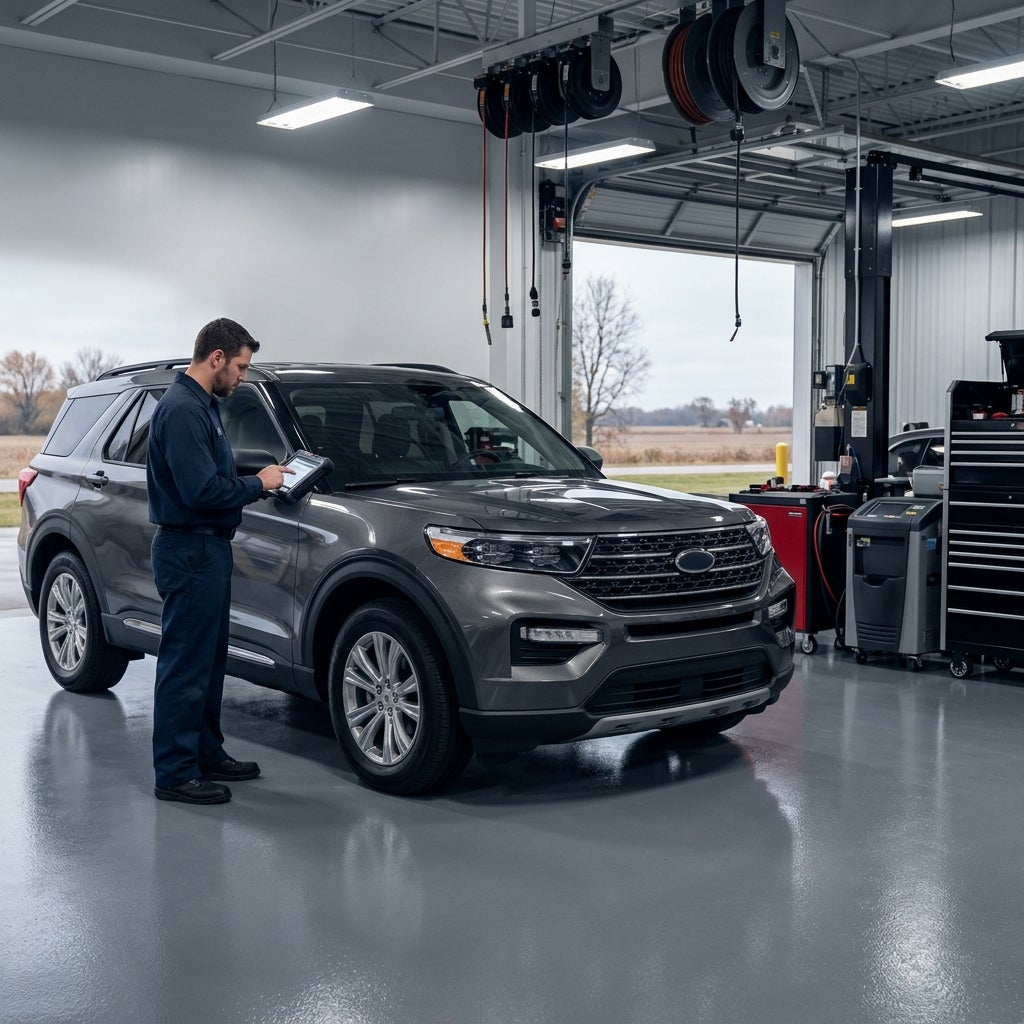
What Safety Recalls Affect the 2023 Ford Explorer? Primary safety recalls affecting the 2023 Ford Explorer center on two critical vehicle systems: the rearview camera display and the automatic transmission parking mechanism. Rearview camera recalls involve software errors, wiring harness faults, or 360-degree camera module glitches that cause a blue screen, blank display, or frozen image while reversing. Transmission recalls address a potential loose transmission bolt or parking pawl engagement issue that may prevent the vehicle from holding Park, creating a potential rollaway risk. All recall inspections and repairs are completed free of charge by factory-trained technicians at authorized Ford dealerships. When safety notices are released by the manufacturer, addressing open campaigns quickly preserves vehicle reliability and ensures driver safety. The stop-and-go driving along Washington Street in Junction City puts regular stress on reversing systems and drivetrain components, making routine safety checks vital for local drivers. Ford issues safety recalls whenever a component fails to meet federal motor vehicle safety standards or presents an unreasonable safety hazard during daily vehicle operation. Vehicle owners can inspect their service status at any time by checking their 17-digit Vehicle Identification Number (VIN). Our certified service department provides complete campaign verifications and performs all authorized factory repairs using specialized diagnostic equipment and OEM components. For complete details regarding open campaigns or to schedule an inspection, contact our team by calling (785) 238-5114 or visit our service center location at 1825 Goldenbelt Blvd, Junction City, KS 66441. Table of Contents What Are the Primary Rearview Camera and Transmission Recalls for the 2023 Ford Explorer? What Safety Ratings Did the 2023 Ford Explorer Receive Despite Recalls? How Does 2023 Ford Explorer Ownership and Service Compare to the 2023 Toyota Highlander? How Can You Verify Your VIN and Receive Free 2023 Ford Explorer Recall Repairs? Common Questions About 2023 Ford Explorer Recalls and Maintenance How to Schedule 2023 Ford Explorer Recall Service at Valor Ford in Junction City What Are the Primary Rearview Camera and Transmission Recalls for the 2023 Ford Explorer? The primary recalls for the 2023 Ford Explorer involve digital rearview camera signal loss and automatic transmission parking mechanism faults. Camera issues stem from manufacturing defects in the camera wiring harness, software glitches within the Image Processing Module, or internal failures in 360-degree camera units that lead to a blue screen or black display when shifting into Reverse. Transmission safety campaigns target a loose internal fastening bolt or park rod mechanism within the 10-speed automatic transmission, which can prevent the transmission from mechanically locking into Park even if the rotary gear shifter indicates the vehicle is parked. Factory remedies for the rearview camera vary depending on the specific build date and equipped camera package: Standard Rearview Camera Wiring Harness: Technicians inspect the wiring harness for loose splices or inadequate connectivity, repairing electrical leads or replacing damaged harness sections at no charge. Rearview Camera Software Update: For models experiencing digital processing delay or frozen image output, technicians reprogram the Image Processing Module with updated software to restore instant camera feeds. 360-Degree Camera Replacement: Models fitted with surround-view systems receive a full camera module replacement when internal video processing hardware loses signal output. Service members and families commuting from nearby Fort Riley rely on dependable parking engagement when staging loaded vehicles on sloped Flint Hills terrain, making transmission recall compliance essential. Recall 23S06 specifically covers transmission engagement safety. During this service visit, certified technicians inspect the transmission assembly to confirm the parking pawl and internal fasteners are secure. If damage or improper torque is detected, technicians replace affected park mechanism components or install a replacement transmission assembly if required. Our technicians frequently note during routine maintenance that owners often ask whether a camera glitch requires replacing the entire central infotainment display or simply updating module software. In most cases, targeted software reflashing or specific camera replacement fully resolves the display fault without disrupting the primary SYNC display console. Review comprehensive Ford Explorer technical details to learn more about standard vehicle features and mechanical specifications. What Safety Ratings Did the 2023 Ford Explorer Receive Despite Recalls? Despite active safety recalls, the 2023 Ford Explorer earned a 5-Star Overall Safety Rating from the National Highway Traffic Safety Administration (NHTSA) and was designated a Top Safety Pick by the Insurance Institute for Highway Safety (IIHS). Crash test evaluations performed by NHTSA yielded top marks across major crash categories, demonstrating exceptional structural integrity and occupant protection. Evaluation Category NHTSA Star Rating Assessment Summary Overall Safety Rating 5 Out of 5 Stars Combined rating across all crash impact tests Frontal Crash 5 Out of 5 Stars Evaluates driver and front passenger protection in head-on collisions Side Crash 5 Out of 5 Stars Combines side barrier and side pole collision testing Rollover Resistance 4 Out of 5 Stars Measures single-vehicle rollover risk during loss-of-control maneuvers Standard active safety technologies further reinforce safety performance. The standard Ford Co-Pilot360 driver-assist suite equips every model with driver-assist technologies engineered to prevent collisions before they occur: Pre-Collision Assist with Automatic Emergency Braking and Pedestrian Detection Blind Spot Information System (BLIS) with Rear Cross-Traffic Alert Lane-Keeping System with Lane Departure Warning Auto High-Beam Headlamps and Rear Parking Sensors When higher trim levels like the Limited, ST, or Platinum are equipped with optional Ford Co-Pilot360 Assist+, drivers benefit from Adaptive Cruise Control with Stop-and-Go, Lane Centering, and Evasive Steering Assist. These crash-avoidance systems operate independently of recall-affected systems like the rearview camera harness or mechanical transmission park pawl, providing active driver protection on every journey. How Does 2023 Ford Explorer Ownership and Service Compare to the 2023 Toyota Highlander? The 2023 Ford Explorer delivers higher standard horsepower, greater towing capacity, and a rear-wheel-drive platform architecture compared to the front-wheel-drive platform and lower power output of the 2023 Toyota Highlander. Powered by a standard 2.3L EcoBoost turbocharged 4-cylinder engine producing 300 hp and 310 lb-ft of torque paired with a SelectShift 10-speed automatic transmission, the Explorer outpowers the Highlander's standard 2.4L turbocharged 4-cylinder engine rated at 265 hp and 310 lb-ft of torque. Specification / Feature 2023 Ford Explorer ( 2.3L EcoBoost) 2023 Toyota Highlander (2.4L Turbo) Standard Horsepower 300 hp 265 hp Standard Torque 310 lb-ft 310 lb-ft Transmission 10-Speed SelectShift Automatic 8-Speed Automatic Maximum Towing Capacity 5,300 lbs ( 2.3L) / 5,600 lbs (V6) 5,000 lbs Standard Drive Architecture Rear-Wheel Drive (AWD Available) Front-Wheel Drive (AWD Available) EPA Fuel Economy (RWD/FWD) 20 city / 27 hwy mpg 22 city / 29 hwy mpg Front Legroom 43.0 inches 42.0 inches Maximum Cargo Volume 87.8 cubic feet 84.3 cubic feet From a maintenance and long-term ownership perspective, both three-row SUVs require strict adherence to scheduled fluid changes, tire rotations, and brake system care. The Explorer model's 5,300 lbs towing capacity on standard turbocharged models (increasing to 5,600 lbs on ST and Platinum twin-turbo V6 models) gives it an advantage for hauling heavy utility trailers compared to the Highlander model's 5,000-lb limit. Proper service care for the SelectShift transmission, including fluid inspections and prompt recall updates, preserves smooth shifting and optimal power delivery over high mileages. Owners can easily schedule Ford service online to keep engine, transmission, and braking systems operating at factory standards. How Can You Verify Your VIN and Receive Free 2023 Ford Explorer Recall Repairs? You can verify whether your 2023 Ford Explorer has open safety recalls by entering your vehicle's 17-character Vehicle Identification Number (VIN) into the official Ford Owner recall portal or the NHTSA recall lookup tool. The VIN is a unique alphanumeric code that identifies your specific vehicle build, option package, and production date. To locate your vehicle's VIN, check these primary locations: Lower Driver-Side Windshield: Look at the corner where the dashboard meets the windshield glass, readable from outside the car. Driver-Side Door Pillar: Locate the safety certification label attached to the door jamb inside the driver's door frame. Official Documentation: Review your state vehicle registration card, auto insurance policy card, or vehicle title paperwork. Federal law mandates that all safety recall inspections, software updates, and replacement parts must be provided completely free of charge to vehicle owners when performed at an authorized Ford dealership. There are no out-of-pocket costs for parts or factory labor associated with completing a recall campaign. If an inspection during a recall repair reveals worn related components that fall outside the campaign parameters, owners can also order genuine Ford parts through our parts department to ensure every repair utilizes factory-certified components. Common Questions About 2023 Ford Explorer Recalls and Maintenance Q: Are all recall repairs for the 2023 Ford Explorer completely free of charge? Yes, all safety recall repairs, software updates, and component replacements are performed at zero cost to the vehicle owner. Federal regulations require vehicle manufacturers to cover 100 percent of parts and labor expenses for safety recall campaigns when service is completed at an authorized dealership, regardless of vehicle mileage or current warranty expiration status. Q: How long does it take to complete the rearview camera and transmission recall service? Service duration depends on the specific campaign applicable to your VIN. A rearview camera software update typically takes under an hour, whereas physical wiring harness inspections or camera module replacements take between one and two hours. Transmission inspections usually take one to two hours; if full internal mechanism repair or assembly replacement is needed, service may require a full day. Q: Why does my 2023 Ford Explorer rearview camera display a blue or blank screen? A blue or blank display during reversing is caused by signal loss between the camera hardware and the central SYNC display screen. This failure stems from a manufacturing fault in the camera wiring harness splices, internal processing failure inside 360-degree camera modules, or a software glitch in the Image Processing Module that interrupts video transmission when Reverse gear is engaged. Q: Can I continue driving my 2023 Ford Explorer if it has an open recall notice? While many vehicles remain drivable, open safety recalls should be addressed as quickly as possible. A transmission rollaway recall presents a potential safety risk if the vehicle fails to hold Park on an incline. Drivers should always engage the electronic parking brake firmly when parking until the recall inspection and service are completed by a factory-certified technician. Q: Will completing a recall repair extend or affect my Ford factory warranty? Completing a safety recall does not shorten or alter your standard factory warranty coverage. The 2023 Ford Explorer includes a 3-year/36,000-mile bumper-to-bumper warranty and a 5-year/60,000-mile powertrain warranty. Recall repairs are documented in Ford's national service database, maintaining your complete vehicle service history and ensuring ongoing warranty compliance. How to Schedule 2023 Ford Explorer Recall Service at Valor Ford in Junction City Resolving active safety recalls on your 2023 Ford Explorer is straightforward when trusting our specialized service department. Our factory-trained technicians possess specific diagnostic equipment, specialized tools, and direct access to genuine OEM parts required to perform camera software updates, wiring repairs, and transmission inspections efficiently. Completing these open service actions ensures your vehicle operates according to factory specifications while protecting your family on every commute. Our service team provides convenient appointment scheduling, clear service timelines, and comprehensive multi-point vehicle inspections with every recall visit. To confirm open recalls for your VIN or reserve your service appointment, give our team a call at (785) 238-5114. For drivers planning a visit, get simple directions to our dealership at 1825 Goldenbelt Blvd, Junction City, KS 66441 and let our certified technicians keep your Ford running safely. © 2026 Valor Ford. All rights reserved. Vehicle specification data © JATO Dynamics Limited.
My Deep Dive into 2023 Ford Mustang Engines and Transmissions

My Deep Dive into 2023 Ford Mustang Engines and Transmissions

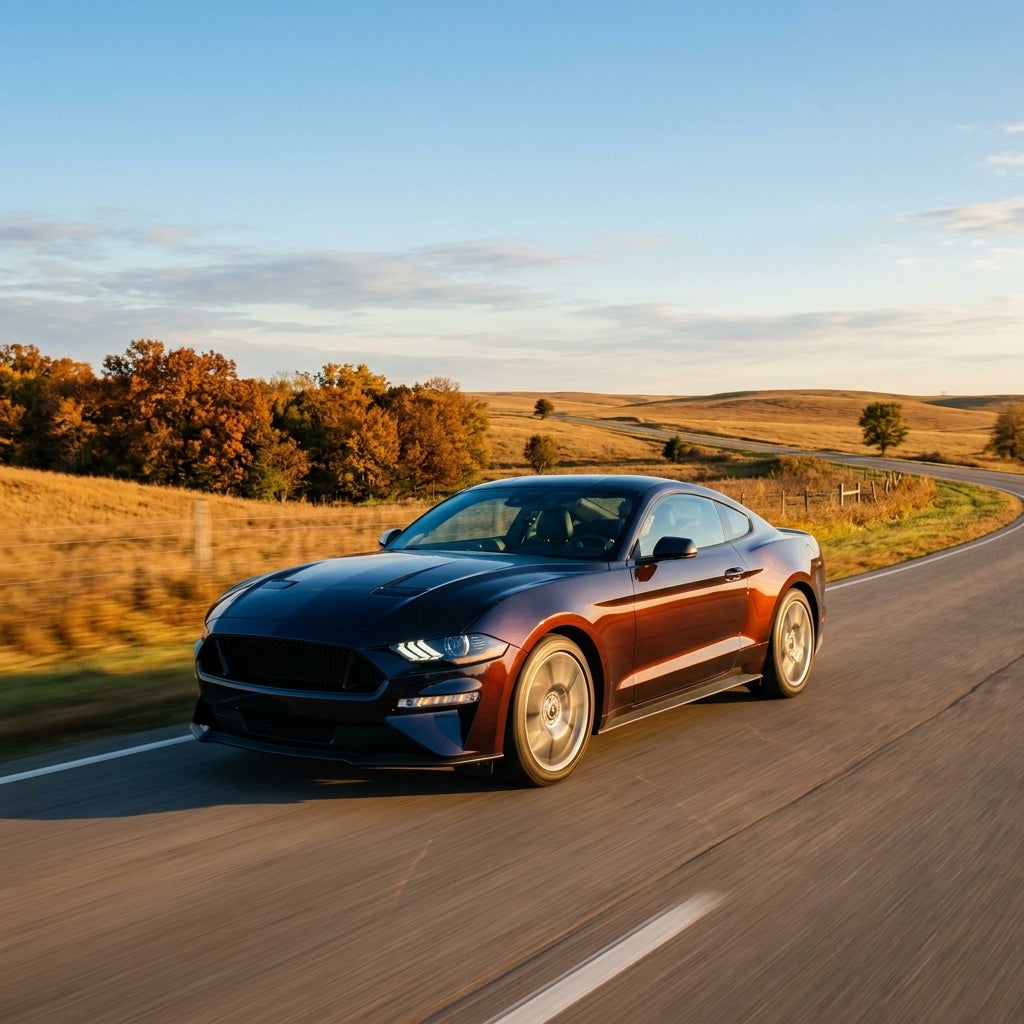
My Deep Dive into 2023 Ford Mustang Engines and Transmissions Does the 2023 Mustang GT Require Premium Fuel to Reach Peak Performance? The 2023 Ford Mustang GT does not require premium fuel to operate safely, as its naturally aspirated 5.0-liter Coyote V8 engine runs without issue on standard 87-octane regular unleaded gasoline. However, running regular fuel reduces output slightly below the factory-rated 450 horsepower and 410 lb-ft of torque, and Ford notes premium fuel may help achieve peak performance. Modern engine control modules continuously adjust spark timing based on knock sensor feedback. When you fill up with 87-octane regular unleaded, the PCM detects the lower octane threshold and advances ignition timing slightly less aggressively under heavy acceleration. On daily drives along the open stretch of I-70 near Junction City, most drivers will hardly notice the modest drop in peak top-end power. The dual-fuel injection system—combining high-pressure direct injection and low-pressure port fuel injection—keeps fuel delivery crisp and efficient regardless of the fuel grade you choose at the pump. When maximum acceleration or track performance is required, switching to 93-octane unleaded allows the 5.0-liter Coyote V8 to unleash its full potential all the way to its 7,500 rpm redline. Drivers seeking peak quarter-mile times or maximum throttle response during high-rpm passing maneuvers will benefit from filling up with premium fuel prior to spirited driving. If you ever have technical questions about fuel requirements or routine maintenance, you can visit our showroom on Goldenbelt Boulevard or give our sales team a quick call to chat with our staff. Table of Contents What Are the 2023 Mustang EcoBoost Engine Outputs and Transmission Choices? How Does the 10-Speed Automatic Transmission Perform Across 2023 Mustang Powertrains? What Transmission Options Are Offered on the Track-Focused 2023 Ford Mustang Mach 1? What Drive Modes and Launch Control Features Affect 2023 Mustang Transmission Performance? What Real-World Fuel Economy Can You Expect From Each 2023 Mustang Engine Option? How to Choose the Right 2023 Mustang Performance Configuration What Are the 2023 Mustang EcoBoost Engine Outputs and Transmission Choices? The base 2023 Ford Mustang EcoBoost features a turbocharged 2.3-liter turbocharged four-cylinder engine generating 310 horsepower and 350 lb-ft of torque, paired standard with a 6-speed manual transmission or an optional 10-speed SelectShift automatic. Upgrading to the High Performance Package increases power to 330 horsepower while keeping torque at 350 lb-ft. A twin-scroll turbocharger allows the four-cylinder powertrain to deliver its maximum 350 lb-ft of torque low in the rev range at 3,000 rpm. This low-end pull provides quick throttle response off the line without requiring high engine speeds. Furthermore, placing a lighter turbocharged four-cylinder over the front axle reduces curb weight by nearly 200 pounds compared to V8-equipped models. This weight reduction gives the EcoBoost sharp turn-in response when navigating the rolling Flint Hills roads surrounding Fort Riley. Transmission availability on the EcoBoost gives drivers two distinct control styles: 6-speed manual: Standard on fastback and convertible trims, featuring positive gear engagement, a balanced clutch pedal weight, and standard hill start assist. 10-speed SelectShift automatic: Optional across all EcoBoost trims, featuring steering-wheel-mounted paddle shifters and adaptive shift algorithms that adjust shift speed to driver inputs. Drivers looking for balanced performance and modern capability across our lineup can also check out our new Ford Bronco inventory to see how turbocharged EcoBoost power performs in off-road vehicles. Engine & Performance Powertrain specs by trim Feature EcoBoost Convertible EcoBoost Coupe EcoBoost Coupe Premium EcoBoost Premium Convertible Engine 2.3L 2.3L 2.3L 2.3L Horsepower 310 hp 310 hp 310 hp 310 hp Torque 350 lb-ft 350 lb-ft 350 lb-ft 350 lb-ft Transmission manual 6-speed manual 6-speed manual 6-speed manual 6-speed Drivetrain Rear-wheel drive Rear-wheel drive Rear-wheel drive Rear-wheel drive Engine & Performance (continued) Feature GT Convertible Premium GT Coupe GT Coupe Premium Mach 1 Engine 5L 5L 5L 5L Horsepower 460 hp 460 hp 460 hp 480 hp Torque 420 lb-ft 420 lb-ft 420 lb-ft 420 lb-ft Transmission manual 6-speed manual 6-speed manual 6-speed TREMEC® Drivetrain Rear-wheel drive Rear-wheel drive Rear-wheel drive Rear-wheel drive How Does the 10-Speed Automatic Transmission Perform Across 2023 Mustang Powertrains? Ford's optional 10-speed SelectShift automatic transmission utilizes closely spaced gear ratios and real-time adaptive shift scheduling to keep both the turbocharged four-cylinder and V8 engines in the heart of their power bands. By offering ten forward speeds, the transmission optimizes off-the-line acceleration through low first-gear ratios while providing wide overdrive gearing for efficient highway cruising. During aggressive driving, the 10-speed automatic skips intermediate gears during downshifts, jumping directly from tenth to fifth or seventh to third when you stomp the accelerator pedal. Mounted paddle shifters allow manual gear selection whenever you want full control over shift points. Real-world testing shows that models equipped with the 10-speed automatic achieve faster 0-60 mph sprint times than equivalent manual-transmission models due to continuous torque delivery between rapid gear shifts. To ensure your drivetrain maintains shift quality and peak power transfer over time, remember to schedule a service appointment online for routine transmission fluid checks and factory inspection services. What Transmission Options Are Offered on the Track-Focused 2023 Ford Mustang Mach 1? The track-oriented 2023 Ford Mustang Mach 1 comes standard with a heavy-duty TREMEC TR-3160 6-speed manual transmission featuring rev-matching and a dual-disc clutch, while a custom-calibrated 10-speed SelectShift automatic is available as an option. Powering the Mach 1 is a naturally aspirated 5.0-liter Coyote V8 producing 470 horsepower and 410 lb-ft of torque. The TREMEC TR-3160 6-speed manual is specifically engineered for high-rpm track durability. Unlike standard manual gearboxes, the TREMEC unit incorporates an external oil cooler, aggressive gear engagement teeth, and a short-throw shifter for precise gear changes under heavy lateral loads. Driver-selectable rev-matching blips the throttle automatically on downshifts, matching engine rpm to transmission speed for smooth rear-axle stability during hard braking into corners. Key mechanical performance upgrades on the Mach 1 include: Heavy-duty engine oil, transmission oil, and differential coolers borrowed from Shelby performance engineering. Standard MagneRide Damping System that adjusts shock stiffness thousands of times per second based on cornering loads. Optional track-calibrated 10-speed automatic with customized shift logic for high-speed circuit driving. If you are looking for high-performance pre-owned sports cars, explore our pre-owned vehicle inventory, browse our Ford Mustang research guides, or value your trade online to begin your upgrade. What Drive Modes and Launch Control Features Affect 2023 Mustang Transmission Performance? The 2023 Mustang features Selectable Drive Modes —including Normal, Sport+, Track, Drag Strip, and Snow/Wet—that electronically recalibrate throttle mapping, steering weighting, and automatic transmission shift points. Manual-transmission Mustang GT and Mach 1 models come equipped with standard electronic launch control integrated into the digital gauge cluster to manage wheel spin during hard launches. When you select Drag Strip mode on models with the 10-speed automatic, the transmission holds gears longer and executes full-throttle shifts without dropping engine boost or rpm between gear changes. This gear-hold strategy minimizes acceleration loss during quarter-mile runs. Track mode speeds up downshift response during hard braking and holds lower gears through turns to ensure power is immediately available upon apex exit. Standard Track Apps built into the instrument cluster provide tools for performance tracking: Electronic launch control: Allows drivers to set engine launch rpm between 3,000 and 4,500 rpm for consistent traction off the line. Electronic Line Lock: Locks the front brakes while leaving the rear wheels free to spin, making rear tire warming straightforward before drag strip passes. Acceleration timers: Measures 0-60 mph, 0-100 mph, and quarter-mile elapsed times in real time. When preparing to finance a performance coupe, you can get pre-approved for financing online to streamline your buying process before visiting our showroom. What Real-World Fuel Economy Can You Expect From Each 2023 Mustang Engine Option? The 2023 Ford Mustang EcoBoost fastback with the 10-speed automatic earns an EPA rating of 20 city / 27 hwy mpg (and up to 22 mpg combined), making it the most fuel-efficient model in the lineup. Mustang GT models equipped with the 5.0-liter Coyote V8 and 10-speed automatic yield an EPA-estimated 15 city / 24 hwy mpg. Choosing a 6-speed manual transmission on V8 models drops highway ratings slightly to 23 mpg highway, while opting for track-focused upgrades like the High Performance Package or Mach 1 handling packages lowers overall highway efficiency due to wider performance tires and aggressive rear axle gearing. On long-distance highway cruises, the wide overdrive ratios of the 10-speed automatic allow the V8 engine to settle under 1,800 rpm at 70 mph, helping drivers achieve their highway fuel economy estimates. To keep your powertrain operating at maximum efficiency, you can order genuine Ford performance parts and factory air filters directly through our dealership. Fuel Economy Fuel economy and range by trim Feature EcoBoost Convertible EcoBoost Coupe EcoBoost Coupe Premium EcoBoost Premium Convertible MPG 20 city / 27 hwy / 23 combined 21 city / 29 hwy / 24 combined 21 city / 29 hwy / 24 combined 20 city / 27 hwy / 23 combined Fuel Economy (continued) Feature GT Convertible Premium GT Coupe GT Coupe Premium Mach 1 MPG 15 city / 23 hwy / 18 combined 15 city / 24 hwy / 18 combined 15 city / 24 hwy / 18 combined 14 city / 22 hwy / 17 combined How to Choose the Right 2023 Mustang Performance Configuration Selecting the ideal 2023 Mustang performance configuration comes down to how you plan to drive your car day to day. If your priority is a nimble daily commuter with punchy low-end torque and impressive fuel economy, the EcoBoost starting at $27,770 base MSRP offers exceptional value. Enthusiasts seeking traditional muscle car sound and 450 horsepower will find the Mustang GT starting at $38,345 base MSRP to be the strong option in the lineup. For drivers who demand track-ready durability, high-rpm cooling, and 470 horsepower, the Mach 1 starting at $55,570 base MSRP represents the top performance trim of the S550 chassis generation. Every 2023 Mustang is backed by Ford's standard 3-year/36,000-mile bumper-to-bumper warranty and 5-year/60,000-mile powertrain warranty for long-term peace of mind. Whenever you are ready to compare Mustang engine notes, test drive different transmission options, or inspect our pre-owned performance inventory, visit our showroom on Goldenbelt Boulevard or call our team directly. We look forward to helping you find the perfect Mustang setup. Pricing Pricing by trim Feature EcoBoost Convertible EcoBoost Coupe EcoBoost Coupe Premium EcoBoost Premium Convertible Base MSRP $33,270 $27,770 $32,795 $38,295 Destination charge $1,395 $1,395 $1,395 $1,395 Pricing (continued) Feature GT Convertible Premium GT Coupe GT Coupe Premium Mach 1 Base MSRP $48,865 $38,345 $43,365 $55,570 Destination charge $1,395 $1,395 $1,395 $1,395 © 2026 Valor Ford. All rights reserved. Vehicle specification data © JATO Dynamics Limited.
How Does a Ford Model Year Changeover Work?

How Does a Ford Model Year Changeover Work?

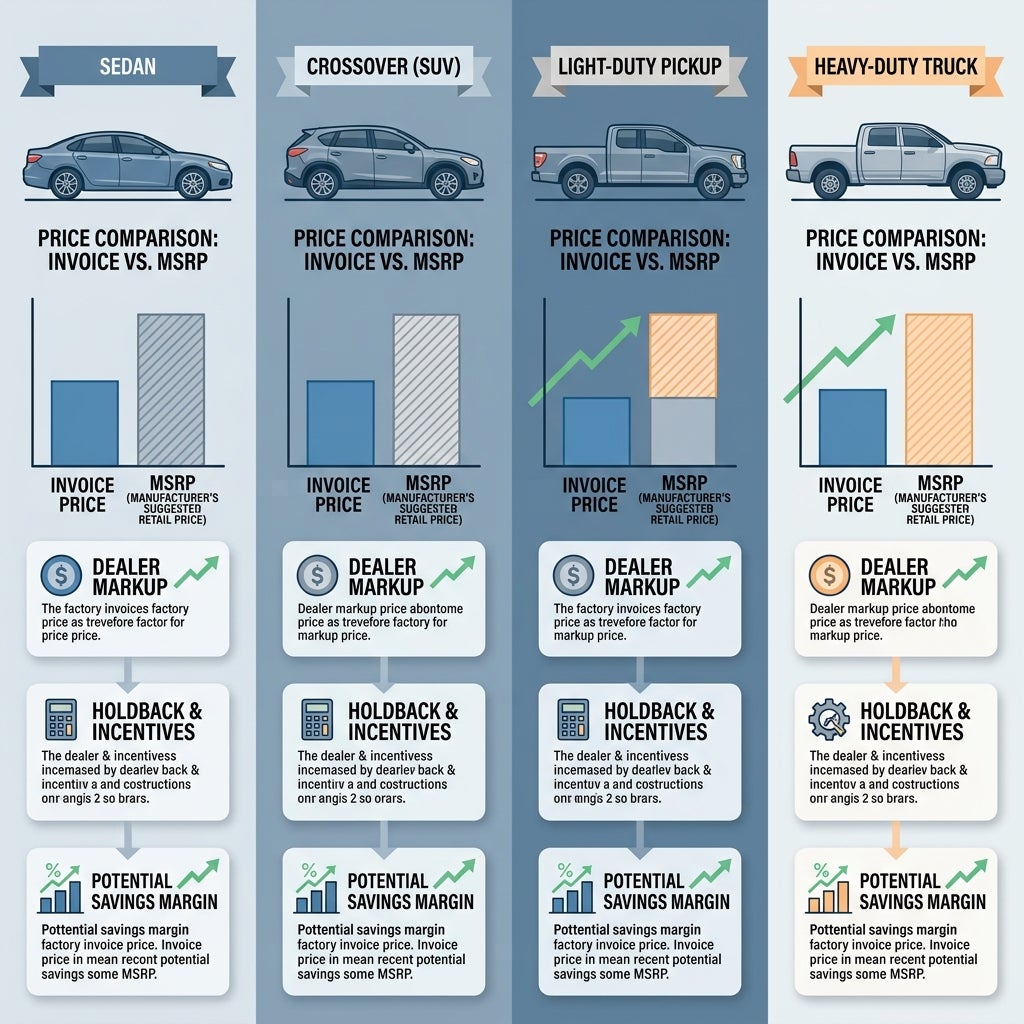
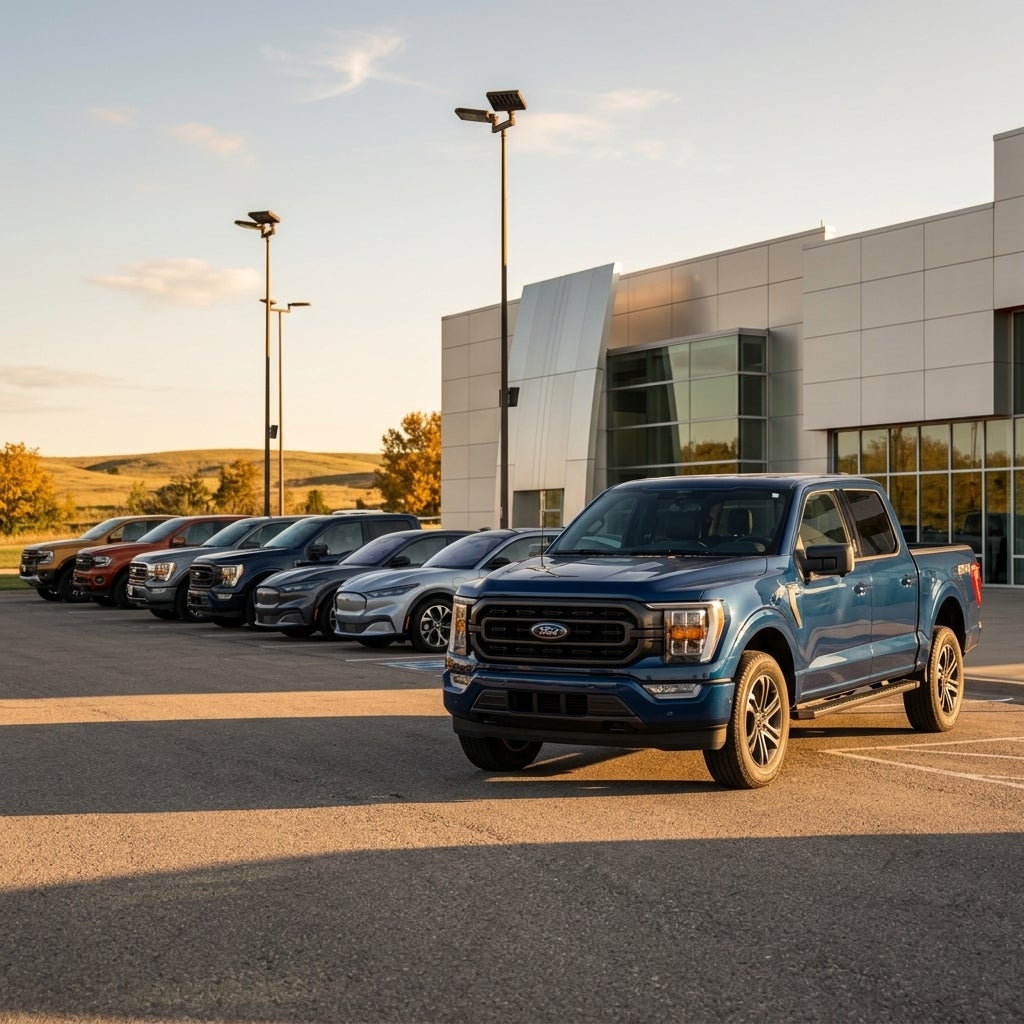
How Does a Ford Model Year Changeover Work? A Ford model year changeover is the annual production and inventory transition during late summer and fall when automakers ship incoming new-model-year vehicles to dealerships while clearing remaining prior-model-year inventory. Dealerships lower acquisition costs on outgoing units through factory cash-back rebates, low-APR promotional rates via Ford Credit, and current inventory offers to make room on the lot. During this transition window, vehicle production shifts at assembly plants, altering package combinations, exterior styling options, and engine availability across the lineup. For shoppers evaluating new Ford trucks and SUVs, the changeover period represents a window where maximum monetary savings on outgoing models directly contrast with the option to factory-order updated technology and refreshed styling on incoming models. Understanding how inventory shifts during a model year transition helps buyers timing their next vehicle purchase. Remaining outgoing inventory often features popular configurations like the 2026 Ford F-150 with the 3.5L EcoBoost® V6 engine or versatile SUVs such as the 2026 Ford Escape with all-wheel drive. As incoming vehicles arrive, overall lot selection moves quickly. To view current vehicle availability or speak directly with our team about incoming arrivals, visit our showroom on Goldenbelt Boulevard in Junction City or reach out by phone at (785) 238-5114. Table of Contents Is It Better to Buy an Outgoing Model Year or a New Model Year Ford? What Discounts, Financing Rates, and Trade-In Values Apply to Outgoing Models? What Changes and Engine Options Are Coming for the 2027 Ford F-150? How Can Buyers Locate Remaining Outgoing Ford Inventory at Valor Ford? Common Questions About Buying Outgoing vs New Model Year Fords Navigating Your Next Ford Purchase in Junction City Is It Better to Buy an Outgoing Model Year or a New Model Year Ford? Choosing between an outgoing model year Ford and an incoming model year Ford depends on whether your priority is upfront purchase savings or access to the latest technical updates and design changes. Outgoing model year Fords offer higher immediate price discounts and established reliability records, while incoming models deliver updated equipment groups, revised styling, and newer cabin technology. Buying an outgoing model year Ford makes financial sense for buyers who want to maximize purchasing power. Outgoing models benefit from manufacturer incentives, including lower finance rates and direct cash-back allowances, which reduce overall financing costs. For example, selecting an outgoing trim line like the 2026 Ford Explorer, which starts at an MSRP of $42,585 and provides a 5,000-lb towing capacity powered by a 2.3L EcoBoost® V6, offers high utility at a reduced price point relative to incoming model updates. Conversely, purchasing a new model year Ford is the better path when you desire newly introduced packages, upgraded driver-assist systems like Ford BlueCruise hands-free highway driving, or revised engine options. Incremental enhancements—such as redesigned front grilles, new wheel choices, and upgraded interior displays—are exclusive to incoming production runs. Outgoing Model Advantages: Substantial closeout rebates, lower finance interest rates, immediate lot availability, and proven mechanical platforms. Incoming Model Advantages: Latest infotainment software, newly available appearance packages, updated active safety technology, and maximum vehicle resale horizon. Configuration Flexibility: Outgoing inventory is limited to on-lot stock, whereas incoming model years allow custom factory orders tailored to specific color, cab, and equipment choices. Shoppers comparing versatile off-road platforms can explore our new Ford Bronco inventory to see current model availability or check out our pre-owned inventory selection to review late-model options. Pricing Pricing by trim Feature King Ranch 4x4 SuperCrew 5-1/2’ Box King Ranch 4x4 SuperCrew 6-1/2’ Box King Ranch SuperCrew 5-1/2’ Box Lariat 4x4 SuperCrew 5-1/2’ Box:--:--:--:--:-- Base MSRP $69,625 $69,930 $65,825 $63,360 Destination charge $2,795 $2,795 $2,795 $2,795 Pricing (continued) Feature Lariat 4x4 SuperCrew 6-1/2’ Box Lariat SuperCrew 5-1/2’ Box Platinum 4x4 SuperCrew 5-1/2’ Box Platinum 4x4 SuperCrew 6-1/2’ Box:--:--:--:--:-- Base MSRP $63,965 $59,560 $72,600 $72,905 Destination charge $2,795 $2,795 $2,795 $2,795 Pricing (continued) Feature Platinum SuperCrew 5-1/2’ Box Police Responder 4x4 SuperCrew 5-1/2’ Box Raptor 4x4 SuperCrew 5-1/2’ Box STX 4x4 SuperCab 6-1/2’ Box:--:--:--:--:-- Base MSRP $68,800 $52,350 $79,005 $48,655 Destination charge $2,795 $2,595 $2,795 $2,795 Pricing (continued) Feature STX 4x4 SuperCrew 5-1/2’ Box STX SuperCab 6-1/2’ Box STX SuperCrew 5-1/2’ Box Tremor 4x4 SuperCrew 5-1/2’ Box:--:--:--:--:-- Base MSRP $51,070 $44,855 $47,190 $64,915 Destination charge $2,795 $2,795 $2,795 $2,795 Pricing (continued) Feature XL 4x4 Regular Cab 6-1/2’ Box XL 4x4 Regular Cab 8’ Box XL 4x4 SuperCab 6-1/2’ Box XL 4x4 SuperCrew 5-1/2’ Box:--:--:--:--:-- Base MSRP $44,600 $42,305 $45,400 $47,820 Destination charge $2,795 $2,795 $2,795 $2,795 Pricing (continued) Feature XL 4x4 SuperCrew 6-1/2’ Box XL Regular Cab 6-1/2’ Box XL Regular Cab 8’ Box XL SuperCab 6-1/2’ Box:--:--:--:--:-- Base MSRP $50,475 $39,585 $37,290 $41,600 Destination charge $2,795 $2,795 $2,795 $2,795 Pricing (continued) Feature XL SuperCrew 5-1/2’ Box XLT 4x4 SuperCab 6-1/2’ Box XLT 4x4 SuperCrew 5-1/2’ Box XLT 4x4 SuperCrew 6-1/2’ Box:--:--:--:--:-- Base MSRP $43,935 $49,495 $51,915 $54,555 Destination charge $2,795 $2,795 $2,795 $2,795 Pricing (continued) Feature XLT SuperCab 6-1/2’ Box XLT SuperCrew 5-1/2’ Box:--:--:-- Base MSRP $45,695 $48,055 Destination charge $2,795 $2,795 What Discounts, Financing Rates, and Trade-In Values Apply to Outgoing Models? Outgoing model year Ford vehicles typically qualify for the largest combined factory incentives of the calendar year, including low promotional APR financing, direct customer cash rebates, and trade-in assistance bonuses. While outgoing vehicles experience slightly higher initial book-value depreciation in the first two years, their resale values converge with newer model years over a five-year ownership period. During end-of-model-year clearance events, factory cash rebates on popular full-size pickups often range from $1,500 to $4,500 depending on the trim package, cab style, and drivetrain selected. Financing promotions offered through Ford Credit frequently feature low interest rates—such as current promotional financing options on select STX and XLT configurations—substantially lowering total interest paid over the life of a loan. Trade-in values during the changeover period remain strong due to steady pre-owned market demand. For agricultural operators across Dickinson County who rely on heavy payload capacity for daily haul tasks, upgrading an older work truck for an outgoing model year F-150 or Super Duty unlocks major mechanical upgrades without paying new-model price premiums. Trim / Configuration Base MSRP Drivetrain Horsepower Torque F-150 XL Regular Cab 6-1/2' Box $39,585 Rear-wheel drive 400 hp 410 lb-ft F-150 STX 4x4 SuperCab 6-1/2' Box $48,655 All-wheel drive 325 hp 400 lb-ft F-150 XLT 4x4 SuperCrew 5-1/2' Box $51,915 All-wheel drive 325 hp 400 lb-ft F-150 Lariat 4x4 SuperCrew 5-1/2' Box $63,360 All-wheel drive 400 hp 500 lb-ft F-150 King Ranch 4x4 SuperCrew 5-1/2' Box $69,625 All-wheel drive 400 hp 500 lb-ft F-150 Platinum 4x4 SuperCrew 5-1/2' Box $72,600 All-wheel drive 400 hp 500 lb-ft F-150 Raptor 4x4 SuperCrew 5-1/2' Box $79,005 All-wheel drive 450 hp 510 lb-ft To determine the current market equity in your existing vehicle before shopping closeout specials, submit your vehicle details through our online trade-in evaluation tool. What Changes and Engine Options Are Coming for the 2027 Ford F-150? The 2027 Ford F-150 updates its powertrain lineup by replacing the 2.7-liter EcoBoost V6 with a more powerful 3.0L EcoBoost® V6 on select configurations while making the 5.0L Ti-VCT V8 engine available again on high-series King Ranch and Platinum trims. Additionally, the 2027 lineup expands driver-assist technology by integrating Ford BlueCruise hands-free driving with active towing support. Powertrain choices for the F-150 platform remain focused on high output and heavy work capability. The twin-turbo 3.5L EcoBoost® V6 outputs 400 hp and 500 lb-ft of torque, while the high-output version in the Raptor trim generates 450 hp and 510 lb-ft of torque paired with a SelectShift® automatic transmission. Buyers seeking maximum efficiency can select the 3.5L PowerBoost® Full Hybrid V6, which delivers 640 lb-ft of combined torque. When properly configured, the Ford F-150 achieves a best-in-class max available towing capacity of 13,500 lbs and a best-in-class max available payload of 2,440 lbs. By comparison, equivalent Chevrolet Silverado 1500 configurations reach a maximum payload rating of 2,260 lbs, giving the F-150 a distinct 180-lb advantage for heavy hauling tasks. The 2027 model year also introduces updated exterior styling, including revised front grilles and new wheel designs across mid-tier trims, alongside the new rugged F-150 Carhartt® Package. Off-road enthusiasts will note more accessible equipment groups on Tremor and Raptor models, though certain 157-inch-wheelbase configurations—such as the STX FX4 201A and XLT 303A —are discontinued. For detailed specs on existing truck configurations, visit our 2026 Ford F-150 research page. Engine & Performance Powertrain specs by trim Feature King Ranch 4x4 SuperCrew 5-1/2’ Box King Ranch 4x4 SuperCrew 6-1/2’ Box King Ranch SuperCrew 5-1/2’ Box Lariat 4x4 SuperCrew 5-1/2’ Box:--:--:--:--:-- Engine 3.5L 3.5L 3.5L 3.5L Horsepower 400 hp 400 hp 400 hp 400 hp Torque 500 lb-ft 500 lb-ft 500 lb-ft 500 lb-ft Transmission SelectShift® SelectShift® SelectShift® SelectShift® Drivetrain All-wheel drive All-wheel drive Rear-wheel drive All-wheel drive Engine & Performance (continued) Feature Lariat 4x4 SuperCrew 6-1/2’ Box Lariat SuperCrew 5-1/2’ Box Platinum 4x4 SuperCrew 5-1/2’ Box Platinum 4x4 SuperCrew 6-1/2’ Box:--:--:--:--:-- Engine 3.5L 3.5L 3.5L 3.5L Horsepower 400 hp 400 hp 400 hp 400 hp Torque 500 lb-ft 500 lb-ft 500 lb-ft 500 lb-ft Transmission SelectShift® SelectShift® SelectShift® SelectShift® Drivetrain All-wheel drive Rear-wheel drive All-wheel drive All-wheel drive Engine & Performance (continued) Feature Platinum SuperCrew 5-1/2’ Box Police Responder 4x4 SuperCrw 5-1/2’ Box Raptor 4x4 SuperCrew 5-1/2’ Box STX 4x4 SuperCab 6-1/2’ Box:--:--:--:--:-- Engine 3.5L 3.5L 3.5L 2.7L Horsepower 400 hp 400 hp 450 hp 325 hp Torque 500 lb-ft 500 lb-ft 510 lb-ft 400 lb-ft Transmission SelectShift® SelectShift® SelectShift® SelectShift® Drivetrain Rear-wheel drive All-wheel drive All-wheel drive All-wheel drive Engine & Performance (continued) Feature STX 4x4 SuperCrew 5-1/2’ Box STX SuperCab 6-1/2’ Box STX SuperCrew 5-1/2’ Box Tremor 4x4 SuperCrew 5-1/2’ Box:--:--:--:--:-- Engine 2.7L 2.7L 2.7L 3.5L Horsepower 325 hp 325 hp 325 hp 400 hp Torque 400 lb-ft 400 lb-ft 400 lb-ft 500 lb-ft Transmission SelectShift® SelectShift® SelectShift® SelectShift® Drivetrain All-wheel drive Rear-wheel drive Rear-wheel drive All-wheel drive Engine & Performance (continued) Feature XL 4x4 Regular Cab 6-1/2’ Box XL 4x4 Regular Cab 8’ Box XL 4x4 SuperCab 6-1/2’ Box XL 4x4 SuperCrew 5-1/2’ Box:--:--:--:--:-- Engine 5.0L 2.7L 2.7L 2.7L Horsepower 400 hp 325 hp 325 hp 325 hp Torque 410 lb-ft 400 lb-ft 400 lb-ft 400 lb-ft Transmission SelectShift® SelectShift® SelectShift® SelectShift® Drivetrain All-wheel drive All-wheel drive All-wheel drive All-wheel drive Engine & Performance (continued) Feature XL 4x4 SuperCrew 6-1/2’ Box XL Regular Cab 6-1/2’ Box XL Regular Cab 8’ Box XL SuperCab 6-1/2’ Box:--:--:--:--:-- Engine 3.5L 5L 2.7L 2.7L Horsepower 400 hp 400 hp 325 hp 325 hp Torque 500 lb-ft 410 lb-ft 400 lb-ft 400 lb-ft Transmission SelectShift® SelectShift® SelectShift® SelectShift® Drivetrain All-wheel drive Rear-wheel drive Rear-wheel drive Rear-wheel drive Engine & Performance (continued) Feature XL SuperCrew 5-1/2’ Box XLT 4x4 SuperCab 6-1/2’ Box XLT 4x4 SuperCrew 5-1/2’ Box XLT 4x4 SuperCrew 6-1/2’ Box:--:--:--:--:-- Engine 2.7L 2.7L 2.7L 3.5L Horsepower 325 hp 325 hp 325 hp 400 hp Torque 400 lb-ft 400 lb-ft 400 lb-ft 500 lb-ft Transmission SelectShift® SelectShift® SelectShift® SelectShift® Drivetrain Rear-wheel drive All-wheel drive All-wheel drive All-wheel drive Engine & Performance (continued) Feature XLT SuperCab 6-1/2’ Box XLT SuperCrew 5-1/2’ Box:--:--:-- Engine 2.7L 2.7L Horsepower 325 hp 325 hp Torque 400 lb-ft 400 lb-ft Transmission SelectShift® SelectShift® Drivetrain Rear-wheel drive Rear-wheel drive How Can Buyers Locate Remaining Outgoing Ford Inventory at Valor Ford? Locating remaining outgoing Ford inventory requires using online vehicle search filters sorted by model year, reviewing digital window stickers for specific equipment groups, and communicating directly with dealership inventory specialists. Because closeout vehicles sell quickly during late-summer and fall sales events, tracking real-time lot arrivals is essential. Our online inventory portal allows shoppers to filter incoming and on-lot vehicles by model year, trim level, body style, powertrain, and exterior color. When browsing, pay close attention to window stickers for specific package codes, such as the Bed Utility Package, FX4 Off-Road Package, or Tow/Haul Package. Filter Online Inventory: Set search parameters specifically to the outgoing model year to view tagged current pricing and remaining trim availability. Review Window Stickers: Check factory window stickers online to verify included options, gear ratios, and MSRP breakdown. Set Up Inventory Alerts: Contact our sales staff to get notified immediately when outgoing trade-ins or factory turn-in units arrive on the lot. Pre-Qualify Financing: Complete your paperwork early to streamline purchase approval when your desired vehicle configuration is identified. Before visiting our showroom to inspect remaining inventory, buyers can simplify the buying process by choosing to prequalify for financing online. Common Questions About Buying Outgoing vs New Model Year Fords Q: When does the Ford model year changeover officially start and end? The Ford model year changeover generally starts in late summer, around August, and extends through late fall as factories transition production lines to the upcoming model year. Dealerships receive incoming inventory batches over several months, meaning outgoing and incoming model years share showroom floor space through the end of the calendar year. Q: Does buying an outgoing model year Ford negatively affect its long-term resale value? An outgoing model year vehicle shows a slightly lower book value during the first 24 to 36 months of ownership simply because it is technically one model year older on paper. However, by year five or six of ownership, depreciation curves flatten out, making the trade-in value gap between model years negligible while preserving your initial purchase savings. Q: Can I custom factory-order an outgoing model year Ford vehicle? Factory order banks for outgoing model years typically close late in the spring or early summer before the changeover begins. Once order banks close, buyers looking for an outgoing model must select from remaining vehicles in dealership inventory or incoming dealer-allocated stock. Custom factory orders during the changeover apply exclusively to incoming model year vehicles. Q: How do factory warranties compare between outgoing and incoming model year Fords? Factory warranty coverage is identical regardless of whether you purchase an outgoing closeout model or an incoming new model year vehicle. Every new Ford includes a 3-year/36,000-mile bumper-to-bumper limited warranty alongside a 5-year/60,000-mile powertrain limited warranty, with coverage beginning on the day you take delivery of the vehicle. Q: What key documents should I bring to finalize an end-of-model-year vehicle purchase? To streamline your purchase during closeout events, bring a valid driver's license, your current vehicle registration and title if trading in a car, current proof of auto insurance, and your two most recent pay stubs or proof of income if applying for financing through Ford Credit. Navigating Your Next Ford Purchase in Junction City Evaluating an outgoing model year vehicle against an incoming model year Ford comes down to balancing upfront savings against your desire for newly released features. Outgoing models deliver maximized purchase value through current offers and financing information, and proven mechanical performance. Incoming models offer the newest design updates, revised powertrain options, and the latest driver-assist technologies. At Valor Ford, our sales team is ready to walk you through available inventory, explain current factory rebates, and assist with trade-in valuations. Whether you want to test-drive a remaining model on our lot or discuss custom ordering an incoming production unit, our team provides straightforward pricing and transparent guidance throughout the buying process. Explore our online inventory today or visit our dealership in person to take a test drive. For map route guidance, get directions to 1825 Goldenbelt Blvd, or connect directly with our sales specialists by calling (785) 238-5114. Keep Your Vehicle Running Strong Keep your vehicle performing at its best with our service team: Schedule Pickup and Delivery Service Schedule Ford Service Today Order Genuine Ford Parts © 2026 Valor Ford. All rights reserved. Vehicle specification data © JATO Dynamics Limited.
What Are the Requirements and Specifications for Ford WSS-M2C961-A1 Engine Oil?

What Are the Requirements and Specifications for Ford WSS-M2C961-A1 Engine Oil?

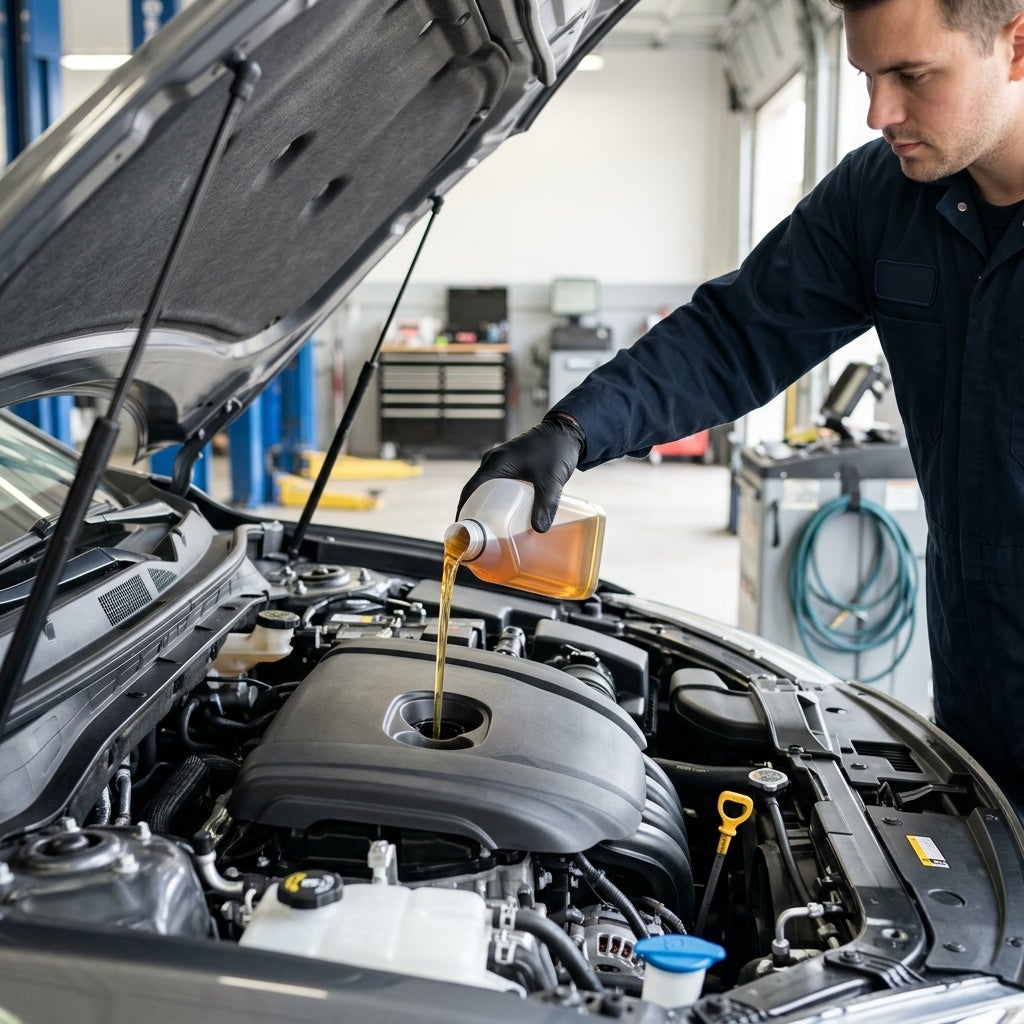
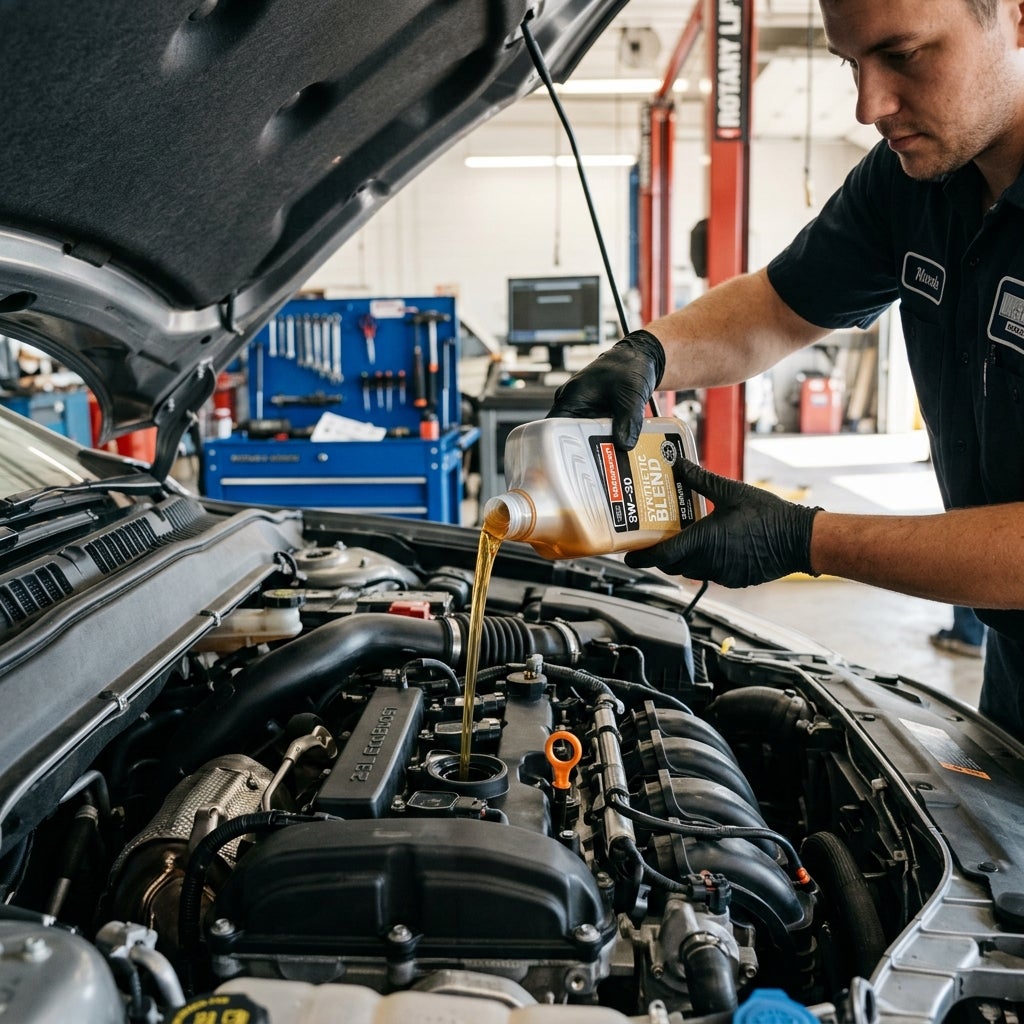
What Are the Requirements and Specifications for Ford WSS-M2C961-A1 Engine Oil? Ford specification WSS-M2C961-A1 represents the modern benchmark for 5W-20 engine oils designed specifically for Ford North American powertrains. Introduced to align with the stringent API SP (American Petroleum Institute) and ILSAC GF-6A (International Lubricant Specification Advisory Committee) standards, this specification engineered by Ford Global Materials Engineering addresses the complex tribological demands of high-output, turbocharged direct-injection EcoBoost engines. Unlike traditional motor oil standards of past decades, WSS-M2C961-A1 is not merely focused on reducing metallic friction; it is a holistic chemical formulation engineered to protect advanced internal timing belt materials, prevent destructive combustion events, and maintain strict viscosity boundaries over extended service intervals. At the heart of the Ford WSS-M2C961-A1 requirement matrix is chemical compatibility with modern internal belt-in-oil (BIO) systems, commonly referred to as 'wet timing belts'. In these EcoBoost engine designs, elastomeric belts operate continuously submerged in engine oil spray and crankcase vapor. Standard motor oils containing aggressive detergent packages, excessive zinc dialkyldithiophosphate (ZDDP) ratios, or unapproved base stocks can cause catastrophic chemical degradation of the elastomeric polymers, leading to belt swelling, tooth stripping, and sudden engine failure. WSS-M2C961-A1 demands specialized base oils and balanced additive chemistry that preserve hydrogenated nitrile butadiene rubber (HNBR) structural integrity while controlling deposit formation under high thermal loads. Key performance targets of the Ford WSS-M2C961-A1 specification include robust mitigation against Low-Speed Pre-Ignition (LSPI)—a highly destructive phenomenon in downsized, turbocharged engines where fuel-oil droplets ignite spontaneously before spark ignition. It also demands high dynamic shear stability under extreme high-temperature high-shear (HTHS) conditions, superior anti-foaming properties to prevent aeration in oil pump pathways, and exceptional cold-cranking performance during winter temperature drops. Specification Parameter Required Baseline Standard Ford Standard Target Engine Protection Benefit Viscosity Grade SAE 5W-20 Kinematic Viscosity @ 100°C: 7.8 - 9.3 cSt Optimizes oil film thickness and fuel efficiency Industry Certification API SP / ILSAC GF-6A Exceeds API SN Plus Standards Mandatory LSPI protection & wear defense Chemical Compatibility Standard Elastomers Ford Bio-Elastomer (HNBR / CR) Certified Prevents wet timing belt erosion and softening Shear Stability Standard Polymer Resistance 30-Cycle Kurt Orbahn Shear Test < 10% Maintains protective oil film under heavy loads Volatility (Noack) < 15.0% Loss < 13.0% Loss @ 250°C Reduces oil consumption and intake valve deposits What Is a Ford Wet Belt Engine and How Does It Function? A Ford Wet Belt engine —technically categorized as a Belt-in-Oil (BIO) system—is an engine design in which the internal timing belt (and in some engines, the oil pump belt) runs inside the engine block, directly bathed in crankcase motor oil. Traditional engine designs historically relied on either dry rubber timing belts isolated behind plastic covers or heavy steel timing chains lubricated by engine oil. Ford automotive engineers adopted wet belt architecture to combine the quiet, smooth operation of a rubber belt with the internal placement advantages of a chain. The primary mechanical motivation behind belt-in-oil technology is friction reduction. Steel timing chains create significant mechanical resistance as dozens of metal links flex over dynamic tensioners and cam sprockets. A wet belt reduces internal friction drag by approximately 30% compared to a timing chain. In modern vehicle design, this reduction in internal parasitic drag translates directly into improved fuel economy metrics, reduced CO2 emissions, and immediate throttle responsiveness for vehicle owners navigating daily traffic across Junction City and Fort Riley. However, operating a flexible belt within hot engine oil introduces unique chemical challenges. The timing belt is composed of advanced elastomeric synthetic rubber reinforced with high-tensile glass fiber cords. Engine oil naturally absorbs combustion byproducts, unburned blow-by gasoline, acid residues, and extreme thermal heat. If the oil chemistry is incorrect or severely degraded, these compounds penetrate the belt's rubber matrix, destabilizing its vulcanized bonds and causing catastrophic degradation. Which Ford EcoBoost Engines Use a Wet Timing Belt? 1.0L EcoBoost 3-Cylinder The pioneer of Ford's wet belt technology in North America and Europe, the award-winning 1.0L EcoBoost 3-cylinder engine (found in select Ford Focus, Fiesta, and EcoSport models) features twin internal wet belts: a main primary timing belt driving the overhead camshafts and a smaller secondary belt driving the variable-displacement oil pump submerged in the oil pan sump. 1.5L EcoBoost (Select Models) Certain configurations of the 1.5L EcoBoost engine family—including key variants found in popular commuter CUVs like the Ford Escape and Ford Bronco Sport—utilize a wet belt drive dedicated specifically to the lower oil pump module. Maintaining oil chemical purity under specification WSS-M2C961-A1 is equally vital for preserving these critical lower drive belts. Junction City Commuter Impact For soldiers commuting daily between Fort Riley military installation and Junction City or traveling highway stretches along I-70 to Manhattan, KS, these compact EcoBoost engines deliver fantastic fuel efficiency. However, their high power density means maintenance vigilance is essential to protect internal wet belt systems. Why Ford WSS-M2C961-A1 Replaced Older Engine Oil Standards Automotive oil standards continually evolve to match rapid advances in engine metallurgy, induction technology, and environmental regulations. Ford WSS-M2C961-A1 supersedes older 5W-20 engine oil standards including WSS-M2C945-A, WSS-M2C945-B, and the legacy WSS-M2C930-A specification. While these older oils met the performance requirements of their day, they lack the structural chemical defenses needed for high-stress direct-injection turbocharged engines with wet timing belts. The fundamental shift began with the introduction of API SP and ILSAC GF-6A standards. Older API SN and GF-5 oils relied heavily on high concentrations of calcium-based detergent additives. While calcium effective keeps metal surfaces clean, researchers discovered that calcium ions promote combustion instability in direct-injected turbocharged engines, triggering severe Low-Speed Pre-Ignition (LSPI) micro-explosions. WSS-M2C961-A1 replaces excess calcium with magnesium-based detergent chemistry, virtually eliminating LSPI risks. Furthermore, WSS-M2C961-A1 introduces far stricter oxidation limits and chain-wear resistance criteria. Modern turbochargers spin in excess of 200,000 RPM, subjecting engine oil to blistering temperatures. WSS-M2C961-A1 resists thermal coking and varnish formation while preserving vital rubber flexibility across timing belt teeth. Schedule Ford Service Today Can Ford WSS-M2C948-B Oil Be Used Instead of WSS-M2C961-A1? A frequent point of confusion among automotive enthusiasts and local vehicle owners revolves around European vs. North American Ford oil standards—specifically comparing European WSS-M2C948-B with North American WSS-M2C961-A1. While both are 5W-20 viscosity formulations designed for 1.0L and 1.5L EcoBoost wet belt engines, they are tailored around distinct regional fuel standards and test protocols. WSS-M2C948-B was formulated primarily for the European market in conjunction with ACEA C5 standards. It emphasizes sulfurized ash limits compatible with European particulate filters and specific high-sulfur or bio-fuel blends found across EU countries. In contrast, North American WSS-M2C961-A1 is optimized around API SP and ILSAC GF-6A parameters, focusing heavily on ethanol-blended US top-tier gasolines (E10/E15) and LSPI suppression. Can you substitute them? For vehicle owners in North America, Ford factory technical guidelines explicitly specify using WSS-M2C961-A1 certified lubricants (such as Motorcraft Synthetic Blend 5W-20). While using WSS-M2C948-B in an emergency top-off situation won't instantly destroy a belt, long-term adherence to WSS-M2C961-A1 is necessary to maintain official Ford factory warranty compliance and ensure optimal protection under American operating conditions. To ensure your EcoBoost engine remains fully compliant with warranty requirements, our factory-certified technicians at Valor Ford in Junction City, KS always install exact OEM-certified Motorcraft fluid formulations. What Symptoms Indicate That a Ford Wet Belt Is Beginning to Deteriorate? 1. Early Warning Signs As a wet belt degrades from improper oil chemistry or heat stress, minute fine rubber particles begin shedding off the backing and tooth matrix. During oil change services, trained technicians will spot fine rubber specks trapped in the oil drain pan or clinging to the dipstick tip. Visual inspection through the oil filler cap may also reveal cracking, swelling, or fraying along the visible edge of the belt. 2. Diagnostic Fault Codes As rubber particulate sheds into the oil supply, it is pumped directly toward the oil pan sump pickup tube screen. Rubber debris clogs the fine mesh screen, restricting oil flow. This oil starvation triggers diagnostic trouble codes: P0011 / P0012 (Camshaft Position Timing Over-Advanced/Over-Retarded due to oil control valve blockage) or P0299 (Turbocharger Underboost Condition from restricted oil line flow). 3. Severe Pressure Drops The most alarming mechanical symptom is a flickering red Oil Pressure Warning Light on the instrument cluster, particularly when idling at a stoplight after highway driving. Increased valve train ticking noise or harsh metallic rattle on cold starts indicates severe oil starvation. If ignored, stripped teeth will jump timing, causing internal valve-to-piston impact. How Incorrect Engine Oil Causes Catastrophic Wet Belt Failure The chemical physics of wet timing belt destruction from improper oil selection is both swift and unforgiving. When a vehicle owner or quick-lube shop pours non-approved standard motor oil, wrong-viscosity oil (such as 10W-30 or 5W-30 without WSS-M2C961-A1 approval), or aggressive aftermarket oil additives into an EcoBoost wet belt engine, a destructive chemical reaction known as elastomer plasticization begins. Unapproved base oils and aggressive additive compounds break down the synthetic rubber bonding polymers. The rubber absorbs incompatible chemical esters, causing the timing belt to swell by up to 15% in thickness. As the belt swells, its tooth pitch changes, causing severe mechanical scrubbing against the steel camshaft sprockets. This friction peels the outer tooth fabric shield away from the inner rubber cord. Simultaneously, acidic combustion byproducts in degraded oil soften the core rubber matrix. Belt teeth become soft and rubbery, eventually shearing off cleanly under load. When multiple teeth shear off, the camshafts immediately lose synchronization with the crankshaft. Because EcoBoost engines are interference engines (where valve and piston sweeps overlap), timing loss drives pistons directly into open valves at thousands of RPM, resulting in catastrophic engine failure requiring total assembly replacement. Even before timing jumps, the shed rubber slurry clogs the oil pickup screen, starving the turbocharger bearings and crankshaft journals of oil. Using anything other than certified WSS-M2C961-A1 oil is the single primary cause of premature wet belt engine destruction. How Do You Properly Maintain a Ford Engine with a Wet Timing Belt? Preventing premature wet belt failure and ensuring long-term reliability for your Ford vehicle requires a disciplined maintenance protocol. By following these four core engineering rules, vehicle owners can easily achieve 100,000+ trouble-free miles from their EcoBoost wet belt engine: 1. Strict Oil Change Intervals (5,000 - 7,500 Miles): Never push oil drain intervals to the absolute maximum 10,000-mile limit under the Intelligent Oil-Life Monitor (IOLM), especially in Kansas severe duty conditions. Changing oil every 5,000 to 7,500 miles flushes out abrasive carbon soot and unburned fuel before chemical breakdown occurs. 2. Use ONLY WSS-M2C961-A1 Certified Oil: Verify that every oil bottle or service ticket explicitly states Ford WSS-M2C961-A1 approval. Motorcraft Synthetic Blend 5W-20 or Motorcraft Full Synthetic 5W-20 are direct factory OEM formulations. 3. Install OEM Motorcraft Filters: Genuine Motorcraft oil filters (such as FL-910S) feature silicone anti-drainback valves and precise bypass pressure relief valves engineered to capture micro-particulates without starving the timing belt circuit. 4. NEVER Use Chemical Engine Flushes or Solvent Additives: Engine flush solvents, oil thickeners, and friction-reducing additives can immediately react with wet belt rubber compounds, stripping away protective vulcanization coatings. Avoid all flush chemicals unless explicitly mandated by Ford technical service bulletins. Service Mileage Interval Recommended Maintenance Action Service Focus Area Every 5,000 - 7,500 Miles Oil & Filter Change (WSS-M2C961-A1 Motorcraft 5W-20) Fresh lubricant chemistry & particulate removal Every 15,000 Miles Visual Belt & Filler Neck Inspection Check for surface cracking or fraying Every 30,000 Miles Crankcase Vapor & PCV System Check Prevent fuel dilution buildup in crankcase Every 80,000 - 100,000 Miles Complete Wet Belt Replacement Service Replace primary belt, pump belt, tensioners & seal Schedule Pickup and Delivery Service What Additional Parts Should Be Replaced During a Wet Belt Replacement Service? Belts & Mechanical Tensioners A complete wet belt replacement requires changing both internal belts: the primary overhead camshaft wet timing belt and the secondary lower oil pump wet belt. Both mechanical belt tensioner pulleys and dynamic idler bearings must be replaced simultaneously, as their internal sealed bearings experience identical mileage wear. Seals, Gaskets & Hardware Because servicing internal belts involves disassembling the engine front cover and valve cover, technicians must replace the front crankshaft main oil seal, front timing cover gasket set, valve cover gasket, and single-use stretch crankshaft pulley bolt. Reusing stretch bolts risks severe engine harmonic balancer loosening. Sump Inspection & Pickup Screen The crucial step during wet belt replacement is dropping the engine oil pan to thoroughly clean or replace the oil pump pickup tube screen. Any residual rubber shed from the old belt trapped in the oil pan or screen must be meticulously cleaned out to guarantee unobstructed oil pressure for the new belt system. Driving Conditions in Central Kansas and Fort Riley: Severe Duty Impact Driving habits and seasonal environmental factors in Central Kansas directly influence engine oil longevity and wet belt health. For vehicle owners living in Junction City, commuting across Dickinson County, or driving on Fort Riley military base, operating conditions frequently cross into what Ford defines as **Severe Duty Service**. Military service members on Fort Riley often make frequent short trips—under 5 miles—between housing barracks, motor pools, and training grounds. During short trips, the engine oil never fully reaches its optimal operating temperature (above 180°F). Cold engine operation causes unburned gasoline from direct-injection pulses to wash past piston rings into the oil pan. This fuel dilution lowers oil viscosity and accelerates rubber degradation on the wet timing belt. Additionally, Kansas weather swings present extreme temperature challenges. Sub-zero winter cold starts in January demand instant low-temperature flow (5W rating) to ensure oil reaches upper overhead camshaft wet belts within seconds of ignition. Conversely, 100°F summer days with high agricultural dust exposure put heavy thermal stress on high-shear oil stability. If you drive under these severe conditions in the Junction City region, sticking strictly to a 5,000-mile WSS-M2C961-A1 oil service schedule at Valor Ford is essential. Feel free to Call us at (785) 238-5114 to consult with our service advisors regarding your specific driving patterns. Comparing Factory Motorcraft Oils with Aftermarket Alternatives Motorcraft Synthetic Blend Motorcraft 5W-20 Synthetic Blend (WSS-M2C961-A1) is engineered directly alongside Ford EcoBoost engines. It undergoes thousands of hours of engine dynamometer belt-in-oil durability testing, ensuring exact elastomer chemical compatibility and proven LSPI defense at an competitive pricing. Aftermarket Equivalents Some premium third-party oils state 'recommended for WSS-M2C961-A1' on their labels. However, caution is required: many generic off-the-shelf oils carry general API SP ratings but have not undergone Ford's explicit OEM bio-elastomer bench test certification for wet belt degradation. Warranty Assurance Using genuine Motorcraft WSS-M2C961-A1 oil supplied by an authorized dealership like Valor Ford helps maintain clear records for powertrain warranty claims. It eliminates any ambiguity regarding fluid specification compliance. Schedule Certified Ford Wet Belt Service and Oil Changes at Valor Ford Protecting your Ford vehicle's engine performance and ensuring wet timing belt longevity requires professional care using factory-certified fluids and expert diagnostic eyes. At Valor Ford, our factory-trained Ford technicians specialize in EcoBoost engine maintenance, wet belt visual inspections, and official WSS-M2C961-A1 Motorcraft fluid services. Whether you are due for a routine 5,000-mile oil change, require a detailed wet belt diagnostic inspection, or need to order genuine OEM Motorcraft filters and fluids, our team is ready to serve drivers across Junction City, Fort Riley, Abilene, and surrounding Kansas communities. Visit us today at 1825 Goldenbelt Blvd or use our convenient online scheduler to book your appointment. Schedule Ford Service Today Order Genuine Ford Parts

Expert Interview: How Can You Prevent Rodents From Chewing Wiring in a Stored Vehicle?

Expert Interview: How Can You Prevent Rodents From Chewing Wiring in a Stored Vehicle?

Expert Interview: How Can You Prevent Rodents From Chewing Wiring in a Stored Vehicle? The Bottom Line Answer Up Front: To successfully prevent rodents—such as mice, rats, and squirrels—from chewing soy-based wiring harness insulation during short or long-term vehicle storage, you must employ a multi-layered defense strategy. Combined protection includes wrapping sensitive wire harnesses with capsaicin-infused rodent tape, installing botanical mint repellents, conducting thorough interior detailing to eliminate all organic scent trails and food crumbs, positioning strategic snap traps around tire contact points, and utilizing a smart trickle charger to maintain electrical integrity. In this exclusive deep-dive interview, Mike Hogg, Service Director at Valor Ford in Junction City, Kansas, draws upon his 20 years of hands-on automotive service experience to share actionable, real-world advice. Whether you are a local driver preparing a truck for winter garage storage or a service member stationed at nearby Fort Riley gearing up for an overseas deployment, this expert Q&A equips you with the exact protocols needed to keep destructive pests out of your vehicle. Interviewer: Mike, thanks for sitting down with us today. Rodent damage to vehicle wiring seems to be a major headache for vehicle owners across Kansas, especially when cars are parked or stored for extended periods. Before we dive into specific prevention techniques, can you give us a quick overview of what owners are facing when mice get under the hood? Mike Hogg: Thanks for having me. Over my 20 years here at Valor Ford, I've seen hundreds of vehicles towed into our service bay with complex electrical glitches that all trace back to one single culprit: a small field mouse or rat that decided to make an engine bay its winter home. When a vehicle sits undisturbed—even for just a couple of weeks during seasonal transitions—rodents find the cozy, sheltered spaces under the intake manifold or fuse box irresistible. They don't just build nests; they gnaw through crucial harness wiring, fuel lines, and sensor leads. What could have been prevented with twenty dollars worth of rodent tape or a good cleaning often turns into a multi-thousand-dollar electrical harness replacement. Our goal today is to make sure every driver in Junction City, Fort Riley, and Dickinson County knows exactly how to prevent that nightmare before it starts. Q: Why do mice and rodents target car wiring during long-term storage in Kansas? Interviewer: It feels like rodent wire-chewing has become much more common in recent years compared to older vehicles from thirty years ago. Is that just a myth, or has something fundamental changed in how modern cars are manufactured? Mike Hogg: It is definitely not a myth—it's a proven reality. Starting in the late 1990s and expanding rapidly throughout the 2000s and 2010s, global automakers transitioned from traditional petroleum-based plastic wire insulation to soy-based bio-plastics. Soy insulation was introduced to make vehicles more eco-friendly, reduce plastic waste, and lower manufacturing costs. However, soy is an organic compound derived from soybeans. To a hungry field mouse, rat, or squirrel, that wiring harness literally smells and tastes like food. Furthermore, modern vehicles have miles of intricate wiring running through every corner of the chassis. From engine control modules (ECMs) and blind-spot sensors to heated seat harnesses and battery cables, there are dozens of harness corridors tucked under plastic engine covers and thermal insulation shields. These dark, tight spaces retain heat long after you turn off the ignition, creating an ideal, warm sanctuary shield against cold Kansas winds. Interviewer: How do local geography and agricultural cycles in central Kansas impact rodent activity around parked vehicles? Mike Hogg: Here in Dickinson County and around Junction City, we are surrounded by rich agricultural land, wheat fields, corn crop acreage, and prairie habitats. During the late summer and early fall, as farmers harvest crops and temperatures begin to drop, field mice lose their natural cover and primary food supply. They begin migrating in vast numbers toward residential garages, barns, carports, and parking lots looking for warmth, shelter, and nesting material. Rodent teeth grow continuously throughout their lives—up to 4 to 5 inches per year. They *must* constantly chew on hard or flexible materials to grind their incisors down. The flexible yet durable soy-based insulation surrounding vehicle wiring provides the exact mechanical resistance they need to maintain their teeth, while the cotton-like acoustic insulation lining car hoods and cabin firewalls provides pristine nesting material. When a vehicle sits parked in a driveway or garage, rodents can establish a nest and severely chew through essential engine harnesses in as little as 48 to 72 hours. Q: What physical deterrents and repellents actually keep rodents out of stored engines? Capsaicin Rodent Tape Capsaicin Tape Defense: Specially treated electrical tape infused with capsaicin—the fiery chemical compound found in hot chili peppers—is widely recognized as the gold standard in physical electrical protection. When wrapped directly over vulnerable wiring looms, main engine harnesses, and knock-sensor wires, it delivers an unbearable spicy sting to any rodent that attempts to bite into it. At Valor Ford, our factory-trained technicians can install capsaicin rodent protection tape on vehicles entering long-term storage or those coming in for post-damage harness rebuilds. Botanical Oils & Sound Mint Repellents & Ultrasonic Units: Pure peppermint oil sprays and commercial botanical deterrent pouches (like Fresh Cab) overload a rodent's sensitive olfactory senses. Spraying concentrated peppermint oil around wheel wells, firewall openings, and subframe entry points creates an unpleasant aroma barrier. Ultrasonic sound devices connected to the car battery emit variable high-frequency sound waves that irritate rodents without disturbing humans or domestic household pets. For complete protection, combine olfactory botanical repellents with electrical capsaicin wrapping. Tire Traps & OEM Accessories Strategic Perimeter Traps: Rodents cannot fly—they must climb up your vehicle's rubber tires or suspension components to reach the engine compartment or cabin. Placing heavy-duty mechanical snap traps or non-toxic wooden snap boxes directly adjacent to all four tire contact patches creates an inescapable defensive perimeter around the vehicle. You can also browse official Ford protection accessories and maintenance products at our dealership. Order Genuine Ford Parts directly through Valor Ford for OEM-backed protection accessories. Q: What are the key vehicle preparation steps before placing a car into long-term storage? Interviewer: Walk us through the ultimate pre-storage preparation checklist. What should a vehicle owner do right before turning off the engine for several months? Mike Hogg: Proper vehicle preparation is all about eliminating the attractants that lure pests in the first place, while protecting vital mechanical components from stagnation damage. Here is our recommended step-by-step checklist: 1. Deep Interior Detailing: Vacuum every square inch of the interior, including under seat rails, trunk compartments, and glove boxes. Even a single stray French fry, wrapper crumb, or dropped piece of candy will attract mice from yards away. Clean all interior vinyl and upholstery with odor-eliminating solutions. 2. Fresh Synthetic Oil Change & Filter: Used engine oil contains acidic combustion byproducts, moisture, and unburned fuel particles that can settle and corrode internal engine components during storage. Always perform a fresh oil and filter change right before parking the car. 3. Fuel Stabilizer Additive: Modern ethanol-blended gasoline begins to degrade and absorb moisture within 30 to 60 days, leading to varnish buildup in fuel injectors and lines. Fill the gas tank to roughly 95% capacity (leaving a small expansion space) and add a high-quality fuel stabilizer, then run the engine for 10 minutes to circulate the treated fuel through the entire fuel delivery system. 4. Replace Cabin & Engine Air Filters: Old filters clogged with leaf debris, seeds, and organic dust create prime nest-building material. Install clean, new OEM filters before storage. 5. Top Off All Essential Fluids: Fill coolant, brake fluid, power steering fluid, and windshield washer reservoirs to full levels to eliminate internal air pockets where condensation can accumulate. 6. Schedule a Comprehensive Pre-Storage Inspection: Have professional Ford technicians inspect your belts, hoses, brake assemblies, and electrical harness seals before storing your vehicle. Schedule Ford Service Today Q: Is it better to disconnect the vehicle battery or use a trickle charger for storage? Interviewer: Battery maintenance is a huge topic for vehicle storage, especially for military personnel deploying overseas from Fort Riley for 6 to 12 months. Should people disconnect their battery terminals, or leave a trickle charger plugged in? Mike Hogg: This depends directly on your storage location and electrical access. If your vehicle is stored in a secure garage with access to a standard 120V wall outlet, a high-quality smart battery maintainer (trickle charger) is by far the superior option. Unlike older basic trickle chargers that continuously push voltage and can overcharge or boil off battery electrolyte, a modern smart maintainer monitors battery voltage continuously. It cycles into float mode when full, preventing battery sulfation and keeping internal computer memories, clock settings, and engine control unit (ECU) calibration profiles alive. Keeping continuous power to modern vehicles prevents deep parasitic battery drain caused by security systems and keyless entry receivers. Mike Hogg (Continued): However, if you are storing your vehicle in an outdoor military storage lot or a facility without reliable electrical outlets, disconnecting the battery is mandatory. Parasitic power draws in modern Ford trucks and SUVs can completely drain a healthy 12V battery in as little as 3 to 4 weeks. When disconnecting, always remove the negative (black/minus) terminal cable first to prevent electrical shorting against the vehicle frame. Tuck the terminal wire safely away from the battery post. If possible, remove the battery completely and store it on a wooden shelf in a climate-controlled space. When you return from deployment, thoroughly clean the battery terminals, reconnect the positive cable first, then the negative cable, and allow the vehicle to idle for 5 to 10 minutes so the ECU can re-learn its idle fuel trims. Q: What tire pressure should you set before putting a car into storage? Over-Inflate for Flat Spots Preventing Flat-Spotting: When a heavy vehicle sits stationary on rubber tires for months, the weight compresses the bottom contact area, causing flat-spotting in the tire tread. Cold winter temperatures make rubber stiffer, making flat spots persistent. To prevent flat spots, inflate your tires to 3 to 5 PSI above the recommended cold inflation pressure listed on your driver-side door jamb placard (never exceed the maximum sidewall PSI rating stamped on the tire). This extra pressure maintains tire roundness under static weight. Floor Barrier Protection Thermal Concrete Isolation: Parking directly on cold concrete garage floors draws oils and moisture out of rubber tire compounds, accelerating dry rot and sidewall cracking during long winter storage periods in Kansas. Park your vehicle on thick wooden planks, high-density rubber stall mats, or curved tire cradles. This creates a protective thermal barrier between the freezing concrete slab and your tire tread rubber, preserving rubber flexibility and sidewall life. Post-Storage Re-Adjustment Re-setting PSI Before Driving: Once your storage period is complete and you are ready to put the car back on the road, always adjust tire pressure back to factory specification before driving at highway speeds. If you notice persistent steering wheel vibration or thumping sounds after returning from storage, visit Valor Ford for a quick tire balance and tread safety inspection. If you need new tires, explore our Browse Used Inventory or contact our service center. Q: How do you protect a vehicle interior and exterior from mold, moisture, and pests during deployment storage? Interviewer: Fort Riley service members frequently ask about long-term deployment storage protection against interior mold, dampness, and external weathering. What specialized tips do you have for soldiers deploying overseas? Mike Hogg: Serving our military community at Fort Riley is a huge part of our mission at Valor Ford. When a soldier deploys for 6, 9, or 12 months, their vehicle is exposed to dramatic seasonal weather shifts in Kansas—from humid summer heat to freezing winter ice. Moisture management inside the cabin is critical. Place 2 to 3 large desiccant moisture-absorber tubs (like DampRid) on the floorboards and in the cargo area. These absorb ambient humidity and trap water in sealed containers, preventing toxic mold and mildew growth on leather seats and headliners. Close all climate control vents and switch selector toggles to 'Recirculate' mode to shut off external air intake flaps. Mike Hogg (Continued): For exterior body protection, perform a full wash, iron decontaminant treatment, and high-quality paint sealant application before putting the vehicle away. A premium paint sealant protects clear coat finishes from atmospheric dust, bird droppings, and industrial fallout. If storing outdoors or under a carport, use a custom-fit, breathable multi-layer car cover. Avoid cheap non-breathable plastic tarps, which trap moisture underneath and cause paint blistering, rust, and frame corrosion. Finally, seal exhaust tailpipes and intake snorkels with breathable wire mesh or aluminum foil caps to stop mice from nesting inside your exhaust system. Take advantage of our convenient Schedule Pickup and Delivery Service to let our team handle your pre-deployment vehicle prep. Schedule Pickup and Delivery Service Q: What documentation is required to store a vehicle at government expense during deployment? Title & Registration Ownership Verification: Government-funded Privately Owned Vehicle (POV) storage facilities at Fort Riley require complete proof of ownership. You must present the original vehicle title or current state registration documents in the deploying service member's name. Ensure registration renewal dates will not expire during your planned deployment window to prevent administrative impound issues. Power of Attorney Legal Authorization: If a spouse, family member, or designated representative is turning in the vehicle on your behalf, a valid Special Power of Attorney (POA) specifically authorizing vehicle storage and movement is legally required. If the vehicle is financed or leased, an official Lienholder Authorization Letter granting permission for government storage must be included. Safety Certification Mechanical Safety Records: Government POV storage facilities require a documented safety inspection verifying zero active fluid leaks, operational emergency brakes, clean battery connections, and proper tire tread depth. Our service department at Valor Ford provides complete Fort Riley storage safety inspection documentation to make turn-in as easy as possible. Q: What pre-PCS vehicle maintenance checks should service members complete before a cross-country drive from Fort Riley? Interviewer: When military families receive Permanent Change of Station (PCS) orders moving them from Fort Riley to bases across the country, what critical safety checks should they perform before hitting the highway? Mike Hogg: A cross-country PCS move usually involves heavy loads, towing trailers, and long hours at highway speeds across varying terrain. The last thing any military family needs is a preventable breakdown in the middle of a multi-state move. First on the checklist is a full brake inspection. Ensure brake pads have at least 4-5mm of friction material remaining and inspect rotors for heat checking or warping. Second, perform a complete cooling system flush and pressure test. Kansas weather shifts rapidly, and driving into desert heat or mountain passes tests your radiator, water pump, thermostat, and coolant hoses to their absolute limits. Mike Hogg (Continued): Third, check your tire condition and wheel alignment. Inspect tread depth across all tires using a tread gauge, verify spare tire pressure, and ensure your jack and lug wrench are functional. Fourth, perform a load-tested battery and alternator check. High heat and heavy highway electrical loads stress aging batteries rapidly. Before you load up your luggage and start your journey, bring your Ford truck, SUV, or sedan to Valor Ford for a comprehensive pre-PCS multi-point inspection. If you're looking to upgrade your vehicle prior to PCSing, check out our popular models like the Research Ford F-150 or Shop New Ford Bronco Inventory. Q: What should you do if rodents have already damaged your vehicle's electrical wiring? Interviewer: If a driver starts their vehicle after storage and sees a dashboard lit up with check engine lights, rough idling, or non-functioning headlights due to mouse damage, what immediate steps should they take? Mike Hogg: If you suspect rodent damage, do not continue driving the vehicle. Chewed or shorted electrical wires can cause unpredictable computer malfunctions, damage delicate control modules, or even spark electrical fires under the hood. 1. Do Not Force Start or Drive: Turn off the ignition immediately if you smell burning materials or notice erratic sensor warnings. 2. Inspect Visually (Safely): Pop the hood and inspect for visible nest materials, droppings, or exposed copper wires around the battery and engine intake manifold. Do not touch bare copper wires. 3. File an Auto Insurance Claim: Many drivers do not realize that rodent damage to vehicle wiring is typically covered under the Comprehensive Coverage portion of your auto insurance policy. Contact your insurer right away to report the claim. 4. Arrange Safe Flatbed Towing: Have your vehicle safely towed directly to Valor Ford's certified service center. 5. Professional Repair & Harness Replacement: Our master technicians utilize factory wiring schematics, genuine OEM harness assemblies, and heat-shrink soldering techniques to restore your electrical system to 100% factory precision. We can also help you Order Genuine Ford Parts for specialized repairs. Order Genuine Ford Parts Schedule Your Vehicle Storage Prep or Maintenance Inspection at Valor Ford Protecting your vehicle from destructive rodent damage, cold Kansas weather, and storage stagnation requires knowledge, preparation, and the right OEM accessories. Whether you are preparing your Ford truck for winter storage, gearing up for a military deployment from Fort Riley, or scheduling a pre-PCS safety inspection, the team at Valor Ford is here to serve you. With 20 years of hands-on expertise under the guidance of Service Director Mike Hogg, our factory-certified service technicians deliver uncompromising quality, authentic OEM replacement parts, and reliable customer service. Visit our state-of-the-art facility at 1825 Goldenbelt Blvd, Junction City, KS 66441. Get Directions to Valor Ford or Call us at (785) 238-5114 to speak directly with our service advisors today. You can also explore options to Trade In Evaluation or contact our finance team for current financing information. Schedule Ford Service Today

Key Takeaway: How Vehicle Owners in Junction City Can Maximize Trade-In Appraisal Value

Key Takeaway: How Vehicle Owners in Junction City Can Maximize Trade-In Appraisal Value

Key Takeaway: How Vehicle Owners in Junction City Can Maximize Trade-In Appraisal Value Maximizing your vehicle's trade-in appraisal value requires a proactive approach before you step onto the dealership lot. For vehicle owners in Junction City, Fort Riley, and throughout Dickinson County, unlocking the full equity in your current vehicle is the fastest way to help reduce your overall cost on a new model. The core secret to achieving top-tier appraisal offers lies in presentation, documentation, timing, and leveraging competitive market insights. By executing professional-level detailing, compiling complete maintenance records, resolving minor aesthetic imperfections, timing your trade alongside new model year arrival clearances, and utilizing accurate online evaluation tools before visiting Valor Ford, you position your vehicle as a premium inventory asset rather than an average trade-in. At Valor Ford in Junction City, KS, our team evaluates hundreds of pre-owned vehicles every month. We look far beyond basic odometer mileage—we evaluate real-time regional demand, overall vehicle reconditioning costs, and original factory trim options. When a vehicle arrives meticulously prepared with a clear service history, our appraisal team can offer top dollar because the vehicle requires minimal reconditioning prior to joining our pre-owned showroom. To discuss your current vehicle's estimated equity with our appraisal specialists today, feel free to Call us at (785) 238-5114 or get step-by-step driving directions to our dealership by clicking Get Directions to Valor Ford. What Core Factors Determine Your Vehicle's Trade-In Appraisal Value? Automated trade valuation algorithms and professional dealership appraisers look at key objective metrics when establishing a vehicle's baseline market value. Odometer reading is primary: lower-mileage vehicles retain a higher percentage of their original MSRP because key mechanical components have experienced less wear and tear. However, mileage is evaluated relative to the vehicle's age—a 3-year-old vehicle with 30,000 miles commands a premium compared to one with 60,000 miles. Vehicle history reports (such as CARFAX® or AutoCheck®) play a critical role in appraisal formulas. A clean, single-owner history with no recorded accidents, structural repairs, or frame damage commands maximum resale value. Regional market demand across Dickinson County and surrounding military communities around Fort Riley also heavily sways valuation; reliable four-wheel-drive trucks, versatile SUVs, and fuel-efficient commuters experience intense local buyer interest, allowing dealers to pay higher trade values. Physical cosmetic condition directly influences the net reconditioning expense a dealer must deduct from the gross appraisal. Dents, paint scratches, interior leather tears, worn tire tread, and stained carpeting require reconditioning resources before resale. Conversely, vehicles in mint condition preserve full equity. Factory trim level, optional powertrain packages, and advanced technological equipment like premium audio, towing packages, and active safety suites significantly elevate real-world appraisal benchmarks over base models. When trading in, highlighting these high-tier features helps ensure they are fully calculated during evaluation. Why Pre-Appraisal Detailing and Small Fixes Deliver High Returns Deep Interior Cleaning First impressions are powerful during professional appraisals. Spending a few dollars or a weekend afternoon thoroughly vacuuming, shampooing carpets, wiping down door panels, cleaning leather seating, and eliminating lingering pet or smoke odors creates an immediate perception of meticulous maintenance. Appraisers equate a spotless cabin with responsible ownership. Cosmetic & Glass Repair Minor paint touch-ups and low-cost DIY fixes offer incredible return on investment. Repairing minor windshield chips before they expand into full cracks, utilizing touch-up paint pens on small door dings, and replacing burnt-out exterior light bulbs prevents the dealership appraiser from taking major standard reconditioning deductions. Headlight & Tech Polish Restoring hazy or yellowed plastic headlight lenses with an inexpensive restoration kit instantly refreshes the front end of an older vehicle. Removing personal items, window stickers, and clearing touchscreen fingerprint smudges further projects pride of ownership, directly translating into higher appraisal offers. How Documented Maintenance Records Protect Your Vehicle’s Equity Nothing instills confidence in a pre-owned vehicle appraiser like a organized binder of service invoices. Documented maintenance logs serve as verifiable proof that your vehicle was cared for strictly according to manufacturer specifications. Consistent records of routine oil changes, transmission fluid flushes, brake pad replacements, spark plug renewals, and tire rotations eliminate mechanical ambiguity. When a buyer or appraiser sees documented routine service, they know the engine and drivetrain are less prone to hidden mechanical failures. This allows Valor Ford to market the car with confidence, passing that monetary equity directly back to you in your trade-in offer. You can easily Schedule Ford Service Today or utilize our convenient Schedule Pickup and Delivery Service to keep your records current. In addition to fluid changes, major mileage-interval maintenance—such as timing belt replacements, transfer case fluid service on 4x4 models, and cooling system flushes—adds substantial measurable value. Presenting receipt proof that expensive milestone services were recently performed helps ensure those costs aren't deducted from your trade figure. Using genuine OEM parts during repairs also preserves trade value. If you prefer performing maintenance yourself, always keep your parts receipts. You can Order Genuine Ford Parts directly through Valor Ford to ensure factory-certified components protect your long-term vehicle equity. Schedule Ford Service Today Strategic Timing: Prior-Model-Year Clearances and Seasonal Demand Shifts Timing your trade-in strategically around dealership inventory cycles can significantly impact your final financial package. How does Valor Ford typically price and incentivize remaining prior-model-year Ford inventory during new model year arrival and inventory transition periods in Junction City, KS? When new 2027 Ford inventory begins arriving on our lot during fall clearance events, Valor Ford combines current offers and trade-in values to make room for incoming models. During these transition windows, pre-owned trade values are often bolstered by bonus trade-in allowances designed to help vehicle owners upgrade seamlessly into remaining prior-model-year vehicles. Furthermore, localized seasonal demand shifts in Kansas influence vehicle trade equity. As autumn transitions toward winter in Dickinson County, demand for four-wheel-drive trucks, rugged SUVs, and all-weather capability spikes dramatically across Junction City and Fort Riley. Trading in a 4x4 pickup truck or SUV right before weather changes occur aligns perfectly with heightened buyer demand, maximizing your trade offer. Can You Trade In a Leased Vehicle Before the Lease Term Ends? A common question among vehicle owners is: Can you trade in a leased vehicle before the lease term ends? The short answer is yes. Drivers leasing a vehicle are not obligated to wait until the final contract date to exit their agreement. In modern automotive markets, leased vehicles frequently hold positive equity—meaning the market value of the vehicle is higher than the residual contract payoff amount established at the start of the lease. To trade in an active lease, Valor Ford requests an official early payoff quote from your leasing bank. We then conduct a thorough trade-in appraisal of your vehicle. If your vehicle's appraised market value exceeds the lease buyout price, that difference represents positive equity that belongs directly to you. You can apply this positive lease equity directly toward the purchase or lease down payment on a new Ford model at Valor Ford, effectively reducing your overall monthly payments. Early lease trade-ins allow you to skip potential turn-in disposition fees and mileage overage penalties while rolling smoothly into modern auto tech. Our finance specialists regularly assist military personnel stationed at Fort Riley and local drivers with early lease buyouts and roll-overs. We coordinate directly with Ford Credit or third-party leasing institutions to handle all title assignments, lien satisfactions, and vehicle transfers on your behalf. Comparing High-Equity Truck Upgrades: 2027 Ford F-150 vs. Silverado 1500 Full-size pickup trucks retain some of the highest trade-in equity on the pre-owned market. When considering trading your current pickup toward a new half-ton truck, comparing capabilities highlights why the Ford F-150 continues to hold superior long-term resale value. Which truck offers higher maximum towing capacity, the F-150 or Silverado 1500? What are the towing capacity and payload specifications for the 2027 Ford F-150? The table and analysis below break down key performance metrics. Specification Metric 2027 Ford F-150 (3.5L EcoBoost / PowerBoost) Chevrolet Silverado 1500 (6.2L V8 / Duramax) Maximum Towing Capacity Up to 13,500 lbs Up to 13,300 lbs Maximum Payload Capacity Up to 2,445 lbs Up to 2,260 lbs Available Hybrid Powertrain 3.5L PowerBoost™ Full Hybrid (430 hp / 570 lb-ft) None Available On-Board Mobile Power Pro Power Onboard (up to 7.2 kW outlet power) Limited standard outlets F-150 Capability Lead When comparing half-ton workhorses, the 2027 Ford F-150 offers higher maximum towing capacity (up to 13,500 lbs) and superior payload limits (up to 2,445 lbs) compared to the Chevrolet Silverado 1500. Interested buyers can explore full configuration details via our Research Ford F-150 resource guide. PowerBoost Equity Advantage The F-150's exclusive 3.5L PowerBoost™ Full Hybrid powertrain delivers massive torque alongside unmatched job site utility with Pro Power Onboard. High fuel efficiency combined with extreme towing resilience ensures F-150 models retain top tier value on trade-in appraisal day. Heavy Duty Alternatives For truck owners needing commercial hauling performance beyond half-ton limits, trading toward a Super Duty delivers immense towing capacity. Learn more by viewing our Research Ford F-250 page or checking out the Research Ford F-250 Super Duty specs. New Model Year Arrival Guide: Upgrading to the 2027 Ford Explorer & F-150 As new vehicles arrive at Valor Ford, family SUV shoppers often ask: How much does the 2027 Ford Explorer cost by trim level? The 2027 Ford Explorer lineup starts with the well-equipped Active trim at an estimated starting MSRP around $39,755, moving up to the sporty ST-Line (~$44,500), the rugged off-road Tremor (~$46,900), the luxurious Platinum (~$52,250), and the high-performance Explorer ST (~$55,605). Each trim level brings premium technology and family safety upgrades. You can dive deeper into trim specifications and interior dimensions using our Research Ford Explorer guide to choose the ideal SUV for your family's needs. What standard driver-assist features are included in Ford Co-Pilot360 on 2027 models? Every 2027 Ford Explorer and F-150 comes standard with Ford Co-Pilot360 Technology, providing a comprehensive safety suite: Pre-Collision Assist with Automatic Emergency Braking (AEB), BLIS® (Blind Spot Information System) with Cross-Traffic Alert, Lane-Keeping System, Auto High-Beam Headlamps, and Rear View Camera. Higher trims add Ford BlueCruise hands-free highway driving capability, Evasive Steering Assist, and Adaptive Cruise Control with Stop-and-Go. Upgrading your trade-in toward a 2027 model can enhance your family's confidence and peace of mind on Kansas highways. Get Pre-Approved for Financing Practical Pre-Appraisal Checklist Before Visiting the Dealership 1. Ownership Paperwork Bring your clear vehicle title (if paid in full) or your current lender payoff statement showing loan balance and account number. Include valid state registration and proof of auto insurance. 2. Keys & Accessories Gather all original factory equipment: both master key fobs, owner's manuals, navigation SD cards, factory floor mats, cargo covers, and wheel lock keys. Missing fobs cost up to $300+ to replace. 3. Tech & Account Reset Unpair bluetooth phones, erase home garage door opener codes, perform a master reset on SYNC® / infotainment screens, and remove toll transponders and personal belongings from all storage bins. Navigating Kansas Trade-In Tax Savings in Dickinson County One of the greatest hidden financial benefits of trading in your vehicle directly at a dealership like Valor Ford rather than selling it outright via private sale is the state of Kansas sales tax offset. In Kansas, state and local sales taxes apply ONLY to the net price difference between your new vehicle purchase price and your trade-in appraisal allowance. When you sell a vehicle privately, you receive no sales tax credit toward your replacement purchase. Trading in directly with Valor Ford keeps those tax savings right in your bank account. Consider this real-world financial example: If you purchase a new vehicle for $45,000 and receive a trade-in appraisal value of $25,000 on your existing car, you are taxed ONLY on the remaining $20,000 balance. At a combined state and Dickinson County / Junction City sales tax rate of approximately 9.75%, paying tax on $20,000 ($1,950) versus $45,000 ($4,387) saves you $2,437 in direct out-of-pocket tax costs! This substantial tax savings effectively increases your trade-in's net valuation value by thousands of dollars, making dealership trade-ins the smartest financial strategy for local Kansas buyers. Online Trade Valuation vs. In-Person Inspection: What to Expect Starting your trade journey online provides a fast, hassle-free estimated valuation range based on current market auction trends and regional inventory pricing. Our digital valuation portal requires just basic details—VIN, mileage, trim level, and overall condition rating—to generate an initial range in seconds. While online tools offer excellent starting baselines, transitioning from a digital estimate to a firm, written purchase offer requires a brief in-person physical appraisal at our Junction City showroom. During the on-site evaluation, our certified appraisal team conducts a 15-minute multi-point inspection. We check tire tread depth with precision gauges, scan for diagnostic trouble codes, verify smooth transmission shifting during a quick road test, and inspect undercarriage integrity. Once completed, we present a firm purchase offer. You can apply that cash equity toward buying a vehicle from our Browse Used Inventory, test driving options when you Shop New Ford Bronco Inventory, or checking out models via Research Ford Maverick or Research Ford Mustang. Maximize Your Vehicle's Trade Value Today at Valor Ford in Junction City Explore your trade-in options when upgrading your ride. Whether you drive a truck, SUV, crossover, or sedan, the team at Valor Ford is committed to offering competitive, market-leading trade-in appraisal offers for drivers across Junction City, Fort Riley, and Dickinson County. Take advantage of Kansas sales tax savings, lucrative new model year offers, and our transparent valuation process. Ready to get started? Fill out our quick online evaluation form for an instant Trade In Evaluation, browse our latest inventory online, or visit our dealership at 1825 Goldenbelt Blvd, Junction City, KS 66441 to experience the Valor Ford difference today! Value Your Trade-In Now

Key Takeaways for All-Weather 4x4 Readiness and Family Road Trips

Key Takeaways for All-Weather 4x4 Readiness and Family Road Trips

Key Takeaways for All-Weather 4x4 Readiness and Family Road Trips Preparing your family for long-distance highway travel across changing seasons requires a comprehensive approach to vehicle safety, drivetrain mechanics, tire performance, and interior versatility. Whether navigating sudden early-autumn thunderstorms along Interstate 70 or powering through unexpected winter sleet near Fort Riley, having a vehicle equipped to handle unpredictable Midwest weather transforms high-stress driving into a relaxed, confident journey. True all-weather readiness is not merely about pressing a 4WD button; it is about harmonizing intelligent power distribution, high-friction rubber compounds, cargo ergonomics, and active driver-assist safety systems. To guarantee total road trip confidence, smart family planners prioritize four core mechanical and structural pillars before setting out from Junction City: Core Readiness Pillar Technical & Functional Requirement Real-World Family Road Trip Benefit Drivetrain Matching Intelligent AWD vs. Part-Time / Full-Time 4WD with Terrain Management Instant traction on patchy ice, muddy gravel bypasses, or dry highway cruising. Severe-Snow Rated Tires Three-Peak Mountain Snowflake (3PMSF) certified rubber compounds Up to 25% shorter stopping distances on hard-packed snow and icy bridge decks. 3rd-Row & Cargo Capacity 20+ cu. ft. behind 3rd row with under-floor storage management Stows bulky luggage, strollers, and emergency gear without obscuring rear sightlines. Driveline Disconnect Automatic front-axle disconnect during steady high-speed cruising Eliminates parasite drag to maximize long-distance interstate fuel economy. At Valor Ford in Junction City, our dedicated team works closely with local drivers, military families stationed at Fort Riley, and cross-country road trippers to select and prepare vehicles that master every operational climate. From evaluating tread depth to matching drive modes with Flint Hills topography, taking an answer-first approach ensures your passengers remain safe, warm, and comfortable every mile of the way. What Is the Difference Between AWD and 4WD for Winter Family Road Trips? Understanding the mechanical distinction between All-Wheel Drive (AWD) and Four-Wheel Drive (4WD) is crucial when selecting the right vehicle for winter family road trips across Kansas and the broader Midwest. While both systems deliver power to all four wheels, they operate on vastly different mechanical principles tailored to distinct road conditions and driver inputs. All-Wheel Drive (AWD): Automated Precision for Variable Highways Modern AWD systems utilize electronically controlled center differentials or multi-plate clutch packs monitored by advanced computer sensors. These sensors read wheel speed, steering angle, throttle position, and yaw rates hundreds of times per second. When cruising along I-70 during a patchy freeze event where clear asphalt rapidly alternates with slick black ice, AWD continuously adjusts torque front-to-back without any driver intervention. This seamless operation allows individual wheels to rotate at different speeds, maintaining smooth handling around highway curves and eliminating drivetrain binding. Four-Wheel Drive (4WD): Heavy-Duty Locking Torque for Extreme Conditions Traditional 4WD systems lock the front and rear driveshafts together through a mechanical transfer case, forcing the front and rear axles to turn at identical speeds. Highly effective in deep unplowed snow, thick mud, or unpaved rural backroads across Geary and Dickinson counties, standard 4WD (in 4H or 4L settings) provides uncompromised low-speed traction. However, because it locks axle rotation speeds together, engaging traditional 4WD on dry or partially clear highway asphalt causes tire scrub and driveline stress. Families planning long highway journeys with variable conditions often benefit from hybrid 4WD systems—like those in modern Ford full-size platforms—that feature an Auto 4WD (4A) mode combining low-range mechanical durability with automated torque distribution. At a Glance: Driving Scenarios • Patchy Ice & Slippery Overpasses: AWD or 4 Auto (4A) is superior because it engages dynamically without binding on dry pavement. • Deep Snow Drifts & Unpaved Trails: 4WD High (4H) with a locked center differential provides maximum traction to cut through heavy drifts. • High-Speed Interstate Cruising: Disconnectable AWD or 2WD high-range modes deliver optimal fuel efficiency and quiet cabin acoustics. What Features Make an SUV Best Equipped for All-Weather Family Road Trips? When evaluating potential long-distance family transport, drivetrain capability is only one piece of the safety puzzle. A truly road-trip-ready SUV integrates active environmental controls, multi-terrain traction technologies, and driver support systems into a single cohesive cabin experience. 1. Multi-Terrain Drive Modes & Traction Control Modern selectable drive mode systems (such as Ford's Terrain Management System™) alter throttle response, gear shift points, traction control intervention, and brake torque vectoring. Selecting Slippery Mode smooths out accelerator sensitivity to prevent wheelspin on packed snow, while Mud/Ruts Mode allows controlled wheel slip to clean tread patterns when traversing soft rural paths. For deeper exploration off the beaten path, vehicles like those in our Shop New Ford Bronco Inventory offer specialized G.O.A.T. Modes™ that adapt mechanical locking rear differentials for demanding, unpaved terrain. 2. Tri-Zone Climate & Heated Comfort Packages Passenger comfort directly correlates with driver focus during long sub-zero road trips. Tri-zone automatic climate control allows front passengers and rear seat occupants to maintain personalized temperature zones without constant adjustment. Enhanced cold-weather convenience packages add heated front and second-row outboard seats, a heated steering wheel, and heated wiper park zones that melt windshield ice build-up before wiper blades tear. Rapid cabin heating elements warm interior air instantly before engine coolant reaches full operating temperature. 3. Intelligent Driver-Assist Safety Suites Navigating heavy rainfall or blustery winds demands advanced driver assistance. Comprehensive suites like Ford Co-Pilot360™ include Lane-Keeping Assist, Pre-Collision Assist with Automatic Emergency Braking, and Blind Spot Information System (BLIS) with Cross-Traffic Alert and trailer coverage. Adaptive Cruise Control with Stop-and-Go automatically maintains safe follow distances on highway routes, significantly reducing driver fatigue during multi-hour family journeys across Central Kansas. Preparing Your Family Vehicle for Year-Round Travel at Valor Ford Whether you are planning a winter holiday trip across state lines or preparing for seasonal road conditions around Junction City and Fort Riley, ensuring your vehicle is mechanically sound is vital. At Valor Ford, our factory-certified technicians conduct comprehensive multi-point inspections checking battery cold-cranking capacity, brake pad thickness, fluid conditions, and 4x4 transfer case operation. Looking to upgrade your family fleet? Explore our versatile selection of new and pre-owned 4WD SUVs tailored for all-weather confidence. Browse Pre-Owned 4x4 Inventory Schedule Multi-Point Inspection Are Three-Peak Mountain Snowflake (3PMSF) Rated Tires Necessary for Winter Family Travel? A common misconception among family SUV owners is that having All-Wheel Drive or Four-Wheel Drive eliminates the need for specialized tires. In reality, four-wheel drive only aids acceleration and power delivery—it does not increase friction during braking or lateral cornering on ice and hard-packed snow. That is where tire rubber chemistry and official certification standards become paramount. Understanding the 3PMSF Rating vs. Standard M+S Standard factory tires marked with 'M+S' (Mud and Snow) are designated based purely on physical geometry (void-to-rubber tread ratios) rather than verified cold-weather traction performance testing. In contrast, tires bearing the 3PMSF symbol (a mountain peak surrounding a snowflake) must pass standardized ASTM ice and packed-snow acceleration tests, proving at least 10% better traction than standard reference tires. Silica Compounds & High-Density Siping Standard all-season rubber compounds harden when ambient temperatures drop below 45°F, turning brittle and glass-like, which drastically reduces grip. 3PMSF winter and all-weather tires feature specialized high-silica polymers that remain pliable in sub-freezing conditions. Coupled with thousands of microscopic 3D sipes (tiny slits in the tread blocks) that biting into ice, these tires dramatically decrease stopping distances. Braking Distance Comparison at 30 MPH on Packed Snow: • Standard All-Season (M+S): ~110 – 130 Feet • 3PMSF Rated All-Weather: ~80 – 90 Feet • Dedicated Winter Tires: ~65 – 75 Feet Saving 30 to 40 feet of stopping distance on an icy highway exit ramp is often the critical difference between a safe stop and a collision. Drivers can easily Order Genuine Ford Parts and factory-approved 3PMSF tire packages directly through our certified dealership parts desk. Which SUV Type Offers More Cargo Room Behind the Third Row for Family Luggage? Packing for a multi-passenger road trip requires balancing seating space with practical cargo volume. Piling duffel bags above seat headrests reduces driver visibility and poses safety hazards during sudden stops. Comparing cargo metrics across SUV classes helps families select the ideal footprint for their road trip needs. Midsize 3-Row SUVs (e.g., Ford Explorer) Midsize 3-row SUVs strike an outstanding balance between maneuverability, fuel efficiency, and versatile passenger room. Typically offering approximately 18 to 21 cubic feet of space behind the third row, these platforms easily fit weekend duffel bags, grocery hauls, or smaller strollers. With power-folding 50/50 third-row seats, capacity quickly expands when traveling with 4 or 5 passengers. Explore details via our Research Ford Explorer hub to see layout specs. Full-Size Standard SUVs (e.g., Ford Expedition) Full-size body-on-frame SUVs provide substantial upgrades in shoulder room, legroom, and rear storage depth. Standard wheelbase full-size SUVs deliver approximately 20 to 22.5 cubic feet behind the third row, featuring deeper cargo wells and wider floor dimensions. Integrated under-floor management bins hide emergency kits, tire inflators, and laptops out of sight, leaving the primary flat floor clear for upright rolling suitcases and coolers. Extended Wheelbase SUVs (e.g., Expedition MAX) For large families or extended cross-country road trips with 7 or 8 passengers, extended wheelbase models (like the Expedition MAX) are the gold standard. By extending body length by nearly a foot, these models expand cargo space behind the third row to a massive 36+ cubic feet. Full-size luggage sets, double strollers, and outdoor gear fit comfortably without sacrificing third-row legroom or roof box mounting limits. How Do Modern Disconnectable AWD Systems Help Save Fuel on Highways? Historically, choosing a 4WD or AWD vehicle meant accepting a permanent fuel economy penalty. Legacy systems continuously rotated front driveshafts, front differentials, and axle shafts even when driving in clear, dry summer weather. This rotational mass created significant mechanical drag—known as parasitic loss—that burned extra fuel across long highway stretches. Mechanics of Driveline Disconnect Technology Modern intelligent AWD platforms utilize automated front or rear driveline disconnect systems. When an SUV is cruising at steady speeds along smooth highways like I-70 under favorable weather conditions, an electronic dog-clutch or actuator completely disengages the secondary axle and driveshaft at the transfer case. By stopping the rotation of non-essential driveline components, the engine operates as a efficient two-wheel-drive platform, reducing drag and boosting fuel economy by 1 to 3 miles per gallon. Over a 2,000-mile family road trip, these savings add up substantially at the pump. Milliseconds Re-Engagement Speed: The true brilliance of disconnectable AWD lies in its speed. Sophisticated sensors continually monitor road conditions, ambient temperature, windshield wiper status, and wheel slip. If the vehicle encounters sudden hydroplaning, loose gravel, or icy patches, the system mechanically re-engages four-wheel drive in in 10 to 20 milliseconds—faster than a human blink. Drivers enjoy maximum highway fuel economy with zero compromise in instant all-weather safety. Get a Trade Appraisal and Upgrade to an All-Weather Ready SUV Upgrading your current vehicle to a high-capability 4x4 or AWD SUV is straightforward at Valor Ford. Our digital tools allow you to receive a fast, transparent trade appraisal from the comfort of your home. We proudly serve active-duty military personnel stationed at Fort Riley and local family drivers throughout Geary County, offering current finance and lease options available to fit your needs. Start Instant Trade In Evaluation Get Pre-Approved for Financing Are Full-Time 4WD Vehicles Good for Long Highway Family Road Trips? High-Speed Stability vs. Traditional Part-Time Systems Full-time 4WD platforms incorporate a center differential that allows the front and rear axles to turn at different speeds during high-speed cornering, making them completely safe for dry asphalt as well as wet or icy roads. This provides incredible high-speed tracking and crosswind resistance on open interstate routes. Evaluating full-time 4WD platforms—such as full-size Expedition models or heavy-duty off-roaders like the Toyota 4Runner—requires examining ride comfort, cabin noise levels, and long-distance passenger dynamics. Key Considerations for Family Comfort: 1. Suspension Tuning: Modern full-size SUVs utilizing independent rear suspensions (IRS) absorb pavement expansion joints far better than solid rear axle platforms, eliminating rear-seat 'hop' over rough highways. 2. Acoustic Insulation: Active noise cancellation, acoustic-laminated windshields, and isolated subframes keep cabin sound levels whisper-quiet during 70 MPH cruises. 3. Center Differential Lockability: Advanced full-time systems allow drivers to lock the center differential manually when off-roading, giving you the best of both worlds: highway refinement and extreme trail traction. For families considering versatile midsize or full-size options, exploring vehicle specs like those in our Research Ford Explorer guide reveals how modern unibody and body-on-frame architectures deliver luxury-car comfort alongside authentic multi-terrain capability. Navigating Flint Hills Terrain and Central Kansas Weather in Every Season Central Kansas weather is famously dynamic, capable of shifting from clear prairie sunshine to severe crosswinds, torrential downpours, or sudden flash freezes in a matter of hours. Local drivers navigating Highway 77, I-70, or rural unpaved roads across Dickinson and Geary counties benefit from specific driving strategies tailored to regional geography. Prairie Crosswinds on Interstate 70 The open topography of the Flint Hills region exposes drivers to strong 35+ MPH lateral gusts, especially when passing large commercial semi-trucks. Modern SUVs equipped with Sidewind Stabilization automatically apply light braking to wheels on the windward side, helping drivers keep their lane position centered without constant, tiring steering corrections. Flash Freeze Events & Bridge Decks Autumn rainstorms followed by sudden cold fronts quickly freeze standing water into invisible black ice on elevated overpasses along Highway 77. Utilizing intelligent AWD or Auto 4WD modes ensures immediate torque transfer to wheels with grip, preventing rear-end instability when traversing elevated structures. Unpaved Gravel & Mud Commutes Navigating agricultural bypasses or rural residential routes around Junction City involves loose gravel and deep mud after heavy rainfall. Engaging selectable 4x4 or Slippery/Grass/Gravel drive modes recalibrates ABS anti-lock braking algorithms to prevent wheel locking on loose aggregate surfaces. Essential Pre-Trip All-Weather Inspection and Emergency Gear Checklist Before loading up the family for a long road trip, completing a thorough pre-flight vehicle check prevents unexpected delays. Cold weather places extra strain on electrical batteries, rubber belts, windshield washer systems, and tire inflation pressures. 5-Point Vehicle Inspection Checklist: 1. Tread Depth Test: Ensure tire tread depth measures at least 5/32" (use a depth gauge or coin test). Winter traction drops significantly below 4/32". 2. Battery CCA Test: Cold temperatures reduce battery power output by up to 50%. Have your battery tested for Cold Cranking Amps (CCA). 3. Sub-Zero Washer Fluid: Flush summer bug wash with de-icing washer fluid rated to -20°F to prevent reservoir freezing. 4. Wiper Blade Flexibility: Replace streaking wiper blades with heavy-duty beam blades that resist snow clogging. 5. 4WD Transfer Case Fluid: Verify fluid levels in transfer cases and differentials, especially on vehicles with high towing mileage. Schedule Ford Service Today if overdue. Must-Have Road Trip Emergency Gear Kit: • Heavy-duty jumper cables or portable lithium jump-starter pack • Folding snow shovel and traction recovery boards • Heavy-duty ice scraper with brass blade • Thermal wool blankets, gloves, and hand warmers • High-lumen LED flashlight with spare batteries • Non-perishable energy snacks and bottled water • First aid kit and portable phone power bank Busy schedule? You can easily Schedule Pickup and Delivery Service to have our team inspect your vehicle at your home or office before departure. Plan Your Next Family Road Trip with Valor Ford in Junction City At Valor Ford, we are proud to be your trusted partner for all automotive needs in Central Kansas. Whether you need expert advice on all-weather tire options, want to test drive an advanced AWD or 4x4 SUV, or need a quick pre-trip maintenance check, our experienced team is here to assist you every step of the way. Visit us at our showroom located at 1825 Goldenbelt Blvd, Junction City, KS 66441. Click here to Get Directions to Valor Ford or give us a ring at Call us at (785) 238-5114 to speak directly with a sales advisor or service specialist today. Research 2026 Ford Explorer Schedule Service Appointment

Six Ford SUVs parked in a neat row in an open parking lot overlooking rolling green hills. (Representative image for illustration purposes only. Actual vehicle may vary based on trim and configuration.)

How Do I Check Whether a Specific Ford SUV Is in Stock?

How Do I Check Whether a Specific Ford SUV Is in Stock Near Fort Riley? Finding the exact Ford SUV to fit your lifestyle—whether that means securing an Intelligent 4WD Explorer for family trips across Kansas or reserving an Expedition Max for heavy-duty military relocations—requires accurate inventory information. When you are stationed at Fort Riley or living in nearby Junction City, Manhattan, or Milford, vehicle availability changes rapidly due to seasonal permanent change of station (PCS) moves, incoming military transfers, and regional demand across Geary and Riley counties. Key Takeaway: To verify if a specific Ford SUV model, trim, or color is available near Fort Riley, search Valor Ford's live online inventory tool updated daily, call or text the Junction City sales team directly with your desired stock number or VIN at Call us at (785) 238-5114, or reserve incoming in-transit inventory before it officially hits the physical lot. Having immediate access to accurate inventory status helps service members, military families, and local residents lock in their preferred vehicle without unnecessary delays. Navigating vehicle inventory during peak relocation windows requires clear coordination. Valor Ford maintains direct digital syncs with factory shipment manifests. That means when a transport carrier departs the assembly plant with an Escape, Bronco Sport, Explorer, or Expedition, our sales specialists can track its exact progress down to the estimated delivery date right here in Junction City. 4 Fast Ways to Verify Real-Time Ford SUV Inventory in Junction City 1. Live Website Search by VIN or Stock Number The fastest starting point is our primary inventory database. By inputting a specific Vehicle Identification Number (VIN) or dealership stock number, you can confirm whether a vehicle is physically present on our Junction City lot or currently classified as 'In-Transit'. This tool updates multiple times each day to reflect vehicle holds, sold status, and new factory deliveries. 2. Advanced Smart Filtering Options If you don't have a specific stock number, filter our digital inventory by specific features required for Kansas driving—such as Intelligent 4WD, Class III towing packages, third-row seating, or exterior paint colors like Agate Black or Star White. To explore trim details prior to searching inventory, take a moment to Research Ford Explorer specifications and package options. 3. Direct Inventory Specialist Text & Phone Line Online listings can occasionally lag behind high-volume weekend sales or rapid military unit transfers. Connecting directly with our local inventory specialists via phone or SMS allows us to walk the lot in real-time, confirm exact odometer readings, check window stickers, and even send personalized video walkarounds directly to your phone before you make the drive from Fort Riley. 4. In-Transit Status Tracking & Priority Holds Many desirable Ford SUV configurations are spoken for before they touch down in Junction City. By reviewing our incoming pipeline, our team can identify vehicles scheduled for arrival within 7 to 14 days and secure a priority hold under your name, guaranteeing that your preferred trim isn't sold before your reporting date. Fort Riley and K-State Late-Summer Relocation: Loading Up with Ford SUVs Fort Riley PCS Cycle Late summer represents one of the busiest permanent change of station (PCS) movement windows for military personnel attached to the 1st Infantry Division at Fort Riley. Incoming families need versatile vehicles capable of long interstate drives and winter readiness in the Flint Hills. K-State Student Move-In Simultaneously, thousands of Kansas State University students stream into nearby Manhattan, KS. Parents looking for safe, reliable transportation with advanced driver-assist features frequently choose Ford Escapes and Bronco Sport models, driving up regional SUV turnover. Remote Hold Agreements To accommodate out-of-state transfers, Valor Ford allows service members to complete preliminary paperwork and verify trade valuations remotely. This guarantees your Ford SUV is detailed, inspected, and waiting for you as soon as you arrive in Kansas. Browse Available SUV Stock Who Qualifies for the Ford Military Recognition Bonus Near Fort Riley? Eligible Military Categories Ford Motor Company offers specialized Military Recognition Bonus Cash to honor the service of military members stationed at Fort Riley and surrounding bases. Eligible categories include Active Duty personnel in all military branches (Army, Navy, Air Force, Marines, Coast Guard, Space Force), National Guard members, Reservists on active status, Military Retirees, and Veterans within 24 months of separation. In addition, eligible military spouses and household family members living at the same address can claim this incentive toward the purchase or lease of a new Ford SUV at Valor Ford. Verification & Stacking Incentives To claim your bonus discount, buyers generate a certificate number through ID.me verification or provide qualifying military documentation (such as Leave and Earnings Statements (LES), active military ID, or DD Form 214). Crucially, this military bonus stack directly on top of ongoing retail customer cash, promotional APR financing rates, and custom order bonus offers. You can easily start the application process by choosing to Get Pre-Approved for Financing before visiting our Junction City showroom. How Does Explorer Seating Compare with Expedition Max Seating? Choosing between the midsize Ford Explorer and full-size Ford Expedition Max comes down to total passenger configuration, cargo space needs behind the third row, and overall garage footprint. While both models feature flexible seating arrangements, their dimensions serve different family travel requirements. Dimension / Feature 2026 Ford Explorer 2026 Ford Expedition Max Max Seating Capacity 6 or 7 Passengers 7 or 8 Passengers Third-Row Legroom 32.2 Inches 36.1 Inches Cargo Volume Behind 3rd Row 18.2 cu. ft. 36.0 cu. ft. Maximum Overall Cargo Space 85.8 cu. ft. 121.5 cu. ft. Overall Vehicle Length 198.8 Inches 221.9 Inches The Ford Explorer excels for families who need comfortable 3-row capability in a nimble, easy-to-park footprint that handles daily commutes between Junction City and Manhattan with ease. Conversely, the Expedition Max adds nearly a foot of extended wheelbase over the standard Expedition, giving large military families immense cargo capacity behind the third row—ideal for moving heavy deployment gear, luggage, and sports equipment without sacrificing passenger comfort. What Is the Towing Capacity of the Ford Explorer for Flint Hills Adventures? Powertrain & Tow Ratings When properly equipped with the Class III Trailer Towing Package, the Ford Explorer achieves a maximum towing capacity of up to 5,600 lbs. The standard 2.3L EcoBoost® I-4 engine generates 300 horsepower and 310 lb-ft of torque, delivering robust pulling capability. For drivers seeking maximum power, the 3.0L EcoBoost® V6 engine punches out 400 horsepower and 415 lb-ft of torque. Milford Lake & Outdoor Utility This 5,600-lb towing limit easily handles speedboats, jet skis for weekends at Milford Lake State Park, utility trailers, or pop-up campers for exploring Dickinson County trails. Integrated features like AdvanceTrac™ with Roll Stability Control™ and Trailer Sway Control give driver peace of mind when hauling on windy Kansas highways. If you're considering upgrading your current vehicle, complete a fast Trade In Evaluation online today. Explore Ford Towing Capabilities Why Would Someone Choose a Ford Transit-250 for Moving Near Fort Riley? Massive Cargo Volume While SUVs excel at mixed passenger-cargo duty, a Ford Transit-250 offers up to 487 cubic feet of cargo volume in high-roof configurations. Service members moving military gear or commercial contractors working around Fort Riley appreciate the uncompromised enclosed space. Superior Payload & Loading With payload capacities exceeding 3,000 to 4,000 lbs depending on spec, the Transit-250 easily handles heavy household items, tools, or equipment pallets. Low rear step-in heights and wide rear cargo doors make manual loading significantly easier. Ownership vs Rental Truck Renting box trucks during peak late-summer relocation windows can be expensive and logistically unpredictable. Owning or leasing a Transit-250 provides dedicated, reliable transportation for frequent moves, side businesses, or active duty logistics. What Documents Are Required to Register a Vehicle in Riley County or Geary County, KS? Standard Kansas Registration Checklist Registering your newly purchased or transferred Ford SUV in Geary County (Junction City) or Riley County (Manhattan) requires key paperwork to establish ownership and tax status: • Manufacturer's Statement of Origin (MSO) or existing Title assigned to you. • Kansas Sales Tax Receipt (provided directly by Valor Ford upon purchase). • Proof of current Kansas auto insurance coverage. • Completed State of Kansas Vehicle Application for Title and Registration. Military Personnel Special Guidelines Non-resident active-duty military service members stationed at Fort Riley can maintain their home state vehicle registration or register in Kansas under military exemptions: • Military Exemption Form (TR-601) to claim property tax exemptions. • MVE-1 VIN Inspection Form (required for any vehicle brought into Kansas with an out-of-state title, issued by Kansas Highway Patrol). • Copy of current military orders placing you at Fort Riley. Our administrative team at Valor Ford handles tax receipts and title filings directly to make registration seamless. Get Directions to Valor Ford to speak with our finance and documentation team. How to Reserve an In-Transit Ford SUV or Factory-Order Your Trim If your exact desired Ford SUV trim, exterior paint color, or option group (such as the Explorer ST-Line or Expedition Timberline) isn't sitting on our lot today, you don't have to settle. Valor Ford provides two streamlined pathways to get the exact vehicle you want: 1. Reserving In-Transit Inventory: We continuously monitor vehicles currently on railcars or auto-transporters headed to Junction City. By placing a small refundable deposit, we tag that specific VIN to your name. Once the vehicle arrives, it goes straight to detailing and pre-delivery inspection for immediate delivery. 2. Custom Factory Ordering: Want specific equipment like active park assist, upgraded towing packages, or custom interior trim? Our specialists submit your factory order directly to Ford's production queue. You lock in current promotional incentives or take advantage of future incentives at delivery—whichever is greater. Reserve In-Transit Ford SUV Streamlining Your Purchase: Online Trade Valuation, Financing, and Service Instant Trade Appraisals Evaluate your current car, truck, or SUV online using real-time market data. Receive a competitive trade offer before stepping into the dealership to apply directly toward your new Ford SUV deposit. Digital Pre-Approval Secure transparent credit terms and interest rate estimates from home. Our finance team works with Ford Credit and regional military credit unions to build payments structured for your budget. Pickup & Delivery Service Ownership doesn't end at delivery. Maintain your vehicle easily—you can Schedule Pickup and Delivery Service or Schedule Ford Service Today for certified maintenance near Fort Riley. Matching Ford Intelligent AWD and 4WD to Flint Hills Roads and Weather Conquering Kansas Weather & Terrain Driving in Dickinson and Geary counties presents diverse challenges—from icy morning commutes along I-70 to unpaved gravel country roads across the Flint Hills. Ford's Intelligent AWD and 4WD systems actively monitor wheel speed, throttle position, and steering angle every few milliseconds, transferring torque to the wheels with maximum grip before slippage occurs. Ford's Terrain Management System™ features selectable drive modes—including Slippery, Trail, Deep Snow/Sand, and Tow/Haul—allowing drivers to optimize traction settings with a simple turn of a dial. For maximum off-road ruggedness and trail capability, you can also Shop New Ford Bronco Inventory to experience true 4x4 lock modes and heavy-duty bash plates. Check Current Ford SUV Stock at Valor Ford in Junction City Today Whether you are preparing for an upcoming PCS move to Fort Riley, gearing up for Kansas State University move-in week, or searching for a dependable family SUV to tour the Flint Hills, Valor Ford is here to assist. Our dedicated military vehicle specialists will help you verify real-time inventory, explore military bonus cash eligibility, and schedule a convenient test drive. Visit us in person at 1825 Goldenbelt Blvd, Junction City, KS 66441, browse our online showroom 24/7, or reach out directly to confirm vehicle availability today. View Live Inventory at Valor Ford

Mechanic wearing black gloves pouring clean amber motor oil into an open car engine inside an auto shop. (Representative image for illustration purposes only. Actual vehicle may vary based on trim and configuration.)

What To Expect When Getting Your Oil Changed at Valor Auto in Junction City, KS

What Type of Motor Oil Is Used for an Oil Change at Valor Auto in Junction City, KS? When you bring your vehicle to Valor Auto (Valor Ford) in Junction City, KS, your engine receives factory-recommended motor oils specifically tailored to your vehicle's make, model, engine topology, and driving demands. For Ford vehicles and multi-make automobiles alike, Valor Auto primarily utilizes genuine Motorcraft® Synthetic Blend, Full Synthetic, High-Mileage, and Heavy-Duty Diesel oils, all engineered to meet or exceed strict OEM specifications. Engine lubrication is not a one-size-fits-all formula. Modern high-tech engines—ranging from turbocharged EcoBoost® engines to high-output V8s and PowerStroke® diesels—require exact viscosity grades and tailored additive packages. Whether your owner's manual calls for 5W-20, 5W-30, 0W-20, or specialized diesel formulations like 15W-40, the certified service technicians at Valor Auto ensure your oil change adheres strictly to factory tolerances to optimize efficiency, protection, and engine longevity. Schedule Ford Service Today Motorcraft Full Synthetic vs. Synthetic Blend: What Motor Oil Choices Are Offered at Valor Auto? Motorcraft® Premium Synthetic Blend: Standard for many Ford vehicles, this oil balances affordability with high-grade thermal protection. Formulated with synthetic base stocks and premium additives, Motorcraft Synthetic Blend reduces internal friction, minimizes engine deposits, and guards against low-speed pre-ignition (LSPI) in direct-injection engines. Motorcraft® Full Synthetic Oils: Engineered for severe operation, extreme temperature swings, and turbocharged powerplants, Full Synthetic provides exceptional shear stability and oxidation resistance. It flows smoothly in cold weather to reduce engine wear upon start-up and resists breakdown under scorching summer heat. Oil Type Recommended Use Key Benefits Synthetic Blend Everyday commuting & light duty Cost-effective deposit control & friction reduction Full Synthetic Turbocharged engines, heavy towing, extreme weather Maximum thermal defense & instant cold flow High-Mileage Vehicles over 75,000 miles Seal conditioners to prevent leaks & oil burn-off How Junction City and Fort Riley Driving Conditions Impact Engine Oil Performance Flint Hills Weather Extremes Kansas summers bring 90°F+ temperatures while winters drop well below freezing in Geary and Dickinson Counties. Freezing starts cause up to 75% of initial engine wear without proper oil viscosity (e.g. 0W-20 or 5W-20). Synthetic oils flow immediately to protect critical valvetrain components. Military Commutes & Dust Frequent short-distance trips and gate idling between Junction City and Fort Riley prevent engine oil from reaching optimal operating temperatures. Moisture and unburnt fuel accumulate in the crankcase, causing accelerated oil degradation. Gravel roads, agricultural dust, and heavy towing down I-70 place 'Severe Duty' demands on engine oil and filtration systems. Why Genuine Motorcraft Oils and OEM Filters Maintain Your Vehicle Warranty Maintaining factory powertrain coverage requires documented oil changes using fluids and filters that meet original equipment specifications. Off-brand oil change franchises frequently rely on universal bulk oil and low-cost aftermarket filters that may lack vital anti-drainback valves or precise bypass pressure thresholds. At Valor Auto, every oil change includes a genuine Motorcraft® oil filter equipped with a silicone anti-drainback valve that prevents dry starts. Paired with API-certified Motorcraft oils, your service history remains fully compliant with Ford New Vehicle Limited Warranties and Powertrain Coverage. Valor Auto's dedicated parts department stocks authentic OEM components engineered specifically for your powertrain. By avoiding generic quick-lube parts, you ensure maximum filtration efficiency, optimal oil pressure, and complete peace of mind. Need replacement parts or fluid supplies for DIY care? You can easily Order Genuine Ford Parts directly through our online store. Order Genuine Ford Parts How Much Does an Oil Change Cost at Valor Auto in Junction City, KS? Oil change costs at Valor Auto vary depending on motor oil type (Synthetic Blend, Full Synthetic, or Diesel), engine fluid capacity (quart size), and filter specs. We prioritize complete price transparency, providing clear upfront estimates without hidden fees or surprise add-ons. Service Package Oil Type Included Comprehensive Benefits Included Standard Synthetic Blend Care Motorcraft® Synthetic Blend Up to 5 qts, genuine OEM filter, multi-point inspection, fluid top-off Full Synthetic Performance Motorcraft® Full Synthetic Up to 5 qts full synthetic, severe-duty protection, multi-point check PowerStroke Diesel Care Motorcraft® Super Duty 15W-40 / 5W-40 Heavy-duty diesel capacity, OEM fuel filter check, chassis lube Bundled routine maintenance plans like The Works® Package combine oil and filter replacement with tire rotation, pressure checks, brake inspection, battery testing, and fluid top-offs—saving you significant money over single-service visits. Do I Need an Appointment for an Oil Change at Valor Auto? Appointments Are Recommended, but Walk-Ins Are Welcome! Valor Auto understands that active duty service members stationed at Fort Riley and busy parents in Junction City need flexibility. We accommodate walk-in routine oil changes through our Express Service lane whenever possible. However, scheduling online guarantees a reserved bay and prompt turn-around. For ultimate convenience, Valor Auto offers Ford Pickup & Delivery service for eligible maintenance. We can pick up your vehicle from your home or workplace in Junction City and return it fresh and serviced. Schedule Pickup and Delivery Service today to save valuable time. What Are the Operating Hours and Location for the Service Department at Valor Auto? Service Center Hours Monday – Friday: 7:30 AM – 5:30 PM Saturday: 8:00 AM – 2:00 PM Sunday: Closed Early morning key drop-box available 24/7. Convenient Location Valor Ford 1825 Goldenbelt Blvd Junction City, KS 66441 Right off I-70 Exit 296, convenient to Fort Riley, Grandview Plaza, and Abilene. Get In Touch Questions about motor oil specs? Call us at (785) 238-5114 or Get Directions to Valor Ford. Can Valor Auto Handle Routine Oil and Filter Changes for Non-Ford Vehicles? Yes! Valor Auto Serves All Makes and Models While we are Junction City's premier Ford dealer, our factory-trained service technicians service Chevrolet, GMC, Ram, Toyota, Honda, Nissan, Jeep, Hyundai, and more. We maintain complete technical specs for all domestic and import vehicles, stocking appropriate viscosity oils (like 0W-16, 0W-20, and 5W-30) and OEM-spec oil filters. Thinking about trading in your current vehicle? Explore your options with our online Trade In Evaluation tool or check out our certified pre-owned inventory when you Browse Used Inventory. Browse Used Inventory What Should I Look for in a Good Oil Change Shop Near Junction City? 1. Certified Technicians Ensure technicians are ASE-certified and factory-trained. Unlike quick-lube shops with fast employee turnover, dealership technicians know intricate torque specs, oil drain plug washer protocols, and filter housing dynamics. 2. Digital Inspections Look for service centers offering multi-point digital vehicle inspections with transparent color-coded reports sent to your smartphone, identifying worn belts or low fluids before breakdowns happen. 3. Genuine Parts & Trust A trusted facility uses genuine OEM oils and filters rather than generic bulk drums. Valor Auto has built local trust in Geary and Dickinson Counties over decades through honest, quality automotive care. Recommended Oil Change Intervals: When Should You Schedule Service? General Interval Guidance: • Synthetic Blend Oil: Every 5,000 to 7,500 miles or 6 months. • Full Synthetic Oil: Every 7,500 to 10,000 miles or 12 months. • Severe Driving Conditions (Towing, idling, dust): Every 3,000 to 5,000 miles. Intelligent Oil-Life Monitor™ (IOLM): Modern Ford vehicles feature intelligent monitoring that calculates oil life based on engine revolutions, operating temperatures, and load. When your dashboard displays 'Change Oil Soon', schedule service promptly. Exploring popular Ford models? Check out our research guides: Research Ford F-150, Research Ford Explorer, Research Ford Maverick, or Shop New Ford Bronco Inventory. What Is Included in Valor Auto’s Multi-Point Inspection During an Oil Change? At Valor Auto, an oil change is more than a quick fluid swap—it's a comprehensive health check for your vehicle. Every service visit includes a complimentary multi-point inspection: Inspection Area Items Checked Action Taken Fluid Levels Coolant, brake fluid, transmission fluid, washer fluid Inspected & topped off as needed Battery Health Cold Cranking Amps (CCA), terminal corrosion, voltage Digital battery health test printed Tire & Brake System Tire tread depth, pressure, brake pad thickness Adjusted pressure & wear safety rating Under-Hood & Chassis Belts, hoses, steering linkage, exhaust, wiper blades Visual check for leaks, cracks, or play High-Mileage and Heavy-Duty Diesel Oil Options for Trucks and Commercial Fleets Specialized Engine Protection for Heavy Workloads • High-Mileage Formulations (75,000+ Miles): Vehicles past 75,000 miles benefit from specialized high-mileage blends enriched with seal reconditioners that keep engine gaskets supple, reducing small oil leaks and burn-off. • PowerStroke® Heavy-Duty Diesel Oils: Ford Super Duty F-250 and F-350 trucks require heavy-duty diesel oils like Motorcraft® 15W-40 Super Duty or 5W-40 Full Synthetic Diesel Oil. These formulated oils handle intense combustion pressures, prevent soot aggregation, and guard turbo bearings against wear. Considering upgrading your heavy-duty truck fleet? Learn more when you Research Ford F-250 or check out Research Ford F-250 options. Order Genuine Ford Parts Schedule Your Professional Oil Change Service at Valor Auto Today Protect your vehicle's performance, fuel economy, and resale value with factory-recommended motor oils at Valor Auto. Serving Junction City, Fort Riley, Manhattan, and surrounding Geary County, our dealership is your dedicated partner for professional maintenance. Ready to experience dealership-quality service? You can also Contact us for current financing information if you are looking to upgrade your ride, or Research Ford Mustang models today! Schedule Ford Service Today

Infographic comparing car prices from invoice to MSRP across sedan, crossover, light-duty pickup, and heavy-duty truck. (Representative image for illustration purposes only. Actual vehicle may vary based on trim and configuration.)

What Does $50 Over Factory Invoice Pricing Mean?

How Much Cheaper Is $50 Over Invoice Compared With Paying Full MSRP in Most Cases? When purchasing a new vehicle, the difference between paying manufacturer suggested retail price (MSRP) and securing a price of $50 over factory invoice is substantial. In most market conditions, securing a new vehicle at $50 over invoice delivers direct out-of-pocket savings ranging from $1,500 to well over $4,500 compared to paying full sticker price. The exact figure depends heavily on the vehicle's class, trim level, optional package selections, and overall wholesale margin structure established by the manufacturer. For smaller entry-level compact crossovers and sedans, the spread between full MSRP and factory invoice cost is usually tighter, yielding savings around $1,200 to $1,800. However, on highly optioned midsize SUVs, full-size light-duty pickups, and heavy-duty work trucks—such as the Ford F-150 or Super Duty lineup—the factory margin between invoice and MSRP routinely spans $3,000 to $6,000. Capping dealership pricing at just $50 above factory invoice effectively transfers that entire wholesale-to-retail margin directly back into the buyer's pocket. At Valor Ford in Junction City, Kansas, transparent $50 over invoice pricing is designed to eliminate high-pressure haggling and endless sales negotiations. By starting from an verifiable, objective benchmark—the manufacturer's official factory invoice—shoppers throughout Dickinson County and nearby Fort Riley enjoy immediate clarity on what the dealership actually paid for the vehicle. Before exploring vehicle trade options or monthly loan payments, evaluating your existing trade-in through our Trade In Evaluation tool gives you a complete, objective financial picture upfront. Value Your Current Trade-In What Does $50 Over Factory Invoice Pricing Mean When Buying a Car? To understand the mathematical power of a $50 over invoice offer, it is crucial to clearly define the terminology printed on modern window stickers and dealer billing documents. MSRP (Manufacturer's Suggested Retail Price), commonly referred to as the sticker price, represents the price the automaker recommends charging consumers at retail. This figure includes built-in profit margins designed to allow headroom for traditional dealer markups and extensive back-and-forth negotiation. Conversely, the Factory Invoice Price is the base price billed directly from the manufacturer to the franchised dealership when the automobile leaves the assembly plant. It reflects the baseline wholesale cost of the vehicle, including factory-installed options and standardized destination charges. When a dealer offers $50 over factory invoice, they are establishing a fixed, capped profit baseline of exactly $50 above that documented wholesale invoice amount before applying any eligible regional cash incentives or customer rebates. For smart car buyers exploring versatile options like compact utility trucks, you can Research Ford Maverick configurations to see how tight wholesale-to-retail margins operate on efficient modern platforms. Key Pricing Baseline Terms: • MSRP: Factory's suggested retail sticker price. • Invoice Price: OEM wholesale billing price to the dealer. • Dealer Holdback: OEM credit returned to dealer post-sale (typically 2-3%). • $50 Over Invoice: Customer sales price locked at Invoice + $50. Breaking Down the Math: MSRP vs. Factory Invoice Savings by Vehicle Class Vehicle price spreads are not uniform across automotive segments. Major auto manufacturers design retail margins based on vehicle complexity, body structure, and trim tier. Higher trim packages (such as King Ranch, Platinum, or Lariat models) contain significantly wider dollar spreads between factory invoice and MSRP than base XL models. Below is an illustrative comparison of typical price differences across four distinct vehicle categories. Vehicle Class & Trim Level Typical MSRP Factory Invoice Price $50 Over Invoice Price Total Customer Savings Compact SUV / Maverick (Base Trim) $26,500 $25,300 $25,350 $1,150 Midsize SUV / Explorer (Mid Trim) $44,200 $41,800 $41,850 $2,350 Full-Size Truck / F-150 (Lariat Trim) $62,800 $58,400 $58,450 $4,350 Heavy-Duty Truck / F-250 (Platinum) $81,500 $75,600 $75,650 $5,850 Sedans & Crossovers On entry-level cars and compact crossovers, wholesale margins are tight. The difference between invoice and sticker price averages 4% to 6%. Even on a $28,000 compact vehicle, securing $50 over invoice delivers an immediate $1,200 to $1,500 in tangible savings over full MSRP. Light-Duty Pickups Full-size light-duty trucks like the popular Ford F-150 represent sweet spots for invoice pricing. Margins range from 6% to 8.5%. On a $60,000 truck, paying $50 over invoice trims $4,000+ off MSRP before additional factory rebates or regional incentives are added. Heavy-Duty & Luxury Trims Heavy-duty commercial and luxury-level vehicles like the Ford Super Duty F-250 contain the largest absolute dollar margins. Trim options, diesel engine upgrades, and premium tech suites push MSRP-to-invoice gaps up to $6,000+, creating strong value potential. If the Dealer Only Adds $50 Over Invoice, How Are They Still Making Money on the Sale? A common question from intelligent vehicle shoppers is: Why would a dealership sell a brand-new vehicle for just $50 above factory invoice if that invoice represents wholesale cost? The answer lies in modern dealership revenue models, which rely on volume velocity and multi-departmental ecosystems rather than massive individual vehicle markups. First, manufacturers pay dealerships a financial allocation known as Dealer Holdback. Holdback is typically a set percentage (usually 2% to 3% of the total invoice or MSRP base) paid directly back to the dealership quarterly. Secondly, auto manufacturers award generous quarterly volume bonuses when dealerships hit specific sales quotas, incentivizing high sales volume over maximum per-unit profit. Additionally, high customer satisfaction drives long-term relationships in routine service and parts. Owners rely on factory-trained technicians to Schedule Ford Service Today and purchase factory components via Order Genuine Ford Parts, sustaining business viability far beyond the initial sale. By maintaining transparent $50 over invoice sales, Valor Ford earns customer loyalty across finance, trade-in equity, maintenance, and repeat vehicle sales across Central Kansas. Get Pre-Approved for Financing Online What Specific Numbers Do I Need from the Dealer to Compute a $50 Over Factory Invoice Offer? Calculating an accurate $50 over invoice offer requires obtaining documented line-item totals directly from the dealership's official factory invoice sheet. Avoid verbal quotes or aggregated sales estimates. To verify the math yourself, ensure you inspect these five crucial financial line items on the official paperwork: 1. Base Invoice & Options The foundational wholesale dollar figure assigned to the specific trim level, engine configuration, transmission, and factory-installed option packages before freight or regional add-ons. 2. Destination & Ad Fees Mandatory freight charges assessed by the manufacturer to ship the vehicle from assembly plant to dealer, alongside legitimate regional advertising assessments printed directly on the factory invoice. 3. Trade Equity & Fees Standard state documentation fees, titling costs, and your formal trade-in valuation. You can verify trade equity in advance using our official Trade In Evaluation tool. What Is the Best Order of Negotiation Steps When Trying to Get $50 Over Invoice? Step 1: Request the Factory Invoice Sheet Upfront Before discussing trade-in values or monthly finance terms, ask your sales representative to present the vehicle's official factory invoice sheet. A transparent dealer like Valor Ford will gladly share this document. Step 2: Establish the $50 Over Invoice Vehicle Selling Price Lock in the vehicle purchase price as + $50. Establish this baseline sales figure in writing prior to introducing secondary trade-in negotiations or optional finance products. Step 3: Evaluate Trade-In and Finance Terms Separately Once the vehicle sale price is locked, evaluate your trade vehicle equity and explore current financing options. Whether considering an iconic sports car—where you can Research Ford Mustang models—or a family crossover, keeping negotiation stages isolated prevents confusing financial bundling. Pro Tip: Keeping vehicle price, trade-in value, and financing options in distinct, independent steps ensures 100% transparency on every dollar spent. How Do You Effectively Negotiate a New Car Purchase at $50 Over Factory Invoice Without Derailing the Conversation? Negotiating a vehicle purchase can sometimes feel intimidating if structured as an adversarial debate. However, securing a $50 over invoice deal does not require emotional haggling or tense confrontation. The most effective approach is grounded in preparation, clear communication, and mutual respect. Start by conducting online inventory research before stepping onto the dealership lot. Review available stock, trim levels, and option packages directly online. If looking for rugged off-road capability, you can Shop New Ford Bronco Inventory or evaluate pre-owned models via our Browse Used Inventory link to understand current market supply. When conversing with your sales representative, state your target pricing terms clearly: "I am ready to complete a purchase today if we can structure the transaction at $50 over factory invoice price prior to applying qualifying factory incentives." A customer-focused dealership like Valor Ford appreciates straightforward buyers who know what they want and respects your time by honoring straightforward pricing upfront. Explore New Ford Bronco Models How Factory Rebates and Regional Incentives Stack on Top of Invoice Pricing A critical advantage of $50 over invoice pricing is that factory rebates and cash-back offers are applied AFTER the $50 over invoice selling price is locked in. Factory rebates are funded directly by the automaker, not the local dealership. Therefore, you do not have to choose between dealer discounts and manufacturer incentives—you get both. For example, if a midsize family vehicle has a factory invoice of $40,000, the $50 over invoice price sets the vehicle base at $40,050. If the manufacturer is currently offering a seasonal retail customer cash bonus alongside a military appreciation bonus, those discounts deduct directly from $40,050. Your final vehicle cost drops to $37,550 —well below wholesale invoice cost! To see how family-oriented SUVs leverage these stacked savings, feel free to Research Ford Explorer specifications and features. The Stacking Formula: + $50 - - - = Unbeatable Out-of-Pocket Savings Navigating Fees, Taxes, and Document Costs Across Dickinson County and Central Kansas Computing a true Out-The-Door (OTD) price requires taking state and local taxes, documentation fees, and government registration costs into account. In Kansas, vehicle sales tax is calculated based on the net sales price after subtracting trade-in allowance. Here is how local purchasing factors apply across Junction City and Dickinson County: State & County Taxes Kansas applies a standard state sales tax rate combined with local county and municipal tax rates. By applying your trade-in credit against the vehicle purchase price, you reduce taxable exposure. Documentation Fees Dealer documentation fees cover official titling compliance, fraud protection, and electronic registry filings. Honest dealers disclose administrative fees up front without hidden surprise add-ons. Visit Valor Ford Located conveniently at 1825 Goldenbelt Blvd in Junction City, KS. Get Directions to Valor Ford to speak with our finance specialists about accurate out-the-door calculations. Why Transparent Invoice-Based Pricing Matters for Military Families at Fort Riley Junction City is proud to neighbor Fort Riley, home to the historic 1st Infantry Division. Active duty service members and military families manage demanding schedules, frequent Permanent Change of Station (PCS) moves, and rigorous deployment routines. The last thing a military family needs during a vehicle purchase is spent dealing with stressful pricing tactics or hidden dealer markups. Transparent $50 over invoice pricing respects our service members' time and budget. By establishing a fixed baseline, active duty personnel can quickly select reliable transportation—such as dependable light-duty trucks—or Research Ford F-150 capabilities without wasting time haggling. Have questions about military rebates or out-of-state titling? Call us at (785) 238-5114 to speak directly with our team. Military Appreciation Benefits: • Direct $50 Over Invoice Baseline Pricing • Stackable OEM Military Cash Incentives • Streamlined PCS Purchasing & Out-of-State Registration • Dedicated Military Auto Consultants Research Ford F-150 Specs & Trims Essential Checklist Before Signing Your $50 Over Invoice Contract Before placing your signature on final sales contracts and finance documents, run through this quick audit checklist to confirm complete alignment between your initial invoice agreement and final billing sheets: 1. Verify Base Invoice Cross-reference the contract selling price against the vehicle's factory invoice sheet to verify that the vehicle cost equals + $50 exactly prior to tax and registration fees. 2. Confirm Rebates Ensure all applicable retail cash offers, seasonal manufacturer bonuses, and military incentives are fully itemized as deductions from the vehicle sales price. 3. Audit Add-Ons Check that no unauthorized dealer accessories or protection packages were inserted into the agreement. For heavy-duty haulers, you can Research Ford F-250 trim options to verify factory package pricing. Experience Transparent $50 Over Invoice Pricing at Valor Ford in Junction City Potential savings of $1,500 to over $4,000 compared with MSRP shouldn't require exhausting back-and-forth haggling. At Valor Ford, transparent $50 over invoice pricing gives shoppers across Junction City, Manhattan, Abilene, and Fort Riley complete clarity and confidence from day one. Whether you are shopping for a fuel-efficient daily commuter, a family SUV, or a heavy-duty work truck, our dedicated sales and service personnel are here to assist. After your purchase, keep your vehicle performing at peak condition when you Schedule Pickup and Delivery Service with our certified maintenance department. Schedule Ford Service Today

A female Ford service advisor shows a tablet to a male customer inside a bright, modern auto repair garage. (Representative image for illustration purposes only. Actual vehicle may vary based on trim and configuration.)

Demystifying Car Maintenance: Why Plain Language Service Matters in Junction City

Demystifying Car Maintenance: Why Plain Language Service Matters in Junction City Let's be honest: taking your vehicle in for service shouldn't feel like you are sitting through an advanced lecture in aerospace engineering. Too often, the automotive industry wraps simple, straightforward concepts in confusing jargon, leaving you wondering what you are actually paying for. At Valor Ford, we believe in a completely different approach. We believe that clear, honest, and plain-language communication is the foundation of trust. Whether you are active-duty military personnel stationed at Fort Riley preparing for a long deployment, a dedicated farmer in Dickinson County managing thousands of acres, or a busy parent juggling school drop-offs right here in Junction City, you deserve to know exactly what is happening under the hood of your vehicle. Our commitment to the community goes beyond just fixing engines; it is about empowering you with the knowledge needed to make smart, confident decisions about your transportation. When our factory-trained technicians inspect your vehicle, we don't just hand you a checklist of mysterious codes and expensive-sounding parts. We take the time to explain the 'why' and the 'how' in terms that make practical sense. We want to make sure you understand which services keep you safe on the highway, which ones improve your fuel efficiency during hot Kansas summers, and which ones can wait until your next budget cycle. If you ever have questions or want to speak with our service advisors directly, feel free to Call us at (785) 238-5114 or visit our dealership at 1825 Goldenbelt Blvd. What Is Normally Included in a comprehensive service Compared to a Basic One? Understanding the difference between a basic service and a comprehensive full car service is key to saving money and keeping your car running smoothly. Think of a basic service as your vehicle's routine check-up, much like a quick dental cleaning. It is designed to be performed frequently—typically every 5,000 to 7,500 miles—to keep critical fluids fresh and catch obvious wear-and-tear items before they escalate. A full car service, on the other hand, is a deep-dive medical physical. It is a thorough, bumper-to-bumper examination that inspects hidden mechanical systems, electrical networks, and structural components to ensure long-term reliability over tens of thousands of miles. The Basic Service Package A basic service focuses heavily on the lifeblood of your engine: the oil. During a basic visit, technicians will drain your old, worn-out engine oil and replace it with fresh, high-quality synthetic or semi-synthetic fluid. They will also swap the oil filter to ensure no microscopic metal shavings or carbon deposits circulate back into the clean oil. Additionally, a basic service includes a tire rotation to promote even tread wear across all four wheels, adjusting tire pressures to their optimal levels, and conducting a visual walk-around. This walk-around covers windshield wipers, fluid levels (like windshield washer fluid and coolant), and a quick check of your exterior lights to keep you legal and visible on the road. The Full Service Package A full car service includes everything from the basic service but adds extensive layers of diagnostic testing and preventative maintenance. Technicians will perform comprehensive fluid flushes, replacing aged brake fluid, transmission fluid, and power steering fluid that have absorbed moisture or broken down from heat. They will perform a highly detailed brake inspection, measuring brake pad thickness, examining rotors for warping, and inspecting calipers. Furthermore, they will check engine air filters, cabin air filters, spark plugs, suspension linkages, steering joints, and the exhaust system. This is also when we connect computerized diagnostic tools to read the health of your engine management systems and battery charging output. How Regular Servicing Affects Your Car’s Reliability and Fuel Economy There is a direct, scientifically proven link between how regularly you service your car and how much money you spend at the gas pump or on emergency towing services. When your car is neglected, its engine has to work significantly harder to perform basic tasks. This added friction, resistance, and strain translates directly to wasted fuel, decreased horsepower, and a drastically shortened lifespan for critical components. By performing simple preventative maintenance, you keep your vehicle running at its absolute peak physical efficiency. 1. Fresh Oil and Reduced Engine Friction Engine oil is designed to coat moving metal parts with a micro-thin protective barrier, preventing them from grinding together. Over time, heat and pressure break down this oil, turning it thin and watery, or thick and sludgy. Fresh oil drastically reduces internal friction. When your engine parts glide effortlessly, the engine draws less fuel to move the car, maximizing your MPG during those daily commutes from Fort Riley or weekend road trips across Kansas. 2. Air Filters and Clean Combustion Your engine needs a precise mixture of oxygen and fuel to create combustion. An engine air filter blocks dust, dirt, and agricultural debris from entering the cylinders. However, a clogged filter suffocates the engine, forcing it to burn excess gasoline to compensate for the lack of air. Replacing a dirty air filter can instantly restore lost fuel mileage, reduce tailpipe emissions, and prevent engine hesitation or rough idling. 3. Tire Pressure and Rolling Resistance Driving on under-inflated tires is like trying to ride a bicycle with flat tires—it takes a tremendous amount of physical energy to move forward. Properly inflated and balanced tires minimize rolling resistance against the asphalt. This simple adjustment ensures your vehicle rolls smoothly, optimizing fuel efficiency and preventing uneven tire wear that leads to premature (and highly expensive) tire replacements. What Happens If I Skip Regular Oil Changes or Use the Wrong Oil? Skipping a scheduled oil change might seem harmless in the short term, but it is one of the quickest ways to cause catastrophic, irreversible engine damage. As oil ages, it loses its ability to lubricate, cool, and clean the engine. The intense heat of combustion begins to 'cook' the remaining oil, turning it into a thick, black, tar-like substance known as engine sludge. This sludge clogs the narrow oil passages, starving critical moving parts of lubrication. Pistons can weld themselves to cylinder walls, bearings can seize, and camshafts can snap. In the blink of an eye, a simple oil change neglect can turn into a costly engine replacement bill. Furthermore, using the wrong oil viscosity (thickness) can be just as damaging. Modern engines are built with incredibly tight tolerances—spaces between moving parts that are thinner than a human hair. If you use oil that is too thick, it won't flow quickly enough to protect these tight areas, especially during freezing cold Kansas winter mornings. Conversely, if you use oil that is too thin during a blistering hot summer day in Junction City, it won't provide a thick enough barrier to prevent metal-on-metal wear. Adhering to the manufacturer's exact specifications is crucial for preserving your factory warranty and ensuring peak performance. Don't risk your engine's health; let our certified experts handle it with ease. Schedule Your Worry-Free Oil Change Today The Pros and Cons of Doing Your Own Oil Change Versus Using a Professional Shop The DIY Route: Hands-on but Demanding Doing your own oil change can be a deeply satisfying weekend hobby for car enthusiasts. It gives you a hands-on connection to your vehicle and lets you control exactly what brands of oil and filter are used. However, it requires a significant initial investment in specialized tools, including a sturdy hydraulic jack, high-quality jack stands, oil filter wrenches, a drain pan, and hand tools. You must also deal with the messy reality of crawling under a heavy vehicle, dealing with hot, dripping fluids, and properly disposing of the toxic used motor oil at an approved recycling center in Geary or Dickinson County. Additionally, if you strip the oil pan drain plug or fail to seal the filter correctly, you bear 100% of the financial liability for any damage. The Professional Route: Speed, Safety, and Records Choosing a professional shop like Valor Ford offers unmatched convenience, speed, and peace of mind. Our certified technicians complete the job in a fraction of the time, keeping your hands clean and your weekend free. More importantly, professional service comes with factory-certified expertise and complete digital maintenance records. These records are automatically logged to CARFAX and Ford's network, proving to future buyers that your vehicle was meticulously maintained. Furthermore, every professional oil change at our shop includes a complimentary multi-point safety inspection. This means highly trained eyes are examining your brakes, belts, hoses, and suspension components, catching minor issues before they become larger concerns on the road. What Is the Difference Between OEM and Aftermarket Car Parts? When your vehicle needs a replacement part—whether it is a simple brake pad, an alternator, or a complex suspension strut—you will generally face a choice between two categories: Original Equipment Manufacturer (OEM) parts and aftermarket parts. Understanding the difference in engineering, testing, and longevity is key to protecting your vehicle's performance and long-term durability. OEM Parts: Built to Exact Specs OEM parts are made directly by the vehicle's manufacturer (such as Ford) and are the exact components that were installed on your vehicle when it rolled off the assembly line. They offer a flawless fit, are built from identical materials, and perform exactly as intended. There is no guesswork involved; the part is literally made for your specific model, year, and trim level, ensuring your car's safety features and performance ratings remain completely uncompromised. Aftermarket: A Wildcard in Quality Aftermarket parts are manufactured by third-party companies. While they are often cheaper, they are built to fit a wide variety of different vehicles, meaning they are built as 'one-size-fits-most' components. This lack of precise engineering can lead to poor fitment, premature wear, and unexpected noise or vibrations. While some aftermarket parts are high quality, separating the reliable manufacturers from the sub-par ones is an unpredictable gamble. Warranty and Durability OEM parts come backed by a robust manufacturer warranty that is honored at dealerships nationwide. At Valor Ford, our genuine parts give you complete security on the road. If an aftermarket part fails, it rarely covers the labor costs to replace it, and in some cases, installing a non-certified aftermarket part can actually void your original vehicle warranty. If you need a reliable component, you can easily Order Genuine Ford Parts through us. Do Maintenance Plans Usually Save Money on Regular Services? Pre-paid maintenance plans are becoming incredibly popular among car owners, and for very good financial reasons. Put simply, these plans allow you to lock in today's labor and parts rates for future services, effectively shielding you from the rising costs of inflation. When you purchase a maintenance plan, you are bundling your routine services—like oil changes, tire rotations, cabin filter replacements, and multi-point inspections—into a single upfront package. This package is offered at a value-oriented rate compared to paying for each service individually over time. Beyond direct financial savings, maintenance plans provide psychological and behavioral benefits. When your routine maintenance is already paid for, you are far more likely to stick strictly to your vehicle's recommended service intervals. You won't find yourself putting off a critical oil change or tire rotation just because your monthly budget is a little tight. This consistency prevents minor, unaddressed issues from snowballing into massive, budget-breaking mechanical breakdowns down the road. If you are buying a vehicle or planning for long-term ownership, you can even package these maintenance plans into your financing. To learn more about setting up your vehicle budget, you can Get Pre-Approved for Financing today. How the Flint Hills Terrain and Kansas Weather Shape Your Service Schedule The Heavy Toll of Flint Hills Dust and Gravel Living and driving in the beautiful Flint Hills region of Kansas means your vehicle is exposed to unique environmental challenges. The dusty, unpaved rural roads throughout Dickinson County throw up a constant cloud of fine, abrasive limestone dust. This dust quickly penetrates engine air intakes, cabin ventilation systems, and suspension components. It clogs filters at twice the normal rate and can act like sandpaper on rubber bushings and seals. Because of this, what the manufacturer defines as 'severe driving conditions' is actually the daily norm for most Junction City and Fort Riley drivers, requiring more frequent filter changes and chassis lubrication. Extreme Kansas Seasons: Summer Heat & Winter Cold Our Kansas weather is notoriously volatile, swinging from freezing winters to intense, humid summers. In the blistering heat of July, your engine's cooling system operates under extreme pressure to prevent overheating while running the air conditioning. Batteries degrade rapidly under thermal stress, often failing as soon as the first cold snap hits. In the winter, road salt and brine spray accumulate on your vehicle's undercarriage, accelerating rust and corrosion on brake lines and suspension parts. Regular washing, undercarriage rinses, and seasonal fluid checks are absolutely critical to protect your investment from these brutal environmental shifts. Schedule Pickup & Delivery Service Understanding the Multi-Point Inspection: What Do Those Green, Yellow, and Red Ratings Mean? Whenever your vehicle is serviced at Valor Ford, we perform a comprehensive multi-point inspection. We present the results using a simple, intuitive 'stoplight' color system of Green, Yellow, and Red. Here is exactly what those colors mean, translating complex mechanical jargon into a clear, actionable plan for your peace of mind: Green: Excellent Shape A green rating means the component has been thoroughly checked, meets all manufacturer specifications, and is in excellent operating condition. No attention, adjustment, or replacement is needed. You are good to go, and you can drive with absolute confidence knowing these parts are solid. Yellow: Plan for the Future A yellow rating indicates the component is showing signs of normal wear and tear, but does not present an immediate safety risk. It does not need to be replaced today, but you should budget and plan for it in the near future. This allows you to manage maintenance expenses without surprises. Red: Immediate Attention A red rating means the component has failed, is severely worn, or poses an immediate safety hazard. These issues require urgent, same-day attention to keep your vehicle safe, legal, and operational. We will always clearly explain the exact risk and prioritize these repairs for you. How Routine Maintenance Protects Your Vehicle’s Trade-In Value The Real Value of a Clean Service History When it comes time to upgrade to a new vehicle, nothing influences your current vehicle's trade-in value quite like a complete, documented service history. When a dealership or a private buyer looks at your vehicle, they are looking for reassurance that it wasn't abused or neglected. A vehicle with consistent, professionally documented oil changes, tire rotations, and multi-point safety checks is worth thousands of dollars more than an identical vehicle with no service history. This paperwork proves that you prioritized preventative maintenance, meaning the engine, transmission, and structural elements are far less likely to fail prematurely. It turns your car from a risky gamble into a highly desirable, premium used vehicle. Unlock Your Vehicle's Current Equity At Valor Ford, we make it incredibly easy to see exactly how much your diligent maintenance has paid off. Our transparent trade-in evaluation process looks at your vehicle's mechanical health, aesthetic condition, and local market demand to give you a competitive offer. You can use this equity to transition seamlessly into a brand-new vehicle or a reliable pre-owned model. Whether you are ready to trade today or are just curious about your car's current financial standing, we invite you to complete our quick, hassle-free online form for a personalized Trade In Evaluation from our expert valuation team. Why Military Families at Fort Riley Trust Valor Ford for Transparent Service Serving those who serve our country is one of our deepest points of pride at Valor Ford. Located right next door to Fort Riley, we understand the unique pressures, tight timelines, and unexpected transitions that military families face daily. From sudden deployments and PCS moves across the country to managing a busy household while a spouse is training, we know that your time is extremely valuable and your scheduling needs are highly dynamic. You cannot afford to worry about vehicle breakdowns or deal with slow, untrustworthy service centers. That is why we offer specialized services tailored directly to our military community, including flexible scheduling options, clear and transparent repair cost breakdowns, and direct communication lines with service advisors. We take the stress out of vehicle care by providing honest, expert recommendations using only genuine parts that keep your warranty fully intact. If you are preparing for a move, transitioning back to civilian life, or simply need your vehicle inspected before a long road trip, our team is here to support you every step of the way. Stop by and see us, or Get Directions to Valor Ford to experience our transparent military-friendly service first-hand. A Simple Checklist for Your Next Scheduled Maintenance Visit What to Prepare and Bring Before you head to your service appointment, spending just five minutes preparing can make the entire process significantly smoother. Be sure to gather your vehicle's registration, insurance card, and any existing maintenance records if you are new to our shop. If your vehicle has a wheel lock key (often stored in the glove compartment or with the spare tire), make sure it is easily accessible so our technicians can perform tire rotations and brake inspections. Additionally, clear out any personal belongings from the front passenger seat and center console area so our technicians can safely work on interior items like cabin filter replacements. Questions to Ask Your Advisor When you sit down with your service advisor, do not hesitate to ask clarifying questions in plain English. Good questions to ask include: 'What are the most urgent safety items on my multi-point inspection today?', 'Are there any outstanding manufacturer safety recalls on my vehicle model?', and 'How do my brakes and tire tread depths look compared to last visit?'. If you are experiencing a weird sound, vibration, or warning light, try to describe it in simple terms—like 'a high-pitched squeak when braking' or 'a minor shudder at 60 MPH.' Our team is trained to translate those physical descriptions into accurate diagnostic steps. Schedule Pickup and Delivery Service Schedule Your Next Worry-Free Service at Valor Ford in Junction City Today At Valor Ford, we make car maintenance completely transparent, stress-free, and straightforward. No confusing industry jargon, no hidden fees, and absolutely no high-pressure sales tactics. From simple, quick oil changes to deep-dive engine diagnostics and preventative fluid flushes, our factory-trained and certified technicians have the expertise to keep your vehicle running perfectly. We proudly serve drivers throughout Junction City, Fort Riley, and Dickinson County, helping you protect your investment, maximize your fuel economy, and preserve your vehicle's trade-in value. For routine care—schedule your next service online today or give our friendly service desk a call to experience the Valor Ford difference. Schedule Ford Service Today Schedule Pickup and Delivery

A black pickup truck driving down a dirt road through rolling green and yellow hills. (Representative image for illustration purposes only. Actual vehicle may vary based on trim and configuration.)

Why the Ford F-150 Remains a Trusted Workhorse in Junction City For generations, the landscape of Geary County has been shaped by hard work, determination, and an unwavering commitment to community. Whether you are a military family stationed at Fort Riley preparing for your next move, an agricultural operator managing hundreds of acres of fertile soil along the Kansas River, or a local contractor keeping the infrastructure of Junction City moving forward, you need a machine that works as tirelessly as you do. That machine is, and has always been, the Ford F-150. It is more than just a truck; it is a vital tool of the trade, a sanctuary after a grueling twelve-hour shift, and a dependable family companion that feels right at home parked outside local businesses on Washington Street. At Valor Ford, we understand that choosing a light-duty pickup is not a decision to be taken lightly. The demands of our local environment require a unique combination of structural integrity, smart technology, and raw mechanical capability. From freezing, wind-swept Kansas winters to the intense heat of mid-July, your truck must adapt to changing circumstances in an instant. The Ford F-150 has earned its legendary status not by resting on past laurels, but by constantly evolving to meet the real-world demands of drivers right here in our community. If you would like to explore this truck firsthand, you can Get Directions to Valor Ford and visit our showroom today. In this comprehensive guide, we will break down the engineering marvels, towing capacities, payload ratings, powertrain options, and real-world utility features that place the newest F-150 in a class of its own. We will dive deep into the specific configurations that make sense for different lifestyles in Dickinson and Geary counties, ensuring you have all the facts necessary to make an informed decision. Let's look closely at why this pickup continues to reign supreme on Kansas highways and rural county roads alike. What is the Towing Capacity of the 2026 Ford F-150? When it comes to raw utility, towing capacity is often the ultimate benchmark for truck owners in Kansas. The 2026 Ford F-150 is engineered to deliver strong capability, allowing you to pull horse trailers, heavy agricultural machinery, commercial flatbeds, or recreational boats out to Milford Lake with absolute confidence. The engineering team at Ford has achieved a maximum available towing capacity of up to 13,500 pounds when properly equipped, ensuring that no job is too large for your daily driver. This exceptional towing performance is not a one-size-fits-all metric. It is the result of careful pairing between advanced engine options, robust transmission tuning, and structural reinforcement. By distributing the mechanical stress across a high-strength, military-grade aluminum-alloy body and a fully boxed high-strength steel frame, the F-150 maintains its poise even when operating at its absolute mechanical limits on steep highway inclines. To help you understand how different engine configurations impact your overall pulling power, we must look at the specific capacities across the lineup. For instance, the legendary 3.5L EcoBoost® V6 engine serves as the absolute powerhouse for heavy-duty trailering, while the versatile 5.0L Ti-VCT V8 offers a classic exhaust note and exceptional heavy-hauling performance. Even the incredibly efficient 2.7L EcoBoost® V6 punches far above its weight class, providing more than enough capability for the vast majority of recreational and light commercial tasks. When you are pulling a heavy load down Interstate 70, stability is just as important as pull power. The F-150 utilizes sophisticated electronic systems to continuously monitor trailer sway and apply selective braking to keep your load tracked perfectly behind you. This proactive approach to safety ensures that wind gusts, passing semi-trucks, and uneven road surfaces do not compromise your control behind the wheel. Engine Configuration Horsepower Torque (lb-ft) Max Towing Capacity (lbs) 2.7L EcoBoost® V6 325 hp 400 lb-ft 8,400 lbs 5.0L Ti-VCT V8 400 hp 410 lb-ft 13,000 lbs 3.5L EcoBoost® V6 400 hp 500 lb-ft 13,500 lbs 3.5L PowerBoost™ Full Hybrid 430 hp 570 lb-ft 11,200 lbs Which F-150 Engine Offers the Highest Payload for Geary County Worksites? While towing refers to what you can pull behind the truck, payload capacity dictates how much weight you can carry directly in the bed and cabin. For agricultural operators in Dickinson County loading seed bags, or construction crews in Junction City carrying heavy tools and masonry supplies, maximizing payload is crucial. The strong option for maximum payload capability within the F-150 lineup is the legendary 5.0L Ti-VCT V8 engine, delivering up to a staggering 2,230 pounds of carrying capacity when properly configured. Understanding the distinct difference between towing and payload is essential to protecting your vehicle's suspension, brakes, and drivetrain. When you overload a truck bed, you change its center of gravity and place immense stress on the rear axle. This is why Ford engineers have developed sophisticated payload monitoring tools, including available onboard scales that visually indicate how close you are to your vehicle's maximum cargo capacity directly through the smart taillamps or the central touchscreen display. To achieve these maximum payload figures, you must pay close attention to cab style, bed length, and optional packages. A regular cab configuration with an eight-foot bed and two-wheel drive will consistently deliver higher payload ratings than a fully loaded Crew Cab with four-wheel drive, as the lighter structural weight of the smaller cab leaves more room for cargo capacity. Our team can help you configure the perfect layout to match your specific worksite needs. Does the F-150 PowerBoost Hybrid Have a Lower Towing Capacity? One of the most persistent myths surrounding electrified pickups is that choosing a hybrid powertrain means sacrificing capability. The Ford F-150 3.5L PowerBoost™ Full Hybrid completely dismantles this misconception. By combining the proven strength of the twin-turbocharged 3.5L EcoBoost engine with a highly sophisticated 35-kilowatt electric motor, the PowerBoost system actually delivers the highest torque output in the entire standard F-150 lineup: an incredible 570 pound-feet. This massive torque is available almost instantly, providing exceptional off-the-line acceleration even when pulling a maximum tow load of 11,200 pounds. Rather than feeling sluggish, the hybrid powertrain provides a remarkably smooth, effortless towing experience. The transmission seamlessly blends gas and electric power to maintain consistent momentum, whether you are climbing rolling hills or merging onto the highway. Beyond its pure mechanical strength, the PowerBoost hybrid introduces a game-changing feature that standard gasoline trucks simply cannot match: Pro Power Onboard. This system transforms your truck into a mobile generator, offering up to 7.2kW of exportable electricity. It features multiple 120V and 240V outlets built directly into the truck bed, allowing you to power heavy-duty power tools at a remote job site, run entire campsites at Milford Lake, or keep crucial household appliances running during unexpected summer storm power outages. When you choose the PowerBoost Hybrid, you are not choosing efficiency over power; you are getting both in a single, highly advanced package. It is a highly capable example of modern truck utility, proving that sustainable technology can elevate heavy-duty capability to exciting new heights. To see how your current vehicle measures up against this powerhouse, we invite you to complete a quick Trade In Evaluation online. Discover the 2026 Ford F-150 Lineup What Equipment is Required for Maximum Towing on Kansas Highways? Unlocking the absolute maximum towing limits of the Ford F-150 requires more than just selecting the largest engine option. To safely and legally haul up to 13,500 pounds across the vast Kansas highway network, your vehicle must be configured with specific performance-enhancing packages and mechanical upgrades. The most critical component is the Max Trailer Tow Package, which integrates crucial cooling systems, electronic axle upgrades, and structural enhancements designed to manage the extreme thermal and kinetic stresses of heavy trailering. This package typically includes an upgraded rear bumper, a Class IV trailer hitch receiver, a smart trailer tow connector, and an integrated trailer brake controller that allows you to fine-tune the braking pressure applied to your trailer's wheels. Additionally, choosing the correct axle ratio is vital. A shorter gear ratio, such as the 3.55 or 3.73 electronic-locking rear axle, keeps the engine in its optimal power band, providing the mechanical leverage needed to move heavy loads from a complete stop and climb highway grades without constantly hunting for gears. For drivers who frequently tow near the vehicle's maximum limits, we also highly recommend upgrading to the available telescoping trailer tow mirrors. These power-folding, power-extending mirrors significantly improve rearward visibility, eliminating dangerous blind spots when pulling wide horse trailers or enclosed commercial cargo units. At Valor Ford, our truck specialists are always ready to help you navigate these configuration details to ensure your new vehicle is perfectly prepared for the heavy demands of your specific towing operations. How Does the Pro Trailer Hitch Assist Work in Real-World Conditions? Anyone who has ever tried to align a truck's receiver hitch with a trailer coupler solo knows how stressful and time-consuming the process can be. It often involves a tedious cycle of shifting into reverse, backing up an inch, putting the truck in park, hopping out to check the alignment, and repeating the process over and over. The Ford F-150 solves this age-old frustration with an incredibly advanced suite of driver-assist technologies: Pro Trailer Hitch Assist and Pro Trailer Backup Assist. Pro Trailer Hitch Assist utilizes the rear-facing camera and sophisticated radar sensors to identify the trailer coupler automatically. Once you activate the system, the truck takes full control of the steering, acceleration, and braking, backing up with absolute precision until the ball is positioned directly underneath the trailer coupler. All you have to do is hold down the button and watch the magic happen on your vibrant 12-inch center screen. Once hooked up, Pro Trailer Backup Assist makes reversing your trailer just as simple. Instead of trying to remember which way to turn the steering wheel to guide the trailer in the desired direction, you simply rotate a tactile control knob on the dashboard. Turn the knob in the direction you want the trailer to go, and the F-150 automatically manages the steering wheel movements to guide the trailer exactly where you want it. It turns a highly stressful task into a relaxed, one-handed operation. These cutting-edge features are not just about convenience; they are about safety and efficiency. They reduce the risk of low-speed bumper damage and eliminate the frustration of hitching up alone in cramped workspaces or crowded boat ramps. It is just another example of how Ford uses purposeful technology to make hard work easier and more accessible for everyone. Comparing the Horsepower of the 3.5L PowerBoost Hybrid and EcoBoost Lineup To truly appreciate the engineering achievements of the modern F-150, we have to look closely at performance metrics. The traditional 3.5L EcoBoost V6 is a highly respected engine, generating an impressive 400 horsepower and 500 pound-feet of torque. This twin-turbocharged powerhouse has long been the gold standard for drivers who require sustained high-performance capability under heavy-duty workloads. However, when you step up to the 3.5L PowerBoost Full Hybrid, the inclusion of the electric motor elevates total system output to an outstanding 430 horsepower and 570 pound-feet of torque. This makes the PowerBoost the second most powerful engine in the entire lineup, trailing only the extreme, high-performance Raptor models. The way this hybrid power is delivered is what truly sets it apart from traditional powertrains. Because electric motors deliver maximum torque instantly, the PowerBoost provides immediate, pin-you-to-your-seat acceleration that feels incredibly responsive in city traffic or when merging onto busy highways. This combination of raw horsepower, instant torque, and fuel efficiency makes the PowerBoost an exceptionally versatile choice for modern truck buyers who refuse to compromise on performance. Get Pre-Approved for Your F-150 Is the 3.3L V6 Engine Still Available, and What are Your Current Powertrain Options? In recent design cycles, Ford has significantly streamlined the powertrain offerings for the F-150 to ensure that every buyer receives class-leading power and modern technology right out of the gate. As part of this transition, the older, naturally aspirated 3.3L V6 engine has been officially phased out. In its place, the incredibly popular 2.7L EcoBoost® V6 now serves as the standard entry-level engine for the lineup. This transition represents a massive upgrade for entry-level buyers. Compared to the old 3.3L engine, the 2.7L EcoBoost delivers a substantial increase in torque and much better low-end acceleration, ensuring that even the most affordable work trucks feel highly capable and responsive under load. This change reflects Ford's commitment to delivering advanced turbocharged technology across the entire model spectrum. Today's powertrain options are designed to cover every possible use case. If you prefer the classic, linear power delivery and legendary exhaust note of a traditional V8, the 5.0L Ti-VCT V8 remains a popular option. For maximum towing capability, the twin-turbocharged 3.5L EcoBoost V6 is the undisputed king. And for those seeking the ultimate combination of high torque, fuel economy, and mobile generator capabilities, the 3.5L PowerBoost Full Hybrid stands ready to deliver. No matter which engine you select, it is paired with Ford's advanced 10-speed SelectShift® automatic transmission. This gearbox is designed with optimized gear spacing to ensure smooth shifts, excellent fuel economy, and maximum power delivery when pulling heavy loads. If you are considering a pre-owned model with the classic 3.3L V6 or want to experience the modern EcoBoost lineup, you can Browse Used Inventory online today. What is the Fuel Economy for the 2.7L EcoBoost on Daily Commutes? For many truck owners in Junction City, Abilene, and Manhattan, their pickup is not just a tool for the weekend or the worksite; it is their daily driver. This means that real-world fuel economy is a major factor in their overall ownership costs. The 2.7L EcoBoost® V6 has become incredibly popular specifically because of its ability to balance robust, turbocharged performance with outstanding efficiency during highway commuting. When configured with two-wheel drive, the 2.7L EcoBoost achieves an EPA-estimated fuel economy rating of up to 20 mpg in the city and 26 mpg on the highway, with a combined rating of 22 mpg. Even when you add the advanced four-wheel-drive system, the numbers remain highly impressive, offering up to 19 mpg city and 24 mpg highway. These figures allow you to navigate your daily commutes without feeling constant strain at the fuel pump. This efficiency is achieved through clever engineering, including standard Auto Start-Stop technology that seamlessly shuts off the engine when you are idling at traffic lights on Goldenbelt Boulevard, instantly restarting the moment you release the brake pedal. The engine's lightweight construction and advanced fuel injection systems also ensure that every drop of fuel is utilized as efficiently as possible, whether you are cruising at highway speeds or navigating city traffic. Choosing the 2.7L EcoBoost means you can enjoy the spacious cabin and exceptional utility of a full-size pickup without the heavy fuel economy penalties typically associated with older V8 engines. It is an ideal option for families, daily commuters, and light-duty commercial operators who want to maximize their needs. To see how our team can help you drive home in this exceptionally efficient truck, we encourage you to Call us at (785) 238-5114. Choosing the Right F-150 Trim for Agriculture, Military Life, and Family Adventures XL & XLT: The Smart Value For hard worksites and active military families, the XL and XLT trims offer exceptional value. The XL is a durable, easy-to-clean work truck built for the toughest tasks. Stepping up to the XLT introduces popular comfort and convenience features, including the comprehensive Ford Co-Pilot360™ safety suite, premium interior finishes, and advanced connectivity options that make daily commuting a pleasure. Lariat & Tremor: Premium Performance The Lariat trim represents the perfect sweet spot between rugged capability and premium comfort, featuring leather-trimmed seating, a premium audio system, and advanced driver-assist features. If your adventures take you off the beaten path, the Tremor trim is specifically engineered for off-road dominance, featuring upgraded suspension, specialized terrain management modes, and aggressive all-terrain tires. King Ranch & Platinum: Uncompromising Luxury For those who want the absolute pinnacle of luxury and refinement, the King Ranch and Platinum trims are designed to exceed your highest expectations. Featuring unique leather upholstery, genuine wood accents, active motion massaging seats, and class-leading trailering technology, these trims transform every journey into a first-class travel experience. Expert Maintenance Tips to Keep Your F-150 Performing at Its Peak A high-performance machine like the Ford F-150 is engineered to last for hundreds of thousands of miles, but achieving that legendary longevity requires consistent, high-quality care. This is especially true for trucks that operate under heavy work cycles, such as regular towing, carrying heavy payloads, or navigating dusty farm roads and off-road worksites. Following a structured maintenance routine is the single best investment you can make in your vehicle's future. Regular engine oil and filter changes are the foundation of proper maintenance. For modern turbocharged EcoBoost and PowerBoost hybrid engines, clean oil is critical to protecting delicate internal components and turbocharger bearings. We highly recommend utilizing genuine Motorcraft synthetic blend or full synthetic oil, which is engineered specifically to meet Ford's strict performance standards. You can easily Schedule Ford Service Today to keep your engine running perfectly. Beyond basic oil changes, you must also pay close attention to transmission service, brake inspections, and cooling system maintenance. When towing heavy loads, your transmission operates under increased thermal stress, making fluid flushes crucial to preventing premature wear. Similarly, maintaining a healthy braking system is essential to ensuring you can safely stop heavy trailer loads on steep highway inclines. When your truck does require repair or replacement parts, never compromise on quality. Always utilize original equipment manufacturer (OEM) parts, which are engineered to the exact specifications of your vehicle to ensure a perfect fit and long-lasting durability. Our team is always here to help you Order Genuine Ford Parts, or you can take advantage of our convenient Schedule Pickup and Delivery Service to have your truck serviced without interrupting your busy workday. Schedule Professional Ford Service Test Drive the Legendary Ford F-150 at Valor Ford in Junction City Today There is a reason the Ford F-150 has been the popular pickup in America for many years: it is built to handle the real-world challenges of hard-working drivers just like you. No amount of reading can compare to the actual experience of sitting behind the wheel, feeling the immediate response of the turbocharged engine, and exploring the highly advanced interior technology in person. At Valor Ford, we make it simple and stress-free to discover the perfect truck to fit your lifestyle, budget, and work demands. We invite you to browse our extensive inventory of new and pre-owned models, complete our simple credit application online, and visit our showroom located at 1825 Goldenbelt Blvd, Junction City, KS 66441. Our professional, friendly team is dedicated to providing an exceptional car-buying experience from start to finish, helping you navigate financing options, trade-in values, and custom configurations with absolute transparency. Stop by today or give us a call to schedule your test drive and experience the legendary F-150 difference for yourself. Explore New F-150 Inventory Get Directions to Valor Ford

Contact Us

Fill out this form below and we'll contact you shortly
*Required Fields