Blog / Parts & Repairs

Blog

All Parts & Repairs Buying Guides Maintenance & Service New Vehicle Reviews Technology & Innovation Financing & Insurance Safety Features Model Comparisons Used Vehicle Guides Seasonal Driving Tips Seasonal Vehicle Care Valor Ford Models Heavy-Duty Truck Care Junction City New Vehicle Sales Automotive Parts & Accessories Seasonal Vehicle Maintenance Towing & Trailer Technology Vehicle Ownership Tips Financing & Incentives Repair & Parts Trade-In & Negotiation Tips KS Community Valor Ford Service Off-Road Packages & Accessories Trade-In & Pre-Approval Processes Automotive Repair Valor Ford Vehicle Pricing Strategies Vehicle Repair & Parts Vehicle Sales Diesel Engine Care Manhattan Ford Dealer Manhattan Ford Service Military & Special Customer Programs Performance & Powertrain Tire Care & Management Vehicle Trade-In Tips Agricultural Vehicle Maintenance Commercial Truck Financing Dealership Transparency Family SUVs Heavy-Duty Truck Guides Heavy-Duty Truck Upkeep Manhattan Used Cars Preventative Vehicle Inspections Technology & Innovation in Truck Service Agricultural Fleet Service Automotive Recalls & Repairs Certified Pre-Owned Programs Diesel Engine Maintenance Genuine OEM Parts & Accessories Military & Student Moving Tips Service Tips & Guides Vehicle Utility & Cargo Solutions All-Weather Driving & 4x4 Readiness Automotive News Classic Car Restoration Dealership Promotions & Events Farm & Ranch Equipment Reviews Genuine Parts & Accessories Hybrid & Electric Vehicles Winter Driving Tips
Bottom Line: How Cold Winter Temperatures Thicken Transfer Case Fluid and Impact 4WD Performance

Bottom Line: How Cold Winter Temperatures Thicken Transfer Case Fluid and Impact 4WD Performance

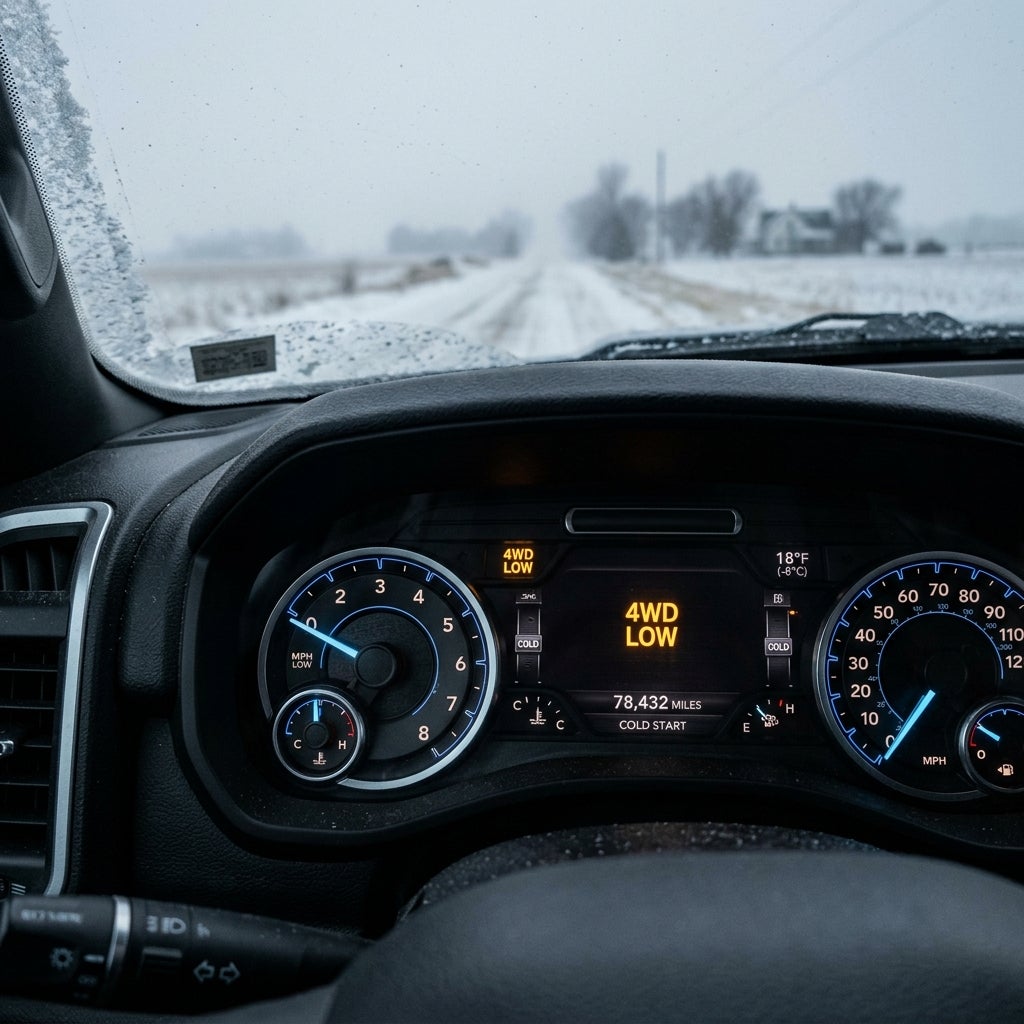
Bottom Line: How Cold Winter Temperatures Thicken Transfer Case Fluid and Impact 4WD Performance When sub-zero Kansas winter winds sweep across Junction City, Fort Riley, and Dickinson County, vehicle owner focus usually turns to battery life, tire tread, and antifreeze strength. However, one critical drivetrain component is frequently overlooked until severe weather strikes: your vehicle's 4WD transfer case fluid. As temperatures plunge below freezing, transfer case lubricant undergoes dramatic physical changes that directly impair four-wheel-drive engagement, front axle lockup, and internal mechanical reliability. Quick Takeaway from Valor Ford Service Director Mike Hogg: "When transfer case fluid gets cold, its viscosity rises exponentially. Instead of flowing freely to lubricate precision bearings, planetary gears, and electronic clutch packs, thickened fluid acts like cold molasses. This internal drag delays 4WD shift actuators, causes harsh gear clunks upon engagement, and starves vital components during initial cold starts. Servicing your fluid before severe winter weather hits is the single best insurance policy against a multi-thousand-dollar transfer case breakdown." Drivers operating heavy-duty trucks like those looking to Research Ford F-250 capabilities or light-duty daily drivers should prioritize cold-weather fluid health. Meet Mike Hogg: 20 Years of Drivetrain and 4WD Expertise in Junction City & Fort Riley With over two decades of dedicated automotive service leadership in Central Kansas, Mike Hogg serves as the Service Director at Valor Ford in Junction City, KS. Having spent twenty winter seasons diagnosing complex four-wheel-drive issues, Mike has seen firsthand how extreme Midwestern freeze-thaw cycles impact modern driveline systems. From daily military commuters navigating snow-covered routes around Fort Riley to agricultural operators traveling rutted rural gravel roads in Dickinson County, Mike's technical insights have saved hundreds of local drivers from catastrophic winter mechanical failures. He leads a team of factory-certified Ford technicians who specialize in precision drivetrain diagnostics, shift-on-the-fly transfer case overhauls, and winter preventative maintenance schedules. Q: How Do Sub-Zero Winter Temperatures Change Transfer Case Fluid Viscosity? Interviewer: Mike, let's dive into the physics of winter driving. What actually happens to transfer case fluid when temperatures drop below freezing here in Kansas? Mike Hogg: Viscosity is a fluid's resistance to flow. When fluid is warm, it flows effortlessly, coating every gear tooth, bearing, and clutch plate within milliseconds of movement. But when ambient temperatures drop to 15 degrees or below zero—as they frequently do across Junction City—conventional and aged synthetic fluids experience a dramatic rise in viscosity. In plain English, the oil thickens immensely. When you turn your dash dial to 4H on a freezing morning, an electric or vacuum shift actuator physically attempts to move shifting forks and engage sliding collars inside the transfer case. If the fluid is thick as gel, that actuator faces massive hydraulic resistance. You might experience a 5 to 10-second delay in engagement, or worse, partial engagement where gear teeth clash. Mike Hogg (continued): Furthermore, transfer cases use internal oil pumps or splash-feed channels to lubricate upper shaft bearings and planetary gear sets. Thick, cold fluid cannot travel quickly through these narrow galleries during initial vehicle operation. This temporary fluid starvation creates localized friction and metal-to-metal contact during the first few miles of driving. Over time, moisture accumulation inside old fluid compounds this issue. Water contamination freezes into microscopic ice crystals that can block internal fluid passages or damage delicate rubber seals. If you plan to Research Ford F-150 drivetrain technology, you will see how modern electronic transfer cases depend on clean, precise fluid viscosity to function seamlessly. Q: How Often Should Transfer Case Fluid Be Serviced for Rural Kansas Gravel and Snow-Covered Roads? Interviewer: Standard owner manuals often suggest long service intervals. Does rural Kansas driving alter that maintenance schedule? Mike Hogg: Standard owner manuals assume ideal highway driving under mild climate conditions. But rural Kansas driving—especially in Dickinson and Geary Counties—fits the manufacturer definition of 'Severe Duty Service.' Driving through mud, unpaved agricultural gravel roads, deep snow drifts, and towing winter trailers puts heavy continuous shear stress on transfer case fluid. Mike Hogg: We strongly recommend changing transfer case fluid every 30,000 miles for trucks and SUVs operating under these conditions. Early warning signs that your fluid is breakdown-prone include: • Audible high-pitched whining when 4WD is engaged • Stiff, delayed, or stubborn shift-on-the-fly execution • Sluggish front-axle engagement on cold starts • A burnt, acrid odor coming from undercarriage after highway cruising Addressing fluid degradation early prevents expensive internal mechanical failures. Schedule 4WD Fluid Maintenance Q: Can Mismatched Tire Tread Depths Cause Severe 4WD Transfer Case Damage? Interviewer: Many vehicle owners replace two worn tires instead of a full set of four. Can uneven tire wear actually destroy a transfer case during winter driving? Mike Hogg: Absolute agreement—mismatched tire tread depth is one of the most common secret killers of transfer cases. In a 4WD or AWD vehicle, all four tires must rotate at identical speeds when driving straight. If your front tires are brand new (say 10/32" tread depth) and your rear tires are worn down to 4/32", the rear tires have a smaller rolling circumference. To travel the exact same distance down Highway 77, the worn rear tires must spin faster than the front tires. The transfer case center differential or clutch pack detects this speed differential and assumes wheels are slipping on ice. Mike Hogg (continued): As a result, internal transfer case clutches slip constantly trying to equalize front and rear axle rotational speeds, even when traveling perfectly straight on dry asphalt. This constant friction generates intense internal thermal energy. When superheated internal temperatures meet cold winter air, rapid fluid breakdown occurs. The fluid turns black, loses friction modifiers, and breaks down viscosity polymers. Within months, internal clutch packs burn out or gear teeth bind catastrophically. Always maintain tire tread variance within 2/32" across all four positions. If you are considering upgrading your winter rig, you can Trade In Evaluation your current vehicle at Valor Ford. Q: What Is the Real Difference Between 4WD and AWD When Navigating Unpaved Winter Roads? Traditional Part-Time 4WD: • Mechanically locks front and rear driveshafts 50/50 ratio • Designed for loose traction: snow, mud, gravel, ice • Must be manually engaged via dash selector or lever • Can experience severe drivetrain binding on dry pavement • Ideal for severe Flint Hills winter conditions • Featured in heavy-duty trucks and rugged off-road SUVs like when you Shop New Ford Bronco Inventory. Full-Time Intelligent AWD: • Uses center differential or electronically managed clutch • Automatically redistributes torque between axles in milliseconds • Safe for continuous operation on mixed dry/icy roads • Requires zero driver input during sudden weather changes • Excellent for suburban driving around Fort Riley • Commonly engineered into versatile crossover models when you Research Ford Explorer. Q: Is It Safe to Switch Into 4 High While Driving on Ice at Highway Speeds? Interviewer: When drivers hit patchy ice on I-70 or K-18 at 55 mph, is it safe to shift into 4H on the fly? Mike Hogg: While modern vehicles feature electronic shift-on-the-fly transfer cases that permit engagement at speed, doing so while traveling 55+ mph on black ice carries major mechanical and safety risks. First, from a physical standpoint: shift-on-the-fly systems require an internal synchronizer or clutch pack to instantly accelerate the front driveshaft from zero rpm up to matching rear driveshaft speed. If transfer case fluid is thick and frigid, that mechanical synchronization encounters immense friction. Engaging at high speeds can cause gear shock, front axle binding, or shift actuator failure. Mike Hogg (continued): Second, from a vehicle control standpoint: if you engage 4H while tires are spinning across slick ice, the sudden torque transfer to the front wheels can break loose vehicle stability, triggering a skid. Mike's Winter Speed Rule: Ease your foot off the accelerator, reduce vehicle speed below 45 mph, ensure wheels are traveling straight, and then switch into 4 High. Once engaged, maintain smooth pedal inputs. Remember: 4WD helps you accelerate on snow and ice, but it does NOT help you stop any faster! If you're looking for pre-owned winter vehicles, Browse Used Inventory equipped with advanced driver-assist systems. Q: What Is Included in a Complete Pre-Winter 4WD Inspection and Fluid Service at Valor Ford? 1. Fluid Drain & Refill Complete removal of contaminated transfer case fluid. Thorough magnetic drain plug inspection for metal shavings. Refill with high-performance synthetic fluid matched to exact OEM viscosity specs. 2. Actuator & Seal Test Inspection of front axle vacuum disconnects, electronic shift solenoids, transfer case shaft seals, and breathers. Verification of tire circumference uniformity across all positions. You can also Order Genuine Ford Parts directly from our parts catalog. Book Pre-Winter 4WD Service Q: Is Pre-Winter 4WD Maintenance Worth the Cost Compared to Major Transfer Case Repairs? Interviewer: Drivers often weigh routine service costs against potential future repairs. How does the math break down for 4WD maintenance? Mike Hogg: It is a massive financial contrast. A preventative transfer case fluid service costs a small fraction of a mechanical replacement. Compare that to the real-world costs of neglecting your drivetrain: • Transfer Case Replacement: $2,800 to $4,500+ for parts and labor • Emergency Winter Towing: $250 to $500 during severe blizzard conditions • Vehicle Downtime: 3 to 7 days awaiting major component assembly delivery Mike Hogg (continued): Beyond financial figures, think about personal safety. Getting stuck on an isolated gravel road in Dickinson County during a sub-zero Kansas blizzard with a seized transfer case is dangerous for you and your family. Routine fluid inspection ensures your 4WD engages instantly when you need traction most. For added convenience, busy vehicle owners can Schedule Pickup and Delivery Service so your vehicle is serviced without interrupting your daily routine. Drivers considering financing upgrades can also contact the dealership for current financing information online. Q: What Winter-Specific Signs Indicate Your Transfer Case Needs Immediate Service? Interviewer: What physical symptoms should drivers watch out for as cold weather sets in? Mike Hogg: Be alert to these five red flags: 1. Grinding or Metallic Clunking: Hearing harsh noise when switching from 2H to 4H indicates thick fluid or worn shift forks. 2. Flashing 4WD Indicator Light: A flashing light signals that the transfer case encoder motor attempted to shift but failed due to mechanical resistance. 3. Oil Droplets in Fresh Snow: Dark fluid spots under your vehicle's midsection stand out brightly on white snow, signaling seal failure. 4. Burning Fluid Odor: Smelling pungent oil after driving at highway speeds indicates thermal degradation. 5. Drivetrain Binding in Turns: Feeling intense crow-hop or vehicle jerking while making low-speed turns on slick surfaces. Pre-Winter 4WD & Transfer Case Maintenance Checklist for Rural Kansas Drivers 1. Check Fluid Level & Clarity Verify transfer case lubricant level. Clean fluid should be clear red or amber; dark or cloudy fluid indicates immediate service is required. 2. Measure Tire Tread Depth Ensure all four tires are within 2/32" tread depth variation to prevent continuous transfer case clutch pack friction. 3. Test 4WD Engagement Engage 4H and 4L on a loose dirt or gravel surface before winter storms hit to verify actuator function. Schedule Ford Service Today Schedule Your Winter 4WD Inspection & Fluid Service at Valor Ford in Junction City, KS If winter temperatures have already set in, your transfer case fluid may need attention. Protect your truck or SUV's four-wheel-drive performance with expert maintenance from Mike Hogg and the certified team at Valor Ford. Located conveniently in Junction City, we serve drivers from Fort Riley, Manhattan, Abilene, and across Dickinson County. Visit us at 1825 Goldenbelt Blvd, Junction City, KS 66441 or Get Directions to Valor Ford. Have questions? Call us at (785) 238-5114 to speak directly with our service advisors. Schedule Your Service Appointment Now
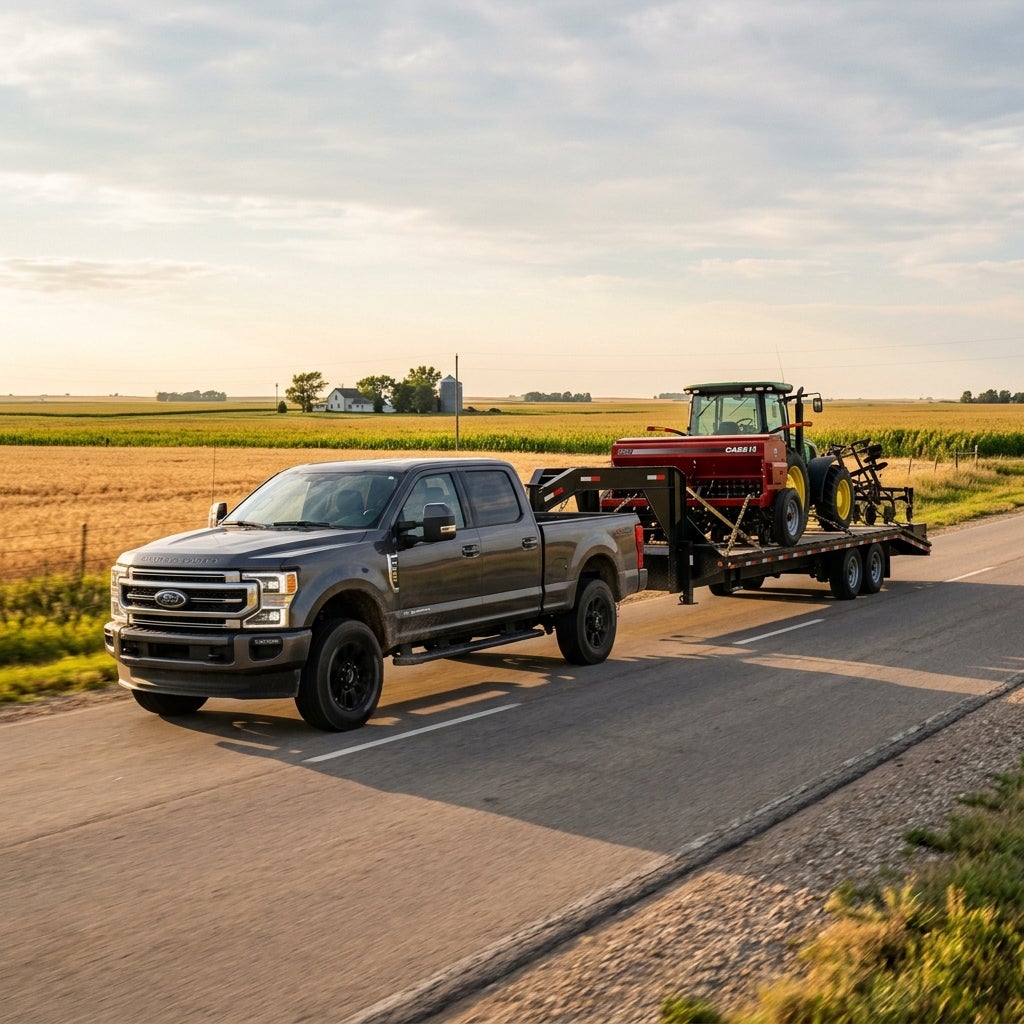
A dark grey Ford Super Duty pickup truck towing a gooseneck trailer with farm equipment down a rural road. (Representative image for illustration purposes only. Actual vehicle may vary based on trim and configuration.)

2022 Ford Super Duty 6.7L Power Stroke Diesel Maintenance Intervals: Official Service Schedule & Direct Expert Guide

2022 Ford Super Duty 6.7L Power Stroke Diesel Maintenance Intervals: Official Service Schedule & Direct Expert Guide Direct Answer First: Maintaining the third-generation 6.7L Power Stroke V8 Turbo Diesel in your 2022 Ford Super Duty F-250, F-350, or F-450 requires strict adherence to fluid and filter service lifecycles. Under normal operating conditions, recommended factory service intervals dictate performing engine oil and filter changes every 7,500 to 10,000 miles (or when triggered by the Intelligent Oil Life Monitor system, not to exceed 1 year or 350 engine hours). Dual fuel filters (both the primary frame-mounted water separator and secondary engine-mounted filter) must be replaced every 15,000 to 22,500 miles (or every second oil change). Engine air filter elements require inspection every 15,000 miles and mandatory replacement at 30,000 miles. Engine coolant (yellow OAT) must be tested every 20,000 miles or 1000 hours and flushed at 105,000 miles. Brake fluid requires a complete system flush every 3 years regardless of mileage. The 10R140 TorqShift 10-speed automatic transmission fluid and internal filter require service at 150,000 miles under light use, though heavy agricultural towing, commercial enterprise, or frequent idling reduces this threshold to 60,000 miles. The 2022 model year represents the pinnacle of the third-generation 6.7L Power Stroke architecture, featuring a hardened steel-piston engine block, upgraded variable-geometry turbocharger, and a 36,000-psi common-rail fuel injection system. Delivering an astounding 475 horsepower and 1,050 lb-ft of torque, this powerplant demands disciplined preventive maintenance to maintain peak thermal efficiency, protect emission control devices (DPF, SCR, and EGR), and prevent premature wear on high-pressure hydraulic and fuel delivery components. Whether your truck spends its life cruising Interstate 70 or pulling heavy livestock trailers through Dickinson County dirt roads, keeping rigorous service logs ensures long-term operational reliability. Service Task Normal Duty Interval Severe Duty / Towing Interval Critical Notes & Specs Engine Oil & Filter 7,500 – 10,000 Miles / 1 Yr 5,000 Miles / 200 Engine Hours 13.0 Qts 5W-40 Synthetic (CK-4 Spec) Dual Fuel Filters (Primary & Secondary) 15,000 – 22,500 Miles 10,000 – 15,000 Miles Must drain water separator monthly Engine Air Filter Element 30,000 Miles (Inspect at 15k) 10,000 – 15,000 Miles Inspect weekly in dusty agricultural use Engine Coolant (Yellow OAT) 105,000 Miles (Test at 20k) 60,000 Miles (Test at 15k) Test corrosion inhibitor strength 10R140 TorqShift Transmission Fluid 150,000 Miles 60,000 Miles Requires Motorcraft ULV Transmission Fluid Front & Rear Differential Axle Lube 150,000 Miles 60,000 Miles Synthetic 75W-140 / 75W-85 gear oil Brake Fluid Flush 3 Years (Time-based) 3 Years (Time-based) DOT 4 Low Viscosity Synthetic Expert Perspectives: 20 Years of Power Stroke Service Leadership with Mike Hogg When evaluating diesel longevity, theoretical service tables only tell half the story. Practical wrench time, master diagnostics, and geographic experience define actual truck health. As Service Director at Valor Ford in Junction City, KS, Mike Hogg brings over 20 years of dedicated Ford diesel engineering and hands-on maintenance leadership to truck owners across Dickinson County, Geary County, and the active duty military community at Fort Riley. "Over two decades servicing Ford Super Duty platform generations—from the early 7.3L and 6.0L days to the sophisticated third-generation 6.7L Power Stroke—I've seen firsthand how real-world usage dictates component lifespan," notes Mike Hogg. "Central Kansas presents a brutal operating environment. Our summers feature ambient temperatures pushing past 100 degrees during harvest season, while our winters hit sub-zero conditions with biting winds. Add in heavy gooseneck livestock hauling, commercial grain transport, and frequent high-dust field work, and standard maintenance schedules quickly become insufficient." At Valor Ford, Mike Hogg leads a team of Senior Master Technicians who specialize in modern diesel powertrain calibration, exhaust post-treatment restoration, and preventive driveline servicing. If you ever have questions about your maintenance schedule or require expert diagnostic support, you can Call us at (785) 238-5114 or stop by our service bay. What Engine Options and Towing Specs Define the 2022 Ford Super Duty Lineup? The 2022 Ford Super Duty family was engineered to provide unparalleled capability across diverse commercial, agricultural, and personal applications. Ford offered three distinct engine powertrains in 2022, each tailored to specific payload demands, duty cycles, and operating budgets. 6.7L Power Stroke V8 Diesel Output: 475 HP @ 2,600 RPM Torque: 1,050 lb-ft @ 1,600 RPM Transmission: TorqShift 10-Speed Automatic Max Towing: Up to 37,000 lbs (Gooseneck F-450) Key Feature: Steel pistons, 36k-psi injection, variable geometry turbo. Designed for maximum long-distance heavy towing. 7.3L Godzilla V8 Gas Output: 430 HP @ 5,500 RPM Torque: 475 lb-ft @ 4,000 RPM Transmission: TorqShift 10-Speed Automatic Max Towing: Up to 21,200 lbs conventional Key Feature: Pushrod V8 design with cast-iron block. Ideal for fleet operators seeking gas simplicity with heavy commercial output. 6.2L Boss V8 Gas Output: 385 HP @ 5,750 RPM Torque: 430 lb-ft @ 3,800 RPM Transmission: TorqShift 6-Speed / 10-Speed Max Towing: Up to 15,800 lbs Key Feature: Proven SOHC workhorse architecture standard on XL/XLT F-250 trims, optimized for everyday municipal and trade work. While all three engines demonstrate exceptional durability, the 6.7L Power Stroke Turbo Diesel remains the leading option for heavy gooseneck and fifth-wheel trailering. When paired with the high-strength boxed steel frame, upgraded axle shafts, and integrated fifth-wheel hitch prep package on the F-250 and F-350, the diesel powertrain unlocks maximum payload and towing ratings that gas engines simply cannot match over steep elevation changes or long highway hauls. To explore vehicle specs further, check out our in-depth research guides for the Research Ford F-250 lineup. How Does Normal Schedule Compare to Severe Duty Maintenance for Kansas Agriculture and Heavy Towing? Understanding Ford's definition of Special Operating Conditions (Severe Duty) is essential for Central Kansas Super Duty owners. Standard oil change intervals of 7,500 to 10,000 miles assume smooth highway travel without excessive payload, idle time, or environmental hazards. However, if your 2022 Power Stroke operates under any of the following parameters, Ford mandates transitioning to severe duty maintenance cycles: • Frequent Towing or Heavy Payload: Towing trailers exceeding 50% of the gross combined weight rating (GCWR) for extended distances. • Extensive Engine Idling: Operating the truck at low idle speeds for prolonged periods (e.g., job site power generation, stationary PTO use, or military staging at Fort Riley). • Dusty & Unpaved Environment: Driving on gravel ranch roads, farm lanes, or dirt access routes throughout Dickinson County during harvest. • Off-Road & Low-Speed Operation: Consistent operation in low-range 4x4 or frequent short trips under 10 miles in ambient freezing weather. Under severe duty, oil degradation occurs significantly faster due to soot accumulation and thermal breakdown. Ford specifies reducing oil change intervals to 5,000 miles or 200 engine hours, while cutting transmission, transfer case, and differential fluid change intervals by more than 50%. Schedule Ford Service Today Mike Hogg’s Golden Rule for 6.7L Power Stroke Longevity: Dual Fuel Filters and Clean DEF "If I could give every diesel truck owner in Kansas just one single piece of advice to help reduce the risk of unexpected repairs, it would be this: never compromise on your fuel filtration and DEF handling," states Service Director Mike Hogg. "The modern 6.7L Power Stroke utilizes a high-pressure common rail fuel injection system operating at pressures up to 36,000 psi. At these ultra-high hydraulic pressures, even microscopic water droplets or fine rust particulates passing through dirty filters can cause catastrophic pump cavitation or galling. Replacing fuel filters every 15,000 miles—or sooner if you purchase bulk farm fuel—is cost-effective protection compared to a $10,000 fuel system overhaul." Key Diesel Fuel & DEF Care Rules from Mike Hogg: 1. Drain the Water Separator Monthly: Located on the primary frame-mounted fuel filter module, the water drain valve should be opened monthly into a clear container to purge trapped condensation before water sensors trigger warning lights. 2. Use Genuine Motorcraft Filters: Aftermarket fuel filters frequently exhibit inferior micron filtration ratings or improper O-ring sealing dimensions, allowing unmetered fuel bypass directly into delicate piezo fuel injectors. 3. Store Diesel Exhaust Fluid (DEF) Properly: DEF consists of 67.5% deionized water and 32.5% high-purity urea. DEF degrades rapidly when exposed to direct sunlight or temperatures exceeding 85°F. Always use fresh DEF from sealed containers or verified retail pumps to prevent SCR catalyst crystallisation and dosing valve clogging. 4. Winterizing with Anti-Gel Additives: When ambient temperatures approach 20°F in Junction City, ultra-low sulfur diesel (ULSD) forms wax paraffin crystals that clog fuel filter media. Always add Motorcraft Anti-Gel & Cetane Booster at every fill-up during winter months. What Should You Inspect When Test-Driving a Used 2022 Ford Super Duty? Shopping for a pre-owned 2022 Ford Super Duty diesel offers extraordinary capability, but buyer diligence is essential. Before signing paperwork, perform these crucial expert inspection steps developed by our Senior Master Technicians: 1. Cold Start & Engine Integrity Insist on starting the truck when the engine block is completely cold. Watch the tailpipe for heavy white smoke (unburnt fuel/coolant) or blue smoke (oil burning). Remove the oil filler cap while idling—excessive engine blowby escaping from the valve cover indicates worn piston rings or cylinder wall scuffing. 2. Transmission & Drivetrain Evaluate shift engagement through all 10 gears of the TorqShift transmission. Test for gear hunting, harsh downshifts, or delayed forward engagement. Shift the transfer case into 4H and 4L on loose gravel to confirm electronic hub engagement and front differential quietness. 3. History & Frame Condition Inspect the bed for telltale signs of commercial fifth-wheel or gooseneck hitch mounting. Examine the rear hitch receiver for elongated pin holes. Request complete OASIS service records to verify fuel filter replacement frequency and past recall completion. What Trim Levels and Interior Technology Updates Were Introduced in the 2022 Ford Super Duty? The 2022 model year brought substantial technological refinements to the Super Duty interior, establishing a new benchmark for heavy-duty cabin connectivity and driver comfort across six available trim levels: • XL: Rugged work truck trim with durable vinyl flooring, heavy-duty cloth seats, and SYNC 3 4.2-inch interface. • XLT: The popular multi-purpose trim featuring 18-inch aluminum wheels, Ford Co-Pilot360 safety technology, and available 12-inch touchscreen. • Lariat: Adds premium leather seating, B&O Sound System, power-sliding rear window, and standard SYNC 4. • King Ranch: Distinctive Kingsville antique leather interior, real wood trim accents, and trailer reverse guidance. • Platinum: Luxury features including massaging multi-contour front seats, satin chrome exterior accents, and LED headlights. • Limited: The ultimate luxury heavy-duty package with Highland Tan leather, twin-panel moonroof, and adaptive steering. SYNC 4 Technology Breakthrough: Standard on Lariat trims and above, the standout update for 2022 was the debut of the SYNC 4 infotainment system on a massive 12-inch center touchscreen. Featuring twice the computing power of previous systems, SYNC 4 offers wireless Apple CarPlay and Android Auto integration, customizable split-screen multitasking, enhanced natural voice recognition, and cloud-connected navigation for real-time traffic and trailer routing. Browse Used Inventory How Does the 2022 Ford Super Duty Compare to the 2022 Chevy Silverado HD? When pitting the 2022 Ford Super Duty 6.7L Power Stroke against the 2022 Chevy Silverado 2500/3500 HD with the 6.6L Duramax L5P diesel, both trucks represent exceptional engineering achievements. However, notable differences exist in powertrain metrics and routine service maintenance requirements. Power Output: Ford's 6.7L Power Stroke generates 475 hp and 1,050 lb-ft of torque, outperforming the Silverado HD Duramax (445 hp and 910 lb-ft of torque) by 30 hp and 140 lb-ft of torque. This torque advantage is immediately noticeable when starting heavy loads on uphill highway grades. Filter & Serviceability: Ford's dual-filter fuel architecture provides robust secondary defense against water contamination, whereas GM utilizes a single frame-mounted fuel filter module. Both trucks require specialized synthetic low-ash heavy-duty diesel engine oils, but Ford's Intelligent Oil Life Monitor utilizes actual engine operating parameters (fuel burn, thermal history, idle hours) rather than simple mileage counters. Metric / Feature 2022 Ford Super Duty (6.7L) 2022 Chevy Silverado HD (6.6L) Horsepower 475 HP @ 2,600 RPM 445 HP @ 2,800 RPM Torque Rating 1,050 lb-ft @ 1,600 RPM 910 lb-ft @ 1,600 RPM Transmission 10-Speed TorqShift 10-Speed Automatic Transmission Max Gooseneck Towing Up to 37,000 lbs Up to 36,000 lbs Fuel System Filter Dual Filters (Frame + Engine) Single Primary Frame Filter Oil Capacity 13.0 Quarts 10.0 Quarts How Does the 2022 Ford Super Duty Compare to the 2022 Ram 2500 and 3500? Comparing the 2022 Ford Super Duty 6.7L V8 Power Stroke to the 2022 Ram 2500/3500 Cummins 6.7L Inline-6 Turbo Diesel highlights fundamental design philosophies: Engine Architecture & Gearing: Ram uses an inline-6 configuration, while Ford utilizes a hot-V CGI (compacted graphite iron) block V8 design. Ford pairs every 2022 Power Stroke with the heavy-duty 10-speed TorqShift transmission, whereas Ram 2500 models rely on a 6-speed 68RFE transmission (with the 6-speed Aisin reserved for High-Output 3500 models). The extra four gear ratios in Ford's TorqShift maintain optimal engine RPM bands during acceleration under load. Payload & Service Costs: Because of lighter overall aluminum-alloy body construction, the Ford Super Duty yields higher payload capacity on comparable GVWR configurations. From a long-term operational cost perspective, both trucks require strict dual fuel filter maintenance, but Ford's front-end suspension design (Twin-Coil Monobeam axle) demonstrates superior steering ball joint longevity under heavy farm loader use. Transmissions, Differentials, and Transfer Cases: Essential Fluid Care for Heavy Hauling 10R140 Transmission Care The TorqShift 10-speed transmission requires ultra-low viscosity Motorcraft ULV fluid. Operating thermal range is tightly regulated. Fluid pan drops and internal filter replacement should occur every 60,000 miles on severe duty trucks to prevent valve body solenoid varnish. Axle Differential Lube Rear Dana M275/M300 or Sterling 10.5 axles demand synthetic 75W-140 gear lubricant. Replace fluid every 60,000 miles when towing continuously. Inspect housing vent tubes regularly to prevent pressure seal blowouts when launching boats or crossing deep mud. Transfer Case & PTO The electronic shift-on-the-fly 4x4 transfer case utilizes Motorcraft LV fluid. Fluid replacement is scheduled at 60,000 miles for severe duty. Live-drive Power Take-Off (PTO) units require separate gear housing inspections during routine chassis lubrication. Order Genuine Ford Parts Preparing Your 2022 Power Stroke for Winter and Farm Work in Junction City and Fort Riley Operating a diesel truck in Junction City, Fort Riley, and surrounding Kansas communities requires specialized seasonal awareness. Extreme temperature fluctuations between summer field work and winter sub-zero freezes place heavy demands on your electrical and cold-start systems. Cold Weather Readiness: Ensure your engine block heater cord is inspected before November. Modern 6.7L engines utilize ceramic glow plugs that reach over 1,000°C in seconds, but dual heavy-duty AGM batteries must maintain optimal cold cranking amps (CCA) to spin high-compression diesel starters in sub-zero weather. Have your batteries load-tested annually at Valor Ford. Harvest Dust & Air Filtration: During autumn sorghum and corn harvest, ambient dust levels skyrocket. Check your air filter restriction gauge weekly. A clogged intake filter starves the turbocharger, increasing exhaust gas temperatures (EGTs) and triggering premature DPF regeneration cycles. Your Partner in Heavy-Duty Reliability: At Valor Ford, we understand that your truck isn't just transportation—it's your livelihood, your farm machinery, or your mission-critical transport. Service Director Mike Hogg and our factory-certified diesel team are here to help you protect your investment with genuine Motorcraft parts, master diagnostics, and tailored maintenance schedules. Whether you need to Schedule Pickup and Delivery Service for routine oil maintenance or visit our service center in person, getting here is easy. Get Directions to Valor Ford located at 1825 Goldenbelt Blvd, Junction City, KS 66441, or Call us at (785) 238-5114 to consult directly with our diesel service specialists today. Valor Ford | 1825 Goldenbelt Blvd, Junction City, KS 66441 | Service Phone: (785) 238-5114 | Serving Geary County, Dickinson County, and Fort Riley military families.

A family of four loading bags into the trunk of an SUV parked in a driveway on a sunny day. (Representative image for illustration purposes only. Actual vehicle may vary based on trim and configuration.)

Gear Up for the School Year: Essential August Maintenance for Junction City Families

Gear Up for the School Year: Essential August Maintenance for Junction City Families As the warm, lazy days of July transition into the focused energy of August, families across Junction City and the wider Geary County area are shifting their sights toward a familiar milestone: the back-to-school season. Preparing your household for this annual transition involves a familiar ritual of purchasing school supplies, organizing calendars, and adjusting sleep schedules. Yet, amidst the flurry of buying new backpacks and color-coded folders, one crucial element of your family's daily routine is often overlooked until it is too late: the family vehicle. Your car is the silent partner in every early-morning drop-off, every afternoon pickup, and every weekend trip to school athletic events. Ensuring its reliability now, before the chaotic rhythm of the school year begins, is the single most effective way to prevent stressful morning breakdowns and costly emergency repairs. The morning rush hour in Junction City has its own unique cadence. From the bustling drop-off lanes at Westwood Elementary and Junction City High School to the heavy commute along Eisenhower Drive and Washington Street, the sudden influx of school traffic demands your vehicle's peak performance. Stop-and-go driving, idling in long car lines, and navigating the unpredictable weather transitions of late summer in Kansas can place immense stress on a vehicle that has spent the summer on long highway road trips. Preventative maintenance in August acts as a shield against these daily stressors. By addressing potential mechanical issues during the calmer weeks of late summer, you protect your family from the frustration of a car that refuses to start when the school bell is about to ring. At Valor Ford, we view ourselves as more than just a dealership; we are a dedicated partner in keeping our local Junction City community safe, mobile, and secure. We understand that your family's safety is non-negotiable. Our team of service professionals is committed to ensuring that your vehicle is fully prepared to handle the rigorous demands of the upcoming academic year. In this comprehensive guide, we will walk you through the essential maintenance tasks, technical specifications, and safety guidelines that every Geary County parent should know. From checking critical safety systems to navigating the transitions of local weather, we are here to provide the expert knowledge and dependable service your family deserves. What Are the Most Critical Vehicle Maintenance Tasks for Back-to-School Season in Junction City? A successful school year relies on structural organization, and your vehicle maintenance should be no different. The unique local terrain of Geary County, combined with the stop-and-go nature of school zones, places unique physical demands on your car, truck, or SUV. To help you navigate this transition, we have compiled a comprehensive checklist of high-priority maintenance items that require immediate attention before the first day of school. Addressing these key areas ensures that your vehicle remains a safe, dependable environment for your most precious cargo. Braking Systems & Wear School zones require rapid, unexpected stops as children cross streets and buses halt to unload passengers. Your braking system must be in flawless operating condition. Over the summer, heat and dust can degrade brake pads and rotor surfaces, leading to reduced stopping power. Have our technicians measure your brake pad thickness. Pads with less than 3mm of friction material remaining should be replaced immediately. Additionally, we check for rotor warping, which can cause dangerous vibrations, and inspect brake fluid levels for signs of moisture contamination. Battery Health & Charge The intense Kansas summer heat is the primary catalyst for automotive battery degradation. High temperatures accelerate internal chemical reactions, leading to fluid evaporation and internal corrosion. Often, a battery damaged in July will fail completely during the first cool morning of early autumn. A comprehensive battery test measures cold cranking amps (CCA) and overall voltage retention. We also clean terminal corrosion and ensure that the battery mounting bracket is secure, preventing damaging vibrations during your daily drives across Junction City. Tires & Road Contact Your tires are the only point of contact between your vehicle and the road. Wet late-summer roads and early autumn downpours require deep tire tread to channel water away and prevent hydroplaning in busy school drop-off lanes and residential neighborhoods. We utilize precise depth gauges to ensure your tread is well above the minimum safety limit of 4/32 of an inch. Tire rotation is also crucial to promote even wear, extend tire lifespan, and guarantee optimal handling and fuel efficiency throughout the academic year. Ignoring these foundational maintenance pillars can transform a minor, easily resolvable wear-and-tear issue into an unexpected mechanical failure. When you proactively manage your brakes, battery, and tires, you are laying a foundation of safety and reliability that will carry your family smoothly through the autumn months and beyond. Beating the Kansas Heat: Specifications of a Healthy Automotive Cooling System for Summer-to-Fall Transition The transition from the scorching heat of late August to the crisper, cooler mornings of September and October poses a hidden challenge to your vehicle's cooling system. Many drivers assume that cooling systems are only critical during the peak of summer, but the thermal stress of transitioning between extreme temperatures is actually when cooling system failures are most common. A cooling system must maintain precise operating temperatures to prevent both engine overheating in slow-moving school traffic and inefficient fuel combustion during cold morning startups. To ensure your engine operates within its designed thermal parameters, our factory-trained technicians analyze several technical specifications. First, we test the coolant pH level and concentration. Over time, coolant degrades, becoming acidic and losing its rust-inhibiting properties. A proper 50/50 water-to-antifreeze mixture ensures protection against both boiling over on hot afternoons and freezing on cold winter nights. Additionally, we pressure test the cooling system, including the radiator pressure cap. A weak cap cannot hold the necessary pressure, causing the coolant boiling point to drop and leading to premature boil-overs in the drop-off line. We also conduct thorough physical inspections of all radiator hoses, looking for soft spots, cracks, or bulging that indicate imminent failure under pressure. Maintaining your cooling system's health prevents embarrassing and dangerous engine overheating during the daily school commute. Schedule Ford Service Today Protecting Your Engine: What Is the Average Price of a Synthetic Oil Change and Filter Replacement? Engine motor oil is the literal lifeblood of your vehicle. It reduces friction, dissipates heat, and prevents harmful carbon deposits from building up within your engine's internal components. For modern vehicles, synthetic oil has become the industry standard due to its superior performance and longevity compared to traditional conventional oil. However, many cost-conscious parents in Junction City want to understand the exact financial commitment involved in upgrading or maintaining their routine oil change schedule as school expenses mount. Oil Type Average Local Price Range Recommended Interval Primary Practical Benefits Conventional Oil $45 - $65 3,000 - 5,000 Miles Basic lubrication, lower upfront cost, suitable for older engines. Synthetic Blend Oil $65 - $85 5,000 - 7,500 Miles Balanced protection, improved thermal stability, cost-effective intermediate option. Full Synthetic Oil $85 - $115 7,500 - 10,000 Miles Maximum wear protection, superior high-heat tolerance, optimized fuel economy. While the upfront cost of a full synthetic oil change may seem higher than a conventional oil change, the long-term value is undeniable. Full synthetic lubricants are engineered to resist thermal breakdown far more effectively than conventional options. This means they maintain their viscosity under extreme temperatures and do not degrade into harmful sludge. For Junction City families navigating stop-and-go school traffic and short, repetitive trips, synthetic oil offers unmatched protection against engine wear during critical startup sequences. Furthermore, synthetic oil reduces internal engine drag, which translates directly to subtle but meaningful improvements in fuel economy. Over a school year of commuting, these fuel savings can easily offset the additional cost of the service. At Valor Ford, we frequently offer service specials and coupons to help our local families save even more on routine maintenance. Our service department is fully stocked with high-quality Motorcraft synthetic lubricants and OEM-spec oil filters designed specifically to keep your Ford running at peak efficiency. The Daily Commute: How Does All-Wheel Drive Impact Fuel Efficiency Compared to Front-Wheel Drive? Understanding Drivetrains For families commuting from outlying areas like Milford, Chapman, or rural Dickinson County into Junction City, choosing the right drivetrain is a major decision. Front-Wheel Drive (FWD) channels all engine power to the front wheels, reducing weight and mechanical complexity. All-Wheel Drive (AWD) monitors traction across all four wheels, distributing power dynamically to maintain stability in adverse conditions. The Fuel Economy Trade-Off Historically, AWD vehicles suffered a significant fuel penalty due to the added weight of drive shafts and differentials, alongside 'parasitic loss' as the engine powered more moving parts. Modern AWD systems, however, are highly intelligent. Many operate in FWD mode until slippage is detected, minimizing the fuel economy gap to just 1 to 2 miles per gallon (MPG) compared to their FWD counterparts. Safety vs. Budget Balance Deciding between FWD and AWD requires balancing your monthly fuel budget against seasonal safety needs. While FWD is highly efficient for dry summer pavement, an AWD system offers unmatched peace of mind during unpredictable Kansas winter storms and rainy autumn mornings, helping navigate slick, unplowed rural county roads with absolute confidence. If you are considering upgrading your family vehicle to better handle the changing Kansas seasons, you can Browse Used Inventory at Valor Ford to compare FWD and AWD models. Our team can help you analyze the long-term fuel costs versus the immediate safety benefits of each drivetrain to find the perfect fit for your household's unique driving route. Schedule Your Pre-School Inspection at Valor Ford The school year wait for no one, and the final weeks of August are always filled with last-minute errands. Don't let your car's safety be something you push off until a warning light flashes on your dashboard. Booking a preventative maintenance inspection today ensures that your vehicle is fully vetted and approved for the busy roads ahead. Our seamless online scheduling tool allows you to secure an appointment that perfectly matches your family's hectic calendar, and our service team is standing by to get you back on the road quickly and safely. Schedule Ford Service Today Car Seat Safety 101: What Is the Weight and Age Cutoff for Transitioning from a Harness to a Booster Seat? As your children grow, their safety needs inside your vehicle change dynamically. One of the most common points of confusion for parents is determining exactly when a child is physically ready to transition from a five-point harness car seat to a belt-positioning booster seat. Moving a child out of a harness too early is a widespread mistake that dramatically reduces their protection in the event of a collision. A five-point harness distributes crash forces across the strongest parts of a child's skeletal structure (the shoulders and hips), whereas a booster seat relies entirely on the vehicle's standard adult seat belt. Safety standards and pediatric guidelines emphasize that children should remain in a forward-facing car seat with a five-point harness until they reach the maximum weight or height limits specified by their car seat manufacturer. Generally, children are not ready to transition to a booster seat until they are at least 4 years old and weigh at least 40 pounds. However, safety experts strongly recommend delaying this transition as long as possible—often up to 5 or 6 years of age, or until the child reaches 65 pounds, which is the upper limit of most modern convertible harness seats. Beyond simple height and weight metrics, physical maturity and behavior are critical factors. A child in a booster seat must be mature enough to sit upright and relatively still for the entire duration of every car ride. If your child frequently slumps over, reaches for dropped toys, or pulls the shoulder belt behind their back, they are not yet ready for a booster seat and should remain in a secure five-point harness. Ensuring proper seat belt alignment on a booster seat is critical to securing your growing child during every school journey. Checking the Label: When Do Child Safety Seats Expire and How Do You Find the Expiration Date? Many parents are surprised to learn that child safety seats have a strict lifespan and do, in fact, expire. Car seat expiration is not a marketing gimmick; it is a critical safety parameter based on material science and manufacturing engineering. The primary reason for expiration is plastic degradation. Over years of exposure to extreme temperature swings inside vehicles—such as the intense heat of a Kansas summer followed by freezing winter temperatures—the heavy-duty plastic frame of a car seat becomes brittle. This structural degradation can cause the seat to crack or fail entirely under the immense forces of a high-speed collision. Furthermore, safety standards, crash-testing technology, and federal regulations change and improve over time. A car seat manufactured ten years ago does not feature the same advanced side-impact protection, material technology, or installation systems as a modern seat. Typically, most car seats expire six to ten years from their original date of manufacture, depending on the specific brand and model. To locate your car seat's expiration date, you must inspect the physical seat shell. Look for a white or silver manufacturer sticker or a stamp molded directly into the plastic on the back or underside of the seat. This label will list the brand name, model number, exact date of manufacture, and sometimes the explicit expiration date. If the sticker only lists the manufacture date, consult the owner's manual or the manufacturer's website to determine the specific model's lifespan. If you discover that your current car seat has expired, is damaged, or has been involved in a moderate-to-severe accident, it must be replaced immediately. Your child's safety in the car pool lane is simply too important to compromise. If you need assistance finding or interpreting this label, our service staff at Valor Ford can help you locate it during your routine maintenance visit. Why Credentials Matter: What Does ASE Certification Mean for an Automotive Technician? When you hand over your keys for service, you are trusting those individuals with your family's safety. This is why professional credentials matter immensely. The gold standard of professional excellence in the automotive repair industry is certification from the National Institute for Automotive Service Excellence (ASE). When a technician is ASE-certified, it indicates that they have met rigorous, standardized requirements of technical expertise, experience, and professional dedication. To earn ASE certification, a technician must complete at least two years of documented, hands-on professional work experience and pass a series of challenging specialty exams written by industry experts. These exams cover complex automotive systems, including engine repair, automatic transmissions, suspension and steering, brakes, electrical systems, heating and air conditioning, and engine performance. To maintain their certification, technicians must re-test every five years, ensuring they stay up-to-date with the rapid technological advancements of modern vehicles. Our certified technicians undergo continuous training to ensure they possess the expert skills required to service your family vehicle safely. At Valor Ford, we take incredible pride in our service team. Our service department is staffed by factory-trained, ASE-certified professionals who possess deep, specialized knowledge of Ford vehicles and all other major makes and models. When you choose us for your back-to-school service, you aren't just getting a quick oil change—you are receiving elite mechanical service from certified professionals who understand exactly how to optimize your vehicle for safety and reliability. You can easily Schedule Pickup and Delivery Service to have our certified team handle your maintenance without interrupting your busy workday. Upgrade Your Family Ride: Explore Safe and Spacious Vehicles in Junction City Sometimes, regular maintenance is no longer the most cost-effective or safest path forward. If your current vehicle is struggling to keep pace with your family's growing list of activities, or if you find yourself facing frequent, expensive repairs, it may be time to consider upgrading to a modern, safety-focused vehicle. A newer SUV or crossover offers advanced active safety features like blind-spot monitoring, pre-collision assist, and lane-keeping alerts that simply weren't available a decade ago, providing a vital extra layer of protection during busy school commutes. Ford Explorer For growing families requiring flexible cargo space and comfortable three-row seating, the Ford Explorer is an industry benchmark. With advanced safety suites and room for up to seven passengers, it is built to master school carpools and weekend road trips alike. Learn more and Research Ford Explorer specifications to see why it remains a top choice for Junction City families. Ford Maverick If you need a highly versatile vehicle that blends utility with incredible fuel economy, this compact pickup is a stellar option. Perfect for hauling sports gear and band equipment while delivering exceptional MPG, it is a smart choice for active families. You can Research Ford Maverick features to see if this versatile truck fits your lifestyle. Ford F-150 For families who need massive cabin space, serious towing capacity for weekend toys, and maximum utility, America's favorite truck is the answer. Modern SuperCrew models offer rear legroom that rivals luxury sedans, ensuring comfortable rides for teenagers. Take a moment to Research Ford F-150 trims and capability today. Ready to explore your options? We make it simple to evaluate your next move. Get started online with a quick Trade In Evaluation of your current vehicle, or begin the process of upgrading by applying to Apply for Financing right from the comfort of your home. August Car Care Planning Guide for Geary County Parents To make your back-to-school vehicle prep as seamless as possible, we have mapped out a simple, chronological timeline for August. Breaking these tasks down week-by-week ensures you don't find yourself overwhelmed during the final countdown to the first day of school. Timeline Key Tasks & Focus Areas Why It Matters Now Week 1: Early August Schedule professional safety inspections, battery tests, and brake checks at Valor Ford. Ensures you beat the late-August rush and can order any necessary replacement parts without delay. Week 2: Mid-August Inspect child safety seats, check expiration dates, and adjust harness strap heights for growing kids. Gives you time to research and purchase new safety seats if your current ones are expired or outgrown. Week 3: Late Mid-August Perform fluid checks (coolant, oil, windshield washer fluid) and schedule synthetic oil changes. Prepares the engine mechanicals for the high thermal stress of stop-and-go school idling lanes. Week 4: Late August Deep clean the vehicle interior, organize emergency road kits, and complete final tire pressure adjustments. Sets a clean, organized, and stress-free environment for the first morning commute of the new school year. By adhering to this structured timeline, you can transform a potentially stressful chore into an organized, manageable routine. If you need any assistance along the way, remember that you can easily Order Genuine Ford Parts directly through our website to keep your vehicle's maintenance right on track. Secure Your Peace of Mind: Visit Valor Ford for Your Back-to-School Service As you finalize your back-to-school shopping lists and prepare your family for the exciting challenges of the upcoming academic year, let Valor Ford take care of your peace of mind on the road. A reliable, fully inspected vehicle is the foundation of a safe, stress-free school routine. Don't wait for a warning light or an unexpected breakdown to interrupt your morning schedule. Visit our professional facility in Junction City, KS, and let our factory-trained, ASE-certified team ensure your car, truck, or SUV is performing at its absolute best. Need directions to our dealership? You can easily Get Directions to Valor Ford at 1825 Goldenbelt Blvd, Junction City, KS 66441. If you have questions about specific vehicle services or want to speak directly with our service advisors, please Call us at (785) 238-5114. We are here to support our local community and ensure that every school journey this year is a safe, dependable one. Schedule Ford Service Today

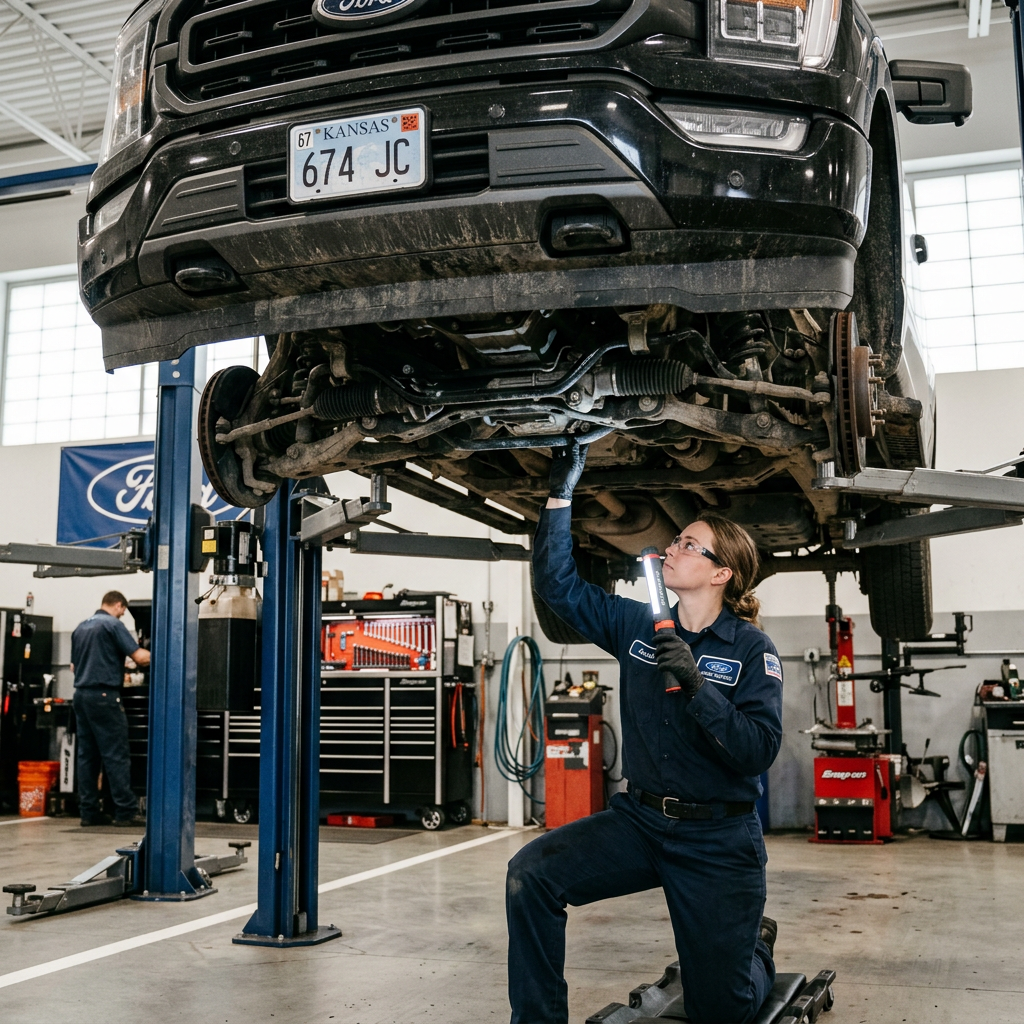
A female mechanic inspects the undercarriage of a black Ford truck raised on a hydraulic lift in an auto shop. (Representative image for illustration purposes only. Actual vehicle may vary based on trim and configuration.)

2021 FORD F-150 Recall: STEERING:RACK AND PINION — What Valor Ford Customers Need to Know

2021 Ford F-150 Recall: STEERING:RACK AND PINION — What Valor Ford Customers Need to Know As a proud owner of a 2021 Ford F-150, you know your truck is built to handle the toughest jobs across Junction City, Kansas, and the surrounding Geary County area. Whether you are hauling equipment to a job site, towing a trailer for a summer weekend getaway, or simply navigating your daily commute, you rely on your truck's steering to be precise, responsive, and completely reliable. However, Ford Motor Company has identified a critical safety issue concerning the electronic power-assist steering (EPAS) rack and pinion assembly on certain 2021 F-150 models. At Valor Ford, we want to ensure you have all the facts, understand the potential safety risks, and know exactly how to get this resolved quickly and covered at no cost under the recall. A steering recall can sound alarming, but it is important to remember that safety campaigns are designed to protect you before an issue leads to an accident. The core of this steering rack and pinion recall involves a manufacturing defect where certain internal components within the steering gear assembly may have been built out of specification. Under specific driving conditions, this can lead to an unexpected increase in steering effort or, in more severe cases, a sudden lock or restriction in the steering wheel's range of motion. Because your safety on Kansas roads is our absolute highest priority, our team of factory-trained technicians here at Valor Ford is fully prepared to inspect, diagnose, and repair affected vehicles with genuine OEM parts. For our customers in Junction City, Fort Riley, and nearby Dickinson County, addressing this recall promptly is vital for maintaining the structural and mechanical integrity of your truck. Operating a vehicle with a compromised steering gear is highly dangerous, especially at highway speeds where sudden maneuvers require absolute control. By partnering with our certified Ford service department, you can gain immediate peace of mind. We are here to walk you through every step of the recall process, from verifying your vehicle's status to completing the precision repair work in our state-of-the-art facility. Read on for a comprehensive breakdown of the recall, its technical implications, and how you can protect your investment. If you suspect your truck is affected, you do not have to wait to seek assistance. You can easily Call us at (785) 238-5114 to speak directly with our service advisors, or keep reading to find out how to locate your vehicle identification number and verify your status online. Our team is dedicated to providing transparent, friendly, and expert service to keep your F-150 running safely for years to come. Which Specific 2021 F-150 Models Are Affected by the Steering Rack Recall? Not every 2021 Ford F-150 rolling off the assembly line is included in this safety campaign. The recall is highly targeted and applies to specific production windows, particular trim levels, and select chassis configurations. Ford's engineering teams traced the issue back to a specific batch of steering gear assemblies manufactured by an external supplier during a narrow timeframe in late 2020 and throughout 2021. Because of these precise manufacturing batches, trucks built at the Dearborn Truck Plant and the Kansas City Assembly Plant within those designated production dates are the primary focus of this campaign. The mechanical issue itself stems from the internal ball nut assembly within the steering rack. During the supplier's manufacturing process, some of these assemblies received structural components that were susceptible to premature wear or micro-cracking under heavy load. Over time, these micro-cracks can expand, leading to a structural failure of the steering gear teeth or the internal ball return system. When this occurs, the driver may experience a tight spot in the steering wheel or, in the worst-case scenario, the steering mechanism could bind completely, making it impossible to steer the truck without extreme physical effort. This steering rack recall spans across multiple trim configurations, including popular variants like the work-ready XL, the versatile XLT, the luxurious Lariat, and even some high-end King Ranch or Platinum models. Additionally, both two-wheel drive (2WD) and four-wheel drive (4WD) configurations are represented, depending on the exact steering rack model installed during assembly. Because the steering system differs slightly based on engine selection—such as the 3.5L EcoBoost, the 5.0L V8, or the 3.5L PowerBoost Full Hybrid—it is crucial to cross-reference your specific drivetrain with the official recall database rather than assuming your model is exempt. Because this involves a complex safety system, we strongly advise owners not to rely on guesswork. To help you identify if your vehicle is within the affected group, you can explore our comprehensive online research materials. To learn more about Ford's engineering specifications for this model year, you can Research Ford F-150 models and their technical updates directly on our website, or contact our service desk to verify your vehicle's specific build parameters. How Do I Check If My Specific F-150 VIN Is Included in This Recall? Checking whether your truck is part of this recall is a straightforward process that you can do from the comfort of your home in Junction City or Dickinson County. The single most accurate way to verify your F-150's recall status is by using its unique 17-digit Vehicle Identification Number (VIN). Your VIN acts like your truck's fingerprint, containing precise details about where it was built, its exact trim level, engine configuration, and manufacturing date. To find your VIN, look at the base of your driver's side windshield from the outside of the truck, or check the safety certification label located on the driver's side door B-pillar jamb. Once you have written down your 17-digit VIN, you have several reliable lookup options. You can visit the National Highway Traffic Safety Administration (NHTSA) recall portal or the official Ford Owner website and enter your VIN into their search tools. Alternatively, you can bypass the online search completely and let the certified team at Valor Ford do the heavy lifting for you. By contacting our service advisors directly, we can instantly pull up your vehicle's complete history, check for any open campaigns, and verify if the parts required for your specific steering rack replacement are currently in stock. If you discover that your 2021 F-150 has an active steering recall, do not delay. We make the booking process as smooth as possible for our local drivers. You can schedule a convenient appointment online using our dedicated portal, or coordinate with us to have your vehicle picked up and returned to your home or office. Schedule Pickup & Delivery Service What Are the Key Mechanical Specs of the 2021 Ford F-150 Steering System? The 2021 Ford F-150 features a highly advanced Electronic Power-Assist Steering (EPAS) system. Unlike older hydraulic steering pumps that continuously draw power from the engine, the EPAS system utilizes an electric motor to provide assist only when needed. This design significantly improves fuel efficiency and allows for dynamic steering tuning. Below is an overview of the technical specifications that define this sophisticated system: EPAS Technology The system features a rack-mounted electric motor that delivers variable assist based on vehicle speed. This provides lighter steering effort during low-speed parking maneuvers and a firmer, more stable feel at highway speeds across Geary County. Active Nibble Control Built-in software algorithms constantly monitor for minor vibrations or 'nibbles' caused by uneven road surfaces or tire imbalance. The steering gear automatically counters these forces to deliver a smooth, premium driving experience. Pull-Drift Compensation This advanced feature automatically detects consistent side-winds or heavily crowned roads that would normally cause a vehicle to drift. The system applies a subtle, continuous correction so the driver doesn't have to fight the steering wheel. Steering Parameter Technical Specification Driver Benefit System Type Rack-and-Pinion with Electric Power Assist (EPAS) Saves fuel by eliminating constant hydraulic drag on the engine. Turning Circle 41.2 to 47.8 feet (varies by wheelbase) Provides excellent maneuverability for a full-size light-duty truck. Steering Ratio 16.5:1 to 17.5:1 (ratio varies by trim) Ensures highly responsive and predictable handling on Kansas highways. Integration Support ADAS & Pro Trailer Backup Assist Co-Pilot360 Enables automated steering inputs for parking, towing, and lane keeping. Does the 2021 F-150 Have Lane-Keep Assist Integrated Into the Steering Rack? Yes, the 2021 Ford F-150's modern driver-assist technologies are deeply integrated with the electronic power-assist steering (EPAS) rack and pinion system. Safety features like Lane-Keep Assist, Lane-Centering, and the highly acclaimed Pro Trailer Backup Assist do not operate independently of your physical steering gear; instead, they rely on digital commands sent directly to the electric motor mounted on the steering rack. This allows the vehicle's computer to make microscopic steering adjustments on your behalf, helping you stay safely centered in your lane during long highway road trips. Because of this close relationship between software and mechanical hardware, any physical fault within the steering rack assembly can immediately disrupt your truck's advanced safety features. If the internal gear teeth or ball nut mechanism experiences binding or mechanical friction, the electronic steering motor will struggle to execute the precise commands sent by the Ford Co-Pilot360 system. This can trigger dashboard warning lights, disable driver-assist features, or even cause unexpected feedback through the steering wheel as the system attempts to overcome the physical resistance inside the gear. Ensuring your physical steering rack is in flawless condition is key to keeping these safety systems working exactly as Ford designed them. If you are experiencing warning messages on your driver display or feel the Lane-Keep Assist pulling abnormally, it could be related to this underlying mechanical steering issue. Our team can quickly diagnose both the physical components and the electronic control modules to guarantee complete system harmony. Does the Chevy Silverado Have Similar Steering Recalls to the F-150? When mechanical issues like a steering recall surface, it is natural for truck owners to wonder if these problems are unique to Ford or if they represent broader industry challenges. The reality is that steering gear campaigns are common across the light-duty truck segment. Major manufacturers, including General Motors with the Chevrolet Silverado and GMC Sierra, have issued similar steering-related recalls over recent model years. This is largely because light-duty trucks carry massive loads, tow heavy trailers, and operate in challenging off-road conditions, putting immense stress on their steering components. For instance, Chevrolet has faced past recalls involving sudden losses of electric power steering assist in the Silverado, often traced back to software bugs or electrical grounding issues. By comparing these industry campaigns, we can see that steering complexity is a challenge shared by all major automakers as they transition to fully electronic, software-defined steering systems. Ford's recall of the 2021 F-150 reflects its safety monitoring process and ensures that structural and mechanical improvements are addressed before issues affect drivers on the road. If you are currently driving a pre-owned truck or thinking about trading in your vehicle, we invite you to check out our extensive pre-owned selection. At Valor Ford, we ensure that every single vehicle in our inventory is thoroughly inspected and free of outstanding safety recalls before it ever hits our lot. You can confidently Browse Used Inventory online or evaluate your own truck's trade value today. Get Your Trade-In Evaluation How Long Does It Take for Valor Ford to Complete the Steering Rack Recall Repair? At Valor Ford, we understand that your F-150 is a vital part of your daily life, and having it in the shop can disrupt your schedule. That is why our service team is committed to completing recall repairs as efficiently as possible without ever compromising on safety or quality. The physical replacement of the steering rack and pinion assembly is a highly technical procedure that typically takes our certified technicians between two to four hours of dedicated labor time. However, we ask that customers plan for their vehicle to be at our Junction City facility for a half-day to allow for thorough post-repair diagnostics and quality-control testing. During the repair process, our master technicians will disconnect the battery, drain the necessary cooling or auxiliary lines if required by your truck's specific engine configuration, and carefully extract the affected steering gear. We then install a brand-new, factory-authorized OEM steering rack assembly. Because the steering system is electronic, we must also connect your vehicle to our advanced Ford diagnostic computers to program the new EPAS module, calibrate the steering wheel angle sensor, and update any related software to ensure flawless communication with your driver-assist technologies. To guarantee that the replacement parts meet Ford's strict engineering standards, we only use genuine OEM components directly from our parts warehouse. If you ever need additional replacement parts or custom accessories for your truck, you can easily Order Genuine Ford Parts through our website to maintain your vehicle's factory specifications. Do I Need an Alignment After Replacing the Steering Rack? The short answer is: yes, absolutely. Whenever the steering rack and pinion assembly is unbolted, removed, or replaced, the physical geometry of your front suspension is altered. Even the slightest microscopic variation in how the new steering rack sits on the subframe can throw off your truck's wheel alignment. To ensure your vehicle operates safely and efficiently after the recall repair, a complete wheel alignment is a non-negotiable step in the process. Here is why performing an alignment is so critical: Prevents Tire Wear An incorrect alignment will cause your front tires to scrub against the road, leading to rapid, uneven tire wear. Performing an alignment protects your investment in high-quality truck tires. Ensures Straight Tracking Without a precise alignment, your F-150 may pull or drift to one side, requiring constant steering correction. A proper alignment guarantees the truck tracks perfectly straight. Calibrates Sensors Our alignment process includes resetting the Steering Angle Sensor (SAS). This ensures that your truck's electronic stability control and lane-keep features have an accurate center baseline. Because the alignment is a necessary part of a successful steering rack replacement, it is covered under the recall campaign. You will not have to pay out of pocket for the replacement rack or the subsequent alignment. Our team uses state-of-the-art laser alignment racks to verify that your front toe, camber, and caster are set exactly to Ford's original factory specifications before handing you back the keys. Does a Recall History Hurt the Resale Value of a Used F-150? A common concern among truck owners is how a safety recall might affect their vehicle's history report, such as CARFAX or AutoCheck, and its ultimate resale or trade-in value. Many believe that having a recall listed on the vehicle record acts as a red flag to future buyers. However, the exact opposite is true. An open, uncompleted safety recall is indeed a negative mark on a vehicle's history, but a fully documented, completed recall actually demonstrates responsible vehicle ownership and proactive maintenance. When you bring your 2021 Ford F-150 to an authorized dealership like Valor Ford, we record the completed recall repair directly in Ford's national database. This information is subsequently shared with vehicle history reporting agencies. When a prospective buyer or appraiser pulls your truck's CARFAX report in the future, they will see that the steering rack recall was resolved by factory-certified technicians using genuine parts. This serves as proof that the truck has been maintained to the highest safety standards and that its most critical steering components are brand new. Completing recall work is one of the easiest ways to protect your truck's residual value. If you are curious about what your F-150 is worth in today's current market, we encourage you to get an instant appraisal. Use our quick online tool to receive a fair, competitive valuation for your vehicle. Get Your Trade-In Evaluation Navigating Recalls in Dickinson County: Drive with Confidence For truck owners living and working throughout Junction City, Geary County, and Dickinson County, local support makes all the difference when handling manufacturer recalls. We know that driving into a dealership for service can feel like a chore, which is why Valor Ford is dedicated to redefining the dealership experience. We don't view recalls as mere transactions; we view them as an opportunity to support and protect the hard-working members of our Kansas community. Our service department is staffed by local professionals who understand the unique driving demands of our region—from agricultural hauling to daily highway commuting. To ensure your recall experience is entirely stress-free, we offer a range of customer-first conveniences. If you cannot afford to take time out of your busy day, ask our team about our service pickup and delivery options. We can arrange to pick up your F-150 from your home or workplace, transport it safely to our service center, complete the entire steering rack replacement and alignment, and return it directly to you. This ensures your life keeps moving forward without interruption while our master technicians take care of your vehicle's safety needs. We invite you to experience the Valor Ford difference firsthand. Our facility is conveniently located and easy to access. If you need to stop by for an inspection, to check parts availability, or to discuss your truck's history with our advisors, you can quickly Get Directions to Valor Ford and visit our team in Junction City today. Schedule Your Recall 2021 Ford F-150 Recall Repair at Valor Ford Today Your safety, your family's safety, and the long-term reliability of your truck should never be left to chance. If you own a 2021 Ford F-150, taking action on this steering rack and pinion recall is the single best way to ensure your truck remains safe, capable, and responsive on every Kansas road. At Valor Ford, we are fully equipped with the factory parts, specialized tools, and certified expertise required to complete this critical service quickly, professionally, and entirely free of charge. If you have concerns about steering symptoms, Contact our friendly service department today to verify your vehicle's VIN and reserve your service appointment. You can schedule your appointment instantly using our online scheduling tool, or speak with our service team directly to coordinate your visit. Let us help you drive with confidence. Schedule Ford Service Today Call Service: (785) 238-5114

Contact Us

Fill out this form below and we'll contact you shortly
*Required Fields