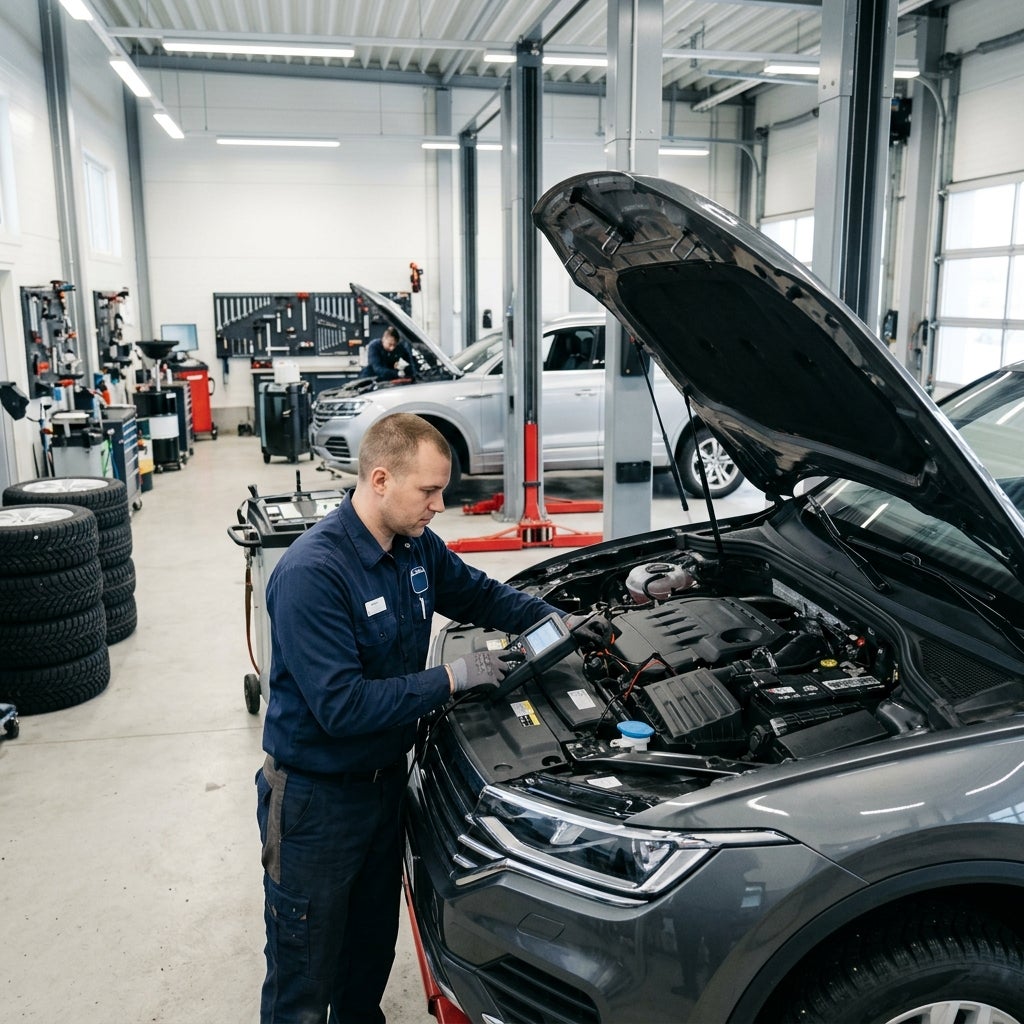

Fort Riley Relocation Car Care: Preparing Your Vehicle for Kansas Winters and Gravel Roads Direct Key Takeaway for Fort Riley Military Personnel and New Junction City Residents: Preparing a vehicle for Kansas winters and Flint Hills gravel roads requires upgrading to an antifreeze coolant ratio of 60/40 (rated down to -34°F), installing All-Weather or Winter tires with at least 6/32" tread depth, applying fluid-based rust protection instead of hard rubberized undercoating, and load-testing your battery for extreme cold-cranking capacity. Servicing these key components before winter hits prevents ice-related breakdowns and long-term chassis corrosion from road salt and sharp limestone dust. Relocating to Fort Riley brings an exciting new chapter for service members and their families. Whether you are arriving from Fort Bliss in Texas, Fort Stewart in Georgia, or Joint Base Lewis-McChord in Washington, transitioning to the central Kansas plains introduces a unique set of driving conditions. The Flint Hills region surrounding Geary County and Dickinson County is celebrated for its rolling prairie landscapes, but it also presents rigorous automotive challenges. Winter in Junction City is characterized by rapid temperature drops, howling prairie winds, freezing rain, and prolonged sub-zero cold snaps. Simultaneously, the expansive network of unpaved county roads—covered in sharp limestone gravel—demands targeted vehicle maintenance that mild-climate drivers rarely consider. At Valor Ford, located right outside the gates of Fort Riley at 1825 Goldenbelt Blvd, Junction City, KS 66441, we understand the specific stress a Permanent Change of Station (PCS) move puts on your household and your vehicles. Driving to physical training during a zero-dark-thirty polar vortex or commuting down rural gravel roads requires a vehicle tuned specifically for the local environment. Skimping on seasonal preparation can leave you stranded along Interstate 70, US Route 77, or remote county roads where cell service can be intermittent. This comprehensive guide walks you through every essential vehicle system that needs attention before the first Kansas freeze, helping you safeguard your vehicle's reliability, safety, and resale value. What Should Fort Riley-Area Drivers Check Before Kansas Winter Sets In? Understanding the Flint Hills Climate Dynamics Kansas weather is notoriously unpredictable, particularly during late autumn and early winter. The open prairie landscape allows powerful cold fronts—often called 'Blue Northers'—to sweep down from Canada unimpeded. Temperatures can plunge 40 degrees in a matter of hours, turning clear morning roads into sheet ice by afternoon peak hours. For service members driving early morning routes to post, black ice on bridges over the Republican and Smoky Hill Rivers poses an immediate hazard. In addition to extreme temperatures, the fine dust and coarse aggregate from unpaved roads across Geary and Dickinson counties infiltrate vehicle engine bays, braking components, and HVAC filters. When combined with freezing moisture and chemical de-icers used on highways, this environment accelerates wear on soft rubber seals, electrical wiring, and exposed metallic chassis parts. The Comprehensive Pre-Winter Inspection Checklist A thorough pre-winter inspection for Fort Riley drivers should prioritize systems vulnerable to sudden freeze cycles and harsh road surfaces: • HVAC Defroster & Climate Controls: Ensure cabin air filters are free of fine gravel dust and test high-output windshield defrosters for immediate clarity. • Wiper Blades & De-Icing Washer Fluid: Replace worn standard blades with heavy-duty beam or winter blades. Drain summer washer fluid completely and fill with specialized freeze-resistant fluid rated to -20°F or lower. • Weather Stripping & Door Seals: Apply silicone lubricant to rubber door gaskets to prevent doors from freezing shut after moisture freezes overnight. • Exterior Lighting & Lenses: Clean and inspect headlight and taillight assemblies. High visibility is vital during sudden lake-effect style snow squalls and heavy fog along prairie valleys. What Engine Coolant Mix Ratio Is Needed to Protect Against Sub-Zero Temperatures in Kansas? The Physics of Coolant & Freezing Point Depression Engine coolant (antifreeze) does far more than keep your engine from overheating during summer convoys; it is your engine's primary defense against catastrophic winter block cracking. Water expands by roughly 9% when it freezes. If an engine's cooling system contains too weak a concentration of ethylene glycol, ice crystals form inside the narrow radiator passages, engine block cooling jackets, and heater core. While a standard 50/50 mix of coolant and distilled water provides protection down to -34°F under laboratory conditions, real-world degradation, top-offs with plain water, and wind-chill extremes on open highways call for a safer margin. Adjusting to a 60/40 coolant-to-water ratio provides robust protection down to -60°F burst strength, ensuring your engine block remains protected even during historical polar vortex events in Central Kansas. Heater Core Circulation & Cabin Warmth A neglected cooling system directly impacts cabin heating efficiency. Over time, silicates, corrosion inhibitors, and mineral deposits drop out of suspension, clogging the small passages of your vehicle's heater core. This results in lukewarm air blowing from your vents—a miserable condition during 0°F morning commutes across post. During a professional service at Valor Ford, certified technicians test your coolant hydrometer readings, evaluate pH balance to prevent internal electrolytic corrosion, and perform high-pressure back-flushes if sediment is detected. Keeping your cooling system pristine ensures rapid cabin warm-up, clear windows, and smooth water pump lubrication throughout the winter months. To maintain optimal factory specs, you can Order Genuine Ford Parts directly through our service desk. What Type of Tire Tread and Depth Are Recommended for Driving on Kansas Gravel Roads and Winter Ice? Navigating Flint Hills Limestone Gravel The unpaved roads surrounding Fort Riley are surfaced with native Flint Hills chert and crushed limestone. This gravel features sharp, angular edges capable of slicing soft highway tire treads and causing punctures. Standard passenger tires with weak sidewalls frequently suffer stone drilling and sidewall cuts on county roads. Driving on gravel requires tough rubber compounds, reinforced ply construction, and deep tread blocks designed to eject small stones rather than holding them in grooves where they can drill into tire belts. All-Season vs. All-Weather vs. Winter Tires Many drivers arriving from warmer climates assume All-Season tires are sufficient for Kansas winters. However, standard All-Season rubber compounds harden when ambient temperatures drop below 45°F, drastically reducing traction on cold asphalt and ice. For optimal year-round durability in Junction City, consider All-Weather tires carrying the Three-Peak Mountain Snowflake (3PMSF) rating. These offer soft silica rubber compounds that stay flexible in freezing temperatures while offering puncture-resistant tread blocks suited for gravel. Tread Depth Thresholds & Cold PSI Drop While the legal minimum tread depth is 2/32", winter safety requires a minimum threshold of 6/32" for gripping slush and shedding mud. Anything lower will cause snow packing and loss of traction. Remember: Tire pressure drops by 1 to 2 PSI for every 10°F decrease in outside air temperature. Under-inflated tires on cold gravel invite wheel rim damage and premature wear. Browse Used Inventory for Winter-Ready All-Wheel Drive Vehicles Is Fluid-Based Rust Protection Better Than Rubberized Undercoating for Gravel Road Driving? The Failure Mode of Rubberized Undercoatings on Gravel For decades, heavy black rubberized aerosol sprays were marketed as the gold standard for vehicle rustproofing. However, on rural Kansas roads, rubberized coatings frequently do more harm than good. When driving at high speeds on limestone gravel roads, sharp rocks pelt the underside of your vehicle. Over time, these impact points chip, crack, and delaminate hard rubberized coatings. Road brine, liquid magnesium chloride, and wet gravel mud seep behind the cracked rubber layer. Because the rubber traps moisture against the frame, corrosion rots critical floor pans, brake lines, and frame rails completely out of sight. Why Fluid-Based Lanolin & Oil Sprays Win Fluid-based corrosion inhibitors (such as Woolwax, Fluid Film, or petroleum-based clear oils) act as active, self-healing barriers. Unlike hard coatings, fluid films never dry out or crack. When a rock strikes a frame rail treated with fluid-based protection, the active fluid migrates back over the exposed metal to heal the chip. Fluid treatments actively penetrate deep into inner boxed frame sections, rocker panels, pinch welds, and door bottoms where moisture gathers. For vehicles exposed to winter salt slurry and heavy gravel dust around Fort Riley, an annual application of fluid-based rustproofing provides vastly superior long-term chassis protection. What Services Are Typically Included in a Winter Car Preparation Package? Brake, Suspension & Chassis Inspection • Brake pad thickness and rotor surface check for emergency stops on icy asphalt. • Inspection of rubber suspension bushings, ball joints, and tie-rod boots to ensure fine gravel grit hasn't destroyed seals. • Shock and strut leak tests to guarantee vehicle stability on pitted frost-heaved roads. Electrical System & Diagnostics • Conductance and load testing of battery health, Cold Cranking Amps (CCA), and internal resistance. • Alternator output voltage check under full electrical load (defroster, high beams, seat warmers). • Terminal post cleaning and application of anti-corrosion sealing washers. Fluids, HVAC & Tire Service • Coolant freeze-point refractometer test and pH balancing. • High-velocity windshield washer solvent flush and winter blade installation. • Tire rotation, pressure calibration to door-jamb PSI specs, and tread depth check. What Is the Average Cost of Winterizing a Car at a Service Center Near Junction City, KS? Transparent Cost Breakdown for Winter Care Investing in preventative seasonal maintenance yields substantial savings compared to late-night towing fees, engine repairs, or winter accidents. Below are estimated cost ranges for professional vehicle winterization services in the Junction City and Fort Riley area: • Standard Multi-Point Winterization Package: $75 – $250 (Includes comprehensive multi-point inspection, battery load test, fluid top-offs, wiper replacement, and tire rotation). • Coolant System Flush & Refill: $120 – $180 (Full fluid exchange with factory-recommended ethylene glycol mixture). • Fluid-Based Undercarriage Rustproofing: $150 – $350 (Full chassis application of lanolin/oil corrosion barrier). • Set of 4 All-Weather/Winter Tires: Contact us for current pricing on a set of 4 all-weather or winter tires. Maximizing ROI and Avoiding Costly Repairs When weighed against the financial cost of an emergency roadside tow on Interstate 70 during a snowstorm—which can easily exceed $300—or repairing a frozen engine block ($4,000+), proactive winterization is one of the smartest investments a military family can make. At Valor Ford, we take pride in supporting our service members with current pricing, military discounts, and complete service transparency. You can easily Schedule Ford Service Today online or speak directly with our service team to build a custom vehicle prep plan suited to your vehicle's mileage and budget. If your vehicle needs major upgrades, you can also explore a Trade In Evaluation to see your vehicle's trade value toward a winter-ready Ford AWD model. Schedule Ford Service Today at Valor Ford How Cold Kansas Weather Impacts Your Vehicle Battery and Cranking Amps The Electrochemistry of Cold Weather Battery Drain Automotive batteries rely on chemical reactions between lead plates and sulfuric acid to generate electrical energy. As ambient temperatures drop, these chemical reactions slow down drastically. At 32°F, a standard automotive battery loses roughly 20% of its total cranking capacity. When temperatures plunge to 0°F, output capacity drops by 35% to 50%. Compounding this power drop, cold weather thickens engine oil from a smooth lubricant into a viscous sludge. Turning over a cold engine at sub-freezing temperatures requires up to twice as much electrical current (amps) as it does on a warm summer afternoon. A weak battery that performed fine in Texas or Florida will quickly fail on its first cold morning in Geary County. Load Testing & Cold Cranking Amp (CCA) Selection If your vehicle's battery is more than three years old, relying on a simple voltage meter is insufficient. Voltage meters indicate charge level, but fail to measure internal resistance or cranking capacity under load. A professional conductance load test at Valor Ford evaluates whether your battery can maintain sufficient voltage while delivering its rated Cold Cranking Amps (CCA). When replacing a battery for Kansas driving, always select a replacement battery that meets or exceeds your vehicle's factory CCA specification. Cleaning white lead-sulfate corrosion off battery terminals and treating posts with anti-corrosion grease ensures maximum power transfer when you turn the key during zero-degree physical training formation call. Essential Vehicle Emergency Kit Checklist for Fort Riley and Rural Kansas Drivers Power & Starting Gear • Heavy-duty jumper cables (2-gauge or thicker) or a portable lithium-ion jump starter pack. • High-efficiency 12V tire inflator with built-in pressure gauge. • High-lumen LED flashlight with spare batteries or USB charging cable. Traction & Recovery Tools • Compact folding snow shovel and ice scraper/snow brush combo. • Heavy-duty tow strap (minimum 10,000 lbs rating) with drop-forged hooks. • Traction mats or a bag of coarse cat litter/sand for slipping tires on ice. Warmth & Survival Supplies • Thermal wool blankets or Mylar emergency space blankets. • Cold-weather gloves, knit beanie, and waterproof insulated boots. • Non-perishable energy bars, bottled water (kept unfrozen in cabin), and first-aid kit. How to Wash and Protect Your Car's Finish During Kansas Gravel and Salt Seasons Paint Maintenance Against Gravel Dust & Salt Brine The combined mixture of liquid chemical de-icers and dry limestone dust creates an abrasive paste that clings to your vehicle's clear coat, door rocker panels, and wheel arches. If left unwashed, this slurry degrades paint gloss, causes clear coat pitting, and initiates surface rust along body panels. Before winter begins, apply a synthetic paint sealant or ceramic wax coating. These synthetic polymers create a non-stick hydrophobic barrier that makes it difficult for road brine and dust to bond to clear coat surfaces. Avoid aggressive dry wiping on dirty vehicles, which grinds limestone particles into the paint like sandpaper. Undercarriage Washing & Fleet Care at Valor Ford While keeping your vehicle's paint shiny looks great, washing the underside of your vehicle is far more critical for mechanical longevity. Perform high-pressure undercarriage rinses bi-weekly during winter to clear salt deposits out of wheel wells, brake calipers, and exhaust mounts. Valor Ford is dedicated to supporting the men and women stationed at Fort Riley and throughout Geary County. Whether you need specialized maintenance, high-pressure chassis care, or a reliable AWD replacement vehicle, our team is here to serve you. You can Get Directions to Valor Ford, utilize our convenient Schedule Pickup and Delivery Service, or Call us at (785) 238-5114 today! Schedule Pickup and Delivery Service with Valor Ford