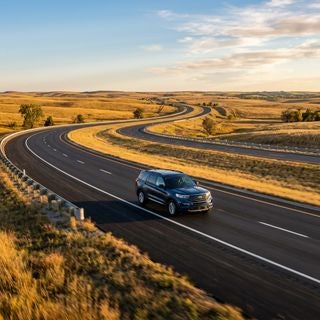
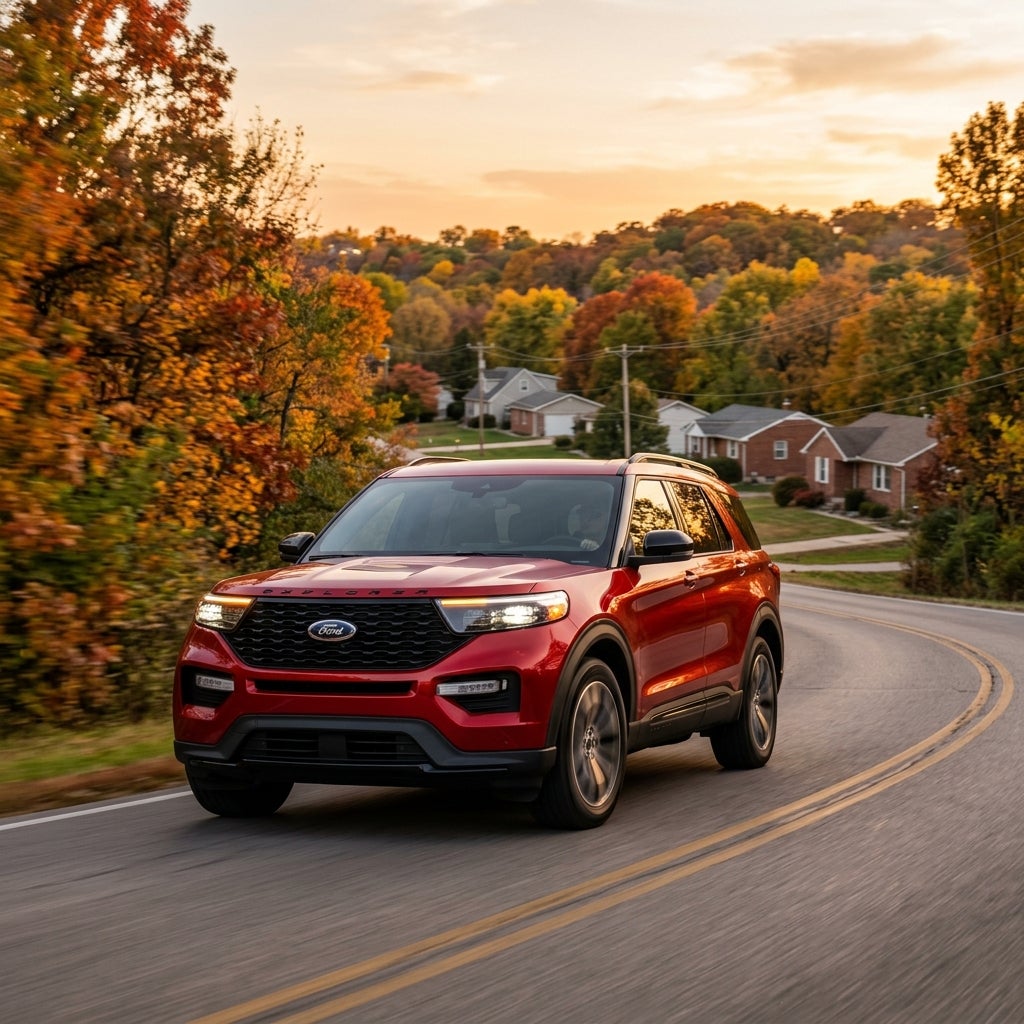
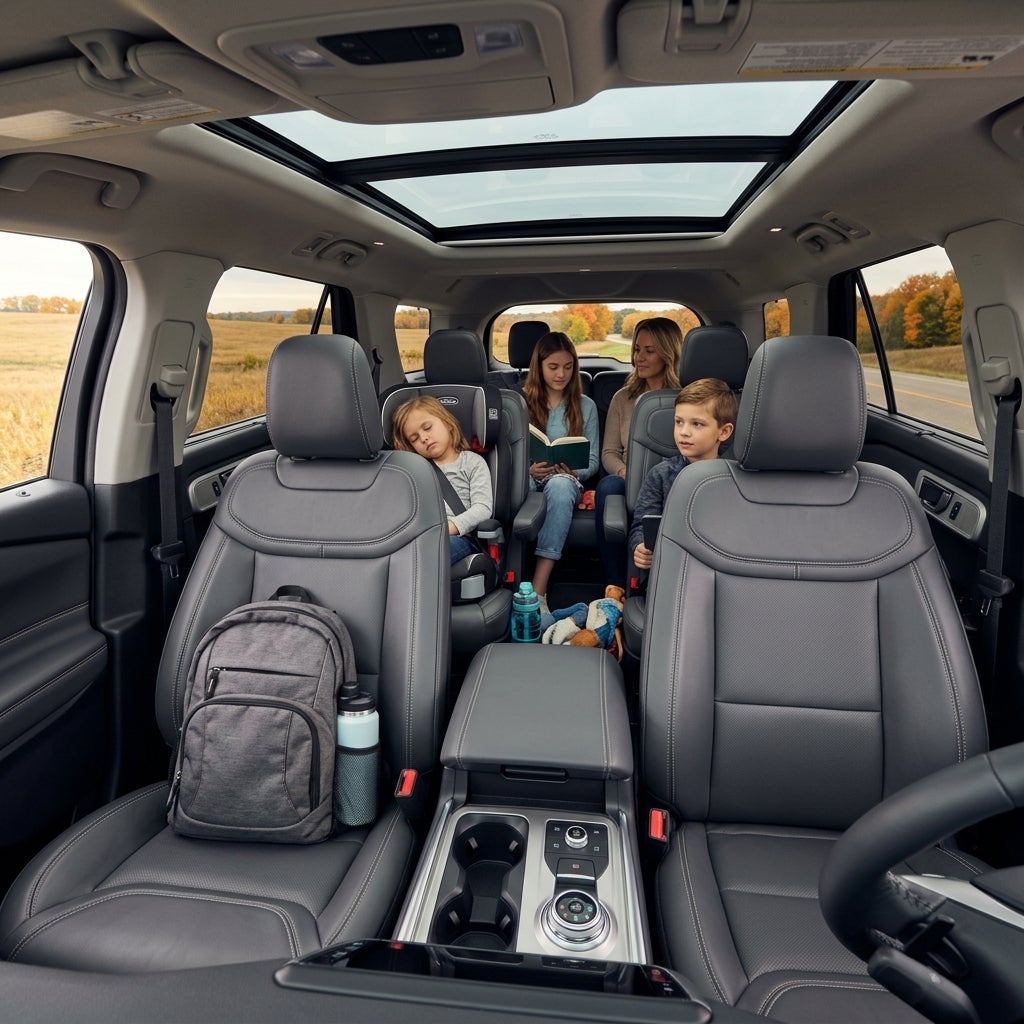
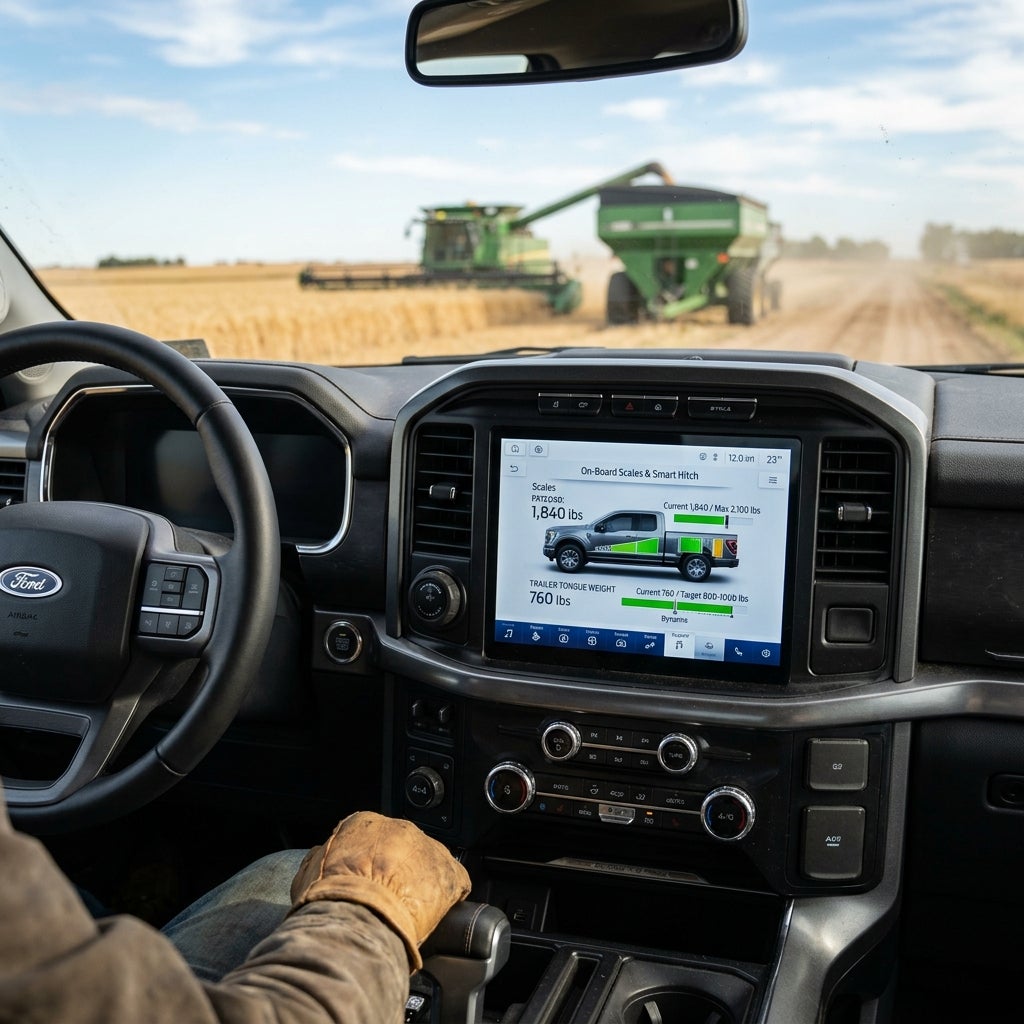
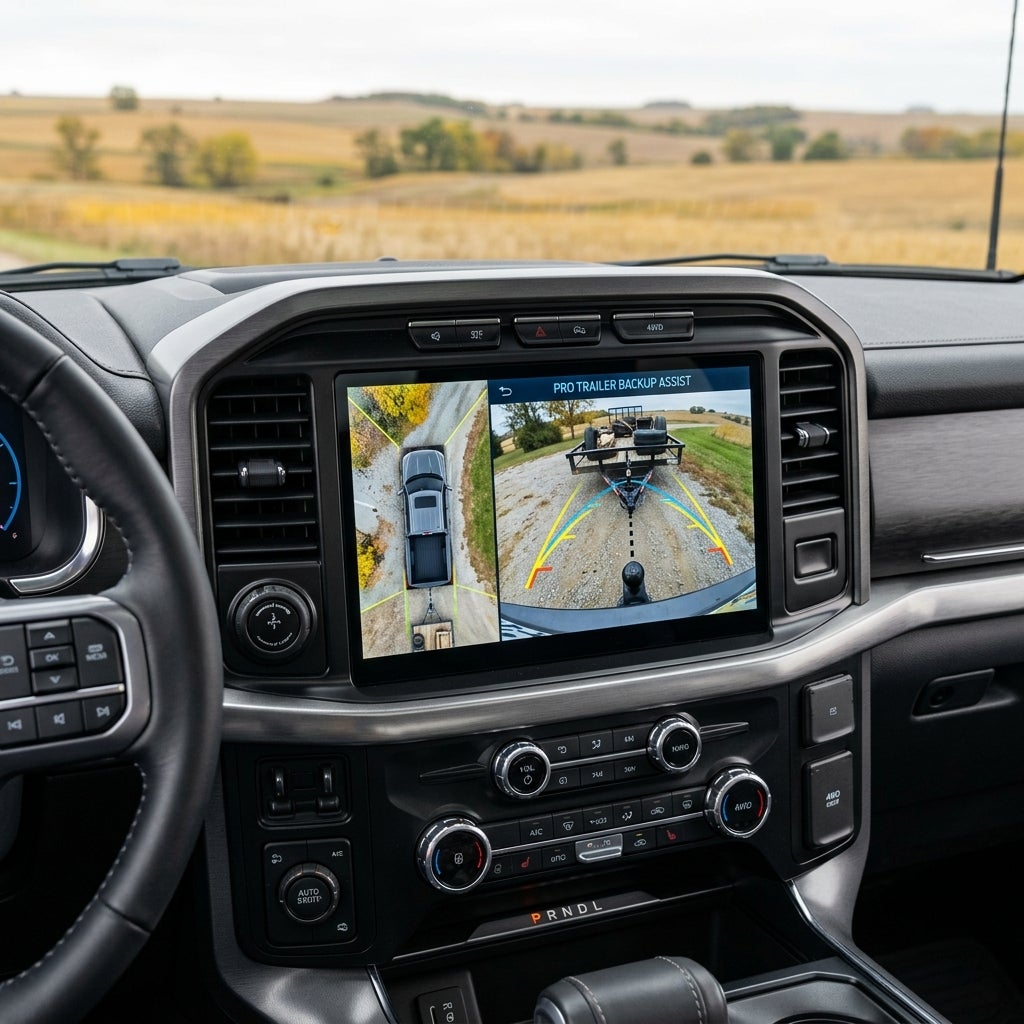
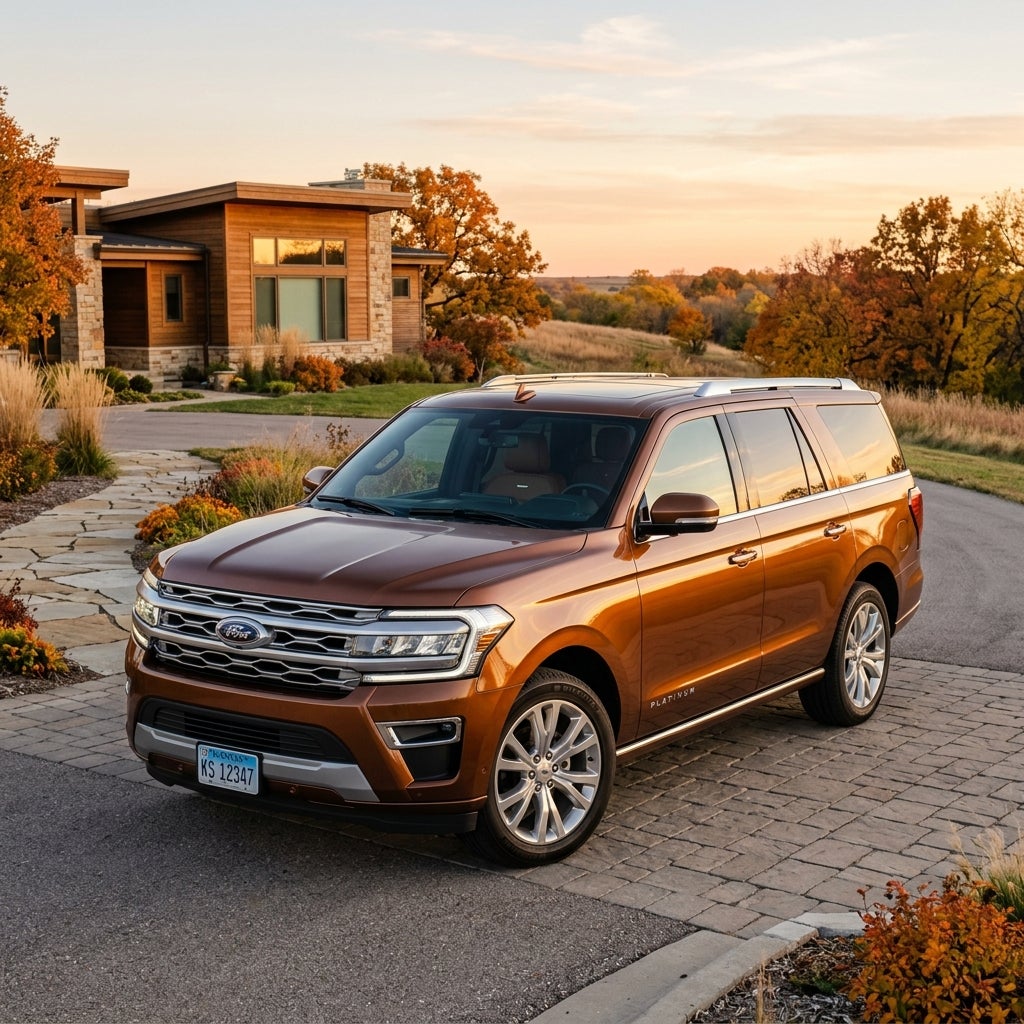
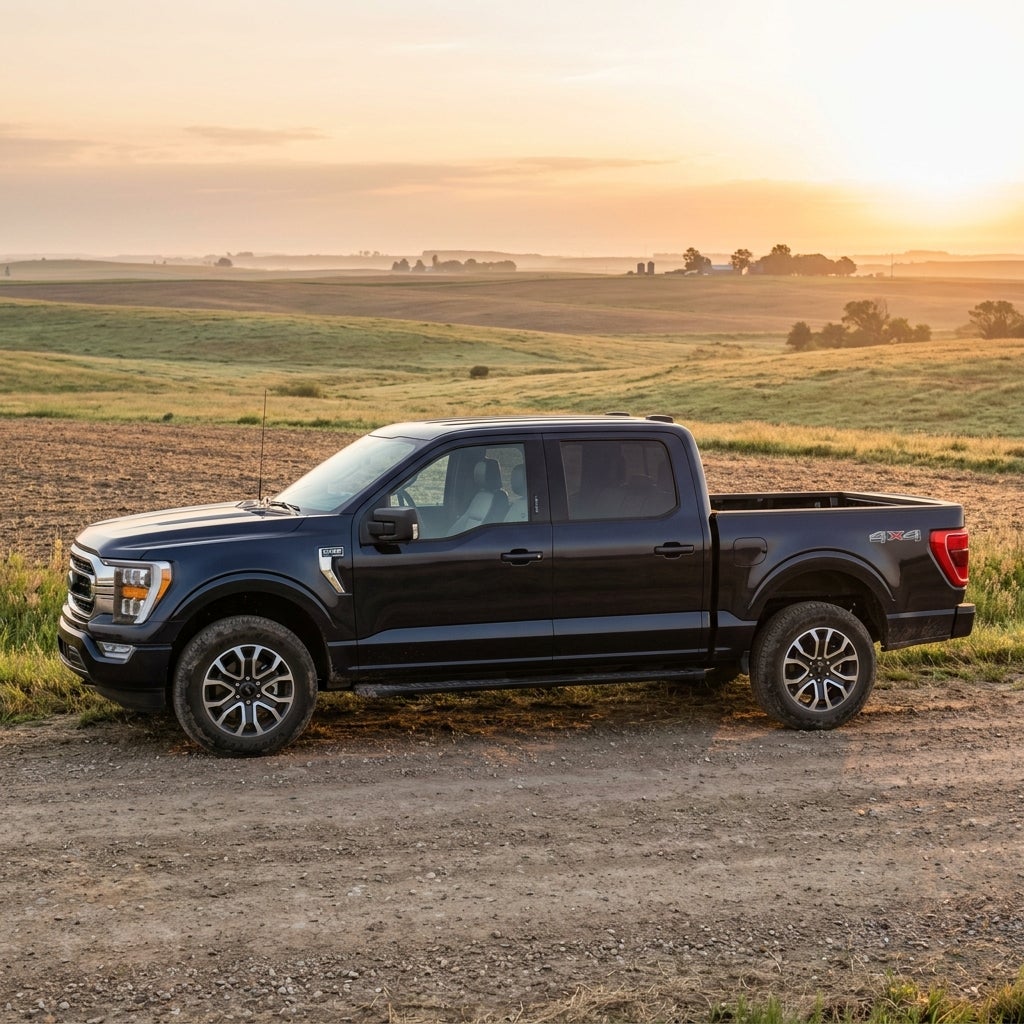
The 2026 Ford Explorer is the right three-row SUV for families who need real towing capacity, genuine all-wheel drive, and room for six passengers without crossing into full-size truck territory. Starting at $38,465 for the Active RWD 100A and stretching to $56,905 for the ST 4WD, the Explorer covers a wide range of budgets and use cases. Every trim rated here pulls up to 5,000 lbs and returns up to 29 mpg highway on rear-wheel-drive configurations, making it a practical daily driver and weekend workhorse. How Well Does the 2026 Ford Explorer Serve Families and Outdoor Enthusiasts in Geary County? The 2026 Ford Explorer is purpose-built for exactly the kind of life common to families in Geary County: six-passenger seating, 5,000 lbs of towing on most trims, and available Intelligent 4WD for dirt roads, river access points, and variable Kansas weather. For military households rotating through Fort Riley, the Explorer offers a consistent, practical platform that handles school runs, weekend fishing trips along the Kansas River, and gear-loaded hunting excursions with equal competence. The standard cargo area measures about 16 cu ft behind the third row, expanding to about 86 cu ft with the rear seats folded — enough room for a full cooler, rods, and waders on a Saturday morning departure. The EcoBoost four-cylinder found across most trims delivers 300 hp and 310 lb-ft of torque, while the ST and ST 4WD step up to a twin-turbocharged 3.0L EcoBoost V6 producing 400 hp and 415 lb-ft. That range covers everyone from the budget-conscious family looking for reliability to the performance-minded buyer who wants something more spirited on the highway. Shoppers who want to dig into the full specification breakdown before visiting can explore our 2026 Ford Explorer research pages for detailed trim comparisons. Those still weighing options might also browse our pre-owned Explorer inventory to see if a recent model fits the budget better. The Explorer competes directly with the Chevrolet Traverse, Jeep Grand Cherokee L, and Kia Telluride — but its combination of towing capacity, available AWD, and a wide trim ladder from value-oriented to performance-focused gives it a distinctive edge for buyers who want one vehicle to do many jobs. Research Ford Explorer Bold Exterior Styling of the 2026 Ford Explorer Tailored for Plains and River Valleys The 2026 Explorer presents a clean, upright silhouette — 198.7 inches long, 78.9 inches wide, and 70.2 inches tall on 4WD-equipped trims — that reads as confident without being aggressive. Painted bumpers front and rear, LED projector headlights with auto high-beam, LED daytime running lights, and LED rear and brake lights are standard across the lineup. The result is a cohesive, modern face that looks equally appropriate in a Fort Riley parking lot and on a gravel road heading toward the Kansas River. The Active trims wear black roof rails and a roof spoiler, giving them a slightly sportier stance. ST-LINE trims lean further into the athletic direction with black exterior accents and 18-inch alloy wheels. The ST and ST 4WD push hardest on presence, with a front fascia tuned for performance intent, painted brake calipers, and a more aggressive lower body treatment. At the top of the luxury tier, the Platinum and Platinum 4WD add chrome roof rails, chrome mirror caps with integrated turn signals, and auto-dimming side mirrors, creating a refined, polished exterior that suits a professional's commute as naturally as it suits a weekend drive through the rolling plains of Leavenworth County. Color choices across the lineup include metallic options such as Vapor Blue Metallic, Star White Metallic Tri-Coat, and Rapid Red Metallic Tinted Clearcoat, among others. The Tremor 4WD adds its own visual identity with off-road-specific styling cues. If your current vehicle is ready for a change, it's worth getting a trade-in estimate before you configure your next Explorer. Shoppers who also want to compare Ford's truck-based body-on-frame alternative should check out the 2026 Ford F-150 research pages to understand where each vehicle's strengths begin and end. Power and Towing Performance of the 2026 Ford Explorer for Military and Rural Driving Most 2026 Explorer trims — Active 4WD, Active 4WD 100A, Active RWD, Active RWD 100A, Platinum, Platinum 4WD, ST-LINE 4WD, ST-LINE RWD, and Tremor 4WD — run a 2.3L turbocharged four-cylinder EcoBoost engine producing 300 hp and 310 lb-ft of torque, paired with a 10-speed SelectShift automatic. The ST and ST 4WD swap in a 3.0L twin-turbocharged EcoBoost V6 rated at 400 hp and 415 lb-ft. Both engines use regular 87-octane fuel. The Utility Police Interceptor 4x4 carries its own powertrain calibration suited to its duty-cycle mission. Towing capacity is 5,000 lbs on every consumer trim except the Utility Police Interceptor 4x4, which is rated at 3,500 lbs. That 5,000-lb figure covers a fishing boat, a small travel trailer, or a loaded cargo trailer — practical for the kind of weekend use common among families near the Kansas and Missouri River corridors. Payload varies more meaningfully across trims: the heavier ST and ST 4WD carry 1,139 lbs, while the Active, Platinum, and ST-LINE configurations all rate at 1,467 lbs. The Tremor 4WD sits at 1,346 lbs, and the Utility Police Interceptor 4x4 tops the chart at 2,108 lbs. The table below captures the full picture across all covered trims: Feature Active 4WD Active 4WD 100A Active RWD Active RWD 100A Platinum Platinum 4WD ST ST 4WD ST-LINE 4WD ST-LINE RWD Tremor 4WD Utility Police Interceptor 4x4 Seating 6 6 6 6 6 6 6 6 7 7 6 7 Cargo (all seats up) 16.3 cu ft 16.3 cu ft 16.3 cu ft 16.3 cu ft 16.3 cu ft 16.3 cu ft 16.3 cu ft 16.3 cu ft 16.3 cu ft 16.3 cu ft 16.3 cu ft 52.0 cu ft Curb Weight 4,303 lbs 4,303 lbs 4,303 lbs 4,303 lbs 4,303 lbs 4,303 lbs 4,631 lbs 4,631 lbs 4,303 lbs 4,303 lbs 4,424 lbs 4,732 lbs Towing 5,000 lbs 5,000 lbs 5,000 lbs 5,000 lbs 5,000 lbs 5,000 lbs 5,000 lbs 5,000 lbs 5,000 lbs 5,000 lbs 5,000 lbs 3,500 lbs Payload 1,467 lbs 1,467 lbs 1,467 lbs 1,467 lbs 1,467 lbs 1,467 lbs 1,139 lbs 1,139 lbs 1,467 lbs 1,467 lbs 1,346 lbs 2,108 lbs Drivetrain choices matter here. The Active 4WD and Active 4WD 100A use Ford's Intelligent 4WD system, which operates in full-time and part-time modes for automatic traction management on wet or loose surfaces. The Active RWD and Active RWD 100A deliver rear-wheel drive with a lighter curb weight and slightly better fuel economy — 24 mpg combined versus 23 mpg for the 4WD variants. Buyers who want the most capable off-road-oriented Explorer should look at the Tremor 4WD, which adds specific off-road tuning and terrain management on top of the Intelligent 4WD base. Families considering the Explorer for serious towing who also want to compare a purpose-built towing platform can review the 2026 Ford F-250 research pages. When you're ready to move forward on financing, prequalifying online takes only a few minutes and can simplify the buying process considerably. Spacious Interior Comfort of the 2026 Ford Explorer for Family Outings Six passengers fit comfortably in most Explorer trims, with the ST-LINE 4WD, ST-LINE RWD, and Utility Police Interceptor 4x4 offering seven-seat configurations. The cabin dimensions are generous throughout: 43 inches of front leg room, 39 inches in the second row, and 32.2 inches in the third row. Front headroom measures 40.7 inches, second-row headroom 40.5 inches, and third-row headroom 38.9 inches. Shoulder room is 62.1 inches up front and 61.9 inches in the second row, with 54.6 inches in the third — wide enough to seat adults without the shoulder-to-shoulder squeeze common in smaller three-row crossovers. Seating materials climb noticeably as you move up the trim ladder. The Active 100A trims start with upgraded cloth in Dark Gray/Onyx. The standard Active 4WD and Active RWD add the optional Active Comfort Package, which upgrades the passenger seat to four-way power adjustment and swaps the cloth for ActiveX synthetic leather — a durable, easy-to-clean surface that holds up well to fishing gear, muddy boots, and the general chaos of family life. The Platinum and Platinum 4WD feature heated and ventilated front seats, heated second-row seats, memory seating for the driver, and a leather-trimmed steering wheel with electric adjustment. The ST uses an ActiveX material with Miko suede-like inserts and an ST logo for a sport-focused look. Climate control is tri-zone automatic across all trims, with rear passenger controls standard. USB charging ports are distributed throughout: 4 front, 2 rear, and 2 third-row on the Active 4WD and Active RWD configurations. The Platinum adds a wireless charging pad and a 110-volt household-style power outlet — useful for charging laptops or running small electronics on longer road trips. Keeping the interior in top condition over time is straightforward with access to genuine Ford replacement parts and accessories for floor liners, cargo management systems, and other wear items. Tech Features That Keep You Connected Between Fort Riley and Home in the 2026 Ford Explorer Every 2026 Explorer in this lineup ships with a 13.2-inch center touchscreen and a 12.3-inch digital instrument cluster as standard equipment. The infotainment system supports wireless Apple CarPlay and wireless Android Auto — both included for the life of the vehicle — so drivers can navigate, stream, and take calls without plugging in a phone. Voice control via Google Assistant is built in, and the system includes a built-in internet browser and OEM data plan connectivity via an embedded SIM card. The Ford Connectivity Package is available as a one-time purchase across the Active trims, extending the embedded Wi-Fi hotspot subscription to 84 months with up to 999 GB per month of data — practical for families who want a reliable in-vehicle network for kids' devices on longer drives. Standard remote services include remote start, lock/unlock, vehicle location, theft alert, vehicle diagnostics, and driving history analysis, all accessible through the Ford App. These services come with a 12-month included subscription. The telematics system also includes 911 Assist, which automatically contacts emergency services following a detected collision. The Platinum and Platinum 4WD add traffic sign recognition to the instrument cluster, a feature that reads posted speed limits and displays them in the driver's sightline — useful on rural Kansas roads where speed limits change frequently. The ST Sun and Sound Package, available on the ST trim, upgrades the audio system to a 14-speaker Bang & Olufsen setup with a subwoofer, surround sound, and 980 watts of output — a meaningful step up from the standard system. Over-the-air software updates keep the system current without requiring a service visit, and the platform supports programmable smart key settings tied to individual driver profiles. Safety Systems Designed for Military Families and Local Commuters in the 2026 Ford Explorer Every 2026 Explorer covered here comes standard with Ford CoPilot360 Assist+ or the upgraded Ford CoPilot360 Assist 2.0, depending on trim. At the base level, CoPilot360 Assist+ delivers adaptive cruise control with stop-and-go capability, automatic emergency braking (front low-speed), Rear Cross Traffic Braking using radar, BLIS (Blind Spot Information System), the Lane-Keeping System, and Rear Parking Sensors with camera guidance. The system activates as low as 3 mph, which matters in parking lots, school pickup lines, and slow-moving traffic around base gates. The Platinum, Platinum 4WD, and ST trims step up to Ford CoPilot360 Assist 2.0, which adds front and rear low-speed automatic emergency braking — covering both directions of a potential collision — alongside the full suite above. The Platinum trims also include a 360-Degree Camera with Split View, providing a bird's-eye perspective that is genuinely useful when parking in tight spaces or navigating unfamiliar terrain. BlueCruise hands-free highway driving technology is available as an optional add-on on the Platinum, Platinum 4WD, and ST trims, enabling hands-free lane centering on pre-mapped highway sections. The airbag count is 7 across all covered trims, including front, front-side, driver knee, and side curtain airbags covering all three rows. The structure includes four-wheel ventilated disc brakes, ABS, brake assist, cornering brake control, hill hold, electronic parking brake with auto-hold, and AdvanceTrac with RSC (Roll Stability Control) on every trim. NHTSA rates the Explorer at 5 stars overall, with 5-star frontal and side impact scores and a 4-star rollover rating. IIHS testing returns Good scores on moderate overlap front, small overlap front driver side, side impact, headlights, and seat belt reminder categories. 2026 Ford Explorer Trim Pricing Breakdown Perfect for Working Families The 2026 Explorer's twelve-trim lineup spans a wide price range, giving families flexibility to match their budget to their needs. The Active RWD 100A starts at $38,465 — the most affordable entry point in this group — while the ST 4WD tops the consumer lineup at $56,905. Every trim carries a $1,795 destination charge, except the Utility Police Interceptor 4x4, which carries a $1,695 destination charge. Feature Active 4WD Active 4WD 100A Active RWD Active RWD 100A Platinum Platinum 4WD ST ST 4WD ST-LINE 4WD ST-LINE RWD Tremor 4WD Utility Police Interceptor 4x4 Base MSRP $42,585 $40,465 $40,585 $38,465 $50,965 $52,965 $54,905 $56,905 $47,155 $45,155 $48,965 $48,550 Destination Charge $1,795 $1,795 $1,795 $1,795 $1,795 $1,795 $1,795 $1,795 $1,795 $1,795 $1,795 $1,695 A few pricing patterns worth noting: the 100A suffix on the Active trims represents a lower-content build that saves roughly $2,000 to $2,100 compared to the standard Active versions. Shoppers who want AWD capability at the lowest possible price should look at the Active 4WD 100A at $40,465. Those who prioritize fuel economy and are comfortable without AWD will find the Active RWD 100A at $38,465 the lowest MSRP entry point into the Explorer lineup. The ST-LINE trims — $45,155 for RWD and $47,155 for 4WD — offer sport exterior styling and seven-passenger seating at a price point well below the ST's performance-focused powertrain premium. The Tremor 4WD at $48,965 slots between the ST-LINE 4WD and Platinum, adding off-road capability for buyers who frequently travel on gravel or unpaved terrain. The Platinum and Platinum 4WD are the luxury tier, with the 4WD version commanding a $2,000 premium over the rear-wheel-drive Platinum. All prices shown are base MSRP before options, packages, and dealer-installed accessories. Contact Us for Financing Information Warranty, Maintenance, and Service Insights for 2026 Ford Explorer Owners The 2026 Ford Explorer carries a 3-year/36,000-mile bumper-to-bumper warranty and a 5-year/60,000-mile powertrain warranty across all covered trims. Roadside assistance coverage matches the powertrain term at 5 years/60,000 miles, which means owners have manufacturer-backed help available for the first five years of ownership — a meaningful benefit for families who put consistent miles on their vehicles through commuting, school runs, and weekend travel. The corrosion/perforation warranty extends to 5 years with unlimited mileage. Paint is covered for 3 years/36,000 miles. The Explorer also supports over-the-air OS-level software updates, which means the infotainment system and connected features can be improved without a dealership visit. Remote services — including remote start, vehicle diagnostics, and theft alert — come with a 12-month included subscription, after which owners can evaluate renewal options based on their usage. Ford's 911 Assist telematics system is included and operates independently of subscription status once activated. For owners in Geary County and the surrounding area, keeping up with scheduled maintenance at an authorized Ford dealer ensures warranty coverage remains intact and that any technical service bulletins are applied promptly. The team at Valor Ford at 1825 Goldenbelt Blvd, Junction City, KS 66441 handles Explorer service for the local community. Booking routine maintenance — oil changes, tire rotations, brake inspections — is straightforward through our Ford service scheduling page. Staying current on maintenance intervals also helps retain resale value, which matters when it comes time to trade in or sell. Schedule Ford Service Today Awards and Expert Recognition Highlighting the 2026 Ford Explorer's Strengths for Kansas Drivers No specific awards data was provided in the catalog for the 2026 Ford Explorer, so this section draws on the verified crash test ratings and safety scores confirmed in the specification data. The Explorer's independently verified safety performance is one of its strongest selling points for buyers who prioritize protection for their families. NHTSA awarded the Explorer an overall 5-star rating, with 5-star scores in both the frontal crash and side impact categories, and a 4-star rollover rating. IIHS testing returned Good ratings — the highest available — across the moderate overlap front test, small overlap front driver-side test, side impact, headlights, and seat belt reminder evaluations. These ratings carry real weight for military families and local commuters who regularly drive rural two-lane highways, navigate post-gate traffic, and share roads with farm equipment and commercial trucks. A 5-star NHTSA frontal rating means the vehicle's structure and restraint systems performed at the highest measured level in standardized frontal crash scenarios. The IIHS Good headlight rating confirms the Explorer's LED projector system illuminates the road adequately at highway speeds — a practical advantage on unlit rural roads after dark. For families comparing the Explorer against the Chevrolet Traverse, Jeep Grand Cherokee L, or Kia Telluride, this safety profile is a concrete differentiator worth factoring into the decision alongside price and feature content. Frequently Asked Questions from Buyers About the 2026 Ford Explorer The Active RWD 100A at $38,465 is the most affordable entry point and still includes the full Ford CoPilot360 Assist+ safety suite, a 13.2-inch touchscreen, wireless Apple CarPlay and Android Auto, tri-zone automatic climate control, and a 5-year/60,000-mile powertrain warranty. Families who want AWD capability without a large price jump should consider the Active 4WD 100A at $40,465, which adds Intelligent 4WD for about $2,000 more. Both 100A trims sacrifice some comfort features — the passenger seat is manual rather than powered — but deliver the core capability and safety technology the Explorer is known for. Yes. Every consumer trim except the Utility Police Interceptor 4x4 is rated at 5,000 lbs of towing capacity. A typical aluminum fishing boat with trailer weighs between 1,500 and 3,500 lbs, well within that limit. The Explorer comes standard with trailer towing preparation and a trailer stability program across all trims. For heavier trailers, payload capacity matters too: most trims carry 1,467 lbs of payload, though the ST and ST 4WD drop to 1,139 lbs due to their heavier curb weight. Yes. Both the ST-LINE 4WD and ST-LINE RWD are configured with seven-passenger seating — a 2+3+2 layout — making them the most affordable trims in this lineup with that capacity. The standard Active and Platinum trims seat six in a 2+2+2 captain's chair configuration. A second-row bench with E-Z entry is available as an option on several trims to convert to seven seats if preferred. The rear-wheel-drive Active trims (Active RWD and Active RWD 100A) return 20 city / 29 highway / 24 combined mpg. The all-wheel-drive Active trims (Active 4WD and Active 4WD 100A) return 20 city / 27 highway / 23 combined mpg. The difference is 2 mpg on the highway and 1 mpg combined — modest, but meaningful over tens of thousands of miles of commuting. The ST and ST 4WD, powered by the 3.0L EcoBoost V6, return 18 city / 25 highway / 21 combined mpg. Valor Ford is located at 1825 Goldenbelt Blvd, Junction City, KS 66441. You can also reach the team directly at (785) 238-5114 to ask about current inventory, trim availability, and scheduling a test drive. Shoppers who are also considering a more off-road-focused Ford platform may want to look at the new Ford Bronco Badlands inventory as an alternative for buyers who prioritize open-air capability over three-row family seating. Research Ford Explorer Vehicle specification data © JATO Dynamics Limited.