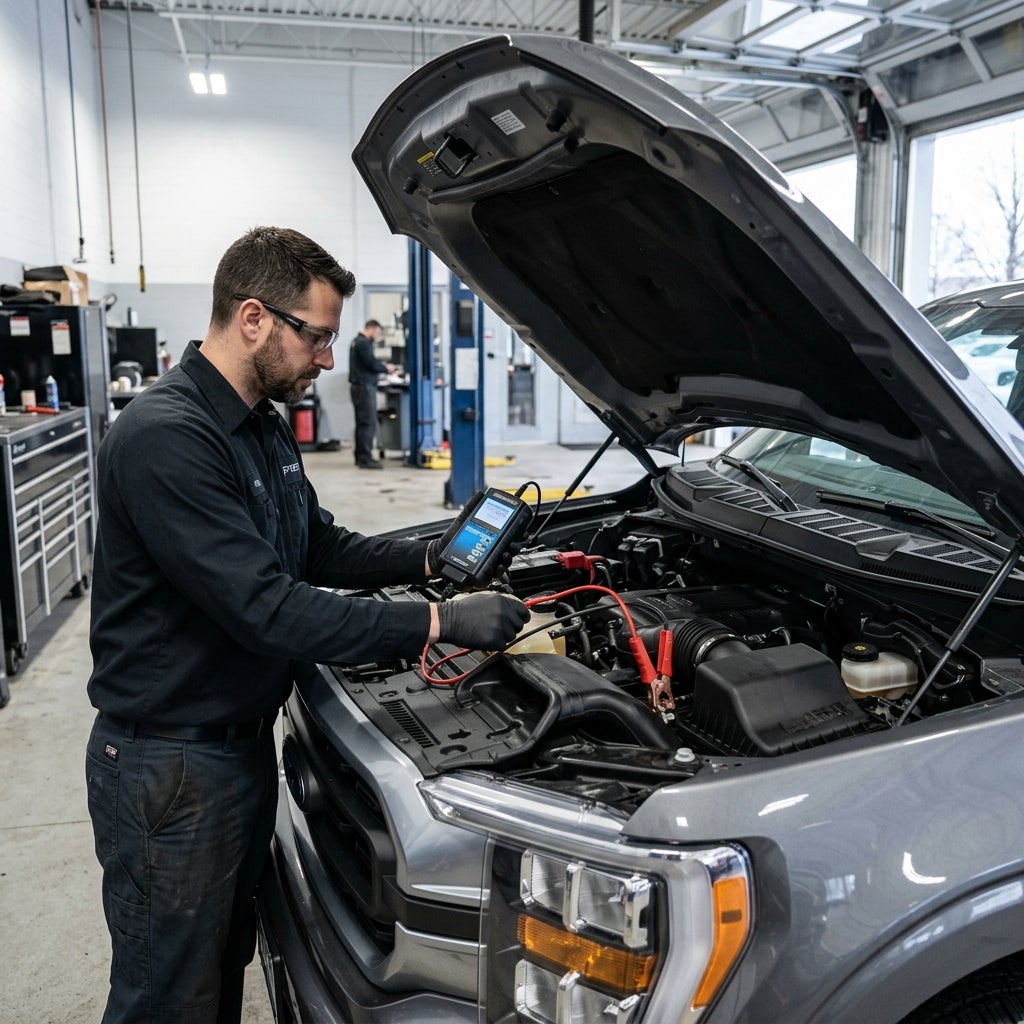
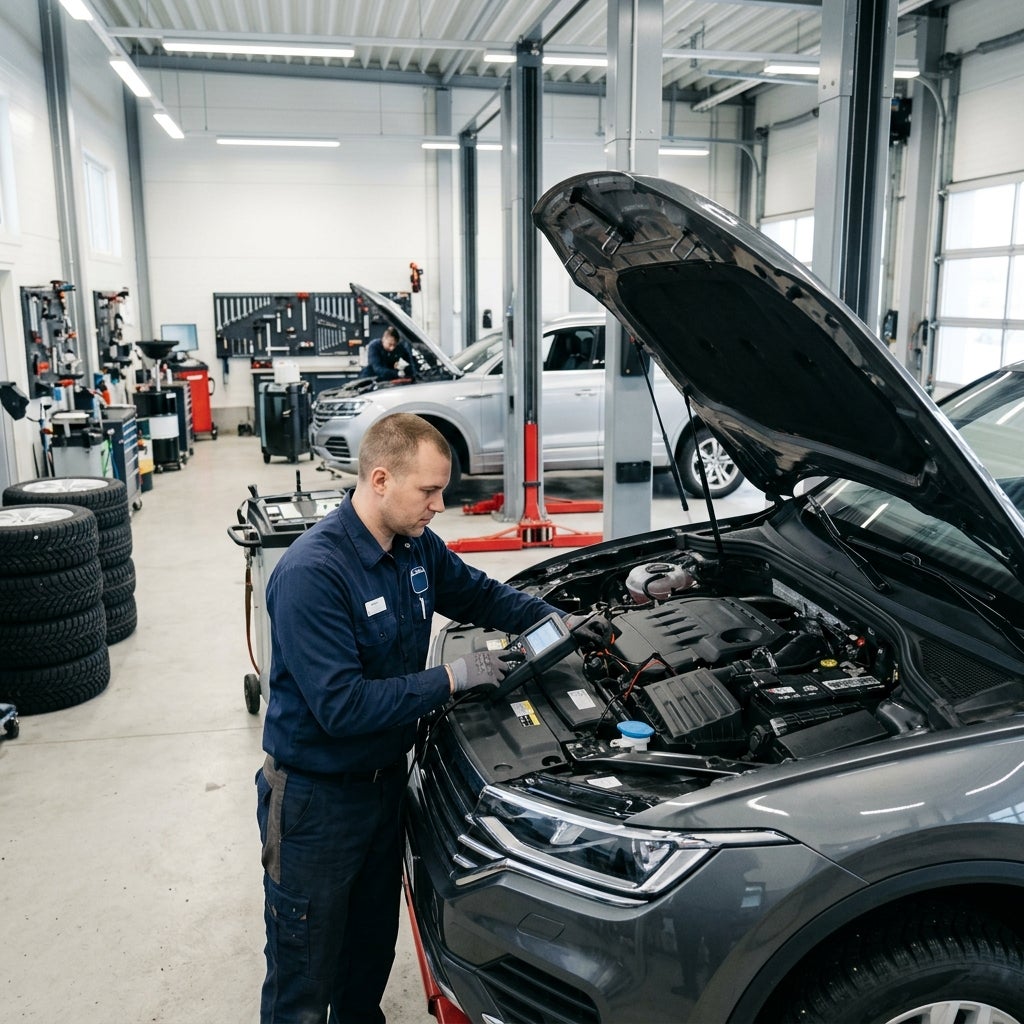
How Should You Prepare a Ford Battery for Sub-Freezing Kansas Weather? The Bottom Line: To prepare your Ford battery for sub-freezing Kansas weather, schedule a comprehensive digital load test before the first severe freeze hits Geary and Dickinson counties. Clean any surface terminal corrosion with a baking soda wash, verify a minimum Cold Cranking Amps (CCA) rating of at least 650 CCA for sedans or 750–850 CCA for Ford F-150 and Super Duty trucks, maintain continuous open-circuit voltage above 12.4V, and upgrade to an Absorbent Glass Mat (AGM) battery if your vehicle is parked outdoors overnight near Fort Riley or Junction City. Early cold-weather prep guarantees reliable morning starts when arctic cold fronts sweep across the Flint Hills. When sub-zero arctic air masses drop southward across the Kansas plains, automotive batteries face a severe double whammy: internal chemical reactions slow down dramatically while engine oil thickens, requiring significantly higher amperage to turn over the crankshaft. A battery that functioned adequately during mild October autumn mornings can fail without warning when temperatures drop into the single digits along the I-70 corridor. Taking proactive measures—testing state-of-charge, inspecting cables, securing terminal connections, and assessing cold cranking capacity—prevents sudden winter strandings at home, at work, or on rural gravel roads. Schedule Ford Battery Test Today Meet the Expert: Service Director Mike Hogg on Kansas Winter Preparedness For over 20 years, Service Director Mike Hogg has guided vehicle owners across Junction City, Fort Riley, and surrounding Dickinson County through demanding Kansas weather extremes. Having handled thousands of winter service appointments, Mike understands how sudden overnight freezes impact vehicle electrical systems, turbos, fluids, and mechanical components.
"Kansas winters are notoriously unforgiving because of extreme temperature swings," notes Mike. "You can go from 60°F on Tuesday afternoon down to 4°F with wind chills well below zero by Wednesday morning. That rapid thermal contraction puts immense strain on battery plates, terminal post seals, and starting systems. My goal in this Q&A is to give Ford drivers practical, actionable advice that prevents cold-weather breakdowns before they happen."
Whether you commute daily across Geary County, tow livestock trailers along rural unpaved routes, or park on base at Fort Riley during field training deployments, Mike's real-world insights provide the blueprint for uninterrupted winter mobility. Q: How Should You Prepare a Ford Battery for Sub-Freezing Kansas Weather and What CCA Rating Is Recommended? Interviewer: Mike, let's dive right into the core issue. When Kansas weather plunges below zero, why do so many batteries suddenly fail, and how should Ford owners prepare their vehicles ahead of time? Mike Hogg: It comes down to basic electrochemistry and mechanical resistance. At 32°F, a standard lead-acid battery loses approximately 20% of its available starting power. When the thermometer drops to 0°F, that loss jumps to roughly 50%. At the exact moment your battery has lost half its capacity, your engine requires up to twice as much current to crank over because motor oil thickens in cold temperatures.
To prepare properly, start with a professional conductive digital load test—not just a simple voltmeter check. Voltmeter readings only tell you surface voltage, whereas a digital load test measures the internal conductance and reserve capacity of the cell plates. Secondly, ensure your battery cable terminals are completely free of oxidation and torqued tightly. Corrosion creates electrical resistance, which generates heat and reduces amperage delivery to your starter motor. Interviewer: What Cold Cranking Amperage (CCA) ratings do you recommend for drivers in Junction City and Fort Riley? Mike Hogg: Cold Cranking Amps measure the number of amperes a 12-volt battery can deliver at 0°F for 30 seconds while maintaining a voltage of at least 7.2 volts. Here is what we mandate for Midwest winter driving: • Sedans & Compact Crossovers (e.g., Ford Escape, Fusion): Minimum 650 CCA. An AGM battery with 700 CCA is ideal. • Mid-Size SUVs & Light Trucks (e.g., Ford Explorer, Ranger, Maverick): Minimum 700 to 750 CCA. • Full-Size Trucks & Heavy Duty (e.g., Ford F-150, F-250, F-350 Super Duty): Minimum 750 to 850+ CCA per battery. For Super Duty Power Stroke Diesel models equipped with dual-battery setups, both batteries must be tested together and replaced in matched pairs to prevent uneven charging loads.
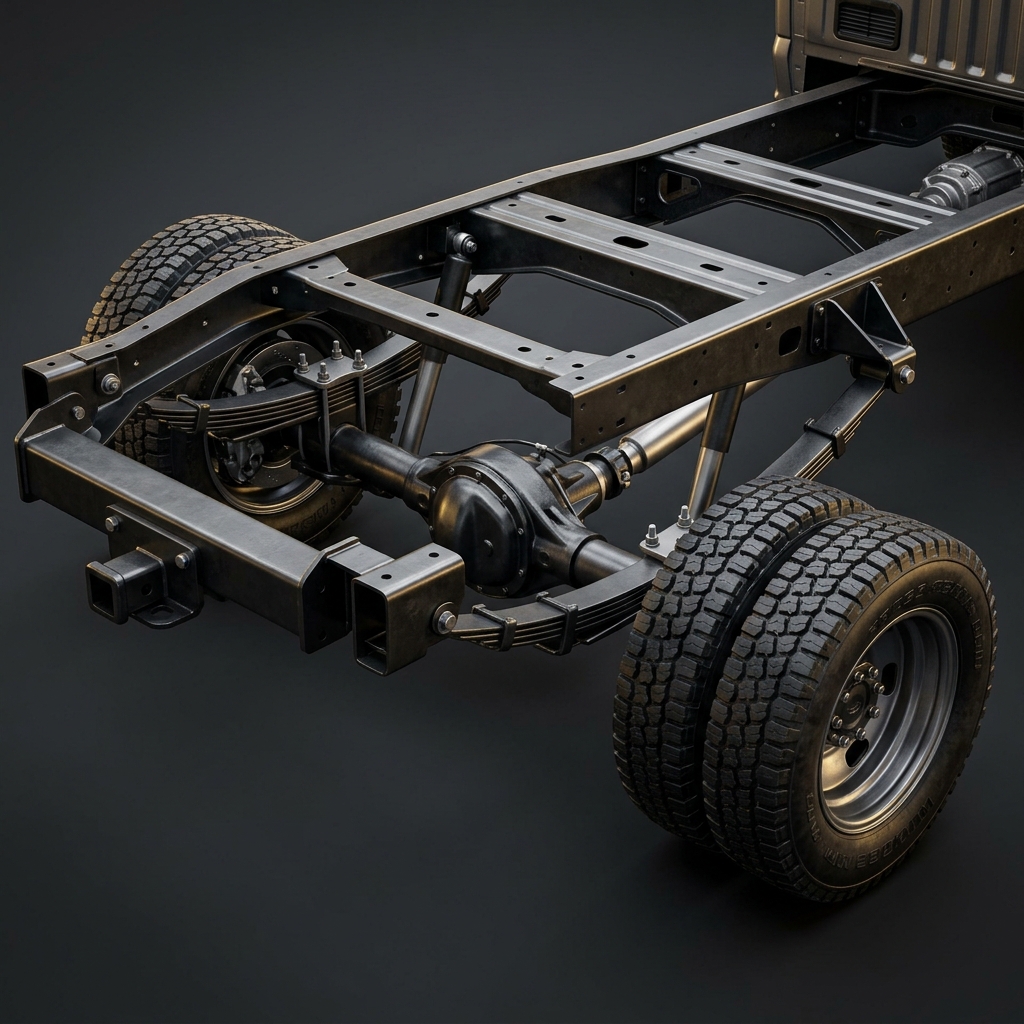
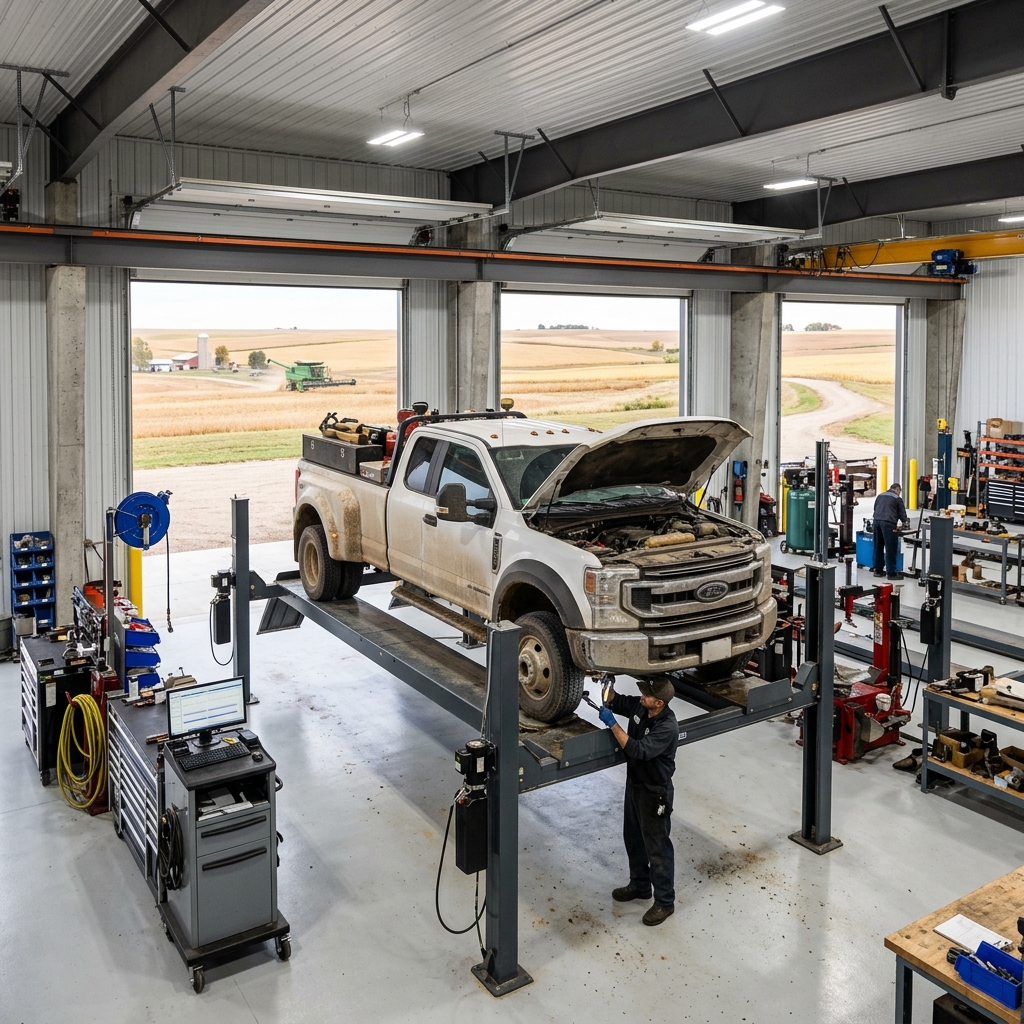
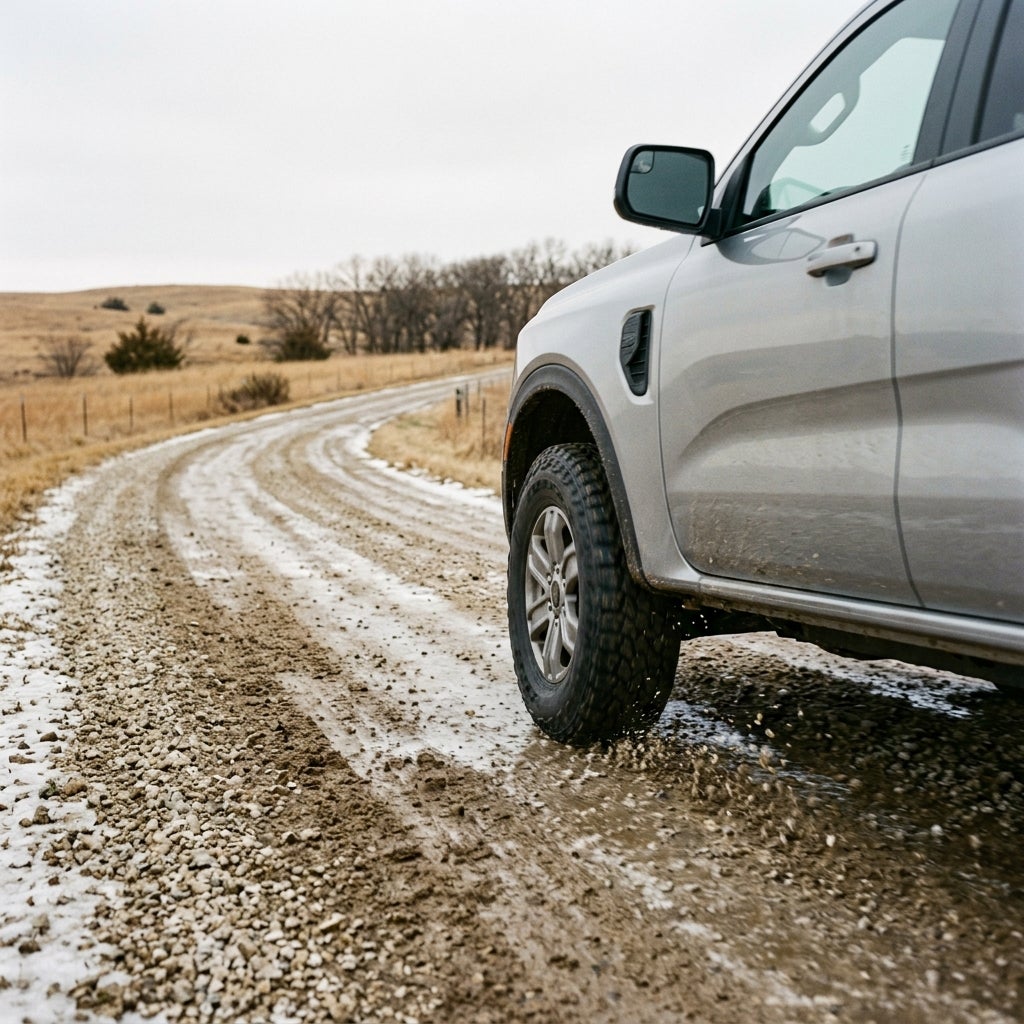
If you park outdoors overnight in Dickinson or Geary County, upgrading to a high-CCA Motorcraft AGM battery is one of the single best investments you can make. Ford Vehicle Category Recommended Minimum CCA Battery Type Recommendation Primary Kansas Winter Benefit Compact SUV / Sedan (Escape, Edge, Fusion) 650 - 700 CCA Motorcraft Tested Tough MAX / AGM Reliable daily starting in sub-zero driveways Mid-Size SUV / Truck (Explorer, Ranger, Maverick) 700 - 750 CCA Motorcraft AGM High reserve capacity for heated seats & defrost Full-Size Truck (F-150 EcoBoost / V8) 750 - 800 CCA Motorcraft AGM Group 65/48 Supplies auto start-stop & high starting load Super Duty Diesel (F-250 / F-350 6.7L) 800 - 850 CCA (Dual Array) Dual Matched Motorcraft AGM Powers glow plugs & grid heaters in sub-zero cold Q: What Specific Services Are Included in Ford's Winter Maintenance Package? Interviewer: Mike, when a customer books a winter readiness inspection at Valor Ford, what technical checks and maintenance services are performed to safeguard their vehicle? Electrical & Battery Diagnostics We conduct a comprehensive Motorcraft digital conductance test checking CCA capacity, internal cell resistance, starter draw, and alternator charging output. We clean terminal posts, apply anti-corrosion protection sealant, and verify battery tie-down security against rough gravel road vibrations. Coolant & Fluid Freeze Protection Using a calibrated optical refractometer, we test your Ford Yellow Coolant concentration to guarantee freeze protection down to -35°F or lower. Diluted engine coolant can freeze inside radiator cores or engine blocks, leading to catastrophic internal cracks during deep Kansas freezes. Safety, Brakes & Visibility We perform a thorough 83-point check inspecting brake pad thickness, hydraulic lines, wiper blade rubber flexibility, washer fluid reservoir fill with sub-zero de-icing fluid (-20°F rated), suspension bushings, headlight clarity, and tire tread depth across all four wheels. Prevent unexpected breakdown expense by scheduling your seasonal inspection early. Drivers can easily Schedule Ford Service Today at Valor Ford online or Call us at (785) 238-5114 to speak directly with our service desk. Schedule Winter Service Package Q: What Belongs on a Pre-Winter Readiness Checklist for Kansas Freeze and Gravel Roads? Interviewer: Rural driving around Dickinson County presents unique challenges like unpaved corrugated gravel, mud slush, and sudden drifts. What essential items belong on every driver's winter checklist? Mike Hogg: Driving in central Kansas requires preparing for both cold weather and rugged surface conditions. Here is our master checklist: 1. Battery Open-Circuit Voltage & Mount Inspection: Verify static voltage is above 12.4V (ideally 12.6V+). Gravel road vibration can loosen battery hold-down brackets, causing internal plate damage. Ensure the battery clamp is secure. 2. Tire Pressure Monitoring (TPMS): Ambient temperature drops reduce tire pressure by roughly 1 PSI for every 10°F drop. Underinflated tires wear rapidly on gravel roads and reduce traction on snow. 3. Suspension & Shock Absorber Inspection: Washboards on county gravel roads beat up strut mounts, ball joints, and shocks. Worn shocks reduce tire contact patch area on slick ice. 4. Sub-Zero Washer Fluid Top-Off: Summer washer fluid will freeze solid, cracking fluid reservoirs and pump lines. Fill with -20°F or -30°F rated de-icer fluid. 5. Winter Emergency Roadside Kit: Tow strap, heavy jumper cables, portable lithium booster pack, thermal blankets, flashlight, folding shovel, and traction sand or cat litter. Q: Are 3-Peak Mountain Snowflake Rated All-Terrain Tires Adequate for Kansas Winters? Interviewer: Many Ford truck and SUV owners fit 3-Peak Mountain Snowflake (3PMSF) rated all-terrain tires like the BFGoodrich KO2 or Falken Wildpeak. Are these adequate for Kansas winters, or should drivers invest in dedicated snow tires? Mike Hogg: That is one of our most common customer questions. The short answer is: 3PMSF all-terrain tires are excellent for about 85% of Kansas winter conditions, especially on packed snow, light slush, and muddy unpaved roads. However, drivers need to understand the technical distinctions. The 3PMSF rating certifies that a tire meets or exceeds a specific acceleration traction threshold on medium-packed snow. The rubber compound in a 3PMSF all-terrain tire remains more flexible in cold weather than standard all-season highway tires. If you drive a Ford F-150 or Ford Bronco on rural gravel and highway routes around Junction City, high-quality 3PMSF all-terrain tires provide strong multi-season versatility. Mike Hogg (continued): Where dedicated winter tires (like the Bridgestone Blizzak or Michelin X-Ice) outperform 3PMSF all-terrains is on pure black ice and hard-packed freezing rain, particularly on high-speed bridges like the Kansas River overpasses on I-70 or Highway 77.
Dedicated winter tires utilize ultra-soft hydrophilic rubber compounds infused with millions of microscopic sipes that create micro-pumping action to suck away thin surface water films on ice. A 3PMSF all-terrain tire has stiffer tread blocks designed for rock and gravel durability, so it cannot match a dedicated winter tire's stopping distance on smooth glare ice.
If your daily commute involves early morning highway driving before salt trucks arrive, dedicated winter tires offer maximum stopping confidence. If you frequently drive unpaved gravel roads with heavy rock wear, a durable 3PMSF all-terrain tire is often the more practical year-round choice. Q: Is It Cheaper to Install Winter Tires on Spare Wheels for Seasonal Swapping? Interviewer: Mike, is it more cost-effective over time to buy a dedicated set of spare steel or OEM wheels for winter tires, or should owners just demount and remount tires twice a year on their factory wheels? Twice-Yearly Remount Costs Demounting, mounting, balancing, and replacing valve stems twice per year costs roughly $120 to $180 per season ($240-$360 annually). Over a 4-year tire lifespan, labor alone totals $960 to $1,440. Repeated dismounting also increases wear on aluminum wheel bead seats and rubber TPMS seals. Dedicated Wheel Package Purchasing dedicated OEM Ford steel wheels or takeoff rims with pre-programmed TPMS sensors requires an upfront investment, but pre-mounted seasonal swaps only cost $30-$50 per visit (or can be performed easily in your home garage). The package pays for itself in under 3 years. In addition to direct labor savings, dedicated winter wheels protect your expensive primary factory alloy wheels from harsh magnesium chloride road salts, flying gravel chips, and curb scrapes during winter ice storms. You can easily Order Genuine Ford Parts including OEM steel wheels, winter wheel packages, and TPMS sensors directly through Valor Ford. Order OEM Winter Wheels & Parts Q: What Is the Difference Between Rubberized and Oil-Based Rust Undercoating? Interviewer: Kansas highway departments heavily treat I-70, US-77, and local roads with liquid magnesium chloride and rock salt. What undercoating method provides superior protection for Ford boxed frames and underbody components? Mike Hogg: Rust protection is critical for long-term vehicle durability in Kansas. The two primary aftermarket technologies are hard rubberized undercoating and fluid oil-based (or lanolin-based) rust inhibitors. Understanding how each behaves over time is key to preserving your vehicle. Rubberized Undercoating: Traditional rubberized coatings dry into a hard, thick black outer shell. While they look great initially, gravel impact on unpaved roads can chip or crack the hardened layer. Moisture, salt brine, and dirt then seep behind the cracked rubber shell, trapping liquid directly against bare frame steel. Because the outer rubber traps the moisture inside, rust can silently eat away frame metal underneath completely unnoticed. Oil-Based / Lanolin Undercoating: Liquid-wax and lanolin-based compounds (such as Woolwax or Fluid Film) do not harden. They remain active, self-healing, creeping barrier films. When gravel strikes an oil-treated frame, the surrounding oil creeps back over the exposed metal. Key advantages of oil-based undercoating: • Active Creep: Penetrates tight frame boxed sections, pinch welds, rocker panels, and electrical ground points. • Moisture Displacement: Active petroleum/lanolin molecules displace standing water and air, preventing oxidation. • No Moisture Trapping: Will never chip, dry out, or trap corrosive saltwater against vehicle steel. For trucks like the Ford F-250 Super Duty or Ford Maverick that regularly encounter highway salt spray and gravel roads, we strongly recommend active oil-based undercoating treatments applied annually each fall. Q: What Features Make Ford Vehicles Well-Suited for Winter Driving and Gravel Roads in Kansas? Interviewer: From an engineering standpoint, what factory features give modern Ford trucks and SUVs an edge when navigating winter weather and gravel roads? Intelligent 4WD & Slippery Mode Ford's Terrain Management System features dedicated Selectable Drive Modes like Slippery and Deep Snow/Sand. Slippery mode softens throttle response, optimizes 4WD torque split, and adjusts traction control intervention thresholds to prevent wheel spin on snow and wet gravel. Active Grille Shutters Automatic active grille shutters close off air entry into the engine compartment during cold start-ups. This allows EcoBoost and V8 engines to reach optimum operating temperature up to 30% faster in sub-freezing weather, delivering rapid cabin heat and reducing cold-engine cylinder wear. Heavy-Duty Motorcraft AGM Ford equips modern vehicles with Absorbent Glass Mat (AGM) batteries engineered with micro-glass fiber separators. AGM units endure 3x the cycle life of traditional flooded batteries and offer superior resistance to intense chassis vibration caused by washboard gravel roads. Models like the Ford Explorer and Ford Super Duty F-250 combine intelligent mechanical engineering with robust cold-climate electronic controls to deliver unmatched stability across central Kansas. Q: How Should Active-Duty Military at Fort Riley and Rural Commuters Prevent Winter Battery Drain? Interviewer: Junction City is home to many active-duty military personnel serving at Fort Riley who face multi-week field deployments where vehicles sit outdoors in arctic cold. What strategies prevent battery drain while deployed or during long shift parking? Mike Hogg: Parasitic parasitic battery drain is a huge concern for soldiers deployed to the field or shift workers parked in open lots at Fort Riley. Modern Ford vehicles maintain active telemetry modules, security sensors, and keyless entry receivers that slowly draw 20 to 50 milliamperes continuous current.
When a vehicle sits parked in 10°F weather for two to three weeks without starting, that continuous parasitic draw combined with cold capacity loss will deplete even a healthy battery down below starting threshold. Mike Hogg's Practical Battery Maintenance Tips: 1. Use a Smart Trickle Charger / Battery Tender: If parked near an outlet, attach a microprocessor-controlled 1.5A to 3A smart tender. It monitors state-of-charge and automatically enters float mode without overcharging. 2. Ford App Remote Pre-Conditioning: For daily commuters, schedule automatic start times via the Ford App while plugged in or parked. Pre-conditioning warms the battery, engine block, and cabin prior to driving, reducing battery discharge during startup. 3. Solar Maintenance Chargers: For vehicles parked on base without AC outlet access, quality dashboard solar trickle chargers plugged into non-switched power ports help offset parasitic telemetry draw. 4. Valor Pickup & Delivery Service: If deployed or working long shift hours, utilize our convenient concierge service. You can Schedule Pickup and Delivery Service and our team will pick up your Ford, perform winter maintenance, and return it safely to your residence. Schedule Pickup & Delivery Service Q: What Signs Indicate Your Motorcraft Battery Needs Immediate Replacement Before Winter? Interviewer: Mike, what early warning signs should drivers look and listen for that indicate a battery is about to fail before they get stranded in a cold parking lot? Mike Hogg: Batteries rarely fail without giving subtle warning signals first. Paying attention to these symptoms in October and November will save you from stranded mornings in December and January: • Sluggish Engine Crank: If the engine turns over slowly ("rrm... rrm... vroom") instead of crisp immediate starting, battery reserve capacity is depleted. • Dim Headlights or Flickering Cabin Displays: Headlights that brighten when revving the engine indicate the alternator is carrying electrical load because the battery cannot hold charge. • Battery Age Over 3 to 5 Years: The average lifespan of a vehicle battery in Midwest heat and cold cycles is 3 to 4 years. If your battery is over 36 months old, get it tested immediately. • Swollen or Bulging Battery Case: Extreme summer heat causes internal plate warping and case swelling, which accelerates sudden cold-weather short circuits. • Pungent Sulfur / Rotten Egg Smell: Indicates internal overheating and gas venting, requiring immediate replacement. Key Takeaways: Expert Summary for Winter-Proofing Your Ford in Junction City To summarize Service Director Mike Hogg's expert advice for winterizing your Ford vehicle before sub-freezing Kansas weather arrives:
1. Test Before the Freeze: Schedule a digital conductance load test at Valor Ford before temperatures hit 32°F. 2. Verify CCA Ratings: Ensure at least 650 CCA for sedans, 750 CCA for light trucks, and 800+ CCA dual arrays for Super Duty diesels. 3. Upgrade to AGM: Absorbent Glass Mat batteries resist gravel road vibration and hold voltage far better in extreme sub-zero cold. 4. Protect Frame Steel: Choose active oil-based undercoating over hard rubberized coatings to avoid trapping corrosive magnesium chloride road salt. 5. Dedicated Winter Wheels: Mounting winter tires on spare OEM steel wheels saves money long-term and protects alloy rims. 6. Inspect Coolant & Fluids: Verify engine coolant concentration guarantees freeze protection down to -35°F. 7. Maintain Smart Charging: Utilize FordPass pre-conditioning and smart trickle chargers during Fort Riley deployments. Schedule Your Winter Battery Test and Inspection at Valor Ford Today Don't wait for the first severe Kansas freeze to leave you stranded. The factory-certified service team at Valor Ford is ready to inspect your battery, test coolant strength, check tires, and prepare your vehicle for winter driving across Junction City, Fort Riley, and Dickinson County.
Visit our state-of-the-art service center at 1825 Goldenbelt Blvd, Junction City, KS 66441 or contact our team directly. Get Directions to Valor Ford or Call us at (785) 238-5114. You can also explore our pre-owned inventory with a Browse Used Inventory link or check trade values with a Trade In Evaluation. Schedule Ford Service Today