
Preparing Your Ford for Kansas Winter Driving: A Service Director's Guide
What Is the Price of Official Ford Winter Tire and Wheel Packages for 2027 Models?
Official Ford OEM winter tire and wheel packages for 2027 models vary by configuration. Contact our team for current MSRP and availability details. Complete packages bundle model-specific steel or alloy wheels, severe-duty winter tires, dedicated TPMS sensors, and factory-certified mounting and balancing.
Purchasing an official factory-engineered package ensures exact offset, brake caliper clearance, and proper load ratings without universal fitment compromises. Swapping between seasonal tire sets on dedicated wheels also protects your factory aluminum rims from road salt and chemical de-icers used during cold Midwestern months.
For smaller platforms like the compact SUV and crossover lineup, pricing may differ from full-size trucks and heavy-duty utility vehicles based on configuration and equipment. Contact our team for current pricing. Choosing complete factory setups also maintains accurate speed sensor calibration and seamless integration with onboard driver-assist systems.
If you are planning to equip your vehicle before the first freeze, visiting our dealership service department or giving our team a quick call allows us to confirm exact rim offsets and tire sizing for your specific trim.
Table of Contents
- What Winter Vehicle and Trip Checks Should Junction City Ford Owners Make Before Driving?
- How Does Ford Intelligent All-Wheel Drive Enhance Winter Traction?
- How Does Slippery Mode Adjust Ford Engine Torque and Braking?
- What Specific Components Are Checked During a Ford Winter Safety Inspection?
- What Engine Block Heater Options Are Available for Ford Trucks in Freezing Weather?
- Which Ford Models Come Standard with Intelligent AWD for Winter Driving?
What Winter Vehicle and Trip Checks Should Junction City Ford Owners Make Before Driving?
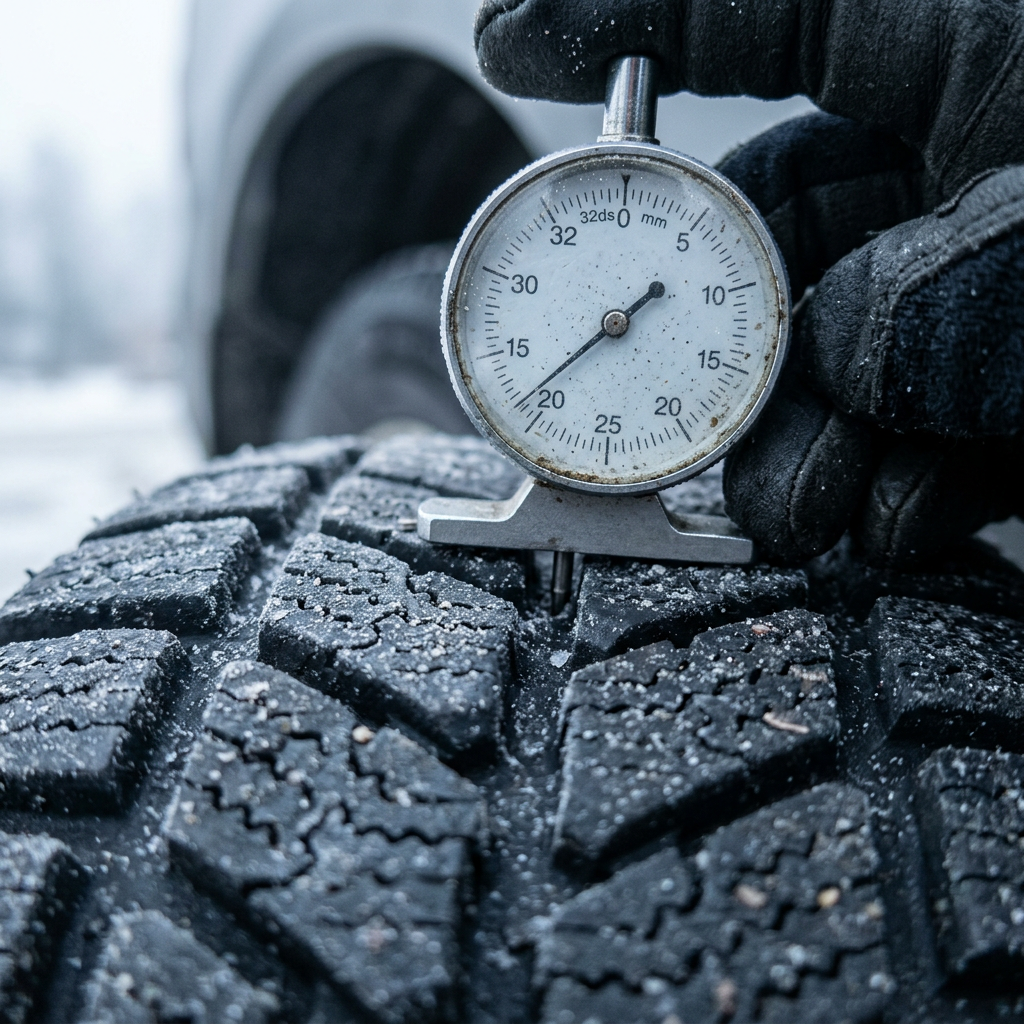
Before setting out in freezing conditions, drivers should inspect tire tread depth and cold inflation pressures, verify battery health, test engine coolant freeze protection points, and check all wiper blades and exterior lighting. Maintaining a half-tank of fuel and stowing an emergency kit with traction material, blankets, and jumper cables ensures safety during unexpected delays.
Cold ambient temperatures drop tire pressure by approximately one pound per square inch for every ten-degree drop in outdoor temperature, making regular morning pressure checks essential for maintaining tire contact patches on slick roads. For local commuters navigating the Kansas River bridge and highway ramps around Junction City, proper inflation directly impacts emergency braking distances on packed snow.
If you are evaluating vehicle capability for winter conditions, reviewing our new Ford Bronco inventory shows models engineered with cold-weather capability in mind. For example, the 2026 Bronco Sport Badlands 4X4 achieves an EPA-estimated 21 city / 27 hwy / 23 combined MPG, while the Big Bend 4X4, Heritage 4X4, and Outer Banks 4X4 trims deliver 25 city / 30 hwy / 27 combined MPG. For drivers preferring pre-owned options, exploring our pre-owned vehicle lineup provides access to all-wheel-drive crossovers and trucks that have passed comprehensive multi-point winter inspections.
Fuel Economy
Fuel economy and range by trim
| Feature | Badlands 4X4 | Big Bend 4X4 | Heritage 4X4 | Outer Banks 4X4 |
|---|---|---|---|---|
| MPG | 21 city / 27 hwy / 23 combined | 25 city / 30 hwy / 27 combined | 25 city / 30 hwy / 27 combined | 25 city / 30 hwy / 27 combined |
How Does Ford Intelligent All-Wheel Drive Enhance Winter Traction?
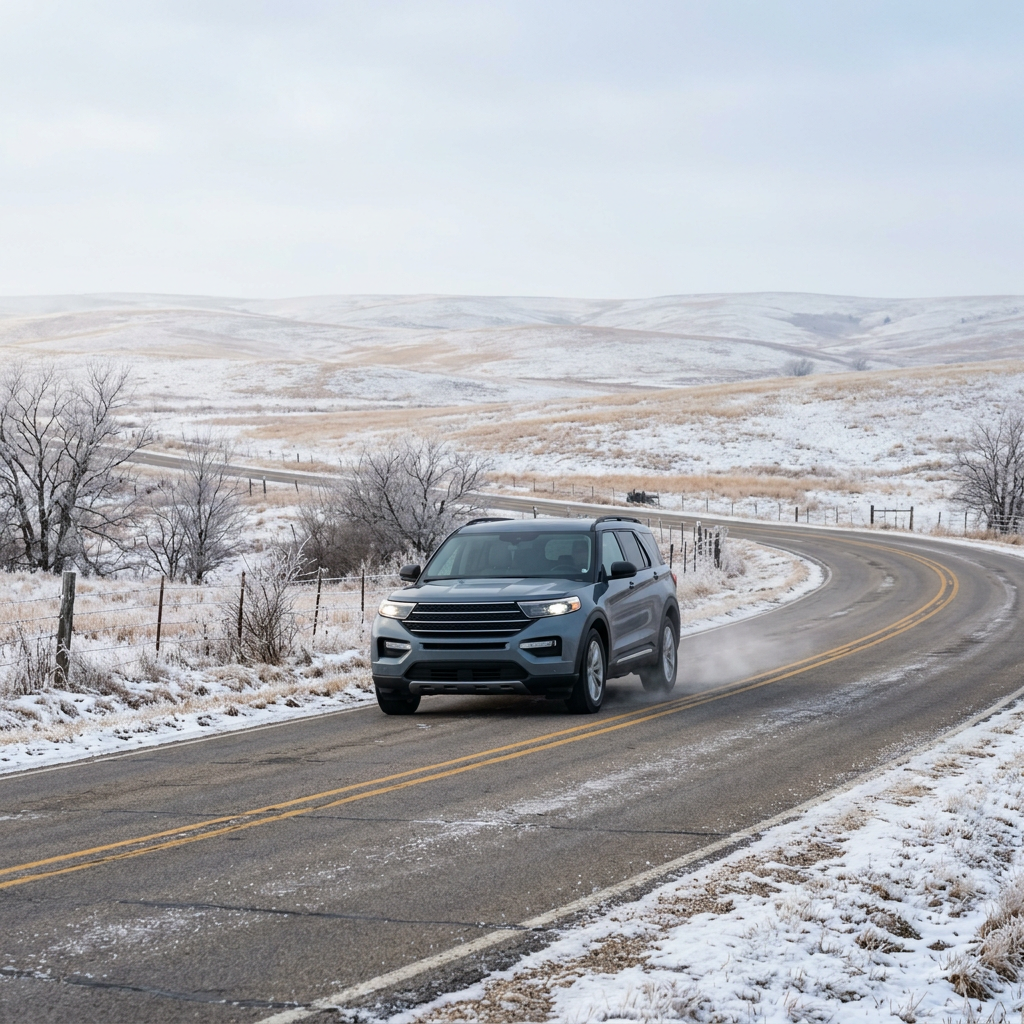
Ford Intelligent All-Wheel Drive enhances winter traction by continuously monitoring vehicle speed, throttle input, and steering wheel angle to predict wheel slip and automatically redistribute engine torque between axles in milliseconds before spin occurs. Unlike traditional four-wheel drive, Intelligent AWD remains engaged continuously on dry or icy pavement without mechanical binding.
By measuring driver steering intent alongside wheel rotation speeds, the system proactively transfers power to the wheels with the firmest mechanical grip. When accelerating on split-friction surfaces—where one side of the vehicle rests on slush and the other on clear asphalt—the transfer case directs torque away from slipping tires, keeping the chassis balanced and tracking true.
Because the system operates dynamically on demand without manual lever shifting, drivers maintain steady control through changing road transitions. If you are considering upgrading your current vehicle to a winter-ready powertrain, completing a trade-in evaluation online can clarify your current vehicle's value toward an AWD-equipped model.
How Does Slippery Mode Adjust Ford Engine Torque and Braking?
Selectable Slippery Mode softens accelerator pedal response, limits sudden engine torque output, delays transmission upshifts, and increases Anti-Lock Braking System sensitivity to prevent wheel spin on ice, slush, or wet roads.
When activated via the drive mode dial, the engine control unit remaps throttle sensitivity so that aggressive pedal inputs translate into gradual power delivery. The transmission holds lower gear ratios longer to reduce sudden torque spikes while downshifting smoothly to maintain engine braking stability.
Simultaneously, the traction control and ABS modules increase wheel-speed sensor sensitivity, applying subtle brake taps to individual wheels at the first micro-level indication of slip. For drivers planning a vehicle purchase before seasonal weather hits, contacting the dealership for current financing options can streamline the process of securing a vehicle equipped with selectable terrain management.
Engine & Performance
Powertrain specs by trim
| Feature | Badlands 4X4 | Big Bend 4X4 | Heritage 4X4 | Outer Banks 4X4 |
|---|---|---|---|---|
| Engine | 2L | 1.5L | 1.5L | 1.5L |
| Horsepower | 238 hp | 180 hp | 180 hp | 180 hp |
| Torque | 277 lb-ft | 200 lb-ft | 200 lb-ft | 200 lb-ft |
| Drivetrain | Four-wheel drive | Four-wheel drive | Four-wheel drive | Four-wheel drive |
What Specific Components Are Checked During a Ford Winter Safety Inspection?
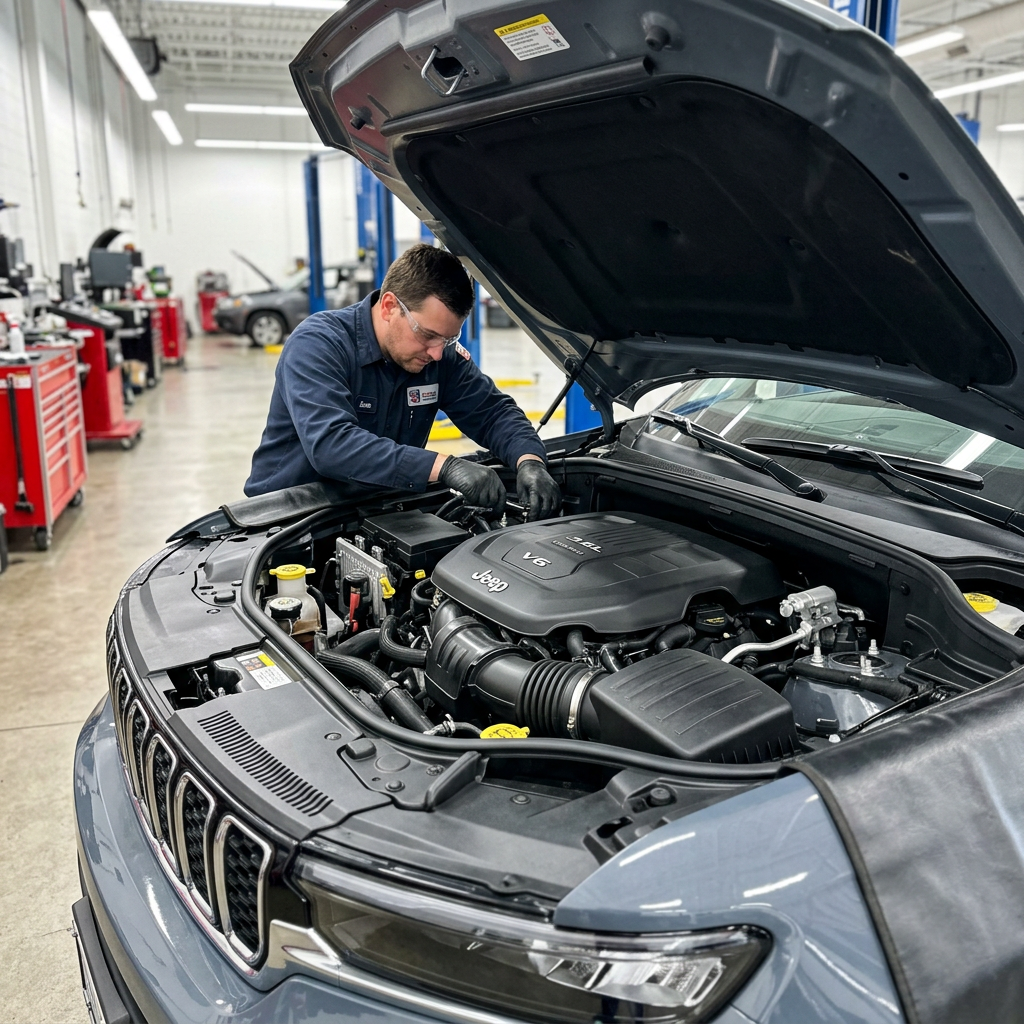
A complete Ford winter safety inspection evaluates battery cold cranking amps, engine coolant freeze-point protection, tire tread depth and inflation pressure, wiper blade integrity, brake pad thickness, and heating system operation.
When drivers come into our service bay asking about winter inspections, my technicians systematically test battery cold cranking amps, engine coolant freeze protection thresholds, wiper blade edge wear, heater unit output, and brake pad thickness. Because freezing temperatures reduce battery chemical activity by up to 50 percent while engine starting resistance increases due to thickened oil, verifying starter draw and battery reserve capacity prevents surprise morning non-starts.
Technicians also check the hydrometer reading of engine antifreeze to confirm protection down to sub-zero temperatures, inspect drive belts for cold-weather cracking, and check headlight clarity for optimal visibility during short winter daylight hours. You can easily schedule a service appointment with our technicians or order genuine Ford parts such as heavy-duty wiper blades and Motorcraft batteries directly through our service portal.
What Engine Block Heater Options Are Available for Ford Trucks in Freezing Weather?
Ford provides factory-installed 110-volt engine block heaters across truck models, including the F-150, Super Duty, and Maverick, featuring integrated electrical cord routing located behind the front lower grille or fog lamp bezel.
These immersion-style heating elements directly warm engine coolant inside the block, allowing oil to circulate freely at turn-key startup and significantly reducing cold-start mechanical friction. Plugging the heater into a standard grounded outlet for approximately three hours prior to departure preheats the combustion chambers, speeds up cabin heater warm-up, and reduces initial startup fuel consumption.
For service members at Fort Riley making early morning trips across open terrain, an engine block heater ensures dependable key turns during extreme cold snaps. Operating the heater on an exterior electrical outlet timer maximizes efficiency without wasting residential power overnight.
Which Ford Models Come Standard with Intelligent AWD for Winter Driving?
Ford Intelligent AWD or Advanced 4WD comes standard on top-tier trims of the Explorer, Edge, and Expedition, as well as specified configurations of the Escape, Bronco Sport, and Maverick.
In the compact SUV lineup, every 2026 Bronco Sport model includes standard four-wheel drive. The Badlands 4X4 trim pairs an EcoBoost 2L engine generating 238 hp and 277 lb-ft of torque with an 8-speed SelectShift® automatic transmission. Meanwhile, the Big Bend 4X4, Heritage 4X4, and Outer Banks 4X4 trims come standard with a 1.5L engine producing 180 hp and 200 lb-ft of torque alongside standard four-wheel drive capability.
In the midsize crossover category, the 2026 Explorer features standard Intelligent 4WD on 2.3-liter EcoBoost models, while heavy-duty trucks and body-on-frame SUVs offer electronic 4x4 setups designed for extreme snow clearance. To explore winter-ready powertrains in person, stop by our dealership showroom or give our service department a call directly to discuss recommended winter packages.
© 2026 Valor Ford. All rights reserved.