
Blog / Maintenance & Service

How Do You Prepare a Car for Winter Road Trips Before Holiday Block Leave?

How Do You Prepare a Car for Winter Road Trips Before Holiday Block Leave?

How Do You Prepare a Car for Winter Road Trips Before Holiday Block Leave?

Preparing a vehicle for a long winter road trip requires testing the battery's starting capacity, setting cold tire pressure according to the door placard, verifying antifreeze protection levels, inspecting wiper blades, and packing an emergency travel kit. Conducting these essential checks before driving highway distances prevents unexpected breakdowns in freezing weather, preserves fuel economy, and ensures reliable performance during extended cold-weather travel.

Long-distance highway driving during winter puts severe stress on basic mechanical components. Low ambient temperatures thicken engine oil, reduce chemical reaction speed inside starter batteries, and drop tire inflation pressure by roughly 1 pound per square inch for every 10-degree drop in outside air temperature. Completing a structured checklist at least 1 to 2 weeks prior to departure provides adequate lead time to address minor mechanical issues before hitting the highway.

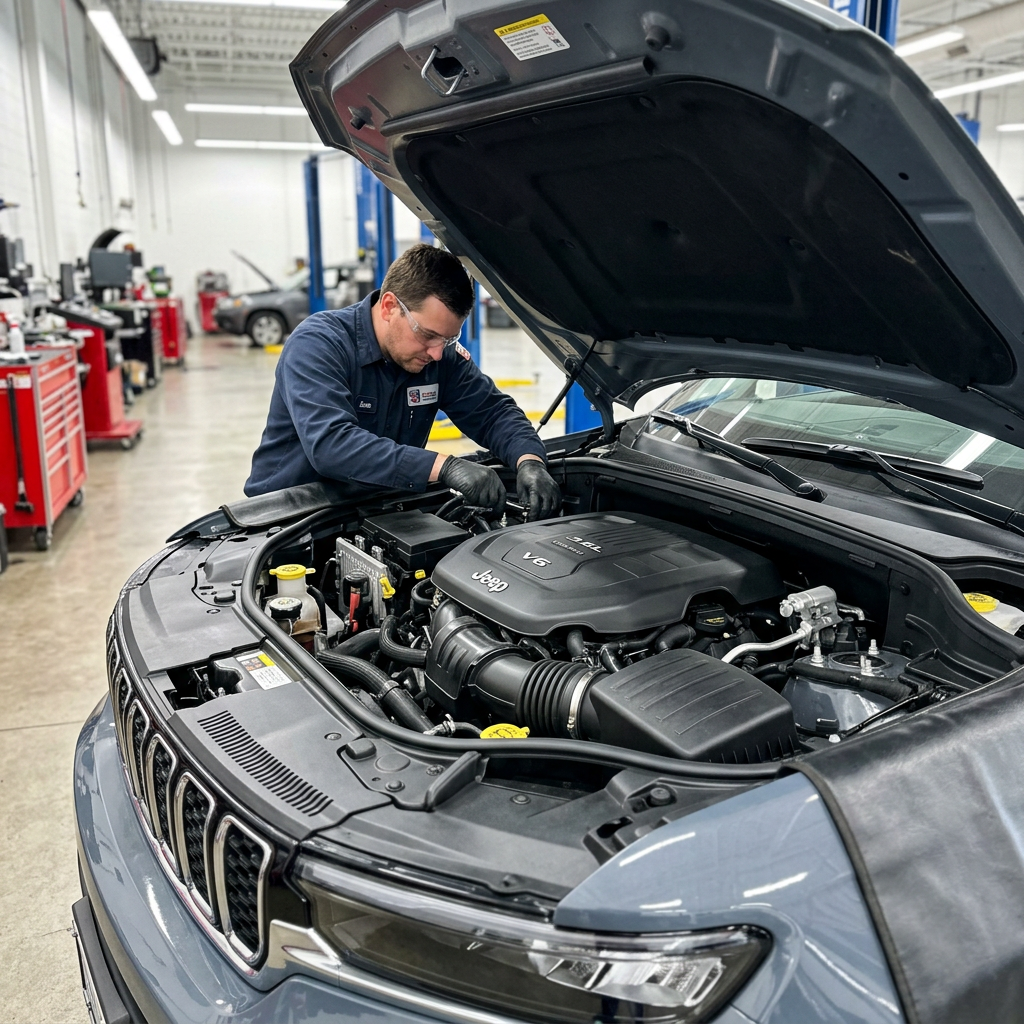
Our service department recommends beginning every pre-trip inspection under the hood. Verifying engine coolant concentration ensures the fluid will not freeze inside the radiator core or block when temperatures fall below 32°F. Engine oil should be checked against manufacturer viscosity specifications for cold-weather operation, as heavy summer-grade oils make starter motors work significantly harder during freezing morning startups. Upgrading to winter-rated windshield washer fluid containing de-icer prevents spray nozzles and lines from freezing shut while traveling behind highway salt spreaders.

Proper lighting and clear visibility are equally essential for winter highway safety. Shorter winter daylight hours and sudden snow squalls demand fully functional exterior bulbs, including low beams, high beams, brake lights, and turn signals. Standard wiper blades that leave streaks or chatter across the glass should be replaced with winter-grade blades designed to resist ice buildup along the frame.

For military personnel preparing to travel home during annual winter block-leave periods, completing vehicle prep early avoids last-minute repair shop delays. Drivers planning routes across county lines or out of state can easily coordinate expert maintenance by getting directions to our service center or giving our technicians a quick call to secure an inspection time prior to departure.

Table of Contents

What Cold-Weather Battery Specs (CCA) and Health Checks Are Needed for Kansas Winters?

Midwest winter driving requires a battery rated between 600 to 800 CCA (Cold Cranking Amps) to overcome increased engine drag and diminished chemical reaction speeds in freezing weather. At 32°F, a conventional 12-volt battery loses approximately 35% of its available starting power, and at 0°F, capacity drops by roughly 60% while the engine demands up to twice the normal electrical current to crank over.

Cold Cranking Amps measure the total current a battery can discharge for 30 seconds at 0°F while maintaining a usable voltage level of at least 7.2 volts. Smaller engine bays typically require a baseline of 600 CCA, whereas larger V6 and V8 engines or high-compression powerplants demand closer to 800 CCA for dependable cold-weather starting. Installing a battery below these target specifications increases the risk of starting failure during prolonged exposure to outdoor freezing conditions.

Our service advisors frequently see vehicles arriving for seasonal checks with batteries that test borderline during moderate autumn weather but fail entirely during the first sub-zero overnight freeze. Warning indicators of an impending battery failure include:

  • A slow, labored engine crank when turning the key or pushing the start button
  • Dimming interior cabin lights or headlights while idling at intersections
  • Audible clicking sounds from the starter solenoid during ignition attempts
  • Visible white or greenish corrosion buildup around the positive and negative terminals
  • A swollen, bulging battery case caused by internal freezing or overcharging
  • A sulfurous or rotten-egg odor stemming from leaking internal gases

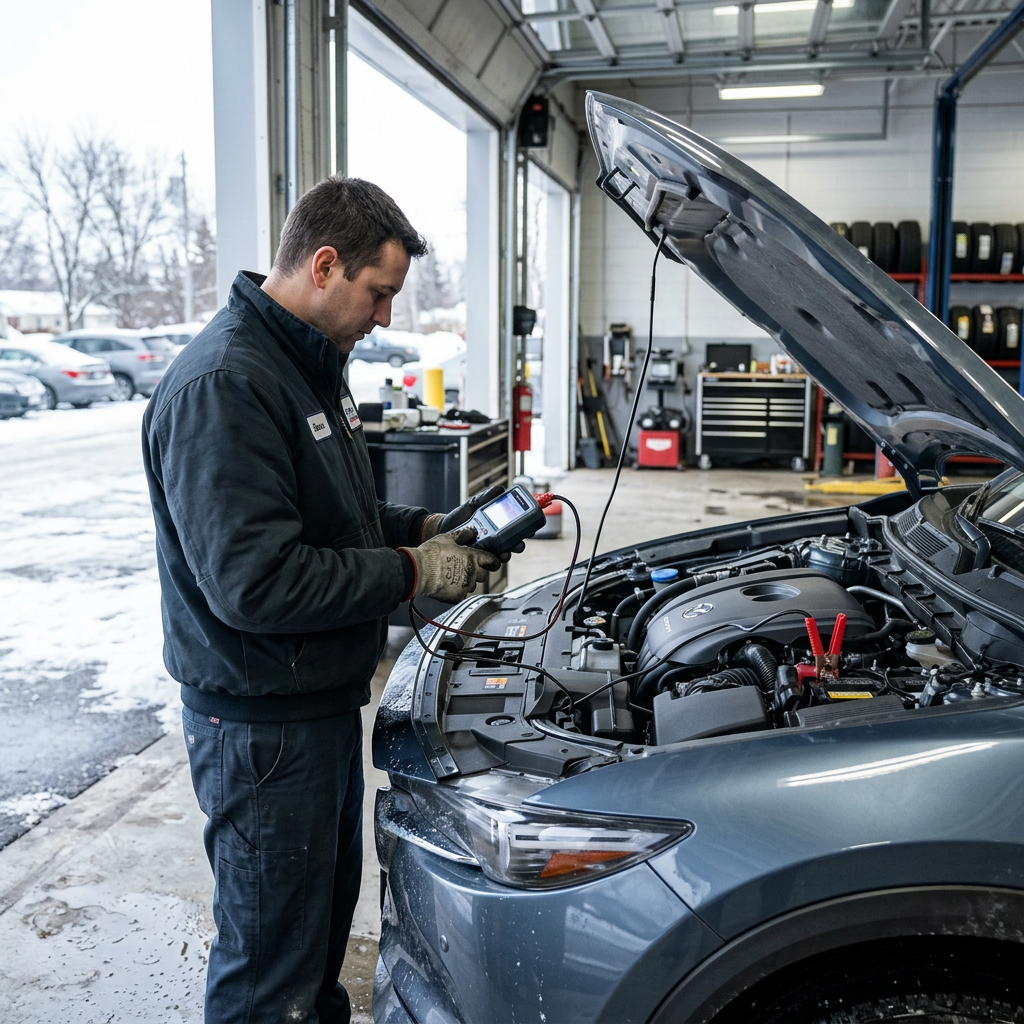
A professional battery inspection involves more than simply reading static open-circuit voltage with a standard multimeter. Technicians perform a digital conductance load test to measure internal resistance and cold-cranking output under simulated starter loads. Terminal posts and cable connectors must be cleaned, tightened, and coated with protective anti-corrosion grease to maintain maximum electrical conductivity. When replacement is required, vehicle owners can easily order genuine Motorcraft components built specifically for precise fitment and factory-backed performance.

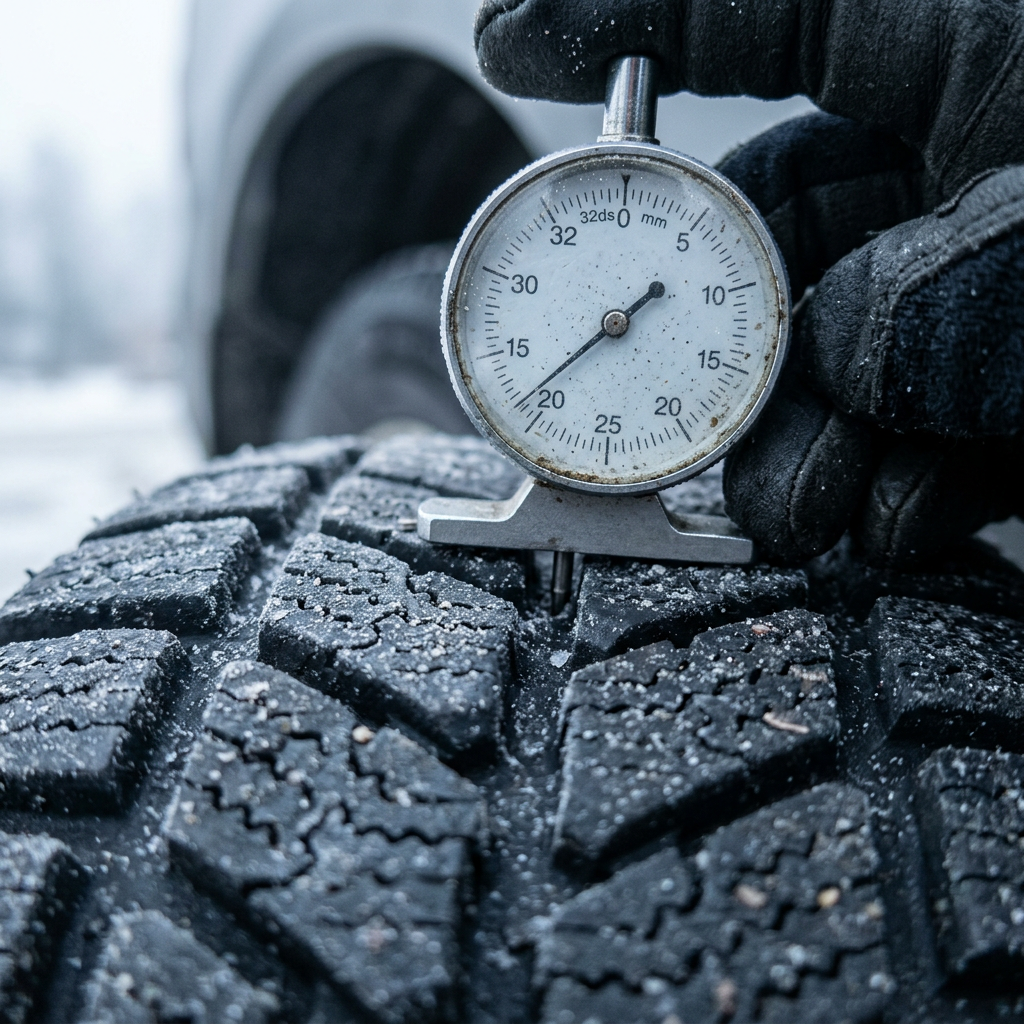
Winter highway driving requires a minimum tire tread depth of 4/32 inch for adequate wet traction, with 6/32 inch or deeper recommended for traveling through heavy slush and snow cover. Tire inflation pressure must be checked while tires are completely cold and maintained at the recommended pressure stated on the driver-side door placard rather than the maximum pressure stamped on the tire sidewall.

Although federal safety guidelines establish 2/32 inch as the absolute legal tread depth minimum, tires worn to this line lack the channel depth necessary to evacuate slush and water from beneath the tread footprint. Without adequate channel depth, tires hydroplane easily across wet highway lanes or freeze-over bridge decks. Performing a simple coin test helps monitor wear: placing a quarter upside down into the tread groove should cover the top of Washington's head, which indicates roughly 4/32 inch of remaining tread depth.

Proper tire pressure monitoring is equally vital during dramatic temperature drops. Ambient temperature decreases cause tire pressure to fall by roughly 1 to 2 PSI for every 10-degree drop in outside air. Underinflated tires exhibit excessive flex in the sidewalls, which generates unwanted internal heat, reduces fuel efficiency, and accelerates irregular shoulder wear. Conversely, overinflating tires to the maximum pressure listed on the tire casing reduces the contact patch, degrading braking traction on icy asphalt.

Tread Depth Measurement Traction Level & Road Condition Suitability Recommended Action
6/32 inch or higher Optimal snow, slush, and heavy rain grip Excellent for long-distance winter highway trips
4/32 inch Baseline safe wet-weather and light slush traction Acceptable, monitor closely during extended travel
2/32 inch or lower Severe hydroplaning risk and minimal snow grip Unsafe for winter travel; immediate replacement required

Checking tire pressures should always occur after the vehicle has been parked in ambient outdoor temperatures for at least three hours. Inspecting tread blocks for uneven heel-and-toe wear or cupping ensures alignment angles are correct before embarking on long interstate drives. Drivers looking for complete peace of mind before traveling across Dickinson County can conveniently schedule a professional maintenance check to have tire balance, alignment, and tread wear verified by factory-trained specialists.

How Much Does Long-Distance Emergency Towing Cost Without Roadside Coverage?

Out-of-pocket long-distance emergency towing costs average between $75 and $125 for the initial hookup fee, plus an additional $3 to $7 per mile traveled. On long highway routes across rural stretches, a towing bill without active roadside protection can quickly exceed $400 to $800 depending on total mileage and service timing.

Towing rates fluctuate significantly based on geographic location, terrain difficulty, weather conditions, and time of call out. Standard hookup fees cover the tow truck operator's dispatch and baseline vehicle attachment. Once rolling, per-mile rates apply from the pickup site to the destination repair facility. Should a vehicle break down during late-night hours, holiday weekends, or severe winter storms, winching fees or after-hours surcharges often add another $50 to $150 to the final bill.

For drivers stranded along rural interstate corridors, emergency towing expenses add financial stress to an already difficult situation. Vehicle owners operating covered Ford models benefit from comprehensive manufacturer protection. Driving with active warranty coverage includes access to Ford Roadside Assistance: (800) 241-3673, which provides manufacturer-backed flatbed towing directly to authorized service centers, fuel delivery, flat tire changes, lock-out assistance, and jump-starts. Utilizing dedicated brand roadside programs eliminates unexpected out-of-pocket expenses and guarantees repair work is performed using genuine parts by certified technicians.

Which Pre-Trip Maintenance Tasks Can Be Done at Home vs. Requiring a Mechanic?

Simple pre-trip vehicle care—such as inspecting windshield wiper blades, topping off washer fluid, checking tire pressure, and examining light bulbs—is easy to complete at home using basic tools. However, technical tasks including battery conductance load testing, brake pad and rotor measurement, engine coolant freeze-point testing, and wheel alignment require professional diagnostic equipment.

Home maintenance allows vehicle owners to monitor basic operational items without specialized shop equipment. Drivers can quickly evaluate rubber wiper blades for splitting or hardening, fill the washer reservoir with de-icing fluid, and measure tire inflation pressure using a digital pressure gauge. Visual checks of exterior light lenses, engine oil levels via the dipstick, and serpentine belt surface cracking are also straightforward weekend tasks.

Tasks Safe for Home Maintenance

  • Checking and adjusting cold tire inflation pressures across all four tires and the spare
  • Topping off engine oil, windshield washer fluid, and power steering fluid levels
  • Inspecting front and rear wiper blades for streaks or rubber degradation
  • Testing turn signals, brake lights, reverse lights, and headlight output
  • Visually checking the engine air filter and cabin air filter for dust or debris

Maintenance Requiring Professional Shop Equipment

  • Conducting high-amp battery load tests and charging system output analyses
  • Measuring brake pad thickness, caliper slide pin movement, and rotor surface runout
  • Hydrometer or refractometer testing of engine coolant freeze-point protection levels
  • Four-wheel computerized laser alignment checks and precision wheel balancing
  • Diagnostic scanning for pending engine controller diagnostic trouble codes (DTCs)

Professional technicians utilize calibrated diagnostic instruments that detect subtle component failures before they cause roadside breakdowns. Multi-point vehicle inspections combine hoist checks of suspension ball joints and CV boots with automated battery diagnostic reports, ensuring every major safety system is evaluated before a long journey.

Common Questions About Pre-Trip Service and Winter Travel for Military Families

Q: What primary vehicle checks should Fort Riley families complete before traveling home for Holiday Block Leave?

Prior to departing Fort Riley for holiday travel, drivers should complete a full pre-trip inspection focusing on battery cold-cranking capacity, tire tread depth, tire inflation pressure, engine coolant freeze protection, windshield wiper blade condition, and exterior lighting. Verifying these critical mechanical areas prevents roadside delays when driving long distances across state lines in severe cold weather.

Q: What essential items should be packed in a winter roadside emergency kit?

A complete winter travel emergency kit must include jumper cables or a portable lithium jump pack, an ice scraper with a snow brush, a collapsible shovel, traction material such as sand or cat litter, a heavy blanket, flashlight with extra batteries, first-aid kit, non-perishable food items, bottled water, a mobile phone charger, and reflective hazard triangles.

Q: How does extreme cold weather impact car battery performance during winter travel?

Freezing weather slows the chemical reactions inside a 12-volt automotive battery, resulting in a 35% capacity loss at 32°F and up to a 60% drop at 0°F. Concurrently, cold engine oil thickens, requiring up to twice as much electrical amperage from the battery to turn the engine over during a cold start.

Q: What emergency assistance resources are available when driving through Kansas during severe winter storms?

Kansas travelers can access real-time road conditions and highway cameras online via KanDrive. On state highways and interstates, drivers can dial *47 to reach the Kansas Highway Patrol for roadside assistance, or dial *KTA when traveling along the Kansas Turnpike network.

Q: How can drivers verify that engine coolant provides adequate winter freeze protection?

Engine coolant freeze protection is verified using a handheld refractometer or hydrometer to measure glycol concentration. Proper winter coolant mixtures typically consist of a 50/50 ratio of antifreeze to distilled water, which protects engine cooling passages against freezing down to -34°F.

Scheduling Pre-Trip Maintenance and Winter Travel Checks

Comprehensive pre-trip service protects your vehicle against harsh winter conditions, preserves component longevity, and ensures your family reaches holiday destinations without mechanical interruptions. Performing routine maintenance before hitting the highway prevents costly emergency towing bills, maintains optimal fuel efficiency, and provides overall confidence during long-distance travel.

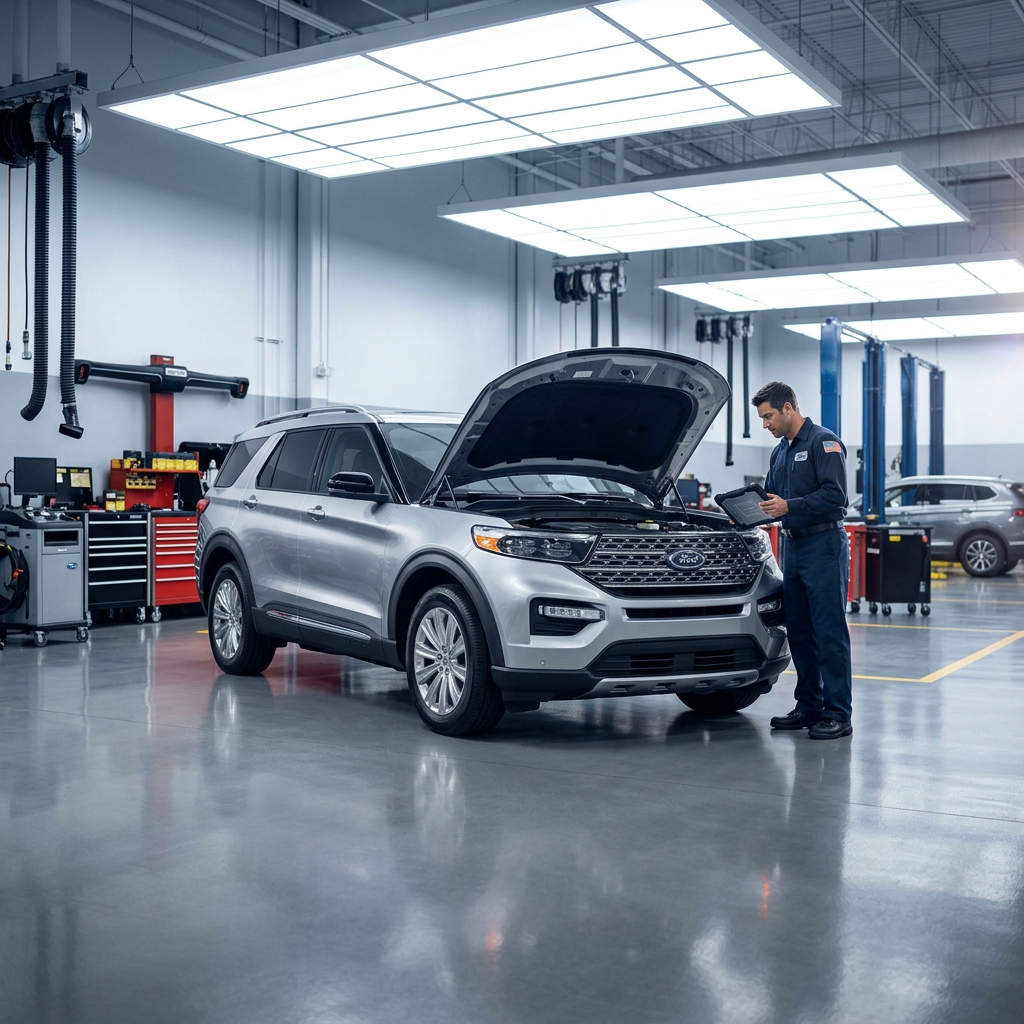
Our factory-trained service team is equipped with specialized Ford diagnostic equipment, genuine OEM replacement parts, and the technical expertise required to perform thorough multi-point winter inspections. From high-amp battery load testing to precision tire alignments and brake system checks, we ensure every safety system on your vehicle performs to factory standards.

Whether you are preparing for long-distance military leave travel or managing everyday local commutes around Junction City, securing your appointment early ensures your vehicle is ready for winter road conditions. Get precise directions to our facility at 1825 Goldenbelt Blvd, Junction City, KS 66441 or give our service department a quick call to reserve your pre-trip maintenance check today.


© 2026 Valor Ford. All rights reserved.

Posted in:

Related Posts

Fort Riley Winter Block Leave Pre-Trip Vehicle Checklist: Quick Essential Guide

Fort Riley Winter Block Leave Pre-Trip Vehicle Checklist: Quick Essential Guide

Fort Riley Winter Block Leave Pre-Trip Vehicle Checklist: Quick Essential Guide Key Takeaway for Fort Riley Military Families: Before embarking on long-distance highway travel across Kansas or across state lines for Winter Block Leave (WBL), service members and their families must ensure their vehicle is fully prepped for extreme cold. Key maintenance steps include verifying battery cold cranking amps (minimum 600–800 CCA rating), inspecting all-season tire tread depth (minimum 4/32-inch) and inflation pressure (rubber compounds harden significantly below 45°F), testing engine antifreeze/coolant protection levels down to sub-zero temperatures, and stocking a dependable emergency roadside kit. Booking a professional multi-point pre-trip inspection at Valor Ford in Junction City provides peace of mind before tackling icy Flint Hills highways. Why Winter Block Leave Travel Demands Extra Vehicle Preparation in Kansas December travel out of Fort Riley poses unique mechanical challenges that military families cannot afford to ignore. The geographic location of the Flint Hills region subjects local highways, including Interstate 70 and Highway 77, to rapid temperature drops, sudden crosswinds, and sudden freeze-thaw cycles that turn wet asphalt into black ice in minutes. Driving cross-country to visit extended family after a grueling training cycle means putting high highway mileage on vehicles that may have been parked in motor pools or housing parking lots for extended stretches. Sudden transitions from idling in low temperatures to continuous 70 mph cruising quickly expose latent mechanical vulnerabilities. Military vehicle usage patterns prior to winter block leave often involve short commuter runs across post or weeks of zero operation during field training exercises (FTXs). Short trips prevent engine oil from reaching optimal operating temperatures, allowing moisture and fuel dilutants to build up in the crankcase, while cold weather slowly saps battery charge. When soldiers suddenly pack up their family vehicles with heavy luggage, holiday gifts, and passengers for a 500-to-1,000-mile road trip, these stored stresses come to a head. Ensuring your personal vehicle receives a thorough mechanical checkup before leaving Geary and Dickinson counties is vital to preventing highway breakdowns in sub-freezing weather. At What Temperature Do All-Season Tires Lose Flexible Grip During Winter Driving? The 45°F Threshold: Standard all-season tire rubber compounds begin to stiffen and lose essential elastic elasticity at exactly 45°F (7°C). As ambient temperatures drop below this critical point, the rubber glass transition state causes tread blocks to harden, significantly reducing the tire's ability to conform to subtle road surface imperfections and maintain maximum contact patch friction. In addition to temperature-induced hardening, tread depth plays a crucial role in evacuating slush, snow, and water. While 2/32-inch tread depth is the legal minimum in many states for dry summer pavement, winter safety standards require a absolute minimum of 4/32-inch to maintain traction on icy Kansas roadways. Drivers navigating severe winter climates should consider dedicated winter tires or high-performance, 3-Peak Mountain Snowflake (3PMSF) rated all-weather tires. How Should Fort Riley Families Check Tires Before a Long Winter Trip? 1. Pressure & Temperature Drop Tire inflation pressure drops by roughly 1 to 2 PSI for every 10°F decrease in ambient temperature. Always measure tire pressure when the vehicle has been parked for at least three hours (cold pressure reading). Refer strictly to the driver-side door jamb placard for correct PSI levels, not the maximum rating printed on the tire sidewall. 2. Sidewall & Spare Tire Physical Check Inspect tire sidewalls for fine weather-cracking, bulges, or embedded road debris. Don't forget to inspect your spare tire under the trunk floor or cargo bed! Ensure the spare is inflated to its recommended pressure and that your factory tire jack, lug wrench, and lock keys are accounted for and fully operational. 3. Professional Rotation & Alignment Rotating your tires every 5,000 to 7,500 miles ensures uniform wear across all four positions. Misalignment causes uneven tire wear patterns that severely compromise braking stability on wet or icy interstates. Having tires balanced and aligned before leave prevents high-speed wheel vibration. Schedule Ford Service Today How Many Cold Cranking Amps (CCA) Are Needed for Reliable Winter Starting? Understanding CCA Demands in Sub-Zero Temps: Cold Cranking Amps (CCA) measure a battery's capability to start an engine at 0°F (-18°C) for 30 seconds while maintaining a minimum voltage threshold. For reliable starting during Midwestern winters, passenger vehicles, crossovers, and trucks generally require a rating of 600 to 800 CCA (or higher for large-displacement V8 and diesel engines). Freezing weather deals a double blow to automotive electrical systems. At 0°F, a standard lead-acid battery loses up to 50% of its total cranking power due to slowed chemical reactions inside the cells. Concurrently, engine oil thickens significantly in freezing temperatures, creating immense mechanical drag on the starter motor. A weak battery that starts your car fine in October will frequently fail completely when the temperature plummets during December block leave. What Vehicle Components Require Specialized Tools to Inspect Before a Trip? While simple visual checks (like oil level dipsticks and washer fluid) can be performed in your driveway, modern vehicle diagnostic systems require specialized equipment to accurately evaluate roadworthiness: • Digital Battery Conductance Testers: Simple voltmeters only measure surface charge. Professional conductance testers measure internal cell resistance and health reserve, predicting imminent failure long before a battery dies. • Cooling System Pressure Testers: Pressurizing the radiator and coolant lines identifies hairline fractures in hoses, weak water pump seals, and microscopic radiator core leaks that only manifest under intense operational thermal loads. • Brake Rotor Micrometers & Digital Calipers: Measuring exact brake pad friction material thickness and rotor lateral runout ensures your braking system can handle emergency stops on slippery highway ramps without premature fading or pedal pulsation. • OBD-II Diagnostic Scanners: Advanced diagnostic tools scan internal vehicle control modules for stored or pending fault codes (such as misfires, evaporative leaks, or transmission solenoid delays) that have not yet illuminated a dashboard Check Engine light but could trigger a fail-safe mode during a 500-mile trip. Are Free Vehicle Safety Inspections Available for Service Members at Fort Riley? Supporting soldiers and military families stationed at Fort Riley is a core priority for the local Junction City community. While command policies often require service members to complete unit pre-clearance vehicle safety forms (DA Form 31 or local command POV checklists) before leave approval, certified technicians at local service centers provide professional multi-point inspections to verify every item on those checklists. At Valor Ford, conveniently located just minutes from the Fort Riley Ogden and Trooper gates, our factory-trained technicians assist service members with comprehensive multi-point vehicle inspections. We check vital fluids, test battery reserve health, evaluate brake system condition, inspect tires, and verify heating and defrosting performance—helping ensure your holiday departure is stress-free. We also offer military-conscious service scheduling to accommodate tight unit release schedules before block leave kicks off. Schedule Pickup and Delivery Service What Items Are Essential to Include in a Winter Emergency Roadside Kit? Power & Electrical Tools • Heavy-duty booster cables (10-gauge minimum, 12+ feet long) • Lithium-ion portable jump starter bank (allows self-jumping without another vehicle) • High-lumen LED flashlight + headlamp with extra lithium batteries • Heavy-duty work gloves and waterproof LED safety flares Warmth & Survival Gear • Mylar thermal space blankets + heavy fleece emergency blankets • Hand/foot heat warmers (pack of 6-10) • High-calorie non-perishable rations (energy bars, trail mix, dried fruit) • Gallon of bottled drinking water (keep slightly underfilled to prevent ice expansion damage) Traction & Snow Removal Tools • Collapsible aluminum snow shovel • High-durability ice scraper with brass blade or stiff brush • 10-20 lb bag of non-clumping kitty litter, coarse sand, or traction mats • Compact tow strap rated for at least 10,000 lbs break strength How Much Does It Cost to Build a Complete Roadside Winter Emergency Kit? Building a reliable winter roadside survival pack is a smart investment if bad weather strikes along remote stretches of highway: • Basic Self-Assembled Kit: Covers entry-level booster cables, basic ice scraper, thermal blankets, flashlight, basic first aid, and sand. Suitable for regional drives between Junction City, Manhattan, and Topeka. • Comprehensive Heavy-Duty Kit: Upgrades to a portable lithium jump starter pack, heavy-duty tow straps, multi-tool, high-lumen lighting, folding shovel, premium thermal gear, and rated traction pads. Highly recommended for multi-state cross-country travel. • OEM Factory Winter Protection Packages: Available through dealership parts departments, these custom-fitted kits include branded heavy-duty storage bags, high-grade tools, and integrated roadside equipment designed specifically for your vehicle model. Vital Fluid and Heating System Checks for Cold-Weather Highway Cruising Antifreeze & Washer Fluid Integrity Engine coolant does far more than keep your engine cool in July—it prevents the engine block from cracking when temperatures plummet. Ensure your cooling system contains a proper 50/50 ethylene glycol and water mixture, which provides anti-freeze protection down to -30°F (-34°C). Technicians use a refractometer or hydrometer to test concentration levels. Equally vital is purging summer windshield washer fluid and replacing it with specialized winter de-icing fluid rated for -20°F or lower. Standard water-based summer mixes freeze instantly upon contacting a cold windshield, blinding your view during heavy highway traffic. Oil Viscosity & Cabin Defrost Performance Low ambient temperatures increase engine oil viscosity, making it harder for oil to circulate during initial startup. Verifying that your engine uses full synthetic, factory-recommended cold-viscosity oil (such as 0W-20 or 5W-20) reduces mechanical wear during sub-zero starts. Finally, test your cabin HVAC heating system and front/rear window defrosters. A malfunctioning cabin air filter or a failing air-mix door actuator can prevent effective window defogging, severely compromising driver visibility during sudden winter snow squalls. Order Genuine Ford Parts Schedule Your Pre-Block Leave Inspection at Valor Ford in Junction City Don't leave your holiday safety to chance. Before hitting the road for Fort Riley Winter Block Leave, bring your truck, SUV, or sedan to Valor Ford in Junction City, KS. Our Ford-certified service center is fully equipped with advanced diagnostic tools, factory replacement parts, and experienced technicians ready to handle battery testing, tire alignments, brake inspections, and fluid flushes. Whether you need a quick pre-trip inspection, winter tires, or are considering upgrading your family vehicle before the journey with a Trade In Evaluation, our team is committed to serving active-duty service members, veterans, and military families across Geary and Dickinson counties. Call (785) 238-5114 or book your service appointment online today to ensure a safe, smooth travel season! Trade In Evaluation

Official 2024 Jeep Grand Cherokee Laredo Maintenance Schedule at a Glance

Official 2024 Jeep Grand Cherokee Laredo Maintenance Schedule at a Glance

Official 2024 Jeep Grand Cherokee Laredo Maintenance Schedule at a Glance Maintaining your 2024 Jeep Grand Cherokee Laredo according to official Mopar guidelines is the single most effective way to preserve performance, fuel economy, safety, and long-term resale value. Engineered with precision, the Grand Cherokee Laredo features an intelligent Oil Change Indicator System that calculates oil breakdown based on engine revs, operating temperature, and driving habits. However, factory guidelines establish fixed upper bounds that every owner should follow: routine service must never exceed 10,000 miles or 12 months, whichever comes first. Below is an overview of key maintenance milestones recommended by Chrysler Dodge Jeep Ram for the 2024 Grand Cherokee Laredo under normal operating conditions. Regular adherence to this chart keeps your vehicle performing well across Junction City roads and Kansas highways. Service Interval Primary Operations Inspections & Component Checks 10,000 Miles / 12 Months Engine oil & filter change, tire rotation Brake pads, rotors, battery terminals, cooling system lines 20,000 Miles / 2 Years Cabin air filter replacement, tire rotation Front suspension, tie rod ends, CV joints, brake wear 30,000 Miles / 3 Years Engine air filter replacement, tire rotation Transfer case fluid, exhaust system, CV boots 60,000 Miles / 6 Years Engine air & cabin air filters, tire rotation Brake fluid check, spark plug condition, drive belts 100,000 Miles / 10 Years Spark plug replacement, engine coolant flush Full drivetrain, suspension torque, PCV valve What Engine and Transmission Power the 2024 Jeep Grand Cherokee Laredo? under the hood of every 2024 Jeep Grand Cherokee Laredo resides the proven 3.6L Pentastar V6 engine paired with a smooth-shifting TorqueFlite 8-speed automatic transmission. Producing 293 horsepower and 260 lb-ft of torque, this engine incorporates Engine Stop-Start (ESS) technology to maximize fuel efficiency during daily stop-and-go commuting around Junction City and Manhattan. The engineering design of the 3.6L Pentastar V6 places specific demands on motor oil. Utilizing full synthetic 0W-20 oil ensures rapid lubrication to overhead camshafts upon cold winter startups while maintaining essential viscosity during high-temperature highway cruises along I-70. Furthermore, the 8-speed TorqueFlite transmission relies on thermal management valves to maintain optimum fluid temperature, protecting internal planetary gearsets under heavy loads. Powertrain Maintenance Key Takeaways: • Oil Viscosity: Mopar-approved SAE 0W-20 Full Synthetic • Engine Capacity: 5.0 Quarts with filter change • Transmission Fluid: Lifetime rated under normal conditions, recommended inspection every 30,000 miles for heavy towing or severe use. • Intelligent Monitoring: Automatic oil life indicator alerts driver via instrument cluster. Every 10,000 to 30,000 Miles: Essential Early Milestone Maintenance 10,000-Mile Interval The Baseline Refresh At every 10,000-mile mark, your Laredo requires a full synthetic oil and Mopar filter change. Certified technicians rotate tires in an X-pattern to ensure uniform tread wear across all four wheels, preserving Quadra-Trac 4WD balance. A comprehensive multi-point inspection checks brake pad thickness, battery health, and fluid levels. 20,000-Mile Interval Cabin Air & System Health In addition to the standard oil change and tire rotation, the 20,000-mile milestone introduces replacement of the cabin air filter. This removes dust, ragweed pollen, and regional allergens from entering the passenger cabin. Technicians conduct detailed inspections of front suspension joints, tie rod ends, and brake rotors. 30,000-Mile Interval Engine Breathing & Drivetrain By 30,000 miles, the engine air cleaner filter should be replaced to maintain peak fuel efficiency and air flow into the Pentastar V6. Drivetrain specialists inspect transfer case fluid, CV joint boots, and exhaust system mountings to ensure smooth 4x4 engagement without vibration. Every 60,000 to 100,000 Miles: Spark Plugs, Coolant, and Major Component Care As your 2024 Jeep Grand Cherokee Laredo reaches higher mileage thresholds, preventive maintenance transitions toward long-term component preservation. At 60,000 miles, continuous thermal cycling demands meticulous inspection of accessory drive belts (serpentine belts) and cooling system hoses. Replacing worn drive belts prevents unexpected alternator or water pump failures on long trips. When reaching 100,000 miles or 10 years, Jeep specifies replacing all six spark plugs with OEM Mopar iridium spark plugs. Fresh spark plugs eliminate subtle misfires, restore optimal combustion efficiency, and protect catalytic converters from unburned fuel exposure. Concurrently, a full engine coolant flush cleans out aging organic additive technology (OAT) coolant, protecting internal radiator channels and heater core passages from corrosion. Schedule Service Severe-Duty Maintenance in Junction City and the Flint Hills Region While standard factory schedules assume ideal driving conditions, driving around Junction City, Manhattan, Fort Riley, and throughout Geary and Riley Counties frequently qualifies as Severe-Duty Driving. Kansas weather shifts dramatically between blistering summer heat above 95°F and freezing winter snowfalls, creating substantial thermal stress on lubricants. Furthermore, unpaved gravel roads across the Flint Hills generate fine limestone dust that rapidly clogs air filters. Frequent short trips under 10 miles in cold weather prevent motor oil from reaching complete operating temperature, causing moisture condensation inside the crankcase. Accelerated Maintenance Schedule for Severe Conditions: • Oil & Filter Changes: Reduce interval to 4,000–5,000 miles / 6 months to prevent oil sludge formation. • Engine & Cabin Filters: Inspect every 10,000 miles; replace early if driving rural gravel routes. • Transfer Case & Differential Fluid: Change front/rear axle fluid at 40,000 miles if frequently driving off-road or towing heavy loads. • Underbody Wash & Inspection: Wash chassis quarterly to remove road salt, mud, and debris that accelerate corrosion on brake lines. What is Included in the Trailer Tow Package for the 2024 Grand Cherokee Laredo? Factory Tow Hardware The optional Trailer Tow Prep / Class IV Hitch Group equips the Grand Cherokee Laredo with a heavy-duty Class IV receiver hitch, 7-pin and 4-pin wiring harnesses, and rear load-leveling suspension to ensure level ride height when pulling camper trailers or boat setups. Cooling & Capacity To safely handle up to 6,200 lbs maximum towing capacity, the package upgrades engine cooling with a heavy-duty engine cooling radiator, a high-output 220-amp alternator, and a full-size spare tire for unexpected roadside emergencies. Towing Maintenance Tip: Regular trailer towing stresses transmission fluid and rear axle gears. Inspect differential fluid every 20,000 miles when frequently towing. What is the Price Difference Between the Laredo and Laredo X Trims? When configuring the 2024 Jeep Grand Cherokee, buyers often evaluate the step up from the base Laredo to the Laredo X trim. MSRP and pricing may vary by configuration; contact the dealership for current pricing., making the Laredo X an exceptionally attractive upgrade for drivers seeking added luxury features without stepping up to higher trim tiers like Altitude or Limited. The Laredo X adds popular comfort amenities, most notably a single-pane power sunroof and upgraded 18-inch fine-silver aluminum wheels. Mechanically, both trims share the identical 3.6L Pentastar V6 engine, 8-speed automatic transmission, and standard safety technology. As a result, long-term routine maintenance costs remain virtually identical between Laredo and Laredo X trims. Value Your Trade Feature Comparison: Laredo vs Laredo X • Standard Laredo: 17-inch fully painted aluminum wheels, cloth seating, Uconnect 5 with 8.4-inch touchscreen, 6-speaker audio, manual liftgate. • Laredo X Trim Upgrade: 18-inch fine-silver aluminum wheels, single-pane power sunroof, optional heated front seats and steering wheel via packages. • Ownership Cost Impact: Negligible difference in regular maintenance. Sunroof seal inspection recommended during annual detail services to keep drain tubes clear. What is the Estimated 5-Year Maintenance Cost for a 2024 Jeep Grand Cherokee Laredo? Budgeting accurately for vehicle maintenance provides total peace of mind over your ownership cycle. On average, driving 12,000 to 15,000 miles per year in Junction City results in total estimated 5-year maintenance and wearable item costs between $3,200 and $4,500 for a 2024 Jeep Grand Cherokee Laredo. Below is a detailed realistic cost breakdown for key maintenance categories. Category Services Included Estimated 5-Year Cost Scheduled Oil & Filter Changes 5 to 6 Full Synthetic changes with Mopar filter $450 – $650 Tire Rotations & Replacement Rotations every 10k mi + 1 full set of replacement tires $900 – $1,300 Brake Service Front & rear brake pad replacement + rotor surfacing $600 – $900 Filters & Fluids Cabin filters, air filters, wiper blades, brake fluid flush $350 – $550 Miscellaneous Wearables Battery replacement, wheel alignments, key fob battery $400 – $600 Total Estimated 5-Year Budget All routine and wearable maintenance combined $2,700 – $4,000 Active Safety Maintenance Note: Ensure windshield cameras and front grille radar modules stay clean from mud and snow to keep Full-Speed Forward Collision Warning working accurately. Is an Extended Warranty Recommended for a Jeep Grand Cherokee? Every new 2024 Jeep Grand Cherokee Laredo comes standard with a 3-year/36,000-mile Basic Limited Warranty and a 5-year/60,000-mile Powertrain Limited Warranty. While this provides excellent initial coverage, many owners choose to drive their Grand Cherokee well past 60,000 miles. Modern SUVs like the Grand Cherokee feature sophisticated electronic architectures, including digital instrument clusters, driver assistance radar/cameras, dual-zone climate modules, and complex Quadra-Trac 4x4 transfer cases. Enrolling in an official Mopar Vehicle Protection (MVP) Extended Warranty shields owners against mechanical and electrical component repair costs beyond factory warranty limits. Key Benefits of Mopar Vehicle Protection Plans: • 100% Genuine Mopar Parts: Guarantee that replacement components meet exact OEM factory engineering standards. • Certified Technician Service: All repairs performed by factory-trained specialists at authorized CDJR dealerships nationwide. • Added Protections: Includes roadside assistance, towing reimbursement, and rental car coverage during eligible warranty repairs. What Crash Test Ratings Did the 2024 Jeep Grand Cherokee Receive? NHTSA 5-Star Rating The National Highway Traffic Safety Administration awarded the 2024 Jeep Grand Cherokee an overall 5-Star Safety Rating, performing well in frontal crash, side impact, and rollover protection evaluations. IIHS Top Safety Pick The Insurance Institute for Highway Safety recognized the Grand Cherokee platform with top accolades, earning highest 'Good' ratings across small overlap front, moderate overlap front, and side crashworthiness tests. DIY Owner Inspections vs. Certified Mopar Service at Valor CDJR Monthly Owner Checklist Taking a proactive role in your Jeep's health between scheduled service intervals keeps you safe on Kansas roads. Every month, owners should visually inspect tire inflation pressure (including cold tire readings via the Tire Pressure Monitoring System dashboard screen), check engine oil level via the dipstick, top off windshield washer fluid, and check wiper blades for streaking. Express Lane Service Certified Mopar Service Advantages Complex procedures—such as wiTECH diagnostic computer scans, electronic brake system calibration, transmission thermal inspections, and suspension torque checks—require specialized tools and factory training. At Valor CDJR, our certified Mopar technicians utilize Genuine Mopar parts engineered specifically for your 2024 Grand Cherokee Laredo, maintaining warranty validity and vehicle reliability. Schedule Your 2024 Jeep Grand Cherokee Laredo Maintenance at Valor CDJR Trust your 2024 Jeep Grand Cherokee Laredo to the local experts who know it best. Valor CDJR in Junction City, KS proudly serves drivers from Manhattan, Fort Riley, Abilene, and across the Flint Hills region with top-tier customer care, convenient Express Lane service, and factory-certified Mopar expertise. Whether you need a quick 10,000-mile oil change and tire rotation or major milestone servicing, our team is dedicated to keeping your Jeep operating flawlessly. Visit us today at 1825 Goldenbelt Blvd, Junction City, KS 66441 or call our service department directly at Call (785) 238-5114. Get Directions to Valor CDJR

How Do Owners Resolve 2023 Ford Explorer Safety Recalls?

How Do Owners Resolve 2023 Ford Explorer Safety Recalls?

How Do Owners Resolve 2023 Ford Explorer Safety Recalls? Owners resolve safety recalls on a 2023 Ford Explorer by verifying their 17-character Vehicle Identification Number (VIN) for active campaigns and scheduling a free repair at an authorized dealership. Federal safety regulations mandate that manufacturers provide all official safety recall repairs, parts, and labor at zero cost to the owner regardless of vehicle age or warranty status. When a safety campaign is issued, Ford identifies affected VINs and sends written notices to registered owners outlining the issue, safety precautions, and repair availability. Because vehicle ownership changes and physical mail can be delayed, checking your vehicle's VIN through official channels ensures you never miss critical technical service updates. If your 2023 Ford Explorer requires service, resolving open campaigns promptly prevents potential component wear or safety hazards. If you are located in the local area, you can easily find our service center location or give our service department a quick call to check your vehicle's status with an advisor. Table of Contents Which Safety Recalls Affect the 2023 Ford Explorer? How Do Owners Check a 2023 Ford Explorer VIN for Open Recalls and Arrange Free Repair? How Do Engine Options, Towing Ratings, and Ford Co-Pilot360 Impact Ownership? What Are the Estimated Annual Maintenance Costs and Service Requirements for a 2023 Ford Explorer? Frequently Asked Questions Regarding 2023 Ford Explorer Safety Recalls Schedule Your Free 2023 Ford Explorer Recall Service in Junction City Which Safety Recalls Affect the 2023 Ford Explorer? Safety recalls affecting the 2023 Ford Explorer primarily involve rear-view camera displays, power transfer components, low-pressure fuel pumps, and secondary seating mechanisms. Identifying which specific safety campaigns apply to your vehicle depends entirely on its build date, installed engine option, and equipment packages. Several key recall campaigns have been announced for select 2023 Ford Explorer models, including: Rearview Camera Display Signal Loss: Certain models equipped with 360-degree camera systems may experience a blank screen or inverted image when shifting into reverse. Authorized technicians resolve this issue by updating the software in the Image Processing Module or replacing the camera unit free of charge. Low-Pressure Fuel Pump Failure: On select vehicles, internal wear on the low-pressure fuel pump can lead to engine hesitation, check engine illumination, or a sudden loss of motive power while driving. Dealers inspect the fuel system and update the Powertrain Control Module software or replace the pump assembly. Turbocharger Oil Supply Line: Models equipped with the 2.3L EcoBoost four-cylinder engine may have an oil supply line susceptible to cracking, which can lead to oil leaks in the engine compartment. Authorized service centers replace the supply line assembly to eliminate fire hazards. Rear Axle Mounting Fasteners: Certain rear-wheel drive and four-wheel drive Explorers were recalled due to potential fracturing of the rear axle horizontal mounting bolt, which can cause severe drivetrain noise or allow the vehicle to roll when parked if the parking brake is not engaged. Second-Row Seat Anchor and Latch Mechanisms: Select production runs require inspection of the second-row outer seat belt lower anchor bolts or replacement of the easy-entry seat release bezel to ensure the row remains securely latched during emergency maneuvers. Understanding your vehicle's current service status helps maintain long-term reliability. To review full model specifications or check equipment levels across trim lines, you can explore our detailed Ford Explorer research guide. How Do Owners Check a 2023 Ford Explorer VIN for Open Recalls and Arrange Free Repair? Owners check a 2023 Ford Explorer for open safety recalls by locating the 17-character VIN and entering it into the official National Highway Traffic Safety Administration (NHTSA) recall lookup tool or the Ford Owner Support portal. Once an open campaign is confirmed, owners schedule an appointment at an authorized Ford dealership to complete the necessary software updates or mechanical repairs. The 17-character VIN is a unique identifier assigned to your vehicle during manufacturing. You can easily locate it in one of three places: The driver's side dashboard corner, visible from the outside through the bottom of the windshield glass. The safety compliance certification label attached to the driver's side doorjamb. Your official state vehicle registration card, auto insurance policy statement, or vehicle title documents. Once you have your VIN, enter it into the recall checker. If your vehicle shows an unrepaired campaign, contact our service team to reserve a dedicated repair window. Authorized dealerships receive genuine factory components directly from manufacturer distribution channels. If you ever need non-recall maintenance components or replacement items, you can conveniently order genuine Ford parts through our dedicated online portal. How Do Engine Options, Towing Ratings, and Ford Co-Pilot360 Impact Ownership? The 2023 Ford Explorer delivers impressive versatility with engine outputs ranging from 300 hp to 400 hp, maximum towing capacities up to 5,600 lbs, and comprehensive driver protection through the standard Ford Co-Pilot360 safety suite. These performance and active safety systems work in tandem to provide a secure and composed driving experience across diverse road conditions. The powertrain lineup centers around three distinct engine options paired with a smooth 10-speed automatic transmission featuring SelectShift® capability: 2.3L EcoBoost Four-Cylinder: Generates 300 hp and 310 lb-ft of torque while achieving EPA ratings of 20 city / 27 hwy mpg in four-wheel drive configuration. When equipped with the optional Class IV Trailer Tow Package, this engine delivers a 5,300 lbs maximum towing capacity. 3.0L EcoBoost V6: Delivers 400 hp and 415 lb-ft of torque on premium trims like the ST and Platinum, boosting maximum towing capacity to 5,600 lbs. 3.3L V6 Hybrid: Combines an electric motor with a natural aspirated engine for 318 hp combined output, offering extended range for long-distance highway travel. For drivers hauling agricultural trailers or recreational gear across the open prairie routes of Dickinson County, selecting the right trim and factory towing package is essential. The off-road focused Timberline trim comes standard with all-wheel drive, off-road shocks, and the towing package to haul up to 5,300 lbs straight from the factory. Every 2023 Explorer comes standard with the Ford Co-Pilot360 active safety package. Key driver-assist features include: Pre-Collision Assist with Automatic Emergency Braking: Scans the road ahead for potential vehicle or pedestrian hazards and automatically applies braking force if a collision is imminent. Blind Spot Information System with Cross-Traffic Alert: Monitors hard-to-see blind zones and warns of approaching vehicles when backing out of driveways or changing highway lanes. Lane-Keeping System: Tracks road lane markings to gently nudge the vehicle back into position if unintended drifting occurs. Auto High-Beam Headlamps: Automatically toggles between high and low beams based on surrounding light levels and oncoming traffic. What Are the Estimated Annual Maintenance Costs and Service Requirements for a 2023 Ford Explorer? Estimated annual routine maintenance and repair costs for a 2023 Ford Explorer typically average between $500 and $750 during initial ownership years. Adhering to the factory-recommended maintenance schedule preserves mechanical efficiency, protects vehicle resale value, and ensures all active vehicle warranties remain fully intact. Ford recommends organizing routine maintenance around 10,000-mile or 12-month intervals under normal driving conditions. Standard service visits include: Synthetic engine oil and filter replacement. Multi-point vehicle safety inspection covering steering, suspension, and exhaust systems. Tire rotation and brake pad depth measurements. Fluid level checks and cabin air filter replacements. Every 2023 Ford Explorer is backed by a standard 3-year/36,000-mile limited warranty alongside a 5-year/60,000-mile powertrain warranty. Standard warranty coverage protects against unexpected mechanical defects, while safety recall repairs remain completely free regardless of vehicle mileage or warranty expiration. You can easily keep your SUV in peak condition by taking a moment to schedule Ford service today with our factory-trained technicians. Frequently Asked Questions Regarding 2023 Ford Explorer Safety Recalls Q: How can I tell if a safety recall repair has already been performed on my vehicle? When you run your 17-character VIN through the official NHTSA or Ford recall lookup tool, only open and unrepaired safety campaigns will display. If a safety recall was previously completed by an authorized dealer, it will no longer show up as an active requirement. Our service team can also pull your vehicle's full OASIS service history report to verify every completed recall and warranty repair. Q: Will I have to pay anything out of pocket for a safety recall repair? No, all safety recall repairs mandated by federal safety standards are performed completely free of charge. Ford covers all required genuine parts and labor costs at authorized dealerships. You will never pay out of pocket for an official safety campaign repair regardless of your Explorer's age or current mileage. Q: Do authorized dealerships provide loaner vehicles during recall service appointments? Many authorized Ford dealerships offer complimentary loaner vehicles, shuttle drop-off services, or mobile service options for safety recall repairs, depending on dealer inventory and appointment scheduling. Because loaner availability varies by shop volume and repair length, we recommend asking your service advisor about transportation options when booking your service date. Q: What should I do if my 2023 Explorer exhibits recall symptoms before parts arrive? If your Explorer displays symptoms associated with a recall campaign—such as a check engine light, unusual drivetrain noise, or a blank rear-view camera screen—contact an authorized Ford service center immediately. Service advisors can perform preliminary safety diagnostics, advise you on interim driving precautions, and prioritize your repair order as soon as replacement parts reach the service bay. Q: How long does a typical software update recall take at the service center? Software-based recall repairs, such as updating the Image Processing Module or Powertrain Control Module, generally take less than one to two hours to flash and verify. Mechanical repairs or component replacements may require additional shop time. Booking an appointment in advance allows our team to pre-order required materials and complete your service as quickly as possible. Schedule Your Free 2023 Ford Explorer Recall Service in Junction City Resolving open safety recalls is essential for maintaining the protection, performance, and long-term value of your family SUV. If your 2023 Ford Explorer has an active safety campaign or requires routine maintenance, our team of factory-certified technicians is ready to provide fast, professional care using genuine OEM parts. Visiting our service department is convenient for vehicle owners across Geary County and nearby military housing communities. To confirm open safety recalls for your exact VIN, discuss loaner availability, or reserve your repair appointment, get directions to our Junction City service center or speak directly with our service desk by giving us a quick call today. © 2026 Valor Ford. All rights reserved. Vehicle specification data © JATO Dynamics Limited.