
Blog / Maintenance & Service

How Do Owners Resolve 2023 Ford Explorer Safety Recalls?

How Do Owners Resolve 2023 Ford Explorer Safety Recalls?

How Do Owners Resolve 2023 Ford Explorer Safety Recalls?

Owners resolve safety recalls on a 2023 Ford Explorer by verifying their 17-character Vehicle Identification Number (VIN) for active campaigns and scheduling a free repair at an authorized dealership. Federal safety regulations mandate that manufacturers provide all official safety recall repairs, parts, and labor at zero cost to the owner regardless of vehicle age or warranty status.

When a safety campaign is issued, Ford identifies affected VINs and sends written notices to registered owners outlining the issue, safety precautions, and repair availability. Because vehicle ownership changes and physical mail can be delayed, checking your vehicle's VIN through official channels ensures you never miss critical technical service updates.

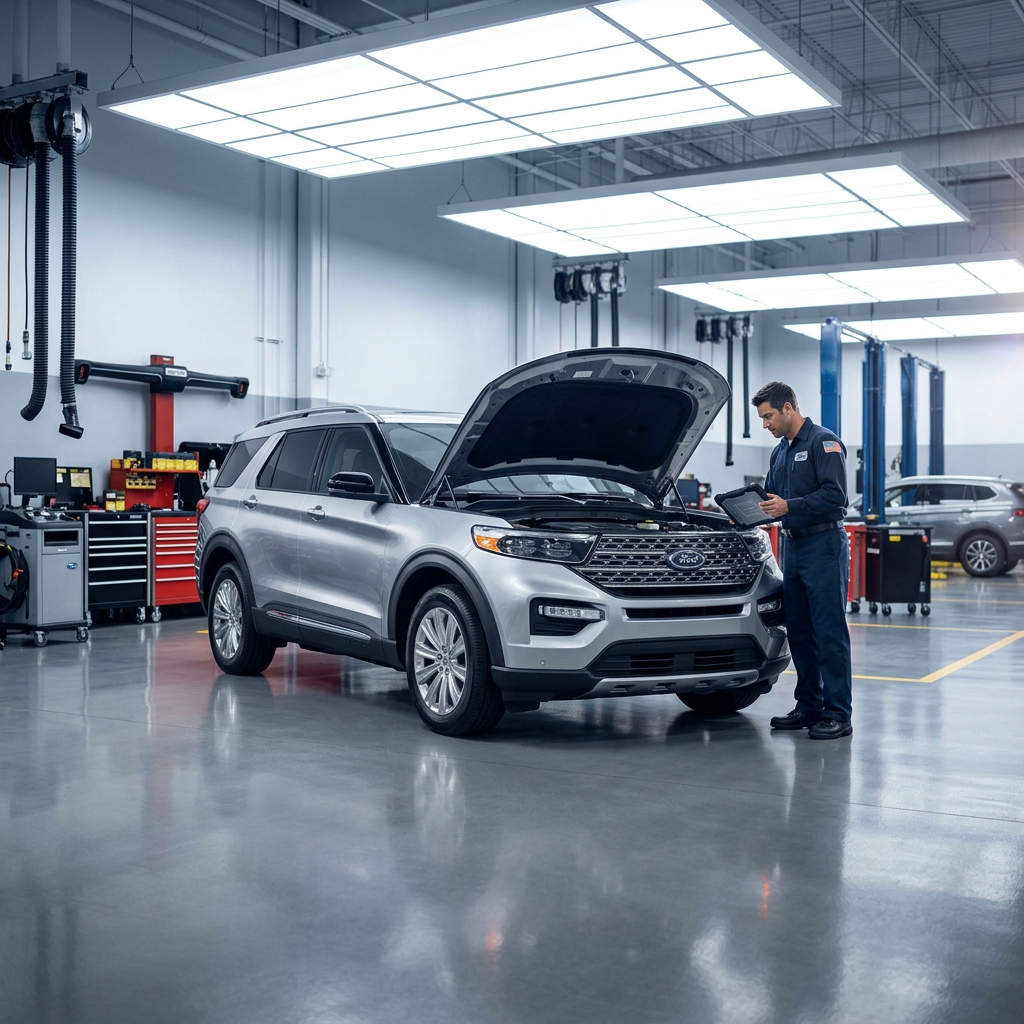
If your 2023 Ford Explorer requires service, resolving open campaigns promptly prevents potential component wear or safety hazards. If you are located in the local area, you can easily find our service center location or give our service department a quick call to check your vehicle's status with an advisor.

Table of Contents

Which Safety Recalls Affect the 2023 Ford Explorer?

Safety recalls affecting the 2023 Ford Explorer primarily involve rear-view camera displays, power transfer components, low-pressure fuel pumps, and secondary seating mechanisms. Identifying which specific safety campaigns apply to your vehicle depends entirely on its build date, installed engine option, and equipment packages.

Several key recall campaigns have been announced for select 2023 Ford Explorer models, including:

  • Rearview Camera Display Signal Loss: Certain models equipped with 360-degree camera systems may experience a blank screen or inverted image when shifting into reverse. Authorized technicians resolve this issue by updating the software in the Image Processing Module or replacing the camera unit free of charge.
  • Low-Pressure Fuel Pump Failure: On select vehicles, internal wear on the low-pressure fuel pump can lead to engine hesitation, check engine illumination, or a sudden loss of motive power while driving. Dealers inspect the fuel system and update the Powertrain Control Module software or replace the pump assembly.
  • Turbocharger Oil Supply Line: Models equipped with the 2.3L EcoBoost four-cylinder engine may have an oil supply line susceptible to cracking, which can lead to oil leaks in the engine compartment. Authorized service centers replace the supply line assembly to eliminate fire hazards.
  • Rear Axle Mounting Fasteners: Certain rear-wheel drive and four-wheel drive Explorers were recalled due to potential fracturing of the rear axle horizontal mounting bolt, which can cause severe drivetrain noise or allow the vehicle to roll when parked if the parking brake is not engaged.
  • Second-Row Seat Anchor and Latch Mechanisms: Select production runs require inspection of the second-row outer seat belt lower anchor bolts or replacement of the easy-entry seat release bezel to ensure the row remains securely latched during emergency maneuvers.

Understanding your vehicle's current service status helps maintain long-term reliability. To review full model specifications or check equipment levels across trim lines, you can explore our detailed Ford Explorer research guide.

How Do Owners Check a 2023 Ford Explorer VIN for Open Recalls and Arrange Free Repair?

Owners check a 2023 Ford Explorer for open safety recalls by locating the 17-character VIN and entering it into the official National Highway Traffic Safety Administration (NHTSA) recall lookup tool or the Ford Owner Support portal. Once an open campaign is confirmed, owners schedule an appointment at an authorized Ford dealership to complete the necessary software updates or mechanical repairs.

The 17-character VIN is a unique identifier assigned to your vehicle during manufacturing. You can easily locate it in one of three places:

  1. The driver's side dashboard corner, visible from the outside through the bottom of the windshield glass.
  2. The safety compliance certification label attached to the driver's side doorjamb.
  3. Your official state vehicle registration card, auto insurance policy statement, or vehicle title documents.

Once you have your VIN, enter it into the recall checker. If your vehicle shows an unrepaired campaign, contact our service team to reserve a dedicated repair window. Authorized dealerships receive genuine factory components directly from manufacturer distribution channels. If you ever need non-recall maintenance components or replacement items, you can conveniently order genuine Ford parts through our dedicated online portal.

How Do Engine Options, Towing Ratings, and Ford Co-Pilot360 Impact Ownership?

The 2023 Ford Explorer delivers impressive versatility with engine outputs ranging from 300 hp to 400 hp, maximum towing capacities up to 5,600 lbs, and comprehensive driver protection through the standard Ford Co-Pilot360 safety suite. These performance and active safety systems work in tandem to provide a secure and composed driving experience across diverse road conditions.

The powertrain lineup centers around three distinct engine options paired with a smooth 10-speed automatic transmission featuring SelectShift® capability:

  • 2.3L EcoBoost Four-Cylinder: Generates 300 hp and 310 lb-ft of torque while achieving EPA ratings of 20 city / 27 hwy mpg in four-wheel drive configuration. When equipped with the optional Class IV Trailer Tow Package, this engine delivers a 5,300 lbs maximum towing capacity.
  • 3.0L EcoBoost V6: Delivers 400 hp and 415 lb-ft of torque on premium trims like the ST and Platinum, boosting maximum towing capacity to 5,600 lbs.
  • 3.3L V6 Hybrid: Combines an electric motor with a natural aspirated engine for 318 hp combined output, offering extended range for long-distance highway travel.

For drivers hauling agricultural trailers or recreational gear across the open prairie routes of Dickinson County, selecting the right trim and factory towing package is essential. The off-road focused Timberline trim comes standard with all-wheel drive, off-road shocks, and the towing package to haul up to 5,300 lbs straight from the factory.

Every 2023 Explorer comes standard with the Ford Co-Pilot360 active safety package. Key driver-assist features include:

  • Pre-Collision Assist with Automatic Emergency Braking: Scans the road ahead for potential vehicle or pedestrian hazards and automatically applies braking force if a collision is imminent.
  • Blind Spot Information System with Cross-Traffic Alert: Monitors hard-to-see blind zones and warns of approaching vehicles when backing out of driveways or changing highway lanes.
  • Lane-Keeping System: Tracks road lane markings to gently nudge the vehicle back into position if unintended drifting occurs.
  • Auto High-Beam Headlamps: Automatically toggles between high and low beams based on surrounding light levels and oncoming traffic.

What Are the Estimated Annual Maintenance Costs and Service Requirements for a 2023 Ford Explorer?

Estimated annual routine maintenance and repair costs for a 2023 Ford Explorer typically average between $500 and $750 during initial ownership years. Adhering to the factory-recommended maintenance schedule preserves mechanical efficiency, protects vehicle resale value, and ensures all active vehicle warranties remain fully intact.

Ford recommends organizing routine maintenance around 10,000-mile or 12-month intervals under normal driving conditions. Standard service visits include:

  • Synthetic engine oil and filter replacement.
  • Multi-point vehicle safety inspection covering steering, suspension, and exhaust systems.
  • Tire rotation and brake pad depth measurements.
  • Fluid level checks and cabin air filter replacements.

Every 2023 Ford Explorer is backed by a standard 3-year/36,000-mile limited warranty alongside a 5-year/60,000-mile powertrain warranty. Standard warranty coverage protects against unexpected mechanical defects, while safety recall repairs remain completely free regardless of vehicle mileage or warranty expiration. You can easily keep your SUV in peak condition by taking a moment to schedule Ford service today with our factory-trained technicians.

Frequently Asked Questions Regarding 2023 Ford Explorer Safety Recalls

Q: How can I tell if a safety recall repair has already been performed on my vehicle?

When you run your 17-character VIN through the official NHTSA or Ford recall lookup tool, only open and unrepaired safety campaigns will display. If a safety recall was previously completed by an authorized dealer, it will no longer show up as an active requirement. Our service team can also pull your vehicle's full OASIS service history report to verify every completed recall and warranty repair.

Q: Will I have to pay anything out of pocket for a safety recall repair?

No, all safety recall repairs mandated by federal safety standards are performed completely free of charge. Ford covers all required genuine parts and labor costs at authorized dealerships. You will never pay out of pocket for an official safety campaign repair regardless of your Explorer's age or current mileage.

Q: Do authorized dealerships provide loaner vehicles during recall service appointments?

Many authorized Ford dealerships offer complimentary loaner vehicles, shuttle drop-off services, or mobile service options for safety recall repairs, depending on dealer inventory and appointment scheduling. Because loaner availability varies by shop volume and repair length, we recommend asking your service advisor about transportation options when booking your service date.

Q: What should I do if my 2023 Explorer exhibits recall symptoms before parts arrive?

If your Explorer displays symptoms associated with a recall campaign—such as a check engine light, unusual drivetrain noise, or a blank rear-view camera screen—contact an authorized Ford service center immediately. Service advisors can perform preliminary safety diagnostics, advise you on interim driving precautions, and prioritize your repair order as soon as replacement parts reach the service bay.

Q: How long does a typical software update recall take at the service center?

Software-based recall repairs, such as updating the Image Processing Module or Powertrain Control Module, generally take less than one to two hours to flash and verify. Mechanical repairs or component replacements may require additional shop time. Booking an appointment in advance allows our team to pre-order required materials and complete your service as quickly as possible.

Schedule Your Free 2023 Ford Explorer Recall Service in Junction City

Resolving open safety recalls is essential for maintaining the protection, performance, and long-term value of your family SUV. If your 2023 Ford Explorer has an active safety campaign or requires routine maintenance, our team of factory-certified technicians is ready to provide fast, professional care using genuine OEM parts.

Visiting our service department is convenient for vehicle owners across Geary County and nearby military housing communities. To confirm open safety recalls for your exact VIN, discuss loaner availability, or reserve your repair appointment, get directions to our Junction City service center or speak directly with our service desk by giving us a quick call today.
© 2026 Valor Ford. All rights reserved.

Vehicle specification data © JATO Dynamics Limited.


Posted in:

Related Posts

Is Buying Dedicated Winter Tires Cost-Effective for Northern Block Leave Travel?

Is Buying Dedicated Winter Tires Cost-Effective for Northern Block Leave Travel?

Is Buying Dedicated Winter Tires Cost-Effective for Northern Block Leave Travel? Every year as winter approaches, thousands of active-duty military personnel at Fort Riley prepare for annual Winter Block Leave. For service members heading home across northern states—navigating the icy expanses of Nebraska, Iowa, Minnesota, Wisconsin, the Dakotas, or Wyoming along I-70, I-80, and I-90—the trip presents severe weather challenges. A primary question facing drivers is whether purchasing dedicated winter tires is truly cost-effective for a single holiday road trip. The short answer is a definitive yes. Investing in a set of dedicated winter tires pays for itself when evaluating total risk. Preventing a single weather-related fender bender, heavy highway tow on an isolated stretch of northern interstate, or missed leave window far outweighs the upfront tire expense. Furthermore, because winter tires replace your primary all-season or summer tires during freezing months, you effectively double the tread life of your original set. At Valor Ford in Junction City, KS, we frequently help Fort Riley families evaluate winter readiness so they can travel north with complete confidence. The Math Behind Winter Tires: Total Cost vs. Insurance Deductibles and Delays Evaluating the true return on investment (ROI) of winter tires requires looking beyond the initial purchase price. A high-quality set of dedicated winter tires can vary depending on vehicle size and rim dimensions. Because winter tires are only driven 3 to 4 months out of the year, a single set typically lasts 4 to 5 winter seasons for average drivers. Contrast that controlled cost against the unexpected financial impact of a winter highway collision: comprehensive insurance deductibles, rural highway towing charges, out-of-network car rentals, and possible insurance premium increases after an at-fault weather crash. When combined with the non-refundable cost of lost leave days spent stranded in remote motel rooms waiting for repairs, dedicated winter tires represent an affordable insurance policy for your vehicle and schedule. Expense Category Dedicated Winter Tire Setup Single Minor Winter Incident Cost Upfront / Out-of-Pocket Cost $600 – $1,100 (lasts 4-5 seasons) $500 – $1,000 Insurance Deductible Emergency Towing / Recovery $0 (Avoided hazard) $250 – $600 (Rural Interstate Rate) Insurance Rate Increase $0 (No claims) $400 – $900 / year (Post-incident surge) Primary Tire Wear Protection Saves 30%–40% tread life None All-Season vs. Winter Tires: How Cold Temperatures Impact Traction Below 45°F Rubber Compound Physics All-season tire compounds undergo a physical change called the glass transition point when temperatures drop below 45°F (7°C). The tread rubber hardens and behaves like a rigid plastic puck, losing its ability to conform to road surface imperfections and drastically reducing mechanical grip even on completely dry pavement. High-Density Micro-Siping Winter tires feature hydrophilic rubber formulations infused with high concentrations of silica that remain pliable down to sub-zero temperatures. They feature thousands of microscopic slits (sipes) that flex open to bite directly into packed snow and slice through the thin film of water on ice surfaces to maintain road contact. Real-World Stopping Performance Independent safety tests demonstrate that at 30 mph on snow-covered roads, a car equipped with dedicated winter tires stops up to 30 feet shorter than the exact same car on all-season tires—often the precise distance between a safe, routine stop and a severe highway rear-end collision. What Tire Tread Depth is Required for Safe Winter Road Trips During Block Leave? While the federal legal minimum tread depth for highway driving is 2/32 of an inch, this threshold applies primarily to dry or lightly wet roads. For heavy snow, slush, and icy northern interstates, tire industry safety experts and Ford technicians recommend a minimum tread depth of 6/32 of an inch. Once tread wears down past 5/32", deep snow channels lose their capacity to evacuate slush, dramatically increasing your hydroplaning risk. You can quickly test your tread at home using Washington quarter: insert the coin head-first into the tread groove. If the top of Washington's head is covered by the tread block, you have at least 4/32" of tread remaining. If the top of his head is visible, your tires are unfit for winter cross-country driving. Schedule Ford Service Today Fort Riley Winter Block Leave Readiness: Essential Battery, Tire, and Fluid Service for Military Families Preparing for Winter Block Leave requires a comprehensive vehicle strategy beyond tire selection. Driving 500 to 1,500 miles across multiple state lines subjects your engine, electrical system, and cooling loop to extreme mechanical stress. When sub-zero wind chills hit the Plains, pre-existing mechanical vulnerabilities escalate into highway breakdowns rapidly. For Fort Riley personnel driving trucks like the Ford F-150 or family SUVs like the Ford Explorer, complete pre-flight maintenance ensures your holiday leave is spent with loved ones—not waiting inside an highway service garage. Whether you handle maintenance yourself or trust certified Ford technicians, completing these fundamental readiness checks before departing Junction City is strongly recommended for winter travel. What Battery and Tire Checks Should Fort Riley Families Complete Before Winter Leave Travel? Critical Pre-Trip Battery Testing Freezing temperatures rob automotive batteries of up to 50% of their cranking power while simultaneously increasing engine oil viscosity, making engines twice as hard to turn over. Have a digital conductive load test performed to check Cold Cranking Amps (CCA). Any battery older than three years should be replaced before embarking on multi-state northern routes. Tire Pressure & Cold Temperature Drops For every 10°F drop in ambient temperature, tire inflation pressure drops approximately 1 to 2 PSI. A tire properly set inside a warm garage in Kansas will be severely underinflated when driving through sub-zero blizzards in South Dakota. Always adjust tire inflation cold to recommended door-jamb placard specifications, and verify spare tire pressure before departure. What Ratio of Antifreeze to Water Should Be Used in Vehicle Coolant for Kansas Winters? Standard 50/50 Mixture Ratio A standard 50/50 mix of concentrated ethylene glycol coolant and distilled water provides freeze protection down to -34°F (-37°C) and boiling protection up to 265°F. This is ideal for normal Kansas winter conditions and moderate northern driving. Extreme Cold 60/40 Ratio If your Block Leave travel takes you into upper Midwestern states or high-altitude mountain passes where sub-zero wind chills plummet below -30°F, increase the mixture to 60% coolant concentrate and 40% water. This lowers freeze protection to maximum -62°F (-52°C). Critical Coolant Concentration Cap Never exceed a 70/30 coolant ratio. Pure concentrated antifreeze freezes at a higher temperature than a water-mixture (around +10°F) and lacks necessary heat-transfer capacity, risking catastrophic engine block cracking or radiator burst. What Winter Maintenance Tasks Are Safe and Simple to Complete DIY at Fort Riley Auto Skills Center? For hands-on military members looking to save money before taking leave, several high-impact pre-trip maintenance tasks can easily be completed in under an hour at the Fort Riley Auto Skills Center. Key DIY winter projects include installing beam-style silicone wiper blades that prevent ice buildup, flushing windshield washer fluid with -30°F rated de-icer fluid, replacing engine and cabin air filters, inspecting drive belts for cracking, and swapping exterior headlight/taillight bulbs. For replacement parts designed specifically for your vehicle, you can Order Genuine Ford Parts directly through Valor Ford prior to your work session. Order Genuine Ford Parts How Can Service Members Reserve Stall Time and Tools at the Fort Riley Auto Skills Center? The Fort Riley Auto Skills Center (located in Building 7854 on Custer Ave / Trooper Drive) is an incredible resource for active duty personnel, retirees, and military dependents. The facility features hydraulic vehicle lifts, complete mechanic hand-tool sets, tire mounting and balancing stations, diagnostic code readers, and fluid catch basins. To reserve stall time, patrons must first complete a brief 15-minute shop safety orientation card. Work bays and hydraulic lifts are available on both a walk-in basis and advanced reservation. Hourly bay rental fees are extremely budget-friendly (typically $6 to $10 per hour), making it easy to swap seasonal tires, flush radiator coolant, or perform brake service before Block Leave starts. Emergency Winter Road Trip Safety Gear for Long-Distance Northern Driving Traction & Recovery Gear Pack polymer traction mats or tire recovery tracks, a heavy-duty folding snow shovel, a 20,000-lb rated tow strap, and a 20-lb bag of coarse cat litter or rock salt for immediate wheel traction in deep roadside drifts. Electrical & Emergency Power Carry a portable lithium-ion jump starter pack (1000A peak minimum) so you are not dependent on another vehicle for a jump-start. Include LED magnetic roadside safety flares, high-lumen headlamps, and extra USB power banks. Thermal Survival Supplies Equip your vehicle with sub-zero rated sleeping bags, Mylar thermal emergency bivvies, chemical hand/foot warmers, high-protein non-perishable rations, and an insulated 1-gallon water container stored to prevent total freezing. Tire Storage Solutions: Where to Keep Your Summer or All-Season Set While Away A common obstacle military personnel encounter when buying dedicated winter tires is finding proper storage space for their primary tire set while living in garrison housing or off-post apartments in Junction City and Manhattan. To prevent rubber degradation, dry rot, and flat-spotting while stored: clean off all road salt and brake dust before storing. Store tires inside heavy-duty opaque plastic tire totes to block UV rays and ozone exposure. If tires remain mounted on wheels, stack them horizontally or hang them from rim hooks; if unmounted, store them standing vertically on tread faces. For service members residing in Fort Riley barracks or tight apartment spaces, local self-storage facilities in Junction City or Dickinson County offer climate-controlled MINI-units. Additionally, when you purchase seasonal tire sets at Valor Ford, our team can advise you on compact tire rack systems suitable for garage walls. Balancing Upfront Tire Costs with Long-Term Vehicle Trade-In and Resale Value Using dedicated seasonal tires directly protects your vehicle's long-term resale and trade-in valuation. Standard factory aluminum wheels subjected to harsh northern road salts and chemical de-icers frequently suffer severe rim corrosion, clearcoat peeling, and bead seal leaks within two winter seasons. By mounting winter tires on dedicated steel wheels or winter-rated alloy rims, you keep your primary factory wheels pristine. When preparing for a future Permanent Change of Station (PCS) move or upgrading your vehicle, presenting a car with immaculate wheels, clean undercarriage condition, and verifiable tire rotation history maximizes your instant trade-in offer. Trade In Evaluation Curious how much your current vehicle is worth prior to Block Leave? You can easily get a transparent Trade In Evaluation at Valor Ford. Whether you are looking to trade up to an AWD SUV or Browse Used Inventory, our team supports military personnel across Geary and Riley counties. Pre-Departure Winter Service Checklist for Drivers Departing Junction City and Fort Riley Before starting your engine and rolling out of Junction City for Block Leave, complete this 48-hour final pre-departure safety checklist: System / Component Required Pre-Departure Action Safety Goal Fuel Tank Level Maintain minimum 1/2 tank at all times Prevents fuel line condensation freeze & provides emergency heater power if delayed Windshield Washer Fluid Top off with -30°F rated De-Icer solution Prevents instant windshield icing at highway speeds Wheel Lug Nut Torque Torque to OEM spec (re-check after 50 miles) Ensures wheel security after seasonal tire mounting HVAC / Defrost System Verify A/C compressor engages on defrost settings Removes interior cabin moisture rapidly to keep glass clear Exterior Lighting Clean headlights, taillights, and turn signals Maximizes visibility during severe winter snowstorms Schedule Your Pre-Block Leave Winter Service and Tire Inspection at Valor Ford Don't leave your holiday travel to chance on icy northern highways. The factory-trained master technicians at Valor Ford are proud to serve Fort Riley military personnel, service families, and residents of Junction City and Dickinson County with expert vehicle maintenance. Whether you need a dedicated set of winter tires mounted, a free battery load check, coolant testing, or comprehensive pre-departure inspection, we are here to ensure your vehicle gets you home and back safely. Call (785) 238-5114 or schedule your service appointment online today! Schedule Pickup and Delivery Service

What Is the Absolute Minimum Safe Brake Pad Thickness Before Replacement Is Required?

What Is the Absolute Minimum Safe Brake Pad Thickness Before Replacement Is Required?

What Is the Absolute Minimum Safe Brake Pad Thickness Before Replacement Is Required? When evaluated strictly by engineering specifications and automotive safety codes, the absolute minimum legal and physical safe limit for remaining brake pad friction material is 2 millimeters (2/32 in). Operating a vehicle once the pad wear drops to 2mm or below places your braking system in extreme peril: at this exact thickness, the steel backing plate is mere fractions of a millimeter away from making direct metal-to-metal contact with the brake rotor. When that contact occurs, friction coefficient drops rapidly, heat dissipation fails, and stopping distance increases exponentially while permanently damaging costly mechanical assemblies. However, professional automotive technicians and safety agencies maintain a mandatory replacement threshold of 3 millimeters (3/32 in). The 3mm mark represents the critical professional buffer zone. At 3mm, friction material has lost its structural elasticity and capacity to effectively absorb and displace extreme kinetic heat during high-speed emergency stops. Driving anywhere between 3mm and 2mm is widely considered living on borrowed time. To understand where your vehicle currently stands, it helps to understand the full life cycle of automotive brake pad thickness specs: • 10mm to 12mm (12/32 in): Brand New OEM Brake Pad. Full thickness delivering maximum friction, optimal heat displacement, and silent performance. • 6mm to 9mm (8/32 - 11/32 in): Green Zone / Normal Operation. Abundant friction material remaining; excellent thermal and mechanical reserve capacity. • 4mm to 5mm (5/32 - 6/32 in): Yellow Zone / Planned Maintenance Window. Friction material is roughly 60-70% consumed. It is safe for current daily commuting, but replacement should be scheduled within the next 1,000 to 3,000 miles. • 3mm (3/32 in): Red Zone / Mandatory Replacement Required. Wear indicator squealers engage; stopping distances begin expanding under hard braking. • 2mm or Less (2/32 in): Critical Danger Zone / Immediate Failure Risk. High probability of rotor gouging, piston overextension, and severe brake fade. How to Measure Brake Pad Friction Material vs. Metal Backing Plate A common mistake driver make during DIY vehicle inspections is measuring the total thickness of the brake pad assembly rather than isolating the friction block from the steel backing plate. A standard brake pad consists of a heavy steel backing plate (typically 4mm to 6mm thick) bonded to organic, semi-metallic, or ceramic friction lining. If you measure 8mm of total pad structure, but 5mm of that is solid steel backing plate, you actually only have 3mm of usable friction material remaining! To measure accurately, technicians use specialized color-coded brake pad feeler gauges or digital vernier calipers. Place the gauge flat against the metallic rotor face and measure strictly the distance from the outer rotor surface to the steel backing plate seam. In a pinch, visual checks through open alloy wheel spokes using a manual 32nds-of-an-inch gauge can give a quick estimation, but inner pad wear (which often wears faster due to stuck caliper slide pins) requires removing the wheel or placing the vehicle on a service lift. Precision measurements ensure you never miscalculate remaining service life. A 1mm measurement error can mean the difference between safe stopping performance and catastrophic mechanical damage on high-speed rural highways. Warning Signs That Brake Pads Have Dropped Below 3mm in Thickness High-Pitched Squealing Modern OEM brake pads include hardened spring-steel acoustic wear indicators (squealers). When friction material wears down to exactly 3mm, this small metal tab contacts the spinning brake rotor surface, producing a high-pitched metallic screeching sound under gentle or coasting deceleration. Ignoring this squeal guarantees transition into harsh mechanical wear. Metal Grinding & Spongy Pedal If the squealing stops and transitions into a deep, harsh mechanical grinding sound, your friction material is entirely depleted (under 1mm). The steel backing plate is actively gouging deep grooves into the iron rotor. Concurrently, increased hydraulic fluid volume demands in thin calipers cause a soft, spongy brake pedal travel. Extended Stops & Dash Lights As pads thin below 3mm, heat retention skyrockets, leading to severe brake fade during repeated slowdowns. Stopping distances can expand by 20 to 40 feet at highway speeds. Modern electronic wear sensors or master cylinder brake fluid level sensors will trigger yellow or red dashboard warnings. Why Driving on Less Than 2mm Brake Pads Causes Catastrophic Damage Continuing to drive once brake pad friction material drops below 2mm escalates a minor routine maintenance task into an expensive, dangerous mechanical failure. Without the thermal barrier provided by dense friction material, extreme temperatures (exceeding 1,000°F during emergency stops) transfer directly into the caliper assembly. This heat boils brake fluid, causing total loss of hydraulic brake pressure. Furthermore, as the total pad thickness thins out, the caliper piston must extend far beyond its intended engineered travel distance to push the pad against the rotor. This hyper-extension damages rubber piston dust boots, ruins internal fluid seals, causes total fluid leaks, or can cause the piston to lock permanently into the bore, destroying the entire brake corner. Schedule Brake Inspection at Valor Ford Kansas Deer Season and Rural Road Safety: Lighting and Brake Inspections for Nighttime Driving Driving across Central Kansas—especially corridors along Interstate 70, K-18, US-77, and rural state routes in Geary and Dickinson Counties —presents extreme nighttime hazards during the autumn and winter months. As temperatures drop and daylight hours shrink, drivers commuting around Junction City and Fort Riley encounter a massive spike in wildlife traffic, specifically white-tailed deer crossing pitch-black county roads. Avoiding a high-speed collision with a 200-pound animal demands two synchronized vehicle systems working at 100% capacity: uncompromised headlight clarity/aim (to spot wildlife eyes reflected at maximum distance) and flawless brake pad responsiveness (to decelerate quickly without wheel lockup or brake fade). If your brake pads are worn down to 3mm or less, your stopping distance at 65 mph can expand by as much as 30 to 50 feet—precisely the distance between a near-miss and a severe impact. When Is Peak Deer Season in Kansas and When Are Collisions Most Likely to Occur? According to Kansas Department of Transportation (KDOT) crash statistics, peak deer mating and migration season (commonly known as 'the rut') runs strictly from late October through mid-December, with November experiencing the absolute highest concentration of animal-vehicle collisions across the state. During this period, deer activity increases tenfold as animals move between agricultural fields and wooded river basins in search of mates. Statistical analysis shows that over 65% of all deer-vehicle strikes in rural Kansas occur during the prime movement windows: dusk to 9:00 PM and 5:00 AM to dawn. Drivers commuting to and from Fort Riley military base early in the morning or traveling rural state highways surrounding Junction City after dark face maximum exposure. Having crisp headlight illumination and thick, responsive brake pads during these exact peak hours is your single best defense. What Lighting and Braking Actions Do Kansas Officials Recommend When Driving Rural Roads During Deer Season? Max High Beams Use high-beam headlights continuously on unlit rural highways whenever oncoming traffic is more than 500 feet away. High beams reflect off deer eyes (tapetum lucidum) hundreds of feet earlier than standard low beams, granting vital seconds to react. Scan Road Shoulders Keep your eyes constantly scanning ditch lines and right-of-way fence boundaries. Deer rarely travel alone; if one deer crosses the road in front of you, expect two or three more to immediately follow directly behind it. Brake Straight & Firmly Kansas Highway Patrol explicitly warns: Never swerve sharply into oncoming lanes or ditch steep embankments. Swerving causes rollover crashes and head-on collisions. Execute maximum straight-line emergency braking instead. Schedule Pickup & Delivery Brake Service What Should a Driver Do If a Deer Suddenly Jumps in Front of Their Vehicle on a Rural Road? Step 1: Don't Swerve — Brake in a Straight Line. The immediate instinct to jerk the steering wheel away from an obstacle leads to tragic outcomes on rural Kansas roads. Swerving at 65 mph often causes tires to trip on loose gravel shoulders, initiating catastrophic vehicle rollovers or launching into oncoming traffic lanes. Keep your steering wheel pointed dead straight. Step 2: Stomp and Hold the Brake Pedal (Leverage ABS). Many modern Ford vehicles are equipped with advanced Anti-Lock Braking Systems (ABS). Press down with maximum force and do not pump the brake pedal. Let ABS modulate hydraulic pressure while you maintain continuous steering control. Step 3: Release Brake Pressure Immediately Before Impact. If impact is completely unavoidable, release hard foot pedal pressure a split-second before contact. Hard braking causes the front nose of your vehicle to dip down significantly. Letting off the brake slightly allows the front suspension to rise back up, reducing the odds of the deer coming up over the hood and through the front windshield. Step 4: Pull Over Safely and Assess. After impact, bring the vehicle to a controlled stop on the right shoulder, activate hazard lights, stay inside the vehicle, and contact emergency services. Never approach an injured deer on the roadside. What Is the Recommended Headlight Alignment Angle for Rural Nighttime Driving? Proper headlight alignment is critical for navigating the rolling hills and unlit curves of the Flint Hills region. Factory engineering specifications state that low-beam headlight patterns should project downward with a vertical drop of 1 to 2 inches at a 25-foot distance from a flat wall target. If headlights aim too high, they blind oncoming drivers and bounce glare off fog; if aimed too low, your stopping distance easily outruns your illuminated field of vision. Over time, driving over rough rural gravel roads, hitting potholes, or carrying heavy truck payloads can shift headlight housing adjusters out of alignment. Clouded or yellowed plastic headlight lenses can also reduce output lumens by up to 80%. A professional headlight restoration and optical aiming check ensures maximum beam penetration along dark rural ditch lines. How Much Does It Cost to Replace Worn Brake Pads and Rotors in Kansas? Pads Only (Per Axle) $150 - $275 (estimated; actual price may vary) Includes replacement of front or rear ceramic/semi-metallic brake pads, hardware kit replacement, and slide pin lubrication, provided existing rotors meet minimum discard thickness and remain unscored. Pads & Rotors (Per Axle) $350 - $550 (estimated; actual price may vary) Includes new OEM Motorcraft pads plus two brand-new high-carbon steel brake rotors, heavy-duty hardware clips, system bleed/flush if required, and complete digital road test. Full 4-Wheel Overhaul $700 - $1,100 Complete 4-wheel brake replacement including front and rear pads, four new rotors, caliper slide service, and complete brake fluid exchange. Service financing options available. Order Genuine Ford Parts & Accessories Front vs. Rear Brake Pad Wear Rates for Fort Riley Commuters and Rural Drivers 70/30 Weight Bias Under deceleration, kinetic energy transfers momentum forward onto the front axle. As a result, front brake pads absorb nearly 70% of total vehicle stopping force, causing front pads to wear out roughly 1.5 to 2 times faster than rear pads under normal highway conditions. Military Gate Traffic Fort Riley commuters experiencing daily morning stop-and-go queueing at gate checkpoints accelerate brake wear. Frequent low-speed stopping keeps continuous thermal pressure on front brake calipers, burning through friction compound quickly. Towing & Gravel Strain Rural truck owners towing livestock or farm trailers experience elevated rear pad wear due to Electronic Brake Force Distribution (EBD) systems counterbalancing heavy rear axle tongue loads during rural highway operation. DIY Visual Brake Check vs. Professional Multi-Point Inspection at Valor Ford A driveway visual inspection with a flashlight can give you a rough estimate of outer brake pad thickness, but it leaves major critical safety factors unexamined. You cannot visually inspect inner brake pad wear without pulling the wheel, nor can you measure rotor lateral runout (which causes steering wheel vibration) or test brake fluid moisture contamination levels. At Valor Ford in Junction City, our factory-certified Ford technicians execute a comprehensive Multi-Point Brake Inspection. We measure inner and outer pad friction material to exact tenths of a millimeter, inspect caliper slide pins and rubber dust boots, verify rotor discard thickness using precision micrometers, test hydraulic fluid boiling point, and perform headlight beam optical alignment tests. Schedule Your Brake and Headlight Safety Inspection at Valor Ford in Junction City Don't wait for screeching wear indicators or metal-on-metal grinding to compromise your safety on rural Kansas roads this fall. Ensure your vehicle has the stopping power and headlight visibility required to handle unexpected wildlife encounters and hazardous weather across Geary and Dickinson Counties. Visit the certified service experts at Valor Ford located at 1825 Goldenbelt Blvd, Junction City, KS 66441 or Call (785) 238-5114 to book your service appointment today. Our team is dedicated to keeping your truck, SUV, or sedan operating at peak factory safety standards.

Navigating Engine Oil Viscosity in Kansas: Expert Insights from Valor Ford

Navigating Engine Oil Viscosity in Kansas: Expert Insights from Valor Ford

Navigating Engine Oil Viscosity in Kansas: Expert Insights from Valor Ford In multi-grade motor oils like 5W-30, the number before the "W" indicates low-temperature fluid mobility during cold winter starts, while the second number represents oil thickness at engine operating temperatures around 212 degrees Fahrenheit. Today, Mike Hogg, Service Director at Valor Ford with 20 years of technical automotive experience, explains how viscosity ratings and maintenance schedules impact vehicle protection in central Kansas. Q: What do the numbers in engine oil viscosity ratings like 5W-30 mean for Kansas drivers? A: The numbers in a viscosity rating represent how fluid flows under specific cold and hot operating conditions established by the Society of Automotive Engineers. The "W" stands for winter, not weight, and the number preceding it reflects how easily oil pumps through critical internal passages when an engine is cold. A lower winter rating means the fluid moves faster across moving parts on freezing mornings. The second number, such as the 30 in 5W-30, measures fluid thickness once the engine reaches its standard operating temperature of 212 degrees Fahrenheit. For commuters navigating cold morning starts in Junction City, using the correct winter viscosity ensures vital lubrication reaches overhead components before friction damage occurs. If you ever have questions about reading fluid labels or checking dipstick levels, you can visit our service center location on Goldenbelt Boulevard or simply give our service department a call. Q: How should I choose an engine oil viscosity for cold-weather starts in Junction City, KS? A: You should always choose the exact viscosity grade recommended in your vehicle's owner manual or official Ford oil application charts rather than selecting a grade based solely on outdoor temperatures. Modern engines are engineered with precise internal tolerances and hydraulic components that require specific fluid dynamics to maintain proper oil pressure. Selecting an unapproved lower viscosity in an attempt to improve cold flow can alter oil film strength when the engine reaches full temperature. The safest approach for cold weather protection is ensuring your vehicle has fresh, recommended fluid in the crankcase. Local owners can easily schedule a service appointment online to have our factory-trained technicians inspect fluid levels, or order official OEM engine components directly through our parts department. Q: Should drivers switch to a different oil viscosity or change their oil before winter? A: Vehicle owners should not change their oil viscosity grade simply because seasonal temperatures are dropping. Multi-grade oils are specifically formulated to operate across wide thermal windows, providing rapid flow during cold starts and robust protection at high engine operating temperatures. Switching to a different grade without manufacturer approval can void warranty coverage and compromise internal lubrication. You only need an oil change before winter if your vehicle is near its service interval, if the Intelligent Oil-Life Monitor signals that service is due, or if you have reached six months or 7,500 miles since your last visit. Taking care of scheduled maintenance before severe cold arrives helps ensure clean fluid is circulating through the oil filter and engine passages. Q: Why does an engine make knocking or ticking noises when started on cold mornings? A: Ticking or light knocking sounds during a cold start usually happen because thickened, cold oil takes several extra seconds to build hydraulic pressure and reach the top of the engine. Hydraulic valve lifters, overhead camshaft bearings, and timing chain tensioners rely on immediate oil pressure to operate quietly. When ambient temperatures drop significantly, fluid moves more slowly through internal oil galleries until the oil pump establishes full system circulation. While a brief moment of valve noise can occur on freezing mornings, persistent knocking or metallic sounds that continue after the engine warms indicate low fluid levels, improper fluid grade, or mechanical wear that requires immediate professional evaluation. "Cold engine oil moves much slower at startup, which is why those brief morning ticking sounds mean your hydraulic lifters are waiting for proper fluid pressure." Q: Which oil type provides the highest level of protection against extreme cold? A: Full synthetic oil delivers the maximum protection during extreme cold because of its uniform molecular structure and superior low-temperature fluid mobility. Unlike conventional oils, full synthetic formulas do not contain paraffin waxes that can crystallize and thicken when temperatures drop below freezing. This stability allows full synthetic fluid to pump effortlessly through internal channels during initial engine cranking, drastically reducing startup wear. Synthetic blend oils offer enhanced protection compared to standard conventional fluids, but full synthetic remains the benchmark for fast oil pressure development and thermal stability across severe Midwest temperature swings. Q: Can you safely mix synthetic blend and full synthetic oil in an emergency? A: Full synthetic and synthetic blend oils are chemically compatible and can be mixed in an emergency without causing engine damage. Both oil types utilize compatible base stocks and additive packages, allowing them to blend safely if you need to top off a low fluid level when the exact matching oil is unavailable. However, adding a synthetic blend to full synthetic dilutes the premium performance characteristics and cold-weather advantages of the full synthetic fluid. While this emergency mixture will safely protect internal moving components in the short term, you should schedule a complete oil and filter change using the factory-specified oil grade at your earliest convenience. Q: Does using correct low-viscosity engine oil improve fuel economy? A: Utilizing the manufacturer-specified low-viscosity engine oil, such as 0W-20 or 5W-20, improves fuel efficiency by reducing internal mechanical drag inside the engine. Thinner, highly refined oils require less energy from the crankshaft to pump through engine galleries and coat moving parts, which can increase fuel economy by roughly 1 percent to 2 percent compared to heavier, unapproved oil grades. For drivers operating agricultural or commercial light-duty trucks across Dickinson County, maintaining optimal fuel efficiency relies heavily on adhering to recommended fluid specifications and routine service intervals. Checking your dipstick monthly ensures proper oil volume and helps prevent performance losses caused by fluid breakdown. To verify your vehicle's oil specifications or schedule maintenance, feel free to stop by our physical showroom location or contact our service team directly. © 2026 Valor Ford. All rights reserved.