

Blog / Maintenance & Service

Navigating Engine Oil Viscosity in Kansas: Expert Insights from Valor Ford

Navigating Engine Oil Viscosity in Kansas: Expert Insights from Valor Ford

Navigating Engine Oil Viscosity in Kansas: Expert Insights from Valor Ford

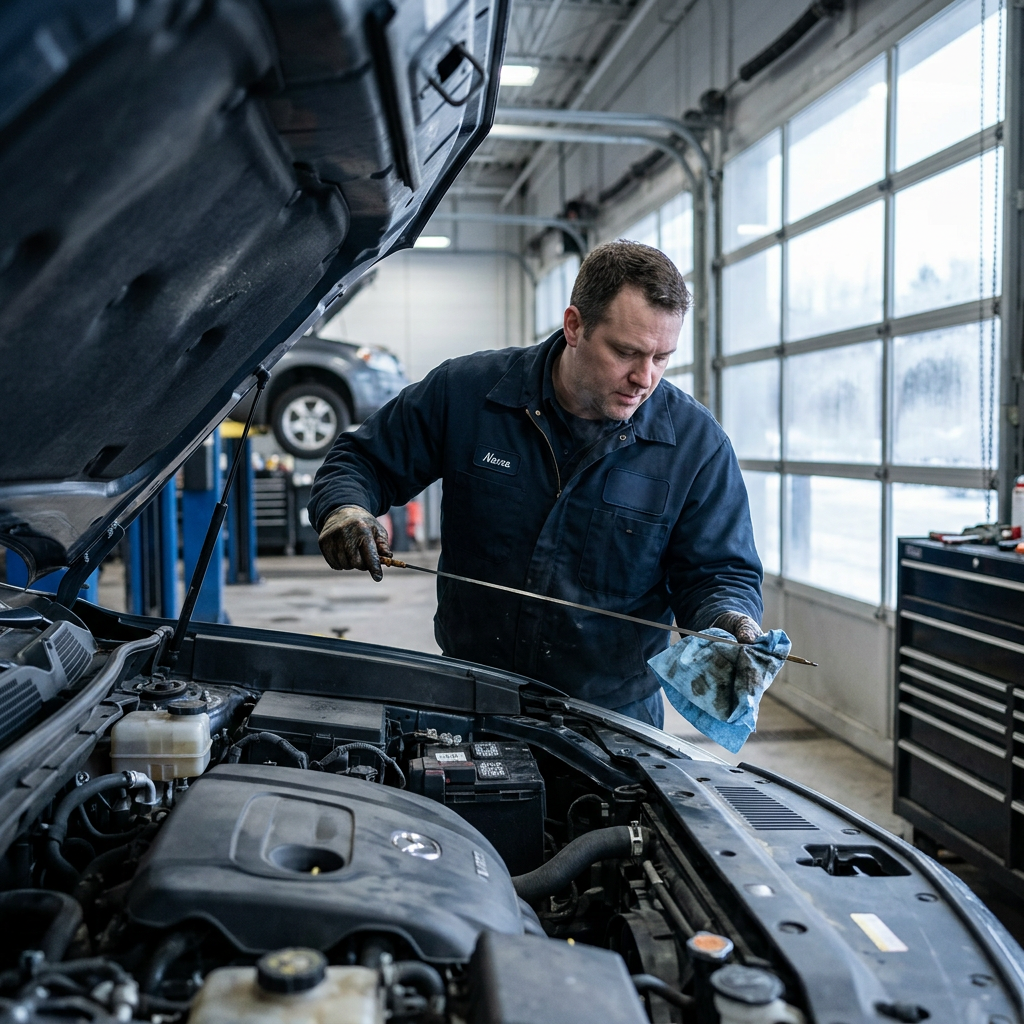
In multi-grade motor oils like 5W-30, the number before the "W" indicates low-temperature fluid mobility during cold winter starts, while the second number represents oil thickness at engine operating temperatures around 212 degrees Fahrenheit. Today, Mike Hogg, Service Director at Valor Ford with 20 years of technical automotive experience, explains how viscosity ratings and maintenance schedules impact vehicle protection in central Kansas.

Q: What do the numbers in engine oil viscosity ratings like 5W-30 mean for Kansas drivers?

A: The numbers in a viscosity rating represent how fluid flows under specific cold and hot operating conditions established by the Society of Automotive Engineers. The "W" stands for winter, not weight, and the number preceding it reflects how easily oil pumps through critical internal passages when an engine is cold. A lower winter rating means the fluid moves faster across moving parts on freezing mornings. The second number, such as the 30 in 5W-30, measures fluid thickness once the engine reaches its standard operating temperature of 212 degrees Fahrenheit. For commuters navigating cold morning starts in Junction City, using the correct winter viscosity ensures vital lubrication reaches overhead components before friction damage occurs. If you ever have questions about reading fluid labels or checking dipstick levels, you can visit our service center location on Goldenbelt Boulevard or simply give our service department a call.

Q: How should I choose an engine oil viscosity for cold-weather starts in Junction City, KS?

A: You should always choose the exact viscosity grade recommended in your vehicle's owner manual or official Ford oil application charts rather than selecting a grade based solely on outdoor temperatures. Modern engines are engineered with precise internal tolerances and hydraulic components that require specific fluid dynamics to maintain proper oil pressure. Selecting an unapproved lower viscosity in an attempt to improve cold flow can alter oil film strength when the engine reaches full temperature. The safest approach for cold weather protection is ensuring your vehicle has fresh, recommended fluid in the crankcase. Local owners can easily schedule a service appointment online to have our factory-trained technicians inspect fluid levels, or order official OEM engine components directly through our parts department.

Q: Should drivers switch to a different oil viscosity or change their oil before winter?

A: Vehicle owners should not change their oil viscosity grade simply because seasonal temperatures are dropping. Multi-grade oils are specifically formulated to operate across wide thermal windows, providing rapid flow during cold starts and robust protection at high engine operating temperatures. Switching to a different grade without manufacturer approval can void warranty coverage and compromise internal lubrication. You only need an oil change before winter if your vehicle is near its service interval, if the Intelligent Oil-Life Monitor signals that service is due, or if you have reached six months or 7,500 miles since your last visit. Taking care of scheduled maintenance before severe cold arrives helps ensure clean fluid is circulating through the oil filter and engine passages.

Q: Why does an engine make knocking or ticking noises when started on cold mornings?

A: Ticking or light knocking sounds during a cold start usually happen because thickened, cold oil takes several extra seconds to build hydraulic pressure and reach the top of the engine. Hydraulic valve lifters, overhead camshaft bearings, and timing chain tensioners rely on immediate oil pressure to operate quietly. When ambient temperatures drop significantly, fluid moves more slowly through internal oil galleries until the oil pump establishes full system circulation. While a brief moment of valve noise can occur on freezing mornings, persistent knocking or metallic sounds that continue after the engine warms indicate low fluid levels, improper fluid grade, or mechanical wear that requires immediate professional evaluation.

"Cold engine oil moves much slower at startup, which is why those brief morning ticking sounds mean your hydraulic lifters are waiting for proper fluid pressure."

Q: Which oil type provides the highest level of protection against extreme cold?

A: Full synthetic oil delivers the maximum protection during extreme cold because of its uniform molecular structure and superior low-temperature fluid mobility. Unlike conventional oils, full synthetic formulas do not contain paraffin waxes that can crystallize and thicken when temperatures drop below freezing. This stability allows full synthetic fluid to pump effortlessly through internal channels during initial engine cranking, drastically reducing startup wear. Synthetic blend oils offer enhanced protection compared to standard conventional fluids, but full synthetic remains the benchmark for fast oil pressure development and thermal stability across severe Midwest temperature swings.

Q: Can you safely mix synthetic blend and full synthetic oil in an emergency?

A: Full synthetic and synthetic blend oils are chemically compatible and can be mixed in an emergency without causing engine damage. Both oil types utilize compatible base stocks and additive packages, allowing them to blend safely if you need to top off a low fluid level when the exact matching oil is unavailable. However, adding a synthetic blend to full synthetic dilutes the premium performance characteristics and cold-weather advantages of the full synthetic fluid. While this emergency mixture will safely protect internal moving components in the short term, you should schedule a complete oil and filter change using the factory-specified oil grade at your earliest convenience.

Q: Does using correct low-viscosity engine oil improve fuel economy?

A: Utilizing the manufacturer-specified low-viscosity engine oil, such as 0W-20 or 5W-20, improves fuel efficiency by reducing internal mechanical drag inside the engine. Thinner, highly refined oils require less energy from the crankshaft to pump through engine galleries and coat moving parts, which can increase fuel economy by roughly 1 percent to 2 percent compared to heavier, unapproved oil grades. For drivers operating agricultural or commercial light-duty trucks across Dickinson County, maintaining optimal fuel efficiency relies heavily on adhering to recommended fluid specifications and routine service intervals. Checking your dipstick monthly ensures proper oil volume and helps prevent performance losses caused by fluid breakdown. To verify your vehicle's oil specifications or schedule maintenance, feel free to stop by our physical showroom location or contact our service team directly.
© 2026 Valor Ford. All rights reserved.


Posted in:

Related Posts

How to Schedule Your Pre-Trip Winter Holiday Inspection at Valor Ford in Junction City

How to Schedule Your Pre-Trip Winter Holiday Inspection at Valor Ford in Junction City

How to Schedule Your Pre-Trip Winter Holiday Inspection at Valor Ford in Junction City Preparing for long-distance holiday highway travel requires more than packing suitcases and checking weather apps. Winter weather across Kansas brings sudden cold snaps, high-speed crosswinds, black ice, and heavy road salt—conditions that aggressively stress every primary mechanical system in your vehicle. To ensure your vehicle delivers unwavering reliability whether you are heading across state lines or visiting family in nearby Manhattan or Salina, securing a comprehensive pre-trip winter holiday inspection at Valor Ford is your most effective defense against unpredicted breakdown. Scheduling your inspection at Valor Ford in Junction City is streamlined and convenient. You can reserve your preferred time slot 24 hours a day, 7 days a week using our intuitive online service portal, or you can speak directly with a dedicated service advisor by calling our service team at Call (785) 238-5114. Because November and December represent the highest-volume service periods of the year due to pre-holiday road trips and local winterization appointments, we strongly recommend scheduling your appointment two to three weeks prior to your planned departure date. Booking ahead guarantees your choice of time slot and allows ample lead time should any wear items require replacement prior to your journey. Schedule Ford Service How Does a Winter Pre-Trip Multi-Point Inspection Differ From a Standard Oil Change? While a standard oil change is an indispensable element of routine engine maintenance, its scope is primarily limited to draining depleted engine oil, replacing the engine oil filter, and replenishing vital crankcase lubrication. An oil change ensures that moving engine components experience minimal friction, but it does not evaluate whether your vehicle's ancillary safety, thermal regulation, braking, or electrical systems are capable of handling sustained sub-freezing highway travel. In sharp contrast, a winter pre-trip multi-point inspection is a holistic, system-wide mechanical assessment specifically calibrated for harsh environmental stressors. Factory-trained technicians inspect high-risk vulnerabilities that freezing temperatures exacerbate: battery cold-cranking amperage (CCA) capacity, coolant hydrometer freeze-point protection, brake pad remaining friction lining, belt elasticity under thermal contraction, and tire compound integrity. This comprehensive audit catches latent failures before they turn into emergency roadside stops on cold highway shoulders. What Is Included in Ford's The Works Maintenance Package? Engine & Fluid Service Includes up to six quarts of premium Motorcraft Synthetic Blend Oil engineered to maintain fluid viscosity in cold starts, paired with a high-efficiency Motorcraft oil filter replacement. Essential under-hood fluids—including transmission, power steering, washer fluid, and engine coolant—are topped off to optimum operational levels. Tire & Pressure Audit Four-wheel tire rotation promotes even tread wear and maximizes tire lifespan. Technicians perform precise pressure checks across all four tires plus the spare, adjusting PSI for cold ambient temperatures, and accurately measure remaining tread depth using digital depth gauges to confirm wet and snow traction. Brake & Electrical Check Comprehensive battery test measuring cold-cranking amps and reserve capacity to verify starting capability in freezing weather. Thorough visual brake inspection checking rotor surface integrity, caliper slider functionality, and inner/outer friction pad thickness. What Does Valor Ford's Pre-Trip Winter Multi-Point Inspection Cover for Highway Driving? When cruising at 75 mph on Interstate 70 during mid-winter, small mechanical oversights can quickly escalate into hazardous situations. Our technicians execute a rigorous multi-point checklist built around highway safety. We inspect brake pad thickness to ensure stopping power on icy roads, check rubber serpentine belts and coolant hoses for cracking or hardening caused by cold weather cycles, and evaluate front and rear suspension components for play or wear that could degrade high-speed stability. Visibility and thermal management are equally critical. Our team tests your windshield wiper blade edges for tearing or stiffness, replaces worn blades with high-durability winter options, and tops off washer fluid reservoirs with sub-zero anti-freeze wash. Furthermore, we test your engine coolant using digital refractometers to verify freeze protection down to -30°F, protecting your engine block and heater core from severe freezing damage. Schedule Pickup and Delivery Service How Far Ahead Should You Schedule Your Winter Inspection Before Peak Holiday Travel? Timing is everything when preparing for holiday travel. Peak service volume at Valor Ford in Junction City ramps up sharply starting in early November and remains high through early January. Drivers traveling for Thanksgiving should target their inspection booking between late October and the first week of November. For Christmas and New Year's travel, scheduling your appointment during mid-November ensures you secure a preferred service slot. Booking 14 to 21 days ahead of your planned departure offers crucial operational advantages. Should your inspection reveal a worn brake rotor, a weak battery requiring replacement, or specialized tires needing installation, early booking provides ample lead time to order and receive genuine Motorcraft parts without delaying your family's departure schedule. Navigating Kansas Winter Highways: Why Pre-Trip Vehicle Checks Matter Around Junction City I-70 Crosswinds & Ice Interstate 70 across Central Kansas is famous for sudden open-prairie crosswinds paired with fast-forming black ice on overpasses. Precise tire alignment, responsive steering linkages, and adequate tire tread depth are essential to maintain vehicular control during sudden gusts. Flint Hills Topography The rolling terrain of the Flint Hills places elevated demands on transmission shifting and braking systems during long climbs and descents. Ensuring clean transmission fluid and responsive braking components guarantees smooth torque delivery and safe stopping control. Sub-Freezing Battery Stress When ambient temperatures drop below 32°F, automotive batteries lose approximately 35% to 50% of their starting power. A battery that functions adequately in September can fail without warning during a December freeze in Geary County. K-State Winter Commencement & Holiday Travel: Multi-Point Inspections for Campus & Fort Riley Visitors December brings a dramatic surge in regional highway traffic around Junction City. Kansas State University's winter commencement ceremonies in neighboring Manhattan draw thousands of out-of-state families, while Fort Riley military personnel begin annual winter block leave travel. This influx fills local corridors like Highway 18 and Interstate 70 with heavy traffic during unpredictable weather conditions. Whether you are welcoming family arriving for graduation or driving long distances to visit loved ones across the country, having your vehicle inspected at Valor Ford ensures your trip remains focused on celebration rather than unexpected roadside breakdowns. Order Genuine Ford Parts Winterizing Your Vehicle: Key Maintenance Checklist for Dickinson County Drivers Tread Depth & Pressure For winter driving across Dickinson and Geary County rural roads, tire tread depth should be at least 4/32" (6/32" recommended for heavy snow). Cold weather causes tire pressure to drop approximately 1 to 2 PSI for every 10°F drop in ambient temperature. Winter Fluid Formulation Standard summer washer fluid freezes on contact with cold windshields. Switching to winter-formulated de-icing fluid rated to -20°F or lower ensures crisp visibility when passing salt-spraying snowplows on rural highways. Winter Emergency Kit Equip your vehicle with heavy-duty thermal blankets, heavy-gauge jumper cables, a portable tire inflator, traction sand or cat litter, an ice scraper/snow brush, high-visibility flares, and non-perishable emergency snacks. Preparing Your Truck or SUV for Heavy Holiday Towing and Cargo Loads If you plan to tow enclosed trailers, boats, or camper rigs behind your Ford F-150, Super Duty, Explorer, or Expedition this holiday season, additional mechanical inspection parameters are vital. Towing in cold weather places amplified stress on trailer electrical harnesses, integrated trailer brake controllers, and rear axle differentials. Our service team evaluates rear suspension alignment under heavy load, verifies proper tire load index ratings (E-load vs C-load), checks trailer hitch receiver welds, and tests trailer lighting output to guarantee full compliance and maximum highway safety during long-distance hauls. Why Choose Genuine Motorcraft Parts and Factory-Trained Techs for Your Ford? Entrusting your Ford vehicle to aftermarket quick-lube outlets risks improper fluid specifications or non-OEM replacement components that fail prematurely under stress. At Valor Ford, our service center is staffed exclusively by Ford-certified technicians who undergo continuous factory training on every Ford engine configuration, hybrid powertrain, and advance driver-assist sensor suite. We utilize genuine Motorcraft replacement parts—including long-life AGM batteries, precision-engineered brake pads, and OEM-spec wiper blades—engineered specifically to meet original factory tolerances. Every Motorcraft part is backed by a robust two-year unlimited-mileage warranty that includes labor coverage when installed at an authorized Ford dealership like Valor Ford. Research Ford F-150 Step-by-Step Guide: How to Book Your Service Appointment Online or by Phone 24/7 Online Scheduler 1. Navigate to the Valor Ford website service scheduling portal. 2. Enter your vehicle's year, model, trim, and approximate mileage. 3. Select your desired service package (e.g., The Works package or specific winter safety checks). 4. Pick your preferred appointment date and time slot. 5. Confirm contact details and receive instant digital appointment verification. Direct Phone Booking If you prefer speaking directly with our service team to discuss specific towing setups or unique vehicle symptoms, call our service desk directly at Call (785) 238-5114. Our advisors can assist with scheduling transportation arrangements or coordinating pickup and delivery service for eligible local customers. Schedule Your Pre-Trip Winter Holiday Inspection at Valor Ford Don't let unexpected vehicle trouble compromise your holiday road trips or family gatherings. Protect your passengers, preserve your vehicle's performance, and enjoy complete peace of mind on snowy Kansas highways by scheduling your winter pre-trip multi-point inspection at Valor Ford today. Visit us conveniently at 1825 Goldenbelt Blvd, Junction City, KS 66441 or click below to get turn-by-turn directions to our state-of-the-art service facility.

How Do You Prepare a Car for Winter Road Trips Before Holiday Block Leave?

How Do You Prepare a Ford Vehicle for Long Winter Road Trips?

How Do You Prepare a Ford Vehicle for Long Winter Road Trips? Preparing a Ford vehicle for long winter road trips requires testing the battery and charging system, setting cold tire pressures to vehicle door-jamb specifications, topping off freeze-resistant windshield washer fluid, verifying all exterior lighting, and inspecting drive belts, hoses, wipers, and brakes. Completing these checks alongside a comprehensive multi-point inspection 1 to 2 weeks prior to departure ensures ample time to address worn components before hitting freezing highway conditions. Winter weather places immediate physical stress on automotive systems. Cold ambient temperatures slow internal battery chemical reactions, reducing cranking amperage right when cold engine oil requires maximum starter torque. Concurrently, ambient temperature drops decrease tire pressure at a rate of approximately 1 psi for every 10°F drop in outdoor air. Driving on underinflated tires compromises tread contact patches, accelerates shoulder wear, and diminishes handling efficiency on slick highway surface transitions. A thorough pre-trip preparation routine involves key mechanical evaluations and essential roadside equipment: Perform an electrical system load test to verify cold cranking power and alternator charging voltage. Adjust tire inflation while rubber is cold using the sticker on the driver-side door pillar rather than the maximum pressure listed on the tire sidewall. Flush or top off engine coolant with a proper glycol mix to protect against block freezing and internal corrosion. Install winter-rated windshield wiper blades and fill the washer reservoir with fluid rated for sub-zero protection. Pack a winter emergency kit containing heavy-duty jumper cables, an ice scraper, a snow brush, a collapsible shovel, traction sand, reflective warning triangles, a flashlight, extra warm garments, nonperishable food, and a mobile phone charging cord. Maintaining at least a half-tank of fuel throughout winter travel protects against fuel line icing and provides vital cabin heat during unexpected highway delays. If emergency towing or roadside support becomes necessary during a trip, active coverage includes access to dedicated support by calling Ford Roadside Assistance at 1-800-241-3673 for towing, jump-starts, and fuel delivery. For localized maintenance care or pre-departure inspections, drivers can visit our service center location on Goldenbelt Boulevard or connect with our service advisors directly by reaching (785) 238-5114. Table of Contents What Key Components Are Inspected During a Ford Multi-Point Winter Inspection? At What Ambient Temperature Do All-Season Tire Compounds Lose Elasticity and Grip? Does Ford Intelligent AWD Require Special Maintenance Before Cold-Weather Travel? What Features Are Included in Ford Co-Pilot360 to Assist in Winter Weather? Common Winter Pre-Trip Questions for Fort Riley Service Members Schedule Your Winter Maintenance Service Before Block Leave What Key Components Are Inspected During a Ford Multi-Point Winter Inspection? A standard Ford multi-point winter inspection evaluates the starter battery, brake pads and rotors, tire tread depth and inflation, suspension geometry, drive belts, cooling system hoses, exterior lighting, and vehicle fluid conditions. Technicians examine each critical system using color-coded rating criteria to separate immediate mechanical needs from upcoming maintenance items. The electrical test measures cold cranking amps against factory thresholds to determine if an aging battery can turn over a cold engine in sub-freezing weather. Cooling systems undergo pressure testing to detect hairline radiator leaks, heater core restrictions, or degraded anti-freeze concentration. Technicians also evaluate cabin heating output, front and rear defroster grid resistance, and engine oil clarity to prevent severe thermal strain during high-speed winter drives. Tire evaluation remains a focal point during cold-weather checks. Technicians measure tread depth across multiple inner, center, and outer grooves. AAA recommends at least 4/32 inch of tread depth for driving on snow or ice, as shallower grooves cannot effectively channel slush away from the tire contact patch. Inspections also cover brake lining thickness and rotor surfaces to ensure balanced stopping force across all four wheels on low-friction pavement. During routine multi-point checks, service teams frequently identify worn rubber wiper blades, cracked serpentine belts, or dirty cabin filters that restrict window defrosting. Vehicle owners looking to perform maintenance or replace worn components can easily order OEM wiper blades and Motorcraft fluids directly through our dealership parts department. At What Ambient Temperature Do All-Season Tire Compounds Lose Elasticity and Grip? All-season tire compounds begin hardening and losing elastic flexibility at ambient temperatures below 45 degrees Fahrenheit. As temperatures fall past this threshold, the synthetic rubber polymers undergo a physical shift known as glass transition, turning from a pliable material into a rigid compound with significantly diminished road adhesion. While all-season tires operate effectively across moderate temperature ranges, their tread compounds are engineered as a compromise for spring, summer, and autumn pavement. Below 45 degrees Fahrenheit, even on completely dry asphalt, the hardened tread blocks cannot conform to subtle surface micro-textures. This loss of physical compliance lengthens braking distances, reduces lateral cornering stability, and decreases overall steering feedback. On snow-covered or icy road surfaces, cold all-season rubber struggles further. The stiffened tread blocks fail to open and close flex sipes effectively, preventing the tire from biting into packed snow. Dedicated winter tires utilize specialized silica-rich rubber compounds and hydrophilic polymers that remain soft and pliable down to sub-zero temperatures, maintaining traction where standard all-season rubber stiffens. Drivers relying on all-season tires during cold months must account for extended stopping distances. Checking inflation weekly, maintaining proper tire rotation schedules, and replacing tires before tread wear drops below 45 degrees Fahrenheit threshold performance limits are vital steps in preserving winter driving safety. Does Ford Intelligent AWD Require Special Maintenance Before Cold-Weather Travel? Ford Intelligent AWD systems are electronically controlled and sealed, requiring no complex mechanical fluid shifts before cold-weather travel, but pre-trip service should verify differential fluid condition and match tire circumference across all four wheels. Even minor variations in tire tread depth cause subtle rotational speed differences, placing continuous strain on the power transfer unit and rear drive module. Before embarking on long winter trips, technicians inspect the front power transfer unit and rear differential for shaft seal leaks or fluid degradation. Clean gear oil with correct viscosity ensures smooth power transfer when electronic actuators engage multi-plate clutch packs to send torque to the rear axle. Tire maintenance is directly linked to all-wheel-drive system longevity: Measure tread depth across all four tires to ensure wear levels remain within factory variance specifications. Maintain equal inflation pressure across all positions to prevent false wheel-speed sensor readings. Rotate tires at every scheduled engine oil change interval to ensure uniform circumference over time. Because Ford Intelligent AWD continuously calculates wheel slip, throttle position, and steering angle hundreds of times per second, clean wheel speed sensors and intact wiring harnesses are essential. Inspecting these undersides before driving through road salt and heavy slush prevents sensor fault codes that could temporarily disengage system operation. What Features Are Included in Ford Co-Pilot360 to Assist in Winter Weather? Ford Co-Pilot360 incorporates active driver-assist technologies including Pre-Collision Assist with Automatic Emergency Braking, Blind Spot Information System with Cross-Traffic Alert, Lane-Keeping System, Auto High-Beam Headlamps, and a Rear View Camera to enhance situational awareness in adverse weather. These systems utilize radar units and optical cameras to monitor road conditions and surrounding traffic. Pre-Collision Assist with Automatic Emergency Braking monitors the forward path for stopped vehicles or obstacles. While radar sensors detect targets through falling snow or fog, snow buildup over sensor housings can obscure camera lenses. Drivers should note that while automatic braking activates when a collision threat is detected, reduced tire traction on icy pavement increases physical stopping distance, requiring drivers to maintain larger following gaps. Winter functionality across key Ford Co-Pilot360 driver-assist features includes: Pre-Collision Assist with Automatic Emergency Braking: Scans ahead for hazards; system braking response is limited by physical tire grip on snow or ice. Blind Spot Information System: Radar modules in the rear bumper alert drivers to vehicles in blind zones, aiding lane changes when snow obscures side mirrors. Lane-Keeping System: Optical camera behind the windshield detects lane markings; requires clear pavement lines to provide steering wheel torque feedback. Auto High-Beam Headlamps: Automatically toggles high beams on dark rural roads while dimming for oncoming traffic to reduce glare in light snow. Service members commuting from Fort Riley housing often encounter rapid weather changes and blowing snow along rural highways. Ensuring sensor domes, bumper radar cutouts, and windshield camera sweep areas remain clear of ice and road grime allows these driver-assist safety suites to operate at peak precision. Common Winter Pre-Trip Questions for Fort Riley Service Members Q: What pre-trip winter maintenance should service members complete before leave? Before embarking on long block leave travel, vehicles should undergo battery load testing, coolant anti-freeze concentration checks, wiper blade replacements, and a comprehensive tire tread and pressure inspection. Ensuring proper fluid protection and tire grip prevents mechanical failures on long interstate drives. Q: How far in advance should I book a winter service inspection? Pre-trip inspections should be scheduled 1 to 2 weeks prior to departure. Booking early provides adequate time to order genuine OEM parts or perform necessary repairs without delaying travel plans. Q: How much do military discounts save on routine Ford vehicle maintenance? Participating Ford service centers located near military installations typically offer 10 to 15 percent discounts on labor and routine maintenance services for active-duty military personnel. Bringing military identification allows service advisors to apply qualifying service savings to final repair invoices. Q: Do driver-assist features like automatic braking work normally on icy roads? Radar and camera sensors continue detecting obstacles on snow-covered roads, but electronic automatic braking cannot override physical tire traction limits. Braking distances increase substantially on slippery pavement, making increased following distance essential even with driver-assist systems active. Q: How does cold weather affect my car battery's starting ability? Sub-freezing temperatures slow the internal chemical reaction inside lead-acid batteries, cutting available cranking power while cold engine oil creates greater mechanical resistance. A battery load test identifies declining capacity before low temperatures cause a sudden start failure. Schedule Your Winter Maintenance Service Before Block Leave Preparing your vehicle for long winter trips protects your safety and ensures reliable performance across freezing highway miles. Active-duty personnel and local commuters can take advantage of professional multi-point inspections, certified battery testing, and complete tire care performed by factory-trained technicians. Contact (785) 238-5114 to speak directly with our service team, or stop by our service center location on Goldenbelt Boulevard to review your maintenance needs. When you are ready to prepare your car, truck, or SUV for holiday travel, schedule a winter inspection online to reserve your preferred service appointment time. © 2026 Valor Ford. All rights reserved.

ford

Preparing Your Ford for Kansas Winter Driving: A Service Director's Guide

Preparing Your Ford for Kansas Winter Driving: A Service Director's Guide What Is the Price of Official Ford Winter Tire and Wheel Packages for 2027 Models? Official Ford OEM winter tire and wheel packages for 2027 models vary by configuration. Contact our team for current MSRP and availability details. Complete packages bundle model-specific steel or alloy wheels, severe-duty winter tires, dedicated TPMS sensors, and factory-certified mounting and balancing. Purchasing an official factory-engineered package ensures exact offset, brake caliper clearance, and proper load ratings without universal fitment compromises. Swapping between seasonal tire sets on dedicated wheels also protects your factory aluminum rims from road salt and chemical de-icers used during cold Midwestern months. For smaller platforms like the compact SUV and crossover lineup, pricing may differ from full-size trucks and heavy-duty utility vehicles based on configuration and equipment. Contact our team for current pricing. Choosing complete factory setups also maintains accurate speed sensor calibration and seamless integration with onboard driver-assist systems. If you are planning to equip your vehicle before the first freeze, visiting our dealership service department or giving our team a quick call allows us to confirm exact rim offsets and tire sizing for your specific trim. Table of Contents What Winter Vehicle and Trip Checks Should Junction City Ford Owners Make Before Driving? How Does Ford Intelligent All-Wheel Drive Enhance Winter Traction? How Does Slippery Mode Adjust Ford Engine Torque and Braking? What Specific Components Are Checked During a Ford Winter Safety Inspection? What Engine Block Heater Options Are Available for Ford Trucks in Freezing Weather? Which Ford Models Come Standard with Intelligent AWD for Winter Driving? What Winter Vehicle and Trip Checks Should Junction City Ford Owners Make Before Driving? Before setting out in freezing conditions, drivers should inspect tire tread depth and cold inflation pressures, verify battery health, test engine coolant freeze protection points, and check all wiper blades and exterior lighting. Maintaining a half-tank of fuel and stowing an emergency kit with traction material, blankets, and jumper cables ensures safety during unexpected delays. Cold ambient temperatures drop tire pressure by approximately one pound per square inch for every ten-degree drop in outdoor temperature, making regular morning pressure checks essential for maintaining tire contact patches on slick roads. For local commuters navigating the Kansas River bridge and highway ramps around Junction City, proper inflation directly impacts emergency braking distances on packed snow. If you are evaluating vehicle capability for winter conditions, reviewing our new Ford Bronco inventory shows models engineered with cold-weather capability in mind. For example, the 2026 Bronco Sport Badlands 4X4 achieves an EPA-estimated 21 city / 27 hwy / 23 combined MPG, while the Big Bend 4X4, Heritage 4X4, and Outer Banks 4X4 trims deliver 25 city / 30 hwy / 27 combined MPG. For drivers preferring pre-owned options, exploring our pre-owned vehicle lineup provides access to all-wheel-drive crossovers and trucks that have passed comprehensive multi-point winter inspections. Fuel Economy Fuel economy and range by trim Feature Badlands 4X4 Big Bend 4X4 Heritage 4X4 Outer Banks 4X4 MPG 21 city / 27 hwy / 23 combined 25 city / 30 hwy / 27 combined 25 city / 30 hwy / 27 combined 25 city / 30 hwy / 27 combined How Does Ford Intelligent All-Wheel Drive Enhance Winter Traction? Ford Intelligent All-Wheel Drive enhances winter traction by continuously monitoring vehicle speed, throttle input, and steering wheel angle to predict wheel slip and automatically redistribute engine torque between axles in milliseconds before spin occurs. Unlike traditional four-wheel drive, Intelligent AWD remains engaged continuously on dry or icy pavement without mechanical binding. By measuring driver steering intent alongside wheel rotation speeds, the system proactively transfers power to the wheels with the firmest mechanical grip. When accelerating on split-friction surfaces—where one side of the vehicle rests on slush and the other on clear asphalt—the transfer case directs torque away from slipping tires, keeping the chassis balanced and tracking true. Because the system operates dynamically on demand without manual lever shifting, drivers maintain steady control through changing road transitions. If you are considering upgrading your current vehicle to a winter-ready powertrain, completing a trade-in evaluation online can clarify your current vehicle's value toward an AWD-equipped model. How Does Slippery Mode Adjust Ford Engine Torque and Braking? Selectable Slippery Mode softens accelerator pedal response, limits sudden engine torque output, delays transmission upshifts, and increases Anti-Lock Braking System sensitivity to prevent wheel spin on ice, slush, or wet roads. When activated via the drive mode dial, the engine control unit remaps throttle sensitivity so that aggressive pedal inputs translate into gradual power delivery. The transmission holds lower gear ratios longer to reduce sudden torque spikes while downshifting smoothly to maintain engine braking stability. Simultaneously, the traction control and ABS modules increase wheel-speed sensor sensitivity, applying subtle brake taps to individual wheels at the first micro-level indication of slip. For drivers planning a vehicle purchase before seasonal weather hits, contacting the dealership for current financing options can streamline the process of securing a vehicle equipped with selectable terrain management. Engine & Performance Powertrain specs by trim Feature Badlands 4X4 Big Bend 4X4 Heritage 4X4 Outer Banks 4X4 Engine 2L 1.5L 1.5L 1.5L Horsepower 238 hp 180 hp 180 hp 180 hp Torque 277 lb-ft 200 lb-ft 200 lb-ft 200 lb-ft Drivetrain Four-wheel drive Four-wheel drive Four-wheel drive Four-wheel drive What Specific Components Are Checked During a Ford Winter Safety Inspection? A complete Ford winter safety inspection evaluates battery cold cranking amps, engine coolant freeze-point protection, tire tread depth and inflation pressure, wiper blade integrity, brake pad thickness, and heating system operation. When drivers come into our service bay asking about winter inspections, my technicians systematically test battery cold cranking amps, engine coolant freeze protection thresholds, wiper blade edge wear, heater unit output, and brake pad thickness. Because freezing temperatures reduce battery chemical activity by up to 50 percent while engine starting resistance increases due to thickened oil, verifying starter draw and battery reserve capacity prevents surprise morning non-starts. Technicians also check the hydrometer reading of engine antifreeze to confirm protection down to sub-zero temperatures, inspect drive belts for cold-weather cracking, and check headlight clarity for optimal visibility during short winter daylight hours. You can easily schedule a service appointment with our technicians or order genuine Ford parts such as heavy-duty wiper blades and Motorcraft batteries directly through our service portal. What Engine Block Heater Options Are Available for Ford Trucks in Freezing Weather? Ford provides factory-installed 110-volt engine block heaters across truck models, including the F-150, Super Duty, and Maverick, featuring integrated electrical cord routing located behind the front lower grille or fog lamp bezel. These immersion-style heating elements directly warm engine coolant inside the block, allowing oil to circulate freely at turn-key startup and significantly reducing cold-start mechanical friction. Plugging the heater into a standard grounded outlet for approximately three hours prior to departure preheats the combustion chambers, speeds up cabin heater warm-up, and reduces initial startup fuel consumption. For service members at Fort Riley making early morning trips across open terrain, an engine block heater ensures dependable key turns during extreme cold snaps. Operating the heater on an exterior electrical outlet timer maximizes efficiency without wasting residential power overnight. Which Ford Models Come Standard with Intelligent AWD for Winter Driving? Ford Intelligent AWD or Advanced 4WD comes standard on top-tier trims of the Explorer, Edge, and Expedition, as well as specified configurations of the Escape, Bronco Sport, and Maverick. In the compact SUV lineup, every 2026 Bronco Sport model includes standard four-wheel drive. The Badlands 4X4 trim pairs an EcoBoost 2L engine generating 238 hp and 277 lb-ft of torque with an 8-speed SelectShift® automatic transmission. Meanwhile, the Big Bend 4X4, Heritage 4X4, and Outer Banks 4X4 trims come standard with a 1.5L engine producing 180 hp and 200 lb-ft of torque alongside standard four-wheel drive capability. In the midsize crossover category, the 2026 Explorer features standard Intelligent 4WD on 2.3-liter EcoBoost models, while heavy-duty trucks and body-on-frame SUVs offer electronic 4x4 setups designed for extreme snow clearance. To explore winter-ready powertrains in person, stop by our dealership showroom or give our service department a call directly to discuss recommended winter packages. © 2026 Valor Ford. All rights reserved. Vehicle specification data © JATO Dynamics Limited.