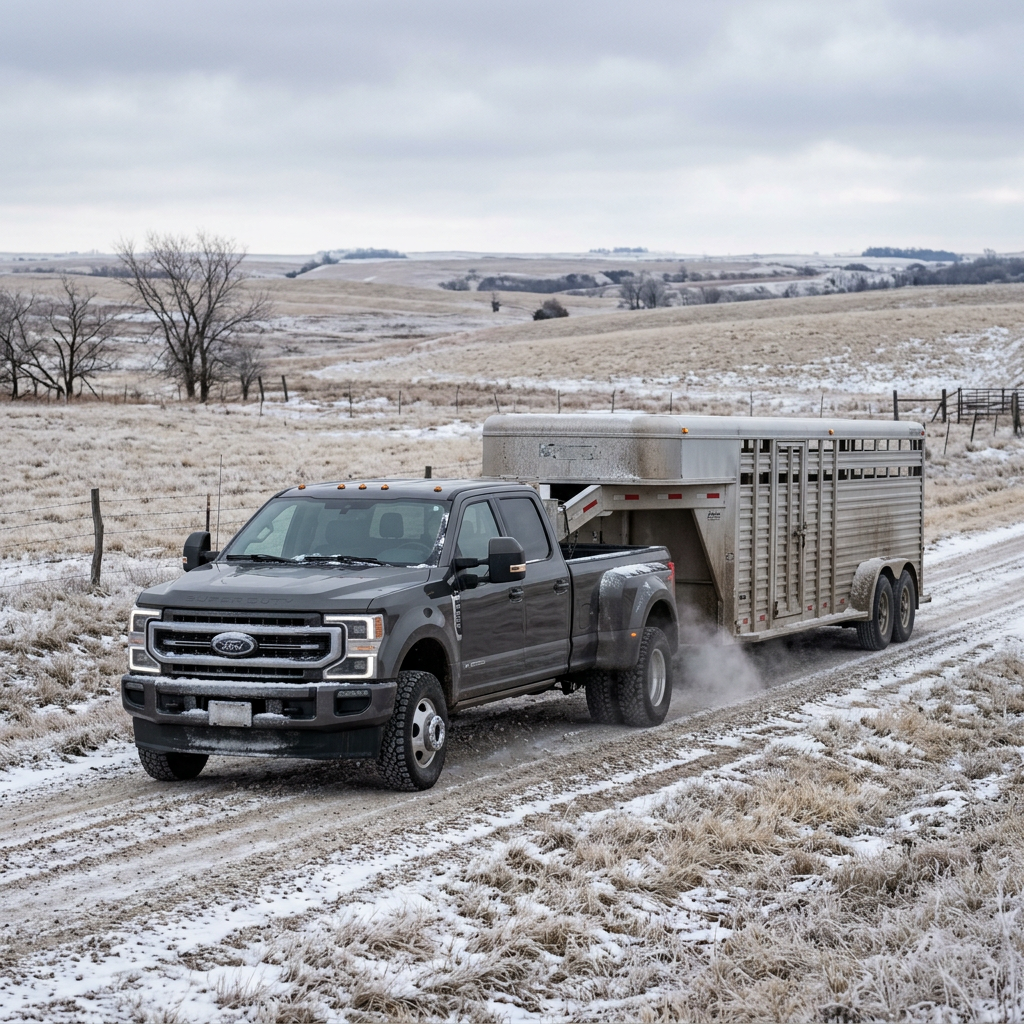
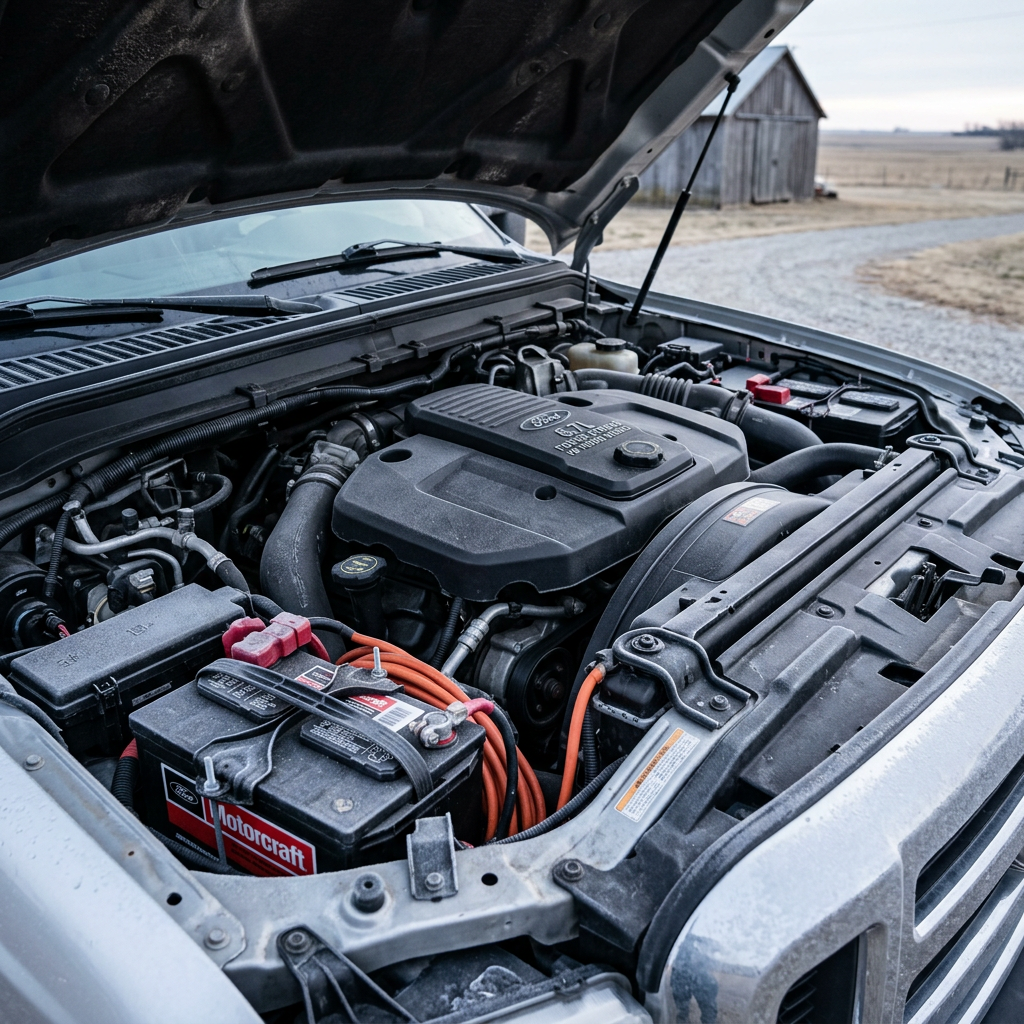
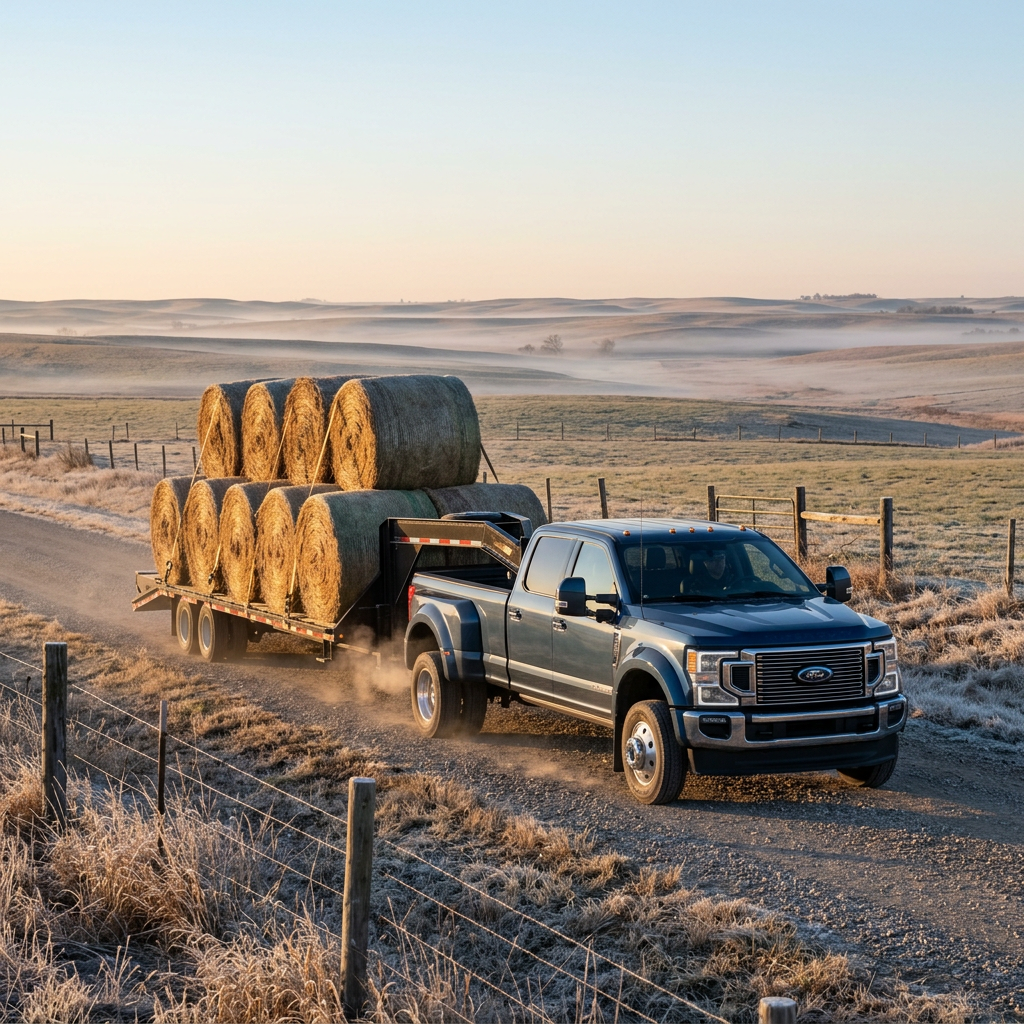
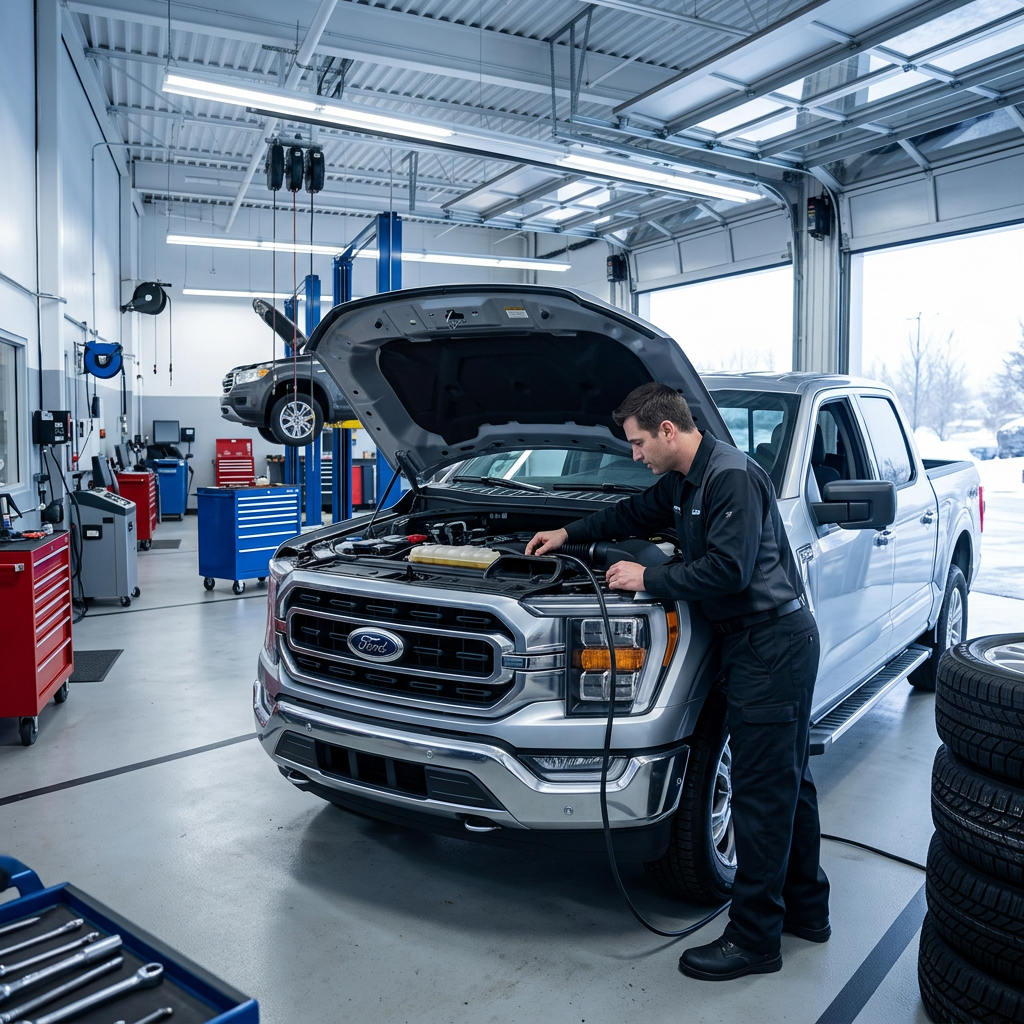
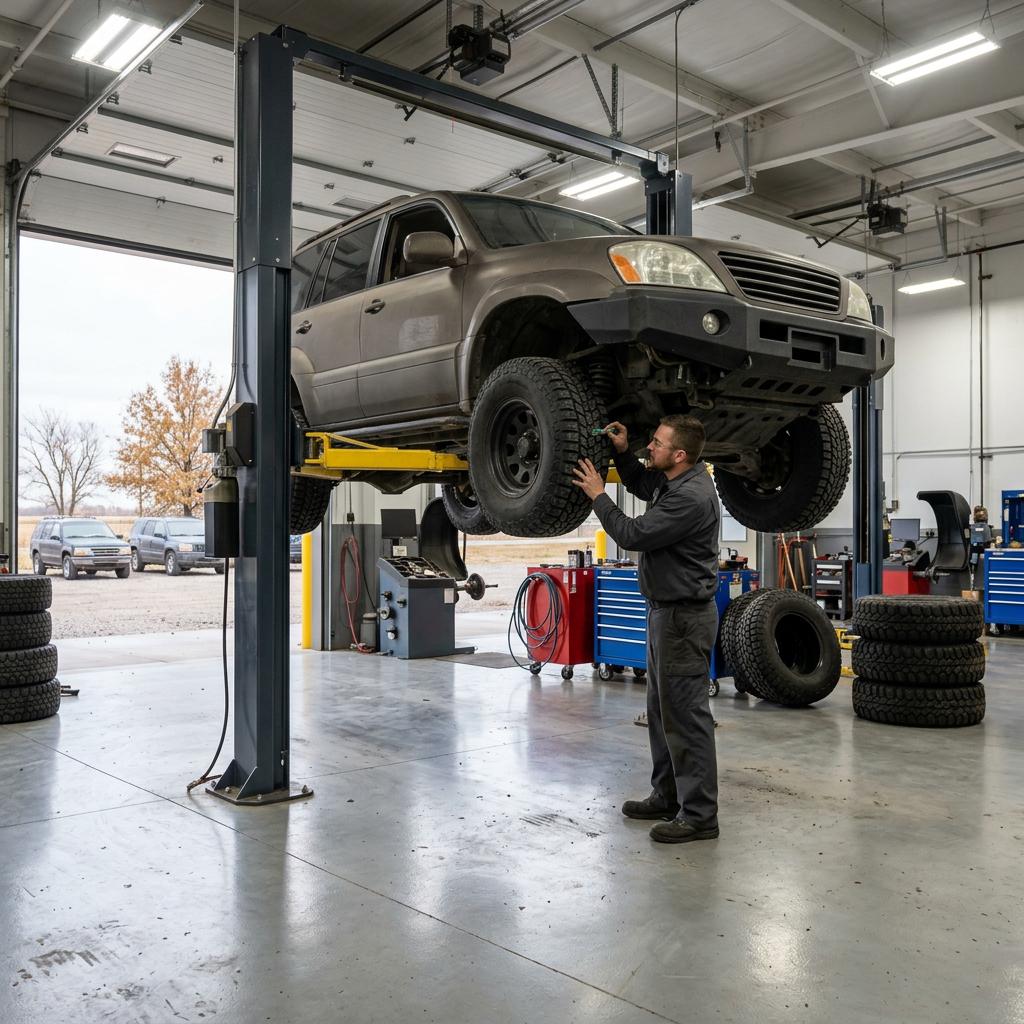
Average Cost to Purchase and Install Winter Tires on a 4WD Truck or SUV When winter weather settles over Central Kansas, drivers across Junction City, Manhattan, and Fort Riley face a familiar seasonal dilemma: how to keep heavy four-wheel-drive trucks and SUVs planted securely on ice-slicked highways and unplowed county roads. If you are asking what it costs to outfit a 4WD truck or SUV with a full set of four dedicated winter tires, the short answer is that most drivers spend between $800 and $1,800+ total. This complete investment accounts for both the price of four light truck or SUV winter tires ($150 to $380+ per tire depending on size and load rating) and professional mounting, computer balancing, valve stem service, tire pressure monitoring system (TPMS) relearning, and local disposal fees ($100 to $250 total). For full-size pickups such as the Ford F-150 or Super Duty, as well as midsize to large SUVs like the Ford Bronco and Explorer, tire pricing heavily correlates with wheel diameter, load rating (Standard Load vs. Extra Load or Load Range E for towing), and specialized tread technologies. Standard 17-inch or 18-inch tires land on the lower side of the price curve, while 20-inch or 22-inch fitments naturally sit at the premium end. At Valor Ford, located at 1825 Goldenbelt Blvd in Junction City, KS 66441, our certified master technicians ensure your winter tire setup is selected, mounted, and calibrated specifically for your vehicle's weight, towing demands, and drivetrain engineering. To speak directly with our service center specialists, feel free to Call us at (785) 238-5114 today. Schedule Ford Service Today Cost Breakdown: Tire Prices, Mounting, Balancing, and Installation Fees Understanding where every dollar goes helps truck and SUV owners make smart choices when preparing for winter. A complete tire replacement consists of two primary elements: the raw hardware (the rubber tires themselves) and the expert shop labor required to mount, balance, and configure the assembly for high-speed highway safety on corridors like I-70. Here is a breakdown of average itemized costs encountered across the Flint Hills region for 4WD trucks and SUVs:
• 17" to 18" Winter Tires: $160 – $260 per tire ($640 – $1,040 for four) • 19" to 20" Winter Tires: $240 – $380+ per tire ($960 – $1,520+ for four) • Mounting & Computer Balancing: $20 – $40 per wheel ($80 – $160 total) • TPMS Sensor Reset / Relearn: $15 – $35 total package • Rubber Valve Stems / Maintenance Kits: $5 – $10 per wheel ($20 – $40 total) • Kansas Tire Recycling & Disposal Fee: $3 – $5 per tire ($12 – $20 total) If you require genuine manufacturer replacement parts or upgraded factory accessories for your Ford model during installation, you can easily order directly through our dedicated portal to Order Genuine Ford Parts. Service or Item Component Estimated Unit Cost Set of 4 Estimated Total Key Functional Purpose Light Truck / SUV Winter Tires (17"-18") $160 – $260 $640 – $1,040 Provides deep siping and cold-weather rubber flexibility Heavy Duty / Low-Profile Winter Tires (20"+) $240 – $380+ $960 – $1,520+ Delivers high load ratings for heavy SUVs and payload vehicles Professional Mount & Road Force Balance $20 – $40 $80 – $160 Eliminates high-speed vibration and ensures even tread wear TPMS Sensor Sync & Relearn $15 – $35 (Flat) $15 – $35 Calibrates vehicle computer to monitor exact winter tire pressure Environmental Disposal / Recycling Fee $3 – $5 $12 – $20 Mandatory state recycling compliance for outgoing tires Comparing Budget, Mid-Range, and Premium Winter Tires for Heavy Vehicles Budget Winter Tier Price Range: $600 – $850 (Set of 4 installed) Popular Options: Sailun IceBlazer, GT Radial Champiro Winterpro, Mastercraft Glacier. Characteristics: Budget winter tires feature aggressive tread directional patterns that evacuate slush effectively. While vastly superior to standard all-season tires on snow, their rubber compounds tend to stiffen slightly earlier in sub-zero temperatures and wear faster under heavy 4WD torque. Ideal for light seasonal mileage and local urban commutes around town. Mid-Range Winter Tier Price Range: $850 – $1,250 (Set of 4 installed) Popular Options: Firestone Winterforce 2 UV, General AltiMAX Arctic 12, Cooper Discoverer True North. Characteristics: Striking the ideal balance between initial investment and long-term endurance, mid-range tires incorporate silica-rich tread formulas, high density 3D siping, and pinned tread blocks for optional tire studs. Excellent for truck drivers carrying moderate cargo loads across Dickinson and Geary counties. Premium Winter Tier Price Range: $1,250 – $1,850+ (Set of 4 installed) Popular Options: Bridgestone Blizzak LT / DM-V2, Michelin X-Ice Snow SUV, Nokian Hakkapeliitta R5 SUV. Characteristics: The gold standard in severe cold weather performance. Features advanced hydrophilic multi-cell compounds that suck moisture away from micro-ice films. Essential for maximum stopping distance reduction, maximum lateral control, and heavy payload or towing applications on icy highways. Do 3PMSF-Rated All-Terrain Tires Perform as Well as Dedicated Winter Tires on Ice? A common point of confusion among 4WD truck and SUV owners is whether a set of 3-Peak Mountain Snowflake (3PMSF) rated all-terrain tires (such as those found on off-road trim levels like the Ford Bronco Badlands or F-150 Tremor) renders dedicated winter tires unnecessary. While 3PMSF all-terrain tires represent a giant leap forward compared to traditional highway all-season tires, they are not a complete substitute for dedicated winter rubber on glare ice. All-terrain tires rated 3PMSF achieve their rating by passing a straight-line acceleration test on medium-packed snow. However, their rubber compound is engineered to withstand hot summer asphalt and sharp off-road rocks without shredding. This requires a firmer rubber matrix that hardens when ambient temperatures drop below freezing. In contrast, dedicated winter tires remain soft and pliable even at sub-zero temperatures, utilizing thousands of hair-thin micro-sipes to create friction on sheer ice surface films. Independent braking tests show dedicated winter tires can stop up to 30 feet shorter on wet ice from 30 mph than 3PMSF all-terrain tires. Looking to upgrade your off-road rig or upgrade to a capable winter vehicle? Take a look at our current inventory to Shop New Ford Bronco Inventory or explore pre-owned models. Browse Used Inventory What the 3-Peak Mountain Snowflake (3PMSF) Symbol Indicates on Winter Tires The Three-Peak Mountain Snowflake (3PMSF) icon—a snowflake molded inside a six-peak mountain outline on a tire's sidewall—is an industry mark designating severe snow service capability. Unlike the legacy 'M+S' (Mud and Snow) branding, which is simply based on a tread geometry formula requiring 25% open tread void area, the 3PMSF rating requires physical performance testing. To earn the 3PMSF rating, a tire must demonstrate a minimum of 110% of the traction of a standardized reference tire during accelerated snow traction testing under U.S. ASTM F-1805 standards. What makes true winter tires special is the chemical engineering behind the rubber compound. Cold-weather winter compounds utilize high concentrations of silica and specialized polymers designed to remain pliable below 45 degrees Fahrenheit (7 degrees Celsius). Standard summer or all-season compounds experience a phenomenon known as 'glass transition' at low temperatures, turning rigid and slick like hard plastic. Understanding this distinction helps 4WD vehicle owners make informed choices when traveling down winter highways in Central Kansas. If you're interested in analyzing replacement options for your truck or SUV, check out our guide to Research Ford F-150 specifications or review options for heavier platforms like our page to Research Ford F-250 towing and tire ratings. What Is the Difference Between 4WD and AWD for Winter Weather Near K-State? For students navigating K-State's Manhattan campus or military personnel commuting from Fort Riley along K-18 and US-40, drivetrain configuration plays a major role in winter road handling. However, four-wheel drive (4WD) and all-wheel drive (AWD) operate on fundamentally different mechanical principles. Traditional Part-Time 4WD: Locks the front and rear driveshafts together at a fixed 50/50 power split via a mechanical transfer case. Because both driveshafts are locked at identical rotational speeds, traditional 4WD provides maximum traction in deep snow or mud. However, because front wheels must travel faster than rear wheels when turning corners, part-time 4WD requires tire slip to operate without mechanical stress. All-Wheel Drive (AWD): Employs a center differential or electronically controlled multi-plate clutch pack that continuously modulates torque between the front and rear axles. AWD systems automatically send power to wheels with grip while allowing seamless speed differences during tight maneuvers on mixed dry/icy pavement. Whether your SUV uses intelligent AWD like a Ford Explorer or part-time 4WD, remember that 4WD helps you accelerate—it does not help you stop faster on ice! Dedicated winter tires supply the stopping traction that no drivetrain can produce on its own. Drivers looking to evaluate midsize crossover capabilities can Research Ford Explorer drivetrain systems on our site. Can Part-Time 4WD Be Left Engaged on Dry or Patchily Icy Pavement? A crucial mechanical warning for owners of traditional part-time 4WD trucks: do not leave 4WD High engaged on dry or patchily clear asphalt. Operating a locked 4WD transfer case on high-traction surfaces creates a severe mechanical issue known as driveline bind or wheel crowhop. When turning on dry pavement, the outer front wheel must trace a wider arc and rotate significantly faster than the inner rear wheel. In a part-time 4WD system, the front and rear driveshafts are locked together. Without slippery ice or snow to allow the tires to scuff or slide, rotational force builds up inside the transfer case, front axle shafts, and universal joints. This intense mechanical binding leads to severe tire scrubbing, accelerated tread wear, reduced fuel economy, and potential internal transfer case failure or snapped axle shafts. On patchy winter roads where dry pavement alternates with ice patches, drivers should disengage 4WD High back to 2WD once clear stretches appear—or opt for vehicles equipped with an 4A (4WD Auto) electronic transfer case mode, available on Select Ford models. If you are considering upgrading your vehicle to one featuring automatic 4WD control, feel free to submit a Trade In Evaluation to see what your current truck or SUV is worth toward a new model. Fort Riley & K-State Winter Driving Guide: Selecting and Servicing 4WD Vehicles for New Residents 1. Seasonal Tire Swap For soldiers arriving at Fort Riley or students relocating to Kansas State University from milder climates, Kansas winter storms bring sudden ice glaze and high prairie winds. Transitioning to dedicated winter tires in late October or November ensures optimal handling before freezing rain strikes. 2. Battery & Fluid Check Freezing temperatures dramatically reduce battery Cold Cranking Amps (CCA). Have your battery load-tested, inspect your engine coolant concentration for sub-zero protection, and switch to de-icer rated windshield washer fluid before severe cold sets in. 3. Winter Emergency Kit Always carry essential gear in your 4WD bed or trunk: tow straps, portable jump starter pack, heavy-duty ice scraper, compact snow shovel, folding traction mats, thermal blankets, and a bag of sand or cat litter for instant weight and tire traction. Busy military or academic schedule? Valor Ford makes vehicle upkeep stress-free: learn how you can Schedule Pickup and Delivery Service directly from your home or office. Schedule Pickup and Delivery Service How Weight Distribution Affects Vehicle Handling on Icy Kansas Highways Full-size pickup trucks suffer from an inherent weight bias: heavy iron or aluminum V8/EcoBoost engines sit directly over the front axle, while an unladen steel or aluminum truck bed leaves very little weight over the rear wheels. When driving unloaded down icy routes like I-70 or rural roads in Dickinson County, this uneven weight ratio (often 60/40 front-to-rear) leads to sudden rear traction loss, fish-tailing, or spin-outs during cornering and braking. To counteract this imbalance, experienced Kansas truck owners place 200 to 300 pounds of secure ballast (such as sandbags or specialized water-filled weight bags) directly over or slightly ahead of the rear axle inside the bed. Combining proper bed ballast with dedicated winter tires featuring aggressive siping provides balanced four-wheel mechanical traction, allowing your 4WD system to deliver smooth power without premature rear wheel slip. If you drive a midsize truck like the Ford Maverick, lightweight engineering changes traction dynamics further. You can learn more by choosing to Research Ford Maverick configurations and payload specs. Dedicated Winter Wheel Packages vs. Mounting Tires on Factory Rims Option A: Dismount / Remount Upfront Cost: Lower initial purchase (buy 4 tires only). Annual Cost: $160 – $320 per year (paying twice-yearly mounting & balancing fees). Drawbacks: Repeated tire dismounting stresses tire beads and exposes factory alloy wheels to potential scratches and road salt corrosion during winter months. Option B: Dedicated Wheel Package Upfront Cost: Higher initial investment ($400 – $800 for 4 steel/aluminum wheels + $150 TPMS sensors). Annual Cost: $40 – $80 per year (simple wheel swap fee). Benefits: Protects factory wheels from road salt, allows rapid 30-minute seasonal bolt-on swaps, and pays for itself within 3 to 4 winter seasons. Financial Breakdown Over a 5-year vehicle ownership period, a dedicated winter wheel package costs virtually the same total money while sparing your factory wheels from winter damage and making seasonal changeovers significantly faster and easier. Maintaining Winter Tires: PSI Adjustments, Tread Depth, and Off-Season Storage Proper maintenance maximizes both the life of your winter tires and your safety on icy highways:
• Cold Weather Pressure Drop: For every 10 degree drop in ambient temperature, tire pressure decreases by approximately 1 to 2 PSI. Check tire pressures regularly when tires are cold. • Minimum Winter Tread Depth: Standard tires can run down to 2/32" of tread, but winter tires lose critical snow traction once tread wears below 4/32". Replace winter tires before reaching this limit. • Proper Off-Season Storage: Store unmounted winter tires stacked flat in a cool, dry, dark basement or climate-controlled garage away from direct sunlight and electric motors that generate ozone. Need financial flexibility for your upcoming vehicle maintenance, repair, or accessory purchases? Take a minute to Contact us for current financing information through our finance center. Contact us for current financing information Schedule Your Winter Tire Installation at Valor Ford in Junction City, KS Don't wait for the first severe winter blizzard to equip your 4WD vehicle for severe cold weather. The certified tire and service team at Valor Ford is ready to help drivers across Junction City, Fort Riley, Manhattan, and surrounding Kansas communities select, mount, and precision-balance the ultimate winter tire setup for their truck or SUV. Visit us at 1825 Goldenbelt Blvd, Junction City, KS 66441 or click here to Get Directions to Valor Ford. Give our tire specialists a call today at Call us at (785) 238-5114 or reserve your installation slot online. Schedule Ford Service Today