Blog / Automotive Parts & Accessories

Blog

All Automotive Parts & Accessories Buying Guides Maintenance & Service New Vehicle Reviews Technology & Innovation Financing & Insurance Safety Features Model Comparisons Used Vehicle Guides Seasonal Driving Tips Seasonal Vehicle Care Valor Ford Models Heavy-Duty Truck Care Junction City New Vehicle Sales Seasonal Vehicle Maintenance Towing & Trailer Technology Vehicle Ownership Tips Financing & Incentives Repair & Parts Trade-In & Negotiation Tips KS Community Valor Ford Service Off-Road Packages & Accessories Trade-In & Pre-Approval Processes Automotive Repair Valor Ford Vehicle Pricing Strategies Vehicle Repair & Parts Vehicle Sales Diesel Engine Care Manhattan Ford Dealer Manhattan Ford Service Military & Special Customer Programs Parts & Repairs Performance & Powertrain Tire Care & Management Vehicle Trade-In Tips Agricultural Vehicle Maintenance Commercial Truck Financing Dealership Transparency Family SUVs Heavy-Duty Truck Guides Heavy-Duty Truck Upkeep Manhattan Used Cars Preventative Vehicle Inspections Technology & Innovation in Truck Service Agricultural Fleet Service Automotive Recalls & Repairs Certified Pre-Owned Programs Diesel Engine Maintenance Genuine OEM Parts & Accessories Military & Student Moving Tips Service Tips & Guides Vehicle Utility & Cargo Solutions All-Weather Driving & 4x4 Readiness Automotive News Classic Car Restoration Dealership Promotions & Events Farm & Ranch Equipment Reviews Genuine Parts & Accessories Hybrid & Electric Vehicles Winter Driving Tips
What Are the Requirements and Specifications for Ford WSS-M2C961-A1 Engine Oil?

What Are the Requirements and Specifications for Ford WSS-M2C961-A1 Engine Oil?

What Are the Requirements and Specifications for Ford WSS-M2C961-A1 Engine Oil? Ford specification WSS-M2C961-A1 represents the modern benchmark for 5W-20 engine oils designed specifically for Ford North American powertrains. Introduced to align with the stringent API SP (American Petroleum Institute) and ILSAC GF-6A (International Lubricant Specification Advisory Committee) standards, this specification engineered by Ford Global Materials Engineering addresses the complex tribological demands of high-output, turbocharged direct-injection EcoBoost engines. Unlike traditional motor oil standards of past decades, WSS-M2C961-A1 is not merely focused on reducing metallic friction; it is a holistic chemical formulation engineered to protect advanced internal timing belt materials, prevent destructive combustion events, and maintain strict viscosity boundaries over extended service intervals. At the heart of the Ford WSS-M2C961-A1 requirement matrix is chemical compatibility with modern internal belt-in-oil (BIO) systems, commonly referred to as 'wet timing belts'. In these EcoBoost engine designs, elastomeric belts operate continuously submerged in engine oil spray and crankcase vapor. Standard motor oils containing aggressive detergent packages, excessive zinc dialkyldithiophosphate (ZDDP) ratios, or unapproved base stocks can cause catastrophic chemical degradation of the elastomeric polymers, leading to belt swelling, tooth stripping, and sudden engine failure. WSS-M2C961-A1 demands specialized base oils and balanced additive chemistry that preserve hydrogenated nitrile butadiene rubber (HNBR) structural integrity while controlling deposit formation under high thermal loads. Key performance targets of the Ford WSS-M2C961-A1 specification include robust mitigation against Low-Speed Pre-Ignition (LSPI)—a highly destructive phenomenon in downsized, turbocharged engines where fuel-oil droplets ignite spontaneously before spark ignition. It also demands high dynamic shear stability under extreme high-temperature high-shear (HTHS) conditions, superior anti-foaming properties to prevent aeration in oil pump pathways, and exceptional cold-cranking performance during winter temperature drops. Specification Parameter Required Baseline Standard Ford Standard Target Engine Protection Benefit Viscosity Grade SAE 5W-20 Kinematic Viscosity @ 100°C: 7.8 - 9.3 cSt Optimizes oil film thickness and fuel efficiency Industry Certification API SP / ILSAC GF-6A Exceeds API SN Plus Standards Mandatory LSPI protection & wear defense Chemical Compatibility Standard Elastomers Ford Bio-Elastomer (HNBR / CR) Certified Prevents wet timing belt erosion and softening Shear Stability Standard Polymer Resistance 30-Cycle Kurt Orbahn Shear Test < 10% Maintains protective oil film under heavy loads Volatility (Noack) < 15.0% Loss < 13.0% Loss @ 250°C Reduces oil consumption and intake valve deposits What Is a Ford Wet Belt Engine and How Does It Function? A Ford Wet Belt engine —technically categorized as a Belt-in-Oil (BIO) system—is an engine design in which the internal timing belt (and in some engines, the oil pump belt) runs inside the engine block, directly bathed in crankcase motor oil. Traditional engine designs historically relied on either dry rubber timing belts isolated behind plastic covers or heavy steel timing chains lubricated by engine oil. Ford automotive engineers adopted wet belt architecture to combine the quiet, smooth operation of a rubber belt with the internal placement advantages of a chain. The primary mechanical motivation behind belt-in-oil technology is friction reduction. Steel timing chains create significant mechanical resistance as dozens of metal links flex over dynamic tensioners and cam sprockets. A wet belt reduces internal friction drag by approximately 30% compared to a timing chain. In modern vehicle design, this reduction in internal parasitic drag translates directly into improved fuel economy metrics, reduced CO2 emissions, and immediate throttle responsiveness for vehicle owners navigating daily traffic across Junction City and Fort Riley. However, operating a flexible belt within hot engine oil introduces unique chemical challenges. The timing belt is composed of advanced elastomeric synthetic rubber reinforced with high-tensile glass fiber cords. Engine oil naturally absorbs combustion byproducts, unburned blow-by gasoline, acid residues, and extreme thermal heat. If the oil chemistry is incorrect or severely degraded, these compounds penetrate the belt's rubber matrix, destabilizing its vulcanized bonds and causing catastrophic degradation. Which Ford EcoBoost Engines Use a Wet Timing Belt? 1.0L EcoBoost 3-Cylinder The pioneer of Ford's wet belt technology in North America and Europe, the award-winning 1.0L EcoBoost 3-cylinder engine (found in select Ford Focus, Fiesta, and EcoSport models) features twin internal wet belts: a main primary timing belt driving the overhead camshafts and a smaller secondary belt driving the variable-displacement oil pump submerged in the oil pan sump. 1.5L EcoBoost (Select Models) Certain configurations of the 1.5L EcoBoost engine family—including key variants found in popular commuter CUVs like the Ford Escape and Ford Bronco Sport—utilize a wet belt drive dedicated specifically to the lower oil pump module. Maintaining oil chemical purity under specification WSS-M2C961-A1 is equally vital for preserving these critical lower drive belts. Junction City Commuter Impact For soldiers commuting daily between Fort Riley military installation and Junction City or traveling highway stretches along I-70 to Manhattan, KS, these compact EcoBoost engines deliver fantastic fuel efficiency. However, their high power density means maintenance vigilance is essential to protect internal wet belt systems. Why Ford WSS-M2C961-A1 Replaced Older Engine Oil Standards Automotive oil standards continually evolve to match rapid advances in engine metallurgy, induction technology, and environmental regulations. Ford WSS-M2C961-A1 supersedes older 5W-20 engine oil standards including WSS-M2C945-A, WSS-M2C945-B, and the legacy WSS-M2C930-A specification. While these older oils met the performance requirements of their day, they lack the structural chemical defenses needed for high-stress direct-injection turbocharged engines with wet timing belts. The fundamental shift began with the introduction of API SP and ILSAC GF-6A standards. Older API SN and GF-5 oils relied heavily on high concentrations of calcium-based detergent additives. While calcium effective keeps metal surfaces clean, researchers discovered that calcium ions promote combustion instability in direct-injected turbocharged engines, triggering severe Low-Speed Pre-Ignition (LSPI) micro-explosions. WSS-M2C961-A1 replaces excess calcium with magnesium-based detergent chemistry, virtually eliminating LSPI risks. Furthermore, WSS-M2C961-A1 introduces far stricter oxidation limits and chain-wear resistance criteria. Modern turbochargers spin in excess of 200,000 RPM, subjecting engine oil to blistering temperatures. WSS-M2C961-A1 resists thermal coking and varnish formation while preserving vital rubber flexibility across timing belt teeth. Schedule Ford Service Today Can Ford WSS-M2C948-B Oil Be Used Instead of WSS-M2C961-A1? A frequent point of confusion among automotive enthusiasts and local vehicle owners revolves around European vs. North American Ford oil standards—specifically comparing European WSS-M2C948-B with North American WSS-M2C961-A1. While both are 5W-20 viscosity formulations designed for 1.0L and 1.5L EcoBoost wet belt engines, they are tailored around distinct regional fuel standards and test protocols. WSS-M2C948-B was formulated primarily for the European market in conjunction with ACEA C5 standards. It emphasizes sulfurized ash limits compatible with European particulate filters and specific high-sulfur or bio-fuel blends found across EU countries. In contrast, North American WSS-M2C961-A1 is optimized around API SP and ILSAC GF-6A parameters, focusing heavily on ethanol-blended US top-tier gasolines (E10/E15) and LSPI suppression. Can you substitute them? For vehicle owners in North America, Ford factory technical guidelines explicitly specify using WSS-M2C961-A1 certified lubricants (such as Motorcraft Synthetic Blend 5W-20). While using WSS-M2C948-B in an emergency top-off situation won't instantly destroy a belt, long-term adherence to WSS-M2C961-A1 is necessary to maintain official Ford factory warranty compliance and ensure optimal protection under American operating conditions. To ensure your EcoBoost engine remains fully compliant with warranty requirements, our factory-certified technicians at Valor Ford in Junction City, KS always install exact OEM-certified Motorcraft fluid formulations. What Symptoms Indicate That a Ford Wet Belt Is Beginning to Deteriorate? 1. Early Warning Signs As a wet belt degrades from improper oil chemistry or heat stress, minute fine rubber particles begin shedding off the backing and tooth matrix. During oil change services, trained technicians will spot fine rubber specks trapped in the oil drain pan or clinging to the dipstick tip. Visual inspection through the oil filler cap may also reveal cracking, swelling, or fraying along the visible edge of the belt. 2. Diagnostic Fault Codes As rubber particulate sheds into the oil supply, it is pumped directly toward the oil pan sump pickup tube screen. Rubber debris clogs the fine mesh screen, restricting oil flow. This oil starvation triggers diagnostic trouble codes: P0011 / P0012 (Camshaft Position Timing Over-Advanced/Over-Retarded due to oil control valve blockage) or P0299 (Turbocharger Underboost Condition from restricted oil line flow). 3. Severe Pressure Drops The most alarming mechanical symptom is a flickering red Oil Pressure Warning Light on the instrument cluster, particularly when idling at a stoplight after highway driving. Increased valve train ticking noise or harsh metallic rattle on cold starts indicates severe oil starvation. If ignored, stripped teeth will jump timing, causing internal valve-to-piston impact. How Incorrect Engine Oil Causes Catastrophic Wet Belt Failure The chemical physics of wet timing belt destruction from improper oil selection is both swift and unforgiving. When a vehicle owner or quick-lube shop pours non-approved standard motor oil, wrong-viscosity oil (such as 10W-30 or 5W-30 without WSS-M2C961-A1 approval), or aggressive aftermarket oil additives into an EcoBoost wet belt engine, a destructive chemical reaction known as elastomer plasticization begins. Unapproved base oils and aggressive additive compounds break down the synthetic rubber bonding polymers. The rubber absorbs incompatible chemical esters, causing the timing belt to swell by up to 15% in thickness. As the belt swells, its tooth pitch changes, causing severe mechanical scrubbing against the steel camshaft sprockets. This friction peels the outer tooth fabric shield away from the inner rubber cord. Simultaneously, acidic combustion byproducts in degraded oil soften the core rubber matrix. Belt teeth become soft and rubbery, eventually shearing off cleanly under load. When multiple teeth shear off, the camshafts immediately lose synchronization with the crankshaft. Because EcoBoost engines are interference engines (where valve and piston sweeps overlap), timing loss drives pistons directly into open valves at thousands of RPM, resulting in catastrophic engine failure requiring total assembly replacement. Even before timing jumps, the shed rubber slurry clogs the oil pickup screen, starving the turbocharger bearings and crankshaft journals of oil. Using anything other than certified WSS-M2C961-A1 oil is the single primary cause of premature wet belt engine destruction. How Do You Properly Maintain a Ford Engine with a Wet Timing Belt? Preventing premature wet belt failure and ensuring long-term reliability for your Ford vehicle requires a disciplined maintenance protocol. By following these four core engineering rules, vehicle owners can easily achieve 100,000+ trouble-free miles from their EcoBoost wet belt engine: 1. Strict Oil Change Intervals (5,000 - 7,500 Miles): Never push oil drain intervals to the absolute maximum 10,000-mile limit under the Intelligent Oil-Life Monitor (IOLM), especially in Kansas severe duty conditions. Changing oil every 5,000 to 7,500 miles flushes out abrasive carbon soot and unburned fuel before chemical breakdown occurs. 2. Use ONLY WSS-M2C961-A1 Certified Oil: Verify that every oil bottle or service ticket explicitly states Ford WSS-M2C961-A1 approval. Motorcraft Synthetic Blend 5W-20 or Motorcraft Full Synthetic 5W-20 are direct factory OEM formulations. 3. Install OEM Motorcraft Filters: Genuine Motorcraft oil filters (such as FL-910S) feature silicone anti-drainback valves and precise bypass pressure relief valves engineered to capture micro-particulates without starving the timing belt circuit. 4. NEVER Use Chemical Engine Flushes or Solvent Additives: Engine flush solvents, oil thickeners, and friction-reducing additives can immediately react with wet belt rubber compounds, stripping away protective vulcanization coatings. Avoid all flush chemicals unless explicitly mandated by Ford technical service bulletins. Service Mileage Interval Recommended Maintenance Action Service Focus Area Every 5,000 - 7,500 Miles Oil & Filter Change (WSS-M2C961-A1 Motorcraft 5W-20) Fresh lubricant chemistry & particulate removal Every 15,000 Miles Visual Belt & Filler Neck Inspection Check for surface cracking or fraying Every 30,000 Miles Crankcase Vapor & PCV System Check Prevent fuel dilution buildup in crankcase Every 80,000 - 100,000 Miles Complete Wet Belt Replacement Service Replace primary belt, pump belt, tensioners & seal Schedule Pickup and Delivery Service What Additional Parts Should Be Replaced During a Wet Belt Replacement Service? Belts & Mechanical Tensioners A complete wet belt replacement requires changing both internal belts: the primary overhead camshaft wet timing belt and the secondary lower oil pump wet belt. Both mechanical belt tensioner pulleys and dynamic idler bearings must be replaced simultaneously, as their internal sealed bearings experience identical mileage wear. Seals, Gaskets & Hardware Because servicing internal belts involves disassembling the engine front cover and valve cover, technicians must replace the front crankshaft main oil seal, front timing cover gasket set, valve cover gasket, and single-use stretch crankshaft pulley bolt. Reusing stretch bolts risks severe engine harmonic balancer loosening. Sump Inspection & Pickup Screen The crucial step during wet belt replacement is dropping the engine oil pan to thoroughly clean or replace the oil pump pickup tube screen. Any residual rubber shed from the old belt trapped in the oil pan or screen must be meticulously cleaned out to guarantee unobstructed oil pressure for the new belt system. Driving Conditions in Central Kansas and Fort Riley: Severe Duty Impact Driving habits and seasonal environmental factors in Central Kansas directly influence engine oil longevity and wet belt health. For vehicle owners living in Junction City, commuting across Dickinson County, or driving on Fort Riley military base, operating conditions frequently cross into what Ford defines as **Severe Duty Service**. Military service members on Fort Riley often make frequent short trips—under 5 miles—between housing barracks, motor pools, and training grounds. During short trips, the engine oil never fully reaches its optimal operating temperature (above 180°F). Cold engine operation causes unburned gasoline from direct-injection pulses to wash past piston rings into the oil pan. This fuel dilution lowers oil viscosity and accelerates rubber degradation on the wet timing belt. Additionally, Kansas weather swings present extreme temperature challenges. Sub-zero winter cold starts in January demand instant low-temperature flow (5W rating) to ensure oil reaches upper overhead camshaft wet belts within seconds of ignition. Conversely, 100°F summer days with high agricultural dust exposure put heavy thermal stress on high-shear oil stability. If you drive under these severe conditions in the Junction City region, sticking strictly to a 5,000-mile WSS-M2C961-A1 oil service schedule at Valor Ford is essential. Feel free to Call us at (785) 238-5114 to consult with our service advisors regarding your specific driving patterns. Comparing Factory Motorcraft Oils with Aftermarket Alternatives Motorcraft Synthetic Blend Motorcraft 5W-20 Synthetic Blend (WSS-M2C961-A1) is engineered directly alongside Ford EcoBoost engines. It undergoes thousands of hours of engine dynamometer belt-in-oil durability testing, ensuring exact elastomer chemical compatibility and proven LSPI defense at an competitive pricing. Aftermarket Equivalents Some premium third-party oils state 'recommended for WSS-M2C961-A1' on their labels. However, caution is required: many generic off-the-shelf oils carry general API SP ratings but have not undergone Ford's explicit OEM bio-elastomer bench test certification for wet belt degradation. Warranty Assurance Using genuine Motorcraft WSS-M2C961-A1 oil supplied by an authorized dealership like Valor Ford helps maintain clear records for powertrain warranty claims. It eliminates any ambiguity regarding fluid specification compliance. Schedule Certified Ford Wet Belt Service and Oil Changes at Valor Ford Protecting your Ford vehicle's engine performance and ensuring wet timing belt longevity requires professional care using factory-certified fluids and expert diagnostic eyes. At Valor Ford, our factory-trained Ford technicians specialize in EcoBoost engine maintenance, wet belt visual inspections, and official WSS-M2C961-A1 Motorcraft fluid services. Whether you are due for a routine 5,000-mile oil change, require a detailed wet belt diagnostic inspection, or need to order genuine OEM Motorcraft filters and fluids, our team is ready to serve drivers across Junction City, Fort Riley, Abilene, and surrounding Kansas communities. Visit us today at 1825 Goldenbelt Blvd or use our convenient online scheduler to book your appointment. Schedule Ford Service Today Order Genuine Ford Parts

2023 Ford Explorer Maximum Towing Capacity: Specs by Engine & Package

2023 Ford Explorer Maximum Towing Capacity: Specs by Engine & Package

2023 Ford Explorer Maximum Towing Capacity: Specs by Engine & Package The 2023 Ford Explorer delivers an impressive maximum towing capacity of up to 5,600 lbs when properly equipped with the available 3.0L EcoBoost® V6 engine and the factory-installed Class IV Trailer Tow Package. Whether you are hitching up a ski boat for a weekend getaway to Milford Lake, pulling a pair of horses through Geary County, or transporting a heavy camper trailer across Central Kansas, the 2023 Explorer provides midsize SUV versatility paired with real truck-like pulling power. For drivers opting for the popular standard powertrain—the energetic 2.3L EcoBoost® I-4—the maximum towing capacity reaches a stout 5,300 lbs when equipped with the Class IV tow setup. Meanwhile, environmental-minded drivers selecting the efficient 3.3L V6 Hybrid powertrain can comfortably haul up to 5,000 lbs. Understanding the exact mechanical threshold of your specific trim level ensures both towing safety and optimal mechanical longevity for your vehicle. At Valor Ford in Junction City, Kansas, our team of Ford towing specialists helps drivers throughout Dickinson, Riley, and Geary counties select the ideal powertrain, axle ratio, and towing package to match their trailering requirements. From understanding gross combined weight ratings (GCWR) to verifying payload capacities, we are dedicated to ensuring your trailering setups are safe, legal, and stress-free. Research 2023 Ford Explorer Models Breakdown of 2023 Ford Explorer Towing Capacity Across Every Engine Option Selecting the right powertrain is the cornerstone of achieving peak towing performance in your 2023 Ford Explorer. Ford offers three distinct engine configurations across its trim lineup, each engineered with unique torque delivery curves and cooling dynamics designed for specific trailering applications. 1. 2.3L EcoBoost® I-4 Engine: Standard on Base, XLT, ST-Line, Timberline, and Limited trims. Generating 300 horsepower and 310 lb-ft of torque, this turbocharged four-cylinder punches well above its weight class. When fitted with the Class IV Trailer Tow Package, it boasts a 5,300-lb towing limit—ideal for small-to-midsize boats, pop-up campers, and utility trailers. 2. 3.0L EcoBoost® V6 Engine: Standard on the high-performance ST, luxurious King Ranch, and top-tier Platinum trims. Harnessing twin turbochargers, this power plant cranks out 400 horsepower and 415 lb-ft of torque. It achieves the Explorer’s maximum 5,600-lb towing capacity, making highway overtaking and steep hill climbs effortless even with a heavy load. 3. 3.3L V6 Hybrid Engine: Available on Limited Hybrid and Platinum Hybrid trims. Combining a natural aspirated V6 with an electric motor to generate 318 horsepower and 322 lb-ft of system torque. It allows owners to pull up to 5,000 lbs while maintaining excellent fuel efficiency on longer road trips around Kansas. Engine Option Output (HP / Torque) Max Tow Capacity Available Trims 2.3L EcoBoost® I-4 300 hp / 310 lb-ft 5,300 lbs Base, XLT, ST-Line, Timberline, Limited 3.0L EcoBoost® V6 400 hp / 415 lb-ft 5,600 lbs ST, King Ranch, Platinum 3.3L V6 Hybrid 318 hp / 322 lb-ft 5,000 lbs Limited Hybrid, Platinum Hybrid Note: All maximum towing ratings require the factory-installed Class IV Trailer Tow Package. Towing capacities vary based on passenger load, cargo weight, vehicle options, and trailer tongue weight distribution. Key Towing Features and Equipment in the Class IV Trailer Tow Package Heavy-Duty Hardware The Class IV Trailer Tow Package equips the 2023 Ford Explorer with a factory frame-mounted hitch receiver engineered specifically for rear structural integrity. It includes a heavy-duty engine oil cooler designed to manage thermal loads during high-stress ascents on summer days in Kansas, ensuring your engine remains within optimal operational temperature windows. Integrated Wiring Setup Factory equipment incorporates both 4-pin and 7-pin electrical wiring connectors seamlessly mounted alongside the hitch. This dual-plug setup allows instant plug-and-play capability for light utility trailers as well as heavy electric-brake equipped campers without needing aftermarket wiring splices. BLIS with Trailer Coverage Ford’s innovative Blind Spot Information System (BLIS®) extends radar coverage along the entire length of your attached trailer. When changing lanes on Interstate 70, the side mirror alert indicators account for your trailer length, dramatically reducing blind-spot anxiety when passing long vehicles. What Can You Tow Around Junction City and Milford Lake with a 5,600-Lb Rating? A maximum towing capacity of 5,600 lbs opens up an incredible array of recreational and work-related possibilities for drivers living in Junction City, Fort Riley, and surrounding Central Kansas communities. You do not necessarily need a full-size pickup truck to enjoy outdoor adventures at Milford State Park or carry equipment across Dickinson County. Here is a quick look at real-world trailers and recreational toys a 2023 Ford Explorer handles with ease: • Boats & Watercraft: Launching at Milford Reservoir is effortless. The 5,600-lb limit comfortably accommodates 20 to 24-foot fiberglass ski boats, deck boats, tandem personal watercraft (jet skis) trailers, and medium-sized pontoon boats (which typically average 3,000 to 4,500 lbs dry weight with trailer). • Campers & Travel Trailers: You can pull single-axle or light tandem-axle ultra-light travel trailers up to 24 feet in length, pop-up tent campers, or teardrop trailers with full outdoor kitchens while still keeping ample payload margin for your family’s gear. • Work & Utility Trailers: For home improvement projects or rural property maintenance around Geary County, tow open dual-axle utility trailers loaded with riding lawn mowers, ATVs, side-by-sides, or construction equipment. • Livestock & Horse Trailers: Single-horse or lightweight two-horse aluminum trailers fit comfortably within the safety envelope when calculated alongside proper tongue weight distribution. Before taking off, always ensure you consult your vehicle's door jamb safety certification placard to account for total vehicle weight, tongue weight (typically 10-15% of total trailer weight), and onboard passenger cargo. Browse Used SUV Inventory What Is the Fuel Economy Rating for the 2023 Ford Explorer Hybrid When Towing? When unhooked from a trailer, the 2023 Ford Explorer Hybrid (3.3L V6 Powertrain) delivers impressive efficiency with EPA estimates reaching up to 27 MPG combined (27 City / 28 Highway on RWD models, and 23 City / 26 Highway on Intelligent 4WD models). This makes it one of the most fuel-efficient three-row midsize SUVs in its class. However, when towing a 3,000 to 5,000-lb load, drivers should expect overall fuel economy to shift. Towing increases aerodynamic drag and rotational mass, forcing the 3.3L V6 engine to run more frequently rather than utilizing the electric motor in EV mode. In real-world Kansas highway conditions—such as cruising 75 MPH on I-70 facing crosswinds—towing efficiency typically averages between 12 MPG and 16 MPG depending on the boxiness and frontal area of your trailer. Comparing Hybrid vs. EcoBoost Gas Towing Efficiency: While the gas-powered 2.3L and 3.0L EcoBoost engines experience a similar percentage drop in fuel economy under heavy trailering loads, the Hybrid retains a noticeable advantage during stop-and-go driving through town or when maneuvering boat ramps. The electric motor assists during initial off-the-line acceleration, reducing strain on the internal combustion engine. Practical Tips to Maximize Towing MPG: • Keep highway speeds near 60-65 MPH to minimize aerodynamic drag. • Ensure trailer tires are inflated to full recommended PSI. • Use Ford's Tow/Haul drive mode to prevent constant gear hunting. • Remove roof rack accessories when carrying heavy loads. Essential Safety Technologies and Towing Drive Modes for Stability Trailer Sway Control Integrated with AdvanceTrac® with Roll Stability Control™ (RSC®), Trailer Sway Control automatically detects unwanted trailer oscillations. It selectively applies individual wheel braking and reduces engine torque to quickly bring the trailer back into straight alignment. Tow/Haul Drive Mode Selected via the Terrain Management System™ dial on the center console, Tow/Haul mode alters shift points on the 10-speed transmission. It holds lower gears longer for uphill power and provides engine braking when descending steep grades. Hill Start Assist Hill Start Assist momentarily holds brake pressure when transitioning your foot to the accelerator pedal on inclines, preventing roll-back when starting on steep boat ramps or sloped highway entries. What Safety Recalls Affect the 2023 Ford Explorer Rearview Camera and Engine Safety Inspections? 1. 360-Degree Rearview Camera Display Recall Safety is paramount when maneuvering a trailer into tight spots or reversing toward a hitch ball. Ford issued a major safety recall notice for select 2020-2023 Ford Explorer models equipped with 360-degree camera systems due to a signal processing error in the Image Processing Module B (IPMB). Symptoms & Hazards: Drivers may experience a blue screen display or a blank screen on the center SYNC® infotainment monitor when putting the vehicle into Reverse. When aligning a trailer hitch or backing up in crowded parking lots, loss of camera vision increases the risk of a collision. Official Ford Repair: Certified technicians update the IPMB software or replace the camera processing module entirely depending on the diagnostic code readings. This recall service is performed completely free of charge at authorized Ford dealerships like Valor Ford. 2. Engine Oil Line & Safety Inspections In addition to infotainment display updates, select 2023 Explorer models undergo factory safety inspections regarding engine oil supply lines and underhood components. Symptoms & Hazards: Loose or improperly seated engine oil pressure lines or turbocharger oil feed lines can lead to fluid leaks. In severe cases, engine oil dripping onto hot exhaust components poses a thermal safety hazard or leads to low oil pressure engine damage under heavy towing conditions. Official Ford Repair: Technicians perform a comprehensive visual and pressure inspection of the oil supply circuit, tightening fittings to exact factory torque specifications or replacing affected lines free of charge. How Do I Check if My Specific 2023 Ford Explorer VIN Has an Uncompleted Recall? Checking whether your 2023 Ford Explorer has outstanding safety recall work is straightforward and essential before embarking on long road trips with a heavy trailer attached. Step 1: Locate Your Vehicle Identification Number (VIN) Your Explorer's unique 17-digit VIN is located in two convenient physical locations: • On the driver’s side lower corner of the dashboard, visible through the windshield from outside. • On the Safety Compliance Certification Label attached to the driver’s side door jamb. • You can also find your VIN on your vehicle registration documents, insurance card, or FordPass® mobile application. Step 2: Run a Free Official Recall Check • Visit the National Highway Traffic Safety Administration (NHTSA) recall lookup portal online or Ford's Official Owner Service site. • Enter your 17-digit VIN to immediately pull up open recall notices, safety campaigns, and field service actions specific to your build date. Step 3: Contact Valor Ford for Verification If you prefer personalized assistance, simply reach out to our service department at Valor Ford. Our advisors can run your VIN through Ford’s OASIS (On-Line Automotive Service Information System) database to verify recall status and reserve necessary factory parts prior to your appointment. Schedule Ford Service Today Where Can a 2023 Ford Explorer Owner Near Junction City, Kansas, Arrange Recall Service? For vehicle owners in Junction City, Fort Riley, Manhattan, Abilene, and surrounding Central Kansas communities, Valor Ford is your authorized local resource for all official Ford warranty repairs and recall services. Our state-of-the-art service center is conveniently located at 1825 Goldenbelt Blvd in Junction City, KS. You can easily Get Directions to Valor Ford from I-70 or Highway 77. All safety recall repairs—including camera module software flashing, module replacements, and engine inspections—are performed by factory-certified Senior Master Technicians using genuine Motorcraft® parts. Because recall repairs are fully funded by Ford Motor Company, there is absolutely zero cost to the vehicle owner. Convenience Services for Military & Local Families: We recognize that scheduling dealership appointments around work and family routines can be challenging. Valor Ford offers multiple convenience solutions: • Pickup & Delivery Service: We can pick up your 2023 Explorer from your residence or work location, complete the recall service at our dealership, and return it cleaned and ready. You can easily Schedule Pickup and Delivery Service online. • Direct Telephone Assistance: Prefer speaking directly with our service desk? Call us at (785) 238-5114 to verify parts availability or ask technical questions. • Comfortable Customer Lounge: High-speed Wi-Fi, quiet work stations, complimentary refreshments, and shuttle service to Fort Riley base housing. What Non-Recall Mechanical Repairs Are Common for the 2023 Ford Explorer? Braking Systems Frequent trailering accelerates wear on front brake pads and brake rotors due to stopping heavy combined masses. Inspections every 10,000 miles ensure rotor thickness remains within tolerance and brake fluid is free from thermal degradation. 10-Speed Transmission Service Heavy towing generates higher internal gear temperatures. Regular fluid level checks and shortened fluid exchange intervals maintain crisp shifting performance across all 10 gears in SelectShift® automatic transmissions. Suspension & Tires Rear shocks, sway bar end links, and rear axle bushings absorb heavy tongue weight forces. Regular wheel alignments and tire rotations prevent uneven tread wear caused by rear weight bias during towing journeys. Pre-Tow Inspection Checklist for Fort Riley and Central Kansas Drivers Before pulling onto Kansas highways, complete this quick 5-minute pre-tow safety inspection: 1. Hitch Coupler & Locking Pin: Ensure the trailer coupler fits securely over the hitch ball size (typically 2-inch or 2-5/16-inch) and the safety locking pin or clip is fully engaged. 2. Safety Chains Crossover: Attach safety chains under the tongue in an 'X' pattern so that if the coupler decouples, the tongue falls onto the chains rather than contacting the road surface. 3. Electrical Plug & Lighting Check: Connect the 4-pin or 7-pin plug firmly. Test brake lights, left/right turn signals, hazard flashers, and running lights with a partner. 4. Cold Tire Inflation Pressure: Check tire pressures on both the Explorer and the trailer when cold. Underinflated trailer tires generate excess heat and blowout risk. 5. Brake Controller Gain Setting: If equipped with an electric brake controller, perform a low-speed test stop (5 MPH) to ensure the trailer brakes engage smoothly without locking up. Financing, Trade-In Valuations, and Genuine Ford Accessories at Valor Ford Upgrading your trailering setup or outfitting your existing 2023 Ford Explorer with official towing gear is simple at Valor Ford. Our dedicated parts and finance teams offer comprehensive support customized to your budget: • Genuine Ford Towing Accessories: Upgrade your vehicle with factory-engineered hitch balls, weight distribution hitches, trailer brake controllers, all-weather floor liners, and cargo management solutions. You can easily Order Genuine Ford Parts directly through our website. • Maximum Trade-In Value: Thinking about upgrading to a tow-ready Ford Explorer or a heavy-duty Ford Super Duty truck? Request an instant online Trade In Evaluation to see what your current vehicle is worth. • Tailored Auto Financing: Whether buying new or pre-owned, our finance specialists work with regional Kansas banks and Ford Credit to help you explore available financing options. You can Get Pre-Approved for Financing online in minutes. Get Pre-Approved for Financing Schedule Your 2023 Ford Explorer Towing Inspection or Service at Valor Ford Whether you need to resolve an open safety recall, perform routine multi-point maintenance before your next lake trip, or test drive a tow-equipped Explorer trim, Valor Ford is here to serve you. Visit our showroom and certified service facility at 1825 Goldenbelt Blvd, Junction City, KS 66441 or Call us at (785) 238-5114 to speak directly with an advisor today. Experience the high standard of automotive customer service that Central Kansas drivers depend on! Schedule Pickup and Delivery Service

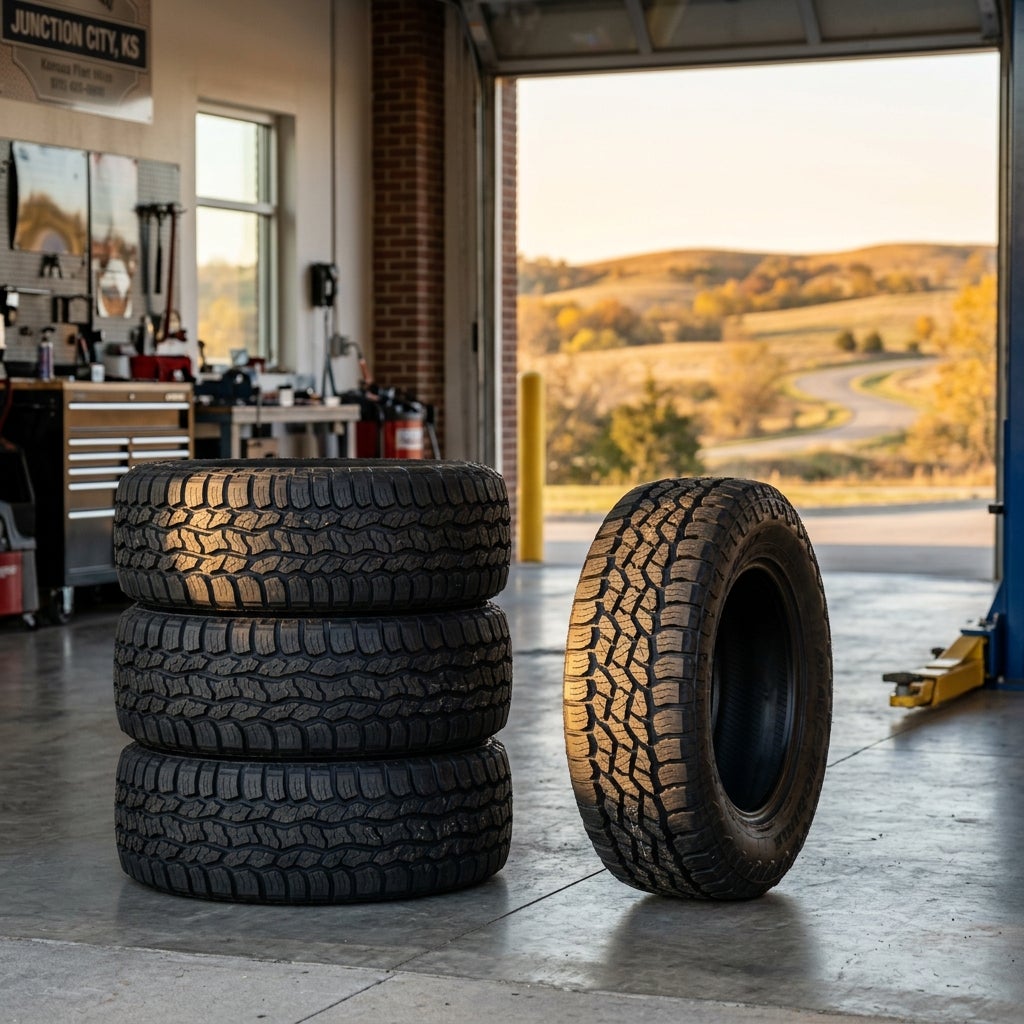
Buy 3 Tires Get the 4th for $1 at Valor Ford in Junction City, KS

Buy 3 Tires Get the 4th for $1 at Valor Ford in Junction City, KS

Schedule Tire Service at Valor Ford in Junction City, KS Don't let worn tread compromise your safety or fuel efficiency this season! currently available during our premier Fall Tire Sales Event at Valor Ford, when you purchase four select qualifying tires at regular price. Positioned right here at 1825 Goldenbelt Blvd in Junction City, KS, Valor Ford is your authorized service destination for unmatched savings on top tire brands. Whether you drive a rugged Ford F-150, a versatile Explorer, a heavy-duty Super Duty, a spacious Expedition, or a sleek Escape, this extraordinary event delivers maximum value directly to your wallet. Driving conditions across Geary County and the surrounding Flint Hills region demand dependable traction. From unpredictable fall rains to early winter frost, having four premium tires with deep, fresh tread is essential for road safety. Take advantage of direct savings of up to $250 or more depending on your vehicle's tire size and brand selection. Appointments are available through our certified service center, and availability may vary. Call us at (785) 238-5114 today or claim your offer online below! Schedule Ford Service Today How the Tire Service Offer Works Simple, Transparent Savings at Checkout We believe in straightforward pricing without hidden catches. Here is exactly how easy it is to save at Valor Ford: 1. Choose 4 Qualifying Tires: Select a set of four matching tires from our extensive inventory of major national brands. 2. Pay Regular Price for 3: Purchase the first three tires at our everyday competitive retail price. Get the 4th tire included with your qualifying tire purchase: Your service advisor can review current tire package details with you. 4. Enjoy Low-Price Guarantee & Expert Installation: Benefit from our Ford Service Price Match Guarantee on major brands, along with factory-trained assembly, precise balancing, and professional mounting. Tire Model Package Regular Set Price (4) Service Package Price Total Instant Savings Standard All-Season (Sedan/CUV) $640 Contact dealership for current pricing $159 Instant Savings All-Terrain Truck/SUV (F-150/Bronco) $960 Contact dealership for current pricing $239 Instant Savings Heavy-Duty Highway (Super Duty) $1,120 Contact dealership for current pricing Contact dealership for current pricing This limited-time offer applies to top-tier, name-brand tires suitable for light trucks, SUVs, crossover vehicles, and sedans. Installation, mounting, wheel balancing, valve stems, and applicable local recycling fees are clearly calculated so there are no surprises when you pick up your keys. Top Tire Brands Included in the Junction City Tire Sale At Valor Ford, we carry an extensive inventory of tire brands specifically engineered to complement your vehicle's handling, payload capacity, and ride quality. During this sales event, choose from industry-leading manufacturers tailored for your daily drive. Goodyear & Michelin Goodyear Tires: Renowned for durability and quiet highway performance. Excellent fitment options for Research Ford F-150 trucks and Research Ford Explorer SUVs needing dependable wet and dry traction. Michelin Tires: Premium longevity and fuel efficiency. Michelin Defender and Premier series deliver ultra-smooth rides for commuting on I-70 or traveling around Kansas. Continental & BFGoodrich Continental Tires: Exceptional stopping power and responsive cornering grip. Ideal for Ford Escape, Edge, and Research Ford Maverick drivers who value precise control. BFGoodrich Tires: Tough, aggressive off-road tread patterns like the All-Terrain T/A KO2, built to conquer gravel roads, farm trails, and muddy Kansas terrain. Pirelli & Hankook Pirelli Tires: Performance-driven rubber designed for responsive steering and high-speed stability. Perfect match if you Research Ford Mustang models. Hankook Tires: High-value performance with exceptional all-season capabilities, providing reliable durability for heavy work duty on Research Ford F-250 Super Duty vehicles. Why Proper Tire Tread and Alignment Matter for Flint Hills Driving Driving in Junction City, Fort Riley, and throughout Dickinson County presents unique challenges across every season. Between rolling hills, unpaved rural gravel, sudden autumn rainstorms, and icy winter highways like I-70, your vehicle's safety depends entirely on the small contact patch where your tires touch the pavement. Enhanced Hydroplaning Resistance: Fresh tire tread channels water away from the tire footprint, maintaining traction during heavy rainstorms. Shorter Stopping Distances: Replacing tires worn down to 3/32" or lower can dramatically reduce your stopping distance by up to two car lengths on wet roads. Improved Fuel Economy & Tire Life: Pairing your new set of tires with a digital wheel alignment ensures even tire wear, lower rolling resistance, and maximum miles per gallon. Schedule Ford Service Today Schedule Service Online Before Event Slots Fill Up Appointment availability in our Valor Ford Quick Lane and certified service bays may be limited. Drivers across Junction City, Manhattan, Abilene, and Fort Riley recognize this as the best tire pricing event of the year. To guarantee your preferred date and time, we strongly encourage utilizing our intuitive online scheduling tool. You can pick your vehicle model, select your desired tire package, and secure your appointment in less than two minutes. Can't make it to the dealership during your busy workday? Take advantage of our convenient Ford Pickup & Delivery option, where our team collects your vehicle, completes the tire replacement, and returns it directly to your driveway or workplace! Schedule Pickup and Delivery Service Complementary Maintenance Checks Included With Your Tire Purchase At Valor Ford, we go above and beyond simple tire installation. Every customer participating in our 4th Tire for $1 promotion receives a suite of complementary vehicle health checks performed by our Ford-trained technicians. Multi-Point Inspection Comprehensive vehicle check covering fluid levels, belts, hoses, wipers, battery strength, and exhaust components to catch potential issues early. Brake & TPMS Reset Detailed measurement of brake pad thickness and rotor condition, along with electronic recalibration of your Tire Pressure Monitoring System (TPMS). Alignment Quick-Check Digital laser alignment check to verify proper wheel geometry, preventing premature wear on your brand-new set of tires before you leave. Exclusive Offers for Fort Riley Service Members and Families Valor Ford takes immense pride in supporting the brave active-duty personnel, veterans, and military families stationed right next door at Fort Riley, home of the 1st Infantry Division. We understand the unique scheduling demands, field training exercises, and frequent relocations experienced by our military community. During our $1 Tire Event, military members receive priority service scheduling, expedited lane turnarounds, and streamlined shuttle options back to post. We also offer specialized advice for out-of-state vehicles to ensure your tires meet rigid cross-country driving demands whether traveling home for leave or preparing for your next PCS move. Military Customer Benefits at Valor Ford: • Expedited service scheduling for active military • Convenient shuttle service to and from Fort Riley gates • Complimentary multipoint safety inspection on all family vehicles • Assistance with Ford Rewards points accumulation and redemption • Transparent, hassle-free pricing guaranteed on every tire brand Flexible Financing Options for Tires and Service Upgrades Replacing four tires along with routine vehicle maintenance is an important investment in your safety, but it doesn't have to strain your monthly budget. Valor Ford offers flexible service financing solutions designed to fit your cash flow. With the Ford Service Credit Card, qualified buyers can enjoy promotional 0% APR financing on major service and tire purchases over $250. Spread your payments into manageable monthly installments while outfitting your car, truck, or SUV with top-quality tires today. Plus, cardholders earn valuable Ford Rewards points that can be redeemed toward future oil changes, routine maintenance, or genuine Ford parts. Get Pre-Approved for Financing Trade In Your Vehicle or Upgrade During the Tire Sales Event Maximizing Your Current Vehicle's Value Thinking about trading in your current ride for a brand-new or certified pre-owned Ford? While your vehicle is in our service bay receiving new tires or inspection, our appraisal team can provide a quick, zero-obligation Trade In Evaluation. Used vehicle values remain remarkably strong in Geary and Riley counties. Applying the equity in your current vehicle toward a new purchase could get you into a newer model with lower monthly payments and full warranty coverage. Explore Latest Ford Models on the Lot Take a test drive while you wait! Explore our latest showroom line-up, including: • Tough and capable off-roaders: Shop New Ford Bronco Inventory • Quality pre-owned cars, trucks, and SUVs: Browse Used Inventory • Next-generation heavy duty trucks: Research Ford F-250 Whether servicing your current vehicle or driving home a brand-new Ford, Valor Ford is committed to offering unmatched customer service. Seasonal Road Preparation for Dickinson County Agriculture and Commuting Living in Central Kansas requires vehicle tires versatile enough to handle diverse conditions—from dusty harvest fields and agricultural towing to freezing winter highway commutes on I-70. Selecting the right tire type ensures optimal fuel efficiency and maximum traction. All-Season Highway Tires Engineered for quiet rides, smooth highway handling, and extended tread life. Ideal for commuters traveling between Junction City, Manhattan, and Topeka along main interstates. All-Terrain & Off-Road Featuring reinforced sidewalls and aggressive tread block designs. Essential for agricultural work, farm property navigation, dirt roads, and heavy trailering. Winter-Rated / 3-Peak Tires stamped with the 3-Peak Mountain Snowflake (3PMSF) symbol offer specialized rubber compounds that remain flexible in freezing temperatures, providing superior grip on snow and ice. Frequently Asked Questions About the $1 Tire Promotion Q: Does the 4th tire for $1 include installation charges? A: The fourth tire purchase is included with your qualifying tire package. Standard mounting, balancing, valve stem installation, and disposal fees apply to all four tires to guarantee proper safety standards. Q: Can I combine this offer with manufacturer mail-in rebates? A: In many cases, yes! Several tire manufacturers offer national mail-in or online rebates during seasonal events that can be stacked on top of dealership savings. Ask our service advisors for current brand rebate forms. Q: Are non-Ford vehicles eligible for this tire sale? A: Absolutely! While we specialize in Ford cars, trucks, and SUVs, our Quick Lane tire center services all makes and models. Drivers of Chevrolet, Ram, Toyota, Honda, and other vehicles can fully participate. Q: What is the Ford Service Price Match Guarantee? A: If you find a lower advertised price on an identical tire from a local competitor within 30 days of purchase, we will match it! Need custom replacement parts or accessories? You can easily Order Genuine Ford Parts directly through our parts department. Order Genuine Ford Parts Claim Your $1 Tire Offer at Valor Ford Today Contact us to schedule your vehicle's essential road maintenance. Save hundreds of dollars by getting your fourth tire for just $1 at Valor Ford in Junction City, KS! Visit our state-of-the-art facility located conveniently on Goldenbelt Blvd, or contact our service department directly to schedule your installation appointment. 📍 Get Directions to Valor Ford: 1825 Goldenbelt Blvd, Junction City, KS 66441 📞 Call us at (785) 238-5114 to speak directly with a certified tire advisor. Schedule Ford Service Today

Understanding Motor Oil Viscosity Ratings: What Numbers Like 5W-30 Mean for Your Engine

Understanding Motor Oil Viscosity Ratings: What Numbers Like 5W-30 Mean for Your Engine

Understanding Motor Oil Viscosity Ratings: What Numbers Like 5W-30 Mean for Your Engine When you pull out the dipstick or look at a bottle of motor oil on the shelf in Junction City, those alphanumeric codes—like 5W-20, 5W-30, or 0W-20—can feel like a secret mechanical dialect. In simple terms, a motor oil viscosity rating measures the fluid's internal resistance to flow. Think of viscosity as the liquid's thickness: high-viscosity fluids flow slowly like warm molasses, while low-viscosity fluids flow rapidly like water. For your engine, maintaining the precise balance of fluid flow is the single most critical factor in preventing metal-to-metal contact, reducing mechanical friction, and dissipating destructive friction heat. Modern internal combustion engines operate under extreme pressure with tolerances measured in thousandths of a millimeter. The oil must be thin enough during a cold morning start in Kansas to instantly pump up into the top cylinder heads and overhead camshafts. Yet, once your vehicle reaches peak operating temperature while cruising along I-70, that very same oil must remain thick enough to form a durable protective cushion between rapidly moving internal components. Understanding how multi-grade viscosity works empowers you to make informed decisions for your vehicle's long-term health. If your engine is due for fresh fluid, you can easily Schedule Ford Service with our factory-trained specialists. Decoding the Numbers: How Cold-Flow and High-Temp Viscosity Protect Engine Parts The Society of Automotive Engineers (SAE) established the standardized numerical scale used on motor oil containers worldwide. Multi-grade oils use a two-number rating system separated by the letter 'W'. The 'W' strictly stands for **Winter**, not weight. The first number preceding the 'W' (such as 0W, 5W, or 10W) indicates the oil's flow capability at low winter temperatures. A lower number means better cold-flow performance, allowing the oil to reach engine bearings instantly upon ignition during freezing weather in Junction City. The second number following the hyphen (such as 20, 30, or 40) represents the oil's kinematic viscosity at 100°C (212°F)—the standard operating temperature of a fully warmed engine. Higher numbers indicate a thicker oil film at elevated temperatures, providing robust barrier protection under severe thermal strain. Using an oil with the incorrect cold rating can lead to dry startups, while an incorrect hot rating can cause oil film breakdown under heavy acceleration. How Kansas Weather and Flint Hills Driving Impact Oil Viscosity Performance Driving conditions across Dickinson County and Geary County put unique demands on your vehicle's lubrication system. Mid-western weather shifts dramatically throughout the year—from sub-zero winter blasts to scorching 100°F heat waves in peak summer. Extreme cold causes low-quality oils to thicken excessively, starving key components during start-up. Conversely, blistering summer heat accelerates thermal oxidation, causing oil molecules to break down into varnish and sludge. Furthermore, tackling steep inclines across the Flint Hills or pulling heavy equipment requires sustained high RPMs. This mechanical stress subjects the engine oil to extreme shear forces, which can physically tear apart polymer viscosity modifiers. When towing heavily in a truck like the powerful Research Ford F-150, oil sump temperatures rise rapidly. If the viscosity degrades below factory specifications, oil pressure drops, exposing crank journals and connecting rod bearings to dangerous metal contact. Regular fluid checks and timely oil changes ensure your engine maintains strong shear stability no matter how demanding the road or weather conditions become in central Kansas. Which Engine Types Strictly Require Full Synthetic Motor Oil? Turbocharged EcoBoost® Systems Turbochargers spin up to 200,000 RPM and are cooled directly by engine oil. Conventional oils can coking or char inside hot turbo bearings when turned off. Full synthetic oil provides superior thermal resistance, protecting turbo shaft seals against extreme heat degradation. Direct-Injection & High Compression Modern gasoline direct-injection (GDI) engines operate at elevated internal pressures and are prone to Low-Speed Pre-Ignition (LSPI). Full synthetic formulations meet strict API SP/ILSAC GF-6 standards engineered specifically to eliminate damaging LSPI knock events. Hybrid & Auto Stop-Start Vehicles Vehicles with automatic stop-start technology or hybrid powertrains, such as those found in the Research Ford Explorer, frequently cycle the engine on and off. Ultra-low viscosity synthetic oils ensure instant oil pressure delivered within milliseconds of restarting. Schedule Synthetic Oil Service What Components Are Inspected During a Standard Full-Service Oil Change? A standard oil change at Valor Ford is much more than simply draining old oil and pouring in fresh fluid. Every routine service includes a comprehensive evaluation designed to keep your vehicle running in peak condition: 1. **Drain & Replace Motor Oil:** Draining worn engine oil and refilling with exact OEM-recommended viscosity. 2. **Filter Replacement:** Installing a high-efficiency replacement filter. You can also Order Genuine Ford Parts directly through our parts center. 3. **Fluid Inspection & Top-Off:** Checking windshield washer fluid, engine coolant, brake fluid, and power steering levels. 4. **Belts & Hoses Check:** Inspecting serpentine belts and radiator hoses for cracks, swelling, or tension loss. 5. **Tire Pressure & Tread Depth:** Adjusting all four tires to correct PSI and measuring remaining tread thickness. 6. **Multi-Point Vehicle Health Inspection:** Reviewing battery health, wiper blades, intake air filters, and suspension alignment points. What Happens If I Delay or Skip Oil Changes Recommended by Junction City Service Advisors? Postponing your scheduled maintenance intervals triggers a chain reaction of mechanical wear inside your engine. Over time, heat exposure causes chemical breakdown of the oil's additive package. Anti-wear zinc compounds deplete, detergent additives saturate, and the base oil oxidizes into thick black engine sludge. As sludge accumulates, narrow lubrication passages—such as variable camshaft timing solenoids and oil pick-up screens—become clogged. Deprived of steady oil pressure, precision components begin friction-grinding against each other, creating metallic debris that circulates throughout the entire system. Skipping oil changes also severely impacts fuel economy. Worn, oxidized oil increases internal fluid friction, forcing your engine to work significantly harder just to turn the crankshaft. Piston rings can become gummed up and stick, leading to cylinder wall scoring, excessive oil consumption, loss of compression, and eventual catastrophic engine overheating. Protecting your investment requires maintaining steady drain intervals tailored to your specific driving habits in Junction City. What Factors Most Affect the Price of an Oil Change in Junction City, KS? Fluid Type & Formulation Full synthetic oils cost more upfront than synthetic blends or conventional oils due to advanced chemical refinement, but they offer significantly longer protection intervals and superior cold-weather flow. Engine Sump Capacity A compact sedan may require only 4 to 5 quarts of oil, whereas heavy-duty trucks like the PowerStroke® diesel require up to 13 to 15 quarts, directly impacting total fluid material costs. Filter Specification Genuine Motorcraft® high-efficiency filters utilize synthetic blend media designed to trap micro-particulates without restricting oil volume, offering premium protection over generic aftermarket filters. View Service Pricing Are Independent Garages Near Junction City Good Alternatives to Dealership Service? While quick-lube shops and corner independent repair garages are widespread, they often utilize one-size-fits-all bulk oils that fail to meet strict OEM engineering specs. Using a bulk 5W-30 formulation that lacks vehicle-specific chemical approvals can degrade engine seals and void factory oil life monitors. At Valor Ford, our service department is staffed by Senior Master-certified technicians who specialize exclusively in your vehicle's exact engine platform. We utilize specialized Ford Integrated Diagnostic System (IDS) tools, OEM recalibration software, and exact-fit Motorcraft fluids formulated specifically for your powertrain. Do Independent Auto Service Centers Void Manufacturer Vehicle Warranties? Under the federal **Magnuson-Moss Warranty Act**, vehicle owners are legally allowed to perform routine maintenance at independent facilities without automatically voiding their original manufacturer factory warranty. However, if an independent garage uses substandard fluid, incorrect viscosity, or an unapproved filter that leads to mechanical failure, the manufacturer reserves the right to deny warranty coverage for that repair. Furthermore, independent shops require you to manually collect, organize, and store physical paper receipts to prove maintenance compliance if a warranty claim arises years down the road. Servicing your vehicle at Valor Ford provides complete administrative peace of mind. Every service visit, fluid type, and multi-point inspection record is logged directly into Ford's centralized nationwide OASIS database. If you ever need warranty repairs anywhere in North America, your maintenance history is instantly verified with zero hassle or paperwork required. Why Should I Schedule an Oil Change Appointment Instead of Just Walking In? Reserved Bay Access Scheduling guarantees immediate vehicle check-in and dedicated service bay access, eliminating long waiting room delays for active military personnel from nearby Fort Riley. Pickup & Delivery Convenience Busy schedule? You can easily Schedule Pickup and Delivery Service where we pick up your vehicle from your home or office and return it fully serviced. Staged OEM Parts Pre-booked appointments allow our parts department to stage your exact motor oil viscosity specification and OEM filter prior to your arrival for rapid turnaround times. Reserve Your Service Time Slot Junction City Service & Oil Change Excellence: The Valor Ford Difference At Valor Ford, we take immense pride in serving the automotive needs of drivers throughout Junction City, Manhattan, and surrounding Kansas communities. Our commitment to vehicle longevity starts with our dedicated team of factory-certified service experts who treat your vehicle with the care and precision it deserves. Whether you need an exact-fit Motorcraft oil change, routine maintenance, or general diagnostic care, our modern service center provides service information and comfortable amenities. Stop by our dealership today or get in touch with our advisors: 📍 Get Directions to Valor Ford at 1825 Goldenbelt Blvd, Junction City, KS 66441. 📞 Questions? Call us at (785) 238-5114 to speak directly with a service advisor. Protect Your Engine: Schedule Your Next Oil Change at Valor Ford in Junction City Keep your engine performing at its best. Ensuring your vehicle uses the correct motor oil viscosity rating is the easiest way to preserve engine performance, maximize fuel economy, and extend vehicle lifespan. Experience the professional care, genuine Motorcraft components, and customer-first service that set Valor Ford apart. Schedule Factory-Backed Oil Service Today

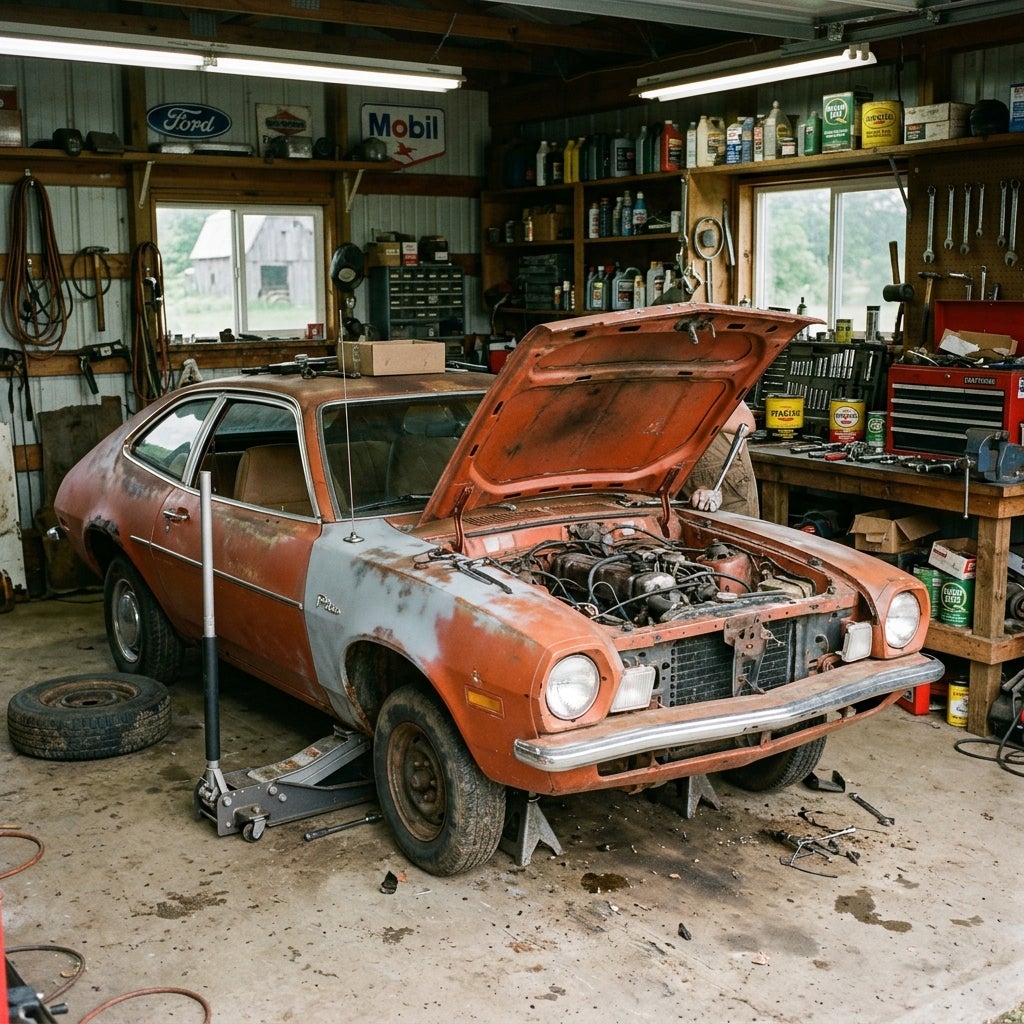
Vintage orange Ford Pinto undergoing repairs on jack stands inside a workshop filled with tools and auto signs. (Representative image for illustration purposes only. Actual vehicle may vary based on trim and configuration.)

Ford Pinto

How Much Does a Used Ford Pinto Project Car Cost? If you are contemplating embarking on a classic 1970s automotive restoration, the iconic Ford Pinto offers one of the most accessible and affordable entry points into the vintage car hobby today. Depending on condition, rarity, location, and mechanical completeness, a used Ford Pinto project car typically costs anywhere from contact the dealership for current pricing. To break down expected entry costs quickly: non-running barn finds or heavy rust project candidates generally trade between $1,200 and $2,500. Complete, rolling, restorable project candidates with intact trim and solid frames cost between $3,000 and $6,000. Meanwhile, turnkey vintage drivers, modified V8 swaps, or fully restored high-grade Pinto models command $7,500 to $12,000+ in today's active collector market. Here at Valor Ford in Junction City, KS, we regularly assist local automotive hobbyists across Geary and Dickinson counties who are evaluating vintage Ford projects or looking to transition into modern power. Before diving headfirst into a purchase, evaluating acquisition tier pricing against expected safety and sheet metal restoration costs will ensure your project stays on budget and yields an incredible retro ride. You can also explore our Browse Used Inventory for modern, turnkey transportation while working on your dream project. What Is the Ford Pinto and Why Is It Historically Significant? Introduced for the 1971 model year, the Ford Pinto was Dearborn's direct response to rising foreign subcompact imports like the Volkswagen Beetle, Toyota Corolla, and Datsun 510, as well as impending 1970s fuel crises. Spearheaded by Ford President Lee Iacocca, the Pinto was developed under a strict engineering directive: build a subcompact automobile weighing under 2,000 pounds that retailed for under $2,000. Despite an aggressive 25-month design cycle, the Pinto became a massive commercial triumph for Ford Motor Company. Over its 10-year production run from 1971 through 1980, Ford produced and sold more than 3 million Pintos, solidifying its place as one of the defining American subcompacts of the decade. Historically, the Pinto is also famous for the safety controversies surrounding its rear fuel tank placement in high-speed rear-end collisions. The subsequent legal cases and federal safety standards reshaping fuel system crash integrity changed automotive product liability and vehicle engineering standards worldwide. What Years Was the Ford Pinto Made and What Were Its Basic Specs? 1971–1974 Models Early Pintos offered European-derived powertrains including the 1.6L British Kent inline-four and the legendary 2.0L German EA827 OHC four-cylinder. Known for lightweight unibody agility, initial curb weights started around 2,015 lbs. 1975–1980 Models Mid and late-run Pintos introduced the bulletproof American-built 2.3L Lima OHC four-cylinder as well as an optional 2.8L Cologne V6. Heavier 5-mph impact bumpers increased total curb weight to approximately 2,400–2,550 lbs. Gearbox & Axles Factory transmission choices featured sturdy 4-speed manual gearboxes (German Type 3 or Ford RAD) alongside optional 3-speed Ford C3 automatics driving a rear live axle with leaf springs. Engine Option Production Years Horsepower Output Torque Rating 1.6L Kent I4 1971–1973 54–75 hp 91 lb-ft 2.0L EA827 OHC I4 1971–1974 86–100 hp 110 lb-ft 2.3L Lima OHC I4 1974–1980 83–88 hp 118 lb-ft 2.8L Cologne V6 1975–1979 97–103 hp 143 lb-ft What Body Styles Did the Ford Pinto Come In? The Ford Pinto was manufactured across four primary body style configurations, each commanding distinct price points and desirability levels on today's vintage market: 1. 2-Door Notchback Sedan: The base original trunked model built from 1971 to 1980. Often the most affordable starting point for project builders. 2. 3-Door Runabout Hatchback: Introduced mid-1971 with a flip-up rear glass hatch, establishing itself as the quintessential Pinto body style. 3. 2-Door Station Wagon: Launched in 1972 featuring enhanced interior cargo space, flip-down rear seats, and optional simulated woodgrain exterior paneling. 4. Cruising Wagon: A highly collectible factory option package (1977–1980) based on the wagon, styled like a MINI conversion van with round bubble porthole side glass and vibrant multi-tone graphic striping. Trade In Evaluation Pinto Project Car Pricing Breakdown by Condition Level Tier 1: Barn Finds / Parts Cars contact the dealership for current pricing Non-running vehicles sitting in pastures or barns for decades. Severe structural floor rust, missing trim, locked engines, or missing titles. Best suited as parts donors or heavy custom hot rod fabrications. Tier 2: Rolling Projects contact the dealership for current pricing Solid unibody frame structure with minimal rust-through. Mechanics turn over or run roughly from a gas can. Complete body glass and trim intact. The ideal sweet spot for home mechanics. Tier 3: Vintage Drivers & Restomods contact the dealership for current pricing Fully driveable vehicles with sorted mechanicals, updated safety upgrades, clean interiors, and good paint. Includes completed V8 302 swap builds or pristine survivor Cruising Wagons. Condition Tier Acquisition Price Mechanical State Body / Rust Status Target Enthusiast Tier 1: Barn Find / Parts Car $800 – $1,800 Inoperable / Locked Heavy Rust / Missing Parts Fabricator / Parts Donor Buyer Tier 2: Rolling Restorable varies by condition Needs Engine / Brake Overhaul Solid Structural Unibody DIY Hobby Restoration Enthusiast Tier 3: Turnkey / Restomod $6,000 – $9,500+ Fully Operational / Upgraded Repainted / Rust-Free Classic Weekend Cruiser / Car Show Buyer What Should I Look For When Shopping for a Used Ford Pinto? Inspecting a prospective Ford Pinto project car requires a keen eye for unibody integrity and component completeness. Because early 1970s subcompacts lacked extensive factory rustproofing, examine these critical areas: • Unibody Structural Rust: Check floor pans, rocker panels, rear leaf spring shackle mounts, and front shock towers. Surface rust is manageable, but structural perforation requires expensive sheet metal patch welding. • Trim & Exterior Moldings: Reproduction exterior trim and hatchback glass seals can be difficult to source. Ensure side trim, bumpers, and factory badging are present. • Electrical Wiring Harness: Unmolested factory wiring makes restoration drastically simpler. Look out for amateur aftermarket radio splices or brittle 50-year-old insulation. Critical Pinto Safety Upgrades and Essential Retrofit Costs Before taking any vintage Ford Pinto out onto Kansas roads or cruising highway speeds, prioritizing modern safety retrofits is mandatory. The original factory fuel tank design sits behind the rear axle housing without substantial rear structural crossmember protection. Key safety modifications and estimated retrofit costs include: 1. Polyethylene Fuel Cell or Tank Shielding (estimate only): Verify whether the 1978 factory recall plastic shield was installed. Installing a modern cell bladder or steel protective shield prevents differential housing bolts from puncturing the tank during a rear impact. 2. Dual-Reservoir Brake Master Cylinder & Front Disc Conversion (estimate only): Converting early four-wheel drum setups to power front disc brakes dramatically improves stopping distance. 3. Fuel Line & Frame Reinforcements (estimate only): Rerouting steel fuel lines outside potential crumple zones and reinforcing rear frame rails with steel tubing. Order Genuine Ford Parts How Did the Ford Pinto Compare to the Chevrolet Vega in the 1970s? Throughout the 1970s, the battle for domestic subcompact supremacy pitted the Ford Pinto directly against General Motors' Chevrolet Vega. While both vehicles sold in huge numbers, their modern project car values reflect very different engineering choices: • Engine Durability: Ford relied on cast-iron block engines (Kent, EA827, and 2.3L Lima). These cast-iron powerplants proved exceptionally durable and tolerant of heat. In contrast, the Vega's unlined aluminum block engine was infamous for overheating, cylinder wall scoring, and premature failure. • Corrosion Resistance: While both cars rusted, the Pinto's body architecture generally preserved chassis structural integrity longer than early Vega body panels. • Modern Project Value: Today, Pinto project cars are favored for low mechanical maintenance costs and easy engine bay swaps. Estimating Total Restoration Costs for a Pinto Project Car Body & Paint Work $2,500 – $5,000 Sheet metal repair, rust patching, body sanding, primer sealing, and complete exterior paint respray. Engine & Powertrain varies by condition 2.3L Lima engine rebuild, carburetor tuning, cooling system replacement, or a custom Ford 302 Small Block V8 swap. Interior & Chassis varies by condition Vinyl upholstery replacement, carpet kit, shock absorbers, suspension bushings, front brake disc swap, and vintage tire sets. Restoration Expense Item Budget DIY Estimate Professional Shop Estimate Initial Vehicle Acquisition $2,500 $4,500 Engine Rebuild / Swapping $1,200 $3,500 Body Repair & Paint Finish $1,500 $4,500 Interior Trim & Upholstery $600 $1,800 Brakes, Suspension & Tires $800 $2,000 Total Project Investment varies varies How Should I Use a Ford Pinto After Safety Upgrades Are Done? Once safety retrofits and mechanical refreshing are complete, a Ford Pinto becomes a delightful and versatile vintage vehicle. Enthusiasts across Junction City, Fort Riley, and central Kansas enjoy Pintos in several exciting ways: • Weekend Cruising & Local Car Shows: Turn heads at regional classic car meets around Geary County with a pristine original Runabout or Cruising Wagon. • Fuel-Efficient Vintage Commuter: With its lightweight chassis and thrifty 2.3L four-cylinder, a sorted Pinto can achieve 25–30 MPG on highway drives. • Retro Drag Racing Build: Thanks to its compact wheel base and light weight, the Pinto is a legendary platform for Ford 302 V8 drag strip conversions. Whether taking weekend drives out to Milford Lake or displaying your completed build at community automotive events, a restored Pinto offers incredible nostalgia and mechanical charm per dollar invested. Schedule Ford Service Today Sourcing Ford Pinto Parts and Trade-In Options in Dickinson County One of the greatest advantages of choosing a Ford Pinto project car is parts interchangeability. Many critical drivetrain components, front rack-and-pinion steering parts, and ignition hardware shared designs with the Mustang II and early Ford Ranger pickup trucks. Finding engine gaskets, water pumps, starter motors, and brake hardware is simple through OEM and aftermarket suppliers. If you need assistance sourcing components or evaluating mechanical hardware, Get Directions to Valor Ford in Junction City. Many local project builders fund their classic restoration builds by trading in an existing daily driver. By utilizing our available Trade In Evaluation process at Valor Ford, you can unlock built-up equity from your current vehicle to cover acquisition, paint, or performance upgrades on your classic Pinto project. Ready to Start Your Project Car Journey with Valor Ford? Whether you are hunting for a vintage 1970s Ford Pinto hatchback, sourcing parts for an ongoing build, or considering a modern daily driver like a new Ford Bronco or Ford Mustang, Valor Ford is your premier Kansas automotive partner. Stop by our dealership at 1825 Goldenbelt Blvd in Junction City, KS, Call us at (785) 238-5114, or explore options to Explore Financing Options today. You can also explore modern muscle heritage with our team by reviewing our Research Ford Mustang resources. Contact Valor Ford

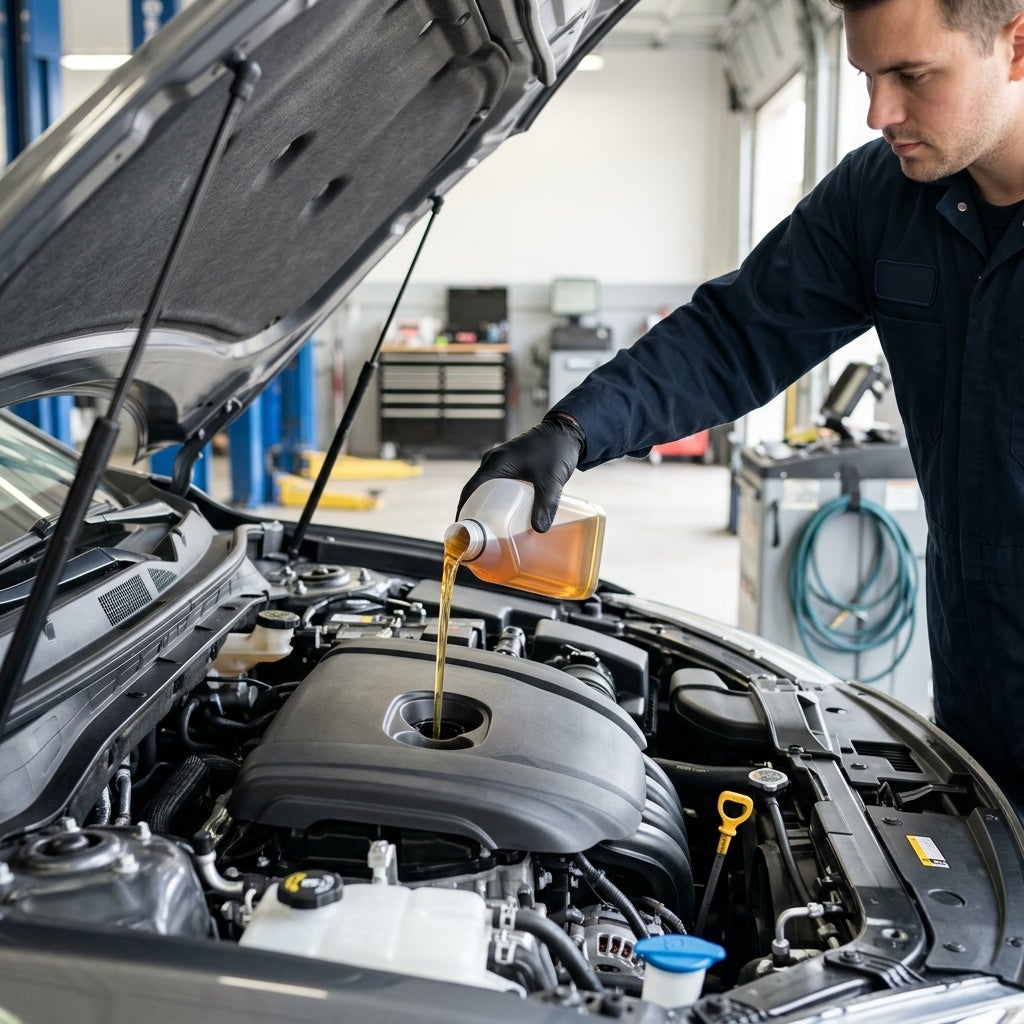
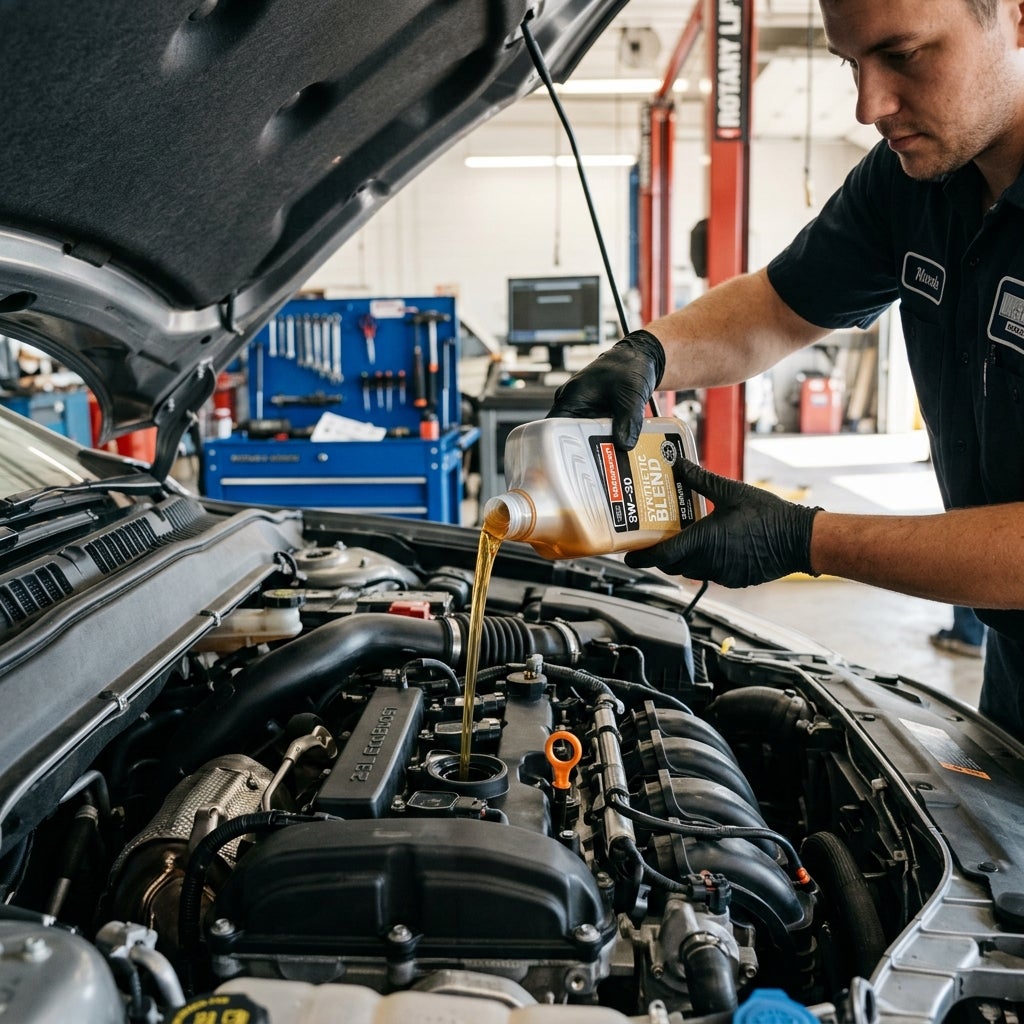
Mechanic wearing black gloves pouring clean amber motor oil into an open car engine inside an auto shop. (Representative image for illustration purposes only. Actual vehicle may vary based on trim and configuration.)

What To Expect When Getting Your Oil Changed at Valor Auto in Junction City, KS

What Type of Motor Oil Is Used for an Oil Change at Valor Auto in Junction City, KS? When you bring your vehicle to Valor Auto (Valor Ford) in Junction City, KS, your engine receives factory-recommended motor oils specifically tailored to your vehicle's make, model, engine topology, and driving demands. For Ford vehicles and multi-make automobiles alike, Valor Auto primarily utilizes genuine Motorcraft® Synthetic Blend, Full Synthetic, High-Mileage, and Heavy-Duty Diesel oils, all engineered to meet or exceed strict OEM specifications. Engine lubrication is not a one-size-fits-all formula. Modern high-tech engines—ranging from turbocharged EcoBoost® engines to high-output V8s and PowerStroke® diesels—require exact viscosity grades and tailored additive packages. Whether your owner's manual calls for 5W-20, 5W-30, 0W-20, or specialized diesel formulations like 15W-40, the certified service technicians at Valor Auto ensure your oil change adheres strictly to factory tolerances to optimize efficiency, protection, and engine longevity. Schedule Ford Service Today Motorcraft Full Synthetic vs. Synthetic Blend: What Motor Oil Choices Are Offered at Valor Auto? Motorcraft® Premium Synthetic Blend: Standard for many Ford vehicles, this oil balances affordability with high-grade thermal protection. Formulated with synthetic base stocks and premium additives, Motorcraft Synthetic Blend reduces internal friction, minimizes engine deposits, and guards against low-speed pre-ignition (LSPI) in direct-injection engines. Motorcraft® Full Synthetic Oils: Engineered for severe operation, extreme temperature swings, and turbocharged powerplants, Full Synthetic provides exceptional shear stability and oxidation resistance. It flows smoothly in cold weather to reduce engine wear upon start-up and resists breakdown under scorching summer heat. Oil Type Recommended Use Key Benefits Synthetic Blend Everyday commuting & light duty Cost-effective deposit control & friction reduction Full Synthetic Turbocharged engines, heavy towing, extreme weather Maximum thermal defense & instant cold flow High-Mileage Vehicles over 75,000 miles Seal conditioners to prevent leaks & oil burn-off How Junction City and Fort Riley Driving Conditions Impact Engine Oil Performance Flint Hills Weather Extremes Kansas summers bring 90°F+ temperatures while winters drop well below freezing in Geary and Dickinson Counties. Freezing starts cause up to 75% of initial engine wear without proper oil viscosity (e.g. 0W-20 or 5W-20). Synthetic oils flow immediately to protect critical valvetrain components. Military Commutes & Dust Frequent short-distance trips and gate idling between Junction City and Fort Riley prevent engine oil from reaching optimal operating temperatures. Moisture and unburnt fuel accumulate in the crankcase, causing accelerated oil degradation. Gravel roads, agricultural dust, and heavy towing down I-70 place 'Severe Duty' demands on engine oil and filtration systems. Why Genuine Motorcraft Oils and OEM Filters Maintain Your Vehicle Warranty Maintaining factory powertrain coverage requires documented oil changes using fluids and filters that meet original equipment specifications. Off-brand oil change franchises frequently rely on universal bulk oil and low-cost aftermarket filters that may lack vital anti-drainback valves or precise bypass pressure thresholds. At Valor Auto, every oil change includes a genuine Motorcraft® oil filter equipped with a silicone anti-drainback valve that prevents dry starts. Paired with API-certified Motorcraft oils, your service history remains fully compliant with Ford New Vehicle Limited Warranties and Powertrain Coverage. Valor Auto's dedicated parts department stocks authentic OEM components engineered specifically for your powertrain. By avoiding generic quick-lube parts, you ensure maximum filtration efficiency, optimal oil pressure, and complete peace of mind. Need replacement parts or fluid supplies for DIY care? You can easily Order Genuine Ford Parts directly through our online store. Order Genuine Ford Parts How Much Does an Oil Change Cost at Valor Auto in Junction City, KS? Oil change costs at Valor Auto vary depending on motor oil type (Synthetic Blend, Full Synthetic, or Diesel), engine fluid capacity (quart size), and filter specs. We prioritize complete price transparency, providing clear upfront estimates without hidden fees or surprise add-ons. Service Package Oil Type Included Comprehensive Benefits Included Standard Synthetic Blend Care Motorcraft® Synthetic Blend Up to 5 qts, genuine OEM filter, multi-point inspection, fluid top-off Full Synthetic Performance Motorcraft® Full Synthetic Up to 5 qts full synthetic, severe-duty protection, multi-point check PowerStroke Diesel Care Motorcraft® Super Duty 15W-40 / 5W-40 Heavy-duty diesel capacity, OEM fuel filter check, chassis lube Bundled routine maintenance plans like The Works® Package combine oil and filter replacement with tire rotation, pressure checks, brake inspection, battery testing, and fluid top-offs—saving you significant money over single-service visits. Do I Need an Appointment for an Oil Change at Valor Auto? Appointments Are Recommended, but Walk-Ins Are Welcome! Valor Auto understands that active duty service members stationed at Fort Riley and busy parents in Junction City need flexibility. We accommodate walk-in routine oil changes through our Express Service lane whenever possible. However, scheduling online guarantees a reserved bay and prompt turn-around. For ultimate convenience, Valor Auto offers Ford Pickup & Delivery service for eligible maintenance. We can pick up your vehicle from your home or workplace in Junction City and return it fresh and serviced. Schedule Pickup and Delivery Service today to save valuable time. What Are the Operating Hours and Location for the Service Department at Valor Auto? Service Center Hours Monday – Friday: 7:30 AM – 5:30 PM Saturday: 8:00 AM – 2:00 PM Sunday: Closed Early morning key drop-box available 24/7. Convenient Location Valor Ford 1825 Goldenbelt Blvd Junction City, KS 66441 Right off I-70 Exit 296, convenient to Fort Riley, Grandview Plaza, and Abilene. Get In Touch Questions about motor oil specs? Call us at (785) 238-5114 or Get Directions to Valor Ford. Can Valor Auto Handle Routine Oil and Filter Changes for Non-Ford Vehicles? Yes! Valor Auto Serves All Makes and Models While we are Junction City's premier Ford dealer, our factory-trained service technicians service Chevrolet, GMC, Ram, Toyota, Honda, Nissan, Jeep, Hyundai, and more. We maintain complete technical specs for all domestic and import vehicles, stocking appropriate viscosity oils (like 0W-16, 0W-20, and 5W-30) and OEM-spec oil filters. Thinking about trading in your current vehicle? Explore your options with our online Trade In Evaluation tool or check out our certified pre-owned inventory when you Browse Used Inventory. Browse Used Inventory What Should I Look for in a Good Oil Change Shop Near Junction City? 1. Certified Technicians Ensure technicians are ASE-certified and factory-trained. Unlike quick-lube shops with fast employee turnover, dealership technicians know intricate torque specs, oil drain plug washer protocols, and filter housing dynamics. 2. Digital Inspections Look for service centers offering multi-point digital vehicle inspections with transparent color-coded reports sent to your smartphone, identifying worn belts or low fluids before breakdowns happen. 3. Genuine Parts & Trust A trusted facility uses genuine OEM oils and filters rather than generic bulk drums. Valor Auto has built local trust in Geary and Dickinson Counties over decades through honest, quality automotive care. Recommended Oil Change Intervals: When Should You Schedule Service? General Interval Guidance: • Synthetic Blend Oil: Every 5,000 to 7,500 miles or 6 months. • Full Synthetic Oil: Every 7,500 to 10,000 miles or 12 months. • Severe Driving Conditions (Towing, idling, dust): Every 3,000 to 5,000 miles. Intelligent Oil-Life Monitor™ (IOLM): Modern Ford vehicles feature intelligent monitoring that calculates oil life based on engine revolutions, operating temperatures, and load. When your dashboard displays 'Change Oil Soon', schedule service promptly. Exploring popular Ford models? Check out our research guides: Research Ford F-150, Research Ford Explorer, Research Ford Maverick, or Shop New Ford Bronco Inventory. What Is Included in Valor Auto’s Multi-Point Inspection During an Oil Change? At Valor Auto, an oil change is more than a quick fluid swap—it's a comprehensive health check for your vehicle. Every service visit includes a complimentary multi-point inspection: Inspection Area Items Checked Action Taken Fluid Levels Coolant, brake fluid, transmission fluid, washer fluid Inspected & topped off as needed Battery Health Cold Cranking Amps (CCA), terminal corrosion, voltage Digital battery health test printed Tire & Brake System Tire tread depth, pressure, brake pad thickness Adjusted pressure & wear safety rating Under-Hood & Chassis Belts, hoses, steering linkage, exhaust, wiper blades Visual check for leaks, cracks, or play High-Mileage and Heavy-Duty Diesel Oil Options for Trucks and Commercial Fleets Specialized Engine Protection for Heavy Workloads • High-Mileage Formulations (75,000+ Miles): Vehicles past 75,000 miles benefit from specialized high-mileage blends enriched with seal reconditioners that keep engine gaskets supple, reducing small oil leaks and burn-off. • PowerStroke® Heavy-Duty Diesel Oils: Ford Super Duty F-250 and F-350 trucks require heavy-duty diesel oils like Motorcraft® 15W-40 Super Duty or 5W-40 Full Synthetic Diesel Oil. These formulated oils handle intense combustion pressures, prevent soot aggregation, and guard turbo bearings against wear. Considering upgrading your heavy-duty truck fleet? Learn more when you Research Ford F-250 or check out Research Ford F-250 options. Order Genuine Ford Parts Schedule Your Professional Oil Change Service at Valor Auto Today Protect your vehicle's performance, fuel economy, and resale value with factory-recommended motor oils at Valor Auto. Serving Junction City, Fort Riley, Manhattan, and surrounding Geary County, our dealership is your dedicated partner for professional maintenance. Ready to experience dealership-quality service? You can also Contact us for current financing information if you are looking to upgrade your ride, or Research Ford Mustang models today! Schedule Ford Service Today

Mechanic inspecting the engine bay of a red dump truck in a repair shop with a diagnostic laptop nearby. (Representative image for illustration purposes only. Actual vehicle may vary based on trim and configuration.)

What Is the Best Order for a Pre-Harvest Truck Check? The Complete Sequence

What Is the Best Order for a Pre-Harvest Truck Check? The Complete Sequence When fall harvest begins across Dickinson County and the Flint Hills, there is zero tolerance for unexpected commercial vehicle downtime. A loaded grain truck idling in a dirt turnout with a blown radiator hose or an overheated brake chamber costs time, money, and momentum during a tight weather window. The key to preventing disastrous field breakdowns lies not just in inspecting your farm trucks and heavy haulers, but in adhering to a strict, disciplined sequence. Conducting a pre-harvest truck check in a haphazard fashion guarantees that critical secondary components get missed. The definitive, industry-proven sequence follows a logical 5-step order from top-to-bottom and front-to-back: (1) Under-hood fluids, ELC coolant, and drive belts; (2) Cab safety gear and Kansas DOT documentation; (3) Brake system and air line pressure test; (4) Exterior walk-around, tires, frame, and hitch; and (5) Operational road test under load. Starting cold under the hood ensures you capture accurate engine fluid levels before thermal expansion occurs, while ending with a loaded road test verifies foundation stability under actual hauling conditions. Whether you are running a severe-duty fleet or operating a single vehicle like a commercial haul rig or a heavy-duty chassis—such as those explored in our Research Ford F-150 and Research Ford F-250 guides—this exact sequence protects your bottom line. Meet Mike Hogg: 20 Years of Agricultural Truck Service in Central Kansas For over two decades, Mike Hogg has stood on the service frontlines in Central Kansas, diagnosing, repairing, and optimizing heavy-duty grain haulers, farm pickup fleets, and commercial workhorses. As Service Director at Valor Ford in Junction City, Mike has seen firsthand the severe mechanical strain that Kansas harvest conditions impose on farm vehicles. From high August heat and thick field dust to steep grade hauls carrying 80,000-pound payloads, Mike knows that agricultural truck maintenance requires a specialized, proactive approach. ‘In agricultural truck maintenance, hope is not a strategy,’ says Mike Hogg. ‘When grain elevators have two-hour wait lines and ambient temperatures hit 95 degrees, a weak water pump belt or an untested brake air line will fail. My goal is simple: ensure every farm crew in Dickinson County and around Fort Riley gets through harvest without a single preventable mechanical delay.’ You can easily reach out to Mike's master-certified technicians or Call us at (785) 238-5114 for tailored agricultural fleet consultations. Mike Hogg Service Director, Valor Ford 20+ Years Heavy-Duty Agricultural Service Expertise Step 1: Under the Hood — What Is the Difference Between Extended Life Coolant (ELC) and Conventional Coolant? 1. Under-Hood Cold Diagnostics Why start under the hood? Engine cooling and lubrication systems must be checked cold before thermal expansion masks accurate fluid levels or pressure drops. Pulling dipsticks on engine oil, power steering fluid, and transmission fluid before starting the engine gives a true baseline. Look for milkiness in the oil indicating coolant cross-contamination, or a burnt smell signaling thermal breakdown during last season's heavy work. 2. Organic Acid Technology (ELC) Extended Life Coolant (ELC) utilizes Nitrated Organic Acid Technology (NOAT) or Organic Acid Technology (OAT) to provide superior wet-sleeve cylinder liner cavitation protection without dropping supplemental coolant additives (SCAs). ELC forms a resilient protective barrier on metal surfaces, resisting extreme temperature spikes when hauling maximum legal grain loads up steep grades. 3. Conventional Coolant Risks Conventional heavy-duty coolants rely on inorganic silicates and require constant chemical monitoring. Over time, silicate drop-out creates abrasive sludge that clogs radiator passages and destroys water pump seals under heavy fall loads. Mixing conventional coolant with ELC dilutes corrosion inhibitors and can cause rapid gelation, overheating your grain truck right in the middle of field operations. Step 1 (Continued): What Belt Problems Should You Watch For Before Hauling Grain? Drive belts drive essential auxiliary components: your water pump, alternator, power steering pump, and air compressor. During intense Kansas summer heat, rubber compounds experience micro-thermal degradation. When checking serpentine and V-belts prior to harvest, visually inspect every inch using a flashlight and a bright mirror. Key warning signs include: Micro-cracking across ribs (if there are three or more cracks in a three-inch span, replace immediately); Glazing and shiny contact surfaces caused by slippage under high alternator load; Edge fraying or rib chunking, which indicates pulley misalignment or tensioner bearing collapse; and Dry rot cracking from prolonged ultraviolet exposure. Always check tensioner damping arms for smooth travel. If you detect belt rib separation or tensioner pulley play, stock up on factory-spec replacements before harvest starts. You can easily Order Genuine Ford Parts directly from our commercial parts portal. Order Genuine Ford Parts Mike Hogg's Golden Rule: Why Sequence and Timing Prevent Field Breakdowns ‘In 20 years of servicing harvest trucks, 80% of the severe field breakdowns I see come down to human skipping—inspecting tires first because they're visible, while neglecting the cold fluid checks or cab air pressure rates until the truck is already running hot under a 400-bushel load. When you follow a fixed front-to-back, top-to-bottom sequence every single morning before harvest ignition, you eliminate human error. Sequence creates consistency, and consistency keeps grain moving from field to elevator without roadside drama.’ — Mike Hogg, Service Director at Valor Ford in Junction City Step 2: Cab & Compliance — What Documents Are Required to Pass a State DOT Commercial Vehicle Inspection in Kansas? Kansas DOT In-Cab Documents To satisfy Kansas Highway Patrol DOT officers during roadside harvest weigh-station checks, every commercial or farm vehicle over 26,001 lbs must carry valid cab paperwork: Medical Examiner's Certificate (or self-certification affidavit), current vehicle registration, proof of commercial liability insurance, and valid USDOT numbers properly displayed. In-Cab Emergency Equipment Verify that your cab contains a properly mounted, fully charged fire extinguisher (minimum 5 B:C rating with intact safety seal), three red emergency reflective warning triangles, and spare electrical fuses matching the truck's central junction box specs. Missing safety items lead to immediate roadside out-of-service citations. HVAC & Visibility Check: Ensure cab defrosters, wiper blades, windshield washer pumps, and horn units function cleanly to combat dusty field conditions. Step 3: What Is Included in a Pre-Harvest Brake Inspection? Air Brake System Pressure & Leak-Down Test Step 3 moves to system pressure testing. Start the engine to build air reservoir pressure to governor cut-out (typically 120–145 PSI). Drain primary and secondary air tanks manually to discharge accumulated condensation and oil emulsion; moisture in air lines damages relay valves and causes winter brake freeze-ups. Perform a static and applied leak-down test: turn off the engine with full pressure, release parking brakes, and monitor pressure loss over one minute (should not exceed 2 PSI for single vehicles or 3 PSI for combinations). Next, hold firm foot pedal brake application for one minute (max 3 PSI drop single / 4 PSI combination). Test low-air warning buzzers and automatic parking brake spring pop-out controls. Foundation Brakes & Mechanical Hardware Underneath the vehicle, perform a direct physical inspection of foundation brake components on every axle. Brake shoe friction lining thickness must measure greater than 1/4 inch (6.3 mm) at the thinnest point above the shoe table; hydraulic disc brake pads must maintain ample pad thickness. Inspect brake drums for deep heat checking, circumferential scoring, or structural cracking extending to the outer rim. Measure pushrod stroke lengths on automatic slack adjusters to prevent stroke over-travel, which drastically reduces stopping force on fully loaded grain trucks navigating farm-to-market road intersections. Step 4: Ground Walk-Around — Tires, Suspension, Frame, and Towing Rigging The ground walk-around is a rigorous physical inspection around the perimeter of the vehicle. Start at the front left wheel and proceed clockwise around the vehicle, checking tires, suspension hardware, main frame rails, and heavy towing hitches. Component Category Critical Pre-Harvest Inspection Checkpoints Failure Threshold / Action Required Steer & Dual Tires Inflation pressure with calibrated gauge, tread depth (>4/32" steer, >2/32" drive), sidewall cuts, inner dual clearance. Underinflation exceeding 10 PSI; sidewall belt exposure; mismatched dual diameters exceeding 1/4 inch. Wheel End & Lug Nuts Lug nut tightness, rust streaks behind nuts indicating movement, oil hub sight glass fluid level. Loose lug nuts; hub cap seal leaks; milky or contaminated hub oil requiring immediate seal replacement. Suspension & Frame Leaf spring main leaves, U-bolts, air spring bags, kingpin bushing play, main frame rail crossmembers. Broken or shifted spring leaves; cracked air bags; frame rail cracks near spring hangers or crossmember rivets. Fifth-Wheel & Hitch Fifth-wheel locking jaws engagement, pintle hook safety latch, safety chain attachment loops, trailer electrical cord. Excessive jaw play; damaged safety latches; chafed 7-way electrical wiring or leaking emergency gladhand seals. For specialized Ford heavy-duty commercial chassis and towing platforms, such as those covered in our Research Ford F-250 overview, confirming exact lug nut torque (typically 150–165 lb-ft on heavy-duty pickups, higher on commercial medium-duty chassis) is vital prior to pulling heavy grain carts or trailers. Schedule Ford Service Today Pre-Harvest Truck Maintenance: Cooling System and Brake Inspections Before Fall Grain Hauling Heavy Payloads & Gravel Road Dynamics Hauling harvested grain across unpaved county roads in Dickinson County subjects chassis frames and cooling stacks to immense vibration. Fine dirt particles fill radiator and charge air cooler fins, reducing airflow efficiency by up to 35%. Combined with ambient summer heat and maximum gross vehicle weight, an unchecked cooling system will rapidly push engine oil and coolant temperatures into critical warning zones. For producers operating lighter support trucks or scout vehicles across field paths, review our Research Ford Maverick and Research Ford Explorer resources for efficient utility options. The Financial ROI of Preventive Maintenance An emergency roadside service call on Highway 77 during harvest peak can cost over $1,500 in towing fees alone—not including lost harvest daylight or grain elevator delay penalties. In contrast, replacing a suspect water pump hose, flushing degraded conventional coolant, or renewing brake shoes beforehand costs a fraction of roadside repairs and keeps your combines rolling without bottlenecking. And when harvest wraps up, keep track of our iconic performance vehicles through the Research Ford Mustang page. Should You Schedule a Shop Inspection Before Harvest Starts? On-Farm Driveway Checks On-farm driveway checks are essential for daily operational monitoring, fluid top-offs, and detecting obvious physical damage. However, inspecting heavy foundation brakes, kingpin tolerance, and electronic engine control modules without professional lifts or diagnostic scanners leaves hidden vulnerabilities unnoticed. Professional Shop Diagnostics A certified heavy-duty shop inspection utilizes commercial vehicle lifts, computerized brake roller testers, coolant refraction meters, and Ford OEM diagnostic equipment. Technicians uncover hidden micro-cracks in frame crossmembers and electronic sensor fault codes before they cause mid-field engine shutdowns. Timing Strategy: Book professional shop service 3 to 4 weeks prior to harvest kick-off. This guarantees sufficient lead time for specialized replacement parts delivery without risking crop delays. Work with our team to Schedule Pickup and Delivery Service for hassle-free maintenance. Preparing Your Grain Fleet for Kansas Harvest Operations Fleet Management Across Junction City & Fort Riley Managing multi-vehicle farm fleets requires structured staging. Stagger individual truck inspections so that half your fleet remains active while the other half undergoes pre-harvest service. Valor Ford supports local agricultural operations with dedicated commercial bay priority, OEM Motorcraft filtration kits, and fast turnarounds. Upgrading aging grain haulers? Explore trade-in options with our simple Trade In Evaluation tool to maximize your fleet capital. Commercial Financing & Vehicle Acquisition When expanding your agricultural fleet before harvest demands surge, flexible financing keeps cash flow healthy. You can Contact us for current financing options online in minutes. If you are seeking pre-owned work trucks or additional hauling units, Browse Used Inventory or check out specialized off-road support trucks like the Shop New Ford Bronco Inventory selection. Trade In Evaluation Schedule Your Pre-Harvest Truck Inspection at Valor Ford in Junction City, KS Don't leave your fall harvest productivity to chance. Trust Mike Hogg and the master-certified commercial service technicians at Valor Ford to get your grain trucks, service pickups, and heavy trailers 100% harvest-ready. Located right here in Junction City at 1825 Goldenbelt Blvd, Junction City, KS 66441, we provide complete pre-harvest safety checks, heavy-duty cooling system flushes, air brake overhauls, and genuine Ford Motorcraft parts. Visit our dealership today. Get Directions to Valor Ford or speak directly with our commercial desk— Call us at (785) 238-5114. Schedule Pickup & Delivery Service Get Pre-Approved for Financing

A dark grey Ford Super Duty pickup truck parked on a snowy rural dirt road surrounded by snow-covered fields. (Representative image for illustration purposes only. Actual vehicle may vary based on trim and configuration.)

Unlock Winter Power: Master 6.7L Power Stroke Cold Starts Like a Pro

Why Modern Diesels Struggle in Cold Weather: 6.7L Power Stroke Starting Causes When sub-zero Arctic winds sweep across Dickinson County and Fort Riley, owners of modern diesel trucks like the 6.7L Power Stroke often face one of winter's most frustrating experiences: turning the key or pushing the start button only to be met with a sluggish crank or an unyielding refusal to fire up. While modern heavy-duty Ford Super Duty pickups are marvels of high-pressure common rail injection engineering and robust thermal design, extreme cold shifts physics and chemistry heavily against diesel combustion. Unlike gasoline engines that rely on spark plugs to ignite fuel at virtually any temperature, diesel engines rely entirely on compression heat to ignite atomized fuel. The top culprits responsible for cold-weather starting trouble on the 6.7L Power Stroke include severely degraded dual batteries with diminished Cold Cranking Amps (CCA), paraffin wax gelling in untreated ultra-low sulfur diesel (ULSD) fuel, malfunctioning Glow Plug Control Modules (GPCM) or damaged glow plug harnesses, and high-viscosity engine oil that slows down cranking speed below the threshold required to build compression heat. Understanding these critical thermal thresholds allows truck owners to take proactive measures before freezing temperatures hit central Kansas. If you want to ensure your heavy-duty truck remains dependable through harsh winters, you can readily Schedule Ford Service Today with our factory-trained diesel technicians at Valor Ford in Junction City. Schedule Diesel Cold Start Inspection Is a Weak Battery the Most Common Cause of a Winter Crank-No-Start Condition? Without question, dual-battery failure is the single most frequent reason 6.7L Power Stroke diesels fail to start on freezing Kansas mornings. Modern heavy-duty Ford trucks rely on two high-output 12-volt AGM or lead-acid batteries wired in parallel. This setup must simultaneously power ultra-fast glow plugs, energize high-draw fuel lift pumps, fire electronic injectors operating at over 30,000 PSI, and turn over a massive 15.8:1 compression ratio engine. As ambient temperatures plummet toward zero degrees Fahrenheit, chemical activity inside automotive batteries slows down drastically. At 0°F, a standard vehicle battery loses roughly 50 to 60 percent of its rated Cold Cranking Amps (CCA). At the exact same moment, cold, thickened oil increases engine cranking resistance by almost 200 percent. If one of your dual batteries has even a single degraded cell, it acts as a constant drain on the second battery, preventing the starter motor from reaching the minimum 150 to 200 RPM rotational speed needed to build cylinder compression heat. Because modern dual-battery systems hide degradation well during mild weather, drivers rarely notice early warning signs until winter strikes. If you suspect your truck is due for fresh Motorcraft batteries or want to evaluate upgrade possibilities, explore our Research Ford F-250 page or stop by our service department for a load test. Understanding Diesel Fuel Gelling and Waxing in Kansas Sub-Zero Temperatures 1. Wax Crystallization Ultra-Low Sulfur Diesel (ULSD) naturally contains paraffin wax compounds that improve energy density and cetane rating. However, when fuel temperature reaches its Cloud Point (typically around 10°F to 15°F), these waxes begin forming solid microscopic crystals. Without anti-gel treatment, fuel turns cloudy and rapidly solidifies. 2. Cold Filter Plug Point As temperatures drop further toward the Cold Filter Plugging Point (CFPP), paraffin wax aggregates into dense gel deposits. This gel instantly clogs the primary 10-micron fuel water separator filter on the frame rail, starving the High-Pressure Common Rail (HPCR) pump and preventing fuel delivery to the injectors. 3. Moisture & Ice Blockage Condensation frequently collects inside fuel tanks during temperature swings in Junction City and Fort Riley. Un-drained water inside the fuel water separator module freezes solid in sub-zero weather, completely blocking fuel line flow and potentially damaging high-pressure injection components. To protect against fuel gelling during severe cold snaps across central Kansas, Power Stroke owners should regularly treat their tanks with Ford-approved anti-gel additives at every fill-up once ambient temperatures drop below freezing. Need fresh OEM filters before winter? You can Order Genuine Ford Parts directly through our dealership. How Glow Plug and Glow Plug Control Module (GPCM) Failures Trigger Cold Starting Problems Modern 6.7L Power Stroke engines utilize fast-acting ceramic or metal glow plugs controlled by a sophisticated Glow Plug Control Module (GPCM). Unlike older mechanical diesels that required long pre-heat waits, the modern GPCM modulates electrical current via pulse-width modulation, heating individual glow tips above 1,800°F in less than two seconds. When temperatures plunge, the GPCM also maintains an 'after-glow' phase after combustion starts to reduce white smoke emissions and steady cold idle. However, if a single glow plug suffers high resistance or short-circuits, or if the GPCM's solid-state power switching circuitry fails, specific Diagnostic Trouble Codes (DTCs like P0671 through P0678) are triggered. In severe cold, losing even two glow plugs will result in extended cranking, rough misfiring, or complete starting failure. Schedule Pickup and Delivery Service How Does the 6.7L Power Stroke Perform in Sub-Zero Kansas Winter Conditions? Engineered specifically for extreme North American climate conditions, the Ford 6.7L Power Stroke V8 Turbo Diesel offers exceptional cold-weather capabilities when properly maintained. Featuring an integrated 1,000-watt heating element inside the engine block, factory automatic cold-weather elevated idle features (which raise engine RPM to prevent fuel slobber and warm up coolant faster), and advanced powertrain control logic, the 6.7L Power Stroke is built to conquer Midwestern freezes. One of the key operational requirements during Kansas winters is selecting the correct oil viscosity. While standard 15W-40 conventional oil performs well during warm weather, switching to 5W-40 or 0W-40 full synthetic diesel engine oil (meeting Ford specification WSS-M2C171-F1) dramatically reduces oil pump cavitation and resistance on cold starts. Synthetic lubricants flow rapidly at -20°F, ensuring immediate lubrication to high-load turbocharger bearings and valvetrain components upon startup. Whether towing heavy machinery around Dickinson County or commuting to Fort Riley, maintaining proper fluid viscosities ensures your Super Duty executes rapid starts regardless of the weather. Interested in upgrading your vehicle? Explore our Shop New Ford Bronco Inventory or Browse Used Inventory online. Essential Winter Preventative Maintenance Checklist for 6.7L Power Stroke Owners Electrical & Batteries • Perform digital conductance load test on both batteries. • Clean terminal posts and apply anti-corrosion spray. • Verify starter drawdown amperage during cranking. • Inspect alternator output under full glow plug load. Fuel & Water Separator • Drain water separator valve into a glass container. • Replace dual Motorcraft fuel filters (every 15k miles). • Add anti-gel cetane booster treatment at fill-ups. • Check frame-mounted lift pump operating pressure. Engine Oils & Heating • Switch to API-CK-4 5W-40 full synthetic diesel oil. • Inspect engine block heater heating element resistance. • Verify block heater power cord for cracks or frays. • Test coolant freeze protection down to -35°F. Replacement Costs for Winter-Stressed Diesel Parts vs. Preventative Maintenance Costs Ignoring basic pre-winter maintenance on a 6.7L Power Stroke diesel can lead to substantial repair bills. When gelled fuel or water enters the High-Pressure Common Rail (HPCR) system, microscopic metal-to-metal abrasion can ruin the high-pressure pump, fuel rails, and piezoelectric injectors. Furthermore, extended cranking on weak batteries causes extreme heat buildup inside the starter motor, leading to sudden armature failure. Below is a side-by-side estimated cost breakdown contrasting affordable preventive maintenance measures with major reactive mechanical repairs caused by severe cold-weather operating damage. Service / Repair Item Preventative Cost Reactive Failure Cost Motorcraft Fuel Filters & Anti-Gel $95 - $180 $8,000 - $11,000 (HPCR Replacement) Dual Battery Replacement (AGM) $380 - $550 $650 - $900 (Starter + Towing + Batteries) 5W-40 Synthetic Oil Service $140 - $220 $1,200 - $2,500 (Turbocharger Wear Repair) Glow Plug System Maintenance $150 - $350 $800 - $1,400 (GPCM + Harness Burnout) Contact Us for Current Financing Information Best Practices for Using Block Heaters and Winter Grille Covers on Ford Super Duty Trucks The factory block heater built into the 6.7L Power Stroke is one of your best defenses against harsh Kansas freezes. However, leaving it plugged in all night is generally unnecessary and increases your electric bill. The internal 1,000-watt heating element warms engine coolant up to operating delta within 3 to 4 hours. Using a heavy-duty outdoor timer set to turn on 3 hours prior to your morning commute saves energy while ensuring instantaneous cab heat and rapid oil circulation. In addition, winter front grille covers are highly effective when ambient temperatures drop below 32°F. By restricting frigid airflow through the front radiator and charge air cooler (CAC), winter covers allow the diesel engine to reach its optimal operating temperature (around 190°F–210°F) much faster. Maintaining proper engine operating temperature prevents excess soot accumulation inside the Diesel Particulate Filter (DPF) and stops 'fuel slobber' during extended idling sessions in Junction City. How 6.7L Power Stroke Output Figures Compare to Cummins and Duramax in Cold Climates Ford 6.7L Power Stroke HO • 500 HP / 1,200 lb-ft Torque • Fast Ceramic Glow Plugs • Quick Thermal Warm-up • Dual Cooling Circuit Design • Class-Leading Cold Power GM 6.6L Duramax Turbo V8 • 470 HP / 975 lb-ft Torque • Metal Glow Plug System • Microprocessor GPCM • Dual Alternator Option • Engine Block Heater Ram 6.7L Cummins High Output • 420 HP / 1,075 lb-ft Torque • Intake Grid Heater Element • Inline 6-Cylinder Design • Heavy Cast Iron Block • Slower Initial Warm-up While the 6.7L Power Stroke delivers industry-leading output of up to 500 horsepower and 1,200 lb-ft of torque, unlocking that massive towing performance in winter requires clean cold fuel delivery and swift cylinder pre-heating. Considering a new heavy-duty truck? Learn more by reading our Research Ford F-250 overview. Step-by-Step Diagnostic Guide for a Cold-Weather Crank-No-Start Diesel Engine If you wake up to sub-zero temperatures in Dickinson County and your 6.7L Power Stroke cranks slowly or refuses to fire, follow this methodical troubleshooting procedure: Step 1: Check Battery Voltage Under Load — Turn on ignition. If gauge drops below 10.5 volts while cranking, battery voltage is insufficient to trigger electronic injectors. Step 2: Monitor Glow Plug Light Cycle — Observe the coil icon on your digital dash display. If it stays lit for less than 1 second in freezing weather, a GPCM fault may exist. Step 3: Listen for Primary Lift Pump — Turn ignition to ON without cranking. Listen for the frame-rail fuel pump humming for 15-20 seconds. Silence indicates a blown fuse or frozen pump module. Step 4: Check Water Separator Drain — Inspect for gelled fuel or ice blockages at the yellow water drain valve on the lower frame rail filter housing. Trade In Evaluation Reliable Winter Diesel Truck Ownership in Junction City, Fort Riley, and Dickinson County Living and working in central Kansas demands uncompromised vehicle dependability. Agricultural operators hauling livestock around Dickinson County, commercial contractors working early mornings, and military personnel commuting to Fort Riley rely on their Ford Super Duty trucks to fire up faithfully no matter how low the mercury drops. By adhering to recommended service schedules, keeping fuel tanks above half-full to minimize condensation, using quality anti-gel treatments, and relying on genuine Motorcraft components, your 6.7L Power Stroke will remain a dependable winter workhorse year after year. If you're exploring vehicle options across the Ford lineup, feel free to check out our Research Ford F-150 page, review our versatile SUVs with Research Ford Explorer, or explore compact efficiency via Research Ford Maverick. For performance enthusiasts, you can also Research Ford Mustang. Whatever your automotive needs, Valor Ford is dedicated to keeping Kansas drivers safely on the road. Prepare Your 6.7L Power Stroke for Winter at Valor Ford in Junction City, KS Inspect your battery and fuel filter before the first severe freeze to help avoid a weak battery or gelled fuel filter. The Ford factory-certified diesel technicians at Valor Ford are equipped with state-of-the-art diagnostic software to test glow plug control modules, evaluate battery conductance under heavy load, and service fuel filtration systems. Conveniently located at 1825 Goldenbelt Blvd in Junction City, KS, we proudly serve truck owners from Fort Riley, Manhattan, Abilene, and all of Dickinson County. Click below to Get Directions to Valor Ford or Call us at (785) 238-5114 to book your appointment today. Schedule Ford Service Today

Contact Us

Fill out this form below and we'll contact you shortly
*Required Fields