
Blog / Buying Guides

2027 Ford SUV Lineup: Q&A with Valor Ford Finance Expert Nino Williams

2027 Ford SUV Lineup: Choosing Your Ideal Family Vehicle

2027 Ford SUV Lineup: Q&A with Valor Ford Finance Expert Nino Williams

Starting prices for the 2027 Ford SUV lineup begin at approximately $29,000 for the compact Escape, $36,760 for the off-road capable Bronco Sport, $40,680 for the three-row Explorer, and $63,920 for the full-size Expedition. To help area buyers navigate these options, we sat down with Nino Williams, Finance Manager at Valor Ford, who brings 11 years of automotive finance experience to guide local families toward their ideal vehicle.

Q: What is the starting price range for the 2027 Ford SUV lineup?

A: The 2027 Ford SUV lineup spans from roughly $29,000 for the entry-level Escape up to $63,920 for the flagship Expedition. In the middle of the lineup, the 2027 Ford Bronco Sport starts at an MSRP of $36,760, while the popular three-row 2027 Ford Explorer begins at an MSRP of $40,680. These entry figures represent base trim levels with standard powertrains, giving buyers a broad spectrum of price points to fit different household budgets.

When buyers visit us to compare models across the showroom floor, pricing structured around clear capability steps makes finding a match straightforward. An entry trim like the Explorer Active provides essential three-row utility at its base price, whereas moving into performance or luxury trims like the Explorer ST or Expedition Active adjusts the financial equation based on added power, luxury features, or advanced towing hardware.

For drivers planning a visit to review current showroom inventory or test-drive specific trims, checking our Junction City showroom location provides direct access to our full sales team. You can also give our finance team a call directly to discuss custom orders, trade-in valuations, or current manufacturer incentives on any 2027 model.

Q: Which 2027 Ford SUV offers the best overall value for value-focused families?

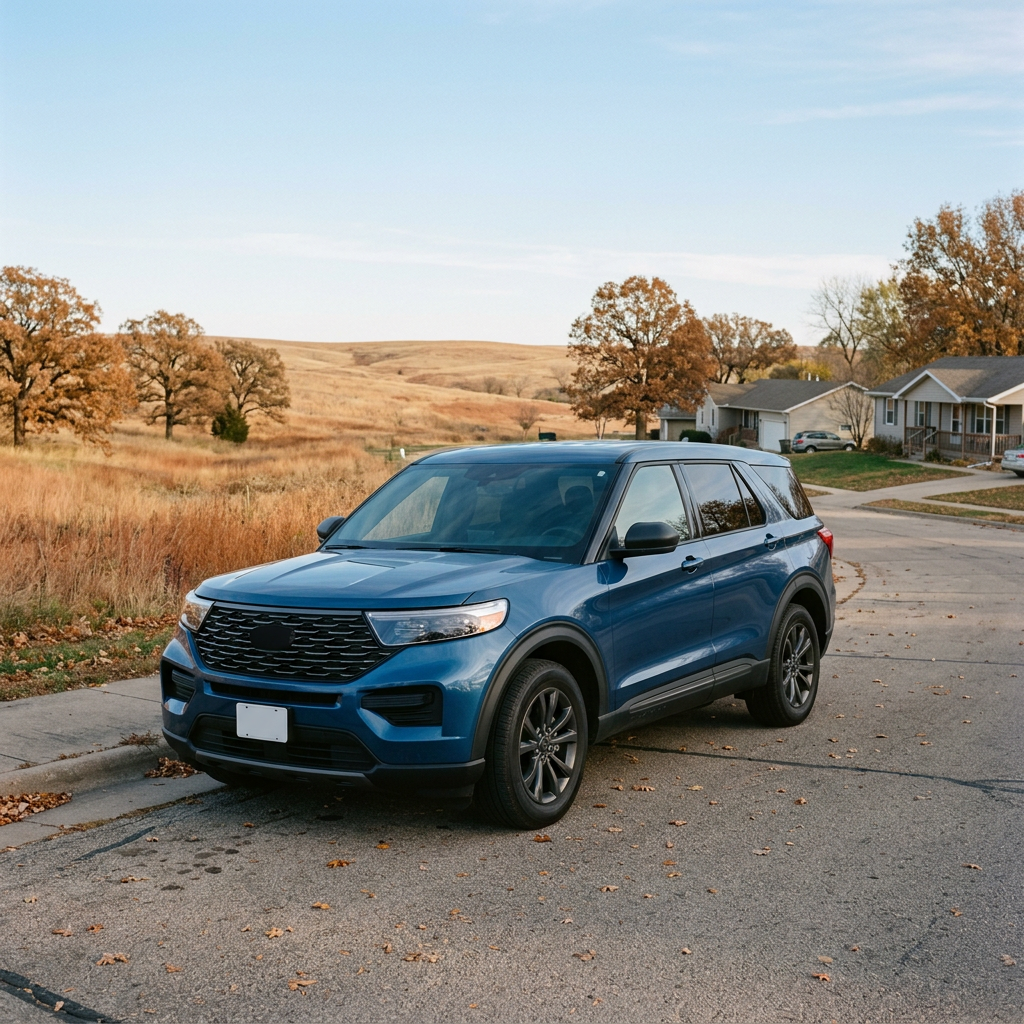
A: The 2027 Ford Explorer in the Active or ST-Line trim delivers the strongest total value for growing families who need three-row seating without stretching into full-size SUV pricing. At a starting price of $40,680, the Explorer Active comes standard with a 2.3L EcoBoost four-cylinder engine generating 300 hp, three-row flexible seating, standard tri-zone automatic climate control, and the complete Ford Co-Pilot360 safety suite.

For families in Junction City balancing school drop-offs, sports equipment, and daily errands, this midsize crossover avoids the higher fuel and purchase costs of larger full-size vehicles while still providing six or seven passenger seats. The ST-Line trim adds sporty aesthetic touches, larger 20-inch wheels, and access to hands-free highway driving tech while retaining the efficient four-cylinder engine, making it a sweet spot for long-term ownership value.

Buyers seeking to maximize their budget can also explore our pre-owned vehicle inventory for certified choices or use our online trade-in evaluation tool to see how much equity from a current vehicle can be applied toward a new purchase. To streamline the purchase process before stepping onto the lot, shoppers can easily get pre-approved for financing online through our secure application.

"Families often focus solely on the initial sticker price, but real value comes from choosing a vehicle whose standard equipment matches your daily driving needs for the next five years."

Q: What are the towing capacities across the 2027 Ford SUV lineup?

A: Towing capacities in the 2027 Ford SUV lineup range from 1,500 lbs on the compact Escape up to 9,300 lbs on the full-size Expedition when equipped with the Heavy-Duty Trailer Tow Package. The compact Ford Escape hauls up to 3,500 lbs when equipped with its available 2.0L EcoBoost engine, while the 2027 Ford Bronco Sport offers a maximum towing capacity of 2,700 lbs alongside standard 4x4 capability.

Moving up to the three-row 2027 Ford Explorer, every model comes standard with a Class III Trailer Tow Package that enables a robust 5,000 lbs towing capacity across both the 2.3L EcoBoost and the 400 hp 3.0L EcoBoost V6 powertrains. For heavy-duty hauling, the full-size 2027 Ford Expedition features a standard tow rating of 6,000 lbs from its 3.5L EcoBoost V6, which increases to 9,300 lbs with the specialized tow package.

For active-duty service members and outdoor enthusiasts around Fort Riley pulling camper trailers or utility rigs across the Flint Hills, having factory-integrated hitch hardware and trailer sway control standard on the Explorer eliminates the need for aftermarket modifications. Buyers interested in exploring off-road variants or tow-ready packages can check our new Ford Bronco inventory to compare specialized trail and hauling setups.

Q: How does fuel economy compare across the 2027 Ford SUV lineup?

A: Fuel efficiency varies significantly across the lineup, ranging from an EPA-estimated 42 mpg city on hybrid compact models down to 16 mpg city / 23 mpg highway on full-size V6 powertrains. The 2027 Ford Escape Hybrid leads the lineup in overall efficiency, while the 2027 Ford Bronco Sport delivers an EPA rating of 21 mpg city / 27 mpg highway with its standard 2.0L EcoBoost four-cylinder and SelectShift automatic transmission.

The midsize 2027 Ford Explorer achieves an EPA-estimated 20 mpg city / 27 mpg highway in rear-wheel-drive configuration with the standard 2.3L EcoBoost engine, with all-wheel-drive models rating slightly lower at 20 mpg city / 27 mpg highway or 19 mpg city / 26 mpg highway depending on wheel size. Performance-focused Explorer models featuring the 3.0L EcoBoost V6 achieve 18 mpg city / 25 mpg highway.

In full-size territory, the 2027 Ford Expedition delivers an EPA estimate of 16 mpg city / 23 mpg highway from its twin-turbocharged 3.5L EcoBoost V6. For drivers who cover extended highway miles, selecting a four-cylinder Explorer or a compact hybrid balances daily commuter efficiency with cabin utility.

Q: How much cargo space is available behind the third row in the 2027 Ford Explorer?

A: The 2027 Ford Explorer provides 16 cubic feet of cargo space directly behind the third-row seats. When extra gear requires more volume, folding the 50/50 split third-row seat flat expands the cargo capacity to approximately 48 cubic feet behind the second row, and folding both rear rows flat yields a maximum cargo volume of 85 cubic feet.

An underfloor storage bin behind the third row keeps smaller items out of sight, and a reversible load floor with a washable plastic underside allows families to transport wet or dirty sports gear without staining carpeted surfaces. Standard second-row captain's chairs on trims like the ST-Line slide forward in one motion to clear a walk-through path to the back seat even when child safety seats are installed.

To explore detailed interior dimensions, seating configurations, and cabin storage features before visiting the dealership, drivers can review our complete Ford Explorer research guide for comprehensive model insights.

Q: How does the 2027 Ford Explorer compare to the Toyota Highlander and Honda Pilot?

A: The 2027 Ford Explorer outperforms the Toyota Highlander and Honda Pilot in standard horsepower and towing capacity, delivering 300 hp and a 5,000 lbs tow rating standard compared to the Highlander's 265 hp four-cylinder and the Pilot's 285 hp V6. Additionally, the Explorer offers an available 400 hp 3.0L EcoBoost V6 on ST and Platinum trims, providing a high-performance engine tier that neither rival matches.

Built on a rear-wheel-drive architecture with available four-wheel drive, the Explorer provides dynamic handling and balanced vehicle dynamics that set it apart from front-wheel-drive-based competitors. While the Honda Pilot offers slightly more total cargo volume with all seats folded, the Explorer counters with its standard Class III Trailer Tow Package, standard 13.2-inch touchscreen with integrated Google services, and optional hands-free highway driving tech.

For buyers evaluating overall value, the Explorer provides a higher baseline of standard utility hardware and driver-assist safety technology across its entry and mid-tier trims than similarly priced competitive models.

Q: Is Ford BlueCruise hands-free driving available on 2027 Ford SUVs?

A: Yes, Ford BlueCruise hands-free highway driving is available on select trim levels of the 2027 Ford Explorer, 2027 Ford Expedition, and Mustang Mach-E. The system allows drivers to operate hands-free on over 130,000 miles of prequalified divided highways, known as Hands-Free Blue Zones, while a driver-facing camera monitors eye gaze to ensure attentiveness.

On the 2027 Ford Explorer, BlueCruise capability comes equipped or available on ST-Line, ST, and Platinum trims. The system includes Lane Change Assist, which performs automated lane changes when the driver taps the turn signal, and In-Lane Repositioning, which subtly shifts the vehicle away from large trucks in adjacent lanes for added comfort. Owners can activate BlueCruise through available subscription and purchase options; contact the dealership for current pricing and availability.

To experience hands-free driving technology firsthand on local highway routes or speak with our sales staff about model availability, shoppers can drop by our dealership showroom address or (785) 238-5114 to schedule a test drive today.

Keep your vehicle performing at its best with our service team:


© 2026 Valor Ford. All rights reserved.

Vehicle specification data © JATO Dynamics Limited.


Posted in:

Related Posts

What Engine Comes Standard in the 2026 Ford Bronco Outer Banks? A General Manager's Guide

What Engine Comes Standard in the 2026 Ford Bronco Outer Banks? A General Manager's Guide

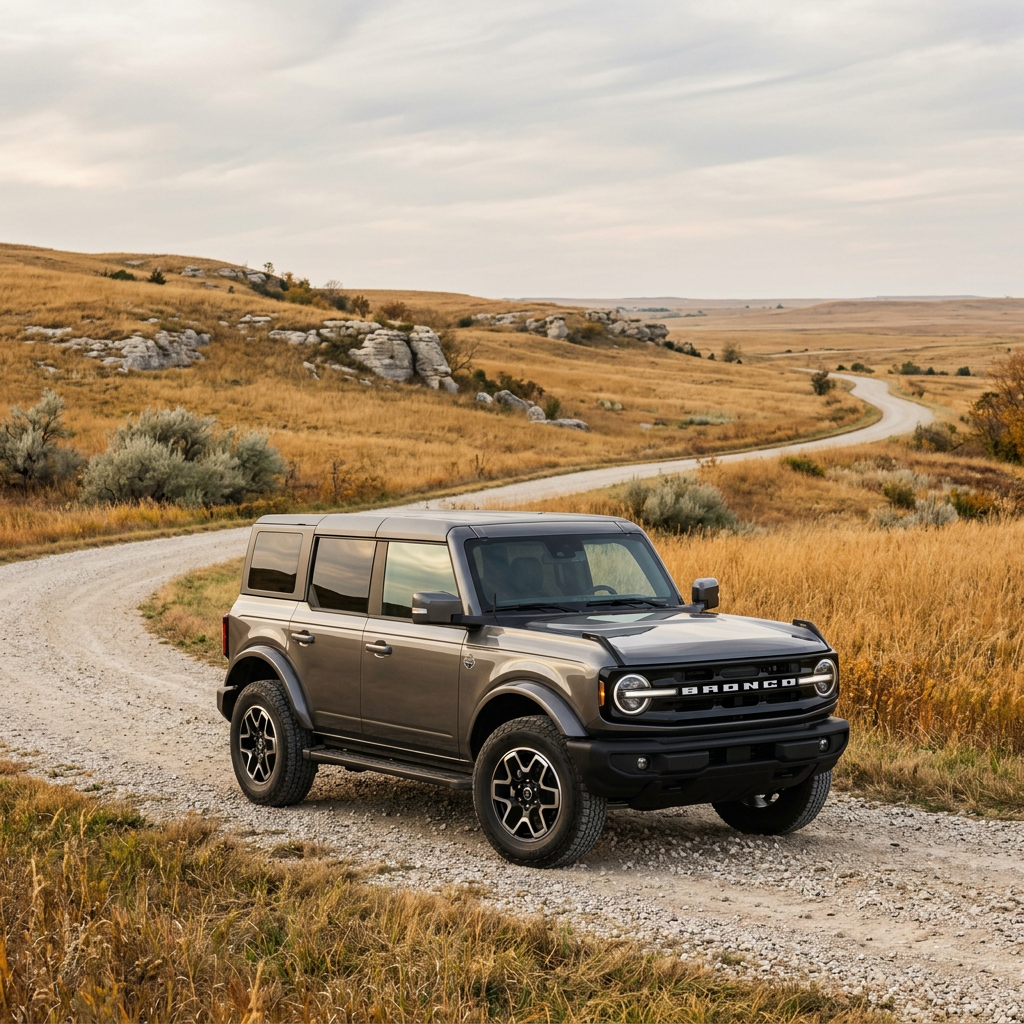
What Engine Comes Standard in the 2026 Ford Bronco Outer Banks? A General Manager's Guide What Engine Comes Standard in the 2026 Ford Bronco Outer Banks? The 2026 Ford Bronco Outer Banks comes standard with a 2.3-liter EcoBoost four-cylinder turbocharged engine generating 300 hp and 325 lb-ft of torque on premium fuel, paired exclusively with a 10-speed automatic transmission. This powertrain delivers responsive acceleration and an EPA-estimated 18 mpg city / 22 mpg highway, balancing daily commuting efficiency with robust four-wheel-drive trail performance. When buyers take a first look on our lot, they often ask whether the standard four-cylinder has enough muscle for highway passing before asking about optional power upgrades. The twin-scroll turbocharger builds boost low in the rev range, delivering maximum torque at 3,400 rpm. That early torque gives the SUV effortless pickup when merging onto highway speeds or navigating soft gravel paths along the Kansas River. The standard part-time four-wheel-drive system works alongside a 3.73 rear axle ratio to ensure confident traction across dry pavement, muddy access roads, and snow-covered streets alike. For drivers who split time between regular workweek trips through Junction City and weekend outdoor escapes, this standard setup strikes a practical balance. It delivers genuine body-on-frame truck durability without forcing you to burn extra fuel just to run daily errands. If you want to compare how this turbocharged four-cylinder compares to larger tow vehicles, our 2026 Ford F-250 research guide provides a clear look at heavy-duty torque curves. Whenever you are ready to explore the lineup in person, you can drop by our Junction City showroom address or give our team a call at (785) 238-5114 to set up a test drive. Table of Contents What Are the Key Factory Specifications and Powertrain Upgrades for the 2026 Bronco Outer Banks? What Standard Interior Features and Technology Elevate the 2026 Bronco Outer Banks Cabin? What Is the Core Difference Between the Ford Bronco Outer Banks and Badlands? Which Trim Offers a Smoother Daily Highway Ride, Outer Banks or Badlands? How Much Does the 2026 Bronco Outer Banks Cost and Does It Hold Resale Value Well? What Are the Key Factory Specifications and Powertrain Upgrades for the 2026 Bronco Outer Banks? The 2.7-liter EcoBoost twin-turbo V6 engine in the 2026 Ford Bronco Outer Banks delivers 330 hp and 415 lb-ft of torque, providing a significant power boost over the base model. Key factory specifications include a standard 10-speed automatic transmission, HOSS 1.0 suspension tuning, Advanced 4x4 with automatic on-demand engagement, five selectable G.O.A.T. Modes, and a 3,500-lb maximum towing capacity. Upgrading to the twin-turbo V6 engine adds substantial low-end pulling power, making it the preferred choice for owners who tow utility trailers or small recreational boats. Both engines utilize high-strength aluminum cylinder heads and direct fuel injection, operating smoothly on regular unleaded gasoline while reaching peak horsepower ratings on 91-octane fuel or higher. The 10-speed automatic transmission features wide gear steps that optimize engine speed, keeping cruising revs low on paved highways while providing precise throttle control during low-speed trail maneuvers. Underneath the chassis, the Outer Banks rides on 18-inch bright machined aluminum wheels wrapped in 32-inch all-terrain tires. The factory independent front suspension offers up to 8 inches of ground clearance in standard trim, while the available Sasquatch Package upgrades the hardware to position-sensitive Bilstein dampers, electronic-locking front and rear axles, high-clearance fender flares, and 35-inch mud-terrain tires. If you are considering trading in your current vehicle to step into a new 4x4, you can complete our online trade-in evaluation tool before browsing our current new Ford Bronco inventory. What Standard Interior Features and Technology Elevate the 2026 Bronco Outer Banks Cabin? The 2026 Ford Bronco Outer Banks comes standard with heated leather-trimmed front seats, 10-way power driver seat adjustment, carpeted flooring, dual-zone automatic climate control, and a 12-inch SYNC 4 touchscreen with wireless Apple CarPlay and Android Auto. These refined interior appointments position the Outer Banks as the most luxury-oriented daily driver in the Bronco lineup. Step inside the cabin, and the contrast with purely utility-focused trail vehicles is immediately apparent. Standard equipment includes the Mid Package suite, featuring keyless access with push-button start, ambient footwell lighting, an auto-dimming rearview mirror, and a digital instrument cluster display. On the outside, signature LED headlights and taillights, body-color fender flares, and powder-coated tube steps give the vehicle a clean, street-ready appearance that looks right at home parked outside a downtown restaurant. For technology enthusiasts, Ford offers an available Lux Package that adds a 12-speaker B&O sound system, a 360-degree camera system, adaptive cruise control, evasive steering assist, and a heated steering wheel. These active features complement standard safety systems like Pre-Collision Assist with Automatic Emergency Braking, BLIS (Blind Spot Information System), and AdvanceTrac with Roll Stability Control. If you are cross-shopping different vehicle styles and price points, feel free to inspect our pre-owned vehicle lineup to see how trade-in values hold up across different model years. What Is the Core Difference Between the Ford Bronco Outer Banks and Badlands? The primary difference between the Ford Bronco Outer Banks and Badlands comes down to intent: the Outer Banks focuses on refined highway comfort, body-color exterior styling, and elevated cabin tech, whereas the Badlands is engineered for extreme off-roading with heavy-duty steel bash plates, front stabilizer bar disconnect, and washout rubber floors. While the Outer Banks uses carpeted flooring, 18-inch aluminum wheels, powder-coated tube steps, and a HOSS 1.0 suspension tuned for daily pavement driving, the Badlands equips a HOSS 2.0 system with Bilstein position-sensitive dampers, 33-inch mud tires on 17-inch wheels, and rock rails. Drives system calibrations also differ. The Outer Banks includes five standard G.O.A.T. Modes (Normal, Eco, Sport, Slippery, and Sand), while the Badlands unlocks seven modes by adding Rock Crawl and Baja settings for technical trail terrain. Active duty service members stationed at Fort Riley often ask us to compare these two models when searching for a vehicle that can handle rugged weekend trips through the Flint Hills while maintaining smooth driving dynamics for daily base commutes. The Outer Banks delivers plenty of ground clearance and four-wheel-drive traction for regional trails, but keeps the cabin significantly quieter on the highway. If you are comparing family-friendly options across our SUV lineup, you can review our 2026 Ford Explorer overview or check out our 2026 Ford F-150 lineup overview to evaluate towing ratings. Once you decide on the right fit, you can get pre-approved for financing online in just a few minutes. Which Trim Offers a Smoother Daily Highway Ride, Outer Banks or Badlands? The Outer Banks trim offers a noticeably smoother and quieter daily highway ride than the Badlands because its suspension tuning and tire selection prioritize pavement damping and cabin isolation over extreme rock crawling. The Outer Banks rides on 32-inch all-terrain tires mounted to 18-inch wheels, featuring a tread block pattern designed to minimize road hum at 65 mph. Its independent front suspension absorbs expansion joints and broken pavement without transferring harsh vibrations into the steering wheel. In contrast, the Badlands relies on firmer Bilstein dampers and aggressive mud-terrain rubber that, while exceptional on loose rock, create noticeable tread drone and a stiffer ride over highway bumps. Wind noise remains a factor on any boxy SUV with removable roof panels, but the carpeted floor backing and insulated interior trim on the Outer Banks help absorb ambient sound better than rubberized washout floors. Steering tracking is also remarkably straight, requiring far fewer micro-corrections on long interstate stretches than live-axle competitors. For commuters who spend nine out of ten days on asphalt, the Outer Banks strikes the right balance between open-air freedom and daily riding comfort. How Much Does the 2026 Bronco Outer Banks Cost and Does It Hold Resale Value Well? The 2026 Ford Bronco Outer Banks starts at an MSRP of $48,090 for the standard four-door body style before destination fees or optional equipment packages, and it retains approximately 65% to 70% of its original purchase price after three years of ownership. That strong value retention is driven by sustained consumer demand for authentic four-wheel-drive vehicles equipped with premium cabin tech. Optional packages allow buyers to customize capability and luxury to their exact preferences. Adding the 2.7-liter EcoBoost twin-turbo V6 is available for an additional cost, the feature-rich Lux Package is available as an upgrade, and the heavy-duty Sasquatch Package is available as an upgrade. For 2026, Ford also introduced an available 60th Anniversary Package, which is priced accordingly, which pairs Sasquatch off-road hardware with a red-and-white exterior scheme and cashmere-accented leather seating. Because four-door 4x4 SUVs with luxury appointments remain highly sought after in the pre-owned market, owners typically experience significantly lower depreciation rates than drivers of standard midsize crossovers. Standard features like SYNC 4 navigation, heated leather seating, and advanced safety technology ensure the vehicle remains modern and desirable for years down the road. To explore current pricing, view available color combinations, or speak with our sales specialists, you can check our dealership map and directions or reach out directly by dialing (785) 238-5114 today. Keep Your Vehicle Running Strong Keep your vehicle performing at its best with our service team: Schedule Pickup and Delivery Service Schedule Ford Service Today Order Genuine Ford Parts © 2026 Valor Ford. All rights reserved.
What Models Are Included in the 2027 Ford SUV Lineup?

What Models Are Included in the 2027 Ford SUV Lineup?

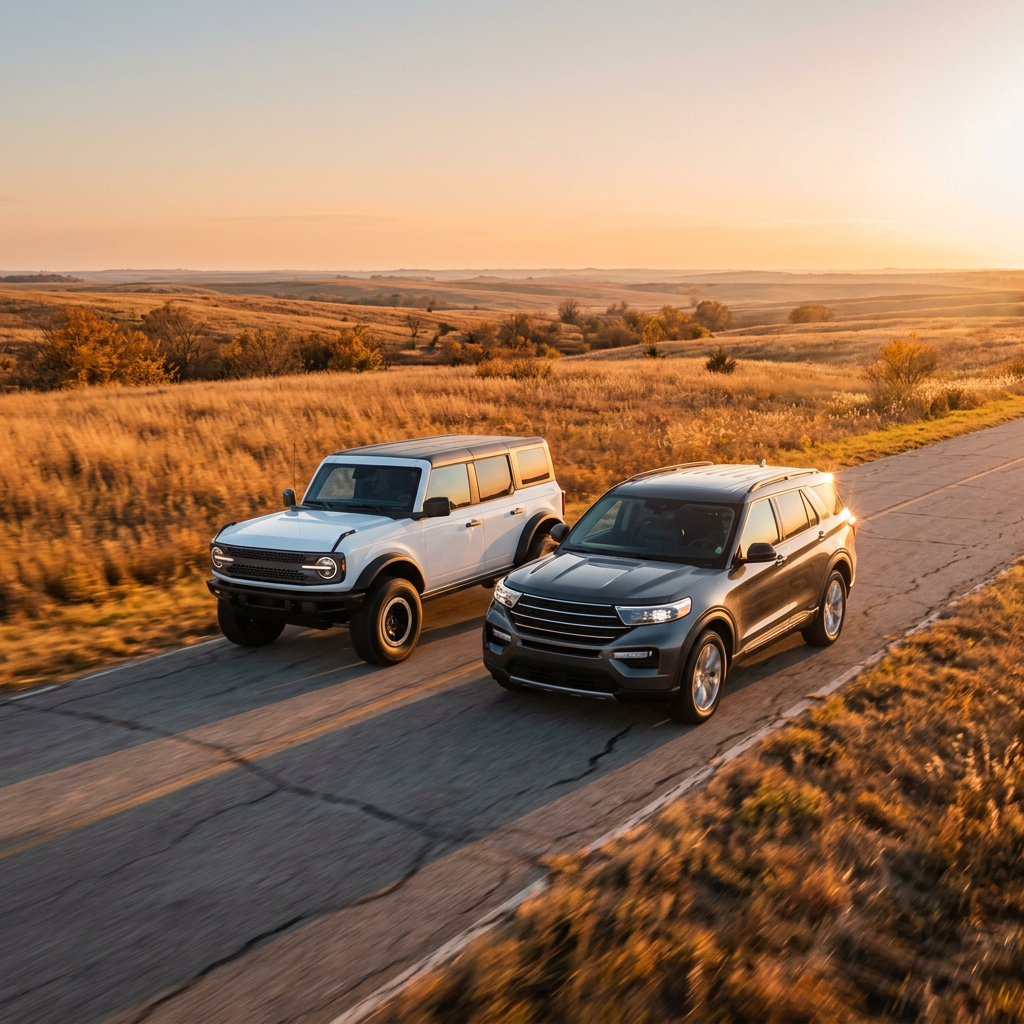
What Models Are Included in the 2027 Ford SUV Lineup? The 2027 Ford SUV lineup includes the subcompact Bronco Sport, compact Escape, all-electric Mustang Mach-E, midsize three-row Explorer, trail-ready Bronco, and full-size Expedition (including the extended-wheelbase Expedition MAX). These models span compact efficiency, high-performance electric power, robust midsize utility, and maximum full-size passenger and towing capability. Choosing the right SUV begins with matching passenger capacity, towing requirements, and cabin space to daily routines. Compact options like the Bronco Sport offer standard Four-wheel drive and an efficient 2L engine for nimble daily travel. For drivers needing maximum room and trailering power, larger nameplates step up with multi-row seating and serious muscle. Our team works with buyers comparing diverse seating configurations and cargo capacities. For example, active families navigating daily school runs and shopping trips around Junction City often look closely at cargo flexibility and passenger comfort when narrowing down their choices. Key options across the 2027 Ford SUV lineup include: Bronco Sport: Compact two-row SUV featuring standard Four-wheel drive, 21 city / 27 hwy fuel economy, seating for 5, and up to 2,700 lbs towing capacity. Explorer: Midsize three-row SUV offering standard SelectShift® transmission, 20 city / 27 hwy estimated fuel economy, seating for 6 or 7, and a 5,000 lbs maximum tow rating. Expedition: Full-size three-row SUV providing seating for up to 8, standard 3.5L EcoBoost V6 performance, and towing ratings reaching up to 9,600 lbs with proper equipment. Shoppers interested in exploring our showroom floor can visit our dealership location or reach out by calling our team directly. You can also browse our new Ford Bronco inventory online to check current availability before stepping through the door. Table of Contents What Trims, Engines, and Capability Define the 2027 Ford Explorer? How Does the 2027 Ford Explorer Compare to the Toyota Highlander and Honda Pilot? Which Full-Size SUV Offers More Space: Ford Expedition vs. Chevy Tahoe? What Top-Tier Trim Levels and Electrified Options Are Available Across 2027 Ford SUVs? Frequently Asked Questions About 2027 Ford SUVs Finding Your 2027 Ford SUV What Trims, Engines, and Capability Define the 2027 Ford Explorer? The 2027 Ford Explorer comes in five distinct trim levels— Active, ST-Line, Tremor, Platinum, and ST —with a starting MSRP of $40,680. Powertrain options include a standard turbocharged 2.3L EcoBoost four-cylinder generating 300 hp and an available twin-turbo 3.0L EcoBoost V6 delivering up to 400 hp. Every 2027 Explorer features a standard Class III Trailer Tow Package rated to pull up to 5,000 lbs when properly equipped. The 2.3L EcoBoost comes standard on Active and ST-Line models, paired with a 10-speed SelectShift® automatic transmission to deliver an EPA-estimated 20 city / 27 hwy. Drivers seeking additional power can opt for the 3.0L EcoBoost V6, which comes standard on the performance-engineered ST trim and is available on Tremor and Platinum models. Interior layout centers on standard second-row captain's chairs for six-passenger seating, though an available second-row bench increases capacity to seven occupants on all models except Tremor. Behind the third row, the Explorer provides 16 cubic feet of cargo room, expanding to 86 cubic feet with all rear seats folded flat. Trim highlights across the Explorer range include: Active: Base trim featuring standard heated front seats, tri-zone automatic climate control, and a 13.2-inch touchscreen with the Ford Digital Experience interface. ST-Line: Sport styling boasting 20-inch alloy wheels, blacked-out exterior accents, red interior stitching, and an available B&O Sound System. Tremor: Off-road variant equipped with standard Intelligent 4WD, elevated ride height, off-road suspension tuning, a Torsen limited-slip rear axle, and steel deflector plates. Platinum: Luxury-focused model featuring multi-contour leather seating with Active Motion massage, a twin-panel moonroof, and available Ford BlueCruise hands-free driving. ST: Ford Performance model packing the 400 hp V6, sport-tuned suspension, performance brakes, and the new ST Sinister Package featuring blacked-out styling. Buyers weighing various model years or condition options can check out our detailed Ford Explorer research overview or look through our pre-owned inventory by exploring our pre-owned SUV inventory. How Does the 2027 Ford Explorer Compare to the Toyota Highlander and Honda Pilot? The 2027 Ford Explorer offers standard horsepower and cargo volume figures that can be compared with the Toyota Highlander and Honda Pilot. The Explorer's standard 2.3L EcoBoost outputs 300 hp, surpassing the Highlander's 265 hp and the Pilot's 285 hp. Furthermore, every Explorer includes a standard Class III Trailer Tow Package rated for up to 5,000 lbs, whereas towing equipment may vary by trim and package. Maximum cargo capacity highlights how these three-row midsize utility vehicles stack up when interior space is fully expanded: Honda Pilot: Offers up to 87 cubic feet of total cargo volume behind the front row. Ford Explorer: Provides up to 86 cubic feet of maximum cargo volume behind the first row, alongside 16 cubic feet behind the third row. Toyota Highlander: Features up to 84 cubic feet of total cargo space behind the front seats. Beyond interior dimensions, driving dynamics differ noticeably across this segment. The Explorer utilizes a rear-wheel-drive-biased platform with available Four-wheel drive, giving it composed handling and confident acceleration under load. The Highlander relies on a front-wheel-drive architecture optimized for hybrid efficiency, while the Pilot uses a front-drive chassis built for broad family utility. For owners planning to trade in a current vehicle toward a new three-row SUV, our finance center makes it easy to value your trade-in online before scheduling a road test. Which Full-Size SUV Offers More Space: Ford Expedition vs. Chevy Tahoe? With 41.5 inches of third-row legroom and a towing capacity up to 9,300 pounds, the 2027 Ford Expedition outpaces the Chevrolet Tahoe in space and strength. In third-row passenger space, the Expedition offers 36 inches of legroom compared to 35 inches in the Tahoe. When configured for maximum trailering, a properly equipped Expedition 4x4 pulls up to 9,600 lbs with the Heavy-Duty Trailer Tow Package, beating the Tahoe's peak rating of 8,400 lbs. For drivers navigating rural gravel routes across Dickinson County, total cargo volume and seating flexibility are critical considerations. Standard-wheelbase Expedition models provide 23 cubic feet of storage behind the third row and 109 cubic feet of total space with rear rows folded. The extended-wheelbase Expedition MAX increases those figures to 37 cubic feet behind row three and 123 cubic feet overall. Under the hood, the Expedition features a standard twin-turbo 3.5L EcoBoost V6 generating 400 hp and 480 lb-ft of torque, with a High-Output version producing 440 hp on select trims. The Chevrolet Tahoe relies on a standard naturally aspirated 5.3L V8 making 355 hp, requiring an upgrade to a 6.2L V8 or diesel engine to gain extra grunt. Key structural advantages of the Expedition line include: Standard Power Output: Twin-turbo V6 delivers 400 hp standard, exceeding entry V8 output in the competitor. Third-Row Livability: Spacious 36 inches of legroom allows adult passengers to sit comfortably during long road trips. Max Towing Capability: Top rating of 9,600 lbs handles heavy ski boats, campers, and horse trailers with ease. Shoppers interested in financing a new full-size SUV can get a head start on paperwork by choosing to contact us for current financing information online. What Top-Tier Trim Levels and Electrified Options Are Available Across 2027 Ford SUVs? Top-tier trim levels across the 2027 Ford SUV family include the Platinum and King Ranch on Explorer and Expedition, the off-road Raptor and Badlands on Bronco, and the electric GT Performance Edition on Mustang Mach-E. These flagship models introduce specialized features, from multi-contour leather seating and advanced trailering tech to high-output powertrains and adaptive suspension hardware. Electrified options in the 2027 lineup give buyers choices between fully electric driving and hybrid utility. The Mustang Mach-E represents Ford's dedicated electric SUV, offering instant torque, zero tailpipe emissions, and available all-wheel-drive performance. Meanwhile, hybrid powertrains available on the Escape deliver high fuel efficiency for daily driving without altering standard refueling habits. Flagship trims offer specific feature highlights: Platinum & King Ranch: Premium leather upholstery, real wood interior accents, multi-contour massaging front seats, and hands-free Ford BlueCruise highway driving tech. Bronco Badlands & Raptor: Heavy-duty suspension systems, front and rear locking differentials, disconnectable front sway bars, and high-clearance all-terrain tires. Mustang Mach-E GT: High-output electric drive units, MagneRide damping system, and sport-bolstered seating. Standard driver-assist technology across all 2027 Ford SUVs is anchored by Ford Co-Pilot360, which includes Pre-Collision Assist with Automatic Emergency Braking, Blind Spot Information System (BLIS), Lane-Keeping System, and auto high-beam headlights. Frequently Asked Questions About 2027 Ford SUVs Q: Does the 2027 Ford Explorer require a special package to reach its 5,000-pound tow rating? No, every 2027 Ford Explorer comes standard with a Class III Trailer Tow Package. Whether you choose the standard 2.3L EcoBoost four-cylinder or the available 3.0L EcoBoost V6, the SUV is factory-equipped to tow up to 5,000 lbs when properly set up with a hitch ball and electrical connection. Q: What is the main size difference between the standard Ford Expedition and the Expedition MAX? The Expedition MAX features an extended wheelbase that adds about one foot of overall vehicle length. While both models offer seating for up to eight occupants, the MAX expands cargo volume behind the third row from 23 cubic feet to 37 cubic feet, making it ideal for large families carrying full luggage sets. Q: How does Ford BlueCruise work on 2027 Ford SUVs? Ford BlueCruise is a hands-free highway driving feature available on select trims like the Explorer Platinum and Expedition Platinum. It controls steering, braking, and acceleration on qualified sections of pre-mapped highways while a driver-facing camera ensures the driver keeps their eyes on the road. Q: Are second-row captain's chairs standard or optional on the 2027 Ford Explorer? Second-row captain's chairs (six-passenger seating) are standard across the 2027 Explorer lineup. A second-row bench seat that expands capacity to seven passengers is available as an option on all trims except the off-road-focused Tremor. Q: What emergency assistance is included with a new 2027 Ford SUV purchase? Every new 2027 Ford SUV includes Ford Roadside Assistance coverage for 5 years or 60,000 miles. This manufacturer-backed program covers flat tire changes, battery jump-starts, fuel delivery, lockout service, and towing to the nearest authorized Ford service center. Drivers can reach support directly through Ford Roadside Assistance: 1-800-241-3673. Finding Your 2027 Ford SUV Navigating the 2027 Ford SUV lineup comes down to identifying your family's space, towing, and lifestyle priorities. Whether you prefer the balanced value of an Explorer Active, the luxury of an Expedition Platinum, or the off-road grit of a Bronco Badlands, our team is ready to walk you through every option. We invite you to visit our showroom located at 1825 Goldenbelt Blvd, Junction City, KS 66441 to compare trim levels in person and take a test drive. You can also get in touch by (785) 238-5114 to check current inventory, evaluate your trade-in, or discuss initial purchase steps with our sales specialists. Keep Your Vehicle Running Strong Keep your vehicle performing at its best with our service team: Schedule Pickup and Delivery Service Schedule Ford Service Today Order Genuine Ford Parts © 2026 Valor Ford. All rights reserved. Vehicle specification data © JATO Dynamics Limited.
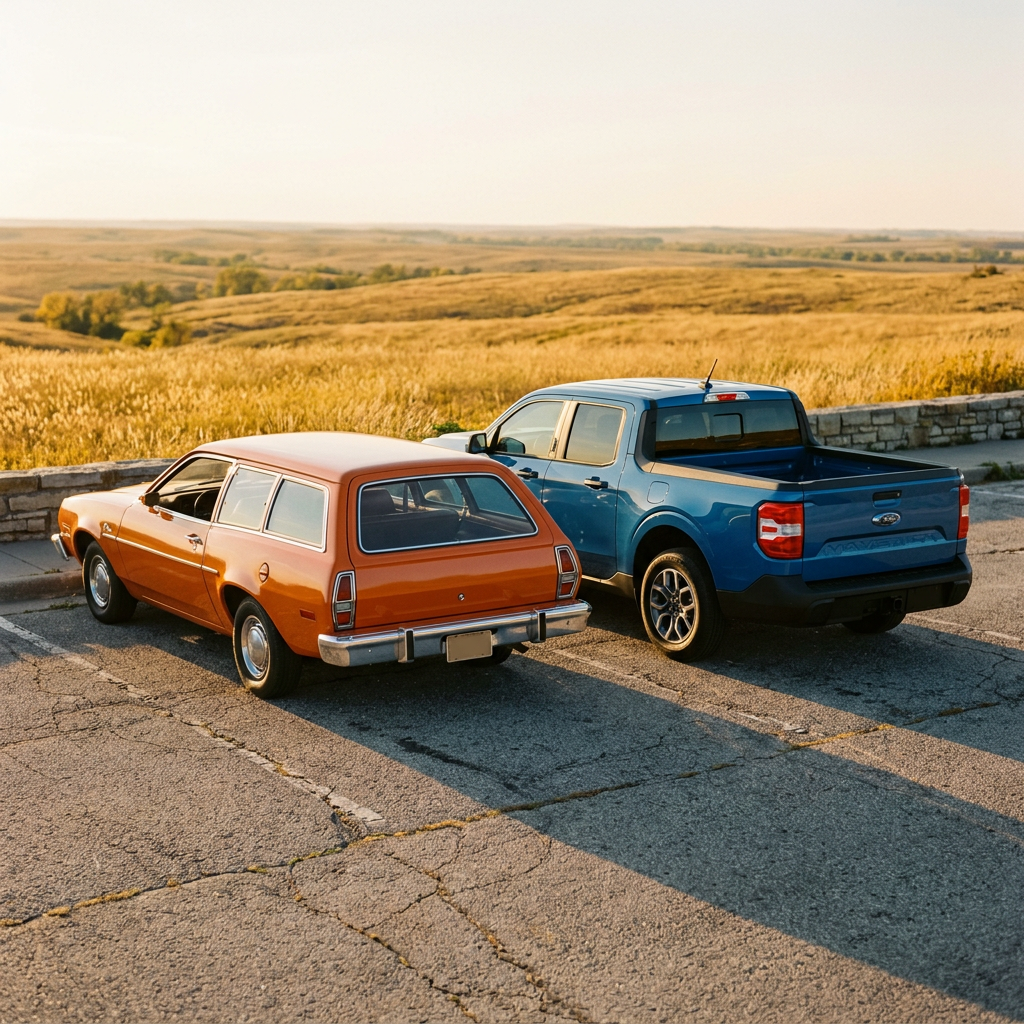
How Ford Redefined Compact Utility from the 1970s Pinto to the Modern Maverick

How Ford Redefined Compact Utility from the 1970s Pinto to the Modern Maverick

How Ford Redefined Compact Utility from the 1970s Pinto to the Modern Maverick For more than five decades, American drivers have sought the elusive sweet spot of automotive engineering: maximum practical utility packaged within an affordable, fuel-efficient, and easy-to-park footprint. Long before the modern crossover boom dominated suburban driveways, Ford Motor Company pioneered the concept of right-sized utility for everyday Americans. In the early 1970s, as rising gas prices and changing suburban lifestyles forced a re-evaluation of massive full-size sedans, Ford introduced the subcompact Pinto—later expanding its practical appeal with the popular Pinto Cruising Wagon. That early experiment proved that commuters, young families, and weekend tinkerers did not always require a heavy-duty work vehicle to fulfill their daily errands and adventure needs. Fast forward to today, and Ford has completely redefined the segment once again with the revolutionary Ford Maverick. Built on Ford's advanced unibody C2 architecture, the modern Maverick bridges the historical gap between frugal passenger economy cars and full-capability pickup trucks. Delivering up to 1,500 lbs of standard payload capacity, an available target-busting 42 MPG city hybrid powertrain, and a genius 54.4-inch FLEXBED™ cargo system, the Maverick offers genuine truck capability without forcing drivers into a massive full-size frame or a hefty fuel bill. For daily commuters traveling along Interstate 70 in Kansas, military service members stationed nearby at Fort Riley, and local DIY enthusiasts across Dickinson and Geary counties, the Maverick represents the ultimate evolution of Ford's small-vehicle engineering heritage. By blending lightweight car-like handling with true light-duty utility, Ford has delivered a vehicle that honors its value-focused ancestors while meeting every demand of modern 21st-century life. At Valor Ford in Junction City, we take pride in connecting local drivers with this legendary lineage of American innovation. How Did Ford Transition from Compact Vehicles Like the Pinto to the Modern Maverick Compact Truck? The journey from the subcompact 1970s Ford Pinto to the high-tech Ford Maverick of today is a masterclass in reading customer demand and engineering trends. In 1971, Ford introduced the Pinto to battle incoming overseas imports. Realizing that American drivers needed more cargo flexibility, Ford added the Pinto Wagon and the iconic Pinto Cruising Wagon—featuring distinctive bubble side windows and flipped-down rear seats for hauling gear, tools, and sports equipment. As the 1980s approached, Ford evolved its small-vehicle strategy with the front-wheel-drive Escort and the original body-on-frame Ford Ranger compact pickup. The Ranger served as the backbone of small truck utility for three decades, appealing to contractors and homesteaders who wanted rugged durability without the footprint of an F-150. However, as midsize trucks steadily grew larger, heavier, and more expensive over the 2000s and 2010s, a wide void emerged in the marketplace: urban drivers and budget-conscious buyers were left without an affordable, fuel-efficient utility vehicle with an open cargo bed. To solve this gap, Ford leveraged its unibody crossover technology to create the Maverick. By utilizing a rigid monocoque body structure rather than a traditional heavy steel frame, Ford eliminated thousands of pounds of unnecessary mass while maintaining exceptional structural integrity. The result is a seamless lineage: from the budget wagon practicality of the 1970s to a versatile modern compact truck engineered specifically for modern everyday lifestyles. Whether you are hauling hardware supplies home in Junction City or moving across base at Fort Riley, the modern Maverick represents the pinnacle of five decades of compact utility development. What Is the Maximum Payload Capacity of the Ford Maverick for Everyday Work and Hauling? Despite its car-like comfort and nimble footprint, the Ford Maverick is built to handle serious work. Every standard Ford Maverick model comes equipped with an impressive 1,500-lb maximum payload capacity. To put that in perspective, 1,500 pounds allows you to comfortably carry roughly 37 bags of 40-lb bags of concrete, a full bed of mulch for spring landscaping in Dickinson County, or all the heavy gear, footlockers, and field supplies needed for military deployments at Fort Riley. Engineers achieved this capability by optimizing the rear suspension layout and reinforcing high-stress load zones along the unibody frame structure. Compared to classic compact passenger cars or station wagons of yesteryear—which suffered under heavy rear axle loads—the Maverick maintains level ride height, confident braking, and crisp steering response even when loaded close to its payload rating. In addition to payload strength, when properly equipped with the available 2.0L EcoBoost® engine and 4K Tow Package, the Maverick boasts up to 4,000 lbs of conventional towing capacity. That is enough grunt to pull pop-up campers, personal watercraft bound for Milford Lake, or utility trailers loaded with lawn equipment. The table below demonstrates how the Maverick compares to traditional expectations in the small vehicle category: Capability Metric 1970s Pinto Wagon (Historical) 2026 Ford Maverick Standard 2026 Maverick EcoBoost (4K Tow) Standard Payload Rating Approx. 750 lbs 1,500 lbs 1,500 lbs Maximum Towing Capacity Approx. 1,000 lbs 2,000 lbs 4,000 lbs Bed / Cargo Volume 30.5 cu ft (Enclosed) 33.3 cu ft (Open Bed) 33.3 cu ft (Open Bed) Primary Architecture Rear-Wheel Drive Unibody Car Front/AWD Unibody Truck Platform Front/AWD Unibody Truck Platform What Are the Estimated Annual Fuel Savings of the Maverick Hybrid vs a V6 Truck? City Efficiency Breakthrough The standard 2.5L Hybrid engine in the Ford Maverick delivers an EPA-estimated 42 MPG in the city. Combined with regenerative braking, stop-and-go commuting through Junction City or Manhattan consumes a fraction of the fuel used by traditional gas trucks. Traditional V6 Comparison Traditional midsize and full-size trucks equipped with V6 engines typically average between 18 and 20 MPG combined. Driving 15,000 miles per year in a 19 MPG vehicle requires over 789 gallons of gasoline annually. Real Financial Savings By comparison, a Maverick Hybrid driving 15,000 miles uses only around 405 gallons annually. At average gas prices, Kansas drivers can easily pocket $1,000 to $1,500 every single year in fuel savings alone while enjoying over 500 miles of range per tank. Upgrading to a new fuel-efficient Maverick from an older gas-guzzling vehicle is easier than ever. Evaluate what your current car or truck is worth today with our quick online assessment. Trade In Evaluation Is All-Wheel Drive Available with the Ford Maverick Hybrid Engine? One of the most frequent questions we receive from northeastern Kansas drivers is whether they can combine hybrid fuel economy with all-weather traction. The answer is a resounding yes! Ford listened directly to customer feedback and updated the powertrain lineup to make Intelligent All-Wheel Drive (AWD) available directly with the 2.5L Hybrid powertrain. In northeastern Kansas, winter weather can change in an instant. From icy mornings on I-70 to slick gravel backroads across Dickinson County, the Maverick Hybrid AWD system continuously monitors road conditions and wheel slippage. It seamlessly shifts torque from the front wheels to the rear wheels in milliseconds when extra stability is needed. This technology gives local drivers the ultimate combination: hybrid efficiency during daily commutes into Junction City or Manhattan, paired with total confidence during snowy Midwest winters or rainy mud season. Is the Ford Maverick Easier to Park Than a Midsize Truck in Tight Urban and Military Base Lots? Navigating packed parking structures, narrow residential garages, or crowded parking lots around Fort Riley can be a stressful chore in a modern full-size or heavy-duty pickup truck. With overall lengths often exceeding 230 inches, larger trucks require multi-point turns and tight maneuvers just to center inside standard parking stalls. The Ford Maverick measures roughly 200 inches in total length—nearly two feet shorter than typical full-size trucks and significantly narrower than conventional midsize options. With a tight turning radius of just 40 feet, parallel parking in downtown Junction City, whipping into tight grocery spots, or fitting into standard suburban garages becomes completely effortless. Drivers transitioning from traditional midsize trucks frequently comment on how much easier the Maverick is to maneuver in daily traffic. You get the upright seating position, superior forward visibility, and open cargo utility of a truck without the bulk, blind spots, or stress when parking in confined quarters. Which Vehicle Has a Longer Truck Bed, the Maverick or the Santa Cruz? When comparing compact unibody trucks, shoppers often pit the Ford Maverick against the Hyundai Santa Cruz. While both vehicles offer modern unibody comfort, the Ford Maverick takes a decisive lead in functional bed space and usability. The Ford Maverick features a 54.4-inch bed floor length, compared to the Hyundai Santa Cruz's 52.1-inch bed. That extra length, combined with the Maverick's flatter wheel wells and square tailgate profile, makes a significant real-world difference. With the multi-position tailgate set to half-closed, the Maverick can support standard 4x8-foot sheets of plywood flat across the wheel wells—a critical feature for weekend woodworkers and contractors. Furthermore, Ford's FLEXBED™ system includes built-in vertical and horizontal slots stamped into the steel bed walls, allowing owners to slide 2x4s in place to create custom 2-tier storage dividers or bike racks without buying expensive aftermarket rails. What Is the Starting Price Across Ford Maverick Trim Levels (XL, XLT, Lariat, and Tremor)? Maverick XL & XLT XL: Pure work-ready value featuring an 8-inch touchscreen, Apple CarPlay®, Android Auto™, and Ford Co-Pilot360™ safety features. XLT: The most popular trim, adding 17-inch aluminum wheels, upgraded cloth seating, bed tie-downs, and power locking tailgate. Maverick Lariat Lariat: Premium comfort featuring ActiveX® synthetic leather seats, dual-zone climate control, power driver seat, B&O® Premium Sound system, and adaptive cruise control for relaxed highway travel. Maverick Tremor Tremor Off-Road: Built for trail adventure with an off-road tuned suspension, 1-inch lift, advanced twin-clutch rear differential, Trail Control™, and orange exterior tow accents. At Valor Ford, we make buying or leasing a Maverick simple. Contact us for current financing, lease, and military program information. Get Pre-Approved for Financing How Does Maverick's Unibody Architecture Compare to Classic Body-on-Frame Compacts? Historically, compact trucks like the original 1980s Ford Ranger were constructed using body-on-frame architecture: a heavy ladder-style steel frame underneath with a separate cab and bed mounted on top. While great for extreme off-roading, body-on-frame designs come with inherent drawbacks: high curb weight, stiffer ride quality, body roll through turns, and higher wind and road noise. The modern Ford Maverick utilizes Ford's rigid C2 unibody platform—the same structural engineering foundation found in sleek crossover SUVs. By integrating the cab and bed frame into one cohesive high-strength steel shell, unibody construction provides dramatic advantages: • Smooth Sedan-Like Ride: Four-wheel independent suspension absorbs bumps and highway expansion joints effortlessly. • Lower Step-In Height: Passengers slide in and out comfortably without climbing up. • Enhanced Cabin Quietness: Seamless structural rigidity reduces rattles, squeaks, and wind turbulence at 75 MPH on Kansas highways. • Superior Crash Safety: Modern crumple zones engineered directly into the unibody shell absorb kinetic energy efficiently. Customizing Your Maverick Bed for Gear, Work, and Outdoor Recreation in the Flint Hills 110V Bed Power Plug in power tools at the job site or run portable refrigerators and air pumps during tailgating parties using the available 110V/400W bed power outlet. Milford Lake Adventure Add factory bed extenders, kayak racks, or bed-mounted bike carriers from our parts department to secure camping and water gear for weekends at Milford State Park. Secure Cargo Protection Choose from hard folding, soft roll-up, or retractable tonneau covers to keep valuable luggage and expensive tools dry and safe from the Kansas elements. Need genuine accessories or customized cargo organization solutions? You can Order Genuine Ford Parts directly through our specialized customer center. Why Fort Riley and Junction City Drivers Are Choosing the Maverick at Valor Ford The central Kansas community surrounding Junction City and Fort Riley demands vehicles that are hard-working, versatile, and economical. Service members relocating to Fort Riley appreciate the Maverick's ability to handle PCS moves with ease while keeping monthly fuel expenses low during weekend trips home. At Valor Ford, located conveniently at 1825 Goldenbelt Blvd in Junction City, KS 66441, we understand the distinct needs of our local community. From supporting military incentive programs to providing straightforward maintenance, our team is dedicated to serving you. If you have questions about current inventory or wish to speak with our experts directly, Call (785) 238-5114 today. Research Ford Maverick Test Drive the Modern Ford Maverick at Valor Ford in Junction City, KS From the value-focused Pinto Cruising Wagon of the 1970s to the tech-loaded hybrid Maverick of today, Ford's commitment to compact utility leadership has never wavered. Experience the ultimate mix of car-like handling, 42 MPG city hybrid efficiency, and 1,500-lb payload capability for yourself. Visit Valor Ford in Junction City today to take a test drive, evaluate your trade-in, or explore our complete lineup of new and pre-owned Ford trucks. Browse Used Inventory