
Blog

All Buying Guides Maintenance & Service New Vehicle Reviews Technology & Innovation Financing & Insurance Model Comparisons Safety Features Used Vehicle Guides Seasonal Driving Tips Valor Ford Models Seasonal Vehicle Care Vehicle Ownership Tips New Vehicle Sales Heavy-Duty Truck Care Junction City Towing & Trailer Technology Automotive Parts & Accessories Performance & Powertrain Seasonal Vehicle Maintenance Financing & Incentives Repair & Parts Trade-In & Negotiation Tips KS Community Trade-In & Pre-Approval Processes Valor Ford Service Off-Road Packages & Accessories Vehicle Sales Automotive Repair Parts & Repairs Valor Ford Vehicle Pricing Strategies Vehicle Repair & Parts Vehicle Trade-In Tips Diesel Engine Care Family SUVs Manhattan Ford Dealer Manhattan Ford Service Military & Special Customer Programs Tire Care & Management Agricultural Vehicle Maintenance Automotive Recalls & Repairs Commercial Truck Financing Dealership Transparency Heavy-Duty Truck Guides Heavy-Duty Truck Upkeep Manhattan Used Cars Preventative Vehicle Inspections Technology & Innovation in Truck Service Agricultural Fleet Service Automotive News Certified Pre-Owned Programs Diesel Engine Maintenance Genuine OEM Parts & Accessories Military & Student Moving Tips Service Tips & Guides Vehicle Utility & Cargo Solutions All-Weather Driving & 4x4 Readiness Classic Car Restoration Dealership Promotions & Events Engine & Performance Farm & Ranch Equipment Reviews Genuine Parts & Accessories Hybrid & Electric Vehicles Off-Road & 4x4 Features Winter Driving Tips
What Is the 0 to 60 Time of the Ford Edge ST?

What Is the 0 to 60 Time of the Ford Edge ST?

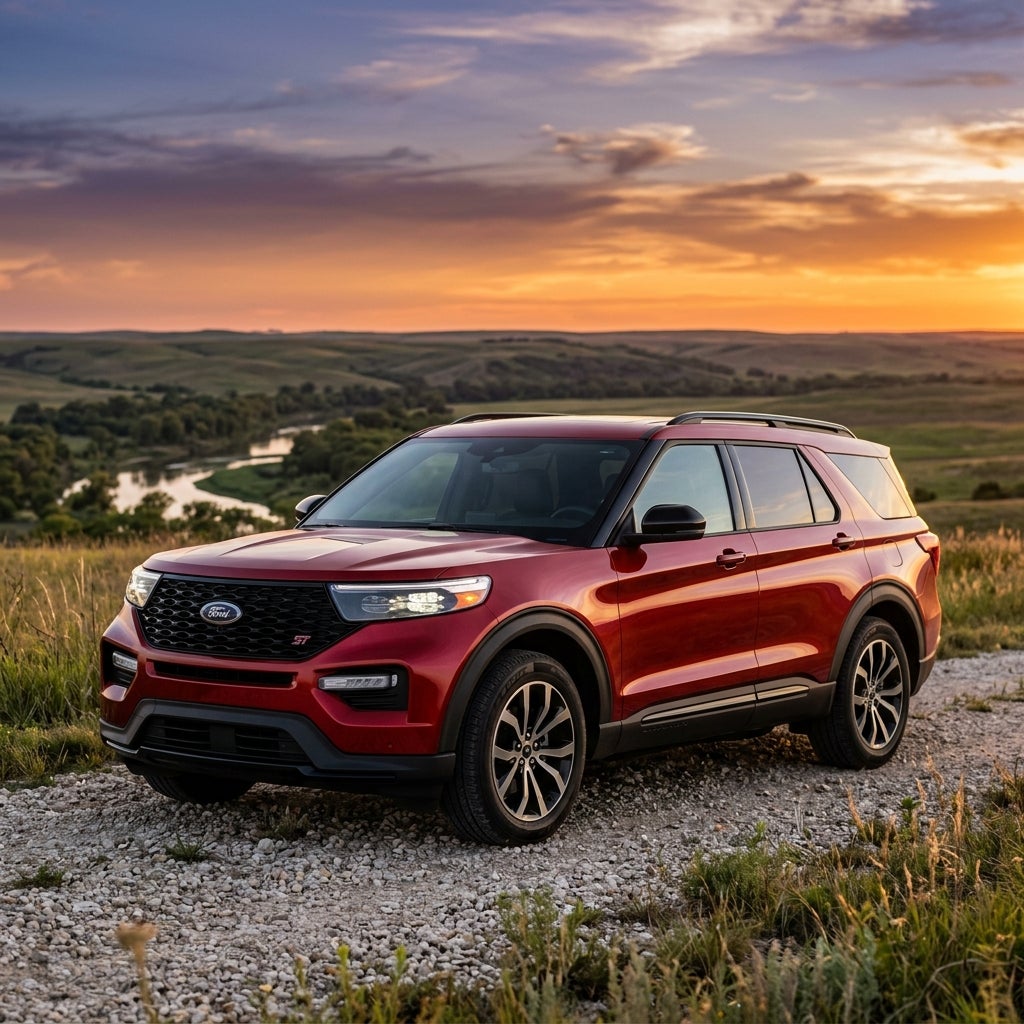
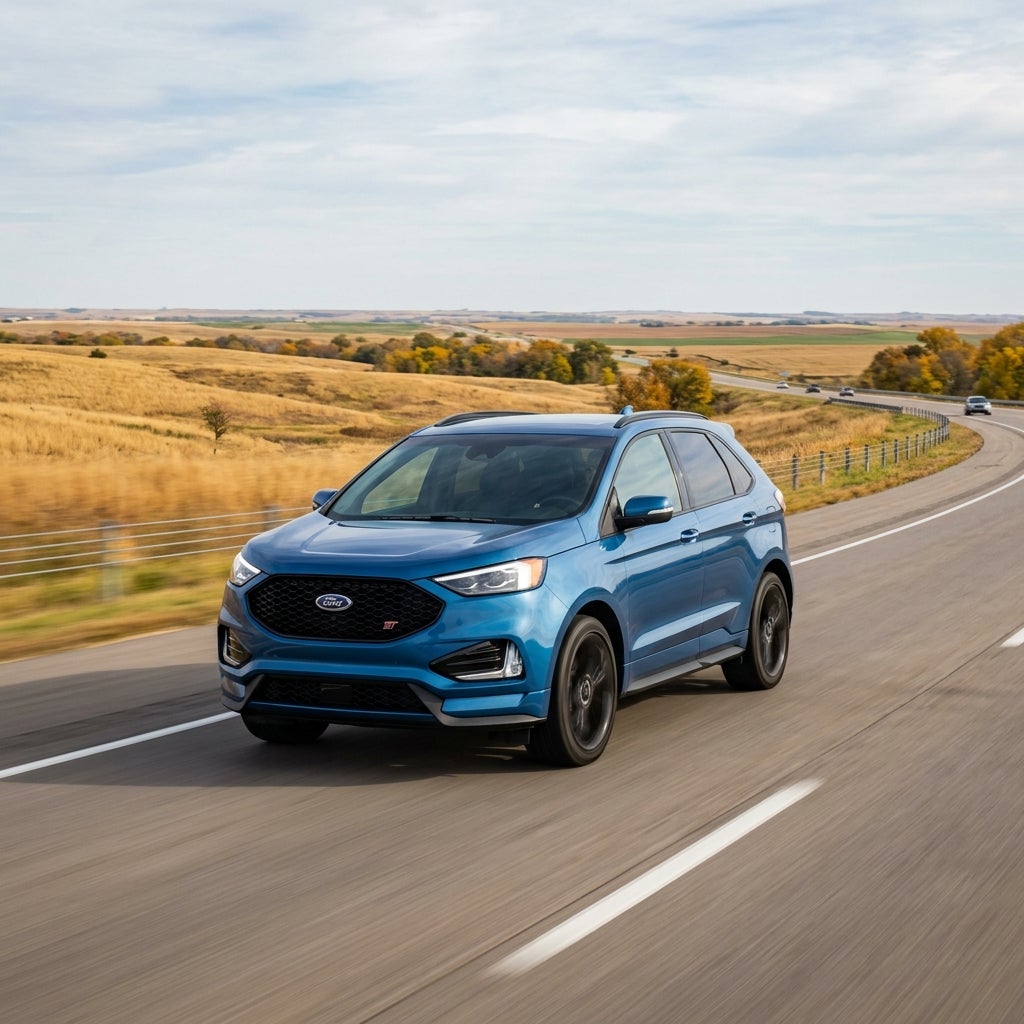
What Is the 0 to 60 Time of the Ford Edge ST? When drivers ask about midsize crossover agility with genuine muscle, the answer centers directly on the high-performance emblem: the Ford Edge ST achieves a 0 to 60 mph acceleration time of 5.7 to 5.9 seconds in real-world testing. This rapid launch puts the midsize SUV with sporty acceleration while retaining full five-passenger practicality and cargo versatility. At the core of this athletic performance is Ford Performance engineering. Under the sculpted hood sits a potent 2.7-liter Twin-Turbo EcoBoost V6 engine producing a commanding 335 horsepower and 380 lb-ft of torque on premium fuel. Coupled with standard intelligent all-wheel drive and quick-reacting traction management, the Edge ST transfers every bit of power to the pavement without hesitation. What Are the Performance Specs and Horsepower of the Ford Edge ST Engine? The mechanical heartbeat of the Ford Edge ST is a masterpiece of modern EcoBoost technology. Unlike standard midsize crossovers powered by naturally aspirated four-cylinder engines, the Edge ST benefits from twin turbochargers integrated directly into the exhaust manifolds. This drastically minimizes turbo lag and delivers peak torque as low as 3,250 RPM. Power is channeled through a tuned 7-speed automatic transmission equipped with steering-wheel-mounted paddle shifters. Engaging Sport Mode sharpens throttle calibration, alters shift mapping to hold gears deeper into the powerband, and enhances engine acoustics inside the cabin. Key Engine & Drivetrain Specifications: • Engine Type: 2.7L Twin-Turbocharged EcoBoost V6 • Horsepower: 335 hp @ 5,500 rpm • Torque: 380 lb-ft @ 3,250 rpm • Transmission: 7-Speed Automatic with SelectShift Paddle Shifters • Drivetrain: Intelligent AWD with Disconnect Capability Is the Ford Edge ST Faster Than a Subaru Outback XT? When buyers compare sporty, practical all-wheel-drive crossovers, the Subaru Outback XT frequently enters the conversation. However, on straight-line acceleration and aggressive cornering dynamics, the Ford Edge ST offers stronger straight-line acceleration. While the Subaru Outback XT features a 2.4L turbocharged horizontally opposed engine generating 260 hp and 277 lb-ft of torque (yielding 0-60 times around 5.9 to 6.1 seconds), the Edge ST outmuscles it with 335 hp and 380 lb-ft of torque. The extra 75 horsepower and 103 lb-ft of torque give the Ford Edge ST significantly punchier midrange acceleration when overtaking on rural highways or merging into rapid highway traffic. Metric / Feature Ford Edge ST Subaru Outback XT Engine 2.7L Twin-Turbo V6 2.4L Turbo Flat-4 Horsepower 335 hp 260 hp Torque 380 lb-ft 277 lb-ft 0 to 60 MPH 5.7 - 5.9 sec 5.9 - 6.1 sec Transmission 7-Speed Automatic CVT Automatic How Does the Ford Edge ST Compare to the Ford Explorer ST in Speed and Engine Size? Ford Edge ST (2-Row Crossover) • Engine: 2.7L Twin-Turbo EcoBoost V6 • Horsepower: 335 hp • 0-60 Time: ~5.7 seconds • Layout: Front-wheel bias AWD architecture • Ideal for: Drivers seeking agile 2-row convenience with sport hatchback handling. Ford Explorer ST (3-Row SUV) • Engine: 3.0L Twin-Turbo EcoBoost V6 • Horsepower: 400 hp • 0-60 Time: ~5.2 seconds • Layout: Rear-wheel bias AWD architecture • Ideal for: Larger families needing 3-row seating and maximum towing capacity. If you are interested in exploring larger 3-row performance options, you can Research Ford Explorer models at Valor Ford. Which ST SUV Fits You Best? While the Explorer ST uses a larger 3.0L V6 to reach 60 mph half a second quicker, the Edge ST benefits from a lower center of gravity and roughly 400 pounds less curb weight. This gives the 2-row Edge ST a nimble, tossable feel around tight bends around Junction City. Ready to explore available pre-owned models? You can Browse Used Inventory online today. Research Ford Explorer Performance What Was the Starting MSRP for the Final 2024 Ford Edge ST? For its final production model year, the 2024 Ford Edge ST carried a starting base MSRP of $47,205. Considering the extensive array of standard high-performance hardware—including intelligent AWD, sport-tuned suspension, dual trapezoidal exhaust tips, and dynamic sport seating—the Edge ST delivered extraordinary value compared to European luxury sport crossovers priced well over $60,000. Standard 2024 Edge ST features included 20-inch bright machined aluminum wheels, ST leather-trimmed seats with Miko suede inserts, Ford Co-Pilot360 Assist+, and the massive 12-inch portrait touch display. Pre-Owned Market Opportunity in Central Kansas Because 2024 marked the grand finale for the Ford Edge ST line, pre-owned models represent a rare sweet spot for buyers near Junction City and Fort Riley. High performance coupled with Ford's proven EcoBoost durability means well-maintained pre-owned Edge ST vehicles retain excellent value while offering incredible modern tech. At Valor Ford, our pre-owned inventory regularly features inspected, high-grade Edge ST models that give you impressive acceleration in a pre-owned crossover. Real-World Acceleration: Merging onto I-70 and Highway Commuting Around Junction City A 0 to 60 mph stat in a spec sheet is exciting, but how does that transfer to daily driving around Dickinson County, Fort Riley, and Junction City? It translates directly into effortless confidence when entering high-speed traffic zones. Merging onto Interstate 70 from short rural on-ramps requires quick bursts of speed to match the 75 mph traffic flow smoothly. With 380 lb-ft of torque available instantly, pressing the accelerator in the Edge ST brings rapid momentum without engine strain. Overtaking slower traffic on two-lane stretches of K-18 or US-77 becomes seamless and secure. Whether commuting to work at Fort Riley or driving across central Kansas during crisp fall weekend trips, the EcoBoost V6 engine delivers responsive passing power whenever you need it. Interested in testing this performance on local roads? Stop by our showroom at 1825 Goldenbelt Blvd in Junction City or Get Directions to Valor Ford. How Ford Performance Tuned the Edge ST Suspension, Brakes, and AWD System Sport-Tuned Suspension Ford Performance engineers upgraded spring rates by 10% in the front and 20% in the rear compared to the Edge Titanium. Stiffer anti-roll bars drastically decrease body roll in sharp turns. ST Performance Brakes Optional ST High-Performance Brake Package includes larger front rotors, performance brake pads, and distinctive Colorado Red front and rear calipers for resistant stopping power. Intelligent AWD & Vectoring Standard Intelligent AWD incorporates torque vectoring control by braking the inside wheel during heavy cornering to pull the SUV through curves with laser precision. Need replacement brake pads or OEM upgrades for your ST? You can Order Genuine Ford Parts directly from our certified department. Order Genuine Ford Parts Performance Meets Practicality: Inside the Ford Edge ST Cockpit and Cargo Space While straight-line speed grabs headlines, daily comfort dictates satisfaction over years of ownership. Step inside the Edge ST cabin, and you are immediately welcomed by deep leather-trimmed sport seats with supportive bolsters and embossed ST logos. At the center of the dash sits Ford's giant 12-inch portrait SYNC 4A touchscreen featuring wireless Apple CarPlay, Android Auto, and cloud-connected navigation. The spacious second row comfortably seats adult passengers with ample legroom, making long family trips across Kansas effortless. Versatile Cargo Capacity for Active Families • Rear Cargo Volume (Seats Up): 39 cubic feet • Maximum Cargo Volume (Seats Folded): 73 cubic feet For active military families based at Fort Riley needing room for gear, sports equipment, or road-trip luggage, the 2-row layout balances interior cabin room and rear storage flawlessly. What Fuel Economy Can You Expect From the High-Performance Ford Edge ST? High performance does not mean sacrificing everyday usability. The EPA fuel economy estimates for the twin-turbocharged Ford Edge ST are highly competitive for a 335-horsepower SUV: • City EPA Rating: 19 MPG • Highway EPA Rating: 25 MPG • Combined EPA Rating: 21 MPG Equipped with an 18.5-gallon fuel tank, the Edge ST provides an impressive highway cruising range of over 450 miles between fill-ups. Tips for Maximizing EcoBoost Efficiency: 1. Smooth Throttle Control: While EcoBoost turbos deliver quick surge power, cruising in Normal drive mode keeps engine RPM low for optimal highway MPG. 2. Auto Start-Stop: Utilizing the standard engine start-stop technology helps eliminate fuel waste while idling at city intersections in Junction City. 3. Tire Pressure Maintenance: Keeping high-performance tires inflated to factory specifications minimizes rolling resistance. Pre-Owned Ford Edge ST Buyer Checklist: What to Look For 1. Verified Service Records Ensure regular synthetic oil changes every 5,000–7,500 miles. Turbocharged V6 engines require consistent clean oil to protect internal bearings and turbo seals. 2. Brake & Tire Wear Check the condition of performance brake pads and summer performance tires if equipped with the ST High-Performance package. Ensure brake rotors show smooth wear without grooving. 3. AWD & Transmission Checks Verify smooth gear shifts during hard acceleration and inspect the power transfer unit (PTU) fluid service history for flawless all-wheel-drive engagement. Every pre-owned vehicle at Valor Ford undergoes a thorough multi-point inspection. Browse Used Inventory to see our active listings. Browse Pre-Owned Edge ST Inventory Maintaining EcoBoost Performance with Certified Ford Service in Junction City To maintain the 5.7-second 0 to 60 acceleration capability throughout your ownership, routine factory maintenance is vital. Twin-turbocharged engines generate immense internal heat and pressure, making genuine Motorcraft fluids and OEM Ford Performance filters essential. Our factory-trained master technicians at Valor Ford understand every mechanical detail of the 2.7L EcoBoost engine and intelligent AWD system. From specialized brake service to drivetrain inspection, we keep your ST performing at factory spec. Convenient Service Options at Valor Ford: • Factory-trained Ford Certified Technicians • Genuine OEM Ford Performance Parts • Convenient Online Appointment Booking • Valet Pickup and Delivery Services Available Ready for your next oil change or brake service? You can Schedule Ford Service Today or take advantage of our Schedule Pickup and Delivery Service for hassle-free maintenance. Financing Your Performance SUV and Trading In Your Current Vehicle Upgrading to a high-performance SUV like the Ford Edge ST is straightforward at Valor Ford. Our finance specialists work with local Kansas credit unions and national lenders to help you explore current loan options tailored to your budget. Looking to trade in your current vehicle? Use our fast online tool for a fair market Trade In Evaluation. You can also get a head start by completing our secure form to Get Pre-Approved for Financing before visiting our dealership. Military Appreciation Incentives We are proud to support active military personnel, veterans, and military families from nearby Fort Riley. Ask our team about special offers or benefits that may be available for service members. Test Drive the High-Performance Ford Edge ST at Valor Ford Today The best way to experience the thrilling acceleration and sport-tuned handling of the Ford Edge ST is from behind the wheel. Experience the 335-horsepower 2.7L Twin-Turbo EcoBoost engine in person and see why this sports crossover remains a favorite among performance enthusiasts throughout central Kansas. Visit Valor Ford at 1825 Goldenbelt Blvd, Junction City, KS 66441 or Call us at (785) 238-5114 to speak with our sales specialists, check current inventory availability, or schedule your test drive today. Get Pre-Approved for Your Edge ST
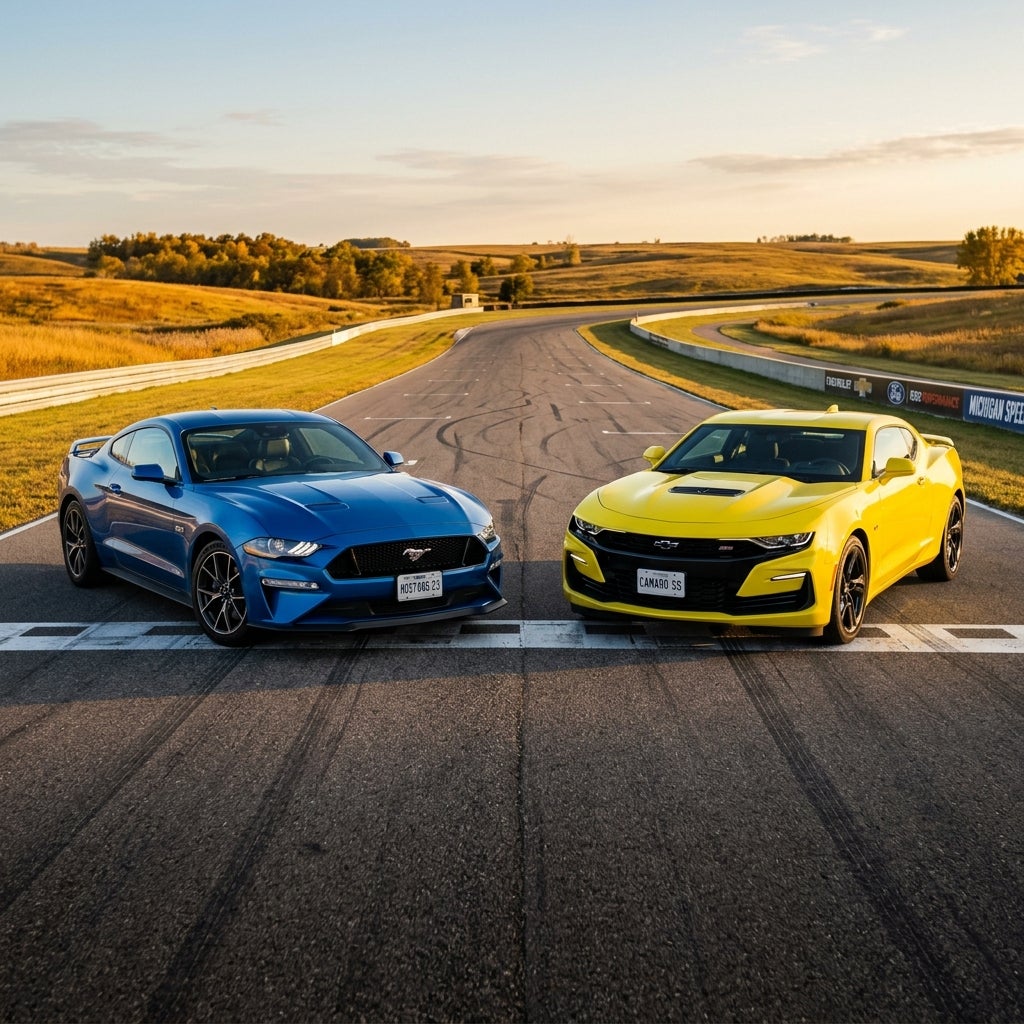
Which Has More Horsepower: The Mustang GT or Camaro SS?

Which Has More Horsepower: The Mustang GT or Camaro SS?

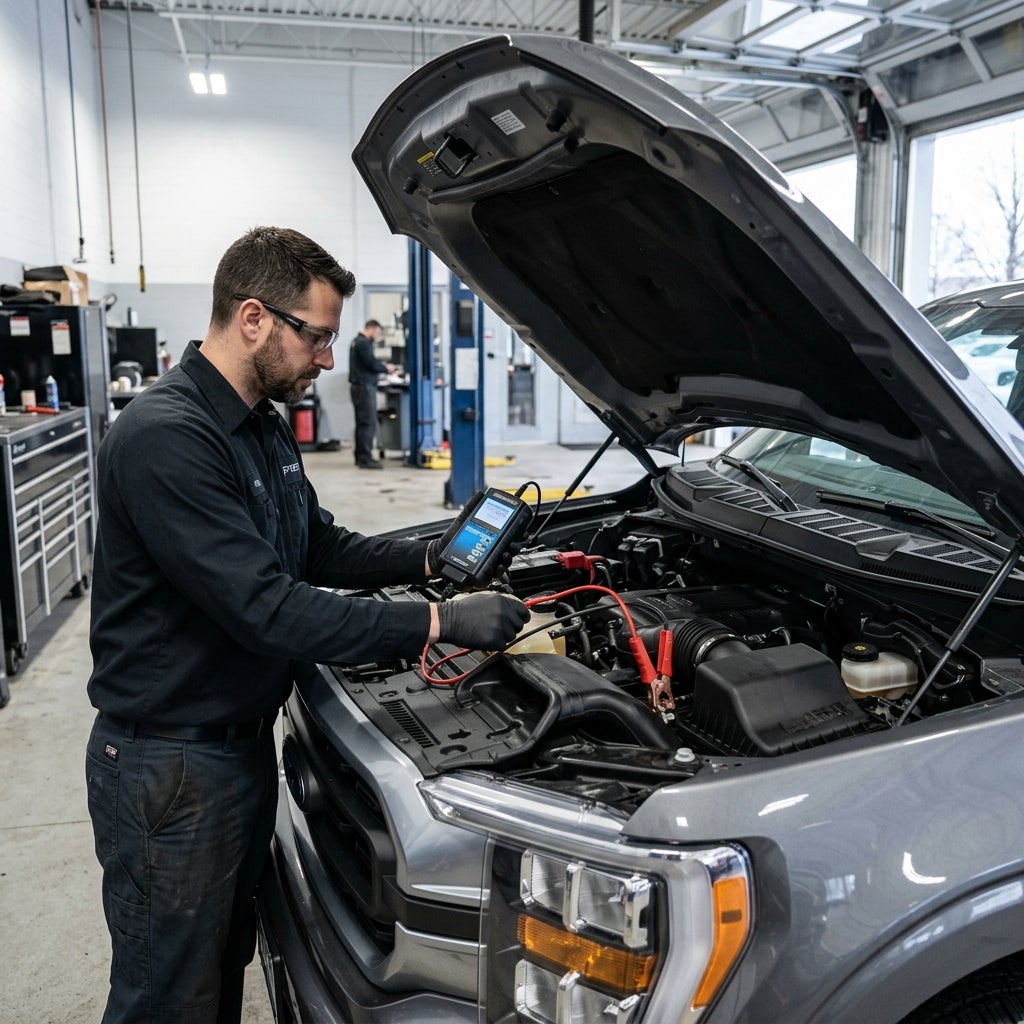
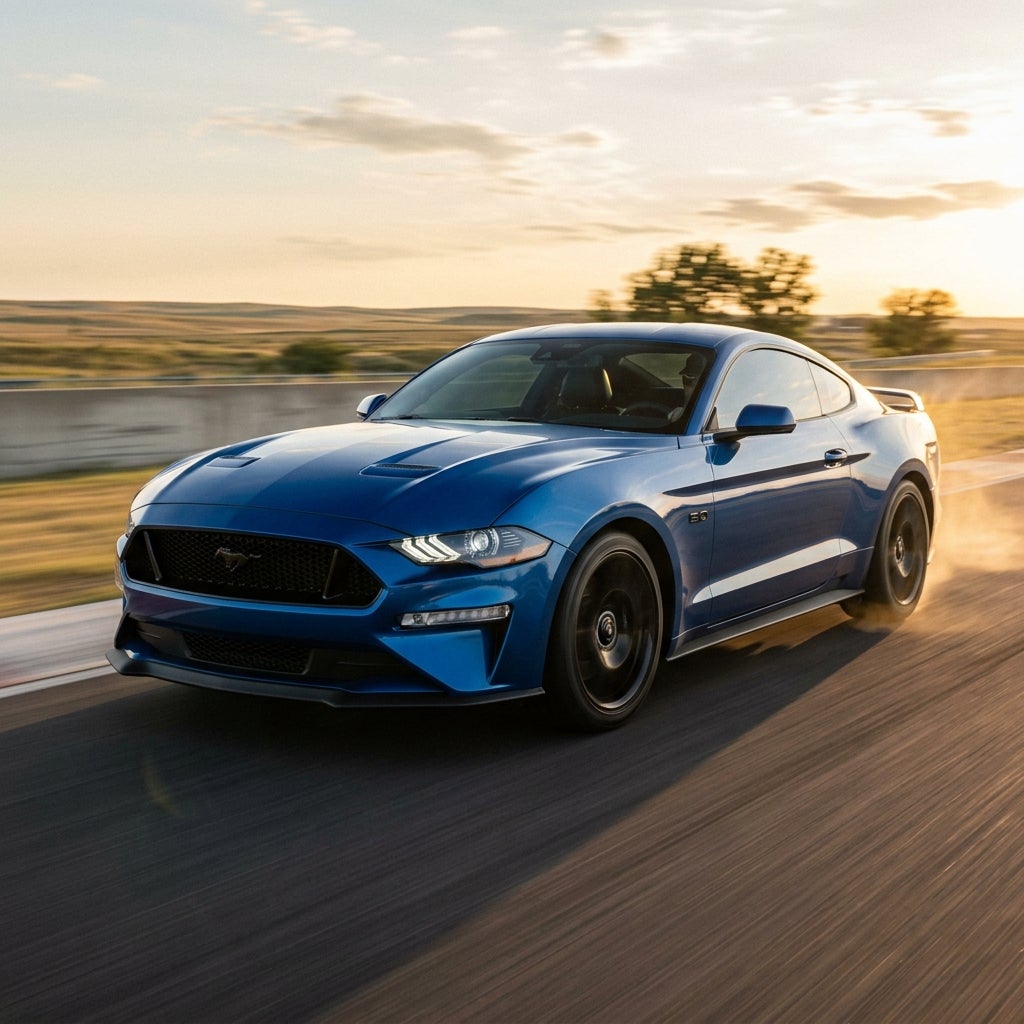
Which Has More Horsepower: The Mustang GT or Camaro SS? When comparing American muscle supremacy, the horsepower battle between the Ford Mustang GT and Chevrolet Camaro SS is legendary. If you are looking at the newest models, the 2024 Ford Mustang GT holds the horsepower victory, pushing out up to 486 horsepower from its refined 5.0-liter Coyote V8 engine equipped with the active valve performance exhaust. By comparison, the standard Chevrolet Camaro SS generates 455 horsepower from its 6.2-liter LT1 V8 engine. However, for pre-owned buyers exploring the 2023 model year, the numbers shift slightly. In 2023, the Camaro SS produced 455 horsepower and 455 lb-ft of torque, giving it a slight 5-horsepower edge over the 2023 Mustang GT's 450 horsepower and 410 lb-ft of torque. Regardless of which specific year you evaluate, both vehicles represent the absolute pinnacle of naturally aspirated V8 engineering. For drivers near Junction City, Fort Riley, and surrounding Geary County, understanding how these peak horsepower numbers translate to real-world street acceleration and highway merging on I-70 is critical. At Valor Ford, we break down every nuance of performance, power delivery, and engine architecture to help performance enthusiasts make an informed decision. Explore New Ford Mustang Models 2023 Ford Mustang Performance and Enthusiast Overview The S550 generation Ford Mustang represents one of the most technologically advanced rear-wheel-drive performance chassis ever crafted by Ford engineers. At the heart of its enthusiast appeal is the 4th-generation 5.0L Coyote V8 engine. Built with double overhead cams (DOHC) and four valves per cylinder, the Coyote V8 loves to rev high into the powerband, reaching its peak 450 horsepower at an exhilarating 7,500 RPM. Unlike traditional pushrod engines, Ford's high-revving architecture utilizes high-pressure direct injection combined with low-pressure port fuel injection. This dual-fuel system delivers crisp throttle response, clean combustion across all rev ranges, and linear power buildup that rewards drivers who like to hold gears through winding Kansas country roads. Engineered with a light power-to-weight ratio and precise independent rear suspension, the Mustang GT stays planted whether you are launching from a standstill or carving through high-speed sweepers. Combined with available MagneRide active damping, the car constantly monitors road conditions thousands of times per second to maximize traction. What Engine Options and Horsepower Ratings Are Available on the 2023 Ford Mustang? Ford designed the Mustang lineup to offer targeted performance tiers for every driving style, ranging from fuel-efficient daily turbocharged commuters to track-focused supercharged monsters. 2.3L EcoBoost® Turbo • 310 HP @ 5,500 RPM (330 HP with High Performance Package) • 350 lb-ft Torque @ 3,000 RPM • Available 6-speed manual or 10-speed SelectShift® automatic • Excellent fuel efficiency for daily military and city commutes. 5.0L Coyote V8 GT • 450 HP @ 7,500 RPM • 410 lb-ft Torque @ 4,600 RPM • Quad active valve exhaust boosts sound and response • Iconic exhaust note paired with Getrag 6-speed or 10-speed auto. Mach 1 & Shelby Tier • Mach 1: 470 HP / 410 lb-ft Torque (Track Tuned Coyote) • Shelby GT500: 760 HP / 625 lb-ft Torque (Supercharged 5.2L Predator V8) • Ultimate track dynamics, Tremec transmissions, and aerodynamics. Engine Variant Horsepower Torque Standard Transmission Available Axle Ratios 2.3L EcoBoost I4 310 hp 350 lb-ft 6-Speed Manual 3.15 / 3.31 / 3.55 2.3L EcoBoost HPP 330 hp 350 lb-ft 6-Speed Manual 3.55 Torsen® 5.0L Coyote V8 (GT) 450 hp 410 lb-ft 6-Speed Manual w/ Rev Match 3.15 / 3.55 / 3.73 Torsen® 5.0L Coyote V8 (Mach 1) 470 hp 410 lb-ft Tremec TR-3160 6-Speed 3.73 Torsen® 5.2L Predator V8 (GT500) 760 hp 625 lb-ft 7-Speed Dual-Clutch Tremec 3.73 Torsen® How Much Does a 2023 Ford Mustang GT Cost? When originally launched, the 2023 Ford Mustang GT Fastback carried a starting MSRP around $38,345, while the GT Premium trim started at approximately $43,365. On the pre-owned market in Geary and Dickinson counties, pre-owned Mustang GT pricing varies based on mileage, condition, optional equipment like the GT Performance Package, and active valve exhaust add-ons. The GT Premium trim adds substantial value through heated and cooled leather front seats, SYNC® 3 touchscreen infotainment, B&O Sound System, customizable digital gauge cluster, and enhanced driver assistance technologies. At Valor Ford, we can help you explore current financing options for a high-performance V8 muscle car. Whether you are active military personnel serving at Fort Riley or a local driver trading in a vehicle, our finance team can help you review available options and current rates. You can calculate your trade valuation online using our Trade In Evaluation tool to see how much equity you can apply toward your Mustang upgrade. Get Pre-Approved for Financing What Features Make the 2023 Ford Mustang Mach 1 Unique? The Mustang Mach 1 bridge the gap between the standard GT and the ultra-exclusive Shelby lineup. Powered by a specially tuned 5.0L Coyote V8 generating 470 horsepower, the Mach 1 borrows key structural and cooling components directly from the Shelby GT350 and GT500 to deliver turn-key track capability right off the showroom floor. Purists celebrate the inclusion of the track-proven Tremec TR-3160 6-speed manual transmission featuring rev-matching and oil cooling system, though a recalibrated 10-speed automatic with paddle shifters is also available. Underneath, it features GT500 rear subframe bushings, rear toe links, and a rear diffuser that significantly reduces lift at high speeds. Standard MagneRide damping, Brembo 6-piston front brake calipers with 15-inch rotors, and dedicated engine oil, transmission, and differential coolers ensure the Mach 1 can handle sustained sessions on track days without encountering thermal fade. What Is the Top Speed of the Ford Mustang Shelby GT500? The flagship supercar of the Mustang lineup, the Ford Mustang Shelby GT500, features an electronically limited top speed of 180 mph. Powered by a hand-built supercharged 5.2-liter 'Predator' V8 engine, it unleashes a staggering 760 horsepower and 625 lb-ft of torque. While the engine is capable of driving the vehicle even faster, Ford deliberately calibrated the top speed limiter to 180 mph in order to optimize aggressive functional downforce. The massive front splitter, functional hood vent, and optional carbon fiber track rear wing generate up to 550 lbs of downforce at maximum velocity, keeping the chassis glued to the road during high-speed cornering. Paired with a TREMEC 7-speed dual-clutch automatic transmission capable of executing gear shifts in under 80 milliseconds, the Shelby GT500 rocket launches from 0 to 60 mph in just 3.3 seconds and crosses the quarter-mile in 10.7 seconds. Mustang GT vs. Camaro SS: Torque, Acceleration, and Quarter-Mile Specs While peak horsepower garners the headlines, acceleration performance depends heavily on torque curves, transmission gearing, and launch control management systems. Torque Architecture The Camaro SS's larger displacement 6.2L LT1 V8 delivers 455 lb-ft of torque down low at 4,400 RPM, giving it punchy off-the-line surge. In contrast, the Mustang GT's 5.0L Coyote V8 builds its 410 lb-ft of torque progressively, continuing to build pull all the way to its 7,500 RPM redline. Launch Control & Electronics Both muscle cars offer factory electronic launch control and line-lock tire warmup features. Ford's Track Apps allow Mustang drivers to adjust launch RPM settings between 3,000 and 4,500 RPM depending on road traction conditions. Quarter-Mile Times When equipped with the 10-speed SelectShift automatic, both the Mustang GT and Camaro SS post near-identical quarter-mile drag strip times of 12.1 to 12.3 seconds at approximately 115-118 mph under optimal track testing. Performance Metric 2023 Ford Mustang GT 2023 Chevrolet Camaro SS 2024 Ford Mustang GT Engine Type 5.0L Coyote DOHC V8 6.2L LT1 Pushrod V8 5.0L Gen-4 Coyote DOHC V8 Peak Horsepower 450 hp @ 7,500 RPM 455 hp @ 6,000 RPM 486 hp @ 7,250 RPM Peak Torque 410 lb-ft @ 4,600 RPM 455 lb-ft @ 4,400 RPM 418 lb-ft @ 4,900 RPM 0-60 MPH Acceleration 3.9 - 4.2 seconds 3.9 - 4.1 seconds 3.8 - 4.1 seconds Quarter-Mile Time 12.2 sec @ 116 mph 12.2 sec @ 116 mph 12.0 sec @ 118 mph Redline 7,500 RPM 6,500 RPM 7,500 RPM Real-World Driving Dynamics Across Junction City and Fort Riley Highways Paper specifications only tell half the story. On real roads around Junction City, Manhattan, and Fort Riley, driver ergonomics and outward visibility play massive roles in daily driving satisfaction. The Ford Mustang GT consistently earns praise for its spacious greenhouse, lower beltline, and superior rear-quarter visibility compared to the high-door, narrow-window cockpit layout of the Camaro SS. For military commuters traveling daily along I-70 or K-18, the Mustang offers better long-distance comfort, easy blind-spot checking, and a standard 13.5 cubic-foot trunk capable of fitting military gear, luggage, or golf bags with ease. Selectable drive modes (Normal, Sport+, Track, Drag Strip, and Snow/Wet) allow you to adapt steering weight, throttle mapping, and exhaust volume at the push of a toggle switch, giving you quiet highway cruising when desired and loud performance power on demand. Browse Pre-Owned Mustang Inventory How Often Should You Change the Oil on a 2023 Mustang GT? Maintaining peak performance from a high-revving 5.0L V8 requires strict adherence to proper lubrication guidelines. Under normal commuter driving conditions, Ford recommends changing the full synthetic oil and filter every 7,500 to 10,000 miles or once per year, whichever comes first. However, Kansas driving conditions often qualify as severe usage due to high summer heat, dusty rural roads, short commuter trips, or spirited track driving. For optimal engine protection, our certified service team at Valor Ford recommends changing your oil every 5,000 miles or 6 months using factory-approved Motorcraft® SAE 5W-20 Full Synthetic motor oil (or 5W-50 for track-packaged models). The standard Intelligent Oil-Life Monitor™ system built into your digital dashboard constantly evaluates engine temperature, operating hours, towing load, and rev history to notify you when service is required. Essential Maintenance Schedules and Service Care for Ford V8 Engines Spark Plugs & Fuel System Replace platinum/iridium spark plugs every 100,000 miles (or 50,000 miles under severe track usage). Regular fuel system cleaning ensures the dual-port and direct injectors maintain optimal spray patterns for power and efficiency. Brembo® Brakes & Fluids High-performance Brembo brake pads and rotors require regular thickness inspections. Flush brake fluid every 3 years or prior to track events to remove moisture and prevent soft pedal feel under heavy braking. Drivetrain & Tires Rotate high-performance tires every 5,000 to 7,500 miles (non-staggered setups). Change rear differential and manual or automatic transmission fluid every 30,000 to 60,000 miles to preserve Torsen® differential lockup. Keep your V8 muscle performing at its peak. You can easily Schedule Ford Service Today with certified factory technicians at Valor Ford, or ask about our home and office pickup options through our Schedule Pickup and Delivery Service. Upgrading and Customizing Your Mustang GT at Valor Ford One of the greatest benefits of owning a Ford Mustang GT is the massive ecosystem of factory-backed Ford Performance accessories. Whether you want to turn up the volume of your V8 exhaust or sharpen your suspension turn-in response, Valor Ford's parts department has direct access to genuine OEM components. Popular upgrades include Ford Performance cold air intake kits, recalibrated performance tunes, active valve exhaust retrofits, lower drop springs, and heavy-duty sway bars that transform street handling without sacrificing daily comfort. Additionally,, installing official Ford Performance upgrades through an authorized dealer like Valor Ford preserves your vehicle's factory powertrain warranty peace of mind. Ready to personalize your ride? You can Order Genuine Ford Parts directly through our dealership online or speak with our master technicians today. Experience Ford Mustang Power at Valor Ford in Junction City, KS Whether you are driven by the raw horsepower output of the 5.0L Coyote V8, the iconic design heritage, or the superior daily usability, there is nothing quite like sitting behind the wheel of a Ford Mustang GT. At Valor Ford, we are proud to serve driver enthusiasts, military personnel at Fort Riley, and families across Junction City and Central Kansas. Visit our showroom at 1825 Goldenbelt Blvd, Junction City, KS 66441 to experience pure American muscle firsthand. Get Directions to Valor Ford or Call us at (785) 238-5114 to schedule your personal test drive today! Research Ford Mustang Lineup

How Ford Smart Hitch and On-Board Scales Keep Kansas Farm Operations Compliant and Safe

How Ford Smart Hitch and On-Board Scales Keep Kansas Farm Operations Compliant and Safe

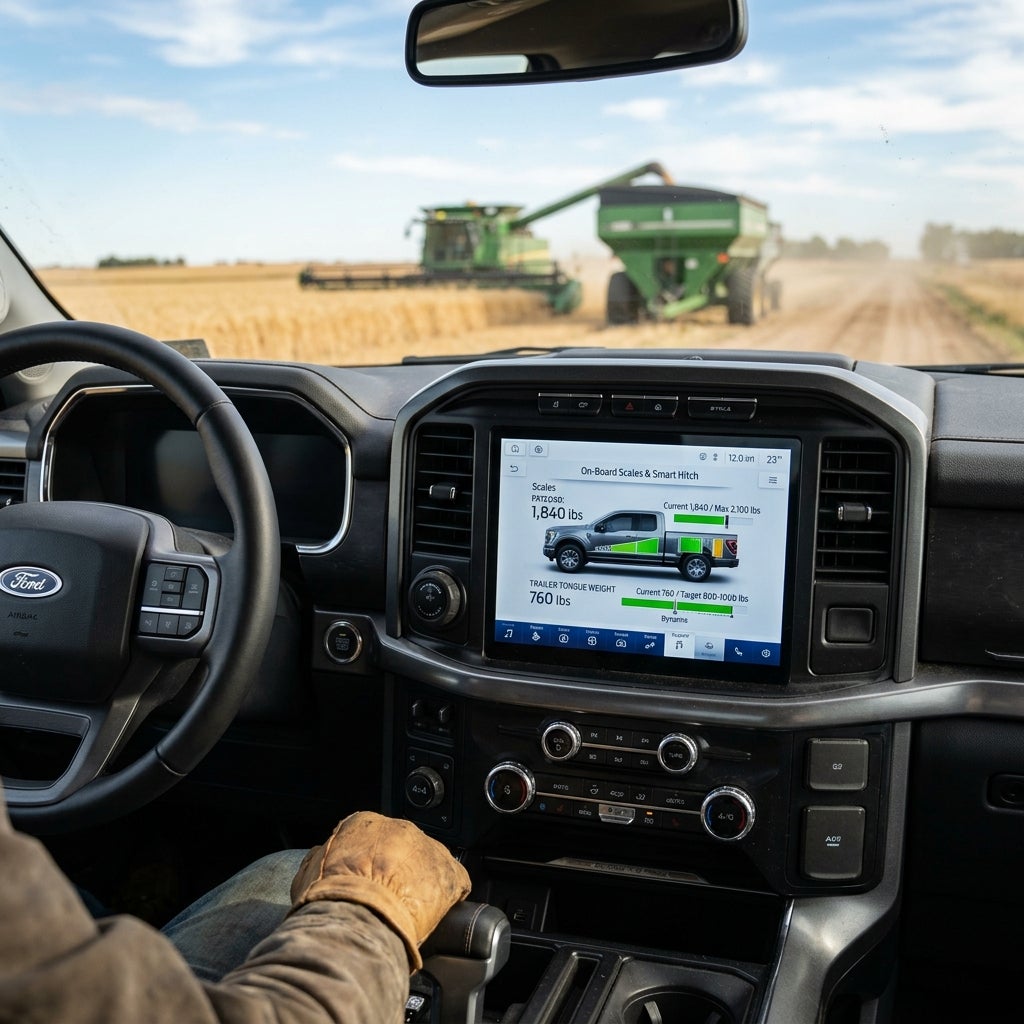
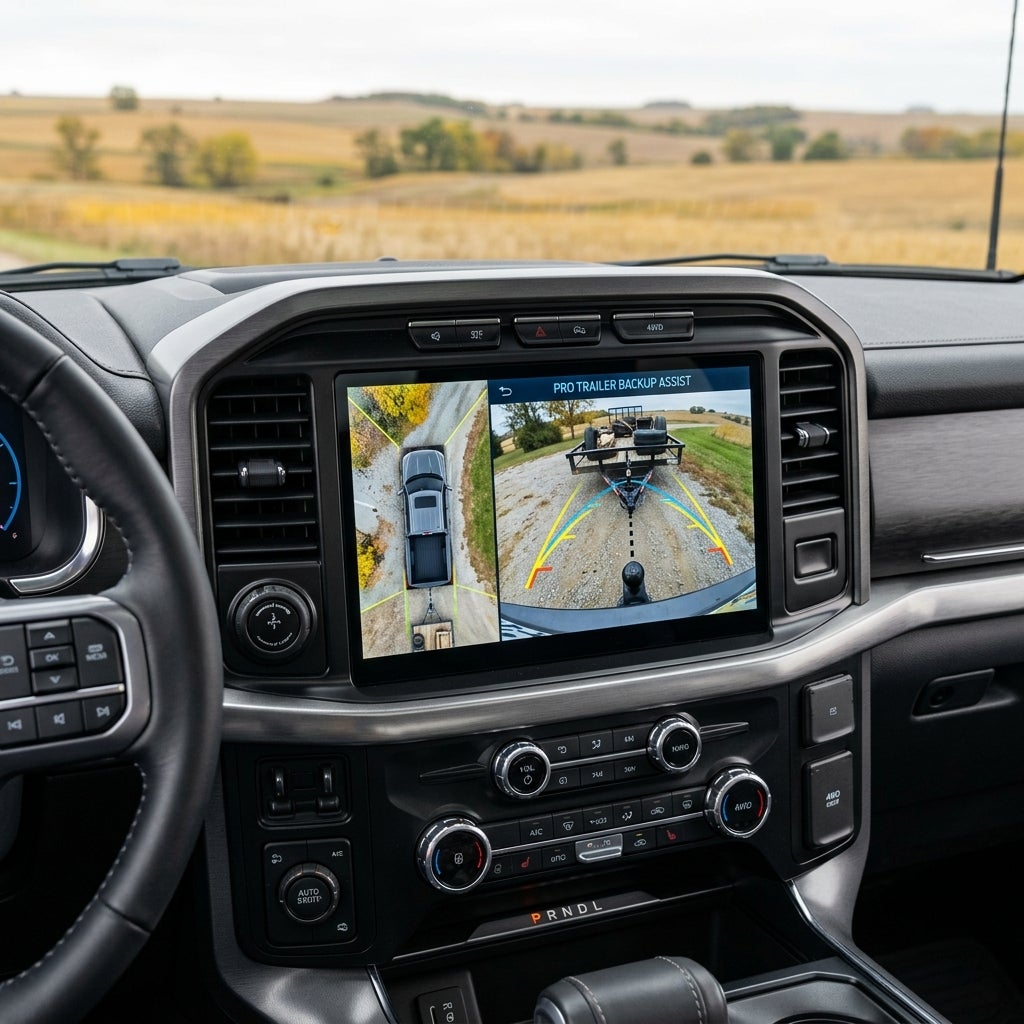
How Ford Smart Hitch and On-Board Scales Keep Kansas Farm Operations Compliant and Safe In Dickinson County and across the fertile stretches surrounding Junction City, harvest season demands maximum efficiency from every piece of agricultural equipment. Fall grain hauling, livestock transport, and machinery shifting test the physical limits of work trucks day after day. Operating close to legal payload and gross vehicle weight limits is a necessity for local producers, but exceeding those limits brings severe financial penalties, accelerated vehicle strain, and compromised highway safety. The Ford F-150 and Ford Super Duty lineups address this challenge directly with integrated Smart Hitch and On-Board Scales technology, transforming payload management from guesswork into exact science. Equipped with sophisticated suspension load sensors, Ford's On-Board Scales continuously measure the weight sitting in the truck bed or resting on the hitch. Drivers can monitor dynamic payload figures directly through the interior SYNC 4 touchscreen, observe status indicators on the FordPass mobile application, or view real-time smart LED taillight bar displays while standing right in the field. This immediate feedback ensures local operators never roll onto Highway 77 or Interstate 70 with illegal axle loads or unsafe trailer tongue distribution. Before taking your loaded rig onto public roads, visiting Valor Ford gives you hands-on experience with this technology and keeps your fleet running at peak performance. Get Directions to Valor Ford to explore the full lineup of smart agricultural trucks. How On-Board Scales Calculate Real-Time Agricultural Payload and Prevent Overloading Ford's On-Board Scales system utilizes high-precision sensors integrated directly into the truck's suspension architecture. As seed bags, bulk fertilizer, toolboxes, or harvested crops are loaded into the bed, the sensors measure rear height deflection and algorithmically convert structural compression into actual weight figures. This calculation accounts for vehicle trim, package specifications, and curb weight parameters pre-calibrated from the factory. When operating under field conditions far from commercial platform scales, operators can rely on visual taillight LED gauge bars. Four vertical LED bands built into the rear taillight assembly illuminate sequentially as weight increases. One bar indicates 25 percent capacity, two bars represent 50 percent, three bars show 75 percent, and all four illuminated solid mean full capacity. If the load exceeds max rated payload, the top LEDs flash red, giving equipment operators loading grain from an auger or placing pallets with a skid steer an immediate visual warning to stop loading. This live visual feedback completely eliminates the risk of accidental overloading during chaotic harvest hours. It protects leaf springs, shocks, and transmission clutches from stress while keeping your haul within state safety regulations. Research Ford F-150 capabilities to see how this system handles demanding farm tasks. How Smart Hitch Measures Tongue Weight Balance for Heavy Farm Trailers Towing heavy agricultural equipment—such as livestock stock trailers, round bale transport trailers, or heavy machinery mowers—requires meticulous weight balance. Incorrect tongue weight is the leading cause of dangerous highway trailer sway, braking instability, and front-axle lift. Ford Smart Hitch simplifies this setup by measuring the exact vertical force exerted by the trailer coupler onto the hitch ball in real time. Through the SYNC 4 center screen, Smart Hitch calculates the percentage of tongue weight relative to total trailer mass and advises the driver whether tongue load is light, ideal, or excessive. Ideal tongue weight typically sits between 10 and 15 percent of total gross trailer weight. When hauling livestock that shift during transit or unbalanced machinery loads along rural roads, Smart Hitch provides instant guidance on whether to reposition cargo forward or rearward. If you utilize a weight-distribution hitch setup, Smart Hitch guides you through tensioning the spring bars correctly. The screen interface indicates whether too much or too little weight is being transferred to the front steering axle, preserving steering responsiveness and emergency braking capability. By eliminating front-axle lightened pitch and rear-suspension bottoming, Smart Hitch reduces tire wear, prevents hitch assembly fatigue, and ensures stable control across wind-swept Kansas highway corridors. Avoiding Costly KDOT Weight Fines and Fleet Compliance Violations During Harvest The Kansas Department of Transportation (KDOT) and the Kansas Highway Patrol enforcement officers monitor regional roadways closely during seasonal agricultural pushes. While Kansas offers seasonal harvest weight allowances for registered farm vehicles, single-axle, tandem-axle, and gross combination weight limits remain strictly enforced once trucks enter state highways or cross county lines. Overweight violations in Dickinson County can easily result in hundreds or thousands of dollars in statutory fines per incident, alongside mandatory offloading delays that disrupt tight harvest schedules. Ford's integrated scale technology gives farm managers and fleet owners full transparency before a truck ever departs the farm gate. By verifying that payload numbers and gross combination weights remain within legal thresholds, operators bypass unpredictable weigh station citations. Furthermore, real-time logging via the Ford App allows managers to archive historical load weights for internal recordkeeping and compliance audits. Upgrading your farm fleet with modern Ford technology keeps your bottom line protected. Contact Us for Financing Information What Key Pre-Harvest Maintenance Checks Should Be Performed on an F-150 or Super Duty Before Heavy Hauling? Engine & Drivetrain Inspect engine oil, transmission fluid, and transfer case lubricants for breakdown. Change air filters before dust exposure increases during grain harvesting. Verify front and rear differential fluid clarity, ensuring full protection during high-torque pull cycles across unpaved access roads. Suspension & Brakes Examine leaf springs, U-bolts, and shock absorbers for signs of cracking or leakage. Inspect brake rotor thickness and pad friction surface. Continuous heavy hauling builds immense heat; fresh brake components prevent fade on steep Flint Hills inclines. Cooling & Auxiliary Systems Perform a cooling system pressure test and check radiator hose condition. High ambient temperatures combined with heavy trailering put peak loads on thermal systems. Test battery cold-cranking amps to ensure dependable field starting when far from home base. How Do Routine Pre-Trip Inspections Reduce Long-Term Repair Expenses on Agricultural Work Trucks? Implementing a disciplined 5-minute daily walkaround routine yields immense financial returns over the operating lifecycle of a farm truck. Minor issues caught in the yard—such as a slow tire pressure leak, an weeping axle seal, or a loose leaf spring center bolt—prevent catastrophic failures in the middle of a remote field. Unattended low tire pressure under maximum payload rapidly destroys tire sidewalls and generates extreme heat, leading to blowouts that can damage vehicle bodywork, suspension links, or trailer brake wiring. Similarly, identifying early fluid weepage at the transmission output shaft or differential pinion seal protects high-value gears from dry friction breakdown. Mid-harvest mechanical breakdowns carry massive hidden costs: wasted labor hours, missed elevator delivery deadlines, and emergency field repair callout rates. Consistent pre-trip checks ensure minor wear items are serviced during planned downtime at Valor Ford rather than during peak operational stress. Kansas Fall Harvest Hauling: Essential Inspection Checklist for F-150 and Super Duty Work Trucks 1. Tires & Wheels • Verify cold inflation PSI to tire sidewall max load spec. • Torque lug nuts to factory specification. • Inspect tread depth and clear stuck gravel/debris. • Check spare tire pressure and lowering mechanism condition. 2. Towing & Coupling • Inspect hitch receiver weld points for stress fractures. • Check safety chain grade ratings and latch clips. • Test trailer breakaway switch lanyard and battery voltage. • Calibrate Smart Hitch zero-point before hitching trailer. 3. Electrical & Brake Control • Clean 7-pin blade contacts with dielectrical cleaner. • Verify trailer brake controller manual slide function. • Conduct full exterior lighting sweep (turn/brake/reverse). • Test Ford App trailer light check routine from smartphone. Schedule Ford Service Today What Are the Differences in Frame Strength and Rear Axle Design Between the F-150 and Super Duty? Selecting between the Ford F-150 and Super Duty (F-250/F-350) for agricultural duty depends heavily on intended payload frequency, trailer weight, and terrain conditions. While both series utilize high-strength, military-grade aluminum-alloy bodies mounted on fully boxed steel frames, their structural architecture is engineered for distinct workloads. The F-150 features a fully boxed high-strength steel frame available with a semi-floating or heavy-duty axle configuration, providing exceptional ride comfort alongside high payload ratings. In contrast, Super Duty models utilize massive cross-member bracing and full-floating rear axle designs. Full-floating axles place vehicle load directly onto the axle housing and wheel bearings rather than the axle shaft itself, allowing heavy dual-wheel setups to carry immense loads continuously over rutted pastures and field tracks. Research Ford F-250 specifications for full structural details. Structural Feature Ford F-150 Ford Super Duty (F-250/350) Frame Steel Thickness High-Strength Fully Boxed Commercial-Grade Fully Boxed Rear Axle Design Semi-Floating / Heavy-Duty Full-Floating Axle Architecture Max Conventional Towing Up to 13,500 lbs Up to 24,800+ lbs Max Payload Rating Up to 2,445 lbs Up to 8,000+ lbs (F-350 DRW) How Do You Perform a Field Inspection of Trailer Brake Controllers and Electrical Wiring Harnesses? Dust, crop chafe, moisture, and extreme vibration present continuous challenges to agricultural electrical systems. Conducting a quick field diagnostic of your trailer brake controller and wiring harness prevents dangerous towing situations before leaving the pasture. Begin by inspecting the 7-pin blade connector at the rear bumper. Use a wire terminal brush to clear dirt build-up, and inspect internal brass pins for signs of corrosion or spread contacts. Apply dielectric grease to the plug contacts to repel moisture during rainy harvest days. Inspect the main wiring harness loom where it passes over frame rails or near suspension components, ensuring no wires are pinched or rubbing against bare metal. Inside the cab, check Ford's Integrated Trailer Brake Controller (TBC) status on the digital instrument cluster. Connect your trailer and operate the TBC manual squeeze controller at low speed (approx. 5 mph). The trailer brakes should engage smoothly without locking up or pulling to one side. If the cluster reports 'Trailer Disconnected' intermittently while moving, check the trailer ground wire ring terminal fastened to the trailer tongue frame. Corrosion or loose ground bolts cause 90% of field trailer electrical faults. What Annual Inspection and Recordkeeping Checks Should Kansas Work-Truck Fleets Make Before Harvest? Managing a farm or agricultural fleet in Dickinson County, Junction City, or nearby Fort Riley requires meticulous documentation and safety adherence. Commercial motor vehicle operations must maintain active annual DOT inspection reports, driver vehicle inspection logs, and updated weight registration slips inside each truck's glove compartment. Ensuring every F-150 or Super Duty in your fleet has undergone a comprehensive multi-point vehicle inspection before peak harvest protects your operation from operational shutdown orders during state roadside checks. Establishing standardized preventative maintenance records also boosts vehicle resale and trade-in value when updating fleet units. Service logs that document routine fluid flushes, brake replacements, and suspension inspections demonstrate meticulous care to future buyers. For assistance with OEM replacement parts or routine commercial fleet maintenance, Call us at (785) 238-5114 to consult with our master technicians. Order Genuine Ford Parts What Essential Items Should Be Included in a Farm Truck Emergency Road Kit for Kansas Harvest Season? Recovery & Towing • 30,000 lb rated snatch strap or kinetic tow rope. • Heavy-duty bow shackles rated for farm equipment. • High-output 12V air compressor for field tire inflation. • Tire plug kit and heavy-duty valve stem tool. Safety & Lighting • Rechargeable LED magnetic work lights & headlamps. • High-visibility reflective safety vest & DOT triangles. • LED road flares for roadside breakdowns. • First-aid kit tailored for farm injuries. Mechanical & Tools • 12-ton hydraulic bottle jack and solid wooden jack block. • ½-inch drive torque wrench & deep lug socket set. • Heavy-duty 2-gauge jumper cables or lithium jump pack. • Spare electrical fuses, wire, and zip ties. Upgrading and Servicing Your Agricultural Work Truck at Valor Ford in Junction City Valor Ford is proud to serve the agricultural producers, ranchers, and fleet operators of Junction City, Dickinson County, and surrounding Kansas communities. Our dealership features specialized commercial vehicle service bays equipped with high-capacity lifts capable of servicing fully loaded work trucks and chassis cabs. Whether you need factory-certified calibration for your F-150 Smart Hitch and On-Board Scales, installation of heavy-duty gooseneck hitch hitches, or complete pre-harvest fluid flushes, our Ford factory-trained technicians deliver unmatched expertise. We offer competitive trade-in valuations on older work trucks to help keep your fleet updated. Start your Trade In Evaluation or take advantage of our convenience options by choosing to Schedule Pickup and Delivery Service today. Schedule Your Pre-Harvest Vehicle Inspection and Fleet Upgrade at Valor Ford Today Don't leave your fall harvest productivity to chance. Ensure your Ford F-150 or Super Duty is fully prepped, compliant, and equipped with the latest load-monitoring technology before heavy hauling begins. Visit our showroom in Junction City to experience live demonstrations of Ford Smart Hitch and On-Board Scales, test drive new Ford work trucks, or schedule your seasonal vehicle inspection with our master service team. Valor Ford is your dedicated partner for reliable agricultural transport across Central Kansas. Get Directions to Valor Ford today or contact our service department directly to schedule your appointment. Schedule Ford Service Today

2026 Ford F-150 vs 2026 GMC Sierra 1500 Comparison

2026 Ford F-150 vs 2026 GMC Sierra 1500 Comparison

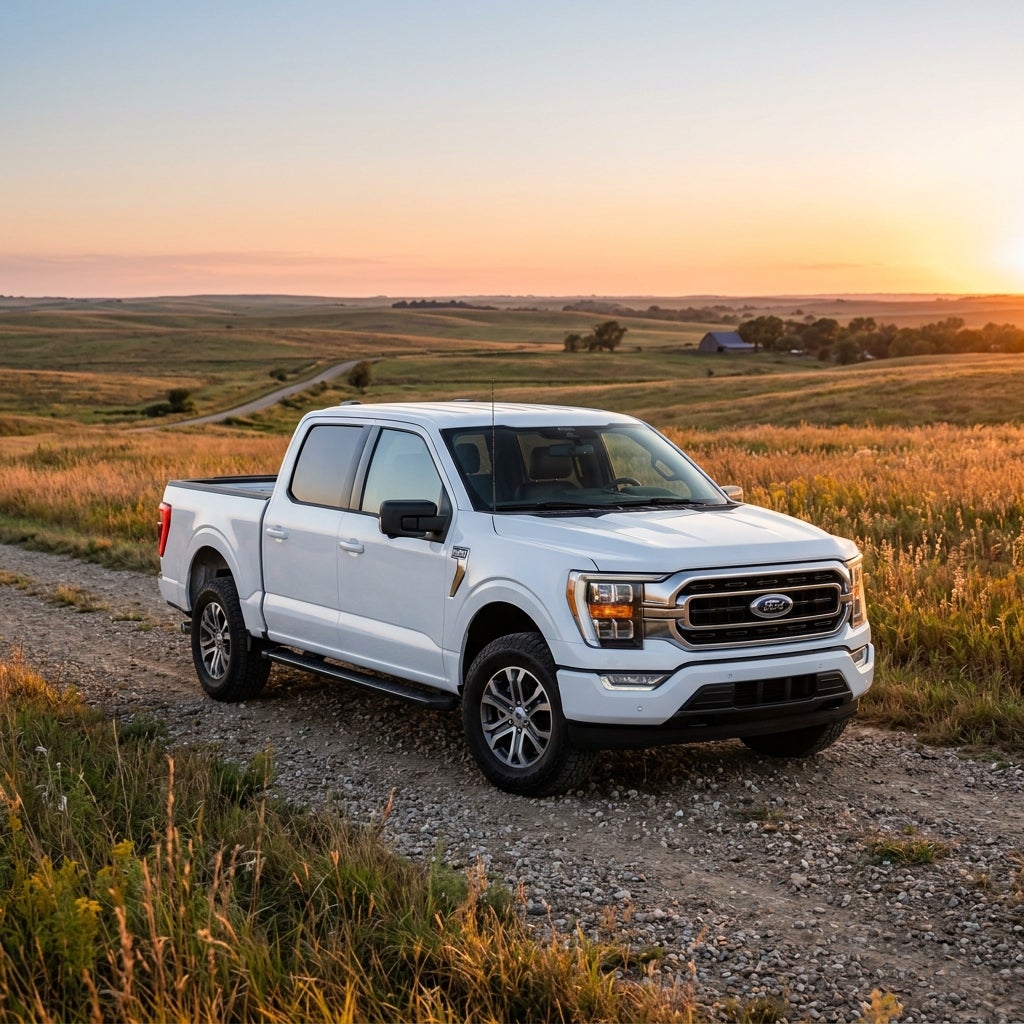
The 2026 Ford F-150 wins overall in this full-size pickup comparison by delivering higher standard horsepower, superior towing and payload capabilities, longer driving range, and exclusive mobile power solutions compared to the 2026 GMC Sierra 1500. Powered by a standard 3.5L EcoBoost® V6 producing 400 hp and 500 lb-ft of torque, the F-150 offers up to 10,800 lbs of towing capacity, about 53 cu ft of standard cargo volume, and up to 684 miles of driving range on 4x4 models, making it the more versatile and powerful truck. Which Truck Offers the Best Value: 2026 Ford F-150 or 2026 GMC Sierra 1500? The 2026 Ford F-150 delivers greater overall value than the 2026 GMC Sierra 1500 by providing significantly higher standard performance figures, superior trailering ratings, and standard All-wheel drive on its premium King Ranch 4x4 trims. While the GMC Sierra 1500 relies on a naturally aspirated 5.3L V8 or a smaller 2.7L 4-cylinder engine across its rear-wheel drive trims, the Ford F-150 equips a twin-turbocharged 3.5L EcoBoost® V6 engine as standard equipment on its King Ranch tier, ensuring that buyers receive executive-level luxury without sacrificing heavy-duty utility. For local drivers in Junction City balancing daily commutes with tough towing jobs, the F-150's standard powertrain architecture offers immediate advantages in capability and efficiency. As America's benchmark full-size truck, the F-150 is designed to serve as both an efficient daily commuter and a durable mobile workspace. Shoppers who wish to assess their current vehicle's worth before upgrading can request an online trade-in evaluation to plan their purchase. Furthermore, exploring our comprehensive 2026 Ford F-150 research portal reveals how Ford's engineering gives it a distinct edge over class rivals. For families who may also be evaluating passenger SUVs alongside full-size trucks, reviewing our 2026 Ford Explorer research page provides helpful insight into Ford's broader lineup of utility vehicles. Ultimately, the F-150's balance of standard power, superior bed capacity, and advanced equipment ensures every dollar spent yields more real-world capability. Pricing and Trim Options Tailored for Work and Family Needs The 2026 Ford F-150 delivers exceptional feature density and capability relative to its Manufacturer's Suggested Retail Price (MSRP), offering high-output twin-turbo powertrains and robust 4x4 capability across its premium configuration levels. Comparing prices across specific trim configurations reveals clear distinctions in standard mechanical specifications and factory content between these two light-duty truck lines. Vehicle Trim Configuration Base MSRP MSRP Incl. Destination Drive Type Standard Engine 2026 Ford F-150 King Ranch 4x4 SuperCrew 5-1/2’ Box $69,625 $72,420 All-wheel drive 3.5L EcoBoost® V6 (400 hp) 2026 Ford F-150 King Ranch 4x4 SuperCrew 6-1/2’ Box $69,930 $72,725 All-wheel drive 3.5L EcoBoost® V6 (400 hp) 2026 Ford F-150 King Ranch SuperCrew 5-1/2’ Box $65,825 $68,620 Rear-wheel drive 3.5L EcoBoost® V6 (400 hp) 2026 GMC Sierra 1500 2WD Crew Cab Short Box Denali $66,100 $68,895 Rear-wheel drive 5.3L EcoTec3 V8 (355 hp) 2026 GMC Sierra 1500 2WD Crew Cab Short Box Elevation $53,300 $56,095 Rear-wheel drive 2.7L Turbo I4 (310 hp) 2026 GMC Sierra 1500 2WD Crew Cab Short Box Pro $44,200 $46,995 Rear-wheel drive 2.7L Turbo I4 (310 hp) Both manufacturers apply a standardized $2,795 destination charge to their delivered MSRP figures. When evaluating the premium trim levels head-to-head, the King Ranch 4x4 SuperCrew 5-1/2’ Box carries a base MSRP of $69,625 ( $72,420 with destination), offering standard All-wheel drive and 400 horsepower. In comparison, the 2WD Crew Cab Short Box Denali starts at a base MSRP of $66,100 ( $68,895 delivered) but provides only Rear-wheel drive and 355 horsepower from its 5.3L V8. The F-150 lineup also offers specialized length options such as the King Ranch 4x4 SuperCrew 6-1/2’ Box at a base MSRP of $69,930 ( $72,725 delivered), expanding cargo volume to about 62 cu ft. For shoppers who prefer rear-wheel drive luxury, the King Ranch SuperCrew 5-1/2’ Box is priced at $65,825 base MSRP ( $68,620 delivered). GMC's mid-tier and entry trims include the 2WD Crew Cab Short Box Elevation at a base MSRP of $53,300 ( $56,095 delivered) and the entry-level 2WD Crew Cab Short Box Pro at $44,200 base MSRP ( $46,995 delivered). Buyers who are also interested in adventure-ready off-road SUVs can browse our new Ford Bronco inventory online to explore additional all-terrain options. Apply for Financing Online Which Truck Has More Cargo Space and Interior Room? The 2026 Ford F-150 provides superior cargo-carrying capacity with a standard box volume of about 53 cu ft on 5-1/2’ bed models and an expansive about 62 cu ft on 6-1/2’ bed models, whereas GMC does not publish certified cargo volume figures for the Sierra 1500 short box. In addition to raw volume, the F-150 SuperCrew cabin provides spacious passenger dimensions, offering 43.9 inches of front legroom, 43.6 inches of rear legroom, and generous shoulder room measuring 66.7 inches up front and 66.0 inches in the rear seat. The GMC Sierra 1500 Crew Cab offers competitive front legroom at 44.5 inches, but slightly less rear legroom at 43.4 inches, along with narrower shoulder dimensions measuring 64.5 inches in the front and 64.0 inches in the rear. Headroom is similarly matched, with the F-150 giving passengers 40.8 inches up front and 40.4 inches in the back, compared to the Sierra's 43.0 inches of front headroom and 40.1 inches of rear headroom. For active-duty service members and personnel stationed at Fort Riley who routinely load up heavy duffel bags, tactical gear, and family supplies, the F-150's deep bed dimensions make a measurable difference in usability. The 5.5-foot box features a floor length of 67.1 inches, expanding to 78.9 inches on the 6.5-foot box, with a consistent width between wheelhouses of 50.6 inches to allow flat-loading of standard 4x8 building sheets. Dimension / Capacity Metric 2026 Ford F-150 (King Ranch 5.5' Box) 2026 GMC Sierra 1500 (Denali 5.8' Box) Standard Cargo Volume 52.8 cu ft Contact dealer for details Front Headroom 40.8 in 43.0 in Rear Headroom 40.4 in 40.1 in Front Legroom 43.9 in 44.5 in Rear Legroom 43.6 in 43.4 in Front Shoulder Room 66.7 in 64.5 in Rear Shoulder Room 66.0 in 64.0 in If you are currently evaluating light-duty pickups against older trucks, take a moment to explore our wide selection of pre-owned vehicles in stock to see how cab configurations have evolved over recent model years. How Do Engine Power and Towing Capabilities Compare? The 2026 Ford F-150 outperforms the 2026 GMC Sierra 1500 in maximum horsepower, peak torque, and total towing capacity across comparable standard engines. Equipped with a standard 3.5L EcoBoost® V6 twin-turbocharged engine, the F-150 generates 400 hp at 5,000 rpm and 500 lb-ft of torque at 3,500 rpm, paired with a smooth SelectShift® 10-speed automatic transmission. By comparison, the GMC Sierra 1500 Denali comes standard with a naturally aspirated 5.3L EcoTec3 V8 producing 355 hp and 383 lb-ft of torque, while lower Sierra trims feature a 2.7L Turbo 4-cylinder engine rated at 310 hp and 430 lb-ft of torque. This power disparity directly impacts hard work and trailering capabilities. The F-150 King Ranch 4x4 SuperCrew with the 6-1/2’ Box achieves a maximum braked towing capacity of 10,800 lbs and a payload allowance of 2,000 lbs, with a gross vehicle weight rating (GVWR) of 7,200 lbs and a published curb weight of 5,143 lbs. The 5-1/2’ Box 4x4 model maintains a high 10,400 lbs towing capacity and 1,945 lbs payload rating on a 5,096 lbs curb weight. Performance Specification 2026 Ford F-150 (3.5L EcoBoost®) 2026 GMC Sierra 1500 (5.3L V8) Engine Type 3.5L Twin-Turbo V6 5.3L Naturally Aspirated V8 Horsepower 400 hp @ 5,000 rpm 355 hp @ 5,600 rpm Torque 500 lb-ft @ 3,500 rpm 383 lb-ft @ 4,100 rpm Transmission SelectShift® 10-Speed Automatic 10-Speed Automatic Standard Drivetrain All-wheel drive (King Ranch 4x4) Rear-wheel drive (Denali 2WD) Max Towing Capacity 10,800 lbs 9,400 lbs Max Payload Allowance 2,000 lbs 1,910 lbs Conversely, the GMC Sierra 1500 Denali 2WD tops out at a 9,400 lbs braked towing capacity and a 1,910 lbs payload allowance, supported by a 6,800 lbs GVWR and a curb weight of 4,890 lbs. The Sierra Elevation and Pro trims offer a 9,100 lbs towing limit and a 2,040 lbs payload maximum. For drivers navigating hilly Kansas terrain or pulling heavy equipment trailers, the F-150's additional 117 lb-ft of torque over the Sierra's V8 provides decisive climbing strength and lower-rpm pull. Shoppers looking to learn about current financing options on a new truck purchase can easily apply for financing online to streamline their showroom visit. Which Truck Offers Better Real-World Fuel Economy and Driving Range? The 2026 Ford F-150 delivers a substantially longer maximum driving range between fill-ups than the 2026 GMC Sierra 1500, thanks to its larger fuel tank capacity and efficient EcoBoost® powertrain calibration. All Ford F-150 King Ranch models come equipped with a standard 36-gallon main fuel tank, enabling an EPA-calculated highway range of up to 684 miles on All-wheel drive models and 720 miles on Rear-wheel drive variants. Fuel Economy & Range Specs 2026 Ford F-150 (3.5L 4x4) 2026 Ford F-150 (3.5L RWD) 2026 GMC Sierra 1500 (5.3L RWD) 2026 GMC Sierra 1500 (2.7L RWD Pro) City Fuel Economy 17 MPG 17 MPG 16 MPG 18 MPG Highway Fuel Economy 23 MPG 25 MPG 21 MPG 21 MPG Combined Fuel Economy 19 MPG 20 MPG 18 MPG 20 MPG Fuel Tank Capacity 36 gal 36 gal 24 gal 24 gal Calculated Driving Range 684 mi 720 mi 432 mi 480 mi EPA fuel economy testing rates the 2026 Ford F-150 4x4 at 17 MPG city / 23 MPG highway / 19 MPG combined, while the F-150 RWD model increases highway economy to 25 MPG highway and 20 MPG combined. The GMC Sierra 1500 Denali 2WD with the 5.3L V8 engine achieves 16 MPG city / 21 MPG highway / 18 MPG combined. Because the Sierra carries a significantly smaller 24-gallon fuel tank, its total calculated range spans just 432 miles on 5.3L V8 models, 456 miles on Elevation 2.7L models, and 480 miles on Pro 2.7L models. For drivers who frequently travel long highway stretches across rural Kansas, the F-150's extra 204 to 252 miles of total cruising range dramatically reduces the frequency of fuel stops. Furthermore, buyers who opt for the available 3.5L PowerBoost™ Hybrid V6 engine gain access to an active hybrid system with a 1.5 kWh lithium-ion battery, unlocking even greater operational efficiency. Drivers wanting to customize their pickup with genuine factory accessories can conveniently order OEM Ford parts through our dedicated department. How Do the Infotainment and Mobile Workstation Tech Compare? The 2026 Ford F-150 establishes a clear technological advantage over the GMC Sierra 1500 by integrating mobile electric power capability directly into the truck bed via available Pro Power Onboard, while offering a standard high-definition 12-inch digital cockpit interface. Every F-150 King Ranch model comes standard with a 12-inch center dashboard touchscreen running the intuitive SYNC® system alongside a matching 12-inch reconfigurable digital instrument cluster, full-color Windscreen Head-Up Display, and an 8-speaker or available 14-speaker Bang & Olufsen® premium sound system with a dedicated subwoofer. Technology & Cabin Feature 2026 Ford F-150 King Ranch 2026 GMC Sierra 1500 Denali Touchscreen Display Size 12.0 in SYNC® Center Screen 13.4 in Center Display Digital Gauge Cluster Size 12.0 in TFT Cluster Screen 12.3 in Reconfigurable Screen Premium Audio System 8 or 14 Speaker Bang & Olufsen® 7 Speaker Bose® System Head-Up Display Standard Windscreen HUD Available in Tech Package Mobile Onboard Power Available Pro Power Onboard (7.2 kW) Not Available Embedded Wi-Fi Hotspot Standard (Includes 12 Mth/999 GB Data) Standard (Requires Subscription) Wireless Smartphone Integration Standard Apple CarPlay® & Android Auto™ Standard Apple CarPlay® & Android Auto™ The GMC Sierra 1500 Denali features a 13.4-inch center touchscreen and a 12.3-inch digital cluster paired with a 7-speaker Bose® audio layout. However, the Sierra Pro entry trim scales down dramatically to a small 7-inch display and an analog gauge cluster. Where the F-150 completely distances itself from the Sierra is work-site functionality: the optional Pro Power Onboard - 7.2 KW generator system transforms the F-150 into a mobile power station capable of running heavy power tools, air compressors, or tailgating equipment without needing an external generator. Both trucks support wireless Apple CarPlay® and Android Auto™, embedded Wi-Fi hotspot capability, and Over-The-Air (OTA) software updates. Shoppers who require even higher commercial power capabilities or heavier chassis options can also review our 2026 Ford F-250 research overview for heavy-duty specifications. Which Truck Protects Passengers Better with Advanced Driver Assistance? Both the 2026 Ford F-150 and 2026 GMC Sierra 1500 achieve top-tier NHTSA 5-Star Overall Crash Test Ratings, but the F-150 earns superior scores in specific IIHS Moderate Overlap frontal testing and comes equipped with a highly comprehensive suite of standard active safety technology. The F-150 standard safety package includes Pre-Collision Assist with Pedestrian Detection, BLIS® (Blind Spot Information System) with trailer coverage, Lane-Keeping System, Reverse Sensing System, and a 360-Degree Camera layout. Safety & Safety Assessment 2026 Ford F-150 2026 GMC Sierra 1500 NHTSA Overall Safety Rating 5 Stars 5 Stars NHTSA Frontal Crash Rating 5 Stars 4 Stars NHTSA Side Crash Rating 5 Stars 5 Stars IIHS Moderate Overlap Front Test Good Rating Acceptable / Good Standard Active Braking Pre-Collision Assist w/ Pedestrian Detection Automatic Emergency Braking Blind Spot Monitoring Standard BLIS® with Trailer Coverage Available Trailer Side Blind Zone Alert Surround View Camera Standard 360-Degree Camera System Available HD Surround Vision Airbag Count 6 Standard Airbags 6 Standard Airbags In official crash evaluations, the Ford F-150 received 5 Stars across NHTSA Overall, Frontal Crash, and Side Impact assessments. The GMC Sierra 1500 achieved a 5-Star Overall rating but earned a lower 4-Star rating in the NHTSA Frontal Crash test. Additionally, the F-150 incorporates standard safety features like 911 Assist® telematics, Emergency Call capability, Multi-Collision Braking, and Hill Start Assist. Driver assistance systems like adaptive cruise control with stop-and-go functionality and lane-centering help ease fatigue on long highway trips. Warranty, Maintenance, and Local Service Resources When comparing standard factory coverage, both manufacturers back their light-duty trucks with competitive bumper-to-bumper and powertrain protection. Ford provides a 3-year / 36,000-mile whole vehicle factory warranty alongside a 5-year / 60,000-mile powertrain warranty and 60 months / 60,000 miles of roadside assistance coverage. On hybrid models equipped with the 3.5L PowerBoost™ system, Ford extends special electric component warranty coverage to 8 years / 100,000 miles. Warranty Coverage Item 2026 Ford F-150 Coverage 2026 GMC Sierra 1500 Coverage Bumper-to-Bumper Warranty 36 Months / 36,000 Miles 36 Months / 36,000 Miles Powertrain Warranty 60 Months / 60,000 Miles 60 Months / 60,000 Miles Roadside Assistance 60 Months / 60,000 Miles 60 Months / 60,000 Miles Corrosion Protection 60 Months / Unlimited Miles 72 Months / 100,000 Miles Hybrid Component Warranty 96 Months / 100,000 Miles Not Applicable Owners requiring roadside emergency support can access official manufacturer-backed assistance directly by contacting Ford Roadside Assistance: 1-800-241-3673, which provides brand-specific towing, lock-out service, and emergency support using genuine OEM parts. To keep your truck performing at peak efficiency, the factory-trained technicians at Valor Ford offer certified maintenance, oil changes, and tire rotations. Drivers can easily schedule a service appointment online or call our service department at (785) 238-5114. For routine maintenance or sales consultations, visit our showroom address at 1825 Goldenbelt Blvd, Junction City, KS 66441. Schedule Ford Service Today Frequently Asked Questions About the Ford F-150 and GMC Sierra 1500 Q: Does the 2026 Ford F-150 tow more than the 2026 GMC Sierra 1500? A: Yes, the 2026 Ford F-150 King Ranch 4x4 with the 6-1/2’ Box achieves a maximum braked towing capacity of 10,800 lbs, outpacing the GMC Sierra 1500 Denali 2WD's maximum towing capacity of 9,400 lbs. The F-150's twin-turbocharged 3.5L EcoBoost® V6 engine generates 500 lb-ft of torque, giving it a distinct performance advantage when pulling heavy trailers. Q: Which truck offers longer driving range between fill-ups? A: The 2026 Ford F-150 provides significantly longer driving range, offering up to 684 miles on 4x4 models and 720 miles on RWD models, supported by its standard 36-gallon fuel tank. In contrast, the GMC Sierra 1500 carries a smaller 24-gallon fuel tank, limiting its maximum driving range to between 432 miles and 480 miles depending on the engine selected. Q: Is All-Wheel Drive standard on the 2026 Ford F-150 King Ranch? A: All-Wheel Drive (4x4) is standard equipment on both the King Ranch 4x4 SuperCrew 5-1/2’ Box and 6-1/2’ Box models. Ford also offers a Rear-Wheel Drive configuration on the King Ranch SuperCrew 5-1/2’ Box for buyers who prefer a 2WD layout. Q: How do the standard engines compare in horsepower and torque? A: The 2026 Ford F-150's standard 3.5L EcoBoost® V6 produces 400 hp and 500 lb-ft of torque. The 2026 GMC Sierra 1500 Denali comes standard with a 5.3L V8 making 355 hp and 383 lb-ft of torque, while the Sierra Elevation and Pro trims feature a 2.7L 4-cylinder engine generating 310 hp and 430 lb-ft of torque. Q: Can the Ford F-150 power job-site tools directly from the bed? A: Yes, the 2026 Ford F-150 offers available Pro Power Onboard rated up to 7.2 kW, transforming the pickup bed into a built-in electric generator. This feature allows drivers to plug in heavy-duty power tools, appliances, or outdoor gear directly without hauling an external gas generator. Engine & Performance Powertrain specs by trim Specification 2026 Ford F-150 2026 GMC Sierra 1500 Engine 3.5L 5.3L Horsepower 400 hp 355 hp Torque 500 lb-ft 383 lb-ft Transmission SelectShift® automatic 10-speed Drivetrain All-wheel drive Rear-wheel drive Why the 2026 Ford F-150 Is the Right Choice for Your Next Truck The 2026 Ford F-150 reinforces its status as America's premier full-size pickup by delivering unmatched capability, advanced cabin technology, and superior practical utility. With its standard 400-horsepower twin-turbo V6, 10,800-lb towing capacity, 684-mile driving range, and innovative Pro Power Onboard mobile generator system, the F-150 provides a complete package that outmatches the GMC Sierra 1500 across every key performance metric. Whether you need a dependable workhorse for heavy trailering or a refined, spacious truck for family outings, the Ford F-150 is engineered to excel. Experience the power and innovation of the F-150 firsthand by visiting Valor Ford today. Contact our expert team to explore our current inventory, schedule a comprehensive test drive, and discover why the F-150 continues to set the benchmark for full-size pickups. Research Ford F-150 Vehicle specification data © JATO Dynamics Limited.

2026 Ford Explorer Vs 2026 Chevrolet Traverse Comparison

2026 Ford Explorer Vs 2026 Chevrolet Traverse Comparison

The 2026 Ford Explorer wins overall by delivering superior standard fuel economy with up to 20 city / 27 hwy / 23 combined MPG on all-wheel-drive models, a starting MSRP of $40,465 MSRP for the Active 4WD 100A trim, and a standard 5,000 lbs towing capacity—all built on an athletic rear-wheel-drive-biased platform that offers exceptional handling stability. Which SUV Is the Best Choice for Junction City Families: 2026 Ford Explorer or 2026 Chevrolet Traverse? The 2026 Ford Explorer is a strong option for local drivers because it offers a lower base entry price, superior highway fuel efficiency, standard 5,000 lbs towing capacity, and an agile longitudinal platform that handles everyday driving with confidence. When evaluating full-size three-row family haulers, buyers often compare raw cabin dimensions against total cost of ownership and real-world versatility. The 2026 Ford Explorer comes standard with a 2.3L EcoBoost® I-4 engine producing 300 hp and 310 lb-ft of torque, mated to a SelectShift® 10-speed automatic transmission. By comparison, the 2026 Chevrolet Traverse relies on a 2.5L turbo 4-cylinder paired with an 8-speed automatic transmission. While the Traverse outputs 328 hp and 326 lb-ft of torque, it carries a heavier footprint, lower highway fuel efficiency, and a significantly higher starting price tag across its trim lineup. In daily utility, the Explorer provides about 16 cu ft of cargo volume behind its third row and expands to about 86 cu ft with the rear seats folded flat. The Traverse offers about 23 cu ft behind the third row and about 98 cu ft total cargo volume, but it comes with a larger turning radius and a bulkier curb presence. For families who prioritize maneuverability around school zones, shopping centers, and tight parking spaces, the Explorer’s 119.1 in wheelbase and 4,303 lbs curb weight make it noticeably more nimble. Furthermore, the Explorer boasts a robust 1,467 lbs payload allowance and a standard 5,000 lbs braked trailer towing capacity, whereas the Traverse catalog data lists unrated payload and towing figures for these trims. Shoppers who want to dive deeper into trim specifications can read our in-depth 2026 Ford Explorer research guide or explore our new Ford Bronco inventory for off-road lifestyle options. Ultimately, the Explorer balances multi-passenger seating for 6 with athletic driving dynamics and exceptional value. Engine & Performance Powertrain specs by trim Specification 2026 Ford Explorer 2026 Chevrolet Traverse Engine 2.3L 2.5L Horsepower 300 hp 328 hp Torque 310 lb-ft 326 lb-ft Transmission SelectShift® automatic 8-speed Drivetrain All-wheel drive All-wheel drive Research Ford Explorer How 2026 Ford Explorer and Chevrolet Traverse Pricing and Trims Fit Military Family Budgets The 2026 Ford Explorer has a lower starting MSRP, starting at just $40,465 MSRP for the Active 4WD 100A trim compared to the Traverse AWD LT starting at $42,800 MSRP. Smart shoppers recognize that initial purchase price and destination charges heavily influence long-term vehicle value. Ford sets the destination charge for the 2026 Explorer at $1,795, whereas Chevrolet charges $1,995 for delivery on the Traverse. That means right off the transport carrier, the Explorer saves buyers an immediate $200 on logistics alone before accounting for base trim price variances. The Explorer lineup begins with the well-equipped Active 4WD 100A at $40,465 MSRP, followed by the Active RWD model at $40,585 MSRP, and the upgraded Active 4WD model at $42,585 MSRP. Every Explorer trim comes standard with premium equipment including a 13.2 in central touchscreen, 12.3 in digital instrument cluster, adaptive cruise control with stop-and-go functionality, and tri-zone automatic climate control. In contrast, the Chevrolet Traverse trim strategy starts higher. The entry-level Traverse AWD LT starts at $42,800 MSRP. If you want higher-end features or performance styling in the Traverse lineup, pricing escalates rapidly: the Traverse AWD High Country commands an MSRP of $57,100, while the sporty Traverse AWD RS reaches $57,400 MSRP. To secure comparable semi-autonomous driving features or premium leather upholstery on the Traverse, buyers are forced into price points nearly $15,000 higher than a fully equipped Explorer Active. For families serving near Fort Riley, staying within budget while securing modern safety and all-weather capability is essential. Those interested in pre-owned options can browse our pre-owned vehicle inventory or complete an online trade-in evaluation to apply existing vehicle equity toward a new vehicle purchase. Pricing Manufacturer-listed pricing per trim, across compared vehicles. 2026 Ford Explorer Trim MSRP 2026 Chevrolet Traverse Trim MSRP Active 4WD 100A $40,465 AWD LT $42,800 Active RWD $40,585 AWD High Country $57,100 Active 4WD $42,585 AWD RS $57,400 Get Pre-Approved for Financing Passenger Comfort and Cargo Space for Weekend Trips to Kansas River Parks in the 2026 Ford Explorer vs Chevrolet Traverse The 2026 Ford Explorer features a versatile 2+2+2 seating configuration for 6 passengers with standard second-row captain's chairs, ensuring easy access to the third row and exceptional individual passenger comfort. Interior cabin architecture plays a huge role in daily satisfaction during family road trips and weekend outings. The Explorer provides 40.7 in of front headroom, 43 in of front legroom, and 62.1 in of front shoulder room. Second-row passengers enjoy 40.5 in of headroom and 39 in of legroom, while third-row occupants get 38.9 in of headroom and 32.2 in of legroom. The standard second-row captain's chairs create a wide center aisle that makes stepping into the third row simple for kids and adults alike. The Chevrolet Traverse offers 7-passenger seating via a 2+2+3 configuration. Up front, the Traverse provides 42.6 in of headroom and 44.3 in of legroom. Second-row legroom is 41.5 in, while third-row legroom measures 32.1 in. While the Traverse holds a slight edge in rear cargo capacity with about 23 cu ft behind the third row compared to the Explorer's about 16 cu ft, the Explorer compensates with clever under-floor storage solutions and a wider cargo floor width of 64.5 in ( 48.1 in between wheelhouses). Folding down the rear seats opens up about 86 cu ft of flat, usable cargo space in the Explorer, easily accommodating large coolers, camping gear, fishing rods, and sports equipment. Both vehicles include multiple 12V power outlets and fast-charging USB ports across all three rows—including 4 USB ports in the front row, 2 in the second row, and 2 in the third row. Shoppers evaluating truck-based capability alongside SUV utility can explore our Ford F-150 capabilities page or prequalify for financing online to streamline their showroom visit. Dimensions & Capacity Capacity and dimensions by trim Specification 2026 Ford Explorer 2026 Chevrolet Traverse Seating 6 7 Cargo 16.3 cu ft 22.9 cu ft Performance and All-Season Driving Confidence on Roads: 2026 Ford Explorer vs Chevrolet Traverse The 2026 Ford Explorer features a longitudinal rear-wheel-drive platform and a 10-speed SelectShift® automatic transmission that provides superior weight distribution, towing stability, and cornering precision compared to front-drive-based competitors. Under the hood, the Explorer's 2.3L EcoBoost® I-4 turbocharged engine delivers 300 hp at 5,500 rpm and 310 lb-ft of torque at 3,500 rpm. This powertrain utilizes direct fuel injection and a single turbocharger to generate peak torque early in the rev range, giving driver's quick response off the line and swift passing power on the highway. Power is routed through Ford's 10-speed SelectShift® transmission, which features tighter gear ratios to keep the engine optimized across various driving speeds. Available Intelligent 4WD continuously monitors road traction, automatically redistributing power between front and rear axles to combat rain, mud, or winter snow. The Traverse utilizes a 2.5L turbocharged 4-cylinder engine generating 328 hp at 5,500 rpm and 326 lb-ft of torque at 3,500 rpm, paired with an 8-speed automatic transmission. While the Traverse generates slightly higher peak engine output figures on paper, its transverse front-wheel-drive architectural foundation places more vehicle weight over the front wheels. This setup yields a wider turning circle of 468.1 in compared to the Explorer’s more maneuverable 464.5 in turning circle. Additionally, the Explorer features an independent front strut suspension with a stabilizer bar and an independent multi-link rear suspension with coil springs, providing composed handling over unpaved county roads and uneven pavement. Drivers needing heavy-duty commercial capabilities can check out our Ford F-250 research overview or order genuine Ford parts to customize their vehicle accessories. Fuel Efficiency That Supports Daily Commutes and Weekend Adventures The 2026 Ford Explorer delivers superior fuel efficiency across all driving conditions, achieving up to 20 city / 29 hwy / 24 combined MPG on rear-wheel-drive models and 20 city / 27 hwy / 23 combined MPG on all-wheel-drive configurations. Efficiency is a critical consideration for daily commuters and active families watching their weekly fuel expenses. Thanks to its lightweight aluminum-intensive chassis and efficient 10-speed transmission, the Explorer Active RWD achieves an EPA-estimated 29 hwy MPG, providing an estimated total driving range of 430 mi on a single 17.9 gal tank of regular unleaded fuel. Equipping the Explorer with Intelligent 4WD maintains a strong 27 hwy MPG rating and a calculated range of 412 mi. Conversely, the heavier 2026 Chevrolet Traverse exhibits higher fuel consumption across every trim tier. The Traverse AWD LT, AWD High Country, and AWD RS all yield an EPA rating of 20 city / 24 hwy / 21 combined MPG. Despite carrying a larger 21.7 gal fuel tank, the Traverse's 24 hwy MPG rating means drivers burn more fuel per mile during long highway trips. Over a typical 15,000-mile annual driving schedule, the Explorer AWD’s 2-MPG combined advantage saves noticeable fuel costs year after year while reducing annual CO2 emissions to 6.5 wt tons compared to the Traverse’s 7.0 wt tons. Fuel Economy Fuel economy and range by trim Specification 2026 Ford Explorer 2026 Chevrolet Traverse MPG 20 city / 27 hwy / 23 combined 20 city / 24 hwy / 21 combined Tech Features That Keep Drivers Connected and Safe in the 2026 Ford Explorer and Chevrolet Traverse The 2026 Ford Explorer comes standard with a massive 13.2 in central touchscreen display integrated with the Ford Digital Experience, featuring native Google Assistant voice controls and wireless smartphone integration. Modern drivers demand intuitive infotainment technology that operates seamlessly without distracting from the road ahead. The Explorer’s standard 13.2 in landscape-oriented touchscreen sits high on the dashboard within the driver's natural line of sight. It features Google Maps navigation with 12 months of included satellite traffic feeds, a built-in internet browser, 5G Wi-Fi hotspot capability ( 999 GB monthly allowance for 12 months), and wireless Apple CarPlay and Android Auto. Complementing the central display is a 12.3 in reconfigurable TFT digital instrument cluster that displays speed, navigation turns, and driver-assist alerts directly behind the synthetic leather-wrapped steering wheel. The Chevrolet Traverse includes a 17.7 in central touchscreen and an 11 in digital gauge cluster. While the Traverse screen is physically larger, its lower positioning on the dash requires drivers to look further down away from the windshield. Moreover, several advanced connected services on the Traverse require ongoing paid subscriptions after initial trial periods end. For cabin audio, the Explorer Active comes equipped with a 6-speaker audio system with AM/FM, SiriusXM with 360L, and steering-wheel-mounted remote controls. The upper-tier Traverse trims feature a 10-speaker Bose® sound system, though achieving that audio package requires upgrading to the $57,100 Traverse AWD High Country or $57,400 Traverse AWD RS. Research Ford Explorer Safety Features Built for Multi-Row Protection The 2026 Ford Explorer earns impressive safety credentials, including an IIHS Top Safety Pick rating and a 5-Star Overall Safety Rating from the NHTSA. Safety remains paramount for multi-passenger family vehicles. The Explorer comes standard with 7 airbags, including driver knee airbags, dual front airbags, front side-impact airbags, and safety canopy side-curtain airbags covering all three seating rows. Active safety technology is driven by the Ford Co-Pilot360 Assist+ system, which includes Pre-Collision Assist with Automatic Emergency Braking, Lane-Keeping System, Blind Spot Information System (BLIS®) with Cross-Traffic Alert, Rear Cross Traffic Braking, and Rear Parking Sensors with a high-definition backup camera. In official crash testing, the NHTSA awarded the 2026 Ford Explorer a 5-Star frontal crash rating, a 5-Star side impact rating, a 4-Star rollover rating, and a 5-Star overall safety score. Similarly, the IIHS rated the Explorer's small overlap front driver test, moderate overlap front test, side impact test, and headlight performance as "Good" (the highest possible score). The 2026 Chevrolet Traverse also offers robust safety equipment, including Chevy Safety Assist, Forward Collision Alert, Side Blind Zone Alert, and Lane Keep Assist. In IIHS testing, the Traverse achieved "Good" marks in side impact and small overlap tests, but received an "Acceptable" rating in the updated moderate overlap front test and a "Marginal" rating for seat belt reminders. Warranty, Maintenance, and Service Options for 2026 Ford Explorer and Chevrolet Traverse Owners Both Ford and Chevrolet provide competitive factory warranty packages, but Ford backs its vehicles with comprehensive nationwide service coverage and specialized emergency assistance. The 2026 Ford Explorer is protected by a 3-year / 36,000-mile Bumper-to-Bumper Limited Warranty and a 5-year / 60,000-mile Powertrain Limited Warranty. Corrosion protection covers 5 years / unlimited miles, while factory roadside assistance is provided for 5 years or 60,000 miles. If you encounter an unexpected roadside issue, flat tire, or battery discharge, manufacturer-backed help is a single phone call away. You can reach out directly via Ford Roadside Assistance: (800) 241-3673 for brand-trained technicians, genuine OEM parts, and flatbed towing to authorized Ford service centers. Chevrolet offers a similar 3-year / 36,000-mile whole vehicle warranty, a 5-year / 60,000-mile powertrain warranty, and 5 years / 60,000 miles of roadside assistance. Chevrolet includes one covered maintenance visit within the first 12 months, whereas Ford owners earn Ford Rewards points on every vehicle purchase and service visit, which can be redeemed for future complimentary maintenance, parts, or accessories. Vehicle owners ready to maintain their SUV in peak operational condition can book an appointment by scheduling Ford service online. Schedule Ford Service Today Frequently Asked Questions About Choosing Between the 2026 Ford Explorer and Chevrolet Traverse Q: Is the 2026 Ford Explorer less expensive than the Chevrolet Traverse? Yes. The 2026 Ford Explorer Active 4WD 100A has a starting MSRP of $40,465 with a $1,795 destination charge, making it significantly more affordable than the base Chevrolet Traverse AWD LT, which starts at $42,800 MSRP with a $1,995 destination charge. Higher Traverse trims like the AWD High Country ( $57,100 MSRP) cost considerably more. Q: Which SUV has better real-world fuel economy? The 2026 Ford Explorer achieves superior fuel economy. The Explorer Active RWD achieves an EPA-estimated 20 city / 29 hwy / 24 combined MPG, while the Explorer Active 4WD delivers 20 city / 27 hwy / 23 combined MPG. All configurations of the 2026 Chevrolet Traverse AWD earn lower EPA ratings of 20 city / 24 hwy / 21 combined MPG. Q: How much can the 2026 Ford Explorer tow compared to the Traverse? The 2026 Ford Explorer comes standard with a 5,000 lbs braked towing capacity across all catalog trims, supported by standard Trailer Sway Control. The Chevrolet Traverse catalog data lists unrated towing figures for the LT, High Country, and RS trims evaluated in this comparison. Q: Which vehicle offers better standard technology features? The 2026 Ford Explorer includes a standard 13.2 in central touchscreen with the Ford Digital Experience, a 12.3 in digital cluster, native Google Assistant, wireless Apple CarPlay and Android Auto, and 12 months of connected navigation. The Traverse includes a larger screen but requires expensive package upgrades for comparable navigation and driver assistance features. Q: Where can I test drive the 2026 Ford Explorer? You can test drive the 2026 Ford Explorer at Valor Ford. Visit our local dealership address at 1825 Goldenbelt Blvd, Junction City, KS 66441, or give our sales team a quick call at (785) 238-5114 to schedule your appointment. Why the 2026 Ford Explorer Is the Smarter SUV Investment at Valor Ford When comparing the 2026 Ford Explorer against the 2026 Chevrolet Traverse, the Explorer emerges as the superior overall value for family buyers. It delivers higher highway fuel efficiency ( 27 hwy MPG vs 24 hwy MPG on AWD models), an athletic rear-wheel-drive platform layout, standard 5,000 lbs towing capacity, and a significantly lower entry price starting at $40,465 MSRP. At Valor Ford, our experienced sales team is committed to providing a transparent, stress-free vehicle buying experience. Whether you are looking for an efficient daily commuter or a versatile multi-row SUV for family road trips, the 2026 Explorer offers a strong combination of capability, technology, and long-term reliability. We invite you to visit our showroom, explore our complete lineup of new Ford models, and take the 2026 Ford Explorer for a test drive today. Experience firsthand why the Explorer remains America's premier choice for family adventure! Trade In Evaluation

How Should You Prepare a Ford Battery for Sub-Freezing Kansas Weather?

How Should You Prepare a Ford Battery for Sub-Freezing Kansas Weather?

How Should You Prepare a Ford Battery for Sub-Freezing Kansas Weather? The Bottom Line: To prepare your Ford battery for sub-freezing Kansas weather, schedule a comprehensive digital load test before the first severe freeze hits Geary and Dickinson counties. Clean any surface terminal corrosion with a baking soda wash, verify a minimum Cold Cranking Amps (CCA) rating of at least 650 CCA for sedans or 750–850 CCA for Ford F-150 and Super Duty trucks, maintain continuous open-circuit voltage above 12.4V, and upgrade to an Absorbent Glass Mat (AGM) battery if your vehicle is parked outdoors overnight near Fort Riley or Junction City. Early cold-weather prep guarantees reliable morning starts when arctic cold fronts sweep across the Flint Hills. When sub-zero arctic air masses drop southward across the Kansas plains, automotive batteries face a severe double whammy: internal chemical reactions slow down dramatically while engine oil thickens, requiring significantly higher amperage to turn over the crankshaft. A battery that functioned adequately during mild October autumn mornings can fail without warning when temperatures drop into the single digits along the I-70 corridor. Taking proactive measures—testing state-of-charge, inspecting cables, securing terminal connections, and assessing cold cranking capacity—prevents sudden winter strandings at home, at work, or on rural gravel roads. Schedule Ford Battery Test Today Meet the Expert: Service Director Mike Hogg on Kansas Winter Preparedness For over 20 years, Service Director Mike Hogg has guided vehicle owners across Junction City, Fort Riley, and surrounding Dickinson County through demanding Kansas weather extremes. Having handled thousands of winter service appointments, Mike understands how sudden overnight freezes impact vehicle electrical systems, turbos, fluids, and mechanical components. "Kansas winters are notoriously unforgiving because of extreme temperature swings," notes Mike. "You can go from 60°F on Tuesday afternoon down to 4°F with wind chills well below zero by Wednesday morning. That rapid thermal contraction puts immense strain on battery plates, terminal post seals, and starting systems. My goal in this Q&A is to give Ford drivers practical, actionable advice that prevents cold-weather breakdowns before they happen." Whether you commute daily across Geary County, tow livestock trailers along rural unpaved routes, or park on base at Fort Riley during field training deployments, Mike's real-world insights provide the blueprint for uninterrupted winter mobility. Q: How Should You Prepare a Ford Battery for Sub-Freezing Kansas Weather and What CCA Rating Is Recommended? Interviewer: Mike, let's dive right into the core issue. When Kansas weather plunges below zero, why do so many batteries suddenly fail, and how should Ford owners prepare their vehicles ahead of time? Mike Hogg: It comes down to basic electrochemistry and mechanical resistance. At 32°F, a standard lead-acid battery loses approximately 20% of its available starting power. When the thermometer drops to 0°F, that loss jumps to roughly 50%. At the exact moment your battery has lost half its capacity, your engine requires up to twice as much current to crank over because motor oil thickens in cold temperatures. To prepare properly, start with a professional conductive digital load test—not just a simple voltmeter check. Voltmeter readings only tell you surface voltage, whereas a digital load test measures the internal conductance and reserve capacity of the cell plates. Secondly, ensure your battery cable terminals are completely free of oxidation and torqued tightly. Corrosion creates electrical resistance, which generates heat and reduces amperage delivery to your starter motor. Interviewer: What Cold Cranking Amperage (CCA) ratings do you recommend for drivers in Junction City and Fort Riley? Mike Hogg: Cold Cranking Amps measure the number of amperes a 12-volt battery can deliver at 0°F for 30 seconds while maintaining a voltage of at least 7.2 volts. Here is what we mandate for Midwest winter driving: • Sedans & Compact Crossovers (e.g., Ford Escape, Fusion): Minimum 650 CCA. An AGM battery with 700 CCA is ideal. • Mid-Size SUVs & Light Trucks (e.g., Ford Explorer, Ranger, Maverick): Minimum 700 to 750 CCA. • Full-Size Trucks & Heavy Duty (e.g., Ford F-150, F-250, F-350 Super Duty): Minimum 750 to 850+ CCA per battery. For Super Duty Power Stroke Diesel models equipped with dual-battery setups, both batteries must be tested together and replaced in matched pairs to prevent uneven charging loads. If you park outdoors overnight in Dickinson or Geary County, upgrading to a high-CCA Motorcraft AGM battery is one of the single best investments you can make. Ford Vehicle Category Recommended Minimum CCA Battery Type Recommendation Primary Kansas Winter Benefit Compact SUV / Sedan (Escape, Edge, Fusion) 650 - 700 CCA Motorcraft Tested Tough MAX / AGM Reliable daily starting in sub-zero driveways Mid-Size SUV / Truck (Explorer, Ranger, Maverick) 700 - 750 CCA Motorcraft AGM High reserve capacity for heated seats & defrost Full-Size Truck (F-150 EcoBoost / V8) 750 - 800 CCA Motorcraft AGM Group 65/48 Supplies auto start-stop & high starting load Super Duty Diesel (F-250 / F-350 6.7L) 800 - 850 CCA (Dual Array) Dual Matched Motorcraft AGM Powers glow plugs & grid heaters in sub-zero cold Q: What Specific Services Are Included in Ford's Winter Maintenance Package? Interviewer: Mike, when a customer books a winter readiness inspection at Valor Ford, what technical checks and maintenance services are performed to safeguard their vehicle? Electrical & Battery Diagnostics We conduct a comprehensive Motorcraft digital conductance test checking CCA capacity, internal cell resistance, starter draw, and alternator charging output. We clean terminal posts, apply anti-corrosion protection sealant, and verify battery tie-down security against rough gravel road vibrations. Coolant & Fluid Freeze Protection Using a calibrated optical refractometer, we test your Ford Yellow Coolant concentration to guarantee freeze protection down to -35°F or lower. Diluted engine coolant can freeze inside radiator cores or engine blocks, leading to catastrophic internal cracks during deep Kansas freezes. Safety, Brakes & Visibility We perform a thorough 83-point check inspecting brake pad thickness, hydraulic lines, wiper blade rubber flexibility, washer fluid reservoir fill with sub-zero de-icing fluid (-20°F rated), suspension bushings, headlight clarity, and tire tread depth across all four wheels. Prevent unexpected breakdown expense by scheduling your seasonal inspection early. Drivers can easily Schedule Ford Service Today at Valor Ford online or Call us at (785) 238-5114 to speak directly with our service desk. Schedule Winter Service Package Q: What Belongs on a Pre-Winter Readiness Checklist for Kansas Freeze and Gravel Roads? Interviewer: Rural driving around Dickinson County presents unique challenges like unpaved corrugated gravel, mud slush, and sudden drifts. What essential items belong on every driver's winter checklist? Mike Hogg: Driving in central Kansas requires preparing for both cold weather and rugged surface conditions. Here is our master checklist: 1. Battery Open-Circuit Voltage & Mount Inspection: Verify static voltage is above 12.4V (ideally 12.6V+). Gravel road vibration can loosen battery hold-down brackets, causing internal plate damage. Ensure the battery clamp is secure. 2. Tire Pressure Monitoring (TPMS): Ambient temperature drops reduce tire pressure by roughly 1 PSI for every 10°F drop. Underinflated tires wear rapidly on gravel roads and reduce traction on snow. 3. Suspension & Shock Absorber Inspection: Washboards on county gravel roads beat up strut mounts, ball joints, and shocks. Worn shocks reduce tire contact patch area on slick ice. 4. Sub-Zero Washer Fluid Top-Off: Summer washer fluid will freeze solid, cracking fluid reservoirs and pump lines. Fill with -20°F or -30°F rated de-icer fluid. 5. Winter Emergency Roadside Kit: Tow strap, heavy jumper cables, portable lithium booster pack, thermal blankets, flashlight, folding shovel, and traction sand or cat litter. Q: Are 3-Peak Mountain Snowflake Rated All-Terrain Tires Adequate for Kansas Winters? Interviewer: Many Ford truck and SUV owners fit 3-Peak Mountain Snowflake (3PMSF) rated all-terrain tires like the BFGoodrich KO2 or Falken Wildpeak. Are these adequate for Kansas winters, or should drivers invest in dedicated snow tires? Mike Hogg: That is one of our most common customer questions. The short answer is: 3PMSF all-terrain tires are excellent for about 85% of Kansas winter conditions, especially on packed snow, light slush, and muddy unpaved roads. However, drivers need to understand the technical distinctions. The 3PMSF rating certifies that a tire meets or exceeds a specific acceleration traction threshold on medium-packed snow. The rubber compound in a 3PMSF all-terrain tire remains more flexible in cold weather than standard all-season highway tires. If you drive a Ford F-150 or Ford Bronco on rural gravel and highway routes around Junction City, high-quality 3PMSF all-terrain tires provide strong multi-season versatility. Mike Hogg (continued): Where dedicated winter tires (like the Bridgestone Blizzak or Michelin X-Ice) outperform 3PMSF all-terrains is on pure black ice and hard-packed freezing rain, particularly on high-speed bridges like the Kansas River overpasses on I-70 or Highway 77. Dedicated winter tires utilize ultra-soft hydrophilic rubber compounds infused with millions of microscopic sipes that create micro-pumping action to suck away thin surface water films on ice. A 3PMSF all-terrain tire has stiffer tread blocks designed for rock and gravel durability, so it cannot match a dedicated winter tire's stopping distance on smooth glare ice. If your daily commute involves early morning highway driving before salt trucks arrive, dedicated winter tires offer maximum stopping confidence. If you frequently drive unpaved gravel roads with heavy rock wear, a durable 3PMSF all-terrain tire is often the more practical year-round choice. Q: Is It Cheaper to Install Winter Tires on Spare Wheels for Seasonal Swapping? Interviewer: Mike, is it more cost-effective over time to buy a dedicated set of spare steel or OEM wheels for winter tires, or should owners just demount and remount tires twice a year on their factory wheels? Twice-Yearly Remount Costs Demounting, mounting, balancing, and replacing valve stems twice per year costs roughly $120 to $180 per season ($240-$360 annually). Over a 4-year tire lifespan, labor alone totals $960 to $1,440. Repeated dismounting also increases wear on aluminum wheel bead seats and rubber TPMS seals. Dedicated Wheel Package Purchasing dedicated OEM Ford steel wheels or takeoff rims with pre-programmed TPMS sensors requires an upfront investment, but pre-mounted seasonal swaps only cost $30-$50 per visit (or can be performed easily in your home garage). The package pays for itself in under 3 years. In addition to direct labor savings, dedicated winter wheels protect your expensive primary factory alloy wheels from harsh magnesium chloride road salts, flying gravel chips, and curb scrapes during winter ice storms. You can easily Order Genuine Ford Parts including OEM steel wheels, winter wheel packages, and TPMS sensors directly through Valor Ford. Order OEM Winter Wheels & Parts Q: What Is the Difference Between Rubberized and Oil-Based Rust Undercoating? Interviewer: Kansas highway departments heavily treat I-70, US-77, and local roads with liquid magnesium chloride and rock salt. What undercoating method provides superior protection for Ford boxed frames and underbody components? Mike Hogg: Rust protection is critical for long-term vehicle durability in Kansas. The two primary aftermarket technologies are hard rubberized undercoating and fluid oil-based (or lanolin-based) rust inhibitors. Understanding how each behaves over time is key to preserving your vehicle. Rubberized Undercoating: Traditional rubberized coatings dry into a hard, thick black outer shell. While they look great initially, gravel impact on unpaved roads can chip or crack the hardened layer. Moisture, salt brine, and dirt then seep behind the cracked rubber shell, trapping liquid directly against bare frame steel. Because the outer rubber traps the moisture inside, rust can silently eat away frame metal underneath completely unnoticed. Oil-Based / Lanolin Undercoating: Liquid-wax and lanolin-based compounds (such as Woolwax or Fluid Film) do not harden. They remain active, self-healing, creeping barrier films. When gravel strikes an oil-treated frame, the surrounding oil creeps back over the exposed metal. Key advantages of oil-based undercoating: • Active Creep: Penetrates tight frame boxed sections, pinch welds, rocker panels, and electrical ground points. • Moisture Displacement: Active petroleum/lanolin molecules displace standing water and air, preventing oxidation. • No Moisture Trapping: Will never chip, dry out, or trap corrosive saltwater against vehicle steel. For trucks like the Ford F-250 Super Duty or Ford Maverick that regularly encounter highway salt spray and gravel roads, we strongly recommend active oil-based undercoating treatments applied annually each fall. Q: What Features Make Ford Vehicles Well-Suited for Winter Driving and Gravel Roads in Kansas? Interviewer: From an engineering standpoint, what factory features give modern Ford trucks and SUVs an edge when navigating winter weather and gravel roads? Intelligent 4WD & Slippery Mode Ford's Terrain Management System features dedicated Selectable Drive Modes like Slippery and Deep Snow/Sand. Slippery mode softens throttle response, optimizes 4WD torque split, and adjusts traction control intervention thresholds to prevent wheel spin on snow and wet gravel. Active Grille Shutters Automatic active grille shutters close off air entry into the engine compartment during cold start-ups. This allows EcoBoost and V8 engines to reach optimum operating temperature up to 30% faster in sub-freezing weather, delivering rapid cabin heat and reducing cold-engine cylinder wear. Heavy-Duty Motorcraft AGM Ford equips modern vehicles with Absorbent Glass Mat (AGM) batteries engineered with micro-glass fiber separators. AGM units endure 3x the cycle life of traditional flooded batteries and offer superior resistance to intense chassis vibration caused by washboard gravel roads. Models like the Ford Explorer and Ford Super Duty F-250 combine intelligent mechanical engineering with robust cold-climate electronic controls to deliver unmatched stability across central Kansas. Q: How Should Active-Duty Military at Fort Riley and Rural Commuters Prevent Winter Battery Drain? Interviewer: Junction City is home to many active-duty military personnel serving at Fort Riley who face multi-week field deployments where vehicles sit outdoors in arctic cold. What strategies prevent battery drain while deployed or during long shift parking? Mike Hogg: Parasitic parasitic battery drain is a huge concern for soldiers deployed to the field or shift workers parked in open lots at Fort Riley. Modern Ford vehicles maintain active telemetry modules, security sensors, and keyless entry receivers that slowly draw 20 to 50 milliamperes continuous current. When a vehicle sits parked in 10°F weather for two to three weeks without starting, that continuous parasitic draw combined with cold capacity loss will deplete even a healthy battery down below starting threshold. Mike Hogg's Practical Battery Maintenance Tips: 1. Use a Smart Trickle Charger / Battery Tender: If parked near an outlet, attach a microprocessor-controlled 1.5A to 3A smart tender. It monitors state-of-charge and automatically enters float mode without overcharging. 2. Ford App Remote Pre-Conditioning: For daily commuters, schedule automatic start times via the Ford App while plugged in or parked. Pre-conditioning warms the battery, engine block, and cabin prior to driving, reducing battery discharge during startup. 3. Solar Maintenance Chargers: For vehicles parked on base without AC outlet access, quality dashboard solar trickle chargers plugged into non-switched power ports help offset parasitic telemetry draw. 4. Valor Pickup & Delivery Service: If deployed or working long shift hours, utilize our convenient concierge service. You can Schedule Pickup and Delivery Service and our team will pick up your Ford, perform winter maintenance, and return it safely to your residence. Schedule Pickup & Delivery Service Q: What Signs Indicate Your Motorcraft Battery Needs Immediate Replacement Before Winter? Interviewer: Mike, what early warning signs should drivers look and listen for that indicate a battery is about to fail before they get stranded in a cold parking lot? Mike Hogg: Batteries rarely fail without giving subtle warning signals first. Paying attention to these symptoms in October and November will save you from stranded mornings in December and January: • Sluggish Engine Crank: If the engine turns over slowly ("rrm... rrm... vroom") instead of crisp immediate starting, battery reserve capacity is depleted. • Dim Headlights or Flickering Cabin Displays: Headlights that brighten when revving the engine indicate the alternator is carrying electrical load because the battery cannot hold charge. • Battery Age Over 3 to 5 Years: The average lifespan of a vehicle battery in Midwest heat and cold cycles is 3 to 4 years. If your battery is over 36 months old, get it tested immediately. • Swollen or Bulging Battery Case: Extreme summer heat causes internal plate warping and case swelling, which accelerates sudden cold-weather short circuits. • Pungent Sulfur / Rotten Egg Smell: Indicates internal overheating and gas venting, requiring immediate replacement. Key Takeaways: Expert Summary for Winter-Proofing Your Ford in Junction City To summarize Service Director Mike Hogg's expert advice for winterizing your Ford vehicle before sub-freezing Kansas weather arrives: 1. Test Before the Freeze: Schedule a digital conductance load test at Valor Ford before temperatures hit 32°F. 2. Verify CCA Ratings: Ensure at least 650 CCA for sedans, 750 CCA for light trucks, and 800+ CCA dual arrays for Super Duty diesels. 3. Upgrade to AGM: Absorbent Glass Mat batteries resist gravel road vibration and hold voltage far better in extreme sub-zero cold. 4. Protect Frame Steel: Choose active oil-based undercoating over hard rubberized coatings to avoid trapping corrosive magnesium chloride road salt. 5. Dedicated Winter Wheels: Mounting winter tires on spare OEM steel wheels saves money long-term and protects alloy rims. 6. Inspect Coolant & Fluids: Verify engine coolant concentration guarantees freeze protection down to -35°F. 7. Maintain Smart Charging: Utilize FordPass pre-conditioning and smart trickle chargers during Fort Riley deployments. Schedule Your Winter Battery Test and Inspection at Valor Ford Today Don't wait for the first severe Kansas freeze to leave you stranded. The factory-certified service team at Valor Ford is ready to inspect your battery, test coolant strength, check tires, and prepare your vehicle for winter driving across Junction City, Fort Riley, and Dickinson County. Visit our state-of-the-art service center at 1825 Goldenbelt Blvd, Junction City, KS 66441 or contact our team directly. Get Directions to Valor Ford or Call us at (785) 238-5114. You can also explore our pre-owned inventory with a Browse Used Inventory link or check trade values with a Trade In Evaluation. Schedule Ford Service Today

Digital Rearview Mirrors vs. 360 Surround-View Cameras: Direct Comparison & Key Differences

Digital Rearview Mirrors vs. 360 Surround-View Cameras: Direct Comparison & Key Differences

Digital Rearview Mirrors vs. 360 Surround-View Cameras: Direct Comparison & Key Differences Modern automotive safety technology has evolved rapidly from simple back-up buzzers to sophisticated digital imaging ecosystems. As truck, SUV, and crossover buyers evaluate today's vehicle options, two primary advanced visibility systems frequently dominate the discussion: digital rearview mirrors and 360-degree surround-view camera systems. While both technology packages rely on high-definition video feeds to expand the driver's field of view beyond traditional glass mirrors, they solve distinctly different driving challenges and function under entirely unique operating conditions. The Direct Bottom Line: A digital rearview mirror primarily solves high-speed, long-distance rearward blind spot issues. By placing a weather-sealed camera high on the rear cab or liftgate and projecting an uninterrupted wide-angle video feed onto the interior rearview mirror display, it completely bypasses interior obstructions like rear passengers, tall cargo, camper shells, or enclosed truck beds. Conversely, a 360-degree surround-view camera system leverages four to six strategically placed cameras around the vehicle perimeter—stitching their live feeds into a seamless overhead bird's-eye view on the central infotainment screen—to eliminate low-speed perimeter blind spots during tight parking, hitch alignment, or off-road trail navigation. Whether you are navigating high-speed traffic along Interstate 70, backing a heavy equipment trailer into a farm lot in Dickinson County, or maneuvering a full-sized truck through crowded parking areas around Fort Riley, understanding how these two system architectures compare is essential for choosing the right vehicle package. In this comprehensive technical guide, our expert team at Valor Ford in Junction City, KS breaks down hardware architecture, towing advantages, off-road capabilities, retrofitting realities, and real-world Midwest driving applications. How Digital Rearview Mirrors and 360-Degree Surround-View Systems Function Differently 1. Digital Rearview Mirror Architecture A digital rearview mirror (often called a full-display mirror or LCD mirror) is a dual-mode optical system. In its standard physical mode, it functions like any traditional reflective glass mirror. However, flipping the toggle lever underneath the mirror housing activates a high-resolution, full-color LCD or OLED screen integrated behind the electrochromic glass surface. The video feed is captured by a dedicated high-definition CMOS camera mounted externally—typically inside the high-mount stop light (CHMSL) or upper rear liftgate glass. This camera features custom optical coating to resist glare and water droplet accumulation, operating at 50 to 60 frames per second to ensure ultra-low latency. Because the camera captures optics from outside the vehicle cabin, the display remains 100% unobstructed regardless of rear seat headrests, stacked luggage, tall bed toppers, or rear passenger obstruction. 2. 360 Surround-View System Engineering In contrast, a 360-degree surround-view system relies on a multi-sensor array distributed around the exterior perimeter. This array usually includes one wide-angle fisheye lens embedded in the front radiator grille, one wide-angle lens in each side exterior mirror housing, and one camera mounted above the rear license plate or tailgate handle. Rather than streaming raw video straight to a monitor, these four raw camera feeds are routed into a central Image Processing Module (IPM). Powerful real-time geometric stitching algorithms distort, flatten, and blend the wide-angle camera perspectives into a single composite plan-view image. The processing unit renders a synthetic dynamic 3D graphic of the vehicle in the center of the display, allowing drivers to see obstacles, curbs, painted line markers, and low hazards around all four wheels simultaneously on the center console display. While both systems utilize digital image processing, their operational priorities differ significantly. Digital mirrors focus on continuous rearward visibility at high speed with custom brightness adjustments and wide field-of-view modes (often up to 50 degrees of viewing angle, roughly three times wider than standard glass). Surround-view systems prioritize precise, dynamic spatial awareness at speeds under 10 mph, automatically disabling top-down camera views once the vehicle reaches normal cruising speeds to keep driver focus on the road ahead. How 360-Degree Cameras and Digital Mirrors Improve Trailer Reverse Guidance and Towing Safety Towing heavy agricultural equipment, enclosed livestock trailers, or large campers across Central Kansas highways presents significant blind spot management challenges. Standard side mirrors—even extending power-telescoping tow mirrors—leave critical blind zones directly behind the trailer box and along the trailer sides during tight turns. Modern factory trailer camera technology solves these traditional blind spots by merging 360-degree camera arrays with auxiliary trailer-mounted sensors. When backing up a boat or utility trailer, 360-degree camera suites superimpose high-definition dynamic steering overlays onto the center touchscreen. These dynamic guide lines calculate your current steering wheel angle and project the exact predicted trajectory of both the truck's rear bumper and the trailer tongue, drastically reducing hitch misalignments. Furthermore, advanced systems allow drivers to plug wired or wireless auxiliary trailer cameras directly into the vehicle's electrical CAN-bus network. In Ford Super Duty and F-150 models equipped with advanced trailer tech, an auxiliary camera placed on the rear bumper of a 30-foot travel trailer feeds video straight to the center console or converts the digital rearview mirror into a dedicated trailer-rear camera feed. This setup unlocks incredible visual tech like 'Transparent Trailer' mode. By blending side-mirror camera feeds with the auxiliary trailer rear camera, the computer processor virtually renders the trailer invisible on your screen, letting you see vehicles trailing directly behind your camper on K-18 or I-70 as if you weren't towing anything at all. To see these heavy-duty towing tools in action, check out our new truck inventory at Valor Ford. Research Ford F-250 Towing Tech How Ford Pro Trailer Backup Assist Compares to GM ProGrade Trailering Technology When comparing American truck manufacturers, Ford and General Motors take distinct engineering approaches to trailer maneuvering and multi-camera integration. Both manufacturer ecosystems represent peak trailering convenience, but their driver interfaces and control mechanics differ dramatically. Ford Pro Trailer Backup Assist Ford's flagship trailering innovation centers on semi-autonomous steering control paired with 360-degree camera tracking. Rather than battling reverse steering intuition (turning the wheel left to make the trailer go right), the driver simply turns an instrument-panel control knob in the direction they want the trailer to move. Using target stickers or Ford's smart sensor harness mounted on the trailer tongue, the 360 camera network monitors trailer angle in real time, automatically controlling electronic power steering to guide the trailer along the exact vector specified by the driver. GM ProGrade Trailering System General Motors focuses heavily on maximum multi-angle camera perspective versatility. The GM ProGrade system offers up to 15 available camera views on its infotainment center, including rear side-view zoom, hitch view, forward bowl view, and inside-bed cargo monitoring. While GM provides exceptional visual perspective coverage and transparent trailer rendering, it requires the driver to manually control all steering wheel inputs during reverse maneuvers without automated directional knob guidance. Ease of Use & Precision For novice trailer operators or solo drivers backing into tight barn slips around Dickinson County, Ford's Pro Trailer Backup Assist dramatically reduces stress and eliminates jackknife risk. Combined with Ford's Pro Trailer Hitch Assist—which automatically steers, accelerates, and brakes the vehicle to align the tow ball precisely under the trailer coupler—Ford delivers a seamless, automated hitching and maneuvering solution. Explore full specs with our Research Ford F-150 breakdown. How 360-Degree Camera Systems Assist Off-Road Driving Across Kansas Trails Off-roading enthusiasts navigating the rugged topography of the Flint Hills region or tackling unpaved agricultural trails in Dickinson County know that trail driving requires constant visual vigilance. Sharp limestone ledges, hidden washouts, deep mud ruts, and narrow cattle gate openings can quickly damage steering linkages, rocker panels, or skid plates if misjudged. This is where a 360-degree camera system becomes an indispensable digital spotter. Vehicles engineered for trail duty—such as the Ford Bronco Badlands or F-150 Tremor—feature specialized off-road camera modes integrated into their surround-view system. When shifted into 4-Low or designated Off-Road G.O.A.T. Modes, the front-facing grille camera automatically activates, rendering a high-definition view of the ground immediately in front of the front bumper. Key Off-Road Camera Features: Forward Ground-View: Displays terrain hidden beneath the steep hood sightline when cresting hills or crawling over rocky inclines. Wheel-Lip Views: Dedicated side-mirror camera zooms show exact tire placement relative to rock edges, tree stumps, and deep ruts. Dynamic Wheel Overlay Lines: Projected paths on the screen adjust with steering input to show exact tire tread trajectories before you commit to an obstacle. Drivers can explore off-road capabilities firsthand by reviewing our Shop New Ford Bronco Inventory selection. How Integrated Camera Washer Systems Keep Off-Road and Rearview Camera Lenses Clean High-definition digital cameras are only as good as the cleanliness of their optical lenses. Kansas weather brings a challenging combination of thick farm dust in the dry summer, heavy clay mud during spring rains, and corrosive magnesium chloride road salt throughout winter commutes along Goldenbelt Blvd and I-70. A major flaw with early camera systems was lens fouling—a single splash of wet gravel or mud could obscure the rear or front camera, rendering 360 views useless until the driver manually wiped the lens clean. Modern Ford trucks and SUVs solve this issue through engineered integrated camera washer nozzles. Tied directly into the vehicle's windshield washer reservoir and high-pressure fluid pump, these miniature telescoping fluid jets are positioned immediately adjacent to front grille and rear tailgate camera lenses. When you activate your windshield or rear window washer, high-pressure fluid automatically sprays across the camera lens face, blasting away caked mud, salt crust, and trail dust without requiring you to step out into bad weather or muddy trail conditions. If your camera washers need maintenance or reservoir service, Schedule Ford Service Today with our certified technician team. How Much Extra Does a Factory Trailer Camera Technology Package Cost? When configuring a new truck or purchasing a pre-owned vehicle, evaluating the cost-to-value ratio of factory camera packages is a crucial financial decision. Below is an overview of typical factory pricing and package structures across light-duty and heavy-duty truck segments. Technology Package Tier Estimated Factory Cost Range Included Hardware & Technology Features Standalone Digital Rearview Mirror $425 – $650 Auto-dimming dual-mode display mirror, dedicated CHMSL high-mount HD camera, wire harness. 360-Degree Camera Package $750 – $1,250 4 exterior cameras (front, sides, rear), IPM stitch module, dynamic guide lines, trailer hitch zoom. Comprehensive Tow Tech Bundle $1,650 – $2,800+ 360 cameras, Pro Trailer Backup Assist, smart hitch weight scale, aux trailer camera port, digital mirror. While adding $1,500 to $2,500 for a comprehensive technology package may seem like an added expense upfront, factory integration offers significant value compared to piecemeal aftermarket setups. Factory systems preserve vehicle resale value, integrate fully into central touchscreen control menus, and are covered by Ford's 3-year/36,000-mile bumper-to-bumper warranty. Buyers looking to streamline their purchase can explore options to Contact us for current financing information online. Contact Us for Financing Information Can You Add an Aftermarket 360-Degree Camera System to an Older Vehicle? Drivers who own pre-2020 trucks or base-trim SUVs often wonder if they can retrofit 360 surround-view cameras or digital rearview mirrors to their current vehicle. The technical short answer is yes, but with major qualifications regarding system calibration and physical integration. Aftermarket Digital Rearview Mirrors: Installing an aftermarket digital mirror is relatively straightforward. These kits replace the stock glass mirror with a screen monitor and run a hardwired video cable along the headliner to a tailgate or license plate camera. While functional, low-cost kits often suffer from display lag, poor nighttime night-vision gain, and lack auto-dimming sensor integration. Aftermarket 360-Degree Surround Systems: Retrofitting a 360 system is vastly more complex. Universal aftermarket kits require drilling holes into mirror caps and grilles to mount four standalone cameras. More critically, calibration requires laying large optical target grids around the vehicle on a flat floor and programming precise image stitching parameters. Without OEM CAN-bus integration, these systems cannot display dynamic steering lines or interface with factory parking sonar sensors. For reliable performance, ordering genuine OEM Ford camera accessories installed by factory-certified technicians at Valor Ford remains the recommended path. You can easily Order Genuine Ford Parts directly through our team. Driving in Junction City, Fort Riley, and Dickinson County: Which Camera Setup Fits Your Daily Routine? Selecting the right visibility package ultimately comes down to matching technology strengths to your specific daily lifestyle and regional driving habits around Central Kansas. Different vehicle usages place vastly different demands on camera optics. Fort Riley Military Personnel & Urban Commuters: Active service members and commuters navigating tight parking structures, narrow residential streets, and crowded school drop-off zones around Junction City will benefit most from a 360-degree surround-view system. The top-down perimeter view ensures you never clip a parking yellow post, scrape a alloy wheel against a high curb, or miss a small object in tight spots. Check out suitable vehicles in our Browse Used Inventory selection. Dickinson County Agricultural Operators & Towing Heavy Loads: Farm managers and commercial drivers frequently hauling stock trailers, round balers, or heavy machinery down rural gravel roads or I-70 gain maximum utility from a digital rearview mirror paired with auxiliary trailer cameras. The digital mirror maintains a clean, wide-angle rear view regardless of high cargo stacks in the truck bed or dusty rear glass. Flint Hills Trail Enthusiasts & Weekend Explorers: For drivers who combine weekday highway commutes with weekend off-road trips or camping across Kansas state parks, equipping a vehicle with both systems provides the ultimate safety net—combining high-speed rear vision on the highway with precision wheel-placement cameras on the trail. Explore options like the Research Ford Explorer guide to learn more. Navigating Tight Spaces and Highway Commutes: When to Use Each Visibility Tool High-Speed Highway Commuting Primary Tool: Digital Rearview Mirror When traveling at 70 mph on I-70, rapid lane-change awareness is vital. The digital mirror provides an ultra-wide panoramic rear angle, eliminating C-pillar blind spots and night-time headlamp glare via automatic high-dynamic-range sensor processing. Tight Parallel & Garage Parking Primary Tool: 360 Surround View When maneuvering a crew-cab truck into tight downtown spaces or low-clearance garages, the top-down stitched feed lets you judge exact front bumper distance and rear tailgate clearance down to the inch. Hitching & Solo Trailering Primary Tool: Integrated Combination Use the 360 system's high-definition hitch-zoom view on the center screen to back your ball right under the trailer coupler, then switch to the digital mirror's auxiliary camera feed once underway for total rearward visibility. Considering upgrading your current vehicle to one equipped with these advanced safety tools? Get a fast, accurate online estimate using our Trade In Evaluation tool. Start Your Trade-In Evaluation Upgrading Your Truck or SUV at Valor Ford: OEM Tech Packages and Parts Installation At Valor Ford, we understand that selecting the right technological configuration for your truck or SUV is essential for long-term satisfaction and safety. Our dedicated sales consultants and factory-trained service specialists work together to help you find or custom-build a vehicle that matches your exact operational needs. If you are purchasing a new Ford F-150, Super Duty, Expedition, or Bronco, our team can guide you through optional package bundles like the Tow Technology Package, 360-Degree Camera Package, or Co-Pilot360 Assist 2.0. We ensure you get factory-installed hardware complete with full manufacturer warranty coverage. Already own a Ford vehicle and want to add auxiliary trailer cameras, Ford perimeter sensors, or OEM digital mirror accessories? Our certified Valor Ford Parts & Service Department stocks genuine Ford accessories designed specifically for your vehicle's electronic architecture. We provide professional installation and factory computer calibration to guarantee flawless system operation. Experience ultimate convenience with our Schedule Pickup and Delivery Service program. Experience Advanced Camera Tech at Valor Ford in Junction City Today Reading about digital mirrors and 360-degree cameras is helpful, but experiencing these vision technologies from behind the wheel is the best way to determine what fits your driving style. Visit Valor Ford at 1825 Goldenbelt Blvd in Junction City, KS to test-drive our latest Ford models equipped with cutting-edge camera systems. Our knowledgeable team is ready to demonstrate Ford Pro Trailer Backup Assist, walk you through dynamic camera screen menus, and help you compare model trims side by side. Have questions or ready to schedule your appointment? Call us at (785) 238-5114 today or click below to schedule your visit! Schedule Ford Service & Consult Today

2023 Ford Mustang Engine Options and Horsepower Ratings Explained

2023 Ford Mustang Engine Options and Horsepower Ratings Explained

2023 Ford Mustang Engine Options and Horsepower Ratings Explained When evaluating the 2023 Ford Mustang—the celebrated final model year of the iconic sixth-generation (S550) architecture—understanding the powertrain hierarchy is essential to making an informed buying decision. Ford crafted three distinct performance tiers for 2023, ensuring every enthusiast, daily commuter, and weekend track driver across Central Kansas can find their exact balance of efficiency, muscle, and road handling. The 2023 Mustang lineup begins with the efficient yet punchy 2.3-liter EcoBoost Turbocharged inline 4-cylinder, delivering 310 horsepower and 350 lb-ft of torque in standard trim, and elevating to 330 horsepower with the High Performance Package. Stepping up to the iconic Mustang GT introduces the legendary 5.0-liter Coyote V8 engine pumping out 450 horsepower and 410 lb-ft of torque. At the pinnacle of the S550 lineup sits the track-tuned 2023 Mustang Mach 1, which pushes the 5.0-liter Coyote V8 to an impressive 470 horsepower and 410 lb-ft of torque using components borrowed directly from the Shelby GT500. Meet Jace Grabouski: 25 Years of Central Kansas Automotive Leadership As General Manager at Valor Ford in Junction City, Jace Grabouski brings a quarter-century of hands-on automotive expertise to drivers throughout Geary County, Dickinson County, and the Fort Riley military community. Over his 25-year career in Central Kansas, Jace has witnessed the evolution of American muscle cars firsthand, from early modular V8s to modern twin-independent variable cam timing (Ti-VCT) architectures. "Choosing the right Mustang powertrain isn't just about reading maximum horsepower specs on a brochure," says Grabouski. "It's about matching the engine's power curve and transmission gearing to how you actually drive—whether that's commuting daily on I-70 between Junction City and Salina, negotiating the rolling Flint Hills around Manhattan, or opening it up on weekend highway cruises. Our goal at Valor Ford is to provide honest, transparent expertise so every customer drives home in the exact performance setup that fits their lifestyle. 2.3L EcoBoost vs. 5.0L Coyote V8: Powertrain Specs and Torque Output Understanding the technical mechanics behind Ford's 2023 engine offerings reveals why both the 2.3L EcoBoost and 5.0L Coyote V8 excel in their respective domains. The EcoBoost utilizes a twin-scroll turbocharger with direct fuel injection, delivering peak torque low in the RPM band (350 lb-ft at 3,000 RPM). This low-end punch gives the 4-cylinder Mustang immediate throttle response off the line without needing high engine speeds. Conversely, the naturally aspirated 5.0L Coyote V8 relies on dual-fuel injection (port and direct) and an impressive 7,500 RPM redline. While peak torque arrives higher at 4,600 RPM, the Coyote produces an intoxicating, linear pull across the entire rev band accompanied by the signature deep exhaust rumble that muscle car purists demand. Engine Spec 2.3L EcoBoost 2.3L EcoBoost HPP 5.0L Coyote V8 (GT) 5.0L Coyote V8 (Mach 1) Horsepower 310 hp @ 5,500 rpm 330 hp @ 6,000 rpm 450 hp @ 7,000 rpm 470 hp @ 7,250 rpm Torque 350 lb-ft @ 3,000 rpm 350 lb-ft @ 3,000 rpm 410 lb-ft @ 4,600 rpm 410 lb-ft @ 4,600 rpm Aspiration Twin-Scroll Turbo Larger Twin-Scroll Turbo Naturally Aspirated Naturally Aspirated Transmission 6-Spd Manual / 10-Spd Auto 6-Spd Manual / 10-Spd Auto 6-Spd Manual / 10-Spd Auto TREMEC 6-Spd / 10-Spd Auto If you are considering adding a high-performance pre-owned Mustang to your garage, explore our latest local inventory at Valor Ford: Browse Used Inventory. Browse Used Mustang Inventory 0 to 60 Acceleration Times Across the 2023 Mustang Trim Lineup 2.3L EcoBoost Fastback 0-60 MPH: ~5.0 to 5.3 Seconds Equipped with the 10-speed SelectShift automatic transmission and active launch control, the standard EcoBoost delivers sports-car acceleration while maintaining outstanding highway fuel efficiency. 5.0L Mustang GT 0-60 MPH: ~3.8 to 4.2 Seconds When optioned with the 10-speed automatic and 3.55 Torsen limited-slip differential, the Mustang GT snaps off sub-4-second launches, ripping through quarter-mile runs in low 12-second territory. Mustang Mach 1 0-60 MPH: ~3.8 Seconds Featuring the TREMEC 6-speed manual with rev-matching or track-tuned 10-speed auto, sticky Michelin Pilot Sport Cup 2 tires, and 22% more downforce, the Mach 1 delivers peak track repeatability. Does the 2023 Mustang GT Have More Horsepower Than the Camaro SS? A frequent question from Central Kansas performance enthusiasts comparing modern American muscle coupes is how the 2023 Ford Mustang GT stacks up against its arch-rival, the Chevrolet Camaro SS. On raw paper specifications, the 2023 Mustang GT produces 450 horsepower and 410 lb-ft of torque from its high-revving 5.0L Coyote V8, while the Camaro SS produces 455 horsepower and 455 lb-ft of torque from its 6.2L pushrod LT1 V8. While the Camaro SS holds a minor 5-horsepower edge on paper, real-world performance strongly favors driver preference and gearing. The Mustang GT's Coyote V8 revs freely all the way to 7,500 RPM, giving it superior top-end passing power on open stretches of I-70. Furthermore, when equipped with Ford's fast-shifting 10-speed automatic transmission, the Mustang GT maintains optimal power band placement far better than rivals during rapid acceleration. Base EcoBoost vs. Premium Trims: Key Standard Equipment Differences Base EcoBoost & GT Standard features include durable cloth seating, 4.2-inch center display, 6-speaker audio system, manual climate control, and standard Ford Co-Pilot360 driver assist features. Ideal for weight-conscious performance builds. EcoBoost & GT Premium Upgrades to SYNC 3 with an 8-inch touchscreen, Apple CarPlay, Android Auto, heated and cooled leather front seats, dual-zone automatic climate control, ambient interior lighting, and optional 12-inch LCD digital gauge cluster. Mach 1 Performance Adds MagneRide Damping System, heavy-duty engine oil cooler, rear axle cooler, GT500 rear diffuser, optional B&O 12-speaker sound system, and unique accent-striped interior cues. Ready to secure attractive pre-owned financing rates on your next vehicle? Get Pre-Approved for Financing online with Valor Ford's quick finance tools. Get Pre-Approved for Financing Jace Grabouski on Why the 2023 Mustang's Engine Lineup Stands Out "What makes the 2023 model year truly special in Mustang history is engineering maturity. As the final iteration of the S550 generation, Ford refined every engine block, cooling passage, and transmission calibration to absolute perfection. The EcoBoost isn't just an 'entry-level' engine—it delivers 310 horsepower while achieving over 30 MPG on highway runs across Central Kansas. On the flip side, the 5.0L Coyote V8 is arguably the finest naturally aspirated American V8 ever produced. Whether you choose four cylinders or eight, the 2023 model represents peak reliability and driver engagement. — Jace Grabouski, General Manager at Valor Ford (25 Years Automotive Experience) 2023 Mustang Original MSRP vs. Current Pre-Owned Market Value When originally released for the 2023 model year, Ford positioned Mustang starting sticker prices to cover a broad spectrum of budgets. Base EcoBoost Fastback models started around $27,770 MSRP, while EcoBoost Premium models began near $32,795. Stepping up to V8 power raised original MSRPs to approximately $38,345 for the Mustang GT Fastback and $43,365 for the GT Premium. The high-performance Mach 1 anchored the top of the lineup starting around $56,270 before performance packages. In today's pre-owned market across Kansas, low-mileage 2023 Mustangs represent an outstanding value proposition. Well-maintained EcoBoost models and clean 2023 GT models vary in price depending on trim, mileage, and options. Contact the dealership for current market pricing. Collectible Mach 1 models continue holding exceptionally high residual value due to their limited production numbers and enthusiast demand. How Junction City Buyers Can Verify Safety Recalls and Vehicle History Prior to taking delivery of any pre-owned performance vehicle in Junction City or surrounding Fort Riley, buyers should verify that all safety recalls and service bulletins have been fully addressed. You can easily check recall status by entering the vehicle's 17-digit Vehicle Identification Number (VIN) into the official National Highway Traffic Safety Administration (NHTSA) database or Ford Owner Portal. At Valor Ford, every pre-owned Mustang undergoes a comprehensive multi-point inspection by factory-trained Ford technicians. We automatically verify VIN history, complete any open factory safety recalls free of charge, and provide complete CARFAX vehicle history documentation to every customer. Need recall service or a pre-purchase safety check on your existing Ford? Schedule Ford Service Today at our certified Junction City service department. Schedule Ford Service Today 2023 Mustang Performance for Dickinson County and Fort Riley Drivers Flint Hills Handling The EcoBoost's lighter front end (nearly 200 lbs lighter over the front axle than the V8) delivers crisp turn-in response on winding back roads across Dickinson County and Highway 18. Fort Riley Commutes For military personnel commuting between Fort Riley gates and local neighborhoods, drive modes like 'Snow/Wet' combined with Selectable Power-Assisted Steering ensure confidence year-round. I-70 Highway Passing The 450 hp Mustang GT shines on long open-road stretches, effortlessly merging and executing high-speed passing maneuvers with authoritative Coyote V8 muscle. Selecting the Right Mustang Powertrain for Daily Commuting vs. Track Days The Daily Commuter Profile If your primary goal is driving to work daily in Junction City, Abilene, or Manhattan, the 2.3L EcoBoost with the 10-speed automatic is hard to beat. You enjoy sporty fastback styling, excellent fuel economy (EPA estimated up to 21 mpg city / 32 mpg highway), and plenty of punchy low-rpm torque for passing slow traffic. The Weekend Track Enthusiast For buyers who plan to attend weekend autocross events or open track days at regional courses, step up to the Mustang GT with GT Performance Package (Brembo 6-piston brakes, Torsen differential, stiffer springs) or the Mach 1 with MagneRide suspension and TREMEC manual gearbox for uncompromised track durability. Trade-In Valuation and Pre-Owned Financing Options at Valor Ford Upgrading to a pre-owned 2023 Ford Mustang is straightforward at Valor Ford. We offer top market value for your current trade-in vehicle, leveraging live regional market data across Central Kansas to ensure you receive a fair appraisal. Our finance specialists maintain close relationships with local Kansas credit unions and national lenders to discuss current financing options tailored to your budget. Start the evaluation process online today: Trade In Evaluation. Value Your Trade Online Test Drive a Pre-Owned 2023 Ford Mustang at Valor Ford in Junction City Nothing compares to experiencing the roar of a 5.0L Coyote V8 or the instant boosted torque of a 2.3L EcoBoost in person. Jace Grabouski and the experienced sales team at Valor Ford invite you to visit our dealership at 1825 Goldenbelt Blvd in Junction City, KS 66441. Explore our pre-owned Mustang inventory, compare trim features side-by-side, and take your favorite model for an extended test drive across Geary County roads. Get Directions to Valor Ford or Call us at (785) 238-5114 to schedule your test drive experience today. Research Ford Mustang Lineup

2027 Ford Expedition Max Platinum: Full Review for Kansas Families

2027 Ford Expedition Max Platinum: Full Review for Kansas Families

The 2027 Ford Expedition Max Platinum is the right choice for large families and working households who need genuine seven-passenger room, up to 9,600 lbs of towing capacity, and a premium cabin without compromising everyday utility. Powered by Ford's twin-turbocharged 3.5L EcoBoost V6 producing 400 hp and 480 lb-ft of torque, paired with a SelectShift 10-speed automatic, it delivers confident performance across flat Kansas plains and gently rolling Flint Hills terrain alike. Edmunds notes that the features unlocked by stepping up to the Platinum trim are worth making the jump. How Much Does the 2027 Ford Expedition Max Platinum Cost to Own? The 2027 Ford Expedition Max Platinum 4x2 carries an MSRP of $70,550, with a delivery charge of $2,795, bringing the MSRP including delivery to $73,345. The specific unit currently on the Valor Ford lot — a Bronze Fire Metallic Tinted Clearcoat example with Black Onyx leather, four-wheel drive, and a full options suite including the Connectivity Package and BlueCruise equipment — is listed at $79,075, reflecting added factory-installed equipment. That price positions the Platinum firmly in the full-size premium SUV segment, competing against vehicles like the Chevrolet Tahoe, GMC Yukon, Jeep Grand Wagoneer, Nissan Armada, and Toyota Sequoia. For buyers cross-shopping within the Ford lineup, it is worth noting that Valor Ford also carries other capable Ford SUVs — you can browse new Ford Bronco Badlands models if a more trail-focused platform fits your needs. Several factory packages are available that can affect the final transaction price. The Connectivity Package (One Time Purchase) extends navigation traffic info, map updates, and Wi-Fi subscriptions to 84 months — a useful connected-services feature for families who rely on connected services daily. The Driver's Pack adds a Bang & Olufsen 22-speaker surround audio system, a panoramic sunroof with electric sunshade, and electrically foldable mirrors. The 30th Anniversary Package brings 22-inch two-tone alloy wheels and laminated side windows. The Stealth Appearance Package delivers blacked-out exterior trim, black roof rails, and color-toned front and rear bumpers for buyers who prefer a more assertive look. Interior color choices include Black Onyx Leather, Mojave Dusk, Salt Crystal Gray Leather, and Salt Crystal Gray with Accent Stitching Leather — all leather-trimmed at the Platinum level. Pricing on individual packages and options is contact the dealer for details, as individual package prices were not published in the catalog data available at time of writing. Exterior Design Features of the 2027 Ford Expedition Max Platinum Tailored for Rural Lifestyles The Expedition Max Platinum arrives with a presence that is hard to miss on Junction City's streets or Dickinson County's farm roads. At 209.9 inches long, 81.5 inches wide, and 78 inches tall on a 122.5-inch wheelbase, this is a genuinely large vehicle — one that signals capability before a single door opens. Ground clearance of 8.7 inches provides enough clearance to handle gravel county roads and uneven terrain without hesitation. Standard exterior equipment on the Platinum includes painted front and rear bumpers, chrome and bright window trim, and power-retractable side steps that make entry and exit practical for passengers of all ages — a real convenience when loading children or gear. Roof rails finished in chrome/silver come standard, with black roof rails available through the Stealth Appearance Package. The Ford Split Gate tailgate design provides split-gate functionality, making it easier to load cargo at varying heights without fully swinging open a heavy gate. The exterior color palette spans nine options: Agate Black, Star White Metallic Tri-Coat, Oxford White, Dark Matter Metallic, Blue Ember Metallic, Glacier Gray Metallic Tri-Coat, Marsh Gray Metallic, Bronze Fire Metallic Tri-Coat, and Nocturnal Blue Metallic. The in-stock unit at Valor Ford wears Bronze Fire Metallic Tinted Clearcoat, a rich warm tone that stands out against the open Kansas landscape. Full LED lighting runs front to rear, including LED low and high beams, side indicators, rear lights, and brake lights, with automatic high-beam control and a dusk sensor for hands-free lighting management. Shoppers who want to compare against pre-owned full-size SUV options at Valor Ford can do so alongside considering this new Platinum. Powertrain Performance and Towing Capacity of the 2027 Ford Expedition Max Platinum for Fort Riley Adventures The Expedition Max Platinum runs one powertrain, and it is a strong one. The twin-turbocharged 3.5L EcoBoost V6 — Ford's OEM name for its high-output turbocharged engine family — produces 400 hp at 5,200 rpm and 480 lb-ft of torque at 3,300 rpm. Power routes through Ford's SelectShift 10-speed automatic transmission, which includes a manual shift mode and a dash-mounted shift lever. The Platinum 4x2 configuration sends power to the rear wheels, keeping mechanical complexity lower and delivering smooth, linear power delivery on the flat-to-rolling terrain that defines this region. Feature Platinum 4x2 Engine 3.5L Horsepower 400 hp Torque 480 lb-ft Transmission SelectShift Drivetrain Rear-wheel drive Feature Platinum 4x2 Seating 7 Cargo 21.6 cu ft Curb weight 5,668 lbs Towing 9,600 lbs Payload 1,957 lbs The 9,600-lb braked towing capacity is the headline number for working households. A Dickinson County farmer towing a livestock trailer, a Fort Riley family hauling a boat trailer to the Kansas River, or a service member pulling an ATV trailer to the Flint Hills — all of these scenarios fall comfortably within that rating. The 1,957-lb payload allowance adds further flexibility for hauling gear in the cargo area. Standard equipment includes a trailer stability program, Pro Trailer assist with automatic steering, a trailer reversing aid, trailer hitch assist, tow mode, trailer brake control, and a 360-degree camera extension for trailer hookup — a comprehensive suite of towing-assistance features. The suspension uses an independent front wishbone setup with coil springs and a multi-link independent rear, both with stabilizer bars and a heavy-duty alternate suspension rating. Four-wheel ventilated disc brakes with ABS, brake assist, and hill holder round out the chassis. Estimated fuel economy is 16 mpg city / 23 mpg highway / 18 mpg combined, with a 23.6-gallon fuel tank giving a calculated range of 425 miles per fill — enough to cover a round trip from Junction City to Wichita and back without stopping. If you are trading in your current vehicle to help fund this purchase, Valor Ford makes it straightforward to get a trade-in estimate before you visit. Interior Comfort and Space in the 2027 Ford Expedition Max Platinum for Military Families and Rural Residents Seven-passenger seating in a 2+2+3 configuration means the Expedition Max Platinum can carry a full family and still have room for gear. The front row offers bucket seats with 5-way power adjustment for the driver (including memory for height, reach, reclining, and tilt positions) and 4-way power adjustment for the passenger, both with heating and ventilation standard. The driver's seat adds electric lumbar support. The second row features captain's chairs seating two, with individual folding, manual reclining, and heated seating. The third row is a split-bench accommodating three passengers, with 40/20/40 folding capability and remote folding for quick cargo conversion. Dimension Measurement Overall length 209.9 in Overall width 81.5 in Overall height 78 in Wheelbase 122.5 in Ground clearance 8.7 in Front headroom 41.8 in Rear headroom 40 in 3rd row headroom 37.4 in Front legroom 43.9 in Rear legroom 41.1 in 3rd row legroom 36.5 in Front shoulder room 64.9 in Rear shoulder room 64.8 in 3rd row shoulder room 64.2 in Cargo (all seats up) 21.6 cu ft Cargo (rear seats folded) 108.5 cu ft With 41.8 inches of front headroom and 43.9 inches of front legroom, the Platinum cabin is genuinely roomy for adult passengers in every row. Even the third row offers 36.5 inches of legroom and 64.2 inches of shoulder room — numbers that make a real difference on a long drive to a Kansas River campsite. Cargo expands from about 22 cu ft behind the third row to about 108.5 cu ft with the rear seats folded, accommodating camping gear, sports equipment, or farm supplies with ease. Interior trim throughout is leather — door panels, center console, and seat upholstery — with alloy-look instrument panel accents. Three-zone automatic climate control with rear controls and secondary ventilation at the passenger and rear seat positions keeps every row comfortable. Ambient lighting with color selection, illuminated vanity mirrors, front and rear reading lights, and a cargo area light round out the livability details. A full floor console and overhead partial console add organized storage throughout the cabin. Families planning ahead can Contact Us for Financing Information online before visiting the showroom. Technology and Infotainment Systems in the 2027 Ford Expedition Max Platinum That Enhance Daily Drives The Platinum's technology suite centers on a 13.2-inch fixed touchscreen infotainment display paired with a massive 24-inch TFT instrument cluster screen — a combination that gives the driver a digital cockpit. The infotainment system runs satellite-view navigation with internet-connected data feed, real-time traffic information, and a built-in internet browser. Standard subscriptions include 12 months of navigation traffic info, 12 months of map updates, and 12 months of Wi-Fi connectivity via an embedded SIM card — with the optional Connectivity Package extending all three to 84 months for buyers who want long-term connected service without annual renewal hassles. Wireless Apple CarPlay and wireless Android Auto are both standard, with subscription terms listed at 999 months. Google Assistant voice activation is built in alongside Bluetooth connectivity, steering wheel audio controls, and a 1-front-USB data connection. USB charging ports are distributed throughout the cabin: 2 at the front, 2 at the rear, 2 at the third row, and 1 in the cargo area — meaning every passenger has a charging point within reach. Twelve-volt outlets appear at the front (2), rear (1), and cargo area (1), plus a mains power supply for larger devices. The 911 Assist telematics system provides automatic collision notification and connects emergency services when needed. Remote services — including remote lock/unlock, remote vehicle start, remote HVAC control (heating and cooling), find-my-car, vehicle diagnostics, theft alert, and destination-send — are included for 999 months, making the Expedition Max a connected vehicle over the long term. Over-the-air OS updates keep the system current without requiring a dealer visit. The standard audio system is a Bang & Olufsen 10-speaker setup with subwoofer, surround sound, satellite radio (3-month trial), AM/FM, digital radio, internet radio, and rear audio controls. The optional Driver's Pack upgrades this to a 22-speaker Bang & Olufsen system for audiophiles. For genuine Ford accessories and system components, genuine Ford parts are available through Valor Ford's parts department. Safety and Driver Assistance Features of the 2027 Ford Expedition Max Platinum Built for Kansas Roads The Expedition Max Platinum comes standard with a comprehensive active and passive safety architecture that addresses the real driving conditions Kansas families encounter — open highway stretches, rural intersections, and busy school-zone traffic alike. The passive safety foundation includes 6 airbags: dual front airbags, front side airbags, and side curtain airbags covering all three rows. Seat belts across all three rows include pre-tensioners and height adjustment at the front, with 3-point belts at every seating position including the third-row center. LATCH/ISOFIX preparation is standard for child safety seat installation. Height-adjustable head restraints are fitted at every row — 2 in front, 2 in the second row, and 3 in the third row. On the active side, Pre-Collision Assist with Pedestrian Detection activates from as low as 3 mph, providing automatic emergency braking, brake-light activation, and low-speed front and rear braking — a meaningful feature at parking-lot speeds and rural stop signs alike. Blind Spot Information System (BLIS) monitors adjacent lanes and alerts the driver without requiring a turn signal activation. Rear cross-traffic collision avoidance uses radar to detect approaching vehicles when reversing. Lane Keeping Alert provides steering-based lane departure correction to keep the vehicle centered on highway stretches. Ford BlueCruise — Ford's hands-free highway driving system — is included at the Platinum level, providing Level 2 partial automation with highway assist, traffic jam assist, active lane control, and driver monitoring. Lane-change assist activates via switch input. Traffic sign recognition and intelligent speed assistance help the driver stay aware of posted limits. The 360-Degree Camera system with parking sensors front, rear, and side makes maneuvering the Expedition Max's 209.9-inch length manageable in tight spaces. ABS with four-channel control, brake assist, electronic traction control, roll stability control, and electronic stability control complete the chassis safety systems. Automatic hazard lights and multi-collision braking add a final layer of protection in emergency situations. Pricing Breakdown of All 2027 Ford Expedition Max Platinum Trims The 2027 Ford Expedition Max Platinum is offered in a Platinum 4x2 configuration. The base MSRP for this trim is $70,550, with a destination charge of $2,795, bringing the MSRP including delivery to $73,345. Individual package and option prices were not published in the catalog data available at time of writing — contact Valor Ford directly for current package pricing on the specific unit or configuration you are considering. The in-stock unit at Valor Ford carries a listed price of $79,075, reflecting its full options build including four-wheel drive, the Connectivity Package, BlueCruise equipment, and additional factory-installed content. That price places it in direct competition with fully loaded versions of the Chevrolet Tahoe, GMC Yukon, and Toyota Sequoia in the premium full-size SUV segment. Specification Value Base MSRP $70,550 Destination charge $2,795 MSRP including delivery $73,345 In-stock unit listed price $79,075 Drivetrain Rear-wheel drive Engine 3.5L EcoBoost V6 Horsepower 400 hp Towing capacity 9,600 lbs Fuel economy (combined) 18 mpg The Platinum trim sits at the top of the Expedition Max lineup, positioned as Ford's tech-focused luxury cruiser for buyers who want premium materials and high-end connectivity. Ford markets the Platinum around the tagline "Extraordinary Extras," and the standard feature set — leather throughout, three-zone climate, Bang & Olufsen audio, a 24-inch instrument cluster, BlueCruise, and the full Pro Trailer suite — supports that positioning without requiring buyers to add packages to get a fully equipped vehicle. Kelley Blue Book recognized the Expedition with its Full-Size SUV Best Buy Award in 2026, underscoring the value case at this price point. Contact Us for Financing Information Warranty, Maintenance, and Service Options for the 2027 Ford Expedition Max Platinum Ford backs the 2027 Expedition Max Platinum with a clearly structured warranty program that gives Junction City families and Fort Riley households genuine long-term peace of mind. Coverage Duration Distance Bumper-to-bumper (whole vehicle) 36 months 36,000 mi Powertrain warranty 60 months 60,000 mi Anti-corrosion warranty 60 months Unlimited Paint warranty 36 months 36,000 mi Roadside assistance 60 months 60,000 mi The 60-month / 60,000-mile powertrain warranty is the headline number for buyers who plan to put genuine miles on their Expedition — whether that means daily Fort Riley commutes, long Kansas highway runs, or regular trailer towing on Dickinson County farm roads. The matching 60-month roadside assistance coverage means that if something goes wrong anywhere in the state, Ford's manufacturer-backed program has you covered without relying on third-party services. The 36-month bumper-to-bumper coverage handles virtually everything else in the first three years, while the unlimited-mileage anti-corrosion warranty protects the body structure for five years regardless of how far the vehicle travels. The paint warranty runs 36 months / 36,000 miles. Over-the-air OS updates are standard on the Platinum, meaning software improvements arrive without requiring a service appointment. When physical maintenance is needed — oil changes, brake service, tire rotations, or warranty repairs — Valor Ford's service team is equipped to handle the full range of Ford factory maintenance requirements. You can book a Ford service appointment online at your convenience. Schedule Ford Service Today Awards and Expert Recognition Highlighting the 2027 Ford Expedition Max Platinum's Strengths The Expedition's reputation among industry evaluators is well established. Kelley Blue Book awarded the Expedition the Full-Size SUV Best Buy Award in 2026, a recognition that reflects the model's combination of capability, interior space, and feature value relative to its segment. WardsAuto honored the Expedition with its 10 Best Interior & UX Award in 2025, specifically acknowledging the quality and usability of its cabin design and digital interface — a distinction that matters directly to Platinum buyers who spend real time in the vehicle. Press evaluations reinforce both accolades. Car and Driver describes the Expedition as "a big-bodied, three-row vehicle that's built for freedom on open highways and long weekends, acting as a true home on wheels for adventurous families" — a characterization that maps directly onto what Fort Riley families and rural Kansas households actually need from a full-size SUV. Autoweek calls it "a high-tech family hauler that seamlessly blends comfort, utility, and advanced digital features into a cohesive, thoughtful design," while The Drive notes it "combines a cabin refined enough to rival luxury stablemates with serious off-road capability and everyday family utility." Edmunds adds that the Platinum trim's feature content justifies the step up from lower trims — a useful third-party data point for buyers weighing the value of the Platinum's standard leather, Bang & Olufsen audio, BlueCruise, and 24-inch digital cluster against the base price. Frequently Asked Questions About Owning a 2027 Ford Expedition Max Platinum The Platinum 4x2 is rated at 9,600 lbs of braked towing capacity with a 1,957-lb payload allowance. Standard towing equipment includes the Pro Trailer system with automatic steering assist, trailer reversing aid, trailer hitch assist, tow mode, trailer brake control, and a 360-degree camera extension for hookup visibility. This rating comfortably handles boat trailers, livestock trailers, and enclosed cargo trailers common to both recreational and agricultural use in this region. The Platinum 4x2 is rated at 16 mpg city, 23 mpg highway, and 18 mpg combined. The 23.6-gallon fuel tank provides a calculated range of 425 miles per fill. The engine runs on regular unleaded fuel (87 octane), keeping fuel costs straightforward. These figures reflect the EPA standard for a Standard SUV 2WD classification. The Platinum seats 7 passengers in a 2+2+3 configuration — two bucket seats in the first row, two captain's chairs in the second row, and a split-bench accommodating three in the third row. All three rows provide 3-point seat belts at every position, and the third row offers 36.5 inches of legroom and 64.2 inches of shoulder room. Yes. Ford BlueCruise is standard on the Platinum, providing Level 2 partial automation that enables hands-free highway driving with active lane control, driver monitoring, traffic jam assist, and lane-change capability via switch activation. The in-stock unit at Valor Ford includes a BlueCruise equipment package with a current subscription plan included. Ford provides a 3-year / 36,000-mile bumper-to-bumper warranty, a 5-year / 60,000-mile powertrain warranty, a 5-year / 60,000-mile roadside assistance program, a 5-year unlimited-mileage anti-corrosion warranty, and a 3-year / 36,000-mile paint warranty. The roadside assistance coverage is manufacturer-backed through Ford, providing brand-specific expertise for the full five-year term. Valor Ford has a Bronze Fire Metallic Tinted Clearcoat Expedition Max Platinum in stock now at 1825 Goldenbelt Blvd, Junction City, KS 66441. You can also reach the team directly at (785) 238-5114 to confirm availability, ask about current package pricing, or schedule a test drive at a time that works with your schedule. Trade In Evaluation Vehicle specification data © JATO Dynamics Limited.

Recommended All-Terrain Tires for Central Kansas Winter and Dirt Roads

Recommended All-Terrain Tires for Central Kansas Winter and Dirt Roads

Recommended All-Terrain Tires for Central Kansas Winter and Dirt Roads For Central Kansas drivers tackling sticky rural clay mud, jagged Flint Hills limestone gravel, and unpredictable snow-slicked roads around Junction City, Fort Riley, and Dickinson County, standard highway tires simply will not cut it. The ultimate tire setup requires models bearing the Three-Peak Mountain Snowflake (3PMSF) rating, paired with rugged chip-resistant rubber compounds and deep tread voiding. Our top recommended all-terrain tires for Central Kansas conditions are the Falken Wildpeak A/T4W, BFGoodrich All-Terrain T/A KO3, and Goodyear Wrangler DuraTrac. When mounted on a midsize powerhouse like the 2026 Ford Ranger XLT, these tire options deliver exceptional siping for freezing winter ice, shoulder lug traction for sticky county farm mud, and heat-resistant tread longevity against sharp gravel. Navigating Dickinson County Dirt Roads and Flint Hills Winter Weather Driving in Dickinson County and across the Flint Hills region presents a unique mix of road surface challenges. Unpaved rural routes are heavily surfaced with crushed limestone gravel. While limestone provides an economical roadway, its sharp, multi-angular edges slice through soft highway tire treads, leading to premature wear, tread chipping, and sidewall punctures. When temperature fluctuations strike during Kansas winters, freeze-thaw cycles convert gravel roads into thick, heavy slush and unpaved farm lanes into deep mud ruts. On high-speed corridors like Interstate 70 and Highway US-77, sudden winter squalls create treacherous black ice bridges and packed snow drifts that demand extreme lateral grip. Why Highway Tires Fail: Standard all-season highway tires rely on tight tread blocks optimized for pavement fuel efficiency. In Central Kansas mud, these tight grooves quickly clog, turning tires into slick slicks. Furthermore, sub-freezing temperatures harden highway tire rubber compounds, eliminating ice friction when you need it most. Top 3PMSF All-Terrain Tires Tested for Gravel, Mud, and Snow To earn the Three-Peak Mountain Snowflake (3PMSF) emblem, a tire must exceed standardized severe snow traction tests by at least 10% over reference tires. Here is how our top three recommended models compare across Central Kansas driving demands: Falken Wildpeak A/T4W Engineered for maximum gravel endurance and severe snow capability. Features full-depth 3D canyon siping and heavy-duty heat-diffusing technology to prevent tread tearing on sharp Flint Hills rock while delivering outstanding packed-snow grip. BFGoodrich KO3 Built with CoreGard technology and split-resistant sidewall rubber derived from off-road racing. The newly optimized tread pattern reduces irregular wear from gravel roads and provides locking 3D sipes for confidence on icy highway overpasses. Goodyear DuraTrac Uses aggressive shoulder blocks and TractiveGroove Technology to offer enhanced traction in deep farm mud and unplowed county snow. Ideal for truck owners who spend equal time in fields and on rural highway routes. Tire Model 3PMSF Rated Sidewall Protection Gravel Chip Resistance Deep Mud Performance Falken Wildpeak A/T4W Yes High (DURASPEC 3-Ply) Excellent Very Good BFGoodrich T/A KO3 Yes Maximum (CoreGard) Excellent Good Goodyear Wrangler DuraTrac Yes High Good Maximum (TractiveGroove) 2026 Ford Ranger XLT Feature Breakdown: Capability, Tech, and Utility for Central Kansas Pairing superior all-terrain tires with a highly capable truck chassis is key to mastering Kansas winters. The 2026 Ford Ranger XLT features a robust 9.3 inches of standard ground clearance, enabling drivers to clear high snow drifts, deep mud ruts, and washed-out gravel paths without high-centering or damaging critical underbody components. Equipped with an advanced Electronic-Shift-on-the-Fly 4x4 system, selectable drive modes (Grass/Gravel/Snow, Mud/Ruts, Sand, Normal, Eco), and available factory FX4 Off-Road packages, the Ranger XLT optimizes throttle response and traction control specifically for slick local terrain. Get Pre-Approved for Financing What Engine Options and Performance Specifications Are Available on the 2026 Ford Ranger XLT? The 2026 Ford Ranger XLT brings exceptional powertrain choices tailored to work and recreation across Central Kansas. The standard powertrain is the proven 2.3L EcoBoost Inline-4, outputting a healthy 270 horsepower and 310 lb-ft of torque. For truck buyers needing extra passing power and heavy towing strength, Ford offers the available 2.7L EcoBoost V6 engine, delivering an impressive 315 horsepower and 400 lb-ft of torque. Both engines are paired with a smooth 10-speed automatic transmission. Low-End Torque Advantages: High low-RPM torque is essential when navigating unpaved Kansas roads. Having torque available early in the rev band allows the Ranger XLT to crawl out of sticky clay mud or heavy snow drifts without spinning wheels out of control. Engine Spec 2.3L EcoBoost I4 2.7L EcoBoost V6 Horsepower 270 hp 315 hp Torque 310 lb-ft 400 lb-ft Transmission 10-Speed Automatic 10-Speed Automatic Max Towing Capacity 7,500 lbs 7,500 lbs Bed Width and Cargo Capacity: Can a Standard 4x8 Sheet of Plywood Fit Flat in the 2026 Ford Ranger Bed? Yes! Standard 4x8 sheets of plywood and drywall lay flat between the wheel wells in the 2026 Ford Ranger bed when the tailgate is lowered or placed in the half-open supported position. Ford widened the distance between the rear wheel arches to 44.8 inches, allowing building materials, hay bales, and farm utility equipment to load seamlessly. Practical bed features include an integrated 400W in-bed power outlet for operating power tools or air compressors out in the field, sturdy tie-down cleats, available spray-in bedliners, and integrated rear bumper side steps for easy cargo access. How Does the Ford Ranger XLT Compare in Rear Seat Legroom to the Toyota Tacoma? Interior comfort is a primary consideration for truck owners commuting between Fort Riley and Junction City or taking family trips across Kansas. When comparing cabin roominess, the 2026 Ford Ranger XLT outshines the Toyota Tacoma in critical rear-seat metrics. The Ford Ranger XLT offers a generous 34.6 inches of rear legroom compared to the Toyota Tacoma Double Cab's tighter 33.7 inches (and even tighter configurations on underlying trims). This extra space provides adult passengers and carpooling service members with significantly superior knee and leg clearance on longer journeys. Interior Metric 2026 Ford Ranger XLT 2026 Toyota Tacoma Rear Legroom 34.6 in 33.7 in Rear Headroom 38.3 in 38.0 in Rear Shoulder Room 56.7 in 56.3 in Under-Seat Storage Yes (Fold-Flat) Limited What Technology and Infotainment Features Are Included in the 2026 Ford Ranger XLT? SYNC 4A Touchscreen Features a standard 12-inch center display screen running SYNC 4A with enhanced voice recognition, intuitive cloud-connected navigation, and dynamic off-road pitch/roll telemetry displays. Ford App Remote Start Use Ford App Connect on freezing Junction City mornings to remotely start your truck, warm the cabin, defrost windshields, and check real-time individual tire pressures (TPMS) directly from your smartphone. Seamless Connectivity Standard wireless Apple CarPlay and Android Auto integration keep your maps and communications clear. Customize your rig with genuine Ford accessories ordered through our dealership team. Order Genuine Ford Parts Maintaining Correct Tire Pressure and Tread Depth Through Kansas Winter Spells As autumn turns to winter in Central Kansas, ambient temperatures drop sharply. For every 10°F drop in outside temperature, tire inflation drops approximately 1 to 2 PSI. Under-inflated tires severely compromise steering precision, tread wear, and winter emergency braking. To prevent uneven wear patterns from rough gravel roads, schedule tire rotations every 5,000 miles. Furthermore, while the legal minimum tread depth is 2/32 of an inch, winter and dirt road safety calls for replacing tires once tread drops below 4/32 of an inch. Visit the certified service center at Valor Ford in Junction City for expert tire inspections, mounting, balancing, and alignment services. Get Directions to Valor Ford or Call us at (785) 238-5114 to speak directly with our tire experts today. Schedule Ford Service Today

Car Care

Fort Riley Relocation Car Care: Preparing Your Vehicle for Kansas Winters and Gravel Roads

Fort Riley Relocation Car Care: Preparing Your Vehicle for Kansas Winters and Gravel Roads Direct Key Takeaway for Fort Riley Military Personnel and New Junction City Residents: Preparing a vehicle for Kansas winters and Flint Hills gravel roads requires upgrading to an antifreeze coolant ratio of 60/40 (rated down to -34°F), installing All-Weather or Winter tires with at least 6/32" tread depth, applying fluid-based rust protection instead of hard rubberized undercoating, and load-testing your battery for extreme cold-cranking capacity. Servicing these key components before winter hits prevents ice-related breakdowns and long-term chassis corrosion from road salt and sharp limestone dust. Relocating to Fort Riley brings an exciting new chapter for service members and their families. Whether you are arriving from Fort Bliss in Texas, Fort Stewart in Georgia, or Joint Base Lewis-McChord in Washington, transitioning to the central Kansas plains introduces a unique set of driving conditions. The Flint Hills region surrounding Geary County and Dickinson County is celebrated for its rolling prairie landscapes, but it also presents rigorous automotive challenges. Winter in Junction City is characterized by rapid temperature drops, howling prairie winds, freezing rain, and prolonged sub-zero cold snaps. Simultaneously, the expansive network of unpaved county roads—covered in sharp limestone gravel—demands targeted vehicle maintenance that mild-climate drivers rarely consider. At Valor Ford, located right outside the gates of Fort Riley at 1825 Goldenbelt Blvd, Junction City, KS 66441, we understand the specific stress a Permanent Change of Station (PCS) move puts on your household and your vehicles. Driving to physical training during a zero-dark-thirty polar vortex or commuting down rural gravel roads requires a vehicle tuned specifically for the local environment. Skimping on seasonal preparation can leave you stranded along Interstate 70, US Route 77, or remote county roads where cell service can be intermittent. This comprehensive guide walks you through every essential vehicle system that needs attention before the first Kansas freeze, helping you safeguard your vehicle's reliability, safety, and resale value. What Should Fort Riley-Area Drivers Check Before Kansas Winter Sets In? Understanding the Flint Hills Climate Dynamics Kansas weather is notoriously unpredictable, particularly during late autumn and early winter. The open prairie landscape allows powerful cold fronts—often called 'Blue Northers'—to sweep down from Canada unimpeded. Temperatures can plunge 40 degrees in a matter of hours, turning clear morning roads into sheet ice by afternoon peak hours. For service members driving early morning routes to post, black ice on bridges over the Republican and Smoky Hill Rivers poses an immediate hazard. In addition to extreme temperatures, the fine dust and coarse aggregate from unpaved roads across Geary and Dickinson counties infiltrate vehicle engine bays, braking components, and HVAC filters. When combined with freezing moisture and chemical de-icers used on highways, this environment accelerates wear on soft rubber seals, electrical wiring, and exposed metallic chassis parts. The Comprehensive Pre-Winter Inspection Checklist A thorough pre-winter inspection for Fort Riley drivers should prioritize systems vulnerable to sudden freeze cycles and harsh road surfaces: • HVAC Defroster & Climate Controls: Ensure cabin air filters are free of fine gravel dust and test high-output windshield defrosters for immediate clarity. • Wiper Blades & De-Icing Washer Fluid: Replace worn standard blades with heavy-duty beam or winter blades. Drain summer washer fluid completely and fill with specialized freeze-resistant fluid rated to -20°F or lower. • Weather Stripping & Door Seals: Apply silicone lubricant to rubber door gaskets to prevent doors from freezing shut after moisture freezes overnight. • Exterior Lighting & Lenses: Clean and inspect headlight and taillight assemblies. High visibility is vital during sudden lake-effect style snow squalls and heavy fog along prairie valleys. What Engine Coolant Mix Ratio Is Needed to Protect Against Sub-Zero Temperatures in Kansas? The Physics of Coolant & Freezing Point Depression Engine coolant (antifreeze) does far more than keep your engine from overheating during summer convoys; it is your engine's primary defense against catastrophic winter block cracking. Water expands by roughly 9% when it freezes. If an engine's cooling system contains too weak a concentration of ethylene glycol, ice crystals form inside the narrow radiator passages, engine block cooling jackets, and heater core. While a standard 50/50 mix of coolant and distilled water provides protection down to -34°F under laboratory conditions, real-world degradation, top-offs with plain water, and wind-chill extremes on open highways call for a safer margin. Adjusting to a 60/40 coolant-to-water ratio provides robust protection down to -60°F burst strength, ensuring your engine block remains protected even during historical polar vortex events in Central Kansas. Heater Core Circulation & Cabin Warmth A neglected cooling system directly impacts cabin heating efficiency. Over time, silicates, corrosion inhibitors, and mineral deposits drop out of suspension, clogging the small passages of your vehicle's heater core. This results in lukewarm air blowing from your vents—a miserable condition during 0°F morning commutes across post. During a professional service at Valor Ford, certified technicians test your coolant hydrometer readings, evaluate pH balance to prevent internal electrolytic corrosion, and perform high-pressure back-flushes if sediment is detected. Keeping your cooling system pristine ensures rapid cabin warm-up, clear windows, and smooth water pump lubrication throughout the winter months. To maintain optimal factory specs, you can Order Genuine Ford Parts directly through our service desk. What Type of Tire Tread and Depth Are Recommended for Driving on Kansas Gravel Roads and Winter Ice? Navigating Flint Hills Limestone Gravel The unpaved roads surrounding Fort Riley are surfaced with native Flint Hills chert and crushed limestone. This gravel features sharp, angular edges capable of slicing soft highway tire treads and causing punctures. Standard passenger tires with weak sidewalls frequently suffer stone drilling and sidewall cuts on county roads. Driving on gravel requires tough rubber compounds, reinforced ply construction, and deep tread blocks designed to eject small stones rather than holding them in grooves where they can drill into tire belts. All-Season vs. All-Weather vs. Winter Tires Many drivers arriving from warmer climates assume All-Season tires are sufficient for Kansas winters. However, standard All-Season rubber compounds harden when ambient temperatures drop below 45°F, drastically reducing traction on cold asphalt and ice. For optimal year-round durability in Junction City, consider All-Weather tires carrying the Three-Peak Mountain Snowflake (3PMSF) rating. These offer soft silica rubber compounds that stay flexible in freezing temperatures while offering puncture-resistant tread blocks suited for gravel. Tread Depth Thresholds & Cold PSI Drop While the legal minimum tread depth is 2/32", winter safety requires a minimum threshold of 6/32" for gripping slush and shedding mud. Anything lower will cause snow packing and loss of traction. Remember: Tire pressure drops by 1 to 2 PSI for every 10°F decrease in outside air temperature. Under-inflated tires on cold gravel invite wheel rim damage and premature wear. Browse Used Inventory for Winter-Ready All-Wheel Drive Vehicles Is Fluid-Based Rust Protection Better Than Rubberized Undercoating for Gravel Road Driving? The Failure Mode of Rubberized Undercoatings on Gravel For decades, heavy black rubberized aerosol sprays were marketed as the gold standard for vehicle rustproofing. However, on rural Kansas roads, rubberized coatings frequently do more harm than good. When driving at high speeds on limestone gravel roads, sharp rocks pelt the underside of your vehicle. Over time, these impact points chip, crack, and delaminate hard rubberized coatings. Road brine, liquid magnesium chloride, and wet gravel mud seep behind the cracked rubber layer. Because the rubber traps moisture against the frame, corrosion rots critical floor pans, brake lines, and frame rails completely out of sight. Why Fluid-Based Lanolin & Oil Sprays Win Fluid-based corrosion inhibitors (such as Woolwax, Fluid Film, or petroleum-based clear oils) act as active, self-healing barriers. Unlike hard coatings, fluid films never dry out or crack. When a rock strikes a frame rail treated with fluid-based protection, the active fluid migrates back over the exposed metal to heal the chip. Fluid treatments actively penetrate deep into inner boxed frame sections, rocker panels, pinch welds, and door bottoms where moisture gathers. For vehicles exposed to winter salt slurry and heavy gravel dust around Fort Riley, an annual application of fluid-based rustproofing provides vastly superior long-term chassis protection. What Services Are Typically Included in a Winter Car Preparation Package? Brake, Suspension & Chassis Inspection • Brake pad thickness and rotor surface check for emergency stops on icy asphalt. • Inspection of rubber suspension bushings, ball joints, and tie-rod boots to ensure fine gravel grit hasn't destroyed seals. • Shock and strut leak tests to guarantee vehicle stability on pitted frost-heaved roads. Electrical System & Diagnostics • Conductance and load testing of battery health, Cold Cranking Amps (CCA), and internal resistance. • Alternator output voltage check under full electrical load (defroster, high beams, seat warmers). • Terminal post cleaning and application of anti-corrosion sealing washers. Fluids, HVAC & Tire Service • Coolant freeze-point refractometer test and pH balancing. • High-velocity windshield washer solvent flush and winter blade installation. • Tire rotation, pressure calibration to door-jamb PSI specs, and tread depth check. What Is the Average Cost of Winterizing a Car at a Service Center Near Junction City, KS? Transparent Cost Breakdown for Winter Care Investing in preventative seasonal maintenance yields substantial savings compared to late-night towing fees, engine repairs, or winter accidents. Below are estimated cost ranges for professional vehicle winterization services in the Junction City and Fort Riley area: • Standard Multi-Point Winterization Package: $75 – $250 (Includes comprehensive multi-point inspection, battery load test, fluid top-offs, wiper replacement, and tire rotation). • Coolant System Flush & Refill: $120 – $180 (Full fluid exchange with factory-recommended ethylene glycol mixture). • Fluid-Based Undercarriage Rustproofing: $150 – $350 (Full chassis application of lanolin/oil corrosion barrier). • Set of 4 All-Weather/Winter Tires: Contact us for current pricing on a set of 4 all-weather or winter tires. Maximizing ROI and Avoiding Costly Repairs When weighed against the financial cost of an emergency roadside tow on Interstate 70 during a snowstorm—which can easily exceed $300—or repairing a frozen engine block ($4,000+), proactive winterization is one of the smartest investments a military family can make. At Valor Ford, we take pride in supporting our service members with current pricing, military discounts, and complete service transparency. You can easily Schedule Ford Service Today online or speak directly with our service team to build a custom vehicle prep plan suited to your vehicle's mileage and budget. If your vehicle needs major upgrades, you can also explore a Trade In Evaluation to see your vehicle's trade value toward a winter-ready Ford AWD model. Schedule Ford Service Today at Valor Ford How Cold Kansas Weather Impacts Your Vehicle Battery and Cranking Amps The Electrochemistry of Cold Weather Battery Drain Automotive batteries rely on chemical reactions between lead plates and sulfuric acid to generate electrical energy. As ambient temperatures drop, these chemical reactions slow down drastically. At 32°F, a standard automotive battery loses roughly 20% of its total cranking capacity. When temperatures plunge to 0°F, output capacity drops by 35% to 50%. Compounding this power drop, cold weather thickens engine oil from a smooth lubricant into a viscous sludge. Turning over a cold engine at sub-freezing temperatures requires up to twice as much electrical current (amps) as it does on a warm summer afternoon. A weak battery that performed fine in Texas or Florida will quickly fail on its first cold morning in Geary County. Load Testing & Cold Cranking Amp (CCA) Selection If your vehicle's battery is more than three years old, relying on a simple voltage meter is insufficient. Voltage meters indicate charge level, but fail to measure internal resistance or cranking capacity under load. A professional conductance load test at Valor Ford evaluates whether your battery can maintain sufficient voltage while delivering its rated Cold Cranking Amps (CCA). When replacing a battery for Kansas driving, always select a replacement battery that meets or exceeds your vehicle's factory CCA specification. Cleaning white lead-sulfate corrosion off battery terminals and treating posts with anti-corrosion grease ensures maximum power transfer when you turn the key during zero-degree physical training formation call. Essential Vehicle Emergency Kit Checklist for Fort Riley and Rural Kansas Drivers Power & Starting Gear • Heavy-duty jumper cables (2-gauge or thicker) or a portable lithium-ion jump starter pack. • High-efficiency 12V tire inflator with built-in pressure gauge. • High-lumen LED flashlight with spare batteries or USB charging cable. Traction & Recovery Tools • Compact folding snow shovel and ice scraper/snow brush combo. • Heavy-duty tow strap (minimum 10,000 lbs rating) with drop-forged hooks. • Traction mats or a bag of coarse cat litter/sand for slipping tires on ice. Warmth & Survival Supplies • Thermal wool blankets or Mylar emergency space blankets. • Cold-weather gloves, knit beanie, and waterproof insulated boots. • Non-perishable energy bars, bottled water (kept unfrozen in cabin), and first-aid kit. How to Wash and Protect Your Car's Finish During Kansas Gravel and Salt Seasons Paint Maintenance Against Gravel Dust & Salt Brine The combined mixture of liquid chemical de-icers and dry limestone dust creates an abrasive paste that clings to your vehicle's clear coat, door rocker panels, and wheel arches. If left unwashed, this slurry degrades paint gloss, causes clear coat pitting, and initiates surface rust along body panels. Before winter begins, apply a synthetic paint sealant or ceramic wax coating. These synthetic polymers create a non-stick hydrophobic barrier that makes it difficult for road brine and dust to bond to clear coat surfaces. Avoid aggressive dry wiping on dirty vehicles, which grinds limestone particles into the paint like sandpaper. Undercarriage Washing & Fleet Care at Valor Ford While keeping your vehicle's paint shiny looks great, washing the underside of your vehicle is far more critical for mechanical longevity. Perform high-pressure undercarriage rinses bi-weekly during winter to clear salt deposits out of wheel wells, brake calipers, and exhaust mounts. Valor Ford is dedicated to supporting the men and women stationed at Fort Riley and throughout Geary County. Whether you need specialized maintenance, high-pressure chassis care, or a reliable AWD replacement vehicle, our team is here to serve you. You can Get Directions to Valor Ford, utilize our convenient Schedule Pickup and Delivery Service, or Call us at (785) 238-5114 today! Schedule Pickup and Delivery Service with Valor Ford

What Models Are Included in the Ford SUV and Crossover Lineup?

What Models Are Included in the Ford SUV and Crossover Lineup?

What Models Are Included in the Ford SUV and Crossover Lineup? The modern Ford SUV and crossover family represents one of the most versatile, technologically advanced, and well-rounded vehicle lineups on the market today. Engineered to meet the dynamic demands of daily commuters, adventurous off-roaders, busy families, and hard-working professionals across Junction City, Fort Riley, and Dickinson County, Ford offers seven distinct nameplates designed for virtually every lifestyle and driving preference. From compact high-efficiency crossovers to massive three-row family haulers and trail-dominating 4x4 rigs, the roster includes the Ford Escape, Bronco Sport, Ford Bronco, Ford Explorer, Ford Edge, Mustang Mach-E, and full-size Ford Expedition. Each model delivers targeted performance capabilities, sophisticated connectivity features like SYNC 4, and standard driver-assist protection under the Ford Co-Pilot360 umbrella. What Is the Most Affordable Ford SUV Available for Budget-Conscious Buyers? For budget-conscious drivers across Dickinson County looking for maximum value without sacrificing modern technology or fuel efficiency, the compact Ford Escape stands as the most affordable entry point into the Ford SUV lineup. With a competitive starting MSRP in the upper-$20,000 range, the Escape delivers exceptional miles-per-gallon ratings that keep routine travel economical whether you are navigating Washington Street in Junction City or making daily highway runs down I-70. Closely following the Escape in price is the adventure-ready Bronco Sport. While starting slightly higher in base price, the Bronco Sport includes standard 4x4 capability, rugged terrain management, and higher ground clearance out of the box. This makes it a fantastic practical value for active military personnel at Fort Riley who require dependable foul-weather traction alongside daily commuting comfort. Both entry-level models prioritize occupant safety by incorporating standard Ford Co-Pilot360 technology. Drivers benefit from Pre-Collision Assist with Automatic Emergency Braking, BLIS (Blind Spot Information System) with Cross-Traffic Alert, and Lane-Keeping Assist without having to upgrade to expensive top-tier trims. Buyers can also explore our current pre-owned selection to Browse Used Inventory for great options on late-model Escape and Bronco Sport trims. Furthermore, the available hybrid and plug-in hybrid (PHEV) powertrains on the Ford Escape allow local drivers to achieve over 40 MPG in city driving, significantly driving down total cost of ownership over time. Is the Ford Explorer Considered a Crossover or a Traditional SUV? Automotive terminology can sometimes be confusing, but strictly speaking from engineering architecture, the modern Ford Explorer is classified as a crossover SUV due to its refined unibody construction. Unlike traditional truck-based SUVs that utilize body-on-frame platforms, a unibody integrates the vehicle frame and body into a single structure. This design provides superior car-like handling, enhanced ride comfort, reduced noise, and improved crash absorption. However, the Explorer blurred traditional segment lines when Ford introduced its rear-wheel-drive platform architecture. By positioning the engine longitudinally, the Explorer delivers authentic truck-like towing capacity—up to 5,000 lbs when properly equipped—alongside standard rear-wheel drive or Intelligent 4WD. Check out detailed specs when you Research Ford Explorer models at Valor Ford. Which SUV Offers More Total Cargo Space: Ford Explorer or Chevrolet Traverse? Ford Explorer Specs The Ford Explorer offers up to 88 cubic feet of maximum cargo volume behind the front seats when second and third rows are folded flat. Behind the second row, it provides 48 cubic feet, making it exceptionally nimble for packing sport gear, luggage, or military equipment at Fort Riley while maintaining a manageable exterior footprint for easy garage parking. Chevrolet Traverse Comparison While the larger Chevrolet Traverse provides slightly more maximum total volume (up to 98 cubic feet), the Explorer balances usable cargo dimensions with significantly sharper handling, easier maneuverability, and superior rear-wheel-drive acceleration dynamics when carrying heavy gear. Practical Family Utility For growing families in Junction City who need customizable cargo options, the Explorer's standard PowerFold 3rd-row seats and available E-Z Entry 2nd-row seats make accessing cargo space effortless. Ready to upgrade? Get a fair market value for your trade by completing our online Trade In Evaluation today. Dimension / Feature Ford Explorer Chevrolet Traverse Max Cargo Volume (Seats Folded) Up to 87.8 cu. ft. Up to 98.0 cu. ft. Max Towing Capacity Up to 5,000 lbs Up to 5,000 lbs Standard Drivetrain Layout Rear-Wheel Drive (RWD) / 4WD Front-Wheel Drive (FWD) / AWD Touchscreen Display Options Up to 13.2-inch SYNC 4 17.7-inch Display Value Your Trade-In Does the Ford Escape Offer a Larger Touchscreen Option Than the Honda CR-V? Yes! Tech-savvy drivers will find a massive advantage in the Ford Escape when comparing infotainment screens against key competitors like the Honda CR-V. The Escape features an available landscape-oriented 13.2-inch SYNC 4 touchscreen display, which is larger than the Honda CR-V's maximum available 9-inch screen. Powered by cloud-connected SYNC 4 software, the Ford Escape provides wireless Apple CarPlay and Android Auto integration, natural voice recognition, customizable split-screen multitasking, and seamless over-the-air software updates. The expansive display gives drivers crystal-clear access to navigation maps and driver-assist safety layouts. How Do the Rugged Ford Bronco and Bronco Sport Handle Kansas Off-Roading? G.O.A.T. Modes Both the Ford Bronco and Bronco Sport come equipped with Ford's exclusive Terrain Management System with G.O.A.T. Modes (Goes Over Any Type of Terrain). Modes like Sand, Mud/Ruts, Rock Crawl, and Slippery optimize throttle response, shift points, and differential locking for Flint Hills dirt roads and muddy trails. Advanced 4x4 Drivetrains The full-size Ford Bronco built with body-on-frame toughness features available front and rear locking differentials, heavy-duty Bilstein position-sensitive dampers, and electronic front sway-bar disconnect. If you want extreme off-road power, Shop New Ford Bronco Inventory at Valor Ford. Ground Clearance & Fording With up to 11.6 inches of ground clearance on the Bronco (and up to 8.8 inches on Bronco Sport Badlands) along with impressive water-fording capability, these vehicles easily conquer flooded gravel backroads, rocky riverbanks, and Kansas snowstorms without hesitation. What Is the Total Electric Driving Range of the Ford Mustang Mach-E? The all-electric Ford Mustang Mach-E proves that zero-emissions driving does not mean sacrificing soul-stirring performance or real-world versatility. When equipped with the extended-range battery and rear-wheel drive, the Mustang Mach-E delivers an impressive EPA-estimated driving range of up to 320 miles on a single complete charge. Whether you choose the Standard Range (72 kWh usable capacity) or Extended Range (91 kWh usable capacity) battery in RWD or eAWD configurations, the Mach-E easily handles daily round trips from Junction City to Manhattan, Salina, or Topeka. Access to the Tesla Supercharger network via NACS adapters makes public DC fast charging across Kansas quick and convenient. Are State-Level EV Incentives Still Available for Ford Electric Vehicles? Navigating electric vehicle incentives can significantly lower your upfront purchase or lease price. While federal clean vehicle tax credits may offer up to $7,500 on qualifying electrification models and lease transfers, Kansas state-level incentives, local municipal programs, and electric utility rebates (such as home EV charger installation credits) frequently update throughout the calendar year. To ensure you take full advantage of current incentives and program details, speak directly with the finance specialists at Valor Ford. You can start the process from home when you Get Pre-Approved for Financing online. Apply for Financing Pre-Approval Which Ford SUV Is Best Built for Heavy Towing and Large Families? When maximum passenger space and heavy towing capability are non-negotiable requirements, the full-size Ford Expedition and extended-length Expedition MAX reign supreme. Built on a high-strength steel frame, the Expedition delivers a massive maximum towing capacity of up to 9,200 lbs when equipped with the Heavy-Duty Trailer Tow Package. With seating configurations for up to 8 adults across three spacious rows, the Expedition handles long highway road trips with supreme quietness and composure. Drivers towing boats or camper trailers to Milford Lake benefit immensely from Pro Trailer Backup Assist and Blind Spot Information System with Trailer Coverage. For pickup truck towing inquiries, you can also Research Ford F-150 models. How to Choose the Right Ford SUV or Crossover for Your Local Lifestyle Fort Riley & Active Duty Military personnel needing quick shifts between duty stations, gear carrying capacity, and bad-weather reliability will find the Bronco Sport or Ford Escape AWD ideal choices for balance, affordability, and utility. Rural & Agriculture Dickinson County landowners and agricultural workers towing livestock or equipment will benefit most from the Ford Expedition or traditional truck options. Compare work capacity when you Research Ford F-250 truck options. Family & Urban Commuting Busy families with carpools, school sports, and suburban commutes will love the versatile 3-row Ford Explorer or all-electric Mustang Mach-E for low daily operating costs and cutting-edge safety features. Keeping Your Ford SUV Running Smoothly with Routine Maintenance Protecting your investment and ensuring long-term reliability for your Ford SUV requires following factory-recommended service schedules. From routine EcoBoost oil changes and brake inspections to seasonal tire rotations and winter fluid checks, keeping up with preventive care prevents costly unexpected repairs. At Valor Ford, our factory-trained technicians utilize state-of-the-art diagnostic equipment and genuine OEM components. You can conveniently Order Genuine Ford Parts directly through our service center or take advantage of our complimentary convenience offerings by scheduling Schedule Pickup and Delivery Service for routine maintenance. Please schedule your vehicle's maintenance. Our certified Ford service team in Junction City is dedicated to keeping your vehicle performing at peak safety and efficiency standard across all Kansas seasons. Schedule Ford Service Today Test Drive Your Next SUV or Crossover at Valor Ford Today Whether you are drawn to the fuel efficiency of the Escape, the off-road heritage of the Bronco, the three-row versatility of the Explorer, or the electric thrill of the Mustang Mach-E, Valor Ford is your premier destination for Ford SUVs in Central Kansas. Visit our showroom located at 1825 Goldenbelt Blvd, Junction City, KS 66441 or Get Directions to Valor Ford. Have questions about model availability or financing? Call us at (785) 238-5114 to speak directly with our friendly, knowledgeable sales team today! Shop New Ford Bronco Inventory

Contact Us

Fill out this form below and we'll contact you shortly
*Required Fields