
Blog / Maintenance & Service

Blog

All Maintenance & Service Buying Guides New Vehicle Reviews Technology & Innovation Financing & Insurance Model Comparisons Safety Features Used Vehicle Guides Seasonal Driving Tips Valor Ford Models Seasonal Vehicle Care Vehicle Ownership Tips Automotive Parts & Accessories New Vehicle Sales Towing & Trailer Technology Heavy-Duty Truck Care Junction City Performance & Powertrain Seasonal Vehicle Maintenance Financing & Incentives Repair & Parts Trade-In & Negotiation Tips Valor Ford Service KS Community Trade-In & Pre-Approval Processes Off-Road Packages & Accessories Vehicle Sales Vehicle Trade-In Tips Automotive Repair Engine & Performance Parts & Repairs Valor Ford Vehicle Pricing Strategies Vehicle Repair & Parts Agricultural Vehicle Maintenance Diesel Engine Care Family SUVs Manhattan Ford Dealer Manhattan Ford Service Military & Special Customer Programs Tire Care & Management Automotive Recalls & Repairs Commercial Truck Financing Dealership Transparency Heavy-Duty Truck Guides Heavy-Duty Truck Upkeep Manhattan Used Cars Preventative Vehicle Inspections Service Tips & Guides Technology & Innovation in Truck Service Agricultural Fleet Service Automotive News Certified Pre-Owned Programs Diesel Engine Maintenance Genuine OEM Parts & Accessories Military & Student Moving Tips Vehicle Utility & Cargo Solutions All-Weather Driving & 4x4 Readiness Classic Car Restoration Dealership Promotions & Events Extended Warranty & Protection Plans Farm & Ranch Equipment Reviews Genuine Parts & Accessories Hybrid & Electric Vehicles Off-Road & 4x4 Features Winter Driving Tips
Essential Kansas Winter Freeze Preparation and Agricultural Towing Guide for Ford Super Duty

Essential Kansas Winter Freeze Preparation and Agricultural Towing Guide for Ford Super Duty

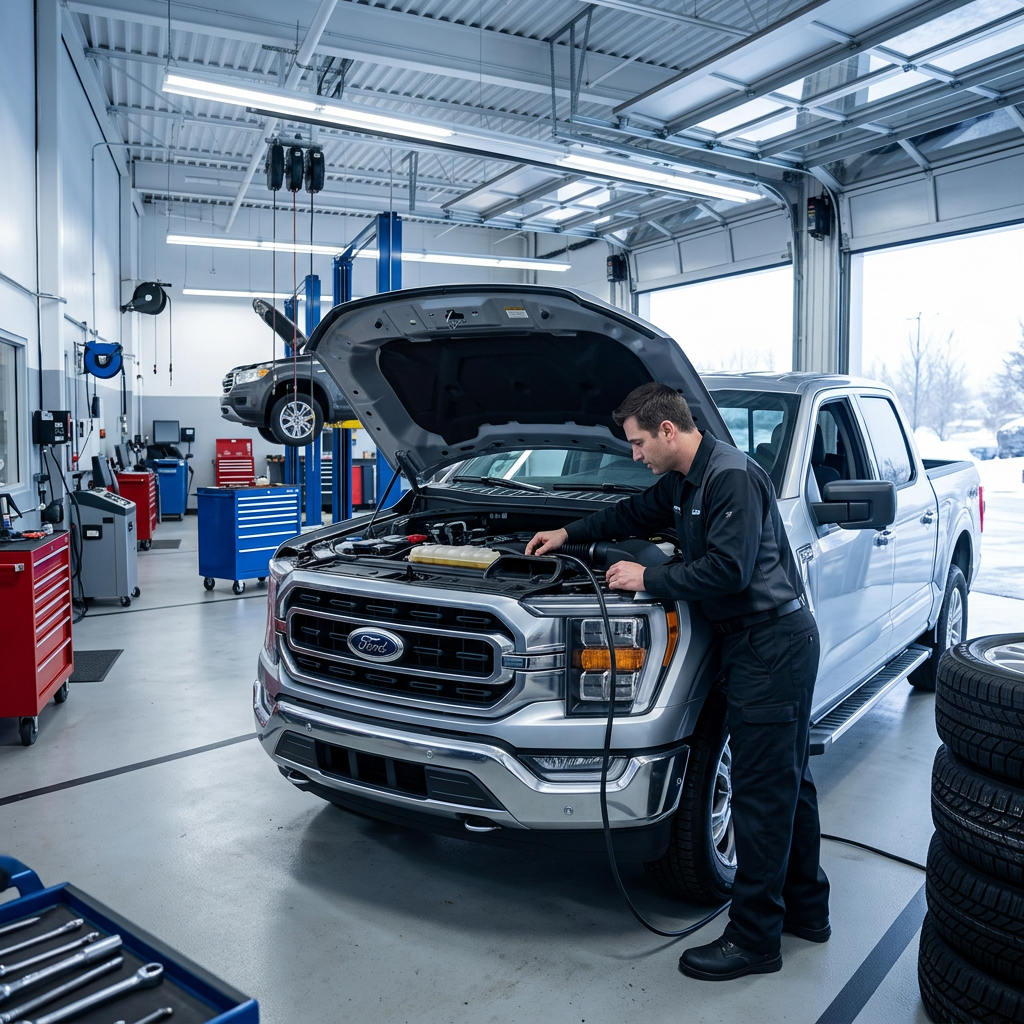
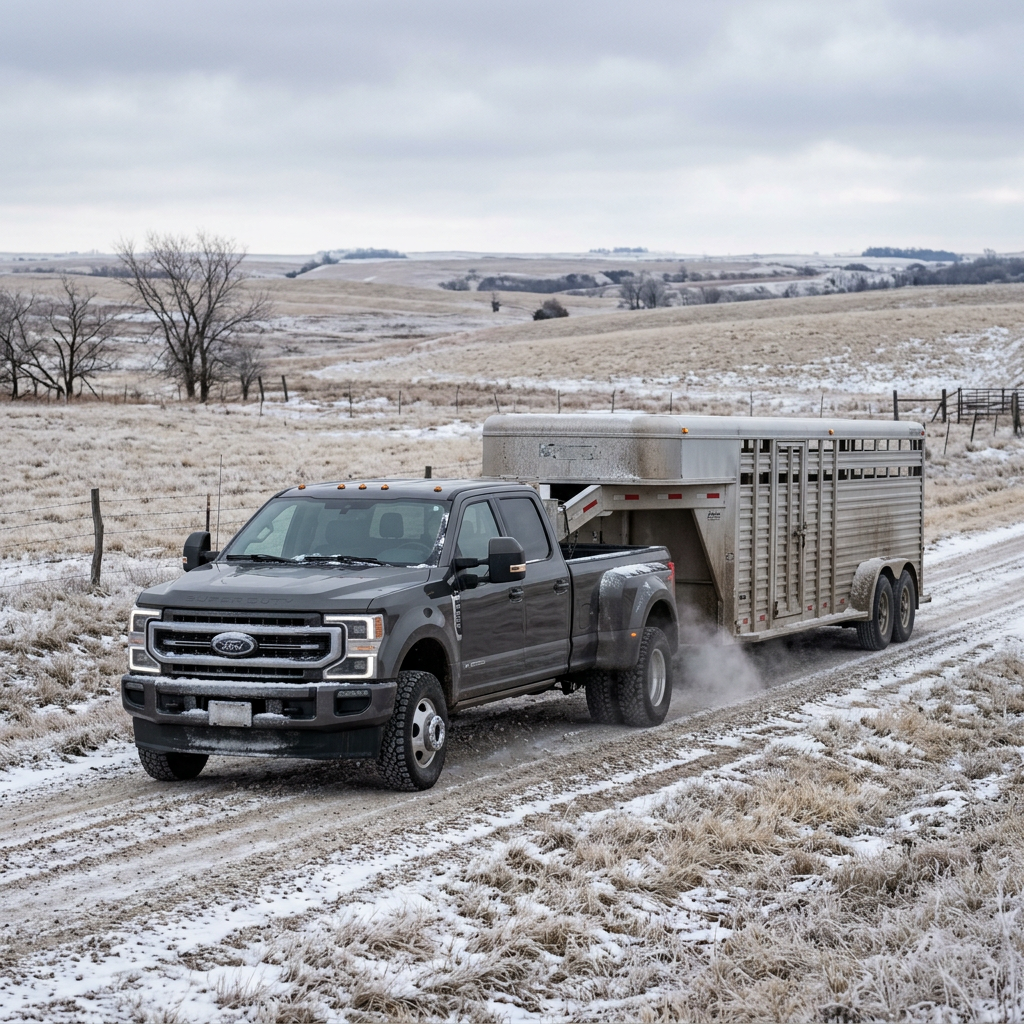
Essential Kansas Winter Freeze Preparation and Agricultural Towing Guide for Ford Super Duty As fall turns to late autumn across Central Kansas, agricultural operators in Dickinson County, Geary County, and the surrounding Flint Hills face one of the most demanding operational windows of the year. Kansas winter freezes bring sudden sub-zero wind chills, heavy frost, and ice-covered gravel lanes. For farmers, ranchers, and commercial haulers rely on the rugged strength of the Ford Super Duty lineup—including the F-250, F-350, and F-450—winter weather is not a reason to pause operations. Heavy grain trailers, livestock stock trailers, round balers, and seed tenders must continue moving regardless of the temperature display in the gauge cluster. To ensure your truck operates reliably when ambient temperatures plummet below freezing, proactive preparation is vital. Preparing your Ford Super Duty requires a dual-focused strategy: safeguarding the high-output 6.7L Power Stroke V8 Turbo Diesel powertrain against cold-weather fuel gelling and electrical strain, while optimizing heavy agricultural towing stability via Ford's available trailer and payload assistance features. Plugging in your factory engine block heater when overnight lows drop under 20°F, treating ultra-low sulfur diesel fuel with anti-gel additives, verifying dual battery cold-cranking amp capacity, and keeping gooseneck tongue weight precisely balanced are essential steps to keep your farm productive and safe. At Valor Ford in Junction City, KS, our team understands the exact pressures Kansas agricultural operations face. Whether you are moving livestock along US-77 or clearing access drives near Fort Riley, this guide details the exact steps needed to protect your Ford Super Duty engine, transmission, and towing assembly before the first sub-zero freeze arrives. What Cold Weather Features Come Standard or Optional on the Ford Super Duty Diesel for Winter Operation? The Ford Super Duty is engineered specifically to tackle extreme ambient conditions. Standard and available cold-weather packages turn the 6.7L Power Stroke V8 Turbo Diesel into an unyielding winter workhorse. Understanding how these features function allows farm operators to optimize efficiency and cabin comfort during early morning chores. available supplemental cab heater: Diesel engines produce exceptional torque but require time to reach optimal operating temperatures in sub-zero air. Ford’s available electric Supplemental Cab Heater provides immediate warm air to defrost windshields and heat the interior long before engine coolant fully warms up. Dual Alternator Systems & Heavy-Duty Glow Plugs: To power high-draw accessories, snowplows, and emergency lighting, Super Duty diesel models offer dual alternator configurations outputting up to 410 amps combined. Fast-acting ceramic glow plugs rapidly preheat cylinder combustion chambers for fast, clean cold starts. Engine Exhaust Brake & Heated Ergonomics: The driver-selectable Engine Exhaust Brake uses the variable-geometry turbocharger to create backpressure, providing controlled deceleration on slick downgrades without overheating friction brakes. Inside, available heated leather seats, heated steering wheels, and heated power-folding mirrors keep drivers focused and comfortable. If you are exploring upgrades for your fleet, you can Research Ford F-250 features directly through our online model guides. Where Is the Engine Block Heater Plug Located on a Ford Super Duty Truck? One of the most frequent questions our service advisors receive at Valor Ford when winter approaches is locating the engine block heater cord. On 6.7L Power Stroke diesel models, the block heater element is recessed into the engine block to heat engine coolant directly. The wiring harness routes forward to the front fascia. Locating the Plug: Look behind the front bumper, tucked into the lower grille opening on the passenger side or near the driver's side tow hook cover (depending on trim year and bumper configuration). The plug is protected by a weather-resistant plastic cap. If the cord is retracted or clipped back for summer driving, unclip the retaining fastener to pull the standard 3-prong plug forward. Best Practices for Extension Cords & Timers: • Always use a heavy-duty, outdoor-rated 10/3 or 12/3 SJOW grounded extension cord rated for 15 amps minimum. Thin household extension cords will overheat and create a fire hazard. • You do not need to run the block heater all night long. A heavy-duty outdoor timer set for 3 to 4 hours before your anticipated departure time provides full preheating benefit while saving electricity. • Plug in the heater whenever ambient overnight temperatures are forecasted to drop below 20°F (-7°C). Pre-warmed engine oil flows immediately upon startup, reducing engine wear and battery strain. What Is the Maximum Gooseneck Towing Capacity of the Ford Super Duty for Agricultural Equipment? When moving large livestock trailers, heavy tractors, or fully loaded grain hoppers across rolling Kansas topography, understanding your truck's Gross Combined Weight Rating (GCWR) and maximum gooseneck towing capabilities is vital for safety and compliance. The Ford Super Duty chassis is engineered with high-strength, fully boxed steel frames and heavy-duty axle assemblies designed to handle tremendous tongue weights. Super Duty Model Configuration Max Gooseneck Towing Max Conventional Towing Max Payload Ford F-250 Super Duty 6.7L Power Stroke V8 / SRW Up to 23,000 lbs Up to 22,000 lbs Up to 4,260 lbs Ford F-350 Super Duty 6.7L High Output Power Stroke / DRW Up to 38,000 lbs Up to 28,000 lbs Up to 8,000 lbs Ford F-450 Super Duty 6.7L High Output Power Stroke / DRW Up to 40,000 lbs Up to 30,000 lbs Up to 8,000 lbs Operating in winter demands extra margin. Snow accumulation on equipment and trailers adds hidden weight, while icy roads reduce traction. Always check your specific driver's door pillar door-jamb sticker for exact GVWR and GAWR figures before hitting the road. To compare towing capacities across our heavy-duty fleet, take a look at our Research Ford F-250 page or check out options for the larger F-350 and F-450. Research Ford F-250 Towing Specs How Do available trailer and payload assistance features Assist with Heavy Agricultural Loads? Real-Time Payload Estimation Ford's Onboard Scales measure real-time payload weight directly in the truck bed using integrated suspension sensors. As grain bags, seed pallets, or tools are loaded, the weight displays dynamically on the 12-inch SYNC 4 touchscreen or through the Ford App. Smart Hitch Tongue Weight Proper tongue weight percentage (10-15% for conventional, 15-25% for gooseneck) is critical to prevent dangerous trailer sway on icy rural roads. Smart Hitch calculates actual tongue weight and advises whether to shift cargo forward or rearward before you pull out. available trailer lighting features When loading equipment in remote pastures without looking at the cab screen, integrated LEDs within the taillights operate like a battery gauge. They illuminate progressively as weight approaches max capacity, flashing if payload limits are exceeded. Can the Ford Super Duty Support a Heavy-Duty Commercial Snowplow for Farm Driveway Clearing? Clearing long farm lanes, cattle feedlots, and private access roads around Junction City, Abilene, and Fort Riley requires serious clearing power. The Ford Super Duty is custom-engineered for heavy snowplow mounting when fitted with the factory Snow Plow Prep Package. Key Components of the Snow Plow Prep Package: • Pre-selected computer-matched heavy-duty front springs designed to handle up to 1,000 lbs of heavy steel V-plow equipment. • High-output alternator options (up to 410A dual alternators) to ensure plow hydraulic pumps do not drain battery reserves. • Heavy-duty frame crossmembers and pre-drilled frame mounting points for secure blade frame attachment. • Upfitter switches integrated into the overhead console, allowing seamless in-cab control of plow lighting, strobe safety lights, and salter/spreader equipment. Preventing Diesel Fuel Gelling and Fuel System Freeze-Ups in Central Kansas Sub-zero cold snaps in Kansas create a distinct hazard for diesel truck owners: fuel gelling. Ultra-Low Sulfur Diesel (ULSD) naturally contains paraffin wax. Under normal summer temperatures, this wax remains liquid. However, as ambient temperatures drop toward the fuel's 'Cloud Point' (typically around 15°F to 20°F), wax molecules begin crystallizing, plugging the fuel filter and starving the high-pressure fuel pump. Step-by-Step Diesel Freeze Prevention: 1. Use Motorcraft Anti-Gel Additive: Treat your fuel tank at every fill-up before freezing temperatures arrive. Anti-gel additives lower the Cold Filter Plugging Point (CFPP) down to -20°F or lower, keeping paraffin wax in liquid suspension. 2. Drain the Water-in-Fuel (WIF) Separator Bowl: Moisture condensation naturally forms inside fuel tanks. If water collects in the lower separator housing, it freezes solid, blocking fuel delivery. Use the drain valve located under the driver's side frame rail to purge water monthly. 3. Replace Primary and Secondary Fuel Filters: Old fuel filters containing trapped debris and residual moisture gel far faster than fresh filters. Replace both filters prior to the first cold front. You can easily Order Genuine Ford Parts including OEM Motorcraft fuel filters directly from our parts center. Order Motorcraft Anti-Gel & Fuel Filters Testing Dual Batteries and High-Output Alternators Before First Freeze Cold Cranking Amps (CCA) At 0°F, a battery loses up to 50% of its cranking power while thick cold engine oil doubles starting resistance. Dual 750+ CCA AGM batteries are necessary to turn over high-compression 6.7L diesel V8s. Digital Load Testing A single weak battery in a dual-battery diesel system will drag down the healthy battery, leading to click-no-start conditions in rural pastures. Individual digital conductance testing identifies failing cells early. Our technicians perform battery conductance testing to verify terminal cleanings, strap tightness, and alternator charging output. Selecting Winter All-Terrain Tires and Maintaining Brake Systems for Heavy Loads Traction is the primary constraint when hauling heavy agricultural loads across frozen pastures or icy highway routes. Standard highway-terrain tires harden in sub-zero cold, significantly lengthening stopping distances. Equipping your F-250 or F-350 with 3-Peak Mountain Snowflake (3PMSF) rated heavy-duty all-terrain tires provides rubber compounds designed to remain flexible below 45°F. Cold Tire Inflation Pressure Drop: Tire pressure drops roughly 1 to 2 PSI for every 10°F drop in outdoor temperature. Running underinflated heavy-duty load-range E or F tires under heavy gooseneck loads causes excessive sidewall flexing and heat buildup, raising blowout risks. Integrated Trailer Brake Controller & Exhaust Brake: • Calibrate your integrated trailer brake controller gain setting on snow or packed gravel. Excessive gain will lock up trailer brakes on slick patches, causing dangerous jackknifing. • Test your 6.7L engine exhaust brake before winter arrives. Selecting Auto mode allows the truck to automatically manage engine braking to maintain set speed down grades, keeping wheel brakes cool and preventing wheel lockup. Pre-Winter Fluid Changes and Undercarriage Corrosion Protection Synthetic Winter Engine Oil Switching to Motorcraft 5W-40 or 0W-40 Synthetic Heavy Duty Diesel Engine Oil ensures immediate oil pump pressure and rapid lubrication to critical turbocharger bearings during initial sub-zero startups. Differential & Transfer Case Service Heavy farm towing strains front/rear differentials and electronic transfer cases. Inspecting fluid levels for moisture contamination or metal shavings prevents costly winter drivetrain failures. Kansas road crews treat highways with liquid magnesium chloride and salt. Applying protective underbody barrier sprays protects steel frame rails and brake lines from chemical corrosion. Equipping Your Super Duty Cab for Extreme Winter Field Emergencies When operating across vast acreage or remote Flint Hills pastures, getting stranded in sub-zero wind chills is a serious safety concern. Equipping your lockable under-seat rear storage with a dedicated farm safety kit ensures you remain warm and self-sufficient until help arrives. Essential Emergency Field Kit Checklist: • Heavy-duty recovery kinetic tow rope (30,000+ lb capacity) and rated soft shackles. • Portable lithium-ion heavy-duty jump pack (capable of starting 6.7L diesels without a second vehicle). • Heavy-duty traction boards, folding snow shovel, and bag of ice-melt gravel. • Thermal emergency blankets, insulated work gloves, high-lumen headlamp, and non-perishable rations. FordPass Connect Remote Features: Leverage FordPass Connect to scheduled remote-start your Super Duty from your smartphone. Set cabin heating and defrosters to activate automatically, allowing the vehicle to reach full operating temperature before you step outside. If your busy schedule leaves little time for dealer visits, you can Schedule Pickup and Delivery Service for routine winter maintenance. Schedule Pickup & Delivery Service Expert Winterization and Heavy-Duty Truck Service in Junction City, KS Valor Ford is proud to serve as the premier heavy-duty truck hub for Junction City, Dickinson County, Geary County, and military families stationed at Fort Riley. Our state-of-the-art service facility features heavy-duty lifts and specialized diagnostic equipment designed specifically for commercial and agricultural Ford Super Duty trucks. Our factory-certified Senior Master Technicians receive specialized training on 6.7L Power Stroke diesels, TorqShift 10-speed automatic transmissions, and electronic 4WD systems. We stock genuine OEM Motorcraft filters, fluids, AGM batteries, and gooseneck hitch components to keep your downtime to a absolute minimum. Stop by our dealership at 1825 Goldenbelt Blvd or Get Directions to Valor Ford to speak directly with our commercial truck service advisors. Schedule Your Ford Super Duty Winterization and Towing Inspection at Valor Ford Don't wait until the first hard freeze locks up your fuel lines or drains your truck battery. Ensure your Ford F-250, F-350, or F-450 Super Duty is completely prepared to handle heavy agricultural towing and harsh winter weather this season. Contact our certified service team today to schedule your comprehensive pre-winter multi-point inspection, diesel fuel system service, battery load test, and gooseneck hitch alignment. Call us at (785) 238-5114 or use our online portal below. If you are also evaluating trade-in options for your current fleet, feel free to fill out our online Trade In Evaluation or Browse Used Inventory today. Schedule Ford Service Today
Key Takeaway: How Ford Terrain Management System Protects Winter Drivers on Interstate 70

Key Takeaway: How Ford Terrain Management System Protects Winter Drivers on Interstate 70

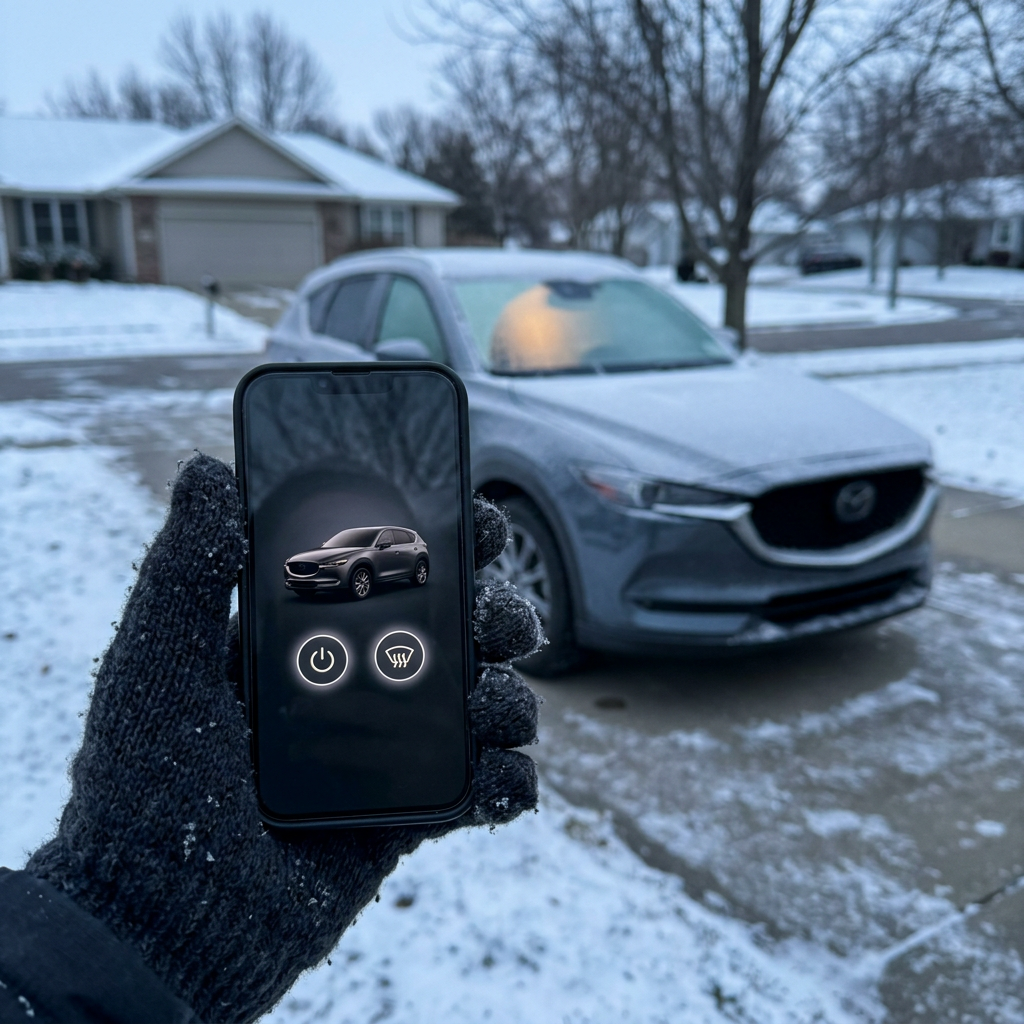
Key Takeaway: How Ford Terrain Management System Protects Winter Drivers on Interstate 70 Driving along Interstate 70 through Central Kansas during the winter months presents severe driving hazards. Freezing winds sweeping across open fields create sudden ground blizzards, black ice on elevated bridges like the Smoky Hill River crossing, and dense slush lanes between Junction City and Salina. The Ford Terrain Management System (TMS) is engineered specifically to eliminate driver uncertainty during these rapid weather shifts. By rotating a simple rotary dial inside the cabin, drivers can select tailored drive profiles such as Slippery or Deep Snow/Sand. This electronically recalibrates vehicle systems in real time—adjusting throttle sensitivity, delaying or accelerating transmission shift points, recalibrating anti-lock brakes (ABS), and modifying front-to-rear torque distribution via Ford Intelligent 4WD. Rather than relying on mechanical lever engagement or reactive wheel spin, Ford TMS acts as an intelligent co-pilot. In Slippery Mode, the vehicle dulls aggressive gas pedal inputs to prevent sudden torque spikes that break tire traction on packed ice. Simultaneously, the Intelligent 4WD transfer case proactively pre-loads power to the front axle before slip occurs. When encountering drifted snow banks along highway exit ramps near Fort Riley, switching to Deep Snow/Sand Mode allows momentum-sustaining wheel slip while aggressive brake-based traction control manages side-to-side power distribution. For drivers negotiating unpredictable prairie winter storms, TMS provides an essential shield against loss of control. Drive Mode Throttle Response Torque Split (Front/Rear) Traction & Stability Control Ideal I-70 Winter Scenario Normal Standard linear pedal mapping 100:0 (proactive auto-engage) Standard slip thresholds Dry pavement between winter storms Slippery Relaxed / reduced sensitivity 50:50 continuous pre-stage split Ultra-sensitive wheelspin prevention Black ice, freezing rain, slush on I-70 bridges Deep Snow / Sand Aggressive momentum response 50:50 locked dynamic distribution Allows controlled slip for momentum Un-plowed off-ramps, high drift snowbanks How Ford Terrain Management System Adjusts Vehicle Controls for Snow, Ice, and Slush Throttle Mapping & Shift Point Calibration When driving on low-friction surfaces like slush or refrozen snow, harsh accelerator inputs can instantly break tire traction. The Ford Terrain Management System alters the electronic throttle profile. In Slippery Mode, pressing the gas pedal yields a gradual, metered rise in engine torque rather than a sudden burst. Simultaneously, the SelectShift high-speed automatic transmission adjusts its shift logic. The system upshifts earlier in the RPM band to keep engine torque manageable and downshifts more smoothly to avoid sudden engine-braking shocks that could unseat rear-wheel traction while coasting down highway grades. ABS & Brake Vectoring Recalibration Traditional Anti-lock Braking Systems (ABS) pulse rapidly to prevent lockup, but packed snow and ice require refined brake pulses to maximize deceleration without causing loss of steering control. Ford TMS updates brake system parameters based on the selected mode. In Deep Snow Mode, the ABS permits brief locking of the wheels. This allows a small wedge of snow to build up in front of the tires, acting as a natural brake block to shorten stopping distances. Additionally, AdvanceTrac with Roll Stability Control works alongside torque vectoring to gently apply individual wheel brakes if yaw sensors detect vehicle rotation on icy I-70 lane changes. How Does Ford Intelligent 4WD Handle Snow and Ice on Winter Highways Like I-70? Older four-wheel-drive systems required drivers to notice loss of traction before manually shifting levers into 4H. Ford Intelligent 4WD operates continuously through predictive electronics. Sampling dozens of vehicle sensors hundreds of times per second, the system tracks individual wheel speed, steering wheel angle, lateral acceleration, windshield wiper activation, and ambient air temperatures. If you are traveling west on I-70 toward Abilene and hit a patch of black ice on an overpass, Intelligent 4WD doesn't wait for a wheel to spin. The system measures micro-slips before they escalate and routes up to 100% of available rear engine torque to the front wheels (or vice versa) via an electro-hydraulic clutch assembly. This seamless transfer of drive force maintains directional stability without driver intervention. What Is the Difference Between Ford Intelligent 4WD and Traditional 4WD High/Low Modes? Ford Intelligent 4WD (Single-Speed) Found on vehicles like the Explorer and Bronco Sport. Uses an electronic clutch pack for instant torque distribution on dry, wet, or icy roads without drivetrain binding. No low-range gear selection needed for highway winter conditions. Traditional 4x4 High / Low Modes Found on heavy-duty trucks like the F-150 and F-250 Super Duty. Features a mechanical transfer case with 2H, 4H, and 4L low-range gearing. Designed for heavy towing, deep mud, or unpaved snow conditions. Pavement Compatibility & Efficiency Intelligent 4WD can remain active permanently on dry asphalt without driveline wear or tire hopping during sharp turns. Traditional 4H must be turned off on dry pavement to prevent transfer case strain. Explore New Ford 4WD SUV Inventory Can Ford BlueCruise Be Used During Severe Winter Snowstorms or Icy Conditions? No, Ford BlueCruise hands-free highway driving should not be activated during severe winter snowstorms, active ice storms, or heavy slush conditions. BlueCruise relies on clear optical camera visibility to read painted lane markers along approved Hands-Free Blue Zones like I-70. When snow drifts cover pavement markings, radar sensors become caked with highway slush, or traction is compromised by black ice, BlueCruise will prompt the driver to resume manual control with visual and audible alerts. During winter weather, driving safety requires human judgement, manual throttle modulation, and tactile steering feedback. Always use hands-on driving when roads are slick. How Do You Clean Snow and Road Salt Off Ford BlueCruise Radar Sensors and Cameras? 1. Front Grille Radar Pod The front radar sensor is located in the center grille or lower bumper. Clear heavy snow build-up gently using a soft brush or microfiber towel. Never scrape radar covers with hard plastic ice scrapers as scratches can distort millimeter-wave radar signals. 2. Windshield Camera Housing The forward-facing camera sits behind the upper center windshield near the rearview mirror. Ensure your windshield defrost is running and keep windshield washer fluid topped off with low-freeze rated (-20°F) fluid to clear salt spray without smearing. 3. Side Mirror & Ultrasonic Sensors Side-view mirror cameras and bumper-mounted ultrasonic sensors collect road grime rapidly. Wipe camera lenses with a damp microfiber cloth and automotive-grade washer fluid to remove corrosive calcium chloride salt deposits. How Does Ford App Remote Start Help Melt Ice Off Sensor Camera Zones Before Driving? Pre-conditioning your vehicle is one of the most effective ways to prepare for a safe winter highway trip. Utilizing the Ford App Connect App, drivers can schedule pre-departure times or activate Remote Start directly from a smartphone. When engaged in sub-freezing temperatures, Ford Remote Start automatically powers up internal heating systems: full windshield defrosters, heated rear glass, side mirror heating elements, and heated wiper park zones. Radiating warmth thaws ice accumulation around upper windshield camera housings and mirror lenses before you ever step outside. This ensures your vehicle's driver-assist safety camera array is clear and operational prior to pulling onto I-70. If you have questions about syncing your smartphone, check our guides or Schedule Ford Service Today at Valor Ford. Schedule Winter Service Inspection Navigating I-70 Winter Conditions: Ford Intelligent 4WD and BlueCruise Driving Tips Navigating Interstate 70 between Junction City, Fort Riley, and Abilene during Kansas winter storms requires combining state-of-the-art vehicle technology with proactive driving habits. High prairie crosswinds regularly blow loose snow across the lanes, creating localized ground blizzards and unexpected drifts near highway bridges and overpasses. I-70 Hazard Location Environmental Condition Recommended Ford Mode / Feature Best Driver Action Smoky Hill River Bridge Flash black ice freeze Select Slippery Mode Maintain steady speed, avoid hard braking Open Prairie Corridors 40+ mph winter crosswinds AdvanceTrac & Side-Wind Stabilization Keep both hands firm on wheel, disable cruise control Exit Ramps (Junction City) Deep slush & plow windrows Select Deep Snow / Sand Mode Maintain momentum, turn into skid if tail breaks free How Much Does Ford Intelligent 4WD Add to the Total Vehicle Cost? When configuring a new Ford vehicle, adding Intelligent 4WD may affect MSRP on trims where front-wheel-drive or two-wheel-drive is standard. On popular Midwest utility models such as the Ford Bronco Sport, Explorer Timberline, and Expedition, Intelligent 4WD is standard equipment. From a long-term value perspective, four-wheel drive vehicles retain a significantly higher percentage of their value in Kansas and throughout the Great Plains region. Furthermore, the enhanced safety, capability, and winter peace of mind far outweigh the modest initial investment when commuting along snowy stretches of I-70. If you are curious about current trade valuation, check out our Trade In Evaluation tool. Preparing Your Ford Vehicle for Winter Highway Drives Across Central Kansas Tires & Tread Inspection Intelligent 4WD depends on tire friction. Ensure tread depth is above 5/32" for winter driving or upgrade to 3PMSF (Three-Peak Mountain Snowflake) rated tires available through our parts center. Battery & Electrical Test Cold temperatures reduce battery capacity by up to 50%. Have your Motorcraft battery conductance tested at Valor Ford before low winter temperatures arrive. Wiper Blades & Fluid Install heavy-duty beam wiper blades designed to resist ice buildup and top off with washer fluid rated to -20°F or lower to maintain clear camera sightlines. Order Genuine Ford Winter Parts Experience Ford Terrain Management System at Valor Ford in Junction City, KS Whether you are commuting along I-70 between Junction City and Fort Riley or planning winter family road trips, Valor Ford is your trusted winter driving authority in Central Kansas. Our certified Ford team can walk you through the Ford Terrain Management System, demonstrate Intelligent 4WD live, or inspect your vehicle before freezing weather arrives. Visit us today at 1825 Goldenbelt Blvd in Junction City, KS. Get Directions to Valor Ford or Call us at (785) 238-5114 to speak directly with our team. Contact Us About Financing

Preparing Your 4WD Ford Truck for Kansas Winter: Expert Service Advice from Valor Ford

Preparing Your 4WD Ford Truck for Kansas Winter: Expert Service Advice from Valor Ford

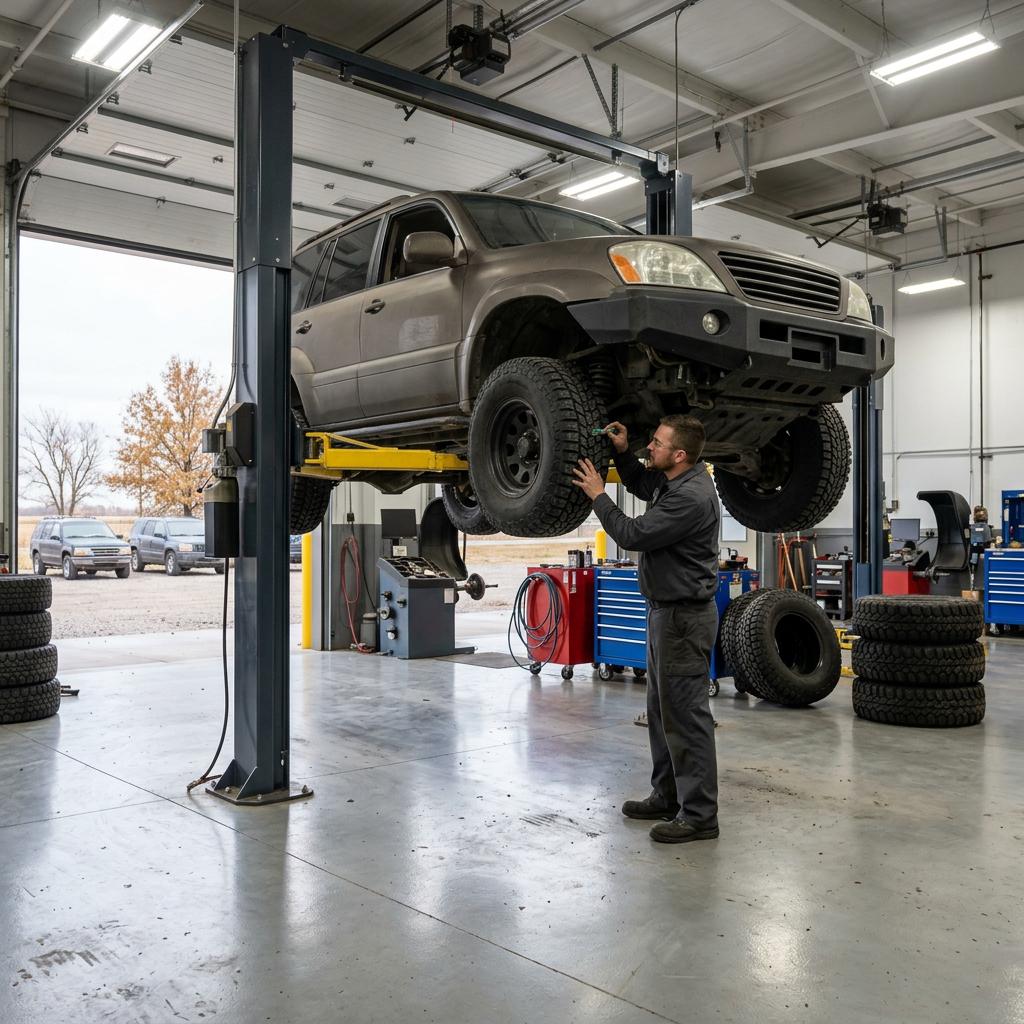
Preparing Your 4WD Ford Truck for Kansas Winter: Expert Service Advice from Valor Ford What is the Cost to Install an Engine Block Heater on a Ford F-150? Installing an engine block heater on a Ford F-150 typically costs between $150 and $350 for parts and labor when completed at a factory-authorized service center, whereas ordering the heating element pre-installed from the factory on a new truck build generally costs around $90 to $120. The total retrofit cost depends on your truck's engine configuration and whether additional wiring harnesses or coolant flushes are required during installation. In my 20 years managing truck maintenance in our service department, I have found that an engine block heater is one of the most cost-effective winter additions you can make for hard Kansas freezes. The heating element sits directly in an engine block freeze plug port, submerging into the engine coolant jacket. When plugged into a standard 110-volt household outlet, it warms the engine block and internal fluids, allowing motor oil to maintain fluid viscosity before you turn the key. Retrofitting an aftermarket heater requires draining the engine cooling system, removing a freeze plug or threading into a designated port on blocks like the 3.5L EcoBoost V6, mounting the element, routing the heavy-duty power cord safely through the front grille, and performing a full coolant vacuum refill. If you are reviewing 2026 Ford F-150 service details or getting your current truck ready for sub-zero mornings, our shop can complete this procedure in a single afternoon. For drivers scheduling maintenance in town, you can check our service center location or give us a quick call at (785) 238-5114 to verify current labor rates and part availability for your model year. Beyond effortless morning ignition, a block heater significantly reduces starter motor draw and cold-start cylinder wear. Because the engine block reaches operating temperature faster, your truck's climate control system starts blowing warm air into the cabin almost immediately, eliminating long idling periods on frozen driveways. Table of Contents How Long Should an Engine Block Heater Be Plugged In Before Starting? What is the Difference Between 4A and 4H and Which is Better on Icy Highways? Do 3-Peak Mountain Snowflake (3PMSF) Rated All-Terrain Tires Work Well in Kansas Winters? Are Dedicated Snow Tires Better Than All-Terrain Tires for Kansas Driving? Which 4WD-Specific Checks and Operating Cautions Matter Before Kansas Winter? How Long Should an Engine Block Heater Be Plugged In Before Starting? An engine block heater only needs to be plugged in for 2 to 3 hours prior to starting your truck to heat the engine block and coolant to optimal starting temperature. Leaving the heater plugged in all night provides no additional thermal benefit and unnecessarily increases your monthly electric bill. The heat transfer inside the engine reaches thermal equilibrium after roughly three hours. Once the block and coolant reach roughly 100 to 120 degrees Fahrenheit above ambient temperature, heat dissipates into the surrounding cold air as fast as the heating element generates it. Plugging the truck in for eight hours overnight simply draws electricity without raising engine oil or coolant temperatures any further. To simplify your morning routine, I always recommend using a heavy-duty outdoor grounding timer rated for at least 15 amps. You can set the timer to energize three hours before your morning commute. If you need a replacement power cord or factory terminal cap, our team can help you with ordering genuine Ford parts and accessories designed specifically for your truck's front bumper harness. Using a block heater for those two to three hours keeps internal engine lubricants flowing freely the moment the crankshaft turns. Standard motor oil thickens when ambient temperatures drop toward zero, forcing the oil pump to work harder to build upper valvetrain pressure. Pre-heating the engine protects vital internal bearings, Turbocharger feed lines, and valve actuators during those crucial first few seconds of cold operation. What is the Difference Between 4A and 4H and Which is Better on Icy Highways? The mechanical difference between 4A and 4H is that 4A (4WD Auto) utilizes an electronically controlled center clutch pack to dynamically distribute torque between the front and rear axles on demand, whereas 4H (4WD High) mechanically locks the front and rear driveshafts together at a rigid 50/50 torque split. For driving on icy highways with variable road conditions, 4A is vastly superior and safer because it allows the front and rear axles to rotate at different speeds during turns, eliminating dangerous driveline binding. Highway driving during a Midwestern winter rarely presents uniform surface conditions. You often encounter alternating stretches of packed snow, wet slush, black ice on bridge decks, and completely bare, dry asphalt. Operating in 4H on dry pavement causes severe driveline binding because your front tires must travel along a wider turning radius than your rear tires during lane changes or gentle curves. On high-traction surfaces, the locked transfer case cannot slip, forcing tires to hop—a phenomenon known as crowhopping—which places immense mechanical strain on axle shafts, universal joints, and internal transfer case gears. In contrast, 4A mode continuously monitors wheel speed sensors, throttle position, and steering angle. The system operates primarily in rear-wheel drive to optimize fuel efficiency, but instantly energizes the electromagnetic clutch to direct torque forward the millisecond rear wheel slip is detected. Across the rolling farmland and open prairie roads of Dickinson County, where ground winds drift snow across dry pavement without warning, 4A gives drivers automatic front-wheel pull precisely when needed without requiring manual lever or dial adjustments while driving. Reserve 4H strictly for continuous, unpaved ice or deep, unbroken snow where maximum, uninterrupted four-wheel traction is required at lower speeds. Do 3-Peak Mountain Snowflake (3PMSF) Rated All-Terrain Tires Work Well in Kansas Winters? 3-Peak Mountain Snowflake (3PMSF) rated all-terrain tires perform exceptionally well in Kansas winter conditions, delivering reliable acceleration and cornering stability in deep snow, slush, and light ice without the need to swap tires every spring. Unlike standard M+S (Mud and Snow) branded tires, 3PMSF-certified tires undergo rigorous standardized industry testing to prove they deliver at least 10 percent greater acceleration traction on medium-packed snow. The performance gap comes down to tread rubber compounding and siping density. Standard all-season tire rubber hardens when ambient temperatures drop below 45 degrees Fahrenheit, becoming stiff and losing its ability to grip subtle road imperfections. 3PMSF-rated all-terrain tires feature advanced silica-infused rubber compounds that remain flexible in sub-freezing temperatures, allowing the tread blocks to conform to icy road surfaces. Modern 3PMSF all-terrain tires incorporate high-density zigzag sipes—microscopic slits cut into the tread blocks—that bite into hard-packed snow and create snow-on-snow traction. Aggressive outer shoulder lugs and deep perimeter grooves also channel thick slush away from the tire footprint, preventing high-speed slushplaning on highway lanes. For truck owners who haul trailers, drive on gravel roads, or use their vehicles for work throughout the year, a 3PMSF-rated all-terrain tire offers impressive multi-season versatility. If you want to check your current tire tread depth or rubber pliability before winter hits, consider scheduling a winter tire inspection online with our certified technicians. Are Dedicated Snow Tires Better Than All-Terrain Tires for Kansas Driving? Dedicated winter snow tires outperform all-terrain tires on glare ice, hard-packed snow, and frozen asphalt because they utilize soft rubber compounds and dense siping designed exclusively for freezing friction. On sheer ice, dedicated winter tires can reduce braking distances by up to 30 percent compared to standard or all-terrain tires. While 3PMSF all-terrain tires excel in deep snow and off-road slush, dedicated winter tires feature a much softer tread compound packed with specialized microscopic sipes across every square inch of the tread face. These sipes create thousands of biting edges that slice through the microscopic water film created by friction on ice, granting superior lateral grip during emergency lane changes and sudden stops. Tire Type Best Surface Application Sub-Zero Rubber Flexibility Ice Braking Performance Year-Round Driving Suitability All-Season Tires Mild rain and dry pavement above 45°F Hardens in cold weather Moderate to poor stopping distances Excellent summer and fall wear 3PMSF All-Terrain Tires Deep snow, slush, gravel, and trail use Remains flexible below 45°F Strong snow traction; moderate ice grip Excellent year-round option Dedicated Snow Tires Glare ice, packed snow, and sub-zero roads Maximum softness in extreme cold Shortest stopping distance on ice Low (soft rubber wears fast above 45°F) The primary downside of dedicated winter tires on a heavy truck is rapid tread wear when driven on dry, warm asphalt. If you frequently tow heavy loads or drive long highway distances once roads clear, the ultra-soft rubber of a dedicated snow tire wears quickly. For most Kansas pickup owners, a high-quality 3PMSF-rated all-terrain tire provides the best practical balance between winter safety and long-term tread life. Which 4WD-Specific Checks and Operating Cautions Matter Before Kansas Winter? Preparing your truck's four-wheel-drive system for winter requires inspecting transfer case and differential fluids, testing integrated wheel end (IWE) vacuum actuators, verifying battery cold-cranking capacity, and calibrating terrain management modes like Slippery mode. Performing these checks before freezing weather arrives prevents slow front-axle engagement, vacuum leaks, and unexpected mechanical fault codes on frozen roads. Low ambient temperatures increase fluid viscosity inside driveline components. If your transfer case or differential fluid is old or contaminated with moisture, cold weather makes the fluid thick and sludge-like, delaying internal clutch engagement. Servicing transfer cases with factory-specified lubricants like Motorcraft MERCON LV protects internal planetary gear sets and multi-plate clutch packs from premature wear. Technicians also test front hub vacuum lines and IWE actuators to ensure smooth hub engagement when switching drive modes. Battery health is equally critical for modern electronic 4WD systems. Cold weather slows down internal battery chemical reactions, reducing cold-cranking amps right when the engine requires maximum electrical energy to turn over. Electronic transfer case shift motors and electromagnetic engagement clutches draw significant electrical current; a marginal battery can cause voltage drops that prevent the 4WD system from engaging properly during a cold start. Winter Driveline Inspection Checklist: 1. Transfer Case Lubricant: Check fluid level and clarity (recommend MERCON LV replacement every 30,000 to 60,000 miles). 2. Front & Rear Differentials: Inspect gear oil levels and check housing seals for fluid weeping. 3. Hub Actuators & Vacuum Lines: Test Integrated Wheel End (IWE) engagement and vacuum line integrity. 4. Battery Load Test: Verify Cold Cranking Amps (CCA) output and clean battery terminal posts. 5. Electronic Drive Modes: Test selector dial function to confirm smooth switching between 2H, 4A, 4H, and Slippery mode. In our shop, owners ask whether leaving 4A mode engaged full-time drops fuel economy during cold snaps—it can slightly lower efficiency depending on driving conditions, but the instant traction on variable winter roads is well worth it. For drivers managing daily commutes around Junction City, taking time for a seasonal driveline checkup ensures complete confidence when winter storms roll in. To get your truck ready for the cold months ahead, stop by for a quick checkup by visiting our dealership or reach out to our service team at (785) 238-5114 to reserve your appointment. © 2026 Valor Ford. All rights reserved. Vehicle specification data © JATO Dynamics Limited.

2024 Ford Edge AWD: SE, SEL, ST, ST-Line, Titanium Compared

2024 Ford Edge AWD: SE, SEL, ST, ST-Line, Titanium Compared

The 2024 Ford Edge is the right choice for families and professionals who need a genuine five-passenger midsize crossover with standard all-wheel drive, a quiet cabin, and practical cargo space — starting at $38,465 for the SE AWD. Four of the five trims share a 250 hp EcoBoost engine rated at 23 mpg combined, while the ST AWD steps up to 335 hp and 3,500 lbs of towing. Backed by a 5-Star Overall Safety Rating from the National Highway Traffic Safety Administration, the Edge delivers real daily-driver value across every trim. How Well Does the 2024 Ford Edge Serve Military Families and Outdoor Enthusiasts in Geary County? The 2024 Ford Edge is built for exactly the kind of life common around Fort Riley and the Kansas River corridor — a mix of base commutes, school runs, weekend fishing trips, and the occasional haul across the flat-to-rolling plains of Geary County. Every trim in the lineup comes standard with Intelligent All-Wheel Drive, meaning there is no upgrade needed to get confident traction on wet river-valley roads or slick Kansas winter mornings. The standard powertrain — a 2.0L EcoBoost producing 250 hp and 280 lb-ft of torque — handles daily commuting efficiently, returning 21 city / 28 highway / 23 combined mpg across the SE AWD, SEL AWD, ST-Line AWD, and Titanium AWD trims. Families who want more pulling power for a small boat trailer or utility trailer can look to the ST AWD, which upgrades to a 2.7L EcoBoost with 335 hp, 380 lb-ft of torque, and a towing rating of 3,500 lbs — though its fuel economy adjusts to 19 city / 25 highway / 21 combined mpg. Feature SE AWD SEL AWD ST AWD ST-Line AWD Titanium AWD Engine 2L 2L 2.7L 2L 2L Horsepower 250 hp 250 hp 335 hp 250 hp 250 hp Torque 280 lb-ft 280 lb-ft 380 lb-ft 280 lb-ft 280 lb-ft All trims share: Transmission: SelectShift · Drivetrain: All-wheel drive Feature SE AWD SEL AWD ST AWD ST-Line AWD Titanium AWD MPG 21 city / 28 hwy / 23 combined 21 city / 28 hwy / 23 combined 19 city / 25 hwy / 21 combined 21 city / 28 hwy / 23 combined 21 city / 28 hwy / 23 combined Whether you are looking for a primary family vehicle or a reliable second vehicle for a military household, Valor Ford maintains a selection of pre-owned Edge models that may offer good value for value-focused shoppers. The Edge's combination of standard AWD, efficient fuel economy, and proven five-star safety credentials makes it a natural fit for the demands of Geary County life. Rugged Style That Matches Military and Small-Town Kansas Life in the 2024 Ford Edge The 2024 Ford Edge carries a clean, upright crossover silhouette that reads as professional without being flashy — a balance that suits both the discipline of military life and the practical sensibility of small-town Kansas communities. Its exterior measures 188.8 inches in overall length and 75.9 inches in width, giving it a substantial road presence without the bulk of a full three-row SUV. LED projector-beam headlights are standard across all five trims, providing strong nighttime visibility on the unlit rural roads that connect Junction City to surrounding communities. Daytime running lights are also standard, keeping the Edge visible in the bright Kansas sun or through early-morning fog along the river valleys. Trim-level exterior details do differ in meaningful ways. The SE AWD features black door mirrors and black window trim, giving it a more understated, blacked-out look. The SEL AWD and Titanium AWD swap in chrome window surrounds for a more refined appearance, while the ST AWD and ST-Line AWD lean into a sportier character with black trim accents and body-color painted bumpers across all trims. The Black Appearance Package available on the SE AWD adds 19-inch wheels and contrasting mirror caps for those who prefer a bolder stance. Seven exterior colors are available across the lineup, including Oxford White, Agate Black Metallic, Atlas Blue Metallic, Iconic Silver Metallic, Carbonized Gray Metallic, Stone Blue Metallic, and Forged Green Metallic — a palette that covers both conservative and expressive preferences. If you are considering trading in a current vehicle toward an Edge, Valor Ford makes it simple to get an estimate on your trade-in before you visit the showroom. Power and Efficiency for Plains, River Valleys, and Base Commutes with the 2024 Ford Edge AWD Trims Four of the five Edge trims run on Ford's turbocharged 2.0L EcoBoost four-cylinder, paired with an 8-speed SelectShift automatic transmission. That combination produces 250 hp at 5,500 rpm and 280 lb-ft of torque at 3,000 rpm — numbers that translate into confident merging on the highway and relaxed passing on two-lane county roads. The fuel tank holds about 18.5 gallons, and at the combined rating of 23 mpg, those four trims have a calculated range of approximately 426 miles per fill — more than enough for a round trip from Junction City to Kansas City and back without stopping. The ST AWD is a different proposition. Its twin-turbocharged 2.7L EcoBoost V6 produces 335 hp at 5,550 rpm and a substantial 380 lb-ft of torque at 3,250 rpm, routed through a 7-speed SelectShift automatic. The ST also comes with a sport-tuned suspension as standard, making it the most driver-focused option in the lineup. Its calculated range drops to approximately 403 miles at the combined rating of 21 mpg, a modest trade-off for the added output. All five trims use Ford's Intelligent All-Wheel Drive with Torque Vectoring Control, which continuously monitors road conditions and distributes power between the front and rear axles automatically — no driver input required. On the gently rolling plains and river valley terrain typical of Geary County, this system keeps the Edge planted without drama. Feature SE AWD SEL AWD ST AWD ST-Line AWD Titanium AWD Curb weight 4,122 lbs 4,122 lbs 4,525 lbs 4,122 lbs 4,122 lbs Towing 1,500 lbs 1,500 lbs 3,500 lbs 1,500 lbs 1,500 lbs All trims share: Seating: 5 · Cargo: about 39 cu ft The base towing rating of 1,500 lbs on the SE AWD, SEL AWD, ST-Line AWD, and Titanium AWD is sufficient for a small utility trailer or a personal watercraft on the Kansas River. The SEL AWD also offers the optional Class II Trailer Tow Package with Trailer Sway Control, which increases its towing capacity to 3,500 lbs — matching the ST AWD's standard rating. The Titanium AWD similarly offers this package as an option. If you are ready to take the next step, Valor Ford offers a straightforward way to get pre-approved for financing online before you visit the dealership. Browse Used Inventory Roomy Cabin for Family Gear and Weekend Adventures on the Kansas River in the 2024 Ford Edge The Edge's interior dimensions are where the vehicle earns its keep for families loading up for a day along the Kansas River. Front headroom measures 40.2 inches, rear headroom 40.3 inches, front legroom 42.6 inches, and rear legroom 40.6 inches — a rear seat that can genuinely accommodate adults on longer drives, not just children on school runs. Shoulder room spans 60.3 inches up front and 60.5 inches in back, so three across in the rear is a realistic option for smaller passengers. Cargo space behind the rear seat measures about 39 cu ft, and with the rear seats folded flat that figure expands to about 73 cu ft — enough room for camping gear, fishing equipment, athletic bags for multiple kids, or a full load of supplies for a small business run across Geary County. The rear seats fold asymmetrically, so partial loads are easy to manage without losing a passenger seat. Interior materials and seating surfaces vary meaningfully by trim. The SE AWD comes standard with cloth upholstery in Ebony or Dune. The SEL AWD steps up to synthetic leather as standard, with ActiveX seating surfaces available as an option. The ST AWD features synthetic suede with leather bolsters as its base interior, with the optional ST Interior Appearance Package adding full leather. The ST-Line AWD offers ActiveX with Miko inserts as its primary interior choice. The Titanium AWD uses ActiveX trimmed with FreeForm synthetic leather in Ebony or Medium Soft Ceramic colorways, with a standard heated steering wheel adding a welcome touch of comfort on cold Kansas mornings. Dual-zone automatic climate control is standard across all five trims. Four USB charging ports — two up front and two in the rear — keep devices powered for every passenger. If you plan to add accessories like cargo organizers or all-weather floor mats, Valor Ford can help you order genuine Ford parts and accessories to fit your Edge precisely. Stay Connected to Your Community Wherever You Go with 2024 Ford Edge Technology A 12-inch touchscreen is standard across all five Edge trims, paired with a 4.2-inch instrument cluster display. Wireless Apple CarPlay and wireless Android Auto come standard, so phones connect without cables — a practical detail for families juggling multiple devices on the way to school or the base. Both integrations are included for the life of the vehicle with no subscription expiration. The built-in Wi-Fi hotspot provides 3 GB of data per month for an initial 3-month trial period, giving passengers connectivity even in areas where cell coverage is thin. Ford's 911 Assist telematics system, included across all trims, automatically contacts emergency services in the event of a collision — a meaningful feature for anyone driving rural roads where cell signal can be unreliable. Remote services — including remote start, remote lock and unlock, vehicle diagnostics, and find-my-car functionality — are included through Ford's connected services platform. Remote climate control, covering both heating and cooling, lets drivers pre-condition the cabin before getting in, which matters during Kansas summer heat or a cold winter morning on the plains. The SEL AWD and Titanium AWD offer the Ford Co-Pilot360 Assist Plus Package, which adds adaptive cruise control with stop-and-go functionality and built-in navigation with a 12-inch display, satellite view, touch-screen controls, internet-connected data, and 12 months of traffic information. The ST AWD includes the Equipment Group 401A, which bundles similar navigation, adaptive cruise, a panoramic glass roof option, wireless charging, and a garage door opener. The ST-Line AWD and Titanium AWD also offer the Co-Pilot360 Assist Plus Package as an available upgrade for drivers who want the full suite of highway driver assistance technology. The ST AWD and Titanium AWD both include a Bang & Olufsen 12-speaker audio system with subwoofer and surround sound as standard — a noticeable step up from the 6-speaker system found on the SE AWD, SEL AWD, and ST-Line AWD. Peace of Mind for Military Families on Rural and Urban Roads: 2024 Ford Edge Safety Features The 2024 Ford Edge earned a 5-Star Overall Crash Rating from the National Highway Traffic Safety Administration — the highest possible score — with a 5-star frontal crash rating and a 5-star side impact rating. The IIHS awarded "Good" ratings in the moderate overlap front test, side impact test, and small overlap front driver-side test, with "Advanced" ratings in front crash prevention for both standard and optional pedestrian detection configurations. Every trim in the lineup carries Pre-Collision Assist with Automatic Emergency Braking (AEB) as standard equipment. The system activates at speeds as low as 3 mph, providing low-speed braking intervention in stop-and-go traffic — the kind of driving common on base entry roads and Junction City's main corridors. The standard Lane-Keeping System monitors lane markings and applies gentle steering corrections when the vehicle begins to drift without a turn signal. Blind Spot Information System (BLIS) with Cross-Traffic Alert is standard across all five trims, using radar to monitor the rear quarters and warn of approaching vehicles when reversing — particularly useful in busy parking lots. The Edge's airbag system includes 8 total airbags: intelligent dual front airbags for both driver and passenger, front side airbags, front and rear side curtain airbags, and driver and passenger knee airbags. Front and rear head restraints are height-adjustable, and all rear seat positions include 3-point seat belts including the center position. LATCH child-seat anchor points are present, and the vehicle includes an accident data recorder and emergency call capability. The Titanium AWD and ST AWD add a Forward Sensing System as standard, providing front parking sensors in addition to the rear sensors found across all trims. Get Pre-Approved for Financing Breaking Down 2024 Ford Edge Pricing and Trims The 2024 Ford Edge lineup spans five AWD trims, with a destination charge of $1,495 applicable to all of them; contact the dealership for the most current pricing and availability. The SE AWD opens the range at $38,465 MSRP, offering cloth seating, an 18-inch alloy wheel, the 12-inch touchscreen, dual-zone climate control, and the full suite of standard safety technology. It is the most accessible entry point, and it includes more standard safety content than many shoppers expect at this price. Feature SE AWD SEL AWD ST AWD ST-Line AWD Titanium AWD Base MSRP $38,465 $39,665 $47,205 $43,720 $43,820 All trims share: Destination charge: $1,495 The SEL AWD at $39,665 adds synthetic leather seating, a leather-wrapped steering wheel, heated front seats, heated mirrors, a power driver seat with electric lumbar, and front fog lights. It also opens the door to meaningful option packages including the Convenience Package (which adds a power liftgate, wireless charging pad, and garage door opener), the Ford Co-Pilot360 Assist Plus Package, and the Class II Trailer Tow Package. The ST-Line AWD at $43,720 and Titanium AWD at $43,820 sit close together in price but serve different buyers. The ST-Line prioritizes sport styling — black trim accents, 20-inch wheels, a sport-tuned suspension, and synthetic suede interior — while the Titanium leans into comfort with a memory driver seat, Bang & Olufsen audio, heated steering wheel, and the upscale FreeForm ActiveX seating surfaces. Both offer the panoramic Vista Roof as an option. The ST AWD at $47,205 is a separate proposition — the only trim with the 2.7L EcoBoost V6, standard Trailer Sway Control, sport-spec brakes, and the Bang & Olufsen sound system. It is the choice for drivers who genuinely want the most power and the highest towing capacity in the Edge lineup. Trade In Evaluation Warranty, Maintenance, and Service Insights for 2024 Ford Edge Owners The 2024 Ford Edge comes with Ford's standard warranty package: a 3-year / 36,000-mile bumper-to-bumper limited warranty, a 5-year / 60,000-mile powertrain warranty, a 5-year corrosion/perforation warranty, a 3-year / 36,000-mile paint warranty, and 5-year / 60,000-mile roadside assistance coverage. The roadside assistance program provides manufacturer-backed support for the duration of the coverage period — giving military families and commuters in Geary County confidence that help is available on rural roads as well as in town. The powertrain warranty is particularly important for buyers who plan to put consistent highway miles on the vehicle during regular base commutes or longer trips. At 60,000 miles of coverage, most drivers will remain within warranty protection through several years of daily use. For ongoing maintenance, Valor Ford's service team at 1825 Goldenbelt Blvd, Junction City, KS 66441 is equipped to handle all Ford-scheduled service intervals using genuine parts and trained technicians who know the Edge's systems. Keeping up with factory maintenance schedules protects both the powertrain warranty and the vehicle's long-term reliability. You can book your Ford service appointment online at any time to find a slot that fits your schedule. Schedule Ford Service Today Awards and Expert Recognition Highlighting the 2024 Ford Edge's Strengths The 2024 Ford Edge earned the 5-Star Overall Safety Rating — National Highway Traffic Safety Administration (2024), the agency's highest designation, covering frontal crash, side impact, and rollover resistance testing. This rating applies across the Edge lineup and is one of the clearest third-party signals of structural integrity and occupant protection. Beyond crash testing, automotive publications have consistently noted the Edge's real-world strengths. Car and Driver observed that the seats are cushy and the cabin is hushed, with enough space to comfortably contain four adults — a point that resonates for families who spend real time in the vehicle rather than just shopping for specs on paper. Edmunds noted that the seats are wide with sufficient contours to hold occupants in place and provide great road-trip comfort, which matters on longer drives between military bases and home communities. U.S. News & World Report noted that despite its age, the 2024 Ford Edge remains competitive thanks to its all-around competence and solid value — a fair summary of a vehicle that has been refined over time rather than left static. Kelley Blue Book pointed to the Edge's sharp styling, spacious interior, and engaging performance as the core of its appeal in the midsize two-row segment. In a competitive set that includes the Chevrolet Blazer, Honda Passport, Hyundai Santa Fe, Nissan Murano, and Volkswagen Atlas Cross Sport, the Edge distinguishes itself through the combination of standard AWD across every trim, a 5-star NHTSA rating, and a wide range of trim options that cover both value-focused and comfort-focused buyers. 2024 Ford Edge Buyer Questions Answered: What Families Need to Know The SE AWD, SEL AWD, ST-Line AWD, and Titanium AWD all have a base towing capacity of 1,500 lbs, which covers a small utility trailer or a personal watercraft on the Kansas River. The ST AWD raises that figure to 3,500 lbs as standard equipment, making it the highest-rated towing trim in the lineup. The SEL AWD and Titanium AWD can also reach 3,500 lbs with the optional Class II Trailer Tow Package with Trailer Sway Control, which adds the hitch hardware and electronic trailer sway management. Yes. All five trims — SE AWD, SEL AWD, ST AWD, ST-Line AWD, and Titanium AWD — include Ford's Intelligent All-Wheel Drive as standard. There is no front-wheel-drive option in the 2024 Edge lineup. The system operates automatically and continuously, requiring no driver input to engage. Torque Vectoring Control is also standard across all trims, helping the vehicle stay planted through corners and on slippery surfaces. The four trims with the 2.0L EcoBoost engine — SE AWD, SEL AWD, ST-Line AWD, and Titanium AWD — are EPA-rated at 21 city / 28 highway / 23 combined mpg. The ST AWD with the 2.7L EcoBoost V6 is rated at 19 city / 25 highway / 21 combined mpg. All trims use a 18.5-gallon fuel tank and require regular unleaded fuel. The Edge provides about 39 cu ft of cargo space behind the rear seat across all five trims. With the rear seats folded flat, that expands to about 73 cu ft. The rear seats fold asymmetrically, so you can carry a mix of passengers and cargo simultaneously. Valor Ford is located at 1825 Goldenbelt Blvd, Junction City, KS 66441. You can also reach the team directly at (785) 238-5114 to ask about availability, trim-level details, or to schedule a test drive. If you are also interested in a more rugged open-air option, Valor Ford carries new Ford Bronco Badlands inventory as well. Get Pre-Approved for Financing Vehicle specification data © JATO Dynamics Limited.

Engine Oil Viscosity Explained: Expert Maintenance Advice from Valor Ford

Engine Oil Viscosity Explained: Expert Maintenance Advice from Valor Ford

Engine Oil Viscosity Explained: Expert Maintenance Advice from Valor Ford You should generally not switch to a higher viscosity oil as an engine gets older, because modern powertrains rely on precise internal tolerances and hydraulic variable valve timing systems designed for specific oil flow rates. Instead of replacing a recommended 5W-20 or 5W-30 with a heavier grade, using a high-mileage synthetic formulation in the factory-recommended viscosity protects seals and reduces oil consumption without compromising critical cold-start lubrication. We sat down with Mike Hogg, Service Director at Valor Ford with 20 years of experience, to answer the most critical engine oil viscosity questions drivers face. Q: Should You Switch to Higher Viscosity Oil as an Engine Gets Older? A: The idea of switching to a thicker motor oil as an engine accumulates miles comes from older engine designs built with much looser manufacturing tolerances. In modern vehicles, moving to a heavier oil to cure minor oil burning or leaks usually causes far more harm than good. Contemporary engines like the 2.3L EcoBoost in the 2026 Ford Explorer or the twin-turbo 3.5L EcoBoost in the 2026 Ford F-150 rely on ultra-tight bearing clearances and hydraulic camshaft phasers that require immediate fluid flow upon startup. Introducing a high-viscosity oil restricts fluid circulation through these narrow passages, delaying lubrication during critical warmup periods and accelerating valve train wear. When older engines begin consuming oil, the issue typically stems from hardened valve stem seals or worn piston rings rather than an incorrect fluid grade. High-mileage synthetic oils are specifically blended with seal conditioners and extra anti-wear additives while maintaining the original factory-recommended viscosity. These specialized formulations restore flexibility to rubber seals and reduce oil loss through volatile evaporation without increasing fluid drag inside the crankcase. If an older engine develops excessive mechanical play or persistent consumption issues, the correct approach is a mechanical diagnosis rather than altering the oil viscosity grade. Drivers noticing oil level drops between scheduled intervals while traveling near Fort Riley can visit our Junction City service center address or contact our service department team by phone to inspect crankcase ventilation systems and internal seal integrity. Q: What Do the Numbers in Engine Oil Viscosity Ratings Like 5W-30 Mean? A: Motor oil labels display a standardized rating developed by the Society of Automotive Engineers that describes fluid flow performance across fluctuating operating temperatures. In a multi-grade rating like 5W-30, the number preceding the letter 'W' indicates the oil's low-temperature flow characteristics during winter cold starts. A lower winter rating means the oil pumps quickly through engine galleries at freezing temperatures, protecting vital components from metal-to-metal contact during startup. The second number in the sequence measures kinematic viscosity at normal engine operating temperature, standardized at 212 degrees Fahrenheit. For instance, a 5W-30 oil flows like a lightweight 5-weight oil in cold weather to ease starter motor resistance and reaches critical components instantly, then resists excessive thinning like a conventional 30-weight oil once the engine achieves steady operating temperatures. Multi-grade oils achieve this variable flow performance through specialized polymer viscosity index improvers added to the synthetic base stock. Engine designers select specific viscosity requirements based on internal oil pump pressure, bearing clearances, and thermal management targets. Compact turbocharged powertrains such as the 1.5L engine in the 2026 Ford Escape require rapid fluid velocity to cool turbocharger bearings and protect engine components. Vehicle owners handling their own fluid top-offs can easily order genuine Motorcraft oil and filters online to ensure exact compliance with OEM specifications. Q: Can You Mix 5W-20 and 5W-30 Oil in Your Engine During an Emergency? A: Mixing 5W-20 and 5W-30 motor oil during an emergency will not damage your engine as long as both products meet API service certifications and manufacturer material standards. Combining these two viscosity grades produces an intermediate operating viscosity without causing chemical separation or foaming. If your oil level drops below the minimum mark on the dipstick and you only have access to a single bottle of an adjacent grade, adding it immediately is far safer than running the engine low on fluid. "Mixing oil grades in an emergency protects your engine from running low, but restoring the factory-recommended viscosity during your next service keeps your internal components protected long-term." While mixing adjacent viscosity grades prevents low-oil starvation, it should remain a temporary fix until your next scheduled maintenance interval. Combining different grades slightly alters the engineered fluid dynamics, which can marginally impact fuel economy or hydraulic actuator response times over extended mileage. Flushing the system and filling it with the exact factory-specified oil grade restores optimal engine efficiency and protects long-term durability. Q: Can You Use 0W-20 Instead of 0W-16 if 0W-16 Is Out of Stock? A: Using 0W-20 as a short-term substitute in an engine calibrated for 0W-16 is generally acceptable when the specified grade is completely unavailable, but it should not become a permanent habit. Modern low-viscosity oils like 0W-16 and 0W-8 are designed alongside modern engine architectures featuring hyper-precise machining tolerances to minimize internal fluid friction and maximize thermal efficiency. Substituting a slightly thicker 0W-20 increases hydrodynamic drag on internal rotating assemblies, which can lead to a slight drop in fuel economy. Extended operation on a higher viscosity fluid than recommended can also affect variable displacement oil pumps designed to regulate internal oil pressure within narrow margins. While a single maintenance cycle on 0W-20 won't cause catastrophic component damage, returning to the factory-recommended 0W-16 viscosity during the subsequent oil change ensures your powertrain maintains its engineered balance of component protection and fuel efficiency. Q: How Do You Find the Exact Recommended Engine Oil Viscosity for Your Ford? A: Finding the correct oil specification for your vehicle requires checking official manufacturer documentation rather than relying on general rule-of-thumb recommendations. The most reliable source is your owner's manual under the engine oil maintenance section, which details the required SAE viscosity grade alongside specific Ford material standards, such as WSS specifications. Additionally, the recommended viscosity grade is permanently stamped directly onto the engine oil filler cap inside the engine bay for quick reference during routine checks. Modern Ford vehicles take fluid management a step further by using the Intelligent Oil-Life Monitor system. This system monitors engine operating temperatures, towing loads, idle time, and ambient conditions to calculate real-time oil degradation rather than relying solely on a fixed mileage counter. Under normal driving conditions, oil change intervals average around 7,500 miles or six months, though heavy-duty towing or frequent short trips around Junction City may prompt the monitor to request service earlier. Q: What Are the Long-Term Service Risks of Using the Wrong Oil Viscosity? A: Operating an engine with incorrect oil viscosity introduces severe long-term mechanical risks that compromise vehicle reliability and elevate ownership costs. Utilizing oil that is too thick restricts initial oil flow during startup, delaying pressure delivery to camshaft phasers, hydraulic lifters, and turbocharger bearings. Over time, this momentary oil starvation accelerates timing chain wear, causes noisy valve train operation, and can trigger diagnostic trouble codes related to variable valve timing performance. Conversely, using an oil that is too thin at high operating temperatures leads to fluid film breakdown under heavy engine loads. When the protective oil film thins excessively, internal components experience increased friction and elevated operating temperatures, accelerating bearing wear and increasing the risk of thermal oil breakdown. Maintaining the exact manufacturer-specified viscosity grade ensures balanced oil film strength across all driving demands. Preventing viscosity-related engine wear requires adhering to scheduled fluid changes with OEM-approved Motorcraft oils and filters. To maintain your vehicle's factory warranty and internal component health, shoppers can get directions to our service center location, reach out to our service advisors by phone, or conveniently schedule a service appointment online today. © 2026 Valor Ford. All rights reserved. Vehicle specification data © JATO Dynamics Limited.

Average Cost to Purchase and Install Winter Tires on a 4WD Truck or SUV

Average Cost to Purchase and Install Winter Tires on a 4WD Truck or SUV

Average Cost to Purchase and Install Winter Tires on a 4WD Truck or SUV When winter weather settles over Central Kansas, drivers across Junction City, Manhattan, and Fort Riley face a familiar seasonal dilemma: how to keep heavy four-wheel-drive trucks and SUVs planted securely on ice-slicked highways and unplowed county roads. If you are asking what it costs to outfit a 4WD truck or SUV with a full set of four dedicated winter tires, the short answer is that most drivers spend between $800 and $1,800+ total. This complete investment accounts for both the price of four light truck or SUV winter tires ($150 to $380+ per tire depending on size and load rating) and professional mounting, computer balancing, valve stem service, tire pressure monitoring system (TPMS) relearning, and local disposal fees ($100 to $250 total). For full-size pickups such as the Ford F-150 or Super Duty, as well as midsize to large SUVs like the Ford Bronco and Explorer, tire pricing heavily correlates with wheel diameter, load rating (Standard Load vs. Extra Load or Load Range E for towing), and specialized tread technologies. Standard 17-inch or 18-inch tires land on the lower side of the price curve, while 20-inch or 22-inch fitments naturally sit at the premium end. At Valor Ford, located at 1825 Goldenbelt Blvd in Junction City, KS 66441, our certified master technicians ensure your winter tire setup is selected, mounted, and calibrated specifically for your vehicle's weight, towing demands, and drivetrain engineering. To speak directly with our service center specialists, feel free to Call us at (785) 238-5114 today. Schedule Ford Service Today Cost Breakdown: Tire Prices, Mounting, Balancing, and Installation Fees Understanding where every dollar goes helps truck and SUV owners make smart choices when preparing for winter. A complete tire replacement consists of two primary elements: the raw hardware (the rubber tires themselves) and the expert shop labor required to mount, balance, and configure the assembly for high-speed highway safety on corridors like I-70. Here is a breakdown of average itemized costs encountered across the Flint Hills region for 4WD trucks and SUVs: • 17" to 18" Winter Tires: $160 – $260 per tire ($640 – $1,040 for four) • 19" to 20" Winter Tires: $240 – $380+ per tire ($960 – $1,520+ for four) • Mounting & Computer Balancing: $20 – $40 per wheel ($80 – $160 total) • TPMS Sensor Reset / Relearn: $15 – $35 total package • Rubber Valve Stems / Maintenance Kits: $5 – $10 per wheel ($20 – $40 total) • Kansas Tire Recycling & Disposal Fee: $3 – $5 per tire ($12 – $20 total) If you require genuine manufacturer replacement parts or upgraded factory accessories for your Ford model during installation, you can easily order directly through our dedicated portal to Order Genuine Ford Parts. Service or Item Component Estimated Unit Cost Set of 4 Estimated Total Key Functional Purpose Light Truck / SUV Winter Tires (17"-18") $160 – $260 $640 – $1,040 Provides deep siping and cold-weather rubber flexibility Heavy Duty / Low-Profile Winter Tires (20"+) $240 – $380+ $960 – $1,520+ Delivers high load ratings for heavy SUVs and payload vehicles Professional Mount & Road Force Balance $20 – $40 $80 – $160 Eliminates high-speed vibration and ensures even tread wear TPMS Sensor Sync & Relearn $15 – $35 (Flat) $15 – $35 Calibrates vehicle computer to monitor exact winter tire pressure Environmental Disposal / Recycling Fee $3 – $5 $12 – $20 Mandatory state recycling compliance for outgoing tires Comparing Budget, Mid-Range, and Premium Winter Tires for Heavy Vehicles Budget Winter Tier Price Range: $600 – $850 (Set of 4 installed) Popular Options: Sailun IceBlazer, GT Radial Champiro Winterpro, Mastercraft Glacier. Characteristics: Budget winter tires feature aggressive tread directional patterns that evacuate slush effectively. While vastly superior to standard all-season tires on snow, their rubber compounds tend to stiffen slightly earlier in sub-zero temperatures and wear faster under heavy 4WD torque. Ideal for light seasonal mileage and local urban commutes around town. Mid-Range Winter Tier Price Range: $850 – $1,250 (Set of 4 installed) Popular Options: Firestone Winterforce 2 UV, General AltiMAX Arctic 12, Cooper Discoverer True North. Characteristics: Striking the ideal balance between initial investment and long-term endurance, mid-range tires incorporate silica-rich tread formulas, high density 3D siping, and pinned tread blocks for optional tire studs. Excellent for truck drivers carrying moderate cargo loads across Dickinson and Geary counties. Premium Winter Tier Price Range: $1,250 – $1,850+ (Set of 4 installed) Popular Options: Bridgestone Blizzak LT / DM-V2, Michelin X-Ice Snow SUV, Nokian Hakkapeliitta R5 SUV. Characteristics: The gold standard in severe cold weather performance. Features advanced hydrophilic multi-cell compounds that suck moisture away from micro-ice films. Essential for maximum stopping distance reduction, maximum lateral control, and heavy payload or towing applications on icy highways. Do 3PMSF-Rated All-Terrain Tires Perform as Well as Dedicated Winter Tires on Ice? A common point of confusion among 4WD truck and SUV owners is whether a set of 3-Peak Mountain Snowflake (3PMSF) rated all-terrain tires (such as those found on off-road trim levels like the Ford Bronco Badlands or F-150 Tremor) renders dedicated winter tires unnecessary. While 3PMSF all-terrain tires represent a giant leap forward compared to traditional highway all-season tires, they are not a complete substitute for dedicated winter rubber on glare ice. All-terrain tires rated 3PMSF achieve their rating by passing a straight-line acceleration test on medium-packed snow. However, their rubber compound is engineered to withstand hot summer asphalt and sharp off-road rocks without shredding. This requires a firmer rubber matrix that hardens when ambient temperatures drop below freezing. In contrast, dedicated winter tires remain soft and pliable even at sub-zero temperatures, utilizing thousands of hair-thin micro-sipes to create friction on sheer ice surface films. Independent braking tests show dedicated winter tires can stop up to 30 feet shorter on wet ice from 30 mph than 3PMSF all-terrain tires. Looking to upgrade your off-road rig or upgrade to a capable winter vehicle? Take a look at our current inventory to Shop New Ford Bronco Inventory or explore pre-owned models. Browse Used Inventory What the 3-Peak Mountain Snowflake (3PMSF) Symbol Indicates on Winter Tires The Three-Peak Mountain Snowflake (3PMSF) icon—a snowflake molded inside a six-peak mountain outline on a tire's sidewall—is an industry mark designating severe snow service capability. Unlike the legacy 'M+S' (Mud and Snow) branding, which is simply based on a tread geometry formula requiring 25% open tread void area, the 3PMSF rating requires physical performance testing. To earn the 3PMSF rating, a tire must demonstrate a minimum of 110% of the traction of a standardized reference tire during accelerated snow traction testing under U.S. ASTM F-1805 standards. What makes true winter tires special is the chemical engineering behind the rubber compound. Cold-weather winter compounds utilize high concentrations of silica and specialized polymers designed to remain pliable below 45 degrees Fahrenheit (7 degrees Celsius). Standard summer or all-season compounds experience a phenomenon known as 'glass transition' at low temperatures, turning rigid and slick like hard plastic. Understanding this distinction helps 4WD vehicle owners make informed choices when traveling down winter highways in Central Kansas. If you're interested in analyzing replacement options for your truck or SUV, check out our guide to Research Ford F-150 specifications or review options for heavier platforms like our page to Research Ford F-250 towing and tire ratings. What Is the Difference Between 4WD and AWD for Winter Weather Near K-State? For students navigating K-State's Manhattan campus or military personnel commuting from Fort Riley along K-18 and US-40, drivetrain configuration plays a major role in winter road handling. However, four-wheel drive (4WD) and all-wheel drive (AWD) operate on fundamentally different mechanical principles. Traditional Part-Time 4WD: Locks the front and rear driveshafts together at a fixed 50/50 power split via a mechanical transfer case. Because both driveshafts are locked at identical rotational speeds, traditional 4WD provides maximum traction in deep snow or mud. However, because front wheels must travel faster than rear wheels when turning corners, part-time 4WD requires tire slip to operate without mechanical stress. All-Wheel Drive (AWD): Employs a center differential or electronically controlled multi-plate clutch pack that continuously modulates torque between the front and rear axles. AWD systems automatically send power to wheels with grip while allowing seamless speed differences during tight maneuvers on mixed dry/icy pavement. Whether your SUV uses intelligent AWD like a Ford Explorer or part-time 4WD, remember that 4WD helps you accelerate—it does not help you stop faster on ice! Dedicated winter tires supply the stopping traction that no drivetrain can produce on its own. Drivers looking to evaluate midsize crossover capabilities can Research Ford Explorer drivetrain systems on our site. Can Part-Time 4WD Be Left Engaged on Dry or Patchily Icy Pavement? A crucial mechanical warning for owners of traditional part-time 4WD trucks: do not leave 4WD High engaged on dry or patchily clear asphalt. Operating a locked 4WD transfer case on high-traction surfaces creates a severe mechanical issue known as driveline bind or wheel crowhop. When turning on dry pavement, the outer front wheel must trace a wider arc and rotate significantly faster than the inner rear wheel. In a part-time 4WD system, the front and rear driveshafts are locked together. Without slippery ice or snow to allow the tires to scuff or slide, rotational force builds up inside the transfer case, front axle shafts, and universal joints. This intense mechanical binding leads to severe tire scrubbing, accelerated tread wear, reduced fuel economy, and potential internal transfer case failure or snapped axle shafts. On patchy winter roads where dry pavement alternates with ice patches, drivers should disengage 4WD High back to 2WD once clear stretches appear—or opt for vehicles equipped with an 4A (4WD Auto) electronic transfer case mode, available on Select Ford models. If you are considering upgrading your vehicle to one featuring automatic 4WD control, feel free to submit a Trade In Evaluation to see what your current truck or SUV is worth toward a new model. Fort Riley & K-State Winter Driving Guide: Selecting and Servicing 4WD Vehicles for New Residents 1. Seasonal Tire Swap For soldiers arriving at Fort Riley or students relocating to Kansas State University from milder climates, Kansas winter storms bring sudden ice glaze and high prairie winds. Transitioning to dedicated winter tires in late October or November ensures optimal handling before freezing rain strikes. 2. Battery & Fluid Check Freezing temperatures dramatically reduce battery Cold Cranking Amps (CCA). Have your battery load-tested, inspect your engine coolant concentration for sub-zero protection, and switch to de-icer rated windshield washer fluid before severe cold sets in. 3. Winter Emergency Kit Always carry essential gear in your 4WD bed or trunk: tow straps, portable jump starter pack, heavy-duty ice scraper, compact snow shovel, folding traction mats, thermal blankets, and a bag of sand or cat litter for instant weight and tire traction. Busy military or academic schedule? Valor Ford makes vehicle upkeep stress-free: learn how you can Schedule Pickup and Delivery Service directly from your home or office. Schedule Pickup and Delivery Service How Weight Distribution Affects Vehicle Handling on Icy Kansas Highways Full-size pickup trucks suffer from an inherent weight bias: heavy iron or aluminum V8/EcoBoost engines sit directly over the front axle, while an unladen steel or aluminum truck bed leaves very little weight over the rear wheels. When driving unloaded down icy routes like I-70 or rural roads in Dickinson County, this uneven weight ratio (often 60/40 front-to-rear) leads to sudden rear traction loss, fish-tailing, or spin-outs during cornering and braking. To counteract this imbalance, experienced Kansas truck owners place 200 to 300 pounds of secure ballast (such as sandbags or specialized water-filled weight bags) directly over or slightly ahead of the rear axle inside the bed. Combining proper bed ballast with dedicated winter tires featuring aggressive siping provides balanced four-wheel mechanical traction, allowing your 4WD system to deliver smooth power without premature rear wheel slip. If you drive a midsize truck like the Ford Maverick, lightweight engineering changes traction dynamics further. You can learn more by choosing to Research Ford Maverick configurations and payload specs. Dedicated Winter Wheel Packages vs. Mounting Tires on Factory Rims Option A: Dismount / Remount Upfront Cost: Lower initial purchase (buy 4 tires only). Annual Cost: $160 – $320 per year (paying twice-yearly mounting & balancing fees). Drawbacks: Repeated tire dismounting stresses tire beads and exposes factory alloy wheels to potential scratches and road salt corrosion during winter months. Option B: Dedicated Wheel Package Upfront Cost: Higher initial investment ($400 – $800 for 4 steel/aluminum wheels + $150 TPMS sensors). Annual Cost: $40 – $80 per year (simple wheel swap fee). Benefits: Protects factory wheels from road salt, allows rapid 30-minute seasonal bolt-on swaps, and pays for itself within 3 to 4 winter seasons. Financial Breakdown Over a 5-year vehicle ownership period, a dedicated winter wheel package costs virtually the same total money while sparing your factory wheels from winter damage and making seasonal changeovers significantly faster and easier. Maintaining Winter Tires: PSI Adjustments, Tread Depth, and Off-Season Storage Proper maintenance maximizes both the life of your winter tires and your safety on icy highways: • Cold Weather Pressure Drop: For every 10 degree drop in ambient temperature, tire pressure decreases by approximately 1 to 2 PSI. Check tire pressures regularly when tires are cold. • Minimum Winter Tread Depth: Standard tires can run down to 2/32" of tread, but winter tires lose critical snow traction once tread wears below 4/32". Replace winter tires before reaching this limit. • Proper Off-Season Storage: Store unmounted winter tires stacked flat in a cool, dry, dark basement or climate-controlled garage away from direct sunlight and electric motors that generate ozone. Need financial flexibility for your upcoming vehicle maintenance, repair, or accessory purchases? Take a minute to Contact us for current financing information through our finance center. Contact us for current financing information Schedule Your Winter Tire Installation at Valor Ford in Junction City, KS Don't wait for the first severe winter blizzard to equip your 4WD vehicle for severe cold weather. The certified tire and service team at Valor Ford is ready to help drivers across Junction City, Fort Riley, Manhattan, and surrounding Kansas communities select, mount, and precision-balance the ultimate winter tire setup for their truck or SUV. Visit us at 1825 Goldenbelt Blvd, Junction City, KS 66441 or click here to Get Directions to Valor Ford. Give our tire specialists a call today at Call us at (785) 238-5114 or reserve your installation slot online. Schedule Ford Service Today
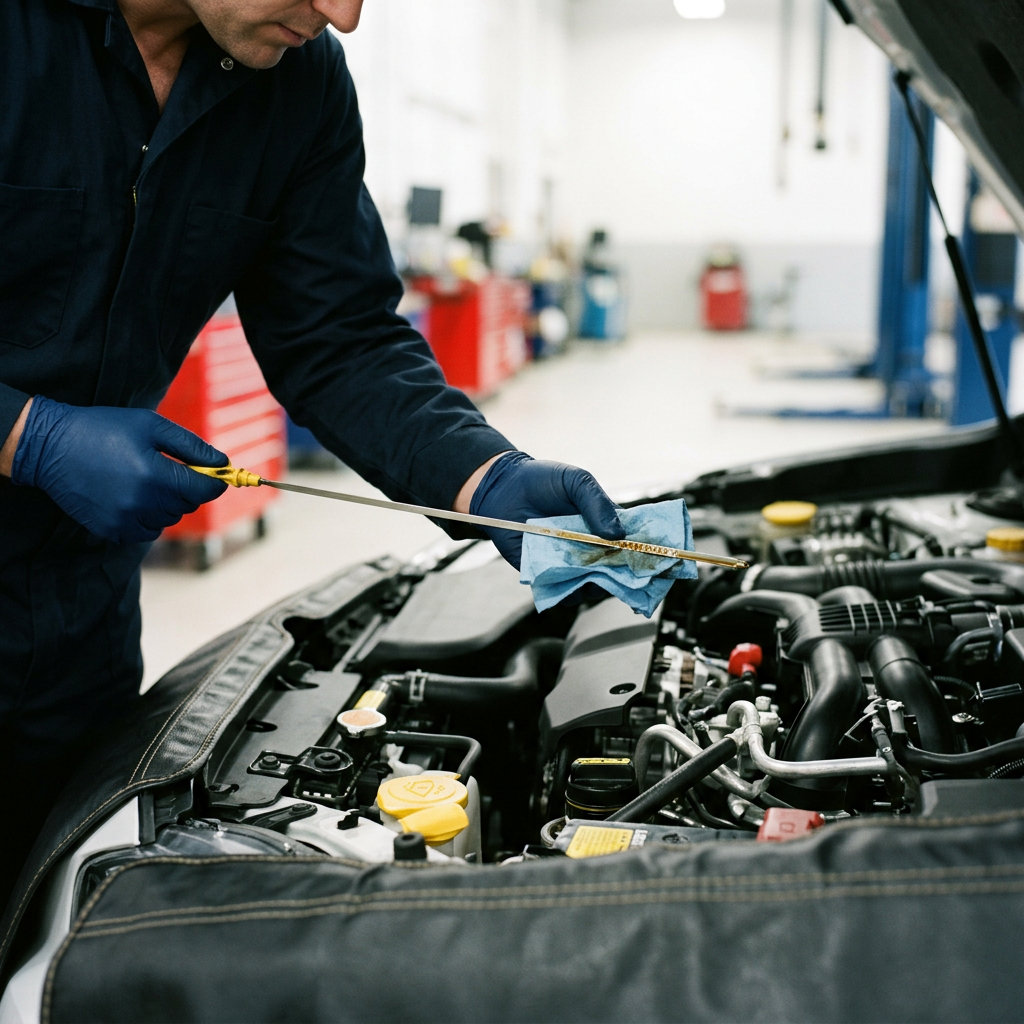
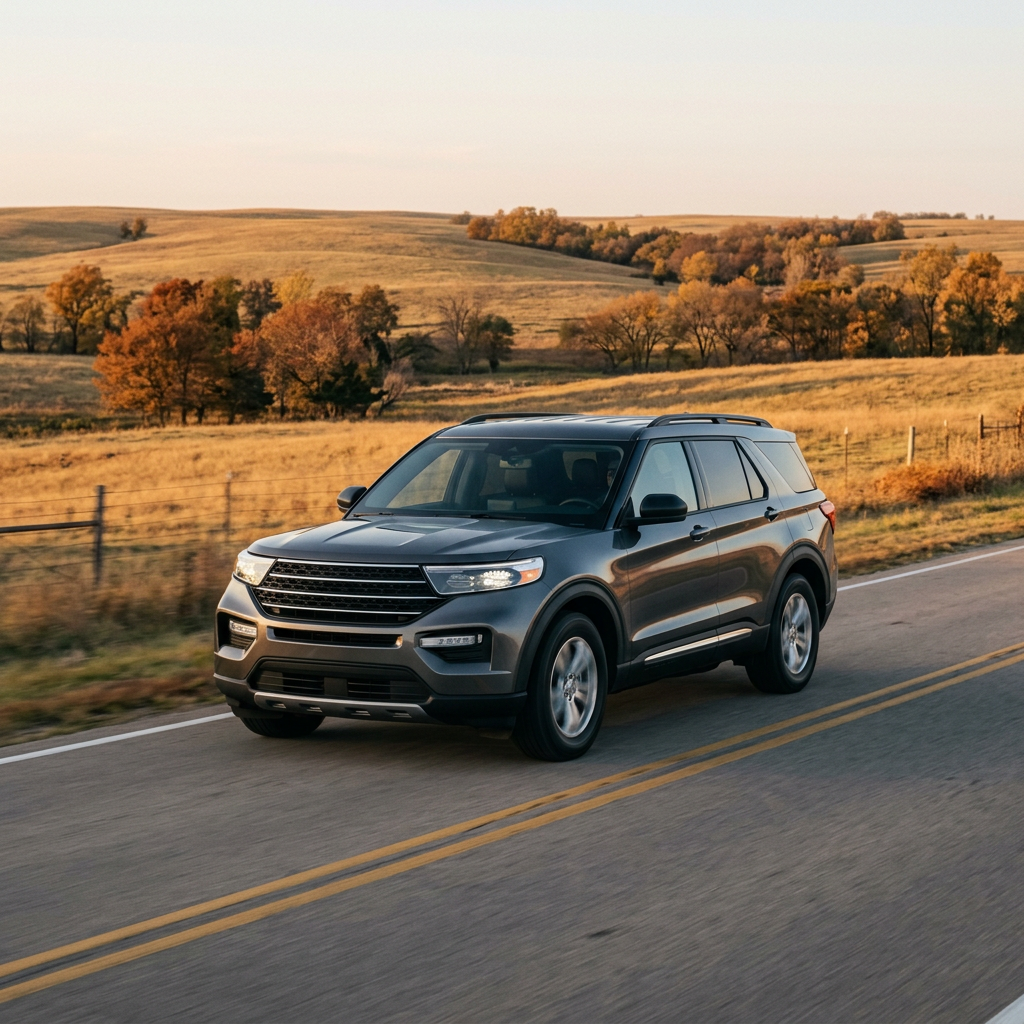
Ford Explorer

2026 Ford Explorer Active 4WD Vs 2026 Toyota Highlander

2026 Ford Explorer Active 4WD Vs 2026 Toyota Highlander The 2026 Ford Explorer Active 4WD is the value comparison over the 2026 Toyota Highlander, with a starting base MSRP of $42,585 compared to the Highlander's entry trim price of $48,020. With 300 hp, 310 lb-ft of torque, a 5,000 lbs towing capacity, and a massive 13.2-inch touchscreen, the Explorer Active 4WD delivers strong performance, capability, and technology for modern families. Table of Contents Which SUV Offers the Best Value for Families in Geary County: 2026 Ford Explorer Active 4WD or 2026 Toyota Highlander? Pricing and Trim Comparison for the 2026 Ford Explorer Active 4WD and 2026 Toyota Highlander Cargo Capacity and Passenger Comfort for Military and Farming Families Performance and Handling on Kansas Plains: 2026 Ford Explorer Active 4WD vs 2026 Toyota Highlander Fuel Efficiency and Range for Daily Commutes Technology Features That Enhance Connectivity and Convenience Safety Systems Tailored for Busy Families Warranty, Maintenance, and Local Service Resources for 2026 Ford Explorer Active 4WD and 2026 Toyota Highlander Owners Frequently Asked Questions: Comparing 2026 Ford Explorer Active 4WD and 2026 Toyota Highlander Final Verdict: Why the 2026 Ford Explorer Active 4WD Is the Superior Family SUV at Valor Ford Which SUV Offers the Best Value for Families in Geary County: 2026 Ford Explorer Active 4WD or 2026 Toyota Highlander? The 2026 Ford Explorer Active 4WD delivers vastly superior value for families in Geary County by combining a budget-friendly starting base MSRP of $42,585 with robust 300 hp performance and 5,000 lbs of maximum towing capability. By comparison, the 2026 Toyota Highlander starts at a much higher $48,020 base MSRP in its entry Hybrid XLE AWD trim, yet delivers only 243 hp and 3,500 lbs of towing strength. When evaluating family utility across Geary County, the financial advantage of the Explorer Active 4WD is immediately apparent. Shoppers save $5,435 on the starting base price alone when selecting the Explorer Active 4WD over the base Highlander Hybrid XLE AWD. That price gap widens even further against upper Highlander trims like the Hybrid Limited AWD ( $52,475 base MSRP) and Hybrid Platinum AWD ( $55,675 base MSRP). Before deciding on your next family hauler, local drivers can value your trade-in online to see how much additional equity can lower monthly payments. Specification / Feature 2026 Ford Explorer Active 2026 Toyota Highlander 4WD (Hybrid Lineup) Starting Base MSRP $42,585 $48,020 Destination Charge $1,795 $1,595 Engine / Powertrain 2.3L EcoBoost® I-4 2.5L 4-Cylinder Hybrid Horsepower 300 hp 243 hp Torque 310 lb-ft 175 lb-ft Maximum Towing Capacity 5,000 lbs 3,500 lbs Standard Screen Size 13.2 in 8.0 in In addition to upfront cost savings, the Explorer Active 4WD is engineered for the demands of central Kansas lifestyles. Whether you need to tow a fishing boat to the Kansas River or haul heavy equipment for a weekend farm project, the Explorer's standard 5,000 lbs towing capacity easily surpasses the Highlander's 3,500 lbs limit. Drivers who require heavy-duty hauling for work or agricultural operations can also explore Ford Super Duty towing capability, but for a versatile daily driver, the Explorer Active 4WD handles personal recreational trailers with ease. For off-road trail enthusiasts, buyers can also browse our new Ford Bronco lineup at Valor Ford. Pricing Manufacturer-listed pricing per trim, across compared vehicles. 2026 Ford Explorer Active 4WD Trim MSRP 2026 Toyota Highlander Trim MSRP Active 4WD $42,585 Hybrid XLE AWD $48,020 — — Hybrid Limited AWD $52,475 — — Hybrid Platinum AWD $55,675 Pricing and Trim Comparison for the 2026 Ford Explorer Active 4WD and 2026 Toyota Highlander The 2026 Ford Explorer Active 4WD establishes an undeniable price advantage over the entire 2026 Toyota Highlander lineup, boasting a starting base MSRP of $42,585 with a $1,795 destination charge. In contrast, Toyota has eliminated traditional gas-only engine options for the Highlander, forcing buyers into higher-priced hybrid configurations that start at $48,020 base MSRP for the Hybrid XLE AWD trim. Analyzing the financial commitment across trims reveals how much more accessible the Ford Explorer is for value-focused shoppers. The Explorer Active 4WD provides standard Intelligent 4WD, sophisticated interior amenities, and an advanced powertrain for thousands less than Toyota's entry-level all-wheel-drive model. Trim Level Base MSRP Destination Charge Ford Explorer Active 4WD $42,585 $1,795 Toyota Highlander Hybrid XLE AWD $48,020 $1,595 Toyota Highlander Hybrid Limited $52,475 $1,595 AWD Toyota Highlander Hybrid $55,675 $1,595 Platinum AWD For shoppers reviewing trim upgrades, Toyota requires step-ups to the Hybrid Limited AWD at $52,475 base MSRP or the Hybrid Platinum AWD at $55,675 base MSRP to access features like larger infotainment displays and premium audio. By contrast, the Explorer Active 4WD comes standard with premium technology, including a 13.2-inch touchscreen and 12.3-inch digital cluster, right out of the gate. Interested buyers can research 2026 Ford Explorer specifications to examine option packages, or check out our pre-owned inventory for additional family transport options. Cargo Capacity and Passenger Comfort for Military and Farming Families The 2026 Ford Explorer Active 4WD provides superior maximum cargo capacity and more generous passenger legroom than the 2026 Toyota Highlander, offering about 86 cu ft of maximum cargo volume and 43 in of front legroom. The Highlander offers less total storage capacity at about 84 cu ft and tighter front legroom at 42 in. For active households carrying passenger loads and heavy gear around Leavenworth County, interior dimensions dictate daily usability. The Explorer Active 4WD features a 6-passenger seating layout configured with second-row captain's chairs as standard equipment, creating a convenient center pass-through to the third row. The Highlander comes with 7-passenger seating across three rows, but its third-row legroom is constrained to just 28 in, compared to a more adult-friendly 32.2 in of third-row legroom in the Explorer. Interior Measurement 2026 Ford Explorer Active 2026 Toyota Highlander 4WD Seating Capacity 6 7 --- --- --- Cargo Volume (Behind 3rd Row) 16.3 cu ft 16.0 cu ft Cargo Volume (Max Seats Down) 85.8 cu ft 84.3 cu ft Front Headroom / Legroom 40.7 in / 43.0 in 39.6 in / 42.0 in 2nd Row Headroom / Legroom 40.5 in / 39.0 in 39.4 in / 38.7 in 3rd Row Headroom / Legroom 38.9 in / 32.2 in 36.1 in / 28.0 in Behind the third row, the Explorer Active 4WD holds about 16 cu ft of luggage space, giving it a clear advantage over the Highlander's about 16 cu ft cargo compartment. Whether loading hunting equipment, military duffel bags, or weekly groceries, the Explorer's wider load floor height ( 31.1 in) and superior shoulder room across all three rows make loading cargo simple. Families ready to secure a spacious three-row vehicle can easily apply to get pre-approved for financing online. Dimensions & Capacity Capacity and dimensions by trim Specification 2026 Ford Explorer Active 4WD 2026 Toyota Highlander Seating 6 7 Cargo 16.3 cu ft 16.0 cu ft Curb weight 4,303 lbs 4,595 lbs Towing 5,000 lbs 3,500 lbs Payload 1,467 lbs 1,405 lbs Performance and Handling on Kansas Plains: 2026 Ford Explorer Active 4WD vs 2026 Toyota Highlander The 2026 Ford Explorer Active 4WD dominates the performance comparison with its standard 2.3L EcoBoost® I-4 engine, producing a massive 300 hp and 310 lb-ft of torque paired with a 10-speed SelectShift® automatic transmission. The 2026 Toyota Highlander Hybrid generates only 243 hp and 175 lb-ft of torque from its 2.5L four-cylinder hybrid powertrain and electronic continuously variable transmission (ECVT). Under the hood, the performance disparity between these two SUVs drastically alters the driving experience. The Explorer's turbocharged EcoBoost engine delivers immediate low-end torque ( 310 lb-ft @ 3,500 rpm), allowing it to accelerate confidently when passing slow-moving agricultural traffic on open highways. The Highlander's hybrid setup produces a modest 175 lb-ft of engine torque, causing the ECVT to drone under hard acceleration when climbing rolling hills or merging onto fast-moving interstates. Powertrain Metric 2026 Ford Explorer Active 2026 Toyota Highlander 4WD (Hybrid) Engine 2.3L EcoBoost® I-4 Turbo 2.5L 4-Cylinder Hybrid Horsepower 300 hp @ 5,500 rpm 243 hp Torque 310 lb-ft @ 3,500 rpm 175 lb-ft Transmission 10-Speed SelectShift® Auto ECVT Drivetrain Architecture Longitudinal RWD-biased Transverse FWD-biased AWD 4WD Max Braked Towing Capacity 5,000 lbs 3,500 lbs --- --- --- Curb Weight 4,303 lbs 4,515 - 4,595 lbs Handling dynamics further elevate the Explorer Active 4WD. Built on Ford's longitudinal rear-wheel-drive-biased CD6 platform, the Explorer boasts balanced weight distribution and planted chassis composure. The Explorer is noted for responsive steering and confident handling. Conversely, the Highlander relies on a front-wheel-drive platform that pushes through corners under heavy loads. Furthermore, the Explorer Active 4WD boasts a 5,000 lbs towing capacity and 1,467 lbs payload rating, outclassing the Highlander's 3,500 lbs tow rating. Those who require additional truck utility can learn more about Ford F-150 performance, while current Ford owners can order genuine Ford parts online to outfit their vehicle with specialized towing accessories. Engine & Performance Powertrain specs by trim Specification 2026 Ford Explorer Active 4WD 2026 Toyota Highlander Engine 2.3L 2.5L Horsepower 300 hp 243 hp Torque 310 lb-ft 175 lb-ft Transmission SelectShift® ECVT Drivetrain All-wheel drive All-wheel drive Fuel Efficiency and Range for Daily Commutes The 2026 Toyota Highlander Hybrid achieves EPA fuel economy ratings of 35 MPG city / 35 MPG highway / 35 MPG combined, while the 2026 Ford Explorer Active 4WD delivers an EPA-estimated 20 MPG city / 27 MPG highway / 23 MPG combined on regular unleaded fuel. Efficiency figures tell a distinct story depending on driving habits and ownership priorities. The Highlander Hybrid uses a 1.87 kWh nickel-metal hydride battery pack and dual electric motors to achieve high city mileage, resulting in an estimated 598-mile total cruising range from its 17.1-gallon fuel tank. The Explorer Active 4WD utilizes a larger 17.9-gallon fuel tank to deliver a reliable 412-mile EPA calculated highway cruising range, making long-distance intercity drives convenient without frequent refueling stops. While the Highlander holds an advantage in city fuel economy, the Explorer Active 4WD counters with significant financial and capability benefits. The $5,435 lower base price of the Explorer Active 4WD buys a massive amount of gasoline, taking average drivers years of daily commuting to bridge the initial price gap. When factoring in the Explorer's extra 57 hp, 135 lb-ft of additional torque, and 1,500 lbs of extra towing capacity, the Explorer Active 4WD represents a far more capable multi-purpose investment. Fuel Economy Fuel economy and range by trim Specification 2026 Ford Explorer Active 4WD 2026 Toyota Highlander MPG 20 city / 27 hwy / 23 combined 35 city / 35 hwy / 35 combined Technology Features That Enhance Connectivity and Convenience The 2026 Ford Explorer Active 4WD comes standard with a massive 13.2-inch center touchscreen display and a 12.3-inch digital instrument cluster, dwarfing the 2026 Toyota Highlander Hybrid XLE AWD's standard 8.0-inch display screen. Cabin technology serves as the nerve center for modern carpooling and travel. Ford's overhauled infotainment interface in the Explorer Active 4WD features native Google built-in virtual assistant capabilities, integrated maps, and seamless wireless Apple CarPlay® and Android Auto™ integration. The 13.2-inch screen is mounted high on the dashboard in a fixed horizontal layout, allowing drivers to view navigation prompts without taking their eyes off the road. Technology Feature 2026 Ford Explorer Active 2026 Toyota Highlander XLE 4WD AWD Center Touchscreen Size 13.2 in 8.0 in Digital Cluster Display 12.3 in 7.0 in Native Virtual Assistant Google Built-In Alexa Total USB Charging Ports 8 (4 Front, 2 Rear, 2 3rd 5 (3 Front, 2 Rear) Row) Keyless Entry/Start System PEPS Intelligent Access Smart Key System Device connectivity is exceptionally well-managed in the Explorer Active 4WD. The cabin includes 8 total USB charging ports strategically distributed across every seating row—4 in the front, 2 in the second row, and 2 dedicated ports in the third row. The Highlander XLE AWD provides only 5 USB ports in total, leaving third-row passengers without direct charging access. The Explorer also comes standard with Intelligent Access with Push-button Start (PEPS), 911 Assist® telematics, and available 7-year Ford Connectivity plans with embedded Wi-Fi hotspot support. Safety Systems Tailored for Busy Families The 2026 Ford Explorer Active 4WD earns top-tier safety credentials, highlighted by a 2026 TOP SAFETY PICK+ rating from the Insurance Institute for Highway Safety (IIHS) and a 5-star overall crash safety rating from the National Highway Traffic Safety Administration (NHTSA). The 2026 Toyota Highlander earns a 5-star overall NHTSA rating, but received a weaker "Marginal" rating in the IIHS updated moderate overlap front crash test. Occupant protection remains a paramount design focus for Ford engineers. The Explorer Active 4WD is built with 7 standard airbags, including dual front airbags, front seat-mounted side airbags, driver knee airbags, and side curtain airbags covering all three seating rows. In official IIHS crash testing, the Explorer achieved top "Good" scores across driver small overlap front, side impact, moderate overlap front, and headlight safety evaluations. Safety & Rating Metric 2026 Ford Explorer Active 2026 Toyota Highlander 4WD IIHS Safety Award TOP SAFETY PICK+ (2026) Top Safety Pick --- --- --- NHTSA Overall Crash Rating 5 Stars 5 Stars IIHS Moderate Overlap Front Good Marginal Standard Driver Assist Suite Ford Co-Pilot360 Assist+ Toyota Safety Sense 2.5+ Blind Spot Monitoring Standard (BLIS®) Standard (BSM) Rear Cross Traffic Assist Standard (with Braking) Standard (Radar) Driver-assist technology is comprehensive on the Explorer Active 4WD. Every model comes equipped with Ford Co-Pilot360 Assist+, incorporating BLIS® (Blind Spot Information System), Lane-Keeping System, Pre-Collision Assist with Automatic Emergency Braking, and Rear Cross Traffic Braking. These active systems monitor surrounding traffic using millimeter-wave radar and camera sensors, intervening automatically if potential hazards are detected during daily carpool routines. Warranty, Maintenance, and Local Service Resources for 2026 Ford Explorer Active 4WD and 2026 Toyota Highlander Owners The 2026 Ford Explorer Active 4WD includes a 3-year/36,000-mile bumper-to-bumper OEM warranty, a 5-year/60,000-mile powertrain warranty, and 5 years or 60,000 miles of 24/7 Roadside Assistance. The Toyota Highlander features identical bumper-to-bumper and powertrain coverage lengths, but restricts its roadside assistance plan to 2 years or unlimited miles. Warranty Category Ford Warranty Coverage Toyota Warranty Coverage Whole Vehicle Bumper-to-Bumper 36 Months / 36,000 Miles 36 Months / 36,000 Miles Powertrain Warranty 60 Months / 60,000 Miles 60 Months / 60,000 Miles Roadside Assistance Plan 60 Months / 60,000 Miles 24 Months / Unlimited Miles Corrosion Perforation 60 Months / Unlimited 60 Months / Unlimited Coverage Miles Miles Long-term ownership confidence is backed by manufacturer support. If an unexpected emergency occurs on the road, Ford owners enjoy exclusive protection through Ford Roadside Assistance at (800) 241-3673, providing flat tire changes, lockout support, winching, and towing to authorized Ford service centers. To maintain peak vehicle condition, local owners can depend on Valor Ford for factory-trained technicians, specialized diagnostic equipment, and genuine OEM parts. When routine oil changes, tire rotations, or brake inspections are needed, drivers can easily schedule a Ford service appointment online. To test drive the Explorer in person, visit our Junction City showroom or call our team directly at (785) 238-5114. Frequently Asked Questions: Comparing 2026 Ford Explorer Active 4WD and 2026 Toyota Highlander Q: Is the 2026 Ford Explorer Active 4WD less expensive than the 2026 Toyota Highlander? Yes. The 2026 Ford Explorer Active 4WD carries a starting base MSRP of $42,585 ($1,795 destination charge), making it $5,435 less expensive than the lowest-priced 2026 Toyota Highlander Hybrid XLE AWD, which starts at $48,020 base MSRP ($1,595 destination charge). Higher Highlander trims like the Hybrid Limited AWD ($52,475 MSRP) and Hybrid Platinum AWD ($55,675 MSRP) command even higher price premiums. Q: Which SUV has a higher towing capacity for trailers and equipment? The 2026 Ford Explorer Active 4WD has a maximum braked towing capacity of 5,000 lbs, outclassing the 2026 Toyota Highlander Hybrid's maximum towing capacity of 3,500 lbs. This 1,500-lb towing advantage makes the Explorer far better suited for pulling utility trailers, boats, and campers. Q: How do the infotainment screen sizes compare between these two SUVs? The 2026 Ford Explorer Active 4WD comes standard with a 13.2-inch center touchscreen display and a 12.3-inch digital instrument cluster. The entry-level Toyota Highlander Hybrid XLE AWD features a significantly smaller 8.0-inch touchscreen and a 7.0-inch instrument cluster display, requiring buyers to pay for expensive upper trims to get a larger screen. Q: Which SUV offers better horsepower and passing power on the highway? The Ford Explorer Active 4WD is dramatically more powerful. Its 2.3L EcoBoost® turbocharged engine generates 300 hp and 310 lb-ft of torque, compared to the Toyota Highlander Hybrid's 243 hp and 175 lb-ft of torque. The Explorer provides 57 more horsepower and 135 lb-ft of additional torque for confident highway passing. Q: What are the crash safety ratings for the 2026 Ford Explorer versus the Toyota Highlander? The 2026 Ford Explorer Active 4WD earned the highest possible 2026 TOP SAFETY PICK+ award from the IIHS, achieving top "Good" ratings in all crash evaluations including the updated moderate overlap front test. The 2026 Toyota Highlander earned a lower "Marginal" score in the IIHS updated moderate overlap front test. Final Verdict: Why the 2026 Ford Explorer Active 4WD Is the Superior Family SUV at Valor Ford The 2026 Ford Explorer Active 4WD emerges as the decisive winner in this head-to-head comparison against the 2026 Toyota Highlander. By offering a dramatically lower starting base MSRP of $42,585, the Explorer Active 4WD saves buyers over $5,400 upfront compared to the base Highlander Hybrid XLE AWD ($48,020 base MSRP), while delivering far superior engine power, towing strength, and cabin technology. With 300 hp and 310 lb-ft of torque on tap, the Explorer Active 4WD provides responsive turbocharged performance that the 243-hp Highlander Hybrid cannot match. Add in a class-leading 13.2-inch touchscreen display, standard second-row captain's chairs, an adult-friendly third row with 32.2 in of legroom, a 5,000 lbs towing capacity, and an IIHS TOP SAFETY PICK+ rating, and the Explorer Active 4WD represents the ultimate multi-purpose family vehicle. Experience the power, space, and modern technology of the 2026 Ford Explorer Active 4WD in person. Visit the sales experts at Valor Ford, located at 1825 Goldenbelt Blvd, Junction City, KS 66441, or call our team today to schedule your test drive. © 2026 Valor Ford. All rights reserved. Vehicle specification data © JATO Dynamics Limited.

2026 Ford Explorer: Trims, Pricing, and Capability Guide

2026 Ford Explorer: Trims, Pricing, and Capability Guide

2026 Ford Explorer: Trims, Pricing, and Capability Guide The 2026 Ford Explorer is the right three-row SUV for military families and working households who need genuine towing muscle, flexible seating, and all-weather confidence without stepping into full-size truck territory. Starting at $38,465 for the Active RWD 100A and scaling to $56,905 for the ST 4WD, the lineup covers six-passenger comfort, up to 5,000 lbs of towing capacity, and a standard 2.3L EcoBoost engine producing 300 hp across most trims — with the ST delivering 400 hp from a twin-turbocharged 3.0L V6. Table of Contents How Much Does the 2026 Ford Explorer Cost to Own for Families in Geary County? Rugged Style Built for Military Pride and Midwestern Roads Power and Traction for Plains and River Valley Roads with the 2026 Ford Explorer Spacious Cabin Comfort for Family Outings Easy Tech to Stay Connected Between Military Base and Home with the 2026 Ford Explorer Advanced Safety Systems for Protecting Military Families and Local Commuters Complete Pricing Breakdown of All 2026 Ford Explorer Trims Warranty, Maintenance, and Service Insights for 2026 Ford Explorer Owners Awards, Expert Recognition, and What Industry Reviews Say About the 2026 Ford Explorer Frequently Asked Questions from Military Families and Local Buyers About the 2026 Ford Explorer How Much Does the 2026 Ford Explorer Cost to Own for Families in Geary County? The 2026 Ford Explorer starts at $38,465 (base MSRP before the $1,795 destination charge) for the Active RWD 100A, making it the most accessible entry point in the lineup. Every trim carries the same $1,795 destination charge except the Utility Police Interceptor 4x4, which carries a $1,695 destination fee. Here is the full pricing picture across all twelve trims: Fuel economy is a real ownership consideration for families making daily drives between Junction City and surrounding communities. The RWD trims return up to 29 mpg highway, while the AWD versions come in at 27 mpg highway. The ST's twin-turbo V6 drops efficiency to 25 mpg highway in RWD form and 25 mpg highway in the ST 4WD. For buyers who want to dig deeper before visiting the lot, the full 2026 Ford Explorer research guide covers detailed trim comparisons. Shoppers open to a certified or pre-owned option can also browse our pre-owned Explorer inventory to see what is currently available. Pricing Pricing by trim Feature Active 4WD Active 4WD 100A Active RWD Active RWD 100A Base MSRP $42,585 $40,465 $40,585 $38,465 Destination charge $1,795 $1,795 $1,795 $1,795 Pricing (continued) Feature Platinum Platinum 4WD ST ST 4WD Base MSRP $50,965 $52,965 $54,905 $56,905 Destination charge $1,795 $1,795 $1,795 $1,795 Pricing (continued) Feature ST-LINE 4WD ST-LINE RWD Tremor 4WD Utility Police Interceptor 4x4 Base MSRP $47,155 $45,155 $48,965 $48,550 Destination charge $1,795 $1,795 $1,795 $1,695 Rugged Style Built for Military Pride and Midwestern Roads The 2026 Explorer's exterior communicates purposeful confidence — a quality that fits naturally into the culture of communities built around Fort Riley and the working landscapes of central Kansas. The body rides on a 119.1-inch wheelbase and stretches 198.7 inches in overall length, with an overall width of 78.9 inches (89.3 inches including mirrors). That stance gives the Explorer a planted, substantial look without the bulk of a full-size SUV. Painted bumpers front and rear keep the exterior cohesive across all trims, while the roof spoiler and black roof rails on Active trims add a sport-forward edge. The Platinum and Platinum 4WD step up to chrome-finish roof rails and chrome mirror caps, signaling a more refined character. The ST and ST 4WD drop the chrome entirely in favor of blacked-out trim elements — a sharper, more aggressive profile that suits the performance intent of the 400-hp EcoBoost V6 under the hood. Color choices across the lineup include metallic options such as Vapor Blue Metallic, Star White Metallic Tri-Coat, and Rapid Red Metallic Tinted Clearcoat, along with Marsh Gray Metallic on the ST. The Active trims offer interior choices ranging from Dark Gray/Onyx Unique Cloth to Light Space Gray/Onyx ActiveX or Dark Gray/Onyx ActiveX synthetic leather. The Platinum uses a synthetic leather and leather combination in Mojave Dusk/Onyx or Salt Crystal/Onyx, while the ST features Onyx ActiveX seating with Miko inserts and an ST logo. Ground clearance comes in at 7.6 inches on the Active and ST-LINE trims, rising to 7.8 inches on the ST and ST 4WD, and 8.2 inches on both Platinum variants — a meaningful difference for anyone navigating unpaved county roads or gravel paths along the Kansas River corridor. If you're considering trading in your current vehicle before stepping into a new Explorer, getting an estimate on your trade-in value is a smart first step. Power and Traction for Plains and River Valley Roads with the 2026 Ford Explorer Most Explorer trims run the turbocharged 2.3L EcoBoost four-cylinder producing 300 hp and 310 lb-ft of torque — enough pull for loaded family travel, light towing, and confident highway merging. The ST and ST 4WD swap in a twin-turbocharged 3.0L EcoBoost V6 that pushes output to 400 hp and 415 lb-ft of torque, a substantial step up for buyers who prioritize performance. The Utility Police Interceptor 4x4 uses a naturally aspirated 3.3L V6 making 318 hp and 260 lb-ft. Every trim pairs its engine with Ford's 10-speed SelectShift® automatic transmission. Feature Active 4WD Active 4WD 100A Active RWD Active RWD 100A Platinum Platinum 4WD ST ST 4WD ST-LINE 4WD ST-LINE RWD Tremor 4WD Utility Police Interceptor 4x4 Engine 2.3L 2.3L 2.3L 2.3L 2.3L 2.3L 3L 3L 2.3L 2.3L 2.3L 3.3L Horsepower 300 hp 300 hp 300 hp 300 hp 300 hp 300 hp 400 hp 400 hp 300 hp 300 hp 300 hp 318 hp Torque 310 lb-ft 310 lb-ft 310 lb-ft 310 lb-ft 310 lb-ft 310 lb-ft 415 lb-ft 415 lb-ft 310 lb-ft 310 lb-ft 310 lb-ft 260 lb-ft Transmission SelectShift® SelectShift® SelectShift® SelectShift® SelectShift® SelectShift® SelectShift® SelectShift® SelectShift® SelectShift® SelectShift® SelectShift Drivetrain All-wheel drive All-wheel drive Rear-wheel drive Rear-wheel drive Rear-wheel drive All-wheel drive Rear-wheel drive All-wheel drive All-wheel drive Rear-wheel drive All-wheel drive All-wheel drive The drivetrain choice matters on the flat-to-rolling terrain of Geary County and the river valley roads of Leavenworth County. AWD trims — including the Active 4WD, Active 4WD 100A, Platinum 4WD, ST 4WD, ST-LINE 4WD, Tremor 4WD, and Utility Police Interceptor 4x4 — use Ford's Intelligent 4WD system with automatic drive selection, which continuously manages torque distribution without driver input. The system pairs with AdvanceTrac with RSC (Roll Stability Control) on all trims, adding an important layer of stability on unpaved rural roads and gravel tracks common throughout the region. The suspension setup is independent at both axles — MacPherson strut front and multi-link rear — with coil springs at all four corners. This architecture delivers a composed, predictable ride whether you're commuting or hauling gear to a fishing spot along the Kansas River. For buyers considering a truck-based alternative with more towing capacity, the 2026 Ford F-150 research guide provides a useful side-by-side reference. When you're ready to move forward, getting pre-approved for financing takes just a few minutes online. Spacious Cabin Comfort for Family Outings Six-passenger seating is standard across most Explorer trims, arranged in a 2+2+2 captain's chair configuration. The ST-LINE RWD, ST 4WD, and Utility Police Interceptor 4x4 are the exceptions, offering seven-passenger capacity through a 40/20/40 second-row bench — a meaningful option for larger military families or multi-generational households who regularly travel together. Feature Active 4WD Active 4WD 100A Active RWD Active RWD 100A Platinum Platinum 4WD ST ST 4WD ST-LINE 4WD ST-LINE RWD Tremor 4WD Utility Police Interceptor 4x4 Seating 6 6 6 6 6 6 6 6 7 7 6 7 Cargo 16.3 cu ft 16.3 cu ft 16.3 cu ft 16.3 cu ft 16.3 cu ft 16.3 cu ft 16.3 cu ft 16.3 cu ft 16.3 cu ft 16.3 cu ft 16.3 cu ft 52.0 cu ft Curb weight 4,303 lbs 4,303 lbs 4,303 lbs 4,303 lbs 4,303 lbs 4,303 lbs 4,631 lbs 4,631 lbs 4,303 lbs 4,303 lbs 4,424 lbs 4,732 lbs Towing 5,000 lbs 5,000 lbs 5,000 lbs 5,000 lbs 5,000 lbs 5,000 lbs 5,000 lbs 5,000 lbs 5,000 lbs 5,000 lbs 5,000 lbs 3,500 lbs Payload 1,467 lbs 1,467 lbs 1,467 lbs 1,467 lbs 1,467 lbs 1,467 lbs 1,139 lbs 1,139 lbs 1,467 lbs 1,467 lbs 1,346 lbs 2,108 lbs Interior dimensions are generous across the board. Front headroom measures 40.7 inches, second-row headroom 40.5 inches, and third-row headroom 38.9 inches. Front legroom comes in at 43 inches, second-row legroom at 39 inches, and third-row legroom at 32.2 inches — workable for children and manageable for adults on shorter trips. Shoulder room is 62.1 inches up front and 61.9 inches in the second row. Cargo behind the third row sits at about 16 cu ft across all civilian trims — enough for a weekend's worth of fishing gear or a full load of groceries. Fold the rear seats and that number expands to about 86 cu ft on most trims, or about 85 cu ft on the Platinum variants. The Utility Police Interceptor 4x4 is a different animal entirely, with about 52 cu ft of cargo space in its standard configuration. Material quality steps up meaningfully as you climb the lineup. Active trims use upgraded cloth or ActiveX synthetic leather. The Platinum and Platinum 4WD use a synthetic leather and leather combination with woodgrain instrument panel trim and leather door inserts. The ST pairs its sport-tuned suspension with piano black interior trim and a 14-speaker Bang & Olufsen audio system standard. For genuine Ford accessories that fit the Explorer's exact specifications — including cargo management systems, all-weather floor liners, and roof-rail crossbars — ordering genuine Ford parts through Valor Ford ensures a proper fit every time. Easy Tech to Stay Connected Between Military Base and Home with the 2026 Ford Explorer Every 2026 Explorer ships with a 13.2-inch center touchscreen and a 12.3-inch digital instrument cluster as standard equipment — no trim-level gatekeeping on the core display hardware. Wireless Apple CarPlay and wireless Android Auto are standard across the lineup, eliminating cable clutter for the daily commute between home and base. Bluetooth connectivity, a Google voice assistant, and over-the-air OS updates round out the base technology suite. Charging access is generous. The Active 4WD and Active RWD trims with the full feature set include 4 USB charging ports in front, 2 in the second row, and 2 in the third row — a total of 8 across the cabin. The 100A variants scale back to 1 front, 1 rear, and 2 third-row ports. A 12V outlet is provided in the front, rear, and cargo area on all trims. The Platinum, Platinum 4WD, and ST add wireless charging pad capability and a 120V household-style power outlet — useful for charging laptops, tablets, or small electronics during longer trips. Navigation is built in with a 13.2-inch screen, satellite view, touch controls, and internet-connected data feed. Traffic information is included for the first 12 months, along with 12 months of map updates. The Ford App connected services suite — including remote start, remote lock/unlock, vehicle diagnostics, theft alert, and find-my-car — is included for the first 12 months. Ford's 911 Assist telematics system is standard across all trims, automatically connecting to emergency services after a collision. The Platinum and ST trims include a standard 14-speaker Bang & Olufsen audio system. An optional ST Sun and Sound Package on the ST adds the panoramic sunroof and a 980-watt Bang & Olufsen system with massage front seats. The optional Ford Connectivity Package, available as a one-time purchase, extends connected services and Wi-Fi hotspot access to 84 months. If you're comparing the Explorer's tech stack against a truck-based platform, the 2026 Ford F-250 research guide covers how the Super Duty's infotainment compares for buyers who need both capability and connectivity. Advanced Safety Systems for Protecting Military Families and Local Commuters The 2026 Explorer earns a 5-star overall NHTSA safety rating, with 5-star frontal crash and 5-star side impact scores. IIHS results show Good ratings in moderate overlap front, small overlap front (driver side), and side impact tests, alongside a Good headlights rating — a meaningful accolade given how many SUVs fall short in that category. Seven airbags are standard across all trims: dual front airbags, front side airbags, side curtain airbags covering all three rows, and a driver knee airbag. Pre-tensioner front seatbelts with height adjustment are standard at both front seating positions, with belts at all second and third-row positions as well. The standard driver assistance suite is called Ford CoPilot360 Assist+ on the Active, Active 100A, and ST-LINE trims, and upgrades to Ford CoPilot360 Assist 2.0 on the Platinum, Platinum 4WD, ST, ST 4WD, and Tremor 4WD. The difference is meaningful: Assist 2.0 adds front and rear low-speed automatic emergency braking (vs. front-only on Assist+), giving the higher trims additional protection in parking lot and stop-and-go situations. All trims include adaptive cruise control with stop-and-go capability, the Lane-Keeping System, BLIS® (Blind Spot Information System), Rear Cross Traffic Braking (radar-based), rear parking sensors and camera with guidance display, and automatic hazard lights. The Platinum, Platinum 4WD, ST, and ST 4WD add a 360-Degree Camera with Split View and blind-junction view as standard equipment — a practical upgrade for navigating the tighter parking situations in Junction City's historic downtown or backing a trailer at a boat launch. The optional BlueCruise hands-free highway driving system is available on Platinum, Platinum 4WD, ST, and ST 4WD trims as an add-on, providing Level 2 partial automation including active lane control, highway assist, and traffic jam assist on pre-mapped highways. All trims also include the AdvanceTrac with RSC (Roll Stability Control) electronic stability system, hill-hold assist, cornering brake control, and a trailer stability program — a complete suite for towing on the gently rolling terrain around Leavenworth County. Complete Pricing Breakdown of All 2026 Ford Explorer Trims The Explorer's twelve-trim lineup divides cleanly into four tiers based on price and purpose. Understanding what each tier delivers helps buyers match budget to actual need rather than overpaying for features they won't use. Entry tier — Active 100A variants ($38,465–$40,465): The Active RWD 100A at $38,465 and the Active 4WD 100A at $40,465 are the most budget-accessible Explorers. These trims use the 2.3L EcoBoost producing 300 hp and 310 lb-ft, paired with upgraded cloth seating, the full 13.2-inch touchscreen, wireless CarPlay and Android Auto, and the CoPilot360 Assist+ safety suite. The 100A designation reflects a slightly reduced standard feature count compared to the full Active trims — notably fewer USB ports front and rear — but the core capability remains intact. Mid-tier Active and ST-LINE ($40,585–$47,155): The Active RWD ($40,585), Active 4WD ($42,585), ST-LINE RWD ($45,155), and ST-LINE 4WD ($47,155) add the complete USB charging array, ActiveX synthetic leather or Unique Cloth interior choices, and on the ST-LINE trims, a sport-forward exterior treatment. The Active Comfort Package (available on Active RWD and Active 4WD) adds front fog lights, a heated steering wheel, and a fully power-adjustable passenger seat. Upper-mid tier — Tremor 4WD and Platinum ($48,965–$52,965): The Tremor 4WD at $48,965 brings unique off-road-oriented styling, all-wheel drive, and a 1,346 lb payload rating. The Platinum at $50,965 and Platinum 4WD at $52,965 shift focus to luxury — leather-trimmed seating, woodgrain instrument panel trim, a 14-speaker Bang & Olufsen audio system, 360-degree camera, heated and ventilated front seats, heated rear seats, and the upgraded CoPilot360 Assist 2.0 safety suite. The Platinum Lux Leather Package (available on Platinum 4WD) upgrades to full leather seating throughout. Performance tier — ST and ST 4WD ($54,905–$56,905): The ST at $54,905 and ST 4WD at $56,905 are the only trims with the 3.0L twin-turbo EcoBoost V6 producing 400 hp and 415 lb-ft of torque. Both include the Bang & Olufsen audio system, 360-degree camera, piano black interior trim, and painted brake calipers. The optional ST Sun and Sound Package adds the panoramic sunroof, a 980-watt audio system, and massaging front seats. Warranty, Maintenance, and Service Insights for 2026 Ford Explorer Owners Ford's standard warranty coverage on the 2026 Explorer is consistent across all civilian trims: a 3-year/36,000-mile bumper-to-bumper warranty, a 5-year/60,000-mile powertrain warranty, a 5-year/60,000-mile roadside assistance program, and a 5-year corrosion perforation warranty. Paint coverage runs 3 years/36,000 miles. The roadside assistance program is particularly relevant for military families whose schedules don't leave room for unexpected breakdowns. Ford's roadside assistance connects you directly to manufacturer-backed support — not a third-party network — covering towing, flat tire service, lockout assistance, and emergency fuel delivery for the first five years of ownership. If you ever need to reach Ford Roadside Assistance directly, the number is (800) 331-0112. Over-the-air software updates are standard across all trims, meaning the Explorer's infotainment and vehicle systems can receive improvements without a dealer visit. Remote services — including vehicle diagnostics, theft alert, and driving history analysis — are included for the first 12 months through Ford App, after which a subscription is required. For ongoing maintenance, Valor Ford's service team handles scheduled oil changes, tire rotations, brake inspections, and recall work specific to your Explorer's build. Scheduling a Ford service appointment online is straightforward and keeps your vehicle on the maintenance intervals Ford recommends for long-term reliability. Awards, Expert Recognition, and What Industry Reviews Say About the 2026 Ford Explorer The 2026 Explorer's crash test credentials are independently verified. NHTSA awarded a 5-star overall safety rating, with 5-star scores in both frontal crash and side impact categories and a 4-star rollover rating. IIHS testing produced Good ratings in moderate overlap front, small overlap front (driver side), and side impact evaluations — along with a Good headlights rating that places the Explorer above many competitors in lighting performance. No editorial context block was provided for this model year, so no specific award names or press quotes are cited here. What the catalog data does confirm is a vehicle that earns its safety credentials through independent testing rather than manufacturer claims alone, and that the feature content — from the standard 7-airbag count to the standard BLIS blind-spot monitoring and Rear Cross Traffic Braking — reflects a genuine commitment to passive and active occupant protection across the entire trim range. The Explorer competes directly against the Jeep Grand Cherokee L, Kia Telluride, and Hyundai Palisade in the three-row family SUV segment. Where the Explorer differentiates is in its powertrain breadth — from the efficient 2.3L EcoBoost to the 400-hp ST performance variant — and in the depth of its standard safety tech, which includes adaptive cruise with stop-and-go, blind-spot monitoring, and rear cross-traffic braking even on the entry-level Active 100A trims. The Tremor 4WD's off-road-oriented positioning and the Utility Police Interceptor 4x4's specialized duty cycle represent further range extensions that few three-row SUVs attempt within a single model family, underscoring the Explorer's versatility as a platform. Fuel Economy Fuel economy and range by trim Feature Active 4WD Active 4WD 100A Active RWD Active RWD 100A MPG 20 city / 27 hwy / 23 combined 20 city / 27 hwy / 23 combined 20 city / 29 hwy / 24 combined 20 city / 29 hwy / 24 combined Fuel Economy (continued) Feature Platinum Platinum 4WD ST ST 4WD MPG 20 city / 29 hwy / 24 combined 20 city / 27 hwy / 23 combined 18 city / 25 hwy / 21 combined 18 city / 25 hwy / 20 combined Fuel Economy (continued) Feature ST-LINE 4WD ST-LINE RWD Tremor 4WD Utility Police Interceptor 4x4 MPG 20 city / 27 hwy / 23 combined 20 city / 29 hwy / 24 combined 19 city / 23 hwy / 21 combined — Frequently Asked Questions from Military Families and Local Buyers About the 2026 Ford Explorer Q: Does the 2026 Explorer's AWD system handle unpaved rural roads and gravel tracks reliably? Yes. AWD-equipped trims use Ford's Intelligent 4WD system, which automatically distributes torque between the front and rear axles without requiring driver input. The system pairs with AdvanceTrac with RSC (Roll Stability Control) and hill-hold assist on all AWD variants. Ground clearance ranges from 7.6 inches on the Active 4WD to 8.2 inches on the Platinum 4WD, giving adequate clearance for the flat-to-rolling plains and unpaved county roads common in Geary County and Leavenworth County. The Tremor 4WD is the most capable off-road variant in the lineup, with its own suspension tuning and AWD hardware suited to more demanding surfaces. Q: Can the 2026 Explorer tow a small boat or utility trailer for river fishing trips? Most trims are rated to tow up to 5,000 lbs — sufficient for a small fishing boat, a utility trailer loaded with ATVs, or a lightweight camper. The exception is the Utility Police Interceptor 4x4, which is rated at 3,500 lbs. All civilian trims include trailer towing preparation and a trailer stability program as standard equipment. The ST and ST 4WD carry a payload of 1,139 lbs, while the Active, ST-LINE, and Platinum trims rate at 1,467 lbs. Towing capacity is identical at 5,000 lbs across those civilian trims regardless of drivetrain choice. Q: Which trim offers seven-passenger seating? The ST-LINE RWD, ST 4WD, and Utility Police Interceptor 4x4 are the three trims that seat seven. They use a 40/20/40 second-row bench seat with E-Z Entry and armrest in place of the captain's chairs found on six-passenger trims. All other trims — Active 4WD, Active 4WD 100A, Active RWD, Active RWD 100A, Platinum, Platinum 4WD, ST, ST-LINE 4WD, and Tremor 4WD — seat six in a 2+2+2 configuration. An optional Second Row Bench With E-Z Entry and Armrest is also available on several trims, expanding capacity to seven. Q: What is the difference between the Active 4WD and the Active 4WD 100A? The Active 4WD 100A at $40,465 is priced lower than the Active 4WD; contact the dealership for current pricing. The 100A designation reflects a reduced standard feature count — primarily fewer USB charging ports (1 front and 1 rear versus 4 front and 2 rear on the full Active 4WD) and the absence of the Active Comfort Package, which on the Active 4WD adds front fog lights, a heated steering wheel, and a fully power-adjustable passenger seat. Both trims share the same 2.3L EcoBoost engine, 300 hp output, Intelligent 4WD, and CoPilot360 Assist+ safety suite. Q: How do I get started with buying or test-driving a 2026 Explorer at Valor Ford? Valor Ford is located at 1825 Goldenbelt Blvd, Junction City, KS 66441. You can reach the sales team directly at (785) 238-5114 to confirm availability, ask trim-specific questions, or schedule a test drive. If you're also considering a different Ford model for off-road use, the new Ford Bronco Badlands is another capable option worth a look while you're here. © 2026 Valor Ford. All rights reserved. Vehicle specification data © JATO Dynamics Limited.

2026 Ford F-150 vs 2026 Ford Bronco 4-Door

2026 Ford F-150 vs 2026 Ford Bronco 4-Door

The 2026 Ford F-150 is the overall winner for full-scale farming operations and heavy-duty utility, delivering a superior 10,400 lbs towing capacity and about 53 cu ft of open cargo bed volume. Conversely, the 2026 Ford Bronco 4-Door is the better choice for drivers prioritizing off-road maneuverability, trail driving, and an accessible entry price point starting at $40,795 MSRP. Which 2026 Ford Model Fits Marshall County Farming Families Best? For heavy-duty agricultural work and farm management, the 2026 Ford F-150 provides the essential towing capacity and cargo bed space required for full-scale operations, whereas the 2026 Ford Bronco 4-Door excels as an agile off-road utility vehicle for lighter hauling and trail driving. Evaluating which model best serves your daily demands comes down to trailer weight requirements, cargo structure, and passenger cabin dimensions. The 2026 Ford F-150 is built on a high-strength steel frame engineered to pull heavy loads across pastures and highways. With a standard towing capacity of 10,400 lbs on SuperCrew 5-1/2’ Box models—and reaching 10,800 lbs on the SuperCrew 6-1/2’ Box configuration—the F-150 easily handles livestock trailers, farm implements, and loaded grain wagons. Its open pickup bed yields about 53 cu ft or about 62 cu ft of volume, paired with a maximum payload allowance of 1,945 lbs to 2,000 lbs. For established agricultural operations, these metrics translate directly into high daily productivity. By comparison, the 2026 Ford Bronco 4-Door is designed as a mid-size off-road SUV built on a shorter 116.1 in wheelbase. It offers a maximum gross trailer weight rating of 3,500 lbs and a payload allowance of 1,368 lbs on Big Bend 4x4 and Badlands 4x4 trims, though the Base 4x4 configuration lists an allowance of 4,483 lbs. The Bronco 4-Door is ideal for navigating narrow field lanes, wooded riverbanks, and muddy tracks during hunting season. Its shorter overall length of 189.4 in to 190.5 in makes it far easier to maneuver around tight farmyards than the 231.7 in to 243.5 in F-150. Shoppers interested in exploring SUV versatility can check out new Ford Bronco inventory at Valor Ford. Families seeking alternative three-row seating options may also want to read our Ford Explorer research guide, while those needing heavy-duty commercial equipment can review our Ford F-250 capabilities breakdown. Dimensions & Capacity Capacity and dimensions by trim Specification 2026 Ford F-150 2026 Ford Bronco 4-Door Seating 5 5 Curb weight 5,096 lbs 4,499 lbs Towing 10,400 lbs 3,500 lbs Payload 1,945 lbs 1,368 lbs Investment and Trim Value for 2026 Ford F-150 and Bronco 4-Door The 2026 Ford Bronco 4-Door delivers the lower initial purchase price starting at $40,795 MSRP for the Base 4x4 trim, while the 2026 Ford F-150 lineup featured here starts at $65,825 MSRP for the premium King Ranch SuperCrew 5-1/2’ Box in rear-wheel drive. Each vehicle caters to a distinct budget level and functional requirement, offering strong value within its respective class. Understanding the trim structure helps clarify where your investment goes. The 2026 Ford F-150 King Ranch series represents an executive-class truck loaded with standard luxury and performance features. The King Ranch SuperCrew 5-1/2’ Box in rear-wheel drive starts at $65,825 MSRP, while adding all-wheel drive raises the base price to $69,625 MSRP. The longer King Ranch 4x4 SuperCrew 6-1/2’ Box commands a base price of $69,930 MSRP. Every F-150 model carries a standardized destination charge of $2,795. Standard equipment across these trims includes the 400 hp 3.5L EcoBoost® V6 engine, SelectShift® 10-speed automatic transmission, leather upholstery, a 12 in digital instrument cluster, and a 12 in center touchscreen display. The 2026 Ford Bronco 4-Door provides a significantly lower barrier to entry across its three available trims. The Base 4x4 trim starts at $40,795 MSRP, followed by the Big Bend 4x4 trim at $41,295 MSRP. The specialized, off-road-focused Badlands 4x4 trim carries an MSRP of $48,890. All Bronco 4-Door trims share a mandatory destination charge of $1,995. Standard features across the Bronco lineup include a 300 hp 2.3L EcoBoost® I4 engine, a manual 7-speed transmission with crawler gear, four-wheel drive, and LED headlights. If you are planning to upgrade your current vehicle, you can value your trade-in online to establish your trade equity. Prospective truck buyers can also consult our detailed 2026 Ford F-150 research page, or explore quality pre-owned choices by browsing our pre-owned vehicle inventory. Pricing Manufacturer-listed pricing per trim, across compared vehicles. 2026 Ford F-150 Trim MSRP 2026 Ford Bronco 4-Door Trim MSRP King Ranch SuperCrew 5-1/2’ Box $65,825 Base 4x4 $40,795 King Ranch 4x4 SuperCrew 5-1/2’ Box $69,625 Big Bend 4x4 $41,295 King Ranch 4x4 SuperCrew 6-1/2’ Box $69,930 Badlands 4x4 $48,890 Contact Us for Financing Information Cargo Capacity and Passenger Comfort for Long Days on Farms The 2026 Ford F-150 delivers substantially more interior volume and rear-seat legroom, providing 43.6 in of rear legroom and about 53 cu ft of cargo bed space compared to the 2026 Ford Bronco 4-Door's 36.3 in of rear legroom. Drivers who frequently transport adult crew members or large farm equipment will appreciate the full-size dimensions of the SuperCrew cab. In terms of passenger accommodation, both vehicles seat up to 5 passengers, but their interior dimensions diverge significantly. The F-150 SuperCrew cab provides expansive room in both seating rows, with 40.8 in of front headroom, 40.4 in of rear headroom, 43.9 in of front legroom, and 43.6 in of rear legroom. Shoulder room is exceptionally wide at 66.7 in in the front and 66.0 in in the rear, complemented by 62.5 in of front hip room and 62.6 in of rear hip room. This extra width allows three adults to sit comfortably across the rear bench seat during long drives across Washington County. The 2026 Ford Bronco 4-Door offers vertical headroom due to its upright, boxy stance, providing 43.3 in of front headroom and 41.1 in of rear headroom. Front legroom is competitive at 43.1 in, but rear legroom measures 36.3 in, making it better suited for children, teenagers, or shorter trips. Interior width is also more compact, with front shoulder room at 57.1 in, rear shoulder room at 56.5 in, front hip room at 55.9 in, and rear hip room at 54.8 in. Regarding cargo management, the F-150 features an open steel cargo box measuring 67.1 in long on 5-1/2’ box models and 78.9 in long on 6-1/2’ box models, with a uniform width between wheelhouses of 50.6 in and a bed height of 21.4 in. This layout accommodates 4x8 plywood sheets flat on the bed floor. The Bronco 4-Door utilizes an enclosed SUV cargo area behind its single-hinged rear tailgate, featuring tie-down hooks and available cargo nets. To keep your current truck or SUV running smoothly through demanding farm work, you can schedule a service appointment with our certified technicians. Power, Towing, and Driving Experience Tailored to Ranching Needs Driven by a 3.5L EcoBoost® V6 engine outputting 400 hp and 500 lb-ft of torque, the 2026 Ford F-150 provides greater towing power and acceleration than the 2026 Ford Bronco 4-Door and its 300 hp, 325 lb-ft 2.3L EcoBoost® I4 engine. Mechanical performance highlights clear operational differences between these two iconic Ford lines. The 2026 Ford F-150 King Ranch utilizes twin turbochargers and direct fuel injection to generate maximum torque at just 3,500 rpm. Paired with a SelectShift® 10-speed automatic transmission, the powertrain maintains optimal gear ratios whether accelerating on highway ramps or pulling a heavy trailer up steep grades. Drive choices include full-time all-wheel drive or rear-wheel drive configurations, supplemented by an available E-Locking 3.31, 3.55, or 3.73 rear axle differential for maximum low-speed traction on loose soil. The 2026 Ford Bronco 4-Door focuses on off-road gearing and trail crawl ratios. Its standard 2.3L EcoBoost® I4 engine reaches peak torque of 325 lb-ft at 3,400 rpm and peak power of 300 hp at 5,700 rpm. Standard models feature a 7-speed manual transmission with an ultra-low crawler gear, giving drivers precise manual throttle control over rocks and steep inclines. An available SelectShift® 10-speed automatic transmission is also offered. The Bronco features standard part-time or available advanced full-time four-wheel drive with automatic on-demand engagement, supported by a terrain management system. For owners looking to add towing accessories, heavy-duty mats, or utility upgrades, you can easily order genuine Ford parts through our dedicated department. Engine & Performance Powertrain specs by trim Specification 2026 Ford F-150 2026 Ford Bronco 4-Door Engine 3.5L 2.3L Horsepower 400 hp 300 hp Torque 500 lb-ft 325 lb-ft Transmission SelectShift® manual 7-speed Drivetrain All-wheel drive All-wheel drive Research Ford F-150 Fuel Efficiency and Range Considerations for Agricultural Lifestyles The 2026 Ford F-150 King Ranch SuperCrew 5-1/2’ Box in rear-wheel drive delivers higher highway fuel efficiency at 25 hwy MPG and a maximum estimated cruising range of 720 mi, outperforming the 2026 Ford Bronco 4-Door Base 4x4's 22 hwy MPG and 416 mi range. Long distances between rural supply hubs make fuel capacity and highway economy vital metrics. Equipped with a large 36 gal primary fuel tank, the F-150 is engineered for extended range. All-wheel drive F-150 models earn EPA fuel economy estimates of 17 city MPG, 23 hwy MPG, and 19 combined MPG, translating to an EPA calculated range of 684 mi. Opting for the rear-wheel drive King Ranch SuperCrew increases highway efficiency to 25 hwy MPG and combined efficiency to 20 combined MPG, expanding range to 720 mi. This long-distance range minimizes refuel stops during busy harvesting seasons. The 2026 Ford Bronco 4-Door features a 20.8 gal fuel tank, designed for a balance of off-road clearance and daily driving range. Fuel economy varies depending on trim level and tire aggression: Base 4x4: Earns 18 city MPG, 22 hwy MPG, and 20 combined MPG, yielding an EPA calculated range of 416 mi. Big Bend 4x4: Rated at 18 city MPG, 21 hwy MPG, and 19 combined MPG, providing a range of 395 mi. Badlands 4x4: Equipped with aggressive all-terrain tires and off-road suspension, it achieves 17 city MPG, 19 hwy MPG, and 18 combined MPG, yielding a cruising range of 374 mi. Fuel Economy Fuel economy and range by trim Specification 2026 Ford F-150 2026 Ford Bronco 4-Door MPG 17 city / 23 hwy / 19 combined 17 city / 19 hwy / 18 combined Technology Features That Support Connectivity in Rural Areas Both the 2026 Ford F-150 and 2026 Ford Bronco 4-Door come equipped with modern digital infotainment systems featuring standard 12 in touchscreen center displays, wireless Apple CarPlay®, Android Auto™, and embedded Wi-Fi network capability. Integrated technology ensures drivers remain connected to weather reports, market updates, and family communications across expansive service areas. In the F-150 King Ranch, the technology suite leans into luxury and mobile workspace productivity. Standard equipment includes a 12 in digital instrument cluster, a 12 in touchscreen display, voice-activated navigation with 12 months of included map updates, a wireless charging pad, ambient lighting, and an 8-speaker Bang & Olufsen audio system with a subwoofer. Available options include an upgraded 14-speaker Bang & Olufsen sound system and Pro Power Onboard – 7.2 KW, which transforms the truck into a mobile generator capable of powering electric tools and equipment directly from the bed outlets. The 2026 Ford Bronco 4-Door balances interior ruggedness with modern digital displays. Standard trims feature a 12 in center touchscreen display, a 12 in instrument display, wireless smartphone integration, and a 7-speaker sound system. For audiophiles and tech enthusiasts, the available Badlands 4x4 Lux Package (334A) adds a 12-speaker Bang & Olufsen sound system with a subwoofer, adaptive cruise control, a 360-Degree Camera system, and ambient lighting. Both vehicles feature Ford 911 Assist® telematics and embedded SIM cards offering Wi-Fi hotspot capability with 999 GB monthly allowance support for 12 months. Safety Systems Designed for Rural Roads and Family Protection Standardizing core active safety technologies, both the 2026 Ford F-150 and 2026 Ford Bronco 4-Door feature Pre-Collision Assist with automatic emergency braking, 6 airbags, ABS, and 5-star overall crash test ratings from the NHTSA. Driver assistance technologies enhance driver awareness during night driving, inclement weather, and heavy traffic conditions. The safety suite on the 2026 Ford F-150 King Ranch includes Pre-Collision Assist with Pedestrian Detection, which operates at speeds above 5 mph, providing visual and acoustic alerts before automatically applying brakes if a collision is imminent. Additional standard driver aids include BLIS® (Blind Spot Information System) with cross-traffic alert and trailer coverage, a Lane-Keeping System, 360-Degree Camera display, Reverse Sensing System, and Trailer Stability Control. In crash testing, the F-150 earned a 5-star overall safety rating from the NHTSA, including 5 stars for frontal and side crash protection and 4 stars for rollover resistance. The 2026 Ford Bronco 4-Door features Pre-Collision Assist with Automatic Emergency Braking (AEB), activating at speeds above 3 mph. Standard safety items encompass 6 total airbags (driver and passenger front, front side-impact, and front/rear side-curtain airbags), Isofix child seat anchor preparation, hill start assist, and roll stability control. Available safety upgrades on higher packages include blind-spot monitoring, lane-keeping steering assist, and a 360-degree camera system. The Bronco 4-Door also achieved a 5-star overall safety rating from the NHTSA, supported by 5 stars in frontal crash tests and 4 stars in rollover evaluations. Trade In Evaluation Frequently Asked Questions from Buyers in Rural Kansas <strong>Q: Which vehicle offers higher towing capacity for hauling heavy equipment?</strong> The 2026 Ford F-150 delivers vastly superior towing performance, rated at 10,400 lbs gross trailer weight for King Ranch SuperCrew 5-1/2’ Box models and up to 10,800 lbs for the King Ranch 4x4 SuperCrew 6-1/2’ Box trim. By contrast, the 2026 Ford Bronco 4-Door has a maximum towing capacity of 3,500 lbs across all available trim levels, making it suitable for light utility trailers, small boats, or pop-up campers rather than heavy agricultural transport. <strong>Q: Is the 2026 Ford Bronco 4-Door spacious and comfortable for family travel?</strong> Yes, the 2026 Ford Bronco 4-Door provides ample headroom and seating for 5 passengers, featuring 43.3 in of front headroom and 41.1 in of rear headroom. While its 36.3 in of rear legroom is tighter than the F-150's 43.6 in rear legroom, available amenities like dual-zone automatic climate control, ambient lighting, and heated front seats ensure strong cabin comfort during daily errands or weekend trips. <strong>Q: What is the base price difference between the F-150 King Ranch and Bronco 4-Door?</strong> The 2026 Ford Bronco 4-Door starts at $40,795 MSRP for the Base 4x4 trim, with the Big Bend 4x4 at $41,295 MSRP and Badlands 4x4 at $48,890 MSRP (all plus $1,995 destination). The 2026 Ford F-150 King Ranch lineup starts at $65,825 MSRP for rear-wheel drive and $69,625 MSRP for all-wheel drive (plus $2,795 destination), reflecting the F-150's larger platform, 400 hp engine, and luxury standard features. <strong>Q: How do driving range and fuel efficiency compare between the two models?</strong> The 2026 Ford F-150 features a 36 gal fuel tank yielding an EPA-calculated range of 684 mi on 4WD models ( 19 combined MPG) and 720 mi on 2WD models ( 20 combined MPG). The 2026 Ford Bronco 4-Door utilizes a 20.8 gal tank, providing an EPA range between 374 mi and 416 mi depending on trim efficiency, which spans from 18 combined MPG on Badlands 4x4 to 20 combined MPG on Base 4x4. <strong>Q: Where can I compare and test drive the F-150 and Bronco 4-Door locally?</strong> You can compare and test drive both models in person at Valor Ford, located at 1825 Goldenbelt Blvd, Junction City, KS 66441. Our team is ready to walk you through trim options, bed lengths, and performance features. You can get directions to our showroom or give our sales department (785) 238-5114 a quick call. You can also Contact Us for Financing Information online before visiting. Verdict and Recommendation: Choosing the Right Ford for Your Operation For heavy-duty agricultural work, maximum towing performance, and expansive cab space, the 2026 Ford F-150 is the definitive choice, whereas the 2026 Ford Bronco 4-Door is the ideal vehicle for off-road maneuvering, trail driving, and practical ownership costs. Choosing between these two legendary Ford vehicles hinges on your primary operational requirements: Choose the 2026 Ford F-150 if your daily routine demands towing heavy trailers up to 10,800 lbs, hauling up to 2,000 lbs of cargo in an open steel bed, carrying adult passengers in maximum rear-seat comfort ( 43.6 in legroom), and taking advantage of long-distance cruising range up to 720 mi. Choose the 2026 Ford Bronco 4-Door if you want an agile, off-road SUV starting at $40,795 MSRP, equipped with standard four-wheel drive, excellent front headroom ( 43.3 in), a manual 7-speed option with crawler gearing, and a compact 116.1 in wheelbase that easily navigates tight trails and unpaved terrain. At Valor Ford, our knowledgeable staff understands the unique demands of rural and agricultural vehicle ownership. Visit our dealership at 1825 Goldenbelt Blvd, Junction City, KS 66441 to compare the F-150 and Bronco 4-Door side by side, take a test drive, and find the perfect match for your home or business today. Shop New Ford Bronco Inventory

2023 Ford Maverick vs. Hyundai Santa Cruz Bed Dimensions: Direct Comparison

2023 Ford Maverick vs. Hyundai Santa Cruz Bed Dimensions: Direct Comparison

2023 Ford Maverick vs. Hyundai Santa Cruz Bed Dimensions: Direct Comparison When evaluating compact pickup trucks, the utility of the cargo bed is often the deciding factor between a vehicle that merely looks rugged and one that genuinely works hard. The 2023 Ford Maverick delivers a clear functional advantage over the Hyundai Santa Cruz, providing a longer bed floor measuring 54.4 inches compared to the Santa Cruz's 48.4 to 52.1 inches. This extra length, combined with a total cargo volume of 33 cubic feet (versus 27 cubic feet in the Santa Cruz), gives truck enthusiasts and weekend DIYers significantly more usable room for real-world cargo. Beyond raw numbers, the structural design of the Maverick's FlexBed system provides an engineering edge. Ford designed the Maverick with square, vertical inner wheel wells and a ingenious multi-position tailgate. This combination allows drivers to flat-haul standard 4x8 sheet goods directly above the wheel housings—a capability the Santa Cruz struggles to match due to its curved interior side walls and shorter floor dimensions. Whether you are loading construction materials or packing outdoor equipment for a weekend trip, the Maverick's bed architecture maximizes every square inch. What Are the 2023 Ford Maverick Bed's Interior Dimensions and Cargo Volume? To appreciate why the 2023 Ford Maverick leads the compact truck segment in capability, it helps to examine the precise tape-measure specifications. Ford engineered the bed to balance external compact maneuverability with interior volume, giving owners a functional workspace that fits comfortably inside a standard home garage. Bed Dimension Spec 2023 Ford Maverick 2023 Hyundai Santa Cruz Bed Length at Floor 54.4 in 48.4 – 52.1 in Width Between Wheelhouses 42.6 in 42.7 in Maximum Bed Width 53.3 in 53.9 in Bed Depth 20.3 in 19.2 in Total Bed Cargo Volume 33.3 cu. ft. 27.0 cu. ft. Standard Payload Capacity 1,500 lbs 1,411 lbs Flat 4x8 Sheet Accommodation Yes (Multi-Position Tailgate) No (Requires Angled Support Racks) Ford Maverick Bed Specifications: The Maverick features a floor length of 54.4 inches, extending to 79.5 inches with the tailgate open flat. Width between the wheelhouses is 42.6 inches, while the bed depth of 20.3 inches allows taller items to sit safely below the bed line. This shape provides 33 cu. ft. of usable space, offering full access for toolboxes, coolers, and hardware supplies. Hyundai Santa Cruz Bed Specifications: The Santa Cruz bed tapers significantly toward the tailgate, resulting in a floor length ranging from 48.4 inches at the base to 52.1 inches higher up. Combined with an integrated under-bed trunk that intrudes into vertical wall design, total cargo volume is capped at 27 cu. ft., creating strict constraints for bulkier gear. Can a 4x8 Sheet of Plywood Fit in the 2023 Ford Maverick Bed? Yes, standard 4x8 feet sheets of plywood, drywall, or OSB fit flat in the 2023 Ford Maverick bed thanks to smart engineering solutions built into the FlexBed system. While the distance between the inner wheel wells is 42.6 inches (less than the 48 inches needed for a 4-foot wide sheet on the floor), Ford solved this by molding resting slots into the side walls. By inserting 2x4 boards horizontally across these slots and setting the multi-position tailgate to its half-open position (adjusting the support cables to the mid-latch pins), the tops of the wheel wells, 2x4s, and tailgate lip form a continuous, level plane at 4 feet wide. In contrast, the Hyundai Santa Cruz's shorter bed floor and curved wheel wells make flat transport of 4x8 sheets difficult without adding elevated aftermarket rack systems. What Is the Payload Capacity of the 2023 Ford Maverick Bed? Payload capacity measures how much weight your truck can carry inside the cab and bed combined. The 2023 Ford Maverick boasts a standard 1,500-lb payload rating across both its standard 2.5L Hybrid powertrain and the available 2.0L EcoBoost gas engine. 1,500 lbs Standard Capacity Whether you choose the ultra-efficient Hybrid or the turbocharged EcoBoost, every Maverick model maintains a robust 1,500 lb payload limit. That equals roughly 37 bags of 40-lb topsoil or gravel per trip. Bulk Material Hauling Thanks to rigid stamped-steel bed construction, the Maverick safely holds heavy cargo like wet mulch, bricks, or generator equipment without unneeded suspension sag. Maverick vs. Santa Cruz While higher-trim Santa Cruz models list higher theoretical payload limits, base models start at 1,411 lbs, and practical loading space is limited by the smaller floor area. Looking for pre-owned or new truck options? Browse Used Inventory or check available vehicles at Valor Ford. Explore Ford Maverick Specs Maverick FlexBed System vs. Santa Cruz Under-Bed Trunk: Daily Versatility Ford's FlexBed DIY Adaptability: The Ford Maverick FlexBed is built around owner customization. It features pre-threaded vertical and horizontal pockets designed to slide in standard 2x4 or 2x6 lumber, letting you partition the bed into distinct storage zones. Want a dual-level cargo bed? Slide in a few boards. Need to secure cargo? The Maverick offers up to 10 tie-down D-rings and threaded holes for custom brackets. In addition, side pocket storage bins accommodate smaller items like jumper cables, tow straps, and tie-down ratchets without taking up floor area. Santa Cruz Under-Bed Trunk Trade-offs: The Santa Cruz includes a sealed under-bed trunk and factory retractable tonneau cover. While sealed storage is handy, accessing the under-bed trunk requires lifting up the rear portion of the bed floor. If you already have cargo loaded on top, accessing items in the bottom trunk becomes impractical. How Do You Wire Accessories into the Maverick 12V Bed Power DIY Points? Step-by-Step 12V e-DIY Power Installation: 1. Locate Access Covers: Behind removable panels near the rear tailgate pillar on both left and right sides, Ford supplies pre-wired 12-volt power pigtails. 2. Remove Dust Cover: Unclip the plastic access cover to expose the fused, factory-wired connector harness connected to the vehicle's fuse block. 3. Attach Harness Adapter: Use Ford e-DIY wiring harness adapters (or compatible plug-and-play terminals) to tap directly into the 20-amp fused power circuit. 4. Connect Accessories: Wire custom LED bed strip lighting, 12V air compressors for off-road tires, or tailgate party speakers without splicing factory wires. 5. Secure Weatherproofing: Reinstall the plastic trim cap to keep moisture and dust away from electrical points during Kansas thunderstorms. Why Built-in e-DIY Connections Matter: Unlike traditional trucks or competing compact crossovers like the Hyundai Santa Cruz—which require tapping into taillight harnesses or running expensive wiring leads from the engine compartment—the Maverick's e-DIY 12V system is built from the factory for easy modification. Whether powering camping lights at Milford Lake or running portable air pumps at a job site, Ford makes customization simple and safe without voiding vehicle electrical warranties. Is a Spray-In Bed Liner Better Than a Drop-In Bed Liner for the Ford Maverick? Spray-In Bed Liner (Tough Bed) Factory spray-in liners bond directly to high-strength steel bed panels. They form a seamless, textured polyurethane seal that resists scratches, chemicals, and water intrusion. Ideal for severe work environments where moisture might otherwise trap rust behind panels. Drop-In Plastic Liners Drop-in high-density polyethylene liners absorb heavy impacts from dropped tools or stone loads well. However, grit can collect underneath over time. The Santa Cruz uses a composite bed structure, which avoids rust but lacks the rugged steel strength of the Maverick. Kansas Protection & Parts Given Flint Hills mud, dust, and winter road salt, protecting your investment is vital. Need OEM bed mats, spray liner care, or tie-down hardware? You can Order Genuine Ford Parts directly through Valor Ford. Hauling Outdoor Gear Around Junction City and Fort Riley in a Compact Bed For Fort Riley service members and active Junction City families, compact truck versatility is tested every weekend. Whether loading kayaks for a paddle on Milford Lake, packing wall tents and coolers for camping trips, or stowing military gear bags and Pelican equipment cases, bed dimensions dictate how easily your trip starts. The 2023 Ford Maverick's 54.4-inch bed floor handles long range cases and full-size tactical lockers flat on the floor. In contrast, the Santa Cruz's 48.4-inch floor often forces gear to be loaded at awkward angles, consuming precious vertical clearance under tonneau covers. Thanks to low bed side walls and an easy-access liftgate height of 30.1 inches, loading heavy hunting gear or mounting bike tailgates pads on the Maverick requires far less strain. The Maverick strikes an ideal balance: easy parking in downtown Junction City or Fort Riley housing, combined with true open-bed pickup utility. Browse Pre-Owned Truck Inventory Rural Utility and Farm Task Hauling Across Dickinson County Fencing & Post Transport Across farms near Abilene and rural Dickinson County, fence repairs require carrying t-posts, rolls of woven wire, and post drivers. The Maverick's 54.4-inch bed floor accommodates standard fence posts flat with tailgate closed. Feed Bags & Agricultural Supplies Stacking 50-lb livestock feed sacks or seed bags is straightforward thanks to squarer wheel wells and a 1,500 lb capacity. You can haul full loads without squishing sacks into curved corners. Generators & Power Tools With available 110V/400W bed power outlets and 12V e-DIY access points, the Maverick powers tools directly in the field—acting as a mobile workbench on the farm. Essential Bed Upgrades: Tonneau Covers, Bed Extenders, and Racks Bed Extenders & Tonneau Covers: To stretch functional bed capacity even further, Genuine Ford Bed Extenders swing outward over an open tailgate, adding **1.5 feet of secure enclosed space** (expanding bed length to over 6 feet). When flipped inward, the extender acts as a divider to keep groceries from sliding around. Adding a soft roll-up or hard trifold tonneau cover protects cargo from rain and dust while enhancing aerodynamic highway efficiency. Elevated Kayak & Ladder Racks: For outdoor adventurers carrying long kayaks, canoes, or contractor ladders, Ford offers integrated bed-rail elevated rack systems. These elevate gear above the bed roofline while preserving full floor cargo space below. Compare this with full-size truck alternatives like the Research Ford F-150 or Research Ford F-250 if your work demands maximum towing capacity. Value, Efficiency, and Total Cost of Ownership Comparison Fuel Economy Superiority The 2023 Maverick Hybrid delivers up to an EPA-estimated **40 MPG city**, drastically outperforming the Santa Cruz's 22 MPG city rating. Over 5 years, this saves thousands in fuel costs for daily commutes around Geary County. Starting MSRP & Value Retention Contact Valor Ford for current MSRP and availability details. The Maverick delivers strong entry-level value and retains resale equity in the midwest truck market. Trade-In Equity at Valor Ford Thinking of upgrading your current vehicle? Our team provides quick online appraisals. Get started today with a Trade In Evaluation to see what your vehicle is worth. Apply for Financing Test Fit Your Gear in a 2023 Ford Maverick at Valor Ford in Junction City Reading specifications is a great starting point, but nothing beats seeing the 2023 Ford Maverick's bed versatility in person. At Valor Ford, we invite local drivers, tradespeople, and Fort Riley personnel to bring your real-world gear—toolboxes, camping equipment, or measuring tapes—and test fit it directly in our Maverick inventory! Visit our showroom at 1825 Goldenbelt Blvd, Junction City, KS 66441 to experience the FlexBed system firsthand. Get Directions to Valor Ford or Call us at (785) 238-5114 to schedule a test drive today. Research Ford Maverick Today

What You Should Know About the 2026 Ford Explorer Active Capabilities

What You Should Know About the 2026 Ford Explorer Active Capabilities

What You Should Know About the 2026 Ford Explorer Active Capabilities ## What Is the Starting Price of the 2026 Ford Explorer Active? The 2026 Ford Explorer Active starts at a base MSRP of $38,465 for the entry-level Active 100A RWD model and $40,585 for the standard Active RWD configuration. Equipping the SUV with Intelligent Four-Wheel Drive sets the base MSRP to $40,465 for the Active 100A 4WD and $42,585 for the standard Active 4WD, with a factory destination charge of $1,795 across all models. Understanding how the pricing breaks down helps buyers position the Active trim against higher-tier models in the Explorer lineup. As the gateway trim, the Active provides a robust foundation of standard utility and technology without requiring upgrades to upper packages. When shoppers visit us to discuss budget targets for daily family errands around Junction City, we walk through how the initial price point includes features that used to be locked behind expensive option groups. Selecting between the standard Active and the Active 100A package comes down to convenience preferences. The standard Active adds interior enhancements such as power-adjustable seating and upgraded cabin materials while maintaining the core turbocharged powertrain. If you want to check local inventory or review window stickers in person, you can drop by our Junction City showroom address or give our sales team a call to talk through current availability. Table of Contents What Are the EPA Fuel Economy Ratings for the 2026 Ford Explorer Active? Which Drive Modes and Drivetrains Are Available on the 2026 Explorer Active? How Many Passengers and Cargo Can the 2026 Ford Explorer Active Hold? What Standard Safety Features and Option Packages Come on the Active Trim? Is the 2026 Ford Explorer Active a Good Value for Families? What Are the EPA Fuel Economy Ratings for the 2026 Ford Explorer Active? The 2026 Ford Explorer Active achieves an EPA-estimated 20 mpg city / 29 mpg highway in its standard rear-wheel drive layout, while opting for all-wheel drive yields an EPA-estimated 20 mpg city / 27 mpg highway. Every Active trim utilizes a turbocharged 2.3L EcoBoost inline four-cylinder engine rated at 300 hp and 310 lb-ft of torque. Ford pairs this powerplant with a calibrated 10-speed SelectShift® automatic transmission that keeps engine revs in the optimal power band during highway cruises while maintaining efficiency during stop-and-go driving. The 17.9-gallon fuel tank provides an impressive overall highway driving range, making it a dependable cruiser for long road trips across Kansas. Comparing fuel figures across different vehicle classes gives valuable context when choosing a family hauler. While shoppers reviewing our 2026 Ford Explorer research page often evaluate midsize efficiency, those cross-shopping heavy-duty work trucks like the ones found in our 2026 Ford F-250 research overview or adventurous off-roaders in our new Ford Bronco inventory quickly notice how balanced the Explorer's highway fuel efficiency is for daily passenger duty. Fuel Economy Fuel economy and range by trim Feature Active 4WD Active 4WD 100A Active RWD Active RWD 100A:--:--:--:--:-- MPG 20 city / 27 hwy / 23 combined 20 city / 27 hwy / 23 combined 20 city / 29 hwy / 24 combined 20 city / 29 hwy / 24 combined Fuel Economy (continued) Feature Platinum Platinum 4WD ST ST 4WD:--:--:--:--:-- MPG 20 city / 29 hwy / 24 combined 20 city / 27 hwy / 23 combined 18 city / 25 hwy / 21 combined 18 city / 25 hwy / 20 combined Fuel Economy (continued) Feature ST-LINE 4WD ST-LINE RWD Tremor 4WD Utility Police Interceptor 4x4:--:--:--:--:-- MPG 20 city / 27 hwy / 23 combined 20 city / 29 hwy / 24 combined 19 city / 23 hwy / 21 combined — Safety & Driver Assistance Safety and driver-assistance features by trim All trims come standard with key safety features such as ABS, height-adjustable front and rear seat head restraints (with two head restraints for front seats and mostly two for rear seats, except ST-LINE 4WD, ST-LINE RWD, and Utility Police Interceptor 4x4 which have three rear head restraints), Isofix preparation (available on all but the Utility Police Interceptor 4x4), and comprehensive seat belt arrangements including pre-tensioners and height adjustability for front driver and passenger seats. Driver assistance and emergency features like telematics advanced auto collision notification, distance & object sensing technology with millimetre-wave sensor, emergency call, accident data recorder, automatic emergency braking, anti-collision system activating brake lights, and a driver monitor system are standard across all trims except the Utility Police Interceptor 4x4, where these features are not listed or available. The anti-collision system's low-speed front braking feature is standard on Active trims (Active 4WD, Active 4WD 100A, Active RWD, Active RWD 100A) but not present on Platinum trims, ST trims, ST-LINE trims, Tremor 4WD, or the Utility Police Interceptor 4x4. Regarding the third row seating, all trims except the Utility Police Interceptor 4x4 offer two height-adjustable head restraints and standard third row seat belts for both driver and passenger positions. Which Drive Modes and Drivetrains Are Available on the 2026 Explorer Active? The 2026 Ford Explorer Active offers standard rear-wheel drive alongside available Intelligent Four-Wheel Drive, both utilizing the 10-speed SelectShift automatic transmission to maximize power delivery and traction. Ford equips the Explorer Active with a Terrain Management System featuring selectable drive modes to tailor throttle response, transmission shift points, and traction control settings to road conditions. Standard rear-wheel-drive configurations include six drive modes: Normal, Eco, Sport, Tow/Haul, Slippery, and Trail. Choosing an all-wheel-drive model replaces the Trail setting with an Off-Road mode designed to manage uneven terrain, mud, and unpaved county roads. Selectable Drive Modes on 2026 Explorer Active: - Normal (Everyday balanced driving) - Eco (Optimized fuel efficiency) - Sport (Sharper throttle & delayed upshifts) - Tow/Haul (Optimized shift points for heavy loads) - Slippery (Enhanced traction control for ice/rain) - Trail / Off-Road (Custom engine & brake response for loose surfaces) The rear-wheel-drive architecture gives the Explorer dynamic handling characteristics and balanced weight distribution, while the Intelligent Four-Wheel Drive system actively monitors traction to seamlessly transfer power to the front wheels before slippage occurs. For drivers evaluating older models or trade-in alternatives, browsing our pre-owned inventory offers a clear look at how Ford’s drivetrains have evolved over recent model years. Engine & Performance Powertrain specs by trim Feature Active 4WD Active 4WD 100A Active RWD Active RWD 100A:--:--:--:--:-- Engine 2.3L 2.3L 2.3L 2.3L Horsepower 300 hp 300 hp 300 hp 300 hp Torque 310 lb-ft 310 lb-ft 310 lb-ft 310 lb-ft Transmission SelectShift® SelectShift® SelectShift® SelectShift® Drivetrain All-wheel drive All-wheel drive Rear-wheel drive Rear-wheel drive Engine & Performance (continued) Feature Platinum Platinum 4WD ST ST 4WD:--:--:--:--:-- Engine 2.3L 2.3L 3L 3L Horsepower 300 hp 300 hp 400 hp 400 hp Torque 310 lb-ft 310 lb-ft 415 lb-ft 415 lb-ft Transmission SelectShift® SelectShift® SelectShift® SelectShift® Drivetrain Rear-wheel drive All-wheel drive Rear-wheel drive All-wheel drive Engine & Performance (continued) Feature ST-LINE 4WD ST-LINE RWD Tremor 4WD Utility Police Interceptor 4x4:--:--:--:--:-- Engine 2.3L 2.3L 2.3L 3.3L Horsepower 300 hp 300 hp 300 hp 318 hp Torque 310 lb-ft 310 lb-ft 310 lb-ft 260 lb-ft Transmission SelectShift® SelectShift® SelectShift® SelectShift Drivetrain All-wheel drive Rear-wheel drive All-wheel drive All-wheel drive How Many Passengers and Cargo Can the 2026 Ford Explorer Active Hold? The 2026 Ford Explorer Active provides standard 6-passenger seating featuring second-row captain's chairs, with an available second-row bench seat that expands total passenger capacity to 7 passengers. Cargo versatility is one of the strongest attributes of the Explorer cabin. Behind the third row, you get 16 cubic feet of storage space, which easily accommodates grocery bags or luggage. Folding down the 50/50 split-folding third row expands cargo volume significantly, while collapsing both the second and third rows yields a maximum cargo capacity of 86 cubic feet. An underfloor cargo storage area provides hidden space for tools or wet gear. 2026 Ford Explorer Active Interior Capacities: - Standard Seating: 6 passengers (Second-row captain's chairs) - Optional Seating: 7 passengers (Second-row bench seat) - Cargo Space Behind 3rd Row: 16 cubic feet - Max Cargo Space (Rows 2 & 3 Folded): 86 cubic feet - Front Legroom: 43 inches - Max Towing Capacity: 5,000 lbs During walk-arounds with service members and military families at Fort Riley loading gear for long transfers, I always demonstrate how easily the third row tumbles flat with one hand. For families comparing cabin space against larger utility vehicles, reviewing our 2026 Ford F-150 spec details helps clarify how crossover cargo room matches up against traditional pickup beds. Once you calculate your passenger and cargo needs, our team can help you get pre-approved for financing before coming in for a test drive. Dimensions & Capacity Capacity and dimensions by trim Feature Active 4WD Active 4WD 100A Active RWD Active RWD 100A:--:--:--:--:-- Seating 6 6 6 6 Cargo 16.3 cu ft 16.3 cu ft 16.3 cu ft 16.3 cu ft Curb weight 4,303 lbs 4,303 lbs 4,303 lbs 4,303 lbs Towing 5,000 lbs 5,000 lbs 5,000 lbs 5,000 lbs Payload 1,467 lbs 1,467 lbs 1,467 lbs 1,467 lbs Dimensions & Capacity (continued) Feature Platinum Platinum 4WD ST ST 4WD:--:--:--:--:-- Seating 6 6 6 6 Cargo 16.3 cu ft 16.3 cu ft 16.3 cu ft 16.3 cu ft Curb weight 4,303 lbs 4,303 lbs 4,631 lbs 4,631 lbs Towing 5,000 lbs 5,000 lbs 5,000 lbs 5,000 lbs Payload 1,467 lbs 1,467 lbs 1,139 lbs 1,139 lbs Dimensions & Capacity (continued) Feature ST-LINE 4WD ST-LINE RWD Tremor 4WD Utility Police Interceptor 4x4:--:--:--:--:-- Seating 7 7 6 7 Cargo 16.3 cu ft 16.3 cu ft 16.3 cu ft 52.0 cu ft Curb weight 4,303 lbs 4,303 lbs 4,424 lbs 4,732 lbs Towing 5,000 lbs 5,000 lbs 5,000 lbs 3,500 lbs Payload 1,467 lbs 1,467 lbs 1,346 lbs 2,108 lbs What Standard Safety Features and Option Packages Come on the Active Trim? Standard active safety on the 2026 Ford Explorer Active is anchored by Ford Co-Pilot360 Assist+, a comprehensive driver-assist suite designed to enhance situational awareness and crash protection. The standard safety package includes: Pre-Collision Assist with Automatic Emergency Braking: Scans the road ahead for vehicles or pedestrians and can automatically apply brakes if a collision is imminent. BLIS (Blind Spot Information System) with Cross-Traffic Alert: Warns you of vehicles in your blind spots during lane changes or while reversing out of driveways. Lane-Keeping Assist: Helps keep the SUV centered in its lane through subtle steering wheel feedback. Adaptive Cruise Control: Maintains a set speed and distance from preceding traffic on the highway. In addition to safety tech, Ford offers focused option packages to tailor the Active trim to your lifestyle. The available Comfort Package adds heated front seating and a heated steering wheel for brisk winter mornings. The standard Class III Trailer Tow Package enables a full 5,000 lbs maximum towing capacity equipped with trailer sway control. For open-air cabin light, buyers can also spec the panoramic Vista Roof. Pricing Pricing by trim Feature Active 4WD Active 4WD 100A Active RWD Active RWD 100A:--:--:--:--:-- Base MSRP $42,585 $40,465 $40,585 $38,465 Destination charge $1,795 $1,795 $1,795 $1,795 Pricing (continued) Feature Platinum Platinum 4WD ST ST 4WD:--:--:--:--:-- Base MSRP $50,965 $52,965 $54,905 $56,905 Destination charge $1,795 $1,795 $1,795 $1,795 Pricing (continued) Feature ST-LINE 4WD ST-LINE RWD Tremor 4WD Utility Police Interceptor 4x4:--:--:--:--:-- Base MSRP $47,155 $45,155 $48,965 $48,550 Destination charge $1,795 $1,795 $1,795 $1,695 Is the 2026 Ford Explorer Active a Good Value for Families? Many families prioritize a balance of power, convenience, and value when choosing a three-row SUV like the 2026 Ford Explorer Active. The 2026 Ford Explorer Active answers that directly by delivering a 300 hp turbocharged engine, a massive 13.2-inch center display, and standard 5,000 lbs towing capability starting at $38,465 base MSRP for the Active 100A RWD model. When evaluating total cost of ownership, the Active trim shines against midsize 3-row competitors by bundling equipment that often costs thousands extra on rival crossovers. You get standard wireless Apple CarPlay and Android Auto, driver-assist technology, and a 10-speed transmission tuned for responsive passing power. The combination of standard performance and interior technology ensures strong long-term value retention. Our team at Valor Ford is here to help you explore current inventory, arrange a comprehensive test drive, and structure purchase options tailored to your family's budget. You can stop by 1825 Goldenbelt Blvd, Junction City, KS 66441, give us a call directly, or take a few minutes to value your trade-in online today. Keep Your Vehicle Running Strong Keep your vehicle performing at its best with our service team: Schedule Pickup and Delivery Service Schedule Ford Service Today Order Genuine Ford Parts © 2026 Valor Ford. All rights reserved. Vehicle specification data © JATO Dynamics Limited.
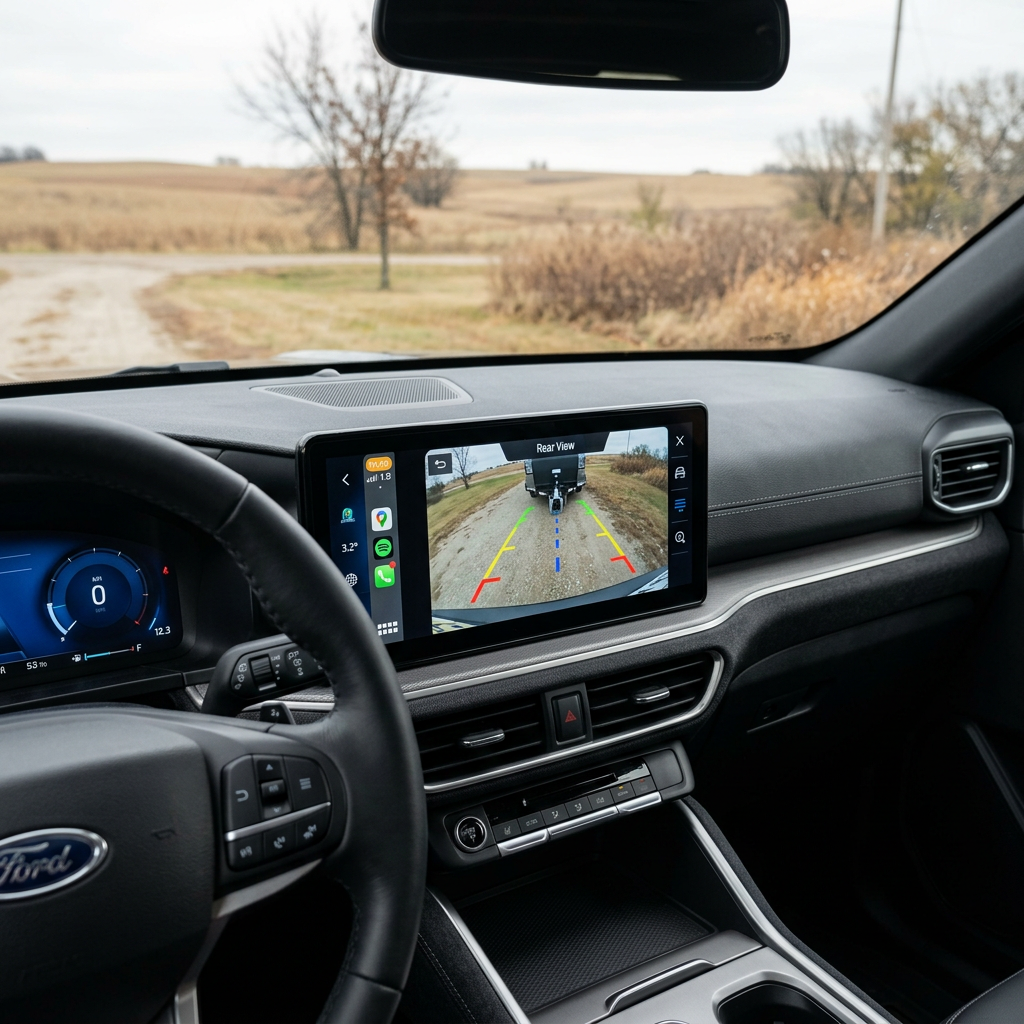
What Technology Features Come Standard in the 2026 Ford Explorer Active Cabin?

What Technology Features Come Standard in the 2026 Ford Explorer Active Cabin?

What Technology Features Come Standard in the 2026 Ford Explorer Active Cabin? When Ford redesigned the interior experience for the 2026 Explorer lineup, they made a bold statement: high-tech luxury and intuitive connectivity should never be locked behind expensive trim upgrades. The 2026 Ford Explorer Active trim, serving as the accessible entry point to the iconic three-row SUV lineup, comes equipped with standard cabin technology that rivals higher-tier trim levels of past generations. Drivers stepping into the Active model are greeted by an expansive digital cockpit centered around the groundbreaking Ford Digital Experience infotainment ecosystem. At the heart of the Active cabin is a massive 13.2-inch capacitive touchscreen paired with a fully digital 12.3-inch instrument cluster positioned directly in the driver's line of sight. Standard technological highlights include wireless Apple CarPlay and Android Auto compatibility, native Google built-in services (including Google Maps and Google Assistant), a 5G LTE Wi-Fi hotspot, and the complete Ford Co-Pilot360 Assist+ package of active safety and driver assistance features. Whether navigating local commutes around Junction City or setting off on cross-country road trips across Kansas, the 2026 Explorer Active ensures seamless connectivity and complete driver confidence from day one. You can dive deeper into full model specifications on our Research Ford Explorer page. How Does the 13.2-Inch Ford Digital Experience Screen Function on Daily Commutes? The standard 13.2-inch center touchscreen in the 2026 Ford Explorer Active isn't just large—it represents a complete architectural evolution in vehicle infotainment software. Powered by Ford's upgraded processing hardware, the display responds instantly to tap, swipe, and pinch gestures, eliminating the frustrating lag that plagued older automotive systems. The native Google built-in platform allows Junction City drivers to access Google Maps natively with real-time traffic routing without requiring a connected smartphone. Hands-free convenience is anchored by Google Assistant, allowing drivers to say 'Hey Google' to adjust cabin climate zones, change audio sources, make phone calls, or set navigation destinations while keeping both hands firmly on the wheel. When parked, passengers can even stream video content or play downloadable games through Google Play apps directly on the screen. The split-screen multi-tasking layout lets drivers monitor active turn-by-turn navigation on the left pane while viewing media playback or trip metrics on the right side simultaneously. Is BlueCruise Available on the 2026 Ford Explorer Active Trim? A common question among tech-focused vehicle shoppers is whether Ford's hands-free highway driving system, BlueCruise, comes standard or is available on the Active model. For the 2026 model year, BlueCruise hands-free highway driving hardware and software are reserved exclusively for higher Explorer trims, including the ST-Line, Platinum, and ST models. However, this does not mean the Active trim compromises on advanced highway safety and automation tech. Every 2026 Ford Explorer Active comes standard with Ford Co-Pilot360 Assist+. This comprehensive suite delivers high-level hands-on driver support during long trips along I-70 or Highway 77. The driver assist suite includes Adaptive Cruise Control with Stop-and-Go, Lane Centering Assist, Evasive Steering Assist, and Predictive Speed Assist to automatically manage distance and highway speeds smoothly. Feature Ford Co-Pilot360 Assist+ (Standard Active) Ford BlueCruise (ST-Line / Platinum) Hands-Free Driving No (Hands on wheel required) Yes (On mapped highways) Adaptive Cruise Control Standard with Stop-and-Go Standard with Stop-and-Go Lane Centering Assist Standard Standard with Lane Change Assist Evasive Steering Assist Standard Standard Device Charging, Audio, and Connectivity for Fort Riley and Regional Families Multi-Row USB Ports Keeping every family member's devices charged is effortlessly managed in the 2026 Explorer Active. USB charging ports (combining modern USB-C and standard USB-A connections) are thoughtfully distributed across all three rows of seating, eliminating power cord battles during school drop-offs or family vacations. Acoustic Audio Clarity The Active cabin features a tuned 6-speaker sound system engineered specifically for the cabin acoustics of the Explorer. Coupled with standard wireless phone integration for Apple CarPlay and Android Auto, streaming podcasts or favorite playlists occurs instantly upon ignition. FordPass Mobile Remote Access For personnel commuting early from Fort Riley, standard FordPass Connect enables smartphone remote start, door lock control, and cabin pre-conditioning. Cool down or warm up your Explorer before stepping outside during severe Kansas weather seasons. Research 2026 Ford Explorer Models Seating Comfort & Layout: Are Second-Row Captain's Chairs Available on the 2026 Ford Explorer Active? Interior flexibility is a hallmark of the 2026 Ford Explorer Active. The trim comes standard with a 7-passenger seating layout featuring a 10-way power adjustable driver's seat, 4-way power front passenger seat, durable premium cloth upholstery with contrast stitching, and a second-row 35/30/35 split-folding bench. Tri-zone automatic climate control is standard, giving row-one, row-two, and row-three occupants individualized air distribution settings. For buyers desiring easier third-row access and a more spacious 6-passenger layout, second-row captain's chairs are available as an standalone option on the Active trim. These captain's chairs feature individual armrests and E-Z Entry slide controls, allowing children or passengers to walk cleanly through the center aisle into the 50/50 split-folding third-row seat. Towing and Safety Tech: Does the 2026 Ford Explorer Active Include Trailer Sway Control? Yes! The 2026 Ford Explorer Active includes standard Trailer Sway Control integrated directly into the AdvanceTrac stability management system. When towing watercraft to Milford Lake or utility trailers across Dickinson County, the system continuously monitors vehicle motion and applies selective braking or adjusts engine power to neutralize trailer oscillation before it becomes dangerous. When equipped with the Class III Trailer Tow Package, the Active trim delivers a maximum towing capacity of up to 5,000 lbs. Additionally, BLIS (Blind Spot Information System) with trailer coverage extends radar monitoring along the full length of attached trailers, while the rear view camera incorporates dynamic hitch guidance overlays directly on the 13.2-inch center screen. How Does the 2026 Ford Explorer Active Differ From the Explorer ST-Line Trim? While both the Active and ST-Line trims share the standard 2.3L EcoBoost turbocharged engine delivering 300 horsepower and 310 lb-ft of torque, key differences exist in interior styling, sound isolation, seating materials, and optional automation features. The Explorer Active focuses on maximum practical utility and value, featuring warm fabric upholstery, 18-inch aluminum wheels, and a 6-speaker audio setup. The ST-Line adds sport-focused aesthetic enhancements including synthetic ActiveX seating with red stitching, 20-inch machined wheels, a 10-speaker B&O Sound System, ambient cabin lighting, and available BlueCruise hands-free driving software capability. If you are considering trading in your current family vehicle to upgrade to an Explorer, try our easy Trade In Evaluation tool today. Cabin Attribute 2026 Explorer Active 2026 Explorer ST-Line Seating Material Durable Cloth / Power Front Seats ActiveX Synthetic w/ Red Stitch Audio System Standard 6-Speaker System 10-Speaker Bang & Olufsen BlueCruise Tech Not Available Available 90-Day / Annual Plan Standard Wheels 18-Inch Sparkle Silver 20-Inch Machined Aluminum Evaluate Your Current Vehicle Trade-In Value What Is the Starting Price and Fuel Economy Rating for the 2026 Ford Explorer Active? MSRP The 2026 Ford Explorer Active has a starting MSRP that varies by drivetrain configuration; please contact Valor Ford for current pricing. It provides unbeatable value with 13.2-inch screens and standard digital safety features. EPA Fuel Economy Ratings The standard 2.3L EcoBoost 4-cylinder achieves EPA-estimated ratings around 20 MPG City / 29 MPG Highway in Rear-Wheel Drive, and approximately 20 MPG City / 27 MPG Highway when equipped with Intelligent 4WD. Long-Term Value With regular fuel requirement and standard Auto Start-Stop engine tech, the Explorer Active keeps routine refueling costs manageable for busy families driving daily around Geary and Dickinson counties. How Does the 2026 Ford Explorer Active Compare to the Kia Telluride LX? When comparing entry-level base trims in the three-row family SUV segment, the 2026 Ford Explorer Active holds significant technology advantages over rivals like the Kia Telluride LX. While the Telluride LX features a smaller standard center display, the Explorer Active boasts a standard 13.2-inch high-definition glass screen powered by native Google built-in software. Furthermore, Ford provides standard wireless Apple CarPlay and Android Auto integration across all trims, allowing seamless cord-free smartphone connections. The Explorer's rear-wheel drive architecture also delivers superior towing stability (up to 5,000 lbs) compared to front-wheel drive base competitors. Enhancing Explorer Tech: Genuine Ford Accessories & Service Support at Valor Ford Tech Accessories Personalize your Explorer Active with factory-backed Ford accessories including integrated front/rear dash cams, rear tablet headrest mounts, and illuminated door sill plates. You can conveniently Order Genuine Ford Parts directly online. Certified Software Updates Our certified technicians at Valor Ford handle over-the-air (OTA) software diagnostics, camera re-calibrations, and routine Ford Digital Experience updates to ensure peak processing speed over your vehicle's lifespan. Valet Maintenance Care Busy schedule in Junction City or Fort Riley? Take advantage of our convenient service pickup and delivery options when scheduling routine maintenance or technology checkups. Schedule Ford Service Today Test Drive the 2026 Ford Explorer Active Near Fort Riley and Dickinson County Reading about advanced automotive technology is one thing—experiencing it from behind the wheel is entirely different. We invite family drivers and active service members across Fort Riley, Manhattan, and Dickinson County to visit Valor Ford in Junction City for a comprehensive hands-on test drive. During your test drive, our knowledgeable Ford specialists will walk you through setting up your wireless smartphone pairing, testing out Google Assistant voice commands, and exploring the safety capabilities of Ford Co-Pilot360 Assist+. Get Directions to Valor Ford today or Call us at (785) 238-5114 to book your personalized consultation. Explore the 2026 Ford Explorer Active Inventory at Valor Ford Today Ready to experience how the standard 13.2-inch Ford Digital Experience display and full-suite connectivity of the 2026 Ford Explorer Active can transform your daily drives? Visit Valor Ford at 1825 Goldenbelt Blvd in Junction City, KS. Our dedicated team is standing by to help you explore trim packages, competitive loan terms, and current offers. Apply for Financing

Contact Us

Fill out this form below and we'll contact you shortly
*Required Fields