Blog / Technology & Innovation

What Technology Features Come Standard in the 2026 Ford Explorer Active Cabin?

What Technology Features Come Standard in the 2026 Ford Explorer Active Cabin?

What Technology Features Come Standard in the 2026 Ford Explorer Active Cabin?

When Ford redesigned the interior experience for the 2026 Explorer lineup, they made a bold statement: high-tech luxury and intuitive connectivity should never be locked behind expensive trim upgrades. The 2026 Ford Explorer Active trim, serving as the accessible entry point to the iconic three-row SUV lineup, comes equipped with standard cabin technology that rivals higher-tier trim levels of past generations. Drivers stepping into the Active model are greeted by an expansive digital cockpit centered around the groundbreaking Ford Digital Experience infotainment ecosystem.
At the heart of the Active cabin is a massive 13.2-inch capacitive touchscreen paired with a fully digital 12.3-inch instrument cluster positioned directly in the driver's line of sight. Standard technological highlights include wireless Apple CarPlay and Android Auto compatibility, native Google built-in services (including Google Maps and Google Assistant), a 5G LTE Wi-Fi hotspot, and the complete Ford Co-Pilot360 Assist+ package of active safety and driver assistance features. Whether navigating local commutes around Junction City or setting off on cross-country road trips across Kansas, the 2026 Explorer Active ensures seamless connectivity and complete driver confidence from day one. You can dive deeper into full model specifications on our Research Ford Explorer page.
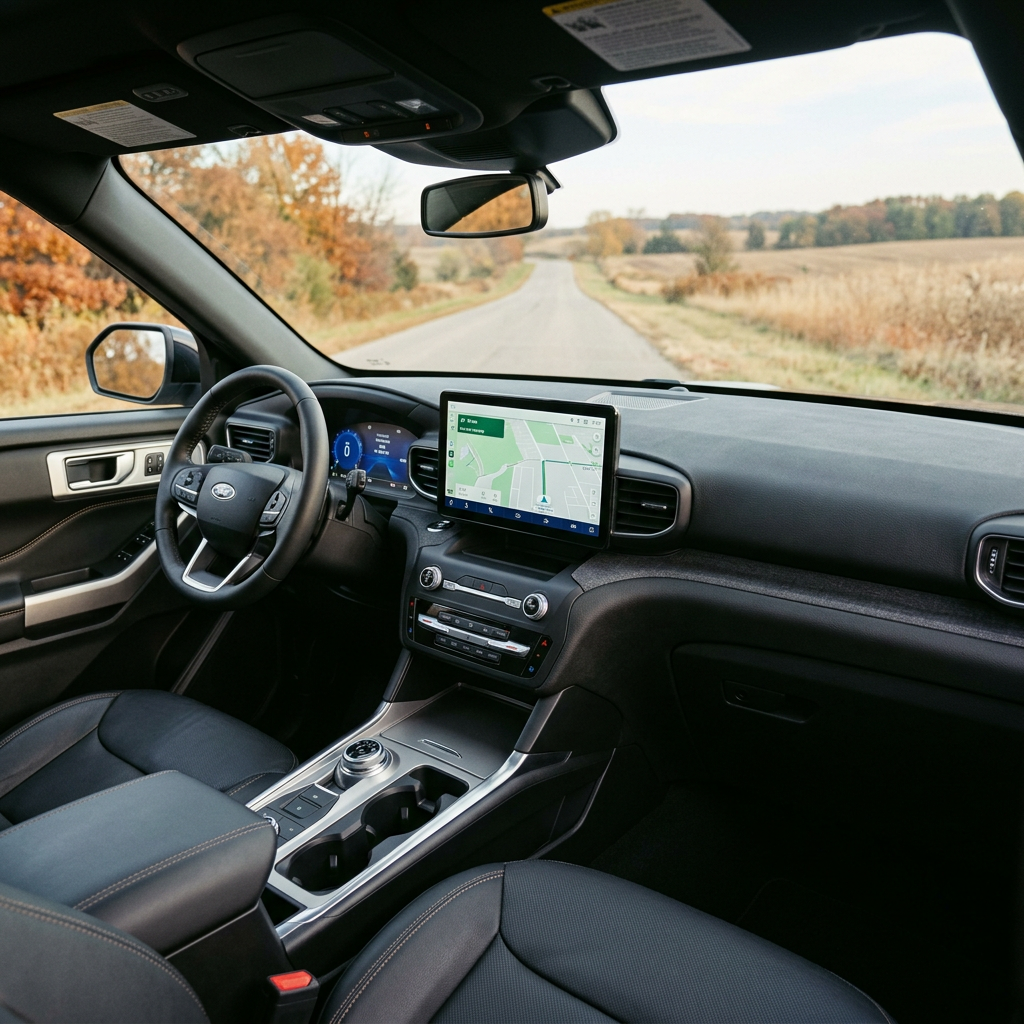
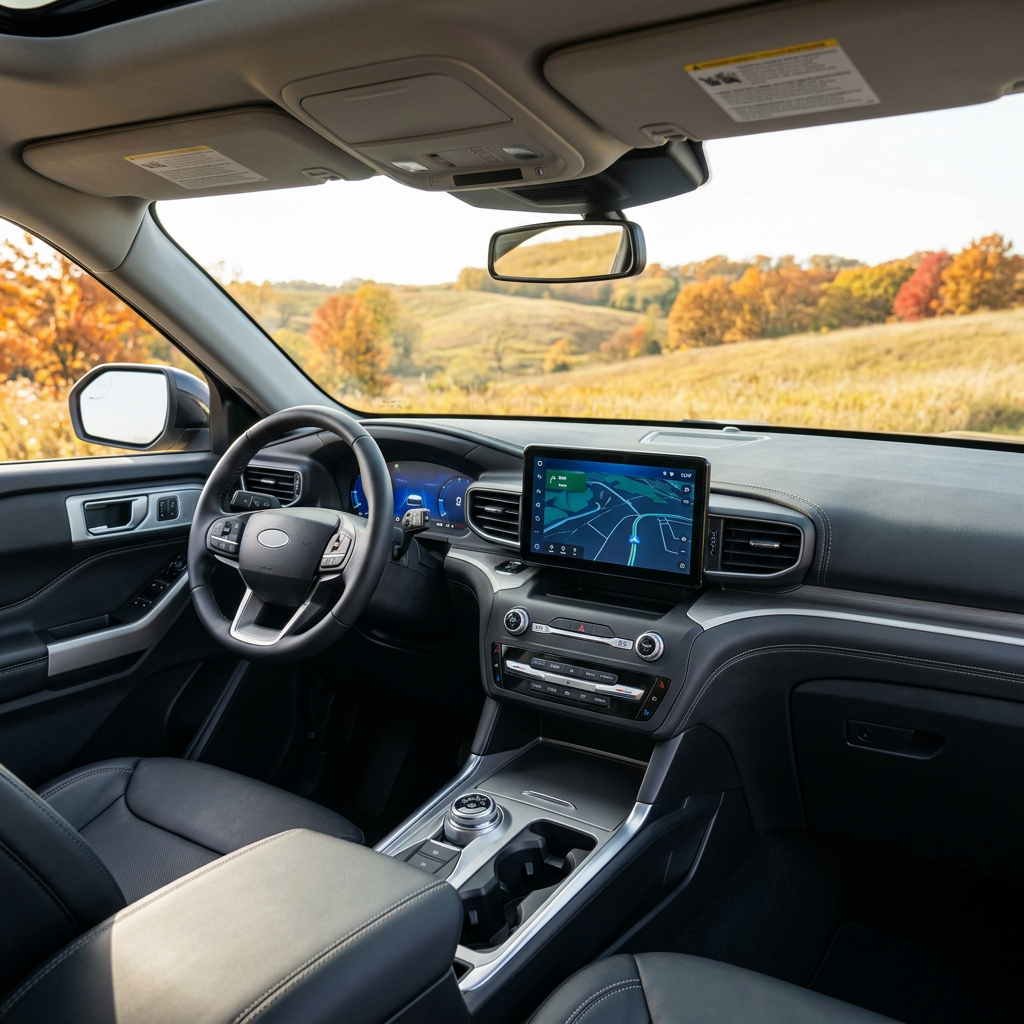
Interior view of a Ford SUV dashboard featuring a digital touchscreen navigation system on a scenic country road. (Representative image for illustration purposes only. Actual vehicle may vary based on trim and configuration.)

How Does the 13.2-Inch Ford Digital Experience Screen Function on Daily Commutes?

The standard 13.2-inch center touchscreen in the 2026 Ford Explorer Active isn't just large—it represents a complete architectural evolution in vehicle infotainment software. Powered by Ford's upgraded processing hardware, the display responds instantly to tap, swipe, and pinch gestures, eliminating the frustrating lag that plagued older automotive systems. The native Google built-in platform allows Junction City drivers to access Google Maps natively with real-time traffic routing without requiring a connected smartphone.
Hands-free convenience is anchored by Google Assistant, allowing drivers to say 'Hey Google' to adjust cabin climate zones, change audio sources, make phone calls, or set navigation destinations while keeping both hands firmly on the wheel. When parked, passengers can even stream video content or play downloadable games through Google Play apps directly on the screen.
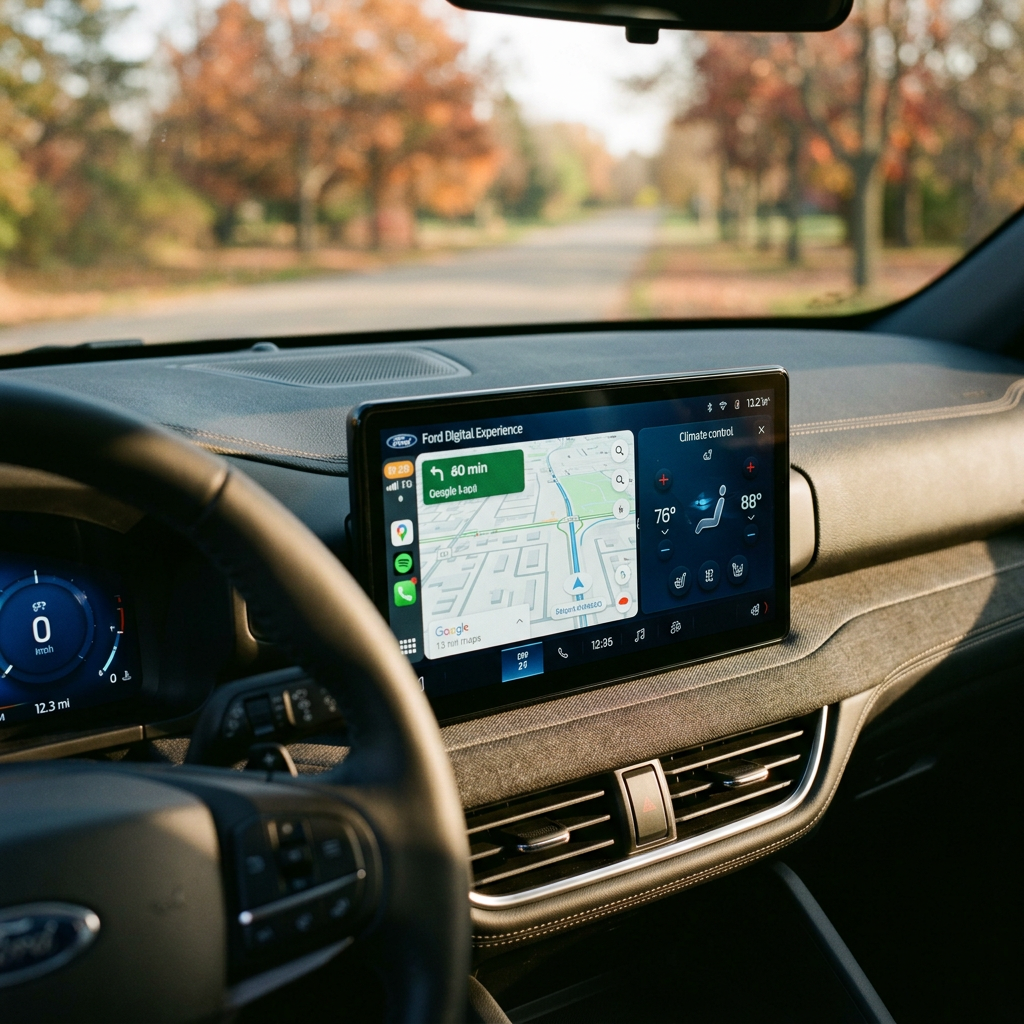
Interior view of a Ford car dashboard featuring a central touchscreen display with map navigation. (Representative image for illustration purposes only. Actual vehicle may vary based on trim and configuration.)
The split-screen multi-tasking layout lets drivers monitor active turn-by-turn navigation on the left pane while viewing media playback or trip metrics on the right side simultaneously.

Is BlueCruise Available on the 2026 Ford Explorer Active Trim?

A common question among tech-focused vehicle shoppers is whether Ford's hands-free highway driving system, BlueCruise, comes standard or is available on the Active model. For the 2026 model year, BlueCruise hands-free highway driving hardware and software are reserved exclusively for higher Explorer trims, including the ST-Line, Platinum, and ST models. However, this does not mean the Active trim compromises on advanced highway safety and automation tech.
Every 2026 Ford Explorer Active comes standard with Ford Co-Pilot360 Assist+. This comprehensive suite delivers high-level hands-on driver support during long trips along I-70 or Highway 77. The driver assist suite includes Adaptive Cruise Control with Stop-and-Go, Lane Centering Assist, Evasive Steering Assist, and Predictive Speed Assist to automatically manage distance and highway speeds smoothly.

Feature

Ford Co-Pilot360 Assist+ (Standard Active)

Ford BlueCruise (ST-Line / Platinum)

Hands-Free Driving

No (Hands on wheel required)

Yes (On mapped highways)

Adaptive Cruise Control

Standard with Stop-and-Go

Standard with Stop-and-Go

Lane Centering Assist

Standard

Standard with Lane Change Assist

Evasive Steering Assist

Standard

Standard

Device Charging, Audio, and Connectivity for Fort Riley and Regional Families

Multi-Row USB Ports

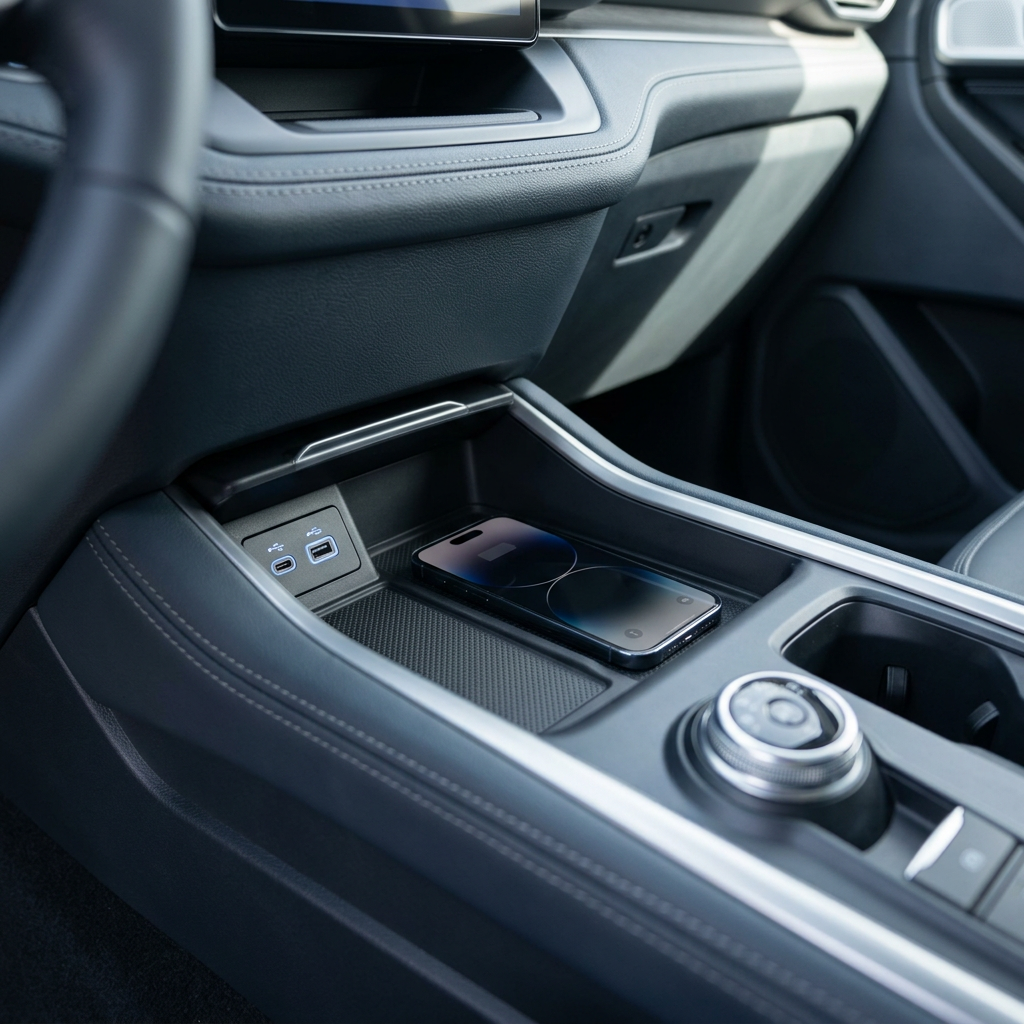
Keeping every family member's devices charged is effortlessly managed in the 2026 Explorer Active. USB charging ports (combining modern USB-C and standard USB-A connections) are thoughtfully distributed across all three rows of seating, eliminating power cord battles during school drop-offs or family vacations.

Acoustic Audio Clarity

The Active cabin features a tuned 6-speaker sound system engineered specifically for the cabin acoustics of the Explorer. Coupled with standard wireless phone integration for Apple CarPlay and Android Auto, streaming podcasts or favorite playlists occurs instantly upon ignition.

FordPass Mobile Remote Access

For personnel commuting early from Fort Riley, standard FordPass Connect enables smartphone remote start, door lock control, and cabin pre-conditioning. Cool down or warm up your Explorer before stepping outside during severe Kansas weather seasons.
A smartphone resting on a wireless charging pad in a car's center console next to USB ports and a rotary shifter. (Representative image for illustration purposes only. Actual vehicle may vary based on trim and configuration.)

Seating Comfort & Layout: Are Second-Row Captain's Chairs Available on the 2026 Ford Explorer Active?

Interior flexibility is a hallmark of the 2026 Ford Explorer Active. The trim comes standard with a 7-passenger seating layout featuring a 10-way power adjustable driver's seat, 4-way power front passenger seat, durable premium cloth upholstery with contrast stitching, and a second-row 35/30/35 split-folding bench. Tri-zone automatic climate control is standard, giving row-one, row-two, and row-three occupants individualized air distribution settings.
For buyers desiring easier third-row access and a more spacious 6-passenger layout, second-row captain's chairs are available as an standalone option on the Active trim. These captain's chairs feature individual armrests and E-Z Entry slide controls, allowing children or passengers to walk cleanly through the center aisle into the 50/50 split-folding third-row seat.

Towing and Safety Tech: Does the 2026 Ford Explorer Active Include Trailer Sway Control?

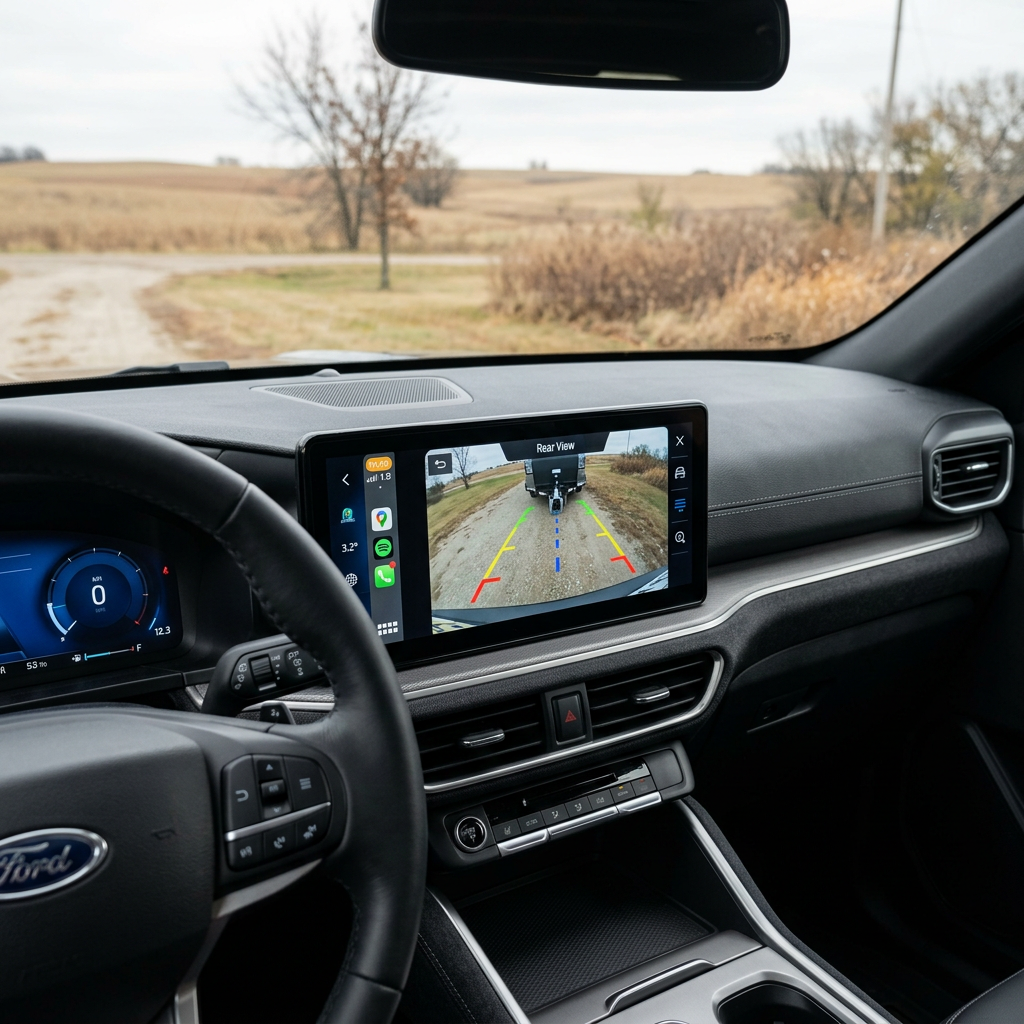
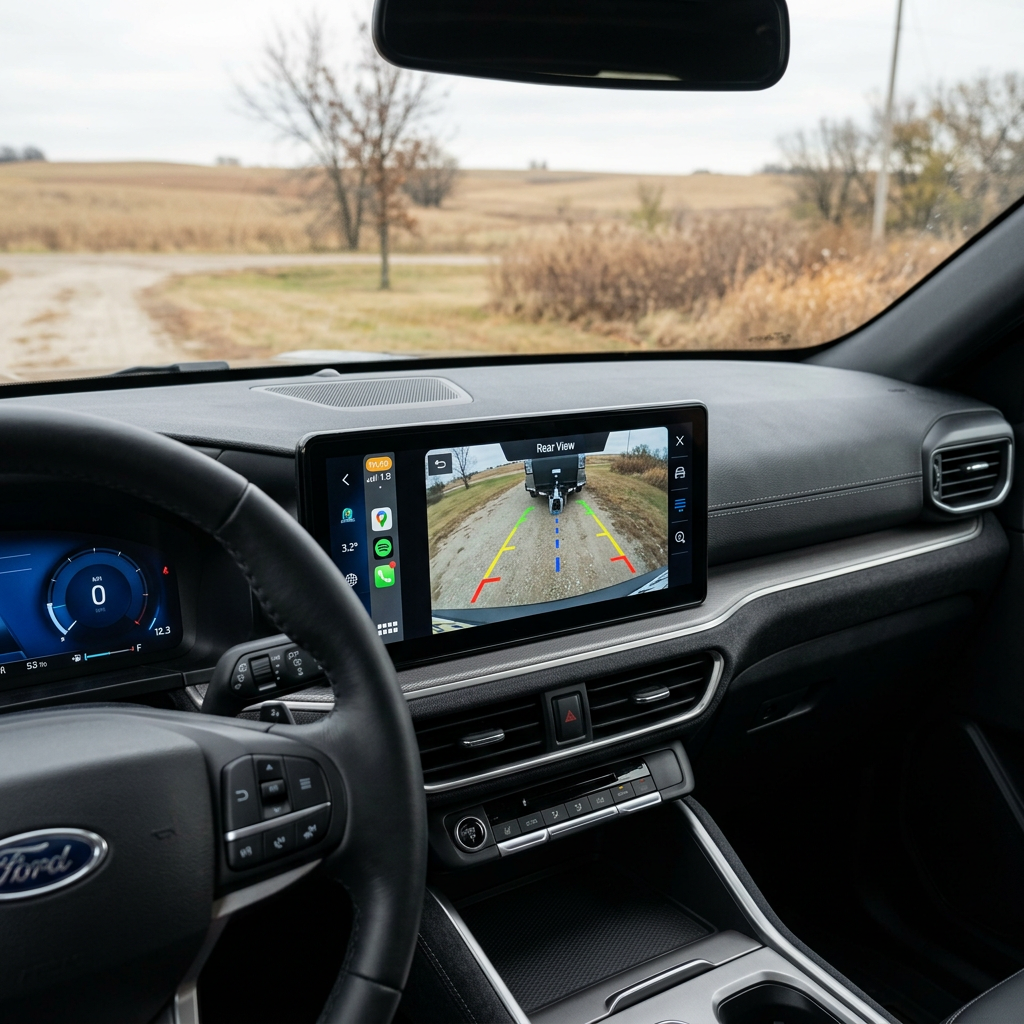
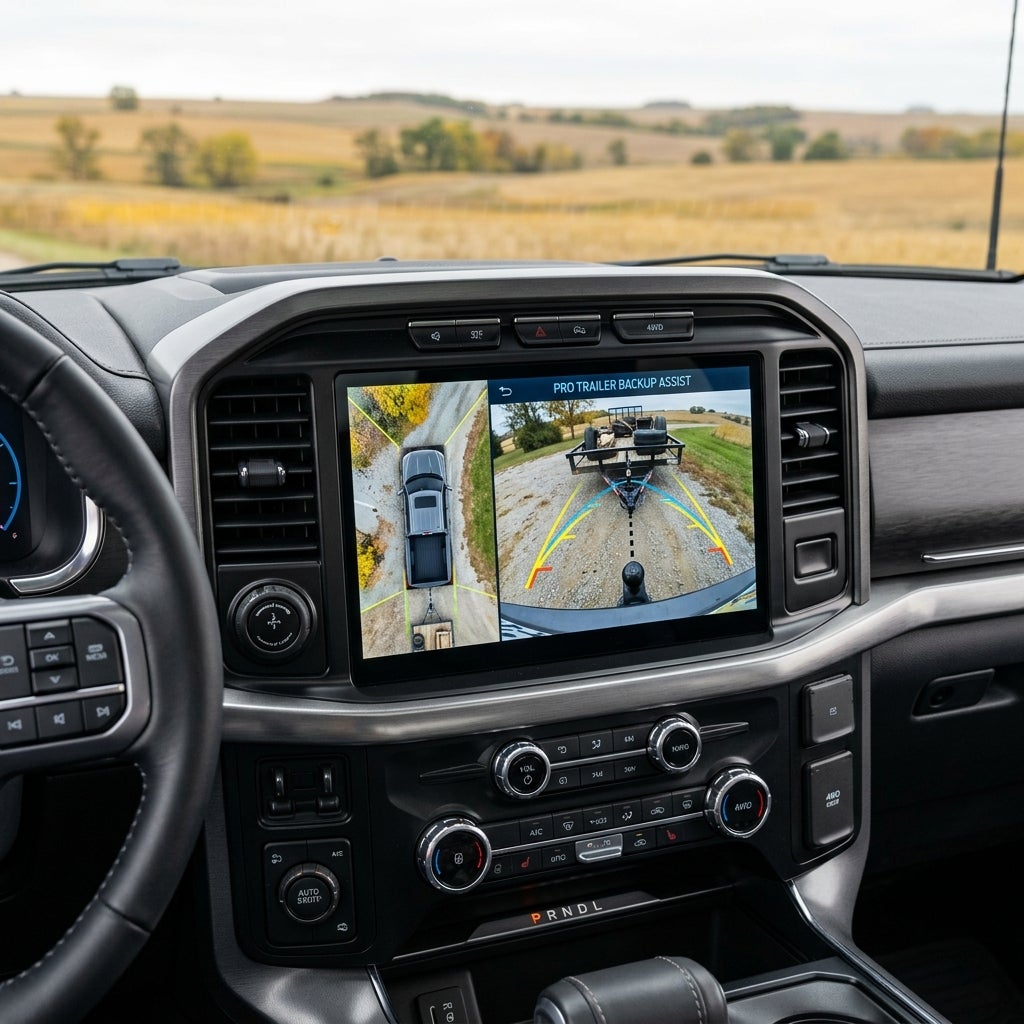
Dashboard of a Ford vehicle displaying a rear-view camera feed with trailer hitch alignment lines on the central screen. (Representative image for illustration purposes only. Actual vehicle may vary based on trim and configuration.)
Yes! The 2026 Ford Explorer Active includes standard Trailer Sway Control integrated directly into the AdvanceTrac stability management system. When towing watercraft to Milford Lake or utility trailers across Dickinson County, the system continuously monitors vehicle motion and applies selective braking or adjusts engine power to neutralize trailer oscillation before it becomes dangerous.
When equipped with the Class III Trailer Tow Package, the Active trim delivers a maximum towing capacity of up to 5,000 lbs. Additionally, BLIS (Blind Spot Information System) with trailer coverage extends radar monitoring along the full length of attached trailers, while the rear view camera incorporates dynamic hitch guidance overlays directly on the 13.2-inch center screen.

How Does the 2026 Ford Explorer Active Differ From the Explorer ST-Line Trim?

While both the Active and ST-Line trims share the standard 2.3L EcoBoost turbocharged engine delivering 300 horsepower and 310 lb-ft of torque, key differences exist in interior styling, sound isolation, seating materials, and optional automation features.
The Explorer Active focuses on maximum practical utility and value, featuring warm fabric upholstery, 18-inch aluminum wheels, and a 6-speaker audio setup. The ST-Line adds sport-focused aesthetic enhancements including synthetic ActiveX seating with red stitching, 20-inch machined wheels, a 10-speaker B&O Sound System, ambient cabin lighting, and available BlueCruise hands-free driving software capability. If you are considering trading in your current family vehicle to upgrade to an Explorer, try our easy Trade In Evaluation tool today.

Cabin Attribute

2026 Explorer Active

2026 Explorer ST-Line

Seating Material

Durable Cloth / Power Front Seats

ActiveX Synthetic w/ Red Stitch

Audio System

Standard 6-Speaker System

10-Speaker Bang & Olufsen

BlueCruise Tech

Not Available

Available 90-Day / Annual Plan

Standard Wheels

18-Inch Sparkle Silver

20-Inch Machined Aluminum

What Is the Starting Price and Fuel Economy Rating for the 2026 Ford Explorer Active?

MSRP

The 2026 Ford Explorer Active has a starting MSRP that varies by drivetrain configuration; please contact Valor Ford for current pricing. It provides unbeatable value with 13.2-inch screens and standard digital safety features.

EPA Fuel Economy Ratings

The standard 2.3L EcoBoost 4-cylinder achieves EPA-estimated ratings around 20 MPG City / 29 MPG Highway in Rear-Wheel Drive, and approximately 20 MPG City / 27 MPG Highway when equipped with Intelligent 4WD.

Long-Term Value

With regular fuel requirement and standard Auto Start-Stop engine tech, the Explorer Active keeps routine refueling costs manageable for busy families driving daily around Geary and Dickinson counties.

How Does the 2026 Ford Explorer Active Compare to the Kia Telluride LX?

When comparing entry-level base trims in the three-row family SUV segment, the 2026 Ford Explorer Active holds significant technology advantages over rivals like the Kia Telluride LX. While the Telluride LX features a smaller standard center display, the Explorer Active boasts a standard 13.2-inch high-definition glass screen powered by native Google built-in software.
Furthermore, Ford provides standard wireless Apple CarPlay and Android Auto integration across all trims, allowing seamless cord-free smartphone connections. The Explorer's rear-wheel drive architecture also delivers superior towing stability (up to 5,000 lbs) compared to front-wheel drive base competitors.
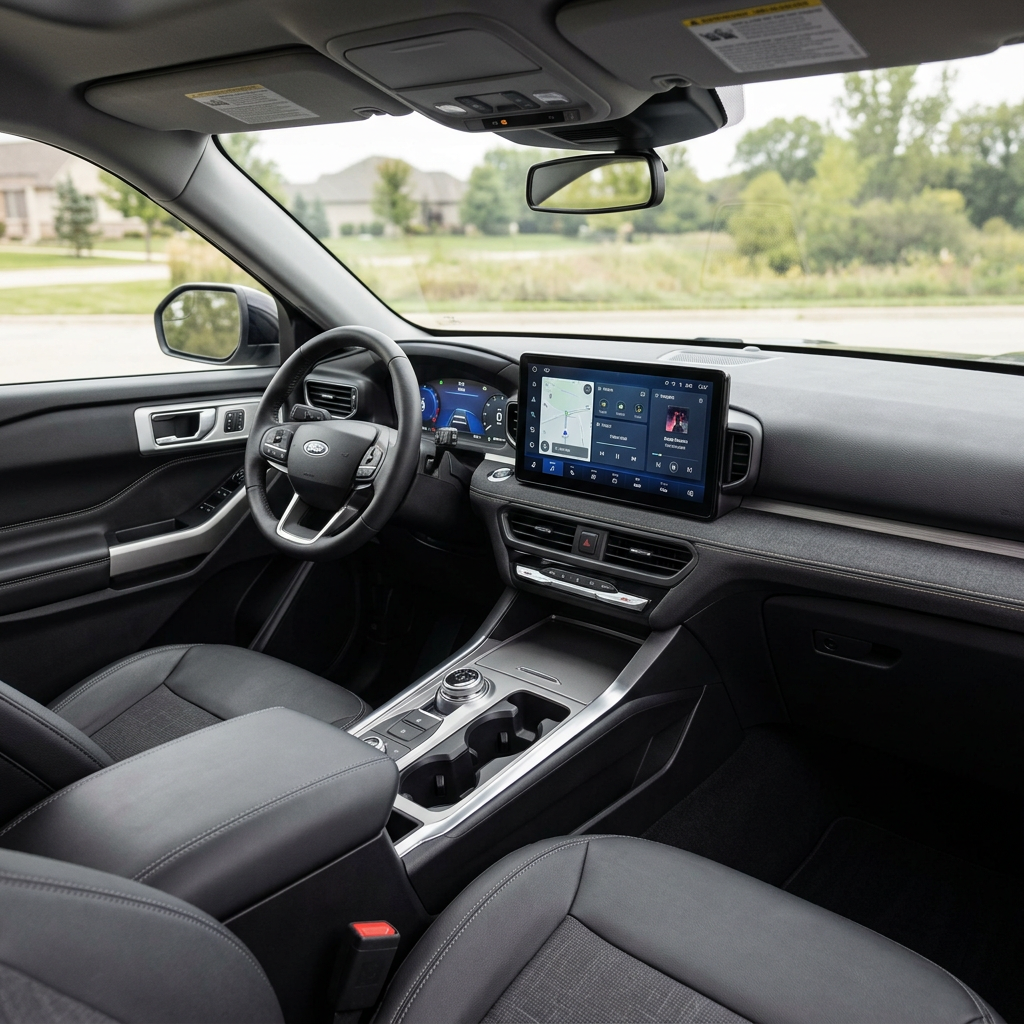
Modern SUV interior showing dark leather seats, digital dashboard, steering wheel, and wide central infotainment screen. (Representative image for illustration purposes only. Actual vehicle may vary based on trim and configuration.)

Enhancing Explorer Tech: Genuine Ford Accessories & Service Support at Valor Ford

Tech Accessories

Personalize your Explorer Active with factory-backed Ford accessories including integrated front/rear dash cams, rear tablet headrest mounts, and illuminated door sill plates. You can conveniently Order Genuine Ford Parts directly online.

Certified Software Updates

Our certified technicians at Valor Ford handle over-the-air (OTA) software diagnostics, camera re-calibrations, and routine Ford Digital Experience updates to ensure peak processing speed over your vehicle's lifespan.

Valet Maintenance Care

Busy schedule in Junction City or Fort Riley? Take advantage of our convenient service pickup and delivery options when scheduling routine maintenance or technology checkups.

Test Drive the 2026 Ford Explorer Active Near Fort Riley and Dickinson County

Reading about advanced automotive technology is one thing—experiencing it from behind the wheel is entirely different. We invite family drivers and active service members across Fort Riley, Manhattan, and Dickinson County to visit Valor Ford in Junction City for a comprehensive hands-on test drive.
During your test drive, our knowledgeable Ford specialists will walk you through setting up your wireless smartphone pairing, testing out Google Assistant voice commands, and exploring the safety capabilities of Ford Co-Pilot360 Assist+. Get Directions to Valor Ford today or Call us at (785) 238-5114 to book your personalized consultation.

Explore the 2026 Ford Explorer Active Inventory at Valor Ford Today

Ready to experience how the standard 13.2-inch Ford Digital Experience display and full-suite connectivity of the 2026 Ford Explorer Active can transform your daily drives? Visit Valor Ford at 1825 Goldenbelt Blvd in Junction City, KS. Our dedicated team is standing by to help you explore trim packages, competitive loan terms, and current offers.

Posted in:

Related Posts

Tech Features in the 2026 Ford Explorer Active

Tech Features in the 2026 Ford Explorer Active

Tech Features in the 2026 Ford Explorer Active What Screen Sizes and Digital Displays Come Standard in the 2026 Ford Explorer Active Cabin? The 2026 Ford Explorer Active cabin comes standard with a 13.2-inch center LCD touchscreen running the Ford Digital Experience alongside a 12.3-inch digital instrument cluster for the driver. Together, these two expansive screens deliver high-definition maps, vehicle telemetry, and seamless smartphone mirroring across every single Active model without requiring any paid package upgrades. Positioned ergonomically high on the reworked dashboard, the central 13.2-inch display puts navigation, media controls, and vehicle settings within easy reach of both the driver and front passenger. Below the main screen, a useful built-in shelf provides a natural resting spot for a hand while making screen selections, keeping your attention focused on driving. The accompanying 12.3-inch digital gauge cluster replaces traditional mechanical dials, allowing drivers to customize screen layouts to display turn-by-turn navigation graphics, active safety alerts, and drive mode visuals. Standardizing these dual digital displays on the 2026 Ford Explorer Active ($42,585 starting MSRP for all-wheel drive models) ensures that buyers choosing the entry trim enjoy the exact same primary screen footprint found on top-tier models. As Finance Manager at Valor Ford, I review vehicle spec sheets daily with buyers who are pleasantly surprised to learn that upgrading to higher trims isn't required just to get modern cabin screens. If you want to experience these displays firsthand, you can stop by our Junction City showroom location or give our finance team a call to check available vehicle arrivals. Table of Contents How Does Google Built-In and In-Cabin Infotainment Work in the 2026 Ford Explorer Active? What Driver-Assist and Standard Safety Tech Protects Families in Junction City? How Does Technology in the 2026 Ford Explorer Active Compare to the ST-Line Trim? Is Ford BlueCruise Available on the Active Trim or Reserved for Higher Models? How Do Device Charging and Ford App Connectivity Features Work for Daily Commutes? How Does Google Built-In and In-Cabin Infotainment Work in the 2026 Ford Explorer Active? The 2026 Ford Explorer Active features native Google Built-in integration within the Ford Digital Experience, giving drivers direct voice-activated access to Google Maps, Google Assistant, and downloadable applications via the Google Play Store without relying solely on a connected smartphone. Native Google Maps serves as the primary navigation engine, providing real-time traffic updates, route optimization, and local point-of-interest searching directly on the 13.2-inch screen. Driver commands are handled effortlessly through Google Assistant, allowing occupants to adjust cabin temperature, switch audio sources, or initiate calls using natural voice prompts. For occupants who prefer alternative interfaces, standard wireless Apple CarPlay and wireless Android Auto capability allow instant smartphone synchronization the moment you start the vehicle. When parked, the infotainment system transforms into an entertainment hub capable of streaming video content from apps like YouTube and Prime Video or running casual games downloaded through Google Play. System data connectivity is backed by a standard 5G modem, and Ford includes one year of the Ford Connectivity Package as standard equipment across the 2026 lineup. In my 11 years helping customers structure their purchases, smooth technology integration consistently ranks among the top features for long-term ownership satisfaction. Shoppers comparing mid-size family vehicles can read our 2026 Ford Explorer research details, review heavy-duty alternatives like our Ford F-250 lineup overview, or browse our current pre-owned vehicle inventory to compare tech across different model years. What Driver-Assist and Standard Safety Tech Protects Families in Junction City? Standard driver-assist and safety technology on the 2026 Ford Explorer Active includes the Ford Co-Pilot360 system, featuring Pre-Collision Assist with Automatic Emergency Braking, Blind Spot Information System with Cross-Traffic Alert, Lane-Keeping System, and a rearview camera with rear parking sensors. Every 2026 Explorer Active comes engineered with robust active safety hardware, including standard AdvanceTrac with Roll Stability Control, an individual tire-pressure monitoring system, and automatic high-beam headlamps. The Active trim also features Ford's Terrain Management System with six selectable drive modes—Normal, Eco, Sport, Tow/Haul, Slippery, and Trail (or Off-Road on 4WD models). Power is supplied by a 2.3L EcoBoost turbocharged four-cylinder engine generating 300 hp and 310 lb-ft of torque, delivering confident highway merging power alongside solid traction management. For families navigating daily commutes along Washington Street or taking weekend drives near the Kansas River in Junction City, having comprehensive active safety systems standard provides genuine peace of mind. Automated emergency braking and blind spot detection actively monitor surrounding traffic during busy morning commutes and school drop-offs. Families test-driving the Explorer Active at our dealership usually ask to see how the backup-assist guidelines and blind-spot sensors behave before we even head out on our highway test loop. Keeping these sensor systems calibrated over years of daily driving is easy when scheduling service online with our certified service department. Safety & Driver Assistance Safety and driver-assistance features by trim All trims come standard with ABS, height-adjustable front and rear head restraints (two per seat) and third-row head restraints (except Utility Police Interceptor 4x4, which does not have third-row head restraints) with two head restraints per seat. Each trim features front seat belts with driver and passenger pre-tensioners that are height adjustable, along with standard rear and third-row seat belts for both driver and passenger positions. Telematics advanced auto collision notification, Isofix preparation, millimetre-wave sensor distance and object sensing technology, emergency call, accident data recorder, anti collision system activates brake lights, automatic emergency braking, and driver monitoring are standard on all trims except the Utility Police Interceptor 4x4, which does not include these telematics or anti collision features. The anti collision system's brake application at low speed in the front is standard on all trims except for Platinum, Platinum 4WD, ST, ST 4WD, ST-LINE 4WD, ST-LINE RWD, Tremor 4WD, and Utility Police Interceptor 4x4, where this feature is not included. How Does Technology in the 2026 Ford Explorer Active Compare to the ST-Line Trim? The ST-Line trim enhances the 2026 Ford Explorer with premium features like a 10-speaker Bang & Olufsen sound system, a 360-degree camera system, and available Ford BlueCruise hands-free driving, distinguishing it from the Active trim. The Active trim comes equipped with a six-speaker audio system, a rearview camera with backup guidelines, and 18-inch sparkled silver-painted aluminum wheels, establishing an impressive standard tech foundation at an accessible price point. In contrast, the ST-Line focuses on sport-inspired cosmetics, adding 20-inch painted alloy wheels and premium audio hardware while sharing the same 300 hp 2.3L EcoBoost engine, SelectShift® 10-speed automatic transmission, and 5,000 lbs maximum towing capacity when properly equipped. From my desk in the finance department, I point out to buyers that the Active trim delivers the exact same core screen size, processor performance, and engine output as higher-tier models for a lower overall investment. When comparing mid-size family haulers against full-size options like our 2026 Ford F-150 specs, evaluating standard vs optional features helps buyers align their monthly payments with their actual lifestyle needs. You can evaluate your current vehicle's trade value today using our online trade-in valuation tool. Pricing Pricing by trim Feature Active 4WD Active 4WD 100A Active RWD Active RWD 100A Base MSRP $42,585 $40,465 $40,585 $38,465 Destination charge $1,795 $1,795 $1,795 $1,795 Pricing (continued) Feature Platinum Platinum 4WD ST ST 4WD Base MSRP $50,965 $52,965 $54,905 $56,905 Destination charge $1,795 $1,795 $1,795 $1,795 Pricing (continued) Feature ST-LINE 4WD ST-LINE RWD Tremor 4WD Utility Police Interceptor 4x4 Base MSRP $47,155 $45,155 $48,965 $48,550 Destination charge $1,795 $1,795 $1,795 $1,695 Is Ford BlueCruise Available on the Active Trim or Reserved for Higher Models? Ford BlueCruise hands-free driving technology is reserved for higher 2026 Explorer trims such as ST-Line, Platinum, and ST, while the Active trim includes Adaptive Cruise Control with Lane Centering as standard. The Active trim's standard Adaptive Cruise Control monitors preceding traffic speeds, automatically adjusting acceleration and braking to maintain a safe follow distance while keeping the vehicle centered within lane markings. Hands-free Ford BlueCruise builds upon those functions by allowing qualified hands-free driving on designated controlled-access highways across North America, utilizing interior driver-facing cameras to monitor attentiveness. For drivers who spend most of their time on local suburban roads or prefer keeping hands on the wheel, the standard driver-assist package on the Active trim delivers excellent guidance without extra subscription costs. Shoppers cross-shopping outdoor-ready SUVs in our new Ford Bronco inventory frequently note that Ford's baseline active safety tech offers outstanding confidence on long road trips. To streamline your visit, I recommend getting pre-approved online before coming in to test drive. How Do Device Charging and Ford App Connectivity Features Work for Daily Commutes? The 2026 Ford Explorer Active equips all three seating rows with a total of eight USB ports—including Type-A and Type-C options—alongside standard Ford App Connect 5G Wi-Fi hotspot capability supporting up to 10 devices simultaneously. Front-row occupants benefit from two USB-C ports inside the center console plus a front media hub containing one USB-A and one USB-C port. Second-row passengers have access to two dedicated USB-C charging ports, while third-row passengers receive two additional USB-C ports so every passenger can keep devices powered. Three 12-volt power outlets located throughout the cabin provide additional power connections for portable coolers, air pumps, or electronic accessories. Active-duty service members and civilian personnel commuting around Fort Riley benefit greatly from remote vehicle start, door locking, fuel level monitoring, and location tracking via the Ford App. Whether pre-cooling the interior on warm summer afternoons or keeping kids' tablets charged during cross-country travel, the Active trim's connectivity suite keeps everyone connected. If you would like to explore these technology features in person or discuss financing options, visit us at 1825 Goldenbelt Blvd or get our dealership directions, reach our team directly at (785) 238-5114, or look into ordering genuine Ford parts and tech accessories to customize your SUV. Engine & Performance Powertrain specs by trim Feature Active 4WD Active 4WD 100A Active RWD Active RWD 100A Engine 2.3L 2.3L 2.3L 2.3L Horsepower 300 hp 300 hp 300 hp 300 hp Torque 310 lb-ft 310 lb-ft 310 lb-ft 310 lb-ft Transmission SelectShift® SelectShift® SelectShift® SelectShift® Drivetrain All-wheel drive All-wheel drive Rear-wheel drive Rear-wheel drive Engine & Performance (continued) Feature Platinum Platinum 4WD ST ST 4WD Engine 2.3L 2.3L 3L 3L Horsepower 300 hp 300 hp 400 hp 400 hp Torque 310 lb-ft 310 lb-ft 415 lb-ft 415 lb-ft Transmission SelectShift® SelectShift® SelectShift® SelectShift® Drivetrain Rear-wheel drive All-wheel drive Rear-wheel drive All-wheel drive Engine & Performance (continued) Feature ST-LINE 4WD ST-LINE RWD Tremor 4WD Utility Police Interceptor 4x4 Engine 2.3L 2.3L 2.3L 3.3L Horsepower 300 hp 300 hp 300 hp 318 hp Torque 310 lb-ft 310 lb-ft 310 lb-ft 260 lb-ft Transmission SelectShift® SelectShift® SelectShift® SelectShift Drivetrain All-wheel drive Rear-wheel drive All-wheel drive All-wheel drive Fuel Economy Fuel economy and range by trim Feature Active 4WD Active 4WD 100A Active RWD Active RWD 100A MPG 20 city / 27 hwy / 23 combined 20 city / 27 hwy / 23 combined 20 city / 29 hwy / 24 combined 20 city / 29 hwy / 24 combined Fuel Economy (continued) Feature Platinum Platinum 4WD ST ST 4WD MPG 20 city / 29 hwy / 24 combined 20 city / 27 hwy / 23 combined 18 city / 25 hwy / 21 combined 18 city / 25 hwy / 20 combined Fuel Economy (continued) Feature ST-LINE 4WD ST-LINE RWD Tremor 4WD Utility Police Interceptor 4x4 MPG 20 city / 27 hwy / 23 combined 20 city / 29 hwy / 24 combined 19 city / 23 hwy / 21 combined — © 2026 Valor Ford. All rights reserved. Vehicle specification data © JATO Dynamics Limited.

How Ford BlueCruise Reduces Driver Fatigue on I-70 Highway Commutes

How Ford BlueCruise Reduces Driver Fatigue on I-70 Highway Commutes

How Ford BlueCruise Reduces Driver Fatigue on I-70 Highway Commutes ## How Does Ford BlueCruise Reduce Physical Strain on I-70 Commutes? Ford BlueCruise reduces physical strain on long highway commutes by taking over continuous steering, throttle, and braking inputs on designated divided highways. By eliminating the hundreds of micro-steering corrections and pedal adjustments drivers make every minute, the system removes steady muscle tension in the hands, wrists, shoulders, and legs, leaving commuters feeling noticeably fresher after extended multi-hour highway drives. When you sit behind the wheel for a 40-minute drive on the open highway around Junction City, your body stays in a constant state of isometric tension. Keeping a vehicle centered in a lane against crosswinds or pavement grooves requires hundreds of minor steering wheel tweaks per mile. Ford BlueCruise utilizes forward-facing radar and optical cameras to handle those repetitive physical inputs automatically, allowing you to rest your hands off the wheel while maintaining complete visual awareness. The physical relief comes from reducing muscular workload without compromising driving safety. An infrared camera mounted on the steering column tracks your eye gaze and head orientation to ensure you remain focused on the road. If you need to map out your daily drive or experience hands-free technology in person, stop by our Goldenbelt Boulevard location or give our team a quick call to chat with our vehicle specialists and learn more about how BlueCruise can enhance your commute. Table of Contents How Does Ford BlueCruise Hands-Free Driving Function on Highways? Does BlueCruise Cover the I-70 Corridor Between Salina, Junction City, and Manhattan? How Does Ford BlueCruise Compare to GM Super Cruise on Rural Kansas Roads? Is BlueCruise Standard Equipment or an Option on New Ford Trim Levels? Can You Pause, Resume, or Cancel a Monthly BlueCruise Subscription? How Do You Keep Your BlueCruise Hardware and Camera Systems Maintained? How Does Ford BlueCruise Hands-Free Driving Function on Highways? Ford BlueCruise operates as a Level 2 driver-assistance system that integrates precise GPS mapping, radar sensors, optical cameras, and driver-monitoring technology. When your vehicle enters a designated pre-mapped section of highway—known as a Hands-Free Blue Zone—the instrument cluster displays a blue lighting cue indicating that hands-free control is available. Once activated via the steering wheel controls for Adaptive Cruise Control and Lane Centering, the system maintains your set speed, keeps a safe follow distance, and keeps the vehicle centered in its lane. Modern software versions incorporate advanced features that refine the highway driving experience: Lane Change Assist: Tap the turn signal indicator, and the system executes a hands-free lane change once sensors confirm the target lane is clear. In-Lane Repositioning: The vehicle subtly shifts away from large semi-trucks or wide loads in adjacent lanes to provide extra lateral buffer space. Predictive Speed Assist: Speed automatically adjusts when approaching sharp curves or highway interchange transitions for seamless travel. Whether you are looking at advanced tech on heavy-duty haulers like detailed Ford F-250 specs or shopping our certified pre-owned vehicle inventory, our team can show you which vehicles come equipped with factory driver-assist hardware. Does BlueCruise Cover the I-70 Corridor Between Salina, Junction City, and Manhattan? Interstate 70 through central Kansas is fully mapped as a hands-free Blue Zone, covering the entire main commuter corridor between regional hubs. The pre-mapped network spans more than 130,000 miles of divided, controlled-access highways across North America, making daily interstate highway trips seamless and hands-free. While hands-free driving is continuous on the main interstate, the system requires driver intervention at specific transition points. When taking exit ramps, entering construction diversions with faded paint lines, or transitioning onto unmapped connectors such as Highway 18 near Manhattan, Ford BlueCruise issues clear visual and audible prompts for you to take back manual steering control. If heavy rain or road dirt obscures the forward radar or windshield camera, the system safety protocols prompt you to place your hands back on the wheel until visibility clears. Staying up to date on vehicle maintenance ensures these sensors operate at peak performance, and you can easily schedule a service appointment online with our technician team whenever your vehicle needs a system check. How Does Ford BlueCruise Compare to GM Super Cruise on Rural Kansas Roads? Ford BlueCruise focuses its coverage on controlled-access, multi-lane divided highways like Interstate 70, where high-speed commuting creates the greatest physical demand on drivers. While GM Super Cruise includes mapping on select two-lane secondary roads, Ford optimizes its system for maximum precision, lane-centering stability, and hands-free towing performance on major highway networks. For truck owners who haul equipment across the open prairie stretches of Dickinson County, Ford offers BlueCruise with Towing on equipped models like the F-150. When properly configured with a Tow/Haul Package, the system delivers hands-free highway driving while pulling trailers up to 10,000 lb. The software continuously monitors trailer sway, enforces a 75 mph speed maximum, and adjusts braking profiles to handle the extra mass safely. When comparing driver-assist capabilities on trade-in vehicles, evaluating your daily highway routes helps determine which system fits your driving routine best. You can check the estimated value of your current truck or SUV using our online trade-in evaluation tool before taking a test drive. Is BlueCruise Standard Equipment or an Option on New Ford Trim Levels? Availability of Ford BlueCruise depends on the specific vehicle model and trim line. High-tier configurations like the Mustang Mach-E GT, F-150 Platinum, and top-spec Expedition trim levels frequently feature hands-free driving hardware as standard factory equipment, paired with an included trial period. On mid-tier trims across the Explorer, Expedition, and F-150 lineups, hands-free hardware is available through optional tech packages. Equipping the hardware at the factory gives you access to a 90-day trial starting on your warranty start date, allowing you to test hands-free driving on your actual daily commute before picking a long-term plan. If you are exploring new trim options across our lineup, you can browse our new Ford Bronco inventory to compare model features, or start your buying process early to get pre-approved online through our finance department. Can You Pause, Resume, or Cancel a Monthly BlueCruise Subscription? Ford provides flexible subscription options for hands-free driving so owners are never locked into long-term plans they do not use. After your initial 90-day complimentary trial ends, you can choose between a flexible monthly option, an annual plan, or a one-time long-term purchase: Monthly Plan: contact us for current pricing with the ability to pause or cancel anytime via the Ford App without penalty. Annual Plan: contact us for current pricing for continuous hands-free highway access. One-Time Purchase: contact us for current pricing for multi-year coverage included at vehicle purchase. The monthly plan is ideal for drivers who only want hands-free capability during summer road trips or seasonal highway commuting. You can activate or pause the service with a tap in your smartphone app, ensuring you only pay for the months you actually drive highway miles. Keeping your vehicle in top shape throughout seasonal activation changes includes maintaining windshield wipers and washer fluid systems. You can quickly order genuine Ford parts directly through our dealership parts counter to keep your wiper blades fresh for clear camera optics. How Do You Keep Your BlueCruise Hardware and Camera Systems Maintained? Proper maintenance of BlueCruise sensors and cameras is essential to ensure consistent and safe hands-free driving functionality. Ford BlueCruise relies on clean camera lenses and calibrated radar units to read road lines and track traffic. Bug splatter, road salt, and mud build-up on the upper windshield or front grille emblem can temporarily blind sensors, causing the system to request manual control. To keep your driver-assist technology operating seamlessly, follow these basic service practices: Keep the top center of the windshield clean and clear of ice, mud, or glass chips. Avoid placing bumper stickers or license plate frames near the front radar housing. Request a camera recalibration following any windshield replacement or front-end alignment work. Ensure your vehicle receives over-the-air software updates via Wi-Fi or Ford App connectivity. When you need routine maintenance or driver-assist system checks, visit our dealership address or give our service desk a quick call. Our factory-trained technicians have the specialized calibration tools and software diagnostic equipment to keep your hands-free driving tech performing flawlessly mile after mile. © 2026 Valor Ford. All rights reserved.

Digital Rearview Mirrors vs. 360 Surround-View Cameras: Direct Comparison & Key Differences

Digital Rearview Mirrors vs. 360 Surround-View Cameras: Direct Comparison & Key Differences

Digital Rearview Mirrors vs. 360 Surround-View Cameras: Direct Comparison & Key Differences Modern automotive safety technology has evolved rapidly from simple back-up buzzers to sophisticated digital imaging ecosystems. As truck, SUV, and crossover buyers evaluate today's vehicle options, two primary advanced visibility systems frequently dominate the discussion: digital rearview mirrors and 360-degree surround-view camera systems. While both technology packages rely on high-definition video feeds to expand the driver's field of view beyond traditional glass mirrors, they solve distinctly different driving challenges and function under entirely unique operating conditions. The Direct Bottom Line: A digital rearview mirror primarily solves high-speed, long-distance rearward blind spot issues. By placing a weather-sealed camera high on the rear cab or liftgate and projecting an uninterrupted wide-angle video feed onto the interior rearview mirror display, it completely bypasses interior obstructions like rear passengers, tall cargo, camper shells, or enclosed truck beds. Conversely, a 360-degree surround-view camera system leverages four to six strategically placed cameras around the vehicle perimeter—stitching their live feeds into a seamless overhead bird's-eye view on the central infotainment screen—to eliminate low-speed perimeter blind spots during tight parking, hitch alignment, or off-road trail navigation. Whether you are navigating high-speed traffic along Interstate 70, backing a heavy equipment trailer into a farm lot in Dickinson County, or maneuvering a full-sized truck through crowded parking areas around Fort Riley, understanding how these two system architectures compare is essential for choosing the right vehicle package. In this comprehensive technical guide, our expert team at Valor Ford in Junction City, KS breaks down hardware architecture, towing advantages, off-road capabilities, retrofitting realities, and real-world Midwest driving applications. How Digital Rearview Mirrors and 360-Degree Surround-View Systems Function Differently 1. Digital Rearview Mirror Architecture A digital rearview mirror (often called a full-display mirror or LCD mirror) is a dual-mode optical system. In its standard physical mode, it functions like any traditional reflective glass mirror. However, flipping the toggle lever underneath the mirror housing activates a high-resolution, full-color LCD or OLED screen integrated behind the electrochromic glass surface. The video feed is captured by a dedicated high-definition CMOS camera mounted externally—typically inside the high-mount stop light (CHMSL) or upper rear liftgate glass. This camera features custom optical coating to resist glare and water droplet accumulation, operating at 50 to 60 frames per second to ensure ultra-low latency. Because the camera captures optics from outside the vehicle cabin, the display remains 100% unobstructed regardless of rear seat headrests, stacked luggage, tall bed toppers, or rear passenger obstruction. 2. 360 Surround-View System Engineering In contrast, a 360-degree surround-view system relies on a multi-sensor array distributed around the exterior perimeter. This array usually includes one wide-angle fisheye lens embedded in the front radiator grille, one wide-angle lens in each side exterior mirror housing, and one camera mounted above the rear license plate or tailgate handle. Rather than streaming raw video straight to a monitor, these four raw camera feeds are routed into a central Image Processing Module (IPM). Powerful real-time geometric stitching algorithms distort, flatten, and blend the wide-angle camera perspectives into a single composite plan-view image. The processing unit renders a synthetic dynamic 3D graphic of the vehicle in the center of the display, allowing drivers to see obstacles, curbs, painted line markers, and low hazards around all four wheels simultaneously on the center console display. While both systems utilize digital image processing, their operational priorities differ significantly. Digital mirrors focus on continuous rearward visibility at high speed with custom brightness adjustments and wide field-of-view modes (often up to 50 degrees of viewing angle, roughly three times wider than standard glass). Surround-view systems prioritize precise, dynamic spatial awareness at speeds under 10 mph, automatically disabling top-down camera views once the vehicle reaches normal cruising speeds to keep driver focus on the road ahead. How 360-Degree Cameras and Digital Mirrors Improve Trailer Reverse Guidance and Towing Safety Towing heavy agricultural equipment, enclosed livestock trailers, or large campers across Central Kansas highways presents significant blind spot management challenges. Standard side mirrors—even extending power-telescoping tow mirrors—leave critical blind zones directly behind the trailer box and along the trailer sides during tight turns. Modern factory trailer camera technology solves these traditional blind spots by merging 360-degree camera arrays with auxiliary trailer-mounted sensors. When backing up a boat or utility trailer, 360-degree camera suites superimpose high-definition dynamic steering overlays onto the center touchscreen. These dynamic guide lines calculate your current steering wheel angle and project the exact predicted trajectory of both the truck's rear bumper and the trailer tongue, drastically reducing hitch misalignments. Furthermore, advanced systems allow drivers to plug wired or wireless auxiliary trailer cameras directly into the vehicle's electrical CAN-bus network. In Ford Super Duty and F-150 models equipped with advanced trailer tech, an auxiliary camera placed on the rear bumper of a 30-foot travel trailer feeds video straight to the center console or converts the digital rearview mirror into a dedicated trailer-rear camera feed. This setup unlocks incredible visual tech like 'Transparent Trailer' mode. By blending side-mirror camera feeds with the auxiliary trailer rear camera, the computer processor virtually renders the trailer invisible on your screen, letting you see vehicles trailing directly behind your camper on K-18 or I-70 as if you weren't towing anything at all. To see these heavy-duty towing tools in action, check out our new truck inventory at Valor Ford. Research Ford F-250 Towing Tech How Ford Pro Trailer Backup Assist Compares to GM ProGrade Trailering Technology When comparing American truck manufacturers, Ford and General Motors take distinct engineering approaches to trailer maneuvering and multi-camera integration. Both manufacturer ecosystems represent peak trailering convenience, but their driver interfaces and control mechanics differ dramatically. Ford Pro Trailer Backup Assist Ford's flagship trailering innovation centers on semi-autonomous steering control paired with 360-degree camera tracking. Rather than battling reverse steering intuition (turning the wheel left to make the trailer go right), the driver simply turns an instrument-panel control knob in the direction they want the trailer to move. Using target stickers or Ford's smart sensor harness mounted on the trailer tongue, the 360 camera network monitors trailer angle in real time, automatically controlling electronic power steering to guide the trailer along the exact vector specified by the driver. GM ProGrade Trailering System General Motors focuses heavily on maximum multi-angle camera perspective versatility. The GM ProGrade system offers up to 15 available camera views on its infotainment center, including rear side-view zoom, hitch view, forward bowl view, and inside-bed cargo monitoring. While GM provides exceptional visual perspective coverage and transparent trailer rendering, it requires the driver to manually control all steering wheel inputs during reverse maneuvers without automated directional knob guidance. Ease of Use & Precision For novice trailer operators or solo drivers backing into tight barn slips around Dickinson County, Ford's Pro Trailer Backup Assist dramatically reduces stress and eliminates jackknife risk. Combined with Ford's Pro Trailer Hitch Assist—which automatically steers, accelerates, and brakes the vehicle to align the tow ball precisely under the trailer coupler—Ford delivers a seamless, automated hitching and maneuvering solution. Explore full specs with our Research Ford F-150 breakdown. How 360-Degree Camera Systems Assist Off-Road Driving Across Kansas Trails Off-roading enthusiasts navigating the rugged topography of the Flint Hills region or tackling unpaved agricultural trails in Dickinson County know that trail driving requires constant visual vigilance. Sharp limestone ledges, hidden washouts, deep mud ruts, and narrow cattle gate openings can quickly damage steering linkages, rocker panels, or skid plates if misjudged. This is where a 360-degree camera system becomes an indispensable digital spotter. Vehicles engineered for trail duty—such as the Ford Bronco Badlands or F-150 Tremor—feature specialized off-road camera modes integrated into their surround-view system. When shifted into 4-Low or designated Off-Road G.O.A.T. Modes, the front-facing grille camera automatically activates, rendering a high-definition view of the ground immediately in front of the front bumper. Key Off-Road Camera Features: Forward Ground-View: Displays terrain hidden beneath the steep hood sightline when cresting hills or crawling over rocky inclines. Wheel-Lip Views: Dedicated side-mirror camera zooms show exact tire placement relative to rock edges, tree stumps, and deep ruts. Dynamic Wheel Overlay Lines: Projected paths on the screen adjust with steering input to show exact tire tread trajectories before you commit to an obstacle. Drivers can explore off-road capabilities firsthand by reviewing our Shop New Ford Bronco Inventory selection. How Integrated Camera Washer Systems Keep Off-Road and Rearview Camera Lenses Clean High-definition digital cameras are only as good as the cleanliness of their optical lenses. Kansas weather brings a challenging combination of thick farm dust in the dry summer, heavy clay mud during spring rains, and corrosive magnesium chloride road salt throughout winter commutes along Goldenbelt Blvd and I-70. A major flaw with early camera systems was lens fouling—a single splash of wet gravel or mud could obscure the rear or front camera, rendering 360 views useless until the driver manually wiped the lens clean. Modern Ford trucks and SUVs solve this issue through engineered integrated camera washer nozzles. Tied directly into the vehicle's windshield washer reservoir and high-pressure fluid pump, these miniature telescoping fluid jets are positioned immediately adjacent to front grille and rear tailgate camera lenses. When you activate your windshield or rear window washer, high-pressure fluid automatically sprays across the camera lens face, blasting away caked mud, salt crust, and trail dust without requiring you to step out into bad weather or muddy trail conditions. If your camera washers need maintenance or reservoir service, Schedule Ford Service Today with our certified technician team. How Much Extra Does a Factory Trailer Camera Technology Package Cost? When configuring a new truck or purchasing a pre-owned vehicle, evaluating the cost-to-value ratio of factory camera packages is a crucial financial decision. Below is an overview of typical factory pricing and package structures across light-duty and heavy-duty truck segments. Technology Package Tier Estimated Factory Cost Range Included Hardware & Technology Features Standalone Digital Rearview Mirror $425 – $650 Auto-dimming dual-mode display mirror, dedicated CHMSL high-mount HD camera, wire harness. 360-Degree Camera Package $750 – $1,250 4 exterior cameras (front, sides, rear), IPM stitch module, dynamic guide lines, trailer hitch zoom. Comprehensive Tow Tech Bundle $1,650 – $2,800+ 360 cameras, Pro Trailer Backup Assist, smart hitch weight scale, aux trailer camera port, digital mirror. While adding $1,500 to $2,500 for a comprehensive technology package may seem like an added expense upfront, factory integration offers significant value compared to piecemeal aftermarket setups. Factory systems preserve vehicle resale value, integrate fully into central touchscreen control menus, and are covered by Ford's 3-year/36,000-mile bumper-to-bumper warranty. Buyers looking to streamline their purchase can explore options to Contact us for current financing information online. Contact Us for Financing Information Can You Add an Aftermarket 360-Degree Camera System to an Older Vehicle? Drivers who own pre-2020 trucks or base-trim SUVs often wonder if they can retrofit 360 surround-view cameras or digital rearview mirrors to their current vehicle. The technical short answer is yes, but with major qualifications regarding system calibration and physical integration. Aftermarket Digital Rearview Mirrors: Installing an aftermarket digital mirror is relatively straightforward. These kits replace the stock glass mirror with a screen monitor and run a hardwired video cable along the headliner to a tailgate or license plate camera. While functional, low-cost kits often suffer from display lag, poor nighttime night-vision gain, and lack auto-dimming sensor integration. Aftermarket 360-Degree Surround Systems: Retrofitting a 360 system is vastly more complex. Universal aftermarket kits require drilling holes into mirror caps and grilles to mount four standalone cameras. More critically, calibration requires laying large optical target grids around the vehicle on a flat floor and programming precise image stitching parameters. Without OEM CAN-bus integration, these systems cannot display dynamic steering lines or interface with factory parking sonar sensors. For reliable performance, ordering genuine OEM Ford camera accessories installed by factory-certified technicians at Valor Ford remains the recommended path. You can easily Order Genuine Ford Parts directly through our team. Driving in Junction City, Fort Riley, and Dickinson County: Which Camera Setup Fits Your Daily Routine? Selecting the right visibility package ultimately comes down to matching technology strengths to your specific daily lifestyle and regional driving habits around Central Kansas. Different vehicle usages place vastly different demands on camera optics. Fort Riley Military Personnel & Urban Commuters: Active service members and commuters navigating tight parking structures, narrow residential streets, and crowded school drop-off zones around Junction City will benefit most from a 360-degree surround-view system. The top-down perimeter view ensures you never clip a parking yellow post, scrape a alloy wheel against a high curb, or miss a small object in tight spots. Check out suitable vehicles in our Browse Used Inventory selection. Dickinson County Agricultural Operators & Towing Heavy Loads: Farm managers and commercial drivers frequently hauling stock trailers, round balers, or heavy machinery down rural gravel roads or I-70 gain maximum utility from a digital rearview mirror paired with auxiliary trailer cameras. The digital mirror maintains a clean, wide-angle rear view regardless of high cargo stacks in the truck bed or dusty rear glass. Flint Hills Trail Enthusiasts & Weekend Explorers: For drivers who combine weekday highway commutes with weekend off-road trips or camping across Kansas state parks, equipping a vehicle with both systems provides the ultimate safety net—combining high-speed rear vision on the highway with precision wheel-placement cameras on the trail. Explore options like the Research Ford Explorer guide to learn more. Navigating Tight Spaces and Highway Commutes: When to Use Each Visibility Tool High-Speed Highway Commuting Primary Tool: Digital Rearview Mirror When traveling at 70 mph on I-70, rapid lane-change awareness is vital. The digital mirror provides an ultra-wide panoramic rear angle, eliminating C-pillar blind spots and night-time headlamp glare via automatic high-dynamic-range sensor processing. Tight Parallel & Garage Parking Primary Tool: 360 Surround View When maneuvering a crew-cab truck into tight downtown spaces or low-clearance garages, the top-down stitched feed lets you judge exact front bumper distance and rear tailgate clearance down to the inch. Hitching & Solo Trailering Primary Tool: Integrated Combination Use the 360 system's high-definition hitch-zoom view on the center screen to back your ball right under the trailer coupler, then switch to the digital mirror's auxiliary camera feed once underway for total rearward visibility. Considering upgrading your current vehicle to one equipped with these advanced safety tools? Get a fast, accurate online estimate using our Trade In Evaluation tool. Start Your Trade-In Evaluation Upgrading Your Truck or SUV at Valor Ford: OEM Tech Packages and Parts Installation At Valor Ford, we understand that selecting the right technological configuration for your truck or SUV is essential for long-term satisfaction and safety. Our dedicated sales consultants and factory-trained service specialists work together to help you find or custom-build a vehicle that matches your exact operational needs. If you are purchasing a new Ford F-150, Super Duty, Expedition, or Bronco, our team can guide you through optional package bundles like the Tow Technology Package, 360-Degree Camera Package, or Co-Pilot360 Assist 2.0. We ensure you get factory-installed hardware complete with full manufacturer warranty coverage. Already own a Ford vehicle and want to add auxiliary trailer cameras, Ford perimeter sensors, or OEM digital mirror accessories? Our certified Valor Ford Parts & Service Department stocks genuine Ford accessories designed specifically for your vehicle's electronic architecture. We provide professional installation and factory computer calibration to guarantee flawless system operation. Experience ultimate convenience with our Schedule Pickup and Delivery Service program. Experience Advanced Camera Tech at Valor Ford in Junction City Today Reading about digital mirrors and 360-degree cameras is helpful, but experiencing these vision technologies from behind the wheel is the best way to determine what fits your driving style. Visit Valor Ford at 1825 Goldenbelt Blvd in Junction City, KS to test-drive our latest Ford models equipped with cutting-edge camera systems. Our knowledgeable team is ready to demonstrate Ford Pro Trailer Backup Assist, walk you through dynamic camera screen menus, and help you compare model trims side by side. Have questions or ready to schedule your appointment? Call us at (785) 238-5114 today or click below to schedule your visit! Schedule Ford Service & Consult Today