Blog / Seasonal Driving Tips

Blog

All Seasonal Driving Tips Buying Guides New Vehicle Reviews Maintenance & Service Technology & Innovation Financing & Insurance Model Comparisons Safety Features Used Vehicle Guides Valor Ford Models Vehicle Ownership Tips Model Research Towing & Trailer Technology Seasonal Vehicle Care Automotive Parts & Accessories Performance & Powertrain New Vehicle Sales Heavy-Duty Truck Care Junction City Trade-In & Pre-Approval Processes Valor Ford Service Seasonal Vehicle Maintenance Trade-In & Negotiation Tips Financing & Incentives Repair & Parts KS Community Valor Ford Vehicle Sales Off-Road Packages & Accessories Vehicle Trade-In Tips Automotive Repair Engine & Performance Manhattan Ford Service Military & Special Customer Programs Parts & Repairs Service Tips & Guides Vehicle Pricing Strategies Vehicle Repair & Parts Agricultural Vehicle Maintenance Automotive Recalls & Repairs Dealership Transparency Diesel Engine Care Family SUVs Manhattan Ford Dealer Tire Care & Management Automotive News Certified Pre-Owned Programs Commercial Truck Financing Heavy-Duty Truck Guides Heavy-Duty Truck Upkeep Manhattan Used Cars Ownership & Service Preventative Vehicle Inspections Technology & Innovation in Truck Service Agricultural Fleet Service Dealership Promotions & Events Diesel Engine Maintenance Genuine OEM Parts & Accessories Military & Student Moving Tips Vehicle Utility & Cargo Solutions All-Weather Driving & 4x4 Readiness Classic Car Restoration Extended Warranty & Protection Plans Farm & Ranch Equipment Reviews Genuine Parts & Accessories Hybrid & Electric Vehicles Inventory Updates Off-Road & 4x4 Features Winter Driving Tips
Engine Oil Viscosity Explained: Expert Maintenance Advice from Valor Ford

Engine Oil Viscosity Explained: Expert Maintenance Advice from Valor Ford

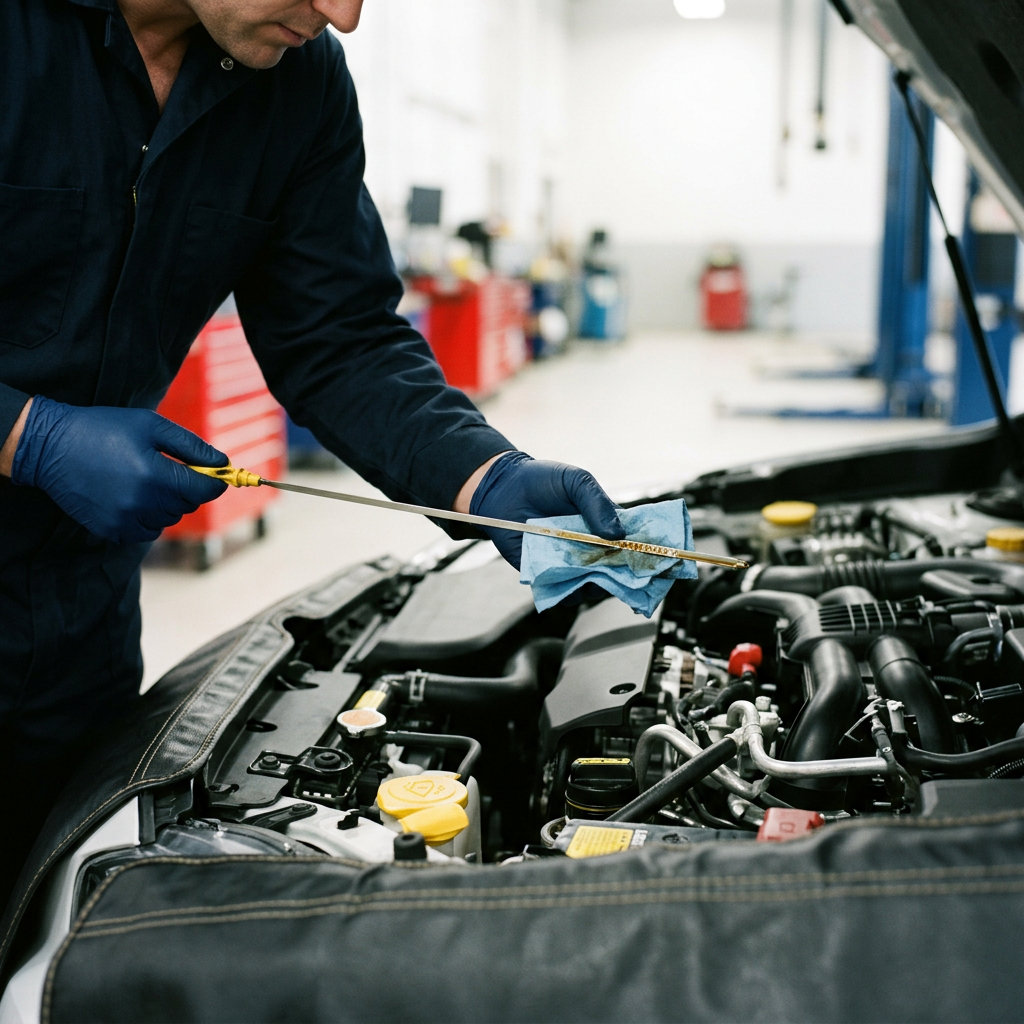
Engine Oil Viscosity Explained: Expert Maintenance Advice from Valor Ford You should generally not switch to a higher viscosity oil as an engine gets older, because modern powertrains rely on precise internal tolerances and hydraulic variable valve timing systems designed for specific oil flow rates. Instead of replacing a recommended 5W-20 or 5W-30 with a heavier grade, using a high-mileage synthetic formulation in the factory-recommended viscosity protects seals and reduces oil consumption without compromising critical cold-start lubrication. We sat down with Mike Hogg, Service Director at Valor Ford with 20 years of experience, to answer the most critical engine oil viscosity questions drivers face. Q: Should You Switch to Higher Viscosity Oil as an Engine Gets Older? A: The idea of switching to a thicker motor oil as an engine accumulates miles comes from older engine designs built with much looser manufacturing tolerances. In modern vehicles, moving to a heavier oil to cure minor oil burning or leaks usually causes far more harm than good. Contemporary engines like the 2.3L EcoBoost in the 2026 Ford Explorer or the twin-turbo 3.5L EcoBoost in the 2026 Ford F-150 rely on ultra-tight bearing clearances and hydraulic camshaft phasers that require immediate fluid flow upon startup. Introducing a high-viscosity oil restricts fluid circulation through these narrow passages, delaying lubrication during critical warmup periods and accelerating valve train wear. When older engines begin consuming oil, the issue typically stems from hardened valve stem seals or worn piston rings rather than an incorrect fluid grade. High-mileage synthetic oils are specifically blended with seal conditioners and extra anti-wear additives while maintaining the original factory-recommended viscosity. These specialized formulations restore flexibility to rubber seals and reduce oil loss through volatile evaporation without increasing fluid drag inside the crankcase. If an older engine develops excessive mechanical play or persistent consumption issues, the correct approach is a mechanical diagnosis rather than altering the oil viscosity grade. Drivers noticing oil level drops between scheduled intervals while traveling near Fort Riley can visit our Junction City service center address or contact our service department team by phone to inspect crankcase ventilation systems and internal seal integrity. Q: What Do the Numbers in Engine Oil Viscosity Ratings Like 5W-30 Mean? A: Motor oil labels display a standardized rating developed by the Society of Automotive Engineers that describes fluid flow performance across fluctuating operating temperatures. In a multi-grade rating like 5W-30, the number preceding the letter 'W' indicates the oil's low-temperature flow characteristics during winter cold starts. A lower winter rating means the oil pumps quickly through engine galleries at freezing temperatures, protecting vital components from metal-to-metal contact during startup. The second number in the sequence measures kinematic viscosity at normal engine operating temperature, standardized at 212 degrees Fahrenheit. For instance, a 5W-30 oil flows like a lightweight 5-weight oil in cold weather to ease starter motor resistance and reaches critical components instantly, then resists excessive thinning like a conventional 30-weight oil once the engine achieves steady operating temperatures. Multi-grade oils achieve this variable flow performance through specialized polymer viscosity index improvers added to the synthetic base stock. Engine designers select specific viscosity requirements based on internal oil pump pressure, bearing clearances, and thermal management targets. Compact turbocharged powertrains such as the 1.5L engine in the 2026 Ford Escape require rapid fluid velocity to cool turbocharger bearings and protect engine components. Vehicle owners handling their own fluid top-offs can easily order genuine Motorcraft oil and filters online to ensure exact compliance with OEM specifications. Q: Can You Mix 5W-20 and 5W-30 Oil in Your Engine During an Emergency? A: Mixing 5W-20 and 5W-30 motor oil during an emergency will not damage your engine as long as both products meet API service certifications and manufacturer material standards. Combining these two viscosity grades produces an intermediate operating viscosity without causing chemical separation or foaming. If your oil level drops below the minimum mark on the dipstick and you only have access to a single bottle of an adjacent grade, adding it immediately is far safer than running the engine low on fluid. "Mixing oil grades in an emergency protects your engine from running low, but restoring the factory-recommended viscosity during your next service keeps your internal components protected long-term." While mixing adjacent viscosity grades prevents low-oil starvation, it should remain a temporary fix until your next scheduled maintenance interval. Combining different grades slightly alters the engineered fluid dynamics, which can marginally impact fuel economy or hydraulic actuator response times over extended mileage. Flushing the system and filling it with the exact factory-specified oil grade restores optimal engine efficiency and protects long-term durability. Q: Can You Use 0W-20 Instead of 0W-16 if 0W-16 Is Out of Stock? A: Using 0W-20 as a short-term substitute in an engine calibrated for 0W-16 is generally acceptable when the specified grade is completely unavailable, but it should not become a permanent habit. Modern low-viscosity oils like 0W-16 and 0W-8 are designed alongside modern engine architectures featuring hyper-precise machining tolerances to minimize internal fluid friction and maximize thermal efficiency. Substituting a slightly thicker 0W-20 increases hydrodynamic drag on internal rotating assemblies, which can lead to a slight drop in fuel economy. Extended operation on a higher viscosity fluid than recommended can also affect variable displacement oil pumps designed to regulate internal oil pressure within narrow margins. While a single maintenance cycle on 0W-20 won't cause catastrophic component damage, returning to the factory-recommended 0W-16 viscosity during the subsequent oil change ensures your powertrain maintains its engineered balance of component protection and fuel efficiency. Q: How Do You Find the Exact Recommended Engine Oil Viscosity for Your Ford? A: Finding the correct oil specification for your vehicle requires checking official manufacturer documentation rather than relying on general rule-of-thumb recommendations. The most reliable source is your owner's manual under the engine oil maintenance section, which details the required SAE viscosity grade alongside specific Ford material standards, such as WSS specifications. Additionally, the recommended viscosity grade is permanently stamped directly onto the engine oil filler cap inside the engine bay for quick reference during routine checks. Modern Ford vehicles take fluid management a step further by using the Intelligent Oil-Life Monitor system. This system monitors engine operating temperatures, towing loads, idle time, and ambient conditions to calculate real-time oil degradation rather than relying solely on a fixed mileage counter. Under normal driving conditions, oil change intervals average around 7,500 miles or six months, though heavy-duty towing or frequent short trips around Junction City may prompt the monitor to request service earlier. Q: What Are the Long-Term Service Risks of Using the Wrong Oil Viscosity? A: Operating an engine with incorrect oil viscosity introduces severe long-term mechanical risks that compromise vehicle reliability and elevate ownership costs. Utilizing oil that is too thick restricts initial oil flow during startup, delaying pressure delivery to camshaft phasers, hydraulic lifters, and turbocharger bearings. Over time, this momentary oil starvation accelerates timing chain wear, causes noisy valve train operation, and can trigger diagnostic trouble codes related to variable valve timing performance. Conversely, using an oil that is too thin at high operating temperatures leads to fluid film breakdown under heavy engine loads. When the protective oil film thins excessively, internal components experience increased friction and elevated operating temperatures, accelerating bearing wear and increasing the risk of thermal oil breakdown. Maintaining the exact manufacturer-specified viscosity grade ensures balanced oil film strength across all driving demands. Preventing viscosity-related engine wear requires adhering to scheduled fluid changes with OEM-approved Motorcraft oils and filters. To maintain your vehicle's factory warranty and internal component health, shoppers can get directions to our service center location, reach out to our service advisors by phone, or conveniently schedule a service appointment online today. © 2026 Valor Ford. All rights reserved. Vehicle specification data © JATO Dynamics Limited.

Average Cost to Purchase and Install Winter Tires on a 4WD Truck or SUV

Average Cost to Purchase and Install Winter Tires on a 4WD Truck or SUV

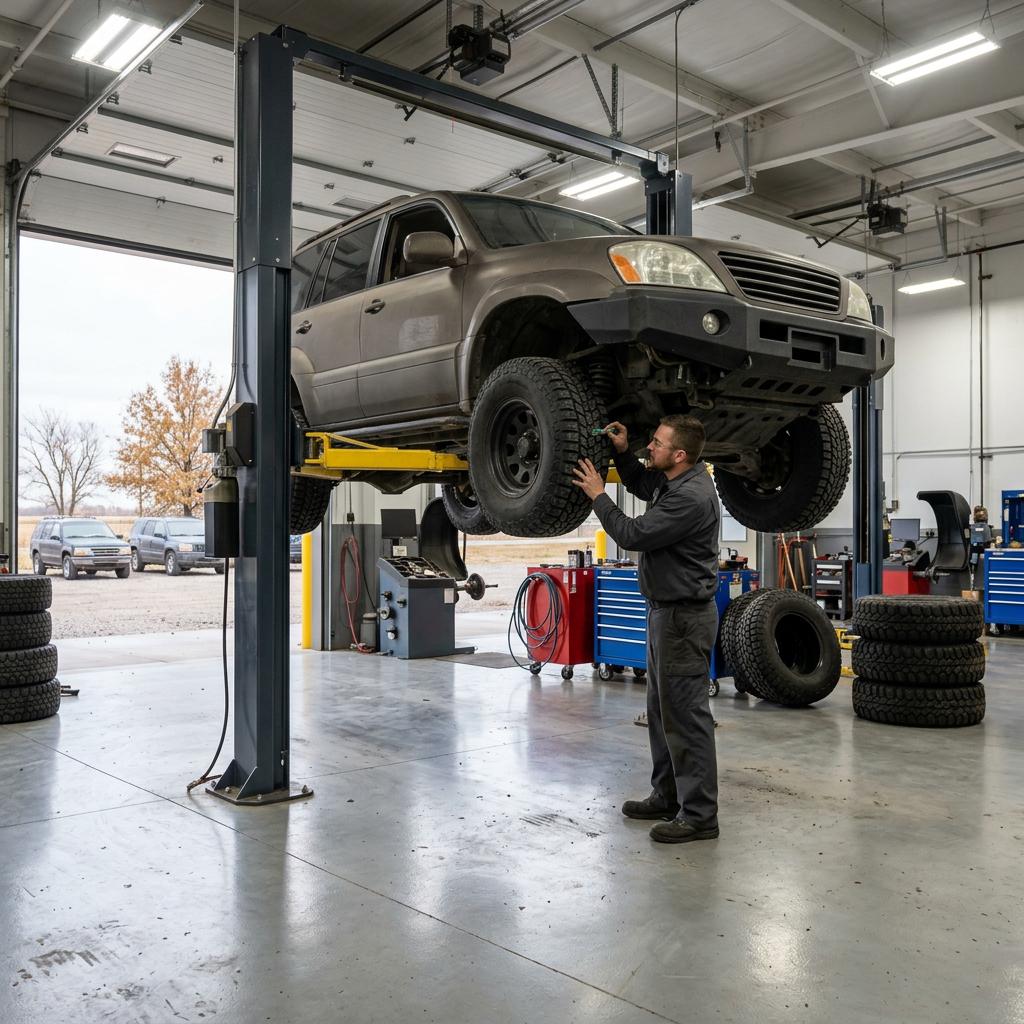
Average Cost to Purchase and Install Winter Tires on a 4WD Truck or SUV When winter weather settles over Central Kansas, drivers across Junction City, Manhattan, and Fort Riley face a familiar seasonal dilemma: how to keep heavy four-wheel-drive trucks and SUVs planted securely on ice-slicked highways and unplowed county roads. If you are asking what it costs to outfit a 4WD truck or SUV with a full set of four dedicated winter tires, the short answer is that most drivers spend between $800 and $1,800+ total. This complete investment accounts for both the price of four light truck or SUV winter tires ($150 to $380+ per tire depending on size and load rating) and professional mounting, computer balancing, valve stem service, tire pressure monitoring system (TPMS) relearning, and local disposal fees ($100 to $250 total). For full-size pickups such as the Ford F-150 or Super Duty, as well as midsize to large SUVs like the Ford Bronco and Explorer, tire pricing heavily correlates with wheel diameter, load rating (Standard Load vs. Extra Load or Load Range E for towing), and specialized tread technologies. Standard 17-inch or 18-inch tires land on the lower side of the price curve, while 20-inch or 22-inch fitments naturally sit at the premium end. At Valor Ford, located at 1825 Goldenbelt Blvd in Junction City, KS 66441, our certified master technicians ensure your winter tire setup is selected, mounted, and calibrated specifically for your vehicle's weight, towing demands, and drivetrain engineering. To speak directly with our service center specialists, feel free to Call us at (785) 238-5114 today. Schedule Ford Service Today Cost Breakdown: Tire Prices, Mounting, Balancing, and Installation Fees Understanding where every dollar goes helps truck and SUV owners make smart choices when preparing for winter. A complete tire replacement consists of two primary elements: the raw hardware (the rubber tires themselves) and the expert shop labor required to mount, balance, and configure the assembly for high-speed highway safety on corridors like I-70. Here is a breakdown of average itemized costs encountered across the Flint Hills region for 4WD trucks and SUVs: • 17" to 18" Winter Tires: $160 – $260 per tire ($640 – $1,040 for four) • 19" to 20" Winter Tires: $240 – $380+ per tire ($960 – $1,520+ for four) • Mounting & Computer Balancing: $20 – $40 per wheel ($80 – $160 total) • TPMS Sensor Reset / Relearn: $15 – $35 total package • Rubber Valve Stems / Maintenance Kits: $5 – $10 per wheel ($20 – $40 total) • Kansas Tire Recycling & Disposal Fee: $3 – $5 per tire ($12 – $20 total) If you require genuine manufacturer replacement parts or upgraded factory accessories for your Ford model during installation, you can easily order directly through our dedicated portal to Order Genuine Ford Parts. Service or Item Component Estimated Unit Cost Set of 4 Estimated Total Key Functional Purpose Light Truck / SUV Winter Tires (17"-18") $160 – $260 $640 – $1,040 Provides deep siping and cold-weather rubber flexibility Heavy Duty / Low-Profile Winter Tires (20"+) $240 – $380+ $960 – $1,520+ Delivers high load ratings for heavy SUVs and payload vehicles Professional Mount & Road Force Balance $20 – $40 $80 – $160 Eliminates high-speed vibration and ensures even tread wear TPMS Sensor Sync & Relearn $15 – $35 (Flat) $15 – $35 Calibrates vehicle computer to monitor exact winter tire pressure Environmental Disposal / Recycling Fee $3 – $5 $12 – $20 Mandatory state recycling compliance for outgoing tires Comparing Budget, Mid-Range, and Premium Winter Tires for Heavy Vehicles Budget Winter Tier Price Range: $600 – $850 (Set of 4 installed) Popular Options: Sailun IceBlazer, GT Radial Champiro Winterpro, Mastercraft Glacier. Characteristics: Budget winter tires feature aggressive tread directional patterns that evacuate slush effectively. While vastly superior to standard all-season tires on snow, their rubber compounds tend to stiffen slightly earlier in sub-zero temperatures and wear faster under heavy 4WD torque. Ideal for light seasonal mileage and local urban commutes around town. Mid-Range Winter Tier Price Range: $850 – $1,250 (Set of 4 installed) Popular Options: Firestone Winterforce 2 UV, General AltiMAX Arctic 12, Cooper Discoverer True North. Characteristics: Striking the ideal balance between initial investment and long-term endurance, mid-range tires incorporate silica-rich tread formulas, high density 3D siping, and pinned tread blocks for optional tire studs. Excellent for truck drivers carrying moderate cargo loads across Dickinson and Geary counties. Premium Winter Tier Price Range: $1,250 – $1,850+ (Set of 4 installed) Popular Options: Bridgestone Blizzak LT / DM-V2, Michelin X-Ice Snow SUV, Nokian Hakkapeliitta R5 SUV. Characteristics: The gold standard in severe cold weather performance. Features advanced hydrophilic multi-cell compounds that suck moisture away from micro-ice films. Essential for maximum stopping distance reduction, maximum lateral control, and heavy payload or towing applications on icy highways. Do 3PMSF-Rated All-Terrain Tires Perform as Well as Dedicated Winter Tires on Ice? A common point of confusion among 4WD truck and SUV owners is whether a set of 3-Peak Mountain Snowflake (3PMSF) rated all-terrain tires (such as those found on off-road trim levels like the Ford Bronco Badlands or F-150 Tremor) renders dedicated winter tires unnecessary. While 3PMSF all-terrain tires represent a giant leap forward compared to traditional highway all-season tires, they are not a complete substitute for dedicated winter rubber on glare ice. All-terrain tires rated 3PMSF achieve their rating by passing a straight-line acceleration test on medium-packed snow. However, their rubber compound is engineered to withstand hot summer asphalt and sharp off-road rocks without shredding. This requires a firmer rubber matrix that hardens when ambient temperatures drop below freezing. In contrast, dedicated winter tires remain soft and pliable even at sub-zero temperatures, utilizing thousands of hair-thin micro-sipes to create friction on sheer ice surface films. Independent braking tests show dedicated winter tires can stop up to 30 feet shorter on wet ice from 30 mph than 3PMSF all-terrain tires. Looking to upgrade your off-road rig or upgrade to a capable winter vehicle? Take a look at our current inventory to Shop New Ford Bronco Inventory or explore pre-owned models. Browse Used Inventory What the 3-Peak Mountain Snowflake (3PMSF) Symbol Indicates on Winter Tires The Three-Peak Mountain Snowflake (3PMSF) icon—a snowflake molded inside a six-peak mountain outline on a tire's sidewall—is an industry mark designating severe snow service capability. Unlike the legacy 'M+S' (Mud and Snow) branding, which is simply based on a tread geometry formula requiring 25% open tread void area, the 3PMSF rating requires physical performance testing. To earn the 3PMSF rating, a tire must demonstrate a minimum of 110% of the traction of a standardized reference tire during accelerated snow traction testing under U.S. ASTM F-1805 standards. What makes true winter tires special is the chemical engineering behind the rubber compound. Cold-weather winter compounds utilize high concentrations of silica and specialized polymers designed to remain pliable below 45 degrees Fahrenheit (7 degrees Celsius). Standard summer or all-season compounds experience a phenomenon known as 'glass transition' at low temperatures, turning rigid and slick like hard plastic. Understanding this distinction helps 4WD vehicle owners make informed choices when traveling down winter highways in Central Kansas. If you're interested in analyzing replacement options for your truck or SUV, check out our guide to Research Ford F-150 specifications or review options for heavier platforms like our page to Research Ford F-250 towing and tire ratings. What Is the Difference Between 4WD and AWD for Winter Weather Near K-State? For students navigating K-State's Manhattan campus or military personnel commuting from Fort Riley along K-18 and US-40, drivetrain configuration plays a major role in winter road handling. However, four-wheel drive (4WD) and all-wheel drive (AWD) operate on fundamentally different mechanical principles. Traditional Part-Time 4WD: Locks the front and rear driveshafts together at a fixed 50/50 power split via a mechanical transfer case. Because both driveshafts are locked at identical rotational speeds, traditional 4WD provides maximum traction in deep snow or mud. However, because front wheels must travel faster than rear wheels when turning corners, part-time 4WD requires tire slip to operate without mechanical stress. All-Wheel Drive (AWD): Employs a center differential or electronically controlled multi-plate clutch pack that continuously modulates torque between the front and rear axles. AWD systems automatically send power to wheels with grip while allowing seamless speed differences during tight maneuvers on mixed dry/icy pavement. Whether your SUV uses intelligent AWD like a Ford Explorer or part-time 4WD, remember that 4WD helps you accelerate—it does not help you stop faster on ice! Dedicated winter tires supply the stopping traction that no drivetrain can produce on its own. Drivers looking to evaluate midsize crossover capabilities can Research Ford Explorer drivetrain systems on our site. Can Part-Time 4WD Be Left Engaged on Dry or Patchily Icy Pavement? A crucial mechanical warning for owners of traditional part-time 4WD trucks: do not leave 4WD High engaged on dry or patchily clear asphalt. Operating a locked 4WD transfer case on high-traction surfaces creates a severe mechanical issue known as driveline bind or wheel crowhop. When turning on dry pavement, the outer front wheel must trace a wider arc and rotate significantly faster than the inner rear wheel. In a part-time 4WD system, the front and rear driveshafts are locked together. Without slippery ice or snow to allow the tires to scuff or slide, rotational force builds up inside the transfer case, front axle shafts, and universal joints. This intense mechanical binding leads to severe tire scrubbing, accelerated tread wear, reduced fuel economy, and potential internal transfer case failure or snapped axle shafts. On patchy winter roads where dry pavement alternates with ice patches, drivers should disengage 4WD High back to 2WD once clear stretches appear—or opt for vehicles equipped with an 4A (4WD Auto) electronic transfer case mode, available on Select Ford models. If you are considering upgrading your vehicle to one featuring automatic 4WD control, feel free to submit a Trade In Evaluation to see what your current truck or SUV is worth toward a new model. Fort Riley & K-State Winter Driving Guide: Selecting and Servicing 4WD Vehicles for New Residents 1. Seasonal Tire Swap For soldiers arriving at Fort Riley or students relocating to Kansas State University from milder climates, Kansas winter storms bring sudden ice glaze and high prairie winds. Transitioning to dedicated winter tires in late October or November ensures optimal handling before freezing rain strikes. 2. Battery & Fluid Check Freezing temperatures dramatically reduce battery Cold Cranking Amps (CCA). Have your battery load-tested, inspect your engine coolant concentration for sub-zero protection, and switch to de-icer rated windshield washer fluid before severe cold sets in. 3. Winter Emergency Kit Always carry essential gear in your 4WD bed or trunk: tow straps, portable jump starter pack, heavy-duty ice scraper, compact snow shovel, folding traction mats, thermal blankets, and a bag of sand or cat litter for instant weight and tire traction. Busy military or academic schedule? Valor Ford makes vehicle upkeep stress-free: learn how you can Schedule Pickup and Delivery Service directly from your home or office. Schedule Pickup and Delivery Service How Weight Distribution Affects Vehicle Handling on Icy Kansas Highways Full-size pickup trucks suffer from an inherent weight bias: heavy iron or aluminum V8/EcoBoost engines sit directly over the front axle, while an unladen steel or aluminum truck bed leaves very little weight over the rear wheels. When driving unloaded down icy routes like I-70 or rural roads in Dickinson County, this uneven weight ratio (often 60/40 front-to-rear) leads to sudden rear traction loss, fish-tailing, or spin-outs during cornering and braking. To counteract this imbalance, experienced Kansas truck owners place 200 to 300 pounds of secure ballast (such as sandbags or specialized water-filled weight bags) directly over or slightly ahead of the rear axle inside the bed. Combining proper bed ballast with dedicated winter tires featuring aggressive siping provides balanced four-wheel mechanical traction, allowing your 4WD system to deliver smooth power without premature rear wheel slip. If you drive a midsize truck like the Ford Maverick, lightweight engineering changes traction dynamics further. You can learn more by choosing to Research Ford Maverick configurations and payload specs. Dedicated Winter Wheel Packages vs. Mounting Tires on Factory Rims Option A: Dismount / Remount Upfront Cost: Lower initial purchase (buy 4 tires only). Annual Cost: $160 – $320 per year (paying twice-yearly mounting & balancing fees). Drawbacks: Repeated tire dismounting stresses tire beads and exposes factory alloy wheels to potential scratches and road salt corrosion during winter months. Option B: Dedicated Wheel Package Upfront Cost: Higher initial investment ($400 – $800 for 4 steel/aluminum wheels + $150 TPMS sensors). Annual Cost: $40 – $80 per year (simple wheel swap fee). Benefits: Protects factory wheels from road salt, allows rapid 30-minute seasonal bolt-on swaps, and pays for itself within 3 to 4 winter seasons. Financial Breakdown Over a 5-year vehicle ownership period, a dedicated winter wheel package costs virtually the same total money while sparing your factory wheels from winter damage and making seasonal changeovers significantly faster and easier. Maintaining Winter Tires: PSI Adjustments, Tread Depth, and Off-Season Storage Proper maintenance maximizes both the life of your winter tires and your safety on icy highways: • Cold Weather Pressure Drop: For every 10 degree drop in ambient temperature, tire pressure decreases by approximately 1 to 2 PSI. Check tire pressures regularly when tires are cold. • Minimum Winter Tread Depth: Standard tires can run down to 2/32" of tread, but winter tires lose critical snow traction once tread wears below 4/32". Replace winter tires before reaching this limit. • Proper Off-Season Storage: Store unmounted winter tires stacked flat in a cool, dry, dark basement or climate-controlled garage away from direct sunlight and electric motors that generate ozone. Need financial flexibility for your upcoming vehicle maintenance, repair, or accessory purchases? Take a minute to Contact us for current financing information through our finance center. Contact us for current financing information Schedule Your Winter Tire Installation at Valor Ford in Junction City, KS Don't wait for the first severe winter blizzard to equip your 4WD vehicle for severe cold weather. The certified tire and service team at Valor Ford is ready to help drivers across Junction City, Fort Riley, Manhattan, and surrounding Kansas communities select, mount, and precision-balance the ultimate winter tire setup for their truck or SUV. Visit us at 1825 Goldenbelt Blvd, Junction City, KS 66441 or click here to Get Directions to Valor Ford. Give our tire specialists a call today at Call us at (785) 238-5114 or reserve your installation slot online. Schedule Ford Service Today

How Ford Smart Hitch and On-Board Scales Keep Kansas Farm Operations Compliant and Safe

How Ford Smart Hitch and On-Board Scales Keep Kansas Farm Operations Compliant and Safe

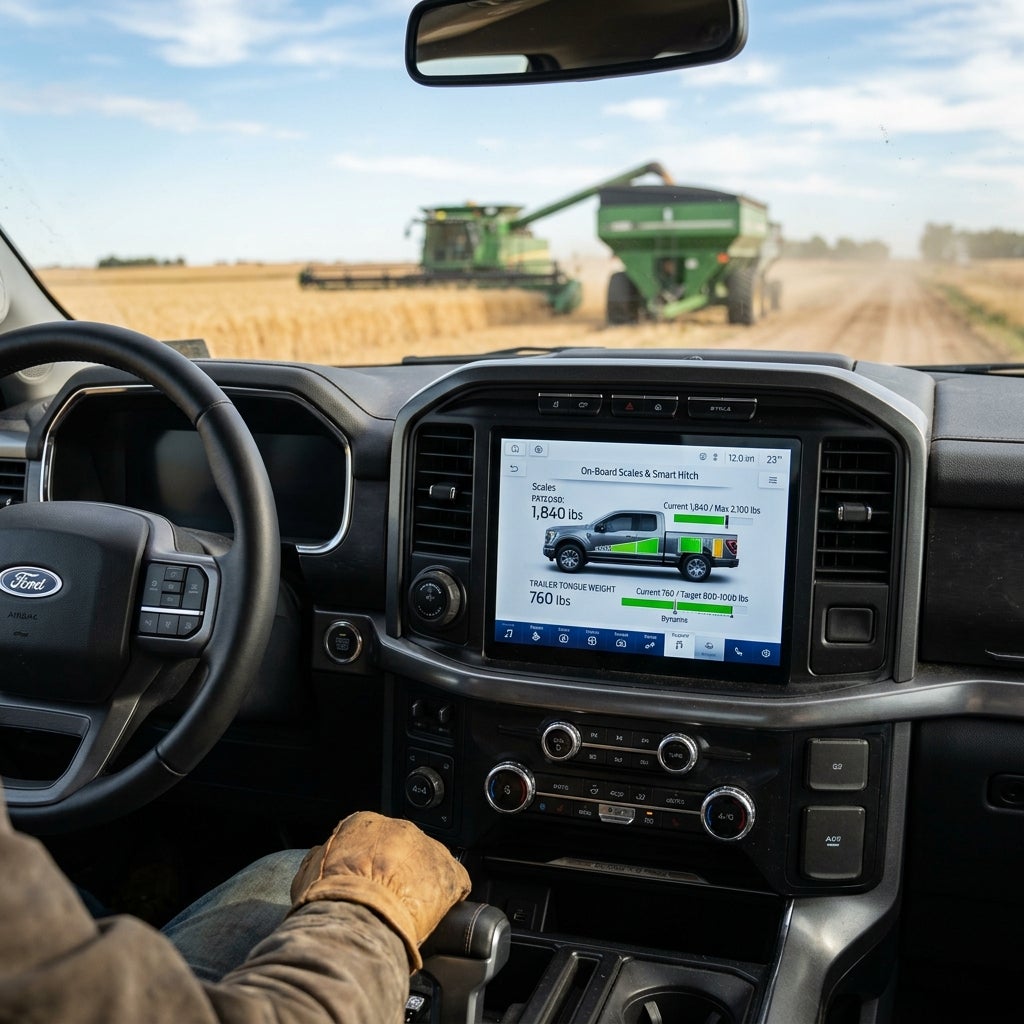
How Ford Smart Hitch and On-Board Scales Keep Kansas Farm Operations Compliant and Safe In Dickinson County and across the fertile stretches surrounding Junction City, harvest season demands maximum efficiency from every piece of agricultural equipment. Fall grain hauling, livestock transport, and machinery shifting test the physical limits of work trucks day after day. Operating close to legal payload and gross vehicle weight limits is a necessity for local producers, but exceeding those limits brings severe financial penalties, accelerated vehicle strain, and compromised highway safety. The Ford F-150 and Ford Super Duty lineups address this challenge directly with integrated Smart Hitch and On-Board Scales technology, transforming payload management from guesswork into exact science. Equipped with sophisticated suspension load sensors, Ford's On-Board Scales continuously measure the weight sitting in the truck bed or resting on the hitch. Drivers can monitor dynamic payload figures directly through the interior SYNC 4 touchscreen, observe status indicators on the FordPass mobile application, or view real-time smart LED taillight bar displays while standing right in the field. This immediate feedback ensures local operators never roll onto Highway 77 or Interstate 70 with illegal axle loads or unsafe trailer tongue distribution. Before taking your loaded rig onto public roads, visiting Valor Ford gives you hands-on experience with this technology and keeps your fleet running at peak performance. Get Directions to Valor Ford to explore the full lineup of smart agricultural trucks. How On-Board Scales Calculate Real-Time Agricultural Payload and Prevent Overloading Ford's On-Board Scales system utilizes high-precision sensors integrated directly into the truck's suspension architecture. As seed bags, bulk fertilizer, toolboxes, or harvested crops are loaded into the bed, the sensors measure rear height deflection and algorithmically convert structural compression into actual weight figures. This calculation accounts for vehicle trim, package specifications, and curb weight parameters pre-calibrated from the factory. When operating under field conditions far from commercial platform scales, operators can rely on visual taillight LED gauge bars. Four vertical LED bands built into the rear taillight assembly illuminate sequentially as weight increases. One bar indicates 25 percent capacity, two bars represent 50 percent, three bars show 75 percent, and all four illuminated solid mean full capacity. If the load exceeds max rated payload, the top LEDs flash red, giving equipment operators loading grain from an auger or placing pallets with a skid steer an immediate visual warning to stop loading. This live visual feedback completely eliminates the risk of accidental overloading during chaotic harvest hours. It protects leaf springs, shocks, and transmission clutches from stress while keeping your haul within state safety regulations. Research Ford F-150 capabilities to see how this system handles demanding farm tasks. How Smart Hitch Measures Tongue Weight Balance for Heavy Farm Trailers Towing heavy agricultural equipment—such as livestock stock trailers, round bale transport trailers, or heavy machinery mowers—requires meticulous weight balance. Incorrect tongue weight is the leading cause of dangerous highway trailer sway, braking instability, and front-axle lift. Ford Smart Hitch simplifies this setup by measuring the exact vertical force exerted by the trailer coupler onto the hitch ball in real time. Through the SYNC 4 center screen, Smart Hitch calculates the percentage of tongue weight relative to total trailer mass and advises the driver whether tongue load is light, ideal, or excessive. Ideal tongue weight typically sits between 10 and 15 percent of total gross trailer weight. When hauling livestock that shift during transit or unbalanced machinery loads along rural roads, Smart Hitch provides instant guidance on whether to reposition cargo forward or rearward. If you utilize a weight-distribution hitch setup, Smart Hitch guides you through tensioning the spring bars correctly. The screen interface indicates whether too much or too little weight is being transferred to the front steering axle, preserving steering responsiveness and emergency braking capability. By eliminating front-axle lightened pitch and rear-suspension bottoming, Smart Hitch reduces tire wear, prevents hitch assembly fatigue, and ensures stable control across wind-swept Kansas highway corridors. Avoiding Costly KDOT Weight Fines and Fleet Compliance Violations During Harvest The Kansas Department of Transportation (KDOT) and the Kansas Highway Patrol enforcement officers monitor regional roadways closely during seasonal agricultural pushes. While Kansas offers seasonal harvest weight allowances for registered farm vehicles, single-axle, tandem-axle, and gross combination weight limits remain strictly enforced once trucks enter state highways or cross county lines. Overweight violations in Dickinson County can easily result in hundreds or thousands of dollars in statutory fines per incident, alongside mandatory offloading delays that disrupt tight harvest schedules. Ford's integrated scale technology gives farm managers and fleet owners full transparency before a truck ever departs the farm gate. By verifying that payload numbers and gross combination weights remain within legal thresholds, operators bypass unpredictable weigh station citations. Furthermore, real-time logging via the Ford App allows managers to archive historical load weights for internal recordkeeping and compliance audits. Upgrading your farm fleet with modern Ford technology keeps your bottom line protected. Contact Us for Financing Information What Key Pre-Harvest Maintenance Checks Should Be Performed on an F-150 or Super Duty Before Heavy Hauling? Engine & Drivetrain Inspect engine oil, transmission fluid, and transfer case lubricants for breakdown. Change air filters before dust exposure increases during grain harvesting. Verify front and rear differential fluid clarity, ensuring full protection during high-torque pull cycles across unpaved access roads. Suspension & Brakes Examine leaf springs, U-bolts, and shock absorbers for signs of cracking or leakage. Inspect brake rotor thickness and pad friction surface. Continuous heavy hauling builds immense heat; fresh brake components prevent fade on steep Flint Hills inclines. Cooling & Auxiliary Systems Perform a cooling system pressure test and check radiator hose condition. High ambient temperatures combined with heavy trailering put peak loads on thermal systems. Test battery cold-cranking amps to ensure dependable field starting when far from home base. How Do Routine Pre-Trip Inspections Reduce Long-Term Repair Expenses on Agricultural Work Trucks? Implementing a disciplined 5-minute daily walkaround routine yields immense financial returns over the operating lifecycle of a farm truck. Minor issues caught in the yard—such as a slow tire pressure leak, an weeping axle seal, or a loose leaf spring center bolt—prevent catastrophic failures in the middle of a remote field. Unattended low tire pressure under maximum payload rapidly destroys tire sidewalls and generates extreme heat, leading to blowouts that can damage vehicle bodywork, suspension links, or trailer brake wiring. Similarly, identifying early fluid weepage at the transmission output shaft or differential pinion seal protects high-value gears from dry friction breakdown. Mid-harvest mechanical breakdowns carry massive hidden costs: wasted labor hours, missed elevator delivery deadlines, and emergency field repair callout rates. Consistent pre-trip checks ensure minor wear items are serviced during planned downtime at Valor Ford rather than during peak operational stress. Kansas Fall Harvest Hauling: Essential Inspection Checklist for F-150 and Super Duty Work Trucks 1. Tires & Wheels • Verify cold inflation PSI to tire sidewall max load spec. • Torque lug nuts to factory specification. • Inspect tread depth and clear stuck gravel/debris. • Check spare tire pressure and lowering mechanism condition. 2. Towing & Coupling • Inspect hitch receiver weld points for stress fractures. • Check safety chain grade ratings and latch clips. • Test trailer breakaway switch lanyard and battery voltage. • Calibrate Smart Hitch zero-point before hitching trailer. 3. Electrical & Brake Control • Clean 7-pin blade contacts with dielectrical cleaner. • Verify trailer brake controller manual slide function. • Conduct full exterior lighting sweep (turn/brake/reverse). • Test Ford App trailer light check routine from smartphone. Schedule Ford Service Today What Are the Differences in Frame Strength and Rear Axle Design Between the F-150 and Super Duty? Selecting between the Ford F-150 and Super Duty (F-250/F-350) for agricultural duty depends heavily on intended payload frequency, trailer weight, and terrain conditions. While both series utilize high-strength, military-grade aluminum-alloy bodies mounted on fully boxed steel frames, their structural architecture is engineered for distinct workloads. The F-150 features a fully boxed high-strength steel frame available with a semi-floating or heavy-duty axle configuration, providing exceptional ride comfort alongside high payload ratings. In contrast, Super Duty models utilize massive cross-member bracing and full-floating rear axle designs. Full-floating axles place vehicle load directly onto the axle housing and wheel bearings rather than the axle shaft itself, allowing heavy dual-wheel setups to carry immense loads continuously over rutted pastures and field tracks. Research Ford F-250 specifications for full structural details. Structural Feature Ford F-150 Ford Super Duty (F-250/350) Frame Steel Thickness High-Strength Fully Boxed Commercial-Grade Fully Boxed Rear Axle Design Semi-Floating / Heavy-Duty Full-Floating Axle Architecture Max Conventional Towing Up to 13,500 lbs Up to 24,800+ lbs Max Payload Rating Up to 2,445 lbs Up to 8,000+ lbs (F-350 DRW) How Do You Perform a Field Inspection of Trailer Brake Controllers and Electrical Wiring Harnesses? Dust, crop chafe, moisture, and extreme vibration present continuous challenges to agricultural electrical systems. Conducting a quick field diagnostic of your trailer brake controller and wiring harness prevents dangerous towing situations before leaving the pasture. Begin by inspecting the 7-pin blade connector at the rear bumper. Use a wire terminal brush to clear dirt build-up, and inspect internal brass pins for signs of corrosion or spread contacts. Apply dielectric grease to the plug contacts to repel moisture during rainy harvest days. Inspect the main wiring harness loom where it passes over frame rails or near suspension components, ensuring no wires are pinched or rubbing against bare metal. Inside the cab, check Ford's Integrated Trailer Brake Controller (TBC) status on the digital instrument cluster. Connect your trailer and operate the TBC manual squeeze controller at low speed (approx. 5 mph). The trailer brakes should engage smoothly without locking up or pulling to one side. If the cluster reports 'Trailer Disconnected' intermittently while moving, check the trailer ground wire ring terminal fastened to the trailer tongue frame. Corrosion or loose ground bolts cause 90% of field trailer electrical faults. What Annual Inspection and Recordkeeping Checks Should Kansas Work-Truck Fleets Make Before Harvest? Managing a farm or agricultural fleet in Dickinson County, Junction City, or nearby Fort Riley requires meticulous documentation and safety adherence. Commercial motor vehicle operations must maintain active annual DOT inspection reports, driver vehicle inspection logs, and updated weight registration slips inside each truck's glove compartment. Ensuring every F-150 or Super Duty in your fleet has undergone a comprehensive multi-point vehicle inspection before peak harvest protects your operation from operational shutdown orders during state roadside checks. Establishing standardized preventative maintenance records also boosts vehicle resale and trade-in value when updating fleet units. Service logs that document routine fluid flushes, brake replacements, and suspension inspections demonstrate meticulous care to future buyers. For assistance with OEM replacement parts or routine commercial fleet maintenance, Call us at (785) 238-5114 to consult with our master technicians. Order Genuine Ford Parts What Essential Items Should Be Included in a Farm Truck Emergency Road Kit for Kansas Harvest Season? Recovery & Towing • 30,000 lb rated snatch strap or kinetic tow rope. • Heavy-duty bow shackles rated for farm equipment. • High-output 12V air compressor for field tire inflation. • Tire plug kit and heavy-duty valve stem tool. Safety & Lighting • Rechargeable LED magnetic work lights & headlamps. • High-visibility reflective safety vest & DOT triangles. • LED road flares for roadside breakdowns. • First-aid kit tailored for farm injuries. Mechanical & Tools • 12-ton hydraulic bottle jack and solid wooden jack block. • ½-inch drive torque wrench & deep lug socket set. • Heavy-duty 2-gauge jumper cables or lithium jump pack. • Spare electrical fuses, wire, and zip ties. Upgrading and Servicing Your Agricultural Work Truck at Valor Ford in Junction City Valor Ford is proud to serve the agricultural producers, ranchers, and fleet operators of Junction City, Dickinson County, and surrounding Kansas communities. Our dealership features specialized commercial vehicle service bays equipped with high-capacity lifts capable of servicing fully loaded work trucks and chassis cabs. Whether you need factory-certified calibration for your F-150 Smart Hitch and On-Board Scales, installation of heavy-duty gooseneck hitch hitches, or complete pre-harvest fluid flushes, our Ford factory-trained technicians deliver unmatched expertise. We offer competitive trade-in valuations on older work trucks to help keep your fleet updated. Start your Trade In Evaluation or take advantage of our convenience options by choosing to Schedule Pickup and Delivery Service today. Schedule Your Pre-Harvest Vehicle Inspection and Fleet Upgrade at Valor Ford Today Don't leave your fall harvest productivity to chance. Ensure your Ford F-150 or Super Duty is fully prepped, compliant, and equipped with the latest load-monitoring technology before heavy hauling begins. Visit our showroom in Junction City to experience live demonstrations of Ford Smart Hitch and On-Board Scales, test drive new Ford work trucks, or schedule your seasonal vehicle inspection with our master service team. Valor Ford is your dedicated partner for reliable agricultural transport across Central Kansas. Get Directions to Valor Ford today or contact our service department directly to schedule your appointment. Schedule Ford Service Today

How Should You Prepare a Ford Battery for Sub-Freezing Kansas Weather?

How Should You Prepare a Ford Battery for Sub-Freezing Kansas Weather?

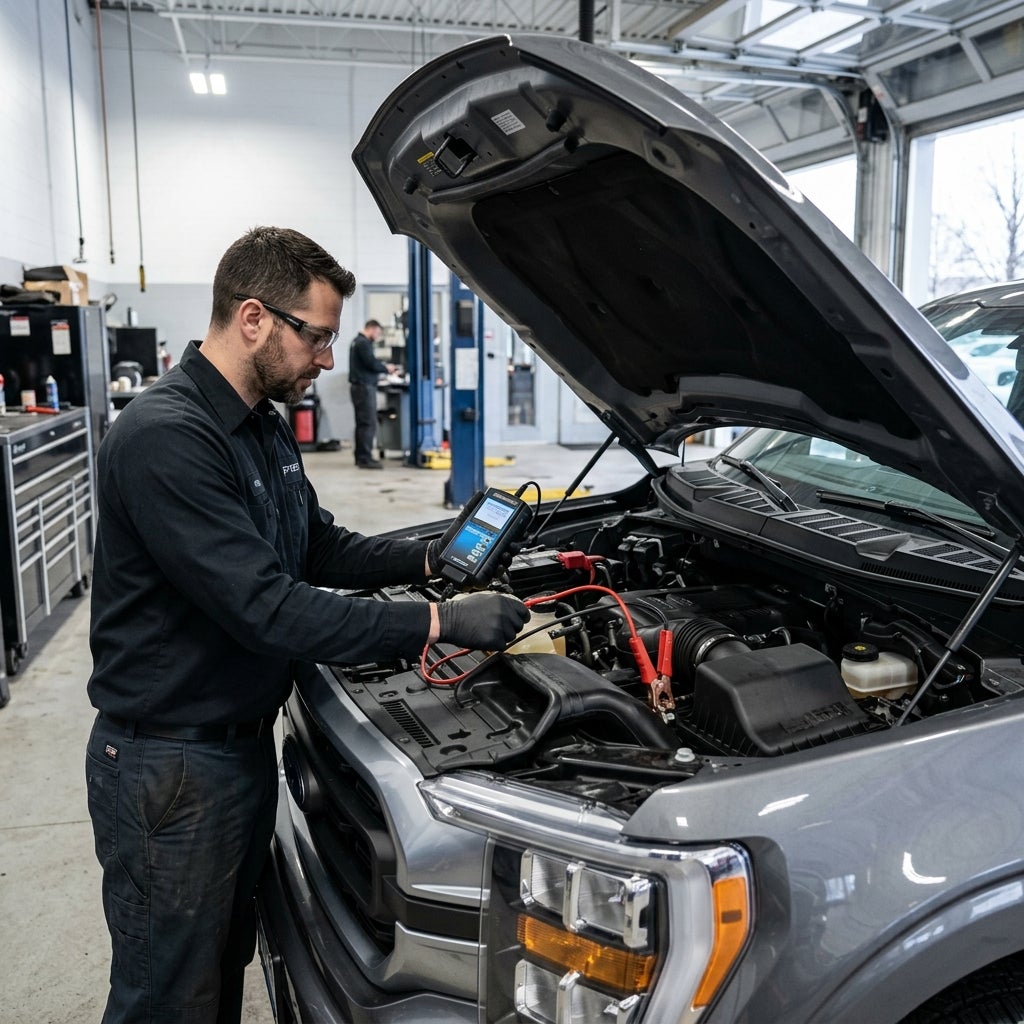
How Should You Prepare a Ford Battery for Sub-Freezing Kansas Weather? The Bottom Line: To prepare your Ford battery for sub-freezing Kansas weather, schedule a comprehensive digital load test before the first severe freeze hits Geary and Dickinson counties. Clean any surface terminal corrosion with a baking soda wash, verify a minimum Cold Cranking Amps (CCA) rating of at least 650 CCA for sedans or 750–850 CCA for Ford F-150 and Super Duty trucks, maintain continuous open-circuit voltage above 12.4V, and upgrade to an Absorbent Glass Mat (AGM) battery if your vehicle is parked outdoors overnight near Fort Riley or Junction City. Early cold-weather prep guarantees reliable morning starts when arctic cold fronts sweep across the Flint Hills. When sub-zero arctic air masses drop southward across the Kansas plains, automotive batteries face a severe double whammy: internal chemical reactions slow down dramatically while engine oil thickens, requiring significantly higher amperage to turn over the crankshaft. A battery that functioned adequately during mild October autumn mornings can fail without warning when temperatures drop into the single digits along the I-70 corridor. Taking proactive measures—testing state-of-charge, inspecting cables, securing terminal connections, and assessing cold cranking capacity—prevents sudden winter strandings at home, at work, or on rural gravel roads. Schedule Ford Battery Test Today Meet the Expert: Service Director Mike Hogg on Kansas Winter Preparedness For over 20 years, Service Director Mike Hogg has guided vehicle owners across Junction City, Fort Riley, and surrounding Dickinson County through demanding Kansas weather extremes. Having handled thousands of winter service appointments, Mike understands how sudden overnight freezes impact vehicle electrical systems, turbos, fluids, and mechanical components. "Kansas winters are notoriously unforgiving because of extreme temperature swings," notes Mike. "You can go from 60°F on Tuesday afternoon down to 4°F with wind chills well below zero by Wednesday morning. That rapid thermal contraction puts immense strain on battery plates, terminal post seals, and starting systems. My goal in this Q&A is to give Ford drivers practical, actionable advice that prevents cold-weather breakdowns before they happen." Whether you commute daily across Geary County, tow livestock trailers along rural unpaved routes, or park on base at Fort Riley during field training deployments, Mike's real-world insights provide the blueprint for uninterrupted winter mobility. Q: How Should You Prepare a Ford Battery for Sub-Freezing Kansas Weather and What CCA Rating Is Recommended? Interviewer: Mike, let's dive right into the core issue. When Kansas weather plunges below zero, why do so many batteries suddenly fail, and how should Ford owners prepare their vehicles ahead of time? Mike Hogg: It comes down to basic electrochemistry and mechanical resistance. At 32°F, a standard lead-acid battery loses approximately 20% of its available starting power. When the thermometer drops to 0°F, that loss jumps to roughly 50%. At the exact moment your battery has lost half its capacity, your engine requires up to twice as much current to crank over because motor oil thickens in cold temperatures. To prepare properly, start with a professional conductive digital load test—not just a simple voltmeter check. Voltmeter readings only tell you surface voltage, whereas a digital load test measures the internal conductance and reserve capacity of the cell plates. Secondly, ensure your battery cable terminals are completely free of oxidation and torqued tightly. Corrosion creates electrical resistance, which generates heat and reduces amperage delivery to your starter motor. Interviewer: What Cold Cranking Amperage (CCA) ratings do you recommend for drivers in Junction City and Fort Riley? Mike Hogg: Cold Cranking Amps measure the number of amperes a 12-volt battery can deliver at 0°F for 30 seconds while maintaining a voltage of at least 7.2 volts. Here is what we mandate for Midwest winter driving: • Sedans & Compact Crossovers (e.g., Ford Escape, Fusion): Minimum 650 CCA. An AGM battery with 700 CCA is ideal. • Mid-Size SUVs & Light Trucks (e.g., Ford Explorer, Ranger, Maverick): Minimum 700 to 750 CCA. • Full-Size Trucks & Heavy Duty (e.g., Ford F-150, F-250, F-350 Super Duty): Minimum 750 to 850+ CCA per battery. For Super Duty Power Stroke Diesel models equipped with dual-battery setups, both batteries must be tested together and replaced in matched pairs to prevent uneven charging loads. If you park outdoors overnight in Dickinson or Geary County, upgrading to a high-CCA Motorcraft AGM battery is one of the single best investments you can make. Ford Vehicle Category Recommended Minimum CCA Battery Type Recommendation Primary Kansas Winter Benefit Compact SUV / Sedan (Escape, Edge, Fusion) 650 - 700 CCA Motorcraft Tested Tough MAX / AGM Reliable daily starting in sub-zero driveways Mid-Size SUV / Truck (Explorer, Ranger, Maverick) 700 - 750 CCA Motorcraft AGM High reserve capacity for heated seats & defrost Full-Size Truck (F-150 EcoBoost / V8) 750 - 800 CCA Motorcraft AGM Group 65/48 Supplies auto start-stop & high starting load Super Duty Diesel (F-250 / F-350 6.7L) 800 - 850 CCA (Dual Array) Dual Matched Motorcraft AGM Powers glow plugs & grid heaters in sub-zero cold Q: What Specific Services Are Included in Ford's Winter Maintenance Package? Interviewer: Mike, when a customer books a winter readiness inspection at Valor Ford, what technical checks and maintenance services are performed to safeguard their vehicle? Electrical & Battery Diagnostics We conduct a comprehensive Motorcraft digital conductance test checking CCA capacity, internal cell resistance, starter draw, and alternator charging output. We clean terminal posts, apply anti-corrosion protection sealant, and verify battery tie-down security against rough gravel road vibrations. Coolant & Fluid Freeze Protection Using a calibrated optical refractometer, we test your Ford Yellow Coolant concentration to guarantee freeze protection down to -35°F or lower. Diluted engine coolant can freeze inside radiator cores or engine blocks, leading to catastrophic internal cracks during deep Kansas freezes. Safety, Brakes & Visibility We perform a thorough 83-point check inspecting brake pad thickness, hydraulic lines, wiper blade rubber flexibility, washer fluid reservoir fill with sub-zero de-icing fluid (-20°F rated), suspension bushings, headlight clarity, and tire tread depth across all four wheels. Prevent unexpected breakdown expense by scheduling your seasonal inspection early. Drivers can easily Schedule Ford Service Today at Valor Ford online or Call us at (785) 238-5114 to speak directly with our service desk. Schedule Winter Service Package Q: What Belongs on a Pre-Winter Readiness Checklist for Kansas Freeze and Gravel Roads? Interviewer: Rural driving around Dickinson County presents unique challenges like unpaved corrugated gravel, mud slush, and sudden drifts. What essential items belong on every driver's winter checklist? Mike Hogg: Driving in central Kansas requires preparing for both cold weather and rugged surface conditions. Here is our master checklist: 1. Battery Open-Circuit Voltage & Mount Inspection: Verify static voltage is above 12.4V (ideally 12.6V+). Gravel road vibration can loosen battery hold-down brackets, causing internal plate damage. Ensure the battery clamp is secure. 2. Tire Pressure Monitoring (TPMS): Ambient temperature drops reduce tire pressure by roughly 1 PSI for every 10°F drop. Underinflated tires wear rapidly on gravel roads and reduce traction on snow. 3. Suspension & Shock Absorber Inspection: Washboards on county gravel roads beat up strut mounts, ball joints, and shocks. Worn shocks reduce tire contact patch area on slick ice. 4. Sub-Zero Washer Fluid Top-Off: Summer washer fluid will freeze solid, cracking fluid reservoirs and pump lines. Fill with -20°F or -30°F rated de-icer fluid. 5. Winter Emergency Roadside Kit: Tow strap, heavy jumper cables, portable lithium booster pack, thermal blankets, flashlight, folding shovel, and traction sand or cat litter. Q: Are 3-Peak Mountain Snowflake Rated All-Terrain Tires Adequate for Kansas Winters? Interviewer: Many Ford truck and SUV owners fit 3-Peak Mountain Snowflake (3PMSF) rated all-terrain tires like the BFGoodrich KO2 or Falken Wildpeak. Are these adequate for Kansas winters, or should drivers invest in dedicated snow tires? Mike Hogg: That is one of our most common customer questions. The short answer is: 3PMSF all-terrain tires are excellent for about 85% of Kansas winter conditions, especially on packed snow, light slush, and muddy unpaved roads. However, drivers need to understand the technical distinctions. The 3PMSF rating certifies that a tire meets or exceeds a specific acceleration traction threshold on medium-packed snow. The rubber compound in a 3PMSF all-terrain tire remains more flexible in cold weather than standard all-season highway tires. If you drive a Ford F-150 or Ford Bronco on rural gravel and highway routes around Junction City, high-quality 3PMSF all-terrain tires provide strong multi-season versatility. Mike Hogg (continued): Where dedicated winter tires (like the Bridgestone Blizzak or Michelin X-Ice) outperform 3PMSF all-terrains is on pure black ice and hard-packed freezing rain, particularly on high-speed bridges like the Kansas River overpasses on I-70 or Highway 77. Dedicated winter tires utilize ultra-soft hydrophilic rubber compounds infused with millions of microscopic sipes that create micro-pumping action to suck away thin surface water films on ice. A 3PMSF all-terrain tire has stiffer tread blocks designed for rock and gravel durability, so it cannot match a dedicated winter tire's stopping distance on smooth glare ice. If your daily commute involves early morning highway driving before salt trucks arrive, dedicated winter tires offer maximum stopping confidence. If you frequently drive unpaved gravel roads with heavy rock wear, a durable 3PMSF all-terrain tire is often the more practical year-round choice. Q: Is It Cheaper to Install Winter Tires on Spare Wheels for Seasonal Swapping? Interviewer: Mike, is it more cost-effective over time to buy a dedicated set of spare steel or OEM wheels for winter tires, or should owners just demount and remount tires twice a year on their factory wheels? Twice-Yearly Remount Costs Demounting, mounting, balancing, and replacing valve stems twice per year costs roughly $120 to $180 per season ($240-$360 annually). Over a 4-year tire lifespan, labor alone totals $960 to $1,440. Repeated dismounting also increases wear on aluminum wheel bead seats and rubber TPMS seals. Dedicated Wheel Package Purchasing dedicated OEM Ford steel wheels or takeoff rims with pre-programmed TPMS sensors requires an upfront investment, but pre-mounted seasonal swaps only cost $30-$50 per visit (or can be performed easily in your home garage). The package pays for itself in under 3 years. In addition to direct labor savings, dedicated winter wheels protect your expensive primary factory alloy wheels from harsh magnesium chloride road salts, flying gravel chips, and curb scrapes during winter ice storms. You can easily Order Genuine Ford Parts including OEM steel wheels, winter wheel packages, and TPMS sensors directly through Valor Ford. Order OEM Winter Wheels & Parts Q: What Is the Difference Between Rubberized and Oil-Based Rust Undercoating? Interviewer: Kansas highway departments heavily treat I-70, US-77, and local roads with liquid magnesium chloride and rock salt. What undercoating method provides superior protection for Ford boxed frames and underbody components? Mike Hogg: Rust protection is critical for long-term vehicle durability in Kansas. The two primary aftermarket technologies are hard rubberized undercoating and fluid oil-based (or lanolin-based) rust inhibitors. Understanding how each behaves over time is key to preserving your vehicle. Rubberized Undercoating: Traditional rubberized coatings dry into a hard, thick black outer shell. While they look great initially, gravel impact on unpaved roads can chip or crack the hardened layer. Moisture, salt brine, and dirt then seep behind the cracked rubber shell, trapping liquid directly against bare frame steel. Because the outer rubber traps the moisture inside, rust can silently eat away frame metal underneath completely unnoticed. Oil-Based / Lanolin Undercoating: Liquid-wax and lanolin-based compounds (such as Woolwax or Fluid Film) do not harden. They remain active, self-healing, creeping barrier films. When gravel strikes an oil-treated frame, the surrounding oil creeps back over the exposed metal. Key advantages of oil-based undercoating: • Active Creep: Penetrates tight frame boxed sections, pinch welds, rocker panels, and electrical ground points. • Moisture Displacement: Active petroleum/lanolin molecules displace standing water and air, preventing oxidation. • No Moisture Trapping: Will never chip, dry out, or trap corrosive saltwater against vehicle steel. For trucks like the Ford F-250 Super Duty or Ford Maverick that regularly encounter highway salt spray and gravel roads, we strongly recommend active oil-based undercoating treatments applied annually each fall. Q: What Features Make Ford Vehicles Well-Suited for Winter Driving and Gravel Roads in Kansas? Interviewer: From an engineering standpoint, what factory features give modern Ford trucks and SUVs an edge when navigating winter weather and gravel roads? Intelligent 4WD & Slippery Mode Ford's Terrain Management System features dedicated Selectable Drive Modes like Slippery and Deep Snow/Sand. Slippery mode softens throttle response, optimizes 4WD torque split, and adjusts traction control intervention thresholds to prevent wheel spin on snow and wet gravel. Active Grille Shutters Automatic active grille shutters close off air entry into the engine compartment during cold start-ups. This allows EcoBoost and V8 engines to reach optimum operating temperature up to 30% faster in sub-freezing weather, delivering rapid cabin heat and reducing cold-engine cylinder wear. Heavy-Duty Motorcraft AGM Ford equips modern vehicles with Absorbent Glass Mat (AGM) batteries engineered with micro-glass fiber separators. AGM units endure 3x the cycle life of traditional flooded batteries and offer superior resistance to intense chassis vibration caused by washboard gravel roads. Models like the Ford Explorer and Ford Super Duty F-250 combine intelligent mechanical engineering with robust cold-climate electronic controls to deliver unmatched stability across central Kansas. Q: How Should Active-Duty Military at Fort Riley and Rural Commuters Prevent Winter Battery Drain? Interviewer: Junction City is home to many active-duty military personnel serving at Fort Riley who face multi-week field deployments where vehicles sit outdoors in arctic cold. What strategies prevent battery drain while deployed or during long shift parking? Mike Hogg: Parasitic parasitic battery drain is a huge concern for soldiers deployed to the field or shift workers parked in open lots at Fort Riley. Modern Ford vehicles maintain active telemetry modules, security sensors, and keyless entry receivers that slowly draw 20 to 50 milliamperes continuous current. When a vehicle sits parked in 10°F weather for two to three weeks without starting, that continuous parasitic draw combined with cold capacity loss will deplete even a healthy battery down below starting threshold. Mike Hogg's Practical Battery Maintenance Tips: 1. Use a Smart Trickle Charger / Battery Tender: If parked near an outlet, attach a microprocessor-controlled 1.5A to 3A smart tender. It monitors state-of-charge and automatically enters float mode without overcharging. 2. Ford App Remote Pre-Conditioning: For daily commuters, schedule automatic start times via the Ford App while plugged in or parked. Pre-conditioning warms the battery, engine block, and cabin prior to driving, reducing battery discharge during startup. 3. Solar Maintenance Chargers: For vehicles parked on base without AC outlet access, quality dashboard solar trickle chargers plugged into non-switched power ports help offset parasitic telemetry draw. 4. Valor Pickup & Delivery Service: If deployed or working long shift hours, utilize our convenient concierge service. You can Schedule Pickup and Delivery Service and our team will pick up your Ford, perform winter maintenance, and return it safely to your residence. Schedule Pickup & Delivery Service Q: What Signs Indicate Your Motorcraft Battery Needs Immediate Replacement Before Winter? Interviewer: Mike, what early warning signs should drivers look and listen for that indicate a battery is about to fail before they get stranded in a cold parking lot? Mike Hogg: Batteries rarely fail without giving subtle warning signals first. Paying attention to these symptoms in October and November will save you from stranded mornings in December and January: • Sluggish Engine Crank: If the engine turns over slowly ("rrm... rrm... vroom") instead of crisp immediate starting, battery reserve capacity is depleted. • Dim Headlights or Flickering Cabin Displays: Headlights that brighten when revving the engine indicate the alternator is carrying electrical load because the battery cannot hold charge. • Battery Age Over 3 to 5 Years: The average lifespan of a vehicle battery in Midwest heat and cold cycles is 3 to 4 years. If your battery is over 36 months old, get it tested immediately. • Swollen or Bulging Battery Case: Extreme summer heat causes internal plate warping and case swelling, which accelerates sudden cold-weather short circuits. • Pungent Sulfur / Rotten Egg Smell: Indicates internal overheating and gas venting, requiring immediate replacement. Key Takeaways: Expert Summary for Winter-Proofing Your Ford in Junction City To summarize Service Director Mike Hogg's expert advice for winterizing your Ford vehicle before sub-freezing Kansas weather arrives: 1. Test Before the Freeze: Schedule a digital conductance load test at Valor Ford before temperatures hit 32°F. 2. Verify CCA Ratings: Ensure at least 650 CCA for sedans, 750 CCA for light trucks, and 800+ CCA dual arrays for Super Duty diesels. 3. Upgrade to AGM: Absorbent Glass Mat batteries resist gravel road vibration and hold voltage far better in extreme sub-zero cold. 4. Protect Frame Steel: Choose active oil-based undercoating over hard rubberized coatings to avoid trapping corrosive magnesium chloride road salt. 5. Dedicated Winter Wheels: Mounting winter tires on spare OEM steel wheels saves money long-term and protects alloy rims. 6. Inspect Coolant & Fluids: Verify engine coolant concentration guarantees freeze protection down to -35°F. 7. Maintain Smart Charging: Utilize FordPass pre-conditioning and smart trickle chargers during Fort Riley deployments. Schedule Your Winter Battery Test and Inspection at Valor Ford Today Don't wait for the first severe Kansas freeze to leave you stranded. The factory-certified service team at Valor Ford is ready to inspect your battery, test coolant strength, check tires, and prepare your vehicle for winter driving across Junction City, Fort Riley, and Dickinson County. Visit our state-of-the-art service center at 1825 Goldenbelt Blvd, Junction City, KS 66441 or contact our team directly. Get Directions to Valor Ford or Call us at (785) 238-5114. You can also explore our pre-owned inventory with a Browse Used Inventory link or check trade values with a Trade In Evaluation. Schedule Ford Service Today

Recommended All-Terrain Tires for Central Kansas Winter and Dirt Roads

Recommended All-Terrain Tires for Central Kansas Winter and Dirt Roads

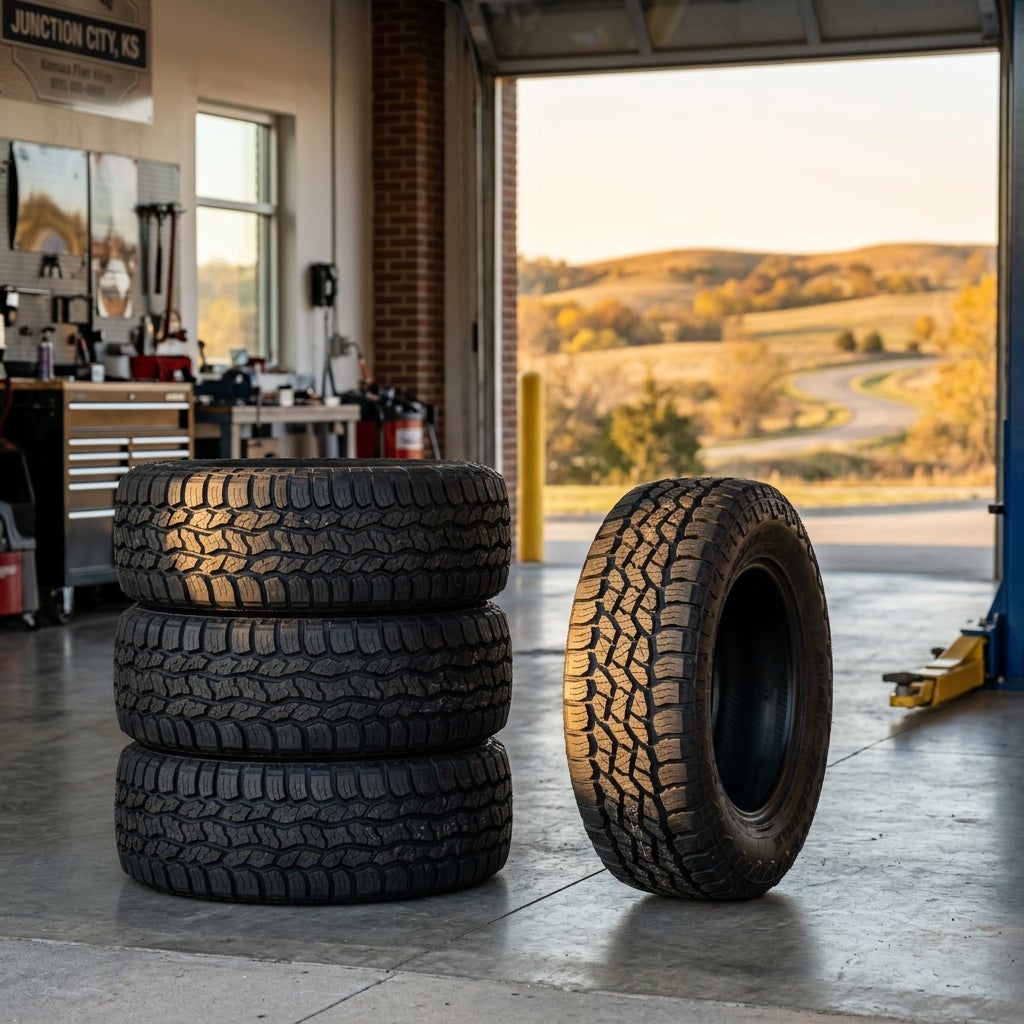
Recommended All-Terrain Tires for Central Kansas Winter and Dirt Roads For Central Kansas drivers tackling sticky rural clay mud, jagged Flint Hills limestone gravel, and unpredictable snow-slicked roads around Junction City, Fort Riley, and Dickinson County, standard highway tires simply will not cut it. The ultimate tire setup requires models bearing the Three-Peak Mountain Snowflake (3PMSF) rating, paired with rugged chip-resistant rubber compounds and deep tread voiding. Our top recommended all-terrain tires for Central Kansas conditions are the Falken Wildpeak A/T4W, BFGoodrich All-Terrain T/A KO3, and Goodyear Wrangler DuraTrac. When mounted on a midsize powerhouse like the 2026 Ford Ranger XLT, these tire options deliver exceptional siping for freezing winter ice, shoulder lug traction for sticky county farm mud, and heat-resistant tread longevity against sharp gravel. Navigating Dickinson County Dirt Roads and Flint Hills Winter Weather Driving in Dickinson County and across the Flint Hills region presents a unique mix of road surface challenges. Unpaved rural routes are heavily surfaced with crushed limestone gravel. While limestone provides an economical roadway, its sharp, multi-angular edges slice through soft highway tire treads, leading to premature wear, tread chipping, and sidewall punctures. When temperature fluctuations strike during Kansas winters, freeze-thaw cycles convert gravel roads into thick, heavy slush and unpaved farm lanes into deep mud ruts. On high-speed corridors like Interstate 70 and Highway US-77, sudden winter squalls create treacherous black ice bridges and packed snow drifts that demand extreme lateral grip. Why Highway Tires Fail: Standard all-season highway tires rely on tight tread blocks optimized for pavement fuel efficiency. In Central Kansas mud, these tight grooves quickly clog, turning tires into slick slicks. Furthermore, sub-freezing temperatures harden highway tire rubber compounds, eliminating ice friction when you need it most. Top 3PMSF All-Terrain Tires Tested for Gravel, Mud, and Snow To earn the Three-Peak Mountain Snowflake (3PMSF) emblem, a tire must exceed standardized severe snow traction tests by at least 10% over reference tires. Here is how our top three recommended models compare across Central Kansas driving demands: Falken Wildpeak A/T4W Engineered for maximum gravel endurance and severe snow capability. Features full-depth 3D canyon siping and heavy-duty heat-diffusing technology to prevent tread tearing on sharp Flint Hills rock while delivering outstanding packed-snow grip. BFGoodrich KO3 Built with CoreGard technology and split-resistant sidewall rubber derived from off-road racing. The newly optimized tread pattern reduces irregular wear from gravel roads and provides locking 3D sipes for confidence on icy highway overpasses. Goodyear DuraTrac Uses aggressive shoulder blocks and TractiveGroove Technology to offer enhanced traction in deep farm mud and unplowed county snow. Ideal for truck owners who spend equal time in fields and on rural highway routes. Tire Model 3PMSF Rated Sidewall Protection Gravel Chip Resistance Deep Mud Performance Falken Wildpeak A/T4W Yes High (DURASPEC 3-Ply) Excellent Very Good BFGoodrich T/A KO3 Yes Maximum (CoreGard) Excellent Good Goodyear Wrangler DuraTrac Yes High Good Maximum (TractiveGroove) 2026 Ford Ranger XLT Feature Breakdown: Capability, Tech, and Utility for Central Kansas Pairing superior all-terrain tires with a highly capable truck chassis is key to mastering Kansas winters. The 2026 Ford Ranger XLT features a robust 9.3 inches of standard ground clearance, enabling drivers to clear high snow drifts, deep mud ruts, and washed-out gravel paths without high-centering or damaging critical underbody components. Equipped with an advanced Electronic-Shift-on-the-Fly 4x4 system, selectable drive modes (Grass/Gravel/Snow, Mud/Ruts, Sand, Normal, Eco), and available factory FX4 Off-Road packages, the Ranger XLT optimizes throttle response and traction control specifically for slick local terrain. Get Pre-Approved for Financing What Engine Options and Performance Specifications Are Available on the 2026 Ford Ranger XLT? The 2026 Ford Ranger XLT brings exceptional powertrain choices tailored to work and recreation across Central Kansas. The standard powertrain is the proven 2.3L EcoBoost Inline-4, outputting a healthy 270 horsepower and 310 lb-ft of torque. For truck buyers needing extra passing power and heavy towing strength, Ford offers the available 2.7L EcoBoost V6 engine, delivering an impressive 315 horsepower and 400 lb-ft of torque. Both engines are paired with a smooth 10-speed automatic transmission. Low-End Torque Advantages: High low-RPM torque is essential when navigating unpaved Kansas roads. Having torque available early in the rev band allows the Ranger XLT to crawl out of sticky clay mud or heavy snow drifts without spinning wheels out of control. Engine Spec 2.3L EcoBoost I4 2.7L EcoBoost V6 Horsepower 270 hp 315 hp Torque 310 lb-ft 400 lb-ft Transmission 10-Speed Automatic 10-Speed Automatic Max Towing Capacity 7,500 lbs 7,500 lbs Bed Width and Cargo Capacity: Can a Standard 4x8 Sheet of Plywood Fit Flat in the 2026 Ford Ranger Bed? Yes! Standard 4x8 sheets of plywood and drywall lay flat between the wheel wells in the 2026 Ford Ranger bed when the tailgate is lowered or placed in the half-open supported position. Ford widened the distance between the rear wheel arches to 44.8 inches, allowing building materials, hay bales, and farm utility equipment to load seamlessly. Practical bed features include an integrated 400W in-bed power outlet for operating power tools or air compressors out in the field, sturdy tie-down cleats, available spray-in bedliners, and integrated rear bumper side steps for easy cargo access. How Does the Ford Ranger XLT Compare in Rear Seat Legroom to the Toyota Tacoma? Interior comfort is a primary consideration for truck owners commuting between Fort Riley and Junction City or taking family trips across Kansas. When comparing cabin roominess, the 2026 Ford Ranger XLT outshines the Toyota Tacoma in critical rear-seat metrics. The Ford Ranger XLT offers a generous 34.6 inches of rear legroom compared to the Toyota Tacoma Double Cab's tighter 33.7 inches (and even tighter configurations on underlying trims). This extra space provides adult passengers and carpooling service members with significantly superior knee and leg clearance on longer journeys. Interior Metric 2026 Ford Ranger XLT 2026 Toyota Tacoma Rear Legroom 34.6 in 33.7 in Rear Headroom 38.3 in 38.0 in Rear Shoulder Room 56.7 in 56.3 in Under-Seat Storage Yes (Fold-Flat) Limited What Technology and Infotainment Features Are Included in the 2026 Ford Ranger XLT? SYNC 4A Touchscreen Features a standard 12-inch center display screen running SYNC 4A with enhanced voice recognition, intuitive cloud-connected navigation, and dynamic off-road pitch/roll telemetry displays. Ford App Remote Start Use Ford App Connect on freezing Junction City mornings to remotely start your truck, warm the cabin, defrost windshields, and check real-time individual tire pressures (TPMS) directly from your smartphone. Seamless Connectivity Standard wireless Apple CarPlay and Android Auto integration keep your maps and communications clear. Customize your rig with genuine Ford accessories ordered through our dealership team. Order Genuine Ford Parts Maintaining Correct Tire Pressure and Tread Depth Through Kansas Winter Spells As autumn turns to winter in Central Kansas, ambient temperatures drop sharply. For every 10°F drop in outside temperature, tire inflation drops approximately 1 to 2 PSI. Under-inflated tires severely compromise steering precision, tread wear, and winter emergency braking. To prevent uneven wear patterns from rough gravel roads, schedule tire rotations every 5,000 miles. Furthermore, while the legal minimum tread depth is 2/32 of an inch, winter and dirt road safety calls for replacing tires once tread drops below 4/32 of an inch. Visit the certified service center at Valor Ford in Junction City for expert tire inspections, mounting, balancing, and alignment services. Get Directions to Valor Ford or Call us at (785) 238-5114 to speak directly with our tire experts today. Schedule Ford Service Today

Car Care

Fort Riley Relocation Car Care: Preparing Your Vehicle for Kansas Winters and Gravel Roads

Fort Riley Relocation Car Care: Preparing Your Vehicle for Kansas Winters and Gravel Roads Direct Key Takeaway for Fort Riley Military Personnel and New Junction City Residents: Preparing a vehicle for Kansas winters and Flint Hills gravel roads requires upgrading to an antifreeze coolant ratio of 60/40 (rated down to -34°F), installing All-Weather or Winter tires with at least 6/32" tread depth, applying fluid-based rust protection instead of hard rubberized undercoating, and load-testing your battery for extreme cold-cranking capacity. Servicing these key components before winter hits prevents ice-related breakdowns and long-term chassis corrosion from road salt and sharp limestone dust. Relocating to Fort Riley brings an exciting new chapter for service members and their families. Whether you are arriving from Fort Bliss in Texas, Fort Stewart in Georgia, or Joint Base Lewis-McChord in Washington, transitioning to the central Kansas plains introduces a unique set of driving conditions. The Flint Hills region surrounding Geary County and Dickinson County is celebrated for its rolling prairie landscapes, but it also presents rigorous automotive challenges. Winter in Junction City is characterized by rapid temperature drops, howling prairie winds, freezing rain, and prolonged sub-zero cold snaps. Simultaneously, the expansive network of unpaved county roads—covered in sharp limestone gravel—demands targeted vehicle maintenance that mild-climate drivers rarely consider. At Valor Ford, located right outside the gates of Fort Riley at 1825 Goldenbelt Blvd, Junction City, KS 66441, we understand the specific stress a Permanent Change of Station (PCS) move puts on your household and your vehicles. Driving to physical training during a zero-dark-thirty polar vortex or commuting down rural gravel roads requires a vehicle tuned specifically for the local environment. Skimping on seasonal preparation can leave you stranded along Interstate 70, US Route 77, or remote county roads where cell service can be intermittent. This comprehensive guide walks you through every essential vehicle system that needs attention before the first Kansas freeze, helping you safeguard your vehicle's reliability, safety, and resale value. What Should Fort Riley-Area Drivers Check Before Kansas Winter Sets In? Understanding the Flint Hills Climate Dynamics Kansas weather is notoriously unpredictable, particularly during late autumn and early winter. The open prairie landscape allows powerful cold fronts—often called 'Blue Northers'—to sweep down from Canada unimpeded. Temperatures can plunge 40 degrees in a matter of hours, turning clear morning roads into sheet ice by afternoon peak hours. For service members driving early morning routes to post, black ice on bridges over the Republican and Smoky Hill Rivers poses an immediate hazard. In addition to extreme temperatures, the fine dust and coarse aggregate from unpaved roads across Geary and Dickinson counties infiltrate vehicle engine bays, braking components, and HVAC filters. When combined with freezing moisture and chemical de-icers used on highways, this environment accelerates wear on soft rubber seals, electrical wiring, and exposed metallic chassis parts. The Comprehensive Pre-Winter Inspection Checklist A thorough pre-winter inspection for Fort Riley drivers should prioritize systems vulnerable to sudden freeze cycles and harsh road surfaces: • HVAC Defroster & Climate Controls: Ensure cabin air filters are free of fine gravel dust and test high-output windshield defrosters for immediate clarity. • Wiper Blades & De-Icing Washer Fluid: Replace worn standard blades with heavy-duty beam or winter blades. Drain summer washer fluid completely and fill with specialized freeze-resistant fluid rated to -20°F or lower. • Weather Stripping & Door Seals: Apply silicone lubricant to rubber door gaskets to prevent doors from freezing shut after moisture freezes overnight. • Exterior Lighting & Lenses: Clean and inspect headlight and taillight assemblies. High visibility is vital during sudden lake-effect style snow squalls and heavy fog along prairie valleys. What Engine Coolant Mix Ratio Is Needed to Protect Against Sub-Zero Temperatures in Kansas? The Physics of Coolant & Freezing Point Depression Engine coolant (antifreeze) does far more than keep your engine from overheating during summer convoys; it is your engine's primary defense against catastrophic winter block cracking. Water expands by roughly 9% when it freezes. If an engine's cooling system contains too weak a concentration of ethylene glycol, ice crystals form inside the narrow radiator passages, engine block cooling jackets, and heater core. While a standard 50/50 mix of coolant and distilled water provides protection down to -34°F under laboratory conditions, real-world degradation, top-offs with plain water, and wind-chill extremes on open highways call for a safer margin. Adjusting to a 60/40 coolant-to-water ratio provides robust protection down to -60°F burst strength, ensuring your engine block remains protected even during historical polar vortex events in Central Kansas. Heater Core Circulation & Cabin Warmth A neglected cooling system directly impacts cabin heating efficiency. Over time, silicates, corrosion inhibitors, and mineral deposits drop out of suspension, clogging the small passages of your vehicle's heater core. This results in lukewarm air blowing from your vents—a miserable condition during 0°F morning commutes across post. During a professional service at Valor Ford, certified technicians test your coolant hydrometer readings, evaluate pH balance to prevent internal electrolytic corrosion, and perform high-pressure back-flushes if sediment is detected. Keeping your cooling system pristine ensures rapid cabin warm-up, clear windows, and smooth water pump lubrication throughout the winter months. To maintain optimal factory specs, you can Order Genuine Ford Parts directly through our service desk. What Type of Tire Tread and Depth Are Recommended for Driving on Kansas Gravel Roads and Winter Ice? Navigating Flint Hills Limestone Gravel The unpaved roads surrounding Fort Riley are surfaced with native Flint Hills chert and crushed limestone. This gravel features sharp, angular edges capable of slicing soft highway tire treads and causing punctures. Standard passenger tires with weak sidewalls frequently suffer stone drilling and sidewall cuts on county roads. Driving on gravel requires tough rubber compounds, reinforced ply construction, and deep tread blocks designed to eject small stones rather than holding them in grooves where they can drill into tire belts. All-Season vs. All-Weather vs. Winter Tires Many drivers arriving from warmer climates assume All-Season tires are sufficient for Kansas winters. However, standard All-Season rubber compounds harden when ambient temperatures drop below 45°F, drastically reducing traction on cold asphalt and ice. For optimal year-round durability in Junction City, consider All-Weather tires carrying the Three-Peak Mountain Snowflake (3PMSF) rating. These offer soft silica rubber compounds that stay flexible in freezing temperatures while offering puncture-resistant tread blocks suited for gravel. Tread Depth Thresholds & Cold PSI Drop While the legal minimum tread depth is 2/32", winter safety requires a minimum threshold of 6/32" for gripping slush and shedding mud. Anything lower will cause snow packing and loss of traction. Remember: Tire pressure drops by 1 to 2 PSI for every 10°F decrease in outside air temperature. Under-inflated tires on cold gravel invite wheel rim damage and premature wear. Browse Used Inventory for Winter-Ready All-Wheel Drive Vehicles Is Fluid-Based Rust Protection Better Than Rubberized Undercoating for Gravel Road Driving? The Failure Mode of Rubberized Undercoatings on Gravel For decades, heavy black rubberized aerosol sprays were marketed as the gold standard for vehicle rustproofing. However, on rural Kansas roads, rubberized coatings frequently do more harm than good. When driving at high speeds on limestone gravel roads, sharp rocks pelt the underside of your vehicle. Over time, these impact points chip, crack, and delaminate hard rubberized coatings. Road brine, liquid magnesium chloride, and wet gravel mud seep behind the cracked rubber layer. Because the rubber traps moisture against the frame, corrosion rots critical floor pans, brake lines, and frame rails completely out of sight. Why Fluid-Based Lanolin & Oil Sprays Win Fluid-based corrosion inhibitors (such as Woolwax, Fluid Film, or petroleum-based clear oils) act as active, self-healing barriers. Unlike hard coatings, fluid films never dry out or crack. When a rock strikes a frame rail treated with fluid-based protection, the active fluid migrates back over the exposed metal to heal the chip. Fluid treatments actively penetrate deep into inner boxed frame sections, rocker panels, pinch welds, and door bottoms where moisture gathers. For vehicles exposed to winter salt slurry and heavy gravel dust around Fort Riley, an annual application of fluid-based rustproofing provides vastly superior long-term chassis protection. What Services Are Typically Included in a Winter Car Preparation Package? Brake, Suspension & Chassis Inspection • Brake pad thickness and rotor surface check for emergency stops on icy asphalt. • Inspection of rubber suspension bushings, ball joints, and tie-rod boots to ensure fine gravel grit hasn't destroyed seals. • Shock and strut leak tests to guarantee vehicle stability on pitted frost-heaved roads. Electrical System & Diagnostics • Conductance and load testing of battery health, Cold Cranking Amps (CCA), and internal resistance. • Alternator output voltage check under full electrical load (defroster, high beams, seat warmers). • Terminal post cleaning and application of anti-corrosion sealing washers. Fluids, HVAC & Tire Service • Coolant freeze-point refractometer test and pH balancing. • High-velocity windshield washer solvent flush and winter blade installation. • Tire rotation, pressure calibration to door-jamb PSI specs, and tread depth check. What Is the Average Cost of Winterizing a Car at a Service Center Near Junction City, KS? Transparent Cost Breakdown for Winter Care Investing in preventative seasonal maintenance yields substantial savings compared to late-night towing fees, engine repairs, or winter accidents. Below are estimated cost ranges for professional vehicle winterization services in the Junction City and Fort Riley area: • Standard Multi-Point Winterization Package: $75 – $250 (Includes comprehensive multi-point inspection, battery load test, fluid top-offs, wiper replacement, and tire rotation). • Coolant System Flush & Refill: $120 – $180 (Full fluid exchange with factory-recommended ethylene glycol mixture). • Fluid-Based Undercarriage Rustproofing: $150 – $350 (Full chassis application of lanolin/oil corrosion barrier). • Set of 4 All-Weather/Winter Tires: Contact us for current pricing on a set of 4 all-weather or winter tires. Maximizing ROI and Avoiding Costly Repairs When weighed against the financial cost of an emergency roadside tow on Interstate 70 during a snowstorm—which can easily exceed $300—or repairing a frozen engine block ($4,000+), proactive winterization is one of the smartest investments a military family can make. At Valor Ford, we take pride in supporting our service members with current pricing, military discounts, and complete service transparency. You can easily Schedule Ford Service Today online or speak directly with our service team to build a custom vehicle prep plan suited to your vehicle's mileage and budget. If your vehicle needs major upgrades, you can also explore a Trade In Evaluation to see your vehicle's trade value toward a winter-ready Ford AWD model. Schedule Ford Service Today at Valor Ford How Cold Kansas Weather Impacts Your Vehicle Battery and Cranking Amps The Electrochemistry of Cold Weather Battery Drain Automotive batteries rely on chemical reactions between lead plates and sulfuric acid to generate electrical energy. As ambient temperatures drop, these chemical reactions slow down drastically. At 32°F, a standard automotive battery loses roughly 20% of its total cranking capacity. When temperatures plunge to 0°F, output capacity drops by 35% to 50%. Compounding this power drop, cold weather thickens engine oil from a smooth lubricant into a viscous sludge. Turning over a cold engine at sub-freezing temperatures requires up to twice as much electrical current (amps) as it does on a warm summer afternoon. A weak battery that performed fine in Texas or Florida will quickly fail on its first cold morning in Geary County. Load Testing & Cold Cranking Amp (CCA) Selection If your vehicle's battery is more than three years old, relying on a simple voltage meter is insufficient. Voltage meters indicate charge level, but fail to measure internal resistance or cranking capacity under load. A professional conductance load test at Valor Ford evaluates whether your battery can maintain sufficient voltage while delivering its rated Cold Cranking Amps (CCA). When replacing a battery for Kansas driving, always select a replacement battery that meets or exceeds your vehicle's factory CCA specification. Cleaning white lead-sulfate corrosion off battery terminals and treating posts with anti-corrosion grease ensures maximum power transfer when you turn the key during zero-degree physical training formation call. Essential Vehicle Emergency Kit Checklist for Fort Riley and Rural Kansas Drivers Power & Starting Gear • Heavy-duty jumper cables (2-gauge or thicker) or a portable lithium-ion jump starter pack. • High-efficiency 12V tire inflator with built-in pressure gauge. • High-lumen LED flashlight with spare batteries or USB charging cable. Traction & Recovery Tools • Compact folding snow shovel and ice scraper/snow brush combo. • Heavy-duty tow strap (minimum 10,000 lbs rating) with drop-forged hooks. • Traction mats or a bag of coarse cat litter/sand for slipping tires on ice. Warmth & Survival Supplies • Thermal wool blankets or Mylar emergency space blankets. • Cold-weather gloves, knit beanie, and waterproof insulated boots. • Non-perishable energy bars, bottled water (kept unfrozen in cabin), and first-aid kit. How to Wash and Protect Your Car's Finish During Kansas Gravel and Salt Seasons Paint Maintenance Against Gravel Dust & Salt Brine The combined mixture of liquid chemical de-icers and dry limestone dust creates an abrasive paste that clings to your vehicle's clear coat, door rocker panels, and wheel arches. If left unwashed, this slurry degrades paint gloss, causes clear coat pitting, and initiates surface rust along body panels. Before winter begins, apply a synthetic paint sealant or ceramic wax coating. These synthetic polymers create a non-stick hydrophobic barrier that makes it difficult for road brine and dust to bond to clear coat surfaces. Avoid aggressive dry wiping on dirty vehicles, which grinds limestone particles into the paint like sandpaper. Undercarriage Washing & Fleet Care at Valor Ford While keeping your vehicle's paint shiny looks great, washing the underside of your vehicle is far more critical for mechanical longevity. Perform high-pressure undercarriage rinses bi-weekly during winter to clear salt deposits out of wheel wells, brake calipers, and exhaust mounts. Valor Ford is dedicated to supporting the men and women stationed at Fort Riley and throughout Geary County. Whether you need specialized maintenance, high-pressure chassis care, or a reliable AWD replacement vehicle, our team is here to serve you. You can Get Directions to Valor Ford, utilize our convenient Schedule Pickup and Delivery Service, or Call us at (785) 238-5114 today! Schedule Pickup and Delivery Service with Valor Ford

2023 Ford Explorer Maximum Towing Capacity: Specs by Engine & Package

2023 Ford Explorer Maximum Towing Capacity: Specs by Engine & Package

2023 Ford Explorer Maximum Towing Capacity: Specs by Engine & Package The 2023 Ford Explorer delivers an impressive maximum towing capacity of up to 5,600 lbs when properly equipped with the available 3.0L EcoBoost® V6 engine and the factory-installed Class IV Trailer Tow Package. Whether you are hitching up a ski boat for a weekend getaway to Milford Lake, pulling a pair of horses through Geary County, or transporting a heavy camper trailer across Central Kansas, the 2023 Explorer provides midsize SUV versatility paired with real truck-like pulling power. For drivers opting for the popular standard powertrain—the energetic 2.3L EcoBoost® I-4—the maximum towing capacity reaches a stout 5,300 lbs when equipped with the Class IV tow setup. Meanwhile, environmental-minded drivers selecting the efficient 3.3L V6 Hybrid powertrain can comfortably haul up to 5,000 lbs. Understanding the exact mechanical threshold of your specific trim level ensures both towing safety and optimal mechanical longevity for your vehicle. At Valor Ford in Junction City, Kansas, our team of Ford towing specialists helps drivers throughout Dickinson, Riley, and Geary counties select the ideal powertrain, axle ratio, and towing package to match their trailering requirements. From understanding gross combined weight ratings (GCWR) to verifying payload capacities, we are dedicated to ensuring your trailering setups are safe, legal, and stress-free. Research 2023 Ford Explorer Models Breakdown of 2023 Ford Explorer Towing Capacity Across Every Engine Option Selecting the right powertrain is the cornerstone of achieving peak towing performance in your 2023 Ford Explorer. Ford offers three distinct engine configurations across its trim lineup, each engineered with unique torque delivery curves and cooling dynamics designed for specific trailering applications. 1. 2.3L EcoBoost® I-4 Engine: Standard on Base, XLT, ST-Line, Timberline, and Limited trims. Generating 300 horsepower and 310 lb-ft of torque, this turbocharged four-cylinder punches well above its weight class. When fitted with the Class IV Trailer Tow Package, it boasts a 5,300-lb towing limit—ideal for small-to-midsize boats, pop-up campers, and utility trailers. 2. 3.0L EcoBoost® V6 Engine: Standard on the high-performance ST, luxurious King Ranch, and top-tier Platinum trims. Harnessing twin turbochargers, this power plant cranks out 400 horsepower and 415 lb-ft of torque. It achieves the Explorer’s maximum 5,600-lb towing capacity, making highway overtaking and steep hill climbs effortless even with a heavy load. 3. 3.3L V6 Hybrid Engine: Available on Limited Hybrid and Platinum Hybrid trims. Combining a natural aspirated V6 with an electric motor to generate 318 horsepower and 322 lb-ft of system torque. It allows owners to pull up to 5,000 lbs while maintaining excellent fuel efficiency on longer road trips around Kansas. Engine Option Output (HP / Torque) Max Tow Capacity Available Trims 2.3L EcoBoost® I-4 300 hp / 310 lb-ft 5,300 lbs Base, XLT, ST-Line, Timberline, Limited 3.0L EcoBoost® V6 400 hp / 415 lb-ft 5,600 lbs ST, King Ranch, Platinum 3.3L V6 Hybrid 318 hp / 322 lb-ft 5,000 lbs Limited Hybrid, Platinum Hybrid Note: All maximum towing ratings require the factory-installed Class IV Trailer Tow Package. Towing capacities vary based on passenger load, cargo weight, vehicle options, and trailer tongue weight distribution. Key Towing Features and Equipment in the Class IV Trailer Tow Package Heavy-Duty Hardware The Class IV Trailer Tow Package equips the 2023 Ford Explorer with a factory frame-mounted hitch receiver engineered specifically for rear structural integrity. It includes a heavy-duty engine oil cooler designed to manage thermal loads during high-stress ascents on summer days in Kansas, ensuring your engine remains within optimal operational temperature windows. Integrated Wiring Setup Factory equipment incorporates both 4-pin and 7-pin electrical wiring connectors seamlessly mounted alongside the hitch. This dual-plug setup allows instant plug-and-play capability for light utility trailers as well as heavy electric-brake equipped campers without needing aftermarket wiring splices. BLIS with Trailer Coverage Ford’s innovative Blind Spot Information System (BLIS®) extends radar coverage along the entire length of your attached trailer. When changing lanes on Interstate 70, the side mirror alert indicators account for your trailer length, dramatically reducing blind-spot anxiety when passing long vehicles. What Can You Tow Around Junction City and Milford Lake with a 5,600-Lb Rating? A maximum towing capacity of 5,600 lbs opens up an incredible array of recreational and work-related possibilities for drivers living in Junction City, Fort Riley, and surrounding Central Kansas communities. You do not necessarily need a full-size pickup truck to enjoy outdoor adventures at Milford State Park or carry equipment across Dickinson County. Here is a quick look at real-world trailers and recreational toys a 2023 Ford Explorer handles with ease: • Boats & Watercraft: Launching at Milford Reservoir is effortless. The 5,600-lb limit comfortably accommodates 20 to 24-foot fiberglass ski boats, deck boats, tandem personal watercraft (jet skis) trailers, and medium-sized pontoon boats (which typically average 3,000 to 4,500 lbs dry weight with trailer). • Campers & Travel Trailers: You can pull single-axle or light tandem-axle ultra-light travel trailers up to 24 feet in length, pop-up tent campers, or teardrop trailers with full outdoor kitchens while still keeping ample payload margin for your family’s gear. • Work & Utility Trailers: For home improvement projects or rural property maintenance around Geary County, tow open dual-axle utility trailers loaded with riding lawn mowers, ATVs, side-by-sides, or construction equipment. • Livestock & Horse Trailers: Single-horse or lightweight two-horse aluminum trailers fit comfortably within the safety envelope when calculated alongside proper tongue weight distribution. Before taking off, always ensure you consult your vehicle's door jamb safety certification placard to account for total vehicle weight, tongue weight (typically 10-15% of total trailer weight), and onboard passenger cargo. Browse Used SUV Inventory What Is the Fuel Economy Rating for the 2023 Ford Explorer Hybrid When Towing? When unhooked from a trailer, the 2023 Ford Explorer Hybrid (3.3L V6 Powertrain) delivers impressive efficiency with EPA estimates reaching up to 27 MPG combined (27 City / 28 Highway on RWD models, and 23 City / 26 Highway on Intelligent 4WD models). This makes it one of the most fuel-efficient three-row midsize SUVs in its class. However, when towing a 3,000 to 5,000-lb load, drivers should expect overall fuel economy to shift. Towing increases aerodynamic drag and rotational mass, forcing the 3.3L V6 engine to run more frequently rather than utilizing the electric motor in EV mode. In real-world Kansas highway conditions—such as cruising 75 MPH on I-70 facing crosswinds—towing efficiency typically averages between 12 MPG and 16 MPG depending on the boxiness and frontal area of your trailer. Comparing Hybrid vs. EcoBoost Gas Towing Efficiency: While the gas-powered 2.3L and 3.0L EcoBoost engines experience a similar percentage drop in fuel economy under heavy trailering loads, the Hybrid retains a noticeable advantage during stop-and-go driving through town or when maneuvering boat ramps. The electric motor assists during initial off-the-line acceleration, reducing strain on the internal combustion engine. Practical Tips to Maximize Towing MPG: • Keep highway speeds near 60-65 MPH to minimize aerodynamic drag. • Ensure trailer tires are inflated to full recommended PSI. • Use Ford's Tow/Haul drive mode to prevent constant gear hunting. • Remove roof rack accessories when carrying heavy loads. Essential Safety Technologies and Towing Drive Modes for Stability Trailer Sway Control Integrated with AdvanceTrac® with Roll Stability Control™ (RSC®), Trailer Sway Control automatically detects unwanted trailer oscillations. It selectively applies individual wheel braking and reduces engine torque to quickly bring the trailer back into straight alignment. Tow/Haul Drive Mode Selected via the Terrain Management System™ dial on the center console, Tow/Haul mode alters shift points on the 10-speed transmission. It holds lower gears longer for uphill power and provides engine braking when descending steep grades. Hill Start Assist Hill Start Assist momentarily holds brake pressure when transitioning your foot to the accelerator pedal on inclines, preventing roll-back when starting on steep boat ramps or sloped highway entries. What Safety Recalls Affect the 2023 Ford Explorer Rearview Camera and Engine Safety Inspections? 1. 360-Degree Rearview Camera Display Recall Safety is paramount when maneuvering a trailer into tight spots or reversing toward a hitch ball. Ford issued a major safety recall notice for select 2020-2023 Ford Explorer models equipped with 360-degree camera systems due to a signal processing error in the Image Processing Module B (IPMB). Symptoms & Hazards: Drivers may experience a blue screen display or a blank screen on the center SYNC® infotainment monitor when putting the vehicle into Reverse. When aligning a trailer hitch or backing up in crowded parking lots, loss of camera vision increases the risk of a collision. Official Ford Repair: Certified technicians update the IPMB software or replace the camera processing module entirely depending on the diagnostic code readings. This recall service is performed completely free of charge at authorized Ford dealerships like Valor Ford. 2. Engine Oil Line & Safety Inspections In addition to infotainment display updates, select 2023 Explorer models undergo factory safety inspections regarding engine oil supply lines and underhood components. Symptoms & Hazards: Loose or improperly seated engine oil pressure lines or turbocharger oil feed lines can lead to fluid leaks. In severe cases, engine oil dripping onto hot exhaust components poses a thermal safety hazard or leads to low oil pressure engine damage under heavy towing conditions. Official Ford Repair: Technicians perform a comprehensive visual and pressure inspection of the oil supply circuit, tightening fittings to exact factory torque specifications or replacing affected lines free of charge. How Do I Check if My Specific 2023 Ford Explorer VIN Has an Uncompleted Recall? Checking whether your 2023 Ford Explorer has outstanding safety recall work is straightforward and essential before embarking on long road trips with a heavy trailer attached. Step 1: Locate Your Vehicle Identification Number (VIN) Your Explorer's unique 17-digit VIN is located in two convenient physical locations: • On the driver’s side lower corner of the dashboard, visible through the windshield from outside. • On the Safety Compliance Certification Label attached to the driver’s side door jamb. • You can also find your VIN on your vehicle registration documents, insurance card, or FordPass® mobile application. Step 2: Run a Free Official Recall Check • Visit the National Highway Traffic Safety Administration (NHTSA) recall lookup portal online or Ford's Official Owner Service site. • Enter your 17-digit VIN to immediately pull up open recall notices, safety campaigns, and field service actions specific to your build date. Step 3: Contact Valor Ford for Verification If you prefer personalized assistance, simply reach out to our service department at Valor Ford. Our advisors can run your VIN through Ford’s OASIS (On-Line Automotive Service Information System) database to verify recall status and reserve necessary factory parts prior to your appointment. Schedule Ford Service Today Where Can a 2023 Ford Explorer Owner Near Junction City, Kansas, Arrange Recall Service? For vehicle owners in Junction City, Fort Riley, Manhattan, Abilene, and surrounding Central Kansas communities, Valor Ford is your authorized local resource for all official Ford warranty repairs and recall services. Our state-of-the-art service center is conveniently located at 1825 Goldenbelt Blvd in Junction City, KS. You can easily Get Directions to Valor Ford from I-70 or Highway 77. All safety recall repairs—including camera module software flashing, module replacements, and engine inspections—are performed by factory-certified Senior Master Technicians using genuine Motorcraft® parts. Because recall repairs are fully funded by Ford Motor Company, there is absolutely zero cost to the vehicle owner. Convenience Services for Military & Local Families: We recognize that scheduling dealership appointments around work and family routines can be challenging. Valor Ford offers multiple convenience solutions: • Pickup & Delivery Service: We can pick up your 2023 Explorer from your residence or work location, complete the recall service at our dealership, and return it cleaned and ready. You can easily Schedule Pickup and Delivery Service online. • Direct Telephone Assistance: Prefer speaking directly with our service desk? Call us at (785) 238-5114 to verify parts availability or ask technical questions. • Comfortable Customer Lounge: High-speed Wi-Fi, quiet work stations, complimentary refreshments, and shuttle service to Fort Riley base housing. What Non-Recall Mechanical Repairs Are Common for the 2023 Ford Explorer? Braking Systems Frequent trailering accelerates wear on front brake pads and brake rotors due to stopping heavy combined masses. Inspections every 10,000 miles ensure rotor thickness remains within tolerance and brake fluid is free from thermal degradation. 10-Speed Transmission Service Heavy towing generates higher internal gear temperatures. Regular fluid level checks and shortened fluid exchange intervals maintain crisp shifting performance across all 10 gears in SelectShift® automatic transmissions. Suspension & Tires Rear shocks, sway bar end links, and rear axle bushings absorb heavy tongue weight forces. Regular wheel alignments and tire rotations prevent uneven tread wear caused by rear weight bias during towing journeys. Pre-Tow Inspection Checklist for Fort Riley and Central Kansas Drivers Before pulling onto Kansas highways, complete this quick 5-minute pre-tow safety inspection: 1. Hitch Coupler & Locking Pin: Ensure the trailer coupler fits securely over the hitch ball size (typically 2-inch or 2-5/16-inch) and the safety locking pin or clip is fully engaged. 2. Safety Chains Crossover: Attach safety chains under the tongue in an 'X' pattern so that if the coupler decouples, the tongue falls onto the chains rather than contacting the road surface. 3. Electrical Plug & Lighting Check: Connect the 4-pin or 7-pin plug firmly. Test brake lights, left/right turn signals, hazard flashers, and running lights with a partner. 4. Cold Tire Inflation Pressure: Check tire pressures on both the Explorer and the trailer when cold. Underinflated trailer tires generate excess heat and blowout risk. 5. Brake Controller Gain Setting: If equipped with an electric brake controller, perform a low-speed test stop (5 MPH) to ensure the trailer brakes engage smoothly without locking up. Financing, Trade-In Valuations, and Genuine Ford Accessories at Valor Ford Upgrading your trailering setup or outfitting your existing 2023 Ford Explorer with official towing gear is simple at Valor Ford. Our dedicated parts and finance teams offer comprehensive support customized to your budget: • Genuine Ford Towing Accessories: Upgrade your vehicle with factory-engineered hitch balls, weight distribution hitches, trailer brake controllers, all-weather floor liners, and cargo management solutions. You can easily Order Genuine Ford Parts directly through our website. • Maximum Trade-In Value: Thinking about upgrading to a tow-ready Ford Explorer or a heavy-duty Ford Super Duty truck? Request an instant online Trade In Evaluation to see what your current vehicle is worth. • Tailored Auto Financing: Whether buying new or pre-owned, our finance specialists work with regional Kansas banks and Ford Credit to help you explore available financing options. You can Get Pre-Approved for Financing online in minutes. Get Pre-Approved for Financing Schedule Your 2023 Ford Explorer Towing Inspection or Service at Valor Ford Whether you need to resolve an open safety recall, perform routine multi-point maintenance before your next lake trip, or test drive a tow-equipped Explorer trim, Valor Ford is here to serve you. Visit our showroom and certified service facility at 1825 Goldenbelt Blvd, Junction City, KS 66441 or Call us at (785) 238-5114 to speak directly with an advisor today. Experience the high standard of automotive customer service that Central Kansas drivers depend on! Schedule Pickup and Delivery Service

Buy 3 Tires Get the 4th for $1 at Valor Ford in Junction City, KS

Buy 3 Tires Get the 4th for $1 at Valor Ford in Junction City, KS

Schedule Tire Service at Valor Ford in Junction City, KS Don't let worn tread compromise your safety or fuel efficiency this season! currently available during our premier Fall Tire Sales Event at Valor Ford, when you purchase four select qualifying tires at regular price. Positioned right here at 1825 Goldenbelt Blvd in Junction City, KS, Valor Ford is your authorized service destination for unmatched savings on top tire brands. Whether you drive a rugged Ford F-150, a versatile Explorer, a heavy-duty Super Duty, a spacious Expedition, or a sleek Escape, this extraordinary event delivers maximum value directly to your wallet. Driving conditions across Geary County and the surrounding Flint Hills region demand dependable traction. From unpredictable fall rains to early winter frost, having four premium tires with deep, fresh tread is essential for road safety. Take advantage of direct savings of up to $250 or more depending on your vehicle's tire size and brand selection. Appointments are available through our certified service center, and availability may vary. Call us at (785) 238-5114 today or claim your offer online below! Schedule Ford Service Today How the Tire Service Offer Works Simple, Transparent Savings at Checkout We believe in straightforward pricing without hidden catches. Here is exactly how easy it is to save at Valor Ford: 1. Choose 4 Qualifying Tires: Select a set of four matching tires from our extensive inventory of major national brands. 2. Pay Regular Price for 3: Purchase the first three tires at our everyday competitive retail price. Get the 4th tire included with your qualifying tire purchase: Your service advisor can review current tire package details with you. 4. Enjoy Low-Price Guarantee & Expert Installation: Benefit from our Ford Service Price Match Guarantee on major brands, along with factory-trained assembly, precise balancing, and professional mounting. Tire Model Package Regular Set Price (4) Service Package Price Total Instant Savings Standard All-Season (Sedan/CUV) $640 Contact dealership for current pricing $159 Instant Savings All-Terrain Truck/SUV (F-150/Bronco) $960 Contact dealership for current pricing $239 Instant Savings Heavy-Duty Highway (Super Duty) $1,120 Contact dealership for current pricing Contact dealership for current pricing This limited-time offer applies to top-tier, name-brand tires suitable for light trucks, SUVs, crossover vehicles, and sedans. Installation, mounting, wheel balancing, valve stems, and applicable local recycling fees are clearly calculated so there are no surprises when you pick up your keys. Top Tire Brands Included in the Junction City Tire Sale At Valor Ford, we carry an extensive inventory of tire brands specifically engineered to complement your vehicle's handling, payload capacity, and ride quality. During this sales event, choose from industry-leading manufacturers tailored for your daily drive. Goodyear & Michelin Goodyear Tires: Renowned for durability and quiet highway performance. Excellent fitment options for Research Ford F-150 trucks and Research Ford Explorer SUVs needing dependable wet and dry traction. Michelin Tires: Premium longevity and fuel efficiency. Michelin Defender and Premier series deliver ultra-smooth rides for commuting on I-70 or traveling around Kansas. Continental & BFGoodrich Continental Tires: Exceptional stopping power and responsive cornering grip. Ideal for Ford Escape, Edge, and Research Ford Maverick drivers who value precise control. BFGoodrich Tires: Tough, aggressive off-road tread patterns like the All-Terrain T/A KO2, built to conquer gravel roads, farm trails, and muddy Kansas terrain. Pirelli & Hankook Pirelli Tires: Performance-driven rubber designed for responsive steering and high-speed stability. Perfect match if you Research Ford Mustang models. Hankook Tires: High-value performance with exceptional all-season capabilities, providing reliable durability for heavy work duty on Research Ford F-250 Super Duty vehicles. Why Proper Tire Tread and Alignment Matter for Flint Hills Driving Driving in Junction City, Fort Riley, and throughout Dickinson County presents unique challenges across every season. Between rolling hills, unpaved rural gravel, sudden autumn rainstorms, and icy winter highways like I-70, your vehicle's safety depends entirely on the small contact patch where your tires touch the pavement. Enhanced Hydroplaning Resistance: Fresh tire tread channels water away from the tire footprint, maintaining traction during heavy rainstorms. Shorter Stopping Distances: Replacing tires worn down to 3/32" or lower can dramatically reduce your stopping distance by up to two car lengths on wet roads. Improved Fuel Economy & Tire Life: Pairing your new set of tires with a digital wheel alignment ensures even tire wear, lower rolling resistance, and maximum miles per gallon. Schedule Ford Service Today Schedule Service Online Before Event Slots Fill Up Appointment availability in our Valor Ford Quick Lane and certified service bays may be limited. Drivers across Junction City, Manhattan, Abilene, and Fort Riley recognize this as the best tire pricing event of the year. To guarantee your preferred date and time, we strongly encourage utilizing our intuitive online scheduling tool. You can pick your vehicle model, select your desired tire package, and secure your appointment in less than two minutes. Can't make it to the dealership during your busy workday? Take advantage of our convenient Ford Pickup & Delivery option, where our team collects your vehicle, completes the tire replacement, and returns it directly to your driveway or workplace! Schedule Pickup and Delivery Service Complementary Maintenance Checks Included With Your Tire Purchase At Valor Ford, we go above and beyond simple tire installation. Every customer participating in our 4th Tire for $1 promotion receives a suite of complementary vehicle health checks performed by our Ford-trained technicians. Multi-Point Inspection Comprehensive vehicle check covering fluid levels, belts, hoses, wipers, battery strength, and exhaust components to catch potential issues early. Brake & TPMS Reset Detailed measurement of brake pad thickness and rotor condition, along with electronic recalibration of your Tire Pressure Monitoring System (TPMS). Alignment Quick-Check Digital laser alignment check to verify proper wheel geometry, preventing premature wear on your brand-new set of tires before you leave. Exclusive Offers for Fort Riley Service Members and Families Valor Ford takes immense pride in supporting the brave active-duty personnel, veterans, and military families stationed right next door at Fort Riley, home of the 1st Infantry Division. We understand the unique scheduling demands, field training exercises, and frequent relocations experienced by our military community. During our $1 Tire Event, military members receive priority service scheduling, expedited lane turnarounds, and streamlined shuttle options back to post. We also offer specialized advice for out-of-state vehicles to ensure your tires meet rigid cross-country driving demands whether traveling home for leave or preparing for your next PCS move. Military Customer Benefits at Valor Ford: • Expedited service scheduling for active military • Convenient shuttle service to and from Fort Riley gates • Complimentary multipoint safety inspection on all family vehicles • Assistance with Ford Rewards points accumulation and redemption • Transparent, hassle-free pricing guaranteed on every tire brand Flexible Financing Options for Tires and Service Upgrades Replacing four tires along with routine vehicle maintenance is an important investment in your safety, but it doesn't have to strain your monthly budget. Valor Ford offers flexible service financing solutions designed to fit your cash flow. With the Ford Service Credit Card, qualified buyers can enjoy promotional 0% APR financing on major service and tire purchases over $250. Spread your payments into manageable monthly installments while outfitting your car, truck, or SUV with top-quality tires today. Plus, cardholders earn valuable Ford Rewards points that can be redeemed toward future oil changes, routine maintenance, or genuine Ford parts. Get Pre-Approved for Financing Trade In Your Vehicle or Upgrade During the Tire Sales Event Maximizing Your Current Vehicle's Value Thinking about trading in your current ride for a brand-new or certified pre-owned Ford? While your vehicle is in our service bay receiving new tires or inspection, our appraisal team can provide a quick, zero-obligation Trade In Evaluation. Used vehicle values remain remarkably strong in Geary and Riley counties. Applying the equity in your current vehicle toward a new purchase could get you into a newer model with lower monthly payments and full warranty coverage. Explore Latest Ford Models on the Lot Take a test drive while you wait! Explore our latest showroom line-up, including: • Tough and capable off-roaders: Shop New Ford Bronco Inventory • Quality pre-owned cars, trucks, and SUVs: Browse Used Inventory • Next-generation heavy duty trucks: Research Ford F-250 Whether servicing your current vehicle or driving home a brand-new Ford, Valor Ford is committed to offering unmatched customer service. Seasonal Road Preparation for Dickinson County Agriculture and Commuting Living in Central Kansas requires vehicle tires versatile enough to handle diverse conditions—from dusty harvest fields and agricultural towing to freezing winter highway commutes on I-70. Selecting the right tire type ensures optimal fuel efficiency and maximum traction. All-Season Highway Tires Engineered for quiet rides, smooth highway handling, and extended tread life. Ideal for commuters traveling between Junction City, Manhattan, and Topeka along main interstates. All-Terrain & Off-Road Featuring reinforced sidewalls and aggressive tread block designs. Essential for agricultural work, farm property navigation, dirt roads, and heavy trailering. Winter-Rated / 3-Peak Tires stamped with the 3-Peak Mountain Snowflake (3PMSF) symbol offer specialized rubber compounds that remain flexible in freezing temperatures, providing superior grip on snow and ice. Frequently Asked Questions About the $1 Tire Promotion Q: Does the 4th tire for $1 include installation charges? A: The fourth tire purchase is included with your qualifying tire package. Standard mounting, balancing, valve stem installation, and disposal fees apply to all four tires to guarantee proper safety standards. Q: Can I combine this offer with manufacturer mail-in rebates? A: In many cases, yes! Several tire manufacturers offer national mail-in or online rebates during seasonal events that can be stacked on top of dealership savings. Ask our service advisors for current brand rebate forms. Q: Are non-Ford vehicles eligible for this tire sale? A: Absolutely! While we specialize in Ford cars, trucks, and SUVs, our Quick Lane tire center services all makes and models. Drivers of Chevrolet, Ram, Toyota, Honda, and other vehicles can fully participate. Q: What is the Ford Service Price Match Guarantee? A: If you find a lower advertised price on an identical tire from a local competitor within 30 days of purchase, we will match it! Need custom replacement parts or accessories? You can easily Order Genuine Ford Parts directly through our parts department. Order Genuine Ford Parts Claim Your $1 Tire Offer at Valor Ford Today Contact us to schedule your vehicle's essential road maintenance. Save hundreds of dollars by getting your fourth tire for just $1 at Valor Ford in Junction City, KS! Visit our state-of-the-art facility located conveniently on Goldenbelt Blvd, or contact our service department directly to schedule your installation appointment. 📍 Get Directions to Valor Ford: 1825 Goldenbelt Blvd, Junction City, KS 66441 📞 Call us at (785) 238-5114 to speak directly with a certified tire advisor. Schedule Ford Service Today

Is Full-Time AWD or Part-Time 4WD Safer on Icy Highway 18? Bottom-Line Answer from Valor

Is Full-Time AWD or Part-Time 4WD Safer on Icy Highway 18? Bottom-Line Answer from Valor

Is Full-Time AWD or Part-Time 4WD Safer on Icy Highway 18? Bottom-Line Answer from Valor THE BOTTOM-LINE DIRECT ANSWER: Full-time All-Wheel Drive (AWD) is significantly safer than traditional part-time 4-Wheel Drive (4WD) for everyday winter commuting along Highway 18 between Junction City and Manhattan. Because Highway 18 is plagued by rapidly changing surface conditions—alternating between clear asphalt, sudden black ice on river bridges, and wind-drifted snow pack—full-time AWD continuously monitors wheel slip and varies torque delivery between axles without driver intervention. Traditional part-time 4WD excels in unplowed, deep snow, but when engaged in 4H (4WD High) on patchy or semi-dry winter pavement, it forces the front and rear drive shafts to spin at identical speeds, creating severe driveline binding, tire scrub, and dangerous unexpected skids during high-speed cornering. To get to the bottom of this debate, we sat down with Mike Hogg, Service Director at Valor CDJR in Junction City, KS. With over 20 years of hands-on automotive expertise serving military personnel from Fort Riley and commuters throughout Geary and Riley counties, Mike provides an authoritative breakdown of how drivetrain mechanics perform under harsh Kansas winter commuting conditions. "Every winter, we see drivers come into our service bay who were caught completely off guard by a sudden patch of black ice on the Highway 18 bridge decks," explains Mike Hogg. "Many of them believed that shifting their truck into 4H made them invincible. Understanding the mechanical distinction between how full-time AWD and part-time 4WD handle changing traction is single-handedly the most critical safety knowledge a commuter can have before the first severe freeze hits Central Kansas. Q: Why is the Highway 18 commute between Junction City and Manhattan so treacherous in winter? INTERVIEWER: Mike, for folks commuting daily between Junction City, Fort Riley, and Manhattan, Highway 18 (K-18) is a vital lifeline. But as soon as winter arrives, it becomes one of the most accident-prone stretches of road in Riley County. What specifically makes this route so hazardous during Kansas winters? MIKE HOGG: "It boils down to geography, wind exposure, and speed. Highway 18 cuts right through open Riley County prairie and river valleys. In Central Kansas, winter cold snaps are almost always accompanied by ferocious 35 to 50 mph crosswinds coming across flat farmland. When snow falls—or even when existing snow sits in adjacent fields—those winds create sudden, blinding drift banks across the 65 mph highway lanes. More importantly, ground temperatures here create flash freezing. You might leave Junction City on pavement that looks completely wet and clear, but as soon as you hit the elevated bridge decks over the Smoky Hill River or approaching Ogden, the pavement temperature drops below 32 degrees almost instantly. Moisture freezes into invisible black ice before highway treatment crews can even react. MIKE HOGG CONTINUES: "The daily hazard profile for Fort Riley military personnel and local commuters is extreme because of the high traffic volume during morning and evening physical training (PT) and shift change hours. You have thousands of vehicles driving 65 miles per hour bumper-to-bumper in low-light conditions. When a driver hits a sudden micro-patch of black ice on a highway curve at speed, the vehicle's reaction depends entirely on its drivetrain and electronic safety systems. If your vehicle reacts unpredictably—or if you're wrestling with mechanical binding from a locked part-time 4WD system—you lose precious fractions of a second to correct your trajectory. That is where severe multi-car pileups occur on K-18. Q: Is full-time AWD or traditional part-time 4WD safer for icy Highway 18 winter commuting? INTERVIEWER: Let's dive deep into the mechanical core of the topic. Many truck and SUV owners assume '4x4 is 4x4.' Why is full-time AWD safer than traditional part-time 4WD when driving through variable icy patches on Highway 18? MIKE HOGG: "To understand safety, you have to look at the mechanical connection between the front and rear axles. In a traditional part-time 4WD system —like what you find in base pickup trucks or classic off-road rigs—engaging 4H mechanically locks the front drive shaft and rear drive shaft together inside the transfer case at a 50/50 split. They are forced to turn at exact same speeds. When you turn a vehicle on Highway 18, your front wheels naturally travel along a longer arc than your rear wheels, meaning they MUST spin faster. On deep mud or 6 inches of unplowed snow, the extra wheel slip absorbs that speed difference. But on patchy pavement or salted asphalt interspersed with black ice, the tires cannot slip easily. The energy builds up in the drivetrain—what we call driveline binding. When you hit a curve on K-18 with bound drivelines, the front or rear tires will violently break traction to relieve that stress, causing an unexpected skid. MIKE HOGG CONTINUES: "In contrast, a modern full-time All-Wheel Drive (AWD) system features a center differential with a fluid coupling or electronically controlled multi-plate clutch pack. It allows the front and rear drive shafts to rotate at different speeds while continuously distributing power. If your left front wheel touches a patch of slick black ice on the Ogden bridge while your other three tires are on wet cold asphalt, the AWD computer detects the micro-mismatch in wheel speed within milliseconds. It redirects engine torque away from the slipping wheel to the tires with grip—without binding, bucking, or requiring you to take your hands off the wheel to flip a switch. That seamless dynamic adjustment is why AWD is hands-down safer for high-speed variable winter commuting. Drivetrain Feature Full-Time AWD Traditional Part-Time 4WD (4H) Center Differential Open / Clutch-based (Allows axle speed differential) Locked Transfer Case (Forces identical axle speeds) Patchy Dry Asphalt Driving Safe & Smooth (No driveline strain or wear) Hazardous (Causes severe driveline binding & tyre scrub) Black Ice Curve Handling Seamless automated torque vectoring High risk of sudden push-understeer or tail spin Driver Activation Needed None (Always active & automated) Manual lever or electronic switch engagement Ideal Road Surface Variable snow, slush, rain, patchy ice, asphalt Unplowed deep snow, heavy mud, off-road trails Browse Winter-Ready AWD SUV Inventory Q: What key features make a 4x4 SUV best for severe Kansas winters and daily Fort Riley commutes? 1. Automatic 4WD Transfer Cases MIKE HOGG: "If you love traditional 4x4 ruggedness but want winter highway safety, look for automatic transfer case systems like Jeep's Selec-Trac or Quadra-Trac II. These offer a '4WD Auto' setting. In 4WD Auto, the vehicle operates primarily in 2WD for maximum fuel economy, but instantly engages a internal clutch package to send power to the front axle the second wheel slippage is detected on Highway 18. 2. Advanced ESC & 3PMSF Winter Tires MIKE HOGG: "Engine power means nothing if your rubber glass-hardens in sub-zero weather. Look for tires carrying the Three-Peak Mountain Snowflake (3PMSF) symbol. Paired with modern Electronic Stability Control (ESC) calibrated for low-friction surfaces, 3PMSF rated rubber maintains flexibility at sub-zero temperatures, drastically shortening braking distance when traffic slows suddenly on K-18. 3. Engine Block Heaters & Warmers MIKE HOGG: "When temperatures drop to negative digits in Junction City, cold engine oil turns viscous like molasses, straining starting components and delaying cabin warmth. Factory engine block heaters and transmission fluid warmers keep vital lubricants fluid overnight, ensuring effortless sub-zero morning starts for military personnel reporting early to post. Q: Does the Ford Bronco or Jeep Wrangler have better interior heater and defrost capability? INTERVIEWER: Hardcore off-road platform vehicles like the Jeep Wrangler and Ford Bronco are incredibly popular in Geary and Riley counties. But sub-zero Kansas mornings test a vehicle's climate controls. How do they compare when thawing out frozen windshields and warming drivers? MIKE HOGG: "Both platforms have made incredible strides compared to older generation 4x4s, but Jeep's Cold Weather Group gives the Wrangler a distinct edge in sub-zero ergonomics. Jeep engineered its interior climate system specifically around winter gear usability. The HVAC core warms rapidly, delivering robust airflow to defrost vents in minutes. Jeep's heated steering wheel reaches comfortable operating temperatures significantly faster than many competitors, and the high-output seat heaters warm both the cushion base and upper seat back. Furthermore, Jeep features heated side mirrors and front windshield wiper de-icer grids embedded directly into the lower glass frame—a life-saver when frozen slush gets kicked up by semi-trucks on Highway 18 and freezes your wiper blades solid. MIKE HOGG CONTINUES: "While the Ford Bronco offers solid heating output, its cabin volume and roof panel seals can allow internal temperatures to drop slightly faster when parked. At Valor CDJR, our factory-trained technicians ensure every Jeep's HVAC blend door and heating grid operates at 100% capacity before winter strikes. You can check out winter-ready trim options through our New Vehicle Listings. Q: How much does a cold weather package typically add to a new 4x4 SUV price? Package Cost Breakdown MIKE HOGG: "On most new 4x4 vehicles and SUVs, factory Cold Weather Packages range between $800 and $2,200 depending on trim level and included technology. It is one of the highest ROI option groups you can choose for Kansas driving. Included High-Value Features MIKE HOGG: "These packages typically bundle factory remote start, multi-stage heated front seats, heated steering wheel, engine block heater, heated power mirrors, all-weather rubber floor mats, and heavy-duty battery/alternator upgrades designed for high accessory loads. Financing & Value MIKE HOGG: "When wrapped into your auto loan, a winter package may affect your monthly payment; contact Valor CDJR for current financing details. Financing options and military pre-approval rates at Valor CDJR make it easy to protect your family's safety without stretching your budget. Get Pre-Approved for Financing Q: How much does undercarriage rustproofing cost to protect against Kansas road salt? INTERVIEWER: Kansas Department of Transportation (KDOT) heavily pre-treats Highway 18 with chemical salt brine solutions. What long-term damage does this cause to vehicle frames, and how much does professional undercarriage rustproofing cost? MIKE HOGG: "KDOT uses a liquid magnesium chloride and rock salt mixture to prevent ice bonding on K-18. While great for melting ice, liquid chemical brine atomizes into a fine mist behind vehicles at 65 mph. It gets forced into every frame cavity, brake line fitting, exhaust hanger, and electrical harness connector under your truck or SUV. Left untreated, it causes rapid surface oxidation, seized brake calipers, and structural frame corrosion. Professional undercoating and rustproofing application typically costs between $500 and $1,200 depending on vehicle size and coating material (wax-based, oil-based, or rubberized polymer barriers). MIKE HOGG CONTINUES: "For drivers who prefer ongoing maintenance over a permanent undercoating, regular underbody high-pressure wash services are critical. At our Express Lane at Valor CDJR, we recommend flushing your vehicle's undercarriage at least twice a month during freezing weather to wash away concentrated magnesium chloride before it eats into raw steel components. Q: Why do car batteries fail more frequently during severe cold weather in Kansas? INTERVIEWER: Dead batteries are the single most common winter service call in Junction City. What happens mechanically to a car battery when sub-zero temps hit? MIKE HOGG: "It is a double-whammy of electrochemistry and engine mechanical drag. Inside lead-acid and AGM car batteries, chemical reactions slow down drastically as temperatures drop. At 0°F, a battery's available Cold Cranking Amps (CCA) drop by approximately 50% compared to warm weather performance. Simultaneously, cold temperatures thicken your engine's motor oil. Instead of sloshing freely, cold oil creates immense resistance against pistons and crankshaft movement. Your starter motor requires up to 200% MORE electrical current to turn over a freezing engine, precisely when the battery only has HALF its normal power available. A weak battery that starts fine in October will completely collapse on a 5°F December morning in Junction City. MIKE HOGG CONTINUES: "That's why our Parts Department conducts free conductance battery testing during pre-winter checkups. We don't just test voltage—we measure internal resistance and true CCA output under simulated load. If your battery is over 3 years old, showing corrosion on terminal posts, or cranking sluggishly on cold starts, replace it BEFORE the severe freeze hits. Getting stranded at 5:30 AM in a Fort Riley housing area or along Highway 18 is dangerous and easily avoidable. Q: Which Toyota 4x4 SUVs and Jeep models offer the best winter handling for Fort Riley commuters? Jeep Grand Cherokee & Ram Auto-4WD MIKE HOGG: "The Jeep Grand Cherokee equipped with Quadra-Trac II or Quadra-Drive II is arguably the king of Kansas winter commuting. It uses active electronic transfer cases that predict slip before it happens. Similarly, Ram 1500 trucks with the 4WD Auto setting give truck owners full-time AWD peace of mind on K-18. Toyota 4Runner Limited & RAV4 AWD MIKE HOGG: "Among Toyota platforms, the Toyota 4Runner Limited trim stands out because it utilizes a full-time 4WD system with a Torsen limited-slip center differential (unlike SR5 or TRD Off-Road trims which use traditional part-time 4WD). The Toyota RAV4 AWD is also an exceptionally agile winter commuter platform. MIKE HOGG: "Whether you prefer Jeep, Ram, or quality pre-owned Toyota inventory, choosing an automated drive system tailored to Highway 18 will keep your family safe all winter long. Evaluate Your Current Vehicle Trade-In Value Q: What pre-winter service checklist should Highway 18 drivers follow before the first freeze? INTERVIEWER: Mike, before snow hits Junction City and Manhattan, what essential pre-winter inspection points should every local driver complete? MIKE HOGG: "Here is my non-negotiable pre-winter inspection checklist for any driver commuting on K-18: 1. Coolant Freeze-Point Test: Ensure your engine coolant is diluted to a 50/50 or 60/40 mix rated for -34°F protection to prevent engine block cracking. 2. Tire Tread Depth & Compound Inspection: Minimum depth for snow/ice traction is 5/32" or 6/32". Anything under 4/32" acts like ice skates on black ice. 3. Brake System Dynamics: Inspect pads and rotors for even wear. Uneven brake force side-to-side will immediately pull your vehicle into a spin on slippery surfaces. MIKE HOGG CONTINUES: " 4. Winter-Grade Wiper Blades & Sub-Zero Fluid: Replace streaking wiper blades with beam-style winter blades that won't pack with ice, and fill your washer reservoir with -20°F washer fluid. 5. Emergency Roadside Kit: Pack thermal blankets, tow strap, collapsible shovel, high-calorie food bars, flashlight, and portable jump-starter pack. You can schedule a comprehensive pre-winter multi-point inspection directly through our online Service Scheduler. Prepare Your Vehicle for Kansas Winter Commuting at Valor CDJR in Junction City If you're preparing for winter driving on Highway 18, Whether you need an expert pre-winter drivetrain inspection, a new battery installation, high-grade winter tires, or are looking to upgrade to an advanced full-time AWD or automatic 4WD SUV, the certified team at Valor CDJR is here to keep you and your family safe. Visit Service Director Mike Hogg and our factory-trained technicians at our state-of-the-art service facility in Junction City, KS. We proudly serve Fort Riley, Manhattan, Geary County, and surrounding Kansas communities with expert auto care, transparent financing, and a huge selection of winter-ready vehicles. Explore our Used Vehicle Listings, check out new commercial trucks at Commercial Vehicle Inventory, or get in touch with our team today: • Location: 1825 Goldenbelt Blvd, Junction City, KS 66441 • Get Directions to Valor CDJR • Call us at (785) 238-5114 Schedule Winter Service Appointment

Key Takeaways for All-Weather 4x4 Readiness and Family Road Trips

Key Takeaways for All-Weather 4x4 Readiness and Family Road Trips

Key Takeaways for All-Weather 4x4 Readiness and Family Road Trips Preparing your family for long-distance highway travel across changing seasons requires a comprehensive approach to vehicle safety, drivetrain mechanics, tire performance, and interior versatility. Whether navigating sudden early-autumn thunderstorms along Interstate 70 or powering through unexpected winter sleet near Fort Riley, having a vehicle equipped to handle unpredictable Midwest weather transforms high-stress driving into a relaxed, confident journey. True all-weather readiness is not merely about pressing a 4WD button; it is about harmonizing intelligent power distribution, high-friction rubber compounds, cargo ergonomics, and active driver-assist safety systems. To guarantee total road trip confidence, smart family planners prioritize four core mechanical and structural pillars before setting out from Junction City: Core Readiness Pillar Technical & Functional Requirement Real-World Family Road Trip Benefit Drivetrain Matching Intelligent AWD vs. Part-Time / Full-Time 4WD with Terrain Management Instant traction on patchy ice, muddy gravel bypasses, or dry highway cruising. Severe-Snow Rated Tires Three-Peak Mountain Snowflake (3PMSF) certified rubber compounds Up to 25% shorter stopping distances on hard-packed snow and icy bridge decks. 3rd-Row & Cargo Capacity 20+ cu. ft. behind 3rd row with under-floor storage management Stows bulky luggage, strollers, and emergency gear without obscuring rear sightlines. Driveline Disconnect Automatic front-axle disconnect during steady high-speed cruising Eliminates parasite drag to maximize long-distance interstate fuel economy. At Valor Ford in Junction City, our dedicated team works closely with local drivers, military families stationed at Fort Riley, and cross-country road trippers to select and prepare vehicles that master every operational climate. From evaluating tread depth to matching drive modes with Flint Hills topography, taking an answer-first approach ensures your passengers remain safe, warm, and comfortable every mile of the way. What Is the Difference Between AWD and 4WD for Winter Family Road Trips? Understanding the mechanical distinction between All-Wheel Drive (AWD) and Four-Wheel Drive (4WD) is crucial when selecting the right vehicle for winter family road trips across Kansas and the broader Midwest. While both systems deliver power to all four wheels, they operate on vastly different mechanical principles tailored to distinct road conditions and driver inputs. All-Wheel Drive (AWD): Automated Precision for Variable Highways Modern AWD systems utilize electronically controlled center differentials or multi-plate clutch packs monitored by advanced computer sensors. These sensors read wheel speed, steering angle, throttle position, and yaw rates hundreds of times per second. When cruising along I-70 during a patchy freeze event where clear asphalt rapidly alternates with slick black ice, AWD continuously adjusts torque front-to-back without any driver intervention. This seamless operation allows individual wheels to rotate at different speeds, maintaining smooth handling around highway curves and eliminating drivetrain binding. Four-Wheel Drive (4WD): Heavy-Duty Locking Torque for Extreme Conditions Traditional 4WD systems lock the front and rear driveshafts together through a mechanical transfer case, forcing the front and rear axles to turn at identical speeds. Highly effective in deep unplowed snow, thick mud, or unpaved rural backroads across Geary and Dickinson counties, standard 4WD (in 4H or 4L settings) provides uncompromised low-speed traction. However, because it locks axle rotation speeds together, engaging traditional 4WD on dry or partially clear highway asphalt causes tire scrub and driveline stress. Families planning long highway journeys with variable conditions often benefit from hybrid 4WD systems—like those in modern Ford full-size platforms—that feature an Auto 4WD (4A) mode combining low-range mechanical durability with automated torque distribution. At a Glance: Driving Scenarios • Patchy Ice & Slippery Overpasses: AWD or 4 Auto (4A) is superior because it engages dynamically without binding on dry pavement. • Deep Snow Drifts & Unpaved Trails: 4WD High (4H) with a locked center differential provides maximum traction to cut through heavy drifts. • High-Speed Interstate Cruising: Disconnectable AWD or 2WD high-range modes deliver optimal fuel efficiency and quiet cabin acoustics. What Features Make an SUV Best Equipped for All-Weather Family Road Trips? When evaluating potential long-distance family transport, drivetrain capability is only one piece of the safety puzzle. A truly road-trip-ready SUV integrates active environmental controls, multi-terrain traction technologies, and driver support systems into a single cohesive cabin experience. 1. Multi-Terrain Drive Modes & Traction Control Modern selectable drive mode systems (such as Ford's Terrain Management System™) alter throttle response, gear shift points, traction control intervention, and brake torque vectoring. Selecting Slippery Mode smooths out accelerator sensitivity to prevent wheelspin on packed snow, while Mud/Ruts Mode allows controlled wheel slip to clean tread patterns when traversing soft rural paths. For deeper exploration off the beaten path, vehicles like those in our Shop New Ford Bronco Inventory offer specialized G.O.A.T. Modes™ that adapt mechanical locking rear differentials for demanding, unpaved terrain. 2. Tri-Zone Climate & Heated Comfort Packages Passenger comfort directly correlates with driver focus during long sub-zero road trips. Tri-zone automatic climate control allows front passengers and rear seat occupants to maintain personalized temperature zones without constant adjustment. Enhanced cold-weather convenience packages add heated front and second-row outboard seats, a heated steering wheel, and heated wiper park zones that melt windshield ice build-up before wiper blades tear. Rapid cabin heating elements warm interior air instantly before engine coolant reaches full operating temperature. 3. Intelligent Driver-Assist Safety Suites Navigating heavy rainfall or blustery winds demands advanced driver assistance. Comprehensive suites like Ford Co-Pilot360™ include Lane-Keeping Assist, Pre-Collision Assist with Automatic Emergency Braking, and Blind Spot Information System (BLIS) with Cross-Traffic Alert and trailer coverage. Adaptive Cruise Control with Stop-and-Go automatically maintains safe follow distances on highway routes, significantly reducing driver fatigue during multi-hour family journeys across Central Kansas. Preparing Your Family Vehicle for Year-Round Travel at Valor Ford Whether you are planning a winter holiday trip across state lines or preparing for seasonal road conditions around Junction City and Fort Riley, ensuring your vehicle is mechanically sound is vital. At Valor Ford, our factory-certified technicians conduct comprehensive multi-point inspections checking battery cold-cranking capacity, brake pad thickness, fluid conditions, and 4x4 transfer case operation. Looking to upgrade your family fleet? Explore our versatile selection of new and pre-owned 4WD SUVs tailored for all-weather confidence. Browse Pre-Owned 4x4 Inventory Schedule Multi-Point Inspection Are Three-Peak Mountain Snowflake (3PMSF) Rated Tires Necessary for Winter Family Travel? A common misconception among family SUV owners is that having All-Wheel Drive or Four-Wheel Drive eliminates the need for specialized tires. In reality, four-wheel drive only aids acceleration and power delivery—it does not increase friction during braking or lateral cornering on ice and hard-packed snow. That is where tire rubber chemistry and official certification standards become paramount. Understanding the 3PMSF Rating vs. Standard M+S Standard factory tires marked with 'M+S' (Mud and Snow) are designated based purely on physical geometry (void-to-rubber tread ratios) rather than verified cold-weather traction performance testing. In contrast, tires bearing the 3PMSF symbol (a mountain peak surrounding a snowflake) must pass standardized ASTM ice and packed-snow acceleration tests, proving at least 10% better traction than standard reference tires. Silica Compounds & High-Density Siping Standard all-season rubber compounds harden when ambient temperatures drop below 45°F, turning brittle and glass-like, which drastically reduces grip. 3PMSF winter and all-weather tires feature specialized high-silica polymers that remain pliable in sub-freezing conditions. Coupled with thousands of microscopic 3D sipes (tiny slits in the tread blocks) that biting into ice, these tires dramatically decrease stopping distances. Braking Distance Comparison at 30 MPH on Packed Snow: • Standard All-Season (M+S): ~110 – 130 Feet • 3PMSF Rated All-Weather: ~80 – 90 Feet • Dedicated Winter Tires: ~65 – 75 Feet Saving 30 to 40 feet of stopping distance on an icy highway exit ramp is often the critical difference between a safe stop and a collision. Drivers can easily Order Genuine Ford Parts and factory-approved 3PMSF tire packages directly through our certified dealership parts desk. Which SUV Type Offers More Cargo Room Behind the Third Row for Family Luggage? Packing for a multi-passenger road trip requires balancing seating space with practical cargo volume. Piling duffel bags above seat headrests reduces driver visibility and poses safety hazards during sudden stops. Comparing cargo metrics across SUV classes helps families select the ideal footprint for their road trip needs. Midsize 3-Row SUVs (e.g., Ford Explorer) Midsize 3-row SUVs strike an outstanding balance between maneuverability, fuel efficiency, and versatile passenger room. Typically offering approximately 18 to 21 cubic feet of space behind the third row, these platforms easily fit weekend duffel bags, grocery hauls, or smaller strollers. With power-folding 50/50 third-row seats, capacity quickly expands when traveling with 4 or 5 passengers. Explore details via our Research Ford Explorer hub to see layout specs. Full-Size Standard SUVs (e.g., Ford Expedition) Full-size body-on-frame SUVs provide substantial upgrades in shoulder room, legroom, and rear storage depth. Standard wheelbase full-size SUVs deliver approximately 20 to 22.5 cubic feet behind the third row, featuring deeper cargo wells and wider floor dimensions. Integrated under-floor management bins hide emergency kits, tire inflators, and laptops out of sight, leaving the primary flat floor clear for upright rolling suitcases and coolers. Extended Wheelbase SUVs (e.g., Expedition MAX) For large families or extended cross-country road trips with 7 or 8 passengers, extended wheelbase models (like the Expedition MAX) are the gold standard. By extending body length by nearly a foot, these models expand cargo space behind the third row to a massive 36+ cubic feet. Full-size luggage sets, double strollers, and outdoor gear fit comfortably without sacrificing third-row legroom or roof box mounting limits. How Do Modern Disconnectable AWD Systems Help Save Fuel on Highways? Historically, choosing a 4WD or AWD vehicle meant accepting a permanent fuel economy penalty. Legacy systems continuously rotated front driveshafts, front differentials, and axle shafts even when driving in clear, dry summer weather. This rotational mass created significant mechanical drag—known as parasitic loss—that burned extra fuel across long highway stretches. Mechanics of Driveline Disconnect Technology Modern intelligent AWD platforms utilize automated front or rear driveline disconnect systems. When an SUV is cruising at steady speeds along smooth highways like I-70 under favorable weather conditions, an electronic dog-clutch or actuator completely disengages the secondary axle and driveshaft at the transfer case. By stopping the rotation of non-essential driveline components, the engine operates as a efficient two-wheel-drive platform, reducing drag and boosting fuel economy by 1 to 3 miles per gallon. Over a 2,000-mile family road trip, these savings add up substantially at the pump. Milliseconds Re-Engagement Speed: The true brilliance of disconnectable AWD lies in its speed. Sophisticated sensors continually monitor road conditions, ambient temperature, windshield wiper status, and wheel slip. If the vehicle encounters sudden hydroplaning, loose gravel, or icy patches, the system mechanically re-engages four-wheel drive in in 10 to 20 milliseconds—faster than a human blink. Drivers enjoy maximum highway fuel economy with zero compromise in instant all-weather safety. Get a Trade Appraisal and Upgrade to an All-Weather Ready SUV Upgrading your current vehicle to a high-capability 4x4 or AWD SUV is straightforward at Valor Ford. Our digital tools allow you to receive a fast, transparent trade appraisal from the comfort of your home. We proudly serve active-duty military personnel stationed at Fort Riley and local family drivers throughout Geary County, offering current finance and lease options available to fit your needs. Start Instant Trade In Evaluation Get Pre-Approved for Financing Are Full-Time 4WD Vehicles Good for Long Highway Family Road Trips? High-Speed Stability vs. Traditional Part-Time Systems Full-time 4WD platforms incorporate a center differential that allows the front and rear axles to turn at different speeds during high-speed cornering, making them completely safe for dry asphalt as well as wet or icy roads. This provides incredible high-speed tracking and crosswind resistance on open interstate routes. Evaluating full-time 4WD platforms—such as full-size Expedition models or heavy-duty off-roaders like the Toyota 4Runner—requires examining ride comfort, cabin noise levels, and long-distance passenger dynamics. Key Considerations for Family Comfort: 1. Suspension Tuning: Modern full-size SUVs utilizing independent rear suspensions (IRS) absorb pavement expansion joints far better than solid rear axle platforms, eliminating rear-seat 'hop' over rough highways. 2. Acoustic Insulation: Active noise cancellation, acoustic-laminated windshields, and isolated subframes keep cabin sound levels whisper-quiet during 70 MPH cruises. 3. Center Differential Lockability: Advanced full-time systems allow drivers to lock the center differential manually when off-roading, giving you the best of both worlds: highway refinement and extreme trail traction. For families considering versatile midsize or full-size options, exploring vehicle specs like those in our Research Ford Explorer guide reveals how modern unibody and body-on-frame architectures deliver luxury-car comfort alongside authentic multi-terrain capability. Navigating Flint Hills Terrain and Central Kansas Weather in Every Season Central Kansas weather is famously dynamic, capable of shifting from clear prairie sunshine to severe crosswinds, torrential downpours, or sudden flash freezes in a matter of hours. Local drivers navigating Highway 77, I-70, or rural unpaved roads across Dickinson and Geary counties benefit from specific driving strategies tailored to regional geography. Prairie Crosswinds on Interstate 70 The open topography of the Flint Hills region exposes drivers to strong 35+ MPH lateral gusts, especially when passing large commercial semi-trucks. Modern SUVs equipped with Sidewind Stabilization automatically apply light braking to wheels on the windward side, helping drivers keep their lane position centered without constant, tiring steering corrections. Flash Freeze Events & Bridge Decks Autumn rainstorms followed by sudden cold fronts quickly freeze standing water into invisible black ice on elevated overpasses along Highway 77. Utilizing intelligent AWD or Auto 4WD modes ensures immediate torque transfer to wheels with grip, preventing rear-end instability when traversing elevated structures. Unpaved Gravel & Mud Commutes Navigating agricultural bypasses or rural residential routes around Junction City involves loose gravel and deep mud after heavy rainfall. Engaging selectable 4x4 or Slippery/Grass/Gravel drive modes recalibrates ABS anti-lock braking algorithms to prevent wheel locking on loose aggregate surfaces. Essential Pre-Trip All-Weather Inspection and Emergency Gear Checklist Before loading up the family for a long road trip, completing a thorough pre-flight vehicle check prevents unexpected delays. Cold weather places extra strain on electrical batteries, rubber belts, windshield washer systems, and tire inflation pressures. 5-Point Vehicle Inspection Checklist: 1. Tread Depth Test: Ensure tire tread depth measures at least 5/32" (use a depth gauge or coin test). Winter traction drops significantly below 4/32". 2. Battery CCA Test: Cold temperatures reduce battery power output by up to 50%. Have your battery tested for Cold Cranking Amps (CCA). 3. Sub-Zero Washer Fluid: Flush summer bug wash with de-icing washer fluid rated to -20°F to prevent reservoir freezing. 4. Wiper Blade Flexibility: Replace streaking wiper blades with heavy-duty beam blades that resist snow clogging. 5. 4WD Transfer Case Fluid: Verify fluid levels in transfer cases and differentials, especially on vehicles with high towing mileage. Schedule Ford Service Today if overdue. Must-Have Road Trip Emergency Gear Kit: • Heavy-duty jumper cables or portable lithium jump-starter pack • Folding snow shovel and traction recovery boards • Heavy-duty ice scraper with brass blade • Thermal wool blankets, gloves, and hand warmers • High-lumen LED flashlight with spare batteries • Non-perishable energy snacks and bottled water • First aid kit and portable phone power bank Busy schedule? You can easily Schedule Pickup and Delivery Service to have our team inspect your vehicle at your home or office before departure. Plan Your Next Family Road Trip with Valor Ford in Junction City At Valor Ford, we are proud to be your trusted partner for all automotive needs in Central Kansas. Whether you need expert advice on all-weather tire options, want to test drive an advanced AWD or 4x4 SUV, or need a quick pre-trip maintenance check, our experienced team is here to assist you every step of the way. Visit us at our showroom located at 1825 Goldenbelt Blvd, Junction City, KS 66441. Click here to Get Directions to Valor Ford or give us a ring at Call us at (785) 238-5114 to speak directly with a sales advisor or service specialist today. Research 2026 Ford Explorer Schedule Service Appointment

Bottom Line: How Cold Winter Temperatures Thicken Transfer Case Fluid and Impact 4WD Performance

Bottom Line: How Cold Winter Temperatures Thicken Transfer Case Fluid and Impact 4WD Performance

Bottom Line: How Cold Winter Temperatures Thicken Transfer Case Fluid and Impact 4WD Performance When sub-zero Kansas winter winds sweep across Junction City, Fort Riley, and Dickinson County, vehicle owner focus usually turns to battery life, tire tread, and antifreeze strength. However, one critical drivetrain component is frequently overlooked until severe weather strikes: your vehicle's 4WD transfer case fluid. As temperatures plunge below freezing, transfer case lubricant undergoes dramatic physical changes that directly impair four-wheel-drive engagement, front axle lockup, and internal mechanical reliability. Quick Takeaway from Valor Ford Service Director Mike Hogg: "When transfer case fluid gets cold, its viscosity rises exponentially. Instead of flowing freely to lubricate precision bearings, planetary gears, and electronic clutch packs, thickened fluid acts like cold molasses. This internal drag delays 4WD shift actuators, causes harsh gear clunks upon engagement, and starves vital components during initial cold starts. Servicing your fluid before severe winter weather hits is the single best insurance policy against a multi-thousand-dollar transfer case breakdown." Drivers operating heavy-duty trucks like those looking to Research Ford F-250 capabilities or light-duty daily drivers should prioritize cold-weather fluid health. Meet Mike Hogg: 20 Years of Drivetrain and 4WD Expertise in Junction City & Fort Riley With over two decades of dedicated automotive service leadership in Central Kansas, Mike Hogg serves as the Service Director at Valor Ford in Junction City, KS. Having spent twenty winter seasons diagnosing complex four-wheel-drive issues, Mike has seen firsthand how extreme Midwestern freeze-thaw cycles impact modern driveline systems. From daily military commuters navigating snow-covered routes around Fort Riley to agricultural operators traveling rutted rural gravel roads in Dickinson County, Mike's technical insights have saved hundreds of local drivers from catastrophic winter mechanical failures. He leads a team of factory-certified Ford technicians who specialize in precision drivetrain diagnostics, shift-on-the-fly transfer case overhauls, and winter preventative maintenance schedules. Q: How Do Sub-Zero Winter Temperatures Change Transfer Case Fluid Viscosity? Interviewer: Mike, let's dive into the physics of winter driving. What actually happens to transfer case fluid when temperatures drop below freezing here in Kansas? Mike Hogg: Viscosity is a fluid's resistance to flow. When fluid is warm, it flows effortlessly, coating every gear tooth, bearing, and clutch plate within milliseconds of movement. But when ambient temperatures drop to 15 degrees or below zero—as they frequently do across Junction City—conventional and aged synthetic fluids experience a dramatic rise in viscosity. In plain English, the oil thickens immensely. When you turn your dash dial to 4H on a freezing morning, an electric or vacuum shift actuator physically attempts to move shifting forks and engage sliding collars inside the transfer case. If the fluid is thick as gel, that actuator faces massive hydraulic resistance. You might experience a 5 to 10-second delay in engagement, or worse, partial engagement where gear teeth clash. Mike Hogg (continued): Furthermore, transfer cases use internal oil pumps or splash-feed channels to lubricate upper shaft bearings and planetary gear sets. Thick, cold fluid cannot travel quickly through these narrow galleries during initial vehicle operation. This temporary fluid starvation creates localized friction and metal-to-metal contact during the first few miles of driving. Over time, moisture accumulation inside old fluid compounds this issue. Water contamination freezes into microscopic ice crystals that can block internal fluid passages or damage delicate rubber seals. If you plan to Research Ford F-150 drivetrain technology, you will see how modern electronic transfer cases depend on clean, precise fluid viscosity to function seamlessly. Q: How Often Should Transfer Case Fluid Be Serviced for Rural Kansas Gravel and Snow-Covered Roads? Interviewer: Standard owner manuals often suggest long service intervals. Does rural Kansas driving alter that maintenance schedule? Mike Hogg: Standard owner manuals assume ideal highway driving under mild climate conditions. But rural Kansas driving—especially in Dickinson and Geary Counties—fits the manufacturer definition of 'Severe Duty Service.' Driving through mud, unpaved agricultural gravel roads, deep snow drifts, and towing winter trailers puts heavy continuous shear stress on transfer case fluid. Mike Hogg: We strongly recommend changing transfer case fluid every 30,000 miles for trucks and SUVs operating under these conditions. Early warning signs that your fluid is breakdown-prone include: • Audible high-pitched whining when 4WD is engaged • Stiff, delayed, or stubborn shift-on-the-fly execution • Sluggish front-axle engagement on cold starts • A burnt, acrid odor coming from undercarriage after highway cruising Addressing fluid degradation early prevents expensive internal mechanical failures. Schedule 4WD Fluid Maintenance Q: Can Mismatched Tire Tread Depths Cause Severe 4WD Transfer Case Damage? Interviewer: Many vehicle owners replace two worn tires instead of a full set of four. Can uneven tire wear actually destroy a transfer case during winter driving? Mike Hogg: Absolute agreement—mismatched tire tread depth is one of the most common secret killers of transfer cases. In a 4WD or AWD vehicle, all four tires must rotate at identical speeds when driving straight. If your front tires are brand new (say 10/32" tread depth) and your rear tires are worn down to 4/32", the rear tires have a smaller rolling circumference. To travel the exact same distance down Highway 77, the worn rear tires must spin faster than the front tires. The transfer case center differential or clutch pack detects this speed differential and assumes wheels are slipping on ice. Mike Hogg (continued): As a result, internal transfer case clutches slip constantly trying to equalize front and rear axle rotational speeds, even when traveling perfectly straight on dry asphalt. This constant friction generates intense internal thermal energy. When superheated internal temperatures meet cold winter air, rapid fluid breakdown occurs. The fluid turns black, loses friction modifiers, and breaks down viscosity polymers. Within months, internal clutch packs burn out or gear teeth bind catastrophically. Always maintain tire tread variance within 2/32" across all four positions. If you are considering upgrading your winter rig, you can Trade In Evaluation your current vehicle at Valor Ford. Q: What Is the Real Difference Between 4WD and AWD When Navigating Unpaved Winter Roads? Traditional Part-Time 4WD: • Mechanically locks front and rear driveshafts 50/50 ratio • Designed for loose traction: snow, mud, gravel, ice • Must be manually engaged via dash selector or lever • Can experience severe drivetrain binding on dry pavement • Ideal for severe Flint Hills winter conditions • Featured in heavy-duty trucks and rugged off-road SUVs like when you Shop New Ford Bronco Inventory. Full-Time Intelligent AWD: • Uses center differential or electronically managed clutch • Automatically redistributes torque between axles in milliseconds • Safe for continuous operation on mixed dry/icy roads • Requires zero driver input during sudden weather changes • Excellent for suburban driving around Fort Riley • Commonly engineered into versatile crossover models when you Research Ford Explorer. Q: Is It Safe to Switch Into 4 High While Driving on Ice at Highway Speeds? Interviewer: When drivers hit patchy ice on I-70 or K-18 at 55 mph, is it safe to shift into 4H on the fly? Mike Hogg: While modern vehicles feature electronic shift-on-the-fly transfer cases that permit engagement at speed, doing so while traveling 55+ mph on black ice carries major mechanical and safety risks. First, from a physical standpoint: shift-on-the-fly systems require an internal synchronizer or clutch pack to instantly accelerate the front driveshaft from zero rpm up to matching rear driveshaft speed. If transfer case fluid is thick and frigid, that mechanical synchronization encounters immense friction. Engaging at high speeds can cause gear shock, front axle binding, or shift actuator failure. Mike Hogg (continued): Second, from a vehicle control standpoint: if you engage 4H while tires are spinning across slick ice, the sudden torque transfer to the front wheels can break loose vehicle stability, triggering a skid. Mike's Winter Speed Rule: Ease your foot off the accelerator, reduce vehicle speed below 45 mph, ensure wheels are traveling straight, and then switch into 4 High. Once engaged, maintain smooth pedal inputs. Remember: 4WD helps you accelerate on snow and ice, but it does NOT help you stop any faster! If you're looking for pre-owned winter vehicles, Browse Used Inventory equipped with advanced driver-assist systems. Q: What Is Included in a Complete Pre-Winter 4WD Inspection and Fluid Service at Valor Ford? 1. Fluid Drain & Refill Complete removal of contaminated transfer case fluid. Thorough magnetic drain plug inspection for metal shavings. Refill with high-performance synthetic fluid matched to exact OEM viscosity specs. 2. Actuator & Seal Test Inspection of front axle vacuum disconnects, electronic shift solenoids, transfer case shaft seals, and breathers. Verification of tire circumference uniformity across all positions. You can also Order Genuine Ford Parts directly from our parts catalog. Book Pre-Winter 4WD Service Q: Is Pre-Winter 4WD Maintenance Worth the Cost Compared to Major Transfer Case Repairs? Interviewer: Drivers often weigh routine service costs against potential future repairs. How does the math break down for 4WD maintenance? Mike Hogg: It is a massive financial contrast. A preventative transfer case fluid service costs a small fraction of a mechanical replacement. Compare that to the real-world costs of neglecting your drivetrain: • Transfer Case Replacement: $2,800 to $4,500+ for parts and labor • Emergency Winter Towing: $250 to $500 during severe blizzard conditions • Vehicle Downtime: 3 to 7 days awaiting major component assembly delivery Mike Hogg (continued): Beyond financial figures, think about personal safety. Getting stuck on an isolated gravel road in Dickinson County during a sub-zero Kansas blizzard with a seized transfer case is dangerous for you and your family. Routine fluid inspection ensures your 4WD engages instantly when you need traction most. For added convenience, busy vehicle owners can Schedule Pickup and Delivery Service so your vehicle is serviced without interrupting your daily routine. Drivers considering financing upgrades can also contact the dealership for current financing information online. Q: What Winter-Specific Signs Indicate Your Transfer Case Needs Immediate Service? Interviewer: What physical symptoms should drivers watch out for as cold weather sets in? Mike Hogg: Be alert to these five red flags: 1. Grinding or Metallic Clunking: Hearing harsh noise when switching from 2H to 4H indicates thick fluid or worn shift forks. 2. Flashing 4WD Indicator Light: A flashing light signals that the transfer case encoder motor attempted to shift but failed due to mechanical resistance. 3. Oil Droplets in Fresh Snow: Dark fluid spots under your vehicle's midsection stand out brightly on white snow, signaling seal failure. 4. Burning Fluid Odor: Smelling pungent oil after driving at highway speeds indicates thermal degradation. 5. Drivetrain Binding in Turns: Feeling intense crow-hop or vehicle jerking while making low-speed turns on slick surfaces. Pre-Winter 4WD & Transfer Case Maintenance Checklist for Rural Kansas Drivers 1. Check Fluid Level & Clarity Verify transfer case lubricant level. Clean fluid should be clear red or amber; dark or cloudy fluid indicates immediate service is required. 2. Measure Tire Tread Depth Ensure all four tires are within 2/32" tread depth variation to prevent continuous transfer case clutch pack friction. 3. Test 4WD Engagement Engage 4H and 4L on a loose dirt or gravel surface before winter storms hit to verify actuator function. Schedule Ford Service Today Schedule Your Winter 4WD Inspection & Fluid Service at Valor Ford in Junction City, KS If winter temperatures have already set in, your transfer case fluid may need attention. Protect your truck or SUV's four-wheel-drive performance with expert maintenance from Mike Hogg and the certified team at Valor Ford. Located conveniently in Junction City, we serve drivers from Fort Riley, Manhattan, Abilene, and across Dickinson County. Visit us at 1825 Goldenbelt Blvd, Junction City, KS 66441 or Get Directions to Valor Ford. Have questions? Call us at (785) 238-5114 to speak directly with our service advisors. Schedule Your Service Appointment Now
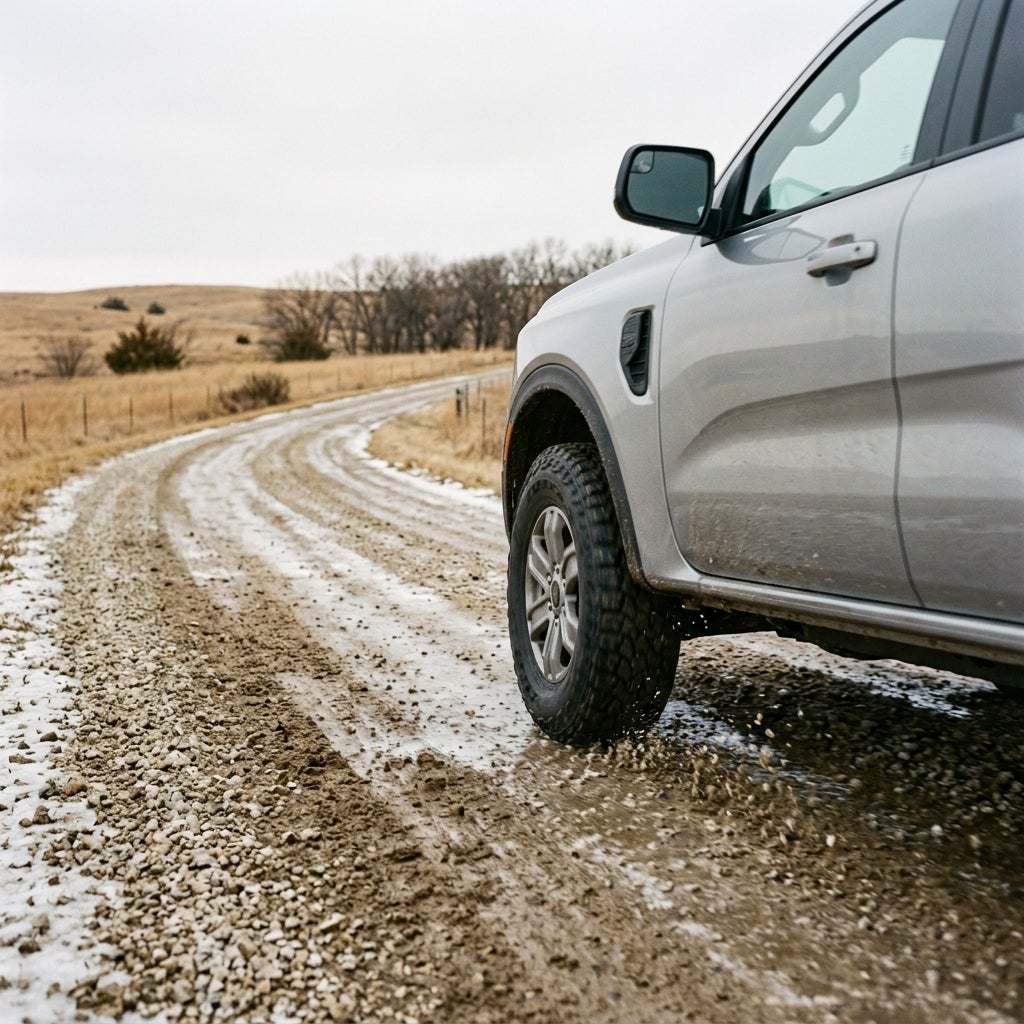
sallathon

Labor Day Sellathon at Valor Ford: Save Big on New Fords in Junction City, KS

Labor Day Sellathon at Valor Ford: Save Big on New Fords in Junction City, KS The annual Labor Day Sellathon at Valor Ford in Junction City, Kansas, has officially arrived, bringing unparalleled holiday savings across our entire lineup of brand-new Ford trucks, versatile SUVs, and fuel-efficient performance cars. For a limited time during this holiday weekend, car shoppers from Junction City, Fort Riley, Manhattan, and surrounding Dickinson County can lock in low promotional financing rates—including 0% APR financing on select models—or claim up to $5,000 in combined factory customer cash and dealer bonus allowances. Whether you are looking to upgrade your daily commute along Interstate 70 or equip your active family with a reliable three-row vehicle, our sales team is prepared to deliver extraordinary values, transparent pricing, and instant trade-in top-offs. In addition to nationwide manufacturer rebates, Valor Ford is honoring our brave service members stationed at Fort Riley with an exclusive Military Bonus Cash offer that can be stacked directly on top of sellathon promotional rates. Combined with top-dollar trade-in appraisals that exceed standard market valuations, there has never been a more financially advantageous moment to drive home in a new Ford. To get started early and streamline your experience, you can Get Pre-Approved for Financing online or Call us at (785) 238-5114 to speak with a sales advisor today. Claim Labor Day Offers Now When and Where Is the Labor Day Sellathon Taking Place in Junction City? The Labor Day Sellathon is happening live right now at Valor Ford, conveniently situated at 1825 Goldenbelt Blvd in Junction City, KS 66441. Our state-of-the-art showroom and expansive vehicle lot are located right off I-70 Exit 296, offering fast access for shoppers traveling from Fort Riley, Abilene, Manhattan, and Grandview Plaza. Event Hours: • Friday: 8:00 AM – 7:00 PM • Saturday: 8:00 AM – 6:00 PM • Labor Day Monday: 9:00 AM – 5:00 PM Because peak holiday inventory moves quickly, we strongly urge drivers across Geary and Dickinson Counties to arrive early in the weekend to secure their exact trim, paint color, and option package preference. You can easily Get Directions to Valor Ford to plan your route to our dealership. What Special Financing Rates and Bonus Cash Cash Outlets Are Available? 0% APR Financing Deals Qualified buyers can take advantage of 0% APR financing for up to 60 or 72 months on select popular Ford models. Eliminate interest fees completely and keep your monthly payment low and predictable over the entire term of your loan. Seasonal Lease Specials Looking for minimal commitment and a fresh vehicle every few years? Drive away with attractive Red Carpet Lease rates starting with ultra-low monthly payments and initial security deposit waivers during the Labor Day event. Stackable Retail Bonus Cash Combine direct factory customer cash incentives with regional bonus savings allowances. Maximize your total discount by combining trade-in top-offs with manufacturer rebates for significant overall savings. Which New Ford Trucks Are Discounted for Fort Riley and Junction City Drivers? America's best-selling truck lineup is headlining our Labor Day Sellathon. Whether you need a dependable workhorse for heavy hauling across Kansas or a comfortable daily commuter with incredible towing capability, Valor Ford has heavily discounted truck models ready for immediate delivery. • Ford F-150: Take advantage of deep discounts and flexible finance offers on the iconic F-150. You can Research Ford F-150 trims including XLT, Lariat, and King Ranch. • Ford Super Duty F-250 / F-350: Ford Super Duty for the demanding commercial jobs and agricultural work around Geary County. Check out heavy-duty promotional savings and Research Ford F-250 features or Research Ford F-250 specs. • Ford Maverick & Ranger: Midsize and compact truck buyers can save big too. Feel free to Research Ford Maverick hybrid efficiency and versatile bed configurations before stock runs out. Shop New Ford Trucks Which Ford SUVs Feature the Biggest Labor Day Discounts for Local Families? Ford Explorer The ultimate 3-row family SUV features advanced Ford Co-Pilot360 safety, impressive towing capacity, and generous standard tech. Learn more and Research Ford Explorer packages available with special holiday cash back. Ford Bronco & Bronco Sport Conquer off-road trails and daily commutes alike. Explore rugged GOAT modes and trail-ready tech with exclusive event pricing when you Shop New Ford Bronco Inventory today. Ford Escape & Expedition From the compact and ultra-efficient Escape to the full-size 8-passenger Expedition, our seasonal SUV discounts make upgrading your family ride convenient and affordable. How Can Fort Riley Military Personnel Combine Military Cash with Sellathon Savings? As a proud automotive partner of the Fort Riley community, Valor Ford is dedicated to serving active-duty military members, reservists, retirees, veterans, and military family members. During the Labor Day Sellathon, eligible military personnel can receive an additional Ford Military Bonus Cash allowance on top of advertised event sales pricing and promotional interest rates. Our finance specialists understand military pay structures, PCS transitions, and expedited credit approvals. Bringing your active military ID, leave and earnings statement (LES), or DD-214 form lets our team instantly verify eligibility and apply your military bonus cash straight toward your down payment. How to Maximize Your Trade-In Value During the Holiday Sale Event 1. Online Valuation Start by completing our simple online form for a quick Trade In Evaluation. Get an instant, market-reflective estimate in minutes from your smartphone or desktop. 2. Holiday Trade Bonuses Due to high pre-owned demand, Valor Ford is offering elevated holiday trade-in bonus vouchers that increase your trade value above standard KBB or Black Book market numbers. 3. Same-Day Appraisal Bring your vehicle to our Junction City location during sellathon hours for a quick 15-minute physical inspection and walk away with a guaranteed written offer. Value Your Trade-In Now What Pre-Owned and Gold Certified Vehicle Savings Are Featured? If you are shopping for top-tier quality on a budget, our Labor Day Sellathon features special holiday pricing on Ford Blue Advantage certified pre-owned (CPO) cars, trucks, and SUVs, as well as multi-brand used inventory. You can Browse Used Inventory to see current pre-owned specials. Highlights of Ford Gold Certified Vehicles: • 172-Point Comprehensive Inspection performed by factory-trained technicians • 12-Month/12,000-Mile Comprehensive Limited Warranty • 7-Year/100,000-Mile Powertrain Limited Warranty • 24/7 Roadside Assistance and FordPass Rewards Points Also sports enthusiasts looking for icon thrills can Research Ford Mustang models in our pre-owned and new stock for late-summer driving excitement. What Should You Bring to Fast-Track Your Vehicle Purchase at Valor Ford? Identification & Proof • Valid government-issued driver's license • Active Military ID / CAC card (if applying military bonus cash) • Recent pay stub or proof of income Vehicle & Ownership Docs • Current auto insurance card • Title for trade-in vehicle or current payoff statement • All sets of keys and owner manuals for trade-in Financing & Payment • Form of down payment (cash, cashier's check, or approved card) • Pre-approval letter if pre-qualified online beforehand How Does VIP Test Drive Scheduling Lock In Your Preferred Vehicle? High showroom traffic during peak holiday sellathons can lead to wait times and fast inventory turnover. Scheduling an advance VIP Test Drive appointment ensures that your vehicle of choice is pulled up front, washed, and ready the moment you step foot on our lot. Benefits of Scheduling Your VIP Appointment: • Skip showroom wait times with dedicated dedicated sales consultant • Lock in priority access to limited sellathon inventory before public walk-ins • Experience customized vehicle feature walkthroughs tailored to your driving needs If you prefer to maintain your vehicle after purchase or require home convenience, ask our service center about how to Schedule Pickup and Delivery Service, Schedule Ford Service Today, or Order Genuine Ford Parts directly through Valor Ford. Schedule Your VIP Appointment Why Choose Valor Ford in Junction City for Your Next Vehicle Purchase? At Valor Ford, we pride ourselves on being more than just a car dealership—we are an active, committed member of the Junction City and Fort Riley community. Our fundamental philosophy centers on straightforward, transparent pricing with no hidden dealer markup or surprise add-ons at signing. When you shop with us during the Labor Day Sellathon, you get honest numbers, respectful customer service, and a relaxed environment where your automotive needs come first. Our relationship with you doesn't end when you drive off the lot. Our certified Ford service center features state-of-the-art diagnostic equipment, factory-trained technicians, OEM parts, and convenient shuttle options designed to keep your vehicle running seamlessly for years to come. Experience the Valor Ford difference this holiday weekend! Claim Your Labor Day Savings at Valor Ford Before Offers Expire Labor Day Sellathon pricing, factory cash rebates, and 0% APR financing rates end strictly at the close of business this Monday! Don't let these limited-time holiday discounts pass you by. Visit our showroom at 1825 Goldenbelt Blvd in Junction City, KS 66441, get pre-approved online, or call our team today at (785) 238-5114 to lock in your extra holiday savings before stock sells out! Get Pre-Approved & Save Now

Contact Us

Fill out this form below and we'll contact you shortly
*Required Fields