
Blog / Model Comparisons

Blog

All Model Comparisons Buying Guides New Vehicle Reviews Maintenance & Service Technology & Innovation Financing & Insurance Safety Features Used Vehicle Guides Valor Ford Models Seasonal Driving Tips Vehicle Ownership Tips Model Research Towing & Trailer Technology Seasonal Vehicle Care Automotive Parts & Accessories Performance & Powertrain New Vehicle Sales Heavy-Duty Truck Care Junction City Trade-In & Pre-Approval Processes Valor Ford Service Seasonal Vehicle Maintenance Trade-In & Negotiation Tips Financing & Incentives Repair & Parts KS Community Valor Ford Vehicle Sales Off-Road Packages & Accessories Vehicle Trade-In Tips Automotive Repair Engine & Performance Manhattan Ford Service Military & Special Customer Programs Parts & Repairs Service Tips & Guides Vehicle Pricing Strategies Vehicle Repair & Parts Agricultural Vehicle Maintenance Automotive Recalls & Repairs Dealership Transparency Diesel Engine Care Family SUVs Manhattan Ford Dealer Tire Care & Management Automotive News Certified Pre-Owned Programs Commercial Truck Financing Heavy-Duty Truck Guides Heavy-Duty Truck Upkeep Manhattan Used Cars Ownership & Service Preventative Vehicle Inspections Technology & Innovation in Truck Service Agricultural Fleet Service Dealership Promotions & Events Diesel Engine Maintenance Genuine OEM Parts & Accessories Military & Student Moving Tips Vehicle Utility & Cargo Solutions All-Weather Driving & 4x4 Readiness Classic Car Restoration Extended Warranty & Protection Plans Farm & Ranch Equipment Reviews Genuine Parts & Accessories Hybrid & Electric Vehicles Inventory Updates Off-Road & 4x4 Features Winter Driving Tips
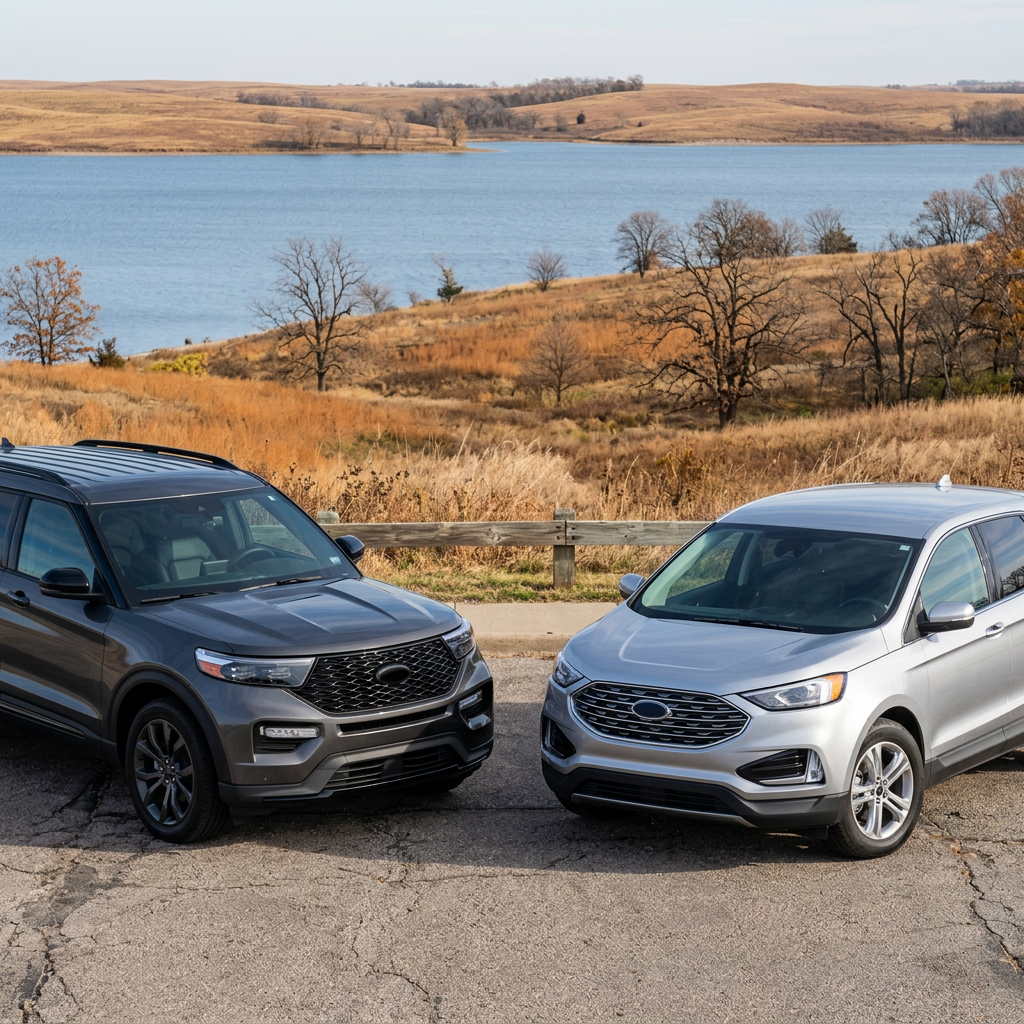
2026 Ford Explorer ST-Line vs. 2023 Ford Edge SEL

2026 Ford Explorer ST-Line vs. 2023 Ford Edge SEL

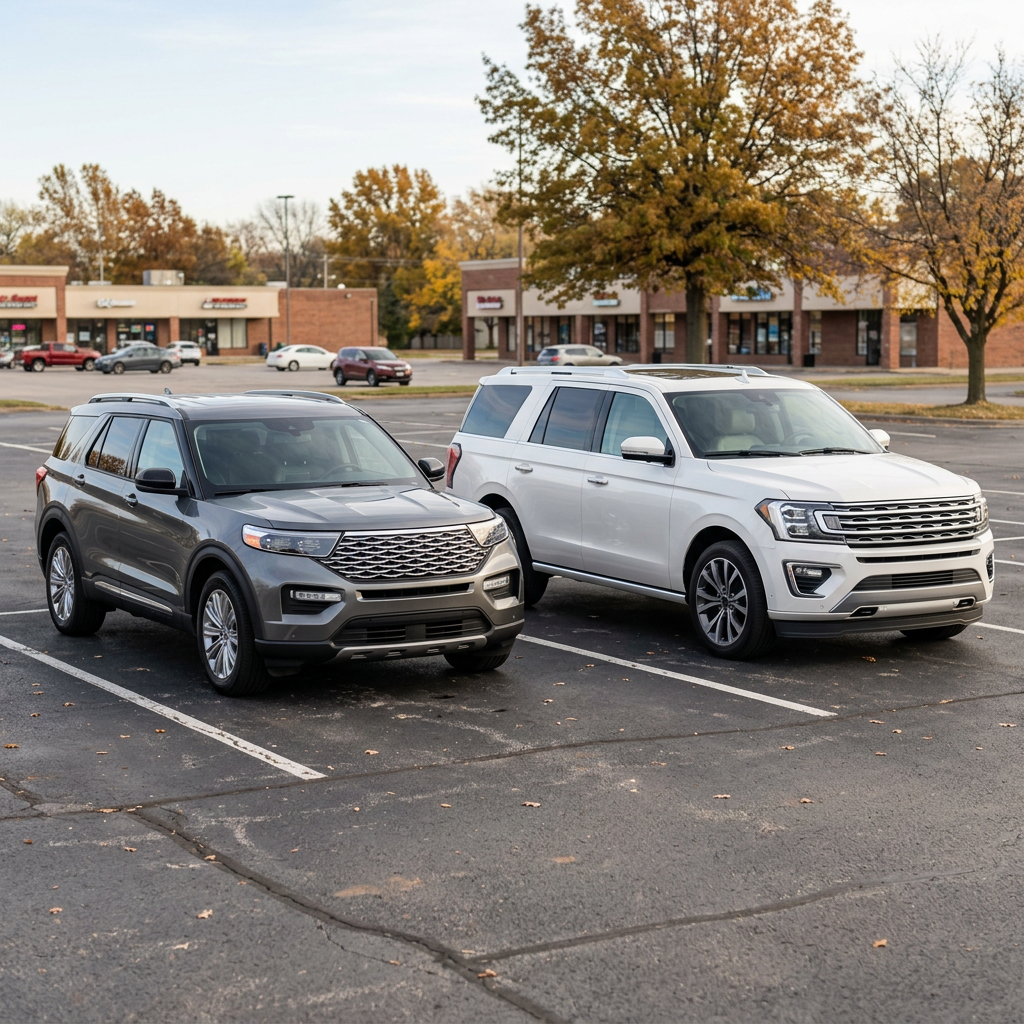
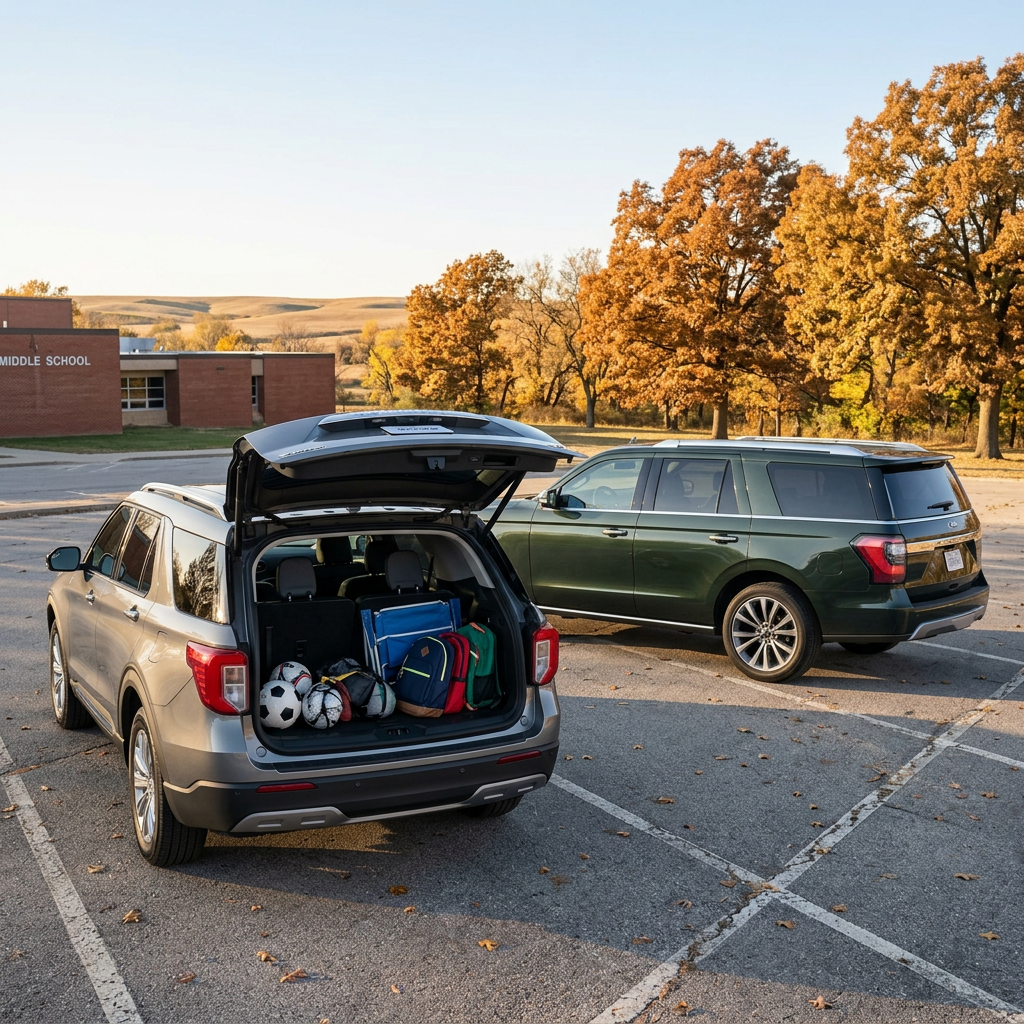
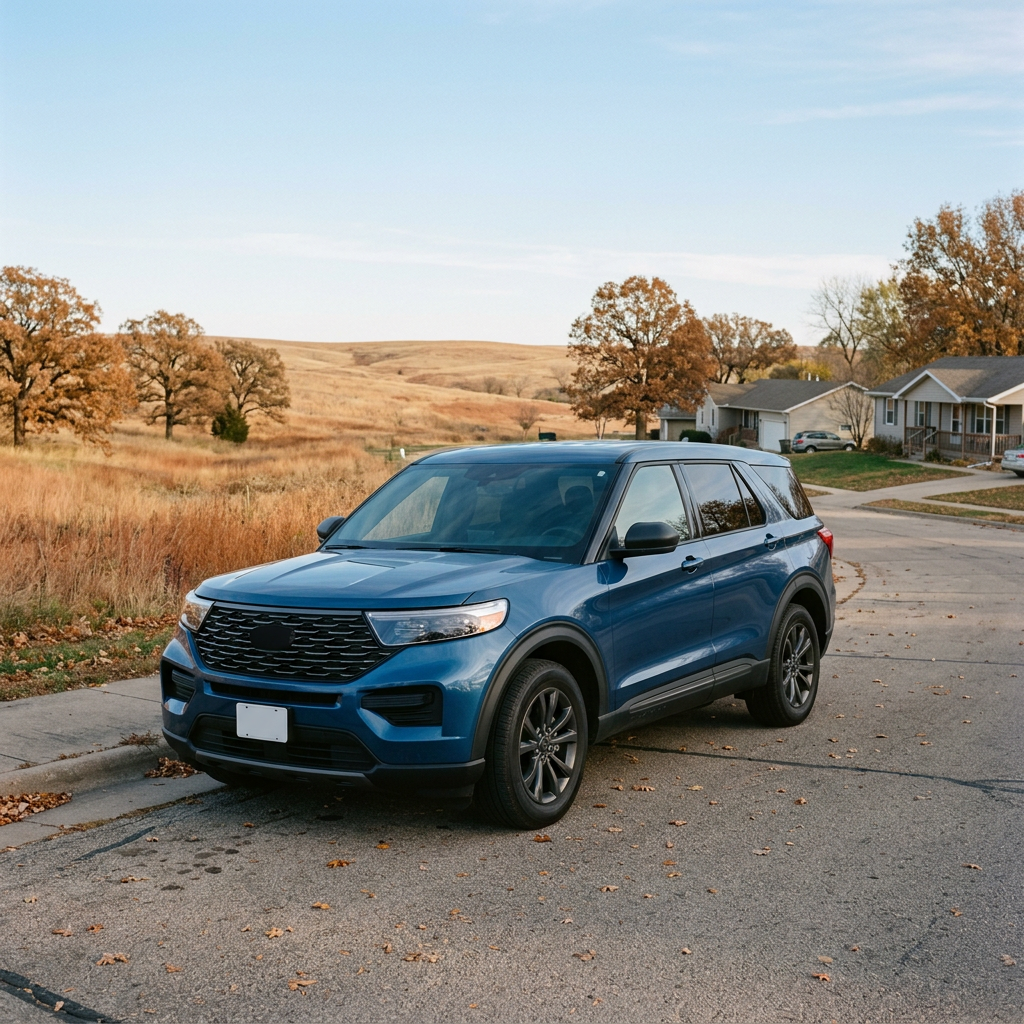
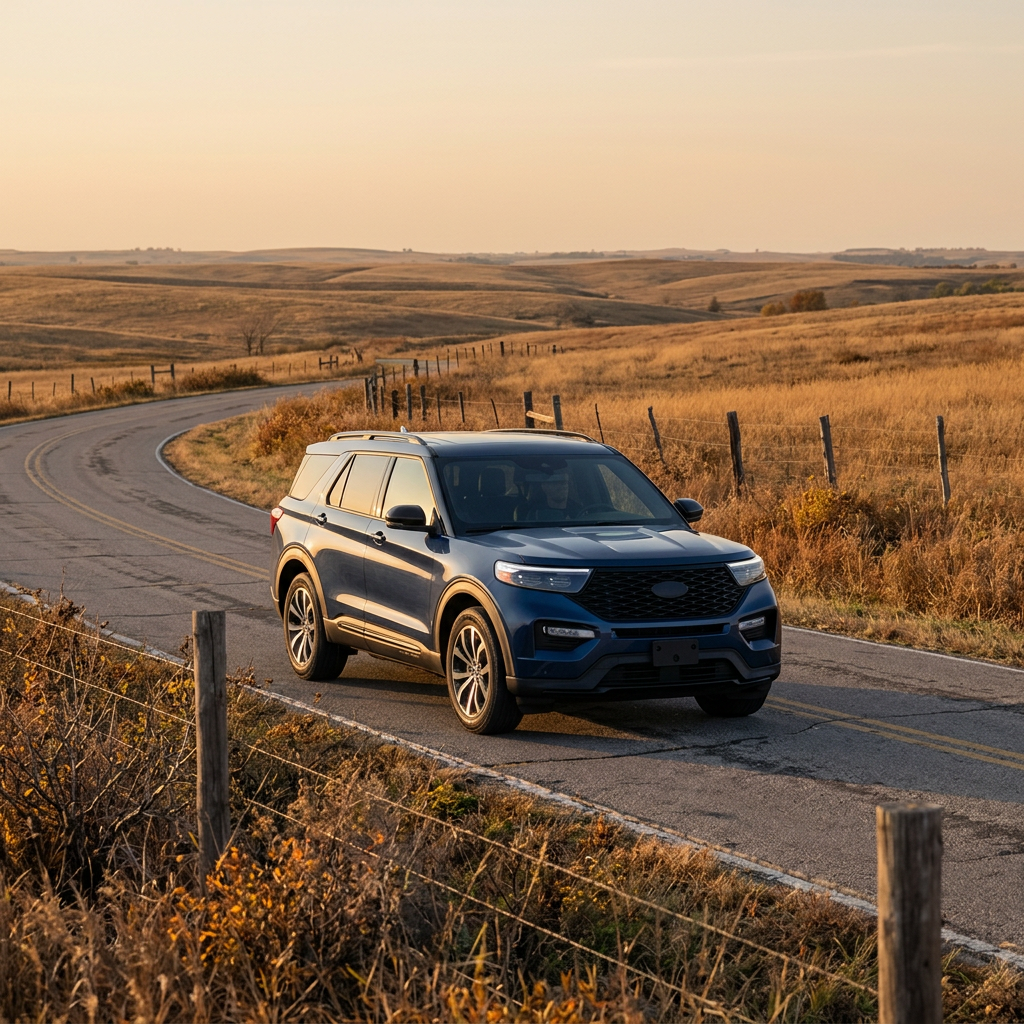
2026 Ford Explorer ST-Line vs. 2023 Ford Edge SEL The New 2026 Ford Explorer ST-Line wins for growing households requiring three rows, a 5,000 lbs towing capacity, and brand-new warranty protection, while the Used 2023 Ford Edge SEL is the smarter financial choice for budget-conscious buyers wanting two rows of spacious seating, standard all-wheel drive, and lower upfront acquisition costs. If seating for up to seven and pulling recreational trailers takes precedence, choose the Explorer; if low-cost two-row utility and about 39 cu ft of standard cargo space suffice, choose the Edge. Table of Contents Which Is the Better Fit: New 2026 Ford Explorer ST-Line or Used 2023 Ford Edge SEL? How Do the $48,749 New 2026 Ford Explorer ST-Line and $22,500 Used 2023 Ford Edge SEL Compare on Value? Which Vehicle Better Fits Geary County Family Space and Weekend Plans? How Do the New 2026 Ford Explorer ST-Line and Used 2023 Ford Edge SEL Feel on the Road—and What About Fuel Economy? Which Vehicle Makes Everyday Tech Easier for Busy Family Trips? How Can Each Vehicle’s Safety Features Support Everyday Drives? What Should Buyers Plan for Warranty, Service, and Maintenance? How Can You Compare Financing, Trade-In Value, and Test Drives Before Choosing? Which Is the Better Fit: New 2026 Ford Explorer ST-Line or Used 2023 Ford Edge SEL? The New 2026 Ford Explorer ST-Line serves buyers who prioritize fresh vehicle architecture, maximum passenger flexibility, and modern driver-assist systems, whereas the Used 2023 Ford Edge SEL suits commuters needing an accessible, midsize two-row footprint with established all-weather composure. Choosing between these vehicles comes down to how your household balances life stage, trailering requirements, and investment targets. The three-row Explorer ST-Line functions as an athletic sweet spot within the brand's midsize lineup. It provides assertive street styling alongside three functional rows of seating. When shopping for family SUVs, some drivers explore adventure-oriented alternatives like our new Ford Bronco selection, while others examine work capability through our 2026 Ford F-150 details. Still, the Explorer bridges everyday suburban life and road-trip convenience by packing a modern digital interface and 5,000 lbs of trailering strength into a unibody platform. Conversely, the 2023 Ford Edge SEL approaches practicality through efficient packaging. Eliminating a third row allows the Edge to provide expansive second-row legroom and an exceptional baseline cargo area without extending exterior dimensions. For owners maintaining an existing utility or installing genuine accessories, our service department provides access to official OEM components to keep your vehicle operating within factory tolerances. How Do the $48,749 New 2026 Ford Explorer ST-Line and $22,500 Used 2023 Ford Edge SEL Compare on Value? The Used 2023 Ford Edge SEL delivers an unbeatable upfront value at $22,500, cutting acquisition costs by more than half compared to the $48,749 listed price of the New 2026 Ford Explorer ST-Line. For shoppers seeking lower initial outlay and reduced overall depreciation, the pre-owned Edge offers incredible capability per dollar. At Valor Ford, unit stock #26FT156 represents a factory-fresh 2026 Explorer ST-Line with only 10 miles on the odometer. Finished in Space White Metallic with an Onyx ActiveX interior, it carries a listed price of $48,749 (against a catalog base MSRP of $45,155 with a $1,795 destination charge). This price reflects brand-new assembly, zero prior wear, factory-fresh mechanical integrity, and advanced connectivity like the Ford Connectivity Package and BlueCruise hardware. By comparison, unit stock #FP00573 is a pre-owned 2023 Ford Edge SEL with 50,519 miles priced at $22,500. Originally carrying a base MSRP of $39,345 with a $1,495 destination charge when new, this Oxford White crossover with an Ebony interior lets you bypass the initial steep depreciation curve. Shoppers can also compare heavy-hauling options via our 2026 Ford F-250 analysis or evaluate our extensive pre-owned vehicle inventory to see where the Edge SEL aligns with family budgeting targets. Pricing Manufacturer-listed pricing per trim, across compared vehicles. 2026 Ford Explorer ST-Line Trim MSRP 2023 Ford Edge SEL Trim MSRP ST-LINE RWD $45,155 SEL AWD $39,345 Which Vehicle Better Fits Geary County Family Space and Weekend Plans? The New 2026 Ford Explorer ST-Line accommodates large crews with its 7 passenger seating capacity, but the Used 2023 Ford Edge SEL provides more immediate gear space behind the rear passengers with about 39 cu ft of standard cargo volume. The physical difference between these two layouts alters daily usability. Measuring 198.7 in in overall length on a 119.1 in wheelbase, the Explorer ST-Line gives you three rows of seating. Up front, it treats driver and passenger to 40.7 in of headroom and 43 in of legroom. Second-row occupants enjoy 40.5 in of headroom and 39 in of legroom, while third-row riders receive 38.9 in of headroom and 32.2 in of legroom. Behind the third row, the Explorer retains about 16 cu ft of trunk volume, expanding to about 86 cu ft when folding down the back rows. For outdoor trips along the Kansas River or while transporting school sports gear, the Explorer's 5,000 lbs gross trailer weight braked capacity makes it capable of towing utility trailers, pop-ups, or small boats, while its 1,467 lbs payload rating supports carrying gear. The two-row Ford Edge SEL measures 188.8 in long on a 112.2 in wheelbase, trading the extra row for concentrated five-passenger comfort. Driver and front passenger receive 40.2 in of headroom and 42.6 in of legroom, while the rear bench provides 40.3 in of headroom and 57.5 in of hip room. With all seats in place, the Edge provides a massive about 39 cu ft cargo compartment, opening to about 73 cu ft with the second row folded flat. While its braked towing limit sits lower at 3,500 lbs, it claims a hefty catalog payload allowance of 4,231 lbs and an unladen curb weight of 4,069 lbs (versus the Explorer's 4,303 lbs). Dimensions & Capacity Capacity and dimensions by trim Specification 2026 Ford Explorer ST-Line 2023 Ford Edge SEL Seating 7 5 Cargo 16.3 cu ft 39.2 cu ft Curb weight 4,303 lbs 4,069 lbs Towing 5,000 lbs 3,500 lbs Payload 1,467 lbs 4,231 lbs How Do the New 2026 Ford Explorer ST-Line and Used 2023 Ford Edge SEL Feel on the Road—and What About Fuel Economy? The New 2026 Ford Explorer ST-Line delivers stronger acceleration with its 300 hp turbocharged engine, while the Used 2023 Ford Edge SEL balances 250 hp with confident, standard all-wheel-drive road composure. Under the Explorer's hood rests an EcoBoost 2.3L I-4 engine developing 300 hp at 5500 rpm and 310 lb-ft of torque at 3500 rpm. Paired with a 10-Speed Automatic SelectShift transmission, the Explorer provides responsive passing power. In standard catalog trim, the rear-wheel-drive architecture yields EPA ratings of 20 city / 29 hwy / 24 combined MPG, while the in-stock unit at Valor Ford features Intelligent 4WD full-time capability for four-season stability. Readers seeking detailed model updates can review our comprehensive 2026 Explorer research to see how its independent multi-link rear suspension handles rough pavement. The Edge SEL uses an EcoBoost 2L I-4 engine producing 250 hp at 5500 rpm and 280 lb-ft of torque at 3000 rpm, routed through an 8-Speed Automatic SelectShift transmission. With standard full-time all-wheel drive, the Edge manages 21 city / 28 hwy / 23 combined MPG. Its torque curve peaks slightly lower in the rev range, making stop-and-go maneuvers brisk. A tighter overall footprint helps the Edge negotiate narrow city parking easily, though its 471.7 in curb-to-curb turning circle is slightly wider than the Explorer's 464.5 in radius. Fuel Economy Fuel economy and range by trim Specification 2026 Ford Explorer ST-Line 2023 Ford Edge SEL MPG 20 city / 29 hwy / 24 combined 21 city / 28 hwy / 23 combined Which Vehicle Makes Everyday Tech Easier for Busy Family Trips? The New 2026 Ford Explorer ST-Line offers superior, updated cabin technology courtesy of a massive 13.2 in center touchscreen paired with a configurable 12.3 in digital cluster, eclipsing the older hardware inside the Used 2023 Ford Edge SEL. Inside the Explorer ST-Line, screens dominate the driver interface. The 13.2 in central touchscreen features embedded Google voice activation, integrated internet connectivity, over-the-air operating system updates, and wireless compatibility for Apple CarPlay and Android Auto. For audio, the Explorer includes a premium 10-speaker sound system by Bang & Olufsen with a dedicated subwoofer. Keeping family devices charged is effortless thanks to four front USB ports, two second-row ports, and two third-row ports, supplemented by three 12V power outlets. Stock #26FT156 also adds BlueCruise hands-free highway driving equipment (including a 1-year plus 90-day active plan) and a 360-Degree Camera with Split View. The 2023 Ford Edge SEL relies on a vertical 12 in center touchscreen running standard wireless Apple CarPlay and Android Auto. Its instrument cluster features dual 4.2 in driver displays flanking an analog speedometer. The sound system routes through a 6-speaker setup. Device charging includes two front USB ports, two rear USB ports, and two 12V outlets. While highly intuitive and user-friendly, the infotainment in the Edge lacks the high-definition graphics and high-speed processing built into Ford's latest software suite. Engine & Performance Powertrain specs by trim Specification 2026 Ford Explorer ST-Line 2023 Ford Edge SEL Standard engine 2.3L 2L Horsepower 300 hp 250 hp Torque 310 lb-ft 280 lb-ft Transmission SelectShift® SelectShift Drivetrain Rear-wheel drive All-wheel drive How Can Each Vehicle’s Safety Features Support Everyday Drives? Both vehicles earned top safety recognition, but the New 2026 Ford Explorer ST-Line features the updated TOP SAFETY PICK designation from the Insurance Institute for Highway Safety, alongside newer low-speed braking assist systems. The Explorer ST-Line incorporates Ford CoPilot360 Assist 2.0, which includes: Pre-Collision Assist with Automatic Emergency Braking, featuring low-speed front and rear braking, oncoming collision avoidance, and pedestrian/cyclist detection. BLIS (Blind Spot Information System) with cross-traffic alert and integrated rear cross-traffic braking. Lane-Keeping System with active steering intervention and lane-centering support. Seven standard airbags, including a dedicated driver's knee airbag and full-length side-curtain coverage across all three rows. NHTSA 5-star overall safety rating and IIHS "Good" marks across updated small overlap and side-impact evaluations. The 2023 Ford Edge SEL also carries a 2023 TOP SAFETY PICK award from the IIHS and a 5-star overall NHTSA rating. Its safety roster features eight airbags (adding a passenger-side knee airbag alongside the driver's unit) and standard Pre-Collision Assist with Automatic Emergency Braking (AEB). In addition to blind-spot monitoring with cross-traffic alert, the Edge SEL comes standard with a Lane-Keeping System and rear parking sensors. While lacking the 360-degree overhead cameras found on the newer Explorer, the Edge delivers rock-solid crash-test credentials for family protection. What Should Buyers Plan for Warranty, Service, and Maintenance? The New 2026 Ford Explorer ST-Line includes full factory coverage with a 3-year/36,000-mile bumper-to-bumper warranty and a 5-year/60,000-mile powertrain warranty, whereas the Used 2023 Ford Edge SEL has eclipsed its standard 36,000-mile bumper-to-bumper limit. When purchasing unit stock #26FT156, the factory warranty starts from mile zero. Ford backs the vehicle with: 3 years or 36,000 miles of whole-vehicle factory protection. 5 years or 60,000 miles of powertrain coverage. 5 years or 60,000 miles of roadside assistance coverage. 5 years or unlimited miles of anti-corrosion sheet metal coverage. For official roadside assistance needs, owners can contact Ford directly: Ford Roadside Assistance: 1-800-241-3673. With 50,519 miles, unit stock #FP00573 has passed its comprehensive 3-year/36,000-mile window, though its original 5-year/60,000-mile powertrain warranty provides remaining factory protection through 60,000 miles. Pre-owned buyers can consult our finance team to add extended protection plans or apply for financing pre-approval to roll warranty products into manageable monthly payments. Routine maintenance for both vehicles—such as tire rotations, multi-point inspections, and synthetic oil services—can be arranged easily when you schedule a service appointment with our certified factory technicians. How Can You Compare Financing, Trade-In Value, and Test Drives Before Choosing? Driving both vehicles back-to-back at Valor Ford is the fastest way to confirm whether the larger three-row layout of the 2026 Ford Explorer ST-Line or the lower payment profile of the 2023 Ford Edge SEL matches your family's routine. Quiet residential roads in Grandview Plaza offer an ideal setting to test low-speed ride smoothness, cabin noise insulation, and parking-space visibility. Evaluating the Explorer's third-row access and the Edge's low rear liftgate height will show clearly which format fits strollers, sporting equipment, or camping gear better. Before making your showroom visit, use our secure portal to request a professional used vehicle trade-in valuation. Getting accurate market numbers for your current car reduces guesswork and helps tailor your financing plan. If you have questions regarding unit availability, vehicle condition reports, or payment terms, call our sales staff at (785) 238-5114. To inspect both vehicles in person, map your trip to 1825 Goldenbelt Blvd, Junction City, KS 66441, where our team will have both keys ready on the lot. © 2026 Valor Ford. All rights reserved. Vehicle specification data © JATO Dynamics Limited.
At What Trailer Weight Is a Super Duty Diesel Strongly Recommended Over Gas?

At What Trailer Weight Is a Super Duty Diesel Strongly Recommended Over Gas?

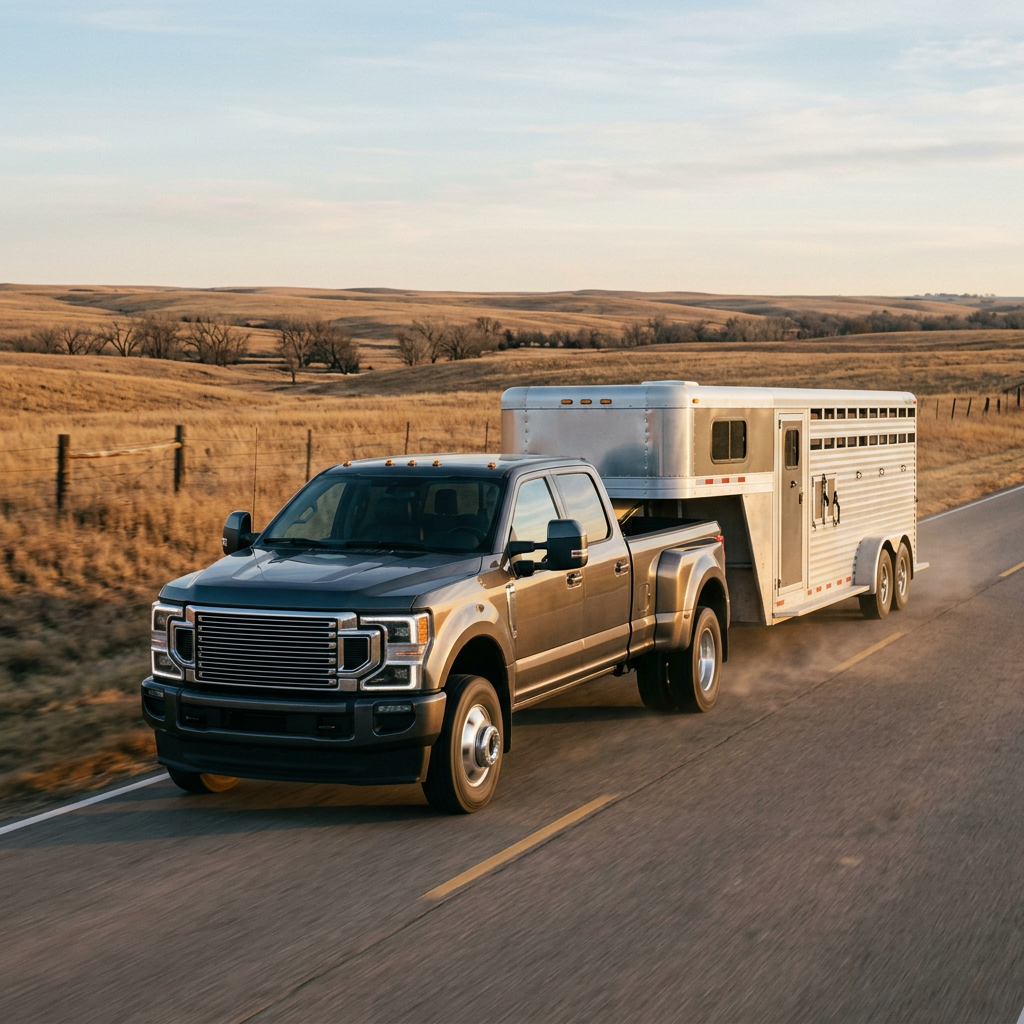
At What Trailer Weight Is a Super Duty Diesel Strongly Recommended Over Gas? A diesel engine is strongly recommended once your regular trailer weight crosses 14,000 to 15,000 pounds. Below that threshold, a modern heavy-duty gas engine manages the load comfortably for occasional weekend trips or job-site runs. Once you consistently hook up to loads exceeding 15,000 pounds—especially enclosed horse trailers, large fifth wheels, or heavy equipment haulers—the diesel powertrain transforms the towing experience by delivering immense low-end pulling power, reduced engine strain, and active downhill engine braking. In my 11 years as a Finance Manager at Valor Ford, I walk customers through the financial and mechanical realities of their purchase every day. When truck shoppers sit down at my desk, the initial focus is often on raw maximum tow ratings. The real deciding factor is how often you tow, the terrain you navigate, and how much weight sits behind the bumper. If you haul heavy equipment across the rolling agricultural corridors around Junction City on a daily basis, opting for the diesel engine provides the long-term powertrain durability and composure that protects your investment over years of heavy use. Choosing the right powertrain upfront prevents expensive trading cycles later. If you buy a gas truck and routinely overload its sweet spot, you will face increased fuel stops, higher engine speeds on grades, and earlier wear on mechanical components. Our team can help you evaluate your equipment and trailer setup before you sign. You can stop by our showroom on Goldenbelt Boulevard to review window stickers and powertrain options, or give us a quick call to discuss current allocation. Table of Contents What Is the Towing and Payload Capacity Difference Between Super Duty Diesel and Gas? How Do Torque and Horsepower Compare Between the 6.7L Power Stroke and 7.3L Gas V8? How Does the Driving Experience Differ When Towing With Gas Versus Diesel? What Is the Real-World Towing Fuel Economy for Super Duty Diesel Versus Gas? How Many Miles Does It Take to Break Even on the Upfront Diesel Engine Cost? Finding and Financing Your Next Ford Super Duty at Valor Ford What Is the Towing and Payload Capacity Difference Between Super Duty Diesel and Gas? The Ford Super Duty diesel holds a substantial advantage in maximum gooseneck and fifth-wheel towing, while the gas engine often delivers higher available payload ratings. Properly equipped, the 7.3-liter gas V8 reaches a maximum towing capacity of 22,500 pounds, whereas the standard-output 6.7-liter Power Stroke diesel pulls up to 38,600 pounds, and the high-output diesel reaches an astounding 40,000 pounds. Achieving that headline 40,000-pound rating requires a specific build: an F-450 Regular Cab dual-rear-wheel configuration equipped with the High-Capacity Gooseneck Tow Package. In typical single-rear-wheel Crew Cab setups, the conventional towing differences are narrower. For example, in an F-250 Crew Cab 4x4 configuration, conventional bumper-pull towing is rated at 18,200 pounds with the 7.3-liter gas engine compared to 22,000 pounds with the diesel. Payload tells an equally important story that many buyers overlook during the ordering process. The 6.7-liter Power Stroke diesel engine and its aftertreatment system add roughly 800 to 1,000 pounds of curb weight to the front axle compared to the gas V8. Because Gross Vehicle Weight Ratings are fixed by class, that additional engine weight directly subtracts from available payload. A properly configured gas Super Duty offers up to 7,635 pounds of maximum payload, compared to 6,935 pounds on a high-output diesel model. If you tow a large fifth wheel or gooseneck, pin weight counts against your payload capacity, making the gas truck appealing for specific heavy-pin, moderate-trailer configurations. If your trailering requirements are much lighter and focused on weekend recreation, our lot also features alternatives like the new Ford Bronco, but for serious hauling tasks, matching Super Duty payload to trailer tongue weight is essential. How Do Torque and Horsepower Compare Between the 6.7L Power Stroke and 7.3L Gas V8? The primary operational difference between these two engines lies in peak torque delivery and the engine speed where that power occurs. The naturally aspirated 7.3-liter gas V8 produces 430 hp at 5,500 rpm and 485 lb-ft of torque at 4,000 rpm. The standard-output 6.7-liter Power Stroke diesel produces 475 hp and 1,050 lb-ft of torque, while the high-output variant elevates output to 500 hp and 1,200 lb-ft of torque starting at just 1,600 rpm. That massive torque gap fundamentally changes how each truck moves a load from a complete stop. While the 7.3-liter gas engine is a pushrod workhorse designed for commercial reliability and low maintenance, it requires higher engine revolutions to reach its powerband. The diesel engine delivers more than double the torque of the gas V8 right off idle. That allows the turbocharger to build boost quickly and pull heavy trailers up highway merge ramps without breaking a sweat. Both engines pair with Ford’s heavy-duty 10-speed automatic transmission, which provides tightly spaced gear ratios that optimize engine performance. The gas engine shifts more frequently to stay in the upper registers of its torque curve under heavy strain, whereas the diesel locks into a higher gear and uses its immense low-rpm torque to climb hills without downshifting. For shoppers exploring late-model options, our selection of pre-owned trucks and haulers frequently features both powertrain designs so you can evaluate the mechanical differences firsthand. How Does the Driving Experience Differ When Towing With Gas Versus Diesel? Towing with a diesel truck feels relaxed and quiet, while towing heavy with a gas truck demands more driver involvement and higher engine revolutions. When climbing a 6% grade with a 14,000-pound load, the 7.3-liter gas V8 will downshift several gears, causing engine speeds to jump past 4,000 rpm where the cabin experiences noticeable mechanical noise. The truck handles the grade safely, but the high-revving nature of a gas engine working near capacity can be fatiguing on long-distance hauls. The 6.7-liter Power Stroke diesel handles that same steep highway climb at 1,800 to 2,200 rpm in eighth or ninth gear. Acceleration is prompt, and passing slower traffic requires minimal throttle input. More importantly, the diesel engine includes a factory integrated exhaust brake. This system utilizes variable turbocharger geometry to create engine backpressure, slowing the truck and trailer smoothly on steep descents without overheating the wheel brakes. For commercial operators, cattle ranchers, and contractors moving stock through rural Dickinson County, the difference in descending control provides significant peace of mind. Instead of riding the service brakes and risking fade down rolling terrain, the exhaust brake holds the entire rig at a steady, preset speed. If you are considering trading in your current half-ton or older gas three-quarter-ton truck, our staff can run a prompt used vehicle trade valuation to determine your equity position before upgrading to a heavy-duty platform. What Is the Real-World Towing Fuel Economy for Super Duty Diesel Versus Gas? Fuel efficiency while towing is significantly higher with the diesel powertrain, helping balance out fuel pump price differences over extended mileage. When pulling an aerodynamic or moderate load between 10,000 and 15,000 pounds, the 6.7-liter Power Stroke diesel typically returns 10 to 13 mpg, depending on wind conditions and road speed. Under identical conditions, the 7.3-liter gas V8 generally achieves 7 to 9 mpg. Unladen highway driving reveals an even wider variance between the two powerplants. In independent 75-mph highway testing, an F-250 4x4 Crew Cab equipped with the high-output diesel achieved 20 mpg, yielding a cruising range of 680 miles. The same cab configuration with the 7.3-liter gas engine registered 15 mpg, delivering roughly 510 miles of highway range. The gas engine operates on standard 87-octane unleaded fuel, while the diesel requires ultra-low-sulfur diesel and regular replenishments of Diesel Exhaust Fluid. Fuel economy also impacts your daily driving schedule. A truck delivering 12 mpg while towing allows you to travel nearly 150 miles farther per tank than a truck averaging 8 mpg, cutting down on awkward stops at compact highway gas stations with a 35-foot trailer in tow. You can review full platform specs and cab combinations through our Ford Super Duty F-250 model breakdown to determine which tank size and wheelbase align with your regional travel needs. How Many Miles Does It Take to Break Even on the Upfront Diesel Engine Cost? From a strict fuel-savings perspective, most commercial and retail buyers need to tow between 120,000 and 150,000 miles before the diesel's superior fuel economy offsets its initial purchase premium. Upgrading from the gas engine to the standard 6.7-liter Power Stroke diesel adds roughly $9,995 to the window sticker, while the high-output version commands approximately $12,495. Calculating the true break-even horizon requires looking at the total cost of ownership rather than fuel alone: Fuel cost differentials: While diesel fuel often carries a per-gallon price premium over 87-octane gas, the diesel truck burns 25% to 35% less fuel when towing heavy trailers. Maintenance requirements: Diesel engines hold up to 13 quarts of specialized oil, require regular fuel filter replacements at shorter intervals, and consume Diesel Exhaust Fluid during heavy pulling. Resale value retention: In the finance department, we consistently see diesel Super Duty trucks command substantially higher trade-in values after four to six years on the road, recovering 60% to 75% of the original engine option cost at resale. Powertrain warranty protection: Ford backs the gas powertrain with a 5-year/60,000-mile warranty, whereas the diesel powertrain comes standard with a 5-year/100,000-mile warranty, offering extended protection for high-mileage drivers. If you drive fewer than 10,000 miles per year and only pull a camper on holiday weekends, the 7.3-liter gas engine is mathematically the smarter financial choice. The lower purchase price keeps your monthly payment manageable, and you avoid the extra cost of fuel filters and emissions fluids. If you log 25,000 miles annually with a commercial trailer hitched every week, the diesel's fuel savings, extended engine life, and strong resale value make it the superior purchase. Finding and Financing Your Next Ford Super Duty at Valor Ford Matching the right Super Duty engine to your trailering demands comes down to transparent numbers, real equipment weights, and personalized financing structures. At Valor Ford, our sales consultants and finance team work side by side to ensure you do not overspend on capabilities you will never use, or compromise on powertrain strength when your livelihood demands maximum towing performance. We partner with a wide array of local credit unions, regional lenders, and Ford Motor Credit to help you explore financing options that fit your needs. Whether you need an entry-level work truck with the 7.3-liter V8 or a fully optioned Lariat dualie with the high-output Power Stroke, we take the hassle out of the purchase process. You can start your paperwork ahead of time and apply for pre-approval online in just a few minutes. When you are ready to compare gas and diesel driving dynamics on the open road, plan a trip to see us in person at 1825 Goldenbelt Blvd, Junction City, KS 66441. You can stop in for a walk-around tour of our inventory or call our team directly at (785) 238-5114 to set up a dedicated commercial or retail consultation. Let us help you secure the capability and value you need before you hook up your next load. Keep Your Vehicle Running Strong Keep your vehicle performing at its best with our service team: Schedule Pickup and Delivery Service Schedule Ford Service Today Order Genuine Ford Parts © 2026 Valor Ford. All rights reserved.

What Is the Maximum Towing Capacity of the 2026 RAM 1500 Ramcharger?

What Is the Maximum 2026 Super Duty Payload, and How Do You Verify It?

What Is the Maximum 2026 Super Duty Payload, and How Do You Verify It? The maximum payload capacity for the 2026 Ford Super Duty is 8,000 lb on a properly configured gas model, while diesel configurations top out at 6,952 lb. To find the true payload limit of any specific truck, buyers must check the Tire and Loading Information label permanently affixed to the driver-side door jamb. That sticker lists the precise weight of cargo and occupants that individual chassis can carry as equipped from the factory. After 11 years as Finance Manager at Valor Ford, I see buyers conflate brochure maximums with real-world bed capacity almost every week. The headline-grabbing 8,000 lb rating applies specifically to a regular cab F-350 DRW two-wheel-drive truck equipped with the 6.8L gas V8 and the optional F-350 Gas Heavy-Duty Payload Package. Choosing a four-wheel-drive system, a four-door SuperCrew cab, luxury interior appointments, or the heavier diesel engine adds curb weight to the bare chassis, which directly subtracts from that top payload figure. Calculating your functional carrying margin requires subtracting the curb weight, passenger weight, and after-purchase accessories from the vehicle's Gross Vehicle Weight Rating ( GVWR). Even tongue weight or fifth-wheel pin weight counts dollar-for-dollar against that door-jamb payload limit. For commercial operators and trade professionals working job sites across Junction City, carrying tools, gravel, or palletized materials requires verifying that yellow-and-white door label before hitching up or loading the bed. If you want our team to help you calculate payload ratings or match a configuration to your work equipment, give us a quick call at (785) 238-5114. Table of Contents What Is the Maximum Towing Capacity Across the 2026 Ford Super Duty Lineup? 2026 Super Duty Engine Lineup: Horsepower, Torque Specs, and Towing Ratings Should You Buy an F-250 or F-350 for Fifth-Wheel and Gooseneck Towing? How Does the 2026 Super Duty Compare to the Chevrolet Silverado HD and Ram HD? What Smart Towing Tech and Driver-Assist Features Come on the 2026 Super Duty? Can You Add a Fifth-Wheel Hitch Without the Factory Prep Package? What Is the Maximum Towing Capacity Across the 2026 Ford Super Duty Lineup? The 2026 Ford Super Duty achieves a maximum towing capacity of 40,000 lb with a gooseneck hitch, 35,000 lb with a fifth-wheel setup, and 30,000 lb with a conventional bumper-pull receiver when properly equipped. Reaching the peak 40,000 lb gooseneck rating requires an F-450 DRW Regular Cab fitted with the High-Output 6.7L Power Stroke diesel and the High-Capacity Gooseneck Tow Package. Towing capability scales across the lineup depending on cab configuration, axle ratios, rear wheel setups, and hitch styles. A single-rear-wheel F-250 delivers up to 22,000 lb of conventional towing and 23,000 lb of fifth-wheel or gooseneck towing with the high-output turbo-diesel, making it a natural fit for heavy equipment haulers or large toy haulers. Stepping up to an F-350 DRW allows fifth-wheel ratings to climb past 32,000 lb, bridging the gap between weekend recreation and commercial hauling. Different towing needs require different vehicle architectures across the Ford family. Shoppers who need trail-ready agility for backcountry hunting rather than heavy commercial hauling often cross-shop our new Ford Bronco Badlands inventory, while those seeking three-row family utility explore 2026 Ford Explorer research details for daily driving comfort. For those whose daily demands involve heavy equipment trailers and industrial machinery, reviewing our 2026 Ford Super Duty F-250 research overview provides the specific configuration data required to match your trailer weights. 2026 Super Duty Engine Lineup: Horsepower, Torque Specs, and Towing Ratings Ford equips the 2026 Super Duty with four distinct powertrains: two naturally aspirated gas engines and two turbocharged diesel powerplants, topped by a high-output diesel producing 500 hp and 1,200 lb-ft of torque. Every engine pairs with a heavy-duty TorqShift 10-speed automatic transmission designed to hold gears on steep grades and manage extreme thermal loads. The standard entry point is the 6.8L gas V8, producing 405 hp and 445 lb-ft of torque, with a maximum tow rating of 18,900 lb. Drivers needing greater gas performance can select the 7.3L gas V8, known colloquially as the Godzilla engine, generating 430 hp and 485 lb-ft of torque with a maximum tow rating of 22,500 lb. For agricultural operations hauling livestock trailers across the rolling farmland of Dickinson County, the gas powertrains provide strong low-end pulling power without the added upfront cost or diesel exhaust fluid requirements of an oil-burner. Long-distance haulers and extreme-load operators generally gravitate toward the 6.7L Power Stroke diesel, which delivers 475 hp and 1,050 lb-ft of torque for a maximum tow rating of 38,600 lb. The flagship High-Output 6.7L Power Stroke diesel upgrades the turbocharger and exhaust manifolds to achieve 500 hp and 1,200 lb-ft of torque, unlocking the maximum 40,000 lb towing threshold. Buyers seeking proven heavy-duty capability on an practical value can also browse our pre-owned truck inventory to compare previous-generation diesel and gas configurations. Should You Buy an F-250 or F-350 for Fifth-Wheel and Gooseneck Towing? An F-350 is generally the superior choice for fifth-wheel and gooseneck trailers exceeding 12,000 to 14,000 lb because fifth-wheel configurations place roughly 20% to 25% of their total trailer weight directly into the truck bed as pin weight. While an F-250 possesses the raw engine torque to pull heavy loads, its lower GVWR limits available payload, meaning heavy pin weight quickly overloads the rear axle. Consider a 15,000-lb fifth-wheel recreational camper. At a conservative 20% pin weight, that trailer places 3,000 lb straight down onto the hitch inside the bed. An F-250 with a four-door cab and luxury options often has a payload rating on its door jamb between 2,800 and 3,300 lb, leaving virtually no margin for passenger weight, hitch hardware, tools, or fuel. The F-350 provides heavier rear leaf springs, larger axle shafts, and a higher GVWR, often yielding an extra 1,000 to 1,500 lb of payload margin in single-rear-wheel form and far more in dual-rear-wheel configurations. Taking the time to match your truck chassis to your trailer pin weight prevents premature suspension wear and keeps your setup fully compliant with highway weight regulations. Our finance department makes it straightforward to get pre-approved for financing online so you can structure your purchase around the exact chassis capacity you require. You can review detailed specs via our detailed 2026 Ford F-250 research pages, or schedule a service consultation with our technicians to inspect your existing vehicle's suspension and hitch components. How Does the 2026 Super Duty Compare to the Chevrolet Silverado HD and Ram HD? The 2026 Ford Super Duty outpulls both of its primary heavy-duty rivals, delivering a segment-leading maximum tow rating of 40,000 lb and a peak diesel torque rating of 1,200 lb-ft. By comparison, the Chevrolet Silverado 3500 HD maxes out at 36,000 lb of towing, while the Ram 3500 tops out at 36,310 lb. Under the hood, Ford maintains a clear torque advantage that translates into faster highway merging under load and more authoritative hill climbing. The High-Output 6.7L Power Stroke diesel generates 1,200 lb-ft of torque, compared to 975 lb-ft from the Chevrolet Duramax 6.6L turbo-diesel and 1,075 lb-ft from the high-output Cummins diesel in the Ram 3500. Ford's maximum payload rating of 8,000 lb also outpaces the Chevrolet Silverado 3500 HD's peak of 7,234 lb and the Ram 3500's peak of 7,680 lb, providing a higher functional carrying capacity for chassis-cab and commercial dump bed builds. Heavy towing value comes down to usable payload margin and powertrain efficiency rather than raw purchase price alone. The Super Duty's aluminum-alloy body construction sheds base vehicle weight, allowing engineers to redirect that weight savings into thicker steel frame crossmembers and beefier axles. If you are considering trading your current pickup for a new heavy-duty rig, our online trade-in evaluation tool provides an instant market estimate to apply toward your next truck. What Smart Towing Tech and Driver-Assist Features Come on the 2026 Super Duty? Pro Trailer Hitch Assist, Pro Trailer Backup Assist, and Onboard Scales with Smart Hitch are among the 2026 Super Duty’s trailering tools. These systems combine computer vision, radar sensors, and suspension-height sensors to streamline trailer coupling and load balancing. Pro Trailer Hitch Assist utilizes the rear camera and radar sensors to automatically control the truck's steering, accelerator, and brakes, guiding the receiver ball directly beneath the trailer coupler without requiring a spotter. Once attached, the Onboard Scales with Smart Hitch measure tongue weight in real time, displaying load balance on the central 12-inch touchscreen or through visual LED lighting patterns on the taillamps. This immediate feedback helps drivers adjust cargo forward or backward to achieve the recommended 10% to 15% tongue weight for conventional towing, or 20% to 25% for fifth-wheel towing. Driver assistance continues while cruising down the interstate with BLIS (Blind Spot Information System) featuring extended trailer coverage, which accounts for the entire length of the trailer when signaling lane changes. The available 360-Degree Camera system offers custom trailer camera integration, including a 180-degree view behind the trailer to eliminate common blind spots. If you need replacement wiring harnesses, trailer camera kits, or auxiliary brake controllers, our team can help you order genuine Ford parts engineered specifically for your Super Duty. Can You Add a Fifth-Wheel Hitch Without the Factory Prep Package? Trucks that leave the assembly line without the factory fifth-wheel prep package can easily accommodate an aftermarket under-bed hitch system installed directly to the frame rails. Leading aftermarket manufacturers engineer under-bed mounting systems that replicate the factory five-hole puck layout without requiring any frame drilling or chassis welding. A quality under-bed kit bolts directly to pre-existing holes in the Super Duty's fully boxed high-strength steel frame. A specialty hole saw cuts the center gooseneck ball opening and four perimeter puck holes through the truck bed floor, allowing the hitch mounting platform to sit flush with the corrugated bed surface. When the hitch is unpinned and removed, the truck bed floor remains completely unobstructed for standard cargo loading. Before purchasing hitch hardware, always verify that the aftermarket kit's Gross Trailer Weight Rating matches or exceeds your truck's certified towing capacity and trailer weight. For hands-on assistance selecting hitch packages or inspecting a used truck's frame mounting points, get directions to Valor Ford and speak directly with our truck specialists about configuring your setup for safe hauling. © 2026 Valor Ford. All rights reserved.

F-250 vs F-350: Choosing the Right Payload for Your Needs

F-250 vs F-350: Choosing the Right Payload for Your Needs

F-250 vs F-350: Choosing the Right Payload for Your Needs How Does Engine Choice Affect Payload Capacity in an F-250 vs F-350? Opting for a heavier diesel engine directly reduces available payload capacity compared to a gasoline engine on both the F-250 and F-350 because engine curb weight eats directly into the truck's Gross Vehicle Weight Rating (GVWR). On an identical 10,000-lb GVWR setup, choosing the diesel engine reduces carrying capacity by roughly 800 to 1,000 pounds compared to a gas V8. The curb weight difference between powertrains explains this gap. The standard 6.8L gas V8 and available 7.3L gas V8 are substantially lighter iron blocks than the 6.7L Power Stroke diesel and the 6.7L high-output diesel with its massive 500 hp and 1,200 lb-ft of torque. That heavy diesel hardware sits over the front axle, taking up allowable gross capacity before you even put a driver in the cab. For instance, in Ford's published specifications for a 2026 F-250 4x4 Crew Cab with a 175.9-inch wheelbase, opting for the 7.3L gas V8 yields a charted maximum payload of 3,196 lb, whereas equipping that exact configuration with the 6.7L high-output diesel drops maximum payload down to 2,415 lb within a standard 10,000-lb GVWR ceiling. Many truck shoppers focus exclusively on horsepower and pulling power without factoring in how those heavy powertrain components limit bed capacity. If you spend your workdays hauling bulk gravel or loading heavy ag supplies across Junction City, that gas engine preserves several hundred pounds of legal bed capacity that the diesel gives up to its cooling systems and emissions hardware. To map out how engine options align with your equipment needs, you can get directions to Valor Ford or give us a quick call to check configurations on our lot. Table of Contents Why Does the Ford F-350 Have a Higher Payload Capacity Than the F-250? What Is the Real Payload Capacity Difference Between the Ford F-250 and F-350? Is an F-350 SRW Worth the Upgrade Over an F-250 for Heavy Towing? When Is a Dual-Rear-Wheel F-350 Necessary Over an SRW Model? Is an F-250 or F-350 Better for Hauling a Slide-In Truck Camper? Where Can an Owner Locate the Exact Official Payload Capacity on a Ford Truck? Why Does the Ford F-350 Have a Higher Payload Capacity Than the F-250? The Ford F-350 carries a higher payload rating than the F-250 because it is engineered with a substantially higher Gross Vehicle Weight Rating, supported by a stiffer rear suspension pack and stouter axle components. While both trucks share the same fully boxed high-strength steel frame and cab dimensions, the F-350 is built to legally and mechanically support several thousand pounds of additional weight over its rear axle. Underneath the bed, the physical differences become clear. A single-rear-wheel F-350 typically utilizes an extra rear leaf spring along with auxiliary overload springs that remain disengaged during empty driving but engage as the suspension compresses under severe loads. The F-350 also receives heavy-duty rear axle assemblies with thicker axle tubes and larger wheel bearings designed to dissipate the heat and stress generated by heavy carrying tasks. These structural upgrades allow Ford to assign the F-350 a certified GVWR ranging from 11,000 pounds up to 14,000 pounds depending on cab and wheel setup, whereas standard F-250 configurations are frequently capped at a 10,000-lb GVWR class ceiling. If you are comparing heavy-duty models for commercial use, you can research Ford F-250 configurations in detail, or inspect our rotating inventory by browsing our selection of pre-owned work trucks to see how different spring packs hold up over time. What Is the Real Payload Capacity Difference Between the Ford F-250 and F-350? The real-world payload capacity difference between an F-250 and a single-rear-wheel F-350 ranges from roughly 800 pounds to over 1,500 pounds for identical cab and engine configurations. In maximum theoretical builds across the entire lineup, the gap is wider, spanning from 4,055 lb on a properly equipped F-250 single-rear-wheel up to 7,900 lb on a dual-rear-wheel F-350. Looking at matching truck builds demonstrates how this gap works on the ground. Ford's 2026 specification charts show that a four-wheel-drive Crew Cab long-bed F-250 equipped with the 7.3L gas V8 carries a maximum charted payload of 3,196 lb. An F-350 single-rear-wheel in the identical cab, bed, and engine configuration on 18-inch all-season tires jumps to 4,150 lb of maximum payload. That is a real-world gain of nearly a thousand pounds of capacity without changing the interior space, exterior footprint, or engine performance. Maintaining your truck's driveline components is essential when operating near these load limits, and our team is ready to schedule routine Ford maintenance to inspect your brakes and suspension. To explore specific towing configurations and options, take a moment to read through our Super Duty overview. Is an F-350 SRW Worth the Upgrade Over an F-250 for Heavy Towing? An F-350 single-rear-wheel is absolutely worth the upgrade over an F-250 if you plan to tow fifth-wheel trailers or heavy goosenecks where vertical pin weight quickly consumes your truck's cargo rating. While both trucks can pull immense weight behind the hitch, the F-350 provides the essential legal payload cushion needed to support a trailer that places 20 to 25 percent of its total weight directly into the bed. A fully loaded 15,000-pound fifth-wheel camper routinely generates a kingpin weight of 3,000 pounds. In a diesel-equipped F-250 Crew Cab with an available payload rating sitting around 2,400 to 2,800 pounds, hitching that trailer instantly puts the vehicle over its legal GVWR before you load passengers, fuel, or camping gear into the cabin. An F-350 SRW handles that same trailer with hundreds of pounds of surplus payload room on the certification label. Aftermarket suspension upgrades like helper springs or air bags can level the truck, but they never legally increase the certified GVWR stamped on the factory placard. Upgrading to an F-350 from the start protects your safety and legal compliance on the highway. If you are preparing to trade your current rig for more towing capability, you can request an online used vehicle trade-in valuation and start your purchase path to get pre-approved for automotive financing before visiting the lot. When Is a Dual-Rear-Wheel F-350 Necessary Over an SRW Model? A dual-rear-wheel F-350 becomes necessary when your cargo demands exceed a 4,500-pound payload requirement or when you are towing commercial gooseneck trailers with pin weights exceeding 4,000 pounds. Adding two extra tires across the rear axle doubles your tire contact patch, providing unmatched lateral stability and eliminating rear-tire overloading under extreme tongue weights. Dual rear wheels transform how a truck handles under heavy load. A dual-rear-wheel Regular Cab two-wheel-drive F-350 equipped with the 7.3L gas V8 and the Gas Heavy-Duty Payload Package reaches an industry-leading maximum payload rating of 7,900 lb against a 14,000-lb GVWR. Single-rear-wheel tires are typically limited to roughly 3,600 to 3,750 pounds of load capacity per tire, meaning two rear tires max out around 7,200 to 7,500 pounds of total supported rear axle load. Splitting that load across four rear tires prevents thermal breakdown, reduces sway in crosswinds, and offers an essential margin of safety if a tire suffers a blowout under load. Whether you need a dually for massive livestock trailers or prefer a weekend recreation vehicle like our new Ford Bronco inventory for off-road trails, selecting the correct chassis is critical. If your current truck requires replacement hardware or suspension components, you can easily order factory-approved replacement parts through our department. Is an F-250 or F-350 Better for Hauling a Slide-In Truck Camper? An F-350 is substantially better suited for hauling a hard-side slide-in truck camper because camper applications place 100 percent of their dry and wet weight directly inside the truck bed. Even mid-sized slide-in truck campers often exceed 3,000 pounds once you account for water tanks, propane cylinders, dual batteries, and outdoor gear, which pushes past the legal payload limits of most standard F-250 builds. When hauling heavy campers across the rolling terrain of Dickinson County, top-heavy cargo raises the truck's center of gravity. An F-350 features the stiffer spring rates and auxiliary overloads required to control severe body roll on uneven gravel roads or undulating highway surfaces. Loading a heavy camper into a softer F-250 often results in excessive rear-end sag, which unweights the front steer tires and degrades steering precision and braking performance. Truck buyers carrying larger multi-slide truck campers weighing over 4,000 pounds wet should consider skipping single-rear-wheel configurations entirely in favor of an F-350 dually. The wide rear track of a dual-rear-wheel truck provides the broad foundation required to anchor top-heavy campers in crosswinds without white-knuckle driving. Where Can an Owner Locate the Exact Official Payload Capacity on a Ford Truck? An owner can find the exact, certified payload rating for their specific vehicle on the yellow and white Tire and Loading Information placard located on the driver-side door jamb. That sticker features the explicit statement: "The combined weight of occupants and cargo should never exceed XXXX kg or XXXX lbs." Published brochures, advertising listings, and online specification sheets list theoretical maximum ratings for stripped-down, base-trim configurations. Factory options such as four-wheel-drive transfer cases, skid plates, power running boards, larger wheels, and luxury center consoles add weight to the bare chassis, reducing available cargo capacity pound for pound. Two trucks with identical trims on a dealer lot can carry distinct payload ratings if one is fitted with a fifth-wheel prep package, panoramic moonroof, or spray-in bedliner. Reviewing that door-jamb sticker is the only way to confirm legal capacity before hooking up heavy equipment. If you want our commercial sales staff to review your door sticker specifications or inspect your truck's ratings in person, visit our dealership showroom or connect directly with our specialists by making a phone inquiry today. © 2026 Valor Ford. All rights reserved.

What You Need to Know About Super Duty Towing

What You Need to Know About Super Duty Towing

What You Need to Know About Super Duty Towing Can Ford Super Duty Trailer Navigation Account for Height and Propane Restrictions? Yes, the embedded SYNC 4 connected navigation system in the Ford Super Duty accounts for both trailer height clearances and propane tunnel or bridge restrictions. Once you store your trailer's exterior dimensions and cargo profile in the touchscreen setup menu, the system calculates turn-by-turn routes that bypass low-clearance bridges, weight-limited roads, and tunnels that ban hazardous materials like recreational propane tanks. Setting up the system takes only a few minutes in your driveway. You measure your camper, horse trailer, or equipment hauler from the pavement to its highest point, noting roof air conditioners or vent covers, and enter that exact height along with overall width and length into the center display. You then select whether you are carrying combustible materials such as auxiliary propane bottles. If a scenic route or mountain pass contains an underpass lower than your trailer height or restricts propane containment vessels, the navigation engine automatically routes you around those hazards. For folks pulling heavy fifth-wheels or camping rigs around the Kansas River near Junction City, this built-in capability eliminates the stress of scouting bridge clearances on a separate phone app. If you have questions about setting up trailer profiles or want to see the system demonstrated in person, our staff at 1825 Goldenbelt Blvd can walk you through the entire setup process. You can find your way to our showroom by getting directions to Valor Ford, or you can give our team (785) 238-5114 a call to schedule a hands-on walkthrough with one of our truck specialists. Table of Contents How Do Ford Super Duty Towing Capacities Break Down by Hitch Type and Equipment? Can You Install an Aftermarket Fifth-Wheel Hitch Without the Factory Prep Package? What Driver-Assist and Trailering Tech Make Hauling Easier in a Super Duty? How Does Ford Super Duty Towing Compare to Silverado HD and Ram HD? Is the High-Output Power Stroke Diesel Worth the Upgrade Over the 7.3L Godzilla V8? Does the Power Stroke Diesel Deliver Higher Long-Term Resale Value? How Do Ford Super Duty Towing Capacities Break Down by Hitch Type and Equipment? When properly configured, the Ford Super Duty lineup delivers maximum available ratings of 40,000 pounds for gooseneck towing, 35,000 pounds for fifth-wheel towing, and 30,000 pounds for conventional bumper-pull setups. Achieving the top-tier 40,000-pound rating requires an F-450 Regular Cab 4x2 equipped with the 6.7L High Output Power Stroke V8 Turbo Diesel and the available High-Capacity Gooseneck Tow Package. Towing performance across the lineup depends directly on the chassis, axle ratio, and engine you select: Ford F-250: Reaches up to 22,000 pounds of conventional towing and 23,000 pounds with a gooseneck or fifth-wheel hitch when equipped with the high-output turbodiesel and proper trailering hardware. Ford F-350: Steps up to a maximum rating of 38,000 pounds for gooseneck towing in dual-rear-wheel configurations with the high-output diesel, while single-rear-wheel models comfortably handle most large fifth-wheel RVs. Gasoline Powertrains: Models equipped with the standard 7.3L Godzilla gas V8 top out at 22,500 pounds of maximum towing, offering substantial muscle without diesel exhaust fluid requirements. Selecting the right chassis configuration is essential because cab style, bed length, and drivetrain change the final payload and gross combined weight ratings. If you want to explore individual truck ratings before building your setup, you can research the Ford Super Duty F-250 to see exact axle and bed combinations. While heavy-duty trucks handle massive commercial tasks, customers looking for weekend trail driving rather than commercial hauling can explore our new Ford Bronco inventory for off-road recreation. Can You Install an Aftermarket Fifth-Wheel Hitch Without the Factory Prep Package? Yes, you can install an aftermarket fifth-wheel hitch on a Super Duty that lacks the factory prep package by using either traditional above-bed base rails or custom under-bed mounting kits. While aftermarket brackets bolt securely to the truck's high-strength steel frame, trucks equipped with the factory 5th-Wheel/Gooseneck Hitch Prep Package offer integrated under-bed crossmembers and flush puck mounts that leave your truck bed completely flat when the hitch is removed. Standard aftermarket base rails sit permanently on top of the corrugated bed floor. While these rails provide an industry-standard foundation for most fifth-wheel hitches, they create raised ribs across your bed floor that can catch on pallets, lumber, or loose cargo when you are not trailering. Independent under-bed systems from reputable hitch manufacturers solve that issue by mounting below the bed floor, mirroring the clean utility of the factory package, though installation requires precise bed drilling and custom frame brackets. Ranchers and agricultural contractors hauling livestock across Dickinson County often find that adding an aftermarket gooseneck or fifth-wheel setup gives an older truck a second working life. When you are looking at our pre-owned truck inventory, our team can check the build sheet of any truck on the lot to confirm whether it already carries the factory prep package or what hardware is required to get it ready for your trailer. What Driver-Assist and Trailering Tech Make Hauling Easier in a Super Duty? Ford integrates purpose-built driver-assist features into the Super Duty, highlighted by Pro Trailer Backup Assist, Pro Trailer Hitch Assist, Onboard Scales with Smart Hitch, and a 360-Degree Camera System. These systems use exterior sensors, radar, and visual cameras to eliminate the guesswork of hitching up, monitoring tongue weight, and managing tight reversing maneuvers. Pro Trailer Hitch Assist is one of the most practical tools on the truck. By pressing and holding a dash button, the vehicle takes over steering, throttle, and braking to back up automatically and place the hitch ball directly beneath your trailer coupler. Once connected, the Smart Hitch feature measures trailer tongue weight in real time, displaying the balance directly on the touchscreen or through taillight LED indicators to verify that your cargo is distributed properly before you hit the highway. While trailering, the Blind Spot Information System extends its radar coverage along the entire length of your trailer, alerting you to vehicles cruising in your blind spots before you attempt a lane change. When maintenance is due or trailering sensors need calibration, you can easily schedule a service appointment with our factory-trained technicians to keep all your towing systems running accurately. Every Super Duty also includes Ford roadside assistance coverage for 5 years or 60,000 miles, providing professional support if you ever need unexpected help while hauling. If an issue arises on the road, you can contact Ford Roadside Assistance: (800) 241-3673 for factory-backed support. How Does Ford Super Duty Towing Compare to Silverado HD and Ram HD? The Ford Super Duty leads the heavy-duty truck segment with an available maximum gooseneck tow rating of 40,000 pounds, exceeding the Ram 3500 HD maximum of 37,090 pounds and the Chevrolet Silverado 3500 HD peak of 36,000 pounds. Ford also holds a clear advantage in conventional towing, delivering up to 30,000 pounds on properly configured models compared to the Chevrolet Silverado 3500 HD rating of 20,000 pounds. In the three-quarter-ton segment, the Ford F-250 achieves up to 23,000 pounds of maximum towing, remaining competitive against the Silverado 2500 HD maximum of 22,500 pounds and the Ram 2500 maximum of 20,000 pounds. Beyond top-line numbers, Ford’s high-strength aluminum-alloy body reduces curb weight, translating that weight savings directly into higher available payload capacities across comparable cab configurations. Managing extreme loads safely requires matching truck capability with your commercial or recreational goals. Before selecting an equipment package, you can take advantage of our online finance tools to get pre-approved for financing, helping you budget for the exact engine, axle ratio, and towing packages needed to handle your heaviest trailers. Is the High-Output Power Stroke Diesel Worth the Upgrade Over the 7.3L Godzilla V8? The 6.7L High Output Power Stroke V8 Turbo Diesel is worth considering if you regularly pull loads over 15,000 pounds, tow through steep elevation changes, or use your truck for daily commercial hauling. Delivering 500 horsepower and a massive 1,200 lb-ft of torque, the high-output diesel accelerates smoothly under heavy loads and features an integrated engine exhaust brake that controls downhill momentum and preserves your foundation brakes. By comparison, the standard 7.3L Godzilla gas V8 produces 430 horsepower and 485 lb-ft of torque using a rugged, pushrod design. For fleet operators, local trades, or personal drivers who tow boats, horse trailers, or equipment a few times a month, the gas engine provides plenty of power while avoiding higher diesel fuel costs, diesel exhaust fluid purchases, and complex aftertreatment systems. Choosing between the two depends largely on your annual mileage and typical trailer weights. If you are preparing to upgrade your current work truck, you can submit an online trade-in evaluation to determine your vehicle's current equity. If you already own a Super Duty and need heavy-duty hitches, wiring adapters, or bed puck kits, our parts counter makes it easy to order genuine Ford parts tailored specifically to your truck's chassis. Does the Power Stroke Diesel Deliver Higher Long-Term Resale Value? Super Duty trucks equipped with the Power Stroke diesel consistently retain a larger dollar amount and hold a higher percentage of their initial engine option cost on the secondary market than gasoline models. Secondary buyers, commercial fleets, and independent hotshot haulers actively seek out diesel engines for their durability, creating strong market demand for well-maintained diesel trucks with 100,000 miles or more. While the diesel option requires a higher upfront cost, that upfront cost is largely cushioned by higher trade-in and private-party valuations down the road. Gas models depreciate more steadily because commercial buyers prioritize the high torque and sustained towing efficiency of diesel powertrains for long-distance hauling. If you are ready to review towing charts, compare rear axle ratios, or find the right Super Duty configuration for your trailer, visit our team at 1825 Goldenbelt Blvd. Drop by to see us using our simple dealership map and directions, or speak directly with our truck specialists by calling (785) 238-5114 today. © 2026 Valor Ford. All rights reserved.

Can the 2026 Ford Bronco Outer Banks Tow a Camper or Small Boat?

Can the 2026 Ford Bronco Outer Banks Tow a Camper or Small Boat?

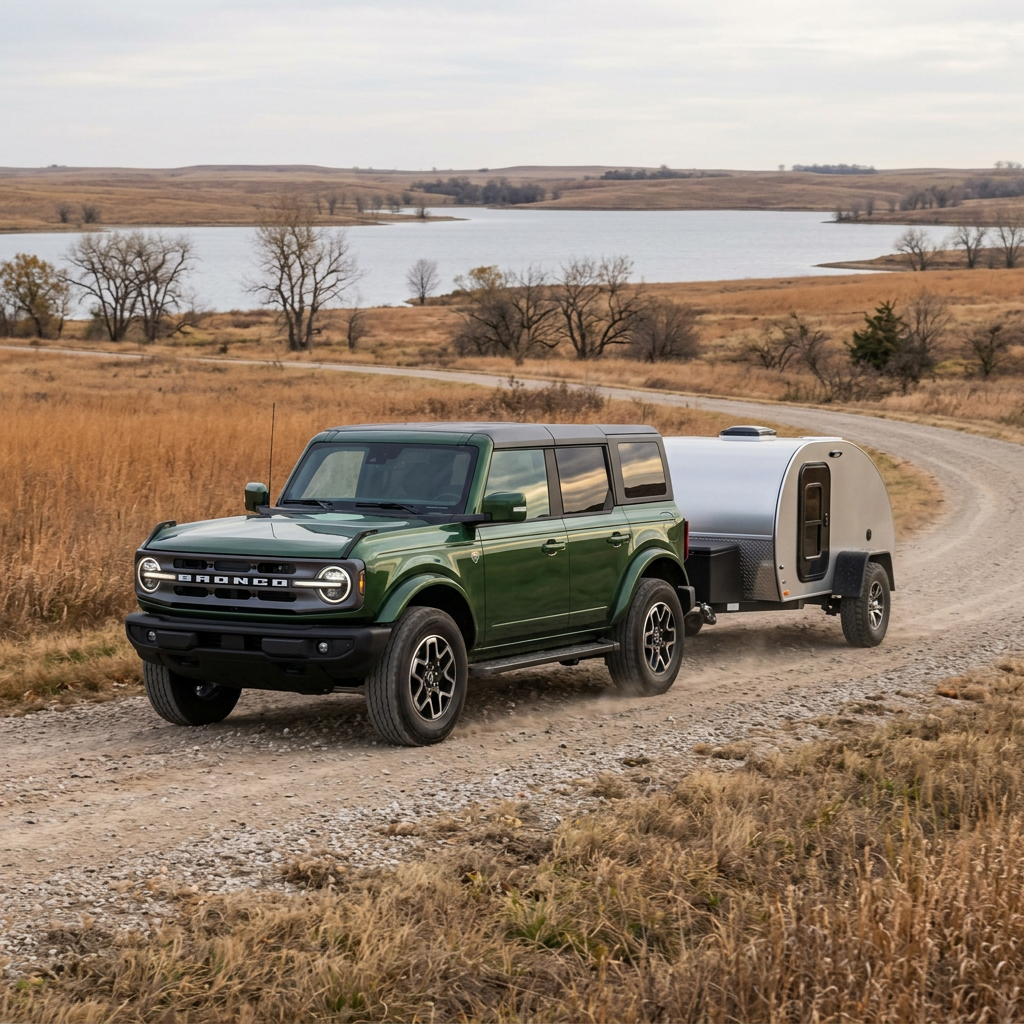
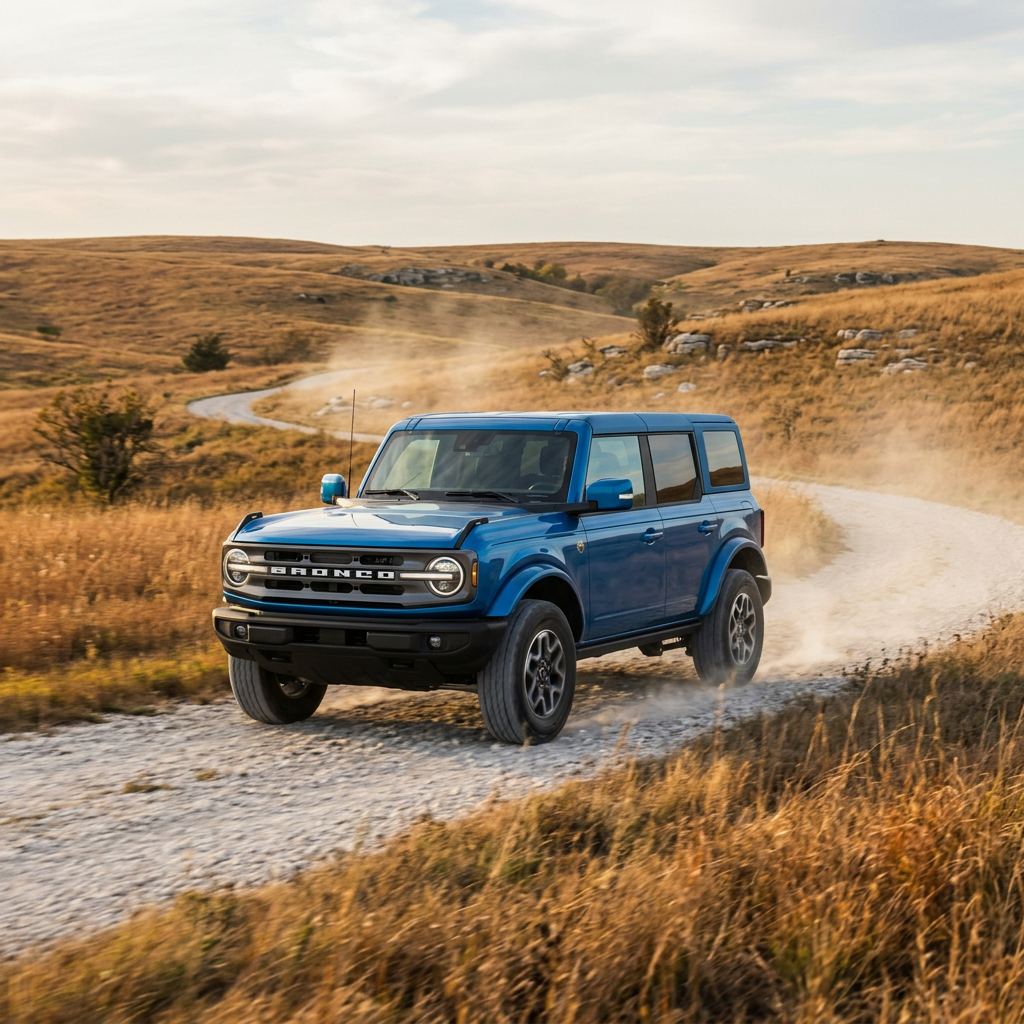
Can the 2026 Ford Bronco Outer Banks Tow a Camper or Small Boat? The 2026 Ford Bronco Outer Banks can tow a camper or small boat thanks to its maximum tow rating of 3,500 pounds and standard trailer sway control. That rating gives you plenty of pull for lightweight teardrop campers, pop-up tent trailers, personal watercraft, single-axle utility trailers, and sixteen-foot aluminum fishing boats with trailer weight included. It handles weekend recreation around the riverbanks of Junction City without breaking a sweat, provided the total weight of your trailer, gear, and tongue load remains inside Ford guidelines. Matching your trailer to that 3,500 pounds rating requires looking closely at dry weight versus loaded weight. A teardrop camper might list an empty dry weight of 1,800 pounds, but once you fill the freshwater tank, add propane bottles, and pack coolers, cooking gear, and camp chairs, you can easily add another 800 pounds. The same reality applies to personal watercraft or light fishing rigs, where fuel, outboard motors, safety gear, and the trailer itself count toward your gross trailer weight. When outdoor enthusiasts stop by to discuss trail setups, the question that comes up before looking at tire sizes is whether this rig can handle a weekend camper behind it. I explain that staying at or under eighty percent of your maximum capacity leaves an ideal safety margin for highway merging and hill climbs. Proper towing equipment makes all the difference in keeping your setup composed. Specifying the factory tow package equips the vehicle with a class II receiver hitch, four-pin and seven-pin wiring harnesses, and integrated sway control that works in tandem with the vehicle stability system. If you plan to tow larger travel trailers, tandem-axle boats, or heavy horse trailers, you will need a dedicated truck platform. For drivers needing serious hauling muscle, exploring our in-depth Super Duty research will show how commercial-grade platforms tackle heavy loads. To inspect hitch configurations on our lot or verify your specific setup, you can reach our team at (785) 238-5114 or start by finding our showroom. Table of Contents What Engine and Transmission Options Power the 2026 Bronco Outer Banks? What Off-Road Equipment and G.O.A.T. Modes Come Standard on the Outer Banks? How Do the Suspension Systems Differ Between Outer Banks and Badlands? Does the 2026 Ford Bronco Outer Banks Feature Leather-Trimmed Seats and Everyday Comfort? How Does Outer Banks Value and Pricing Compare to Big Bend and Badlands? What Engine and Transmission Options Power the 2026 Bronco Outer Banks? The 2026 Ford Bronco Outer Banks comes standard with a 2.3-liter EcoBoost turbocharged inline-four producing 300 hp and 325 lb-ft of torque when running on premium fuel, paired exclusively with a 10-speed automatic transmission. For drivers wanting extra highway passing punch and heavy-load confidence, Ford also offers the 2.7-liter EcoBoost twin-turbo V6, which elevates output to 330 hp and 415 lb-ft of torque. Shoppers test-driving the Outer Banks on our lot frequently ask whether they can pair the seven-speed manual with the leather interior before we even leave the staging lane. Ford reserves the seven-speed manual transmission strictly for lower trims like the Big Bend and specialized off-road variants paired with the four-cylinder engine. The Outer Banks is engineered as a refined daily adventure SUV, so Ford pairs both engine offerings solely with the 10-speed automatic transmission. This transmission features optimized gear spacing that balances low-speed trail crawl ratios with tall overdrive gears for quiet cruising. The Outer Banks with the standard four-cylinder powertrain delivers EPA-rated fuel economy of 18 mpg city / 22 mpg highway, giving drivers a dependable balance between daily commuting and weekend exploration. That smooth daily performance makes the four-door configuration especially versatile, carrying five adults comfortably across a 116-inch wheelbase and an overall length of 189 inches. Drivers looking to explore current configurations can view our new Ford Bronco inventory, while current owners wanting factory accessories like roof crossbars or cargo dividers can easily order genuine Ford parts through our dedicated department. What Off-Road Equipment and G.O.A.T. Modes Come Standard on the Outer Banks? Every 2026 Ford Bronco Outer Banks leaves the factory equipped with standard 4x4 featuring part-time selectable engagement, an independent front suspension, 18-inch wheels, and 32-inch all-terrain tires. While it leans into premium exterior styling with signature LED headlamps, body-color fender flares, and powder-coated tube steps, it retains serious trail hardware underneath. You get roughly 11 inches of ground clearance and water-fording capability of up to 34 inches, giving you plenty of clearance when crossing washed-out gravel paths or rutted trails. Terrain management centers around Ford's signature G.O.A.T. Modes system, which allows drivers to adjust steering effort, throttle response, and traction control parameters with the twist of a console dial. The standard setup on the Outer Banks includes five dedicated drive modes: Normal, Eco, Sport, Slippery, and Sand. For drivers living near the training grounds and rolling open plains around Fort Riley, having dedicated settings for mud, gravel, and loose dirt provides steady traction across variable surfaces. Driver-assist trail technology further enhances slow-speed maneuvering. Ford includes Trail Turn Assist, which brakes the inside rear wheel during tight turns to significantly reduce your turning radius on narrow switchbacks. You also get Hill Descent Control and available Trail Control, which acts like off-road cruise control so you can focus entirely on picking your line through obstacles. For shoppers interested in comparing older trail hardware or previous generation configurations, our pre-owned vehicle inventory offers a great way to see how equipment packages have evolved over the years. How Do the Suspension Systems Differ Between Outer Banks and Badlands? The fundamental mechanical difference between these two trims lies in their chassis setups: the Outer Banks uses the road-oriented HOSS 1.0 suspension system, while the Badlands features the heavy-duty HOSS 2.0 system with Bilstein position-sensitive dampers and a semi-active hydraulic front stabilizer bar disconnect. The HOSS 1.0 configuration under the Outer Banks uses finely tuned twin-tube dampers and independent front suspension components designed specifically to minimize body roll and deliver plush, predictable road manners during weekday commuting. Stepping into the Badlands shifts the vehicle's engineering focus toward technical rock crawling and aggressive high-speed trail running. The HOSS 2.0 setup utilizes specialized Bilstein dampers with internal end-stop reservoirs that soak up severe bottoming impacts without transferring harshness into the cabin. Furthermore, the Badlands includes a hydraulic front sway bar disconnect button on the dashboard, allowing the front axle to articulate over steep boulders; the sway bar automatically reconnects once road speed increases. The Outer Banks achieves impressive trail capability without that disconnect mechanism, keeping its mechanical design simpler and lighter. For buyers who spend ninety percent of their drive time on paved highways and maintained rural roads, the HOSS 1.0 suspension provides a noticeably more compliant, car-like ride. You avoid the extra stiffness associated with heavy-duty rock-crawling shocks while retaining ample travel for camping trails and seasonal snow. Maintaining that ride comfort requires routine alignment and tire rotations, which is why you can always schedule a service appointment with our factory-trained technicians to keep your suspension and steering components operating in factory spec. Does the 2026 Ford Bronco Outer Banks Feature Leather-Trimmed Seats and Everyday Comfort? Heated front bucket seats and leather-trimmed seats give the 2026 Ford Bronco Outer Banks a more polished cabin than other core Bronco trims. Designed to provide long-distance support without sacrificing durability, the front seats offer multi-way power adjustments that reduce driver fatigue on extended trips across Kansas highways. Dual-zone electronic automatic temperature control comes standard, allowing the driver and front passenger to personalize their climate settings. Interior technology blends rugged utility with modern connectivity. The dashboard is anchored by a standard 12-inch digital instrument cluster and a 12-inch center touchscreen running the responsive SYNC 4 infotainment system. Standard wireless Apple CarPlay and Android Auto keep your navigation and media connected seamlessly without tangled cords, while available sound upgrades include a premium 10-speaker Bang & Olufsen sound system that delivers rich audio clarity over open-air wind rush. You get roughly 52 cubic feet of cargo room behind the second row in the four-door configuration, expanding to more than 83 cubic feet when the split rear seats fold flat. Shoppers cross-shopping midsize family haulers often evaluate how the Bronco compares against unibody SUVs or traditional pickups. If your household prioritizes three rows of seating and quiet highway insulation over removable doors, looking at our Ford Explorer overview provides helpful context on family crossovers. Conversely, buyers who require full-size bed utility alongside a luxury interior can review our Ford F-150 capabilities. When you determine the Bronco Outer Banks matches your lifestyle, you can easily contact us for current financing information online to streamline your purchase process before visiting us. How Does Outer Banks Value and Pricing Compare to Big Bend and Badlands? The Outer Banks is strategically positioned in the middle of the Bronco portfolio, starting above the entry-focused Big Bend at roughly $42,490 MSRP and sitting comfortably below the off-road dedicated Badlands, which starts around $50,085 MSRP. While the Big Bend keeps standard cloth seating and simpler cabin appointments to provide an accessible entry point, the Outer Banks includes the Mid Package equipment, upscale styling, and leather seating as standard fare. It delivers premium appointments without forcing you to pay for heavy-duty rock-crawling hardware you might never utilize. Long-term value retention on the Bronco lineup remains near the very top of the midsize SUV segment, and specific option choices protect that equity even further. Adding the factory hardtop roof option, the trailer tow package, and the coveted Sasquatch Package —which adds 35-inch tires, locking front and rear differentials, and high-clearance fender flares—generates the highest return on investment when it comes time to trade in. These packages broaden future buyer appeal significantly, whether the next owner seeks off-road stance or utility. Evaluating your options in person lets you sit in the seats, operate the SYNC 4 touchscreen, and feel how the 10-speed automatic transmission behaves on the open road. Our sales advisors can guide you through every feature package, appraise your current vehicle using our online trade-in evaluation tool, and help you build an adventure vehicle tailored to your budget. You can get behind the wheel by calling our sales staff or dropping by our Goldenbelt Boulevard location to take a test drive today. © 2026 Valor Ford. All rights reserved.

2026 Ford Bronco Outer Banks Q&A: Capability and Feature Breakdown with Valor Ford

2026 Ford Bronco Outer Banks Q&A: Capability and Feature Breakdown with Valor Ford

2026 Ford Bronco Outer Banks Q&A: Capability and Feature Breakdown with Valor Ford The 2026 Ford Bronco Outer Banks balances authentic trail readiness with daily highway comfort, pairing a standard 300-horsepower 2.3-liter EcoBoost engine and a 10-speed automatic transmission with 8.4 inches of standard ground clearance and five selectable terrain modes. To explore every mechanical and comfort detail of this mid-size adventure SUV, we sat down with Jace Grabouski, General Manager at Valor Ford, who brings 25 years of automotive sales and dealership experience to help buyers choose the right setup. Off-Road Capability and Engine Options on the 2026 Ford Bronco Outer Banks Q: Jace, what off-road capability and engine options does the 2026 Bronco Outer Banks offer? A: The 2026 Ford Bronco Outer Banks delivers genuine trail capability backed by two turbocharged powertrains, five drive modes, and standard four-wheel drive. Under the hood, buyers start with the standard 2.3-liter EcoBoost turbocharged four-cylinder producing 300 hp and 325 lb-ft of torque, while those who want added passing punch can select the available 2.7-liter EcoBoost V6 generating 330 hp and 415 lb-ft of torque. Both powertrains pair exclusively with a refined 10-speed automatic transmission, delivering smooth highway cruising along with a maximum towing capacity of 3,500 pounds when properly equipped. For trail obstacles and weather shifts around the riverbanks and unpaved terrain near Junction City, the Outer Banks provides 8.4 inches of running ground clearance in its factory setup, with an official maximum water-fording limit of 33.5 inches. Ford equips the vehicle with its Terrain Management System featuring five standard G.O.A.T. Modes: Normal, Eco, Sport, Slippery, and Sand. While hardcore rock crawlers often lean toward specialized trims, the Outer Banks handles mud ruts, washboard gravel, and slick inclines with confidence. Drivers wanting to inspect these mechanical systems in person can plan their visit by finding our showroom or speaking directly with our sales team at (785) 238-5114. Table of Contents Standard Luxury and Exterior Styling on the Bronco Outer Banks Sasquatch Package Availability and Equipment on the Outer Banks Comparing Value: Outer Banks vs. Big Bend Trim Outer Banks vs. Badlands and Jeep Wrangler Sahara Pricing Expectations, Resale Value, and Purchase Value Test Drive Priorities Before Buying at Valor Ford Standard Luxury and Exterior Styling on the Bronco Outer Banks Q: What key standard luxury and styling elements set the Outer Banks apart from the rest of the lineup? A: Ford styled the Outer Banks as the premier refined build in the core Bronco family, distinguished immediately by its body-color painted fender flares, body-color mirror caps, and body-color door handles. Rather than the rugged black molded-in-color plastics seen on utilitarian trail trims, this exterior presentation gives the four-door SUV a clean, upscale profile. That sleek look is anchored by standard 18-inch bright machined aluminum wheels fitted with all-terrain tires, complemented by standard powder-coated tube side steps that ease cabin entry. Inside the cabin, convenience and passenger comfort take center stage. Heated front seating, dual-zone automatic climate control, and a 12.0-inch center touchscreen running wireless Apple CarPlay and Android Auto come standard, backed by an eight-inch digital driver cluster. Spanning 189.4 inches in total length on a 116.1-inch wheelbase, the four-door Outer Banks offers seating for five and up to 83 cubic feet of maximum cargo capacity with the rear row folded flat. Customers cross-shopping different model years to gauge styling evolutions can also explore our pre-owned vehicle inventory to see how previous generations compare on fit, finish, and road manners. Sasquatch Package Availability and Equipment on the Outer Banks Q: Can you get the Sasquatch Package on the Ford Bronco Outer Banks, and what hardware does it add? A: Yes, you can configure the 2026 Bronco Outer Banks with the factory Sasquatch Package, which transforms its refined appearance into an aggressive, trail-dominant stance without sacrificing interior amenities. The package replaces the street-oriented 18-inch wheels with 17-inch black high-gloss painted aluminum beadlock-capable wheels wrapped in massive 35-inch mud-terrain tires. To accommodate that rubber, Ford bolts on high-clearance fender flares and installs the HOSS 2.0 suspension system with position-sensitive Bilstein dampers. The mechanical upgrades go far deeper than ride height. Opting for the package raises ground clearance from 8.4 inches to 11.5 inches and equips the drivetrain with front and rear electronic locking differentials, a 4.70 final drive ratio, and an advanced automatic on-demand four-wheel-drive system with a dedicated 4A mode. Rural drivers navigating rutted access trails across Dickinson County frequently choose this configuration because it conquers loose soil without losing highway composure. If you are comparing this layout with a traditional family hauler, reviewing our 2026 Ford Explorer research offers great perspective, and our finance department makes it simple to apply for pre-approval online before custom-ordering your build. Comparing Value: Outer Banks vs. Big Bend Trim Q: Is the Ford Bronco Outer Banks worth the financial upgrade over the Big Bend trim? A: The step up to the Outer Banks represents exceptional value for anyone who plans to drive their Bronco as an everyday commuter while enjoying weekend recreation. While the Big Bend serves as an outstanding, budget-conscious foundation, it comes equipped with 17-inch wheels, black unpainted fender flares, manual single-zone climate settings, and basic cloth upholstery. Stepping up to the Outer Banks packages the equipment most buyers add anyway, including dual-zone temperature regulation, heated seats, powder-coated side steps, and upgraded exterior paint treatments. "When buyers tally up the cost of retrofitting aftermarket steps, premium wheels, and comfort electronics onto a base model, the Outer Banks makes complete financial sense right from the factory floor." Purchasing the Outer Banks also opens the door to high-end standalone options like the Bang & Olufsen sound system and a 360-degree camera system that are unavailable on entry trims. If you have an existing vehicle you want to put toward your purchase, completing our online trade appraisal form gives you an upfront valuation that helps establish your net upgrade cost. Outer Banks vs. Badlands and Jeep Wrangler Sahara Q: How does the Ford Bronco Outer Banks compare mechanically to the Badlands trim and the Jeep Wrangler Sahara? A: The Outer Banks is engineered for maximum pavement civility with moderate trail utility, whereas the Bronco Badlands focuses entirely on extreme off-road punishment. The Badlands features heavy-duty steel bumpers, underbody bash plates, an electronic front stabilizer bar disconnect, and specialized rock-crawling drive modes. Unless you spend weekends navigating boulder fields, the Badlands adds unsprung weight and stiffer suspension tuning that you will feel over daily potholes, making the Outer Banks a substantially smoother commuter. When compared against its chief outside rival, the Jeep Wrangler Sahara, the Bronco Outer Banks holds a decisive advantage in road manners due to its independent front suspension. While the solid front axle on the Wrangler Sahara requires frequent steering corrections on the highway, the independent front setup on the Bronco tracks straight and corners predictably. The Bronco cabin also feels wider, measuring 86.3 inches wide with mirrors, and offers greater rear cargo utility. Buyers debating between an open-air lifestyle SUV and a full-size hauler can consult our 2026 Ford F-150 model overview to evaluate daily comfort against conventional pickup capability. Pricing Expectations, Resale Value, and Purchase Value Q: What should buyers anticipate regarding overall ownership costs and long-term resale value? A: The 2026 Bronco lineup provides strong purchase security through its combination of competitive manufacturer pricing and category-leading residual values. Standard four-door models start with a manufacturer suggested retail price in the low $40,000s, while a well-equipped Outer Banks typically lands in the $48,000 to $53,000 range depending on whether you choose the standard four-cylinder or the 2.7-liter EcoBoost V6; contact the dealership for current pricing. For collectors, Ford also offers a dedicated 60th Anniversary Package on the Outer Banks trim that adds distinctive heritage accents. Every 2026 model comes backed by a 3-year/36,000-mile basic warranty and a 5-year/60,000-mile powertrain warranty. Ford vehicles continue to command impressive trade-in values across national automotive indexes, and the Bronco routinely ranks near the top of the mid-size utility segment for five-year value retention. That strong resale profile translates directly into lower overall depreciation costs during your ownership cycle. Buyers managing commercial fleets or heavier trailered equipment alongside a personal SUV can also review our Ford F-250 capability guide to weigh heavy-duty utility against mid-size SUV efficiency. Test Drive Priorities Before Buying at Valor Ford Q: Jace, what specific features should shoppers test during a showroom visit before making their final purchase decision? A: When you get behind the wheel of an Outer Banks for a test loop, your first focus should be evaluating the throttle response between the standard 2.3-liter EcoBoost and the available twin-turbo V6. Pay close attention to how smoothly the 10-speed automatic transmission navigates city cruising and interstate acceleration. You will also want to test the turning radius with Trail Turn Assist engaged, explore the responsiveness of the 12.0-inch touchscreen, and sample the visibility provided by the upright seating posture. We encourage customers to operate the roof latches, fold the rear seats to examine the 83 cubic feet of storage, and step onto the standard side tube steps to verify step-in height for every family member. Our sales team is ready to walk you through our current inventory and help configure the exact options you require. To set up your test drive, consider navigating to our dealership at 1825 Goldenbelt Blvd, calling our staff directly at (785) 238-5114, or exploring our latest arrivals in our new Ford Bronco inventory. Keep Your Vehicle Running Strong Keep your vehicle performing at its best with our service team: Schedule Pickup and Delivery Service Schedule Ford Service Today Order Genuine Ford Parts © 2026 Valor Ford. All rights reserved.

What You Should Know About the 2027 Ford SUV Lineup from Valor Ford

What You Should Know About the 2027 Ford SUV Lineup from Valor Ford

What You Should Know About the 2027 Ford SUV Lineup from Valor Ford What SUV Models Are Included in the 2027 Ford SUV Lineup? The 2027 Ford SUV lineup includes the compact Bronco Sport, the midsize three-row Explorer, the full-size Expedition, the off-road-focused Bronco, and the all-electric Mustang Mach-E. The two-row Ford Edge remains discontinued in North America, while manufacturer specifications and availability details for a 2027 Ford Escape have not been officially confirmed. When customers walk into our showroom, they are often trying to match a specific size and capability to their daily routine. Ford has streamlined its crossover and SUV offerings so that every model serves a distinct purpose. For drivers needing agile city parking with all-weather traction, compact crossovers lead the way. Families requiring extra seating and heavy towing capacity naturally lean toward midsize and full-size platforms. Commuters navigating daily drives through Junction City along the Kansas River corridor frequently ask how these models compare in fuel efficiency and cabin flexibility. As Dealer Principal at Valor Ford, I have seen model lineups evolve over my 40 years in the automotive industry, and this year's family of crossovers is one of the most capable we have ever offered. Whether you need an efficient daily commuter or a vehicle ready to pull a boat on the weekend, exploring our new Ford SUV lineup gives you a clear view of how these models fit different lifestyle demands. If you want to check out these models in person, you can stop by our Junction City showroom or give our team a quick call to learn more. Table of Contents What Are the 2027 Ford Explorer Engine, Cargo, and Towing Specs? How Does 2027 Ford Explorer Third-Row Legroom Compare to Traverse and Highlander? What Is the Starting Price and Off-Road Capability for the 2027 Ford Bronco Sport? What Is the Maximum Driving Range and Tech Updates for the 2027 Ford Mustang Mach-E? How to Test Drive and Finance Your Next 2027 SUV at Valor Ford What Are the 2027 Ford Explorer Engine, Cargo, and Towing Specs? The 2027 Ford Explorer comes standard with a turbocharged 2.3L EcoBoost® four-cylinder engine generating 300 hp and 310 lb-ft of torque, paired with a 10-speed SelectShift® automatic transmission. Higher trims offer a 3.0L EcoBoost® V6 producing up to 400 hp, while cargo space measures 16 cubic feet behind the third row, expanding to 86 cubic feet with rear seats folded, and maximum towing capacity reaches 5,000 lbs. Engine performance on the Explorer varies by trim level to match different driving demands. The standard 2.3L EcoBoost® engine provides an EPA-rated 20 city / 27 hwy MPG in four-wheel drive configurations, making it a well-balanced choice for daily highway cruising and family errands. The available 3.0L EcoBoost® V6 comes standard on performance-oriented trims like the ST and is available on the rugged Tremor and luxurious Platinum editions. Power output on the V6 reaches up to 400 hp, though state emissions configurations in select areas may rate output at 385 hp. Cargo utility and trailering are primary reasons families select the Explorer. Behind the upright third row, you get 16 cubic feet of storage, which easily accommodates groceries or athletic bags. Lowering the second and third rows opens up a massive 86 cubic feet of flat cargo space. When properly equipped with the factory receiver hitch, the Explorer boasts a maximum towing rating of 5,000 lbs and a maximum payload capacity of 1,467 lbs. If you are comparing new options against pre-owned midsize crossovers, reviewing detailed Ford Explorer specifications helps clarify how recent engineering updates impact real-world utility, or you can browse our pre-owned vehicle inventory to see prior model years side-by-side. How Does 2027 Ford Explorer Third-Row Legroom Compare to Traverse and Highlander? The 2027 Ford Explorer provides 32 inches of third-row legroom, positioning it directly between the Chevrolet Traverse at 34 inches and the Toyota Highlander at 28 inches. Third-row legroom is a crucial metric for buyers who regularly carry older children or adult passengers in the back. While the Chevrolet Traverse offers slightly more overall legroom in the rearmost seats at 34 inches, the Explorer's 32 inches provides sufficient room for teenagers and adults on short to medium trips. By contrast, the Toyota Highlander's 28 inches of third-row legroom creates a much tighter squeeze, making its back row best suited for small children. Cabin flexibility in the Explorer extends beyond raw dimensions. Available in six-passenger or seven-passenger seating layouts, the second row can be configured with bench seats or tilt-and-slide captain's chairs. The slide mechanism allows second-row passengers to move their seats forward by several inches, balancing legroom across all three rows depending on who is riding along. Drivers hauling supplies across rural gravel routes in Dickinson County appreciate how quickly the third row folds flat into the load floor when cargo space takes priority over seating. If you are looking to trade in your current family vehicle for a three-row crossover, you can easily evaluate your trade-in online to see what your vehicle is worth toward a new model. What Is the Starting Price and Off-Road Capability for the 2027 Ford Bronco Sport? The 2027 Ford Bronco Sport starts at an estimated MSRP of $31,695 for the base Big Bend trim and scales up to $36,760 for the trail-ready Badlands trim. Off-road performance is standard across the entire Bronco Sport lineup thanks to standard four-wheel drive and Ford's terrain management system. Trim options include Big Bend, Heritage, Outer Banks, and Badlands. The first three trims feature a 1.5-liter EcoBoost three-cylinder engine outputting 180 hp and 200 lb-ft of torque, yielding an EPA-estimated 25 city / 30 hwy MPG. Five standard G.O.A.T. Modes® (Goes Over Any Type of Terrain)—Normal, Eco, Sport, Slippery, and Sand—allow drivers to adapt traction control and throttle response to changing surface conditions. For serious trail enthusiasts, the Badlands model upgrades to a 2.0-liter EcoBoost four-cylinder engine generating 250 hp and 280 lb-ft of torque. The Badlands also incorporates an advanced four-wheel-drive system with a twin-clutch rear drive unit, an off-road-tuned HOSS 2.0 suspension, steel skid plates, and two additional G.O.A.T. Modes®: Mud/Ruts and Rock Crawl. Inside, the cabin offers up to 29 cubic feet of cargo room behind the rear seats and up to 65 cubic feet with the rear seats folded down, making it as practical for grocery runs as it is for weekend camping trips. What Is the Maximum Driving Range and Tech Updates for the 2027 Ford Mustang Mach-E? The 2027 Ford Mustang Mach-E achieves an EPA-estimated maximum driving range of up to 320 miles when configured with the extended-range battery and rear-wheel drive. Battery configurations have been updated for 2027 to simplify ordering and improve standard capability. The entry-level Select and Premium trims now come standard with an 88-kWh battery pack, replacing the smaller standard-range pack from previous years. The high-performance GT and off-road-inspired Rally trims are equipped with a larger 91-kWh battery pack. Single-motor rear-wheel-drive models produce between 264 hp and 272 hp, while dual-motor all-wheel-drive variants output up to 480 hp and 700 lb-ft of torque in GT and Rally specs. DC fast charging capability allows the battery to charge at rates up to 150 kW, taking the pack from 10 to 80 percent in approximately 36 minutes at a public fast charger. Inside the cabin, technology is centered around a vertically oriented 15-inch central touchscreen running the latest Ford Digital Experience software. Standard features include wireless Apple CarPlay, Android Auto, and integrated navigation. Driver-assist technologies include standard automated emergency braking, blind-spot monitoring, and available BlueCruise hands-free highway driving. Prospective electric vehicle buyers can check out our detailed Mustang research guide to evaluate EV performance stats and interior dimensions. How to Test Drive and Finance Your Next 2027 SUV at Valor Ford Selecting the right SUV comes down to testing features on the road and setting up financing that fits your monthly budget. When you arrive for a test drive, our team takes time to demonstrate key features before hitting the road. We walk you through folding seat mechanisms, cargo load heights, screen menus, and driver-assist settings so you feel confident behind the wheel. On the road, you can experience how different engine choices accelerate, test braking responsiveness, and evaluate cabin noise levels under real driving conditions. Financing your next crossover is straightforward with our finance team. We work with a wide network of local and national lenders to secure competitive rates for every credit profile. You can start the process from home by choosing to get pre-approved online, saving you time at the dealership. If you have questions about specific models or want to schedule your test drive, stop by our showroom at 1825 Goldenbelt Blvd or give us a quick phone call today. Keep Your Vehicle Running Strong Keep your vehicle performing at its best with our service team: Schedule Pickup and Delivery Service Schedule Ford Service Today Order Genuine Ford Parts © 2026 Valor Ford. All rights reserved. Vehicle specification data © JATO Dynamics Limited.
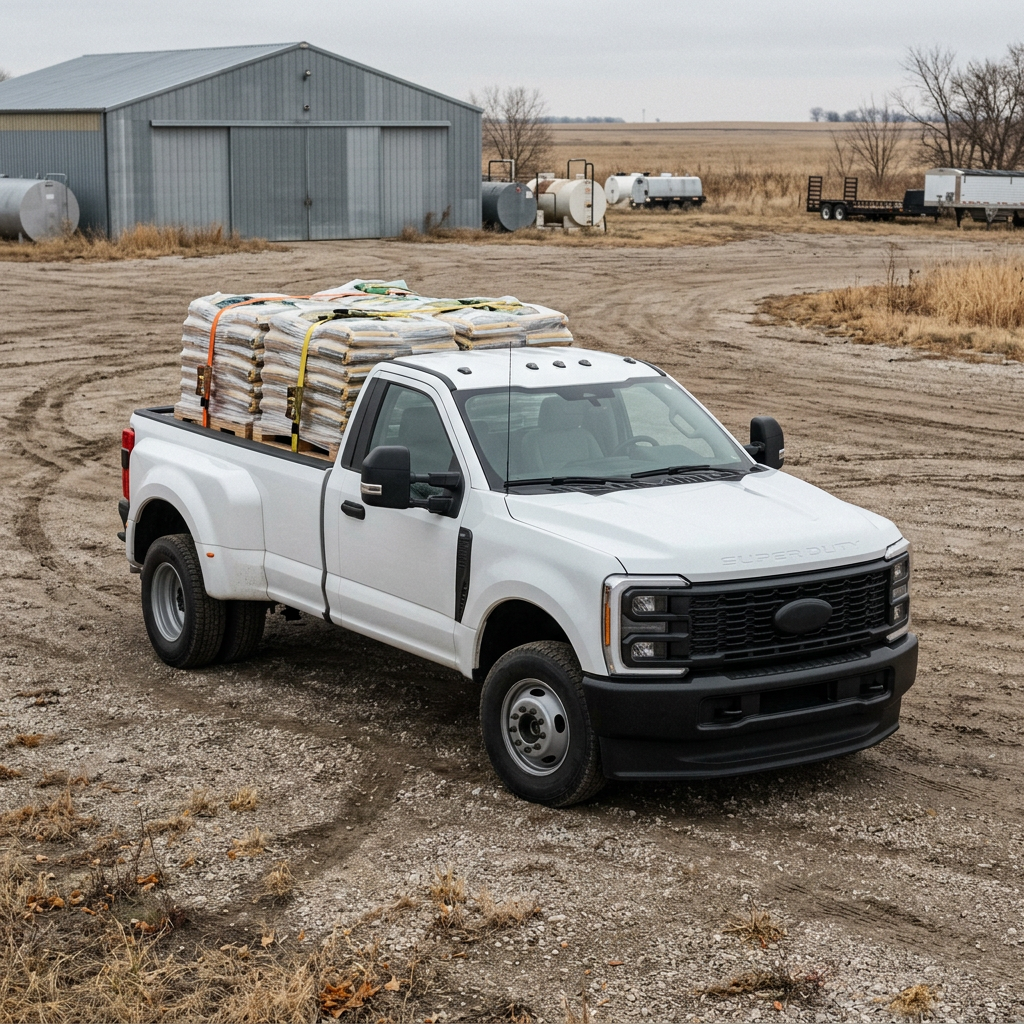
2027 Ford Explorer vs. 2027 Ford Expedition: Choosing Your Family Hauler

2027 Ford Explorer vs. 2027 Ford Expedition: Choosing Your Family Hauler

2027 Ford Explorer vs. 2027 Ford Expedition: Choosing Your Family Hauler Is a Full-Size SUV Like the Expedition Significantly Harder to Park and Maneuver Daily Than an Explorer? Yes, the 2027 Ford Expedition requires noticeably more effort to park and navigate through tight suburban spaces than the 2027 Ford Explorer. Standing over 15 inches longer and 5 inches wider with a larger 41-foot turning circle compared to the Explorer's 38-foot turning radius, the full-size Expedition demands larger parking spots and wider turning arcs. Drivers who regularly navigate congested school drop-off lanes or tight garage doors will find the midsize Explorer significantly more agile for daily errands. During first-time test drives with local families, I usually suggest taking both SUVs through a busy parking lot to experience the physical footprint firsthand. The Explorer drives much like a midsize sedan with an elevated ride height, slotting easily into standard parking stalls. By contrast, the Expedition relies heavily on its available 360-degree camera system and front parking sensors to guide its truck-based frame into tight spaces. For parents navigating tight parking garages or crowded shopping centers in Junction City, that dimensional gap is immediately obvious behind the wheel. If your daily route involves tight parking spaces or compact home garages, the Explorer offers a less demanding driving experience. If you need maximum interior space and are comfortable managing a larger vehicle, our team is always available at (785) 238-5114 or directly at our Goldenbelt Boulevard showroom to walk you through side-by-side parking demonstrations. Table of Contents What Are the Seating Capacity and Interior Dimension Differences Between the 2027 Ford Explorer and Expedition? What Engine Performance and Fuel Efficiency Options Power the 2027 Explorer vs. Expedition? How Does Towing Capacity Compare Between the 2027 Ford Explorer and 2027 Expedition? Is Ford BlueCruise Hands-Free Driving Available on Both the Explorer and Expedition? Which Trim Level Offers the best balance for Families in the 2027 Ford Explorer Lineup? What Long-Term Maintenance and Service Requirements Should You Expect for Your Ford SUV? What Are the Seating Capacity and Interior Dimension Differences Between the 2027 Ford Explorer and Expedition? The 2027 Ford Expedition seats up to eight passengers with adult-friendly third-row legroom and up to 108 cubic feet of total cargo space, whereas the 2027 Ford Explorer seats up to seven passengers with a third row designed primarily for children. The standard-wheelbase Expedition offers about 22 cubic feet of cargo space behind its third row, expanding to 36 cubic feet in the long-wheelbase Expedition MAX, while the Explorer provides roughly 18 cubic feet behind its third row and up to 86 cubic feet total. Cabin architecture represents the biggest structural difference between these two family haulers. The Explorer offers flexible seating configurations, including second-row captain's chairs on trims like the ST-Line, which creates a convenient pass-through aisle to the rear. The third row delivers 32 inches of legroom, making it ideal for younger kids or occasional adult use on short trips. Families looking to explore every seating layout can explore detailed Ford Explorer research to compare dimensions across the trim lineup. The full-size Expedition elevates passenger room across all three rows, offering 36 inches of third-row legroom that comfortably accommodates adults on long highway trips. When all rear seats are folded flat, the Expedition creates a cavernous floor capable of hauling massive cargo items. For buyers evaluating overall cabin size and pre-owned alternatives, you can also browse our pre-owned SUV inventory to examine various passenger configurations in person. What Engine Performance and Fuel Efficiency Options Power the 2027 Explorer vs. Expedition? The 2027 Ford Explorer comes standard with a turbocharged 2.3-liter EcoBoost four-cylinder engine generating 300 hp, while the 2027 Ford Expedition packs a twin-turbo 3.5-liter EcoBoost V6 producing 400 hp and 460 lb-ft of torque. The Explorer delivers higher overall fuel efficiency with an EPA-estimated 21 mpg city / 28 mpg highway, whereas the full-size Expedition achieves an EPA-estimated 18 mpg combined rating ( 15 mpg city / 22 mpg highway for four-wheel-drive models). For drivers seeking enhanced performance, Ford offers upgraded engine options on both vehicle platforms. The Explorer ST features a high-output 3.0-liter EcoBoost V6 pushing 400 hp and 415 lb-ft of torque, which is also available on the off-road Tremor and luxury Platinum trims. Power is managed smoothly through a 10-speed automatic transmission that balances crisp acceleration with highway cruising efficiency. The Expedition offers its twin-turbo 3.5-liter EcoBoost V6 in a High-Output tune on select trims like the Tremor and Platinum, boosting output to 440 hp and 510 lb-ft of torque. This heavy-duty powertrain delivers effortless pass power and confident acceleration even when fully loaded with passengers. Buyers planning long highway commutes across Dickinson County often find that the Explorer's four-cylinder efficiency provides substantial savings at the pump over multi-year ownership. To evaluate payment structures for either powertrain, shoppers can get pre-approved online before taking a test drive. How Does Towing Capacity Compare Between the 2027 Ford Explorer and 2027 Expedition? A properly equipped 2027 Ford Expedition hauls up to 9,600 pounds of trailer weight, while the 2027 Ford Explorer maxes out at 5,000 pounds of towing capacity. That 4,600-pound capability gap dictates what kind of recreational equipment each SUV can pull, separating lightweight utility trailers and small speedboats from heavy double-axle travel trailers and full-size horse trailers. Achieving the Expedition's maximum rating requires configuring a 4x4 model with the factory Heavy-Duty Trailer Tow Package, which integrates heavy-duty cooling components and trailer brake controls. The truck-based body-on-frame chassis absorbs tongue weight with minimal rear-end sag, maintaining vehicle composure when pulling large loads over highway passes. The Expedition MAX caps maximum towing slightly lower at 9,000 pounds due to its longer wheelbase and higher curb weight. The Explorer utilizes a unibody platform that handles up to 5,000 pounds when equipped with the Class III Trailer Tow Package. This capacity easily manages ski boats, small camper trailers, or personal watercraft for weekend trips. If you plan to equip your SUV with specialized hitches or electrical harnesses, our parts department allows you to order genuine Ford towing parts direct from the factory. Is Ford BlueCruise Hands-Free Driving Available on Both the Explorer and Expedition? Yes, Ford BlueCruise hands-free highway driving technology is available on select upper trim levels for both the 2027 Ford Explorer and the 2027 Ford Expedition. The system operates on prequalified sections of divided highways known as Hands-Free Blue Zones, controlling steering, acceleration, and braking while maintaining lane centering and driver gaze monitoring. Both vehicles utilize an advanced sensor suite featuring radar and camera inputs to manage highway driving tasks automatically. Features like Lane Change Assist allow the driver to initiate hands-free lane changes simply by tapping the turn signal, while In-Lane Repositioning subtly shifts the vehicle away from large semi-trucks in adjacent lanes. The driver-facing camera continuously verifies that the driver's eyes remain focused on the road ahead. On long highway drives across Fort Riley, BlueCruise reduces driver fatigue significantly by handling routine lane maintenance and speed adjustments. The technology is available via flexible subscription structures or multi-year activation plans, giving owners options to fit their driving habits and travel schedules. Which Trim Level Offers the best balance for Families in the 2027 Ford Explorer Lineup? The ST-Line trim delivers a strong balance of features and styling in the 2027 Ford Explorer lineup. Positioned above the entry-level Active model, the ST-Line includes sporty exterior styling cues, standard second-row captain's chairs, upgraded interior upholstery, and the full suite of Ford Co-Pilot360 driver-assist features without the equipment level of the high-performance ST or range-topping Platinum. While the base Active trim includes the 300-hp 2.3-liter EcoBoost engine and essential touchscreen technology, the ST-Line adds desirable family features like ActiveX seating surfaces, enhanced ambient lighting, and available Ford BlueCruise compatibility. For off-road enthusiasts, the Tremor trim adds steel deflector plates and an off-road tuned suspension, but for daily commuting and family hauling, the ST-Line strikes the absolute sweet spot. Families considering different vehicle sizes or body styles can also browse our new Ford SUV lineup to explore all available three-row and off-road options. If you are preparing to trade in a current vehicle toward a new SUV purchase, you can easily value your trade-in to calculate your estimated equity beforehand. What Long-Term Maintenance and Service Requirements Should You Expect for Your Ford SUV? Both the Explorer and Expedition require routine preventative care centered around EcoBoost turbocharger health, transmission fluid maintenance, and brake component upkeep. Standard service intervals call for synthetic engine oil and filter changes every 7,500 to 10,000 miles, along with tire rotations and multi-point inspections to monitor suspension bushings and brake pad wear. Because both vehicles utilize high-output turbocharged engines, maintaining clean oil and fresh air filters is critical for long-term turbocharger reliability and fuel efficiency. Higher-mileage Explorers typically require suspension bushing inspections and routine spark plug replacements around 60,000 miles. Expedition models that regularly tow heavy loads benefit from shortened fluid replacement intervals on the 10-speed transmission and rear differential. Ford backs both models with a 3-year/36,000-mile basic warranty and a 5-year/60,000-mile powertrain warranty, complemented by five years of factory roadside assistance. When your vehicle is ready for routine maintenance, you can easily schedule a service appointment with our factory-trained technicians. Our service team is located at our Junction City dealership, and you can reach our service advisors directly at (785) 238-5114 to keep your family hauler running smoothly for years to come. © 2026 Valor Ford. All rights reserved.

Next-Gen Family Hauling: 2027 Ford Explorer and Expedition Expert Q&A Preview

Next-Gen Family Hauling: 2027 Ford Explorer and Expedition Expert Q&A Preview

Next-Gen Family Hauling: 2027 Ford Explorer and Expedition Expert Q&A Preview Today we are sitting down with Dustin Zeck, Dealer Principal at Valor Ford, who brings 40 years of automotive leadership and hands-on experience to help area drivers evaluate their options. In this expert interview, Dustin provides an in-depth preview of what families can expect from the 2027 Ford Explorer and 2027 Ford Expedition, covering essential capabilities, interior dimensions, digital displays, standard equipment, and factory coverage. Q: What are the 2027 Ford Explorer’s seating, cargo, towing, and engine specifications? A: The 2027 Ford Explorer is anticipated to seat up to seven passengers, provide about 16 cubic feet of cargo space behind the third row expanding to roughly 86 cubic feet with all rear seats folded, and offer a maximum towing capacity of 5,000 pounds when properly equipped. Power comes from either a standard 2.3-liter EcoBoost four-cylinder engine generating 300 horsepower and 310 lb-ft of torque or an available 3.0-liter EcoBoost V6 producing up to 400 horsepower and 415 lb-ft of torque. Both engine options pair with a smooth 10-speed automatic transmission and offer available 4WD capability. When local parents stop by to discuss daily carpooling and school runs around Junction City, cargo functionality behind that back row is usually the first detail they want to test out in person. The Explorer's 86 cubic feet of total cargo volume easily accommodates sports gear, luggage, or hardware supplies when the second and third rows are stowed flat. For trailering, the Class III Trailer Tow Package enables that 5,000-pound max tow rating, making it easy to haul small boats or camper trailers. Drivers looking for enhanced utility can visit our Junction City showroom location or connect with our sales team at (785) 238-5114 to review current model details and reservation timelines. Q: What seating layout and interior tech features define the 2027 Ford Expedition? A: The 2027 Ford Expedition is designed to accommodate seven or eight passengers across three spacious rows while introducing the Ford Digital Experience centered on a pillar-to-pillar 24-inch panoramic display screen. Key interior innovations include standard 5G Wi-Fi hotspot connectivity, available Ford BlueCruise hands-free driving technology, custom backseat device holders, and a multi-functional split liftgate with a lower folding tailgate section. Inside the cabin, second-row choices between a three-passenger bench or tilt-and-slide captain's chairs provide seamless access to a third row that offers class-leading legroom. The available Ford Connectivity Package supplies high-speed internet data for up to ten devices, allowing rear passengers to stream movies or browse seamlessly during family road trips. Meanwhile, the innovative split liftgate design lets owners pop open the top glass section for quick gear drops or lower the bottom gate to serve as seating for outdoor tailgating. For buyers comparing full-size utility against pre-owned options, reviewing our certified pre-owned vehicle inventory offers great perspective on how Ford's three-row platform has evolved over recent model years. Q: Is fuel economy significantly better in the Explorer than the Expedition? A: Yes, the midsize 2027 Ford Explorer delivers noticeably better fuel economy than the full-size Expedition, achieving EPA ratings around 21 mpg city / 28 mpg highway with its standard 2.3-liter EcoBoost engine. By comparison, the larger, heavier Expedition with its standard 3.5-liter EcoBoost V6 yields EPA estimates around 16 mpg city / 23 mpg highway. That efficiency gap comes down to vehicle footprint and curb weight. Commuters traveling back and forth from Fort Riley often prefer the Explorer's four-cylinder efficiency for daily highway driving, whereas buyers who require maximum interior volume or heavy towing accept the Expedition's higher fuel consumption in exchange for its 9,600-pound tow capacity. Regardless of which SUV best fits your driving habits, maintaining peak fuel economy relies on routine tire rotations and engine maintenance, which you can easily arrange when you schedule a service appointment with our factory-trained technicians. Q: Which SUV features a larger digital display screen setup? A: The 2027 Ford Expedition boasts the significantly larger screen setup, featuring a sweeping 24-inch panoramic display screen mounted high across the dashboard line. In comparison, the 2027 Ford Explorer comes equipped with a sleek 13.2-inch center touchscreen running the updated Ford Digital Experience interface. "The 24-inch panoramic display in the Expedition completely redefines dashboard tech, keeping essential navigation right in the driver's line of sight." While the Explorer's 13.2-inch display handles navigation, media, and climate functions with quick touch response, the Expedition's 24-inch panoramic screen elevates driver visibility by bringing turn-by-turn maps and cluster data higher into the forward field of view. Both setups support wireless Apple CarPlay, Android Auto, Google Maps, and over-the-air software updates. If you are contemplating upgrading your current family vehicle to take advantage of these next-generation cabins, you can evaluate your trade-in online to see what your present vehicle is worth. Q: What standard equipment is included on the base 2027 Ford Explorer Active trim? A: The base 2027 Ford Explorer Active comes standard with heated power-adjustable front seats, keyless entry with push-button start, tri-zone automatic climate control, a 13.2-inch center touchscreen, and the Ford Co-Pilot360 suite of driver-assist technologies. Standard mechanical components include a 300-horsepower 2.3-liter EcoBoost engine paired with a 10-speed automatic transmission. Ford designed the Active trim to give buyers a fully equipped, turn-key family vehicle without requiring expensive option packages. Safety is prioritized through standard features like blind-spot monitoring, lane-keeping assist, rear cross-traffic alert, and pre-collision assist with automatic emergency braking. To explore feature breakdowns across all trim levels or begin your purchase journey, visit our dedicated Ford Explorer research page or take a moment to apply for financing pre-approval before visiting our dealership. Q: What is the price premium for choosing an Expedition MAX over the standard length? A: Selecting the extended-length Expedition MAX carries an estimated price premium of roughly $3,000 to $3,500 over the equivalent standard-length Expedition trim level. In exchange for that additional investment, the MAX variant extends overall vehicle length by nearly a foot, expanding cargo volume behind the third row to roughly 36 cubic feet and maximum cargo capacity to about 123 cubic feet. For large families who regularly travel with full passenger loads and large cargo items, that extra foot of body length eliminates the trade-off between seating people and stowing luggage. The MAX model retains all the core performance specs of the standard wheelbase—including the 400-horsepower 3.5-liter EcoBoost V6 —while enhancing rear utility with specialized cargo organization systems. To outfit either model for outdoor adventures or heavy hauling, owners can order genuine Ford parts and accessories directly through our dealership's parts department. Q: What factory bumper-to-bumper warranty is included with both vehicles? A: Both the 2027 Ford Explorer and 2027 Ford Expedition are backed by Ford’s standard factory warranty, which includes a 3-year/36,000-mile bumper-to-bumper limited warranty alongside a 5-year/60,000-mile powertrain limited warranty. Additionally, Ford provides 5 years or 60,000 miles of 24/7 roadside assistance coverage covering towing, flat tire assistance, and jump starts. If emergency service is ever required while traveling, drivers can connect directly with Ford Roadside Assistance: (800) 241-3673 for immediate support. This comprehensive factory coverage gives buyers complete peace of mind, knowing major mechanical components like the EcoBoost engine, 10-speed automatic transmission, and 4WD driveline parts are protected. When you are ready to compare these two world-class family haulers side by side or explore our full vehicle lineup, you can get directions to our dealership, give our team a call, or browse our new Ford inventory to find the perfect vehicle for your household. © 2026 Valor Ford. All rights reserved.

2027 Ford SUV Lineup: Choosing Your Ideal Family Vehicle

2027 Ford SUV Lineup: Q&A with Valor Ford Finance Expert Nino Williams

2027 Ford SUV Lineup: Q&A with Valor Ford Finance Expert Nino Williams Starting prices for the 2027 Ford SUV lineup begin at approximately $29,000 for the compact Escape, $36,760 for the off-road capable Bronco Sport, $40,680 for the three-row Explorer, and $63,920 for the full-size Expedition. To help area buyers navigate these options, we sat down with Nino Williams, Finance Manager at Valor Ford, who brings 11 years of automotive finance experience to guide local families toward their ideal vehicle. Q: What is the starting price range for the 2027 Ford SUV lineup? A: The 2027 Ford SUV lineup spans from roughly $29,000 for the entry-level Escape up to $63,920 for the flagship Expedition. In the middle of the lineup, the 2027 Ford Bronco Sport starts at an MSRP of $36,760, while the popular three-row 2027 Ford Explorer begins at an MSRP of $40,680. These entry figures represent base trim levels with standard powertrains, giving buyers a broad spectrum of price points to fit different household budgets. When buyers visit us to compare models across the showroom floor, pricing structured around clear capability steps makes finding a match straightforward. An entry trim like the Explorer Active provides essential three-row utility at its base price, whereas moving into performance or luxury trims like the Explorer ST or Expedition Active adjusts the financial equation based on added power, luxury features, or advanced towing hardware. For drivers planning a visit to review current showroom inventory or test-drive specific trims, checking our Junction City showroom location provides direct access to our full sales team. You can also give our finance team a call directly to discuss custom orders, trade-in valuations, or current manufacturer incentives on any 2027 model. Q: Which 2027 Ford SUV offers the best overall value for value-focused families? A: The 2027 Ford Explorer in the Active or ST-Line trim delivers the strongest total value for growing families who need three-row seating without stretching into full-size SUV pricing. At a starting price of $40,680, the Explorer Active comes standard with a 2.3L EcoBoost four-cylinder engine generating 300 hp, three-row flexible seating, standard tri-zone automatic climate control, and the complete Ford Co-Pilot360 safety suite. For families in Junction City balancing school drop-offs, sports equipment, and daily errands, this midsize crossover avoids the higher fuel and purchase costs of larger full-size vehicles while still providing six or seven passenger seats. The ST-Line trim adds sporty aesthetic touches, larger 20-inch wheels, and access to hands-free highway driving tech while retaining the efficient four-cylinder engine, making it a sweet spot for long-term ownership value. Buyers seeking to maximize their budget can also explore our pre-owned vehicle inventory for certified choices or use our online trade-in evaluation tool to see how much equity from a current vehicle can be applied toward a new purchase. To streamline the purchase process before stepping onto the lot, shoppers can easily get pre-approved for financing online through our secure application. "Families often focus solely on the initial sticker price, but real value comes from choosing a vehicle whose standard equipment matches your daily driving needs for the next five years." Q: What are the towing capacities across the 2027 Ford SUV lineup? A: Towing capacities in the 2027 Ford SUV lineup range from 1,500 lbs on the compact Escape up to 9,300 lbs on the full-size Expedition when equipped with the Heavy-Duty Trailer Tow Package. The compact Ford Escape hauls up to 3,500 lbs when equipped with its available 2.0L EcoBoost engine, while the 2027 Ford Bronco Sport offers a maximum towing capacity of 2,700 lbs alongside standard 4x4 capability. Moving up to the three-row 2027 Ford Explorer, every model comes standard with a Class III Trailer Tow Package that enables a robust 5,000 lbs towing capacity across both the 2.3L EcoBoost and the 400 hp 3.0L EcoBoost V6 powertrains. For heavy-duty hauling, the full-size 2027 Ford Expedition features a standard tow rating of 6,000 lbs from its 3.5L EcoBoost V6, which increases to 9,300 lbs with the specialized tow package. For active-duty service members and outdoor enthusiasts around Fort Riley pulling camper trailers or utility rigs across the Flint Hills, having factory-integrated hitch hardware and trailer sway control standard on the Explorer eliminates the need for aftermarket modifications. Buyers interested in exploring off-road variants or tow-ready packages can check our new Ford Bronco inventory to compare specialized trail and hauling setups. Q: How does fuel economy compare across the 2027 Ford SUV lineup? A: Fuel efficiency varies significantly across the lineup, ranging from an EPA-estimated 42 mpg city on hybrid compact models down to 16 mpg city / 23 mpg highway on full-size V6 powertrains. The 2027 Ford Escape Hybrid leads the lineup in overall efficiency, while the 2027 Ford Bronco Sport delivers an EPA rating of 21 mpg city / 27 mpg highway with its standard 2.0L EcoBoost four-cylinder and SelectShift automatic transmission. The midsize 2027 Ford Explorer achieves an EPA-estimated 20 mpg city / 27 mpg highway in rear-wheel-drive configuration with the standard 2.3L EcoBoost engine, with all-wheel-drive models rating slightly lower at 20 mpg city / 27 mpg highway or 19 mpg city / 26 mpg highway depending on wheel size. Performance-focused Explorer models featuring the 3.0L EcoBoost V6 achieve 18 mpg city / 25 mpg highway. In full-size territory, the 2027 Ford Expedition delivers an EPA estimate of 16 mpg city / 23 mpg highway from its twin-turbocharged 3.5L EcoBoost V6. For drivers who cover extended highway miles, selecting a four-cylinder Explorer or a compact hybrid balances daily commuter efficiency with cabin utility. Q: How much cargo space is available behind the third row in the 2027 Ford Explorer? A: The 2027 Ford Explorer provides 16 cubic feet of cargo space directly behind the third-row seats. When extra gear requires more volume, folding the 50/50 split third-row seat flat expands the cargo capacity to approximately 48 cubic feet behind the second row, and folding both rear rows flat yields a maximum cargo volume of 85 cubic feet. An underfloor storage bin behind the third row keeps smaller items out of sight, and a reversible load floor with a washable plastic underside allows families to transport wet or dirty sports gear without staining carpeted surfaces. Standard second-row captain's chairs on trims like the ST-Line slide forward in one motion to clear a walk-through path to the back seat even when child safety seats are installed. To explore detailed interior dimensions, seating configurations, and cabin storage features before visiting the dealership, drivers can review our complete Ford Explorer research guide for comprehensive model insights. Q: How does the 2027 Ford Explorer compare to the Toyota Highlander and Honda Pilot? A: The 2027 Ford Explorer outperforms the Toyota Highlander and Honda Pilot in standard horsepower and towing capacity, delivering 300 hp and a 5,000 lbs tow rating standard compared to the Highlander's 265 hp four-cylinder and the Pilot's 285 hp V6. Additionally, the Explorer offers an available 400 hp 3.0L EcoBoost V6 on ST and Platinum trims, providing a high-performance engine tier that neither rival matches. Built on a rear-wheel-drive architecture with available four-wheel drive, the Explorer provides dynamic handling and balanced vehicle dynamics that set it apart from front-wheel-drive-based competitors. While the Honda Pilot offers slightly more total cargo volume with all seats folded, the Explorer counters with its standard Class III Trailer Tow Package, standard 13.2-inch touchscreen with integrated Google services, and optional hands-free highway driving tech. For buyers evaluating overall value, the Explorer provides a higher baseline of standard utility hardware and driver-assist safety technology across its entry and mid-tier trims than similarly priced competitive models. Q: Is Ford BlueCruise hands-free driving available on 2027 Ford SUVs? A: Yes, Ford BlueCruise hands-free highway driving is available on select trim levels of the 2027 Ford Explorer, 2027 Ford Expedition, and Mustang Mach-E. The system allows drivers to operate hands-free on over 130,000 miles of prequalified divided highways, known as Hands-Free Blue Zones, while a driver-facing camera monitors eye gaze to ensure attentiveness. On the 2027 Ford Explorer, BlueCruise capability comes equipped or available on ST-Line, ST, and Platinum trims. The system includes Lane Change Assist, which performs automated lane changes when the driver taps the turn signal, and In-Lane Repositioning, which subtly shifts the vehicle away from large trucks in adjacent lanes for added comfort. Owners can activate BlueCruise through available subscription and purchase options; contact the dealership for current pricing and availability. To experience hands-free driving technology firsthand on local highway routes or speak with our sales staff about model availability, shoppers can drop by our dealership showroom address or (785) 238-5114 to schedule a test drive today. Keep Your Vehicle Running Strong Keep your vehicle performing at its best with our service team: Schedule Pickup and Delivery Service Schedule Ford Service Today Order Genuine Ford Parts © 2026 Valor Ford. All rights reserved. Vehicle specification data © JATO Dynamics Limited.
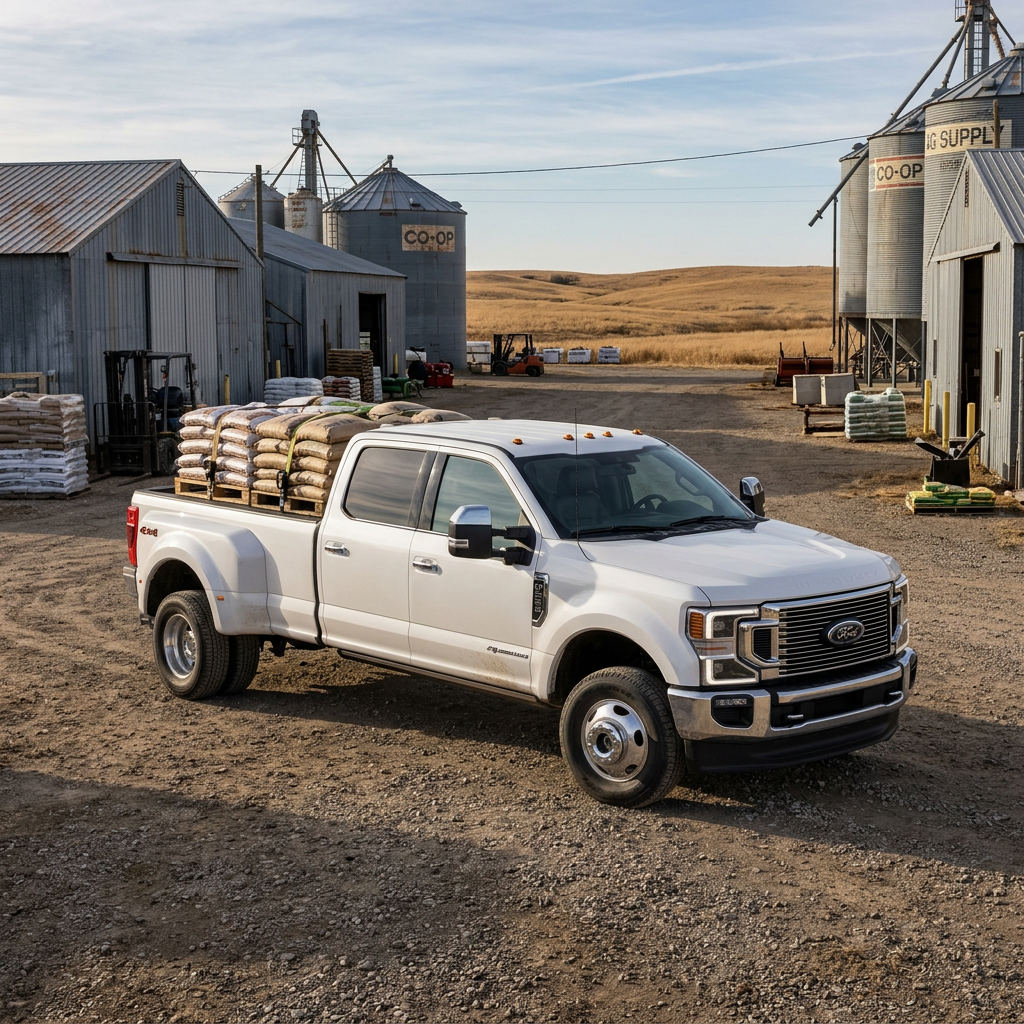
2027 Ford SUV Lineup: Choosing Your Ideal Family Vehicle

2027 Ford SUV Lineup: Choosing Your Ideal Family Vehicle

2027 Ford SUV Lineup: Choosing Your Ideal Family Vehicle Choosing the ideal vehicle from the 2027 Ford SUV lineup comes down to matching your family's seating requirements, cargo space needs, and trailering demands directly to the right body size. Three-row options like the Ford Explorer and Ford Expedition provide flexible passenger configurations and high tow ratings, while two-row alternatives offer compact maneuverability. Today, we speak with Nino Williams, Finance Manager at Valor Ford, who brings 11 years of automotive finance and sales experience to walk us through selecting, configuring, and financing the right Ford SUV for your lifestyle. Q: How do families select the ideal vehicle from the 2027 Ford SUV lineup? A: Finding the right vehicle starts with identifying how many passengers you haul every day and whether you need serious trailering capability. For smaller households seeking efficient daily driving and standard four-wheel drive, a compact option like the 2027 Ford Bronco Sport starts at an MSRP of $36,760 and delivers EPA estimates of 21 city / 27 hwy MPG alongside a 2.0L engine and 2,700 lbs of towing. Larger households usually benefit from stepping up to three-row platforms that balance passenger capacity with expansive rear storage. When shoppers arrive at our showroom to compare options across the lineup, we walk through overall budget, long-term ownership goals, and daily passenger logistics. You can reach our showroom team directly by placing a quick call to discuss incoming allocations or stopping by our showroom address to evaluate cabins in person. For buyers who prefer adventure-ready styling in a two-row footprint, exploring our new Ford Bronco inventory gives a great baseline for capability and floor plan flexibility. Q: Which 2027 Ford SUV models offer third-row seating for growing families in Junction City? A: For growing families who need extra seat belts for carpools or weekend outings around Junction City, Ford offers standard third-row seating on both the 2027 Ford Explorer and the full-size 2027 Ford Expedition. Neither two-row models like the Ford Bronco nor the Ford Bronco Sport offer a third row, so shoppers requiring seating for six to eight passengers will want to target the midsize Explorer or the full-size Expedition. The midsize 2027 Ford Explorer comes standard with six-passenger or seven-passenger seating configurations, making it a versatile choice for routine school runs and daily errands. If maximum interior volume is the priority, the 2027 Ford Expedition and extended-length Expedition Max accommodate up to eight passengers with generous legroom across all three rows. For shoppers looking for multi-row versatility, reviewing our quality pre-owned inventory provides excellent opportunities to secure late-model family haulers with complete peace of mind. Q: Does the 2027 Ford Explorer offer more rear legroom than the Toyota Highlander? A: Yes, the 2027 Ford Explorer delivers noticeably more passenger space in the back than the Toyota Highlander, particularly when comparing third-row legroom. The Explorer provides 39 inches of second-row legroom and 32 inches of dedicated third-row legroom, whereas the Highlander features a tighter rear row that can feel cramped for teenagers and adults on longer journeys. That extra spatial comfort in the rear rows makes a substantial difference when loading older children or extra gear. Behind the third row, the Explorer provides about 18 cubic feet of cargo room, which quickly expands to nearly 48 cubic feet when the back seats are folded flat. Shoppers interested in analyzing interior dimensions and powertrain specs in greater detail can consult our detailed Ford Explorer research guide, and those trading in a current vehicle can easily value your trade-in online before visiting. Q: Which full-size SUV can tow more: the 2027 Ford Expedition or Chevy Tahoe? A: When properly configured for maximum trailering, the 2027 Ford Expedition outperforms the Chevrolet Tahoe with a maximum towing capacity of 9,300 lbs compared to the Tahoe's peak capacity of 8,400 lbs. That nearly 1,000-pound advantage stems from Ford's high-torque powertrain engineering, making the Expedition the superior choice for hauling heavy travel trailers, double-axle boats, or livestock haulers. "When families come onto the lot to look at full-size SUVs, they usually want to test how easily adults fit in the third row before they even glance at the price sticker." Under the hood, the Expedition features a standard 3.5L EcoBoost twin-turbo V6 engine producing 400 hp and 480 lb-ft of torque, while higher trims offer a high-output variant generating 440 hp and 510 lb-ft of torque. Managed through a smooth SelectShift 10-speed automatic transmission, this setup delivers immediate low-end pull for effortless highway merging while pulling heavy loads. Drivers planning long trips across the highway miles of Dickinson County appreciate how stable the Expedition feels under load. To streamline your purchase, you can easily contact our finance team online to establish your budget parameters early. Q: What towing features are available on the 2027 Ford Expedition to assist with trailers? A: Ford equips the 2027 Ford Expedition with an impressive suite of advanced trailering technologies engineered to eliminate the stress of hitching and reversing large trailers. Key features include Pro Trailer Backup Assist, which allows drivers to guide the direction of their trailer using a console-mounted control knob while the vehicle automatically manages the steering wheel. Additionally, Pro Trailer Hitch Assist utilizes rear sensors and camera views to automatically navigate the SUV's hitch ball directly under the trailer coupler, controlling acceleration, braking, and steering maneuvers on its own. Drivers also benefit from Trailer Reverse Guidance, which leverages the 360-degree camera display to automatically select the clearest camera angle based on trailer positioning, along with an integrated trailer brake controller that coordinates stopping power smoothly. Q: What safety features and Co-Pilot360 capabilities come standard on 2027 Ford family SUVs? A: Safety is foundational across the entire lineup, and every 2027 Ford family SUV comes standard with Ford Co-Pilot360 driver-assist technology. Standard capabilities include Pre-Collision Assist with Automatic Emergency Braking, a Blind Spot Information System with Cross-Traffic Alert, a Lane-Keeping System, and a high-resolution Rear View Camera. Higher trim levels introduce expanded driver assistance features such as Adaptive Cruise Control with Stop-and-Go, Intersection Assist, and Reverse Brake Assist. Select models can also be equipped with BlueCruise, Ford's innovative hands-free highway driving technology that allows semi-autonomous cruising on pre-mapped hands-free highway zones across North America while monitoring driver attentiveness. Q: How much does a fully loaded 2027 Ford Expedition Platinum cost and what EV incentives apply? A: A 2027 Ford Expedition MAX Platinum carries MSRP that can vary by optional equipment packages, appearance packages, and seating layouts. The standard Expedition line begins at a starting MSRP of $63,920 for the entry Active trim. Regarding electric vehicle tax incentives for models like the 2027 Ford Mustang Mach-E, buyers should confirm current federal incentive eligibility with our finance team or a tax professional before making a purchase. Our finance specialists are always ready to answer tax questions and help you navigate manufacturer offers when you visit our dealership location or give our team a quick call to explore financing solutions. Keep Your Vehicle Running Strong Keep your vehicle performing at its best with our service team: Schedule Pickup and Delivery Service Schedule Ford Service Today Order Genuine Ford Parts © 2026 Valor Ford. All rights reserved. Vehicle specification data © JATO Dynamics Limited.
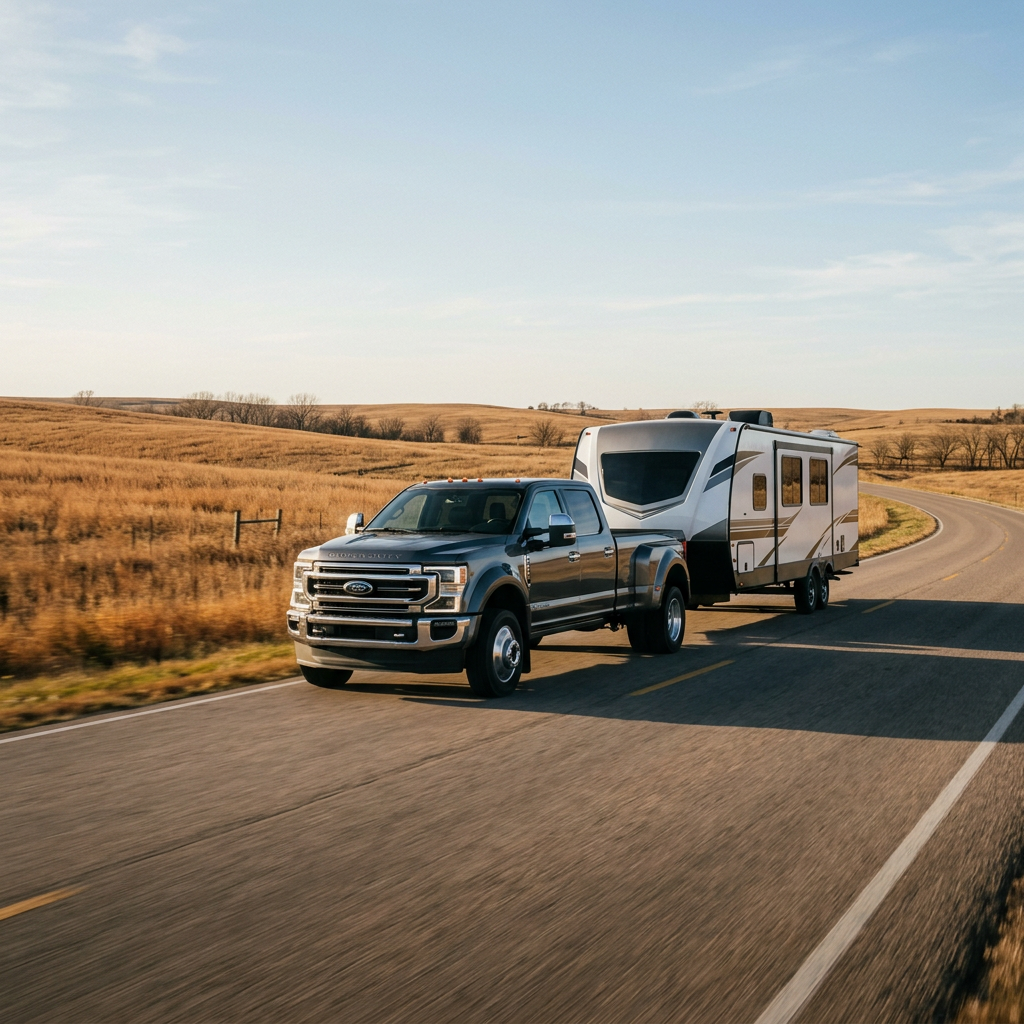
Contact Us

Fill out this form below and we'll contact you shortly
*Required Fields