Blog / Seasonal Vehicle Maintenance

Blog

All Seasonal Vehicle Maintenance Buying Guides Maintenance & Service New Vehicle Reviews Technology & Innovation Financing & Insurance Safety Features Model Comparisons Used Vehicle Guides Seasonal Driving Tips Junction City Valor Ford Models Seasonal Vehicle Care KS Community New Vehicle Sales Financing & Incentives Heavy-Duty Truck Care Valor Ford Service Automotive Parts & Accessories Repair & Parts Towing & Trailer Technology Trade-In & Negotiation Tips Valor Ford Vehicle Ownership Tips Diesel Engine Care Manhattan Ford Dealer Manhattan Ford Service Vehicle Pricing Strategies Automotive Repair Manhattan Used Cars Military & Special Customer Programs Parts & Repairs Preventative Vehicle Inspections Tire Care & Management Vehicle Repair & Parts Vehicle Sales Agricultural Vehicle Maintenance Automotive Recalls & Repairs Certified Pre-Owned Programs Dealership Transparency Diesel Engine Maintenance Family SUVs Genuine OEM Parts & Accessories Heavy-Duty Truck Upkeep Military & Student Moving Tips Off-Road Packages & Accessories Service Tips & Guides Technology & Innovation in Truck Service Trade-In & Pre-Approval Processes Vehicle Trade-In Tips Vehicle Utility & Cargo Solutions Agricultural Fleet Service Classic Car Restoration Commercial Truck Financing Farm & Ranch Equipment Reviews Genuine Parts & Accessories Heavy-Duty Truck Guides Hybrid & Electric Vehicles Performance & Powertrain
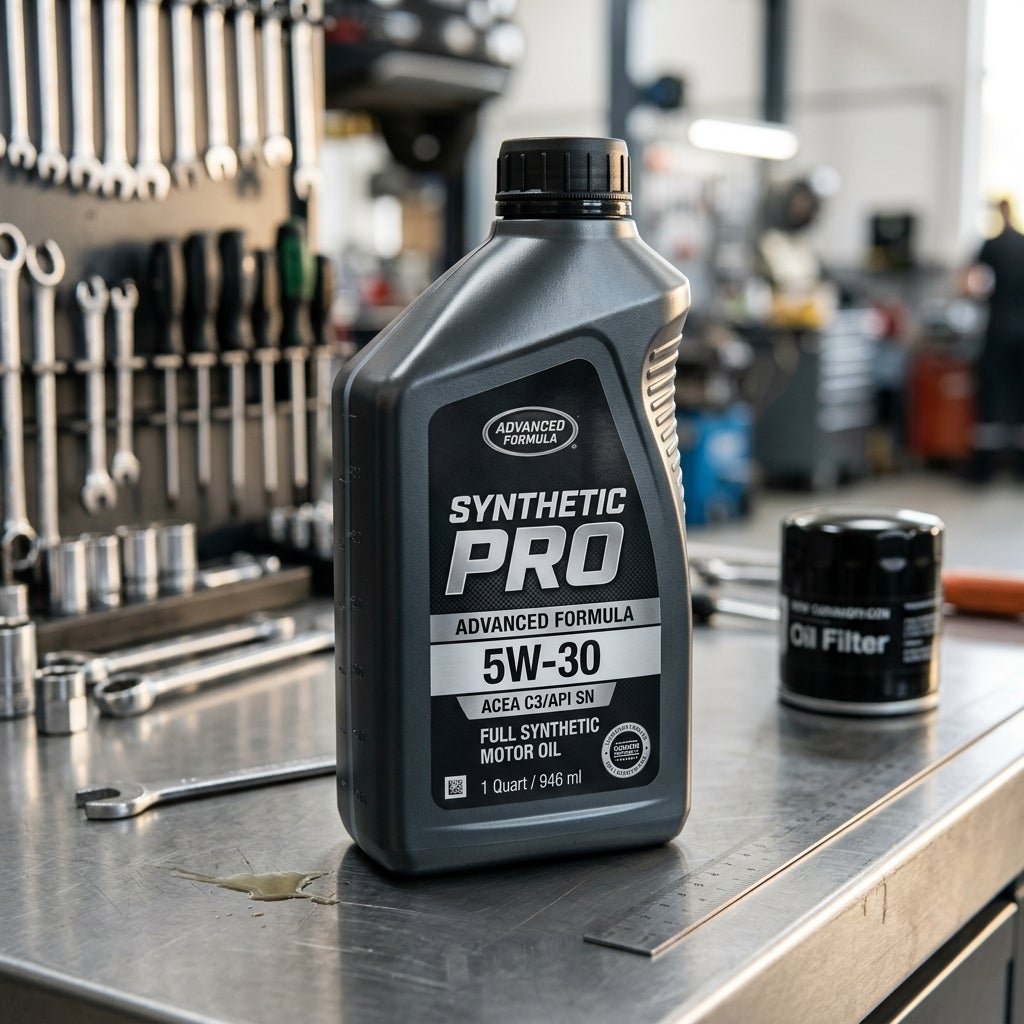
Bottle of SYNTHETIC PRO 5W-30 motor oil and an oil filter on a metal workshop workbench with tools. (Representative image for illustration purposes only. Actual vehicle may vary based on trim and configuration.)

Modern Vehicle Engine Oil: Recommended Viscosity Grades & Technical Specs

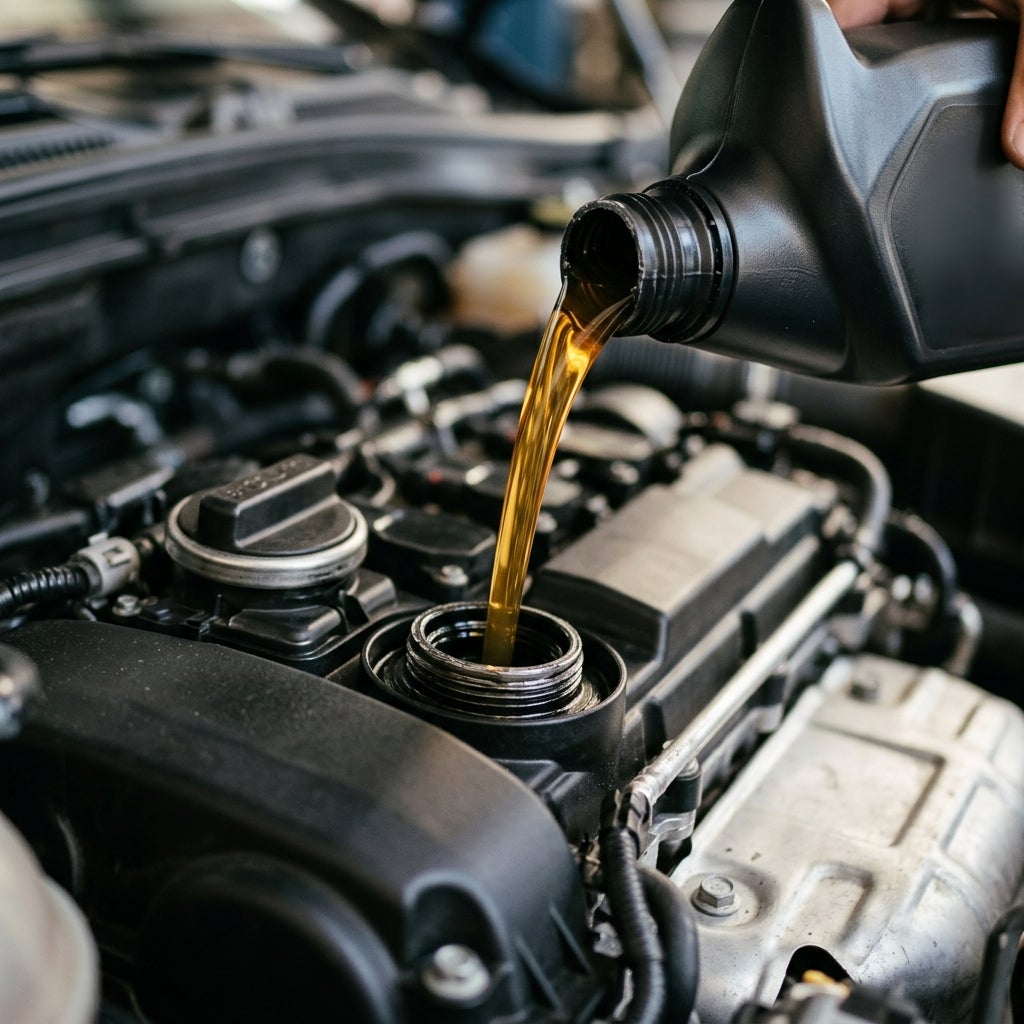
Modern Vehicle Engine Oil Requirements: Recommended Viscosity Grades & Technical Specs If you have popped the hood of a recently built passenger car, crossover, or truck, you have likely noticed that the oil fill cap no longer recommends the thick 10W-30 or 10W-40 oils that dominated garage shelves decades ago. Instead, modern vehicle engineering demands ultra-low viscosity full synthetic motor oils—most commonly 0W-20, 5W-20, or 0W-16 —that satisfy stringent global efficiency and protection standards. In today's highly calibrated internal combustion engines, motor oil is not merely a lubricant; it is an integral hydraulic fluid and thermal control agent essential to modern powertrain operation. Automotive manufacturers design contemporary engines with hair-thin bearing clearances, precision variable camshaft timing (VCT) phasers, and direct-injection fuel systems. These precision systems rely on rapid oil pressure buildup within milliseconds of starting. Meeting rigorous standards such as API SP, ILSAC GF-6, and OEM specifications like Ford WSS-M2C962-A1 ensures your engine protects against Low-Speed Pre-Ignition (LSPI), mitigates timing chain stretch, and maintains optimum fuel efficiency. Drivers across Junction City, Fort Riley, and Manhattan who understand these technical parameters can ensure their powertrain runs reliably for hundreds of thousands of miles. To learn more about customized maintenance plans for your vehicle, Get Directions to Valor Ford or speak directly with our factory-trained master technicians. Decoding Oil Viscosity Ratings: What Do 0W-20, 5W-20, and 5W-30 Actually Mean? The standard fluid viscosity numbers on oil containers are defined by the Society of Automotive Engineers (SAE) J300 rating system. A rating such as 0W-20 represents a multi-grade lubricant designed to perform across dramatic temperature spectrums: • The 'W' Rating (Winter Standard): The number preceding the 'W' indicates cold-temperature flow capability. Lower numbers (0W, 5W) mean the fluid flows effortlessly at sub-zero temperatures, ensuring instantaneous lubrication to overhead camshafts during cold starts. • The High-Temperature Rating: The second number (20, 30, or 40) reflects kinematic viscosity measured at engine operating temperature (100°C / 212°F). A lower operating rating reduces internal hydrodynamic drag, enabling the engine to transfer power to the drivetrain with minimal resistance. Modern low-viscosity oils like 0W-16 and 0W-20 are engineered specifically for engines designed with ultra-tight internal tolerances, guaranteeing full oil pressure and protective fluid film coverage right at ignition. Using a higher viscosity oil than recommended (such as substituting 10W-40 into an engine built for 0W-20) can cause delayed oil flow during winter mornings in Kansas, premature wear on variable valve solenoids, and decreased fuel mileage. OEM Industry Specifications Explained: API SP, ILSAC GF-6, and Manufacturer Approvals Viscosity is only half of the engine oil equation. Equally vital are technical standards set by global petroleum institutes and automotive OEMs. These specifications ensure the additive package inside the oil prevents engine wear, sludge formation, and severe internal damage under high pressure. API SP Certification Introduced by the American Petroleum Institute, API SP is formulated to combat Low-Speed Pre-Ignition (LSPI) in modern turbocharged direct-injection engines. It also provides elevated protection against timing chain wear and high-temperature deposit accumulation. ILSAC GF-6 Standard Developed by the International Lubricants Standardization and Approval Committee, ILSAC GF-6A and GF-6B establish strict fuel economy benchmarks and enhanced protection against piston varnish, sludge formation, and severe stop-and-go engine wear. Ford OEM Approvals Ford factory specs, such as Ford WSS-M2C962-A1 (for 0W-20) and WSS-M2C961-A1 (for 5W-30), specify strict molecular shear stability and elastomer compatibility to protect turbo seals and maintain valid new-vehicle warranty coverage. Why High-Tech Turbocharged and GDI Engines Demand Full Synthetic Oil Modern powertrains rely heavily on Turbocharged Gasoline Direct Injection (TGDI) architectures—such as Ford EcoBoost engines—to deliver outstanding horsepower and towing capacity from smaller displacements. However, turbochargers operate at rotational speeds exceeding 200,000 RPM and temperatures exceeding 1,000°F. Conventional mineral oils quickly break down under this extreme thermal stress, leading to carbon coking inside turbo bearing housings, oil passageway blockages, and severe engine damage. Full synthetic lubricants engineered with uniform molecular structures exhibit superior thermal stability, resisting oxidation and shear degradation. Furthermore, direct injection sprays fuel directly into the combustion chamber, which can create microscopic soot particles that conventional oils cannot keep in suspension. Maintaining factory performance requires high-purity full synthetic formulations designed specifically for TGDI demands. If you drive a modern high-output vehicle, you can Schedule Ford Service Today to ensure your oil meets these critical engineering standards. Schedule Factory Synthetic Service What Driving Habits Qualify as Severe Driving Conditions According to Auto Manufacturers? Most vehicle owners assume that 'severe service' schedules apply only to commercial fleet vehicles or extreme off-road rock crawlers. In reality, modern automotive owner's manuals classify a significant amount of everyday driving as severe service. Severe driving conditions occur whenever vehicle operation prevents the engine oil from reaching and maintaining its optimal operating temperature long enough to burn off internal moisture, fuel dilution, and combustion byproducts. Key severe driving qualifiers in our local region include: • Short Commutes Under 10 Miles: Short trips around Junction City or campus runs in Manhattan do not allow oil to heat sufficiently, leading to fuel dilution and sludge condensation. • Extreme Weather Operation: Kansas summer heat routinely exceeds 90°F–100°F, accelerating thermal oxidation, while winter sub-zero blasts slow cold-start fluid flow. • Frequent Idling: Extended idling at military gate checkpoints at Fort Riley or traffic stops generates high soot levels without air cooling across the radiator. • Towing, Hauling & Rural Roads: Pulling trailers across Dickinson County highways or driving regularly on dusty gravel roads introduces abrasive particulates into air filters and increases engine strain. When driving under these normal-yet-severe conditions, manufacturers recommend shortening oil maintenance intervals from 10,000 miles down to 5,000–7,500 miles (or every 6 months) to preserve vital components. Drivers seeking to upgrade their capability can also explore our inventory for heavy-duty haulers like the Research Ford F-150 or check out our Trade In Evaluation process. Why Local Service Centers Caution Against Using the Wrong Oil in DIY Changes Performing DIY oil maintenance at home can be satisfying, but modern vehicle electronics and hydraulic systems leave little room for error. Sourcing off-the-shelf oil that lacks the required OEM rating—or using the wrong viscosity grade altogether—can trigger severe mechanical failures: 1. Variable Valve Timing (VVT) Malfunctions: VVT system phasers rely on precise hydraulic fluid pressure to advance or retard engine timing. Incorrect viscosity causes timing lag, check engine lights, misfires, and sluggish throttle response. 2. Low-Speed Pre-Ignition (LSPI) Engine Failure: Using non-API SP certified oil in turbocharged engines can cause destructive premature combustion events, snapping piston rings and destroying connecting rods. 3. Filter Bypass & Drain Plug Damage: Generic oil filters often lack correct internal bypass valve pressures, allowing unfiltered oil into engine passages. Strip-threaded drain pans or overtightened filters can lead to sudden, catastrophic oil loss. 4. Voided Factory Warranty Protection: In the event of engine failure, manufacturers require documented service records proving that oil meeting exact OEM specifications was used. Non-compliant fluids can invalidate powertrain warranty coverage. For DIY enthusiasts who prefer executing their own fluid changes, we strongly advise sourcing genuine Motorcraft fluids and filters directly from our parts center—you can Order Genuine Ford Parts online to protect your vehicle. What Are the Advantages of Getting Oil Changes at a Dealership Near Junction City? Choosing certified dealership service at Valor Ford offers unmatched advantages over quick lube stops: • Factory-Trained & Certified Technicians: Our technicians undergo rigorous OEM training, understanding the specific fluid requirements, torque specs, and filter tolerances of every Ford model and modern domestic vehicle. • Genuine Motorcraft® Oils & OEM Filters: We utilize exact-spec Motorcraft synthetic blend and full synthetic oils formulated specifically for your vehicle, paired with high-efficiency filters containing silicone anti-drainback valves. • Comprehensive Multi-Point Inspection: Every service includes a complete check of brake pad wear, tire tread depth, battery health, coolant condition, and suspension components. • Complete Vehicle History Record: Service records are automatically uploaded to OEM databases and CARFAX, enhancing long-term resale value and verifying full warranty compliance. Are Walk-In Appointments Accepted at Most Local Quick Lube Shops in the Area? Walk-In Quick Lubes While quick lube outlets across Junction City and Manhattan accept walk-ins, wait times vary wildly during peak hours. Furthermore, many quick lube shops rely on bulk universal oil drums and generic filters that may not carry specific OEM approvals. Scheduled Dealership Care Booking a dedicated service appointment guarantees a reserved bay, predictable service duration, exact OEM-specified synthetic oils, and direct oversight by certified mechanics trained specifically on modern high-tech engine systems. Pickup & Delivery Option To eliminate wait time completely, Valor Ford offers specialized door-to-door concierge service. You can Schedule Pickup and Delivery Service to have your vehicle serviced without ever leaving home or work. Schedule Pickup & Delivery Service What Additional Fees Are Added to an Oil Change Bill in Kansas? When reviewing an oil service invoice anywhere in Geary, Riley, or Dickinson County, vehicle owners often see line items beyond the basic oil and filter labor. Understanding these standard fees ensures complete price transparency: • Kansas State Sales Tax: Applied to both physical parts (filters, synthetic fluid) and applicable labor charges according to municipal and state tax rates. • Environmental Waste Disposal Fees: State and federal regulations require eco-friendly recycling and disposal of used motor oil and hazardous oil filters. • Shop Supplies Charges: Covers protective seat covers, floor mats, brake cleaner, rags, and eco-disposal solvents used during maintenance. Service Line Item Standard Purpose Fee Transparency Synthetic Motor Oil (5-6 Quarts) OEM-grade API SP / ILSAC GF-6 fluid Current Service Price OEM Spin-On Filter Silicone valve filter protection Included in Package KS Environmental Disposal Eco-safe oil & filter recycling Mandatory State Fee Shop Supplies & Materials Cleaners, seals, protective covers Itemized Standard Charge Seasonal Oil Maintenance for Junction City, Fort Riley, and Dickinson County Drivers Northeast Kansas weather presents aggressive seasonal thermal shifts. Late summer brings sustained triple-digit heat and intense highway driving across I-70 between Junction City, Fort Riley, and Manhattan, subjecting engine fluid to elevated thermal shearing. Transitioning into autumn and winter introduces rapid freeze cycles that test oil cold-flow pumpability. Maintaining a disciplined seasonal maintenance schedule prevents premature fluid degradation. For active-duty military personnel commuting to Fort Riley or agricultural families navigating rural Dickinson County gravel roads, summer dust and heavy engine load require frequent air filter replacements and timely synthetic fluid checks. If you are preparing your vehicle for end-of-summer travel or upcoming seasonal commutes, Call us at (785) 238-5114 to consult with our certified service advisors. Oil Life Monitoring Systems vs Manual Dipstick Checks: Best Practices Intelligent Oil-Life Monitor (IOLM) Modern vehicles feature sophisticated Intelligent Oil-Life Monitor (IOLM) systems. Rather than relying on a simple mileage counter, the IOLM software tracks engine operating parameters in real time—including cold engine starts, ambient temperature extremes, idling hours, engine load, and towing duty. It dynamically calculates actual fluid breakdown and notifies you on the instrument cluster when service is required. The Necessity of Dipstick Checks Despite advance IOLM algorithms, the monitor cannot measure physical fluid volume. All engines naturally consume minor amounts of oil between maintenance intervals. Checking your dipstick manually once per month ensures that your fluid level remains safely between the minimum and maximum crosshatched markings, preventing oil starvation and unexpected low-pressure conditions. Schedule Certified Oil Service & OEM Fluid Maintenance at Valor Ford Protecting your engine with the exact recommended viscosity grade and OEM-certified technical specifications is the single most effective investment you can make in your vehicle's longevity. Whether you drive a family SUV like the Research Ford Explorer, an athletic pony car like the Research Ford Mustang, or a dependable truck, our team at Valor Ford is committed to providing expert care tailored to northeast Kansas driving conditions. Visit our state-of-the-art service department in Junction City, experience our transparent multi-point inspection process, and keep your engine performing at its absolute peak. Schedule Ford Service Online Today

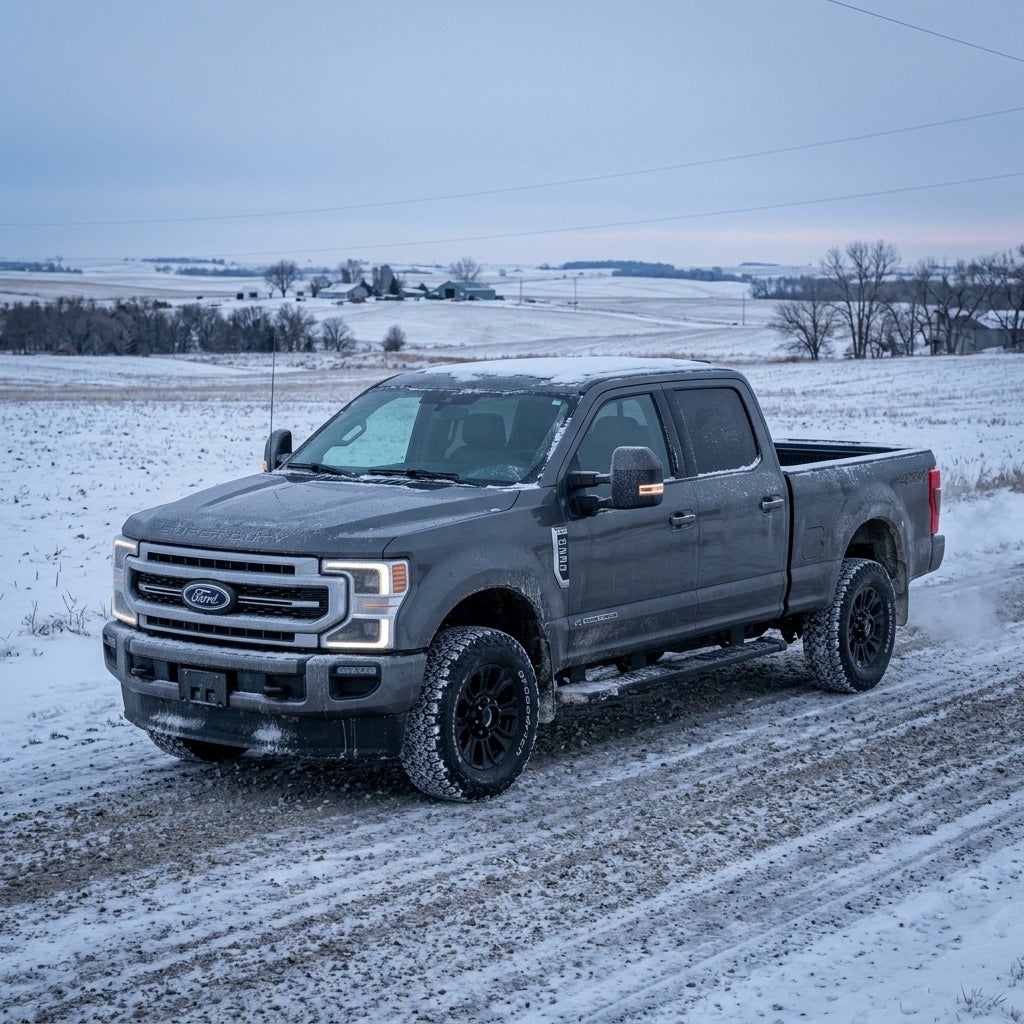
A dark grey Ford Super Duty pickup truck parked on a snowy rural dirt road surrounded by snow-covered fields. (Representative image for illustration purposes only. Actual vehicle may vary based on trim and configuration.)

Unlock Winter Power: Master 6.7L Power Stroke Cold Starts Like a Pro

Why Modern Diesels Struggle in Cold Weather: 6.7L Power Stroke Starting Causes When sub-zero Arctic winds sweep across Dickinson County and Fort Riley, owners of modern diesel trucks like the 6.7L Power Stroke often face one of winter's most frustrating experiences: turning the key or pushing the start button only to be met with a sluggish crank or an unyielding refusal to fire up. While modern heavy-duty Ford Super Duty pickups are marvels of high-pressure common rail injection engineering and robust thermal design, extreme cold shifts physics and chemistry heavily against diesel combustion. Unlike gasoline engines that rely on spark plugs to ignite fuel at virtually any temperature, diesel engines rely entirely on compression heat to ignite atomized fuel. The top culprits responsible for cold-weather starting trouble on the 6.7L Power Stroke include severely degraded dual batteries with diminished Cold Cranking Amps (CCA), paraffin wax gelling in untreated ultra-low sulfur diesel (ULSD) fuel, malfunctioning Glow Plug Control Modules (GPCM) or damaged glow plug harnesses, and high-viscosity engine oil that slows down cranking speed below the threshold required to build compression heat. Understanding these critical thermal thresholds allows truck owners to take proactive measures before freezing temperatures hit central Kansas. If you want to ensure your heavy-duty truck remains dependable through harsh winters, you can readily Schedule Ford Service Today with our factory-trained diesel technicians at Valor Ford in Junction City. Schedule Diesel Cold Start Inspection Is a Weak Battery the Most Common Cause of a Winter Crank-No-Start Condition? Without question, dual-battery failure is the single most frequent reason 6.7L Power Stroke diesels fail to start on freezing Kansas mornings. Modern heavy-duty Ford trucks rely on two high-output 12-volt AGM or lead-acid batteries wired in parallel. This setup must simultaneously power ultra-fast glow plugs, energize high-draw fuel lift pumps, fire electronic injectors operating at over 30,000 PSI, and turn over a massive 15.8:1 compression ratio engine. As ambient temperatures plummet toward zero degrees Fahrenheit, chemical activity inside automotive batteries slows down drastically. At 0°F, a standard vehicle battery loses roughly 50 to 60 percent of its rated Cold Cranking Amps (CCA). At the exact same moment, cold, thickened oil increases engine cranking resistance by almost 200 percent. If one of your dual batteries has even a single degraded cell, it acts as a constant drain on the second battery, preventing the starter motor from reaching the minimum 150 to 200 RPM rotational speed needed to build cylinder compression heat. Because modern dual-battery systems hide degradation well during mild weather, drivers rarely notice early warning signs until winter strikes. If you suspect your truck is due for fresh Motorcraft batteries or want to evaluate upgrade possibilities, explore our Research Ford F-250 page or stop by our service department for a load test. Understanding Diesel Fuel Gelling and Waxing in Kansas Sub-Zero Temperatures 1. Wax Crystallization Ultra-Low Sulfur Diesel (ULSD) naturally contains paraffin wax compounds that improve energy density and cetane rating. However, when fuel temperature reaches its Cloud Point (typically around 10°F to 15°F), these waxes begin forming solid microscopic crystals. Without anti-gel treatment, fuel turns cloudy and rapidly solidifies. 2. Cold Filter Plug Point As temperatures drop further toward the Cold Filter Plugging Point (CFPP), paraffin wax aggregates into dense gel deposits. This gel instantly clogs the primary 10-micron fuel water separator filter on the frame rail, starving the High-Pressure Common Rail (HPCR) pump and preventing fuel delivery to the injectors. 3. Moisture & Ice Blockage Condensation frequently collects inside fuel tanks during temperature swings in Junction City and Fort Riley. Un-drained water inside the fuel water separator module freezes solid in sub-zero weather, completely blocking fuel line flow and potentially damaging high-pressure injection components. To protect against fuel gelling during severe cold snaps across central Kansas, Power Stroke owners should regularly treat their tanks with Ford-approved anti-gel additives at every fill-up once ambient temperatures drop below freezing. Need fresh OEM filters before winter? You can Order Genuine Ford Parts directly through our dealership. How Glow Plug and Glow Plug Control Module (GPCM) Failures Trigger Cold Starting Problems Modern 6.7L Power Stroke engines utilize fast-acting ceramic or metal glow plugs controlled by a sophisticated Glow Plug Control Module (GPCM). Unlike older mechanical diesels that required long pre-heat waits, the modern GPCM modulates electrical current via pulse-width modulation, heating individual glow tips above 1,800°F in less than two seconds. When temperatures plunge, the GPCM also maintains an 'after-glow' phase after combustion starts to reduce white smoke emissions and steady cold idle. However, if a single glow plug suffers high resistance or short-circuits, or if the GPCM's solid-state power switching circuitry fails, specific Diagnostic Trouble Codes (DTCs like P0671 through P0678) are triggered. In severe cold, losing even two glow plugs will result in extended cranking, rough misfiring, or complete starting failure. Schedule Pickup and Delivery Service How Does the 6.7L Power Stroke Perform in Sub-Zero Kansas Winter Conditions? Engineered specifically for extreme North American climate conditions, the Ford 6.7L Power Stroke V8 Turbo Diesel offers exceptional cold-weather capabilities when properly maintained. Featuring an integrated 1,000-watt heating element inside the engine block, factory automatic cold-weather elevated idle features (which raise engine RPM to prevent fuel slobber and warm up coolant faster), and advanced powertrain control logic, the 6.7L Power Stroke is built to conquer Midwestern freezes. One of the key operational requirements during Kansas winters is selecting the correct oil viscosity. While standard 15W-40 conventional oil performs well during warm weather, switching to 5W-40 or 0W-40 full synthetic diesel engine oil (meeting Ford specification WSS-M2C171-F1) dramatically reduces oil pump cavitation and resistance on cold starts. Synthetic lubricants flow rapidly at -20°F, ensuring immediate lubrication to high-load turbocharger bearings and valvetrain components upon startup. Whether towing heavy machinery around Dickinson County or commuting to Fort Riley, maintaining proper fluid viscosities ensures your Super Duty executes rapid starts regardless of the weather. Interested in upgrading your vehicle? Explore our Shop New Ford Bronco Inventory or Browse Used Inventory online. Essential Winter Preventative Maintenance Checklist for 6.7L Power Stroke Owners Electrical & Batteries • Perform digital conductance load test on both batteries. • Clean terminal posts and apply anti-corrosion spray. • Verify starter drawdown amperage during cranking. • Inspect alternator output under full glow plug load. Fuel & Water Separator • Drain water separator valve into a glass container. • Replace dual Motorcraft fuel filters (every 15k miles). • Add anti-gel cetane booster treatment at fill-ups. • Check frame-mounted lift pump operating pressure. Engine Oils & Heating • Switch to API-CK-4 5W-40 full synthetic diesel oil. • Inspect engine block heater heating element resistance. • Verify block heater power cord for cracks or frays. • Test coolant freeze protection down to -35°F. Replacement Costs for Winter-Stressed Diesel Parts vs. Preventative Maintenance Costs Ignoring basic pre-winter maintenance on a 6.7L Power Stroke diesel can lead to substantial repair bills. When gelled fuel or water enters the High-Pressure Common Rail (HPCR) system, microscopic metal-to-metal abrasion can ruin the high-pressure pump, fuel rails, and piezoelectric injectors. Furthermore, extended cranking on weak batteries causes extreme heat buildup inside the starter motor, leading to sudden armature failure. Below is a side-by-side estimated cost breakdown contrasting affordable preventive maintenance measures with major reactive mechanical repairs caused by severe cold-weather operating damage. Service / Repair Item Preventative Cost Reactive Failure Cost Motorcraft Fuel Filters & Anti-Gel $95 - $180 $8,000 - $11,000 (HPCR Replacement) Dual Battery Replacement (AGM) $380 - $550 $650 - $900 (Starter + Towing + Batteries) 5W-40 Synthetic Oil Service $140 - $220 $1,200 - $2,500 (Turbocharger Wear Repair) Glow Plug System Maintenance $150 - $350 $800 - $1,400 (GPCM + Harness Burnout) Contact Us for Current Financing Information Best Practices for Using Block Heaters and Winter Grille Covers on Ford Super Duty Trucks The factory block heater built into the 6.7L Power Stroke is one of your best defenses against harsh Kansas freezes. However, leaving it plugged in all night is generally unnecessary and increases your electric bill. The internal 1,000-watt heating element warms engine coolant up to operating delta within 3 to 4 hours. Using a heavy-duty outdoor timer set to turn on 3 hours prior to your morning commute saves energy while ensuring instantaneous cab heat and rapid oil circulation. In addition, winter front grille covers are highly effective when ambient temperatures drop below 32°F. By restricting frigid airflow through the front radiator and charge air cooler (CAC), winter covers allow the diesel engine to reach its optimal operating temperature (around 190°F–210°F) much faster. Maintaining proper engine operating temperature prevents excess soot accumulation inside the Diesel Particulate Filter (DPF) and stops 'fuel slobber' during extended idling sessions in Junction City. How 6.7L Power Stroke Output Figures Compare to Cummins and Duramax in Cold Climates Ford 6.7L Power Stroke HO • 500 HP / 1,200 lb-ft Torque • Fast Ceramic Glow Plugs • Quick Thermal Warm-up • Dual Cooling Circuit Design • Class-Leading Cold Power GM 6.6L Duramax Turbo V8 • 470 HP / 975 lb-ft Torque • Metal Glow Plug System • Microprocessor GPCM • Dual Alternator Option • Engine Block Heater Ram 6.7L Cummins High Output • 420 HP / 1,075 lb-ft Torque • Intake Grid Heater Element • Inline 6-Cylinder Design • Heavy Cast Iron Block • Slower Initial Warm-up While the 6.7L Power Stroke delivers industry-leading output of up to 500 horsepower and 1,200 lb-ft of torque, unlocking that massive towing performance in winter requires clean cold fuel delivery and swift cylinder pre-heating. Considering a new heavy-duty truck? Learn more by reading our Research Ford F-250 overview. Step-by-Step Diagnostic Guide for a Cold-Weather Crank-No-Start Diesel Engine If you wake up to sub-zero temperatures in Dickinson County and your 6.7L Power Stroke cranks slowly or refuses to fire, follow this methodical troubleshooting procedure: Step 1: Check Battery Voltage Under Load — Turn on ignition. If gauge drops below 10.5 volts while cranking, battery voltage is insufficient to trigger electronic injectors. Step 2: Monitor Glow Plug Light Cycle — Observe the coil icon on your digital dash display. If it stays lit for less than 1 second in freezing weather, a GPCM fault may exist. Step 3: Listen for Primary Lift Pump — Turn ignition to ON without cranking. Listen for the frame-rail fuel pump humming for 15-20 seconds. Silence indicates a blown fuse or frozen pump module. Step 4: Check Water Separator Drain — Inspect for gelled fuel or ice blockages at the yellow water drain valve on the lower frame rail filter housing. Trade In Evaluation Reliable Winter Diesel Truck Ownership in Junction City, Fort Riley, and Dickinson County Living and working in central Kansas demands uncompromised vehicle dependability. Agricultural operators hauling livestock around Dickinson County, commercial contractors working early mornings, and military personnel commuting to Fort Riley rely on their Ford Super Duty trucks to fire up faithfully no matter how low the mercury drops. By adhering to recommended service schedules, keeping fuel tanks above half-full to minimize condensation, using quality anti-gel treatments, and relying on genuine Motorcraft components, your 6.7L Power Stroke will remain a dependable winter workhorse year after year. If you're exploring vehicle options across the Ford lineup, feel free to check out our Research Ford F-150 page, review our versatile SUVs with Research Ford Explorer, or explore compact efficiency via Research Ford Maverick. For performance enthusiasts, you can also Research Ford Mustang. Whatever your automotive needs, Valor Ford is dedicated to keeping Kansas drivers safely on the road. Prepare Your 6.7L Power Stroke for Winter at Valor Ford in Junction City, KS Inspect your battery and fuel filter before the first severe freeze to help avoid a weak battery or gelled fuel filter. The Ford factory-certified diesel technicians at Valor Ford are equipped with state-of-the-art diagnostic software to test glow plug control modules, evaluate battery conductance under heavy load, and service fuel filtration systems. Conveniently located at 1825 Goldenbelt Blvd in Junction City, KS, we proudly serve truck owners from Fort Riley, Manhattan, Abilene, and all of Dickinson County. Click below to Get Directions to Valor Ford or Call us at (785) 238-5114 to book your appointment today. Schedule Ford Service Today

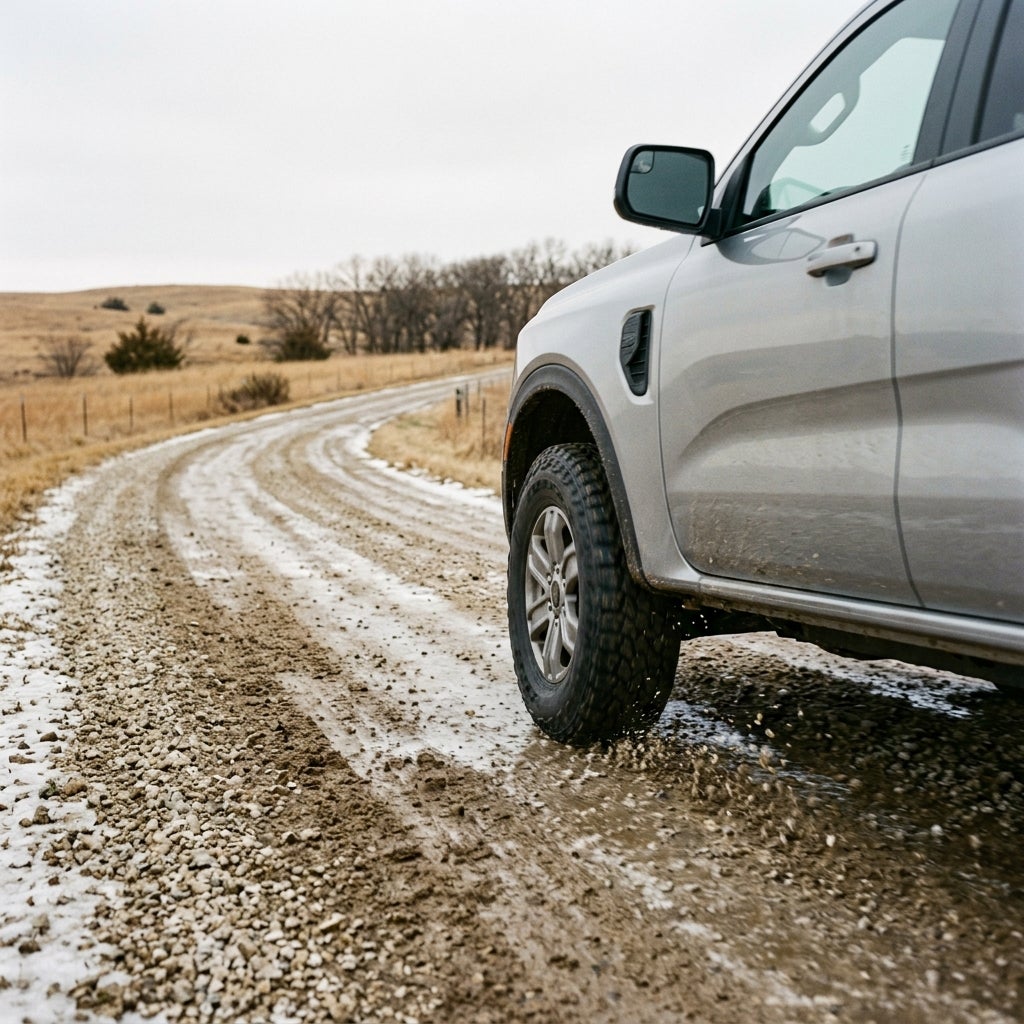
Silver pickup truck kicks up mud while driving along a paved country road shoulder at sunset. (Representative image for illustration purposes only. Actual vehicle may vary based on trim and configuration.)

Navigating Clay, Gravel, and Highway: Finding the Ultimate All-Terrain Truck Tire for North-Central Kansas

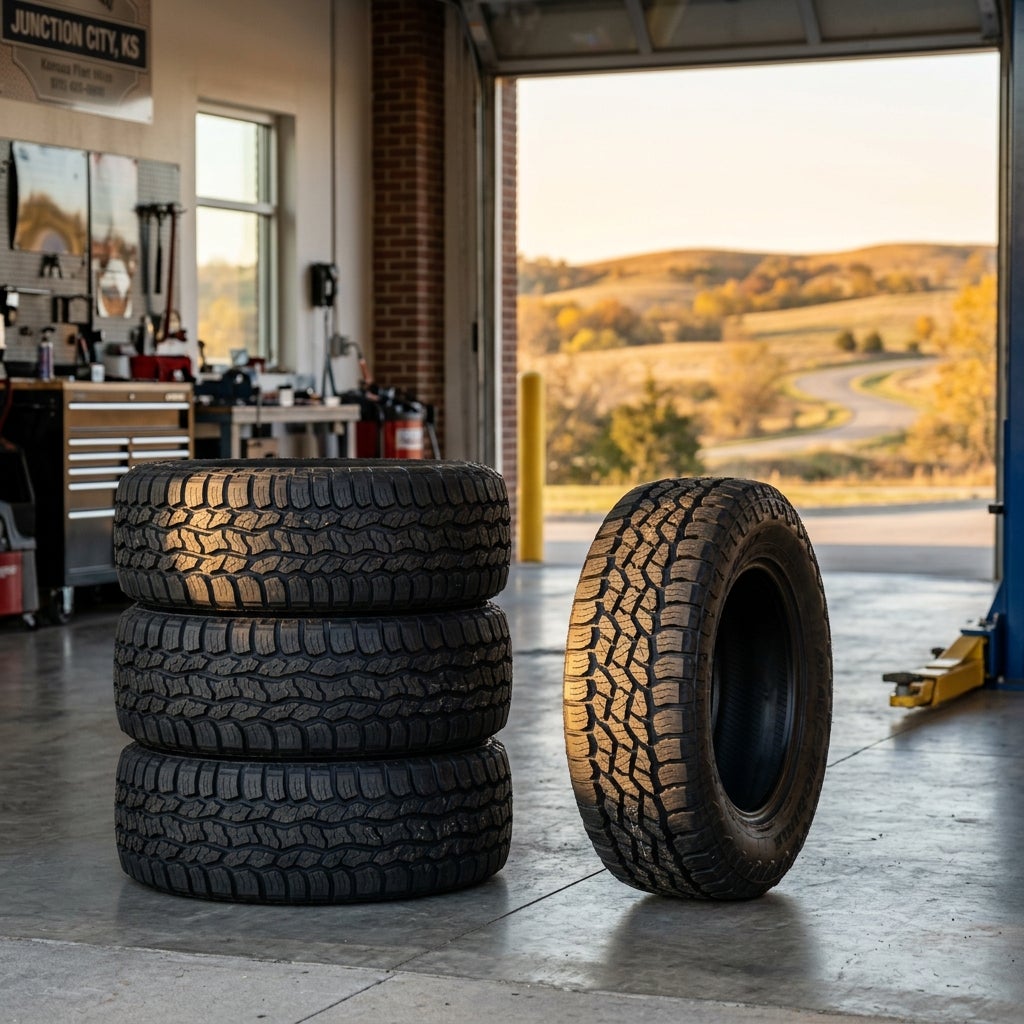
Navigating Clay, Gravel, and Highway: Finding the Ultimate All-Terrain Truck Tire for North-Central Kansas Driving a truck in North-Central Kansas isn't just a simple daily commute; it is a test of mechanical endurance and adaptability. On any given Tuesday, you might find yourself navigating the slick, waterlogged bottomlands of the Republican River in Clay County, tackling miles of razor-sharp limestone gravel roads in rural Ottawa County, and then opening it up to seventy-five miles per hour on Interstate 70 as you head towards Fort Riley or Manhattan. Each of these surfaces places vastly different, often conflicting demands on your truck's tires. Sticky clay requires wide, open tread voids to prevent packing; sharp gravel demands ultra-tough, cut-and-chip resistant rubber compounds with reinforced sidewalls; and the highway demands a tight, continuous tread pattern that minimizes road noise, heat buildup, and rolling resistance. Finding a single tire that can handle all three environments without wearing out in ten thousand miles is the ultimate goal for Kansas truck owners. For generations, drivers in communities like Minneapolis, Clay Center, Wakefield, and Delphos have had to make tough compromises. If you chose a dedicated mud tire, your highway commute became a loud, vibrating chore, and the soft rubber compounds would disintegrate on the gravel. If you chose a smooth highway tire, you'd find yourself hopelessly stuck in the first wet clay field entrance or farm lane you encountered. Fortunately, modern tire engineering has made incredible strides. Today's hybrid and advanced all-terrain tires use sophisticated materials science and variable tread geometries to bridge these gaps. Here at Valor Ford in Junction City, we understand the unique regional soil conditions and driving habits of our agricultural, military, and commercial customers. We're here to help you dissect the physics of tire design so you can make an educated investment in your vehicle's safety, efficiency, and capability. To truly master this terrain, you must understand how your truck's power translates to the ground. Your tires are the only contact point between thousands of pounds of American steel and the unpredictable Kansas soil. Whether you're hauling a load of hay, commuting to the base, or heading out for weekend recreation, selecting the right tire is a critical decision. Let's look closely at how the different tire classifications perform when subjected to our local conditions, helping you find the absolute perfect match for your daily routes and workloads. Which Tire Type Works Best If I Drive Mud, Gravel, and Highway All in One Week? The modern light truck tire market is broadly segmented into three primary categories: Highway Terrain (HT), All-Terrain (AT), and Mud-Terrain (MT). In recent years, a fourth 'Rugged Terrain' (RT) or hybrid category has emerged specifically to address the needs of drivers who find themselves split evenly between demanding off-road tasks and high-speed pavement driving. To choose the right one, let's break down the structural and performance differences of these tire styles when faced with the tri-hazard drive of mud, gravel, and highway. Highway Terrain (HT) The Pavement Specialist: Highway terrain tires are engineered with closely spaced, continuous tread ribs designed to maximize the rubber contact patch on asphalt. This design reduces tread squirm, optimizes fuel efficiency, and keeps cabin noise to a whisper. While they offer superb lifespan on clean roads, their shallow tread depth and tight grooves are easily packed solid with wet clay, instantly turning your tire into a slick. On gravel, their softer, fuel-conscious rubber compounds are vulnerable to slicing and chipping. All-Terrain (AT) The Balanced Performer: All-Terrain tires represent the sweet spot for many Kansas drivers. They feature interlocking, blocky tread designs that are deep enough to bite into loose soil and gravel, yet arranged carefully to maintain stable, reasonably quiet contact on the highway. High-quality AT tires use harder, specialized rubber compounds that resist stone chipping. While they can handle moderate mud, extremely thick, wet clay can still overwhelm their self-cleaning capabilities if you don't maintain wheel spin. Mud-Terrain & Hybrids The Off-Road Warrior: Mud-Terrain (MT) and Hybrid (RT) tires feature massive tread blocks, deep voids, and aggressive shoulder lugs designed to scoop away heavy mud and throw it clear of the tire. Hybrids pull the best elements of AT and MT tires together: they keep a slightly tighter center tread pattern to reduce highway hum while maintaining giant, scoop-like shoulder blocks for deep ruts. For drivers spending significant time on rural farm paths and unpaved county roads, these offer the ultimate insurance policy against getting stuck. If your weekly schedule involves commuting forty miles down US-81, pulling a stock trailer down five miles of sharp Ottawa County limestone gravel, and then backing into a muddy pasture to hook up to an implement, a high-quality All-Terrain or Hybrid (RT) tire is almost always your best bet. These tires provide the structural durability to survive the gravel, the biting edges to escape the mud, and the advanced tread pitch sequences necessary to keep your sanity on the long highway drive back home. Let's look into the specific engineering details that make these tires work. Conquering Sticky Clay: How Do Self-Cleaning Tread Blocks Keep You from Getting Stuck? Anyone who has driven through the Republican River valley after a heavy summer rain knows that Kansas clay is unlike almost any other substance on earth. It is highly cohesive, chemically sticky, and heavy. When a standard tire rolls through this clay, the pressure of the vehicle packs the mud deep into the tread channels. If the tire cannot shed this mud, the tread voids quickly fill up completely. Within a few wheel rotations, your aggressive truck tire is transformed into a completely smooth cylinder of slick mud. With no open channels left to bite into the ground, traction drops to zero, and your truck is officially stuck. To prevent this, off-road and high-end all-terrain tires are engineered with self-cleaning tread designs. The secret lies in a combination of tread void geometry, tapered tread block walls, and specialized mud ejector bars. Tread voids are the open spaces between the solid rubber blocks. By designing these channels to widen as they move outward toward the shoulder of the tire, centrifugal force naturally flings the mud out of the tread as the tire spins. Tapered walls ensure that the mud cannot easily grip the rubber, allowing it to slide out smoothly under pressure. Additionally, many modern truck tires incorporate raised ridges at the bottom of the tread channels known as mud ejector bars or stone ejectors. As the tire rolls and flexes under the weight of the truck, these bars compress and decompress, breaking the suction of the mud and pushing it upward and out. This continuous flexing and clearing action ensures that every time your tire rotates back down to meet the ground, it presents clean, open tread blocks ready to dig into the slick surface and keep your vehicle moving forward through the slickest farm lanes. What Tire Load Range Is Recommended for Hauling Heavy Loads Over Sharp Gravel in Ottawa County? When you are hauling heavy agricultural payloads, stock trailers, or construction equipment over the unpaved roads of Ottawa County, the physical load rating of your tires is just as important as the tread design. Gravel roads in this region are often surfaced with crushed limestone or flint rock. These stones have extremely sharp edges that can easily slice through the thin carcass of a standard passenger-rated (P-metric) tire, especially when that tire is compressed under a heavy load. For any serious truck work, you must look at Light Truck (LT) metric tires, which are classified by their load range. For three-quarter-ton and one-ton trucks (like the Ford F-250 and F-350 Super Duty), as well as heavily loaded half-ton trucks (like the F-150), we almost universally recommend Load Range E tires. Commonly referred to as '10-ply rated' tires, Load Range E tires are built with robust internal construction. While they no longer contain ten actual layers of cotton plies like tires of the past, they utilize high-strength steel belts and heavy-duty polyester cords that provide equivalent structural strength. This heavy-duty construction serves two vital purposes on gravel roads: first, it prevents the tire from flexing excessively under load, which keeps the tread flat and reduces the likelihood of rocks puncturing the carcass; second, it provides incredibly tough sidewalls that resist tearing when scraped against deep gravel ruts or jagged rocks. Tire Metric Type Load Range Designation Internal Construction Best Suited For P-Metric (Passenger) Standard Load (SL) 4 to 6-ply equivalent, thinner sidewalls Light commuting, light duty half-ton trucks, smooth highway LT-Metric (Light Truck) Load Range C 6-ply equivalent, reinforced casing Midsize trucks, light off-roading, occasional gravel driving LT-Metric (Light Truck) Load Range D 8-ply equivalent, high-strength belts Half-ton trucks towing moderate trailers, mixed gravel use LT-Metric (Light Truck) Load Range E 10-ply equivalent, heavy steel belts 3/4 and 1-ton trucks, heavy farm hauling, sharp flint gravel Choosing a Load Range E tire does result in a slightly firmer ride when the truck is empty because the sidewalls do not flex as easily as passenger tires. However, the peace of mind and puncture resistance they offer when you are miles out in the country are well worth it. If you're ready to upgrade your truck's durability, you can explore specialized tire options or Order Genuine Ford Parts directly through our website to find the perfect heavy-duty set. Browse Heavy-Duty Tire Options Preventing Tread Damage: Are There Specific Tread Compounds Designed to Resist Stone Drilling? When driving on crushed limestone roads, small, sharp pebbles can get tightly wedged inside your tire's tread grooves. This phenomenon is known as 'stone retention'. If these stones remain trapped, the continuous flexing of the tire as it rotates forces the sharp rock deeper into the rubber carcass, eventually boring a hole through the protective steel belts—a destructive process known as 'stone drilling'. To prevent this costly damage, tire manufacturers have developed advanced rubber chemistry and specific mechanical designs. Premium all-terrain and mud-terrain tires are formulated with specialized cut-and-chip resistant tread compounds. These compounds utilize high-density polymer chains, silica, and carbon black structures that make the rubber incredibly tough and resilient. Unlike standard passenger car tires which use highly pliable rubber optimized solely for warm-weather asphalt grip, cut-and-chip resistant compounds act like an armored shield, resisting the slicing and gouging actions of sharp flint and limestone. Mechanically, these tires incorporate 'stone ejectors'—small angled steps or triangular ridges built into the bottom of the tread grooves. As the tire rotates and compresses, these ejectors change the angle of the groove walls, mechanically popping trapped stones out of the tread before they can begin drilling into the casing. When shopping for tires at Valor Ford, always look for options that explicitly feature chip-resistant compounding and stone-ejecting technology if you spend significant time on county gravel roads. How Does Tire Pressure Affect Puncture Resistance on Sharp Gravel Roads? Tire pressure (measured in Pounds per Square Inch, or PSI) is one of the most critical, yet frequently overlooked variables in off-highway driving. The amount of air inside your tire dictates how the rubber footprint interacts with the road surface. On sharp gravel roads, maintaining the wrong tire pressure can drastically increase your susceptibility to punctures, uneven wear, and vehicle instability. The Risk of Over-Inflation When a tire is over-inflated to its maximum cold pressure (such as a higher cold inflation pressure on a Load Range E tire when the truck is empty), the tread surface becomes extremely rigid and drum-tight. When this rock-hard tire hits a sharp piece of limestone, the rubber cannot flex or absorb the impact. Instead, the sharp rock concentrates all of the truck's weight onto a tiny, unyielding point, easily punching through the tread or sidewall. Over-inflation also causes harsh ride quality and rapid center tread wear. The Danger of Under-Inflation Conversely, running a tire with too little pressure causes the sidewalls to bulge excessively. On gravel roads, this exposes the vulnerable, unarmored sidewall area to sharp rocks kick-started by your front tires. Under-inflation also leads to 'pinch flats', where hitting a deep rut or pothole compresses the tire so severely that the inner tube or liner is pinched against the steel wheel rim, causing an instant, unrepairable tear. It also creates extreme heat on the highway. The Sweet Spot Strategy For mixed-use driving, you want to find the optimal balance. When running empty or light on gravel, dropping your pressure slightly (for example, from 80 PSI down to 50-55 PSI on heavy-duty rear tires, depending on manufacturer load tables) allows the tire to act as an active suspension component. The rubber can slightly envelope sharp stones rather than resisting them, drastically reducing puncture rates and keeping the truck tracking straight. Always re-inflate to recommended specs before hauling heavy loads on the highway. Decoding Winter Traction: What Does the Three-Peak Mountain Snowflake (3PMSF) Symbol Mean? Kansas winters are notorious for their volatility. One day you are driving through dry, freezing winds, and the next you are navigating several inches of heavy, wet snow transitioning into dangerous black ice. For truck owners who must get to work regardless of the weather, understanding tire traction ratings is absolutely essential. Many drivers see the 'M+S' (Mud and Snow) rating stamped on their sidewall and assume they are fully protected. However, the M+S designation is based purely on a geometric formula of the tread design—specifically, that the tread has a certain percentage of open space. It does not involve any physical performance testing in actual winter conditions. To find a tire that truly excels in severe snow and ice, you must look for the Three-Peak Mountain Snowflake (3PMSF) symbol. This icon of a snowflake inside a three-peaked mountain outline indicates that the tire has undergone rigorous physical testing on packed snow and has met or exceeded specific traction performance requirements. Tires with the 3PMSF rating use specialized rubber compounds that remain soft and pliable even when temperatures drop well below freezing, ensuring the tread can still grip the road. Furthermore, 3PMSF-rated all-terrain tires feature extensive 'siping'—tiny, microscopic slits cut across the tread blocks. When these slits contact ice or packed snow, they open up, acting like hundreds of tiny claws that bite into the surface and wick away the thin layer of water that causes sliding. For Kansas drivers, choosing a 3PMSF-rated all-terrain tire gives you excellent year-round capability, eliminating the need to swap between summer and dedicated winter tires. What Questions Should I Ask a Tire Dealer Before Buying Tires for Mud and Gravel Use? Purchasing a new set of truck tires is a significant financial investment, and walking into a dealership unprepared can lead to choosing a tire that doesn't fit your real-world needs. To ensure you get the absolute best match for your specific driving mix in Clay and Ottawa counties, it helps to ask targeted questions. Here is a handy checklist of questions to ask our experts at Valor Ford when you visit us for your next set of rubber: Is this tread compound rated for cut-and-chip resistance? Ensure the tire has the chemistry required to withstand sharp gravel without shredding. What is the mileage warranty on this tire, and does it cover gravel road wear? Many manufacturers void or reduce mileage warranties if the tire is driven extensively on unpaved roads. It is vital to know this upfront. Does this tire feature integrated stone ejector ribs? Make sure the tire has built-in mechanisms to prevent stone drilling. What cold PSI do you recommend I run when empty versus fully loaded? Get precise inflation targets tailored to your truck's weight and your primary driving surfaces. What are my options for road hazard protection? Sharp gravel can occasionally beat even the toughest tire; having a robust road hazard warranty provides valuable peace of mind. How noisy is this tire on the highway at 75 MPH? Ask about the tire's tread pitch sequencing and how it manages cabin vibration. At Valor Ford, our service advisors are trained to ask you about your driving habits, load weights, and terrain preferences before suggesting a tire. We carry a wide selection of top brands and can help you weigh the pros and cons of each model. If you are experiencing vibration, uneven wear, or suspect it is time for a new set, you can easily Schedule Ford Service Today to have our team perform a professional tire inspection. Schedule a Tire Consultation Matching Your Tires to Your Territory: Real-World Scenarios from Fort Riley to Dickinson County The Fort Riley Commuter 90% Highway / 10% Off-Road: Meet Sgt. Miller, who commutes daily from Clay Center to Fort Riley. He drives mostly on paved highways but loves hunting and camping near Milford Lake on weekends. For this profile, a premium All-Terrain tire with a tight center tread is ideal. It offers low rolling resistance, excellent wet-braking performance on highway asphalt, and a quiet ride during his daily commute, while still providing the mud traction he needs to navigate lakeside access trails without getting stuck. The Mixed-Use Contractor 50% Highway / 50% Gravel & Construction Site: Sarah manages rural construction projects across Ottawa and Dickinson counties. She splits her time evenly between traveling at high speeds on Interstate 70 and hauling heavy equipment over unpaved county roads. We recommend a Load Range E Hybrid (RT) tire. This configuration provides the extreme sidewall protection and cut-and-chip resistance needed on limestone gravel, combined with stable highway handling that doesn't sacrifice her truck's fuel economy. The Dickinson County Farmer 20% Highway / 80% Mud, Gravel & Fields: David operates a family farm near Solomon. His truck spends almost its entire life on loose gravel, dirt field entrances, and deep mud pastures. For David, a dedicated, aggressive Mud-Terrain (MT) tire is the only logical choice. The massive open tread blocks and self-cleaning mud ejector bars ensure he can pull heavy stock trailers through thick clay without spinning out, while the high ply rating guards against tire punctures from crop stubble and sharp flint stones. Maximizing Your Tire Investment: Rotation, Alignment, and Balancing for Mixed-Terrain Drivers Driving on a mix of sharp gravel, slick mud, and high-speed pavement places immense stress on your tires and suspension system. If you want your new set of tires to last forty, fifty, or sixty thousand miles, a strict maintenance schedule is non-negotiable. Aggressive tread designs, particularly on all-terrain and mud-terrain tires, are highly susceptible to 'feathering' or 'cupping' if they are not rotated regularly. This uneven wear is caused by the tread blocks flexing as they contact the road, and once an uneven wear pattern starts, it is nearly impossible to correct. For trucks driven on gravel and unpaved roads, we recommend a tire rotation interval of 5,000 miles —which aligns perfectly with your regular oil change interval. Regular rotation ensures that all four tires wear down at an even rate, extending the overall lifespan of the set. Additionally, because gravel roads often feature deep washboards and potholes, your truck's steering alignment can easily get knocked out of spec. An out-of-alignment truck drags the tires slightly sideways down the road, scrubbing off valuable tread in a matter of months. Wheel balancing is another crucial maintenance step. As you drive through mud and clay, small clumps of dirt can stick to the inner barrel of your wheels. Even after the mud dries and falls off, it can leave behind a weight imbalance that causes a noticeable vibration at highway speeds. This vibration isn't just annoying; it accelerates wear on your shocks, struts, ball joints, and wheel bearings. Whenever you bring your truck to Valor Ford, our master technicians don't just rotate your tires—they inspect your entire suspension system, check for uneven wear patterns, and perform precision high-speed balancing. This comprehensive care ensures your truck drives as smoothly down I-70 as it does down a flat paved road, safeguarding your investment and keeping you safe on every journey. Why Northern Kansas Truck Owners Trust Valor Ford for Expert Tire Selection and Installation Selecting the right tires is only half the battle; proper installation, balancing, and alignment are what make those tires perform. At Valor Ford, we pride ourselves on being more than just a dealership—we are your local automotive resource. Our service center in Junction City is staffed by Ford-certified technicians who undergo continuous training to stay at the cutting edge of truck engineering. We utilize state-of-the-art diagnostic, mounting, and balancing equipment to ensure that your new tires are installed with absolute precision. We have direct access to a vast inventory of top-tier tire brands, including Goodyear, Michelin, BFGoodrich, Hankook, and Toyo. Because we service hundreds of trucks from Clay, Ottawa, and Dickinson counties every single week, we know exactly how each of these tires performs in our local soils and gravel. We don't just sell you what's on the shelf; we help you select the exact tire, load range, and tread pattern designed to conquer your unique driving routes. To make your experience as seamless as possible, we offer specialized amenities including our Schedule Pickup and Delivery Service. This convenient service allows us to pick up your truck from your home or workplace, perform the tire installation, balancing, and alignment, and return it to you fully serviced—allowing you to stay focused on your farm, business, or family. When you choose Valor Ford, you choose a team dedicated to keeping you moving safely and efficiently on every Kansas road. Schedule Pickup & Delivery Service Ready for an Upgrade? Let Valor Ford Equip Your Truck with the Perfect Set of Tires Today If you are ready to explore new tire options, our team can help you prepare for muddy clay lanes or rural gravel roads. Investing in the right tires today means securing safety, performance, and peace of mind for tens of thousands of miles to come. Whether you are driving a brand-new Ford F-150, a heavy-duty F-250 Super Duty, or a rugged Ford Bronco, our tire experts at Valor Ford are ready to help you make the perfect selection. Stop by our dealership at 1825 Goldenbelt Blvd, Junction City, KS 66441 to speak with our team in person. You can easily Get Directions to Valor Ford or Call us at (785) 238-5114 to ask questions, check our current tire stock, or schedule an appointment. Let us help you equip your truck to conquer every mud lane, gravel road, and highway in North-Central Kansas with absolute confidence. Get a Trade In Evaluation Get Pre-Approved for Financing

A grey Ram dually truck towing a trailer with a Case excavator down a gravel country road at sunset. (Representative image for illustration purposes only. Actual vehicle may vary based on trim and configuration.)

Keeping Your Ford Super Duty Running Strong: The Ultimate Guide to Power Stroke Fuel Filter Maintenance

Keeping Your Ford Super Duty Running Strong: The Ultimate Guide to Power Stroke Fuel Filter Maintenance When you own a Ford Super Duty equipped with the legendary 6.7L Power Stroke diesel engine, you are piloting a highly capable, high-torque truck. Whether you are hauling massive trailers down the highway, operating heavy equipment in Junction City, or managing a demanding agricultural workload in Dickinson County, your truck relies on a highly advanced, ultra-high-pressure common-rail injection system to deliver its staggering horsepower and torque. This system operates at pressures exceeding 30,000 PSI. At these extreme tolerances, even the smallest speck of dirt, rust, or microscopic water droplet can act like a sandblaster inside your fuel injectors, leading to catastrophic engine damage and immense repair bills. That is why clean diesel fuel is not just a preference—it is an absolute necessity for the survival of your Power Stroke engine. Operating conditions around Fort Riley and Junction City present a unique set of challenges for diesel truck owners. From intense summer heat and dust on gravel roads to freezing winter temperatures that cause fuel tank condensation, your fuel filters work overtime to protect your engine's fuel system. In this comprehensive guide, we will break down exactly how often you should change your fuel filters, why the dual-filter system is designed the way it is, the science behind OEM filtration, and how proactive maintenance at Valor Ford can save you thousands of dollars over the lifetime of your truck. How Often Should You Change the Fuel Filters on a Ford Super Duty Power Stroke Diesel? Ford Motor Company outlines a standardized maintenance schedule for the 6.7L Power Stroke diesel engine, recommending that both fuel filters be replaced every 15,000 to 22,500 miles, or every third oil change, or every 600 hours of engine operation—whichever comes first. However, this general recommendation is split into two distinct categories: 'Normal Operating Conditions' and 'Severe Duty Operating Conditions.' Knowing which category your driving habits fall into is critical for maintaining optimal fuel system health and ensuring your warranty remains fully intact. For drivers who primarily use their Super Duty for long-distance highway cruising with minimal cargo, normal operating intervals of up to 22,500 miles may be sufficient. But in Kansas, very few heavy-duty trucks experience such an easy life. Most local truck owners find that their daily routines push their vehicles directly into the severe duty category, which demands much stricter maintenance timelines. What constitutes severe duty? If you frequently tow heavy trailers, idle for extended periods (common on job sites and military maneuvers around Fort Riley), operate in dusty off-road environments, or use B20 biodiesel blends, Ford recommends changing your fuel filters at the 15,000-mile mark. Agricultural hauling across Dickinson County is a prime example of severe duty. Pulling grain trailers or stock trailers through dirt roads exposes your fuel system to fine particulate dust, while frequent stop-and-go heavy hauling increases fuel throughput and subjects filters to a larger volume of potentially contaminated fuel. To keep track of your vehicle's health easily, we recommend checking the Intelligent Oil-Life Monitor on your dashboard, but always track your mileage manually for fuel filters, as the truck does not always have a direct sensor to measure physical filter clogging until fuel pressure drops. How Many Fuel Filters Does a 6.7L Power Stroke Diesel Have? To provide maximum protection for the ultra-precise high-pressure fuel pump and common-rail injectors, Ford utilizes a dual-filter architecture on the 6.7L Power Stroke diesel engine. This means your truck has two distinct fuel filters that must *always* be replaced together as a matched set. Replacing only one filter defeats the purpose of the dual-stage system and leaves your fuel system highly vulnerable to premature wear or sudden failure. 1. Primary Filter / Water Separator The primary filter is housed within the Diesel Fuel Conditioner Module (DFCM), which is mounted directly to the vehicle's frame rail underneath the driver's side cab. Because diesel fuel naturally attracts moisture, water contamination is a constant threat. This primary filter acts as a water separator, utilizing hydrophobic media to repel water droplets, causing them to pool at the bottom of the housing where they can be drained safely. It also screens out larger debris, rust, and tank scale before the fuel is pumped forward. 2. Secondary Under-Hood Filter The secondary fuel filter is located directly in the engine bay, mounted near the top-front of the engine block. After fuel passes through the primary frame filter, it is sent under low pressure to this secondary unit. The secondary filter is designed to catch ultra-fine particulates that are too small for the primary filter. It serves as the final line of defense, ensuring that only the cleanest, completely water-free fuel enters the high-pressure fuel pump (CP4) and the fuel injection rails. What Micron Rating Do the Motorcraft 6.7L Power Stroke Fuel Filters Have? Filtration efficiency is measured in microns (one-millionth of a meter). To put this in perspective, a single strand of human hair is approximately 70 microns in diameter, and the human eye cannot typically see anything smaller than 40 microns. However, within the common-rail fuel system of your Power Stroke diesel, clearances between moving parts are as tight as 1 to 2 microns. This is why standard filtration is simply not enough. Genuine OEM Motorcraft filters are engineered to meet strict Ford engineering specifications. The primary frame-mounted filter features a 10-micron rating, meaning it filters out larger debris and holds the bulk of the particulate load. The secondary under-hood filter possesses a highly advanced 4-micron rating, designed to capture microscopic contaminants before they can damage the high-pressure pump or clog the fuel injector nozzles. Many aftermarket filters claim to fit the 6.7L Power Stroke, but they often utilize inferior filter media with higher micron ratings (such as 15 or 20 microns) or lack the necessary water-coalescing properties. Using an aftermarket filter with improper micron specifications allows abrasive particles to flow directly into the high-pressure system, causing premature wear, fuel injector tip erosion, and eventual pump failure. To safeguard your investment, it is highly recommended to only use genuine OEM Motorcraft filters. Ready to pick up a set of factory-certified Motorcraft filters for your truck? You can easily Order Genuine Ford Parts directly through the Valor Ford Parts Department in Junction City, ensuring your fuel system has the exact protection Ford engineers designed for it. Order Genuine OEM Motorcraft Fuel Filters How Do You Know When It Is Time to Change the Fuel Filters on a Power Stroke Diesel? While mileage is the most reliable metric for filter replacements, your truck will often communicate when its fuel flow is restricted. Recognizing these warning signs early can help you avoid being stranded on the side of the road with a clogged fuel system. Loss of Power Under Load: If you are pulling a heavy trailer up a hill and feel the truck hesitating or failing to accelerate, restricted fuel filters are a primary suspect. The engine demands high fuel volume under load, and clogged filters choke that supply. Engine Hesitation and Rough Idle: Restricted fuel flow causes pressure drops in the common rail, leading to uneven fuel delivery, rough idling, or brief engine stumbles during acceleration. Hard Starting or Extended Cranking: If your Power Stroke takes longer to fire up in the morning, it may be struggling to build the initial fuel rail pressure required for combustion due to restricted filters. 'Water in Fuel' Dashboard Alert: This critical alert indicates that the water separator chamber in your frame-mounted DFCM is full. It must be drained immediately. If the light persists after draining, the primary filter media is likely saturated and requires replacement. Low Fuel Pressure Trouble Codes: A restricted filter can trigger diagnostic codes like P0087 (Fuel Rail Pressure Too Low), illuminating the check engine light. Is It Cost-Effective to Change the Fuel Filter More Often Than the Minimum Recommendation? To put it simply: absolutely yes. Many diesel owners wonder if changing fuel filters early is just an unnecessary expense. To understand the financial math, we must look at the cost of proactive maintenance versus the catastrophic cost of fuel system failure. On a 6.7L Power Stroke, the high-pressure fuel pump (CP4.2) is lubricated solely by the diesel fuel passing through it. If fuel flow is restricted, or if microscopic water bypasses a saturated filter, the pump will lose lubrication. When a CP4 pump runs dry or becomes contaminated, it physically self-destructs, sending a torrent of microscopic metal shavings throughout the entire fuel system. Once metal shavings enter the fuel lines, they contaminate the fuel rails, the return lines, the fuel tank, and all eight precision injectors. To repair this, the entire fuel system must be stripped, cleaned, or replaced entirely, which includes buying a new high-pressure pump, eight new injectors, high-pressure lines, and thoroughly dropping and cleaning the fuel tank. Repair costs can vary widely depending on parts and labor. By contrast, a genuine Motorcraft fuel filter kit costs a fraction of that amount, and replacing them takes less than an hour. Changing your filters every 15,000 miles (or even 10,000 miles if you operate in extremely dusty Kansas agricultural conditions) is one of the most cost-effective maintenance choices for your Power Stroke engine. Maintenance Action Estimated Cost Range Frequency / Impact Long-Term Protection Value OEM Motorcraft Fuel Filter Kit $80 - $120 (Parts Only) Every 15,000 Miles Excellent - Prevents water & debris bypass Professional Filter Service at Valor Ford $180 - $280 (Parts & Labor) Every 15,000 Miles Outstanding - Done by certified diesel techs, worry-free warranty Catastrophic CP4 Pump Failure Repair $8,000 - $12,000+ Occurs due to fuel starvation, water, or poor filtration None - Catastrophic financial and operational loss What Tools Are Required to Perform a DIY Fuel Filter Change on a Power Stroke? Required Hand Tools To change the fuel filters on your 6.7L Power Stroke, you will need a few specific tools to make the job clean and safe: 32mm Socket: Essential for removing the primary filter cap under the frame rail without stripping the plastic hex nut. Socket Extensions & Ratchet: A 3/8-inch or 1/2-inch drive ratchet with a medium extension to reach the frame housing comfortably. 8mm Socket: Required to remove the small mounting bracket bolts on certain model year under-hood filters. Safety & Clean-Up Gear Diesel fuel is highly slippery, hard to wash out of clothing, and can irritate skin upon prolonged contact. Make sure you have: Fuel Catch Pan: A wide-mouth oil or fuel drain pan to catch escaping diesel fuel from the DFCM water drain. Nitrile Gloves & Safety Glasses: Protects your skin and eyes from pressurized fuel spray. Shop Rags or Microfiber Towels: For wiping down fuel lines and the housing areas to prevent dirt entry. While changing fuel filters is a popular weekend project for experienced DIYers, doing it incorrectly can lead to severe fuel leaks, air introduction into the high-pressure system, or cracked plastic filter housings. If you prefer to bypass the mess and let factory-certified diesel technicians handle the job with professional precision, we invite you to Schedule Ford Service Today with the experts at Valor Ford. Schedule Professional Diesel Service The Proper Procedure to Change Both Power Stroke Fuel Filters Safely Step 1: Drain the Water Separator Housed in the DFCM Before unscrewing any housings, place your fuel catch pan underneath the frame-mounted DFCM filter. Locate the yellow drain valve on the bottom of the housing. Slowly turn the valve counter-clockwise to allow the fuel and settled water to drain fully into your catch pan. Once the flow stops, turn the drain valve clockwise to close it securely. This prevents a massive, messy splash when you proceed to remove the filter cap. Step 2: Remove the Frame-Mounted Filter Cap Using your 32mm socket and extension, place it squarely onto the plastic nut molded into the bottom of the frame-mounted filter cap. Slowly turn counter-clockwise. The housing cap may feel stiff initially, but proceed carefully to avoid cracking the plastic. Once unscrewed, pull the cap and the attached filter cartridge straight down. Pop the old filter element out of the cap, clean the inside of the cap thoroughly with a clean rag, and install the new O-ring included in your Motorcraft kit. Crucial Tip: Lubricate the new O-ring with clean diesel fuel or clean engine oil to ensure a perfect, airtight seal. Click the new filter cartridge into the cap, then screw the assembly back onto the DFCM housing, hand-tightening it first, then torquing it to 19 lb-ft (or until the cap stops rotating against the physical stop). Do not overtighten. Step 3: Replace the Under-Hood Secondary Fuel Filter Move to the engine bay. Locate the secondary filter near the front-left of the engine. Wipe down the quick-connect fuel fittings to prevent any dust or dirt from falling into the open lines. Disconnect the fuel line clips by squeezing the colored tabs and pulling gently. Some residual fuel may spray slightly, so keep a rag handy. Once the lines are disconnected, unbolt the filter bracket or twist the filter assembly counter-clockwise (depending on your specific model year) to remove it. Install the new secondary filter in reverse order, ensuring the mounting bracket is secure, and firmly click the quick-connect fuel lines back into place. You will hear an audible click when they lock. Double-check that the line clips are fully engaged to prevent fuel leaks under pressure. What Is the Proper Procedure to Prime the Fuel System After Replacing the Power Stroke Fuel Filters? Once both fuel filters are replaced, the fuel lines and filter housings are filled with air instead of fuel. Do not start the engine immediately after replacing the filters. Attempting to start the truck dry will pull air into the high-pressure fuel pump (CP4), causing metal-on-metal friction and immediate, catastrophic damage. You must prime the fuel system using the low-pressure fuel pump to purge all air back to the fuel tank. To prime the system correctly, follow this simple sequence: Insert your key into the ignition (or use the push-button start without pressing your foot on the brake pedal). Turn the ignition to the 'ON' (or Run) position. Do *not* crank the engine. You will hear the electric low-pressure fuel pump hum from underneath the cab. Let it run for 30 seconds until the hum stops. Turn the ignition back to the 'OFF' position. Repeat this cycle 6 to 10 times. You will hear the pitch of the pump change as the housings fill with fuel and air bubbles are pushed back to the tank. After completing 8 to 10 key cycles, press the brake pedal and crank the engine. It should start smoothly within a few seconds. If the engine starts but stumbles or dies immediately, you likely have trapped air left in the system. Turn the truck off and perform another 5 priming cycles before attempting to restart. Once the engine is running smoothly, let it idle for a couple of minutes. Slide under the truck and inspect the frame-mounted primary filter cap, and check the under-hood connections to ensure there are absolutely no active fuel leaks. If you notice any wet spots or fuel dripping, shut down the engine immediately, clean the area, and verify the O-ring seals or quick-connect fittings are seated correctly. Why Junction City, Fort Riley, and Dickinson County Conditions Demand Stricter Maintenance Agricultural Dust & Gravel Roads Dickinson County is home to active farming, ranching, and miles of dry gravel roads. As trucks traverse these dusty paths during planting and harvesting seasons, microscopic airborne dust settles on the fuel tank filler neck. When refueling, this fine agricultural dust can fall directly into the tank, accelerating fuel filter restriction and requiring more frequent replacements. Military Training & Heavy Towing Fort Riley military families and contractors utilize Super Duty trucks for demanding, high-load towing operations and extended off-grid utility work. Heavy payloads and prolonged engine idling dramatically increase the volume of fuel passing through the filter media. More fuel processed means more particulate capture, reducing the effective life of the filter. Extreme Kansas Temperature Swings Kansas is famous for dramatic seasonal temperature swings. Warm, humid days followed by cool nights create condensation inside steel and plastic fuel tanks. Water in diesel fuel breeds microbial growth and forms slime that quickly plugs fuel filters. Ensuring fresh filters are installed before major seasonal transitions is key to avoiding issues. Don't let Kansas weather and tough road conditions compromise your Power Stroke's performance. For peace of mind, let us perform a complete diesel system check-up. You can easily book a hassle-free appointment online by choosing our convenient Schedule Pickup and Delivery Service, allowing you to stay focused on your busy day while we handle the dirty work. Schedule Pickup and Delivery Service When Fuel System Wear Suggests It May Be Time to Consider an Upgrade for Your Super Duty While regular maintenance keeps a 6.7L Power Stroke running strong for hundreds of thousands of miles, older models—especially high-mileage first-generation 6.7L trucks or older 6.0L and 6.4L platforms—can eventually reach a point where fuel system wear becomes an ongoing, expensive headache. Injector bodies wear down internally, high-pressure pumps lose efficiency, and fuel tank linings can degrade. When you find yourself facing major repair bills for high-pressure pumps, injectors, or advanced emissions equipment, it is often highly cost-effective to consider upgrading to a newer, more efficient model. Modern Ford Super Duty models boast significantly upgraded fuel delivery systems, redesigned high-pressure pumps with vastly improved reliability, and robust factory warranties that eliminate the fear of unexpected, multi-thousand-dollar repair bills. If you are curious about what your current truck is worth in today's strong truck market, we can help. Our team at Valor Ford offers a straightforward, transparent Trade In Evaluation to give you a fair, competitive value for your current rig. From there, you can explore our cutting-edge heavy-duty lineup, including the robust and incredibly capable Ford F-250 models. Whether you decide to check out our Research Ford F-250 page or want to browse our extensive and ready-to-work Browse Used Inventory, our expert finance and sales teams are here to help you make the smartest financial decision for your business, farm, or family. Keep Your Power Stroke Performing Flawlessly at Valor Ford in Junction City At the end of the day, your Ford Super Duty is more than just a truck—it is your livelihood, your adventure machine, and your partner on the demanding roads of Kansas. Taking care of its advanced fuel system by performing timely, high-quality fuel filter changes with genuine Motorcraft components is the absolute key to unlocking maximum engine longevity, fuel efficiency, and legendary performance. Don't leave your fuel system's survival to chance with inferior aftermarket filters or delayed maintenance schedules. Our team of factory-trained, certified Ford diesel technicians at Valor Ford has the specialized knowledge, state-of-the-art diagnostic tools, and genuine OEM parts inventory required to keep your Power Stroke performing flawlessly. Whether you need a quick filter replacement, a comprehensive multi-point inspection, or are ready to explore upgrading to a brand new Super Duty, we are proud to serve as your premier local diesel resource. Stop by our dealership today, Get Directions to Valor Ford, or Call us at (785) 238-5114 to chat with our friendly service coordinators. Schedule Your Power Stroke Service Now

Contact Us

Fill out this form below and we'll contact you shortly
*Required Fields