
Blog / Automotive Repair

Keeping Your Ford Super Duty Running Strong: The Ultimate Guide to Power Stroke Fuel Filter Maintenance

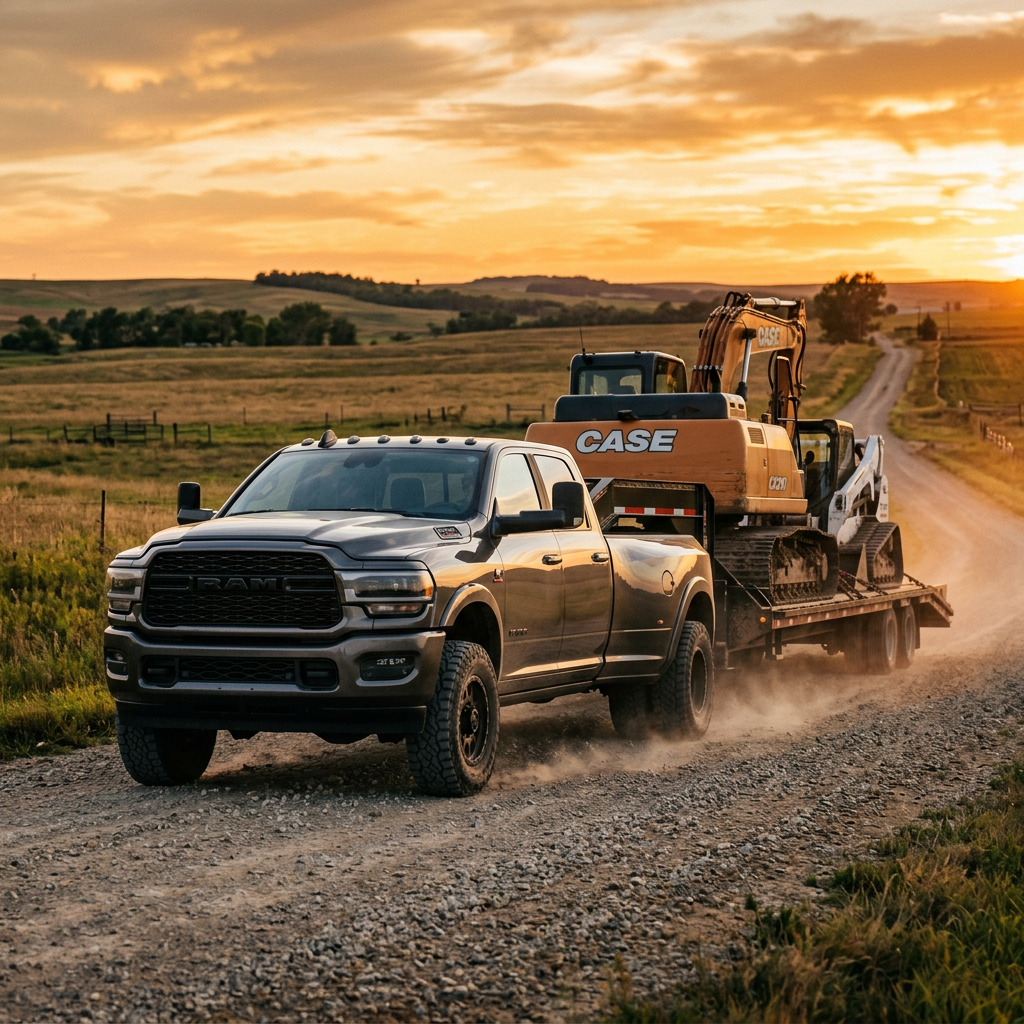
A grey Ram dually truck towing a trailer with a Case excavator down a gravel country road at sunset. (Representative image for illustration purposes only. Actual vehicle may vary based on trim and configuration.)

Keeping Your Ford Super Duty Running Strong: The Ultimate Guide to Power Stroke Fuel Filter Maintenance

When you own a Ford Super Duty equipped with the legendary 6.7L Power Stroke diesel engine, you are piloting a highly capable, high-torque truck. Whether you are hauling massive trailers down the highway, operating heavy equipment in Junction City, or managing a demanding agricultural workload in Dickinson County, your truck relies on a highly advanced, ultra-high-pressure common-rail injection system to deliver its staggering horsepower and torque. This system operates at pressures exceeding 30,000 PSI. At these extreme tolerances, even the smallest speck of dirt, rust, or microscopic water droplet can act like a sandblaster inside your fuel injectors, leading to catastrophic engine damage and immense repair bills. That is why clean diesel fuel is not just a preference—it is an absolute necessity for the survival of your Power Stroke engine.

Operating conditions around Fort Riley and Junction City present a unique set of challenges for diesel truck owners. From intense summer heat and dust on gravel roads to freezing winter temperatures that cause fuel tank condensation, your fuel filters work overtime to protect your engine's fuel system. In this comprehensive guide, we will break down exactly how often you should change your fuel filters, why the dual-filter system is designed the way it is, the science behind OEM filtration, and how proactive maintenance at Valor Ford can save you thousands of dollars over the lifetime of your truck.

How Often Should You Change the Fuel Filters on a Ford Super Duty Power Stroke Diesel?

Ford Motor Company outlines a standardized maintenance schedule for the 6.7L Power Stroke diesel engine, recommending that both fuel filters be replaced every 15,000 to 22,500 miles, or every third oil change, or every 600 hours of engine operation—whichever comes first. However, this general recommendation is split into two distinct categories: 'Normal Operating Conditions' and 'Severe Duty Operating Conditions.' Knowing which category your driving habits fall into is critical for maintaining optimal fuel system health and ensuring your warranty remains fully intact. For drivers who primarily use their Super Duty for long-distance highway cruising with minimal cargo, normal operating intervals of up to 22,500 miles may be sufficient. But in Kansas, very few heavy-duty trucks experience such an easy life. Most local truck owners find that their daily routines push their vehicles directly into the severe duty category, which demands much stricter maintenance timelines.

What constitutes severe duty? If you frequently tow heavy trailers, idle for extended periods (common on job sites and military maneuvers around Fort Riley), operate in dusty off-road environments, or use B20 biodiesel blends, Ford recommends changing your fuel filters at the 15,000-mile mark. Agricultural hauling across Dickinson County is a prime example of severe duty. Pulling grain trailers or stock trailers through dirt roads exposes your fuel system to fine particulate dust, while frequent stop-and-go heavy hauling increases fuel throughput and subjects filters to a larger volume of potentially contaminated fuel. To keep track of your vehicle's health easily, we recommend checking the Intelligent Oil-Life Monitor on your dashboard, but always track your mileage manually for fuel filters, as the truck does not always have a direct sensor to measure physical filter clogging until fuel pressure drops.

How Many Fuel Filters Does a 6.7L Power Stroke Diesel Have?

To provide maximum protection for the ultra-precise high-pressure fuel pump and common-rail injectors, Ford utilizes a dual-filter architecture on the 6.7L Power Stroke diesel engine. This means your truck has two distinct fuel filters that must *always* be replaced together as a matched set. Replacing only one filter defeats the purpose of the dual-stage system and leaves your fuel system highly vulnerable to premature wear or sudden failure.

1. Primary Filter / Water Separator

The primary filter is housed within the Diesel Fuel Conditioner Module (DFCM), which is mounted directly to the vehicle's frame rail underneath the driver's side cab. Because diesel fuel naturally attracts moisture, water contamination is a constant threat. This primary filter acts as a water separator, utilizing hydrophobic media to repel water droplets, causing them to pool at the bottom of the housing where they can be drained safely. It also screens out larger debris, rust, and tank scale before the fuel is pumped forward.

2. Secondary Under-Hood Filter

The secondary fuel filter is located directly in the engine bay, mounted near the top-front of the engine block. After fuel passes through the primary frame filter, it is sent under low pressure to this secondary unit. The secondary filter is designed to catch ultra-fine particulates that are too small for the primary filter. It serves as the final line of defense, ensuring that only the cleanest, completely water-free fuel enters the high-pressure fuel pump (CP4) and the fuel injection rails.
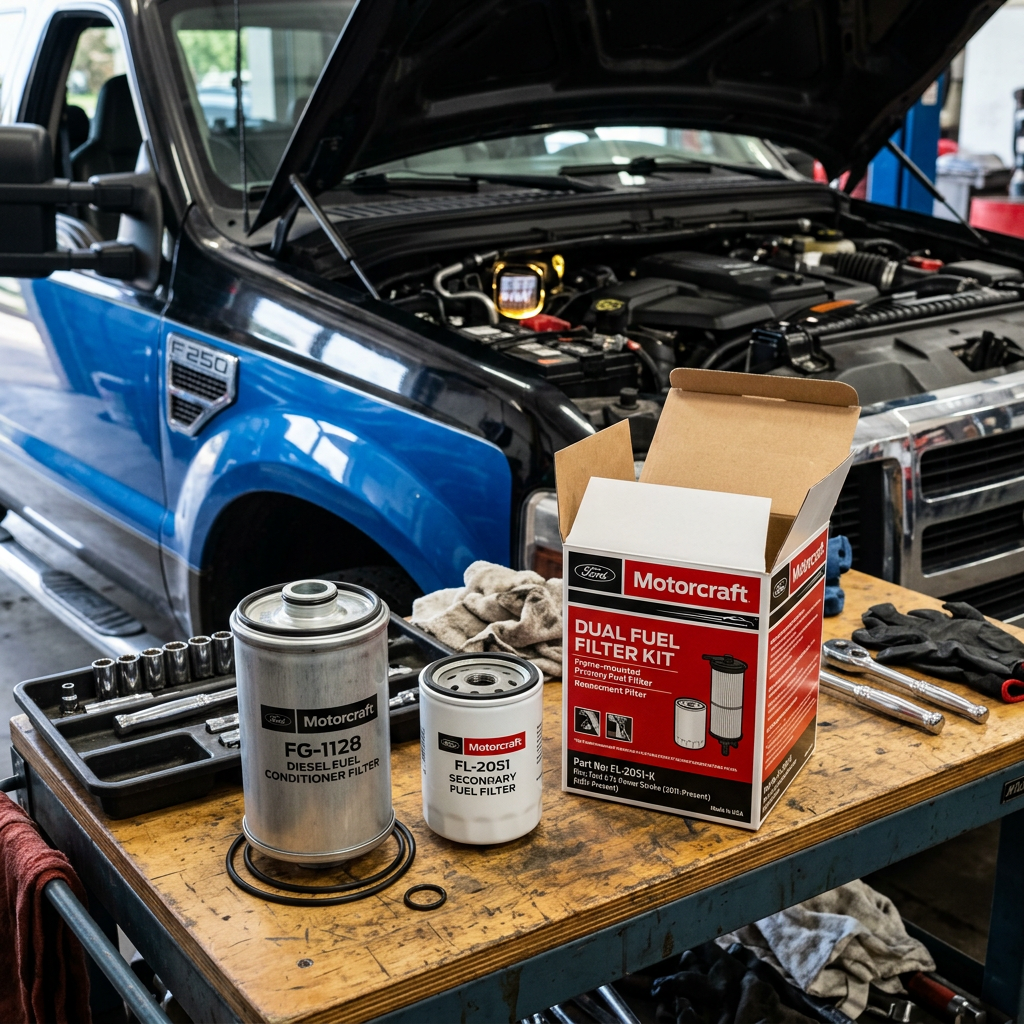
Motorcraft dual fuel filter kit with FG-1128 and FL-2051 filters on a workbench next to a Ford F-250 truck. (Representative image for illustration purposes only. Actual vehicle may vary based on trim and configuration.)

What Micron Rating Do the Motorcraft 6.7L Power Stroke Fuel Filters Have?

Filtration efficiency is measured in microns (one-millionth of a meter). To put this in perspective, a single strand of human hair is approximately 70 microns in diameter, and the human eye cannot typically see anything smaller than 40 microns. However, within the common-rail fuel system of your Power Stroke diesel, clearances between moving parts are as tight as 1 to 2 microns. This is why standard filtration is simply not enough. Genuine OEM Motorcraft filters are engineered to meet strict Ford engineering specifications. The primary frame-mounted filter features a 10-micron rating, meaning it filters out larger debris and holds the bulk of the particulate load. The secondary under-hood filter possesses a highly advanced 4-micron rating, designed to capture microscopic contaminants before they can damage the high-pressure pump or clog the fuel injector nozzles.

Many aftermarket filters claim to fit the 6.7L Power Stroke, but they often utilize inferior filter media with higher micron ratings (such as 15 or 20 microns) or lack the necessary water-coalescing properties. Using an aftermarket filter with improper micron specifications allows abrasive particles to flow directly into the high-pressure system, causing premature wear, fuel injector tip erosion, and eventual pump failure. To safeguard your investment, it is highly recommended to only use genuine OEM Motorcraft filters. Ready to pick up a set of factory-certified Motorcraft filters for your truck? You can easily Order Genuine Ford Parts directly through the Valor Ford Parts Department in Junction City, ensuring your fuel system has the exact protection Ford engineers designed for it.

How Do You Know When It Is Time to Change the Fuel Filters on a Power Stroke Diesel?

While mileage is the most reliable metric for filter replacements, your truck will often communicate when its fuel flow is restricted. Recognizing these warning signs early can help you avoid being stranded on the side of the road with a clogged fuel system.

  • Loss of Power Under Load: If you are pulling a heavy trailer up a hill and feel the truck hesitating or failing to accelerate, restricted fuel filters are a primary suspect. The engine demands high fuel volume under load, and clogged filters choke that supply.

  • Engine Hesitation and Rough Idle: Restricted fuel flow causes pressure drops in the common rail, leading to uneven fuel delivery, rough idling, or brief engine stumbles during acceleration.

  • Hard Starting or Extended Cranking: If your Power Stroke takes longer to fire up in the morning, it may be struggling to build the initial fuel rail pressure required for combustion due to restricted filters.

  • 'Water in Fuel' Dashboard Alert: This critical alert indicates that the water separator chamber in your frame-mounted DFCM is full. It must be drained immediately. If the light persists after draining, the primary filter media is likely saturated and requires replacement.

  • Low Fuel Pressure Trouble Codes: A restricted filter can trigger diagnostic codes like P0087 (Fuel Rail Pressure Too Low), illuminating the check engine light.
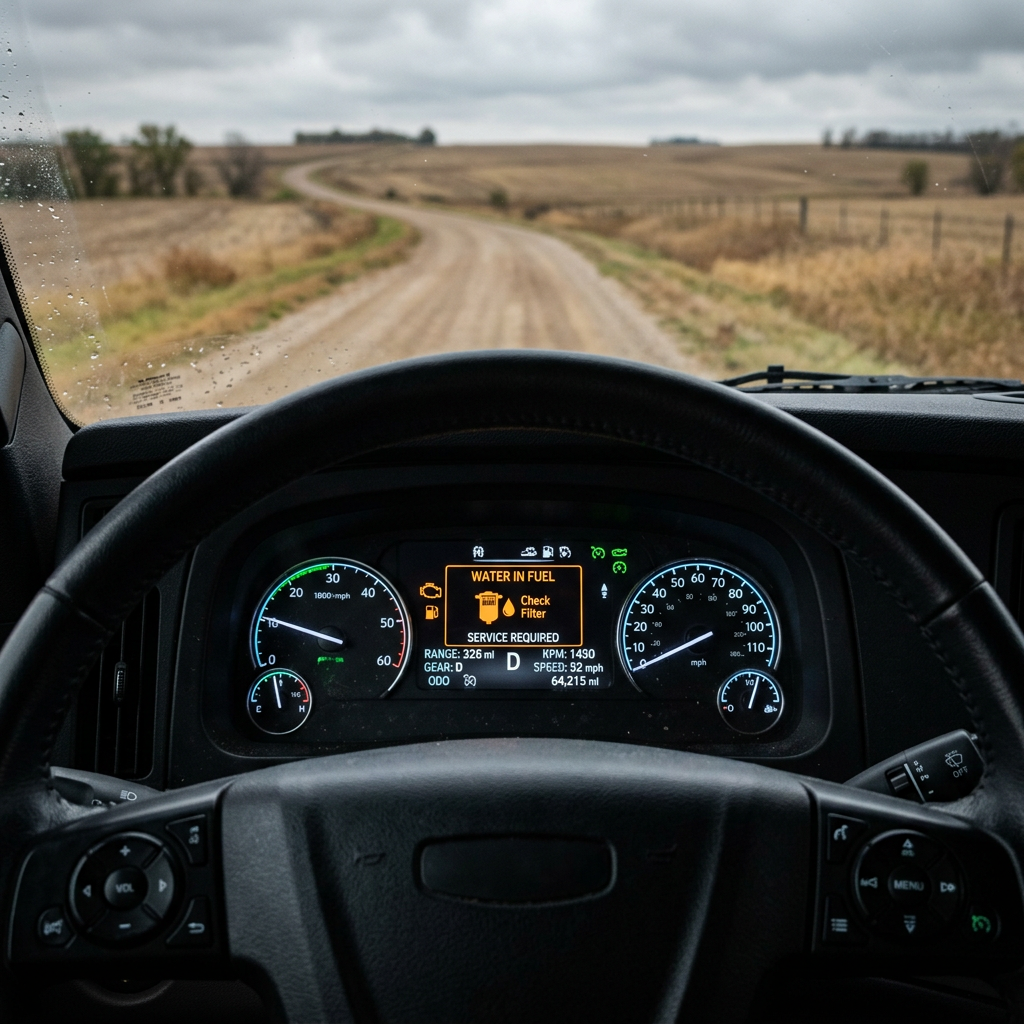
Driver's view of a car dashboard with a 'Water in Fuel' warning on a winding dirt road on a cloudy day. (Representative image for illustration purposes only. Actual vehicle may vary based on trim and configuration.)

Is It Cost-Effective to Change the Fuel Filter More Often Than the Minimum Recommendation?

To put it simply: absolutely yes. Many diesel owners wonder if changing fuel filters early is just an unnecessary expense. To understand the financial math, we must look at the cost of proactive maintenance versus the catastrophic cost of fuel system failure. On a 6.7L Power Stroke, the high-pressure fuel pump (CP4.2) is lubricated solely by the diesel fuel passing through it. If fuel flow is restricted, or if microscopic water bypasses a saturated filter, the pump will lose lubrication. When a CP4 pump runs dry or becomes contaminated, it physically self-destructs, sending a torrent of microscopic metal shavings throughout the entire fuel system.

Once metal shavings enter the fuel lines, they contaminate the fuel rails, the return lines, the fuel tank, and all eight precision injectors. To repair this, the entire fuel system must be stripped, cleaned, or replaced entirely, which includes buying a new high-pressure pump, eight new injectors, high-pressure lines, and thoroughly dropping and cleaning the fuel tank. Repair costs can vary widely depending on parts and labor. By contrast, a genuine Motorcraft fuel filter kit costs a fraction of that amount, and replacing them takes less than an hour. Changing your filters every 15,000 miles (or even 10,000 miles if you operate in extremely dusty Kansas agricultural conditions) is one of the most cost-effective maintenance choices for your Power Stroke engine.

Maintenance Action

Estimated Cost Range

Frequency / Impact

Long-Term Protection Value

OEM Motorcraft Fuel Filter Kit

$80 - $120 (Parts Only)

Every 15,000 Miles

Excellent - Prevents water & debris bypass

Professional Filter Service at Valor Ford

$180 - $280 (Parts & Labor)

Every 15,000 Miles

Outstanding - Done by certified diesel techs, worry-free warranty

Catastrophic CP4 Pump Failure Repair

$8,000 - $12,000+

Occurs due to fuel starvation, water, or poor filtration

None - Catastrophic financial and operational loss

What Tools Are Required to Perform a DIY Fuel Filter Change on a Power Stroke?

Required Hand Tools

To change the fuel filters on your 6.7L Power Stroke, you will need a few specific tools to make the job clean and safe:

  • 32mm Socket: Essential for removing the primary filter cap under the frame rail without stripping the plastic hex nut.

  • Socket Extensions & Ratchet: A 3/8-inch or 1/2-inch drive ratchet with a medium extension to reach the frame housing comfortably.

  • 8mm Socket: Required to remove the small mounting bracket bolts on certain model year under-hood filters.

Safety & Clean-Up Gear

Diesel fuel is highly slippery, hard to wash out of clothing, and can irritate skin upon prolonged contact. Make sure you have:

  • Fuel Catch Pan: A wide-mouth oil or fuel drain pan to catch escaping diesel fuel from the DFCM water drain.

  • Nitrile Gloves & Safety Glasses: Protects your skin and eyes from pressurized fuel spray.

  • Shop Rags or Microfiber Towels: For wiping down fuel lines and the housing areas to prevent dirt entry.
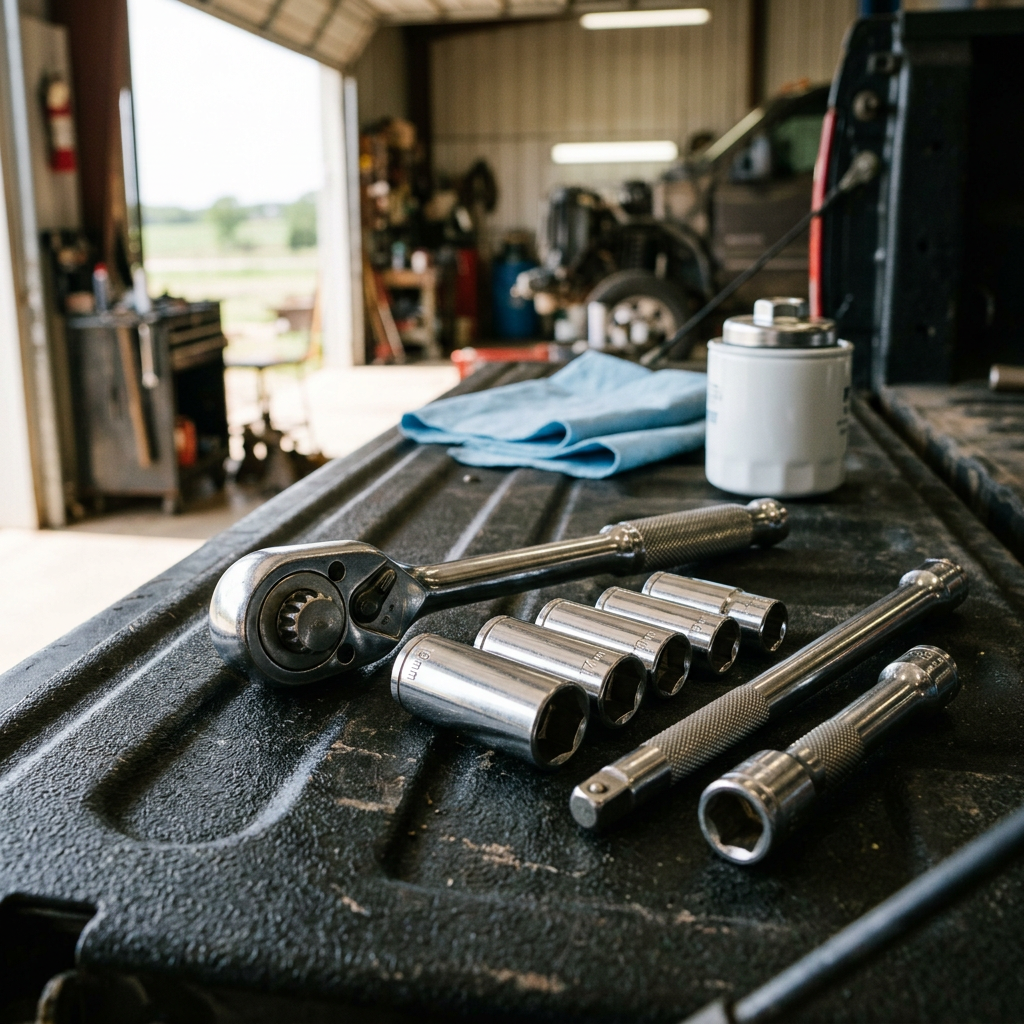
Socket set, ratchet wrench, and oil filter lying on a black truck tailgate in a workshop garage. (Representative image for illustration purposes only. Actual vehicle may vary based on trim and configuration.)

While changing fuel filters is a popular weekend project for experienced DIYers, doing it incorrectly can lead to severe fuel leaks, air introduction into the high-pressure system, or cracked plastic filter housings. If you prefer to bypass the mess and let factory-certified diesel technicians handle the job with professional precision, we invite you to Schedule Ford Service Today with the experts at Valor Ford.

The Proper Procedure to Change Both Power Stroke Fuel Filters Safely

Step 1: Drain the Water Separator Housed in the DFCM Before unscrewing any housings, place your fuel catch pan underneath the frame-mounted DFCM filter. Locate the yellow drain valve on the bottom of the housing. Slowly turn the valve counter-clockwise to allow the fuel and settled water to drain fully into your catch pan. Once the flow stops, turn the drain valve clockwise to close it securely. This prevents a massive, messy splash when you proceed to remove the filter cap.

Step 2: Remove the Frame-Mounted Filter Cap Using your 32mm socket and extension, place it squarely onto the plastic nut molded into the bottom of the frame-mounted filter cap. Slowly turn counter-clockwise. The housing cap may feel stiff initially, but proceed carefully to avoid cracking the plastic. Once unscrewed, pull the cap and the attached filter cartridge straight down. Pop the old filter element out of the cap, clean the inside of the cap thoroughly with a clean rag, and install the new O-ring included in your Motorcraft kit. Crucial Tip: Lubricate the new O-ring with clean diesel fuel or clean engine oil to ensure a perfect, airtight seal. Click the new filter cartridge into the cap, then screw the assembly back onto the DFCM housing, hand-tightening it first, then torquing it to 19 lb-ft (or until the cap stops rotating against the physical stop). Do not overtighten.

Step 3: Replace the Under-Hood Secondary Fuel Filter Move to the engine bay. Locate the secondary filter near the front-left of the engine. Wipe down the quick-connect fuel fittings to prevent any dust or dirt from falling into the open lines. Disconnect the fuel line clips by squeezing the colored tabs and pulling gently. Some residual fuel may spray slightly, so keep a rag handy. Once the lines are disconnected, unbolt the filter bracket or twist the filter assembly counter-clockwise (depending on your specific model year) to remove it. Install the new secondary filter in reverse order, ensuring the mounting bracket is secure, and firmly click the quick-connect fuel lines back into place. You will hear an audible click when they lock. Double-check that the line clips are fully engaged to prevent fuel leaks under pressure.

What Is the Proper Procedure to Prime the Fuel System After Replacing the Power Stroke Fuel Filters?

Once both fuel filters are replaced, the fuel lines and filter housings are filled with air instead of fuel. Do not start the engine immediately after replacing the filters. Attempting to start the truck dry will pull air into the high-pressure fuel pump (CP4), causing metal-on-metal friction and immediate, catastrophic damage. You must prime the fuel system using the low-pressure fuel pump to purge all air back to the fuel tank. To prime the system correctly, follow this simple sequence:

  1. Insert your key into the ignition (or use the push-button start without pressing your foot on the brake pedal).

  2. Turn the ignition to the 'ON' (or Run) position. Do *not* crank the engine.

  3. You will hear the electric low-pressure fuel pump hum from underneath the cab. Let it run for 30 seconds until the hum stops.

  4. Turn the ignition back to the 'OFF' position.

  5. Repeat this cycle 6 to 10 times. You will hear the pitch of the pump change as the housings fill with fuel and air bubbles are pushed back to the tank.

After completing 8 to 10 key cycles, press the brake pedal and crank the engine. It should start smoothly within a few seconds. If the engine starts but stumbles or dies immediately, you likely have trapped air left in the system. Turn the truck off and perform another 5 priming cycles before attempting to restart. Once the engine is running smoothly, let it idle for a couple of minutes. Slide under the truck and inspect the frame-mounted primary filter cap, and check the under-hood connections to ensure there are absolutely no active fuel leaks. If you notice any wet spots or fuel dripping, shut down the engine immediately, clean the area, and verify the O-ring seals or quick-connect fittings are seated correctly.
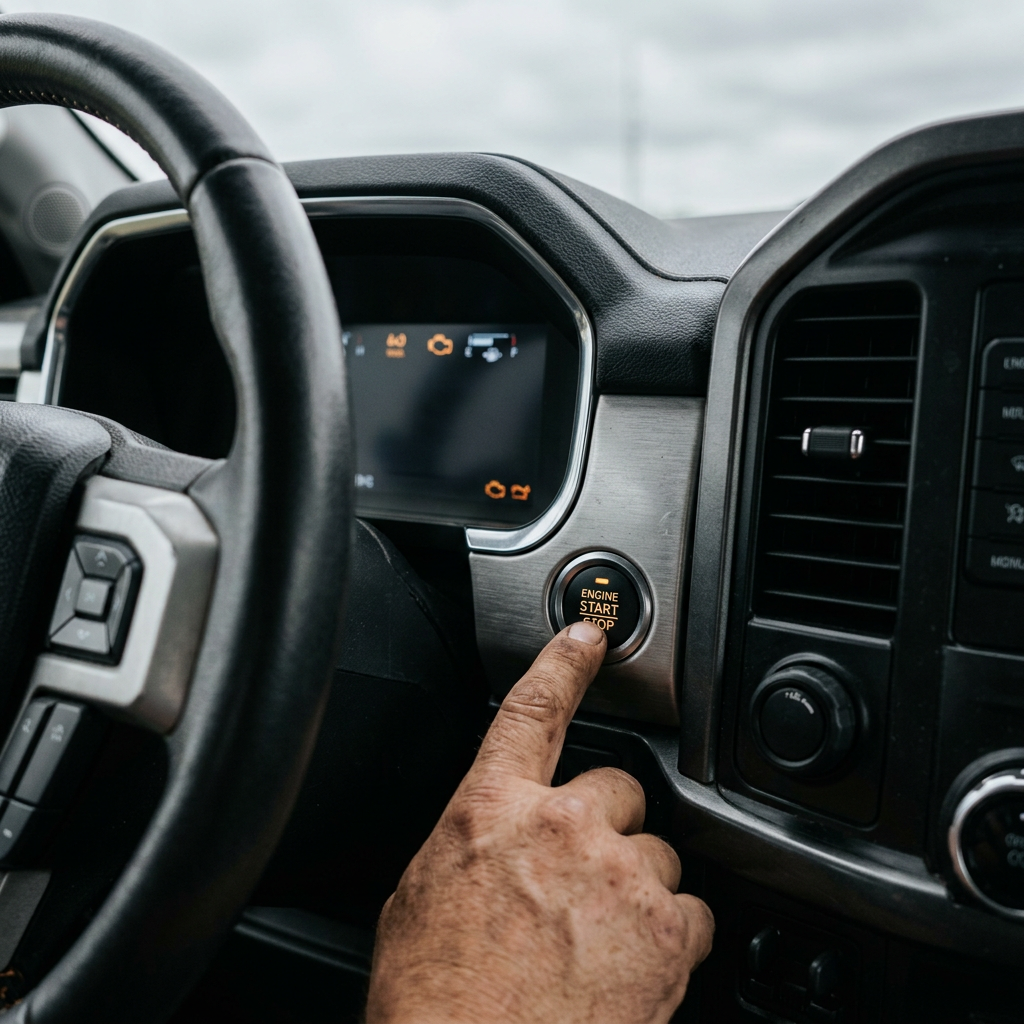
A person's finger pressing an orange-illuminated engine start-stop button on a car dashboard. (Representative image for illustration purposes only. Actual vehicle may vary based on trim and configuration.)

Why Junction City, Fort Riley, and Dickinson County Conditions Demand Stricter Maintenance

Agricultural Dust & Gravel Roads

Dickinson County is home to active farming, ranching, and miles of dry gravel roads. As trucks traverse these dusty paths during planting and harvesting seasons, microscopic airborne dust settles on the fuel tank filler neck. When refueling, this fine agricultural dust can fall directly into the tank, accelerating fuel filter restriction and requiring more frequent replacements.

Military Training & Heavy Towing

Fort Riley military families and contractors utilize Super Duty trucks for demanding, high-load towing operations and extended off-grid utility work. Heavy payloads and prolonged engine idling dramatically increase the volume of fuel passing through the filter media. More fuel processed means more particulate capture, reducing the effective life of the filter.

Extreme Kansas Temperature Swings

Kansas is famous for dramatic seasonal temperature swings. Warm, humid days followed by cool nights create condensation inside steel and plastic fuel tanks. Water in diesel fuel breeds microbial growth and forms slime that quickly plugs fuel filters. Ensuring fresh filters are installed before major seasonal transitions is key to avoiding issues.

Don't let Kansas weather and tough road conditions compromise your Power Stroke's performance. For peace of mind, let us perform a complete diesel system check-up. You can easily book a hassle-free appointment online by choosing our convenient Schedule Pickup and Delivery Service, allowing you to stay focused on your busy day while we handle the dirty work.

When Fuel System Wear Suggests It May Be Time to Consider an Upgrade for Your Super Duty

While regular maintenance keeps a 6.7L Power Stroke running strong for hundreds of thousands of miles, older models—especially high-mileage first-generation 6.7L trucks or older 6.0L and 6.4L platforms—can eventually reach a point where fuel system wear becomes an ongoing, expensive headache. Injector bodies wear down internally, high-pressure pumps lose efficiency, and fuel tank linings can degrade. When you find yourself facing major repair bills for high-pressure pumps, injectors, or advanced emissions equipment, it is often highly cost-effective to consider upgrading to a newer, more efficient model. Modern Ford Super Duty models boast significantly upgraded fuel delivery systems, redesigned high-pressure pumps with vastly improved reliability, and robust factory warranties that eliminate the fear of unexpected, multi-thousand-dollar repair bills.

If you are curious about what your current truck is worth in today's strong truck market, we can help. Our team at Valor Ford offers a straightforward, transparent Trade In Evaluation to give you a fair, competitive value for your current rig. From there, you can explore our cutting-edge heavy-duty lineup, including the robust and incredibly capable Ford F-250 models. Whether you decide to check out our Research Ford F-250 page or want to browse our extensive and ready-to-work Browse Used Inventory, our expert finance and sales teams are here to help you make the smartest financial decision for your business, farm, or family.

Keep Your Power Stroke Performing Flawlessly at Valor Ford in Junction City

At the end of the day, your Ford Super Duty is more than just a truck—it is your livelihood, your adventure machine, and your partner on the demanding roads of Kansas. Taking care of its advanced fuel system by performing timely, high-quality fuel filter changes with genuine Motorcraft components is the absolute key to unlocking maximum engine longevity, fuel efficiency, and legendary performance. Don't leave your fuel system's survival to chance with inferior aftermarket filters or delayed maintenance schedules. Our team of factory-trained, certified Ford diesel technicians at Valor Ford has the specialized knowledge, state-of-the-art diagnostic tools, and genuine OEM parts inventory required to keep your Power Stroke performing flawlessly. Whether you need a quick filter replacement, a comprehensive multi-point inspection, or are ready to explore upgrading to a brand new Super Duty, we are proud to serve as your premier local diesel resource. Stop by our dealership today, Get Directions to Valor Ford, or Call us at (785) 238-5114 to chat with our friendly service coordinators.
Logo for Valor Automotive featuring a blue and silver shield with 'VA' and the company name with a red star.
Posted in:

Related Posts

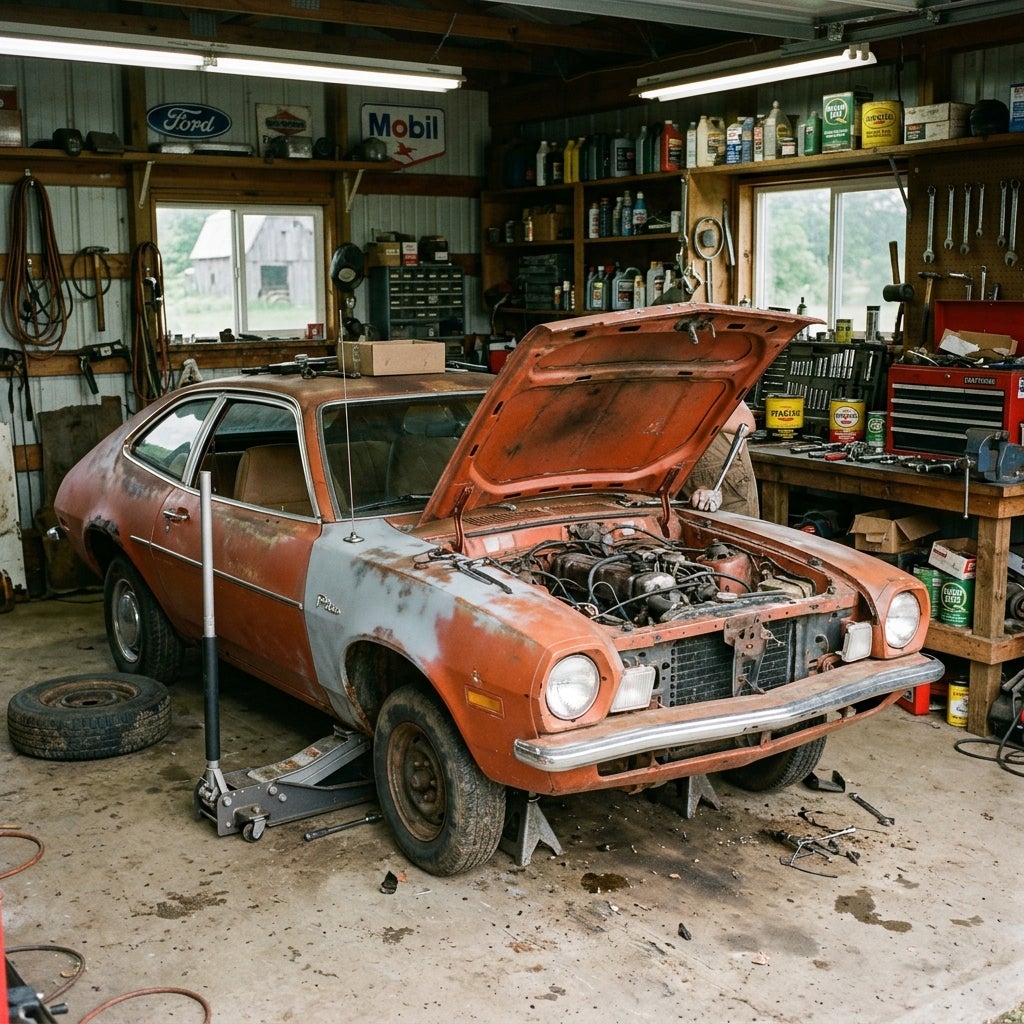
Vintage orange Ford Pinto undergoing repairs on jack stands inside a workshop filled with tools and auto signs. (Representative image for illustration purposes only. Actual vehicle may vary based on trim and configuration.)

Ford Pinto

How Much Does a Used Ford Pinto Project Car Cost? If you are contemplating embarking on a classic 1970s automotive restoration, the iconic Ford Pinto offers one of the most accessible and affordable entry points into the vintage car hobby today. Depending on condition, rarity, location, and mechanical completeness, a used Ford Pinto project car typically costs anywhere from contact the dealership for current pricing. To break down expected entry costs quickly: non-running barn finds or heavy rust project candidates generally trade between $1,200 and $2,500. Complete, rolling, restorable project candidates with intact trim and solid frames cost between $3,000 and $6,000. Meanwhile, turnkey vintage drivers, modified V8 swaps, or fully restored high-grade Pinto models command $7,500 to $12,000+ in today's active collector market. Here at Valor Ford in Junction City, KS, we regularly assist local automotive hobbyists across Geary and Dickinson counties who are evaluating vintage Ford projects or looking to transition into modern power. Before diving headfirst into a purchase, evaluating acquisition tier pricing against expected safety and sheet metal restoration costs will ensure your project stays on budget and yields an incredible retro ride. You can also explore our Browse Used Inventory for modern, turnkey transportation while working on your dream project. What Is the Ford Pinto and Why Is It Historically Significant? Introduced for the 1971 model year, the Ford Pinto was Dearborn's direct response to rising foreign subcompact imports like the Volkswagen Beetle, Toyota Corolla, and Datsun 510, as well as impending 1970s fuel crises. Spearheaded by Ford President Lee Iacocca, the Pinto was developed under a strict engineering directive: build a subcompact automobile weighing under 2,000 pounds that retailed for under $2,000. Despite an aggressive 25-month design cycle, the Pinto became a massive commercial triumph for Ford Motor Company. Over its 10-year production run from 1971 through 1980, Ford produced and sold more than 3 million Pintos, solidifying its place as one of the defining American subcompacts of the decade. Historically, the Pinto is also famous for the safety controversies surrounding its rear fuel tank placement in high-speed rear-end collisions. The subsequent legal cases and federal safety standards reshaping fuel system crash integrity changed automotive product liability and vehicle engineering standards worldwide. What Years Was the Ford Pinto Made and What Were Its Basic Specs? 1971–1974 Models Early Pintos offered European-derived powertrains including the 1.6L British Kent inline-four and the legendary 2.0L German EA827 OHC four-cylinder. Known for lightweight unibody agility, initial curb weights started around 2,015 lbs. 1975–1980 Models Mid and late-run Pintos introduced the bulletproof American-built 2.3L Lima OHC four-cylinder as well as an optional 2.8L Cologne V6. Heavier 5-mph impact bumpers increased total curb weight to approximately 2,400–2,550 lbs. Gearbox & Axles Factory transmission choices featured sturdy 4-speed manual gearboxes (German Type 3 or Ford RAD) alongside optional 3-speed Ford C3 automatics driving a rear live axle with leaf springs. Engine Option Production Years Horsepower Output Torque Rating 1.6L Kent I4 1971–1973 54–75 hp 91 lb-ft 2.0L EA827 OHC I4 1971–1974 86–100 hp 110 lb-ft 2.3L Lima OHC I4 1974–1980 83–88 hp 118 lb-ft 2.8L Cologne V6 1975–1979 97–103 hp 143 lb-ft What Body Styles Did the Ford Pinto Come In? The Ford Pinto was manufactured across four primary body style configurations, each commanding distinct price points and desirability levels on today's vintage market: 1. 2-Door Notchback Sedan: The base original trunked model built from 1971 to 1980. Often the most affordable starting point for project builders. 2. 3-Door Runabout Hatchback: Introduced mid-1971 with a flip-up rear glass hatch, establishing itself as the quintessential Pinto body style. 3. 2-Door Station Wagon: Launched in 1972 featuring enhanced interior cargo space, flip-down rear seats, and optional simulated woodgrain exterior paneling. 4. Cruising Wagon: A highly collectible factory option package (1977–1980) based on the wagon, styled like a MINI conversion van with round bubble porthole side glass and vibrant multi-tone graphic striping. Trade In Evaluation Pinto Project Car Pricing Breakdown by Condition Level Tier 1: Barn Finds / Parts Cars contact the dealership for current pricing Non-running vehicles sitting in pastures or barns for decades. Severe structural floor rust, missing trim, locked engines, or missing titles. Best suited as parts donors or heavy custom hot rod fabrications. Tier 2: Rolling Projects contact the dealership for current pricing Solid unibody frame structure with minimal rust-through. Mechanics turn over or run roughly from a gas can. Complete body glass and trim intact. The ideal sweet spot for home mechanics. Tier 3: Vintage Drivers & Restomods contact the dealership for current pricing Fully driveable vehicles with sorted mechanicals, updated safety upgrades, clean interiors, and good paint. Includes completed V8 302 swap builds or pristine survivor Cruising Wagons. Condition Tier Acquisition Price Mechanical State Body / Rust Status Target Enthusiast Tier 1: Barn Find / Parts Car $800 – $1,800 Inoperable / Locked Heavy Rust / Missing Parts Fabricator / Parts Donor Buyer Tier 2: Rolling Restorable varies by condition Needs Engine / Brake Overhaul Solid Structural Unibody DIY Hobby Restoration Enthusiast Tier 3: Turnkey / Restomod $6,000 – $9,500+ Fully Operational / Upgraded Repainted / Rust-Free Classic Weekend Cruiser / Car Show Buyer What Should I Look For When Shopping for a Used Ford Pinto? Inspecting a prospective Ford Pinto project car requires a keen eye for unibody integrity and component completeness. Because early 1970s subcompacts lacked extensive factory rustproofing, examine these critical areas: • Unibody Structural Rust: Check floor pans, rocker panels, rear leaf spring shackle mounts, and front shock towers. Surface rust is manageable, but structural perforation requires expensive sheet metal patch welding. • Trim & Exterior Moldings: Reproduction exterior trim and hatchback glass seals can be difficult to source. Ensure side trim, bumpers, and factory badging are present. • Electrical Wiring Harness: Unmolested factory wiring makes restoration drastically simpler. Look out for amateur aftermarket radio splices or brittle 50-year-old insulation. Critical Pinto Safety Upgrades and Essential Retrofit Costs Before taking any vintage Ford Pinto out onto Kansas roads or cruising highway speeds, prioritizing modern safety retrofits is mandatory. The original factory fuel tank design sits behind the rear axle housing without substantial rear structural crossmember protection. Key safety modifications and estimated retrofit costs include: 1. Polyethylene Fuel Cell or Tank Shielding (estimate only): Verify whether the 1978 factory recall plastic shield was installed. Installing a modern cell bladder or steel protective shield prevents differential housing bolts from puncturing the tank during a rear impact. 2. Dual-Reservoir Brake Master Cylinder & Front Disc Conversion (estimate only): Converting early four-wheel drum setups to power front disc brakes dramatically improves stopping distance. 3. Fuel Line & Frame Reinforcements (estimate only): Rerouting steel fuel lines outside potential crumple zones and reinforcing rear frame rails with steel tubing. Order Genuine Ford Parts How Did the Ford Pinto Compare to the Chevrolet Vega in the 1970s? Throughout the 1970s, the battle for domestic subcompact supremacy pitted the Ford Pinto directly against General Motors' Chevrolet Vega. While both vehicles sold in huge numbers, their modern project car values reflect very different engineering choices: • Engine Durability: Ford relied on cast-iron block engines (Kent, EA827, and 2.3L Lima). These cast-iron powerplants proved exceptionally durable and tolerant of heat. In contrast, the Vega's unlined aluminum block engine was infamous for overheating, cylinder wall scoring, and premature failure. • Corrosion Resistance: While both cars rusted, the Pinto's body architecture generally preserved chassis structural integrity longer than early Vega body panels. • Modern Project Value: Today, Pinto project cars are favored for low mechanical maintenance costs and easy engine bay swaps. Estimating Total Restoration Costs for a Pinto Project Car Body & Paint Work $2,500 – $5,000 Sheet metal repair, rust patching, body sanding, primer sealing, and complete exterior paint respray. Engine & Powertrain varies by condition 2.3L Lima engine rebuild, carburetor tuning, cooling system replacement, or a custom Ford 302 Small Block V8 swap. Interior & Chassis varies by condition Vinyl upholstery replacement, carpet kit, shock absorbers, suspension bushings, front brake disc swap, and vintage tire sets. Restoration Expense Item Budget DIY Estimate Professional Shop Estimate Initial Vehicle Acquisition $2,500 $4,500 Engine Rebuild / Swapping $1,200 $3,500 Body Repair & Paint Finish $1,500 $4,500 Interior Trim & Upholstery $600 $1,800 Brakes, Suspension & Tires $800 $2,000 Total Project Investment varies varies How Should I Use a Ford Pinto After Safety Upgrades Are Done? Once safety retrofits and mechanical refreshing are complete, a Ford Pinto becomes a delightful and versatile vintage vehicle. Enthusiasts across Junction City, Fort Riley, and central Kansas enjoy Pintos in several exciting ways: • Weekend Cruising & Local Car Shows: Turn heads at regional classic car meets around Geary County with a pristine original Runabout or Cruising Wagon. • Fuel-Efficient Vintage Commuter: With its lightweight chassis and thrifty 2.3L four-cylinder, a sorted Pinto can achieve 25–30 MPG on highway drives. • Retro Drag Racing Build: Thanks to its compact wheel base and light weight, the Pinto is a legendary platform for Ford 302 V8 drag strip conversions. Whether taking weekend drives out to Milford Lake or displaying your completed build at community automotive events, a restored Pinto offers incredible nostalgia and mechanical charm per dollar invested. Schedule Ford Service Today Sourcing Ford Pinto Parts and Trade-In Options in Dickinson County One of the greatest advantages of choosing a Ford Pinto project car is parts interchangeability. Many critical drivetrain components, front rack-and-pinion steering parts, and ignition hardware shared designs with the Mustang II and early Ford Ranger pickup trucks. Finding engine gaskets, water pumps, starter motors, and brake hardware is simple through OEM and aftermarket suppliers. If you need assistance sourcing components or evaluating mechanical hardware, Get Directions to Valor Ford in Junction City. Many local project builders fund their classic restoration builds by trading in an existing daily driver. By utilizing our available Trade In Evaluation process at Valor Ford, you can unlock built-up equity from your current vehicle to cover acquisition, paint, or performance upgrades on your classic Pinto project. Ready to Start Your Project Car Journey with Valor Ford? Whether you are hunting for a vintage 1970s Ford Pinto hatchback, sourcing parts for an ongoing build, or considering a modern daily driver like a new Ford Bronco or Ford Mustang, Valor Ford is your premier Kansas automotive partner. Stop by our dealership at 1825 Goldenbelt Blvd in Junction City, KS, Call us at (785) 238-5114, or explore options to Explore Financing Options today. You can also explore modern muscle heritage with our team by reviewing our Research Ford Mustang resources. Contact Valor Ford

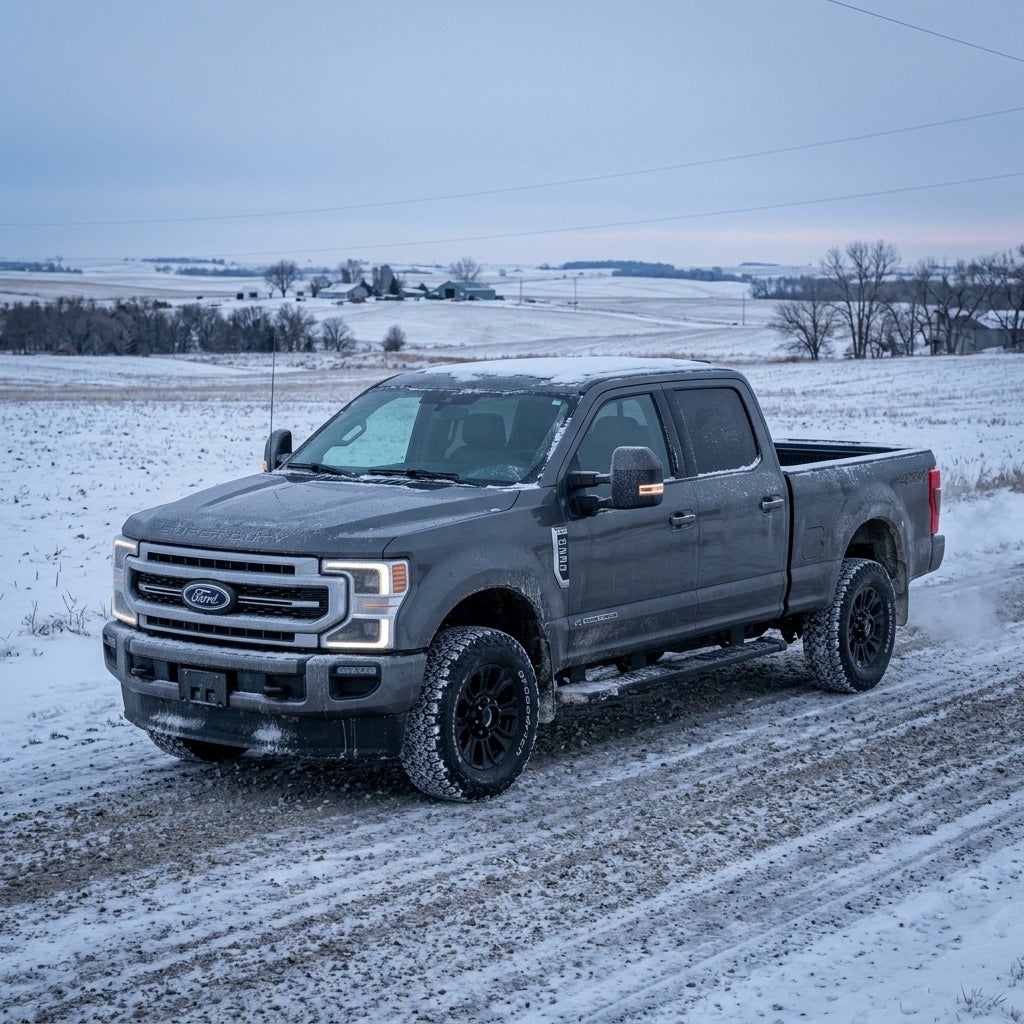
A dark grey Ford Super Duty pickup truck parked on a snowy rural dirt road surrounded by snow-covered fields. (Representative image for illustration purposes only. Actual vehicle may vary based on trim and configuration.)

Unlock Winter Power: Master 6.7L Power Stroke Cold Starts Like a Pro

Why Modern Diesels Struggle in Cold Weather: 6.7L Power Stroke Starting Causes When sub-zero Arctic winds sweep across Dickinson County and Fort Riley, owners of modern diesel trucks like the 6.7L Power Stroke often face one of winter's most frustrating experiences: turning the key or pushing the start button only to be met with a sluggish crank or an unyielding refusal to fire up. While modern heavy-duty Ford Super Duty pickups are marvels of high-pressure common rail injection engineering and robust thermal design, extreme cold shifts physics and chemistry heavily against diesel combustion. Unlike gasoline engines that rely on spark plugs to ignite fuel at virtually any temperature, diesel engines rely entirely on compression heat to ignite atomized fuel. The top culprits responsible for cold-weather starting trouble on the 6.7L Power Stroke include severely degraded dual batteries with diminished Cold Cranking Amps (CCA), paraffin wax gelling in untreated ultra-low sulfur diesel (ULSD) fuel, malfunctioning Glow Plug Control Modules (GPCM) or damaged glow plug harnesses, and high-viscosity engine oil that slows down cranking speed below the threshold required to build compression heat. Understanding these critical thermal thresholds allows truck owners to take proactive measures before freezing temperatures hit central Kansas. If you want to ensure your heavy-duty truck remains dependable through harsh winters, you can readily Schedule Ford Service Today with our factory-trained diesel technicians at Valor Ford in Junction City. Schedule Diesel Cold Start Inspection Is a Weak Battery the Most Common Cause of a Winter Crank-No-Start Condition? Without question, dual-battery failure is the single most frequent reason 6.7L Power Stroke diesels fail to start on freezing Kansas mornings. Modern heavy-duty Ford trucks rely on two high-output 12-volt AGM or lead-acid batteries wired in parallel. This setup must simultaneously power ultra-fast glow plugs, energize high-draw fuel lift pumps, fire electronic injectors operating at over 30,000 PSI, and turn over a massive 15.8:1 compression ratio engine. As ambient temperatures plummet toward zero degrees Fahrenheit, chemical activity inside automotive batteries slows down drastically. At 0°F, a standard vehicle battery loses roughly 50 to 60 percent of its rated Cold Cranking Amps (CCA). At the exact same moment, cold, thickened oil increases engine cranking resistance by almost 200 percent. If one of your dual batteries has even a single degraded cell, it acts as a constant drain on the second battery, preventing the starter motor from reaching the minimum 150 to 200 RPM rotational speed needed to build cylinder compression heat. Because modern dual-battery systems hide degradation well during mild weather, drivers rarely notice early warning signs until winter strikes. If you suspect your truck is due for fresh Motorcraft batteries or want to evaluate upgrade possibilities, explore our Research Ford F-250 page or stop by our service department for a load test. Understanding Diesel Fuel Gelling and Waxing in Kansas Sub-Zero Temperatures 1. Wax Crystallization Ultra-Low Sulfur Diesel (ULSD) naturally contains paraffin wax compounds that improve energy density and cetane rating. However, when fuel temperature reaches its Cloud Point (typically around 10°F to 15°F), these waxes begin forming solid microscopic crystals. Without anti-gel treatment, fuel turns cloudy and rapidly solidifies. 2. Cold Filter Plug Point As temperatures drop further toward the Cold Filter Plugging Point (CFPP), paraffin wax aggregates into dense gel deposits. This gel instantly clogs the primary 10-micron fuel water separator filter on the frame rail, starving the High-Pressure Common Rail (HPCR) pump and preventing fuel delivery to the injectors. 3. Moisture & Ice Blockage Condensation frequently collects inside fuel tanks during temperature swings in Junction City and Fort Riley. Un-drained water inside the fuel water separator module freezes solid in sub-zero weather, completely blocking fuel line flow and potentially damaging high-pressure injection components. To protect against fuel gelling during severe cold snaps across central Kansas, Power Stroke owners should regularly treat their tanks with Ford-approved anti-gel additives at every fill-up once ambient temperatures drop below freezing. Need fresh OEM filters before winter? You can Order Genuine Ford Parts directly through our dealership. How Glow Plug and Glow Plug Control Module (GPCM) Failures Trigger Cold Starting Problems Modern 6.7L Power Stroke engines utilize fast-acting ceramic or metal glow plugs controlled by a sophisticated Glow Plug Control Module (GPCM). Unlike older mechanical diesels that required long pre-heat waits, the modern GPCM modulates electrical current via pulse-width modulation, heating individual glow tips above 1,800°F in less than two seconds. When temperatures plunge, the GPCM also maintains an 'after-glow' phase after combustion starts to reduce white smoke emissions and steady cold idle. However, if a single glow plug suffers high resistance or short-circuits, or if the GPCM's solid-state power switching circuitry fails, specific Diagnostic Trouble Codes (DTCs like P0671 through P0678) are triggered. In severe cold, losing even two glow plugs will result in extended cranking, rough misfiring, or complete starting failure. Schedule Pickup and Delivery Service How Does the 6.7L Power Stroke Perform in Sub-Zero Kansas Winter Conditions? Engineered specifically for extreme North American climate conditions, the Ford 6.7L Power Stroke V8 Turbo Diesel offers exceptional cold-weather capabilities when properly maintained. Featuring an integrated 1,000-watt heating element inside the engine block, factory automatic cold-weather elevated idle features (which raise engine RPM to prevent fuel slobber and warm up coolant faster), and advanced powertrain control logic, the 6.7L Power Stroke is built to conquer Midwestern freezes. One of the key operational requirements during Kansas winters is selecting the correct oil viscosity. While standard 15W-40 conventional oil performs well during warm weather, switching to 5W-40 or 0W-40 full synthetic diesel engine oil (meeting Ford specification WSS-M2C171-F1) dramatically reduces oil pump cavitation and resistance on cold starts. Synthetic lubricants flow rapidly at -20°F, ensuring immediate lubrication to high-load turbocharger bearings and valvetrain components upon startup. Whether towing heavy machinery around Dickinson County or commuting to Fort Riley, maintaining proper fluid viscosities ensures your Super Duty executes rapid starts regardless of the weather. Interested in upgrading your vehicle? Explore our Shop New Ford Bronco Inventory or Browse Used Inventory online. Essential Winter Preventative Maintenance Checklist for 6.7L Power Stroke Owners Electrical & Batteries • Perform digital conductance load test on both batteries. • Clean terminal posts and apply anti-corrosion spray. • Verify starter drawdown amperage during cranking. • Inspect alternator output under full glow plug load. Fuel & Water Separator • Drain water separator valve into a glass container. • Replace dual Motorcraft fuel filters (every 15k miles). • Add anti-gel cetane booster treatment at fill-ups. • Check frame-mounted lift pump operating pressure. Engine Oils & Heating • Switch to API-CK-4 5W-40 full synthetic diesel oil. • Inspect engine block heater heating element resistance. • Verify block heater power cord for cracks or frays. • Test coolant freeze protection down to -35°F. Replacement Costs for Winter-Stressed Diesel Parts vs. Preventative Maintenance Costs Ignoring basic pre-winter maintenance on a 6.7L Power Stroke diesel can lead to substantial repair bills. When gelled fuel or water enters the High-Pressure Common Rail (HPCR) system, microscopic metal-to-metal abrasion can ruin the high-pressure pump, fuel rails, and piezoelectric injectors. Furthermore, extended cranking on weak batteries causes extreme heat buildup inside the starter motor, leading to sudden armature failure. Below is a side-by-side estimated cost breakdown contrasting affordable preventive maintenance measures with major reactive mechanical repairs caused by severe cold-weather operating damage. Service / Repair Item Preventative Cost Reactive Failure Cost Motorcraft Fuel Filters & Anti-Gel $95 - $180 $8,000 - $11,000 (HPCR Replacement) Dual Battery Replacement (AGM) $380 - $550 $650 - $900 (Starter + Towing + Batteries) 5W-40 Synthetic Oil Service $140 - $220 $1,200 - $2,500 (Turbocharger Wear Repair) Glow Plug System Maintenance $150 - $350 $800 - $1,400 (GPCM + Harness Burnout) Contact Us for Current Financing Information Best Practices for Using Block Heaters and Winter Grille Covers on Ford Super Duty Trucks The factory block heater built into the 6.7L Power Stroke is one of your best defenses against harsh Kansas freezes. However, leaving it plugged in all night is generally unnecessary and increases your electric bill. The internal 1,000-watt heating element warms engine coolant up to operating delta within 3 to 4 hours. Using a heavy-duty outdoor timer set to turn on 3 hours prior to your morning commute saves energy while ensuring instantaneous cab heat and rapid oil circulation. In addition, winter front grille covers are highly effective when ambient temperatures drop below 32°F. By restricting frigid airflow through the front radiator and charge air cooler (CAC), winter covers allow the diesel engine to reach its optimal operating temperature (around 190°F–210°F) much faster. Maintaining proper engine operating temperature prevents excess soot accumulation inside the Diesel Particulate Filter (DPF) and stops 'fuel slobber' during extended idling sessions in Junction City. How 6.7L Power Stroke Output Figures Compare to Cummins and Duramax in Cold Climates Ford 6.7L Power Stroke HO • 500 HP / 1,200 lb-ft Torque • Fast Ceramic Glow Plugs • Quick Thermal Warm-up • Dual Cooling Circuit Design • Class-Leading Cold Power GM 6.6L Duramax Turbo V8 • 470 HP / 975 lb-ft Torque • Metal Glow Plug System • Microprocessor GPCM • Dual Alternator Option • Engine Block Heater Ram 6.7L Cummins High Output • 420 HP / 1,075 lb-ft Torque • Intake Grid Heater Element • Inline 6-Cylinder Design • Heavy Cast Iron Block • Slower Initial Warm-up While the 6.7L Power Stroke delivers industry-leading output of up to 500 horsepower and 1,200 lb-ft of torque, unlocking that massive towing performance in winter requires clean cold fuel delivery and swift cylinder pre-heating. Considering a new heavy-duty truck? Learn more by reading our Research Ford F-250 overview. Step-by-Step Diagnostic Guide for a Cold-Weather Crank-No-Start Diesel Engine If you wake up to sub-zero temperatures in Dickinson County and your 6.7L Power Stroke cranks slowly or refuses to fire, follow this methodical troubleshooting procedure: Step 1: Check Battery Voltage Under Load — Turn on ignition. If gauge drops below 10.5 volts while cranking, battery voltage is insufficient to trigger electronic injectors. Step 2: Monitor Glow Plug Light Cycle — Observe the coil icon on your digital dash display. If it stays lit for less than 1 second in freezing weather, a GPCM fault may exist. Step 3: Listen for Primary Lift Pump — Turn ignition to ON without cranking. Listen for the frame-rail fuel pump humming for 15-20 seconds. Silence indicates a blown fuse or frozen pump module. Step 4: Check Water Separator Drain — Inspect for gelled fuel or ice blockages at the yellow water drain valve on the lower frame rail filter housing. Trade In Evaluation Reliable Winter Diesel Truck Ownership in Junction City, Fort Riley, and Dickinson County Living and working in central Kansas demands uncompromised vehicle dependability. Agricultural operators hauling livestock around Dickinson County, commercial contractors working early mornings, and military personnel commuting to Fort Riley rely on their Ford Super Duty trucks to fire up faithfully no matter how low the mercury drops. By adhering to recommended service schedules, keeping fuel tanks above half-full to minimize condensation, using quality anti-gel treatments, and relying on genuine Motorcraft components, your 6.7L Power Stroke will remain a dependable winter workhorse year after year. If you're exploring vehicle options across the Ford lineup, feel free to check out our Research Ford F-150 page, review our versatile SUVs with Research Ford Explorer, or explore compact efficiency via Research Ford Maverick. For performance enthusiasts, you can also Research Ford Mustang. Whatever your automotive needs, Valor Ford is dedicated to keeping Kansas drivers safely on the road. Prepare Your 6.7L Power Stroke for Winter at Valor Ford in Junction City, KS Inspect your battery and fuel filter before the first severe freeze to help avoid a weak battery or gelled fuel filter. The Ford factory-certified diesel technicians at Valor Ford are equipped with state-of-the-art diagnostic software to test glow plug control modules, evaluate battery conductance under heavy load, and service fuel filtration systems. Conveniently located at 1825 Goldenbelt Blvd in Junction City, KS, we proudly serve truck owners from Fort Riley, Manhattan, Abilene, and all of Dickinson County. Click below to Get Directions to Valor Ford or Call us at (785) 238-5114 to book your appointment today. Schedule Ford Service Today

Grey Ford F-150 truck driving on a gravel dirt road through rolling hills at sunset. (Representative image for illustration purposes only. Actual vehicle may vary based on trim and configuration.)

Ford F-150 Special Offer Event at Valor Ford: Direct Savings & Financing Terms

Ford F-150 Special Offer Event at Valor Ford: Direct Savings & Financing Terms The summer sales event of the year has officially arrived in Junction City, KS! Valor Ford is proud to announce exclusive factory incentives, massive direct dealer discounts, and unbeatable low APR financing terms across our entire fleet of new Ford F-150 pickup trucks. Whether you need a dependable workhorse for the farm, a robust towing platform for equipment, or a feature-packed luxury truck for weekend family trips, there has never been a better time to upgrade your ride. For a limited time through August 31, 2026, take advantage of factory customer cash allowances, low promotional financing rates through Ford Credit, and enhanced trade-in valuations designed to put maximum money back in your pocket. Visit Valor Ford today at 1825 Goldenbelt Blvd in Junction City to explore our extensive F-150 inventory, compare package features, and take a personalized VIP test drive before these seasonal savings expire. View New Ford F-150 Sales Inventory How Much Can You Save on a New Ford F-150 During This Event? During the Ford F-150 Special Offer Event at Valor Ford, total customer savings combine national factory rebates, regional promotional bonus cash, and exclusive dealer discounts to deliver unmatched bottom-line value. Shoppers can choose between attractive low-APR financing packages or substantial direct cash back options. Whether you are interested in a classic Regular Cab, a versatile SuperCab, or a spacious SuperCrew, our pricing specialists will help you stack eligible incentives. Take a moment to Research Ford F-150 trim options to see how factory discounts apply across different cab configurations and bed lengths. F-150 Configuration Promotional Financing Customer Cash Allowance Estimated Total Savings Regular Cab (XL / XLT) Low APR Options Up to $1,500 Up to $3,500 SuperCab (XLT / STX) Low APR Options Up to $2,250 Up to $4,500 SuperCrew (Lariat / King Ranch) Low APR Options Up to $3,000 Up to $6,000 Which Ford F-150 Trims Are Included in the Junction City Sales Event? Work-Ready XL & XLT Engineered for maximum utility, durability, and daily efficiency. Standard SYNC 4 touchscreen technology, heavy-duty payload ratings, and Ford Co-Pilot360 suite make these models ideal for commercial work and everyday dependability across Kansas roads. Luxurious Lariat & King Ranch Experience premium leather seating, B&O Unleashed Sound Systems, heated and ventilated seats, and advanced highway towing assistance. Perfect for truck owners who demand high-end luxury without sacrificing full-size pickup performance. Off-Road Tremor & Raptor Conquer rugged terrain and off-road trails with specialized suspension setups, Fox Racing shocks, high-ground-clearance skid plates, and Trail Control systems. Available with special event upgrade packages at Valor Ford. Exclusive Military Bonus Cash & Savings for Fort Riley Service Members Valor Ford is proud to serve the men and women stationed at Fort Riley and surrounding military installations. During the F-150 Special Offer Event, active duty personnel, military retirees, veterans, and eligible family members can stack the Ford Military Recognition Bonus Cash directly on top of current sales event discounts. Our finance specialists understand military pay structures and offer expedited paperwork handling for active duty service members. Bring your military ID or DD-214 form to unlock these exclusive stacked savings on your new Ford F-150. Reserve Your F-150 Event Savings Voucher and Book a Test Drive High demand trim configurations and popular color choices are selling fast during this promotional window. Don't risk missing out on maximum event incentives. Reserve your personalized savings voucher online and lock in a priority VIP test drive appointment at Valor Ford today. Claim Your Event Savings Voucher Maximize Your Trade-In Value Towards a New Ford F-150 Pre-owned vehicle market values remain exceptionally high, and Valor Ford is offering aggressive trade-in bonuses throughout this event. By trading in your current car, truck, or SUV, you can substantially reduce your loan amount, lower your monthly payment, or cover your down payment entirely. Use our quick online tool for a complimentary Trade In Evaluation report in minutes, or bring your vehicle to our Junction City dealership for an instant top-dollar appraisal cash offer. F-150 Towing and Hauling Specs for Dickinson County Farms and Work Sites Farmers, contractors, and outdoor enthusiasts throughout Dickinson County and Geary County demand hard-working capabilities. The Ford F-150 features high-strength, military-grade aluminum-alloy body design paired with a fully boxed high-strength steel frame to handle severe payloads and heavy towing requirements. With innovative features like Pro Power Onboard mobile generator power outlets, Smart Hitch weight distribution sensors, and Pro Trailer Backup Assist, the F-150 turns tough jobs into manageable tasks. Engine Option Max Towing Capacity Max Payload Rating Pro Power Onboard 3.5L EcoBoost V6 Up to 13,500 lbs Up to 2,445 lbs 2.0 kW Available 5.0L Ti-VCT V8 Up to 13,000 lbs Up to 2,230 lbs 2.0 kW Available 3.5L PowerBoost Hybrid Up to 12,700 lbs Up to 2,120 lbs Up to 7.2 kW Standard/Avail. PowerBoost Hybrid vs. 3.5L EcoBoost vs. 5.0L V8 Engine Deal Comparison 3.5L PowerBoost Hybrid Delivers 430 horsepower and 570 lb-ft of torque. Combines gas efficiency with serious towing grunt and built-in electrical power for work tools or camping gear. 3.5L EcoBoost Twin-Turbo V6 Packs 400 horsepower and 500 lb-ft of torque. The go-to option for maximum towing rating and instant low-end torque pull for heavy trailering. 5.0L Ti-VCT V8 Classic V8 exhaust note producing 400 horsepower and 410 lb-ft of torque. Proven reliability with high payload capacity for traditional heavy haulers. Get Pre-Approved for Low APR Financing Online Before Visiting Valor Ford Save time at the dealership by starting your purchase from home. Complete our quick, encrypted application to Get Pre-Approved for Financing in minutes. Our finance specialists work with Ford Credit and multiple lending institutions to secure competitive interest rates and customized repayment terms for every budget. Start Online Finance Application Custom Accessories and Work-Ready Upgrades Available During the Sale Bed Protection & Covers Tough spray-in bedliners, folding hard tonneau covers, and bed cargo management systems bundleable directly into your new truck purchase package. Towing & Suspension Gear Heavy-duty trailer hitch receivers, integrated brake controllers, side step running boards, and enhanced off-road shock upgrades. Interior Protection All-weather floor liners, custom seat covers, and under-seat storage vaults. You can easily Order Genuine Ford Parts through our dealership catalog. What Checklist Documents Should You Bring to the F-150 Sales Event? To ensure a seamless, rapid delivery process on the day of your purchase, please bring the following key documents with you to Valor Ford: • Valid government-issued driver's license • Current auto insurance card • Recent pay stub or proof of income (or LES for active duty military) • Title and current registration for your trade-in vehicle If you plan to claim military discounts, remember your Military ID or DD-214 form. Having these items ready allows our team to finalize financing approvals and vehicle registration rapidly so you can drive home in your new F-150 without delay. Event Schedule, Location Hours, and Directions to Valor Ford in Junction City Valor Ford is conveniently located at 1825 Goldenbelt Blvd, Junction City, KS 66441. We are easily accessible from I-70, Fort Riley, Manhattan, and Abilene. Showroom Hours: Monday – Friday: 8:00 AM – 7:00 PM Saturday: 8:00 AM – 6:00 PM Sunday: Closed Have questions before your visit? Call us at (785) 238-5114 to speak with an F-150 specialist, or click here to Get Directions to Valor Ford directly on your mobile device. Claim Your Special Offer on a New Ford F-150 at Valor Ford Today The Ford F-150 Special Offer Event ends August 31, 2026. Don't wait until preferred trim levels, engine options, and color choices are claimed by someone else. Contact Valor Ford in Junction City now to secure maximum seasonal savings, competitive financing rates, and exceptional customer service. Claim Your F-150 Special Offer Now