Blog / Maintenance & Service

Expert Interview: How Can You Prevent Rodents From Chewing Wiring in a Stored Vehicle?

Expert Interview: How Can You Prevent Rodents From Chewing Wiring in a Stored Vehicle?

Expert Interview: How Can You Prevent Rodents From Chewing Wiring in a Stored Vehicle?

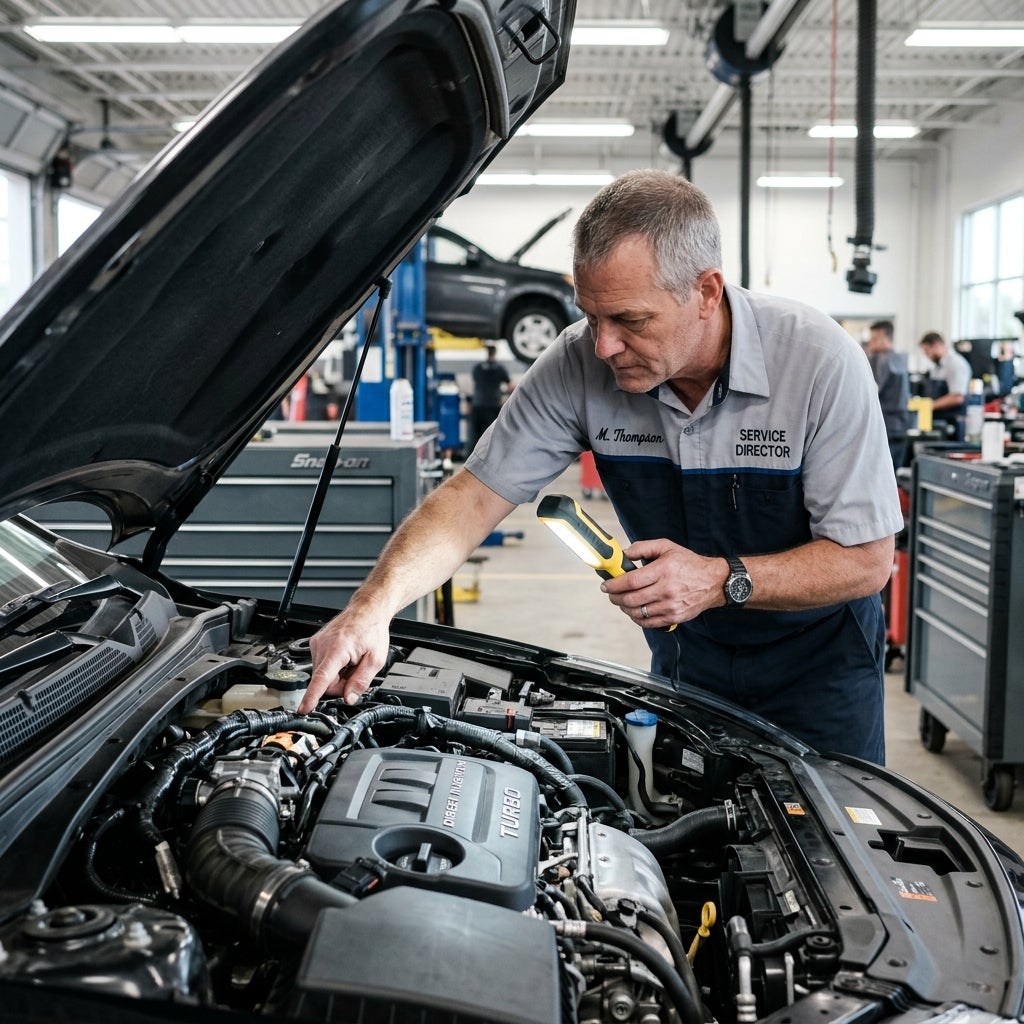
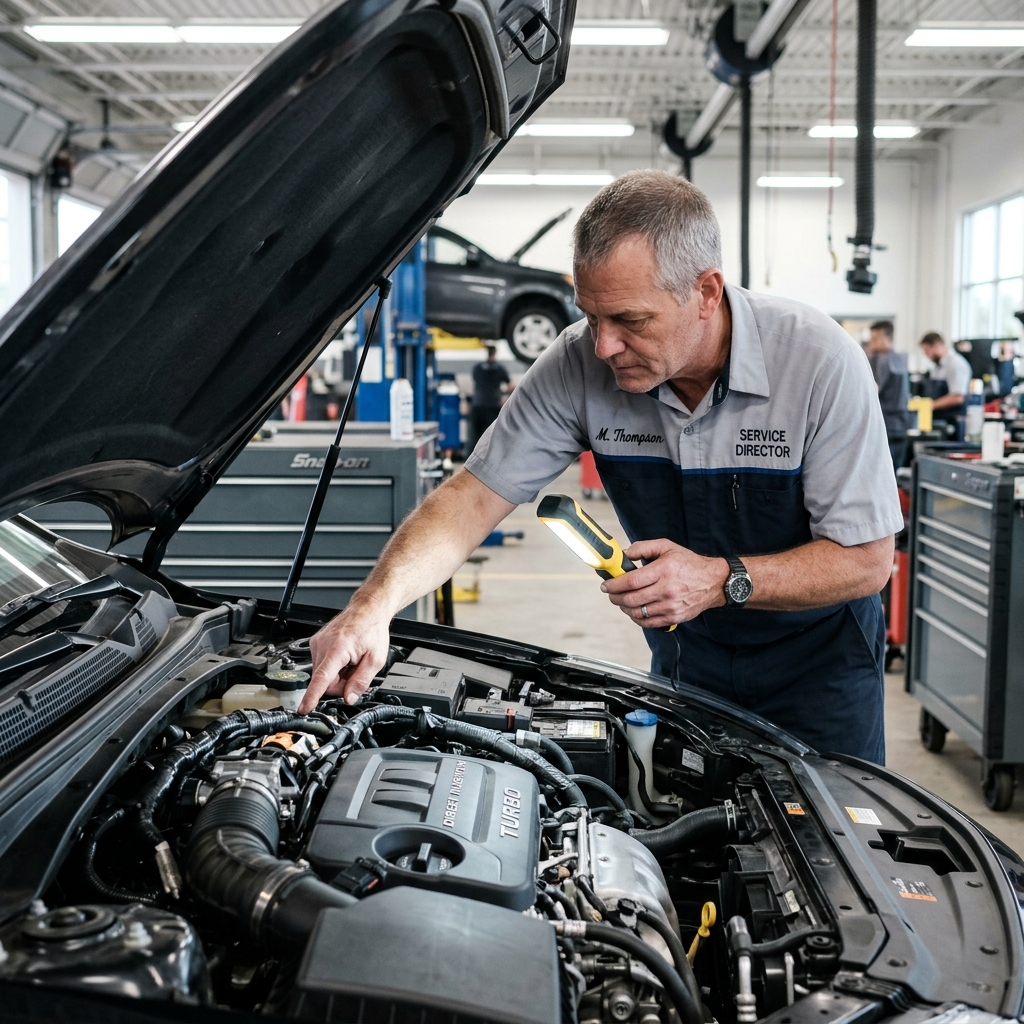
A service director inspects a car engine bay using a yellow work light inside an auto repair shop. (Representative image for illustration purposes only. Actual vehicle may vary based on trim and configuration.)
The Bottom Line Answer Up Front: To successfully prevent rodents—such as mice, rats, and squirrels—from chewing soy-based wiring harness insulation during short or long-term vehicle storage, you must employ a multi-layered defense strategy. Combined protection includes wrapping sensitive wire harnesses with capsaicin-infused rodent tape, installing botanical mint repellents, conducting thorough interior detailing to eliminate all organic scent trails and food crumbs, positioning strategic snap traps around tire contact points, and utilizing a smart trickle charger to maintain electrical integrity. In this exclusive deep-dive interview, Mike Hogg, Service Director at Valor Ford in Junction City, Kansas, draws upon his 20 years of hands-on automotive service experience to share actionable, real-world advice. Whether you are a local driver preparing a truck for winter garage storage or a service member stationed at nearby Fort Riley gearing up for an overseas deployment, this expert Q&A equips you with the exact protocols needed to keep destructive pests out of your vehicle.
Interviewer: Mike, thanks for sitting down with us today. Rodent damage to vehicle wiring seems to be a major headache for vehicle owners across Kansas, especially when cars are parked or stored for extended periods. Before we dive into specific prevention techniques, can you give us a quick overview of what owners are facing when mice get under the hood? Mike Hogg: Thanks for having me. Over my 20 years here at Valor Ford, I've seen hundreds of vehicles towed into our service bay with complex electrical glitches that all trace back to one single culprit: a small field mouse or rat that decided to make an engine bay its winter home. When a vehicle sits undisturbed—even for just a couple of weeks during seasonal transitions—rodents find the cozy, sheltered spaces under the intake manifold or fuse box irresistible. They don't just build nests; they gnaw through crucial harness wiring, fuel lines, and sensor leads. What could have been prevented with twenty dollars worth of rodent tape or a good cleaning often turns into a multi-thousand-dollar electrical harness replacement. Our goal today is to make sure every driver in Junction City, Fort Riley, and Dickinson County knows exactly how to prevent that nightmare before it starts.

Q: Why do mice and rodents target car wiring during long-term storage in Kansas?

Interviewer: It feels like rodent wire-chewing has become much more common in recent years compared to older vehicles from thirty years ago. Is that just a myth, or has something fundamental changed in how modern cars are manufactured? Mike Hogg: It is definitely not a myth—it's a proven reality. Starting in the late 1990s and expanding rapidly throughout the 2000s and 2010s, global automakers transitioned from traditional petroleum-based plastic wire insulation to soy-based bio-plastics. Soy insulation was introduced to make vehicles more eco-friendly, reduce plastic waste, and lower manufacturing costs. However, soy is an organic compound derived from soybeans. To a hungry field mouse, rat, or squirrel, that wiring harness literally smells and tastes like food. Furthermore, modern vehicles have miles of intricate wiring running through every corner of the chassis. From engine control modules (ECMs) and blind-spot sensors to heated seat harnesses and battery cables, there are dozens of harness corridors tucked under plastic engine covers and thermal insulation shields. These dark, tight spaces retain heat long after you turn off the ignition, creating an ideal, warm sanctuary shield against cold Kansas winds.
Interviewer: How do local geography and agricultural cycles in central Kansas impact rodent activity around parked vehicles? Mike Hogg: Here in Dickinson County and around Junction City, we are surrounded by rich agricultural land, wheat fields, corn crop acreage, and prairie habitats. During the late summer and early fall, as farmers harvest crops and temperatures begin to drop, field mice lose their natural cover and primary food supply. They begin migrating in vast numbers toward residential garages, barns, carports, and parking lots looking for warmth, shelter, and nesting material. Rodent teeth grow continuously throughout their lives—up to 4 to 5 inches per year. They *must* constantly chew on hard or flexible materials to grind their incisors down. The flexible yet durable soy-based insulation surrounding vehicle wiring provides the exact mechanical resistance they need to maintain their teeth, while the cotton-like acoustic insulation lining car hoods and cabin firewalls provides pristine nesting material. When a vehicle sits parked in a driveway or garage, rodents can establish a nest and severely chew through essential engine harnesses in as little as 48 to 72 hours.

Q: What physical deterrents and repellents actually keep rodents out of stored engines?

Capsaicin Rodent Tape

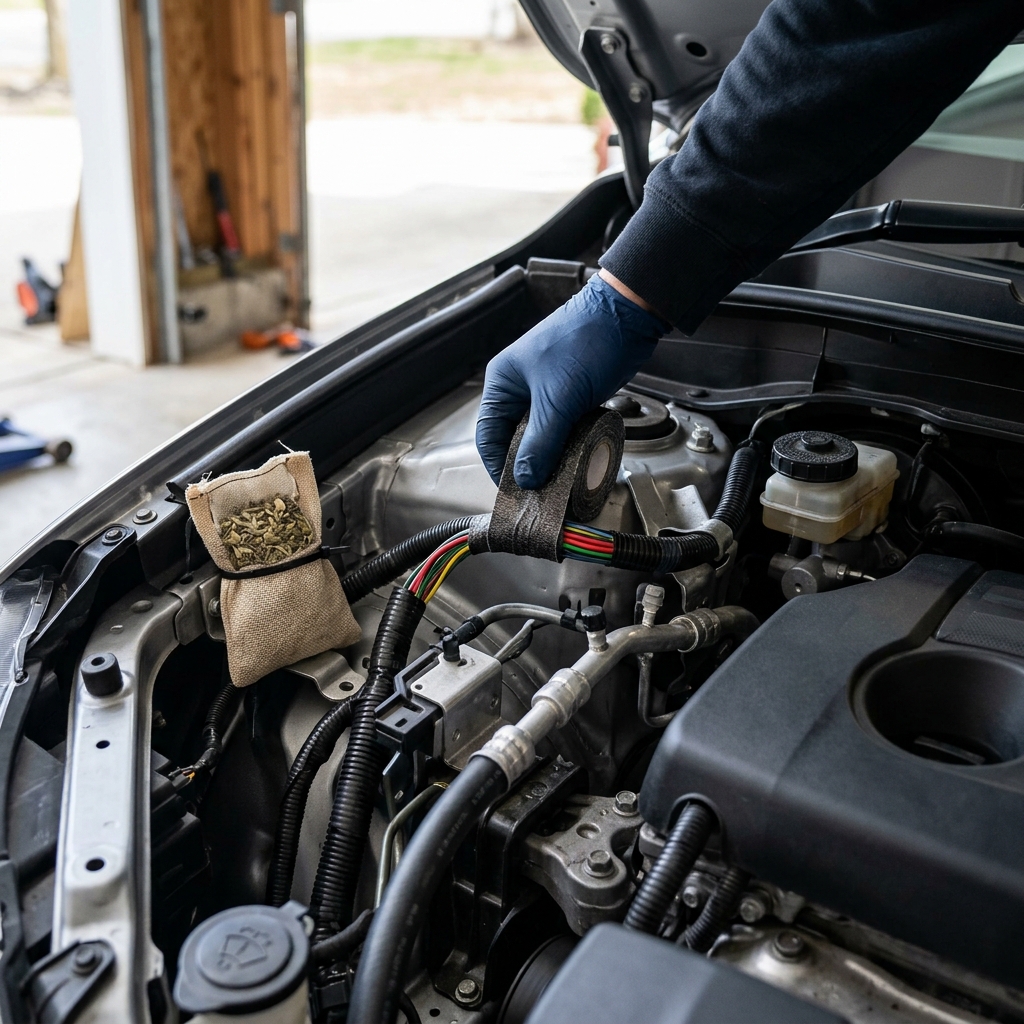
Capsaicin Tape Defense: Specially treated electrical tape infused with capsaicin—the fiery chemical compound found in hot chili peppers—is widely recognized as the gold standard in physical electrical protection. When wrapped directly over vulnerable wiring looms, main engine harnesses, and knock-sensor wires, it delivers an unbearable spicy sting to any rodent that attempts to bite into it. At Valor Ford, our factory-trained technicians can install capsaicin rodent protection tape on vehicles entering long-term storage or those coming in for post-damage harness rebuilds.

Botanical Oils & Sound

Mint Repellents & Ultrasonic Units: Pure peppermint oil sprays and commercial botanical deterrent pouches (like Fresh Cab) overload a rodent's sensitive olfactory senses. Spraying concentrated peppermint oil around wheel wells, firewall openings, and subframe entry points creates an unpleasant aroma barrier. Ultrasonic sound devices connected to the car battery emit variable high-frequency sound waves that irritate rodents without disturbing humans or domestic household pets. For complete protection, combine olfactory botanical repellents with electrical capsaicin wrapping.

Tire Traps & OEM Accessories

Strategic Perimeter Traps: Rodents cannot fly—they must climb up your vehicle's rubber tires or suspension components to reach the engine compartment or cabin. Placing heavy-duty mechanical snap traps or non-toxic wooden snap boxes directly adjacent to all four tire contact patches creates an inescapable defensive perimeter around the vehicle. You can also browse official Ford protection accessories and maintenance products at our dealership. Order Genuine Ford Parts directly through Valor Ford for OEM-backed protection accessories.
A gloved hand wraps electrical wires in a car engine bay with protective tape near a rodent repellent sachet. (Representative image for illustration purposes only. Actual vehicle may vary based on trim and configuration.)

Q: What are the key vehicle preparation steps before placing a car into long-term storage?

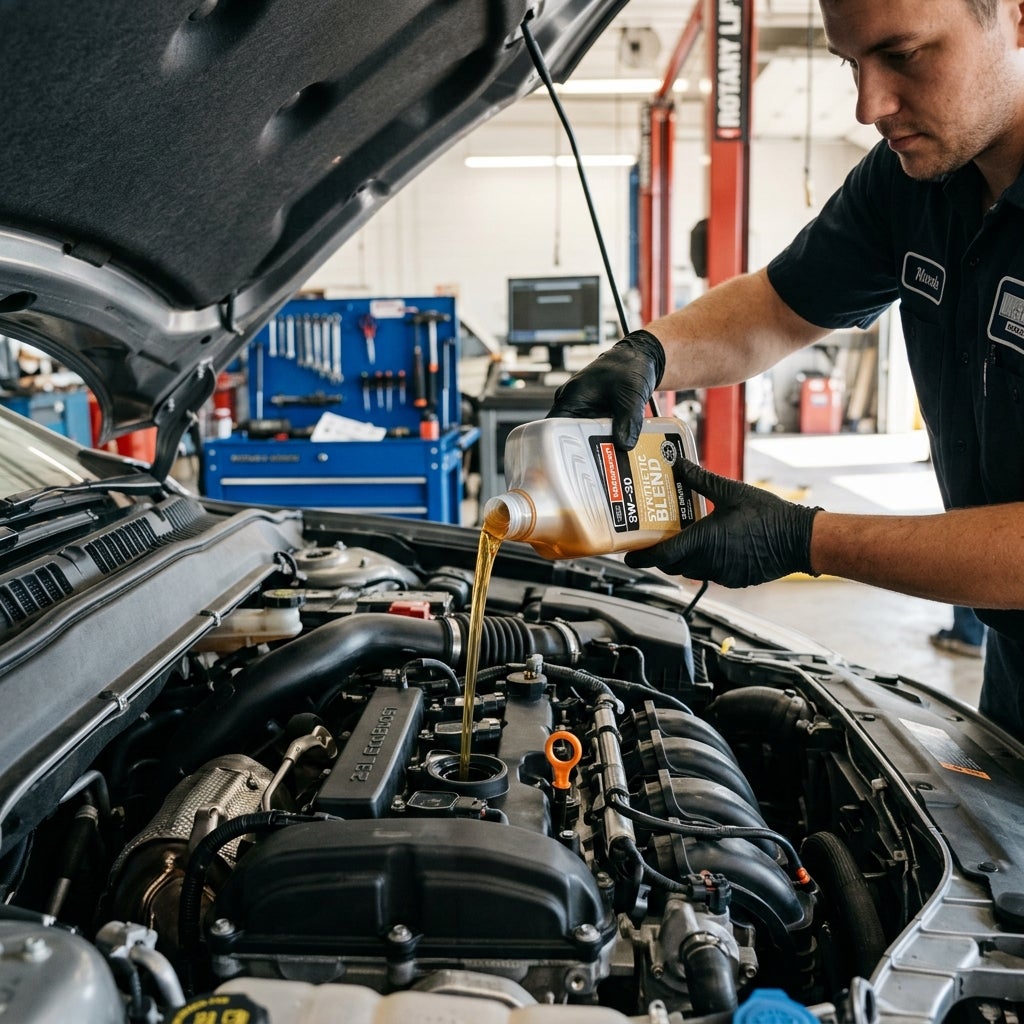
Interviewer: Walk us through the ultimate pre-storage preparation checklist. What should a vehicle owner do right before turning off the engine for several months? Mike Hogg: Proper vehicle preparation is all about eliminating the attractants that lure pests in the first place, while protecting vital mechanical components from stagnation damage. Here is our recommended step-by-step checklist: 1. Deep Interior Detailing: Vacuum every square inch of the interior, including under seat rails, trunk compartments, and glove boxes. Even a single stray French fry, wrapper crumb, or dropped piece of candy will attract mice from yards away. Clean all interior vinyl and upholstery with odor-eliminating solutions. 2. Fresh Synthetic Oil Change & Filter: Used engine oil contains acidic combustion byproducts, moisture, and unburned fuel particles that can settle and corrode internal engine components during storage. Always perform a fresh oil and filter change right before parking the car. 3. Fuel Stabilizer Additive: Modern ethanol-blended gasoline begins to degrade and absorb moisture within 30 to 60 days, leading to varnish buildup in fuel injectors and lines. Fill the gas tank to roughly 95% capacity (leaving a small expansion space) and add a high-quality fuel stabilizer, then run the engine for 10 minutes to circulate the treated fuel through the entire fuel delivery system. 4. Replace Cabin & Engine Air Filters: Old filters clogged with leaf debris, seeds, and organic dust create prime nest-building material. Install clean, new OEM filters before storage. 5. Top Off All Essential Fluids: Fill coolant, brake fluid, power steering fluid, and windshield washer reservoirs to full levels to eliminate internal air pockets where condensation can accumulate. 6. Schedule a Comprehensive Pre-Storage Inspection: Have professional Ford technicians inspect your belts, hoses, brake assemblies, and electrical harness seals before storing your vehicle.

Q: Is it better to disconnect the vehicle battery or use a trickle charger for storage?

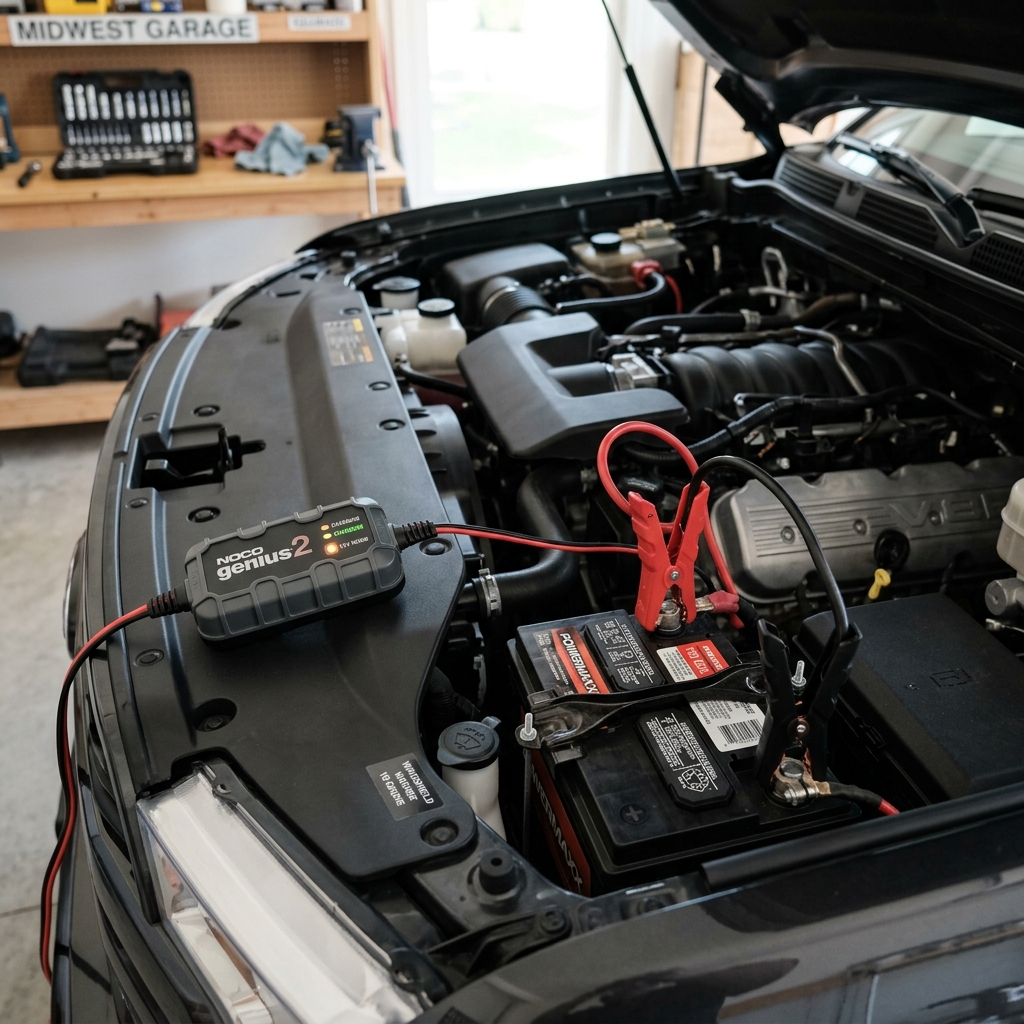
Interviewer: Battery maintenance is a huge topic for vehicle storage, especially for military personnel deploying overseas from Fort Riley for 6 to 12 months. Should people disconnect their battery terminals, or leave a trickle charger plugged in? Mike Hogg: This depends directly on your storage location and electrical access. If your vehicle is stored in a secure garage with access to a standard 120V wall outlet, a high-quality smart battery maintainer (trickle charger) is by far the superior option. Unlike older basic trickle chargers that continuously push voltage and can overcharge or boil off battery electrolyte, a modern smart maintainer monitors battery voltage continuously. It cycles into float mode when full, preventing battery sulfation and keeping internal computer memories, clock settings, and engine control unit (ECU) calibration profiles alive. Keeping continuous power to modern vehicles prevents deep parasitic battery drain caused by security systems and keyless entry receivers.
Mike Hogg (Continued): However, if you are storing your vehicle in an outdoor military storage lot or a facility without reliable electrical outlets, disconnecting the battery is mandatory. Parasitic power draws in modern Ford trucks and SUVs can completely drain a healthy 12V battery in as little as 3 to 4 weeks. When disconnecting, always remove the negative (black/minus) terminal cable first to prevent electrical shorting against the vehicle frame. Tuck the terminal wire safely away from the battery post. If possible, remove the battery completely and store it on a wooden shelf in a climate-controlled space. When you return from deployment, thoroughly clean the battery terminals, reconnect the positive cable first, then the negative cable, and allow the vehicle to idle for 5 to 10 minutes so the ECU can re-learn its idle fuel trims.
NOCO Genius 2 battery charger connected to a car battery under an open engine hood in a garage. (Representative image for illustration purposes only. Actual vehicle may vary based on trim and configuration.)

Q: What tire pressure should you set before putting a car into storage?

Over-Inflate for Flat Spots

Preventing Flat-Spotting: When a heavy vehicle sits stationary on rubber tires for months, the weight compresses the bottom contact area, causing flat-spotting in the tire tread. Cold winter temperatures make rubber stiffer, making flat spots persistent. To prevent flat spots, inflate your tires to 3 to 5 PSI above the recommended cold inflation pressure listed on your driver-side door jamb placard (never exceed the maximum sidewall PSI rating stamped on the tire). This extra pressure maintains tire roundness under static weight.

Floor Barrier Protection

Thermal Concrete Isolation: Parking directly on cold concrete garage floors draws oils and moisture out of rubber tire compounds, accelerating dry rot and sidewall cracking during long winter storage periods in Kansas. Park your vehicle on thick wooden planks, high-density rubber stall mats, or curved tire cradles. This creates a protective thermal barrier between the freezing concrete slab and your tire tread rubber, preserving rubber flexibility and sidewall life.

Post-Storage Re-Adjustment

Re-setting PSI Before Driving: Once your storage period is complete and you are ready to put the car back on the road, always adjust tire pressure back to factory specification before driving at highway speeds. If you notice persistent steering wheel vibration or thumping sounds after returning from storage, visit Valor Ford for a quick tire balance and tread safety inspection. If you need new tires, explore our Browse Used Inventory or contact our service center.

Q: How do you protect a vehicle interior and exterior from mold, moisture, and pests during deployment storage?

Interviewer: Fort Riley service members frequently ask about long-term deployment storage protection against interior mold, dampness, and external weathering. What specialized tips do you have for soldiers deploying overseas? Mike Hogg: Serving our military community at Fort Riley is a huge part of our mission at Valor Ford. When a soldier deploys for 6, 9, or 12 months, their vehicle is exposed to dramatic seasonal weather shifts in Kansas—from humid summer heat to freezing winter ice. Moisture management inside the cabin is critical. Place 2 to 3 large desiccant moisture-absorber tubs (like DampRid) on the floorboards and in the cargo area. These absorb ambient humidity and trap water in sealed containers, preventing toxic mold and mildew growth on leather seats and headliners. Close all climate control vents and switch selector toggles to 'Recirculate' mode to shut off external air intake flaps.
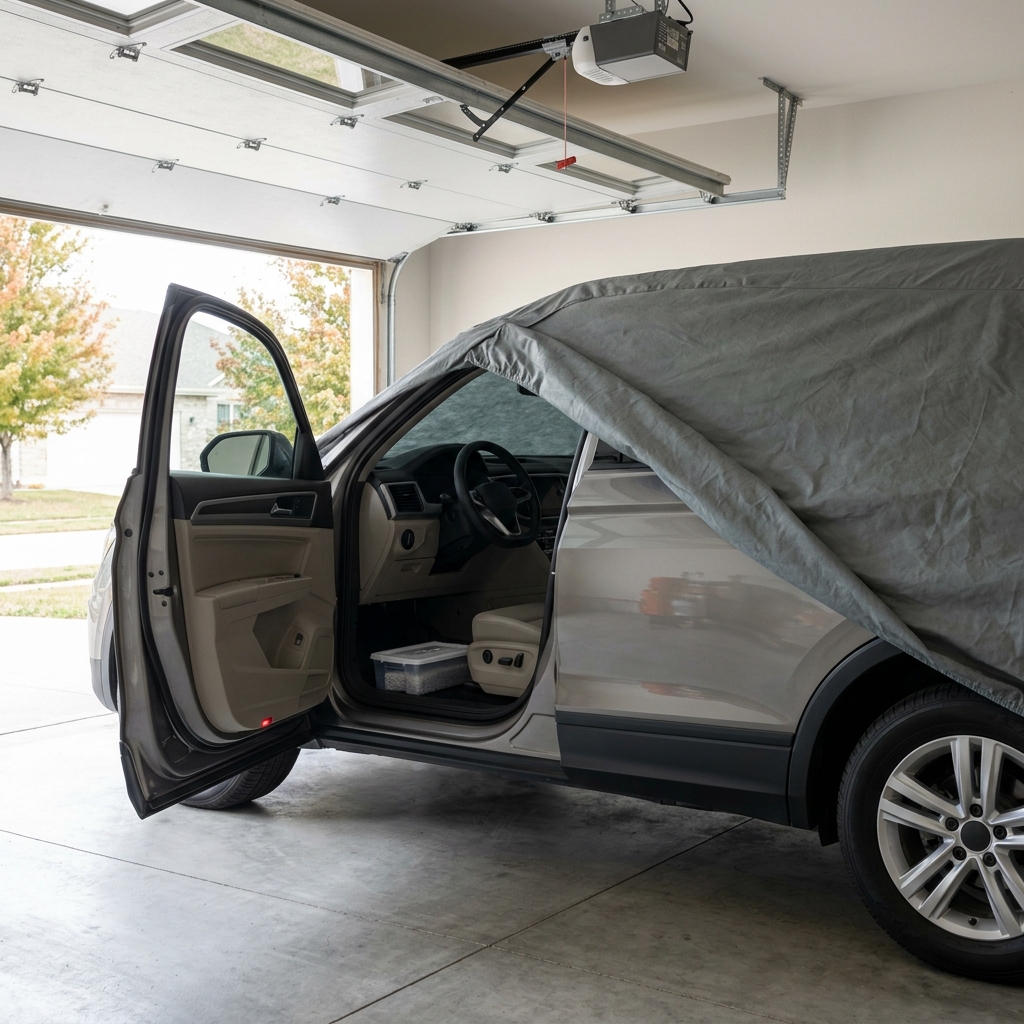
Mike Hogg (Continued): For exterior body protection, perform a full wash, iron decontaminant treatment, and high-quality paint sealant application before putting the vehicle away. A premium paint sealant protects clear coat finishes from atmospheric dust, bird droppings, and industrial fallout. If storing outdoors or under a carport, use a custom-fit, breathable multi-layer car cover. Avoid cheap non-breathable plastic tarps, which trap moisture underneath and cause paint blistering, rust, and frame corrosion. Finally, seal exhaust tailpipes and intake snorkels with breathable wire mesh or aluminum foil caps to stop mice from nesting inside your exhaust system. Take advantage of our convenient Schedule Pickup and Delivery Service to let our team handle your pre-deployment vehicle prep.
Silver SUV parked in a garage with the driver side door open and a grey car cover draped over the rear. (Representative image for illustration purposes only. Actual vehicle may vary based on trim and configuration.)

Q: What documentation is required to store a vehicle at government expense during deployment?

Title & Registration

Ownership Verification: Government-funded Privately Owned Vehicle (POV) storage facilities at Fort Riley require complete proof of ownership. You must present the original vehicle title or current state registration documents in the deploying service member's name. Ensure registration renewal dates will not expire during your planned deployment window to prevent administrative impound issues.

Power of Attorney

Legal Authorization: If a spouse, family member, or designated representative is turning in the vehicle on your behalf, a valid Special Power of Attorney (POA) specifically authorizing vehicle storage and movement is legally required. If the vehicle is financed or leased, an official Lienholder Authorization Letter granting permission for government storage must be included.

Safety Certification

Mechanical Safety Records: Government POV storage facilities require a documented safety inspection verifying zero active fluid leaks, operational emergency brakes, clean battery connections, and proper tire tread depth. Our service department at Valor Ford provides complete Fort Riley storage safety inspection documentation to make turn-in as easy as possible.

Q: What pre-PCS vehicle maintenance checks should service members complete before a cross-country drive from Fort Riley?

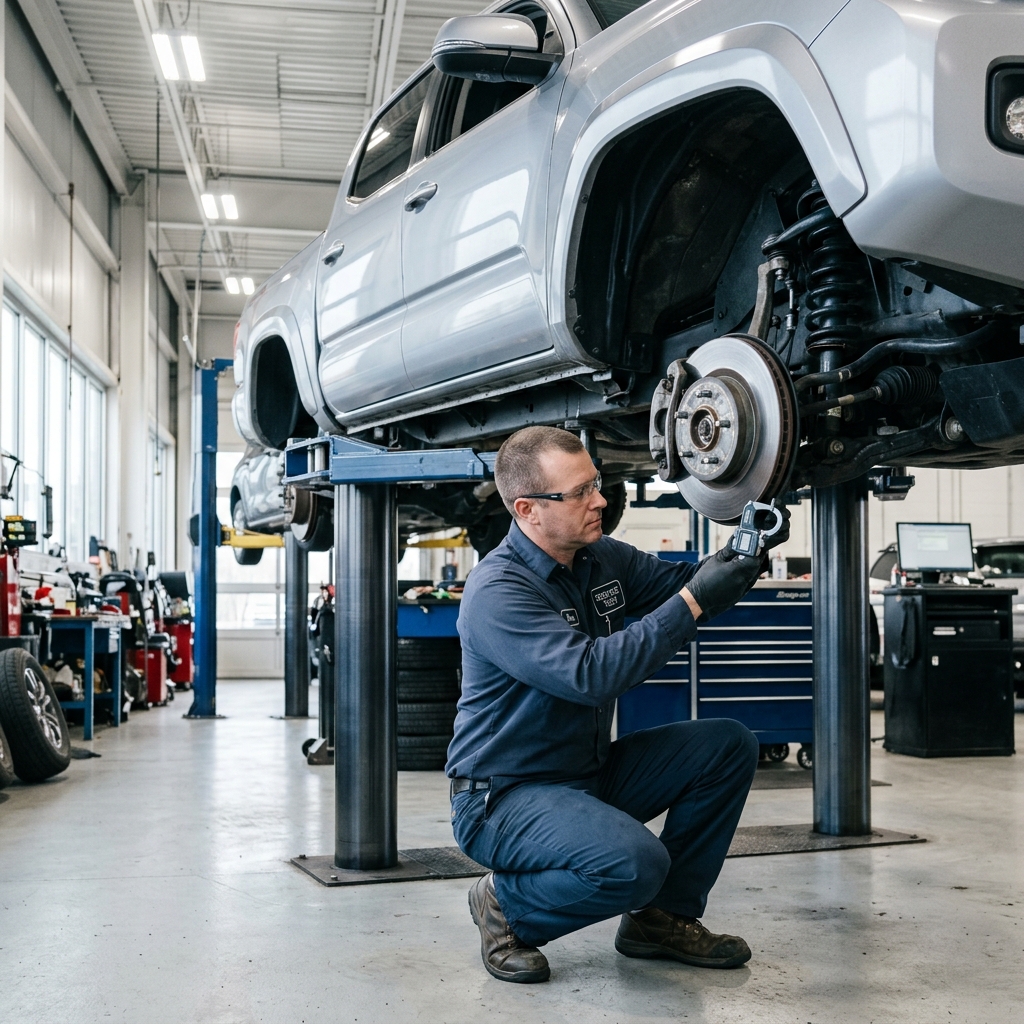
Interviewer: When military families receive Permanent Change of Station (PCS) orders moving them from Fort Riley to bases across the country, what critical safety checks should they perform before hitting the highway? Mike Hogg: A cross-country PCS move usually involves heavy loads, towing trailers, and long hours at highway speeds across varying terrain. The last thing any military family needs is a preventable breakdown in the middle of a multi-state move. First on the checklist is a full brake inspection. Ensure brake pads have at least 4-5mm of friction material remaining and inspect rotors for heat checking or warping. Second, perform a complete cooling system flush and pressure test. Kansas weather shifts rapidly, and driving into desert heat or mountain passes tests your radiator, water pump, thermostat, and coolant hoses to their absolute limits.
Mike Hogg (Continued): Third, check your tire condition and wheel alignment. Inspect tread depth across all tires using a tread gauge, verify spare tire pressure, and ensure your jack and lug wrench are functional. Fourth, perform a load-tested battery and alternator check. High heat and heavy highway electrical loads stress aging batteries rapidly. Before you load up your luggage and start your journey, bring your Ford truck, SUV, or sedan to Valor Ford for a comprehensive pre-PCS multi-point inspection. If you're looking to upgrade your vehicle prior to PCSing, check out our popular models like the Research Ford F-150 or Shop New Ford Bronco Inventory.
Mechanic using a digital micrometer to measure a silver pickup truck's brake rotor on a hydraulic lift. (Representative image for illustration purposes only. Actual vehicle may vary based on trim and configuration.)

Q: What should you do if rodents have already damaged your vehicle's electrical wiring?

Interviewer: If a driver starts their vehicle after storage and sees a dashboard lit up with check engine lights, rough idling, or non-functioning headlights due to mouse damage, what immediate steps should they take? Mike Hogg: If you suspect rodent damage, do not continue driving the vehicle. Chewed or shorted electrical wires can cause unpredictable computer malfunctions, damage delicate control modules, or even spark electrical fires under the hood. 1. Do Not Force Start or Drive: Turn off the ignition immediately if you smell burning materials or notice erratic sensor warnings. 2. Inspect Visually (Safely): Pop the hood and inspect for visible nest materials, droppings, or exposed copper wires around the battery and engine intake manifold. Do not touch bare copper wires. 3. File an Auto Insurance Claim: Many drivers do not realize that rodent damage to vehicle wiring is typically covered under the Comprehensive Coverage portion of your auto insurance policy. Contact your insurer right away to report the claim. 4. Arrange Safe Flatbed Towing: Have your vehicle safely towed directly to Valor Ford's certified service center. 5. Professional Repair & Harness Replacement: Our master technicians utilize factory wiring schematics, genuine OEM harness assemblies, and heat-shrink soldering techniques to restore your electrical system to 100% factory precision. We can also help you Order Genuine Ford Parts for specialized repairs.

Schedule Your Vehicle Storage Prep or Maintenance Inspection at Valor Ford

Protecting your vehicle from destructive rodent damage, cold Kansas weather, and storage stagnation requires knowledge, preparation, and the right OEM accessories. Whether you are preparing your Ford truck for winter storage, gearing up for a military deployment from Fort Riley, or scheduling a pre-PCS safety inspection, the team at Valor Ford is here to serve you. With 20 years of hands-on expertise under the guidance of Service Director Mike Hogg, our factory-certified service technicians deliver uncompromising quality, authentic OEM replacement parts, and reliable customer service. Visit our state-of-the-art facility at 1825 Goldenbelt Blvd, Junction City, KS 66441. Get Directions to Valor Ford or Call us at (785) 238-5114 to speak directly with our service advisors today. You can also explore options to Trade In Evaluation or contact our finance team for current financing information.

Posted in:

Related Posts

What Are the Requirements and Specifications for Ford WSS-M2C961-A1 Engine Oil?

What Are the Requirements and Specifications for Ford WSS-M2C961-A1 Engine Oil?

What Are the Requirements and Specifications for Ford WSS-M2C961-A1 Engine Oil? Ford specification WSS-M2C961-A1 represents the modern benchmark for 5W-20 engine oils designed specifically for Ford North American powertrains. Introduced to align with the stringent API SP (American Petroleum Institute) and ILSAC GF-6A (International Lubricant Specification Advisory Committee) standards, this specification engineered by Ford Global Materials Engineering addresses the complex tribological demands of high-output, turbocharged direct-injection EcoBoost engines. Unlike traditional motor oil standards of past decades, WSS-M2C961-A1 is not merely focused on reducing metallic friction; it is a holistic chemical formulation engineered to protect advanced internal timing belt materials, prevent destructive combustion events, and maintain strict viscosity boundaries over extended service intervals. At the heart of the Ford WSS-M2C961-A1 requirement matrix is chemical compatibility with modern internal belt-in-oil (BIO) systems, commonly referred to as 'wet timing belts'. In these EcoBoost engine designs, elastomeric belts operate continuously submerged in engine oil spray and crankcase vapor. Standard motor oils containing aggressive detergent packages, excessive zinc dialkyldithiophosphate (ZDDP) ratios, or unapproved base stocks can cause catastrophic chemical degradation of the elastomeric polymers, leading to belt swelling, tooth stripping, and sudden engine failure. WSS-M2C961-A1 demands specialized base oils and balanced additive chemistry that preserve hydrogenated nitrile butadiene rubber (HNBR) structural integrity while controlling deposit formation under high thermal loads. Key performance targets of the Ford WSS-M2C961-A1 specification include robust mitigation against Low-Speed Pre-Ignition (LSPI)—a highly destructive phenomenon in downsized, turbocharged engines where fuel-oil droplets ignite spontaneously before spark ignition. It also demands high dynamic shear stability under extreme high-temperature high-shear (HTHS) conditions, superior anti-foaming properties to prevent aeration in oil pump pathways, and exceptional cold-cranking performance during winter temperature drops. Specification Parameter Required Baseline Standard Ford Standard Target Engine Protection Benefit Viscosity Grade SAE 5W-20 Kinematic Viscosity @ 100°C: 7.8 - 9.3 cSt Optimizes oil film thickness and fuel efficiency Industry Certification API SP / ILSAC GF-6A Exceeds API SN Plus Standards Mandatory LSPI protection & wear defense Chemical Compatibility Standard Elastomers Ford Bio-Elastomer (HNBR / CR) Certified Prevents wet timing belt erosion and softening Shear Stability Standard Polymer Resistance 30-Cycle Kurt Orbahn Shear Test < 10% Maintains protective oil film under heavy loads Volatility (Noack) < 15.0% Loss < 13.0% Loss @ 250°C Reduces oil consumption and intake valve deposits What Is a Ford Wet Belt Engine and How Does It Function? A Ford Wet Belt engine —technically categorized as a Belt-in-Oil (BIO) system—is an engine design in which the internal timing belt (and in some engines, the oil pump belt) runs inside the engine block, directly bathed in crankcase motor oil. Traditional engine designs historically relied on either dry rubber timing belts isolated behind plastic covers or heavy steel timing chains lubricated by engine oil. Ford automotive engineers adopted wet belt architecture to combine the quiet, smooth operation of a rubber belt with the internal placement advantages of a chain. The primary mechanical motivation behind belt-in-oil technology is friction reduction. Steel timing chains create significant mechanical resistance as dozens of metal links flex over dynamic tensioners and cam sprockets. A wet belt reduces internal friction drag by approximately 30% compared to a timing chain. In modern vehicle design, this reduction in internal parasitic drag translates directly into improved fuel economy metrics, reduced CO2 emissions, and immediate throttle responsiveness for vehicle owners navigating daily traffic across Junction City and Fort Riley. However, operating a flexible belt within hot engine oil introduces unique chemical challenges. The timing belt is composed of advanced elastomeric synthetic rubber reinforced with high-tensile glass fiber cords. Engine oil naturally absorbs combustion byproducts, unburned blow-by gasoline, acid residues, and extreme thermal heat. If the oil chemistry is incorrect or severely degraded, these compounds penetrate the belt's rubber matrix, destabilizing its vulcanized bonds and causing catastrophic degradation. Which Ford EcoBoost Engines Use a Wet Timing Belt? 1.0L EcoBoost 3-Cylinder The pioneer of Ford's wet belt technology in North America and Europe, the award-winning 1.0L EcoBoost 3-cylinder engine (found in select Ford Focus, Fiesta, and EcoSport models) features twin internal wet belts: a main primary timing belt driving the overhead camshafts and a smaller secondary belt driving the variable-displacement oil pump submerged in the oil pan sump. 1.5L EcoBoost (Select Models) Certain configurations of the 1.5L EcoBoost engine family—including key variants found in popular commuter CUVs like the Ford Escape and Ford Bronco Sport—utilize a wet belt drive dedicated specifically to the lower oil pump module. Maintaining oil chemical purity under specification WSS-M2C961-A1 is equally vital for preserving these critical lower drive belts. Junction City Commuter Impact For soldiers commuting daily between Fort Riley military installation and Junction City or traveling highway stretches along I-70 to Manhattan, KS, these compact EcoBoost engines deliver fantastic fuel efficiency. However, their high power density means maintenance vigilance is essential to protect internal wet belt systems. Why Ford WSS-M2C961-A1 Replaced Older Engine Oil Standards Automotive oil standards continually evolve to match rapid advances in engine metallurgy, induction technology, and environmental regulations. Ford WSS-M2C961-A1 supersedes older 5W-20 engine oil standards including WSS-M2C945-A, WSS-M2C945-B, and the legacy WSS-M2C930-A specification. While these older oils met the performance requirements of their day, they lack the structural chemical defenses needed for high-stress direct-injection turbocharged engines with wet timing belts. The fundamental shift began with the introduction of API SP and ILSAC GF-6A standards. Older API SN and GF-5 oils relied heavily on high concentrations of calcium-based detergent additives. While calcium effective keeps metal surfaces clean, researchers discovered that calcium ions promote combustion instability in direct-injected turbocharged engines, triggering severe Low-Speed Pre-Ignition (LSPI) micro-explosions. WSS-M2C961-A1 replaces excess calcium with magnesium-based detergent chemistry, virtually eliminating LSPI risks. Furthermore, WSS-M2C961-A1 introduces far stricter oxidation limits and chain-wear resistance criteria. Modern turbochargers spin in excess of 200,000 RPM, subjecting engine oil to blistering temperatures. WSS-M2C961-A1 resists thermal coking and varnish formation while preserving vital rubber flexibility across timing belt teeth. Schedule Ford Service Today Can Ford WSS-M2C948-B Oil Be Used Instead of WSS-M2C961-A1? A frequent point of confusion among automotive enthusiasts and local vehicle owners revolves around European vs. North American Ford oil standards—specifically comparing European WSS-M2C948-B with North American WSS-M2C961-A1. While both are 5W-20 viscosity formulations designed for 1.0L and 1.5L EcoBoost wet belt engines, they are tailored around distinct regional fuel standards and test protocols. WSS-M2C948-B was formulated primarily for the European market in conjunction with ACEA C5 standards. It emphasizes sulfurized ash limits compatible with European particulate filters and specific high-sulfur or bio-fuel blends found across EU countries. In contrast, North American WSS-M2C961-A1 is optimized around API SP and ILSAC GF-6A parameters, focusing heavily on ethanol-blended US top-tier gasolines (E10/E15) and LSPI suppression. Can you substitute them? For vehicle owners in North America, Ford factory technical guidelines explicitly specify using WSS-M2C961-A1 certified lubricants (such as Motorcraft Synthetic Blend 5W-20). While using WSS-M2C948-B in an emergency top-off situation won't instantly destroy a belt, long-term adherence to WSS-M2C961-A1 is necessary to maintain official Ford factory warranty compliance and ensure optimal protection under American operating conditions. To ensure your EcoBoost engine remains fully compliant with warranty requirements, our factory-certified technicians at Valor Ford in Junction City, KS always install exact OEM-certified Motorcraft fluid formulations. What Symptoms Indicate That a Ford Wet Belt Is Beginning to Deteriorate? 1. Early Warning Signs As a wet belt degrades from improper oil chemistry or heat stress, minute fine rubber particles begin shedding off the backing and tooth matrix. During oil change services, trained technicians will spot fine rubber specks trapped in the oil drain pan or clinging to the dipstick tip. Visual inspection through the oil filler cap may also reveal cracking, swelling, or fraying along the visible edge of the belt. 2. Diagnostic Fault Codes As rubber particulate sheds into the oil supply, it is pumped directly toward the oil pan sump pickup tube screen. Rubber debris clogs the fine mesh screen, restricting oil flow. This oil starvation triggers diagnostic trouble codes: P0011 / P0012 (Camshaft Position Timing Over-Advanced/Over-Retarded due to oil control valve blockage) or P0299 (Turbocharger Underboost Condition from restricted oil line flow). 3. Severe Pressure Drops The most alarming mechanical symptom is a flickering red Oil Pressure Warning Light on the instrument cluster, particularly when idling at a stoplight after highway driving. Increased valve train ticking noise or harsh metallic rattle on cold starts indicates severe oil starvation. If ignored, stripped teeth will jump timing, causing internal valve-to-piston impact. How Incorrect Engine Oil Causes Catastrophic Wet Belt Failure The chemical physics of wet timing belt destruction from improper oil selection is both swift and unforgiving. When a vehicle owner or quick-lube shop pours non-approved standard motor oil, wrong-viscosity oil (such as 10W-30 or 5W-30 without WSS-M2C961-A1 approval), or aggressive aftermarket oil additives into an EcoBoost wet belt engine, a destructive chemical reaction known as elastomer plasticization begins. Unapproved base oils and aggressive additive compounds break down the synthetic rubber bonding polymers. The rubber absorbs incompatible chemical esters, causing the timing belt to swell by up to 15% in thickness. As the belt swells, its tooth pitch changes, causing severe mechanical scrubbing against the steel camshaft sprockets. This friction peels the outer tooth fabric shield away from the inner rubber cord. Simultaneously, acidic combustion byproducts in degraded oil soften the core rubber matrix. Belt teeth become soft and rubbery, eventually shearing off cleanly under load. When multiple teeth shear off, the camshafts immediately lose synchronization with the crankshaft. Because EcoBoost engines are interference engines (where valve and piston sweeps overlap), timing loss drives pistons directly into open valves at thousands of RPM, resulting in catastrophic engine failure requiring total assembly replacement. Even before timing jumps, the shed rubber slurry clogs the oil pickup screen, starving the turbocharger bearings and crankshaft journals of oil. Using anything other than certified WSS-M2C961-A1 oil is the single primary cause of premature wet belt engine destruction. How Do You Properly Maintain a Ford Engine with a Wet Timing Belt? Preventing premature wet belt failure and ensuring long-term reliability for your Ford vehicle requires a disciplined maintenance protocol. By following these four core engineering rules, vehicle owners can easily achieve 100,000+ trouble-free miles from their EcoBoost wet belt engine: 1. Strict Oil Change Intervals (5,000 - 7,500 Miles): Never push oil drain intervals to the absolute maximum 10,000-mile limit under the Intelligent Oil-Life Monitor (IOLM), especially in Kansas severe duty conditions. Changing oil every 5,000 to 7,500 miles flushes out abrasive carbon soot and unburned fuel before chemical breakdown occurs. 2. Use ONLY WSS-M2C961-A1 Certified Oil: Verify that every oil bottle or service ticket explicitly states Ford WSS-M2C961-A1 approval. Motorcraft Synthetic Blend 5W-20 or Motorcraft Full Synthetic 5W-20 are direct factory OEM formulations. 3. Install OEM Motorcraft Filters: Genuine Motorcraft oil filters (such as FL-910S) feature silicone anti-drainback valves and precise bypass pressure relief valves engineered to capture micro-particulates without starving the timing belt circuit. 4. NEVER Use Chemical Engine Flushes or Solvent Additives: Engine flush solvents, oil thickeners, and friction-reducing additives can immediately react with wet belt rubber compounds, stripping away protective vulcanization coatings. Avoid all flush chemicals unless explicitly mandated by Ford technical service bulletins. Service Mileage Interval Recommended Maintenance Action Service Focus Area Every 5,000 - 7,500 Miles Oil & Filter Change (WSS-M2C961-A1 Motorcraft 5W-20) Fresh lubricant chemistry & particulate removal Every 15,000 Miles Visual Belt & Filler Neck Inspection Check for surface cracking or fraying Every 30,000 Miles Crankcase Vapor & PCV System Check Prevent fuel dilution buildup in crankcase Every 80,000 - 100,000 Miles Complete Wet Belt Replacement Service Replace primary belt, pump belt, tensioners & seal Schedule Pickup and Delivery Service What Additional Parts Should Be Replaced During a Wet Belt Replacement Service? Belts & Mechanical Tensioners A complete wet belt replacement requires changing both internal belts: the primary overhead camshaft wet timing belt and the secondary lower oil pump wet belt. Both mechanical belt tensioner pulleys and dynamic idler bearings must be replaced simultaneously, as their internal sealed bearings experience identical mileage wear. Seals, Gaskets & Hardware Because servicing internal belts involves disassembling the engine front cover and valve cover, technicians must replace the front crankshaft main oil seal, front timing cover gasket set, valve cover gasket, and single-use stretch crankshaft pulley bolt. Reusing stretch bolts risks severe engine harmonic balancer loosening. Sump Inspection & Pickup Screen The crucial step during wet belt replacement is dropping the engine oil pan to thoroughly clean or replace the oil pump pickup tube screen. Any residual rubber shed from the old belt trapped in the oil pan or screen must be meticulously cleaned out to guarantee unobstructed oil pressure for the new belt system. Driving Conditions in Central Kansas and Fort Riley: Severe Duty Impact Driving habits and seasonal environmental factors in Central Kansas directly influence engine oil longevity and wet belt health. For vehicle owners living in Junction City, commuting across Dickinson County, or driving on Fort Riley military base, operating conditions frequently cross into what Ford defines as **Severe Duty Service**. Military service members on Fort Riley often make frequent short trips—under 5 miles—between housing barracks, motor pools, and training grounds. During short trips, the engine oil never fully reaches its optimal operating temperature (above 180°F). Cold engine operation causes unburned gasoline from direct-injection pulses to wash past piston rings into the oil pan. This fuel dilution lowers oil viscosity and accelerates rubber degradation on the wet timing belt. Additionally, Kansas weather swings present extreme temperature challenges. Sub-zero winter cold starts in January demand instant low-temperature flow (5W rating) to ensure oil reaches upper overhead camshaft wet belts within seconds of ignition. Conversely, 100°F summer days with high agricultural dust exposure put heavy thermal stress on high-shear oil stability. If you drive under these severe conditions in the Junction City region, sticking strictly to a 5,000-mile WSS-M2C961-A1 oil service schedule at Valor Ford is essential. Feel free to Call us at (785) 238-5114 to consult with our service advisors regarding your specific driving patterns. Comparing Factory Motorcraft Oils with Aftermarket Alternatives Motorcraft Synthetic Blend Motorcraft 5W-20 Synthetic Blend (WSS-M2C961-A1) is engineered directly alongside Ford EcoBoost engines. It undergoes thousands of hours of engine dynamometer belt-in-oil durability testing, ensuring exact elastomer chemical compatibility and proven LSPI defense at an competitive pricing. Aftermarket Equivalents Some premium third-party oils state 'recommended for WSS-M2C961-A1' on their labels. However, caution is required: many generic off-the-shelf oils carry general API SP ratings but have not undergone Ford's explicit OEM bio-elastomer bench test certification for wet belt degradation. Warranty Assurance Using genuine Motorcraft WSS-M2C961-A1 oil supplied by an authorized dealership like Valor Ford helps maintain clear records for powertrain warranty claims. It eliminates any ambiguity regarding fluid specification compliance. Schedule Certified Ford Wet Belt Service and Oil Changes at Valor Ford Protecting your Ford vehicle's engine performance and ensuring wet timing belt longevity requires professional care using factory-certified fluids and expert diagnostic eyes. At Valor Ford, our factory-trained Ford technicians specialize in EcoBoost engine maintenance, wet belt visual inspections, and official WSS-M2C961-A1 Motorcraft fluid services. Whether you are due for a routine 5,000-mile oil change, require a detailed wet belt diagnostic inspection, or need to order genuine OEM Motorcraft filters and fluids, our team is ready to serve drivers across Junction City, Fort Riley, Abilene, and surrounding Kansas communities. Visit us today at 1825 Goldenbelt Blvd or use our convenient online scheduler to book your appointment. Schedule Ford Service Today Order Genuine Ford Parts

2023 Ford Explorer Maximum Towing Capacity: Specs by Engine & Package

2023 Ford Explorer Maximum Towing Capacity: Specs by Engine & Package

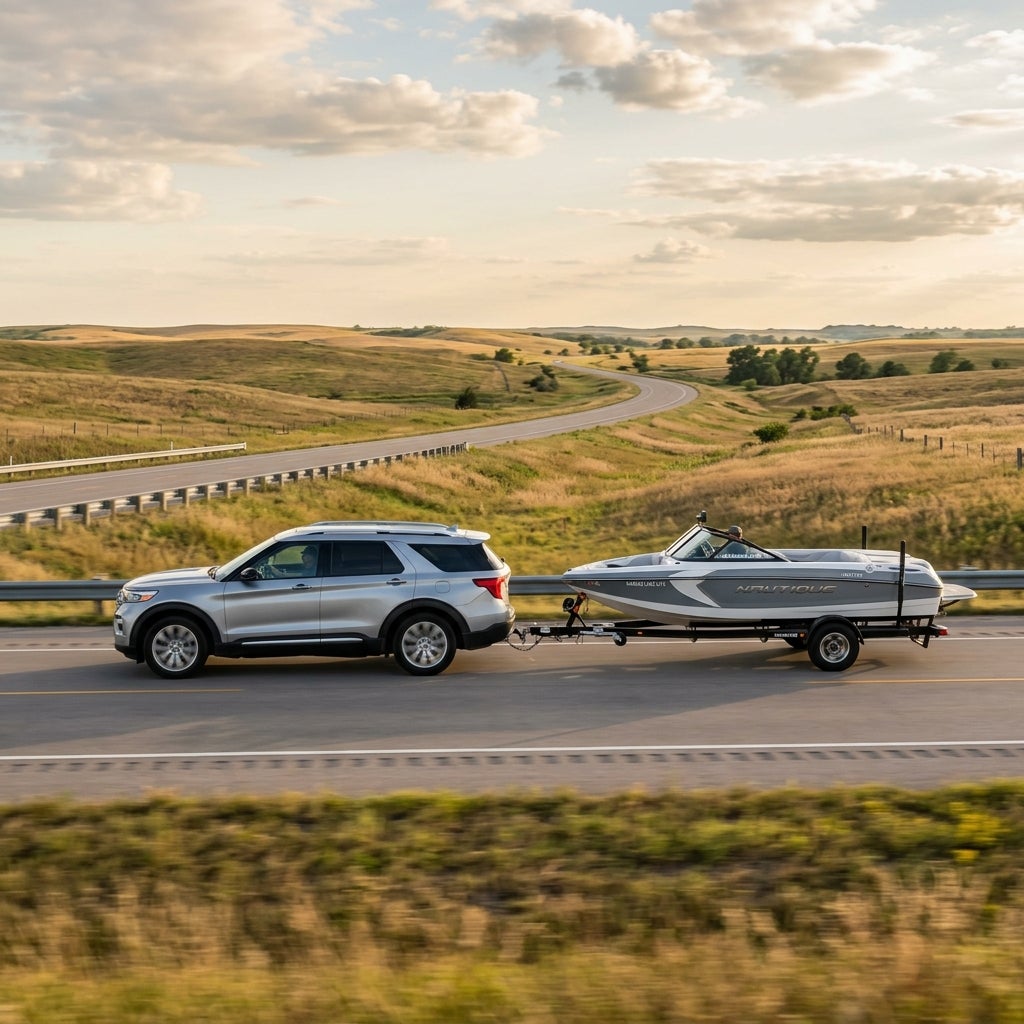
2023 Ford Explorer Maximum Towing Capacity: Specs by Engine & Package The 2023 Ford Explorer delivers an impressive maximum towing capacity of up to 5,600 lbs when properly equipped with the available 3.0L EcoBoost® V6 engine and the factory-installed Class IV Trailer Tow Package. Whether you are hitching up a ski boat for a weekend getaway to Milford Lake, pulling a pair of horses through Geary County, or transporting a heavy camper trailer across Central Kansas, the 2023 Explorer provides midsize SUV versatility paired with real truck-like pulling power. For drivers opting for the popular standard powertrain—the energetic 2.3L EcoBoost® I-4—the maximum towing capacity reaches a stout 5,300 lbs when equipped with the Class IV tow setup. Meanwhile, environmental-minded drivers selecting the efficient 3.3L V6 Hybrid powertrain can comfortably haul up to 5,000 lbs. Understanding the exact mechanical threshold of your specific trim level ensures both towing safety and optimal mechanical longevity for your vehicle. At Valor Ford in Junction City, Kansas, our team of Ford towing specialists helps drivers throughout Dickinson, Riley, and Geary counties select the ideal powertrain, axle ratio, and towing package to match their trailering requirements. From understanding gross combined weight ratings (GCWR) to verifying payload capacities, we are dedicated to ensuring your trailering setups are safe, legal, and stress-free. Research 2023 Ford Explorer Models Breakdown of 2023 Ford Explorer Towing Capacity Across Every Engine Option Selecting the right powertrain is the cornerstone of achieving peak towing performance in your 2023 Ford Explorer. Ford offers three distinct engine configurations across its trim lineup, each engineered with unique torque delivery curves and cooling dynamics designed for specific trailering applications. 1. 2.3L EcoBoost® I-4 Engine: Standard on Base, XLT, ST-Line, Timberline, and Limited trims. Generating 300 horsepower and 310 lb-ft of torque, this turbocharged four-cylinder punches well above its weight class. When fitted with the Class IV Trailer Tow Package, it boasts a 5,300-lb towing limit—ideal for small-to-midsize boats, pop-up campers, and utility trailers. 2. 3.0L EcoBoost® V6 Engine: Standard on the high-performance ST, luxurious King Ranch, and top-tier Platinum trims. Harnessing twin turbochargers, this power plant cranks out 400 horsepower and 415 lb-ft of torque. It achieves the Explorer’s maximum 5,600-lb towing capacity, making highway overtaking and steep hill climbs effortless even with a heavy load. 3. 3.3L V6 Hybrid Engine: Available on Limited Hybrid and Platinum Hybrid trims. Combining a natural aspirated V6 with an electric motor to generate 318 horsepower and 322 lb-ft of system torque. It allows owners to pull up to 5,000 lbs while maintaining excellent fuel efficiency on longer road trips around Kansas. Engine Option Output (HP / Torque) Max Tow Capacity Available Trims 2.3L EcoBoost® I-4 300 hp / 310 lb-ft 5,300 lbs Base, XLT, ST-Line, Timberline, Limited 3.0L EcoBoost® V6 400 hp / 415 lb-ft 5,600 lbs ST, King Ranch, Platinum 3.3L V6 Hybrid 318 hp / 322 lb-ft 5,000 lbs Limited Hybrid, Platinum Hybrid Note: All maximum towing ratings require the factory-installed Class IV Trailer Tow Package. Towing capacities vary based on passenger load, cargo weight, vehicle options, and trailer tongue weight distribution. Key Towing Features and Equipment in the Class IV Trailer Tow Package Heavy-Duty Hardware The Class IV Trailer Tow Package equips the 2023 Ford Explorer with a factory frame-mounted hitch receiver engineered specifically for rear structural integrity. It includes a heavy-duty engine oil cooler designed to manage thermal loads during high-stress ascents on summer days in Kansas, ensuring your engine remains within optimal operational temperature windows. Integrated Wiring Setup Factory equipment incorporates both 4-pin and 7-pin electrical wiring connectors seamlessly mounted alongside the hitch. This dual-plug setup allows instant plug-and-play capability for light utility trailers as well as heavy electric-brake equipped campers without needing aftermarket wiring splices. BLIS with Trailer Coverage Ford’s innovative Blind Spot Information System (BLIS®) extends radar coverage along the entire length of your attached trailer. When changing lanes on Interstate 70, the side mirror alert indicators account for your trailer length, dramatically reducing blind-spot anxiety when passing long vehicles. What Can You Tow Around Junction City and Milford Lake with a 5,600-Lb Rating? A maximum towing capacity of 5,600 lbs opens up an incredible array of recreational and work-related possibilities for drivers living in Junction City, Fort Riley, and surrounding Central Kansas communities. You do not necessarily need a full-size pickup truck to enjoy outdoor adventures at Milford State Park or carry equipment across Dickinson County. Here is a quick look at real-world trailers and recreational toys a 2023 Ford Explorer handles with ease: • Boats & Watercraft: Launching at Milford Reservoir is effortless. The 5,600-lb limit comfortably accommodates 20 to 24-foot fiberglass ski boats, deck boats, tandem personal watercraft (jet skis) trailers, and medium-sized pontoon boats (which typically average 3,000 to 4,500 lbs dry weight with trailer). • Campers & Travel Trailers: You can pull single-axle or light tandem-axle ultra-light travel trailers up to 24 feet in length, pop-up tent campers, or teardrop trailers with full outdoor kitchens while still keeping ample payload margin for your family’s gear. • Work & Utility Trailers: For home improvement projects or rural property maintenance around Geary County, tow open dual-axle utility trailers loaded with riding lawn mowers, ATVs, side-by-sides, or construction equipment. • Livestock & Horse Trailers: Single-horse or lightweight two-horse aluminum trailers fit comfortably within the safety envelope when calculated alongside proper tongue weight distribution. Before taking off, always ensure you consult your vehicle's door jamb safety certification placard to account for total vehicle weight, tongue weight (typically 10-15% of total trailer weight), and onboard passenger cargo. Browse Used SUV Inventory What Is the Fuel Economy Rating for the 2023 Ford Explorer Hybrid When Towing? When unhooked from a trailer, the 2023 Ford Explorer Hybrid (3.3L V6 Powertrain) delivers impressive efficiency with EPA estimates reaching up to 27 MPG combined (27 City / 28 Highway on RWD models, and 23 City / 26 Highway on Intelligent 4WD models). This makes it one of the most fuel-efficient three-row midsize SUVs in its class. However, when towing a 3,000 to 5,000-lb load, drivers should expect overall fuel economy to shift. Towing increases aerodynamic drag and rotational mass, forcing the 3.3L V6 engine to run more frequently rather than utilizing the electric motor in EV mode. In real-world Kansas highway conditions—such as cruising 75 MPH on I-70 facing crosswinds—towing efficiency typically averages between 12 MPG and 16 MPG depending on the boxiness and frontal area of your trailer. Comparing Hybrid vs. EcoBoost Gas Towing Efficiency: While the gas-powered 2.3L and 3.0L EcoBoost engines experience a similar percentage drop in fuel economy under heavy trailering loads, the Hybrid retains a noticeable advantage during stop-and-go driving through town or when maneuvering boat ramps. The electric motor assists during initial off-the-line acceleration, reducing strain on the internal combustion engine. Practical Tips to Maximize Towing MPG: • Keep highway speeds near 60-65 MPH to minimize aerodynamic drag. • Ensure trailer tires are inflated to full recommended PSI. • Use Ford's Tow/Haul drive mode to prevent constant gear hunting. • Remove roof rack accessories when carrying heavy loads. Essential Safety Technologies and Towing Drive Modes for Stability Trailer Sway Control Integrated with AdvanceTrac® with Roll Stability Control™ (RSC®), Trailer Sway Control automatically detects unwanted trailer oscillations. It selectively applies individual wheel braking and reduces engine torque to quickly bring the trailer back into straight alignment. Tow/Haul Drive Mode Selected via the Terrain Management System™ dial on the center console, Tow/Haul mode alters shift points on the 10-speed transmission. It holds lower gears longer for uphill power and provides engine braking when descending steep grades. Hill Start Assist Hill Start Assist momentarily holds brake pressure when transitioning your foot to the accelerator pedal on inclines, preventing roll-back when starting on steep boat ramps or sloped highway entries. What Safety Recalls Affect the 2023 Ford Explorer Rearview Camera and Engine Safety Inspections? 1. 360-Degree Rearview Camera Display Recall Safety is paramount when maneuvering a trailer into tight spots or reversing toward a hitch ball. Ford issued a major safety recall notice for select 2020-2023 Ford Explorer models equipped with 360-degree camera systems due to a signal processing error in the Image Processing Module B (IPMB). Symptoms & Hazards: Drivers may experience a blue screen display or a blank screen on the center SYNC® infotainment monitor when putting the vehicle into Reverse. When aligning a trailer hitch or backing up in crowded parking lots, loss of camera vision increases the risk of a collision. Official Ford Repair: Certified technicians update the IPMB software or replace the camera processing module entirely depending on the diagnostic code readings. This recall service is performed completely free of charge at authorized Ford dealerships like Valor Ford. 2. Engine Oil Line & Safety Inspections In addition to infotainment display updates, select 2023 Explorer models undergo factory safety inspections regarding engine oil supply lines and underhood components. Symptoms & Hazards: Loose or improperly seated engine oil pressure lines or turbocharger oil feed lines can lead to fluid leaks. In severe cases, engine oil dripping onto hot exhaust components poses a thermal safety hazard or leads to low oil pressure engine damage under heavy towing conditions. Official Ford Repair: Technicians perform a comprehensive visual and pressure inspection of the oil supply circuit, tightening fittings to exact factory torque specifications or replacing affected lines free of charge. How Do I Check if My Specific 2023 Ford Explorer VIN Has an Uncompleted Recall? Checking whether your 2023 Ford Explorer has outstanding safety recall work is straightforward and essential before embarking on long road trips with a heavy trailer attached. Step 1: Locate Your Vehicle Identification Number (VIN) Your Explorer's unique 17-digit VIN is located in two convenient physical locations: • On the driver’s side lower corner of the dashboard, visible through the windshield from outside. • On the Safety Compliance Certification Label attached to the driver’s side door jamb. • You can also find your VIN on your vehicle registration documents, insurance card, or FordPass® mobile application. Step 2: Run a Free Official Recall Check • Visit the National Highway Traffic Safety Administration (NHTSA) recall lookup portal online or Ford's Official Owner Service site. • Enter your 17-digit VIN to immediately pull up open recall notices, safety campaigns, and field service actions specific to your build date. Step 3: Contact Valor Ford for Verification If you prefer personalized assistance, simply reach out to our service department at Valor Ford. Our advisors can run your VIN through Ford’s OASIS (On-Line Automotive Service Information System) database to verify recall status and reserve necessary factory parts prior to your appointment. Schedule Ford Service Today Where Can a 2023 Ford Explorer Owner Near Junction City, Kansas, Arrange Recall Service? For vehicle owners in Junction City, Fort Riley, Manhattan, Abilene, and surrounding Central Kansas communities, Valor Ford is your authorized local resource for all official Ford warranty repairs and recall services. Our state-of-the-art service center is conveniently located at 1825 Goldenbelt Blvd in Junction City, KS. You can easily Get Directions to Valor Ford from I-70 or Highway 77. All safety recall repairs—including camera module software flashing, module replacements, and engine inspections—are performed by factory-certified Senior Master Technicians using genuine Motorcraft® parts. Because recall repairs are fully funded by Ford Motor Company, there is absolutely zero cost to the vehicle owner. Convenience Services for Military & Local Families: We recognize that scheduling dealership appointments around work and family routines can be challenging. Valor Ford offers multiple convenience solutions: • Pickup & Delivery Service: We can pick up your 2023 Explorer from your residence or work location, complete the recall service at our dealership, and return it cleaned and ready. You can easily Schedule Pickup and Delivery Service online. • Direct Telephone Assistance: Prefer speaking directly with our service desk? Call us at (785) 238-5114 to verify parts availability or ask technical questions. • Comfortable Customer Lounge: High-speed Wi-Fi, quiet work stations, complimentary refreshments, and shuttle service to Fort Riley base housing. What Non-Recall Mechanical Repairs Are Common for the 2023 Ford Explorer? Braking Systems Frequent trailering accelerates wear on front brake pads and brake rotors due to stopping heavy combined masses. Inspections every 10,000 miles ensure rotor thickness remains within tolerance and brake fluid is free from thermal degradation. 10-Speed Transmission Service Heavy towing generates higher internal gear temperatures. Regular fluid level checks and shortened fluid exchange intervals maintain crisp shifting performance across all 10 gears in SelectShift® automatic transmissions. Suspension & Tires Rear shocks, sway bar end links, and rear axle bushings absorb heavy tongue weight forces. Regular wheel alignments and tire rotations prevent uneven tread wear caused by rear weight bias during towing journeys. Pre-Tow Inspection Checklist for Fort Riley and Central Kansas Drivers Before pulling onto Kansas highways, complete this quick 5-minute pre-tow safety inspection: 1. Hitch Coupler & Locking Pin: Ensure the trailer coupler fits securely over the hitch ball size (typically 2-inch or 2-5/16-inch) and the safety locking pin or clip is fully engaged. 2. Safety Chains Crossover: Attach safety chains under the tongue in an 'X' pattern so that if the coupler decouples, the tongue falls onto the chains rather than contacting the road surface. 3. Electrical Plug & Lighting Check: Connect the 4-pin or 7-pin plug firmly. Test brake lights, left/right turn signals, hazard flashers, and running lights with a partner. 4. Cold Tire Inflation Pressure: Check tire pressures on both the Explorer and the trailer when cold. Underinflated trailer tires generate excess heat and blowout risk. 5. Brake Controller Gain Setting: If equipped with an electric brake controller, perform a low-speed test stop (5 MPH) to ensure the trailer brakes engage smoothly without locking up. Financing, Trade-In Valuations, and Genuine Ford Accessories at Valor Ford Upgrading your trailering setup or outfitting your existing 2023 Ford Explorer with official towing gear is simple at Valor Ford. Our dedicated parts and finance teams offer comprehensive support customized to your budget: • Genuine Ford Towing Accessories: Upgrade your vehicle with factory-engineered hitch balls, weight distribution hitches, trailer brake controllers, all-weather floor liners, and cargo management solutions. You can easily Order Genuine Ford Parts directly through our website. • Maximum Trade-In Value: Thinking about upgrading to a tow-ready Ford Explorer or a heavy-duty Ford Super Duty truck? Request an instant online Trade In Evaluation to see what your current vehicle is worth. • Tailored Auto Financing: Whether buying new or pre-owned, our finance specialists work with regional Kansas banks and Ford Credit to help you explore available financing options. You can Get Pre-Approved for Financing online in minutes. Get Pre-Approved for Financing Schedule Your 2023 Ford Explorer Towing Inspection or Service at Valor Ford Whether you need to resolve an open safety recall, perform routine multi-point maintenance before your next lake trip, or test drive a tow-equipped Explorer trim, Valor Ford is here to serve you. Visit our showroom and certified service facility at 1825 Goldenbelt Blvd, Junction City, KS 66441 or Call us at (785) 238-5114 to speak directly with an advisor today. Experience the high standard of automotive customer service that Central Kansas drivers depend on! Schedule Pickup and Delivery Service

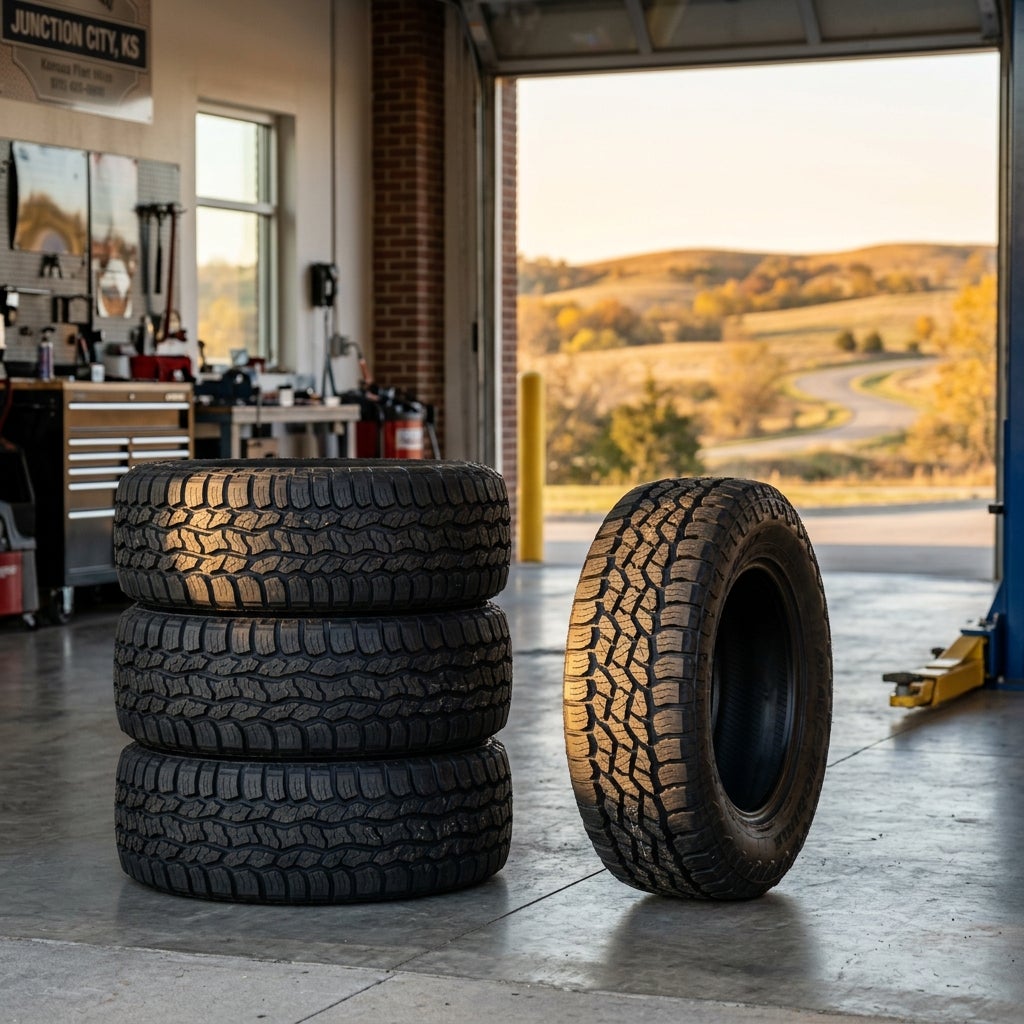
Buy 3 Tires Get the 4th for $1 at Valor Ford in Junction City, KS

Buy 3 Tires Get the 4th for $1 at Valor Ford in Junction City, KS

Schedule Tire Service at Valor Ford in Junction City, KS Don't let worn tread compromise your safety or fuel efficiency this season! currently available during our premier Fall Tire Sales Event at Valor Ford, when you purchase four select qualifying tires at regular price. Positioned right here at 1825 Goldenbelt Blvd in Junction City, KS, Valor Ford is your authorized service destination for unmatched savings on top tire brands. Whether you drive a rugged Ford F-150, a versatile Explorer, a heavy-duty Super Duty, a spacious Expedition, or a sleek Escape, this extraordinary event delivers maximum value directly to your wallet. Driving conditions across Geary County and the surrounding Flint Hills region demand dependable traction. From unpredictable fall rains to early winter frost, having four premium tires with deep, fresh tread is essential for road safety. Take advantage of direct savings of up to $250 or more depending on your vehicle's tire size and brand selection. Appointments are available through our certified service center, and availability may vary. Call us at (785) 238-5114 today or claim your offer online below! Schedule Ford Service Today How the Tire Service Offer Works Simple, Transparent Savings at Checkout We believe in straightforward pricing without hidden catches. Here is exactly how easy it is to save at Valor Ford: 1. Choose 4 Qualifying Tires: Select a set of four matching tires from our extensive inventory of major national brands. 2. Pay Regular Price for 3: Purchase the first three tires at our everyday competitive retail price. Get the 4th tire included with your qualifying tire purchase: Your service advisor can review current tire package details with you. 4. Enjoy Low-Price Guarantee & Expert Installation: Benefit from our Ford Service Price Match Guarantee on major brands, along with factory-trained assembly, precise balancing, and professional mounting. Tire Model Package Regular Set Price (4) Service Package Price Total Instant Savings Standard All-Season (Sedan/CUV) $640 Contact dealership for current pricing $159 Instant Savings All-Terrain Truck/SUV (F-150/Bronco) $960 Contact dealership for current pricing $239 Instant Savings Heavy-Duty Highway (Super Duty) $1,120 Contact dealership for current pricing Contact dealership for current pricing This limited-time offer applies to top-tier, name-brand tires suitable for light trucks, SUVs, crossover vehicles, and sedans. Installation, mounting, wheel balancing, valve stems, and applicable local recycling fees are clearly calculated so there are no surprises when you pick up your keys. Top Tire Brands Included in the Junction City Tire Sale At Valor Ford, we carry an extensive inventory of tire brands specifically engineered to complement your vehicle's handling, payload capacity, and ride quality. During this sales event, choose from industry-leading manufacturers tailored for your daily drive. Goodyear & Michelin Goodyear Tires: Renowned for durability and quiet highway performance. Excellent fitment options for Research Ford F-150 trucks and Research Ford Explorer SUVs needing dependable wet and dry traction. Michelin Tires: Premium longevity and fuel efficiency. Michelin Defender and Premier series deliver ultra-smooth rides for commuting on I-70 or traveling around Kansas. Continental & BFGoodrich Continental Tires: Exceptional stopping power and responsive cornering grip. Ideal for Ford Escape, Edge, and Research Ford Maverick drivers who value precise control. BFGoodrich Tires: Tough, aggressive off-road tread patterns like the All-Terrain T/A KO2, built to conquer gravel roads, farm trails, and muddy Kansas terrain. Pirelli & Hankook Pirelli Tires: Performance-driven rubber designed for responsive steering and high-speed stability. Perfect match if you Research Ford Mustang models. Hankook Tires: High-value performance with exceptional all-season capabilities, providing reliable durability for heavy work duty on Research Ford F-250 Super Duty vehicles. Why Proper Tire Tread and Alignment Matter for Flint Hills Driving Driving in Junction City, Fort Riley, and throughout Dickinson County presents unique challenges across every season. Between rolling hills, unpaved rural gravel, sudden autumn rainstorms, and icy winter highways like I-70, your vehicle's safety depends entirely on the small contact patch where your tires touch the pavement. Enhanced Hydroplaning Resistance: Fresh tire tread channels water away from the tire footprint, maintaining traction during heavy rainstorms. Shorter Stopping Distances: Replacing tires worn down to 3/32" or lower can dramatically reduce your stopping distance by up to two car lengths on wet roads. Improved Fuel Economy & Tire Life: Pairing your new set of tires with a digital wheel alignment ensures even tire wear, lower rolling resistance, and maximum miles per gallon. Schedule Ford Service Today Schedule Service Online Before Event Slots Fill Up Appointment availability in our Valor Ford Quick Lane and certified service bays may be limited. Drivers across Junction City, Manhattan, Abilene, and Fort Riley recognize this as the best tire pricing event of the year. To guarantee your preferred date and time, we strongly encourage utilizing our intuitive online scheduling tool. You can pick your vehicle model, select your desired tire package, and secure your appointment in less than two minutes. Can't make it to the dealership during your busy workday? Take advantage of our convenient Ford Pickup & Delivery option, where our team collects your vehicle, completes the tire replacement, and returns it directly to your driveway or workplace! Schedule Pickup and Delivery Service Complementary Maintenance Checks Included With Your Tire Purchase At Valor Ford, we go above and beyond simple tire installation. Every customer participating in our 4th Tire for $1 promotion receives a suite of complementary vehicle health checks performed by our Ford-trained technicians. Multi-Point Inspection Comprehensive vehicle check covering fluid levels, belts, hoses, wipers, battery strength, and exhaust components to catch potential issues early. Brake & TPMS Reset Detailed measurement of brake pad thickness and rotor condition, along with electronic recalibration of your Tire Pressure Monitoring System (TPMS). Alignment Quick-Check Digital laser alignment check to verify proper wheel geometry, preventing premature wear on your brand-new set of tires before you leave. Exclusive Offers for Fort Riley Service Members and Families Valor Ford takes immense pride in supporting the brave active-duty personnel, veterans, and military families stationed right next door at Fort Riley, home of the 1st Infantry Division. We understand the unique scheduling demands, field training exercises, and frequent relocations experienced by our military community. During our $1 Tire Event, military members receive priority service scheduling, expedited lane turnarounds, and streamlined shuttle options back to post. We also offer specialized advice for out-of-state vehicles to ensure your tires meet rigid cross-country driving demands whether traveling home for leave or preparing for your next PCS move. Military Customer Benefits at Valor Ford: • Expedited service scheduling for active military • Convenient shuttle service to and from Fort Riley gates • Complimentary multipoint safety inspection on all family vehicles • Assistance with Ford Rewards points accumulation and redemption • Transparent, hassle-free pricing guaranteed on every tire brand Flexible Financing Options for Tires and Service Upgrades Replacing four tires along with routine vehicle maintenance is an important investment in your safety, but it doesn't have to strain your monthly budget. Valor Ford offers flexible service financing solutions designed to fit your cash flow. With the Ford Service Credit Card, qualified buyers can enjoy promotional 0% APR financing on major service and tire purchases over $250. Spread your payments into manageable monthly installments while outfitting your car, truck, or SUV with top-quality tires today. Plus, cardholders earn valuable Ford Rewards points that can be redeemed toward future oil changes, routine maintenance, or genuine Ford parts. Get Pre-Approved for Financing Trade In Your Vehicle or Upgrade During the Tire Sales Event Maximizing Your Current Vehicle's Value Thinking about trading in your current ride for a brand-new or certified pre-owned Ford? While your vehicle is in our service bay receiving new tires or inspection, our appraisal team can provide a quick, zero-obligation Trade In Evaluation. Used vehicle values remain remarkably strong in Geary and Riley counties. Applying the equity in your current vehicle toward a new purchase could get you into a newer model with lower monthly payments and full warranty coverage. Explore Latest Ford Models on the Lot Take a test drive while you wait! Explore our latest showroom line-up, including: • Tough and capable off-roaders: Shop New Ford Bronco Inventory • Quality pre-owned cars, trucks, and SUVs: Browse Used Inventory • Next-generation heavy duty trucks: Research Ford F-250 Whether servicing your current vehicle or driving home a brand-new Ford, Valor Ford is committed to offering unmatched customer service. Seasonal Road Preparation for Dickinson County Agriculture and Commuting Living in Central Kansas requires vehicle tires versatile enough to handle diverse conditions—from dusty harvest fields and agricultural towing to freezing winter highway commutes on I-70. Selecting the right tire type ensures optimal fuel efficiency and maximum traction. All-Season Highway Tires Engineered for quiet rides, smooth highway handling, and extended tread life. Ideal for commuters traveling between Junction City, Manhattan, and Topeka along main interstates. All-Terrain & Off-Road Featuring reinforced sidewalls and aggressive tread block designs. Essential for agricultural work, farm property navigation, dirt roads, and heavy trailering. Winter-Rated / 3-Peak Tires stamped with the 3-Peak Mountain Snowflake (3PMSF) symbol offer specialized rubber compounds that remain flexible in freezing temperatures, providing superior grip on snow and ice. Frequently Asked Questions About the $1 Tire Promotion Q: Does the 4th tire for $1 include installation charges? A: The fourth tire purchase is included with your qualifying tire package. Standard mounting, balancing, valve stem installation, and disposal fees apply to all four tires to guarantee proper safety standards. Q: Can I combine this offer with manufacturer mail-in rebates? A: In many cases, yes! Several tire manufacturers offer national mail-in or online rebates during seasonal events that can be stacked on top of dealership savings. Ask our service advisors for current brand rebate forms. Q: Are non-Ford vehicles eligible for this tire sale? A: Absolutely! While we specialize in Ford cars, trucks, and SUVs, our Quick Lane tire center services all makes and models. Drivers of Chevrolet, Ram, Toyota, Honda, and other vehicles can fully participate. Q: What is the Ford Service Price Match Guarantee? A: If you find a lower advertised price on an identical tire from a local competitor within 30 days of purchase, we will match it! Need custom replacement parts or accessories? You can easily Order Genuine Ford Parts directly through our parts department. Order Genuine Ford Parts Claim Your $1 Tire Offer at Valor Ford Today Contact us to schedule your vehicle's essential road maintenance. Save hundreds of dollars by getting your fourth tire for just $1 at Valor Ford in Junction City, KS! Visit our state-of-the-art facility located conveniently on Goldenbelt Blvd, or contact our service department directly to schedule your installation appointment. 📍 Get Directions to Valor Ford: 1825 Goldenbelt Blvd, Junction City, KS 66441 📞 Call us at (785) 238-5114 to speak directly with a certified tire advisor. Schedule Ford Service Today