
Blog / Tire Care & Management

Blog

All Tire Care & Management Buying Guides Maintenance & Service New Vehicle Reviews Technology & Innovation Financing & Insurance Safety Features Model Comparisons Used Vehicle Guides Seasonal Driving Tips Seasonal Vehicle Care Valor Ford Models Heavy-Duty Truck Care Junction City New Vehicle Sales Automotive Parts & Accessories Seasonal Vehicle Maintenance Towing & Trailer Technology Vehicle Ownership Tips Financing & Incentives Repair & Parts Trade-In & Negotiation Tips KS Community Valor Ford Service Off-Road Packages & Accessories Trade-In & Pre-Approval Processes Automotive Repair Valor Ford Vehicle Pricing Strategies Vehicle Repair & Parts Vehicle Sales Diesel Engine Care Manhattan Ford Dealer Manhattan Ford Service Military & Special Customer Programs Parts & Repairs Performance & Powertrain Vehicle Trade-In Tips Agricultural Vehicle Maintenance Commercial Truck Financing Dealership Transparency Family SUVs Heavy-Duty Truck Guides Heavy-Duty Truck Upkeep Manhattan Used Cars Preventative Vehicle Inspections Technology & Innovation in Truck Service Agricultural Fleet Service Automotive Recalls & Repairs Certified Pre-Owned Programs Diesel Engine Maintenance Genuine OEM Parts & Accessories Military & Student Moving Tips Service Tips & Guides Vehicle Utility & Cargo Solutions All-Weather Driving & 4x4 Readiness Automotive News Classic Car Restoration Dealership Promotions & Events Farm & Ranch Equipment Reviews Genuine Parts & Accessories Hybrid & Electric Vehicles Winter Driving Tips
Key Takeaways for All-Weather 4x4 Readiness and Family Road Trips

Key Takeaways for All-Weather 4x4 Readiness and Family Road Trips

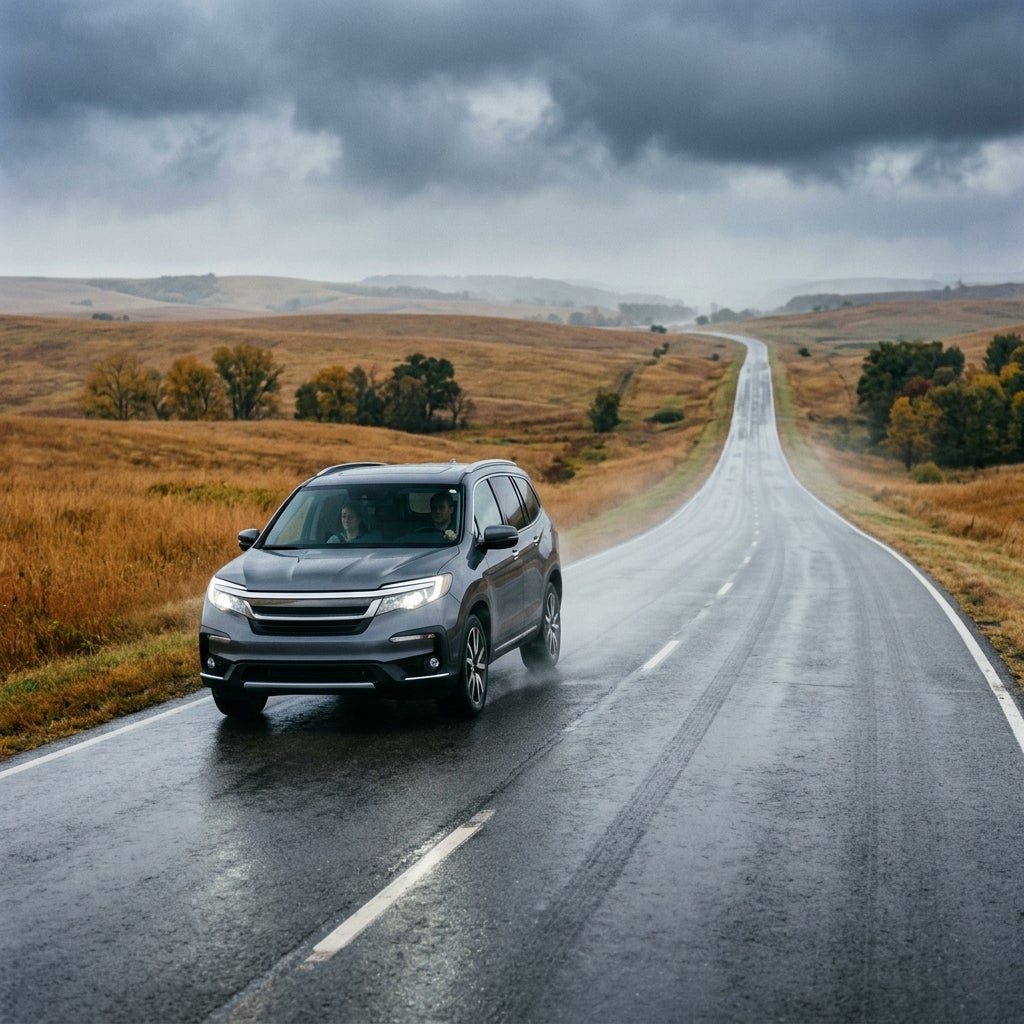
Key Takeaways for All-Weather 4x4 Readiness and Family Road Trips Preparing your family for long-distance highway travel across changing seasons requires a comprehensive approach to vehicle safety, drivetrain mechanics, tire performance, and interior versatility. Whether navigating sudden early-autumn thunderstorms along Interstate 70 or powering through unexpected winter sleet near Fort Riley, having a vehicle equipped to handle unpredictable Midwest weather transforms high-stress driving into a relaxed, confident journey. True all-weather readiness is not merely about pressing a 4WD button; it is about harmonizing intelligent power distribution, high-friction rubber compounds, cargo ergonomics, and active driver-assist safety systems. To guarantee total road trip confidence, smart family planners prioritize four core mechanical and structural pillars before setting out from Junction City: Core Readiness Pillar Technical & Functional Requirement Real-World Family Road Trip Benefit Drivetrain Matching Intelligent AWD vs. Part-Time / Full-Time 4WD with Terrain Management Instant traction on patchy ice, muddy gravel bypasses, or dry highway cruising. Severe-Snow Rated Tires Three-Peak Mountain Snowflake (3PMSF) certified rubber compounds Up to 25% shorter stopping distances on hard-packed snow and icy bridge decks. 3rd-Row & Cargo Capacity 20+ cu. ft. behind 3rd row with under-floor storage management Stows bulky luggage, strollers, and emergency gear without obscuring rear sightlines. Driveline Disconnect Automatic front-axle disconnect during steady high-speed cruising Eliminates parasite drag to maximize long-distance interstate fuel economy. At Valor Ford in Junction City, our dedicated team works closely with local drivers, military families stationed at Fort Riley, and cross-country road trippers to select and prepare vehicles that master every operational climate. From evaluating tread depth to matching drive modes with Flint Hills topography, taking an answer-first approach ensures your passengers remain safe, warm, and comfortable every mile of the way. What Is the Difference Between AWD and 4WD for Winter Family Road Trips? Understanding the mechanical distinction between All-Wheel Drive (AWD) and Four-Wheel Drive (4WD) is crucial when selecting the right vehicle for winter family road trips across Kansas and the broader Midwest. While both systems deliver power to all four wheels, they operate on vastly different mechanical principles tailored to distinct road conditions and driver inputs. All-Wheel Drive (AWD): Automated Precision for Variable Highways Modern AWD systems utilize electronically controlled center differentials or multi-plate clutch packs monitored by advanced computer sensors. These sensors read wheel speed, steering angle, throttle position, and yaw rates hundreds of times per second. When cruising along I-70 during a patchy freeze event where clear asphalt rapidly alternates with slick black ice, AWD continuously adjusts torque front-to-back without any driver intervention. This seamless operation allows individual wheels to rotate at different speeds, maintaining smooth handling around highway curves and eliminating drivetrain binding. Four-Wheel Drive (4WD): Heavy-Duty Locking Torque for Extreme Conditions Traditional 4WD systems lock the front and rear driveshafts together through a mechanical transfer case, forcing the front and rear axles to turn at identical speeds. Highly effective in deep unplowed snow, thick mud, or unpaved rural backroads across Geary and Dickinson counties, standard 4WD (in 4H or 4L settings) provides uncompromised low-speed traction. However, because it locks axle rotation speeds together, engaging traditional 4WD on dry or partially clear highway asphalt causes tire scrub and driveline stress. Families planning long highway journeys with variable conditions often benefit from hybrid 4WD systems—like those in modern Ford full-size platforms—that feature an Auto 4WD (4A) mode combining low-range mechanical durability with automated torque distribution. At a Glance: Driving Scenarios • Patchy Ice & Slippery Overpasses: AWD or 4 Auto (4A) is superior because it engages dynamically without binding on dry pavement. • Deep Snow Drifts & Unpaved Trails: 4WD High (4H) with a locked center differential provides maximum traction to cut through heavy drifts. • High-Speed Interstate Cruising: Disconnectable AWD or 2WD high-range modes deliver optimal fuel efficiency and quiet cabin acoustics. What Features Make an SUV Best Equipped for All-Weather Family Road Trips? When evaluating potential long-distance family transport, drivetrain capability is only one piece of the safety puzzle. A truly road-trip-ready SUV integrates active environmental controls, multi-terrain traction technologies, and driver support systems into a single cohesive cabin experience. 1. Multi-Terrain Drive Modes & Traction Control Modern selectable drive mode systems (such as Ford's Terrain Management System™) alter throttle response, gear shift points, traction control intervention, and brake torque vectoring. Selecting Slippery Mode smooths out accelerator sensitivity to prevent wheelspin on packed snow, while Mud/Ruts Mode allows controlled wheel slip to clean tread patterns when traversing soft rural paths. For deeper exploration off the beaten path, vehicles like those in our Shop New Ford Bronco Inventory offer specialized G.O.A.T. Modes™ that adapt mechanical locking rear differentials for demanding, unpaved terrain. 2. Tri-Zone Climate & Heated Comfort Packages Passenger comfort directly correlates with driver focus during long sub-zero road trips. Tri-zone automatic climate control allows front passengers and rear seat occupants to maintain personalized temperature zones without constant adjustment. Enhanced cold-weather convenience packages add heated front and second-row outboard seats, a heated steering wheel, and heated wiper park zones that melt windshield ice build-up before wiper blades tear. Rapid cabin heating elements warm interior air instantly before engine coolant reaches full operating temperature. 3. Intelligent Driver-Assist Safety Suites Navigating heavy rainfall or blustery winds demands advanced driver assistance. Comprehensive suites like Ford Co-Pilot360™ include Lane-Keeping Assist, Pre-Collision Assist with Automatic Emergency Braking, and Blind Spot Information System (BLIS) with Cross-Traffic Alert and trailer coverage. Adaptive Cruise Control with Stop-and-Go automatically maintains safe follow distances on highway routes, significantly reducing driver fatigue during multi-hour family journeys across Central Kansas. Preparing Your Family Vehicle for Year-Round Travel at Valor Ford Whether you are planning a winter holiday trip across state lines or preparing for seasonal road conditions around Junction City and Fort Riley, ensuring your vehicle is mechanically sound is vital. At Valor Ford, our factory-certified technicians conduct comprehensive multi-point inspections checking battery cold-cranking capacity, brake pad thickness, fluid conditions, and 4x4 transfer case operation. Looking to upgrade your family fleet? Explore our versatile selection of new and pre-owned 4WD SUVs tailored for all-weather confidence. Browse Pre-Owned 4x4 Inventory Schedule Multi-Point Inspection Are Three-Peak Mountain Snowflake (3PMSF) Rated Tires Necessary for Winter Family Travel? A common misconception among family SUV owners is that having All-Wheel Drive or Four-Wheel Drive eliminates the need for specialized tires. In reality, four-wheel drive only aids acceleration and power delivery—it does not increase friction during braking or lateral cornering on ice and hard-packed snow. That is where tire rubber chemistry and official certification standards become paramount. Understanding the 3PMSF Rating vs. Standard M+S Standard factory tires marked with 'M+S' (Mud and Snow) are designated based purely on physical geometry (void-to-rubber tread ratios) rather than verified cold-weather traction performance testing. In contrast, tires bearing the 3PMSF symbol (a mountain peak surrounding a snowflake) must pass standardized ASTM ice and packed-snow acceleration tests, proving at least 10% better traction than standard reference tires. Silica Compounds & High-Density Siping Standard all-season rubber compounds harden when ambient temperatures drop below 45°F, turning brittle and glass-like, which drastically reduces grip. 3PMSF winter and all-weather tires feature specialized high-silica polymers that remain pliable in sub-freezing conditions. Coupled with thousands of microscopic 3D sipes (tiny slits in the tread blocks) that biting into ice, these tires dramatically decrease stopping distances. Braking Distance Comparison at 30 MPH on Packed Snow: • Standard All-Season (M+S): ~110 – 130 Feet • 3PMSF Rated All-Weather: ~80 – 90 Feet • Dedicated Winter Tires: ~65 – 75 Feet Saving 30 to 40 feet of stopping distance on an icy highway exit ramp is often the critical difference between a safe stop and a collision. Drivers can easily Order Genuine Ford Parts and factory-approved 3PMSF tire packages directly through our certified dealership parts desk. Which SUV Type Offers More Cargo Room Behind the Third Row for Family Luggage? Packing for a multi-passenger road trip requires balancing seating space with practical cargo volume. Piling duffel bags above seat headrests reduces driver visibility and poses safety hazards during sudden stops. Comparing cargo metrics across SUV classes helps families select the ideal footprint for their road trip needs. Midsize 3-Row SUVs (e.g., Ford Explorer) Midsize 3-row SUVs strike an outstanding balance between maneuverability, fuel efficiency, and versatile passenger room. Typically offering approximately 18 to 21 cubic feet of space behind the third row, these platforms easily fit weekend duffel bags, grocery hauls, or smaller strollers. With power-folding 50/50 third-row seats, capacity quickly expands when traveling with 4 or 5 passengers. Explore details via our Research Ford Explorer hub to see layout specs. Full-Size Standard SUVs (e.g., Ford Expedition) Full-size body-on-frame SUVs provide substantial upgrades in shoulder room, legroom, and rear storage depth. Standard wheelbase full-size SUVs deliver approximately 20 to 22.5 cubic feet behind the third row, featuring deeper cargo wells and wider floor dimensions. Integrated under-floor management bins hide emergency kits, tire inflators, and laptops out of sight, leaving the primary flat floor clear for upright rolling suitcases and coolers. Extended Wheelbase SUVs (e.g., Expedition MAX) For large families or extended cross-country road trips with 7 or 8 passengers, extended wheelbase models (like the Expedition MAX) are the gold standard. By extending body length by nearly a foot, these models expand cargo space behind the third row to a massive 36+ cubic feet. Full-size luggage sets, double strollers, and outdoor gear fit comfortably without sacrificing third-row legroom or roof box mounting limits. How Do Modern Disconnectable AWD Systems Help Save Fuel on Highways? Historically, choosing a 4WD or AWD vehicle meant accepting a permanent fuel economy penalty. Legacy systems continuously rotated front driveshafts, front differentials, and axle shafts even when driving in clear, dry summer weather. This rotational mass created significant mechanical drag—known as parasitic loss—that burned extra fuel across long highway stretches. Mechanics of Driveline Disconnect Technology Modern intelligent AWD platforms utilize automated front or rear driveline disconnect systems. When an SUV is cruising at steady speeds along smooth highways like I-70 under favorable weather conditions, an electronic dog-clutch or actuator completely disengages the secondary axle and driveshaft at the transfer case. By stopping the rotation of non-essential driveline components, the engine operates as a efficient two-wheel-drive platform, reducing drag and boosting fuel economy by 1 to 3 miles per gallon. Over a 2,000-mile family road trip, these savings add up substantially at the pump. Milliseconds Re-Engagement Speed: The true brilliance of disconnectable AWD lies in its speed. Sophisticated sensors continually monitor road conditions, ambient temperature, windshield wiper status, and wheel slip. If the vehicle encounters sudden hydroplaning, loose gravel, or icy patches, the system mechanically re-engages four-wheel drive in in 10 to 20 milliseconds—faster than a human blink. Drivers enjoy maximum highway fuel economy with zero compromise in instant all-weather safety. Get a Trade Appraisal and Upgrade to an All-Weather Ready SUV Upgrading your current vehicle to a high-capability 4x4 or AWD SUV is straightforward at Valor Ford. Our digital tools allow you to receive a fast, transparent trade appraisal from the comfort of your home. We proudly serve active-duty military personnel stationed at Fort Riley and local family drivers throughout Geary County, offering current finance and lease options available to fit your needs. Start Instant Trade In Evaluation Get Pre-Approved for Financing Are Full-Time 4WD Vehicles Good for Long Highway Family Road Trips? High-Speed Stability vs. Traditional Part-Time Systems Full-time 4WD platforms incorporate a center differential that allows the front and rear axles to turn at different speeds during high-speed cornering, making them completely safe for dry asphalt as well as wet or icy roads. This provides incredible high-speed tracking and crosswind resistance on open interstate routes. Evaluating full-time 4WD platforms—such as full-size Expedition models or heavy-duty off-roaders like the Toyota 4Runner—requires examining ride comfort, cabin noise levels, and long-distance passenger dynamics. Key Considerations for Family Comfort: 1. Suspension Tuning: Modern full-size SUVs utilizing independent rear suspensions (IRS) absorb pavement expansion joints far better than solid rear axle platforms, eliminating rear-seat 'hop' over rough highways. 2. Acoustic Insulation: Active noise cancellation, acoustic-laminated windshields, and isolated subframes keep cabin sound levels whisper-quiet during 70 MPH cruises. 3. Center Differential Lockability: Advanced full-time systems allow drivers to lock the center differential manually when off-roading, giving you the best of both worlds: highway refinement and extreme trail traction. For families considering versatile midsize or full-size options, exploring vehicle specs like those in our Research Ford Explorer guide reveals how modern unibody and body-on-frame architectures deliver luxury-car comfort alongside authentic multi-terrain capability. Navigating Flint Hills Terrain and Central Kansas Weather in Every Season Central Kansas weather is famously dynamic, capable of shifting from clear prairie sunshine to severe crosswinds, torrential downpours, or sudden flash freezes in a matter of hours. Local drivers navigating Highway 77, I-70, or rural unpaved roads across Dickinson and Geary counties benefit from specific driving strategies tailored to regional geography. Prairie Crosswinds on Interstate 70 The open topography of the Flint Hills region exposes drivers to strong 35+ MPH lateral gusts, especially when passing large commercial semi-trucks. Modern SUVs equipped with Sidewind Stabilization automatically apply light braking to wheels on the windward side, helping drivers keep their lane position centered without constant, tiring steering corrections. Flash Freeze Events & Bridge Decks Autumn rainstorms followed by sudden cold fronts quickly freeze standing water into invisible black ice on elevated overpasses along Highway 77. Utilizing intelligent AWD or Auto 4WD modes ensures immediate torque transfer to wheels with grip, preventing rear-end instability when traversing elevated structures. Unpaved Gravel & Mud Commutes Navigating agricultural bypasses or rural residential routes around Junction City involves loose gravel and deep mud after heavy rainfall. Engaging selectable 4x4 or Slippery/Grass/Gravel drive modes recalibrates ABS anti-lock braking algorithms to prevent wheel locking on loose aggregate surfaces. Essential Pre-Trip All-Weather Inspection and Emergency Gear Checklist Before loading up the family for a long road trip, completing a thorough pre-flight vehicle check prevents unexpected delays. Cold weather places extra strain on electrical batteries, rubber belts, windshield washer systems, and tire inflation pressures. 5-Point Vehicle Inspection Checklist: 1. Tread Depth Test: Ensure tire tread depth measures at least 5/32" (use a depth gauge or coin test). Winter traction drops significantly below 4/32". 2. Battery CCA Test: Cold temperatures reduce battery power output by up to 50%. Have your battery tested for Cold Cranking Amps (CCA). 3. Sub-Zero Washer Fluid: Flush summer bug wash with de-icing washer fluid rated to -20°F to prevent reservoir freezing. 4. Wiper Blade Flexibility: Replace streaking wiper blades with heavy-duty beam blades that resist snow clogging. 5. 4WD Transfer Case Fluid: Verify fluid levels in transfer cases and differentials, especially on vehicles with high towing mileage. Schedule Ford Service Today if overdue. Must-Have Road Trip Emergency Gear Kit: • Heavy-duty jumper cables or portable lithium jump-starter pack • Folding snow shovel and traction recovery boards • Heavy-duty ice scraper with brass blade • Thermal wool blankets, gloves, and hand warmers • High-lumen LED flashlight with spare batteries • Non-perishable energy snacks and bottled water • First aid kit and portable phone power bank Busy schedule? You can easily Schedule Pickup and Delivery Service to have our team inspect your vehicle at your home or office before departure. Plan Your Next Family Road Trip with Valor Ford in Junction City At Valor Ford, we are proud to be your trusted partner for all automotive needs in Central Kansas. Whether you need expert advice on all-weather tire options, want to test drive an advanced AWD or 4x4 SUV, or need a quick pre-trip maintenance check, our experienced team is here to assist you every step of the way. Visit us at our showroom located at 1825 Goldenbelt Blvd, Junction City, KS 66441. Click here to Get Directions to Valor Ford or give us a ring at Call us at (785) 238-5114 to speak directly with a sales advisor or service specialist today. Research 2026 Ford Explorer Schedule Service Appointment
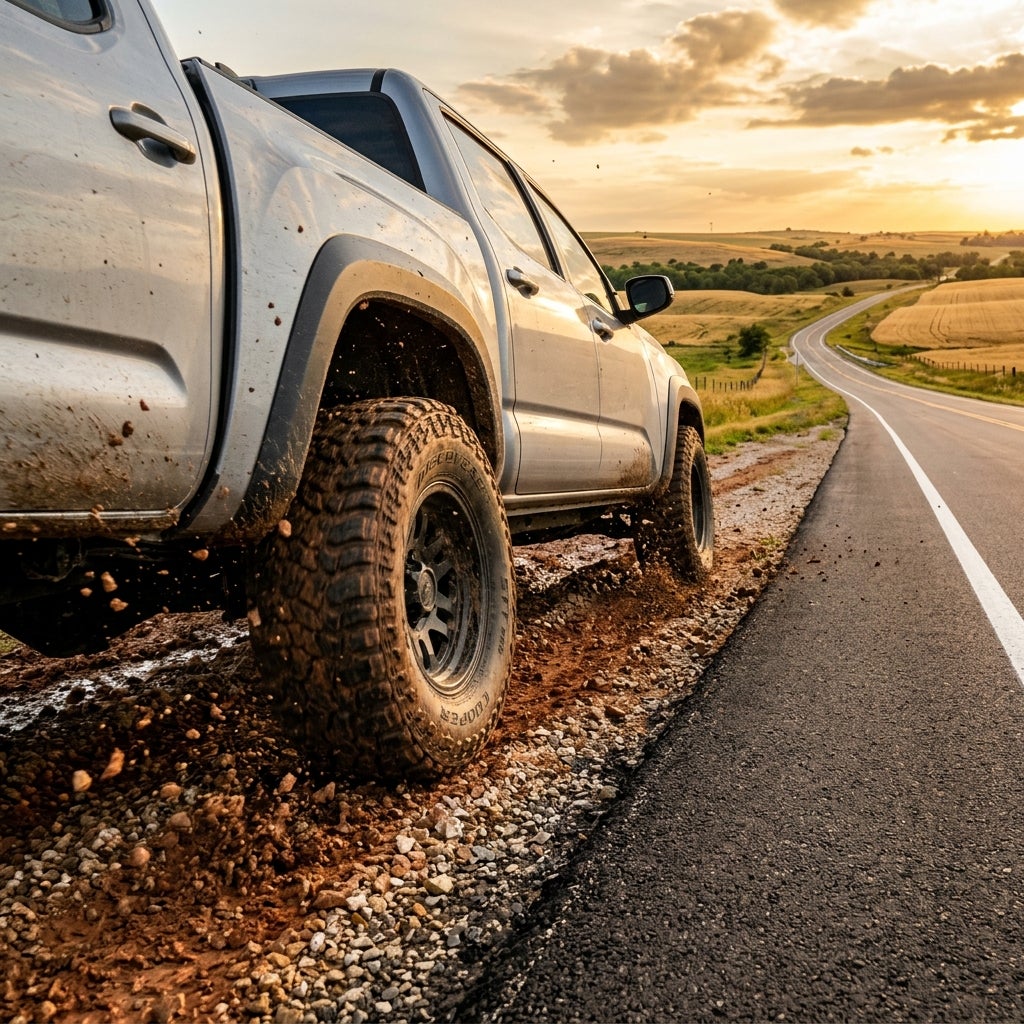
Silver pickup truck kicks up mud while driving along a paved country road shoulder at sunset. (Representative image for illustration purposes only. Actual vehicle may vary based on trim and configuration.)

Navigating Clay, Gravel, and Highway: Finding the Ultimate All-Terrain Truck Tire for North-Central Kansas

Navigating Clay, Gravel, and Highway: Finding the Ultimate All-Terrain Truck Tire for North-Central Kansas Driving a truck in North-Central Kansas isn't just a simple daily commute; it is a test of mechanical endurance and adaptability. On any given Tuesday, you might find yourself navigating the slick, waterlogged bottomlands of the Republican River in Clay County, tackling miles of razor-sharp limestone gravel roads in rural Ottawa County, and then opening it up to seventy-five miles per hour on Interstate 70 as you head towards Fort Riley or Manhattan. Each of these surfaces places vastly different, often conflicting demands on your truck's tires. Sticky clay requires wide, open tread voids to prevent packing; sharp gravel demands ultra-tough, cut-and-chip resistant rubber compounds with reinforced sidewalls; and the highway demands a tight, continuous tread pattern that minimizes road noise, heat buildup, and rolling resistance. Finding a single tire that can handle all three environments without wearing out in ten thousand miles is the ultimate goal for Kansas truck owners. For generations, drivers in communities like Minneapolis, Clay Center, Wakefield, and Delphos have had to make tough compromises. If you chose a dedicated mud tire, your highway commute became a loud, vibrating chore, and the soft rubber compounds would disintegrate on the gravel. If you chose a smooth highway tire, you'd find yourself hopelessly stuck in the first wet clay field entrance or farm lane you encountered. Fortunately, modern tire engineering has made incredible strides. Today's hybrid and advanced all-terrain tires use sophisticated materials science and variable tread geometries to bridge these gaps. Here at Valor Ford in Junction City, we understand the unique regional soil conditions and driving habits of our agricultural, military, and commercial customers. We're here to help you dissect the physics of tire design so you can make an educated investment in your vehicle's safety, efficiency, and capability. To truly master this terrain, you must understand how your truck's power translates to the ground. Your tires are the only contact point between thousands of pounds of American steel and the unpredictable Kansas soil. Whether you're hauling a load of hay, commuting to the base, or heading out for weekend recreation, selecting the right tire is a critical decision. Let's look closely at how the different tire classifications perform when subjected to our local conditions, helping you find the absolute perfect match for your daily routes and workloads. Which Tire Type Works Best If I Drive Mud, Gravel, and Highway All in One Week? The modern light truck tire market is broadly segmented into three primary categories: Highway Terrain (HT), All-Terrain (AT), and Mud-Terrain (MT). In recent years, a fourth 'Rugged Terrain' (RT) or hybrid category has emerged specifically to address the needs of drivers who find themselves split evenly between demanding off-road tasks and high-speed pavement driving. To choose the right one, let's break down the structural and performance differences of these tire styles when faced with the tri-hazard drive of mud, gravel, and highway. Highway Terrain (HT) The Pavement Specialist: Highway terrain tires are engineered with closely spaced, continuous tread ribs designed to maximize the rubber contact patch on asphalt. This design reduces tread squirm, optimizes fuel efficiency, and keeps cabin noise to a whisper. While they offer superb lifespan on clean roads, their shallow tread depth and tight grooves are easily packed solid with wet clay, instantly turning your tire into a slick. On gravel, their softer, fuel-conscious rubber compounds are vulnerable to slicing and chipping. All-Terrain (AT) The Balanced Performer: All-Terrain tires represent the sweet spot for many Kansas drivers. They feature interlocking, blocky tread designs that are deep enough to bite into loose soil and gravel, yet arranged carefully to maintain stable, reasonably quiet contact on the highway. High-quality AT tires use harder, specialized rubber compounds that resist stone chipping. While they can handle moderate mud, extremely thick, wet clay can still overwhelm their self-cleaning capabilities if you don't maintain wheel spin. Mud-Terrain & Hybrids The Off-Road Warrior: Mud-Terrain (MT) and Hybrid (RT) tires feature massive tread blocks, deep voids, and aggressive shoulder lugs designed to scoop away heavy mud and throw it clear of the tire. Hybrids pull the best elements of AT and MT tires together: they keep a slightly tighter center tread pattern to reduce highway hum while maintaining giant, scoop-like shoulder blocks for deep ruts. For drivers spending significant time on rural farm paths and unpaved county roads, these offer the ultimate insurance policy against getting stuck. If your weekly schedule involves commuting forty miles down US-81, pulling a stock trailer down five miles of sharp Ottawa County limestone gravel, and then backing into a muddy pasture to hook up to an implement, a high-quality All-Terrain or Hybrid (RT) tire is almost always your best bet. These tires provide the structural durability to survive the gravel, the biting edges to escape the mud, and the advanced tread pitch sequences necessary to keep your sanity on the long highway drive back home. Let's look into the specific engineering details that make these tires work. Conquering Sticky Clay: How Do Self-Cleaning Tread Blocks Keep You from Getting Stuck? Anyone who has driven through the Republican River valley after a heavy summer rain knows that Kansas clay is unlike almost any other substance on earth. It is highly cohesive, chemically sticky, and heavy. When a standard tire rolls through this clay, the pressure of the vehicle packs the mud deep into the tread channels. If the tire cannot shed this mud, the tread voids quickly fill up completely. Within a few wheel rotations, your aggressive truck tire is transformed into a completely smooth cylinder of slick mud. With no open channels left to bite into the ground, traction drops to zero, and your truck is officially stuck. To prevent this, off-road and high-end all-terrain tires are engineered with self-cleaning tread designs. The secret lies in a combination of tread void geometry, tapered tread block walls, and specialized mud ejector bars. Tread voids are the open spaces between the solid rubber blocks. By designing these channels to widen as they move outward toward the shoulder of the tire, centrifugal force naturally flings the mud out of the tread as the tire spins. Tapered walls ensure that the mud cannot easily grip the rubber, allowing it to slide out smoothly under pressure. Additionally, many modern truck tires incorporate raised ridges at the bottom of the tread channels known as mud ejector bars or stone ejectors. As the tire rolls and flexes under the weight of the truck, these bars compress and decompress, breaking the suction of the mud and pushing it upward and out. This continuous flexing and clearing action ensures that every time your tire rotates back down to meet the ground, it presents clean, open tread blocks ready to dig into the slick surface and keep your vehicle moving forward through the slickest farm lanes. What Tire Load Range Is Recommended for Hauling Heavy Loads Over Sharp Gravel in Ottawa County? When you are hauling heavy agricultural payloads, stock trailers, or construction equipment over the unpaved roads of Ottawa County, the physical load rating of your tires is just as important as the tread design. Gravel roads in this region are often surfaced with crushed limestone or flint rock. These stones have extremely sharp edges that can easily slice through the thin carcass of a standard passenger-rated (P-metric) tire, especially when that tire is compressed under a heavy load. For any serious truck work, you must look at Light Truck (LT) metric tires, which are classified by their load range. For three-quarter-ton and one-ton trucks (like the Ford F-250 and F-350 Super Duty), as well as heavily loaded half-ton trucks (like the F-150), we almost universally recommend Load Range E tires. Commonly referred to as '10-ply rated' tires, Load Range E tires are built with robust internal construction. While they no longer contain ten actual layers of cotton plies like tires of the past, they utilize high-strength steel belts and heavy-duty polyester cords that provide equivalent structural strength. This heavy-duty construction serves two vital purposes on gravel roads: first, it prevents the tire from flexing excessively under load, which keeps the tread flat and reduces the likelihood of rocks puncturing the carcass; second, it provides incredibly tough sidewalls that resist tearing when scraped against deep gravel ruts or jagged rocks. Tire Metric Type Load Range Designation Internal Construction Best Suited For P-Metric (Passenger) Standard Load (SL) 4 to 6-ply equivalent, thinner sidewalls Light commuting, light duty half-ton trucks, smooth highway LT-Metric (Light Truck) Load Range C 6-ply equivalent, reinforced casing Midsize trucks, light off-roading, occasional gravel driving LT-Metric (Light Truck) Load Range D 8-ply equivalent, high-strength belts Half-ton trucks towing moderate trailers, mixed gravel use LT-Metric (Light Truck) Load Range E 10-ply equivalent, heavy steel belts 3/4 and 1-ton trucks, heavy farm hauling, sharp flint gravel Choosing a Load Range E tire does result in a slightly firmer ride when the truck is empty because the sidewalls do not flex as easily as passenger tires. However, the peace of mind and puncture resistance they offer when you are miles out in the country are well worth it. If you're ready to upgrade your truck's durability, you can explore specialized tire options or Order Genuine Ford Parts directly through our website to find the perfect heavy-duty set. Browse Heavy-Duty Tire Options Preventing Tread Damage: Are There Specific Tread Compounds Designed to Resist Stone Drilling? When driving on crushed limestone roads, small, sharp pebbles can get tightly wedged inside your tire's tread grooves. This phenomenon is known as 'stone retention'. If these stones remain trapped, the continuous flexing of the tire as it rotates forces the sharp rock deeper into the rubber carcass, eventually boring a hole through the protective steel belts—a destructive process known as 'stone drilling'. To prevent this costly damage, tire manufacturers have developed advanced rubber chemistry and specific mechanical designs. Premium all-terrain and mud-terrain tires are formulated with specialized cut-and-chip resistant tread compounds. These compounds utilize high-density polymer chains, silica, and carbon black structures that make the rubber incredibly tough and resilient. Unlike standard passenger car tires which use highly pliable rubber optimized solely for warm-weather asphalt grip, cut-and-chip resistant compounds act like an armored shield, resisting the slicing and gouging actions of sharp flint and limestone. Mechanically, these tires incorporate 'stone ejectors'—small angled steps or triangular ridges built into the bottom of the tread grooves. As the tire rotates and compresses, these ejectors change the angle of the groove walls, mechanically popping trapped stones out of the tread before they can begin drilling into the casing. When shopping for tires at Valor Ford, always look for options that explicitly feature chip-resistant compounding and stone-ejecting technology if you spend significant time on county gravel roads. How Does Tire Pressure Affect Puncture Resistance on Sharp Gravel Roads? Tire pressure (measured in Pounds per Square Inch, or PSI) is one of the most critical, yet frequently overlooked variables in off-highway driving. The amount of air inside your tire dictates how the rubber footprint interacts with the road surface. On sharp gravel roads, maintaining the wrong tire pressure can drastically increase your susceptibility to punctures, uneven wear, and vehicle instability. The Risk of Over-Inflation When a tire is over-inflated to its maximum cold pressure (such as a higher cold inflation pressure on a Load Range E tire when the truck is empty), the tread surface becomes extremely rigid and drum-tight. When this rock-hard tire hits a sharp piece of limestone, the rubber cannot flex or absorb the impact. Instead, the sharp rock concentrates all of the truck's weight onto a tiny, unyielding point, easily punching through the tread or sidewall. Over-inflation also causes harsh ride quality and rapid center tread wear. The Danger of Under-Inflation Conversely, running a tire with too little pressure causes the sidewalls to bulge excessively. On gravel roads, this exposes the vulnerable, unarmored sidewall area to sharp rocks kick-started by your front tires. Under-inflation also leads to 'pinch flats', where hitting a deep rut or pothole compresses the tire so severely that the inner tube or liner is pinched against the steel wheel rim, causing an instant, unrepairable tear. It also creates extreme heat on the highway. The Sweet Spot Strategy For mixed-use driving, you want to find the optimal balance. When running empty or light on gravel, dropping your pressure slightly (for example, from 80 PSI down to 50-55 PSI on heavy-duty rear tires, depending on manufacturer load tables) allows the tire to act as an active suspension component. The rubber can slightly envelope sharp stones rather than resisting them, drastically reducing puncture rates and keeping the truck tracking straight. Always re-inflate to recommended specs before hauling heavy loads on the highway. Decoding Winter Traction: What Does the Three-Peak Mountain Snowflake (3PMSF) Symbol Mean? Kansas winters are notorious for their volatility. One day you are driving through dry, freezing winds, and the next you are navigating several inches of heavy, wet snow transitioning into dangerous black ice. For truck owners who must get to work regardless of the weather, understanding tire traction ratings is absolutely essential. Many drivers see the 'M+S' (Mud and Snow) rating stamped on their sidewall and assume they are fully protected. However, the M+S designation is based purely on a geometric formula of the tread design—specifically, that the tread has a certain percentage of open space. It does not involve any physical performance testing in actual winter conditions. To find a tire that truly excels in severe snow and ice, you must look for the Three-Peak Mountain Snowflake (3PMSF) symbol. This icon of a snowflake inside a three-peaked mountain outline indicates that the tire has undergone rigorous physical testing on packed snow and has met or exceeded specific traction performance requirements. Tires with the 3PMSF rating use specialized rubber compounds that remain soft and pliable even when temperatures drop well below freezing, ensuring the tread can still grip the road. Furthermore, 3PMSF-rated all-terrain tires feature extensive 'siping'—tiny, microscopic slits cut across the tread blocks. When these slits contact ice or packed snow, they open up, acting like hundreds of tiny claws that bite into the surface and wick away the thin layer of water that causes sliding. For Kansas drivers, choosing a 3PMSF-rated all-terrain tire gives you excellent year-round capability, eliminating the need to swap between summer and dedicated winter tires. What Questions Should I Ask a Tire Dealer Before Buying Tires for Mud and Gravel Use? Purchasing a new set of truck tires is a significant financial investment, and walking into a dealership unprepared can lead to choosing a tire that doesn't fit your real-world needs. To ensure you get the absolute best match for your specific driving mix in Clay and Ottawa counties, it helps to ask targeted questions. Here is a handy checklist of questions to ask our experts at Valor Ford when you visit us for your next set of rubber: Is this tread compound rated for cut-and-chip resistance? Ensure the tire has the chemistry required to withstand sharp gravel without shredding. What is the mileage warranty on this tire, and does it cover gravel road wear? Many manufacturers void or reduce mileage warranties if the tire is driven extensively on unpaved roads. It is vital to know this upfront. Does this tire feature integrated stone ejector ribs? Make sure the tire has built-in mechanisms to prevent stone drilling. What cold PSI do you recommend I run when empty versus fully loaded? Get precise inflation targets tailored to your truck's weight and your primary driving surfaces. What are my options for road hazard protection? Sharp gravel can occasionally beat even the toughest tire; having a robust road hazard warranty provides valuable peace of mind. How noisy is this tire on the highway at 75 MPH? Ask about the tire's tread pitch sequencing and how it manages cabin vibration. At Valor Ford, our service advisors are trained to ask you about your driving habits, load weights, and terrain preferences before suggesting a tire. We carry a wide selection of top brands and can help you weigh the pros and cons of each model. If you are experiencing vibration, uneven wear, or suspect it is time for a new set, you can easily Schedule Ford Service Today to have our team perform a professional tire inspection. Schedule a Tire Consultation Matching Your Tires to Your Territory: Real-World Scenarios from Fort Riley to Dickinson County The Fort Riley Commuter 90% Highway / 10% Off-Road: Meet Sgt. Miller, who commutes daily from Clay Center to Fort Riley. He drives mostly on paved highways but loves hunting and camping near Milford Lake on weekends. For this profile, a premium All-Terrain tire with a tight center tread is ideal. It offers low rolling resistance, excellent wet-braking performance on highway asphalt, and a quiet ride during his daily commute, while still providing the mud traction he needs to navigate lakeside access trails without getting stuck. The Mixed-Use Contractor 50% Highway / 50% Gravel & Construction Site: Sarah manages rural construction projects across Ottawa and Dickinson counties. She splits her time evenly between traveling at high speeds on Interstate 70 and hauling heavy equipment over unpaved county roads. We recommend a Load Range E Hybrid (RT) tire. This configuration provides the extreme sidewall protection and cut-and-chip resistance needed on limestone gravel, combined with stable highway handling that doesn't sacrifice her truck's fuel economy. The Dickinson County Farmer 20% Highway / 80% Mud, Gravel & Fields: David operates a family farm near Solomon. His truck spends almost its entire life on loose gravel, dirt field entrances, and deep mud pastures. For David, a dedicated, aggressive Mud-Terrain (MT) tire is the only logical choice. The massive open tread blocks and self-cleaning mud ejector bars ensure he can pull heavy stock trailers through thick clay without spinning out, while the high ply rating guards against tire punctures from crop stubble and sharp flint stones. Maximizing Your Tire Investment: Rotation, Alignment, and Balancing for Mixed-Terrain Drivers Driving on a mix of sharp gravel, slick mud, and high-speed pavement places immense stress on your tires and suspension system. If you want your new set of tires to last forty, fifty, or sixty thousand miles, a strict maintenance schedule is non-negotiable. Aggressive tread designs, particularly on all-terrain and mud-terrain tires, are highly susceptible to 'feathering' or 'cupping' if they are not rotated regularly. This uneven wear is caused by the tread blocks flexing as they contact the road, and once an uneven wear pattern starts, it is nearly impossible to correct. For trucks driven on gravel and unpaved roads, we recommend a tire rotation interval of 5,000 miles —which aligns perfectly with your regular oil change interval. Regular rotation ensures that all four tires wear down at an even rate, extending the overall lifespan of the set. Additionally, because gravel roads often feature deep washboards and potholes, your truck's steering alignment can easily get knocked out of spec. An out-of-alignment truck drags the tires slightly sideways down the road, scrubbing off valuable tread in a matter of months. Wheel balancing is another crucial maintenance step. As you drive through mud and clay, small clumps of dirt can stick to the inner barrel of your wheels. Even after the mud dries and falls off, it can leave behind a weight imbalance that causes a noticeable vibration at highway speeds. This vibration isn't just annoying; it accelerates wear on your shocks, struts, ball joints, and wheel bearings. Whenever you bring your truck to Valor Ford, our master technicians don't just rotate your tires—they inspect your entire suspension system, check for uneven wear patterns, and perform precision high-speed balancing. This comprehensive care ensures your truck drives as smoothly down I-70 as it does down a flat paved road, safeguarding your investment and keeping you safe on every journey. Why Northern Kansas Truck Owners Trust Valor Ford for Expert Tire Selection and Installation Selecting the right tires is only half the battle; proper installation, balancing, and alignment are what make those tires perform. At Valor Ford, we pride ourselves on being more than just a dealership—we are your local automotive resource. Our service center in Junction City is staffed by Ford-certified technicians who undergo continuous training to stay at the cutting edge of truck engineering. We utilize state-of-the-art diagnostic, mounting, and balancing equipment to ensure that your new tires are installed with absolute precision. We have direct access to a vast inventory of top-tier tire brands, including Goodyear, Michelin, BFGoodrich, Hankook, and Toyo. Because we service hundreds of trucks from Clay, Ottawa, and Dickinson counties every single week, we know exactly how each of these tires performs in our local soils and gravel. We don't just sell you what's on the shelf; we help you select the exact tire, load range, and tread pattern designed to conquer your unique driving routes. To make your experience as seamless as possible, we offer specialized amenities including our Schedule Pickup and Delivery Service. This convenient service allows us to pick up your truck from your home or workplace, perform the tire installation, balancing, and alignment, and return it to you fully serviced—allowing you to stay focused on your farm, business, or family. When you choose Valor Ford, you choose a team dedicated to keeping you moving safely and efficiently on every Kansas road. Schedule Pickup & Delivery Service Ready for an Upgrade? Let Valor Ford Equip Your Truck with the Perfect Set of Tires Today If you are ready to explore new tire options, our team can help you prepare for muddy clay lanes or rural gravel roads. Investing in the right tires today means securing safety, performance, and peace of mind for tens of thousands of miles to come. Whether you are driving a brand-new Ford F-150, a heavy-duty F-250 Super Duty, or a rugged Ford Bronco, our tire experts at Valor Ford are ready to help you make the perfect selection. Stop by our dealership at 1825 Goldenbelt Blvd, Junction City, KS 66441 to speak with our team in person. You can easily Get Directions to Valor Ford or Call us at (785) 238-5114 to ask questions, check our current tire stock, or schedule an appointment. Let us help you equip your truck to conquer every mud lane, gravel road, and highway in North-Central Kansas with absolute confidence. Get a Trade In Evaluation Get Pre-Approved for Financing

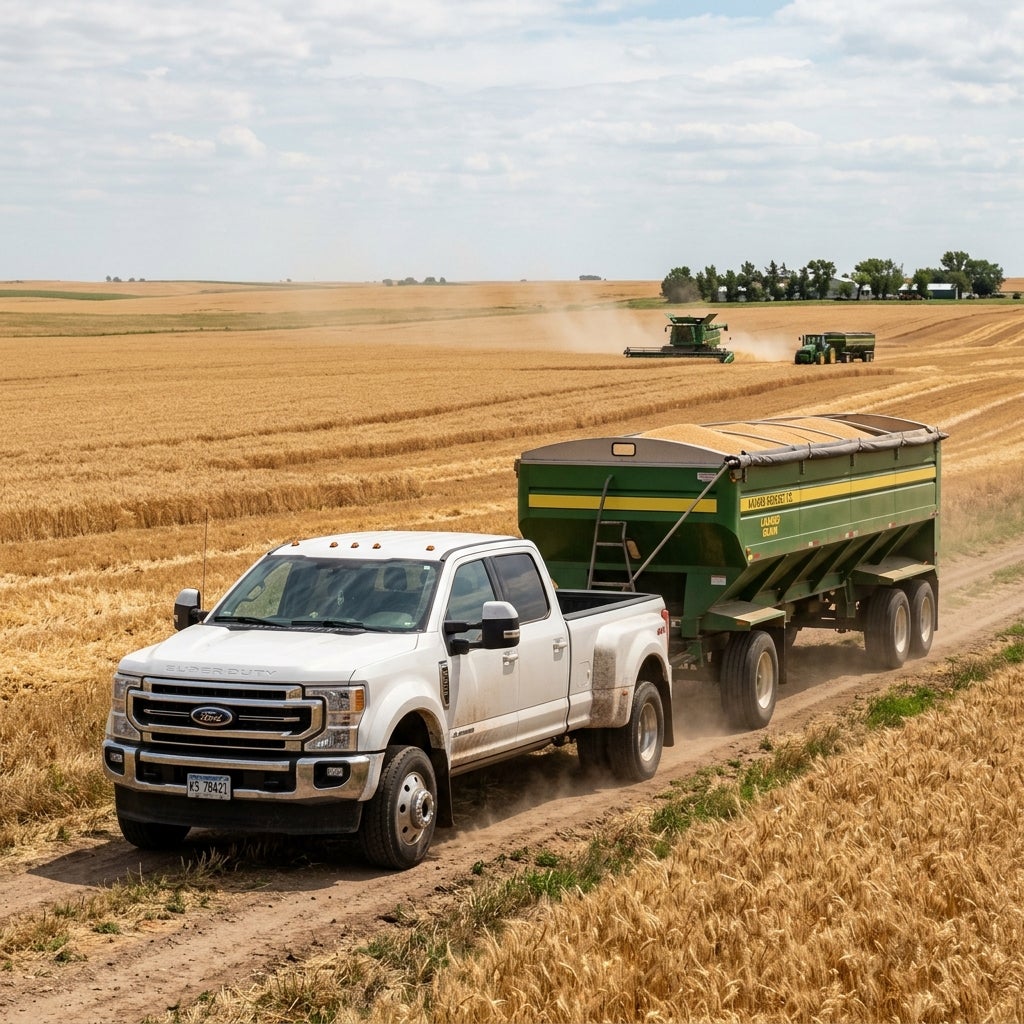
A white Ford Super Duty truck towing a green grain cart filled with wheat along a dirt path in a vast field. (Representative image for illustration purposes only. Actual vehicle may vary based on trim and configuration.)

Mastering the Payload: F-350 Tire Pressure for Heavy Grain Hauling

Mastering the Payload: F-350 Tire Pressure for Heavy Grain Hauling As hot summer days sweep across Kansas this July, local fields around Junction City and throughout Dickinson County are buzzing with harvest activity. Grain producers are working tirelessly to move massive yields from the fields to the local elevators. To get this crucial job done, agricultural operations rely heavily on the heavy-duty power of the Ford F-350 Super Duty. While these trucks are engineered to handle incredible payloads, pulling a fully loaded grain trailer places an immense amount of physical stress directly on your tires. Ensuring they are inflated to the exact right pressure is not just a detail—it is the line between a smooth, profitable harvest and a dangerous, costly roadside delay. When you are hauling heavy grain, the safety of your truck, your cargo, and everyone else on our local rural routes depends on your tire footprint. Proper tire inflation optimizes traction, maintains vehicle stability, ensures responsive braking, and directly protects your suspension components from excessive wear. Our team at Valor Ford understands the unique demands of agricultural hauling, and we want to help you maximize your F-350's capabilities. If you are preparing your truck for a grueling harvest season, it is also a great time to perform a Trade In Evaluation on older fleet vehicles or ensure your current heavy-duty setup is ready to go. Tire pressure is dynamic. It responds directly to external ambient temperatures, speed, and the sheer downforce exerted by heavy tongue weights. In this comprehensive guide, we will dive deep into everything you need to know about setting, managing, and maintaining your F-350's tire pressure when towing loaded grain trailers. Whether you operate a Single Rear Wheel (SRW) or Dual Rear Wheel (DRW) dually setup, understanding the physics of load-and-inflation is key to safeguarding your equipment and protecting your bottom line. What is the recommended tire pressure for a Ford F-350 when hauling heavy grain trailers? For a Ford F-350 tasked with hauling heavy grain trailers, the general recommended tire pressure is 60 to 75 PSI in the front tires and a maximum of 80 PSI in the rear tires (especially under full-load or dually configurations). However, the absolute baseline for your specific truck configuration should always be verified by checking the tire certification label located on your driver-side door jamb. These pressures are calculated assuming you are using original equipment (OE) Load Range E tires. Under a heavy grain payload, your rear tires bear the brunt of the pin weight (for goosenecks) or the tongue weight (for bumper pulls). To support this intense vertical downforce without excessive tire sidewall flexing, the rear tires must be inflated to their maximum recommended capacity—which is typically 80 PSI cold. Keeping the front tires between 60 and 75 PSI preserves proper steering response and keeps the front contact patch balanced, preventing understeer or uneven wear. It is important to remember that these numbers are 'cold' pressures. This means they should be measured before the vehicle has been driven, or at least three hours after it has been parked. Driving generates friction, which heats the air inside the tires and temporarily inflates the pressure reading. If you adjust your tires when they are already hot from a long run to the elevator, you will likely end up underinflating them once they cool down. F-350 Setup Front PSI (Cold) Rear PSI (Cold) Single Rear Wheel (SRW) Empty 60 PSI 65 PSI Single Rear Wheel (SRW) Loaded 65-75 PSI 80 PSI Dual Rear Wheel (DRW) Empty 60 PSI 55-60 PSI Dual Rear Wheel (DRW) Loaded 65-75 PSI 80 PSI Note: Dual Rear Wheel (DRW) trucks can distribute load across four rear tires, allowing for slightly lower rear tire pressures when empty to improve ride comfort. However, when hauling maximum capacity agricultural trailers, both SRW and DRW setups require the rear tires to be at 80 PSI to ensure maximum structural integrity and weight capacity. What is the difference between recommended PSI and max PSI on my truck tire sidewall? One of the most common points of confusion for farmers and fleet operators is the difference between the recommended tire pressure listed on the vehicle's door placard and the maximum PSI stamped directly onto the tire's sidewall. Misunderstanding these two numbers can lead to either dangerous over-inflation or severe under-inflation. The recommended PSI on the door jamb placard is determined by Ford's engineering team. It represents the optimal inflation level for the vehicle's specific weight distribution, suspension tuning, handling characteristics, and braking performance. This recommendation ensures that under normal or maximum load conditions, the tire maintains an ideal contact patch with the road. It prevents the center of the tread from wearing out prematurely while guaranteeing the vehicle rides as comfortably as possible. In contrast, the maximum PSI printed on the tire sidewall is a structural limitation set by the tire manufacturer. It tells you the absolute maximum pressure the tire carcass can safely handle to support its maximum rated load. For standard Load Range E tires, this is typically 80 PSI. You should never exceed this number. When hauling heavy grain trailers, you will often find that the rear recommended pressure matches this maximum limit (80 PSI) because the truck is being pushed to its maximum rear axle weight rating. However, inflating the front tires to the sidewall maximum when it is not needed can cause a harsh ride and reduced steering grip. What is a tire load-and-inflation chart and how do I use it for my F-350? A tire load-and-inflation chart is an industry-standard technical document produced by tire manufacturers (such as common tire manufacturers). It maps out exactly how much weight an individual tire can safely carry at a given inflation pressure. Since actual agricultural loads can vary significantly depending on whether your grain trailer is empty, half-full, or packed to the brim, these charts allow you to dial in your tire pressures with pinpoint accuracy. To utilize these charts effectively, you first need to know the actual weight resting on your truck's axles. The most accurate way to do this is by visiting a local commercial scale in the Dickinson County area (such as a local grain elevator scale or a truck stop scale near Junction City). Drive your loaded F-350 onto the scale so you can get independent weights for your steer axle, drive axle, and trailer axles. Once you have these numbers, divide the drive axle weight by two (for an SRW truck) or by four (for a DRW dually) to determine the exact weight on each individual rear tire. With your individual tire weight in hand, look up your specific tire size and load range on the manufacturer's load-and-inflation table. Find the weight that closely matches your measured load, and the chart will indicate the precise PSI required to support that weight. This prevents you from running a tire that is over-inflated for a lighter-than-expected load (which causes center tread wear) or under-inflated for a heavy load (which leads to catastrophic overheating). If you are unsure how to read these charts or want an expert to inspect your tire wear patterns, our service professionals at Valor Ford are here to help. We can evaluate your truck's current tires, analyze your typical hauling weights, and provide a customized pressure schedule to keep your operations running safely. If you need financing information for a new set of high-capacity commercial tires, please contact our team before visiting our shop. Why Weight Matters: • Prevents tire overheating • Optimizes the contact patch • Reduces drivetrain stress • Improves overall stability • Extends tread life Contact Our Team for Financing Information Should tire pressure be adjusted when towing a gooseneck vs. bumper pull trailer? Yes, the type of trailer connection you use dramatically influences how weight is distributed across your Ford F-350's axles, which in turn dictates how you should manage your tire pressures. Gooseneck and bumper pull configurations apply forces to your truck's chassis in completely different ways. Gooseneck Trailers: A gooseneck hitch places the trailer's pin weight directly over—or slightly ahead of—your F-350's rear axle. Because of this, a substantial portion of the trailer's tongue weight (often 15% to 25% of the total trailer weight) is transferred directly onto the truck's rear tires. This concentrated downward force requires your rear tires to be at their maximum load capacity pressure, typically 80 PSI cold. Because the weight is centered over the axle, it actually helps stabilize the truck's rear end, but it demands maximum structural support from the tire sidewalls to prevent dangerous flexing and heat buildup. Bumper Pull Trailers: A bumper pull grain trailer attaches to the receiver hitch at the very back of the frame, well behind the rear axle. This creates a leverage effect. The tongue weight acts as a pivot, pushing down on the rear hitch while actually lifting some weight off the front steering axle. To counteract this and maintain control, you must use a high-quality weight-distribution hitch. When towing a heavy bumper pull, your rear tires still need to be highly pressurized (often 75-80 PSI) to handle the load, but you must also ensure your front tires are inflated correctly (typically around 65-70 PSI) to maintain steering traction. Since bumper pulls are more prone to sway, maintaining precise pressures on both axles is absolutely vital for highway safety. Is underinflation a common cause of grain trailer tire blowouts? Without a doubt, underinflation is the leading cause of tire blowouts on both towing vehicles and grain trailers. During the time-sensitive rush of harvest, grain trailers are often loaded to their absolute weight limits and driven across rough fields and hot asphalt. When a tire is underinflated, its structural integrity is severely compromised, setting off a chain reaction that frequently ends in a catastrophic blowout. The science behind this is simple: excessive flexing and friction. When air pressure is too low, the tire's sidewalls flex excessively as the wheel rotates under a heavy load. This constant, aggressive flexing generates intense internal heat. Because rubber is an excellent insulator, it cannot easily dissipate this heat. As the temperature rises, the bonds holding the tire's rubber, steel belts, and nylon cords together begin to weaken. Eventually, the tire carcass suffers an internal separation, and the high pressure inside tears through the weakened sidewall, resulting in a sudden blowout at highway speeds. Furthermore, underinflated trailer tires do not tracking straight. They tend to sway, adding significant lateral stress to your Ford F-350's rear suspension and hitch. This sway forces your truck's electronic stability control and braking systems to work overtime to keep the load lined up. A single trailer blowout can cause you to lose control, spill your valuable grain payload, or damage your trailer's axles and fenders—leading to expensive repairs and halting your harvest operations entirely. Keeping both your truck's and your grain trailer's tires fully pressurized is the easiest and most cost-effective insurance policy you can have against harvest-season downtime. Does underinflation significantly increase fuel consumption when towing grain? Yes, underinflated tires act as a constant, hidden drag on your truck's performance, significantly driving up your fuel costs. When you are pulling massive grain loads with a Ford F-350, your engine is already working hard to overcome aerodynamic drag and the heavy inertia of the trailer. If your tires are underinflated, you are adding an immense amount of rolling resistance to that equation. Rolling resistance is the energy required to keep a tire rolling at a consistent speed. An underinflated tire sags, which increases its 'footprint' on the road. While a larger footprint might sound like it offers more grip, it actually increases the friction between the rubber and the asphalt. To overcome this extra drag, your truck's Power Stroke Turbo Diesel or gas engine must burn more fuel simply to maintain highway speeds. Studies show that for every 1 PSI your tires are underinflated below their recommended level, you lose roughly 0.2% to 0.3% in fuel efficiency. If your rear tires are sitting at 60 PSI instead of the recommended 80 PSI, you are looking at a direct 4% to 6% drop in fuel economy. When you are making multiple long-distance runs from the fields of Dickinson County to regional grain elevators day after day, that extra fuel consumption adds up to hundreds of dollars in wasted operating costs over the course of a single harvest. Is maintaining correct tire pressure on my F-350 and grain trailer cost-effective in the long run? Absolutely. Treating tire pressure management as a daily priority is one of the most high-return investments you can make for your farm's bottom line. Heavy-duty commercial tires for a Ford F-350 represent a significant capital expense. When you run tires at incorrect pressures, you dramatically accelerate tread wear. Underinflation causes the outer edges of the tire to wear out prematurely, while overinflation wears out the center strip. Maintaining correct pressures ensures the tire wears evenly across its entire width, potentially extending its lifespan by thousands of miles. Beyond tire replacement costs, proper tire management prevents unnecessary wear on your truck's steering and suspension components. Tires act as the primary dampening system for your truck. When they are incorrectly inflated, they cannot properly absorb road vibrations, transferring those harsh impacts directly into your ball joints, tie rods, shocks, and wheel bearings. This leads to premature suspension failure and expensive mechanical repairs. To help monitor your setup, Valor Ford's parts department can help you source heavy-duty aftermarket Tire Pressure Monitoring Systems (TPMS) designed to monitor both your truck and your trailer's tires in real time from the cab. Investing in these preventive tools saves you from costly downtime and expensive repairs down the road. If you need replacement parts or monitoring equipment, we encourage you to Order Genuine Ford Parts directly through our website. Order OEM Ford Parts How local Dickinson County farm routes demand precise F-350 tire management Driving conditions in the local Junction City and Dickinson County areas pose unique challenges for heavy-duty hauling. Farmers regularly transition from soft, uneven dirt or gravel fields straight onto high-speed asphalt highways. These rapid surface changes demand highly precise tire pressure management to ensure safety and traction on every stretch of your route. When your F-350 is inside a soft, muddy field, a slightly larger tire contact patch is beneficial to prevent sinking and maintain traction. However, once you load up and pull onto paved county roads or highways like US-77, running underinflated tires is incredibly dangerous. The hard, hot asphalt quickly drives up internal tire temperatures, and the lack of proper inflation pressure will cause the loaded trailer to sway, making high-speed handling unstable. To safely navigate these transitions, you must maintain a tire pressure setting that handles both environments effectively. Running your rear tires at 80 PSI cold ensures that when you hit the highway with a heavy load, your truck is perfectly balanced, stable, and ready to handle sudden stops. Don't let a poorly managed tire put your harvest at risk. A quick pre-haul tire checklist for Junction City grain producers 1. Check Pressures Cold Always measure your tire pressure first thing in the morning, before the truck has been driven or exposed to direct, hot sunlight. This gives you the most accurate baseline reading. 2. Inspect Valve Stems Heavy agricultural dust and mud can clog valve stems. Ensure all tires have high-quality, sealing metal valve caps to prevent slow, microscopic air leaks during long hauls. 3. Search for Dry Rot & Damage Farm equipment often sits parked for long periods. Inspect your truck and trailer tires for dry rot, cracks, and sidewall cuts caused by sharp crop stubble or rocky field entrances. 4. Verify Trailer Tire Pressure Never forget the trailer! Grain trailer tires (ST or LT rated) must also be inflated to their maximum recommended PSI to support the intense shifting weight of the grain. 5. Calibrate Your TPMS After adjusting your pressures for a heavy load, calibrate your Ford F-350's Tire Pressure Monitoring System through the SYNC infotainment screen so it recognizes the new baseline pressures. 6. Confirm Load Ratings Ensure both your truck and trailer tires have matching load capacities. Never mix load ranges on the same axle, as this will lead to highly unstable handling. Get professional heavy-duty truck service and tire accessories at Valor Ford At Valor Ford, we take immense pride in supporting our local Junction City agricultural community and the military families at nearby Fort Riley. We know that when harvest season arrives, you don't have time to waste on tire failures or mechanical issues. Our state-of-the-art service department is fully equipped to handle heavy-duty trucks, offering specialized commercial tire replacements, high-capacity alignments, suspension inspections, and professional towing setup advice. Whether you need a new set of rugged, load-rated tires for your F-350, a commercial-grade pressure gauge, or a full safety inspection before you hook up your grain trailer, our factory-trained technicians are here to help. We stock a wide selection of genuine OEM parts and heavy-duty tire brands engineered specifically for the extreme demands of agricultural work. To make your maintenance as seamless as possible, you can easily Schedule Pickup and Delivery Service and let us take care of your truck while you focus on the fields. Schedule Pickup & Delivery Service Schedule your F-350 heavy-duty tire inspection at Valor Ford today If you're noticing a warning light or want to stay ahead of tire issues, address your truck's tire needs. Ensure your Ford F-350 is fully prepared to handle the intense demands of the summer grain harvest. Our dedicated team is standing by to inspect your tread depth, analyze your wear patterns, verify your load ratings, and set your tires to the exact pressures needed for safe, efficient hauling. Schedule Ford Service Today, or stop by our dealership in Junction City to keep your harvest moving forward without interruption. For personalized service or to speak directly with one of our truck service specialists, please Call us at (785) 238-5114. If you are ready to visit us in person, you can easily Get Directions to Valor Ford and find our dealership located at 1825 Goldenbelt Blvd, Junction City, KS 66441. We look forward to helping you keep your harvest moving safely and efficiently. Schedule Ford Service Today

Contact Us

Fill out this form below and we'll contact you shortly
*Required Fields