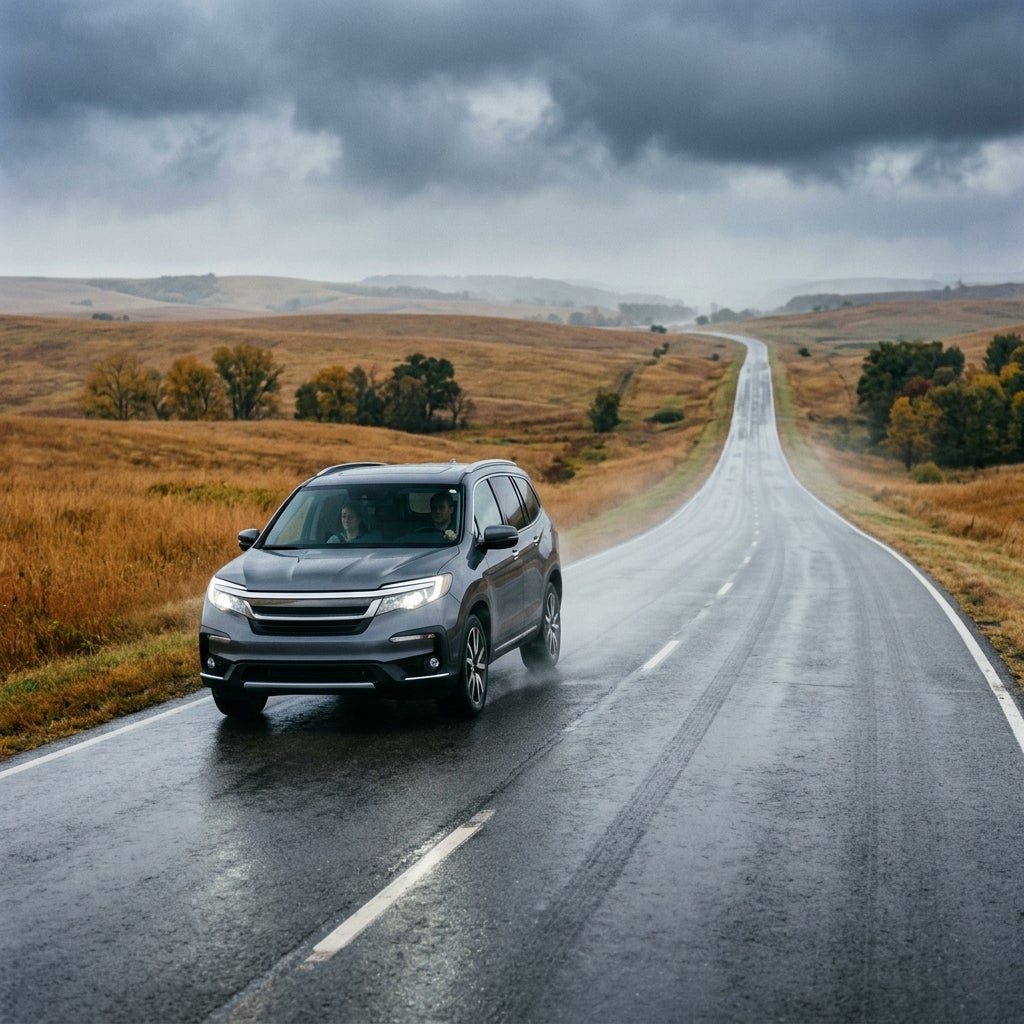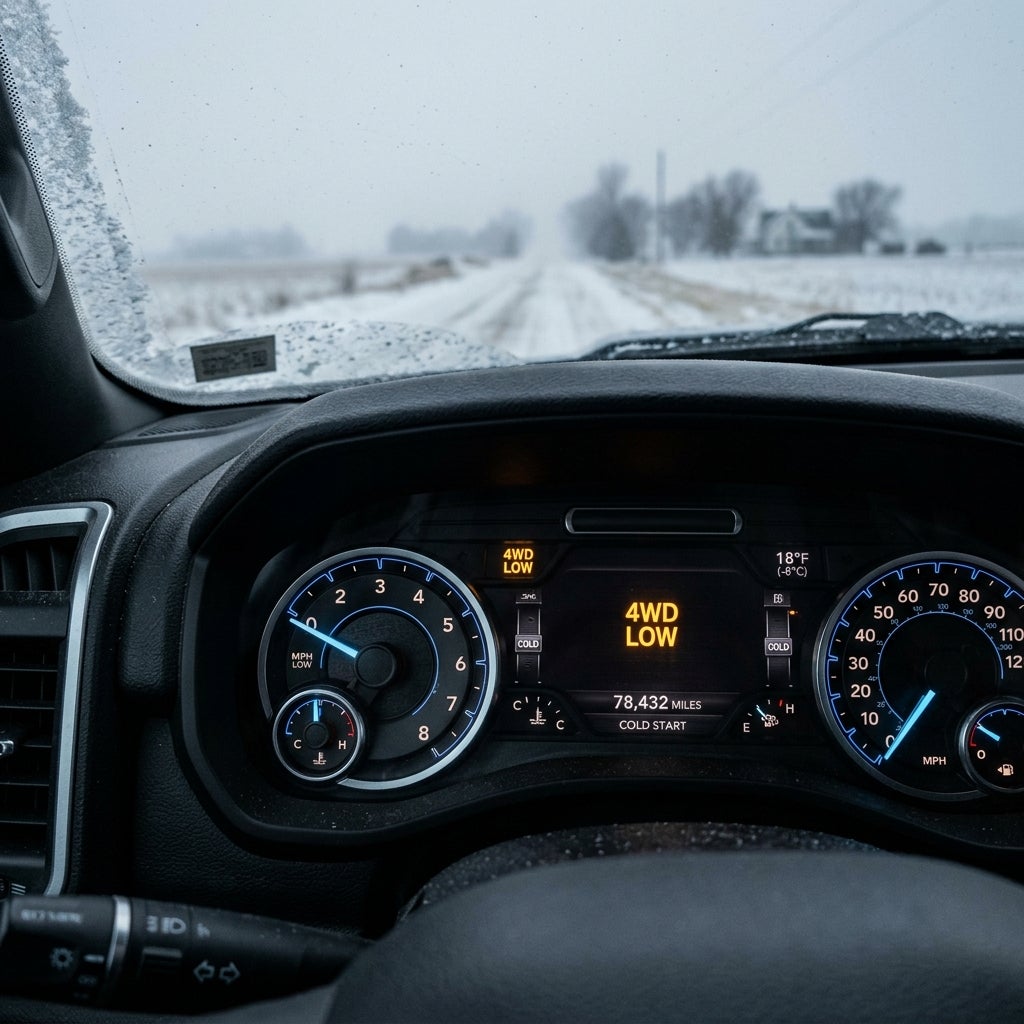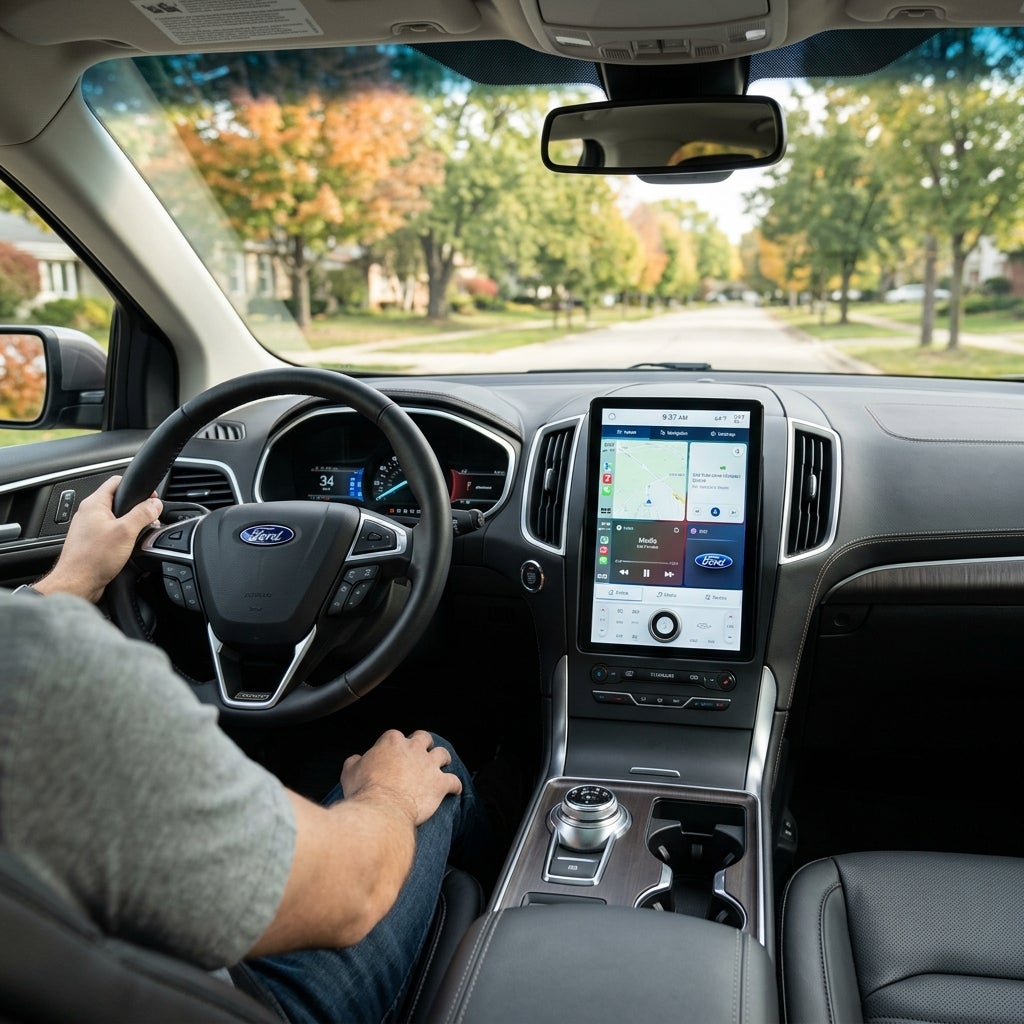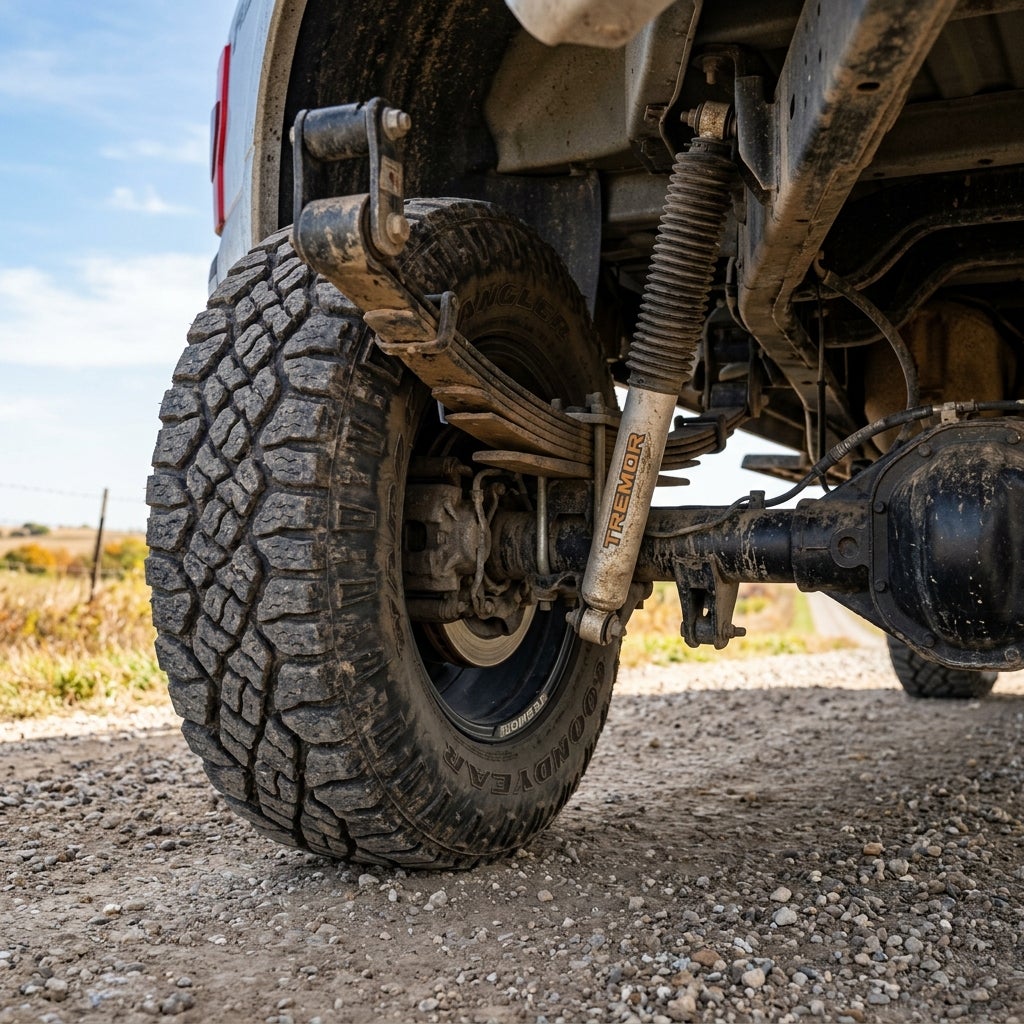

Key Takeaways for All-Weather 4x4 Readiness and Family Road Trips Preparing your family for long-distance highway travel across changing seasons requires a comprehensive approach to vehicle safety, drivetrain mechanics, tire performance, and interior versatility. Whether navigating sudden early-autumn thunderstorms along Interstate 70 or powering through unexpected winter sleet near Fort Riley, having a vehicle equipped to handle unpredictable Midwest weather transforms high-stress driving into a relaxed, confident journey. True all-weather readiness is not merely about pressing a 4WD button; it is about harmonizing intelligent power distribution, high-friction rubber compounds, cargo ergonomics, and active driver-assist safety systems. To guarantee total road trip confidence, smart family planners prioritize four core mechanical and structural pillars before setting out from Junction City: Core Readiness Pillar Technical & Functional Requirement Real-World Family Road Trip Benefit Drivetrain Matching Intelligent AWD vs. Part-Time / Full-Time 4WD with Terrain Management Instant traction on patchy ice, muddy gravel bypasses, or dry highway cruising. Severe-Snow Rated Tires Three-Peak Mountain Snowflake (3PMSF) certified rubber compounds Up to 25% shorter stopping distances on hard-packed snow and icy bridge decks. 3rd-Row & Cargo Capacity 20+ cu. ft. behind 3rd row with under-floor storage management Stows bulky luggage, strollers, and emergency gear without obscuring rear sightlines. Driveline Disconnect Automatic front-axle disconnect during steady high-speed cruising Eliminates parasite drag to maximize long-distance interstate fuel economy. At Valor Ford in Junction City, our dedicated team works closely with local drivers, military families stationed at Fort Riley, and cross-country road trippers to select and prepare vehicles that master every operational climate. From evaluating tread depth to matching drive modes with Flint Hills topography, taking an answer-first approach ensures your passengers remain safe, warm, and comfortable every mile of the way. What Is the Difference Between AWD and 4WD for Winter Family Road Trips? Understanding the mechanical distinction between All-Wheel Drive (AWD) and Four-Wheel Drive (4WD) is crucial when selecting the right vehicle for winter family road trips across Kansas and the broader Midwest. While both systems deliver power to all four wheels, they operate on vastly different mechanical principles tailored to distinct road conditions and driver inputs. All-Wheel Drive (AWD): Automated Precision for Variable Highways Modern AWD systems utilize electronically controlled center differentials or multi-plate clutch packs monitored by advanced computer sensors. These sensors read wheel speed, steering angle, throttle position, and yaw rates hundreds of times per second. When cruising along I-70 during a patchy freeze event where clear asphalt rapidly alternates with slick black ice, AWD continuously adjusts torque front-to-back without any driver intervention. This seamless operation allows individual wheels to rotate at different speeds, maintaining smooth handling around highway curves and eliminating drivetrain binding. Four-Wheel Drive (4WD): Heavy-Duty Locking Torque for Extreme Conditions Traditional 4WD systems lock the front and rear driveshafts together through a mechanical transfer case, forcing the front and rear axles to turn at identical speeds. Highly effective in deep unplowed snow, thick mud, or unpaved rural backroads across Geary and Dickinson counties, standard 4WD (in 4H or 4L settings) provides uncompromised low-speed traction. However, because it locks axle rotation speeds together, engaging traditional 4WD on dry or partially clear highway asphalt causes tire scrub and driveline stress. Families planning long highway journeys with variable conditions often benefit from hybrid 4WD systems—like those in modern Ford full-size platforms—that feature an Auto 4WD (4A) mode combining low-range mechanical durability with automated torque distribution. At a Glance: Driving Scenarios • Patchy Ice & Slippery Overpasses: AWD or 4 Auto (4A) is superior because it engages dynamically without binding on dry pavement. • Deep Snow Drifts & Unpaved Trails: 4WD High (4H) with a locked center differential provides maximum traction to cut through heavy drifts. • High-Speed Interstate Cruising: Disconnectable AWD or 2WD high-range modes deliver optimal fuel efficiency and quiet cabin acoustics. What Features Make an SUV Best Equipped for All-Weather Family Road Trips? When evaluating potential long-distance family transport, drivetrain capability is only one piece of the safety puzzle. A truly road-trip-ready SUV integrates active environmental controls, multi-terrain traction technologies, and driver support systems into a single cohesive cabin experience. 1. Multi-Terrain Drive Modes & Traction Control Modern selectable drive mode systems (such as Ford's Terrain Management System™) alter throttle response, gear shift points, traction control intervention, and brake torque vectoring. Selecting Slippery Mode smooths out accelerator sensitivity to prevent wheelspin on packed snow, while Mud/Ruts Mode allows controlled wheel slip to clean tread patterns when traversing soft rural paths. For deeper exploration off the beaten path, vehicles like those in our Shop New Ford Bronco Inventory offer specialized G.O.A.T. Modes™ that adapt mechanical locking rear differentials for demanding, unpaved terrain. 2. Tri-Zone Climate & Heated Comfort Packages Passenger comfort directly correlates with driver focus during long sub-zero road trips. Tri-zone automatic climate control allows front passengers and rear seat occupants to maintain personalized temperature zones without constant adjustment. Enhanced cold-weather convenience packages add heated front and second-row outboard seats, a heated steering wheel, and heated wiper park zones that melt windshield ice build-up before wiper blades tear. Rapid cabin heating elements warm interior air instantly before engine coolant reaches full operating temperature. 3. Intelligent Driver-Assist Safety Suites Navigating heavy rainfall or blustery winds demands advanced driver assistance. Comprehensive suites like Ford Co-Pilot360™ include Lane-Keeping Assist, Pre-Collision Assist with Automatic Emergency Braking, and Blind Spot Information System (BLIS) with Cross-Traffic Alert and trailer coverage. Adaptive Cruise Control with Stop-and-Go automatically maintains safe follow distances on highway routes, significantly reducing driver fatigue during multi-hour family journeys across Central Kansas. Preparing Your Family Vehicle for Year-Round Travel at Valor Ford Whether you are planning a winter holiday trip across state lines or preparing for seasonal road conditions around Junction City and Fort Riley, ensuring your vehicle is mechanically sound is vital. At Valor Ford, our factory-certified technicians conduct comprehensive multi-point inspections checking battery cold-cranking capacity, brake pad thickness, fluid conditions, and 4x4 transfer case operation. Looking to upgrade your family fleet? Explore our versatile selection of new and pre-owned 4WD SUVs tailored for all-weather confidence. Browse Pre-Owned 4x4 Inventory Schedule Multi-Point Inspection Are Three-Peak Mountain Snowflake (3PMSF) Rated Tires Necessary for Winter Family Travel? A common misconception among family SUV owners is that having All-Wheel Drive or Four-Wheel Drive eliminates the need for specialized tires. In reality, four-wheel drive only aids acceleration and power delivery—it does not increase friction during braking or lateral cornering on ice and hard-packed snow. That is where tire rubber chemistry and official certification standards become paramount. Understanding the 3PMSF Rating vs. Standard M+S Standard factory tires marked with 'M+S' (Mud and Snow) are designated based purely on physical geometry (void-to-rubber tread ratios) rather than verified cold-weather traction performance testing. In contrast, tires bearing the 3PMSF symbol (a mountain peak surrounding a snowflake) must pass standardized ASTM ice and packed-snow acceleration tests, proving at least 10% better traction than standard reference tires. Silica Compounds & High-Density Siping Standard all-season rubber compounds harden when ambient temperatures drop below 45°F, turning brittle and glass-like, which drastically reduces grip. 3PMSF winter and all-weather tires feature specialized high-silica polymers that remain pliable in sub-freezing conditions. Coupled with thousands of microscopic 3D sipes (tiny slits in the tread blocks) that biting into ice, these tires dramatically decrease stopping distances. Braking Distance Comparison at 30 MPH on Packed Snow: • Standard All-Season (M+S): ~110 – 130 Feet • 3PMSF Rated All-Weather: ~80 – 90 Feet • Dedicated Winter Tires: ~65 – 75 Feet Saving 30 to 40 feet of stopping distance on an icy highway exit ramp is often the critical difference between a safe stop and a collision. Drivers can easily Order Genuine Ford Parts and factory-approved 3PMSF tire packages directly through our certified dealership parts desk. Which SUV Type Offers More Cargo Room Behind the Third Row for Family Luggage? Packing for a multi-passenger road trip requires balancing seating space with practical cargo volume. Piling duffel bags above seat headrests reduces driver visibility and poses safety hazards during sudden stops. Comparing cargo metrics across SUV classes helps families select the ideal footprint for their road trip needs. Midsize 3-Row SUVs (e.g., Ford Explorer) Midsize 3-row SUVs strike an outstanding balance between maneuverability, fuel efficiency, and versatile passenger room. Typically offering approximately 18 to 21 cubic feet of space behind the third row, these platforms easily fit weekend duffel bags, grocery hauls, or smaller strollers. With power-folding 50/50 third-row seats, capacity quickly expands when traveling with 4 or 5 passengers. Explore details via our Research Ford Explorer hub to see layout specs. Full-Size Standard SUVs (e.g., Ford Expedition) Full-size body-on-frame SUVs provide substantial upgrades in shoulder room, legroom, and rear storage depth. Standard wheelbase full-size SUVs deliver approximately 20 to 22.5 cubic feet behind the third row, featuring deeper cargo wells and wider floor dimensions. Integrated under-floor management bins hide emergency kits, tire inflators, and laptops out of sight, leaving the primary flat floor clear for upright rolling suitcases and coolers. Extended Wheelbase SUVs (e.g., Expedition MAX) For large families or extended cross-country road trips with 7 or 8 passengers, extended wheelbase models (like the Expedition MAX) are the gold standard. By extending body length by nearly a foot, these models expand cargo space behind the third row to a massive 36+ cubic feet. Full-size luggage sets, double strollers, and outdoor gear fit comfortably without sacrificing third-row legroom or roof box mounting limits. How Do Modern Disconnectable AWD Systems Help Save Fuel on Highways? Historically, choosing a 4WD or AWD vehicle meant accepting a permanent fuel economy penalty. Legacy systems continuously rotated front driveshafts, front differentials, and axle shafts even when driving in clear, dry summer weather. This rotational mass created significant mechanical drag—known as parasitic loss—that burned extra fuel across long highway stretches. Mechanics of Driveline Disconnect Technology Modern intelligent AWD platforms utilize automated front or rear driveline disconnect systems. When an SUV is cruising at steady speeds along smooth highways like I-70 under favorable weather conditions, an electronic dog-clutch or actuator completely disengages the secondary axle and driveshaft at the transfer case. By stopping the rotation of non-essential driveline components, the engine operates as a efficient two-wheel-drive platform, reducing drag and boosting fuel economy by 1 to 3 miles per gallon. Over a 2,000-mile family road trip, these savings add up substantially at the pump. Milliseconds Re-Engagement Speed: The true brilliance of disconnectable AWD lies in its speed. Sophisticated sensors continually monitor road conditions, ambient temperature, windshield wiper status, and wheel slip. If the vehicle encounters sudden hydroplaning, loose gravel, or icy patches, the system mechanically re-engages four-wheel drive in in 10 to 20 milliseconds—faster than a human blink. Drivers enjoy maximum highway fuel economy with zero compromise in instant all-weather safety. Get a Trade Appraisal and Upgrade to an All-Weather Ready SUV Upgrading your current vehicle to a high-capability 4x4 or AWD SUV is straightforward at Valor Ford. Our digital tools allow you to receive a fast, transparent trade appraisal from the comfort of your home. We proudly serve active-duty military personnel stationed at Fort Riley and local family drivers throughout Geary County, offering current finance and lease options available to fit your needs. Start Instant Trade In Evaluation Get Pre-Approved for Financing Are Full-Time 4WD Vehicles Good for Long Highway Family Road Trips? High-Speed Stability vs. Traditional Part-Time Systems Full-time 4WD platforms incorporate a center differential that allows the front and rear axles to turn at different speeds during high-speed cornering, making them completely safe for dry asphalt as well as wet or icy roads. This provides incredible high-speed tracking and crosswind resistance on open interstate routes. Evaluating full-time 4WD platforms—such as full-size Expedition models or heavy-duty off-roaders like the Toyota 4Runner—requires examining ride comfort, cabin noise levels, and long-distance passenger dynamics. Key Considerations for Family Comfort: 1. Suspension Tuning: Modern full-size SUVs utilizing independent rear suspensions (IRS) absorb pavement expansion joints far better than solid rear axle platforms, eliminating rear-seat 'hop' over rough highways. 2. Acoustic Insulation: Active noise cancellation, acoustic-laminated windshields, and isolated subframes keep cabin sound levels whisper-quiet during 70 MPH cruises. 3. Center Differential Lockability: Advanced full-time systems allow drivers to lock the center differential manually when off-roading, giving you the best of both worlds: highway refinement and extreme trail traction. For families considering versatile midsize or full-size options, exploring vehicle specs like those in our Research Ford Explorer guide reveals how modern unibody and body-on-frame architectures deliver luxury-car comfort alongside authentic multi-terrain capability. Navigating Flint Hills Terrain and Central Kansas Weather in Every Season Central Kansas weather is famously dynamic, capable of shifting from clear prairie sunshine to severe crosswinds, torrential downpours, or sudden flash freezes in a matter of hours. Local drivers navigating Highway 77, I-70, or rural unpaved roads across Dickinson and Geary counties benefit from specific driving strategies tailored to regional geography. Prairie Crosswinds on Interstate 70 The open topography of the Flint Hills region exposes drivers to strong 35+ MPH lateral gusts, especially when passing large commercial semi-trucks. Modern SUVs equipped with Sidewind Stabilization automatically apply light braking to wheels on the windward side, helping drivers keep their lane position centered without constant, tiring steering corrections. Flash Freeze Events & Bridge Decks Autumn rainstorms followed by sudden cold fronts quickly freeze standing water into invisible black ice on elevated overpasses along Highway 77. Utilizing intelligent AWD or Auto 4WD modes ensures immediate torque transfer to wheels with grip, preventing rear-end instability when traversing elevated structures. Unpaved Gravel & Mud Commutes Navigating agricultural bypasses or rural residential routes around Junction City involves loose gravel and deep mud after heavy rainfall. Engaging selectable 4x4 or Slippery/Grass/Gravel drive modes recalibrates ABS anti-lock braking algorithms to prevent wheel locking on loose aggregate surfaces. Essential Pre-Trip All-Weather Inspection and Emergency Gear Checklist Before loading up the family for a long road trip, completing a thorough pre-flight vehicle check prevents unexpected delays. Cold weather places extra strain on electrical batteries, rubber belts, windshield washer systems, and tire inflation pressures. 5-Point Vehicle Inspection Checklist: 1. Tread Depth Test: Ensure tire tread depth measures at least 5/32" (use a depth gauge or coin test). Winter traction drops significantly below 4/32". 2. Battery CCA Test: Cold temperatures reduce battery power output by up to 50%. Have your battery tested for Cold Cranking Amps (CCA). 3. Sub-Zero Washer Fluid: Flush summer bug wash with de-icing washer fluid rated to -20°F to prevent reservoir freezing. 4. Wiper Blade Flexibility: Replace streaking wiper blades with heavy-duty beam blades that resist snow clogging. 5. 4WD Transfer Case Fluid: Verify fluid levels in transfer cases and differentials, especially on vehicles with high towing mileage. Schedule Ford Service Today if overdue. Must-Have Road Trip Emergency Gear Kit: • Heavy-duty jumper cables or portable lithium jump-starter pack • Folding snow shovel and traction recovery boards • Heavy-duty ice scraper with brass blade • Thermal wool blankets, gloves, and hand warmers • High-lumen LED flashlight with spare batteries • Non-perishable energy snacks and bottled water • First aid kit and portable phone power bank Busy schedule? You can easily Schedule Pickup and Delivery Service to have our team inspect your vehicle at your home or office before departure. Plan Your Next Family Road Trip with Valor Ford in Junction City At Valor Ford, we are proud to be your trusted partner for all automotive needs in Central Kansas. Whether you need expert advice on all-weather tire options, want to test drive an advanced AWD or 4x4 SUV, or need a quick pre-trip maintenance check, our experienced team is here to assist you every step of the way. Visit us at our showroom located at 1825 Goldenbelt Blvd, Junction City, KS 66441. Click here to Get Directions to Valor Ford or give us a ring at Call us at (785) 238-5114 to speak directly with a sales advisor or service specialist today. Research 2026 Ford Explorer Schedule Service Appointment