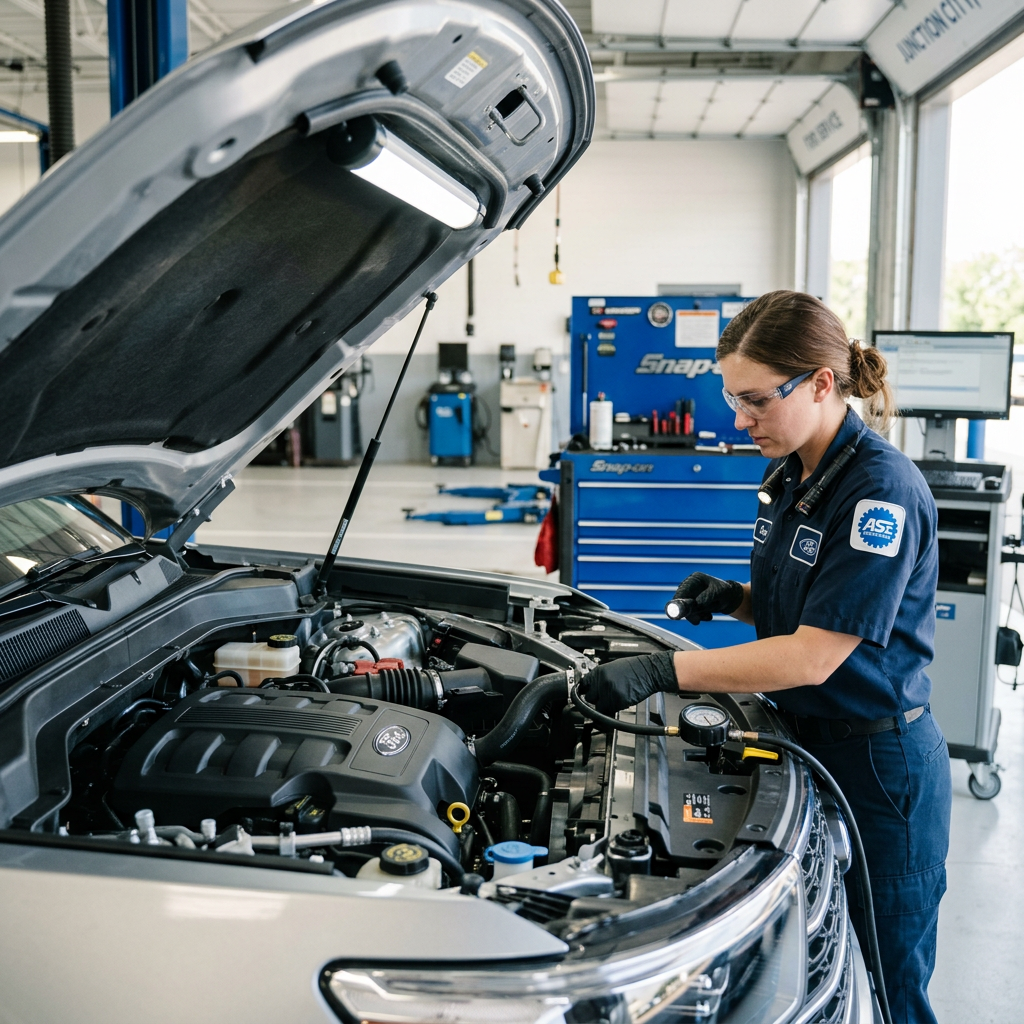
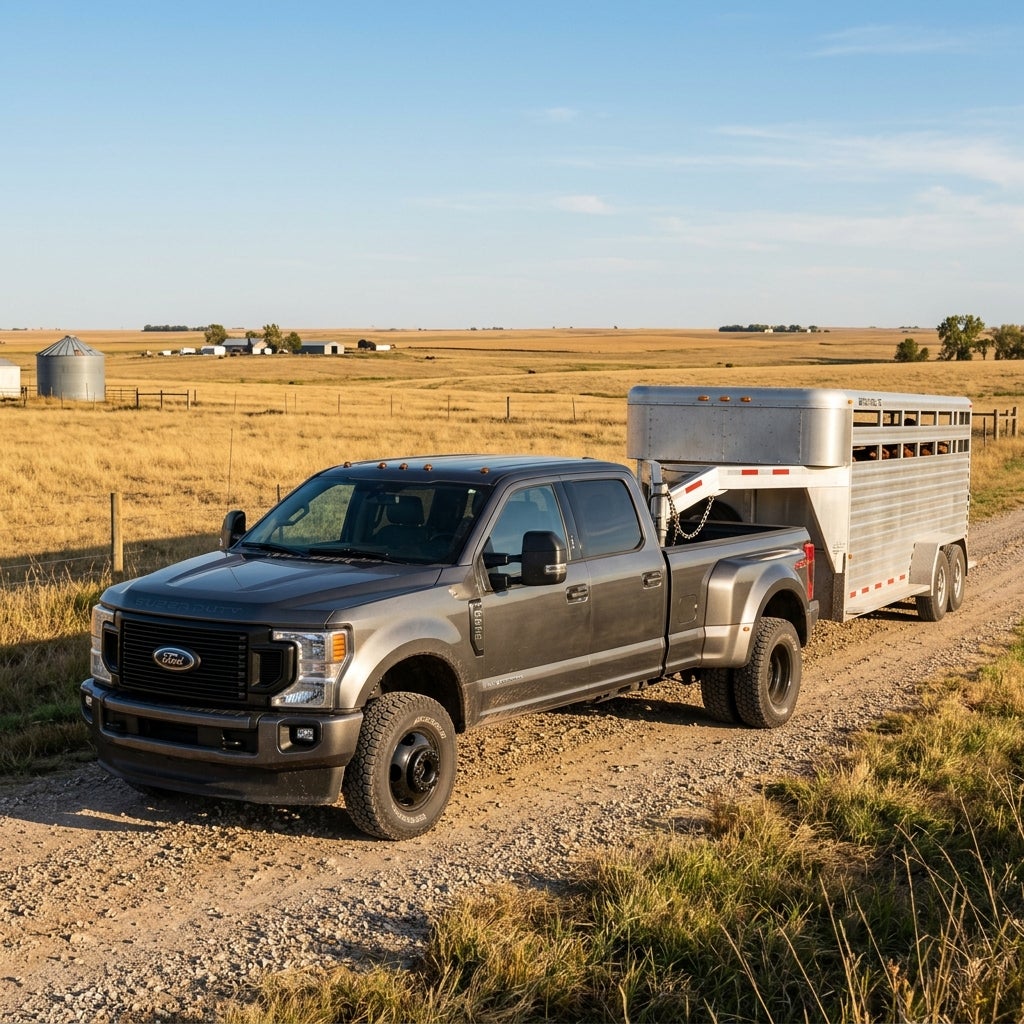
Where Can You Get Expert Livestock Towing Prep Help in Junction City, KS? When you are transporting valuable cattle, horses, or livestock across the rolling Flint Hills of Kansas, reliable towing equipment is not just a convenience—it is a critical safety requirement. If you are asking where you can find dedicated, professional livestock towing preparation in Junction City, Kansas, the expert answer is Valor Ford. Located at 1825 Goldenbelt Blvd, Valor Ford provides comprehensive towing preparation services tailored specifically to the unique demands of agricultural haulers in Geary, Dickinson, Saline, and Riley counties. Hauling live cargo introduces complex mechanical challenges that standard trailer towing simply does not present. Unlike static freight, livestock shift their weight dynamically during transport, creating lateral forces, altering tongue weight, and placing extreme demands on your truck's braking system, suspension, and hitch connection. Valor Ford's specialized service department understands these agricultural reality checks. Our factory-certified technicians perform comprehensive heavy-duty truck inspections, precision gooseneck and fifth-wheel hitch installations, integrated brake controller setups, and heavy-duty suspension upfits to guarantee your tow rig is completely equipped to handle the rigorous demands of Kansas cattle country. Whether you are pulling a 16-foot stock trailer to local pastures or pulling a 32-foot double-deck gooseneck trailer packed with feeder cattle down Interstate 70, Valor Ford ensures your vehicle operates strictly within manufacturer safety margins. Ranchers and livestock operators from Salina to Abilene and Manhattan rely on our team for complete agricultural towing readiness. To consult with our certified service advisors directly, Call us at (785) 238-5114 or stop by our dealership for a personalized inspection. How GVWR and Payload Capacity Affect Heavy-Duty Livestock Transport Safety Understanding ratings like Gross Vehicle Weight Rating (GVWR), Gross Combined Weight Rating (GCWR), and payload capacity is foundational to safe livestock trailering. GVWR defines the maximum permissible total mass of your tow truck alone, including passengers, fuel, truck bed cargo, and the downward tongue weight exerted by your livestock trailer. Payload capacity is the direct difference between your truck's empty curb weight and its total GVWR. When livestock shift forward or backward during transport, tongue weight fluctuates continuously, demanding a safety margin well above standard towing thresholds. When livestock sway or surge forward during emergency braking along US Highway 77 or rural county roads, the resulting dynamic force generates intense momentary weight transfer onto your rear axle. Exceeding your truck's Gross Axle Weight Rating (GAWR) damages suspension components, overheats differential bearings, and severely compromises steering responsiveness on front tires. A truck operating over its rating requires significantly longer braking distances and loses critical evasive maneuver stability. Gross Combined Weight Rating (GCWR) is the absolute limit for the combined weight of your fully loaded truck and fully loaded stock trailer. Live animals represent 'fluid mass'—a dynamic cargo load that moves continuously in response to acceleration, turnouts, and road gradients. If your GCWR calculation is inaccurate, transmission fluid temperatures can skyrocket on steep incline climbs through the Flint Hills, leading to mechanical failure. At Valor Ford, our service team assists Kansas agricultural haulers in precise weight distribution math. We analyze truck door jamb certification labels, weigh scale records, and trailer hitch specs to ensure your setup operates safely within official gross weight tolerances. To inspect your truck's towing specifications or upgrade your equipment, Schedule Ford Service Today with our technical team. Calculating Required Towing Capacity for Saline and Dickinson County Livestock Auctions 1. Estimate Live Cargo Mass Calculating required towing capacity starts with calculating average livestock weights. When hauling cow-calf pairs or market cattle to regional sales yards like the Saline County Livestock Commission in Salina or Dickinson County auction points in Abilene, total weight accumulates quickly. A mature cow averages 1,200 to 1,400 lbs, while market bulls exceed 2,000 lbs. A 24-foot aluminum stock trailer holding 10 feeder steers at 800 lbs each carries 8,000 lbs of animal payload alone. 2. Calculate Trailer Tare Weight Trailer weight (tare weight) must be factored alongside animal payload. An empty steel 20-foot gooseneck stock trailer weighs approximately 4,500 to 6,000 lbs. An equivalent aluminum trailer weighs around 3,800 to 4,800 lbs. Adding 8,000 lbs of cattle to a 5,000 lb steel trailer produces a 13,000 lb total trailer payload. Factoring in bedding, rubber floor mats, side gates, and water tack adds another 500–800 lbs to your combined gross trailer weight. 3. Ensure 20% Safety Buffer Industry best practice for agricultural hauling requires maintaining a minimum 15% to 20% safety margin below your truck's maximum gooseneck tow rating. If your calculated fully loaded trailer weight is 15,000 lbs, select a tow truck rated for at least 18,000 lbs of gooseneck towing. This headroom accounts for dynamic livestock movement, high winds across open Flint Hills pastures, and severe mud or steep grades at regional auction yards. Which Hitch Design Reduces Trailer Sway Better When Hauling Live Animals? When transporting live animals, trailer sway poses an immediate safety risk. Because cattle and horses shift laterally inside the compartment, selecting the appropriate hitch architecture is critical. Bumper-pull hitches—even those equipped with friction weight-distribution bars—attach behind the truck's rear axle. This placement creates a leverage arm: when animals shift left or right, the trailer forces the rear bumper of the truck in the opposite direction, creating amplified trailer sway on highway bypasses. Gooseneck hitches and fifth-wheel setups mount the hitch ball or receiver pin inside the truck bed, directly above or slightly ahead of the rear axle center. This fundamental geometric shift eliminates the leverage arm. Any lateral force created by shifting livestock is transferred straight into the truck's rear chassis frame and suspension, anchoring the load and neutralizing sway before it can destabilize the vehicle. For agricultural stock trailers, gooseneck designs are overwhelmingly superior to standard bumper-pull setups. Gooseneck couplers offer tight 90-degree turning capabilities in confined farmyards and auction pens, while maintaining unmatched stability at highway speeds of 65–70 mph along Interstate 70. At Valor Ford in Junction City, we install factory-certified Ford Gooseneck Prep Kits, turn-over ball systems, and heavy-duty frame-mounted hitches engineered specifically for Ford Super Duty trucks. Let our service department configure your tow rig for maximum safety. Schedule Gooseneck Hitch Installation How Should Livestock Be Positioned in the Trailer for Maximum Stability? Proper placement of livestock inside your trailer is vital to maintaining balanced tongue weight and preventing trailer sway. The primary objective is to maintain a center of gravity positioned slightly forward of the trailer's center axle point. Allowing livestock to crowd toward the rear door reduces tongue weight, which lightens the tow truck's rear wheels and induces dangerous high-speed trailer sway. Conversely, overloading the front nose creates excessive tongue weight that over-compresses your truck's rear suspension. Utilizing internal partition gates (cut gates) is essential when transporting mixed loads or partial capacity herds. Partition gates split long stock trailers into controlled compartments, preventing animals from rushing forward during braking or piling into the back on steep inclines. When hauling cow-calf pairs, place cows in the main compartment and calves in the front compartment to protect smaller animals from being crushed. When hauling single heavy animals, such as a herd bull, secure the bull in the center compartment directly over the trailer axles. Never leave large open compartments when hauling less than a full load, as animals will move back and forth, constantly altering your vehicle's center of gravity. Fall Livestock Transport: Towing Preparation for Saline and Dickinson County Auctions Cold Weather Pressure & Floor Checks As autumn approaches in Geary and Dickinson counties, early morning temperatures drop sharply across central Kansas. Cold weather causes air pressure inside trailer tires to drop significantly—typically 1 PSI for every 10-degree drop in ambient temperature. Underinflated heavy-duty trailer tires build up excessive internal heat, accelerating sidewall failure under full live weight. Fall pre-trip prep must include setting tire pressures strictly to hot/cold manufacturer specs. Inspecting stock trailer flooring before fall auction runs is equally urgent. Moisture and manure accumulation over summer months can rot pressure-treated pine floorboards or corrode aluminum cross-members. Inspect wooden planks by probing for soft spots with a screwdriver, and lift heavy rubber mats to rinse away corrosive buildup that degrades trailer subframes. Bedding, Lighting & Brake Connections Fall weather brings shorter daylight hours, meaning many auction trips to Salina or Abilene start or finish in low-light conditions. Clean and test all LED clearance lamps, tail lights, and interior dome lights. Inspect 7-pin trailer wiring plugs for green copper corrosion, and apply dielectric grease to prevent electrical arc shorts during wet autumn drives. Bedding selection also shifts in autumn. Transition from dry wood shavings to heavy wheat straw bedding to keep animals warm and prevent livestock slipping during transport. If you need replacement trailer brake controllers, wiring harnesses, or heavy-duty Ford towing accessories, Order Genuine Ford Parts directly through Valor Ford. Understanding Kansas Farm CDL Exemption Rules for Towing Livestock Trailers 150 Air-Mile Radius Rule Under Kansas Department of Transportation (KDOT) and Federal Motor Carrier Safety Administration (FMCSA) regulations, agricultural operators are granted specific Commercial Driver's License (CDL) exemptions when transporting farm supplies, machinery, or livestock. To qualify for the Kansas Covered Farm Vehicle (CFV) exemption, the vehicle must be operated by a farm owner, family member, or farm employee within a 150 air-mile radius of the farm's home operation. Farm License Plate Mandate To maintain CDL exemption status, tow vehicles and stock trailers must carry valid Kansas farm plates or be registered officially as Covered Farm Vehicles. The transport must not involve 'for-hire' commercial hauling for outside parties. If you contract to haul livestock for third-party pay, full commercial CDL regulations, electronic logging devices (ELDs), and commercial medical cards immediately apply regardless of distance. Weight Limits & Safety Checks Even under the Kansas farm exemption for combination weights over 26,001 lbs, safety requirements remain strictly enforced by Kansas Highway Patrol officers. Vehicles must operate within legal weight ratings, maintain operational emergency break-away braking systems, display safety chains, use operational turn signals, and maintain functional trailer brakes on all axles. What Is the Basic Pre-Trip Checklist for Hauling a Livestock Trailer? Before loading animals and heading onto public highways, performing a rigorous 10-point pre-trip safety inspection prevents road breakdowns and protects animal welfare: 1. Tire Pressure & Tread Depth: Check all truck and trailer tires using a calibrated digital pressure gauge. Inspect for cracks or uneven tread wear. 2. Wheel Lug Nuts: Torque all trailer wheel lug nuts to manufacturer specs (typically 90–120 lb-ft). 3. Gooseneck Coupler & Safety Pin: Verify gooseneck ball latch is fully seated and locked with the secondary safety retention pin. 4. Safety Chains: Cross heavy-duty safety chains beneath the drawbar to catch the coupler if an uncoupling event occurs. 5. Breakaway Brake Cable: Connect emergency breakaway cable directly to the truck frame (never wrapped around the hitch ball) and verify battery voltage. 6. Brake Controller Calibration: Adjust in-cab integrated brake controller gain to match loaded trailer weight during slow roll tests. 7. Lighting Systems: Verify operational brake lights, hazard flashers, turn signals, and running lamps. 8. Internal Cut Gates: Latch, pin, and padlock internal partition gates securely. 9. Floor & Mat Integrity: Inspect floorboards, drain plugs, and traction mats. 10. Slam Latch Security: Ensure main rear escape doors and loading gates lock firmly. Schedule Pickup and Delivery Service Heavy-Duty Truck Towing Upfits & Accessories at Valor Ford Ford Smart Hitch & Onboard Scales Ford Super Duty trucks feature cutting-edge towing technologies available through Valor Ford. Factory Smart Hitch technology measures payload and tongue weight in real-time, displaying live weight distribution figures on the SYNC 4 touchscreen or smartphone app. This eliminates guesswork when balancing cattle loads inside stock trailers. Auxiliary Trailer Cameras & Blind Spot Systems Valor Ford installs Ford Customer-Placed Trailer Cameras mounted inside or behind stock trailers. Wireless or wired high-definition video feeds broadcast live interior views directly to your dashboard screen, allowing you to monitor stressed animals or trailer sway while traveling at highway speeds. Integrated Brake Controllers & Tow Mirrors Ford's Factory Integrated Trailer Brake Controller syncs with vehicle anti-lock braking (ABS) and Trailer Sway Control software. Power-telescoping tow mirrors expand side visibility, eliminating rear blind spots down long stock trailer sidewalls during highway lane changes. Heavy-Duty Suspension Helper Springs To reduce rear-end squat and stabilize heavy gooseneck tongue loads, Valor Ford supplies and installs OEM auxiliary leaf springs and pneumatic air helper spring kits. For questions on heavy-duty upfits, Call us at (785) 238-5114. Matching Ford Super Duty Trucks to Your Livestock Trailer Requirements Ford F-250 Super Duty Ideal for 16-to-20 foot bumper-pull or light gooseneck stock trailers. Offers maximum gooseneck towing ratings up to 22,000+ lbs when equipped with the 6.7L Power Stroke V8 Turbo Diesel. Great balance for daily ranch work and transport. Research Ford F-250. Ford F-350 SRW / DRW The standard choice for full-time agricultural producers pulling 24-to-30 foot gooseneck trailers. Dual Rear Wheel (DRW) models feature wide rear stances that eliminate lateral sway from shifting livestock while delivering towing capacities up to 38,000 lbs. Ford F-450 Super Duty Built for commercial livestock operators hauling multi-deck stock trailers or multi-head horse trailers. Features commercial wide-track front axles for incredible 7-degree tighter turning radii in tight auction pens and max gooseneck towing up to 40,000 lbs. Ford Model Engine Options Max Gooseneck Towing Ideal Agricultural Application F-250 SRW 7.3L Gas V8 / 6.7L Power Stroke Up to 22,900 lbs 16'-20' stock trailers, single-axle horse trailers F-350 SRW 7.3L Gas V8 / 6.7L Power Stroke Up to 27,800 lbs 20'-24' gooseneck trailers, cow-calf operations F-350 DRW 6.7L High Output Power Stroke Up to 38,000 lbs 28'-32' heavy stock trailers, commercial haulers F-450 DRW 6.7L High Output Power Stroke Up to 40,000 lbs Multi-deck livestock trailers, maximum heavy loads Agricultural Financing & Trade-In Options for Kansas Ranchers Farm Commercial Credit & Payment Schedules At Valor Ford, we understand agricultural cash flow structures. Revenue cycles for Kansas ranchers align with spring calf sales, fall crop harvests, and seasonal auction runs. Our commercial finance specialists can help you explore Ford Credit financing options aligned with your farm's income cycle. Get Pre-Approved for Financing today online. Section 179 Tax Benefits & Trade Evaluation Heavy-duty tow vehicles like the Ford F-250 and F-350 qualify for significant IRS Section 179 tax write-offs, allowing farm operations to deduct up to 100% of the vehicle purchase price in the first tax year. Furthermore, Valor Ford offers competitive value for existing farm trucks and work vehicles. Request a free valuation through our Trade In Evaluation portal or visit our Junction City dealership. Schedule Your Livestock Towing Safety Inspection at Valor Ford in Junction City Transporting livestock safely requires uncompromising equipment preparation, mechanical precision, and complete knowledge of local agricultural regulations. Whether you are preparing for fall cattle sales in Dickinson County or hauling horses across Geary County, Valor Ford is your premier local hub for livestock towing prep help in Junction City, KS. Visit our team today at 1825 Goldenbelt Blvd, Junction City, KS 66441, or Get Directions to Valor Ford directly from your phone. Our factory-trained service technicians are standing by to perform complete truck inspections, gooseneck hitch installations, brake controller wiring, and suspension upfits. Get Directions to Valor Ford