
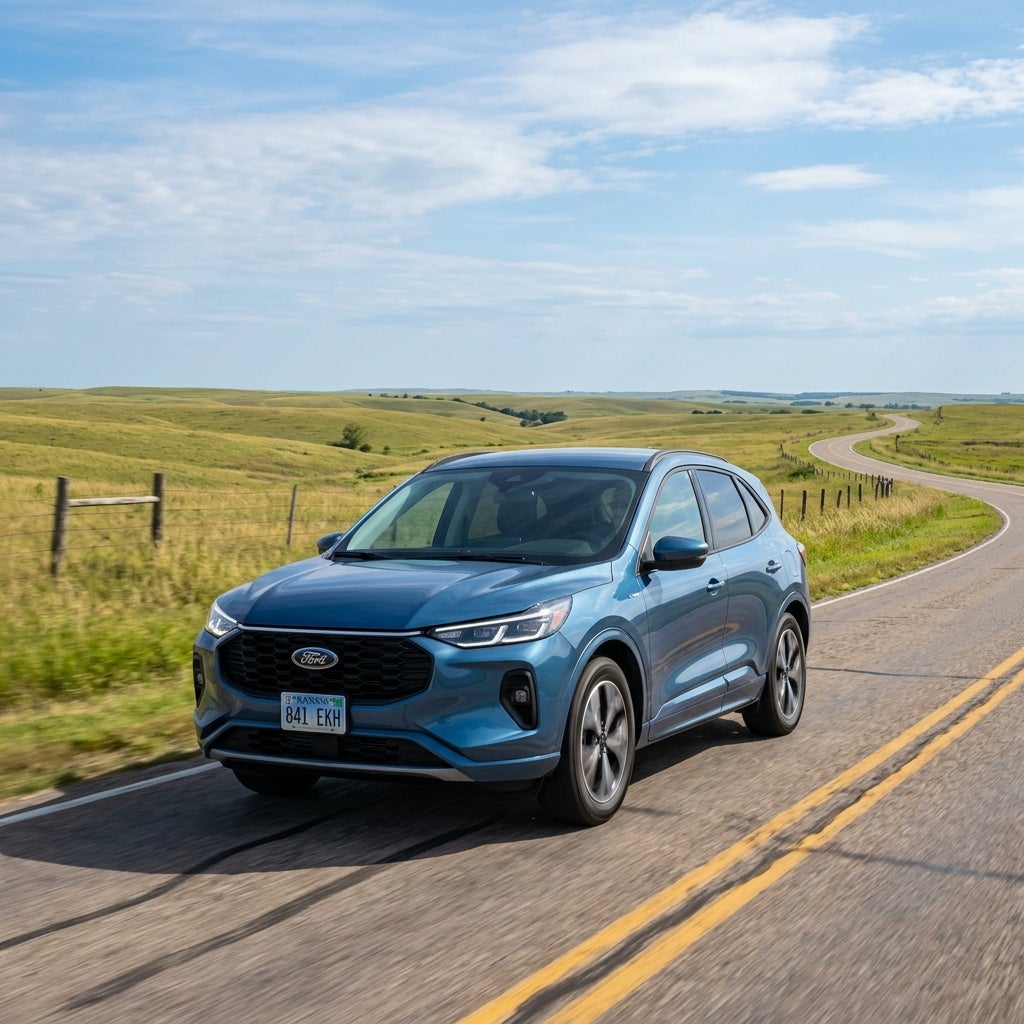
2026 Ford Escape Hybrid: Trims, MPG, and Value Compared
The 2026 Ford Escape Hybrid is the best pick in the Escape lineup for fuel-conscious families and commuters who want all-wheel drive without plugging in. All three AWD trims — ST-Line Select AWD, Platinum AWD, and ST-Line Elite AWD— share the same 192 hp, 2.5L hybrid powertrain and 39 mpg combined rating, with prices spanning $33,890 to $37,210. The standout figure is up to about 37.5 cu ft of cargo space on the ST-Line trims, paired with a 558-mile calculated range per tank.
How Efficient and Capable Is the 2026 Ford Escape Hybrid for Junction City Families?
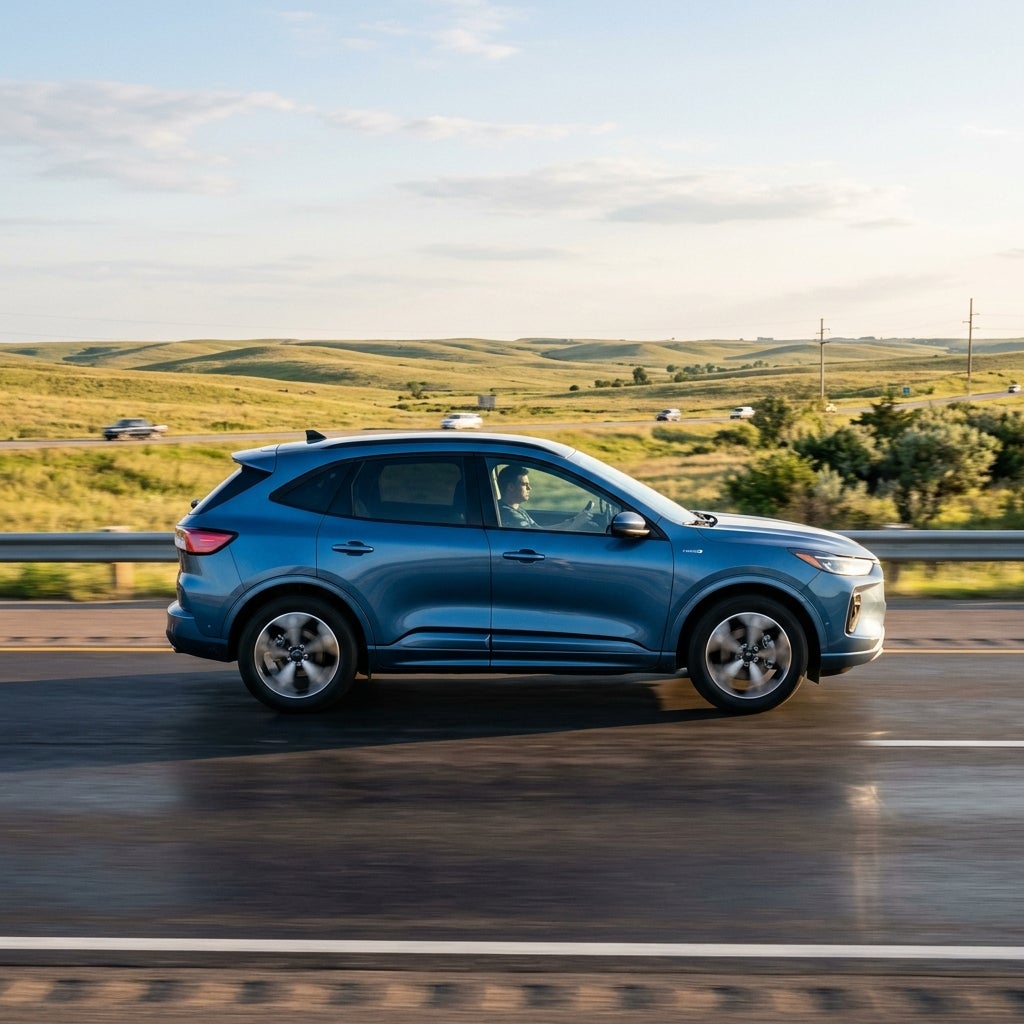
At 39 mpg combined— 42 city / 36 highway — the 2026 Ford Escape Hybrid delivers genuine fuel savings that matter to military families and working professionals making daily drives between Fort Riley and Junction City. That efficiency translates directly into fewer fill-ups and a lower monthly fuel bill, which adds up fast on a service member's budget.
The hybrid system pairs a 2.5L four-cylinder engine with an AC permanent magnet synchronous electric motor producing 129 hp on its own, and the two work together through an eCVT transmission for a combined 192 hp system output. Ford's Intelligent 4WD system distributes torque automatically between all four wheels, which matters when Kansas winters bring ice to local roads or when a weekend trip heads toward the gently rolling terrain of the Flint Hills near Fort Riley.
Feature | Platinum AWD | ST-Line Elite AWD | ST-Line Select AWD |
|---|
Edmunds notes that the Escape Hybrid "is comfortable and easy to drive," and the eCVT plays a big role in that — it's noticeably smoother than a conventional automatic, particularly in stop-and-go traffic through Downtown Junction City. The Car Connection observed that the hybrid setup "can glide silently on electric power at low speeds," which is exactly the kind of effortless daily operation that busy families appreciate.
For buyers who want to compare the Escape Hybrid's efficiency-focused profile against a larger three-row option, our 2026 Ford Explorer research page covers that segment in detail. Shoppers exploring a budget-friendly entry point can also browse our pre-owned crossover inventory for additional options at Valor Ford.
Rugged Style That Fits Local Streets
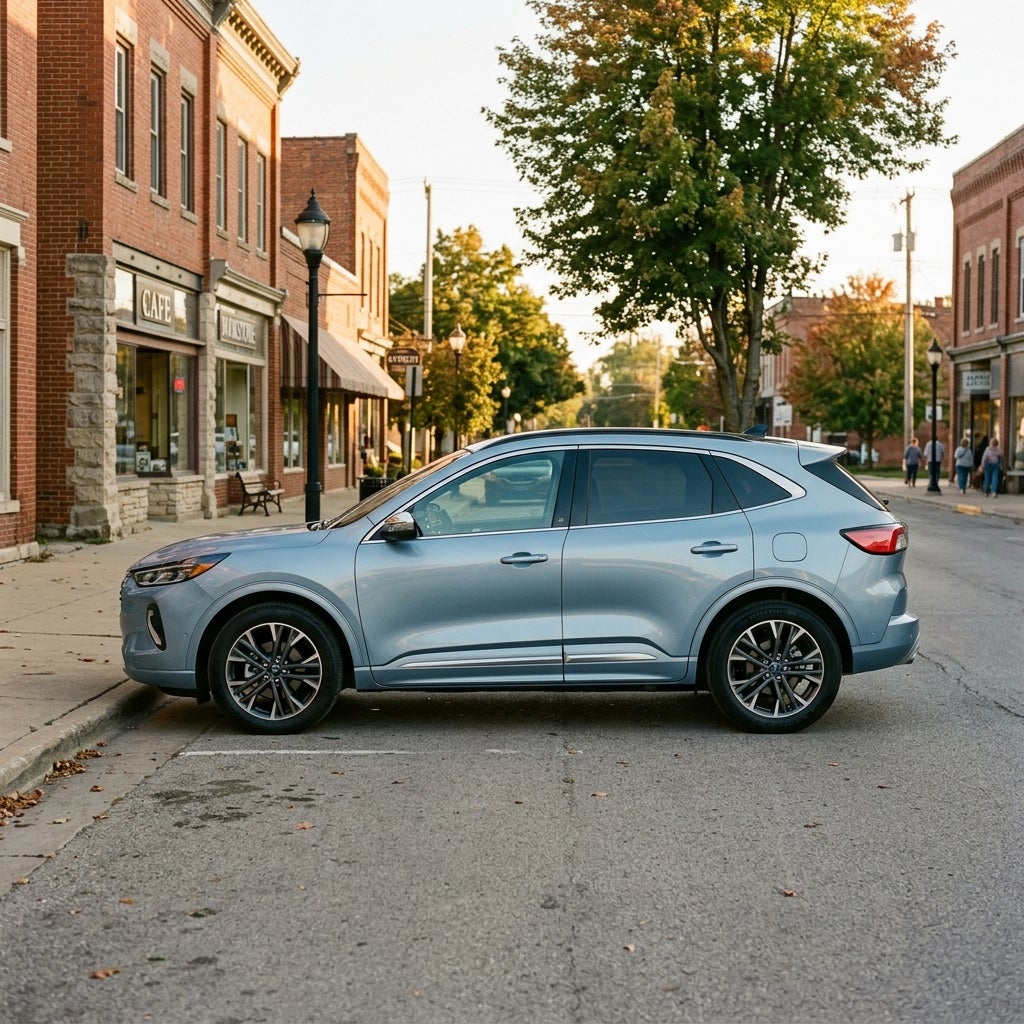
The 2026 Ford Escape Hybrid wears a design that reads modern and purposeful without being flashy — a good fit for the practical, community-oriented character of Junction City. The exterior is a five-door SUV with a standard roof spoiler, a lifting rear gate, and painted front and rear bumpers that give the body a clean, cohesive look. LED headlights and LED high beams are standard across all three AWD trims, along with LED fog lights and LED rear and brake lights, so the Escape is well-lit for early morning drives to Fort Riley or late-night returns from community events.
The Platinum AWD adds chrome bright trim around the side windows, giving it a more polished, premium stance compared to the sport-forward ST-Line variants. Both ST-Line trims — the ST-Line Select AWD and ST-Line Elite AWD — swap that chrome detail for an alloy-look interior trim treatment, leaning into a more athletic aesthetic that suits the active, recreation-oriented lifestyle common among younger military families.
Roof rails in black are standard on all three trims, and the optional Roof-Rail Crossbars (available as a dealer-installed accessory) make it easy to carry kayaks, bikes, or cargo boxes for Kansas River outings. Exterior color choices include Vapor Blue Metallic, Rapid Red Metallic Tinted Clearcoat, Star White Metallic Tri-Coat, Agate Black Metallic, Carbonized Gray Metallic, and Space Silver Metallic — a palette that covers both understated and expressive preferences.
If you're planning to move up from an older vehicle, you can get a quick estimate on what your current car is worth using our trade-in evaluation tool before you visit Valor Ford.
Power and Performance of the 2026 Ford Escape Hybrid AWD Trims
Every 2026 Ford Escape Hybrid AWD trim — Platinum AWD, ST-Line Elite AWD, and ST-Line Select AWD— runs the same core powertrain: a 2.5L inline four-cylinder engine paired with a lithium-ion battery pack rated at 1.1 kWh and an electric motor producing 129 hp. Combined system output is 192 hp and 155 lb-ft of torque, sent through an eCVT transmission to all four wheels via Ford's Intelligent 4WD system.
Feature | Platinum AWD | ST-Line Elite AWD | ST-Line Select AWD |
|---|
The Intelligent 4WD system deserves specific attention for local buyers. It uses Torque Vectoring Control — an electronic limited-slip differential — to actively manage torque distribution at the front axle, which improves cornering grip and stability on wet pavement or loose gravel. For families navigating the flat-to-rolling plains around Fort Riley or the occasional unpaved farm road in Dickinson County, that system provides meaningful traction confidence without requiring any driver input.
The suspension is fully independent front and rear — MacPherson struts up front with coil springs, and a multi-link rear setup, also with coil springs. The ST-Line Select AWD and ST-Line Elite AWD add a sport-tuned suspension calibration that lowers body roll and sharpens steering response, which MotorTrend notes contributes to the hybrid feeling "peppy" around town. The braking system uses four-wheel disc brakes with two ventilated front rotors, ABS, brake assist, electronic auto-hold, and hill-hold standard across all trims.
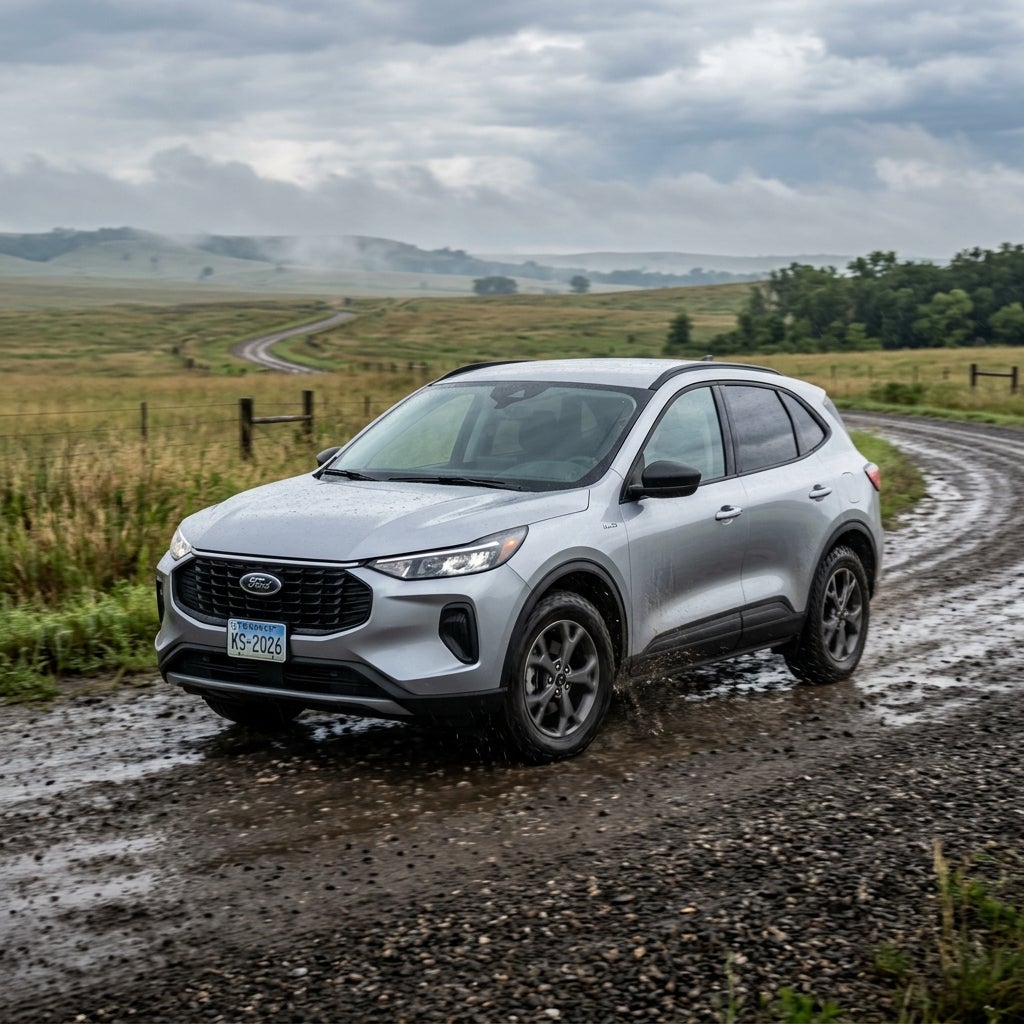
Towing capacity is rated at 1,500 lbs— enough for a small utility trailer, a lightweight camper, or recreational equipment. The optional Class II Trailer Tow Package provides the trailer towing preparation hardware for buyers who plan to use that capacity. For buyers whose needs extend to serious towing, our 2026 Ford F-150 research page covers that territory. When it's time for maintenance or genuine Ford components, genuine Ford parts are available directly through Valor Ford.
Cabin Comfort and Space for Military Families and Weekend Adventures
The Escape Hybrid seats five in a 2+3 configuration, and the interior dimensions give each passenger real room rather than nominal space. Front headroom is 40 in, rear headroom is 39.3 in, front legroom is 42.4 in, and rear legroom ranges from 38.9 in on the Platinum AWD to 40.7 in on both ST-Line trims — a meaningful difference for rear passengers on longer drives. Shoulder room is 57.6 in front and 56 in rear, and hip room measures 55.2 in front and 53.3 in rear.
Feature | Platinum AWD | ST-Line Elite AWD | ST-Line Select AWD |
|---|---|---|---|
Cargo | 34.4 cu ft | 37.5 cu ft | 37.5 cu ft |
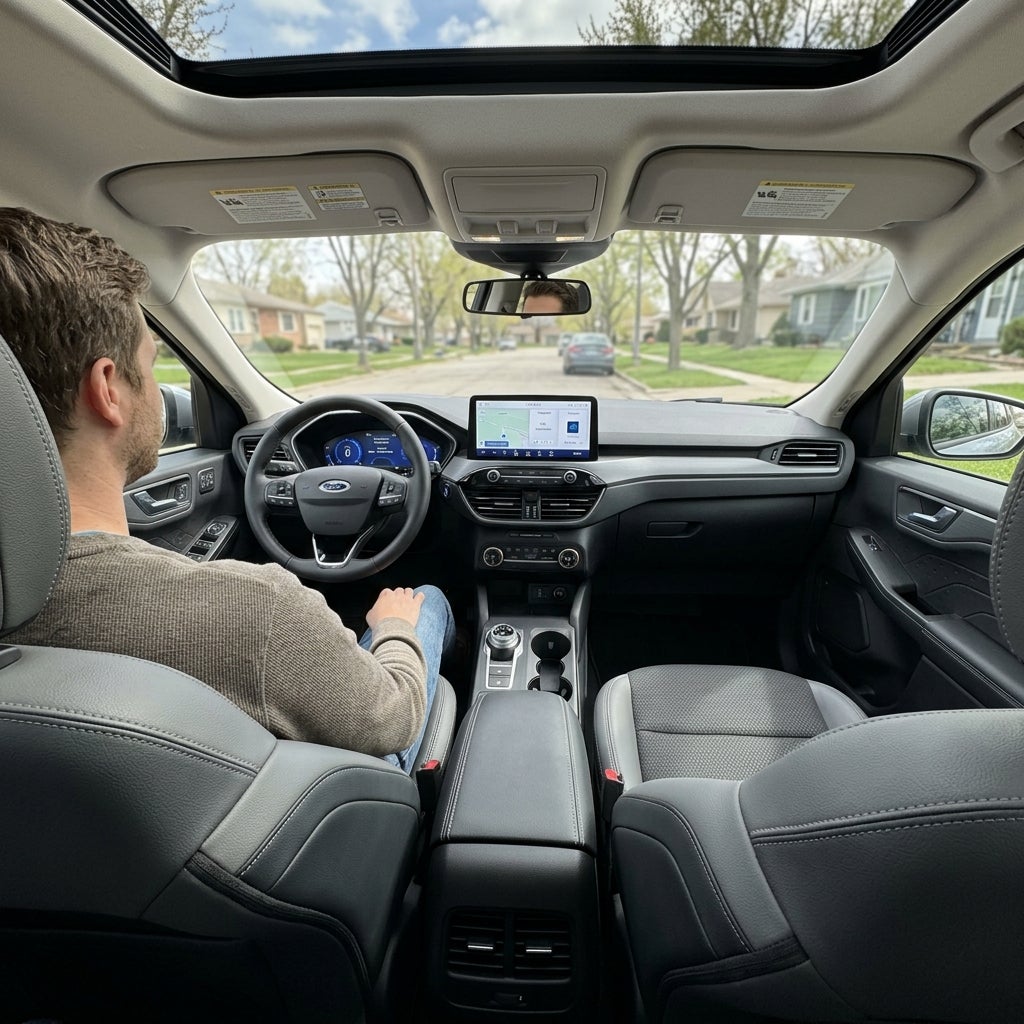
The ST-Line Elite AWD and ST-Line Select AWD both offer about 37.5 cu ft of cargo space with seats up and about 65 cu ft with the rear seat folded — giving them a practical edge over the Platinum AWD's 34.4 / about 61 cu ft figures. That extra space matters when loading fishing gear for a Kansas River outing or packing for a family weekend trip. The rear seat folds asymmetrically for flexible load configurations, and cargo area load hooks are standard on all trims.
Inside, the Platinum AWD uses synthetic leather upholstery with a high-gloss trim treatment on the instrument panel, doors, and center console — a more formal, premium feel. The ST-Line trims offer a choice between cloth/vinyl and synthetic leather interior options, with an alloy-look trim treatment that keeps the cabin feeling sporty and contemporary. All trims include dual illuminated visor mirrors, front and rear cup holders, a full floor console, and a partial overhead console. Dual-zone automatic climate control is standard on every AWD trim, with rear ventilation outlets for passenger comfort on longer drives.
Stay Connected and On Schedule Between Military Duties and Community Events with Escape Hybrid Tech
The technology foundation of the 2026 Ford Escape Hybrid is a 13.2-inch central touchscreen paired with a 12.3-inch digital instrument cluster on the Platinum AWD and ST-Line Elite AWD. The ST-Line Select AWD starts with an 8-inch center display and an 8-inch digital cluster as its base configuration, though the available Technology Package 1 or Technology Package 2 upgrades both the display and cluster to the larger 13.2-inch and 12.3-inch screens respectively.
Wireless Apple CarPlay and wireless Android Auto are standard on all three trims, meaning no cable required to mirror your phone for navigation, calls, or music. Bluetooth connectivity, an Amazon Alexa voice assistant, and a 3-month embedded Wi-Fi hotspot subscription round out the connectivity package. Ford's 911 Assist telematics system automatically notifies emergency services in the event of a crash, and a 12-month remote services subscription enables remote lock/unlock, remote start, and vehicle location through the Ford App.
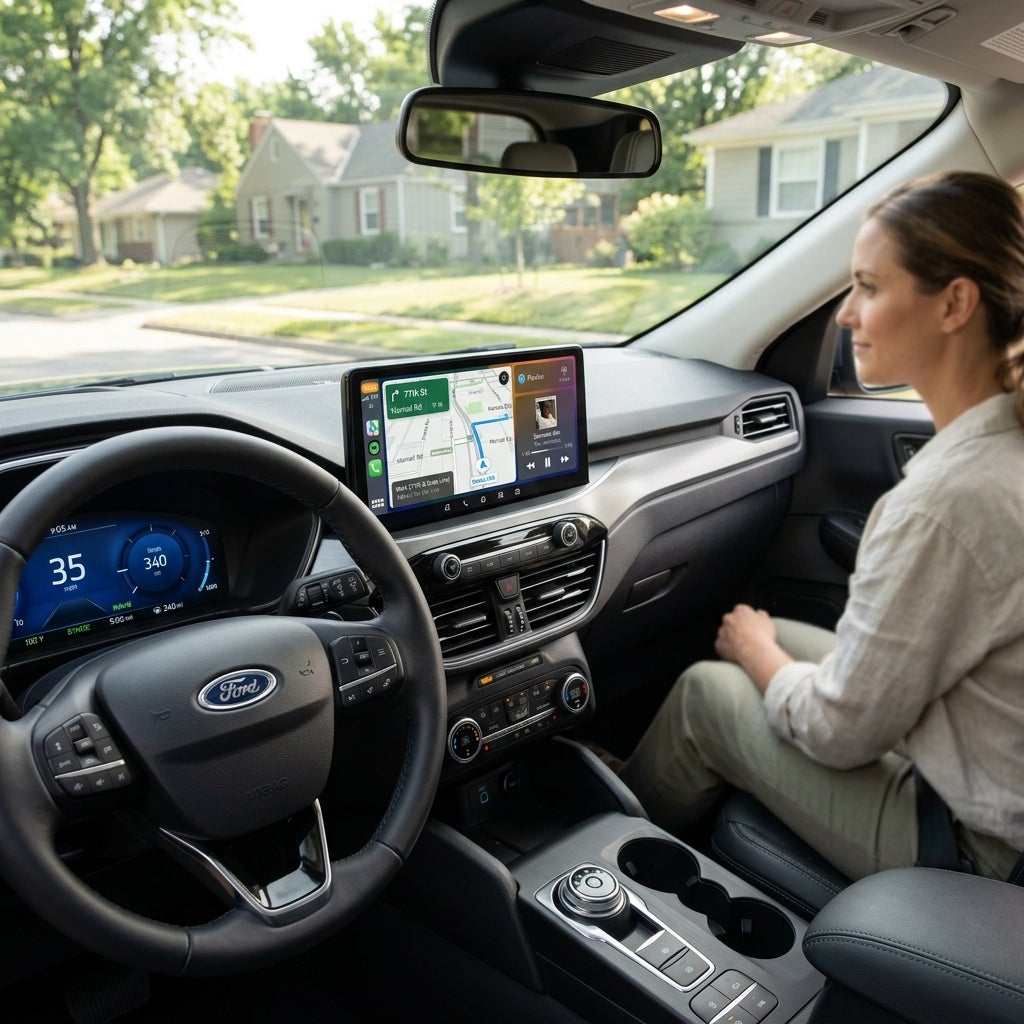
Navigation is built in on the Platinum AWD and ST-Line Elite AWD as a standard feature, delivering 3D mapping, voice guidance, internet-connected traffic data, and 12 months of traffic and map update subscriptions. On the ST-Line Select AWD, navigation arrives through the Technology Package 1 or 2 upgrade. All trims include traffic sign recognition and intelligent speed assist to help drivers stay aware of posted limits.
For audio, all trims include a 6-speaker AM/FM/satellite radio system with a 3-month SiriusXM trial and steering wheel-mounted controls. The optional Premium Technology Package— available on the Platinum AWD and ST-Line Elite AWD— upgrades to a Bang & Olufsen 10-speaker, 560-watt system with a subwoofer and digital radio capability, a windshield-projected head-up display, front and side parking cameras with sensors, and enhanced low-speed automatic emergency braking front and rear. USB connectivity includes 2 front USB-C ports and 2 rear USB-C ports standard across all trims, plus a wireless charging pad on the Platinum AWD and ST-Line Elite AWD(standard) and available through the Technology Package 2 on the ST-Line Select AWD.
Safety Systems Built for Protecting Your Family on Local Roads and Backroads
The 2026 Ford Escape Hybrid earns a 5-star NHTSA overall safety rating — with a 5-star frontal crash result, 5-star side impact score, and a 4-star rollover rating. IIHS results show Good ratings for moderate overlap front, small overlap front driver, and seat belt reminder, a Good LATCH rating for child seat installation, and Acceptable headlights.
Pre-Collision Assist with Automatic Emergency Braking is standard on all three AWD trims. This system monitors the road ahead and activates the brakes automatically when a collision threat is detected, functioning from as low as 3 mph. BLIS with Cross-Traffic Alert— Ford's blind spot monitoring system — watches both rear quarters and alerts the driver to vehicles entering the blind zone, while the radar-based Rear Cross Traffic Braking system actively applies the brakes if a cross-traffic conflict is detected while reversing. The Lane-Keeping System monitors lane markings and applies steering corrections if the vehicle begins to drift without a turn signal.
The airbag system includes 7 total airbags: driver and front passenger front airbags, front side airbags, front-and-rear side curtain airbags, and a driver knee airbag. All seatbelts include pre-tensioners, and front belts are height-adjustable. LATCH child seat anchors are standard, and all rear outboard positions include 3-point belts. A rear parking camera with guidance lines and a Rear Parking Sensor are standard on the Platinum AWD and ST-Line Elite AWD; the ST-Line Select AWD includes a rear view camera as standard with the full parking sensor suite available through the Technology Package 1.
The Premium Technology Package (available on Platinum AWD and ST-Line Elite AWD) adds front and side parking cameras, enhanced low-speed AEB coverage front and rear, and a windshield head-up display that keeps speed and safety alerts in the driver's sightline — all useful additions for navigating Junction City's urban streets or reversing in tight parking situations near Fort Riley.
Breaking Down the 2026 Ford Escape Hybrid Trim Prices for Buyers
The ST-Line Select AWD is the most accessible entry point at $33,890 MSRP, while the Platinum AWD sits in the middle at $36,215, and the ST-Line Elite AWD tops the three-trim lineup at $37,210. All three carry a destination charge of $1,495.
Feature | Platinum AWD | ST-Line Elite AWD | ST-Line Select AWD |
|---|---|---|---|
Base MSRP | $36,215 | $37,210 | $33,890 |
The ST-Line Select AWD delivers the core hybrid powertrain, AWD, heated front seats, a sport suspension, 18-inch alloy wheels, dual-zone automatic climate control, wireless CarPlay and Android Auto, and the standard rear view camera — making it the well-equipped choice for buyers who want the hybrid's efficiency without the premium content of the upper trims.
The Platinum AWD steps up to 19-inch two-tone alloy wheels, synthetic leather seating, a 12.3-inch digital cluster, wireless charging, the built-in navigation system, and high-gloss interior trim. It also gains standard Adaptive Cruise Control with Stop & Go, blind spot monitoring, and rear cross-traffic braking — features that require a Technology Package upgrade on the ST-Line Select AWD.
The ST-Line Elite AWD layers the sport suspension and alloy-look interior of the ST-Line family onto a more complete standard feature set, including the 13.2-inch touchscreen, navigation, wireless charging, and the full suite of driver assists — all while carrying the highest MSRP of the three. Both ST-Line trims offer an optional 19-inch Ebony-painted aluminum wheel upgrade.
Shoppers interested in other new Ford models can browse available new Bronco Badlands inventory at Valor Ford. When you're ready to move forward on an Escape Hybrid, you can get pre-approved for financing online to streamline the buying process.
Warranty, Maintenance, and Service Insights for 2026 Ford Escape Hybrid Owners
The 2026 Ford Escape Hybrid carries a warranty package designed with the hybrid's unique powertrain in mind. The bumper-to-bumper basic warranty covers 3 years / 36,000 miles, and the powertrain warranty extends to 5 years / 60,000 miles. The hybrid battery and electric systems receive their own dedicated coverage: 8 years / 100,000 miles— an important protection for the lithium-ion battery pack that powers the electric motor. Corrosion protection runs for 5 years with unlimited mileage, and the paint warranty covers 3 years / 36,000 miles.
Ford's roadside assistance program matches the powertrain warranty at 5 years / 60,000 miles, providing peace of mind for military families who may be far from home. The 12-month remote services subscription through Ford App also enables remote start, which is a practical convenience for warming the cabin during cold Kansas mornings before a Fort Riley commute.
Because the Escape Hybrid uses regenerative braking to recapture energy, brake wear is typically reduced compared to conventional vehicles — a long-term ownership benefit that offsets some service costs over time. The hybrid system's start/stop function and energy recuperation also contribute to reduced engine wear during city driving.
Valor Ford's service team is equipped to handle all scheduled maintenance and warranty work for the Escape Hybrid. You can easily book a Ford service appointment online to keep your Escape Hybrid running at its best throughout its ownership life.
Awards and Expert Recognition Highlighting the 2026 Ford Escape Hybrid's Strengths
Ford's broader 2026 lineup has earned significant third-party recognition this model year. The Ford Maverick took home North American Truck of the Year 2026 from NACTOY, MotorTrend Truck of the Year 2026, and the Kelley Blue Book Best Buy Award — Compact Truck 2026. The Ford F-150 earned the Kelley Blue Book Best Buy Award — Full-Size Truck 2026, and the Ford Expedition claimed the Kelley Blue Book Best Buy Award — Full-Size SUV 2026.
NACTOY 2026
North American Truck of the Year
MotorTrend
Truck of the Year 2026
Kelley Blue Book
Best Buy Award — Compact Truck
Kelley Blue Book
Best Buy Award — Full-Size SUV
For the Escape Hybrid specifically, expert media has been consistent in its praise. Edmunds called it "easily the best of the Escape lineup" and noted it is "comfortable and easy to drive." MotorTrend observed that "fuel economy is the strongest factor here; most buyers won't miss the slight difference in driving experience compared to the turbocharged models, but every driver will notice the significant efficiency gains." The Car Connection highlighted that "the hybrid setup is the Escape at its most convincing" — smoother, quieter, and more capable at low speeds than the base gas engine.
These assessments align with what the data shows: a well-rounded hybrid crossover that prioritizes real-world usability. For buyers who need something with more heavy-duty capability, our 2026 Ford F-250 research guide covers the Super Duty lineup in depth.
Frequently Asked Questions from Buyers About the 2026 Ford Escape Hybrid
Q: What is the fuel economy on the 2026 Ford Escape Hybrid AWD trims?
All three AWD trims — Platinum AWD, ST-Line Elite AWD, and ST-Line Select AWD— share identical EPA-rated fuel economy: 42 mpg city, 36 mpg highway, and 39 mpg combined. The calculated driving range on a full tank is 558 miles. This figure is consistent across all three trims because they share the same 2.5L hybrid powertrain, eCVT transmission, and Intelligent 4WD system. The fuel tank on the Platinum AWD holds about 14 gallons, while both ST-Line trims have a slightly larger 15.7-gallon tank, which accounts for the range figure remaining consistent despite the different cargo capacities.
Q: Does the 2026 Ford Escape Hybrid AWD handle Kansas winters and wet roads well?
Yes. All three AWD trims use Ford's Intelligent 4WD system, which continuously monitors wheel slip and automatically distributes torque to maintain traction without driver input. The system also includes Torque Vectoring Control — an electronic limited-slip differential — that actively manages front axle torque for improved cornering grip on slick surfaces. All-season tires are standard across all AWD trims. The ST-Line trims ride on 18-inch wheels (Select) or 19-inch wheels (Elite), while the Platinum AWD uses 19-inch two-tone alloy wheels, all fitted with all-season rubber rated H for speed.
Q: How much can the 2026 Ford Escape Hybrid tow?
The towing capacity is 1,500 lbs on all three AWD trims. This is sufficient for a small utility trailer, a lightweight pop-up camper, a small fishing boat, or a cargo trailer carrying lawn equipment. The optional Class II Trailer Tow Package provides the trailer preparation hardware for buyers who plan to use this capacity regularly. Payload is rated at 1,940 lbs across all trims.
Q: Which trim is the best value — Platinum AWD, ST-Line Elite AWD, or ST-Line Select AWD?
It depends on your priorities. The ST-Line Select AWD at $33,890 delivers the core hybrid efficiency, AWD, sport suspension, and modern connectivity at the lowest price point — strong value for value-minded buyers. The Platinum AWD at $36,215 adds wireless charging, a 12.3-inch digital cluster, synthetic leather, and standard Adaptive Cruise Control, making it the best fit for buyers who want a more complete feature set without the ST-Line's sportier aesthetic. The ST-Line Elite AWD at $37,210 combines the sport character of the ST-Line with a more complete standard feature set, including navigation and wireless charging, though it carries the highest price of the three.
Q: Where can I see the 2026 Ford Escape Hybrid in person near Fort Riley?
Valor Ford is located at 1825 Goldenbelt Blvd, Junction City, KS 66441, just minutes from Fort Riley. Our team is ready to walk you through all three AWD trims, answer questions about the hybrid system, and arrange a test drive. You can also reach us directly at (785) 238-5114 to speak with a product specialist before your visit.