
Blog / Buying Guides

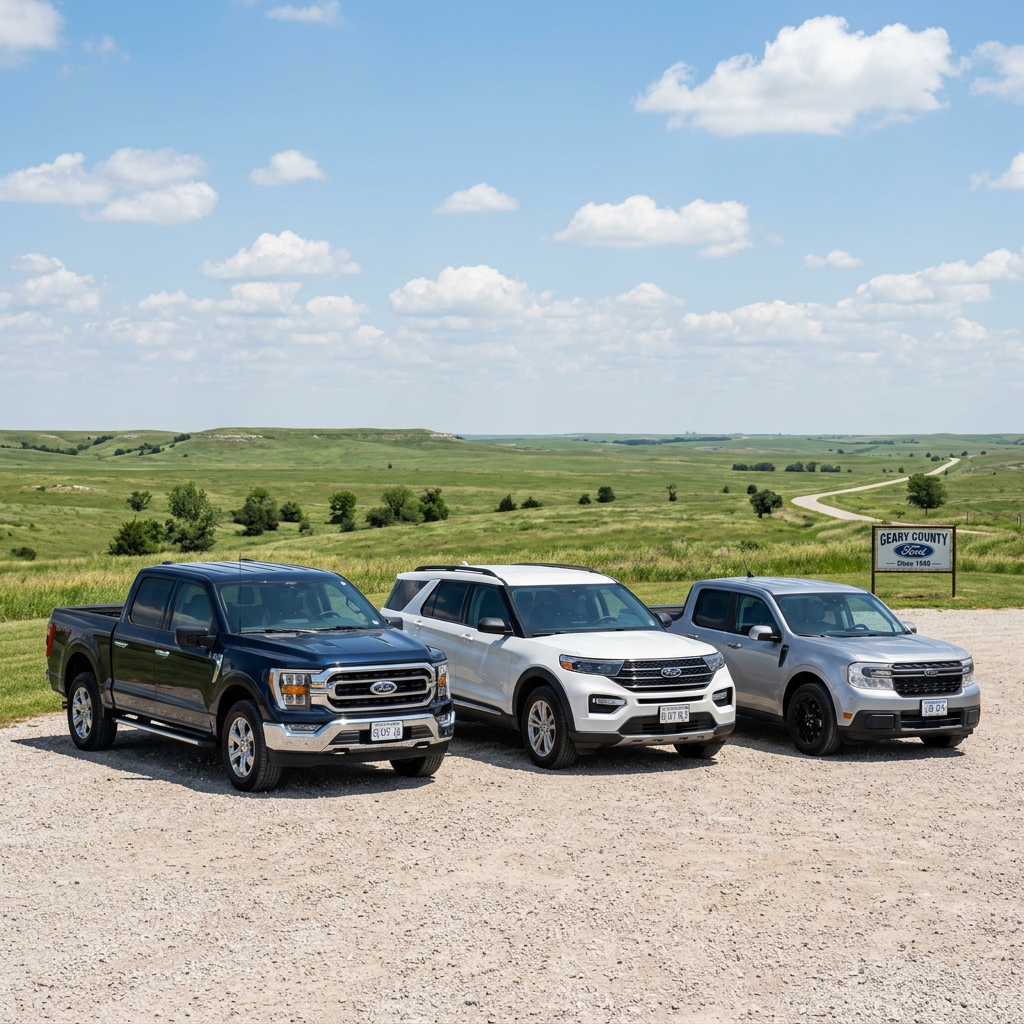
Three Ford vehicles parked in a row on gravel with rolling green hills and a blue sky in the background. (Representative image for illustration purposes only. Actual vehicle may vary based on trim and configuration.)

Why Ford Remains the Go-To Choice for Junction City Drivers

For generations, the Kansas landscape has been shaped by those who value hard work, resilience, and a deep-rooted commitment to community. In Junction City, these values aren't just concepts; they are lived every day. From the dedicated military families stationed at nearby Fort Riley to the generational farmers tending to the fertile soils of Geary County, and the daily commuters navigating the Interstate 70 corridor, life here demands machinery that doesn't back down. This is where the legacy of Ford comes into play. It is not merely a brand of vehicles; it is a vital partner in the daily operations, family memories, and economic vitality of our region.

Ford's Ford capability ethos resonates deeply with Kansans because it mirrors our own approach to challenges. Whether you need a truck that can pull a heavily laden livestock trailer out of a muddy pasture, an efficient commuter vehicle that keeps fuel costs low during long highway drives to Manhattan or Topeka, or a versatile family SUV designed to keep everyone safe and comfortable on long summer road trips, Ford delivers a diverse lineup engineered to meet these unique challenges head-on. At Valor Ford, we take pride in acting as a trusted community resource, matching every driver with a vehicle tailored precisely to their lifestyle.

Our dealership is more than a showroom; we are a partner in your automotive journey. We understand that buying a vehicle is a major decision, which is why we focus on delivering transparent information, professional guidance, and long-term service support. If you're ready to explore how a new Ford can elevate your daily drive, you can Get Directions to Valor Ford or Call us at (785) 238-5114 to speak with one of our experienced team members today. Let's dive deep into what makes these vehicles the absolute benchmark of American engineering.

What Is the Towing Capacity of the 2026 Ford F-150?

When it comes to light-duty pickup trucks, towing capacity is often the ultimate benchmark of capability. The 2026 Ford F-150 continues its reign as a towing powerhouse, offering engineered solutions that make moving heavy loads across the rolling plains of Geary County both safe and effortless. Depending on how you configure your truck—selecting between various cab styles, bed lengths, and robust engine options—the F-150 offers a maximum available towing capacity of up to 13,500 pounds when properly equipped. This means you can confidently haul large horse trailers, professional flatbeds, or recreational campers without breaking a sweat.

The secret to the F-150's incredible towing capability lies in its diverse and highly optimized engine lineup. The legendary 3.5L EcoBoost V6 engine remains a favorite for heavy haulers, delivering massive low-end torque that is perfect for ascending steep highway ramps or navigating uneven farm terrain. For those who prefer a traditional, naturally aspirated feel, the robust 5.0L Coyote V8 provides exceptional muscle and a classic exhaust note. Meanwhile, the innovative PowerBoost Hybrid option blends immense electrical torque with a twin-turbocharged gas engine, proving that efficiency and brute strength can exist in perfect harmony.

To make towing less stressful, Ford has integrated advanced trailering technologies directly into the F-150. Features like Pro Trailer Backup Assist allow you to guide your trailer with the simple turn of a dashboard dial, while the Smart Hitch system measures tongue weight in real-time to ensure your load is properly balanced. If you're interested in studying the complete capability profile of this legendary truck, take a moment to Research Ford F-150 models online or visit our showroom to speak with a truck specialist.
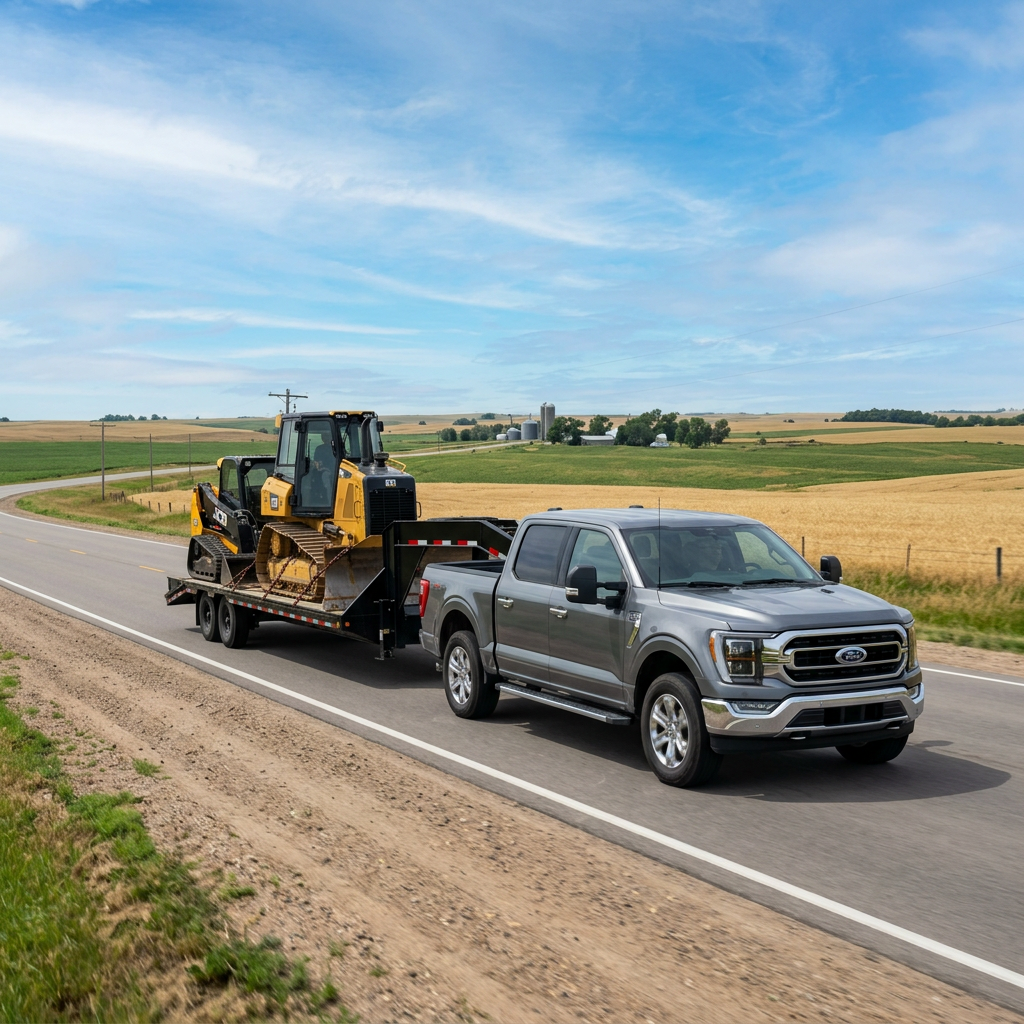
A gray Ford F-150 truck towing a flatbed trailer with a yellow bulldozer on a rural paved road. (Representative image for illustration purposes only. Actual vehicle may vary based on trim and configuration.)

Engine Option

Horsepower

Torque (lb-ft)

Max Towing Capacity (lbs)

2.7L EcoBoost V6

325 hp

400 lb-ft

8,400 lbs

5.0L Coyote V8

400 hp

410 lb-ft

13,000 lbs

3.5L EcoBoost V6

400 hp

500 lb-ft

13,500 lbs

3.5L PowerBoost Hybrid

430 hp

570 lb-ft

12,700 lbs

Does the Silverado or F-150 Have a Better Hybrid Powertrain Option?

As drivers look to optimize fuel efficiency without sacrificing utility, hybrid powertrains have become a major talking point in the light-duty truck market. When comparing the Ford F-150 PowerBoost Hybrid to the Chevrolet Silverado's powertrain lineup, a clear divergence in engineering philosophy emerges. Ford offers a fully integrated, full-hybrid system designed from the ground up for maximum power and utility, whereas Chevrolet's strategy relies primarily on traditional gasoline and diesel engines, with no direct full-hybrid equivalent currently available in their light-duty lineup. Let's break down how these approaches compare in real-world scenarios.

Power & Torque

The Ford PowerBoost Hybrid system combines a twin-turbocharged 3.5L V6 with a 47-horsepower electric motor integrated directly into the transmission. The result is a massive 430 horsepower and a staggering 570 lb-ft of torque. Chevrolet's closest competitor in terms of low-end grunt is their Duramax turbo-diesel, which delivers excellent torque but lags significantly in overall horsepower and rapid off-the-line throttle response.

Pro Power Onboard

One of the most revolutionary aspects of the F-150 hybrid is the Pro Power Onboard system. This turns your truck into a mobile generator, offering up to 7.2kW of exportable electrical energy. Whether you are running heavy-duty power tools at a construction site, charging electric dirt bikes, or powering an entire campsite during an autumn weekend in Kansas, Ford provides strong utility features that can be compared with Chevy's available offerings.

Real-World Economy

In addition to its high power thresholds, the PowerBoost Hybrid system delivers exceptional fuel economy, particularly in city driving scenarios where traditional less fuel-efficient V8 engines suffer. By recovering energy during braking and shutting down the engine during idle periods, the F-150 hybrid ensures you spend less time at the fuel pump and more time focused on the job at hand.

How Much Extra Does the Hybrid Powertrain Cost on the Maverick?
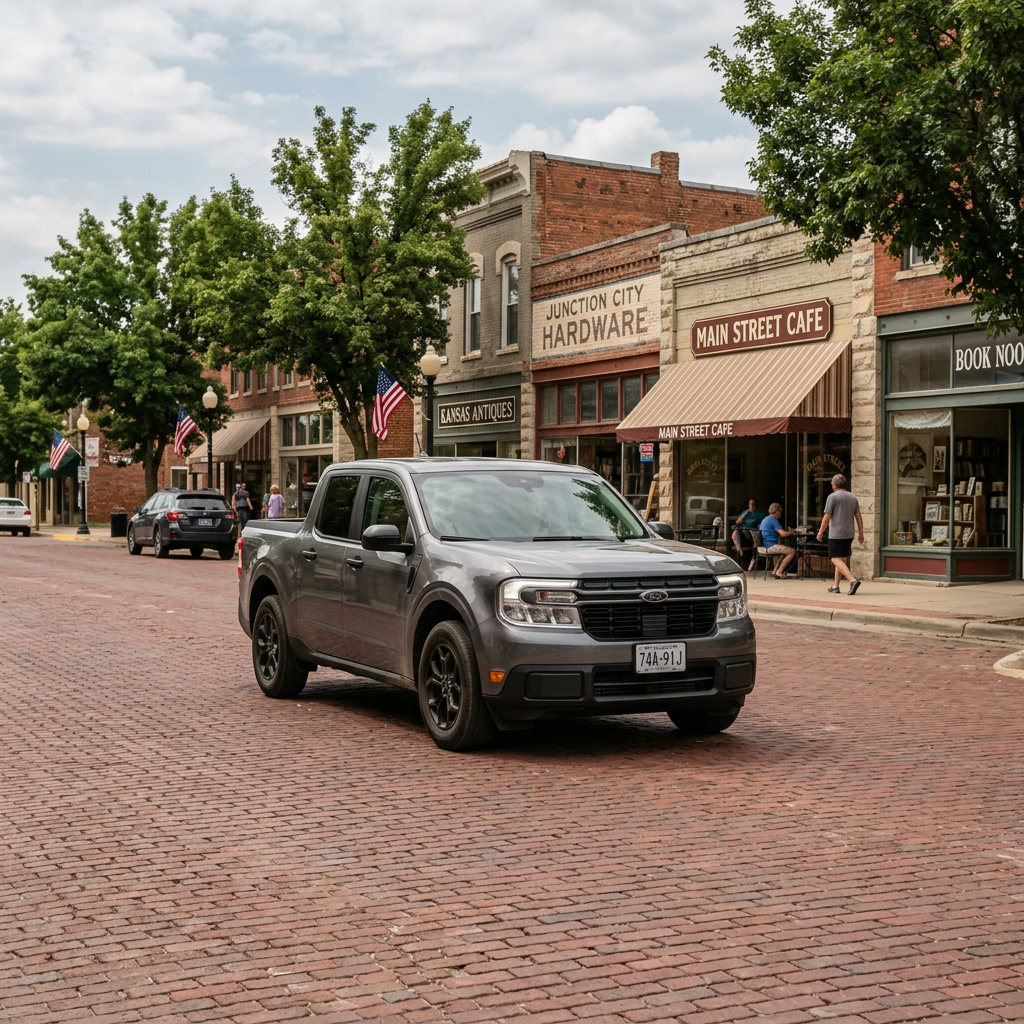
A gray Ford Maverick pickup truck parked on a historic red brick street in a small town center. (Representative image for illustration purposes only. Actual vehicle may vary based on trim and configuration.)

The Ford Maverick has completely redefined the compact truck segment, offering an incredible blend of daily drivability, truck utility, and stellar efficiency. A common question among prospective buyers in Dickinson and Geary Counties is the cost difference between the standard EcoBoost gasoline engine and the highly sought-after hybrid powertrain. Historically, Ford offered the hybrid as the base engine, but due to overwhelming demand, the packaging has evolved. Currently, upgrading to the hybrid powertrain on the Maverick represents a highly reasonable price delta, typically contact the dealership for current pricing.

While there is a modest upfront premium for the hybrid, the return on investment is incredibly rapid, especially for daily commuters. The Maverick Hybrid achieves exceptional EPA-estimated fuel economy, frequently exceeding 40 miles per gallon in city driving conditions. Over a year of typical commuting, the savings at the pump quickly offset the initial upgrade cost, making it one of the smartest economic decisions for budget-conscious drivers who still require the convenience of an open truck bed.

Beyond pure economics, the Maverick Hybrid offers a smooth, quiet driving experience thanks to its seamless integration of electric and gasoline propulsion. It is the perfect vehicle for weekend DIY projects, carrying garden supplies, or taking a quick road trip. If you are ready to explore this compact marvel, you can Research Ford Maverick trims or click the button below to view our current inventory options.

Which Midsize SUV Has a Better Third Row, the Explorer or the Highlander?

For growing families in Junction City, selecting a midsize three-row SUV often comes down to a battle between two industry heavyweights: the Ford Explorer and the Toyota Highlander. While both vehicles enjoy excellent reputations for reliability and safety, their interior accommodations—particularly in the third row—differ significantly. Families who frequently carry teenagers, adult passengers, or a substantial amount of cargo will quickly realize that the design choices made by Ford offer a distinct advantage over Toyota's layout.

Ford Explorer Interior Advantage

The Ford Explorer utilizes its exterior dimensions efficiently, translating its athletic stance into superior third-row legroom and shoulder room. Passengers in the rear of the Explorer benefit from anatomical shaping that makes the space genuinely usable for adults during longer drives, rather than restricting it strictly to small children. Additionally, accessing the third row in the Explorer is exceptionally easy thanks to the EZ Entry second-row seats, which slide forward at the touch of a single button.

To learn more about the advanced family features of this vehicle, you can check out our detailed guide to Research Ford Explorer specifications online.

Toyota Highlander Third Row Limits

In contrast, the Toyota Highlander features a more cramped third-row design. The floor is positioned relatively high, forcing adult passengers into a 'knees-up' riding position that can quickly become uncomfortable on extended road trips. Legroom in the Highlander's third row is notably tighter, making it best suited almost exclusively for younger children. When the third row is occupied, the Highlander also sacrifices a portion of its rear cargo capacity compared to the deeper cargo well found in the Explorer.

Specification

Ford Explorer

Toyota Highlander

Third-Row Legroom

32.2 inches

28.0 inches

Third-Row Shoulder Room

54.3 inches

53.0 inches

Cargo Vol. Behind 3rd Row

18.2 cu. ft.

16.0 cu. ft.

Max Seating Capacity

Up to 7

Up to 8

How Fast Does the Mustang Mach-E Charge on a DC Fast Charger?

Transitioning to electric power is an exciting step, and understanding charging performance is key to a seamless ownership experience. The all-electric Mustang Mach-E is engineered to handle long-distance road trips with ease, thanks to its compatibility with high-speed DC Fast Chargers. When plugged into a high-output public charger, a Mach-E equipped with the Extended-Range Battery can replenish its charge from 10% to 80% in approximately 36 to 45 minutes, depending on weather conditions and charger output. This rapid turnaround ensures you can grab a quick lunch or coffee and be back on the highway in no time.

For daily operation, most Mach-E owners prefer the convenience of home charging. By installing a Level 2 home charger in your garage, you can easily plug your vehicle in overnight and wake up to a fully charged battery every morning. This eliminates the need for frequent detours to public stations for daily driving. For those moments when you are traveling across Kansas or interstate routes, the FordPass App makes locating public fast chargers incredibly simple, routing you through optimal charging corridors.

If you're eager to feel the instantaneous electric torque and sports-car-inspired handling of this advanced crossover, we highly recommend checking out our dynamic lineup. You can easily Shop New Ford Bronco Inventory or other exciting models to see how Ford is leading the charge in modern vehicle dynamics.
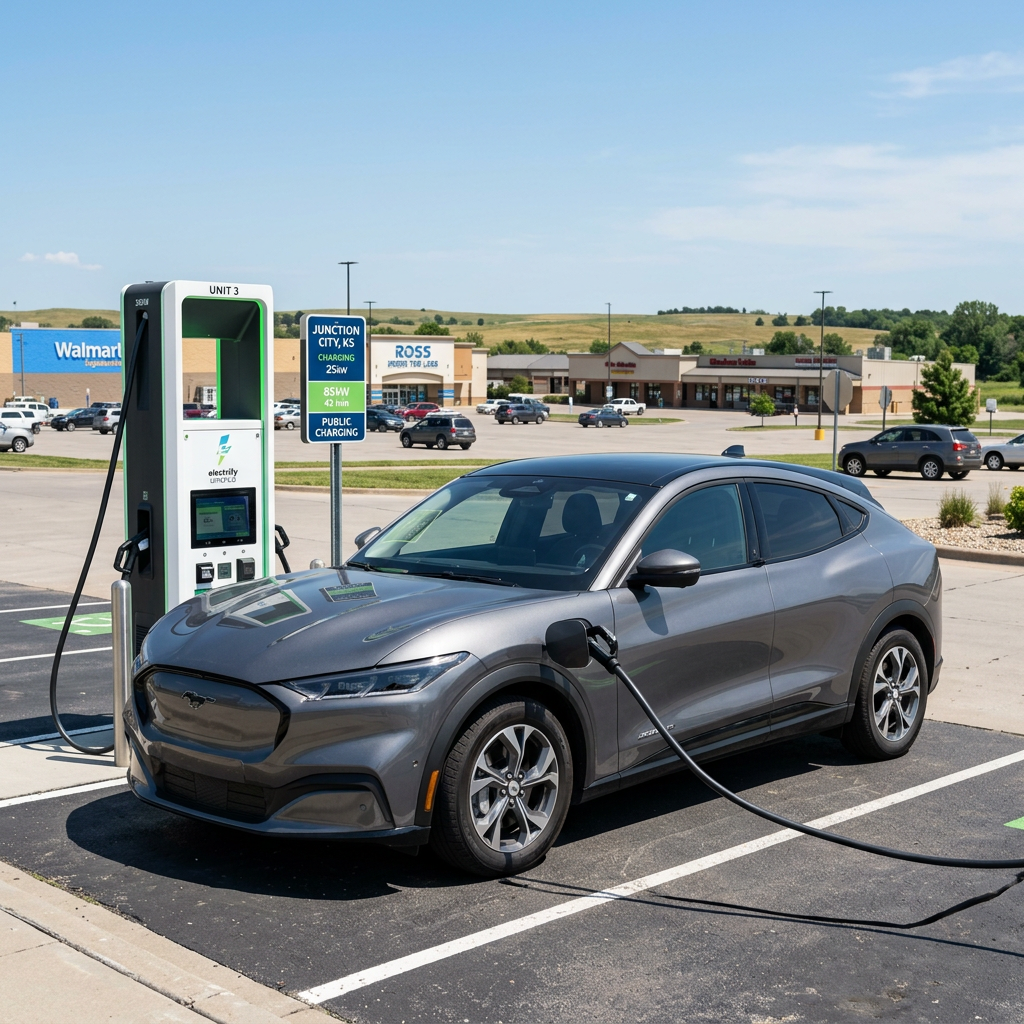
A gray Ford Mustang Mach-E charging at an Electrify America station in a shopping center parking lot. (Representative image for illustration purposes only. Actual vehicle may vary based on trim and configuration.)

Does the Ford Warranty Transfer to a Second Owner?

One of the most appealing aspects of buying a pre-owned Ford vehicle is the confidence that comes with robust factory warranty coverage. A common point of confusion for used car buyers is whether these original warranties remain valid when the vehicle changes hands. The short and reassuring answer is: yes, the Ford factory warranty transfers fully and automatically to subsequent owners. Unlike some automotive manufacturers that restrict or shorten warranty terms for second owners, Ford ensures that the remaining portion of the original coverage stays with the vehicle itself, linked directly to its unique Vehicle Identification Number (VIN).

This transferability applies to both the 3-year/36,000-mile bumper-to-bumper warranty and the highly valuable 5-year/60,000-mile powertrain warranty. Additionally, electric and hybrid vehicles feature specialized coverage on high-voltage components that often extends up to 8 years or 100,000 miles. For drivers looking at a used or Certified Pre-Owned Ford at Valor Ford, this policy offers exceptional peace of mind, protecting your investment from unexpected repair costs and maintaining the vehicle's long-term value.

To take advantage of this protection and find a high-quality, pre-owned truck, SUV, or sedan that still carries valuable factory coverage, we invite you to browse our curated collection online. You can easily Browse Used Inventory and narrow down your search by model, year, and price. When you find the right option, you can also complete a Trade In Evaluation to see how much your current vehicle is worth.

How Often Should You Change the Oil in a Ford EcoBoost Engine?

Ford's EcoBoost engine technology is celebrated for providing the power of a larger engine with the fuel economy of a smaller one, accomplished through advanced turbocharging and direct fuel injection. Because these engines operate under higher internal pressures and temperatures, proper maintenance is absolutely critical to ensuring long-term reliability. Ford recommends changing the oil in an EcoBoost engine every 7,500 to 10,000 miles under normal driving conditions, utilizing high-quality full synthetic or synthetic blend oils that meet Ford's strict specifications.

However, local driving habits in Geary County can often qualify as 'severe duty.' If you frequently tow heavy trailers, idle for extended periods on job sites, drive in extremely dusty environments, or make short trips in freezing winter temperatures where the engine doesn't reach full operating warmth, you should consider shortening that interval to every 5,000 miles or 6 months. Keeping a strict schedule prevents oil breakdown and ensures the turbochargers remain properly lubricated.

To take the guesswork out of maintenance, your Ford is equipped with an Intelligent Oil-Life Monitor that tracks driving habits, engine temperatures, and operating hours to alert you precisely when service is required. When the light illuminates, trust the factory-trained technicians at Valor Ford to handle the job. You can easily Schedule Ford Service Today to keep your vehicle running at peak efficiency, or learn about our convenient Schedule Pickup and Delivery Service for a stress-free maintenance experience.
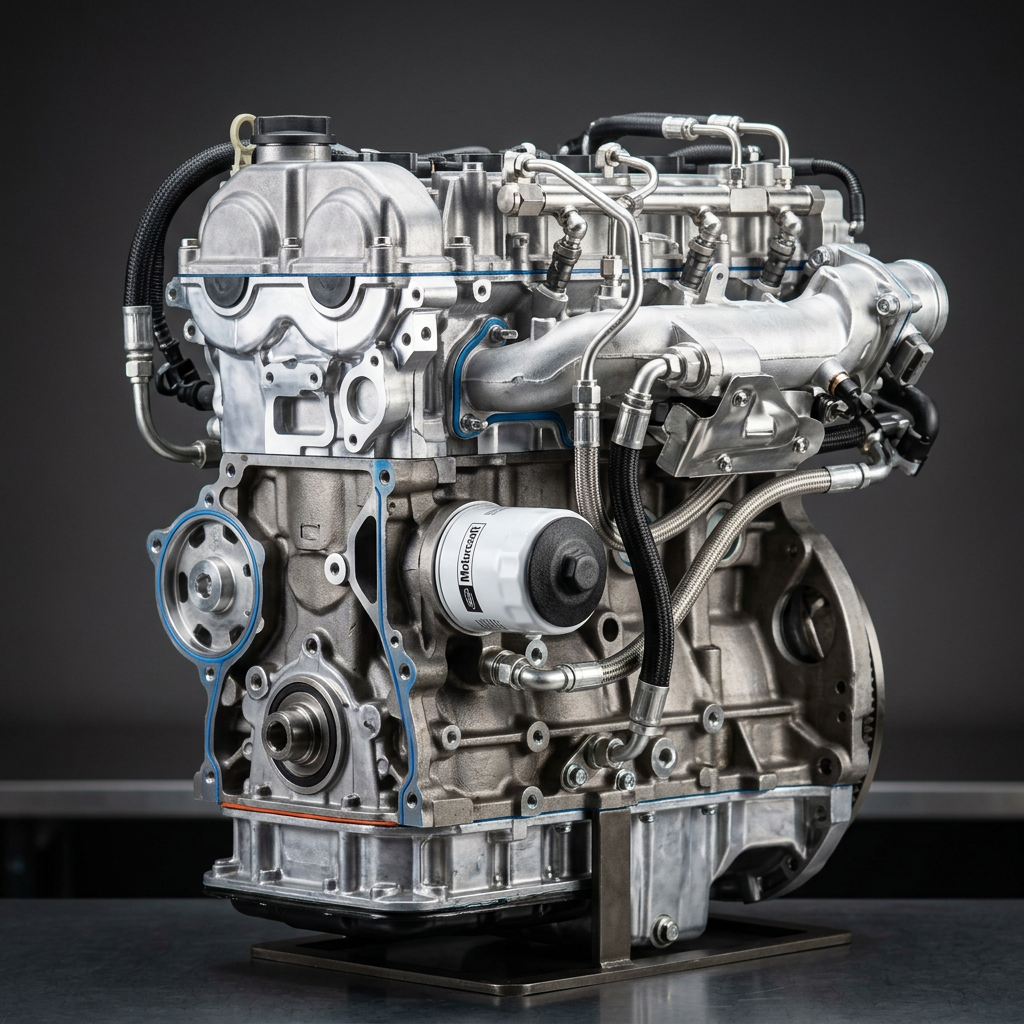
A clean, modern internal combustion engine mounted on a stand against a gray background. (Representative image for illustration purposes only. Actual vehicle may vary based on trim and configuration.)

What Financing Options Are Available at Ford Dealerships in Geary County?

Flexible Loan & Lease Structures

At Valor Ford, we understand that every customer's financial situation is unique. Our dedicated finance department works directly with a vast network of national lenders and local Kansas credit unions to secure highly competitive interest rates and flexible loan terms. Whether you are looking to purchase a rugged truck for your business or lease a versatile family SUV with lower monthly payments, we can structure a plan that fits comfortably within your household budget.

Special Programs & Trade-Ins

We are proud to offer specialized military appreciation programs to support our service members stationed at Fort Riley, along with active first responder incentives. Additionally, our streamlined trade-in process makes it simple to apply the equity of your current vehicle toward the purchase of a new Ford. You can initiate the process online by completing our Trade In Evaluation form from the comfort of your home.

Find Your Next Ford and Schedule a Test Drive at Valor Ford Today
Logo for Valor Automotive featuring a blue and silver shield with 'VA' and the company name with a red star.

Your automotive journey deserves a partner that values integrity, transparency, and top-tier customer service. At Valor Ford, we are deeply committed to helping Junction City drivers find the perfect vehicle to tackle the demands of work, family life, and weekend adventures. From heavy-duty trucks built to conquer the farm to efficient hybrid compacts and high-tech family SUVs, our inventory has been carefully selected to meet the diverse needs of the Central Kansas community.

When you're ready to experience the difference that professional guidance and legendary engineering can make in your daily drive. Whether you want to explore model specifications, value your current trade, or consult with our financial experts, we are ready to assist you every step of the way. We encourage you to Get Directions to Valor Ford and visit our showroom today, or Call us at (785) 238-5114 to set up a personalized appointment.
Posted in:

Related Posts

F-250 vs F-350: Choosing the Right Payload for Your Needs

F-250 vs F-350: Choosing the Right Payload for Your Needs

F-250 vs F-350: Choosing the Right Payload for Your Needs How Does Engine Choice Affect Payload Capacity in an F-250 vs F-350? Opting for a heavier diesel engine directly reduces available payload capacity compared to a gasoline engine on both the F-250 and F-350 because engine curb weight eats directly into the truck's Gross Vehicle Weight Rating (GVWR). On an identical 10,000-lb GVWR setup, choosing the diesel engine reduces carrying capacity by roughly 800 to 1,000 pounds compared to a gas V8. The curb weight difference between powertrains explains this gap. The standard 6.8L gas V8 and available 7.3L gas V8 are substantially lighter iron blocks than the 6.7L Power Stroke diesel and the 6.7L high-output diesel with its massive 500 hp and 1,200 lb-ft of torque. That heavy diesel hardware sits over the front axle, taking up allowable gross capacity before you even put a driver in the cab. For instance, in Ford's published specifications for a 2026 F-250 4x4 Crew Cab with a 175.9-inch wheelbase, opting for the 7.3L gas V8 yields a charted maximum payload of 3,196 lb, whereas equipping that exact configuration with the 6.7L high-output diesel drops maximum payload down to 2,415 lb within a standard 10,000-lb GVWR ceiling. Many truck shoppers focus exclusively on horsepower and pulling power without factoring in how those heavy powertrain components limit bed capacity. If you spend your workdays hauling bulk gravel or loading heavy ag supplies across Junction City, that gas engine preserves several hundred pounds of legal bed capacity that the diesel gives up to its cooling systems and emissions hardware. To map out how engine options align with your equipment needs, you can get directions to Valor Ford or give us a quick call to check configurations on our lot. Table of Contents Why Does the Ford F-350 Have a Higher Payload Capacity Than the F-250? What Is the Real Payload Capacity Difference Between the Ford F-250 and F-350? Is an F-350 SRW Worth the Upgrade Over an F-250 for Heavy Towing? When Is a Dual-Rear-Wheel F-350 Necessary Over an SRW Model? Is an F-250 or F-350 Better for Hauling a Slide-In Truck Camper? Where Can an Owner Locate the Exact Official Payload Capacity on a Ford Truck? Why Does the Ford F-350 Have a Higher Payload Capacity Than the F-250? The Ford F-350 carries a higher payload rating than the F-250 because it is engineered with a substantially higher Gross Vehicle Weight Rating, supported by a stiffer rear suspension pack and stouter axle components. While both trucks share the same fully boxed high-strength steel frame and cab dimensions, the F-350 is built to legally and mechanically support several thousand pounds of additional weight over its rear axle. Underneath the bed, the physical differences become clear. A single-rear-wheel F-350 typically utilizes an extra rear leaf spring along with auxiliary overload springs that remain disengaged during empty driving but engage as the suspension compresses under severe loads. The F-350 also receives heavy-duty rear axle assemblies with thicker axle tubes and larger wheel bearings designed to dissipate the heat and stress generated by heavy carrying tasks. These structural upgrades allow Ford to assign the F-350 a certified GVWR ranging from 11,000 pounds up to 14,000 pounds depending on cab and wheel setup, whereas standard F-250 configurations are frequently capped at a 10,000-lb GVWR class ceiling. If you are comparing heavy-duty models for commercial use, you can research Ford F-250 configurations in detail, or inspect our rotating inventory by browsing our selection of pre-owned work trucks to see how different spring packs hold up over time. What Is the Real Payload Capacity Difference Between the Ford F-250 and F-350? The real-world payload capacity difference between an F-250 and a single-rear-wheel F-350 ranges from roughly 800 pounds to over 1,500 pounds for identical cab and engine configurations. In maximum theoretical builds across the entire lineup, the gap is wider, spanning from 4,055 lb on a properly equipped F-250 single-rear-wheel up to 7,900 lb on a dual-rear-wheel F-350. Looking at matching truck builds demonstrates how this gap works on the ground. Ford's 2026 specification charts show that a four-wheel-drive Crew Cab long-bed F-250 equipped with the 7.3L gas V8 carries a maximum charted payload of 3,196 lb. An F-350 single-rear-wheel in the identical cab, bed, and engine configuration on 18-inch all-season tires jumps to 4,150 lb of maximum payload. That is a real-world gain of nearly a thousand pounds of capacity without changing the interior space, exterior footprint, or engine performance. Maintaining your truck's driveline components is essential when operating near these load limits, and our team is ready to schedule routine Ford maintenance to inspect your brakes and suspension. To explore specific towing configurations and options, take a moment to read through our Super Duty overview. Is an F-350 SRW Worth the Upgrade Over an F-250 for Heavy Towing? An F-350 single-rear-wheel is absolutely worth the upgrade over an F-250 if you plan to tow fifth-wheel trailers or heavy goosenecks where vertical pin weight quickly consumes your truck's cargo rating. While both trucks can pull immense weight behind the hitch, the F-350 provides the essential legal payload cushion needed to support a trailer that places 20 to 25 percent of its total weight directly into the bed. A fully loaded 15,000-pound fifth-wheel camper routinely generates a kingpin weight of 3,000 pounds. In a diesel-equipped F-250 Crew Cab with an available payload rating sitting around 2,400 to 2,800 pounds, hitching that trailer instantly puts the vehicle over its legal GVWR before you load passengers, fuel, or camping gear into the cabin. An F-350 SRW handles that same trailer with hundreds of pounds of surplus payload room on the certification label. Aftermarket suspension upgrades like helper springs or air bags can level the truck, but they never legally increase the certified GVWR stamped on the factory placard. Upgrading to an F-350 from the start protects your safety and legal compliance on the highway. If you are preparing to trade your current rig for more towing capability, you can request an online used vehicle trade-in valuation and start your purchase path to get pre-approved for automotive financing before visiting the lot. When Is a Dual-Rear-Wheel F-350 Necessary Over an SRW Model? A dual-rear-wheel F-350 becomes necessary when your cargo demands exceed a 4,500-pound payload requirement or when you are towing commercial gooseneck trailers with pin weights exceeding 4,000 pounds. Adding two extra tires across the rear axle doubles your tire contact patch, providing unmatched lateral stability and eliminating rear-tire overloading under extreme tongue weights. Dual rear wheels transform how a truck handles under heavy load. A dual-rear-wheel Regular Cab two-wheel-drive F-350 equipped with the 7.3L gas V8 and the Gas Heavy-Duty Payload Package reaches an industry-leading maximum payload rating of 7,900 lb against a 14,000-lb GVWR. Single-rear-wheel tires are typically limited to roughly 3,600 to 3,750 pounds of load capacity per tire, meaning two rear tires max out around 7,200 to 7,500 pounds of total supported rear axle load. Splitting that load across four rear tires prevents thermal breakdown, reduces sway in crosswinds, and offers an essential margin of safety if a tire suffers a blowout under load. Whether you need a dually for massive livestock trailers or prefer a weekend recreation vehicle like our new Ford Bronco inventory for off-road trails, selecting the correct chassis is critical. If your current truck requires replacement hardware or suspension components, you can easily order factory-approved replacement parts through our department. Is an F-250 or F-350 Better for Hauling a Slide-In Truck Camper? An F-350 is substantially better suited for hauling a hard-side slide-in truck camper because camper applications place 100 percent of their dry and wet weight directly inside the truck bed. Even mid-sized slide-in truck campers often exceed 3,000 pounds once you account for water tanks, propane cylinders, dual batteries, and outdoor gear, which pushes past the legal payload limits of most standard F-250 builds. When hauling heavy campers across the rolling terrain of Dickinson County, top-heavy cargo raises the truck's center of gravity. An F-350 features the stiffer spring rates and auxiliary overloads required to control severe body roll on uneven gravel roads or undulating highway surfaces. Loading a heavy camper into a softer F-250 often results in excessive rear-end sag, which unweights the front steer tires and degrades steering precision and braking performance. Truck buyers carrying larger multi-slide truck campers weighing over 4,000 pounds wet should consider skipping single-rear-wheel configurations entirely in favor of an F-350 dually. The wide rear track of a dual-rear-wheel truck provides the broad foundation required to anchor top-heavy campers in crosswinds without white-knuckle driving. Where Can an Owner Locate the Exact Official Payload Capacity on a Ford Truck? An owner can find the exact, certified payload rating for their specific vehicle on the yellow and white Tire and Loading Information placard located on the driver-side door jamb. That sticker features the explicit statement: "The combined weight of occupants and cargo should never exceed XXXX kg or XXXX lbs." Published brochures, advertising listings, and online specification sheets list theoretical maximum ratings for stripped-down, base-trim configurations. Factory options such as four-wheel-drive transfer cases, skid plates, power running boards, larger wheels, and luxury center consoles add weight to the bare chassis, reducing available cargo capacity pound for pound. Two trucks with identical trims on a dealer lot can carry distinct payload ratings if one is fitted with a fifth-wheel prep package, panoramic moonroof, or spray-in bedliner. Reviewing that door-jamb sticker is the only way to confirm legal capacity before hooking up heavy equipment. If you want our commercial sales staff to review your door sticker specifications or inspect your truck's ratings in person, visit our dealership showroom or connect directly with our specialists by making a phone inquiry today. © 2026 Valor Ford. All rights reserved.

What Should You Know Before Buying From a Local Ford Dealership?

What Should You Know Before Buying From a Local Ford Dealership?

What Should You Know Before Buying From a Local Ford Dealership? Before buying from a local dealership, confirm the specific vehicle configuration that matches your towing or passenger needs, compare factory financing or lease incentives through Ford Credit, and evaluate your trade-in allowance against net sales tax savings. In Kansas, trading in your vehicle directly reduces the taxable purchase price of your next car, keeping more money in your pocket than an outright private sale. Securing pre-approval before stepping onto the showroom floor clarifies your buying power and streamlines the paperwork. Navigating your vehicle purchase locally also ensures direct access to certified technicians, factory warranty support, and manufacturer-backed roadside care. Every new Ford includes factory roadside coverage, giving you direct access to help whenever needed nationwide through Ford Roadside Assistance: 1-800-241-3673. Drivers visiting our showroom at 1825 Goldenbelt Blvd can work directly with our staff to review window stickers, order custom options straight from the assembly plant, and inspect practical features like cab dimensions and hitch configurations. Whether you need directions or want to talk through current lot arrivals, you can check our showroom location or give our team a quick call to get started. Table of Contents What Financing Rates and Lease Deals Does Ford Credit Offer? What Towing Capacity and Performance Does the 2027 Ford F-150 Deliver Compared to the Chevrolet Silverado 1500? What Engine Powers the Ford Explorer ST and Which Family Features Stand Out? How Do Dealership Trade-In Values Compare to Private-Party Sales for Used Fords? Where Is the Dealership in Junction City and What Military Discounts Apply for Fort Riley Personnel? Common Questions About Shopping and Servicing at Our Dealership Plan Your Visit to Valor Ford and Schedule Your Next Test Drive What Financing Rates and Lease Deals Does Ford Credit Offer? Ford Credit may offer financing options and lease programs; contact the dealership for current details. Qualified retail buyers may be eligible for promotional financing offers on select new trucks and sport utility vehicles; contact the dealership for current details. Lease options may be available with varying terms and conditions; contact the dealership for current details. Navigating loan and lease approvals begins with an assessment of debt-to-income metrics, down payment reserves, and bureau ratings. Ford Credit structures tiers that reward higher credit scores with lower baseline money factors and subsidized rates. When prospective buyers prepare documentation in advance, including recent earnings statements, proof of residency, and trade-in titles, approval decisions move quickly through the underwriting system. While third-party lending institutions set rates strictly to broad retail market indicators, captive automotive financing through the manufacturer provides targeted promotional incentives tied directly to seasonal sales programs. Taking advantage of these programs is straightforward when you set up your profile early. You can streamline your purchase pathway by prequalifying online before scheduling a test drive. Setting up your financing framework ahead of time allows you to focus on choosing the proper trim level, drivetrain, and equipment packages. Once you bring your vehicle home, keeping it running at peak factory performance is equally simple when you schedule certified Ford maintenance with our factory-trained service technicians. What Towing Capacity and Performance Does the 2027 Ford F-150 Deliver Compared to the Chevrolet Silverado 1500? The 2027 Ford F-150 achieves a maximum conventional towing capacity of up to 13,500 pounds and a gas payload rating of up to 2,430 pounds when equipped with the 3.5L EcoBoost twin-turbo V6 engine and the Max Trailer Tow Package. That maximum towing rating edges out the Chevrolet Silverado 1500, which reaches an upper limit of 13,300 pounds when configured with its 6.2-liter V8 or 3.0-liter Duramax turbo-diesel. Beyond raw trailering limits, the high-strength, military-grade aluminum-alloy body of the F-150 delivers rust resistance and curb-weight efficiency that conventional steel truck beds cannot match. Powertrain versatility remains a cornerstone of the F-150 lineup. Across rural farming acreage in Dickinson County, hauling livestock, commercial equipment, and grain trailers demands sustained torque and electrical utility. The available 3.5L PowerBoost full hybrid engine generates 430 hp and 570 lb-ft of torque while introducing integrated job-site power through Pro Power Onboard. This system provides up to 7.2 kW of exportable electricity through 120-volt and 240-volt cab and bed outlets, functioning as a dedicated mobile generator capable of running plasma cutters, frame welders, and power tools without an auxiliary engine generator. Performance & Trailering Metric 2027 Ford F-150 (3.5L EcoBoost) Chevrolet Silverado 1500 (6.2L V8 / 3.0L Diesel) Maximum Conventional Towing 13,500 lbs 13,300 lbs Maximum Gas Payload Rating 2,430 lbs 2,260 lbs Peak Gas Engine Torque 500 lb-ft 460 lb-ft (6.2L V8) Mobile Generator System Pro Power Onboard (Up to 7.2 kW) Auxiliary bed outlets (Up to 400W) Cab and Bed Material High-strength aluminum alloy Roll-formed high-strength steel Drivers requiring dedicated equipment setups can explore complete engine and axle specs through our Ford F-150 research page. For custom electrical setups, heavy-duty hitch accessories, or fifth-wheel prep packages, you can also order authentic factory components directly through our parts counter. What Engine Powers the Ford Explorer ST and Which Family Features Stand Out? The performance-focused Ford Explorer ST is powered by an athletic 3.0L EcoBoost twin-turbo V6 engine generating 400 hp and 415 lb-ft of torque, mated to a calibrated 10-speed automatic transmission. This powertrain launches the three-row performance SUV from zero to 60 mph in roughly 5.1 seconds while sustaining a solid 5,000-pound maximum towing capacity with its standard Class III Towing package. Drivers seeking responsive acceleration without sacrificing family hauling capability get firm chassis dampening, sport-tuned steering gear, and selectable drive modes tailored for varied traction environments. Inside the cabin, three rows of versatile seating accommodate six or seven passengers depending on whether you choose second-row captain's chairs or the three-across bench configuration. Cargo management remains exceptionally functional: Up to 85 cubic feet of total cargo volume with both rear rows folded flat. About 46 cubic feet of dedicated storage behind the second-row seating. Roughly 18 cubic feet of usable space with all three rows occupied. One-touch E-Z Entry second-row captain's chairs that slide and tilt forward for easy third-row access. Standard Ford Co-Pilot360 active safety technology, including automated emergency braking and blind-spot monitoring with trailer coverage. Available Ford BlueCruise for hands-free highway driving on pre-mapped highway corridors. Families considering this high-output SUV can evaluate detailed cabin dimensions, standard equipment variations, and technology packages on our Ford Explorer model guide. How Do Dealership Trade-In Values Compare to Private-Party Sales for Used Fords? Dealership trade-in allowances often land roughly 10% to 15% below top private-party listings because an authorized dealer assumes all vehicle reconditioning expenses, safety certifications, and market-depreciation risk. Selling a vehicle privately requires you to detail the car, photograph the exterior and interior, manage online listings, screen prospective buyers, and coordinate strangers taking test drives. In contrast, trading in your vehicle at an established dealership completes the entire appraisal, title transfer, loan payoff, and purchase transaction in a single afternoon. The critical financial equalizer is the net sales tax benefit available under Kansas statute K.S.A. 79-3606. When trading in a car toward the purchase of a replacement vehicle at a licensed dealer, state and local sales tax is assessed strictly on the net difference between the purchase price and the trade-in allowance. Trade-in allowances can reduce the taxable purchase price of your next vehicle, subject to applicable laws and your specific transaction details. If you are planning to upgrade, you can check our current pre-owned vehicle selection to see what models match your driving routine. Before making any decisions, submit your vehicle's mileage and condition through our online trade-in appraisal form to calculate your exact equity position and sales tax offset. Where Is the Dealership in Junction City and What Military Discounts Apply for Fort Riley Personnel? Our dealership is located at 1825 Goldenbelt Blvd in Junction City, serving drivers across Geary County with sales, financing, and certified vehicle maintenance. The sales showroom opens Monday through Friday from 8:30 AM to 6:00 PM and Saturday from 9:00 AM to 5:00 PM. Our dedicated service and parts department operates Monday through Friday from 7:30 AM to 5:30 PM to handle scheduled maintenance, warranty inspections, and tire installations. Active-duty military members, veterans, and military retirees stationed nearby can take advantage of the Ford Military Recognition Program. This manufacturer program may provide bonus cash incentives toward the purchase or lease of eligible new Ford models. Our finance department can help qualifying service personnel review current incentive eligibility, trade-in equity, and financing options. Common Questions About Shopping and Servicing at Our Dealership Q: Can I custom order a new Ford directly from the factory? Factory custom ordering allows you to build a vehicle to your exact specifications, including paint color, interior upholstery, axle ratios, and specialized off-road or trailering packages. When you submit a custom order with our sales staff, your order receives priority factory scheduling and direct order-status tracking. Your promotional financing incentives and trade-in appraisals can be protected during assembly, ensuring no financial surprises when your new vehicle arrives on our transport lot. If you want an off-road-ready vehicle immediately, you can also explore our new Ford Bronco inventory to see what adventure-ready configurations are available today. Q: What documents are required when applying for Ford Credit financing? Applying for automotive financing requires a valid government-issued driver's license, proof of current automotive insurance, and your most recent pay stubs or verified income documentation. If you are trading in a vehicle with an active loan, bring your current lender statement containing the account number and payoff contact information. Bringing all primary and spare key sets alongside the vehicle title or registration ensures our team can process your paperwork and finalize your loan agreement efficiently. Q: What coverage is included with Ford Roadside Assistance? Manufacturer-backed roadside assistance is included with eligible new Ford vehicles for 5 years or 60,000 miles, whichever comes first. The program provides 24-hour emergency support, including flat tire changes using your vehicle's spare, battery jump-starts, fuel delivery if you run out of gas, lockout assistance, and complimentary towing to the nearest authorized Ford service facility. Service can be dispatched through the Ford App or by calling the dedicated toll-free roadside assistance phone line. Q: How does dealership vehicle reconditioning impact trade-in offers? Dealership trade-in offers reflect the necessary mechanical, structural, and cosmetic investments required to prepare a used vehicle for resale under manufacturer standards. Our certified technicians complete comprehensive multi-point safety inspections, replace worn brake pads and tires, complete scheduled fluid services, and perform professional exterior and interior detailing. These reconditioning investments ensure subsequent buyers receive a thoroughly inspected, roadworthy vehicle backed by dealer accountability. Q: What maintenance schedule should I follow for my Ford EcoBoost engine? EcoBoost turbocharged engines operate under precise thermal and pressure tolerances, making regular oil changes essential to long-term component durability. Ford recommends scheduling oil and filter changes every 5,000 to 7,500 miles under normal operating conditions, using motor oil that meets rigorous Ford engineering specifications. Routine multi-point inspections also verify air filter cleanliness, coolant levels, tire rotation wear patterns, and software calibrations to keep your powertrain running efficiently. Plan Your Visit to Valor Ford and Schedule Your Next Test Drive Selecting the ideal truck or family SUV comes down to hands-on experience behind the wheel. We invite you to visit our showroom at 1825 Goldenbelt Blvd, Junction City, KS 66441 to inspect cab configurations, test advanced digital touchscreens, and compare powertrain responses across our lot. Use our map link to pull up driving directions to our showroom or reach out with a phone call to our sales desk to schedule your test drive today. © 2026 Valor Ford. All rights reserved.

2027 Ford SUV Lineup: Choosing Your Ideal Family Vehicle

2027 Ford SUV Lineup: Q&A with Valor Ford Finance Expert Nino Williams

2027 Ford SUV Lineup: Q&A with Valor Ford Finance Expert Nino Williams Starting prices for the 2027 Ford SUV lineup begin at approximately $29,000 for the compact Escape, $36,760 for the off-road capable Bronco Sport, $40,680 for the three-row Explorer, and $63,920 for the full-size Expedition. To help area buyers navigate these options, we sat down with Nino Williams, Finance Manager at Valor Ford, who brings 11 years of automotive finance experience to guide local families toward their ideal vehicle. Q: What is the starting price range for the 2027 Ford SUV lineup? A: The 2027 Ford SUV lineup spans from roughly $29,000 for the entry-level Escape up to $63,920 for the flagship Expedition. In the middle of the lineup, the 2027 Ford Bronco Sport starts at an MSRP of $36,760, while the popular three-row 2027 Ford Explorer begins at an MSRP of $40,680. These entry figures represent base trim levels with standard powertrains, giving buyers a broad spectrum of price points to fit different household budgets. When buyers visit us to compare models across the showroom floor, pricing structured around clear capability steps makes finding a match straightforward. An entry trim like the Explorer Active provides essential three-row utility at its base price, whereas moving into performance or luxury trims like the Explorer ST or Expedition Active adjusts the financial equation based on added power, luxury features, or advanced towing hardware. For drivers planning a visit to review current showroom inventory or test-drive specific trims, checking our Junction City showroom location provides direct access to our full sales team. You can also give our finance team a call directly to discuss custom orders, trade-in valuations, or current manufacturer incentives on any 2027 model. Q: Which 2027 Ford SUV offers the best overall value for value-focused families? A: The 2027 Ford Explorer in the Active or ST-Line trim delivers the strongest total value for growing families who need three-row seating without stretching into full-size SUV pricing. At a starting price of $40,680, the Explorer Active comes standard with a 2.3L EcoBoost four-cylinder engine generating 300 hp, three-row flexible seating, standard tri-zone automatic climate control, and the complete Ford Co-Pilot360 safety suite. For families in Junction City balancing school drop-offs, sports equipment, and daily errands, this midsize crossover avoids the higher fuel and purchase costs of larger full-size vehicles while still providing six or seven passenger seats. The ST-Line trim adds sporty aesthetic touches, larger 20-inch wheels, and access to hands-free highway driving tech while retaining the efficient four-cylinder engine, making it a sweet spot for long-term ownership value. Buyers seeking to maximize their budget can also explore our pre-owned vehicle inventory for certified choices or use our online trade-in evaluation tool to see how much equity from a current vehicle can be applied toward a new purchase. To streamline the purchase process before stepping onto the lot, shoppers can easily get pre-approved for financing online through our secure application. "Families often focus solely on the initial sticker price, but real value comes from choosing a vehicle whose standard equipment matches your daily driving needs for the next five years." Q: What are the towing capacities across the 2027 Ford SUV lineup? A: Towing capacities in the 2027 Ford SUV lineup range from 1,500 lbs on the compact Escape up to 9,300 lbs on the full-size Expedition when equipped with the Heavy-Duty Trailer Tow Package. The compact Ford Escape hauls up to 3,500 lbs when equipped with its available 2.0L EcoBoost engine, while the 2027 Ford Bronco Sport offers a maximum towing capacity of 2,700 lbs alongside standard 4x4 capability. Moving up to the three-row 2027 Ford Explorer, every model comes standard with a Class III Trailer Tow Package that enables a robust 5,000 lbs towing capacity across both the 2.3L EcoBoost and the 400 hp 3.0L EcoBoost V6 powertrains. For heavy-duty hauling, the full-size 2027 Ford Expedition features a standard tow rating of 6,000 lbs from its 3.5L EcoBoost V6, which increases to 9,300 lbs with the specialized tow package. For active-duty service members and outdoor enthusiasts around Fort Riley pulling camper trailers or utility rigs across the Flint Hills, having factory-integrated hitch hardware and trailer sway control standard on the Explorer eliminates the need for aftermarket modifications. Buyers interested in exploring off-road variants or tow-ready packages can check our new Ford Bronco inventory to compare specialized trail and hauling setups. Q: How does fuel economy compare across the 2027 Ford SUV lineup? A: Fuel efficiency varies significantly across the lineup, ranging from an EPA-estimated 42 mpg city on hybrid compact models down to 16 mpg city / 23 mpg highway on full-size V6 powertrains. The 2027 Ford Escape Hybrid leads the lineup in overall efficiency, while the 2027 Ford Bronco Sport delivers an EPA rating of 21 mpg city / 27 mpg highway with its standard 2.0L EcoBoost four-cylinder and SelectShift automatic transmission. The midsize 2027 Ford Explorer achieves an EPA-estimated 20 mpg city / 27 mpg highway in rear-wheel-drive configuration with the standard 2.3L EcoBoost engine, with all-wheel-drive models rating slightly lower at 20 mpg city / 27 mpg highway or 19 mpg city / 26 mpg highway depending on wheel size. Performance-focused Explorer models featuring the 3.0L EcoBoost V6 achieve 18 mpg city / 25 mpg highway. In full-size territory, the 2027 Ford Expedition delivers an EPA estimate of 16 mpg city / 23 mpg highway from its twin-turbocharged 3.5L EcoBoost V6. For drivers who cover extended highway miles, selecting a four-cylinder Explorer or a compact hybrid balances daily commuter efficiency with cabin utility. Q: How much cargo space is available behind the third row in the 2027 Ford Explorer? A: The 2027 Ford Explorer provides 16 cubic feet of cargo space directly behind the third-row seats. When extra gear requires more volume, folding the 50/50 split third-row seat flat expands the cargo capacity to approximately 48 cubic feet behind the second row, and folding both rear rows flat yields a maximum cargo volume of 85 cubic feet. An underfloor storage bin behind the third row keeps smaller items out of sight, and a reversible load floor with a washable plastic underside allows families to transport wet or dirty sports gear without staining carpeted surfaces. Standard second-row captain's chairs on trims like the ST-Line slide forward in one motion to clear a walk-through path to the back seat even when child safety seats are installed. To explore detailed interior dimensions, seating configurations, and cabin storage features before visiting the dealership, drivers can review our complete Ford Explorer research guide for comprehensive model insights. Q: How does the 2027 Ford Explorer compare to the Toyota Highlander and Honda Pilot? A: The 2027 Ford Explorer outperforms the Toyota Highlander and Honda Pilot in standard horsepower and towing capacity, delivering 300 hp and a 5,000 lbs tow rating standard compared to the Highlander's 265 hp four-cylinder and the Pilot's 285 hp V6. Additionally, the Explorer offers an available 400 hp 3.0L EcoBoost V6 on ST and Platinum trims, providing a high-performance engine tier that neither rival matches. Built on a rear-wheel-drive architecture with available four-wheel drive, the Explorer provides dynamic handling and balanced vehicle dynamics that set it apart from front-wheel-drive-based competitors. While the Honda Pilot offers slightly more total cargo volume with all seats folded, the Explorer counters with its standard Class III Trailer Tow Package, standard 13.2-inch touchscreen with integrated Google services, and optional hands-free highway driving tech. For buyers evaluating overall value, the Explorer provides a higher baseline of standard utility hardware and driver-assist safety technology across its entry and mid-tier trims than similarly priced competitive models. Q: Is Ford BlueCruise hands-free driving available on 2027 Ford SUVs? A: Yes, Ford BlueCruise hands-free highway driving is available on select trim levels of the 2027 Ford Explorer, 2027 Ford Expedition, and Mustang Mach-E. The system allows drivers to operate hands-free on over 130,000 miles of prequalified divided highways, known as Hands-Free Blue Zones, while a driver-facing camera monitors eye gaze to ensure attentiveness. On the 2027 Ford Explorer, BlueCruise capability comes equipped or available on ST-Line, ST, and Platinum trims. The system includes Lane Change Assist, which performs automated lane changes when the driver taps the turn signal, and In-Lane Repositioning, which subtly shifts the vehicle away from large trucks in adjacent lanes for added comfort. Owners can activate BlueCruise through available subscription and purchase options; contact the dealership for current pricing and availability. To experience hands-free driving technology firsthand on local highway routes or speak with our sales staff about model availability, shoppers can drop by our dealership showroom address or (785) 238-5114 to schedule a test drive today. Keep Your Vehicle Running Strong Keep your vehicle performing at its best with our service team: Schedule Pickup and Delivery Service Schedule Ford Service Today Order Genuine Ford Parts © 2026 Valor Ford. All rights reserved. Vehicle specification data © JATO Dynamics Limited.