
Blog / Used Vehicle Guides

What I Tell Drivers About 2023 Ford Mustang Engines and Transmissions

What I Tell Drivers About 2023 Ford Mustang Engines and Transmissions

What I Tell Drivers About 2023 Ford Mustang Engines and Transmissions

How Does the Tremec Manual Transmission Differ From the Standard 2023 Mustang GT Manual?

The TREMEC® TR-3160 six-speed manual transmission in the 2023 Ford Mustang Mach 1 is engineered for track endurance, featuring a twin-disc clutch, external transmission oil cooler, rev-matching, and heavy-duty gears derived from the Shelby GT350. By contrast, the standard Getrag MT-82 six-speed manual transmission in the Mustang GT uses a single-disc clutch setup optimized for daily street driving, which feels lighter at the pedal but produces more heat under hard, repeated track use.

In my 25 years of experience at Valor Ford, performance enthusiasts who come to us usually want to know if the upgraded gear set is worth it. When drivers take a vehicle out toward the open stretches around Fort Riley, the difference in gear engagement is immediate. The TREMEC® TR-3160 six-speed manual transmission offers shorter, positive throws with a robust mechanical feel that resists high-rpm lockout when shifting near the 7,500 rpm redline.

The internal cooling circuit makes the biggest long-term reliability difference for aggressive driving. The Mustang Mach 1 routes gear oil through a dedicated air-to-liquid heat exchanger mounted behind the front fascia, keeping gear oil temperatures stable during open-track sessions or aggressive back-road runs. If you want to compare how both manual boxes feel back-to-back, you can stop by our showroom on Goldenbelt Boulevard or give our sales team (785) 238-5114 to set up a road test.

Table of Contents

What Engine and Transmission Options Power the 2023 Ford Mustang Lineup?

The 2023 Ford Mustang lineup features two primary powerplants across its core models: a 2.3L EcoBoost turbocharged four-cylinder producing 310 hp and 350 lb-ft of torque, and a 5.0L Ti-VCT V8 generating 460 hp and 420 lb-ft of torque in the GT Coupe and GT Coupe Premium, or 480 hp and 420 lb-ft of torque in the Mustang Mach 1. Power is delivered to the rear wheels through either a six-speed manual transmission or an optional 10-speed SelectShift automatic transmission.

Let's talk about how these powertrain combinations split across the body styles and trim levels. The EcoBoost Coupe, EcoBoost Premium Convertible, and GT Fastback come standard with a six-speed manual transmission that delivers classic sports car engagement. For drivers seeking maximum acceleration without shifting manually, the 10-speed SelectShift automatic transmission features wide-ratio gear changes and steering-wheel-mounted paddle shifters across all models.

From my experience working with local buyers, matching the right engine to your commute pattern is essential. Drivers who want aggressive muscle car sound along I-70 usually lean toward the 5.0L Ti-VCT V8, while commuters looking for lower operating costs often start by exploring pre-owned vehicle inventory or checking our Ford Mustang research overview. If you need a completely different style of utility alongside your sports car, our team can also walk you through our new Ford Bronco inventory.

Engine & Performance

Powertrain specs by trim

Feature EcoBoost Convertible EcoBoost Coupe EcoBoost Coupe Premium EcoBoost Premium Convertible
:-- :-- :-- :-- :--
Engine 2.3L 2.3L 2.3L 2.3L
Horsepower 310 hp 310 hp 310 hp 310 hp
Torque 350 lb-ft 350 lb-ft 350 lb-ft 350 lb-ft
Transmission manual 6-speed manual 6-speed manual 6-speed manual 6-speed
Drivetrain Rear-wheel drive Rear-wheel drive Rear-wheel drive Rear-wheel drive

Engine & Performance (continued)

Feature GT Convertible Premium GT Coupe GT Coupe Premium Mach 1
:-- :-- :-- :-- :--
Engine 5L 5L 5L 5L
Horsepower 460 hp 460 hp 460 hp 480 hp
Torque 420 lb-ft 420 lb-ft 420 lb-ft 420 lb-ft
Transmission manual 6-speed manual 6-speed manual 6-speed TREMEC®
Drivetrain Rear-wheel drive Rear-wheel drive Rear-wheel drive Rear-wheel drive

Does the 2023 Ford Mustang EcoBoost Offer High-Performance Upgrades and Range?

The 2023 Ford Mustang EcoBoost delivers up to an EPA-estimated 20 mpg city / 27 mpg highway and a total highway driving range of roughly 434 miles on its 16.0-gallon fuel tank when equipped with the 10-speed SelectShift automatic transmission. Drivers seeking extra track capability can equip the 2.3L High Performance Package, which increases output to 330 hp and adds active exhaust, larger front brakes, and GT-derived suspension tuning.

Now, when it comes to forced-induction performance, the 2.3L High Performance Package swaps in a larger twin-scroll turbocharger compressor housing and a cast-aluminum radiator. This package broadens the torque curve across the mid-range, giving drivers stronger pull when accelerating out of turns. It also includes a strut-tower brace, a thicker rear sway bar, and a Torsen limited-slip differential with a 3.55 axle ratio.

This combination works exceptionally well for daily driving around Junction City, offering sharp throttle response alongside manageable fuel bills. To keep these turbocharged engines running at peak output, our service department regularly handles oil changes, spark plug replacements, and intake inspections. You can easily schedule a service appointment online, or evaluate your trade-in online if you are considering upgrading your current car.

Fuel Economy

Fuel economy and range by trim

Feature EcoBoost Convertible EcoBoost Coupe EcoBoost Coupe Premium EcoBoost Premium Convertible
:-- :-- :-- :-- :--
MPG 20 city / 27 hwy / 23 combined 21 city / 29 hwy / 24 combined 21 city / 29 hwy / 24 combined 20 city / 27 hwy / 23 combined

Fuel Economy (continued)

Feature GT Convertible Premium GT Coupe GT Coupe Premium Mach 1
:-- :-- :-- :-- :--
MPG 15 city / 23 hwy / 18 combined 15 city / 24 hwy / 18 combined 15 city / 24 hwy / 18 combined 14 city / 22 hwy / 17 combined

What Comes With the Mustang GT Performance Package and Active Exhaust?

The Mustang GT Performance Package upgrades the Mustang GT with Brembo six-piston front brakes, heavy-duty front springs, a Torsen limited-slip differential with a 3.73 gear ratio for manuals or 3.55 for automatics, a larger radiator, a K-brace, and strut-tower braces. When paired with the optional Active Valve Performance Exhaust, drivers get four selectable exhaust noise modes: Quiet, Normal, Sport, and Track.

Here's what you need to know about how these systems function on the road. The Active Valve Performance Exhaust uses electronically controlled butterfly valves inside the tailpipes to alter exhaust backpressure and tone on demand. The Quiet Mode can be programmed on a timer, allowing early-morning cold starts without disturbing your neighbors before opening up the full V8 rumble on highway entrance ramps.

For suspension tuning, the package can be optioned with the MagneRide Damping System, which uses magnetorheological fluid inside the dampers to adjust shock firmness thousands of times per second. This system keeps the chassis flat under heavy braking and cornering without creating a harsh ride over pavement joints. If you are planning your purchase budget, you can get pre-approved for financing on our website to see how package options fit into your payment goals.

Does the 10-Speed Automatic in the Mustang Mach 1 Feature Custom Tuning?

The 10-speed SelectShift automatic transmission in the 2023 Ford Mustang Mach 1 includes custom calibration, featuring specialized shift mapping, a heavy-duty torque converter, and a dedicated auxiliary transmission fluid cooler. These modifications allow the transmission to execute faster, firm gear shifts during aggressive track driving while maintaining stable fluid temperatures under heavy engine loads.

Another important thing to know about the Mustang Mach 1 automatic is how the transmission control module interacts with the drive modes. In Track mode, the transmission holds gears through high-G cornering, preventing unwanted upshifts mid-bend that could upset chassis balance. Downshifts match revs automatically under braking, giving drivers precise engine braking when setting up for corner entry.

The mechanical durability of this automatic transmission is supported by a second air-to-oil transmission cooler mounted behind the lower grille, providing 75 percent more cooling capacity than a standard Mustang GT. This keeps the synthetic transmission fluid within optimal operating temperature windows during extended performance use. If you perform your own track preparation or fluids maintenance, our parts team can help you order genuine Ford parts direct from the factory.

How Does the 2023 Ford Mustang GT Compare to the Chevrolet Camaro SS?

The 2023 Ford Mustang GT features a 5.0L Ti-VCT V8 producing 460 hp and 420 lb-ft of torque with a starting base MSRP of $38,345 (plus a $1,395 destination charge), compared to the Chevrolet Camaro SS's 6.2L V8 generating 455 hp and 455 lb-ft of torque. While the Camaro SS offers slightly more low-end torque, the Mustang GT features higher engine rev limits, superior outboard driver visibility, and a larger about 13.5 cubic feet cargo trunk.

One thing I always tell customers comparing these two pony cars is to look closely at interior ergonomics and trim pricing. The Mustang GT Coupe Premium starts at a base MSRP of $43,365, while the open-top GT Convertible Premium starts at $48,865. For buyers entering the lineup, the EcoBoost Coupe begins at $27,770 base MSRP, the EcoBoost Coupe Premium starts at $32,795, the EcoBoost Convertible starts at $33,270, and the EcoBoost Premium Convertible sits at $38,295. The top-tier Mustang Mach 1 comes in at $55,570 base MSRP.

2023 Ford Mustang Trim Base MSRP
EcoBoost Coupe $27,770
EcoBoost Coupe Premium $32,795
EcoBoost Convertible $33,270
GT Coupe $38,345
EcoBoost Premium Convertible $38,295
GT Coupe Premium $43,365
GT Convertible Premium $48,865
Mach 1 $55,570

When driving both vehicles back-to-back, drivers frequently point out that the Mustang GT is easier to position on narrow roads due to its lower cowl height and larger side glass. The dual-overhead-cam design of the 5.0L Ti-VCT V8 also loves to rev, delivering continuous power past 7,000 rpm. If you want to experience the power delivery of the 2023 Ford Mustang lineup for yourself, visit Valor Ford on Goldenbelt Boulevard or give our sales team a call at (785) 238-5114 today.


© 2026 Valor Ford. All rights reserved.
Vehicle specification data © JATO Dynamics Limited.


Posted in:

Related Posts

Is the 2023 Ford F-150 a Good Choice for Farm Work?

Is the 2023 Ford F-150 a Good Choice for Farm Work?

Is the 2023 Ford F-150 a Good Choice for Farm Work? The 2023 Ford F-150 is an ideal pickup for farm work because it combines a maximum conventional towing capacity of 14,000 pounds, a peak payload capacity of 3,250 pounds, and job-site innovations like Pro Power Onboard generator power. Remaining new 2023 models give agricultural operators heavy-duty utility at a strong value proposition while retaining full factory warranty coverage. Surrounding the fertile agricultural ground around Junction City, farm management demands equipment that performs reliably through heavy hauling, dirt field transit, and demanding daily chores. The 2023 F-150 is engineered on a fully boxed high-strength steel frame paired with a military-grade aluminum-alloy body. This construction reduces vehicle weight without sacrificing structural rigidity, allowing more of the truck's engine power to be directed toward payload and towing capacity. For agricultural operations managing equipment fleets, livestock transport, or field supplies, remaining 2023 stock offers work-ready capability right off the lot. To explore current pickup availability or speak with our sales specialists, visit our Goldenbelt Boulevard location or give our team a call at (785) 238-5114. Table of Contents What Is the Maximum Towing Capacity of the 2023 Ford F-150 for Hauling Farm Loads? Which F-150 Engines Offer the 7.2 kW Pro Power Onboard Generator and Flex-Fuel Capability? Which Bed Utility Features Help Organize and Power Tools on the Farm? How Do Section 179 Tax Write-Offs and Factory Warranties Apply to Aged 2023 Stock? Frequently Asked Questions About 2023 Ford F-150 Farm Pickups Take the Next Step Toward Your Work-Ready Pickup What Is the Maximum Towing Capacity of the 2023 Ford F-150 for Hauling Farm Loads? Equipped with the 3.5L EcoBoost V6 and Max Trailer Tow Package, the 2023 Ford F-150 can tow up to 14,000 pounds, making it a powerhouse for farm hauling needs. This towing capability allows producers to haul heavy livestock trailers, seed tenders, tractor implements, and loaded round-bale trailers across pastures and highways. Achieving the 14,000 pounds maximum tow rating requires specific factory equipment combinations. The truck must feature the 3.5L EcoBoost V6, which produces 400 hp and 500 lb-ft of torque, alongside a 3.55 electronic-locking rear axle, an extended-range fuel tank, and the Max Trailer Tow Package. The electronic-locking rear axle ensures both rear wheels turn at identical speeds, delivering maximum traction when pulling heavy trailers out of mud or wet field rows. Across the complete engine lineup, towing limits vary based on powertrain choice: 3.5L EcoBoost V6: Maximum towing capacity of 14,000 pounds with a 3,250 pounds payload rating. 5.0L Ti-VCT V8: Maximum towing capacity of 13,000 pounds with a 3,325 pounds payload rating. 3.5L PowerBoost Full Hybrid: Maximum towing capacity of 12,700 pounds with a 2,120 pounds payload rating. 2.7L EcoBoost V6: Maximum towing capacity of 10,100 pounds with a 2,480 pounds payload rating. 3.3L Ti-VCT V6: Maximum towing capacity of 8,200 pounds with a 1,965 pounds payload rating. When producers compare engine choices on our sales lot, they often evaluate whether they prioritize the peak towing limit of the twin-turbo V6 or the flex-fuel convenience of the traditional V8. Every engine comes paired with a smooth-shifting 10-speed automatic transmission that optimizes gear ratios to keep engine power in its ideal powerband while pulling heavy loads up steep grades. Farmers interested in researching current Ford F-150 configurations can compare towing packages and bed lengths across our lineup, or browse our new vehicle inventory to see work-ready trucks ready for immediate delivery. Which F-150 Engines Offer the 7.2 kW Pro Power Onboard Generator and Flex-Fuel Capability? The 7.2 kW Pro Power Onboard system is available exclusively on 2023 Ford F-150 models equipped with the 3.5L PowerBoost Full Hybrid powertrain, delivering 7,200 watts of exportable electricity. For farms utilizing bulk fuel storage, the 5.0L Ti-VCT V8 engine features E85 flex-fuel capability, operating on regular gasoline, E85 ethanol, or any blend of the two. The 3.5L PowerBoost Full Hybrid pairs the twin-turbo V6 with a 35 kW electric motor integrated into the 10-speed automatic transmission, generating a combined output of 430 hp and 570 lb-ft of torque. Models with this hybrid engine feature a standard 2.4 kW output system and an optional 7.2 kW Pro Power Onboard system. The 7.2 kW configuration supplies multiple 120V 20-amp outlets and a heavy-duty 240V 30-amp NEMA L6-20 outlet in the bed wall. This system generates enough electricity to simultaneously power air compressors, plasma cutters, electric arc welders, and high-draw battery chargers directly in remote pastures. For conventional gasoline powertrains, including the 2.7L EcoBoost V6, 5.0L Ti-VCT V8, and 3.5L EcoBoost V6, Ford offers an available 2.0 kW system providing 2,000 watts of 120V power through dual bed-mounted outlets. E85 fuel compatibility on the 5.0L Ti-VCT V8 gives farm owners flexible fuel sourcing options. Agricultural operations storing on-site ethanol blends can fuel their pickups directly from farm tanks without risking fuel line corrosion or engine misfires. Across the grazing land and crop acreage throughout Dickinson County, having on-demand electrical power in the pasture saves hours of transport back to the machine shed. Broader inventory choices, including pre-owned work trucks, are available for review through our pre-owned truck inventory page. Which Bed Utility Features Help Organize and Power Tools on the Farm? The 2023 Ford F-150 maximizes bed utility through its integrated tailgate work surface, BoxLink cargo tie-down system, and bed-mounted Pro Power Onboard power outlets. These integrated functional tools transform the pickup bed into a mobile workstation for field repairs, fence building, and tool transportation. The available tailgate work surface includes practical features built into the durable composite inner tailgate panel: Integrated metric and inch rulers for quick field measurements. Recessed tie-down pockets that double as bottle openers. Built-in clamp pockets to hold lumber, fence posts, or steel pipe securely while cutting. Molded cup holders and mobile device storage slots. To hold cargo securely over rough ground, the BoxLink system uses four reinforced die-cast zinc tie-down cleats that lock into place along the bed sides. These cleats allow farmers to secure heavy fuel transfer tanks, toolboxes, or seed bags without impeding floor space. Available LED box lighting ensures working in early morning hours or after dusk remains safe and efficient. Compared to competitor pickups like the Chevrolet Silverado 1500, which offers standard fixed tie-downs and an optional multi-function tailgate, the F-150 combines its functional tailgate surface directly with up to 7.2 kW of bed electrical power. This combination allows producers to cut, measure, and weld directly off the rear of the truck. Farm owners planning to upgrade can begin by valuing your trade-in online to estimate existing vehicle equity toward a work-ready pickup. How Do Section 179 Tax Write-Offs and Factory Warranties Apply to Aged 2023 Stock? Remaining new 2023 Ford F-150 pickups qualify for Section 179 business tax deductions because their Gross Vehicle Weight Rating ( GVWR) exceeds 6,000 pounds. Additionally, aged 2023 stock retains its complete original factory warranty, with coverage beginning on the exact date the vehicle is first purchased and placed into farm service. Under Section 179 of the Internal Revenue Code, farm businesses can expense the full purchase price of qualifying equipment and vehicles in the year they are acquired and placed into service, rather than depreciating the cost over several years. Because full-size F-150 models feature a GVWR between 6,010 pounds and 7,350 pounds depending on cab and payload setup, they meet federal weight criteria for accelerated tax write-offs. Farm owners should consult their certified public accountant or tax professional to verify specific eligibility details for their business entity. A common concern among buyers considering aged 2023 inventory is whether sitting on the lot reduces warranty duration. Factory warranty protection does not begin when the truck rolls off the assembly line. The 3-year/36,000-mile bumper-to-bumper warranty and 5-year/60,000-mile powertrain warranty start on the day you take delivery. Included warranty protections cover key mechanical components: 3-year/36,000-mile bumper-to-bumper warranty: Covers repairs on original components found defective in material or workmanship. 5-year/60,000-mile powertrain warranty: Protects the engine, transmission, driveshafts, and drive axles. 5-year/60,000-mile roadside assistance: Includes 24/7 towing, flat tire changes, and fuel delivery backed by manufacturer-trained technicians. Producers ready to review purchasing terms can start by getting pre-approved for financing through our online credit application. Frequently Asked Questions About 2023 Ford F-150 Farm Pickups Q: What is the maximum payload capacity of a 2023 Ford F-150? With the 5.0L Ti-VCT V8 engine and Heavy-Payload Package, the 2023 Ford F-150 can carry payloads up to 3,250 pounds, ideal for heavy farm tasks. Payload ratings vary based on cab style, bed length, and drivetrain options, with exact limits specified on each truck's door-jamb Tire and Loading Information label. Q: Can the 3.5L PowerBoost hybrid handle severe winter farm work? The 3.5L PowerBoost Full Hybrid is engineered for severe service, utilizing a liquid-cooled 1.5-kWh lithium-ion battery and an integrated electric motor. The system operates smoothly in cold weather, delivering instant low-end torque while maintaining battery temperature management during winter trailering and field chores. Q: What is the towing difference between the 5.0L V8 and 3.5L EcoBoost engines? The 3.5L EcoBoost V6 provides a maximum towing capacity of 14,000 pounds with 500 lb-ft of torque, whereas the 5.0L Ti-VCT V8 provides up to 13,000 pounds of towing capacity with 410 lb-ft of torque. The V8 offers E85 flex-fuel capability, while the twin-turbo V6 delivers an additional 1,000 pounds of maximum pulling capacity. Q: Is active safety technology included standard on F-150 work truck trims? Automated emergency braking with pedestrian detection comes standard on all 2023 F-150 models, including the base XL trim. Advanced Ford Co-Pilot360 active safety features, such as blind-spot monitoring with trailer coverage and lane-keeping assist, are available as option packages or standard equipment on XLT and Lariat models. Q: Why should a farm business consider purchasing remaining 2023 inventory? Purchasing remaining 2023 inventory allows agricultural businesses to secure brand-new work trucks with 14,000 pounds max towing, Pro Power Onboard generator tech, and full factory warranty coverage at current pricing. Combined with potential Section 179 tax deductions for vehicles over 6,000 pounds GVWR, these pickups deliver excellent long-term operational value. Take the Next Step Toward Your Work-Ready Pickup Selecting an aged 2023 Ford F-150 provides your agricultural operation with commercial towing power, field-ready electrical capability, and complete factory warranty peace of mind. Remaining 2023 models offer an outstanding balance of heavy-duty performance and immediate purchase value for local producers. Our commercial sales staff is prepared to walk you through engine specifications, tow ratings, bed configurations, and business purchasing programs. Whether you require a specialized 3.5L PowerBoost Full Hybrid with 7.2 kW bed power or a heavy-hauling 3.5L EcoBoost V6 work truck, our team can match the right pickup to your farm's exact workload. Visit our showroom to inspect our remaining 2023 inventory in person, or get driving directions to Valor Ford to start your test drive. You can also reach our truck specialists directly by calling (785) 238-5114 to discuss trade-in options and vehicle availability. Keep Your Vehicle Running Strong Keep your vehicle performing at its best with our service team: Schedule Pickup and Delivery Service Schedule Ford Service Today Order Genuine Ford Parts © 2026 Valor Ford. All rights reserved.
Which Used Ford Models Hold Their Value Best?

Which Used Ford Models Hold Their Value Best?

Which Used Ford Models Hold Their Value Best? The pre-owned Ford models that retain their market value best are the Ford Bronco, the Ford F-150 (specifically SuperCrew cab configurations in XLT or Lariat trims), and the compact Ford Maverick. The full-size Ford Bronco leads the lineup by retaining up to 70 percent to 75 percent of its original market value over three years, while the Ford F-150 typically loses only 35 percent to 45 percent over five years. Trucks and rugged off-road SUVs lead value retention across the pre-owned market due to persistent buyer demand and built-in mechanical durability. Body-on-frame utility vehicles maintain strong demand because their towing, hauling, and off-road capabilities remain highly functional even as vehicle mileage increases. High-volume trims that offer popular convenience technologies alongside proven powertrains—such as the EcoBoost V6 engine options—consistently command higher resale appraisals than stripped-down base configurations or hyper-specialized luxury packages. When shoppers evaluate pre-owned inventory, value retention translates directly into lower long-term cost of ownership. A vehicle that holds a higher percentage of its original price provides greater equity when you decide to sell or trade in down the road. Our team at Valor Ford routinely walks buyers through historical resale patterns across different vehicle segments so customers can select a truck or SUV that aligns with their lifestyle and budget goals. To explore options in person, visit our showroom location, give our team a quick call at (785) 238-5114, or explore current new Ford Bronco models to see how early design choices protect long-term resale potential. Table of Contents What Is the Difference Between Ford Gold Certified and Blue Certified CPO? What Factors Help a Used Ford F-150 Retain Its Resale Value? How Well Does a Used Ford Bronco Hold Value Compared to the Bronco Sport? What Standard Features Make a Used Ford Maverick an Affordable Truck Option? How Can Owners Maximize Trade-In Value and Reduce Upfront Costs in Junction City? Frequently Asked Questions About Used Ford Value and Financing What Is the Difference Between Ford Gold Certified and Blue Certified CPO? Ford Gold Certified vehicles must be no more than six model years old with fewer than 80,000 miles, backed by a 12-month/12,000-mile comprehensive limited warranty and a 7-year/100,000-mile powertrain limited warranty after passing a rigorous 172-point inspection. Ford Blue Certified extends certified pre-owned benefits to qualifying vehicles up to ten model years old with fewer than 120,000 miles, requiring a 139-point inspection and providing a 90-day/4,000-mile comprehensive limited warranty. The Ford Blue Advantage program provides two distinct tiers of certified pre-owned (CPO) protection, allowing buyers to balance vehicle age, overall mileage, and warranty coverage based on their price comfort zone. Both programs include factory-backed protection, 24/7 Ford Roadside Assistance, and Ford Rewards Points earned at purchase. Gold Certified Criteria: Exclusive to Ford models up to 6 years old with under 80,000 miles; requires passing a 172-point inspection covering mechanical systems, body condition, and road-test diagnostics. Gold Certified Warranty Coverage: Includes a 12-month/12,000-mile comprehensive warranty and a 7-year/100,000-mile powertrain warranty calculated from the vehicle's original factory in-service date. Blue Certified Criteria: Open to Ford and non-Ford vehicles up to 10 years old with under 120,000 miles; requires passing a 139-point inspection. Blue Certified Warranty Coverage: Includes a 90-day/4,000-mile comprehensive warranty from the pre-owned purchase date. Additional Certified Benefits: Both tiers include 24/7 Ford Roadside Assistance (contact Ford Roadside Assistance at 1-800-241-3673 for nationwide emergency support), clear vehicle history reports, and initial maintenance points credited to your Ford App account. Gold Certified models are ideal for buyers seeking maximum long-term powertrain coverage similar to a new vehicle, while Blue Certified inventory offers certified quality assurance and short-term warranty protection at a lower purchase price. What Factors Help a Used Ford F-150 Retain Its Resale Value? The Ford F-150 consistently ranks among the top-selling trucks in the U.S., which helps it retain high resale value over time. High-volume mid-tier trims like the XLT and Lariat yield higher resale retention because they combine desirable cabin technology with practical work truck performance. The Ford F-150 typically retains a higher percentage of its original price over five years compared to standard passenger cars. High-demand engine options, such as the 3.5L EcoBoost V6 and the 3.5L PowerBoost Hybrid V6, add tangible market value because they deliver high torque figures—up to 570 lb-ft on the hybrid—without sacrificing highway efficiency. Full-size truck buyers actively seek out these engines for hauling trailers and heavy equipment. Cab selection plays a vital role in long-term value retention. SuperCrew crew cab models command higher resale prices and turn over faster in the pre-owned market than Regular Cab or SuperCab variants due to their spacious four-door seating and family versatility. For residents navigating the agricultural haul routes and unpaved farm roads throughout Dickinson County, four-wheel-drive SuperCrew configurations equipped with tow packages represent the most sought-after pre-owned truck setup. To review complete powertrain specifications, cab measurements, and maximum towing ratings, visit our in-depth Ford F-150 research page. How Well Does a Used Ford Bronco Hold Value Compared to the Bronco Sport? A pre-owned full-size Ford Bronco retains market value exceptionally well, keeping up to 75 percent of its value after three years due to its rugged body-on-frame platform and dedicated enthusiast demand. In comparison, a pre-owned Ford Bronco Sport generally sells for $5,000 to $12,000 less than a same-year full-size Bronco, serving as a more accessible, daily-commute-friendly compact adventure SUV. The valuation gap between the two vehicles stems primarily from architectural differences and target driver needs: Capability & Value Factors Pre-Owned Ford Bronco (Full-Size) Pre-Owned Ford Bronco Sport Platform Construction Body-on-frame truck chassis Unibody crossover platform 3-Year Value Retention Up to 70% to 75% retained Typical compact SUV depreciation curve Engine Options 2.3L EcoBoost (300 hp) / 2.7L EcoBoost V6 (330 hp) / 3.0L V6 (Raptor) 1.5L EcoBoost (180 hp) / 2.0L EcoBoost (250 hp) Off-Road Hardware Removable doors/roof, front/rear locking diffs, Sasquatch package Standard AWD, G.O.A.T. modes, Badlands twin-clutch rear-drive Towing Capacity Max 3,500 lbs ( 4,500 lbs Raptor) Max 2,200 lbs to 2,700 lbs Fuel Economy 15 to 20 combined MPG 23 to 27 combined MPG The full-size Bronco's specialized off-road equipment, removable door and roof panels, and heavy-duty 4WD systems sustain strong market valuation across both two-door and four-door body styles. Meanwhile, the Bronco Sport provides a lower initial acquisition cost, softer highway ride quality, and higher fuel efficiency, making it an affordable alternative for drivers who want rugged adventure styling without the price tag of a body-on-frame SUV. What Standard Features Make a Used Ford Maverick an Affordable Truck Option? A pre-owned Ford Maverick delivers exceptional budget affordability by pairing a standard hybrid engine that achieves an EPA-estimated 38 mpg combined with practical bed utility, Ford Co-Pilot360 safety technology, and a 13.2-inch center touchscreen. With a maximum payload capacity of 1,500 pounds and available towing up to 4,000 pounds, the Maverick offers true pickup functionality at a lower cost than traditional midsize trucks. The Maverick's unibody design delivers car-like handling and maneuverability in tight spaces while preserving full pickup versatility. Inside the cabin, smart space management provides deep door pocket slots designed to hold large water bottles, under-seat storage bins beneath the rear bench, and multiple USB charging ports. Standard Powertrain Efficiency: The 2.5L hybrid engine delivers thrifty fuel economy for daily driving, while the optional 2.0L EcoBoost engine with all-wheel drive adds quick acceleration and enhanced traction. Bed Utility & FlexBed System: Features built-in slots to drop in 2x4 lumber dividers, integrated tie-down hooks, and a multi-position tailgate that adapts for carrying long sheets of plywood. Driver Assist & Infotainment: Includes standard Pre-Collision Assist with Automatic Emergency Braking, wireless Apple CarPlay and Android Auto, and intuitive digital driver displays. Buyers looking for budget-friendly pickup utility can browse our pre-owned Ford inventory to view current arrivals. You can also get pre-approved for financing online before your visit, or check out our Ford Maverick model research page for engine specifications and trim breakdowns. How Can Owners Maximize Trade-In Value and Reduce Upfront Costs in Junction City? Vehicle owners can maximize trade-in appraisal offers by maintaining complete service logs, repairing minor cosmetic dings, detailing the interior, and ensuring tires and brakes are in good operating condition. Additionally, trading in a vehicle at a licensed dealer in Kansas reduces sales tax expenses because tax is calculated only on the net difference between the purchase price and the trade-in allowance. Applying a trade-in balance directly toward your replacement vehicle provides two major financial advantages: it acts as a immediate down payment to reduce your total financed amount, and it lowers your state sales tax burden. For instance, if you purchase a pre-owned truck for $30,000 and receive $10,000 for your trade-in, Kansas sales tax applies only to the remaining $20,000 net purchase price. Document Service History: Detailed maintenance records prove consistent upkeep and build appraiser confidence in powertrain longevity. Recondition Appearance: Thoroughly cleaning the cabin, vacuuming carpets, removing personal items, and addressing minor scuffs raises curb appeal. Address Basic Repairs: Replacing burnt-out bulbs, topping off fluids, and addressing minor mechanical fixes prevents deductions during the appraisal inspection. For local commuters and service members near Junction City looking to transition into a newer vehicle, our appraisal team offers fast, objective valuations based on real-time market data. To start the process from home, submit your vehicle details through our online trade-in appraisal form. Frequently Asked Questions About Used Ford Value and Financing Q: Does trading in a vehicle reduce sales tax on a used Ford purchase in Kansas? Yes. In Kansas, when you trade in a vehicle at a licensed dealership, state and local sales taxes are applied only to the net purchase price—the total vehicle cost minus your trade-in allowance. This tax credit lowers your total out-of-pocket costs at purchase. Q: How does financing a Ford Certified Pre-Owned vehicle differ from standard used car financing? Ford Gold and Blue Certified vehicles often qualify for specialized OEM finance offers and competitive interest rates through Ford Credit that are lower than traditional used-car loan rates. Certified inventory also undergoes factory-mandated inspections, providing underwriters with verified vehicle condition data. Q: What documents should buyers bring when applying for pre-owned auto financing? Buyers should bring a valid driver's license, current pay stubs or proof of income, proof of residence (such as a utility bill), auto insurance information, and the title or lien payoff information for any vehicle being traded in. Having these documents ready speeds up credit approval. Q: Which Ford F-150 engine choice balances high towing power with strong fuel economy? The 3.5L PowerBoost Hybrid V6 engine balances strong fuel efficiency with heavy-duty power, producing 430 horsepower and 570 lb-ft of torque while supporting a maximum towing capacity of up to 12,400 pounds. Q: What key factors cause a pre-owned Ford Bronco to hold its value better than most crossovers? The full-size Ford Bronco retains market value due to its heavy-duty body-on-frame chassis, specialized off-road hardware, removable roof and door design, and persistent consumer demand across both enthusiast and daily-driver markets. When you are ready to evaluate pre-owned Ford trucks, crossovers, and SUVs in person, our team at Valor Ford is here to guide you through financing, trade-in options, and certified warranty choices. Visit our dealership showroom or give our sales desk a call at (785) 238-5114 to set up a test drive today. Keep Your Vehicle Running Strong Keep your vehicle performing at its best with our service team: Schedule Pickup and Delivery Service Schedule Ford Service Today Order Genuine Ford Parts © 2026 Valor Ford. All rights reserved.
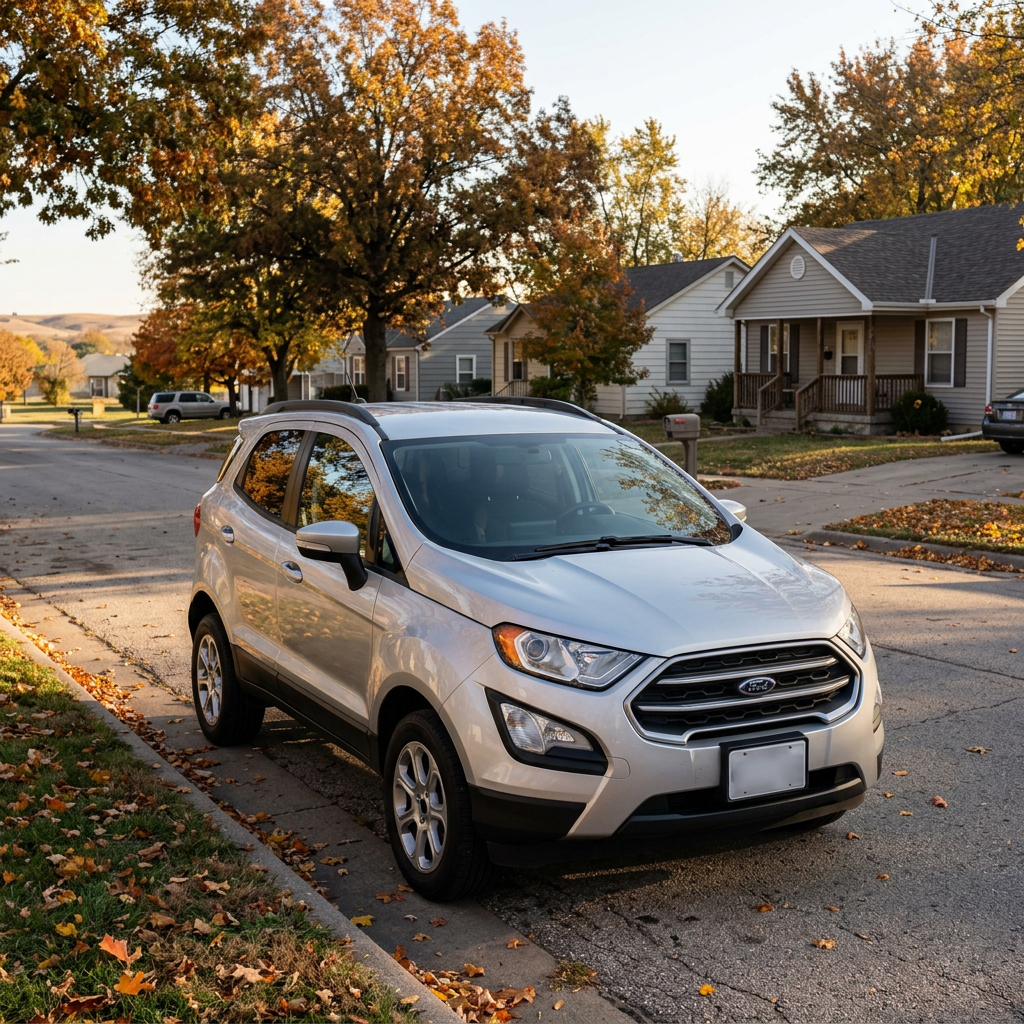
What to Look for in a Used Ford EcoSport: Reliability, Pricing, and Utility

What to Look for in a Used Ford EcoSport: Reliability, Pricing, and Utility

What to Look for in a Used Ford EcoSport: Reliability, Pricing, and Utility What Is a Fair Used Ford EcoSport Price Benchmark in Junction City? A fair price benchmark for a used Ford EcoSport ranges from around $10,000 for higher-mileage early model years up to $18,000 or $19,000 for a well-maintained, lower-mileage 2021 or 2022 Titanium trim with under 40,000 miles on the odometer. Mid-tier SE and SES trims from the 2019 to 2021 model years typically sit between $13,000 and $16,000 depending on overall condition, mileage, and drivetrain configuration. Evaluating where a specific vehicle falls within this valuation band requires examining both the trim level and the underlying maintenance history. The Ford EcoSport entered the North American market for the 2018 model year and concluded its run in 2022. Because of standard subcompact crossover depreciation curves, used EcoSports offer an accessible entry point for drivers seeking an elevated seating position and crossover versatility without a large financial outlay. Lower-tier S trims with higher odometer readings sit at the bottom of the price spectrum, while late-model Titanium trims equipped with leather seating and enhanced audio systems represent the upper boundary. Shopping local pre-owned listings in Junction City reveals that mileage and condition remain the primary drivers of price variance. When evaluating a listing, cross-referencing vehicle history reports is essential to ensure the asking price reflects the car's true condition. Pre-owned buyers should verify service records, accident histories, and regional driving backgrounds before committing. If you are comparing pre-owned listings in the area or looking to inspect a model in person, our team at our showroom on Goldenbelt Blvd can walk you through available vehicle history reports, or you can give our sales department a direct call to ask about current arrivals. Table of Contents How Does Ford Intelligent AWD Handle Kansas Winters and Local Roads? Which Engines, Fuel Economy, and Trims Work Best for Local Commuters? Does the Used Ford EcoSport Offer Apple CarPlay and SYNC 3 Tech? What Are the Most Common Mechanical Issues and Maintenance Needs on Used EcoSports? How Does the Used EcoSport Compare to Competitors Like the Honda HR-V and Hyundai Kona? How Functional Is the EcoSport Side-Hinged Tailgate and Resale Value Over Time? How Does Ford Intelligent AWD Handle Kansas Winters and Local Roads? Ford's Intelligent AWD system continuously monitors traction conditions and transfers engine torque to the rear wheels before front-wheel slippage occurs, providing excellent stability across icy highways, rain-slicked pavement, and snow-covered country roads. By assessing wheel speed, throttle position, and steering angle every few milliseconds, the system seamlessly adjusts torque distribution between the front and rear axles to maintain forward momentum without requiring any manual lever or button engagement from the driver. Powering the all-wheel-drive configuration is the naturally aspirated 2.0L Ti-VCT four-cylinder engine, which generates 166 horsepower and 149 lb-ft of torque. Unlike front-wheel-drive EcoSport models that rely exclusively on the smaller three-cylinder engine, models equipped with the 2.0L engine paired with Intelligent AWD deliver steady power delivery when navigating unpaved routes or slushy roads. On dry pavement, the system routes power primarily to the front wheels to preserve fuel efficiency, shifting power rearward only when road conditions demand extra traction. Driving across rural agricultural corridors and unpaved prairie back roads in Dickinson County during winter freezes demands a vehicle that can handle unpredictable surfaces. The EcoSport offers 6.5 inches of ground clearance, allowing it to clear light snow accumulation and modest rutted paths with ease. For shoppers looking for even greater off-road capability or larger winter-ready crossovers, exploring our new Ford Bronco inventory provides a helpful benchmark for heavier-duty four-wheel-drive engineering. Which Engines, Fuel Economy, and Trims Work Best for Local Commuters? Used Ford EcoSport models equipped with the 1.0L EcoBoost three-cylinder engine achieve EPA ratings of 27 mpg city / 29 mpg highway, while models with the naturally aspirated 2.0L Ti-VCT four-cylinder engine and standard Intelligent AWD post 23 mpg city / 29 mpg highway and 25 mpg combined. Commuters prioritizing maximum fuel efficiency on highway stretches often lean toward the front-wheel-drive 1.0L engine, whereas drivers wanting extra mechanical traction and higher horsepower opt for the 2.0L powertrain. The EcoSport lineup consists of four primary trim configurations: S: The entry-level base trim featuring essential power amenities, a 4.2-inch display screen, cloth seating, and 16-inch sparkled silver painted aluminum wheels. SE: The popular mid-level trim that adds an 8-inch SYNC 3 touchscreen, automatic climate control, a power moonroof, heated front seats, and reverse parking sensors. SES: The sport-oriented trim featuring the 2.0L engine with Intelligent AWD as standard equipment, a sport-tuned suspension, blind-spot monitoring, ambient interior lighting, and distinctive exterior accents. Titanium: The top-tier trim offering leather-trimmed seating, a premium Bang & Olufsen 10-speaker sound system, heated steering wheel, navigation, and chrome exterior detailing. For most daily commuters, the SE trim represents the optimal balance between price and everyday comfort features. Selecting the 2.0L engine on the SE trim or moving up to the SES or Titanium trims grants all-weather confidence alongside essential cabin tech. Buyers planning their vehicle purchase can prequalify online for financing to help plan your purchase before visiting the dealership. Does the Used Ford EcoSport Offer Apple CarPlay and SYNC 3 Tech? Yes, Apple CarPlay and Android Auto integration comes standard on used Ford EcoSport SE, SES, and Titanium trims fitted with the 8-inch SYNC 3 capacitive touchscreen, whereas the base S trim uses a smaller 4.2-inch non-touch display without smartphone mirroring. The SYNC 3 system allows drivers to seamlessly connect their smartphones via USB, displaying navigation apps, messaging interfaces, and music streaming services directly on the center dashboard screen. The SYNC 3 interface is widely appreciated for its clean layout, fast response times, and intuitive menu structures. Drivers can use pinch-to-zoom gestures on navigation maps or command functions using natural voice control buttons located on the steering wheel. Dual fast-charging USB ports positioned beneath the climate controls ensure mobile devices stay powered during longer road trips, while built-in Bluetooth wireless connectivity allows quick hands-free calling. In addition to smartphone connectivity, higher EcoSport trims offer upgraded audio and driver-assist technologies. The Titanium trim includes a 10-speaker B&O sound system tuned specifically for the crossover's cabin layout. Driver-assist features such as Blind Spot Information System with Cross-Traffic Alert are available on SE models and standard on SES and Titanium trims. To explore pre-owned models equipped with these features, buyers can review our pre-owned vehicle inventory, or visit our parts department to order genuine Ford parts and accessories like all-weather floor liners to protect the interior. What Are the Most Common Mechanical Issues and Maintenance Needs on Used EcoSports? The primary mechanical concern on used Ford EcoSports involves the wet oil pump drive belt on the 1.0L EcoBoost three-cylinder engine, which can experience material degradation and clog the engine oil pickup screen over time, whereas the 2.0L Ti-VCT four-cylinder engine paired with the six-speed SelectShift automatic transmission demonstrates significantly greater long-term durability. The wet belt system on early 1.0L engines runs submerged in engine oil, making strict adherence to oil change intervals and oil specification standards critical to preventing premature belt wear. In our service bays, our technicians frequently inspect oil pressure history and timing belt health on pre-owned three-cylinder models, helping buyers select well-maintained vehicles or steer toward the four-cylinder powertrain for long-term peace of mind. Other minor issues reported on used EcoSports include occasional infotainment screen freezing, which can usually be resolved through software updates, and routine wear on front brake pads due to urban stop-and-go driving. When properly maintained with high-quality synthetic oil and routine filter replacements every 5,000 to 7,500 miles, an EcoSport powertrain can reliably achieve 150,000 to 200,000 miles of service life. Checking transmission fluid condition and ensuring cooling system services are performed according to factory maintenance schedules further protects vehicle longevity. Owners seeking professional inspection or maintenance services can easily schedule a Ford service appointment with our certified technician team. How Does the Used EcoSport Compare to Competitors Like the Honda HR-V and Hyundai Kona? The used Ford EcoSport provides a higher command seating position, a tighter turning radius of 35 feet, and standard Intelligent AWD on later model years compared to subcompact rivals like the Honda HR-V with 141 hp and Hyundai Kona with 147 hp, while offering an impressive 2,000 pounds maximum towing capacity when equipped with the 2.0L engine. These traits make the EcoSport particularly easy to maneuver through tight parking lots and narrow alleys. Compared to class rivals, key distinctions include: Command Seating and Visibility: The EcoSport positions the driver higher off the road than the Hyundai Kona, offering an upright SUV-like view of traffic rather than a hatchback-like posture. Towing Capability: While most subcompact crossovers are restricted to 1,000 or 1,500 pounds of towing, the 2.0L EcoSport handles up to 2,000 pounds, making it capable of pulling a small utility trailer or light watercraft. Maneuverability: With an overall length of just 161 inches, the EcoSport is shorter than both the Honda HR-V and Hyundai Kona, simplifying parallel parking and tight garage storage. Interior Passenger Space: The Honda HR-V offers slightly more rear legroom and overall passenger volume, making it better suited for tall adult rear passengers, though the EcoSport provides competitive front headroom and driver legroom. Drivers comparing subcompact crossovers find that while competitors emphasize car-like handling, the EcoSport focuses on traditional SUV upright seating, compact exterior dimensions, and robust light-towing versatility. How Functional Is the EcoSport Side-Hinged Tailgate and Resale Value Over Time? The Ford EcoSport utilizes a unique side-hinged rear tailgate that swings open horizontally to reveal up to 20 cubic feet of cargo space behind the second row and 50 cubic feet with the 60/40-split rear seats folded, while its overall resale value reflects standard subcompact crossover depreciation of roughly 45% to 50% over five years, making used listings highly accessible. The side-swing tailgate opens from right to left using a latch release handle integrated inside the driver-side taillight housing. This side-hinged design provides distinct real-world advantages and considerations: Low-Clearance Overhead Utility: Unlike traditional liftgates that swing upward and can strike low garage doors, parking structure pipes, or ceiling racks, the EcoSport's door swings horizontally without height restrictions. Easy Loading Access: Short drivers or individuals who struggle to reach elevated overhead liftgates can easily open and close the rear door without straining. Parallel Parking Awareness: Because the door swings outward to the left, drivers must leave roughly three to four feet of clearance behind the bumper when parallel parking on tight streets to open the door fully. From a value perspective, the EcoSport's standard depreciation curve works in favor of pre-owned buyers. Because the vehicle has already completed its initial steep depreciation drop during its first three years, used buyers acquire a feature-packed crossover with available Intelligent AWD, SYNC 3 technology, and comfortable seating at a fraction of its original window sticker price. If you are considering trading in your current vehicle toward a pre-owned EcoSport, you can value your trade-in online to see what your vehicle is worth. To test drive a model or discuss financing options in person, stop by our dealership address or contact our sales staff directly to assist with your search. © 2026 Valor Ford. All rights reserved.