Blog / Heavy-Duty Truck Care

Should I Change My Super Duty's Differential Fluid Before Agricultural Towing in Junction City?

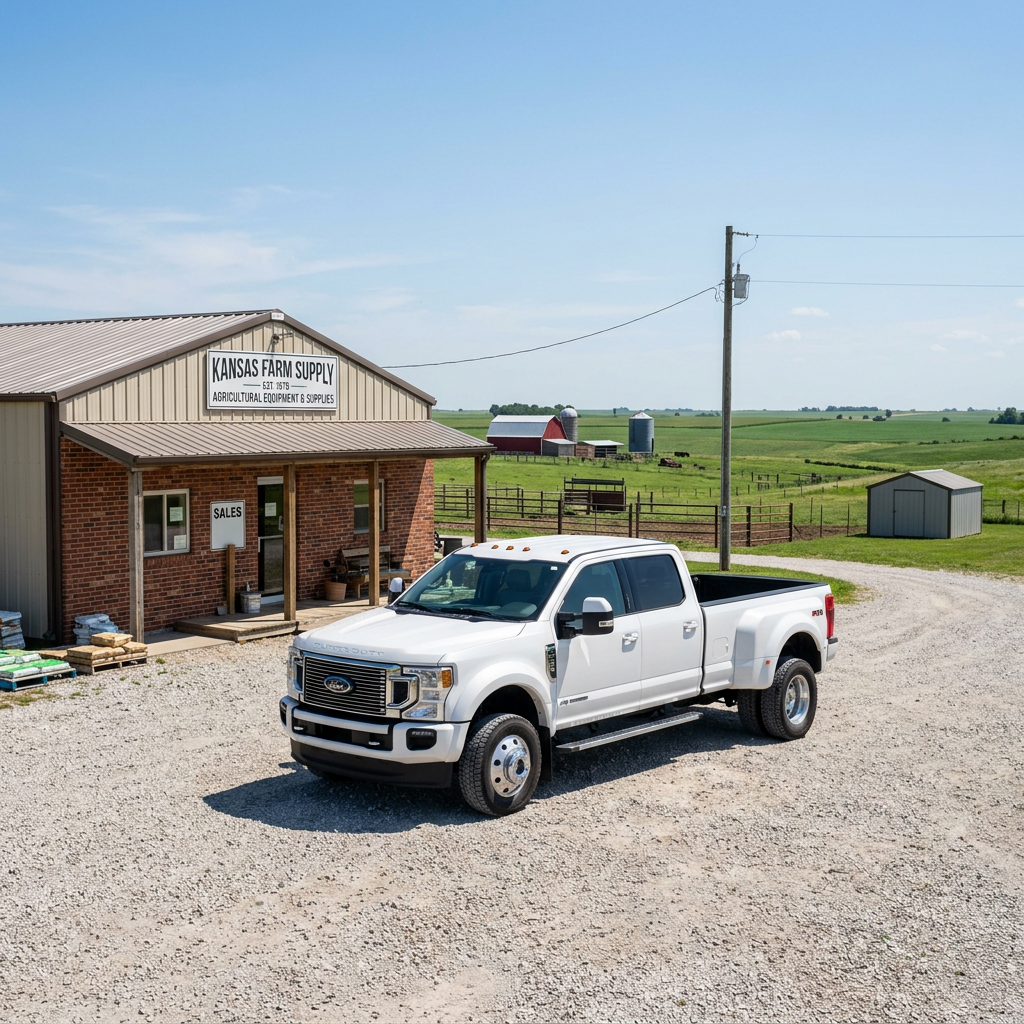
A white Ford Super Duty dually truck parked in front of a rural Kansas Farm Supply building. (Representative image for illustration purposes only. Actual vehicle may vary based on trim and configuration.)

Should I Change My Super Duty's Differential Fluid Before Agricultural Towing in Junction City?

As the summer heat settles deep over Dickinson County and the Flint Hills, local farmers and ranchers know that the demands of the agricultural calendar are about to peak. Whether you are hauling massive round bales of hay, moving livestock to fresh pasture, or preparing to transport heavy tillage equipment, your Ford Super Duty is the undisputed backbone of your operation. It is built to handle incredible vertical tongue weights and immense pulling forces. However, before you hitch up that 15,000-pound trailer and head out onto the rolling gravel roads around Junction City, there is one critical maintenance question every truck owner must confront: Is your rear differential fluid ready for the brutal thermal cycle it is about to experience? Many truck owners focus heavily on engine oil, transmission fluid, and coolant levels before embarking on heavy towing seasons. While those fluids are undeniably crucial, the rear differential is often forgotten until it begins to sing, whine, or worse, seize. The differential is the final point of torque transfer before the power hits the dirt. In a Super Duty, this component works under extreme physical pressures. Proactive fluid maintenance is not just a minor checkbox on your to-do list; it is the single most effective way to prevent catastrophic axle failures that can derail your harvest schedule and cost thousands of dollars in unscheduled downtime.

At Valor Ford, we understand that a work truck is not just a vehicle—it is a vital business asset. When the harvest window is open, every hour your truck spends in the shop is money lost. That is why we advocate for preventive maintenance schedules tailored specifically to the unique, punishing conditions of Kansas agricultural operations. In this comprehensive guide, we will break down the science of gear lubrication, explain why heavy towing alters your fluid change intervals, and help you determine whether your truck needs a differential service before your next major haul. If you are ready to ensure your truck is fully prepared, you can easily Schedule Ford Service Today with our team of heavy-duty specialists.

Why Is Differential Fluid Especially Important for Heavy-Duty Towing on a Super Duty?

To understand why differential fluid is so vital, you must first look at the incredible physical forces at play inside your Super Duty's rear axle housing. When you are pulling a fully loaded livestock trailer up a steep incline or dragging a heavy flatbed through a soft, muddy field, your engine generates massive torque. This torque is sent through the transmission and driveshaft directly to the pinion gear. The pinion gear, which is relatively small, must mesh perfectly with the much larger ring gear to rotate your rear axles. Because of the extreme gear reduction and the sheer weight of agricultural loads, the contact points between the teeth of the ring and pinion gears experience mind-boggling pressure. This contact is known as sliding friction. Without an incredibly robust boundary layer of high-viscosity gear oil, the metal teeth of these gears would physically weld themselves together and tear apart in a matter of seconds. Under normal driving conditions, the fluid manages this friction with ease, maintaining a thin, protective film that prevents direct metal-on-metal contact.

However, heavy towing changes the equation entirely. As load increases, the pressure between the gear teeth spikes dramatically, generating extreme localized heat. Under heavy-duty towing, rear differential fluid temperatures can easily soar past 220 degrees Fahrenheit, and under severe loads on hot Kansas summer days, they can climb even higher. This extreme heat initiates a process called thermal degradation, where the fluid's molecular structure begins to break down, causing it to lose its viscosity and shear strength. Once the fluid thins out or burns, its ability to cushion the gear teeth diminishes. This leads to accelerated wear, micro-pitting, and eventually, catastrophic gear failure. Furthermore, Super Duty axles are often equipped with limited-slip differentials or locking mechanisms that rely on precise fluid friction properties to function. Old, degraded fluid can cause these mechanisms to chatter, slip, or fail to engage when you need traction most in a slick pasture. Keeping fresh, highly viscous fluid in your axle is the ultimate defense against these destructive forces.

How Does Normal Driving Compare to Frequent Towing in Differential Maintenance Needs?

Consider a Super Duty that spends most of its time as a daily commuter or light utility vehicle around Fort Riley and Junction City. It carries light payloads in the bed, occasionally runs down the highway, and rarely pulls anything heavier than a small utility trailer or a couple of ATVs. In this scenario, the rear axle operates under what engineers call "light-duty" or "normal" service. The axle housing stays cool, the gear oil experiences very little shear stress, and water or dust contamination is minimal. Under these benign conditions, the factory-filled synthetic gear oil can easily last for over 100,000 miles without losing its protective qualities. Now, contrast that with a Super Duty dedicated to agricultural operations. This truck is frequently hooked to gooseneck trailers loaded with 15,000 to 20,000 pounds of cattle, tractors, or square hay bales. It travels slowly through dusty, unpaved Kansas farm fields, navigates muddy low-water crossings in Dickinson County, and climbs steep gravel roads in the midday summer heat. This is the definition of "severe duty." The constant high torque and slow speeds mean there is less airflow under the truck to cool the differential housing, causing the oil to bake.
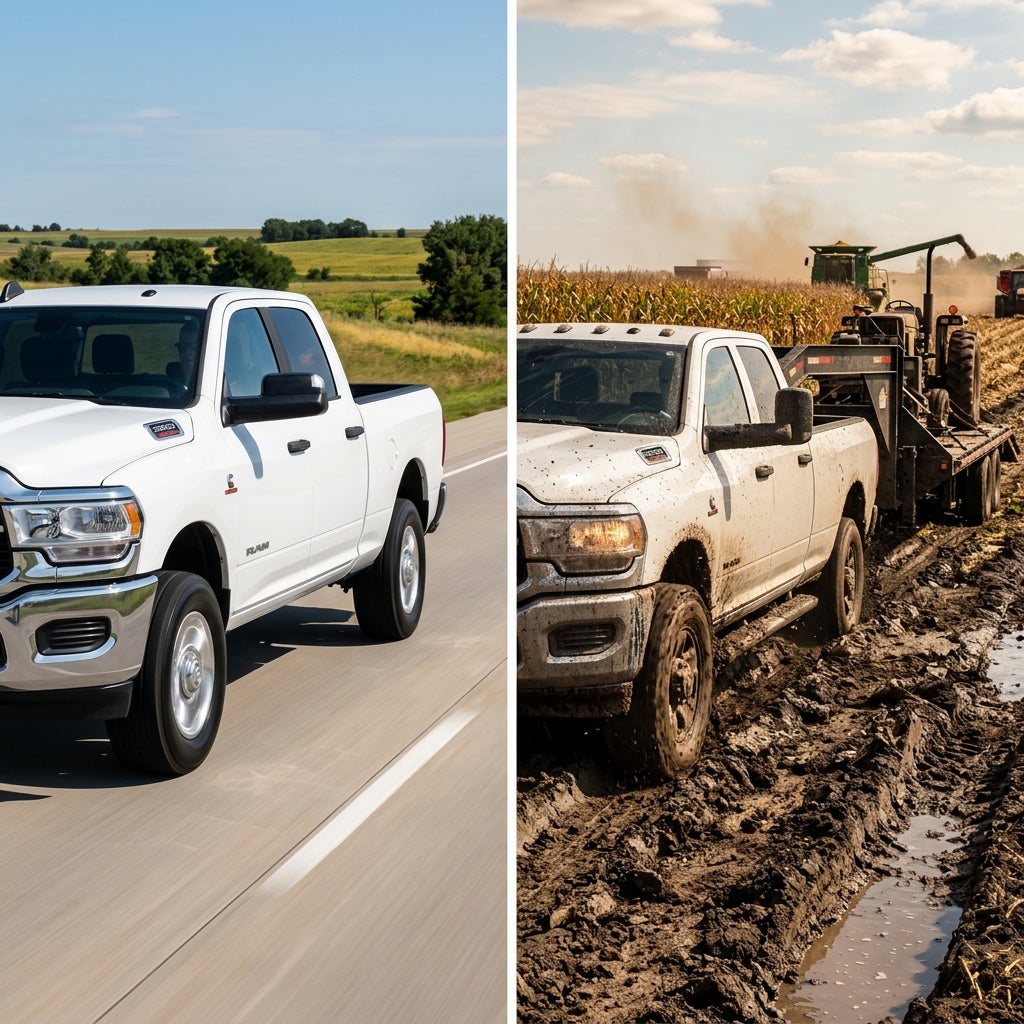
Side-by-side comparison of a clean white Ram pickup truck on a highway and a muddy one pulling a trailer on a farm. (Representative image for illustration purposes only. Actual vehicle may vary based on trim and configuration.)

Frequent severe-duty towing accelerates fluid degradation exponentially. When a truck operates under constant high loads, the fluid's additives—such as anti-wear agents, friction modifiers, and anti-foaming agents—deplete rapidly. If you continue to tow with compromised fluid, you risk permanent damage to the ring and pinion gears. To check out your options for upgrading to a newer, more capable towing rig, you can Browse Used Inventory at Valor Ford to find a truck built to handle your specific agricultural requirements.

What Is the Normal Differential Fluid Change Interval, and How Does Heavy Towing Change It?

Ford's official maintenance schedule for the Super Duty provides guidelines for both normal and severe operating conditions. While modern synthetic gear lubricants are incredibly durable, the manufacturer explicitly shortens the service intervals when the vehicle is subjected to frequent towing, heavy payloads, or operation in dusty and off-road environments. Understanding these differences is key to planning your maintenance schedule before the busy harvest season begins.

Normal Service Schedule For a Super Duty that is driven primarily on paved highways with minimal towing or heavy payload hauling, Ford typically recommends inspecting the rear differential fluid level and condition every 30,000 miles, with a complete fluid replacement interval of 150,000 miles. This long interval is made possible by high-quality factory synthetic oils that maintain stable viscosity over years of light-duty use in moderate climates.

Severe Service Schedule If your truck is used for frequent agricultural towing, operates in dusty environments, or frequently idles for long periods, Ford recommends shifting to the severe-duty schedule. Under these conditions, the rear differential fluid should be inspected at every oil change and fully replaced every 30,000 to 50,000 miles. Proactively changing the fluid within this window ensures that fresh additives are always present to protect your gears.

The Agricultural Reality For local Kansas operations, we often recommend changing the rear differential fluid every 30,000 miles, or at least once every two years, regardless of mileage. The combination of intense summer heat, high-humidity cycles, heavy towing, and dirt road dust accelerates fluid breakdown much faster than standard highway driving. Changing fluid before harvest prevents costly in-field failures when time is at an absolute premium.

What Weight and Type of Differential Fluid Does a Ford Super Duty Require?
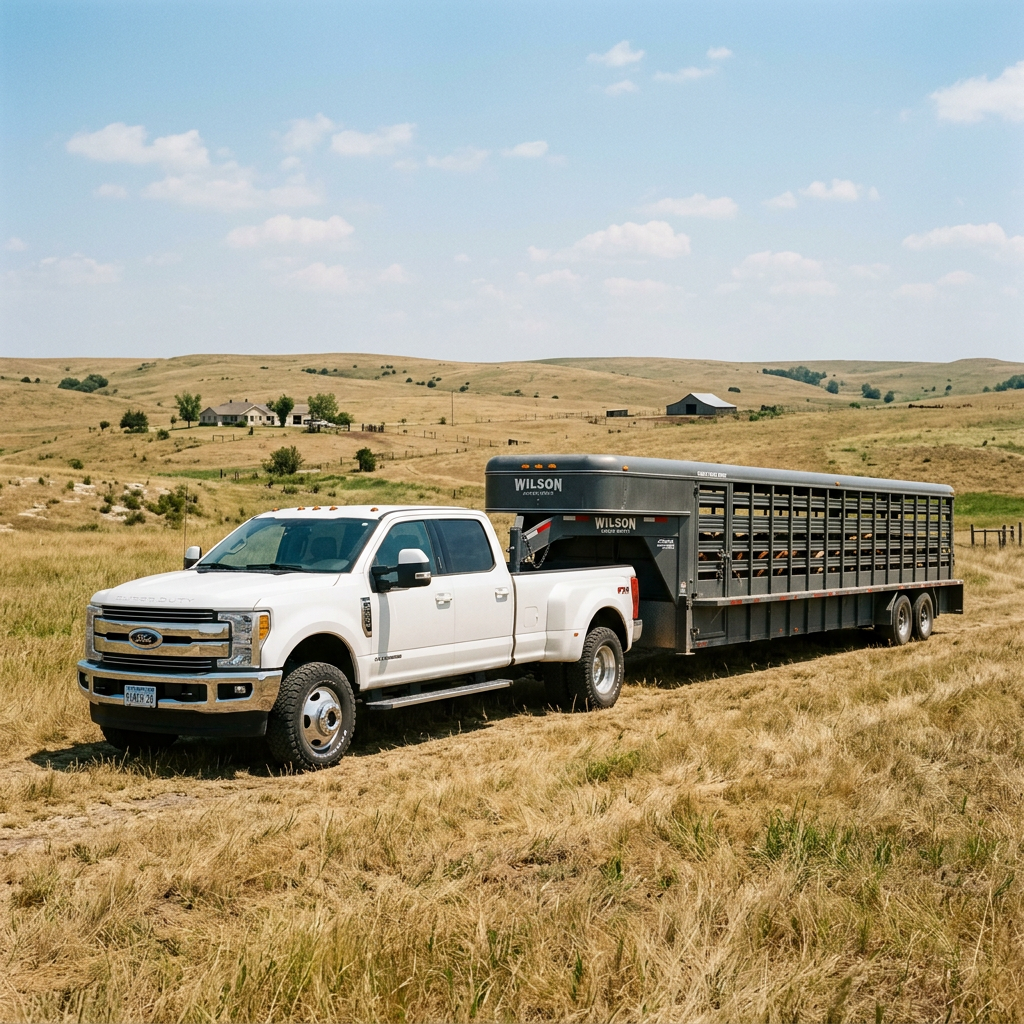
A white Ford Super Duty truck pulling a gray Wilson livestock trailer filled with cattle in a grassy pasture. (Representative image for illustration purposes only. Actual vehicle may vary based on trim and configuration.)

Using the correct fluid specification is absolutely non-negotiable for a modern Ford Super Duty. These trucks are equipped with highly engineered, high-torque axles designed to work with very specific lubricant formulations. Pouring the wrong gear oil into your axle housing can lead to immediate lubrication failure, excessive noise, and rapid gear wear. Most modern Ford Super Duty trucks (F-250 and F-350) utilize high-performance rear axles that require synthetic gear lubricants. For standard rear axles, Ford typically specifies Motorcraft SAE 75W-85 Premium Synthetic Hypoid Gear Lubricant. However, for trucks equipped with larger rear axles, dual rear wheels (duallies), or those frequently used for severe-duty towing, Ford often specifies Motorcraft SAE 75W-140 Synthetic Rear Axle Lubricant. This heavier weight fluid provides a much thicker protective film at high operating temperatures, ensuring that the ring and pinion teeth remain cushioned even under extreme agricultural loads.

Another critical detail is the presence of a limited-slip differential. If your Super Duty is equipped with a traction-lok rear axle, it requires a specific friction modifier additive (such as Motorcraft Additive Friction Modifier XL-3) mixed with the gear oil. This additive ensures that the internal clutch packs engage smoothly without chattering or binding during tight turns on paved roads. When we service your truck at Valor Ford, we always verify your specific axle code on the door jamb placard to ensure we use the exact OEM-specified fluids and additives. If you are doing the job yourself, you can easily Order Genuine Ford Parts directly from our parts department to guarantee compatibility.

What Specific Fluid Issues Should I Look for That Require Service Before Towing?

Before you hook up your trailer for a heavy haul, it is wise to perform a quick visual inspection of your rear axle. There are several warning signs that indicate your differential fluid is compromised and needs immediate replacement. Ignoring these symptoms can lead to severe mechanical damage on the road.

Milky or Cloudy Appearance If you pull the fill plug and find that the fluid has a milky, cloudy, or frothy appearance, this is a clear indication of water contamination. This is common for farm trucks that negotiate creek crossings or low-water crossings in the Flint Hills. Water emulsifies with the gear oil, drastically reducing its lubricating capacity and leading to rapid rust and gear wear.

Burnt Smell & Dark Color Healthy synthetic gear oil has a strong, distinct chemical smell, but it should not smell burnt. If you pull the dipstick or fill plug and are greeted by a pungent, acrid, burnt aroma accompanied by dark, blackish fluid, the oil has undergone severe thermal breakdown. This means the fluid has lost its viscosity and is no longer protecting your gears from high-load friction.

Metal Shavings on Magnet Most Super Duty differential plugs have a built-in magnet designed to catch fine metallic wear particles. While a very fine metallic paste on the magnet is normal over tens of thousands of miles, finding actual metal flakes, slivers, or chunks is a major red flag. This indicates that gear teeth or bearings are actively disintegrating, requiring immediate professional inspection.

What Extra Checks Might a Shop Perform During a Differential Service for a Work Truck?

When you bring your Super Duty to a professional shop like Valor Ford for a differential service, you get far more than a simple fluid drain and fill. A professional technician approach is comprehensive, looking at the entire rear-end assembly to ensure absolute reliability under load. First, the technician will thoroughly inspect the axle housing vent tube. When a differential gets hot during towing, the air inside expands. The vent tube allows this pressure to escape safely. If the vent tube is clogged with Kansas mud, dust, or insect nests, the expanding pressure will force its way out through the weakest points—typically the pinion seal or outer wheel seals. Cleaning this vent is a critical, often-overlooked step that prevents costly oil leaks. Next, the technician will inspect the condition of the axle shaft seals and pinion seal for any signs of weeping or active leakage. Even a minor leak can lead to a low fluid condition over a long towing season, which is the fast track to a melted axle. They will also inspect the wheel bearings for play and check the driveshaft universal joints (U-joints) for wear, slop, or binding. A worn U-joint can cause driveline vibrations that mimic a tire balance issue but can eventually lead to catastrophic driveshaft failure under heavy torque.
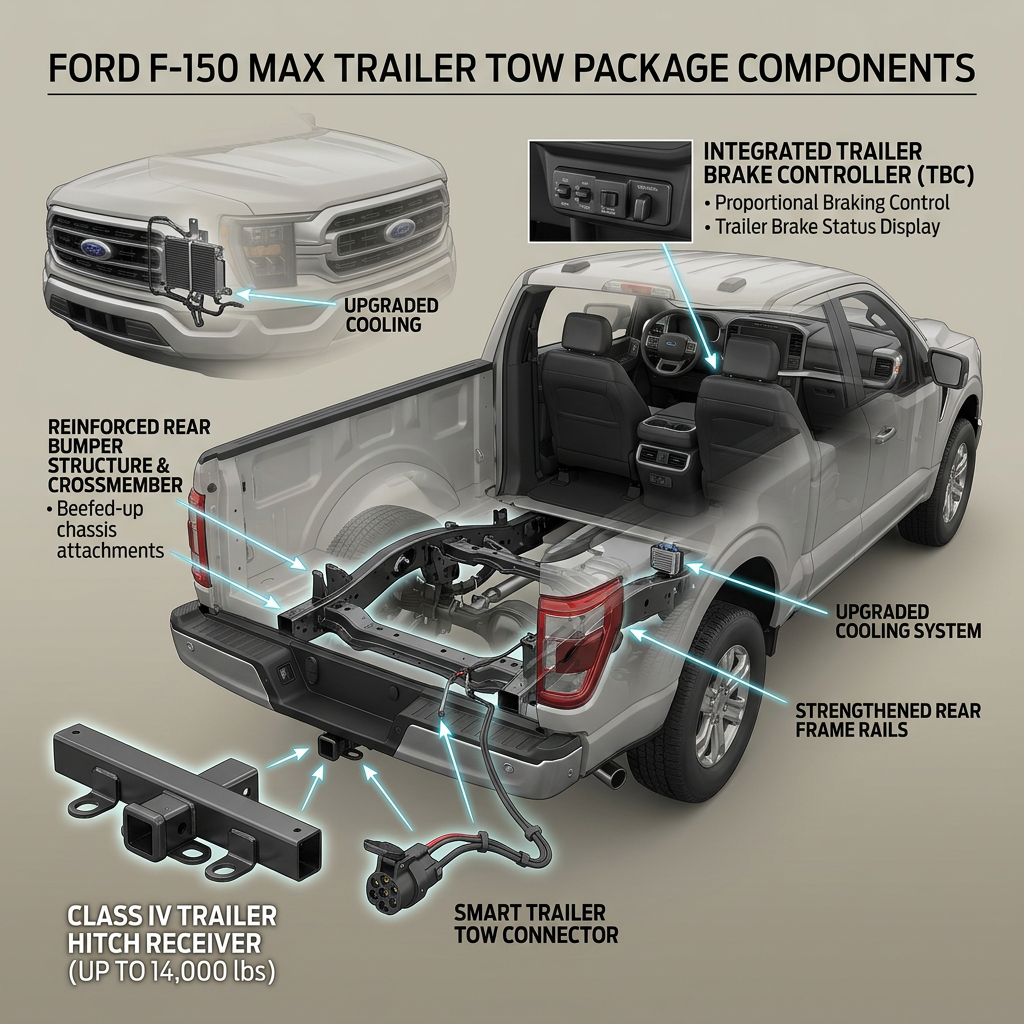
Diagram showing the key components of the Ford F-150 Max Trailer Tow Package on a semi-transparent truck illustration. (Representative image for illustration purposes only. Actual vehicle may vary based on trim and configuration.)

Furthermore, if the differential cover is removed, the technician can perform a visual check of the gear wear patterns and measure backlash to ensure the ring and pinion are still in perfect alignment. This level of diagnostic inspection is something you simply cannot replicate with a quick driveway fluid swap. To have our experts look over your entire driveline, you can book an appointment for Schedule Pickup and Delivery Service to have us handle your truck maintenance with zero disruption to your daily farm routine.

What Are the Basic Steps for a DIY Rear Differential Fluid Change on a Heavy-Duty Truck?

For the hands-on truck owner, changing the rear differential fluid on a Super Duty is a manageable DIY project, though it can be quite messy and requires a few specific tools. Before you begin, make sure you have the correct gear oil (typically 3 to 4 quarts of synthetic 75W-140 or 75W-85 depending on your axle), a new differential cover gasket or high-quality RTV silicone sealant, a drain pan, a socket set, a scraper, brake cleaner, and a fluid transfer pump. First, park the truck on a level surface, set the parking brake, and block the wheels. It is a good idea to drive the truck for a few miles beforehand to warm up the fluid, which helps it drain more quickly and carry away suspended contaminants. Locate the fill plug on the front or side of the differential housing and loosen it *before* you drain the fluid. This is a critical safety step—if you drain the fluid first and then find that the fill plug is seized or stripped, your truck is stranded until you can get it open. Next, place your drain pan under the rear differential. If your axle housing has a drain plug at the bottom, simply remove it and let the fluid drain. If it does not, you will need to loosen all the bolts on the differential cover, leaving the top two bolts loosely threaded. Carefully pry the bottom of the cover away from the housing with a flathead screwdriver to break the seal, allowing the old oil to drain into your pan. Once the draining slows, remove the top bolts and take the cover completely off.

With the cover off, use a scraper and brake cleaner to thoroughly clean the old gasket material or RTV sealant off both the housing mating surface and the cover. Be extremely careful not to let debris fall into the open differential gears. Clean the inside of the housing and wipe down the magnetic fill plug to remove any metallic paste. Inspect the gears for any visible chips, pitting, or unusual wear patterns. Once everything is clean and dry, apply a bead of high-quality RTV silicone sealant (such as Motorcraft TA-35-B) to the cover flange, looping around the bolt holes, or position your new gasket. Reinstall the cover and torque the bolts in a star pattern to the manufacturer's specified torque (usually around 30-35 lb-ft, but always verify for your specific model year). Allow the RTV to cure according to the package instructions. Finally, use a fluid transfer pump to fill the differential with fresh synthetic gear oil until the level reaches the bottom of the fill plug hole (or the specified fill line on modern covers). Reinstall the fill plug, clean up any spilled oil, and check for leaks after your first drive.

Preparing Your Super Duty for the Kansas Harvest: A Complete Towing Checklist

Differential fluid is just one part of a reliable towing setup. To help our local Junction City and Dickinson County farming community prepare for the high-intensity harvest season, our service team has compiled this comprehensive pre-towing vehicle inspection checklist.

1. Driveline & Fluid Check- Inspect front and rear differential fluid levels and quality. - Check transmission fluid level and color (should be pink, not brown or burnt). - Inspect transfer case fluid on 4WD models. - Check engine oil level and coolant concentration. - Inspect driveshaft U-joints and carrier bearings for play.

2. Tires, Brakes & Suspension- Inspect truck and trailer tires for wear, dry rot, and correct inflation pressure. - Verify tires are rated for heavy load capacities (Load Range E or higher). - Inspect brake pads, rotors, and calipers on the truck. - Check trailer brake shoes and test the integrated trailer brake controller. - Inspect leaf springs and air helpers.

3. Hitching & Electrical Connection- Inspect the gooseneck ball, fifth-wheel hitch, or bumper receiver for cracks. - Check safety chains, breakaway cables, and hitch pin locks. - Clean and grease hitch connection points. - Test all trailer lights, turn signals, and brake lights. - Ensure the 7-way electrical connector is clean and securely plugged in.

Why Local Farmers Trust Valor Ford for Heavy-Duty Fleet and Towing Maintenance

At Valor Ford, we don't just sell and service vehicles; we are active members of the Junction City, Fort Riley, and broader Dickinson County communities. We understand that agricultural work operates on tight schedules dictated by weather and season. When a truck goes down, it does not just mean a minor inconvenience—it can halt an entire harvesting or seeding operation. That is why our service department is designed to cater to the specific needs of commercial fleet owners and local farmers. Our technicians are factory-trained and highly experienced in diagnosing and repairing Ford Super Duty trucks, from the F-250 up to the heavy-duty F-550 chassis cabs. We maintain a large inventory of genuine Motorcraft parts, filters, and synthetic fluids, ensuring that your vehicle is serviced to exact manufacturer specifications. Whether you need a simple differential fluid flush, an axle seal replacement, or complete transmission diagnostic, we have the specialized heavy-duty lifts, diagnostic equipment, and technical expertise to get the job done right the first time.

In addition to our mechanical expertise, we offer convenient service solutions like our pickup and delivery service, allowing you to keep working on the farm while we handle your truck's maintenance in town. If you are looking to expand your agricultural fleet or upgrade to a more capable towing vehicle, we invite you to explore our lineup. You can easily Research Ford F-250 specifications online or visit our showroom to see our heavy-duty inventory in person. We also offer financing assistance, and you can contact our team to learn more about current financing options and requirements. We pride ourselves on transparent communication, fair pricing, and a commitment to minimizing your truck's downtime. When you partner with Valor Ford, you are choosing a team that values your hard work and is dedicated to keeping your agricultural operation moving forward.

Schedule Your Super Duty Service at Valor Ford in Junction City Before Your Next Big Haul
Don't wait for a grinding noise, a burning smell, or an unexpected axle failure in the middle of a busy harvest day to think about your differential fluid. Proactive maintenance is the key to preserving your truck's capability, protecting your expensive drivetrain components, and keeping your farm operations running smoothly. Whether you want our certified diesel technicians to perform a comprehensive fluid service and multi-point inspection, or you simply need to purchase the correct Motorcraft synthetic lubricants and friction modifiers for a weekend DIY project, the team at Valor Ford is here to support you. Our service department is located at 1825 Goldenbelt Blvd, Junction City, KS 66441. Feel free to stop by, Get Directions to Valor Ford, or Call us at (785) 238-5114 to speak directly with one of our service advisors. Let's make sure your Ford Super Duty is fully prepared to handle the heaviest agricultural loads this summer and fall.
Posted in:

Related Posts

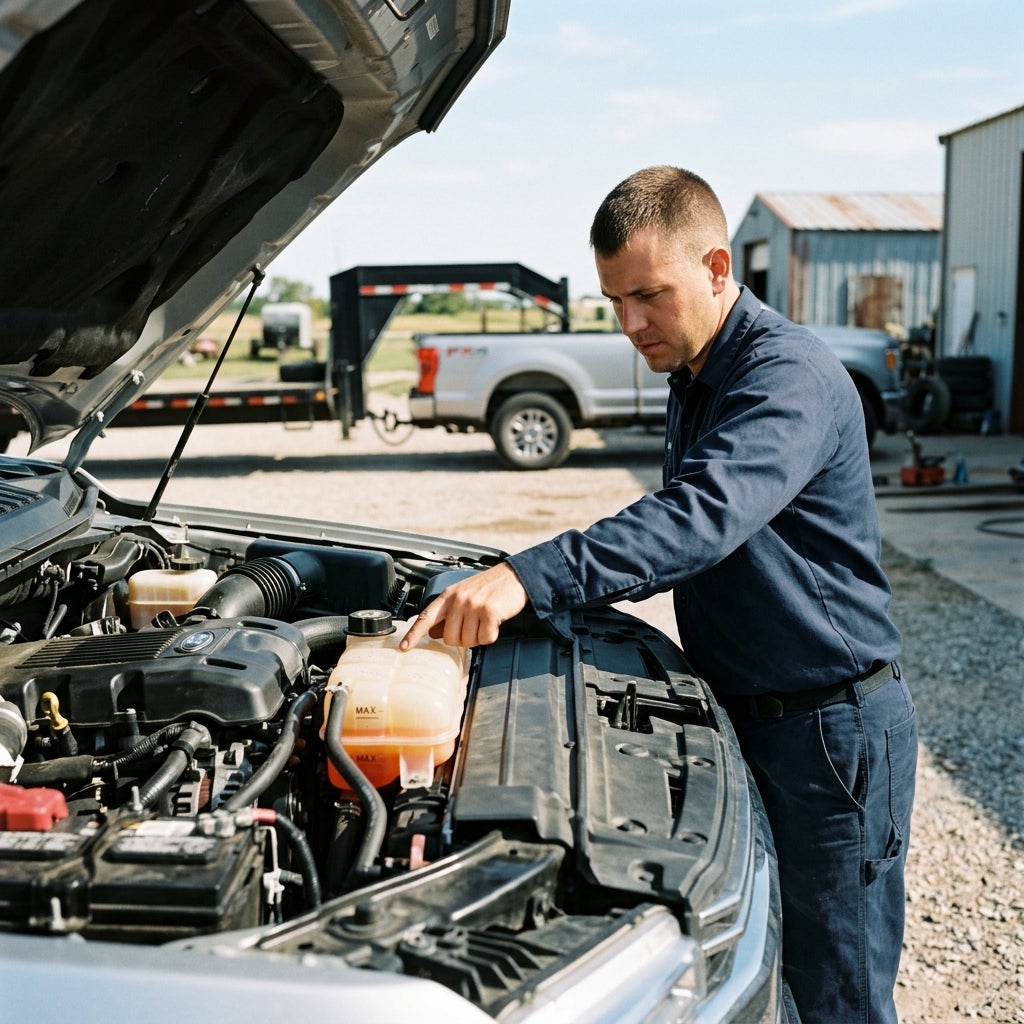
A mechanic in a blue uniform points to the coolant reservoir tank under the open hood of a silver pickup truck. (Representative image for illustration purposes only. Actual vehicle may vary based on trim and configuration.)

Signs Your Super Duty Cooling System Needs Immediate Service Before Towing

Signs Your Super Duty Cooling System Needs Immediate Service Before Towing When you rely on a Ford Super Duty to haul multi-ton excavators, livestock trailers, or fifth-wheel RVs across Junction City and through the Flint Hills, your engine operates under extreme thermal loads. As Service Director at Valor Ford with two decades of hands-on diesel experience, I can tell you that 80% of summer diesel breakdowns on I-70 are entirely preventable. Before you latch onto a heavy load, taking five minutes to run through a quick walkaround inspection of your primary and secondary cooling systems can save you thousands of dollars and days of downtime. The modern 6.7L Power Stroke diesel engine is a engineering marvel, but its dual-cooling system architecture requires vigilant care. Key warning signs that warrant an immediate pause before hitching up include dropping fluid levels in either the primary or secondary degas bottles, a distinct sweet-smelling vapor drifting from under the hood after a test warm-up, dry crusty orange or yellow Motorcraft coolant residue around quick-connect fittings, unusual fan clutch resistance, and upper radiator hoses that feel either rock-hard under pressure or spongy and soft when cool. Catching these early indicators protects your head gaskets, EGR coolers, and turbochargers from catastrophic heat distortion. Schedule Super Duty Inspection Meet Mike Hogg: 20 Years of Super Duty Heavy-Duty Diesel Service Hello, I'm Mike Hogg, Service Director here at Valor Ford in Junction City. Over the past 20 years, my career has been dedicated to keeping Ford heavy-duty trucks running at peak reliability across North Central Kansas. From local agricultural operations in Dickinson and Geary counties to commercial transport contractors and military equipment haulers servicing Fort Riley, I've diagnosed and repaired every thermal issue imaginable on Power Stroke diesel platforms. When you work in heavy towing, your cooling system isn't just an accessory—it's the heart of your truck's durability. A small pinhole leak or failing fan clutch during mild cruising becomes a catastrophic thermal runaway when you're pulling 20,000 pounds up an 8% grade in August. My team and I are passionate about proactive maintenance because we know that preventing an engine overhaul starts before the truck ever leaves the staging yard. Feel free to Call us at (785) 238-5114 anytime to talk through your truck's maintenance needs. Why Is Pre-Work Cooling Inspection Especially Important Before Towing? Towing heavy gooseneck trailers or maximum payload box beds pushes your Ford Super Duty engine into sustained high-boost operating zones. Under heavy load, peak combustion temperatures soar, and the engine generates exponentially higher thermal energy that must be dissipated through the cooling stack immediately. If your cooling system has even a 5% drop in efficiency—due to degraded fluid, trapped air pockets, or partially restricted radiator fins—the heat accumulation outpaces heat rejection. In normal commuter driving without payload, a compromised cooling system might hide its flaws. The fan clutch might kick in late, or the secondary circuit might run slightly elevated without causing an immediate check engine light. However, the moment you put the truck under heavy load on Kansas highways, heat levels spike in seconds. Pre-work checks ensure your primary and secondary cooling loops maintain maximum thermal headroom, preventing sudden derate modes or warped components miles away from help. Furthermore, modern Power Stroke engines feature sophisticated electronic safeguards that will automatically pull engine torque and boost when cylinder head or oil temperatures cross threshold limits. Imagine pulling out onto Highway 77 with a heavy load, only for your truck to enter reduced power mode midway up a hill because the secondary coolant loop couldn't chill the charge air cooler. Performing a thorough cold check before your workday starts prevents these frustrating and dangerous highway power drops. Whether you are operating an older 6.7L model or considering upgrading to a newer model like when you Research Ford F-250 options, keeping tabs on thermal health is vital. Taking proactive steps gives you complete confidence when embarking on tough jobsite assignments across Junction City. Critical Visual Flags: What Pre-Work Inspection Signs Indicate Immediate Service? 1. Crusty Coolant Residue Look for chalky, dried orange, pink, or yellow deposits around hose connections, thermostat housings, radiator end-tanks, and water pump seams. This residue is evaporated coolant escaping under system pressure. 2. Hose Swelling or Softness Squeeze radiator hoses when cold. Spongy, overly soft, or bulged sections indicate oil contamination or inner liner breakdown. Excessively hard hoses indicate calcification or high pressure buildup. 3. Degas Tank Stress Cracks Inspect plastic degas surge bottles for yellowing micro-fractures along heat-stressed molded seams. A compromised degas tank cannot hold pressure, lowering coolant boiling points dramatically. Order Genuine Motorcraft Coolant & Parts What Does a Coolant Puddle Under Your Super Duty Usually Indicate? Discovering a bright yellow, orange, or green fluid puddle on your driveway or shop floor is a clear warning sign. On Ford Super Duty diesel trucks, fluid location provides valuable diagnostic clues before turning the key. Fluid dripping near the front center of the engine crossmember often points to a failing water pump shaft seal weeping through its lower relief port. Leaks spotted near the front passenger or driver corners typically originate from primary radiator plastic end-tank crimp seams or lower radiator hose quick-connector O-rings. Over time, heavy thermal expansion cycling fatigues the rubber O-rings inside plastic quick-connect fittings, causing cold-weather seepage that expands under pressure. If you notice drips dripping down the rear of the engine block near the bellhousing, the culprit is often a leaking secondary turbo cooling line fitting or EGR cooler supply connection. These high-heat zones quickly degrade standard seals. Never ignore small drips; fluid loss reduces hydraulic head pressure, creating air pockets that induce severe localized hotspot boiling inside cylinder heads. If you are unsure where a puddle originates, bring your vehicle in for professional pressure diagnostics. You can Get Directions to Valor Ford and our certified diesel specialists will pinpoint the exact source. Understanding Fluid Capacities: How Much Coolant Does a 6.7L Power Stroke Hold? To properly service and maintain a 6.7L Power Stroke V8 Turbo Diesel, you must understand its specialized dual-cooling system architecture. Unlike standard gasoline light trucks that use a single cooling loop, Super Duty diesel trucks utilize two independent cooling systems operating at different thermal ranges with separate degas tanks, radiators, and water pumps. Cooling Circuit Target Components Fluid Capacity (Approx.) Recommended Fluid Spec Primary High-Temp Circuit Engine Block, Cylinder Heads, Turbo Housing 27.8 – 30.7 Quarts (7.0 – 7.7 Gal) Motorcraft Yellow Prediluted 50/50 Secondary Low-Temp Circuit Charge Air Cooler (Intercooler), Transmission Cooler, Fuel Cooler 11.7 – 13.0 Quarts (2.9 – 3.2 Gal) Motorcraft Yellow Prediluted 50/50 Combined, a 6.7L Power Stroke holds over 10 total gallons of coolant! Mixing unapproved universal coolants or tap water with high mineral content can corrode internal heat exchangers and create scale buildup. Always verify that you are topping off with genuine Motorcraft Yellow coolant formulated specifically for Ford high-output diesels. What Kinds of Damage Can Happen If You Keep Driving a Super Duty Hot? Ignoring temperature warnings on a heavy-duty diesel engine leads to severe financial consequences. When a Super Duty engine operates past thermal thresholds under load, aluminium cylinder heads undergo thermal expansion that distorts deck flatlines. This warp breaks head gasket fire rings, allowing high-pressure combustion gases to pressurize the cooling system. Simultaneously, extreme exhaust gas recirculation (EGR) temperatures can crack internal stainless steel EGR cooler tubes. Once cracked, pressurized coolant is forced directly into the exhaust stream or intake manifold, creating white exhaust smoke and risk of hydraulic lock in engine cylinders. Uncontrolled heat also cooks turbocharger center-housing bearings, coking engine oil and starving bearings of critical lubrication. What starts as a simple quick-connect O-ring leak can spiral into a major repair costing significantly more over time. Prioritizing pre-work inspections safeguards your investment. Expert Service Perspective: Preventing $10,000 Overhauls with 5-Minute Checks "In my 20 years managing Ford heavy-duty service bays, the single most cost-effective habits I coach commercial fleet managers on are quick, cold morning visual checks. Pop the hood before starting the truck. Look at both degas tank cold fill lines. Give the upper hose a firm squeeze. Check the front bumper air intake for farm dust or debris. Spending 300 seconds doing this every morning saves you $10,000 in major diesel engine overhauls down the road." — Mike Hogg, Service Director at Valor Ford Schedule Pickup and Delivery Service What Should Be Inspected in the Cooling System Before Putting Your Super Duty to Work? Phase 1: Fluid & Caps Verify primary and secondary degas fluid levels are exactly at the cold fill line. Inspect pressure cap seals for dried crust or torn rubber gaskets. Replace degas caps every 3 years to maintain 16 PSI baseline pressure. Phase 2: Belt & Fan Clutch Examine the serpentine belt for glazing, rib cracking, or wear indicator misalignment on the tensioner arm. Spin the viscous fan clutch manually when cold; it should offer smooth, moderate resistance without axial play. Phase 3: Airflow Stack Shine a flashlight through the front grille mesh to inspect the radiator, AC condenser, and charge air cooler. Clear out farm chaff, dried mud, insects, and straighten bent fins that restrict critical Ram airflow. How Kansas Terrain and Towing Loads Accelerate Super Duty Cooling Wear Operating trucks around Junction City, Fort Riley, and throughout Dickinson County presents unique environmental challenges. The rolling topography of the Flint Hills forces repeated high-torque engine pulls, causing thermal cycling in aluminum and plastic cooling components. Summer ambient temperatures regularly exceed 95°F with high humidity, reducing radiant cooling efficiency. Agricultural pasture work introduces airborne chaff, dust, and seed heads that clog cooling stack fins. Dust mixes with ambient moisture to form a concrete-like barrier across heat exchangers, cutting air volume dramatically. Regular maintenance is essential for trucks operating in these severe regional conditions. Professional Super Duty Cooling Diagnostics and Maintenance at Valor Ford Factory-Trained Master Techs Our service department is staffed by specialized Ford Senior Master Diesel Technicians who understand every detail of Power Stroke engine platforms. Advanced Pressure Testing We utilize pneumatic pressure diagnostic tools to simulate high-load thermal stress, identifying micro-leaks before they cause highway failures. OEM Motorcraft Parts We stock genuine Ford Motorcraft coolant, heavy-duty hoses, water pumps, and thermostat assemblies built to OEM specifications. Schedule Ford Service Today Schedule Your Super Duty Pre-Work Cooling Inspection in Junction City Today Don't leave your truck's reliability to chance when pulling heavy loads across Kansas. Whether you need a simple system pressure test, a Motorcraft Yellow coolant flush, or a complete pre-season inspection, the expert team at Valor Ford is ready to assist you. Contact us today or drop by our facility at 1825 Goldenbelt Blvd in Junction City. Book Service Appointment

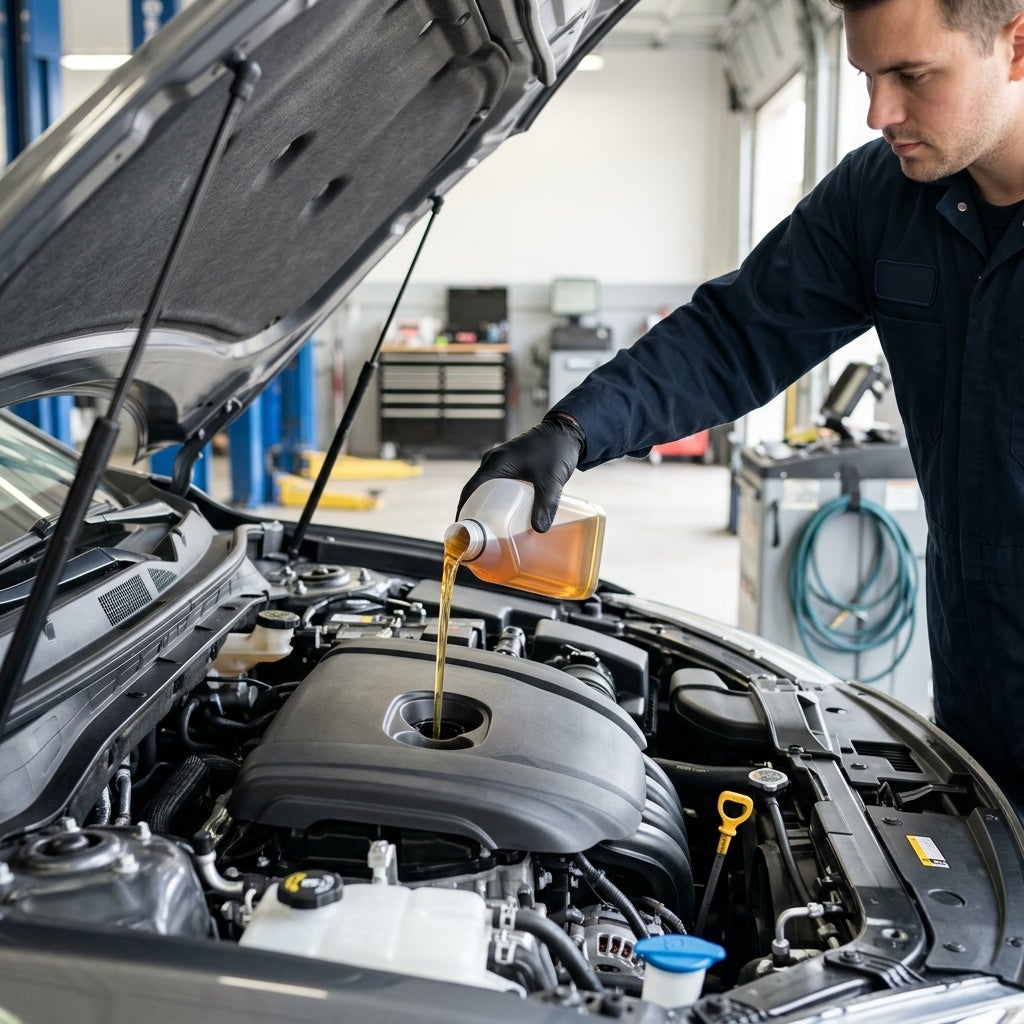
Mechanic wearing black gloves pouring clean amber motor oil into an open car engine inside an auto shop. (Representative image for illustration purposes only. Actual vehicle may vary based on trim and configuration.)

What To Expect When Getting Your Oil Changed at Valor Auto in Junction City, KS

What Type of Motor Oil Is Used for an Oil Change at Valor Auto in Junction City, KS? When you bring your vehicle to Valor Auto (Valor Ford) in Junction City, KS, your engine receives factory-recommended motor oils specifically tailored to your vehicle's make, model, engine topology, and driving demands. For Ford vehicles and multi-make automobiles alike, Valor Auto primarily utilizes genuine Motorcraft® Synthetic Blend, Full Synthetic, High-Mileage, and Heavy-Duty Diesel oils, all engineered to meet or exceed strict OEM specifications. Engine lubrication is not a one-size-fits-all formula. Modern high-tech engines—ranging from turbocharged EcoBoost® engines to high-output V8s and PowerStroke® diesels—require exact viscosity grades and tailored additive packages. Whether your owner's manual calls for 5W-20, 5W-30, 0W-20, or specialized diesel formulations like 15W-40, the certified service technicians at Valor Auto ensure your oil change adheres strictly to factory tolerances to optimize efficiency, protection, and engine longevity. Schedule Ford Service Today Motorcraft Full Synthetic vs. Synthetic Blend: What Motor Oil Choices Are Offered at Valor Auto? Motorcraft® Premium Synthetic Blend: Standard for many Ford vehicles, this oil balances affordability with high-grade thermal protection. Formulated with synthetic base stocks and premium additives, Motorcraft Synthetic Blend reduces internal friction, minimizes engine deposits, and guards against low-speed pre-ignition (LSPI) in direct-injection engines. Motorcraft® Full Synthetic Oils: Engineered for severe operation, extreme temperature swings, and turbocharged powerplants, Full Synthetic provides exceptional shear stability and oxidation resistance. It flows smoothly in cold weather to reduce engine wear upon start-up and resists breakdown under scorching summer heat. Oil Type Recommended Use Key Benefits Synthetic Blend Everyday commuting & light duty Cost-effective deposit control & friction reduction Full Synthetic Turbocharged engines, heavy towing, extreme weather Maximum thermal defense & instant cold flow High-Mileage Vehicles over 75,000 miles Seal conditioners to prevent leaks & oil burn-off How Junction City and Fort Riley Driving Conditions Impact Engine Oil Performance Flint Hills Weather Extremes Kansas summers bring 90°F+ temperatures while winters drop well below freezing in Geary and Dickinson Counties. Freezing starts cause up to 75% of initial engine wear without proper oil viscosity (e.g. 0W-20 or 5W-20). Synthetic oils flow immediately to protect critical valvetrain components. Military Commutes & Dust Frequent short-distance trips and gate idling between Junction City and Fort Riley prevent engine oil from reaching optimal operating temperatures. Moisture and unburnt fuel accumulate in the crankcase, causing accelerated oil degradation. Gravel roads, agricultural dust, and heavy towing down I-70 place 'Severe Duty' demands on engine oil and filtration systems. Why Genuine Motorcraft Oils and OEM Filters Maintain Your Vehicle Warranty Maintaining factory powertrain coverage requires documented oil changes using fluids and filters that meet original equipment specifications. Off-brand oil change franchises frequently rely on universal bulk oil and low-cost aftermarket filters that may lack vital anti-drainback valves or precise bypass pressure thresholds. At Valor Auto, every oil change includes a genuine Motorcraft® oil filter equipped with a silicone anti-drainback valve that prevents dry starts. Paired with API-certified Motorcraft oils, your service history remains fully compliant with Ford New Vehicle Limited Warranties and Powertrain Coverage. Valor Auto's dedicated parts department stocks authentic OEM components engineered specifically for your powertrain. By avoiding generic quick-lube parts, you ensure maximum filtration efficiency, optimal oil pressure, and complete peace of mind. Need replacement parts or fluid supplies for DIY care? You can easily Order Genuine Ford Parts directly through our online store. Order Genuine Ford Parts How Much Does an Oil Change Cost at Valor Auto in Junction City, KS? Oil change costs at Valor Auto vary depending on motor oil type (Synthetic Blend, Full Synthetic, or Diesel), engine fluid capacity (quart size), and filter specs. We prioritize complete price transparency, providing clear upfront estimates without hidden fees or surprise add-ons. Service Package Oil Type Included Comprehensive Benefits Included Standard Synthetic Blend Care Motorcraft® Synthetic Blend Up to 5 qts, genuine OEM filter, multi-point inspection, fluid top-off Full Synthetic Performance Motorcraft® Full Synthetic Up to 5 qts full synthetic, severe-duty protection, multi-point check PowerStroke Diesel Care Motorcraft® Super Duty 15W-40 / 5W-40 Heavy-duty diesel capacity, OEM fuel filter check, chassis lube Bundled routine maintenance plans like The Works® Package combine oil and filter replacement with tire rotation, pressure checks, brake inspection, battery testing, and fluid top-offs—saving you significant money over single-service visits. Do I Need an Appointment for an Oil Change at Valor Auto? Appointments Are Recommended, but Walk-Ins Are Welcome! Valor Auto understands that active duty service members stationed at Fort Riley and busy parents in Junction City need flexibility. We accommodate walk-in routine oil changes through our Express Service lane whenever possible. However, scheduling online guarantees a reserved bay and prompt turn-around. For ultimate convenience, Valor Auto offers Ford Pickup & Delivery service for eligible maintenance. We can pick up your vehicle from your home or workplace in Junction City and return it fresh and serviced. Schedule Pickup and Delivery Service today to save valuable time. What Are the Operating Hours and Location for the Service Department at Valor Auto? Service Center Hours Monday – Friday: 7:30 AM – 5:30 PM Saturday: 8:00 AM – 2:00 PM Sunday: Closed Early morning key drop-box available 24/7. Convenient Location Valor Ford 1825 Goldenbelt Blvd Junction City, KS 66441 Right off I-70 Exit 296, convenient to Fort Riley, Grandview Plaza, and Abilene. Get In Touch Questions about motor oil specs? Call us at (785) 238-5114 or Get Directions to Valor Ford. Can Valor Auto Handle Routine Oil and Filter Changes for Non-Ford Vehicles? Yes! Valor Auto Serves All Makes and Models While we are Junction City's premier Ford dealer, our factory-trained service technicians service Chevrolet, GMC, Ram, Toyota, Honda, Nissan, Jeep, Hyundai, and more. We maintain complete technical specs for all domestic and import vehicles, stocking appropriate viscosity oils (like 0W-16, 0W-20, and 5W-30) and OEM-spec oil filters. Thinking about trading in your current vehicle? Explore your options with our online Trade In Evaluation tool or check out our certified pre-owned inventory when you Browse Used Inventory. Browse Used Inventory What Should I Look for in a Good Oil Change Shop Near Junction City? 1. Certified Technicians Ensure technicians are ASE-certified and factory-trained. Unlike quick-lube shops with fast employee turnover, dealership technicians know intricate torque specs, oil drain plug washer protocols, and filter housing dynamics. 2. Digital Inspections Look for service centers offering multi-point digital vehicle inspections with transparent color-coded reports sent to your smartphone, identifying worn belts or low fluids before breakdowns happen. 3. Genuine Parts & Trust A trusted facility uses genuine OEM oils and filters rather than generic bulk drums. Valor Auto has built local trust in Geary and Dickinson Counties over decades through honest, quality automotive care. Recommended Oil Change Intervals: When Should You Schedule Service? General Interval Guidance: • Synthetic Blend Oil: Every 5,000 to 7,500 miles or 6 months. • Full Synthetic Oil: Every 7,500 to 10,000 miles or 12 months. • Severe Driving Conditions (Towing, idling, dust): Every 3,000 to 5,000 miles. Intelligent Oil-Life Monitor™ (IOLM): Modern Ford vehicles feature intelligent monitoring that calculates oil life based on engine revolutions, operating temperatures, and load. When your dashboard displays 'Change Oil Soon', schedule service promptly. Exploring popular Ford models? Check out our research guides: Research Ford F-150, Research Ford Explorer, Research Ford Maverick, or Shop New Ford Bronco Inventory. What Is Included in Valor Auto’s Multi-Point Inspection During an Oil Change? At Valor Auto, an oil change is more than a quick fluid swap—it's a comprehensive health check for your vehicle. Every service visit includes a complimentary multi-point inspection: Inspection Area Items Checked Action Taken Fluid Levels Coolant, brake fluid, transmission fluid, washer fluid Inspected & topped off as needed Battery Health Cold Cranking Amps (CCA), terminal corrosion, voltage Digital battery health test printed Tire & Brake System Tire tread depth, pressure, brake pad thickness Adjusted pressure & wear safety rating Under-Hood & Chassis Belts, hoses, steering linkage, exhaust, wiper blades Visual check for leaks, cracks, or play High-Mileage and Heavy-Duty Diesel Oil Options for Trucks and Commercial Fleets Specialized Engine Protection for Heavy Workloads • High-Mileage Formulations (75,000+ Miles): Vehicles past 75,000 miles benefit from specialized high-mileage blends enriched with seal reconditioners that keep engine gaskets supple, reducing small oil leaks and burn-off. • PowerStroke® Heavy-Duty Diesel Oils: Ford Super Duty F-250 and F-350 trucks require heavy-duty diesel oils like Motorcraft® 15W-40 Super Duty or 5W-40 Full Synthetic Diesel Oil. These formulated oils handle intense combustion pressures, prevent soot aggregation, and guard turbo bearings against wear. Considering upgrading your heavy-duty truck fleet? Learn more when you Research Ford F-250 or check out Research Ford F-250 options. Order Genuine Ford Parts Schedule Your Professional Oil Change Service at Valor Auto Today Protect your vehicle's performance, fuel economy, and resale value with factory-recommended motor oils at Valor Auto. Serving Junction City, Fort Riley, Manhattan, and surrounding Geary County, our dealership is your dedicated partner for professional maintenance. Ready to experience dealership-quality service? You can also Contact us for current financing information if you are looking to upgrade your ride, or Research Ford Mustang models today! Schedule Ford Service Today

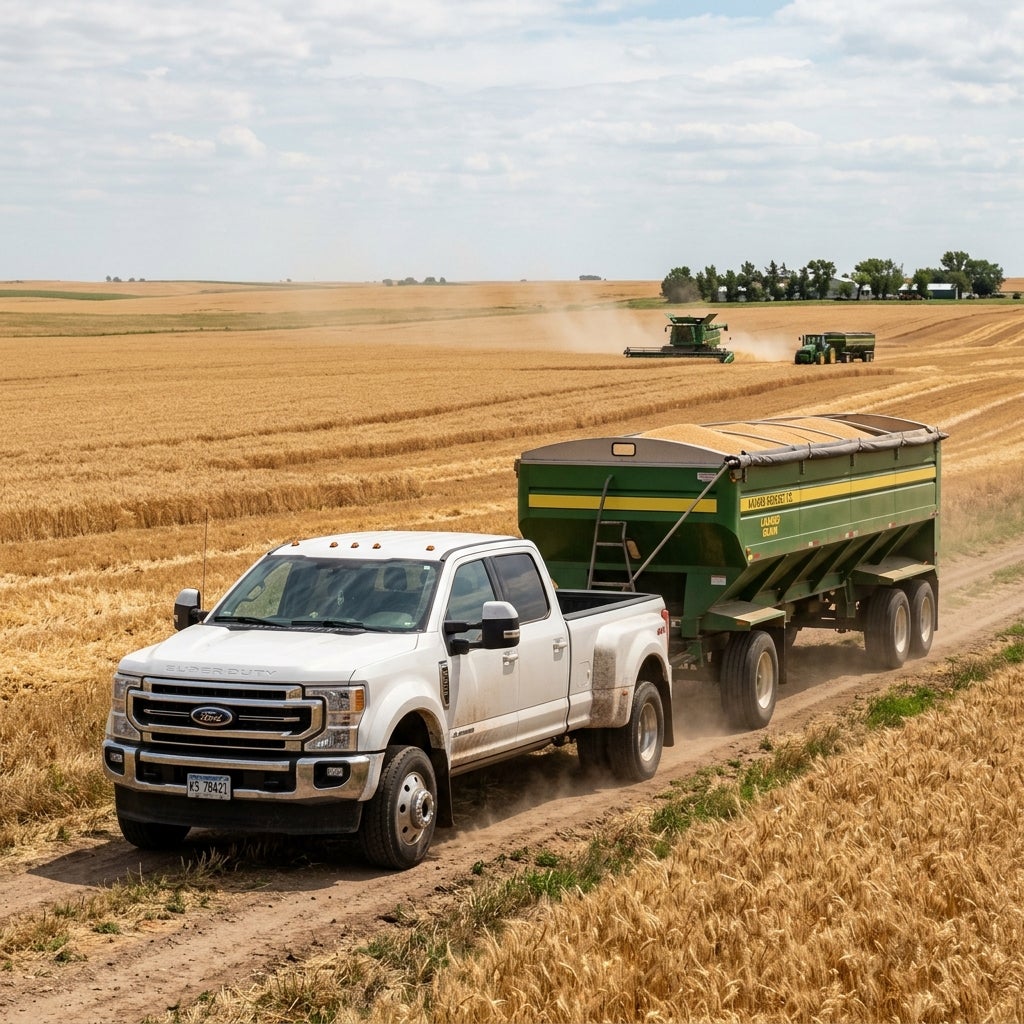
A white Ford Super Duty truck towing a green grain cart filled with wheat along a dirt path in a vast field. (Representative image for illustration purposes only. Actual vehicle may vary based on trim and configuration.)

Mastering the Payload: F-350 Tire Pressure for Heavy Grain Hauling

Mastering the Payload: F-350 Tire Pressure for Heavy Grain Hauling As hot summer days sweep across Kansas this July, local fields around Junction City and throughout Dickinson County are buzzing with harvest activity. Grain producers are working tirelessly to move massive yields from the fields to the local elevators. To get this crucial job done, agricultural operations rely heavily on the heavy-duty power of the Ford F-350 Super Duty. While these trucks are engineered to handle incredible payloads, pulling a fully loaded grain trailer places an immense amount of physical stress directly on your tires. Ensuring they are inflated to the exact right pressure is not just a detail—it is the line between a smooth, profitable harvest and a dangerous, costly roadside delay. When you are hauling heavy grain, the safety of your truck, your cargo, and everyone else on our local rural routes depends on your tire footprint. Proper tire inflation optimizes traction, maintains vehicle stability, ensures responsive braking, and directly protects your suspension components from excessive wear. Our team at Valor Ford understands the unique demands of agricultural hauling, and we want to help you maximize your F-350's capabilities. If you are preparing your truck for a grueling harvest season, it is also a great time to perform a Trade In Evaluation on older fleet vehicles or ensure your current heavy-duty setup is ready to go. Tire pressure is dynamic. It responds directly to external ambient temperatures, speed, and the sheer downforce exerted by heavy tongue weights. In this comprehensive guide, we will dive deep into everything you need to know about setting, managing, and maintaining your F-350's tire pressure when towing loaded grain trailers. Whether you operate a Single Rear Wheel (SRW) or Dual Rear Wheel (DRW) dually setup, understanding the physics of load-and-inflation is key to safeguarding your equipment and protecting your bottom line. What is the recommended tire pressure for a Ford F-350 when hauling heavy grain trailers? For a Ford F-350 tasked with hauling heavy grain trailers, the general recommended tire pressure is 60 to 75 PSI in the front tires and a maximum of 80 PSI in the rear tires (especially under full-load or dually configurations). However, the absolute baseline for your specific truck configuration should always be verified by checking the tire certification label located on your driver-side door jamb. These pressures are calculated assuming you are using original equipment (OE) Load Range E tires. Under a heavy grain payload, your rear tires bear the brunt of the pin weight (for goosenecks) or the tongue weight (for bumper pulls). To support this intense vertical downforce without excessive tire sidewall flexing, the rear tires must be inflated to their maximum recommended capacity—which is typically 80 PSI cold. Keeping the front tires between 60 and 75 PSI preserves proper steering response and keeps the front contact patch balanced, preventing understeer or uneven wear. It is important to remember that these numbers are 'cold' pressures. This means they should be measured before the vehicle has been driven, or at least three hours after it has been parked. Driving generates friction, which heats the air inside the tires and temporarily inflates the pressure reading. If you adjust your tires when they are already hot from a long run to the elevator, you will likely end up underinflating them once they cool down. F-350 Setup Front PSI (Cold) Rear PSI (Cold) Single Rear Wheel (SRW) Empty 60 PSI 65 PSI Single Rear Wheel (SRW) Loaded 65-75 PSI 80 PSI Dual Rear Wheel (DRW) Empty 60 PSI 55-60 PSI Dual Rear Wheel (DRW) Loaded 65-75 PSI 80 PSI Note: Dual Rear Wheel (DRW) trucks can distribute load across four rear tires, allowing for slightly lower rear tire pressures when empty to improve ride comfort. However, when hauling maximum capacity agricultural trailers, both SRW and DRW setups require the rear tires to be at 80 PSI to ensure maximum structural integrity and weight capacity. What is the difference between recommended PSI and max PSI on my truck tire sidewall? One of the most common points of confusion for farmers and fleet operators is the difference between the recommended tire pressure listed on the vehicle's door placard and the maximum PSI stamped directly onto the tire's sidewall. Misunderstanding these two numbers can lead to either dangerous over-inflation or severe under-inflation. The recommended PSI on the door jamb placard is determined by Ford's engineering team. It represents the optimal inflation level for the vehicle's specific weight distribution, suspension tuning, handling characteristics, and braking performance. This recommendation ensures that under normal or maximum load conditions, the tire maintains an ideal contact patch with the road. It prevents the center of the tread from wearing out prematurely while guaranteeing the vehicle rides as comfortably as possible. In contrast, the maximum PSI printed on the tire sidewall is a structural limitation set by the tire manufacturer. It tells you the absolute maximum pressure the tire carcass can safely handle to support its maximum rated load. For standard Load Range E tires, this is typically 80 PSI. You should never exceed this number. When hauling heavy grain trailers, you will often find that the rear recommended pressure matches this maximum limit (80 PSI) because the truck is being pushed to its maximum rear axle weight rating. However, inflating the front tires to the sidewall maximum when it is not needed can cause a harsh ride and reduced steering grip. What is a tire load-and-inflation chart and how do I use it for my F-350? A tire load-and-inflation chart is an industry-standard technical document produced by tire manufacturers (such as common tire manufacturers). It maps out exactly how much weight an individual tire can safely carry at a given inflation pressure. Since actual agricultural loads can vary significantly depending on whether your grain trailer is empty, half-full, or packed to the brim, these charts allow you to dial in your tire pressures with pinpoint accuracy. To utilize these charts effectively, you first need to know the actual weight resting on your truck's axles. The most accurate way to do this is by visiting a local commercial scale in the Dickinson County area (such as a local grain elevator scale or a truck stop scale near Junction City). Drive your loaded F-350 onto the scale so you can get independent weights for your steer axle, drive axle, and trailer axles. Once you have these numbers, divide the drive axle weight by two (for an SRW truck) or by four (for a DRW dually) to determine the exact weight on each individual rear tire. With your individual tire weight in hand, look up your specific tire size and load range on the manufacturer's load-and-inflation table. Find the weight that closely matches your measured load, and the chart will indicate the precise PSI required to support that weight. This prevents you from running a tire that is over-inflated for a lighter-than-expected load (which causes center tread wear) or under-inflated for a heavy load (which leads to catastrophic overheating). If you are unsure how to read these charts or want an expert to inspect your tire wear patterns, our service professionals at Valor Ford are here to help. We can evaluate your truck's current tires, analyze your typical hauling weights, and provide a customized pressure schedule to keep your operations running safely. If you need financing information for a new set of high-capacity commercial tires, please contact our team before visiting our shop. Why Weight Matters: • Prevents tire overheating • Optimizes the contact patch • Reduces drivetrain stress • Improves overall stability • Extends tread life Contact Our Team for Financing Information Should tire pressure be adjusted when towing a gooseneck vs. bumper pull trailer? Yes, the type of trailer connection you use dramatically influences how weight is distributed across your Ford F-350's axles, which in turn dictates how you should manage your tire pressures. Gooseneck and bumper pull configurations apply forces to your truck's chassis in completely different ways. Gooseneck Trailers: A gooseneck hitch places the trailer's pin weight directly over—or slightly ahead of—your F-350's rear axle. Because of this, a substantial portion of the trailer's tongue weight (often 15% to 25% of the total trailer weight) is transferred directly onto the truck's rear tires. This concentrated downward force requires your rear tires to be at their maximum load capacity pressure, typically 80 PSI cold. Because the weight is centered over the axle, it actually helps stabilize the truck's rear end, but it demands maximum structural support from the tire sidewalls to prevent dangerous flexing and heat buildup. Bumper Pull Trailers: A bumper pull grain trailer attaches to the receiver hitch at the very back of the frame, well behind the rear axle. This creates a leverage effect. The tongue weight acts as a pivot, pushing down on the rear hitch while actually lifting some weight off the front steering axle. To counteract this and maintain control, you must use a high-quality weight-distribution hitch. When towing a heavy bumper pull, your rear tires still need to be highly pressurized (often 75-80 PSI) to handle the load, but you must also ensure your front tires are inflated correctly (typically around 65-70 PSI) to maintain steering traction. Since bumper pulls are more prone to sway, maintaining precise pressures on both axles is absolutely vital for highway safety. Is underinflation a common cause of grain trailer tire blowouts? Without a doubt, underinflation is the leading cause of tire blowouts on both towing vehicles and grain trailers. During the time-sensitive rush of harvest, grain trailers are often loaded to their absolute weight limits and driven across rough fields and hot asphalt. When a tire is underinflated, its structural integrity is severely compromised, setting off a chain reaction that frequently ends in a catastrophic blowout. The science behind this is simple: excessive flexing and friction. When air pressure is too low, the tire's sidewalls flex excessively as the wheel rotates under a heavy load. This constant, aggressive flexing generates intense internal heat. Because rubber is an excellent insulator, it cannot easily dissipate this heat. As the temperature rises, the bonds holding the tire's rubber, steel belts, and nylon cords together begin to weaken. Eventually, the tire carcass suffers an internal separation, and the high pressure inside tears through the weakened sidewall, resulting in a sudden blowout at highway speeds. Furthermore, underinflated trailer tires do not tracking straight. They tend to sway, adding significant lateral stress to your Ford F-350's rear suspension and hitch. This sway forces your truck's electronic stability control and braking systems to work overtime to keep the load lined up. A single trailer blowout can cause you to lose control, spill your valuable grain payload, or damage your trailer's axles and fenders—leading to expensive repairs and halting your harvest operations entirely. Keeping both your truck's and your grain trailer's tires fully pressurized is the easiest and most cost-effective insurance policy you can have against harvest-season downtime. Does underinflation significantly increase fuel consumption when towing grain? Yes, underinflated tires act as a constant, hidden drag on your truck's performance, significantly driving up your fuel costs. When you are pulling massive grain loads with a Ford F-350, your engine is already working hard to overcome aerodynamic drag and the heavy inertia of the trailer. If your tires are underinflated, you are adding an immense amount of rolling resistance to that equation. Rolling resistance is the energy required to keep a tire rolling at a consistent speed. An underinflated tire sags, which increases its 'footprint' on the road. While a larger footprint might sound like it offers more grip, it actually increases the friction between the rubber and the asphalt. To overcome this extra drag, your truck's Power Stroke Turbo Diesel or gas engine must burn more fuel simply to maintain highway speeds. Studies show that for every 1 PSI your tires are underinflated below their recommended level, you lose roughly 0.2% to 0.3% in fuel efficiency. If your rear tires are sitting at 60 PSI instead of the recommended 80 PSI, you are looking at a direct 4% to 6% drop in fuel economy. When you are making multiple long-distance runs from the fields of Dickinson County to regional grain elevators day after day, that extra fuel consumption adds up to hundreds of dollars in wasted operating costs over the course of a single harvest. Is maintaining correct tire pressure on my F-350 and grain trailer cost-effective in the long run? Absolutely. Treating tire pressure management as a daily priority is one of the most high-return investments you can make for your farm's bottom line. Heavy-duty commercial tires for a Ford F-350 represent a significant capital expense. When you run tires at incorrect pressures, you dramatically accelerate tread wear. Underinflation causes the outer edges of the tire to wear out prematurely, while overinflation wears out the center strip. Maintaining correct pressures ensures the tire wears evenly across its entire width, potentially extending its lifespan by thousands of miles. Beyond tire replacement costs, proper tire management prevents unnecessary wear on your truck's steering and suspension components. Tires act as the primary dampening system for your truck. When they are incorrectly inflated, they cannot properly absorb road vibrations, transferring those harsh impacts directly into your ball joints, tie rods, shocks, and wheel bearings. This leads to premature suspension failure and expensive mechanical repairs. To help monitor your setup, Valor Ford's parts department can help you source heavy-duty aftermarket Tire Pressure Monitoring Systems (TPMS) designed to monitor both your truck and your trailer's tires in real time from the cab. Investing in these preventive tools saves you from costly downtime and expensive repairs down the road. If you need replacement parts or monitoring equipment, we encourage you to Order Genuine Ford Parts directly through our website. Order OEM Ford Parts How local Dickinson County farm routes demand precise F-350 tire management Driving conditions in the local Junction City and Dickinson County areas pose unique challenges for heavy-duty hauling. Farmers regularly transition from soft, uneven dirt or gravel fields straight onto high-speed asphalt highways. These rapid surface changes demand highly precise tire pressure management to ensure safety and traction on every stretch of your route. When your F-350 is inside a soft, muddy field, a slightly larger tire contact patch is beneficial to prevent sinking and maintain traction. However, once you load up and pull onto paved county roads or highways like US-77, running underinflated tires is incredibly dangerous. The hard, hot asphalt quickly drives up internal tire temperatures, and the lack of proper inflation pressure will cause the loaded trailer to sway, making high-speed handling unstable. To safely navigate these transitions, you must maintain a tire pressure setting that handles both environments effectively. Running your rear tires at 80 PSI cold ensures that when you hit the highway with a heavy load, your truck is perfectly balanced, stable, and ready to handle sudden stops. Don't let a poorly managed tire put your harvest at risk. A quick pre-haul tire checklist for Junction City grain producers 1. Check Pressures Cold Always measure your tire pressure first thing in the morning, before the truck has been driven or exposed to direct, hot sunlight. This gives you the most accurate baseline reading. 2. Inspect Valve Stems Heavy agricultural dust and mud can clog valve stems. Ensure all tires have high-quality, sealing metal valve caps to prevent slow, microscopic air leaks during long hauls. 3. Search for Dry Rot & Damage Farm equipment often sits parked for long periods. Inspect your truck and trailer tires for dry rot, cracks, and sidewall cuts caused by sharp crop stubble or rocky field entrances. 4. Verify Trailer Tire Pressure Never forget the trailer! Grain trailer tires (ST or LT rated) must also be inflated to their maximum recommended PSI to support the intense shifting weight of the grain. 5. Calibrate Your TPMS After adjusting your pressures for a heavy load, calibrate your Ford F-350's Tire Pressure Monitoring System through the SYNC infotainment screen so it recognizes the new baseline pressures. 6. Confirm Load Ratings Ensure both your truck and trailer tires have matching load capacities. Never mix load ranges on the same axle, as this will lead to highly unstable handling. Get professional heavy-duty truck service and tire accessories at Valor Ford At Valor Ford, we take immense pride in supporting our local Junction City agricultural community and the military families at nearby Fort Riley. We know that when harvest season arrives, you don't have time to waste on tire failures or mechanical issues. Our state-of-the-art service department is fully equipped to handle heavy-duty trucks, offering specialized commercial tire replacements, high-capacity alignments, suspension inspections, and professional towing setup advice. Whether you need a new set of rugged, load-rated tires for your F-350, a commercial-grade pressure gauge, or a full safety inspection before you hook up your grain trailer, our factory-trained technicians are here to help. We stock a wide selection of genuine OEM parts and heavy-duty tire brands engineered specifically for the extreme demands of agricultural work. To make your maintenance as seamless as possible, you can easily Schedule Pickup and Delivery Service and let us take care of your truck while you focus on the fields. Schedule Pickup & Delivery Service Schedule your F-350 heavy-duty tire inspection at Valor Ford today If you're noticing a warning light or want to stay ahead of tire issues, address your truck's tire needs. Ensure your Ford F-350 is fully prepared to handle the intense demands of the summer grain harvest. Our dedicated team is standing by to inspect your tread depth, analyze your wear patterns, verify your load ratings, and set your tires to the exact pressures needed for safe, efficient hauling. Schedule Ford Service Today, or stop by our dealership in Junction City to keep your harvest moving forward without interruption. For personalized service or to speak directly with one of our truck service specialists, please Call us at (785) 238-5114. If you are ready to visit us in person, you can easily Get Directions to Valor Ford and find our dealership located at 1825 Goldenbelt Blvd, Junction City, KS 66441. We look forward to helping you keep your harvest moving safely and efficiently. Schedule Ford Service Today