Blog / Buying Guides

Key Takeaway: How Vehicle Owners in Junction City Can Maximize Trade-In Appraisal Value

Key Takeaway: How Vehicle Owners in Junction City Can Maximize Trade-In Appraisal Value

Key Takeaway: How Vehicle Owners in Junction City Can Maximize Trade-In Appraisal Value

Maximizing your vehicle's trade-in appraisal value requires a proactive approach before you step onto the dealership lot. For vehicle owners in Junction City, Fort Riley, and throughout Dickinson County, unlocking the full equity in your current vehicle is the fastest way to help reduce your overall cost on a new model. The core secret to achieving top-tier appraisal offers lies in presentation, documentation, timing, and leveraging competitive market insights. By executing professional-level detailing, compiling complete maintenance records, resolving minor aesthetic imperfections, timing your trade alongside new model year arrival clearances, and utilizing accurate online evaluation tools before visiting Valor Ford, you position your vehicle as a premium inventory asset rather than an average trade-in.
At Valor Ford in Junction City, KS, our team evaluates hundreds of pre-owned vehicles every month. We look far beyond basic odometer mileage—we evaluate real-time regional demand, overall vehicle reconditioning costs, and original factory trim options. When a vehicle arrives meticulously prepared with a clear service history, our appraisal team can offer top dollar because the vehicle requires minimal reconditioning prior to joining our pre-owned showroom. To discuss your current vehicle's estimated equity with our appraisal specialists today, feel free to Call us at (785) 238-5114 or get step-by-step driving directions to our dealership by clicking Get Directions to Valor Ford.
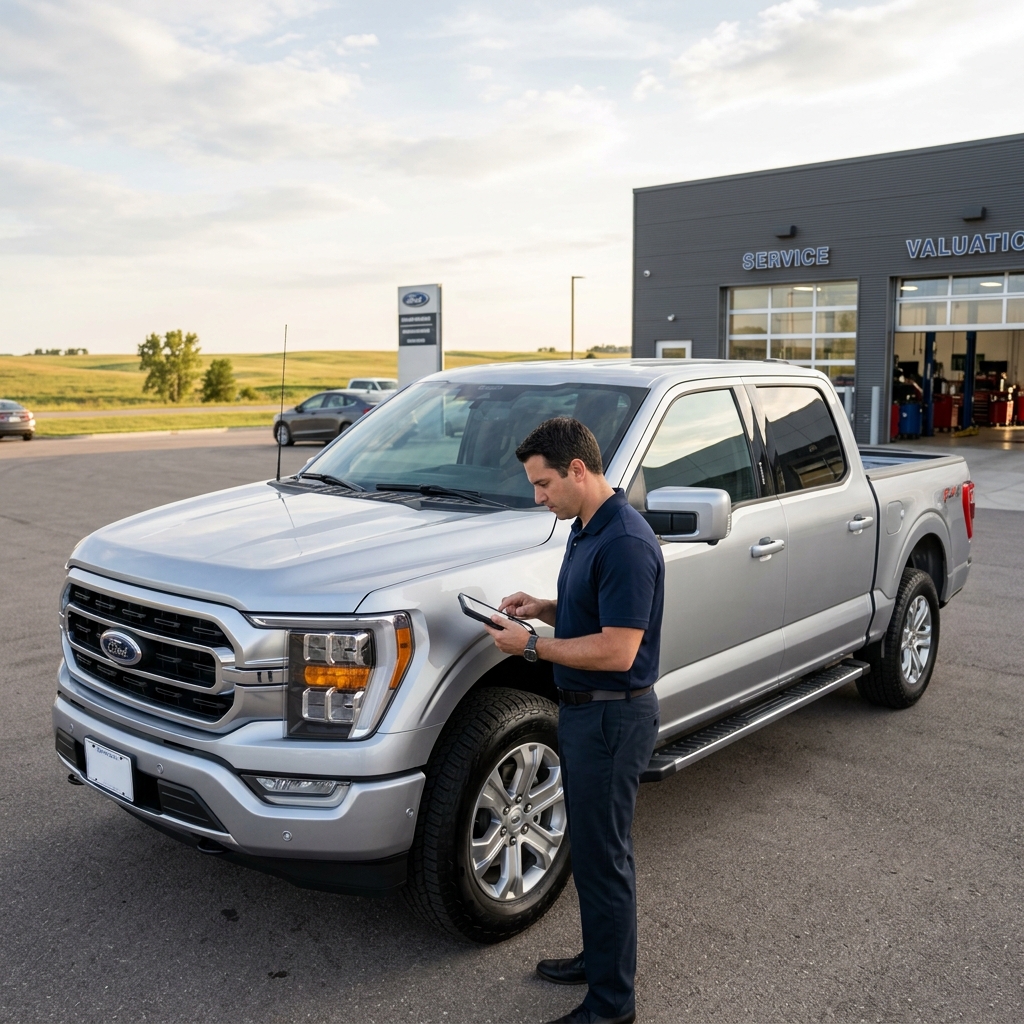
Service advisor using a tablet while standing next to a silver Ford F-150 truck outside a dealership service bay. (Representative image for illustration purposes only. Actual vehicle may vary based on trim and configuration.)

What Core Factors Determine Your Vehicle's Trade-In Appraisal Value?

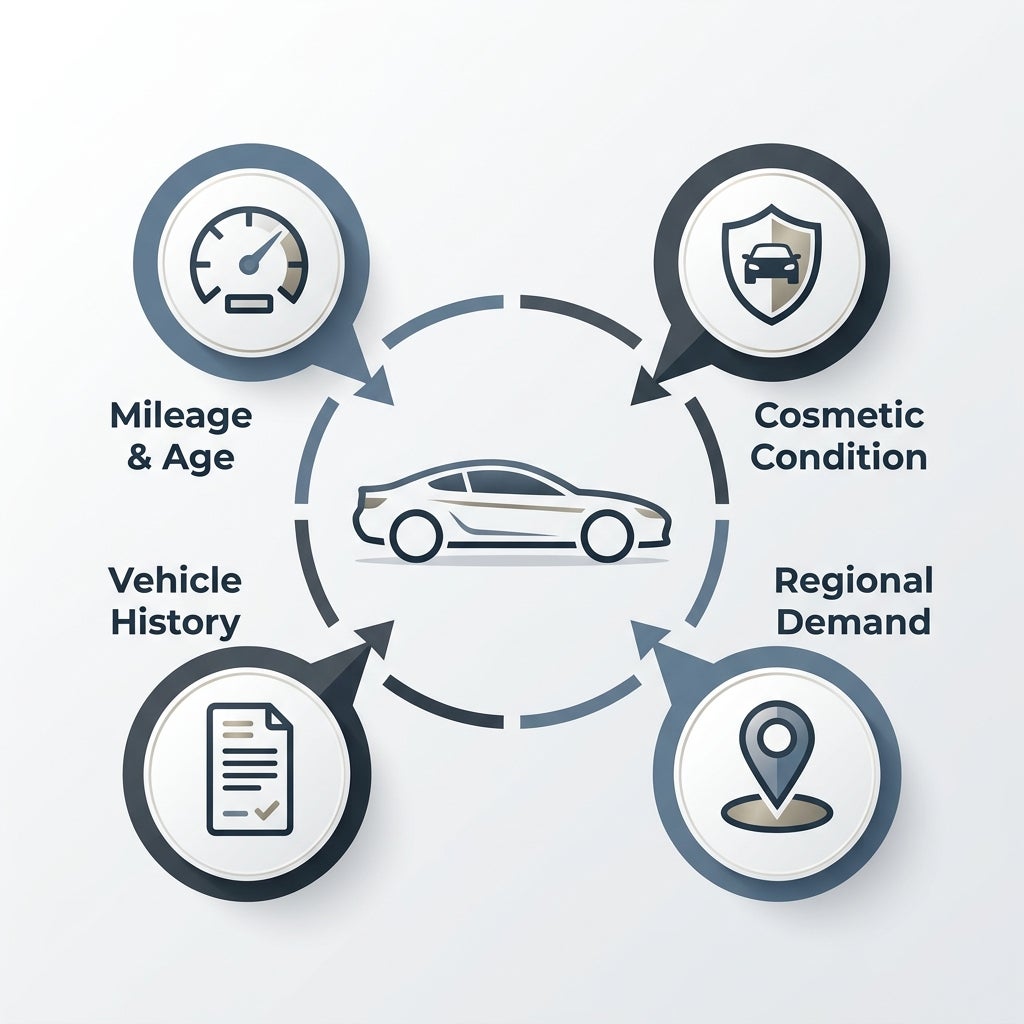
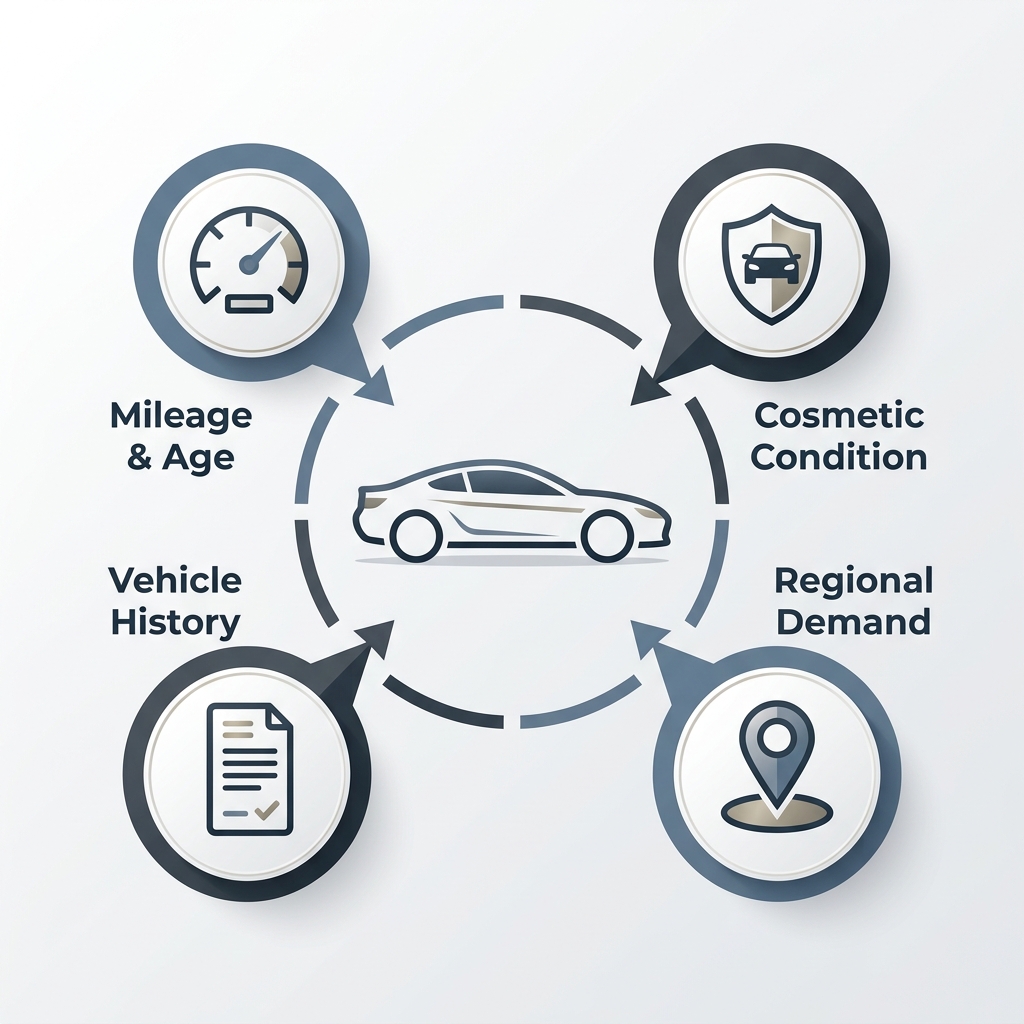
Automated trade valuation algorithms and professional dealership appraisers look at key objective metrics when establishing a vehicle's baseline market value. Odometer reading is primary: lower-mileage vehicles retain a higher percentage of their original MSRP because key mechanical components have experienced less wear and tear. However, mileage is evaluated relative to the vehicle's age—a 3-year-old vehicle with 30,000 miles commands a premium compared to one with 60,000 miles.
Vehicle history reports (such as CARFAX® or AutoCheck®) play a critical role in appraisal formulas. A clean, single-owner history with no recorded accidents, structural repairs, or frame damage commands maximum resale value. Regional market demand across Dickinson County and surrounding military communities around Fort Riley also heavily sways valuation; reliable four-wheel-drive trucks, versatile SUVs, and fuel-efficient commuters experience intense local buyer interest, allowing dealers to pay higher trade values.
Physical cosmetic condition directly influences the net reconditioning expense a dealer must deduct from the gross appraisal. Dents, paint scratches, interior leather tears, worn tire tread, and stained carpeting require reconditioning resources before resale. Conversely, vehicles in mint condition preserve full equity.
Factory trim level, optional powertrain packages, and advanced technological equipment like premium audio, towing packages, and active safety suites significantly elevate real-world appraisal benchmarks over base models. When trading in, highlighting these high-tier features helps ensure they are fully calculated during evaluation.
Infographic showing four car valuation factors: Mileage & Age, Cosmetic Condition, Vehicle History, and Regional Demand. (Representative image for illustration purposes only. Actual vehicle may vary based on trim and configuration.)

Why Pre-Appraisal Detailing and Small Fixes Deliver High Returns

Deep Interior Cleaning

First impressions are powerful during professional appraisals. Spending a few dollars or a weekend afternoon thoroughly vacuuming, shampooing carpets, wiping down door panels, cleaning leather seating, and eliminating lingering pet or smoke odors creates an immediate perception of meticulous maintenance. Appraisers equate a spotless cabin with responsible ownership.

Cosmetic & Glass Repair

Minor paint touch-ups and low-cost DIY fixes offer incredible return on investment. Repairing minor windshield chips before they expand into full cracks, utilizing touch-up paint pens on small door dings, and replacing burnt-out exterior light bulbs prevents the dealership appraiser from taking major standard reconditioning deductions.

Headlight & Tech Polish

Restoring hazy or yellowed plastic headlight lenses with an inexpensive restoration kit instantly refreshes the front end of an older vehicle. Removing personal items, window stickers, and clearing touchscreen fingerprint smudges further projects pride of ownership, directly translating into higher appraisal offers.

How Documented Maintenance Records Protect Your Vehicle’s Equity

Nothing instills confidence in a pre-owned vehicle appraiser like a organized binder of service invoices. Documented maintenance logs serve as verifiable proof that your vehicle was cared for strictly according to manufacturer specifications. Consistent records of routine oil changes, transmission fluid flushes, brake pad replacements, spark plug renewals, and tire rotations eliminate mechanical ambiguity.
When a buyer or appraiser sees documented routine service, they know the engine and drivetrain are less prone to hidden mechanical failures. This allows Valor Ford to market the car with confidence, passing that monetary equity directly back to you in your trade-in offer. You can easily Schedule Ford Service Today or utilize our convenient Schedule Pickup and Delivery Service to keep your records current.
In addition to fluid changes, major mileage-interval maintenance—such as timing belt replacements, transfer case fluid service on 4x4 models, and cooling system flushes—adds substantial measurable value. Presenting receipt proof that expensive milestone services were recently performed helps ensure those costs aren't deducted from your trade figure.
Using genuine OEM parts during repairs also preserves trade value. If you prefer performing maintenance yourself, always keep your parts receipts. You can Order Genuine Ford Parts directly through Valor Ford to ensure factory-certified components protect your long-term vehicle equity.

Strategic Timing: Prior-Model-Year Clearances and Seasonal Demand Shifts

Timing your trade-in strategically around dealership inventory cycles can significantly impact your final financial package. How does Valor Ford typically price and incentivize remaining prior-model-year Ford inventory during new model year arrival and inventory transition periods in Junction City, KS? When new 2027 Ford inventory begins arriving on our lot during fall clearance events, Valor Ford combines current offers and trade-in values to make room for incoming models. During these transition windows, pre-owned trade values are often bolstered by bonus trade-in allowances designed to help vehicle owners upgrade seamlessly into remaining prior-model-year vehicles.
Furthermore, localized seasonal demand shifts in Kansas influence vehicle trade equity. As autumn transitions toward winter in Dickinson County, demand for four-wheel-drive trucks, rugged SUVs, and all-weather capability spikes dramatically across Junction City and Fort Riley. Trading in a 4x4 pickup truck or SUV right before weather changes occur aligns perfectly with heightened buyer demand, maximizing your trade offer.
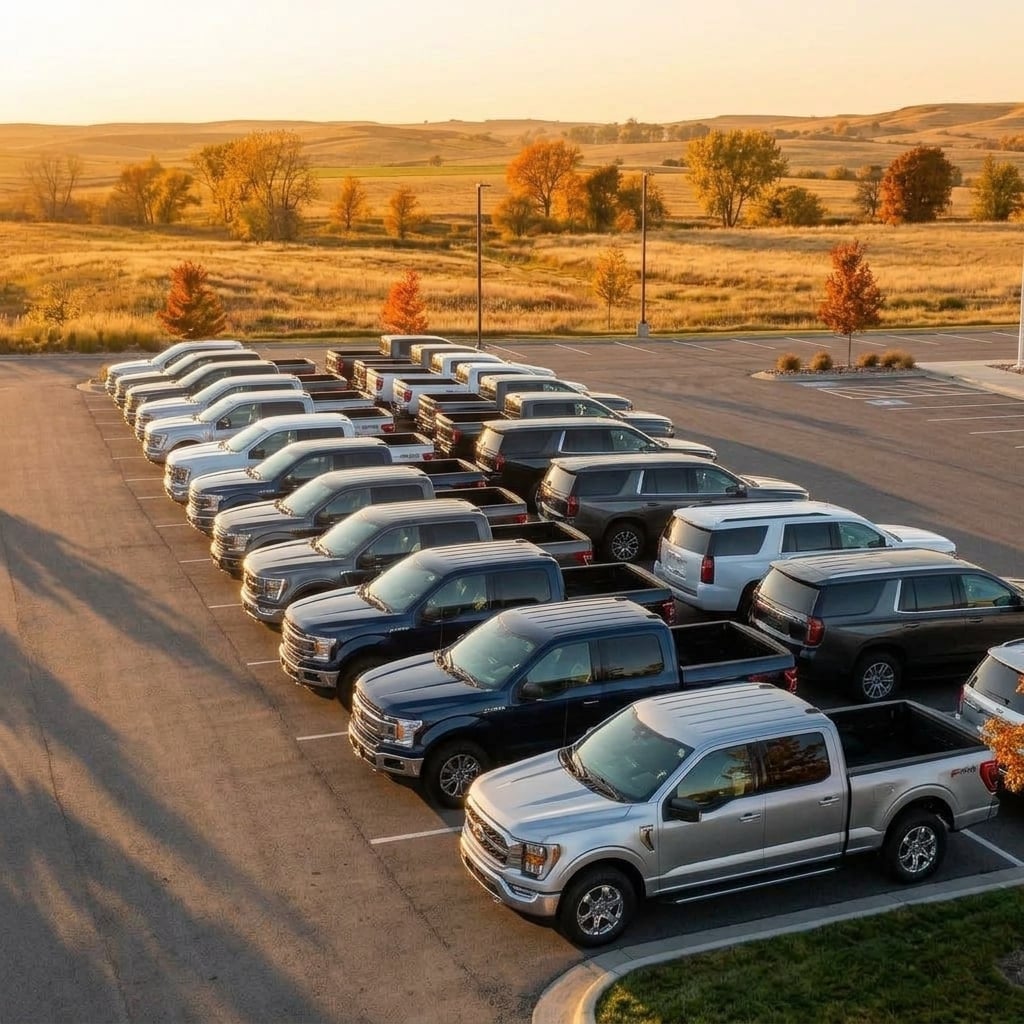
A wide-angle exterior photograph of a neatly arranged lineup of modern pickup trucks and full-size SUVs parked on a spacious outdoor automotive dealership lot. The vehicles feature clean silver, deep navy, and charcoal gray finishes, glistening under crisp early autumn morning sunlight. The background features a modest, contemporary dealership showroom building with large glass windows, set against the flat, gently rolling plains of central Kansas under a clear blue sky. Soft golden light highlights the pristine body panels and polished wheels of the vehicles set in diagonal alignment. The mood is clean, professional, and inviting, capturing a seasonal dealership clearance setting without any text, logos, or license plates. (Representative image for illustration purposes only. Actual vehicle may vary based on trim and configuration.)

Can You Trade In a Leased Vehicle Before the Lease Term Ends?

A common question among vehicle owners is: Can you trade in a leased vehicle before the lease term ends? The short answer is yes. Drivers leasing a vehicle are not obligated to wait until the final contract date to exit their agreement. In modern automotive markets, leased vehicles frequently hold positive equity—meaning the market value of the vehicle is higher than the residual contract payoff amount established at the start of the lease.
To trade in an active lease, Valor Ford requests an official early payoff quote from your leasing bank. We then conduct a thorough trade-in appraisal of your vehicle. If your vehicle's appraised market value exceeds the lease buyout price, that difference represents positive equity that belongs directly to you.
You can apply this positive lease equity directly toward the purchase or lease down payment on a new Ford model at Valor Ford, effectively reducing your overall monthly payments. Early lease trade-ins allow you to skip potential turn-in disposition fees and mileage overage penalties while rolling smoothly into modern auto tech.
Our finance specialists regularly assist military personnel stationed at Fort Riley and local drivers with early lease buyouts and roll-overs. We coordinate directly with Ford Credit or third-party leasing institutions to handle all title assignments, lien satisfactions, and vehicle transfers on your behalf.

Comparing High-Equity Truck Upgrades: 2027 Ford F-150 vs. Silverado 1500

Full-size pickup trucks retain some of the highest trade-in equity on the pre-owned market. When considering trading your current pickup toward a new half-ton truck, comparing capabilities highlights why the Ford F-150 continues to hold superior long-term resale value. Which truck offers higher maximum towing capacity, the F-150 or Silverado 1500? What are the towing capacity and payload specifications for the 2027 Ford F-150? The table and analysis below break down key performance metrics.

Specification Metric

2027 Ford F-150 (3.5L EcoBoost / PowerBoost)

Chevrolet Silverado 1500 (6.2L V8 / Duramax)

Maximum Towing Capacity

Up to 13,500 lbs

Up to 13,300 lbs

Maximum Payload Capacity

Up to 2,445 lbs

Up to 2,260 lbs

Available Hybrid Powertrain

3.5L PowerBoostâ„¢ Full Hybrid (430 hp / 570 lb-ft)

None Available

On-Board Mobile Power

Pro Power Onboard (up to 7.2 kW outlet power)

Limited standard outlets

F-150 Capability Lead

When comparing half-ton workhorses, the 2027 Ford F-150 offers higher maximum towing capacity (up to 13,500 lbs) and superior payload limits (up to 2,445 lbs) compared to the Chevrolet Silverado 1500. Interested buyers can explore full configuration details via our Research Ford F-150 resource guide.

PowerBoost Equity Advantage

The F-150's exclusive 3.5L PowerBoostâ„¢ Full Hybrid powertrain delivers massive torque alongside unmatched job site utility with Pro Power Onboard. High fuel efficiency combined with extreme towing resilience ensures F-150 models retain top tier value on trade-in appraisal day.

Heavy Duty Alternatives

For truck owners needing commercial hauling performance beyond half-ton limits, trading toward a Super Duty delivers immense towing capacity. Learn more by viewing our Research Ford F-250 page or checking out the Research Ford F-250 Super Duty specs.
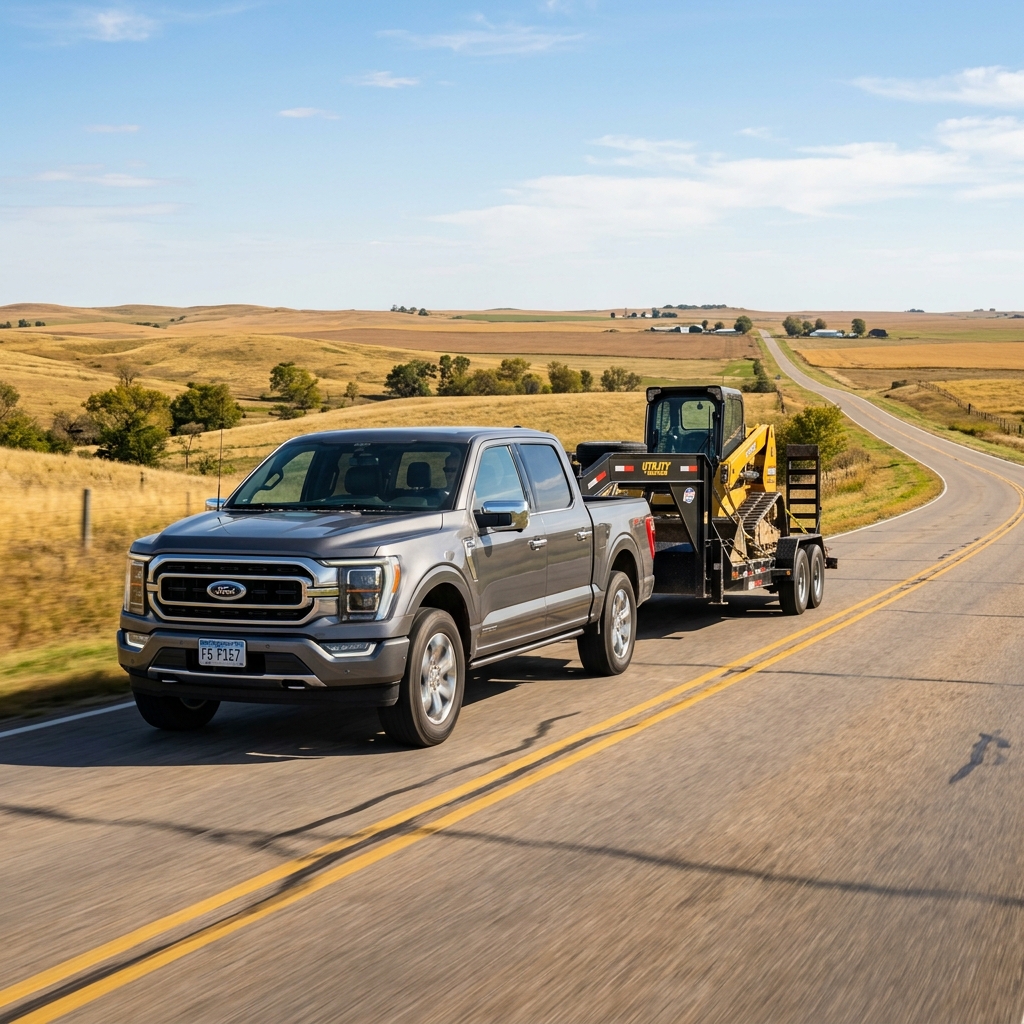
Grey Ford F-150 truck towing a trailer with a yellow skid steer loader down a rural two-lane road. (Representative image for illustration purposes only. Actual vehicle may vary based on trim and configuration.)

New Model Year Arrival Guide: Upgrading to the 2027 Ford Explorer & F-150

As new vehicles arrive at Valor Ford, family SUV shoppers often ask: How much does the 2027 Ford Explorer cost by trim level? The 2027 Ford Explorer lineup starts with the well-equipped Active trim at an estimated starting MSRP around $39,755, moving up to the sporty ST-Line (~$44,500), the rugged off-road Tremor (~$46,900), the luxurious Platinum (~$52,250), and the high-performance Explorer ST (~$55,605). Each trim level brings premium technology and family safety upgrades.
You can dive deeper into trim specifications and interior dimensions using our Research Ford Explorer guide to choose the ideal SUV for your family's needs.
What standard driver-assist features are included in Ford Co-Pilot360 on 2027 models? Every 2027 Ford Explorer and F-150 comes standard with Ford Co-Pilot360 Technology, providing a comprehensive safety suite: Pre-Collision Assist with Automatic Emergency Braking (AEB), BLIS® (Blind Spot Information System) with Cross-Traffic Alert, Lane-Keeping System, Auto High-Beam Headlamps, and Rear View Camera.
Higher trims add Ford BlueCruise hands-free highway driving capability, Evasive Steering Assist, and Adaptive Cruise Control with Stop-and-Go. Upgrading your trade-in toward a 2027 model can enhance your family's confidence and peace of mind on Kansas highways.

Practical Pre-Appraisal Checklist Before Visiting the Dealership

1. Ownership Paperwork

Bring your clear vehicle title (if paid in full) or your current lender payoff statement showing loan balance and account number. Include valid state registration and proof of auto insurance.

2. Keys & Accessories

Gather all original factory equipment: both master key fobs, owner's manuals, navigation SD cards, factory floor mats, cargo covers, and wheel lock keys. Missing fobs cost up to $300+ to replace.

3. Tech & Account Reset

Unpair bluetooth phones, erase home garage door opener codes, perform a master reset on SYNC® / infotainment screens, and remove toll transponders and personal belongings from all storage bins.
Vehicle certificate of title, service records, black notebook, pen, and two key fobs on a wooden desk. (Representative image for illustration purposes only. Actual vehicle may vary based on trim and configuration.)

Navigating Kansas Trade-In Tax Savings in Dickinson County

One of the greatest hidden financial benefits of trading in your vehicle directly at a dealership like Valor Ford rather than selling it outright via private sale is the state of Kansas sales tax offset. In Kansas, state and local sales taxes apply ONLY to the net price difference between your new vehicle purchase price and your trade-in appraisal allowance.
When you sell a vehicle privately, you receive no sales tax credit toward your replacement purchase. Trading in directly with Valor Ford keeps those tax savings right in your bank account.
Consider this real-world financial example: If you purchase a new vehicle for $45,000 and receive a trade-in appraisal value of $25,000 on your existing car, you are taxed ONLY on the remaining $20,000 balance. At a combined state and Dickinson County / Junction City sales tax rate of approximately 9.75%, paying tax on $20,000 ($1,950) versus $45,000 ($4,387) saves you $2,437 in direct out-of-pocket tax costs!
This substantial tax savings effectively increases your trade-in's net valuation value by thousands of dollars, making dealership trade-ins the smartest financial strategy for local Kansas buyers.

Online Trade Valuation vs. In-Person Inspection: What to Expect

Starting your trade journey online provides a fast, hassle-free estimated valuation range based on current market auction trends and regional inventory pricing. Our digital valuation portal requires just basic details—VIN, mileage, trim level, and overall condition rating—to generate an initial range in seconds.
While online tools offer excellent starting baselines, transitioning from a digital estimate to a firm, written purchase offer requires a brief in-person physical appraisal at our Junction City showroom.
During the on-site evaluation, our certified appraisal team conducts a 15-minute multi-point inspection. We check tire tread depth with precision gauges, scan for diagnostic trouble codes, verify smooth transmission shifting during a quick road test, and inspect undercarriage integrity.
Once completed, we present a firm purchase offer. You can apply that cash equity toward buying a vehicle from our Browse Used Inventory, test driving options when you Shop New Ford Bronco Inventory, or checking out models via Research Ford Maverick or Research Ford Mustang.

Maximize Your Vehicle's Trade Value Today at Valor Ford in Junction City

Explore your trade-in options when upgrading your ride. Whether you drive a truck, SUV, crossover, or sedan, the team at Valor Ford is committed to offering competitive, market-leading trade-in appraisal offers for drivers across Junction City, Fort Riley, and Dickinson County. Take advantage of Kansas sales tax savings, lucrative new model year offers, and our transparent valuation process.
Ready to get started? Fill out our quick online evaluation form for an instant Trade In Evaluation, browse our latest inventory online, or visit our dealership at 1825 Goldenbelt Blvd, Junction City, KS 66441 to experience the Valor Ford difference today!
Valor Automotive logo featuring a silver shield with a red 'V' and white 'A' monogram above the company name.

Posted in:

Related Posts

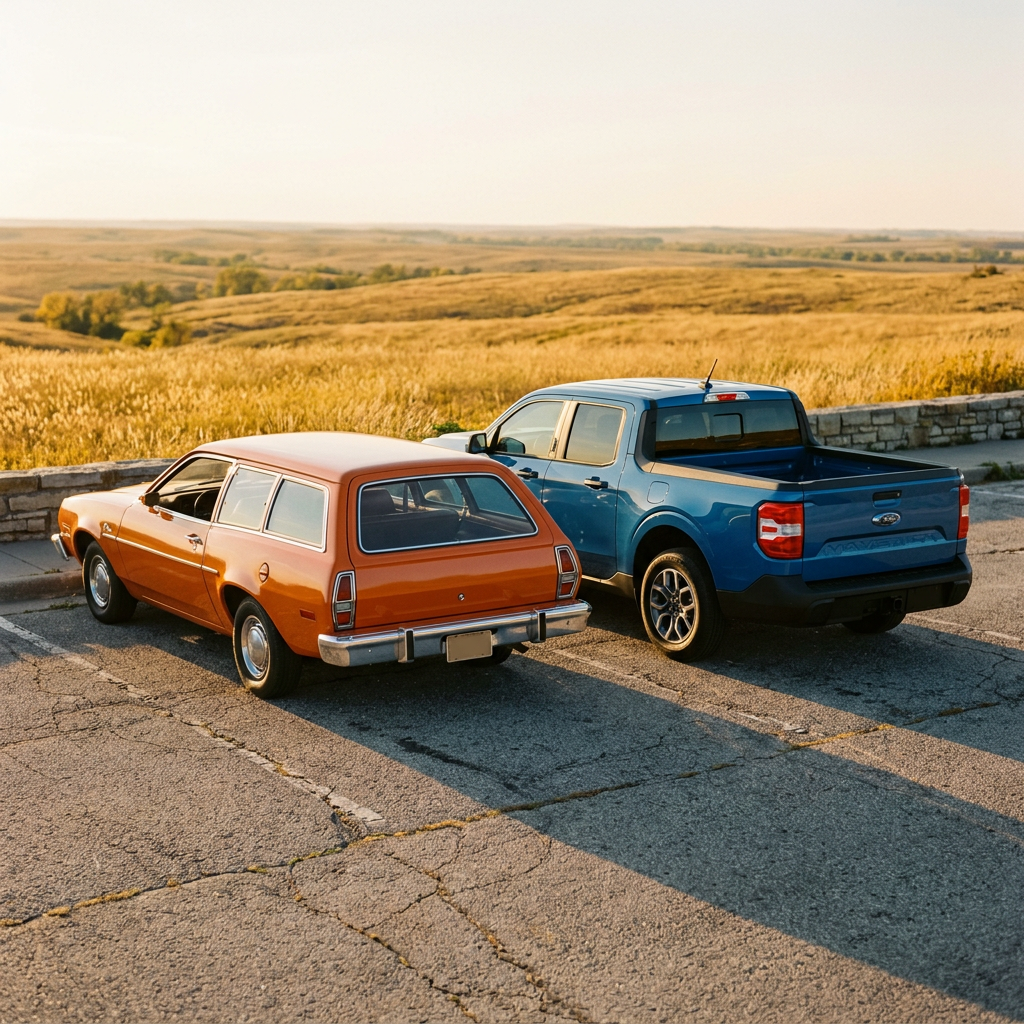
How Ford Redefined Compact Utility from the 1970s Pinto to the Modern Maverick

How Ford Redefined Compact Utility from the 1970s Pinto to the Modern Maverick

How Ford Redefined Compact Utility from the 1970s Pinto to the Modern Maverick For more than five decades, American drivers have sought the elusive sweet spot of automotive engineering: maximum practical utility packaged within an affordable, fuel-efficient, and easy-to-park footprint. Long before the modern crossover boom dominated suburban driveways, Ford Motor Company pioneered the concept of right-sized utility for everyday Americans. In the early 1970s, as rising gas prices and changing suburban lifestyles forced a re-evaluation of massive full-size sedans, Ford introduced the subcompact Pinto—later expanding its practical appeal with the popular Pinto Cruising Wagon. That early experiment proved that commuters, young families, and weekend tinkerers did not always require a heavy-duty work vehicle to fulfill their daily errands and adventure needs. Fast forward to today, and Ford has completely redefined the segment once again with the revolutionary Ford Maverick. Built on Ford's advanced unibody C2 architecture, the modern Maverick bridges the historical gap between frugal passenger economy cars and full-capability pickup trucks. Delivering up to 1,500 lbs of standard payload capacity, an available target-busting 42 MPG city hybrid powertrain, and a genius 54.4-inch FLEXBED™ cargo system, the Maverick offers genuine truck capability without forcing drivers into a massive full-size frame or a hefty fuel bill. For daily commuters traveling along Interstate 70 in Kansas, military service members stationed nearby at Fort Riley, and local DIY enthusiasts across Dickinson and Geary counties, the Maverick represents the ultimate evolution of Ford's small-vehicle engineering heritage. By blending lightweight car-like handling with true light-duty utility, Ford has delivered a vehicle that honors its value-focused ancestors while meeting every demand of modern 21st-century life. At Valor Ford in Junction City, we take pride in connecting local drivers with this legendary lineage of American innovation. How Did Ford Transition from Compact Vehicles Like the Pinto to the Modern Maverick Compact Truck? The journey from the subcompact 1970s Ford Pinto to the high-tech Ford Maverick of today is a masterclass in reading customer demand and engineering trends. In 1971, Ford introduced the Pinto to battle incoming overseas imports. Realizing that American drivers needed more cargo flexibility, Ford added the Pinto Wagon and the iconic Pinto Cruising Wagon—featuring distinctive bubble side windows and flipped-down rear seats for hauling gear, tools, and sports equipment. As the 1980s approached, Ford evolved its small-vehicle strategy with the front-wheel-drive Escort and the original body-on-frame Ford Ranger compact pickup. The Ranger served as the backbone of small truck utility for three decades, appealing to contractors and homesteaders who wanted rugged durability without the footprint of an F-150. However, as midsize trucks steadily grew larger, heavier, and more expensive over the 2000s and 2010s, a wide void emerged in the marketplace: urban drivers and budget-conscious buyers were left without an affordable, fuel-efficient utility vehicle with an open cargo bed. To solve this gap, Ford leveraged its unibody crossover technology to create the Maverick. By utilizing a rigid monocoque body structure rather than a traditional heavy steel frame, Ford eliminated thousands of pounds of unnecessary mass while maintaining exceptional structural integrity. The result is a seamless lineage: from the budget wagon practicality of the 1970s to a versatile modern compact truck engineered specifically for modern everyday lifestyles. Whether you are hauling hardware supplies home in Junction City or moving across base at Fort Riley, the modern Maverick represents the pinnacle of five decades of compact utility development. What Is the Maximum Payload Capacity of the Ford Maverick for Everyday Work and Hauling? Despite its car-like comfort and nimble footprint, the Ford Maverick is built to handle serious work. Every standard Ford Maverick model comes equipped with an impressive 1,500-lb maximum payload capacity. To put that in perspective, 1,500 pounds allows you to comfortably carry roughly 37 bags of 40-lb bags of concrete, a full bed of mulch for spring landscaping in Dickinson County, or all the heavy gear, footlockers, and field supplies needed for military deployments at Fort Riley. Engineers achieved this capability by optimizing the rear suspension layout and reinforcing high-stress load zones along the unibody frame structure. Compared to classic compact passenger cars or station wagons of yesteryear—which suffered under heavy rear axle loads—the Maverick maintains level ride height, confident braking, and crisp steering response even when loaded close to its payload rating. In addition to payload strength, when properly equipped with the available 2.0L EcoBoost® engine and 4K Tow Package, the Maverick boasts up to 4,000 lbs of conventional towing capacity. That is enough grunt to pull pop-up campers, personal watercraft bound for Milford Lake, or utility trailers loaded with lawn equipment. The table below demonstrates how the Maverick compares to traditional expectations in the small vehicle category: Capability Metric 1970s Pinto Wagon (Historical) 2026 Ford Maverick Standard 2026 Maverick EcoBoost (4K Tow) Standard Payload Rating Approx. 750 lbs 1,500 lbs 1,500 lbs Maximum Towing Capacity Approx. 1,000 lbs 2,000 lbs 4,000 lbs Bed / Cargo Volume 30.5 cu ft (Enclosed) 33.3 cu ft (Open Bed) 33.3 cu ft (Open Bed) Primary Architecture Rear-Wheel Drive Unibody Car Front/AWD Unibody Truck Platform Front/AWD Unibody Truck Platform What Are the Estimated Annual Fuel Savings of the Maverick Hybrid vs a V6 Truck? City Efficiency Breakthrough The standard 2.5L Hybrid engine in the Ford Maverick delivers an EPA-estimated 42 MPG in the city. Combined with regenerative braking, stop-and-go commuting through Junction City or Manhattan consumes a fraction of the fuel used by traditional gas trucks. Traditional V6 Comparison Traditional midsize and full-size trucks equipped with V6 engines typically average between 18 and 20 MPG combined. Driving 15,000 miles per year in a 19 MPG vehicle requires over 789 gallons of gasoline annually. Real Financial Savings By comparison, a Maverick Hybrid driving 15,000 miles uses only around 405 gallons annually. At average gas prices, Kansas drivers can easily pocket $1,000 to $1,500 every single year in fuel savings alone while enjoying over 500 miles of range per tank. Upgrading to a new fuel-efficient Maverick from an older gas-guzzling vehicle is easier than ever. Evaluate what your current car or truck is worth today with our quick online assessment. Trade In Evaluation Is All-Wheel Drive Available with the Ford Maverick Hybrid Engine? One of the most frequent questions we receive from northeastern Kansas drivers is whether they can combine hybrid fuel economy with all-weather traction. The answer is a resounding yes! Ford listened directly to customer feedback and updated the powertrain lineup to make Intelligent All-Wheel Drive (AWD) available directly with the 2.5L Hybrid powertrain. In northeastern Kansas, winter weather can change in an instant. From icy mornings on I-70 to slick gravel backroads across Dickinson County, the Maverick Hybrid AWD system continuously monitors road conditions and wheel slippage. It seamlessly shifts torque from the front wheels to the rear wheels in milliseconds when extra stability is needed. This technology gives local drivers the ultimate combination: hybrid efficiency during daily commutes into Junction City or Manhattan, paired with total confidence during snowy Midwest winters or rainy mud season. Is the Ford Maverick Easier to Park Than a Midsize Truck in Tight Urban and Military Base Lots? Navigating packed parking structures, narrow residential garages, or crowded parking lots around Fort Riley can be a stressful chore in a modern full-size or heavy-duty pickup truck. With overall lengths often exceeding 230 inches, larger trucks require multi-point turns and tight maneuvers just to center inside standard parking stalls. The Ford Maverick measures roughly 200 inches in total length—nearly two feet shorter than typical full-size trucks and significantly narrower than conventional midsize options. With a tight turning radius of just 40 feet, parallel parking in downtown Junction City, whipping into tight grocery spots, or fitting into standard suburban garages becomes completely effortless. Drivers transitioning from traditional midsize trucks frequently comment on how much easier the Maverick is to maneuver in daily traffic. You get the upright seating position, superior forward visibility, and open cargo utility of a truck without the bulk, blind spots, or stress when parking in confined quarters. Which Vehicle Has a Longer Truck Bed, the Maverick or the Santa Cruz? When comparing compact unibody trucks, shoppers often pit the Ford Maverick against the Hyundai Santa Cruz. While both vehicles offer modern unibody comfort, the Ford Maverick takes a decisive lead in functional bed space and usability. The Ford Maverick features a 54.4-inch bed floor length, compared to the Hyundai Santa Cruz's 52.1-inch bed. That extra length, combined with the Maverick's flatter wheel wells and square tailgate profile, makes a significant real-world difference. With the multi-position tailgate set to half-closed, the Maverick can support standard 4x8-foot sheets of plywood flat across the wheel wells—a critical feature for weekend woodworkers and contractors. Furthermore, Ford's FLEXBED™ system includes built-in vertical and horizontal slots stamped into the steel bed walls, allowing owners to slide 2x4s in place to create custom 2-tier storage dividers or bike racks without buying expensive aftermarket rails. What Is the Starting Price Across Ford Maverick Trim Levels (XL, XLT, Lariat, and Tremor)? Maverick XL & XLT XL: Pure work-ready value featuring an 8-inch touchscreen, Apple CarPlay®, Android Auto™, and Ford Co-Pilot360™ safety features. XLT: The most popular trim, adding 17-inch aluminum wheels, upgraded cloth seating, bed tie-downs, and power locking tailgate. Maverick Lariat Lariat: Premium comfort featuring ActiveX® synthetic leather seats, dual-zone climate control, power driver seat, B&O® Premium Sound system, and adaptive cruise control for relaxed highway travel. Maverick Tremor Tremor Off-Road: Built for trail adventure with an off-road tuned suspension, 1-inch lift, advanced twin-clutch rear differential, Trail Control™, and orange exterior tow accents. At Valor Ford, we make buying or leasing a Maverick simple. Contact us for current financing, lease, and military program information. Get Pre-Approved for Financing How Does Maverick's Unibody Architecture Compare to Classic Body-on-Frame Compacts? Historically, compact trucks like the original 1980s Ford Ranger were constructed using body-on-frame architecture: a heavy ladder-style steel frame underneath with a separate cab and bed mounted on top. While great for extreme off-roading, body-on-frame designs come with inherent drawbacks: high curb weight, stiffer ride quality, body roll through turns, and higher wind and road noise. The modern Ford Maverick utilizes Ford's rigid C2 unibody platform—the same structural engineering foundation found in sleek crossover SUVs. By integrating the cab and bed frame into one cohesive high-strength steel shell, unibody construction provides dramatic advantages: • Smooth Sedan-Like Ride: Four-wheel independent suspension absorbs bumps and highway expansion joints effortlessly. • Lower Step-In Height: Passengers slide in and out comfortably without climbing up. • Enhanced Cabin Quietness: Seamless structural rigidity reduces rattles, squeaks, and wind turbulence at 75 MPH on Kansas highways. • Superior Crash Safety: Modern crumple zones engineered directly into the unibody shell absorb kinetic energy efficiently. Customizing Your Maverick Bed for Gear, Work, and Outdoor Recreation in the Flint Hills 110V Bed Power Plug in power tools at the job site or run portable refrigerators and air pumps during tailgating parties using the available 110V/400W bed power outlet. Milford Lake Adventure Add factory bed extenders, kayak racks, or bed-mounted bike carriers from our parts department to secure camping and water gear for weekends at Milford State Park. Secure Cargo Protection Choose from hard folding, soft roll-up, or retractable tonneau covers to keep valuable luggage and expensive tools dry and safe from the Kansas elements. Need genuine accessories or customized cargo organization solutions? You can Order Genuine Ford Parts directly through our specialized customer center. Why Fort Riley and Junction City Drivers Are Choosing the Maverick at Valor Ford The central Kansas community surrounding Junction City and Fort Riley demands vehicles that are hard-working, versatile, and economical. Service members relocating to Fort Riley appreciate the Maverick's ability to handle PCS moves with ease while keeping monthly fuel expenses low during weekend trips home. At Valor Ford, located conveniently at 1825 Goldenbelt Blvd in Junction City, KS 66441, we understand the distinct needs of our local community. From supporting military incentive programs to providing straightforward maintenance, our team is dedicated to serving you. If you have questions about current inventory or wish to speak with our experts directly, Call (785) 238-5114 today. Research Ford Maverick Test Drive the Modern Ford Maverick at Valor Ford in Junction City, KS From the value-focused Pinto Cruising Wagon of the 1970s to the tech-loaded hybrid Maverick of today, Ford's commitment to compact utility leadership has never wavered. Experience the ultimate mix of car-like handling, 42 MPG city hybrid efficiency, and 1,500-lb payload capability for yourself. Visit Valor Ford in Junction City today to take a test drive, evaluate your trade-in, or explore our complete lineup of new and pre-owned Ford trucks. Browse Used Inventory

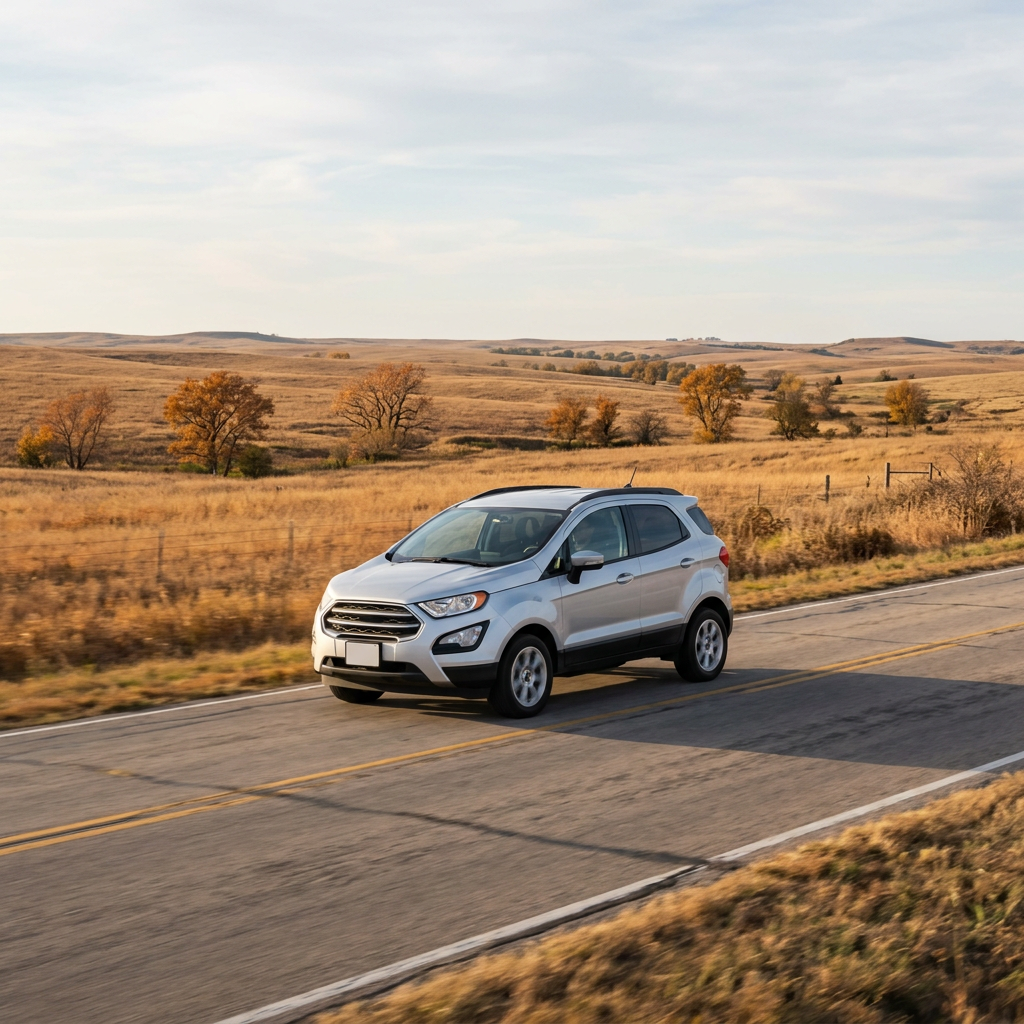
What to Know When Shopping for a Used Ford EcoSport

What to Know When Shopping for a Used Ford EcoSport

What to Know When Shopping for a Used Ford EcoSport Which Trim Level of the Used Ford EcoSport offers strong overall value? The EcoSport SE trim delivers the strongest balance of features and long-term value on the pre-owned market. Upgrading from the base EcoSport S introduces essential modern technology, including the SYNC 3 system with an 8-inch touchscreen, Apple CarPlay and Android Auto integration, heated front seats, a power moonroof, and automatic climate control without a major increase in cost. In my 25 years as General Manager at Valor Ford, I have walked hundreds of buyers through subcompact crossover options. The Ford EcoSport lineup originally spanned four distinct trim levels: EcoSport S, EcoSport SE, EcoSport SES, and EcoSport Titanium. While the entry-level EcoSport S offers functional transportation, its basic infotainment display and manual climate settings leave out many convenience features that modern drivers expect. On the higher end of the spectrum, the EcoSport SES adds a sport-tuned suspension and distinct exterior accents, while the EcoSport Titanium brings leather upholstery and a premium audio system. However, those upper trims commanded significantly higher prices when new, which carries over into used market pricing. For commuters navigating daily traffic through Junction City, the EcoSport SE stands out as a balanced choice by pairing desirable technology with approachable pre-owned pricing. If you are looking to trade in your current vehicle to lower your payments on a pre-owned crossover, our team can help you value your trade-in online before you visit. You are always welcome to check out our inventory in person at our Goldenbelt Boulevard showroom address or reach out by phone at (785) 238-5114 with any trim questions anytime. Table of Contents What Engine and Drivetrain Options Are Available on the Ford EcoSport? Is a Used Ford EcoSport Reliable for Daily Driving Around Junction City? What Buyers Should Verify About the 1.0-Liter EcoSport Timing Belt Before Buying How Does the Ford EcoSport Compare to the Larger Ford Escape and Subcompact Rivals? What Are the Interior Dimensions and Cargo Capacity of the Ford EcoSport? What Engine and Drivetrain Options Are Available on the Ford EcoSport? Pre-owned Ford EcoSport models feature two primary engine configurations: a 1.0-liter EcoBoost three-cylinder rated at 123 hp with front-wheel drive, and a naturally aspirated 2.0-liter Ti-VCT four-cylinder producing 166 hp paired with standard Intelligent AWD. For the final 2022 model year, Ford simplified the lineup by making the 2.0-liter four-cylinder engine and Intelligent AWD standard across all trims alongside a 6-speed automatic transmission. The baseline 1.0-liter EcoBoost three-cylinder engine was offered on front-wheel-drive models from 2018 through 2021. This powertrain delivers energetic low-end response around town, but drivers who frequently haul heavier loads or drive in adverse weather will prefer the 2.0-liter Ti-VCT four-cylinder. Delivering 149 lb-ft of torque, the larger four-cylinder engine provides smooth power delivery and pairs exclusively with all-wheel drive to monitor traction continuously. Fuel economy remains consistent across the lineup. Models equipped with the 2.0-liter four-cylinder engine and Intelligent AWD achieve an EPA-estimated 23 mpg city / 29 mpg highway and 25 mpg combined. Another substantial advantage of the four-cylinder powertrain is utility: when properly equipped, the four-cylinder EcoSport boasts a 2,000-pound maximum towing capacity, which easily leads most subcompact crossover competitors in its class. Is a Used Ford EcoSport Reliable for Daily Driving Around Junction City? A pre-owned Ford EcoSport powered by the 2.0-liter Ti-VCT four-cylinder engine is a dependable daily driver for commuters navigating Midwest weather and routine highway travel. Models equipped with this non-turbo engine and Intelligent AWD avoid the wet timing belt maintenance concerns of the earlier entry-level engine while maintaining low average annual ownership costs. When commuters visit our lot to test-drive small crossovers, they usually ask how the all-wheel-drive system handles winter roads before taking it out on the highway. Ford's Intelligent AWD system continuously evaluates road conditions, routing power between the front and rear wheels before wheel slip even occurs. This provides reassuring stability during sudden heavy rain or icy morning drives. In terms of overall longevity, a well-maintained Ford EcoSport engine routinely reaches between 150,000 and 200,000 miles. Ownership costs also remain manageable, with industry data showing average annual maintenance and repair expenses around $487, which comes in lower than the overall subcompact crossover segment average of $521. Buyers browsing our pre-owned vehicle inventory will find that a late-model four-cylinder EcoSport represents an economical path to reliable, all-weather transportation. What Buyers Should Verify About the 1.0-Liter EcoSport Timing Belt Before Buying Buyers considering a 2018 to 2021 Ford EcoSport with the 1.0-liter EcoBoost engine should verify the vehicle's timing belt service history and check its VIN for open customer satisfaction programs. Federal investigations by NHTSA revealed that oil-immersed timing belt material can degrade prematurely, potentially clogging the oil pump pickup screen and causing engine oil pressure loss if not serviced. The mechanical design of the 1.0-liter engine places the timing belt inside the engine crankcase where it runs in engine oil. As the belt material breaks down over time, loose debris can collect on the oil pump strainer screen. Because this pickup screen is housed inside the oil pan and cannot be cleaned during routine maintenance without removing major engine components, belt degradation directly threatens oil circulation. To address this issue, Ford established a customer satisfaction program that revised the belt replacement interval down to 100,000 miles or six years. When evaluating a pre-owned 1.0-liter EcoSport, always request documented oil change receipts and belt replacement records. If you prefer to explore alternative compact utility options backed by factory coverage, you can check out our new Ford Bronco lineup or contact our team about current financing options. How Does the Ford EcoSport Compare to the Larger Ford Escape and Subcompact Rivals? The Ford EcoSport stands out against subcompact competitors like the Honda HR-V and Hyundai Kona by offering a compact overall exterior length of 161 inches, a side-swinging rear cargo door, and a superior 2,000-pound maximum towing capacity. Compared to the larger Ford Escape, the EcoSport offers a tighter turning radius and easier maneuverability in tight spaces at a significantly lower pre-owned price point. Size is the primary differentiator when comparing the EcoSport to the Ford Escape. The Escape spans roughly 180 inches in length, providing greater legroom for rear passengers and larger maximum cargo volume. However, the EcoSport's 99-inch wheelbase and 35-foot turning diameter make it far simpler to park in crowded lots or maneuver through narrow garrison gates at Fort Riley. Against non-Ford competitors, the EcoSport holds distinct practical advantages. While rivals like the Honda HR-V offer strong cabin flexibility and the Hyundai Kona presents aggressive urban styling, neither matches the EcoSport's tow rating when equipped with the 2.0-liter Ti-VCT four-cylinder engine. Furthermore, safety features such as available blind-spot monitoring and rear cross-traffic alert give the EcoSport driver-assist technology on par with larger utility vehicles. What Are the Interior Dimensions and Cargo Capacity of the Ford EcoSport? The Ford EcoSport maximizes interior room within its subcompact footprint, offering 43 inches of front legroom, 37 inches of rear legroom, and 91 cubic feet of total passenger volume. Cargo flexibility is a key strength, providing 21 cubic feet of cargo space behind the second row and expanding to 50 cubic feet when the 60/40 split-folding rear seats are stowed flat. Despite its small exterior size, the EcoSport features an upright seating position that provides excellent outward visibility and generous front headroom measuring nearly 40 inches. Storage solutions are integrated throughout the cabin, including a unique climate-controlled glovebox that taps into the air conditioning ductwork to keep beverages cool during summer road trips. The rear cargo area utilizes a side-swinging tailgate rather than a traditional overhead liftgate, allowing easy access when loading gear in low-clearance parking structures. The rear cargo floor can also be adjusted to multiple height positions to create a hidden under-floor compartment or a completely flat load floor when folding the rear seats. To test out these interior dimensions in person, visit our Junction City dealership location or give our team a call at (785) 238-5114 to arrange a walk-around. Keep Your Vehicle Running Strong Keep your vehicle performing at its best with our service team: Schedule Pickup and Delivery Service Schedule Ford Service Today Order Genuine Ford Parts © 2026 Valor Ford. All rights reserved.

2026 ford explorer

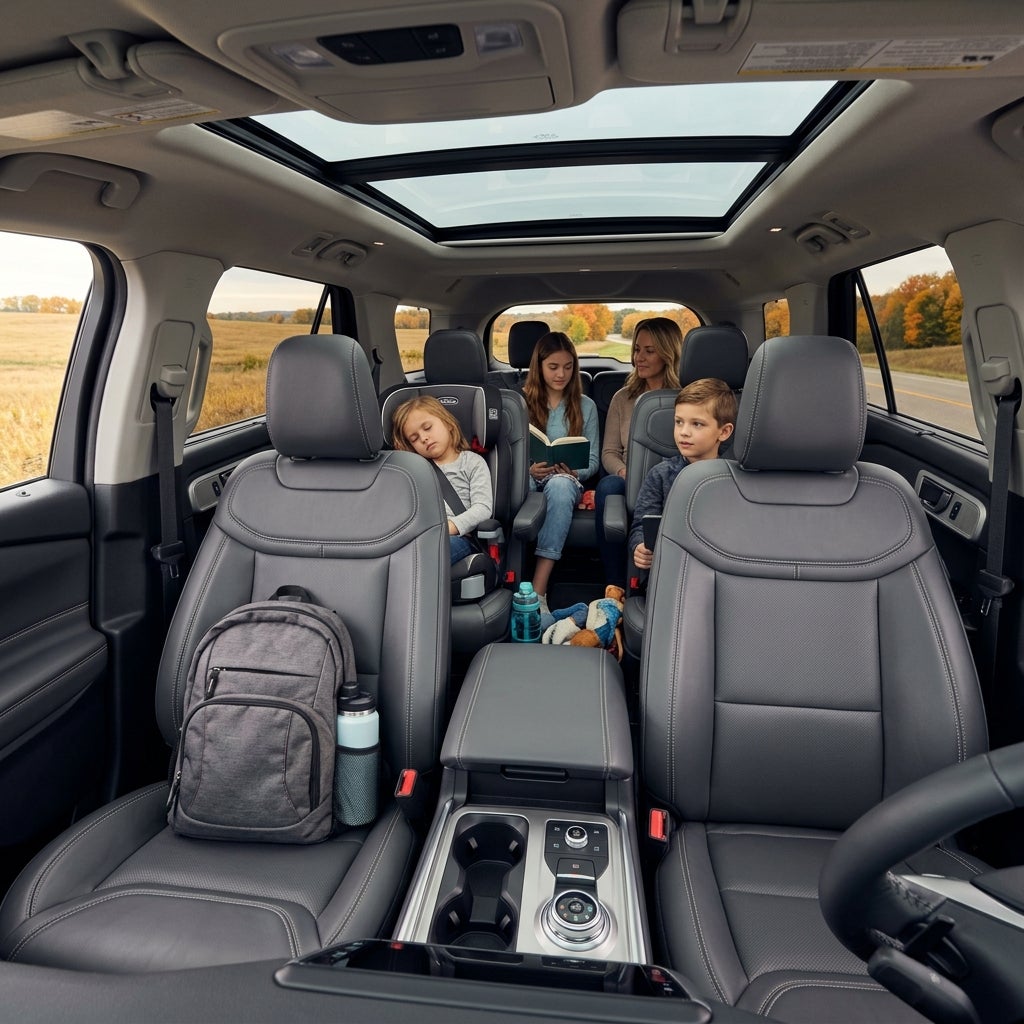
2026 Ford Explorer: Trims, Pricing, and Family Capability Guide

The 2026 Ford Explorer is the right three-row SUV for families who need real towing capacity, genuine all-wheel drive, and room for six passengers without crossing into full-size truck territory. Starting at $38,465 for the Active RWD 100A and stretching to $56,905 for the ST 4WD, the Explorer covers a wide range of budgets and use cases. Every trim rated here pulls up to 5,000 lbs and returns up to 29 mpg highway on rear-wheel-drive configurations, making it a practical daily driver and weekend workhorse. How Well Does the 2026 Ford Explorer Serve Families and Outdoor Enthusiasts in Geary County? The 2026 Ford Explorer is purpose-built for exactly the kind of life common to families in Geary County: six-passenger seating, 5,000 lbs of towing on most trims, and available Intelligent 4WD for dirt roads, river access points, and variable Kansas weather. For military households rotating through Fort Riley, the Explorer offers a consistent, practical platform that handles school runs, weekend fishing trips along the Kansas River, and gear-loaded hunting excursions with equal competence. The standard cargo area measures about 16 cu ft behind the third row, expanding to about 86 cu ft with the rear seats folded — enough room for a full cooler, rods, and waders on a Saturday morning departure. The EcoBoost four-cylinder found across most trims delivers 300 hp and 310 lb-ft of torque, while the ST and ST 4WD step up to a twin-turbocharged 3.0L EcoBoost V6 producing 400 hp and 415 lb-ft. That range covers everyone from the budget-conscious family looking for reliability to the performance-minded buyer who wants something more spirited on the highway. Shoppers who want to dig into the full specification breakdown before visiting can explore our 2026 Ford Explorer research pages for detailed trim comparisons. Those still weighing options might also browse our pre-owned Explorer inventory to see if a recent model fits the budget better. The Explorer competes directly with the Chevrolet Traverse, Jeep Grand Cherokee L, and Kia Telluride — but its combination of towing capacity, available AWD, and a wide trim ladder from value-oriented to performance-focused gives it a distinctive edge for buyers who want one vehicle to do many jobs. Research Ford Explorer Bold Exterior Styling of the 2026 Ford Explorer Tailored for Plains and River Valleys The 2026 Explorer presents a clean, upright silhouette — 198.7 inches long, 78.9 inches wide, and 70.2 inches tall on 4WD-equipped trims — that reads as confident without being aggressive. Painted bumpers front and rear, LED projector headlights with auto high-beam, LED daytime running lights, and LED rear and brake lights are standard across the lineup. The result is a cohesive, modern face that looks equally appropriate in a Fort Riley parking lot and on a gravel road heading toward the Kansas River. The Active trims wear black roof rails and a roof spoiler, giving them a slightly sportier stance. ST-LINE trims lean further into the athletic direction with black exterior accents and 18-inch alloy wheels. The ST and ST 4WD push hardest on presence, with a front fascia tuned for performance intent, painted brake calipers, and a more aggressive lower body treatment. At the top of the luxury tier, the Platinum and Platinum 4WD add chrome roof rails, chrome mirror caps with integrated turn signals, and auto-dimming side mirrors, creating a refined, polished exterior that suits a professional's commute as naturally as it suits a weekend drive through the rolling plains of Leavenworth County. Color choices across the lineup include metallic options such as Vapor Blue Metallic, Star White Metallic Tri-Coat, and Rapid Red Metallic Tinted Clearcoat, among others. The Tremor 4WD adds its own visual identity with off-road-specific styling cues. If your current vehicle is ready for a change, it's worth getting a trade-in estimate before you configure your next Explorer. Shoppers who also want to compare Ford's truck-based body-on-frame alternative should check out the 2026 Ford F-150 research pages to understand where each vehicle's strengths begin and end. Power and Towing Performance of the 2026 Ford Explorer for Military and Rural Driving Most 2026 Explorer trims — Active 4WD, Active 4WD 100A, Active RWD, Active RWD 100A, Platinum, Platinum 4WD, ST-LINE 4WD, ST-LINE RWD, and Tremor 4WD — run a 2.3L turbocharged four-cylinder EcoBoost engine producing 300 hp and 310 lb-ft of torque, paired with a 10-speed SelectShift automatic. The ST and ST 4WD swap in a 3.0L twin-turbocharged EcoBoost V6 rated at 400 hp and 415 lb-ft. Both engines use regular 87-octane fuel. The Utility Police Interceptor 4x4 carries its own powertrain calibration suited to its duty-cycle mission. Towing capacity is 5,000 lbs on every consumer trim except the Utility Police Interceptor 4x4, which is rated at 3,500 lbs. That 5,000-lb figure covers a fishing boat, a small travel trailer, or a loaded cargo trailer — practical for the kind of weekend use common among families near the Kansas and Missouri River corridors. Payload varies more meaningfully across trims: the heavier ST and ST 4WD carry 1,139 lbs, while the Active, Platinum, and ST-LINE configurations all rate at 1,467 lbs. The Tremor 4WD sits at 1,346 lbs, and the Utility Police Interceptor 4x4 tops the chart at 2,108 lbs. The table below captures the full picture across all covered trims: Feature Active 4WD Active 4WD 100A Active RWD Active RWD 100A Platinum Platinum 4WD ST ST 4WD ST-LINE 4WD ST-LINE RWD Tremor 4WD Utility Police Interceptor 4x4 Seating 6 6 6 6 6 6 6 6 7 7 6 7 Cargo (all seats up) 16.3 cu ft 16.3 cu ft 16.3 cu ft 16.3 cu ft 16.3 cu ft 16.3 cu ft 16.3 cu ft 16.3 cu ft 16.3 cu ft 16.3 cu ft 16.3 cu ft 52.0 cu ft Curb Weight 4,303 lbs 4,303 lbs 4,303 lbs 4,303 lbs 4,303 lbs 4,303 lbs 4,631 lbs 4,631 lbs 4,303 lbs 4,303 lbs 4,424 lbs 4,732 lbs Towing 5,000 lbs 5,000 lbs 5,000 lbs 5,000 lbs 5,000 lbs 5,000 lbs 5,000 lbs 5,000 lbs 5,000 lbs 5,000 lbs 5,000 lbs 3,500 lbs Payload 1,467 lbs 1,467 lbs 1,467 lbs 1,467 lbs 1,467 lbs 1,467 lbs 1,139 lbs 1,139 lbs 1,467 lbs 1,467 lbs 1,346 lbs 2,108 lbs Drivetrain choices matter here. The Active 4WD and Active 4WD 100A use Ford's Intelligent 4WD system, which operates in full-time and part-time modes for automatic traction management on wet or loose surfaces. The Active RWD and Active RWD 100A deliver rear-wheel drive with a lighter curb weight and slightly better fuel economy — 24 mpg combined versus 23 mpg for the 4WD variants. Buyers who want the most capable off-road-oriented Explorer should look at the Tremor 4WD, which adds specific off-road tuning and terrain management on top of the Intelligent 4WD base. Families considering the Explorer for serious towing who also want to compare a purpose-built towing platform can review the 2026 Ford F-250 research pages. When you're ready to move forward on financing, prequalifying online takes only a few minutes and can simplify the buying process considerably. Spacious Interior Comfort of the 2026 Ford Explorer for Family Outings Six passengers fit comfortably in most Explorer trims, with the ST-LINE 4WD, ST-LINE RWD, and Utility Police Interceptor 4x4 offering seven-seat configurations. The cabin dimensions are generous throughout: 43 inches of front leg room, 39 inches in the second row, and 32.2 inches in the third row. Front headroom measures 40.7 inches, second-row headroom 40.5 inches, and third-row headroom 38.9 inches. Shoulder room is 62.1 inches up front and 61.9 inches in the second row, with 54.6 inches in the third — wide enough to seat adults without the shoulder-to-shoulder squeeze common in smaller three-row crossovers. Seating materials climb noticeably as you move up the trim ladder. The Active 100A trims start with upgraded cloth in Dark Gray/Onyx. The standard Active 4WD and Active RWD add the optional Active Comfort Package, which upgrades the passenger seat to four-way power adjustment and swaps the cloth for ActiveX synthetic leather — a durable, easy-to-clean surface that holds up well to fishing gear, muddy boots, and the general chaos of family life. The Platinum and Platinum 4WD feature heated and ventilated front seats, heated second-row seats, memory seating for the driver, and a leather-trimmed steering wheel with electric adjustment. The ST uses an ActiveX material with Miko suede-like inserts and an ST logo for a sport-focused look. Climate control is tri-zone automatic across all trims, with rear passenger controls standard. USB charging ports are distributed throughout: 4 front, 2 rear, and 2 third-row on the Active 4WD and Active RWD configurations. The Platinum adds a wireless charging pad and a 110-volt household-style power outlet — useful for charging laptops or running small electronics on longer road trips. Keeping the interior in top condition over time is straightforward with access to genuine Ford replacement parts and accessories for floor liners, cargo management systems, and other wear items. Tech Features That Keep You Connected Between Fort Riley and Home in the 2026 Ford Explorer Every 2026 Explorer in this lineup ships with a 13.2-inch center touchscreen and a 12.3-inch digital instrument cluster as standard equipment. The infotainment system supports wireless Apple CarPlay and wireless Android Auto — both included for the life of the vehicle — so drivers can navigate, stream, and take calls without plugging in a phone. Voice control via Google Assistant is built in, and the system includes a built-in internet browser and OEM data plan connectivity via an embedded SIM card. The Ford Connectivity Package is available as a one-time purchase across the Active trims, extending the embedded Wi-Fi hotspot subscription to 84 months with up to 999 GB per month of data — practical for families who want a reliable in-vehicle network for kids' devices on longer drives. Standard remote services include remote start, lock/unlock, vehicle location, theft alert, vehicle diagnostics, and driving history analysis, all accessible through the Ford App. These services come with a 12-month included subscription. The telematics system also includes 911 Assist, which automatically contacts emergency services following a detected collision. The Platinum and Platinum 4WD add traffic sign recognition to the instrument cluster, a feature that reads posted speed limits and displays them in the driver's sightline — useful on rural Kansas roads where speed limits change frequently. The ST Sun and Sound Package, available on the ST trim, upgrades the audio system to a 14-speaker Bang & Olufsen setup with a subwoofer, surround sound, and 980 watts of output — a meaningful step up from the standard system. Over-the-air software updates keep the system current without requiring a service visit, and the platform supports programmable smart key settings tied to individual driver profiles. Safety Systems Designed for Military Families and Local Commuters in the 2026 Ford Explorer Every 2026 Explorer covered here comes standard with Ford CoPilot360 Assist+ or the upgraded Ford CoPilot360 Assist 2.0, depending on trim. At the base level, CoPilot360 Assist+ delivers adaptive cruise control with stop-and-go capability, automatic emergency braking (front low-speed), Rear Cross Traffic Braking using radar, BLIS (Blind Spot Information System), the Lane-Keeping System, and Rear Parking Sensors with camera guidance. The system activates as low as 3 mph, which matters in parking lots, school pickup lines, and slow-moving traffic around base gates. The Platinum, Platinum 4WD, and ST trims step up to Ford CoPilot360 Assist 2.0, which adds front and rear low-speed automatic emergency braking — covering both directions of a potential collision — alongside the full suite above. The Platinum trims also include a 360-Degree Camera with Split View, providing a bird's-eye perspective that is genuinely useful when parking in tight spaces or navigating unfamiliar terrain. BlueCruise hands-free highway driving technology is available as an optional add-on on the Platinum, Platinum 4WD, and ST trims, enabling hands-free lane centering on pre-mapped highway sections. The airbag count is 7 across all covered trims, including front, front-side, driver knee, and side curtain airbags covering all three rows. The structure includes four-wheel ventilated disc brakes, ABS, brake assist, cornering brake control, hill hold, electronic parking brake with auto-hold, and AdvanceTrac with RSC (Roll Stability Control) on every trim. NHTSA rates the Explorer at 5 stars overall, with 5-star frontal and side impact scores and a 4-star rollover rating. IIHS testing returns Good scores on moderate overlap front, small overlap front driver side, side impact, headlights, and seat belt reminder categories. 2026 Ford Explorer Trim Pricing Breakdown Perfect for Working Families The 2026 Explorer's twelve-trim lineup spans a wide price range, giving families flexibility to match their budget to their needs. The Active RWD 100A starts at $38,465 — the most affordable entry point in this group — while the ST 4WD tops the consumer lineup at $56,905. Every trim carries a $1,795 destination charge, except the Utility Police Interceptor 4x4, which carries a $1,695 destination charge. Feature Active 4WD Active 4WD 100A Active RWD Active RWD 100A Platinum Platinum 4WD ST ST 4WD ST-LINE 4WD ST-LINE RWD Tremor 4WD Utility Police Interceptor 4x4 Base MSRP $42,585 $40,465 $40,585 $38,465 $50,965 $52,965 $54,905 $56,905 $47,155 $45,155 $48,965 $48,550 Destination Charge $1,795 $1,795 $1,795 $1,795 $1,795 $1,795 $1,795 $1,795 $1,795 $1,795 $1,795 $1,695 A few pricing patterns worth noting: the 100A suffix on the Active trims represents a lower-content build that saves roughly $2,000 to $2,100 compared to the standard Active versions. Shoppers who want AWD capability at the lowest possible price should look at the Active 4WD 100A at $40,465. Those who prioritize fuel economy and are comfortable without AWD will find the Active RWD 100A at $38,465 the lowest MSRP entry point into the Explorer lineup. The ST-LINE trims — $45,155 for RWD and $47,155 for 4WD — offer sport exterior styling and seven-passenger seating at a price point well below the ST's performance-focused powertrain premium. The Tremor 4WD at $48,965 slots between the ST-LINE 4WD and Platinum, adding off-road capability for buyers who frequently travel on gravel or unpaved terrain. The Platinum and Platinum 4WD are the luxury tier, with the 4WD version commanding a $2,000 premium over the rear-wheel-drive Platinum. All prices shown are base MSRP before options, packages, and dealer-installed accessories. Contact Us for Financing Information Warranty, Maintenance, and Service Insights for 2026 Ford Explorer Owners The 2026 Ford Explorer carries a 3-year/36,000-mile bumper-to-bumper warranty and a 5-year/60,000-mile powertrain warranty across all covered trims. Roadside assistance coverage matches the powertrain term at 5 years/60,000 miles, which means owners have manufacturer-backed help available for the first five years of ownership — a meaningful benefit for families who put consistent miles on their vehicles through commuting, school runs, and weekend travel. The corrosion/perforation warranty extends to 5 years with unlimited mileage. Paint is covered for 3 years/36,000 miles. The Explorer also supports over-the-air OS-level software updates, which means the infotainment system and connected features can be improved without a dealership visit. Remote services — including remote start, vehicle diagnostics, and theft alert — come with a 12-month included subscription, after which owners can evaluate renewal options based on their usage. Ford's 911 Assist telematics system is included and operates independently of subscription status once activated. For owners in Geary County and the surrounding area, keeping up with scheduled maintenance at an authorized Ford dealer ensures warranty coverage remains intact and that any technical service bulletins are applied promptly. The team at Valor Ford at 1825 Goldenbelt Blvd, Junction City, KS 66441 handles Explorer service for the local community. Booking routine maintenance — oil changes, tire rotations, brake inspections — is straightforward through our Ford service scheduling page. Staying current on maintenance intervals also helps retain resale value, which matters when it comes time to trade in or sell. Schedule Ford Service Today Awards and Expert Recognition Highlighting the 2026 Ford Explorer's Strengths for Kansas Drivers No specific awards data was provided in the catalog for the 2026 Ford Explorer, so this section draws on the verified crash test ratings and safety scores confirmed in the specification data. The Explorer's independently verified safety performance is one of its strongest selling points for buyers who prioritize protection for their families. NHTSA awarded the Explorer an overall 5-star rating, with 5-star scores in both the frontal crash and side impact categories, and a 4-star rollover rating. IIHS testing returned Good ratings — the highest available — across the moderate overlap front test, small overlap front driver-side test, side impact, headlights, and seat belt reminder evaluations. These ratings carry real weight for military families and local commuters who regularly drive rural two-lane highways, navigate post-gate traffic, and share roads with farm equipment and commercial trucks. A 5-star NHTSA frontal rating means the vehicle's structure and restraint systems performed at the highest measured level in standardized frontal crash scenarios. The IIHS Good headlight rating confirms the Explorer's LED projector system illuminates the road adequately at highway speeds — a practical advantage on unlit rural roads after dark. For families comparing the Explorer against the Chevrolet Traverse, Jeep Grand Cherokee L, or Kia Telluride, this safety profile is a concrete differentiator worth factoring into the decision alongside price and feature content. Frequently Asked Questions from Buyers About the 2026 Ford Explorer The Active RWD 100A at $38,465 is the most affordable entry point and still includes the full Ford CoPilot360 Assist+ safety suite, a 13.2-inch touchscreen, wireless Apple CarPlay and Android Auto, tri-zone automatic climate control, and a 5-year/60,000-mile powertrain warranty. Families who want AWD capability without a large price jump should consider the Active 4WD 100A at $40,465, which adds Intelligent 4WD for about $2,000 more. Both 100A trims sacrifice some comfort features — the passenger seat is manual rather than powered — but deliver the core capability and safety technology the Explorer is known for. Yes. Every consumer trim except the Utility Police Interceptor 4x4 is rated at 5,000 lbs of towing capacity. A typical aluminum fishing boat with trailer weighs between 1,500 and 3,500 lbs, well within that limit. The Explorer comes standard with trailer towing preparation and a trailer stability program across all trims. For heavier trailers, payload capacity matters too: most trims carry 1,467 lbs of payload, though the ST and ST 4WD drop to 1,139 lbs due to their heavier curb weight. Yes. Both the ST-LINE 4WD and ST-LINE RWD are configured with seven-passenger seating — a 2+3+2 layout — making them the most affordable trims in this lineup with that capacity. The standard Active and Platinum trims seat six in a 2+2+2 captain's chair configuration. A second-row bench with E-Z entry is available as an option on several trims to convert to seven seats if preferred. The rear-wheel-drive Active trims (Active RWD and Active RWD 100A) return 20 city / 29 highway / 24 combined mpg. The all-wheel-drive Active trims (Active 4WD and Active 4WD 100A) return 20 city / 27 highway / 23 combined mpg. The difference is 2 mpg on the highway and 1 mpg combined — modest, but meaningful over tens of thousands of miles of commuting. The ST and ST 4WD, powered by the 3.0L EcoBoost V6, return 18 city / 25 highway / 21 combined mpg. Valor Ford is located at 1825 Goldenbelt Blvd, Junction City, KS 66441. You can also reach the team directly at (785) 238-5114 to ask about current inventory, trim availability, and scheduling a test drive. Shoppers who are also considering a more off-road-focused Ford platform may want to look at the new Ford Bronco Badlands inventory as an alternative for buyers who prioritize open-air capability over three-row family seating. Research Ford Explorer Vehicle specification data © JATO Dynamics Limited.