Blog / Model Comparisons

Is the Explorer ST Significantly Larger Than the Edge ST? Quick Answer and Size Comparison

Is the Explorer ST Significantly Larger Than the Edge ST? Quick Answer and Size Comparison

Is the Explorer ST Significantly Larger Than the Edge ST? Quick Answer and Size Comparison

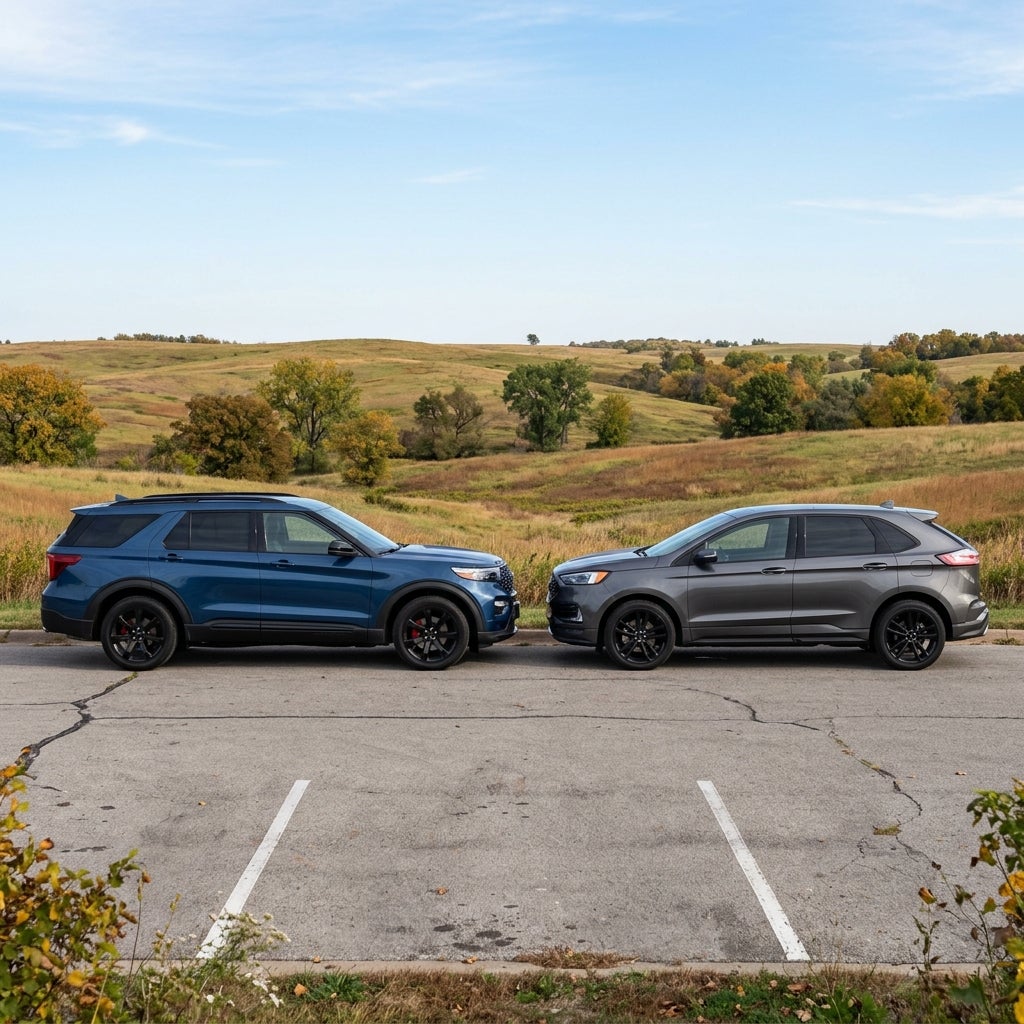
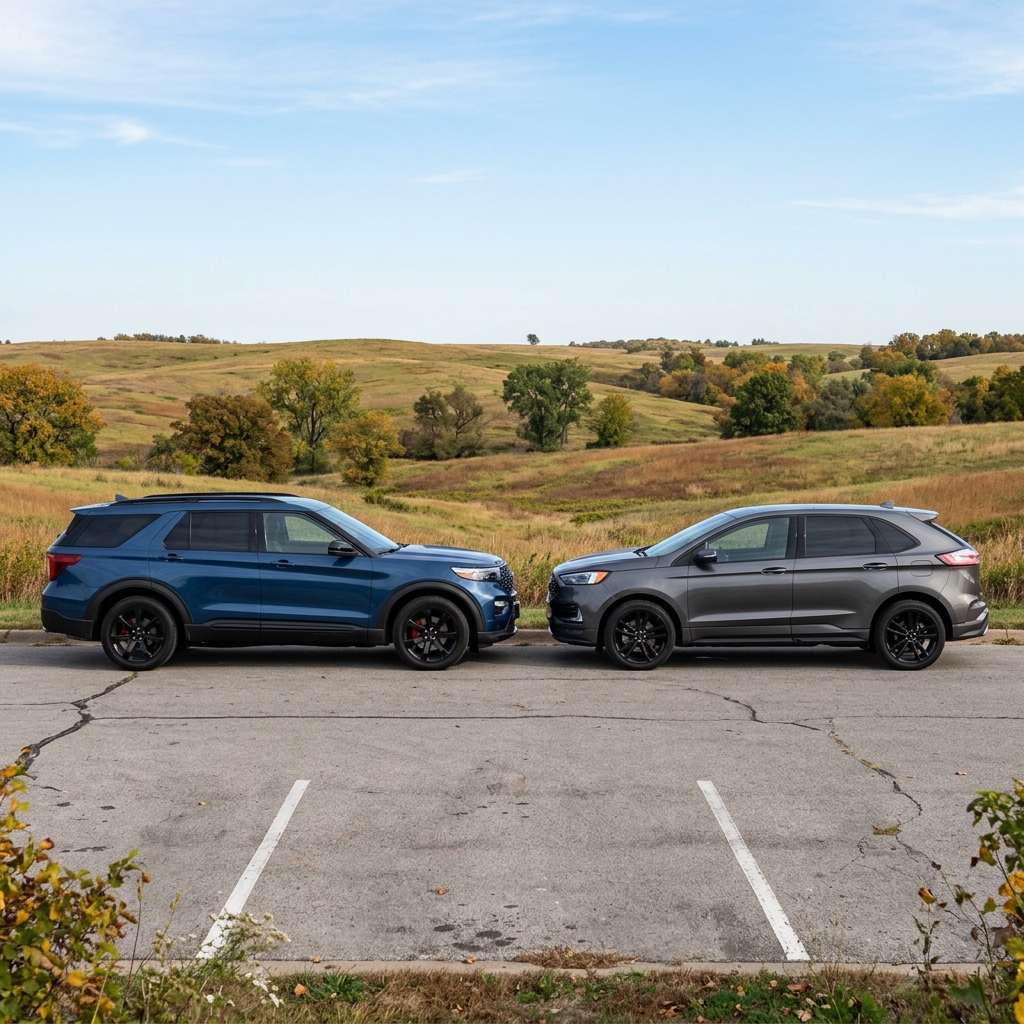
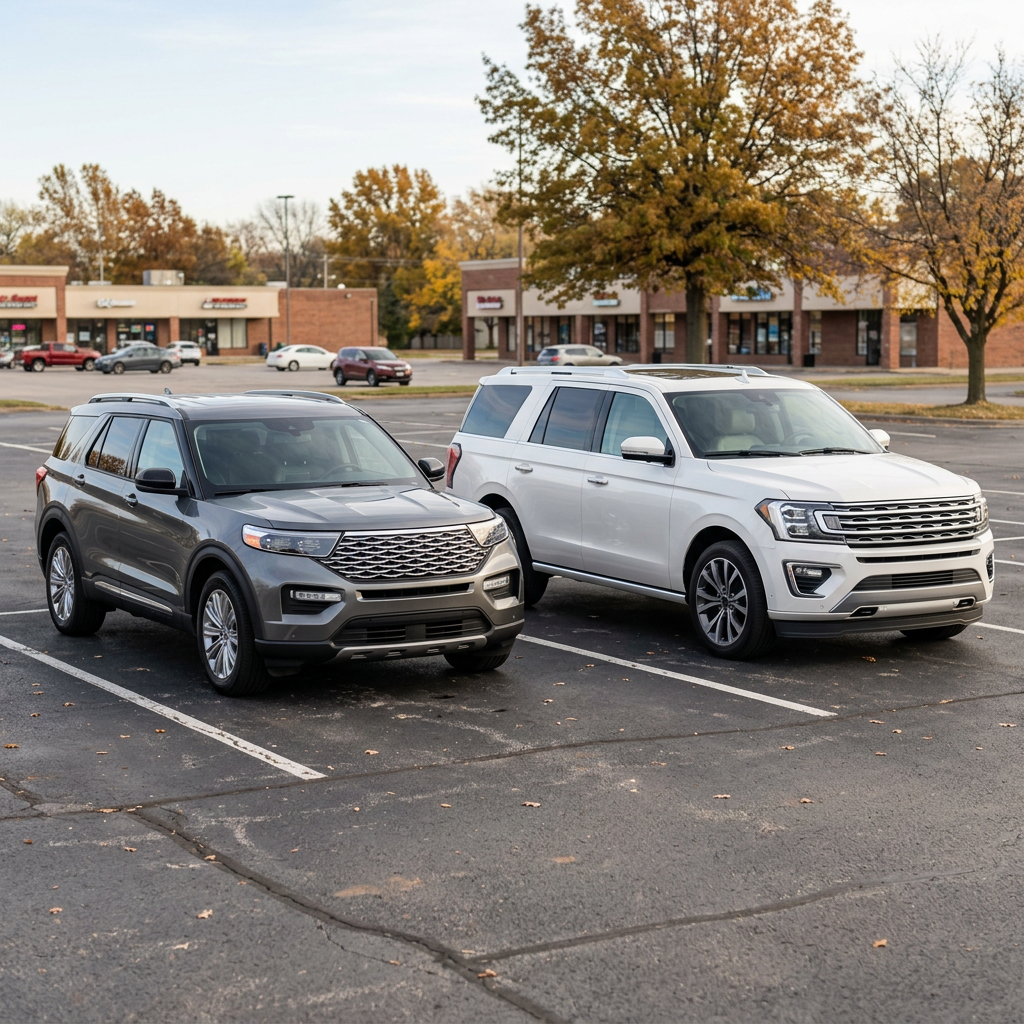
A blue Ford Explorer and a grey Ford Edge parked bumper-to-bumper in a parking lot with rolling hills behind them. (Representative image for illustration purposes only. Actual vehicle may vary based on trim and configuration.)
The direct bottom-line answer is yes: the Ford Explorer ST is noticeably and substantially larger than the Ford Edge ST in nearly every key dimension. Engineered on a rear-wheel-drive-biased midsize 3-row platform, the Explorer ST measures 198.8 inches in overall bumper-to-bumper length. By comparison, the two-row Ford Edge ST comes in at 189.7 inches. That 9.1-inch difference in exterior body length creates two distinctly different driving and ownership experiences.
Height and cargo availability tell a similar story. Standing 70.2 inches tall, the Explorer ST towers 4.2 inches over the 66.0-inch height of the Edge ST. For families and drivers around Junction City, Kansas who require maximal cargo carrying capability, the Explorer ST offers up to 88 cubic feet of maximum volume with both rear seating rows folded flat. The Edge ST provides a still-generous 73 cubic feet behind its front row. Below is a quick overview of how these two performance-engineered Ford SUVs compare at a glance.

Dimension / Feature

Ford Edge ST (2-Row)

Ford Explorer ST (3-Row)

Difference

Overall Length

189.7 in

198.8 in

Explorer +9.1 in

Overall Height

66.0 in

70.2 in

Explorer +4.2 in

Overall Width (no mirrors)

75.9 in

78.9 in

Explorer +3.0 in

Wheelbase

112.2 in

119.1 in

Explorer +6.9 in

Max Cargo Volume

73.4 cu ft

87.8 cu ft

Explorer +14.4 cu ft

Seating Capacity

5 Passengers

6 to 7 Passengers

Explorer +1 to +2 seats

Exterior Size Breakdown: Bumper-to-Bumper Dimensions and Wheelbase Compared

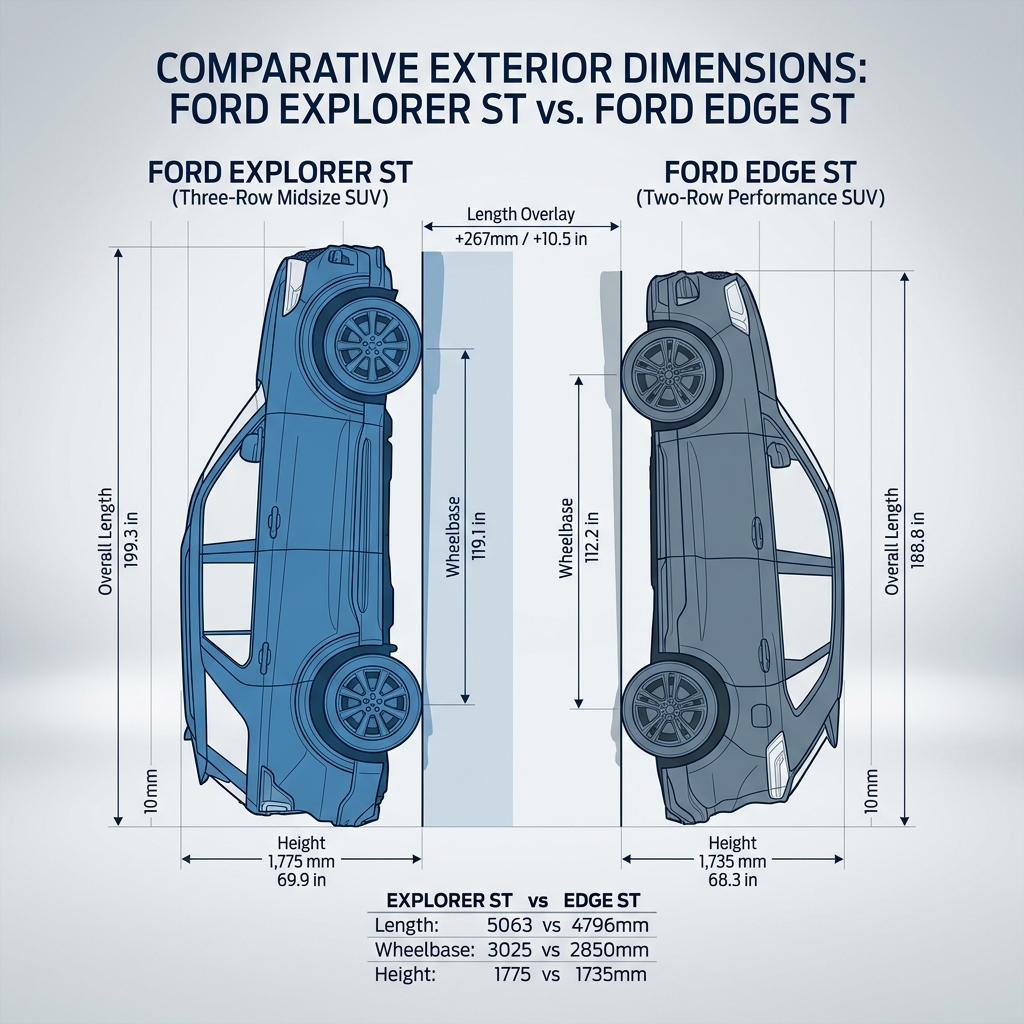
When evaluating how an SUV fits into daily life—from standard residential garages in Junction City to tight street parking downtown—the exterior footprint plays a major role. The Ford Edge ST sits on a front-wheel-drive-based architecture with transverse engine positioning. This layout allows for a compact nose and an efficient overall length of 189.7 inches with a 112.2-inch wheelbase.
In contrast, the Ford Explorer ST features a longitudinal engine placement on a rear-wheel-drive-biased platform. This architecture demands a longer hood line and stretches the wheelbase out to 119.1 inches—nearly 7 inches wider between axle centers than the Edge ST. This extra wheelbase provides exceptional high-speed tracking along I-70 between Fort Riley and Salina, while giving the Explorer ST a commanding, athletic presence on the road.
Width is another consideration. At 78.9 inches wide (excluding mirrors), the Explorer ST is 3.0 inches broader than the 75.9-inch Edge ST. Standard garage doors measure 96 inches wide, meaning the Edge ST leaves slightly more breathing room when pulling inside during severe Kansas winter weather.
Diagram comparing exterior dimensions of Ford Explorer ST and Ford Edge ST including length, wheelbase, and height. (Representative image for illustration purposes only. Actual vehicle may vary based on trim and configuration.)
Ground clearance is closely matched between both performance SUVs. The Explorer ST offers approximately 8.2 inches of clearance compared to 8.0 inches on the Edge ST. Both models comfortably navigate unpaved gravel country roads across Dickinson County or snow-covered parking spots during local winter storms.

Passenger Comfort and Cargo Volume: 3-Row Versatility vs. 2-Row Agility

Step inside the cabin, and the practical impact of the Explorer ST's larger overall footprint becomes instantly clear. As a standard three-row SUV, the Explorer ST accommodates up to 7 passengers with the 2nd-row bench seat or 6 passengers when equipped with optional 2nd-row captain's chairs. First-row legroom reaches 43.0 inches, second-row legroom measures 39.0 inches, and third-row legroom offers 32.2 inches for kids or adults on shorter trips.
The Ford Edge ST focuses exclusively on 5-passenger seating across two spacious rows. Because it does not accommodate a third row, rear passengers enjoy an impressive 40.6 inches of second-row legroom—out-legrooming the Explorer ST's second row by more than an inch. For couples or smaller families who prioritize maximum rear passenger stretch-out room without managing a third row, the Edge ST presents an exceptionally comfortable cabin environment.
Cargo management reflects another major point of comparison. With all three seating rows active, the Explorer ST holds 18 cubic feet of cargo behind the third row—ideal for groceries or sporting gear. Fold the third row flat, and capacity opens up to 48 cubic feet. Fold both the second and third rows down, and total volume climbs to 88 cubic feet.
The Edge ST supplies 39 cubic feet of dedicated cargo space directly behind its second-row seats—more than double the space of the Explorer ST when all seating rows are upright. Folding the Edge ST's 60/40 split-fold rear seats yields a maximum of 73 cubic feet of flat load floor space. If you're looking to upgrade your current vehicle to match your space needs, check out our easy Trade In Evaluation tool at Valor Ford.

What Engine and Horsepower Specs Does the Ford Edge ST Feature Compared to the Explorer ST?

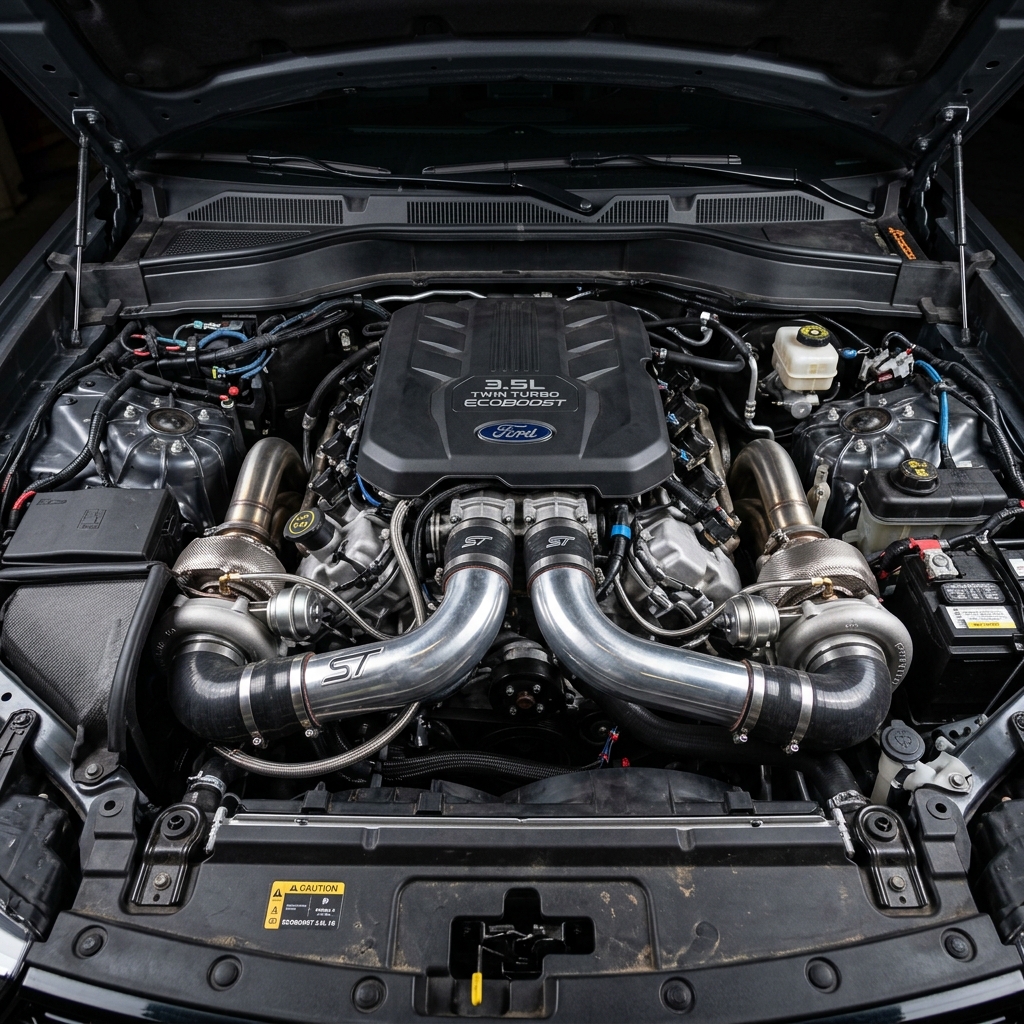
Modified Ford 3.5L Twin Turbo EcoBoost engine bay with visible twin turbochargers and polished ST piping. (Representative image for illustration purposes only. Actual vehicle may vary based on trim and configuration.)

Ford Edge ST Powertrain

The Ford Edge ST is powered by a specifically tuned 2.7-liter twin-turbocharged EcoBoost V6 engine. It produces an impressive 335 horsepower and 380 lb-ft of torque when running on 93-octane premium fuel. Mated to a 7-speed quick-shifting automatic transmission with steering-wheel-mounted paddle shifters, it routes power to all four wheels through an intelligent All-Wheel Drive system with disconnect capability.

Ford Explorer ST Powertrain

The larger Explorer ST ups the ante with a high-output 3.0-liter twin-turbocharged EcoBoost V6 engine tuned by Ford Performance. Delivering a blistering 400 horsepower and 415 lb-ft of torque, this engine pairs with a responsive 10-speed SelectShift automatic transmission. Its longitudinal RWD-based architecture provides dynamic power delivery to all four wheels with a distinct rear-biased performance feel.

Drivetrain Comparison

While both models bear the Ford Performance ST badge, their underlying architectures create different driving personalities. The Edge ST's transverse engine layout feels punchy and nimble on curvy two-lane Kansas roads, whereas the Explorer ST's 400-hp longitudinal powertrain offers relentless top-end pull and impressive high-speed passing acceleration.

Ford Edge ST 0-60 Performance Specs and Straight-Line Acceleration

A central question enthusiast drivers ask is: What is the 0-60 mph time for the Ford Edge ST? In independent instrumented testing under ideal weather and track conditions, the Ford Edge ST accelerates from 0 to 60 mph in approximately 5.7 seconds, completing the quarter-mile in roughly 14.3 seconds at 98 mph.
For a two-row crossover weighing roughly 4,500 pounds, a sub-6-second 0-60 time delivers thrilling launch force off the line. The 2.7L EcoBoost V6 generates maximum torque early in the RPM band (at 3,250 RPM), pushing drivers back into their bolster-supported sport seats with zero hesitation.
Despite its larger overall physical size and heavier curb weight of around 4,700 pounds, the Ford Explorer ST is actually faster in a straight-line sprint. Thanks to its 400-hp 3.0L V6 twin-turbo powerplant and launch-optimized 10-speed transmission, the Explorer ST launches from 0 to 60 mph in just 5.2 seconds, finishing the quarter-mile in 13.8 seconds.
The Explorer ST's superior power-to-weight ratio (11.75 lbs/hp vs Edge ST's 13.5 lbs/hp) accounts for this half-second performance edge. However, both vehicles stand out as true performance utility vehicles capable of out-accelerating many traditional sport sedans on the highway.

What Mode Optimizes 0-60 Launch Performance in the Edge ST and Explorer ST?

To extract the absolute fastest acceleration times from either vehicle, drivers should engage Sport Mode. In both the Edge ST and Explorer ST, activating Sport Mode via the rotary gear shift dial or drive mode selector immediately reconfigures multiple vehicle control modules simultaneously.
Specifically, Sport Mode sharpens throttle pedal response for instant engine mapping, holds gears longer into higher RPM bands, speeds up transmission shift execution, sharpens electronic power steering feedback, and enhances the cabin sound generator to amplify the EcoBoost V6 exhaust note. To explore more about Ford's performance lineage, take a moment to Research Ford Explorer model features.
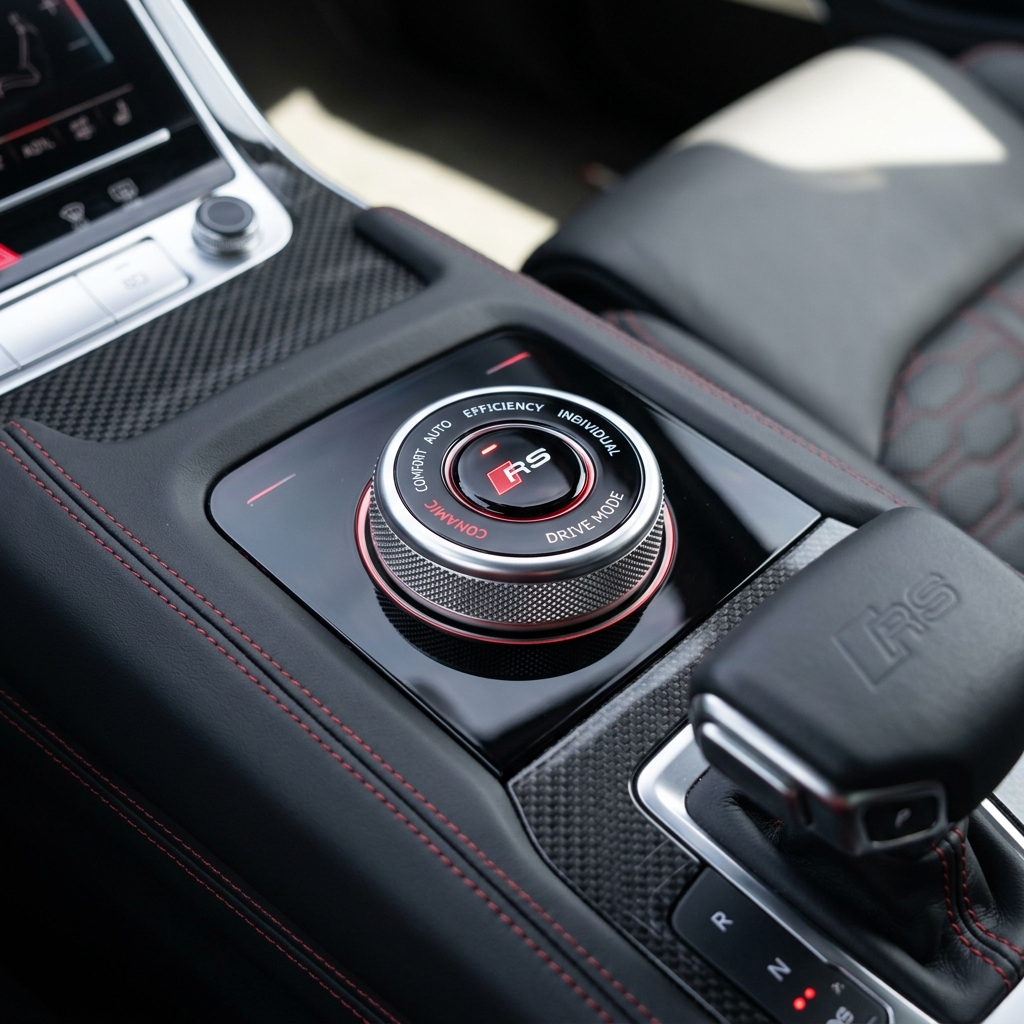
Close-up of an Audi RS center console featuring a metallic drive mode selector dial and leather gear shifter. (Representative image for illustration purposes only. Actual vehicle may vary based on trim and configuration.)

How Much Faster Is the Edge ST Compared to the Edge ST-Line in 0-60 mph Tests?

Authentic Ford Edge ST

The authentic Ford Edge ST packs a 2.7L Twin-Turbo EcoBoost V6 producing 335 hp and 380 lb-ft of torque. It shoots from 0 to 60 mph in 5.7 seconds. It includes Ford Performance suspension tuning, available performance brake packages with red calipers, and true track-focused cooling hardware.

Edge ST-Line (Style Focus)

The Edge ST-Line provides the aggressive blacked-out exterior styling of the ST but retains the standard 2.0-liter EcoBoost Inline-4 engine (250 hp / 280 lb-ft of torque). The Edge ST-Line accelerates from 0 to 60 mph in approximately 6.8 seconds.

1.1-Second Performance Gap

The true Edge ST is a full 1.1 seconds faster to 60 mph than the ST-Line. Drivers seeking real twin-turbo muscle and track-capable handling will want the full ST model, while those focused primarily on sporty design and fuel savings often prefer the ST-Line trim.

How Much More Expensive Is the ST Compared to the SEL or Titanium Trims?

Upgrading to a Ford Performance ST model represents a meaningful step up in engineering, equipment, and price compared to mid-level SEL or luxury-leaning Titanium trims. For the Ford Edge lineup, baseline SEL models typically start around $38,000 to $40,000, while the high-line Titanium trim lands near $43,000 to $45,000.
The performance-flagship Ford Edge ST carries a starting MSRP of roughly $47,000 to $49,000 depending on optional packages—making it approximately $7,000 to $9,000 more expensive than an SEL and $3,000 to $5,000 above a Titanium. However, that price differential buys the 335-hp Twin-Turbo V6, tuned AWD system, leather/Miko suede sport seats, and upgraded suspension architecture.
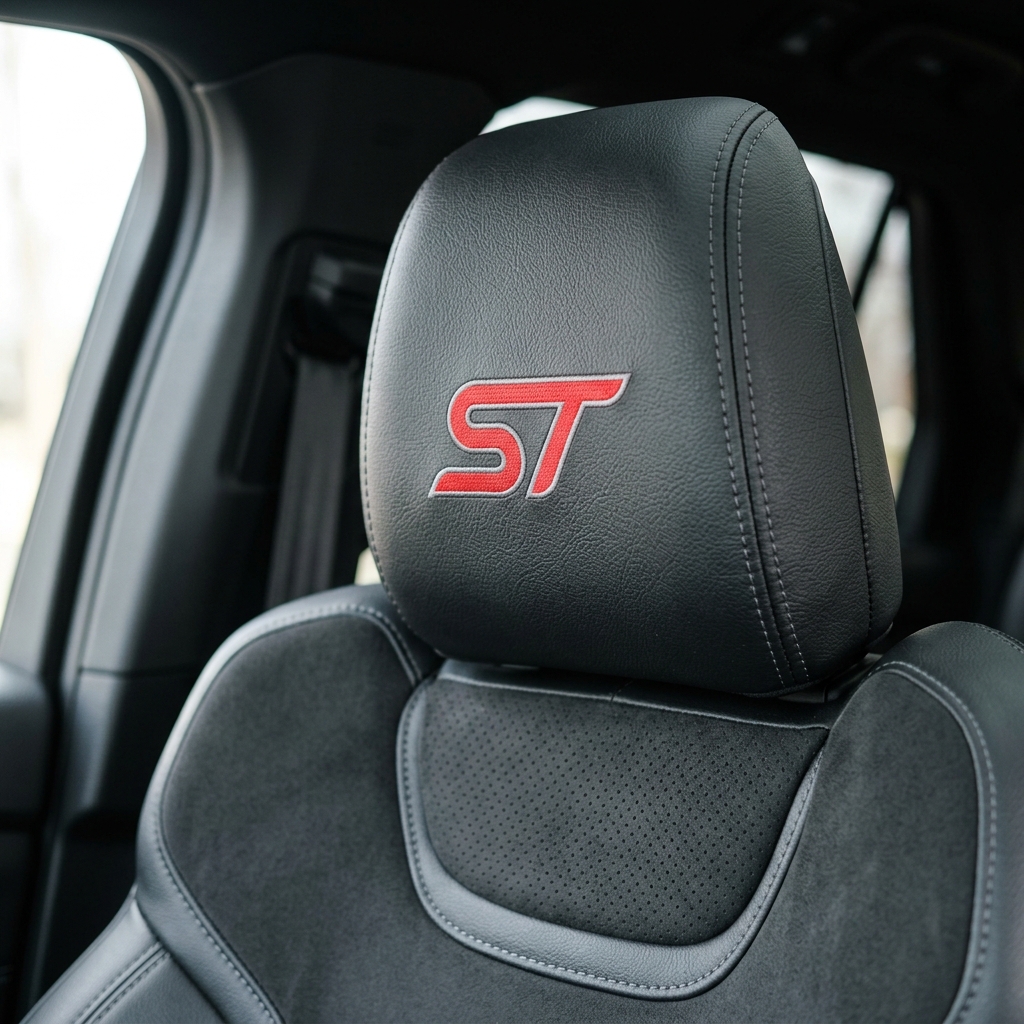
Close-up of a black leather car headrest featuring a red embroidered ST performance logo with contrast stitching. (Representative image for illustration purposes only. Actual vehicle may vary based on trim and configuration.)
Similarly, in the Explorer lineup, the 400-hp Explorer ST commands a price premium over Explorer XLT or Limited trims. To review options, local buyers can quickly Get Pre-Approved for Financing online with Valor Ford.

Towing Capacity and Utility for Junction City and Fort Riley Drivers

For active drivers in Junction City, Fort Riley personnel, and outdoor enthusiasts taking weekend trips to nearby Milford Lake, trailering performance is often a critical factor. Here, the physical size and powertrain orientation of the Explorer ST provide a dramatic capability advantage.
When equipped with the standard Class IV Trailer Tow Package, the 3.0L EcoBoost Ford Explorer ST boasts a maximum towing rating of 5,600 pounds. This allows owners to easily haul heavy ski boats, camper trailers, or double-axle utility trailers loaded with off-road equipment.
The two-row Ford Edge ST comes standard with a Class II Trailer Tow Package capable of pulling up to 3,500 pounds. While 3,500 lbs easily handles small pop-up campers, jet skis, or lightweight utility gear, drivers needing serious weekend trailering power will appreciate the extra 2,100 lbs of towing capacity engineered into the Explorer ST.
Military families at Fort Riley moving gear across state lines or taking advantage of outdoor recreational areas throughout central Kansas will find both vehicles versatile, but the Explorer ST remains the clear heavy-duty leader.

Maneuverability and Parking: Navigating Junction City and Dickinson County Roads

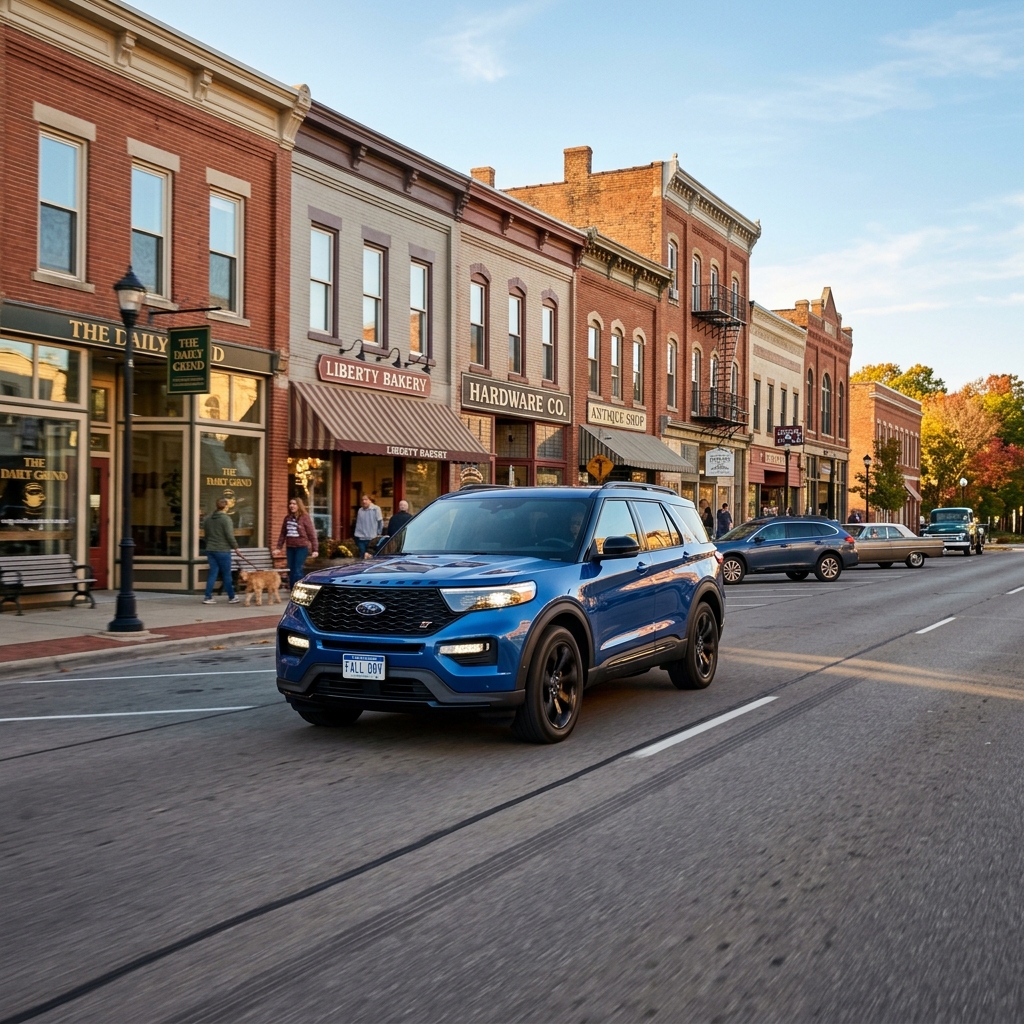
A blue Ford Explorer SUV drives down a paved street past historic brick storefronts in a small town. (Representative image for illustration purposes only. Actual vehicle may vary based on trim and configuration.)

Turning Radius & Parking

Thanks to its shorter 112.2-inch wheelbase and overall length, the Edge ST boasts a curb-to-curb turning radius of 39.3 feet. This makes parallel parking on Washington Street in Junction City or making U-turns in tight school drop-off lanes significantly easier.

Explorer ST Dynamics

The Explorer ST requires a turning circle of 40.8 feet due to its extended 119.1-inch wheelbase. While standard 360-degree camera systems make parking manageable, the extra 9 inches of body length requires extra care in compact parking lots.

Highway Stability

On open stretches of Kansas highway and cross-country road trips, the Explorer ST's longer wheelbase translates into outstanding high-speed directional stability and less susceptibility to crosswind buffeting during breezy midwestern afternoons.

Fuel Efficiency and Long-Term Ownership Costs Compared

When comparing operating costs over years of ownership, fuel consumption and routine maintenance play important roles. EPA ratings for the 2.7L V6 Ford Edge ST earn an estimated 19 MPG City / 25 MPG Highway / 21 MPG Combined.
The larger, 400-hp 3.0L V6 Ford Explorer ST carries an EPA estimate of 18 MPG City / 24 MPG Highway / 20 MPG Combined in All-Wheel Drive configuration. Considering the Explorer ST provides 65 additional horsepower and 3-row capacity, the 1 MPG difference highlights the efficiency of Ford's 10-speed transmission.
Both high-performance EcoBoost engines run optimally on 93-octane premium unleaded fuel to achieve advertised horsepower and torque figures. Synthetic motor oil changes, tire rotations, and brake system care keep both ST models operating at peak performance.
Our certified technicians at Valor Ford specialize in maintaining EcoBoost twin-turbo powertrains and ST performance components. You can easily Schedule Ford Service Today or request convenient Schedule Pickup and Delivery Service for your maintenance appointments.

Test Drive Ford ST Performance SUVs at Valor Ford in Junction City

Choosing between the Ford Edge ST and Ford Explorer ST ultimately comes down to your priorities for seating, cargo volume, overall vehicle footprint, and towing power. If you desire agile two-row seating with 335 twin-turbo horsepower and easy garage fitment, the Edge ST is a superb sport crossover. If you need 3-row versatility, 5,600 lbs of towing capacity, and 400 horses under the hood, the larger Explorer ST is the ultimate family performance SUV.
Valor Ford warmly invites drivers from Junction City, Fort Riley, Manhattan, and across Dickinson County to explore our full selection of pre-owned and new Ford ST models. Ready to feel the acceleration for yourself? Get Directions to Valor Ford at 1825 Goldenbelt Blvd, Junction City, KS 66441, or Call us at (785) 238-5114 to speak with our Ford sales experts.

Posted in:

Related Posts

What You Should Know About the 2027 Ford SUV Lineup from Valor Ford

What You Should Know About the 2027 Ford SUV Lineup from Valor Ford

What You Should Know About the 2027 Ford SUV Lineup from Valor Ford What SUV Models Are Included in the 2027 Ford SUV Lineup? The 2027 Ford SUV lineup includes the compact Bronco Sport, the midsize three-row Explorer, the full-size Expedition, the off-road-focused Bronco, and the all-electric Mustang Mach-E. The two-row Ford Edge remains discontinued in North America, while manufacturer specifications and availability details for a 2027 Ford Escape have not been officially confirmed. When customers walk into our showroom, they are often trying to match a specific size and capability to their daily routine. Ford has streamlined its crossover and SUV offerings so that every model serves a distinct purpose. For drivers needing agile city parking with all-weather traction, compact crossovers lead the way. Families requiring extra seating and heavy towing capacity naturally lean toward midsize and full-size platforms. Commuters navigating daily drives through Junction City along the Kansas River corridor frequently ask how these models compare in fuel efficiency and cabin flexibility. As Dealer Principal at Valor Ford, I have seen model lineups evolve over my 40 years in the automotive industry, and this year's family of crossovers is one of the most capable we have ever offered. Whether you need an efficient daily commuter or a vehicle ready to pull a boat on the weekend, exploring our new Ford SUV lineup gives you a clear view of how these models fit different lifestyle demands. If you want to check out these models in person, you can stop by our Junction City showroom or give our team a quick call to learn more. Table of Contents What Are the 2027 Ford Explorer Engine, Cargo, and Towing Specs? How Does 2027 Ford Explorer Third-Row Legroom Compare to Traverse and Highlander? What Is the Starting Price and Off-Road Capability for the 2027 Ford Bronco Sport? What Is the Maximum Driving Range and Tech Updates for the 2027 Ford Mustang Mach-E? How to Test Drive and Finance Your Next 2027 SUV at Valor Ford What Are the 2027 Ford Explorer Engine, Cargo, and Towing Specs? The 2027 Ford Explorer comes standard with a turbocharged 2.3L EcoBoost® four-cylinder engine generating 300 hp and 310 lb-ft of torque, paired with a 10-speed SelectShift® automatic transmission. Higher trims offer a 3.0L EcoBoost® V6 producing up to 400 hp, while cargo space measures 16 cubic feet behind the third row, expanding to 86 cubic feet with rear seats folded, and maximum towing capacity reaches 5,000 lbs. Engine performance on the Explorer varies by trim level to match different driving demands. The standard 2.3L EcoBoost® engine provides an EPA-rated 20 city / 27 hwy MPG in four-wheel drive configurations, making it a well-balanced choice for daily highway cruising and family errands. The available 3.0L EcoBoost® V6 comes standard on performance-oriented trims like the ST and is available on the rugged Tremor and luxurious Platinum editions. Power output on the V6 reaches up to 400 hp, though state emissions configurations in select areas may rate output at 385 hp. Cargo utility and trailering are primary reasons families select the Explorer. Behind the upright third row, you get 16 cubic feet of storage, which easily accommodates groceries or athletic bags. Lowering the second and third rows opens up a massive 86 cubic feet of flat cargo space. When properly equipped with the factory receiver hitch, the Explorer boasts a maximum towing rating of 5,000 lbs and a maximum payload capacity of 1,467 lbs. If you are comparing new options against pre-owned midsize crossovers, reviewing detailed Ford Explorer specifications helps clarify how recent engineering updates impact real-world utility, or you can browse our pre-owned vehicle inventory to see prior model years side-by-side. How Does 2027 Ford Explorer Third-Row Legroom Compare to Traverse and Highlander? The 2027 Ford Explorer provides 32 inches of third-row legroom, positioning it directly between the Chevrolet Traverse at 34 inches and the Toyota Highlander at 28 inches. Third-row legroom is a crucial metric for buyers who regularly carry older children or adult passengers in the back. While the Chevrolet Traverse offers slightly more overall legroom in the rearmost seats at 34 inches, the Explorer's 32 inches provides sufficient room for teenagers and adults on short to medium trips. By contrast, the Toyota Highlander's 28 inches of third-row legroom creates a much tighter squeeze, making its back row best suited for small children. Cabin flexibility in the Explorer extends beyond raw dimensions. Available in six-passenger or seven-passenger seating layouts, the second row can be configured with bench seats or tilt-and-slide captain's chairs. The slide mechanism allows second-row passengers to move their seats forward by several inches, balancing legroom across all three rows depending on who is riding along. Drivers hauling supplies across rural gravel routes in Dickinson County appreciate how quickly the third row folds flat into the load floor when cargo space takes priority over seating. If you are looking to trade in your current family vehicle for a three-row crossover, you can easily evaluate your trade-in online to see what your vehicle is worth toward a new model. What Is the Starting Price and Off-Road Capability for the 2027 Ford Bronco Sport? The 2027 Ford Bronco Sport starts at an estimated MSRP of $31,695 for the base Big Bend trim and scales up to $36,760 for the trail-ready Badlands trim. Off-road performance is standard across the entire Bronco Sport lineup thanks to standard four-wheel drive and Ford's terrain management system. Trim options include Big Bend, Heritage, Outer Banks, and Badlands. The first three trims feature a 1.5-liter EcoBoost three-cylinder engine outputting 180 hp and 200 lb-ft of torque, yielding an EPA-estimated 25 city / 30 hwy MPG. Five standard G.O.A.T. Modes® (Goes Over Any Type of Terrain)—Normal, Eco, Sport, Slippery, and Sand—allow drivers to adapt traction control and throttle response to changing surface conditions. For serious trail enthusiasts, the Badlands model upgrades to a 2.0-liter EcoBoost four-cylinder engine generating 250 hp and 280 lb-ft of torque. The Badlands also incorporates an advanced four-wheel-drive system with a twin-clutch rear drive unit, an off-road-tuned HOSS 2.0 suspension, steel skid plates, and two additional G.O.A.T. Modes®: Mud/Ruts and Rock Crawl. Inside, the cabin offers up to 29 cubic feet of cargo room behind the rear seats and up to 65 cubic feet with the rear seats folded down, making it as practical for grocery runs as it is for weekend camping trips. What Is the Maximum Driving Range and Tech Updates for the 2027 Ford Mustang Mach-E? The 2027 Ford Mustang Mach-E achieves an EPA-estimated maximum driving range of up to 320 miles when configured with the extended-range battery and rear-wheel drive. Battery configurations have been updated for 2027 to simplify ordering and improve standard capability. The entry-level Select and Premium trims now come standard with an 88-kWh battery pack, replacing the smaller standard-range pack from previous years. The high-performance GT and off-road-inspired Rally trims are equipped with a larger 91-kWh battery pack. Single-motor rear-wheel-drive models produce between 264 hp and 272 hp, while dual-motor all-wheel-drive variants output up to 480 hp and 700 lb-ft of torque in GT and Rally specs. DC fast charging capability allows the battery to charge at rates up to 150 kW, taking the pack from 10 to 80 percent in approximately 36 minutes at a public fast charger. Inside the cabin, technology is centered around a vertically oriented 15-inch central touchscreen running the latest Ford Digital Experience software. Standard features include wireless Apple CarPlay, Android Auto, and integrated navigation. Driver-assist technologies include standard automated emergency braking, blind-spot monitoring, and available BlueCruise hands-free highway driving. Prospective electric vehicle buyers can check out our detailed Mustang research guide to evaluate EV performance stats and interior dimensions. How to Test Drive and Finance Your Next 2027 SUV at Valor Ford Selecting the right SUV comes down to testing features on the road and setting up financing that fits your monthly budget. When you arrive for a test drive, our team takes time to demonstrate key features before hitting the road. We walk you through folding seat mechanisms, cargo load heights, screen menus, and driver-assist settings so you feel confident behind the wheel. On the road, you can experience how different engine choices accelerate, test braking responsiveness, and evaluate cabin noise levels under real driving conditions. Financing your next crossover is straightforward with our finance team. We work with a wide network of local and national lenders to secure competitive rates for every credit profile. You can start the process from home by choosing to get pre-approved online, saving you time at the dealership. If you have questions about specific models or want to schedule your test drive, stop by our showroom at 1825 Goldenbelt Blvd or give us a quick phone call today. Keep Your Vehicle Running Strong Keep your vehicle performing at its best with our service team: Schedule Pickup and Delivery Service Schedule Ford Service Today Order Genuine Ford Parts © 2026 Valor Ford. All rights reserved. Vehicle specification data © JATO Dynamics Limited.

2027 Ford Explorer vs. 2027 Ford Expedition: Choosing Your Family Hauler

2027 Ford Explorer vs. 2027 Ford Expedition: Choosing Your Family Hauler

2027 Ford Explorer vs. 2027 Ford Expedition: Choosing Your Family Hauler Is a Full-Size SUV Like the Expedition Significantly Harder to Park and Maneuver Daily Than an Explorer? Yes, the 2027 Ford Expedition requires noticeably more effort to park and navigate through tight suburban spaces than the 2027 Ford Explorer. Standing over 15 inches longer and 5 inches wider with a larger 41-foot turning circle compared to the Explorer's 38-foot turning radius, the full-size Expedition demands larger parking spots and wider turning arcs. Drivers who regularly navigate congested school drop-off lanes or tight garage doors will find the midsize Explorer significantly more agile for daily errands. During first-time test drives with local families, I usually suggest taking both SUVs through a busy parking lot to experience the physical footprint firsthand. The Explorer drives much like a midsize sedan with an elevated ride height, slotting easily into standard parking stalls. By contrast, the Expedition relies heavily on its available 360-degree camera system and front parking sensors to guide its truck-based frame into tight spaces. For parents navigating tight parking garages or crowded shopping centers in Junction City, that dimensional gap is immediately obvious behind the wheel. If your daily route involves tight parking spaces or compact home garages, the Explorer offers a less demanding driving experience. If you need maximum interior space and are comfortable managing a larger vehicle, our team is always available at (785) 238-5114 or directly at our Goldenbelt Boulevard showroom to walk you through side-by-side parking demonstrations. Table of Contents What Are the Seating Capacity and Interior Dimension Differences Between the 2027 Ford Explorer and Expedition? What Engine Performance and Fuel Efficiency Options Power the 2027 Explorer vs. Expedition? How Does Towing Capacity Compare Between the 2027 Ford Explorer and 2027 Expedition? Is Ford BlueCruise Hands-Free Driving Available on Both the Explorer and Expedition? Which Trim Level Offers the best balance for Families in the 2027 Ford Explorer Lineup? What Long-Term Maintenance and Service Requirements Should You Expect for Your Ford SUV? What Are the Seating Capacity and Interior Dimension Differences Between the 2027 Ford Explorer and Expedition? The 2027 Ford Expedition seats up to eight passengers with adult-friendly third-row legroom and up to 108 cubic feet of total cargo space, whereas the 2027 Ford Explorer seats up to seven passengers with a third row designed primarily for children. The standard-wheelbase Expedition offers about 22 cubic feet of cargo space behind its third row, expanding to 36 cubic feet in the long-wheelbase Expedition MAX, while the Explorer provides roughly 18 cubic feet behind its third row and up to 86 cubic feet total. Cabin architecture represents the biggest structural difference between these two family haulers. The Explorer offers flexible seating configurations, including second-row captain's chairs on trims like the ST-Line, which creates a convenient pass-through aisle to the rear. The third row delivers 32 inches of legroom, making it ideal for younger kids or occasional adult use on short trips. Families looking to explore every seating layout can explore detailed Ford Explorer research to compare dimensions across the trim lineup. The full-size Expedition elevates passenger room across all three rows, offering 36 inches of third-row legroom that comfortably accommodates adults on long highway trips. When all rear seats are folded flat, the Expedition creates a cavernous floor capable of hauling massive cargo items. For buyers evaluating overall cabin size and pre-owned alternatives, you can also browse our pre-owned SUV inventory to examine various passenger configurations in person. What Engine Performance and Fuel Efficiency Options Power the 2027 Explorer vs. Expedition? The 2027 Ford Explorer comes standard with a turbocharged 2.3-liter EcoBoost four-cylinder engine generating 300 hp, while the 2027 Ford Expedition packs a twin-turbo 3.5-liter EcoBoost V6 producing 400 hp and 460 lb-ft of torque. The Explorer delivers higher overall fuel efficiency with an EPA-estimated 21 mpg city / 28 mpg highway, whereas the full-size Expedition achieves an EPA-estimated 18 mpg combined rating ( 15 mpg city / 22 mpg highway for four-wheel-drive models). For drivers seeking enhanced performance, Ford offers upgraded engine options on both vehicle platforms. The Explorer ST features a high-output 3.0-liter EcoBoost V6 pushing 400 hp and 415 lb-ft of torque, which is also available on the off-road Tremor and luxury Platinum trims. Power is managed smoothly through a 10-speed automatic transmission that balances crisp acceleration with highway cruising efficiency. The Expedition offers its twin-turbo 3.5-liter EcoBoost V6 in a High-Output tune on select trims like the Tremor and Platinum, boosting output to 440 hp and 510 lb-ft of torque. This heavy-duty powertrain delivers effortless pass power and confident acceleration even when fully loaded with passengers. Buyers planning long highway commutes across Dickinson County often find that the Explorer's four-cylinder efficiency provides substantial savings at the pump over multi-year ownership. To evaluate payment structures for either powertrain, shoppers can get pre-approved online before taking a test drive. How Does Towing Capacity Compare Between the 2027 Ford Explorer and 2027 Expedition? A properly equipped 2027 Ford Expedition hauls up to 9,600 pounds of trailer weight, while the 2027 Ford Explorer maxes out at 5,000 pounds of towing capacity. That 4,600-pound capability gap dictates what kind of recreational equipment each SUV can pull, separating lightweight utility trailers and small speedboats from heavy double-axle travel trailers and full-size horse trailers. Achieving the Expedition's maximum rating requires configuring a 4x4 model with the factory Heavy-Duty Trailer Tow Package, which integrates heavy-duty cooling components and trailer brake controls. The truck-based body-on-frame chassis absorbs tongue weight with minimal rear-end sag, maintaining vehicle composure when pulling large loads over highway passes. The Expedition MAX caps maximum towing slightly lower at 9,000 pounds due to its longer wheelbase and higher curb weight. The Explorer utilizes a unibody platform that handles up to 5,000 pounds when equipped with the Class III Trailer Tow Package. This capacity easily manages ski boats, small camper trailers, or personal watercraft for weekend trips. If you plan to equip your SUV with specialized hitches or electrical harnesses, our parts department allows you to order genuine Ford towing parts direct from the factory. Is Ford BlueCruise Hands-Free Driving Available on Both the Explorer and Expedition? Yes, Ford BlueCruise hands-free highway driving technology is available on select upper trim levels for both the 2027 Ford Explorer and the 2027 Ford Expedition. The system operates on prequalified sections of divided highways known as Hands-Free Blue Zones, controlling steering, acceleration, and braking while maintaining lane centering and driver gaze monitoring. Both vehicles utilize an advanced sensor suite featuring radar and camera inputs to manage highway driving tasks automatically. Features like Lane Change Assist allow the driver to initiate hands-free lane changes simply by tapping the turn signal, while In-Lane Repositioning subtly shifts the vehicle away from large semi-trucks in adjacent lanes. The driver-facing camera continuously verifies that the driver's eyes remain focused on the road ahead. On long highway drives across Fort Riley, BlueCruise reduces driver fatigue significantly by handling routine lane maintenance and speed adjustments. The technology is available via flexible subscription structures or multi-year activation plans, giving owners options to fit their driving habits and travel schedules. Which Trim Level Offers the best balance for Families in the 2027 Ford Explorer Lineup? The ST-Line trim delivers a strong balance of features and styling in the 2027 Ford Explorer lineup. Positioned above the entry-level Active model, the ST-Line includes sporty exterior styling cues, standard second-row captain's chairs, upgraded interior upholstery, and the full suite of Ford Co-Pilot360 driver-assist features without the equipment level of the high-performance ST or range-topping Platinum. While the base Active trim includes the 300-hp 2.3-liter EcoBoost engine and essential touchscreen technology, the ST-Line adds desirable family features like ActiveX seating surfaces, enhanced ambient lighting, and available Ford BlueCruise compatibility. For off-road enthusiasts, the Tremor trim adds steel deflector plates and an off-road tuned suspension, but for daily commuting and family hauling, the ST-Line strikes the absolute sweet spot. Families considering different vehicle sizes or body styles can also browse our new Ford SUV lineup to explore all available three-row and off-road options. If you are preparing to trade in a current vehicle toward a new SUV purchase, you can easily value your trade-in to calculate your estimated equity beforehand. What Long-Term Maintenance and Service Requirements Should You Expect for Your Ford SUV? Both the Explorer and Expedition require routine preventative care centered around EcoBoost turbocharger health, transmission fluid maintenance, and brake component upkeep. Standard service intervals call for synthetic engine oil and filter changes every 7,500 to 10,000 miles, along with tire rotations and multi-point inspections to monitor suspension bushings and brake pad wear. Because both vehicles utilize high-output turbocharged engines, maintaining clean oil and fresh air filters is critical for long-term turbocharger reliability and fuel efficiency. Higher-mileage Explorers typically require suspension bushing inspections and routine spark plug replacements around 60,000 miles. Expedition models that regularly tow heavy loads benefit from shortened fluid replacement intervals on the 10-speed transmission and rear differential. Ford backs both models with a 3-year/36,000-mile basic warranty and a 5-year/60,000-mile powertrain warranty, complemented by five years of factory roadside assistance. When your vehicle is ready for routine maintenance, you can easily schedule a service appointment with our factory-trained technicians. Our service team is located at our Junction City dealership, and you can reach our service advisors directly at (785) 238-5114 to keep your family hauler running smoothly for years to come. © 2026 Valor Ford. All rights reserved.

2026 Ford Bronco Sport vs 2026 Subaru Crosstrek Comparison

2026 Ford Bronco Sport vs 2026 Subaru Crosstrek Comparison

The 2026 Ford Bronco Sport is a strong choice for drivers seeking true off-road capability, stronger towing, and significantly greater cargo utility than the 2026 Subaru Crosstrek. With up to 238 horsepower, 2,700 lbs of max towing capacity, and up to about 32.5 cu ft of rear cargo space, the Bronco Sport delivers significantly higher versatility for work, family duties, and weekend outdoor adventures. Which SUV Offers the Best Value for Junction City Families: 2026 Ford Bronco Sport or 2026 Subaru Crosstrek? The 2026 Ford Bronco Sport delivers greater total functional value for growing families by offering up to about 32.5 cu ft of rear cargo capacity and a maximum towing limit of 2,700 lbs, whereas the 2026 Subaru Crosstrek provides only about 20 cu ft of cargo room and a 1,500 lbs tow rating. While the Crosstrek carries a lower starting base MSRP of $26,995 compared to the Bronco Sport's starting base MSRP of $31,845, Ford's compact SUV compensates with standard four-wheel drive, greater interior utility, and higher engine output across the board. Choosing between these two compact crossovers comes down to how much physical capability your daily routine demands. For military members and active families navigating daily routines around Junction City, the Bronco Sport provides a robust unibody chassis equipped with standard four-wheel drive across every trim. The entry Big Bend 4X4 trim starts at a base MSRP of $31,845 with a $1,995 destination charge, generating 180 horsepower and 200 lb-ft of torque from its 1.5L EcoBoost engine. On the other side of the aisle, the base Subaru Crosstrek CVT starts at a base MSRP of $26,995 with a $1,450 destination charge, outputting 180 horsepower and 178 lb-ft of torque from a 2.5L Subaru Boxer engine paired with a Lineartronic CVT and all-wheel drive. Where the Bronco Sport immediately pulls ahead is practical spatial design. Opening the rear liftgate of the Bronco Sport reveals about 32.5 cu ft of rear cargo space in the Big Bend 4X4 and Heritage 4X4 trims, expanding to about 65 cu ft with the 60/40 split-fold rear bench lowered. By comparison, the Crosstrek holds just about 20 cu ft of cargo with all seats in place and about 55 cu ft max. That extra volume in the Ford makes a massive difference when loading coolers, camping bins, or stroller equipment for weekend trips near the Kansas River. Furthermore, if you plan to trade in a vehicle, you can evaluate your current vehicle through our online tool to value your trade-in before exploring our showroom. If your family requires even larger three-row capacity or heavy-duty hauling power, you might also consider comparing specs on our 2026 Ford Explorer research overview or looking into full-size capability on our 2026 Ford F-150 model review. Pricing Manufacturer-listed pricing per trim, across compared vehicles. 2026 Ford Bronco Sport Trim MSRP 2026 Subaru Crosstrek Trim MSRP Big Bend 4X4 $31,845 CVT $26,995 Heritage 4X4 $33,395 Limited CVT $32,995 Badlands 4X4 $37,265 Limited Hybrid CVT $34,995 Pricing and Trim Options Tailored for Military Families The 2026 Ford Bronco Sport offers three distinct trim levels engineered for targeted capability tiers, starting at a base MSRP of $31,845 for the Big Bend 4X4 up to $37,265 for the high-output Badlands 4X4. By comparison, the 2026 Subaru Crosstrek offers gas and hybrid variants starting at a base MSRP of $26,995 for the entry CVT trim, $32,995 for the Limited CVT, and $34,995 for the Limited Hybrid CVT. Evaluating the trim ladder reveals how each manufacturer packages hardware and premium options. The Bronco Sport lineup begins with the well-equipped Big Bend 4X4 at $31,845 base MSRP, which includes standard 4WD, a 13.2 in central dashboard touchscreen display, automatic climate control, and a 1.5L EcoBoost engine. Stepping up to the retro-styled Heritage 4X4 trim at a base MSRP of $33,395 adds distinct two-tone paint treatments, front fog lights, and Navy Pier Plaid Cloth seating while maintaining the 1.5L powertrain. For maximum trail performance, the range-topping Badlands 4X4 sits at a base MSRP of $37,265 and equips a potent 2.0L EcoBoost engine generating 238 horsepower and 277 lb-ft of torque, mated to a SelectShift 8-speed automatic transmission with paddle shifters, underbody engine protection skid plates, front recovery hooks, and an available Sasquatch Package featuring an unladen ground clearance of 8.7 in. Subaru’s lineup focuses on efficiency and urban comfort. The entry Crosstrek CVT ($26,995 base MSRP) provides standard all-wheel drive, dual 7 in center displays, and 180 horsepower. Moving to the Crosstrek Limited CVT ($32,995 base MSRP) upgrades the cabin with leather-trimmed seating, an 11.6 in touchscreen display, 18 in alloy wheels, and a 10-way power driver seat with electric lumbar support. The top-tier Limited Hybrid CVT ($34,995 base MSRP) integrates an active hybrid system with a 1.1 kWh lithium-ion battery and electric motor delivering 194 total system horsepower. However, even the top Crosstrek Hybrid cannot match the raw 238-horsepower torque delivery or mechanical trail hardware found on the Bronco Sport Badlands 4X4. Service members seeking trail-ready trim configurations can inspect our current new Ford Bronco Sport inventory to find the precise package for their needs. Get Pre-Approved for Financing Cargo Capacity and Passenger Comfort Outdoor Adventures The 2026 Ford Bronco Sport delivers a superior maximum cargo volume of up to about 65 cu ft with rear seats folded and up to 41.7 in of rear headroom, outclassing the Subaru Crosstrek's about 55 cu ft maximum cargo capacity and 38.0 in of rear headroom. Furthermore, the Bronco Sport's safari-style roof design allows tall gear or bikes to stand upright in the cargo hold, a feat impossible in the lower-slung Crosstrek. Interior dimensions reveal a clear difference in cabin geometry between these two compact SUVs. Up front, the Bronco Sport provides 41.5 in of front headroom, 42.4 in of front legroom, and 57.3 in of front shoulder room. Rear passengers enjoy an expansive 41.7 in of rear headroom and 36.9 in of rear legroom. In contrast, the Subaru Crosstrek offers 39.8 in of front headroom, 42.9 in of front legroom, and 56.8 in of front shoulder room, but drops to 38.0 in of rear headroom and 36.5 in of rear legroom. Passengers in the back row of the Bronco Sport will immediately notice the extra 3.7 in of headroom, which creates an airy, open feel during long drives. When preparing for outdoor trips near Fort Riley, cargo management becomes a top priority. The Bronco Sport Big Bend 4X4 and Heritage 4X4 models offer about 32.5 cu ft of cargo area behind the second row. An available Cargo Management System converts the rear load floor into a multi-position shelf, divider, or outdoor work table. The Subaru Crosstrek provides a flatter, hatchback-like load area measuring just about 20 cu ft with the rear seat upright. Even with the rear seat lower, the Crosstrek tops out at about 55 cu ft—over 10 cu ft less total cargo space than the Bronco Sport Big Bend 4X4. If you are open to pre-owned models alongside new inventory, you can browse our broad selection of pre-owned vehicle inventory to compare versatile crossover cabin configurations. Dimensions & Capacity Capacity and dimensions by trim Specification 2026 Ford Bronco Sport 2026 Subaru Crosstrek Seating 5 5 Cargo 29.4 cu ft 19.9 cu ft Curb weight 3,809 lbs 3,296 lbs Towing 2,700 lbs 1,500 lbs Performance and Handling: Bronco Sport vs Crosstrek The 2026 Ford Bronco Sport Badlands 4X4 dominates the performance comparison with its 2.0L EcoBoost engine delivering 238 horsepower and 277 lb-ft of torque, outperforming the Subaru Crosstrek's top 2.5L gas engine output of 180 horsepower and 178 lb-ft of torque by 58 horsepower and 99 lb-ft of torque. Additionally, the Bronco Sport features a maximum tow rating of 2,700 lbs on Badlands 4X4 models compared to the Crosstrek's uniform 1,500 lbs towing threshold. Driving dynamics between these two utility vehicles reflect different mechanical philosophies. The Subaru Crosstrek utilizes a 2.5L 4-cylinder Subaru Boxer engine generating 180 horsepower at 5,800 rpm and 178 lb-ft of torque at 3,700 rpm, paired with a Lineartronic Continuously Variable Transmission (CVT). While the CVT provides smooth operation for highway cruising, it can exhibit noticeable engine drone during hard acceleration or steep grade climbs. The Crosstrek Limited Hybrid CVT boosts output to 194 total system horsepower, but torque output drops to 154 lb-ft. Ford equips the Bronco Sport Big Bend 4X4 and Heritage 4X4 with a responsive 1.5L EcoBoost 3-cylinder engine outputting 180 horsepower at 6,000 rpm and 200 lb-ft of torque at 3,000 rpm. Peak torque arrives 700 rpm earlier than in the gas Crosstrek, giving the Ford livelier low-speed response. For true off-road power, the Badlands 4X4 features the turbocharged 2.0L EcoBoost 4-cylinder engine with 238 horsepower at 6,000 rpm and 277 lb-ft of torque at 3,000 rpm. Combined with the SelectShift 8-speed automatic transmission and paddle shifters, the Bronco Sport delivers positive, crisp gear shifts without CVT slippage. Furthermore, the Badlands 4X4 includes a twin-clutch rear differential lock, Trail Control off-road cruise capability, and an available Sasquatch Package featuring heavy-duty suspension tuning and about 29 cu ft cargo hold with 8.7 in of unladen ground clearance. Maintaining peak mechanical condition on complex 4WD components is simple when you rely on our factory-trained technicians at our Ford service center. Engine & Performance Powertrain specs by trim Specification 2026 Ford Bronco Sport 2026 Subaru Crosstrek Drivetrain Four-wheel drive All-wheel drive Engine 2L 2.5L Horsepower 238 hp 180 hp Torque 277 lb-ft 178 lb-ft Transmission SelectShift® Lineartronic CVT Fuel Efficiency and Range for Daily Commutes and Weekend Getaways The 2026 Subaru Crosstrek Limited Hybrid CVT leads overall efficiency with EPA ratings of 36 city / 36 hwy / 36 combined MPG, while the 2026 Ford Bronco Sport Big Bend 4X4 achieves 25 city / 30 hwy / 27 combined MPG from its turbocharged gas powertrain. However, the Bronco Sport Big Bend 4X4 still offers an estimated total driving range of 432 miles on a single 16.0-gallon tank of regular unleaded fuel. For commuters driving between residential neighborhoods and local activity centers, daily fuel economy is a primary consideration. The gas-powered Subaru Crosstrek CVT and Limited CVT trims deliver EPA estimates of 26 city / 33 hwy / 29 combined MPG, utilizing a 16.6-gallon fuel tank to achieve an estimated total range of 481 miles. The Crosstrek Limited Hybrid CVT elevates city driving economy to 36 MPG, resulting in an estimated 598-mile total cruising range. The Ford Bronco Sport demonstrates that rugged capability does not require excessive fuel penalties. The 1.5L EcoBoost engine in the Big Bend 4X4 and Heritage 4X4 models achieves an efficient 25 city / 30 hwy / 27 combined MPG, matching the gas Crosstrek closely in city driving while utilizing its 16.0-gallon tank to provide a 432-mile range. The high-performance 2.0L EcoBoost in the Bronco Sport Badlands 4X4 posts EPA estimates of 21 city / 27 hwy / 23 combined MPG and a 368-mile total cruising range. For drivers seeking a balance of high torque, 2,700 lbs tow capacity, and daily usability, the Bronco Sport’s performance envelope remains exceptionally compelling. To learn about current financing options for your purchase, complete our online credit pre-approval before visiting our dealership. Fuel Economy Fuel economy and range by trim Specification 2026 Ford Bronco Sport 2026 Subaru Crosstrek MPG 21 city / 27 hwy / 23 combined 26 city / 33 hwy / 29 combined Trade In Evaluation Technology Features That Keep Drivers Connected and Safe The 2026 Ford Bronco Sport comes standard across every trim with a massive 13.2 in central dashboard touchscreen running SYNC technology, completely overshadowing the Subaru Crosstrek's base dual 7 in displays and outsizing the Crosstrek's upgraded 11.6 in screen. In addition, the Bronco Sport Badlands 4X4 features a fully digital 12.3 in instrument cluster display compared to the Crosstrek's 4.2 in analog-flanked driver display. In-cabin technology directly shapes the driver experience. Ford standardizes its high-resolution 13.2 in center touchscreen display across the entire Bronco Sport lineup, incorporating wireless Apple CarPlay, wireless Android Auto, Google virtual assistant voice controls, built-in apps, and over-the-air operating system software update capability. Badlands 4X4 models complement the center screen with a configurable 12.3 in digital instrument cluster, a 360 Degree Camera with Split View, and a Front 180-Degree Camera with washer to aid visibility on tight trails or tight parking spots. An available Tech Package upgrades the sound system to a 560-watt, 10-speaker Bang & Olufsen audio setup with a dedicated subwoofer. Subaru equips the base Crosstrek CVT with dual 7 in center screens, requiring a jump to the Limited CVT ($32,995 base MSRP) to unlock the single 11.6 in vertical touchscreen interface. Wireless smartphone integration is included on upper trims, and an optional 10-speaker harman/kardon audio package is available on the Limited CVT. However, the Crosstrek relies on a smaller 4.2 in driver information display between analog gauges on gas trims. Ford's standard inclusion of the 13.2 in screen from the base Big Bend 4X4 upward represents a major value advantage for tech-minded buyers. If you ever plan to customize your vehicle with utility accessories, you can source official components directly through our genuine Ford parts department. Safety Systems Designed to Protect Military Families Both vehicles earn top safety credentials, including 5-Star Overall Crash Test Ratings from the NHTSA for the Ford Bronco Sport and IIHS Good ratings across key impact tests for both models. However, the Ford Bronco Sport provides a more comprehensive driver-assistance suite standard across all trims, including Pre-Collision Assist with Automatic Emergency Braking, BLIS (Blind Spot Information System), and Rear Cross Traffic Braking. Active driver assistance technology works continuously to prevent accidents on highway commutes and rural routes. Every 2026 Ford Bronco Sport equips Ford Co-Pilot360 technology as standard equipment. This includes Pre-Collision Assist with Automatic Emergency Braking (operating at speeds above 3 mph), Blind Spot Information System (BLIS), Lane Keeping System, Rear Cross Traffic Braking, Auto High-Beam Headlights, and a Rear View Camera. On Badlands 4X4 models, Ford adds Front Cross Traffic Alert (FCTA) and Adaptive Cruise Control with Stop & Go capability. Subaru equips the 2026 Crosstrek with its EyeSight Driver Assist Technology, featuring Pre-Collision Braking, Lane Keep Assist, and Advanced Adaptive Cruise Control. While EyeSight is a highly regarded stereo-camera system, features like Blind Spot Detection (BSD) and Rear Cross-Traffic Alert are optional on lower Crosstrek configurations rather than standard across the line. Both vehicles include 3-point seatbelts for all seating positions and Isofix child seat anchors. The Bronco Sport features 7 standard airbags (including a driver knee airbag), whereas the Crosstrek includes 10 airbags. Nevertheless, the Bronco Sport’s standard inclusion of Blind Spot Monitoring and Rear Cross Traffic Braking on every trim gives Ford drivers complete peace of mind without requiring costly package upgrades. Should an unexpected road emergency arise, Ford owners benefit from manufacturer-backed protection. Included with your vehicle's warranty is 60 months or 60,000 miles of emergency roadside assistance. If you ever experience a flat tire, battery depletion, or mechanical issue, you can reach Ford Roadside Assistance at 1-800-241-3673 for prompt, authorized service using genuine OEM components. Specification / Feature 2026 Ford Bronco Sport (Badlands 4X4) 2026 Subaru Crosstrek (Limited CVT) Engine Type 2.0L EcoBoost Turbo I4 2.5L Subaru Boxer Flat-4 Horsepower 238 hp 180 hp Torque 277 lb-ft 178 lb-ft Transmission SelectShift® 8-Speed Auto Lineartronic CVT Drivetrain Four-wheel drive (4WD) All-wheel drive (AWD) Max Towing Capacity 2,700 lbs 1,500 lbs Rear Cargo Volume (Seats Up) 29.4 cu ft 19.9 cu ft Max Cargo Volume (Seats Down) 60.2 cu ft 54.7 cu ft Standard Touchscreen 13.2 in 11.6 in Bumper-to-Bumper Warranty 36 mth / 36,000 mi 36 mth / 36,000 mi Powertrain Warranty 60 mth / 60,000 mi 60 mth / 60,000 mi Roadside Assistance Coverage 60 mth / 60,000 mi 36 mth / 36,000 mi Frequently Asked Questions: Choosing Between the 2026 Ford Bronco Sport and Subaru Crosstrek Q: Is the 2026 Ford Bronco Sport worth the price premium over the Subaru Crosstrek? Yes, the 2026 Ford Bronco Sport justifies its starting base MSRP of $31,845 by delivering standard four-wheel drive, a 180-horsepower EcoBoost engine, a massive 13.2 in touchscreen display, and about 32.5 cu ft of rear cargo space. In comparison, the base Subaru Crosstrek CVT ($26,995 base MSRP) offers only about 20 cu ft of cargo area, dual 7 in displays, and a 1,500 lbs towing limit. The Bronco Sport's added power, room, and standard tech provide significantly more long-term utility for active owners. Q: Which vehicle has better towing capacity for hauling small trailers or boats? The 2026 Ford Bronco Sport offers superior towing capability, rated at up to 2,700 lbs on Badlands 4X4 models equipped with the 2.0L EcoBoost engine and 2,200 lbs on Big Bend 4X4 and Heritage 4X4 models with the 1.5L engine. The 2026 Subaru Crosstrek is limited to a maximum towing capacity of 1,500 lbs across all gas and hybrid trims. This 1,200 lbs advantage allows the Bronco Sport to tow small watercraft, utility trailers, or pop-up campers that exceed the Crosstrek's limits. Q: Which SUV provides more cargo space for family trips and camping gear? The 2026 Ford Bronco Sport provides substantially more cargo volume, offering about 32.5 cu ft behind the rear seats in Big Bend 4X4 and Heritage 4X4 trims (about 29 cu ft in Badlands 4X4) and up to about 65 cu ft with the rear seats folded flat. The 2026 Subaru Crosstrek offers only about 20 cu ft of cargo space behind the second row and about 55 cu ft total with the rear seats lowered. The Bronco Sport's safari-style roof also provides superior vertical height for bulky gear. Q: How do the warranty and roadside assistance coverages compare between Ford and Subaru? Both manufacturers provide a 36-month / 36,000-mile bumper-to-bumper limited warranty and a 60-month / 60,000-mile powertrain warranty. However, Ford provides 60 months or 60,000 miles of manufacturer roadside assistance coverage, whereas Subaru limits its roadside assistance program to 36 months or 36,000 miles. Ford owners benefit from an additional 2 years or 24,000 miles of emergency roadside support. Q: What are the main differences between Ford's 4WD and Subaru's AWD systems? The 2026 Ford Bronco Sport utilizes a dedicated Four-Wheel Drive (4WD) system with selectable G.O.A.T. Modes (Goes Over Any Type of Terrain), and the Badlands 4X4 adds an advanced twin-clutch rear differential unit that can send 100% of rear torque to either wheel. The 2026 Subaru Crosstrek uses Symmetrical All-Wheel Drive (AWD), which continuously distributes power to all four wheels. While Subaru's AWD excels on slippery paved roads, Ford's 4WD system with rear differential locking capability provides superior mechanical traction over severe rock, mud, and unpaved trail obstacles. Why the 2026 Ford Bronco Sport Is a Strong Choice for Your Next SUV The 2026 Ford Bronco Sport emerges as a compelling option in this head-to-head comparison, offering superior engine performance, greater cargo capacity, stronger towing power, and more advanced standard technology than the 2026 Subaru Crosstrek. With up to 238 horsepower, 277 lb-ft of torque, a 2,700 lbs max tow rating, a standard 13.2 in touchscreen, and up to about 65 cu ft of maximum cargo space, the Bronco Sport is uniquely engineered to handle demanding weekly commutes and rugged weekend excursions with equal confidence. At Valor Ford, our team is dedicated to providing an exceptional vehicle shopping experience tailored to the needs of our local community. Whether you require a versatile crossover for family transportation or a heavy-duty work truck like the ones detailed on our 2026 Ford F-250 research page, we carry a comprehensive selection of the latest Ford models. We invite you to visit our dealership to test drive the 2026 Ford Bronco Sport and experience its capabilities firsthand. You can find our showroom location in Junction City at 1825 Goldenbelt Blvd, Junction City, KS 66441. Give our sales specialists a quick call at (785) 238-5114 today to schedule your personal demonstration and discover why the Bronco Sport is the ideal SUV for your lifestyle. Shop New Ford Bronco Inventory Vehicle specification data © JATO Dynamics Limited.