
Demystifying Car Maintenance: Why Plain Language Service Matters in Junction City

Let’s be honest: taking your vehicle in for service shouldn’t feel like you are sitting through an advanced lecture in aerospace engineering. Too often, the automotive industry wraps simple, straightforward concepts in confusing jargon, leaving you wondering what you are actually paying for. At Valor Ford, we believe in a completely different approach. We believe that clear, honest, and plain-language communication is the foundation of trust. Whether you are active-duty military personnel stationed at Fort Riley preparing for a long deployment, a dedicated farmer in Dickinson County managing thousands of acres, or a busy parent juggling school drop-offs right here in Junction City, you deserve to know exactly what is happening under the hood of your vehicle.

Our commitment to the community goes beyond just fixing engines; it is about empowering you with the knowledge needed to make smart, confident decisions about your transportation. When our factory-trained technicians inspect your vehicle, we don’t just hand you a checklist of mysterious codes and expensive-sounding parts. We take the time to explain the ‘why’ and the ‘how’ in terms that make practical sense. We want to make sure you understand which services keep you safe on the highway, which ones improve your fuel efficiency during hot Kansas summers, and which ones can wait until your next budget cycle. If you ever have questions or want to speak with our service advisors directly, feel free to Call us at (785) 238-5114 or visit our dealership at 1825 Goldenbelt Blvd.
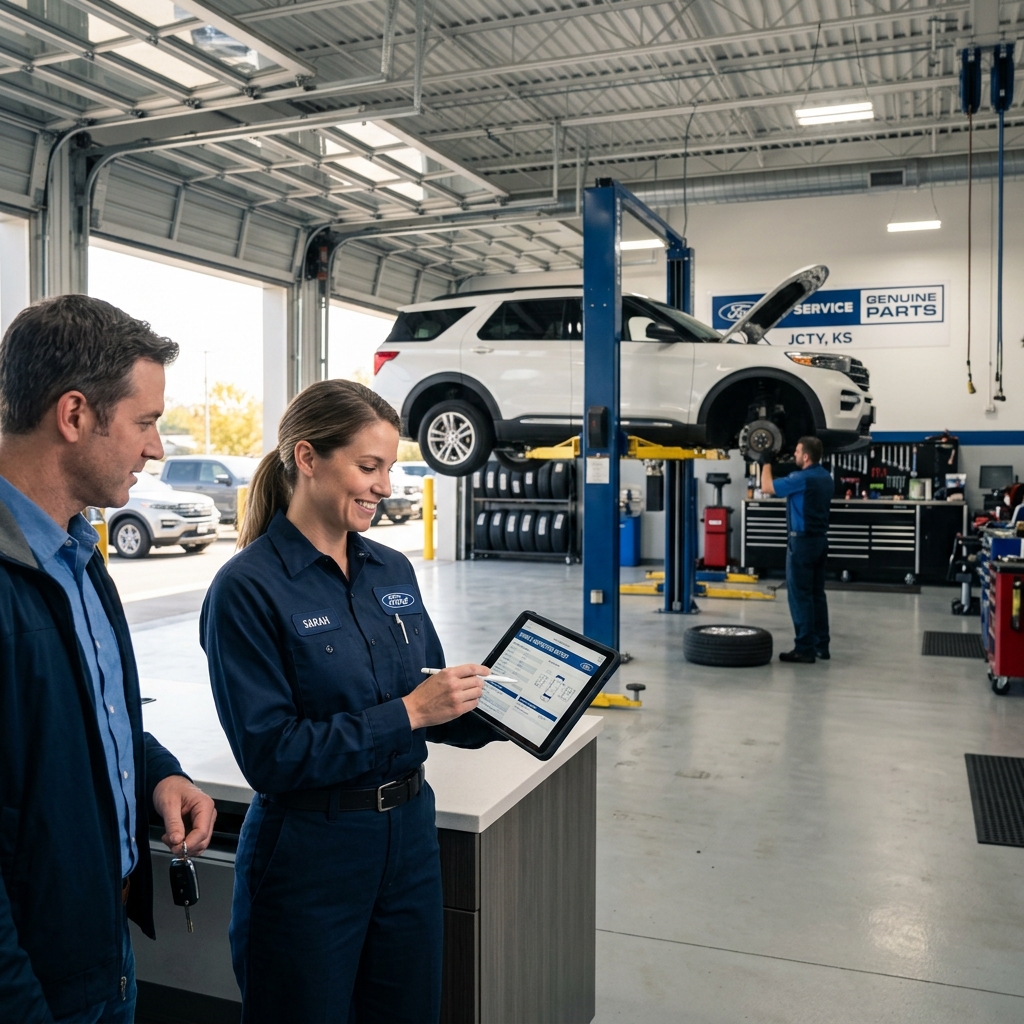
A female Ford service advisor shows a tablet to a male customer inside a bright, modern auto repair garage. (Representative image for illustration purposes only. Actual vehicle may vary based on trim and configuration.)

What Is Normally Included in a comprehensive service Compared to a Basic One?

Understanding the difference between a basic service and a comprehensive full car service is key to saving money and keeping your car running smoothly. Think of a basic service as your vehicle’s routine check-up, much like a quick dental cleaning. It is designed to be performed frequently—typically every 5,000 to 7,500 miles—to keep critical fluids fresh and catch obvious wear-and-tear items before they escalate. A full car service, on the other hand, is a deep-dive medical physical. It is a thorough, bumper-to-bumper examination that inspects hidden mechanical systems, electrical networks, and structural components to ensure long-term reliability over tens of thousands of miles.

The Basic Service Package

A basic service focuses heavily on the lifeblood of your engine: the oil. During a basic visit, technicians will drain your old, worn-out engine oil and replace it with fresh, high-quality synthetic or semi-synthetic fluid. They will also swap the oil filter to ensure no microscopic metal shavings or carbon deposits circulate back into the clean oil. Additionally, a basic service includes a tire rotation to promote even tread wear across all four wheels, adjusting tire pressures to their optimal levels, and conducting a visual walk-around. This walk-around covers windshield wipers, fluid levels (like windshield washer fluid and coolant), and a quick check of your exterior lights to keep you legal and visible on the road.

The Full Service Package

A full car service includes everything from the basic service but adds extensive layers of diagnostic testing and preventative maintenance. Technicians will perform comprehensive fluid flushes, replacing aged brake fluid, transmission fluid, and power steering fluid that have absorbed moisture or broken down from heat. They will perform a highly detailed brake inspection, measuring brake pad thickness, examining rotors for warping, and inspecting calipers. Furthermore, they will check engine air filters, cabin air filters, spark plugs, suspension linkages, steering joints, and the exhaust system. This is also when we connect computerized diagnostic tools to read the health of your engine management systems and battery charging output.

How Regular Servicing Affects Your Car’s Reliability and Fuel Economy

There is a direct, scientifically proven link between how regularly you service your car and how much money you spend at the gas pump or on emergency towing services. When your car is neglected, its engine has to work significantly harder to perform basic tasks. This added friction, resistance, and strain translates directly to wasted fuel, decreased horsepower, and a drastically shortened lifespan for critical components. By performing simple preventative maintenance, you keep your vehicle running at its absolute peak physical efficiency.
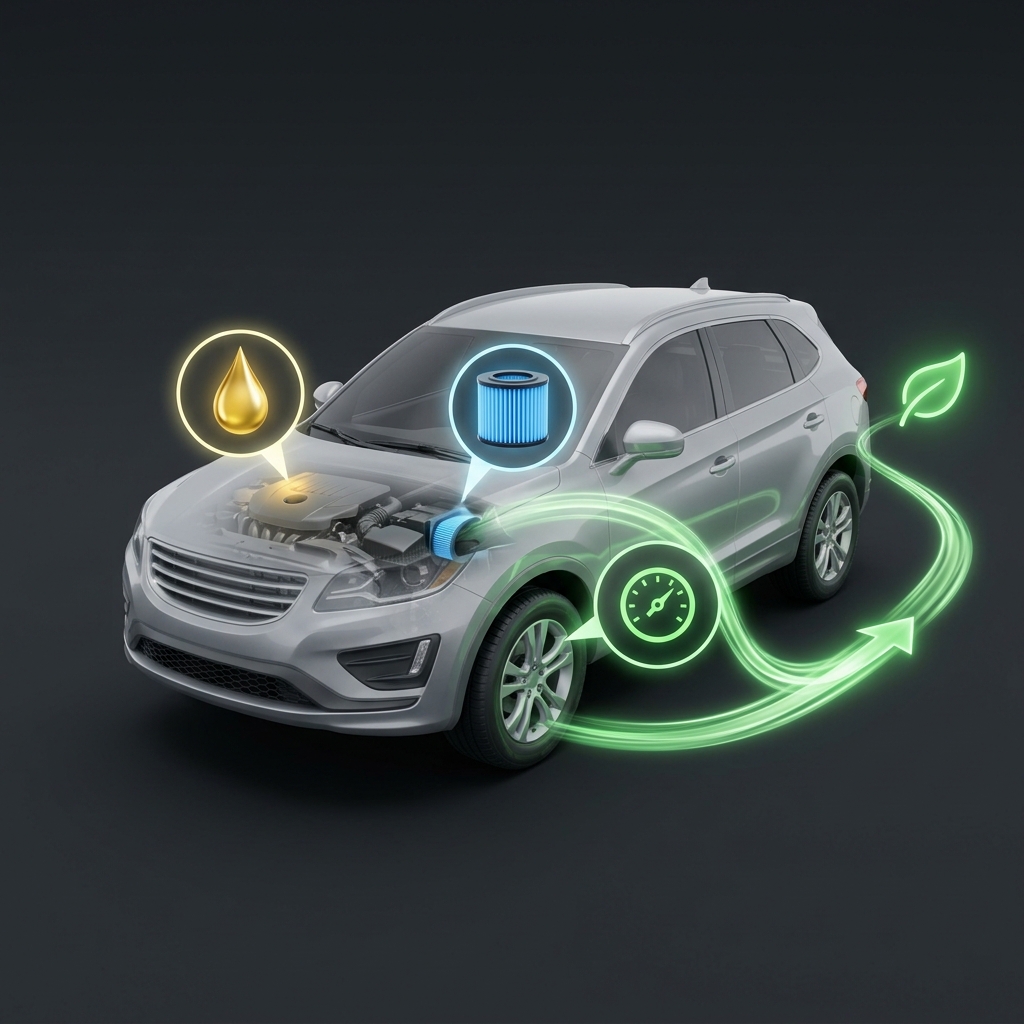
1. Fresh Oil and Reduced Engine Friction

Engine oil is designed to coat moving metal parts with a micro-thin protective barrier, preventing them from grinding together. Over time, heat and pressure break down this oil, turning it thin and watery, or thick and sludgy. Fresh oil drastically reduces internal friction. When your engine parts glide effortlessly, the engine draws less fuel to move the car, maximizing your MPG during those daily commutes from Fort Riley or weekend road trips across Kansas.

2. Air Filters and Clean Combustion

Your engine needs a precise mixture of oxygen and fuel to create combustion. An engine air filter blocks dust, dirt, and agricultural debris from entering the cylinders. However, a clogged filter suffocates the engine, forcing it to burn excess gasoline to compensate for the lack of air. Replacing a dirty air filter can instantly restore lost fuel mileage, reduce tailpipe emissions, and prevent engine hesitation or rough idling.

3. Tire Pressure and Rolling Resistance

Driving on under-inflated tires is like trying to ride a bicycle with flat tires—it takes a tremendous amount of physical energy to move forward. Properly inflated and balanced tires minimize rolling resistance against the asphalt. This simple adjustment ensures your vehicle rolls smoothly, optimizing fuel efficiency and preventing uneven tire wear that leads to premature (and highly expensive) tire replacements.

Infographic of a silver SUV showing engine maintenance elements: an oil droplet, air filter, and green eco-friendly gauge. (Representative image for illustration purposes only. Actual vehicle may vary based on trim and configuration.)

What Happens If I Skip Regular Oil Changes or Use the Wrong Oil?

Skipping a scheduled oil change might seem harmless in the short term, but it is one of the quickest ways to cause catastrophic, irreversible engine damage. As oil ages, it loses its ability to lubricate, cool, and clean the engine. The intense heat of combustion begins to ‘cook’ the remaining oil, turning it into a thick, black, tar-like substance known as engine sludge. This sludge clogs the narrow oil passages, starving critical moving parts of lubrication. Pistons can weld themselves to cylinder walls, bearings can seize, and camshafts can snap. In the blink of an eye, a simple oil change neglect can turn into a costly engine replacement bill.

Furthermore, using the wrong oil viscosity (thickness) can be just as damaging. Modern engines are built with incredibly tight tolerances—spaces between moving parts that are thinner than a human hair. If you use oil that is too thick, it won’t flow quickly enough to protect these tight areas, especially during freezing cold Kansas winter mornings. Conversely, if you use oil that is too thin during a blistering hot summer day in Junction City, it won’t provide a thick enough barrier to prevent metal-on-metal wear. Adhering to the manufacturer’s exact specifications is crucial for preserving your factory warranty and ensuring peak performance. Don’t risk your engine’s health; let our certified experts handle it with ease.

The Pros and Cons of Doing Your Own Oil Change Versus Using a Professional Shop

The DIY Route: Hands-on but Demanding

Doing your own oil change can be a deeply satisfying weekend hobby for car enthusiasts. It gives you a hands-on connection to your vehicle and lets you control exactly what brands of oil and filter are used. However, it requires a significant initial investment in specialized tools, including a sturdy hydraulic jack, high-quality jack stands, oil filter wrenches, a drain pan, and hand tools. You must also deal with the messy reality of crawling under a heavy vehicle, dealing with hot, dripping fluids, and properly disposing of the toxic used motor oil at an approved recycling center in Geary or Dickinson County. Additionally, if you strip the oil pan drain plug or fail to seal the filter correctly, you bear 100% of the financial liability for any damage.

The Professional Route: Speed, Safety, and Records

Choosing a professional shop like Valor Ford offers unmatched convenience, speed, and peace of mind. Our certified technicians complete the job in a fraction of the time, keeping your hands clean and your weekend free. More importantly, professional service comes with factory-certified expertise and complete digital maintenance records. These records are automatically logged to CARFAX and Ford’s network, proving to future buyers that your vehicle was meticulously maintained. Furthermore, every professional oil change at our shop includes a complimentary multi-point safety inspection. This means highly trained eyes are examining your brakes, belts, hoses, and suspension components, catching minor issues before they become larger concerns on the road.

What Is the Difference Between OEM and Aftermarket Car Parts?

When your vehicle needs a replacement part—whether it is a simple brake pad, an alternator, or a complex suspension strut—you will generally face a choice between two categories: Original Equipment Manufacturer (OEM) parts and aftermarket parts. Understanding the difference in engineering, testing, and longevity is key to protecting your vehicle’s performance and long-term durability.

OEM Parts: Built to Exact Specs

OEM parts are made directly by the vehicle’s manufacturer (such as Ford) and are the exact components that were installed on your vehicle when it rolled off the assembly line. They offer a flawless fit, are built from identical materials, and perform exactly as intended. There is no guesswork involved; the part is literally made for your specific model, year, and trim level, ensuring your car’s safety features and performance ratings remain completely uncompromised.

Aftermarket: A Wildcard in Quality

Aftermarket parts are manufactured by third-party companies. While they are often cheaper, they are built to fit a wide variety of different vehicles, meaning they are built as ‘one-size-fits-most’ components. This lack of precise engineering can lead to poor fitment, premature wear, and unexpected noise or vibrations. While some aftermarket parts are high quality, separating the reliable manufacturers from the sub-par ones is an unpredictable gamble.

Warranty and Durability

OEM parts come backed by a robust manufacturer warranty that is honored at dealerships nationwide. At Valor Ford, our genuine parts give you complete security on the road. If an aftermarket part fails, it rarely covers the labor costs to replace it, and in some cases, installing a non-certified aftermarket part can actually void your original vehicle warranty. If you need a reliable component, you can easily Order Genuine Ford Parts through us.

Do Maintenance Plans Usually Save Money on Regular Services?

Pre-paid maintenance plans are becoming incredibly popular among car owners, and for very good financial reasons. Put simply, these plans allow you to lock in today’s labor and parts rates for future services, effectively shielding you from the rising costs of inflation. When you purchase a maintenance plan, you are bundling your routine services—like oil changes, tire rotations, cabin filter replacements, and multi-point inspections—into a single upfront package. This package is offered at a value-oriented rate compared to paying for each service individually over time.

Beyond direct financial savings, maintenance plans provide psychological and behavioral benefits. When your routine maintenance is already paid for, you are far more likely to stick strictly to your vehicle’s recommended service intervals. You won’t find yourself putting off a critical oil change or tire rotation just because your monthly budget is a little tight. This consistency prevents minor, unaddressed issues from snowballing into massive, budget-breaking mechanical breakdowns down the road. If you are buying a vehicle or planning for long-term ownership, you can even package these maintenance plans into your financing. To learn more about setting up your vehicle budget, you can Get Pre-Approved for Financing today.
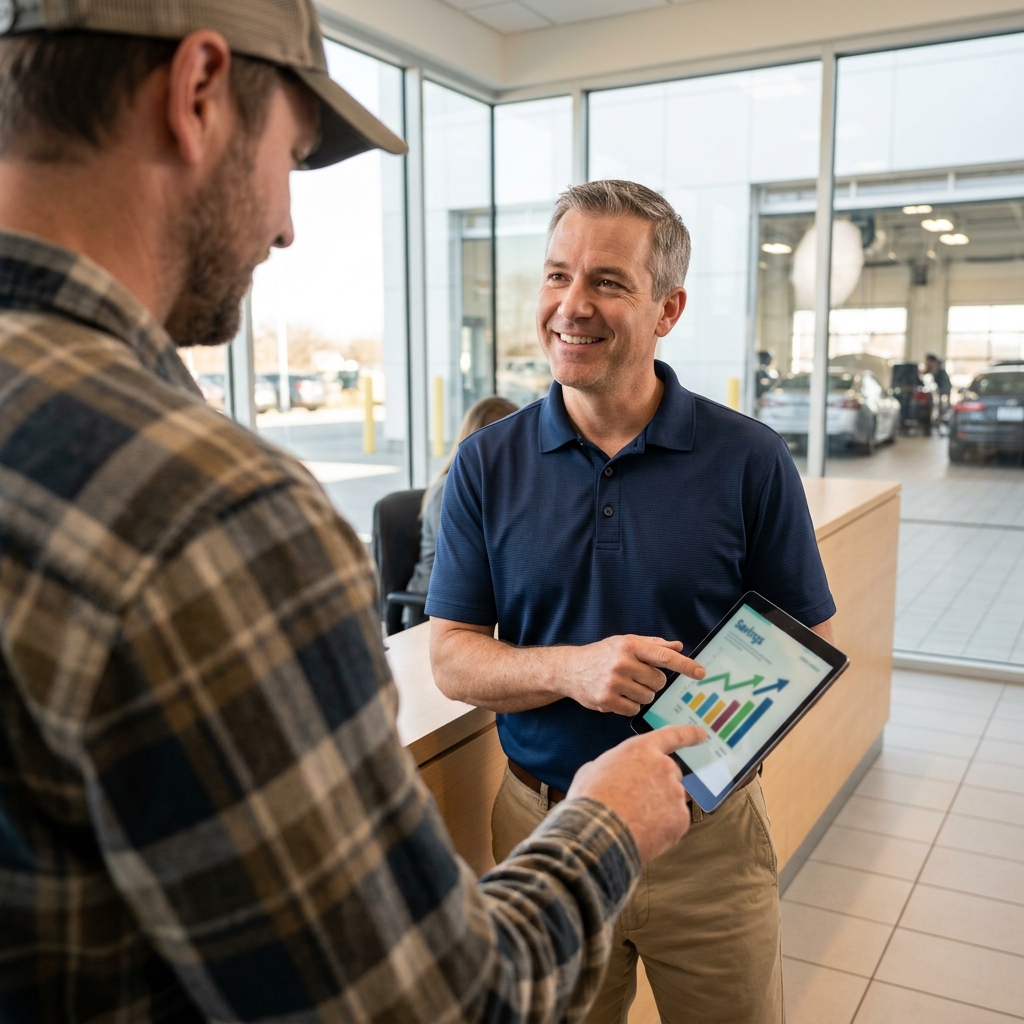
A service advisor shows savings charts on a tablet to a customer in a car dealership service center. (Representative image for illustration purposes only. Actual vehicle may vary based on trim and configuration.)

How the Flint Hills Terrain and Kansas Weather Shape Your Service Schedule

The Heavy Toll of Flint Hills Dust and Gravel

Living and driving in the beautiful Flint Hills region of Kansas means your vehicle is exposed to unique environmental challenges. The dusty, unpaved rural roads throughout Dickinson County throw up a constant cloud of fine, abrasive limestone dust. This dust quickly penetrates engine air intakes, cabin ventilation systems, and suspension components. It clogs filters at twice the normal rate and can act like sandpaper on rubber bushings and seals. Because of this, what the manufacturer defines as ‘severe driving conditions’ is actually the daily norm for most Junction City and Fort Riley drivers, requiring more frequent filter changes and chassis lubrication.

Extreme Kansas Seasons: Summer Heat & Winter Cold

Our Kansas weather is notoriously volatile, swinging from freezing winters to intense, humid summers. In the blistering heat of July, your engine’s cooling system operates under extreme pressure to prevent overheating while running the air conditioning. Batteries degrade rapidly under thermal stress, often failing as soon as the first cold snap hits. In the winter, road salt and brine spray accumulate on your vehicle’s undercarriage, accelerating rust and corrosion on brake lines and suspension parts. Regular washing, undercarriage rinses, and seasonal fluid checks are absolutely critical to protect your investment from these brutal environmental shifts.

Understanding the Multi-Point Inspection: What Do Those Green, Yellow, and Red Ratings Mean?

Whenever your vehicle is serviced at Valor Ford, we perform a comprehensive multi-point inspection. We present the results using a simple, intuitive ‘stoplight’ color system of Green, Yellow, and Red. Here is exactly what those colors mean, translating complex mechanical jargon into a clear, actionable plan for your peace of mind:
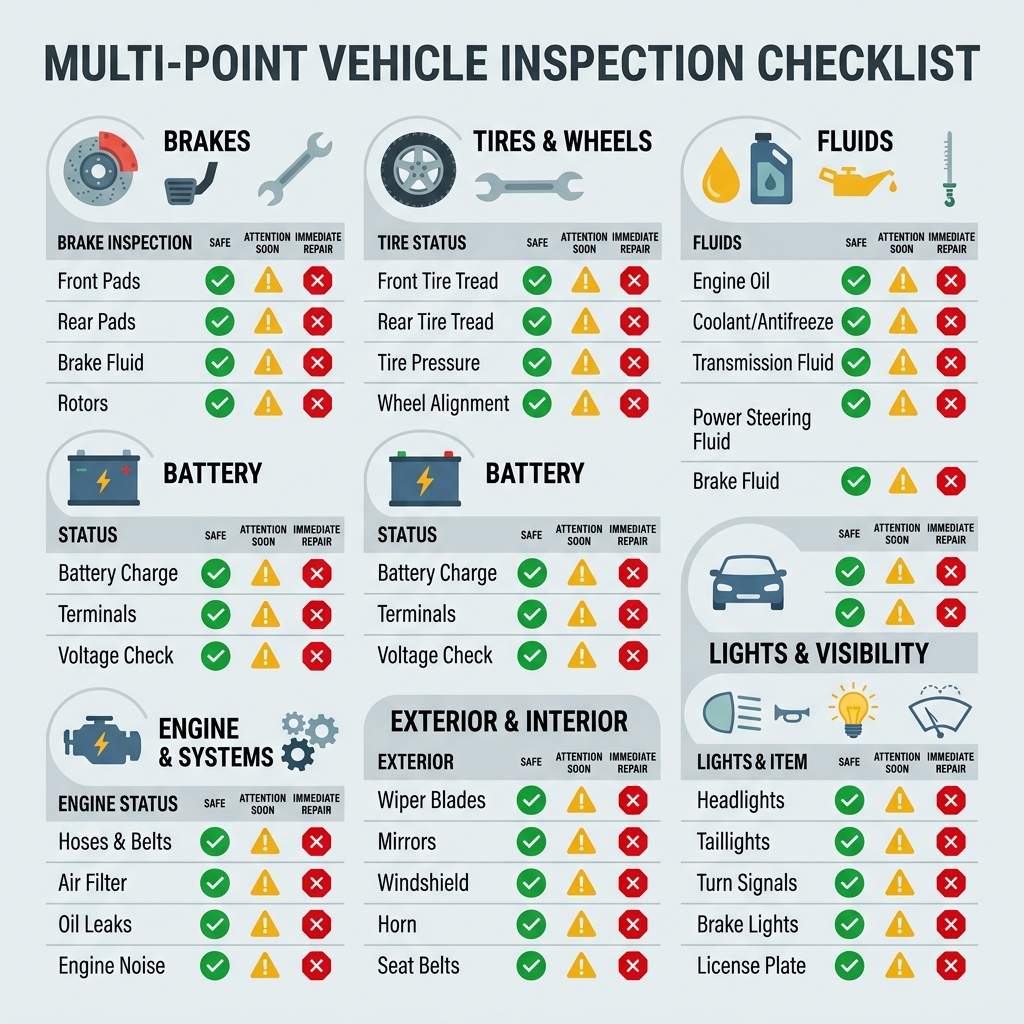
Green: Excellent Shape

A green rating means the component has been thoroughly checked, meets all manufacturer specifications, and is in excellent operating condition. No attention, adjustment, or replacement is needed. You are good to go, and you can drive with absolute confidence knowing these parts are solid.

Yellow: Plan for the Future

A yellow rating indicates the component is showing signs of normal wear and tear, but does not present an immediate safety risk. It does not need to be replaced today, but you should budget and plan for it in the near future. This allows you to manage maintenance expenses without surprises.

Red: Immediate Attention

A red rating means the component has failed, is severely worn, or poses an immediate safety hazard. These issues require urgent, same-day attention to keep your vehicle safe, legal, and operational. We will always clearly explain the exact risk and prioritize these repairs for you.

A vehicle inspection checklist diagram categorized by brakes, tires, fluids, battery, engine, interior, and lights. (Representative image for illustration purposes only. Actual vehicle may vary based on trim and configuration.)

How Routine Maintenance Protects Your Vehicle’s Trade-In Value

The Real Value of a Clean Service History

When it comes time to upgrade to a new vehicle, nothing influences your current vehicle’s trade-in value quite like a complete, documented service history. When a dealership or a private buyer looks at your vehicle, they are looking for reassurance that it wasn’t abused or neglected. A vehicle with consistent, professionally documented oil changes, tire rotations, and multi-point safety checks is worth thousands of dollars more than an identical vehicle with no service history. This paperwork proves that you prioritized preventative maintenance, meaning the engine, transmission, and structural elements are far less likely to fail prematurely. It turns your car from a risky gamble into a highly desirable, premium used vehicle.

Unlock Your Vehicle's Current Equity

At Valor Ford, we make it incredibly easy to see exactly how much your diligent maintenance has paid off. Our transparent trade-in evaluation process looks at your vehicle’s mechanical health, aesthetic condition, and local market demand to give you a competitive offer. You can use this equity to transition seamlessly into a brand-new vehicle or a reliable pre-owned model. Whether you are ready to trade today or are just curious about your car’s current financial standing, we invite you to complete our quick, hassle-free online form for a personalized Trade In Evaluation from our expert valuation team.

Why Military Families at Fort Riley Trust Valor Ford for Transparent Service

Serving those who serve our country is one of our deepest points of pride at Valor Ford. Located right next door to Fort Riley, we understand the unique pressures, tight timelines, and unexpected transitions that military families face daily. From sudden deployments and PCS moves across the country to managing a busy household while a spouse is training, we know that your time is extremely valuable and your scheduling needs are highly dynamic. You cannot afford to worry about vehicle breakdowns or deal with slow, untrustworthy service centers.

That is why we offer specialized services tailored directly to our military community, including flexible scheduling options, clear and transparent repair cost breakdowns, and direct communication lines with service advisors. We take the stress out of vehicle care by providing honest, expert recommendations using only genuine parts that keep your warranty fully intact. If you are preparing for a move, transitioning back to civilian life, or simply need your vehicle inspected before a long road trip, our team is here to support you every step of the way. Stop by and see us, or Get Directions to Valor Ford to experience our transparent military-friendly service first-hand.
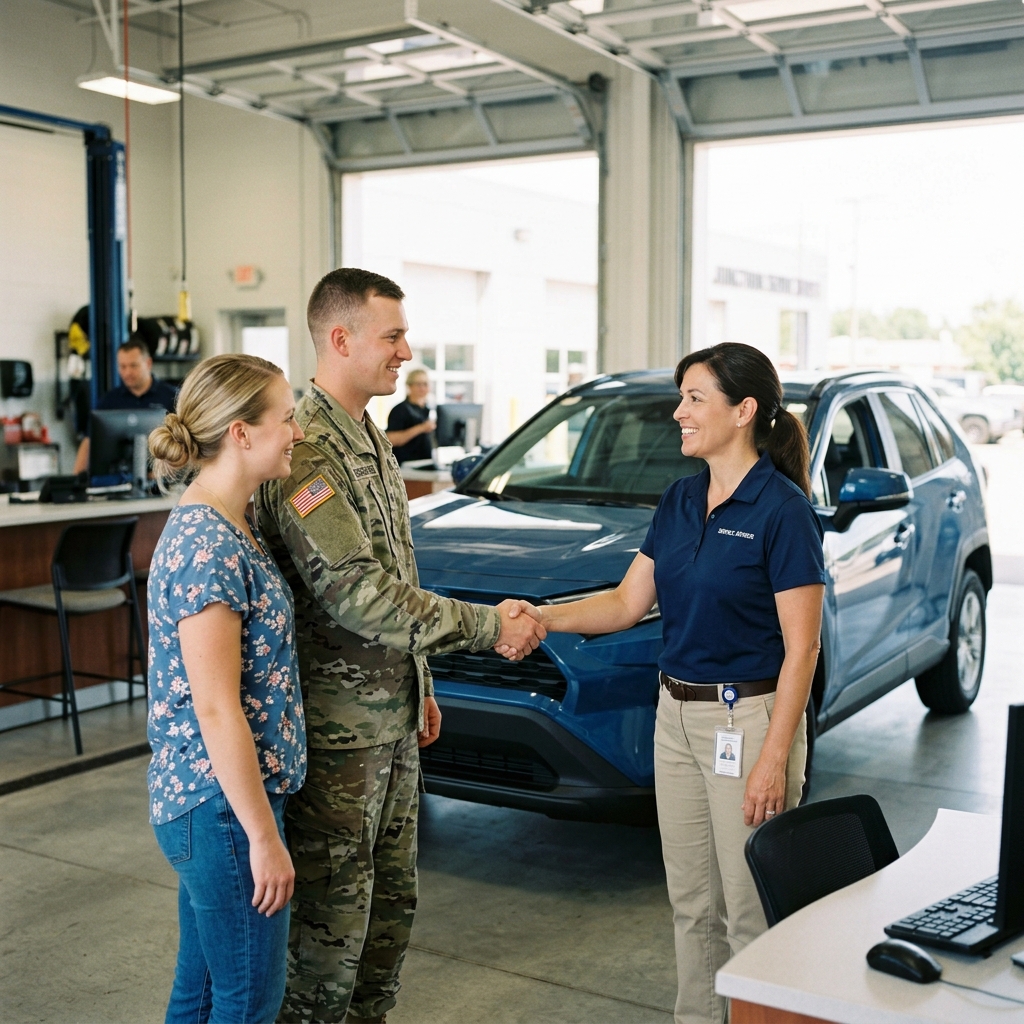
A female service advisor shakes hands with a US military serviceman and his partner at a car dealership. (Representative image for illustration purposes only. Actual vehicle may vary based on trim and configuration.)

A Simple Checklist for Your Next Scheduled Maintenance Visit

What to Prepare and Bring

Before you head to your service appointment, spending just five minutes preparing can make the entire process significantly smoother. Be sure to gather your vehicle’s registration, insurance card, and any existing maintenance records if you are new to our shop. If your vehicle has a wheel lock key (often stored in the glove compartment or with the spare tire), make sure it is easily accessible so our technicians can perform tire rotations and brake inspections. Additionally, clear out any personal belongings from the front passenger seat and center console area so our technicians can safely work on interior items like cabin filter replacements.

Questions to Ask Your Advisor

When you sit down with your service advisor, do not hesitate to ask clarifying questions in plain English. Good questions to ask include: ‘What are the most urgent safety items on my multi-point inspection today?’, ‘Are there any outstanding manufacturer safety recalls on my vehicle model?’, and ‘How do my brakes and tire tread depths look compared to last visit?’. If you are experiencing a weird sound, vibration, or warning light, try to describe it in simple terms—like ‘a high-pitched squeak when braking’ or ‘a minor shudder at 60 MPH.’ Our team is trained to translate those physical descriptions into accurate diagnostic steps.

Schedule Your Next Worry-Free Service at Valor Ford in Junction City Today

At Valor Ford, we make car maintenance completely transparent, stress-free, and straightforward. No confusing industry jargon, no hidden fees, and absolutely no high-pressure sales tactics. From simple, quick oil changes to deep-dive engine diagnostics and preventative fluid flushes, our factory-trained and certified technicians have the expertise to keep your vehicle running perfectly. We proudly serve drivers throughout Junction City, Fort Riley, and Dickinson County, helping you protect your investment, maximize your fuel economy, and preserve your vehicle’s trade-in value. For routine care—schedule your next service online today or give our friendly service desk a call to experience the Valor Ford difference.
Logo for Valor Automotive featuring a blue and silver shield with 'VA' and the company name with a red star.

How the Onboard Scales Feature Helps Agricultural Operators Manage Payloads Accurately

The life of an agricultural operator in Junction City and the wider Dickinson County area is defined by a series of demanding, high-stakes logistical decisions. During the intense summer heat, when the winter wheat harvest is in full swing, every minute counts, and every load carries significant economic weight. Hauling seed, grain, fertilizer, or heavy farm machinery requires a delicate balance between maximizing efficiency and protecting the vehicle’s structural integrity. Historically, this balance has been maintained through a mixture of guesswork, intuition, and inconvenient trips to commercial scales. Farmers have had to estimate weight based on how much the rear suspension sagged or how the truck handled on rough dirt roads—methods that are notoriously inaccurate and highly risky. Overloading a truck is not just a regulatory hazard; it is a direct threat to the longevity of the vehicle. When a truck is loaded beyond its rated capacity, the suspension, frame, brakes, and transmission are subjected to extreme levels of stress. Over time, this results in accelerated wear and tear, leading to broken leaf springs, warped brake rotors, and catastrophic transmission failures that can sideline a vital vehicle during the busiest times of the year. Conversely, under-loading a vehicle out of caution leads to operational inefficiency, requiring more trips, consuming more fuel, and wasting valuable labor hours. This is where modern technological solutions like Ford’s integrated Onboard Scales feature become an absolute game-changer for the modern agricultural operation.
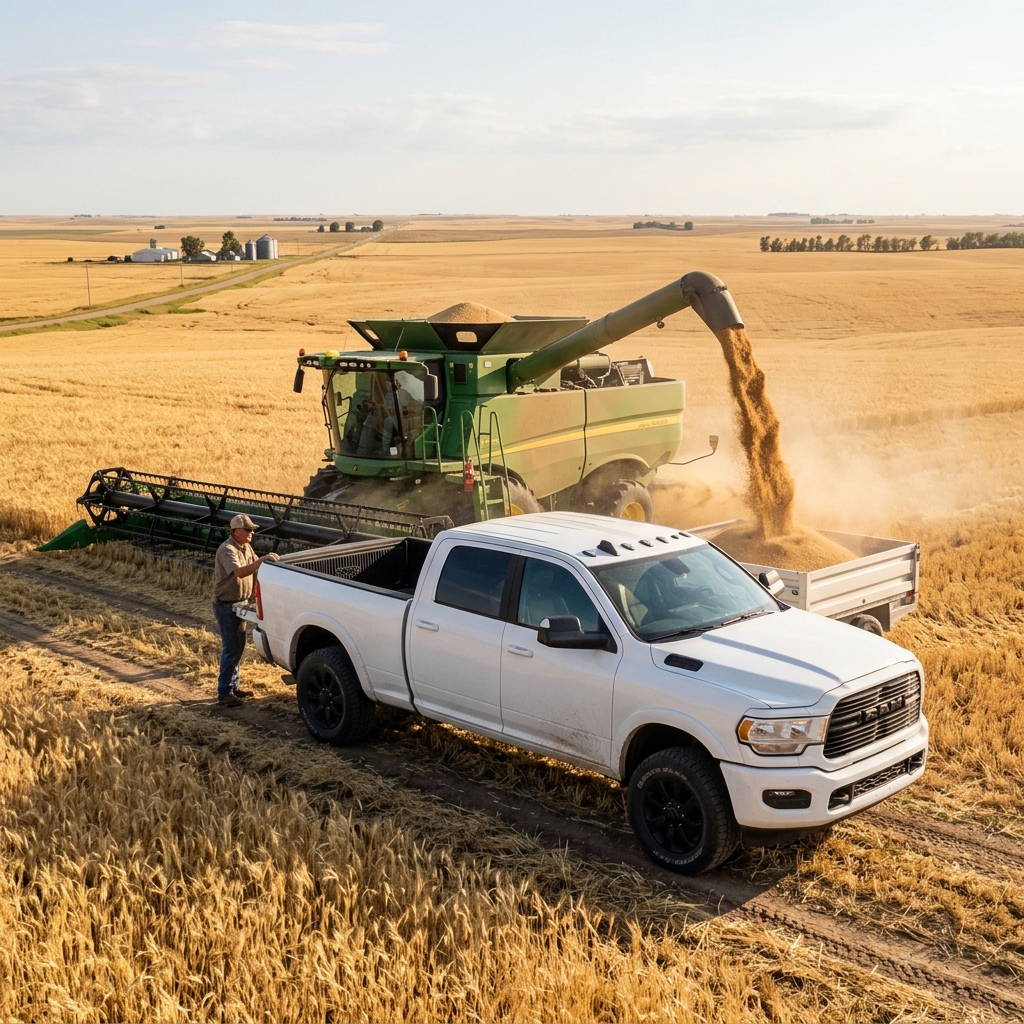
A white pickup truck parked in a golden wheat field next to a green combine harvester unloading grain. (Representative image for illustration purposes only. Actual vehicle may vary based on trim and configuration.)

By transforming the truck itself into a precision weighing system, the Onboard Scales feature eliminates the guesswork that has plagued agricultural hauling for generations. Whether you are loading bulk seed in the morning, transporting heavy tools to a remote field in the afternoon, or hauling grain to the local elevator at dusk, this technology provides continuous, real-time feedback on payload weight. This allows operators to confidently load their vehicles to the exact safe limit, maximizing the productivity of every single trip while ensuring the truck is never subjected to damaging overloads. For the farming families of Dickinson County, this is not just a convenience; it is a critical tool for maintaining fleet health and optimizing seasonal workflows.

How Does the Truck's Onboard Scales Feature Help Measure Agricultural Payloads in Real Time?

To understand the utility of the onboard scales feature, it is helpful to look at the engineering that makes it possible. The system utilizes advanced suspension sensors integrated into the chassis of the truck. These displacement sensors measure the physical compression of the suspension under weight. By cross-referencing this compression data with pre-calibrated software algorithms, the truck’s onboard computer calculates the exact weight of the payload currently resting in the bed or applied to the hitch as tongue weight. This calculation happens continuously and automatically, updating in real time as items are added or removed. For instance, as a skid steer bucket dumps a load of feed, gravel, or soil into the truck bed, the digital display updates instantly, showing the increasing weight. This eliminates the need for manual estimation or the risk of leaving the farm with an unbalanced or illegal load, providing peace of mind directly in the field.

The driver is kept informed through multiple intuitive interfaces. Inside the cab, the center SYNC 4 touchscreen displays a graphic representation of the truck, showing the current payload weight, the maximum payload capacity, and whether the load is distributed evenly over the front and rear axles. This visual breakdown makes it incredibly simple to adjust the cargo for optimal stability and safety. Additionally, for operators working outside the vehicle, integrated smart taillights offer a quick, visual status report. Built-in vertical LED bars in the rear taillights illuminate progressively as payload is added, functioning much like a battery charge indicator on a smartphone. If the truck reaches its maximum capacity, the top LEDs flash, warning the person loading the truck to stop immediately. This seamless combination of hardware and software ensures that critical weight data is always accessible when and where it is needed most.

How Do Onboard Scales Improve Fertilizer Application Accuracy in the Field?
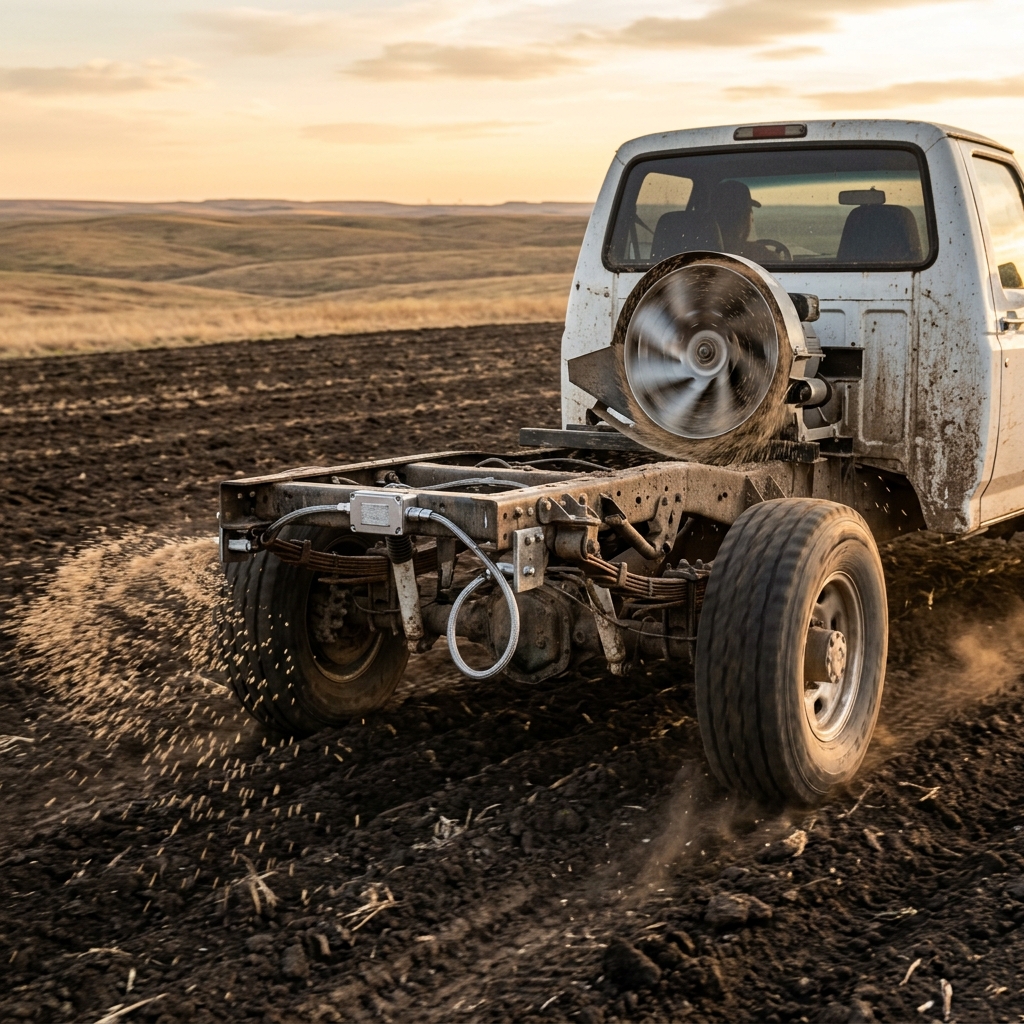
Precision agriculture relies heavily on accurate input management. When distributing fertilizer, lime, or seed, applying the exact recommended amount per acre is essential for maximizing yield and protecting the environment. Onboard scales allow farmers to measure the precise amount of material loaded into spreaders or truck-mounted dispensers before heading out into the field. By knowing the exact starting weight of the product, operators can cross-reference this data with their GPS-guided application maps. As they move through the fields of Dickinson County, they can track the rate of depletion with absolute accuracy, ensuring consistent coverage and preventing localized over-application.

A modified white truck without a bed uses a spinning spreader to sow seeds across a plowed farm field. (Representative image for illustration purposes only. Actual vehicle may vary based on trim and configuration.)

This level of precise tracking translates directly to financial savings. Fertilizer represents one of the largest annual operating inputs for local grain farms. Minimizing waste through exact application rates not only reduces input costs but also prevents environmental run-off into local waterways. Furthermore, consistent nutrient distribution leads to more uniform crop development and simplified harvesting. By leveraging the integrated weighing capabilities of their farm truck, operators can achieve precision farming results that previously required highly specialized, cost-prohibitive commercial applicator machinery, making their standard farm truck a more versatile tool.

Explore Modern Trucks Equipped with Smart Scales in Our New Inventory

At Valor Ford, we understand that having the right tool for the job is essential to keeping your agricultural operation running smoothly. That is why we maintain a diverse selection of new Ford trucks equipped with the latest smart technologies, including the revolutionary Onboard Scales and Smart Hitch systems. If you are looking for a highly capable, versatile light-duty truck for daily tasks, you can Research Ford F-150 models configured with these innovative features. For the most demanding hauling and towing tasks, we invite you to Research Ford F-250 and F-350 Super Duty trucks, which offer the heavy-duty capabilities required to move large payloads of feed, grain, and heavy machinery with ease. Our knowledgeable team in Junction City is ready to help you explore the various trim levels—including Lariat, King Ranch, Platinum, and Limited—that feature this integrated technology. We can demonstrate how the SYNC 4 screen and smart taillights operate in real-world scenarios, ensuring you select the perfect truck to optimize your farm’s efficiency. Whether you are managing a small family farm or a large commercial operation, upgrading to a smart-scale-equipped truck is a strategic step toward a more productive and safer harvest season.

What Kind of Weight Capacity Do Floater Onboard Scale Systems Offer for Heavy Machinery?
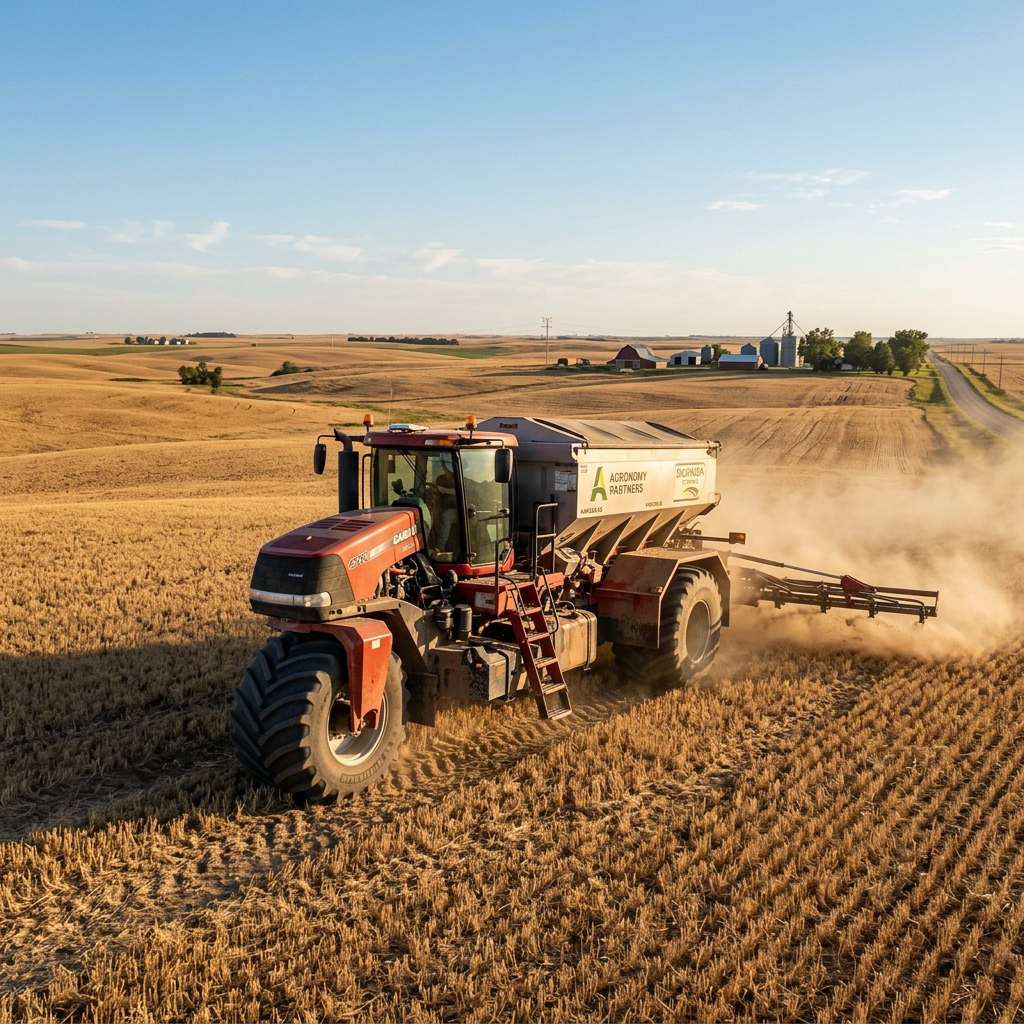
A red agricultural applicator kicks up dust in a harvested wheat field with rolling hills in the background. (Representative image for illustration purposes only. Actual vehicle may vary based on trim and configuration.)

In the agricultural industry, weight capacities vary dramatically depending on the scale of the equipment. Industrial-grade agricultural floaters—massive, specialized self-propelled machines designed to apply fertilizer or lime across vast fields with minimal soil compaction—utilize heavy-duty onboard scale systems with immense capacities. These heavy machinery scale systems are engineered to measure payloads ranging from 10 tons to over 30 tons, handling massive dry bins and liquid tanks with extreme durability under heavy off-road conditions. While a pickup truck’s integrated onboard scale system operates on a smaller scale, it serves an equally vital and highly complementary role on the farm. A Ford Super Duty’s onboard scales are calibrated to manage payloads of up to several thousand pounds, depending on the specific model configuration. Rather than replacing industrial floater scales, the truck’s scale system acts as a nimble, daily support tool—allowing operators to quickly measure and transport seed bags, fuel transfer tanks, and auxiliary equipment directly to the field to support the larger machinery, ensuring the entire fleet operates at peak efficiency.

Are Onboard Scales a Strategic Investment or Just a Convenience for Farm Operations?

When evaluating new technology for a farming operation, the primary question is always the return on investment (ROI). While some might view integrated onboard scales as a luxury convenience, a detailed economic analysis reveals it is a highly strategic investment. Overloading a vehicle even occasionally can lead to severe financial consequences. In Kansas, Department of Transportation (DOT) fines for overloaded vehicles on public highways can easily run into thousands of dollars for a single infraction. By ensuring that every load leaving the farm is strictly within legal limits, the onboard scale system can pay for itself by avoiding just one heavy citation on local roads near Junction City. Beyond legal compliance, the physical wear and tear saved by utilizing onboard scales is substantial. Consistently overloading a truck causes severe strain on critical drivetrain and suspension components. Tires wear out prematurely, brake pads and rotors degrade rapidly under excess heat, leaf springs lose their arch, and transmissions suffer from overheating. The cost of replacing a set of heavy-duty truck tires or undergoing a transmission rebuild far exceeds the initial investment in smart scale technology. By keeping loads within designated limits, farms can extend the service life of their transport fleet, minimize unscheduled maintenance downtime during critical seasons, and protect their capital investments.

Furthermore, efficiency gains contribute directly to the bottom line. In agriculture, time is money—especially during short harvest windows. Maximizing the payload of every truck trip means fewer trips are required to move the same volume of product. This reduces overall fuel consumption, lowers labor costs, and minimizes engine hours on farm trucks. Conversely, under-loading a truck out of fear of overloading means leaving valuable capacity unused, increasing the number of trips required and dragging out operational timelines. Onboard scales provide the precise data needed to hit the ‘sweet spot’ of maximum efficiency on every single haul, representing a clear and measurable operational advantage.

Which Initial Applications Make the Most Sense When a Farm First Adopts Onboard Scales?

Grain Transport & Harvest Logistics During the peak of the summer wheat or fall corn harvest, grain is transferred directly from the combine into the truck bed or trailer in the middle of the field. Without a physical scale, overfilling is incredibly common. By utilizing onboard scales, the truck operator can monitor the load in real time, stopping the grain cart operator as soon as the truck reaches its maximum legal weight. This keeps the truck safe and highway-compliant before it ever leaves the dirt path.

Livestock Feed & Silage Mixing For cattle operations and dairies, feed rations must be balanced accurately to maintain herd health and growth rates. When loading silage, hay, grain, or specialized feed supplements into the truck bed for transport to the feed bunk, onboard scales allow the operator to weigh each component as it is added. This ensures the correct ratio of nutrients is distributed to the livestock, leading to better herd performance and more predictable feed management costs.

Secure Equipment & Trailer Towing Towing heavy farm implements, trailers, and skid steers is a daily chore. Safe towing depends heavily on tongue weight—the downward force exerted by the trailer coupler on the truck’s hitch. Ford’s Smart Hitch feature works with the onboard scales to measure tongue weight in real time. This tells the driver exactly how to position the machinery on the trailer to achieve the correct balance, preventing dangerous trailer sway and maintaining confident steering control.

Get an Instant Trade-In Value for Your Current Farm Truck at Valor Ford

If you are currently managing your farm operations with an older truck that lacks the safety, efficiency, and convenience of integrated scale technology, there has never been a better time to upgrade. Modern commercial and personal farm trucks have evolved significantly, offering advanced capabilities that can transform your daily productivity. At Valor Ford, we make transitioning to a modern, smart-scale-equipped vehicle straightforward and financially rewarding. We recommend starting with our simple online Trade In Evaluation tool to receive a fair, competitive estimate of your current truck’s market value based on local Kansas market trends. Our team is committed to helping you maximize the purchasing power of your current vehicle. Whether your current truck is a light-duty runabout or a high-mileage heavy-duty model, we will work diligently to offer you top value, which can be applied directly toward a new, technologically advanced Ford model. You can also Call us at (785) 238-5114 to discuss custom trade packages or fleet options with our dedicated sales specialists. Let us help you retire your older, high-maintenance vehicles and replace them with modern powerhouses that work as hard as you do.
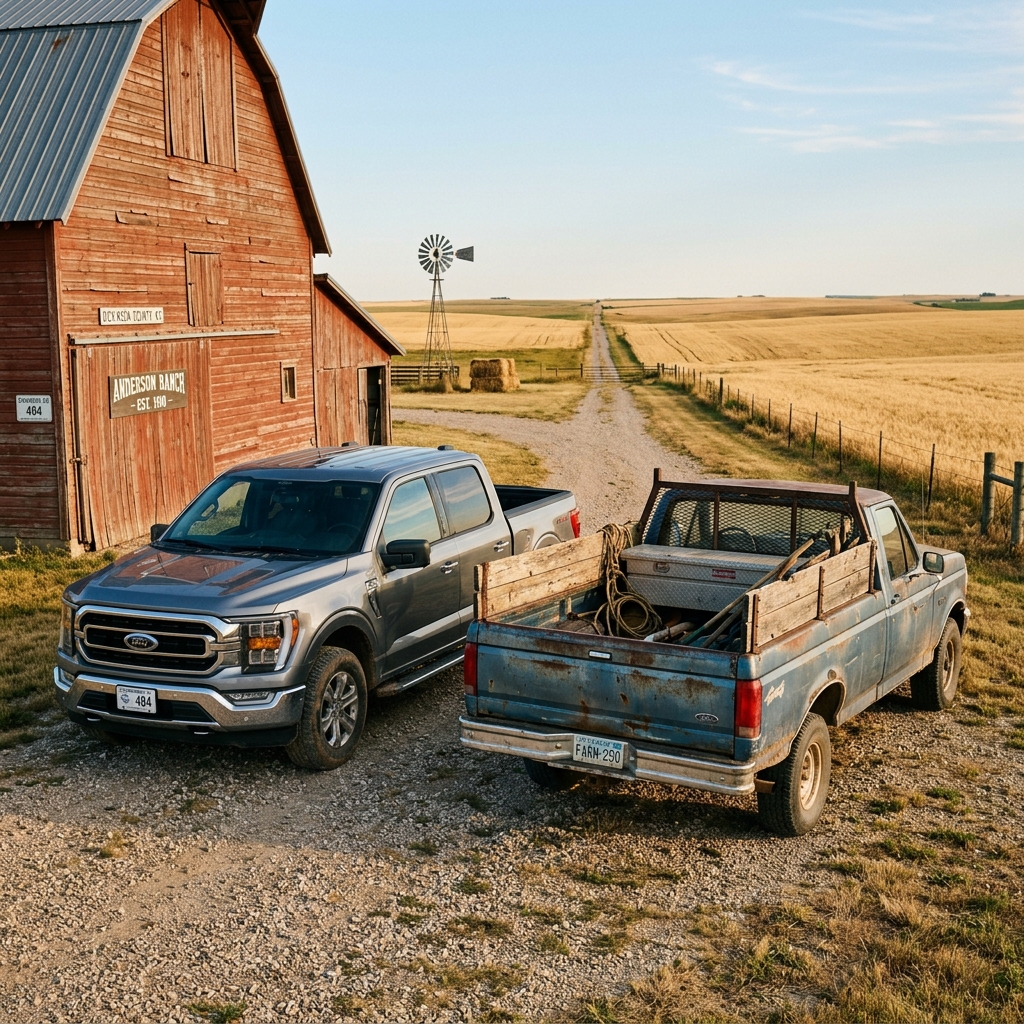
A modern gray pickup truck and a vintage blue pickup truck parked next to a red barn on a vast farm. (Representative image for illustration purposes only. Actual vehicle may vary based on trim and configuration.)

What Aftermarket Scale Alternatives Are Available for Older Pickups and Trailers?

For agricultural operations managing a mixed fleet of older trucks and trailers, transitioning every vehicle to factory-integrated scale technology immediately may not be feasible. Fortunately, several aftermarket alternatives can help bridge the gap. One of the most common solutions is the installation of air helper springs (airbags) equipped with integrated pressure sensors. These systems measure the air pressure required to level the truck under a load, allowing operators to estimate the payload weight based on system pressure charts. While not as precise as factory strain gauges, they offer a useful baseline for preventing extreme overloads. Another option is the installation of physical leaf spring sensors or mechanical tongue scales for trailers, such as Sherline scales. These trailer-specific scale systems can be integrated into the trailer frame or coupler, providing highly accurate weight readings for heavy flatbeds and stock trailers. While these aftermarket tools require manual calibration and separate displays, they represent a significant safety and efficiency upgrade for older equipment in your fleet.

Managing aftermarket towing and hauling accessories is simplified with the help of a certified parts department. If you need assistance finding the right components, heavy-duty receivers, or wiring upgrades for your mixed fleet, Valor Ford is here to help. You can easily Order Genuine Ford Parts directly through our website to ensure your towing setup meets the highest standards of safety and durability. Our team in Junction City can help you source heavy-duty hitch components, trailer brake controllers, and auxiliary suspension upgrades designed to work seamlessly with your Ford vehicles. Keeping your fleet equipped with high-quality, OEM-certified parts is the best way to ensure long-term durability and safety when hauling heavy agricultural loads, regardless of your vehicle’s model year.

Preventing Overloads and DOT Infractions on Dickinson County and Fort Riley Roads

Operating heavy agricultural vehicles on public highways around Junction City, Fort Riley, and the broader Dickinson County area requires strict adherence to safety regulations. The Kansas Department of Transportation (KDOT) and local law enforcement actively monitor commercial and agricultural truck weights to prevent damage to public infrastructure and ensure road safety. An overloaded truck is significantly more difficult to control, requiring vastly longer stopping distances and displaying compromised handling characteristics on winding rural roads or when merging onto busy highways like Interstate 70. Furthermore, overloading puts immense stress on the vehicle’s braking system, which can lead to brake fade or complete mechanical failure when descending steep hills or navigating unexpected traffic situations. By utilizing the integrated Onboard Scales feature, operators can verify that their vehicle and trailer are strictly within their legal Gross Vehicle Weight Rating (GVWR) and Gross Combined Weight Rating (GCWR) before leaving the farm. This ensures compliance with state regulations and protects the safety of the truck driver and everyone sharing the road.
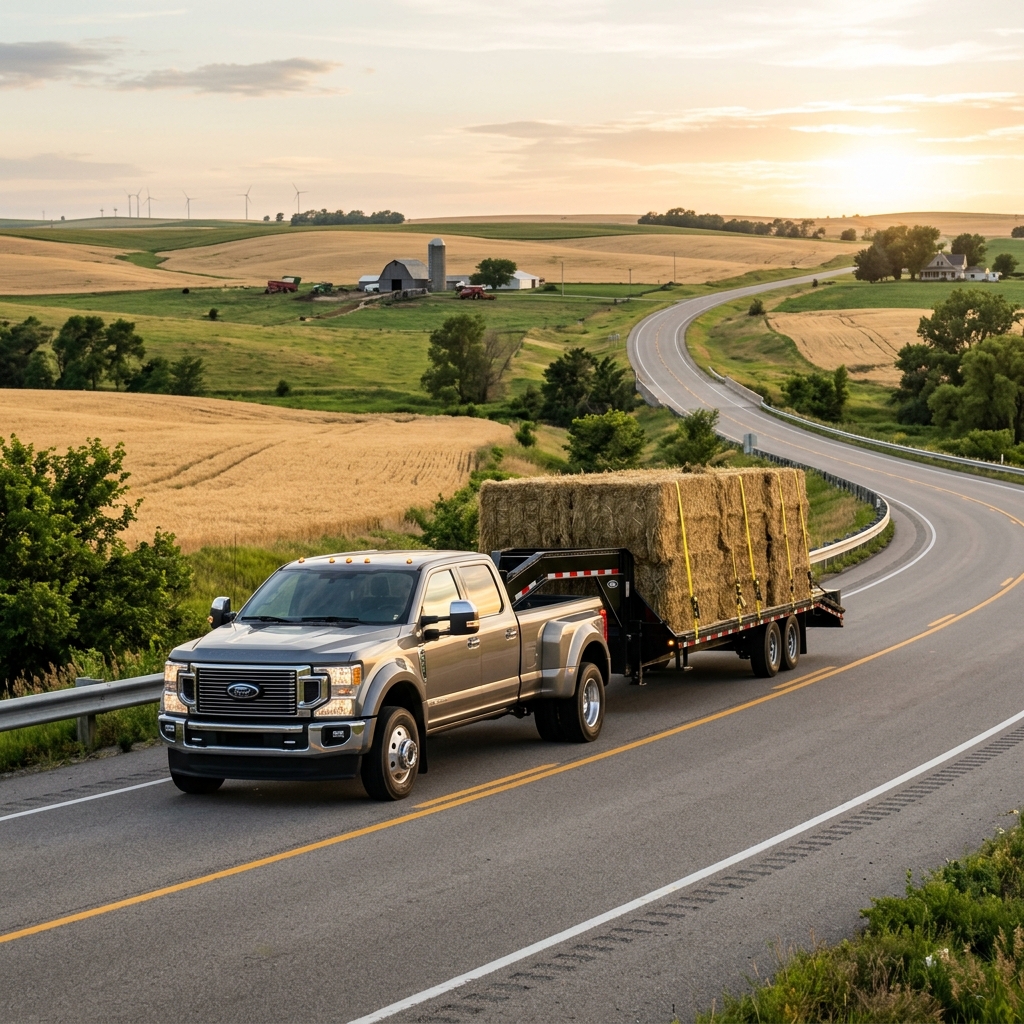
A silver Ford dually pickup truck pulls a trailer loaded with large hay bales along a winding country road at sunset. (Representative image for illustration purposes only. Actual vehicle may vary based on trim and configuration.)

Avoiding DOT infractions is not just about avoiding fines; it is also about maintaining a clean operating record for your agricultural business. Infractions can lead to increased insurance premiums, mandatory fleet audits, and damaging downtime if a vehicle is placed out-of-service on the side of the road. By making onboard scale verification a standard part of your farm’s loading protocol, you create a culture of safety and compliance that protects your drivers, your equipment, and your business’s reputation in the local community.

Syncing Your Onboard Scale Data with Smart Apps and Farm Management Systems

Modern farming operations are increasingly digital, relying on data-driven insights to optimize efficiency and track productivity. Ford’s Onboard Scales feature is designed to integrate seamlessly into this modern ecosystem. Through the FordPass mobile application, operators can monitor their truck’s payload weight remotely on their smartphone. This means a driver sitting in the cab of a loading tractor or combine can check the exact weight of the truck bed without needing to constantly climb out of the machinery to inspect the load or look at the in-cab display. This remote connectivity streamlights field operations, especially when labor is limited and operators are multitasking. It allows for single-person loading operations that are both faster and safer, minimizing the downtime typically associated with checking and adjusting loads in the field.

In addition to real-time monitoring, the data generated by the onboard scales can be utilized for detailed record-keeping. By tracking and logging the weight of each payload moved off the field, farmers can maintain precise harvest logs, input distribution records, and operational efficiency metrics. This data can be exported and integrated into modern farm management systems, providing an accurate record of total yield and transportation dynamics. This integration bridges the gap between your physical transport fleet and your digital farm records, allowing you to analyze transport costs, track fields’ productivity, and make informed decisions about logistics and equipment investments. Technology is not just about making individual tasks easier; it is about creating a connected, data-rich environment that drives long-term success.

Maintaining and Calibrating Your Truck's Scale Sensors for Long-Term Accuracy
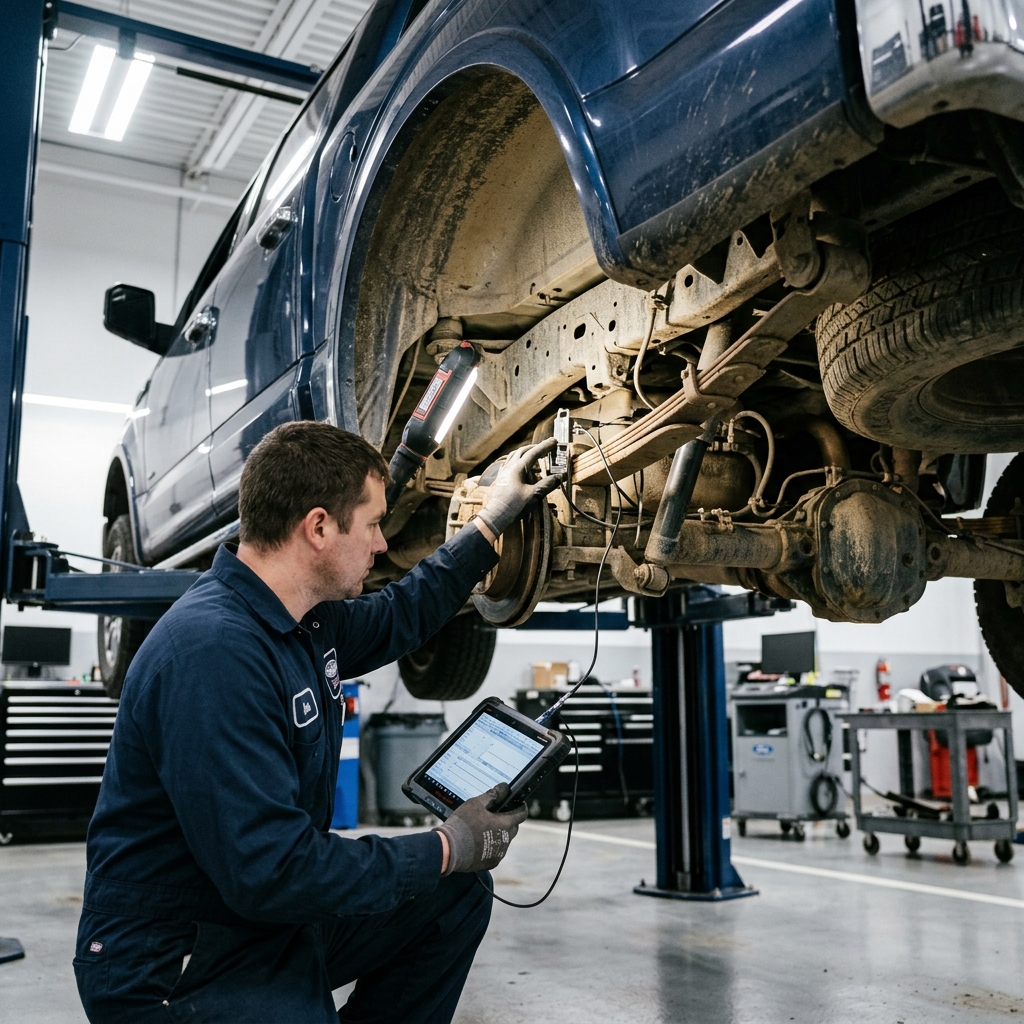
Undercarriage Cleaning Kansas farm life is notoriously tough on vehicles. Mud, dust, manure, and agricultural chemicals can build up on the undercarriage of your truck. To ensure the displacement sensors and linkages of the onboard scale system continue to function accurately, it is important to regularly wash the underside of the vehicle. Focus on the areas around the rear axles and suspension components where the scale hardware is located, keeping them free of heavy mud and debris that could restrict movement or cause premature sensor wear.

A mechanic uses a diagnostic tablet to inspect the rear suspension of a blue pickup truck on a hydraulic lift. (Representative image for illustration purposes only. Actual vehicle may vary based on trim and configuration.)

Professional Calibration Over time and under heavy agricultural use, the scale sensors may require professional diagnostic checks and recalibrations. If you notice discrepancies in weight readings, or after undergoing suspension repairs or modifications, a professional calibration is recommended. Our team is here to assist. You can easily Schedule Pickup and Delivery Service to have your vehicle serviced without interrupting your busy day, or Schedule Ford Service Today online.

Upgrade Your Agricultural Fleet with Smart Scale Technology at Valor Ford

Investing in smart truck technology like integrated Onboard Scales is a strategic step toward optimizing your farm’s safety, efficiency, and long-term profitability. At Valor Ford, we are proud to serve the hardworking farming, ranching, and military communities in Junction City, Fort Riley, and throughout Dickinson County. We understand the unique challenges of agricultural hauling and are dedicated to helping you find the perfect vehicle to meet your needs. Ready to see these features in action? You can easily Get Directions to Valor Ford and visit our showroom located at 1825 Goldenbelt Blvd, Junction City, KS 66441. If you have questions about current pricing or want to check vehicle availability, feel free to Call us at (785) 238-5114. To simplify your purchasing process, we encourage you to Contact us for financing information online. For those looking at other versatile vehicles, you can also Research Ford Explorer or Research Ford Maverick options. We look forward to partnering with you to power your farm’s success!

Why the 2022 Ford Maverick Redefined the Compact Truck for Junction City Drivers

When Ford announced the return of a compact pickup, the automotive world leaned in with curiosity. When the 2022 Ford Maverick finally hit the pavement, it didn’t just meet expectations—it completely shattered the traditional truck mold. For decades, midsize and full-size trucks grew larger, heavier, and more expensive, leaving a massive void for drivers who wanted the utility of an open cargo bed without the massive footprint or painful fuel bills of a traditional half-ton pickup. The 2022 Maverick stepped perfectly into this space, introducing a standard hybrid powertrain, exceptional maneuverability, and a starting MSRP that made it instantly accessible to a wide range of buyers. For commuters navigating the daily drive along I-70, military personnel stationed at Fort Riley seeking a reliable and versatile companion, and weekend DIY enthusiasts in Dickinson County, the Maverick proved to be the exact vehicle they didn’t realize they were missing.

What makes the 2022 Maverick so revolutionary is its refusal to compromise. Built on a unibody platform shared with the rugged Bronco Sport and refined Escape, it drives with the comfortable, predictable dynamics of a modern crossover while offering a fully functional 4.5-foot steel bed. This unique architecture delivers a smooth ride that cushions the bumps on rural Kansas roads, a stark contrast to the stiff, bouncy behavior of older body-on-frame compact pickups. Furthermore, its compact dimensions mean it zips through tight parking lots in downtown Junction City and slides effortlessly into standard residential garages, removing the stress of parking a massive vehicle in urban and suburban spaces alike.

The appeal of this compact marvel stretches across incredibly diverse lifestyles. For soldiers and families at Fort Riley, it represents a highly economical, highly dependable tool for moving gear, outdoor equipment, or household goods during a PCS move. For daily commuters heading into Manhattan or Topeka, the standard hybrid engine delivers fuel efficiency figures that rival compact economy cars, turning a taxing daily commute into a cost-effective breeze. And for local weekend adventurers, it is the ultimate gateway vehicle—ready to haul kayaks to Milford Lake, transport mountain bikes to local trailheads, or bring home lumber for a backyard project. It is a vehicle designed to adapt to your life, rather than forcing you to adapt your life to your vehicle. If you want to see how this revolutionary compact truck can elevate your daily drive, we invite you to Browse Used Inventory at Valor Ford and discover what makes the Maverick a true game-changer.
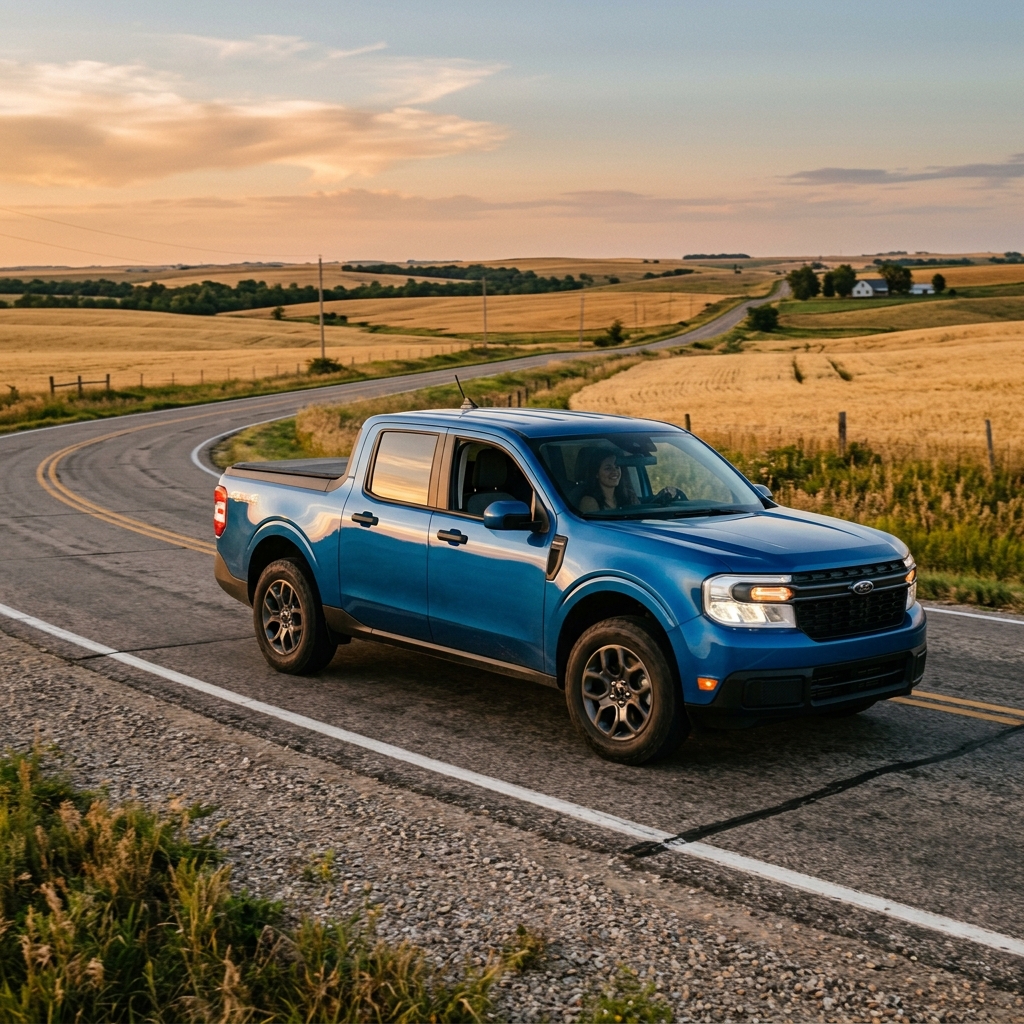
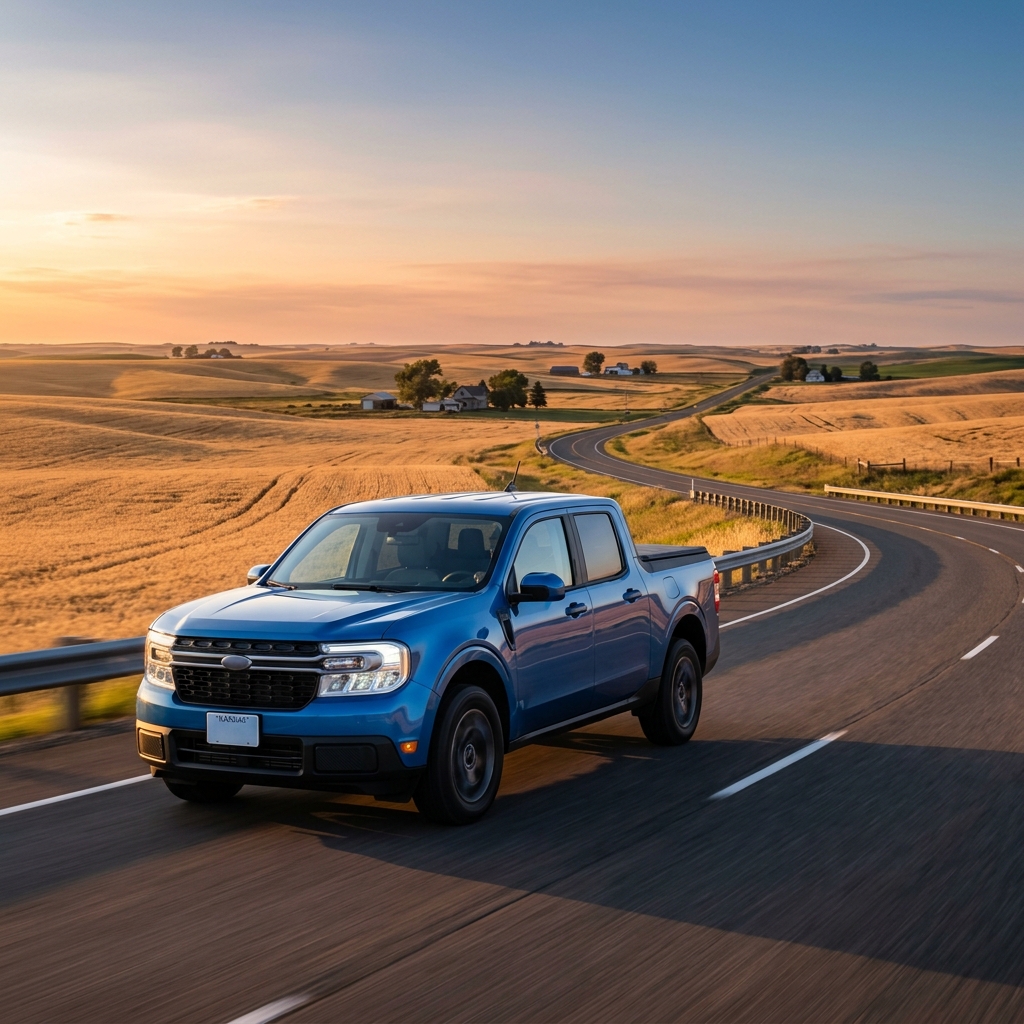
A blue pickup truck driving on a winding country road through rolling golden fields at sunset. (Representative image for illustration purposes only. Actual vehicle may vary based on trim and configuration.)

What are the engine options for the 2022 Ford Maverick?

One of the most impressive aspects of the 2022 Ford Maverick is its dual-powertrain strategy, allowing buyers to customize their truck’s performance personality based on their specific driving needs. The headline-grabbing standard engine is a revolutionary 2.5-liter FHEV (Full Hybrid Electric Vehicle) powertrain. This system pairs an Atkinson-cycle four-cylinder engine with an electric motor and a smooth, planetary electronic continuously variable transmission (eCVT). Generating a combined 191 horsepower and 155 lb-ft of torque, this setup is strictly front-wheel drive (FWD). Its primary mission is efficiency, delivering an EPA-estimated 42 mpg in the city and 33 mpg on the highway. This makes the hybrid Maverick an absolute champion for drivers who spend their days navigating stop-and-go traffic or running errands around town, providing hybrid car efficiency with the undeniable utility of a pickup bed.

For those who require more muscle, all-weather confidence, or traditional mechanical feel, Ford offers the optional 2.0-liter EcoBoost turbocharged four-cylinder engine. This potent powerplant pumps out a robust 250 horsepower and a muscular 277 lb-ft of torque, mated to a fast-shifting 8-speed automatic transmission. Unlike the hybrid, the EcoBoost engine can be configured with either front-wheel drive or an advanced intelligent all-wheel-drive (AWD) system. This AWD setup is particularly popular among Kansas drivers, offering critical traction during snowy winter commutes and muddy excursions off the beaten path. While it sacrifices a bit of fuel economy compared to the hybrid, the EcoBoost still delivers highly respectable EPA ratings of 22 mpg city and 29 mpg highway (with AWD), proving that modern turbocharging technology can deliver both exciting performance and sensible efficiency.

Engine Specification

2.5L FHEV Hybrid

2.0L EcoBoost Turbo

Horsepower

191 hp (Combined)

250 hp

Torque

155 lb-ft

277 lb-ft

Transmission

eCVT

8-Speed Automatic

Drivetrain

FWD Only

FWD or AWD

Choosing between these two powertrains ultimately comes down to your priorities. If your daily route consists of heavy highway commuting and city driving where saving money at the pump is paramount, the hybrid is an unbeatable value. However, if you regularly traverse gravel roads, face harsh Kansas winters, or plan to pull a light trailer, the EcoBoost with all-wheel drive is the clear choice. To explore these options in depth, you can Research Ford Maverick configurations and see which layout fits your driving style best.

How much can the 2022 Ford Maverick tow?
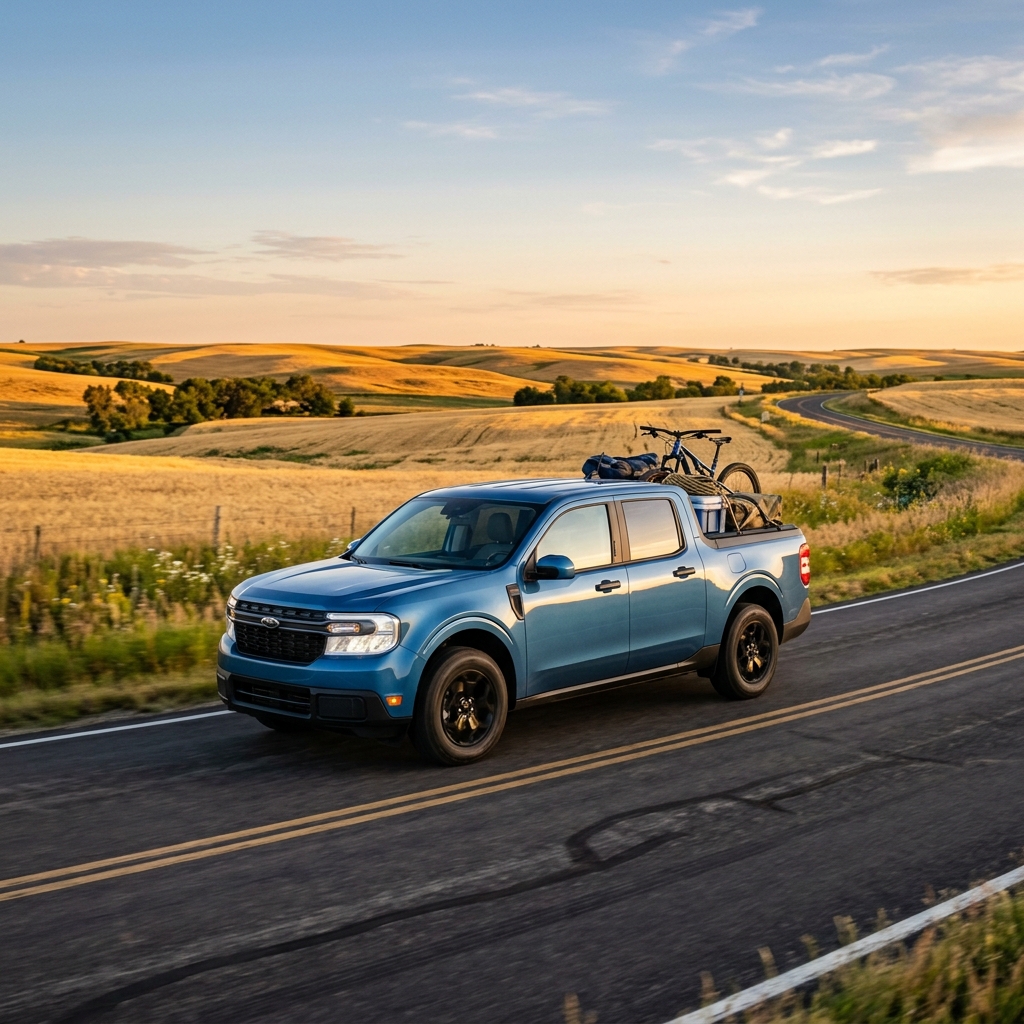
Do not let its compact size fool you—the 2022 Ford Maverick is a capable workhorse engineered to handle real-world hauling tasks with ease. Out of the gate, both the standard 2.5-liter hybrid powertrain and the base 2.0-liter EcoBoost model feature a standard towing capacity of 2,000 pounds. While 2,000 pounds might sound modest to those accustomed to full-size trucks, it is highly functional for everyday needs. This rating allows you to comfortably tow a light utility trailer loaded with landscaping mulch, a couple of dirt bikes, a pair of jet skis, or a small teardrop camper for a weekend getaway at Milford State Park. For the vast majority of casual truck buyers, this baseline capability easily covers their recreational and home-improvement needs.

However, if you want to unlock the Maverick’s true capability, you must pair the 2.0-liter EcoBoost engine with all-wheel drive and the optional 4K Tow Package. This factory-installed package doubles the truck’s towing capacity to an impressive 4,000 pounds. To achieve this rating, Ford engineers didn’t just slap on a sturdier hitch; they extensively upgraded the vehicle’s cooling and mechanical systems. The 4K Tow Package includes a class III receiver hitch, a seven-pin wiring harness, an upgraded cooling fan, a larger radiator, an auxiliary transmission oil cooler, and a lower final drive ratio (3.81:1 instead of the standard 3.63:1). These changes ensure the powertrain remains cool and responsive under heavy loads, providing peace of mind when pulling a small horse trailer, a larger fiberglass boat, or a multi-passenger utility trailer up steep highway inclines.

Blue Ford Maverick pickup truck carrying a bicycle on a scenic winding road through golden hills at sunset. (Representative image for illustration purposes only. Actual vehicle may vary based on trim and configuration.)

Understanding these towing limits is key to selecting the right Maverick for your driveway. If you plan to tow occasionally and keep your loads light, the standard 2,000-pound limit is incredibly easy to manage. But for those who refuse to let their truck’s compact footprint limit their weekend adventures, seeking out a pre-owned EcoBoost model equipped with the 4K Tow Package is an absolute necessity. It elevates the Maverick from a clever urban commuter to a legitimate adventure-ready machine.

Can the 2022 Maverick hybrid tow 4,000 lbs?

This is one of the most frequently asked questions by shoppers researching the 2022 Ford Maverick, and the answer is a definitive no. The 2022 Maverick Hybrid is strictly limited to a towing capacity of 2,000 pounds. Despite the popularity of the hybrid powertrain and its incredible fuel efficiency, Ford does not offer the 4K Tow Package on any hybrid models for the 2022 model year. To understand why, we have to look at the engineering differences between the two powertrains.

The hybrid powertrain utilizes an electronic continuously variable transmission (eCVT) and a liquid-cooled battery pack, both of which are optimized for maximum thermal efficiency and low-load operations. Dragging 4,000 pounds of weight introduces extreme thermal stresses that the hybrid’s cooling loop and eCVT were not designed to shed. Additionally, because the hybrid is front-wheel-drive only, pulling a heavy trailer could lift weight off the front drive tires, severely compromising traction and steering control. In contrast, the 4,000-pound rating requires the robust torque of the 2.0L EcoBoost engine, the physical gears of the torque-converter 8-speed automatic transmission, and the rear-axle power delivery of the intelligent AWD system. If you need that heavier towing capability, we highly encourage you to Browse Used Inventory at Valor Ford to find an EcoBoost AWD model equipped with the factory 4K Tow Package.

Is the Hyundai Santa Cruz bigger than the 2022 Ford Maverick?
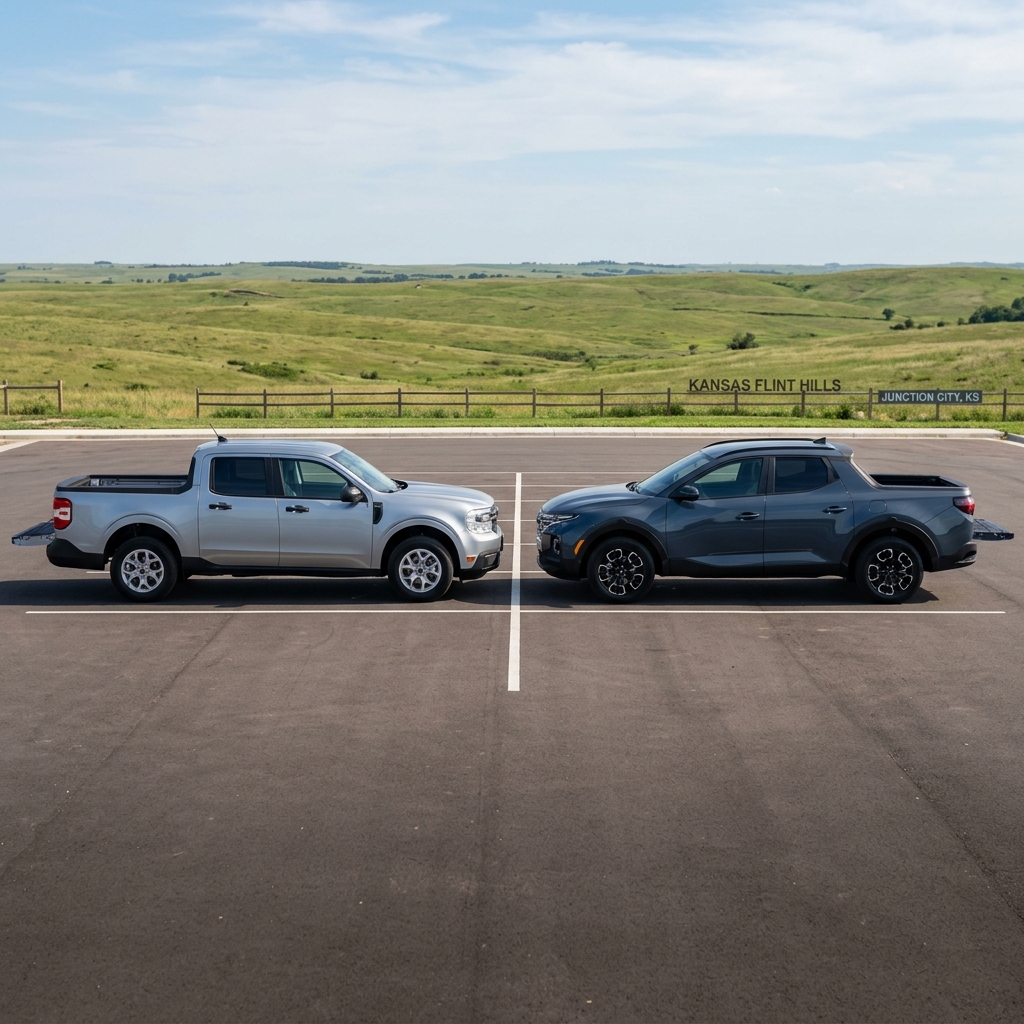
Ford Maverick Dimensions

The 2022 Ford Maverick measures 199.7 inches in overall length, stands 68.7 inches tall, and has a width of 72.6 inches (excluding mirrors). Its wheelbase spans 121.1 inches. Critically, the Maverick features a highly functional 4.5-foot (54-inch) cargo bed, which is designed with straight walls and flat wheel wells to maximize usable cargo volume. This gives the Maverick a more traditional truck silhouette and a highly boxy, utilitarian aesthetic that truck purists appreciate.

Hyundai Santa Cruz Dimensions

The Hyundai Santa Cruz is slightly shorter in overall length at 195.7 inches (4 inches shorter than the Maverick) but is wider at 75.0 inches and features a longer 118.3-inch wheelbase. However, its cargo bed is shorter, measuring just over 4 feet (48.4 inches) at its longest point, and it tapers toward the tailgate. The Santa Cruz sports a sleep, swooping, sport-adventure-vehicle design that resembles a crossover with the back roof section cut off, sacrificing bed utility for styling.

A silver Ford Maverick and a dark gray Hyundai Santa Cruz parked nose-to-nose in a scenic Kansas parking lot. (Representative image for illustration purposes only. Actual vehicle may vary based on trim and configuration.)

Ultimately, while the Santa Cruz is wider and has a slightly more premium, car-like interior, the Maverick wins on pure truck utility. Its longer bed, flatter cargo walls, taller cabin profile, and vastly superior hybrid fuel economy make it the more practical tool for everyday truck tasks.

Understanding the 2022 Maverick Trim Levels: XL vs XLT vs Lariat

Ford kept the buying process simple and straightforward for the 2022 Maverick by offering three distinct trim levels: the value-focused XL, the popular and versatile XLT, and the premium, tech-loaded Lariat. Each trim offers a unique balance of standard features, aesthetic upgrades, and interior materials, making it easy to find a Maverick that perfectly aligns with your budget and lifestyle. Let’s break down what makes each trim stand out.

XL: The No-Nonsense Workhorse

The base XL trim is a masterclass in affordable utility. Riding on durable 17-inch sparklesilver steel wheels, it features black mesh grille accents and durable plastic trim that resists scratches. Inside, you’ll find hard-wearing cloth seats in a unique Onyx/Dark Slate color scheme, manual air conditioning, and a crisp 8-inch infotainment touchscreen with wired Apple CarPlay and Android Auto. While it lacks some power conveniences (like power mirrors or a power tailgate lock), it is the perfect fleet vehicle or bare-bones commuter for drivers who appreciate simplicity, value, and rugged durability.

XLT: The Sweet Spot of Value

The XLT is widely considered the sweet spot for most retail buyers. It upgrades the exterior with stylish 17-inch painted aluminum wheels, a gray grille bar, power side mirrors, a power-locking tailgate, and cargo bed tie-down hooks. Inside, the cabin gets a major style boost with Navy Pier and Medium Slate cloth seats, orange interior accents that pop, a rear-seat center armrest with integrated cupholders, and cruise control. It also opens up options like the XLT Luxury Package, which adds heated front seats, a heated steering wheel, a power driver’s seat, and a spray-in bedliner.

Lariat: The Premium Cruiser

For those who want premium comfort and the latest tech, the Lariat delivers in spades. The exterior shines with 18-inch bright aluminum wheels, body-color door handles, and signature LED headlight surrounds. The cabin is wrapped in dual-tone Desert Brown ActiveX synthetic leather seating, featuring an 8-way power driver’s seat, dual-zone automatic climate control, a power-sliding rear window, and a leather-wrapped steering wheel. Selecting the Lariat Luxury Package adds advanced adaptive cruise control, a premium B&O sound system, wireless charging, and sync 3 navigation.

How the FLEXBED System Fits Your Gear, Groceries, and Projects
A truck is only as good as its cargo bed, and Ford went back to the drawing board to maximize every square inch of the Maverick’s 4.5-foot box. The result is the highly innovative FLEXBED system, which is a dream come true for DIYers, campers, and cargo haulers. Instead of forcing you to buy expensive, proprietary cargo management systems, the FLEXBED is designed to let you build your own storage solutions using standard, inexpensive materials. The bed walls feature molded-in pockets specifically sized to fit standard 2×4 and 2×6 pieces of lumber. This allows you to slide boards into place to partition the bed, creating custom segmented cargo areas to prevent groceries from sliding around, or building a sturdy elevated platform to haul flat sheets of drywall or plywood above the wheel wells.

But the utility doesn’t stop with lumber slots. Ford understood that modern truck users need power, so they pre-wired the bed with two built-in 12V electrical DIY pockets behind removable cover plates. This clever feature allows tech-savvy owners to easily wire their own LED bed lighting, air compressors, or 12V power outlets without having to splice into the main vehicle harness. Additionally, the XLT and Lariat trims feature two 110V/400W household power outlets—one in the cab and one in the bed—perfect for charging power tool batteries at a job site, running a small television at a tailgate party, or powering a portable cooler while camping. If you are ready to customize your cargo setup, you can Order Genuine Ford Parts and accessories through Valor Ford to build your perfect rig.

A blue pickup truck driving on a winding country road through rolling golden hills at sunset. (Representative image for illustration purposes only. Actual vehicle may vary based on trim and configuration.)

The multi-position tailgate adds yet another layer of versatility. By adjusting the support cables, you can set the tailgate to a half-open position that aligns perfectly with the top of the wheel wells. In this configuration, the bed can easily carry up to 18 sheets of 4×8 plywood flat, with the weight supported evenly across the tailgate and the bed floor. Combined with standard tie-down cleats and integrated bottle openers on the tailgate, the FLEXBED proves that smart engineering is always superior to raw size.

Can I get a certified pre-owned (CPO) 2022 Ford Maverick?

Yes, absolutely! Because the Maverick has been on the market for several years, high-quality, pre-owned 2022 models are highly sought after. Buying a Ford Blue Advantage Certified Pre-Owned (CPO) Maverick from Valor Ford is one of the smartest financial decisions you can make. The Ford Blue Advantage program is split into two levels of certification: Gold Certified and Blue Certified. A 2022 Maverick, depending on its mileage and service history, can qualify for either tier, providing buyers with factory-backed confidence that ordinary used vehicles simply cannot match.

To earn CPO status, every Maverick must pass a rigorous multi-point inspection performed by our factory-trained technicians. Gold Certified vehicles (under 80,000 miles) undergo a 172-point inspection and come with a 12-month/12,000-mile Comprehensive Limited Warranty, a 7-year/100,000-mile Powertrain Limited Warranty, and 24/7 Roadside Assistance. Blue Certified vehicles (any make/model under 120,000 miles) must pass a 139-point inspection and receive a 90-day/4,000-mile Comprehensive Limited Warranty. This ensures that every system, from the advanced hybrid battery pack to the steering linkage, operates exactly as the factory intended. If you are thinking about upgrading to a CPO Maverick, we recommend starting with a quick Trade In Evaluation to see how much your current vehicle is worth, making the transition to a certified truck easier than ever.

Inside the Cabin: Everyday Comfort and Smart Storage Solutions
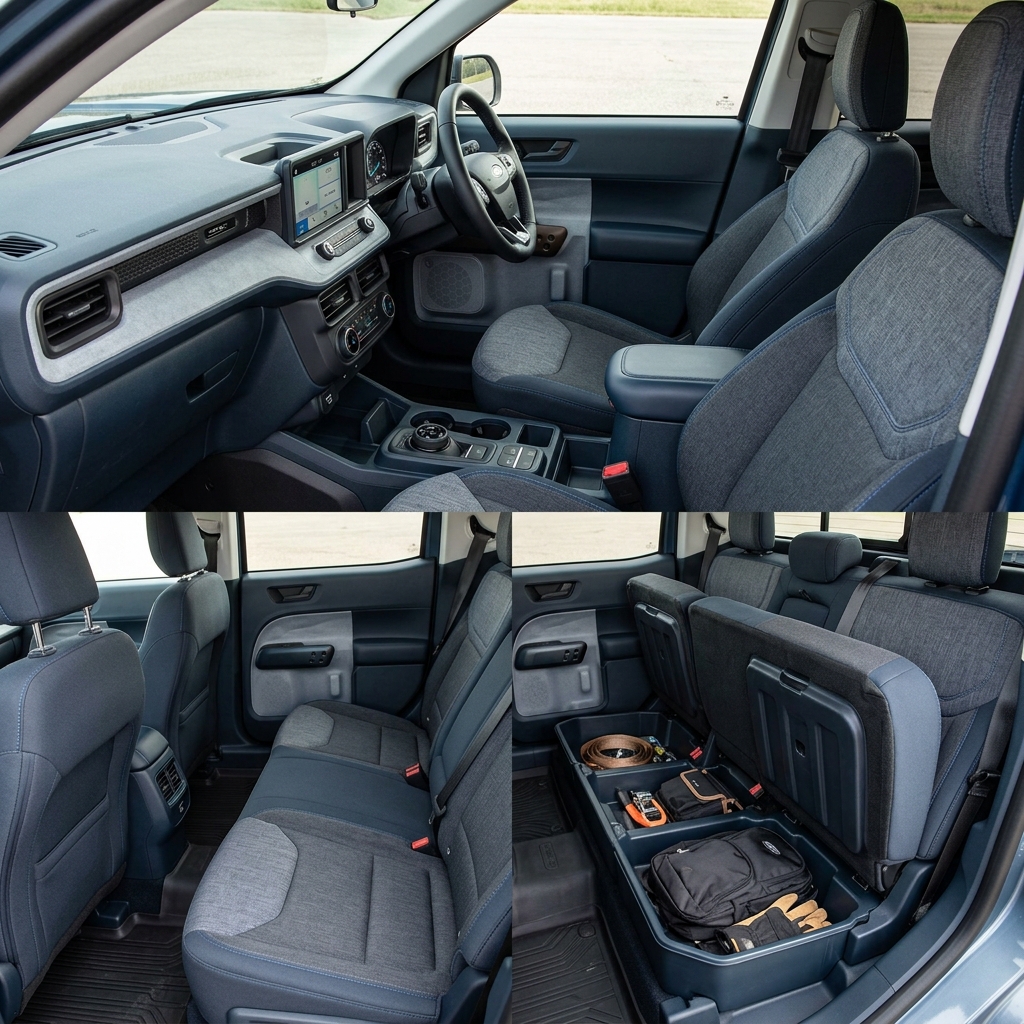
Three-panel view of a pickup truck interior, showing the front cabin, rear seats, and under-seat storage compartments. (Representative image for illustration purposes only. Actual vehicle may vary based on trim and configuration.)

Step inside the 2022 Ford Maverick, and you are greeted by an interior that feels incredibly fresh, modern, and intentionally designed. Rather than trying to mimic expensive luxury trucks with faux-wood trim and generic black plastics, Ford embraced a creative, industrial aesthetic. The dashboard features beautiful textured stone-look plastics made from durable, easy-to-clean composite materials. Door handles are split to allow tall water bottles to sit upright in the door pockets, and geometric textures on the surfaces catch the light in a way that feels youthful and rugged. Despite its compact footprint, the passenger space is remarkably generous, offering plenty of legroom and headroom in both the front and rear seats, ensuring a comfortable ride for up to five adult passengers.

Where the Maverick truly shines is its innovative storage solutions. Flip up the cushions of the rear seats, and you’ll find a massive, deep under-seat storage compartment that spans the width of the cabin. This hidden space is perfect for stowing tools, tie-down straps, jumper cables, laptops, or sporting gear out of sight and protected from the elements. Additionally, Ford introduced the Ford Integrated Tether System (FITS) at the back of the center console and inside the under-seat bins. This system uses a series of standardized slots that accept various accessories like cup holders, trash bins, phone mounts, or cord wraps. Best of all, Ford released the 3D files for the FITS slots, allowing creative owners to 3D-print their own custom storage solutions at home.

From the placement of the USB ports to the durable, stain-resistant fabrics used on the seats, every detail of the Maverick cabin was designed with active, busy lifestyles in mind. It is an space that handles muddy boots, wet dogs, and daily carpool duties with equal grace, ensuring that your truck stays looking and feeling great for years to come.

Safety and Technology: Navigating Central Kansas with Confidence

Connectivity Standard

Every 2022 Maverick comes standard with a vibrant 8-inch central touchscreen interface. With wired Apple CarPlay and Android Auto compatibility, you can seamlessly mirror your smartphone’s navigation, music playlists, and hands-free communication. Additionally, standard FordPass Connect includes an embedded 4G LTE Wi-Fi hotspot, allowing you to lock, unlock, and remote-start your truck directly from your smartphone.

Ford Co-Pilot360 Protection

To protect you on busy highways and crowded city streets, the Maverick features standard Ford Co-Pilot360 safety technology. This includes Pre-Collision Assist with Automatic Emergency Braking, a rearview camera, and auto high-beam headlights. These systems constantly scan the road ahead, prepared to apply the brakes if an unexpected obstacle, pedestrian, or slowing vehicle is detected in your path.

Advanced Driving Assists

For maximum peace of mind, available safety upgrades include a Lane-Keeping System, Blind Spot Information System (BLIS) with Cross-Traffic Alert, and Adaptive Cruise Control with Stop-and-Go functionality. These advanced features make long highway road trips along Interstate 70 significantly less tiring, keeping you centered in your lane and maintaining a safe following distance automatically.

Maintaining Your 2022 Maverick: Service Tips for Kansas Roads
Living and driving in Central Kansas presents a unique set of challenges for any vehicle. From hot, humid summer days to freezing, snowy winter blizzards, our climate demands consistent, high-quality maintenance to ensure your 2022 Maverick performs reliably for years to come. For hybrid owners, regular maintenance is incredibly straightforward but requires specialized attention. The hybrid system relies on an advanced high-voltage battery pack and electric motor. While these components are largely maintenance-free, keeping the traditional cooling system flushed and replacing the cabin air filter regularly is critical to prevent the battery compartment from overheating.

For EcoBoost owners, oil changes are the lifeblood of your turbocharged engine. Turbochargers operate at extremely high speeds and temperatures, meaning clean, high-quality synthetic oil is vital to lubricate the turbo bearings. We recommend changing your engine oil and rotating your tires every 5,000 to 7,500 miles, especially if you regularly tow trailers or travel on gravel roads, which introduces heavy dust into the engine’s air intake system. For convenient service support, you can easily Schedule Ford Service Today at our specialized service center to keep your Maverick running like new.

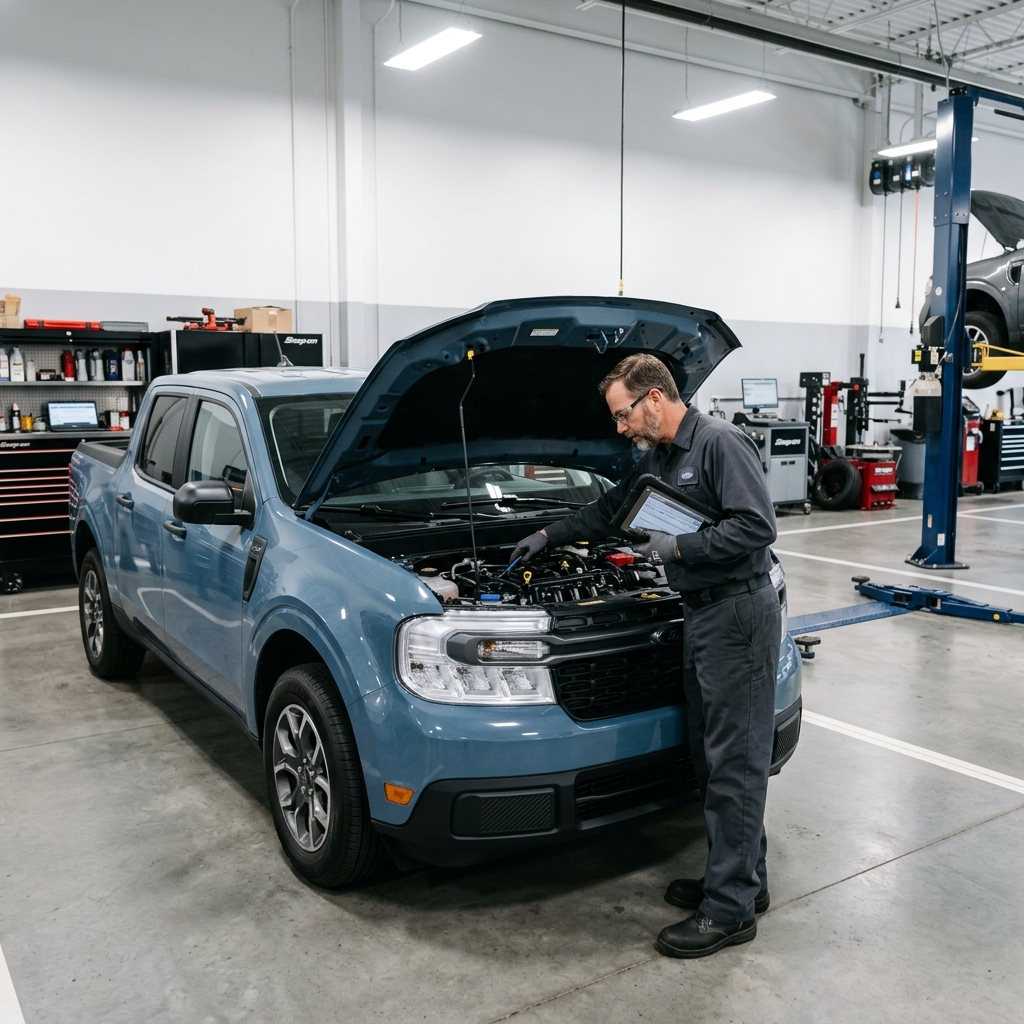
Mechanic holding a tablet and inspecting the engine of a blue pickup truck in a modern garage. (Representative image for illustration purposes only. Actual vehicle may vary based on trim and configuration.)

Our certified technicians at Valor Ford are experts in both EcoBoost turbo technology and advanced Ford high-voltage hybrid systems. Whether you need a standard fluid swap, a brake pad replacement, a hybrid system health check, or winter weather preparation, our team is equipped with the latest diagnostic tools and OEM parts to get the job done right. To make your service experience even more convenient, you can utilize our Schedule Pickup and Delivery Service, allowing us to service your truck while you stay comfortable at home or work.

Find Your 2022 Ford Maverick at Valor Ford in Junction City

The 2022 Ford Maverick is more than just a compact pickup; it is a versatile, efficient, and incredibly fun companion designed to handle whatever adventures you throw its way. If you are ready to experience the unmatched fuel efficiency of the hybrid or the robust towing power of the EcoBoost AWD, the team at Valor Ford is here to help you find the perfect pre-owned Maverick model for your driveway.

Located conveniently at 1825 Goldenbelt Blvd, Junction City, KS 66441, we are proud to serve drivers from Fort Riley, Manhattan, Abilene, and across Central Kansas. We make the car-buying process simple, transparent, and completely stress-free. You can contact us for current financing information. Feel free to Get Pre-Approved for Financing from the comfort of your own home, explore our current inventory, or Get Directions to Valor Ford to visit us for a test drive. If you have any questions, don’t hesitate to Call us at (785) 238-5114. Your perfect compact truck is waiting!

Mastering the Payload: F-350 Tire Pressure for Heavy Grain Hauling

As hot summer days sweep across Kansas this July, local fields around Junction City and throughout Dickinson County are buzzing with harvest activity. Grain producers are working tirelessly to move massive yields from the fields to the local elevators. To get this crucial job done, agricultural operations rely heavily on the heavy-duty power of the Ford F-350 Super Duty. While these trucks are engineered to handle incredible payloads, pulling a fully loaded grain trailer places an immense amount of physical stress directly on your tires. Ensuring they are inflated to the exact right pressure is not just a detail—it is the line between a smooth, profitable harvest and a dangerous, costly roadside delay.

When you are hauling heavy grain, the safety of your truck, your cargo, and everyone else on our local rural routes depends on your tire footprint. Proper tire inflation optimizes traction, maintains vehicle stability, ensures responsive braking, and directly protects your suspension components from excessive wear. Our team at Valor Ford understands the unique demands of agricultural hauling, and we want to help you maximize your F-350’s capabilities. If you are preparing your truck for a grueling harvest season, it is also a great time to perform a Trade In Evaluation on older fleet vehicles or ensure your current heavy-duty setup is ready to go.
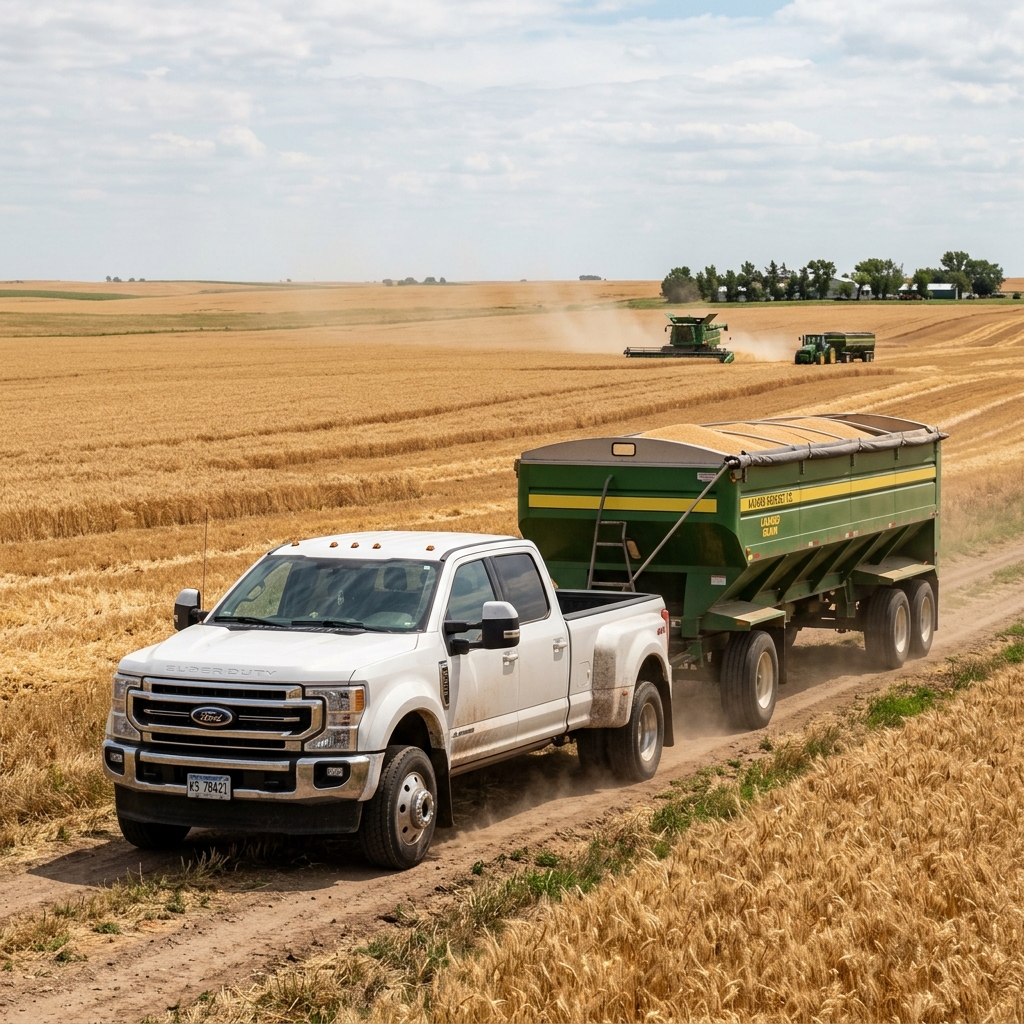
A white Ford Super Duty truck towing a green grain cart filled with wheat along a dirt path in a vast field. (Representative image for illustration purposes only. Actual vehicle may vary based on trim and configuration.)

Tire pressure is dynamic. It responds directly to external ambient temperatures, speed, and the sheer downforce exerted by heavy tongue weights. In this comprehensive guide, we will dive deep into everything you need to know about setting, managing, and maintaining your F-350’s tire pressure when towing loaded grain trailers. Whether you operate a Single Rear Wheel (SRW) or Dual Rear Wheel (DRW) dually setup, understanding the physics of load-and-inflation is key to safeguarding your equipment and protecting your bottom line.

What is the recommended tire pressure for a Ford F-350 when hauling heavy grain trailers?

For a Ford F-350 tasked with hauling heavy grain trailers, the general recommended tire pressure is 60 to 75 PSI in the front tires and a maximum of 80 PSI in the rear tires(especially under full-load or dually configurations). However, the absolute baseline for your specific truck configuration should always be verified by checking the tire certification label located on your driver-side door jamb.

These pressures are calculated assuming you are using original equipment (OE) Load Range E tires. Under a heavy grain payload, your rear tires bear the brunt of the pin weight (for goosenecks) or the tongue weight (for bumper pulls). To support this intense vertical downforce without excessive tire sidewall flexing, the rear tires must be inflated to their maximum recommended capacity—which is typically 80 PSI cold. Keeping the front tires between 60 and 75 PSI preserves proper steering response and keeps the front contact patch balanced, preventing understeer or uneven wear.

It is important to remember that these numbers are ‘cold’ pressures. This means they should be measured before the vehicle has been driven, or at least three hours after it has been parked. Driving generates friction, which heats the air inside the tires and temporarily inflates the pressure reading. If you adjust your tires when they are already hot from a long run to the elevator, you will likely end up underinflating them once they cool down.

F-350 Setup

Front PSI (Cold)

Rear PSI (Cold)

Single Rear Wheel (SRW) Empty

60 PSI

65 PSI

Single Rear Wheel (SRW) Loaded

65-75 PSI

80 PSI

Dual Rear Wheel (DRW) Empty

60 PSI

55-60 PSI

Dual Rear Wheel (DRW) Loaded

65-75 PSI

80 PSI

Note: Dual Rear Wheel (DRW) trucks can distribute load across four rear tires, allowing for slightly lower rear tire pressures when empty to improve ride comfort. However, when hauling maximum capacity agricultural trailers, both SRW and DRW setups require the rear tires to be at 80 PSI to ensure maximum structural integrity and weight capacity.

What is the difference between recommended PSI and max PSI on my truck tire sidewall?
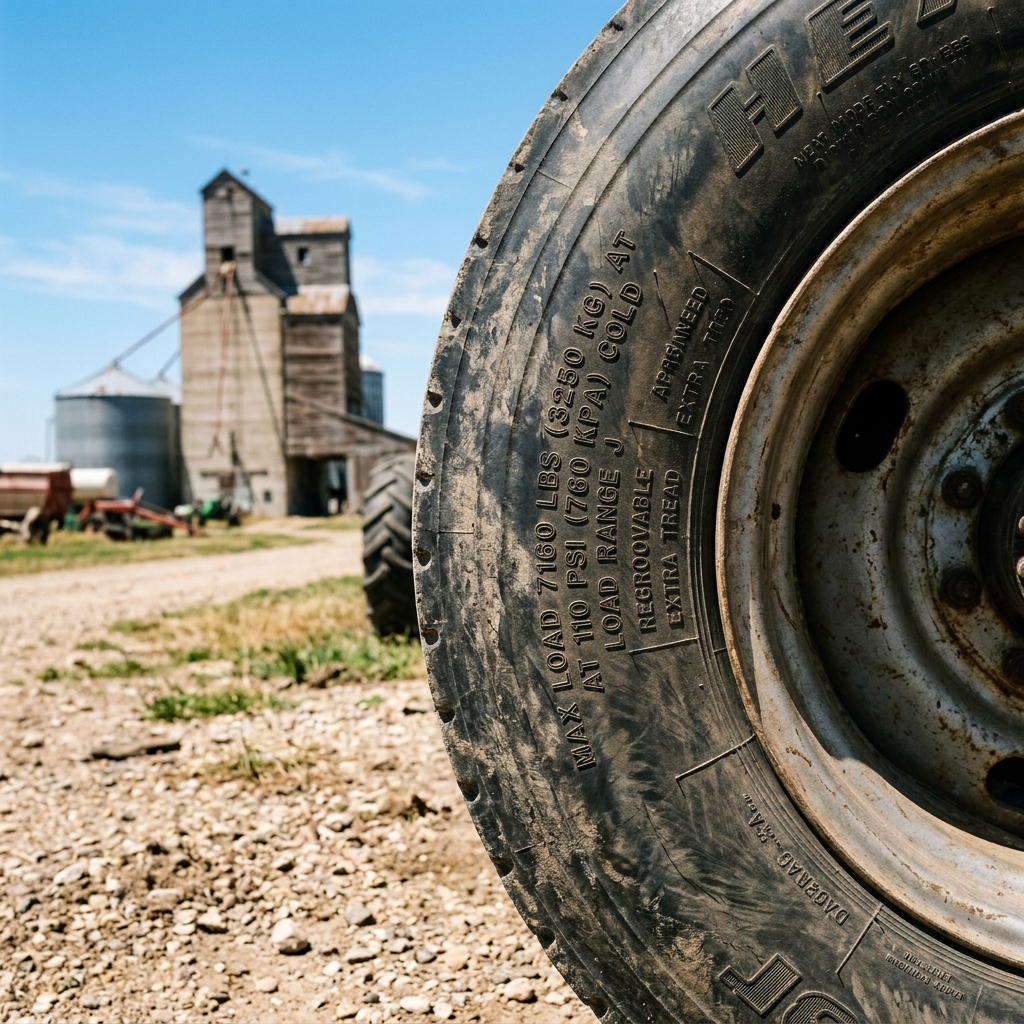
Close-up of a large vehicle tire with a weathered wooden grain elevator blurred in the background. (Representative image for illustration purposes only. Actual vehicle may vary based on trim and configuration.)

One of the most common points of confusion for farmers and fleet operators is the difference between the recommended tire pressure listed on the vehicle’s door placard and the maximum PSI stamped directly onto the tire’s sidewall. Misunderstanding these two numbers can lead to either dangerous over-inflation or severe under-inflation.

The recommended PSI on the door jamb placard is determined by Ford’s engineering team. It represents the optimal inflation level for the vehicle’s specific weight distribution, suspension tuning, handling characteristics, and braking performance. This recommendation ensures that under normal or maximum load conditions, the tire maintains an ideal contact patch with the road. It prevents the center of the tread from wearing out prematurely while guaranteeing the vehicle rides as comfortably as possible.

In contrast, the maximum PSI printed on the tire sidewall is a structural limitation set by the tire manufacturer. It tells you the absolute maximum pressure the tire carcass can safely handle to support its maximum rated load. For standard Load Range E tires, this is typically 80 PSI. You should never exceed this number. When hauling heavy grain trailers, you will often find that the rear recommended pressure matches this maximum limit (80 PSI) because the truck is being pushed to its maximum rear axle weight rating. However, inflating the front tires to the sidewall maximum when it is not needed can cause a harsh ride and reduced steering grip.

What is a tire load-and-inflation chart and how do I use it for my F-350?

A tire load-and-inflation chart is an industry-standard technical document produced by tire manufacturers (such as common tire manufacturers). It maps out exactly how much weight an individual tire can safely carry at a given inflation pressure. Since actual agricultural loads can vary significantly depending on whether your grain trailer is empty, half-full, or packed to the brim, these charts allow you to dial in your tire pressures with pinpoint accuracy.

To utilize these charts effectively, you first need to know the actual weight resting on your truck’s axles. The most accurate way to do this is by visiting a local commercial scale in the Dickinson County area (such as a local grain elevator scale or a truck stop scale near Junction City). Drive your loaded F-350 onto the scale so you can get independent weights for your steer axle, drive axle, and trailer axles. Once you have these numbers, divide the drive axle weight by two (for an SRW truck) or by four (for a DRW dually) to determine the exact weight on each individual rear tire.

With your individual tire weight in hand, look up your specific tire size and load range on the manufacturer’s load-and-inflation table. Find the weight that closely matches your measured load, and the chart will indicate the precise PSI required to support that weight. This prevents you from running a tire that is over-inflated for a lighter-than-expected load (which causes center tread wear) or under-inflated for a heavy load (which leads to catastrophic overheating).

If you are unsure how to read these charts or want an expert to inspect your tire wear patterns, our service professionals at Valor Ford are here to help. We can evaluate your truck’s current tires, analyze your typical hauling weights, and provide a customized pressure schedule to keep your operations running safely. If you need financing information for a new set of high-capacity commercial tires, please contact our team before visiting our shop.

Why Weight Matters:• Prevents tire overheating • Optimizes the contact patch • Reduces drivetrain stress • Improves overall stability • Extends tread life

Should tire pressure be adjusted when towing a gooseneck vs. bumper pull trailer?
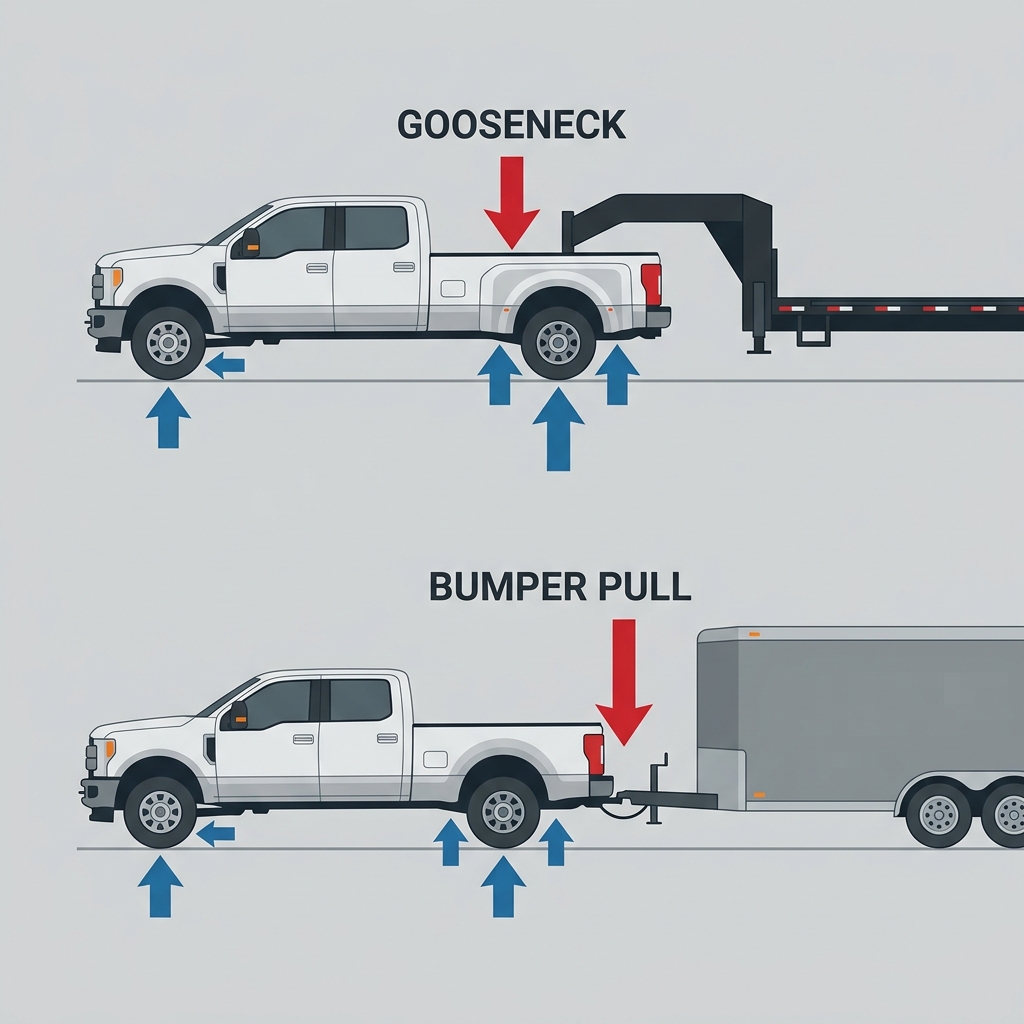
Yes, the type of trailer connection you use dramatically influences how weight is distributed across your Ford F-350’s axles, which in turn dictates how you should manage your tire pressures. Gooseneck and bumper pull configurations apply forces to your truck’s chassis in completely different ways.

Gooseneck Trailers: A gooseneck hitch places the trailer’s pin weight directly over—or slightly ahead of—your F-350’s rear axle. Because of this, a substantial portion of the trailer’s tongue weight (often 15% to 25% of the total trailer weight) is transferred directly onto the truck’s rear tires. This concentrated downward force requires your rear tires to be at their maximum load capacity pressure, typically 80 PSI cold. Because the weight is centered over the axle, it actually helps stabilize the truck’s rear end, but it demands maximum structural support from the tire sidewalls to prevent dangerous flexing and heat buildup.

Bumper Pull Trailers: A bumper pull grain trailer attaches to the receiver hitch at the very back of the frame, well behind the rear axle. This creates a leverage effect. The tongue weight acts as a pivot, pushing down on the rear hitch while actually lifting some weight off the front steering axle. To counteract this and maintain control, you must use a high-quality weight-distribution hitch. When towing a heavy bumper pull, your rear tires still need to be highly pressurized (often 75-80 PSI) to handle the load, but you must also ensure your front tires are inflated correctly (typically around 65-70 PSI) to maintain steering traction. Since bumper pulls are more prone to sway, maintaining precise pressures on both axles is absolutely vital for highway safety.

Diagram comparing the force distribution of gooseneck and bumper pull trailer hitches on a pickup truck. (Representative image for illustration purposes only. Actual vehicle may vary based on trim and configuration.)

Is underinflation a common cause of grain trailer tire blowouts?

Without a doubt, underinflation is the leading cause of tire blowouts on both towing vehicles and grain trailers. During the time-sensitive rush of harvest, grain trailers are often loaded to their absolute weight limits and driven across rough fields and hot asphalt. When a tire is underinflated, its structural integrity is severely compromised, setting off a chain reaction that frequently ends in a catastrophic blowout.

The science behind this is simple: excessive flexing and friction. When air pressure is too low, the tire’s sidewalls flex excessively as the wheel rotates under a heavy load. This constant, aggressive flexing generates intense internal heat. Because rubber is an excellent insulator, it cannot easily dissipate this heat. As the temperature rises, the bonds holding the tire’s rubber, steel belts, and nylon cords together begin to weaken. Eventually, the tire carcass suffers an internal separation, and the high pressure inside tears through the weakened sidewall, resulting in a sudden blowout at highway speeds.

Furthermore, underinflated trailer tires do not tracking straight. They tend to sway, adding significant lateral stress to your Ford F-350’s rear suspension and hitch. This sway forces your truck’s electronic stability control and braking systems to work overtime to keep the load lined up. A single trailer blowout can cause you to lose control, spill your valuable grain payload, or damage your trailer’s axles and fenders—leading to expensive repairs and halting your harvest operations entirely. Keeping both your truck’s and your grain trailer’s tires fully pressurized is the easiest and most cost-effective insurance policy you can have against harvest-season downtime.

Does underinflation significantly increase fuel consumption when towing grain?
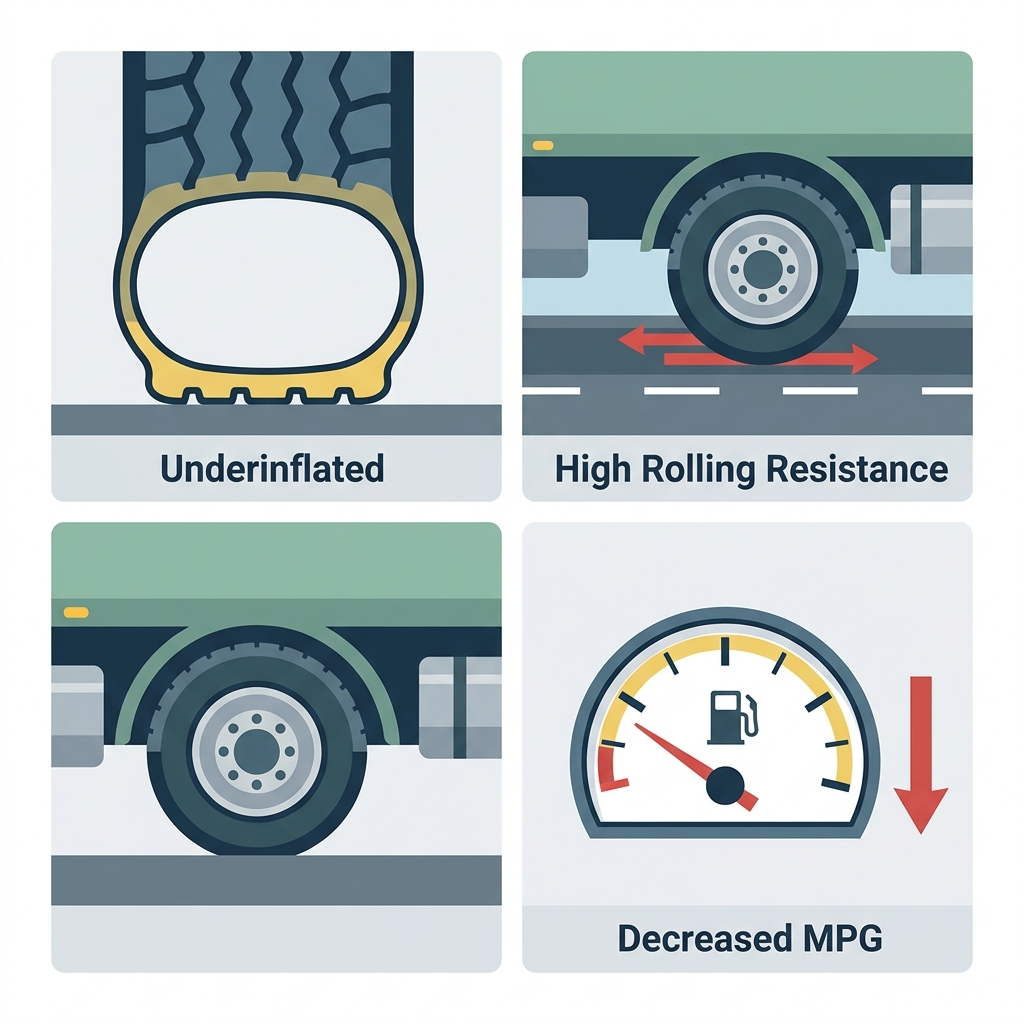
Yes, underinflated tires act as a constant, hidden drag on your truck’s performance, significantly driving up your fuel costs. When you are pulling massive grain loads with a Ford F-350, your engine is already working hard to overcome aerodynamic drag and the heavy inertia of the trailer. If your tires are underinflated, you are adding an immense amount of rolling resistance to that equation.

Rolling resistance is the energy required to keep a tire rolling at a consistent speed. An underinflated tire sags, which increases its ‘footprint’ on the road. While a larger footprint might sound like it offers more grip, it actually increases the friction between the rubber and the asphalt. To overcome this extra drag, your truck’s Power Stroke Turbo Diesel or gas engine must burn more fuel simply to maintain highway speeds.

Studies show that for every 1 PSI your tires are underinflated below their recommended level, you lose roughly 0.2% to 0.3% in fuel efficiency. If your rear tires are sitting at 60 PSI instead of the recommended 80 PSI, you are looking at a direct 4% to 6% drop in fuel economy. When you are making multiple long-distance runs from the fields of Dickinson County to regional grain elevators day after day, that extra fuel consumption adds up to hundreds of dollars in wasted operating costs over the course of a single harvest.

Infographic showing how underinflated tires lead to high rolling resistance and decreased MPG. (Representative image for illustration purposes only. Actual vehicle may vary based on trim and configuration.)

Is maintaining correct tire pressure on my F-350 and grain trailer cost-effective in the long run?

Absolutely. Treating tire pressure management as a daily priority is one of the most high-return investments you can make for your farm’s bottom line. Heavy-duty commercial tires for a Ford F-350 represent a significant capital expense. When you run tires at incorrect pressures, you dramatically accelerate tread wear. Underinflation causes the outer edges of the tire to wear out prematurely, while overinflation wears out the center strip. Maintaining correct pressures ensures the tire wears evenly across its entire width, potentially extending its lifespan by thousands of miles.

Beyond tire replacement costs, proper tire management prevents unnecessary wear on your truck’s steering and suspension components. Tires act as the primary dampening system for your truck. When they are incorrectly inflated, they cannot properly absorb road vibrations, transferring those harsh impacts directly into your ball joints, tie rods, shocks, and wheel bearings. This leads to premature suspension failure and expensive mechanical repairs.

To help monitor your setup, Valor Ford’s parts department can help you source heavy-duty aftermarket Tire Pressure Monitoring Systems (TPMS) designed to monitor both your truck and your trailer’s tires in real time from the cab. Investing in these preventive tools saves you from costly downtime and expensive repairs down the road. If you need replacement parts or monitoring equipment, we encourage you to Order Genuine Ford Parts directly through our website.

How local Dickinson County farm routes demand precise F-350 tire management
Driving conditions in the local Junction City and Dickinson County areas pose unique challenges for heavy-duty hauling. Farmers regularly transition from soft, uneven dirt or gravel fields straight onto high-speed asphalt highways. These rapid surface changes demand highly precise tire pressure management to ensure safety and traction on every stretch of your route.

When your F-350 is inside a soft, muddy field, a slightly larger tire contact patch is beneficial to prevent sinking and maintain traction. However, once you load up and pull onto paved county roads or highways like US-77, running underinflated tires is incredibly dangerous. The hard, hot asphalt quickly drives up internal tire temperatures, and the lack of proper inflation pressure will cause the loaded trailer to sway, making high-speed handling unstable.

To safely navigate these transitions, you must maintain a tire pressure setting that handles both environments effectively. Running your rear tires at 80 PSI cold ensures that when you hit the highway with a heavy load, your truck is perfectly balanced, stable, and ready to handle sudden stops. Don’t let a poorly managed tire put your harvest at risk.

Silver pickup truck towing a trailer of large round hay bales on a dirt road at sunset. (Representative image for illustration purposes only. Actual vehicle may vary based on trim and configuration.)

A quick pre-haul tire checklist for Junction City grain producers

1. Check Pressures Cold Always measure your tire pressure first thing in the morning, before the truck has been driven or exposed to direct, hot sunlight. This gives you the most accurate baseline reading.

2. Inspect Valve Stems Heavy agricultural dust and mud can clog valve stems. Ensure all tires have high-quality, sealing metal valve caps to prevent slow, microscopic air leaks during long hauls.

3. Search for Dry Rot & Damage Farm equipment often sits parked for long periods. Inspect your truck and trailer tires for dry rot, cracks, and sidewall cuts caused by sharp crop stubble or rocky field entrances.

4. Verify Trailer Tire Pressure Never forget the trailer! Grain trailer tires (ST or LT rated) must also be inflated to their maximum recommended PSI to support the intense shifting weight of the grain.

5. Calibrate Your TPMS After adjusting your pressures for a heavy load, calibrate your Ford F-350’s Tire Pressure Monitoring System through the SYNC infotainment screen so it recognizes the new baseline pressures.

6. Confirm Load Ratings Ensure both your truck and trailer tires have matching load capacities. Never mix load ranges on the same axle, as this will lead to highly unstable handling.

Get professional heavy-duty truck service and tire accessories at Valor Ford

At Valor Ford, we take immense pride in supporting our local Junction City agricultural community and the military families at nearby Fort Riley. We know that when harvest season arrives, you don’t have time to waste on tire failures or mechanical issues. Our state-of-the-art service department is fully equipped to handle heavy-duty trucks, offering specialized commercial tire replacements, high-capacity alignments, suspension inspections, and professional towing setup advice.

Whether you need a new set of rugged, load-rated tires for your F-350, a commercial-grade pressure gauge, or a full safety inspection before you hook up your grain trailer, our factory-trained technicians are here to help. We stock a wide selection of genuine OEM parts and heavy-duty tire brands engineered specifically for the extreme demands of agricultural work. To make your maintenance as seamless as possible, you can easily Schedule Pickup and Delivery Service and let us take care of your truck while you focus on the fields.

Logo for Valor Automotive featuring a silver shield with red 'V' and white 'A' monogram inside, over a blue background.

Schedule your F-350 heavy-duty tire inspection at Valor Ford today

If you’re noticing a warning light or want to stay ahead of tire issues, address your truck’s tire needs. Ensure your Ford F-350 is fully prepared to handle the intense demands of the summer grain harvest. Our dedicated team is standing by to inspect your tread depth, analyze your wear patterns, verify your load ratings, and set your tires to the exact pressures needed for safe, efficient hauling. Schedule Ford Service Today, or stop by our dealership in Junction City to keep your harvest moving forward without interruption.

For personalized service or to speak directly with one of our truck service specialists, please Call us at (785) 238-5114. If you are ready to visit us in person, you can easily Get Directions to Valor Ford and find our dealership located at 1825 Goldenbelt Blvd, Junction City, KS 66441. We look forward to helping you keep your harvest moving safely and efficiently.

Welcome to Manhattan and Fort Riley: Finding the Perfect Ford Vehicle for Your Move to Kansas

Relocating to a new area is always a monumental undertaking, but moving to the beautiful Flint Hills region of Kansas brings a unique mix of excitement, scenic landscapes, and distinct driving demands. Whether you are a military family transitioning to Fort Riley on a Permanent Change of Station (PCS) order, a professional relocating to Manhattan (affectionately known as ‘The Little Apple’), or establishing your new home in Junction City, your choice of vehicle will play a critical role in how comfortably and safely you adapt to your new life. The rolling hills, sprawling highways like Interstate 70, rural gravel roads, and seasonally dramatic weather require a vehicle that is versatile, durable, and highly dependable. At Valor Ford, we understand the unique pressures of military and professional relocation, and we are dedicated to helping you find the perfect Ford vehicle to ease your transition.

The Flint Hills region features a geography that demands respect from any driver. From the fast-paced daily commutes on K-18 highway connecting Manhattan and Fort Riley, to the rugged, unpaved trails winding through Dickinson and Geary Counties, your vehicle must perform flawlessly across diverse terrains. During the summer, you will face high temperatures and sudden thunderstorms, while winters bring freezing rain, heavy snow, and howling plains winds. This dynamic climate makes a reliable vehicle not just a luxury, but a core component of your family’s safety and operational readiness. Fortunately, the Ford lineup offers a diverse selection of intelligent four-wheel-drive SUVs and legendary light-duty trucks engineered to conquer exactly these conditions, ensuring you never feel stranded or ill-prepared.

Our dealership is proud to serve as a reliable anchor and trusted community resource for newcomers. Located in Junction City, just minutes from the main gates of Fort Riley, Valor Ford specializes in catering to the immediate, practical needs of military personnel and relocating families. We make it our mission to streamline your vehicle search, offer transparent pricing, and provide expert guidance on which models best suit local life. To start planning your visit, you can easily Get Directions to Valor Ford or Call us at (785) 238-5114 to speak directly with our friendly, knowledgeable local experts who are ready to answer your questions and welcome you to the neighborhood.
A family overlooks the rolling green landscape of the Scenic Flint Hills in Kansas next to two Ford vehicles. (Representative image for illustration purposes only. Actual vehicle may vary based on trim and configuration.)

How does the Ford Escape’s cargo capacity support PCS relocations with moderate household items?
For military individuals and smaller families undergoing a PCS move, managing final-out luggage, essential temporary household goods, and valuable personal items can be a stressful puzzle. The Ford Escape is designed to solve this puzzle by packing an astonishing amount of utility and cargo flexibility into a nimble, highly maneuverable compact SUV layout. When you are transitioning between temporary lodging, guest housing, or your new off-post home in Manhattan, the Escape’s interior behaves like a much larger vehicle. With up to 65 cubic feet of available cargo space when the second-row seats are folded flat, you can easily load up suitcases, storage bins, small appliances, and pet crates without feeling cramped.

A standout feature that makes the Ford Escape exceptionally well-suited for the dynamic environment of a PCS move is its sliding second-row seats. This system allows you to slide the rear seats forward or backward by up to 5.8 inches. If you have passengers in the back, you can slide the seats rearward to give them best-in-class legroom; if you need to squeeze in a few extra boxes of essential paperwork, kitchen gear, or uniforms, simply slide the seats forward to expand the rear cargo hold without sacrificing passenger capability entirely. Additionally, the 60/40 split-folding rear seats offer the versatility to carry long, awkwardly shaped household items alongside a passenger.

Loading and unloading a packed vehicle is physically demanding, especially after a long cross-country drive. The Escape alleviates this physical strain with its available hands-free, foot-activated liftgate. When your hands are full of grocery bags, military gear, or heavy luggage, a simple kick of your foot under the rear bumper automatically opens the hatch. Once packed, the Escape serves as an exceptionally efficient daily commuter between the residential neighborhoods of Manhattan and the secure gates of Fort Riley, offering superb fuel economy that keeps your relocation and commuting budgets well in check.

Open trunk of a white Ford Escape packed with suitcases, a duffel bag, and hiking gear for a trip. (Representative image for illustration purposes only. Actual vehicle may vary based on trim and configuration.)

How many passengers can the Ford Explorer seat for a PCS move with a larger family?

Larger military families or those moving with pets, extensive sports gear, and high-volume personal possessions require a vehicle that treats interior space as a priority. The Ford Explorer steps up as the premier midsize three-row SUV, engineered to accommodate up to seven passengers comfortably while maintaining a highly customizable cargo layout. Let’s break down how the Explorer’s clever interior engineering accommodates family moves, school drop-offs in the Manhattan School District, and weekend road trips across the plains of Kansas.

Generous Seating Capacity

The Ford Explorer comfortably seats up to seven passengers when equipped with the second-row bench seat, or six passengers if you opt for the ultra-comfortable second-row captain’s chairs. This flexibility is perfect for growing families. Accessing the third row is made incredibly simple with the E-Z Entry second-row seats, which slide forward at the touch of a button, allowing kids or adults to climb in and out of the rear without any awkward physical gymnastics.

Versatile Cargo Volume

When configuring your Explorer for a heavy relocation drive, you will find up to 88 cubic feet of total cargo space behind the first row with all rear seats folded flat. Even with the second row occupied by your children, folding down the 50/50 split third-row seats reveals a cavernous cargo floor ready to swallow massive plastic storage bins, pet cages, or military duffel bags. If you need to Research Ford Explorer specifications further, you’ll see why it remains a favorite for military moves.

Road-Trip Ready Comfort

Beyond raw space, the Explorer is built for long road-trip comfort across the expansive state of Kansas. Tri-zone electronic automatic temperature control ensures that passengers in all three rows stay cool during humid July summers and cozy during freezing winters. Integrated USB charging ports throughout the cabin keep everyone’s devices powered up, reducing travel stress and keeping your family entertained and connected on those long highway stretches between posts.

What engine options are available on the 2026 Ford F-150 for towing and commuting in Kansas?
For many Kansans and military personnel, a truck is an indispensable tool for work, play, and household management. The 2026 Ford F-150 is built to handle heavy-duty towing demands, such as pulling flatbed trailers, recreational campers, or horse trailers through the rolling Flint Hills, while remaining highly efficient for daily highway commuting around Junction City and Manhattan. Ford achieves this balancing act by offering a diverse lineup of advanced powertrains designed to suit a wide variety of driving profiles, budgets, and capability requirements.

The F-150 engine lineup begins with the highly efficient yet remarkably punchy 2.7L EcoBoost V6, a perfect option for drivers who prioritize daily fuel economy but still need the capability to tow up to 8,400 lbs. For those with heavier towing requirements, the 3.5L EcoBoost V6 unleashes incredible low-end torque, pushing maximum towing capacity to its absolute peak. Traditionalists will love the naturally aspirated 5.0L Ti-VCT V8 engine, which delivers that classic, deep-rumbling exhaust note alongside exceptional payload capability and legendary reliability under constant, heavy workloads.

Perhaps the most innovative powertrain for modern Kansas drivers is the 3.5L PowerBoost Full Hybrid V6. This advanced system combines the raw strength of the EcoBoost engine with an electric motor, delivering outstanding horsepower and torque while optimizing highway fuel efficiency. Crucially, the PowerBoost Hybrid features Pro Power Onboard, turning your truck into a mobile generator. This is incredibly useful for remote camping trips at Milford Lake, running power tools at a job site in Dickinson County, or keeping essential home appliances running during unexpected Midwestern weather outages.

A grey Ford F-150 pickup truck pulls a trailer with a vintage tractor on a dirt road at sunset. (Representative image for illustration purposes only. Actual vehicle may vary based on trim and configuration.)

2026 Ford F-150 Powertrain Comparison Guide

Engine Option

Horsepower

Torque (lb-ft)

Max Towing Capacity (lbs)

Best For…

2.7L EcoBoost® V6

325 hp

400 lb-ft

8,400 lbs

Daily commuting and light hauling

5.0L Ti-VCT V8

400 hp

410 lb-ft

13,000 lbs

Traditional V8 sound and heavy payloads

3.5L EcoBoost® V6

400 hp

500 lb-ft

13,500 lbs

Maximum conventional towing needs

3.5L PowerBoost® Hybrid V6

430 hp

570 lb-ft

12,700 lbs

Optimal fuel economy and mobile exportable power

What documents are required to claim the Ford military discount at Fort Riley?

To express our deep gratitude for the incredible service and sacrifices of our armed forces stationed at Fort Riley and around the globe, Valor Ford proudly coordinates the official Ford Military Appreciation program. This exclusive initiative offers current manufacturer and dealership offers to active-duty military, veterans, retirees, and national guard members. However, navigating the paperwork during a chaotic PCS move can feel overwhelming. To ensure your military appreciation benefits are applied seamlessly and promptly to your purchase, it helps to know exactly what documents you need to bring to the showroom.

To successfully claim your Ford Military Appreciation cash, you will need to register on the Ford military verification portal (typically handled via ID.me) or present physical credentials directly to our finance department. The primary document required is a current, official proof of active service or military association. For active-duty personnel, a recent Leave and Earnings Statement (LES) dated within the last 90 days is the most widely accepted and secure verification method. Reservists and National Guard members can also utilize their current LES or active mobilization orders.

For veterans, retirees, and medically discharged service members, eligibility is verified through your DD-214 (Certificate of Release or Discharge from Active Duty). It is highly recommended to have a digital or physical copy of this document ready during your consultation. Please note that while active-duty military IDs are used to access our local installation at Fort Riley, federal law prohibits photocopying active military ID cards for commercial transactions; therefore, your LES or DD-214 serves as the official paper record for audit purposes. Having these documents organized in a single folder before visiting Valor Ford will save you valuable time, allowing us to review any eligible offers with our team.

Can I start my Ford purchase or financing online before arriving in Junction City?

Absolutely. In fact, starting your vehicle purchase online is one of the smartest ways to minimize stress and save valuable hours during a military or professional move. When you are coordinating packers, sorting out housing leases, or waiting on travel allowances, the last thing you want to do is spend your first few days in Junction City sitting in a dealership lobby waiting on credit checks. Valor Ford’s comprehensive digital retailing suite allows you to complete almost every step of the vehicle purchase process from the comfort of your current home, whether you are across the state or stationed overseas.

Our online platform is built to give you full control. You can browse our complete, up-to-the-minute inventory of new and pre-owned Ford vehicles, contact the dealership for current payment and financing information. The core of this system is our secure online credit application, which allows you to Get Pre-Approved for Financing before you ever set foot in Kansas. Once pre-approved, you’ll know exactly what your purchasing power is, giving you absolute confidence as you finalize your vehicle selection.

Once your finance application is approved, our dedicated sales and finance teams can coordinate with you via phone, email, or video chat to finalize the terms, discuss protection plans, and organize the necessary paperwork. This means that when you officially report to Fort Riley or arrive at your new Manhattan residence, your new Ford vehicle will be detailed, fueled, and waiting for you. You can simply sign the final physical documents and drive away, turning what used to be a multi-day chore into a seamless, welcoming experience.

A smiling man in a plaid shirt shakes hands with a seated female representative at a desk in a bright office. (Representative image for illustration purposes only. Actual vehicle may vary based on trim and configuration.)

What should I ask my Kansas Ford dealer about allocation and timing when custom ordering for a PCS?

Custom ordering a new Ford is a phenomenal way to ensure you get the exact color, trim level, engine configuration, and option packages you want, rather than settling for what happens to be on the lot. However, when trying to align a custom order with a strict PCS report date, timing is everything. To ensure your custom-built Ford arrives exactly when you need it (and not weeks too early or too late), there are several highly specific questions you should ask our team at Valor Ford to keep your relocation timeline perfectly synchronized.

Ask About Production Allocation

Every dealership is granted a specific number of ‘allocations’ by Ford Motor Company for different models. Ask us: ‘Does Valor Ford have an immediate allocation for this specific model, or will my order wait in a queue?’ Having an available allocation means your order goes directly into Ford’s scheduling system, significantly reducing the initial wait time before your vehicle’s build date is officially assigned.

Inquire About Current Build Timelines

Build times fluctuate throughout the year based on supply chain dynamics and component availability (such as specialized safety chips, towing packages, or unique leather trims). Ask: ‘Are there any known parts constraints on the options I have selected?’ We can review the latest Ford bulletin updates to advise you if dropping a specific non-essential feature might shave weeks off your estimated delivery date.

Understand Transit and Delivery

Once a vehicle rolls off the assembly line, transit times to Junction City can vary based on transport logistics. Ask: ‘What is the average transit window from the assembly plant to your dealership for this model?’ Knowing the average transit time allows you to establish a realistic ‘buffer’ period, ensuring you have reliable transportation from the exact day you sign into your new military unit.

Navigating the Flint Hills and Dickinson County: Which Ford Drive Modes Handle Kansas Weather Best?
Driving in the Flint Hills and wider Dickinson County requires preparedness for sudden, dramatic environmental shifts. In a single afternoon, clear highway cruising can give way to a severe thunderstorm with slick roadways, or a winter storm that drops inches of heavy snow and ice onto rural roads. Ford’s intelligent four-wheel-drive and all-wheel-drive systems, paired with Selectable Drive Modes, act as a virtual co-pilot, adapting your vehicle’s engine performance, transmission shifting, and electronic stability control to optimize traction and keep you safe on the road.

For rainy spring days or icy winter commutes on K-18, ‘Slippery Mode’ is your go-to setting. When activated, this mode softens throttle response and adjusts transmission shift points to prevent wheel spin before it can start. It also increases the sensitivity of the traction control system, ensuring that if your vehicle encounters a patch of black ice or pooled water, the brakes and engine torque are instantly modulated to help you maintain steering control and stay firmly in your lane.

For navigating deep snowdrifts in town or tackling loose, unpaved gravel roads in the rural areas surrounding Fort Riley, ‘Deep Snow/Sand Mode’ is indispensable. This mode adjusts the 4WD torque split to deliver maximum power to the wheels with the best grip, while allowing a controlled amount of wheel spin to help clear packed snow from your tire treads. This intelligent management ensures you don’t get bogged down in deep snow or lose momentum when climbing steep, loose gravel hills, keeping you moving forward safely in any weather.

View from a car interior driving on a snowy road with the center console dial set to Slippery mode. (Representative image for illustration purposes only. Actual vehicle may vary based on trim and configuration.)

Where can I get full-service repair and maintenance for my Ford near Kansas City after relocating?

After completing a major relocation, establishing a reliable relationship for vehicle maintenance is crucial to protect your investment. While Kansas City features major metropolitan service hubs, driving over two hours each way for routine service, recall work, or warranty repairs is highly inconvenient. Valor Ford provides a world-class, fully certified alternative right here in Junction City, offering convenient, professional, and comprehensive automotive care that keeps you close to home.

Certified Technicians

Our service center is staffed by factory-trained, Ford-certified master technicians who know your vehicle inside and out. From high-voltage hybrid diagnostics on a PowerBoost F-150 to complex engine tuning on an EcoBoost SUV, our team utilizes state-of-the-art diagnostic equipment and specialized tools directly authorized by Ford Motor Company, ensuring your vehicle is repaired to factory standards.

Comprehensive Care

Whether your vehicle requires a simple synthetic oil change, tire rotation, wheel alignment, or complex transmission and engine rebuilds, we handle it all under one roof. We also manage all official Ford safety recalls and factory warranty work, ensuring you never have to pay out of pocket for covered repairs. We make scheduling easy: click to Schedule Ford Service Today online.

Unmatched Convenience

We recognize that military schedules and busy professional lives don’t always leave time for dealership visits. To solve this, Valor Ford offers a specialized concierge service designed to work around your busy schedule. You can easily click to Schedule Pickup and Delivery Service, allowing us to pick up your vehicle from your home or office, perform the required service, and return it directly to you.

Evaluating Your Current Vehicle: How to Value Your Trade-In Before Moving to Fort Riley

If you are planning a move to Fort Riley, evaluating your current vehicle is a crucial step in budgeting for your relocation. Shipping a vehicle or driving an older, less reliable car across country can be expensive and stressful. Trading in your current vehicle for a new or newer pre-owned Ford at Valor Ford can save you money on transport costs and provide a fresh start with a reliable vehicle suited for Kansas roads.

Using our online trade-in tool, you can get an accurate valuation of your current vehicle in minutes from your phone or computer. This helps you understand your equity position and refine your budget before you arrive. Our team is committed to offering fair market value, helping you maximize your trade-in’s power toward your next Ford.

Our transparent process ensures you receive a highly competitive offer based on real-time market data. We handle all paperwork, including paying off any existing loans on your trade, making the transition seamless. Simply fill out our secure online application to get started, then bring your vehicle to our showroom when you arrive in Junction City.

Equipping Your Ford for Kansas Winters: Essential Parts and Accessories for Your New Commute

Winter in the Flint Hills brings freezing rain, sub-zero winds, and heavy snow. Preparing your vehicle with genuine OEM parts and accessories is the best way to ensure reliable performance and protect its interior during harsh weather. Our parts department at Valor Ford is stocked with specialized gear designed for local winter driving conditions.

All-Weather Protection

Protect your vehicle’s carpet from mud, snow, and road salt with heavy-duty, custom-fit all-weather floor liners. These liners are laser-measured to fit your exact Ford model perfectly, trapping moisture and debris for easy cleaning and preserving your vehicle’s resale value.

Engine Block Heaters

When temperatures drop below zero, an engine block heater is essential for smooth starts and reducing engine wear. Our service team can install a genuine Ford engine block heater to ensure your vehicle starts reliably and warms up quickly on freezing winter mornings.

Winter Commuting Safety

Ensure clear visibility with heavy-duty winter wiper blades designed to resist ice buildup, and stay prepared with cargo organizers stocked with winter safety gear. Click to Order Genuine Ford Parts and customize your vehicle for a comfortable, safe winter commute.

Your PCS Move Made Easy: Visit Valor Ford in Junction City to Find Your Next Vehicle

Relocating to Manhattan, Junction City, or Fort Riley is the start of an exciting new chapter. At Valor Ford, we are dedicated to supporting military personnel and local residents with exceptional service, easy financing, and a robust vehicle inventory. From finding the perfect vehicle to keeping it maintained for Kansas roads, our team is with you every step of the way.

Logo for Valor Automotive featuring a blue and silver shield with 'VA' and the company name with a red star.

Why the Ford F-150 Remains the Undisputed Workhorse of Junction City and Fort Riley
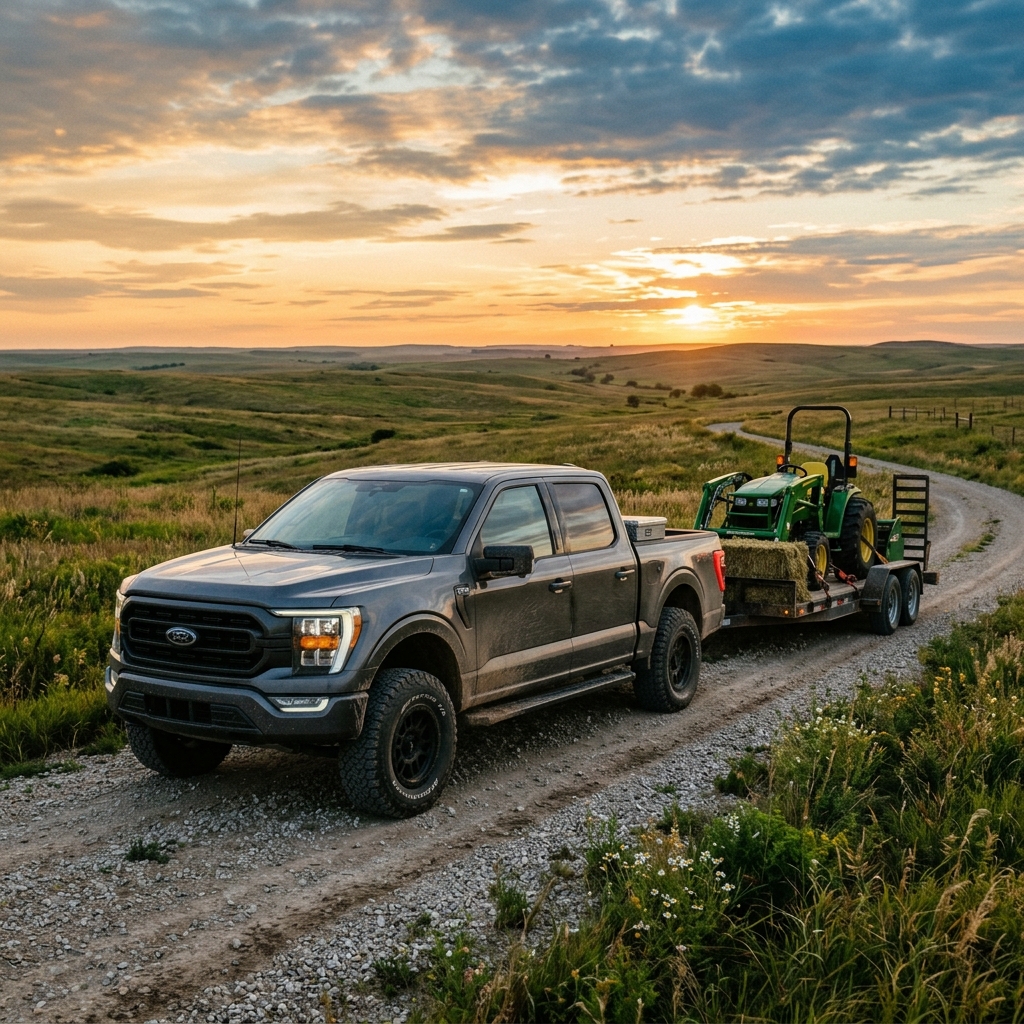
Gray Ford F-150 truck towing a trailer with a green tractor on a gravel path in rolling hills at sunset. (Representative image for illustration purposes only. Actual vehicle may vary based on trim and configuration.)

For decades, the Ford F-150 has stood as more than just a pickup truck; it is an enduring symbol of American ingenuity, grit, and hard work. Here in Junction City, Kansas, and surrounding areas like Fort Riley and Dickinson County, that reputation isn’t just marketing—it is lived every single day. From the active-duty military personnel stationed at Fort Riley who require dependable capability for their demanding schedules, to the dedicated ranchers and farmers tending to the fertile fields of the Flint Hills, the F-150 is the trusted partner that never clocks out early. It is a vehicle designed to seamlessly transition from grueling weekday duties to memorable weekend adventures at Milford Lake.

At Valor Ford, we understand that a truck is an investment in your lifestyle, your family, and your livelihood. Our local community demands versatility, which is precisely why the F-150 has remained the best-selling vehicle in America for over four decades. Whether you are hauling heavy construction materials, pulling a horse trailer through rugged terrain, or navigating a sudden winter blizzard on Interstate 70, this legendary truck delivers peace of mind. To learn more about how this legendary truck can fit your lifestyle, we encourage you to Research Ford F-150 models online or stop by our showroom to see our lineup in person.

What is the 2025 Ford F-150 and what are its key specs?
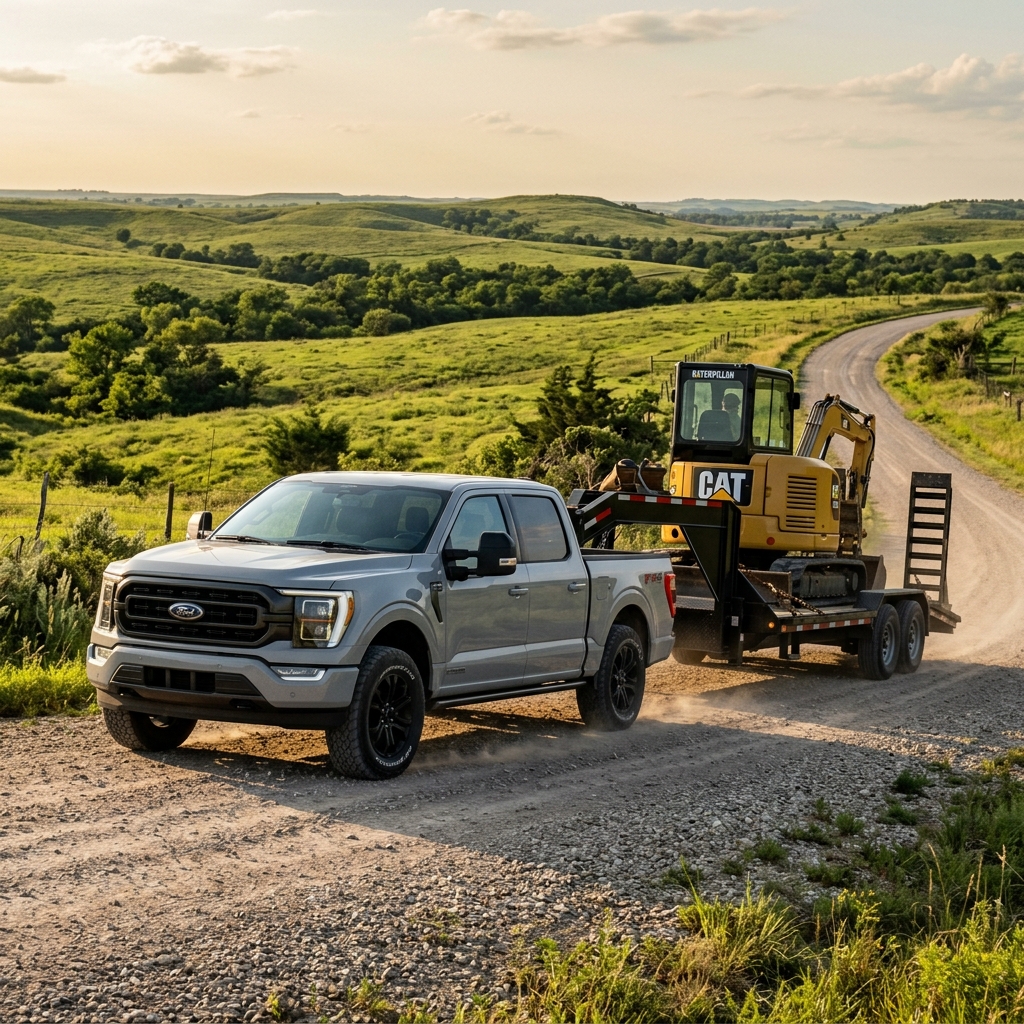
The 2025 Ford F-150 represents the pinnacle of modern light-duty pickup engineering. Built upon a foundation of high-strength, military-grade aluminum-alloy body panels riding on a fully boxed high-strength steel frame, the F-150 balances lightweight efficiency with class-leading structural rigidity. This unique construction method allows Ford to reallocate weight where it matters most, boosting towing and payload capacities to heights that leave competitors scrambling to keep up. When configured properly, the 2025 F-150 offers an astonishing maximum conventional towing capacity of up to 13,500 pounds and a maximum payload rating of up to 2,440 pounds.

To accommodate diverse needs, Ford offers three primary cab configurations: the classic Regular Cab for straightforward work duties, the versatile SuperCab with rear half-doors, and the incredibly spacious SuperCrew, which boasts class-leading rear legroom perfect for growing families or a full crew of workers. These cabs are paired with three distinct bed lengths—5.5-foot, 6.5-foot, and 8-foot—allowing you to customize your truck’s footprint to match your daily storage requirements. To find the right balance of passenger space and bed utility, you can Browse Used Inventory or look through our latest factory-fresh configurations to find your exact match.

{
  "altText": "A grey Ford F-150 truck towing a yellow CAT excavator on a trailer down a dirt road in green rolling hills.", (Representative image for illustration purposes only. Actual vehicle may vary based on trim and configuration.)

Cab Style

Available Bed Lengths

Max Payload (lbs.)

Max Conventional Towing (lbs.)

Regular Cab

6.5 ft. / 8.0 ft.

Up to 2,440

Up to 8,200

SuperCab

6.5 ft. / 8.0 ft.

Up to 2,100

Up to 10,000

SuperCrew

5.5 ft. / 6.5 ft.

Up to 2,150

Up to 13,500

What are the engine options for the 2025 Ford F-150?

One of the greatest strengths of the Ford F-150 is its diverse powertrain lineup. Ford understands that no two truck owners are exactly alike. A highway commuter who occasionally hauls a light boat needs a different power delivery profile than a commercial contractor pulling heavy flatbeds up steep Kansas grades. For the 2025 model year, Ford has refined its engine offerings to deliver optimized power, exceptional thermal efficiency, and robust long-term durability. Every engine is paired with a smooth-shifting 10-speed automatic transmission designed to keep the engine in its optimal power band, whether you are accelerating from a dead stop or overtaking on the highway.

2.7L EcoBoost® V6 & 5.0L V8

The 2.7L EcoBoost® V6 serves as an exceptionally efficient yet surprisingly punchy entry point, producing 325 horsepower and 400 lb-ft of torque. Featuring twin-turbochargers, it delivers quick acceleration that is perfect for daily commuting around Junction City. For traditionalists, the legendary 5.0L Ti-VCT V8 remains a fan favorite. Generating 400 horsepower and 410 lb-ft of torque, this engine delivers that iconic, deep exhaust rumble alongside heavy-duty hauling capacity. It is an incredibly reliable naturally aspirated choice for agricultural operations across Dickinson County.

3.5L EcoBoost® V6

For maximum towing muscle, the 3.5L EcoBoost® V6 is the undisputed champion of the non-hybrid lineup. Cranking out 400 horsepower and a massive 500 lb-ft of torque, this twin-turbocharged powerhouse provides effortless low-end pulling power. It is the engine of choice for local campers who frequently tow large travel trailers or recreational boats to Milford Lake. Its power delivery is immediate, predictable, and highly refined, making long-distance interstate towing a stress-free experience even in windy summer conditions.

3.5L PowerBoost™ Hybrid

The revolutionary 3.5L PowerBoost™ Full Hybrid V6 combines the strength of the twin-turbo 3.5L engine with an integrated 47-horsepower electric motor. The result is a jaw-dropping 430 horsepower and 570 lb-ft of torque, making it the most potent powertrain short of the specialty Raptor. Not only does it deliver incredible muscle, but it also achieves outstanding fuel efficiency, allowing you to maximize driving range during long road trips while keeping operating costs low for both business and leisure.

How much does the 2025 Ford F-150 cost across different trim levels?

The Ford F-150 is designed to fit a wide array of budgets and preferences. With a diverse hierarchy of trim levels, buyers can find the exact balance of utility, luxury, and technology they desire. The lineup starts with the rugged and straightforward XL, an ideal fleet option or bare-bones work truck that prioritizes durability above all else. Stepping up to the STX adds sporty exterior accents and modern styling without a massive jump in cost. The XLT serves as the sweet spot for many Kansas families, blending everyday comforts, advanced safety technology, and robust capability at a highly competitive price point.

For those seeking luxury, the Lariat, King Ranch, and Platinum trims transform the F-150 into an executive mobile office, complete with premium leather seating, high-end audio systems, and advanced driver-assist features. Finally, the legendary Raptor stands as the ultimate high-performance off-road machine, built to dominate desert trails and rugged terrain alike. At Valor Ford, we make financing simple and stress-free. To streamline your buying process, we highly recommend that you Get Pre-Approved for Financing online before making the trip to our dealership, saving you valuable time in our finance office.

Trim Level

Primary Focus

Key Highlights

XL / STX

Essential Utility

12-inch screen, durable vinyl or cloth, Ford Co-Pilot360

XLT

The Balanced Choice

Chrome bumpers, medium-dark slate cloth, Pro Trailer Backup Assist

Lariat

Modern Premium

Leather-trimmed seating, 12-inch digital cluster, 20-inch wheels

King Ranch

Western Luxury

Del Rio leather, power tailgates, unique badging, PowerBoost standard

Platinum

Ultimate Executive

Multicontour active motion seats, B&O Unleashed Sound System

Raptor

Off-Road Legend

Fox Racing Shocks, 35-inch or 37-inch all-terrain tires, High-Output V6

What are the main features of the 2025 Ford F-150 for work and play?
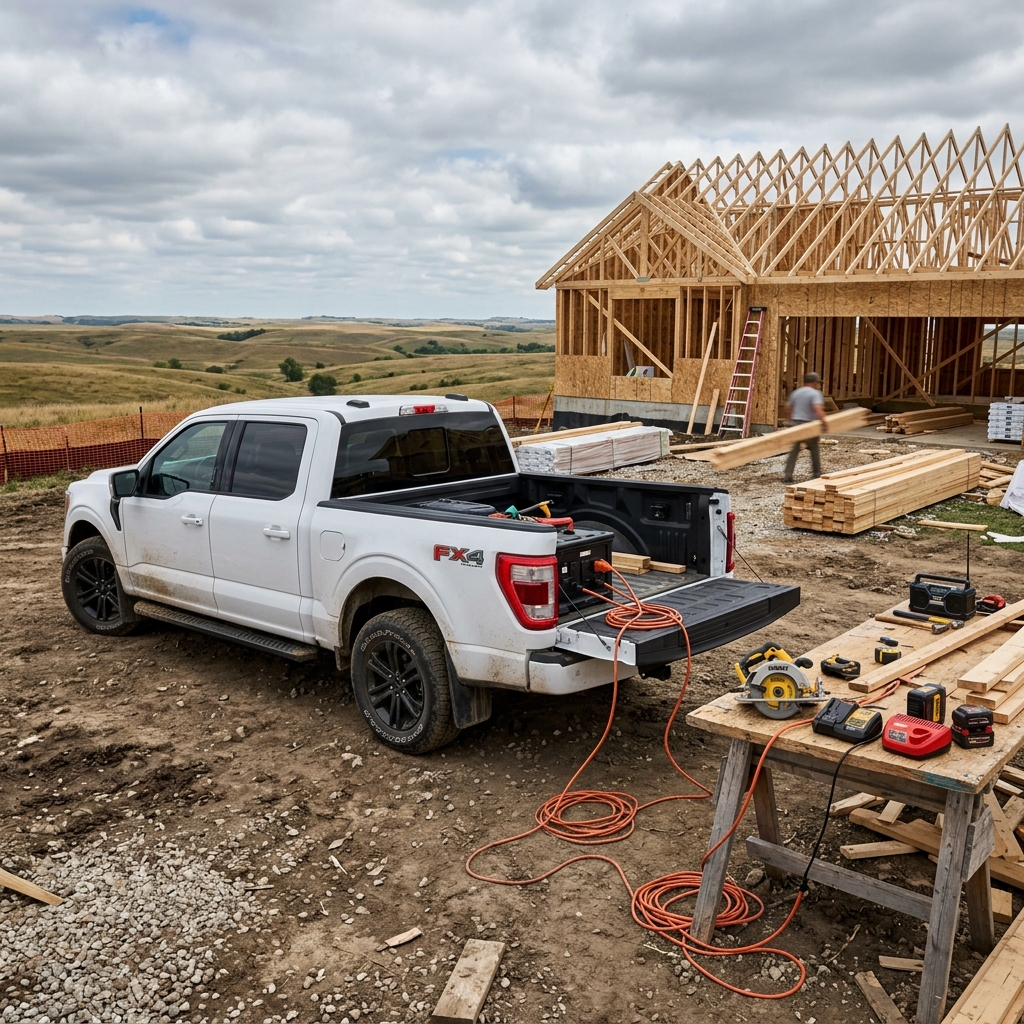
White pickup truck at a home construction site with power tools connected to its bed-mounted outlet by an orange cord. (Representative image for illustration purposes only. Actual vehicle may vary based on trim and configuration.)

The 2025 Ford F-150 sets itself apart by serving as a highly functional, multi-purpose tool that adapts perfectly to both work and recreation. One of the most groundbreaking features available is Pro Power Onboard. This class-exclusive feature transforms your truck into a mobile generator. Available in three power levels—2.0kW, 2.4kW, and an incredible 7.2kW—it provides enough exportable electricity to power heavy-duty construction tools at a Fort Riley training field, run livestock heaters on a remote Dickinson County pasture, or power an entire tailgating setup at a local sporting event. No longer do you need to haul heavy, noisy gas generators; your F-150 handles it all from the bed.

Beyond the incredible generator capabilities, Ford has integrated thoughtful innovations into the very structure of the cargo bed. The available Pro Access Tailgate features a unique swing-out door that allows you to easily reach deep into the truck bed even when towing a trailer. Inside the cabin, the available interior workspace features a gear shifter that folds flat at the touch of a button, allowing a durable work surface to unfold over the center console. This is a game-changer for supervisors, appraisers, and agricultural operators who need a stable surface for laptops, clipboards, or lunch. If you ever need to replace accessories or maintain these advanced systems, our Order Genuine Ford Parts portal makes finding original components quick and easy.

How does the 2025 Ford F-150 compare to the Chevrolet Silverado 1500?

The battle between the Ford F-150 and the Chevrolet Silverado 1500 is one of the most storied rivalries in automotive history. Both trucks have loyal followings, but when you examine the technical specifications and real-world usability, the F-150 continuously pulls ahead. While the Silverado relies on traditional steel body panels, the F-150’s high-strength, military-grade aluminum-alloy body yields a significant weight advantage. This weight reduction directly translates to a higher maximum towing capacity of up to 13,500 pounds compared to the Silverado’s 13,300-pound limit. Furthermore, the F-150’s payload capacity consistently outclasses the Silverado across comparable cab configurations.

Inside the cabin, Ford’s integration of technology feels more cohesive. The standard 12-inch touchscreen display on the F-150 is highly intuitive and features a user-friendly layout that doesn’t overwhelm the driver. Furthermore, Chevrolet simply does not offer a direct competitor to the F-150’s Pro Power Onboard system. While the Silverado has standard household-style outlets, they do not offer the multi-kilowatt, generator-grade output that allows Ford owners to power heavy equipment. When it comes to long-term value, the F-150’s unmatched popularity helps it retain excellent resale value across the Midwest. To explore our high-quality options, we encourage you to Browse Used Inventory and compare our available models.

Feature Comparison

2025 Ford F-150

Chevrolet Silverado 1500

Max Towing Capacity

13,500 lbs.

13,300 lbs.

Max Payload Capacity

2,440 lbs.

2,260 lbs.

Body Material

Military-Grade Aluminum Alloy

Roll-Formed High-Strength Steel

Onboard Generator

Yes (Up to 7.2kW Pro Power)

No (Standard low-wattage outlets only)

Standard Touchscreen

12-inch Diagonal Screen

7-inch screen on base trims

Transmission Options

10-speed automatic standard

8-speed or 10-speed automatic

How reliable is the Ford F-150 and are there features that affect longevity?
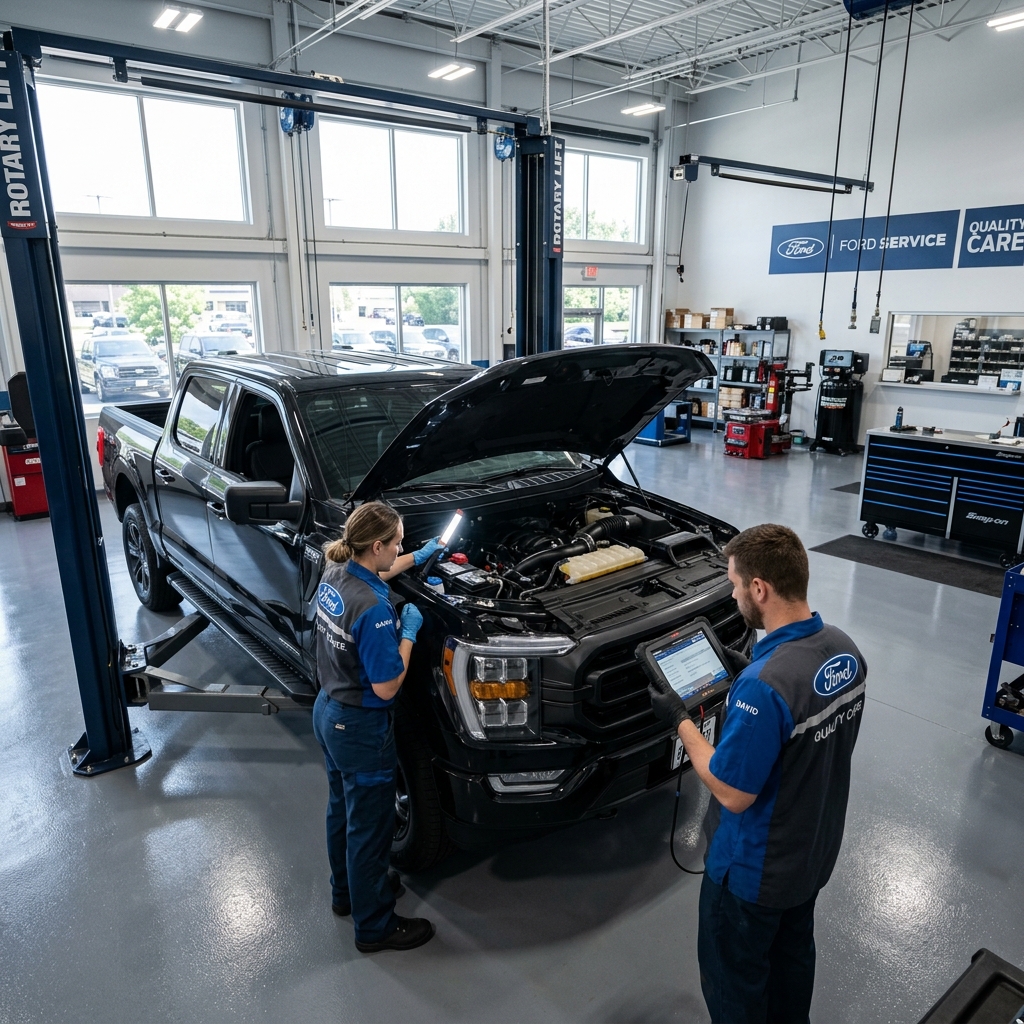
{
  "altText": "Two Ford service technicians inspect a black Ford F-150 truck with an open hood in a modern service bay.", (Representative image for illustration purposes only. Actual vehicle may vary based on trim and configuration.)

Reliability is the cornerstone of the Ford F-150’s appeal. When you are operating a business, managing a ranch, or commuting to Fort Riley, vehicle downtime is simply not an option. Ford builds the F-150 to withstand torture testing that simulates millions of miles of harsh operating conditions. The high-strength steel frame features fully boxed side rails, which prevent chassis twisting and ensure long-term structural integrity. Furthermore, the military-grade aluminum-alloy body panels do not rust, solving a major longevity issue that plagues older, steel-bodied trucks exposed to harsh winter road salts in Kansas.

Of course, the key to maximizing any vehicle’s longevity lies in routine maintenance. Following the manufacturer’s recommended service intervals for oil changes, fluid flushes, and tire rotations ensures your F-150 remains in peak condition for hundreds of thousands of miles. At Valor Ford, our state-of-the-art service department is staffed by factory-certified technicians who know your truck inside and out. To keep your vehicle running smoothly, you can easily Schedule Ford Service Today online. For maximum convenience, we also offer a comprehensive Schedule Pickup and Delivery Service, allowing us to maintain your truck without disrupting your busy day.

Navigating the Flint Hills: Why Kansas drivers choose the F-150's 4×4 systems

Living in Junction City means experiencing the full beauty and erratic nature of Kansas weather. From blistering summer heat and sudden thunderstorms to slick winter ice and heavy snow accumulation, our local roads demand a vehicle with unshakeable traction. The F-150’s advanced electronic shift-on-the-fly (ESOF) four-wheel-drive system provides immediate confidence when road conditions deteriorate. With selectable drive modes including Normal, Eco, Sport, Tow/Haul, Slippery, and Deep Snow/Sand, the truck automatically recalibrates engine mapping, transmission shifts, and stability control systems to optimize traction on the fly.

Beyond winter commuting, the Flint Hills region features rugged limestone-packed ranch roads and muddy riverbanks that can quickly swallow lesser vehicles. Whether you are towing a heavy boat down to the docks at Milford Lake for a hot summer weekend of recreation, or checking fence lines across deep Dickinson County pastures, the F-150’s electronic-locking rear differential locks the rear axle to provide maximum power to both rear wheels simultaneously. This ensures you never get stranded in remote locations. Explore our robust selection of capable four-wheel-drive trucks today to find your perfect outdoor partner.

Smart technology: Inside the F-150's high-tech cabin and safety suite
Grey pickup truck towing a trailer with a red tractor on a gravel road in a field at sunset. (Representative image for illustration purposes only. Actual vehicle may vary based on trim and configuration.)

SYNC® 4 Infotainment

The standard 12-inch center touchscreen features Ford’s advanced SYNC® 4 technology, providing wireless Apple CarPlay® and Android Auto™ capability. This allows you to effortlessly stream your favorite music, access navigation apps, and handle hands-free calls while keeping your hands securely on the wheel. Standard over-the-air updates ensure your vehicle’s software remains continuously updated.

Ford Co-Pilot360™

Safety is paramount, which is why the F-150 comes standard with the comprehensive Ford Co-Pilot360™ driver-assist suite. This system includes Pre-Collision Assist with Automatic Emergency Braking, Lane-Keeping System, and BLIS® (Blind Spot Information System) with cross-traffic alert and integrated trailer coverage. This technology acts as a vigilant co-pilot, protecting you and your family on every local journey.

Ford BlueCruise

For ultimate highway driving ease, the available Ford BlueCruise technology offers hands-free highway driving. Compatible with over 130,000 miles of prequalified North American highways, BlueCruise handles acceleration, braking, and steering on long trips. It is a fantastic feature for highway commuters traveling between Junction City, Manhattan, and Topeka, reducing driver fatigue during long summer trips.

Is it better to research Ford F-150s online before visiting a dealer?

In today’s digital age, the smartest truck buyers begin their journey long before they step foot on a physical lot. Conducting online research allows you to thoroughly explore the diverse range of available engine packages, cab configurations, and trim options from the comfort of your own home. By browsing our digital showroom, you can filter our actual, real-time inventory to see exactly which trucks feature the specific options you need—such as the 3.5L PowerBoost hybrid engine, the 7.2kW Pro Power generator, or the advanced Co-Pilot360 safety suite. This ensures you target the exact truck that meets your practical needs.

Furthermore, online research provides valuable transparency into pricing and auto-financing. You can utilize our convenient digital tools to calculate estimated monthly payments, compare trim levels side-by-side, and initiate a Trade In Evaluation to determine the true value of your current vehicle. Completing these quick steps online not only empowers you with valuable knowledge but also significantly reduces the amount of time you spend processing paperwork when you visit us. Our goal at Valor Ford is to provide a highly transparent, efficient, and hassle-free buying experience that respects your schedule.

Customizing your truck: Essential Ford F-150 parts and accessories
Dark gray Ford F-150 pickup truck with its tailgate open, showing the empty truck bed and a trailer hitch. (Representative image for illustration purposes only. Actual vehicle may vary based on trim and configuration.)

Bed Protection

Protecting your truck’s bed is essential for preserving long-term resale value. Popular upgrades include durable spray-in or drop-in bed liners that guard against dents, scratches, and chemical spills. Tri-fold or roll-up tonneau covers are also exceptionally popular, providing weather protection and security for valuable tools, luggage, or hunting gear stored in the cargo area.

Towing & Performance

For those who frequently tow heavy loads, specialized towing equipment is highly recommended. Heavy-duty drop hitches, integrated trailer brake controllers, and specialized towing mirrors improve control and visibility. Upgraded off-road suspension packages and durable all-terrain tires also enhance your F-150’s capability off the beaten path.

Interior Comfort

Keep your cabin pristine with high-quality, all-weather floor mats designed specifically for the F-150’s floor layout. These heavy-duty rubber mats trap mud, snow, and spilled liquids, ensuring your interior looks factory-fresh. Under-seat storage organizers also help keep tools, safety gear, and personal belongings organized and securely out of sight.

Our parts department is stocked with original equipment manufacturer components and accessories. To find the right accessories for your model, please visit our online parts portal to Order Genuine Ford Parts directly from Valor Ford.

Test drive the 2025 Ford F-150 at Valor Ford in Junction City today

There is a reason the Ford F-150 remains the leading truck of the American road. Its unmatched towing capability, advanced driver-assist technology, and versatile configurations make it the ultimate automotive tool. No amount of online reading can compare to the actual experience of sitting in the driver’s seat, feeling the immediate power delivery of the EcoBoost or V8 engine, and experiencing its quiet, refined ride quality firsthand.

At Valor Ford, we pride ourselves on providing a friendly, low-pressure shopping environment. Our knowledgeable sales professionals are ready to answer your questions, demonstrate key features, and help you find the absolute perfect configuration for your specific lifestyle. We invite you to Get Directions to Valor Ford and visit our showroom located at 1825 Goldenbelt Blvd, Junction City, KS 66441. Have a quick question before you head out? Call us at (785) 238-5114 today.

Keeping Your Ford Super Duty Running Strong: The Ultimate Guide to Power Stroke Fuel Filter Maintenance

When you own a Ford Super Duty equipped with the legendary 6.7L Power Stroke diesel engine, you are piloting a highly capable, high-torque truck. Whether you are hauling massive trailers down the highway, operating heavy equipment in Junction City, or managing a demanding agricultural workload in Dickinson County, your truck relies on a highly advanced, ultra-high-pressure common-rail injection system to deliver its staggering horsepower and torque. This system operates at pressures exceeding 30,000 PSI. At these extreme tolerances, even the smallest speck of dirt, rust, or microscopic water droplet can act like a sandblaster inside your fuel injectors, leading to catastrophic engine damage and immense repair bills. That is why clean diesel fuel is not just a preference—it is an absolute necessity for the survival of your Power Stroke engine.

Operating conditions around Fort Riley and Junction City present a unique set of challenges for diesel truck owners. From intense summer heat and dust on gravel roads to freezing winter temperatures that cause fuel tank condensation, your fuel filters work overtime to protect your engine’s fuel system. In this comprehensive guide, we will break down exactly how often you should change your fuel filters, why the dual-filter system is designed the way it is, the science behind OEM filtration, and how proactive maintenance at Valor Ford can save you thousands of dollars over the lifetime of your truck.
A grey Ram dually truck towing a trailer with a Case excavator down a gravel country road at sunset. (Representative image for illustration purposes only. Actual vehicle may vary based on trim and configuration.)

How Often Should You Change the Fuel Filters on a Ford Super Duty Power Stroke Diesel?

Ford Motor Company outlines a standardized maintenance schedule for the 6.7L Power Stroke diesel engine, recommending that both fuel filters be replaced every 15,000 to 22,500 miles, or every third oil change, or every 600 hours of engine operation—whichever comes first. However, this general recommendation is split into two distinct categories: ‘Normal Operating Conditions’ and ‘Severe Duty Operating Conditions.’ Knowing which category your driving habits fall into is critical for maintaining optimal fuel system health and ensuring your warranty remains fully intact. For drivers who primarily use their Super Duty for long-distance highway cruising with minimal cargo, normal operating intervals of up to 22,500 miles may be sufficient. But in Kansas, very few heavy-duty trucks experience such an easy life. Most local truck owners find that their daily routines push their vehicles directly into the severe duty category, which demands much stricter maintenance timelines.

What constitutes severe duty? If you frequently tow heavy trailers, idle for extended periods (common on job sites and military maneuvers around Fort Riley), operate in dusty off-road environments, or use B20 biodiesel blends, Ford recommends changing your fuel filters at the 15,000-mile mark. Agricultural hauling across Dickinson County is a prime example of severe duty. Pulling grain trailers or stock trailers through dirt roads exposes your fuel system to fine particulate dust, while frequent stop-and-go heavy hauling increases fuel throughput and subjects filters to a larger volume of potentially contaminated fuel. To keep track of your vehicle’s health easily, we recommend checking the Intelligent Oil-Life Monitor on your dashboard, but always track your mileage manually for fuel filters, as the truck does not always have a direct sensor to measure physical filter clogging until fuel pressure drops.

How Many Fuel Filters Does a 6.7L Power Stroke Diesel Have?

To provide maximum protection for the ultra-precise high-pressure fuel pump and common-rail injectors, Ford utilizes a dual-filter architecture on the 6.7L Power Stroke diesel engine. This means your truck has two distinct fuel filters that must *always* be replaced together as a matched set. Replacing only one filter defeats the purpose of the dual-stage system and leaves your fuel system highly vulnerable to premature wear or sudden failure.
1. Primary Filter / Water Separator

The primary filter is housed within the Diesel Fuel Conditioner Module (DFCM), which is mounted directly to the vehicle’s frame rail underneath the driver’s side cab. Because diesel fuel naturally attracts moisture, water contamination is a constant threat. This primary filter acts as a water separator, utilizing hydrophobic media to repel water droplets, causing them to pool at the bottom of the housing where they can be drained safely. It also screens out larger debris, rust, and tank scale before the fuel is pumped forward.

2. Secondary Under-Hood Filter

The secondary fuel filter is located directly in the engine bay, mounted near the top-front of the engine block. After fuel passes through the primary frame filter, it is sent under low pressure to this secondary unit. The secondary filter is designed to catch ultra-fine particulates that are too small for the primary filter. It serves as the final line of defense, ensuring that only the cleanest, completely water-free fuel enters the high-pressure fuel pump (CP4) and the fuel injection rails.

Motorcraft dual fuel filter kit with FG-1128 and FL-2051 filters on a workbench next to a Ford F-250 truck. (Representative image for illustration purposes only. Actual vehicle may vary based on trim and configuration.)

What Micron Rating Do the Motorcraft 6.7L Power Stroke Fuel Filters Have?

Filtration efficiency is measured in microns (one-millionth of a meter). To put this in perspective, a single strand of human hair is approximately 70 microns in diameter, and the human eye cannot typically see anything smaller than 40 microns. However, within the common-rail fuel system of your Power Stroke diesel, clearances between moving parts are as tight as 1 to 2 microns. This is why standard filtration is simply not enough. Genuine OEM Motorcraft filters are engineered to meet strict Ford engineering specifications. The primary frame-mounted filter features a 10-micron rating, meaning it filters out larger debris and holds the bulk of the particulate load. The secondary under-hood filter possesses a highly advanced 4-micron rating, designed to capture microscopic contaminants before they can damage the high-pressure pump or clog the fuel injector nozzles.

Many aftermarket filters claim to fit the 6.7L Power Stroke, but they often utilize inferior filter media with higher micron ratings (such as 15 or 20 microns) or lack the necessary water-coalescing properties. Using an aftermarket filter with improper micron specifications allows abrasive particles to flow directly into the high-pressure system, causing premature wear, fuel injector tip erosion, and eventual pump failure. To safeguard your investment, it is highly recommended to only use genuine OEM Motorcraft filters. Ready to pick up a set of factory-certified Motorcraft filters for your truck? You can easily Order Genuine Ford Parts directly through the Valor Ford Parts Department in Junction City, ensuring your fuel system has the exact protection Ford engineers designed for it.

How Do You Know When It Is Time to Change the Fuel Filters on a Power Stroke Diesel?
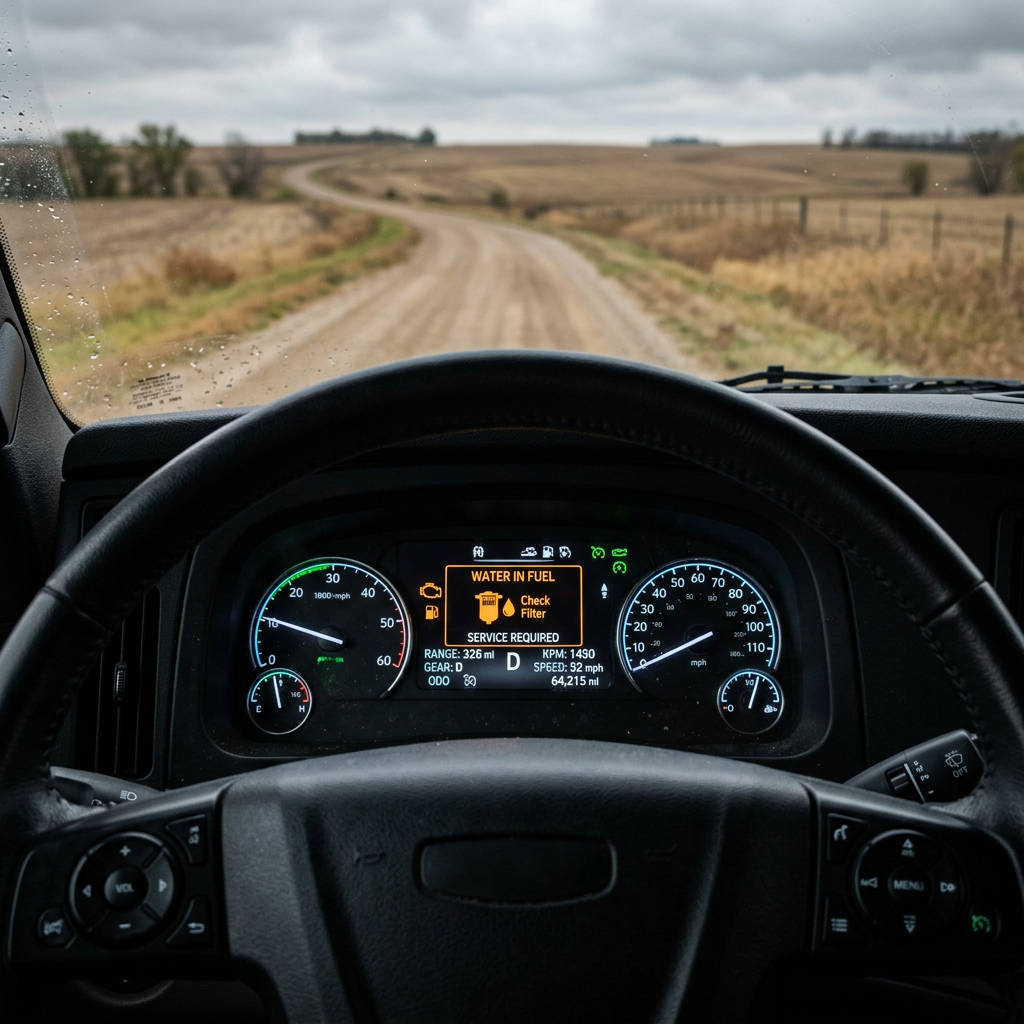
While mileage is the most reliable metric for filter replacements, your truck will often communicate when its fuel flow is restricted. Recognizing these warning signs early can help you avoid being stranded on the side of the road with a clogged fuel system.

  • Loss of Power Under Load: If you are pulling a heavy trailer up a hill and feel the truck hesitating or failing to accelerate, restricted fuel filters are a primary suspect. The engine demands high fuel volume under load, and clogged filters choke that supply.

  • Engine Hesitation and Rough Idle: Restricted fuel flow causes pressure drops in the common rail, leading to uneven fuel delivery, rough idling, or brief engine stumbles during acceleration.

  • Hard Starting or Extended Cranking: If your Power Stroke takes longer to fire up in the morning, it may be struggling to build the initial fuel rail pressure required for combustion due to restricted filters.

  • ‘Water in Fuel’ Dashboard Alert: This critical alert indicates that the water separator chamber in your frame-mounted DFCM is full. It must be drained immediately. If the light persists after draining, the primary filter media is likely saturated and requires replacement.

  • Low Fuel Pressure Trouble Codes: A restricted filter can trigger diagnostic codes like P0087 (Fuel Rail Pressure Too Low), illuminating the check engine light.

Driver's view of a car dashboard with a 'Water in Fuel' warning on a winding dirt road on a cloudy day. (Representative image for illustration purposes only. Actual vehicle may vary based on trim and configuration.)

Is It Cost-Effective to Change the Fuel Filter More Often Than the Minimum Recommendation?

To put it simply: absolutely yes. Many diesel owners wonder if changing fuel filters early is just an unnecessary expense. To understand the financial math, we must look at the cost of proactive maintenance versus the catastrophic cost of fuel system failure. On a 6.7L Power Stroke, the high-pressure fuel pump (CP4.2) is lubricated solely by the diesel fuel passing through it. If fuel flow is restricted, or if microscopic water bypasses a saturated filter, the pump will lose lubrication. When a CP4 pump runs dry or becomes contaminated, it physically self-destructs, sending a torrent of microscopic metal shavings throughout the entire fuel system.

Once metal shavings enter the fuel lines, they contaminate the fuel rails, the return lines, the fuel tank, and all eight precision injectors. To repair this, the entire fuel system must be stripped, cleaned, or replaced entirely, which includes buying a new high-pressure pump, eight new injectors, high-pressure lines, and thoroughly dropping and cleaning the fuel tank. Repair costs can vary widely depending on parts and labor. By contrast, a genuine Motorcraft fuel filter kit costs a fraction of that amount, and replacing them takes less than an hour. Changing your filters every 15,000 miles (or even 10,000 miles if you operate in extremely dusty Kansas agricultural conditions) is one of the most cost-effective maintenance choices for your Power Stroke engine.

Maintenance Action

Estimated Cost Range

Frequency / Impact

Long-Term Protection Value

OEM Motorcraft Fuel Filter Kit

$80 – $120 (Parts Only)

Every 15,000 Miles

Excellent – Prevents water & debris bypass

Professional Filter Service at Valor Ford

$180 – $280 (Parts & Labor)

Every 15,000 Miles

Outstanding – Done by certified diesel techs, worry-free warranty

Catastrophic CP4 Pump Failure Repair

$8,000 – $12,000+

Occurs due to fuel starvation, water, or poor filtration

None – Catastrophic financial and operational loss

What Tools Are Required to Perform a DIY Fuel Filter Change on a Power Stroke?
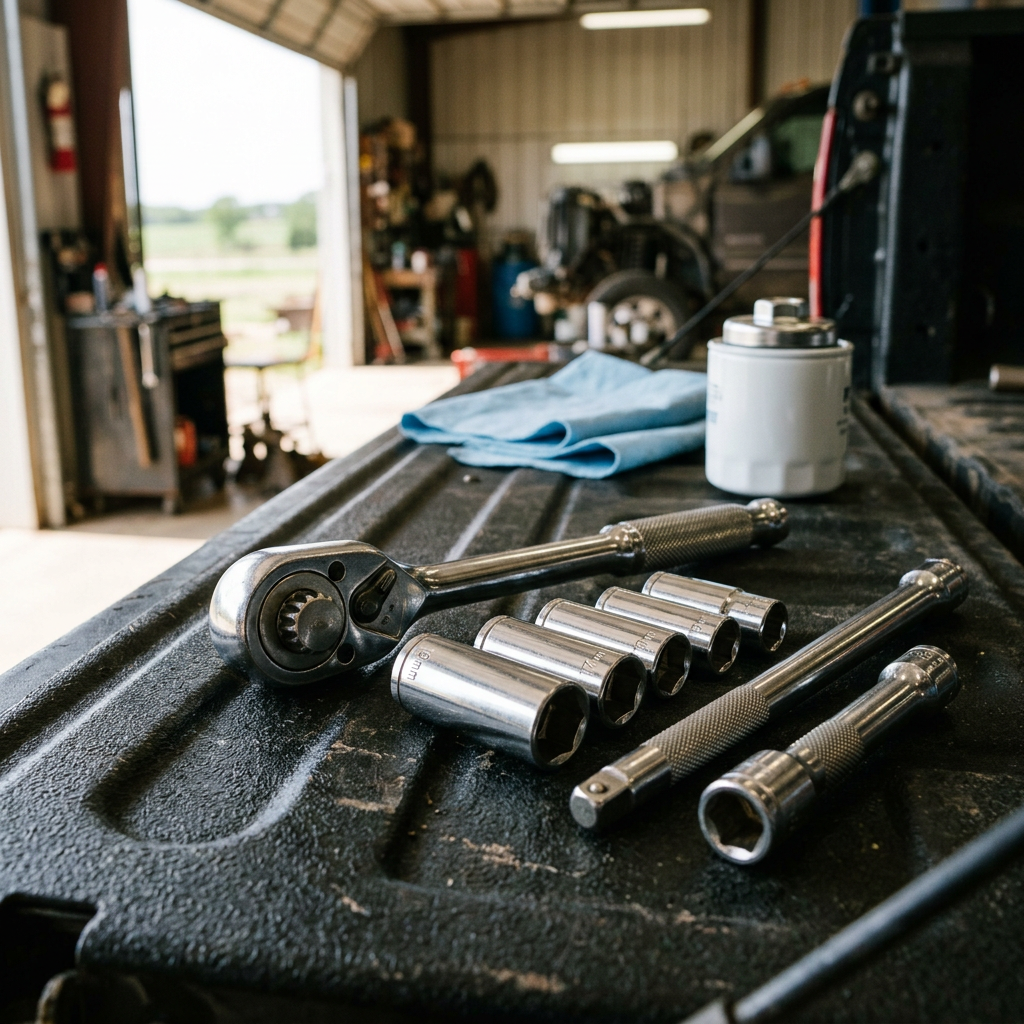
Required Hand Tools

To change the fuel filters on your 6.7L Power Stroke, you will need a few specific tools to make the job clean and safe:

  • 32mm Socket: Essential for removing the primary filter cap under the frame rail without stripping the plastic hex nut.

  • Socket Extensions & Ratchet: A 3/8-inch or 1/2-inch drive ratchet with a medium extension to reach the frame housing comfortably.

  • 8mm Socket: Required to remove the small mounting bracket bolts on certain model year under-hood filters.

Safety & Clean-Up Gear

Diesel fuel is highly slippery, hard to wash out of clothing, and can irritate skin upon prolonged contact. Make sure you have:

  • Fuel Catch Pan: A wide-mouth oil or fuel drain pan to catch escaping diesel fuel from the DFCM water drain.

  • Nitrile Gloves & Safety Glasses: Protects your skin and eyes from pressurized fuel spray.

  • Shop Rags or Microfiber Towels: For wiping down fuel lines and the housing areas to prevent dirt entry.

Socket set, ratchet wrench, and oil filter lying on a black truck tailgate in a workshop garage. (Representative image for illustration purposes only. Actual vehicle may vary based on trim and configuration.)

While changing fuel filters is a popular weekend project for experienced DIYers, doing it incorrectly can lead to severe fuel leaks, air introduction into the high-pressure system, or cracked plastic filter housings. If you prefer to bypass the mess and let factory-certified diesel technicians handle the job with professional precision, we invite you to Schedule Ford Service Today with the experts at Valor Ford.

The Proper Procedure to Change Both Power Stroke Fuel Filters Safely

Step 1: Drain the Water Separator Housed in the DFCM Before unscrewing any housings, place your fuel catch pan underneath the frame-mounted DFCM filter. Locate the yellow drain valve on the bottom of the housing. Slowly turn the valve counter-clockwise to allow the fuel and settled water to drain fully into your catch pan. Once the flow stops, turn the drain valve clockwise to close it securely. This prevents a massive, messy splash when you proceed to remove the filter cap.

Step 2: Remove the Frame-Mounted Filter Cap Using your 32mm socket and extension, place it squarely onto the plastic nut molded into the bottom of the frame-mounted filter cap. Slowly turn counter-clockwise. The housing cap may feel stiff initially, but proceed carefully to avoid cracking the plastic. Once unscrewed, pull the cap and the attached filter cartridge straight down. Pop the old filter element out of the cap, clean the inside of the cap thoroughly with a clean rag, and install the new O-ring included in your Motorcraft kit. Crucial Tip: Lubricate the new O-ring with clean diesel fuel or clean engine oil to ensure a perfect, airtight seal. Click the new filter cartridge into the cap, then screw the assembly back onto the DFCM housing, hand-tightening it first, then torquing it to 19 lb-ft (or until the cap stops rotating against the physical stop). Do not overtighten.

Step 3: Replace the Under-Hood Secondary Fuel Filter Move to the engine bay. Locate the secondary filter near the front-left of the engine. Wipe down the quick-connect fuel fittings to prevent any dust or dirt from falling into the open lines. Disconnect the fuel line clips by squeezing the colored tabs and pulling gently. Some residual fuel may spray slightly, so keep a rag handy. Once the lines are disconnected, unbolt the filter bracket or twist the filter assembly counter-clockwise (depending on your specific model year) to remove it. Install the new secondary filter in reverse order, ensuring the mounting bracket is secure, and firmly click the quick-connect fuel lines back into place. You will hear an audible click when they lock. Double-check that the line clips are fully engaged to prevent fuel leaks under pressure.

What Is the Proper Procedure to Prime the Fuel System After Replacing the Power Stroke Fuel Filters?
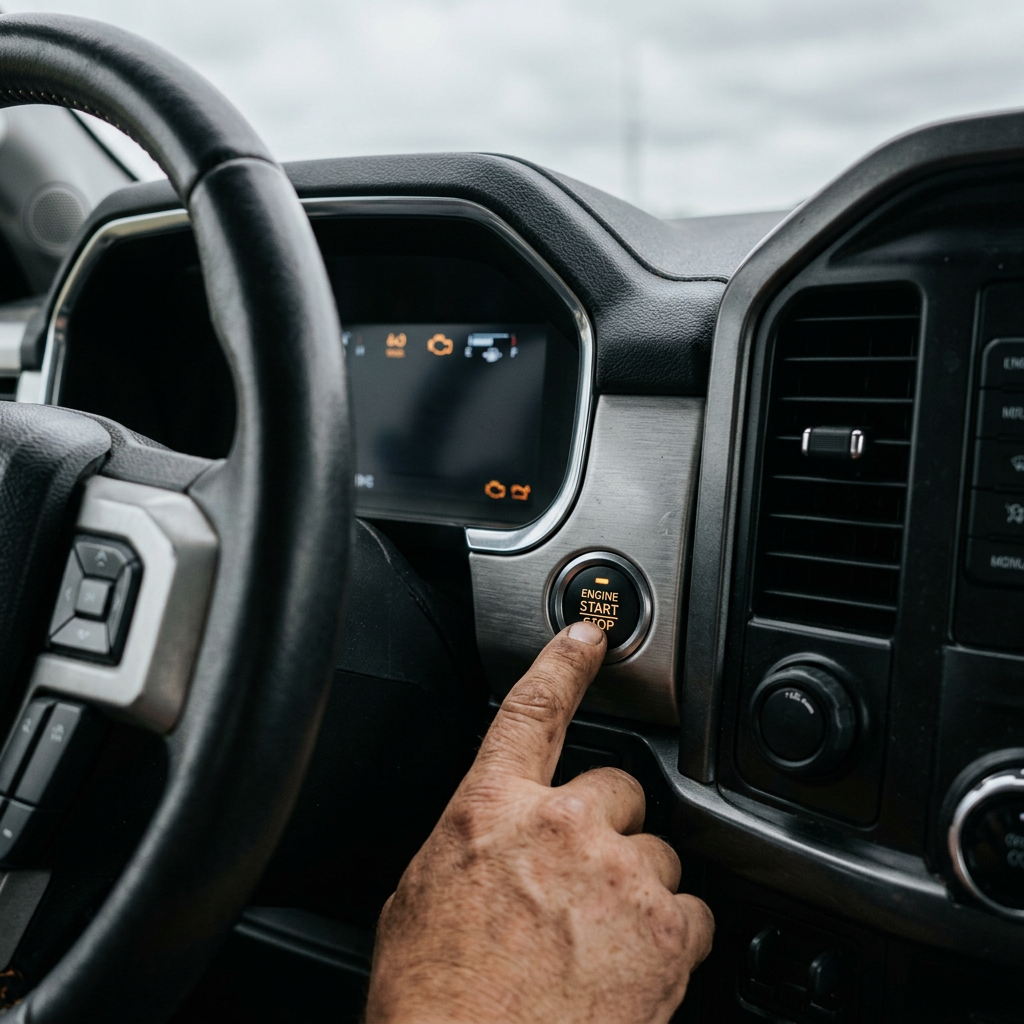
Once both fuel filters are replaced, the fuel lines and filter housings are filled with air instead of fuel. Do not start the engine immediately after replacing the filters. Attempting to start the truck dry will pull air into the high-pressure fuel pump (CP4), causing metal-on-metal friction and immediate, catastrophic damage. You must prime the fuel system using the low-pressure fuel pump to purge all air back to the fuel tank. To prime the system correctly, follow this simple sequence:

  1. Insert your key into the ignition (or use the push-button start without pressing your foot on the brake pedal).

  2. Turn the ignition to the ‘ON’ (or Run) position. Do *not* crank the engine.

  3. You will hear the electric low-pressure fuel pump hum from underneath the cab. Let it run for 30 seconds until the hum stops.

  4. Turn the ignition back to the ‘OFF’ position.

  5. Repeat this cycle 6 to 10 times. You will hear the pitch of the pump change as the housings fill with fuel and air bubbles are pushed back to the tank.

After completing 8 to 10 key cycles, press the brake pedal and crank the engine. It should start smoothly within a few seconds. If the engine starts but stumbles or dies immediately, you likely have trapped air left in the system. Turn the truck off and perform another 5 priming cycles before attempting to restart. Once the engine is running smoothly, let it idle for a couple of minutes. Slide under the truck and inspect the frame-mounted primary filter cap, and check the under-hood connections to ensure there are absolutely no active fuel leaks. If you notice any wet spots or fuel dripping, shut down the engine immediately, clean the area, and verify the O-ring seals or quick-connect fittings are seated correctly.

A person's finger pressing an orange-illuminated engine start-stop button on a car dashboard. (Representative image for illustration purposes only. Actual vehicle may vary based on trim and configuration.)

Why Junction City, Fort Riley, and Dickinson County Conditions Demand Stricter Maintenance

Agricultural Dust & Gravel Roads

Dickinson County is home to active farming, ranching, and miles of dry gravel roads. As trucks traverse these dusty paths during planting and harvesting seasons, microscopic airborne dust settles on the fuel tank filler neck. When refueling, this fine agricultural dust can fall directly into the tank, accelerating fuel filter restriction and requiring more frequent replacements.

Military Training & Heavy Towing

Fort Riley military families and contractors utilize Super Duty trucks for demanding, high-load towing operations and extended off-grid utility work. Heavy payloads and prolonged engine idling dramatically increase the volume of fuel passing through the filter media. More fuel processed means more particulate capture, reducing the effective life of the filter.

Extreme Kansas Temperature Swings

Kansas is famous for dramatic seasonal temperature swings. Warm, humid days followed by cool nights create condensation inside steel and plastic fuel tanks. Water in diesel fuel breeds microbial growth and forms slime that quickly plugs fuel filters. Ensuring fresh filters are installed before major seasonal transitions is key to avoiding issues.

Don’t let Kansas weather and tough road conditions compromise your Power Stroke’s performance. For peace of mind, let us perform a complete diesel system check-up. You can easily book a hassle-free appointment online by choosing our convenient Schedule Pickup and Delivery Service, allowing you to stay focused on your busy day while we handle the dirty work.

When Fuel System Wear Suggests It May Be Time to Consider an Upgrade for Your Super Duty

While regular maintenance keeps a 6.7L Power Stroke running strong for hundreds of thousands of miles, older models—especially high-mileage first-generation 6.7L trucks or older 6.0L and 6.4L platforms—can eventually reach a point where fuel system wear becomes an ongoing, expensive headache. Injector bodies wear down internally, high-pressure pumps lose efficiency, and fuel tank linings can degrade. When you find yourself facing major repair bills for high-pressure pumps, injectors, or advanced emissions equipment, it is often highly cost-effective to consider upgrading to a newer, more efficient model. Modern Ford Super Duty models boast significantly upgraded fuel delivery systems, redesigned high-pressure pumps with vastly improved reliability, and robust factory warranties that eliminate the fear of unexpected, multi-thousand-dollar repair bills.

If you are curious about what your current truck is worth in today’s strong truck market, we can help. Our team at Valor Ford offers a straightforward, transparent Trade In Evaluation to give you a fair, competitive value for your current rig. From there, you can explore our cutting-edge heavy-duty lineup, including the robust and incredibly capable Ford F-250 models. Whether you decide to check out our Research Ford F-250 page or want to browse our extensive and ready-to-work Browse Used Inventory, our expert finance and sales teams are here to help you make the smartest financial decision for your business, farm, or family.

Keep Your Power Stroke Performing Flawlessly at Valor Ford in Junction City

At the end of the day, your Ford Super Duty is more than just a truck—it is your livelihood, your adventure machine, and your partner on the demanding roads of Kansas. Taking care of its advanced fuel system by performing timely, high-quality fuel filter changes with genuine Motorcraft components is the absolute key to unlocking maximum engine longevity, fuel efficiency, and legendary performance. Don’t leave your fuel system’s survival to chance with inferior aftermarket filters or delayed maintenance schedules. Our team of factory-trained, certified Ford diesel technicians at Valor Ford has the specialized knowledge, state-of-the-art diagnostic tools, and genuine OEM parts inventory required to keep your Power Stroke performing flawlessly. Whether you need a quick filter replacement, a comprehensive multi-point inspection, or are ready to explore upgrading to a brand new Super Duty, we are proud to serve as your premier local diesel resource. Stop by our dealership today, Get Directions to Valor Ford, or Call us at (785) 238-5114 to chat with our friendly service coordinators.

Logo for Valor Automotive featuring a blue and silver shield with 'VA' and the company name with a red star.

Finding the Best Vehicles Under $25K at Valor Ford in Junction City

For active-duty military personnel stationed at nearby Fort Riley, growing families navigating Dickinson County, and daily commuters looking to conquer their Kansas highways, finding a dependable vehicle that fits a strict budget is paramount. In today’s dynamic automotive market, locating a high-quality, reliable, and technologically modern vehicle for under $25,000 can feel like searching for a needle in a haystack. Fortunately, Valor Ford in Junction City, KS stands as a trusted regional destination for competitive transportation that does not force you to compromise on safety, comfort, or style. Our carefully curated selection of value-oriented vehicles ensures that every driver in our community has access to transportation they can truly depend on day in and day out.

When you visit Valor Ford, located conveniently at 1825 Goldenbelt Blvd, Junction City, KS 66441, you are not just walking onto a car lot; you are entering a community-focused dealership that understands the local economy. We know that our service members at Fort Riley require rugged dependability, while our neighbors in Dickinson County need fuel-efficient, durable options to manage long commutes between farming communities and suburban hubs. That is why our team of dedicated experts takes the time to thoroughly inspect, refurbish, and certify every budget-friendly vehicle before it ever receives a price tag on our showroom floor. If you are ready to explore your options, you can Get Directions to Valor Ford and see our incredible inventory in person today.

As we enter the warm, active summer of 2026, there has never been a better time to reassess your driving situation. Whether you are looking for a fuel-sipping sedan for your morning commute or a versatile crossover to pack up for weekend camping trips along the Kansas River, our selection of sub-$25K vehicles offers modern connectivity features like Apple CarPlay, active safety suites, and comfortable cabins. We invite you to learn more about our approach, evaluate our diverse inventory, and discover how our customer-first philosophy ensures you walk away with an exceptional vehicle at a price that keeps your monthly budget completely intact.
A blue Mercedes-Benz SUV drives along a paved road winding through scenic green rolling hills. (Representative image for illustration purposes only. Actual vehicle may vary based on trim and configuration.)

Are there more used or new vehicles under $25,000 at this dealership?

To understand the reality of purchasing a vehicle under $25,000 in 2026, it is helpful to analyze the current automotive landscape. While manufacturers occasionally offer entry-level base trims of compact hatchbacks or subcompact sedans near this price tier, the overwhelming majority of vehicles available under $25,000 at Valor Ford are high-quality, pre-owned vehicles. This is actually fantastic news for smart buyers. A brand-new vehicle at the absolute bottom of the pricing spectrum often features a bare-bones interior, limited engine performance, and very few standard technological conveniences. Conversely, a late-model pre-owned vehicle that originally retailed for $35,000 or more has already experienced its steepest depreciation curve, allowing you to secure premium comforts and advanced tech features at a strong value.

By focusing on late-model pre-owned vehicles, buyers can unlock high-end luxury, performance, and utility. When you browse our pre-owned inventory, you will find models equipped with heated leather seats, panoramic sunroofs, adaptive cruise control, and advanced all-wheel-drive systems—amenities that are virtually non-existent on the few new vehicles priced below $25,000. It is a highly strategic way to stretch your hard-earned dollars, ensuring you drive a vehicle that feels premium, looks modern, and stands up to years of daily use.

Additionally, the engineering standards of vehicles manufactured over the last five to eight years are incredibly high. Modern structural designs, rust-resistant materials, and highly sophisticated powertrain engineering mean that a pre-owned vehicle with 40,000 to 70,000 miles on the odometer still has the vast majority of its functional life ahead. Rather than paying a premium just for that ‘new car smell’ in a cramped, underpowered entry-level hatchback, our customers consistently find that a high-trim, well-maintained used crossover or mid-size sedan offers a vastly superior ownership experience.

At Valor Ford, we proactively manage our pre-owned stock to ensure we have a robust selection of these late-model gems. We source vehicles with clean titles, comprehensive maintenance histories, and low mileage. By prioritizing quality over sheer volume, we ensure that our sub-$25K pre-owned selection represents the absolute great value proposition in the Dickinson County region. Our inventory is constantly rotating, so we invite you to Browse Used Inventory online to discover what reliable, feature-rich options are waiting for you today.

Can I find a Ford Escape under $25,000 at Valor Ford?
Gray Ford Escape SUV parked along the curb of a quiet suburban street with houses and trees. (Representative image for illustration purposes only. Actual vehicle may vary based on trim and configuration.)

The Ford Escape is a highly sought-after crossover that hits the absolute sweet spot for fuel efficiency, cargo versatility, and passenger comfort. It is one of our most popular requests, and we are proud to say that yes, you can absolutely find high-quality, pre-owned Ford Escape models under $25,000 at Valor Ford! In fact, this budget allows you to explore excellent late-model iterations of the Escape, frequently spanning model years from 2019 through 2022. At this price point, buyers are often pleasantly surprised to find they can step up from base models to premium trims like the SE, SEL, or even the feature-packed Titanium.

For Dickinson County drivers, a pre-owned Ford Escape represents a versatile daily driver. With its intelligent all-wheel-drive system available on many configurations, the Escape easily handles the unpredictable Kansas winter weather, slick rainy seasons, and gravel country roads. Inside, the Escape offers a surprisingly cavernous cabin. Fold-flat rear seating provides generous cargo capacity, making it easy to haul military gear for Fort Riley service members, pack up luggage for family road trips, or transport home improvement supplies. Under the hood, you will find modern EcoBoost engine options—typically the efficient 1.5L EcoBoost or the punchy 2.0L EcoBoost—both of which deliver an outstanding balance of highway fuel efficiency and responsive acceleration.

Many of our sub-$25K Ford Escape models also come equipped with Ford Co-Pilot360, an advanced suite of driver-assist technologies. This includes Pre-Collision Assist with Automatic Emergency Braking, Blind Spot Information System (BLIS) with Cross-Traffic Alert, and Lane-Keeping System. This means you do not have to compromise on your family’s safety to stay within your financial comfort zone. Because the Escape is such a popular choice, our inventory moves quickly. If you are eager to see what we have on the lot today, we encourage you to check our selection and secure your ideal crossover.

What is the difference between Gold Certified and Blue Certified Ford vehicles?

When shopping for a pre-owned vehicle, peace of mind is the ultimate luxury. To help our buyers drive away with complete confidence, Valor Ford proudly participates in the Ford Blue Advantage certified pre-owned program. This well-regarded program is divided into two distinct tiers: Gold Certified and Blue Certified. Understanding the difference between these two classifications can help you choose the exact level of protection and value that fits your needs.

Gold Certified Tiers

Gold Certified is the gold standard of pre-owned Fords. To qualify, a Ford vehicle must be under 6 years old and have fewer than 80,000 miles on the odometer. It then undergoes a rigorous, hyper-detailed 172-point inspection by our factory-trained technicians. This inspection covers everything from the vehicle history and engine components to the detailed condition of the interior and exterior body. Gold Certified vehicles come with a 12-Month/12,000-Mile Comprehensive Limited Warranty, a 7-Year/100,000-Mile Powertrain Limited Warranty, 24/7 Roadside Assistance, and 22,000 FordPass Rewards Points to use toward your first maintenance visits.

Blue Certified Tiers

Blue Certified cast a wider net of reassurance, covering vehicles of any make and model (not just Fords) up to 10 years old with fewer than 120,000 miles. Each Blue Certified vehicle undergoes a detailed 139-point dealer inspection to verify mechanical soundness, safety features, and cosmetic quality. These vehicles are backed by a 90-Day or 4,000-Mile (whichever comes first) Comprehensive Limited Warranty, 24/7 Roadside Assistance, and 11,000 FordPass Rewards Points. This is an exceptional option for finding highly reliable non-Ford models or slightly older Ford vehicles at highly accessible, budget-friendly price points.

Which is right for you?

Deciding between Gold and Blue certification depends on your personal budget and driving habits. If you are looking for a near-new Ford vehicle with extensive long-term powertrain warranty coverage to protect your investment for years to come, Gold Certified is an unbeatable choice. If you are looking to maximize your savings under $25K while still maintaining a robust safety net—or if you prefer a reliable pre-owned vehicle from a brand like Toyota, Honda, or Chevrolet—the Blue Certified tier provides incredible peace of mind without a premium price tag. Both programs include CARFAX reports to ensure transparency.

Feature / Benefit

Gold Certified (Ford Only)

Blue Certified (Any Make/Model)

Age Limit

Under 6 years old

Under 10 years old

Mileage Limit

Under 80,000 miles

Under 120,000 miles

Inspection Points

172-Point Inspection

139-Point Inspection

Comprehensive Warranty

12-Month / 12,000-Mile

90-Day / 4,000-Mile

Powertrain Warranty

7-Year / 100,000-Mile

Varies / Covered by Comp.

Roadside Assistance

24/7 Included

24/7 Included

Can a used Ford under $25K be reliable enough for daily commuting to Fort Riley?

For service members stationed at Fort Riley, dependability isn’t just a matter of convenience—it is a critical duty requirement. A daily commute onto the post, especially during early morning physical training (PT) hours or late-night shift rotations, demands a vehicle that starts reliably in sub-zero winter temperatures and handles hot, humid Kansas summers without breaking a sweat. Fortunately, a pre-owned Ford priced under $25,000 is more than capable of handling this demanding routine with ease, provided it has been properly vetted and maintained.

The foundation of Ford’s modern reliability lies in its highly proven powertrain architectures. Ford’s EcoBoost engine family, which utilizes direct fuel injection and turbocharging, has been refined over more than a decade of real-world use. These engines are designed to deliver robust low-end torque—perfect for highway merging—while optimizing fuel efficiency during sustained highway cruising. When paired with Ford’s durable automatic transmissions, these powertrains regularly cross the 150,000 and 200,000-mile milestones with minimal major repairs, provided they receive regular fluid changes and scheduled maintenance. This durability makes pre-owned models like the Ford Fusion, Ford Escape, or Ford Edge exceptional commuter vehicles that offer high mechanical integrity for your daily drive.

At Valor Ford, we take our responsibility to our military community very seriously. We understand that a breakdown on the highway is not an option for our service members. That is why every single vehicle that enters our inventory undergoes a comprehensive multi-point safety and mechanical inspection. Our certified technicians check the braking systems, suspension components, steering linkages, battery health, and fluid conditions to ensure the vehicle is completely roadworthy. If any component does not meet our strict quality standards, we repair or replace it using premium components. When you buy a sub-$25K vehicle from us, you are driving away with a vehicle that has been thoroughly optimized for daily, high-mileage commuting.

Blue SUV driving on a scenic paved road alongside rolling green hills and a winding river. (Representative image for illustration purposes only. Actual vehicle may vary based on trim and configuration.)

How do budget sedans from other brands stack up against Ford sedans?

When shopping for an affordable daily commuter under $25,000, sedans are often the go-to body style due to their superior fuel economy and agile handling. Many buyers automatically look toward compact import options like the Honda Civic, Toyota Corolla, or Hyundai Elantra. While these are certainly respectable vehicles, pre-owned Ford sedans like the mid-size Ford Fusion or the compact Ford Focus offer a practical alternative for many shoppers. By comparing key attributes like passenger volume, trunk space, ride comfort, and technology, it becomes clear why a pre-owned Ford is a formidable contender.

For example, a pre-owned Ford Fusion operates in the mid-size sedan class, which is a full size larger than a compact Civic or Corolla. This translates directly into a much quieter, more composed highway ride—perfect for long Kansas stretches—along with expansive rear-seat legroom and a massive trunk. At a sub-$25K price point, you can easily secure a high-trim Fusion Titanium with features like active noise cancellation, premium Sony audio, and climate-controlled leather seats. Achieving that level of luxury and cabin space in a pre-owned import often requires paying a significant premium, making Ford the smarter financial play.

Feature / Metric

Ford Fusion (Mid-Size)

Honda Civic (Compact)

Toyota Corolla (Compact)

Typical Price Under $25K

$16,000 – $22,000

$19,000 – $24,500

$18,500 – $24,000

Passenger Volume

102.8 cubic feet

99.0 cubic feet

97.5 cubic feet

Trunk Space

16.0 cubic feet

14.8 cubic feet

13.1 cubic feet

Highway Ride Quality

Exceptional (Quiet/Smooth)

Good (Firm/Agile)

Fair (Commuter-Grade)

Furthermore, maintenance and repair costs are an essential consideration for budget-conscious buyers. Because Ford is a domestic manufacturer with a massive, nationwide parts network, securing replacement components is incredibly affordable and fast. You won’t have to wait for specialized overseas shipments or pay premium import parts markups. At Valor Ford, our parts department is fully stocked with genuine components to keep your sedan running smoothly. If you ever need parts, you can easily Order Genuine Ford Parts directly through our website to ensure your vehicle stays in peak mechanical condition.

How does a trade-in affect your financing on a vehicle under $25,000?
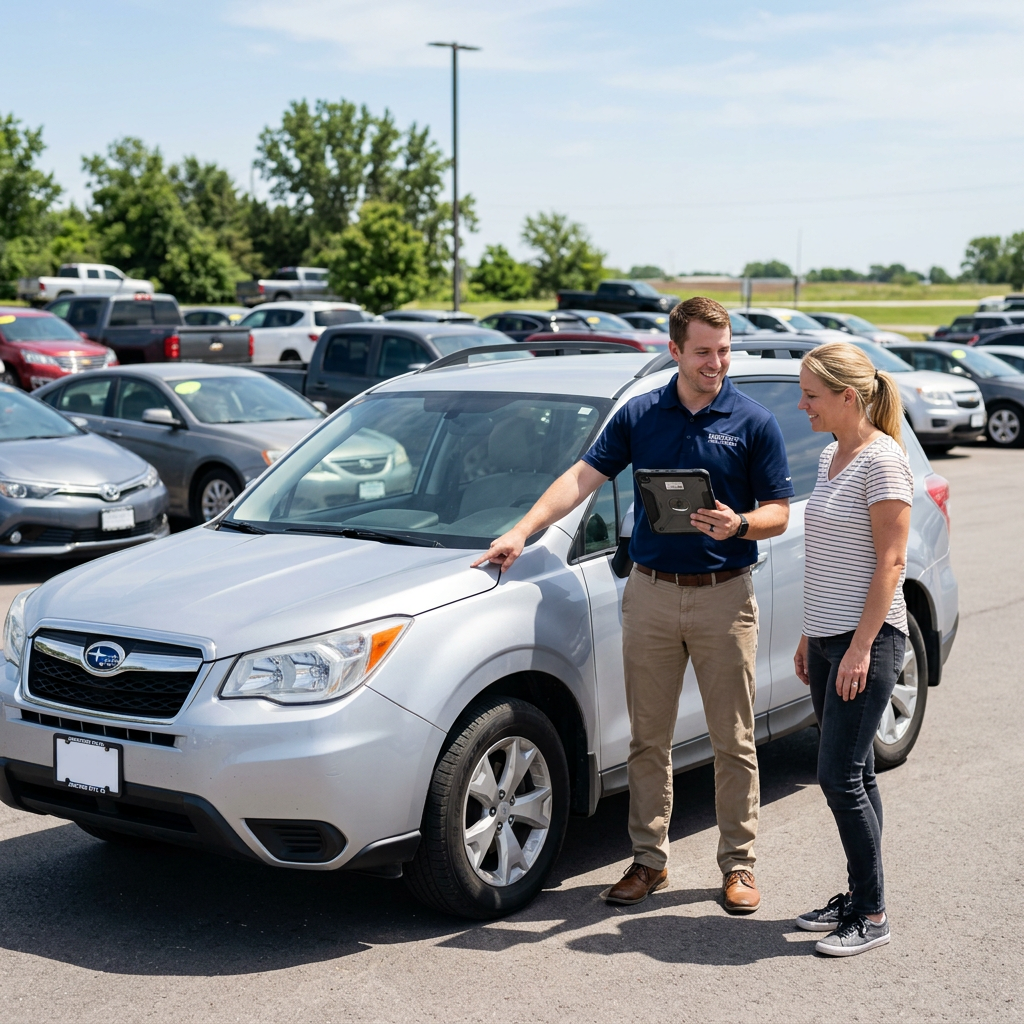
When purchasing a vehicle under $25,000, leverage is your best friend. One of the single most powerful financial tools at your disposal is your current vehicle. Trading in your existing car acts as an immediate, built-in down payment that can completely transform the structure of your auto loan. Instead of having to scrape together thousands of dollars in hard cash, the equity locked inside your current vehicle is directly applied to the purchase price of your next car. This simple transaction has a massive cascading effect on your overall financing, making your purchase significantly more affordable and less stressful.

First and foremost, a trade-in directly lowers the principal loan amount. If you choose a pre-owned Ford Escape and apply your trade-in value, your loan principal can be reduced accordingly. By borrowing a smaller sum of money, you immediately reduce your monthly payments, making it easier to fit your car payment comfortably into your monthly household budget. Furthermore, lowering the amount you borrow reduces the total interest you will pay over the life of the loan, saving you hundreds or even thousands of dollars in financing fees. In many cases, a strong down payment via trade-in can even help you secure a lower interest rate from lenders, as it represents a lower-risk loan.

To help you plan your purchase with absolute clarity, Valor Ford offers an incredibly simple and transparent online evaluation tool. In just a few minutes, you can get a highly accurate estimate of what your current car is worth, giving you the exact data you need to structure your deal. We highly recommend that you get a quick, professional Trade In Evaluation online before you visit our showroom, allowing you to walk in with total confidence and clear financial expectations.

A car salesperson holding a tablet points to the hood of a silver Subaru SUV while talking to a female customer on a car lot. (Representative image for illustration purposes only. Actual vehicle may vary based on trim and configuration.)

How does vehicle price negotiation affect the taxes I pay on a sub-$25K vehicle?

Navigating the ‘out-the-door’ cost of a vehicle can sometimes feel confusing, but understanding how taxes are calculated in Kansas can save you a substantial amount of money. Many buyers do not realize that the final negotiated purchase price of the vehicle—not the initial window sticker price—is the base figure used to calculate your state and local sales tax. Every dollar you negotiate off the purchase price of the vehicle directly reduces your tax liability. This makes successful negotiation and smart structuring doubly beneficial to your bottom line.

Even more importantly, the state of Kansas offers a major financial incentive for buyers who trade in a vehicle: the Kansas Trade-In Tax Credit. Under Kansas tax law, when you trade in a vehicle, you only pay sales tax on the difference between the purchase price of your new vehicle and the value of your trade-in. For example, if you negotiate a purchase price of $22,000 for a pre-owned crossover, and you receive $7,000 for your trade-in, you are only taxed on the remaining $15,000! If you were to sell your old vehicle privately and use that cash as a down payment, you would lose this credit entirely and pay sales tax on the full $22,000. This tax treatment can provide meaningful savings on the taxable amount.

Financial Component

Scenario A: No Trade-In

Scenario B: With $7,000 Trade-In

Negotiated Purchase Price

$22,000

$22,000

Taxable Net Amount

$22,000

$15,000 (Tax Credit Applied)

Estimated Sales Tax (approx. 8.5%)

$1,870

$1,275 (You Save $595 upfront!)

At Valor Ford, we believe in complete financial transparency. When we present you with a purchase proposal, our finance team will clearly itemize the negotiated price, your trade-in credit, the exact local tax rates, and any minor registration fees. We work diligently to ensure there are absolutely no hidden fees, surprise charges, or unexpected ‘add-ons’ when you sign the final paperwork. Our goal is to ensure you know exactly what your out-the-door costs will be, allowing you to plan your budget with total accuracy and peace of mind.

Securing Affordable Auto Loans in Junction City and Dickinson County

Securing financing shouldn’t feel like an obstacle. At Valor Ford, we partner with a vast network of local credit unions, regional banks, and national automotive lenders to curate highly flexible, affordable auto loan options tailored to your unique financial situation.

Military Financing Plans

We are proud to serve those who serve our country. For active-duty military families stationed at Fort Riley, we offer specialized military financing programs, flexible terms, and strong relationships with military-focused credit unions like Navy Federal and USAA. We work diligently to secure the lowest possible rates and terms that respect your unique military lifestyle and relocation schedules.

First-Time Buyer Programs

Buying your very first vehicle can feel intimidating, especially if you have a limited credit history. Our compassionate finance team has access to excellent first-time buyer programs designed specifically to help young adults, college graduates, and new workers establish positive credit. We take the time to explain every detail, ensuring your first car loan is a stepping stone to a bright financial future.

Credit Rebuilding Options

Life happens, and credit scores can occasionally take a hit. Whether you have faced medical bills, divorce, or financial setbacks, Valor Ford is here to help you rebuild. We maintain strong partnerships with specialized lenders who look beyond a simple credit score to focus on your current income and stability. Securing a reliable sub-$25K loan is one of the fastest ways to rebuild your credit rating.

Protecting Your Investment with Certified Ford Service and Parts
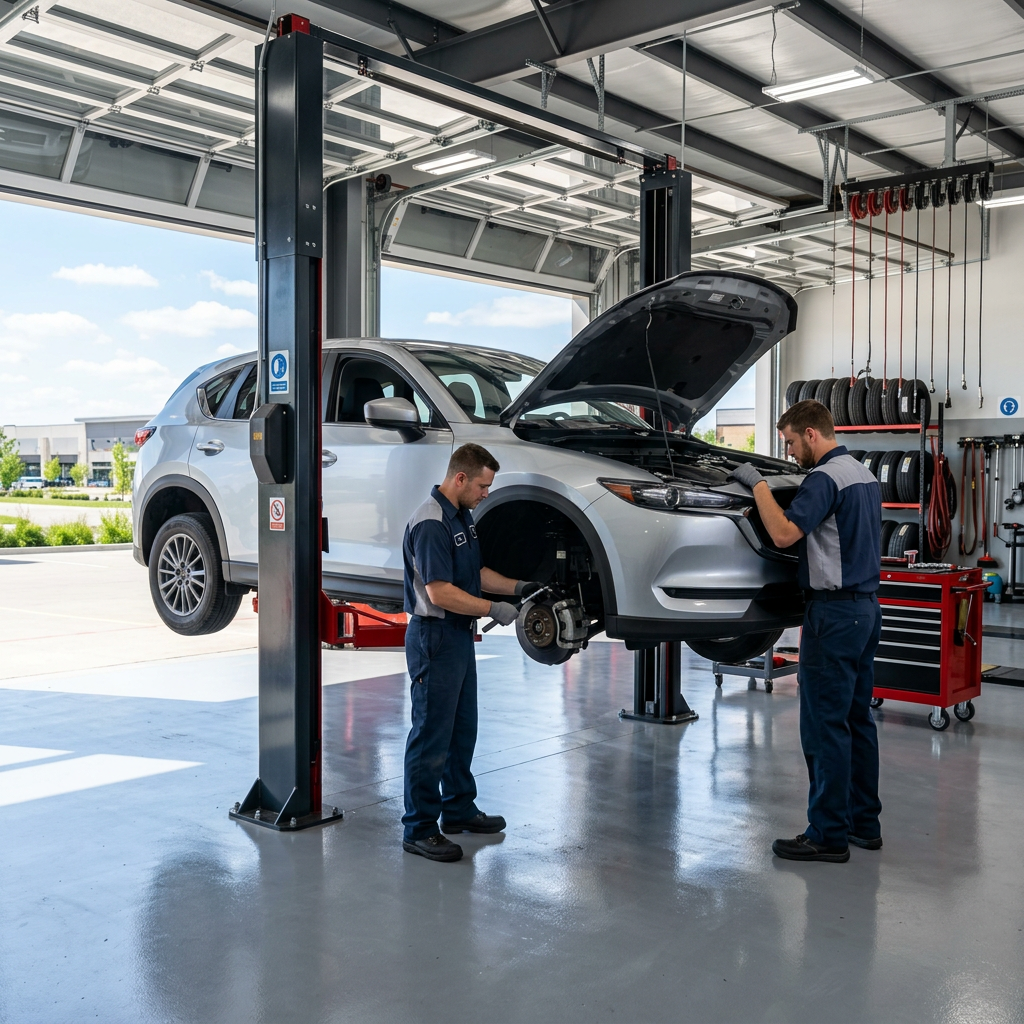
Once you drive your perfect sub-$25K vehicle home, the journey does not end there. To maximize the lifespan of your vehicle, protect your financial investment, and enjoy years of trouble-free driving, regular and professional maintenance is absolutely critical. A vehicle is a complex machine, and staying on top of scheduled oil changes, tire rotations, brake pad replacements, and fluid flushes is the single best way to avoid costly repairs down the road. At Valor Ford, our state-of-the-art service center is fully equipped to provide your vehicle with the world-class care it deserves.

Our service department is staffed by a team of highly skilled, factory-certified Ford technicians who know every inch of your vehicle’s mechanical and electrical systems. Whether you are driving a Ford Escape, a sturdy Ford F-150, or a fuel-efficient sedan, our team utilizes advanced diagnostic equipment to identify potential issues before they turn into major breakdowns. Furthermore, we only use genuine OEM parts to guarantee a perfect fit, maximum durability, and long-term safety. If you are due for regular maintenance, we encourage you to Schedule Ford Service Today and let our experts keep your car running like new.

We also understand that life in Junction City can be incredibly busy, especially for active-duty military members and working families. That is why we are proud to offer an incredibly convenient solution: our pickup and delivery service. We will come directly to your home or office, pick up your vehicle, perform the necessary maintenance at our service center, and return it directly to you once the work is completed. This level of premium convenience is just one of the many ways we strive to support our local community. If you would like to take advantage of this stress-free option, you can quickly Schedule Pickup and Delivery Service online today.

Two mechanics in uniforms servicing a silver SUV on a lift inside a clean, modern auto repair shop. (Representative image for illustration purposes only. Actual vehicle may vary based on trim and configuration.)

What to check when test driving a vehicle under $25,000 in Junction City

The test drive is the ultimate ‘moment of truth’ in the car-buying process. It is your opportunity to step out of the research phase and physically evaluate how a vehicle handles, feels, and operates. When shopping for a pre-owned vehicle under $25,000, it is vital to approach the test drive with a structured, analytical mindset. To help you make a highly informed and confident decision, our team of experts has put together a practical, step-by-step checklist of what to evaluate during your drive around Junction City.

  • Test the Braking System: Find a safe, open stretch of road and apply the brakes firmly. The pedal should feel firm and responsive, not spongy or soft. The vehicle should stop in a straight, controlled line without pulling to the left or right, and there should be absolutely no grinding, squealing, or vibrating sensations.

  • Listen to the Suspension: Drive the vehicle over a variety of road surfaces, including slightly bumpy city streets or country roads. Listen carefully for any unusual clunks, rattles, or squeaks from the suspension. The ride should feel composed, stable, and capable of absorbing road imperfections.

  • Verify Electrical and Tech Features: Take the time to test every single button, switch, and screen inside the cabin. Check the air conditioning and heating systems, power windows, seat adjusters, backup camera, and Bluetooth connectivity. Ensure the infotainment system operates quickly and smoothly.

  • Monitor Powertrain Performance: Accelerate smoothly from a complete stop and merge onto the highway. Pay attention to how the engine sounds and how the transmission shifts. Shifting should be crisp, seamless, and free of hesitation, surging, or harsh gear changes.

  • Review the Vehicle History: Always ask your sales consultant to review the CARFAX or AutoCheck report with you. A clean history report that documents regular oil changes, routine inspections, and a lack of major accidents is a fantastic indicator of a reliable vehicle.

At Valor Ford, we highly encourage comprehensive, unhurried test drives. Our friendly sales professionals are happy to let you take the vehicle on a route that mimics your daily commute, allowing you to truly evaluate how it fits your driving style. If you are ready to put one of our exceptional sub-$25K vehicles to the test, you can easily Call us at (785) 238-5114 to schedule your personalized test drive appointment today.

Drive Home Your Perfect Vehicle Under $25K from Valor Ford Today

Finding the perfect balance of affordability, modern technology, and long-term reliability does not have to be a stressful or frustrating ordeal. At Valor Ford, we are passionately committed to proving that you can secure a truly exceptional, dependable vehicle for under $25,000. From our rigorous quality inspections and premium Ford Blue Advantage certifications to our highly flexible finance plans and state-of-the-art service center, we provide our community with a world-class automotive experience from start to finish. We are honored to serve our military families at Fort Riley, our local neighbors in Junction City, and our hardworking friends throughout Dickinson County.

If you are comparing options, Valor Ford offers professional support and local backing to help simplify your search. Our friendly, non-commissioned sales approach ensures you can explore our diverse inventory at your own pace, with absolutely zero pressure. Whether you are looking to trade in your current vehicle, secure pre-approval for an affordable loan, or simply browse our incredible selection of pre-owned crossovers and sedans, our team is standing by to help you every single step of the way.

Smiling woman holding up the keys to her new silver Ford SUV in a parking lot. (Representative image for illustration purposes only. Actual vehicle may vary based on trim and configuration.)

Welcome to Valor Ford: Comparing Our Most-Shopped Models Head to Head

Logo for Valor Automotive featuring a blue and silver shield with 'VA' and the company name with a red star.

As the Dealer Principal here at Valor Ford, I want to personally welcome you to our comprehensive head-to-head model comparison guide. Navigating the automotive landscape in 2026 can feel like trying to chart a course through an ever-shifting landscape of tech features, powertrain options, and conflicting expert reviews. Over my years helping drivers here in Junction City, Fort Riley, and across Geary County, I have come to realize that the most valuable thing we can provide to our guests is absolute clarity. Buying a new vehicle is a major milestone, and you deserve a straightforward, honest, and hyper-local perspective on how today’s top-tier models stack up when they leave the glossy showroom floor and meet our actual Kansas roads.

Our philosophy is built around empowering you to make an educated, zero-pressure buying decision. We recognize that while we proudly wear the Ford blue oval, our guests are comparing our vehicles with every major brand on the market. That is why we designed this guide as an open, conversational Q&A. We will dive deep into the real-world performance differences, long-term ownership costs, localized tax implications, and specific regional requirements that matter to families and working professionals in our community. Whether you are wondering how a midsize crossover handles the rolling plains around Dickinson County, analyzing the towing capabilities of competing half-ton trucks, or weighing the true long-term costs of hybrid batteries, you will find direct, professional, and practical answers right here.

Throughout this guide, you will find helpful direct links to explore our current inventory, research specific models, or initiate a trade-in evaluation. If you want to drop by and chat with us in person, you can always Get Directions to Valor Ford and visit our team at 1825 Goldenbelt Blvd. Alternatively, feel free to Call us at (785) 238-5114 with any questions. We believe that an informed customer is a happy customer, and we are honored to assist you on your journey toward finding the absolute perfect ride for your lifestyle and needs.

Q: What should I look for during a test drive of a midsize family crossover around Junction City?

When you step behind the wheel of a midsize crossover for a test drive, it is easy to get distracted by the pristine ‘new car smell’ and the gleaming digital screens. However, evaluating a vehicle for daily life in Junction City requires a strategic and highly practical approach. First and foremost, you need to test the ride comfort and cabin isolation on our unique local terrain. I always advise folks to steer away from the perfectly smooth highway loops and head straight for some of our older, weathered municipal streets or secondary county roads. Notice how the suspension responds to sudden cracks, expansion joints, and loose gravel. Does the cabin remain quiet, or do you hear annoying road drone and wind noise whipping across the open Kansas plains?

Visibility is another critical factor that is frequently overlooked. Adjust your mirrors, check your blind spots, and pay close attention to how well you can see out of the rear window when backing up or merging on the highway. Think about your family’s daily routine: can your children easily climb into the second or third row without throwing out their backs? Are the child seat anchors easy to locate and access, or are they buried deep within stubborn leather crevices? During your drive, test the climate control systems thoroughly, especially on our hot summer days. Make sure air conditioning vents are strategically placed to reach the rear passengers effectively, ensuring everyone stays cool and comfortable.

Do not overlook the cargo area during your dealership visit. I highly recommend bringing along your most common cargo items—whether that is a bulky double stroller, golf bags, or a couple of heavy coolers. Fold the rear seats down yourself to see if they lay completely flat, and test how easy it is to operate the power liftgate when your hands are full. Take the crossover up to cruising speeds on the highway to evaluate how the steering handles our notorious Kansas crosswinds. A vehicle that feels nervous or requires constant, exhausting micro-corrections on a windy day will quickly become a source of frustration during long road trips.

Finally, make sure to thoroughly interact with the infotainment and safety technology. Try connecting your phone, setting a navigation destination, and tuning the radio using voice commands while keeping your eyes firmly on the road. If the menus feel overly complex or laggy, that is a major red flag. If you want to experience a thoughtfully designed, family-first interior firsthand, you can Research Ford Explorer models online, then schedule a comprehensive, real-world test drive on our local roads to see how it masters these challenges.

Q: What are the key differences between the 2026 Toyota RAV4 and the Honda CR-V?
The rivalry between the Toyota RAV4 and the Honda CR-V is one of the longest-running battles in the automotive industry. For the 2026 model year, both of these highly popular midsize crossovers continue to lead the pack in sales, but they go about satisfying drivers in very different ways. The Toyota RAV4 has built its massive following on a foundation of rugged styling, diverse trim options, and a highly efficient hybrid powertrain that has proven its reliability over many years. It appeals strongly to drivers who appreciate a slightly more aggressive, truck-like aesthetic, offering specialized off-road packages like the TRD Off-Road which features a more robust suspension and all-terrain tires.

Under the hood, the RAV4’s standard 2.5-liter four-cylinder engine offers predictable, robust performance, though some drivers note that it can sound a bit unrefined under hard acceleration. The RAV4 Hybrid, however, is exceptionally smooth, seamlessly blending electric and gasoline power to deliver outstanding fuel economy. Inside, the RAV4’s cabin is highly functional, featuring chunky physical knobs and durable, easy-to-clean materials that are perfect for active lifestyles and outdoor adventures around Kansas.

On the other side of the ring, the Honda CR-V approaches the segment with a clear focus on interior space, refined road manners, and premium comfort. The CR-V’s cabin feels distinctly upscale, utilizing a sleek, minimalist dashboard design featuring a distinctive honeycomb metal mesh accent that cleverly conceals the air vents. Passengers will immediately notice that the CR-V offers superior rear-seat legroom and a slightly more cavernous cargo hold compared to the RAV4, making it an absolute favorite for growing families who regularly pack up for weekend sports tournaments or long highway trips.

From a driving dynamics standpoint, the CR-V generally delivers a more polished, car-like experience. Its steering is remarkably precise, and the chassis is tuned to absorb road imperfections with impressive composure. The standard 1.5-liter turbocharged engine provides linear power delivery through a well-calibrated Continuously Variable Transmission (CVT). For those prioritizing efficiency, Honda’s dual-motor hybrid system is exceptionally quiet, creating a serene, hushed cabin environment even at high interstate speeds.

A dark blue Toyota RAV4 and a grey Honda CR-V parked side-by-side on a suburban street. (Representative image for illustration purposes only. Actual vehicle may vary based on trim and configuration.)

When comparing these two giants, your decision often comes down to personal priorities. If you want a rugged, adventurous styling with proven, bulletproof mechanical simplicity, the RAV4 is tough to beat. If you prioritize maximum passenger stretch-out space, a quieter ride, and a more sophisticated interior layout, the CR-V takes the crown. If you are open to exploring other fantastic family options that offer class-leading towing capacity and cutting-edge tech, I invite you to Browse Used Inventory online to see our diverse, high-quality pre-owned crossover selection.

Q: How do the Ford F-150 and Chevrolet Silverado 1500 compare for the 2026 model year?

For truck buyers in Geary County, the truck bed is not just a storage box; it is an active mobile office, a workshop, and the backbone of their daily livelihood. Comparing the 2026 Ford F-150 and the Chevrolet Silverado 1500 reveals two distinct engineering philosophies designed to tackle demanding physical labor. The Ford F-150 stands out immediately with its high-strength, military-grade aluminum-alloy body, which sheds significant weight to maximize its payload and towing capacities. Where the F-150 truly separates itself as a work site game-changer is its exclusive Pro Power Onboard system. This feature effectively turns your truck into a mobile generator, offering exportable power up to 7.2kW in hybrid models. You can run heavy power tools, air compressors, and even diagnostic equipment directly from outlets in the bed without needing a noisy portable generator.

On the other hand, the Chevrolet Silverado 1500 counters with its highly versatile Durabed, which boasts more standard cargo volume than any competitor. The Silverado’s bed features twelve standard tie-downs rated at 500 pounds per corner and offers the innovative Multi-Flex Tailgate, which can be configured into six unique positions to act as an entry step, a bed extender, or a convenient standing work surface. Under the hood, Chevy offers a diverse engine lineup, including the highly efficient Duramax 3.0L Turbo-Diesel, which is widely praised for its exceptional low-end torque and impressive highway fuel efficiency.

In terms of cabin technology and towing assistance, both manufacturers have made massive leaps. Ford’s smart towing tech includes Pro Trailer Backup Assist, which allows you to steer your trailer effortlessly using a simple dashboard dial while the truck manages the steering wheel. Inside, the F-150 features an available interior work surface that unfolds from the center console, creating a perfectly flat desk space for a laptop or documents. The Silverado features a gorgeous, expansive horizontal touchscreen on LT trims and above, offering Google Built-In services that integrate seamlessly with your digital life.

Feature / Metric

2026 Ford F-150

2026 Chevy Silverado 1500

Max Towing Capacity

Up to 13,500 lbs

Up to 13,300 lbs

Max Payload Capacity

Up to 2,445 lbs

Up to 2,260 lbs

Mobile Power Outlets

Pro Power Onboard (up to 7.2kW)

Standard 120V Outlets (400W max)

Ultimately, if you need a truck that serves as a highly capable mobile powerhouse with class-leading towing specs and integrated work solutions, the F-150 remains the undisputed king of the job site. To read more about our specific truck configurations, you can Research Ford F-150 specifications in detail on our research hub.

Q: How much does a replacement hybrid battery cost if it fails out of warranty?
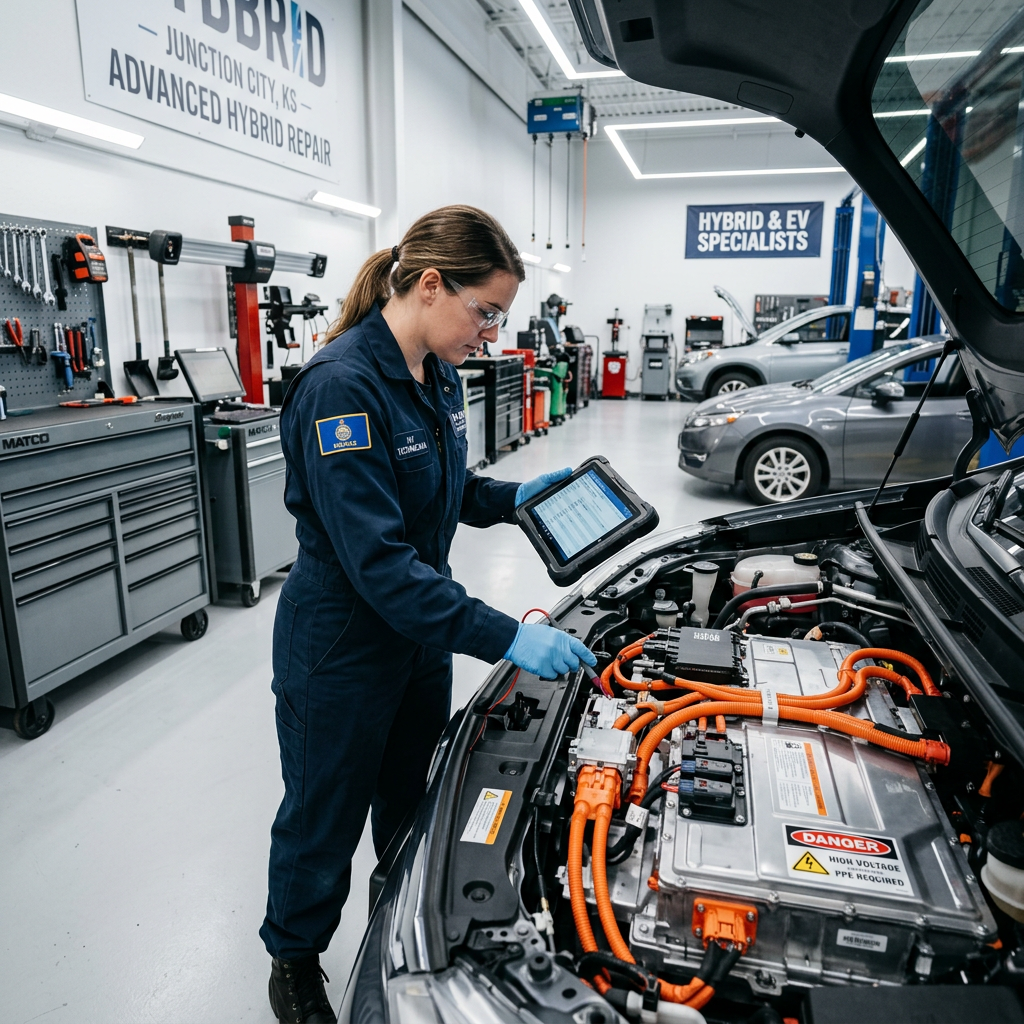
This is one of the most common and practical questions we get from long-term buyers in Dickinson County. The anxiety surrounding out-of-warranty hybrid battery replacement is entirely understandable; after all, we have all heard horror stories of massive, unexpected repair bills. To put your mind at ease, let us look at the hard numbers and the actual likelihood of this occurring. First, it is crucial to understand that federal law mandates all hybrid components and batteries be covered for a minimum of 8 years or 100,000 miles (and up to 10 years or 150,000 miles in states with stricter emissions standards). Because of this robust warranty protection, very few original owners ever have to pay for a battery replacement out of their own pocket.

However, if you plan to keep your hybrid vehicle for 12 to 15 years, or if you are purchasing a high-mileage used hybrid, understanding the out-of-warranty cost is essential. In 2026, the retail cost for a brand-new replacement hybrid battery pack generally ranges from $2,500 to $6,000, depending on the make, model, and battery capacity. Traditional hybrid batteries (like those in a standard RAV4 or Ford Maverick) are smaller and sit on the lower end of that spectrum, typically costing between $2,000 and $3,500. Larger plug-in hybrid (PHEV) batteries, which offer extended all-electric driving range, are physically larger and more complex, pushing replacement costs closer to the $5,000 to $8,000 mark.

A female mechanic diagnostics a hybrid car engine using a tablet in a modern auto repair shop. (Representative image for illustration purposes only. Actual vehicle may vary based on trim and configuration.)

It is also worth noting that the aftermarket industry for hybrid batteries has matured significantly. Today, buyers have reliable access to remanufactured or reconditioned battery packs, which often cost 50% less than a brand-new OEM unit from the manufacturer. These remanufactured batteries are thoroughly tested, have bad cells replaced, and frequently come with their own multi-year warranties. Furthermore, labor costs to install a hybrid battery are surprisingly reasonable, generally requiring only 2 to 4 hours of shop time because modern vehicles are designed with easily accessible battery compartments.

If you are experiencing any warning lights or diminished fuel economy in an older hybrid, our factory-certified service center is fully equipped to diagnose and repair high-voltage systems. Do not let battery anxiety keep you from enjoying the improved fuel efficiency of a hybrid. When you need expert help or specialized components, you can easily Order Genuine Ford Parts or contact our team directly to discuss your options.

Q: What state-level EV incentives exist in Kansas for local car buyers?

While federal tax credits of up to $7,500 under the Inflation Reduction Act get the majority of national media attention, many local buyers are surprised to learn about the Kansas-specific incentives and financial perks available for electric and plug-in hybrid vehicles. Here in the Sunflower State, our local utility companies and state agencies offer distinct programs designed to make the transition to electrified driving highly affordable and convenient. For example, Evergy—the primary electricity provider for much of Eastern and Central Kansas, including Junction City—frequently offers attractive rebates of up to $500 to offset the cost of purchasing and installing a Level 2 smart home charging station.

These Level 2 residential chargers allow you to replenish your vehicle’s battery overnight up to eight times faster than a standard household outlet, ensuring you always wake up with a full charge. Additionally, Evergy offers specialized time-of-use (TOU) electrical plans. By enrolling in a TOU plan, you can take advantage of significantly discounted electricity rates during off-peak overnight hours, allowing you to charge your EV for pennies on the dollar and dramatically reducing your overall operating costs compared to gasoline.

From a state government perspective, Kansas offers a unique Alternative Fuel Tax Credit. This credit is designed to assist commercial entities and businesses in transitioning their fleets to clean energy, but it can also apply to certain heavy-duty alternative fuel vehicles. For individual consumers, the state focuses heavily on expanding our public charging infrastructure. Through funds allocated by the National Electric Vehicle Infrastructure (NEVI) formula program, Kansas is actively building out a robust network of ultra-fast DC fast chargers along major corridors like Interstate 70 and Highway 77, making regional travel easier than ever.

Another overlooked financial benefit of driving an electric vehicle in Kansas is the long-term maintenance savings. Because EVs have fewer moving parts, no spark plugs, and utilize regenerative braking to save wear and tear on brake pads, your routine maintenance costs are a fraction of what you would pay for a gas-powered car. Our team of certified technicians is fully trained in EV diagnostics and high-voltage safety, ensuring your advanced vehicle is always cared for by local professionals who understand the technology inside and out.

Furthermore, buying an electric or plug-in hybrid model can protect your household budget from the unpredictable volatility of retail fuel prices. When you charge at home, your transportation costs remain remarkably stable and predictable month after month. If you are curious about transitioning to a highly efficient vehicle but want to understand the financing options first, you can easily Get Pre-Approved for Financing online using our secure credit portal.

Navigating the combination of federal, state, and utility incentives can be complex, as program details and funding levels can change throughout the year. Our finance department makes it a priority to stay up-to-the-minute on all available programs, ensuring we can help you maximize your savings and apply all eligible credits directly at the time of your purchase. Come talk to us today to see how affordable going electric can be.

Q: Are there local sales tax differences between Junction City and Topeka that affect my purchase?

This is a fantastic and highly strategic question that highlights a common point of confusion for car buyers in Kansas. Many shoppers believe they can save hundreds of dollars on sales tax simply by driving to a different city or county to purchase their vehicle. However, the state of Kansas has a very specific, watertight rule regarding automotive sales tax: **vehicle sales tax is calculated based on the address where the vehicle is registered (typically your home address), not the location of the dealership where you sign the papers.** This means that whether you buy your new vehicle right here in Junction City, over in Topeka, or anywhere else in the state, your final sales tax rate will be determined by your home county and municipal tax rates.

Let us break down why this policy actually works in your favor as a consumer. Because you cannot escape your local registration tax rate by traveling, there is zero financial incentive to spend your valuable time, gas money, and energy driving back and forth to larger metropolitan areas like Topeka or Kansas City. Buying locally here at Valor Ford in Junction City allows you to keep your business within the community, save on travel hassle, and enjoy the unparalleled personalized care of a neighborhood dealership, all while paying the exact same sales tax you would pay if you traveled across the state.

Our finance team is highly experienced in calculating these local tax structures down to the exact penny. When we draft your purchase agreement, we utilize direct database lookups with the Kansas Department of Revenue to ensure all state, county, and city taxes are perfectly calculated for your specific registration address. This complete transparency ensures there are no unpleasant surprises or hidden fees when you take your paperwork to the county treasurer’s office to secure your permanent metal license plates.

Furthermore, we can easily roll your calculated sales tax, title, and registration fees directly into your low-interest auto loan. This convenient financing option allows you to avoid a large, unexpected out-of-pocket cash expense at the DMV, keeping your hard-earned savings secure. If you want to get a head start on planning your budget and calculating your exact monthly payments, we encourage you to use our convenient online portal to Get Pre-Approved for Financing today from the comfort of your home.

Q: How does the trade-in process work when upgrading to a newly compared model?
Trading in your current vehicle is one of the smartest and most effective ways to lower the overall purchase price and reduce your monthly payments on a brand-new model. At Valor Ford, we have streamlined our trade-in process to make it completely transparent, straightforward, and highly rewarding for our guests. The process begins before you even step foot in our showroom. By using our secure, integrated online valuation tool, you can get an incredibly accurate, real-world estimate of your vehicle’s current market value based on live local sales data in just a few clicks.

When you arrive at our dealership, our experienced vehicle appraisers will conduct a brief physical inspection of your car, focusing on its mechanical condition, exterior body, interior wear, and service history. We always encourage you to bring along any maintenance records or receipts, as a well-documented service history can significantly increase your vehicle’s trade-in value. Once the inspection is complete, we will present you with a firm, written offer. What makes this offer unique is that we will buy your car even if you choose not to purchase a vehicle from us, giving you complete flexibility.

A woman in a blue polo shirt and khaki pants stands beside a silver Toyota SUV in a car lot, writing on a clipboard. (Representative image for illustration purposes only. Actual vehicle may vary based on trim and configuration.)

Another massive financial benefit of trading in your vehicle in Kansas is the significant sales tax advantage. In our state, you only pay sales tax on the *difference* between your trade-in allowance and the purchase price of your new vehicle. For example, if you purchase a new vehicle for $40,000 and we value your trade-in at $15,000, you will only pay sales tax on the remaining $25,000. That tax savings alone can put hundreds of dollars back into your pocket, a benefit you completely lose when selling your vehicle privately.

Our team handles all of the complicated DMV paperwork, title transfers, and loan payoffs, saving you from hours of administrative hassle. If you want to see exactly how much equity you can put toward your next purchase, take a moment to complete our online Trade In Evaluation today and let us help you maximize your buying power.

Q: Where can I compare and purchase new vehicles near Junction City, KS?

When it comes to comparing and purchasing your next vehicle, keeping your business local at Valor Ford in Junction City, KS, offers a level of convenience, community investment, and personalized service that large metropolitan dealerships simply cannot match. Located right here at 1825 Goldenbelt Blvd, we are proud to serve our neighbors in Fort Riley, Manhattan, Abilene, and throughout Geary County. Shopping locally means you never have to waste your valuable weekends driving hours away to get a good value. Our pressure-free showroom environment allows you to browse and compare models at your own comfortable pace.

Beyond convenience, shopping at Valor Ford means you are actively supporting the local economy. The sales taxes generated by your purchase stay right here in our community, helping to fund local schools, improve public parks, maintain infrastructure, and support the emergency services that keep our families safe. We are not just a business; we are your neighbors, and we take pride in giving back to the community we all call home.

Our dealership is proud to offer a comprehensive, state-of-the-art service department staffed by factory-certified technicians who know your vehicle inside and out. We understand that your time is incredibly valuable, which is why we offer our exclusive, highly convenient pick-up and delivery service for routine maintenance and repairs. We will pick up your vehicle from your home or office, perform the required service, and return it to you looking brand new, allowing you to go about your busy day without missing a single beat.

If you are eager to explore our incredible current inventory and find the perfect match for your lifestyle, you can easily Shop New Ford Bronco Inventory or browse our extensive lineup of rugged trucks, family-friendly crossovers, and efficient hybrid models online. We make it easy to research and compare every option before you ever visit our showroom, ensuring a completely seamless experience.

Additionally, our deep roots in the community mean that we stand behind every vehicle we sell. We are committed to building long-term relationships with our guests, ensuring you receive the same friendly, honest service years after you drive off our lot. We don’t just want to sell you a car; we want to be your trusted automotive partner for life, helping you navigate every upgrade, service milestone, and family transition with absolute confidence.

We invite you to experience the Valor Ford difference for yourself. If you are ready to start your journey, you can easily Get Directions to Valor Ford and visit us today. Alternatively, feel free to Call us at (785) 238-5114 to speak directly with our friendly, knowledgeable sales professionals who are always ready to help you find your dream ride.

Find Your Perfect Match Today at Valor Ford in Junction City
Now is a great time to upgrade your drive than right now during our spectacular summer showcase here at Valor Ford. Whether you are looking for the unmatched capability of a new F-150 to tackle tough jobs around Geary County, a spacious and safe crossover like the Explorer for family road trips, or an ultra-efficient hybrid to help reduce your monthly fuel costs, we have an incredible selection of vehicles waiting for you on our lot. Our team is dedicated to helping you compare models head-to-head, ensuring you drive away in the exact vehicle that fits your unique lifestyle, needs, and budget perfectly.

We make the entire buying process incredibly easy and stress-free. You can start by valuing your current vehicle using our convenient online portal for a fast Trade In Evaluation, then get pre-approved for current financing options in minutes. Once you’ve found the perfect model, our friendly sales professionals will work tirelessly to secure the best terms possible for your budget. Visit us today at 1825 Goldenbelt Blvd in Junction City, or call us at (785) 238-5114 to schedule your private test drive and experience the difference of shopping with neighbors who truly care about your satisfaction.

2026 Ford BRONCO SPORT Recall: SUSPENSION:FRONT:CONTROL ARM:LOWER BALL JOINT

Attention all owners of the adventurous 2026 Ford Bronco Sport in Junction City, Kansas, and the surrounding Geary County area. A critical safety recall has been issued regarding the front lower control arm ball joint assembly. This component is essential for maintaining precise steering, vehicle stability, and structural integrity under all driving conditions. At Valor Ford, we believe in prioritizing your safety above all else. This detailed guide is designed to provide you with comprehensive, transparent, and actionable information about this recall, how it impacts your daily drive, and how our certified service department will resolve the issue for you completely free of charge.
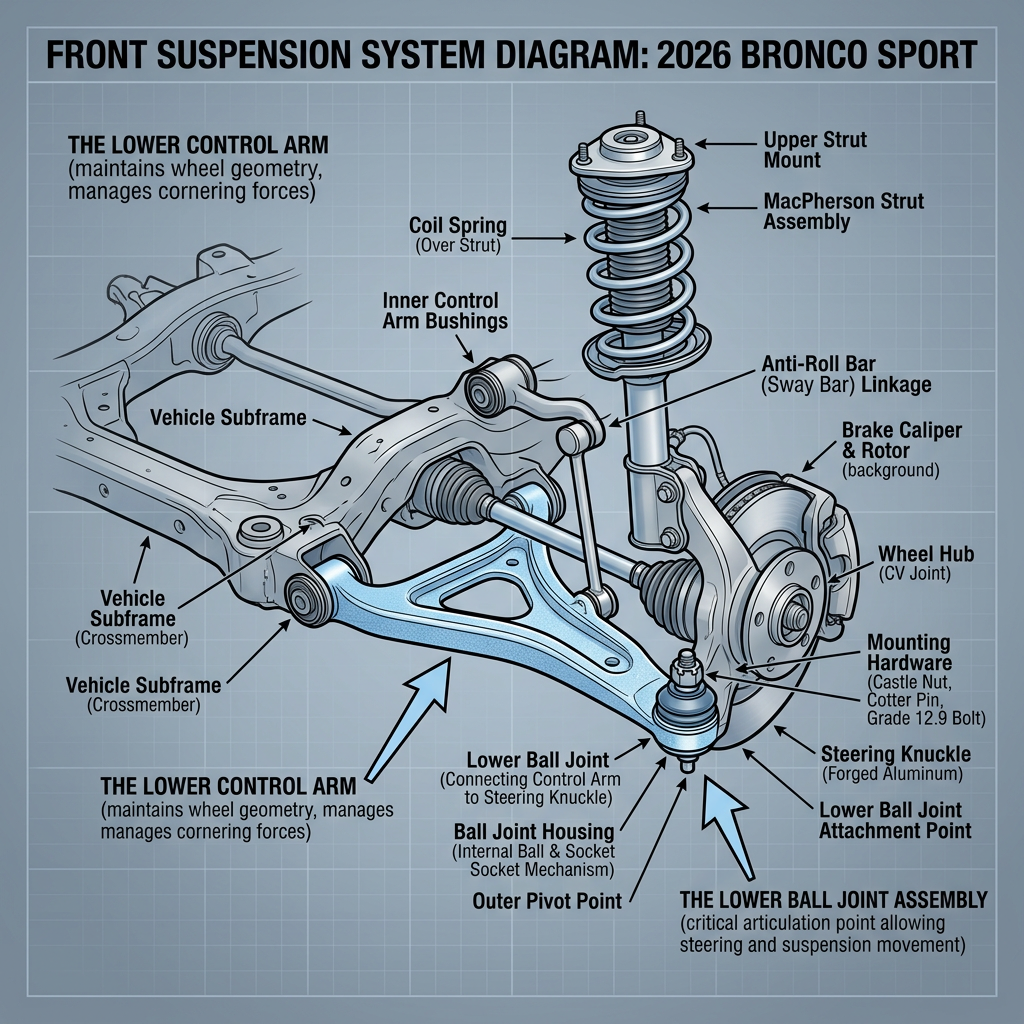
Diagram showing the front suspension system of a 2026 Bronco Sport with labeled components. (Representative image for illustration purposes only. Actual vehicle may vary based on trim and configuration.)

Our dealership has served the local community for years, providing trusted service, transparent advice, and dependable vehicles. We understand that hearing about a manufacturer safety recall on your vehicle can bring up immediate questions and concerns. Is it safe to drive? How long will the repair take? How do I get a replacement part? We are here to address every single concern. If you suspect your vehicle is involved, we encourage you to promptly Call us at (785) 238-5114 or use our convenient digital scheduling system to book your priority service appointment as soon as possible.

What is the 2026 Ford Bronco Sport lower ball joint recall?

To understand this recall, we have to look beneath the rugged exterior of your 2026 Bronco Sport. The front lower control arm is a key structural member of your independent front suspension system. It connects the wheel hub and steering knuckle to the vehicle’s frame. At the outer end of this control arm sits the lower ball joint—a highly engineered spherical bearing that allows the front wheels to steer left and right while simultaneously pivotally moving up and down to absorb bumps, dips, and off-road obstacles.

The specific issue outlined in the NHTSA safety recall involves a manufacturing defect within the lower ball joint assembly itself. In affected 2026 Bronco Sport models, the ball joint housing or internal retaining rings may not meet Ford’s rigorous structural specifications. Under high-load situations—such as hard braking, sudden steering maneuvers, or traversing rough Kansas dirt roads—the ball joint can experience excessive wear, mechanical deformation, or in extreme cases, complete separation from the front lower control arm.

If a front lower ball joint separates while the vehicle is in motion, the affected front wheel can pivot outward unpredictably. This sudden physical detachment can lead to a severe loss of steering control, an increased risk of a collision, and extensive secondary damage to the vehicle’s axle shafts, braking lines, and fender well. The recall covers specific production ranges of the 2026 Ford Bronco Sport manufactured within a designated window.

Because safety is our primary objective, Ford is proactively replacing the entire affected front lower control arm assembly—including the integrated lower ball joint—on all designated vehicles. This ensures that the structural integrity of your vehicle’s front suspension is fully restored to original factory standards, using updated, certified components designed to withstand the toughest driving environments.

What are the warning signs of a failing front lower ball joint?

While some suspension issues can develop silently, a failing or compromised lower ball joint often presents noticeable symptoms before a critical failure occurs. Drivers in Junction City and the wider Geary County area should remain highly vigilant and pay close attention to any changes in their vehicle’s handling dynamics, ride comfort, or auditory profile. If you experience any of the following indicators, please bring your SUV to our certified mechanics immediately.
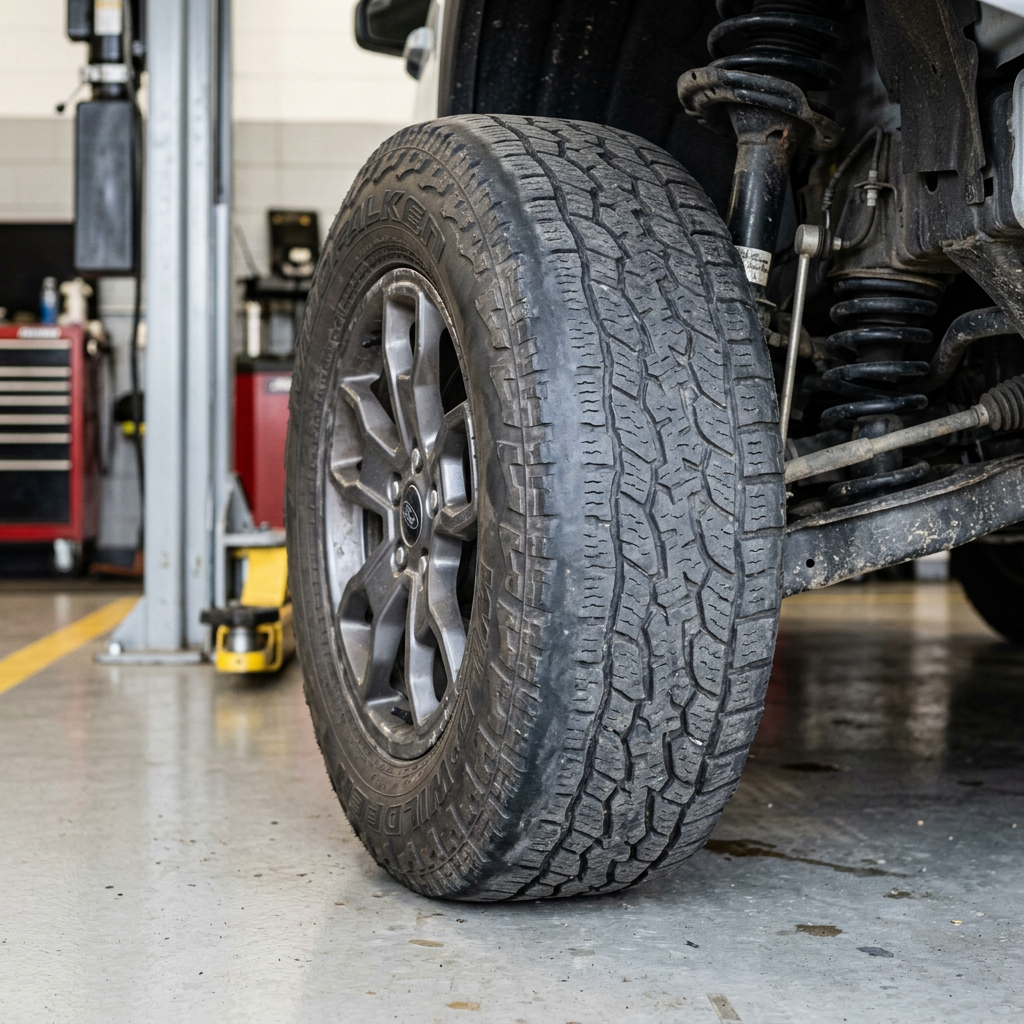
1. Unusual Clunking or Popping Noises

One of the most common early warning signs is a metallic clunking, rattling, or popping noise coming from the front suspension. This sound is typically most pronounced when driving over speed bumps, pulling into driveways, navigating potholes, or making sharp turns at slow speeds. As the internal tolerances of the ball joint degrade, the ball stud begins to rattle inside its housing, producing a distinct physical knock.

2. Steering Wheel Vibration & Wandering

A worn, loose, or damaged front lower ball joint introduces excessive play into your steering geometry. This play can manifest as a persistent vibration or shimmy felt directly through the steering wheel, particularly at highway speeds. You may also notice your Bronco Sport ‘wandering’ or drifting slightly to the left or right, requiring constant micro-corrections to maintain a straight path down the road.

3. Uneven or Accelerated Tire Wear

When a ball joint fails to hold the wheel alignment in its precise factory position, the tire contact patch changes dynamically. This results in rapid, uneven tire wear—often referred to as ‘feathering’ or ‘cupping.’ If you notice the inner or outer edges of your front tires wearing down significantly faster than the rest of the tread, it is a clear indicator of a critical wheel alignment or suspension component issue.

A close-up of an all-terrain tire on a vehicle parked inside an auto repair shop. (Representative image for illustration purposes only. Actual vehicle may vary based on trim and configuration.)

Will Ford pay for the ball joint repair under this safety recall?

Yes, absolutely. By federal law and Ford Motor Company policy, all safety recall repairs are 100% free of charge to the vehicle owner. This complete coverage includes all necessary genuine Ford replacement parts, professional diagnostic checks, specialized shop supplies, and the labor required for our factory-certified technicians to perform the repair. You will never receive a bill or be asked to pay a deductible for safety recall work performed at Valor Ford.

When you bring your 2026 Bronco Sport to our service bay, we do not just swap out the control arm. Our technicians conduct a thorough inspection of the surrounding suspension, steering, and braking components to ensure everything is structurally sound. Once the new front lower control arm and ball joint assembly are installed, we perform a professional wheel alignment. This critical step guarantees that your steering feels precise, your tires wear evenly, and your vehicle drives exactly as the engineers intended. To make sure we have your parts reserved, you can quickly Order Genuine Ford Parts or contact our service advisors directly to coordinate your appointment.

How the Kansas terrain impacts your front suspension performance
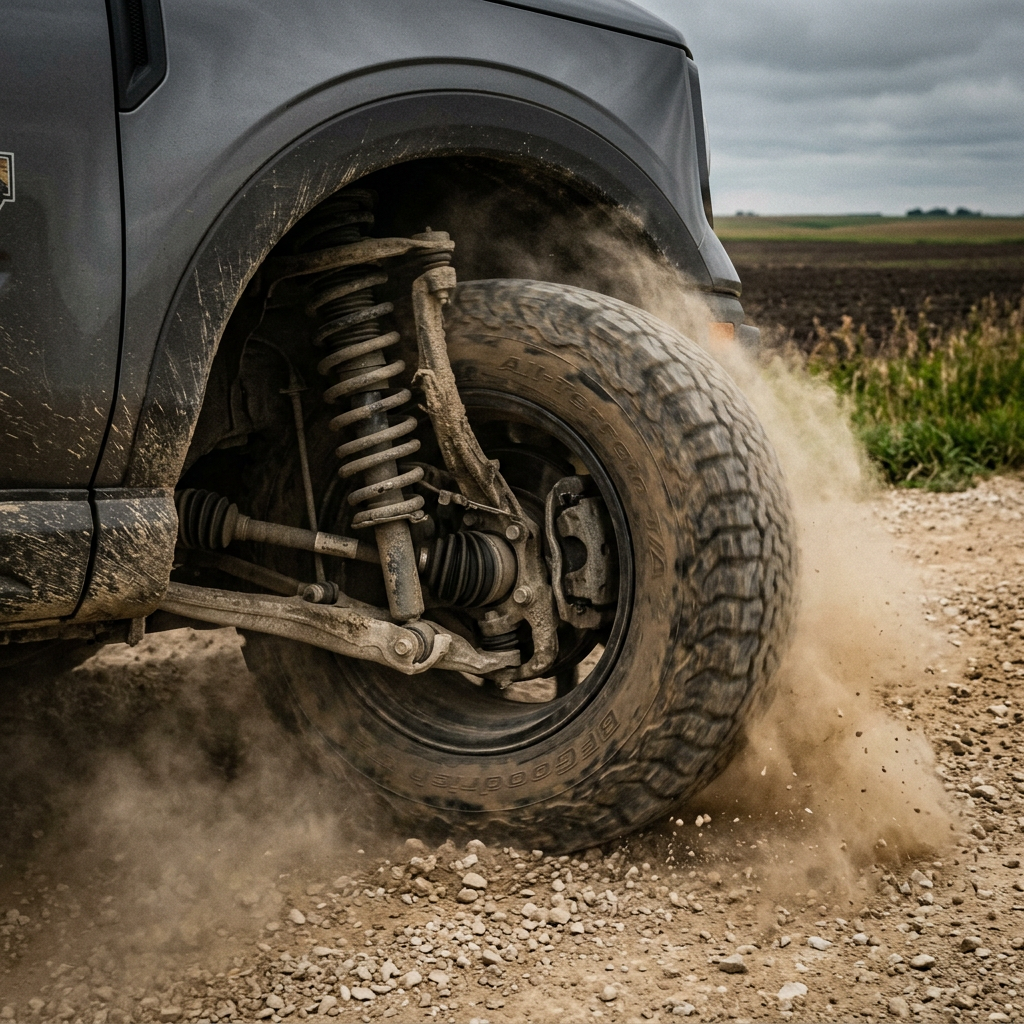
Living and driving in Central Kansas places unique demands on any vehicle’s suspension system. Whether you are daily commuting along I-74, exploring the beautiful rolling Flint Hills, navigating the expansive agricultural landscapes of Dickinson County, or driving down the rugged gravel roads surrounding Junction City, your suspension is constantly at work. These diverse driving environments introduce substantial vibrational energy and physical impacts into your lower control arms.

A compromised front lower ball joint is particularly vulnerable to the heavy road dust, loose gravel, and deep potholes common to our local geography. Over time, fine limestone dust and moisture can penetrate damaged rubber dust boots, accelerating internal wear on an already structurally vulnerable joint. When a component has a manufacturing defect, these demanding environmental factors act as catalysts, significantly increasing the probability of a mechanical failure.

Close-up of a dirty off-road SUV tire kicked up dust on a gravel road, showing suspension details. (Representative image for illustration purposes only. Actual vehicle may vary based on trim and configuration.)

Does Valor Ford offer loaner vehicles while safety recall work is being performed?

We know your time is highly valuable, and having your primary vehicle in the shop can disrupt your work schedule, family commitments, and daily routines. To minimize this inconvenience, Valor Ford is proud to offer alternative transportation solutions for our safety recall customers. Depending on parts availability, service scheduling, and your personal preferences, we provide several convenient options to keep you moving.

For repairs that require your Bronco Sport to stay in our service bays for an extended duration, we offer a fleet of clean, modern loaner vehicles. Alternatively, our complimentary local shuttle service can drop you off at your home or workplace in Junction City and pick you back up when the service is complete. For the ultimate convenience, you can also Schedule Pickup and Delivery Service, allowing us to pick up your vehicle from your home or office, perform the recall service, and return it directly to you.

If you choose to wait for your vehicle at our dealership, we invite you to enjoy our comfortable guest lounge. We offer complimentary high-speed Wi-Fi, flat-screen televisions, comfortable seating, and a premium coffee and beverage station so you can stay productive or relax while our factory-trained technicians complete your vehicle’s safety updates. Please speak with our service coordinators when scheduling to reserve your loaner vehicle or arrange a pickup time.

Are there other historical recalls on the Ford Bronco Sport?

Maintaining a complete and accurate safety history of your SUV is a vital part of responsible vehicle ownership. Over its production generations, the Ford Bronco Sport has been subject to a few other safety recalls and technical service bulletins (TSBs). Being aware of these historical campaigns allows you to ensure your vehicle has had all necessary warranty updates performed, protecting its resale value and your peace of mind.

Rear Brake Disc Fractures

In some early production model years of the Bronco Sport, a recall was issued regarding potential microscopic cracks in the rear brake discs. Under extreme stopping forces, these cracks could expand, leading to reduced braking efficiency. Authorized dealers resolved this by inspecting the rear braking system and replacing affected brake rotors with upgraded, reinforced materials.

Fuel Injector Integrity

Certain models equipped with the 1.5L EcoBoost engine experienced a recall involving potential cracking of a fuel injector. A cracked injector could allow fuel or fuel vapor to accumulate near hot engine surfaces, raising safety concerns. The fix involved installing a physical fuel drain tube and updating the engine control software to detect pressure drops.

Rearview Camera Software

A minor digital update was issued for select model years regarding the rearview camera displaying a blank or distorted image when shifting into reverse. This was quickly resolved via a simple electronic module software update performed by dealership technicians, restoring clear rearward visibility.

If you purchased your 2026 Bronco Sport used, or want to verify if any past campaigns remain open on your vehicle, our service team can run a comprehensive Oasis Report using your VIN. This report details the entire factory service, warranty, and recall history of your specific SUV. If you are ever looking to trade in or upgrade your ride, you can also complete a quick Trade In Evaluation online to see how these completed safety updates help maximize your vehicle’s current market value.

Comparing trims: What is the price difference between the Outer Banks and Badlands trims?
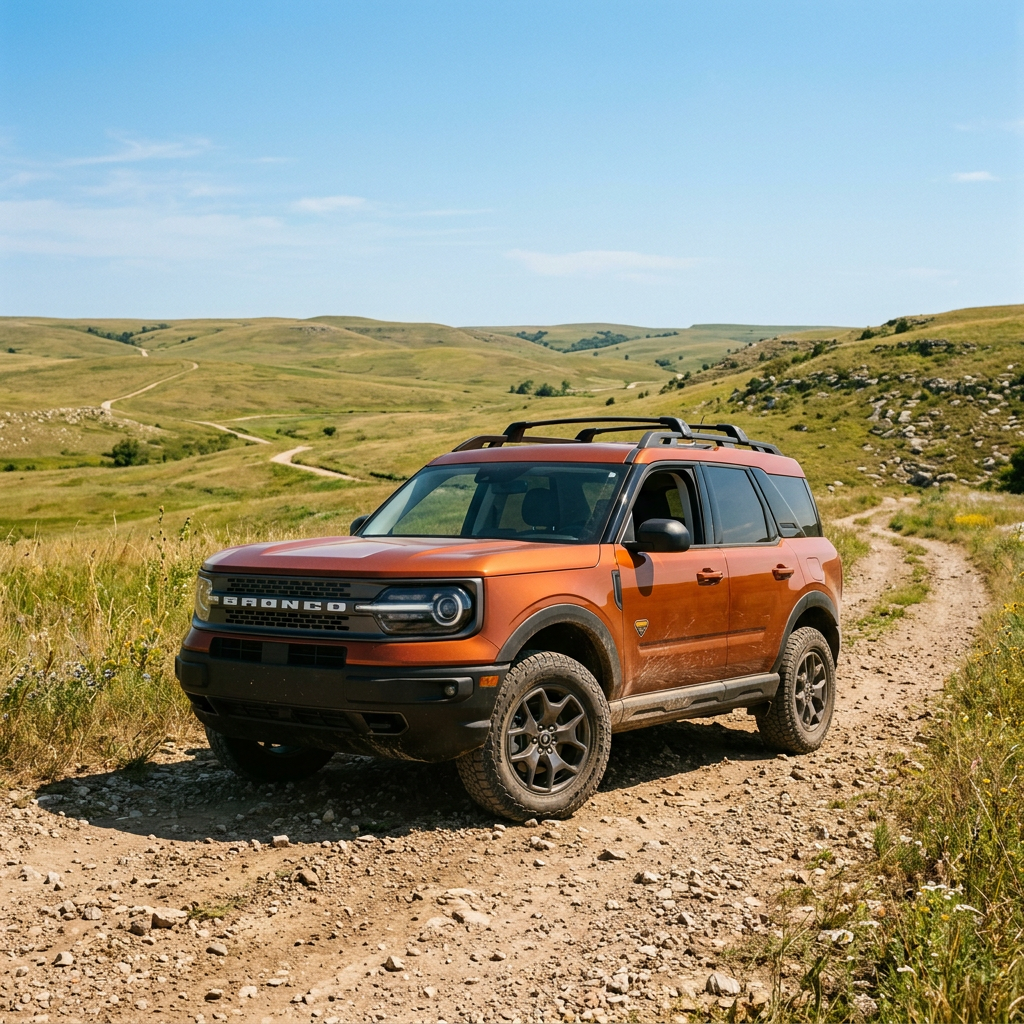
When configuring a 2026 Ford Bronco Sport, buyers often find themselves choosing between two highly popular top-tier trims: the premium, street-focused Outer Banks and the rugged, off-road-optimized Badlands. While both trims share the same fundamental platform, their suspension architectures, powertrain configurations, and intended driving dynamics are notably different, which naturally reflects in their pricing and long-term durability profiles.

The Outer Banks trim typically starts at a lower price point and is designed for drivers who prioritize premium interior comfort, advanced technology, and refined daily driving on paved surfaces. It features a standard independent front suspension optimized for smooth highway cruising. On the other hand, the Badlands trim commands a price premium, reflecting its heavy-duty off-road upgrades, including a more powerful 2.0L EcoBoost engine, advanced twin-clutch 4×4 system, and unique off-road-tuned suspension with larger dampers and rugged lower control arms designed to absorb severe off-road impacts.

An orange Ford Bronco Sport parked on a rocky dirt trail in a rolling green hill landscape. (Representative image for illustration purposes only. Actual vehicle may vary based on trim and configuration.)

Feature / Specification

Outer Banks Trim

Badlands Trim

Engine Option

1.5L EcoBoost I3 (Standard)

2.0L EcoBoost I4 (Standard)

Suspension Setup

Standard Independent Suspension

Off-Road Tuned with Hydraulic Rebound Stops

4×4 System

Standard 4×4

Advanced Twin-Clutch 4×4 with Rear Locker

Ground Clearance

7.8 inches

8.8 inches (with optional off-road tires)

Terrain Management

5 G.O.A.T. Modes

7 G.O.A.T. Modes (adds Mud/Ruts & Rock Crawl)

Primary Focus

Premium Comfort & Fuel Efficiency

Extreme Trail Capability & Rugged Durability

Regardless of which trim package you drive, both utilize precision-engineered front lower control arm and ball joint assemblies that must meet strict safety standards. If you are interested in exploring the unique handling dynamics of these different suspension systems firsthand, we invite you to Shop New Ford Bronco Inventory or visit our showroom to speak with a vehicle specialist about personalizing your driving experience.

How to verify if your specific 2026 Bronco Sport is affected

Not every 2026 Ford Bronco Sport produced is affected by this front lower ball joint safety recall. The campaign is limited to vehicles manufactured within a specific production window when the supplier parts in question were utilized on the assembly line. To find out if your vehicle is included, you will need to locate your 17-character Vehicle Identification Number (VIN).

Your VIN can be found in a few convenient locations:
• On the driver’s side dashboard, visible from the outside looking through the lower corner of the windshield.
• Printed on the safety certification label located on the driver’s side door jamb or inner door pillar.
• Listed on your vehicle’s state registration card, insurance policy documents, or original vehicle purchase invoice.

Once you have your 17-digit VIN, you can input it into the official Ford Recall Lookup Tool on our website, visit the NHTSA recall portal, or simply call our friendly service department. We will instantly verify your vehicle’s status and let you know if any action is required. If you are considering purchasing a pre-owned vehicle or looking to check the credit details for a replacement vehicle, you can also Contact us for current financing options online to explore your options.

Schedule your certified Ford recall service in Junction City today

If you have concerns, for suspension symptoms to develop before taking action. Your safety on the road is our absolute priority, and our team at Valor Ford is fully equipped, trained, and ready to resolve this safety recall for you quickly and professionally. Our factory-certified technicians have the specialized tools, alignment machinery, and genuine OEM parts needed to restore your 2026 Ford Bronco Sport’s front suspension to perfect working order.

We make scheduling your appointment as easy as possible. You can use our online portal to select a day and time that fits your schedule, choose our convenient pickup and delivery service, or call our service desk directly. We are proud to serve our neighbors in Junction City, Fort Riley, Manhattan, and across Central Kansas. Visit us at 1825 Goldenbelt Blvd, Junction City, KS 66441, or Get Directions to Valor Ford. Let us take care of your vehicle so you can continue exploring the open road with complete peace of mind.

Logo for Valor Automotive featuring a blue and silver shield with 'VA' and the company name with a red star.