
How the Onboard Scales Feature Helps Agricultural Operators Manage Payloads Accurately
The life of an agricultural operator in Junction City and the wider Dickinson County area is defined by a series of demanding, high-stakes logistical decisions. During the intense summer heat, when the winter wheat harvest is in full swing, every minute counts, and every load carries significant economic weight. Hauling seed, grain, fertilizer, or heavy farm machinery requires a delicate balance between maximizing efficiency and protecting the vehicle’s structural integrity. Historically, this balance has been maintained through a mixture of guesswork, intuition, and inconvenient trips to commercial scales. Farmers have had to estimate weight based on how much the rear suspension sagged or how the truck handled on rough dirt roads—methods that are notoriously inaccurate and highly risky. Overloading a truck is not just a regulatory hazard; it is a direct threat to the longevity of the vehicle. When a truck is loaded beyond its rated capacity, the suspension, frame, brakes, and transmission are subjected to extreme levels of stress. Over time, this results in accelerated wear and tear, leading to broken leaf springs, warped brake rotors, and catastrophic transmission failures that can sideline a vital vehicle during the busiest times of the year. Conversely, under-loading a vehicle out of caution leads to operational inefficiency, requiring more trips, consuming more fuel, and wasting valuable labor hours. This is where modern technological solutions like Ford’s integrated Onboard Scales feature become an absolute game-changer for the modern agricultural operation.
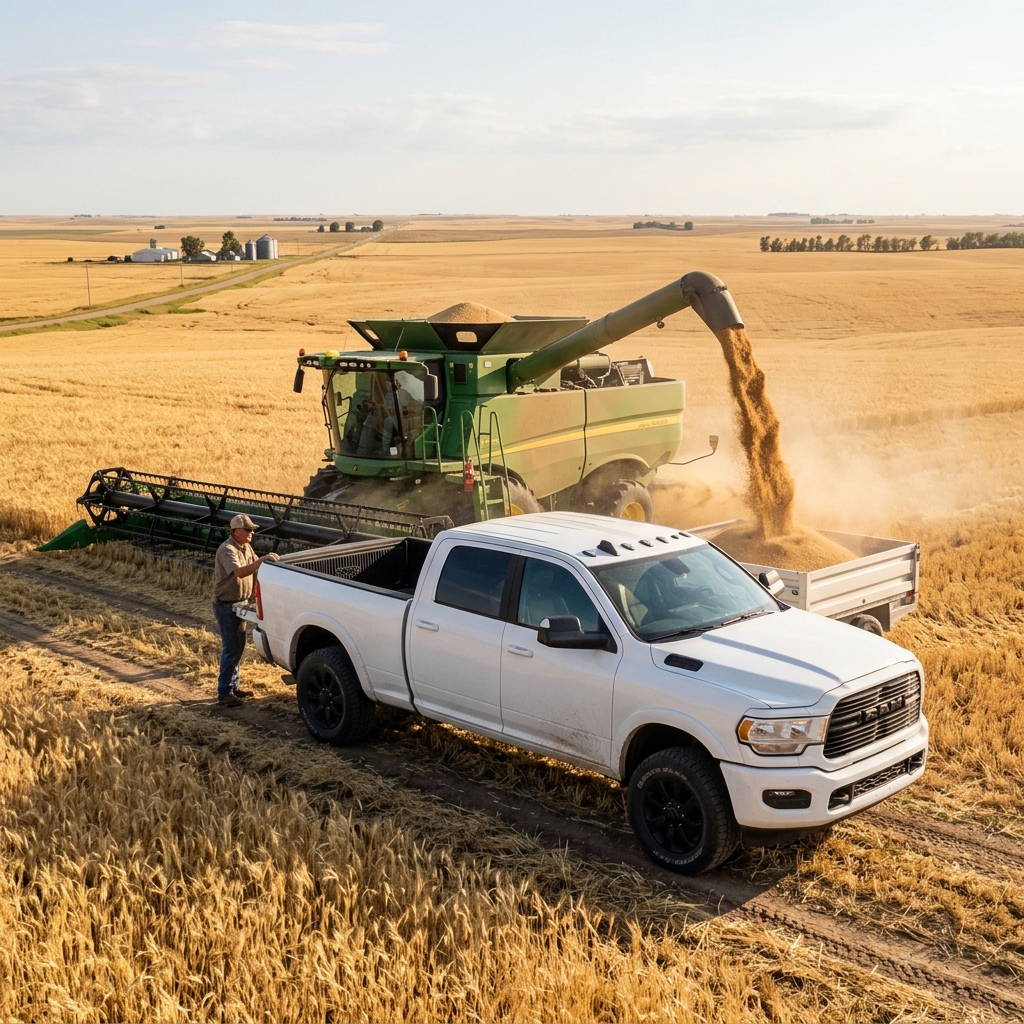
By transforming the truck itself into a precision weighing system, the Onboard Scales feature eliminates the guesswork that has plagued agricultural hauling for generations. Whether you are loading bulk seed in the morning, transporting heavy tools to a remote field in the afternoon, or hauling grain to the local elevator at dusk, this technology provides continuous, real-time feedback on payload weight. This allows operators to confidently load their vehicles to the exact safe limit, maximizing the productivity of every single trip while ensuring the truck is never subjected to damaging overloads. For the farming families of Dickinson County, this is not just a convenience; it is a critical tool for maintaining fleet health and optimizing seasonal workflows.
How Does the Truck's Onboard Scales Feature Help Measure Agricultural Payloads in Real Time?
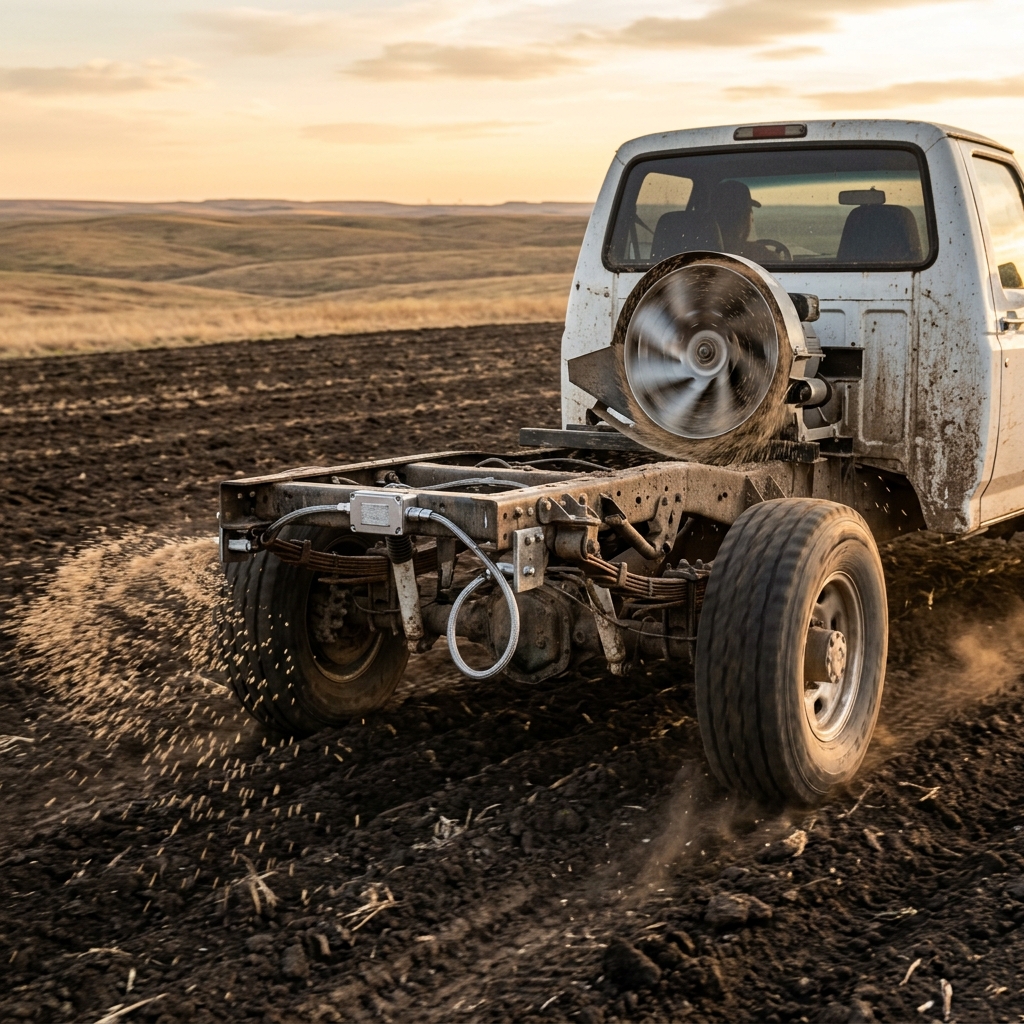
How Do Onboard Scales Improve Fertilizer Application Accuracy in the Field?
Explore Modern Trucks Equipped with Smart Scales in Our New Inventory
At Valor Ford, we understand that having the right tool for the job is essential to keeping your agricultural operation running smoothly. That is why we maintain a diverse selection of new Ford trucks equipped with the latest smart technologies, including the revolutionary Onboard Scales and Smart Hitch systems. If you are looking for a highly capable, versatile light-duty truck for daily tasks, you can Research Ford F-150 models configured with these innovative features. For the most demanding hauling and towing tasks, we invite you to Research Ford F-250 and F-350 Super Duty trucks, which offer the heavy-duty capabilities required to move large payloads of feed, grain, and heavy machinery with ease. Our knowledgeable team in Junction City is ready to help you explore the various trim levels—including Lariat, King Ranch, Platinum, and Limited—that feature this integrated technology. We can demonstrate how the SYNC 4 screen and smart taillights operate in real-world scenarios, ensuring you select the perfect truck to optimize your farm’s efficiency. Whether you are managing a small family farm or a large commercial operation, upgrading to a smart-scale-equipped truck is a strategic step toward a more productive and safer harvest season.
What Kind of Weight Capacity Do Floater Onboard Scale Systems Offer for Heavy Machinery?
Are Onboard Scales a Strategic Investment or Just a Convenience for Farm Operations?
When evaluating new technology for a farming operation, the primary question is always the return on investment (ROI). While some might view integrated onboard scales as a luxury convenience, a detailed economic analysis reveals it is a highly strategic investment. Overloading a vehicle even occasionally can lead to severe financial consequences. In Kansas, Department of Transportation (DOT) fines for overloaded vehicles on public highways can easily run into thousands of dollars for a single infraction. By ensuring that every load leaving the farm is strictly within legal limits, the onboard scale system can pay for itself by avoiding just one heavy citation on local roads near Junction City. Beyond legal compliance, the physical wear and tear saved by utilizing onboard scales is substantial. Consistently overloading a truck causes severe strain on critical drivetrain and suspension components. Tires wear out prematurely, brake pads and rotors degrade rapidly under excess heat, leaf springs lose their arch, and transmissions suffer from overheating. The cost of replacing a set of heavy-duty truck tires or undergoing a transmission rebuild far exceeds the initial investment in smart scale technology. By keeping loads within designated limits, farms can extend the service life of their transport fleet, minimize unscheduled maintenance downtime during critical seasons, and protect their capital investments.
Furthermore, efficiency gains contribute directly to the bottom line. In agriculture, time is money—especially during short harvest windows. Maximizing the payload of every truck trip means fewer trips are required to move the same volume of product. This reduces overall fuel consumption, lowers labor costs, and minimizes engine hours on farm trucks. Conversely, under-loading a truck out of fear of overloading means leaving valuable capacity unused, increasing the number of trips required and dragging out operational timelines. Onboard scales provide the precise data needed to hit the ‘sweet spot’ of maximum efficiency on every single haul, representing a clear and measurable operational advantage.
Which Initial Applications Make the Most Sense When a Farm First Adopts Onboard Scales?
Get an Instant Trade-In Value for Your Current Farm Truck at Valor Ford
If you are currently managing your farm operations with an older truck that lacks the safety, efficiency, and convenience of integrated scale technology, there has never been a better time to upgrade. Modern commercial and personal farm trucks have evolved significantly, offering advanced capabilities that can transform your daily productivity. At Valor Ford, we make transitioning to a modern, smart-scale-equipped vehicle straightforward and financially rewarding. We recommend starting with our simple online Trade In Evaluation tool to receive a fair, competitive estimate of your current truck’s market value based on local Kansas market trends. Our team is committed to helping you maximize the purchasing power of your current vehicle. Whether your current truck is a light-duty runabout or a high-mileage heavy-duty model, we will work diligently to offer you top value, which can be applied directly toward a new, technologically advanced Ford model. You can also Call us at (785) 238-5114 to discuss custom trade packages or fleet options with our dedicated sales specialists. Let us help you retire your older, high-maintenance vehicles and replace them with modern powerhouses that work as hard as you do.
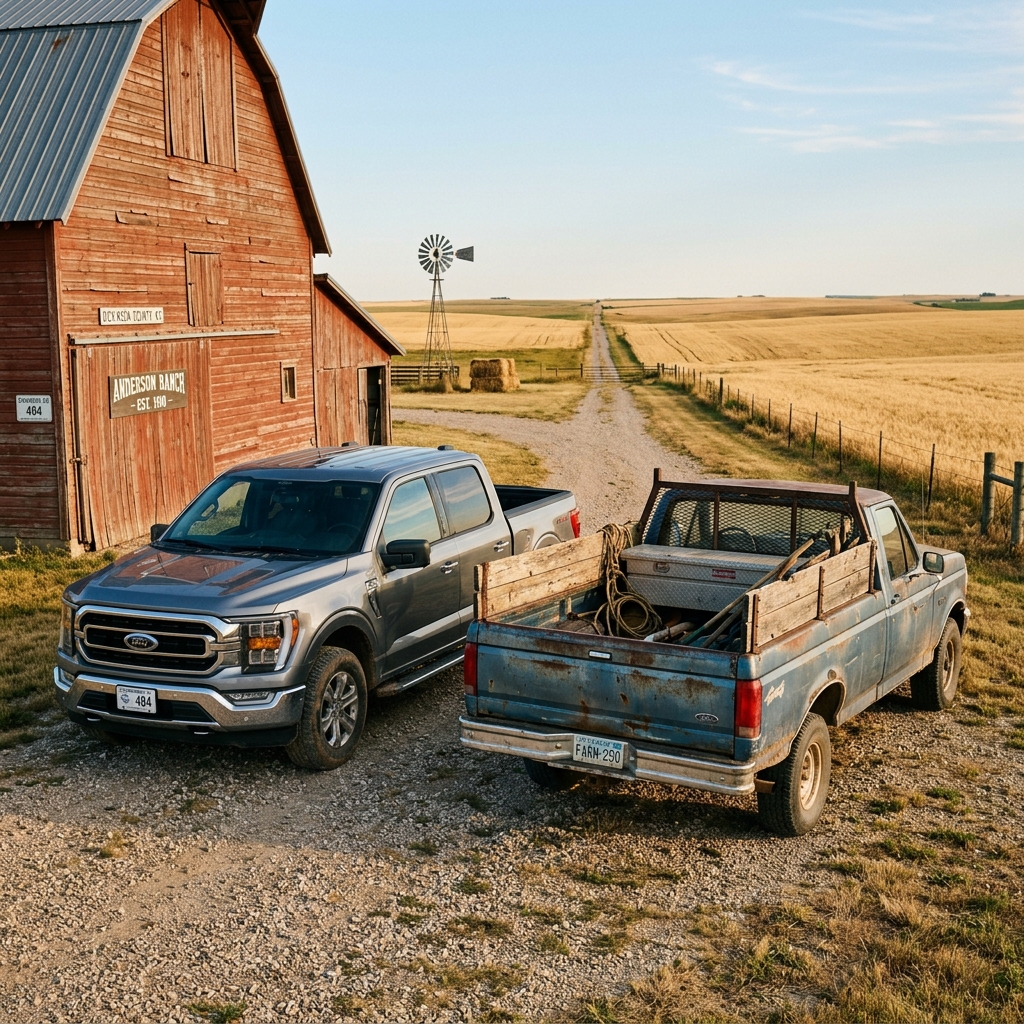
What Aftermarket Scale Alternatives Are Available for Older Pickups and Trailers?
Preventing Overloads and DOT Infractions on Dickinson County and Fort Riley Roads
Operating heavy agricultural vehicles on public highways around Junction City, Fort Riley, and the broader Dickinson County area requires strict adherence to safety regulations. The Kansas Department of Transportation (KDOT) and local law enforcement actively monitor commercial and agricultural truck weights to prevent damage to public infrastructure and ensure road safety. An overloaded truck is significantly more difficult to control, requiring vastly longer stopping distances and displaying compromised handling characteristics on winding rural roads or when merging onto busy highways like Interstate 70. Furthermore, overloading puts immense stress on the vehicle’s braking system, which can lead to brake fade or complete mechanical failure when descending steep hills or navigating unexpected traffic situations. By utilizing the integrated Onboard Scales feature, operators can verify that their vehicle and trailer are strictly within their legal Gross Vehicle Weight Rating (GVWR) and Gross Combined Weight Rating (GCWR) before leaving the farm. This ensures compliance with state regulations and protects the safety of the truck driver and everyone sharing the road.
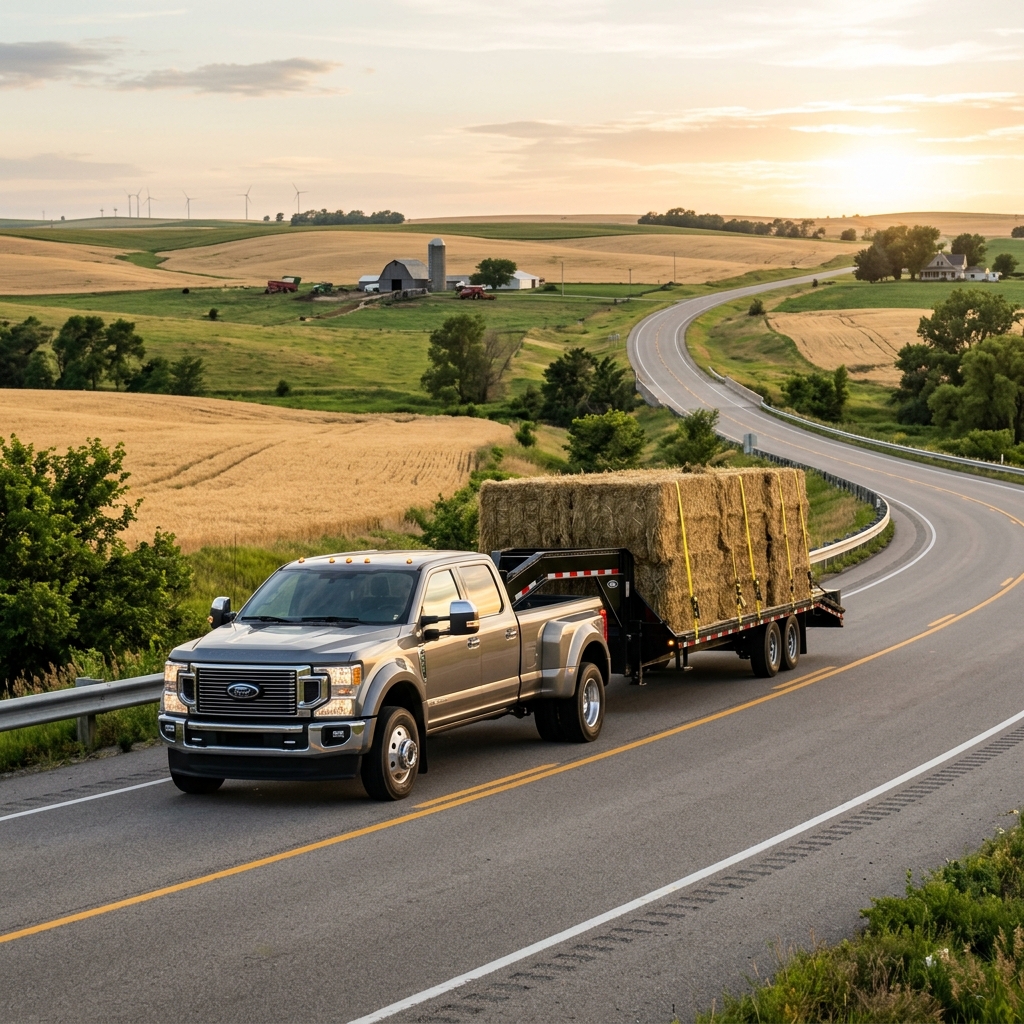
Avoiding DOT infractions is not just about avoiding fines; it is also about maintaining a clean operating record for your agricultural business. Infractions can lead to increased insurance premiums, mandatory fleet audits, and damaging downtime if a vehicle is placed out-of-service on the side of the road. By making onboard scale verification a standard part of your farm’s loading protocol, you create a culture of safety and compliance that protects your drivers, your equipment, and your business’s reputation in the local community.
Syncing Your Onboard Scale Data with Smart Apps and Farm Management Systems
Maintaining and Calibrating Your Truck's Scale Sensors for Long-Term Accuracy
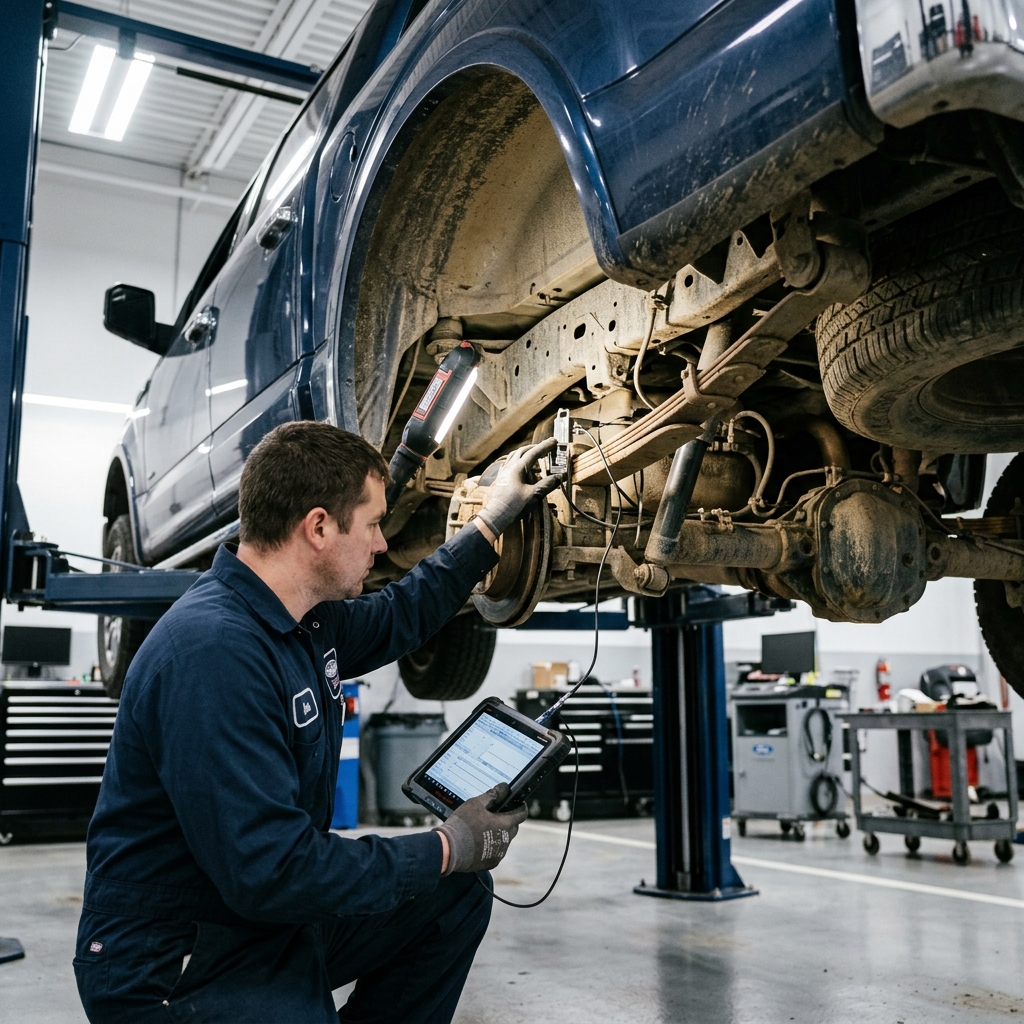
Upgrade Your Agricultural Fleet with Smart Scale Technology at Valor Ford
Investing in smart truck technology like integrated Onboard Scales is a strategic step toward optimizing your farm’s safety, efficiency, and long-term profitability. At Valor Ford, we are proud to serve the hardworking farming, ranching, and military communities in Junction City, Fort Riley, and throughout Dickinson County. We understand the unique challenges of agricultural hauling and are dedicated to helping you find the perfect vehicle to meet your needs. Ready to see these features in action? You can easily Get Directions to Valor Ford and visit our showroom located at 1825 Goldenbelt Blvd, Junction City, KS 66441. If you have questions about current pricing or want to check vehicle availability, feel free to Call us at (785) 238-5114. To simplify your purchasing process, we encourage you to Contact us for financing information online. For those looking at other versatile vehicles, you can also Research Ford Explorer or Research Ford Maverick options. We look forward to partnering with you to power your farm’s success!
Connect with us


- Agricultural Fleet Service
- Agricultural Vehicle Maintenance
- Automotive Recalls & Repairs
- Automotive Repair
- Buying Guides
- Certified Pre-Owned Programs
- Commercial Truck Financing
- Diesel Engine Care
- Diesel Engine Maintenance
- Farm & Ranch Equipment Reviews
- Financing & Insurance
- Genuine OEM Parts & Accessories
- Genuine Parts & Accessories
- Heavy-Duty Truck Care
- Heavy-Duty Truck Guides
- Heavy-Duty Truck Upkeep
- Junction City
- Junction City
- KS Community
- KS Community
- Maintenance & Service
- Manhattan Ford Dealer
- Manhattan Ford Service
- Manhattan Used Cars
- Model Comparisons
- New Vehicle Reviews
- Parts & Repairs
- Preventative Vehicle Inspections
- Repair & Parts
- Safety Features
- Seasonal Driving Tips
- Seasonal Vehicle Care
- Seasonal Vehicle Maintenance
- Service Tips & Guides
- Technology & Innovation
- Technology & Innovation in Truck Service
- Tire Care & Management
- Towing & Trailer Technology
- Trade-In & Negotiation Tips
- Uncategorized
- Used Vehicle Guides
- Valor Ford
- Valor Ford Models
- Valor Ford Service
- Vehicle Ownership Tips
- Vehicle Repair & Parts