

Aug 4, 2026
Why Modern Diesels Struggle in Cold Weather: 6.7L Power Stroke Starting Causes
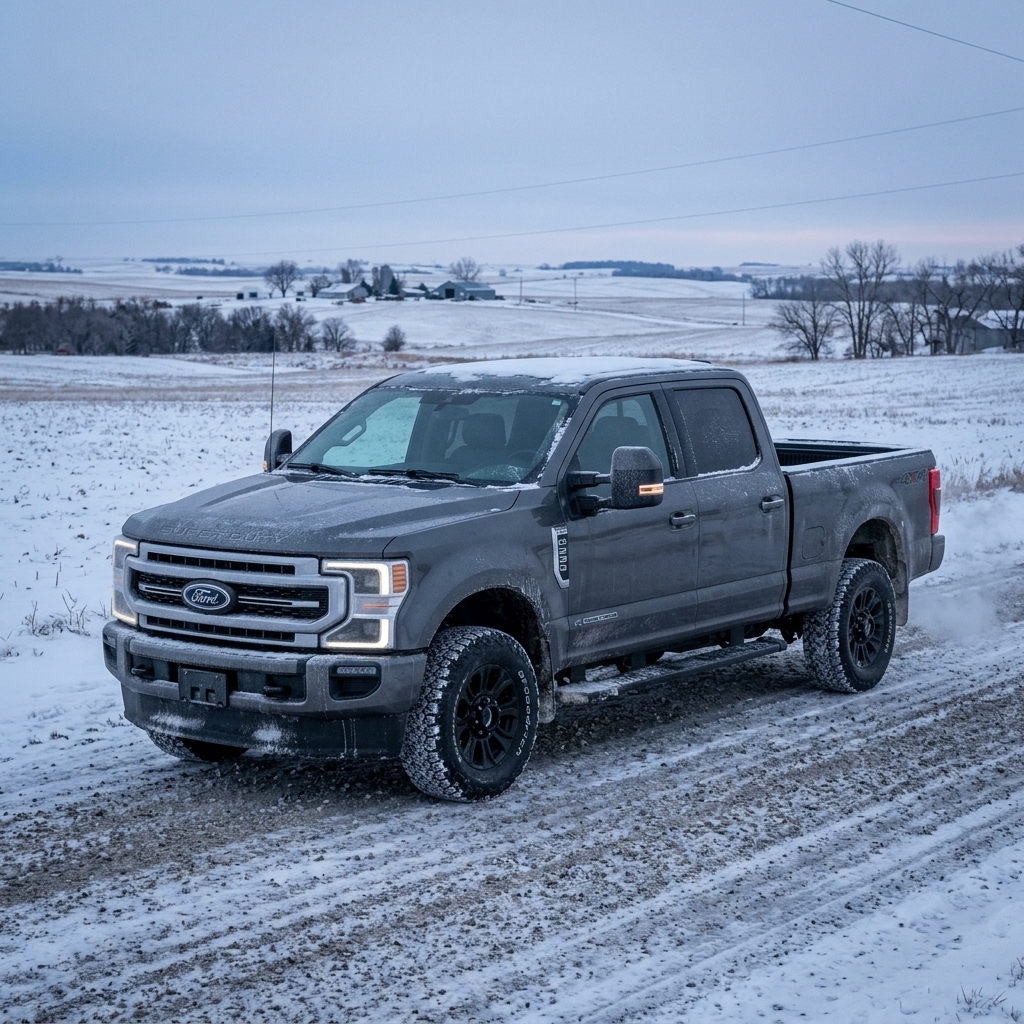
When sub-zero Arctic winds sweep across Dickinson County and Fort Riley, owners of modern diesel trucks like the 6.7L Power Stroke often face one of winter’s most frustrating experiences: turning the key or pushing the start button only to be met with a sluggish crank or an unyielding refusal to fire up. While modern heavy-duty Ford Super Duty pickups are marvels of high-pressure common rail injection engineering and robust thermal design, extreme cold shifts physics and chemistry heavily against diesel combustion.
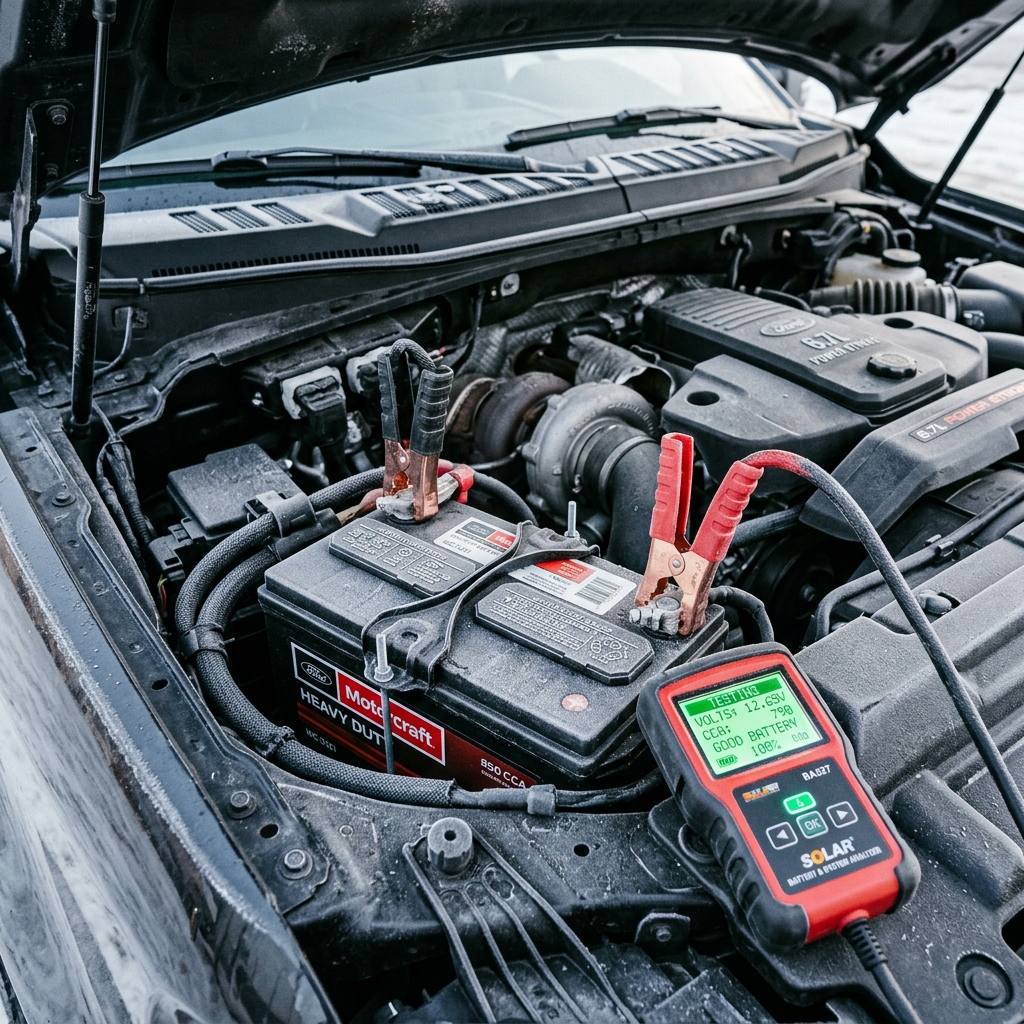
Unlike gasoline engines that rely on spark plugs to ignite fuel at virtually any temperature, diesel engines rely entirely on compression heat to ignite atomized fuel. The top culprits responsible for cold-weather starting trouble on the 6.7L Power Stroke include severely degraded dual batteries with diminished Cold Cranking Amps (CCA), paraffin wax gelling in untreated ultra-low sulfur diesel (ULSD) fuel, malfunctioning Glow Plug Control Modules (GPCM) or damaged glow plug harnesses, and high-viscosity engine oil that slows down cranking speed below the threshold required to build compression heat.
Understanding these critical thermal thresholds allows truck owners to take proactive measures before freezing temperatures hit central Kansas. If you want to ensure your heavy-duty truck remains dependable through harsh winters, you can readily Schedule Ford Service Today with our factory-trained diesel technicians at Valor Ford in Junction City.
Is a Weak Battery the Most Common Cause of a Winter Crank-No-Start Condition?
Understanding Diesel Fuel Gelling and Waxing in Kansas Sub-Zero Temperatures
To protect against fuel gelling during severe cold snaps across central Kansas, Power Stroke owners should regularly treat their tanks with Ford-approved anti-gel additives at every fill-up once ambient temperatures drop below freezing. Need fresh OEM filters before winter? You can Order Genuine Ford Parts directly through our dealership.
How Glow Plug and Glow Plug Control Module (GPCM) Failures Trigger Cold Starting Problems
How Does the 6.7L Power Stroke Perform in Sub-Zero Kansas Winter Conditions?
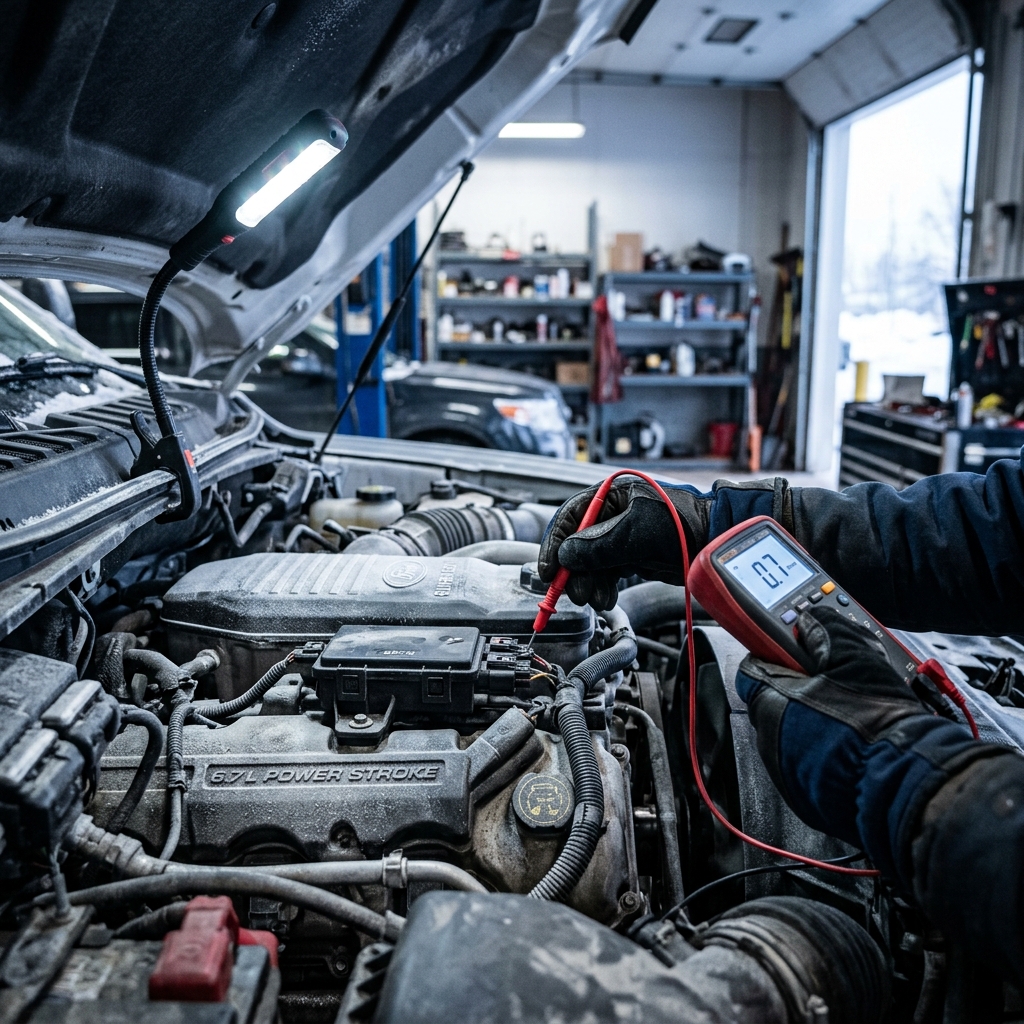
Engineered specifically for extreme North American climate conditions, the Ford 6.7L Power Stroke V8 Turbo Diesel offers exceptional cold-weather capabilities when properly maintained. Featuring an integrated 1,000-watt heating element inside the engine block, factory automatic cold-weather elevated idle features (which raise engine RPM to prevent fuel slobber and warm up coolant faster), and advanced powertrain control logic, the 6.7L Power Stroke is built to conquer Midwestern freezes.
One of the key operational requirements during Kansas winters is selecting the correct oil viscosity. While standard 15W-40 conventional oil performs well during warm weather, switching to 5W-40 or 0W-40 full synthetic diesel engine oil (meeting Ford specification WSS-M2C171-F1) dramatically reduces oil pump cavitation and resistance on cold starts. Synthetic lubricants flow rapidly at -20°F, ensuring immediate lubrication to high-load turbocharger bearings and valvetrain components upon startup.
Whether towing heavy machinery around Dickinson County or commuting to Fort Riley, maintaining proper fluid viscosities ensures your Super Duty executes rapid starts regardless of the weather. Interested in upgrading your vehicle? Explore our Shop New Ford Bronco Inventory or Browse Used Inventory online.
Essential Winter Preventative Maintenance Checklist for 6.7L Power Stroke Owners
Replacement Costs for Winter-Stressed Diesel Parts vs. Preventative Maintenance Costs
Best Practices for Using Block Heaters and Winter Grille Covers on Ford Super Duty Trucks
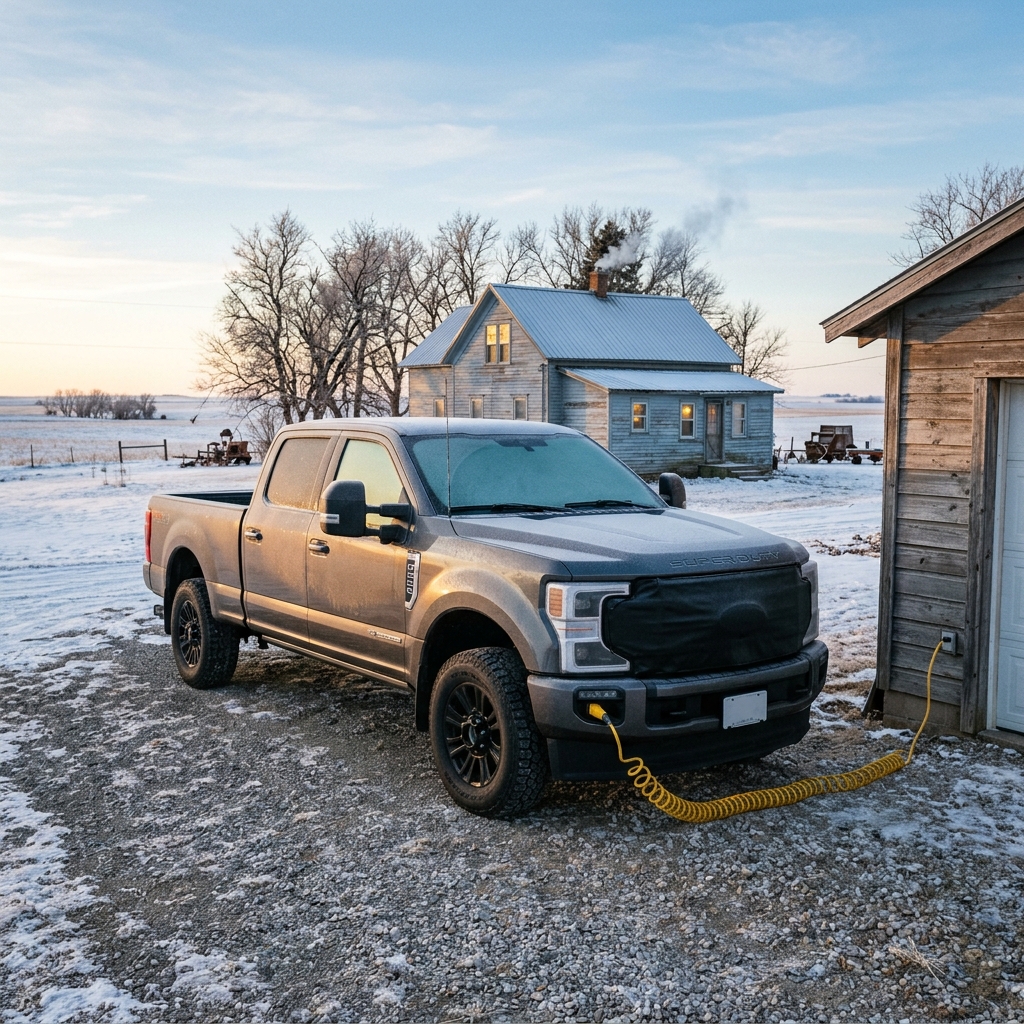
The factory block heater built into the 6.7L Power Stroke is one of your best defenses against harsh Kansas freezes. However, leaving it plugged in all night is generally unnecessary and increases your electric bill. The internal 1,000-watt heating element warms engine coolant up to operating delta within 3 to 4 hours. Using a heavy-duty outdoor timer set to turn on 3 hours prior to your morning commute saves energy while ensuring instantaneous cab heat and rapid oil circulation.
In addition, winter front grille covers are highly effective when ambient temperatures drop below 32°F. By restricting frigid airflow through the front radiator and charge air cooler (CAC), winter covers allow the diesel engine to reach its optimal operating temperature (around 190°F–210°F) much faster. Maintaining proper engine operating temperature prevents excess soot accumulation inside the Diesel Particulate Filter (DPF) and stops ‘fuel slobber’ during extended idling sessions in Junction City.
How 6.7L Power Stroke Output Figures Compare to Cummins and Duramax in Cold Climates
While the 6.7L Power Stroke delivers industry-leading output of up to 500 horsepower and 1,200 lb-ft of torque, unlocking that massive towing performance in winter requires clean cold fuel delivery and swift cylinder pre-heating. Considering a new heavy-duty truck? Learn more by reading our Research Ford F-250 overview.
Step-by-Step Diagnostic Guide for a Cold-Weather Crank-No-Start Diesel Engine
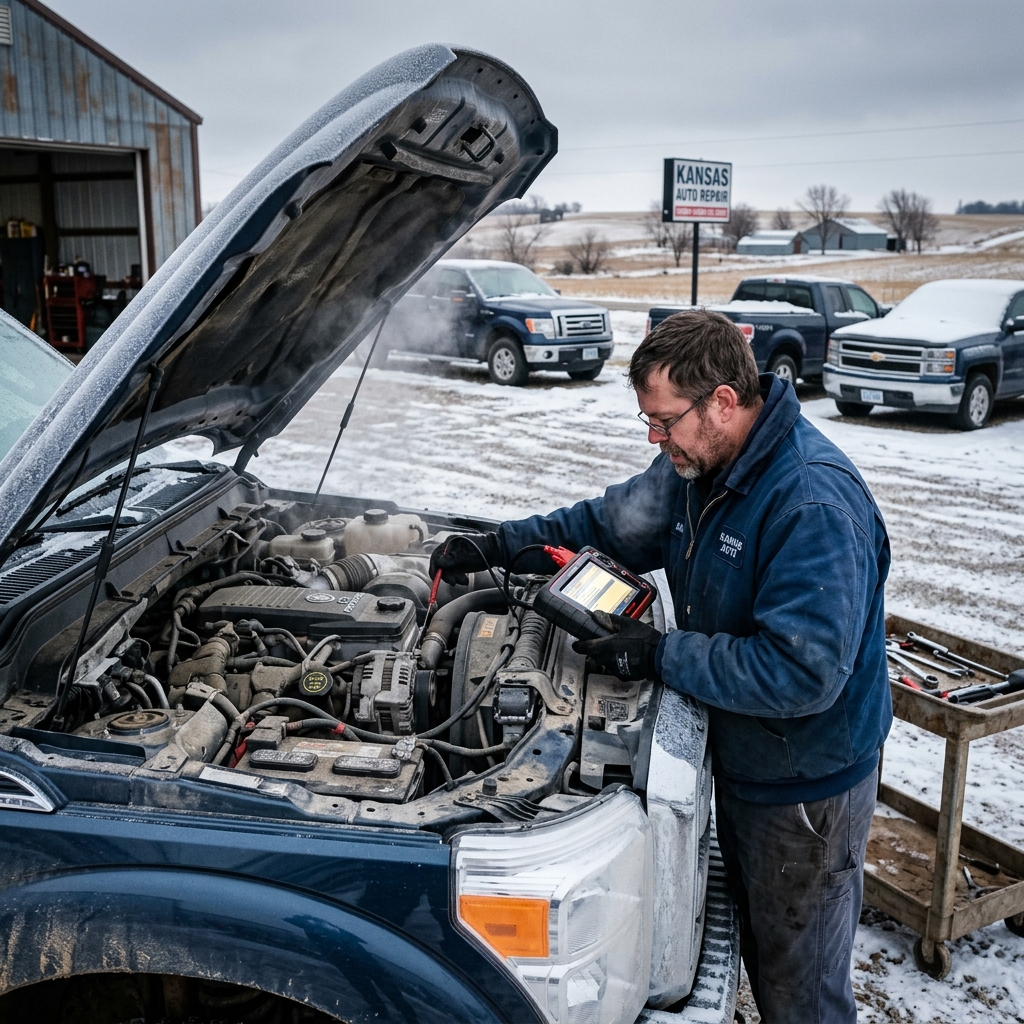
Reliable Winter Diesel Truck Ownership in Junction City, Fort Riley, and Dickinson County
Prepare Your 6.7L Power Stroke for Winter at Valor Ford in Junction City, KS
Inspect your battery and fuel filter before the first severe freeze to help avoid a weak battery or gelled fuel filter. The Ford factory-certified diesel technicians at Valor Ford are equipped with state-of-the-art diagnostic software to test glow plug control modules, evaluate battery conductance under heavy load, and service fuel filtration systems.
Conveniently located at 1825 Goldenbelt Blvd in Junction City, KS, we proudly serve truck owners from Fort Riley, Manhattan, Abilene, and all of Dickinson County. Click below to Get Directions to Valor Ford or Call us at (785) 238-5114 to book your appointment today.
Connect with us


- Agricultural Fleet Service
- Agricultural Vehicle Maintenance
- Automotive Parts & Accessories
- Automotive Recalls & Repairs
- Automotive Repair
- Buying Guides
- Certified Pre-Owned Programs
- Commercial Truck Financing
- Diesel Engine Care
- Diesel Engine Maintenance
- Family SUVs
- Farm & Ranch Equipment Reviews
- Financing & Insurance
- Genuine OEM Parts & Accessories
- Genuine Parts & Accessories
- Heavy-Duty Truck Care
- Heavy-Duty Truck Guides
- Heavy-Duty Truck Upkeep
- Junction City
- Junction City
- KS Community
- KS Community
- Maintenance & Service
- Manhattan Ford Dealer
- Manhattan Ford Service
- Manhattan Used Cars
- Military & Student Moving Tips
- Model Comparisons
- New Vehicle Reviews
- Off-Road Packages & Accessories
- Parts & Repairs
- Preventative Vehicle Inspections
- Repair & Parts
- Safety Features
- Seasonal Driving Tips
- Seasonal Vehicle Care
- Seasonal Vehicle Maintenance
- Service Tips & Guides
- Technology & Innovation
- Technology & Innovation in Truck Service
- Tire Care & Management
- Towing & Trailer Technology
- Trade-In & Negotiation Tips
- Uncategorized
- Used Vehicle Guides
- Valor Ford
- Valor Ford Models
- Valor Ford Service
- Vehicle Ownership Tips
- Vehicle Repair & Parts
- Vehicle Sales
- Vehicle Trade-In Tips
- Vehicle Utility & Cargo Solutions