Pre-Harvest Ford Super Duty Inspection: Getting Your F-250 and F-350 Ready for the Kansas Fields
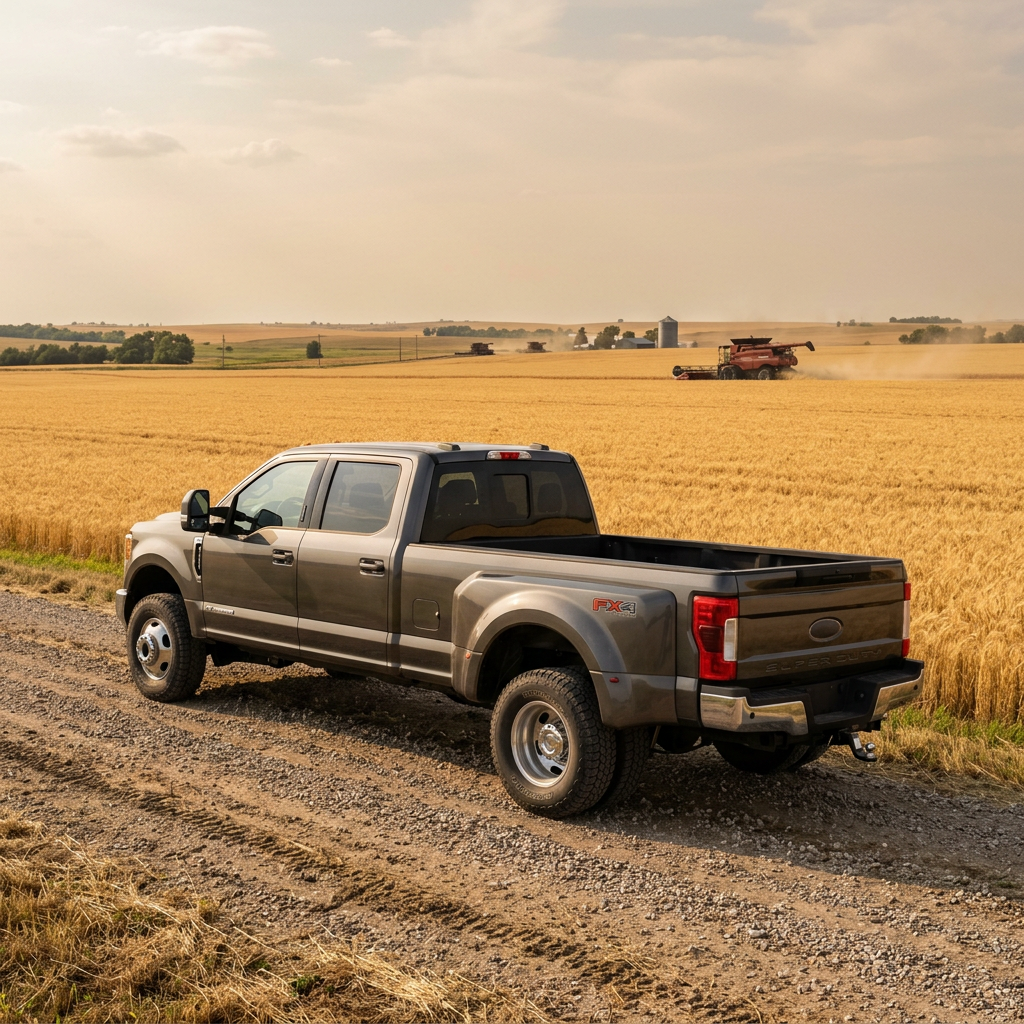
As the hot mid-summer sun beats down on Geary and Dickinson counties, Kansas farmers know that the most demanding time of the year is rapidly approaching. Harvest season is not just a period of intense labor; it is a high-stakes, time-sensitive window where every single hour of daylight translates directly to operational profitability. In this demanding landscape, your truck is not merely a mode of transportation. It is the absolute backbone of your agricultural operation. Whether you are operating a robust Ford F-250 or a dual-rear-wheel F-350, these heavy-duty workhorses are tasked with hauling massive seed tenders, moving loaded grain trailers, transporting heavy tillage equipment, and navigating rough, unpaved field boundaries. When a truck goes down in the middle of a harvest push, the entire workflow grinds to a devastating halt, costing thousands of dollars in delayed grain delivery, idle labor, and potential weather exposure for unharvested crops.
Proactive fleet and truck maintenance is the primary line of defense against these catastrophic, mid-season mechanical failures. In agriculture, we often talk about preventative maintenance on combines, tractors, and grain carts, but the trucks that link the field to the local co-op elevator are frequently overlooked until it is too late. The extreme summer heat of July, combined with the powdery, abrasive dust kicked up by harvesting machinery, creates a brutally hostile environment for internal combustion engines, cooling systems, and electrical components. A thorough, systematically executed pre-harvest inspection ensures that hidden vulnerabilities—such as micro-cracks in serpentine belts, degraded diesel exhaust fluid, or contaminated brake lines—are identified and corrected in the controlled environment of a service bay rather than under the stressful conditions of a remote dirt road.
At Valor Ford, located right here in Junction City, KS 66441, we understand the unique pressures of the Kansas agricultural calendar. We know that when the wheat, corn, or soybeans are ready, there is very little room for error. That is why we advocate for a comprehensive, multi-point pre-harvest inspection for every F-250 and F-350 operating in our community. By partnering with our factory-trained diesel and heavy-duty chassis specialists, you can head into the fields with the absolute confidence that your Super Duty is fully optimized to handle the punishing payloads and relentless towing demands of the season. To make sure you do not lose a single day of productivity, you can easily Schedule Pickup and Delivery Service with our team, allowing us to service your truck while you focus on setting up your grain handling equipment and prepping your combines.
Investing a small amount of time in preventative care today saves you from the immense headaches of emergency towing charges, premium rush-shipping fees on parts, and lost productivity tomorrow. Our specialized agricultural technicians are deeply integrated into the local farming community, meaning we know exactly which components fail first under local driving conditions. From the steep gravel hills surrounding Dwight and Alta Vista to the muddy bottomlands along the Republican River, we know how to prep your suspension, drivetrain, and electrical systems to handle the specific topography of central Kansas. Let’s dive deep into the specific systems that require your immediate attention before the first header enters the field.
What are the key pre-harvest maintenance checks for a Ford Super Duty?
Pre-harvest truck prep is far more comprehensive than a standard quick-lube oil change. Because your F-250 or F-350 will be operating at or near its maximum Gross Vehicle Weight Rating (GVWR) and Gross Combined Weight Rating (GCWR) for weeks on end, every subsystem must be operating at peak efficiency. The combination of heavy payloads, slow speeds in dusty fields, and high ambient temperatures places an extraordinary thermal and mechanical load on the vehicle. Below, we break down the critical technical areas that our certified technicians evaluate during a professional pre-harvest inspection.
Beyond these three primary pillars, we also check tire tread depth and inflation pressures—specifically adjusting them to the maximum recommended cold PSI for high-load towing. Driving on underinflated tires while carrying a heavy payload is the leading cause of tire blowouts, which can be catastrophic on single-rear-wheel trucks navigating narrow highways. If your truck is due for fresh fluids, filters, or mechanical adjustments, contact us for service. You can quickly Order Genuine Ford Parts directly from our parts department to perform maintenance at home, or let our experienced team handle the dirty work for you.
Remember, a single failure of a $50 sensor or a split coolant hose can leave you stranded on the side of Highway 77, holding up an entire crew of combine operators, truck drivers, and grain cart operators. By addressing these weak points before the season begins, you protect your bottom line, ensure the safety of your operators, and maximize the operational longevity of your truck.
Evaluating Your Powertrain: What is the typical lifespan of a 6.7L Power Stroke diesel engine?
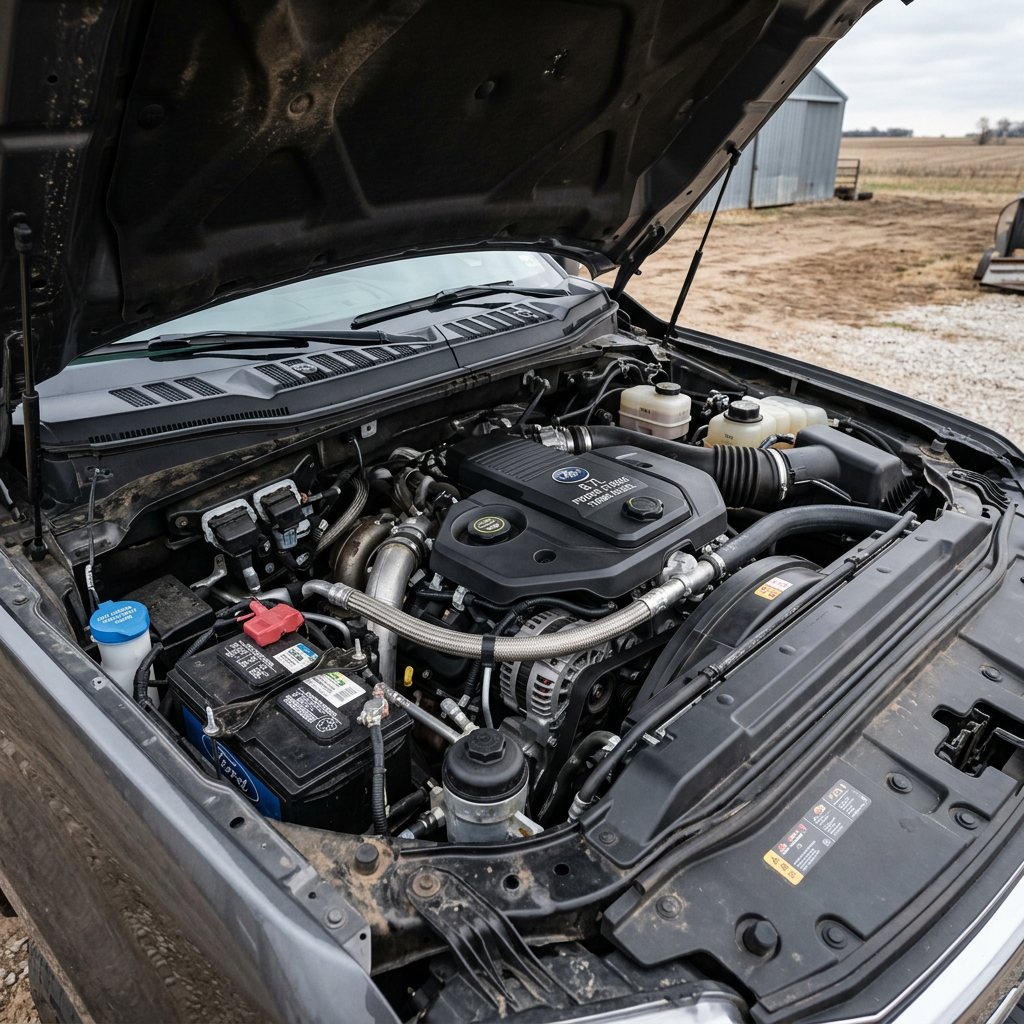
Furthermore, high-stress towing during harvest places extreme demands on your engine’s lubricants. During peak harvest, your transmission and differential fluids are subjected to sustained high temperatures. Standard oil change intervals should be shortened under these ‘severe duty’ operating conditions. We highly recommend utilizing high-quality synthetic lubricants that offer superior thermal stability and shear resistance. While the diesel powertrain offers unmatched torque and long-term durability, Ford’s rugged gasoline engines—such as the 7.3L Godzilla V8—also present an incredibly compelling, low-maintenance alternative for farms that do not accumulate massive annual highway mileage but still require substantial payload and towing capabilities. If you are considering adding another highly reliable truck to your farm fleet, you can Browse Used Inventory at Valor Ford to find a wide selection of thoroughly inspected gas and diesel Super Duty models ready to go to work.
Comparing Engine Capabilities: What is the difference in towing capacity between the 6.7L Power Stroke and the 7.3L gas V8?
To maximize operational efficiency during harvest, you must match your truck’s mechanical capabilities to the specific payloads you intend to haul. Choosing between the torque-monster 6.7L Power Stroke Turbo Diesel and the highly reliable, naturally aspirated 7.3L Godzilla V8 is one of the most critical decisions Kansas farmers face when configuring their fleet. While both engines are exceptionally capable, they deliver their power in fundamentally different ways, which directly impacts their conventional and gooseneck towing capacities.
The 6.7L Power Stroke diesel is built for maximum towing limits and effortless long-distance hauling. With its massive torque output peaking low in the RPM range, the diesel engine makes pulling a 20,000-pound gooseneck livestock trailer or a heavy liquid fertilizer tank feel completely effortless, even when climbing the rolling hills of Geary County. On the other hand, the 7.3L gas V8 offers an exceptionally robust, simplified mechanical design that eliminates the complex emissions systems, diesel particulate filters, and DEF requirements of modern diesels. It is an incredibly popular choice for utility beds, service trucks, and farms where trucks undergo frequent short trips, start-and-stop cycles, and prolonged idling in the fields.
|
Engine Specification / Capability |
6.7L Power Stroke V8 Diesel |
7.3L ‘Godzilla’ Gas V8 |
|---|---|---|
|
Horsepower |
475 hp (Standard) / 500 hp (High Output) |
430 hp @ 5,500 RPM |
|
Torque |
1,050 lb-ft (Standard) / 1,200 lb-ft (H.O.) |
485 lb-ft @ 4,000 RPM |
|
Max Conventional Towing (F-350) |
Up to 24,800 lbs |
Up to 18,900 lbs |
|
Max Gooseneck/5th Wheel Towing |
Up to 38,000 lbs (F-450 / Max Spec F-350) |
Up to 22,500 lbs (Max Spec F-350) |
|
Fuel System / Recommended Use |
Ultra-Low Sulfur Diesel + DEF / Heavy Towing |
87 Octane Regular Unleaded / Versatile Utility |
When evaluating these numbers, consider your daily operational realities. If your truck spends 80% of its time hooked to a heavy grain trailer, moving from field to elevator and back again all day long, the 6.7L Power Stroke is the undisputed king. Its exhaust braking capability also provides an immense safety advantage when bringing heavy loads down steep gravel hills, saving your service brakes from overheating. However, if your truck is primarily used for hauling fencing supplies, carrying a slip-tank of diesel to fuel up the combines, or pulling a light utility trailer, the 7.3L gas V8 provides more than enough towing capacity while significantly reducing your initial purchase price and long-term maintenance complexity. To research these specs in even greater detail, check out our comprehensive online guide to Research Ford F-250 capabilities.
Understanding the Muscle: What are the torque and horsepower specs of the 7.3L Godzilla V8?
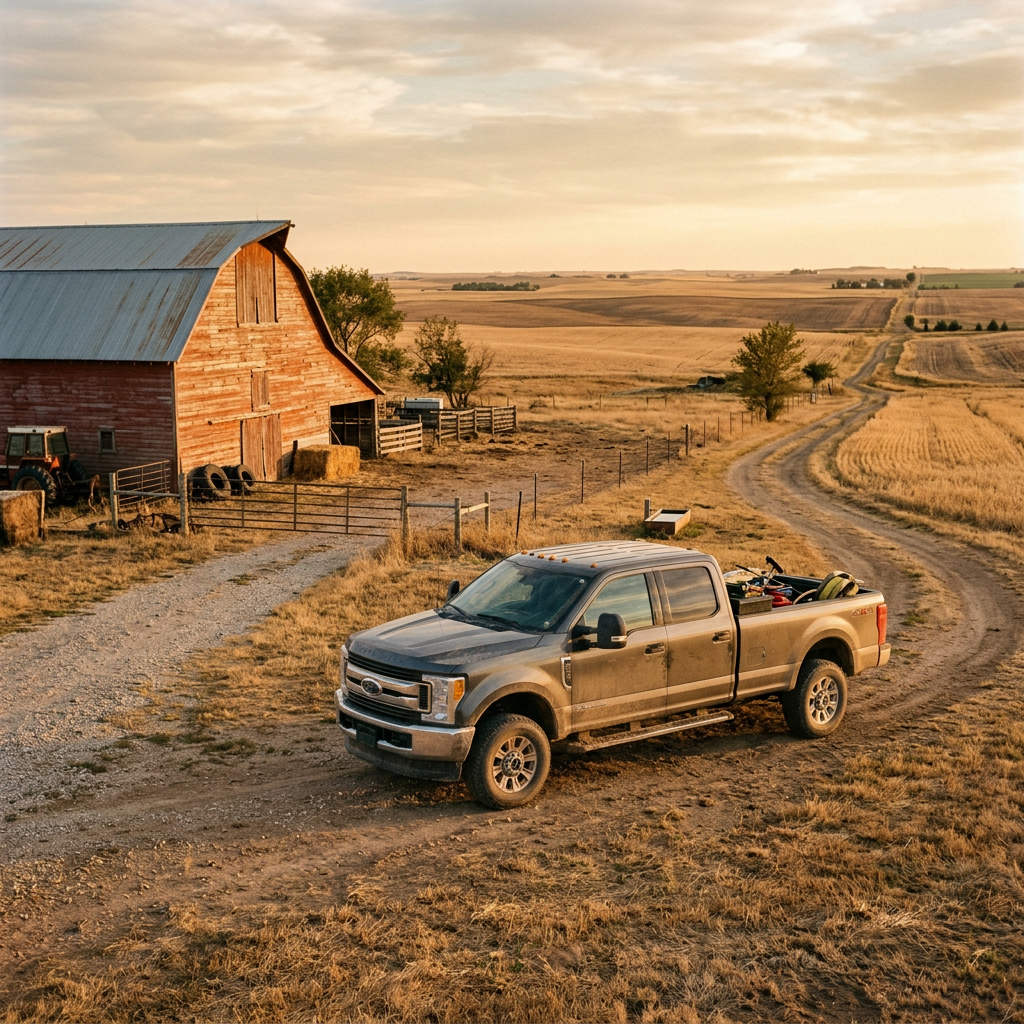
Ranchers also appreciate how the engine’s torque curve is optimized for heavy hauling. Unlike high-revving sports car engines, the Godzilla V8 is designed to deliver a massive chunk of its torque low in the RPM range. This allows the truck to get heavy loads moving from a complete stop with minimal strain on the transmission. When paired with Ford’s advanced TorqShift 10-speed automatic transmission, the powertrain maintains optimal gear ratios to keep the engine in its sweet spot, whether you are crawling through a muddy pasture or cruising down the interstate at 75 MPH. If you are interested in exploring how this engine compares to other options, you can Research Ford F-250 models online or speak with our sales experts in Junction City.
Power in the Field: Does Chevrolet have an equivalent to Ford's Pro Power Onboard?
When you are miles away from the nearest farm shop, a breakdown in the field requires immediate, on-the-spot repairs. Historically, this meant hauling heavy, noisy, gasoline-powered portable generators in the bed of your truck just to run an angle grinder, an air compressor, or a portable welder. Ford completely revolutionized field work by introducing Pro Power Onboard to the Super Duty lineup. This class-exclusive, integrated system transforms your F-250 or F-350 into a highly capable mobile generator, delivering clean, exportable electrical power directly from outlets in the truck bed. Available in 2.0 kW configurations on gas-powered models, it provides ample electricity to power heavy-duty power tools, battery chargers, portable lights, and field repair equipment simultaneously.
Many local farmers ask us: how does the competition stack up? Specifically, does Chevrolet have an equivalent to Ford’s Pro Power Onboard on the Silverado HD? The short answer is that Silverado HD models offer available 120-volt outlets, while Ford’s Pro Power Onboard provides an integrated exportable power system with higher output for jobsite use. Availability and output can vary by model and configuration. For a farmer trying to weld a broken brace on a tillage tool or run a heavy-duty impact wrench in the middle of a remote field, Ford’s system is a game-changing feature that saves precious hours of downtime.
This level of integrated utility is exactly why the Ford Super Duty remains a popular choice for work-ready trucks. It is designed by people who understand that a truck is more than just a cab and a bed—it is a mobile command center and an active partner on the job site. If you want to experience this revolutionary technology firsthand, or if you need to upgrade your current farm truck before the harvest rush, we invite you to evaluate your current truck’s trade value using our convenient Trade In Evaluation tool, helping you transition into a modern Super Duty with minimal hassle.
Harvest Tax Strategies: What is the GVWR threshold for the full Section 179 tax deduction?
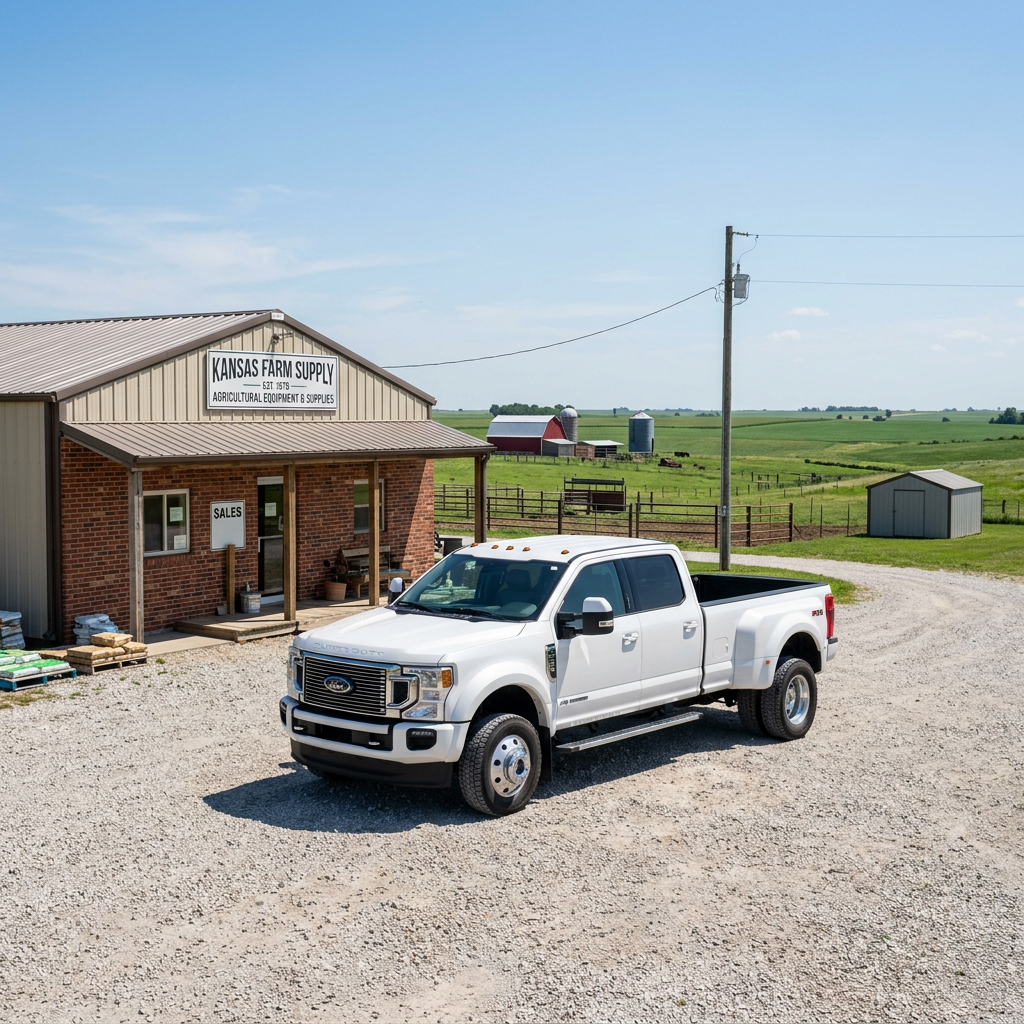
By leveraging these tax strategies, local farmers can dramatically lower their net tax liability while simultaneously modernizing their operations with safer, more powerful, and more reliable equipment. It is always highly recommended to consult with your certified public accountant (CPA) or agricultural tax specialist to confirm how the Section 179 rules apply to your specific farm structure. To help streamline the acquisition process, we make it simple to secure financing early. You can easily Get Pre-Approved for Financing online through our secure finance department, allowing you to shop our inventory with confidence and contact us for current financing information before your heavy field work begins.
Planning Ahead: What is the current lead time for ordering a custom Super Duty in Kansas?
While we maintain a robust inventory of work-ready trucks on our lot in Junction City, we know that many farmers have very specific requirements for their fleet. You might need a precise cab-to-axle length for a custom flatbed, specific heavy-duty alternator packages to run auxiliary field equipment, or dual-rear-wheel configurations paired with the high-output diesel engine. For these specialized needs, custom ordering a Super Duty directly from the factory is the absolute best way to ensure your truck arrives configured exactly how you need it, without paying for features you don’t require.
The current lead time for a custom factory order can vary based on component availability and overall production demand, but generally ranges from 12 to 24 weeks. Because of these manufacturing timelines, forward planning is absolutely essential. If you want a truck ready for spring planting, we recommend placing your custom order in the late fall. Conversely, if you want a new F-250 or F-350 fully outfitted and ready to work for next summer’s harvest, placing your order during the preceding winter months ensures your truck is built, delivered, and outfitted with any necessary aftermarket beds or accessories well before the first fields are cut.
At Valor Ford, we specialize in navigating the commercial and agricultural fleet ordering process. Our experienced sales consultants work closely with Ford’s regional representatives to secure priority build slots for local farming businesses, helping to minimize wait times and keep your fleet upgrades on schedule. We walk you through every option—from heavy-duty suspension upgrades to auxiliary upfitter switches—ensuring your custom truck is built to handle the unique demands of Kansas agriculture. If you’d like to explore other options in the Ford lineup while planning your next custom build, you can also Research Ford F-150 or even Research Ford Maverick configurations for lighter-duty utility roles around the farm.
Schedule Your Pre-Harvest Inspection at Valor Ford in Junction City
Don’t let a preventable mechanical breakdown slow down your harvest momentum this season. The dedicated service department at Valor Ford is fully equipped with heavy-duty vehicle hoists, specialized diagnostic computers, and a team of factory-trained diesel technicians who understand your Super Duty inside and out. We carry an extensive inventory of OEM Motorcraft parts designed specifically for your F-250 and F-350, ensuring that any necessary repairs are completed using components that meet Ford’s strict durability standards. Our goal is simple: to keep the hardworking agricultural community of Geary and Dickinson counties moving forward safely and efficiently.
Whether you need a quick engine oil analysis, a complex diesel emissions diagnostic, a heavy-duty brake replacement, or a complete suspension overhaul, we are here to help. You can easily book your service online using our Schedule Ford Service Today system, or take advantage of our convenient home-and-farm pickup options by choosing to Schedule Pickup and Delivery Service. If you prefer to speak directly with one of our service coordinators to discuss a custom maintenance plan for your entire farm fleet, please feel free to Call us at (785) 238-5114.
We invite you to visit us in person at our dealership located at 1825 Goldenbelt Blvd, Junction City, KS 66441. Our team is ready to provide you with the exceptional service, competitive pricing, and honest advice that you deserve from a local business partner. To find the easiest route to our service department, simply click here to Get Directions to Valor Ford. Let’s work together to make this year’s Kansas harvest your most successful, productive, and profitable one yet!
Connect with us


- Agricultural Fleet Service
- Agricultural Vehicle Maintenance
- Automotive Recalls & Repairs
- Buying Guides
- Commercial Truck Financing
- Diesel Engine Maintenance
- Farm & Ranch Equipment Reviews
- Financing & Insurance
- Heavy-Duty Truck Care
- Heavy-Duty Truck Guides
- Junction City
- Junction City
- KS Community
- KS Community
- Maintenance & Service
- Manhattan Ford Dealer
- Manhattan Ford Service
- Manhattan Used Cars
- Model Comparisons
- New Vehicle Reviews
- Parts & Repairs
- Preventative Vehicle Inspections
- Repair & Parts
- Safety Features
- Seasonal Vehicle Care
- Technology & Innovation
- Technology & Innovation in Truck Service
- Towing & Trailer Technology
- Uncategorized
- Used Vehicle Guides
- Valor Ford
- Valor Ford Models
- Valor Ford Service
- Vehicle Ownership Tips