Unveiling the Specs of the High Output 6.7L Power Stroke V8 Turbo Diesel
For heavy-duty truck enthusiasts, commercial operators, and agricultural professionals in northeastern Kansas, the search for absolute towing dominance begins and ends under the hood. The modern heavy-duty truck market is defined by a relentless arms race of raw capability, and Ford has firmly established its supremacy with the High Output (H.O.) 6.7L Power Stroke V8 Turbo Diesel engine. Originally introduced to push the boundaries of what a Class 2 or Class 3 truck could legally and physically accomplish, this legendary powerplant stands today as the absolute pinnacle of heavy-duty engineering. Here at Valor Ford in Junction City, KS, we serve as the premier destination for drivers from Fort Riley, Manhattan, and the broader Dickinson County area who demand nothing less than maximum capability. Whether you are hauling massive flatbeds loaded with agricultural machinery, pulling living-quarter horse trailers, or transporting tactical gear, understanding the engineering behind this high-output masterpiece is key to realizing why the Ford Super Duty remains the undisputed king of the American highway.
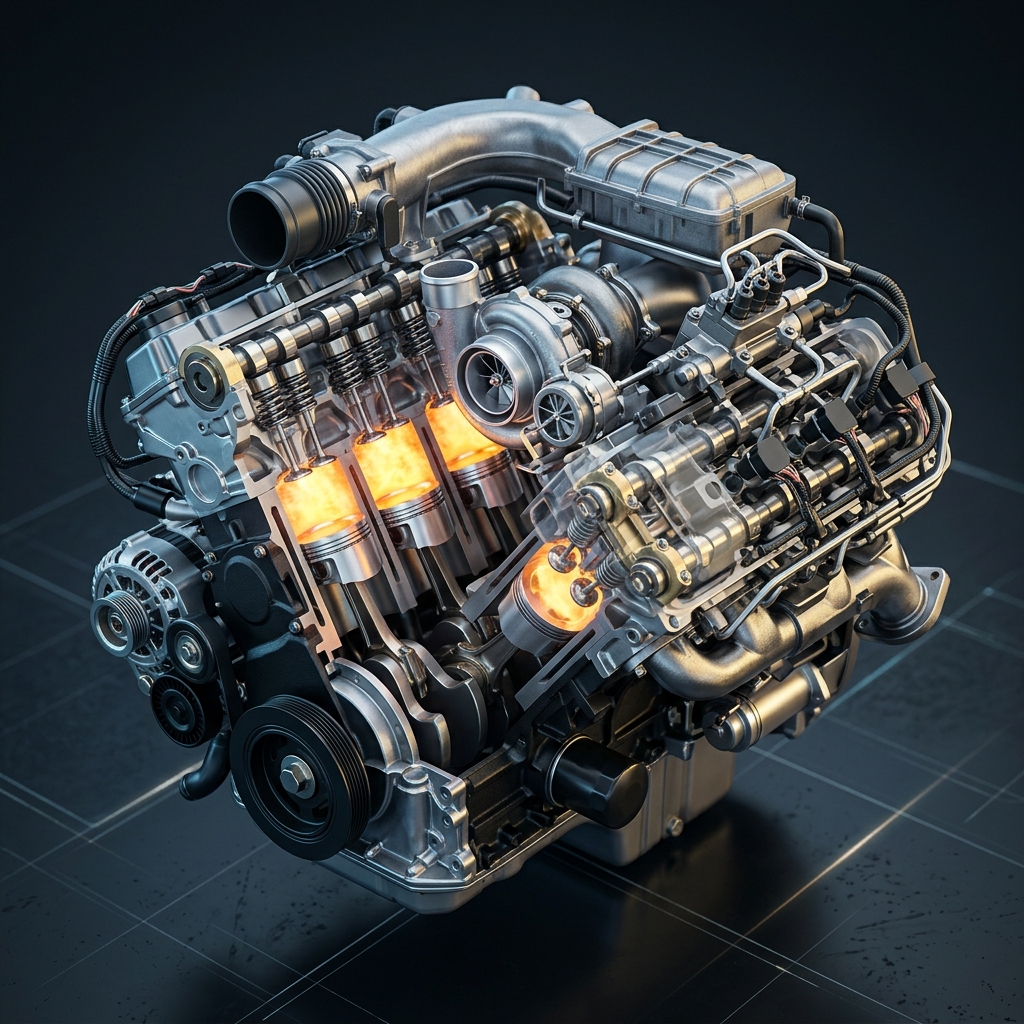
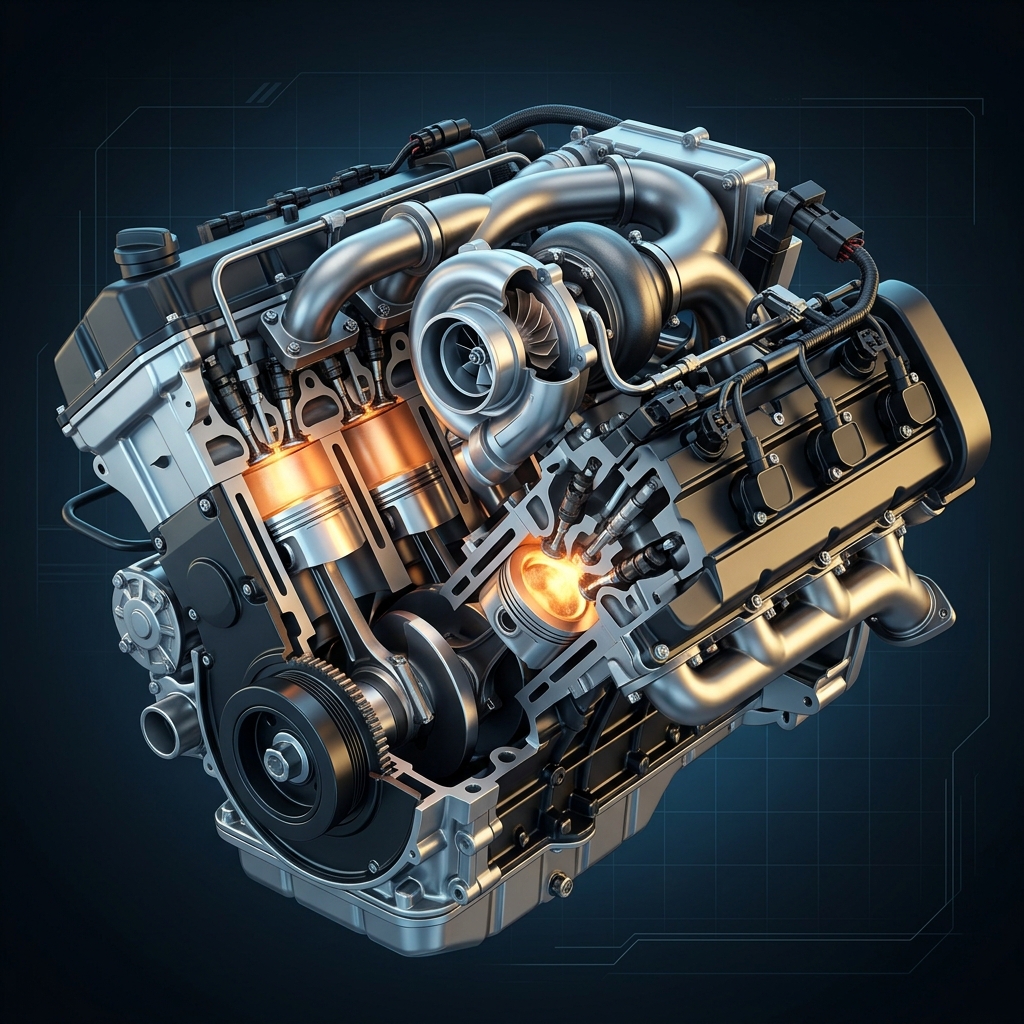
The High Output 6.7L Power Stroke is not just a standard diesel engine with a software tune. It represents a ground-up engineering marvel designed to withstand the highest thermal and mechanical loads ever seen in a production consumer truck. Since the 6.7L architecture first debuted in 2011, replacing the older Navistar-sourced powerplants, Ford has continuously refined the platform. Built in-house at Ford’s Chihuahua Engine Plant, this V8 utilizes a unique ‘reverse-flow’ cylinder head layout, which places the exhaust manifolds and turbocharger inside the engine’s ‘valley’ (the space between the cylinder banks) while the intake manifolds are on the outside. This revolutionary design shortens the path from the exhaust valves to the turbocharger, dramatically reducing turbo lag, accelerating boost delivery, and optimizing thermal efficiency. For local drivers navigating the rolling hills of the Flint Hills or cruising down Interstate 70, this translated to instantaneous throttle response and endless reserves of torque from the moment you step on the pedal.
As we dive deep into the specific components, internal metallurgy, thermal management systems, and competitive advantages of this outstanding engine, you will discover how every single nut and bolt has been optimized for extreme heavy-duty performance. At Valor Ford, we pride ourselves on being more than just a dealership; we are your local diesel authorities. If you’re interested in upgrading your current workhorse, we invite you to explore our Trade In Evaluation process to see how easily you can transition into a brand-new Super Duty. Let’s take a closer look at the exact figures and physical upgrades that define this mechanical monster, demonstrating how Ford continues to rewrite the rules of modern diesel capability.
What Are the Horsepower and Torque Ratings of the 2025 High Output 6.7L Power Stroke V8 Turbo Diesel?
When comparing heavy-duty diesel engines, the conversation always begins with the hard numbers. The 2025 High Output 6.7L Power Stroke V8 Turbo Diesel delivers class-leading metrics that sound more like commercial train specifications than passenger vehicle statistics. This engine puts out a mind-boggling 500 horsepower and an earth-moving 1,200 lb-ft of torque. These numbers represent a dramatic leap forward from previous generations, setting a new benchmark for what is possible in a heavy-duty truck. At 500 horsepower, this engine easily handles rapid acceleration, even when your truck is fully loaded to its maximum gross vehicle weight rating (GVWR). Cruising up steep highway inclines with a fully loaded trailer becomes an effortless affair, as the engine maintains its momentum without breaking a sweat or constantly hunting for gears.
|
Engine Metric
|
High Output (H.O.) Specs
|
|
Displacement
|
6.7 Liters (406 cubic inches)
|
|
Configuration
|
90-Degree V8, Overhead Valve (OHV)
|
|
Horsepower
|
500 hp @ 2,600 RPM
|
|
Torque
|
1,200 lb-ft @ 1,600 RPM
|
|
Fuel Injection
|
36,000 psi High-Pressure Common Rail
|
|
Aspiration
|
Single Variable Geometry Turbo (VGT)
|
But horsepower is only half the story. In the heavy-duty diesel world, torque is the metric that truly does the work. Peak torque of 1,200 lb-ft is achieved down low at just 1,600 RPM. This incredibly low torque peak means that you have maximum pulling power right off the line, where it is needed most. When you are parked on a steep grade with a multi-ton trailer behind you, the H.O. Power Stroke generates instantaneous, immense pulling force that smoothly gets the entire load moving. This flat, robust torque curve ensures that whether you are merging onto a fast-moving highway or pulling a loaded stock trailer through muddy Kansas pastures, the truck responds with absolute authority and complete control. The power delivery is exceptionally refined, utilizing high-tech piezo-electric fuel injectors that cycle up to five times per combustion event, which minimizes the classic diesel rattle and delivers a smooth, quiet, yet terrifyingly powerful driving experience.
By engineering the engine to deliver this level of performance at lower RPMs, Ford also minimizes mechanical wear and tear, ensuring that the engine operates well within its safety parameters. The power is managed seamlessly by the TorqShift® 10-speed automatic transmission, which features specifically programmed shift maps tailored to handle the high-torque output. The result is a truck that feels remarkably light on its feet despite its immense physical size and capability. If you are ready to experience this level of performance firsthand, you can explore our extensive inventory of heavy-duty vehicles, including options for a used truck search by checking out our Browse Used Inventory page, or contact our sales team to discuss ordering a brand-new custom-built Super Duty.
Why Does the High Output Engine Use Stainless Steel Pistons?
One of the most significant engineering breakthroughs separating the High Output 6.7L Power Stroke from its standard-output counterpart is the adoption of advanced advanced pistons. In traditional diesel engine designs, including earlier iterations of the Power Stroke, pistons were manufactured from cast or forged aluminum. Aluminum was favored for its light weight and excellent heat conductivity. However, as Ford engineers pushed the limits of horsepower and torque, they encountered a physical limitation: aluminum pistons simply cannot withstand the extreme cylinder pressures and searing combustion temperatures generated by a 1,200 lb-ft diesel engine over a long commercial lifespan. Under maximum load, aluminum can begin to fatigue, expand excessively, or even suffer from micro-cracking along the piston crown.
To solve this problem, Ford turned to advanced metallurgy, introducing advanced pistons into the High Output engine. Stainless steel possesses a much higher yield strength at elevated temperatures compared to aluminum, meaning it retains its structural integrity even under extreme thermal stress. This allows the H.O. engine to run higher boost pressures and advanced injection timings without risking piston failure. Furthermore, stainless steel has a much lower thermal expansion rate than aluminum. This allows engineers to design tighter tolerances between the piston and the cylinder wall, reducing blow-by gases, minimizing oil consumption, and improving cold-start emissions. The steel pistons also feature a specialized, highly sophisticated combustion bowl design that optimizes the air-fuel mixture, ensuring a complete and efficient burn with every cycle.
While steel is naturally heavier than aluminum, Ford engineers minimized this weight penalty by utilizing a shorter, ‘skeletal’ piston design that reduces overall material volume while retaining incredible strength. This ensures that the engine can still rev freely and smoothly without excessive reciprocating mass. The result is an engine that is fundamentally built to last, providing commercial-grade durability that local farmers, contractors, and heavy haulers can rely on for hundreds of thousands of miles. It is this obsessive attention to engineering detail that sets the High Output Power Stroke apart from the competition, ensuring your investment is protected for the long haul.
Is That 40,000-Pound Rating for Conventional Towing or Gooseneck Towing?
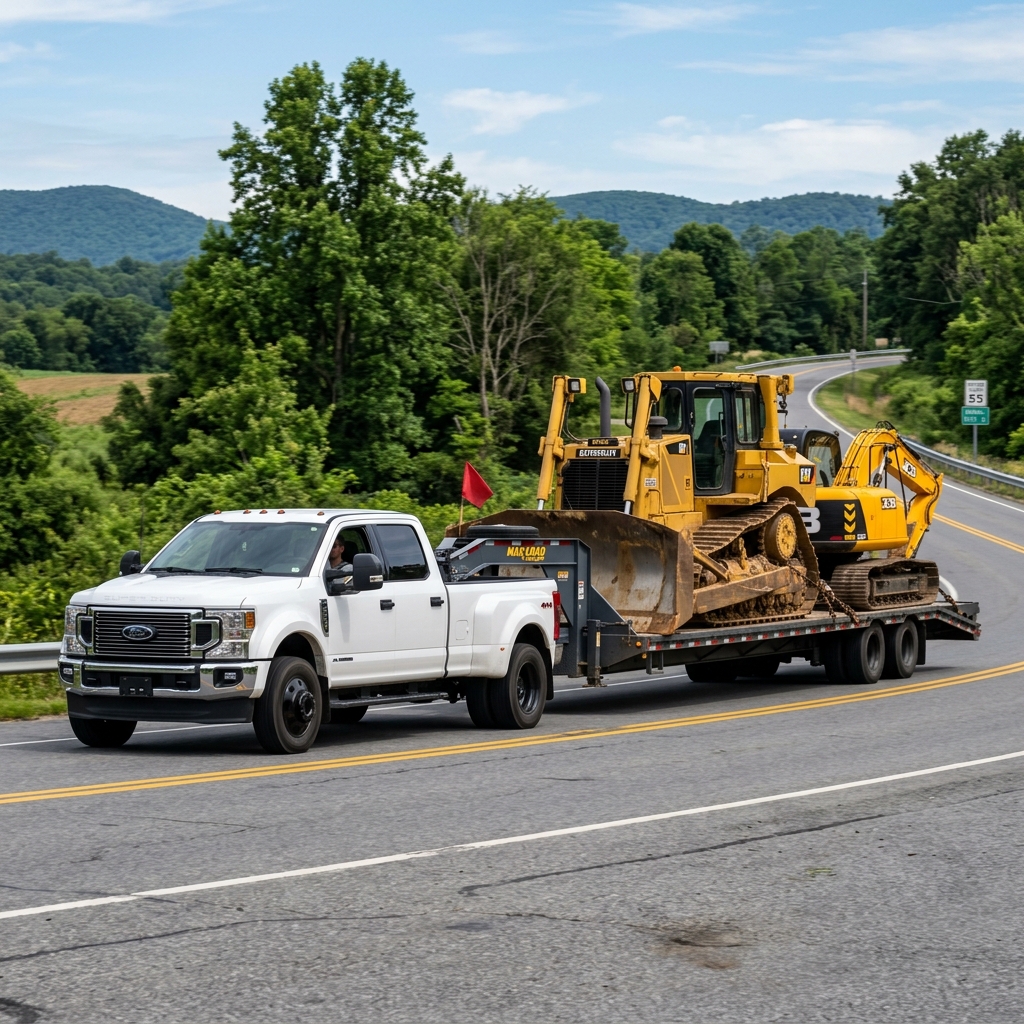
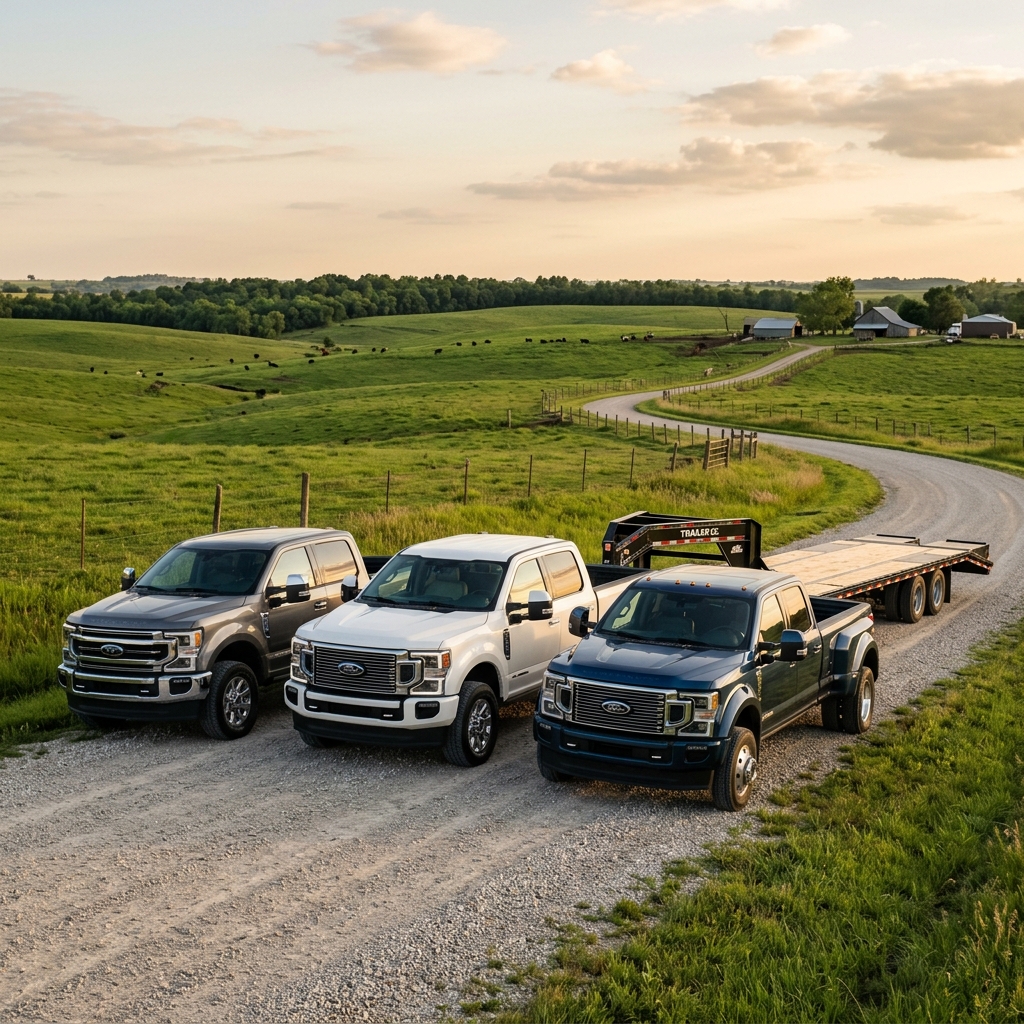
When advertising the spectacular capabilities of the Super Duty line, the figure 40,000 pounds is frequently cited. For many prospective buyers in Junction City and Fort Riley, it is crucial to clarify exactly how this rating is achieved and what it means for daily operations. To be absolutely clear: the legendary 40,000-pound towing capacity is achieved exclusively via gooseneck towing on a properly equipped Ford F-450 dual-rear-wheel (DRW) Regular Cab 4×2 model. Conventional towing—which utilizes a standard receiver hitch mounted to the rear frame of the truck—has different, though still industry-leading, limitations. Understanding the distinction between these two towing methodologies is vital for safety, legal compliance, and selecting the correct truck configuration for your specific needs.
Gooseneck and fifth-wheel towing configurations mount the trailer connection directly in the truck bed, directly over or slightly ahead of the rear axle. This structural alignment transfers the tongue weight of the trailer directly to the center of the vehicle chassis, allowing the truck to carry significantly heavier loads without compromising steering control, braking balance, or frame integrity. To reach the maximum 40,000-pound gooseneck capacity, the F-450 utilizes upgraded commercial-grade axles, unique suspension tuning, and 19.5-inch wheels and tires. For F-250 and F-350 models equipped with the H.O. Power Stroke, gooseneck ratings are still incredibly high, often ranging from 22,000 to over 35,000 pounds depending on cab configuration, axle ratios, and whether the truck is a single-rear-wheel (SRW) or dual-rear-wheel (DRW) setup.
Conventional bumper-pull towing, on the other hand, is limited by the physical leverage exerted on the rear of the frame. Even with a heavy-duty weight-distribution hitch, conventional towing for the Super Duty lineup maxes out at an impressive 30,000 pounds. This means that if you are pulling a large commercial equipment trailer, a heavy boat, or a travel trailer using a standard ball mount, your maximum limit is 30,000 pounds, which still leads the heavy-duty segment by a wide margin. No matter which method you use, the High Output 6.7L Power Stroke provides the necessary power, while Ford’s advanced trailering technologies—such as Pro Trailer Hitch Assist, Onboard Scales, and Smart Hitch—help you monitor tongue weight and hitch alignment in real-time. To help you fund your next commercial or personal vehicle upgrade, we recommend getting started early by filling out our online application to Contact Us for Financing Information with our specialized finance department.
Is the High Output Diesel Standard or Optional Across the Super Duty Lineup?
Work Trims: XL & XLT
For fleet managers and fleet buyers, the XL and XLT trims are the quintessential workhorses. On these trims, the standard engine is either the 6.8L gas V8 or the standard-output 6.7L Power Stroke. However, Ford recognizes that fleet operators often require maximum capability without high-end luxury. Therefore, the 500-horsepower High Output Power Stroke is fully available as an optional upgrade on both XL and XLT models. This allows buyers to configure a highly capable, utilitarian work truck optimized specifically for maximum heavy hauling.
Mid-Tier Luxury: Lariat & King Ranch
Stepping up into the Lariat and King Ranch trims introduces a sophisticated blend of leather upholstery, advanced technology, and high-end exterior styling. On the Lariat trim, the H.O. engine remains an extremely popular option, enabling buyers to customize their balance of power and interior comfort. The legendary King Ranch, heavily inspired by Texas heritage, frequently features the High Output Power Stroke as a selected option, perfectly complementing its rugged, premium aesthetic with class-leading diesel capability.
Premium Flagships: Platinum & Limited
At the very top of the Super Duty hierarchy sit the Platinum and Limited trims. These models represent the absolute zenith of luxury towing, equipped with massaging seats, panoramic sunroofs, and high-fidelity sound systems. To match this ultimate luxury, Ford includes the High Output 6.7L Power Stroke V8 Turbo Diesel as standard equipment on the Limited trim, and it is the primary engine specified for the Platinum. When you buy a top-tier Super Duty, you receive the absolute best engine Ford has ever built.
Which Engine Makes More Power: Ford’s High Output Diesel or Ram’s Cummins High Output?
For decades, the ultimate diesel rivalry has been fought between Ford’s Power Stroke and Ram’s Cummins engine. This heavy-duty showdown has driven incredible engineering progress, culminating in today’s ultra-capable models. When we look strictly at the numbers, Ford’s High Output 6.7L Power Stroke offers more horsepower and torque than Ram’s 6.7L Cummins High Output. Ram’s highly respected inline-six Cummins H.O. produces 420 horsepower and 1,075 lb-ft of torque. While those are highly respectable numbers capable of serious work, they fall substantially short of Ford’s massive 500 horsepower and 1,200 lb-ft of torque. This gives Ford a massive advantage of 80 additional horsepower and 125 more lb-ft of torque.
This power differential is highly noticeable in real-world driving conditions, especially under a heavy load. Because the Ford Power Stroke is a V8 configuration, it naturally revs higher and smoother than the inline-six Cummins. Ram’s Cummins relies on a long-stroke, inline configuration which is excellent for low-end grunt but lacks the high-RPM breathing capacity of Ford’s advanced 32-valve V8. When pulling a heavy trailer up a mountain pass or accelerating to merge onto the highway, the Power Stroke’s extra 80 horsepower allows it to maintain higher speeds and accelerate with far greater urgency, while the Ram Cummins may feel less responsive at higher engine speeds.
Transmission pairing is another critical differentiator. Ford matches its H.O. Power Stroke with the advanced TorqShift 10-speed automatic transmission, featuring tightly spaced gear ratios that keep the engine continuously in the sweet spot of its powerband. Ram, by contrast, pairs its Cummins High Output with the older Aisin 6-speed automatic transmission. The Aisin is highly durable, but its wide gear steps can lead to noticeable drops in RPM during shifts, resulting in a less responsive driving experience when towing through hilly terrain.
|
Feature / Metric
|
Ford 6.7L H.O. Power Stroke
|
Ram 6.7L Cummins H.O.
|
|
Engine Architecture
|
6.7L V8 (32-Valve)
|
6.7L Inline-6 (24-Valve)
|
|
Horsepower
|
500 hp @ 2,600 RPM
|
420 hp @ 2,800 RPM
|
|
Torque
|
1,200 lb-ft @ 1,600 RPM
|
1,075 lb-ft @ 1,800 RPM
|
|
Transmission Type
|
10-Speed TorqShift Automatic
|
6-Speed Aisin Automatic
|
|
Max Towing capacity
|
Up to 40,000 lbs
|
Up to 37,050 lbs
|
|
Piston Material
|
Forged Stainless Steel
|
Cast Aluminum
|
When Should I Pick the High Output Over the Standard 6.7L Power Stroke?
For many buyers visiting Valor Ford, a common dilemma is deciding whether to pay the premium for the High Output variant or stick with the standard 6.7L Power Stroke. To make an informed decision, it is helpful to compare their numbers. The standard 6.7L Power Stroke is an exceptional engine in its own right, delivering 475 horsepower and 1,050 lb-ft of torque. For the vast majority of moderate towing tasks—such as hauling camper trailers, mid-sized utility trailers, or average livestock loads—the standard Power Stroke offers more than enough capability to get the job done safely and efficiently.
However, there are specific scenarios where upgrading to the High Output engine is highly recommended. If you are a commercial hauler, a hotshot driver, or a farmer regularly transporting heavy construction equipment, agricultural loads, or large living-quarters horse trailers near the maximum weight limits, the H.O. engine is absolutely worth the investment. The extra 150 lb-ft of torque makes a dramatic difference when starting from a dead stop on steep grades, and the stainless steel pistons provide peace of mind that the engine can handle continuous, high-load operation day in and day out without premature wear. Additionally, the H.O. engine is highly desirable on the secondary market, which can translate to significantly higher resale values down the road.
Another key consideration is your local driving environment. If you frequently tow through mountainous regions, high-altitude environments, or across the windy plains of Kansas during the hot summer months, the H.O. engine’s upgraded cooling system and water-jacketed turbocharger help maintain peak performance under thermal stress that might cause other engines to temporarily pull back power. If you want to explore the capability of our truck lineup or research smaller options for lighter duties, you can check out our specialized Shop New Ford Bronco Inventory or consult with our truck specialists to find the perfect mechanical match for your demands.
How the TorqShift 10-Speed Transmission and Cooling Upgrades Support the H.O. Engine
TorqShift 10-Speed Transmission
To manage 1,200 lb-ft of torque, Ford utilizes a heavy-duty TorqShift® 10-speed automatic transmission. This gearbox is packed with specialized clutch plates, hardened gearsets, and an upgraded torque converter specifically calibrated for the H.O. engine. The closely spaced gear ratios optimize engine efficiency and keep you in the powerband during heavy towing, while selectable drive modes customize shift points for different terrains.
Advanced Thermal Management
Generating 500 horsepower creates extreme thermal loads. To combat this, Ford engineers equipped the H.O. engine with advanced cooling components. This design circulates engine coolant directly around the turbo housing, rapidly pulling heat away from the intake charge. Combined with an upgraded dual-radiator cooling system, this keeps critical engine oil and coolant temperatures stable under peak loads.
Unique Engine Tuning & ECU
The mechanical upgrades are managed by an advanced Engine Control Unit (ECU) with engine management software. This system continuously monitors engine vitals, exhaust gas temperatures, and fuel delivery. By adjusting turbo boost and fuel rail pressure in real-time, the ECU ensures maximum power while preventing engine knock and thermal overload, delivering robust performance and long-term durability.
Maintenance Tips for Keeping Your 6.7L Power Stroke Running Strong in Junction City
Owning a High Output 6.7L Power Stroke is a rewarding experience, but protecting this advanced piece of machinery requires strict adherence to professional maintenance protocols. Because the H.O. operates under higher cylinder pressures and thermal loads, skipping scheduled maintenance can lead to costly repairs down the road. The single most important maintenance step you can take is keeping your engine oil clean. Ford recommends changing your oil and filter every 7,500 to 10,000 miles under normal driving conditions, but if you regularly tow heavy loads or idle for extended periods around Fort Riley, you should follow the ‘Severe Duty’ schedule, which shortens the interval to every 5,000 miles or six months. Always use high-quality, synthetic-blend motor oil that meets Ford’s strict WSS-M2C171-F1 specification to ensure proper wear protection.
Fuel system maintenance is equally critical. The 36,000-psi high-pressure common-rail fuel system relies on clean, water-free diesel fuel to lubricate its highly precise internal components. The 6.7L Power Stroke features a dual-filter setup: a primary fuel filter/water separator mounted on the frame rail, and a secondary filter under the hood. Both filters must be replaced together—typically every 15,000 to 22,500 miles. Neglecting to drain the water separator or change these filters can allow water or microscopic contaminants to reach the expensive high-pressure fuel pump, leading to catastrophic system failure.
Living in Kansas means dealing with extreme seasonal weather—from freezing winter temperatures to scorching summer heat. This requires careful management of your Diesel Exhaust Fluid (DEF) and cooling systems. Ensure you only use fresh, high-quality DEF, and store it in a cool, dry place to prevent premature degradation. During hot Kansas summers, the engine’s dual cooling loops must be kept at peak efficiency. Regularly check coolant levels and have the coolant chemistry tested at our dealership to prevent corrosion or cavitation in the engine block. If you want to keep your heavy-duty truck running like new, we encourage you to Schedule Ford Service Today with our factory-trained diesel technicians.
For maximum convenience, we also offer specialized service options to fit your busy schedule. You can easily arrange for our professional team to handle your routine maintenance by choosing to Schedule Pickup and Delivery Service, allowing you to stay focused on your work or family while we keep your truck in pristine condition. If you ever have questions or need to speak with a diesel specialist directly, feel free to Call us at (785) 238-5114.
How Dickinson County Farmers and Fort Riley Personnel Benefit from H.O. Power
The outstanding capabilities of the High Output 6.7L Power Stroke are not just abstract engineering specs; they translate directly into tangible, everyday benefits for the hard-working people of Dickinson County, Junction City, and the nearby Fort Riley military installation. In our region of northeastern Kansas, trucks are essential tools for work and daily life. For our local farming community, the summer harvesting season and fall planting cycles demand unrelenting stamina from both people and machines. Moving multi-ton payloads of hay, transporting heavy tillage equipment from field to field, and hauling fully loaded livestock trailers to regional markets requires an engine that will not fail under pressure. The H.O. Power Stroke’s 1,200 lb-ft of torque ensures that pulling heavy loads out of soft, muddy fields or up the steep gravel roads of the Flint Hills is done with complete confidence and zero drama.
For active-duty military personnel and contractors stationed at Fort Riley, duty assignments often require transporting heavy personal equipment, large recreational vehicles, or tactical gear across long distances. The reliable, class-leading performance of the Super Duty provides peace of mind when moving families and valuable possessions across the country during Permanent Change of Station (PCS) moves. At Valor Ford, we have a long history of supporting our military community, helping service members find reliable transportation that matches their demanding lifestyles. Whether you are navigating the flat plains of western Kansas or preparing for a cross-country haul, having the ultimate diesel powertrain under your hood ensures you are prepared for any challenge.
Furthermore, local contractors who support infrastructure projects throughout Junction City rely on the Super Duty’s high payload and conventional towing capabilities to transport skid steers, excavators, and roofing materials to work sites daily. By minimizing travel times and maximizing load efficiency, the H.O. engine directly enhances business productivity. If you are considering upgrading your current vehicle to harness this incredible capability, we welcome you to get a trade-in estimate by submitting a quick online request for a Trade In Evaluation today.
Upgrading and Protecting Your High Output Diesel with OEM Ford Parts
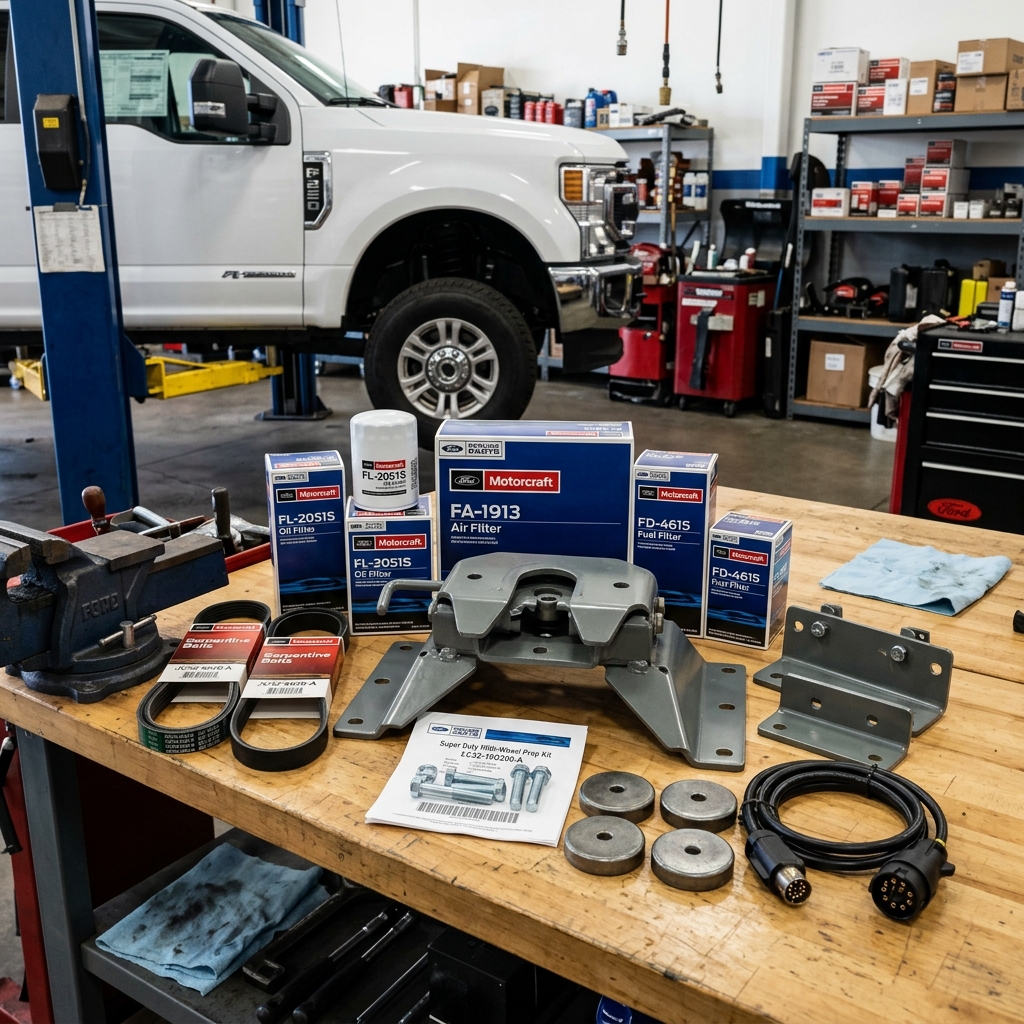
To maintain the incredible performance and structural integrity of your High Output 6.7L Power Stroke, it is essential to use genuine OEM Ford parts and accessories. While the aftermarket is filled with cheaper alternatives, these parts are rarely engineered to withstand the extreme 1,200 lb-ft of torque and high thermal loads produced by the H.O. engine. From heavy-duty oil and air filters to replacement gaskets and fuel injectors, genuine Ford parts are manufactured to the exact engineering tolerances specified by the original designers, ensuring seamless compatibility and long-term durability. Utilizing non-OEM components can compromise your vehicle’s emissions compliance, fuel efficiency, and potentially void your factory warranty.
Beyond engine components, the parts department at Valor Ford offers a wide array of genuine accessories designed to enhance your truck’s utility. This includes factory fifth-wheel and gooseneck prep packages, heavy-duty bed liners to protect your truck bed from shifting cargo, and upgraded suspension components to handle specialized commercial bodies. Our parts specialists can help you select the exact part number for your specific Super Duty model year, preventing costly mistakes and keeping your workhorse on the road. If you are performing your own maintenance or looking to upgrade your vehicle’s capabilities, you can conveniently order components directly through our dealership by choosing to Order Genuine Ford Parts online today.
For drivers who want to research alternative passenger or performance vehicles, we also offer access to the full Ford lineup. If you are looking for a highly capable daily driver with a different focus, you can check out our online resources to Research Ford Explorer or look into our legendary sports car options by taking a moment to Research Ford Mustang. Whatever your automotive needs may be, the team at Valor Ford is here to provide expert guidance and genuine manufacturer support.
Test Drive the High Output 6.7L Power Stroke at Valor Ford Today
Reading about 500 horsepower and 1,200 lb-ft of torque is one thing, but experiencing the raw, refined power of the High Output 6.7L Power Stroke V8 Turbo Diesel in person is an entirely different story. From the moment the engine fires to life with a quiet, powerful hum, to the instant you press the accelerator and feel yourself pressed back into the seat, this engine commands respect. At Valor Ford, we are proud to stock a comprehensive selection of Ford Super Duty F-250, F-350, and F-450 trucks equipped with this state-of-the-art powerplant. Our knowledgeable sales staff is ready to help you compare configurations, review payload limits, and find the exact trim level that fits your professional and personal requirements.
We invite you to visit our state-of-the-art showroom in Junction City, KS, where you can speak with our finance department, explore custom commercial upfit options, and take a Super Duty out on a comprehensive test drive. To plan your visit, you can easily Get Directions to Valor Ford and see how convenient it is to access our dealership from anywhere in the Manhattan, Salina, or Topeka areas. If you are interested in researching specific heavy-duty chassis designs before arriving, we recommend looking at our dedicated page to Research Ford F-250 specifications. Let our team show you why Valor Ford is the trusted choice for heavy-duty truck buyers across Kansas. Come in today and feel the unmatched power of the High Output Power Stroke for yourself!
Tags: 6.7L V8 Turbo Diesel, Commercial Truck Engines, Diesel Engine Technology, Ford F-450, Ford Power Stroke, Ford Super Duty, heavy-duty trucks, High Output Diesel Engine, Stainless Steel Pistons, TorqShift 10-Speed Transmission, Torque and Horsepower, Towing Capacity
Posted in
Buying Guides, Maintenance & Service, Model Comparisons, New Vehicle Reviews, Technology & Innovation |
No Comments »