Demystifying Car Maintenance: Why Plain Language Service Matters in Junction City
Let’s be honest: taking your vehicle in for service shouldn’t feel like you are sitting through an advanced lecture in aerospace engineering. Too often, the automotive industry wraps simple, straightforward concepts in confusing jargon, leaving you wondering what you are actually paying for. At Valor Ford, we believe in a completely different approach. We believe that clear, honest, and plain-language communication is the foundation of trust. Whether you are active-duty military personnel stationed at Fort Riley preparing for a long deployment, a dedicated farmer in Dickinson County managing thousands of acres, or a busy parent juggling school drop-offs right here in Junction City, you deserve to know exactly what is happening under the hood of your vehicle.
Our commitment to the community goes beyond just fixing engines; it is about empowering you with the knowledge needed to make smart, confident decisions about your transportation. When our factory-trained technicians inspect your vehicle, we don’t just hand you a checklist of mysterious codes and expensive-sounding parts. We take the time to explain the ‘why’ and the ‘how’ in terms that make practical sense. We want to make sure you understand which services keep you safe on the highway, which ones improve your fuel efficiency during hot Kansas summers, and which ones can wait until your next budget cycle. If you ever have questions or want to speak with our service advisors directly, feel free to Call us at (785) 238-5114 or visit our dealership at 1825 Goldenbelt Blvd.
What Is Normally Included in a comprehensive service Compared to a Basic One?
Understanding the difference between a basic service and a comprehensive full car service is key to saving money and keeping your car running smoothly. Think of a basic service as your vehicle’s routine check-up, much like a quick dental cleaning. It is designed to be performed frequently—typically every 5,000 to 7,500 miles—to keep critical fluids fresh and catch obvious wear-and-tear items before they escalate. A full car service, on the other hand, is a deep-dive medical physical. It is a thorough, bumper-to-bumper examination that inspects hidden mechanical systems, electrical networks, and structural components to ensure long-term reliability over tens of thousands of miles.
The Basic Service Package
A basic service focuses heavily on the lifeblood of your engine: the oil. During a basic visit, technicians will drain your old, worn-out engine oil and replace it with fresh, high-quality synthetic or semi-synthetic fluid. They will also swap the oil filter to ensure no microscopic metal shavings or carbon deposits circulate back into the clean oil. Additionally, a basic service includes a tire rotation to promote even tread wear across all four wheels, adjusting tire pressures to their optimal levels, and conducting a visual walk-around. This walk-around covers windshield wipers, fluid levels (like windshield washer fluid and coolant), and a quick check of your exterior lights to keep you legal and visible on the road.
The Full Service Package
A full car service includes everything from the basic service but adds extensive layers of diagnostic testing and preventative maintenance. Technicians will perform comprehensive fluid flushes, replacing aged brake fluid, transmission fluid, and power steering fluid that have absorbed moisture or broken down from heat. They will perform a highly detailed brake inspection, measuring brake pad thickness, examining rotors for warping, and inspecting calipers. Furthermore, they will check engine air filters, cabin air filters, spark plugs, suspension linkages, steering joints, and the exhaust system. This is also when we connect computerized diagnostic tools to read the health of your engine management systems and battery charging output.
How Regular Servicing Affects Your Car’s Reliability and Fuel Economy
There is a direct, scientifically proven link between how regularly you service your car and how much money you spend at the gas pump or on emergency towing services. When your car is neglected, its engine has to work significantly harder to perform basic tasks. This added friction, resistance, and strain translates directly to wasted fuel, decreased horsepower, and a drastically shortened lifespan for critical components. By performing simple preventative maintenance, you keep your vehicle running at its absolute peak physical efficiency.
1. Fresh Oil and Reduced Engine Friction
Engine oil is designed to coat moving metal parts with a micro-thin protective barrier, preventing them from grinding together. Over time, heat and pressure break down this oil, turning it thin and watery, or thick and sludgy. Fresh oil drastically reduces internal friction. When your engine parts glide effortlessly, the engine draws less fuel to move the car, maximizing your MPG during those daily commutes from Fort Riley or weekend road trips across Kansas.
2. Air Filters and Clean Combustion
Your engine needs a precise mixture of oxygen and fuel to create combustion. An engine air filter blocks dust, dirt, and agricultural debris from entering the cylinders. However, a clogged filter suffocates the engine, forcing it to burn excess gasoline to compensate for the lack of air. Replacing a dirty air filter can instantly restore lost fuel mileage, reduce tailpipe emissions, and prevent engine hesitation or rough idling.
3. Tire Pressure and Rolling Resistance
Driving on under-inflated tires is like trying to ride a bicycle with flat tires—it takes a tremendous amount of physical energy to move forward. Properly inflated and balanced tires minimize rolling resistance against the asphalt. This simple adjustment ensures your vehicle rolls smoothly, optimizing fuel efficiency and preventing uneven tire wear that leads to premature (and highly expensive) tire replacements.

What Happens If I Skip Regular Oil Changes or Use the Wrong Oil?
Skipping a scheduled oil change might seem harmless in the short term, but it is one of the quickest ways to cause catastrophic, irreversible engine damage. As oil ages, it loses its ability to lubricate, cool, and clean the engine. The intense heat of combustion begins to ‘cook’ the remaining oil, turning it into a thick, black, tar-like substance known as engine sludge. This sludge clogs the narrow oil passages, starving critical moving parts of lubrication. Pistons can weld themselves to cylinder walls, bearings can seize, and camshafts can snap. In the blink of an eye, a simple oil change neglect can turn into a costly engine replacement bill.
Furthermore, using the wrong oil viscosity (thickness) can be just as damaging. Modern engines are built with incredibly tight tolerances—spaces between moving parts that are thinner than a human hair. If you use oil that is too thick, it won’t flow quickly enough to protect these tight areas, especially during freezing cold Kansas winter mornings. Conversely, if you use oil that is too thin during a blistering hot summer day in Junction City, it won’t provide a thick enough barrier to prevent metal-on-metal wear. Adhering to the manufacturer’s exact specifications is crucial for preserving your factory warranty and ensuring peak performance. Don’t risk your engine’s health; let our certified experts handle it with ease.
The Pros and Cons of Doing Your Own Oil Change Versus Using a Professional Shop
The DIY Route: Hands-on but Demanding
Doing your own oil change can be a deeply satisfying weekend hobby for car enthusiasts. It gives you a hands-on connection to your vehicle and lets you control exactly what brands of oil and filter are used. However, it requires a significant initial investment in specialized tools, including a sturdy hydraulic jack, high-quality jack stands, oil filter wrenches, a drain pan, and hand tools. You must also deal with the messy reality of crawling under a heavy vehicle, dealing with hot, dripping fluids, and properly disposing of the toxic used motor oil at an approved recycling center in Geary or Dickinson County. Additionally, if you strip the oil pan drain plug or fail to seal the filter correctly, you bear 100% of the financial liability for any damage.
The Professional Route: Speed, Safety, and Records
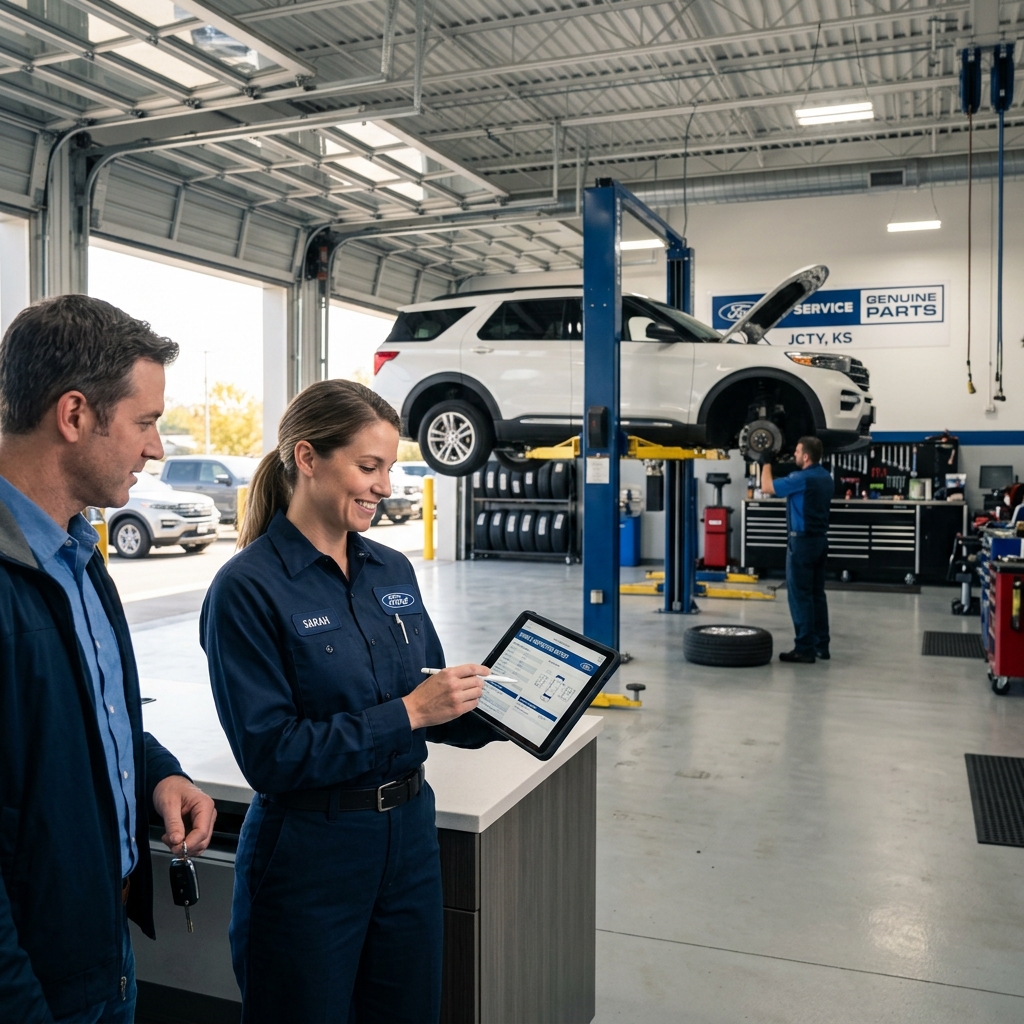
Choosing a professional shop like Valor Ford offers unmatched convenience, speed, and peace of mind. Our certified technicians complete the job in a fraction of the time, keeping your hands clean and your weekend free. More importantly, professional service comes with factory-certified expertise and complete digital maintenance records. These records are automatically logged to CARFAX and Ford’s network, proving to future buyers that your vehicle was meticulously maintained. Furthermore, every professional oil change at our shop includes a complimentary multi-point safety inspection. This means highly trained eyes are examining your brakes, belts, hoses, and suspension components, catching minor issues before they become larger concerns on the road.
What Is the Difference Between OEM and Aftermarket Car Parts?
When your vehicle needs a replacement part—whether it is a simple brake pad, an alternator, or a complex suspension strut—you will generally face a choice between two categories: Original Equipment Manufacturer (OEM) parts and aftermarket parts. Understanding the difference in engineering, testing, and longevity is key to protecting your vehicle’s performance and long-term durability.
OEM Parts: Built to Exact Specs
OEM parts are made directly by the vehicle’s manufacturer (such as Ford) and are the exact components that were installed on your vehicle when it rolled off the assembly line. They offer a flawless fit, are built from identical materials, and perform exactly as intended. There is no guesswork involved; the part is literally made for your specific model, year, and trim level, ensuring your car’s safety features and performance ratings remain completely uncompromised.
Aftermarket: A Wildcard in Quality
Aftermarket parts are manufactured by third-party companies. While they are often cheaper, they are built to fit a wide variety of different vehicles, meaning they are built as ‘one-size-fits-most’ components. This lack of precise engineering can lead to poor fitment, premature wear, and unexpected noise or vibrations. While some aftermarket parts are high quality, separating the reliable manufacturers from the sub-par ones is an unpredictable gamble.
Warranty and Durability
OEM parts come backed by a robust manufacturer warranty that is honored at dealerships nationwide. At Valor Ford, our genuine parts give you complete security on the road. If an aftermarket part fails, it rarely covers the labor costs to replace it, and in some cases, installing a non-certified aftermarket part can actually void your original vehicle warranty. If you need a reliable component, you can easily Order Genuine Ford Parts through us.
Do Maintenance Plans Usually Save Money on Regular Services?
Pre-paid maintenance plans are becoming incredibly popular among car owners, and for very good financial reasons. Put simply, these plans allow you to lock in today’s labor and parts rates for future services, effectively shielding you from the rising costs of inflation. When you purchase a maintenance plan, you are bundling your routine services—like oil changes, tire rotations, cabin filter replacements, and multi-point inspections—into a single upfront package. This package is offered at a value-oriented rate compared to paying for each service individually over time.
Beyond direct financial savings, maintenance plans provide psychological and behavioral benefits. When your routine maintenance is already paid for, you are far more likely to stick strictly to your vehicle’s recommended service intervals. You won’t find yourself putting off a critical oil change or tire rotation just because your monthly budget is a little tight. This consistency prevents minor, unaddressed issues from snowballing into massive, budget-breaking mechanical breakdowns down the road. If you are buying a vehicle or planning for long-term ownership, you can even package these maintenance plans into your financing. To learn more about setting up your vehicle budget, you can Get Pre-Approved for Financing today.
How the Flint Hills Terrain and Kansas Weather Shape Your Service Schedule
The Heavy Toll of Flint Hills Dust and Gravel
Living and driving in the beautiful Flint Hills region of Kansas means your vehicle is exposed to unique environmental challenges. The dusty, unpaved rural roads throughout Dickinson County throw up a constant cloud of fine, abrasive limestone dust. This dust quickly penetrates engine air intakes, cabin ventilation systems, and suspension components. It clogs filters at twice the normal rate and can act like sandpaper on rubber bushings and seals. Because of this, what the manufacturer defines as ‘severe driving conditions’ is actually the daily norm for most Junction City and Fort Riley drivers, requiring more frequent filter changes and chassis lubrication.
Extreme Kansas Seasons: Summer Heat & Winter Cold
Our Kansas weather is notoriously volatile, swinging from freezing winters to intense, humid summers. In the blistering heat of July, your engine’s cooling system operates under extreme pressure to prevent overheating while running the air conditioning. Batteries degrade rapidly under thermal stress, often failing as soon as the first cold snap hits. In the winter, road salt and brine spray accumulate on your vehicle’s undercarriage, accelerating rust and corrosion on brake lines and suspension parts. Regular washing, undercarriage rinses, and seasonal fluid checks are absolutely critical to protect your investment from these brutal environmental shifts.
Understanding the Multi-Point Inspection: What Do Those Green, Yellow, and Red Ratings Mean?
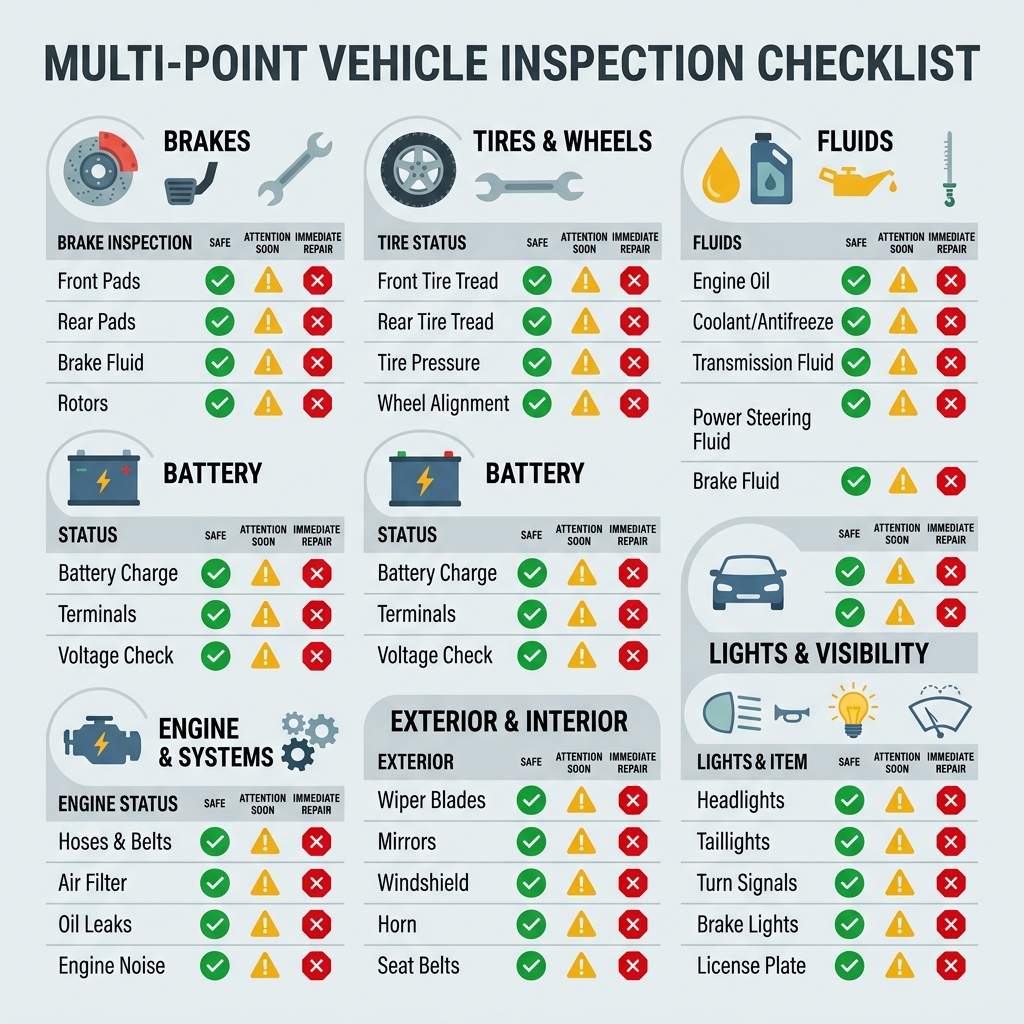
Whenever your vehicle is serviced at Valor Ford, we perform a comprehensive multi-point inspection. We present the results using a simple, intuitive ‘stoplight’ color system of Green, Yellow, and Red. Here is exactly what those colors mean, translating complex mechanical jargon into a clear, actionable plan for your peace of mind:
Green: Excellent Shape
A green rating means the component has been thoroughly checked, meets all manufacturer specifications, and is in excellent operating condition. No attention, adjustment, or replacement is needed. You are good to go, and you can drive with absolute confidence knowing these parts are solid.
Yellow: Plan for the Future
A yellow rating indicates the component is showing signs of normal wear and tear, but does not present an immediate safety risk. It does not need to be replaced today, but you should budget and plan for it in the near future. This allows you to manage maintenance expenses without surprises.
Red: Immediate Attention
A red rating means the component has failed, is severely worn, or poses an immediate safety hazard. These issues require urgent, same-day attention to keep your vehicle safe, legal, and operational. We will always clearly explain the exact risk and prioritize these repairs for you.
How Routine Maintenance Protects Your Vehicle’s Trade-In Value
The Real Value of a Clean Service History
When it comes time to upgrade to a new vehicle, nothing influences your current vehicle’s trade-in value quite like a complete, documented service history. When a dealership or a private buyer looks at your vehicle, they are looking for reassurance that it wasn’t abused or neglected. A vehicle with consistent, professionally documented oil changes, tire rotations, and multi-point safety checks is worth thousands of dollars more than an identical vehicle with no service history. This paperwork proves that you prioritized preventative maintenance, meaning the engine, transmission, and structural elements are far less likely to fail prematurely. It turns your car from a risky gamble into a highly desirable, premium used vehicle.
Unlock Your Vehicle's Current Equity
At Valor Ford, we make it incredibly easy to see exactly how much your diligent maintenance has paid off. Our transparent trade-in evaluation process looks at your vehicle’s mechanical health, aesthetic condition, and local market demand to give you a competitive offer. You can use this equity to transition seamlessly into a brand-new vehicle or a reliable pre-owned model. Whether you are ready to trade today or are just curious about your car’s current financial standing, we invite you to complete our quick, hassle-free online form for a personalized Trade In Evaluation from our expert valuation team.
Why Military Families at Fort Riley Trust Valor Ford for Transparent Service
Serving those who serve our country is one of our deepest points of pride at Valor Ford. Located right next door to Fort Riley, we understand the unique pressures, tight timelines, and unexpected transitions that military families face daily. From sudden deployments and PCS moves across the country to managing a busy household while a spouse is training, we know that your time is extremely valuable and your scheduling needs are highly dynamic. You cannot afford to worry about vehicle breakdowns or deal with slow, untrustworthy service centers.
That is why we offer specialized services tailored directly to our military community, including flexible scheduling options, clear and transparent repair cost breakdowns, and direct communication lines with service advisors. We take the stress out of vehicle care by providing honest, expert recommendations using only genuine parts that keep your warranty fully intact. If you are preparing for a move, transitioning back to civilian life, or simply need your vehicle inspected before a long road trip, our team is here to support you every step of the way. Stop by and see us, or Get Directions to Valor Ford to experience our transparent military-friendly service first-hand.
A Simple Checklist for Your Next Scheduled Maintenance Visit
What to Prepare and Bring
Before you head to your service appointment, spending just five minutes preparing can make the entire process significantly smoother. Be sure to gather your vehicle’s registration, insurance card, and any existing maintenance records if you are new to our shop. If your vehicle has a wheel lock key (often stored in the glove compartment or with the spare tire), make sure it is easily accessible so our technicians can perform tire rotations and brake inspections. Additionally, clear out any personal belongings from the front passenger seat and center console area so our technicians can safely work on interior items like cabin filter replacements.
Questions to Ask Your Advisor
When you sit down with your service advisor, do not hesitate to ask clarifying questions in plain English. Good questions to ask include: ‘What are the most urgent safety items on my multi-point inspection today?’, ‘Are there any outstanding manufacturer safety recalls on my vehicle model?’, and ‘How do my brakes and tire tread depths look compared to last visit?’. If you are experiencing a weird sound, vibration, or warning light, try to describe it in simple terms—like ‘a high-pitched squeak when braking’ or ‘a minor shudder at 60 MPH.’ Our team is trained to translate those physical descriptions into accurate diagnostic steps.
Schedule Your Next Worry-Free Service at Valor Ford in Junction City Today
At Valor Ford, we make car maintenance completely transparent, stress-free, and straightforward. No confusing industry jargon, no hidden fees, and absolutely no high-pressure sales tactics. From simple, quick oil changes to deep-dive engine diagnostics and preventative fluid flushes, our factory-trained and certified technicians have the expertise to keep your vehicle running perfectly. We proudly serve drivers throughout Junction City, Fort Riley, and Dickinson County, helping you protect your investment, maximize your fuel economy, and preserve your vehicle’s trade-in value. For routine care—schedule your next service online today or give our friendly service desk a call to experience the Valor Ford difference.
Tags: automotive service tips, car maintenance, engine diagnostics, fuel efficiency maintenance, multi-point inspection, OEM car parts, oil change service, preventative maintenance, professional auto repair, tire rotation, vehicle care and repair, vehicle service
Posted in
Genuine OEM Parts & Accessories, Genuine Parts & Accessories, Maintenance & Service, Repair & Parts, Service Tips & Guides, Vehicle Ownership Tips |
No Comments »