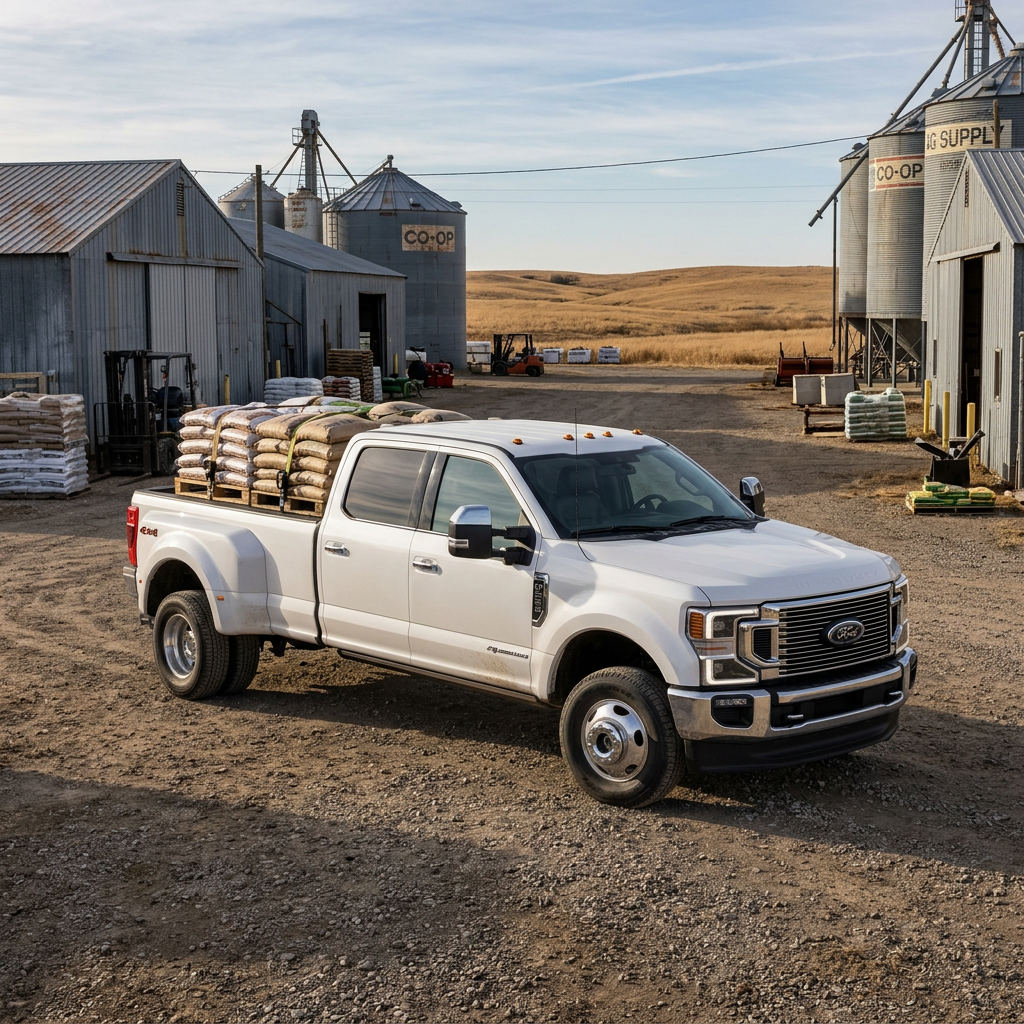

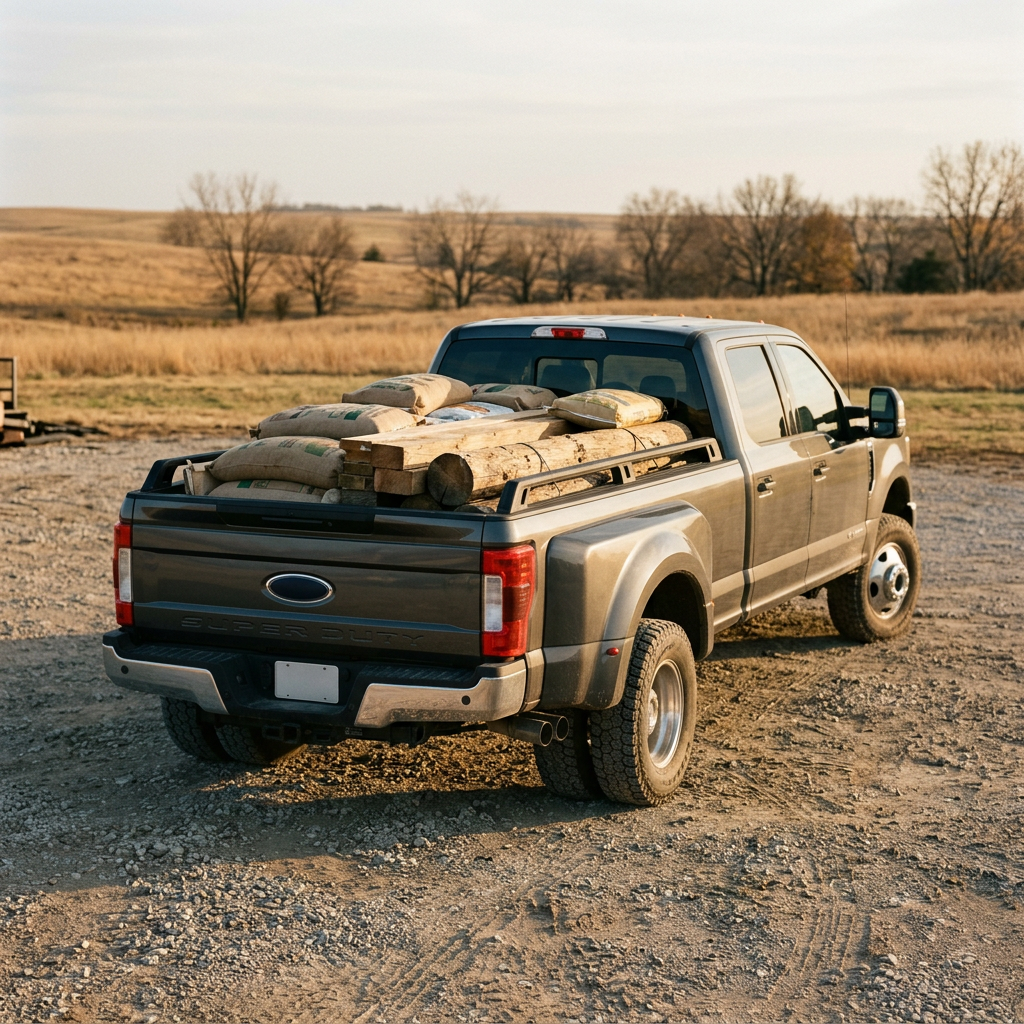
Understanding Super Duty Payload Capacity: Expert Q&A With Valor Ford
Cab style and bed length directly determine a heavy-duty truck's base curb weight, meaning every extra pound of cab structure, frame length, or drivetrain hardware subtracts from the available payload capacity on the vehicle certification label. To break down how cab selections, axle configurations, and equipment choices influence real-world hauling limits, we sat down with Jace Grabouski, General Manager at Valor Ford, who brings 25 years of automotive expertise to guide truck buyers through payload mechanics.
Q: How Does Cab and Bed Configuration Affect Super Duty Payload Capacity?
A: A truck's payload capacity comes down to curb weight subtracted from its gross weight rating. Choosing a larger cab or a longer cargo box adds heavy steel, glass, interior components, and frame length, which immediately consumes gross weight rating before any tools or passengers climb aboard. For maximum payload, a two-door Regular Cab with an 8-foot cargo box provides the lightest starting curb weight, leaving the greatest percentage of the truck's gross weight capacity dedicated solely to carrying cargo.
When buyers configure a SuperCab or Crew Cab, that cab structure adds significant structural weight. A Crew Cab with four full doors, rear bench seating, and sound-deadening insulation weighs noticeably more than a bare Regular Cab work truck. Adding an extended 8-foot cargo box behind a Crew Cab further lengthens the fully boxed high-strength steel frame, adding additional chassis mass. Four-wheel-drive systems introduce a heavy transfer case, a front drive axle, and a front driveshaft, which further cuts available payload compared to a two-wheel-drive truck.
For commercial drivers picking up machinery near the Kansas River in Junction City, configuring the right cab and box length marks the difference between staying fully legal and running overloaded. We regularly review equipment setups with buyers at our showroom on Goldenbelt Boulevard to align cab dimensions with mandatory job site payloads. Anyone wanting to review specific cab weights before ordering can also give our staff a call directly at (785) 238-5114.
Q: Jace, What Is the Difference Between Payload Capacity and GVWR on a Super Duty?
A: Gross Vehicle Weight Rating, commonly abbreviated as GVWR, represents the absolute maximum operating weight of the vehicle established by factory chassis engineers. That engineering figure encompasses the entire loaded truck, including its empty curb weight, a full tank of fuel, every passenger on board, all aftermarket gear, all cargo placed in the bed, and any trailer tongue weight pressing down on the hitch receiver. Payload capacity is the difference between that total gross rating and the empty operating weight of the vehicle.
A common point of confusion occurs when drivers treat payload and towing as interchangeable numbers. Towing measures the rolling mass the truck pulls behind its hitch, while payload measures the vertical downward mass the truck carries across its front and rear axles. A heavy gooseneck livestock trailer might weigh 16,000 pounds, but fifteen to twenty-five percent of that trailer's total weight bears straight down onto the truck bed as pin weight, immediately counting against payload capacity.
When reviewing our pre-owned truck inventory, shoppers often find trucks with identical gross weight ratings that feature different usable payload capacities. That variation happens because factory trim appointments like leather power seats, sunroof assemblies, and power running boards add physical weight to the cabin. That extra curb weight reduces the remaining payload margin pound for pound, making it essential to understand the math before hauling heavy loads.
Q: Where Is the Exact Payload Certification Sticker Located on a Super Duty?
A: You will find the exact payload certification label affixed directly to the driver-side B-pillar door jamb. Ford places two critical informational labels in this area: the federal Safety Compliance Certification label and the Tire and Loading Information label. The Tire and Loading Information sticker features a distinctive yellow and white border, and it states explicitly that the combined weight of occupants and cargo should never exceed a specific number in pounds and kilograms.
That door jamb figure is unique to the exact Vehicle Identification Number stamped on the chassis. While sales brochures list the highest possible payload for a stripped-down baseline trim, the door jamb sticker accounts for every optional package, wheel design, and cab accessory installed on that truck at the assembly plant. A truck equipped with a panoramic glass roof, fifth-wheel prep package, and power tailgate will show a lower payload rating on its door jamb than an identical cab style built to base work-truck specifications.
Checking this figure remains vital whenever you add accessories or bring your truck into our Ford service center for maintenance or suspension inspections. Tools, commercial steel service boxes, bed toppers, and heavy spray-in liners installed after the truck leaves the assembly line do not show up on the sticker. Every item added to the truck after purchase must be manually subtracted from that door jamb rating to calculate your true remaining cargo margin.
"A set of helper springs might keep the rear bumper level under a heavy load, but it does not change the axle tubes, wheel bearings, or the legal weight rating on your door jamb."
Q: Can an F-250 Be Modified With Aftermarket Parts to Match Legal F-350 Payload?
A: No mechanical modification or aftermarket suspension kit can legally raise the Gross Vehicle Weight Rating or payload capacity stamped on the factory certification sticker. Drivers often install air helper springs, extra leaf springs, or stiffer rear anti-roll bars in an attempt to handle heavier loads. Those aftermarket accessories help level the truck's ride height and manage body lean under load, but they leave the legal door-jamb weight rating unchanged.
The differences between three-quarter-ton and one-ton models run far deeper than an extra leaf spring pack in the rear suspension. An F-350 typically utilizes larger rear axle housings, thicker axle tubes, higher-capacity wheel bearings, heavy-duty brake friction material, and distinct wheel and tire load ratings engineered to manage elevated cargo stress. Adding air bags to an F-250 chassis leaves those critical driveline and braking components at their original factory load limits, creating premature component wear and safety concerns.
If your commercial hauling requirements outgrow three-quarter-ton capabilities, our parts team can help with ordering genuine Ford components to maintain factory specifications, but the correct path to higher legal payload is moving into an F-350. You can review detailed capacity differences through our 2026 Ford F-250 model research to see if your current setup fits your hauling requirements. When upgrading becomes necessary, evaluating your trade-in online gives you a fast assessment of your current truck's value toward a properly rated platform.
Q: Why Does the Ford Super Duty Achieve Higher Payload Ratings Than Competitors?
A: The Super Duty achieves its payload advantage by pairing a high-strength, military-grade aluminum-alloy body with a fully boxed high-strength steel frame. By utilizing high-strength aluminum for the cab structure, doors, hood, and bed, Ford reduced overall body mass by several hundred pounds compared to traditional stamped steel bodies. Because the body itself is lighter, that weight savings transfers directly into usable payload capacity rather than dead metal the truck must carry around every day.
Traditional steel cabs used by competitors carry substantial structural weight, which consumes gross vehicle weight rating before any payload is added. Ford engineers redirected the weight saved from the aluminum-alloy cab into strengthening the chassis where strength matters most. The Super Duty frame features high-strength steel crossmembers, reinforced spring perches, heavy-duty steering gear, and massive driveline components that withstand punishing cargo loads.
For agricultural operations in Dickinson County, hauling round hay bales, feed totes, and heavy gooseneck stock trailers across rolling farm ground demands that structural rigidity. That combination of reduced cab curb weight and high-strength chassis engineering allows the Super Duty to handle demanding agricultural work without deflecting or fatiguing the frame. Buyers interested in exploring these engineering advantages can examine our Ford F-250 capability details before contact our team for financing information on a heavy-duty truck suited to their operations.
Q: What Are the Published Super Duty Payload Ranges Across Engines and Trims?
A: For the 2026 Super Duty lineup, published maximum payload reaches up to 8,000 pounds on properly equipped configurations. That maximum payload rating of 8,000 pounds requires an F-350 DRW two-wheel-drive Regular Cab equipped with the 7.3L gas V8 engine and the available F-350 Gas Heavy-Duty Payload Package. On single-rear-wheel configurations and standard passenger-oriented cabs, payload ratings scale progressively based on curb weight, axle configuration, and powertrain options.
Engine selection plays a direct role in calculating net payload. The standard 6.8L gas V8 and available 7.3L gas V8 deliver the highest payload numbers because gasoline engine blocks weigh significantly less than heavy commercial diesels. The available 6.7L Power Stroke diesel V8 features a cast-iron engine block, massive turbocharging hardware, high-pressure fuel systems, and emissions equipment that add roughly 500 to 800 pounds of curb weight over the front axle.
Because of that extra powertrain weight, the maximum diesel payload rating for an F-350 DRW two-wheel-drive Regular Cab sits at 6,952 pounds. While the diesel provides massive pulling power with up to 1,200 lb-ft of torque for heavy trailer hauling, a gas engine provides superior payload capacity for hauling heavy in-bed slide-in campers, commercial flatbeds, or utility service bodies. Choosing between gas and diesel requires balancing whether your primary workload involves pulling heavy rolling trailers or carrying heavy vertical bed loads.
Q: What Should Truck Buyers Check Before Selecting a Super Duty at Valor Ford?
A: Before picking a truck off the lot, calculate your total realistic payload demand by adding together the weight of your family, tools, aftermarket gear, and trailer tongue weight. Many drivers underestimate the weight of in-bed toolboxes, auxiliary fuel transfer tanks, fifth-wheel hitches, and steel bumpers, all of which deduct capacity directly from the door-jamb rating. Comparing those calculated weights against the factory yellow Tire and Loading Information label ensures the truck matches your daily operation safely and legally.
Once you establish your target payload requirement, inspect the axle ratio and factory towing packages on the window sticker. Selecting an F-250 with a high-capacity trailer tow package or moving up to an F-350 dual-rear-wheel configuration provides the necessary spring packs, axle tubes, and tire load ratings to handle heavy commercial equipment. Our team can help calculate payload numbers and weigh trade-off options between single-rear-wheel daily usability and dual-rear-wheel cargo stability.
When you are ready to evaluate a Super Duty firsthand, visit our Junction City showroom to review door-jamb ratings across our lineup, or give our sales staff a call at (785) 238-5114 with your trailer specifications. If your household also needs an off-road companion alongside a heavy-duty tow rig, you can browse our new Ford Bronco inventory during your visit. Verifying your numbers with our sales specialists ensures you drive away in a truck engineered to tackle your hardest work with absolute confidence.