
Blog / Maintenance & Service

Fall Crop Harvest Truck Preparation: Pre-Hauling Inspections for Central Kansas Farmers

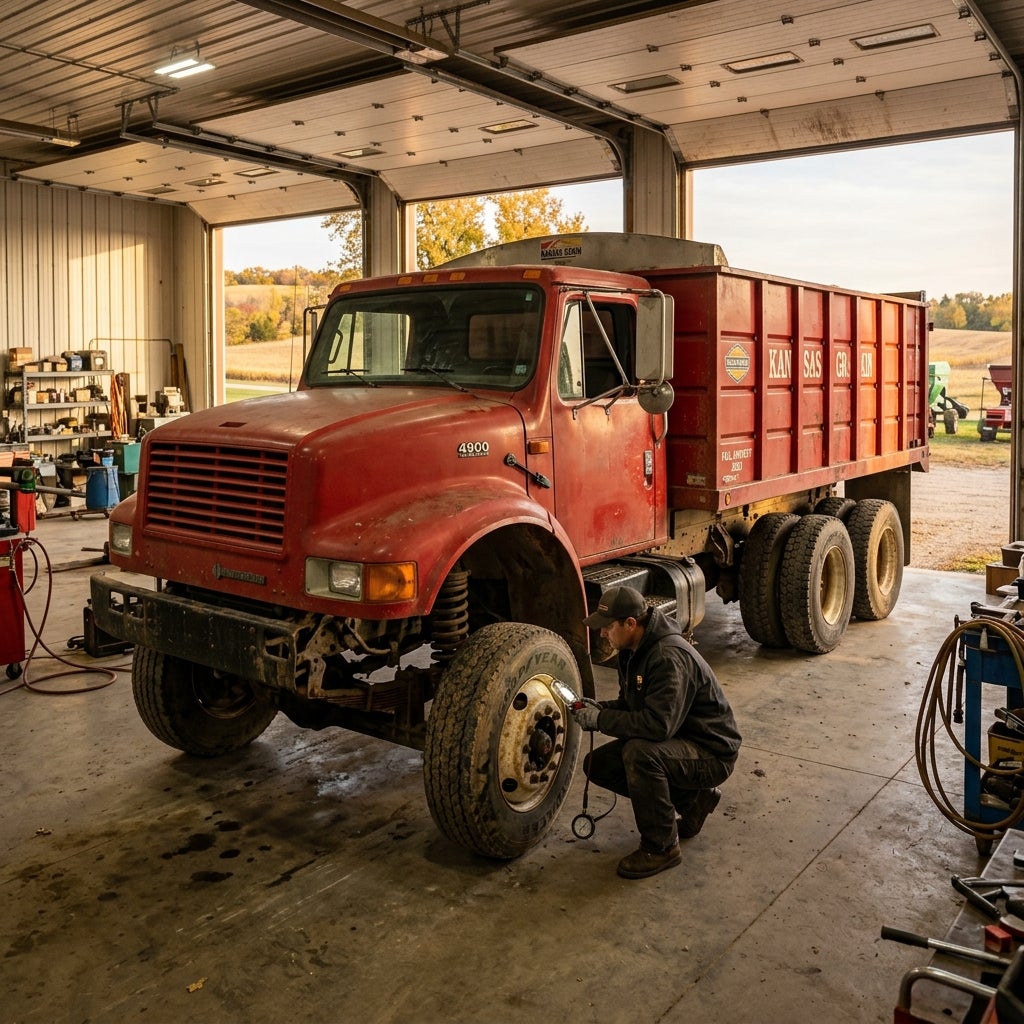
A mechanic kneeling inside a garage while inspecting the front tire of a large red International grain truck. (Representative image for illustration purposes only. Actual vehicle may vary based on trim and configuration.)

Fall Crop Harvest Truck Preparation: Pre-Hauling Inspections for Central Kansas Farmers

Direct Answer Summary: Mandatory pre-trip inspection items for agricultural grain trucks prior to fall harvest include comprehensive cold engine fluid and belt evaluations, full air brake system leak-down and governor cut-in/cut-out pressure tests, tire tread and inflation verification under loaded specifications, grain bed hydraulic hoist and rubber seal containment checks, full electrical lighting and SMV emblem inspections, and front-end steering and suspension alignment checks. Performing these critical maintenance steps before heading into the fields around Dickinson and Geary Counties prevents costly harvest-time roadside breakdowns, protects valuable crop yields from spillage, and guarantees full DOT safety compliance during high-volume grain delivery.
As autumn approaches across Central Kansas, local agricultural producers near Junction City, Abilene, and Fort Riley prepare for one of the most demanding stretches of the farming calendar. Transitioning from summer wheat stubble to high-volume corn, sorghum, and soybean harvesting requires heavy machinery running around the clock. Your grain truck—whether a single-axle straight truck, tandem grain rig, or full semi-tractor trailer—serves as the critical transport link between field combines and regional grain elevators. A mechanical failure during harvest doesn't just mean a tow truck bill; it causes cascading delays across your entire harvesting team, potentially exposing unharvested crops to autumn storms.

Expert Q&A: Why Is Pre-Season Maintenance Important for Grain Trucks in Dickinson County?

Interviewer: Today we are sitting down with Mike Hogg, Service Director at Valor Ford with over 20 years of hands-on experience keeping commercial fleets and farm vehicles running across Dickinson and Geary Counties. Mike, farm trucks often sit parked near field corners or sheds for weeks or months between summer wheat cutting and fall corn harvest. Why is dedicated pre-season maintenance so vital before pulling into the field?
Mike Hogg: Thanks for having me. The biggest issue with agricultural grain trucks is 'disuse decay.' A farm truck can sit motionless under the Kansas summer sun, experiencing extreme temperature swings. Dry air hardens rubber brake seals, rodents nest inside electrical harness channels, fuel degrades, and air brake moisture reservoirs settle and corrode valves. When fall harvest begins, that truck goes from zero activity to carrying 50,000 to 80,000 pounds across rutted field entrances and down Highway 77 at 65 miles per hour. If you don't perform a rigorous, systematic pre-trip checklist before loading that first hopper of corn, dormant issues become catastrophic failures. Taking a few hours to perform pre-season checks protects your investment, keeps your drivers safe, and keeps grain moving efficiently.

Q: Why Should the Inspection Start with a Cold Engine?

Mike Hogg: You always begin under the hood before turning the ignition key. Starting with a cold engine is a basic safety and accuracy protocol. Checking fluid levels—engine oil, radiator coolant recovery tanks, power steering fluid, and heavy-duty transmission fluid—when the block is cold gives you a true baseline reading. Thermal expansion distorts fluid levels, and opening a hot pressurized radiator cap presents a severe burn risk to operators.
Cold engine checks also allow you to spot slow fluid leaks that might otherwise evaporate instantly on a scorching engine block. Look closely for coolant crystallization around water pump housings, power steering weeping at hose crimps, and diesel fuel seepage near injector rails. Inspect serpentine and fan belts for glazing, edge fraying, or dry rot cracks. A broken fan belt under full load in a dusty corn field will overheat your diesel block in minutes.
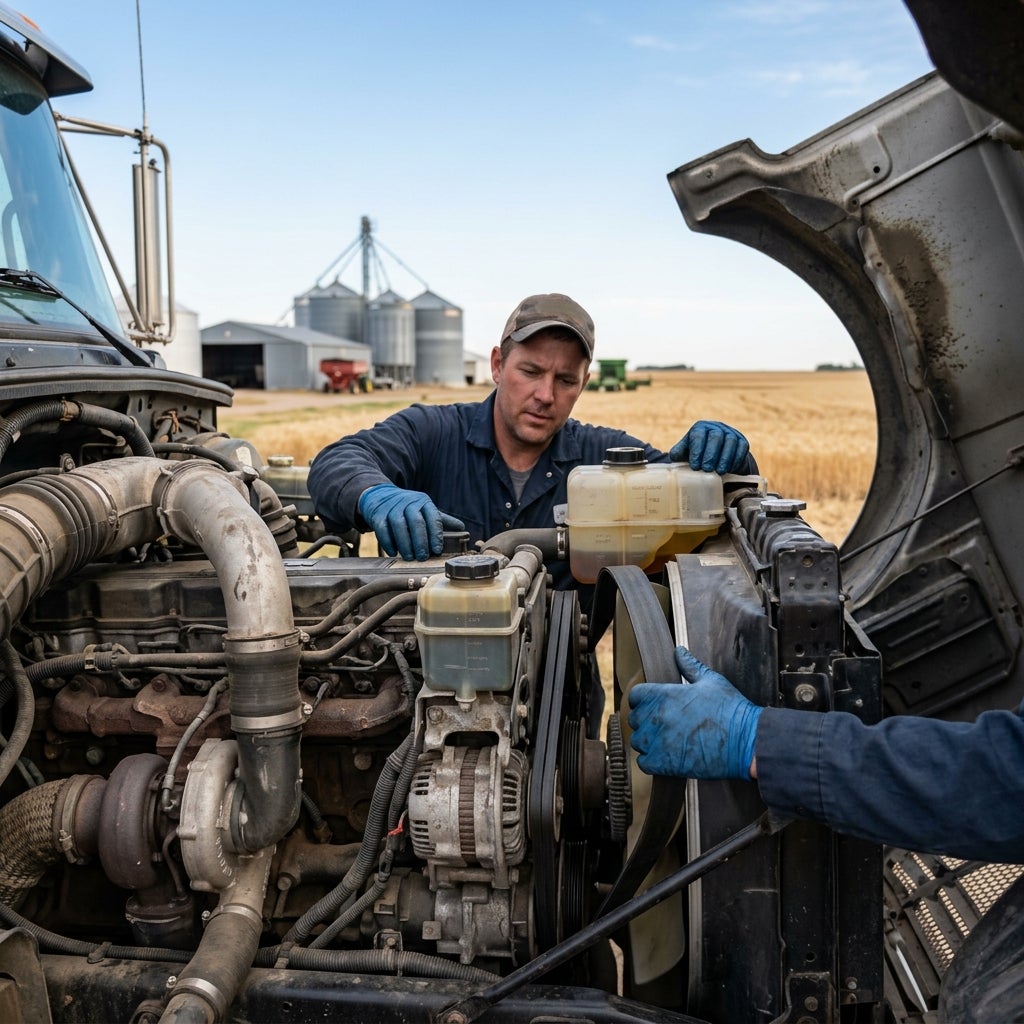
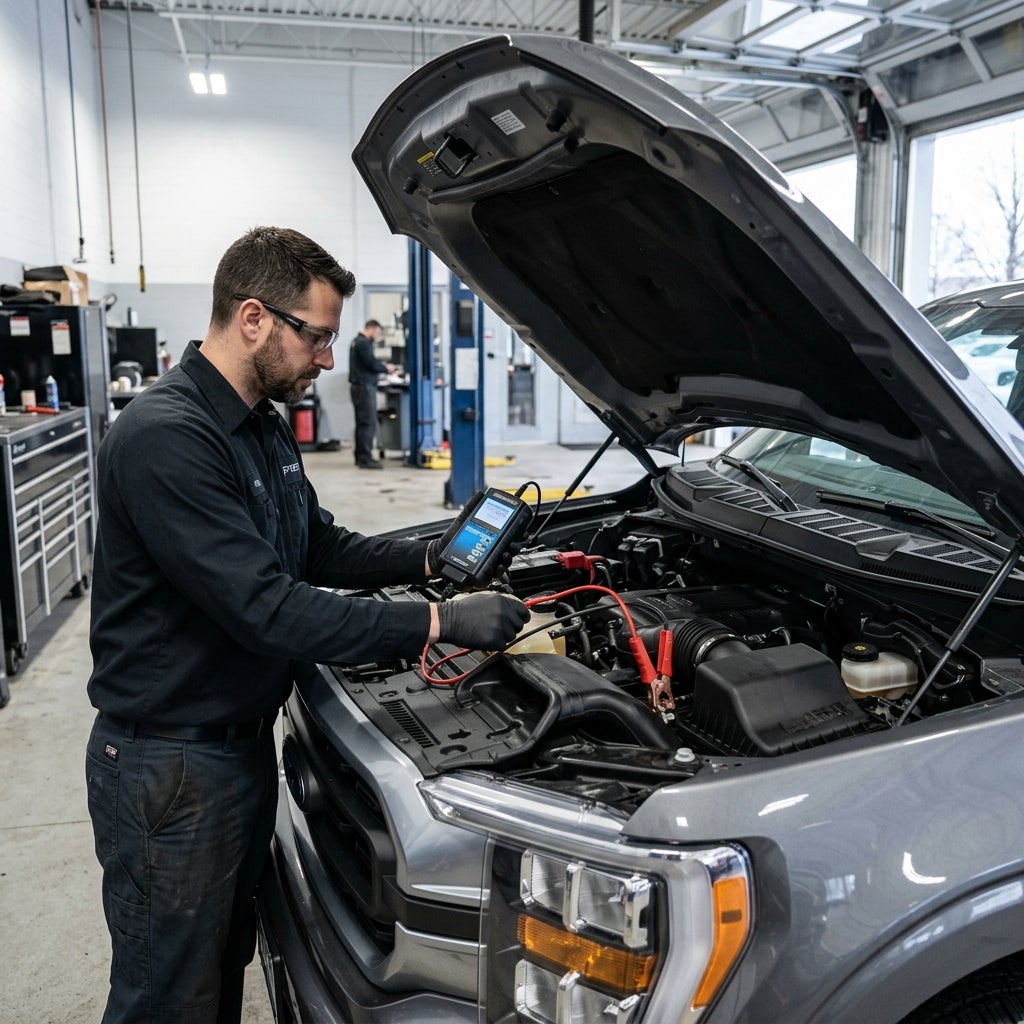
A mechanic wearing blue gloves inspects the engine of a semi-truck on a farm with grain silos in the background. (Representative image for illustration purposes only. Actual vehicle may vary based on trim and configuration.)

Q: What Should I Check First on the Air Brake System?

Mike Hogg: Air brakes are your primary line of defense when hauling 25 tons of grain down steep county road gradients. Start inside the cab with your air pressure gauge. 1. Pressure Build Test: Start the truck and ensure air pressure builds from 85 PSI to 100 PSI within 45 seconds. 2. Governor Cut-Out/Cut-In: Verify the compressor governor cuts out between 120 and 140 PSI, and cuts back in at around 100 PSI. 3. Static Leak-Down Test: Turn off the engine, release the parking brake, and watch the gauge for one minute. Pressure drop must not exceed 2 PSI for single vehicles or 3 PSI for combination rigs. 4. Applied Leak-Down Test: Firmly depress the foot brake pedal. Maximum allowable pressure drop over one minute is 3 PSI for straight trucks or 4 PSI for semi combinations.
Outside the vehicle, open manual petcock valves on all air reservoirs to drain accumulated water and oil sludge. Condensation in air tanks corrodes relay valves and can freeze during late-fall harvest freezes. Finally, crawl under the rig to inspect automatic slack adjusters, pushrod travel lengths, and brake shoe lining thicknesses. Brake shoes should have at least 1/4-inch of friction material remaining. If you notice uneven shoe wear or rusted brake drums, Schedule Ford Service Today at Valor Ford to keep your stopping power intact.

Q: What Are the Critical Tire, Wheel, and Axle Checklist Items for Heavy Loads?
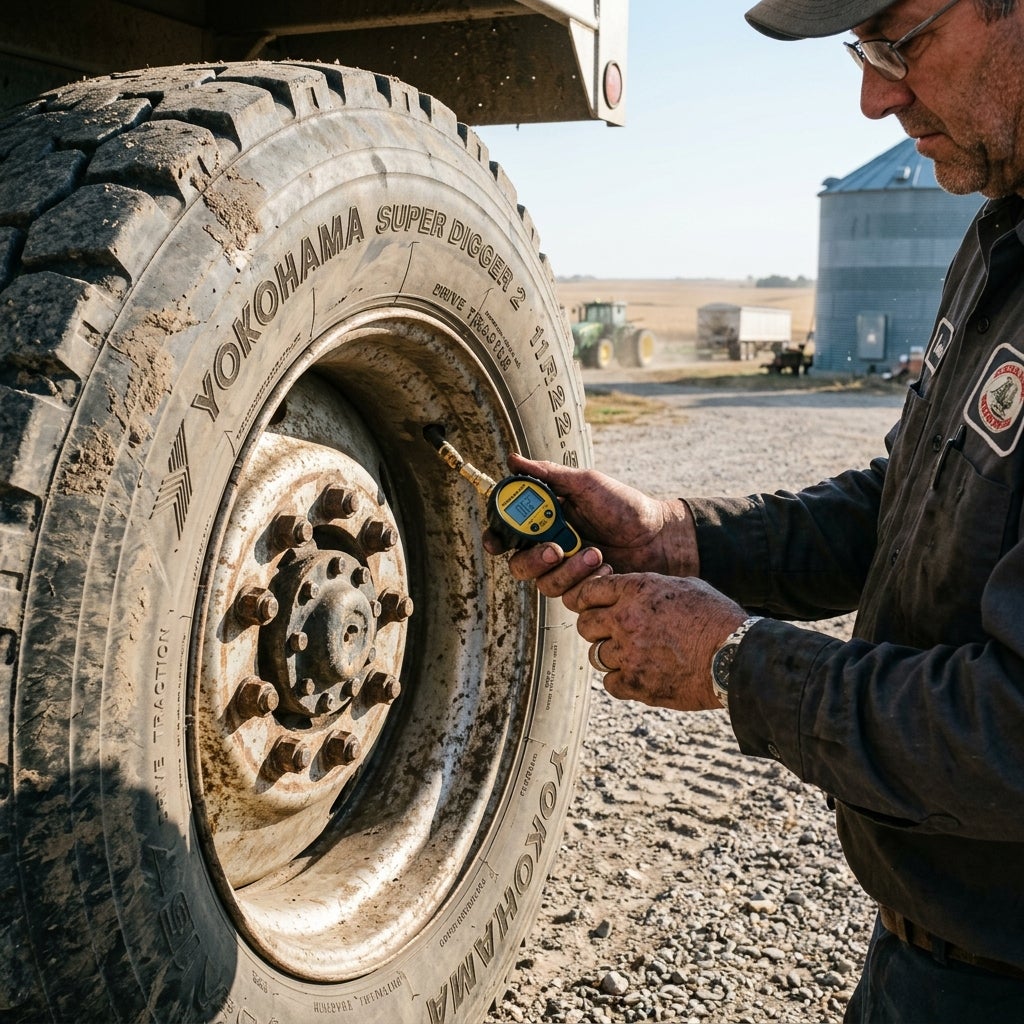
A man using a digital gauge to check tire pressure on a large truck tire in a farm gravel yard. (Representative image for illustration purposes only. Actual vehicle may vary based on trim and configuration.)
Mike Hogg: Grain truck tires take punishment that highway freight haulers rarely see. You're rolling over sharp wheat stubble, crossing ditches, and driving onto gravel county roads loaded to maximum gross vehicle weight rating (GVWR). First, check tire pressure with an accurate calibrated gauge when tires are cold. Under-inflated dual tires generate immense internal friction heat at highway speeds, causing catastrophic blowouts. Ensure inflation matches sidewall specs for full payload rating—often 100 to 110 PSI on steer tires and 90 to 100 PSI on drive duals. Second, check dual tire spacing and diameter matching. Rocks lodged between dual wheels will destroy sidewalls in miles. Verify tread depth meets regulatory minimums: at least 4/32-inch on steer tires and 2/32-inch on drive axles. Finally, inspect wheel rims for hair-line flange cracks and check hub oil seals. Leaking hub oil stains on the inner wheel rim indicate compromised seals, which will quickly starve wheel bearings of lubrication and weld an axle spindle shut in middle of harvest.

Q: How Do You Inspect Grain Body Seals, Endgates, and Tarp Systems to Prevent Crop Loss?

Mike Hogg: Spilling grain on public highways isn't just lost revenue—it's a serious road safety hazard and punishable by traffic citations. Hydraulic Hoist System: Raise the grain box fully (using safety stands!) and inspect hydraulic cylinders for scoring or fluid leaks. Check fluid levels in the hydraulic reservoir and ensure PTO engagement linkage operates smoothly without binding. Endgate & Latching Locks: Check automatic trip levers and mechanical locking pins. When the grain box sits flush against the frame, the endgate must seal tightly without gaps. Replace worn perimeter rubber gaskets or warped steel seals.
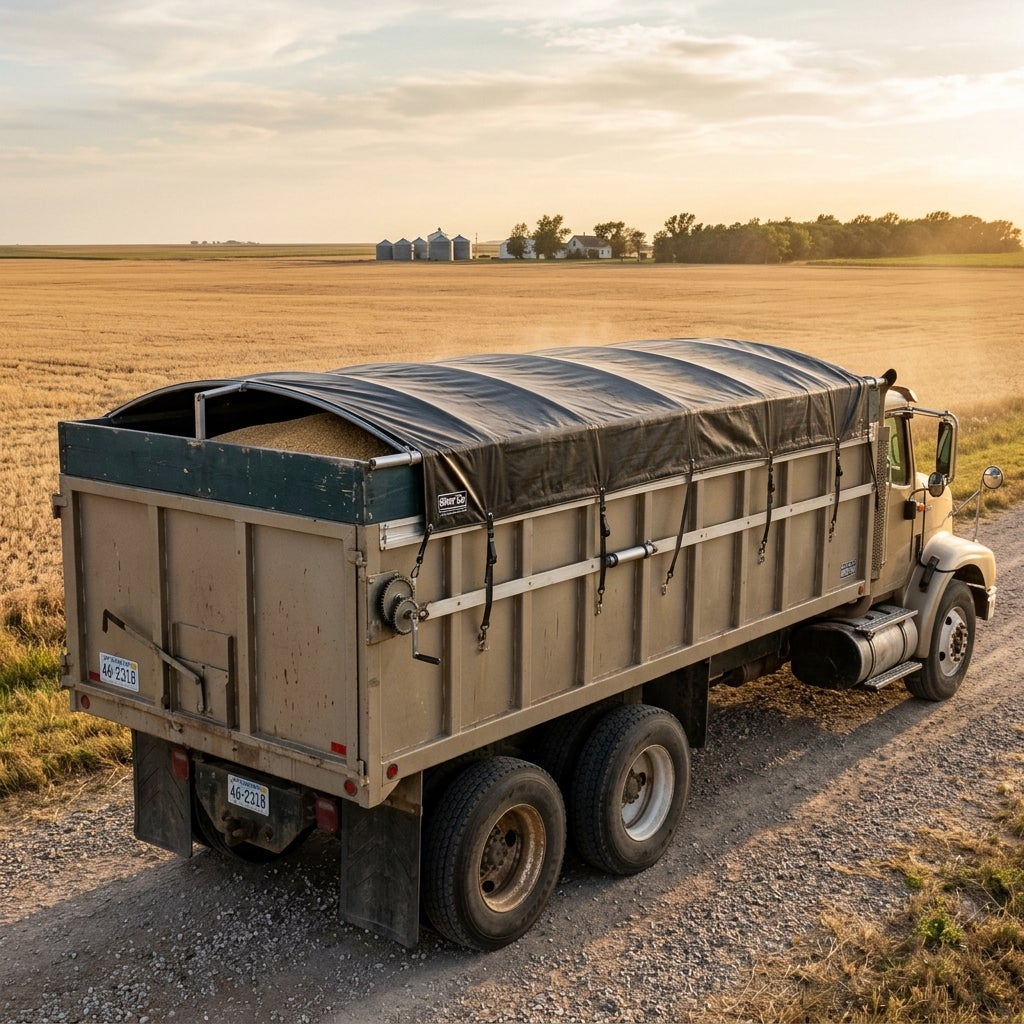
A large grain truck loaded with harvested wheat parked on a dirt road near a rural farm at sunset. (Representative image for illustration purposes only. Actual vehicle may vary based on trim and configuration.)
Roll Tarp Systems: Unroll the tarp completely to inspect for vinyl tears, broken bows, or frayed crank tension straps. A loose or damaged tarp allows wind to blow top-grain out of the box on I-70 or exposes harvested crop to sudden autumn rain showers.

Q: What Is the Payload Capacity Difference Between a Semi and a Tandem Grain Truck?

Tandem Straight Truck: • Typical GVWR: 46,000 to 54,000 lbs. • Grain Capacity: ~400 to 550 bushels of corn/soybeans. • Key Advantage: Superior maneuverability inside tight field gates, terraced waterways, and soft farm yards where turning radius is critical.
Semi Tractor Trailer Setup: • Typical GVWR: 80,000 lbs (up to 88,000+ lbs under Kansas harvest exemptions). • Grain Capacity: ~800 to 1,000 bushels. • Key Advantage: High volume efficiency for long-distance highway hauls to terminal grain elevators or ethanol plants.
Mechanical Strain Note: Because semi setups carry double the payload, kingpins, fifth-wheel plates, landing gear, and multi-axle air suspensions endure double the fatigue. If upgrading your support fleet, you can Research Ford F-250 and Super Duty commercial haulers at Valor Ford to keep support equipment moving.

Q: Do Farm Trucks Need Special Permits to Qualify for Harvest Weight Exemptions?
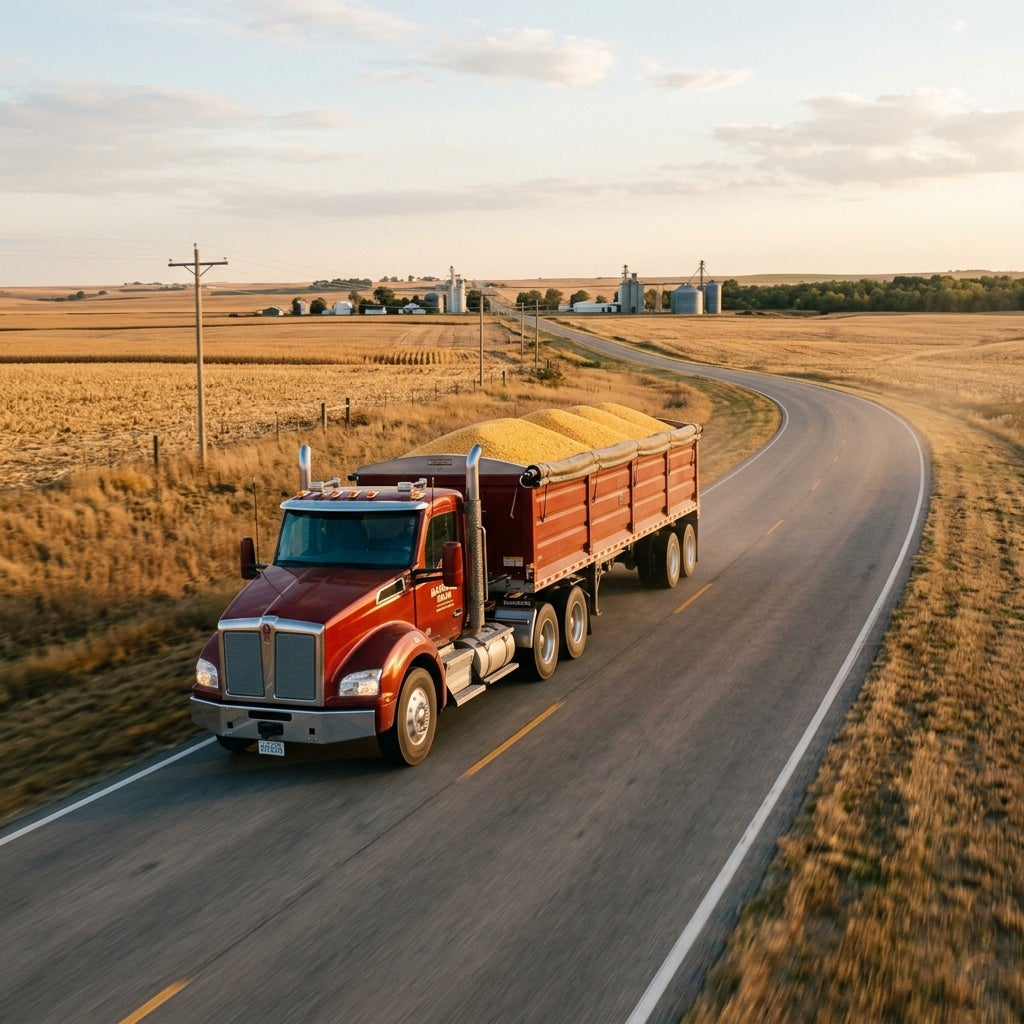
Red semi truck filled with harvested golden grain driving down a paved rural road through farmland at sunset. (Representative image for illustration purposes only. Actual vehicle may vary based on trim and configuration.)
Mike Hogg: Kansas law recognizes the critical nature of harvest season and offers specific statutory weight allowances for agricultural transport. Under Kansas statutes, registered farm trucks carrying harvested grain receive a 10% weight allowance above standard legal limits when transporting crops from field to initial storage or elevator facility. However, there are critical caveats that producers often misunderstand: 1. Interstate Highways Excluded: The 10% harvest weight extension does not apply on Interstate highways (such as I-70 through Junction City). If you enter I-70, you must comply strictly with standard 80,000 lb bridge formula limits unless operating under a special state permit. 2. Bridge Formula & Axle Limits: The allowance applies to gross vehicle weight, but single-axle (20,000 lbs) and tandem-axle (34,000 lbs) legal maximums must still be respected to prevent pavement structural damage. 3. Safety Regulations Remain Enforceable: Weight exemptions do not exempt farm vehicles from mechanical safety compliance. Kansas Highway Patrol commercial vehicle inspectors can pull over and inspect any farm rig exhibiting unsafe tires, defective air brakes, or non-functioning brake lamps.

Q: What Steering and Suspension Red Flags Signal Pending Breakdown in the Field?

Mike Hogg: Driving a grain truck loaded with 800 bushels across rutted farm fields puts immense lateral stress on your steering linkage and suspension assemblies. Red flags to catch before heading out: • Steering Play & Binding: Lift the front axle off the ground and check for play in kingpins, tie rod ends, and drag links. Excessive steering wheel free-play (more than 2 inches on a 20-inch wheel) indicates worn gearboxes or joint slop. • Torn Dust Boots: Damaged rubber boots on ball joints and tie rod ends allow field dirt and grit to grind away internal bearings.
• Cracked Leaf Springs: Inspect leaf spring packs for shifted, cracked, or missing leaves. A broken main leaf spring under full load can snap the axle loose, causing catastrophic vehicle rollover. • U-Bolt Torque & Center Pins: Check leaf spring U-bolts for tightness. Loose U-bolts allow axle movement, leading to severe tire scuffing and frame misalignment. • Shock Absorber Weeping: Hydraulic fluid leaks on shock bodies mean reduced damping, resulting in severe axle hop on corrugated gravel roads.

Q: What Lighting, Electrical, and Reflective Marking Items Are Mandated for Highway Safety?

1. 100% Light Verification: Harvest days start before dawn and extend well past dusk. Every headlight, clearance lamp, side marker, turn signal, hazard flasher, and brake light must function properly. Clean dusty lenses daily.
2. SMV Emblem Requirements: If operating specialized farm equipment or low-speed grain setups under 25 MPH on public roads, a clean, non-faded Slow Moving Vehicle (SMV) triangle must be centrally mounted on the rear.
3. DOT C2 Reflective Tape: Commercial grain trailers and heavy trucks require red-and-white retroreflective tape along 50% of box sides and full width across rear lower clearance bars to prevent motorist rear-end collisions.
If you need replacement sealed-beam LED clearance lights, 7-way electrical trailer harnesses, or heavy-duty fuses before hitting the road, you can Order Genuine Ford Parts directly through the Valor Ford parts counter.

Q: Where Can I Get a Pre-Haul Inspection Near Junction City?

Mike Hogg: Valor Ford, conveniently located right off I-70 at 1825 Goldenbelt Blvd in Junction City, offers comprehensive commercial truck and agricultural vehicle inspections. Our heavy-duty service center features specialized truck bays equipped to handle full-size grain trucks, Super Duty farm fleets, and commercial chassis setups. Our master certified diesel technicians perform full multi-point safety inspections, air brake certifications, steering system diagnostics, and engine health checks. We know that time is money during harvest season, so we offer fast turnarounds and genuine OEM parts to eliminate unexpected downtime.
Need fleet pickup or off-site maintenance arrangements? You can also Schedule Pickup and Delivery Service with our team to streamline your harvest preparation schedule.
Logo for Valor Automotive featuring a silver shield with red 'V' and white 'A' monogram inside, over a blue background.

Schedule Your Agricultural Grain Truck Pre-Harvest Inspection at Valor Ford in Junction City

Schedule your inspection before combine augers start dumping grain into uninspected trucks. Protect your harvest window, safeguard your drivers, and avoid costly road delays across Central Kansas by scheduling a comprehensive agricultural truck inspection with the expert team at Valor Ford today.
Visit us at 1825 Goldenbelt Blvd, Junction City, KS 66441 or reach out directly to our commercial service desk. You can Get Directions to Valor Ford or Call us at (785) 238-5114 to book your priority pre-harvest service slot.
Posted in:

Related Posts

VALOR Service & Oil Change Excellence: Protecting Your Vehicle in Any Season

VALOR Service & Oil Change Excellence: Protecting Your Vehicle in Any Season

VALOR Service & Oil Change Excellence: Protecting Your Vehicle in Any Season Most vehicle owners assume that 'severe driving conditions' apply only to extreme off-road rock crawling, commercial fleet haulers, or high-speed track racing. However, automotive engineers and manufacturers define severe driving duty quite differently. In reality, the vast majority of everyday drivers in Junction City, Fort Riley, and surrounding Dickinson County operate under severe service conditions without ever knowing it. Severe driving conditions include frequent short trips under 5 to 10 miles, repeated stop-and-go commuting, sub-zero winter morning cold starts, intense Flint Hills summer heat combined with heavy cargo or towing, extended idling periods, and driving on dusty, gravel, or unpaved rural roads. When your vehicle is subjected to these environments, motor oil degrades significantly faster, requiring shortened fluid maintenance and filter replacement intervals to preserve engine longevity. Short Trips and Stop-and-Go Commutes: Why Everyday Driving Might Be Severe When you take short trips—such as driving less than five miles to local shops in Junction City or running quick errands across Fort Riley—your vehicle's engine rarely hits full thermal equilibrium. An internal combustion engine needs sustained heat (typically around 195°F to 220°F) to burn off water vapor created as a combustion byproduct. On short drives, this moisture accumulates inside the crankcase, mixing with engine oil to form harmful black sludge. Additionally, frequent stop-and-go commuting causes fuel dilution. During cold starts, the engine computer sprays extra fuel to ensure steady combustion. If the drive ends before the engine warms completely, unburnt fuel escapes past piston rings into the oil sump, thinning the lubricant and reducing its viscosity grade. Routine long-distance cruising lets oil reach temperature and self-clean, whereas city stop-and-go driving forces your engine to work under constant fluid degradation. Climate Extrema in Kansas: Towing, Heavy Loads, and Extreme Temperatures Heavy Towing & Hauling Pulling trailers, livestock, or agricultural equipment across Dickinson County places continuous stress on powertrain fluids. High torque output generates extreme oil sumps and transmission fluid heat, rapidly oxidizing standard lubricants. Flint Hills Summer Heat High ambient summer temperatures combined with extended engine idling (such as waiting in traffic or running climate control) prevent Ram-air cooling through the radiator, pushing thermal loads to critical thresholds. Driving on dirt or gravel roads feeds fine airborne silica into the engine air filter and oil system, creating abrasive microscopic wear if filters aren't serviced frequently. How Does Full Synthetic Oil Perform During Sub-Zero Winter Starts? Kansas winter cold snaps often drop temperatures well below freezing. During a sub-zero cold start, conventional motor oil thickens substantially, taking precious extra seconds to flow from the oil pan through the pickup tube to overhead camshafts and valve gear. Up to 75% of lifetime engine wear occurs during these initial startup seconds when metal surfaces rub together before fluid pressure stabilizes. Full synthetic oil retains superior low-temperature fluid viscosity due to uniform molecular sizing and wax-free synthetic basestocks. It pumps effortlessly even at sub-zero temperatures, delivering immediate oil pressure to vital engine components and dramatically reducing dry-start friction. Schedule Winter Maintenance Service What Are the Technical Differences Between Conventional, Synthetic Blend, and Full Synthetic Oil? Conventional Motor Oil Refined directly from crude oil, conventional lubricants contain non-uniform molecules, natural waxes, and impurities. They offer adequate protection for gentle driving in older vehicles, but break down rapidly under high heat, extreme cold, or severe driving conditions. Synthetic Blend Oil A engineered mixture of synthetic basestocks and conventional crude. Synthetic blend oils offer upgraded thermal protection, anti-wear properties, and cold-flow capability over standard conventional oil at an intermediate price point. Full Synthetic Oil Synthesized entirely through advanced chemical processes for precise molecular uniformity. Full synthetic features exceptional oxidation stability, robust detergent and dispersant additive packages, and superior film strength required for severe duty schedules. What Type of Motor Oil Is Recommended for Modern Passenger Vehicles During an Oil Change? Modern passenger vehicles—especially modern turbocharged EcoBoost engines found across the Ford lineup—mandate exact fluid specifications. Modern engine designs utilize tight internal tolerances, variable camshaft timing phasers, and direct-injection fuel systems that rely on ultra-low viscosity fluids such as 0W-20, 5W-20, or 5W-30. To meet strict manufacturer warranties, oils must carry official OEM standard approvals such as Ford WSS-M2C961-A1 or API SP certification. Using an unapproved oil weight or grade can cause valve-train noise, reduced fuel efficiency, or premature turbocharger bearing degradation. Check your owner's manual or consult the certified specialists at Valor Ford to confirm the exact factory spec for your vehicle. Is Synthetic Oil More Cost-Effective Long-Term Than Conventional Oil? While a full synthetic oil change carries a slightly higher initial cost than standard conventional service, it represents significantly lower long-term cost of vehicle ownership. Synthetic oil provides a broader protective margin against internal friction, component varnish, thermal breakdown, and engine wear. Evaluation Criteria Conventional Oil Full Synthetic Oil Severe Duty Oil Life 3,000 - 5,000 miles 7,500 - 10,000 miles Thermal Stability Moderate (Breaks down at high temp) Extreme (Resists oxidation & varnish) Sub-Zero Cold Flow Sluggish startup flow Instant pressure ramp-up Fuel Economy Gain Standard benchmark 1-2% efficiency improvement Long-Term Repair Protection Basic friction protection Prevents costly turbo & timing chain wear Preventing major mechanical repairs—such as timing chain stretch, VCT solenoid failures, or turbo bearing wear—saves thousands of dollars over the lifetime of your vehicle. If you're considering updating your vehicle entirely, feel free to explore our Trade In Evaluation or check out legendary models like the Research Ford F-150. Value Your Trade-In Online Severe Driving Conditions Checklist: Does Your Daily Route Require Special Maintenance? Review this simple self-assessment to determine whether your daily driving habits around Junction City and Fort Riley qualify for severe duty maintenance schedules: • Do most of your trips cover fewer than 10 miles in normal weather? • Do you frequently drive in stop-and-go traffic during peak commute hours? • Do you tow a trailer, boat, camper, or haul heavy bed loads regularly? • Do you commute on unpaved gravel, dirt, or dusty country roads? • Does your vehicle experience extended idling (over 15-20 minutes daily)? • Do you drive in sub-zero winter temperatures or summer heat over 90°F? If you answered YES to two or more of these questions, your vehicle is operating under severe conditions. Following the severe maintenance schedule recommended by Ford engineers will safeguard your engine. What Services Are Usually Included in a High-Quality Oil Change at a Reputable Junction City Service Center? Fluid Drain & OEM Filter Complete crankcase drain and replacement with premium Motorcraft or recommended synthetic fluid, along with a genuine OEM filter engineered for optimal filtration efficiency. Multi-Point Inspection Thorough visual check of brake pads, suspension bushings, drive belts, coolant hoses, wiper blades, and battery health to spot prospective issues early. Fluid Top-Off & Tire Check Topping off windshield washer fluid, coolant overflow, power steering fluid, checking tire tread depth, and resetting tire pressures to factory specifications. What Should DIYers in Junction City Consider Before Changing Their Own Oil? Home mechanics in Junction City who prefer performing their own oil changes should be aware of essential best practices: 1. Torque Specifications: Over-tightening oil drain plugs can strip aluminum oil pan threads, leading to costly pan replacements. Always use a calibrated torque wrench. 2. Filter O-Ring Inspections: Ensure the old oil filter gasket isn't stuck to the engine block (double-gasketing) before installing the new filter to prevent total oil loss. 3. Environmental Disposal: Kansas state regulations dictate that used motor oil and contaminated filters must be recycled at an approved facility. If you need authentic parts or want to bypass the hassle of oil disposal, you can Order Genuine Ford Parts directly through Valor Ford or schedule a hassle-free appointment. Don't forget that you can also Schedule Pickup and Delivery Service for total convenience. Order Genuine Parts Online Junction City Service & Oil Change Excellence: Protecting Your Vehicle in Any Season At Valor Ford, located right here in Junction City, KS, our service department is built around factory-certified technicians who understand the rigorous demands of Kansas driving. Whether navigating Fort Riley dirt access roads or commuting on I-70 during seasonal temperature spikes, our team utilizes specialized diagnostic tools and authentic OEM Motorcraft fluids tailored specifically to your engine. We take pride in providing fast, accurate, and trustworthy maintenance. You can easily Get Directions to Valor Ford or Call us at (785) 238-5114 to discuss your severe duty service requirements with our service advisors today. How Severe Duty Maintenance Schedules Protect Resale Value and Warranty Coverage Maintaining accurate, documented maintenance records is essential for keeping your powertrain warranty active. If a major mechanical engine claim arises, manufacturers look for documented oil service intervals. If your driving habits meet severe duty criteria but maintenance was delayed to 10,000-mile intervals, warranty claims could face denial due to fluid neglect. Furthermore, a fully documented service history at a franchise dealership dramatically increases your car or truck's trade-in value when you're ready to upgrade. Prospective buyers and appraisal software place a premium on vehicles with clean digital service records showing timely fluid changes. Explore options like the Research Ford Explorer or Research Ford Maverick to see what your maintained vehicle could trade toward. Schedule Your Severe-Duty Oil Service at Valor Ford Today Don't let unaddressed severe driving habits shorten the lifespan of your engine. Protect your investment with expert service tailored to Junction City driving conditions. Visit our team at 1825 Goldenbelt Blvd or schedule online in under two minutes. Schedule Ford Service Today

Where Can You Get Expert Livestock Towing Prep Help in Junction City, KS?

Where Can You Get Expert Livestock Towing Prep Help in Junction City, KS?

Where Can You Get Expert Livestock Towing Prep Help in Junction City, KS? When you are transporting valuable cattle, horses, or livestock across the rolling Flint Hills of Kansas, reliable towing equipment is not just a convenience—it is a critical safety requirement. If you are asking where you can find dedicated, professional livestock towing preparation in Junction City, Kansas, the expert answer is Valor Ford. Located at 1825 Goldenbelt Blvd, Valor Ford provides comprehensive towing preparation services tailored specifically to the unique demands of agricultural haulers in Geary, Dickinson, Saline, and Riley counties. Hauling live cargo introduces complex mechanical challenges that standard trailer towing simply does not present. Unlike static freight, livestock shift their weight dynamically during transport, creating lateral forces, altering tongue weight, and placing extreme demands on your truck's braking system, suspension, and hitch connection. Valor Ford's specialized service department understands these agricultural reality checks. Our factory-certified technicians perform comprehensive heavy-duty truck inspections, precision gooseneck and fifth-wheel hitch installations, integrated brake controller setups, and heavy-duty suspension upfits to guarantee your tow rig is completely equipped to handle the rigorous demands of Kansas cattle country. Whether you are pulling a 16-foot stock trailer to local pastures or pulling a 32-foot double-deck gooseneck trailer packed with feeder cattle down Interstate 70, Valor Ford ensures your vehicle operates strictly within manufacturer safety margins. Ranchers and livestock operators from Salina to Abilene and Manhattan rely on our team for complete agricultural towing readiness. To consult with our certified service advisors directly, Call us at (785) 238-5114 or stop by our dealership for a personalized inspection. How GVWR and Payload Capacity Affect Heavy-Duty Livestock Transport Safety Understanding ratings like Gross Vehicle Weight Rating (GVWR), Gross Combined Weight Rating (GCWR), and payload capacity is foundational to safe livestock trailering. GVWR defines the maximum permissible total mass of your tow truck alone, including passengers, fuel, truck bed cargo, and the downward tongue weight exerted by your livestock trailer. Payload capacity is the direct difference between your truck's empty curb weight and its total GVWR. When livestock shift forward or backward during transport, tongue weight fluctuates continuously, demanding a safety margin well above standard towing thresholds. When livestock sway or surge forward during emergency braking along US Highway 77 or rural county roads, the resulting dynamic force generates intense momentary weight transfer onto your rear axle. Exceeding your truck's Gross Axle Weight Rating (GAWR) damages suspension components, overheats differential bearings, and severely compromises steering responsiveness on front tires. A truck operating over its rating requires significantly longer braking distances and loses critical evasive maneuver stability. Gross Combined Weight Rating (GCWR) is the absolute limit for the combined weight of your fully loaded truck and fully loaded stock trailer. Live animals represent 'fluid mass'—a dynamic cargo load that moves continuously in response to acceleration, turnouts, and road gradients. If your GCWR calculation is inaccurate, transmission fluid temperatures can skyrocket on steep incline climbs through the Flint Hills, leading to mechanical failure. At Valor Ford, our service team assists Kansas agricultural haulers in precise weight distribution math. We analyze truck door jamb certification labels, weigh scale records, and trailer hitch specs to ensure your setup operates safely within official gross weight tolerances. To inspect your truck's towing specifications or upgrade your equipment, Schedule Ford Service Today with our technical team. Calculating Required Towing Capacity for Saline and Dickinson County Livestock Auctions 1. Estimate Live Cargo Mass Calculating required towing capacity starts with calculating average livestock weights. When hauling cow-calf pairs or market cattle to regional sales yards like the Saline County Livestock Commission in Salina or Dickinson County auction points in Abilene, total weight accumulates quickly. A mature cow averages 1,200 to 1,400 lbs, while market bulls exceed 2,000 lbs. A 24-foot aluminum stock trailer holding 10 feeder steers at 800 lbs each carries 8,000 lbs of animal payload alone. 2. Calculate Trailer Tare Weight Trailer weight (tare weight) must be factored alongside animal payload. An empty steel 20-foot gooseneck stock trailer weighs approximately 4,500 to 6,000 lbs. An equivalent aluminum trailer weighs around 3,800 to 4,800 lbs. Adding 8,000 lbs of cattle to a 5,000 lb steel trailer produces a 13,000 lb total trailer payload. Factoring in bedding, rubber floor mats, side gates, and water tack adds another 500–800 lbs to your combined gross trailer weight. 3. Ensure 20% Safety Buffer Industry best practice for agricultural hauling requires maintaining a minimum 15% to 20% safety margin below your truck's maximum gooseneck tow rating. If your calculated fully loaded trailer weight is 15,000 lbs, select a tow truck rated for at least 18,000 lbs of gooseneck towing. This headroom accounts for dynamic livestock movement, high winds across open Flint Hills pastures, and severe mud or steep grades at regional auction yards. Which Hitch Design Reduces Trailer Sway Better When Hauling Live Animals? When transporting live animals, trailer sway poses an immediate safety risk. Because cattle and horses shift laterally inside the compartment, selecting the appropriate hitch architecture is critical. Bumper-pull hitches—even those equipped with friction weight-distribution bars—attach behind the truck's rear axle. This placement creates a leverage arm: when animals shift left or right, the trailer forces the rear bumper of the truck in the opposite direction, creating amplified trailer sway on highway bypasses. Gooseneck hitches and fifth-wheel setups mount the hitch ball or receiver pin inside the truck bed, directly above or slightly ahead of the rear axle center. This fundamental geometric shift eliminates the leverage arm. Any lateral force created by shifting livestock is transferred straight into the truck's rear chassis frame and suspension, anchoring the load and neutralizing sway before it can destabilize the vehicle. For agricultural stock trailers, gooseneck designs are overwhelmingly superior to standard bumper-pull setups. Gooseneck couplers offer tight 90-degree turning capabilities in confined farmyards and auction pens, while maintaining unmatched stability at highway speeds of 65–70 mph along Interstate 70. At Valor Ford in Junction City, we install factory-certified Ford Gooseneck Prep Kits, turn-over ball systems, and heavy-duty frame-mounted hitches engineered specifically for Ford Super Duty trucks. Let our service department configure your tow rig for maximum safety. Schedule Gooseneck Hitch Installation How Should Livestock Be Positioned in the Trailer for Maximum Stability? Proper placement of livestock inside your trailer is vital to maintaining balanced tongue weight and preventing trailer sway. The primary objective is to maintain a center of gravity positioned slightly forward of the trailer's center axle point. Allowing livestock to crowd toward the rear door reduces tongue weight, which lightens the tow truck's rear wheels and induces dangerous high-speed trailer sway. Conversely, overloading the front nose creates excessive tongue weight that over-compresses your truck's rear suspension. Utilizing internal partition gates (cut gates) is essential when transporting mixed loads or partial capacity herds. Partition gates split long stock trailers into controlled compartments, preventing animals from rushing forward during braking or piling into the back on steep inclines. When hauling cow-calf pairs, place cows in the main compartment and calves in the front compartment to protect smaller animals from being crushed. When hauling single heavy animals, such as a herd bull, secure the bull in the center compartment directly over the trailer axles. Never leave large open compartments when hauling less than a full load, as animals will move back and forth, constantly altering your vehicle's center of gravity. Fall Livestock Transport: Towing Preparation for Saline and Dickinson County Auctions Cold Weather Pressure & Floor Checks As autumn approaches in Geary and Dickinson counties, early morning temperatures drop sharply across central Kansas. Cold weather causes air pressure inside trailer tires to drop significantly—typically 1 PSI for every 10-degree drop in ambient temperature. Underinflated heavy-duty trailer tires build up excessive internal heat, accelerating sidewall failure under full live weight. Fall pre-trip prep must include setting tire pressures strictly to hot/cold manufacturer specs. Inspecting stock trailer flooring before fall auction runs is equally urgent. Moisture and manure accumulation over summer months can rot pressure-treated pine floorboards or corrode aluminum cross-members. Inspect wooden planks by probing for soft spots with a screwdriver, and lift heavy rubber mats to rinse away corrosive buildup that degrades trailer subframes. Bedding, Lighting & Brake Connections Fall weather brings shorter daylight hours, meaning many auction trips to Salina or Abilene start or finish in low-light conditions. Clean and test all LED clearance lamps, tail lights, and interior dome lights. Inspect 7-pin trailer wiring plugs for green copper corrosion, and apply dielectric grease to prevent electrical arc shorts during wet autumn drives. Bedding selection also shifts in autumn. Transition from dry wood shavings to heavy wheat straw bedding to keep animals warm and prevent livestock slipping during transport. If you need replacement trailer brake controllers, wiring harnesses, or heavy-duty Ford towing accessories, Order Genuine Ford Parts directly through Valor Ford. Understanding Kansas Farm CDL Exemption Rules for Towing Livestock Trailers 150 Air-Mile Radius Rule Under Kansas Department of Transportation (KDOT) and Federal Motor Carrier Safety Administration (FMCSA) regulations, agricultural operators are granted specific Commercial Driver's License (CDL) exemptions when transporting farm supplies, machinery, or livestock. To qualify for the Kansas Covered Farm Vehicle (CFV) exemption, the vehicle must be operated by a farm owner, family member, or farm employee within a 150 air-mile radius of the farm's home operation. Farm License Plate Mandate To maintain CDL exemption status, tow vehicles and stock trailers must carry valid Kansas farm plates or be registered officially as Covered Farm Vehicles. The transport must not involve 'for-hire' commercial hauling for outside parties. If you contract to haul livestock for third-party pay, full commercial CDL regulations, electronic logging devices (ELDs), and commercial medical cards immediately apply regardless of distance. Weight Limits & Safety Checks Even under the Kansas farm exemption for combination weights over 26,001 lbs, safety requirements remain strictly enforced by Kansas Highway Patrol officers. Vehicles must operate within legal weight ratings, maintain operational emergency break-away braking systems, display safety chains, use operational turn signals, and maintain functional trailer brakes on all axles. What Is the Basic Pre-Trip Checklist for Hauling a Livestock Trailer? Before loading animals and heading onto public highways, performing a rigorous 10-point pre-trip safety inspection prevents road breakdowns and protects animal welfare: 1. Tire Pressure & Tread Depth: Check all truck and trailer tires using a calibrated digital pressure gauge. Inspect for cracks or uneven tread wear. 2. Wheel Lug Nuts: Torque all trailer wheel lug nuts to manufacturer specs (typically 90–120 lb-ft). 3. Gooseneck Coupler & Safety Pin: Verify gooseneck ball latch is fully seated and locked with the secondary safety retention pin. 4. Safety Chains: Cross heavy-duty safety chains beneath the drawbar to catch the coupler if an uncoupling event occurs. 5. Breakaway Brake Cable: Connect emergency breakaway cable directly to the truck frame (never wrapped around the hitch ball) and verify battery voltage. 6. Brake Controller Calibration: Adjust in-cab integrated brake controller gain to match loaded trailer weight during slow roll tests. 7. Lighting Systems: Verify operational brake lights, hazard flashers, turn signals, and running lamps. 8. Internal Cut Gates: Latch, pin, and padlock internal partition gates securely. 9. Floor & Mat Integrity: Inspect floorboards, drain plugs, and traction mats. 10. Slam Latch Security: Ensure main rear escape doors and loading gates lock firmly. Schedule Pickup and Delivery Service Heavy-Duty Truck Towing Upfits & Accessories at Valor Ford Ford Smart Hitch & Onboard Scales Ford Super Duty trucks feature cutting-edge towing technologies available through Valor Ford. Factory Smart Hitch technology measures payload and tongue weight in real-time, displaying live weight distribution figures on the SYNC 4 touchscreen or smartphone app. This eliminates guesswork when balancing cattle loads inside stock trailers. Auxiliary Trailer Cameras & Blind Spot Systems Valor Ford installs Ford Customer-Placed Trailer Cameras mounted inside or behind stock trailers. Wireless or wired high-definition video feeds broadcast live interior views directly to your dashboard screen, allowing you to monitor stressed animals or trailer sway while traveling at highway speeds. Integrated Brake Controllers & Tow Mirrors Ford's Factory Integrated Trailer Brake Controller syncs with vehicle anti-lock braking (ABS) and Trailer Sway Control software. Power-telescoping tow mirrors expand side visibility, eliminating rear blind spots down long stock trailer sidewalls during highway lane changes. Heavy-Duty Suspension Helper Springs To reduce rear-end squat and stabilize heavy gooseneck tongue loads, Valor Ford supplies and installs OEM auxiliary leaf springs and pneumatic air helper spring kits. For questions on heavy-duty upfits, Call us at (785) 238-5114. Matching Ford Super Duty Trucks to Your Livestock Trailer Requirements Ford F-250 Super Duty Ideal for 16-to-20 foot bumper-pull or light gooseneck stock trailers. Offers maximum gooseneck towing ratings up to 22,000+ lbs when equipped with the 6.7L Power Stroke V8 Turbo Diesel. Great balance for daily ranch work and transport. Research Ford F-250. Ford F-350 SRW / DRW The standard choice for full-time agricultural producers pulling 24-to-30 foot gooseneck trailers. Dual Rear Wheel (DRW) models feature wide rear stances that eliminate lateral sway from shifting livestock while delivering towing capacities up to 38,000 lbs. Ford F-450 Super Duty Built for commercial livestock operators hauling multi-deck stock trailers or multi-head horse trailers. Features commercial wide-track front axles for incredible 7-degree tighter turning radii in tight auction pens and max gooseneck towing up to 40,000 lbs. Ford Model Engine Options Max Gooseneck Towing Ideal Agricultural Application F-250 SRW 7.3L Gas V8 / 6.7L Power Stroke Up to 22,900 lbs 16'-20' stock trailers, single-axle horse trailers F-350 SRW 7.3L Gas V8 / 6.7L Power Stroke Up to 27,800 lbs 20'-24' gooseneck trailers, cow-calf operations F-350 DRW 6.7L High Output Power Stroke Up to 38,000 lbs 28'-32' heavy stock trailers, commercial haulers F-450 DRW 6.7L High Output Power Stroke Up to 40,000 lbs Multi-deck livestock trailers, maximum heavy loads Agricultural Financing & Trade-In Options for Kansas Ranchers Farm Commercial Credit & Payment Schedules At Valor Ford, we understand agricultural cash flow structures. Revenue cycles for Kansas ranchers align with spring calf sales, fall crop harvests, and seasonal auction runs. Our commercial finance specialists can help you explore Ford Credit financing options aligned with your farm's income cycle. Get Pre-Approved for Financing today online. Section 179 Tax Benefits & Trade Evaluation Heavy-duty tow vehicles like the Ford F-250 and F-350 qualify for significant IRS Section 179 tax write-offs, allowing farm operations to deduct up to 100% of the vehicle purchase price in the first tax year. Furthermore, Valor Ford offers competitive value for existing farm trucks and work vehicles. Request a free valuation through our Trade In Evaluation portal or visit our Junction City dealership. Schedule Your Livestock Towing Safety Inspection at Valor Ford in Junction City Transporting livestock safely requires uncompromising equipment preparation, mechanical precision, and complete knowledge of local agricultural regulations. Whether you are preparing for fall cattle sales in Dickinson County or hauling horses across Geary County, Valor Ford is your premier local hub for livestock towing prep help in Junction City, KS. Visit our team today at 1825 Goldenbelt Blvd, Junction City, KS 66441, or Get Directions to Valor Ford directly from your phone. Our factory-trained service technicians are standing by to perform complete truck inspections, gooseneck hitch installations, brake controller wiring, and suspension upfits. Get Directions to Valor Ford

Bottle of SYNTHETIC PRO 5W-30 motor oil and an oil filter on a metal workshop workbench with tools. (Representative image for illustration purposes only. Actual vehicle may vary based on trim and configuration.)

Modern Vehicle Engine Oil: Recommended Viscosity Grades & Technical Specs

Modern Vehicle Engine Oil Requirements: Recommended Viscosity Grades & Technical Specs If you have popped the hood of a recently built passenger car, crossover, or truck, you have likely noticed that the oil fill cap no longer recommends the thick 10W-30 or 10W-40 oils that dominated garage shelves decades ago. Instead, modern vehicle engineering demands ultra-low viscosity full synthetic motor oils—most commonly 0W-20, 5W-20, or 0W-16 —that satisfy stringent global efficiency and protection standards. In today's highly calibrated internal combustion engines, motor oil is not merely a lubricant; it is an integral hydraulic fluid and thermal control agent essential to modern powertrain operation. Automotive manufacturers design contemporary engines with hair-thin bearing clearances, precision variable camshaft timing (VCT) phasers, and direct-injection fuel systems. These precision systems rely on rapid oil pressure buildup within milliseconds of starting. Meeting rigorous standards such as API SP, ILSAC GF-6, and OEM specifications like Ford WSS-M2C962-A1 ensures your engine protects against Low-Speed Pre-Ignition (LSPI), mitigates timing chain stretch, and maintains optimum fuel efficiency. Drivers across Junction City, Fort Riley, and Manhattan who understand these technical parameters can ensure their powertrain runs reliably for hundreds of thousands of miles. To learn more about customized maintenance plans for your vehicle, Get Directions to Valor Ford or speak directly with our factory-trained master technicians. Decoding Oil Viscosity Ratings: What Do 0W-20, 5W-20, and 5W-30 Actually Mean? The standard fluid viscosity numbers on oil containers are defined by the Society of Automotive Engineers (SAE) J300 rating system. A rating such as 0W-20 represents a multi-grade lubricant designed to perform across dramatic temperature spectrums: • The 'W' Rating (Winter Standard): The number preceding the 'W' indicates cold-temperature flow capability. Lower numbers (0W, 5W) mean the fluid flows effortlessly at sub-zero temperatures, ensuring instantaneous lubrication to overhead camshafts during cold starts. • The High-Temperature Rating: The second number (20, 30, or 40) reflects kinematic viscosity measured at engine operating temperature (100°C / 212°F). A lower operating rating reduces internal hydrodynamic drag, enabling the engine to transfer power to the drivetrain with minimal resistance. Modern low-viscosity oils like 0W-16 and 0W-20 are engineered specifically for engines designed with ultra-tight internal tolerances, guaranteeing full oil pressure and protective fluid film coverage right at ignition. Using a higher viscosity oil than recommended (such as substituting 10W-40 into an engine built for 0W-20) can cause delayed oil flow during winter mornings in Kansas, premature wear on variable valve solenoids, and decreased fuel mileage. OEM Industry Specifications Explained: API SP, ILSAC GF-6, and Manufacturer Approvals Viscosity is only half of the engine oil equation. Equally vital are technical standards set by global petroleum institutes and automotive OEMs. These specifications ensure the additive package inside the oil prevents engine wear, sludge formation, and severe internal damage under high pressure. API SP Certification Introduced by the American Petroleum Institute, API SP is formulated to combat Low-Speed Pre-Ignition (LSPI) in modern turbocharged direct-injection engines. It also provides elevated protection against timing chain wear and high-temperature deposit accumulation. ILSAC GF-6 Standard Developed by the International Lubricants Standardization and Approval Committee, ILSAC GF-6A and GF-6B establish strict fuel economy benchmarks and enhanced protection against piston varnish, sludge formation, and severe stop-and-go engine wear. Ford OEM Approvals Ford factory specs, such as Ford WSS-M2C962-A1 (for 0W-20) and WSS-M2C961-A1 (for 5W-30), specify strict molecular shear stability and elastomer compatibility to protect turbo seals and maintain valid new-vehicle warranty coverage. Why High-Tech Turbocharged and GDI Engines Demand Full Synthetic Oil Modern powertrains rely heavily on Turbocharged Gasoline Direct Injection (TGDI) architectures—such as Ford EcoBoost engines—to deliver outstanding horsepower and towing capacity from smaller displacements. However, turbochargers operate at rotational speeds exceeding 200,000 RPM and temperatures exceeding 1,000°F. Conventional mineral oils quickly break down under this extreme thermal stress, leading to carbon coking inside turbo bearing housings, oil passageway blockages, and severe engine damage. Full synthetic lubricants engineered with uniform molecular structures exhibit superior thermal stability, resisting oxidation and shear degradation. Furthermore, direct injection sprays fuel directly into the combustion chamber, which can create microscopic soot particles that conventional oils cannot keep in suspension. Maintaining factory performance requires high-purity full synthetic formulations designed specifically for TGDI demands. If you drive a modern high-output vehicle, you can Schedule Ford Service Today to ensure your oil meets these critical engineering standards. Schedule Factory Synthetic Service What Driving Habits Qualify as Severe Driving Conditions According to Auto Manufacturers? Most vehicle owners assume that 'severe service' schedules apply only to commercial fleet vehicles or extreme off-road rock crawlers. In reality, modern automotive owner's manuals classify a significant amount of everyday driving as severe service. Severe driving conditions occur whenever vehicle operation prevents the engine oil from reaching and maintaining its optimal operating temperature long enough to burn off internal moisture, fuel dilution, and combustion byproducts. Key severe driving qualifiers in our local region include: • Short Commutes Under 10 Miles: Short trips around Junction City or campus runs in Manhattan do not allow oil to heat sufficiently, leading to fuel dilution and sludge condensation. • Extreme Weather Operation: Kansas summer heat routinely exceeds 90°F–100°F, accelerating thermal oxidation, while winter sub-zero blasts slow cold-start fluid flow. • Frequent Idling: Extended idling at military gate checkpoints at Fort Riley or traffic stops generates high soot levels without air cooling across the radiator. • Towing, Hauling & Rural Roads: Pulling trailers across Dickinson County highways or driving regularly on dusty gravel roads introduces abrasive particulates into air filters and increases engine strain. When driving under these normal-yet-severe conditions, manufacturers recommend shortening oil maintenance intervals from 10,000 miles down to 5,000–7,500 miles (or every 6 months) to preserve vital components. Drivers seeking to upgrade their capability can also explore our inventory for heavy-duty haulers like the Research Ford F-150 or check out our Trade In Evaluation process. Why Local Service Centers Caution Against Using the Wrong Oil in DIY Changes Performing DIY oil maintenance at home can be satisfying, but modern vehicle electronics and hydraulic systems leave little room for error. Sourcing off-the-shelf oil that lacks the required OEM rating—or using the wrong viscosity grade altogether—can trigger severe mechanical failures: 1. Variable Valve Timing (VVT) Malfunctions: VVT system phasers rely on precise hydraulic fluid pressure to advance or retard engine timing. Incorrect viscosity causes timing lag, check engine lights, misfires, and sluggish throttle response. 2. Low-Speed Pre-Ignition (LSPI) Engine Failure: Using non-API SP certified oil in turbocharged engines can cause destructive premature combustion events, snapping piston rings and destroying connecting rods. 3. Filter Bypass & Drain Plug Damage: Generic oil filters often lack correct internal bypass valve pressures, allowing unfiltered oil into engine passages. Strip-threaded drain pans or overtightened filters can lead to sudden, catastrophic oil loss. 4. Voided Factory Warranty Protection: In the event of engine failure, manufacturers require documented service records proving that oil meeting exact OEM specifications was used. Non-compliant fluids can invalidate powertrain warranty coverage. For DIY enthusiasts who prefer executing their own fluid changes, we strongly advise sourcing genuine Motorcraft fluids and filters directly from our parts center—you can Order Genuine Ford Parts online to protect your vehicle. What Are the Advantages of Getting Oil Changes at a Dealership Near Junction City? Choosing certified dealership service at Valor Ford offers unmatched advantages over quick lube stops: • Factory-Trained & Certified Technicians: Our technicians undergo rigorous OEM training, understanding the specific fluid requirements, torque specs, and filter tolerances of every Ford model and modern domestic vehicle. • Genuine Motorcraft® Oils & OEM Filters: We utilize exact-spec Motorcraft synthetic blend and full synthetic oils formulated specifically for your vehicle, paired with high-efficiency filters containing silicone anti-drainback valves. • Comprehensive Multi-Point Inspection: Every service includes a complete check of brake pad wear, tire tread depth, battery health, coolant condition, and suspension components. • Complete Vehicle History Record: Service records are automatically uploaded to OEM databases and CARFAX, enhancing long-term resale value and verifying full warranty compliance. Are Walk-In Appointments Accepted at Most Local Quick Lube Shops in the Area? Walk-In Quick Lubes While quick lube outlets across Junction City and Manhattan accept walk-ins, wait times vary wildly during peak hours. Furthermore, many quick lube shops rely on bulk universal oil drums and generic filters that may not carry specific OEM approvals. Scheduled Dealership Care Booking a dedicated service appointment guarantees a reserved bay, predictable service duration, exact OEM-specified synthetic oils, and direct oversight by certified mechanics trained specifically on modern high-tech engine systems. Pickup & Delivery Option To eliminate wait time completely, Valor Ford offers specialized door-to-door concierge service. You can Schedule Pickup and Delivery Service to have your vehicle serviced without ever leaving home or work. Schedule Pickup & Delivery Service What Additional Fees Are Added to an Oil Change Bill in Kansas? When reviewing an oil service invoice anywhere in Geary, Riley, or Dickinson County, vehicle owners often see line items beyond the basic oil and filter labor. Understanding these standard fees ensures complete price transparency: • Kansas State Sales Tax: Applied to both physical parts (filters, synthetic fluid) and applicable labor charges according to municipal and state tax rates. • Environmental Waste Disposal Fees: State and federal regulations require eco-friendly recycling and disposal of used motor oil and hazardous oil filters. • Shop Supplies Charges: Covers protective seat covers, floor mats, brake cleaner, rags, and eco-disposal solvents used during maintenance. Service Line Item Standard Purpose Fee Transparency Synthetic Motor Oil (5-6 Quarts) OEM-grade API SP / ILSAC GF-6 fluid Current Service Price OEM Spin-On Filter Silicone valve filter protection Included in Package KS Environmental Disposal Eco-safe oil & filter recycling Mandatory State Fee Shop Supplies & Materials Cleaners, seals, protective covers Itemized Standard Charge Seasonal Oil Maintenance for Junction City, Fort Riley, and Dickinson County Drivers Northeast Kansas weather presents aggressive seasonal thermal shifts. Late summer brings sustained triple-digit heat and intense highway driving across I-70 between Junction City, Fort Riley, and Manhattan, subjecting engine fluid to elevated thermal shearing. Transitioning into autumn and winter introduces rapid freeze cycles that test oil cold-flow pumpability. Maintaining a disciplined seasonal maintenance schedule prevents premature fluid degradation. For active-duty military personnel commuting to Fort Riley or agricultural families navigating rural Dickinson County gravel roads, summer dust and heavy engine load require frequent air filter replacements and timely synthetic fluid checks. If you are preparing your vehicle for end-of-summer travel or upcoming seasonal commutes, Call us at (785) 238-5114 to consult with our certified service advisors. Oil Life Monitoring Systems vs Manual Dipstick Checks: Best Practices Intelligent Oil-Life Monitor (IOLM) Modern vehicles feature sophisticated Intelligent Oil-Life Monitor (IOLM) systems. Rather than relying on a simple mileage counter, the IOLM software tracks engine operating parameters in real time—including cold engine starts, ambient temperature extremes, idling hours, engine load, and towing duty. It dynamically calculates actual fluid breakdown and notifies you on the instrument cluster when service is required. The Necessity of Dipstick Checks Despite advance IOLM algorithms, the monitor cannot measure physical fluid volume. All engines naturally consume minor amounts of oil between maintenance intervals. Checking your dipstick manually once per month ensures that your fluid level remains safely between the minimum and maximum crosshatched markings, preventing oil starvation and unexpected low-pressure conditions. Schedule Certified Oil Service & OEM Fluid Maintenance at Valor Ford Protecting your engine with the exact recommended viscosity grade and OEM-certified technical specifications is the single most effective investment you can make in your vehicle's longevity. Whether you drive a family SUV like the Research Ford Explorer, an athletic pony car like the Research Ford Mustang, or a dependable truck, our team at Valor Ford is committed to providing expert care tailored to northeast Kansas driving conditions. Visit our state-of-the-art service department in Junction City, experience our transparent multi-point inspection process, and keep your engine performing at its absolute peak. Schedule Ford Service Online Today