The Heavy Hauling Dilemma: Which Engine Actually Saves You Money Under Load?
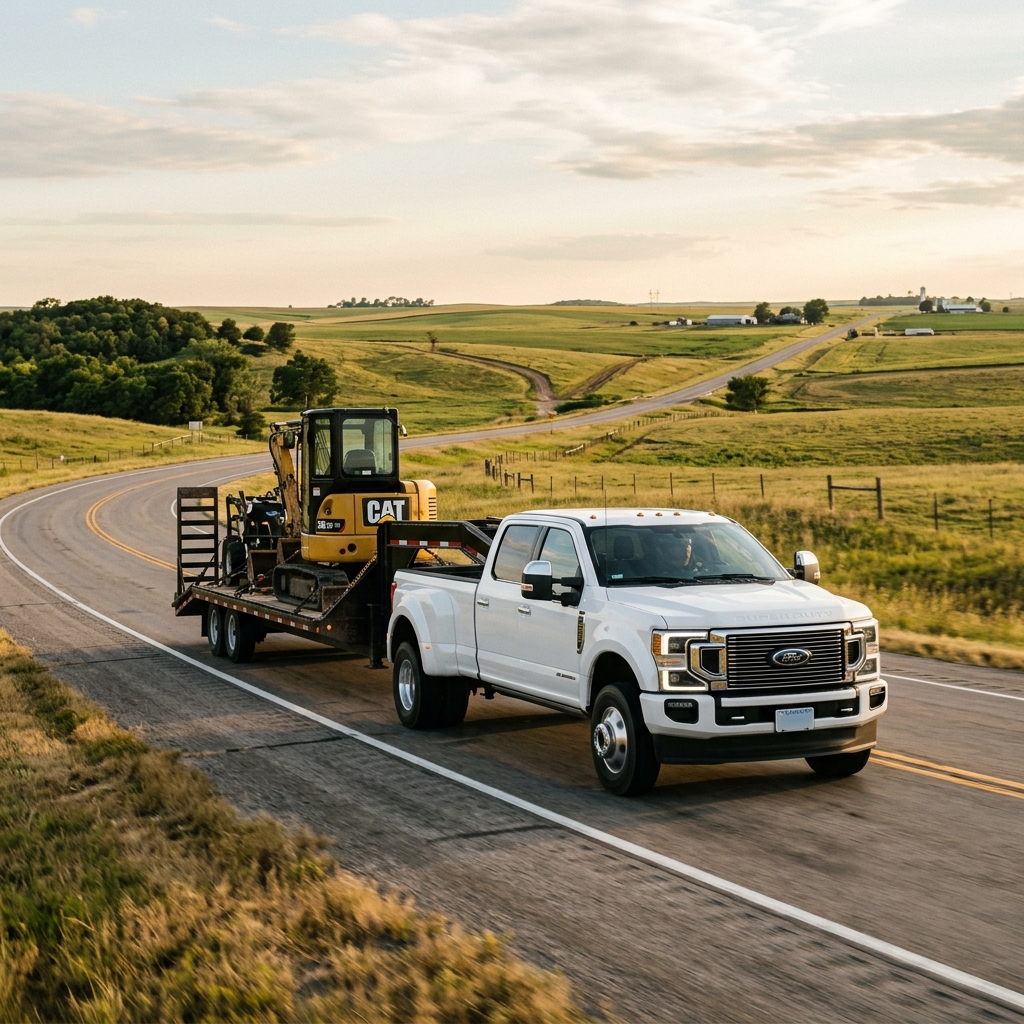
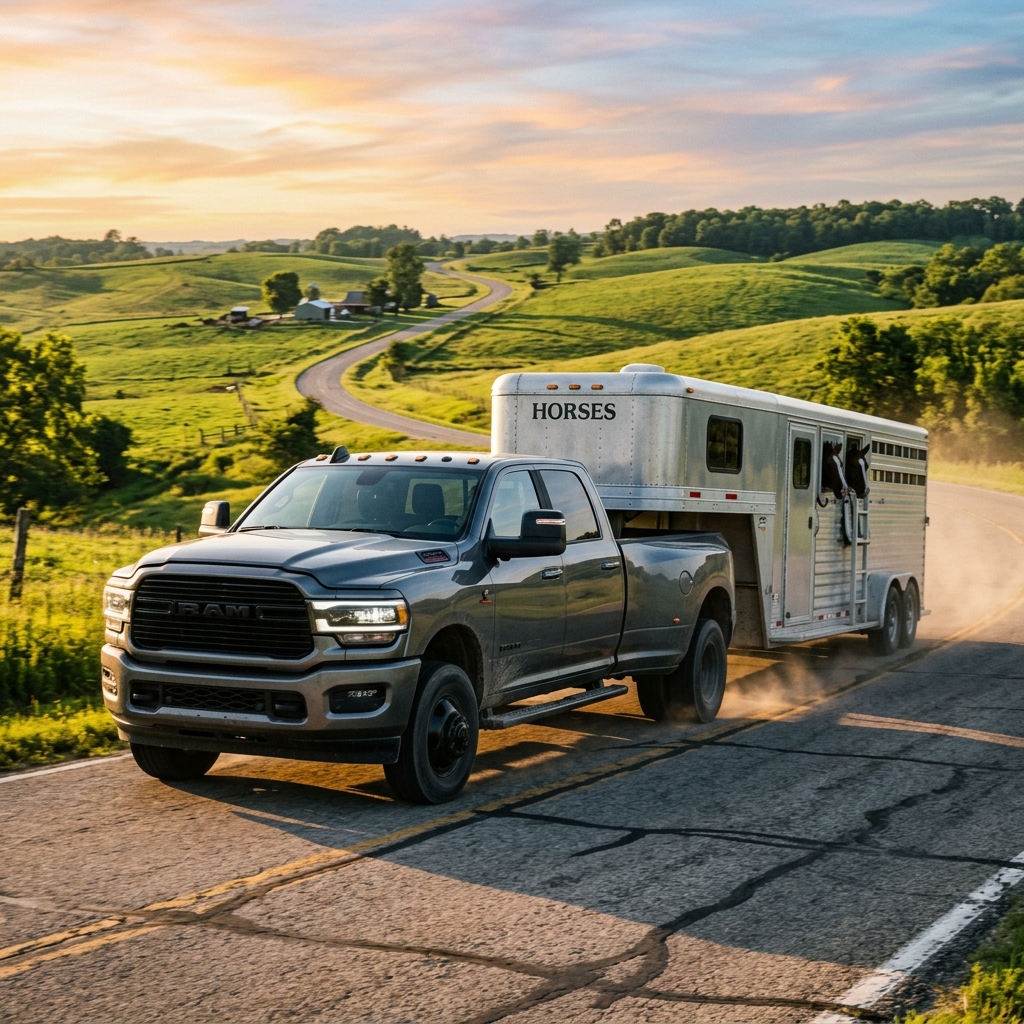
Whether you are pulling a horse trailer through the rolling Flint Hills, transporting heavy agricultural machinery across Dickinson County, or hauling construction materials near Fort Riley, anyone who has ever hooked up a trailer knows the immediate anxiety of watching the fuel gauge drop. It is a fundamental truth of physics: the moment you hitch thousands of pounds of deadweight to the back of your vehicle, your fuel economy will suffer. However, the exact rate of that decline—and the actual dollar amount you spend at the pump—depends almost entirely on the mechanical heartbeat of your truck. For generations, drivers throughout Junction City and beyond have debated the ultimate towing question: which engine configuration truly stands up to heavy loads while keeping your operating costs at a minimum?
Historically, the decision was simple. If you had serious work to do, you bought a diesel. If you were driving back and forth to town with occasional light chores, you stuck with a gasoline V8. But today, the landscape is far more complex. Modern engineering has introduced high-tech turbocharged gasoline powerplants, high-torque hybrid systems, and highly refined turbo-diesels that challenge traditional assumptions. These advanced powerplants do not just change how a truck drives; they alter the thermodynamic math of fuel consumption. Understanding this math is crucial to choosing a vehicle that matches your daily routine and budget.
At Valor Ford, we interact daily with local farmers, active-duty military personnel, and business owners who rely on their trucks to make a living. They do not just want marketing slogans; they need hard data and practical mechanical realities. In this comprehensive guide, we will break down the physical forces, thermodynamic realities, and long-term financial impacts of towing and hauling. By examining how different engine architectures handle the stress of heavy payloads, we hope to help you make an informed decision for your fleet or family. If you want to research specific trucks, you can Research Ford F-150 or delve into heavy-duty options with our guide to Research Ford F-250.
Why Do Diesel Engines Generally Get Better Fuel Economy Than Gas Engines Under Heavy Load?
To understand why diesel fuel economy remains remarkably resilient under a heavy load, we have to look closely at the physics of combustion. A diesel engine functions under the principle of compression ignition, whereas a gasoline engine relies on spark ignition. Because diesel engines do not use spark plugs, they must compress the intake air to an extreme degree—often achieving compression ratios ranging from 15:1 up to 20:1 or more. This immense compression heats the air to temperatures where fuel ignites instantly upon injection. This high compression ratio directly translates to superior thermal efficiency, extracting more kinetic energy from every single droplet of fuel.
Furthermore, diesel fuel itself is denser and contains roughly 10% to 15% more energy content per gallon than gasoline. While gasoline contains about 114,000 BTUs of energy per gallon, diesel delivers approximately 129,500 to 138,500 BTUs. Because of this inherent chemical advantage, a diesel engine has to burn less physical volume of fuel to produce the same amount of raw work. When you are pulling a heavy flatbed trailer, that extra thermal energy per drop is what prevents your fuel gauge from plummeting rapidly.
Another massive physical differentiator is how diesel engines manage intake air. In a conventional gasoline engine, a throttle valve limits the intake air to control engine speed, which creates vacuum resistance (known as pumping losses) as the pistons pull air past the restriction. Diesels operate without a throttle valve; they intake a full volume of unthrottled air and control engine speed purely by regulating the amount of fuel injected. This lack of throttling restrictions dramatically reduces pumping losses, keeping the engine exceptionally efficient even when working hard to pull heavy loads.
Finally, the torque delivery of a diesel engine is highly advantageous for towing. Because diesels generate maximum torque at incredibly low rotational speeds (often between 1,600 and 2,200 RPM), they can maintain highway speeds in their highest gears. A gasoline engine, by comparison, must spin at much higher rotational speeds (often 3,500 to 5,000 RPM) to make its peak power, requiring frequent transmission downshifts that burn excessive fuel. Under heavy load, keeping RPMs low is the ultimate secret to preserving fuel economy.
Comparing Gas, Turbocharged, and Diesel Powertrains on Central Kansas Highways
To see how these concepts function in the real world, let us contrast three distinct modern engine philosophies that you will find navigating the highways of Central Kansas. Each design approaches the challenges of heavy towing with a different set of strengths, mechanical limitations, and fuel consumption profiles.
Naturally Aspirated V8 Gas
Traditional naturally aspirated gasoline V8 engines, like Ford’s legendary 5.0L Coyote or the heavy-duty 7.3L ‘Godzilla’ V8, rely purely on displacement to build power. They are incredibly reliable and structurally uncomplicated, making them a favorite for fleet owners. However, because they lack forced induction, they must rev high to reach their power bands. When climbing an incline with a trailer, the transmission will downshift, pushing the engine into high-RPM ranges where fuel consumption increases dramatically to maintain momentum.
Turbocharged EcoBoost Gas
Ford’s EcoBoost technology has completely revolutionized the gasoline truck segment. By utilizing twin turbochargers, engines like the 3.5L EcoBoost generate diesel-like low-end torque starting under 2,500 RPM. This allows them to tow heavy trailers without excessive downshifting. However, under heavy load, turbocharged gas engines must inject extra fuel to cool the combustion chambers and prevent pre-ignition. This cooling strategy is highly effective for engine health, but it causes fuel economy to drop significantly when hauling heavy loads over long distances.
Turbo-Diesel Power Stroke
The Power Stroke Turbo Diesel represents the pinnacle of sustained towing efficiency. Combining the physical benefits of compression ignition with advanced variable-geometry turbocharging, diesels like the 6.7L Power Stroke deliver massive torque at idle and low RPMs. This engine handles heavy loads effortlessly, keeping its gear locked and keeping RPMs low even when pulling heavy equipment up steep inclines. The fuel consumption of a diesel remains remarkably steady, dropping by a far smaller percentage than its gasoline rivals.
At-A-Glance Powertrain Comparison under Load
|
Engine Philosophy
|
Peak Torque RPM
|
Thermal Efficiency
|
Towing Fuel Economy Drop
|
Best Fit Scenario
|
|
Naturally Aspirated V8 Gas
|
High (3,800 – 4,500 RPM)
|
Moderate (~25-30%)
|
High (Drops by 40-50%)
|
Light to moderate occasional towing
|
|
Turbocharged Gas (EcoBoost)
|
Low-to-Mid (2,250 – 3,000 RPM)
|
Good (~30-35%)
|
Significant (Drops by 35-45%)
|
Frequent medium towing & daily commuting
|
|
Turbo-Diesel (Power Stroke)
|
Very Low (1,600 – 2,200 RPM)
|
Excellent (~40-45%)
|
Minimal (Drops by 15-25%)
|
Continuous, heavy, long-distance towing
|
Find the Right Workhorse for Your Fleet at Valor Ford in Junction City
No matter which engine philosophy aligns with your towing requirements, Valor Ford is here to make your selection seamless. Our experienced team in Junction City understands the unique needs of Kansas drivers, from heavy commercial hauling to weekend recreation. We invite you to explore our expansive inventory, consult with our product specialists, and find the perfect configuration for your lifestyle. To get started today, you can Get Pre-Approved for Financing online or take a look at our current selection to Browse Used Inventory and discover competitive pricing on dependable pre-owned workhorses.
Why Are Large-Displacement Diesel Engines Preferred for Long-Haul Heavy Loads?
For long-haul operations involving substantial trailer weights, large-displacement diesel engines—such as the Ford 6.7L Power Stroke V8—remain the undisputed gold standard. The reason goes beyond simple fuel economy; it is a matter of longevity, thermal control, and mechanical durability. When an engine operates under a continuous, heavy load, it generates massive amounts of internal heat. Large-displacement diesel engines are engineered with robust iron or compacted graphite iron (CGI) blocks, heavy-duty cooling jackets, and high-capacity oiling systems specifically designed to manage this thermal stress over hundreds of thousands of miles.
Sustained low-RPM operation is another vital benefit of a large-displacement diesel. When pulling a heavy fifth-wheel or commercial flatbed at highway speeds, a large diesel can comfortably sit in its top gear at 1,600 RPM. Because the engine is not spinning rapidly, frictional losses within the cylinder walls and valvetrain are minimized. Over a long-distance haul across Kansas or neighboring states, this reduction in internal friction adds up to substantial fuel savings and reduces mechanical wear, extending the overall lifespan of the powerplant.
Additionally, large-displacement diesels offer unmatched auxiliary control when descending steep grades or slowing down on highway exits. Integrated exhaust braking systems use the engine’s turbocharger to restrict exhaust flow, creating backpressure that slows the truck down without relying on the physical brakes. This not only prevents brake fade and extends the life of your brake pads, but it also improves safety when hauling heavy loads. It is a comprehensive system designed to handle heavy work with absolute composure.
When Does a Diesel Pickup Make More Sense Than a Hybrid or Turbo Gas Engine?
Choosing the right truck is not about finding the ‘best’ engine in a vacuum—it is about finding the engine that matches your specific driving habits and business model. For some drivers, a diesel’s higher initial purchase price and maintenance costs are easily offset by fuel savings. For others, a highly versatile turbocharged or hybrid gas engine is far more practical. Let’s look at three distinct driving profiles to see which option makes the most financial sense.
Short-Trip & Commuter Use
If your daily routine involves short trips around Junction City, commuting to Fort Riley, or running quick errands with only occasional, light towing, a hybrid or compact turbocharged gasoline engine is your best option. Diesel engines require long, hot highway trips to keep their exhaust filtration systems clean. Short, stop-and-go trips can prevent a diesel from reaching operating temperature, leading to clogged particulate filters and increased maintenance. A hybrid or small gas engine thrives in these conditions, delivering excellent city efficiency.
Frequent Mixed Use
For drivers who use their truck as a daily commuter but regularly tow trailers, boats, or campers on the weekends, a turbocharged gas engine like Ford’s 3.5L EcoBoost represents the perfect sweet spot. The EcoBoost provides exceptional low-end torque for towing when you need it, but avoids the higher upfront cost of a diesel. When you aren’t towing, it operates as an efficient, comfortable daily driver without the need for diesel exhaust fluid (DEF) or specialized diesel maintenance. If you want a truck that can do a bit of everything, you should check out our inventory and Research Ford F-150 options.
Continuous Heavy Hauling
If your truck’s primary purpose is hauling heavy payloads, towing commercial trailers, or covering long highway distances under load, a diesel is the clear and logical choice. The upfront premium for a Power Stroke diesel is quickly recouped through superior fuel economy under load and the sheer longevity of the powertrain. If you routinely tow loads exceeding 10,000 pounds, the diesel’s massive torque, exhaust braking, and sustained highway efficiency make it an irreplaceable tool for your business or farm. If this sounds like your workload, we encourage you to Research Ford F-250 to see what these heavy-duty workhorses can do.
What Is the Average Annual Maintenance Cost Difference Between Gas and Diesel Trucks?
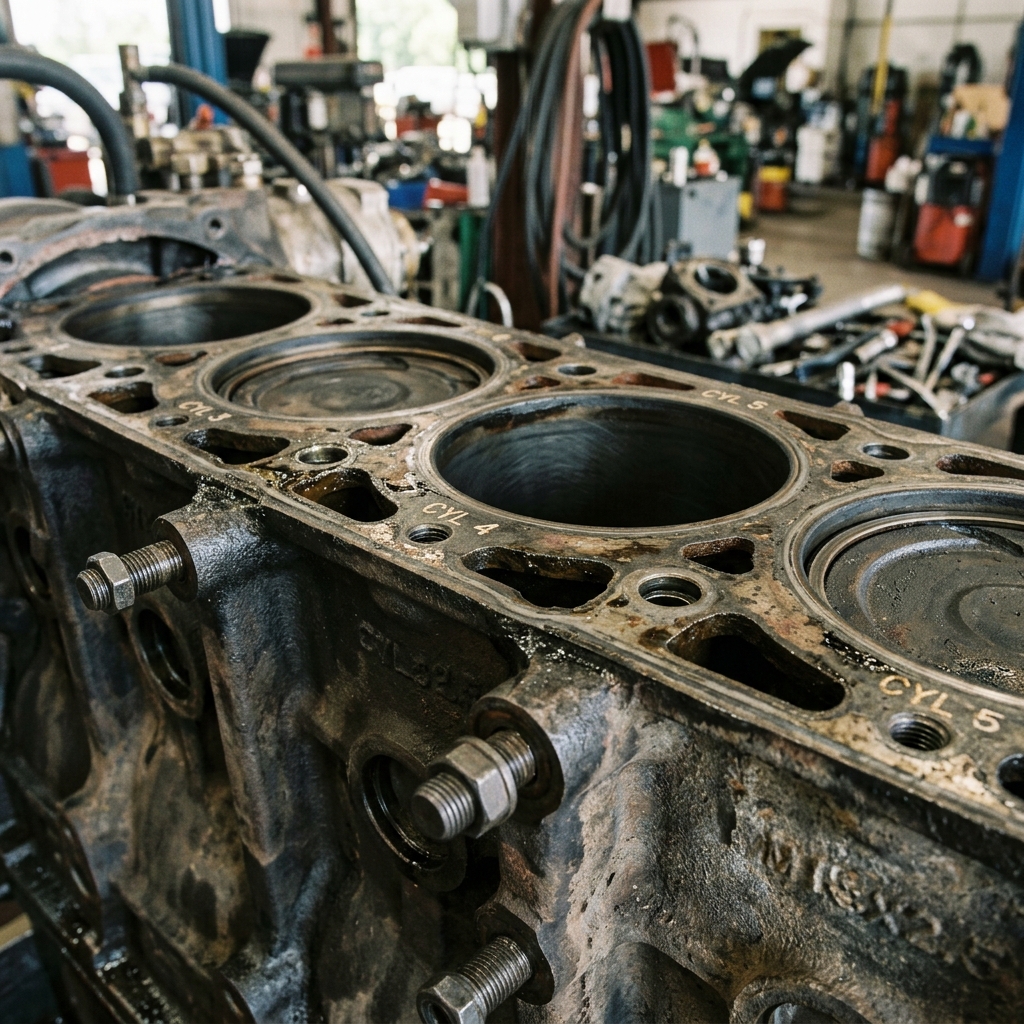
While diesel engines offer undisputed fuel economy advantages under load, any honest financial comparison must account for long-term ownership and maintenance costs. Diesel engines are highly specialized machines with complex emissions systems, high-pressure fuel networks, and massive fluid capacities. For example, a standard gasoline V8 engine typically requires 5 to 8 quarts of engine oil per service. In contrast, a 6.7L Power Stroke diesel requires 13 quarts of specialized oil. This difference alone nearly doubles the cost of a routine oil change.
Furthermore, diesel engines rely on highly sophisticated fuel filtration systems to protect their high-pressure fuel pumps from water and microscopic debris. These dual fuel filters must be replaced regularly—often every 15,000 to 22,500 miles—adding to your annual service bill. You must also factor in the cost of Diesel Exhaust Fluid (DEF), which must be replenished regularly to keep the truck compliant with environmental regulations. If a component in the complex exhaust aftertreatment system (like the DPF or SCR) fails out of warranty, repair costs can be substantial.
Gasoline engines, on the other hand, enjoy much lower routine maintenance costs. Spark plugs, ignition coils, and standard oil filters are relatively inexpensive and simple to replace. However, for high-mileage towing, the lower maintenance costs of a gas truck may be entirely offset by the extra money spent on fuel. If you are driving 25,000 miles a year while towing heavy loads, the diesel’s superior fuel economy will easily save you thousands of dollars at the pump, outweighing the higher service costs. If you need replacement parts for either engine type, you can easily Order Genuine Ford Parts through our dealership.
Keep Your Towing Rig Running Efficiently with Valor Ford's Service Center
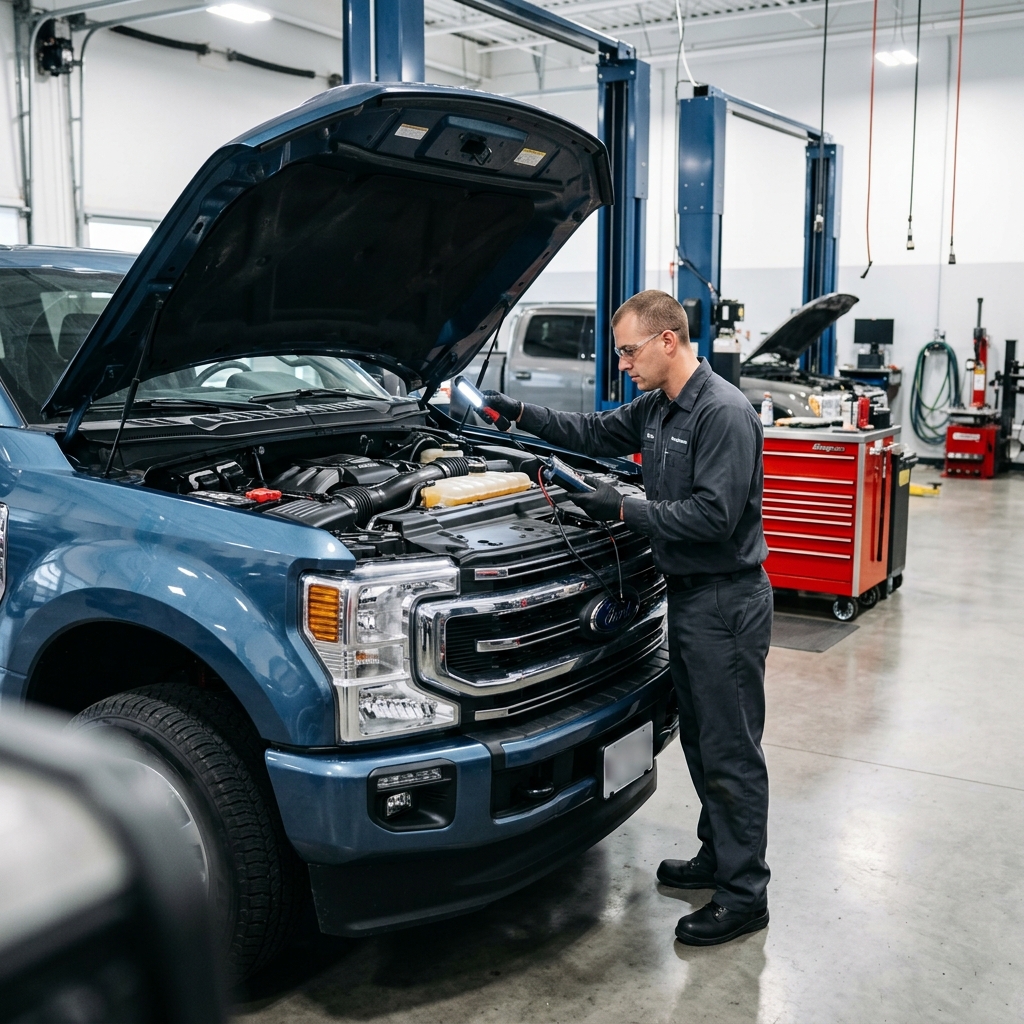
Whether you drive a high-torque EcoBoost gas truck or a heavy-duty Power Stroke diesel, routine preventative maintenance is the absolute key to preserving fuel economy and protecting your investment. Simple issues like a dirty air filter, worn spark plugs, clogged fuel filters, or misaligned tires can cause a massive drop in fuel economy, especially when pulling heavy loads. Our factory-trained technicians at Valor Ford in Junction City possess the specialized tools and diagnostics required to keep your tow rig operating at peak efficiency. To experience our convenient convenience, you can Schedule Pickup and Delivery Service or simply click to Schedule Ford Service Today.
What Is the Optimal Speed for Fuel Economy When Towing?
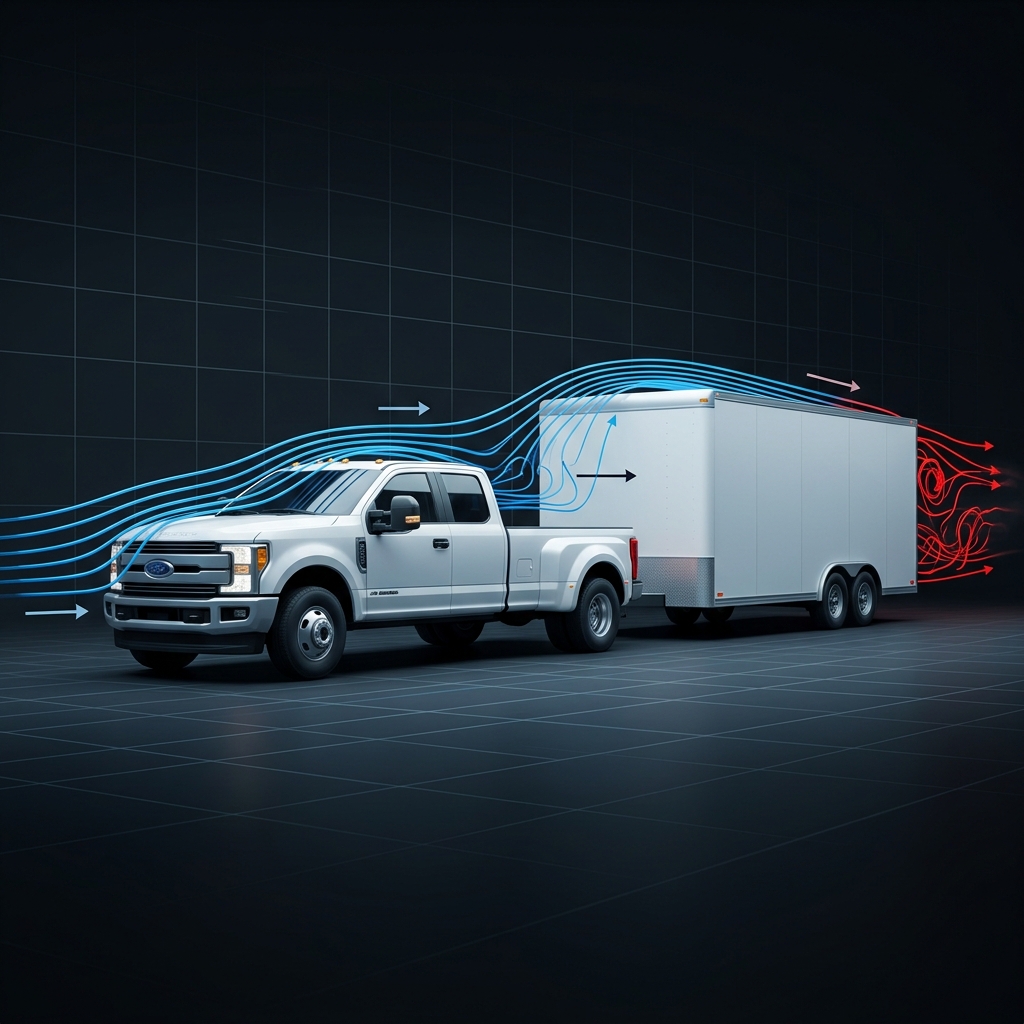
Regardless of whether you choose a gas or diesel engine, the single most influential factor affecting your fuel economy while towing is your speed. It comes down to a fundamental physical law: aerodynamic drag. As your speed increases, the aerodynamic resistance acting on your truck and trailer does not rise in a straight line—it increases exponentially. Specifically, the power required to overcome aerodynamic drag increases with the cube of your velocity. This means that driving just a few miles per hour faster requires a massive increase in engine power and fuel consumption.
For the vast majority of tow rigs, the optimal speed sweet spot on Kansas highways like Interstate 70 is between 60 and 65 mph. At this speed, your engine is able to comfortably maintain its highest possible gear, keeping the transmission’s torque converter locked. This lock-up prevents mechanical slippage and ensures that 100% of the engine’s power is transferred directly to the rear wheels, maximizing overall efficiency.
When you push your speed up to 70 or 75 mph, the aerodynamic drag becomes immense. To maintain this speed, a gasoline engine will often downshift one or two gears, spinning at high RPMs and burning through fuel. A diesel may be able to hold its top gear due to its immense torque, but it still must inject significantly more fuel to overcome the heavy wind resistance. By simply slowing down to 62 mph, you can easily save 15% to 25% on fuel costs over a long journey, while also reducing wear on your tires and transmission.
What Driving Techniques Help Any Engine Use Less Fuel When Hauling Heavy Loads?
While engine selection sets the baseline for your fuel economy, your driving habits ultimately determine the final numbers on your trip computer. By adopting a few simple, professional driving techniques, you can significantly reduce fuel consumption regardless of what is under the hood of your truck.
Progressive Acceleration
The easiest way to waste fuel is by accelerating aggressively from a complete stop. When you have several thousand pounds hitched to your truck, stomping on the gas or diesel pedal forces the engine to run at peak load, pouring fuel into the cylinders to get the heavy mass moving. Instead, practice progressive acceleration. Imagine there is an egg under your pedal and ease into the throttle, allowing the truck to build momentum gradually. This simple change can save a significant amount of fuel over a day of driving.
Using Tow/Haul Mode
Modern trucks are equipped with specialized ‘Tow/Haul’ modes that adjust transmission shift patterns to handle heavy loads. Some drivers avoid this mode because they think it holds gears too long and burns more fuel. However, Tow/Haul mode actually prevents the transmission from ‘hunting’ (constantly shifting back and forth between gears), which generates excessive heat and wastes fuel. It also provides aggressive engine braking on descents, which keeps your brakes cool and ensures you maintain safe control of your load.
Maintaining Momentum
To maximize fuel efficiency, you must learn to look ahead and read the road. When approaching a hill, build up a little extra speed before you reach the incline, rather than trying to accelerate once you are already climbing. On the highway, leave plenty of space between you and the vehicle ahead. This allows you to ease off the accelerator when traffic slows down, rather than slamming on your brakes and wasting the kinetic energy you worked hard to build. Smooth driving is efficient driving.
Tackling the Flint Hills: How Local Kansas Terrain Impacts Your Engine's Efficiency
The geography of Central Kansas has a profound, daily impact on how your truck performs. While some outsiders imagine Kansas as completely flat, local drivers know that the rolling topography of the Flint Hills and the terrain surrounding Junction City, Fort Riley, and Dickinson County present unique challenges. Climbing these steady, repeating inclines with a heavy trailer requires an engine with robust low-end torque. If your engine lacks this low-end grunt, it will be forced to downshift repeatedly, sending its RPMs skyward and causing fuel economy to suffer.
In this specific environment, the difference between gas and diesel engines becomes highly visible. A diesel engine can often pull a heavy trailer up a Flint Hills incline without downshifting, maintaining its highest gear and keeping its fuel consumption stable. A naturally aspirated gas engine, meanwhile, must drop gears to climb, causing its fuel economy to drop sharply. Modern turbocharged gas engines, like Ford’s EcoBoost, handle these hills beautifully due to their low-end torque, but they must inject extra fuel to cool their cylinders, resulting in higher fuel consumption than a diesel.
Additionally, our local Kansas winds play a massive role in fuel economy. Anyone who has driven down I-70 knows that a strong Kansas headwind can act like an invisible hill, forcing your engine to work significantly harder to maintain highway speed. Because diesel engines are inherently more efficient at overcoming resistance, their fuel economy is much less affected by these strong headwinds than a gasoline-powered truck. No matter what you tow, being mindful of the local terrain and wind conditions is key to planning an efficient route.
Ready to Upgrade Your Towing Setup? Visit Valor Ford Today
Deciding between a gas, hybrid, or diesel engine is a significant choice, and you do not have to make it alone. At Valor Ford, we are proud to serve as your trusted community resource. We invite you to visit our showroom in Junction City, KS, to explore our extensive inventory of new and pre-owned Ford trucks. Whether you want to test drive a highly versatile F-150 EcoBoost or experience the capability of a Super Duty F-250 Power Stroke diesel, our friendly team is here to help. You can easily start your journey by getting a Trade In Evaluation for your current vehicle or stop by our dealership to speak with our finance and sales professionals in person.
Tags: Central Kansas Hauling, Diesel Engines, Flint Hills Towing, Ford F-150, Ford F-250, Ford Trucks, Heavy Hauling, heavy-duty trucks, Junction City Trucks, Power Stroke Diesel, Towing Efficiency, Towing Fuel Economy, Towing Tips, Truck Maintenance, Turbocharged Gas Engines
Posted in
Buying Guides, Diesel Engine Care, Maintenance & Service, Towing & Trailer Technology |
No Comments »