Signs Your Super Duty Cooling System Needs Immediate Service Before Towing
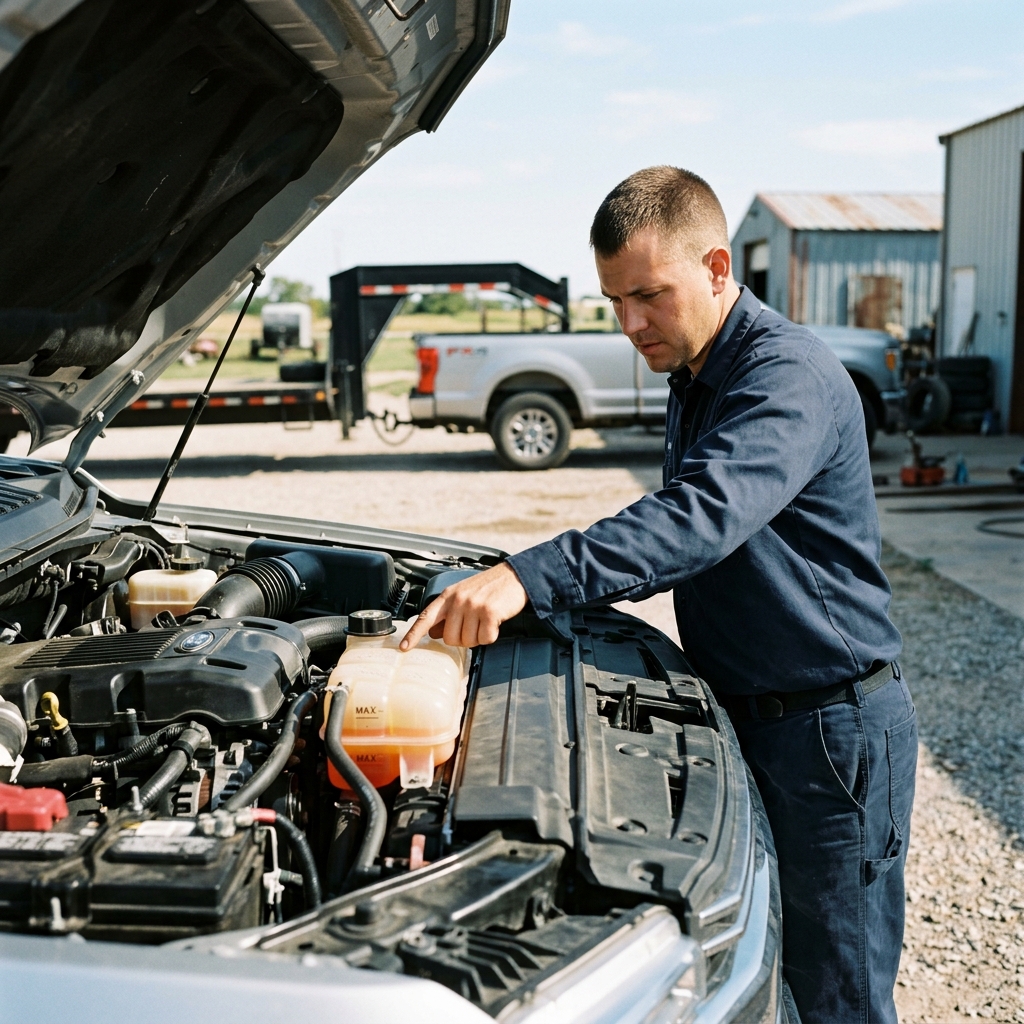
When you rely on a Ford Super Duty to haul multi-ton excavators, livestock trailers, or fifth-wheel RVs across Junction City and through the Flint Hills, your engine operates under extreme thermal loads. As Service Director at Valor Ford with two decades of hands-on diesel experience, I can tell you that 80% of summer diesel breakdowns on I-70 are entirely preventable. Before you latch onto a heavy load, taking five minutes to run through a quick walkaround inspection of your primary and secondary cooling systems can save you thousands of dollars and days of downtime.
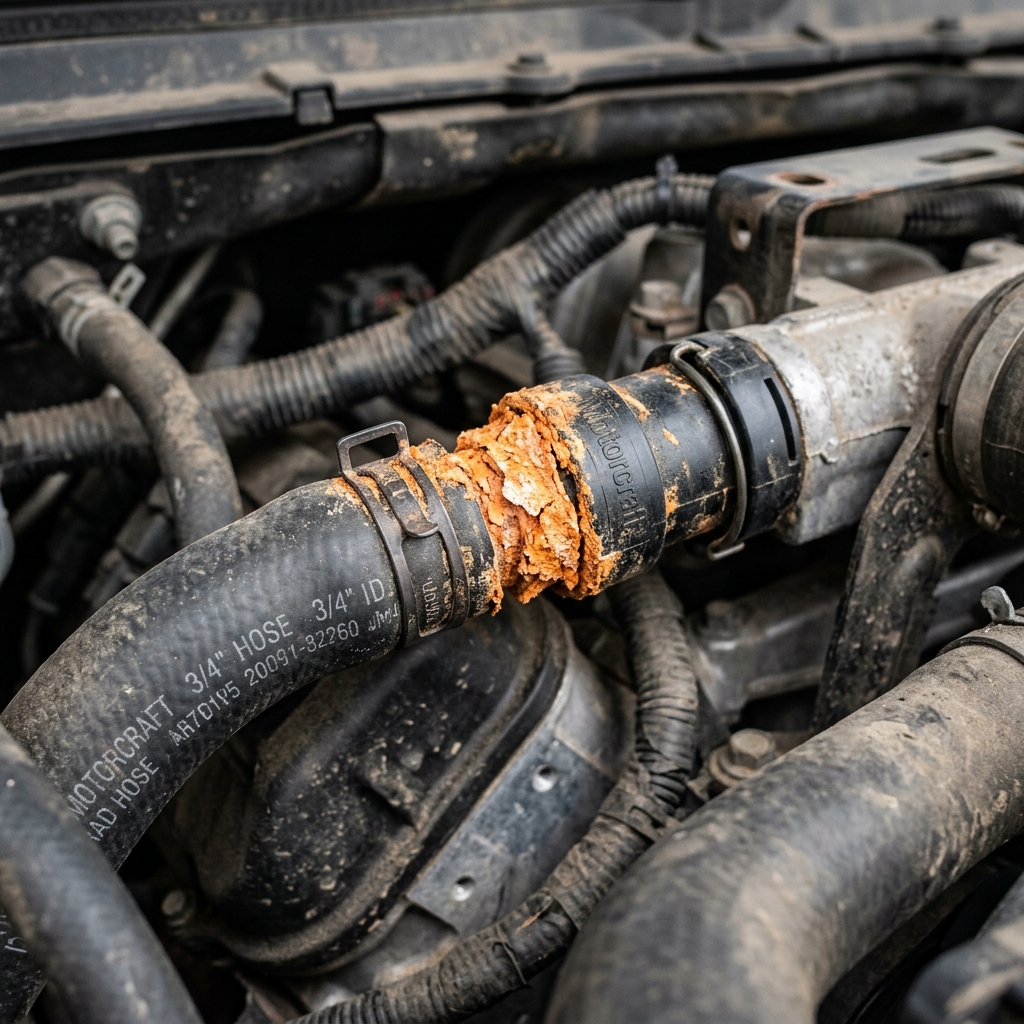
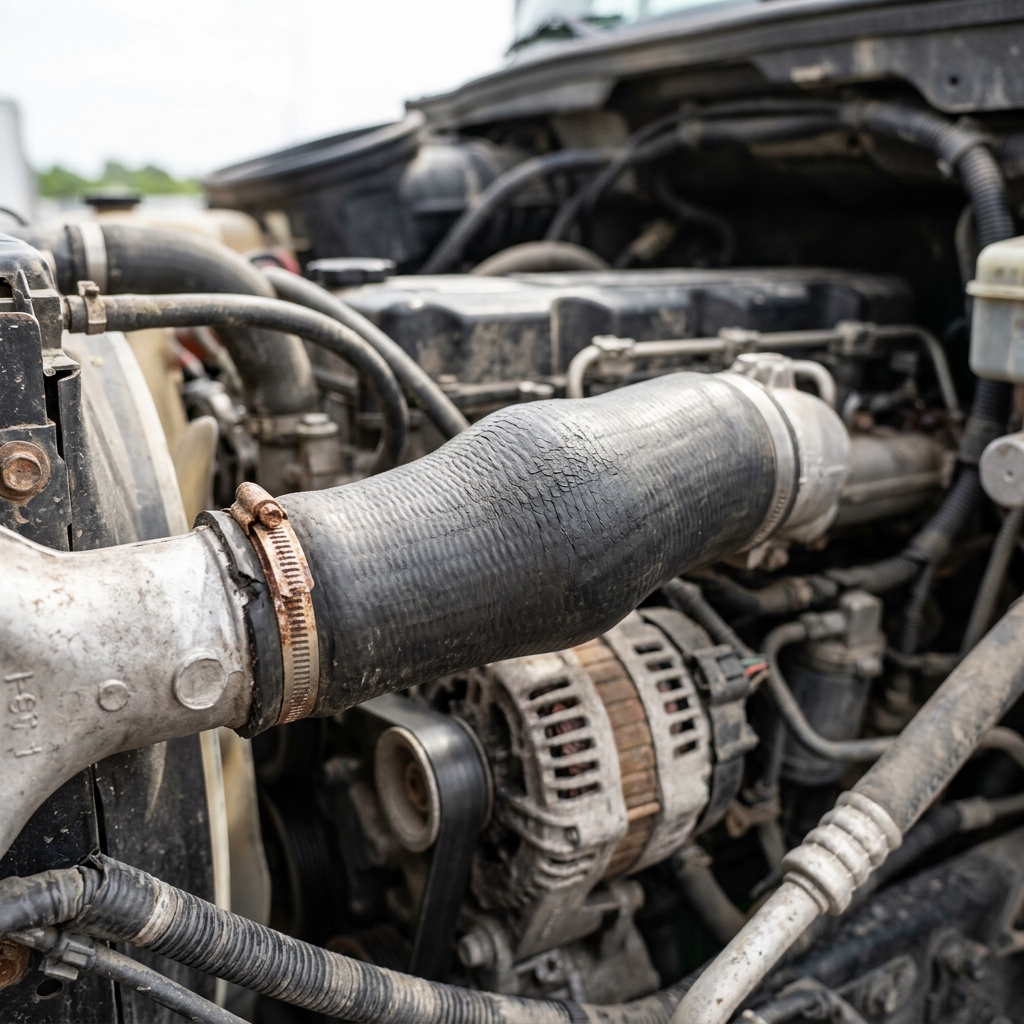
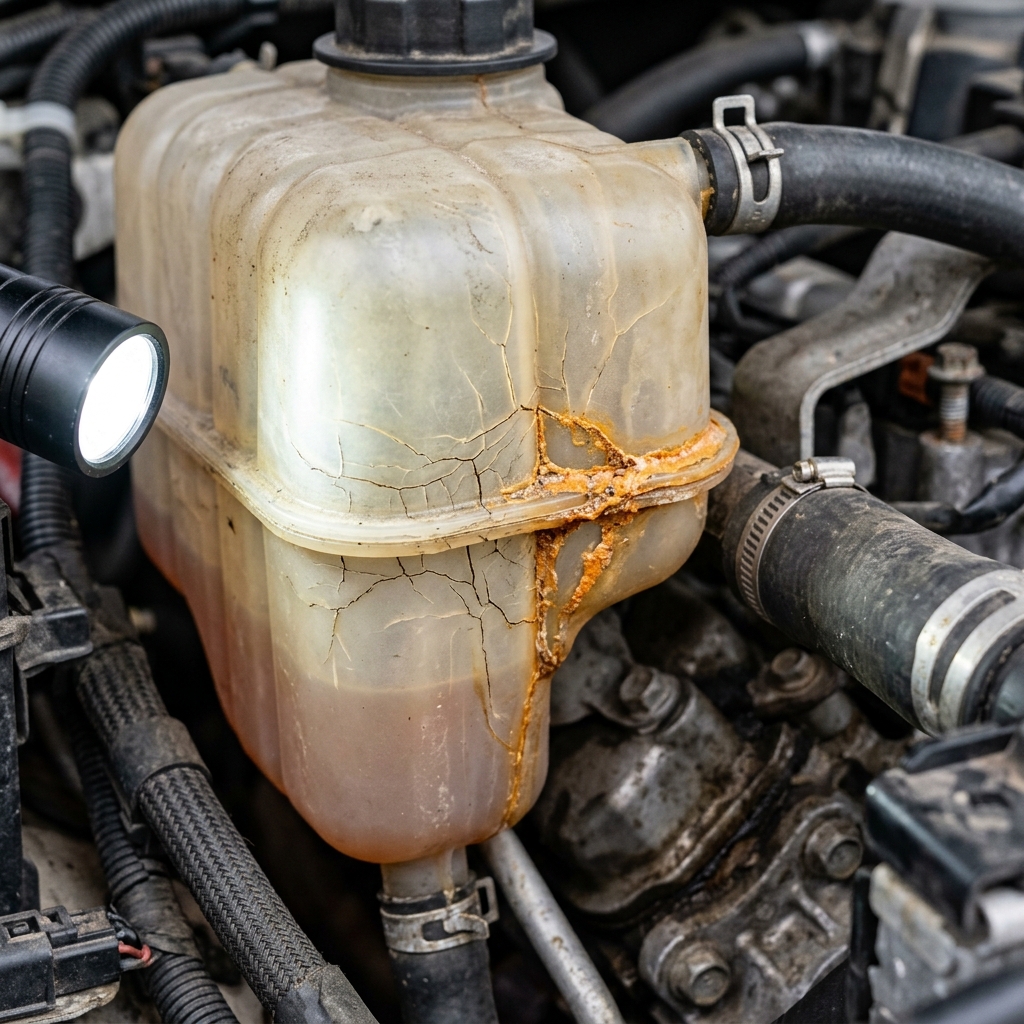
The modern 6.7L Power Stroke diesel engine is a engineering marvel, but its dual-cooling system architecture requires vigilant care. Key warning signs that warrant an immediate pause before hitching up include dropping fluid levels in either the primary or secondary degas bottles, a distinct sweet-smelling vapor drifting from under the hood after a test warm-up, dry crusty orange or yellow Motorcraft coolant residue around quick-connect fittings, unusual fan clutch resistance, and upper radiator hoses that feel either rock-hard under pressure or spongy and soft when cool. Catching these early indicators protects your head gaskets, EGR coolers, and turbochargers from catastrophic heat distortion.
Meet Mike Hogg: 20 Years of Super Duty Heavy-Duty Diesel Service
Hello, I’m Mike Hogg, Service Director here at Valor Ford in Junction City. Over the past 20 years, my career has been dedicated to keeping Ford heavy-duty trucks running at peak reliability across North Central Kansas. From local agricultural operations in Dickinson and Geary counties to commercial transport contractors and military equipment haulers servicing Fort Riley, I’ve diagnosed and repaired every thermal issue imaginable on Power Stroke diesel platforms.
When you work in heavy towing, your cooling system isn’t just an accessory—it’s the heart of your truck’s durability. A small pinhole leak or failing fan clutch during mild cruising becomes a catastrophic thermal runaway when you’re pulling 20,000 pounds up an 8% grade in August. My team and I are passionate about proactive maintenance because we know that preventing an engine overhaul starts before the truck ever leaves the staging yard. Feel free to Call us at (785) 238-5114 anytime to talk through your truck’s maintenance needs.
Why Is Pre-Work Cooling Inspection Especially Important Before Towing?
Towing heavy gooseneck trailers or maximum payload box beds pushes your Ford Super Duty engine into sustained high-boost operating zones. Under heavy load, peak combustion temperatures soar, and the engine generates exponentially higher thermal energy that must be dissipated through the cooling stack immediately. If your cooling system has even a 5% drop in efficiency—due to degraded fluid, trapped air pockets, or partially restricted radiator fins—the heat accumulation outpaces heat rejection.
In normal commuter driving without payload, a compromised cooling system might hide its flaws. The fan clutch might kick in late, or the secondary circuit might run slightly elevated without causing an immediate check engine light. However, the moment you put the truck under heavy load on Kansas highways, heat levels spike in seconds. Pre-work checks ensure your primary and secondary cooling loops maintain maximum thermal headroom, preventing sudden derate modes or warped components miles away from help.
Furthermore, modern Power Stroke engines feature sophisticated electronic safeguards that will automatically pull engine torque and boost when cylinder head or oil temperatures cross threshold limits. Imagine pulling out onto Highway 77 with a heavy load, only for your truck to enter reduced power mode midway up a hill because the secondary coolant loop couldn’t chill the charge air cooler. Performing a thorough cold check before your workday starts prevents these frustrating and dangerous highway power drops.
Whether you are operating an older 6.7L model or considering upgrading to a newer model like when you Research Ford F-250 options, keeping tabs on thermal health is vital. Taking proactive steps gives you complete confidence when embarking on tough jobsite assignments across Junction City.
Critical Visual Flags: What Pre-Work Inspection Signs Indicate Immediate Service?
1. Crusty Coolant Residue
Look for chalky, dried orange, pink, or yellow deposits around hose connections, thermostat housings, radiator end-tanks, and water pump seams. This residue is evaporated coolant escaping under system pressure.
2. Hose Swelling or Softness
Squeeze radiator hoses when cold. Spongy, overly soft, or bulged sections indicate oil contamination or inner liner breakdown. Excessively hard hoses indicate calcification or high pressure buildup.
3. Degas Tank Stress Cracks
Inspect plastic degas surge bottles for yellowing micro-fractures along heat-stressed molded seams. A compromised degas tank cannot hold pressure, lowering coolant boiling points dramatically.
What Does a Coolant Puddle Under Your Super Duty Usually Indicate?
Discovering a bright yellow, orange, or green fluid puddle on your driveway or shop floor is a clear warning sign. On Ford Super Duty diesel trucks, fluid location provides valuable diagnostic clues before turning the key. Fluid dripping near the front center of the engine crossmember often points to a failing water pump shaft seal weeping through its lower relief port.
Leaks spotted near the front passenger or driver corners typically originate from primary radiator plastic end-tank crimp seams or lower radiator hose quick-connector O-rings. Over time, heavy thermal expansion cycling fatigues the rubber O-rings inside plastic quick-connect fittings, causing cold-weather seepage that expands under pressure.
If you notice drips dripping down the rear of the engine block near the bellhousing, the culprit is often a leaking secondary turbo cooling line fitting or EGR cooler supply connection. These high-heat zones quickly degrade standard seals. Never ignore small drips; fluid loss reduces hydraulic head pressure, creating air pockets that induce severe localized hotspot boiling inside cylinder heads.
If you are unsure where a puddle originates, bring your vehicle in for professional pressure diagnostics. You can Get Directions to Valor Ford and our certified diesel specialists will pinpoint the exact source.
Understanding Fluid Capacities: How Much Coolant Does a 6.7L Power Stroke Hold?
To properly service and maintain a 6.7L Power Stroke V8 Turbo Diesel, you must understand its specialized dual-cooling system architecture. Unlike standard gasoline light trucks that use a single cooling loop, Super Duty diesel trucks utilize two independent cooling systems operating at different thermal ranges with separate degas tanks, radiators, and water pumps.
|
Cooling Circuit
|
Target Components
|
Fluid Capacity (Approx.)
|
Recommended Fluid Spec
|
|
Primary High-Temp Circuit
|
Engine Block, Cylinder Heads, Turbo Housing
|
27.8 – 30.7 Quarts (7.0 – 7.7 Gal)
|
Motorcraft Yellow Prediluted 50/50
|
|
Secondary Low-Temp Circuit
|
Charge Air Cooler (Intercooler), Transmission Cooler, Fuel Cooler
|
11.7 – 13.0 Quarts (2.9 – 3.2 Gal)
|
Motorcraft Yellow Prediluted 50/50
|
Combined, a 6.7L Power Stroke holds over 10 total gallons of coolant! Mixing unapproved universal coolants or tap water with high mineral content can corrode internal heat exchangers and create scale buildup. Always verify that you are topping off with genuine Motorcraft Yellow coolant formulated specifically for Ford high-output diesels.
What Kinds of Damage Can Happen If You Keep Driving a Super Duty Hot?
Ignoring temperature warnings on a heavy-duty diesel engine leads to severe financial consequences. When a Super Duty engine operates past thermal thresholds under load, aluminium cylinder heads undergo thermal expansion that distorts deck flatlines. This warp breaks head gasket fire rings, allowing high-pressure combustion gases to pressurize the cooling system.
Simultaneously, extreme exhaust gas recirculation (EGR) temperatures can crack internal stainless steel EGR cooler tubes. Once cracked, pressurized coolant is forced directly into the exhaust stream or intake manifold, creating white exhaust smoke and risk of hydraulic lock in engine cylinders.
Uncontrolled heat also cooks turbocharger center-housing bearings, coking engine oil and starving bearings of critical lubrication. What starts as a simple quick-connect O-ring leak can spiral into a major repair costing significantly more over time. Prioritizing pre-work inspections safeguards your investment.
Expert Service Perspective: Preventing $10,000 Overhauls with 5-Minute Checks
“In my 20 years managing Ford heavy-duty service bays, the single most cost-effective habits I coach commercial fleet managers on are quick, cold morning visual checks. Pop the hood before starting the truck. Look at both degas tank cold fill lines. Give the upper hose a firm squeeze. Check the front bumper air intake for farm dust or debris. Spending 300 seconds doing this every morning saves you $10,000 in major diesel engine overhauls down the road.” — Mike Hogg, Service Director at Valor Ford
What Should Be Inspected in the Cooling System Before Putting Your Super Duty to Work?
Phase 1: Fluid & Caps
Verify primary and secondary degas fluid levels are exactly at the cold fill line. Inspect pressure cap seals for dried crust or torn rubber gaskets. Replace degas caps every 3 years to maintain 16 PSI baseline pressure.
Phase 2: Belt & Fan Clutch
Examine the serpentine belt for glazing, rib cracking, or wear indicator misalignment on the tensioner arm. Spin the viscous fan clutch manually when cold; it should offer smooth, moderate resistance without axial play.
Phase 3: Airflow Stack
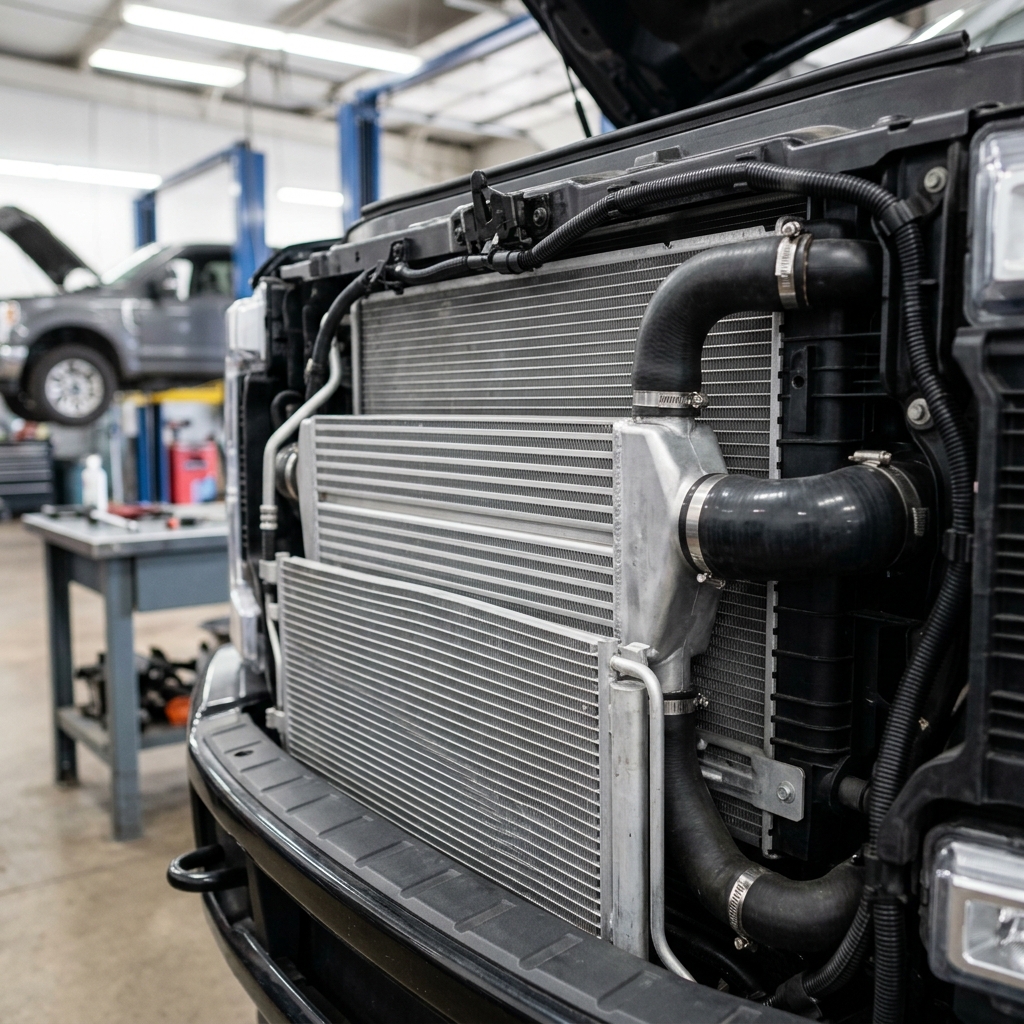
Shine a flashlight through the front grille mesh to inspect the radiator, AC condenser, and charge air cooler. Clear out farm chaff, dried mud, insects, and straighten bent fins that restrict critical Ram airflow.
How Kansas Terrain and Towing Loads Accelerate Super Duty Cooling Wear
Operating trucks around Junction City, Fort Riley, and throughout Dickinson County presents unique environmental challenges. The rolling topography of the Flint Hills forces repeated high-torque engine pulls, causing thermal cycling in aluminum and plastic cooling components. Summer ambient temperatures regularly exceed 95°F with high humidity, reducing radiant cooling efficiency.
Agricultural pasture work introduces airborne chaff, dust, and seed heads that clog cooling stack fins. Dust mixes with ambient moisture to form a concrete-like barrier across heat exchangers, cutting air volume dramatically. Regular maintenance is essential for trucks operating in these severe regional conditions.
Professional Super Duty Cooling Diagnostics and Maintenance at Valor Ford
Factory-Trained Master Techs
Our service department is staffed by specialized Ford Senior Master Diesel Technicians who understand every detail of Power Stroke engine platforms.
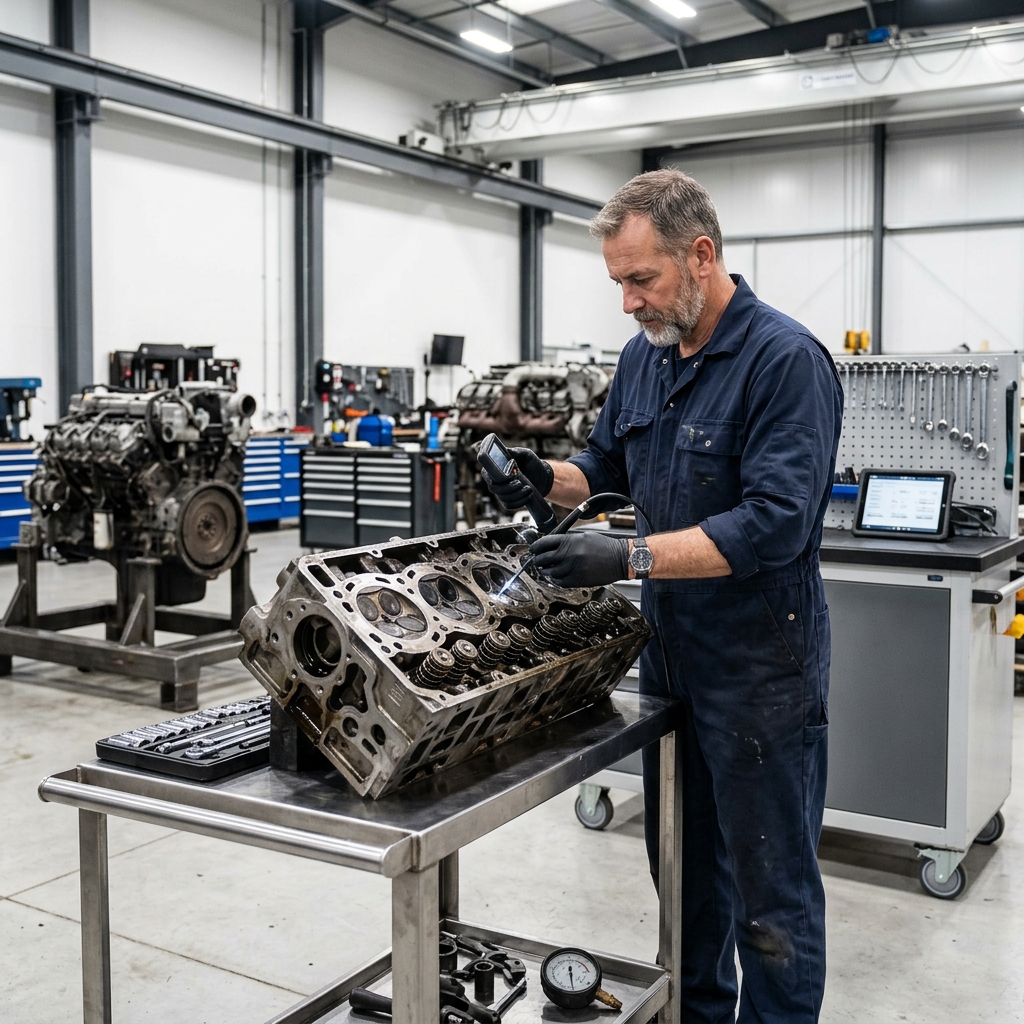
Advanced Pressure Testing
We utilize pneumatic pressure diagnostic tools to simulate high-load thermal stress, identifying micro-leaks before they cause highway failures.
OEM Motorcraft Parts
We stock genuine Ford Motorcraft coolant, heavy-duty hoses, water pumps, and thermostat assemblies built to OEM specifications.
Schedule Your Super Duty Pre-Work Cooling Inspection in Junction City Today
Don’t leave your truck’s reliability to chance when pulling heavy loads across Kansas. Whether you need a simple system pressure test, a Motorcraft Yellow coolant flush, or a complete pre-season inspection, the expert team at Valor Ford is ready to assist you. Contact us today or drop by our facility at 1825 Goldenbelt Blvd in Junction City.
Tags: 6.7L Power Stroke service, Cooling System Inspection, Diesel Cooling System Diagnostics, diesel engine maintenance, Ford Diesel Cooling Repair, Ford Super Duty Cooling System, Heavy Towing Truck Care, heavy-duty truck repair, junction city truck service, Motorcraft Coolant Replacement, Pre-Towing Vehicle Check, Radiator and Hose Maintenance, Thermal Engine Protection
Posted in
Diesel Engine Care, Heavy-Duty Truck Care, Maintenance & Service, Preventative Vehicle Inspections, Repair & Parts |
No Comments »