Should I Change My Super Duty's Differential Fluid Before Agricultural Towing in Junction City?
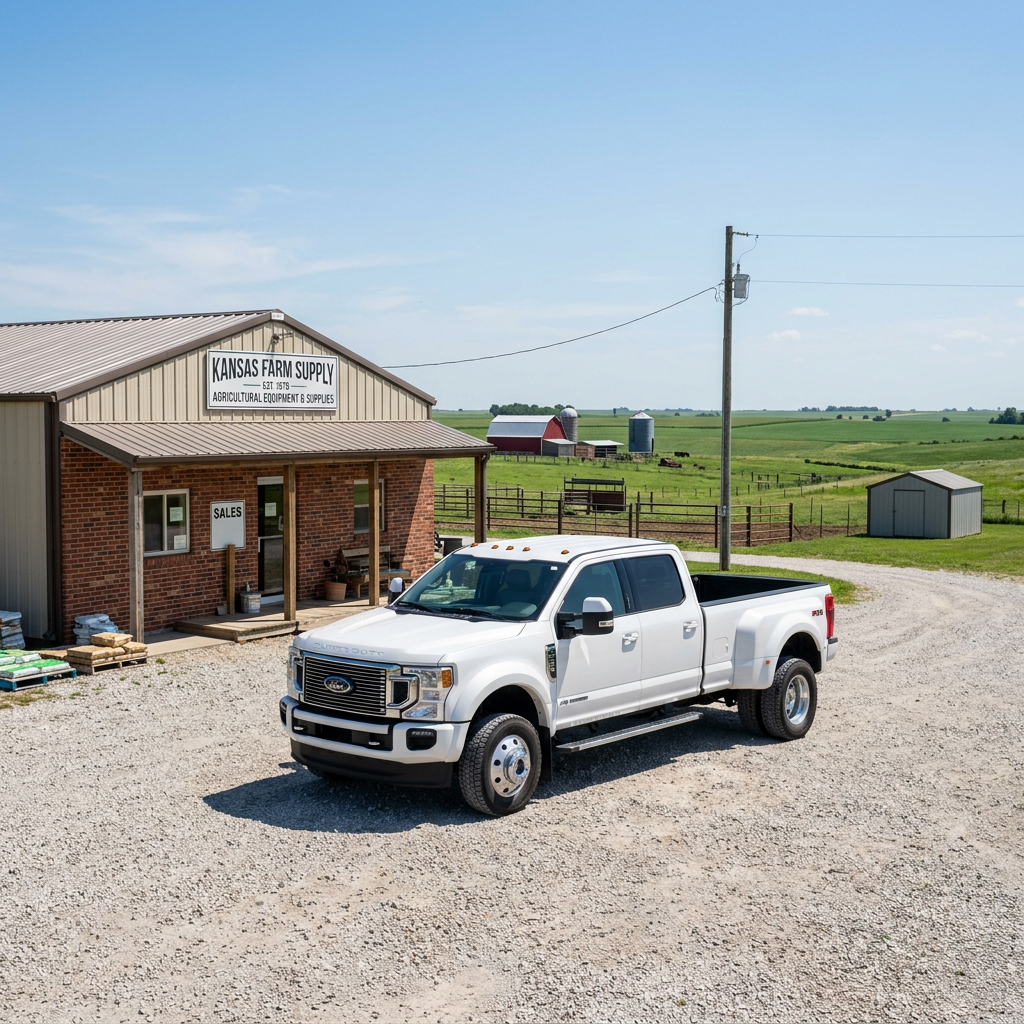
As the summer heat settles deep over Dickinson County and the Flint Hills, local farmers and ranchers know that the demands of the agricultural calendar are about to peak. Whether you are hauling massive round bales of hay, moving livestock to fresh pasture, or preparing to transport heavy tillage equipment, your Ford Super Duty is the undisputed backbone of your operation. It is built to handle incredible vertical tongue weights and immense pulling forces. However, before you hitch up that 15,000-pound trailer and head out onto the rolling gravel roads around Junction City, there is one critical maintenance question every truck owner must confront: Is your rear differential fluid ready for the brutal thermal cycle it is about to experience? Many truck owners focus heavily on engine oil, transmission fluid, and coolant levels before embarking on heavy towing seasons. While those fluids are undeniably crucial, the rear differential is often forgotten until it begins to sing, whine, or worse, seize. The differential is the final point of torque transfer before the power hits the dirt. In a Super Duty, this component works under extreme physical pressures. Proactive fluid maintenance is not just a minor checkbox on your to-do list; it is the single most effective way to prevent catastrophic axle failures that can derail your harvest schedule and cost thousands of dollars in unscheduled downtime.
At Valor Ford, we understand that a work truck is not just a vehicle—it is a vital business asset. When the harvest window is open, every hour your truck spends in the shop is money lost. That is why we advocate for preventive maintenance schedules tailored specifically to the unique, punishing conditions of Kansas agricultural operations. In this comprehensive guide, we will break down the science of gear lubrication, explain why heavy towing alters your fluid change intervals, and help you determine whether your truck needs a differential service before your next major haul. If you are ready to ensure your truck is fully prepared, you can easily Schedule Ford Service Today with our team of heavy-duty specialists.
Why Is Differential Fluid Especially Important for Heavy-Duty Towing on a Super Duty?
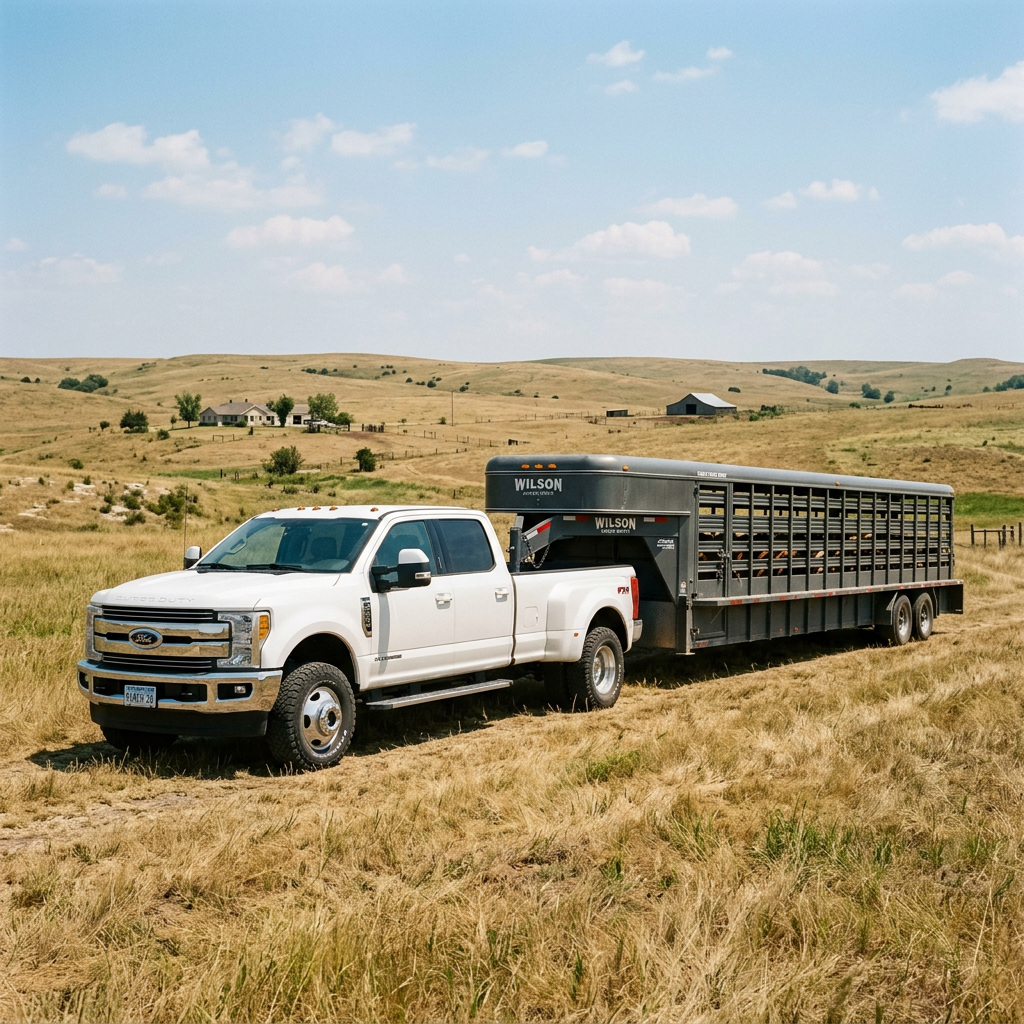
To understand why differential fluid is so vital, you must first look at the incredible physical forces at play inside your Super Duty’s rear axle housing. When you are pulling a fully loaded livestock trailer up a steep incline or dragging a heavy flatbed through a soft, muddy field, your engine generates massive torque. This torque is sent through the transmission and driveshaft directly to the pinion gear. The pinion gear, which is relatively small, must mesh perfectly with the much larger ring gear to rotate your rear axles. Because of the extreme gear reduction and the sheer weight of agricultural loads, the contact points between the teeth of the ring and pinion gears experience mind-boggling pressure. This contact is known as sliding friction. Without an incredibly robust boundary layer of high-viscosity gear oil, the metal teeth of these gears would physically weld themselves together and tear apart in a matter of seconds. Under normal driving conditions, the fluid manages this friction with ease, maintaining a thin, protective film that prevents direct metal-on-metal contact.
However, heavy towing changes the equation entirely. As load increases, the pressure between the gear teeth spikes dramatically, generating extreme localized heat. Under heavy-duty towing, rear differential fluid temperatures can easily soar past 220 degrees Fahrenheit, and under severe loads on hot Kansas summer days, they can climb even higher. This extreme heat initiates a process called thermal degradation, where the fluid’s molecular structure begins to break down, causing it to lose its viscosity and shear strength. Once the fluid thins out or burns, its ability to cushion the gear teeth diminishes. This leads to accelerated wear, micro-pitting, and eventually, catastrophic gear failure. Furthermore, Super Duty axles are often equipped with limited-slip differentials or locking mechanisms that rely on precise fluid friction properties to function. Old, degraded fluid can cause these mechanisms to chatter, slip, or fail to engage when you need traction most in a slick pasture. Keeping fresh, highly viscous fluid in your axle is the ultimate defense against these destructive forces.
How Does Normal Driving Compare to Frequent Towing in Differential Maintenance Needs?
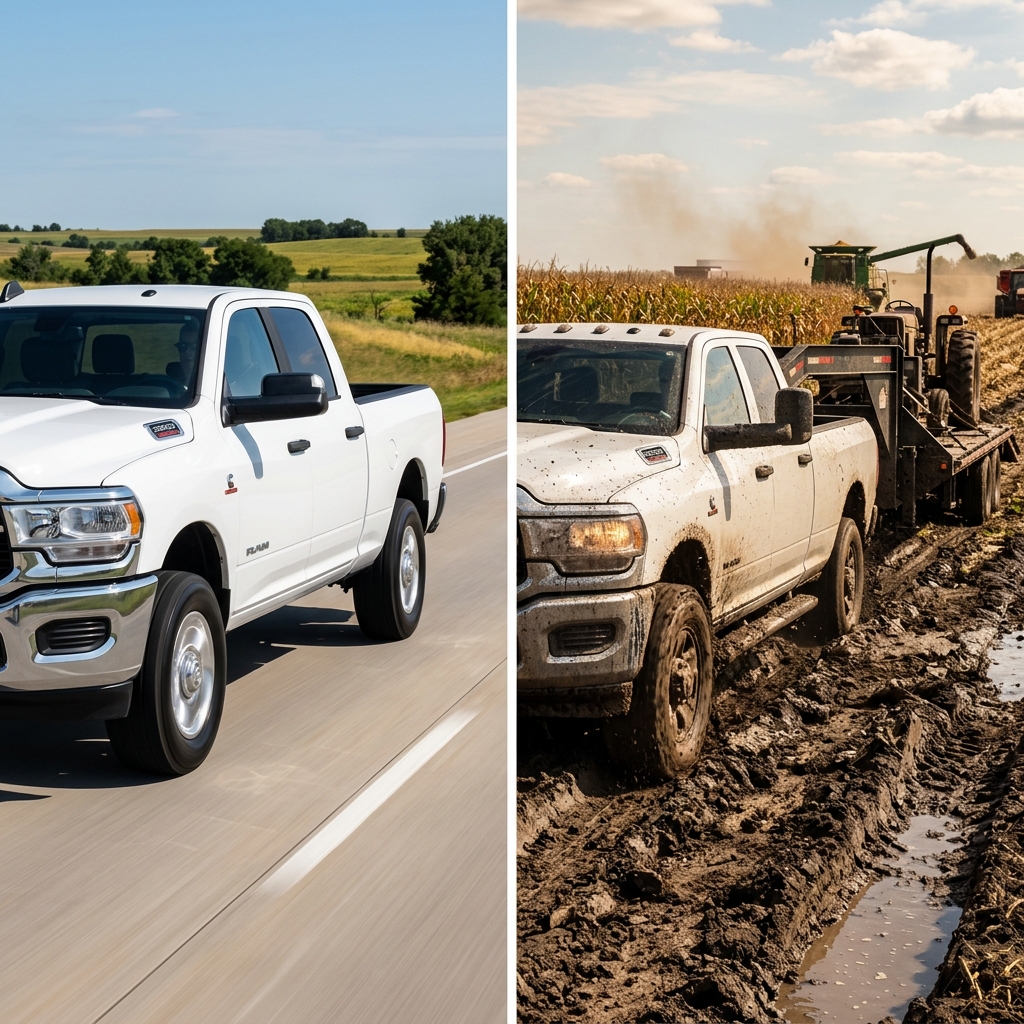
Consider a Super Duty that spends most of its time as a daily commuter or light utility vehicle around Fort Riley and Junction City. It carries light payloads in the bed, occasionally runs down the highway, and rarely pulls anything heavier than a small utility trailer or a couple of ATVs. In this scenario, the rear axle operates under what engineers call “light-duty” or “normal” service. The axle housing stays cool, the gear oil experiences very little shear stress, and water or dust contamination is minimal. Under these benign conditions, the factory-filled synthetic gear oil can easily last for over 100,000 miles without losing its protective qualities. Now, contrast that with a Super Duty dedicated to agricultural operations. This truck is frequently hooked to gooseneck trailers loaded with 15,000 to 20,000 pounds of cattle, tractors, or square hay bales. It travels slowly through dusty, unpaved Kansas farm fields, navigates muddy low-water crossings in Dickinson County, and climbs steep gravel roads in the midday summer heat. This is the definition of “severe duty.” The constant high torque and slow speeds mean there is less airflow under the truck to cool the differential housing, causing the oil to bake.
Frequent severe-duty towing accelerates fluid degradation exponentially. When a truck operates under constant high loads, the fluid’s additives—such as anti-wear agents, friction modifiers, and anti-foaming agents—deplete rapidly. If you continue to tow with compromised fluid, you risk permanent damage to the ring and pinion gears. To check out your options for upgrading to a newer, more capable towing rig, you can Browse Used Inventory at Valor Ford to find a truck built to handle your specific agricultural requirements.
What Is the Normal Differential Fluid Change Interval, and How Does Heavy Towing Change It?
Ford’s official maintenance schedule for the Super Duty provides guidelines for both normal and severe operating conditions. While modern synthetic gear lubricants are incredibly durable, the manufacturer explicitly shortens the service intervals when the vehicle is subjected to frequent towing, heavy payloads, or operation in dusty and off-road environments. Understanding these differences is key to planning your maintenance schedule before the busy harvest season begins.
Normal Service Schedule For a Super Duty that is driven primarily on paved highways with minimal towing or heavy payload hauling, Ford typically recommends inspecting the rear differential fluid level and condition every 30,000 miles, with a complete fluid replacement interval of 150,000 miles. This long interval is made possible by high-quality factory synthetic oils that maintain stable viscosity over years of light-duty use in moderate climates.
Severe Service Schedule If your truck is used for frequent agricultural towing, operates in dusty environments, or frequently idles for long periods, Ford recommends shifting to the severe-duty schedule. Under these conditions, the rear differential fluid should be inspected at every oil change and fully replaced every 30,000 to 50,000 miles. Proactively changing the fluid within this window ensures that fresh additives are always present to protect your gears.
The Agricultural Reality For local Kansas operations, we often recommend changing the rear differential fluid every 30,000 miles, or at least once every two years, regardless of mileage. The combination of intense summer heat, high-humidity cycles, heavy towing, and dirt road dust accelerates fluid breakdown much faster than standard highway driving. Changing fluid before harvest prevents costly in-field failures when time is at an absolute premium.
What Weight and Type of Differential Fluid Does a Ford Super Duty Require?
Using the correct fluid specification is absolutely non-negotiable for a modern Ford Super Duty. These trucks are equipped with highly engineered, high-torque axles designed to work with very specific lubricant formulations. Pouring the wrong gear oil into your axle housing can lead to immediate lubrication failure, excessive noise, and rapid gear wear. Most modern Ford Super Duty trucks (F-250 and F-350) utilize high-performance rear axles that require synthetic gear lubricants. For standard rear axles, Ford typically specifies Motorcraft SAE 75W-85 Premium Synthetic Hypoid Gear Lubricant. However, for trucks equipped with larger rear axles, dual rear wheels (duallies), or those frequently used for severe-duty towing, Ford often specifies Motorcraft SAE 75W-140 Synthetic Rear Axle Lubricant. This heavier weight fluid provides a much thicker protective film at high operating temperatures, ensuring that the ring and pinion teeth remain cushioned even under extreme agricultural loads.
Another critical detail is the presence of a limited-slip differential. If your Super Duty is equipped with a traction-lok rear axle, it requires a specific friction modifier additive (such as Motorcraft Additive Friction Modifier XL-3) mixed with the gear oil. This additive ensures that the internal clutch packs engage smoothly without chattering or binding during tight turns on paved roads. When we service your truck at Valor Ford, we always verify your specific axle code on the door jamb placard to ensure we use the exact OEM-specified fluids and additives. If you are doing the job yourself, you can easily Order Genuine Ford Parts directly from our parts department to guarantee compatibility.
What Specific Fluid Issues Should I Look for That Require Service Before Towing?
Before you hook up your trailer for a heavy haul, it is wise to perform a quick visual inspection of your rear axle. There are several warning signs that indicate your differential fluid is compromised and needs immediate replacement. Ignoring these symptoms can lead to severe mechanical damage on the road.
Milky or Cloudy Appearance If you pull the fill plug and find that the fluid has a milky, cloudy, or frothy appearance, this is a clear indication of water contamination. This is common for farm trucks that negotiate creek crossings or low-water crossings in the Flint Hills. Water emulsifies with the gear oil, drastically reducing its lubricating capacity and leading to rapid rust and gear wear.
Burnt Smell & Dark Color Healthy synthetic gear oil has a strong, distinct chemical smell, but it should not smell burnt. If you pull the dipstick or fill plug and are greeted by a pungent, acrid, burnt aroma accompanied by dark, blackish fluid, the oil has undergone severe thermal breakdown. This means the fluid has lost its viscosity and is no longer protecting your gears from high-load friction.
Metal Shavings on Magnet Most Super Duty differential plugs have a built-in magnet designed to catch fine metallic wear particles. While a very fine metallic paste on the magnet is normal over tens of thousands of miles, finding actual metal flakes, slivers, or chunks is a major red flag. This indicates that gear teeth or bearings are actively disintegrating, requiring immediate professional inspection.
What Extra Checks Might a Shop Perform During a Differential Service for a Work Truck?
When you bring your Super Duty to a professional shop like Valor Ford for a differential service, you get far more than a simple fluid drain and fill. A professional technician approach is comprehensive, looking at the entire rear-end assembly to ensure absolute reliability under load. First, the technician will thoroughly inspect the axle housing vent tube. When a differential gets hot during towing, the air inside expands. The vent tube allows this pressure to escape safely. If the vent tube is clogged with Kansas mud, dust, or insect nests, the expanding pressure will force its way out through the weakest points—typically the pinion seal or outer wheel seals. Cleaning this vent is a critical, often-overlooked step that prevents costly oil leaks. Next, the technician will inspect the condition of the axle shaft seals and pinion seal for any signs of weeping or active leakage. Even a minor leak can lead to a low fluid condition over a long towing season, which is the fast track to a melted axle. They will also inspect the wheel bearings for play and check the driveshaft universal joints (U-joints) for wear, slop, or binding. A worn U-joint can cause driveline vibrations that mimic a tire balance issue but can eventually lead to catastrophic driveshaft failure under heavy torque.
Furthermore, if the differential cover is removed, the technician can perform a visual check of the gear wear patterns and measure backlash to ensure the ring and pinion are still in perfect alignment. This level of diagnostic inspection is something you simply cannot replicate with a quick driveway fluid swap. To have our experts look over your entire driveline, you can book an appointment for Schedule Pickup and Delivery Service to have us handle your truck maintenance with zero disruption to your daily farm routine.
What Are the Basic Steps for a DIY Rear Differential Fluid Change on a Heavy-Duty Truck?
For the hands-on truck owner, changing the rear differential fluid on a Super Duty is a manageable DIY project, though it can be quite messy and requires a few specific tools. Before you begin, make sure you have the correct gear oil (typically 3 to 4 quarts of synthetic 75W-140 or 75W-85 depending on your axle), a new differential cover gasket or high-quality RTV silicone sealant, a drain pan, a socket set, a scraper, brake cleaner, and a fluid transfer pump. First, park the truck on a level surface, set the parking brake, and block the wheels. It is a good idea to drive the truck for a few miles beforehand to warm up the fluid, which helps it drain more quickly and carry away suspended contaminants. Locate the fill plug on the front or side of the differential housing and loosen it *before* you drain the fluid. This is a critical safety step—if you drain the fluid first and then find that the fill plug is seized or stripped, your truck is stranded until you can get it open. Next, place your drain pan under the rear differential. If your axle housing has a drain plug at the bottom, simply remove it and let the fluid drain. If it does not, you will need to loosen all the bolts on the differential cover, leaving the top two bolts loosely threaded. Carefully pry the bottom of the cover away from the housing with a flathead screwdriver to break the seal, allowing the old oil to drain into your pan. Once the draining slows, remove the top bolts and take the cover completely off.
With the cover off, use a scraper and brake cleaner to thoroughly clean the old gasket material or RTV sealant off both the housing mating surface and the cover. Be extremely careful not to let debris fall into the open differential gears. Clean the inside of the housing and wipe down the magnetic fill plug to remove any metallic paste. Inspect the gears for any visible chips, pitting, or unusual wear patterns. Once everything is clean and dry, apply a bead of high-quality RTV silicone sealant (such as Motorcraft TA-35-B) to the cover flange, looping around the bolt holes, or position your new gasket. Reinstall the cover and torque the bolts in a star pattern to the manufacturer’s specified torque (usually around 30-35 lb-ft, but always verify for your specific model year). Allow the RTV to cure according to the package instructions. Finally, use a fluid transfer pump to fill the differential with fresh synthetic gear oil until the level reaches the bottom of the fill plug hole (or the specified fill line on modern covers). Reinstall the fill plug, clean up any spilled oil, and check for leaks after your first drive.
Preparing Your Super Duty for the Kansas Harvest: A Complete Towing Checklist
Differential fluid is just one part of a reliable towing setup. To help our local Junction City and Dickinson County farming community prepare for the high-intensity harvest season, our service team has compiled this comprehensive pre-towing vehicle inspection checklist.
1. Driveline & Fluid Check– Inspect front and rear differential fluid levels and quality. – Check transmission fluid level and color (should be pink, not brown or burnt). – Inspect transfer case fluid on 4WD models. – Check engine oil level and coolant concentration. – Inspect driveshaft U-joints and carrier bearings for play.
2. Tires, Brakes & Suspension– Inspect truck and trailer tires for wear, dry rot, and correct inflation pressure. – Verify tires are rated for heavy load capacities (Load Range E or higher). – Inspect brake pads, rotors, and calipers on the truck. – Check trailer brake shoes and test the integrated trailer brake controller. – Inspect leaf springs and air helpers.
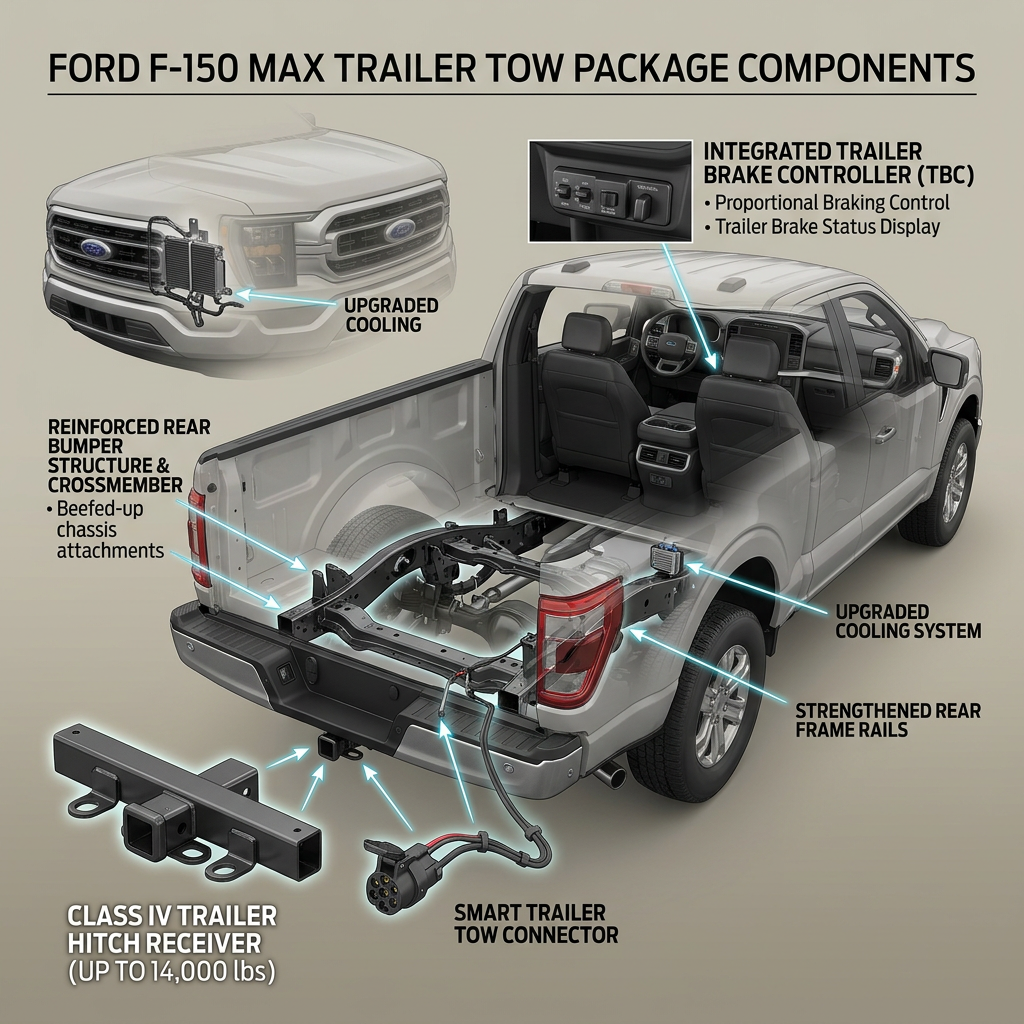
3. Hitching & Electrical Connection– Inspect the gooseneck ball, fifth-wheel hitch, or bumper receiver for cracks. – Check safety chains, breakaway cables, and hitch pin locks. – Clean and grease hitch connection points. – Test all trailer lights, turn signals, and brake lights. – Ensure the 7-way electrical connector is clean and securely plugged in.
Why Local Farmers Trust Valor Ford for Heavy-Duty Fleet and Towing Maintenance
At Valor Ford, we don’t just sell and service vehicles; we are active members of the Junction City, Fort Riley, and broader Dickinson County communities. We understand that agricultural work operates on tight schedules dictated by weather and season. When a truck goes down, it does not just mean a minor inconvenience—it can halt an entire harvesting or seeding operation. That is why our service department is designed to cater to the specific needs of commercial fleet owners and local farmers. Our technicians are factory-trained and highly experienced in diagnosing and repairing Ford Super Duty trucks, from the F-250 up to the heavy-duty F-550 chassis cabs. We maintain a large inventory of genuine Motorcraft parts, filters, and synthetic fluids, ensuring that your vehicle is serviced to exact manufacturer specifications. Whether you need a simple differential fluid flush, an axle seal replacement, or complete transmission diagnostic, we have the specialized heavy-duty lifts, diagnostic equipment, and technical expertise to get the job done right the first time.
In addition to our mechanical expertise, we offer convenient service solutions like our pickup and delivery service, allowing you to keep working on the farm while we handle your truck’s maintenance in town. If you are looking to expand your agricultural fleet or upgrade to a more capable towing vehicle, we invite you to explore our lineup. You can easily Research Ford F-250 specifications online or visit our showroom to see our heavy-duty inventory in person. We also offer financing assistance, and you can contact our team to learn more about current financing options and requirements. We pride ourselves on transparent communication, fair pricing, and a commitment to minimizing your truck’s downtime. When you partner with Valor Ford, you are choosing a team that values your hard work and is dedicated to keeping your agricultural operation moving forward.
Schedule Your Super Duty Service at Valor Ford in Junction City Before Your Next Big Haul
Don’t wait for a grinding noise, a burning smell, or an unexpected axle failure in the middle of a busy harvest day to think about your differential fluid. Proactive maintenance is the key to preserving your truck’s capability, protecting your expensive drivetrain components, and keeping your farm operations running smoothly. Whether you want our certified diesel technicians to perform a comprehensive fluid service and multi-point inspection, or you simply need to purchase the correct Motorcraft synthetic lubricants and friction modifiers for a weekend DIY project, the team at Valor Ford is here to support you. Our service department is located at 1825 Goldenbelt Blvd, Junction City, KS 66441. Feel free to stop by, Get Directions to Valor Ford, or Call us at (785) 238-5114 to speak directly with one of our service advisors. Let’s make sure your Ford Super Duty is fully prepared to handle the heaviest agricultural loads this summer and fall.
Tags: agricultural truck care, differential fluid change, drivetrain inspection, farm truck differential service, Ford Super Duty maintenance, heavy load towing preparation, heavy-duty towing service, junction city truck service, rear axle fluid service, severe duty truck maintenance, synthetic gear oil replacement, truck fluid check
Posted in
Heavy-Duty Truck Care, Heavy-Duty Truck Upkeep, Maintenance & Service, Repair & Parts, Towing & Trailer Technology |
No Comments »