Modern Vehicle Engine Oil Requirements: Recommended Viscosity Grades & Technical Specs
If you have popped the hood of a recently built passenger car, crossover, or truck, you have likely noticed that the oil fill cap no longer recommends the thick 10W-30 or 10W-40 oils that dominated garage shelves decades ago. Instead, modern vehicle engineering demands ultra-low viscosity full synthetic motor oils—most commonly 0W-20, 5W-20, or 0W-16—that satisfy stringent global efficiency and protection standards. In today’s highly calibrated internal combustion engines, motor oil is not merely a lubricant; it is an integral hydraulic fluid and thermal control agent essential to modern powertrain operation.
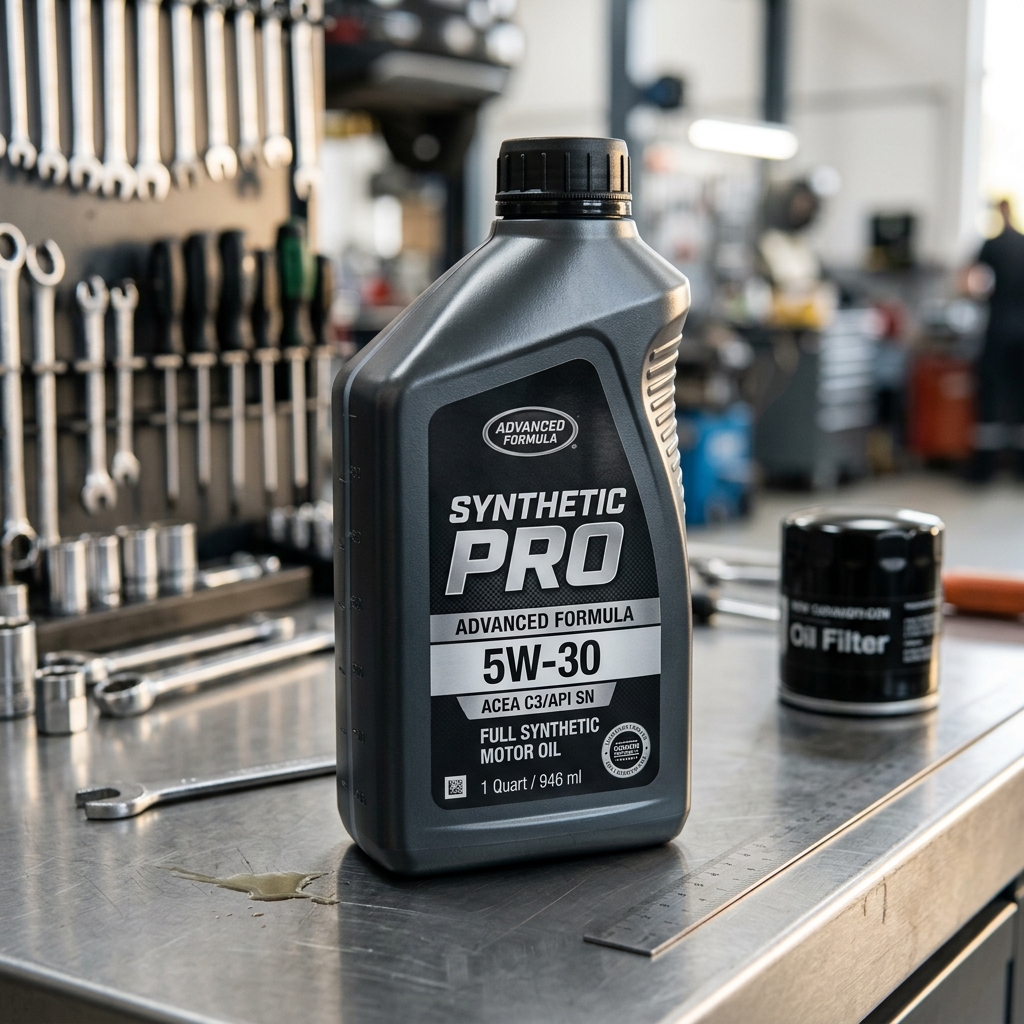
Automotive manufacturers design contemporary engines with hair-thin bearing clearances, precision variable camshaft timing (VCT) phasers, and direct-injection fuel systems. These precision systems rely on rapid oil pressure buildup within milliseconds of starting. Meeting rigorous standards such as API SP, ILSAC GF-6, and OEM specifications like Ford WSS-M2C962-A1 ensures your engine protects against Low-Speed Pre-Ignition (LSPI), mitigates timing chain stretch, and maintains optimum fuel efficiency. Drivers across Junction City, Fort Riley, and Manhattan who understand these technical parameters can ensure their powertrain runs reliably for hundreds of thousands of miles. To learn more about customized maintenance plans for your vehicle, Get Directions to Valor Ford or speak directly with our factory-trained master technicians.
Decoding Oil Viscosity Ratings: What Do 0W-20, 5W-20, and 5W-30 Actually Mean?
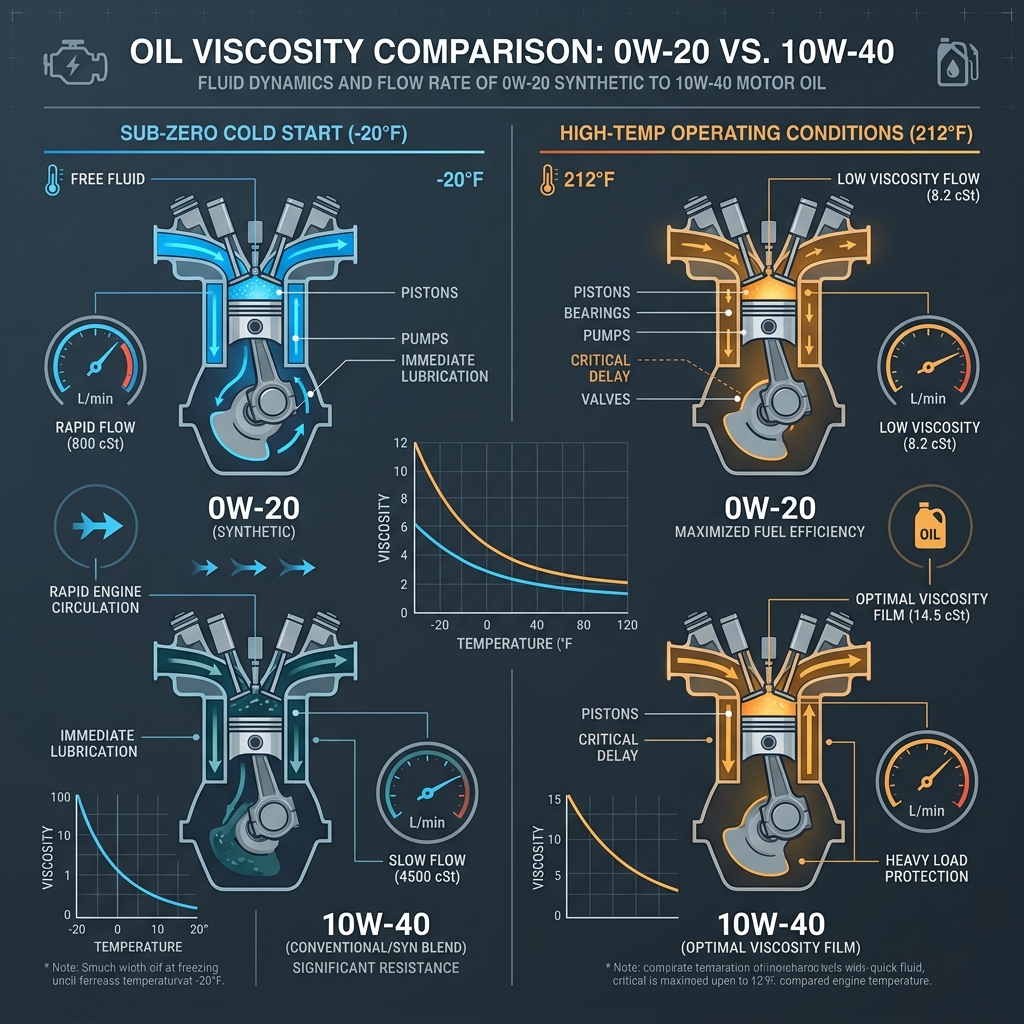
The standard fluid viscosity numbers on oil containers are defined by the Society of Automotive Engineers (SAE) J300 rating system. A rating such as 0W-20 represents a multi-grade lubricant designed to perform across dramatic temperature spectrums: • The ‘W’ Rating (Winter Standard): The number preceding the ‘W’ indicates cold-temperature flow capability. Lower numbers (0W, 5W) mean the fluid flows effortlessly at sub-zero temperatures, ensuring instantaneous lubrication to overhead camshafts during cold starts. • The High-Temperature Rating: The second number (20, 30, or 40) reflects kinematic viscosity measured at engine operating temperature (100°C / 212°F). A lower operating rating reduces internal hydrodynamic drag, enabling the engine to transfer power to the drivetrain with minimal resistance.
Modern low-viscosity oils like 0W-16 and 0W-20 are engineered specifically for engines designed with ultra-tight internal tolerances, guaranteeing full oil pressure and protective fluid film coverage right at ignition.
Using a higher viscosity oil than recommended (such as substituting 10W-40 into an engine built for 0W-20) can cause delayed oil flow during winter mornings in Kansas, premature wear on variable valve solenoids, and decreased fuel mileage.
OEM Industry Specifications Explained: API SP, ILSAC GF-6, and Manufacturer Approvals
Viscosity is only half of the engine oil equation. Equally vital are technical standards set by global petroleum institutes and automotive OEMs. These specifications ensure the additive package inside the oil prevents engine wear, sludge formation, and severe internal damage under high pressure.
API SP Certification
Introduced by the American Petroleum Institute, API SP is formulated to combat Low-Speed Pre-Ignition (LSPI) in modern turbocharged direct-injection engines. It also provides elevated protection against timing chain wear and high-temperature deposit accumulation.
ILSAC GF-6 Standard
Developed by the International Lubricants Standardization and Approval Committee, ILSAC GF-6A and GF-6B establish strict fuel economy benchmarks and enhanced protection against piston varnish, sludge formation, and severe stop-and-go engine wear.
Ford OEM Approvals
Ford factory specs, such as Ford WSS-M2C962-A1(for 0W-20) and WSS-M2C961-A1 (for 5W-30), specify strict molecular shear stability and elastomer compatibility to protect turbo seals and maintain valid new-vehicle warranty coverage.
Why High-Tech Turbocharged and GDI Engines Demand Full Synthetic Oil
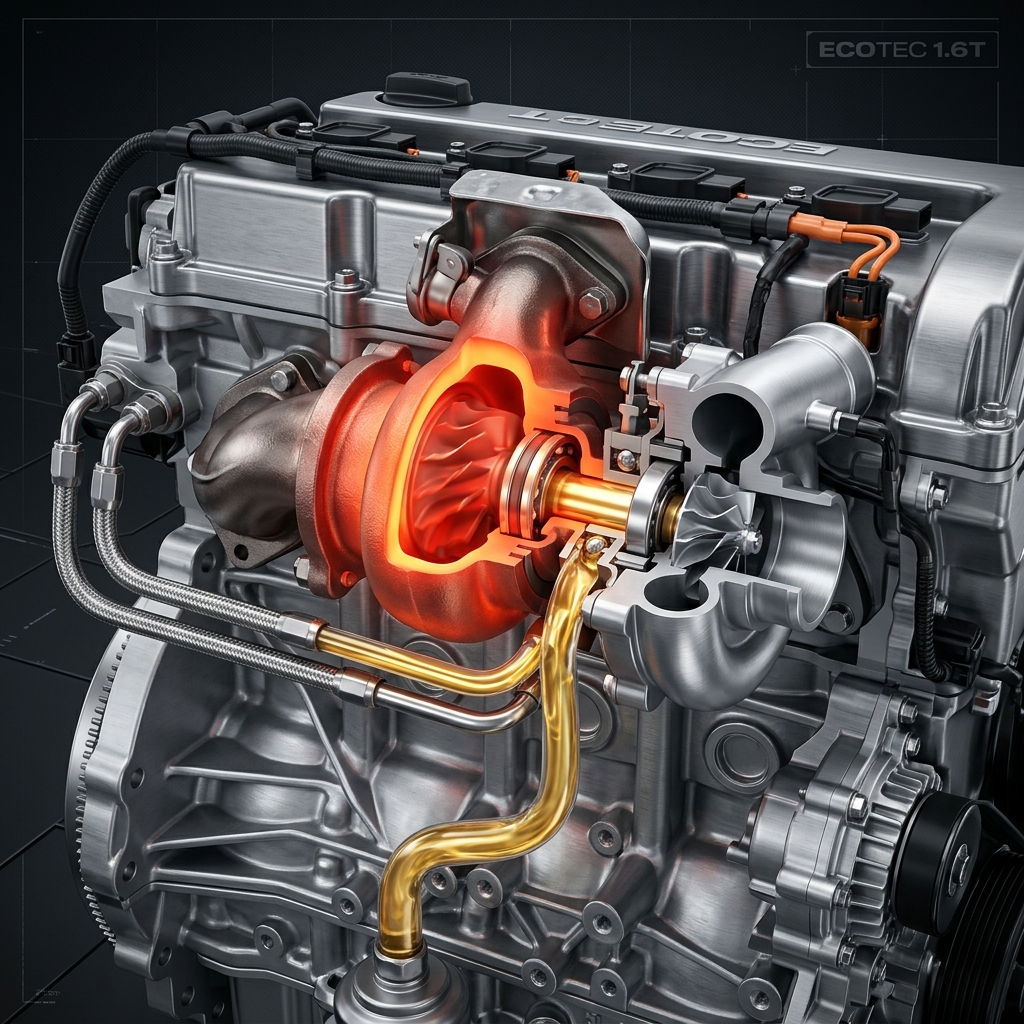
Modern powertrains rely heavily on Turbocharged Gasoline Direct Injection (TGDI) architectures—such as Ford EcoBoost engines—to deliver outstanding horsepower and towing capacity from smaller displacements. However, turbochargers operate at rotational speeds exceeding 200,000 RPM and temperatures exceeding 1,000°F.
Conventional mineral oils quickly break down under this extreme thermal stress, leading to carbon coking inside turbo bearing housings, oil passageway blockages, and severe engine damage. Full synthetic lubricants engineered with uniform molecular structures exhibit superior thermal stability, resisting oxidation and shear degradation. Furthermore, direct injection sprays fuel directly into the combustion chamber, which can create microscopic soot particles that conventional oils cannot keep in suspension. Maintaining factory performance requires high-purity full synthetic formulations designed specifically for TGDI demands. If you drive a modern high-output vehicle, you can Schedule Ford Service Today to ensure your oil meets these critical engineering standards.
What Driving Habits Qualify as Severe Driving Conditions According to Auto Manufacturers?
Most vehicle owners assume that ‘severe service’ schedules apply only to commercial fleet vehicles or extreme off-road rock crawlers. In reality, modern automotive owner’s manuals classify a significant amount of everyday driving as severe service. Severe driving conditions occur whenever vehicle operation prevents the engine oil from reaching and maintaining its optimal operating temperature long enough to burn off internal moisture, fuel dilution, and combustion byproducts.
Key severe driving qualifiers in our local region include:
• Short Commutes Under 10 Miles: Short trips around Junction City or campus runs in Manhattan do not allow oil to heat sufficiently, leading to fuel dilution and sludge condensation. • Extreme Weather Operation: Kansas summer heat routinely exceeds 90°F–100°F, accelerating thermal oxidation, while winter sub-zero blasts slow cold-start fluid flow. • Frequent Idling: Extended idling at military gate checkpoints at Fort Riley or traffic stops generates high soot levels without air cooling across the radiator.
• Towing, Hauling & Rural Roads: Pulling trailers across Dickinson County highways or driving regularly on dusty gravel roads introduces abrasive particulates into air filters and increases engine strain. When driving under these normal-yet-severe conditions, manufacturers recommend shortening oil maintenance intervals from 10,000 miles down to 5,000–7,500 miles (or every 6 months) to preserve vital components. Drivers seeking to upgrade their capability can also explore our inventory for heavy-duty haulers like the Research Ford F-150 or check out our Trade In Evaluation process.
Why Local Service Centers Caution Against Using the Wrong Oil in DIY Changes
Performing DIY oil maintenance at home can be satisfying, but modern vehicle electronics and hydraulic systems leave little room for error. Sourcing off-the-shelf oil that lacks the required OEM rating—or using the wrong viscosity grade altogether—can trigger severe mechanical failures:
1. Variable Valve Timing (VVT) Malfunctions: VVT system phasers rely on precise hydraulic fluid pressure to advance or retard engine timing. Incorrect viscosity causes timing lag, check engine lights, misfires, and sluggish throttle response. 2. Low-Speed Pre-Ignition (LSPI) Engine Failure: Using non-API SP certified oil in turbocharged engines can cause destructive premature combustion events, snapping piston rings and destroying connecting rods. 3. Filter Bypass & Drain Plug Damage: Generic oil filters often lack correct internal bypass valve pressures, allowing unfiltered oil into engine passages. Strip-threaded drain pans or overtightened filters can lead to sudden, catastrophic oil loss. 4. Voided Factory Warranty Protection: In the event of engine failure, manufacturers require documented service records proving that oil meeting exact OEM specifications was used. Non-compliant fluids can invalidate powertrain warranty coverage. For DIY enthusiasts who prefer executing their own fluid changes, we strongly advise sourcing genuine Motorcraft fluids and filters directly from our parts center—you can Order Genuine Ford Parts online to protect your vehicle.
What Are the Advantages of Getting Oil Changes at a Dealership Near Junction City?
Choosing certified dealership service at Valor Ford offers unmatched advantages over quick lube stops:
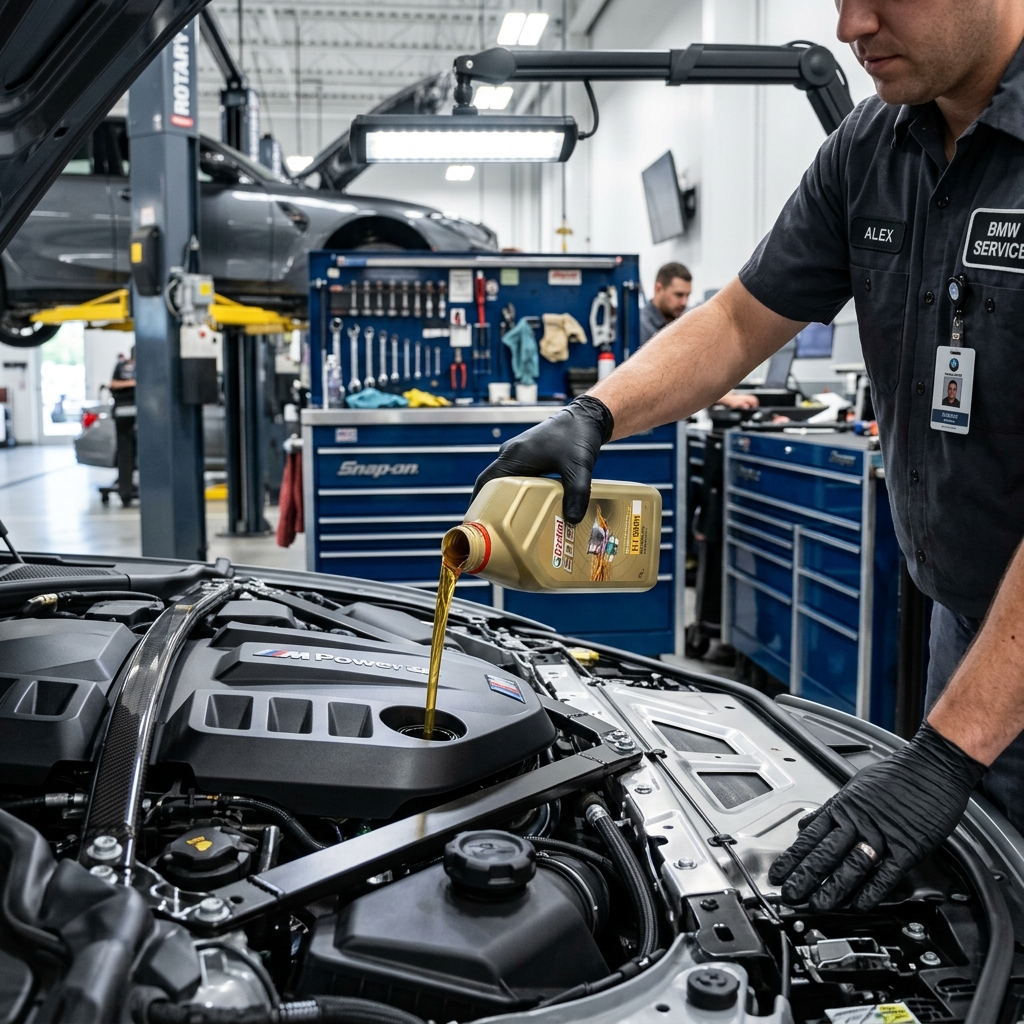
• Factory-Trained & Certified Technicians: Our technicians undergo rigorous OEM training, understanding the specific fluid requirements, torque specs, and filter tolerances of every Ford model and modern domestic vehicle. • Genuine Motorcraft® Oils & OEM Filters: We utilize exact-spec Motorcraft synthetic blend and full synthetic oils formulated specifically for your vehicle, paired with high-efficiency filters containing silicone anti-drainback valves. • Comprehensive Multi-Point Inspection: Every service includes a complete check of brake pad wear, tire tread depth, battery health, coolant condition, and suspension components. • Complete Vehicle History Record: Service records are automatically uploaded to OEM databases and CARFAX, enhancing long-term resale value and verifying full warranty compliance.
Are Walk-In Appointments Accepted at Most Local Quick Lube Shops in the Area?
Walk-In Quick Lubes
While quick lube outlets across Junction City and Manhattan accept walk-ins, wait times vary wildly during peak hours. Furthermore, many quick lube shops rely on bulk universal oil drums and generic filters that may not carry specific OEM approvals.
Scheduled Dealership Care
Booking a dedicated service appointment guarantees a reserved bay, predictable service duration, exact OEM-specified synthetic oils, and direct oversight by certified mechanics trained specifically on modern high-tech engine systems.
Pickup & Delivery Option
To eliminate wait time completely, Valor Ford offers specialized door-to-door concierge service. You can Schedule Pickup and Delivery Service to have your vehicle serviced without ever leaving home or work.
What Additional Fees Are Added to an Oil Change Bill in Kansas?
When reviewing an oil service invoice anywhere in Geary, Riley, or Dickinson County, vehicle owners often see line items beyond the basic oil and filter labor. Understanding these standard fees ensures complete price transparency:
• Kansas State Sales Tax: Applied to both physical parts (filters, synthetic fluid) and applicable labor charges according to municipal and state tax rates. • Environmental Waste Disposal Fees: State and federal regulations require eco-friendly recycling and disposal of used motor oil and hazardous oil filters. • Shop Supplies Charges: Covers protective seat covers, floor mats, brake cleaner, rags, and eco-disposal solvents used during maintenance.
|
Service Line Item
|
Standard Purpose
|
Fee Transparency
|
|
Synthetic Motor Oil (5-6 Quarts)
|
OEM-grade API SP / ILSAC GF-6 fluid
|
Current Service Price
|
|
OEM Spin-On Filter
|
Silicone valve filter protection
|
Included in Package
|
|
KS Environmental Disposal
|
Eco-safe oil & filter recycling
|
Mandatory State Fee
|
|
Shop Supplies & Materials
|
Cleaners, seals, protective covers
|
Itemized Standard Charge
|
Seasonal Oil Maintenance for Junction City, Fort Riley, and Dickinson County Drivers
Northeast Kansas weather presents aggressive seasonal thermal shifts. Late summer brings sustained triple-digit heat and intense highway driving across I-70 between Junction City, Fort Riley, and Manhattan, subjecting engine fluid to elevated thermal shearing. Transitioning into autumn and winter introduces rapid freeze cycles that test oil cold-flow pumpability. Maintaining a disciplined seasonal maintenance schedule prevents premature fluid degradation.
For active-duty military personnel commuting to Fort Riley or agricultural families navigating rural Dickinson County gravel roads, summer dust and heavy engine load require frequent air filter replacements and timely synthetic fluid checks. If you are preparing your vehicle for end-of-summer travel or upcoming seasonal commutes, Call us at (785) 238-5114 to consult with our certified service advisors.
Oil Life Monitoring Systems vs Manual Dipstick Checks: Best Practices
Intelligent Oil-Life Monitor (IOLM)
Modern vehicles feature sophisticated Intelligent Oil-Life Monitor (IOLM) systems. Rather than relying on a simple mileage counter, the IOLM software tracks engine operating parameters in real time—including cold engine starts, ambient temperature extremes, idling hours, engine load, and towing duty. It dynamically calculates actual fluid breakdown and notifies you on the instrument cluster when service is required.
The Necessity of Dipstick Checks
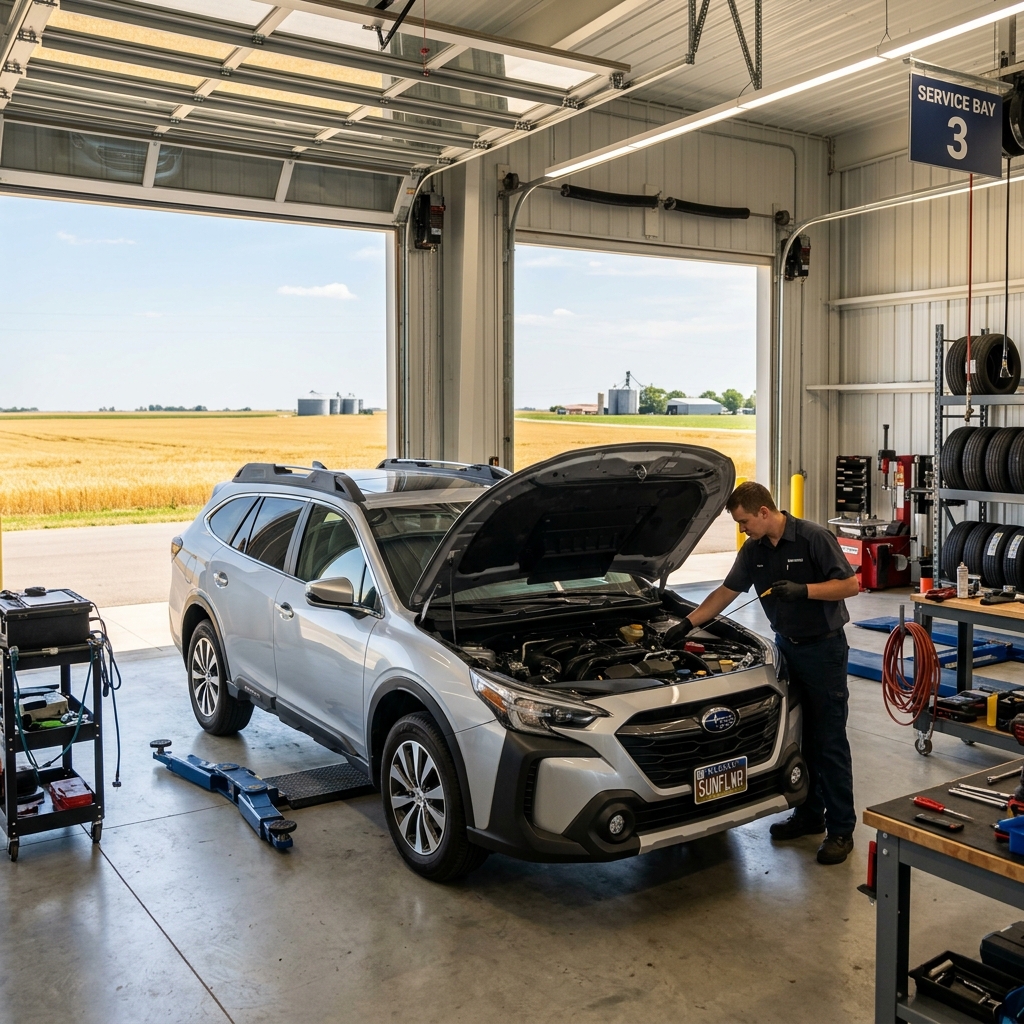
Despite advance IOLM algorithms, the monitor cannot measure physical fluid volume. All engines naturally consume minor amounts of oil between maintenance intervals. Checking your dipstick manually once per month ensures that your fluid level remains safely between the minimum and maximum crosshatched markings, preventing oil starvation and unexpected low-pressure conditions.
Schedule Certified Oil Service & OEM Fluid Maintenance at Valor Ford
Protecting your engine with the exact recommended viscosity grade and OEM-certified technical specifications is the single most effective investment you can make in your vehicle’s longevity. Whether you drive a family SUV like the Research Ford Explorer, an athletic pony car like the Research Ford Mustang, or a dependable truck, our team at Valor Ford is committed to providing expert care tailored to northeast Kansas driving conditions.
Visit our state-of-the-art service department in Junction City, experience our transparent multi-point inspection process, and keep your engine performing at its absolute peak.
Tags: engine oil change, engine protection, motor oil standards, OEM oil specifications, oil change service, oil filter replacement, oil viscosity grades, severe driving conditions, synthetic motor oil, turbocharged engine care, Vehicle Maintenance, vehicle oil system maintenance
Posted in
Maintenance & Service, Seasonal Vehicle Care, Seasonal Vehicle Maintenance, Technology & Innovation |
No Comments »