Mastering the Payload: F-350 Tire Pressure for Heavy Grain Hauling
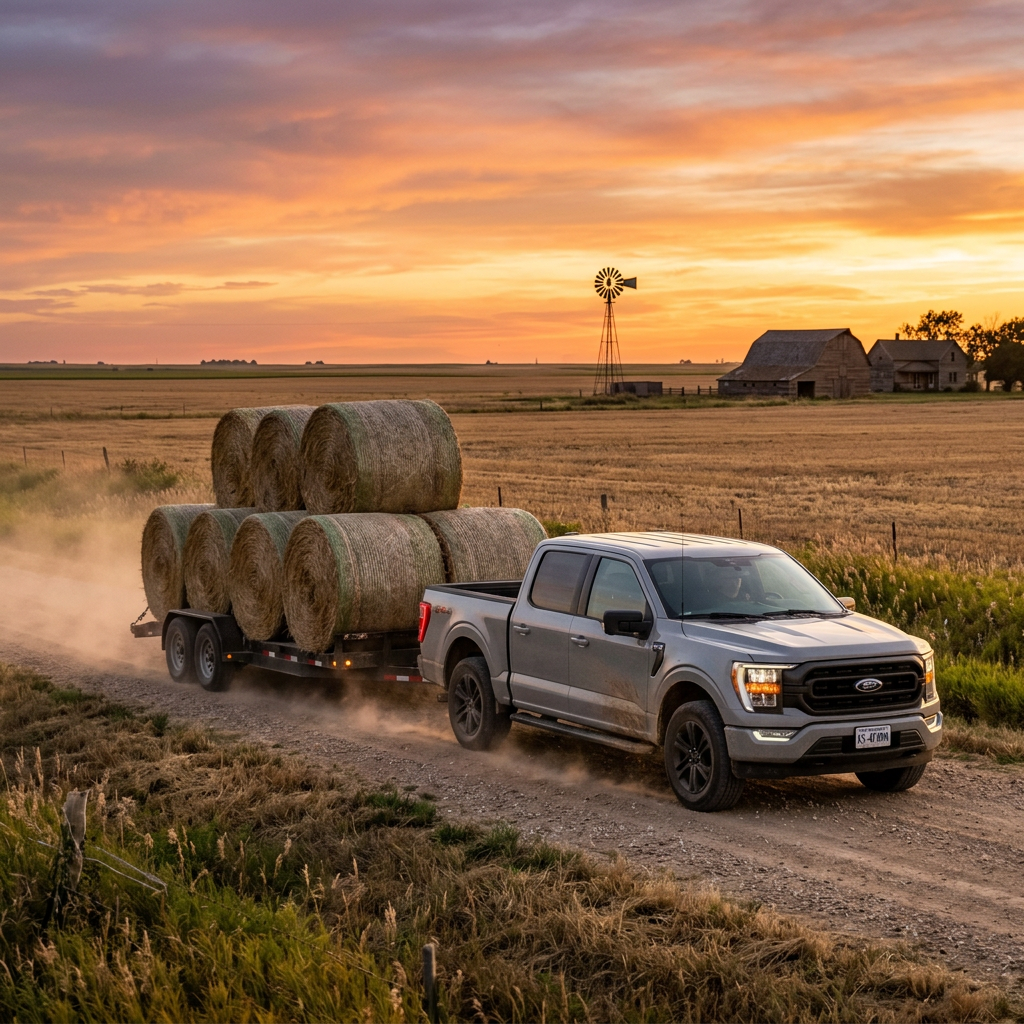
As hot summer days sweep across Kansas this July, local fields around Junction City and throughout Dickinson County are buzzing with harvest activity. Grain producers are working tirelessly to move massive yields from the fields to the local elevators. To get this crucial job done, agricultural operations rely heavily on the heavy-duty power of the Ford F-350 Super Duty. While these trucks are engineered to handle incredible payloads, pulling a fully loaded grain trailer places an immense amount of physical stress directly on your tires. Ensuring they are inflated to the exact right pressure is not just a detail—it is the line between a smooth, profitable harvest and a dangerous, costly roadside delay.
When you are hauling heavy grain, the safety of your truck, your cargo, and everyone else on our local rural routes depends on your tire footprint. Proper tire inflation optimizes traction, maintains vehicle stability, ensures responsive braking, and directly protects your suspension components from excessive wear. Our team at Valor Ford understands the unique demands of agricultural hauling, and we want to help you maximize your F-350’s capabilities. If you are preparing your truck for a grueling harvest season, it is also a great time to perform a Trade In Evaluation on older fleet vehicles or ensure your current heavy-duty setup is ready to go.
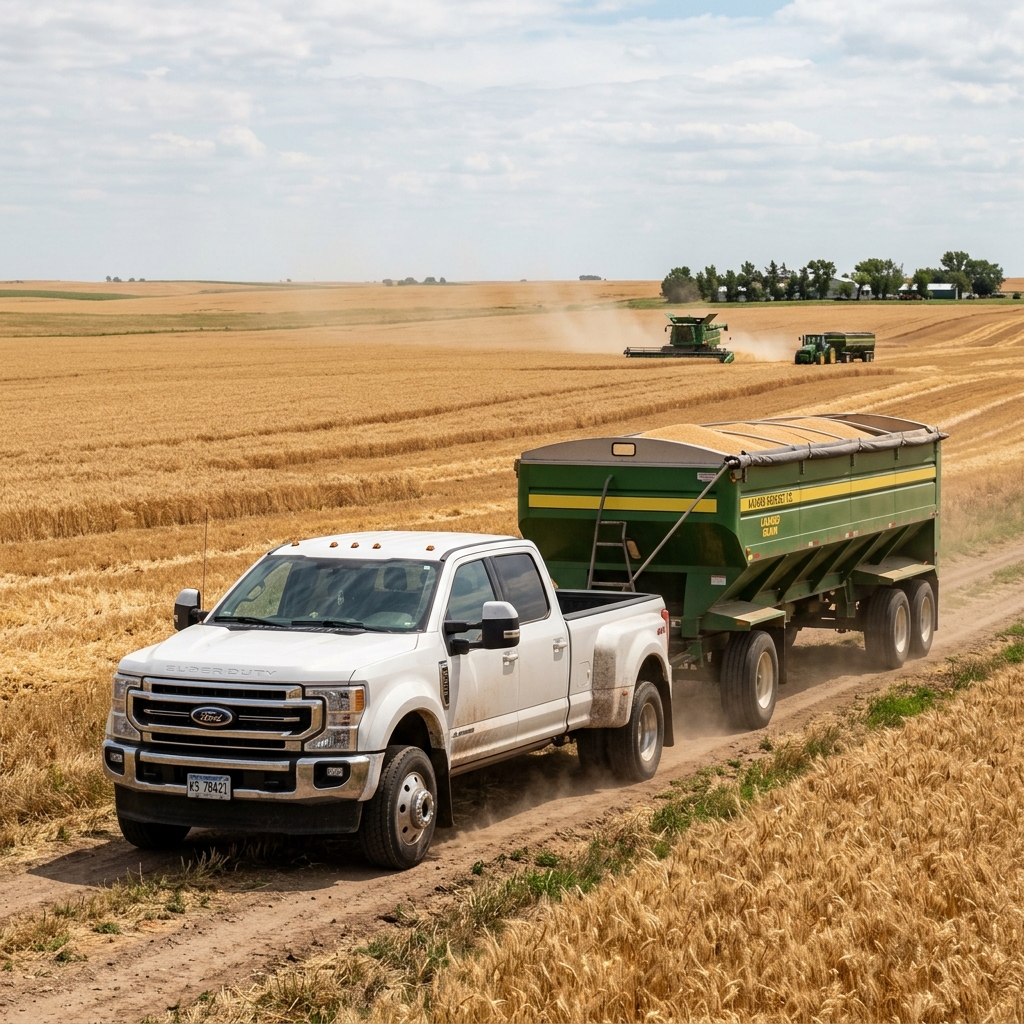
Tire pressure is dynamic. It responds directly to external ambient temperatures, speed, and the sheer downforce exerted by heavy tongue weights. In this comprehensive guide, we will dive deep into everything you need to know about setting, managing, and maintaining your F-350’s tire pressure when towing loaded grain trailers. Whether you operate a Single Rear Wheel (SRW) or Dual Rear Wheel (DRW) dually setup, understanding the physics of load-and-inflation is key to safeguarding your equipment and protecting your bottom line.
What is the recommended tire pressure for a Ford F-350 when hauling heavy grain trailers?
For a Ford F-350 tasked with hauling heavy grain trailers, the general recommended tire pressure is 60 to 75 PSI in the front tires and a maximum of 80 PSI in the rear tires(especially under full-load or dually configurations). However, the absolute baseline for your specific truck configuration should always be verified by checking the tire certification label located on your driver-side door jamb.
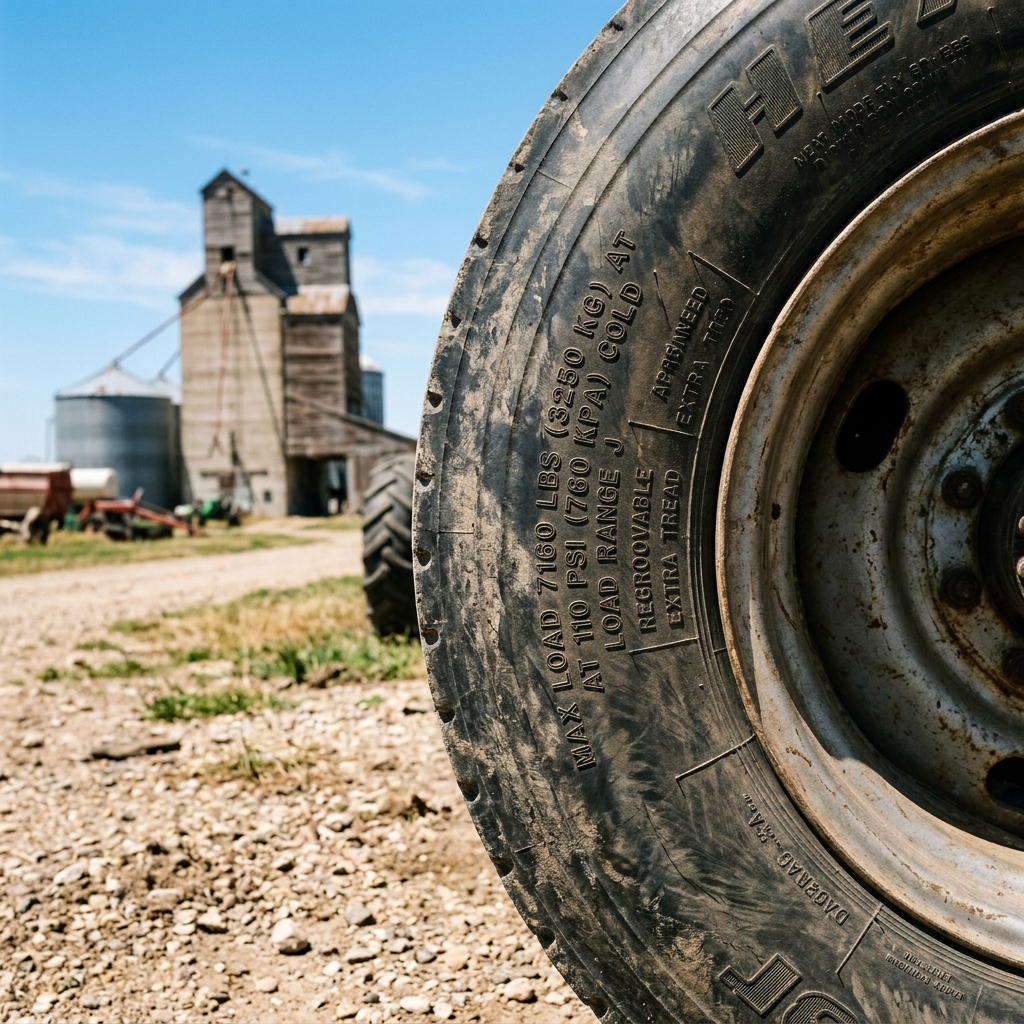
These pressures are calculated assuming you are using original equipment (OE) Load Range E tires. Under a heavy grain payload, your rear tires bear the brunt of the pin weight (for goosenecks) or the tongue weight (for bumper pulls). To support this intense vertical downforce without excessive tire sidewall flexing, the rear tires must be inflated to their maximum recommended capacity—which is typically 80 PSI cold. Keeping the front tires between 60 and 75 PSI preserves proper steering response and keeps the front contact patch balanced, preventing understeer or uneven wear.
It is important to remember that these numbers are ‘cold’ pressures. This means they should be measured before the vehicle has been driven, or at least three hours after it has been parked. Driving generates friction, which heats the air inside the tires and temporarily inflates the pressure reading. If you adjust your tires when they are already hot from a long run to the elevator, you will likely end up underinflating them once they cool down.
|
F-350 Setup
|
Front PSI (Cold)
|
Rear PSI (Cold)
|
|
Single Rear Wheel (SRW) Empty
|
60 PSI
|
65 PSI
|
|
Single Rear Wheel (SRW) Loaded
|
65-75 PSI
|
80 PSI
|
|
Dual Rear Wheel (DRW) Empty
|
60 PSI
|
55-60 PSI
|
|
Dual Rear Wheel (DRW) Loaded
|
65-75 PSI
|
80 PSI
|
Note: Dual Rear Wheel (DRW) trucks can distribute load across four rear tires, allowing for slightly lower rear tire pressures when empty to improve ride comfort. However, when hauling maximum capacity agricultural trailers, both SRW and DRW setups require the rear tires to be at 80 PSI to ensure maximum structural integrity and weight capacity.
What is the difference between recommended PSI and max PSI on my truck tire sidewall?
One of the most common points of confusion for farmers and fleet operators is the difference between the recommended tire pressure listed on the vehicle’s door placard and the maximum PSI stamped directly onto the tire’s sidewall. Misunderstanding these two numbers can lead to either dangerous over-inflation or severe under-inflation.
The recommended PSI on the door jamb placard is determined by Ford’s engineering team. It represents the optimal inflation level for the vehicle’s specific weight distribution, suspension tuning, handling characteristics, and braking performance. This recommendation ensures that under normal or maximum load conditions, the tire maintains an ideal contact patch with the road. It prevents the center of the tread from wearing out prematurely while guaranteeing the vehicle rides as comfortably as possible.
In contrast, the maximum PSI printed on the tire sidewall is a structural limitation set by the tire manufacturer. It tells you the absolute maximum pressure the tire carcass can safely handle to support its maximum rated load. For standard Load Range E tires, this is typically 80 PSI. You should never exceed this number. When hauling heavy grain trailers, you will often find that the rear recommended pressure matches this maximum limit (80 PSI) because the truck is being pushed to its maximum rear axle weight rating. However, inflating the front tires to the sidewall maximum when it is not needed can cause a harsh ride and reduced steering grip.
What is a tire load-and-inflation chart and how do I use it for my F-350?
A tire load-and-inflation chart is an industry-standard technical document produced by tire manufacturers (such as common tire manufacturers). It maps out exactly how much weight an individual tire can safely carry at a given inflation pressure. Since actual agricultural loads can vary significantly depending on whether your grain trailer is empty, half-full, or packed to the brim, these charts allow you to dial in your tire pressures with pinpoint accuracy.
To utilize these charts effectively, you first need to know the actual weight resting on your truck’s axles. The most accurate way to do this is by visiting a local commercial scale in the Dickinson County area (such as a local grain elevator scale or a truck stop scale near Junction City). Drive your loaded F-350 onto the scale so you can get independent weights for your steer axle, drive axle, and trailer axles. Once you have these numbers, divide the drive axle weight by two (for an SRW truck) or by four (for a DRW dually) to determine the exact weight on each individual rear tire.
With your individual tire weight in hand, look up your specific tire size and load range on the manufacturer’s load-and-inflation table. Find the weight that closely matches your measured load, and the chart will indicate the precise PSI required to support that weight. This prevents you from running a tire that is over-inflated for a lighter-than-expected load (which causes center tread wear) or under-inflated for a heavy load (which leads to catastrophic overheating).
If you are unsure how to read these charts or want an expert to inspect your tire wear patterns, our service professionals at Valor Ford are here to help. We can evaluate your truck’s current tires, analyze your typical hauling weights, and provide a customized pressure schedule to keep your operations running safely. If you need financing information for a new set of high-capacity commercial tires, please contact our team before visiting our shop.
Why Weight Matters:• Prevents tire overheating • Optimizes the contact patch • Reduces drivetrain stress • Improves overall stability • Extends tread life
Should tire pressure be adjusted when towing a gooseneck vs. bumper pull trailer?
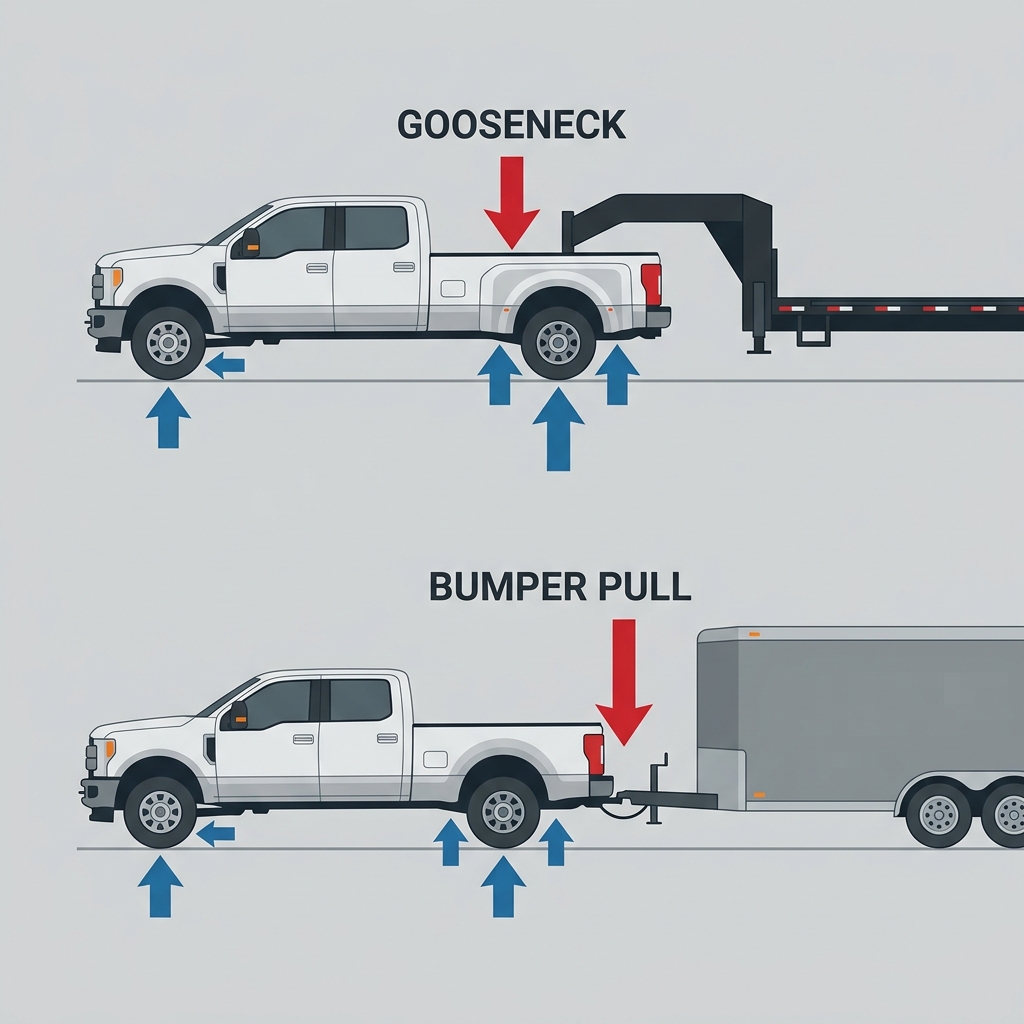
Yes, the type of trailer connection you use dramatically influences how weight is distributed across your Ford F-350’s axles, which in turn dictates how you should manage your tire pressures. Gooseneck and bumper pull configurations apply forces to your truck’s chassis in completely different ways.
Gooseneck Trailers: A gooseneck hitch places the trailer’s pin weight directly over—or slightly ahead of—your F-350’s rear axle. Because of this, a substantial portion of the trailer’s tongue weight (often 15% to 25% of the total trailer weight) is transferred directly onto the truck’s rear tires. This concentrated downward force requires your rear tires to be at their maximum load capacity pressure, typically 80 PSI cold. Because the weight is centered over the axle, it actually helps stabilize the truck’s rear end, but it demands maximum structural support from the tire sidewalls to prevent dangerous flexing and heat buildup.
Bumper Pull Trailers: A bumper pull grain trailer attaches to the receiver hitch at the very back of the frame, well behind the rear axle. This creates a leverage effect. The tongue weight acts as a pivot, pushing down on the rear hitch while actually lifting some weight off the front steering axle. To counteract this and maintain control, you must use a high-quality weight-distribution hitch. When towing a heavy bumper pull, your rear tires still need to be highly pressurized (often 75-80 PSI) to handle the load, but you must also ensure your front tires are inflated correctly (typically around 65-70 PSI) to maintain steering traction. Since bumper pulls are more prone to sway, maintaining precise pressures on both axles is absolutely vital for highway safety.
Is underinflation a common cause of grain trailer tire blowouts?
Without a doubt, underinflation is the leading cause of tire blowouts on both towing vehicles and grain trailers. During the time-sensitive rush of harvest, grain trailers are often loaded to their absolute weight limits and driven across rough fields and hot asphalt. When a tire is underinflated, its structural integrity is severely compromised, setting off a chain reaction that frequently ends in a catastrophic blowout.
The science behind this is simple: excessive flexing and friction. When air pressure is too low, the tire’s sidewalls flex excessively as the wheel rotates under a heavy load. This constant, aggressive flexing generates intense internal heat. Because rubber is an excellent insulator, it cannot easily dissipate this heat. As the temperature rises, the bonds holding the tire’s rubber, steel belts, and nylon cords together begin to weaken. Eventually, the tire carcass suffers an internal separation, and the high pressure inside tears through the weakened sidewall, resulting in a sudden blowout at highway speeds.
Furthermore, underinflated trailer tires do not tracking straight. They tend to sway, adding significant lateral stress to your Ford F-350’s rear suspension and hitch. This sway forces your truck’s electronic stability control and braking systems to work overtime to keep the load lined up. A single trailer blowout can cause you to lose control, spill your valuable grain payload, or damage your trailer’s axles and fenders—leading to expensive repairs and halting your harvest operations entirely. Keeping both your truck’s and your grain trailer’s tires fully pressurized is the easiest and most cost-effective insurance policy you can have against harvest-season downtime.
Does underinflation significantly increase fuel consumption when towing grain?
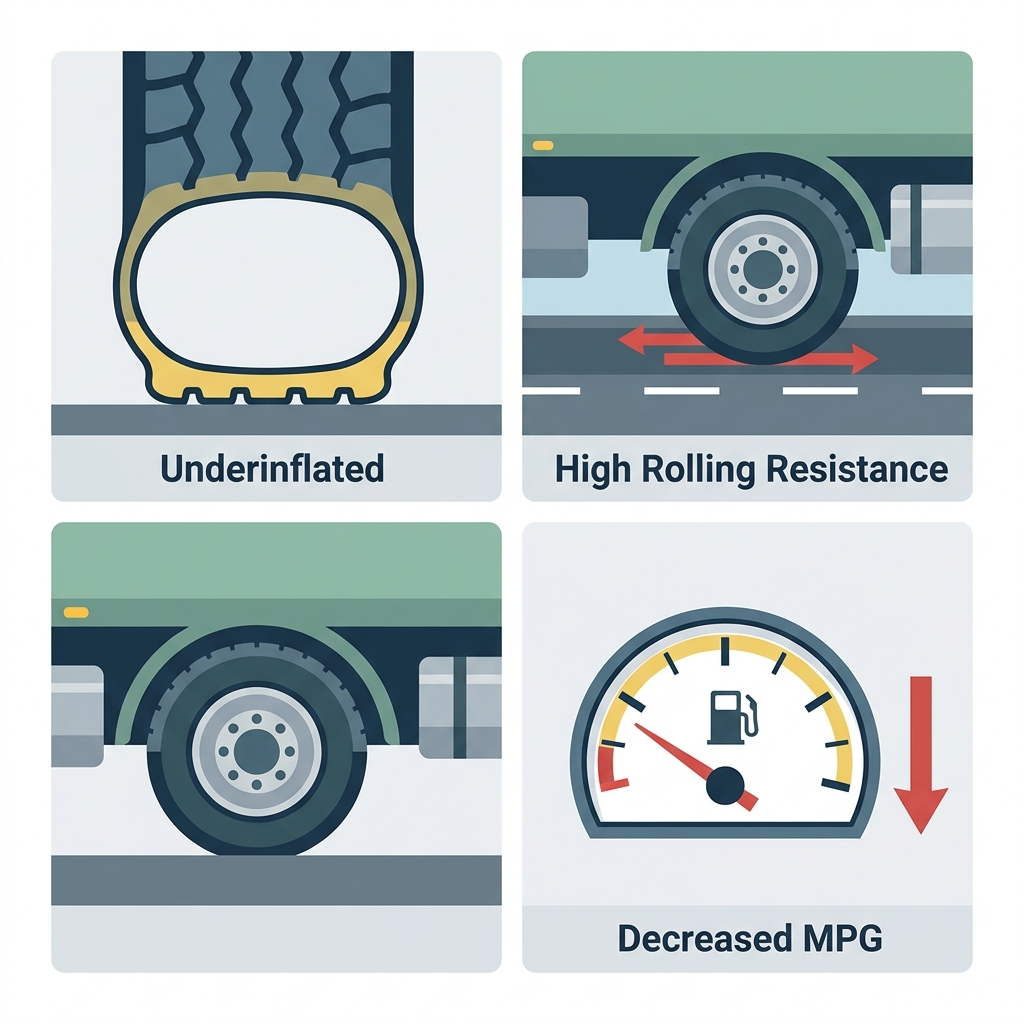
Yes, underinflated tires act as a constant, hidden drag on your truck’s performance, significantly driving up your fuel costs. When you are pulling massive grain loads with a Ford F-350, your engine is already working hard to overcome aerodynamic drag and the heavy inertia of the trailer. If your tires are underinflated, you are adding an immense amount of rolling resistance to that equation.
Rolling resistance is the energy required to keep a tire rolling at a consistent speed. An underinflated tire sags, which increases its ‘footprint’ on the road. While a larger footprint might sound like it offers more grip, it actually increases the friction between the rubber and the asphalt. To overcome this extra drag, your truck’s Power Stroke Turbo Diesel or gas engine must burn more fuel simply to maintain highway speeds.
Studies show that for every 1 PSI your tires are underinflated below their recommended level, you lose roughly 0.2% to 0.3% in fuel efficiency. If your rear tires are sitting at 60 PSI instead of the recommended 80 PSI, you are looking at a direct 4% to 6% drop in fuel economy. When you are making multiple long-distance runs from the fields of Dickinson County to regional grain elevators day after day, that extra fuel consumption adds up to hundreds of dollars in wasted operating costs over the course of a single harvest.
Is maintaining correct tire pressure on my F-350 and grain trailer cost-effective in the long run?
Absolutely. Treating tire pressure management as a daily priority is one of the most high-return investments you can make for your farm’s bottom line. Heavy-duty commercial tires for a Ford F-350 represent a significant capital expense. When you run tires at incorrect pressures, you dramatically accelerate tread wear. Underinflation causes the outer edges of the tire to wear out prematurely, while overinflation wears out the center strip. Maintaining correct pressures ensures the tire wears evenly across its entire width, potentially extending its lifespan by thousands of miles.
Beyond tire replacement costs, proper tire management prevents unnecessary wear on your truck’s steering and suspension components. Tires act as the primary dampening system for your truck. When they are incorrectly inflated, they cannot properly absorb road vibrations, transferring those harsh impacts directly into your ball joints, tie rods, shocks, and wheel bearings. This leads to premature suspension failure and expensive mechanical repairs.
To help monitor your setup, Valor Ford’s parts department can help you source heavy-duty aftermarket Tire Pressure Monitoring Systems (TPMS) designed to monitor both your truck and your trailer’s tires in real time from the cab. Investing in these preventive tools saves you from costly downtime and expensive repairs down the road. If you need replacement parts or monitoring equipment, we encourage you to Order Genuine Ford Parts directly through our website.
How local Dickinson County farm routes demand precise F-350 tire management
Driving conditions in the local Junction City and Dickinson County areas pose unique challenges for heavy-duty hauling. Farmers regularly transition from soft, uneven dirt or gravel fields straight onto high-speed asphalt highways. These rapid surface changes demand highly precise tire pressure management to ensure safety and traction on every stretch of your route.
When your F-350 is inside a soft, muddy field, a slightly larger tire contact patch is beneficial to prevent sinking and maintain traction. However, once you load up and pull onto paved county roads or highways like US-77, running underinflated tires is incredibly dangerous. The hard, hot asphalt quickly drives up internal tire temperatures, and the lack of proper inflation pressure will cause the loaded trailer to sway, making high-speed handling unstable.
To safely navigate these transitions, you must maintain a tire pressure setting that handles both environments effectively. Running your rear tires at 80 PSI cold ensures that when you hit the highway with a heavy load, your truck is perfectly balanced, stable, and ready to handle sudden stops. Don’t let a poorly managed tire put your harvest at risk.
A quick pre-haul tire checklist for Junction City grain producers
1. Check Pressures Cold Always measure your tire pressure first thing in the morning, before the truck has been driven or exposed to direct, hot sunlight. This gives you the most accurate baseline reading.
2. Inspect Valve Stems Heavy agricultural dust and mud can clog valve stems. Ensure all tires have high-quality, sealing metal valve caps to prevent slow, microscopic air leaks during long hauls.
3. Search for Dry Rot & Damage Farm equipment often sits parked for long periods. Inspect your truck and trailer tires for dry rot, cracks, and sidewall cuts caused by sharp crop stubble or rocky field entrances.
4. Verify Trailer Tire Pressure Never forget the trailer! Grain trailer tires (ST or LT rated) must also be inflated to their maximum recommended PSI to support the intense shifting weight of the grain.
5. Calibrate Your TPMS After adjusting your pressures for a heavy load, calibrate your Ford F-350’s Tire Pressure Monitoring System through the SYNC infotainment screen so it recognizes the new baseline pressures.
6. Confirm Load Ratings Ensure both your truck and trailer tires have matching load capacities. Never mix load ranges on the same axle, as this will lead to highly unstable handling.
Get professional heavy-duty truck service and tire accessories at Valor Ford
At Valor Ford, we take immense pride in supporting our local Junction City agricultural community and the military families at nearby Fort Riley. We know that when harvest season arrives, you don’t have time to waste on tire failures or mechanical issues. Our state-of-the-art service department is fully equipped to handle heavy-duty trucks, offering specialized commercial tire replacements, high-capacity alignments, suspension inspections, and professional towing setup advice.
Whether you need a new set of rugged, load-rated tires for your F-350, a commercial-grade pressure gauge, or a full safety inspection before you hook up your grain trailer, our factory-trained technicians are here to help. We stock a wide selection of genuine OEM parts and heavy-duty tire brands engineered specifically for the extreme demands of agricultural work. To make your maintenance as seamless as possible, you can easily Schedule Pickup and Delivery Service and let us take care of your truck while you focus on the fields.
Schedule your F-350 heavy-duty tire inspection at Valor Ford today
If you’re noticing a warning light or want to stay ahead of tire issues, address your truck’s tire needs. Ensure your Ford F-350 is fully prepared to handle the intense demands of the summer grain harvest. Our dedicated team is standing by to inspect your tread depth, analyze your wear patterns, verify your load ratings, and set your tires to the exact pressures needed for safe, efficient hauling. Schedule Ford Service Today, or stop by our dealership in Junction City to keep your harvest moving forward without interruption.
For personalized service or to speak directly with one of our truck service specialists, please Call us at (785) 238-5114. If you are ready to visit us in person, you can easily Get Directions to Valor Ford and find our dealership located at 1825 Goldenbelt Blvd, Junction City, KS 66441. We look forward to helping you keep your harvest moving safely and efficiently.
Tags: agricultural vehicle service, commercial truck tire inflation, Ford F-350 tire pressure, grain hauling tire care, heavy load tire management, heavy-duty tire replacement, heavy-duty truck maintenance, rural truck service, tire pressure monitoring system, tire safety for towing, trailer tire pressure, truck suspension maintenance
Posted in
Agricultural Vehicle Maintenance, Heavy-Duty Truck Care, Heavy-Duty Truck Upkeep, Maintenance & Service, Seasonal Vehicle Care, Tire Care & Management |
No Comments »