Fall Crop Harvest Truck Preparation: Pre-Hauling Inspections for Central Kansas Farmers
Direct Answer Summary: Mandatory pre-trip inspection items for agricultural grain trucks prior to fall harvest include comprehensive cold engine fluid and belt evaluations, full air brake system leak-down and governor cut-in/cut-out pressure tests, tire tread and inflation verification under loaded specifications, grain bed hydraulic hoist and rubber seal containment checks, full electrical lighting and SMV emblem inspections, and front-end steering and suspension alignment checks. Performing these critical maintenance steps before heading into the fields around Dickinson and Geary Counties prevents costly harvest-time roadside breakdowns, protects valuable crop yields from spillage, and guarantees full DOT safety compliance during high-volume grain delivery.
As autumn approaches across Central Kansas, local agricultural producers near Junction City, Abilene, and Fort Riley prepare for one of the most demanding stretches of the farming calendar. Transitioning from summer wheat stubble to high-volume corn, sorghum, and soybean harvesting requires heavy machinery running around the clock. Your grain truck—whether a single-axle straight truck, tandem grain rig, or full semi-tractor trailer—serves as the critical transport link between field combines and regional grain elevators. A mechanical failure during harvest doesn’t just mean a tow truck bill; it causes cascading delays across your entire harvesting team, potentially exposing unharvested crops to autumn storms.
Expert Q&A: Why Is Pre-Season Maintenance Important for Grain Trucks in Dickinson County?
Interviewer: Today we are sitting down with Mike Hogg, Service Director at Valor Ford with over 20 years of hands-on experience keeping commercial fleets and farm vehicles running across Dickinson and Geary Counties.
Mike, farm trucks often sit parked near field corners or sheds for weeks or months between summer wheat cutting and fall corn harvest. Why is dedicated pre-season maintenance so vital before pulling into the field?
Mike Hogg: Thanks for having me. The biggest issue with agricultural grain trucks is ‘disuse decay.’ A farm truck can sit motionless under the Kansas summer sun, experiencing extreme temperature swings. Dry air hardens rubber brake seals, rodents nest inside electrical harness channels, fuel degrades, and air brake moisture reservoirs settle and corrode valves.
When fall harvest begins, that truck goes from zero activity to carrying 50,000 to 80,000 pounds across rutted field entrances and down Highway 77 at 65 miles per hour. If you don’t perform a rigorous, systematic pre-trip checklist before loading that first hopper of corn, dormant issues become catastrophic failures. Taking a few hours to perform pre-season checks protects your investment, keeps your drivers safe, and keeps grain moving efficiently.
Q: Why Should the Inspection Start with a Cold Engine?
Mike Hogg: You always begin under the hood before turning the ignition key. Starting with a cold engine is a basic safety and accuracy protocol.
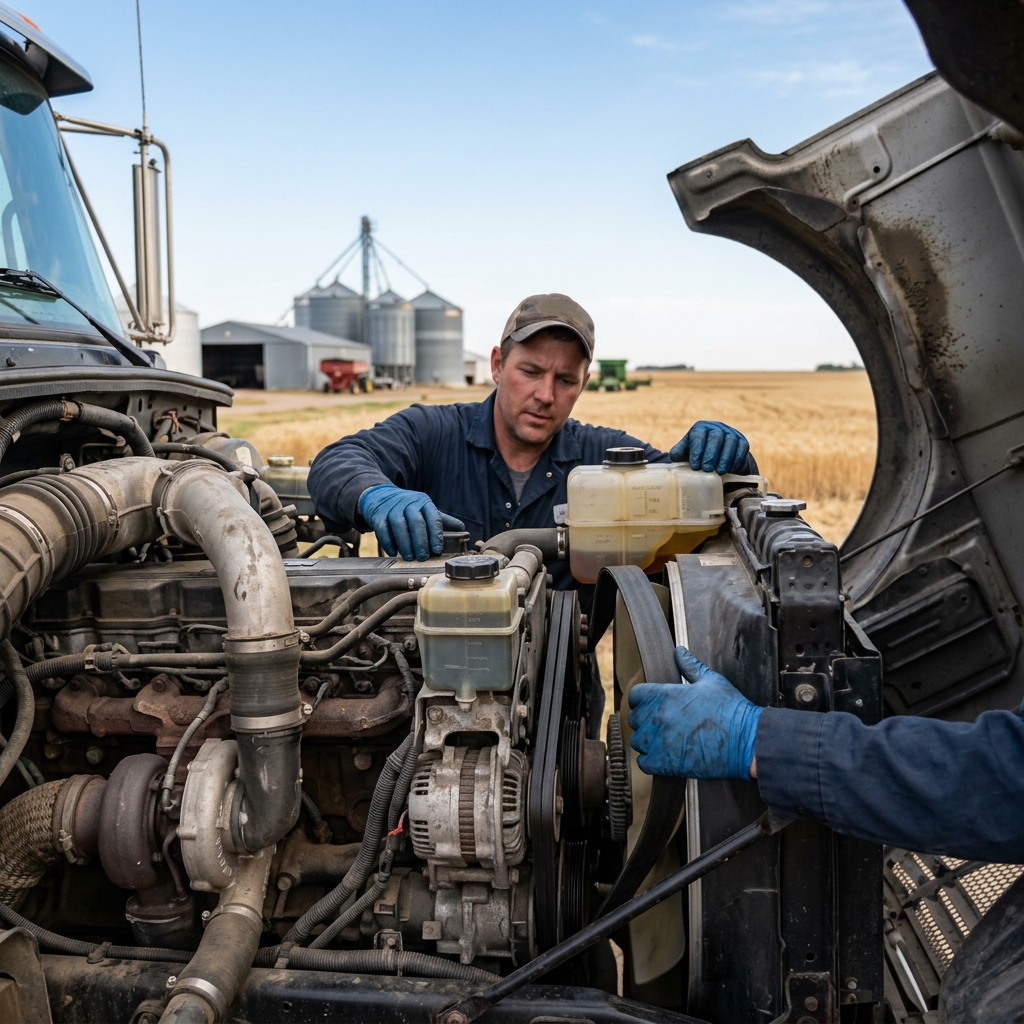
Checking fluid levels—engine oil, radiator coolant recovery tanks, power steering fluid, and heavy-duty transmission fluid—when the block is cold gives you a true baseline reading. Thermal expansion distorts fluid levels, and opening a hot pressurized radiator cap presents a severe burn risk to operators.
Cold engine checks also allow you to spot slow fluid leaks that might otherwise evaporate instantly on a scorching engine block. Look closely for coolant crystallization around water pump housings, power steering weeping at hose crimps, and diesel fuel seepage near injector rails. Inspect serpentine and fan belts for glazing, edge fraying, or dry rot cracks. A broken fan belt under full load in a dusty corn field will overheat your diesel block in minutes.
Q: What Should I Check First on the Air Brake System?
Mike Hogg: Air brakes are your primary line of defense when hauling 25 tons of grain down steep county road gradients. Start inside the cab with your air pressure gauge. 1. Pressure Build Test: Start the truck and ensure air pressure builds from 85 PSI to 100 PSI within 45 seconds. 2. Governor Cut-Out/Cut-In: Verify the compressor governor cuts out between 120 and 140 PSI, and cuts back in at around 100 PSI. 3. Static Leak-Down Test: Turn off the engine, release the parking brake, and watch the gauge for one minute. Pressure drop must not exceed 2 PSI for single vehicles or 3 PSI for combination rigs. 4. Applied Leak-Down Test: Firmly depress the foot brake pedal. Maximum allowable pressure drop over one minute is 3 PSI for straight trucks or 4 PSI for semi combinations.
Outside the vehicle, open manual petcock valves on all air reservoirs to drain accumulated water and oil sludge. Condensation in air tanks corrodes relay valves and can freeze during late-fall harvest freezes.
Finally, crawl under the rig to inspect automatic slack adjusters, pushrod travel lengths, and brake shoe lining thicknesses. Brake shoes should have at least 1/4-inch of friction material remaining. If you notice uneven shoe wear or rusted brake drums, Schedule Ford Service Today at Valor Ford to keep your stopping power intact.
Q: What Are the Critical Tire, Wheel, and Axle Checklist Items for Heavy Loads?
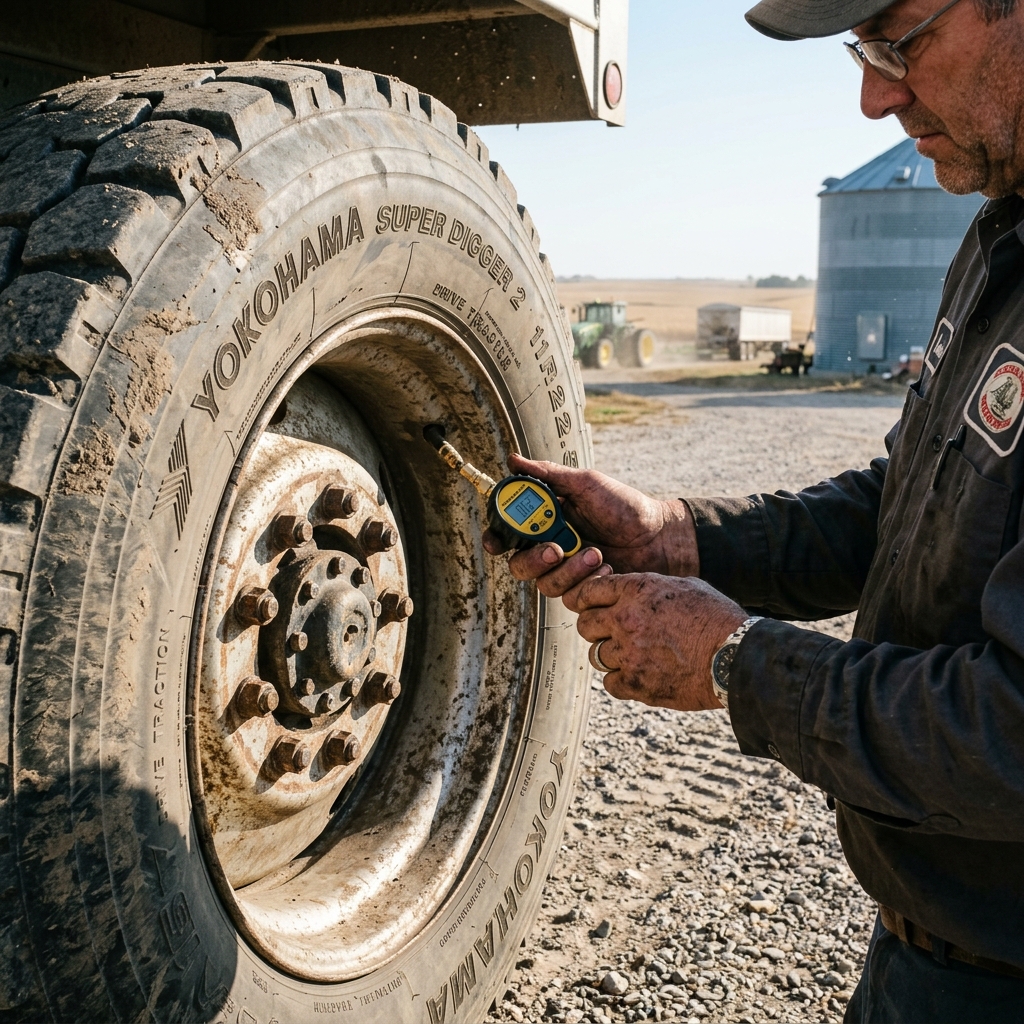
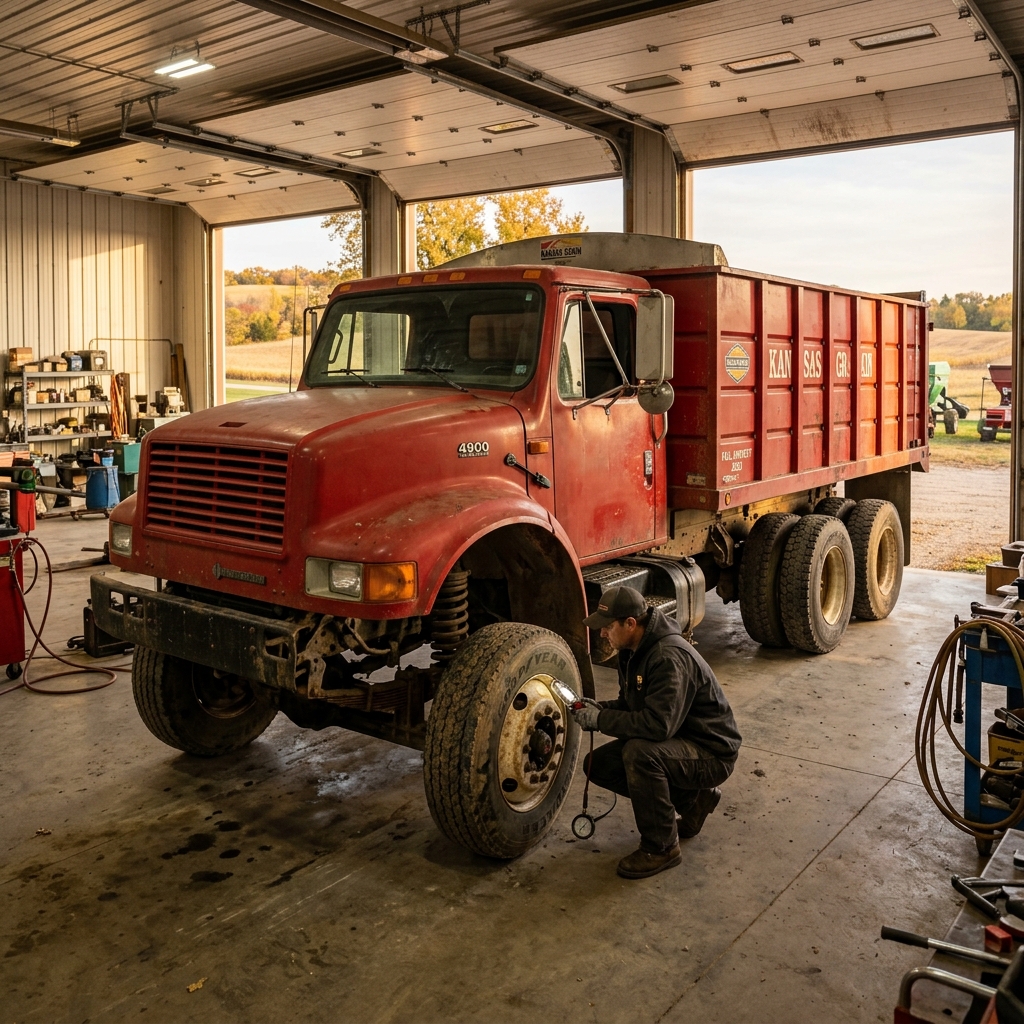
Mike Hogg: Grain truck tires take punishment that highway freight haulers rarely see. You’re rolling over sharp wheat stubble, crossing ditches, and driving onto gravel county roads loaded to maximum gross vehicle weight rating (GVWR).
First, check tire pressure with an accurate calibrated gauge when tires are cold. Under-inflated dual tires generate immense internal friction heat at highway speeds, causing catastrophic blowouts. Ensure inflation matches sidewall specs for full payload rating—often 100 to 110 PSI on steer tires and 90 to 100 PSI on drive duals.
Second, check dual tire spacing and diameter matching. Rocks lodged between dual wheels will destroy sidewalls in miles. Verify tread depth meets regulatory minimums: at least 4/32-inch on steer tires and 2/32-inch on drive axles.
Finally, inspect wheel rims for hair-line flange cracks and check hub oil seals. Leaking hub oil stains on the inner wheel rim indicate compromised seals, which will quickly starve wheel bearings of lubrication and weld an axle spindle shut in middle of harvest.
Q: How Do You Inspect Grain Body Seals, Endgates, and Tarp Systems to Prevent Crop Loss?
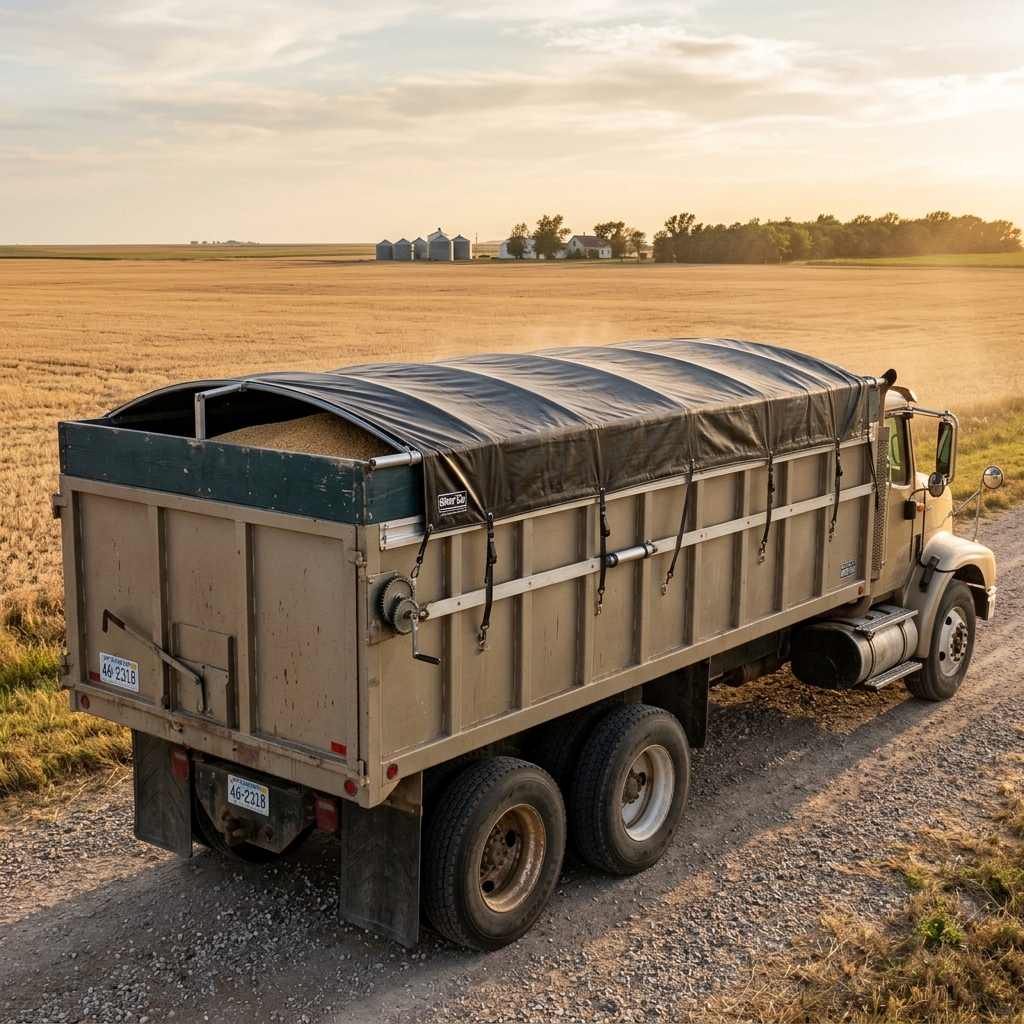
Mike Hogg: Spilling grain on public highways isn’t just lost revenue—it’s a serious road safety hazard and punishable by traffic citations. Hydraulic Hoist System: Raise the grain box fully (using safety stands!) and inspect hydraulic cylinders for scoring or fluid leaks. Check fluid levels in the hydraulic reservoir and ensure PTO engagement linkage operates smoothly without binding. Endgate & Latching Locks: Check automatic trip levers and mechanical locking pins. When the grain box sits flush against the frame, the endgate must seal tightly without gaps. Replace worn perimeter rubber gaskets or warped steel seals.
Roll Tarp Systems: Unroll the tarp completely to inspect for vinyl tears, broken bows, or frayed crank tension straps. A loose or damaged tarp allows wind to blow top-grain out of the box on I-70 or exposes harvested crop to sudden autumn rain showers.
Q: What Is the Payload Capacity Difference Between a Semi and a Tandem Grain Truck?
Tandem Straight Truck:
• Typical GVWR: 46,000 to 54,000 lbs.
• Grain Capacity: ~400 to 550 bushels of corn/soybeans.
• Key Advantage: Superior maneuverability inside tight field gates, terraced waterways, and soft farm yards where turning radius is critical.
Semi Tractor Trailer Setup:
• Typical GVWR: 80,000 lbs (up to 88,000+ lbs under Kansas harvest exemptions).
• Grain Capacity: ~800 to 1,000 bushels.
• Key Advantage: High volume efficiency for long-distance highway hauls to terminal grain elevators or ethanol plants.
Mechanical Strain Note: Because semi setups carry double the payload, kingpins, fifth-wheel plates, landing gear, and multi-axle air suspensions endure double the fatigue. If upgrading your support fleet, you can Research Ford F-250 and Super Duty commercial haulers at Valor Ford to keep support equipment moving.
Q: Do Farm Trucks Need Special Permits to Qualify for Harvest Weight Exemptions?
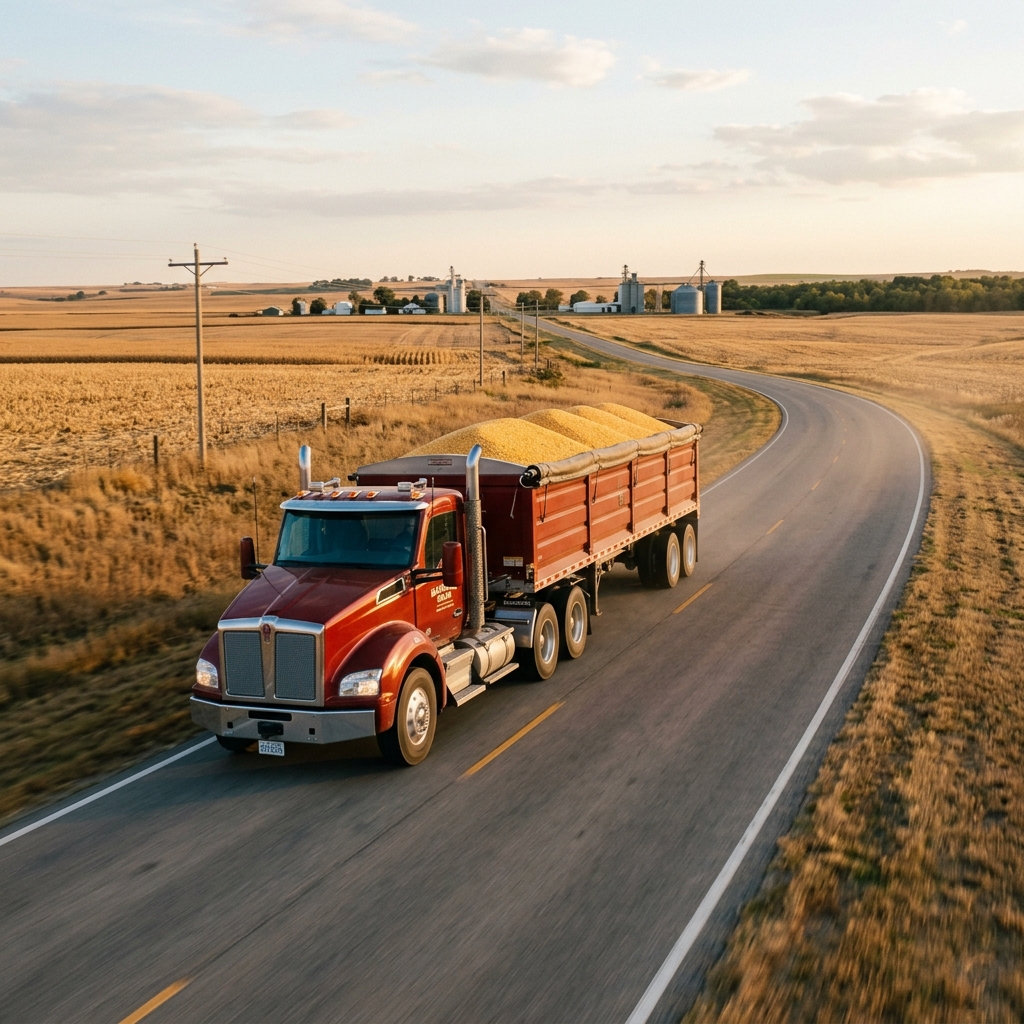
Mike Hogg: Kansas law recognizes the critical nature of harvest season and offers specific statutory weight allowances for agricultural transport. Under Kansas statutes, registered farm trucks carrying harvested grain receive a 10% weight allowance above standard legal limits when transporting crops from field to initial storage or elevator facility. However, there are critical caveats that producers often misunderstand: 1. Interstate Highways Excluded: The 10% harvest weight extension does not apply on Interstate highways (such as I-70 through Junction City). If you enter I-70, you must comply strictly with standard 80,000 lb bridge formula limits unless operating under a special state permit. 2. Bridge Formula & Axle Limits: The allowance applies to gross vehicle weight, but single-axle (20,000 lbs) and tandem-axle (34,000 lbs) legal maximums must still be respected to prevent pavement structural damage. 3. Safety Regulations Remain Enforceable: Weight exemptions do not exempt farm vehicles from mechanical safety compliance. Kansas Highway Patrol commercial vehicle inspectors can pull over and inspect any farm rig exhibiting unsafe tires, defective air brakes, or non-functioning brake lamps.
Q: What Steering and Suspension Red Flags Signal Pending Breakdown in the Field?
Mike Hogg: Driving a grain truck loaded with 800 bushels across rutted farm fields puts immense lateral stress on your steering linkage and suspension assemblies. Red flags to catch before heading out: • Steering Play & Binding: Lift the front axle off the ground and check for play in kingpins, tie rod ends, and drag links. Excessive steering wheel free-play (more than 2 inches on a 20-inch wheel) indicates worn gearboxes or joint slop. • Torn Dust Boots: Damaged rubber boots on ball joints and tie rod ends allow field dirt and grit to grind away internal bearings.
• Cracked Leaf Springs: Inspect leaf spring packs for shifted, cracked, or missing leaves. A broken main leaf spring under full load can snap the axle loose, causing catastrophic vehicle rollover. • U-Bolt Torque & Center Pins: Check leaf spring U-bolts for tightness. Loose U-bolts allow axle movement, leading to severe tire scuffing and frame misalignment. • Shock Absorber Weeping: Hydraulic fluid leaks on shock bodies mean reduced damping, resulting in severe axle hop on corrugated gravel roads.
Q: What Lighting, Electrical, and Reflective Marking Items Are Mandated for Highway Safety?
1. 100% Light Verification:
Harvest days start before dawn and extend well past dusk. Every headlight, clearance lamp, side marker, turn signal, hazard flasher, and brake light must function properly. Clean dusty lenses daily.
2. SMV Emblem Requirements:
If operating specialized farm equipment or low-speed grain setups under 25 MPH on public roads, a clean, non-faded Slow Moving Vehicle (SMV) triangle must be centrally mounted on the rear.
3. DOT C2 Reflective Tape:
Commercial grain trailers and heavy trucks require red-and-white retroreflective tape along 50% of box sides and full width across rear lower clearance bars to prevent motorist rear-end collisions.
If you need replacement sealed-beam LED clearance lights, 7-way electrical trailer harnesses, or heavy-duty fuses before hitting the road, you can Order Genuine Ford Parts directly through the Valor Ford parts counter.
Q: Where Can I Get a Pre-Haul Inspection Near Junction City?
Mike Hogg: Valor Ford, conveniently located right off I-70 at 1825 Goldenbelt Blvd in Junction City, offers comprehensive commercial truck and agricultural vehicle inspections. Our heavy-duty service center features specialized truck bays equipped to handle full-size grain trucks, Super Duty farm fleets, and commercial chassis setups.
Our master certified diesel technicians perform full multi-point safety inspections, air brake certifications, steering system diagnostics, and engine health checks. We know that time is money during harvest season, so we offer fast turnarounds and genuine OEM parts to eliminate unexpected downtime.
Schedule Your Agricultural Grain Truck Pre-Harvest Inspection at Valor Ford in Junction City
Schedule your inspection before combine augers start dumping grain into uninspected trucks. Protect your harvest window, safeguard your drivers, and avoid costly road delays across Central Kansas by scheduling a comprehensive agricultural truck inspection with the expert team at Valor Ford today.
Tags: agricultural vehicle service, air brake system check, commercial truck servicing, DOT safety compliance, farm truck tire inspection, grain truck maintenance, grain truck pre-harvest inspection, heavy-duty truck repair, hydraulic hoist maintenance, Pre-Trip Inspection, slow moving vehicle emblem, steering and suspension repair
Posted in
Maintenance & Service, Safety Features, Seasonal Driving Tips, Seasonal Vehicle Care, Technology & Innovation |
No Comments »