What Engine Options Are Available in the Ford F-150? Complete Powertrain Lineup
Selecting the right powertrain for your Ford F-150 is one of the most critical vehicle ownership decisions you will make. Ford designs America’s best-selling half-ton truck to accommodate an exceptionally broad array of driving demands, ranging from fuel-efficient daily commuting across Junction City to heavy-duty towing, agricultural work in Dickinson County, and off-road trail driving. Understanding the precise power delivery, displacement characteristics, and capability metrics of each engine option ensures you select a truck tailored exactly to your personal lifestyle, job site demands, and trailering requirements.
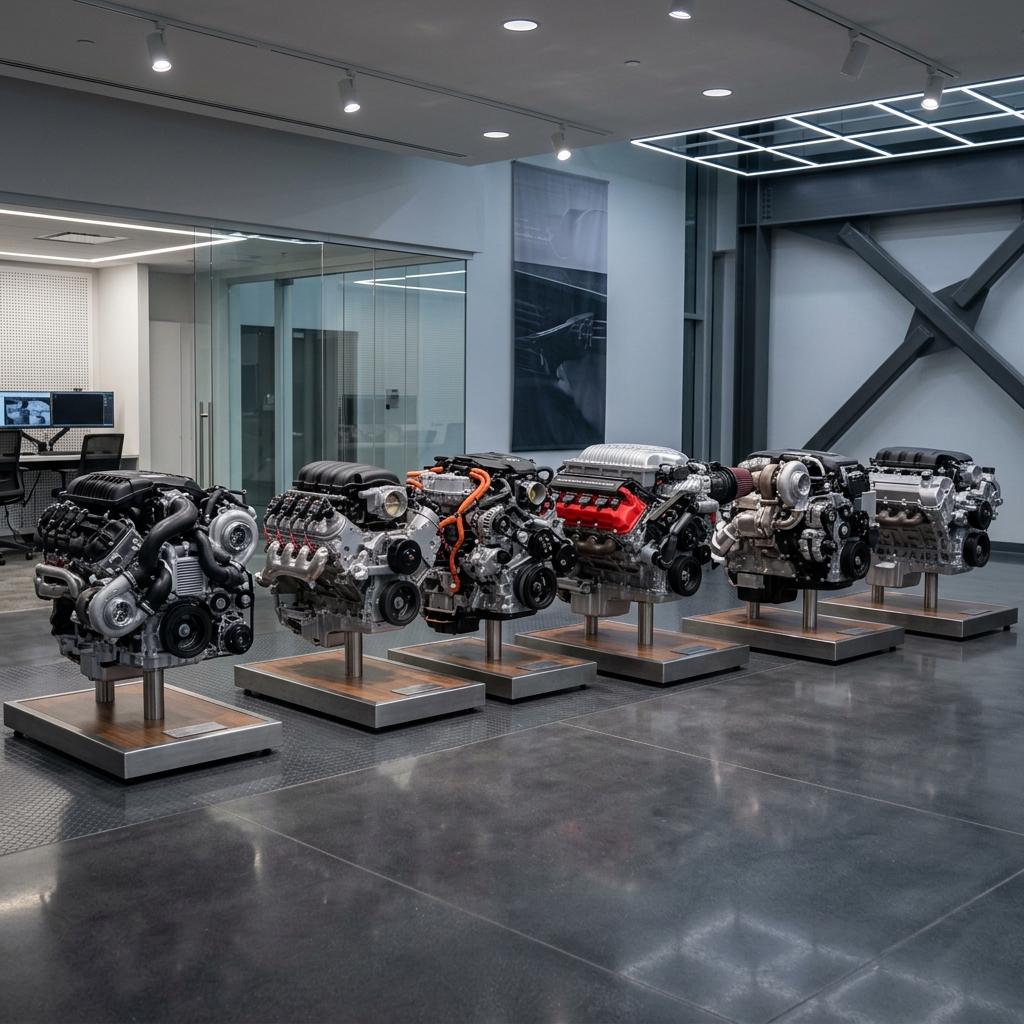
Currently, the Ford F-150 features six distinct engine architectures, each engineered with advanced technology such as dual port-fuel and direct-injection (PFDI) systems, twin turbochargers, variable cam timing, or high-output hybrid battery integration. Whether you favor the smooth, linear acceleration of a naturally aspirated V8 or the instant low-end torque of an EcoBoost V6, Ford’s engine lineup provides optimized options for every type of driver.
|
Engine Option
|
Horsepower
|
Torque (lb-ft)
|
Max Towing Capability
|
|
2.7L EcoBoost V6
|
325 hp @ 5,500 rpm
|
400 lb-ft @ 3,000 rpm
|
Up to 8,400 lbs
|
|
5.0L Ti-VCT V8
|
400 hp @ 6,000 rpm
|
410 lb-ft @ 4,250 rpm
|
Up to 13,000 lbs
|
|
3.5L EcoBoost V6
|
400 hp @ 6,000 rpm
|
500 lb-ft @ 3,100 rpm
|
Up to 13,500 lbs
|
|
3.5L PowerBoost Hybrid V6
|
430 hp @ 6,000 rpm
|
570 lb-ft @ 3,000 rpm
|
Up to 12,700 lbs
|
|
3.5L High-Output EcoBoost V6
|
450 hp @ 5,850 rpm
|
510 lb-ft @ 3,000 rpm
|
Up to 8,200 lbs
|
|
5.2L Supercharged V8 (Raptor R)
|
720 hp @ 6,650 rpm
|
640 lb-ft @ 4,250 rpm
|
Up to 8,700 lbs
|
To explore detailed vehicle specifications or review current showroom models, feel free to check out our Research Ford F-150 resource center or visit Valor Ford directly in Junction City, KS.
2.7L EcoBoost V6 vs. 5.0L Ti-VCT V8: Balancing Fuel Economy and Classic V8 Power
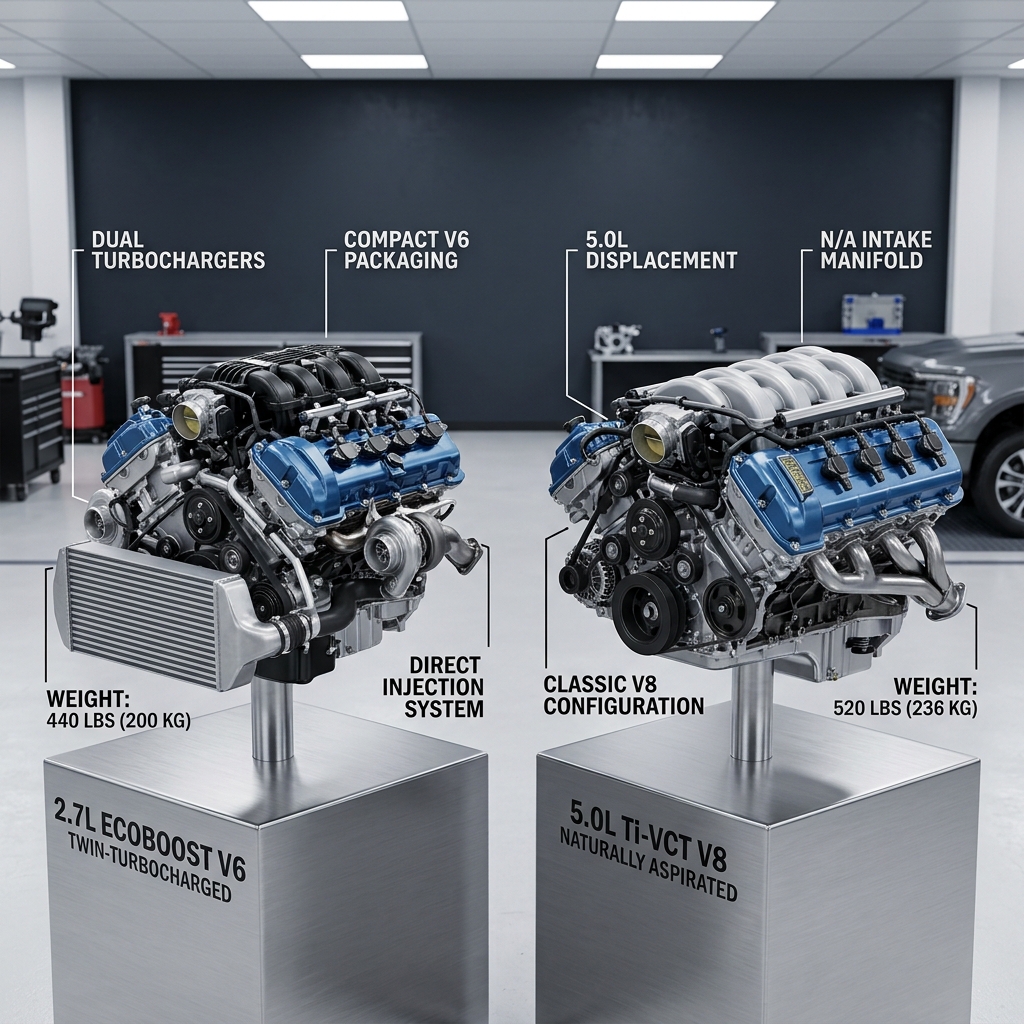
When comparing entry-level and traditional engine choices, truck shoppers frequently debate between the twin-turbocharged 2.7L EcoBoost V6 and the naturally aspirated 5.0L Ti-VCT ‘Coyote’ V8 engine. Both powerplants deliver impressive performance, but they cater to distinct driving preferences and work conditions. The 2.7L EcoBoost V6 is constructed from compacted graphite iron (CGI)—the same robust material used in Ford’s heavy-duty Super Duty diesel blocks. Producing 325 horsepower and a stout 400 lb-ft of torque at just 3,000 rpm, this compact powerhouse reaches peak torque very early in the rev range. For daily commuting between Fort Riley and Junction City, running local errands, or pulling light utility trailers, the 2.7L engine provides exceptional responsiveness, quick acceleration off the line, and outstanding fuel economy.
In contrast, the 5.0L Ti-VCT V8 delivers classic American muscle with 400 horsepower and 410 lb-ft of torque. Featuring dual-overhead camshafts, twin independent variable camshaft timing, and an advanced dual-injection system, the Coyote V8 produces a high-revving, linear power curve accompanied by a rich exhaust note. Driver enthusiasm, linear throttle modulation when hauling bed loads, and proven naturally aspirated long-term simplicity make the 5.0L V8 a favorite among fleet owners and traditional truck purists.
Key takeaways when deciding between these two options:
• Fuel Efficiency: The 2.7L EcoBoost excels in city/highway combined EPA estimates during unloaded daily commuting. • Sound & Feel: The 5.0L V8 offers smooth power building higher in the RPM range alongside an iconic exhaust sound. • Payload Capacity: The 5.0L V8 configuration supports maximum payload specs when properly equipped with heavy-duty payload packages.
3.5L EcoBoost V6 Engine: High Torque Output for Heavy Towing and Hauling
For truck owners whose primary demand involves pulling heavy trailers, equipment, or agricultural supplies, the 3.5L Twin-Turbo EcoBoost V6 stands out as the ultimate conventional towing powerplant in the half-ton segment. Delivering 400 horsepower and a massive 500 lb-ft of torque, this engine surpasses many larger naturally aspirated V8s in pulling power.
The defining characteristic of the 3.5L EcoBoost is its flat torque curve. Reaching its peak 500 lb-ft at an accessible 3,100 rpm, the engine provides immense pulling force without needing to downshift aggressively or rev to extreme limits when climbing steep highway grades along Interstate 70 or navigating country roads across Dickinson County. Paired with Ford’s smooth-shifting 10-speed SelectShift automatic transmission, the 3.5L EcoBoost keeps the engine constantly within its optimal power band.
When properly equipped with the Max Trailer Tow Package and 3.55 or 3.73 axle ratios, F-150 models powered by the 3.5L EcoBoost achieve a maximum towing capability of up to 13,500 lbs. High-capacity engine oil coolers, dual intercoolers, and enhanced radiator cooling fans enable the engine to handle continuous heavy loads under hot summer conditions in central Kansas without sacrificing performance or thermal efficiency.
3.5L PowerBoost Hybrid V6: Maximum Efficiency and Pro Power Onboard Capability
The 3.5L PowerBoost Full Hybrid V6 represents a major technological leap in half-ton pickup performance. By combining the proven 3.5L twin-turbo V6 engine with a 44-horsepower (33kW) electric motor integrated directly into the 10-speed modular hybrid transmission, Ford achieves a staggering total output of 430 horsepower and 570 lb-ft of torque—the highest torque rating available outside of the specialty Raptor R.
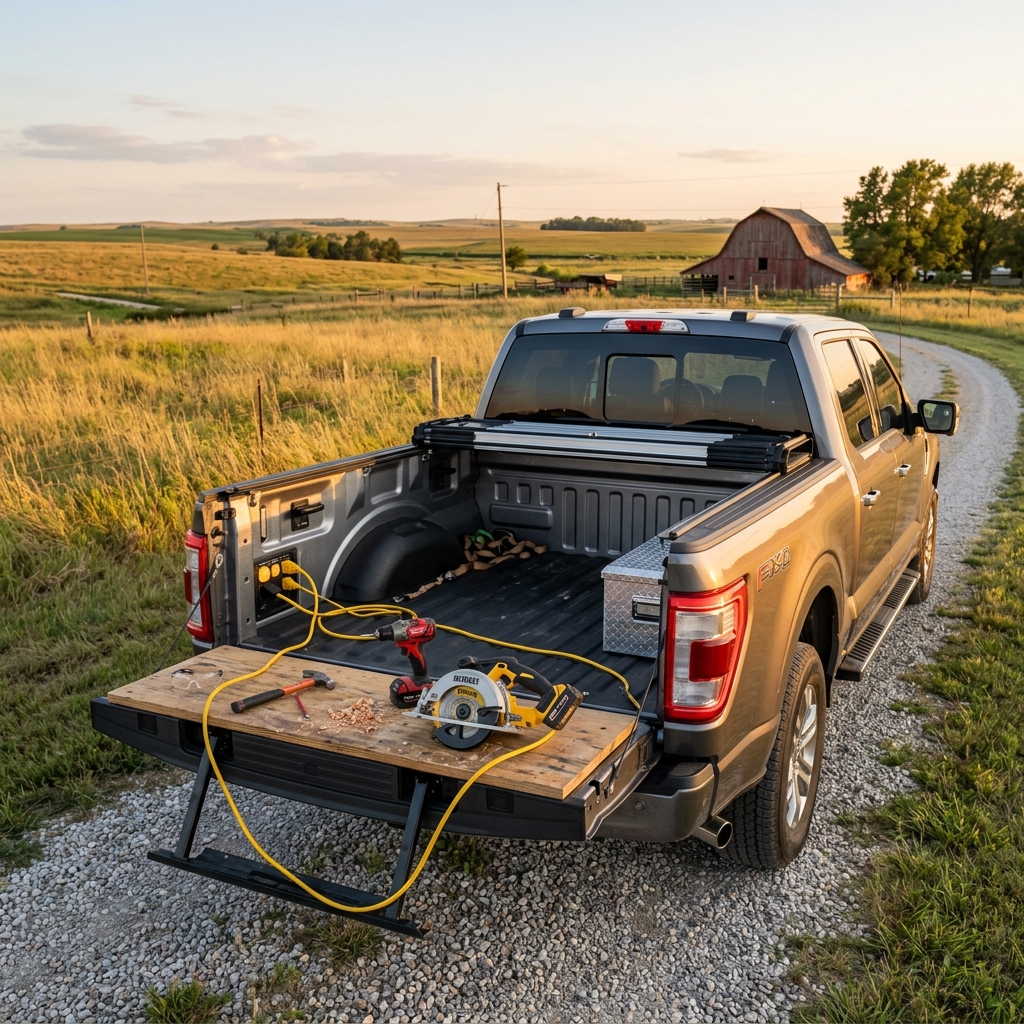
Beyond instant electric low-end torque and impressive EPA-estimated fuel economy, the headline feature of the PowerBoost hybrid is its revolutionary Pro Power Onboard system. Turning your truck into an active mobile generator, Pro Power Onboard provides accessible AC power through bed-mounted outlets.
• 2.4kW System (Standard): Provides continuous power for power tools, air compressors, tailgating equipment, and electric saws. • 7.2kW System (Available): Delivers up to 7,200 watts of 120V/240V power—capable of running an entire construction job site, powering heavy MIG welders, or supplying emergency backup power to household appliances during storm outages.
If you are considering upgrading your current vehicle to a high-efficiency PowerBoost Hybrid, you can calculate your vehicle’s trade value online with our instant Trade In Evaluation tool at Valor Ford.
What Is the Maximum Payload Capacity of the Ford F-150 Across Engine Options?
Cab & Bed Options
Payload capacity measures the total weight of cargo, passengers, and accessories placed directly in the truck bed and cabin. Cab selection heavily impacts net payload: Regular Cab models with 8-foot beds weigh less than 4-door SuperCrew cabs, resulting in higher overall payload limits.
GVWR & Axle Specs
Gross Vehicle Weight Rating (GVWR) determines maximum total weight allowed for truck and load combined. Selecting heavy-duty payload packages enhances leaf spring rates, reinforces rear axle housing thickness, upgrades brake cooling, and increases gross axle weight limits.
Engine Mass Differences
Engine weight affects net bed capacity. The naturally aspirated 5.0L V8 and 3.5L EcoBoost offer maximum payload ratings (up to 2,445+ lbs when properly configured), whereas the PowerBoost Hybrid’s 1.5kWh lithium-ion battery adds curb weight, slightly decreasing net payload capacity.
High-Performance Powertrains: Raptor 3.5L High-Output and 5.2L Supercharged V8 Engine Options
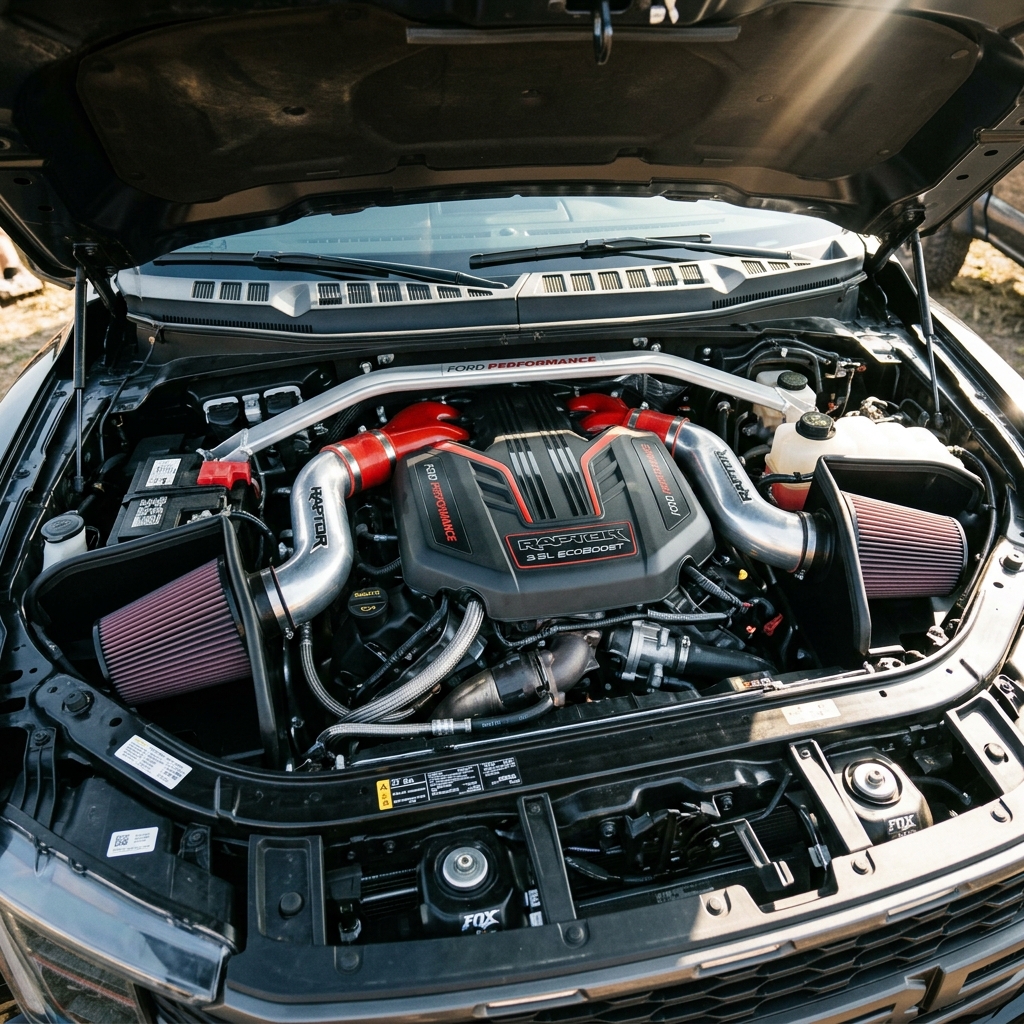
For off-road enthusiasts seeking extreme speed and desert racing performance, Ford Performance offers two specialized powertrains in the flagship F-150 Raptor lineup. The standard F-150 Raptor houses a specially tuned 3.5L High-Output EcoBoost V6 producing 450 horsepower and 510 lb-ft of torque. Engineered with upgraded turbochargers, high-flow exhaust manifolds, high-volume cooling fans, and Baja mode anti-lag engine tuning, this engine responds instantly across rocky terrain, sand dunes, and high-speed off-road trails.
At the top of the performance hierarchy sits the mighty F-150 Raptor R, powered by a supercharged 5.2L V8 engine generating an unbelievable 720 horsepower and 640 lb-ft of torque. Derived from Mustang Shelby engineering, this supercharged V8 utilizes a 2.65-liter Roots-type supercharger, cast-stainless steel exhaust headers, unique oil cooler systems, and extra-deep oil pan baffling designed to maintain lubrication under steep off-road lean angles.
How Do Ford F-150 Trim Levels Differ in Features and Standard Engine Equipment?
Navigating the Ford F-150 trim walk is essential to securing the standard or optional powertrain that matches your driving expectations. Ford structures its trim levels so that work-ready trucks prioritize efficiency and durability, while mid-tier and high-luxury trims unlock advanced hybrid power options or specialized V8 architectures.
|
Trim Level
|
Standard Powertrain
|
Available Powertrain Upgrades
|
|
XL
|
2.7L EcoBoost V6
|
5.0L V8
|
|
STX
|
2.7L EcoBoost V6
|
5.0L V8
|
|
XLT
|
2.7L EcoBoost V6
|
5.0L V8 / 3.5L EcoBoost V6 / 3.5L PowerBoost Hybrid
|
|
Lariat
|
5.0L Ti-VCT V8
|
3.5L EcoBoost V6 / 3.5L PowerBoost Hybrid
|
|
King Ranch
|
3.5L EcoBoost V6
|
3.5L PowerBoost Hybrid V6
|
|
Platinum
|
3.5L EcoBoost V6
|
3.5L PowerBoost Hybrid V6
|
|
Tremor
|
5.0L Ti-VCT V8
|
3.5L Twin-Turbo EcoBoost V6
|
|
Raptor / Raptor R
|
3.5L High-Output EcoBoost V6
|
5.2L Supercharged V8 (Raptor R)
|
Work-oriented trims like the XL and STX deliver exceptional everyday value with the standard 2.7L EcoBoost V6. The versatile XLT trim provides access to nearly all mainstream engine options, making it the most configurable model in the F-150 lineup. Higher luxury models like King Ranch and Platinum standardise high-torque engines to match premium interior appointments.
What Are the Key Features and Trim Differences Buyers Should Understand When Choosing a Ford F-150?
Cabin & Technology
All modern F-150 trims feature a standard 12-inch touchscreen powered by SYNC 4 software, supporting wireless Apple CarPlay and Android Auto. High-tier trims add heated/ventilated leather seating, B&O Sound Systems, and Ford BlueCruise hands-free highway driving capability.
Drivetrain & Axles
Choosing between 4×2 and 4×4 systems involves selecting rear axle gear ratios. A 3.31 ratio maximizes highway fuel economy, while 3.55 and 3.73 electronic-locking rear axle ratios provide superior low-end mechanical leverage for heavy towing and off-road traction.
Towing Assist Tools
Advanced trailering technology includes Pro Trailer Backup Assist, Smart Hitch payload measurement scales, integrated trailer brake controllers, and Blind Spot Information System (BLIS) with extended trailer coverage.
Ready to explore flexible purchasing options or initiate pre-qualification? You can Get Pre-Approved for Financing directly online through Valor Ford’s secure finance application.
When Should a Truck Buyer Upgrade From an F-150 to an F-250 Super Duty?
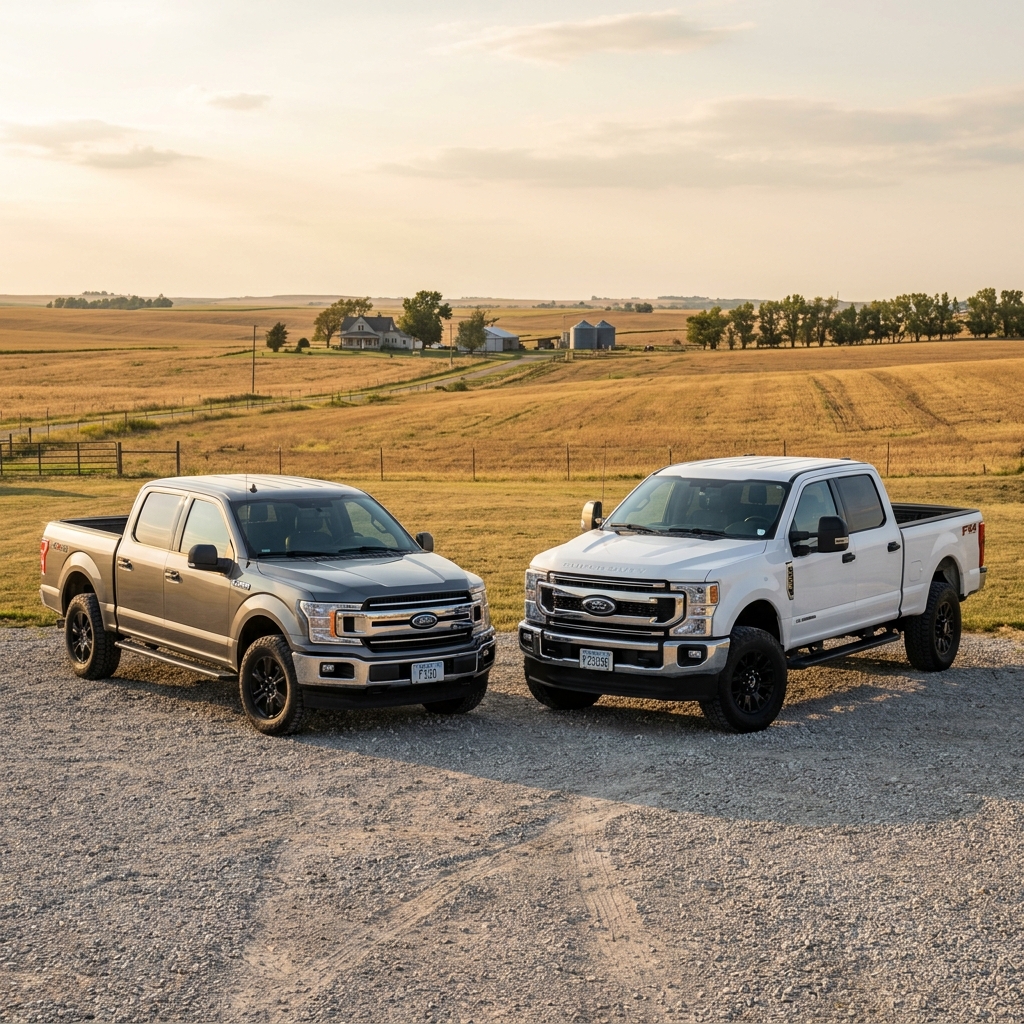
While the half-ton Ford F-150 offers impressive towing and payload limits, certain commercial, heavy agricultural, and fifth-wheel towing needs require the heavy-duty chassis of the Ford F-250 Super Duty.
Key upgrade criteria include:
• Fifth-Wheel & Gooseneck Towing: If your trailering setup involves heavy multi-horse livestock trailers, large fifth-wheel RV campers, or gooseneck machinery haulers exceeding 14,000 lbs, the heavy-duty fully boxed frame and higher pin-weight rating of an F-250 are mandatory. • Continuous Heavy Commercial Payload: Carrying high payload loads (over 3,000 lbs) daily subjects half-ton rear suspension springs to excessive wear. The F-250 features solid rear axles and heavy-duty leaf spring packs designed for sustained industrial hauling. • Extreme Diesel Performance: If maximum diesel torque is essential for long-distance highway hauling, upgrading to the 6.7L Power Stroke V8 Turbo Diesel in the Super Duty delivers up to 1,200 lb-ft of torque.
For more information regarding heavy-duty truck specs, check out our dedicated Research Ford F-250 page or speak with our commercial vehicle experts.
What Ownership and Maintenance Questions Should I Ask Before Buying a Ford F-150?
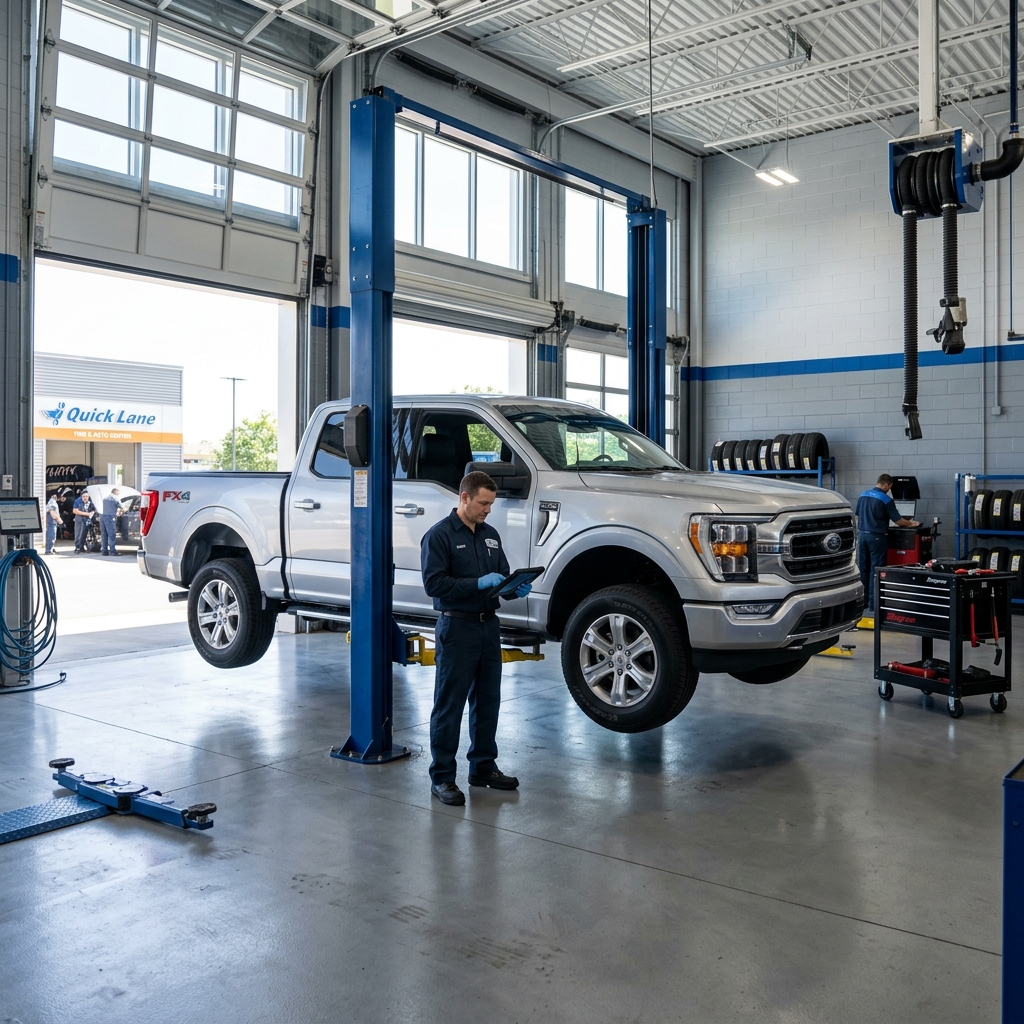
Proper routine maintenance is essential to preserving the longevity, power output, and fuel efficiency of your Ford F-150 engine. Depending on whether you select a twin-turbocharged EcoBoost, a high-revving 5.0L V8, or a PowerBoost Hybrid, service schedules and preventive care requirements will vary.
Key Powertrain Maintenance Best Practices:• EcoBoost Turbo Care: Twin-turbocharged engines operate under high thermal conditions. Utilizing full-synthetic motor oil meeting Ford Motorcraft standards and sticking strictly to 5,000-to-7,500-mile oil change intervals preserves turbocharger bearing health and prevents oil thermal breakdown. • Spark Plug Maintenance: Turbocharged direct-injection engines create high cylinder pressure. Inspecting and replacing spark plugs every 45,000 to 60,000 miles maintains clean combustion and prevents misfires under heavy towing loads. • PowerBoost Hybrid Battery Coverage: Ford protects all PowerBoost high-voltage hybrid components—including the 1.5kWh lithium-ion battery pack and hybrid control module—with a dedicated 8-year/100,000-mile factory warranty.
• 10-Speed Transmission Maintenance: Performing fluid changes and filter replacements at recommended service intervals ensures crisp, smooth gear shifts across demanding towing conditions.
Why Is Reviewing the Vehicle History Report Important for a Used Ford F-150?
If you are purchasing a pre-owned Ford F-150, performing thorough vehicle history research guarantees you select a well-maintained truck free of hidden mechanical liabilities. A detailed CARFAX or AutoCheck report provides full visibility into former vehicle usage and service records.
Essential History Factors to Verify:• Routine Maintenance History: Verify regular oil change documentation, fluid flushes, and filter replacements—especially on turbo EcoBoost models. • Recall Completion: Confirm that all factory safety recalls or customer satisfaction programs have been addressed by an authorized Ford dealership. • Usage Type: Identify whether the pre-owned truck was driven as a personal commuter, commercial fleet truck, or heavy rental vehicle.
At Valor Ford, every used vehicle undergoes a comprehensive multi-point inspection. You can Browse Used Inventory online to discover clean-history pre-owned F-150 trucks currently available in Junction City.
Test Drive and Compare Ford F-150 Engine Options at Valor Ford in Junction City, KS
Reading specifications provides essential baseline knowledge, but nothing compares to experiencing the acceleration, smoothness, and cab comfort of a Ford F-150 firsthand. Whether you want to test the low-end pulling power of the 3.5L EcoBoost, experience the silent start and instant torque of the PowerBoost Hybrid, or feel the legendary performance of the 5.0L Coyote V8, our team at Valor Ford is ready to guide you.