Kansas Farm CDL Exemption Rules for Towing Trailers with a Ford F-250
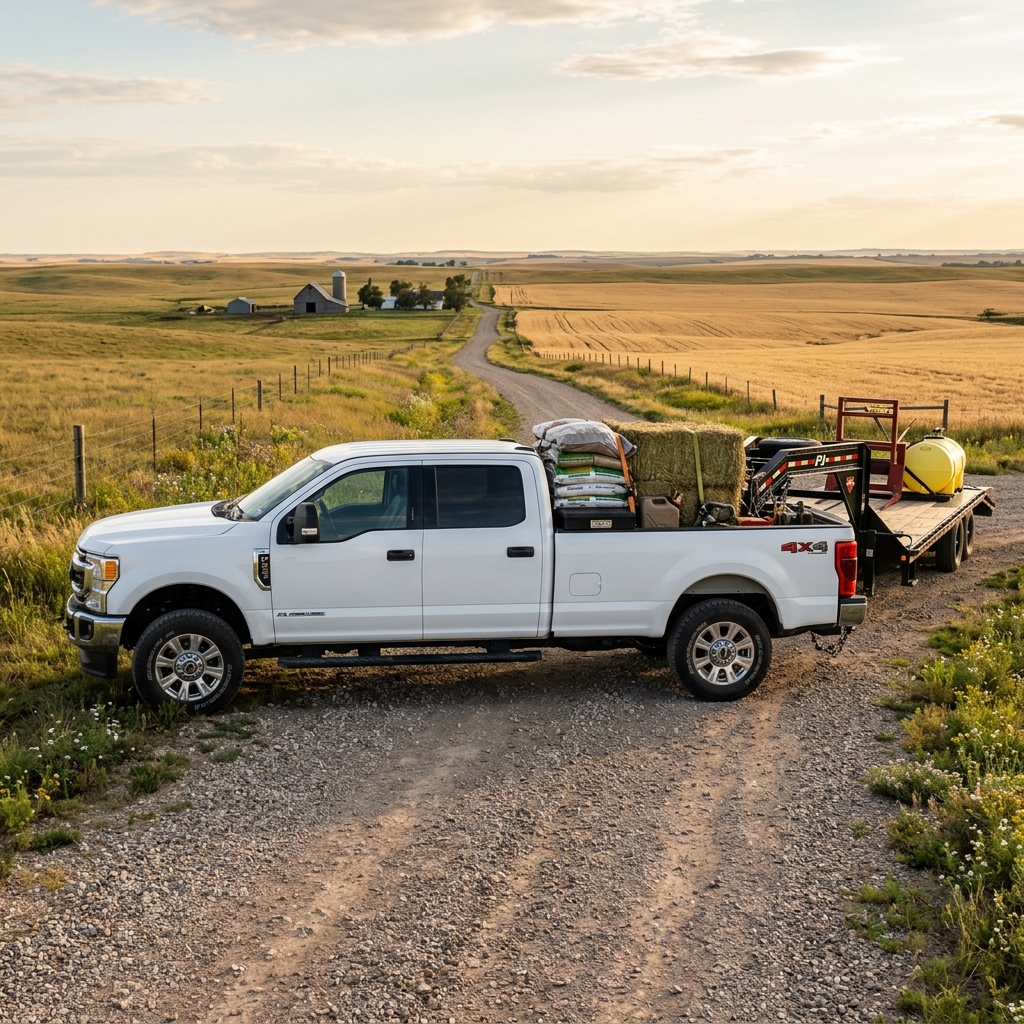
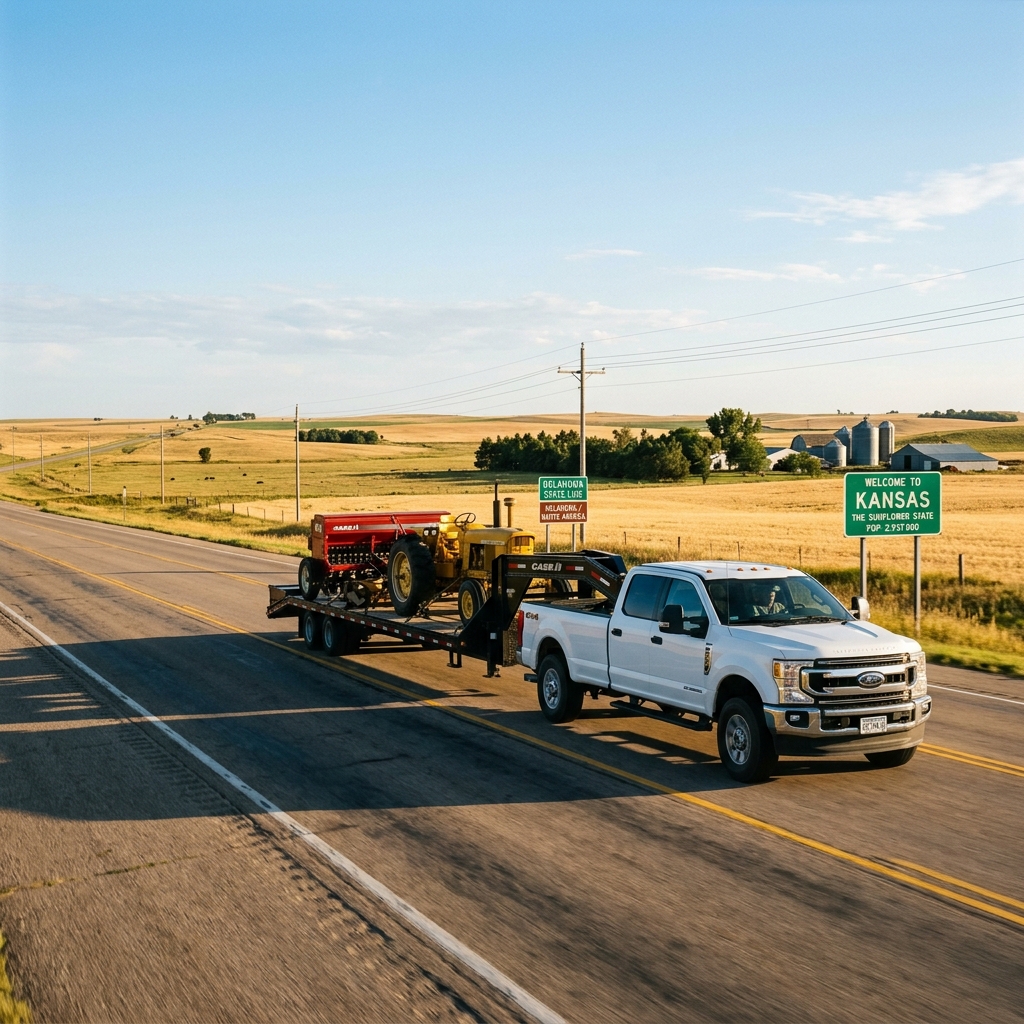
If you operate a farm or ranch in Kansas and utilize a Ford F-250 to haul livestock, grain, hay, or heavy machinery, the short answer is: In the vast majority of cases, you do NOT need a Commercial Driver’s License (CDL) to tow a farm trailer with an F-250 in Kansas. Under federal guidelines standardizing Covered Farm Vehicle (CFV) exemptions (49 CFR 390.39) alongside Kansas state statute (K.S.A. 8-234(b)), registered farmers, family members, and designated farm employees are fully exempt from CDL requirements when operating within a 150 air-mile radius of their agricultural property.
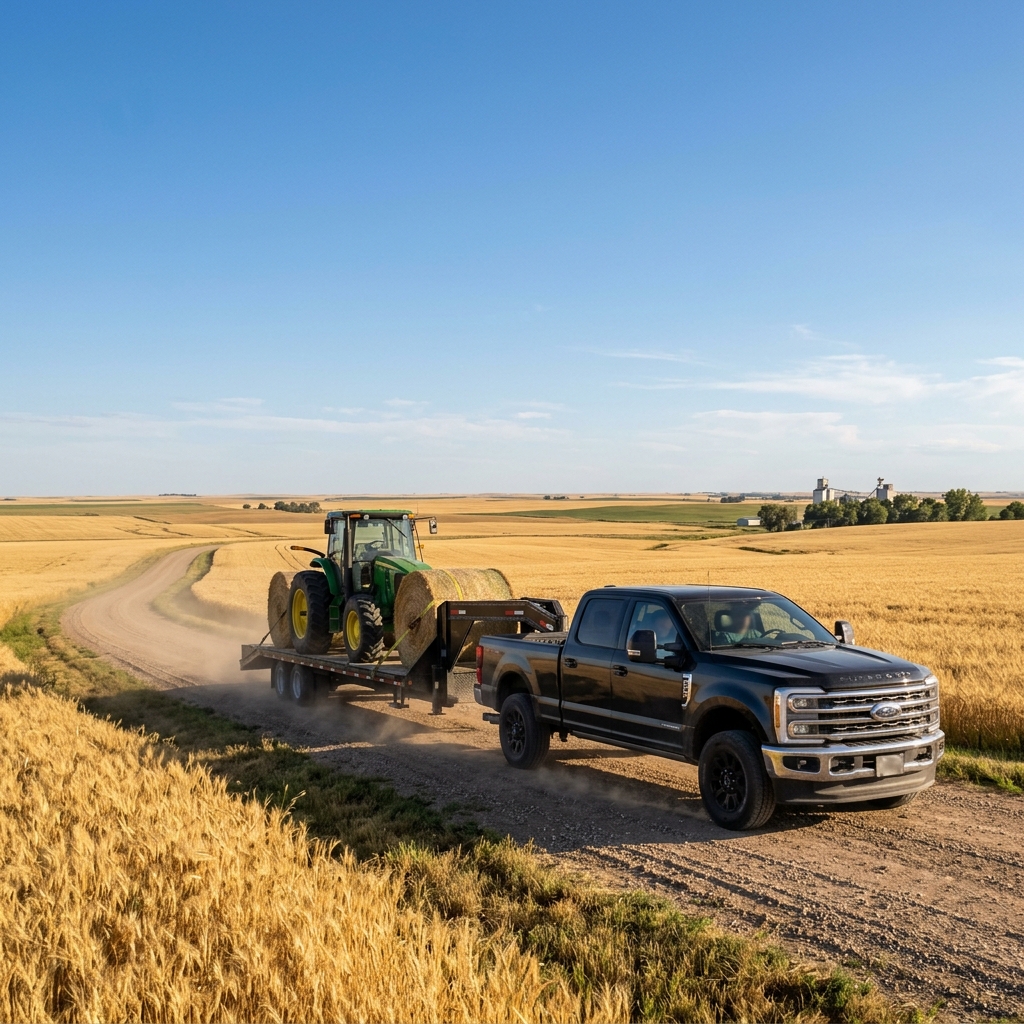
This exemption applies even when the combined gross weight rating of your F-250 and gooseneck trailer exceeds the standard 26,001-pound commercial weight threshold. However, this legal protection relies on strict compliance with four fundamental conditions: the truck must be controlled and operated by a farmer or farm employee, designated with farm license plates, used exclusively to transport agricultural products, supplies, or machinery, and operated within the statutory 150 air-mile limit without offering transportation for hire. For local producers in Geary and Dickinson counties, exploring new work-ready inventory or looking to Research Ford F-250 towing configurations helps ensure your setup stays safe, legal, and reliable through every harvest season.
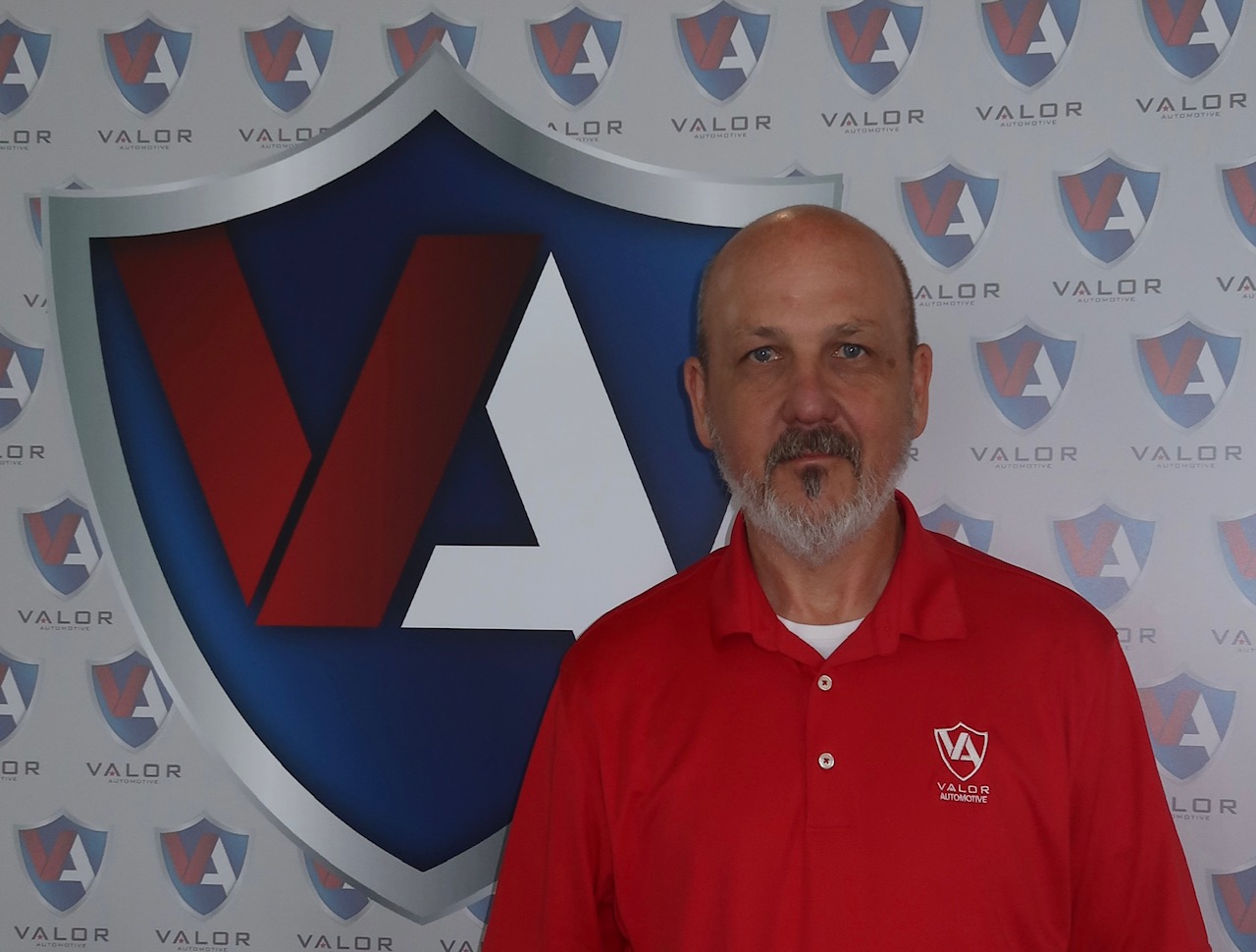
20 Years on the Service Floor: Meet Mike Hogg, Service Director at Valor Ford
For over two decades, Mike Hogg has stood on the service bay floor at Valor Ford in Junction City, analyzing real-world wear and tear on agricultural work trucks across Central Kansas. From winter feeding rounds in the Flint Hills to high-tonnage grain hauls during hot August harvests, Mike has helped hundreds of producers configure, service, and maintain heavy-duty powertrains.
“The questions we get on the service drive aren’t just about horsepower or oil change intervals,” says Mike. “Farmers constantly ask us how to keep their F-250 setups completely legal while pulling maximum weight. A 3/4-ton Super Duty is the backbone of Kansas agriculture because it bridges the gap between daily driving comfort and true heavy-duty pulling power without dragging full commercial compliance requirements into daily farm operations.
At What Weight Does a Ford F-250 Combination Trigger CDL Requirements in Kansas?
To understand where CDL thresholds lie, you must evaluate standard Federal Motor Carrier Safety Administration (FMCSA) criteria versus Kansas farm exemptions. Under non-farm commercial regulations, a CDL Class A is required whenever a vehicle combination has a Gross Combination Weight Rating (GCWR) of 26,001 pounds or more, provided the towed unit (trailer) has a Gross Vehicle Weight Rating (GVWR) exceeding 10,000 pounds.
A 2024 Ford F-250 typically carries a vehicle GVWR of 9,900 to 10,000 lbs. When hooked to a heavy dual-axle gooseneck trailer rated at 16,000 lbs GVWR, the total combined rating reaches 26,000 lbs. If your trailer rating pushes total combined ratings past 26,001 lbs, standard commercial drivers would need a Class A CDL. However, Kansas agricultural exemptions carve out a explicit legal space for active producers.
|
Operation Type
|
GCWR Threshold
|
Trailer GVWR
|
CDL Required in KS?
|
|
Commercial Transport
|
26,001+ lbs
|
> 10,000 lbs
|
YES (Class A)
|
|
Covered Farm Vehicle (<150 Air Miles)
|
Any Weight Class
|
Any Weight Class
|
NO (Exempt)
|
|
Custom Harvest For-Hire
|
26,001+ lbs
|
> 10,000 lbs
|
YES
|
|
Interstate Commercial Farm
|
> 26,000 lbs (>150 Mi)
|
> 10,000 lbs
|
YES
|
How Can I Check if My Particular Farm Trailer Setup Behind an F-250 Requires a CDL in Kansas?
Step 1: Vehicle & Trailer Placards
Check the driver-side door jamb tag on your F-250 for Gross Vehicle Weight Rating (GVWR) and front/rear Gross Axle Weight Ratings (GAWR). Locate the VIN metal tag on your trailer tongue or gooseneck frame to note the trailer GVWR. Add both GVWR numbers together to find your total combination rating (GCWR).
Step 2: Tag & License Verification
Ensure your F-250 carries registered Kansas Farm or Farm Truck license plates. Farm tags register the vehicle with the Kansas Department of Revenue as a farm producer truck, serving as immediate visual proof of Covered Farm Vehicle intent during roadside safety checks.
Step 3: Radius & Operation Audit
Verify that your transport routes remain within 150 air miles of your agricultural headquarters. Confirm that you are carrying owned farm products, livestock, seed, or machinery and are not receiving direct commercial payment for freight haulage.
Gas vs. Diesel: How Towing Capacity Varies Between 2024 Ford F-250 Engines
6.8L V8 Gas Engine
Delivering 405 hp and 445 lb-ft of torque, the entry-level 6.8L gas engine offers excellent utility for light farm duties, utility trailers, and short trips around the pasture, providing dependable conventional towing capabilities up to 14,800 lbs.
7.3L Godzilla V8 Gas
Generating 430 hp and 485 lb-ft of torque, the legendary 7.3L gas V8 provides severe-duty gas performance. It is ideal for farmers wanting high payload capacity without diesel maintenance schedules, pulling up to 17,200 lbs on gooseneck configurations.
6.7L Power Stroke Diesel
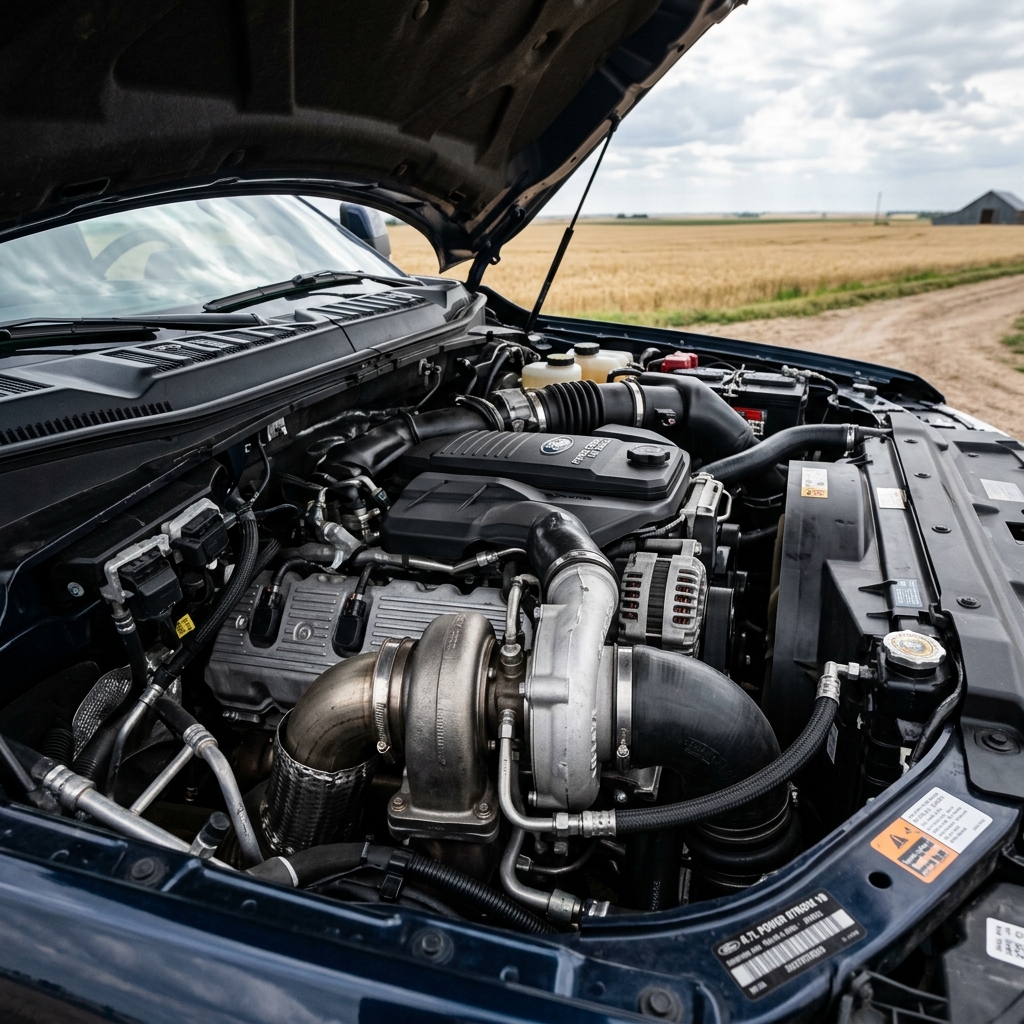
Pumping out 475 hp and 1,050 lb-ft of torque (or 500 hp / 1,200 lb-ft in High Output trim), the 6.7L diesel engine represents the peak of heavy hauling performance, unlocking maximum gooseneck capacities over 22,000 lbs in proper F-250 trim.
Why Work Truck Guides Frequently Recommend the F-250 for Mixed Towing and Payload Tasks
Agricultural operations require versatile machinery. While 1-ton dual-rear-wheel trucks excel at maximum stability under extreme tongue weights, they can be cumbersome in tight cattle pens, farm store parking lots, or soft pasture terrain. The 3/4-ton Ford F-250 hits the operational sweet spot.
With payload ratings reaching up to 4,268 lbs depending on configuration, an F-250 can comfortably support liquid tote tanks, seed pallets, or heavy gooseneck pin weights while maintaining comfortable single-rear-wheel maneuverability and single-cab or crew-cab flexibility.
Furthermore, opting for an F-250 equipped with Ford’s High Capacity Trailer Tow Package upgrades the rear axle to a heavy-duty axle shaft and ring gear, giving you structural towing reserves comparable to an F-350 while staying under restrictive registered weight brackets when necessary.
If you are considering upgrading your farm fleet or trading in your current tow vehicle, you can request a quick Trade In Evaluation online at Valor Ford to see what your existing vehicle is worth.
Expert Perspective: Choosing the Right F-250 Towing Configuration for Agricultural Reliability
“One of the biggest mistakes I see in my 20 years at Valor Ford is mis-matching axle gear ratios and hitch prep when buying a farm truck,” notes Service Director Mike Hogg.
“If you are regularly pulling 16,000-pound goosenecks through rolling pasture hills or muddy field entrances, you want the 3.55 or 3.73 electronic locking rear axle ratio—or even the 4.30 axle with gas engines. The factory 5th-Wheel/Gooseneck Hitch Prep Package is also a must-have. It mounts the hitch structure directly to the frame cross-members right at the factory, fully covered by Ford warranty, ensuring structural integrity that aftermarket bolt-on hitches just can’t match when subjected to high dynamic tongue weights during farm transport.
Key Towing and Payload Specs for the 2024 Ford F-250 Super Duty
Conventional Towing
Up to 22,000 lbs when equipped with the 6.7L High Output Power Stroke Diesel and proper weight-distributing receiver hitches.
Gooseneck / 5th-Wheel
Up to 23,000 lbs maximum gooseneck rating, allowing heavy livestock trailers or multi-bale transport across regional routes.
Smart Towing Tech
Features available Onboard Scales, Smart Hitch tongue weight estimation, and Pro Trailer Backup Assist for quick single-operator hookups.
Essential Towing Safety Practices for F-250 Farm Operations in Central Kansas
Exemption from holding a Commercial Driver’s License does not exempt farm operators from fundamental highway safety regulations. Kansas Highway Patrol motor carrier officers perform routine safety inspections on agricultural vehicles to ensure public safety on state highways and rural county roads.
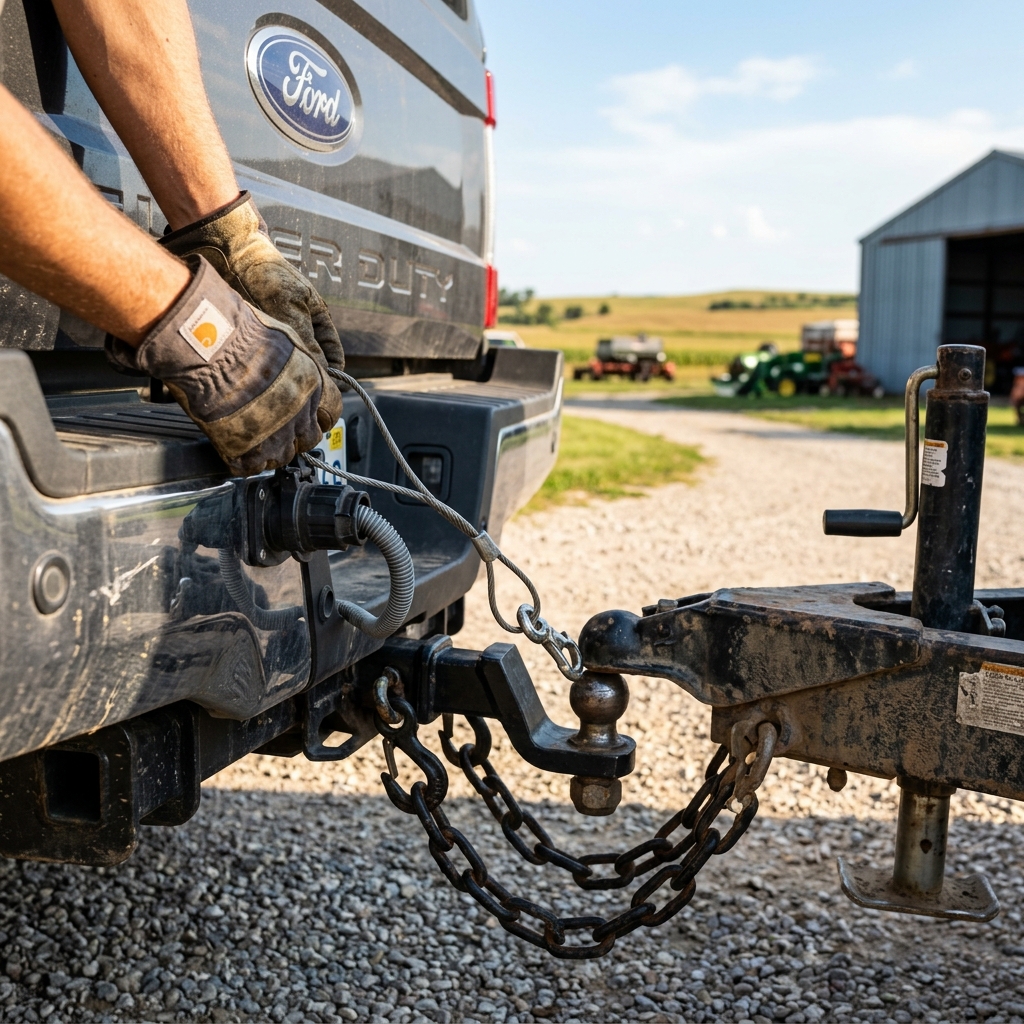
Key safety mandates include ensuring full function of all trailer lights, turn signals, and brake lights, maintaining active electric or hydraulic surge trailer brakes on all axles for trailers over 3,000 lbs GVWR, utilizing proper safety chains or breakaway cables, and confirming tire load ratings match or exceed actual axle loads.
Recommended Maintenance Schedule When Towing Heavy Farm Trailers with a 2024 F-250
Frequent agricultural towing falls under Ford’s Severe Duty Maintenance Schedule. Dragging heavy livestock or grain loads subjects the 10-speed TorqShift transmission, rear differential, and braking system to high thermal loads and elevated mechanical stress.
Service Director Mike Hogg recommends changing engine oil and filters every 5,000 miles (or 250 engine hours), replacing primary and secondary diesel fuel filters every 15,000 miles, servicing front/rear differential fluids every 30,000 miles, and inspecting brake pad thickness before peak harvest season.
Keeping your work truck in top condition protects your investment and prevents costly downtime during crucial harvest windows. You can easily Schedule Ford Service Today with our factory-certified Super Duty technicians at Valor Ford.
Need replacement filters or factory fluids for your farm shop maintenance? You can directly Order Genuine Ford Parts through our parts department for fast local delivery or pickup.
When Does Farm Exempt Status Expire? Crossing State Lines and Commercial Transport
Exceeding 150 Air Miles
If you haul grain, livestock, or machinery beyond 150 air miles (approx. 172.6 land miles) from your farm, the Covered Farm Vehicle CDL exemption expires, requiring full commercial driver compliance if weight limits exceed 26,000 lbs.
For-Hire Freight Transport
Hauling goods or equipment for neighbors or third parties in exchange for direct fee-for-service payment instantly voids farm exemption status, converting your rig into a commercial motor carrier subject to DOT audits and CDL rules.
Crossing State Boundaries
While federal MAP-21 rules mandate interstate recognition of Covered Farm Vehicle exemptions in neighboring states like Nebraska, Oklahoma, or Missouri, drivers must verify that local state tag requirements match interstate reciprocity guidelines.
Ready to Spec or Service Your F-250 Farm Truck? Visit Valor Ford in Junction City, KS
Whether you are looking to purchase a new 2024 Ford F-250 Super Duty configured specifically for farm gooseneck towing, explore high-quality pre-owned work trucks in our Browse Used Inventory section, or have Service Director Mike Hogg’s team perform complete severe-duty maintenance on your existing farm fleet, Valor Ford is proud to support Central Kansas producers.
Tags: agricultural vehicle service, CDL Exemption Kansas, Farm Fleet Upkeep, Farm Trailer Towing, Farm Truck Safety, Ford F-250 Maintenance, Ford Super Duty Service, Gooseneck Trailer Maintenance, heavy-duty truck repair, Kansas Farm Truck Care, Severe Duty Maintenance, Towing Capacity Ford F-250
Posted in
Buying Guides, Maintenance & Service, Safety Features, Seasonal Driving Tips, Technology & Innovation |
No Comments »