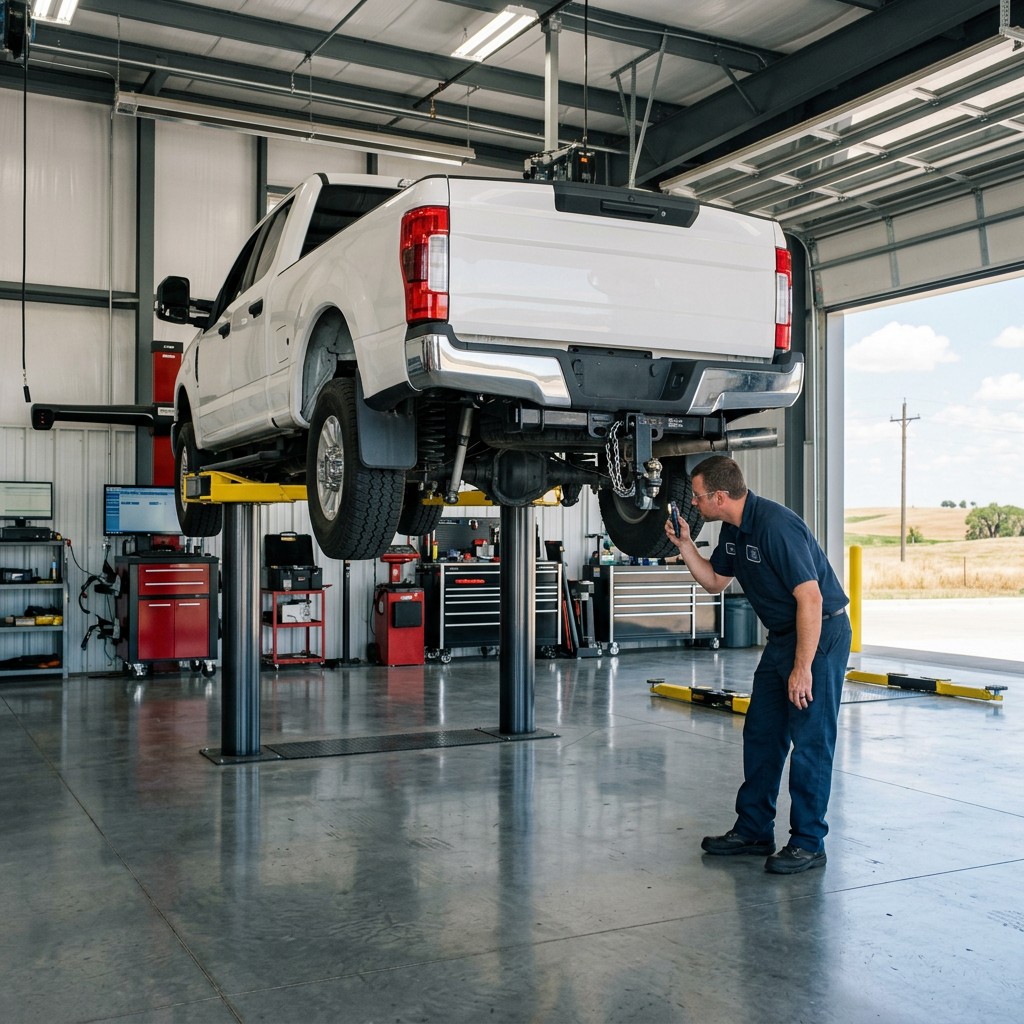
Getting Your Show Stock to the Fair: Why Towing Prep Matters in Junction City and Beyond
Summer in Kansas signals a revered tradition: county fair season. From the bustling arenas of the Tri-County Fair in Herington to the highly competitive show rings at the Dickinson County Fair in Abilene, local 4-H members, FFA chapters, and multi-generational ranching families are preparing their prized livestock for exhibition. Months of early mornings, meticulous grooming, and rigorous feeding schedules culminate in these few critical days. However, before your cattle, sheep, swine, or horses can stand under the judge’s watchful eye, they must endure the journey from your farm to the fairgrounds. Transporting live animals is vastly different from hauling inert construction materials or flatbed cargo; it requires specialized equipment, a deep understanding of vehicle mechanics, and an unyielding commitment to safety.
At Valor Ford, located in the heart of Junction City, KS, we recognize that your truck is more than just a daily driver—it is the lifeblood of your agricultural operation. Hauling livestock down Highway 77 or along the rolling corridors of Interstate 70 demands a tow vehicle that is perfectly matched to its payload. If your truck is underprepared or incorrectly configured, you risk not only mechanical failure on the road but also the health and safety of your animal cargo. Shifting weight, summer humidity, and sudden stops create dynamic forces that will test the limits of any truck. That is why proper trailering preparation is non-negotiable.
Whether you are a seasoned livestock producer hauling a heavy 24-foot gooseneck with an F-350 Super Duty, or a proud parent taking your child’s first market lamb to the fair in a bumper-pull trailer behind an F-150, this guide is designed for you. We will dive deep into configuration choices, safety rules, legal requirements, and maintenance checks that guarantee a smooth arrival. If you need immediate assistance or want your rig professionally inspected before the big event, feel free to Get Directions to Valor Ford and visit our service center, or simply Call us at (785) 238-5114 to speak directly with our truck experts.
At what trailer weight or size should you upgrade from an F-150 to an F-350?
Understanding the limits of your tow vehicle is the foundation of safe livestock trailering. While a properly configured Ford F-150 is an incredibly capable light-duty machine, it operates in a different class than the heavy-duty F-350 Super Duty. The primary dividing line between these two platforms isn’t just the raw maximum tow rating; it’s a combination of payload capacity, tongue weight, trailer length, and lateral stability. Livestock trailers are notoriously heavy, often built with rugged steel or thick aluminum, and the live weight inside behaves unpredictably. When animals move, they shift the trailer’s center of gravity, sending lateral and vertical forces directly to your truck’s chassis.
Generally, if your loaded trailer weight exceeds 8,000 to 9,000 pounds, or if the overall trailer length exceeds 20 to 22 feet, you should strongly consider stepping up to an F-350. At this threshold, tongue weight (which should represent 10% to 15% of a bumper-pull trailer’s weight, or up to 25% for a gooseneck) will quickly exhaust the payload limits of a half-ton truck once you factor in passengers, feed, tack, and show gear in the truck bed. An F-350 provides the structural mass, heavy-duty braking systems, and beefier suspension components required to counteract trailer sway and maintain absolute control.
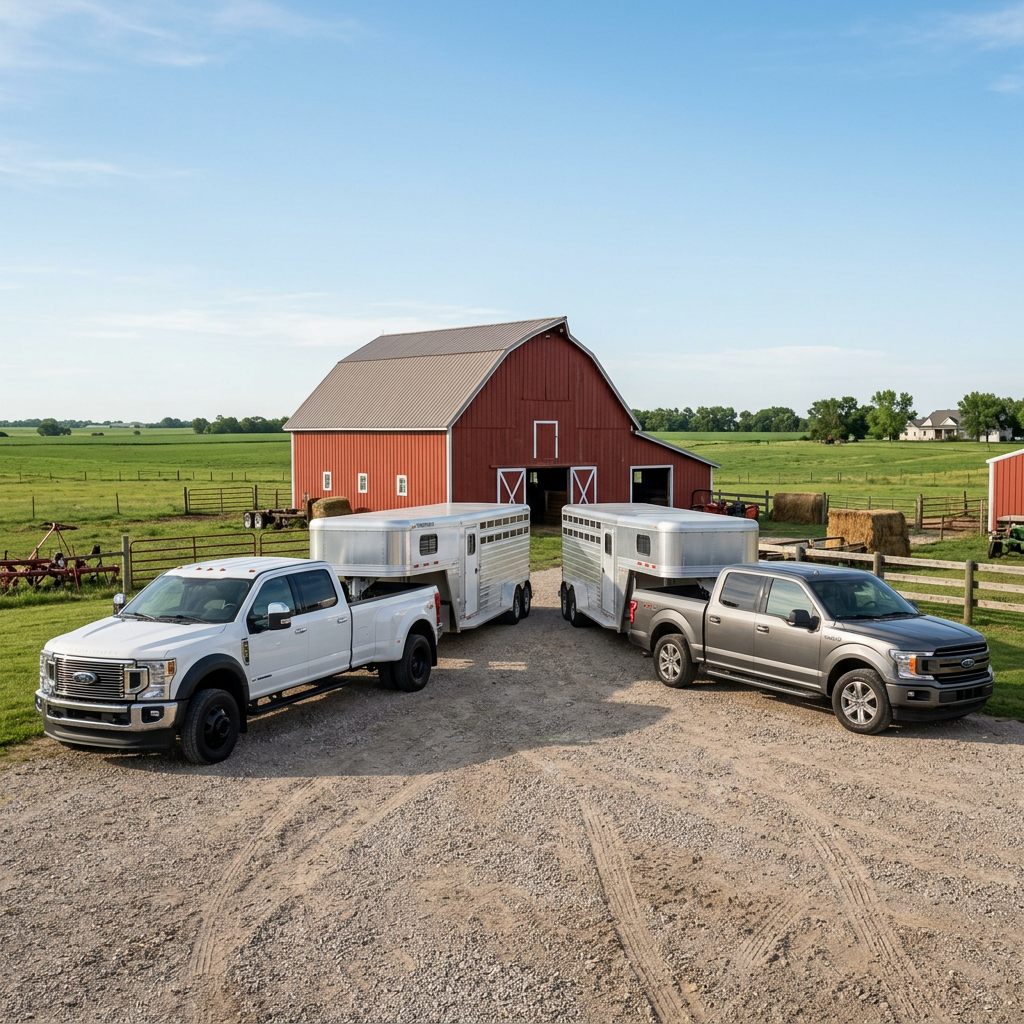
Gooseneck trailers represent another major decision point. While a select few lightweight, aluminum two-horse goosenecks can theoretically be towed by a specially packaged F-150, the vast majority of gooseneck livestock trailers belong strictly in the domain of the F-350. A gooseneck places its hitch point directly over the truck’s rear axle, requiring immense payload capability. If you are regularly hauling more than three head of cattle or four to five horses, the tongue weight alone will crush a half-ton’s rear suspension. Upgrading to an F-350 ensures that your rear axle is engineered to bear these heavy vertical loads, keeping your front steering tires firmly planted on the pavement of Kansas highways.
|
Spec / Capability
|
Ford F-150 (Half-Ton)
|
Ford F-350 (One-Ton)
|
|
Max Tow Capacity
|
Up to 13,500 lbs
|
Up to 38,000 lbs
|
|
Max Payload
|
Up to 2,445 lbs (Heavy Duty Payload Pkg)
|
Up to 8,000 lbs+
|
|
Hitch Styles
|
Bumper Pull (Gooseneck highly discouraged)
|
Bumper Pull, 5th Wheel, & Gooseneck
|
|
Frame Construction
|
High-Strength Steel (Light Duty)
|
High-Strength Steel fully boxed (Heavy Duty)
|
|
Rear Axle Options
|
Single Rear Wheel (SRW) ONLY
|
SRW or Dual Rear Wheel (DRW) available
|
Which Ford F-150 configuration offers the maximum towing capacity for a livestock trailer?
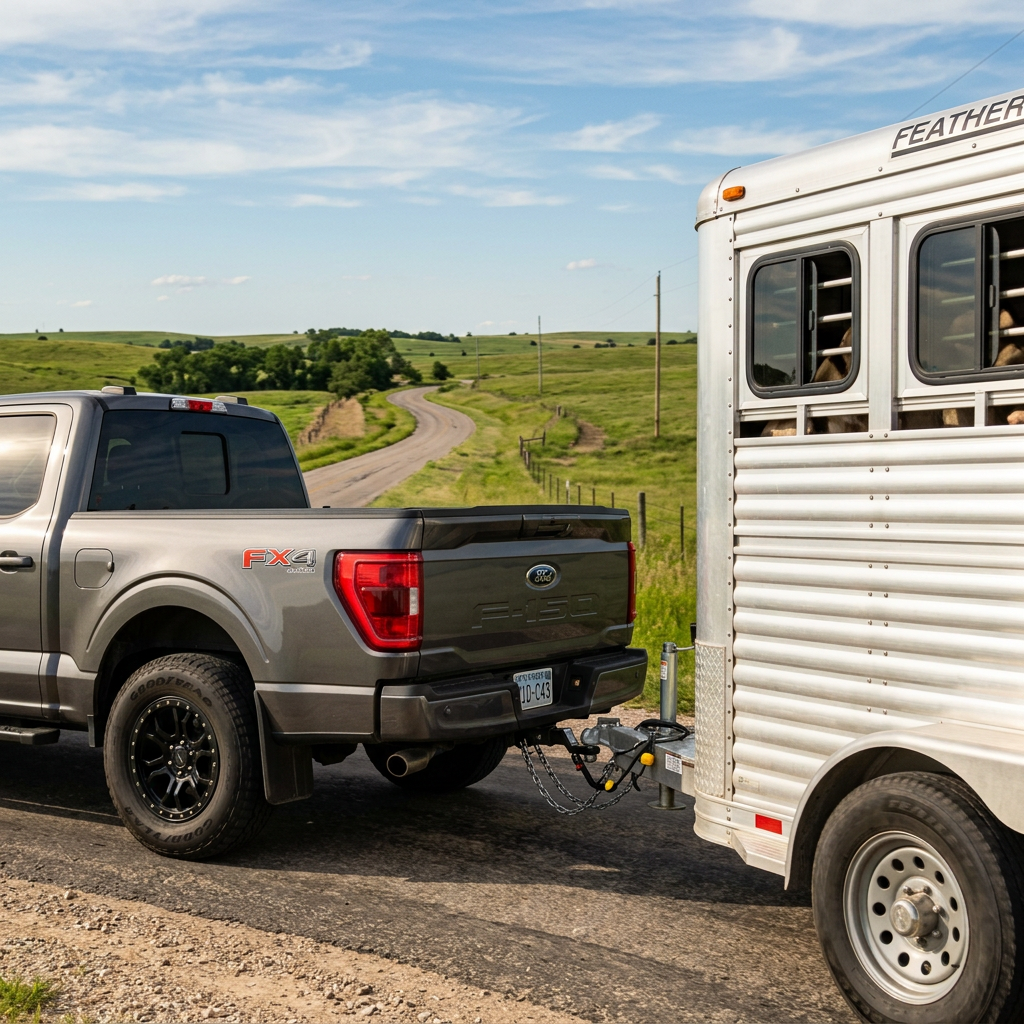
If your fair setup involves a light to medium bumper-pull livestock trailer—perhaps a 14-foot or 16-foot aluminum stock trailer carrying smaller animals like sheep, goats, or swine—the Ford F-150 is more than capable of handling the task. However, you cannot simply hook up to any standard F-150 and expect peak performance. To achieve the absolute maximum towing capacity of 13,500 pounds, you must select a highly specific configuration of engine, cab, bed length, and factory-installed packages.
The Powertrain: 3.5L EcoBoost
The undisputed king of F-150 towing is the 3.5-liter EcoBoost V6 engine. Delivering a stout 400 horsepower and an incredible 500 lb-ft of torque, this twin-turbocharged powerhouse provides its peak torque low in the RPM band. This is exactly where you need it when pulling a loaded trailer up a highway ramp or keeping pace on hilly country roads. While the naturally aspirated 5.0L V8 is a legendary engine with a great exhaust note, the twin-turbo EcoBoost holds the crown for maximum towing capacity and effortless low-end grunt.
Cab & Bed: SuperCrew 4×4
To maximize stability and leverage, the optimal setup is the SuperCrew cab configuration with either the 5.5-foot or 6.5-foot bed, paired with a 4×4 drivetrain. The longer 157-inch wheelbase of the 6.5-foot bed version offers superior straight-line tracking and resists the ‘porpoising’ or bucking effect that shorter trucks can experience when pulling heavy bumper-pull trailers. The extra interior space of the SuperCrew is also perfect for securing expensive tack, show clothes, and climate-sensitive show gear.
The Max Trailer Tow Package
You must equip your truck with the factory Max Trailer Tow Package. This package adds crucial mechanical upgrades: an upgraded rear bumper, a class IV receiver hitch, an integrated trailer brake controller, a heavy-duty rear axle with a 3.55 electronic-locking differential, and enhanced cooling systems for both the engine and transmission. Without this package, your F-150’s tow rating is significantly lower, and attempting to tow heavy loads can lead to rapid transmission overheating and premature wear on critical components.
Before you hook up your trailer, make sure you know exactly what your truck can handle. If you’re considering buying or ordering a light-duty powerhouse, you can Research Ford F-150 specifications, packages, and interior features online to build the ultimate family show rig.
Which Ford F-350 engine and axle setup provides the highest towing capacity for livestock trailers?
For serious livestock operations hauling multi-horse trailers, commercial stock trailers, or massive goosenecks loaded with market cattle, the Ford F-350 Super Duty is the undisputed gold standard. To unlock the absolute peak towing capacities of this heavy-duty workhorse—which tops out at an astronomical 38,000 pounds for gooseneck towing—you must select the correct engine, axle configuration, and gear ratio. The ultimate heavy-duty setup begins with the legendary High Output (H.O.) 6.7L Power Stroke® Turbo Diesel engine.
This beast of an engine produces a class-leading 500 horsepower and an earth-shaking 1,200 lb-ft of torque. This torque is fully available at extremely low engine speeds, meaning you can pull heavy, fully loaded stock trailers up steep grades or out of muddy fairground parking lots without the engine breaking a sweat. It is paired with a heavy-duty TorqShift® 10-speed automatic transmission designed specifically to manage these immense thermal and mechanical loads.
To translate that massive power to the ground and support the high pin weight of a large gooseneck trailer, you must configure the F-350 with a Dual Rear Wheel (DRW) axle setup. Known affectionately as a ‘dually,’ the DRW configuration adds two extra tires to the rear axle, drastically increasing lateral stability. This is crucial for livestock towing, as it eliminates the side-to-side sway caused by shifting cattle or high winds on open Kansas plains. Furthermore, selecting the 4.10 limited-slip or electronic-locking rear axle ratio optimizes the transmission’s gearing for maximum pulling power, ensuring you have the ultimate mechanical advantage from a dead stop.
At Valor Ford, we maintain a robust inventory of heavy-duty trucks ready to tackle the toughest agricultural demands. If you are looking to research standard three-quarter-ton options that balance daily driving with heavy pulling, we recommend you Research Ford F-250 options as well, which offer many of the same diesel powertrain advantages in a single-rear-wheel configuration.
Is the 80% towing rule widely recommended by towing experts?
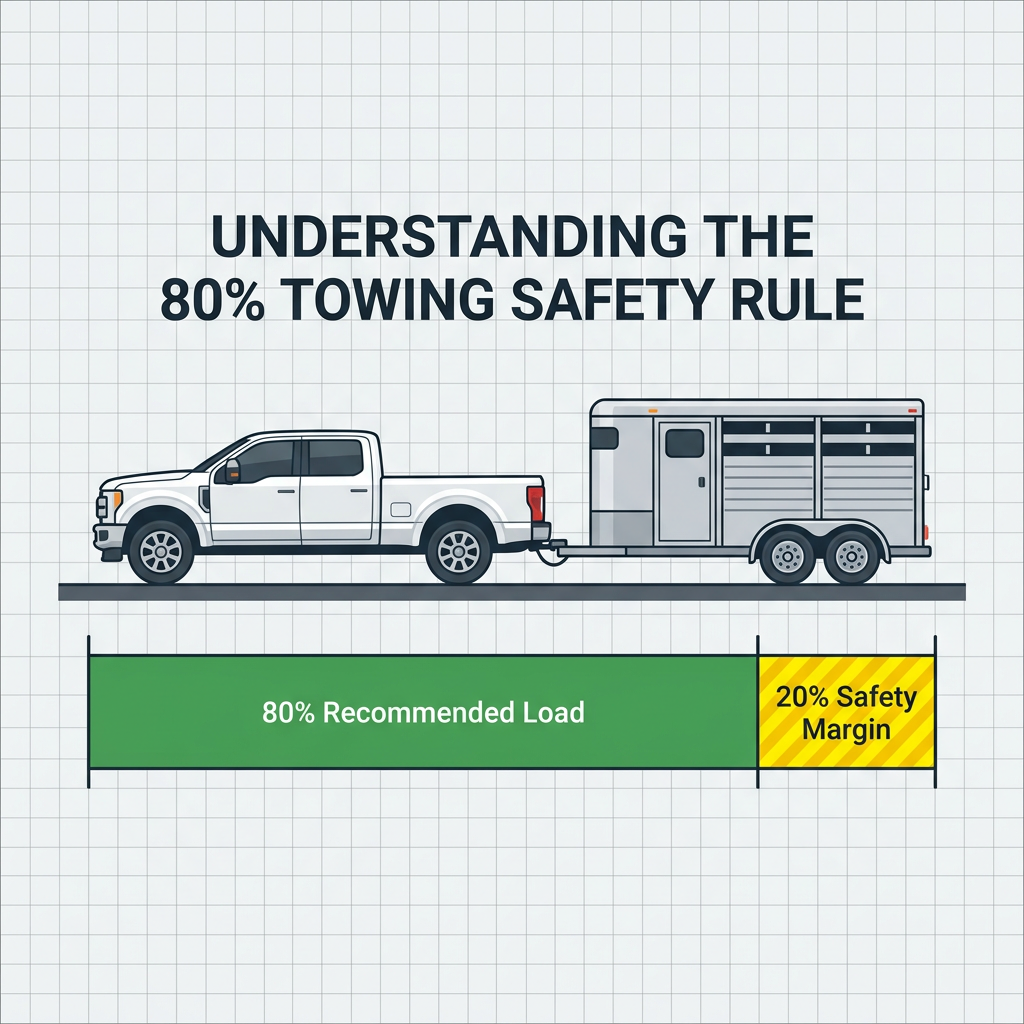
When calculating towing capacities, many experienced towers and safety experts refer to the ‘80% rule.’ This guideline suggests that you should never load your trailer to more than 80% of your vehicle’s maximum rated towing capacity. For example, if your Ford F-150 has a maximum tow rating of 10,000 pounds, the 80% rule advises keeping your fully loaded trailer weight under 8,000 pounds. While this rule is not a legal requirement, it is highly recommended by towing professionals—especially when hauling live, shifting cargo like horses, cattle, or show stock.
Why is this safety margin so critical for livestock? Unlike static loads—such as a flatbed trailer stacked with lumber or a boat securely strapped to its trailer—animals move. When a cow steps backward, a horse shifts its weight to balance around a curve, or a group of market hogs moves to one side of the trailer, they create dynamic, unpredictable forces. This shifting weight changes the tongue load on your truck hitch and can initiate dangerous trailer sway. By maintaining a 20% safety buffer under your truck’s mechanical limits, you preserve the handling, steering, and braking capabilities needed to recover from sudden trailer movements or unexpected maneuvers on the highway.
Additionally, the 80% rule protects your truck’s mechanical longevity. Towing at the absolute limit of a vehicle’s capacity generates extreme heat in the transmission, places immense strain on the engine’s cooling system, and accelerates wear on brakes and suspension components. This is especially true during hot Kansas summers when ambient temperatures routinely exceed 90 degrees Fahrenheit. Operating with a comfortable safety margin guarantees that your truck will run cooler, last longer, and successfully deliver your prized livestock to the fairgrounds without mechanical incident.
Do you need a Commercial Driver's License (CDL) to tow a livestock trailer to a Kansas county fair?
Navigating the legalities of towing a livestock trailer in Kansas can often feel confusing. Many farmers and 4-H families wonder if their large dually trucks and multi-car stock trailers push them into Commercial Driver’s License (CDL) territory. Under federal and Kansas state law, the general threshold that triggers a CDL requirement is a Gross Combined Weight Rating (GCWR)—the total weight of the truck and the trailer combined—of 26,001 pounds or more, provided the trailer’s Gross Vehicle Weight Rating (GVWR) is more than 10,000 pounds. If your truck and trailer combination stays below this 26,001-pound mark, a standard Class C driver’s license is completely sufficient.
However, what happens if your heavy-duty F-350 (which often has a GVWR of 11,500 to 14,000 pounds) is paired with a large gooseneck livestock trailer (GVWR of 14,000 pounds or more)? Mathematically, this combination can easily push your total GCWR past 26,001 pounds. Fortunately, Kansas law provides several crucial exemptions specifically tailored for the agricultural community. If you are operating as a farmer or rancher transporting your own livestock, feed, or equipment, you may qualify for the Kansas Covered Farm Vehicle (CFV) exemption.
Under the CFV guidelines, a farm-registered vehicle operated by a farmer, farm employee, or family member can be driven anywhere within the state of Kansas (and within 150 air miles of the farm across state lines) without a CDL, regardless of the vehicle’s weight. This exemption is designed to support the local agricultural economy and allows families to easily transport their own animals to county fairs, livestock shows, and local markets. It is important to note, however, that the vehicle must be registered as a farm vehicle and must not be used for hire or commercial transport outside of personal farm operations.
For youth exhibitors in 4-H or FFA, transporting show animals is typically classified as a recreational or educational endeavor, meaning it falls outside of commercial regulations. However, if you are sponsored by a business or are hauling animals for other people for a fee, you could be deemed a commercial operator and must comply with full CDL and Department of Transportation (DOT) registration requirements. To ensure you stay fully compliant with all local laws and registration needs, we highly recommend consulting with the Kansas Highway Patrol or contacting a local licensing office before hitting the road.
How often should you inspect and service your truck's trailer hitch and receiver?
Your truck’s trailer hitch and receiver are the single points of physical connection between your vehicle and your valuable cargo. Under the strain of livestock trailering, these mechanical connection points endure massive stress, friction, and vibration. Neglecting hitch maintenance is one of the most common causes of catastrophic trailer detachments. To guarantee safety, you must establish a rigorous inspection and service schedule.
Pre-Trip Visual Check
Every single time you hook up your trailer, perform a thorough visual inspection. Look closely at the hitch receiver tube on your truck for any signs of hairline cracks, rust-through, or metal fatigue. Check that the hitch pin and cotter clip are in perfect condition and securely locked in place. If you are using a bumper-pull setup, ensure the hitch ball is completely tight on the drawbar and shows no signs of pitting or excessive wear. For gooseneck setups, verify that the gooseneck ball is free of debris and that the locking mechanism operates smoothly.
Monthly Maintenance
On a monthly basis, or before every major long-distance trip, apply a thin layer of high-quality lithium grease to the hitch ball or gooseneck coupling mechanism. This lubrication minimizes metal-on-metal friction, preventing premature wear on both the trailer coupler and your truck’s hitch. Additionally, crawl beneath the rear of your truck and check the mounting bolts that secure the receiver assembly to the vehicle’s frame. Use a torque wrench to ensure these bolts are tightened to the manufacturer’s exact specifications.
Annual & Electrical
At least once a year, conduct a deep electrical and structural service. Clean the inside of the 7-way electrical connector plug on your truck with a dedicated electrical contact cleaner, and apply dielectric grease to prevent corrosion. Inspect the heavy steel loops where your trailer’s safety chains attach; these must be free of cracks or deformation. If you find any damaged hardware, you can easily Order Genuine Ford Parts through our dealership to replace worn-out components with factory-certified equipment.
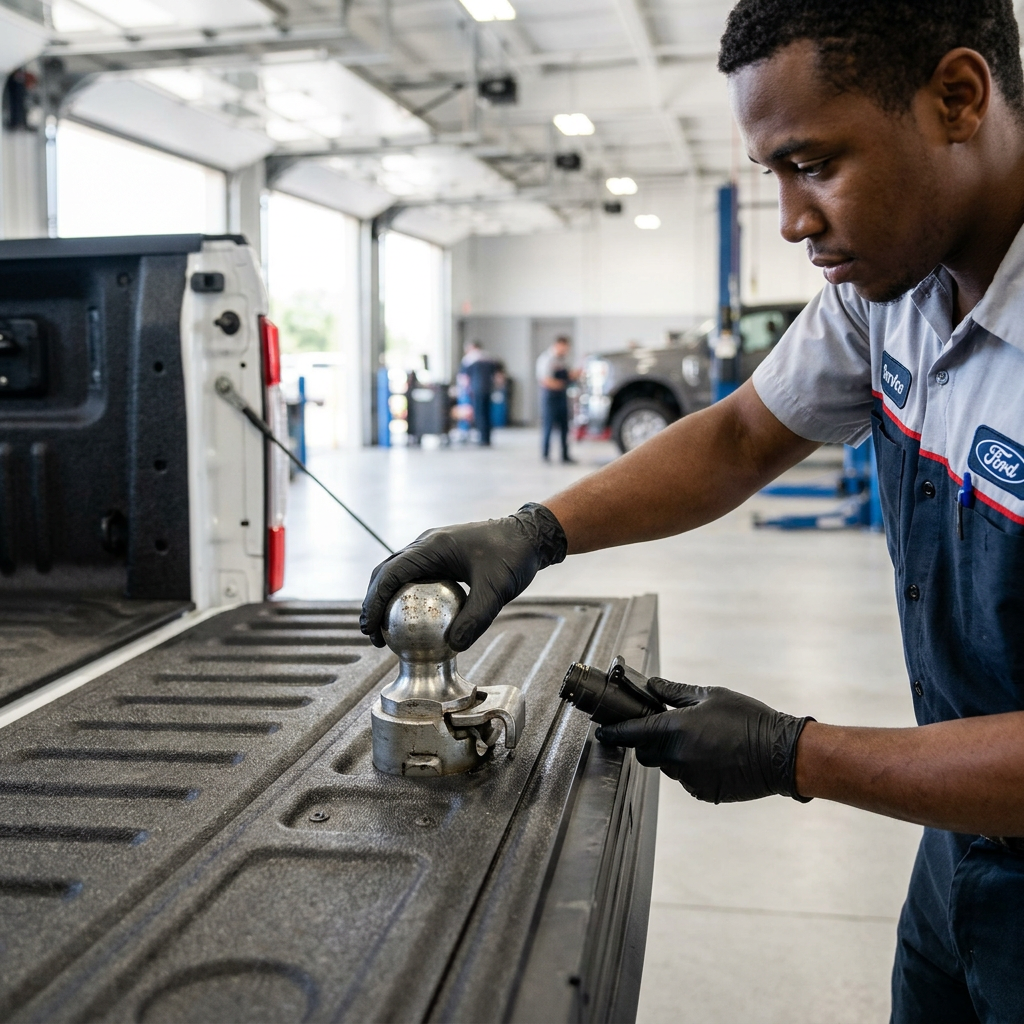
Navigating the Road to the Dickinson County Fair and Fort Riley Community Exhibits
Towing through the scenic rolling topography of the Flint Hills region presents unique challenges that every livestock exhibitor must plan for. While Kansas is often stereotyped as flat, local drivers know that navigating the hilly corridors of Dickinson, Geary, and Riley counties requires active driving and a highly prepared vehicle. If you are hauling a loaded trailer from Junction City to the Dickinson County Fairgrounds in Abilene, you will face steady climbs and rolling descents along Interstate 70. These sustained elevation changes generate immense heat in your truck’s transmission, making robust cooling systems and proper gear selection vital.
To successfully manage this terrain, always ensure your truck’s Tow/Haul mode is engaged. This factory Ford feature recalibrates transmission shift points, holding gears longer during climbs to prevent the transmission from constantly hunting for gears—a behavior that causes rapid thermal buildup. When descending hills, Tow/Haul mode automatically downshifts to provide engine braking, reducing the load on your brakes and preventing brake fade. Additionally, having a properly calibrated, integrated trailer brake controller ensures that your trailer slows down in perfect unison with your truck, preventing the trailer from pushing or jackknifing on slick, unpaved fairground entrances.
For those heading north toward the Fort Riley community exhibits or navigating the gravel access roads of Riley County, dust, dirt, and rough surfaces are common. These conditions demand that your truck’s suspension and air filtration systems are in peak health. Long gravel roads can clog engine air filters quickly, reducing fuel efficiency and pulling power. Furthermore, rough, washboard gravel roads will test your trailer’s suspension and tire integrity. Driving at reduced speeds, planning routes that minimize low-maintenance roads, and ensuring your tires are properly inflated for gravel travel will protect your livestock from a stressful, bumpy ride.
Before you set out on your next journey across the Flint Hills, let our certified technicians verify that your cooling systems, brakes, and transmission fluids are fully prepared for the heavy demands of the road. You can easily Schedule Ford Service Today to ensure your truck receives a comprehensive pre-trip inspection, giving you complete peace of mind.
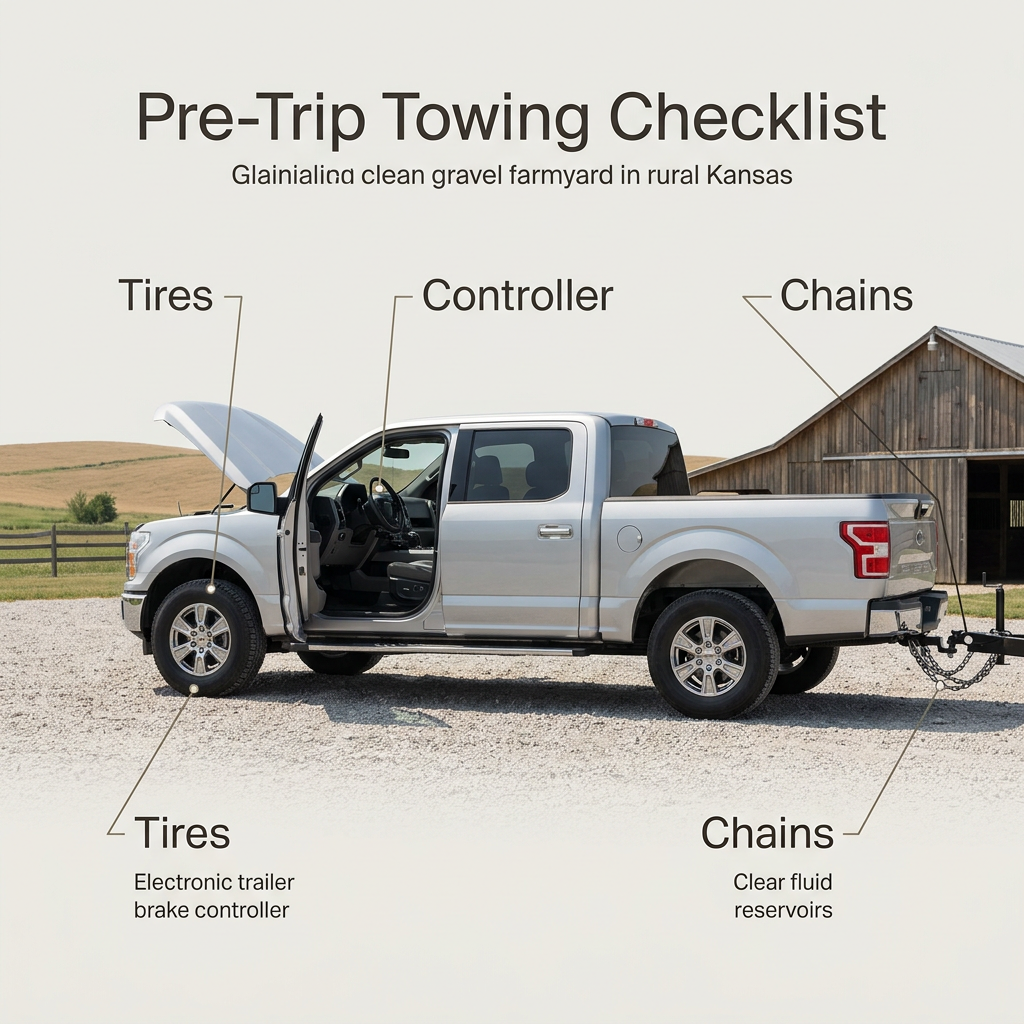
The Pre-Fair Towing Checklist for Kansas Livestock Exhibitors
A successful trip to the county fair starts long before you pull out of your driveway. Experienced exhibitors know that a detailed pre-flight routine prevents breakdowns and protects the welfare of their animals. To help you stay organized, the truck and towing experts at Valor Ford have compiled this comprehensive, step-by-step checklist. Run through these critical inspections the day before you load your livestock to guarantee a stress-free journey.
1. Tire Pressure and Integrity (Truck & Trailer): Check the air pressure in all tires, including the spares. Under-inflated tires generate excessive heat, which is the leading cause of highway blowouts. Inspect tire sidewalls for dry rot, cracking, or embedded debris. 2. Braking Systems: Verify that your truck’s brake pads and rotors are in excellent condition. Test the trailer’s electronic brakes by manually sliding the override lever on your dashboard brake controller at a slow speed to ensure the trailer slows the truck down independently. 3. Electrical Connections: Connect your 7-way plug and have a helper verify that all running lights, brake lights, left and right turn signals, and hazard flashers are operating flawlessly. Clean away any corrosion on the metal pins. 4. Hitch and Coupler Security: Ensure the coupler is fully closed over the hitch ball and the locking latch is pinned shut. Cross your safety chains under the trailer tongue (forming an ‘X’ to catch the tongue if it detaches) and secure the breakaway switch cable to a solid point on the truck frame. 5. Fluid Levels: Check your engine oil, transmission fluid, coolant reservoir, and brake fluid. If you are driving a diesel F-350, ensure your Diesel Exhaust Fluid (DEF) tank is fully topped off. 6. Trailer Ventilation & Bedding: Open all sliding vents and windows to guarantee maximum airflow for your animals. Lay down a thick layer of clean wood shavings or straw to absorb moisture and provide traction, preventing slips and falls during transit. 7. Emergency Kit Essentials: Pack heavy-duty roadside flares or reflective triangles, a hydraulic bottle jack capable of lifting a loaded trailer, spare tire tools, wood blocks for wheel chocks, a flash light, extra trailer fuses, and a fully stocked livestock first aid kit.
Essential Towing Accessories and Upgrades for Your Ford Truck
Extendable Towing Mirrors
Standard side mirrors simply do not provide the wide-angle visibility required to safely tow a wide livestock trailer. Upgrading to Ford’s OEM power-telescoping and power-folding trailering mirrors allows you to extend your field of view with the push of a button. These mirrors feature integrated spotter mirrors and blind-spot monitoring systems designed to detect vehicles alongside your trailer, ensuring safe highway lane changes.
Smart Camera Systems
Ford’s 360-degree camera package is a game-changer for solo hookups and tight fairground navigation. By utilizing multiple high-definition cameras strategically placed around the truck, this system provides a birds-eye view of your surroundings. Additionally, you can install an auxiliary Ford camera on the rear of your livestock trailer, transmitting a crystal-clear live video feed directly to your central touchscreen display for effortless backing.
Suspension Upgrades
If your F-150 or single-rear-wheel Super Duty experiences rear-end sag when loaded, upgrading your suspension can drastically improve ride quality. Installing OEM-approved helper springs, suspension stabilizers, or rear air helper bags will level your truck, restoring steering response and headlight alignment. To browse these upgrades and customize your rig, you can Order Genuine Ford Parts directly from our online catalog.
How Valor Ford Helps Junction City Farmers and Families Prep for Fair Season
At Valor Ford, we are deeply embedded in the local Junction City community. We understand that county fairs represent far more than just a weekend competition; they showcase the dedication, values, and hard work of our local youth and ranching families. That is why our commitment goes beyond selling and servicing vehicles. We are proud supporters of Geary County 4-H, local FFA chapters, and the agricultural initiatives that keep our rural communities thriving. Our team of certified Ford technicians is specifically trained in the heavy-duty service and maintenance required for agricultural use, making us the premier destination for truck and trailer preparation.
Our service department is equipped to handle everything from routine fluid changes and heavy-duty brake replacements to complete suspension diagnostic work and electrical harness repairs. We use specialized testing equipment to diagnose integrated trailer brake controller issues, ensuring your truck communicates seamlessly with your livestock trailer’s electric brakes. We understand that your time is valuable—especially during the hectic fair prep season—which is why we offer streamlined booking options and efficient turnarounds.
For families with tight schedules, we also offer our convenient pickup and delivery service. We can retrieve your truck directly from your farm or workplace, bring it to our state-of-the-art facility for service, and return it directly to you once the work is completed. To save valuable time and keep your preparation on track, you can easily Schedule Pickup and Delivery Service online. Let our professionals handle the mechanical details so you can focus on grooming, feeding, and preparing your livestock for a blue-ribbon performance.
Ready to Tow? Schedule Your Pre-Fair Inspection or Upgrade Your Rig at Valor Ford Today
Schedule your service before fair season. Ensure your truck is fully prepared to transport your hard work and prized livestock safely across Kansas. Whether you need a comprehensive multi-point safety inspection on your current vehicle, replacement hitch parts, or are ready to upgrade to a high-capability F-150 or F-350 dually, the dedicated team at Valor Ford is here to help. Click below to schedule your service or evaluate your current truck’s trade-in value today!
Tags: agricultural towing Kansas, county fair towing, Ford F-150 towing, Ford F-350 Super Duty, gooseneck trailers, heavy-duty trucks, livestock towing, livestock trailer prep, livestock transport safety, show stock transport, trailer hitch maintenance, truck towing capacity
Posted in
Buying Guides, Maintenance & Service, Safety Features, Seasonal Driving Tips, Technology & Innovation |
No Comments »